The short answer
A deck-building game is one where you start with a weak, identical starter deck and the game itself is the act of buying better cards from a shared market, shuffling them in, and drawing a stronger hand each turn — the deck you build IS your engine and your score. The best overall is Dominion (Rio Grande, 2-4 players, ~$45), the 2008 game that invented the genre and still teaches it cleanest. The best for two players is Star Realms (Wise Wizard, ~$15), a vicious 20-minute space duel. The best gateway is Clank!: A Deck-Building Adventure (Dire Wolf, ~$65), which hangs deck-building on a press-your-luck dungeon heist so newcomers feel the thrill before they understand the math. The best solo is Aeon's End (Indie Boards & Cards, ~$50), a co-op boss-fight whose decks are never shuffled, so planning is everything. The cheapest genuinely great one is Star Realms again at roughly fifteen dollars — no other entry point gives you this much game for the money. Puzzlewick sells none of these; we just point you at the makers.
Here is the trick a deck-building game pulls, and it never stops being satisfying. You begin with ten flimsy cards — a few coins, a couple of weak attacks — the exact same junk everybody else has. Then, card by card, you reach into a shared market and tug better cards into your own pile. Next shuffle, those cards come back to you. Your deck thickens, then sharpens, then hums. By the end you are drawing hands you couldn't have dreamed of on turn one, and the whole arc happened in your hands, on the table, in under an hour. That self-built crescendo is why the genre has thrived since 2008.
I've been keeping the Puzzlewick shelves a long time, and deck-builders are the rare genre I'd hand to almost anyone — a couple who wants a 20-minute duel, a parent gaming with an eight-year-old, a soloist hunting a brutal boss fight on a Tuesday night. The format flexes that wide. But I'll be candid where most lists won't: some of these classics are showing their rings. Dominion is still the best teacher and a genuinely cold, solitaire-flavored race. Ascension and Legendary did real work and have both been lapped. And the genre's most exciting modern games aren't pure deck-builders at all — they bolt deck-building onto worker placement or dungeon crawling, and they're better for it.
A Keeper's promise before we start: Puzzlewick is a wonder-library, not a store. We take no markup, run no affiliate skim, and stock nothing. Every price below is marked with a tilde because retail wanders, and every buy link points straight at the publisher or a real retailer — not at us. If a game earns its shelf here, it's because it earns its shelf, full stop.
One housekeeping note, because precision is the whole job: I've included The Quacks of Quedlinburg and flagged Marvel Champions, and both come with an asterisk. Quacks is a bag-builder, not a deck-builder — a close cousin, not the thing itself. Marvel Champions is a Living Card Game where you deck-build before you sit down, not during play. I'll tell you exactly why each is here and where the line sits. Now, to the shelf.

What exactly is a deck-building game, and why is it such a great genre?
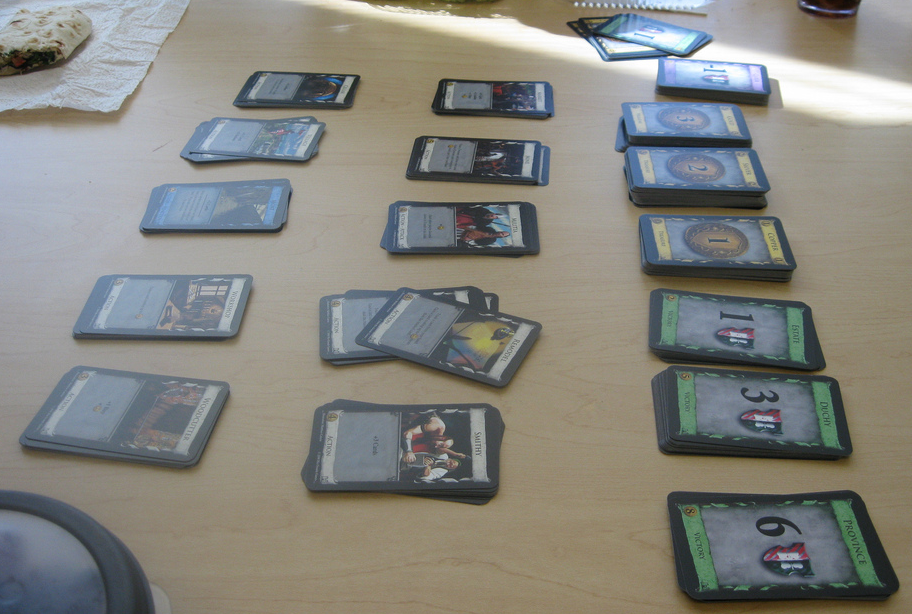
Let's pin the term down, because it gets thrown at anything with cards. A deck-building game is one where every player begins with the same small, deliberately weak starter deck — in Dominion, that's seven Coppers and three Estates, ten cards total — and the central engine of play is acquiring new cards from a shared, central supply, shuffling them into your own deck, and drawing improved hands over the course of the game. You are, quite literally, building the deck you play with as you play. The cards you buy do double duty: they're your economy (more buying power), your weapons (attacks, points), and your eventual victory total all at once.
The genius — and Donald X. Vaccarino deserves the credit for spotting it in 2008 — is the feedback loop. A good buy this turn makes next turn's hand stronger, which lets you make an even better buy, which compounds again. Designers call this an 'engine,' and watching yours sputter to life and then roar is the core pleasure. You started with ten cards of garbage; forty minutes later you're drawing a five-card hand that generates eight coins and buys a Province like it's nothing. Nobody handed you that. You assembled it.
Why is the genre so good? Three reasons. First, the on-ramp is gentle but the ceiling is high — the rules ('draw five, play cards, buy one, discard everything, repeat') fit on an index card, yet strategy runs deep. Second, every game is different because the market is different: Dominion ships with 25 kingdom-card types and uses only 10 per game, so the math of what's worth buying resets every session. Third, it scratches the optimization itch without an hour of setup or a rulebook the size of a phone book.
The genre also splits into flavors worth knowing before you buy. Combat deck-builders (Star Realms, Hero Realms) point the engine at an opponent's life total. Cooperative ones (Aeon's End, Marvel Champions) point it at a scripted boss. Hybrids (Dune: Imperium, Clank!) graft deck-building onto worker placement or board movement, so your cards unlock actions elsewhere. And tableau or engine builders (Ascension, Dominion itself) keep the fight mostly internal — a race to build the better machine. Knowing which flavor you want is most of the battle.
The one honest knock on the genre, and I'll say it plainly: the purest deck-builders can feel like 'multiplayer solitaire.' You're heads-down optimizing your own pile, glancing up only to grab a card before a rival does. Whether that's a flaw or a feature depends entirely on your table. Some of us find it meditative. Some want a knife fight. The good news is the genre now serves both.
You started with ten cards of garbage; forty minutes later you're drawing a hand that buys a Province like it's nothing. Nobody handed you that. You assembled it.
Which deck-builder is the best overall — and is Dominion really still the king?
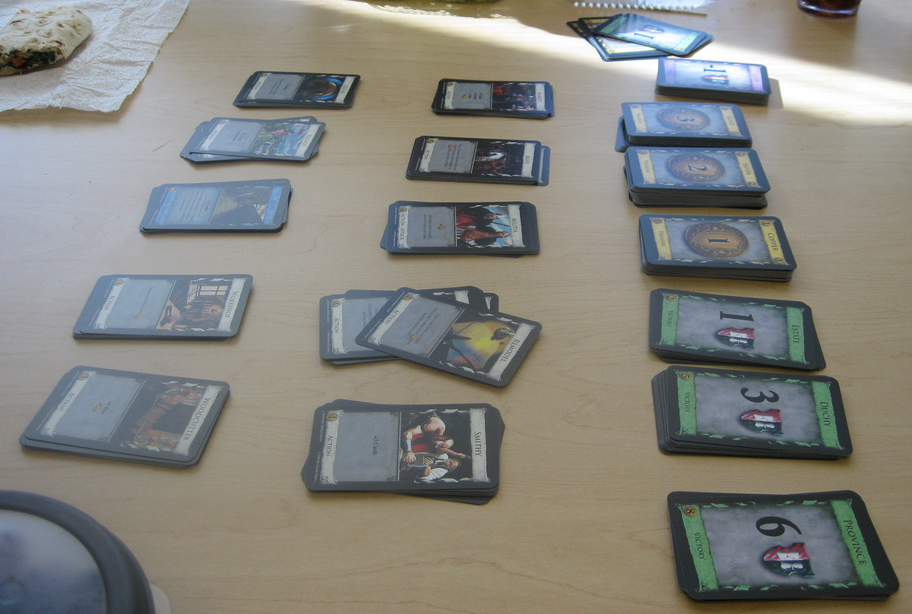
If you can own exactly one deck-building game and you want the genre at its clearest, it's still Dominion (Rio Grande Games, Donald X. Vaccarino, 2008). It won the Spiel des Jahres in 2009, spawned the entire category, and almost two decades and roughly 18 expansions later it remains the cleanest expression of the idea. Two to four players, about 30 minutes, and a box that reconfigures into a genuinely different game every time you swap the ten kingdom cards in play. The second edition tidied the rules and replaced the weakest original cards (so long, Chancellor and Woodcutter), and it's the version to buy.
Here's where I get candid, because a best-of list that just nods along is useless. Dominion is, by broad consensus, close to a solitaire race. You and your opponents are each building private engines, and most of the time you interact only by competing for the same cards in the central pile and occasionally firing an Attack like Witch (which junks rival decks with Curses) or Militia (which forces a discard). There's no board, no shared map, no negotiation. If you crave conflict and table-talk, this is not your game, and no amount of nostalgia changes that. What Dominion offers instead is purity: the most satisfying engine-building loop ever printed, with zero theme getting in the way of the math. Watching a Village/Smithy/Laboratory chain detonate into a ten-card turn is a feeling other games chase and rarely catch.
The genre has, in fairness, produced richer total experiences since — Dune: Imperium and Clank! both do more per session. But 'best overall' for a genre means the game that best embodies it, teaches it, and lasts, and on those terms Dominion is still wearing the crown. It's also the rare classic that hasn't aged into obsolescence; it's aged into a reference standard. Buy it for the engine, accept the solitaire, and never apologize for it.
If you specifically want the deck-building loop with a little more elbow-room and a board, jump down two entries to Clank! and Dune: Imperium. But for the undiluted thing — the one I'd hand a designer who wanted to understand why the genre exists — it's the green box.
Dominion hasn't aged into obsolescence. It's aged into a reference standard.
What's the best deck-builder for absolute beginners?
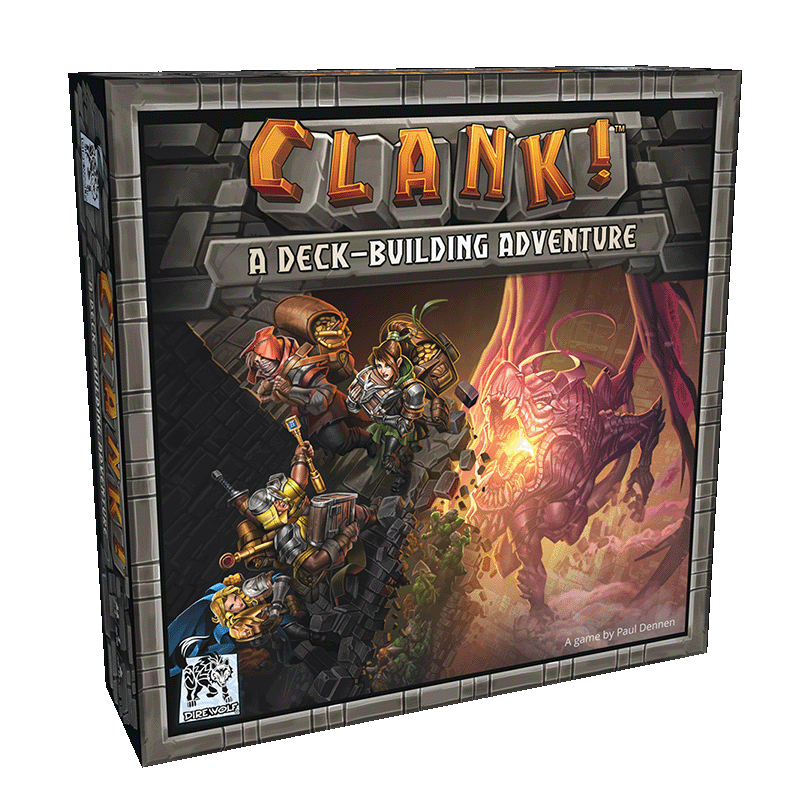
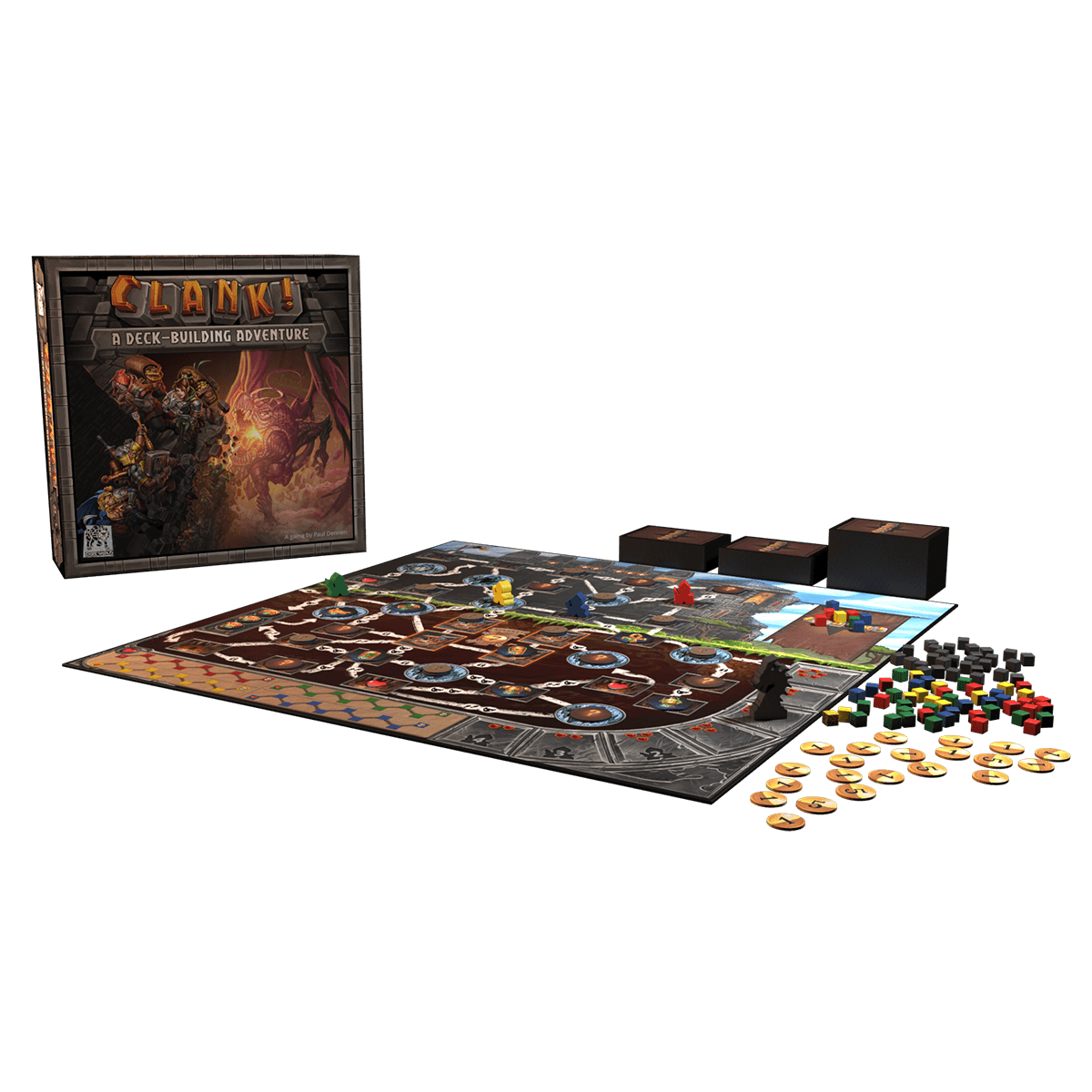
Gateway is its own skill, and the best gateway deck-builder isn't the simplest one — it's the one that makes a newcomer feel the engine before they understand it. That's Clank!: A Deck-Building Adventure (Dire Wolf, Paul Dennen, 2016, 2-4 players, ~$65). It takes the Dominion loop and hangs it on a story everyone gets instantly: you're a thief sneaking into a dragon's mountain to steal an artifact and escape before the dragon eats you. Every card you buy lets you move on the board, fight monsters, or grab loot — but the loud cards make 'clank,' and clank fills the dragon's attack bag. Push too deep and you die in the dark with your pockets full.
Why it's the best on-ramp: the deck-building is real (you're thinning, buying, building an engine), but it never feels like homework because the consequences are spatial and dramatic. A new player doesn't need to grok engine theory to understand 'I need a better card so I can reach the exit before the dragon roars.' The theme teaches the math. And the push-your-luck escape — do I grab one more treasure or run for the surface? — gives every game a heart-pounding finish that pure builders lack. I've watched total non-gamers lean over the table on the last lap. That's the gateway working.
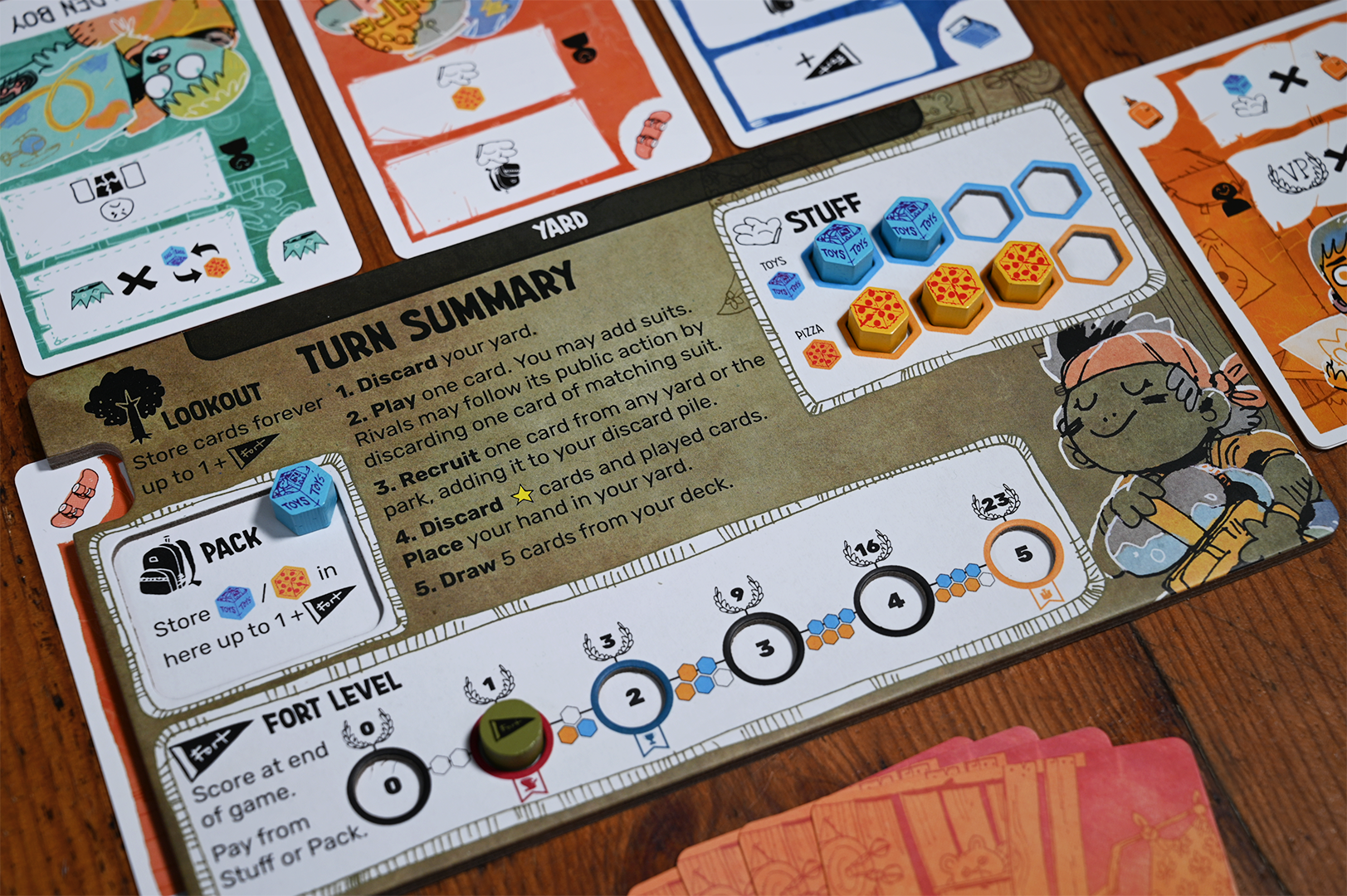
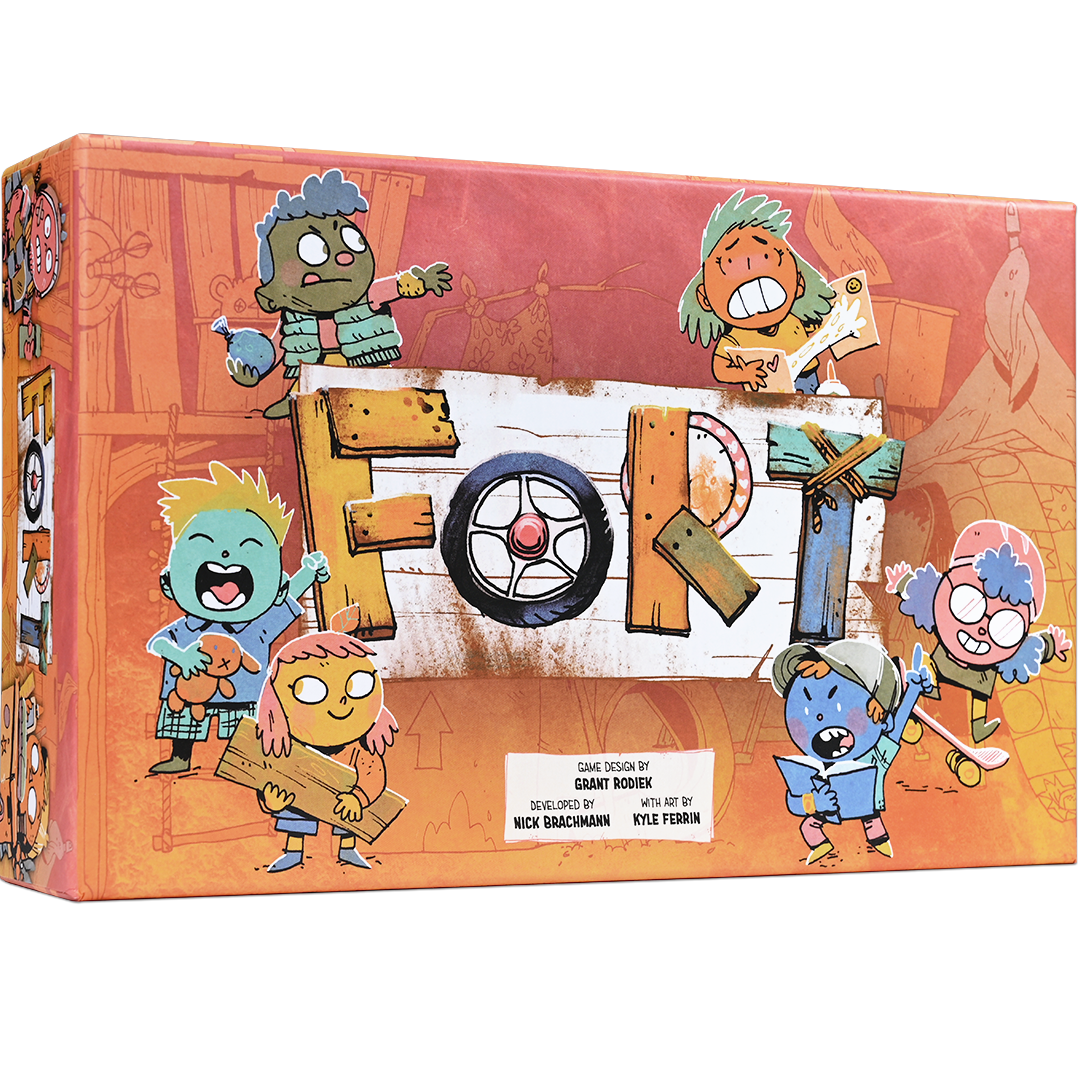
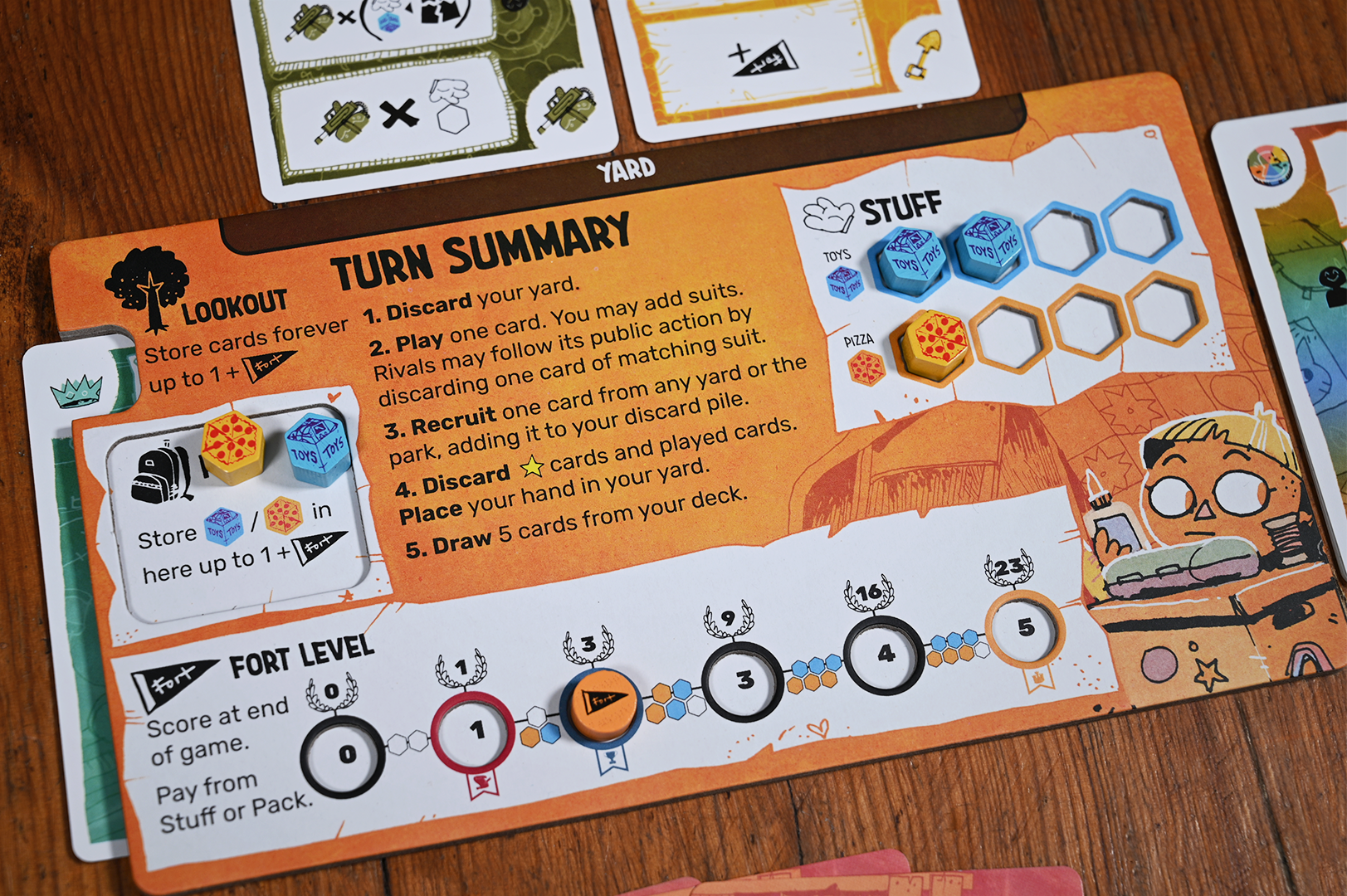
A close runner-up for younger or gentler tables is Fort (Leder Games, Grant Rodiek, 2020, ~$25). It's a deck-builder about being a kid building a fort and collecting pizza and toys, with Kyle Ferrin's wonderful art, and it has a clever hook: cards you don't play can be stolen by other players ('if you don't play with your friends, why would they hang out with you?'). It's lighter and meaner-than-it-looks, and it plays in 30 minutes. For families it might actually beat Clank!.
What I would not hand a beginner: Dominion (too abstract, the theme won't carry them) or anything cooperative-and-scripted like Marvel Champions (too much upfront reading). Gateway means the rules teach themselves through play, and Clank! and Fort both pull that off. Note Clank! also has standalone siblings — Clank! In! Space! and the dungeon-generating Clank! Catacombs — so a hooked group has somewhere to go next without rebuying the same box.
The best gateway deck-builder isn't the simplest one. It's the one that makes a newcomer feel the engine before they understand it.
What's the best two-player or head-to-head deck-builder?
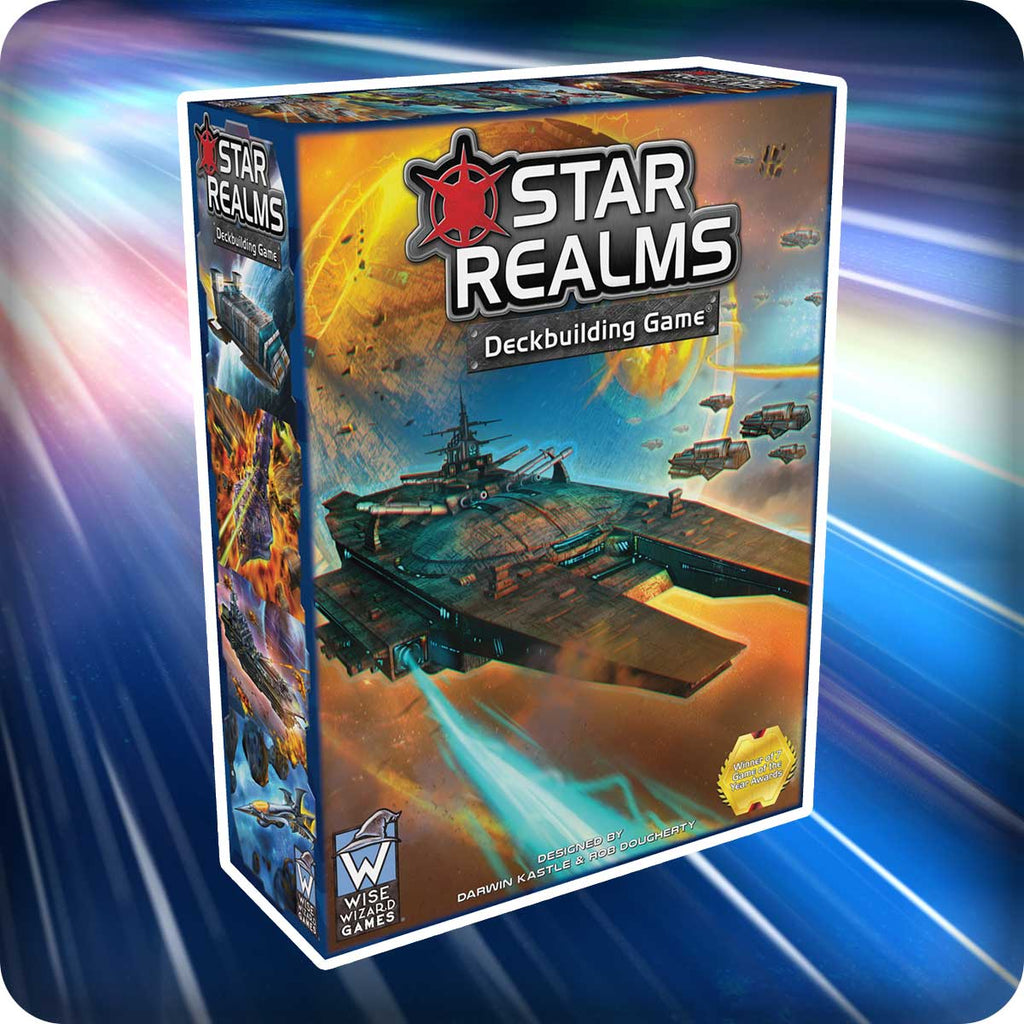
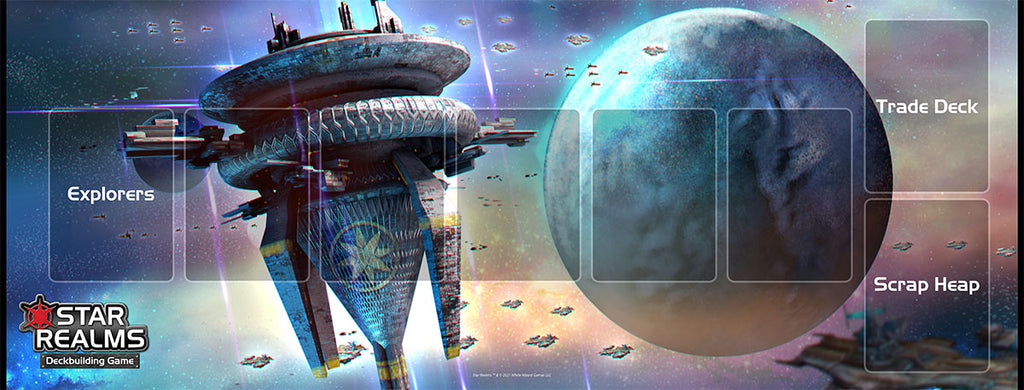
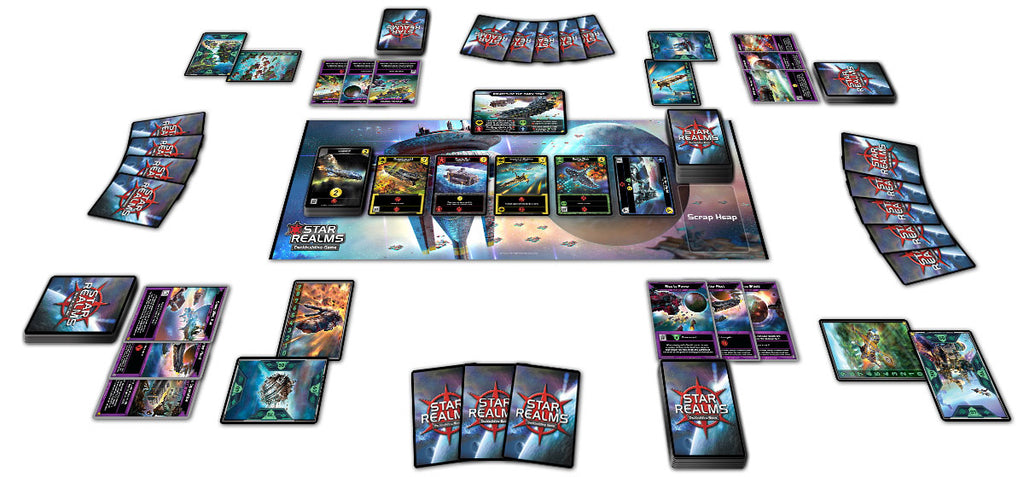
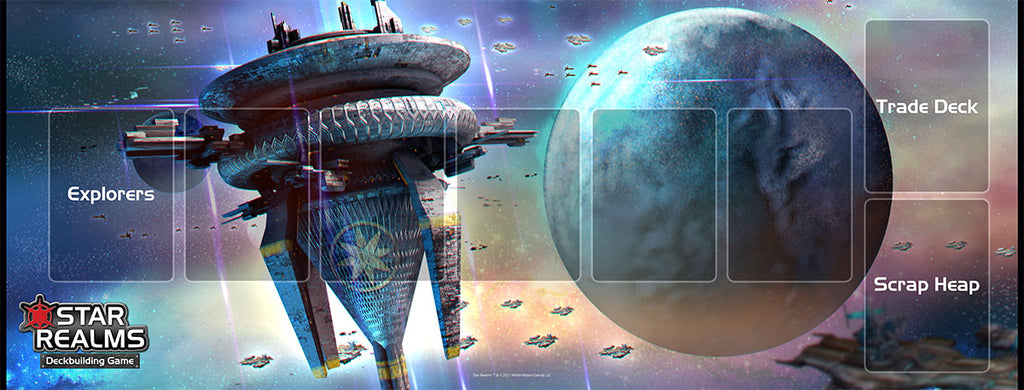
For two players who want to point the engine at each other's throat, nothing beats Star Realms (Wise Wizard Games, Rob Dougherty & Darwin Kastle, 2014, ~$15). The base game is a tight two-player duel: you each start with a 10-card deck, buy ships and bases from a shared trade row using Trade points, then use Combat points to grind your opponent's Authority (life) from 50 to zero. Games run 15-20 minutes, the box costs about the price of a sandwich, and the design is vicious in the best way. The four ship factions each push a different style — Blob goes wide and aggressive, Trade Federation heals and grinds, Star Empire draws and disrupts, Machine Cult scraps cards to thin your deck — and faction synergies ('ally abilities') trigger when you play two of a color together, so the trade row creates real on-the-fly decisions.
What makes it the two-player champion is the directness. Dominion's combat is incidental; Star Realms' combat is the game. Both designers are Magic: The Gathering Pro Tour Hall of Famers, and it shows — the damage math is clean, the tempo swings are dramatic, and the 'do I buy economy or buy a ship and punch you now' tension never lets up. Shut Up & Sit Down put it perfectly: you get much of Dominion's satisfaction 'without having to think at all,' which sounds like a knock but is actually the highest praise for a filler — it's pure, fast, reactive fun.
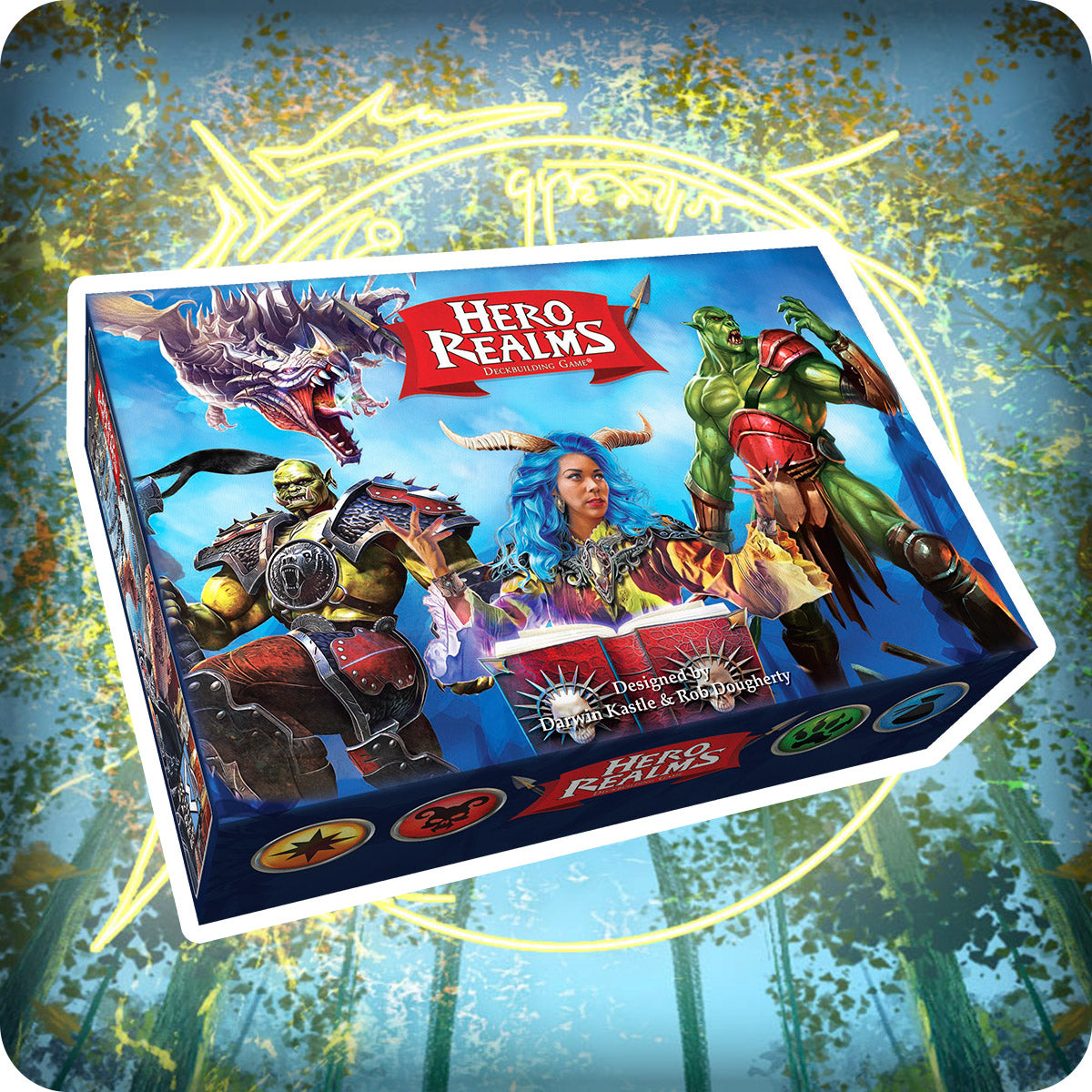
Two things to know. First, the base Star Realms box is strictly two-player. If you want the same engine for 1-4 players (including solo and co-op modes against scripted bosses), buy Star Realms: Frontiers instead — it's a standalone, not an expansion, and it's the better choice for variable player counts. Second, if you'd rather swing swords than lasers, Hero Realms (same designers, Wise Wizard, ~$20) is the fantasy reskin and it supports 1-4 out of the box with optional character classes (Cleric, Fighter, Ranger, Thief, Wizard) and even cooperative campaign decks. Mechanically it's a sibling, not a clone, and it's arguably the more flexible purchase.
The honest caveat: Star Realms is light. It's a brilliant duel and a brilliant value, but it's a filler, not a main course. You won't agonize over decisions the way you do in Dune: Imperium. That's the point. Sometimes you want twenty minutes of laser-fueled spite, and for that there is no better fifteen dollars in the hobby.
Dominion's combat is incidental. Star Realms' combat IS the game — twenty minutes of laser-fueled spite, and the best fifteen dollars in the hobby.
What's the best solo deck-builder, and what makes a co-op deck-builder tick?
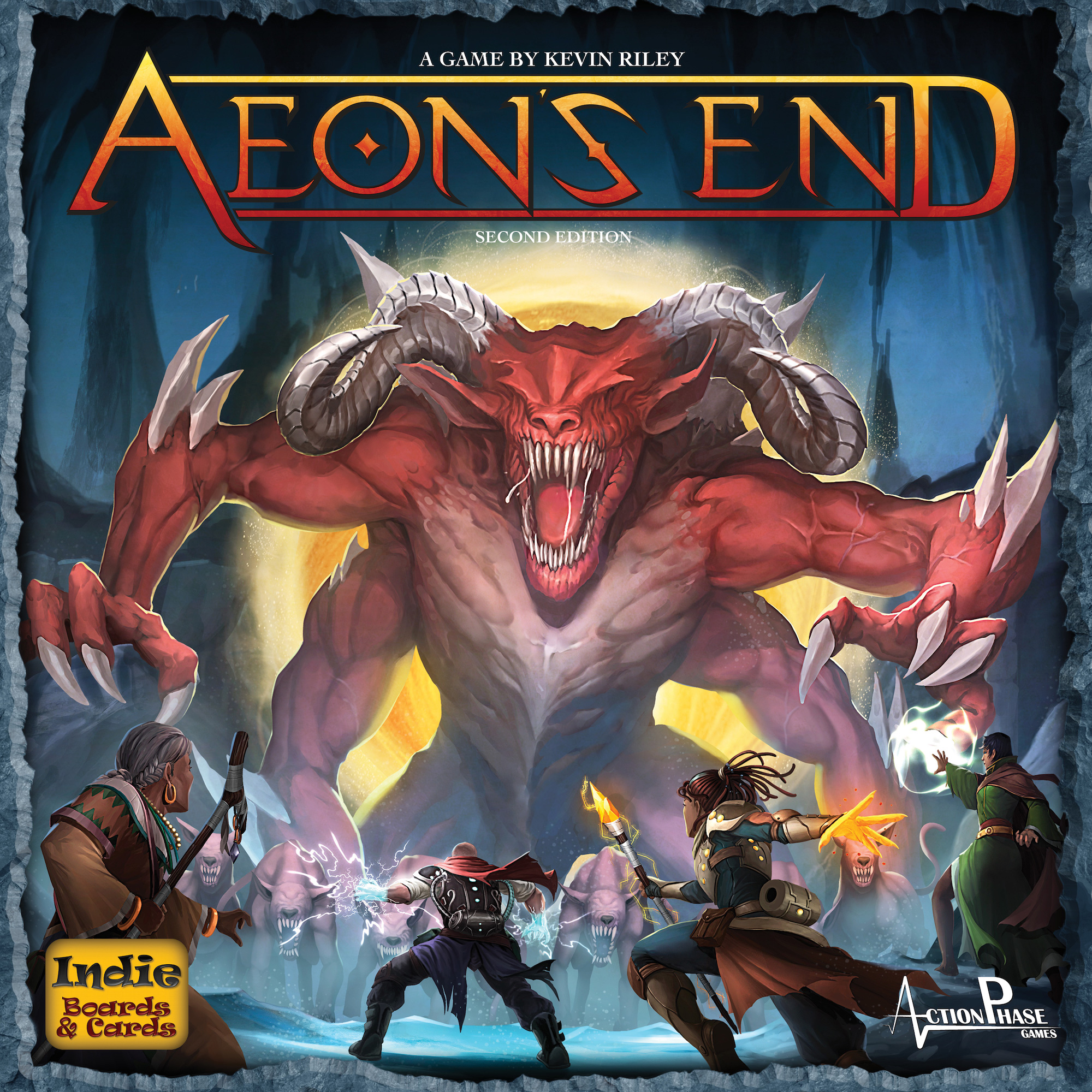
The best solo deck-builder — and one of the best solo games of any kind — is Aeon's End (Indie Boards & Cards, Kevin Riley, 2016, 1-4 players, ~$50). It's a cooperative boss-fight: you play breach mages defending the last human city of Gravehold against a Nemesis that attacks on its own escalating schedule. You build a deck of spells and gems, charge them through 'breaches,' and unleash damage before the Nemesis razes the city. It plays superbly solo (run one or two mages yourself), and it's the rare co-op that genuinely punishes loose play.
What makes it special is the single most interesting twist in the genre: you never shuffle your deck. When your draw pile empties, you simply flip your discard pile face-down and it becomes your new draw pile, in the exact order you discarded it. That one rule transforms everything. Now the sequence in which you play and discard cards is a planning puzzle — you can set up the precise hand you'll draw two turns from now, stacking a gem under a spell so they arrive together for a devastating combo. There's no luck-of-the-shuffle to blame; if you draw a bad hand, you built it three turns ago. For solo players, who live and die by tight, deterministic planning, this is catnip.
The second clever piece is the turn order: a separate deck of player/nemesis cards is shuffled each round, so you never know whether you'll get two turns in a row or the Nemesis will act twice before you do. It simulates the chaos of battle and forces resilient planning rather than scripted optimal lines. The Nemeses themselves are wildly varied — each is effectively a different puzzle with its own deck and gimmick — which is where the replayability lives.
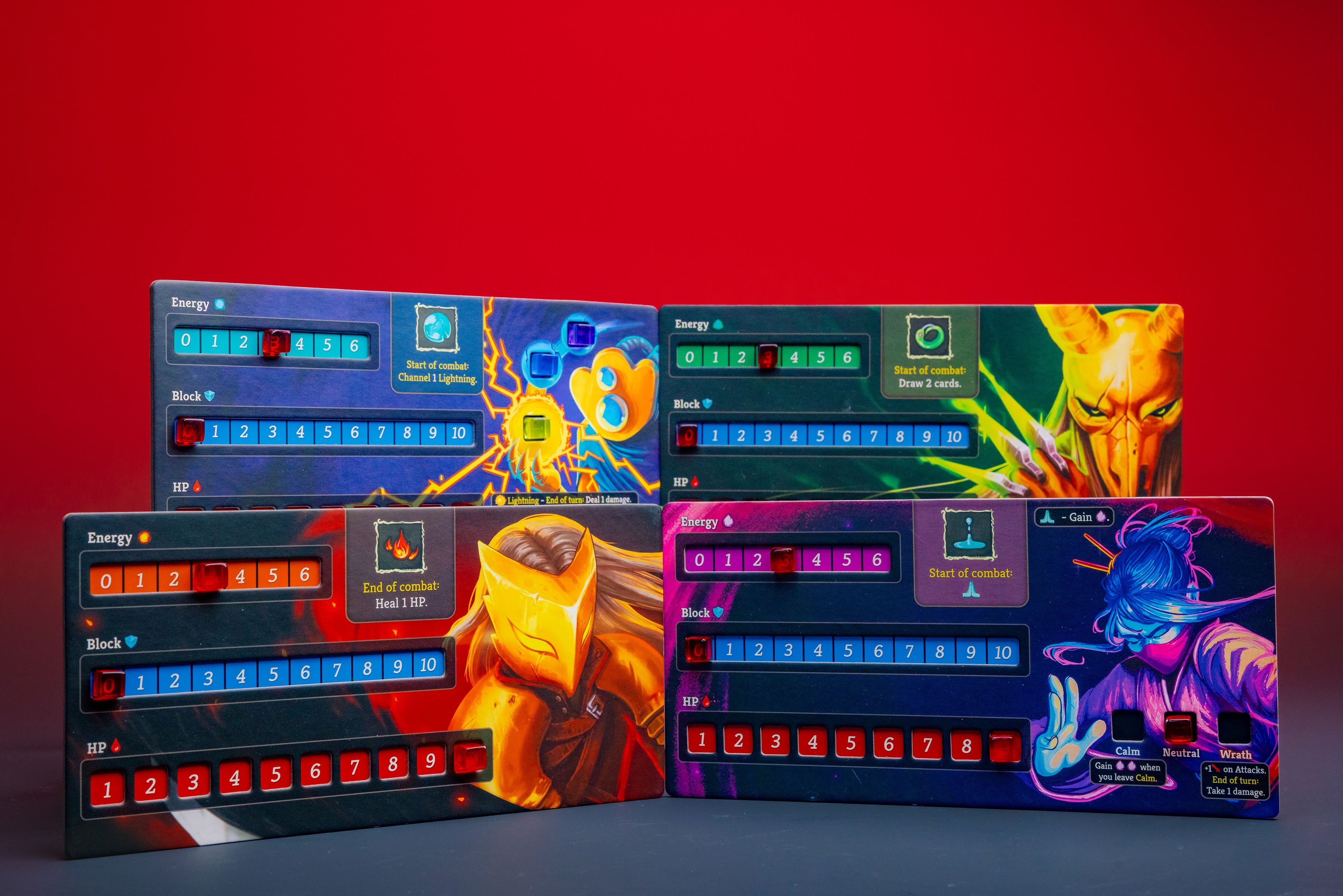
Now, the broader lesson on cooperative deck-builders, because Aeon's End and Marvel Champions both belong here. Co-op builders swap player-versus-player tension for a scripted opponent that the game runs, which means the design has to generate pressure on its own — escalating villain schemes, ticking timers, attacks that punish a stalled engine. The good ones (Aeon's End, Marvel Champions) nail that pacing; the weak ones let you build a perfect engine unmolested and win on autopilot. Aeon's End avoids the trap by making the Nemesis genuinely threatening early and by limiting how fast you can thin and tune. If you mostly game alone, or with one partner who likes teamwork over conflict, this is the box to own. Just know the base game is deliberately spartan on components — you're paying for one of the smartest systems in the hobby, not for plastic.
You never shuffle your deck in Aeon's End. If you draw a bad hand, you didn't get unlucky — you built it three turns ago.
Are the deck-building hybrids — Dune: Imperium and Clank! — better than the pure thing?
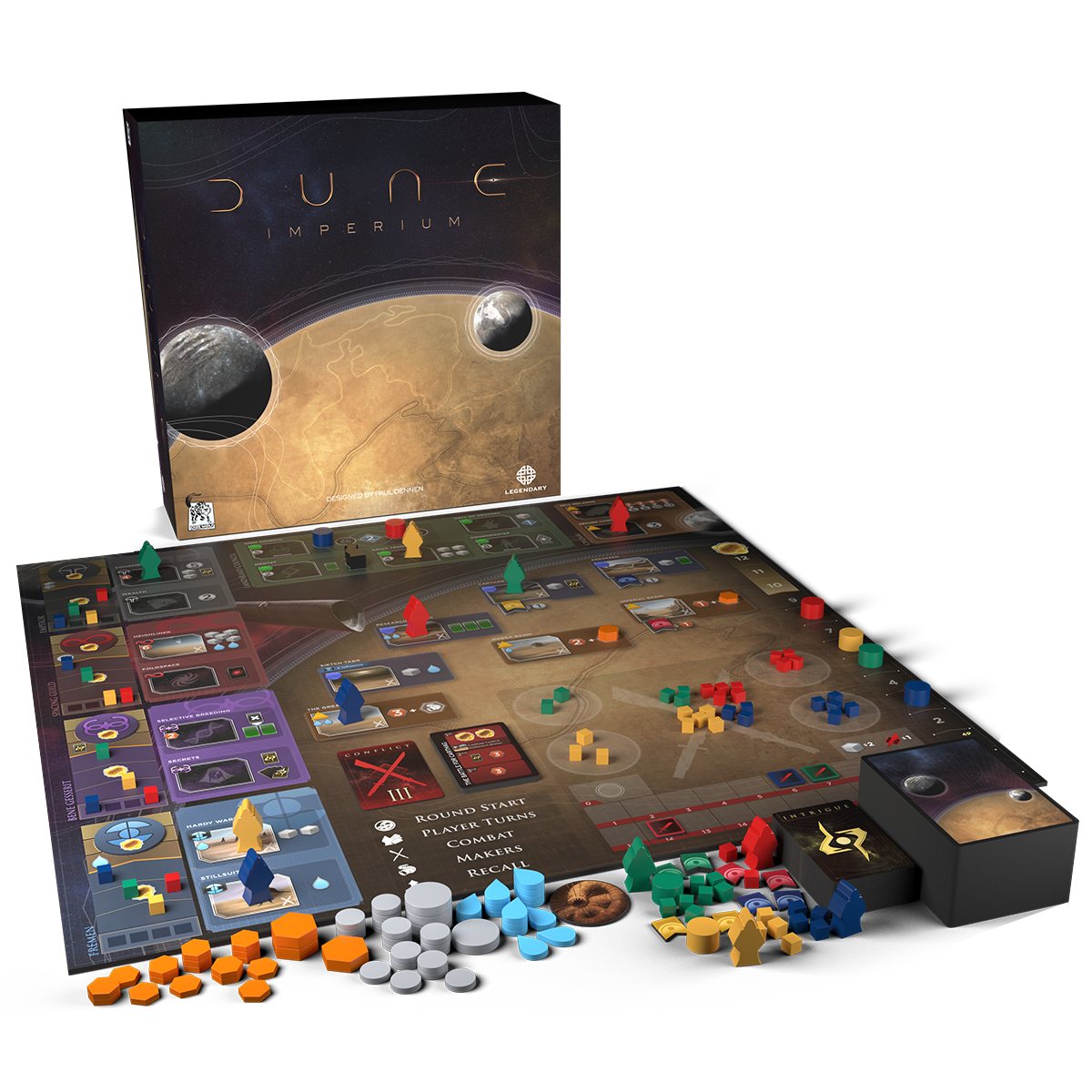
For a lot of modern players, yes — and it's worth understanding why. The most acclaimed deck-builders of the last several years aren't pure builders; they bolt the deck-building engine onto a second system, and the friction between the two is where the magic lives. The flagship is Dune: Imperium (Dire Wolf, Paul Dennen, 2020, 1-4 players, ~$55), which fuses deck-building with worker placement. Here's the elegant part: your cards don't just generate resources — each card lists which board spaces it can send a worker to. So a weak starting hand limits where you can act, and improving your deck literally unlocks more of the board. The two systems aren't bolted together; they're load-bearing for each other.
Dune: Imperium earned a Kennerspiel des Jahres nomination and a fervent following because it solves the genre's two biggest weaknesses at once. The 'multiplayer solitaire' problem? Gone — players compete for limited worker spots and clash in a combat track every round, so you're constantly reacting to each other. The 'engine builds in a vacuum' problem? Gone — the board is a shared, contested space. There's a standalone follow-up, Dune: Imperium – Uprising (2023, 1-6 players, ~$60), which adds spies and a six-player mode; either is an excellent entry, and Uprising is the one to get if you want the bigger, more refined version.
Clank! (covered above as a gateway) is the other great hybrid, marrying deck-building to board movement and press-your-luck. The distinction between the two: Dune is the heavier, more cutthroat, more 'gamer's game'; Clank! is the lighter, more raucous, more universally lovable one. Both prove the same thesis — that deck-building shines brightest as an engine that powers something else, where the cards you draw determine what you can do on a board rather than just how many points you score in your own corner.
And this is the candid part. If you're buying your second deck-builder, I'd often steer you to a hybrid over another pure builder, because the hybrids feel fresher and seat more personalities at the table. Dune: Imperium converts strategy gamers who find Dominion bloodless. Clank! converts casual players who find pure builders dry. The pure builders remain essential — they're the cleanest version of the core loop — but the genre's center of gravity has shifted toward these hybrids for good reason. They kept the part that's brilliant (building your engine) and stapled it to a reason to look up from your own pile.
One footnote on a frequent point of confusion: Quacks of Quedlinburg gets called a deck-builder and it isn't one. It's a bag-builder — same buy-better-stuff-over-time skeleton, but you draw chips blind from a bag and push your luck rather than playing a hand of cards. Cousin, not sibling. Wonderful game; wrong genre, and I won't pretend otherwise just to pad a list.
Deck-building shines brightest as an engine that powers something else. The hybrids kept the brilliant part and stapled it to a reason to look up from your own pile.
What does 'thinning your deck' mean, and which cheap small-box builders are worth it?
If you learn one strategic idea in this whole genre, learn deck-thinning — it's the skill that separates people who think they're good from people who actually are. Here's the problem it solves. You start with ten cards, and most are dead weight: Coppers worth one coin, Estates worth nothing on your turn. Every card you add to your deck dilutes how often you draw the good ones. Buy ten powerful cards and you now have a 20-card deck where you still draw your original junk half the time. The fix is thinning: actively removing your weak starting cards so your deck gets smaller and more concentrated, meaning you draw your best cards more often.
The mechanics vary by game. Dominion has 'trashing' cards — Chapel is the famous one, letting you permanently destroy up to four cards from your hand. A turn-two Chapel that trashes three Coppers and an Estate is one of the strongest opening plays in the game, because a lean deck cycles faster and hits its key cards every reshuffle. Star Realms does it through Machine Cult cards that 'scrap' your starting Scouts and Vipers. Aeon's End rewards it implicitly — fewer, better cards in a never-shuffled deck means tighter planning. The counterintuitive truth: a 12-card deck of excellent cards crushes a 25-card deck of decent ones, almost every time. Less is more, and most beginners over-buy.
Not every game wants you to thin, which is worth knowing. Trains (AEG, Hisashi Hayashi, 2013, ~$55) — a clever fusion of Dominion-style deck-building with rail-laying on a board — deliberately resists thinning by clogging your deck with 'Waste' cards every time you build track, so managing the bloat becomes the puzzle. It's a smart inversion that proves the rule.
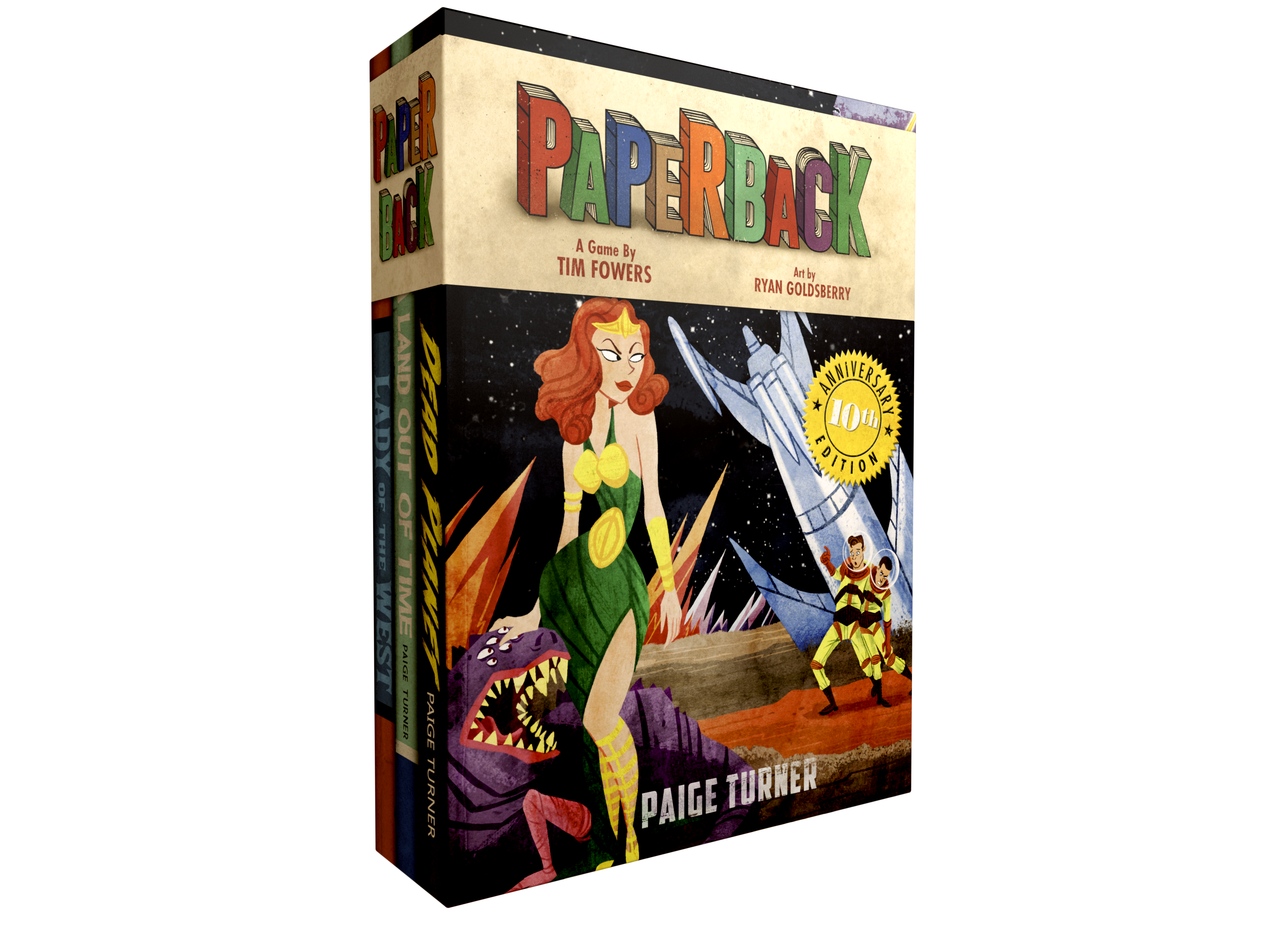
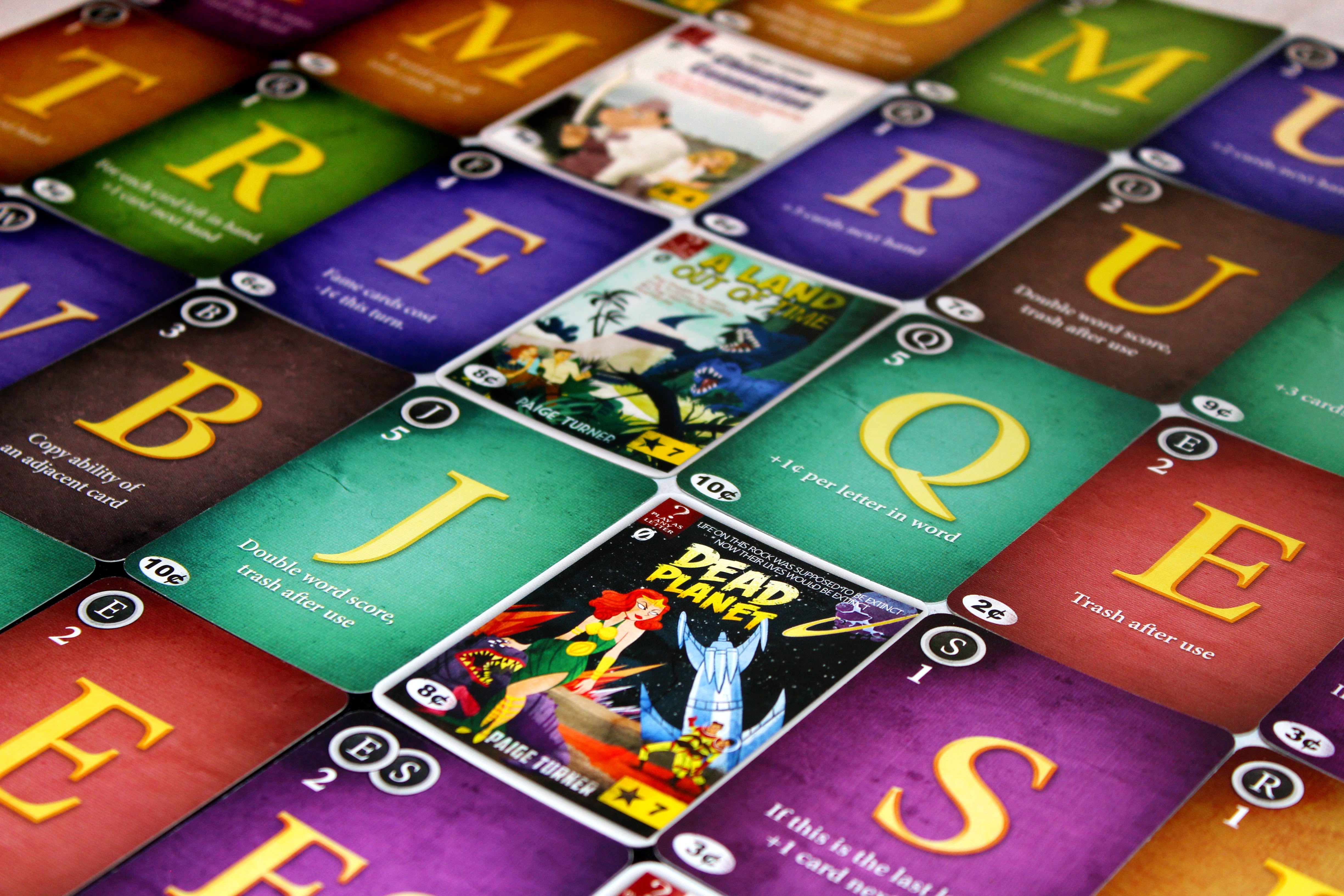
Now, the small-box bargains, because deck-building is the most wallet-friendly genre in the hobby. Star Realms (~$15) is the undisputed value king and the cheapest genuinely great deck-builder you can buy — full stop. Beyond it, two left-field gems deserve a shout. Paperback (Fowers Games, Tim Fowers, 2016, ~$30) is a deck-building word game: your cards are letters, you spell words to earn money, and you buy better letters with wild abilities — Scrabble and Dominion had a baby and it's delightful. Its sibling Hardback (~$35) is the slightly meatier 'prequel.' And Ascension (Stone Blade, Justin Gary et al., 2010, ~$40) deserves a mention as a fast, portable, infinitely-expanded combat-lite builder — though I'll be candid, it's been somewhat lapped by newer designs and feels a touch dated next to Star Realms at a higher price. For pure cheap-and-great, the answer keeps coming back to that fifteen-dollar space box.
A 12-card deck of excellent cards crushes a 25-card deck of decent ones, almost every time. Less is more, and most beginners over-buy.
From the rabbit hole
Real voices from players, reviewers, and the communities who know these games best.
review“You get all the satisfaction of Dominion without having to think at all. You got attack ships? BANG BANG BANG your opponent discards some health cards. Got money? QUICKLY GRAB GRAB GRAB the ship with the funniest name.”
Shut Up & Sit Down — Star Realms
review“Aeon's End is a cooperative game that explores the deckbuilding genre with a number of innovative mechanisms, including a variable turn order system that simulates the chaos of an attack, and deck management rules that require careful planning with every discarded card.”
Shut Up & Sit Down — Aeon's End
review“Dune: Imperium was one of two games to attempt to create a hybrid deck building and worker [placement] game in 2020... in my opinion it is better, does more, and is slightly cheaper than its competitor.”
Steve Mayne, GeekDaily.News (Meeple Mountain / Medium) — Dune: Imperium review
review“Following a Kickstarter campaign that raised nearly $4 million, the game delivers one of the most faithful video game adaptations in recent memory.”
Meeple Mountain — Slay the Spire: The Board Game review
review“Fort delivers a few clever twists on its simple deckbuilding gameplay, while its charming visuals and playful theme are truly easy to enjoy.”
Gameosity — Fort review
review“Trains is a great blend of deck-building like Dominion and track-laying... one significant addition is the Waste deck, which differentiates it from traditional deckbuilders that focus on deck thinning.”
Strange Assembly — Trains review
The picks
Some links below are affiliate links — as an Amazon Associate, Puzzlewick earns from qualifying purchases, at no extra cost to you. It never changes a pick.
 2 photos · swipe
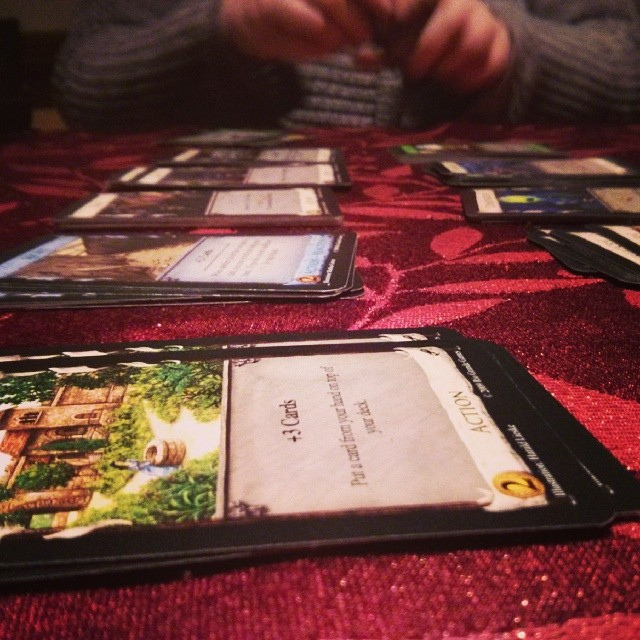
 Dominion (Second Edition)
The 2008 game that invented deck-building and won the 2009 Spiel des Jahres, still the cleanest expression of the idea. You start with ten weak cards and build a roaring engine from a shifting market of ten kingdom cards drawn from a pool of 25, so every session resets the math. The second edition streamlines the rules and swaps out the original's weakest cards. It is, by common consensus, close to a solitaire race — there's no board and interaction is light — but as a pure engine-building loop nothing else touches it. Buy it for the genre's foundational thrill and never apologize for the solitaire.
- The cleanest, most satisfying engine-building loop ever printed
- Near-infinite variety from swapping the 10 kingdom cards each game
- The reference standard that teaches the entire genre
- Plays like multiplayer solitaire — minimal direct interaction
- Abstract theme won't carry new players the way a board game does
- Needs the recommended sets (or some study) to avoid dull money-only games
 2 photos · swipe
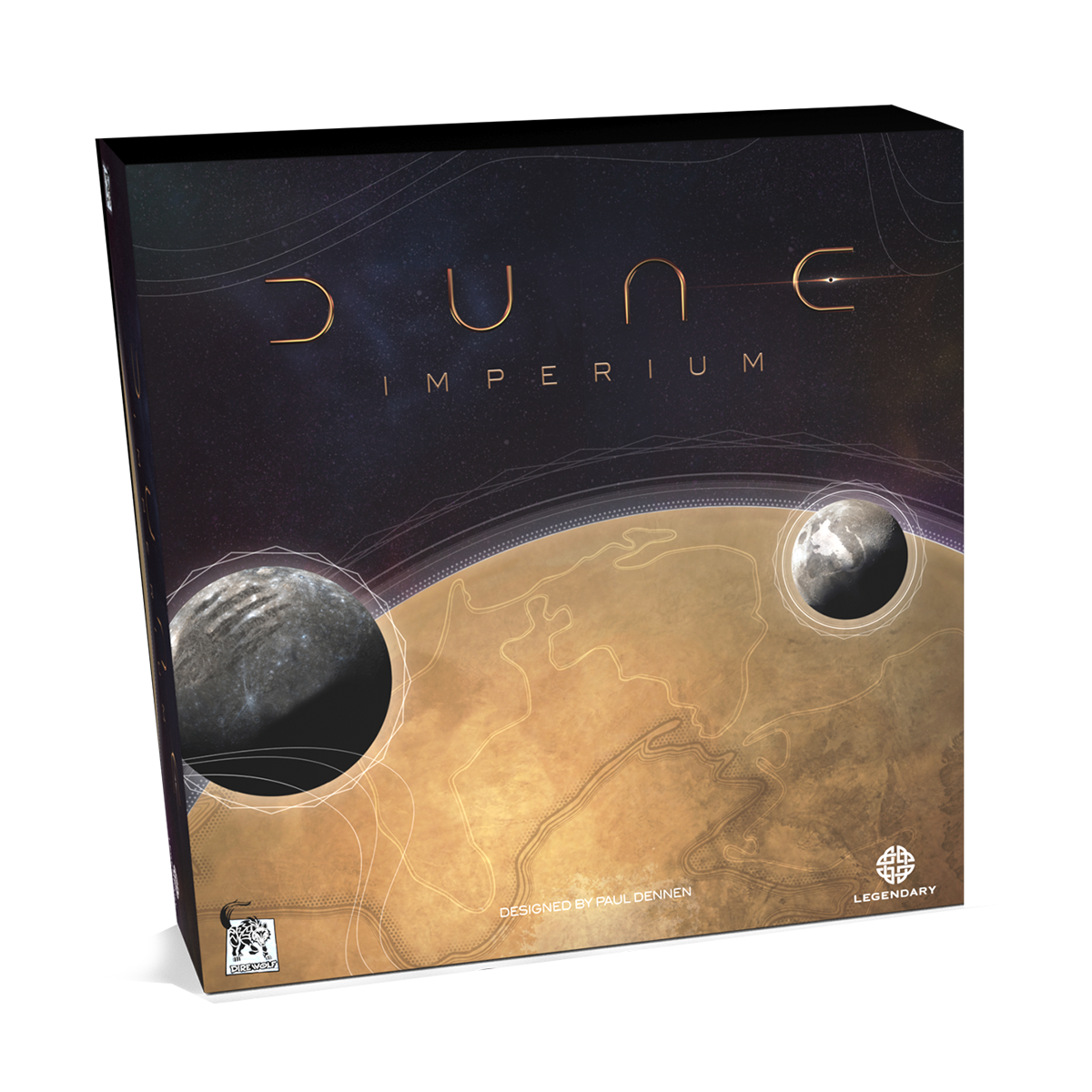
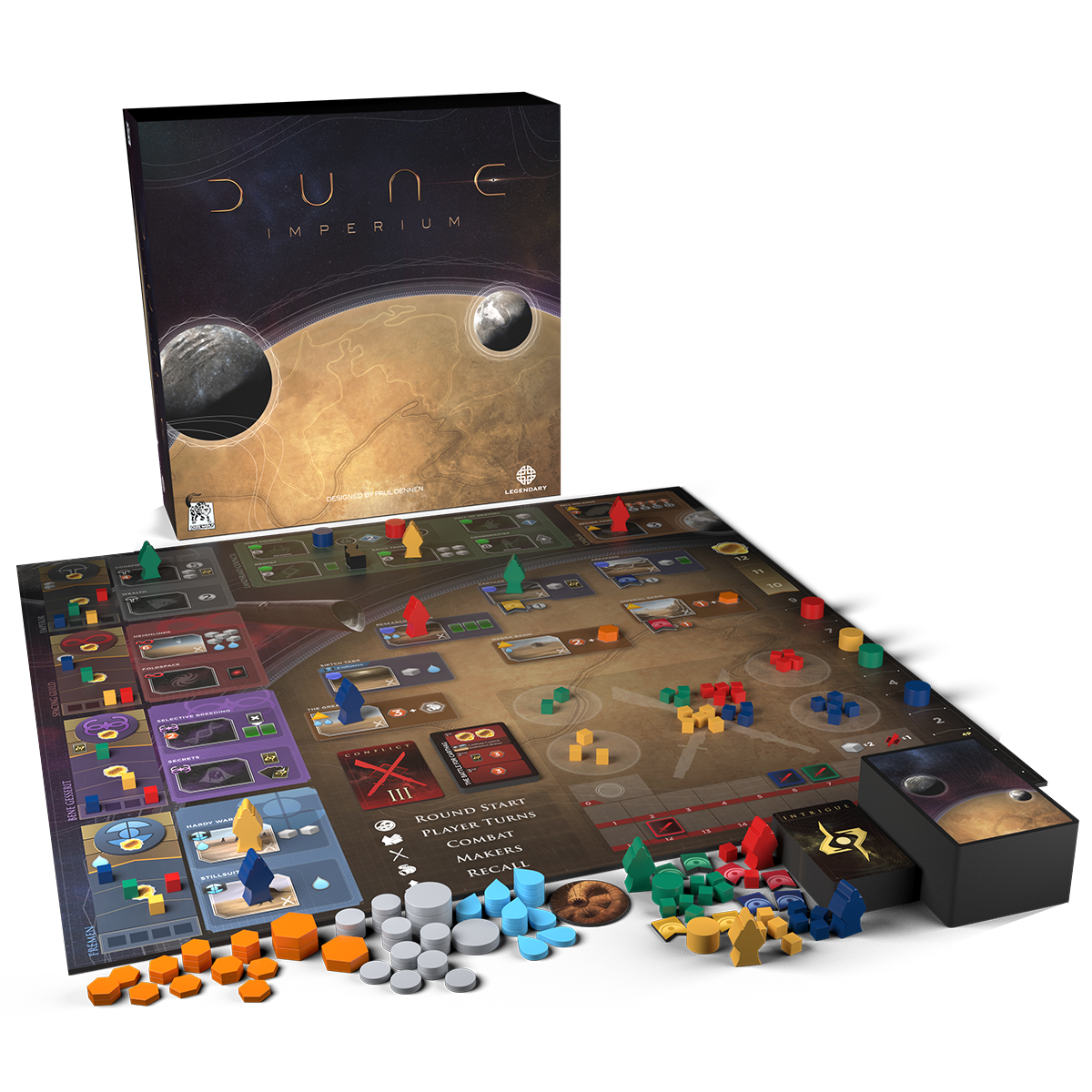
 Dune: Imperium
Paul Dennen's 2020 masterpiece staples deck-building to worker placement so tightly that neither works without the other: your cards dictate which board spaces your workers can claim, so improving your deck literally unlocks the map. It earned a Kennerspiel des Jahres nomination and a devoted following by curing the genre's two great weaknesses — players compete for limited worker spots and clash in a combat track, so it's never solitaire and the engine never builds in a vacuum. The standalone Dune: Imperium – Uprising (2023, 1-6 players) is the bigger, more refined version with spies. The single best modern entry point for strategy gamers who find pure builders bloodless.
- Deck-building and worker placement genuinely depend on each other
- Real player interaction and conflict, no multiplayer-solitaire feel
- Excellent solo mode; standalone Uprising scales to six players
- Heavier and longer (60-120 min) than a pure deck-builder
- Two systems to learn means a steeper teach for newcomers
- Theme-forward design means some randomness in the conflict track
 3 photos · swipe
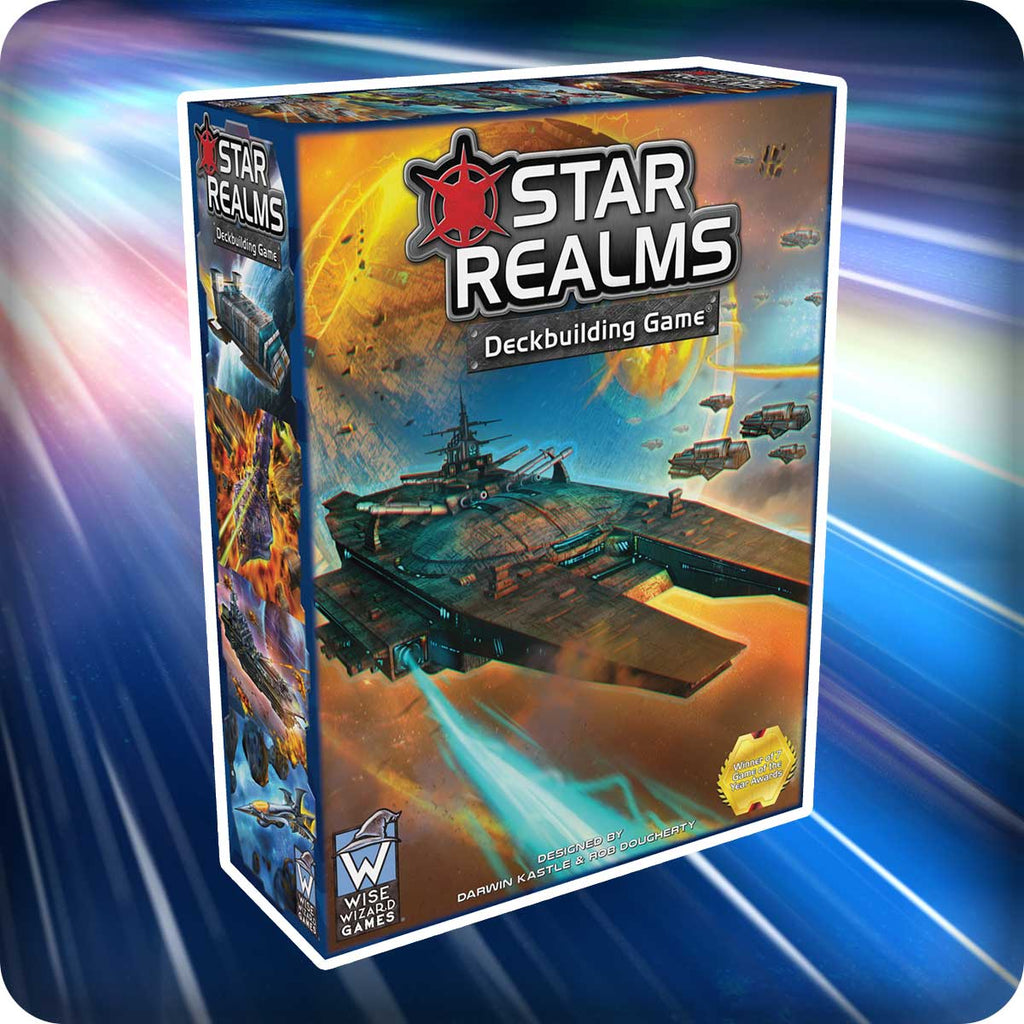
 Star Realms
Designed by two Magic: The Gathering Hall of Famers, this is a 15-20 minute two-player knife fight that costs about fifteen dollars and punches far above its price. You grind your opponent's Authority from 50 to zero using ships and bases bought from a shared trade row, with four factions pushing aggression, healing, card draw, or deck-thinning. Shut Up & Sit Down praised it for delivering Dominion's satisfaction 'without having to think at all' — high praise for a filler this fast and reactive. It's light, not a main course, and the base box is strictly two players; for 1-4 players or solo/co-op, buy the standalone Star Realms: Frontiers instead.
- The best value in the genre — superb game for about $15
- Fast, vicious, directly confrontational two-player tension
- Excellent companion app for solo practice and remote play
- Base box is two-player only (get Frontiers for more counts)
- Light filler weight — few agonizing decisions
- Card-only components are functional, not lavish
 2 photos · swipe
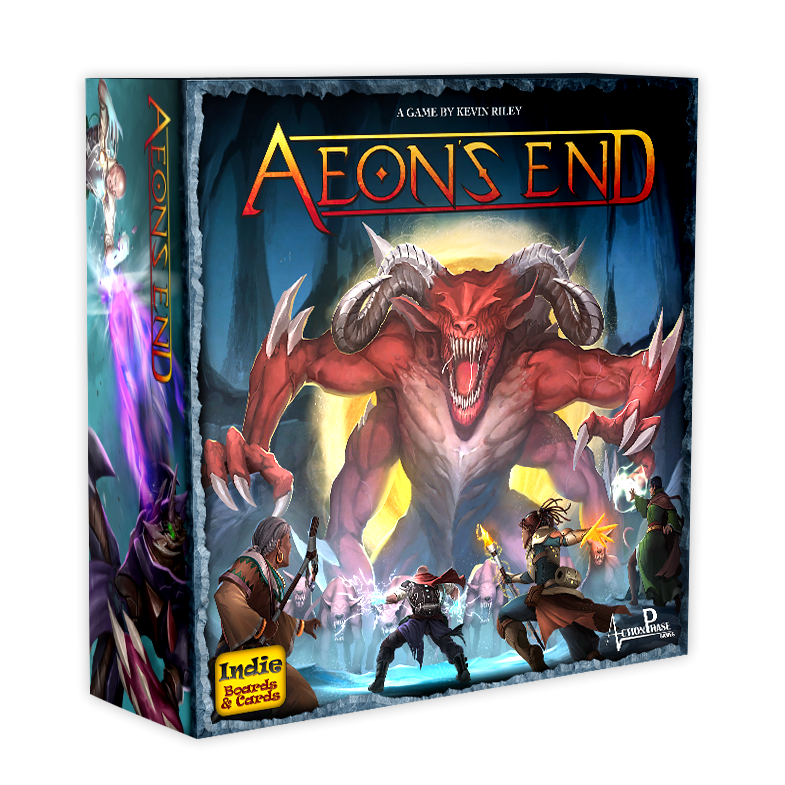
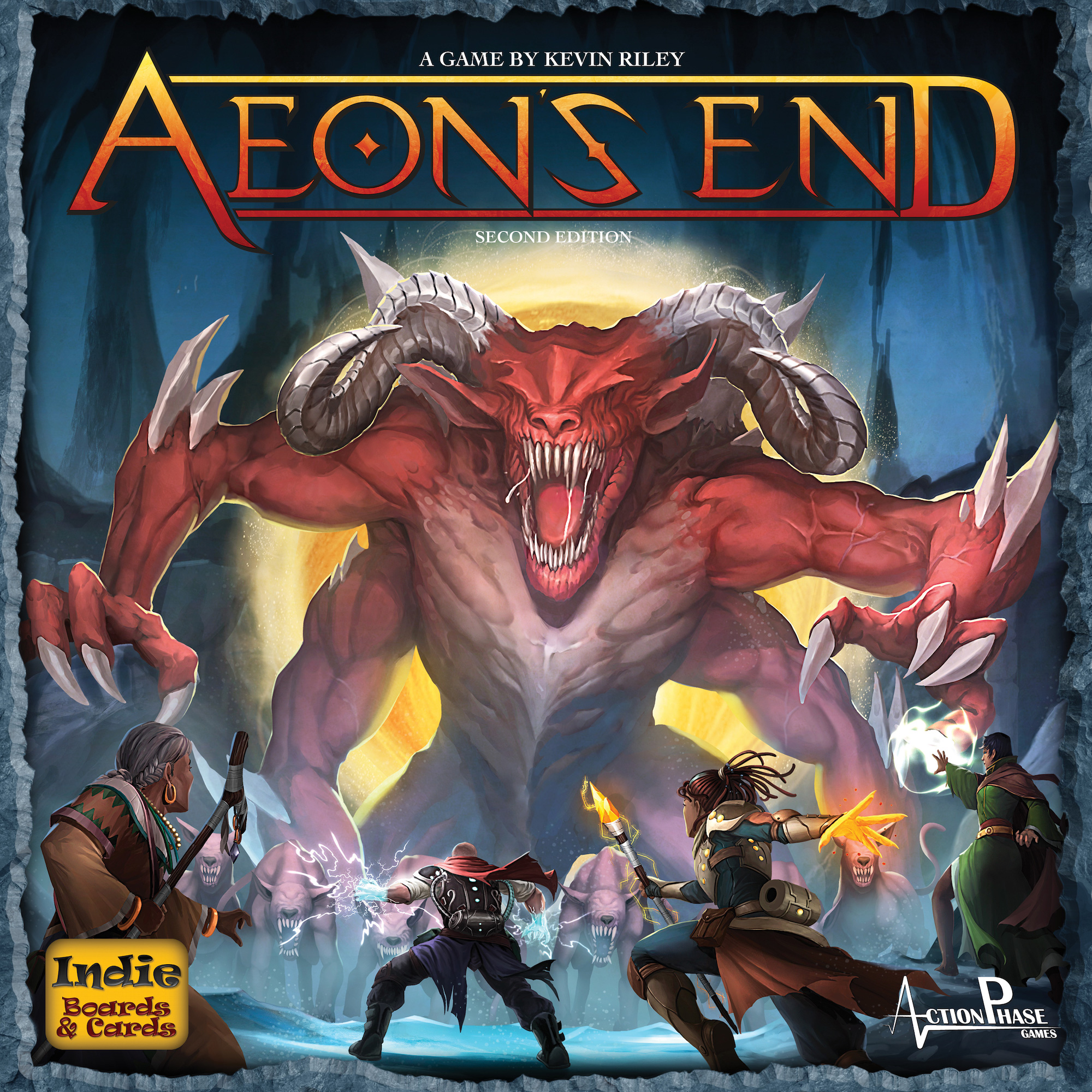
 Aeon's End
Kevin Riley's co-op boss-fight is one of the smartest deck-builders ever made and a top-tier solo game. You play breach mages defending the city of Gravehold against a Nemesis that attacks on an escalating schedule, and the genius rule is that you never shuffle your deck — your discard flips over in the exact order you discarded it, turning sequencing into a deterministic planning puzzle. A separate shuffled turn-order deck means you never know if you'll act twice or the Nemesis will, forcing resilient play over scripted optimal lines. Each Nemesis is effectively a different puzzle, which is where the deep replayability lives. The base components are deliberately spartan — you're paying for the system, not the plastic.
- The never-shuffle deck makes every discard a planning decision
- Outstanding solo and co-op; genuinely threatens a stalled engine
- Huge variety of Nemeses keeps the puzzle fresh for years
- Bare-bones components for the price
- Variable turn order can frustrate players who want control
- Co-op only — no competitive mode
 3 photos · swipe
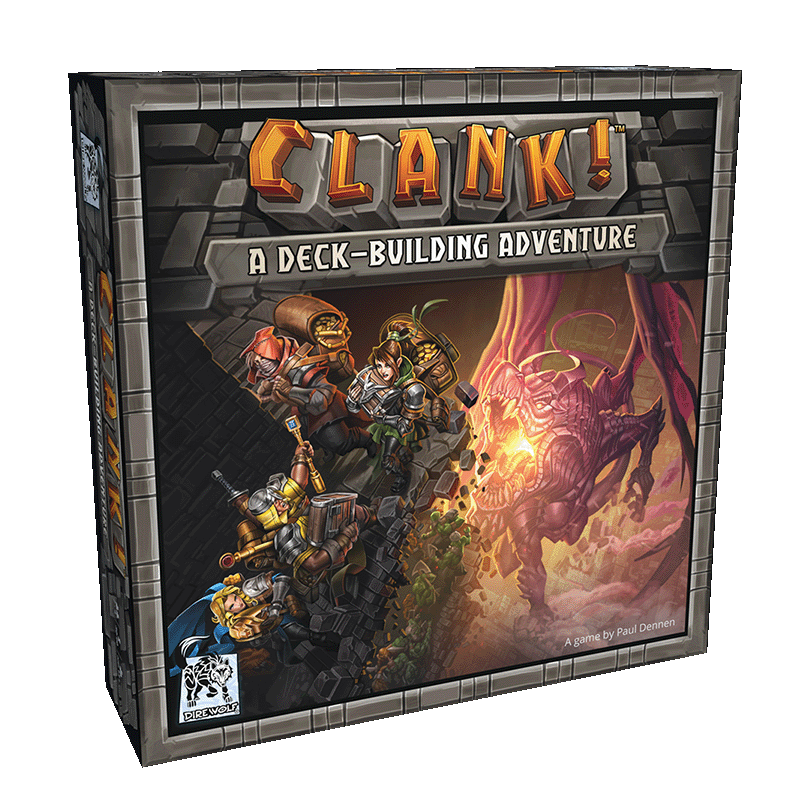
 Clank!: A Deck-Building Adventure
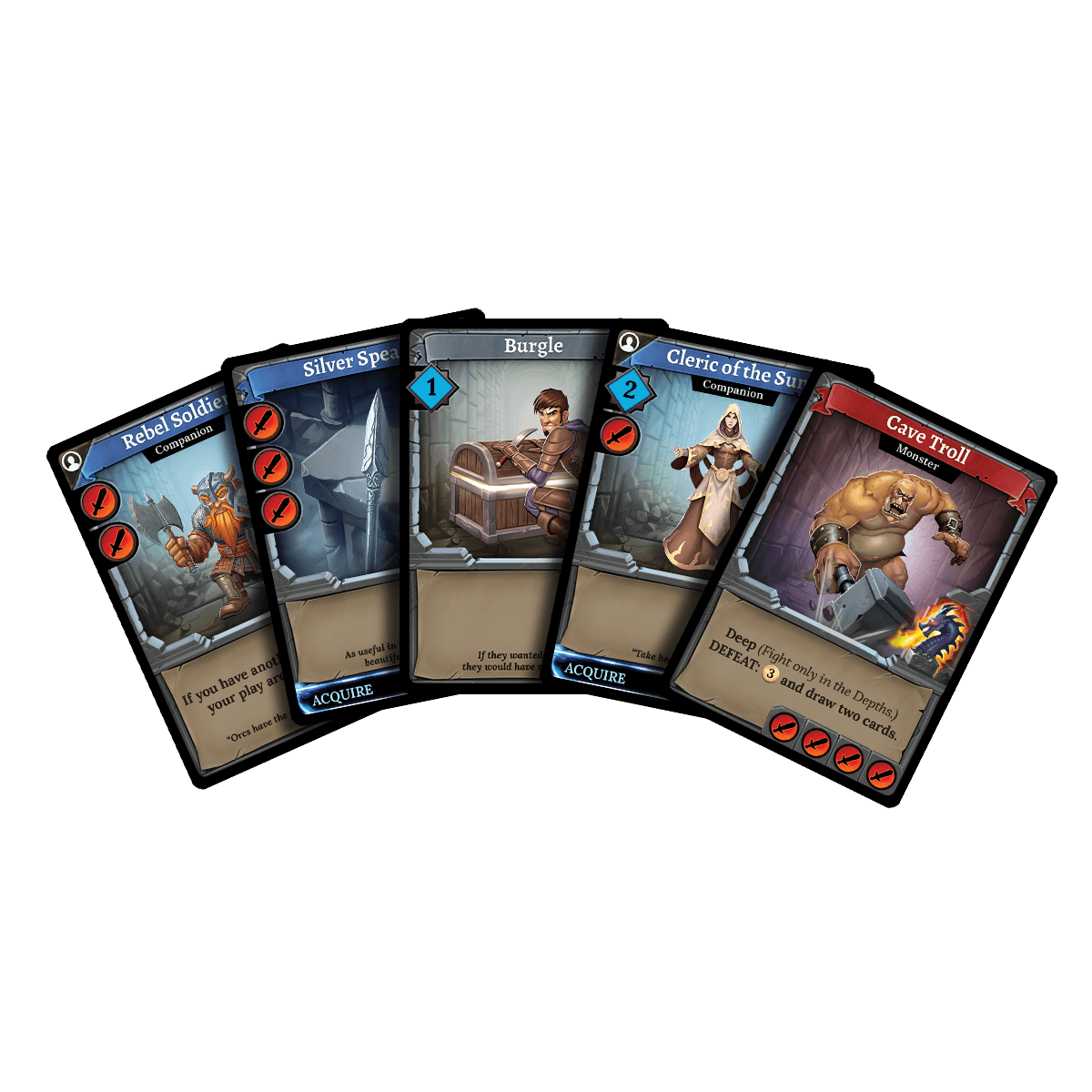
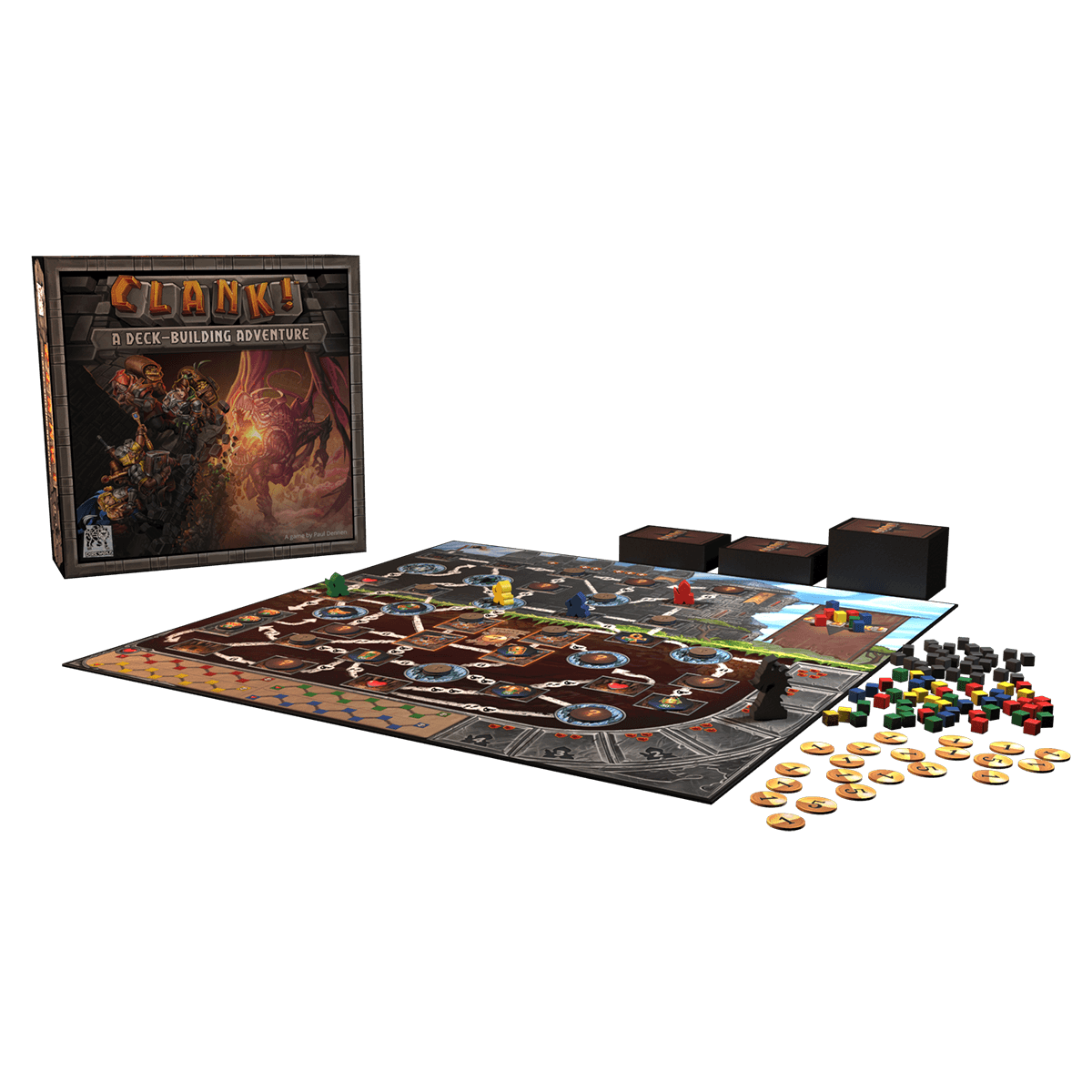
Paul Dennen's 2016 hit is the finest on-ramp to the genre because the theme teaches the math: you're a thief deck-building your way deeper into a dragon's mountain to steal an artifact and escape before the dragon eats you, and loud cards make 'clank' that fills the dragon's attack bag. New players grasp 'I need a better card to reach the exit in time' instantly, and the push-your-luck escape gives every game a pounding finish pure builders lack. The board turns internal optimization into a visible, shared race. Standalone siblings (Clank! In! Space!, the dungeon-generating Clank! Catacombs) give hooked groups somewhere to go.
- Theme and board make deck-building immediately intuitive for newcomers
- Press-your-luck escape delivers genuine end-game tension
- Several standalone versions extend the system without rebuying
- Larger footprint and longer setup than a card-only builder
- Some luck in the dragon-attack bag draws
- Pricier than the small-box classics
 2 photos · swipe
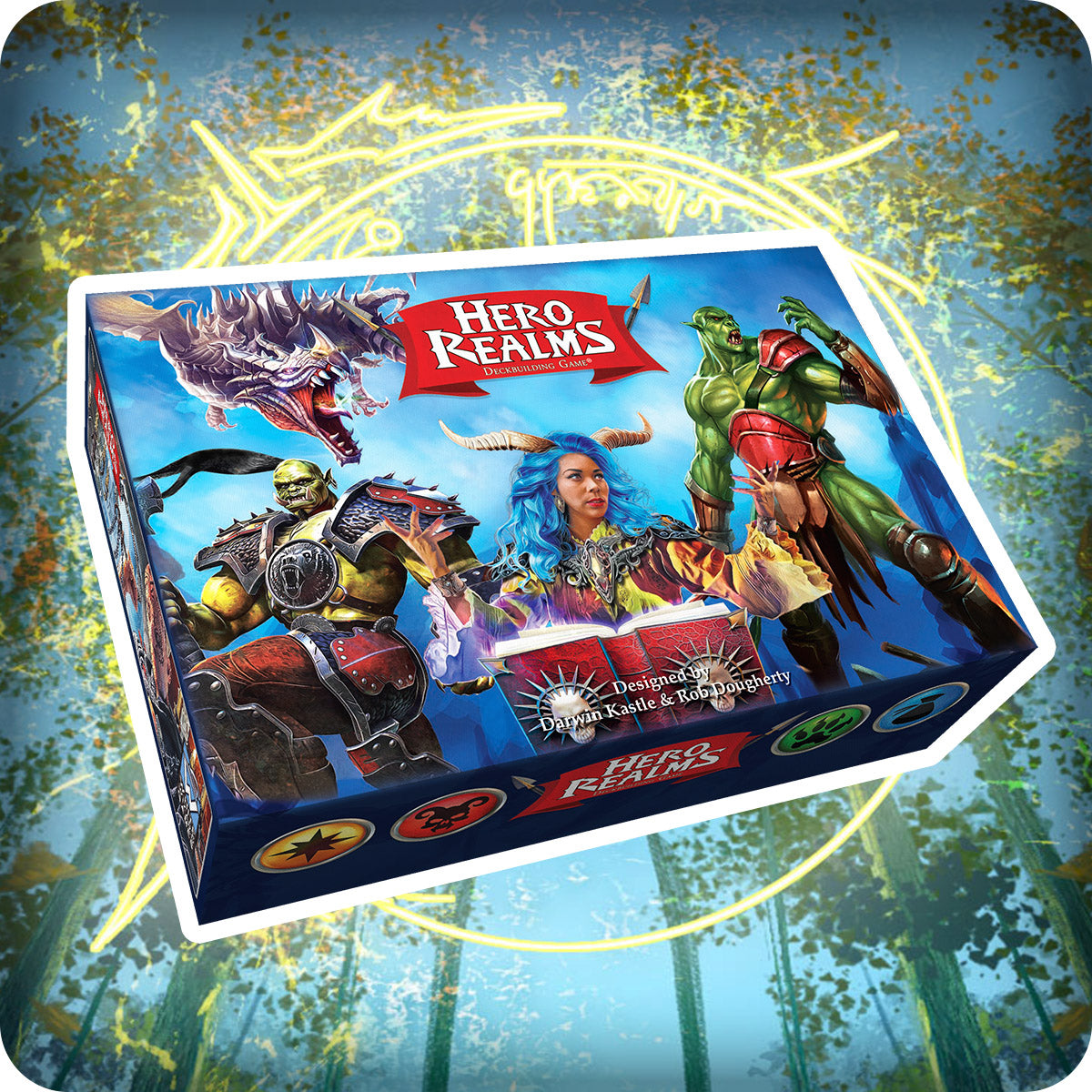
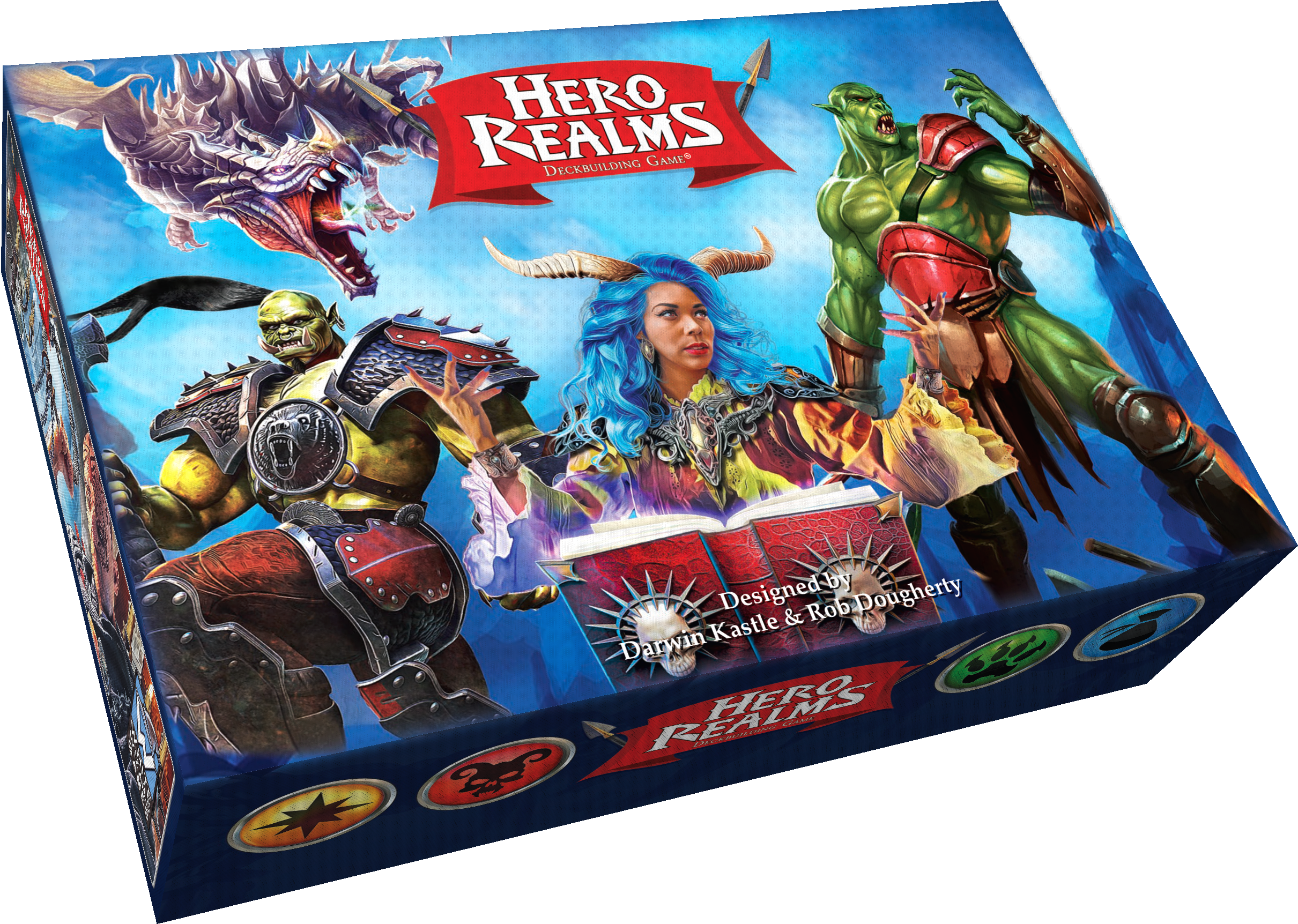
 Hero Realms
The fantasy sibling of Star Realms from the same designers, and arguably the more flexible purchase: the base game supports 1-4 players out of the box, where original Star Realms is two-player only. You build a deck of fighters and items, grind opponents' Health to zero, and can bolt on optional character classes (Cleric, Fighter, Ranger, Thief, Wizard) or cooperative campaign decks that let you earn experience between sessions. It's a mechanical cousin rather than a clone, with sword-and-sorcery flavor in place of lasers. Light, fast, and a tremendous value at around twenty dollars, with a deep ecosystem of expansions if it sticks.
- 1-4 players in the base box, plus solo and co-op campaign options
- Cheap, fast, and endlessly expandable with class/character packs
- Sword-and-sorcery theme for players who bounce off sci-fi
- Light filler weight, same as Star Realms
- Best experiences are locked behind add-on character/campaign packs
- Plain card components
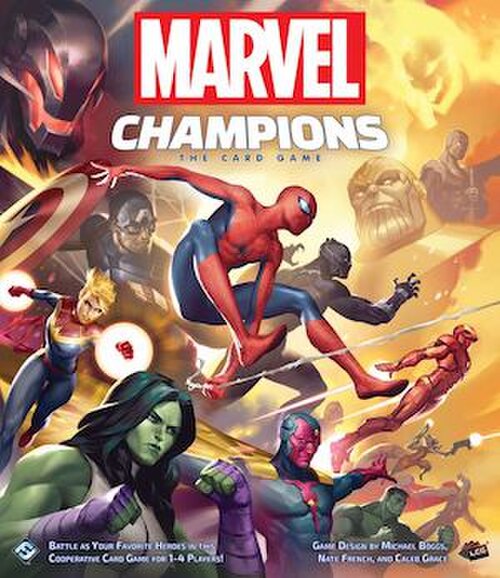
Marvel Champions: The Card Game
An important asterisk pick: Marvel Champions is a Living Card Game, not a true in-play deck-builder — you construct your hero's deck before you sit down, then play it cooperatively against a scripted villain rather than buying cards mid-game. I include it because the line is genuinely blurry and fans of building card engines will love it. You pilot heroes like Spider-Man or Captain Marvel, flipping between hero and alter-ego forms, racing to stop the villain's scheme. The deck-customization depth is enormous and the co-op pacing applies real pressure. Just know what you're buying: superb deck-construction and cooperative play, but the building happens at the table before the game, not during it.
- Deep, satisfying deck-construction across many heroes and aspects
- Excellent cooperative pacing with genuine villain pressure
- Solo-friendly and endlessly expandable
- Not a true deck-builder — you build before play, not during it
- The LCG model means ongoing spend for new heroes and scenarios
- Upfront learning and setup are heavier than a boxed builder
 2 photos · swipe
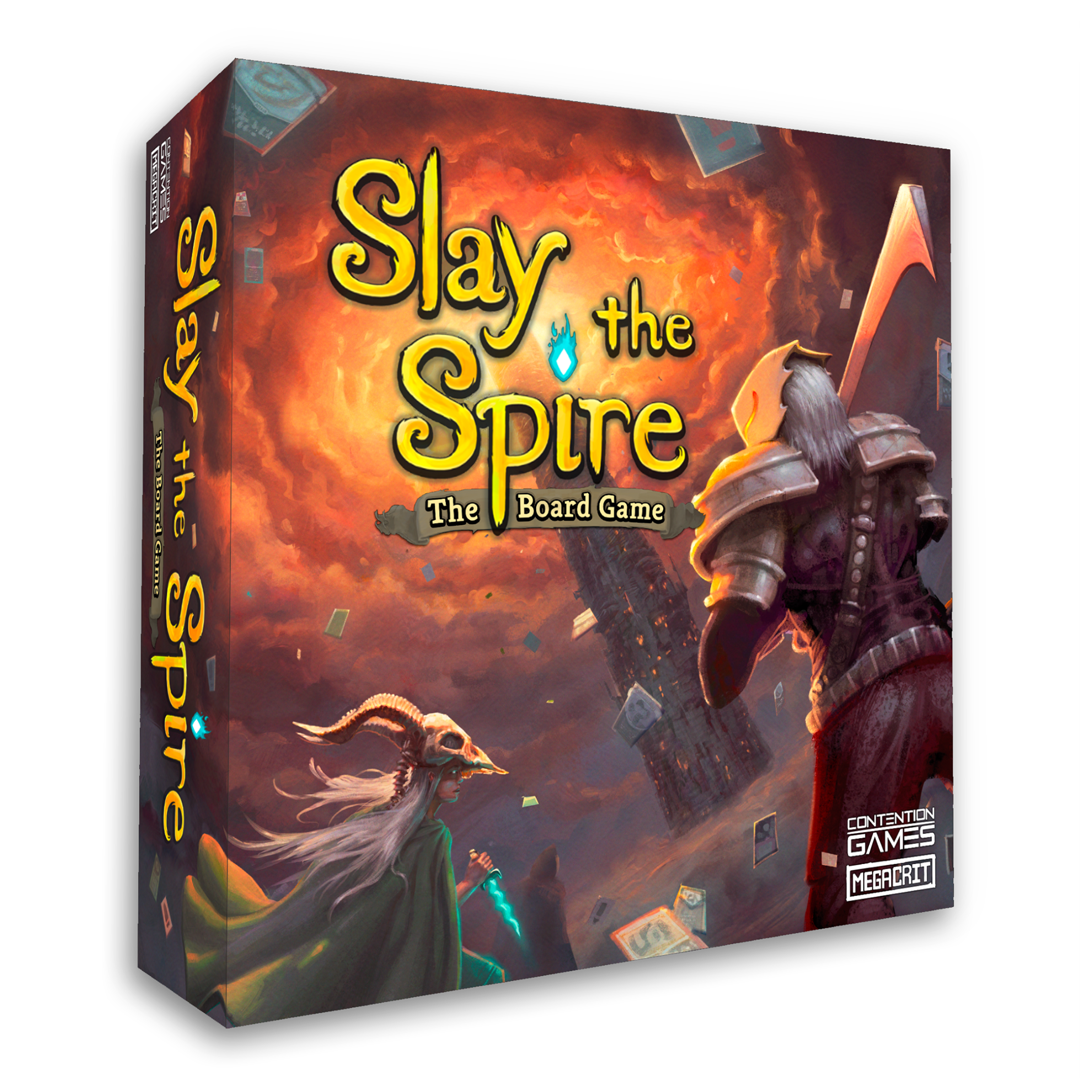
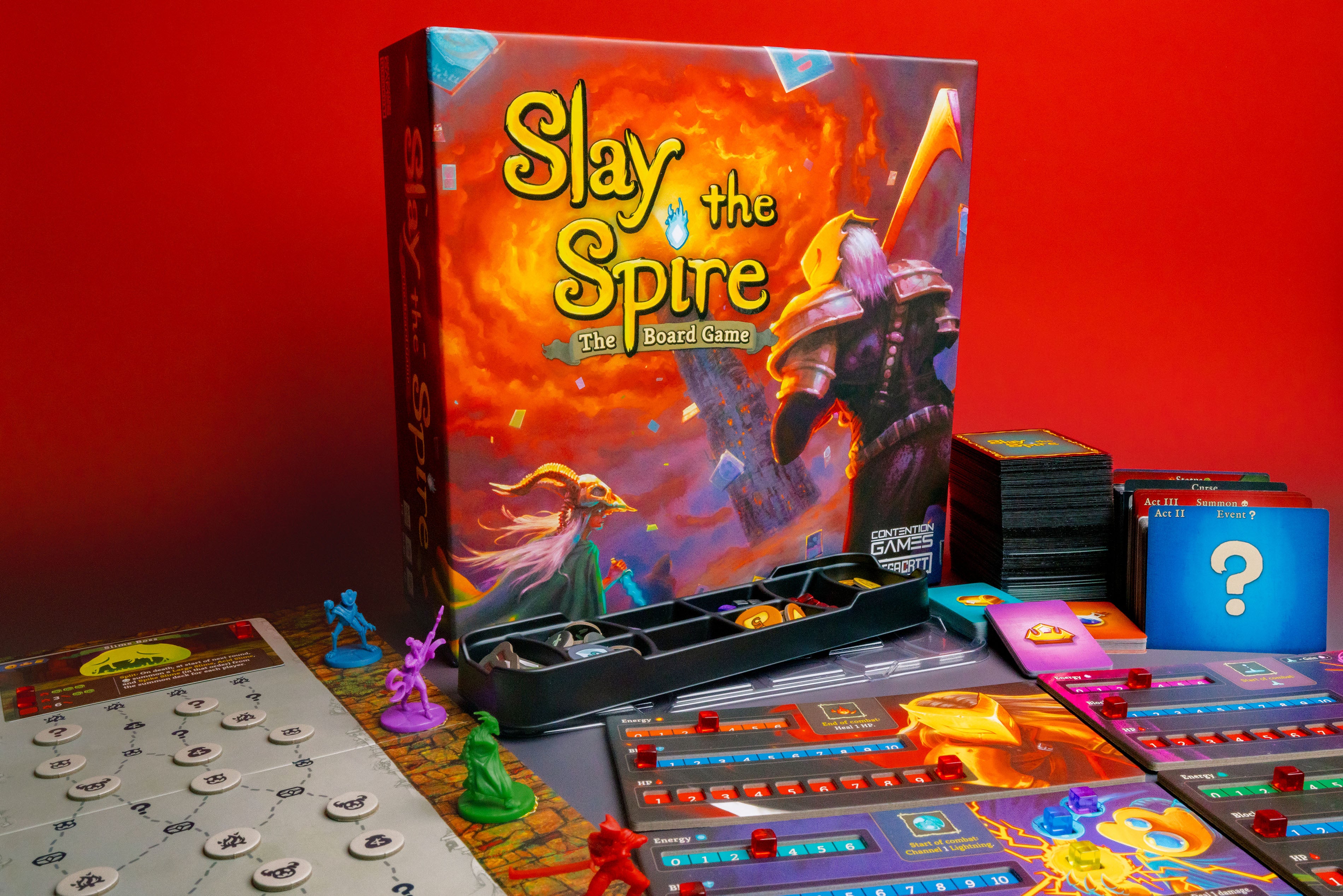
 Slay the Spire: The Board Game
A remarkably faithful tabletop port of Mega Crit's beloved roguelike deck-builder, released in 2024 after a near-$4-million Kickstarter. One to four players each pilot a distinct character with a unique card pool, building and upgrading a combat deck across randomized encounters and bosses through multiple acts — and when you die, you start the climb over, exactly like the video game. Upgrading cards by flipping them in their sleeves is a clever physical touch. It's the priciest entry here by a wide margin and it's a big, campaign-shaped commitment rather than a quick filler, so it's aimed at people who already love the source material or want a meaty solo/co-op roguelike. For that audience it delivers.
- Faithful, deep adaptation of a genre-defining video game
- Four distinct characters and roguelike runs give huge replayability
- Excellent solo and co-op campaign experience
- Expensive (~$115) and component-heavy
- Long, campaign-style commitment — not a casual filler
- Roguelike restart loop won't suit players who dislike losing progress
 2 photos · swipe
 Fort
Grant Rodiek's charming 2020 design is a deck-builder about being a kid collecting pizza and toys and building the coolest fort, wrapped in Kyle Ferrin's wonderful art. Its standout hook bites harder than it looks: cards you leave unused can be stolen by other players — if you don't play with your friends, why would they keep hanging out with you? — so the usual deck-builder advice to hoard gets punished. It plays in about 30 minutes and is meaner and cleverer than its cuddly looks suggest, which makes it a rare title that genuinely works for families and for adults who want something light with a twist. A strong gateway alternative to Clank! for younger or gentler tables.
- Clever 'use it or lose it' hook subverts standard deck-builder hoarding
- Delightful art and theme; family-friendly but not childish
- Quick 30-minute plays at a budget price
- Lighter strategic depth than the heavyweight builders
- The card-stealing tension can feel mean at very casual tables
- Less long-term expansion support than the big franchises
 2 photos · swipe
 Paperback
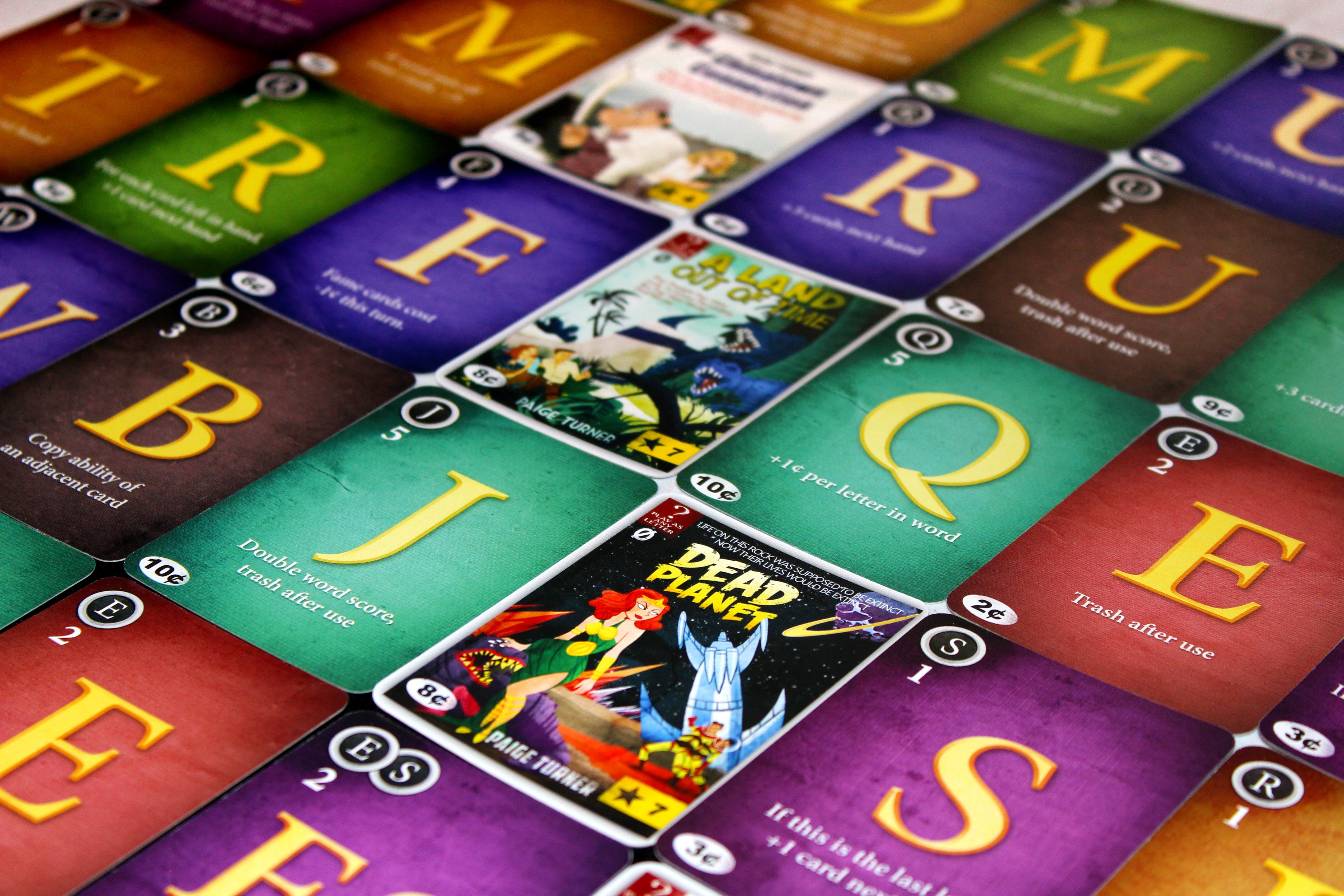
Tim Fowers' 2014 design is the genre's great left-field gem: a deck-building word game where your cards are letters. You spell words each turn to earn money, then spend it buying better letters that carry wild deck-building abilities, so you're simultaneously playing Scrabble and tuning an engine. It's a genuinely fresh fusion that lands with word-game lovers and deck-builder veterans alike, and at around thirty dollars it's an easy, distinctive addition to a shelf full of combat and dungeon games. Its slightly meatier 'prequel,' Hardback (~$35), uses the same engine with more ambitious cards. If everyone at your table can spell, this one earns its place fast.
- Truly original — deck-building married to a word game
- Engine abilities on letter cards add real strategic depth to spelling
- Distinctive, affordable, and great with word-game crowds
- Falls flat with players who dislike word games
- Score swings can feel uneven across vocabularies
- Lighter and more niche than the marquee builders
At a glance
| game | players | price | weight | best for |
|---|---|---|---|---|
| Dominion (2nd Ed.) | 2-4 | ~$45 | Medium | Best overall / purest engine builder |
| Dune: Imperium | 1-4 | ~$55 | Medium-Heavy | Best hybrid (deck-build + worker placement) |
| Star Realms | 2 (base) | ~$15 | Light | Best 2-player duel & cheapest great pick |
| Aeon's End | 1-4 | ~$50 | Medium | Best solo / cooperative |
| Clank! | 2-4 | ~$65 | Medium | Best gateway / beginner |
| Hero Realms | 1-4 | ~$20 | Light | Flexible counts on a budget |
| Marvel Champions (LCG) | 1-4 | ~$60 | Medium-Heavy | Superhero co-op (build before play) |
| Slay the Spire: TBG | 1-4 | ~$115 | Heavy | Campaign roguelike adaptation |
| Fort | 2-4 | ~$25 | Light | Best family / younger table |
| Paperback | 1-5 | ~$30 | Light-Medium | Best word-game builder |
Questions, answered
What is a deck-building game?
A deck-building game is one where every player starts with the same small, weak deck of cards, and the core of play is buying better cards from a shared market, shuffling them into your own deck, and drawing stronger hands as the game goes. The deck you build is your engine, your weapon, and usually your score all at once. Dominion (2008) invented the format, and it now spans competitive duels, cooperative boss-fights, and board-game hybrids.
What's the best deck-builder for beginners?
Clank!: A Deck-Building Adventure (Dire Wolf, ~$65). It hangs the deck-building loop on a dungeon-heist story — sneak into a dragon's mountain, steal treasure, escape before the dragon eats you — so newcomers feel the engine working before they understand the math. The theme teaches the mechanics. For younger or gentler tables, Fort (Leder Games, ~$25) is a lighter, charming alternative that plays in 30 minutes.
What's the best two-player deck-builder?
Star Realms (Wise Wizard Games, ~$15) is the best head-to-head deck-builder — a fast, vicious 15-20 minute space duel where you grind your opponent's life from 50 to zero. It's designed by two Magic: The Gathering Hall of Famers and costs about fifteen dollars. Note the base box is strictly two-player; if you want the same game for 1-4 players, buy the standalone Star Realms: Frontiers instead.
What's the best solo deck-builder?
Aeon's End (Indie Boards & Cards, ~$50), a cooperative boss-fight that plays superbly with one player. Its signature rule — you never shuffle your deck, so your discard returns in the exact order you discarded it — turns play into a deterministic planning puzzle that rewards the tight, repeatable optimization solo players love. Each Nemesis is a different challenge, giving years of replayability.
Is Dominion still worth buying in 2026?
Yes, if you want the genre at its purest. Dominion remains the cleanest, most satisfying engine-builder ever made, and the second edition tidied the rules and replaced the weakest cards. The honest caveat: it plays like 'multiplayer solitaire' — minimal direct interaction, no board. If you love heads-down engine optimization it's unbeatable; if you crave conflict and table-talk, a hybrid like Dune: Imperium will serve you better.
How is a deck-builder different from a TCG like Magic: The Gathering?
In a TCG like Magic, you buy random booster packs, collect cards over time, and build your deck at home before you play — the deck-building happens away from the table and costs ongoing money. In a deck-building board game, everyone starts equal from one fixed box and builds their deck during the game from a shared market. No collecting, no randomized purchases, no metagame — one box is the whole experience.
What's the cheapest good deck-builder?
Star Realms at roughly $15 is the cheapest genuinely great deck-builder, full stop — a complete, fast, two-player duel for about the price of a sandwich, with a free-to-try companion app. Hero Realms (~$20) is the next step up and adds 1-4 player support out of the box. No other entry point in the hobby gives you this much game per dollar.
What does 'thinning your deck' mean?
Thinning means deliberately removing your weak starting cards so your deck gets smaller and more concentrated, which makes you draw your best cards more often. Many games give you tools for it — Dominion's Chapel trashes cards permanently; Star Realms' Machine Cult scraps your starter cards. The counterintuitive truth: a 12-card deck of excellent cards beats a 25-card deck of decent ones almost every time. Most beginners over-buy and never thin.
What's the best deck-building hybrid?
Dune: Imperium (Dire Wolf, ~$55) is the best hybrid, fusing deck-building with worker placement so tightly that your cards determine which board spaces your workers can claim — improving your deck literally unlocks the map. It cures the genre's 'multiplayer solitaire' problem with real player conflict. The standalone Dune: Imperium – Uprising (1-6 players) is the bigger, more refined version. Clank! is the lighter, more universally lovable hybrid alternative.
Are Living Card Games like Marvel Champions actually deck-builders?
Not in the strict sense. In Marvel Champions you build and customize your hero's deck before you sit down, then play it cooperatively against a scripted villain — the building happens away from the table, not during the game, which is the defining trait of a true deck-builder. It's a close cousin and fans of building card engines love it, but if you specifically want to buy and shuffle cards mid-game, a boxed builder like Dominion or Aeon's End is what you're after.
How long do deck-building games take to play?
It ranges widely. Small-box combat builders like Star Realms and Hero Realms run 15-30 minutes. The pure classic Dominion is about 30 minutes. Hybrids like Clank! and Dune: Imperium run 60-120 minutes because of the added board systems. Campaign-scale games like Slay the Spire: The Board Game can run far longer across a full run. Most pick-up-and-play builders comfortably fit a weeknight.
Which deck-builder has the best replayability?
For variety per box, Dominion is hard to beat — it ships with 25 kingdom-card types and uses only 10 per game, so the strategy resets every session, and ~18 expansions extend it nearly infinitely. Among modern games, Aeon's End (each Nemesis is a fresh puzzle), Dune: Imperium (shifting market and conflicts), and Slay the Spire (randomized roguelike runs) all deliver enormous long-term replay. Your pick depends on whether you want competitive variety, co-op puzzles, or solo runs.
Robert's verdict
Here is how a Keeper would spend the money. If you can own one and want the genre's beating heart, buy Dominion (~$45) — it invented the form and still teaches it cleanest, solitaire flavor and all. If you mostly play with one other person, Star Realms (~$15) is the best fifteen dollars in the hobby and the cheapest great pick on this shelf. If you game alone or co-op, Aeon's End (~$50) and its never-shuffle planning puzzle is one of the smartest designs ever printed. If you're buying your second builder and want something fresher, go hybrid: Dune: Imperium (~$55) for strategy tables, Clank! (~$65) for the gateway thrill. And know your asterisks — Marvel Champions is a build-before-play LCG, and Quacks of Quedlinburg is a bag-builder cousin, not a deck-builder; both are wonderful, neither is quite the thing itself. Be honest with yourself about whether you want a meditative engine or a knife fight, because this genre now serves both beautifully. One last word, because it's the whole point of this place: Puzzlewick is a wonder-library, not a store. We stock nothing, take no markup, and run no affiliate skim. Every link above points at the maker or a real retailer, never at us. We just keep the shelf and point the way.
Sources: riograndegames.com, en.wikipedia.org, en.wikipedia.org, starrealms.com, starrealms.com, en.wikipedia.org, shop.wisewizardgames.com, indieboardsandcards.com, meeplemountain.com, coopboardgames.com, en.wikipedia.org, direwolfdigital.com, direwolfdigital.com, direwolfdigital.com, en.wikipedia.org, meeplemountain.com, en.wikipedia.org, en.wikipedia.org, boardgamegeek.com, contentiongames.com, ledergames.com, fowers.games, strangeassembly.com, en.wikipedia.org