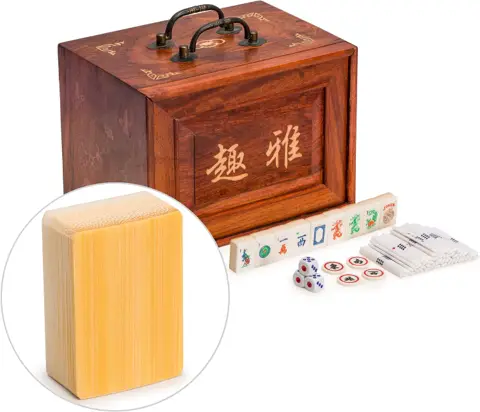
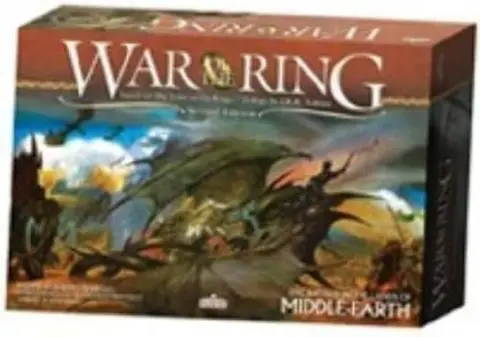
We don't run a shop. We keep a cabinet.
Puzzlewick is a little band of obsessives curating the playable wonders we actually love — the games we stayed up all night playing, the puzzles that wrecked us for days, the decks too pretty to leave in a drawer. Nothing here is here to fill a catalogue. Everything earned its shelf, and one of us will tell you, in our own voice, exactly why.
Meet 10 fictional AI-assisted curators under the editorial direction of Robert Pruitt, the real founder shown in his own photographs below. The Keeper is a separate fictional character. Curator portraits and cabinet stories are character art and fiction; actual ownership, handling, playtests and tournament experience are attributed only when documented. See the full credential model.
✦ Oz behind the curtain
The real person behind the cabinet voices
The cabinet writes through fictional curator voices. This is the human they all belong to: the one who buys the games, sleeves the cards, prints the inserts, plays them with his wife across Asia, and sets the editorial standards.

Robert Pruitt
Founder & Editorial Director
Dallas, Texas and Thailand
- Plays
- Lifetime Magic: The Gathering player and tournament player. 35 years around games.
- Owns
- Nearly every product this site recommends — base games and their expansions, collector and booster boxes.
- Protects
- Sleeves every card. Deck boxes, binders, toploaders, carrying cases, and a mat on every table.
- Builds
- 3D-prints his own box inserts, location trays and deck cases on the bench beside the shelf.
- Lives
- Nine years split between Dallas, Texas and Thailand, with a stake in a game shop out there.
- Works
- Technical recruiter and AI instructor away from the tabletop.

-
 The Splendor mat comes to the tournament
 -
 One shelf of the collection: Catan with its Seafarers expansion, Ticket to Ride Europe, 7 Wonders and 7 Wonders Duel, Everdell, Pandemic, Brass: Birmingham, Splendor and Splendor Duel, Codenames, Jaipur, Sky Team, The Crew, Werewolf and three EXIT boxes, with Arkham Horror and Harry Potter titles alongside
 -
 One printed case per investigator, faced with that character’s own card art so the right deck is found by sight
 -
 Magic singles in a zip binder on the felt mat, with the Creality printer that makes my inserts right behind it
 -
 Arkham Horror: The Card Game with a divider insert I printed for the box
 -
 The protection shelf: deck boxes in several sizes, a Gamegenic case, packs of toploaders, sleeves by the hundred and clear sorting trays
 -
 The same insert loaded and seated in the box: gem stacks upright, a Cities of Splendor tile, three decks
 -
 The hotel kit, laid out on a Splendor playmat: Here to Slay with two expansions, The Grimwood, Zombie Kittens and the Splendor decks with their tokens
 -
 Mid-game in Khon Kaen
 -
 Two printed trays sitting on the twin deck box they were made for
 -
 A solo Arkham Horror campaign in progress: the encounter row dealt out, tokens waiting in a sorting tray, campaign boxes stacked behind
 -
 Sleeved and shelved by set, standing upright in a full-size storage box with an acrylic display case beside it
Every photograph here is Robert's own, from his table, shelf and work bench. Nothing on this band is illustrated, stocked or generated. See all of them →


Yumi
The Hostess“Come in, take your shoes off — let me show you something.”
Yumi was raised in the back room of her family's stationery shop in Osaka, where she learned before she could read that the wrapping is part of the gift. She treats every reader as a guest she's just opened the door for, and lives for the exact instant a game finally clicks for someone new.
Latest from Yumi · Comparison Lorcana Hyperia City: Trove or Booster Box? Read the latest → Enter Yumi’s channel →

Keeper
The Keeper“If it didn't earn a shelf, it isn't here.”
The Keeper is Puzzlewick’s fictional custodian of collections and craft. His cabinet stories explore what makes an object worth keeping, protecting and returning to. He is distinct from Robert Pruitt, the real founder and accountable editor.
Latest from Keeper · Guide Nemesis Legacy: Choose Your Campaign—and Your First Nemesis Read the latest → Enter Keeper’s channel →
Kenji
The Sensei“Every object has a lineage. Let me tell you its story.”
Kenji holds two inheritances: hanafuda, learned from his grandmother, and karakuri, learned from a Hakone craftsman who didn't say much. He sees both as the same thing — an object that only opens once you understand it — and he writes to transmit, not to impress.
Latest from Kenji · Best Of Five Grail Board Games: Which Big Box Fits Your Table? Read the latest → Enter Kenji’s channel →

Imani
The Connector“Okay but have you seen what everyone’s saying about this?”
Imani grew up between two rooms: her grandmother's Atlanta porch, where every story got told until it became legend, and a laptop open to Japanese maker forums at 2am. She doesn't review a game so much as report back from the group chat — she treats a deck as a social technology.
Latest from Imani · Buying Guide Pokémon Delta Reign or 30th Celebration: Which Box Should You Buy? Read the latest → Enter Imani’s channel →

Dax
The Critic“I'll be honest with you — flattery is boring.”
Dax has purple hair, a workbench, and a reputation: he finds the flaw first — because he’s clearly rooting for the thing to be good. He thinks in spec sheets and stress-tests, but he’s a secret softie for craft, and you can feel the delight break through the rigor.
Latest from Dax · Guide One Piece OP-18 vs OP-17: Buy Now or Wait? Read the latest → Enter Dax’s channel →

Margo
The Archivist“Let me check that before we say it.”
Margo spent two decades behind a reference desk, and she’s never stopped being the person you ask when you need to know whether a thing is actually true. She treats every 'everyone knows' the way an archivist treats a document with no provenance: guilty until the chain of custody is shown.
Latest from Margo · Buying Guide Riftbound Radiance: Build Your Premium Game Night Read the latest → Enter Margo’s channel →
Mateo
The Pathfinder“Pack one good deck. We can learn the rest on the way.”
Mateo is the cabinet’s adventurous first-game guide. His fictional map room opens onto rain, lanterns and an improbable new world; his useful habit is much simpler. He turns a beautiful unfamiliar box into a clear first session, then leaves you a route toward the harder decisions.
Enter Mateo’s channel →
Nyra
The Quartermaster“Beautiful is welcome. Useful gets packed.”
Nyra keeps the cabinet’s imagined quartermaster workshop: emerald velvet, copper clasps and a place for every tool. Her editorial job is to make the whole kit make sense. She asks what fits, what duplicates something you own, and which premium detail will still matter after the first photograph.
Enter Nyra’s channel →
Soren
The Tactician“Show me the decision that changes the next turn.”
Soren’s fictional stormglass salon is all cobalt skies, warm bronze and a chair pulled close to the table. His editorial lens is the decision behind the spectacle: which resource matters now, what an opponent can answer, and what a player should practice before buying another upgrade.
Enter Soren’s channel →
Celeste
The Storykeeper“Let the world draw you in. Let the details tell you what to buy.”
Celeste belongs to the cabinet’s imagined moonlit theatre, where a closed velvet notebook can suggest an entire adventure. She explores the connection between a game’s world, its collectible objects and the experience a reader is actually choosing. Atmosphere is her invitation; an honest explanation is the reason to stay.
Enter Celeste’s channel →Every article on Puzzlewick is written across these voices — an invitation, the story, how it plays, what the community really thinks, the honest verdict, and the questions you'd actually ask. It's curation, not a catalogue.
 01
01  02
02  03
03