Arcs Review: The Trick-Taking Space Opera That Will Either Hook You or Hurt You
Cole Wehrle stuffed a 4X space empire into a 60-card trick-taking game, then handed you the bill emotionally. A verdict-forward deep-dive on why Arcs is brilliant, mean, and not for everyone — and how to lose your first game with dignity.

AI-assisted curator persona · research and editorial responsibility: Robert Pruitt · how this guide was made
Last editorial refresh: 2026-08-11 Gold-standard QA: 2026-08-11 18 sources reviewed Affiliate links checked during gold-standard pass

The short answer
Buy it if you want one of the sharpest, most original strategy games of the decade and you have a group that can take a punch — Arcs is a 2-4 player, 60-120 minute tactical space opera that turns trick-taking into a knife fight, and it's worth every dollar of its sub-$60 base price. Skip it if your table wants a serene engine-builder where the leader is obvious and nobody gets ambushed; Arcs is gleefully swingy and tactical to the bone, and the people who bounce off it bounce hard. It is not a beginner's gateway and it is not Eclipse. It's better than both at being itself.
Decision map
Choose in thirty seconds
Strategy players who want a complete, original, top-tier space-opera 4X that teaches in minutes and finishes in 90 — and who have a group that can take a punch.
Owners who fell in love with the base system and want a sprawling, persistent, Wehrle-grade narrative saga rather than a balanced competitive contest.
Players who want more asymmetric variety in the base competitive game without committing to a full narrative campaign.
Here's the flaw, up front, because I respect you: Arcs can make a losing player feel like a punching bag. There are rounds where someone declares an ambition, the table erupts into a free-for-all, your fleet gets turned into someone else's trophy pile, and you sit there holding a hand of cards that lets you do approximately nothing useful. Wehrle dialed back the kingmaking that made his earlier games (Root, Oath) so notorious, but he did not remove the meanness. He weaponized it.
Now let me earn your trust back, because I've shelved this game three times and pulled it back out four. Arcs is the rare design that does something genuinely new — it makes a trick-taking card game do the job that a sprawling 4X usually needs a four-hour table and a tech tree to accomplish. It is fast. It is gorgeous (Kyle Ferrin's art again). And underneath the chaos is a clockwork of constraint and timing so tight that once it clicks, every other 'take that' game starts to feel sloppy by comparison. This is a deep-dive for the person standing in the FLGS holding the box, asking the only question that matters: is this brilliant, or is it just going to make my friends mad? The answer, annoyingly, is yes.
Start here, then go deeper
You are in the right cabinet.
 ✦ Topic PathBoard Game Buying Guides: compare the whole shelfStart with the decision, not the shelf. These guides compare the games, editions, expansions, player counts, and costs people...
 Deep DiveEarthborne Rangers Review: The Cozy-Ecology Card Adventure Where Nobody Wants to Hurt YouPull up a chair, friend. Earthborne Rangers is the open-world co-op card game where the wilderness is the welcome, not the war — a...
 Deep DiveEclipse: Second Dawn for the Galaxy — The 4X Space Epic Worth Clearing the Whole Table ForA full galaxy of exploration, research, conquest, and diplomacy running on a famously elegant action-disc economy — and the version...
What is Arcs, and why is trick-taking doing a 4X game's job?

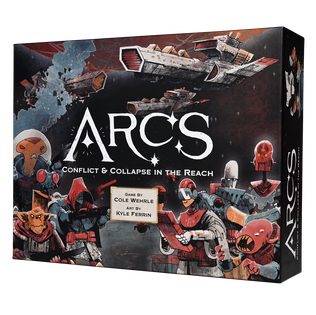
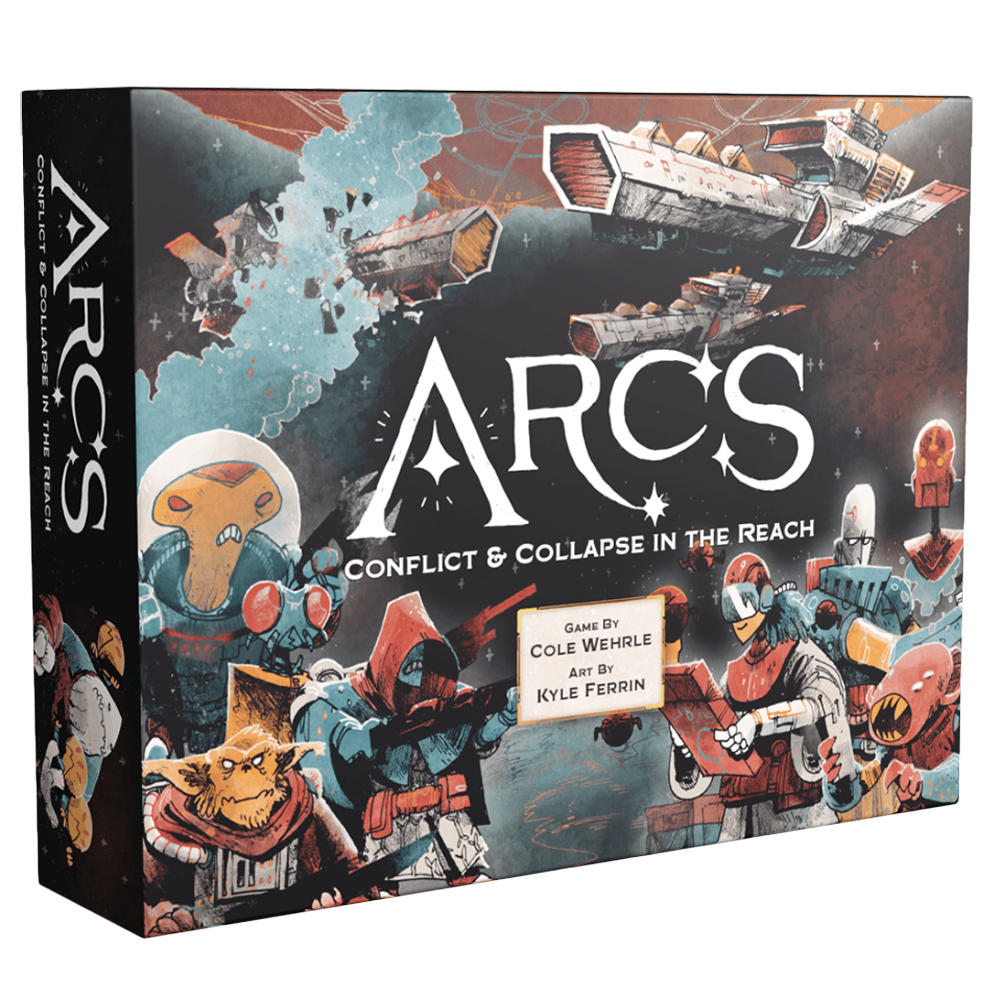
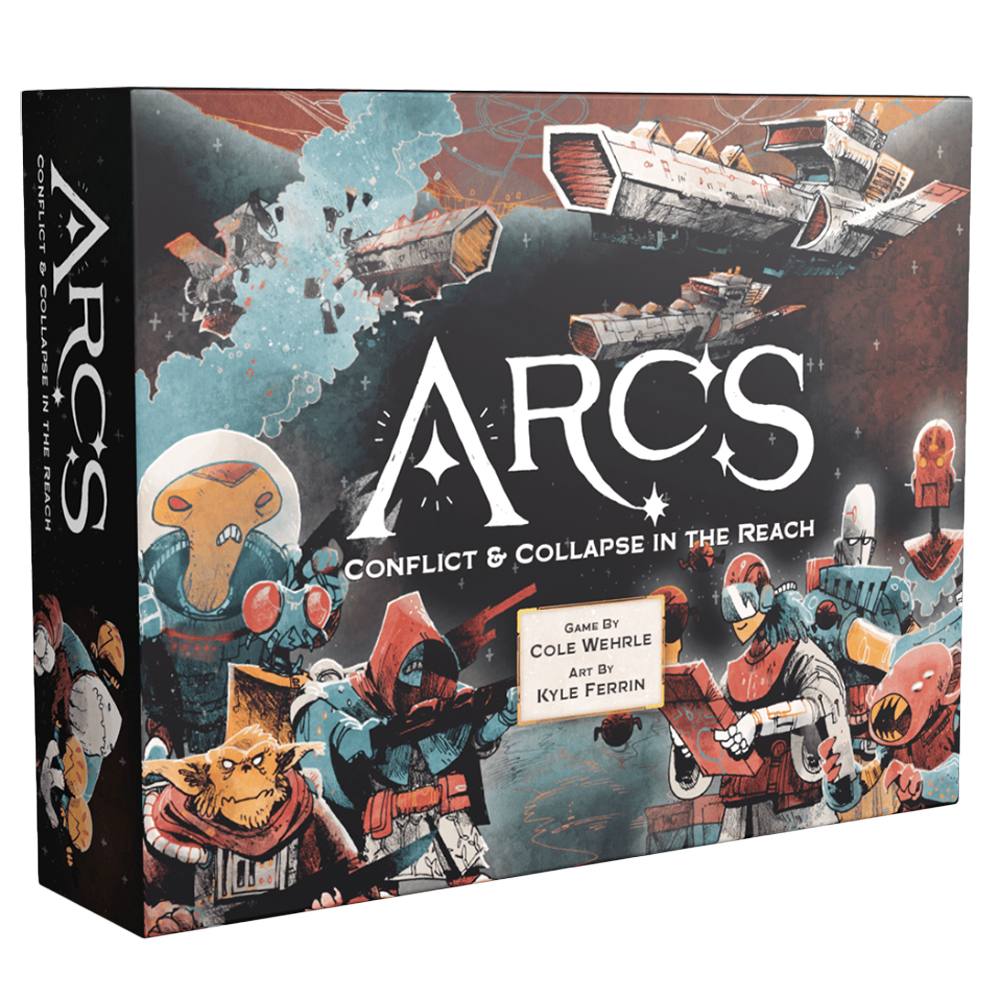
Arcs: Conflict & Collapse in the Reach is Cole Wehrle's 2024 space opera for Leder Games — the studio behind Root and Oath. On paper it's a 4X: you eXplore sectors, eXpand your fleet, eXploit planets for resources, and eXterminate your neighbors. In practice it does all of that on a compact modular board in 60-120 minutes, because the entire engine runs on a trick-taking card system instead of a traditional action menu.
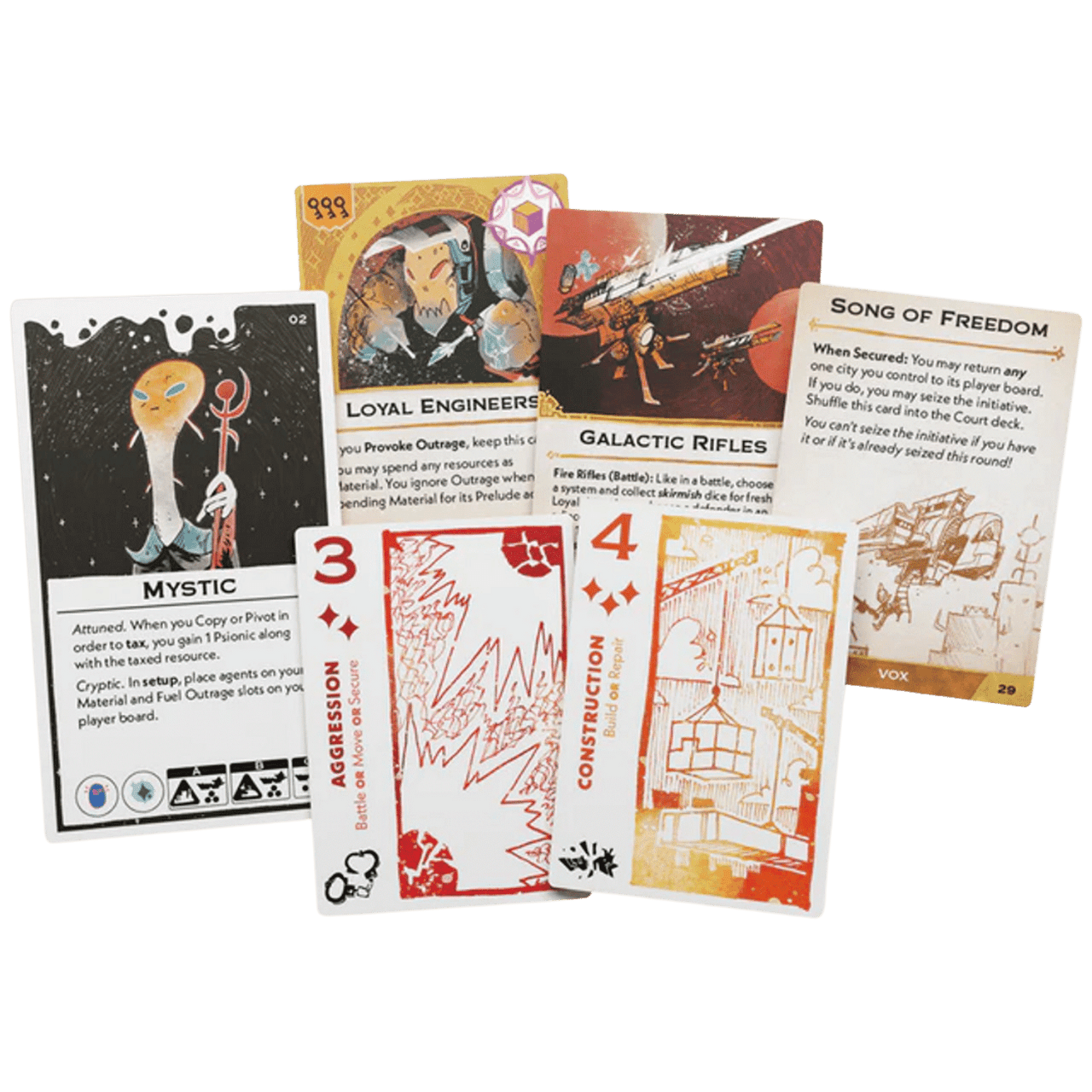
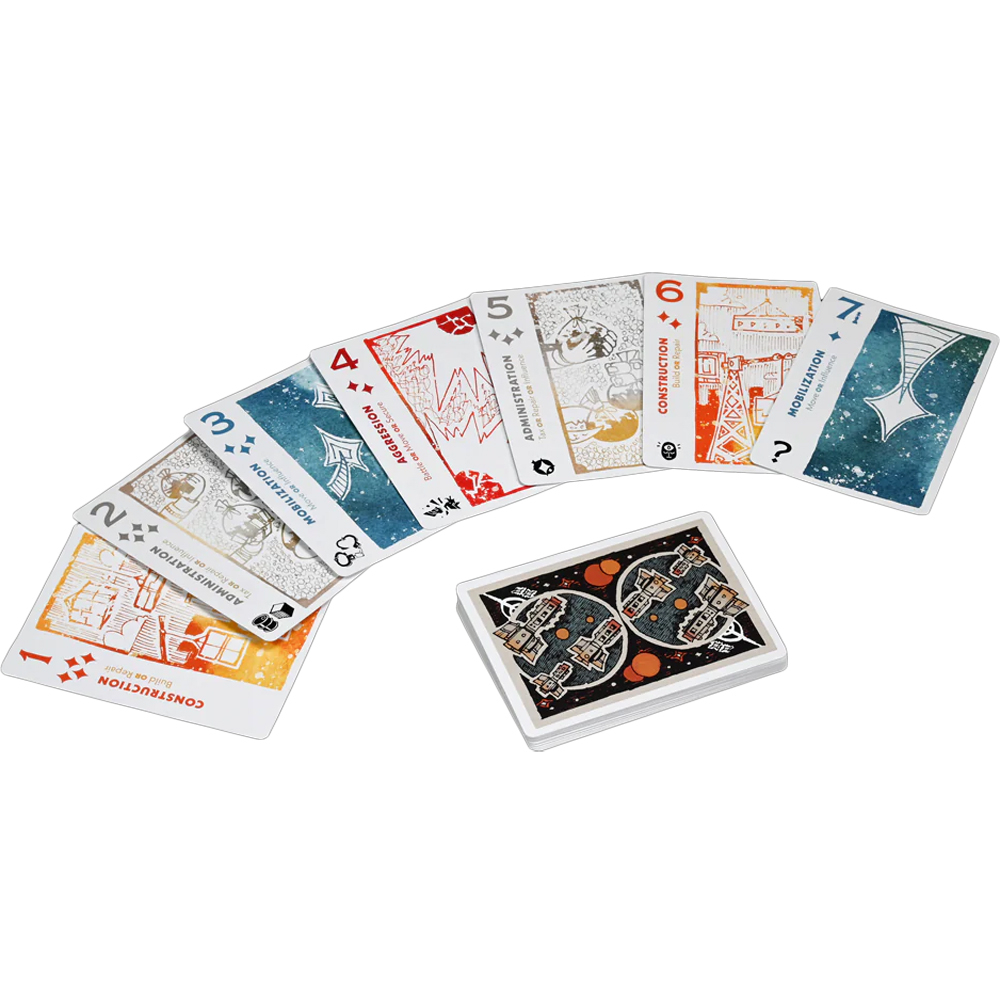
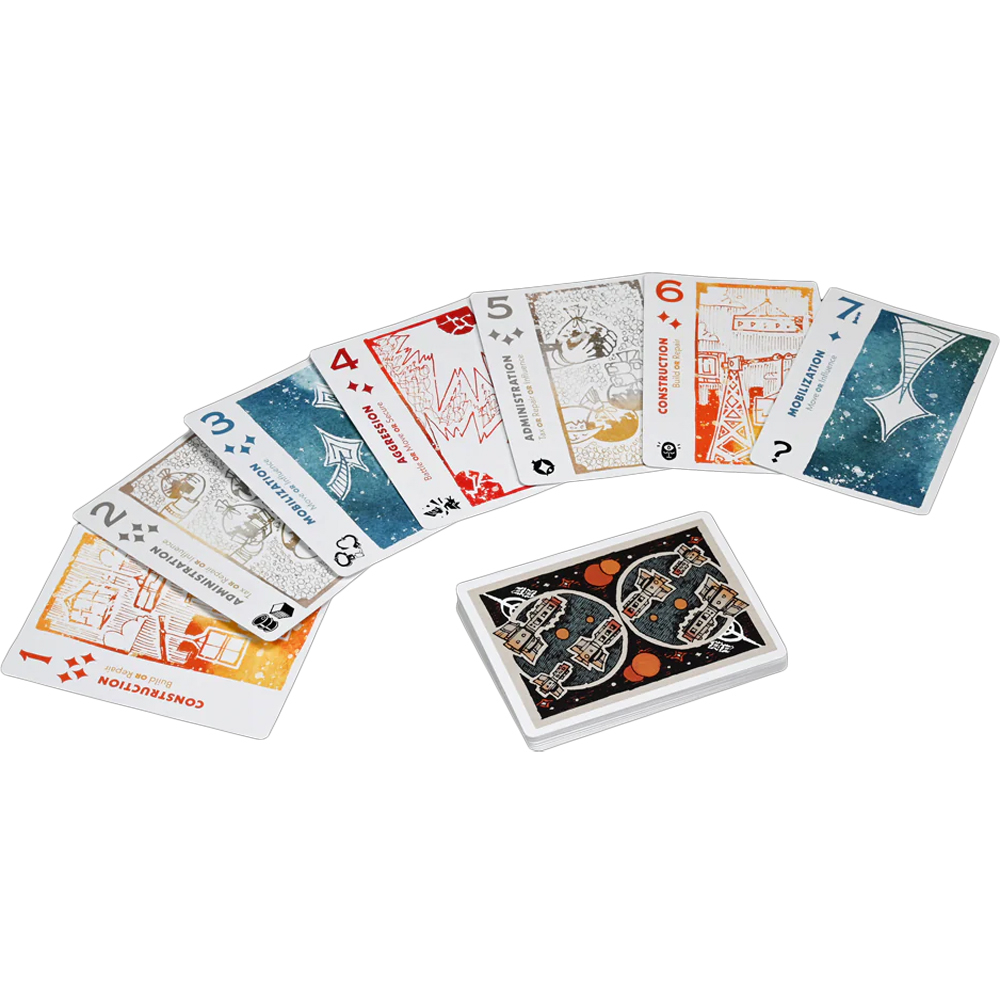
That's the hook, and it's the whole reason this game exists. Every round (the game calls them chapters), the player with initiative leads a card from one of four suits — Administration, Aggression, Construction, Mobilization. The lead suit dictates what kind of actions are powerful that round for everyone. You then go around the table, and each other player must decide: Surpass (play a higher card of the same suit, do the strong action, and grab initiative), Copy (play a card face-down for a weak single action and keep your good cards), or Pivot (play a different suit for just one action — but Pivoting can cost you the initiative). It is, structurally, a trick. The lead suit is the led suit. Following hard wins you the trick and the tempo.
What makes it sing is that you are never just playing a card — you're playing it against what everyone else needs. The card's pip value (1-7) tells you how many actions you get; its suit tells you what those actions can be. So a hand of high Aggression cards is a loaded gun in a round someone led Aggression, and a fistful of dead weight in a round about Construction. You are constantly solving a multi-axis puzzle: do the thing I want, deny the thing they want, or keep the initiative — pick two, maybe. As Board Game Quest put it, the trick-taking turned out to be 'more action selection focused' than the early hype suggested, which is exactly why it works for people who normally hate trick-takers.
Arcs is a territory-control game about moving ships and rolling dice — and simultaneously a trick-taking game about strangling your opponents' turn order. Both halves are load-bearing.
What's actually in the box?
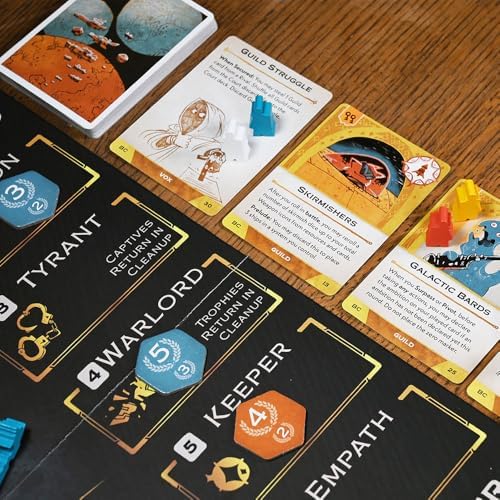
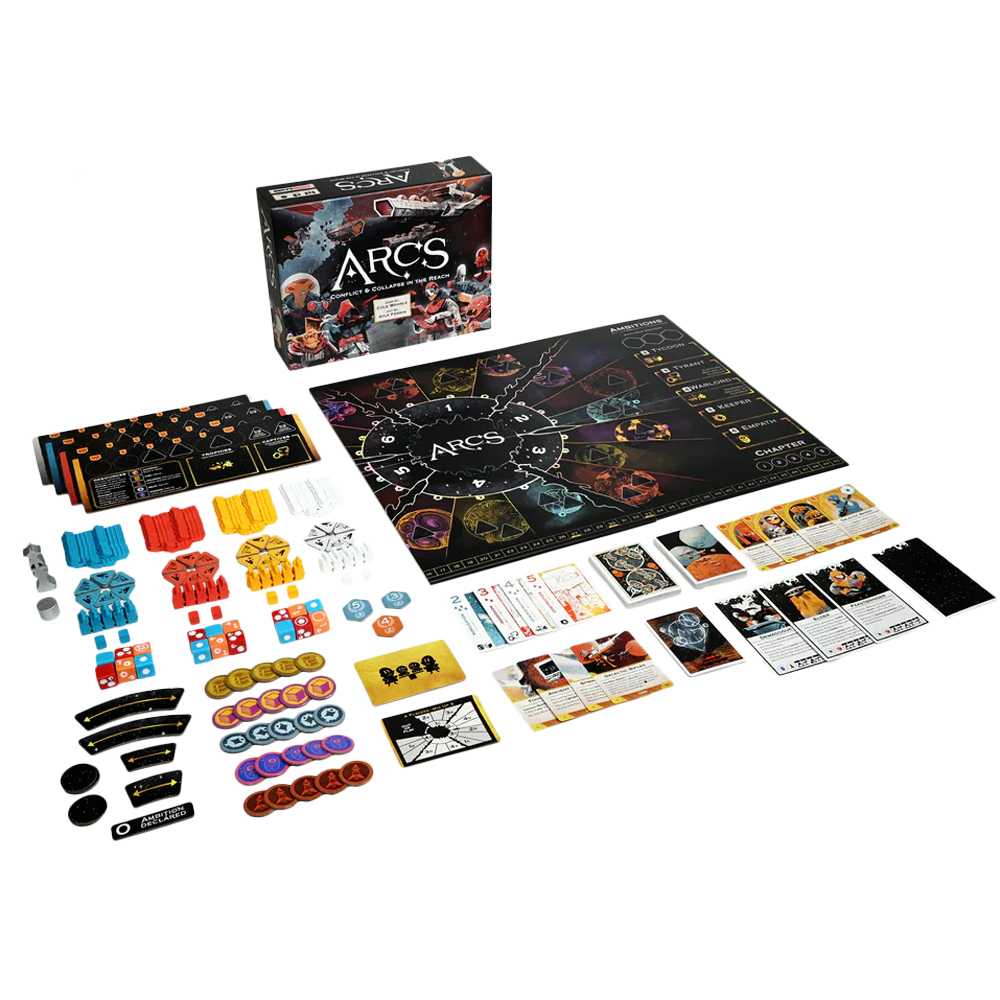
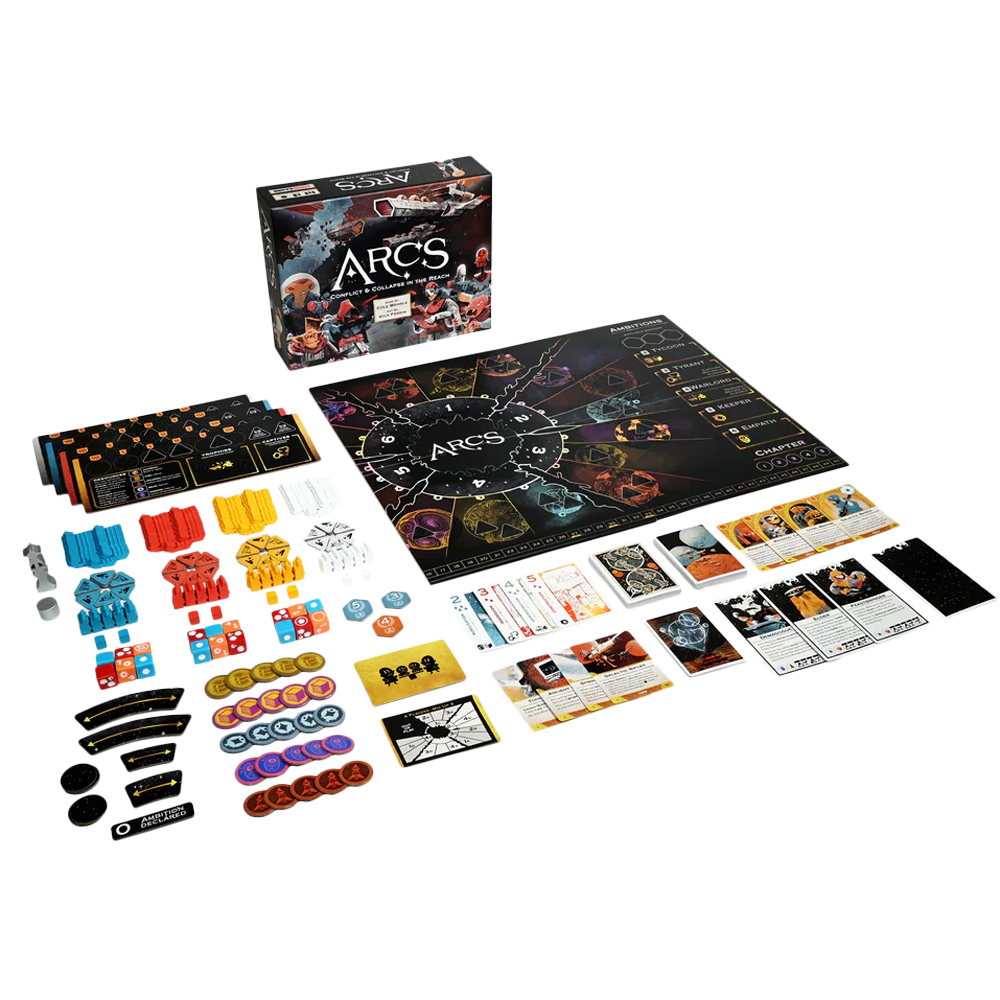
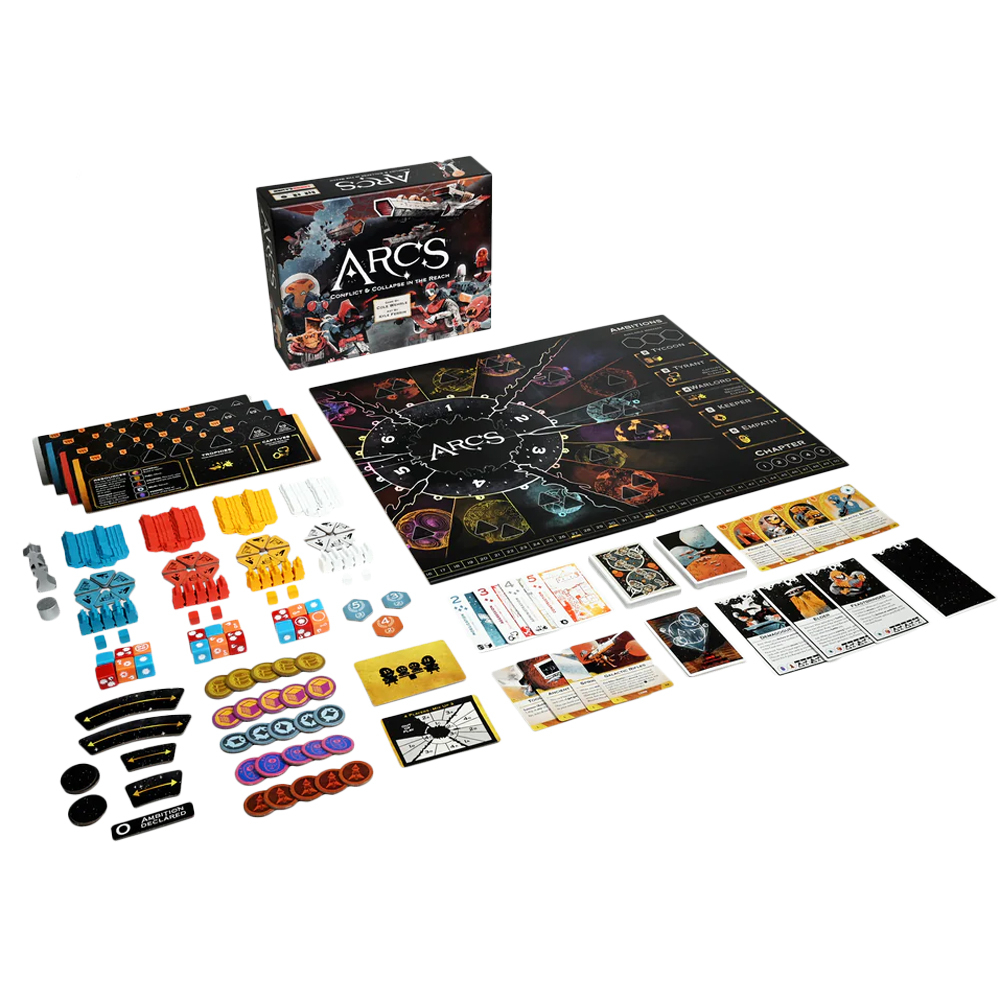
Leder Games does not skimp, and Arcs is no exception. The base box is a dense, well-organized kit that punches above its footprint. Here's the working inventory:
- A modular board of six clustered regions — planets and gates that reconfigure setup-to-setup, so no two games open the same way.
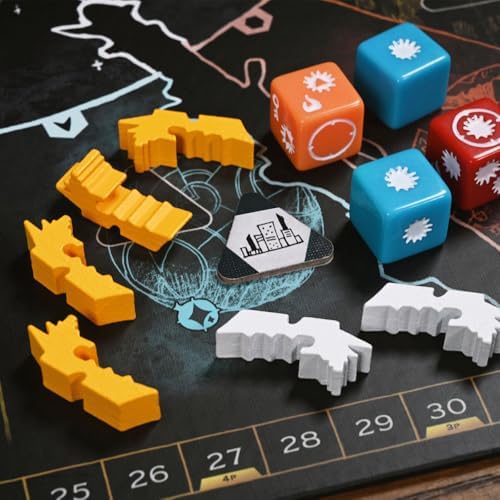
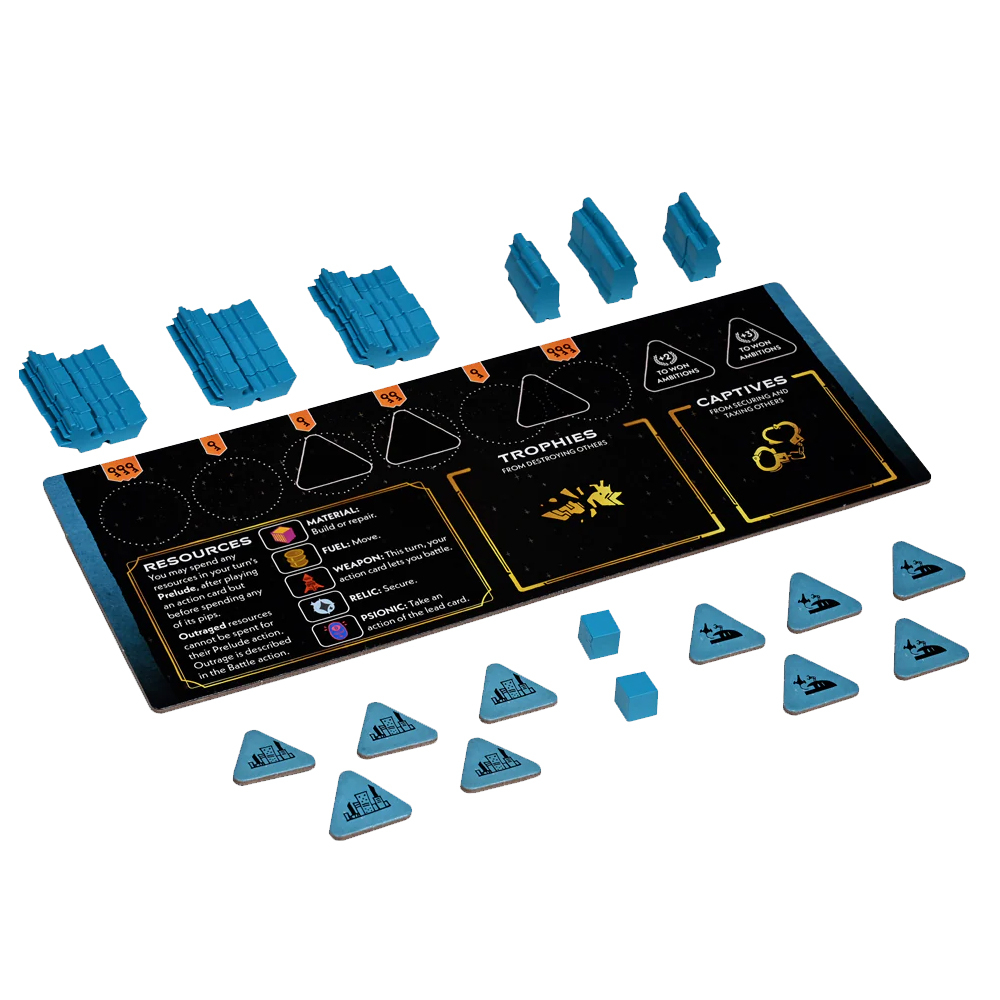
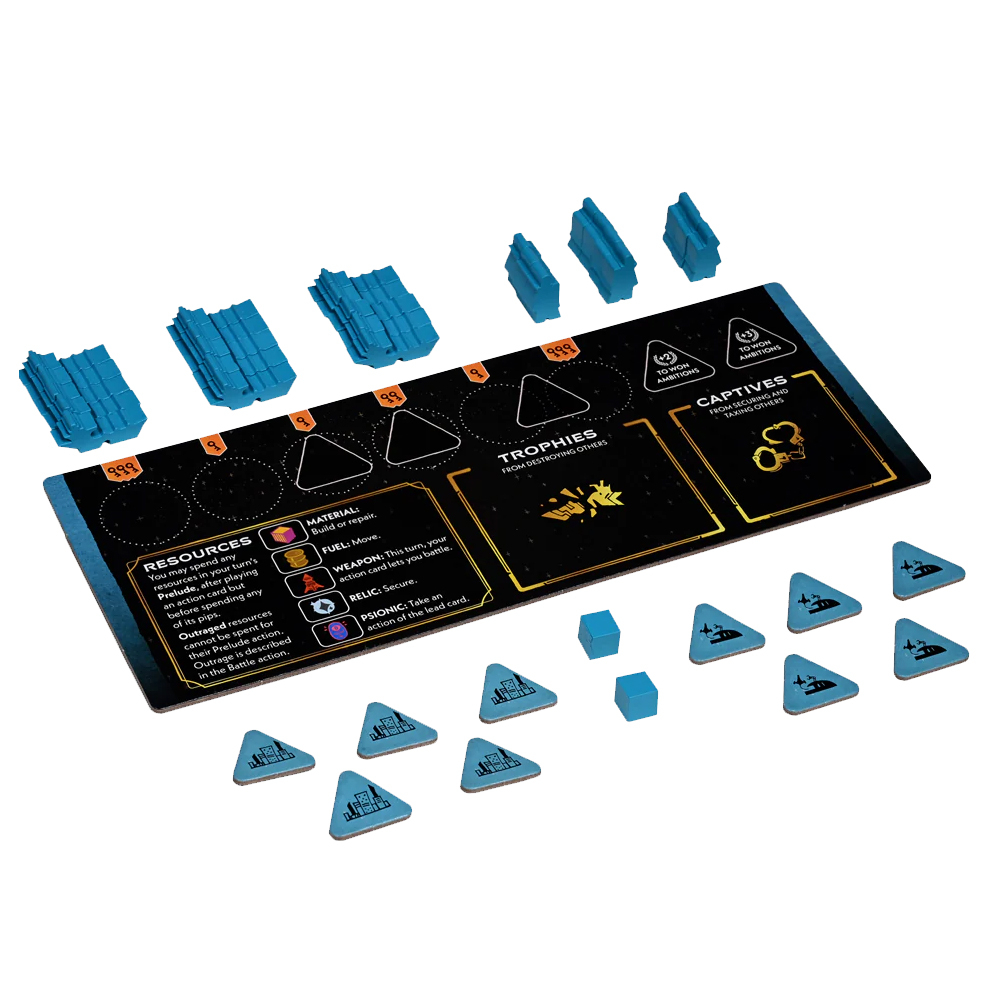
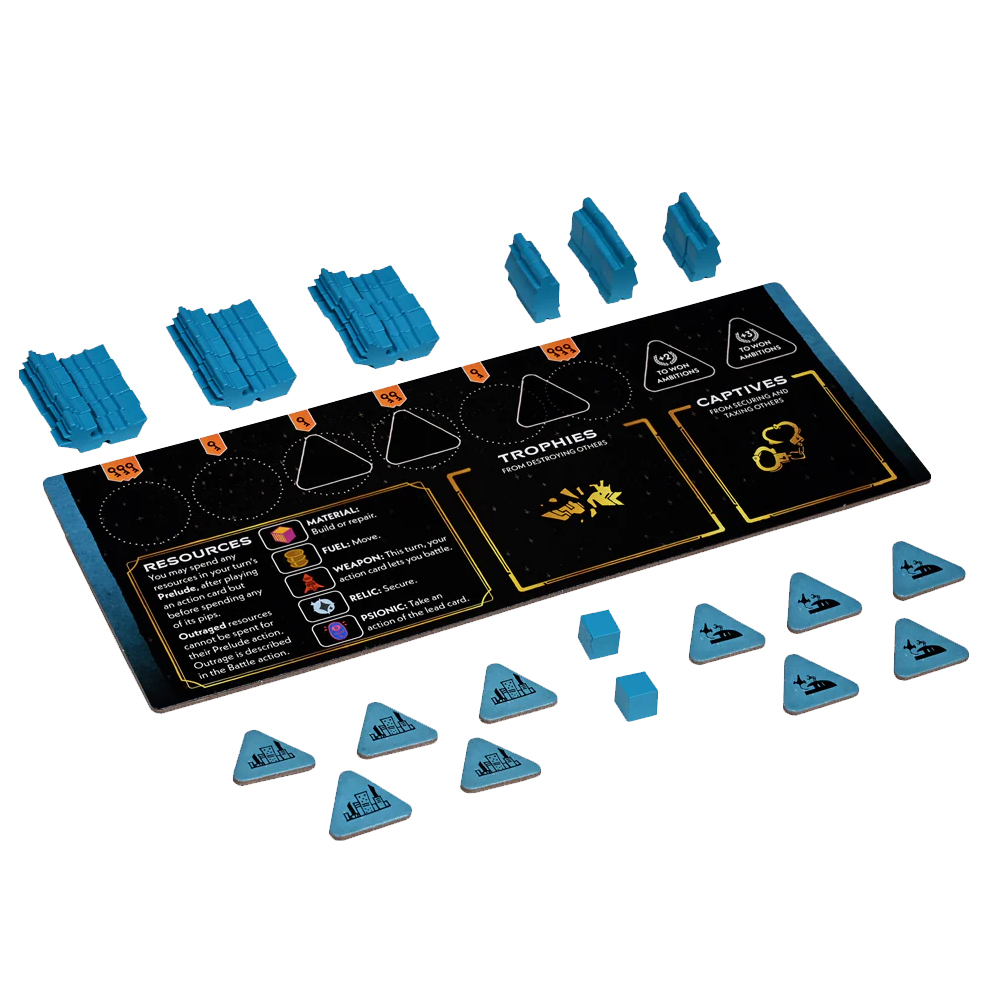
- Four player fleets of starships, each ship existing in three states: healthy, damaged, and destroyed (off-board). Damage is a currency here, not just a death sentence.
- The action card deck, split across the four suits (Administration, Aggression, Construction, Mobilization), values 1-7. This is the heart of the game.
- Three custom dice types that let you dial your own risk: Skirmish (blue) for low-damage reliability, Assault (red) for big aggressive hits that can hurt you back, and Raid (orange) for stealing resources at real peril to your own ships.
- Resource tokens (Fuel, Material, Weapons, Relics, Psionics) that double as both fuel for extra actions and victory points under the right ambition.
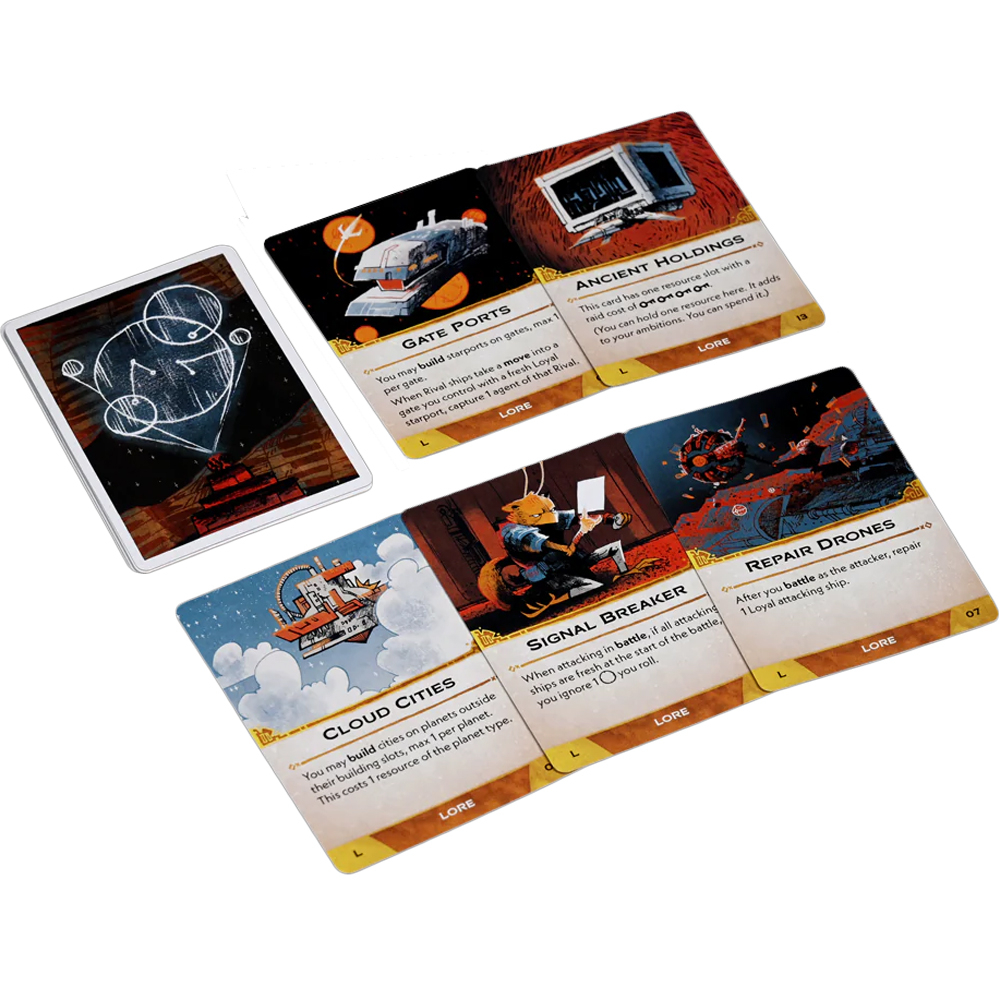
- Guild cards and Vox cards (the Court) that grant powers, agents, and one-time effects you fight over.
- Ambition markers and the Power track for scoring.
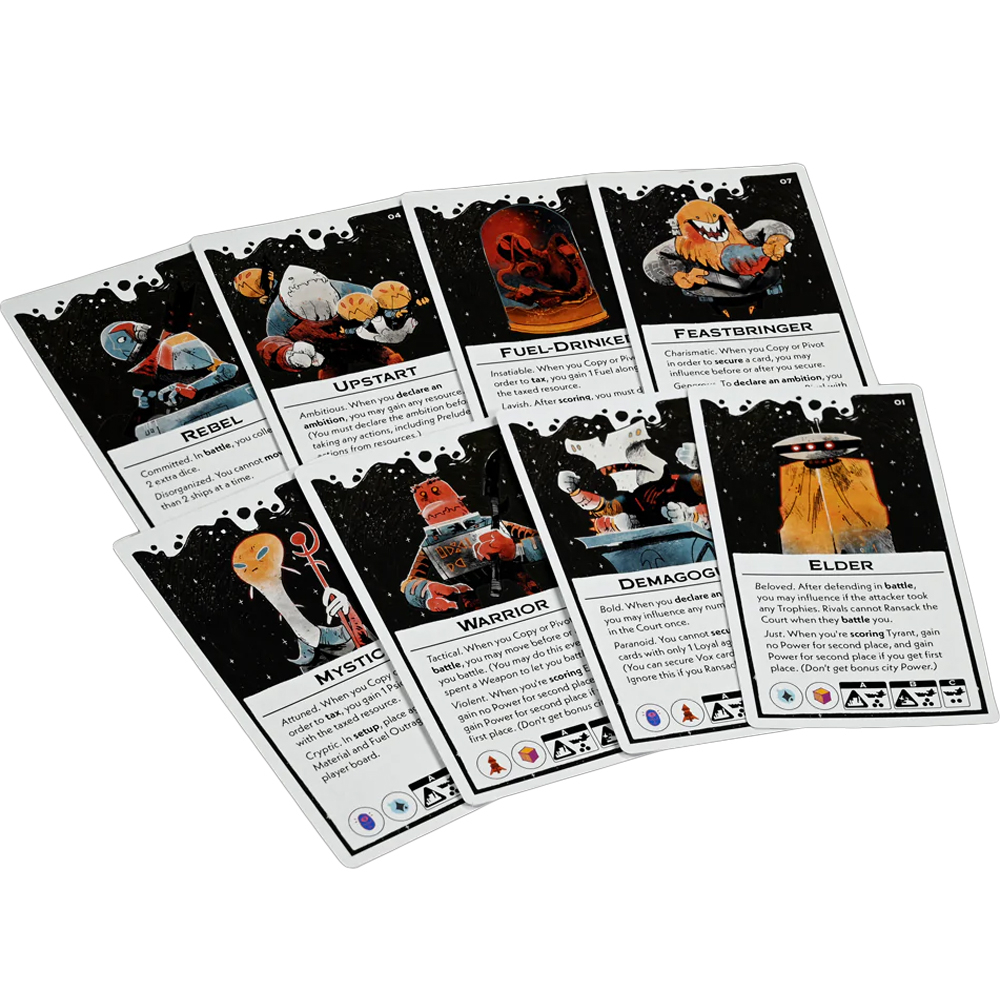
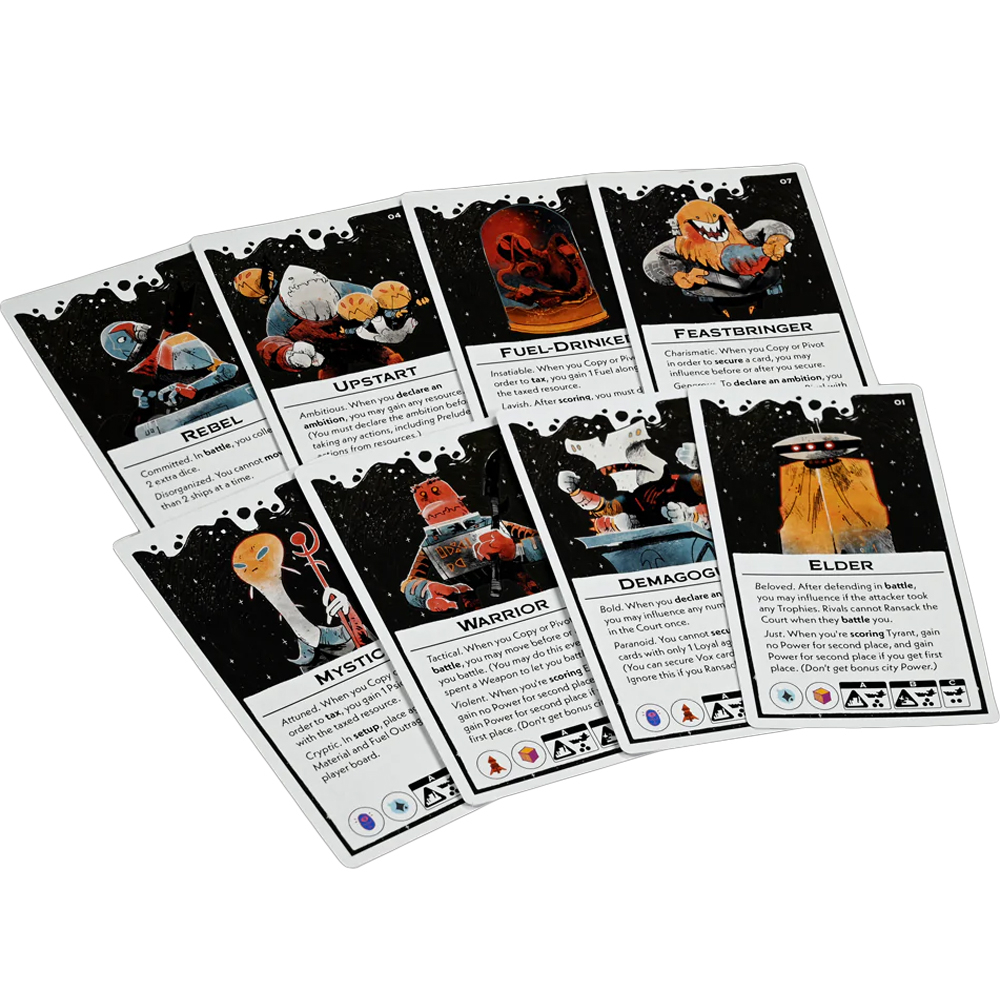
- The optional Leaders & Lore module, which bolts asymmetric starting characters and lore powers onto the base game for players who want deeper variety.
The deliberate design choice worth flagging: you can play without Leaders & Lore for a cleaner first teach, then switch it on. That's a genuinely thoughtful on-ramp, and it means the base box scales with your group's appetite rather than dumping everything on the table day one.
Damage isn't a death sentence in Arcs — a damaged ship is a resource, a threat, and a trophy waiting to happen. The components encode the meanness.
How does a turn and a round actually play?
Let me walk a single chapter, because the rhythm is the whole game.
1. Deal and lead. Everyone gets a hand of action cards. The player with the initiative marker leads — they play one card face-up. Say they lead a 5 of Mobilization. That establishes Mobilization as the powerful action this round, and 5 as the number to beat.
2. Everyone follows — or doesn't. Going around the table, each player chooses one of three moves: - Surpass: play a higher Mobilization card (a 6 or 7). You get the full strong action and you seize initiative for next time. Power move, but you're spending a premium card. - Copy: play any card face-down. You get one weak, generic action and keep your good cards in hand. The 'I'll sit this one out' option. - Pivot: play a card of a different suit for a single action of that suit. Useful when the led suit is useless to you — but pivoting typically surrenders the initiative.
3. Take your actions. The card's pips tell you how many actions you get. You spend them on the suit's menu: Administration runs the Court and builds influence; Aggression attacks ships and seizes; Construction builds cities and starports; Mobilization moves fleets and gathers resources. Crucially, you can spend resources to buy extra actions beyond what your card grants — which is the pressure valve that keeps a bad hand from being a death sentence.
4. Declare an ambition (the spicy part). When you lead, you may also declare an ambition — a scoring goal for this chapter (most ships destroyed, most resources of a type, most captives, etc.). But declaring drops your led card's value to zero, meaning everyone can surpass you trivially and you lose tempo. So you're trading turn-order control for the right to set the table's win conditions. This single decision is where games are won and lost.
5. Chapter ends, Power scores. When hands empty out, the chapter ends. Players score Power for every declared ambition they placed well in — and here's the kicker: you score for an ambition even if you didn't declare it. If someone declares 'most destroyed ships' and you've been quietly racking up kills, you cash in on their declaration. Then initiative resets based on the highest cards played, fresh hands deal, and the next chapter begins. Five chapters, roughly, and the most Power wins.
That loop — lead, follow or deny, act, declare, score — is deceptively small and genuinely deep. The tension is that every card is three decisions wearing a trench coat.
Declaring an ambition drops your card to zero. You're literally giving up the turn order to set the rules of who wins. That's the bravest button in the game.
Is Arcs worth the money?
Short version: yes, and it's one of the better dollar-to-depth ratios in modern strategy gaming — with one honest asterisk.
The base game routinely sits under $60, which is striking for what you get: a complete, replayable, top-tier strategy game with Leder's production values, Ferrin's art, a modular board, asymmetric powers, and a system you'll be unpacking for a dozen plays. Compare that to the galactic-4X alternatives that cost two-to-three times as much and demand an entire evening just to set up and teach. On a pure cost-per-hour-of-engaged-thought basis, Arcs is a bargain. One reviewer flatly called it 'a top tier space empire strategy game that far exceeds its entry price,' and on the value question, I won't argue.
The critical consensus backs the spend, too. Arcs landed on basically every 'best of 2024' list, drew a 10/10 'masterpiece' from IGN, and got crowned 2024's best new game by Shut Up & Sit Down. That's not marketing; that's a remarkably unified critical reception for a game this divisive at the player level.
The asterisk: this is a game you must be honest about fitting your group before you buy. A $50 game you play three times and shelve because your table hates conflict is more expensive than a $90 game you play thirty times. Arcs' resale value is high and demand is strong, so the downside is cushioned — but the real cost of Arcs isn't the price tag, it's the emotional buy-in from the people you play with. Budget for that, not just the sticker.
The real price of Arcs isn't on the box. It's the emotional buy-in from your table. Budget for that, not just the sticker.
How do you play your first game of Arcs well?
You won't win your first game. You can, however, lose intelligently — and not get demoralized. Here's the strategy that matters most for a newcomer, distilled from the design and the people who've solved it.
1. Read the table before you read your hand. Chris Farrell, a designer-critic, nailed the single most important skill: 'Making sensible evaluations of where each player is in terms of power and potential is essential to good play... but it's also incredibly hard.' Before you optimize your turn, ask who is winning and who can be stopped cheaply. Arcs rewards the player who sees the board, not the one with the prettiest engine.
2. Initiative is a resource — hoard it, then spend it. Holding the initiative lets you set the led suit and declare ambitions on your terms. But sometimes the right move is to pass it deliberately, taking a weaker action now to load up for a chapter you can dominate. Knowing when to lead, when to copy, and when to let go of initiative is the core skill.
3. Don't declare ambitions you can't personally win. Declaring sets a scoring goal for everyone and drops your card to zero. If you declare 'most resources' and someone else is sitting on more, you just handed them free Power and lost tempo doing it. Declare ambitions where you're already ahead, or where you can swing in before chapter-end.
4. Resources are the great equalizer — bank them. Because you can spend resources to buy extra actions, a stockpile is what rescues you from a garbage hand. Resources are also points under the right ambition. Greedy resource play is rarely wrong for a beginner.
5. Damage is leverage, not loss. A damaged ship still fights and still threatens. Don't panic-retreat every dinged-up frigate; sometimes the threat of it is worth more than the ship.
6. Skip Leaders & Lore for game one. The near-universal advice: play the base game once or twice without the asymmetric Leaders & Lore module so you internalize the core loop first. Add the spice once the trick-taking is second nature.
Do those six things and you'll lose your first game by a respectable margin instead of a humiliating one — and you'll actually understand why, which is the only way the game ever clicks.
You won't win your first game of Arcs. The goal is to lose intelligently — and walk away understanding exactly why. That's when it clicks.
What about the Blighted Reach campaign and the expansions?
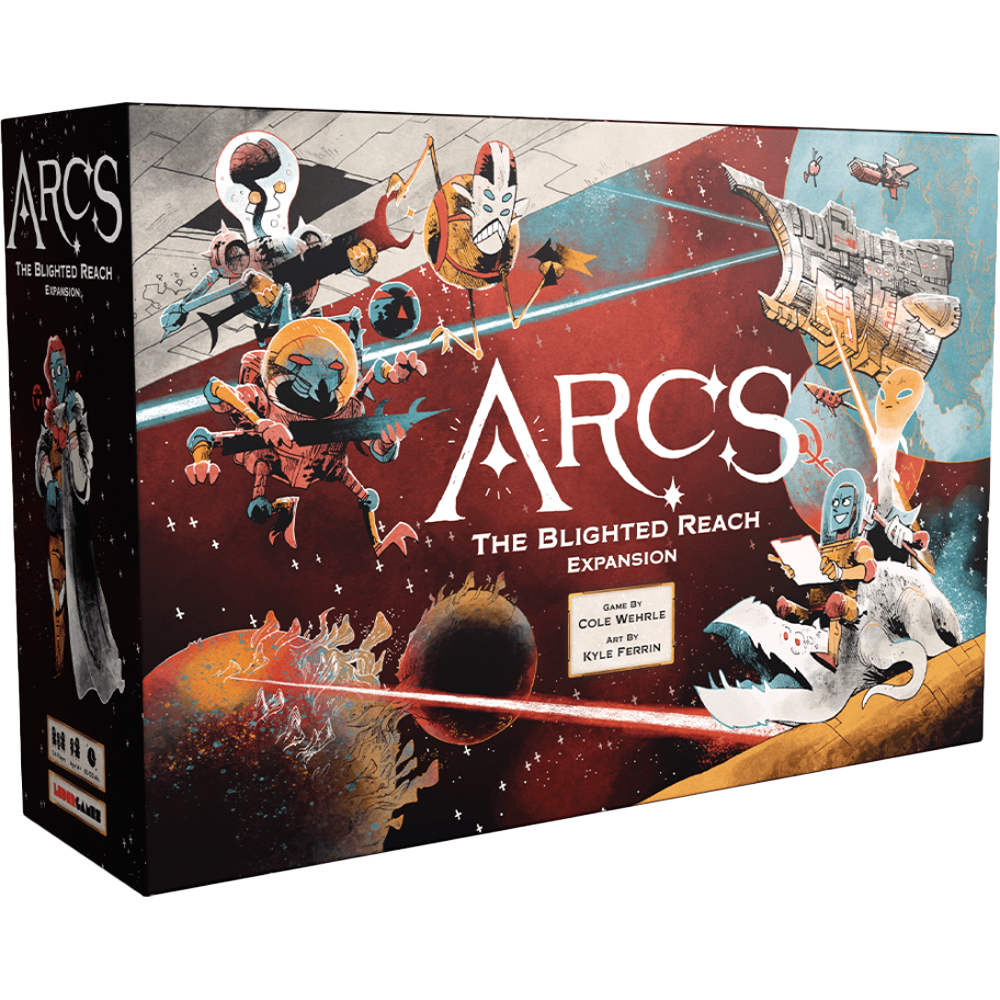
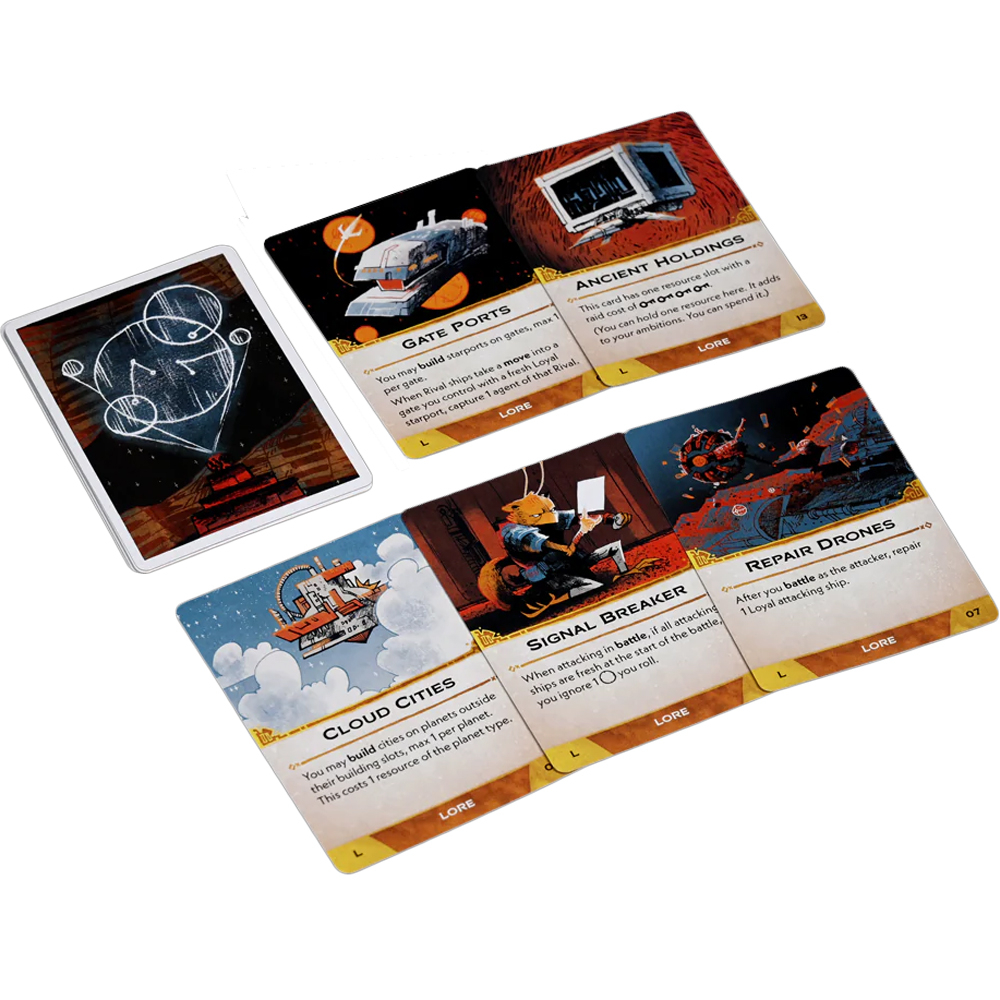
Community pattern (August 2026): The base box is a complete purchase and already contains enough Leaders & Lore material to teach the asymmetric short game. The small Leaders & Lore expansion adds variety rather than fixing a deficiency. The Blighted Reach is a separate commitment for a group able to preserve continuity across three linked sessions; it should not be treated as mandatory proof that Arcs is complete.
The base game is a tight strategy contest. The Blighted Reach is a narrative epic that runs gloriously off the rails. Know which hobby you're buying into.
So who is Arcs actually for — and who should walk away?
Let me be the friend who tells you the truth instead of the store clerk who wants the sale.
Buy Arcs if you are: - A strategy player who's tired of multi-suit-card-game-but-also-area-control being done badly, and wants to see it done brilliantly. - Someone who finds full-fat 4X games (Twilight Imperium, Eclipse) too long, too fiddly, or too much setup, but still craves that galactic-empire feeling. Arcs delivers the feeling in a quarter of the time. - A group that can take a hit and laugh about it. Arcs is mean, swingy, and confrontational — and that's the point, not a bug. If your friends enjoy the knife going in (and coming back out), this is a forever-game. - A player who values original design. There is genuinely nothing else that plays like this. As Tabletop Gaming put it: 'This board game won't be for everyone, but everyone should play it.'
Walk away from Arcs if you are: - A multiplayer-solitaire engine-builder at heart. If 'I just want to build my cool thing in peace' describes your ideal evening, Arcs will feel like getting mugged. - Conflict-averse, or playing with people who sulk when attacked. The free-for-all ambition rounds will end friendships at the wrong table. - Expecting deep strategic (long-arc) planning. Arcs is fiercely tactical — it's about being well-positioned to do the most things right now, not executing a grand thirty-turn plan. Andrew Lynch's line sticks: 'Everything in Arcs is temporary.' - A brand-new-to-the-hobby player looking for a gentle gateway. It teaches fast, but it punishes fast too. Start somewhere kinder.
The honest summary: Arcs is a masterpiece with a personality, and personalities are not universally beloved. The flaw I led with — that it can feel punishing from behind — is inseparable from everything that makes it great. You don't get the elegant, knife-edge tension without the occasional bad night. For the right table, that trade is the best one in gaming. For the wrong table, it's a $50 argument. Know which one you're bringing it home to.
Arcs is a masterpiece with a personality. And personalities, by definition, are not for everyone. Match the game to your table, not your wishlist.
What experienced tables keep reporting
Recurring owner patterns, synthesized in Puzzlewick's words. Follow each evidence trail to read the original discussion.
I think Arcs is a wonderful piece of design and an inarguably brilliant production, there's nothing terribly wrong with it, but it feels lacking in a magic that is hard to put my finger on. This board game won't be for everyone, but everyone should play it.
Everything in Arcs is temporary. It's a mean and swingy game where resources and board position remain temporary — optimal play isn't about achieving perfect positioning but about being well-positioned to do the most things.
Ambitions may turn a peaceful round into a free-for-all battle royale as ships and buildings take damage and become trophies for rivals.
Making sensible evaluations of where each player is in terms of power and potential is essential to good play, in fact is probably the single most important skill, but it's also incredibly hard. It's possible though that at least in the campaign, Arcs may have gone too far in the direction of evaluation complexity for many gamers.
I was initially concerned about the early buzz with this being touted as a heavily influenced trick-taking venture but was pleasantly surprised when it turned out to be more action selection focused. It reaches for the stars yet grounds itself as one of the best releases of the year.
If you like strategy games, if you like space strategy games, this feels like a top tier space empire strategy game that far exceeds its entry price. I can't stress enough how enjoyable this little multi-axis decision is for me.
It's smart, sharp, and full of interesting decisions. The learning curve is steeper than it looks at first glance.
For those who love dynamic player interaction, strategic depth, and emergent gameplay, Arcs delivers a compelling experience in a short playtime. Combat in Arcs is swift and decisive, with territories flipping quickly if a player makes a misstep.
Base Arcs with its included Leaders & Lore mode can already produce a compact space opera. The campaign is a different cadence, not the missing second half of the box.
The separate Leaders & Lore pack doubles the option pool for groups that replay short Arcs often. New players will not feel that absence during their first games.
Base game, Leaders & Lore pack, and Blighted Reach are separate products. Campaign play uses Lore but replaces the short game's Leaders with its own Fate structure.
The picks
Some links below are affiliate links — as an Amazon Associate, Puzzlewick earns from qualifying purchases, at no extra cost to you. It never changes a pick.
 10 photos
 Arcs (Base Game)
- Players
- 2-4
- Time
- 60-120 min
- Age
- 14+
- Complexity
- 3.42 / 5
- Publisher
- Leder Games · 2024
- Designer
- Cole Wehrle
- Art
- Kyle Ferrin
The whole reason we're here. Cole Wehrle's trick-taking-as-4X is one of the most original strategy designs of the decade: fast, gorgeous, brutally tactical, and shockingly deep for a box that costs less than most of its galactic-empire competitors. It's mean, it's swingy, and it's a masterpiece — IGN's 10/10 and SU&SD's Game of the Year aren't an accident. Play it without Leaders & Lore the first couple of times, then turn the spice on. Just bring it to a table that enjoys conflict.
- Genuinely novel system — nothing else plays like it
- Teaches in under 30 minutes, plays in 60-120
- Outstanding value: top-tier depth for a sub-$60 base price
- Kyle Ferrin art and Leder's production are gorgeous
- Scales its complexity via the optional Leaders & Lore module
- The combat dice let you dial your own risk
- Mean and swingy — can feel punishing when you're behind
- Fiercely tactical, not strategically long-arc (this disappoints Eclipse fans)
- Confrontation-heavy; wrong for conflict-averse groups
- Not a beginner's gateway game despite the fast teach

 11 photos
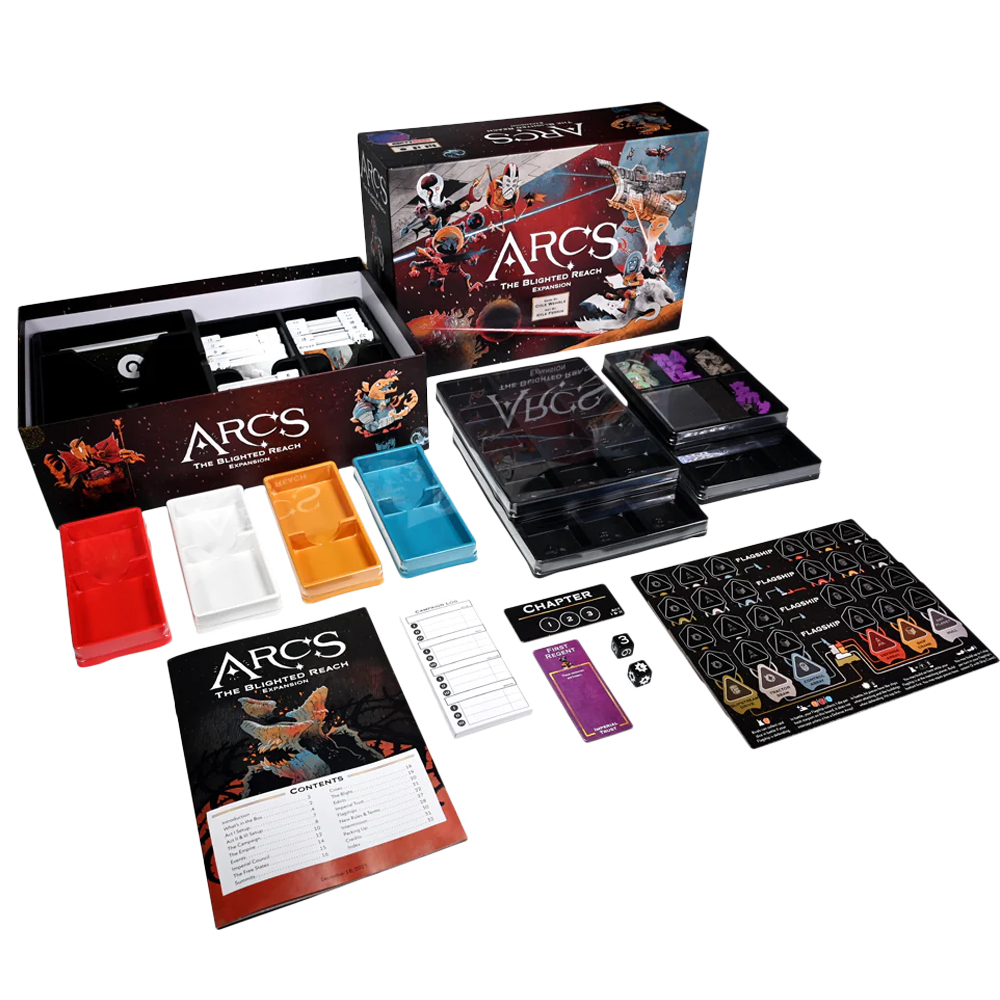
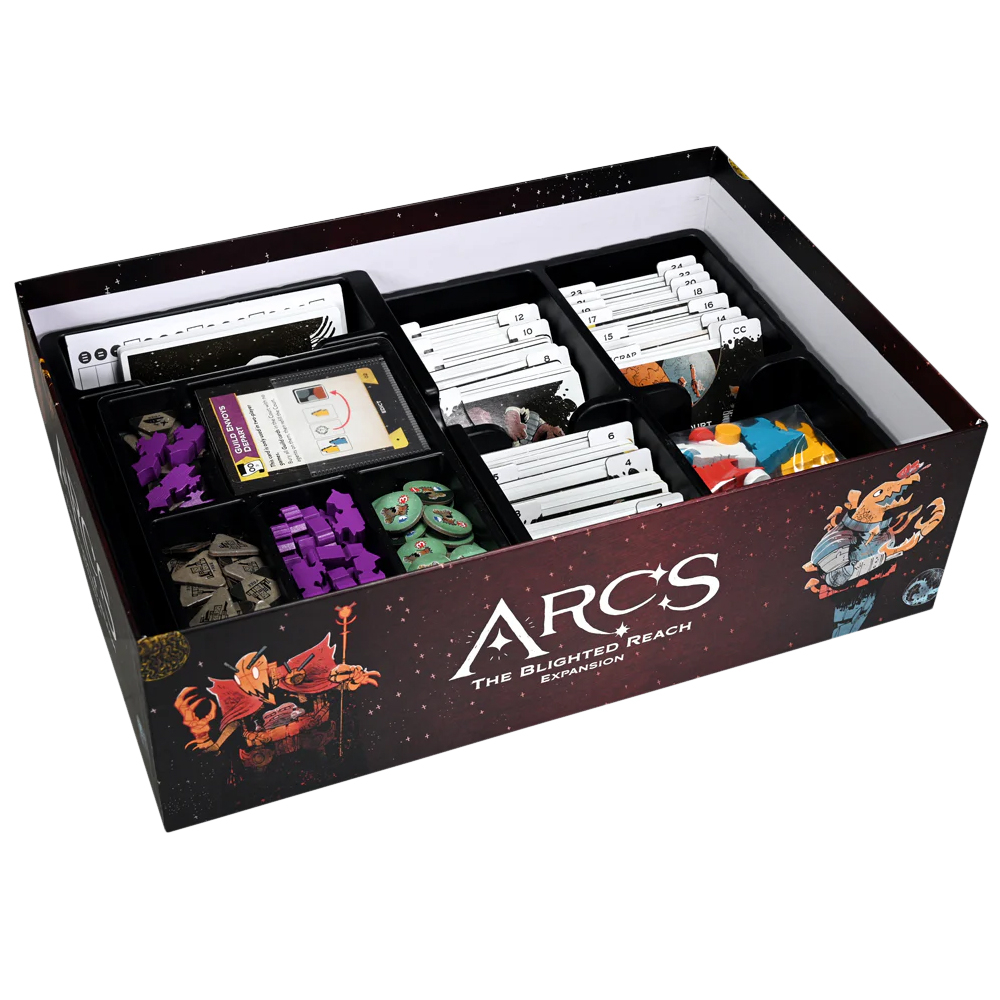
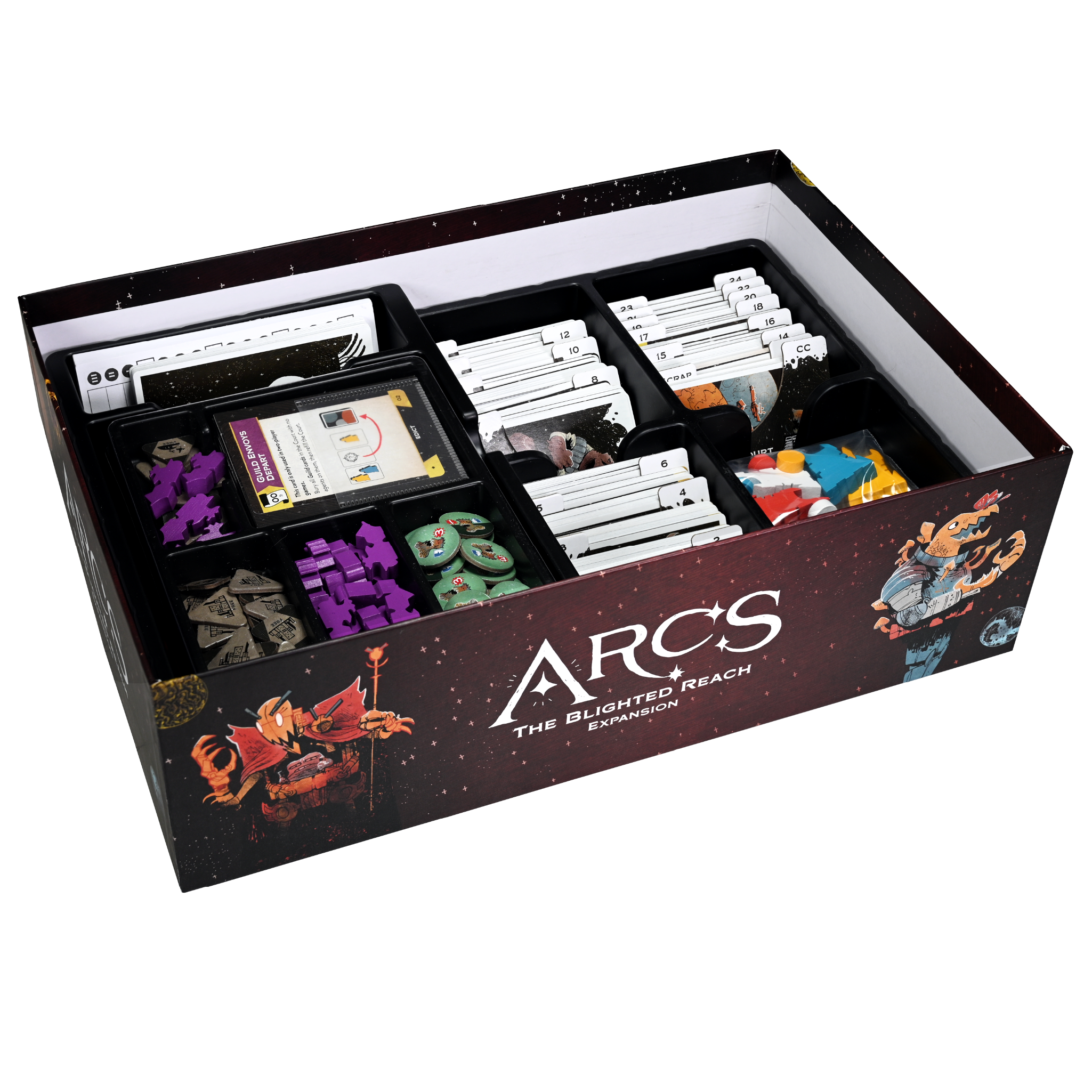
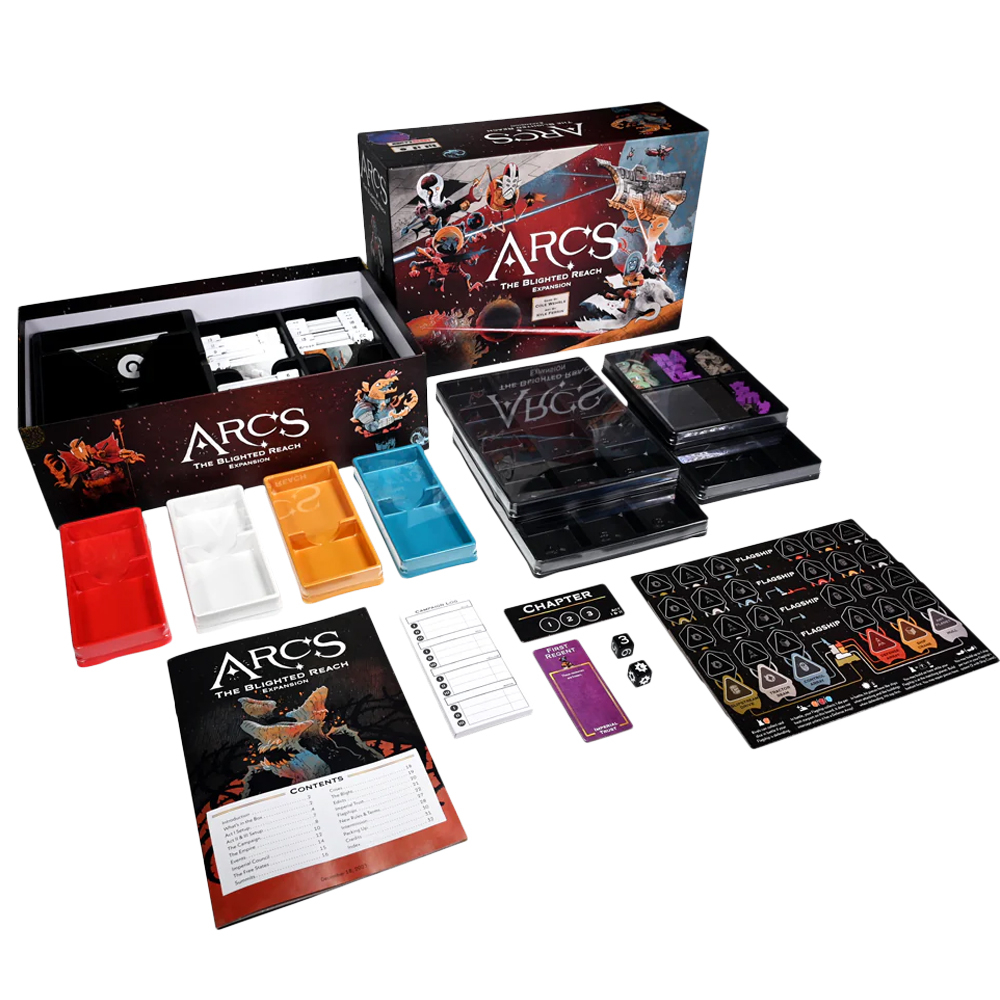
 Arcs: The Blighted Reach Campaign Expansion
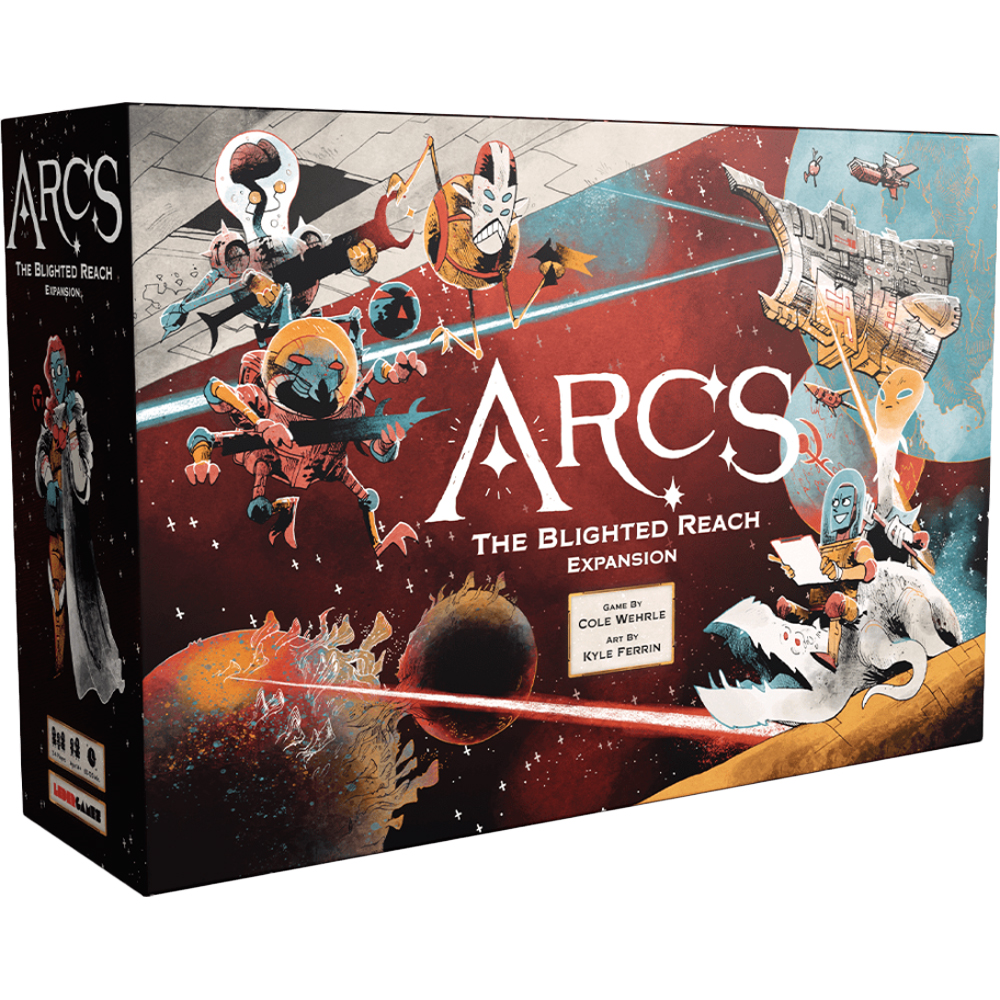
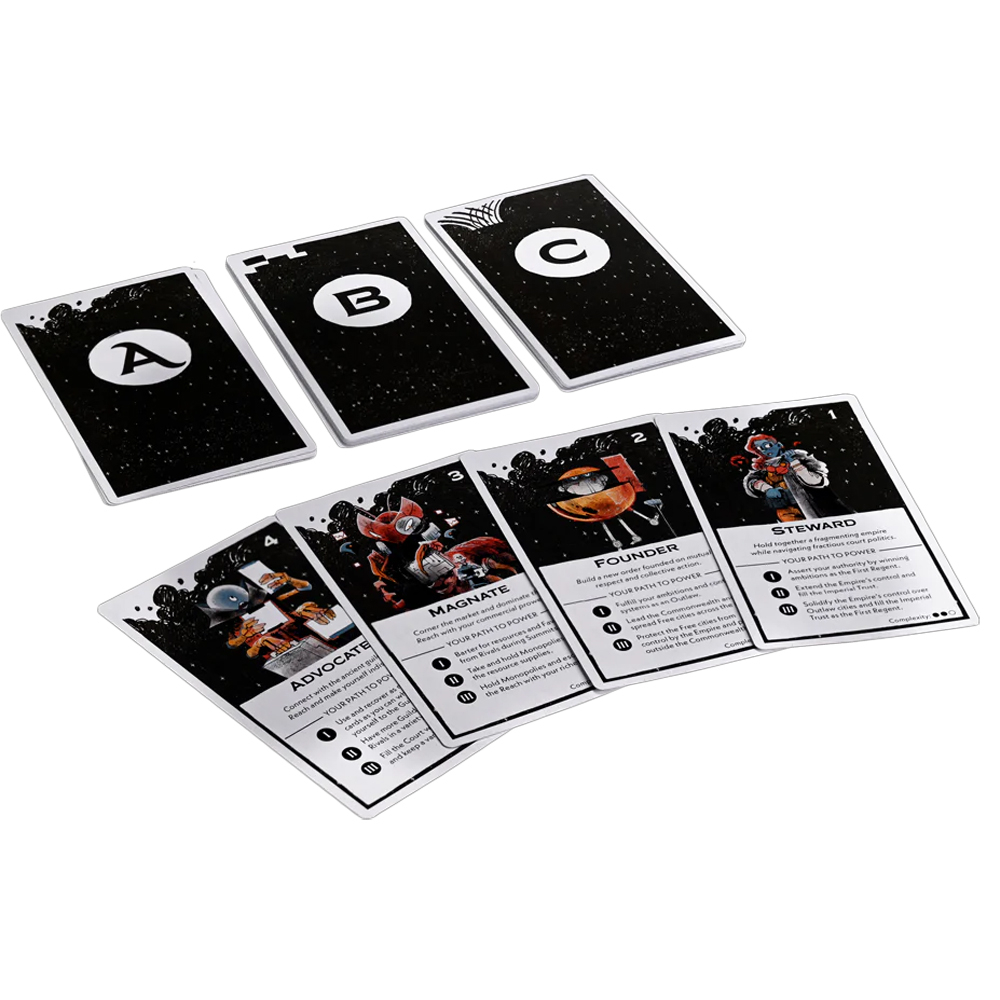
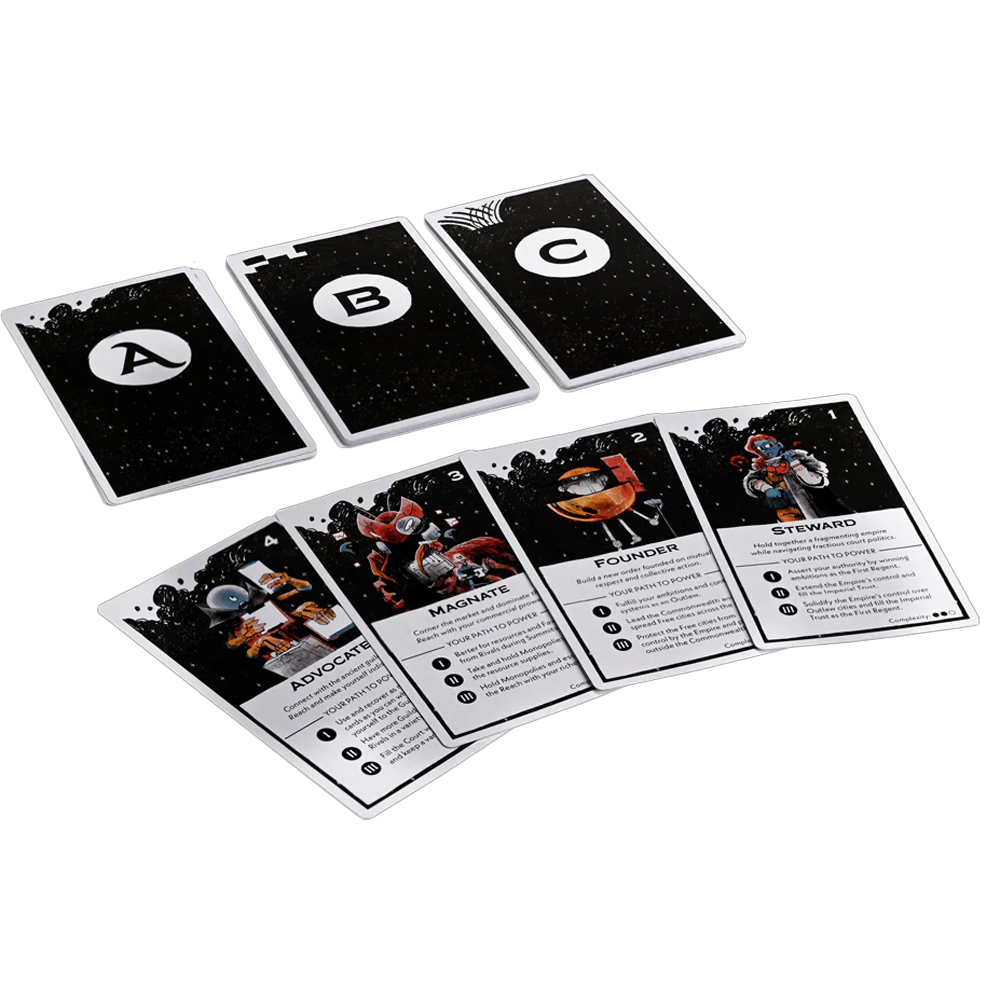
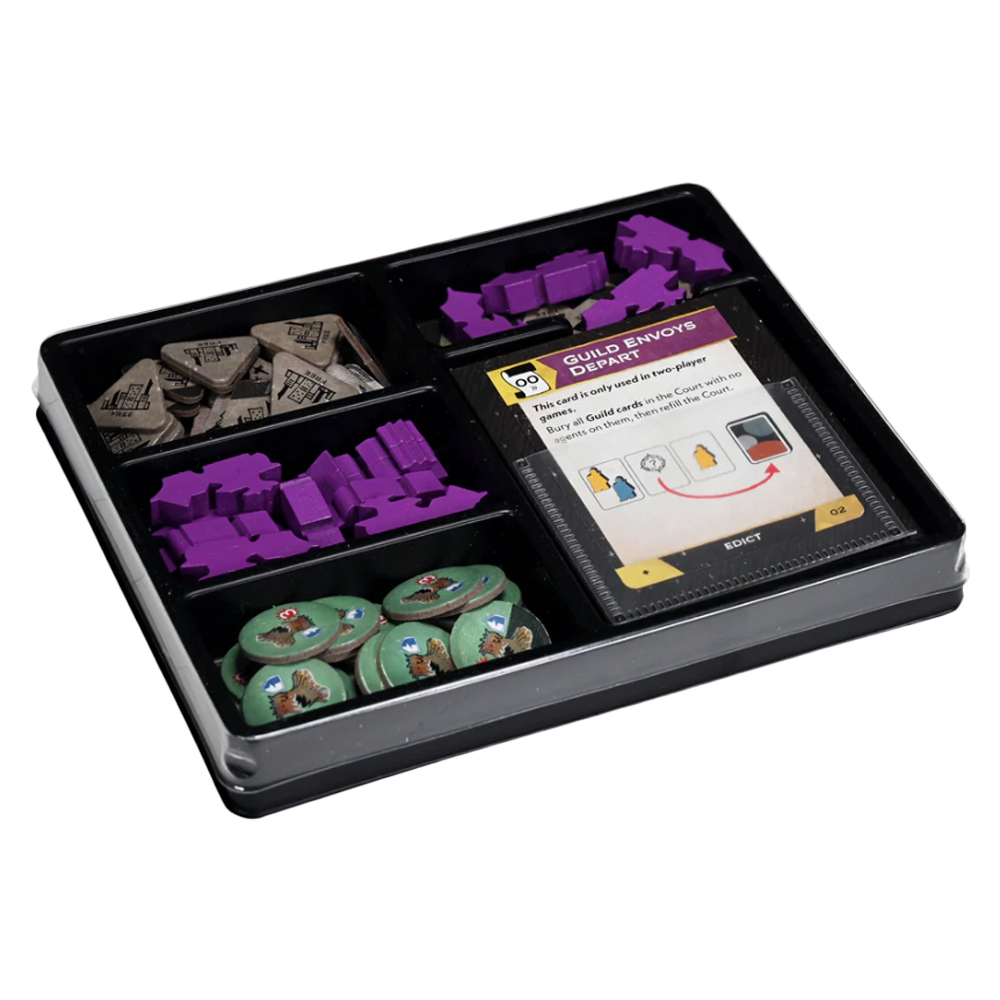
The base game's wilder, stranger cousin. Blighted Reach turns Arcs into a three-Act campaign with 24 branching Fates, a persistent Empire, Edicts, and unlockable abilities that gleefully unbalance the table in service of story. Critics adore its ambition; even fans concede it leans into 'evaluation complexity' so hard it can overwhelm. Buy it because you want the saga — not because you want more of the tight competitive base game. It is a different hobby in the same box.
- Enormous replayability — 24 Fates, branching three-Act arcs
- Persistent state makes choices feel genuinely consequential
- One of the most ambitious campaign designs of the decade
- Each Act still plays in under two hours
- Deliberately unbalanced — not a fair competitive contest
- Board state becomes very hard to read (high 'evaluation complexity')
- Requires the base game and a committed, returning group
- Premium price on top of the base box
 8 photos
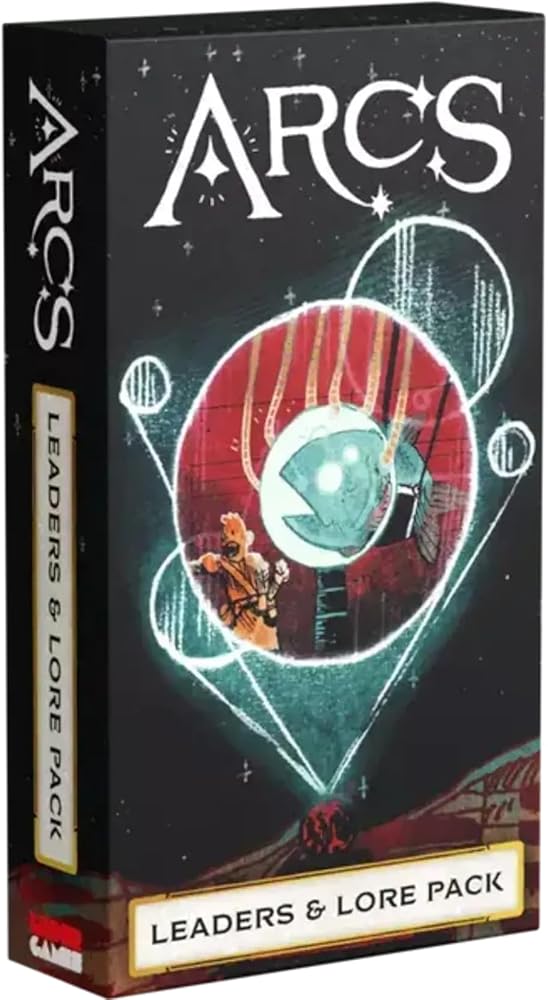
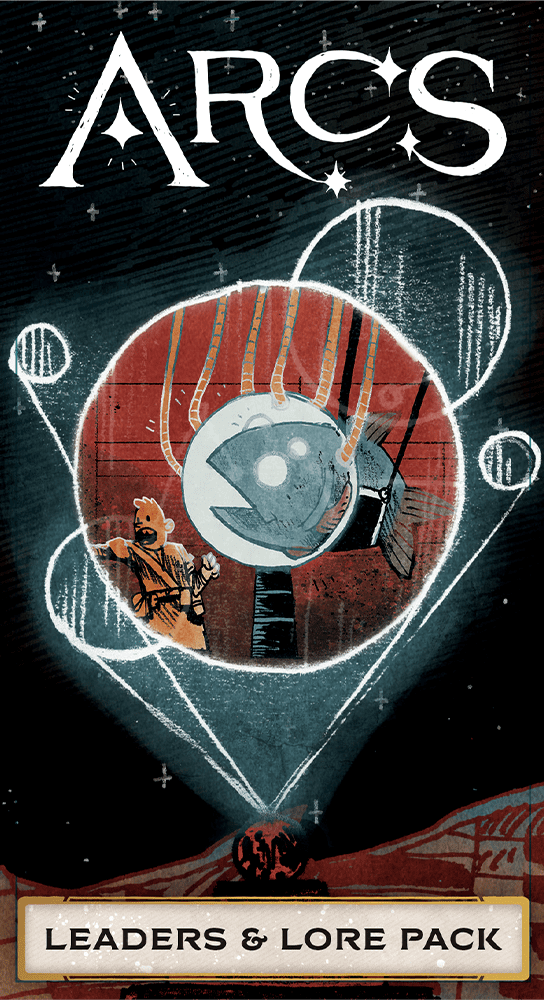
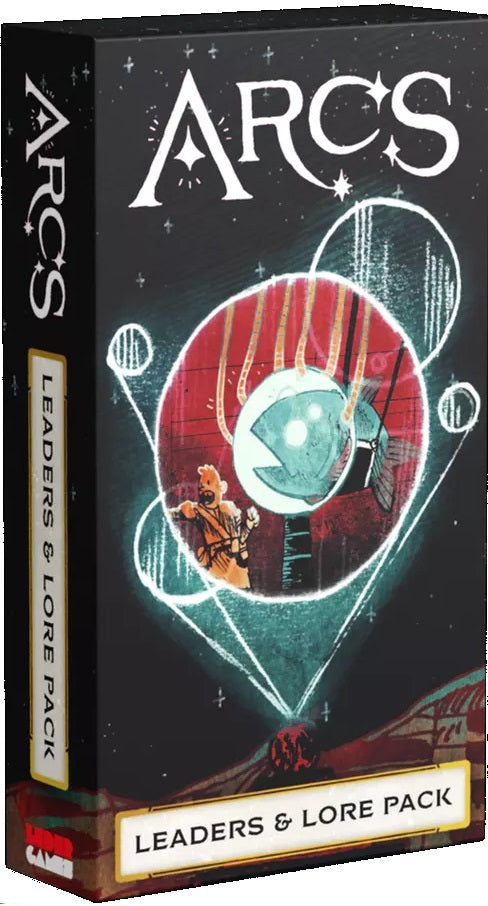
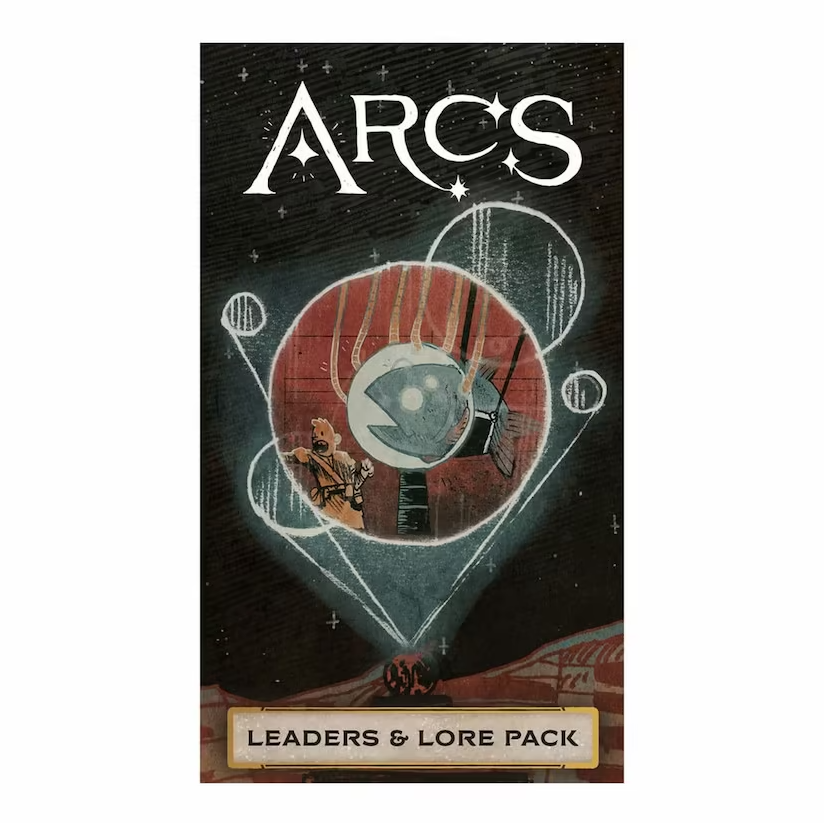
 Arcs Expansion Pack: Leaders & Lore
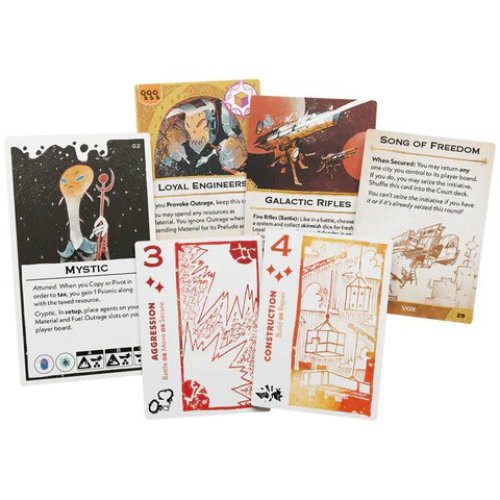
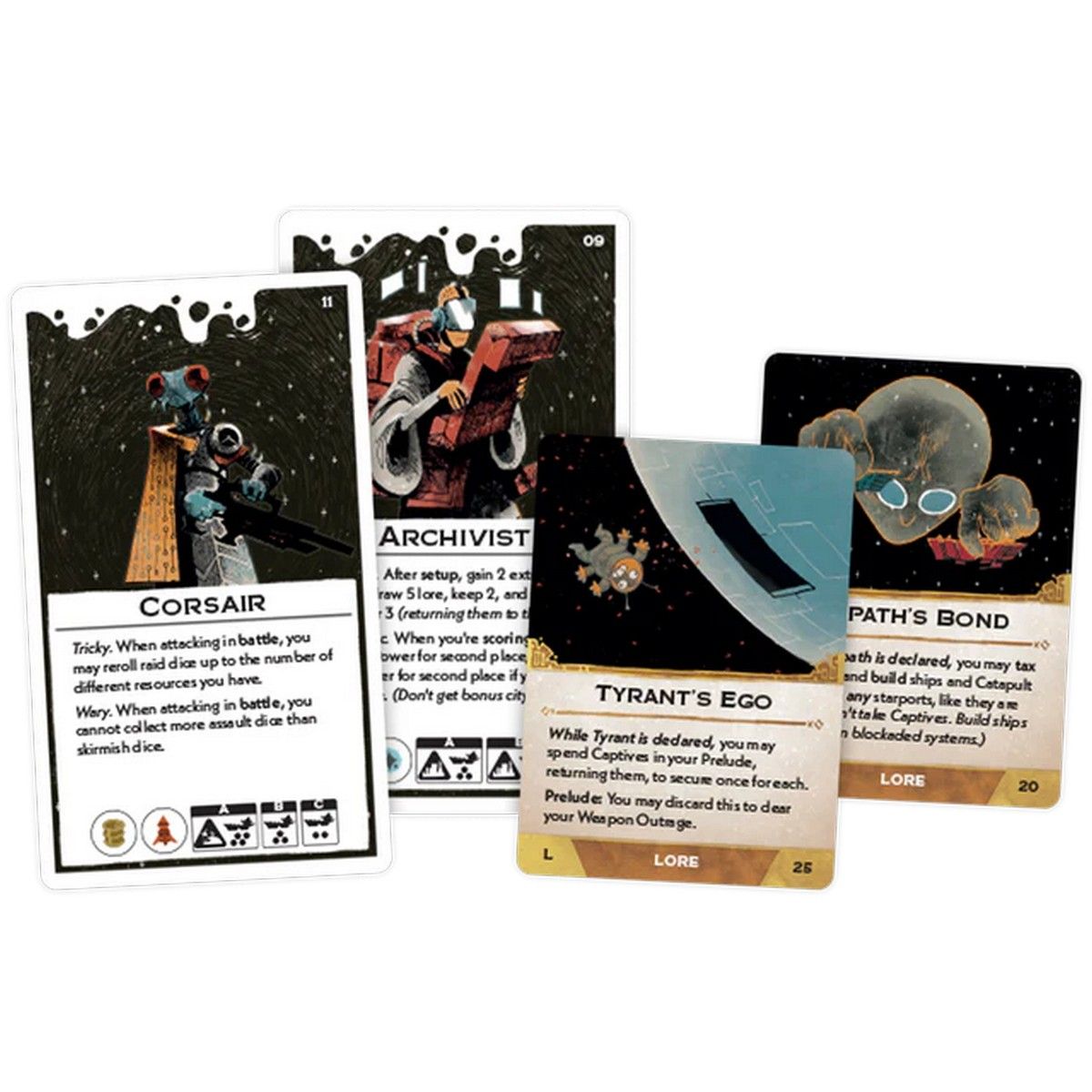
The light, additive upgrade. Leaders & Lore bolts asymmetric starting characters and lore powers onto the base game for more variety and replay value — and note that it ships inside most base-game printings already, so check before you double-buy. As a standalone pack it's a clean way to deepen the competitive game once the core trick-taking is second nature. Add it after a few base plays, never before.
- Adds asymmetric powers and replay variety to the base game
- Keeps the tight competitive format intact (unlike the campaign)
- Great once players have internalized the core loop
- Often already included in the base box — verify before buying separately
- Adds rules overhead that muddies a first teach
- Pure variety, not a fundamentally new mode
At a glance
| product | asin | best for | players | play time | mode | complexity | requires base | dax take |
|---|---|---|---|---|---|---|---|---|
| Arcs (Base Game) | B0D856FJ1J | Original, fast, competitive space-opera strategy | 2-4 | 60-120 min | Competitive, balanced, standalone | Medium / fiercely tactical | No — it IS the base | The masterpiece. Start here, full stop. |
| Arcs: The Blighted Reach Campaign | B0D8RH22Q8 | Persistent three-Act narrative saga | 2-4 | ~6 hrs total (3 Acts) | Campaign, persistent, deliberately unbalanced | High / heavy evaluation | Yes | A different hobby. Buy for the story, not for balance. |
| Arcs: Leaders & Lore Pack | B0FFM97FXF | More asymmetric variety in the base game | 2-4 | 60-120 min | Competitive add-on (often in base box) | Adds light overhead | Yes | Spice for veterans. Check your base box first. |
Questions, answered
Is Arcs worth buying?
Yes, for the right group. It's one of the most original and critically acclaimed strategy games of the decade — IGN scored it 10/10, Shut Up & Sit Down named it 2024's best new game — and at a sub-$60 base price it offers exceptional depth-per-dollar. The only caveat: it's mean and confrontational, so it's worth it specifically for tables that enjoy direct conflict and can lose gracefully.
How many players does Arcs support, and what's the best count?
Arcs plays 2-4. Most enthusiasts consider 3-4 the sweet spot because the trick-taking, initiative-stealing, and ambition free-for-alls have the most tension with a fuller table. The 2-player game works and has its own dedicated tuning, but it's a more direct, duel-like experience and loses some of the multiplayer chaos that defines the game.
How long does a game of Arcs take?
A base game runs roughly 60-120 minutes — call it about 90 minutes once everyone knows the rules. That's dramatically shorter than comparable galactic 4X games like Twilight Imperium, which is a major part of Arcs' appeal. The full Blighted Reach campaign is about six hours spread across three separate Act sessions.
Is Arcs good for beginners or as a first strategy game?
Not really. It teaches fast — under 30 minutes — but it punishes fast too, with swingy combat and feel-bad moments for players who fall behind. It's a fantastic game for people who already enjoy the hobby, but it's not a gentle gateway. New players are better served starting with something less confrontational, then graduating to Arcs.
Do I need to know how to play trick-taking card games to enjoy Arcs?
No. While the action system is built on a trick-taking structure (lead suit, follow, surpass), reviewers consistently note it plays more like clever action-selection than a classic card game. If you've never played Spades or Hearts, you'll be fine — and if you normally dislike trick-takers, this is the one that often wins people over.
What's the difference between the base game and the Blighted Reach campaign?
The base game is a tight, balanced, competitive ~90-minute strategy contest. The Blighted Reach turns it into a persistent three-Act narrative campaign with 24 branching Fates, an Empire, Edicts, and wild unlockable powers — deliberately less balanced and far more story-driven. They're genuinely different experiences; loving one doesn't guarantee loving the other.
Is the Blighted Reach expansion worth it?
If you love the base system and want a sprawling Wehrle-style saga, yes — it's one of the most ambitious campaign designs in recent memory with enormous replayability. But buy it for the narrative, not for more competitive balance. Some even devoted fans note it leans so hard into complexity and unpredictability that it can overwhelm; it demands a committed group that will return for all three Acts.
Should I play with the Leaders & Lore cards in my first game?
No. The near-universal advice is to play the base game once or twice without Leaders & Lore so you internalize the core trick-taking and ambition loop. Once that's second nature, add Leaders & Lore for asymmetric powers and extra variety. Note that the module is included in most base-game printings already.
Is Arcs too swingy or 'take-that' for a relaxed group?
For a conflict-averse group, probably yes. Arcs is described by reviewers as 'mean and swingy,' with ambition rounds erupting into free-for-all battles where your ships become opponents' trophies. That confrontation is the design's intent, not a defect — but if your table prefers peaceful engine-building, this is the wrong game.
How does scoring work in Arcs?
You score Power by fulfilling 'ambitions' — variable scoring goals (most destroyed ships, most of a resource, most captives) that get declared each chapter. The twist: declaring an ambition drops your card's value to zero, costing you turn order, and you score for an ambition even if someone else declared it. So everyone races toward whatever goals are on the table, and the most Power after about five chapters wins.
How does Arcs compare to Eclipse or Twilight Imperium?
Arcs delivers the galactic-empire feeling in a fraction of the time and setup, but it's fiercely tactical rather than deeply strategic. Eclipse and Twilight Imperium reward long-arc economic and tech planning across hours; Arcs rewards reading the table and being well-positioned to act right now. If you want a grand multi-hour strategic build, Arcs may disappoint. If you want sharp, fast, confrontational empire play, it outclasses them on time-to-fun.
Does Arcs work well at 2 players?
It works and includes specific 2-player support, but it changes character. With two, it becomes a more direct duel and loses the multi-way initiative battles, kingmaking tension, and chaotic ambition scrambles that define the full-table experience. Most players consider it good at two but best at three or four.
Dax's verdict
Arcs is a masterpiece with a personality — and like all personalities, it is not for everyone. Cole Wehrle did something nobody else has pulled off: he built a complete galactic 4X on the bones of a trick-taking card game, and made it fast, gorgeous, and brutally deep. The flaw I named at the top — that it can feel punishing when you're behind, swingy enough to bruise — is real, and it's inseparable from the knife-edge tension that makes the game brilliant. You don't get one without the other. For a table that enjoys direct conflict and can lose with a grin, this is a forever-game and one of the best values in strategy gaming. For a group that wants peaceful engine-building, it's a $50 argument waiting to happen. The ruling: buy the base game, match it to the right table, and let the system click — it will. Just don't bring it home expecting Eclipse, and don't bring it to people who sulk when the Robber lands on them.
Research ledger 18 sources · reviewed 2026-08-11
Specifications, rules, current product information, community experience, and contrary evidence were checked against the sources below. Commercial links are kept separate from editorial evidence.
- en.wikipedia.orgen.wikipedia.org/wiki/Arcs_(board_game)
- tabletopgaming.co.uktabletopgaming.co.uk/reviews/arcs-board-game-review
- punchboard.co.ukpunchboard.co.uk/arcs-review
- meeplemountain.commeeplemountain.com/reviews/arcs
- boardgamequest.comboardgamequest.com/arcs-review
- chrisfarrell317.substack.comchrisfarrell317.substack.com/p/arcs-iliad-ichor-heat-tunnel-vision
- glyphngrok.substack.comglyphngrok.substack.com/p/game-review-arcs
- robbiereviewsgames.wordpress.comrobbiereviewsgames.wordpress.com/2025/07/16/arcs-review-trick-taking-in-the-final-frontier
- frontlinegaming.orgfrontlinegaming.org/2025/03/19/board-game-review-arcs
- shutupandsitdown.comshutupandsitdown.com/games/arcs-the-blighted-reach-expansion
- officialgamerules.orgofficialgamerules.org/game-rules/arcs
- amazon.comamazon.com/dp/B0D856FJ1J?tag=puzzlewick-20
- amazon.comamazon.com/dp/B0D8RH22Q8?tag=puzzlewick-20
- amazon.comamazon.com/dp/B0FFM97FXF?tag=puzzlewick-20
- reddit.comreddit.com/r/boardgames/comments/1ib91cj
- reddit.comreddit.com/r/Arcs/comments/1gja4lf
- reddit.comreddit.com/r/Arcs/comments/1fo7aeu
- boardgamegeek.comboardgamegeek.com/thread/3320619/how-does-base-arcs-compare-to-eclipse-forbidden-st
I'll be honest with you — flattery is boring.

Keep exploring
The next smart rabbit holes.
✦ Topic PathBoard Game Buying Guides: compare the whole shelfStart with the decision, not the shelf. These guides compare the games, editions, expansions, player counts, and costs people...Deep DiveEarthborne Rangers Review: The Cozy-Ecology Card Adventure Where Nobody Wants to Hurt YouPull up a chair, friend. Earthborne Rangers is the open-world co-op card game where the wilderness is the welcome, not the war — a...Deep DiveEclipse: Second Dawn for the Galaxy — The 4X Space Epic Worth Clearing the Whole Table ForA full galaxy of exploration, research, conquest, and diplomacy running on a famously elegant action-disc economy — and the version...