Earthborne Rangers Review: The Cozy-Ecology Card Adventure Where Nobody Wants to Hurt You
Pull up a chair, friend. Earthborne Rangers is the open-world co-op card game where the wilderness is the welcome, not the war — a plastic-free, compostable box of meadowlarks and slow afternoons. Here is what it feels like to play, how to build your first ranger, and whether it earns the place it'll take on your shelf.

AI-assisted curator persona · research and editorial responsibility: Robert Pruitt · how this guide was made
Last editorial refresh: 2026-06-15 Gold-standard QA: 2026-07-17 12 sources reviewed Affiliate links checked during gold-standard pass

The short answer
Earthborne Rangers (Earthborne Games, 2023) is a 1–4 player customizable cooperative card-adventure set in a far-future valley where nature has reclaimed the world and your job is not to conquer it but to care for it. You build a personal Ranger deck across four aspects — Awareness, Focus, Spirit, Fitness — then spend a campaign of roughly 30 'days' exploring an open map, meeting its people and creatures, and resolving gentle tests instead of combat. It is genuinely worth it for players who want a warm, exploratory, low-conflict experience and who'll commit 20–40 hours; it shines brightest solo or at two players. The box is FSC-certified, fully recyclable and backyard-compostable, with zero plastic — no shrink wrap, no baggies, no minis. Buy the Core Set; it is complete and self-contained.
Decision map
Choose in thirty seconds
The complete, self-contained way in: 1–4 players who want an open-world, low-conflict, eco-conscious card adventure they can sink a full campaign into (best solo or at tw
Come in out of the wind. Lift the lid — and notice there's no hiss of shrink wrap to break, no plastic tray, just paper sleeves and a soft stack of cards that smell faintly of, well, paper. That first un-boxing tells you everything about Earthborne Rangers before a single card is played: this is a game that has thought about what it leaves behind. You are a Ranger, a quiet steward of a green valley a few thousand years from now, and the world you walk into does not hate you. The cliff is just a cliff. The badger is just a badger, going about its badger business. Your hands learn the weight of the little wooden energy tokens, the satisfying punch of the chipboard, the heft of a 540-card library that will slowly become your valley. I want to walk you through it the way I'd talk you through it across the table — what it is, what's in the box, what a day actually feels like, and the small, kind tips I wish someone had whispered to me before my first sunrise.
Start here, then go deeper
You are in the right cabinet.
 ☾ Universe HubDon't Starve: the whole buying pathDon't Starve is the sweet little campfire that keeps reminding you the woods have teeth. This universe gathers Puzzlewick's buying...
 ✦ Topic PathBoard Game Buying Guides: compare the whole shelfStart with the decision, not the shelf. These guides compare the games, editions, expansions, player counts, and costs people...
 Deep DiveArcs Review: The Trick-Taking Space Opera That Will Either Hook You or Hurt YouCole Wehrle stuffed a 4X space empire into a 60-card trick-taking game, then handed you the bill emotionally. A verdict-forward deep-dive...
What is Earthborne Rangers — and what is the 'cozy ecology' hook?
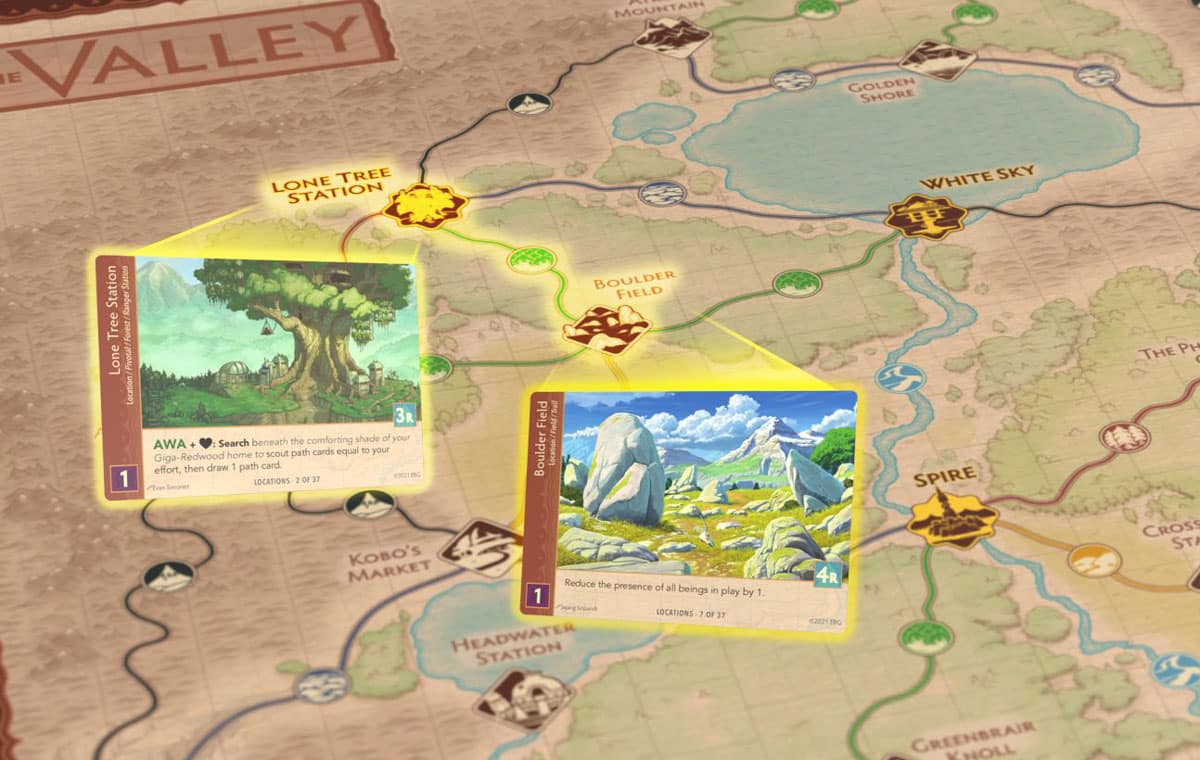

Earthborne Rangers is a customizable cooperative adventure card game for 1–4 players, designed by Andrew Fischer, Brooks Flugaur-Leavitt, Andrew Navaro, Adam Sadler, and Brady Sadler. You play a Ranger — a wandering protector of a mountain valley in a far-future Earth where civilization has receded and the wild has grown back generous and strange. The 'hook' that sets it apart from its co-op card-game cousins is that the deck across the table is not an enemy. There's no central monster trying to kill you, no doom track racing you to a loss. The path deck simply spills the valley out in front of you — predators, prey, flora, weather, people — and most of these things are simply there, living their lives, available to be observed, helped, climbed, foraged, or gently negotiated with. It is an open world in the truest tabletop sense: you choose where to go each day and you can follow the campaign's spine or wander off it entirely to poke at whatever caught your eye. Meeple Mountain called it 'a profound celebration of exploration, nature, and curiosity,' and that's the register the whole thing plays in.
The cliff is just a cliff. The badger is just a badger. The valley does not hate you — it simply asks to be known.
What's in the box — and why the eco-conscious production matters
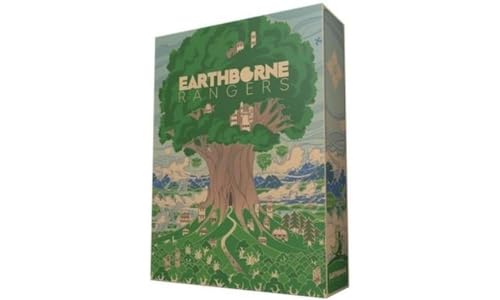
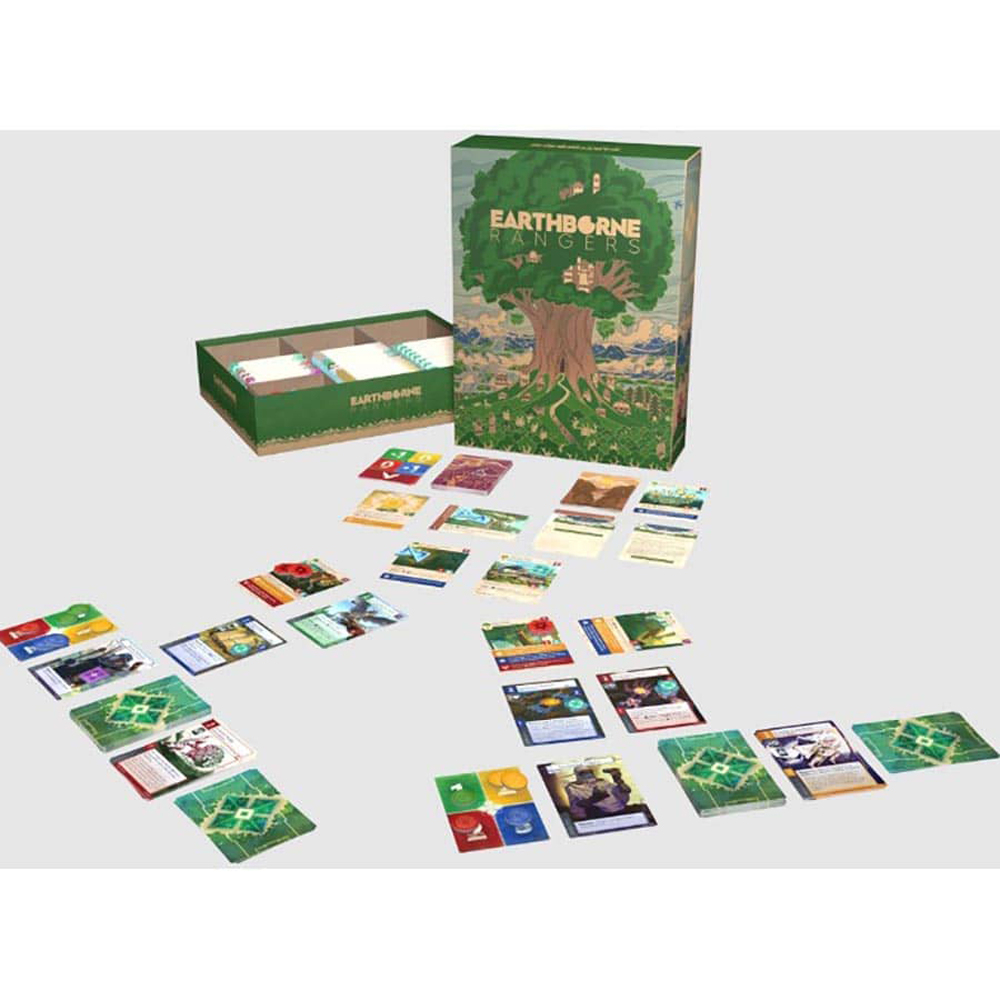
Open the Core Set and you'll find 540 cards, 35 card dividers, a 56-page Campaign Guide, a 48-page Rulebook, one large map of the Valley, and 92 punchboard tokens. That card count looks intimidating, but most of it is the world — the deep library you draw your path and rewards from — not a wall of rules. Now run your thumb along the edges and notice what's missing: there is no plastic. None. No shrink wrap on the box, no cellophane on the cards, no zip-bags, no plastic minis, no glossy plastic coating on the card stock. The cards arrive bundled in paper, the box is held shut with stickers, and the whole thing is printed on FSC-certified paper. Earthborne Games designed every component to be recyclable, backyard-compostable, or both — a near-unheard-of stance in a hobby that ships mountains of single-use plastic. It's not a gimmick; it's the thesis of the game made physical. The one honest trade-off: those uncoated, plastic-free cards are more prone to warping and wear than the slick stock you may be used to, which is exactly why sleeving is the table's first ritual (more on that below).
No shrink wrap to break, no baggies to tear, no plastic to outlive you. The box practices what the valley preaches.
How a day in the Valley actually plays
Here's the rhythm, the part I love most. Each session is a single 'day.' On your turn you take one action — play a card from hand (paying for it by discarding other cards), or activate a card already in front of you. To interact with the world, you make a test: commit energy tokens matching the relevant aspect (or discard cards bearing the matching icon), then flip a challenge card that nudges your total by roughly ±2. Clear the threshold and you succeed — you scale the cliff, calm the creature, charm the local, forage the berries — and then you glance around the tableau and trigger any card with a matching icon, so the environment quietly reacts on its own. The valley breathes between your turns: weather shifts, predators hunt prey you never touched. A day ends when you choose to rest, when your deck runs dry, when a Ranger takes a third injury, or when a valley inhabitant dies. Then you camp, refresh your energy, and decide where tomorrow takes you. It is unhurried and reactive and full of small surprises — the reviewer at Gameward Bound wrote that they 'could almost hear the wind rushing through my ears; the meadowlarks crying out in alarm; the Tenebrae screaming in near silence overhead; the leaves rustling.' That's the texture you're paying for.
The valley breathes between your turns. You take one quiet action; the meadow answers with three.
Is Earthborne Rangers worth it? (Honest answer)
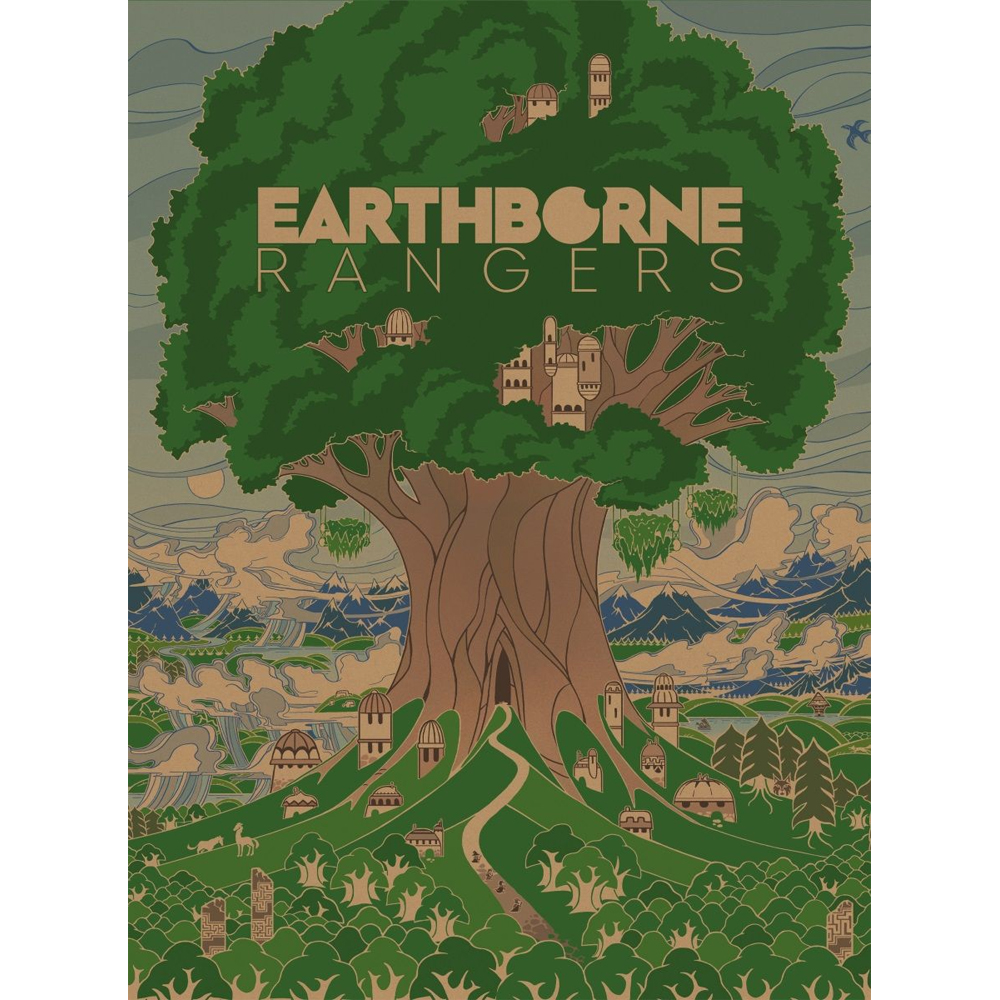
Yes — for the right table, emphatically. If the fantasy of a slow, open, low-conflict ramble through a living world makes your shoulders drop, this is one of the only games delivering it, and it delivers it with real craft and a campaign that resolves satisfyingly over its arc. It is, however, a commitment of both money and hours, and it is not for everyone. The premium, plastic-free production carries a premium price. It asks for setup space, careful card organization, and a willingness to learn a keyword-dense system whose first hour is genuinely a learning curve. And it has a real tension at its heart that honest reviewers flag: it hands you a glorious open world and then, some feel, gets nervous about it. Gideon's Gaming put the critique sharply — 'The open world concept is intriguing, but the game seems almost afraid of it, as it jerks you aside with a main quest and time limits.' Whether that pull between free wandering and a guiding plot reads as gentle propulsion or as interruption is the single biggest 'will I love this' question. If you came for pure sandbox, lower the campaign's leash early. If you want a story with room to roam, it's a treasure.
It is not cheap and it is not quick — but for a table that wants to wander, almost nothing else does this.
How to build your first Ranger and play your first session well
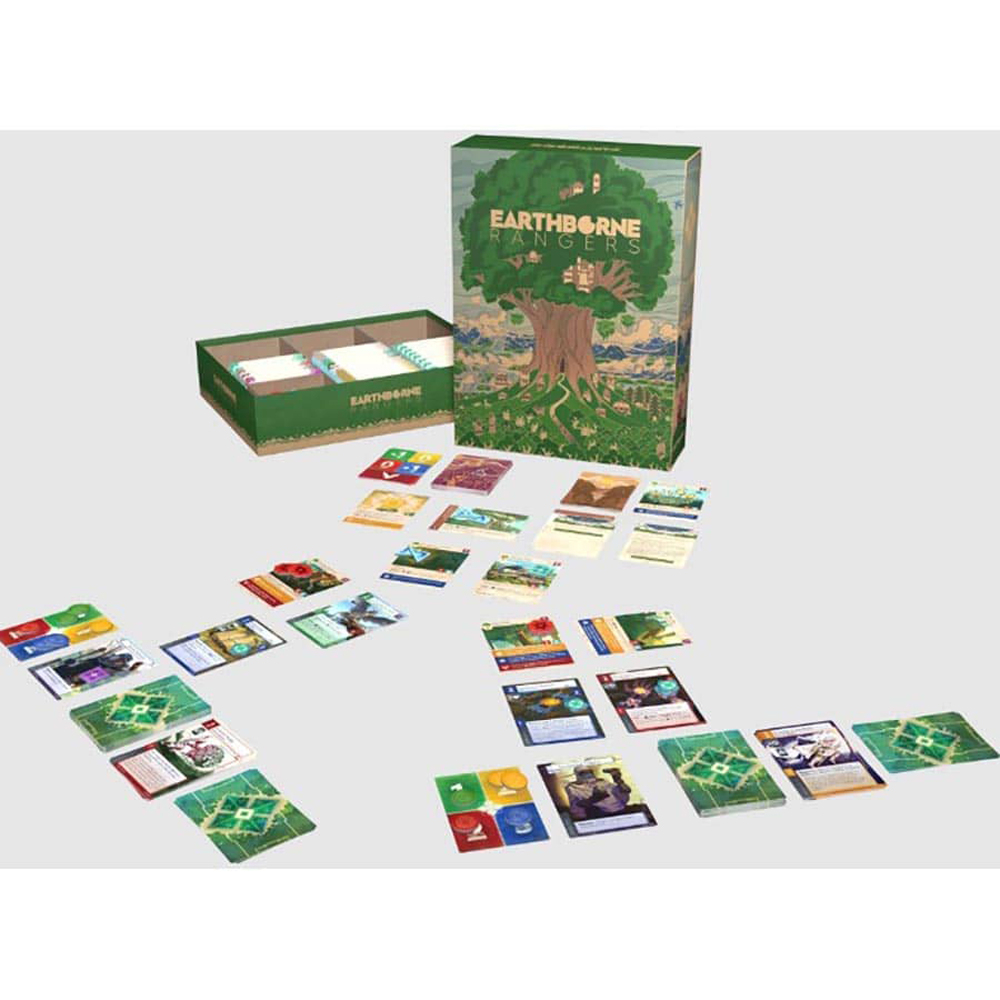
Lean in — here's what I'd whisper across the table. First, your Ranger is built from four identity cards: a Personality, a Background, an Outside Interest, and a Role. These aren't just flavor; they mechanically shape your deck and reward you for playing in character. So don't min-max your opening deck. As the folks at Gameward Bound put it, building a deck here is 'about tying in memorable experiences' more than chasing the optimal stat line — pick the ranger you want to be, and the synergies follow. Second, a controversial but widely-shared piece of table wisdom: be wary of the prologue. It's pitched as the character-creation tutorial, but its gameplay elements bend the real rules and can confuse more than they teach — at least one experienced reviewer says outright to skip playing through it and just use it to make your character. Third, on your first real day, take the pressure off: if you can't finish that opening mission before nightfall, just narrate that you did and move on. Fighting the literal reset rules early 'only served to add lots of frustration,' Gameward Bound warns. Keep the keyword glossary open, sleeve your cards, and give yourself permission to wander a little before you chase the plot. The valley rewards curiosity over efficiency every single time.
Don't build the strongest ranger. Build the one you'll remember. The valley grades on heart, not on optimization.
Replayability, the campaign, and expansions
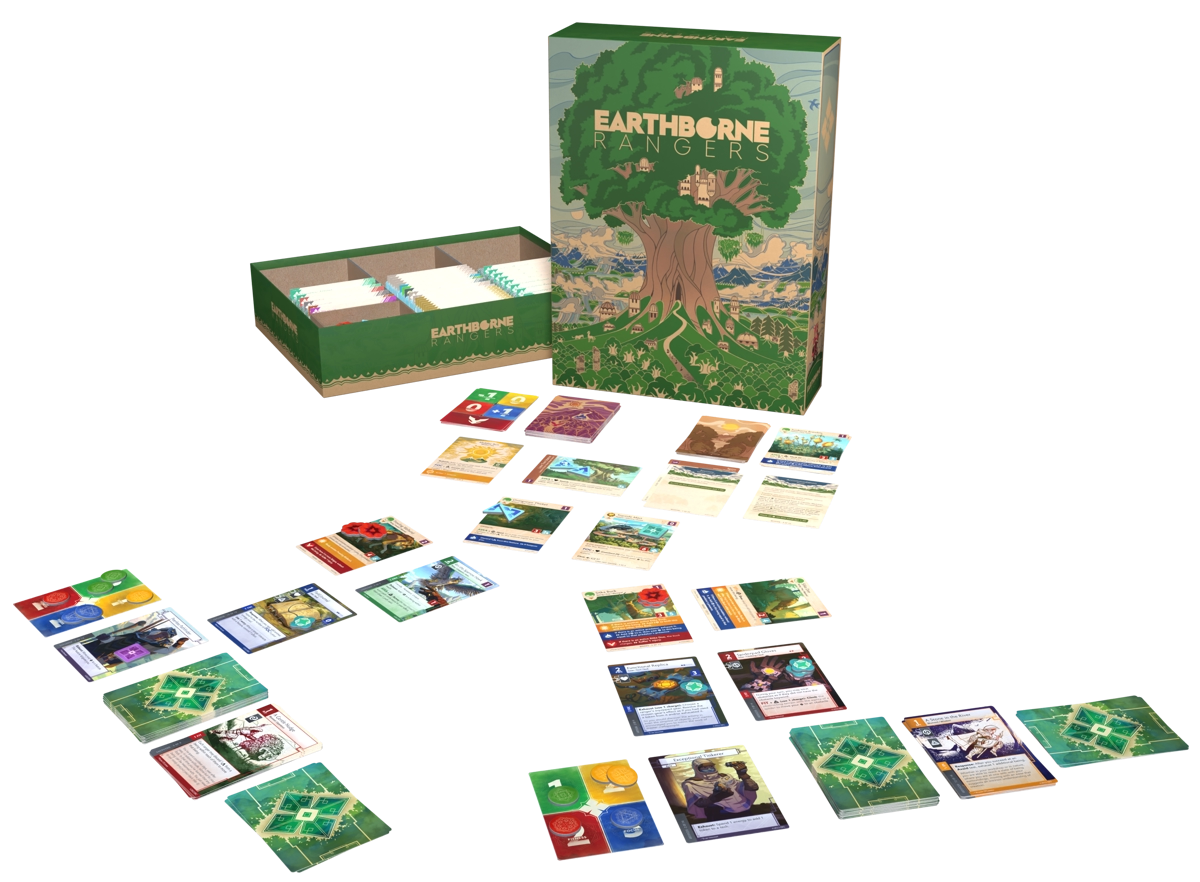
The core campaign is designed to unfold over roughly 20–30 days/sessions, with a main narrative that completes satisfyingly — but crucially, the structure lets you ignore the A-plot and chase side content whenever you like, so two campaigns rarely walk the same trail. Your deck grows with you, absorbing better gear, sharpened skills, and the literal memories of your journey, so replay value comes as much from rebuilding a brand-new Ranger as from re-walking the map. When you're ready for more valley, Earthborne has built outward: the big one is the Legacy of the Ancestors campaign expansion (2025), which sends you beneath the surface into the subterranean caverns of the ancient Estian Arcology with a full playset of 250+ new Ranger and Valley cards, 20 new locations (including 8 pivotal ones), 5 new terrain sets, and a fresh campaign guide that weaves together both the core map and new maps. There's also a galaxy of smaller add-ons — a Card Doubler (recommended if you regularly play four), expansion content like Moments of the Path and Stewards of the Valley, and accessory playmats. The expansion requires the Core Set to play; start with the base game and let the valley earn its sequels.
Your deck doesn't just get stronger — it remembers. Every campaign leaves a different set of footprints behind.
Who is Earthborne Rangers for?
Picture the player across from me. They light up at exploration for its own sake; they'd rather befriend the creature than fight it; they have fond, specific memories of being a kid in the woods. They want a campaign they can sink 20–40 hours into with a steady partner — or, just as happily, alone on a quiet evening with a cup of something warm. They care, at least a little, that the box on their shelf won't outlive them in a landfill. That person will fall hard for this. Equally, let me be a good hostess and tell you who should pass: if you crave tactical combat, tight tension, short tidy sessions, or a fully open sandbox with no narrative spine tugging at you, the friction will outweigh the wonder. And budget-minded players or one-game-night groups may find the price and time investment steep for how it's meant to be savored. But if you read 'a world that does not hate you' and felt something loosen in your chest — pull up the chair. The meadowlarks are waiting.
For the kid who loved the woods and the grown-up who still does, Earthborne Rangers is less a game to beat than a place to return to.
What experienced tables keep reporting
Recurring owner patterns, synthesized in Puzzlewick's words. Follow each evidence trail to read the original discussion.
Earthborne Rangers is both an excellent card game and a fine narrative achievement, but first and foremost, it is a profound celebration of exploration, nature, and curiosity.
I could almost hear the wind rushing through my ears; the meadowlarks crying out in alarm; the Tenebrae screaming in near silence overhead; the leaves rustling.
Ignore playing through the prologue! This is recommended to create a character, but the gameplay elements simply break the rules.
If you fail to complete this mission before day's end, pretend you did. I wasted some time trying to follow the rules about resetting, but this only served to add lots of frustration.
The open world concept is intriguing, but the game seems almost afraid of it, as it jerks you aside with a main quest and time limits.
It comes exceptionally close to having the kind of organic storytelling that really shines in a board game, but it constantly interrupts itself with a novel's worth of lore dumping.
Every card reveal is exciting because outcomes remain genuinely uncertain — the Path Deck introduces wildlife, NPCs, and environmental features that react to one another.
Read the evidence: Andrew Lynch, Meeple Mountain (paraphrased summary of review)
There is no plastic in the game at all — no shrink wrap on the box or cards, no baggies, no minis; the cards come wrapped in paper, and every element is fully recyclable, backyard compostable, or both.
The picks
Some links below are affiliate links — as an Amazon Associate, Puzzlewick earns from qualifying purchases, at no extra cost to you. It never changes a pick.
4 photos Earthborne Rangers (Base Game)
This is the whole valley in one plastic-free box — 540 cards, the Campaign Guide, the Rulebook, the Map, and 92 tokens, all FSC-certified and compostable. You build a Ranger across four aspects and explore a living world that reacts to you rather than attacks you. It needs nothing else to deliver its full arc; the expansions are dessert, not the meal. Sleeve the cards, lean into theme over optimization, and give yourself room to wander.
- Genuinely novel open-world, no-combat-pressure co-op experience
- Stunning eco-conscious production: zero plastic, FSC paper, fully recyclable/compostable
- Deep, deck-shaping character creation that rewards roleplay
- Complete campaign in one box; excellent solo and two-player
- Premium price and a real 20–40 hour commitment
- Keyword-dense first hour; printed rulebook has errata
- Open world vs. guiding main-quest tension won't suit pure-sandbox fans
- Plastic-free cards warp easily — sleeving is near-mandatory
At a glance
| game | maker | players | core loop | conflict level | campaign | vibe | production |
|---|---|---|---|---|---|---|---|
| Earthborne Rangers | Earthborne Games | 1–4 (best 1–2) | Open-world exploration; gentle aspect-based tests, no central enemy | Very low — stewardship, not combat | ~20–30 day sessions, open/non-linear with a main arc | Cozy solarpunk ecology; warm and unhurried | Plastic-free, FSC-certified, compostable |
| Arkham Horror: The Card Game | Fantasy Flight Games | 1–4 (1–2 common) | Investigators vs. a pressuring encounter deck; race the doom/agenda | High — survival horror, frequent combat & sanity loss | Branching multi-scenario campaigns with persistent consequences | Tense, dread-soaked Lovecraftian horror | Standard plastic-wrapped LCG components |
| The Lord of the Rings: The Card Game | Fantasy Flight Games | 1–4 | Quest deck pushes back; manage threat, combat enemies, race objectives | High — combat-forward, swingy difficulty | Scenario/quest series; deck-tuning puzzle is the draw | Heroic Tolkien adventure under constant pressure | Standard plastic-wrapped LCG components |
| Sleeping Gods | Red Raven Games | 1–4 | Open-world atlas exploration; storybook events, some combat | Moderate — exploration with real fights and threats | Long open campaign across a vast map/atlas, saveable | Lush 1920s nautical wonder-and-peril | Standard components, large board/atlas footprint |
Questions, answered
What is Earthborne Rangers in one sentence?
It's a 1–4 player customizable cooperative card-adventure where you play a Ranger exploring and caring for a far-future valley, building a personal deck and resolving gentle aspect-based tests instead of fighting a central enemy.
Is there combat in Earthborne Rangers?
Not in the usual sense. There's no central monster or doom track trying to defeat you. You can clash with or 'soothe/harm' creatures via tests, but the design deliberately removes combat as the primary way to resolve problems — exploration, observation, and persuasion are the heart of it.
How long is a session, and how long is the whole campaign?
Each 'day' session can run from roughly an hour to several hours depending on player count and how much you explore. The full campaign is designed to span about 20–30 days/sessions, so figure on a 20–40 hour arc overall.
How many players is it best with?
It supports 1–4, but it's smoothest and tightest at one or two players. Three and four work but lengthen sessions and thin the shared card pool; four-player groups often add the Card Doubler.
What are the four aspects?
Awareness, Focus, Spirit, and Fitness. Each governs different tests and refreshes a different amount of energy per round, which is what gives your Ranger its distinct feel and shapes how you build your deck.
What comes in the Core Set?
540 cards, 35 card dividers, a 56-page Campaign Guide, a 48-page Rulebook, one Map of the Valley, and 92 punchboard tokens — all in a plastic-free, FSC-certified, fully recyclable and compostable package.
Is the eco-friendly production just marketing?
No. There is genuinely no plastic — no shrink wrap, no baggies, no plastic coating, no minis. Cards are paper-wrapped and printed on FSC-certified stock, and every component is recyclable, backyard-compostable, or both. The honest trade-off is that the uncoated cards warp more easily.
Do I need to sleeve the cards?
It's strongly recommended. The plastic-free stock is lovely but bends and warps faster than coated cards, and you'll handle this library across dozens of sessions — sleeving from day one protects your investment.
Should I play the prologue first?
It's debated. The prologue is meant to teach character creation, but its gameplay bends the real rules and can confuse newcomers. Some experienced players use it only to build their Ranger and skip actually playing it; at minimum, keep the keyword glossary handy and don't take its rules as gospel.
Is Earthborne Rangers good for solo play?
Excellent. Solo is one of the best ways to experience it — quiet, immersive, and fully self-paced. Many reviewers consider 1-player and 2-player the definitive configurations.
What expansions are available, and do I need them?
You don't need any — the Core Set is a complete campaign. When you want more, the flagship is Legacy of the Ancestors (2025), a full underground campaign expansion with 250+ new cards, plus smaller add-ons like the Card Doubler, Moments of the Path, Stewards of the Valley, and accessory playmats. All require the Core Set.
How does Earthborne Rangers compare to Arkham Horror or the LOTR LCG?
Those are tense 'you-vs-the-deck' survival games where the encounter deck actively tries to beat you. Earthborne Rangers removes that pressure entirely in favor of open-world exploration and stewardship — same broad family of co-op card adventure, opposite emotional temperature.
Yumi's verdict
Earthborne Rangers is a quietly remarkable thing: an open-world co-op card adventure that asks you to know a place rather than conquer it, wrapped in the most thoughtfully sustainable box in the hobby. It is not flawless — the price is premium, the first hour is dense, sessions run long, and the gentle tug-of-war between free wandering and a guiding main quest will frustrate anyone who wanted a pure sandbox. But for the player who lights up at exploration, who'd rather befriend than fight, and who has 20–40 unhurried hours to give a steady partner or a solo evening, almost nothing else delivers this feeling. Buy the Core Set — it is complete, self-contained, and beautiful — sleeve the cards, build the Ranger you want to be instead of the one with the best numbers, and let yourself get a little lost before you chase the plot. The meadowlarks are waiting, and the valley, blessedly, does not hate you.
Research ledger 12 sources · reviewed 2026-07-17
Specifications, rules, current product information, community experience, and contrary evidence were checked against the sources below. Commercial links are kept separate from editorial evidence.
- amazon.comamazon.com/dp/B0CNY46WJL?tag=puzzlewick-20
- earthbornegames.comearthbornegames.com/resources
- earthbornegames.comearthbornegames.com/expansions
- meeplemountain.commeeplemountain.com/reviews/earthborne-rangers
- therewillbe.gamestherewillbe.games/articles-boardgame-reviews/9349-earthborne-rangers-a-world-that-does-not-hate-you
- boardgamequest.comboardgamequest.com/earthborne-rangers-review
- coopboardgames.comcoopboardgames.com/cooperative-board-game-reviews/earthborne-rangers
- gideonsgaming.comgideonsgaming.com/earthborne-rangers-board-game-review
- gamewardbound.comgamewardbound.com/earthborne-rangers-solo-first-impressions
- bigbossbattle.combigbossbattle.com/earthborne-rangers-review
- boardgamegeek.comboardgamegeek.com/boardgame/354291/earthborne-rangers-legacy-of-the-ancestors
- gamefound.comgamefound.com/en/projects/earthborne-games/earthborne-rangers-reprint
Come in, take your shoes off — let me show you something.


Keep exploring
The next smart rabbit holes.
☾ Universe HubDon't Starve: the whole buying pathDon't Starve is the sweet little campfire that keeps reminding you the woods have teeth. This universe gathers Puzzlewick's buying...✦ Topic PathBoard Game Buying Guides: compare the whole shelfStart with the decision, not the shelf. These guides compare the games, editions, expansions, player counts, and costs people...Deep DiveArcs Review: The Trick-Taking Space Opera That Will Either Hook You or Hurt YouCole Wehrle stuffed a 4X space empire into a 60-card trick-taking game, then handed you the bill emotionally. A verdict-forward deep-dive...