Sleeping Gods Review: The Cozy-but-Vast Open-World Story Grail
Pour the tea, clear the table, and let me walk you aboard the Manticore. Ryan Laukat's painterly open-world campaign is the rare grail that feels like a warm evening with friends and a vast, breathtaking atlas all at once — here's whether it's worth your ~$100 and your winter.

AI-assisted curator persona · research and editorial responsibility: Robert Pruitt · how this guide was made
Last editorial refresh: 2026-06-15 Gold-standard QA: 2026-07-17 12 sources reviewed Affiliate links checked during gold-standard pass

The short answer
Yes — Sleeping Gods is worth it if you want a cozy, story-first, open-world campaign you sail at your own pace, and you have a steady table (solo or up to 4) to commit roughly 10-20 hours across a season. For about $99.99 you get Ryan Laukat's hand-painted world, a 26-page spiral atlas you literally navigate, and a ~170-page storybook of branching choices that reviewers repeatedly call a 'masterpiece' and 'the best storytelling game' they've played. The catches are real but small: the diceless combat 'bites back' and can feel punishing, it asks for table space and a little bookkeeping, and one full campaign is largely a one-way journey (the Tides of Ruin expansion's Arcade Mode is the antidote). If you're a hit-and-run party-game group or you crave dice-chucking randomness, look elsewhere. If 'a story that sits atop a board game' makes your heart lean in — this is the grail.
Decision map
Choose in thirty seconds
The definitive open-world story campaign — the grail itself, solo or for 1-4 players.
Anyone who loved the campaign and wants more sea — plus real replay value via Arcade Mode.
A fresh, self-contained adventure with new deck-building combat — no base game needed.
Come in, come in — leave your shoes by the door. There's a particular kind of evening I live for: the lamp low, a pot of something warm, and a world spread open on the table so big it makes everyone lean in and go oh. Sleeping Gods is that evening, boxed.
Here's the setup, and I promise it's lovely. It's 1929. You and your crew, led by Captain Sofi Odessa, are aboard a steamship called the Manticore — and you've been swept through into a strange, shimmering place called the Wandering Sea. You are lost. To get home, you must sail this world, meet its people, weather its storms, and gather the totems of its sleeping gods. That's it. That's the ache that pulls you forward for twenty hours.
What makes it special — and why I keep setting it down in front of nervous first-timers and watching them fall in love — is that it never rushes you. You explore where you like. You read a passage, you make a choice, you live with it. A village might thrive because of you, or burn because you chose your crew over strangers. It's open-world the way Breath of the Wild is open-world, except it's painted on cardboard and it fits on your dining table.
It is also, I'll be honest, not a small commitment, and the fights can be cruel. So let me be your hostess through all of it — what's in this gorgeous box, how a voyage actually feels, whether the expansions earn their keep, and exactly who should pull up a chair. Settle in.
Start here, then go deeper
You are in the right cabinet.
 ☾ Universe HubDon't Starve: the whole buying pathDon't Starve is the sweet little campfire that keeps reminding you the woods have teeth. This universe gathers Puzzlewick's buying...
 ♛ Topic PathGrail Board Games: compare the whole shelfA grail earns its space only when the experience survives the price, setup, storage, and group commitment. These are expensive-game...
 Best OfGrail Board Games 2026: Every Big Splurge, Is It Worth It?The honest, value-first verdict on the board games people lust after — Frosthaven, Ark Nova, Brass: Birmingham, Twilight Imperium, SETI,...
What is Sleeping Gods, really — an open-world atlas you sail?
Yes — and I want you to picture it properly, because the format is the whole magic trick. Sleeping Gods is a cooperative campaign game for 1-4 players designed and illustrated by Ryan Laukat and published by Red Raven Games. A full campaign runs roughly 10-20 hours, played in sessions of about 60-120 minutes each, and you save and resume on a journey log whenever life calls you away. It's rated 13+ (some listings say 14+).
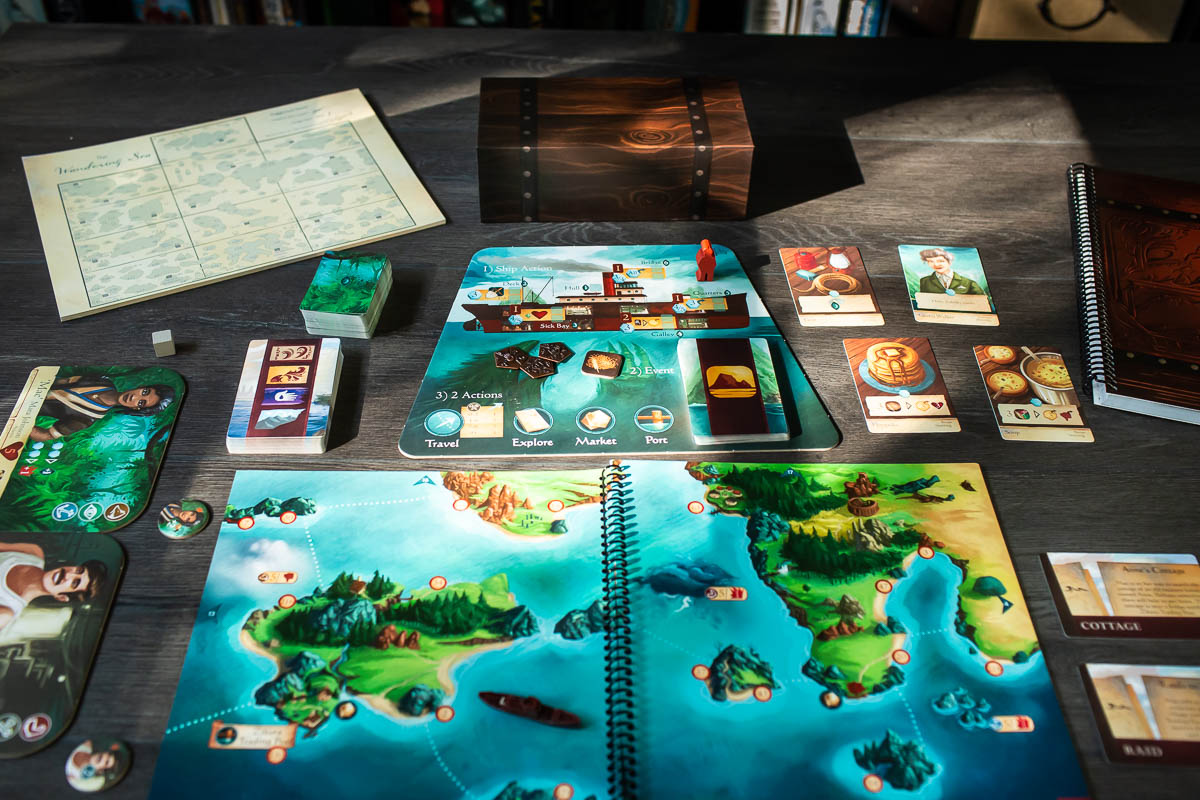
Here's the part that delights people: the 'board' is a 26-page spiral-bound atlas. Each spread is a hand-painted region of the Wandering Sea, dotted with numbered locations. You sail your ship token across the page, and when you stop somewhere interesting, you open the storybook — a ~170-page tome of passages — to the matching number and read what you find. Choose a path, suffer or savor the consequence, and sail on. There is no fixed track, no 'you must go here next.' You wander.
The reviewers reach for the same comparison again and again, and it's the right one. As Meeple Mountain put it, 'Sleeping Gods is a story that sits atop a board game' — and Co-op Board Games went further: 'Sleeping Gods has a true open-world feel, which is something that I've only felt in a few other board games.' That open-world-on-a-table feeling is the entire reason this game has the devoted following it does.
It's open-world the way Breath of the Wild is — except it's painted on cardboard and fits on your dining table.
What's in the box — and is the Ryan Laukat art as gorgeous as they say?
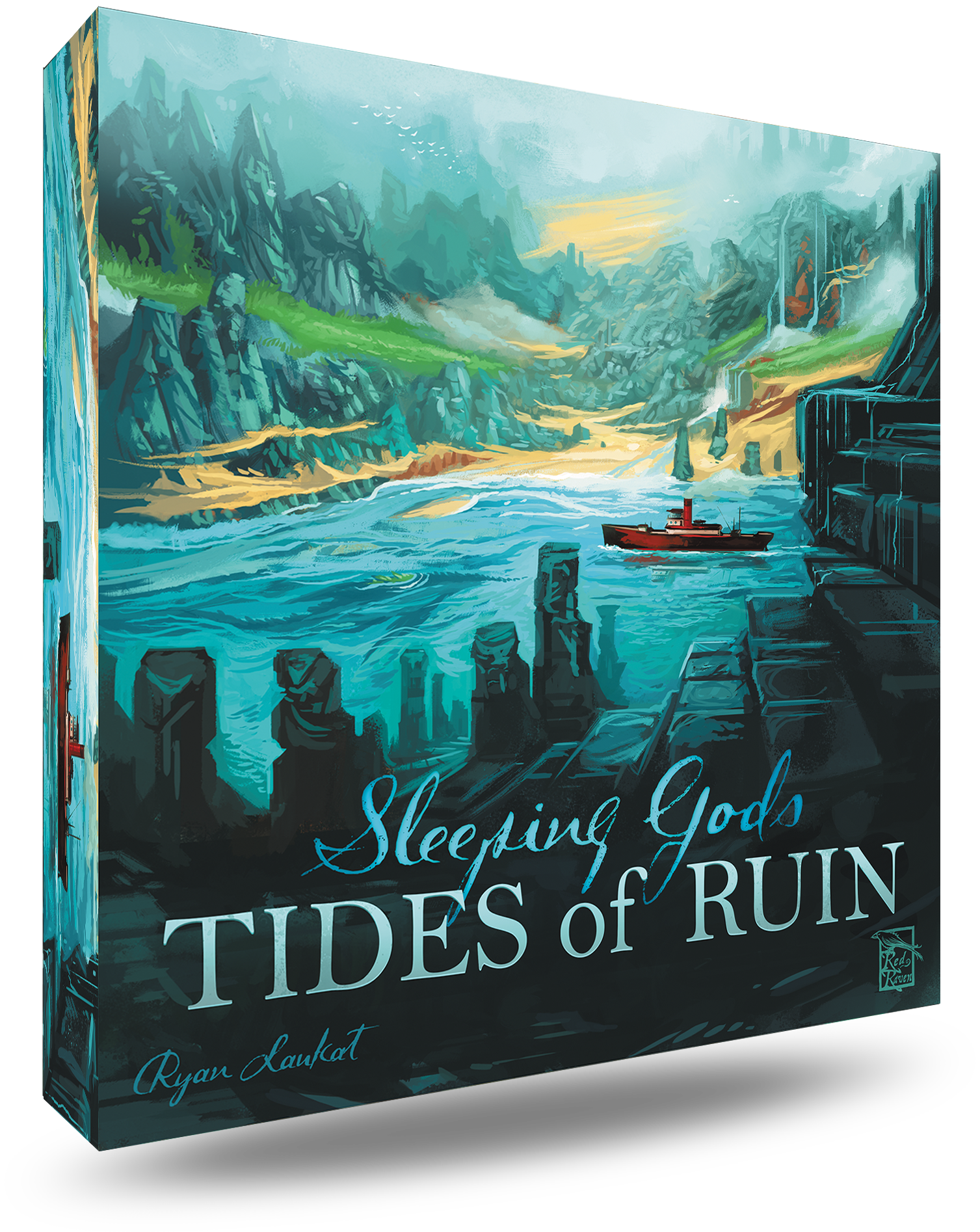
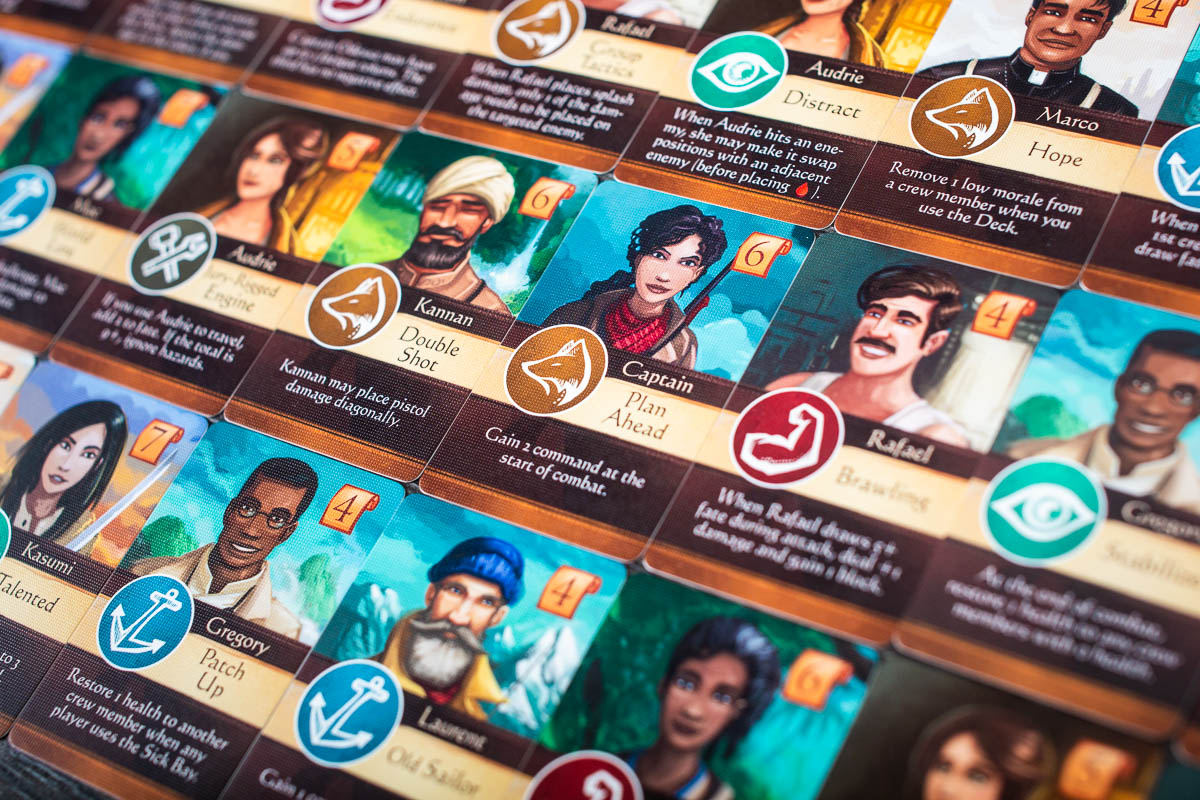
Oh, it's gorgeous. Ryan Laukat illustrates every one of his games himself, and Sleeping Gods is widely considered his most beautiful — Board Game Gumbo flatly called it 'Ryan Laukat's masterpiece' and swooned that even the standard retail copy is 'absofreakinglutely gorgeous.' This is the rare big-box game where the art isn't decoration; it's the interface you spend the whole evening looking at.
Here's what you're unboxing, roughly:
- The atlas — a 26-page spiral-bound book of connecting, hand-painted regions. This is your map AND your board.
- The storybook — around 170 pages of numbered passages with branching choices (publishers cite 'thousands' of possible choices across a campaign).
- Hundreds of cards — adventure, quest, enemy, event, market, ability, and totem cards (Red Raven cites 400+ unique cards across the game's content).
- Your crew of eight, each a distinct character with their own stats across strength, perception, savvy, craft, and cunning.
- The ship board for the Manticore, command tokens, the totem collection that drives your win condition, plus tokens, standees, and a journey log for saving progress.
The production quality is part of the love. As one reviewer noted, 'the card stock and cardboard tokens are all really nice quality... and the actual storage system and boxes are impressive.' It's a box that rewards being opened slowly, the way you'd unwrap something special.
This is the rare big-box game where the art isn't decoration — it's the interface you spend the whole evening looking at.
How does it play — sailing a living world, the storybook, and that combat?
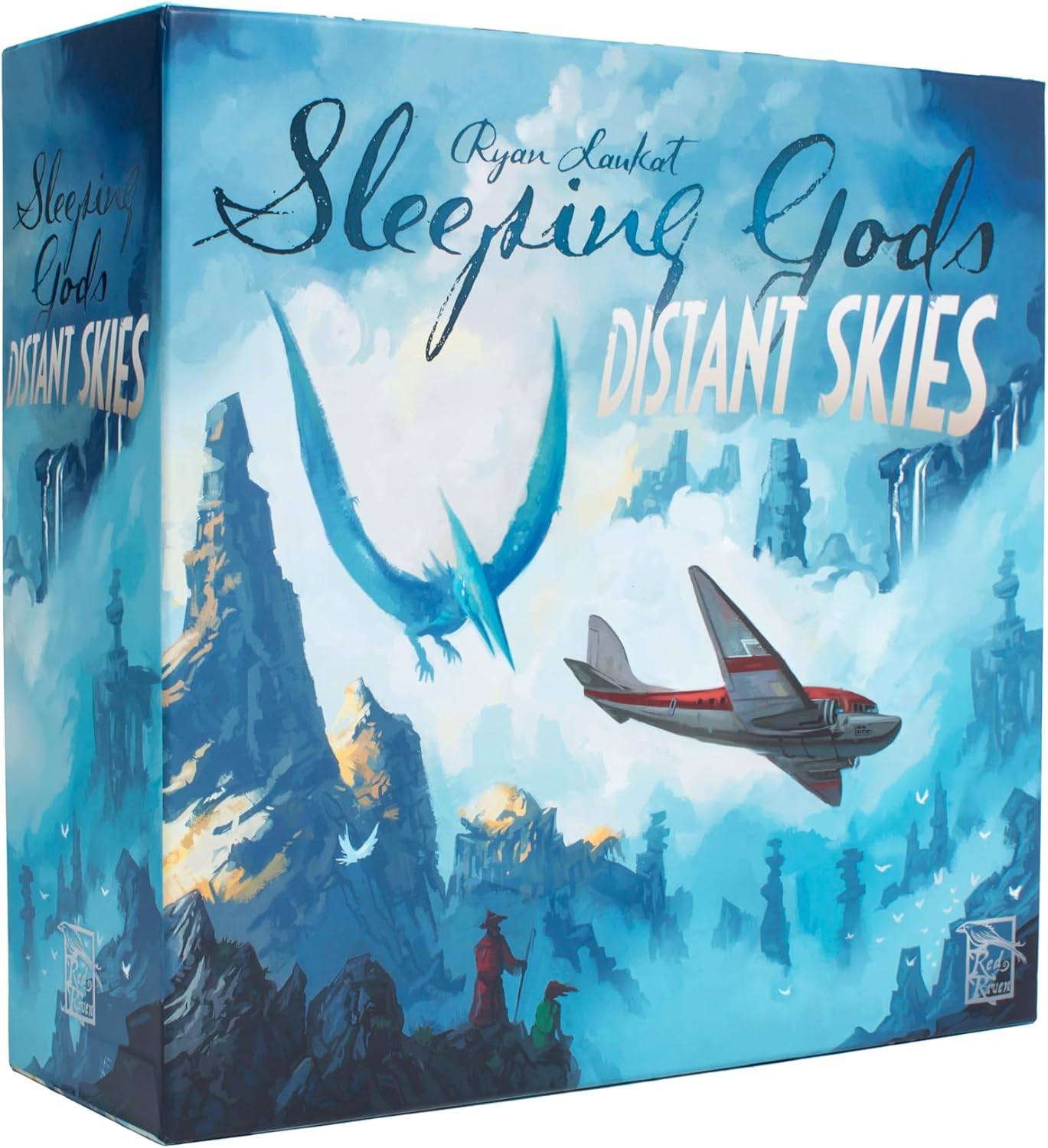
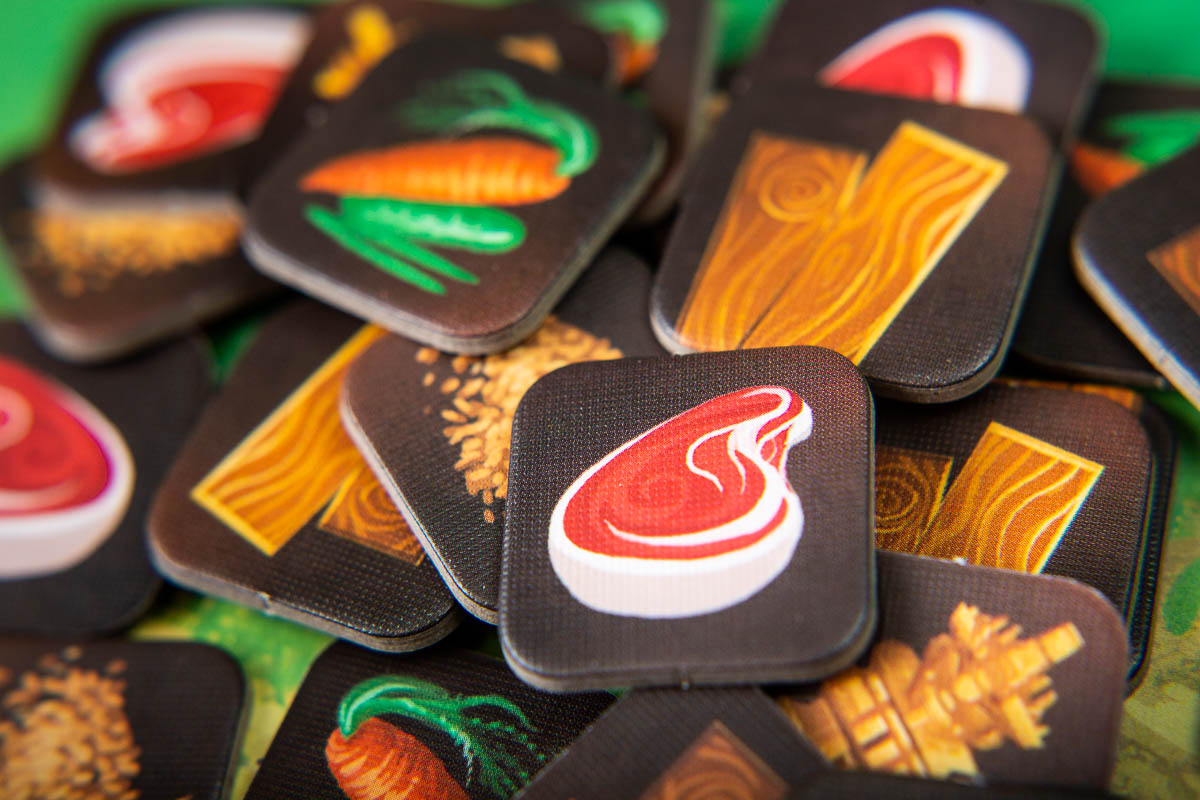
Let me walk you through a turn, because the rhythm is so satisfying. On your go you do two things: take an action aboard the ship, then move the story forward.
Aboard the Manticore, you nudge a crew figure into one of the ship's rooms to take that room's action — gain command tokens, draw cards, repair damage, trade at market. There's a lovely little constraint: you must move to a new room each turn, no camping your favorite. As Meeple Mountain notes, 'You must move the figure to a new room each turn. No repeating your favorite room two turns in a row.' Rooms take damage in storms and fights, locking you out of actions until you patch them — so your ship feels alive and lived-in, fraying at the edges.
Out in the world, you sail to a numbered location, open the storybook, and read. You'll make a choice, often spend a skill (rolling your stat against a target), and the world responds — a new quest keyword, a reward, a scar. This is the choose-your-own-adventure heart, and it's handcrafted: every passage connects to the larger journey rather than shuffling random vignettes.
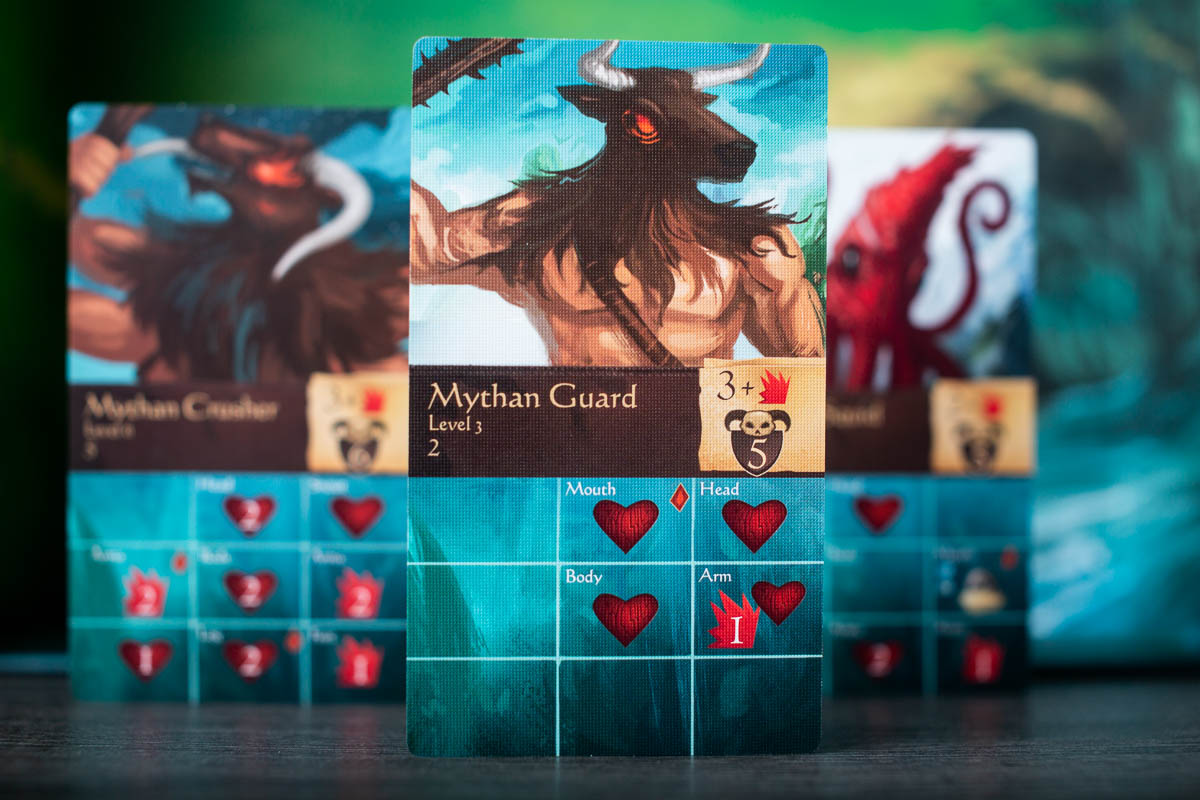
And then there's combat — the part that bites back. It's fully diceless: enemies sit on a grid, and you place your crew's hits to prevent their counterattacks rather than just trade blows. Co-op Board Games sums it up: 'It's not just rolling dice and seeing what happens. You have to come up with a way to limit what the enemies can do on their counterattacks.' It's a genuine puzzle — and it's hard. Roll To Review warns that 'Fights are difficult and can kill you without warning... Whenever we entered combat we left licking our wounds — if we left at all.' That tension is the spice; just know it's there.
Your ship feels alive and lived-in, fraying at the edges — rooms take damage in storms and fights and lock you out until you patch them.
Is Sleeping Gods worth the money (about $100)?
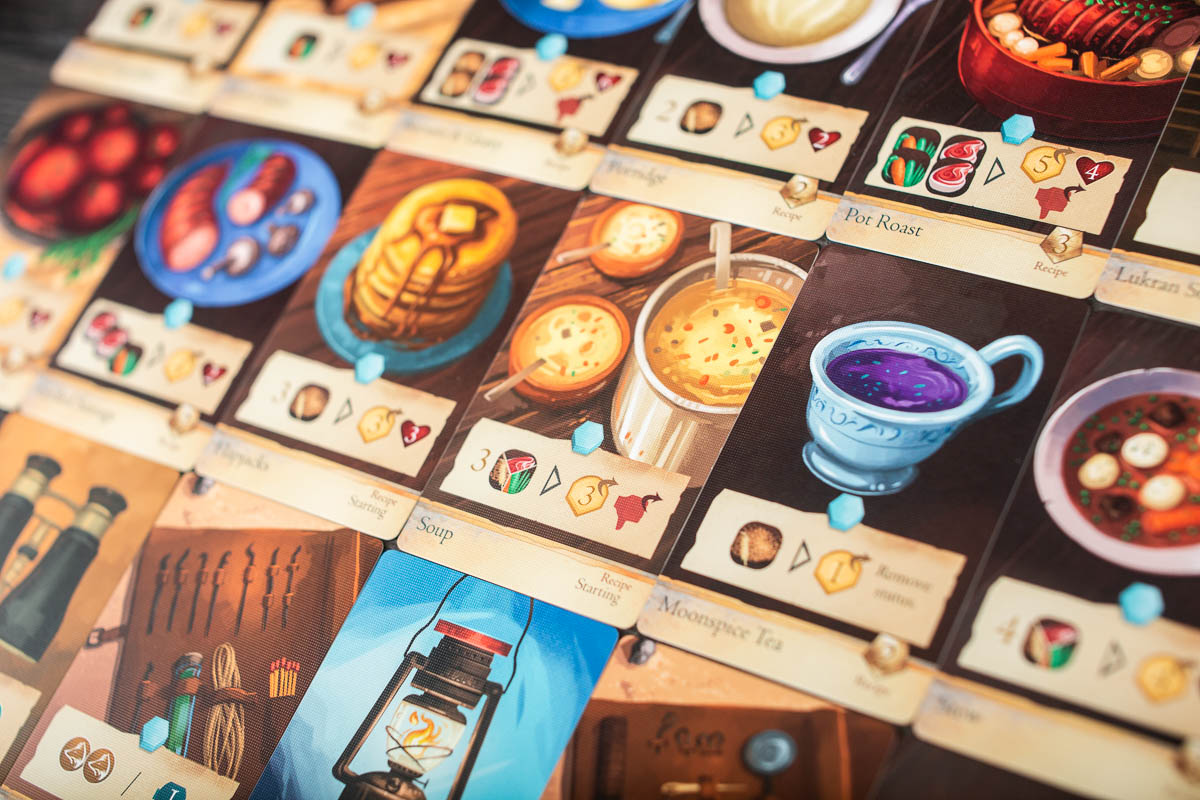

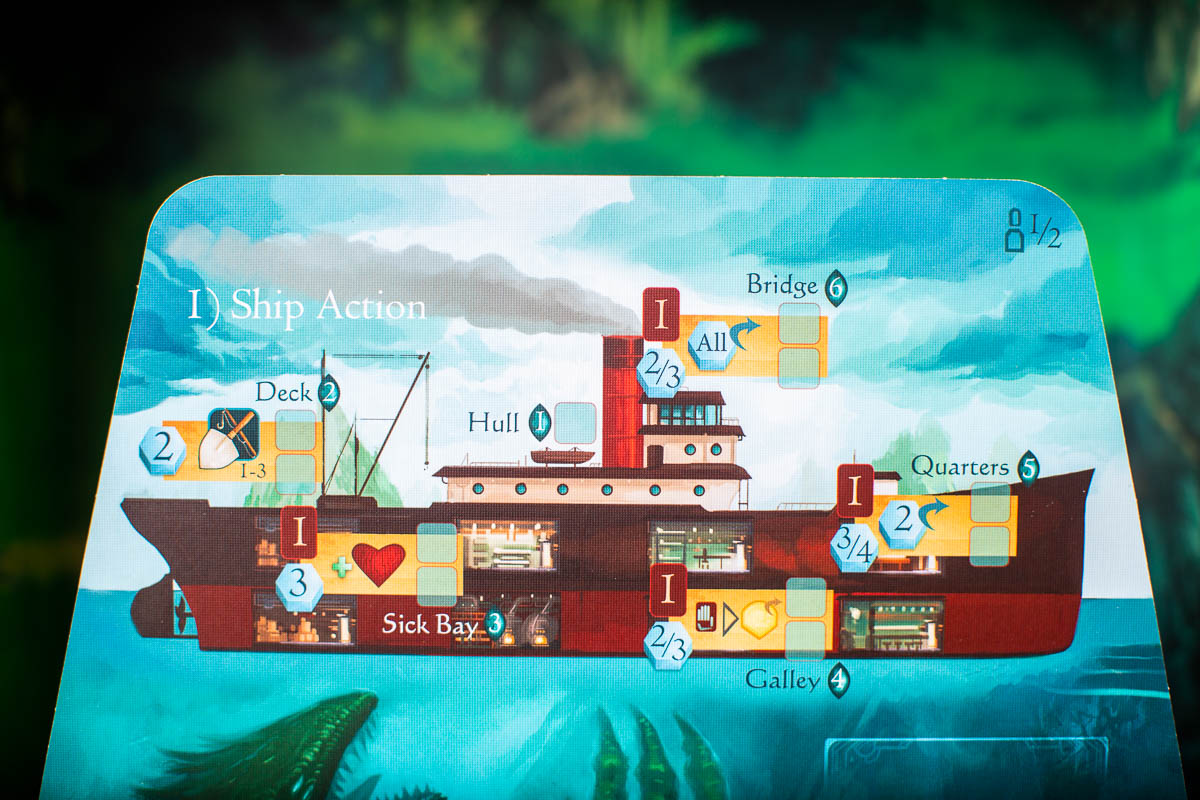
For the right person, wholeheartedly yes — and let me reassure you on the price, because the sticker can make you hesitate. MSRP is $99.99, but it's a long-tail title that's frequently discounted: at the time of writing Miniature Market listed the base game at $74.99. Either way, do the math on hours: a single campaign is 10-20 hours of play from one box, and that's before the expansions or Arcade Mode. As a cost-per-hour of genuine wonder, it's one of the most generous boxes on the shelf.
What you're actually paying for is craft and singularity. This isn't a commodity Ameritrash dungeon-crawl; it's a hand-illustrated, hand-written world that critics rank at the very top of the genre. Co-op Board Games called it 'the best storytelling game that I've ever played and one of the best cooperative board games I've played, period,' and Meeple Mountain landed on 'a paragon of world-building, a master-class in story-telling, and quite simply, a masterpiece.'
The honest caveats — so you buy with open eyes. First, replayability is finite by design. One campaign is largely a one-way journey; Dale Yu got '13+ hours' of joy but noted the limited replay value once the story's told (the Tides of Ruin Arcade Mode is the fix). Second, it wants table space and a little bookkeeping — the atlas, storybook, ship board, and card rows sprawl. Third, the first-printing rules had some gaps Dale flagged; the community FAQ smooths them over. None of these are dealbreakers for the target player. They're just the trade you make for a world this big and this personal.
As a cost-per-hour of genuine wonder, it's one of the most generous boxes on the shelf.
How do I get started — and what are your tips for a first voyage?

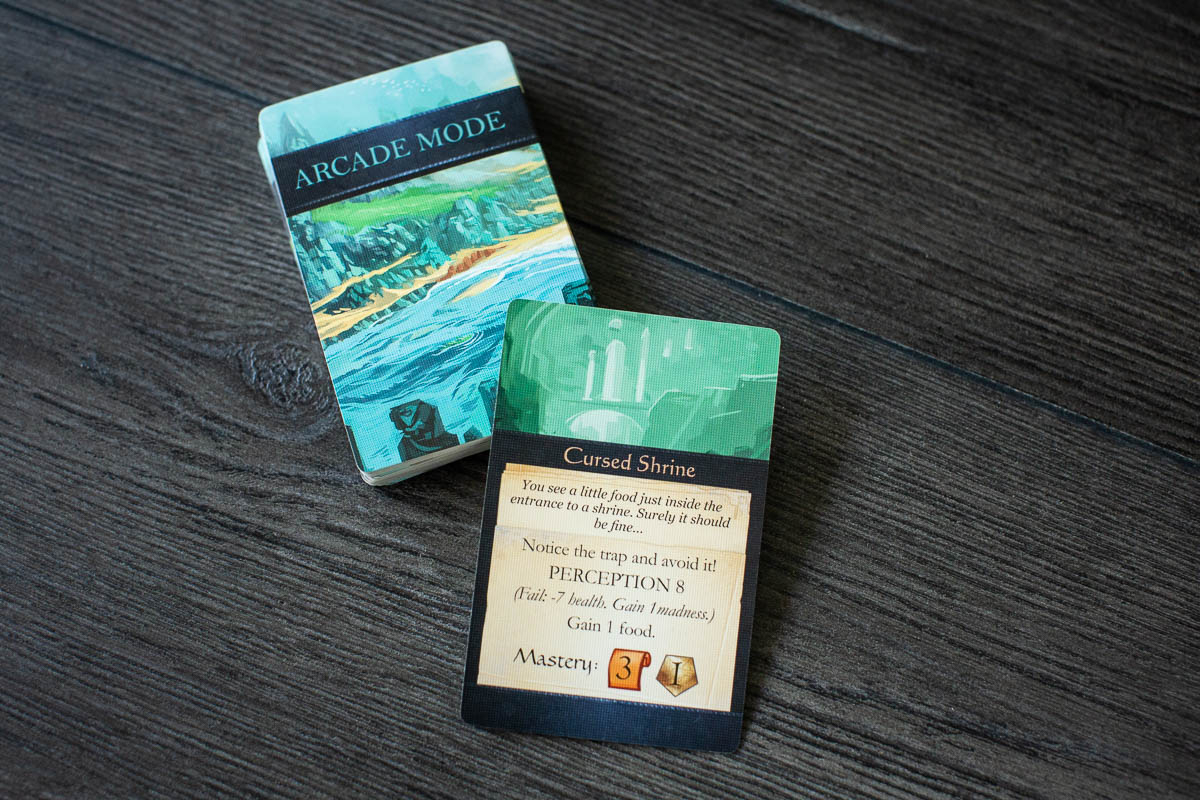
Here's how I'd seat a newcomer, because a little hosting goes a long way with a game this open. Sleeping Gods has a gentle on-ramp but a wide-open middle, and the freedom that makes it magical can briefly feel like 'wait, where do I go?' on night one. Let me steady you.
My tips for your maiden voyage:
- Read the rulebook once, then learn by sailing. You'll internalize the loop (ship action → explore → resolve) within your first session. Don't try to memorize everything cold.
- Keep the community FAQ handy. The first printing had a few rule omissions (artifacts, some enemy abilities); a well-loved community errata/FAQ resolves them in seconds. Have it open so a question never stalls the mood.
- Pick a heading and commit. You don't have to optimize. Chase a quest that sounds lovely, gather command tokens, and let the story pull you. Wandering is the point.
- Respect combat — don't stumble into it tired. Repair your ship, stock ability cards, and approach fights as the puzzles they are. Retreat is a valid, wise choice.
- Mind the spoilers in the storybook. Bolded/italicized text can hint at branches you haven't reached — read only the passage number you're sent to, and resist flipping ahead.
- For solo players: it's a beloved solo experience. Run two or three crew yourself for a fuller toolkit and a richer table presence.
Mostly, though? Let it breathe. This isn't a race to a high score. It's a voyage you're taking with people (or beautifully, alone), and the best first session ends with everyone wanting to know what's over the next page.
Pick a heading and commit. You don't have to optimize — chase a quest that sounds lovely and let the story pull you.
Are the expansions worth it — Tides of Ruin and Distant Skies?
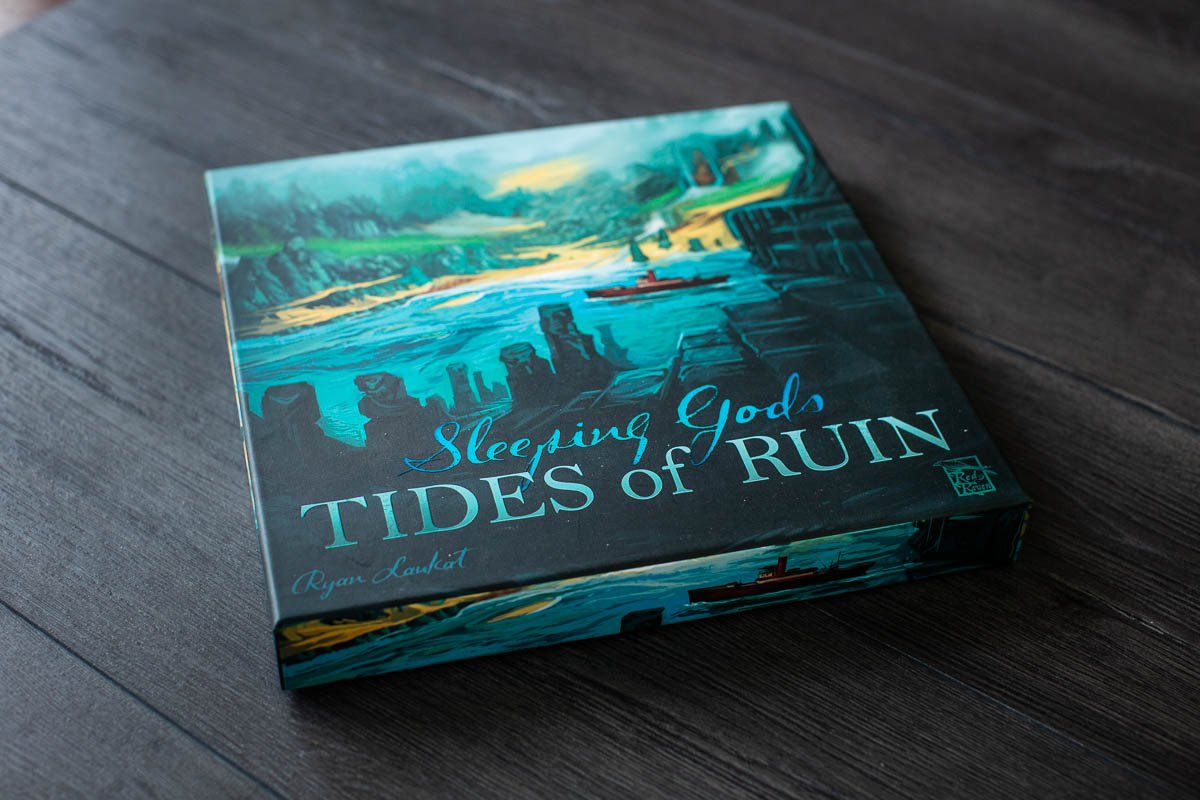

Lovely question, and the two are very different beasts — let me sort them for you.
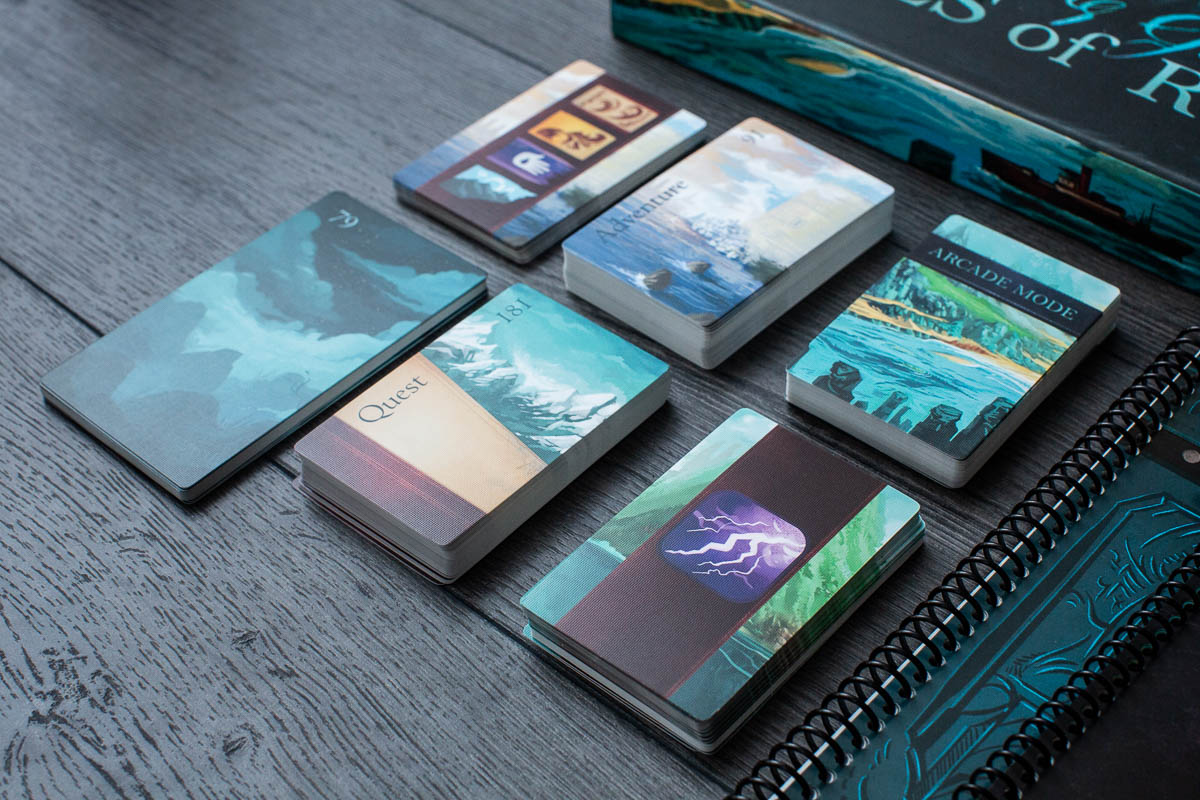
Tides of Ruin is a true expansion (you need the base game). For about $44.99 MSRP — often discounted to the low $30s — it adds a second 10-page atlas, a new storybook, and 190+ cards of fresh adventures, enemies, quests, markets, and events. The headline addition, and the reason I'd reach for it, is Arcade Mode: a 'rogue-like' way to play in shorter, repeatable, higher-variability runs. If your one worry about the base game is 'what do I do after the campaign?' — this is the answer. It's the expansion I'd recommend first, and almost universally, for anyone who loved their voyage and wants more sea to sail with real replay value.
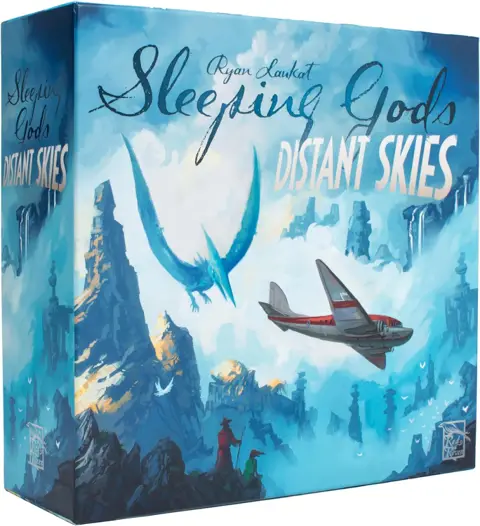
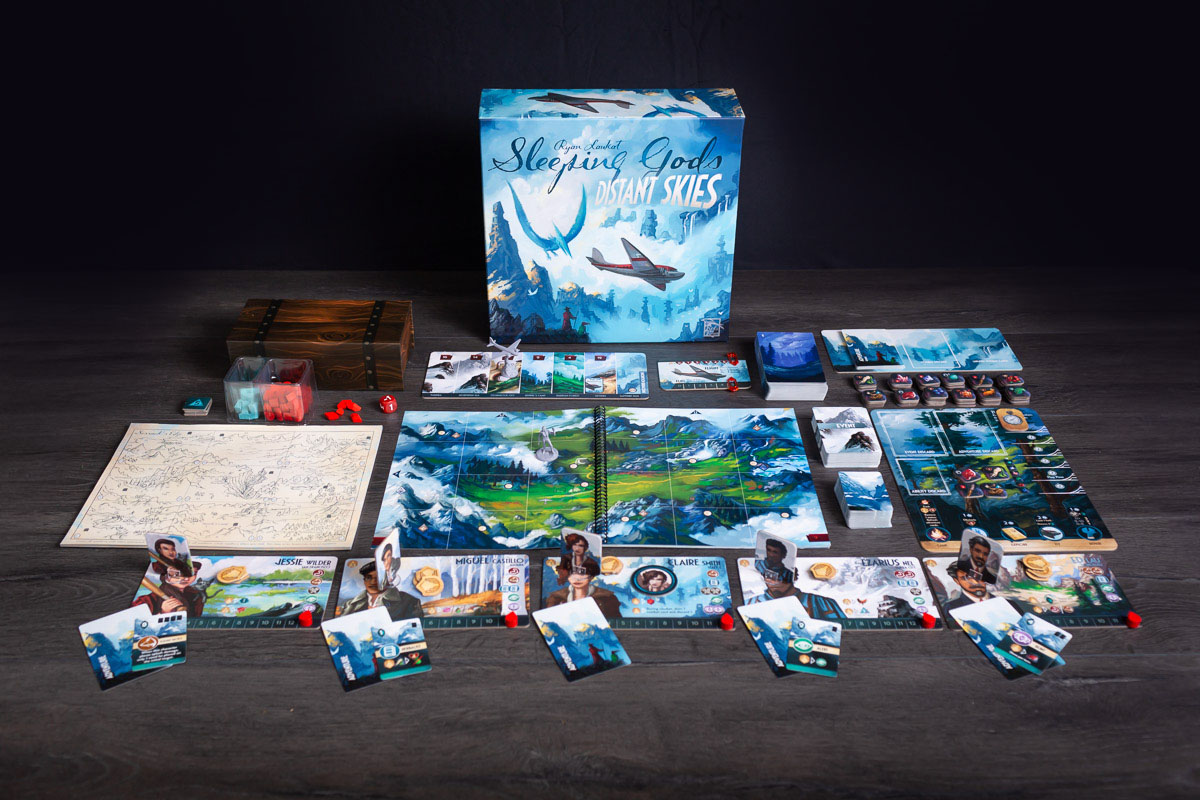
Distant Skies is the other thing entirely: a standalone sequel (no base game required) for about $109.99 MSRP, often found around $82.99. New setting — San Francisco, 1937, where your cargo plane flies through a portal into a rugged new land. It evolves the system: a deck-building combat where you draw a hand from a built combat deck, a fresh action system, and deeper atlas interaction (camping, obstacles, relic-hunting). It's gorgeous and ambitious — but here's my honest hostess note: critics found it a sideways step, not a leap. Player Elimination's Charlie Theel concluded 'Distant Skies is certainly an evolution, but it's unfortunately not something greater,' and that 'Distant Skies is a fine game, but it needed to be an extraordinary one.'
So: Loved Sleeping Gods and want more of that world with replay value? Tides of Ruin, every time. Want a fresh, self-contained adventure with a new combat engine and don't mind it being a touch less magical than the original? Distant Skies is a fine place to fly.
Tides of Ruin's Arcade Mode is the answer to the only real worry about the base game: 'what do I do after the campaign?'
Who is Sleeping Gods for — and who should pass?
Let me be the friend who tells you the truth before you spend the money.
You will adore this if you are: someone who loves story above all — choose-your-own-adventure books, narrative RPGs, a good campaign you live inside for weeks. If 'open-world at my own pace' makes you lean in. If you play solo and want a rich, beautiful companion for long evenings. If you have a steady duo or small group that can commit to a season-long arc. If gorgeous, hand-painted art is part of why you love this hobby. For you, this is close to a desert-island grail — Roll To Review's reviewer called it 'my favourite narrative driven board game, with... a world map that takes your breath away with its grandeur,' and I'd echo every word.
You should probably pass if you are: a hit-and-run party group that wants something taught and finished in 45 minutes. A player who needs dice-driven chaos and big swingy randomness — the diceless combat will feel cerebral, even dry, to you. Someone with no table space or no appetite for setup/teardown across multiple sessions. A group that won't reliably reconvene — an abandoned campaign at hour eight is a small heartbreak. Or someone who wants infinite replay from a single purchase — one campaign is mostly one journey (and Arcade Mode, not the base box, is where the replay lives).
The honest summary: this is a specific delight, not a crowd-pleaser — and that specificity is exactly why the people who love it love it so fiercely. If your heart sped up anywhere in this review, pull up a chair. The Manticore's been waiting for you.
This is a specific delight, not a crowd-pleaser — and that specificity is exactly why the people who love it love it so fiercely.
What experienced tables keep reporting
Recurring owner patterns, synthesized in Puzzlewick's words. Follow each evidence trail to read the original discussion.
Sleeping Gods is just amazing... a paragon of world-building, a master-class in story-telling, and quite simply, a masterpiece.
Sleeping Gods is the best storytelling game that I've ever played and one of the best cooperative board games I've played, period... Sleeping Gods has a true open-world feel, which is something that I've only felt in a few other board games.
Sleeping Gods is now my favourite narrative driven board game, with beautiful artwork and a world map that takes your breath away with its grandeur. Fights are difficult and can kill you without warning.
Even though this is 'just' a retail edition, it is absofreakinglutely gorgeous... Simply put, Sleeping Gods is Ryan Laukat's masterpiece.
It feels like a choose your own adventure book mashed together with a D+D campaign... We thoroughly enjoyed our 13+ hours in the universe of Sleeping Gods, and that's probably what matters most.
Red Raven Games has made a fan out of me and I will be following their future projects much more closely.
While Distant Skies is certainly an evolution, it's unfortunately not something greater... Distant Skies is a fine game, but it needed to be an extraordinary one.
Read the evidence: Charlie Theel, Player Elimination (on the sequel)
The picks
Some links below are affiliate links — as an Amazon Associate, Puzzlewick earns from qualifying purchases, at no extra cost to you. It never changes a pick.
 4 photos
 Sleeping Gods (Base Game)
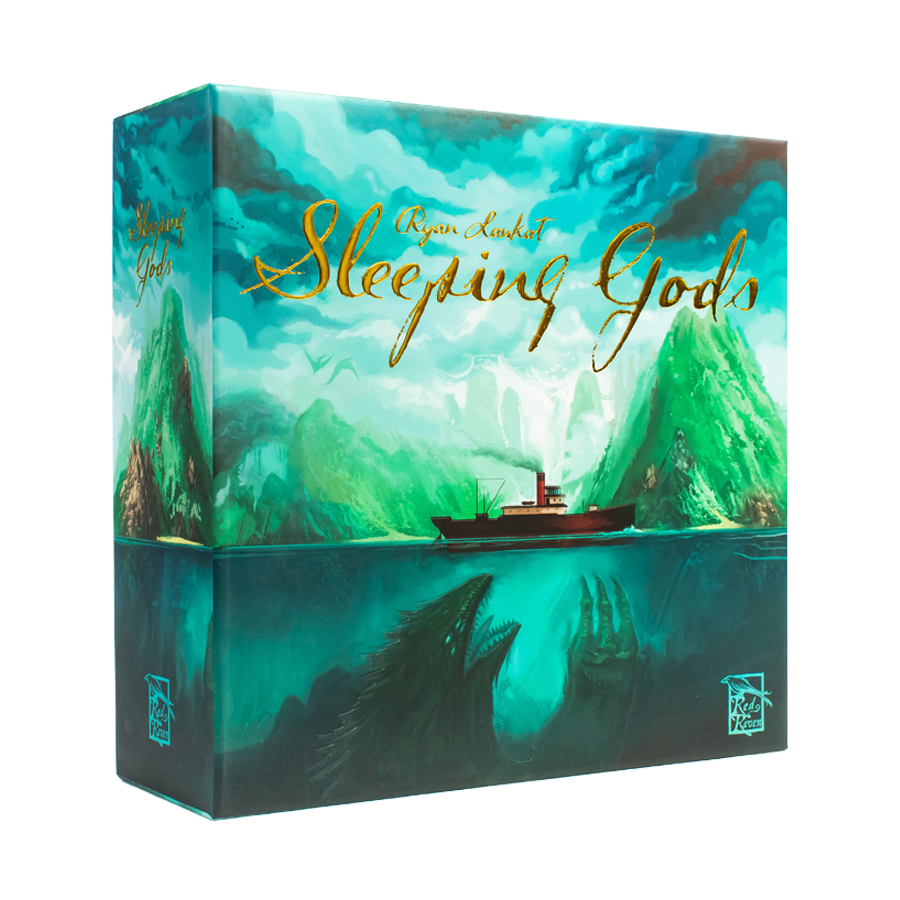
Ryan Laukat's painterly masterpiece and the right starting point for everyone. A 26-page spiral atlas you sail, a ~170-page storybook of branching choices, and tense diceless combat, all wrapped in the best art in the hobby. Critics call it 'the best storytelling game' and 'a masterpiece.' MSRP $99.99 and frequently discounted (seen at $74.99) — exceptional value per hour for 10-20 hours of wonder. If you buy one thing here, buy this.
- Genuine open-world, save-anytime exploration unlike almost anything else
- Stunning hand-painted Ryan Laukat art that IS the interface
- Deep, handcrafted branching story with lasting consequences
- Plays beautifully solo and cooperatively (1-4)
- Diceless combat is punishing and can spike in difficulty
- One campaign is largely a one-way journey (limited base replay)
- Wants table space, setup time, and a little bookkeeping
 3 photos
 Sleeping Gods: Tides of Ruin (Expansion)
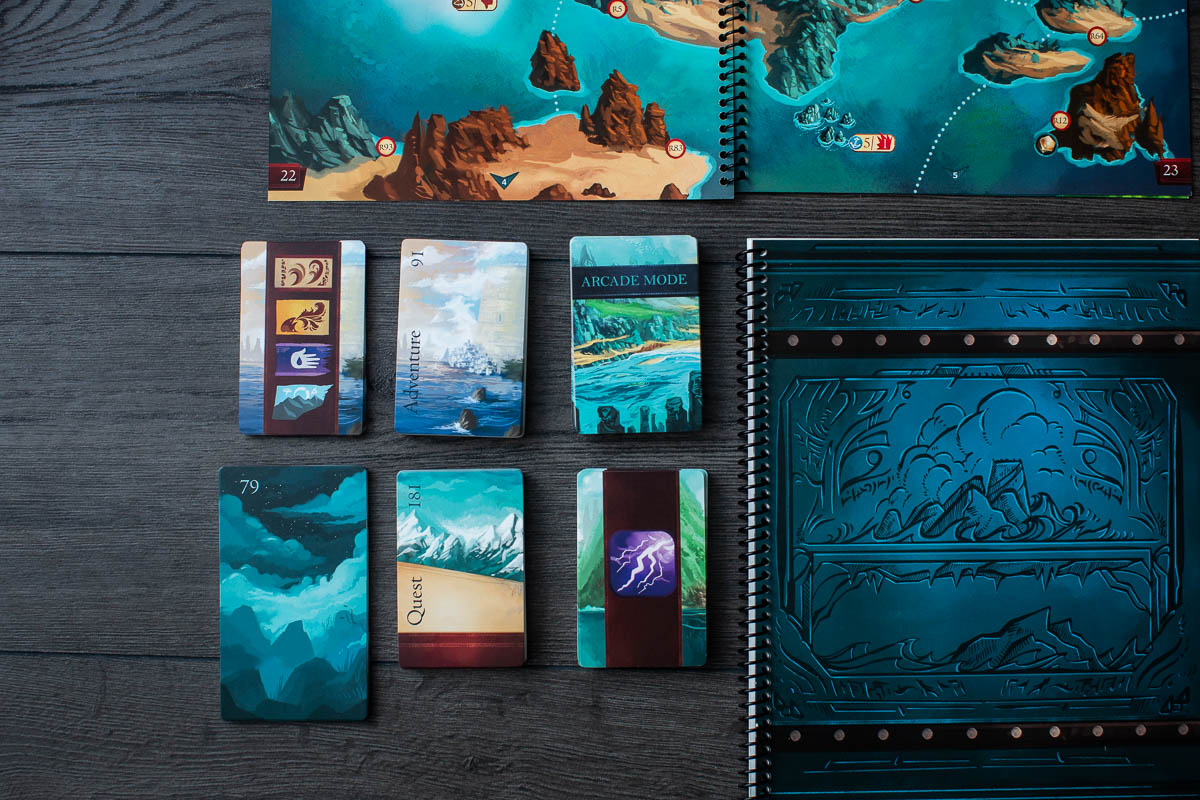
The first expansion to buy, and the answer to 'what do I do after the campaign?' Adds a second 10-page atlas, a new storybook, and 190+ new cards — but the star is Arcade Mode, a rogue-like, shorter, repeatable way to play that finally gives the system high replayability. Requires the base game. MSRP $44.99, often discounted to the low $30s (seen at $33.99). Near-essential for devotees.
- Arcade Mode adds genuine, repeatable replay value
- Second atlas + storybook + 190+ cards of fresh content
- Integrates seamlessly into the base experience
- Requires the Sleeping Gods base game — not standalone
- More of a great thing rather than a new kind of thing
- Frequently out of stock at retail
 2 photos
 Sleeping Gods: Distant Skies (Standalone Sequel)
A complete standalone sequel set in 1937 San Francisco: your cargo plane flies through a portal into a new world. It evolves the formula with deck-building combat (draw a hand from a built combat deck), a new action system, and deeper atlas interaction. Gorgeous and ambitious — though critics felt it's 'an evolution, not something greater' than the original. Buy it as its own game, not as 'more base game.' MSRP $109.99, often around $82.99.
- Fully standalone — no original game required
- New deck-building combat and richer atlas interaction
- Same breathtaking Ryan Laukat production values
- Critics found it a sideways step, less magical than the original
- Highest price of the line
- Some reviewers had little desire to replay after one campaign
At a glance
| Title | Type | Needs Base Game? | Setting | Combat | Standout Feature | Campaign Length | MSRP (USD) |
|---|---|---|---|---|---|---|---|
| Sleeping Gods (Base Game) | Base campaign game | No (it IS the base) | Wandering Sea, 1929 | Diceless grid puzzle | Open-world atlas + 170pg storybook | ~10-20 hours | $99.99 |
| Tides of Ruin (Expansion) | Expansion | Yes — required | New archipelago (extends base) | Same as base | Arcade Mode (rogue-like replay) | Adds 2nd atlas + storybook | $44.99 |
| Distant Skies (Standalone) | Standalone sequel | No — fully standalone | San Francisco → portal, 1937 | Deck-building (draw a hand) | New action system + flight | ~10-20 hours | $109.99 |
Questions, answered
Is Sleeping Gods worth it?
Yes, if you want a cozy, story-first, open-world campaign you sail at your own pace solo or with up to 3 others. For ~$99.99 MSRP (often discounted to ~$74.99) you get 10-20 hours per campaign of hand-painted, choose-your-own-adventure exploration that critics repeatedly call 'a masterpiece.' Pass only if you want a quick party game, crave dice-driven randomness, or need infinite replay from one purchase.
How long is a Sleeping Gods campaign?
A full campaign runs roughly 10-20 hours, played across multiple sessions of about 60-120 minutes each. You save your progress on a journey log and resume whenever you like, so it's very friendly to busy schedules and solo play.
Can you play Sleeping Gods solo?
Absolutely — it's a beloved solo game. It supports 1-4 players, and solo players typically run two or three crew members themselves for a fuller toolkit. The cooperative, no-hidden-information design means the experience is essentially identical whether you play alone or with friends.
How does combat work in Sleeping Gods?
Combat is completely diceless. Enemies sit on a grid, and you place your crew's hits strategically to limit or prevent their counterattacks rather than just trading damage. It's a tactical puzzle that rewards planning — and it's genuinely punishing, so approach fights prepared and don't be afraid to retreat.
Is Sleeping Gods replayable?
The base campaign is largely a one-way journey — you'll see most of it in one ~10-20 hour playthrough, so direct replay is limited. The Tides of Ruin expansion fixes this with Arcade Mode, a rogue-like, repeatable format with high variability. If replay value matters to you, plan to add Tides of Ruin.
Do I need the base game to play Tides of Ruin?
Yes. Tides of Ruin is an expansion, not a standalone — it requires a copy of the base Sleeping Gods game. It adds a second 10-page atlas, a new storybook, 190+ cards, and the rogue-like Arcade Mode.
Is Distant Skies a standalone game or an expansion?
Distant Skies is a complete standalone sequel — you do NOT need the original Sleeping Gods to play it. It's set in 1937 San Francisco, has its own box and rules, and uses a new deck-building combat system. It shares the world but tells an independent story.
Should I buy Tides of Ruin or Distant Skies first?
If you loved Sleeping Gods and want more of THAT world plus replay value, buy Tides of Ruin first — its Arcade Mode is the standout. Choose Distant Skies only if you want a fresh, self-contained adventure with new deck-building combat; critics considered it a fine sideways step rather than a clear upgrade over the original.
How many players is Sleeping Gods best with?
It shines at 1-2 players and stays excellent up to 4. Because turns are quick and information is shared, it scales smoothly; larger groups just mean more crew to coordinate. Solo and two-player are the most commonly praised configurations.
Who designed and illustrated Sleeping Gods?
Ryan Laukat both designed and illustrated it, published through his studio Red Raven Games. He hand-paints all the art himself, and Sleeping Gods is widely regarded as his most beautiful and ambitious work — reviewers routinely call it 'Ryan Laukat's masterpiece.'
Is Sleeping Gods hard to learn?
The core loop (take a ship action, then explore and read a story passage) is easy to pick up, and you'll learn by playing within your first session. The main caution is the first-printing rulebook had a few documented gaps — keep a community FAQ handy, and the open-ended freedom can briefly feel daunting before it becomes the best part.
What is Sleeping Gods about?
It's 1929, and you captain a crew aboard the steamship Manticore, swept through into a strange world called the Wandering Sea. To return home, you sail a painted atlas, meet its inhabitants, weather storms and battles, and gather the totems of the sleeping gods — making branching choices in a 170-page storybook that shape your journey along the way.
Yumi's verdict
Sleeping Gods is the cozy-but-vast open-world story grail it's reputed to be — and one of the few games that truly earns the word 'grail.' Ryan Laukat hand-painted a living world, wrapped it in a 26-page atlas you sail and a ~170-page storybook you live inside, and let you wander it at your own gentle pace, solo or with friends, saving whenever life calls. The reviews aren't shy, and neither am I: it's a masterpiece of storytelling and the best open-world feeling on a tabletop. The caveats are honest and small — the diceless combat bites back, it wants table space and a touch of bookkeeping, and one campaign is mostly a one-way voyage (buy Tides of Ruin for Arcade Mode and real replay). It is not a party game and not for the dice-chaos crowd. But if you want a season-long evening in a beautiful world that remembers your choices, set the table, pour something warm, and welcome aboard the Manticore. For the right person, this is a 9.5/10 keep-forever box. Strongly recommended.
Research ledger 12 sources · reviewed 2026-07-17
Specifications, rules, current product information, community experience, and contrary evidence were checked against the sources below. Commercial links are kept separate from editorial evidence.
- amazon.comamazon.com/dp/B084GWHLGK?tag=puzzlewick-20
- amazon.comamazon.com/dp/B08H1K9HH5?tag=puzzlewick-20
- amazon.comamazon.com/dp/B0CFPPG5WK?tag=puzzlewick-20
- redravengames.comredravengames.com/sleeping-gods
- meeplemountain.commeeplemountain.com/reviews/sleeping-gods
- rolltoreview.comrolltoreview.com/sleeping-gods-review
- coopboardgames.comcoopboardgames.com/cooperative-board-game-reviews/sleeping-gods-review
- opinionatedgamers.comopinionatedgamers.com/2021/03/26/dale-yu-review-of-sleeping-gods
- boardgamegumbo.wordpress.comboardgamegumbo.wordpress.com/2021/07/21/the-wondering-sea
- playerelimination.complayerelimination.com/2024/01/29/anything-goes-a-sleeping-gods-distant-skies-review
- miniaturemarket.comminiaturemarket.com/rvm023.html
- miniaturemarket.comminiaturemarket.com/sleeping-gods-distant-skies-rvm030.html
Come in, take your shoes off — let me show you something.


Keep exploring
The next smart rabbit holes.
☾ Universe HubDon't Starve: the whole buying pathDon't Starve is the sweet little campfire that keeps reminding you the woods have teeth. This universe gathers Puzzlewick's buying...♛ Topic PathGrail Board Games: compare the whole shelfA grail earns its space only when the experience survives the price, setup, storage, and group commitment. These are expensive-game...Best OfGrail Board Games 2026: Every Big Splurge, Is It Worth It?The honest, value-first verdict on the board games people lust after — Frosthaven, Ark Nova, Brass: Birmingham, Twilight Imperium, SETI,...