Twilight Imperium: Fourth Edition Review — The Epic Galactic 4X, Examined
Seventeen asymmetric civilizations, a galaxy you build hex by hex, and a single game that swallows a whole day. We trace where Twilight Imperium came from, how a turn actually flows, and whether the eight-hour epic earns its place on your shelf — and in your calendar.

AI-assisted curator persona · research and editorial responsibility: Robert Pruitt · how this guide was made
Last editorial refresh: 2026-08-11 Gold-standard QA: 2026-08-11 14 sources reviewed Affiliate links checked during gold-standard pass

The short answer
Yes — if you can muster four to six committed players and clear a full day, Twilight Imperium: Fourth Edition is worth every dollar of its ~$190 price and every hour of its eight-hour table-time. It is not a board game you play so much as an event you host: a 4X space opera where you explore a galaxy you build yourself, exploit planets for resources, expand your borders, and exterminate rivals — all wrapped in a rowdy space parliament where votes, trades, and betrayals matter more than dice. The catch is real: it demands a patient group, a long runway, and a willingness to read a rulebook. But for the right table it is, as one reviewer's math put it, 'about $4.20 per player per hour for some of the best fun I've had in my life.' Treat it not as a purchase but as a commitment, and it repays you like almost nothing else in the hobby.
Decision map
Choose in thirty seconds
The flagship purchase — the complete 8-hour galactic 4X for a committed group of 3–6
Veteran groups ready to deepen the game into its definitive form (after a few base plays)
Every owner — the single highest-impact accessory for cutting setup time
There is a particular silence that falls over a table about six hours into Twilight Imperium. The plastic dreadnoughts are scattered across a galaxy the players themselves assembled, tile by tile, hours ago. Someone is doing arithmetic under their breath. Someone else is offering a trade good they have no intention of honoring. Mecatol Rex — the dead imperial throne-world at the center of everything — has changed hands twice. This is the game working exactly as designed.
Fantasy Flight's flagship has worn the crown of 'biggest board game in the hobby' for so long that newcomers can mistake its reputation for hype. It is not hype. Twilight Imperium is genuinely enormous — in box, in ambition, in the demands it places on your afternoon — and that scale is the entire point. It is a 4X game (eXplore, eXpand, eXploit, eXterminate) translated into cardboard and plastic with a fidelity nothing else attempts: the slow build of an empire, the diplomacy that holds it together, and the wars that tear it apart, all compressed into one unforgettable sitting.
The lineage runs deep. Twilight Imperium has been refined across four editions and twenty-plus years, and the fourth edition (2017) is the distillation of everything its designers learned — tighter, faster, and more focused than the sprawling third. This review traces that lineage, opens the legendarily heavy box, walks you through how a turn actually breathes, weighs the money against the table-time honestly, and tells you exactly who should clear a Saturday for it. Calm down, pour the coffee, and let us begin at the beginning.
Start here, then go deeper
You are in the right cabinet.
 ✦ Topic PathBoard Game Buying Guides: compare the whole shelfStart with the decision, not the shelf. These guides compare the games, editions, expansions, player counts, and costs people...
 Deep DiveThe Spice Must Flow Again: A Deep-Dive Into Dune: Imperium – UprisingHow spies, sandworms and contracts change the game, who should buy the original, and the expansion order that makes sense.
 Deep DiveEclipse: Second Dawn for the Galaxy — The 4X Space Epic Worth Clearing the Whole Table ForA full galaxy of exploration, research, conquest, and diplomacy running on a famously elegant action-disc economy — and the version...
What is Twilight Imperium — and where does it sit in the 4X lineage?
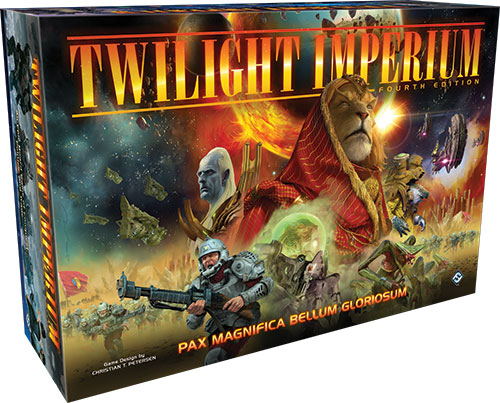
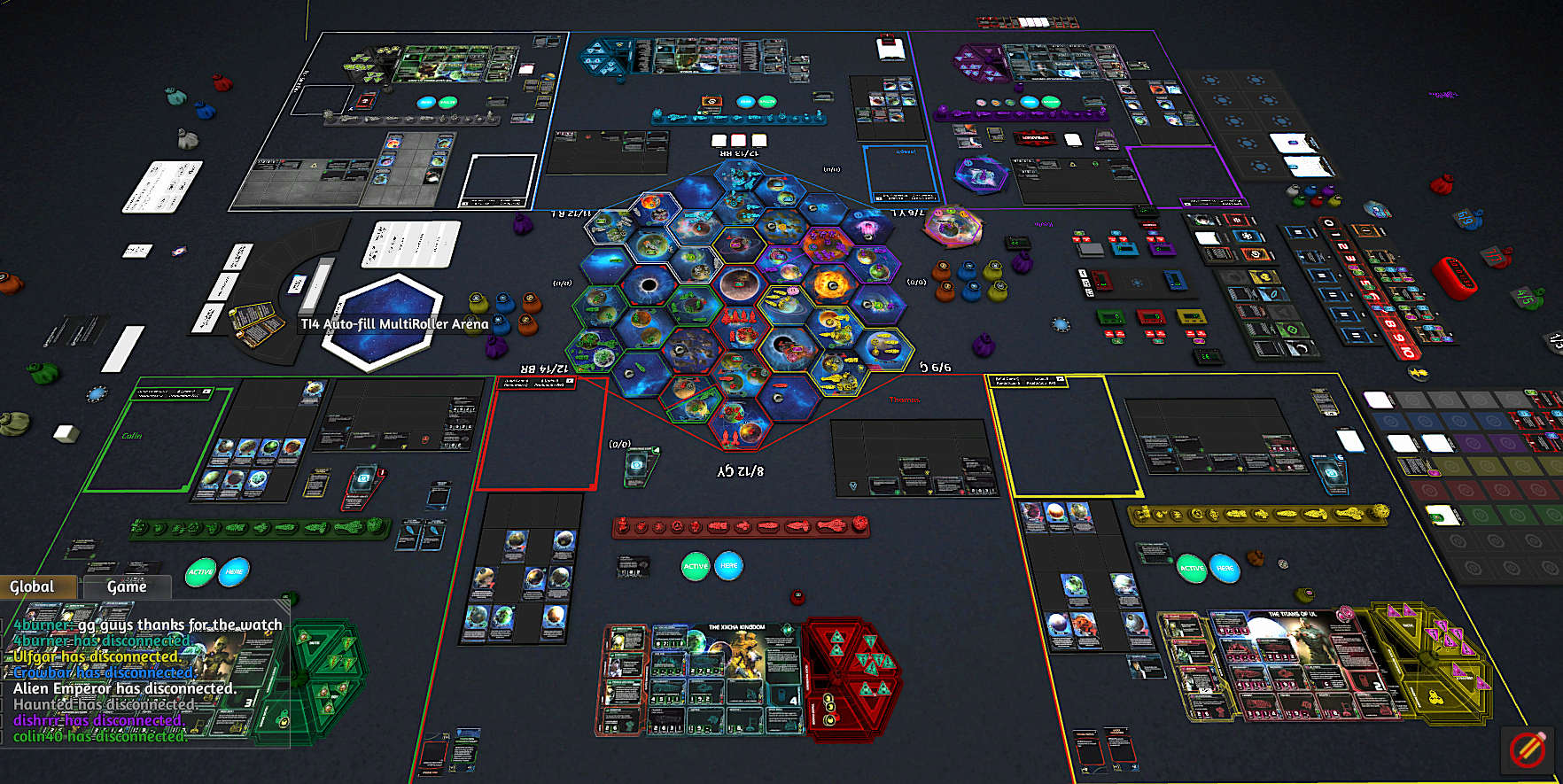
Twilight Imperium: Fourth Edition is an epic game of galactic conquest for three to six players, each commanding one of seventeen wholly distinct civilizations competing for dominance of a shattered galaxy. You win by being the first to ten victory points, earned through public and secret objectives — and crucially, those objectives reward a spread of activity: research technology, control planets, spend resources, win battles, hold the center. You cannot simply build the biggest fleet and roll over everyone. The game forces you to be a competent emperor on every front at once.
To understand why it matters, you have to understand '4X.' The term — eXplore, eXpand, eXploit, eXterminate — was coined for grand-strategy video games like Master of Orion and Civilization. Those games give a single player a galaxy or a world to slowly conquer over dozens of hours. Twilight Imperium's audacious claim, first made in 1997 and refined ever since, is that the entire 4X arc can be delivered around a physical table, with other humans, in one sitting. You explore by laying galaxy tiles into a map that is different every game. You expand by planting infantry on fresh planets. You exploit by spending those planets' resources and influence. And you exterminate — sometimes — through tense, dice-driven space combat. No other tabletop game commits to all four X's at this depth.
The fourth edition is the lineage's maturest form. Designer Christian T. Petersen (with Dane Beltrami and Corey Konieczka) stripped away the third edition's bloat — fiddly subsystems, runaway downtime — and rebuilt the engine around a single elegant idea borrowed from a smaller FFG title: the Strategy Card. That one change, which we'll unpack shortly, is what turns a potentially shapeless eight-hour slog into a game with rhythm, tempo, and forward motion. It is why critics at Polygon and Nerdist have called the fourth edition, flatly, 'the greatest board game ever made.'
No other tabletop game commits to all four X's — explore, expand, exploit, exterminate — at this depth.
What's actually in the big box?
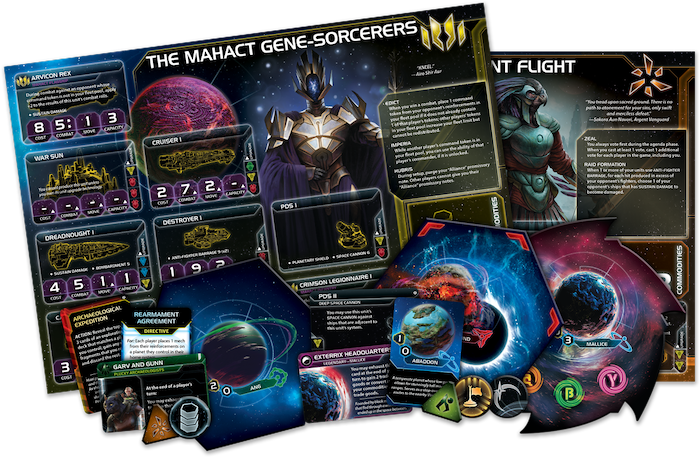
The first thing you learn about Twilight Imperium is that the box has heft — and it earns it. Inside is a genuinely staggering component count built to assemble a different galaxy every session:
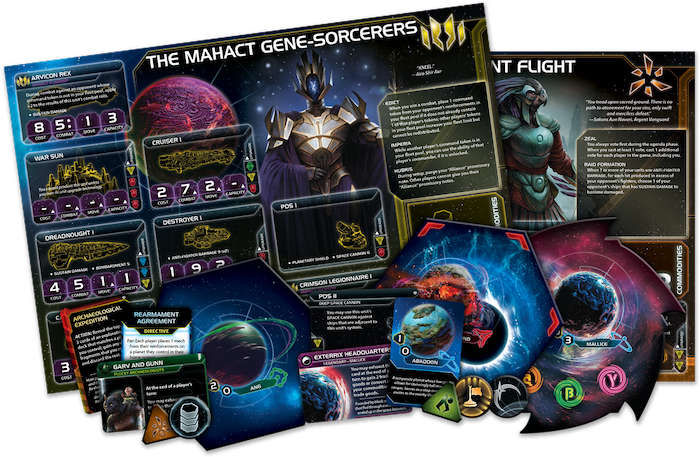
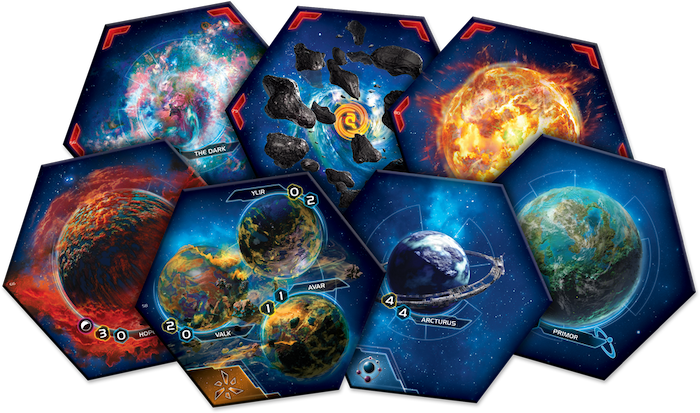
- 51 galaxy tiles — system hexes (home systems, anomalies, planet clusters) plus the central Mecatol Rex. You build the map collaboratively at the start of every game, which means the board is never the same twice.
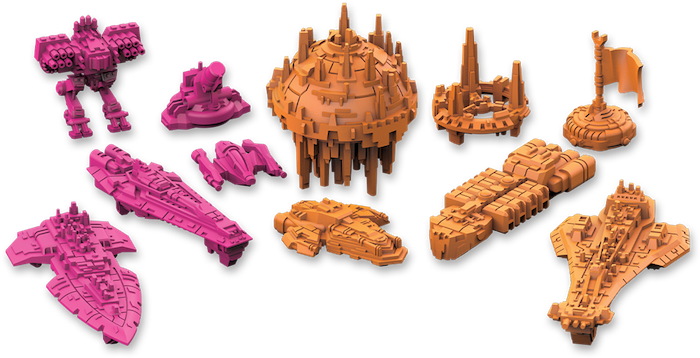
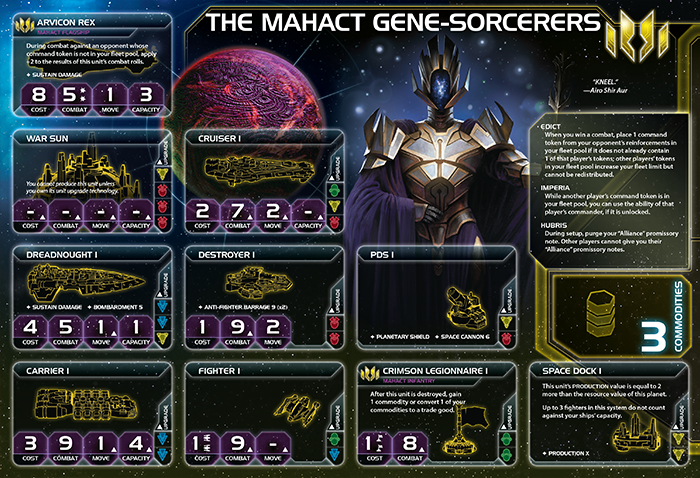
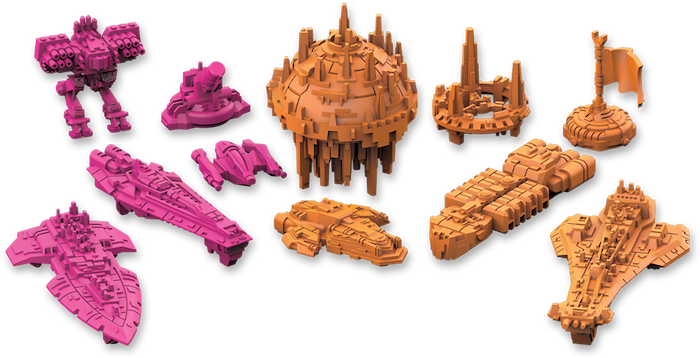
- 17 faction sheets and their matching plastic fleets — hundreds of miniatures spanning fighters, carriers, cruisers, destroyers, dreadnoughts, the colossal War Sun, plus infantry, space docks, and PDS turrets, in six player colors.
- 8 Strategy Cards — the eight roles (Leadership, Diplomacy, Politics, Construction, Trade, Warfare, Technology, Imperial) that drive the entire turn order and economy.
- Decks for technology, action cards, agenda cards, objectives, and secret objectives, plus trade-good and commodity tokens, command and control tokens, the speaker token, and faction-specific promissory notes.
- A thick rulebook plus a separate 'Learn to Play' guide — Fantasy Flight wisely splits the teaching text from the reference text.
With a BoardGameGeek complexity weight of 4.27 out of 5, this is one of the heaviest mainstream games in print. But 'heavy' here means broad, not obtuse — the individual rules are mostly sensible; there are simply a great many systems interlocking at once. Plan an hour to punch and sort the components the first time, and understand the dirty secret veterans all share: the base box has no insert worth the name, so storage and setup are the game's real logistical enemy (more on the fix later).
You build the map collaboratively at the start of every game — the board is never the same twice.
How does a game of Twilight Imperium actually flow?
This is where the fourth edition's genius lives. A game is a series of rounds, and every round moves through four clean phases:
1. Strategy Phase. Each player picks one of the eight Strategy Cards. The number on that card sets your initiative order for the round, and the card grants a powerful primary ability only you fully use — plus a weaker secondary ability every other player can pay to follow. Picking the '1 — Leadership' card makes you go first but may cost you the technology engine of the '7 — Technology' card. This single choice radiates through everything that follows. It is the metronome that keeps an eight-hour game ticking forward instead of stalling.
2. Action Phase. In initiative order, players take turns one action at a time until everyone has passed. An action is usually activating a system — committing a command token to move your fleet in, build ships, and resolve any combat there. This is the heart of the game: the dogfights, the planetary invasions, the careful tempo of expansion. Space combat is dice-driven (each ship has a 'combat value' it must roll at or above), but armor, anti-fighter barrage, and faction abilities give you real levers over the odds.
3. Status Phase. Bookkeeping with teeth: you score objectives (this is how you actually win), reveal a new public objective, refresh your cards, and return command tokens. The objectives are the rudder — they tell the whole table what 'good play' means this game and pull everyone toward the center and toward conflict.
4. Agenda Phase. This phase unlocks only once a player has taken Mecatol Rex, the throne-world. Now the galaxy gets a government: players debate and vote on agendas — galaxy-wide laws and one-time directives — using the influence value of their planets as ballots. This is the rowdy space parliament, and it is where the knives come out. Alliances forged in the Action Phase shatter over a single vote.
The politics, the combat, and the objective race are not three separate games bolted together — they pull on each other constantly. You wage war to take the planets that give you votes; you trade away those votes for promises of peace; you break those promises to score the objective that wins you the game.
The Strategy Card is the metronome that keeps an eight-hour game ticking forward instead of stalling.
Is it worth the money and the table-time?
Let us be honest about both costs, because they are real. At a manufacturer's suggested price of $189.99 (frequently discounted to around $130–$150 at major retailers), Twilight Imperium is among the most expensive games in print. And a single game runs four to eight hours — Fantasy Flight officially quotes '4 hours or more,' BoardGameGeek users routinely log five to fourteen, and a first game with rules-teaching will eat your whole day.
Now weigh the other side. The per-play math is genuinely kind. One reviewer ran the numbers on his first session honestly: 'My first game of 4th edition lasted about 7 hours, with 5 players. At $150, that's $30 per player, and about $4.20 per player per hour for some of the best fun I've had in my life.' Spread the box across a regular group over years — and TI4 is a game people keep for decades — and the cost-per-hour drops below almost any other entertainment you can name. You are not buying a board game's worth of value; you are buying a recurring event.
The table-time is the harder cost, and I will not soften it: the eight hours are not the price of admission, they are the product. The length is what lets an empire genuinely rise and fall in a single arc, what gives betrayals time to ripen and comebacks room to breathe. If you resent the runtime, you have misunderstood the offer. But if the idea of a planned, all-day strategic saga with friends sounds like a perfect Saturday — and you can reliably field four-plus players who feel the same — then the value proposition is not just good, it is close to unmatched in the hobby. GamesRadar's verdict captures the deal exactly: a game that 'expects a lot of commitment from you, but the rewards are unbeatable depth, strategy, and fun for players willing to take the plunge.'
You are not buying a board game's worth of value; you are buying a recurring event.
How do you get your group through a first game alive?

Community pattern (August 2026): The first-game bottleneck is preparation, not rules volume alone. Build the map before arrival, assign or shortlist factions early, require one concise rules video, and put reference material at every seat. Experienced strategy gamers can begin with Prophecy of Kings intact; an eight-player first game is a much larger risk than the expansion itself because downtime and decision load multiply.
A first game can be transcendent or a death march — and the difference is preparation, not luck.
What about the Prophecy of Kings expansion and accessories?
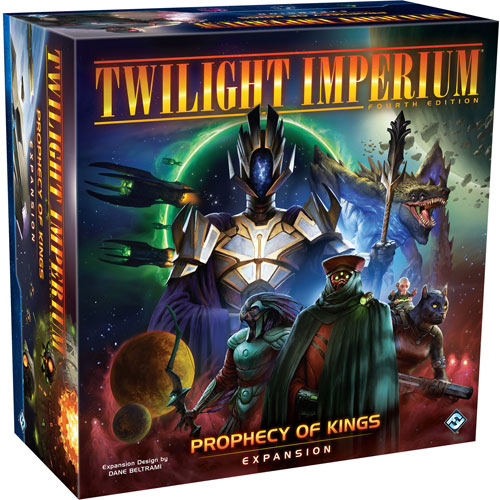

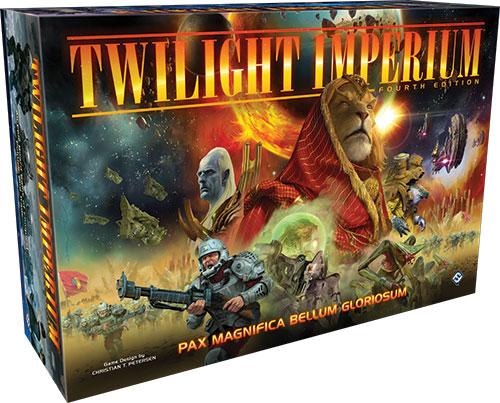
Two purchases turn a great game into the definitive one — and they are, in order of priority, an organizer and the big expansion.
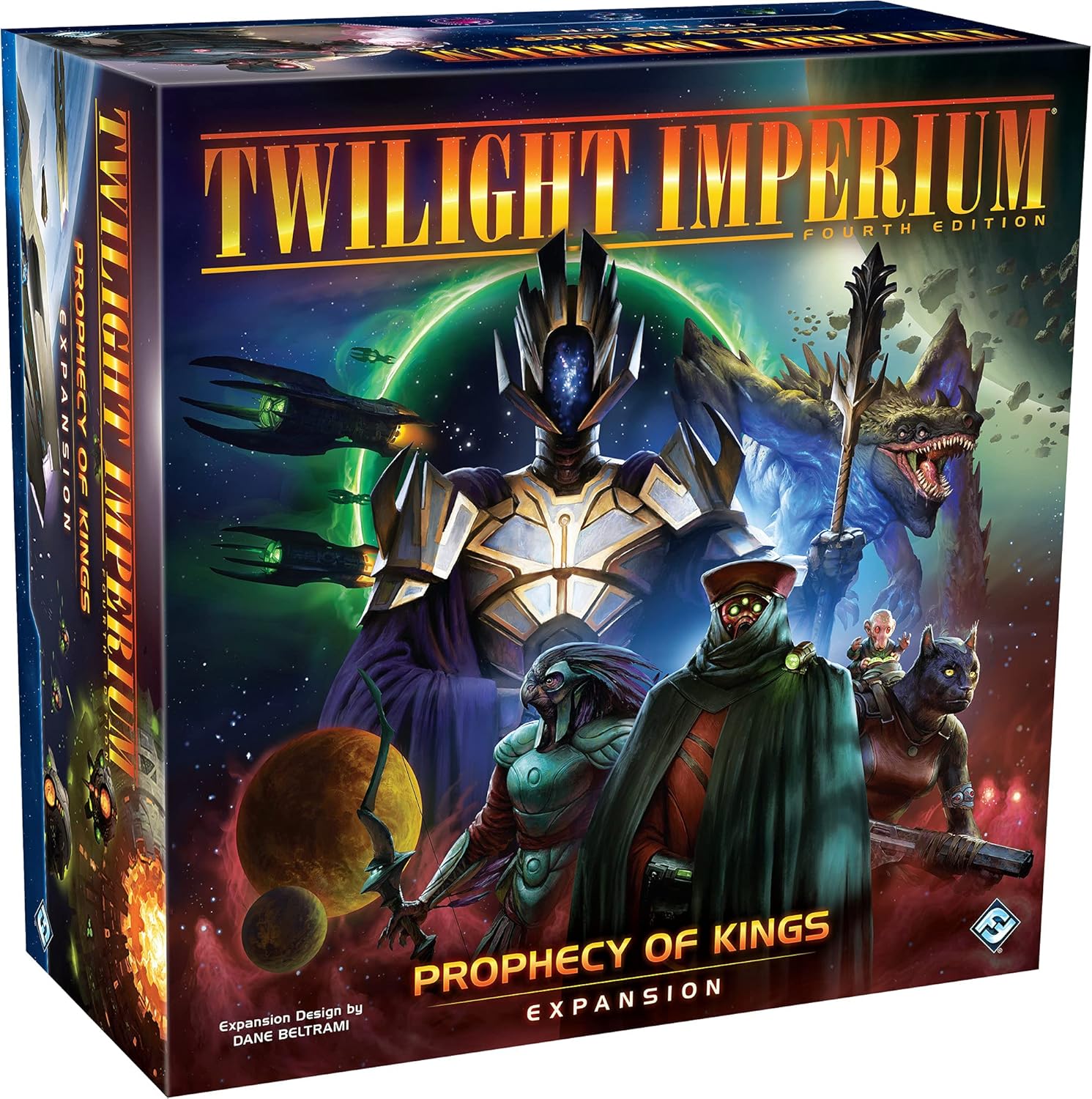
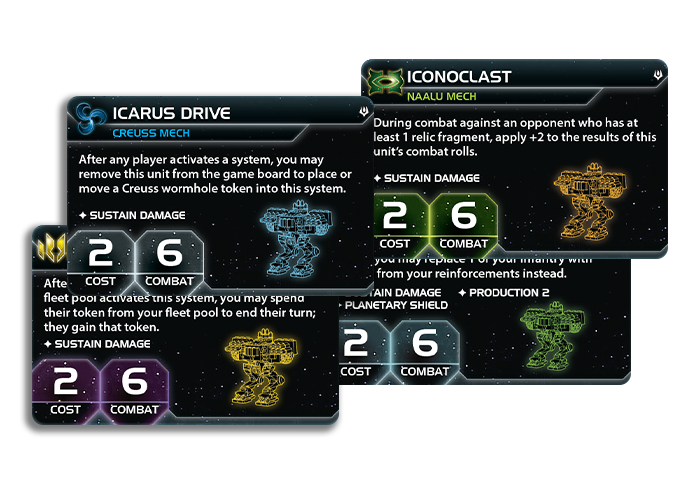
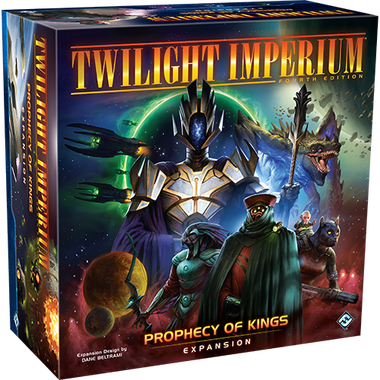
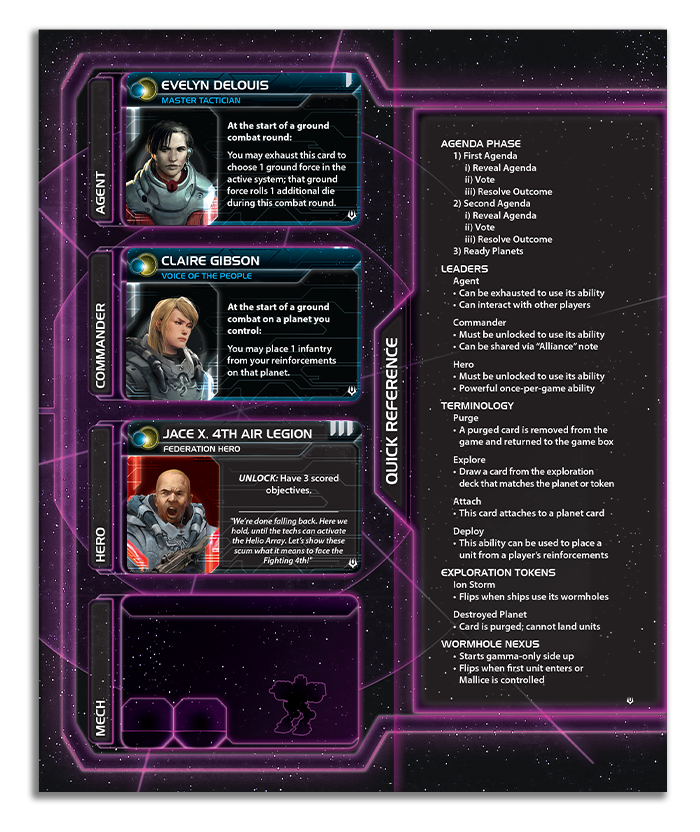
Prophecy of Kings ($124.99 MSRP) is the first and only major expansion for the fourth edition, and the consensus among veterans is near-unanimous: it is less an add-on than the game's true final form. It bundles seven new factions (bringing the base roster to 24 before any Codex content), pushing the table count up to eight players with two new colors. But the deeper additions are mechanical. Leaders give every faction three named characters — an Agent, a Commander, and a Hero — each a once-per-game-or-recurring ability that makes your civilization feel even more distinct. Mechs add a powerful, faction-unique ground unit to every army. And a brand-new exploration system seeds the planets and the void with discoveries, including fragments you combine into game-changing relics — finally rewarding the 'eXplore' of 4X with tangible payoffs. Forty new system and hyperlane tiles round it out. Shelfside's verdict is blunt: 'TI4 is already an amazing game, a 10/10 game, and if you want to jump in a heavier direction, PoK is a 10/10 too.' Add the runtime cost is modest relative to what it deepens — most groups, once they've played with it, never go back.
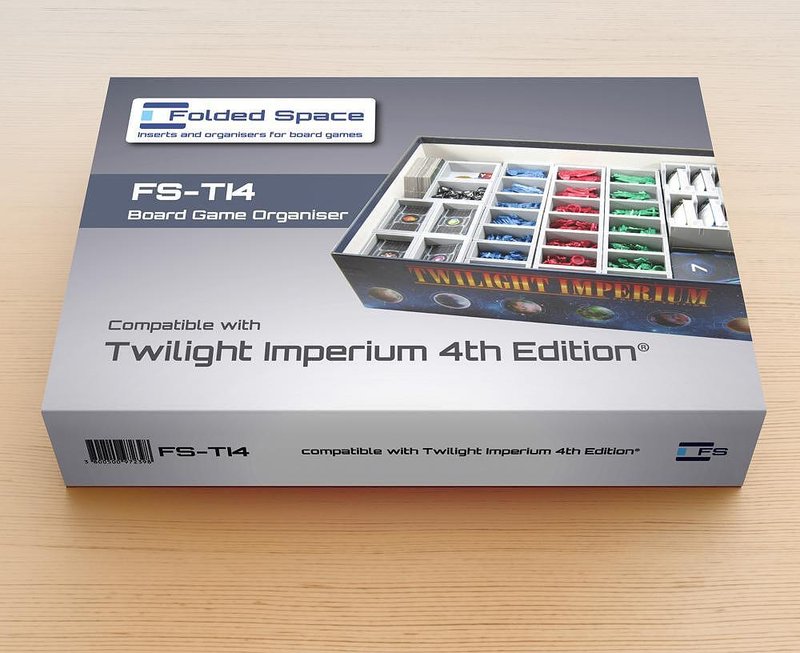
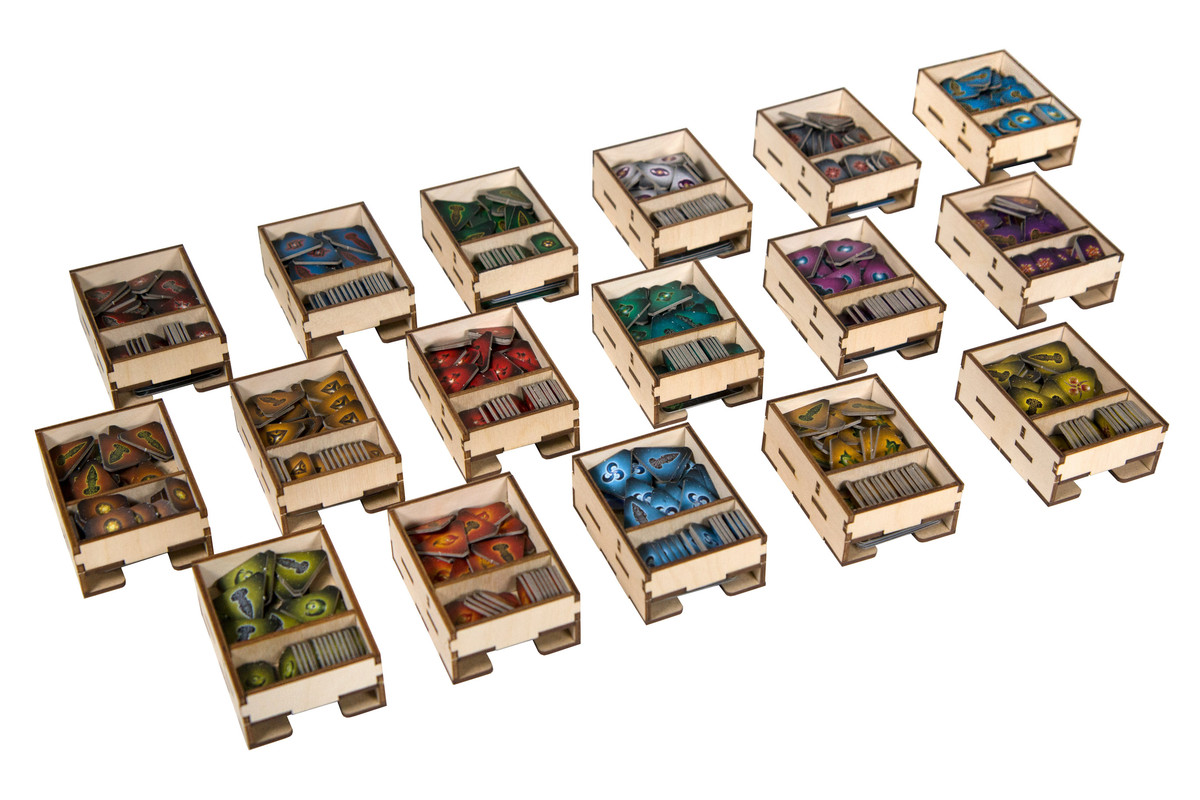
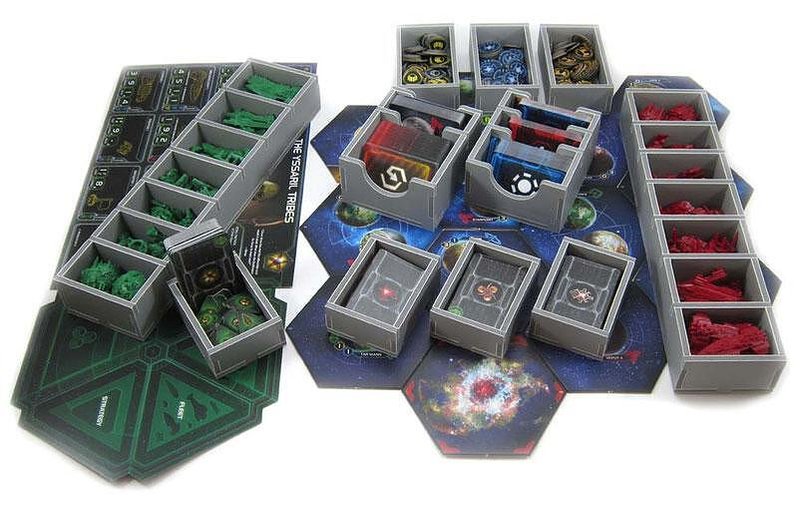
The organizer is arguably the more urgent buy. The base box's lack of a usable insert is its one genuine design failure, and it directly attacks the game's biggest weakness: setup and teardown time. A purpose-built insert like the Folded Space organizer (which accommodates the base game and expansions in one footprint) collapses a chaotic 90-minute setup into roughly 20 minutes of pulling labeled trays. For a game whose enemy is the clock, that is not an accessory — it is a force multiplier.
My recommended path: buy the base game, buy an organizer immediately, play three or four times to internalize the core, then add Prophecy of Kings once the group is hooked. Bolting the expansion on for a literal first game only deepens the rules cliff.
Prophecy of Kings is less an add-on than the game's true final form.
So who is Twilight Imperium actually for?
Twilight Imperium is for a specific person, and pretending otherwise does no one a favor. It is for the player who wants the all-day saga — who hears 'eight hours' and thinks 'finally' rather than 'absolutely not.' It is for groups that prize negotiation, table-talk, alliances, and betrayal as much as tactics, because the diplomacy is at least half the game. It is for people who find joy in asymmetry and replayability, who will happily learn a new faction's puzzle from scratch a dozen times over. And it is for hosts — the friend who organizes, who reads rules, who clears the calendar and lays out the snacks. Every great TI group has one.
It is not for everyone, and that's fine. If your group can rarely seat more than three, the game works but loses some of its political electricity (it sings at five or six). If you bounce off heavy rules or long downtime between turns, the 4.27 weight will frustrate you. If you want a game you can pull out on a random weeknight and finish before bed, this is structurally the wrong purchase — buy a sharp two-hour Euro instead. And if your table can't commit to playing it more than once, the per-hour value math collapses; the magic compounds over repeat plays as everyone internalizes the systems and the politics deepen.
But for the right table — patient, social, scheduling-capable, hungry for scale — there is genuinely nothing else like it. It is the closest the hobby has come to bottling a grand-strategy campaign into a single, unforgettable day. As Meeple Mountain's reviewer summed up after the dust settled: 'Of all the games I've played, Twilight Imperium is, far and away, the most discussed and argued over after each session.' That is the whole promise in one line. The stories it generates outlive the eight hours by years.
It is the closest the hobby has come to bottling a grand-strategy campaign into a single, unforgettable day.
What experienced tables keep reporting
Recurring owner patterns, synthesized in Puzzlewick's words. Follow each evidence trail to read the original discussion.
I did some math. My first game of 4th edition lasted about 7 hours, with 5 players. At $150, that's $30 per player, and about $4.20 per player per hour for some of the best fun I've had in my life.
We had players paying someone for a planet, paying someone not to fight them, paying someone to fight someone else, paying someone for a promissory note, trading commodities for trade goods… It all creates a dynamic interplay that is so quintessentially Twilight Imperium it makes my heart pound just thinking about it.
Of all the games I've played, Twilight Imperium is, far and away, the most discussed and argued over after each session.
TI4 is already an amazing game, a 10/10 game, and if you want to jump in a heavier direction, PoK is a 10/10 too.
Most importantly, they give you MORE crucial decisions… and when you got something BIG that relates to your faction specifically, it feels all the more thematic and satisfying.
Twilight Imperium is a sci-fi epic that expects a lot of commitment from you, but the rewards are unbeatable depth, strategy, and fun for players willing to take the plunge.
Read the evidence: GamesRadar+ review ('Magnificent peace, glorious war')
It has been hailed by Nerdist and Polygon as the 'greatest board game ever made.'
Read the evidence: Wikipedia — Twilight Imperium, citing Nerdist and Polygon
Prebuild the map, organize player trays, and settle factions before game day. A first session should begin with objectives and actions, not ninety minutes of component sorting.
Read the evidence: June 2026 r/twilightimperium first-game thread
For a table accustomed to heavy strategy games, using Prophecy of Kings whole is often easier than inventing a partial module set. Keep the first player count manageable.
Read the evidence: May 2026 r/twilightimperium PoK onboarding discussion
Offer a curated group of legible factions, explain each in one sentence, and let theme finish the decision. Avoid factions whose exceptions force the host to pilot the player's turn for them.
Read the evidence: May 2026 r/twilightimperium teaching discussion
The picks
Some links below are affiliate links — as an Amazon Associate, Puzzlewick earns from qualifying purchases, at no extra cost to you. It never changes a pick.
 4 photos
 Twilight Imperium: Fourth Edition (Base Game)
The crown jewel of grand-strategy board gaming and the only essential buy here. Seventeen wildly asymmetric factions, a galaxy you build tile-by-tile every game, dice-driven space combat, and a space parliament where votes and betrayals decide everything. With a BGG weight of 4.27/5 and an MSRP of $189.99 (often found nearer $130–$150), it is a major commitment of money, table-space, and an entire day — and for the right group it repays that commitment like nothing else in the hobby. Polygon and Nerdist have both called it the greatest board game ever made; on the right Saturday, it's hard to argue.
- Unmatched 4X depth and scale in a single sitting
- 17 deeply asymmetric factions deliver enormous replayability
- A different galaxy every game thanks to modular map-building
- Negotiation and politics are as rich as the combat
- 4–8+ hour runtime demands a full day and a patient group
- High price and steep 4.27/5 complexity
- Base box has no usable insert — setup/teardown is a chore without an organizer
 4 photos
 Twilight Imperium: Fourth Edition — Prophecy of Kings Expansion
The game's true final form. Adds 7 new factions (24 total), Leaders (Agent/Commander/Hero) and faction-unique Mechs that make each civilization feel even more distinct, a brand-new exploration system that finally rewards the 'eXplore' with relics, 40 new tiles, and support for up to 8 players. Reviewers rate it a 10/10 companion to a 10/10 base game. The one caveat: don't add it for a literal first game — it deepens an already-steep rules cliff. Buy it once your group is hooked, and most never play without it again.
- Leaders and Mechs amplify the game's signature asymmetry
- Exploration + relics finally pay off the 'eXplore' of 4X
- Scales the game up to 8 players
- Near-universal 'essential' consensus among veterans
- $124.99 nearly doubles the total investment
- Adds rules complexity — skip it for a first-ever game
- Even longer playtime at higher player counts
 6 photos
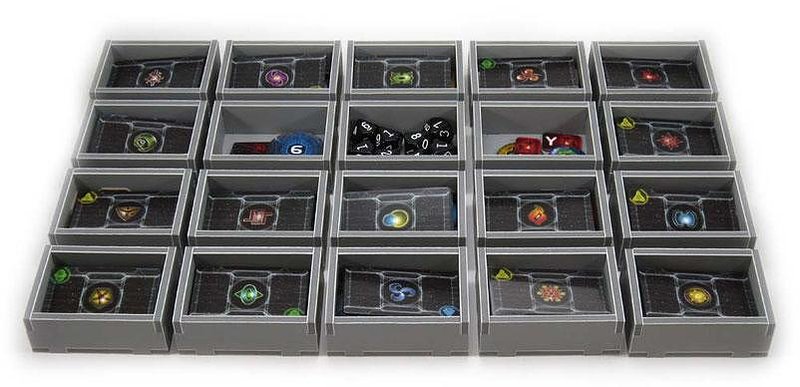
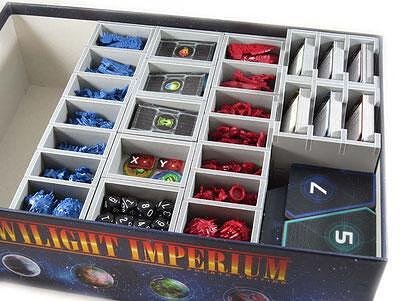
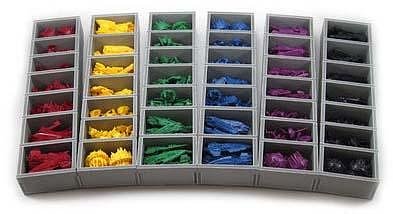
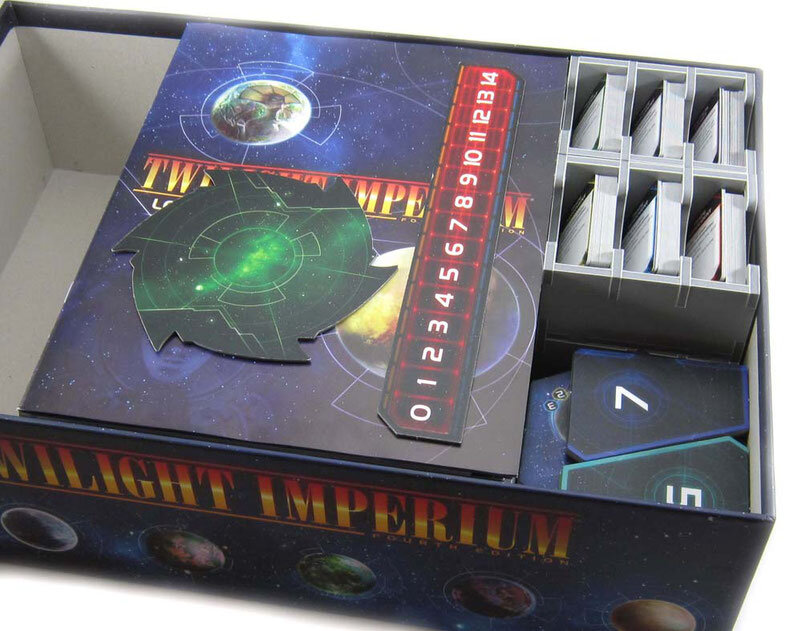
 Folded Space Twilight Imperium 4 & Expansions Box Insert Organizer
Arguably the most important add-on you can buy, because it attacks the game's biggest practical weakness: the base box ships with no usable insert. This evaluated-foam/cardboard organizer holds the base game and its expansions in labeled, lift-out trays, collapsing a chaotic 90-minute setup into roughly 20 minutes. For an 8-hour game whose real enemy is the clock, that's not a luxury — it's a force multiplier that makes the whole thing more likely to actually hit the table.
- Turns a 90-minute setup into ~20 minutes
- Holds base game plus expansions in one footprint
- Directly fixes the box's one genuine design flaw
- Makes the game far easier to schedule and transport
- An added cost on top of an already-pricey game
- Requires assembly
- Sized for the full collection — partial owners pay for space they may not fill yet
 4 photos
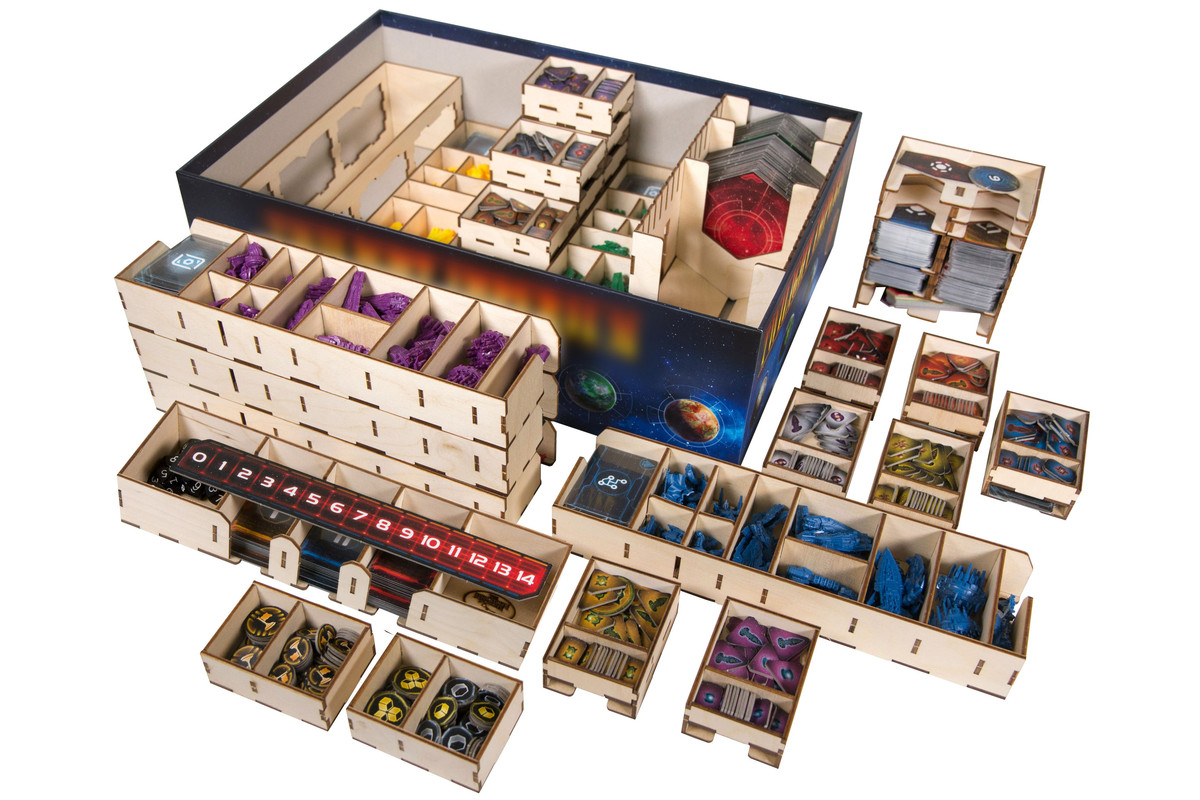
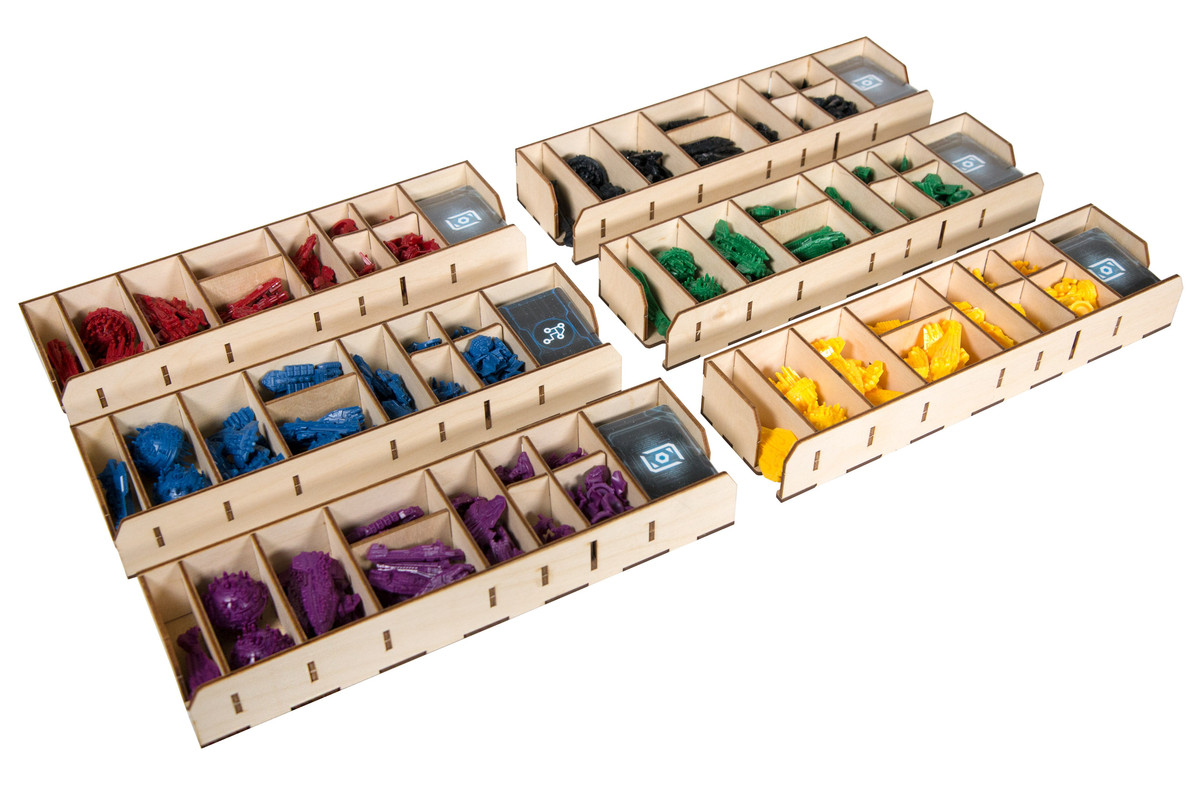
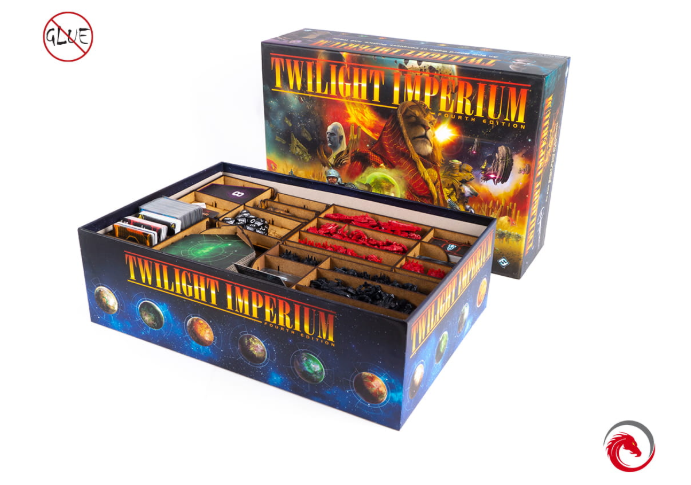
 E-Raptor Insert for Twilight Imperium 4th Edition
A sturdy laser-cut wooden alternative to the Folded Space tray for players who prefer rigid HDF construction over foam-core. It organizes the base game's cards, tokens, and plastic into dedicated compartments to slash setup and teardown time. Like all good TI organizers, its value is measured in minutes saved per session — and over the dozens of plays a group will rack up, those minutes are the difference between a game that gets played and one that intimidates.
- Durable laser-cut wood construction
- Dedicated compartments speed setup and cleanup
- A satisfying premium upgrade for a flagship game
- Requires gluing/assembly
- Confirm base-vs-expansion capacity before buying
- Another cost layered onto a premium purchase
At a glance
| Spec | Base Game (Fourth Edition) | With Prophecy of Kings |
|---|---|---|
| Players | 3–6 | 3–8 |
| Factions | 17 | 24 |
| Playtime | 4–8+ hours | Longer, especially at 7–8 players |
| MSRP (USD) | $189.99 | +$124.99 expansion |
| Complexity (BGG weight) | 4.27 / 5 | Higher (Leaders, Mechs, Exploration) |
| Key additions | Strategy Cards, modular map, objectives, agenda phase | Leaders, Mechs, Exploration & Relics, 40 new tiles |
| Best for | First-time and core experience | Veteran groups wanting the definitive game |
Questions, answered
How long does a game of Twilight Imperium actually take?
Plan for a full day. Fantasy Flight quotes '4 hours or more'; experienced groups average 5–8 hours, and a first game with rules-teaching can run 8–10. The length is intentional — it's what lets an empire genuinely rise and fall in one sitting — but it means TI4 is an event you schedule, not a game you spontaneously pull out.
How many players do you need, and what's the ideal count?
The base game supports 3–6 players; Prophecy of Kings extends it to 8. It works at three but truly sings at five or six, where the politics, alliances, and table-talk reach full intensity. Four is a comfortable, slightly faster sweet spot for many groups.
How much does Twilight Imperium cost?
The base game's manufacturer-suggested price is $189.99, though it's frequently discounted to roughly $130–$150 at major retailers. The Prophecy of Kings expansion adds $124.99 MSRP on top. Budget for an organizer too — it's the highest-value accessory.
Is Twilight Imperium too complicated for beginners?
It's genuinely heavy — a 4.27/5 on BoardGameGeek's complexity scale — but the individual rules are mostly logical; there are just many of them. With one prepared teacher, beginner-friendly factions (Sol or Hacan), and the included 'Learn to Play' guide, a group new to heavy games can absolutely get through a first session. It is not a starter game, but it is learnable.
Do I need the Prophecy of Kings expansion?
Not to start, but you'll likely want it. The base game is complete and excellent on its own. Veterans near-universally consider Prophecy of Kings the game's definitive form thanks to Leaders, Mechs, and exploration. The recommended path: play the base game several times first, then add the expansion once your group is hooked — don't bolt it on for a literal first game.
What does the Prophecy of Kings expansion add?
Seven new factions (24 total), support for up to 8 players, faction Leaders (an Agent, Commander, and Hero each), powerful faction-unique Mech ground units, a brand-new exploration system that seeds planets and space with discoveries and combinable relics, and 40 new system and hyperlane tiles.
Why does everyone say you need an organizer?
Because the base box ships with no usable insert, and setup/teardown is the game's biggest practical friction. A purpose-built organizer (like the Folded Space tray) cuts a chaotic 90-minute setup down to about 20 minutes of pulling labeled trays — which directly increases how often an 8-hour game actually makes it to the table.
Is Twilight Imperium a war game or a negotiation game?
Both, and that's the point. There is dice-driven space combat, but veterans will tell you the negotiation, trading, and political voting are at least half the experience. You win by scoring a spread of objectives, which forces diplomacy and deal-making alongside — and often instead of — open warfare.
How do you win?
First player to 10 victory points wins. Points come from completing public and secret objectives that reward a variety of activity — controlling planets, researching technology, spending resources, winning battles, and holding the central throne-world Mecatol Rex. You cannot win on military alone; you must be a competent emperor across every system.
What makes the fourth edition better than the third?
The fourth edition streamlines the sprawling third by rebuilding the engine around Strategy Cards, which govern turn order and the economy and keep the long game moving with rhythm and tempo. It trims fiddly subsystems and runaway downtime, producing a tighter, more focused, and faster experience — widely regarded as the best version of the game ever made.
Can you play Twilight Imperium with just two players?
Not really — the base game is designed for 3–6, and a great deal of its identity comes from multiplayer politics, alliances, and the rowdy voting phase. With two it loses the diplomacy that makes it special. If you want a similar feel for two, look elsewhere; TI4 is fundamentally a group experience.
Is Twilight Imperium worth the price and time?
For the right group, emphatically yes. The per-play value is strong — one reviewer calculated roughly '$4.20 per player per hour' for what he called some of the best fun of his life — and it compounds over the many plays a dedicated group will log. The honest prerequisite is a patient, social group of four-plus who can commit a full day more than once. If you can field that, nothing on the market matches it; if you can't, admire it from afar.
Kenji's verdict
Twilight Imperium: Fourth Edition is not a board game so much as a recurring event — and judged on those terms, it is one of the finest things the hobby has ever produced. It delivers the full 4X arc (explore, expand, exploit, exterminate) around a physical table with a fidelity nothing else attempts: a galaxy you build yourself, seventeen civilizations that each play like a different game, dice-driven war, and a space parliament where the real blood is spilled over votes and broken promises. The fourth edition's Strategy Card engine is what makes the eight hours sing rather than sag, giving the marathon genuine rhythm. The costs are honest and non-negotiable — ~$190 (often less on sale), a steep 4.27/5 complexity, and a full day per game — but the per-hour value is excellent and compounds across the many plays a dedicated group will log. Buy an organizer the same day you buy the game; it's the single best dollar-for-time upgrade you can make. Add Prophecy of Kings once your group is hooked, and you'll own the definitive version. The one prerequisite the box can't supply is people: gather four to six friends who'll happily lose a Saturday to a galaxy more than once, and Twilight Imperium becomes the centerpiece of your collection and the source of stories you'll retell for years. If you can field that table, the eight-hour galactic epic is absolutely worth it. Rating: 9.5/10 for the right group; a respectful pass for everyone else.
Research ledger 14 sources · reviewed 2026-08-11
Specifications, rules, current product information, community experience, and contrary evidence were checked against the sources below. Commercial links are kept separate from editorial evidence.
- fantasyflightgames.comfantasyflightgames.com/en/products/twilight-imperium-fourth-edition
- store.asmodee.comstore.asmodee.com/products/twilight-imperium-4th-edition
- store.asmodee.comstore.asmodee.com/products/twilight-imperium-prophecy-of-kings
- fantasyflightgames.comfantasyflightgames.com/en/products/twilight-imperium-fourth-edition/products/prophecy-kings
- en.wikipedia.orgen.wikipedia.org/wiki/Twilight_Imperium
- meeplemountain.commeeplemountain.com/reviews/twilight-imperium-4th-edition
- islaythedragon.comislaythedragon.com/featured/review-twilight-imperium-4th-edition
- gamesradar.comgamesradar.com/tabletop-gaming/twilight-imperium-fourth-edition-review
- shelfside.coshelfside.co/reviews2021/prophecyofkings-review
- twilight-imperium.fandom.comtwilight-imperium.fandom.com/wiki/Prophecy_of_Kings
- reddit.comreddit.com/r/twilightimperium/comments/1u4f2bz/tips_for_first_game
- reddit.comreddit.com/r/twilightimperium/comments/1tmc97z/prophecy_of_kings_what_to_remove_and_what_to_use
- reddit.comreddit.com/r/twilightimperium/comments/1t2adsu/teaching_some_newbie
- boardgamegeek.comboardgamegeek.com/filepage/243155/quickstart-for-twilight-imperium-fourth-edition-in
Every object has a lineage. Let me tell you its story.
Keep exploring
The next smart rabbit holes.
✦ Topic PathBoard Game Buying Guides: compare the whole shelfStart with the decision, not the shelf. These guides compare the games, editions, expansions, player counts, and costs people...Deep DiveThe Spice Must Flow Again: A Deep-Dive Into Dune: Imperium – UprisingHow spies, sandworms and contracts change the game, who should buy the original, and the expansion order that makes sense.Deep DiveEclipse: Second Dawn for the Galaxy — The 4X Space Epic Worth Clearing the Whole Table ForA full galaxy of exploration, research, conquest, and diplomacy running on a famously elegant action-disc economy — and the version...