The Spice Must Flow Again: A Deep-Dive Into Dune: Imperium – Uprising
How spies, sandworms and contracts change the game, who should buy the original, and the expansion order that makes sense.

AI-assisted curator persona · research and editorial responsibility: Robert Pruitt · how this guide was made
Last editorial refresh: 2026-09-11 Gold-standard QA: 2026-09-11 12 sources reviewed Affiliate links checked during gold-standard pass

The short answer
Dune: Imperium Uprising is the recommended first box for most new players who want the modern version of Paul Dennen's deck-building and worker-placement system. It is standalone, supports solo and two-player bots, and adds spies, sandworms, contracts and a six-player team mode. Buy the original only when its lower price or a specific expansion path matters to your group; add Bloodlines after Uprising has proved it will return to the table.
Decision map
Choose in thirty seconds
New players, big groups (up to 6), and anyone who wants the most combat-forward, swingiest, most complete version of the Dune deck-builder in a single box.
Owners ready to deepen the game — adds onto BOTH the original Dune: Imperium and Uprising.
"For now, if we're comparing apples to apples, I prefer the experience of Dune: Imperium – Uprising over the original." That's Meeple Mountain, drawing a line in the sand most of the hobby has since stepped over. Sit with that sentence for a second — because the original Dune: Imperium wasn't some forgotten box. It was a top-ten phenomenon, the game that finally fused deck-building and worker placement so cleanly that people who hated one mechanic discovered they loved the marriage. And here is Dire Wolf, three years later, calmly suggesting you might not need it anymore. You came here to know whether that's true — whether Uprising is the better front door, what actually changed, what's rattling around in that hefty box, and how not to lose your first game by 30 points. Pull up a chair at Sietch Tabr. The spice, as ever, must flow.
Start here, then go deeper
You are in the right cabinet.
 ◉ Universe HubDune: the whole buying pathDune games ask the same question at different scales: can you turn limited information, temporary power, and a dangerous resource...
 ✦ Topic PathBoard Game Buying Guides: compare the whole shelfStart with the decision, not the shelf. These guides compare the games, editions, expansions, player counts, and costs people...
 Deep DiveSETI: Search for Extraterrestrial Intelligence — The Deep-Dive ReviewCzech Games Edition's 2024 heavyweight turned a radio-telescope daydream into the most-awarded euro of its year. Here is what the record...
What is Dune: Imperium – Uprising, and how is it different from the original?
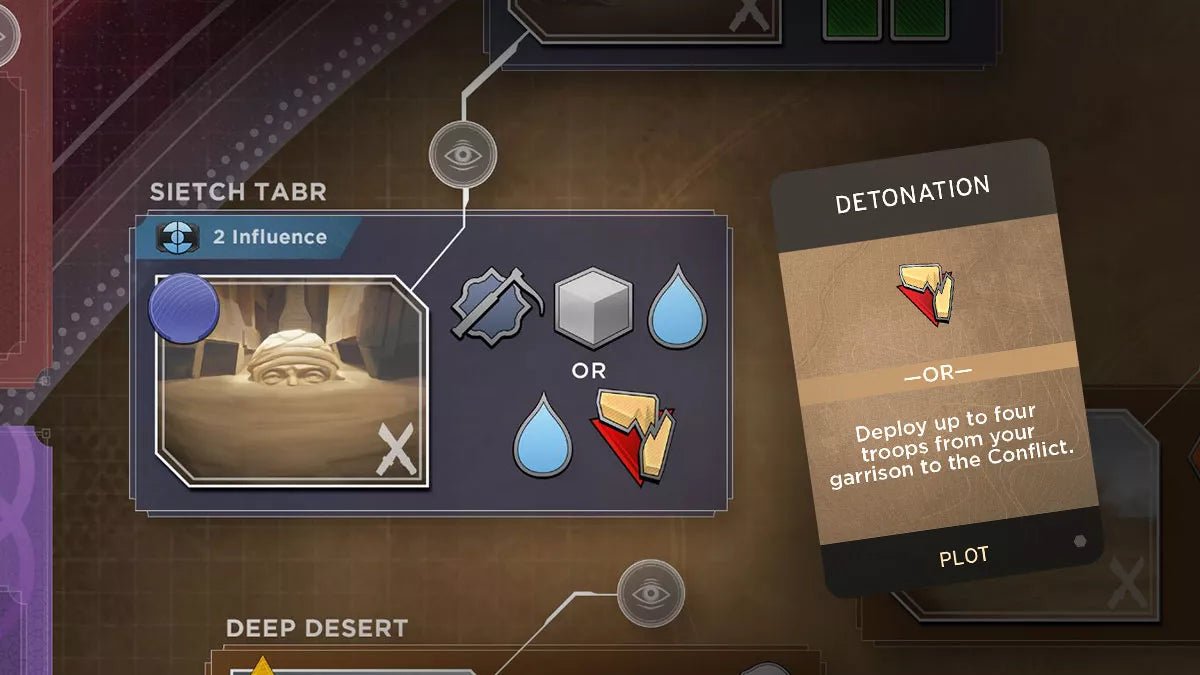
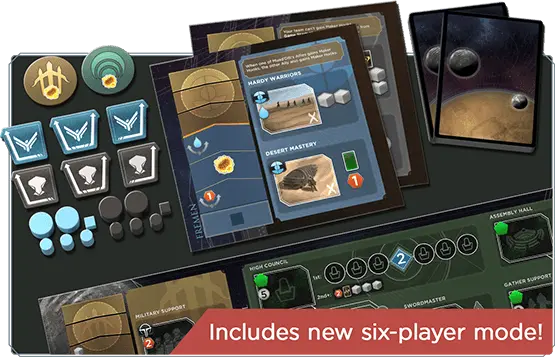
Start with the strangest thing about it. "Uprising is more of a Dune Imperium remaster," Gideon's Gaming writes, "but the best kind of remaster as it's fully compatible with all previous Dune Imperium products." Read that twice, because it's the whole trick. This is a standalone game — its own board, its own decks, its own leaders, everything to play in the box — and simultaneously a remix you can blend with Rise of Ix and Immortality if you already own them. It is both the front door and an extension, which almost no game pulls off without collapsing into bloat. The bones are the original's: each round you deploy two Agents to board spaces to claim resources, faction influence, and combat troops, you fight one Conflict per round for a face-up reward, and the cards you buy this turn deepen the deck you'll draw next. What's new is the texture around that loop. The original sometimes locked you out of a space you desperately needed; Uprising threads spies through that frustration. The original's combat could feel like an afterthought to engine-building; Uprising puts sandworms and battle-icon scoring at the center and lets a turn explode. Same skeleton, hungrier muscle. The headline numbers: 1–6 players, roughly two hours, and a complexity that creeps to about 3.5 out of 5 on BoardGameGeek — a notch heavier than the original's 3.0.
It is both the front door and an extension — almost no game pulls that off without collapsing into bloat.
How do spies work — and why does everyone call them the real fix?
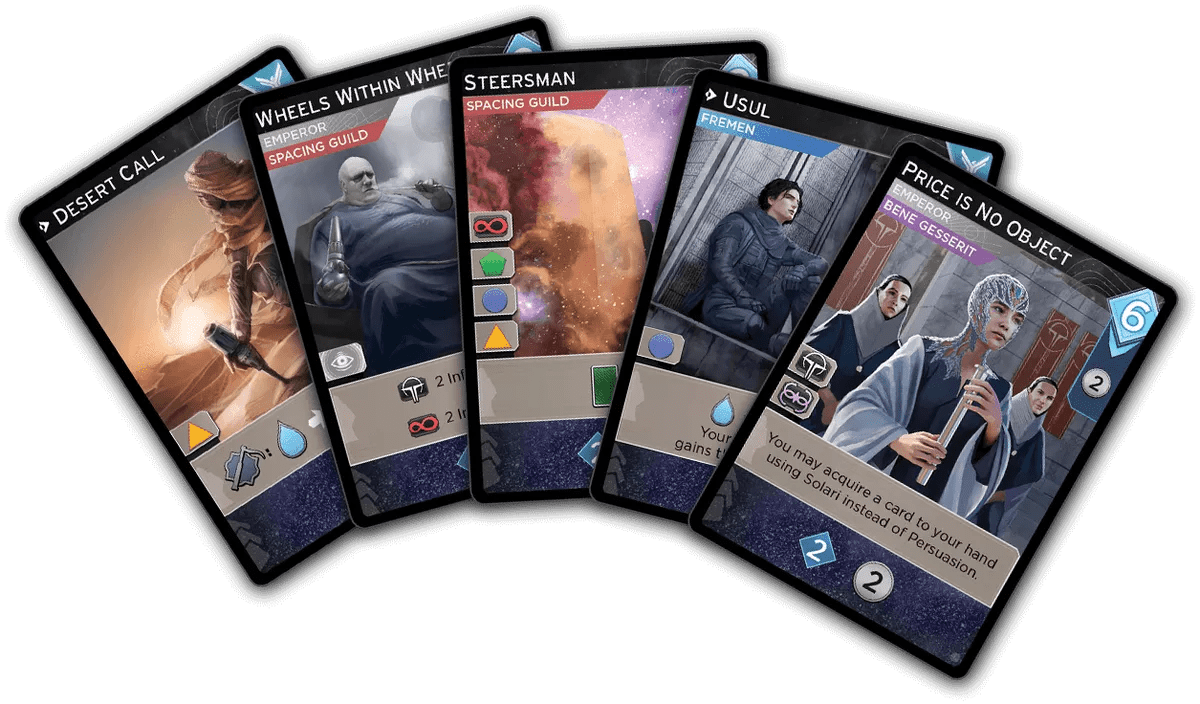
"Spies solve this elegantly." Ryan Board Games puts it in three words, and once you understand the problem, you'll feel the relief in your spine. In the original, worker placement meant a single Agent in a space could simply deny it to you for the round — you'd reach for the spot you'd built your whole turn around and find it occupied. Uprising hands you spies: little operatives you slip onto observation posts adjacent to board spaces, not into the spaces themselves. Now you have options the original never offered. You can recall a spy to Infiltrate — send an Agent into a space someone else already claimed. You can recall a spy as you place an Agent to Gather Intelligence and draw a card. And with the right card icon, you can send an Agent straight to a space connected to your spy without recalling at all. Meeple Mountain frames the payoff plainly: it "reduces the blocking frustration of the original game." What I love is how it changes the conversation at the table — placement stops being a zero-sum scramble and becomes a quieter game of positioning, of pre-loading the board with intent. Zatu's Gillian Lee watched it prevent "major blockages" and warmed to it immediately. A word of warning, though, straight from Dune News Net's playthrough: her opponent over-committed to spies and it backfired. They are a scalpel, not a hammer.
Placement stops being a zero-sum scramble and becomes a quieter game of positioning — of pre-loading the board with intent.
Sandworms and Maker Hooks: the swing that flips a game

"Doubling your conflict rewards is enormously powerful," Ryan Board Games warns, "and in many games I've played, the player who invested in the sandworm strategy pulled ahead decisively." If spies are the fix, sandworms are the spectacle — and the gamble. Here's the mechanism, cleanly: you earn Maker Hooks at Sietch Tabr (you'll need two Fremen influence to get rolling), and a hook lets you summon a sandworm into a Conflict. Each worm brings 3 combat strength, but the real prize is what it does to the reward — when you win a Conflict with a worm deployed, you double what you take off the card. That's how a quiet engine-builder suddenly lurches forward. There's tension baked in, too: worms cannot ride into Conflicts protected by the Shield Wall, so you either pick your battles or find a way to bring the wall down. Reviewers split beautifully on the feel of it. Zatu's Lee calls worms "nice additions" precisely because a trailing player can "catch up" on one doubled haul. Ryan, more wary, flags that the same swing "can feel unbalanced" when a worm-rush snowballs. Both are right, and that contradiction is the point — Uprising is, in Meeple Mountain's word, "swingier," trading a sliver of the original's serenity for turns that can detonate.
If spies are the fix, sandworms are the spectacle — and the gamble.
CHOAM contracts, the new combat math, and how a game actually ends
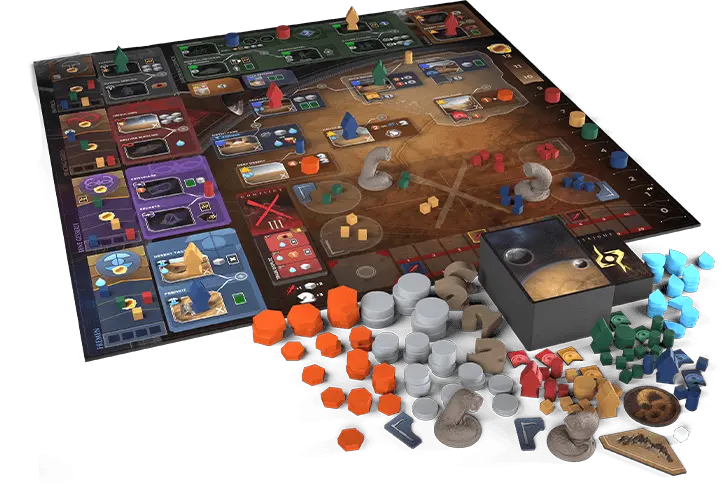
 The Spice Must Flow Again: A Deep-Dive Into Dune: Imperium – Uprising — CHOAM contracts, the new combat math, and how a game actually ends See it on Amazon ↗

Let's clear up the question that trips up every first-timer: how does this thing end? When any player reaches 10 or more Victory Points, the current round finishes and the highest score wins (ties break by spice, then Solari, then water, then garrisoned troops). The game can also end if the Conflict Deck runs dry. And lurking in the Imperium deck is the iconic Spice Must Flow card — the splashy, expensive purchase that banks guaranteed points and can quietly close out a game while everyone's eyes are on the battle. So watch the VP track, not just the board. Two systems feed that race. First, the CHOAM module — optional, and recommended only once you've got the base loop down — drops face-up contracts you claim with a contract icon and complete by hitting conditions (visit this space, bank that spice, acquire a certain card) for a one-time payout. Second, combat scoring got smarter: Conflict cards now reward matching battle icons, so you score for fielding pairs of identical symbols, which means the cards you draft quietly steer how you fight. It rewards reading the board three moves out. The result, as Gideon's Gaming nails it: "Your turns feel even more important and impactful, you get to do more things, and doing things is the best part of playing a board game!"
Watch the VP track, not just the board — the Spice Must Flow card can close a game while everyone's eyes are on the battle.
Six at the table, or one: the team mode and the solo Rivals
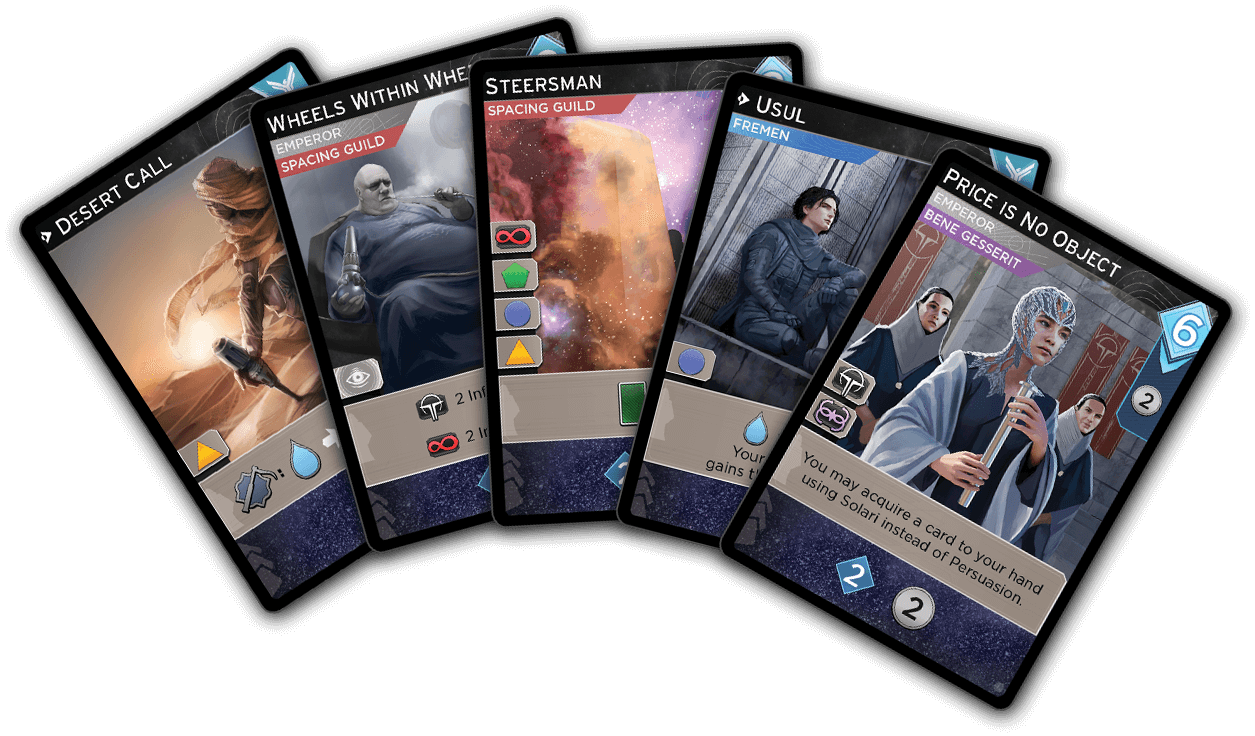
This is the box's big swing toward more people — and, just as quietly, toward you alone at midnight. The double-sided main board flips to an alternate layout built for a 6-player team mode: two teams of partners, seated opposite each other, sharing a victory-point total while forbidden from directly trading resources, with commander roles deploying allies into shared battles. It's the answer to every group that loved Dune but had to bench two friends. Temper expectations, though — reviewers like it more than they trust it as a reason to buy. Ryan Board Games calls it a "nice inclusion" but warns of downtime at six and steers you toward games purpose-built for that count; Zatu's Lee found it good for "team camaraderie," especially when newer players want a veteran beside them. Now flip all the way to one. The solo (and 1-player-vs-AI) experience runs on the Rivals automa — eight different rivals across four difficulty levels, with what Ryan praises as "clearer decision-making" than the original's automa. Coop Board Games sums up the honest pitch: "The automa does not replicate human decision-making but produces enough pressure to make the solo game engaging across multiple sessions." Not a thinking opponent — a relentless metronome. For a heavy euro, that's often exactly enough.
Not a thinking opponent — a relentless metronome. For a heavy euro, that's often exactly enough.
How to play your first game well
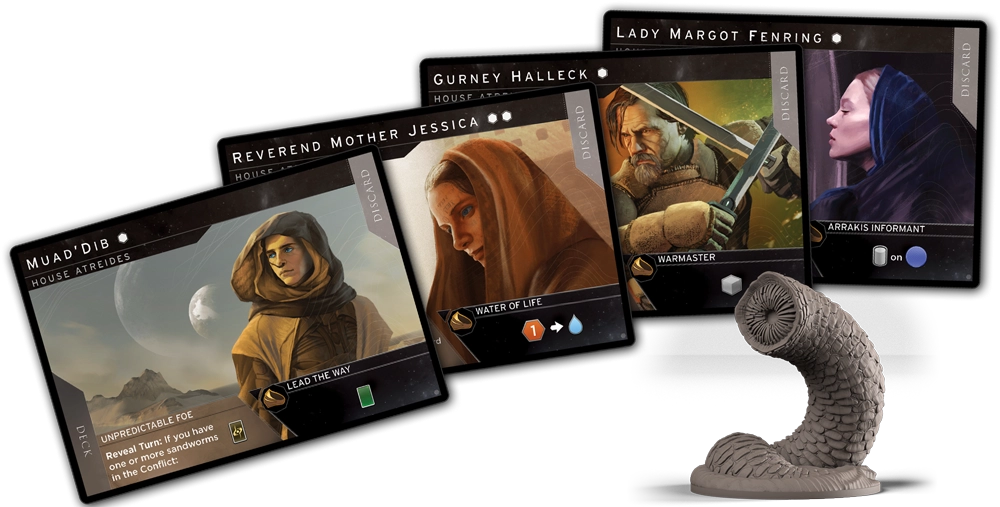
"Strategies are guidelines rather than rules," the Steam strategy guide reminds us, "and your gameplan should be flexible and adaptable to seize opportunities that arise." Hold that loosely, then hold these tighter. One: leave CHOAM in the box for game one — learn the spy-and-worm rhythm before you stack contracts on top. Two: commit early to a faction lane. Veterans point to leaders like Duke Leto Atreides, whose Signet Ring lets him focus two or three influence tracks without surrendering the 'free' points on the others, and Baron Harkonnen, who can siphon influence almost for free off intrigue cards. Pick a lane and feed it. Three: respect water. The Steam consensus is to keep enough water flowing to cycle cards and harvest spice — a dry economy strangles everything else you're trying to do. Four: aim your spies. They're scalpels for the one space you must reach, not confetti to scatter; the over-committer in Dune News Net's game is the cautionary tale. Five — and this is the one new players miss — keep score for the table, not just yourself. Someone will buy The Spice Must Flow and lurch to 10 while you admire your engine. Trim your deck of weak starting cards, draft toward matching battle icons so your combats compound, and chase the powerful Imperium-row cards (Kwisatz Haderach, CHOAM Directorship, Power Play) that reward an engine built on purpose. Coop Board Games is candid that synergies take "two to three plays" to click. Lose the first one well, and the second feels like a different game.
Someone will buy The Spice Must Flow and lurch to 10 while you admire your engine.
Original vs. Uprising — which one do you actually buy?
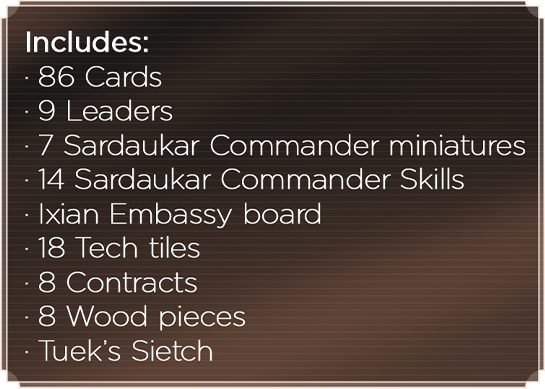
Here's where the hobby genuinely splits, and I want you to hear both choirs. "I'd actually recommend adding an expansion like Rise of Ix or Bloodlines rather than switching to Uprising," Ryan Board Games tells existing owners — and that's the crux of the disagreement. If you already own Dune: Imperium plus Rise of Ix, you have a deep, deservedly beloved game; many players insist Ix alone makes the original "perfect," and Uprising's leaders can feel a touch simpler by comparison. But starting fresh? The tide runs the other way. Meeple Mountain prefers Uprising apples-to-apples. Gideon's Gaming and Zatu both lean toward Uprising as the better single purchase — Lee goes so far as to suggest most players won't need both. The clean decision tree: buying your first Dune game, or want six players, or love combat-forward swing — buy Uprising. Already deep in the original with expansions — stay there, and reach for Bloodlines (which, lovely detail, adds onto BOTH the original and Uprising — 9 new leaders, Sardaukar Commander miniatures, fresh contracts and Tech tiles). And the part that surprises people every time: Uprising standalone often costs less than the original fully expanded with Ix and Immortality. The newer, bigger, six-player box can be the cheaper way in.
The newer, bigger, six-player box can be the cheaper way in. New players, start here.
What experienced tables keep reporting
Recurring owner patterns, synthesized in Puzzlewick's words. Follow each evidence trail to read the original discussion.
For now, if we're comparing apples to apples, I prefer the experience of Dune: Imperium – Uprising over the original.
Read the evidence: Meeple Mountain — Dune: Imperium – Uprising review
Doubling your conflict rewards is enormously powerful, and in many games I've played, the player who invested in the sandworm strategy pulled ahead decisively.
Uprising is more of a Dune Imperium remaster, but the best kind of remaster as it's fully compatible with all previous Dune Imperium products.
Your turns feel even more important and impactful, you get to do more things, and doing things is the best part of playing a board game!
Dune Imperium: Uprising is a heavy game, there's no denying that and there are some people who will never be able to play this due to its complexity.
Read the evidence: Zatu Games — Uprising review (Gillian Lee)
It's really cool seeing the different chains you can pull off and how it evolves throughout the game.
Read the evidence: Zatu Games — Uprising review (Gillian Lee)
The automa does not replicate human decision-making but produces enough pressure to make the solo game engaging across multiple sessions.
Dune fans will be immersed in the hybrid board / card game's multi-dimensional political intrigue.
Read the evidence: Dune News Net — Uprising review (Kara Kennedy)
The picks
Some links below are affiliate links — as an Amazon Associate, Puzzlewick earns from qualifying purchases, at no extra cost to you. It never changes a pick.
 5 photos
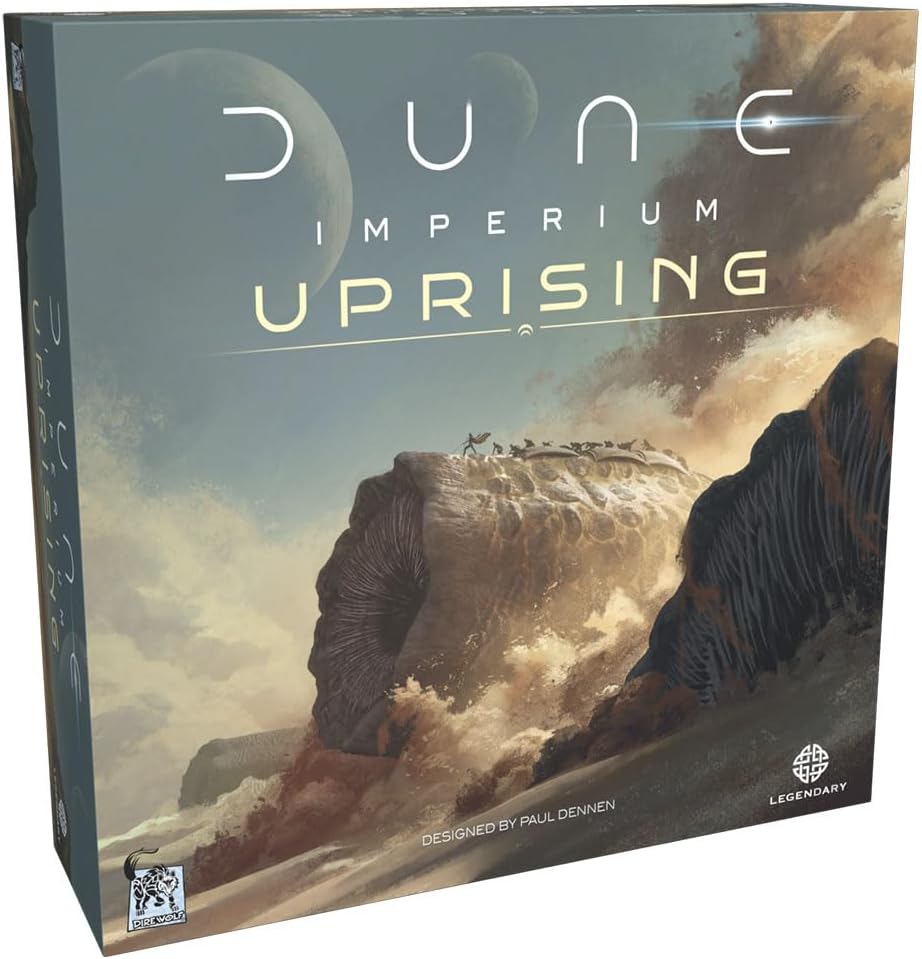
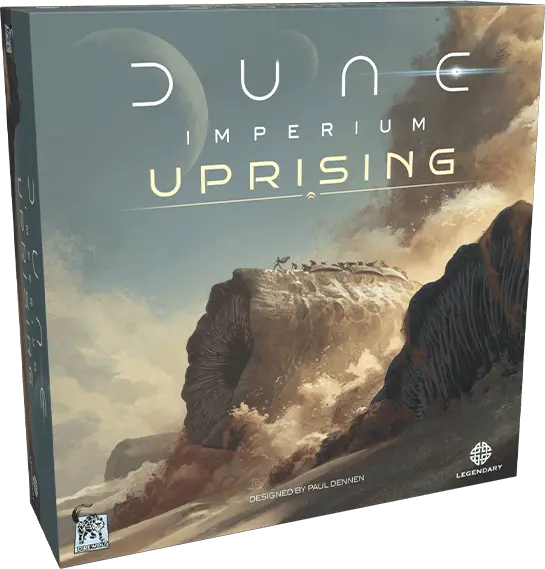
 Dune: Imperium – Uprising (Base Game)
The standalone that quietly made the original optional. Spies smooth the old blocking frustration, Maker-Hook sandworms turn combat into spectacle, CHOAM contracts add objective-chasing depth, and a double-sided board opens a true 6-player team mode — all while remaining fully compatible with every prior Dune: Imperium product. Multiple critics now call it the better single purchase for newcomers, and it frequently costs less than the original fully expanded. Plays 1–6 in about two hours at a medium-heavy ~3.5/5 weight. This is the front door.
- Spies elegantly fix the original's worker-blocking frustration
- Sandworms (double combat rewards) make battles thrilling and give trailing players a comeback path
- Genuine 6-player team mode on a double-sided board
- Strong solo via the Rivals automa — 8 rivals across 4 difficulty tiers
- Fully compatible with Rise of Ix, Immortality, and Bloodlines
- Often cheaper than the original + expansions for more game
- Heavier than the original (~3.52 vs ~3.0); a real learning curve of 2–3 plays
- Sandworm doubling can feel swingy/unbalanced to control-minded players
- 6-player mode carries noticeable downtime — not a reason to buy on its own
- Owners of the original + Rise of Ix may find the upgrade marginal
 3 photos
 Dune: Imperium – Bloodlines (Expansion)
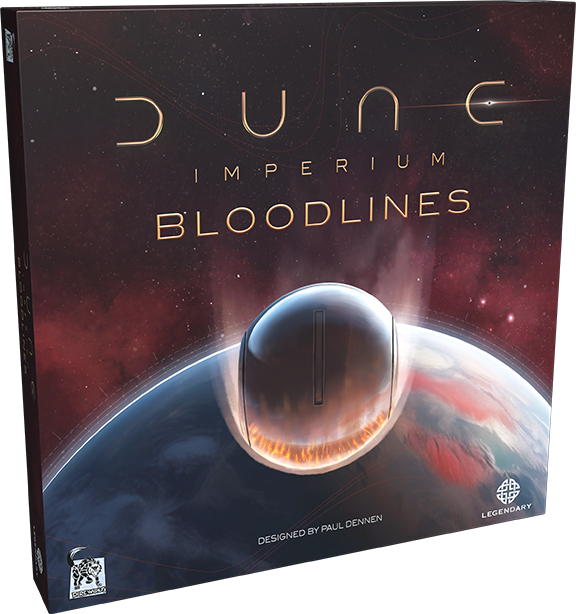
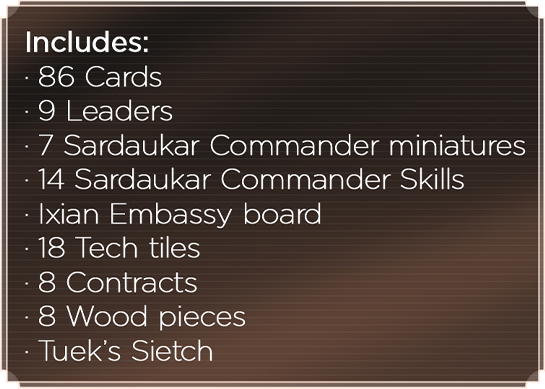
The 'deepening cut,' not a starting point. Bloodlines layers new strategic toys onto either base game: Sardaukar Commander miniatures you recruit to your forces, new Tech tiles, 9 new Leaders, and 8 new Contracts, plus fresh Imperium and Intrigue cards. Because it slots into both the original and Uprising, it's the natural second purchase once you know which base you love. Buy a base game first; reach for this when the table wants more.
- Compatible with both the original Dune: Imperium and Uprising
- Recruitable Sardaukar Commander miniatures add a new combat dimension
- 9 new Leaders dramatically widen replayability and asymmetry
- New Tech tiles, Contracts, and cards refresh a well-worn engine
- Not standalone — requires a base game to play
- More systems on top of an already medium-heavy game
- Overkill if you're still learning the base loop
At a glance
| feature | dune imperium original | dune imperium uprising |
|---|---|---|
| Player count | 1–4 players | 1–6 players (adds a team mode) |
| Complexity (BGG weight) | ≈ 3.0 / 5 | ≈ 3.52 / 5 (a notch heavier) |
| Signature new mechanic | Deck-building + worker placement core | Spies (adjacent placement, Infiltrate/Gather Intelligence) |
| Combat identity | Solid but engine-secondary | Sandworms double rewards; battle-icon scoring — central and swingy |
| Objective layer | Influence + Conflicts + The Spice Must Flow | Adds optional CHOAM contracts for objective rewards |
| Board | Single-sided | Double-sided (standard + 6-player team layout) |
| Solo mode | Hagal automa | Rivals automa — 8 rivals, 4 difficulty tiers, clearer decisions |
| Compatibility | Takes Rise of Ix, Immortality, Bloodlines | Standalone; also blends with prior expansions + Bloodlines |
| Best for | Owners who love it + Rise of Ix; 'perfected' euro feel | New players, big groups, combat-forward swing |
| Critic lean (apples-to-apples) | Beloved, especially with Rise of Ix | Preferred as the single best purchase for newcomers |
Questions, answered
Is Dune: Imperium – Uprising standalone, or do I need the original?
Fully standalone. The box contains everything to play 1–6 players — its own board, decks, leaders, and components. You do not need the original Dune: Imperium. Uniquely, it can also be combined with the original and its expansions (Rise of Ix, Immortality) if you happen to own them.
How is Uprising different from the original Dune: Imperium?
Three big additions: spies (placed beside board spaces so you can slip into occupied spots and draw extra cards), sandworms summoned with Maker Hooks that double your combat rewards, and optional CHOAM contracts that pay you for hitting objectives. It also adds a double-sided board with a 6-player team mode and runs slightly heavier (~3.52 vs ~3.0 complexity).
How many players does Uprising support?
1 to 6. Solo and 1-vs-automa run on the Rivals system, 2–4 play on the standard side of the board, and the alternate side hosts a 6-player team mode (two teams of partners sharing a victory-point total).
How long does a game take?
Around 120 minutes for a full table, less with fewer players or experienced groups. Teaching adds time on a first play, and reviewers note synergies take two to three games to fully click.
How do you win Dune: Imperium – Uprising?
Reach 10 or more Victory Points; the current round then finishes and the highest score wins. The game can also end if the Conflict Deck empties. Ties break by spice, then Solari, then water, then garrisoned troops. The Spice Must Flow card can spike your VP total quickly, so watch every opponent's track.
How do spies work?
You place spies on observation posts adjacent to board spaces. Recall a spy to Infiltrate (send an Agent into a space someone already occupies) or to Gather Intelligence (draw a card when you place an Agent). With the right card icon you can also send an Agent to a spy-connected space without recalling. They reduce the original's lockout frustration.
How do sandworms and Maker Hooks work?
Earn Maker Hooks at Sietch Tabr (you'll want two Fremen influence to enable it), then spend a hook to summon a sandworm into a Conflict. Each worm adds 3 combat strength, and winning a Conflict with a worm deployed doubles your reward. Worms cannot enter Conflicts protected by the Shield Wall until it's destroyed.
What is the CHOAM module, and should I use it my first game?
CHOAM adds face-up contracts you claim with a contract icon and complete by meeting conditions (visiting a space, banking spice, acquiring a card) for one-time rewards. It's optional — the rules and community both suggest learning the base loop first, then adding CHOAM for extra depth.
Is the 6-player team mode any good?
It's a real, welcome inclusion for big groups — partners sit opposite each other, share a VP total, and can't directly trade resources. But several reviewers caution against buying solely for it because six players means noticeable downtime. Treat it as a bonus, not the headline reason to purchase.
Is there a solo mode?
Yes. The Rivals automa offers eight different AI rivals across four difficulty levels, with clearer decision-making than the original's automa. It won't think like a human, but it applies enough pressure to make solo play engaging across many sessions — strong for a heavy euro.
Should I buy the original Dune: Imperium or Uprising?
If you're new to Dune, want up to six players, or love combat-forward swing, start with Uprising — multiple critics call it the better single purchase, and it often costs less than the original fully expanded. If you already own the original plus Rise of Ix and love it, stay there and add Bloodlines (which enhances both games).
What is the Bloodlines expansion and do I need it?
Bloodlines is an expansion (not standalone) that adds onto BOTH the original and Uprising: recruitable Sardaukar Commander miniatures, new Tech tiles, 9 new Leaders, 8 new Contracts, and fresh cards. It's the natural second purchase once you know which base game you prefer — buy a base first.
Imani's verdict
Dune: Imperium – Uprising is the rare remaster-slash-expansion that earns the contradiction. It keeps the deck-building/worker-placement marriage that made the original a phenomenon, then smooths its sharpest edge with spies, hands its combat a sandworm-shaped jolt of drama, opens the table to six, and ships a solo mode strong enough to carry a heavy euro. Yes, it runs a touch heavier and the doubling-sandworm swing won't suit every control-minded player — but the chorus is loud and remarkably aligned: for new players this is now the front door, and it frequently costs less than the original fully expanded. If you already own Dune: Imperium with Rise of Ix and adore it, keep it and add Bloodlines instead. Everyone else: this is where the spice flows. Buy the base game; deepen with Bloodlines when the worm-song gets in your blood.
Research ledger 12 sources · reviewed 2026-09-11
Specifications, rules, current product information, community experience, and contrary evidence were checked against the sources below. Commercial links are kept separate from editorial evidence.
- direwolfdigital.comdirewolfdigital.com/dune-imperium-uprising
- boardgamegeek.comboardgamegeek.com/boardgame/397598/dune-imperium-uprising
- meeplemountain.commeeplemountain.com/reviews/dune-imperium-uprising
- ryanboardgames.comryanboardgames.com/reviews/dune-imperium-uprising-review
- gideonsgaming.comgideonsgaming.com/dune-imperium-uprising-review
- zatu.comzatu.com/dune-imperium-uprising-review
- coopboardgames.comcoopboardgames.com/cooperative-board-game-reviews/dune-imperium-uprising
- dunenewsnet.comdunenewsnet.com/2024/03/review-dune-imperium-uprising-board-game
- rulespal.comrulespal.com/dune-imperium-uprising/rulebook
- steamcommunity.comsteamcommunity.com/sharedfiles/filedetails/?id=3181263601
- icv2.comicv2.com/articles/news/view/58263/new-dune-imperium-expansion-heads-retail
- news.direwolfdigital.comnews.direwolfdigital.com/dune-imperium-bloodlines
Okay but have you seen what everyone’s saying about this?


Keep exploring
The next smart rabbit holes.
◉ Universe HubDune: the whole buying pathDune games ask the same question at different scales: can you turn limited information, temporary power, and a dangerous resource...✦ Topic PathBoard Game Buying Guides: compare the whole shelfStart with the decision, not the shelf. These guides compare the games, editions, expansions, player counts, and costs people...Deep DiveSETI: Search for Extraterrestrial Intelligence — The Deep-Dive ReviewCzech Games Edition's 2024 heavyweight turned a radio-telescope daydream into the most-awarded euro of its year. Here is what the record...