Heirloom Gaming Tables: Luxury Furniture That Lasts Generations
A gaming table done right becomes furniture that outlives its makers—here's how to find the one for your table.


AI-assisted research and drafting in Kenji’s voice · reviewed by Robert Pruitt · how this guide was made
Last editorial refresh: 2026-08-10 Gold-standard QA: 2026-08-10 9 sources reviewed Affiliate links checked during gold-standard pass

The short answer
The finest gaming tables come from makers who see their work as legacy furniture: Wyrmwood hand-crafts each table to order with premium woods and precision engineering; Rathskellers brings four generations of Greek furniture craft to their designs; the best choices cost $3,700–$39,000+ but will hold their form and beauty for decades.
There is no such thing as a casual gaming table. The moment you sit down to a real one—one that was made to hold generations—you feel it: the weight of the wood, the precision of the joinery, the intention in every line. A gaming table is a threshold object. It says you are serious about this. On one side is entertainment; on the other, a piece of furniture that means something.
The market offers a wide range, from budget-friendly to museum-quality. But true heirloom tables—the ones you will still be playing on thirty years from now—come from a small number of makers who understand that craft is lineage. These are tables designed to be dinged, spilled on, and loved. They are built to be repaired. They are meant to accumulate stories.
Start here, then go deeper
You are in the right cabinet.
 ♛ Topic PathGrail Board Games: compare the whole shelfA grail earns its space only when the experience survives the price, setup, storage, and group commitment. These are expensive-game...
 Buying GuideAre Gaming Tables Worth It? Board Game Tables Compared (2026)A purpose-built gaming table is furniture that asks you to spend like an heirloom and use it like a workbench—an old instinct finally...
 Deep DiveIron Clays: The Luxury Game Currency That Ruined Cardboard Money ForeverA composite-clay, iron-cored heirloom you fund once and pass down — why the Brass crowd treats these as the default upgrade, and how to...
What actually separates an heirloom gaming table from a fancy one?
Here is the honest answer, before the romance: an heirloom table is one a stranger can repair in fifty years without calling the original maker. Everything else is downstream of that.
Run the test on any table you're considering. Is the top solid hardwood, or veneer over a core? Veneer isn't a sin — Wyrmwood's flagship Prophecy uses premium veneer over a solid mahogany core, and that core is what gives it heirloom stability — but you should know which you're buying, because a solid top can be sanded and refinished indefinitely while a veneer top can only be refinished once or twice before you hit the substrate. Is the rail system bolt-on aluminum or magnetic strip, or is it glued and proprietary? Are the cup holders and dice trays standard parts a future owner can re-source, or are they keyed to one company's catalog?
The makers who think in lineage think in wood movement. A solid walnut leg breathes with the seasons — it swells in August humidity and contracts in January dry-heat — and the joinery has to allow that without splitting. Mortise-and-tenon and floating panels accommodate it; rigid glue-and-screw construction fights it and eventually loses. When a maker volunteers this to you unprompted, you've found a real one. When the sales copy is all about the LED options and nothing about the joinery, keep walking. Price tracks these fundamentals almost perfectly: hand-selected grain, reversible play surfaces, replaceable mechanical systems, and white-glove delivery are what you're paying for — not the logo.
Which maker fits your space, budget, and the way you actually play?
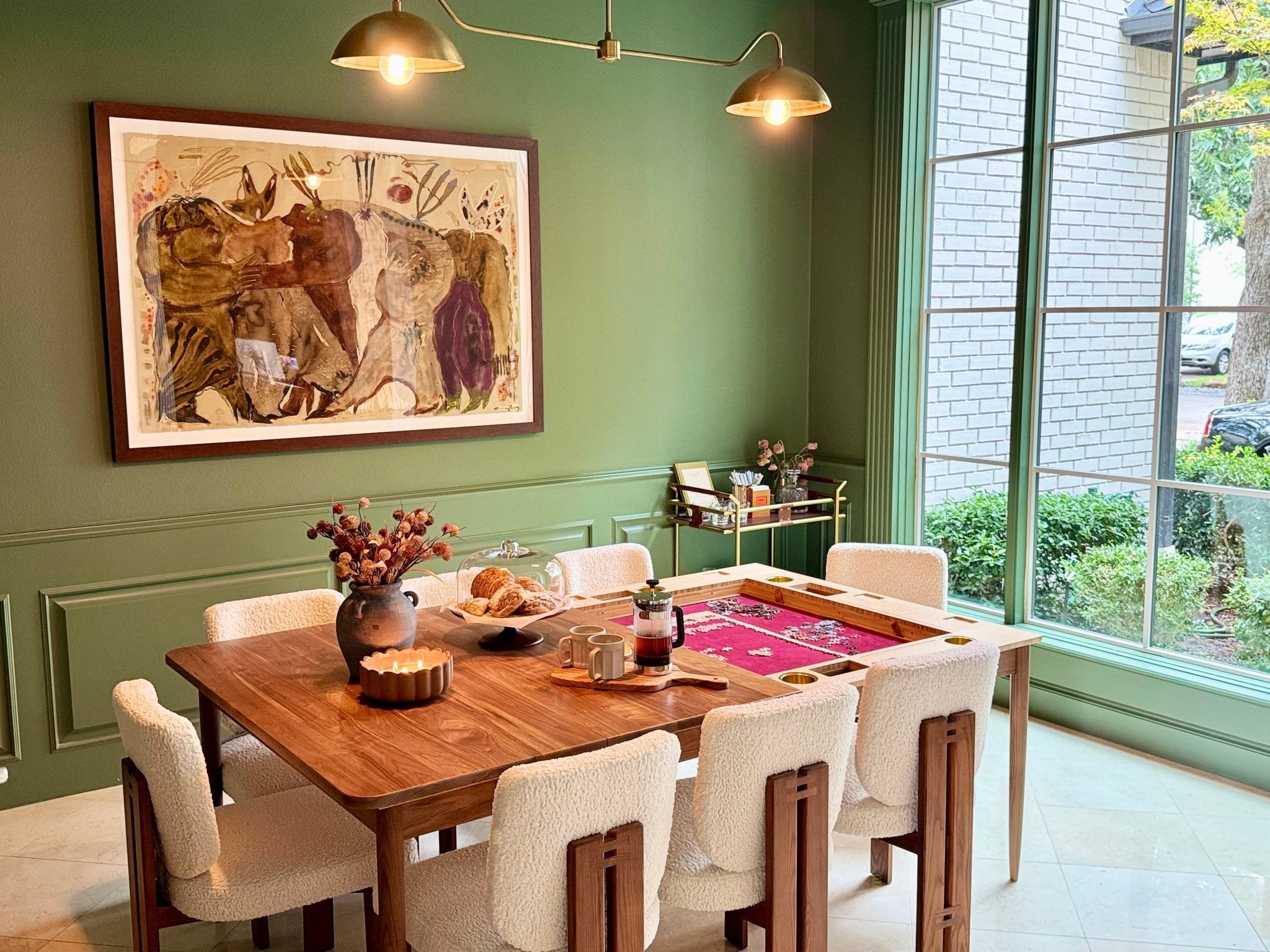
Short version: Wyrmwood for the recognized grail piece, Rathskellers for old-world lineage, Bandpass for honest convertible value, and a single-craftsman shop like Mythic for one-of-one bespoke.
Wyrmwood is the most visible name in the category, and that visibility is real leverage — their Prophecy has been photographed into the collective imagination of the hobby. The current Prophecy lineup runs from a $12,000 base to about $39,250 fully loaded, and the wood menu is all hardwood — Cherry, Black Walnut, Wenge, Bolivian Rosewood, Purpleheart, and Macassar Ebony — with price climbing as you move from the classics toward the exotics. A fully exotic, fully optioned build is what gets you up near that $39,000 ceiling. If the Prophecy's base is out of reach, Wyrmwood's Modular Gaming Table is the lower-entry sibling at roughly $3,500, and crucially it's solid wood, no veneer — a different construction story than the veneer-over-mahogany Prophecy.
Rathskellers is a Greek furniture family whose cabinetry roots reach back to 1958; they've been building gaming tables for around eight years, marrying that lineage to a signature aluminum perimeter rail. Owners describe the tables as "built like a tank" — genuinely heavy, which is a feature, not a flaw.
Bandpass Design's Dresden ($3,695) is the pragmatist's pick: handcrafted in Edmonds, Washington, the dining top lifts off to reveal a recessed bamboo playing surface, so it's a dinner table six days a week and a gaming vault on the seventh. Mythic Game Tables is a single Oregon craftsman, Jordan Saia, building $3,500–$25,000 bespoke pieces. Pick by behavior, not by brochure: a modular adjustable table earns its premium only if your library actually spans poker, miniatures, and heavy euros. A devoted wargamer is better served by one purpose-built, fixed-height table done beautifully.
Microsuede, felt, neoprene, or speed cloth — which play surface should you choose?

This is the most under-researched decision buyers make, and it's the surface you'll touch thousands of times. Choose by the games you actually play, not by the swatch that looks richest in the configurator.
Microsuede is plush and premium-feeling, but it has a directional nap — meaning cards slide cleanly one way and drag the other. Lovely for board games and minis; mildly annoying for serious card play. Speed cloth (the surface of a real poker room) is the opposite: low-friction, engineered for cards to glide and for clean deals and pitches. Neoprene is the quiet hero — it's the easiest surface for the "card lift," that fingernail-under-the-edge pickup, and it deadens dice noise beautifully. Felt is the all-rounder, fine for most games, but it's poorly suited to dexterity titles (think flicking games) where you want a harder, faster surface.
The smartest tables hedge this for you with reversible, double-sided playfields: a plush fabric on one side, a low-friction card surface or wood-backing on the other. Bandpass's Dresden does exactly this — its reversible inset is stretch velveteen on one side and casino-grade speed cloth on the other, so it covers both the cozy-board-game and the serious-card-play ends in a single panel — while Wyrmwood's Prophecy spans a dozen surface colors. The insider move is to match the surface to your most-played game, then keep a thin neoprene playmat in a drawer for the exceptions. Upkeep is genuinely minimal: lint-roll microsuede occasionally, blot (never rub) spills on felt, and accept that any fabric surface is a ten-to-fifteen-year consumable you'll eventually refresh. That's normal, and a good maker will quote you the replacement cost up front.
How deep should the vault be, and how do rails and toppers really work?
Two numbers decide how a gaming table feels in use: the vault recess depth and the rail height. Get them right and the table disappears into the game; get them wrong and you fight it every session.
Vault depth typically runs 2 to 4 inches below the rail. Shallow (around 2 inches) keeps components close to hand and is comfortable for sprawling euros; deeper (3–4 inches) is what lets you walk away from a game in progress — set the topper on and the half-finished Gloomhaven scenario sleeps safely underneath until tomorrow. If "leave it set up between sessions" is a priority, ask for the deeper vault and a sealing topper.
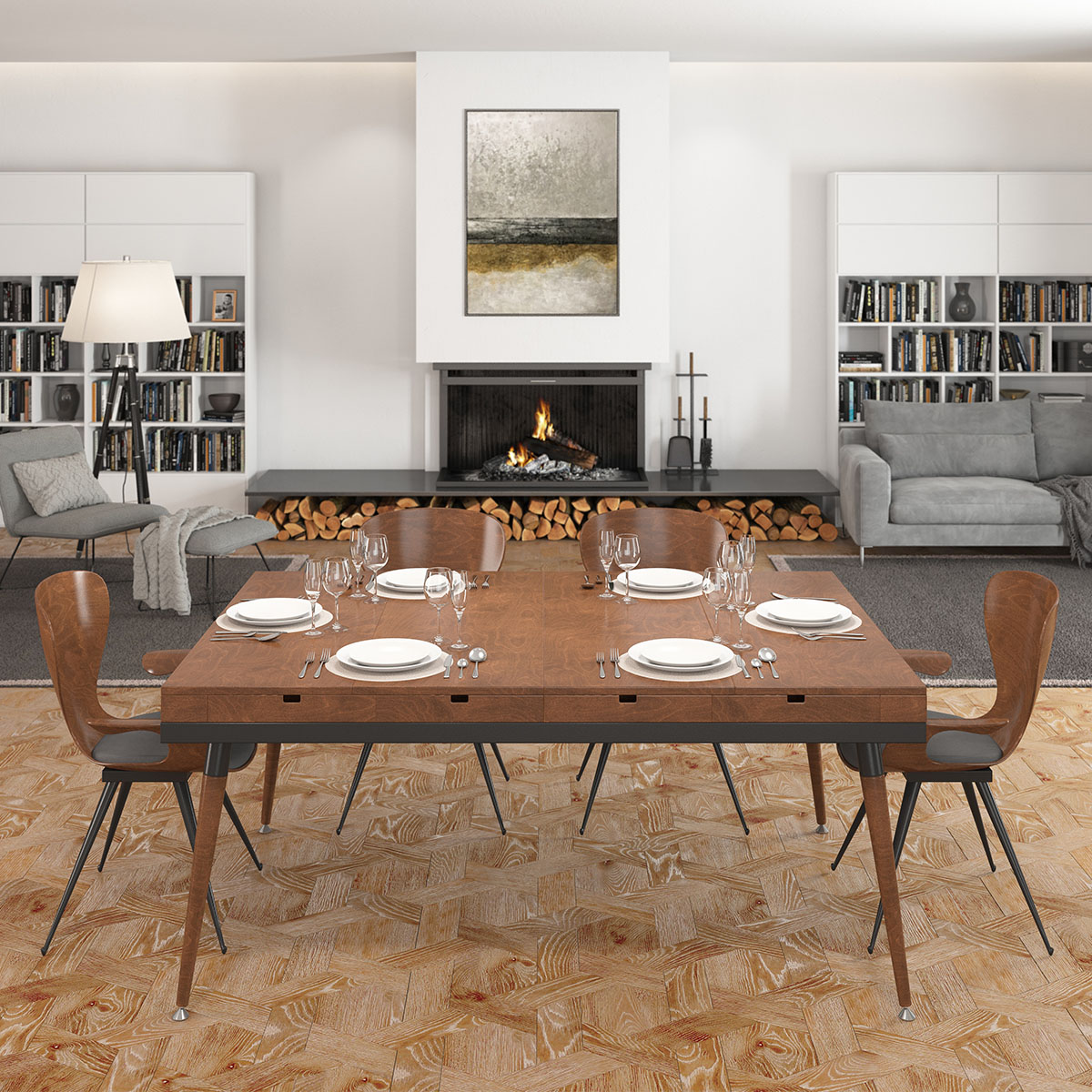
That topper is its own quiet art. The best dining conversions use a magnetic, tongue-and-groove edge with a gasket seal, so a spilled glass at dinner beads on top instead of seeping down onto your saved game. Magnetic toppers snap on in seconds (Bandpass's Dresden top "converts in seconds"); a powered lift system instead raises the recessed surface flush to the rail — more adjustment, more mechanism, more cost.
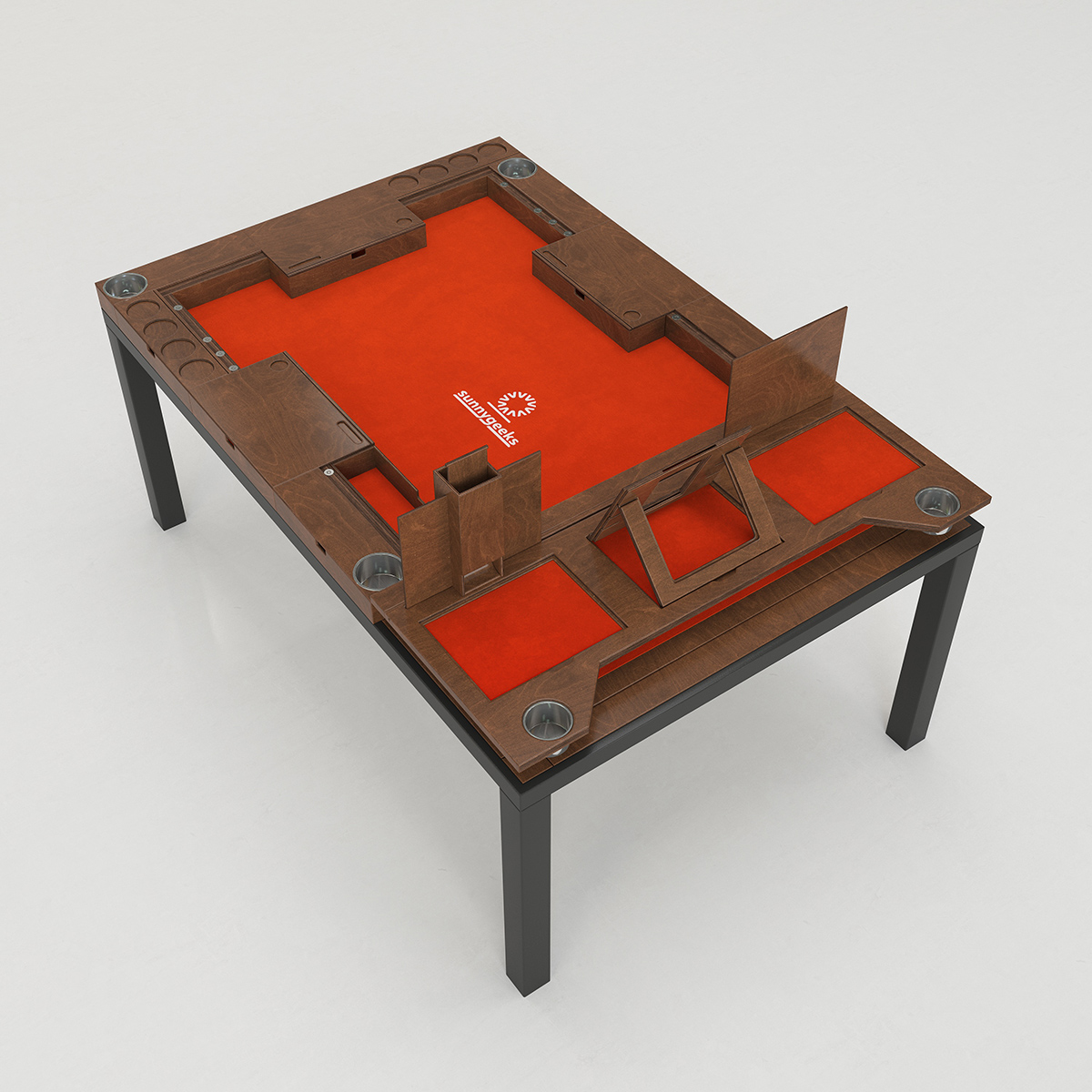
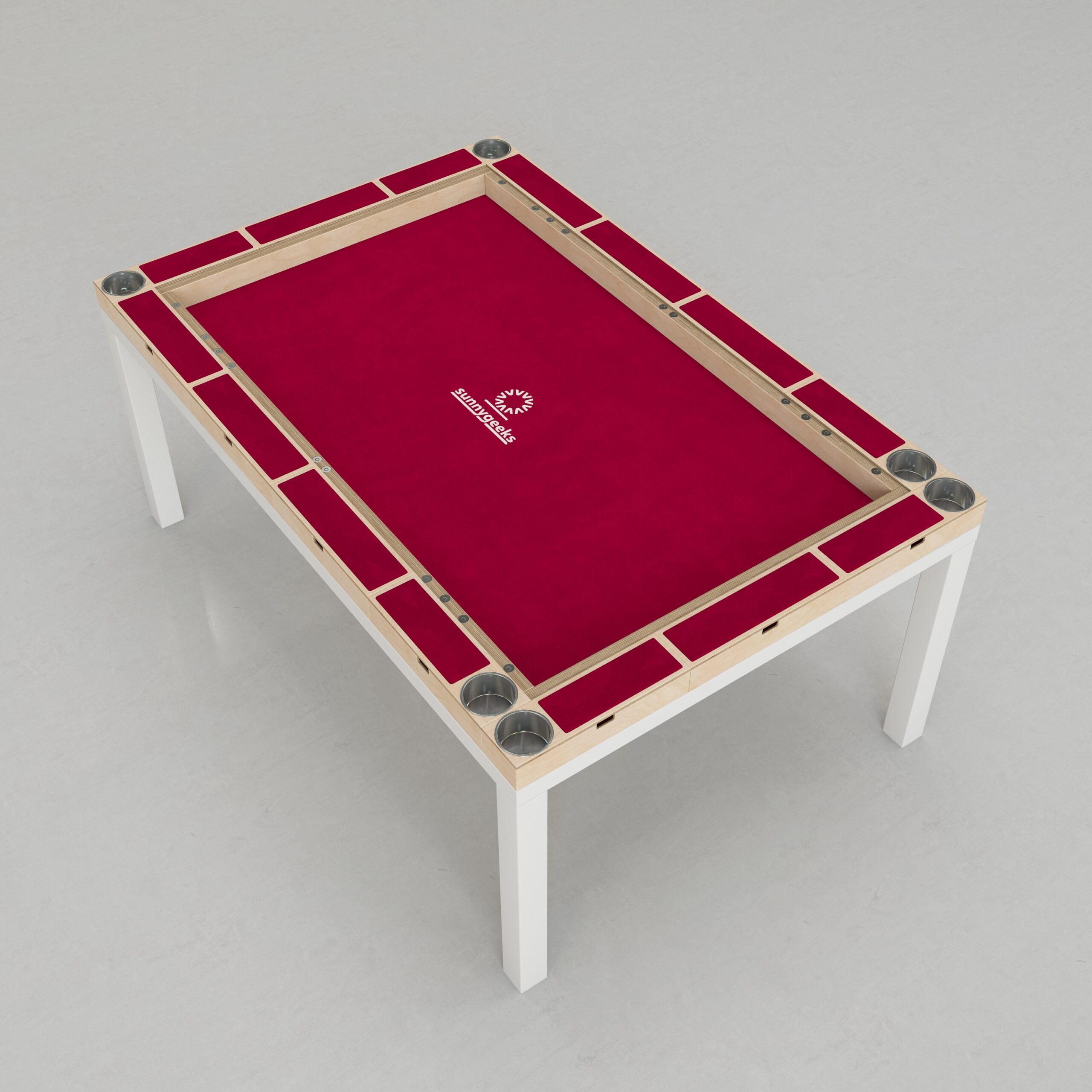
Rails are where the ecosystems diverge — though less than the marketing suggests, because both major rail types are modular. Wyrmwood and the Rathskellers Sunnygeeks use magnetic rails — cup holders, dice towers, and player stations clamp anywhere on the perimeter, tool-free, and rearrange on a whim. The Rathskellers Councilor uses a rigid aluminum rail with its own slide-and-lock accessory system (cup holders, dice towers, and card holders attach and rearrange tool-free via a tilt-lock) plus a built-in "game cellar" with a card ledge — so it's still reconfigurable, just heavier and more bombproof in feel than a magnetic strip. Neither is wrong; magnetic rewards quick whim-driven tinkering, aluminum rewards people who want accessories that lock down and stay put.


What does the ordering and Kickstarter process really look like?
Every table here is made to order, and the lead time is the craft, not a delay. Wyrmwood quotes roughly 2–4 months for the Prophecy and longer (6–7 months) for some Modular configs; Rathskellers and Uniquely Geek run 6–8 weeks; Bandpass currently quotes around 24 weeks (and is candid that the figure rises and falls with order volume, so ask them for a current estimate). A maker who can ship "tomorrow" is selling you someone else's abandoned wood choices.
Here's the part the brochures don't spell out: the marquee makers frequently run their launches through Kickstarter, and the queue is literally pay-to-hold. Historically, Wyrmwood backers placed a small pledge (around $300) simply to reserve a place in line, with earlier pledges built and shipped sooner. That's not a scam — it's how a small shop schedules a year of bench time — but it means the real wait can be measured from your pledge date, not your final-order date, and the headline "campaign price" is a deposit, not the total. Read the fulfillment timeline, not just the funding goal.
One more field-tested caution on configuration: exotic and dark woods carry the highest risk of cosmetic surprise. There's a well-documented owner story of a wenge Prophecy arriving with the four vault sides in noticeably mismatched tones. Wenge and other deeply figured woods vary board to board — so for the darkest, rarest species, ask the maker how they grain-match across panels, and request photos of your actual boards before final finishing if they'll do it. The honest shops will. The answer itself is a tell.

Should you choose convertible, modular, or a dedicated table?
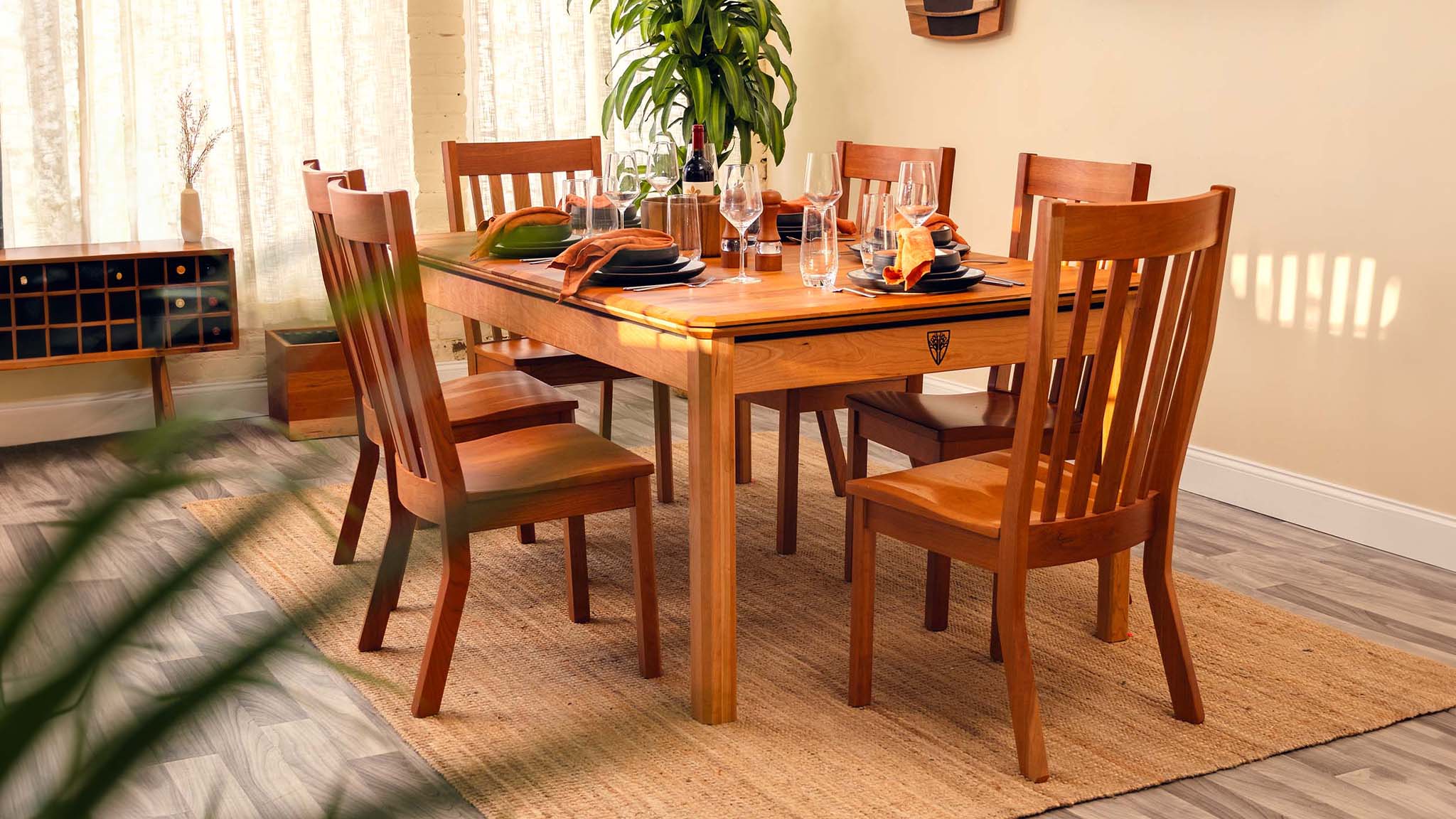
Answer first: if you have one room doing double duty, buy convertible; if your game library is genuinely diverse, buy modular; if you're a single-discipline devotee with a dedicated room, buy a fixed, purpose-built table and pocket the difference.
Convertible (the Bandpass Dresden, the Rathskellers dual-mode tables) is the highest-utility-per-dollar play. The Dresden is a handsome dinner table that lifts off to a recessed gaming bamboo surface — one footprint, two lives. For apartments, open-plan homes, or any household where the dining room is the game room, this is almost always the right call, and it's the cheapest path to heirloom quality because you're not paying for a powered lift or a deep accessory catalog.
Modular (Wyrmwood Modular, Sunnygeeks) earns its premium when your shelf is eclectic — a magnetic-rail table reconfigures for a six-player area-control game, then a four-player card night, then solo minis painting, all without tools. If you find yourself mentally cataloguing how many different kinds of games you own, modular is speaking to you.
Dedicated fixed-height is the connoisseur's quiet luxury. A wargamer who will never not be a wargamer gets a more elegant, more honest object — and usually a better-built one for the money — from a single-purpose table than from a do-everything machine. There's no prestige in paying for adjustability you'll never touch. Match the table to your actual behavior over the next decade, not to the most impressive demo video.
What are the hidden costs, and what's the long-game on value?
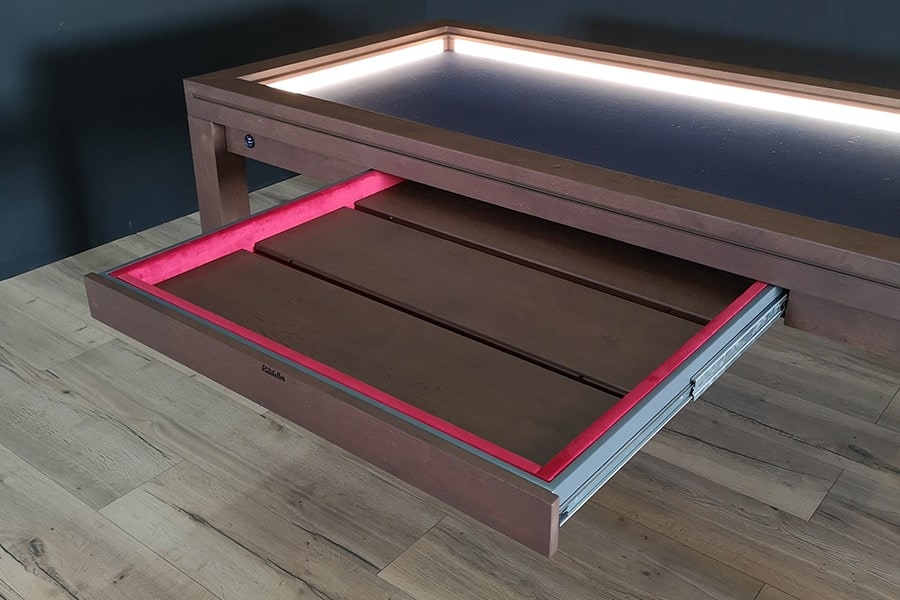
The sticker is the floor, not the ceiling. Configurator creep is real: the Prophecy starts at a $12,000 base and climbs toward roughly $39,250 once you add the exotic woods (macassar ebony and the like), a lift system, and a full rail package — and the per-station accessories (cup holders, dice towers, RPG trays) on any magnetic-rail table tally up faster than you expect. Rathskellers' Councilor scales steeply with size and LED lighting; European makers add €390–980+ in regional shipping that doesn't show in the headline price. Budget a 20–40% accessories-and-delivery cushion on top of whatever the configurator shows you, and you'll rarely be surprised.
Long-term care is light but real. Lint-roll microsuede; blot spills, don't rub; touch up a hardwood finish with the same product and a foam brush after heavy years; plan on refreshing felt once a decade. None of this is burdensome — the table is meant to be lived on, not embalmed.
On resale, let me hedge honestly rather than sell you a fantasy. Solid-wood furniture broadly holds value far better than flat-pack — often retaining a meaningful share of cost where particleboard goes to zero — and well-known names with documented provenance fare best. But the gaming-table secondhand market is thin and illiquid; a clean used Wyrmwood or Bandpass can move at a real fraction of retail, yet "how much" depends entirely on condition, configuration, and who's looking that week. Treat these as durable tools and family centerpieces, not investments. The genuine return is fifty years of game nights — that's the line item that actually compounds.
If you only remember three things before you order, what are they?
Spend the long sections elsewhere; here's the compressed checklist worth tattooing on the inside of your wallet.
One — buy the construction, not the brand. Confirm solid hardwood or a solid core, replaceable rails and mechanisms, and a top that a future craftsman can refinish. If the maker talks joinery and wood movement before they talk LEDs, you're in good hands. The most photographed table in the hobby and a quiet two-person shop can both be heirloom-grade — or not — and only the construction tells you which.
Two — match the surface and the vault to your games. Speed cloth or neoprene if you're a card player; microsuede or felt for boards and minis; a hard reversible side for dexterity games. Get the deeper 3–4 inch vault with a sealing topper if you ever want to leave a campaign set up under dinner. These two choices shape every single session more than the wood species ever will, and they're the two buyers most often get wrong.
Three — read the timeline and the warranty, not the hype. A real lead time (6 weeks up to several months) is the craft working; a Kickstarter "price" is often a place-in-line deposit, not a total. Ask the uncomfortable questions before you pay: How do you grain-match dark exotic woods? Will you refinish my top in year ten if I send photos? What happens if a rail cracks in year two? The quality of the answers — not the gloss of the website — is the truest spec sheet you'll get. Then order, and do not rush. Wait for your table.
Puzzlewick decision matrix · furniture before fantasy
Which table architecture earns its footprint?
A premium table is strongest when it solves a real room problem. The vault is not automatically valuable, and the prettiest accessory rail can still be the wrong shape for your games.
The conversion function earns its cost every week instead of only on game night.
A dining topper may add cost and weight without solving a real need.
Tall terrain and organizers can defeat a shallow vault even when the board fits.
Outer dimensions do not reveal the rail width, reach, or flex of the actual play surface.
At a glance
| Maker | Entry Price | Materials | Customization | Lead Time | Best for |
|---|---|---|---|---|---|
| Wyrmwood Prophecy | $5,000 (Red Oak); $12,000 mid-range; up to $39,000+ | Mahogany core, exotic veneer, microsuede | Maximum (wood, height, rails, accessories) | 2–4 months | Maximum prestige and ecosystem depth |
| Bandpass Design Dresden | $3,695 | Solid hardwood, double-sided felt, bamboo | Moderate (wood type, three sizes) | 10–12 weeks | Dining + gaming dual-purpose, transparent pricing |
| Rathskellers Sunnygeeks | €1,250 (~$1,500) | White European oak, magnetic rails | High (modular stations, upgrades) | 6–8 weeks | European craft, crowdfunding savings, modularity |
| Wyrmwood Modular | $3,500 | Solid hardwood, no veneer, magnetic rails | High (size, wood, accessories) | 6–7 months | Wyrmwood ecosystem, gaming vault design |
| Mythic Game Tables | $3,500–$25,000 (custom consultation) | Pacific Northwest sustainables, epoxy inlay | Maximum (fully bespoke) | 8–12 weeks (estimated) | Bespoke vision, one-of-a-kind design |
| Rathskellers Councilor | €3,000 (~$3,500+) | White European oak, aluminum rails | Moderate (rail options, storage, LED) | 6–8 weeks | European tradition, game-room commitment |
Questions, answered
How long does a gaming table actually last?
A table built with solid hardwood and precision joinery—like those from Wyrmwood, Rathskellers, or Bandpass Design—will last fifty to a hundred years if cared for. The playing surface may need refreshing (felt replaced, microsuede professionally cleaned) every ten to twenty years, depending on use. The wood itself is essentially permanent. This is the lineage difference: you are not buying a tool that will be replaced. You are buying a piece of furniture that your children may inherit.
Can I add a lift system later if I buy a fixed-height table?
Not reliably. A lift system must be engineered into the base and frame during construction—it is not an aftermarket retrofit. If height adjustment matters to you, choose a table (or maker) that offers it from the start. This is a decision to make before you order, not after delivery.
What happens if the wood cracks or the surface gets damaged?
Minor surface damage (dings, small scratches) is expected and acceptable—this is called patina. If the playing surface becomes worn, you can sand and refinish it yourself or contact the maker for professional service (usually $200–500). If joinery cracks, contact the maker; a good maker will repair or replace it under warranty. Wyrmwood's Craftsman's Promise covers defects indefinitely. Others offer one to five year structural warranties. Ask about long-term repair before you buy.
Should I choose a convertible table that also functions as dining, or a dedicated gaming table?
This depends on your space and use. A convertible (like the Dresden) is elegant, doubles your furniture utility, and is usually cheaper. A dedicated gaming table is optimized—better rail systems, more storage, higher height options. If you have a dedicated game room or play multiple times a week, dedicated is better. If you have limited space or play casually, convertible saves both money and square footage.
What is the real difference between a $3,700 table and a $20,000 table?
At $3,700 (like the Dresden or Wyrmwood Modular), you get solid hardwood, honest joinery, a quality playing surface, and durability. At $20,000+, you are paying for exotic wood selection, fully customizable height and rail systems, premium upholstery, bespoke accessories, white-glove delivery, and often a maker's name. Both will last fifty years. The expensive table offers more flexibility, prestige, and ecosystem depth. Neither is a bad choice if it fits your budget and use case.
Is the lead time worth waiting for?
Yes. A maker who quotes 6–8 weeks is building your table, not pulling it from inventory. Shorter lead times usually mean pre-built inventory with limited customization. Longer lead times (Wyrmwood's 2–4 months, sometimes longer) reflect the time required for wood selection, milling, joinery, and quality control. If you can wait, you get the table you actually want. If you need it in two weeks, none of these makers are right for you—look at mass-market alternatives.
Kenji's verdict
A gaming table is a commitment to place. You are saying: this is where we gather. This matters enough to last. Every maker here understands that covenant—Wyrmwood with their precision-engineered ecosystem, Rathskellers with four generations of furniture craft, Bandpass Design with their clarity about materials and price, Mythic with their bespoke collaboration. The Prophecy is the most recognized. The Dresden is the honest choice. The Sunnygeeks offers European tradition at a crowdfunding discount. Mythic is for the player who wants something no one else will own. None of these are wasteful. All of them will be beautiful in thirty years. Choose the one that aligns with how you see yourself at the table: the collector, the traditionalist, the pragmatist, or the visionary. Then order it, and do not rush. Wait for your table. When it arrives, you will understand why.
Research ledger 9 sources · reviewed 2026-08-10
Specifications, rules, current product information, community experience, and contrary evidence were checked against the sources below. Commercial links are kept separate from editorial evidence.
- wyrmwoodgaming.comwyrmwoodgaming.com/products/prophecy-table
- wyrmwoodgaming.comwyrmwoodgaming.com/modular-gaming-table
- bandpassdesign.combandpassdesign.com/products/the-dresden
- rathskellers.comrathskellers.com
- gamefound.comgamefound.com/en/projects/rathskellers/sunnygeeks-2-modular-gaming-table
- mythictables.commythictables.com
- geeknson.comgeeknson.com
- rathskellers.comrathskellers.com/altar-gaming-table
- Owner discussion: when a Wyrmwood table is worth the premiumreddit.com/r/boardgames/comments/170wq7o/is_a_wyrmwood_table_worth_it
Every object has a lineage. Let me tell you its story.

Keep exploring
The next smart rabbit holes.
♛ Topic PathGrail Board Games: compare the whole shelfA grail earns its space only when the experience survives the price, setup, storage, and group commitment. These are expensive-game...Buying GuideAre Gaming Tables Worth It? Board Game Tables Compared (2026)A purpose-built gaming table is furniture that asks you to spend like an heirloom and use it like a workbench—an old instinct finally...Deep DiveIron Clays: The Luxury Game Currency That Ruined Cardboard Money ForeverA composite-clay, iron-cored heirloom you fund once and pass down — why the Brass crowd treats these as the default upgrade, and how to...