How does a Japanese puzzle box work?
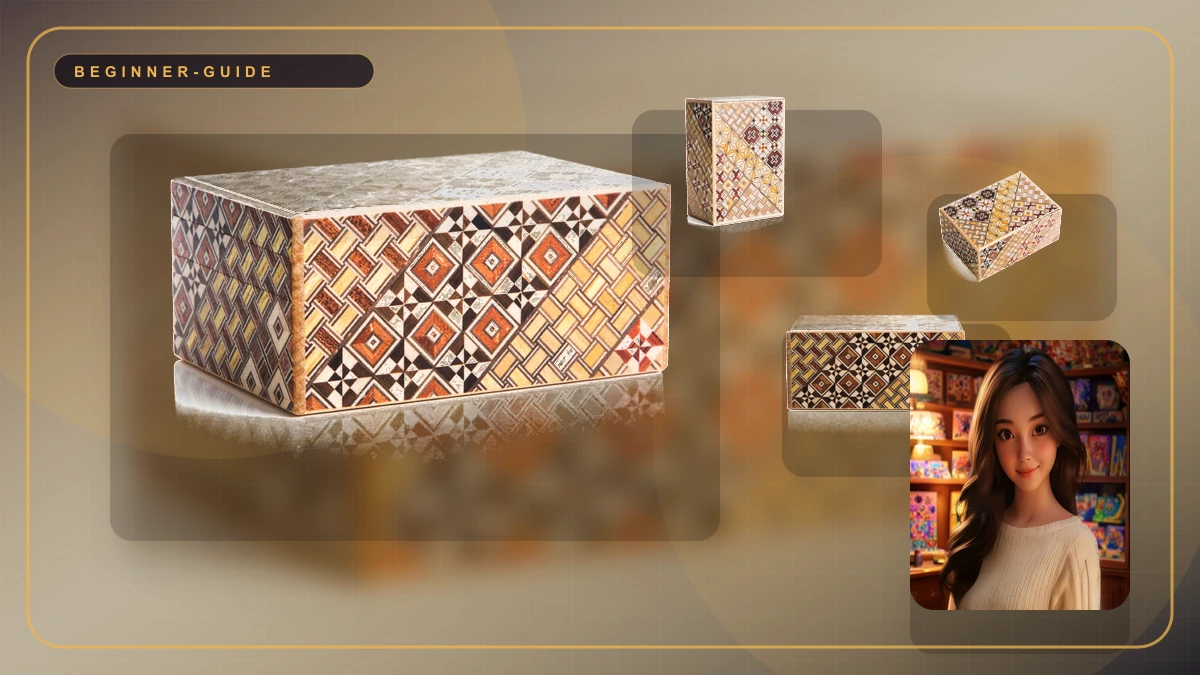
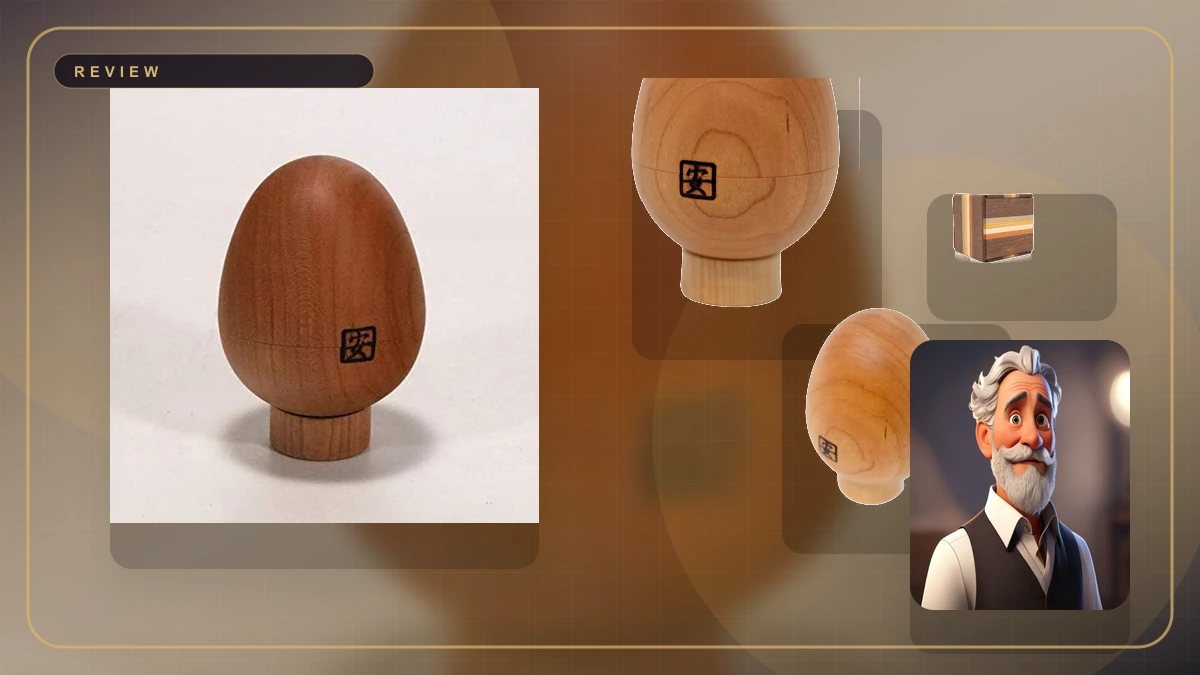
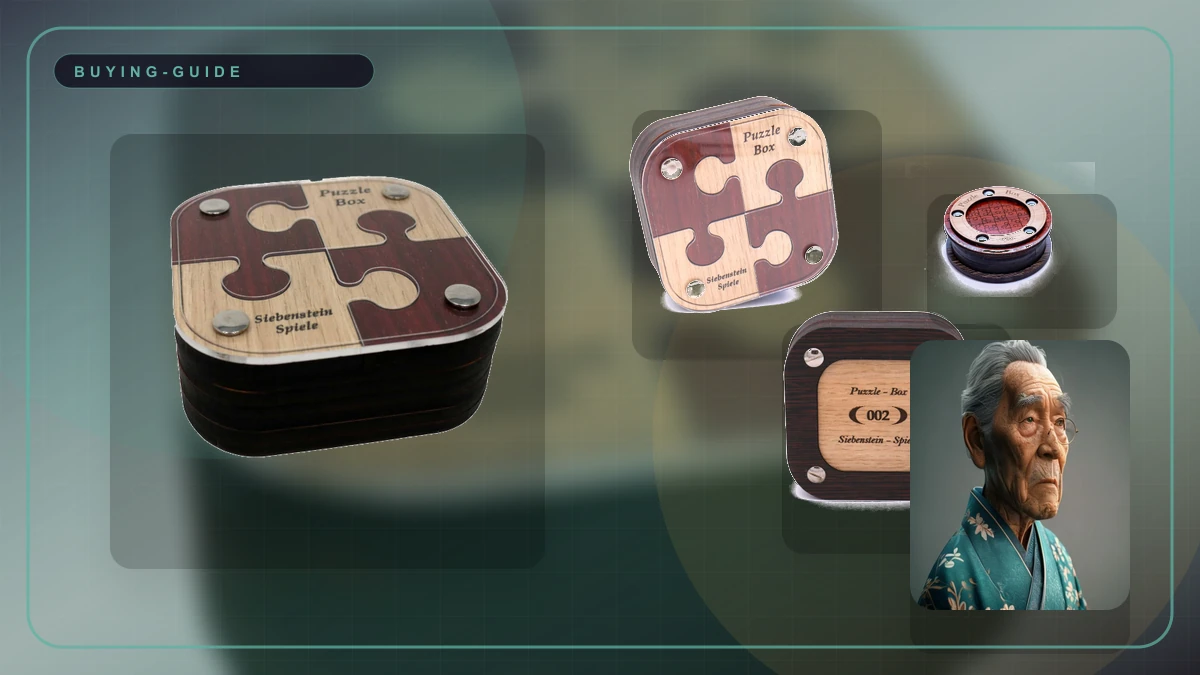
A himitsu-bako opens through a sequence of subtle sliding panels — sometimes just a few moves, sometimes dozens. Each move unlocks the next, and only the full sequence opens the lid or hidden drawer.
What is yosegi-zaikuf?
Yosegi is the traditional Hakone marquetry — intricate geometric patterns built from many natural wood colors, sliced thin and laid over the box. It is why these puzzles double as heirloom craft.
Are puzzle boxes good for beginners?
Yes — start with a low move-count box (around 4–12 moves). They teach the vocabulary of sliding panels and are deeply satisfying without being frustrating. Higher move-counts and karakuri trick boxes are the next rung.
What is the difference between a himitsu-bako, a karakuri box, and a yosegi box?
They describe the same family of object from different angles. Himitsu-bako (秘密箱, "secret box") names the box by its secrecy; karakuri (からくり) names it by its hidden mechanism; and yosegi (寄木細工) is the geometric marquetry decorating the surface. A traditional Hakone box is usually all three at once — a yosegi-skinned himitsu-bako whose karakuri you must solve. The term "karakuri box" was popularised by master Akio Kamei for the more inventive modern style.
How do Japanese puzzle boxes open?
By a sequence of small sliding moves, not a lock or hinge. You press and slide hidden panels in a specific order; each correct move releases the next, until the lid slides free and reveals a storage chamber inside. The seam is concealed within the marquetry, so the box looks solid until solved. The sequence is reversible — to close and re-lock it, you run the moves backwards.
What is the single best puzzle gift for most people?
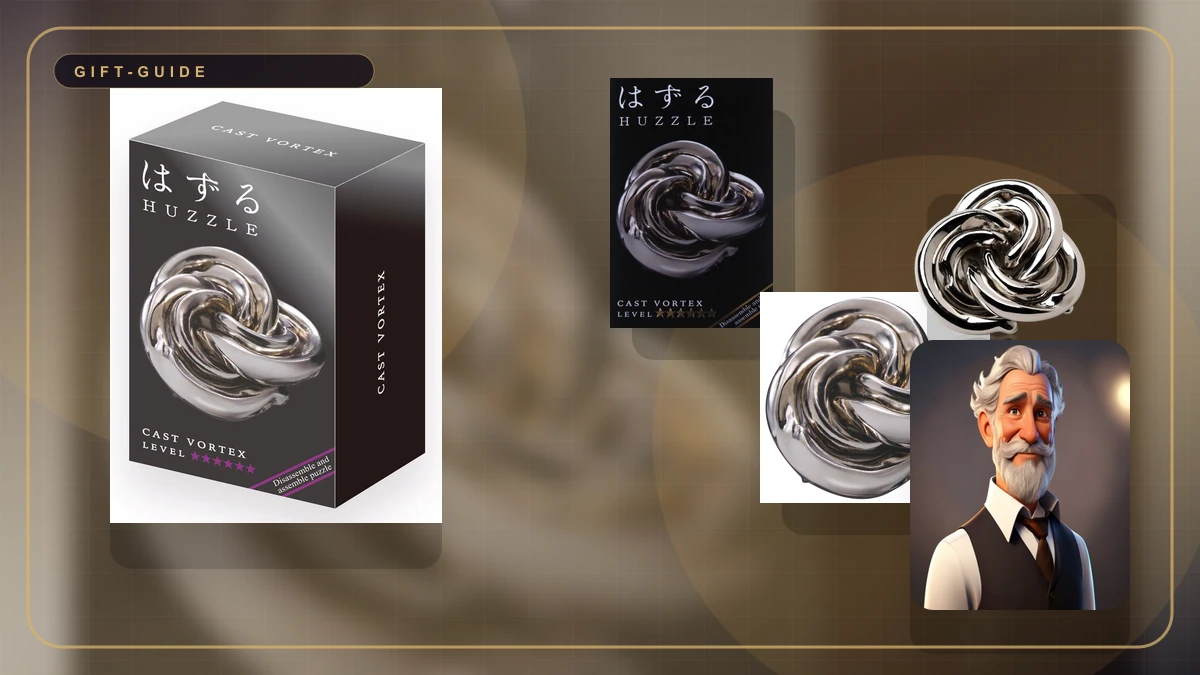
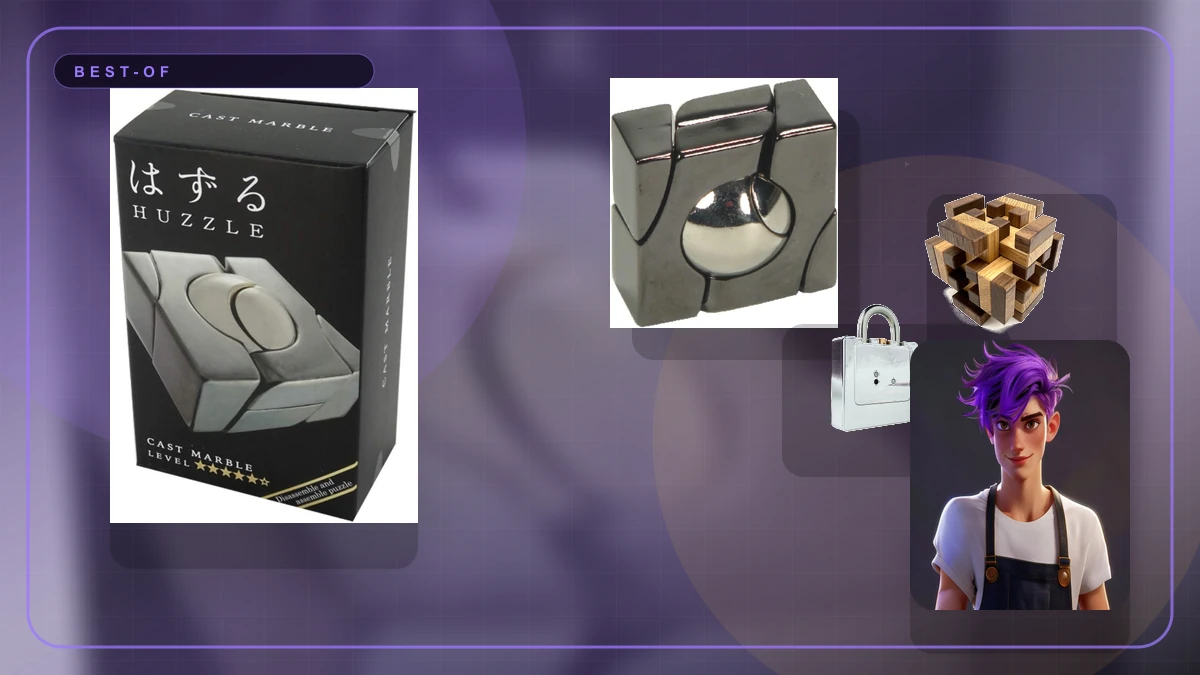
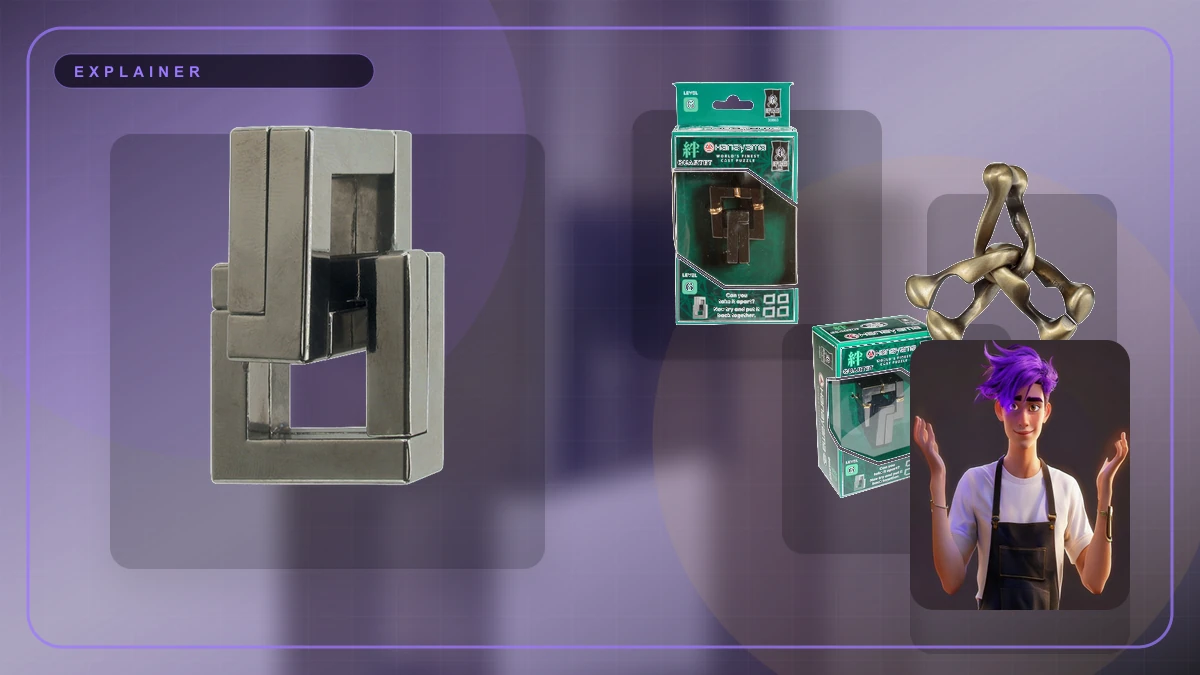
A Hanayama cast-metal puzzle in the $16–$20 range. Cast Marble (Level 4) for a beginner, Cast Vortex (Level 5) as an all-purpose safe bet, Cast News or Cast Enigma (Level 6) for a veteran. They're beautifully made, fit in a pocket, and have the highest 'this was a great gift' hit rate of anything I know at the price.
What's the difference between a Hanayama puzzle and a karakuri box?
A Hanayama is a cast-metal disentanglement puzzle — you take it apart and put it back together, and it costs under $20. A karakuri is a handmade Japanese wooden box you open by finding a hidden sequence of moves; it's as much a piece of woodcraft as a puzzle, and runs roughly $35 to several thousand dollars. Metal teasers reward cleverness with your hands; karakuri reward patient discovery and look gorgeous on a shelf.
What is the single best brain teaser puzzle for an adult?
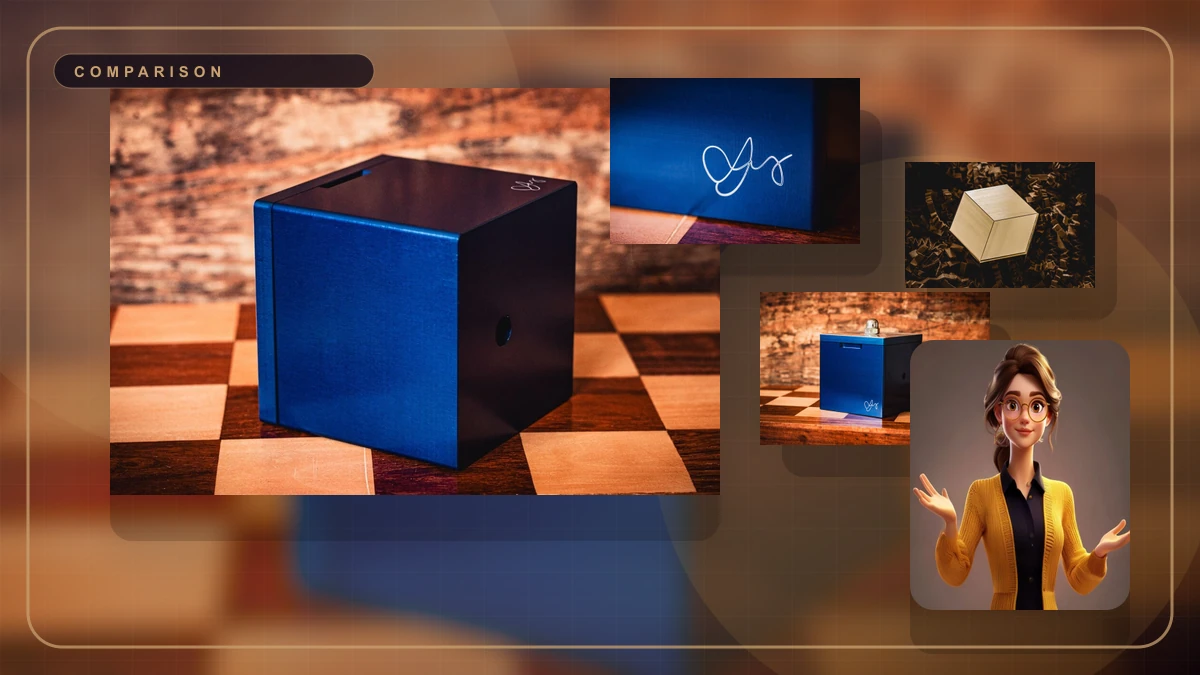
For value and accessibility, a Hanayama Cast metal puzzle — the Cast Marble (Level 4) — is the best starting point under $16. For the most satisfying object in the hobby regardless of price, it's a sequential-discovery puzzle like Wil Strijbos's Revenge Lock (~$292). The 'best' depends on which type of thinking you enjoy: spatial (disentanglement/packing), investigative (sequential discovery), or structural (burrs).
What is a sequential-discovery puzzle?
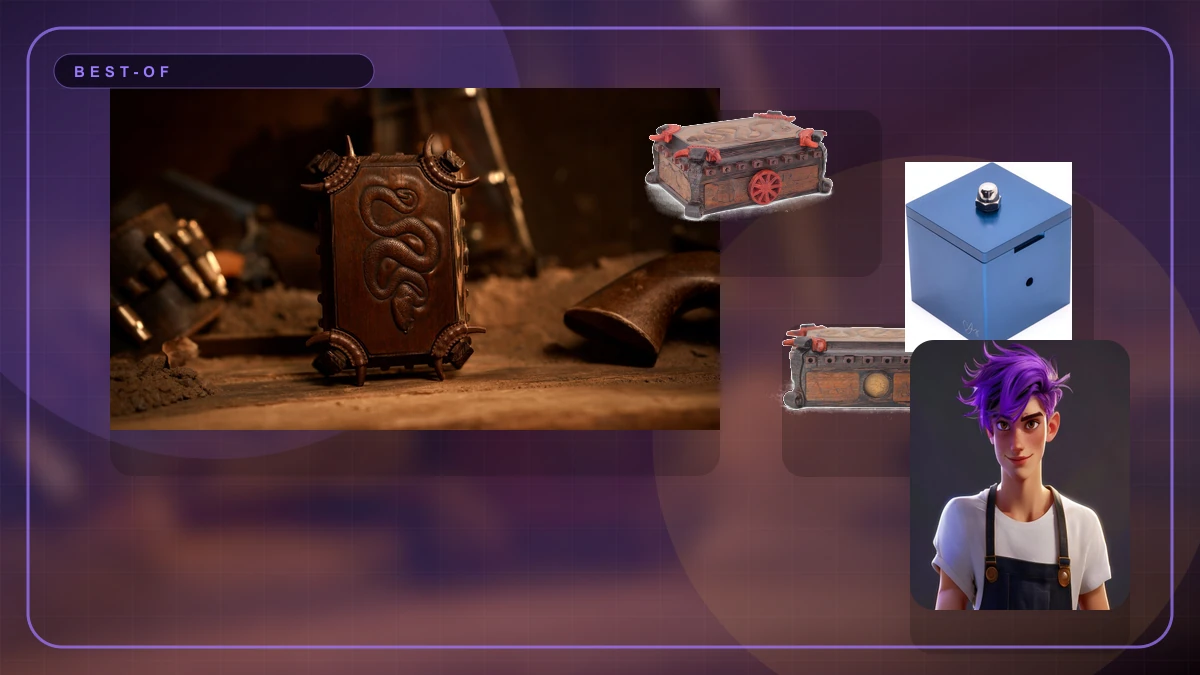
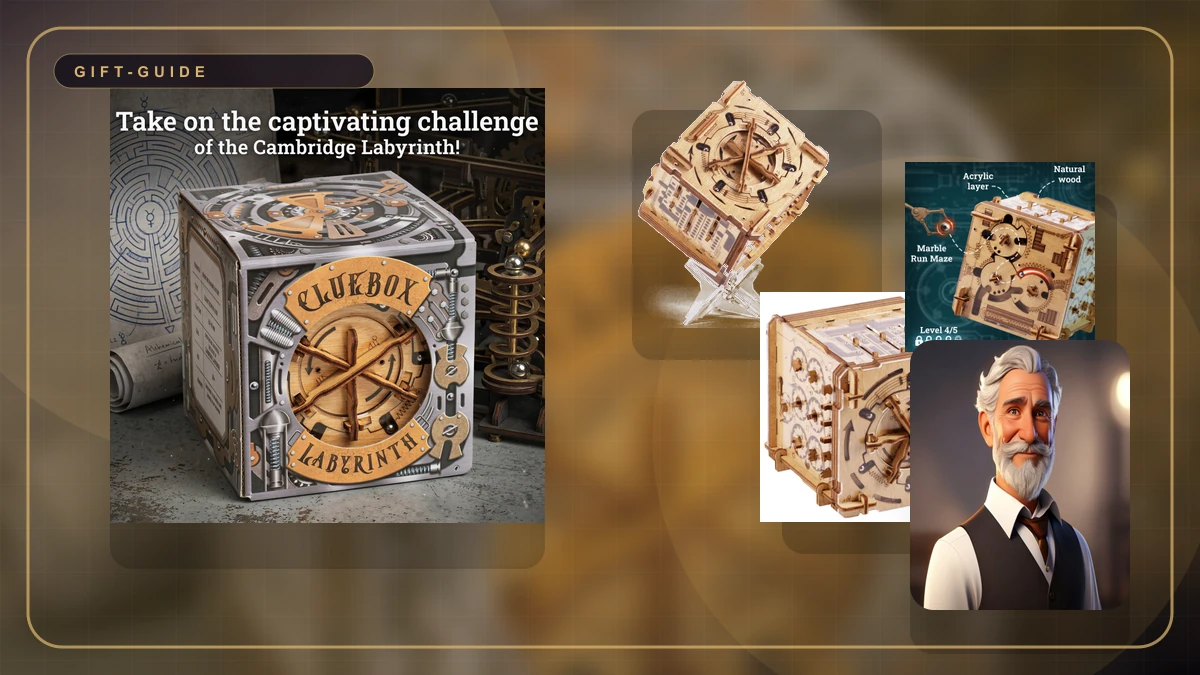
It's a puzzle where solving one step physically gives you a tool — a pin, key, or rod — that you need for the next, previously-impossible step. It's the closest a handheld object gets to an escape room. Wil Strijbos's Revenge Lock and Junichi Yananose's (Juno) wooden boxes are the genre's landmarks.
What is a 3D wooden puzzle kit?
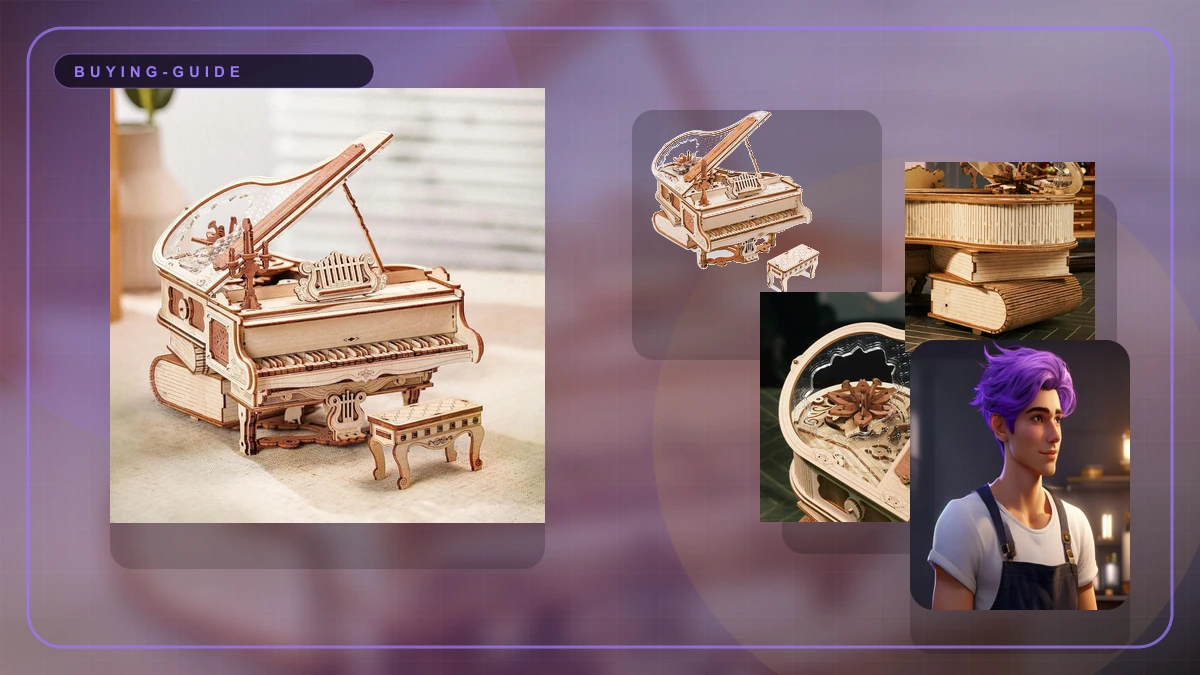
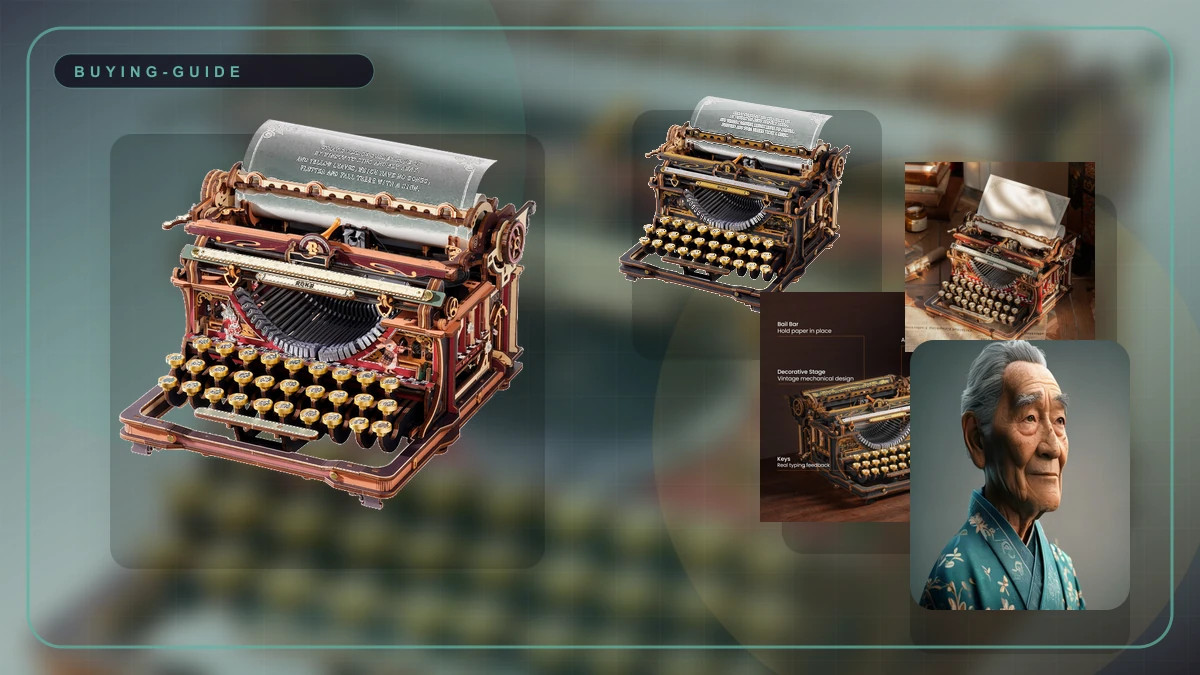
It's a flat-pack of laser-cut plywood or fiberboard sheets, pre-scored into parts, that you punch out and assemble — usually without glue — into a working machine: a clock that ticks, a marble run that loops, a music box that plays, a vehicle that rolls. The defining feature of the good ones is that they *do something*, not just look like something. Building it is the product; expect anywhere from one evening to several weekends.
ROKR vs UGears — which is better?
Different strengths. ROKR (from Robotime) cuts cleaner, has more forgiving tolerances and the best instructions, and is the safer choice for beginners and gifts, mostly in the $30–70 range. UGears builds more ambitious all-wood, battery-free mechanisms — combination locks, playable instruments, funicular trams — that are more impressive when finished but use rougher plywood with tight, fragile joints. Start with ROKR; graduate to UGears once you have the patience and a craft knife.
What actually makes a jigsaw puzzle 'premium'?
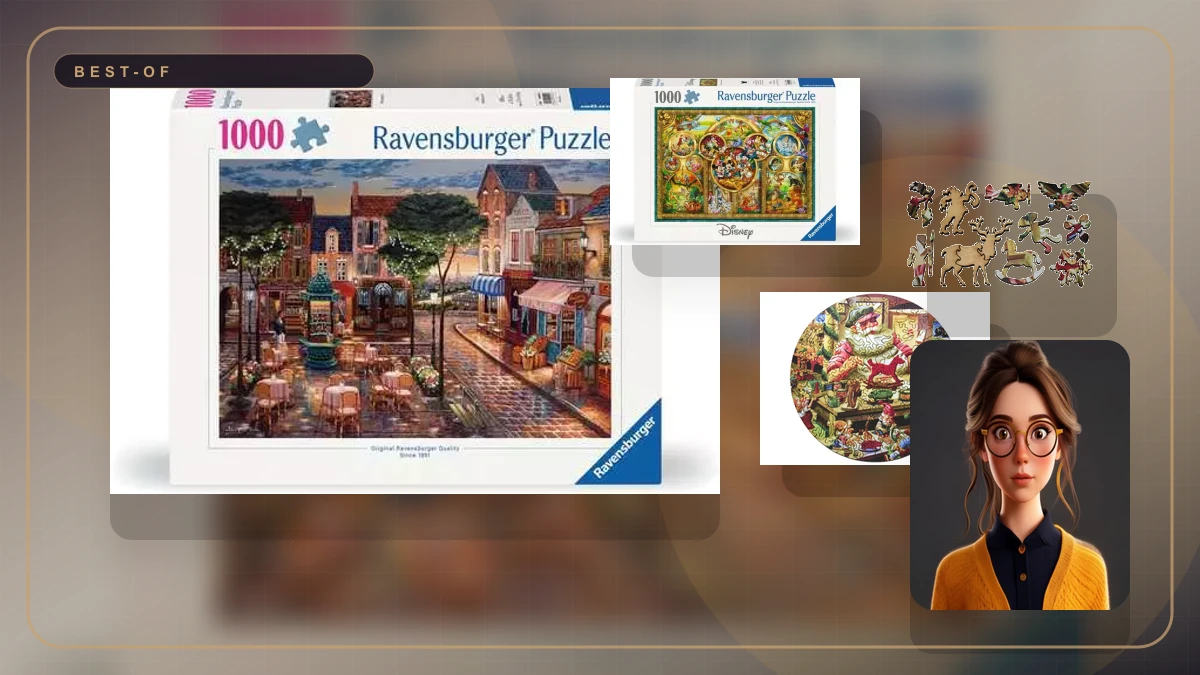
Four things you can't see through shrink-wrap: fit, board, finish, and cut. Premium pieces are punched from crafted dies to tight tolerances so they seat with a satisfying snap (Ravensburger's Softclick), with every piece uniquely shaped — no false fits. The substrate is a thick, dense blueboard that resists warping and sheds little 'puzzle dust.' The image sits under linen-textured anti-glare paper for clean visibility under a lamp. And the cut is varied or, in wood, artfully irregular. Cheap puzzles fail on all four: mushy fit, thin board, glare, and a dull grid.
What's the best jigsaw puzzle brand for adults overall?
Ravensburger, for the broadest combination of quality, catalog, and price. The German house is the world's best-selling puzzle maker and backs it with Softclick precision fit, extra-thick blueboard, a linen anti-glare finish, and thousands of images from 300 to 2000+ pieces — typically $20–$25, often less on sale. It's consistent rather than adventurous, but as the single reliable answer for almost any adult, nothing is better-evidenced. For wooden heirlooms, Liberty Puzzles is the equivalent default.
What is a sequential discovery puzzle?
It's a mechanical puzzle where solving each stage physically yields a tool — a pin, key, ball bearing, magnet, or wedge hidden inside the object — that you then need to crack the next stage. The defining trait is that the tools live inside the puzzle and you extract them in sequence, so 'discover the tool, discover its use' becomes the whole game. The result is a cascade of multiple 'aha' moments rather than one single solution, which is why many collectors consider it the most sophisticated category of mechanical puzzle.