Best 3D Wooden Puzzle Kits, Ranked (2026)
Flat-pack wood machines that actually move — but not all of them deserve the hype. Here's which ones survive skepticism.

AI-assisted curator persona · research and editorial responsibility: Robert Pruitt · how this guide was made
Last editorial refresh: 2026-06-13 Gold-standard QA: 2026-07-17 23 sources reviewed Affiliate links checked during gold-standard pass

The short answer
A 3D wooden puzzle kit is a flat-pack of laser-cut plywood sheets you punch out and assemble into a working machine — a clock that ticks, a marble run that loops, a piano that plays — usually with no glue, the parts held by friction joints, wooden pegs, or trimmed toothpicks. Two houses dominate. ROKR (Robotime) is the cleaner-cutting, more beginner-forgiving, better-instructed brand; UGears (Ukrainian) builds the more ambitious all-wood mechanisms but on rougher plywood that splinters and snaps if you're rough. Best overall is the ROKR Magic Piano (AMK81, 223 pcs, ~$45) — gorgeous, it actually plays, and the fit is honest. Best beginner is the ROKR Owl Clock (LK503, 161 pcs, ~$40): small, mechanism-forward, hard to ruin. Best kinetic is the ROKR Marble Night City (LGA01, ~294 pcs, ~$60), an endless gravity-fed loop. Best splurge centerpiece is the ROKR Pinball Machine (EG01, 482 pcs, ~$199), a USB-powered table with real scoring — and real frustration. Avoid going premium-first: UGears' best work is glorious but unforgiving. Puzzlewick sells none of these; we just point you at the makers.
Decision map
Choose in thirty seconds
Best overall — the most satisfaction per dollar and per frustration
Best for beginners — easy, mechanical, hard to ruin
Best marble run / kinetic showpiece
Here's the thing everybody gets wrong about 3D wooden puzzle kits: they call them puzzles. They're not. A puzzle is solved; these are machines, and the only difference between a finished kit that delights you and one that gathers dust judging you is one unglamorous variable — tolerances. A laser cuts a slot 2.0 mm wide; the tab that goes into it is 2.0 mm thick. Drift the kerf by a tenth of a millimeter and forty parts in, every single joint is either a fight or a wobble. That's the variable that separates the builders from the people who quit. Marketing copy never mentions it. I do.
The category isn't complicated. Two houses own the shelf. ROKR (China's Robotime) makes the cleaner-cutting, more forgiving kits — the ones you hand beginners without guilt. UGears (Ukraine) builds more ambitious machines: all-wood movements, rubber-band motors, combination locks, zero batteries, zero shortcuts. They also cut rougher. UGears plywood splinters. The joints are tight enough that undoing a mistake usually means snapping the part. Their own fans will tell you — they've set up a free replacement program precisely because breakage is routine. Both have a place. Neither deserves to be your first purchase.
One thing matters before we go further: Puzzlewick is a fan library, not a store. We don't sell these and we don't take a cut. Every link below goes to the maker or a real retailer. I rank them the way I'd rank them for my own shelf — which means I'll tell you honestly when a beloved kit is a tedious splinter-farm dressed up as heritage craft.
Start here, then go deeper
You are in the right cabinet.
 ❖ Topic PathMechanical Puzzles: compare the whole shelfThe right mechanical puzzle matches the solver's patience, not simply the maker's difficulty number. These guides translate...
 Buying GuideROKR Mechanical Wooden Building Kits: Difficulty Guide (2026)Pick your difficulty, claim your hours—build the automaton that matches your hunger.
 Buying GuideSiebenstein-Spiele Wooden Puzzle Boxes: Difficulty Levels & Starter GuideFrom German laser-cut craft to puzzles that reward patience over brute force—a curator's roadmap for choosing your first Siebenstein box.
What exactly is a 3D wooden puzzle kit — and what makes one mechanical?

Strip away the romance and you have a packaging format: thin wood sheets, laser-cut into a parts tree, sold flat. You punch the parts out (the good kits pre-cut clean; the rough ones leave you sanding nubs), read a step-by-step booklet, and assemble. That's the substrate. What you build on top of it is where the category splits hard.
The dividing line is static vs. working. A static kit builds into a shape — a wooden Eiffel Tower, a dragon, a galleon. Nice enough, but it's a 3D jigsaw; once it's done, it's done. A mechanical kit builds a functioning machine: gears that mesh and turn, an escapement that ticks, a marble run that recirculates, a music-box comb that plays, a spring or rubber-band motor that drives the whole thing. This guide is almost entirely about the second kind, because that's the genre's reason to exist. If a kit's headline feature is that it 'looks like' something, I'm bored. If it does something, now we're talking.
Within 'working,' there's a second axis the brands quietly disagree on: power source. UGears is religious about going battery-free — everything moves on rubber-band motors, wound springs, gravity, and gear trains. It's a genuine engineering flex and the mechanisms are visible and legible. ROKR is more pragmatic: many of its clocks take a AA for the quartz movement, and its flagship pinball table runs on USB power with electronic scoring, lights, and sound. Purists sneer at the batteries; I don't, as long as the mechanism is honest about what it is. A quartz Owl Clock that also shows you a working escapement is teaching you something real. A 'mechanical' kit that's secretly just a hidden motor spinning a façade is not.
The last thing to understand going in: these are time, not toys. A small kit is an evening; a serious one is a weekend; the pinball table is, realistically, two of them. Buy the kit for the hours of building, not the object at the end — because if you only want the object, you can buy it pre-assembled for less aggravation. The building is the product.
Buy the kit for the hours of building, not the object at the end. The building is the product.
ROKR vs UGears: which house should you actually trust?

This is the question every newcomer asks, and the honest answer is it depends what you value — but the brands have real, consistent personalities, so let me characterize them fairly.
ROKR (Robotime) is the precision-and-polish house. The laser cutting is clean, the parts pop out with minimal nubs, and — this is the big one — the tolerances are forgiving enough that a careful beginner won't fight every joint. The instruction booklets are genuinely good: large diagrams, sane step ordering, parts numbered so you're not hunting. Many kits are glue-optional or glue-free, and where ROKR uses electronics (clock movements, the pinball table) it's done competently. The trade-off: some ROKR kits lean decorative, and the engraved part-labels on dark wood can be maddeningly low-contrast. But for value-per-frustration, ROKR wins the broad middle of the market, roughly the $30–70 band.
UGears is the engineering-purist house. The mechanisms are more ambitious and more visible — exposed gear trains, rubber-band motors, real combination locks, funicular tram mechanics — and it's all wood, no batteries, ever. When a UGears kit is done, it's a more impressive machine than its ROKR equivalent. The cost is paid in your patience and your fingertips. UGears plywood is rougher and splinters when you punch parts; the joints are brutally tight, so undoing a mistake often means snapping the part; and the brand fastens some assemblies with toothpicks you cut to length, which is fiddly. UGears' own fan club is full of people who love the kits and admit they've never finished one without breaking something. The brand will mail you free replacement parts, which tells you how routine the breakage is.
So: start with ROKR, graduate to UGears. If this is your first kit, or a gift for someone who's never done one, ROKR's forgiveness is worth more than UGears' ambition. Once you've built a few, have a craft knife, fine sandpaper, and the patience to ease tight joints instead of forcing them, UGears' mechanisms are the more rewarding climb. Buying a complex UGears kit as your first build is the single most common way people bounce off this hobby — they hit a snapped part on hour three and never come back.
Start with ROKR, graduate to UGears. Buying a complex UGears kit as your first build is the most common way people bounce off this hobby.
Glue or no glue, fragile or sturdy: what separates a great kit from a frustrating one?

Here's where I get opinionated, because the difference between a delightful weekend and a ruined one comes down to four unglamorous build-quality variables that no product page foregrounds.
1. Tolerances — the whole ballgame. A great kit's tabs slide into their slots with firm, satisfying resistance: snug, not violent. A bad kit is bimodal — half the joints are loose and wobble, the other half need a mallet — and that inconsistency is what makes people quit. ROKR's tolerances are the more consistent of the two majors; UGears' are tighter on average, which is great when the part survives and disastrous when it doesn't. The tell in reviews: phrases like 'had to force it' and 'snapped trying to remove it.' Believe them.
2. Glue vs. no-glue. No-glue (friction/peg/toothpick) is the genre ideal: cleaner, reversible, and the moving parts must stay free to function. Both UGears and most ROKR mechanical kits are glue-free by design. Some decorative ROKR and Robotime kits ask for a drop of wood glue at stress points — fine, as long as it's not near a moving joint. The rule: glue near a gear is a defect, not an instruction. If a kit needs adhesive to hold its mechanism together, the mechanism was under-engineered.
3. Fragility. Thin laser-cut ply has a grain, and parts with long thin spans (clock hands, gear spokes, comb teeth, the lattice on a marble tower) snap along it. UGears is the more fragile house, full stop — rougher wood, tighter joints, more breakage. ROKR's acrylic accent parts (piano lids, display panels) are a different fragility: they arrive cracked more often than they break in-build, and the brands are generally good about replacements. Plan for one broken part on anything ambitious; it's the cost of the format.
4. Instructions. The silent killer. A great booklet numbers every part, orders steps so nothing is blocked later, and shows orientation clearly. A bad one expects you to distinguish two near-identical 18-tooth gears from a grayscale thumbnail. ROKR's documentation is the category's best; UGears' is good but assumes more. Read the whole step before you place a single part — half of all 'this kit is broken' complaints are actually a part installed backwards two steps ago.
Get those four right and almost any kit is a joy. Get them wrong and even a clever mechanism becomes an evening of swearing at a splinter.
Glue near a gear is a defect, not an instruction. If a kit needs adhesive to hold its mechanism together, the mechanism was under-engineered.
Which kits actually move? Clocks, marble runs, music boxes, and a pinball table that really plays

Forget shapes — let's talk machines, because the working mechanism is the entire reason to choose one of these over a jigsaw.
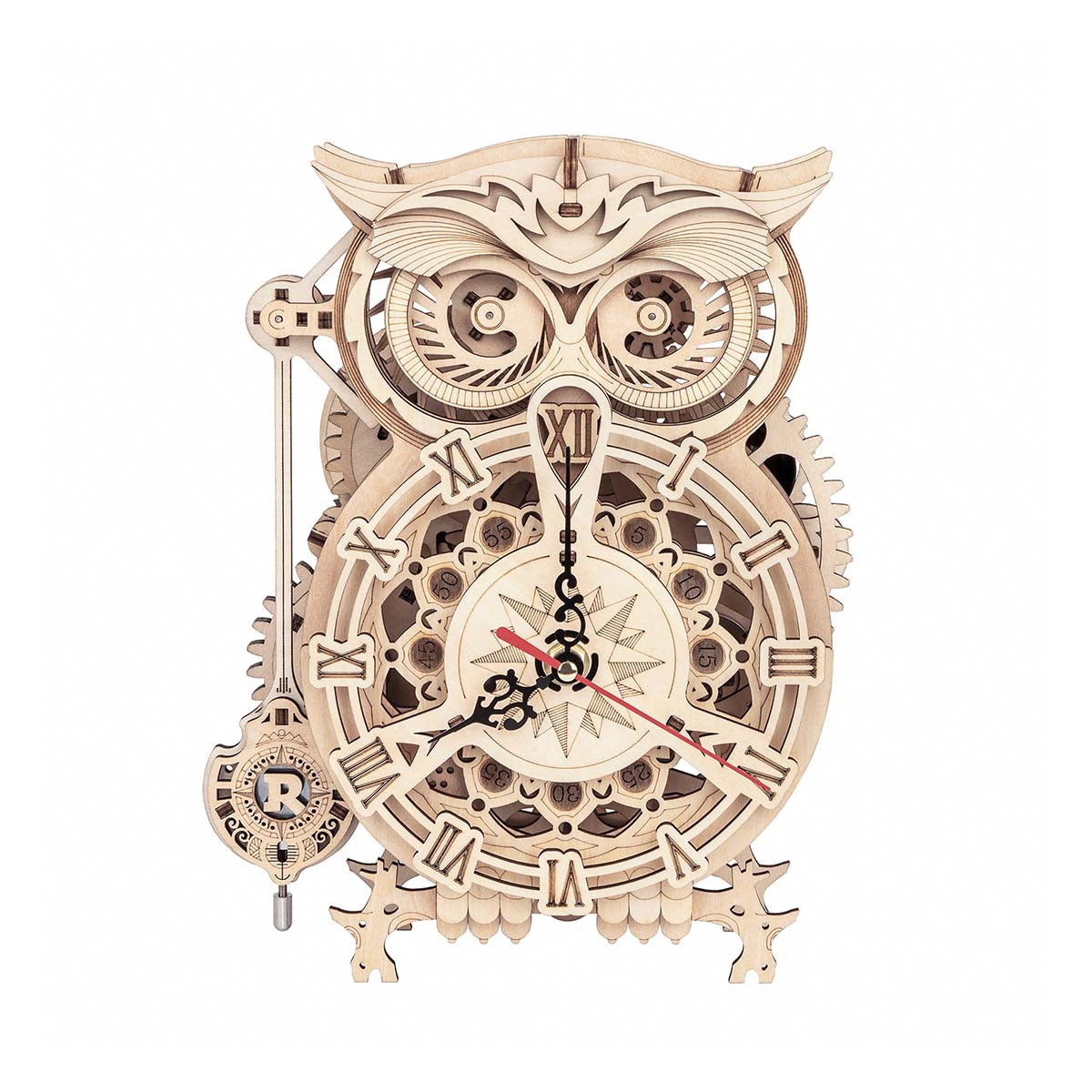
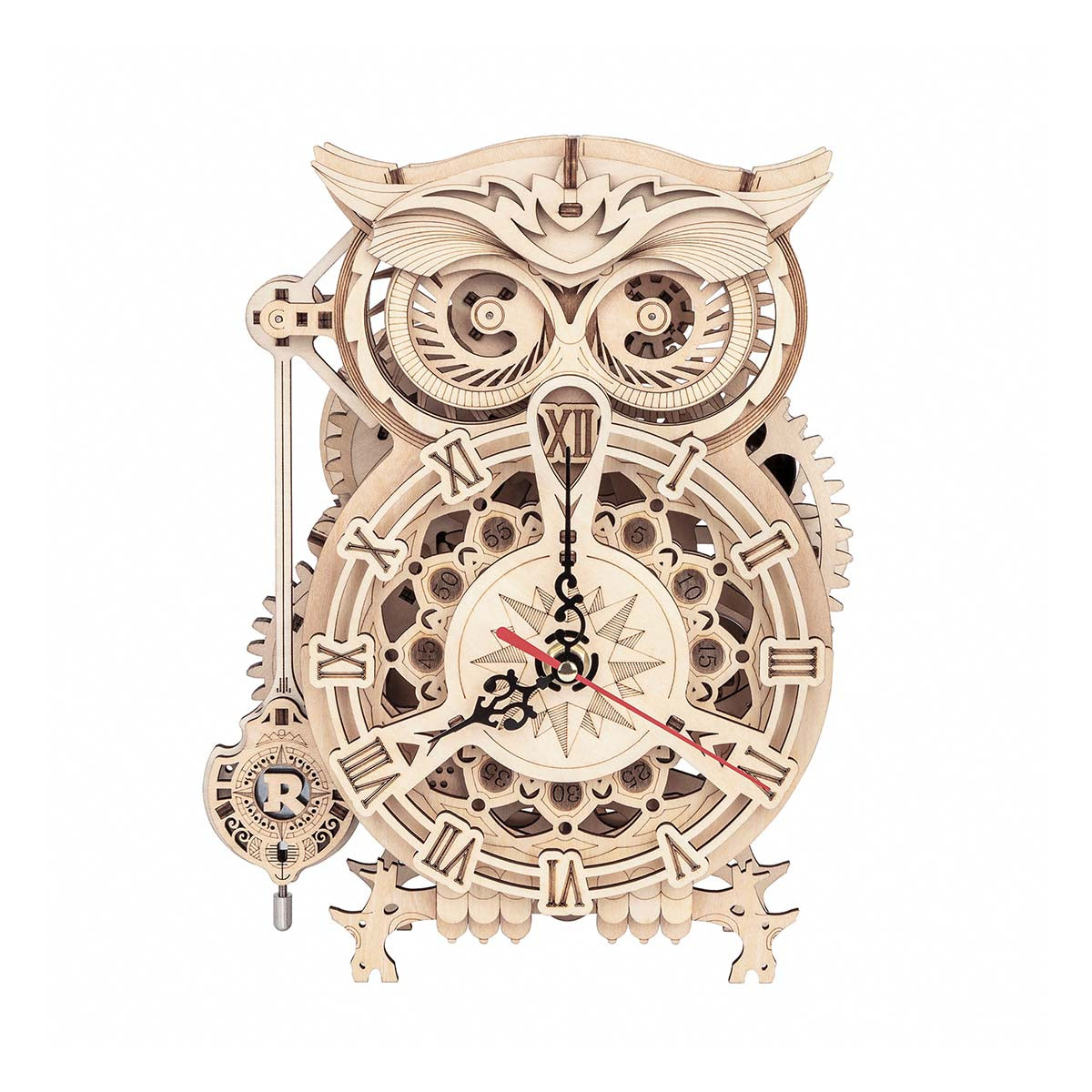
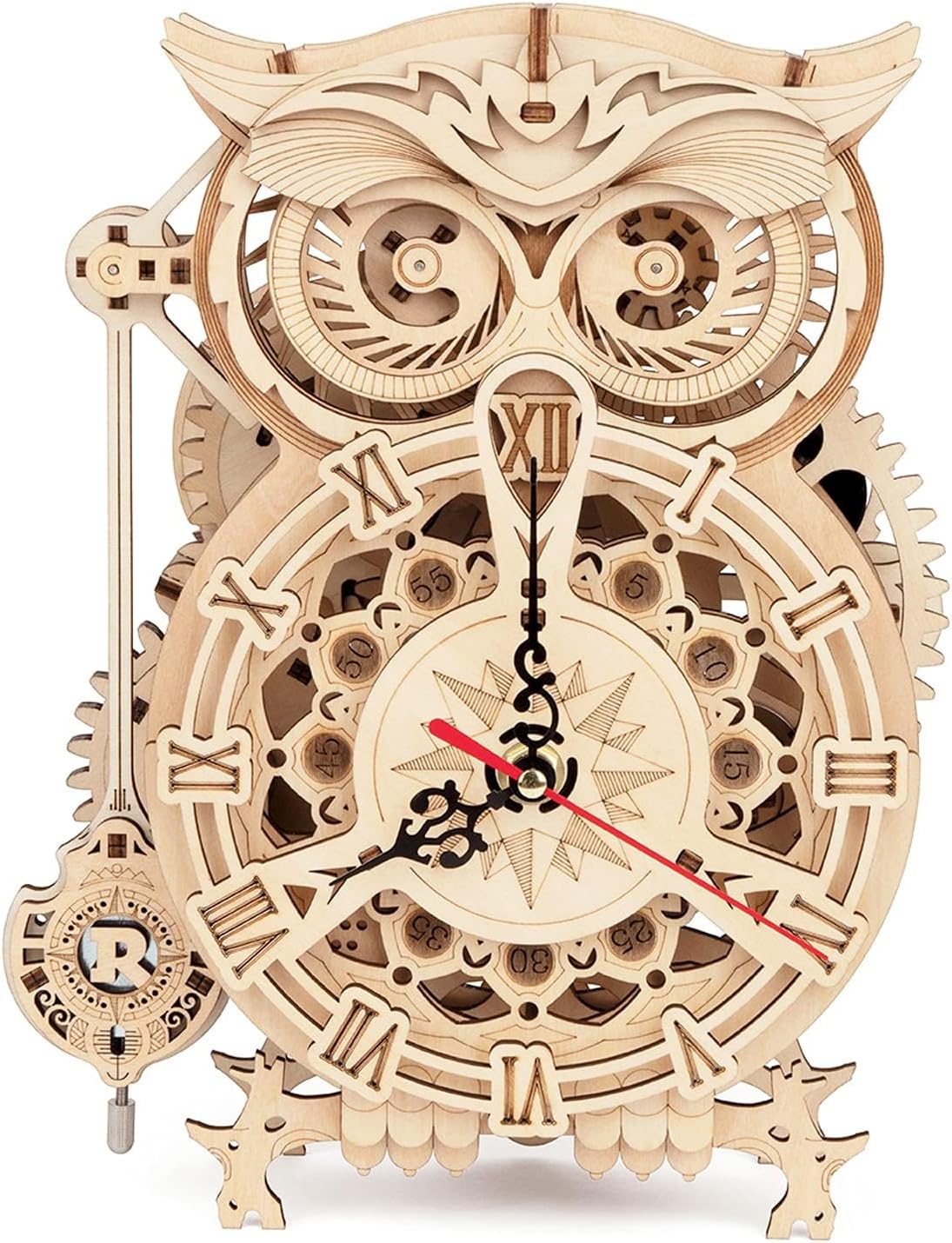
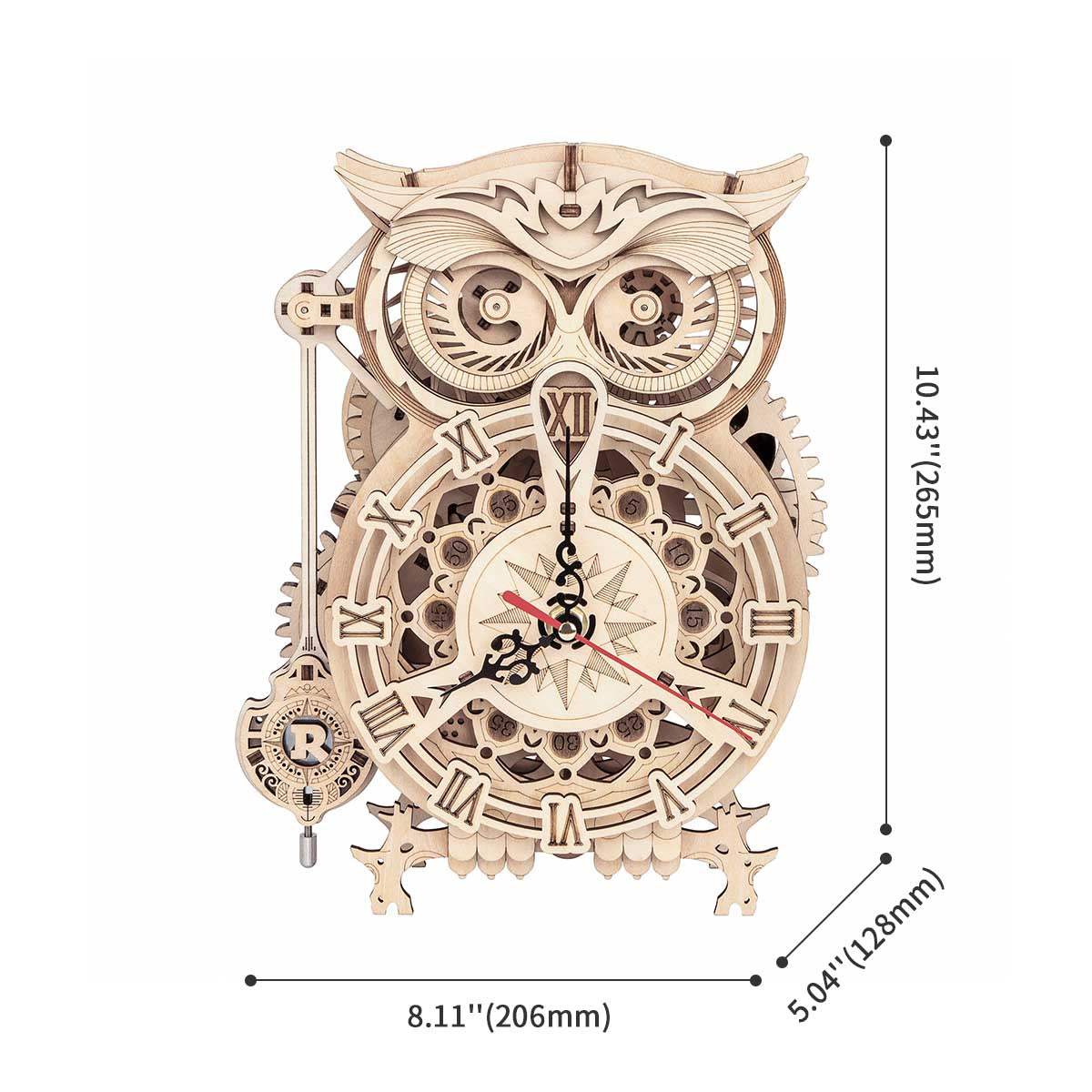
Clocks. The ROKR Owl Clock (LK503, 161 pcs) is my benchmark mechanical clock for newcomers: a battery quartz movement keeps real time while the hollowed owl body shows the gear train turning, and there's a spring-driven pendulum and a wind-up timer that actually rings. Reviewers report ~2-hour builds and that it 'works fine and is beautiful.' It is the rare kit that's both easy and genuinely mechanical. Note the honest limit some owners hit: the decorative pendulum doesn't swing forever — it's a display flourish, not a regulating escapement. Don't expect grandfather-clock physics from a 161-piece owl.
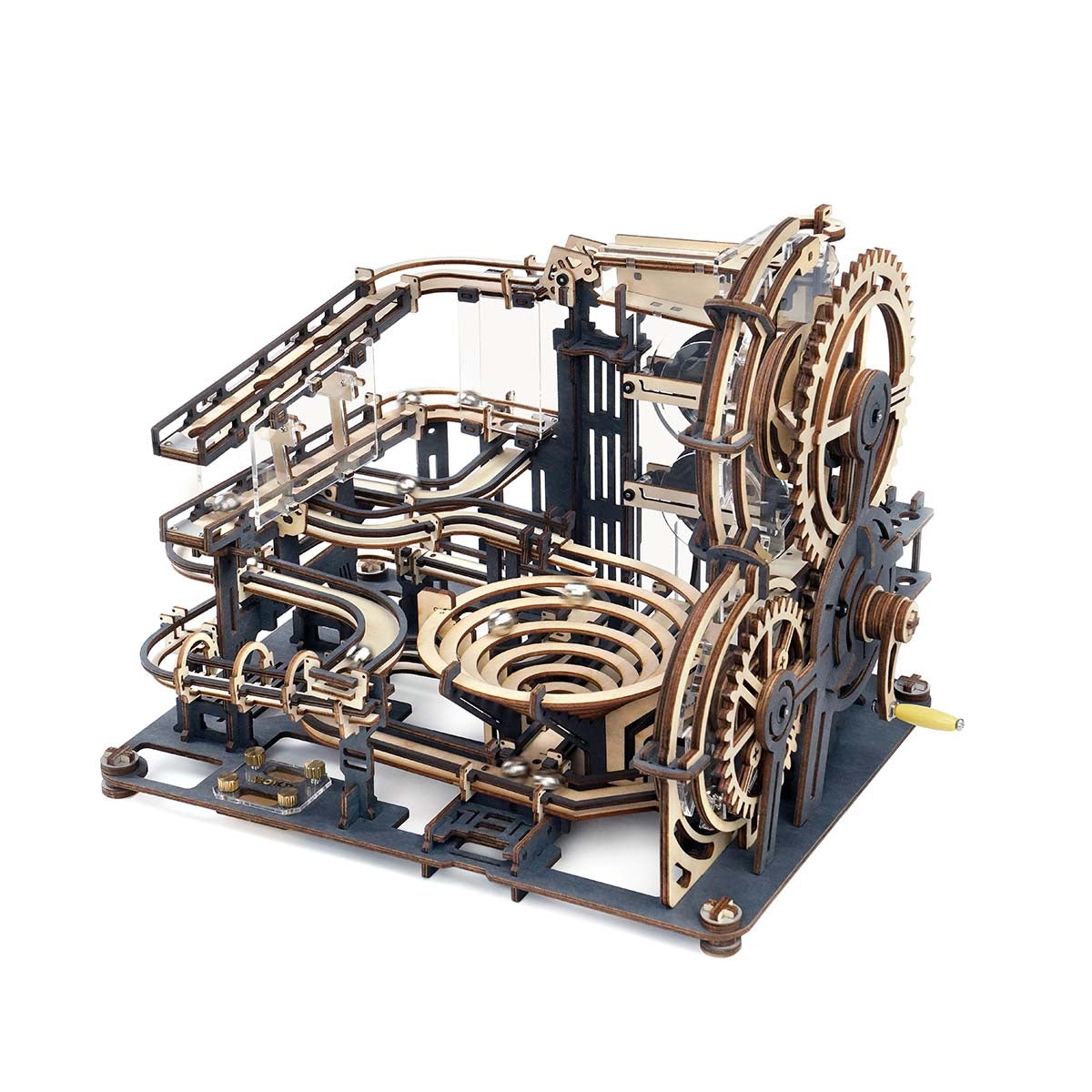
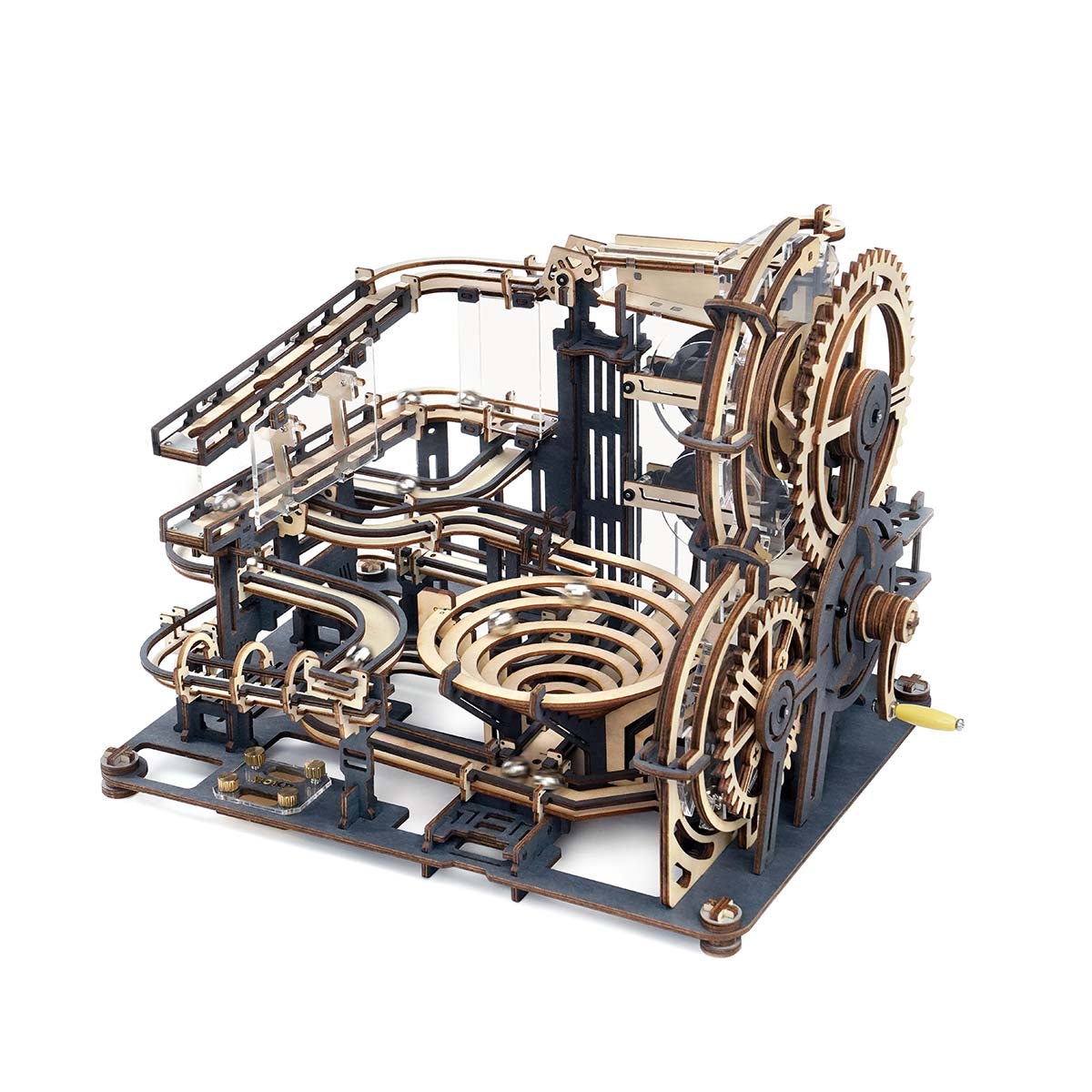
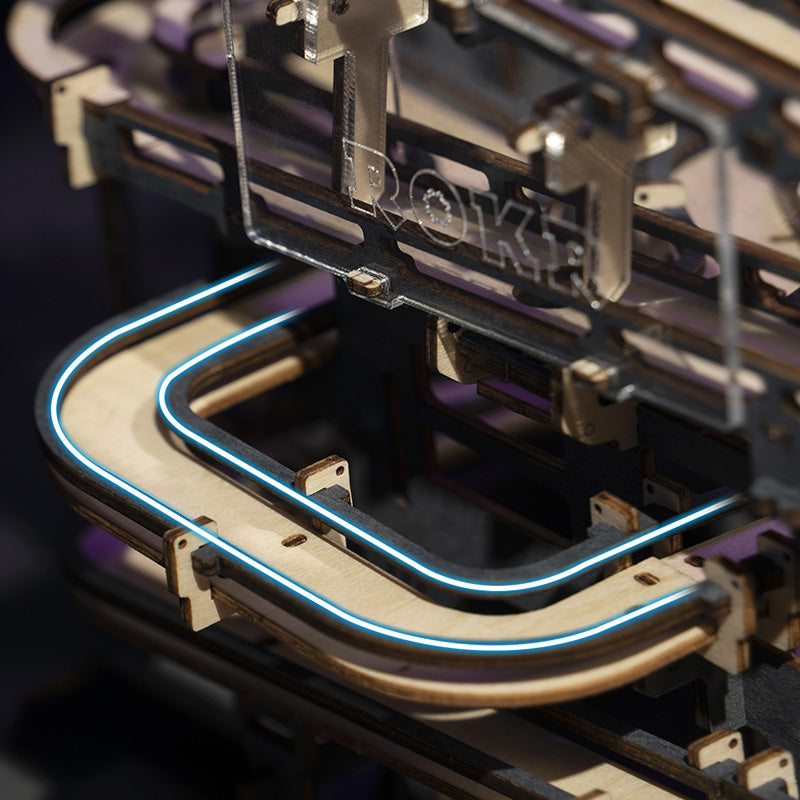
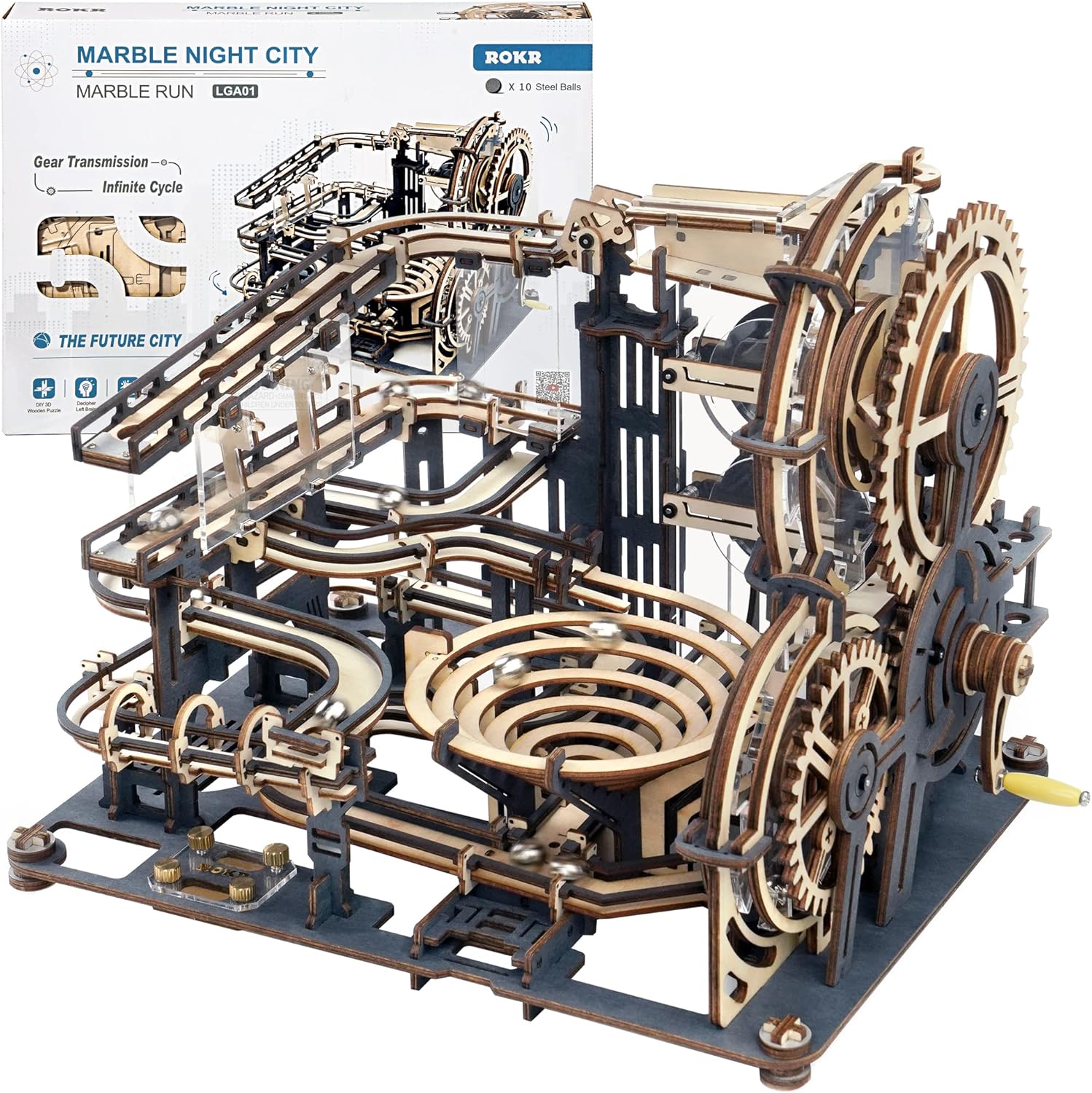
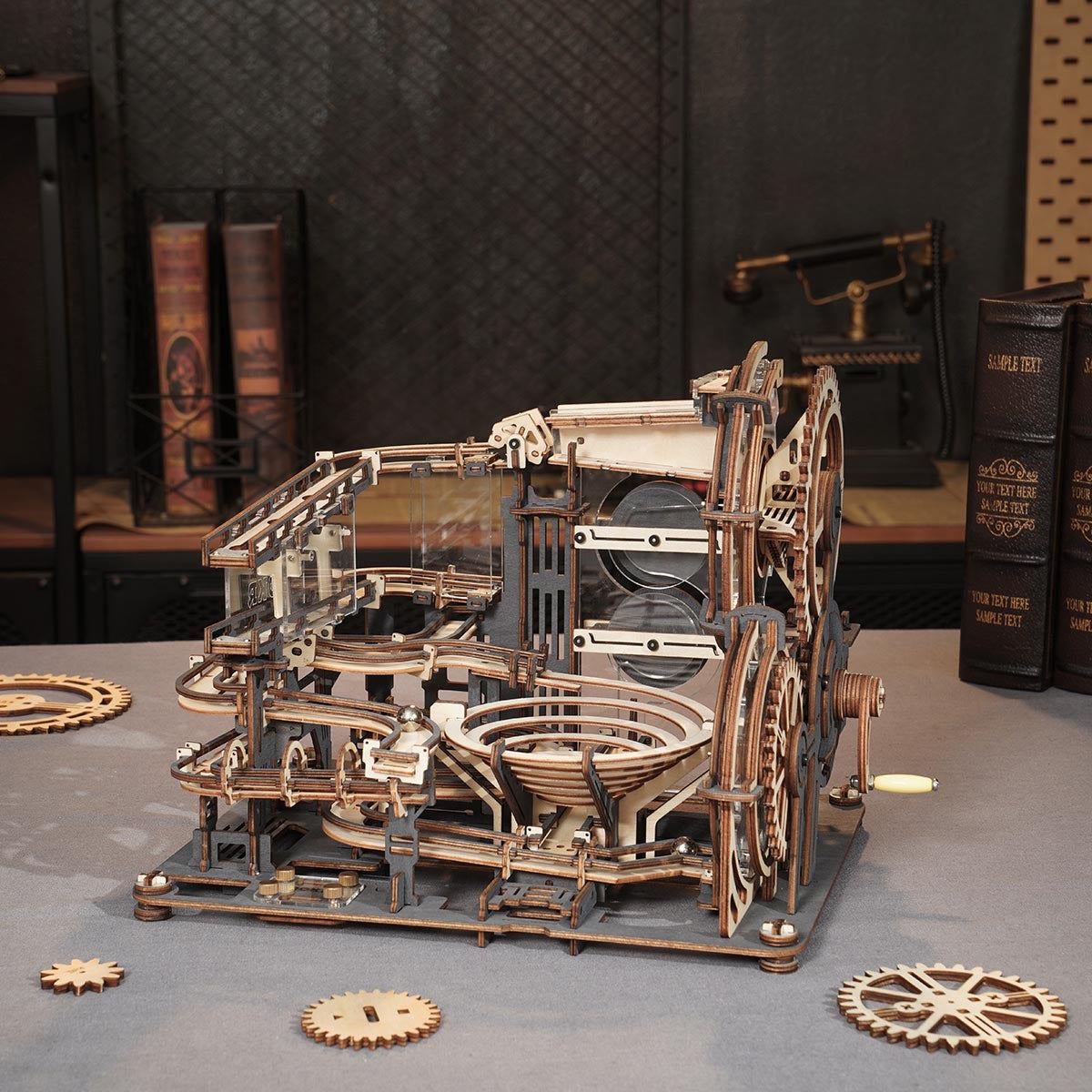
Marble runs / kinetic. The ROKR Marble Night City (LGA01, ~294 pcs) is the kinetic showpiece: a neon-styled tower where marbles ride a lift to the top and gravity-feed back down through a looping track for a continuous cycle. When it's tuned, it's hypnotic. The catch — and reviewers flag it — is that the delicate track and lattice parts demand careful assembly, and a slightly off track means a marble jumps the rail. Budget patience for tuning, not just building. This is a kit you fettle until the run is reliable.
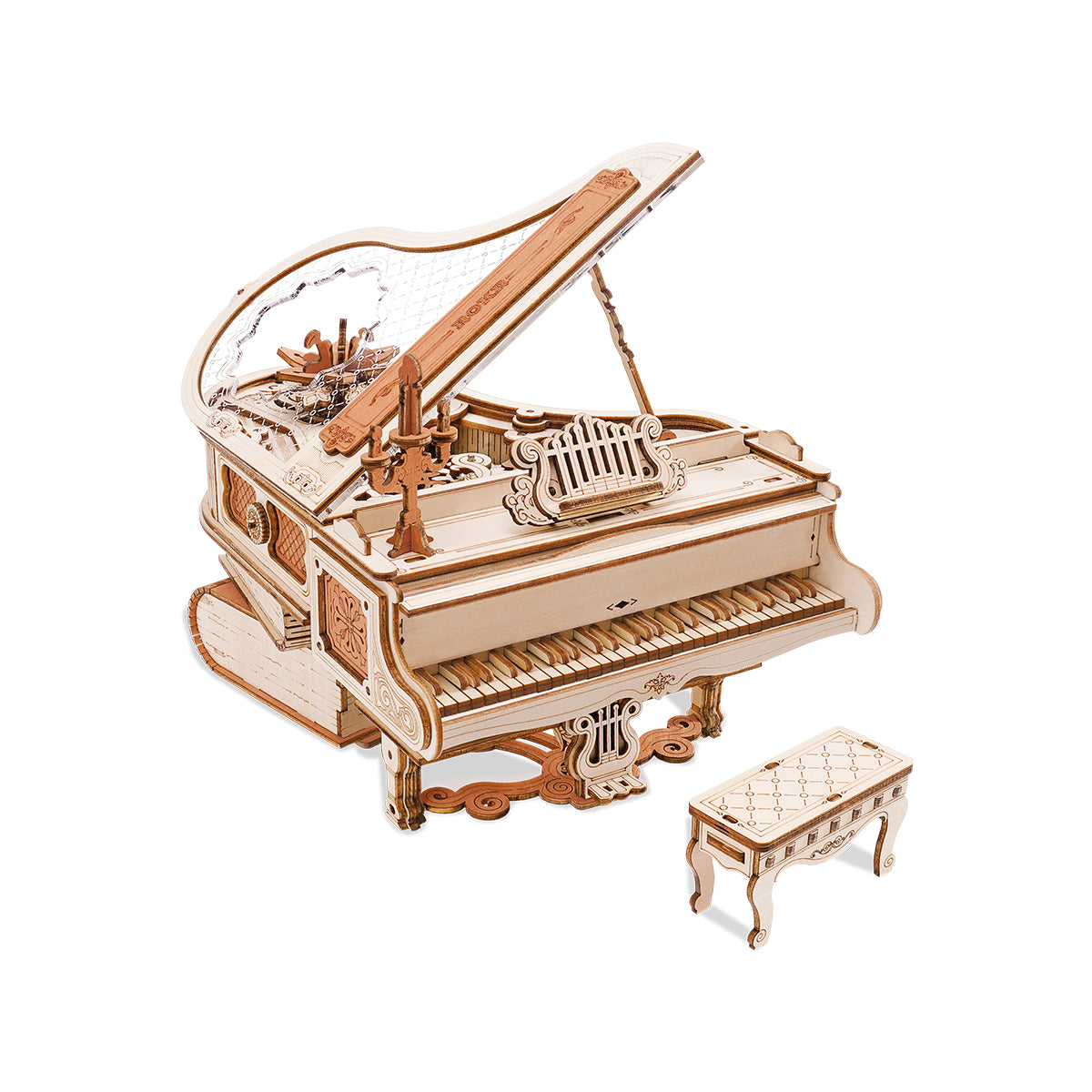
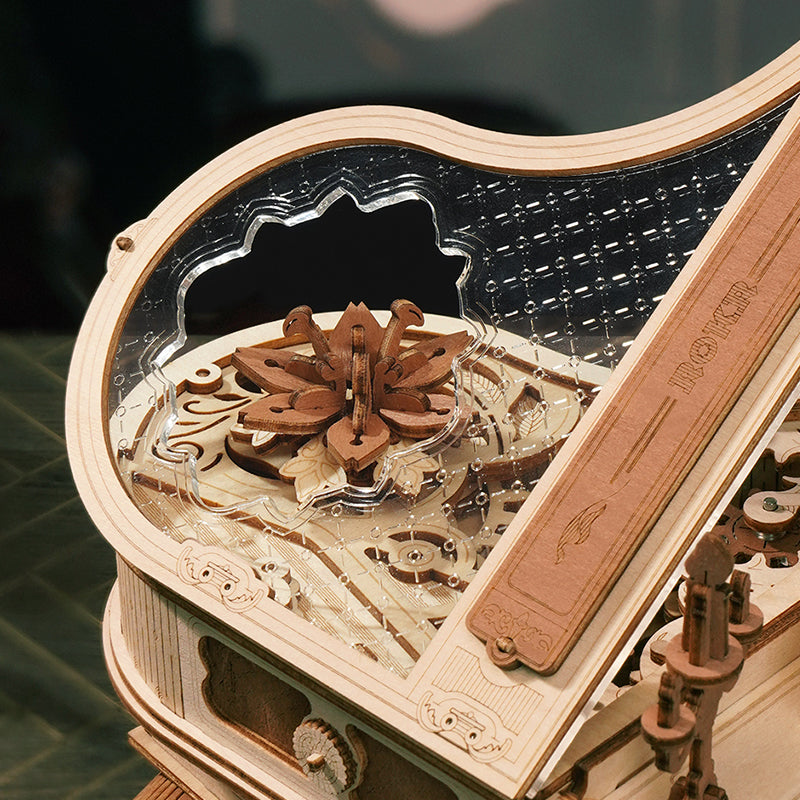
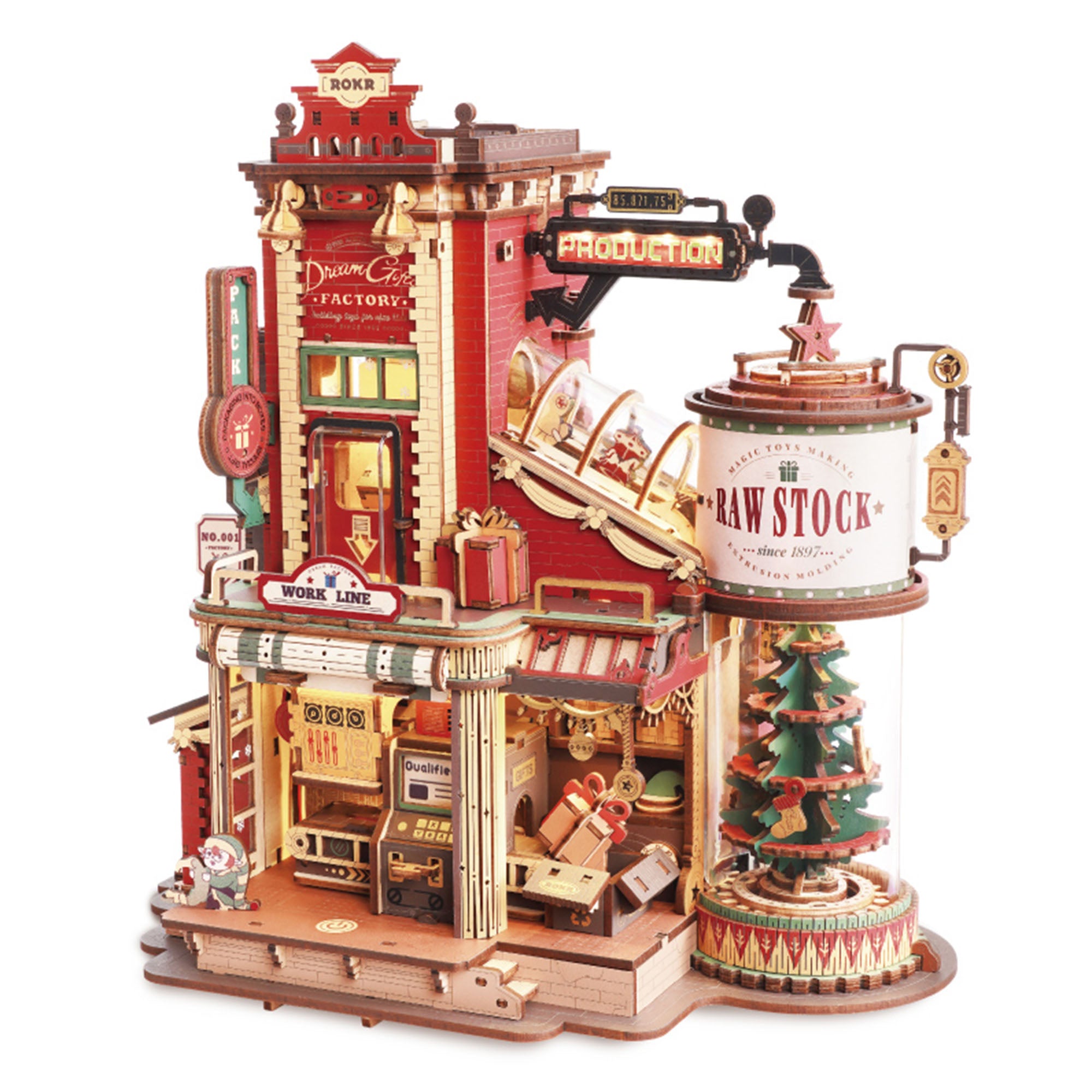
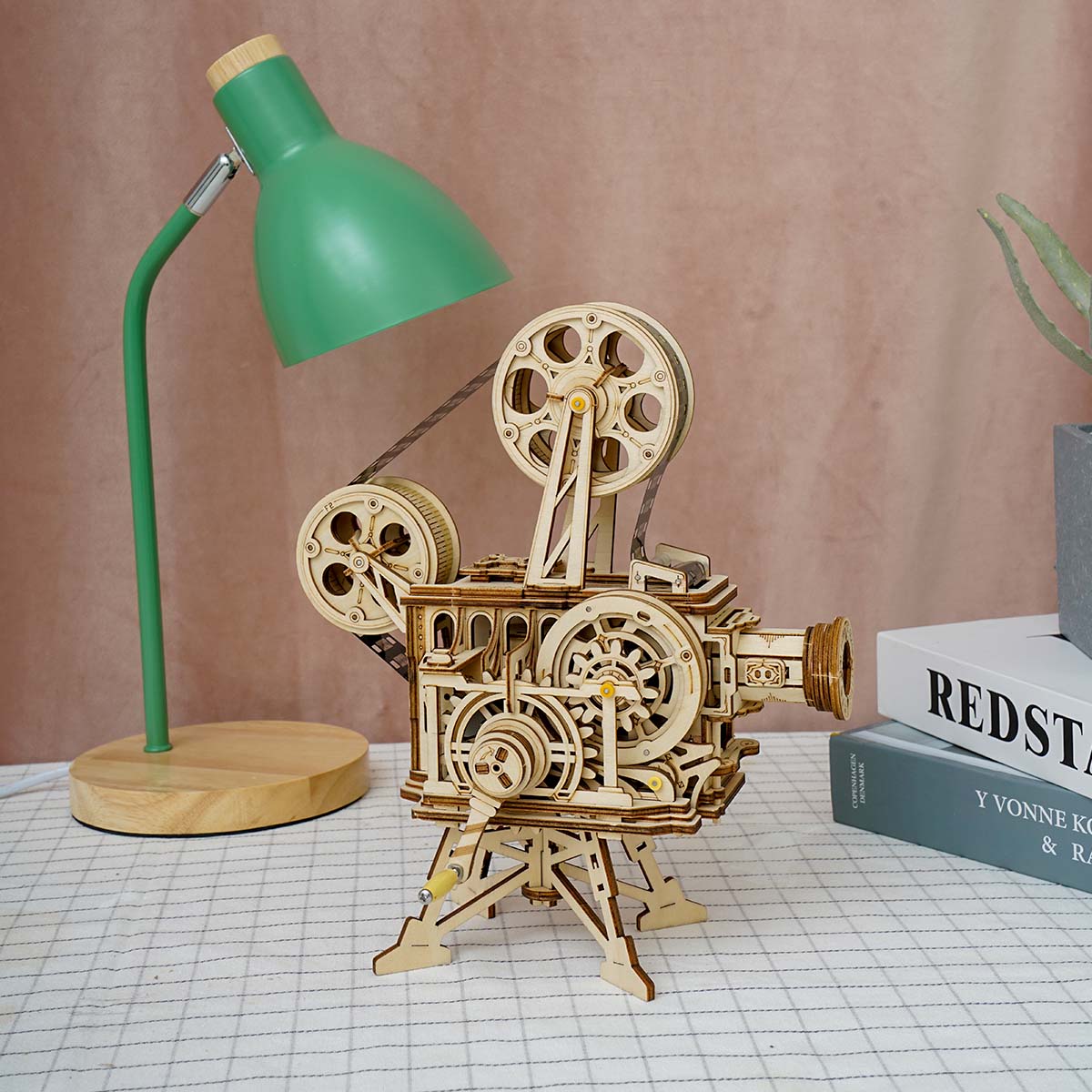
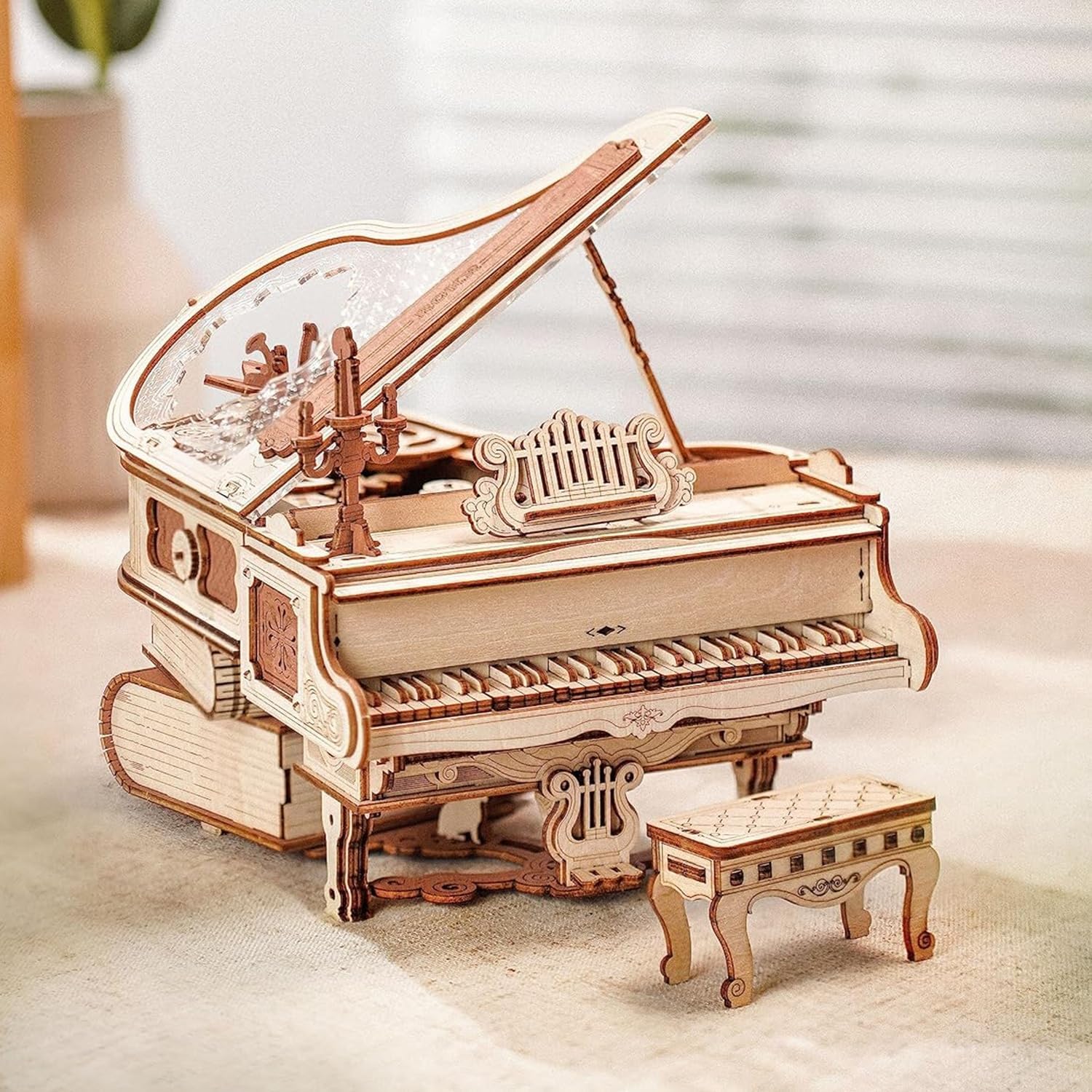
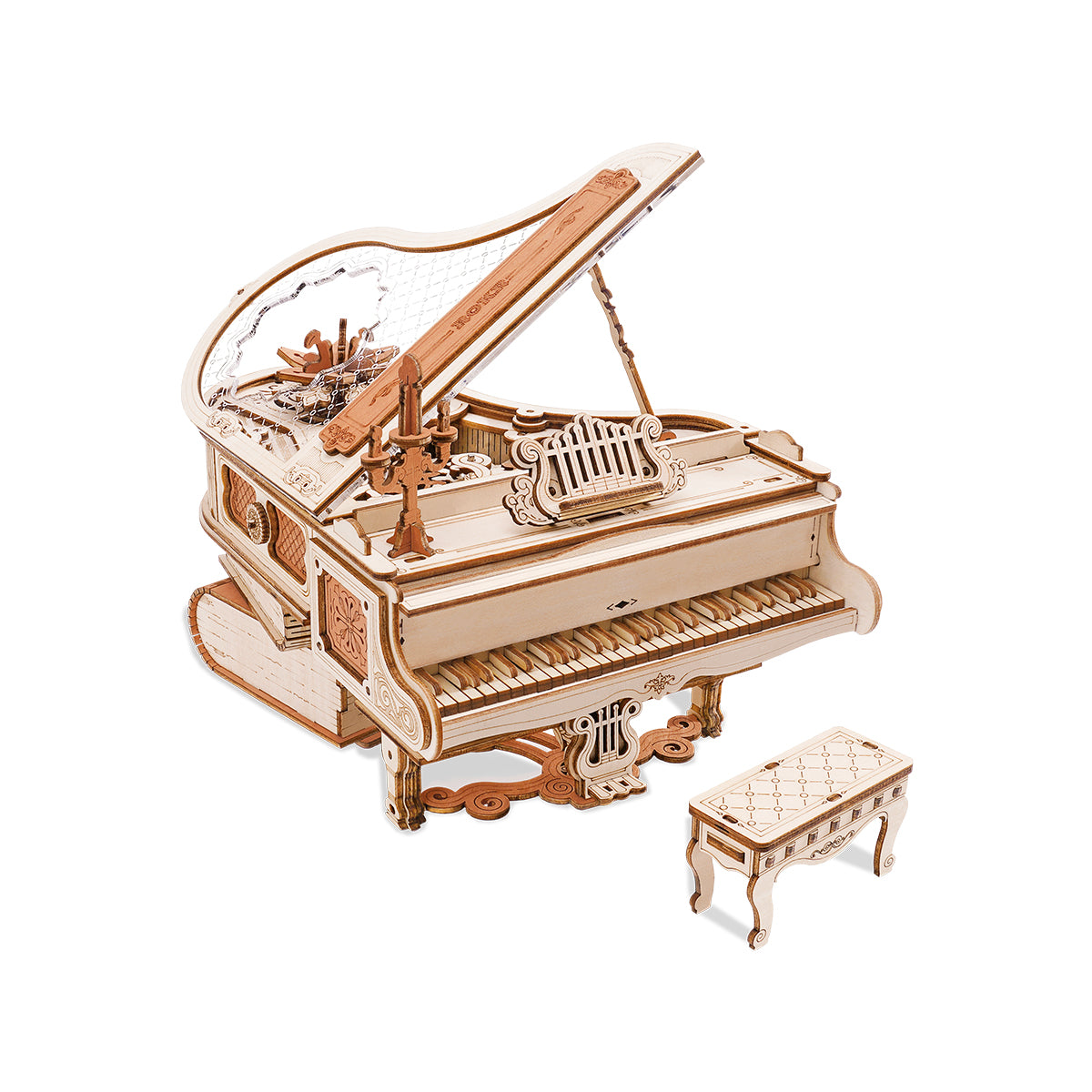
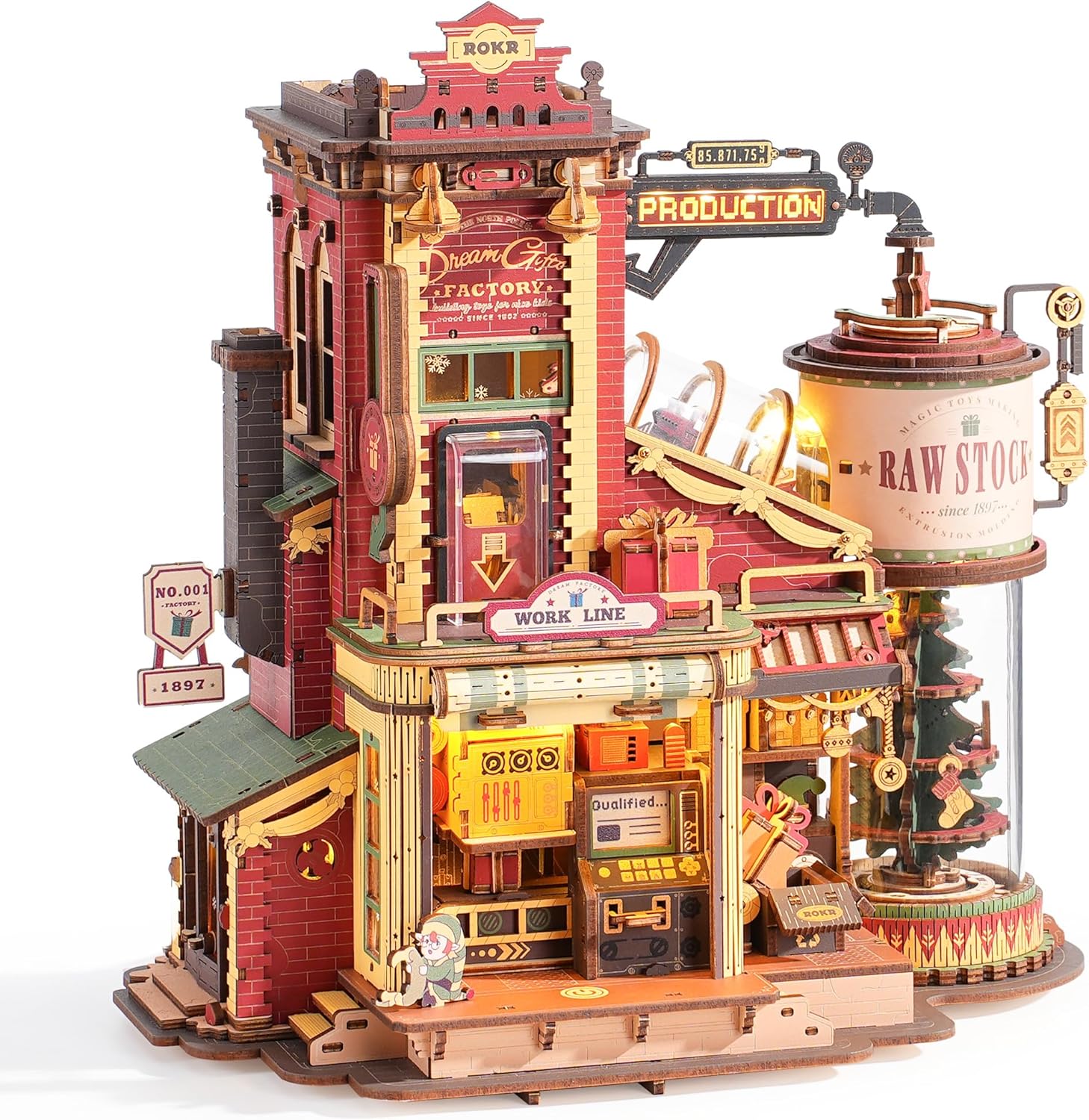
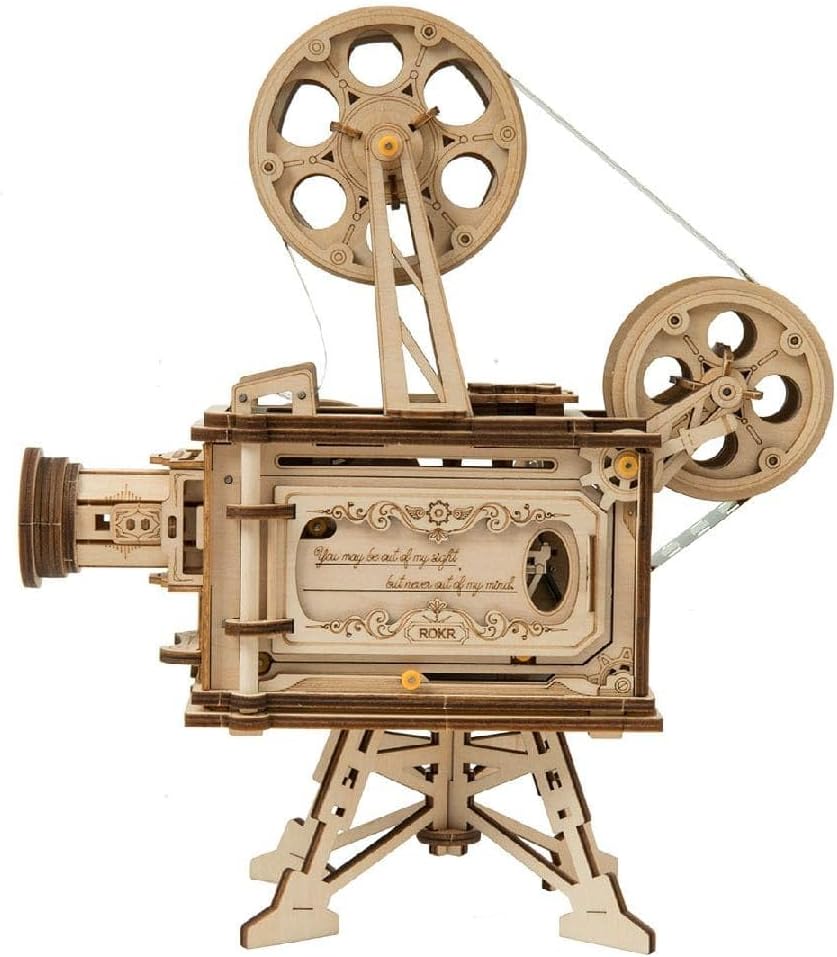
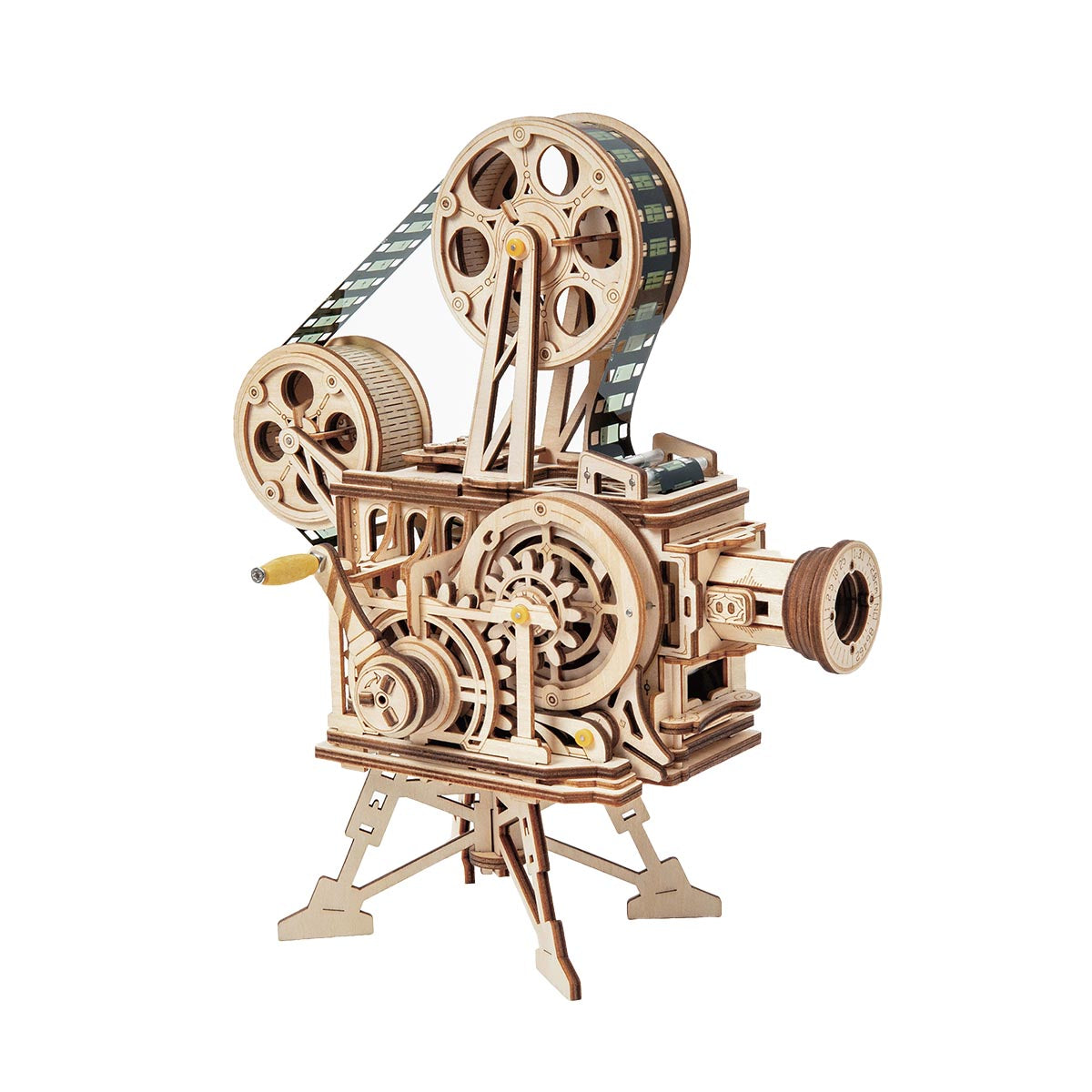
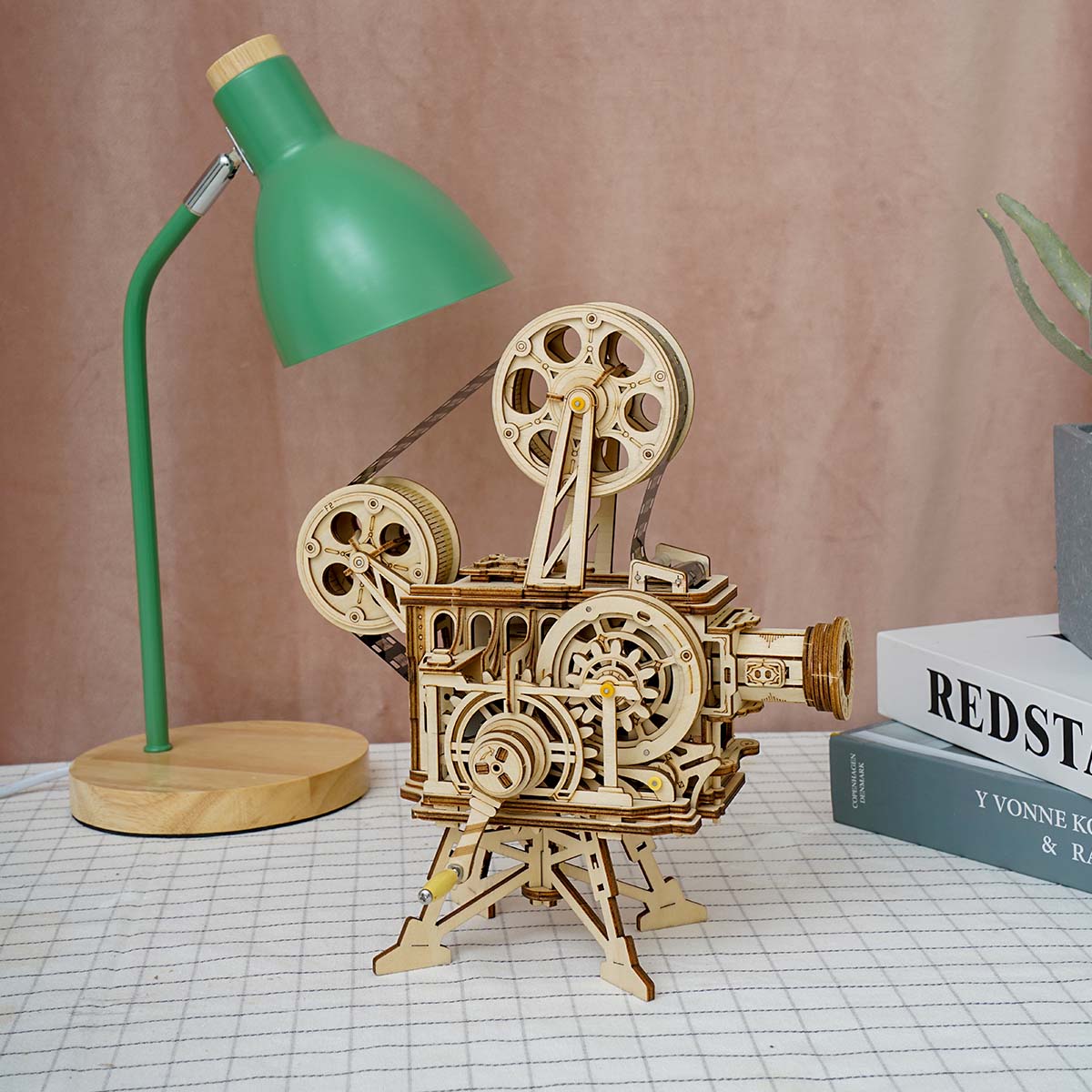
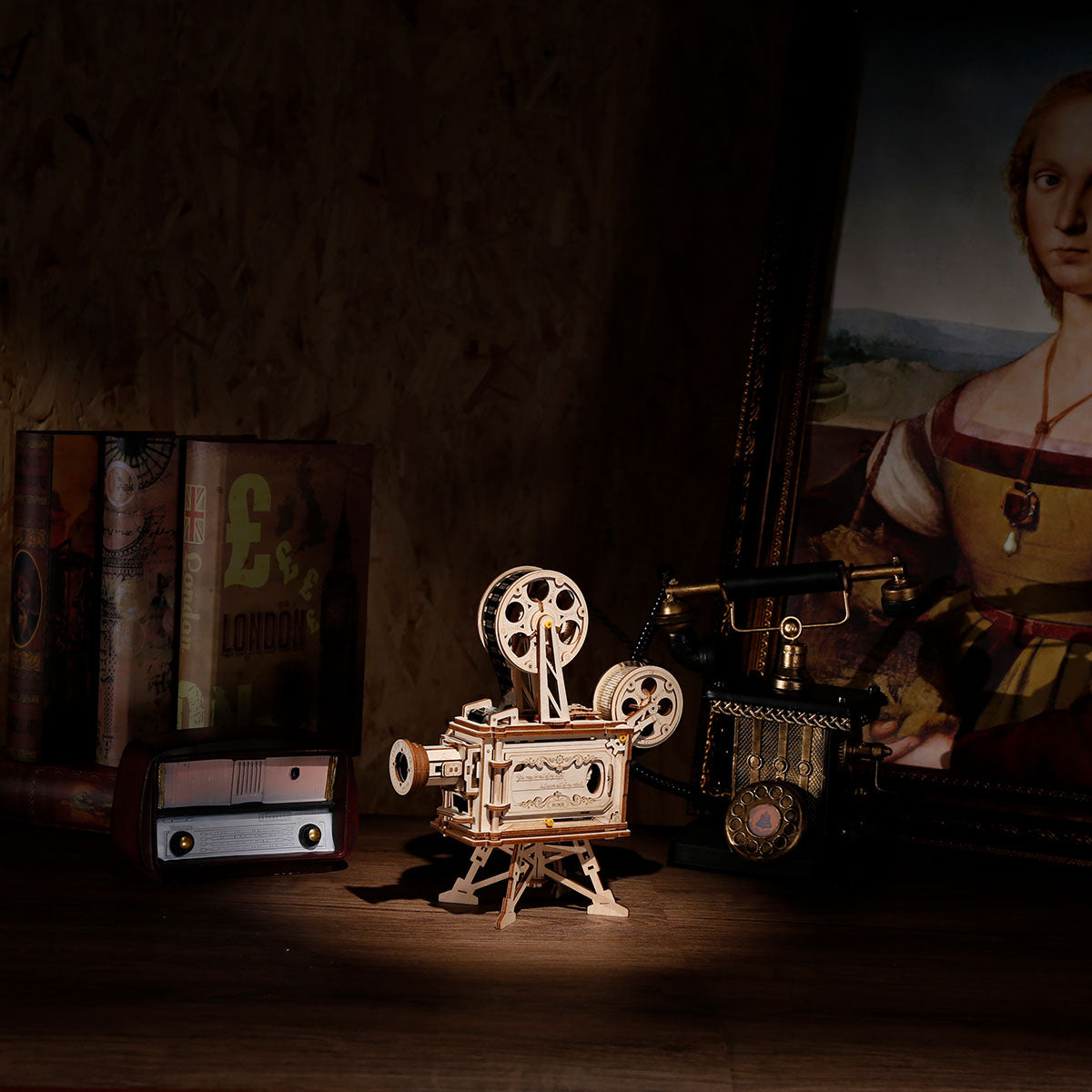
Music boxes. ROKR and its Robotime parent make a deep bench here, all built around a real spring-wound music-box movement and comb. The standout is the Magic Piano (AMK81, 223 pcs): the keys 'play' themselves as the cylinder turns, and reviewers confirm 'the music box works great.' For something more automaton, the ROKR Dream Gift Factory (449 pcs) adds motorized moving parts to the music — a proper kinetic diorama, though it's a 6-star, ~12-hour build. And the Robotime Vitascope (183 pcs) is a charming oddball: hand-crank it and a tiny strip of 'film' animates like an early movie projector.
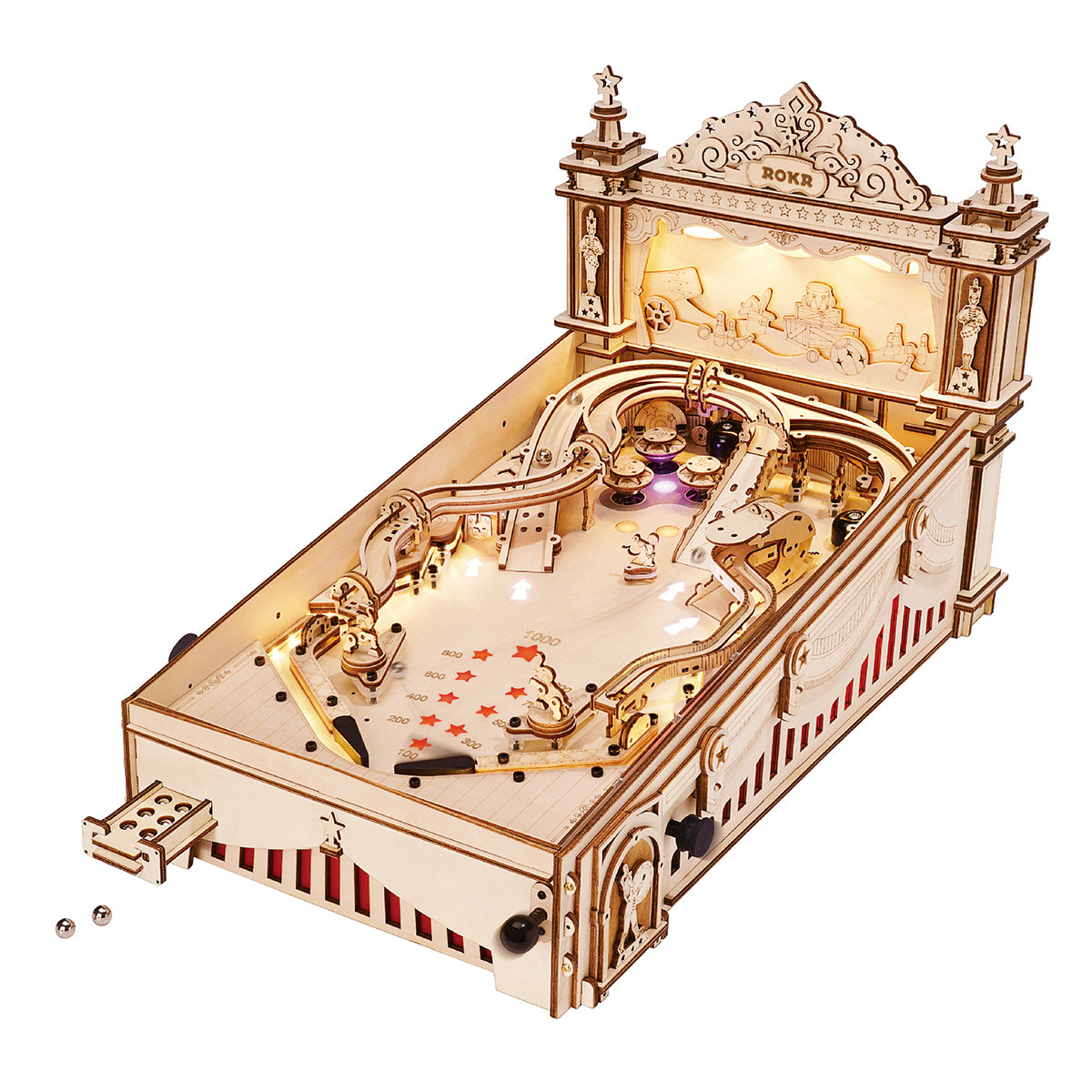
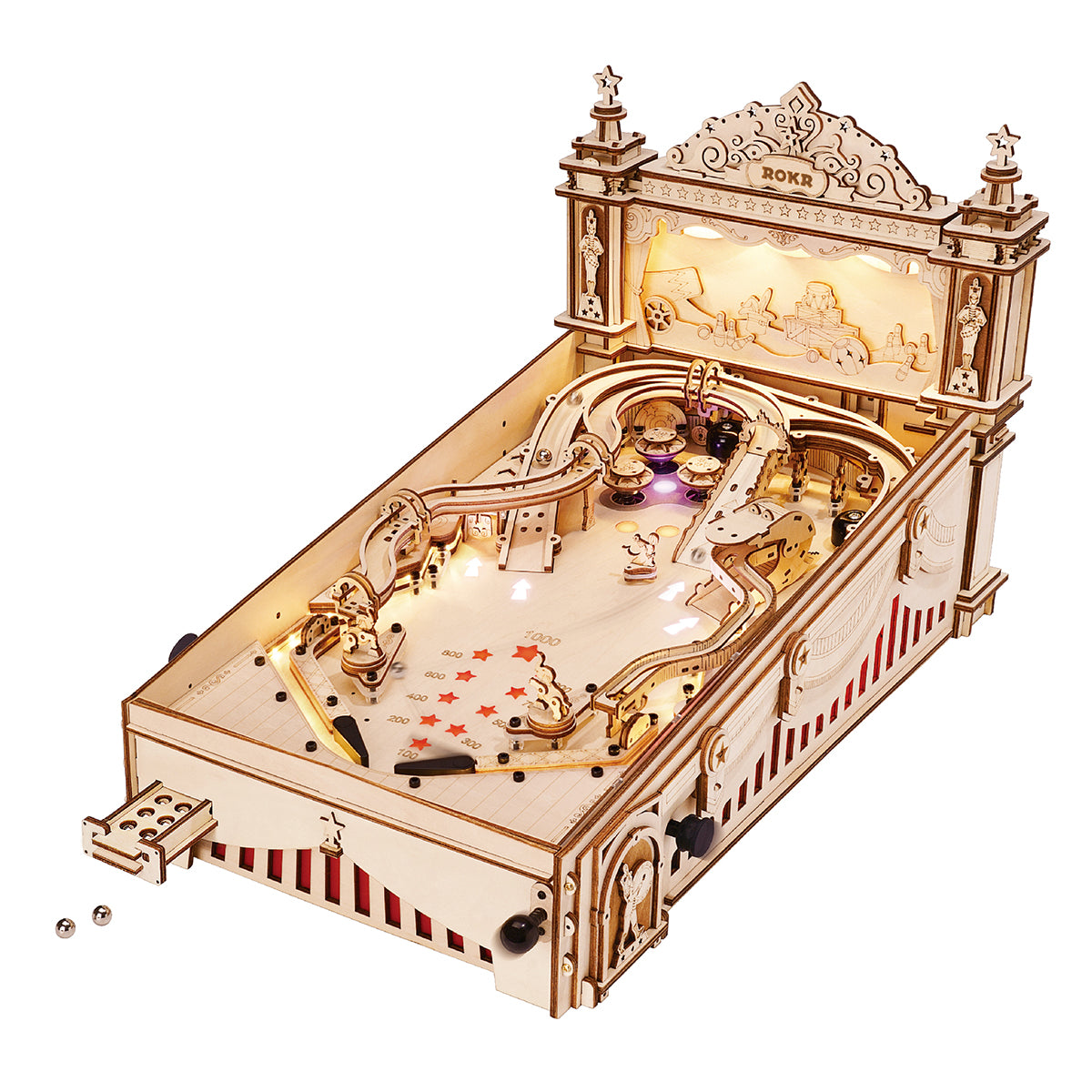
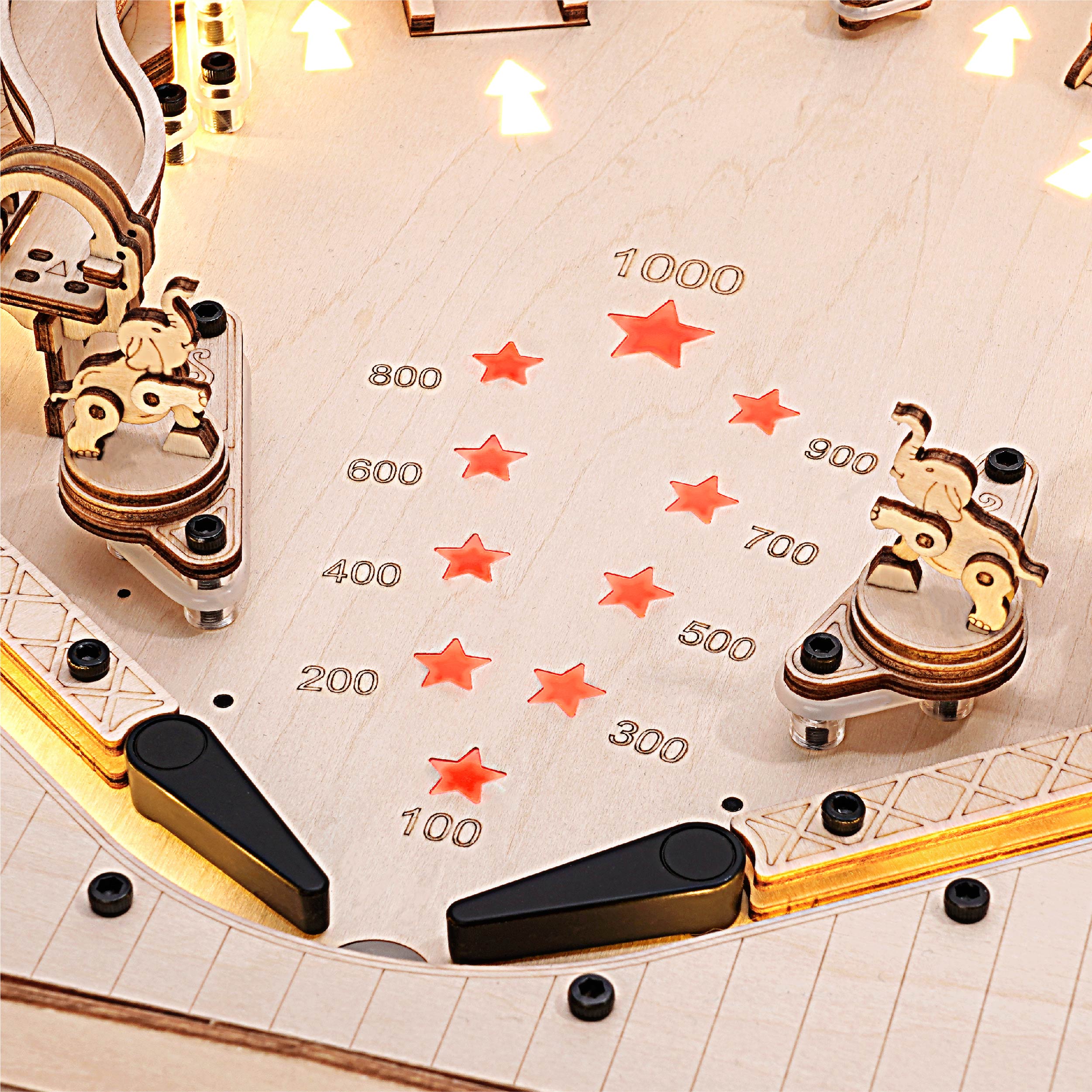
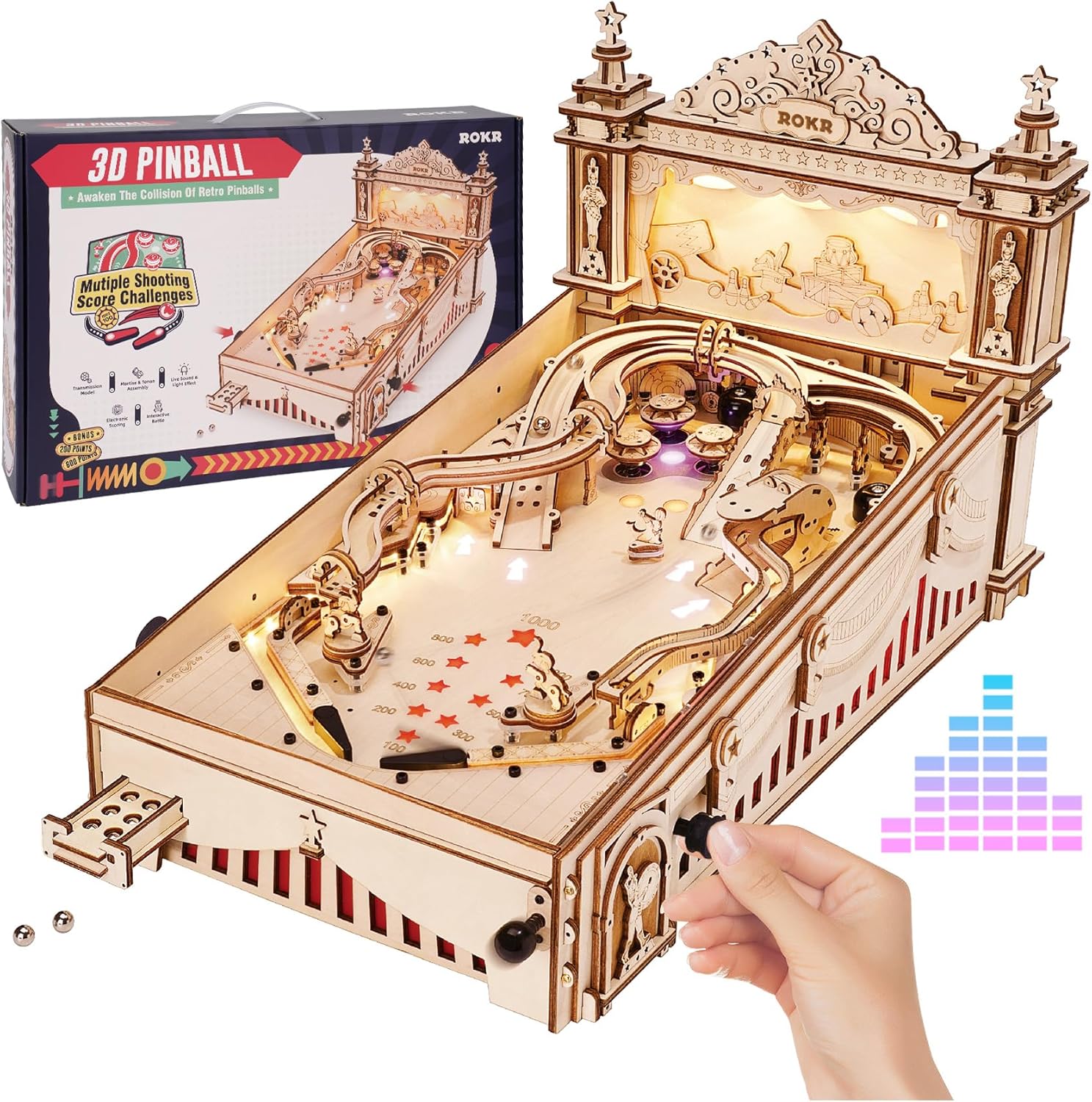
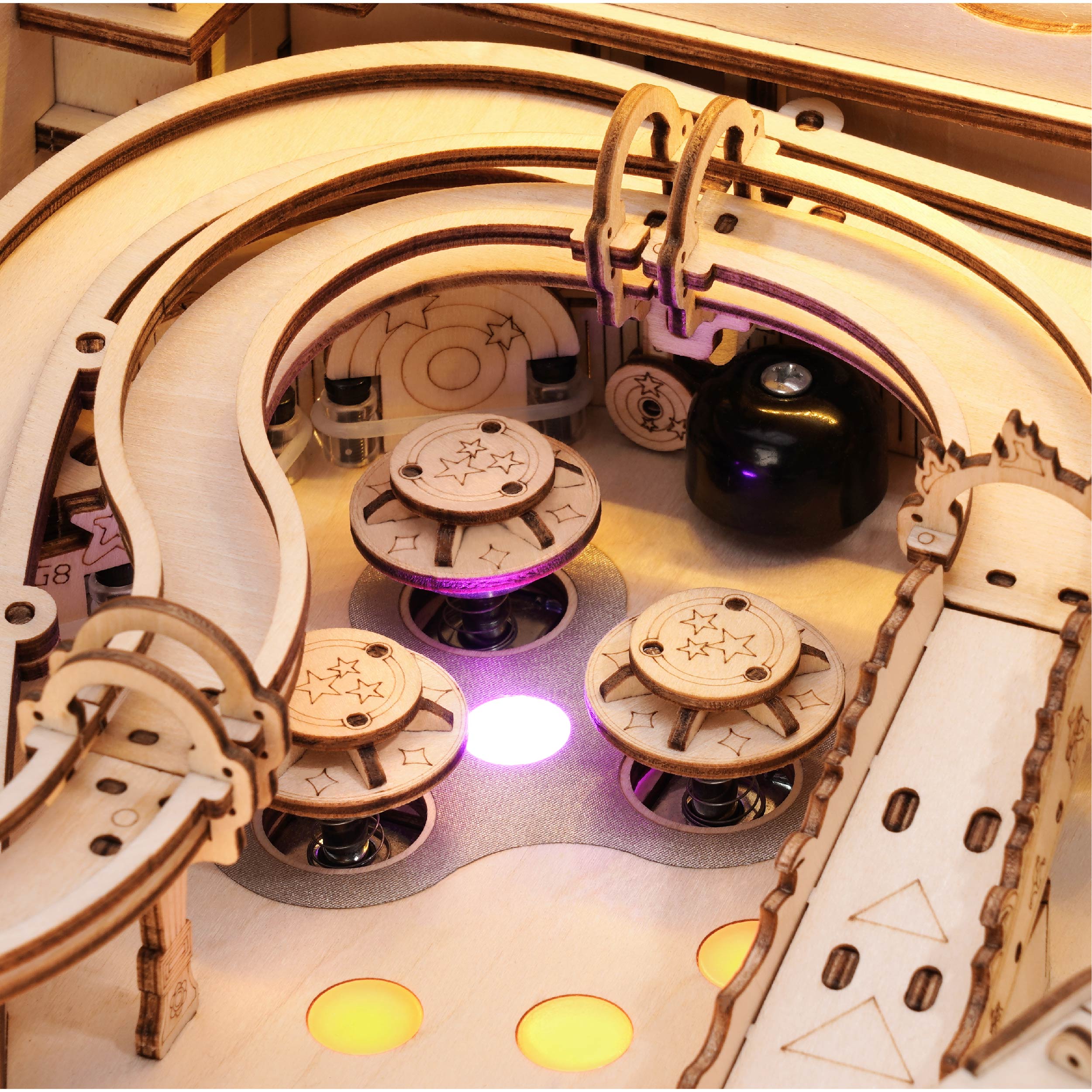
The pinball table. The ROKR Pinball Machine (EG01, 482 pcs) is the genre's flex: a USB-powered wooden table with working flippers, a spring plunger, live light-and-sound effects, and an electronic scoring system with an illuminated star indicator. It genuinely plays. It is also the hardest kit here — Robotime says 12 hours; an experienced builder clocked closer to 20 — and the satisfaction is hard-won, with real frustration along the way. It's the centerpiece, not the starter.
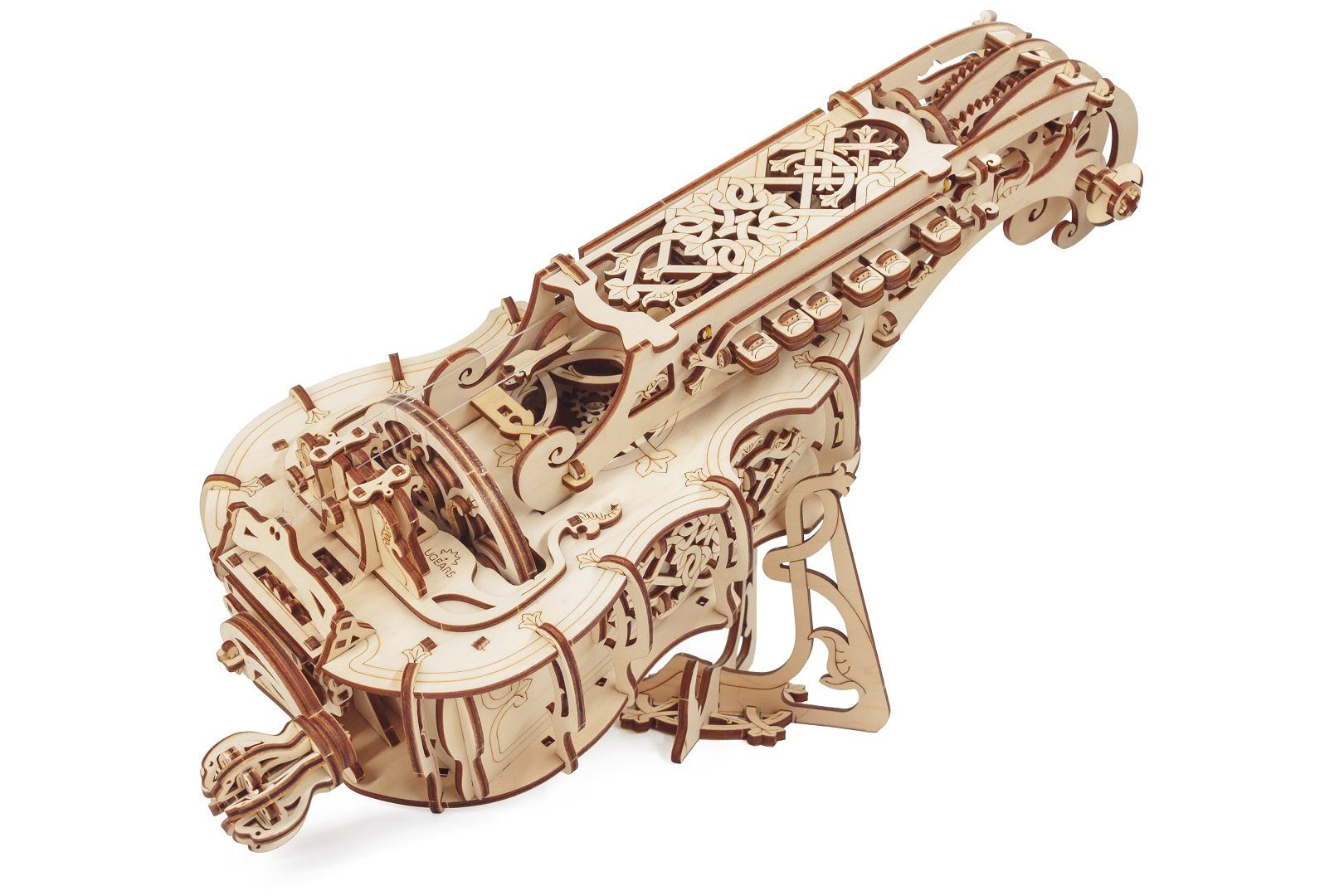
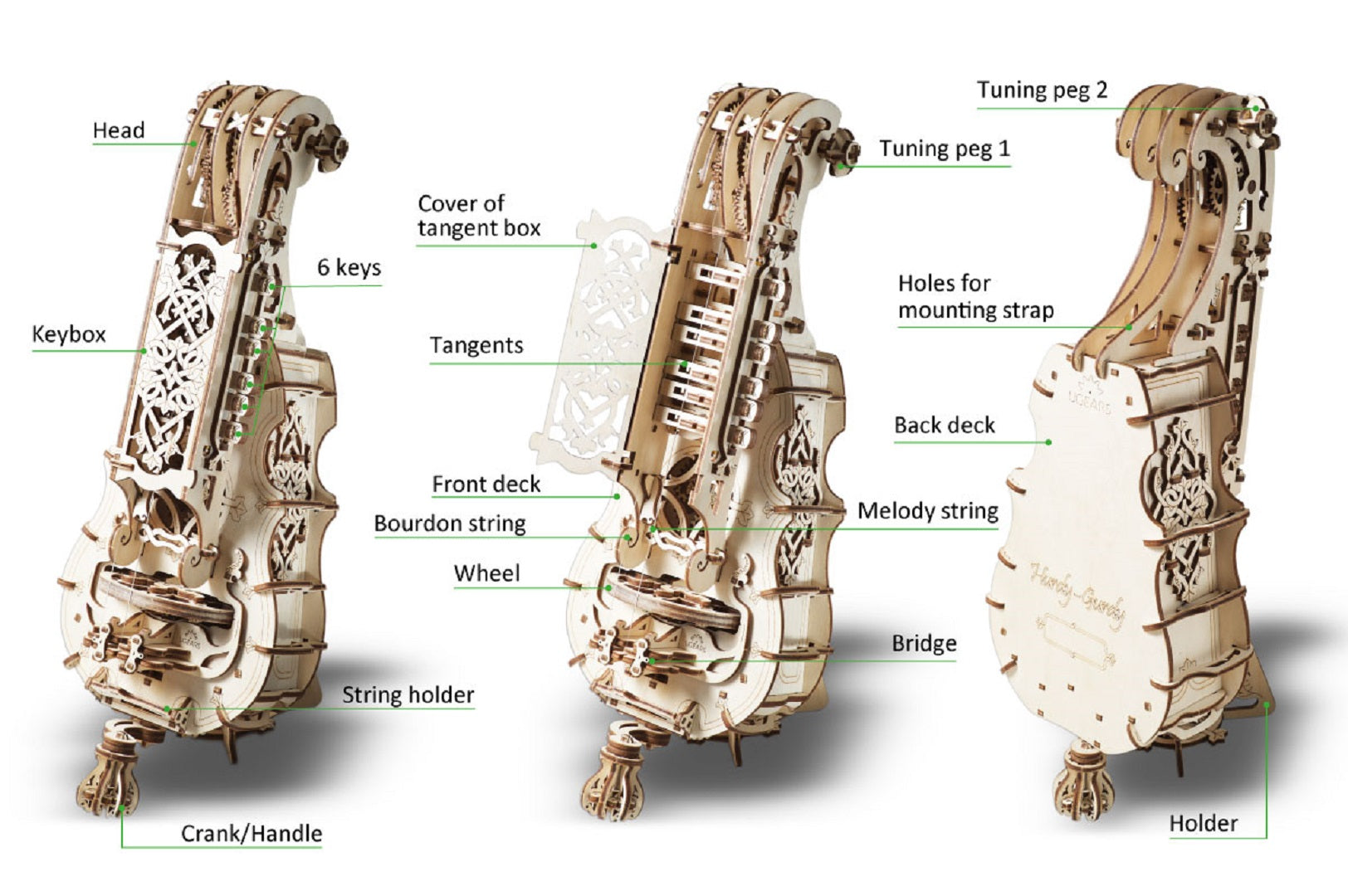
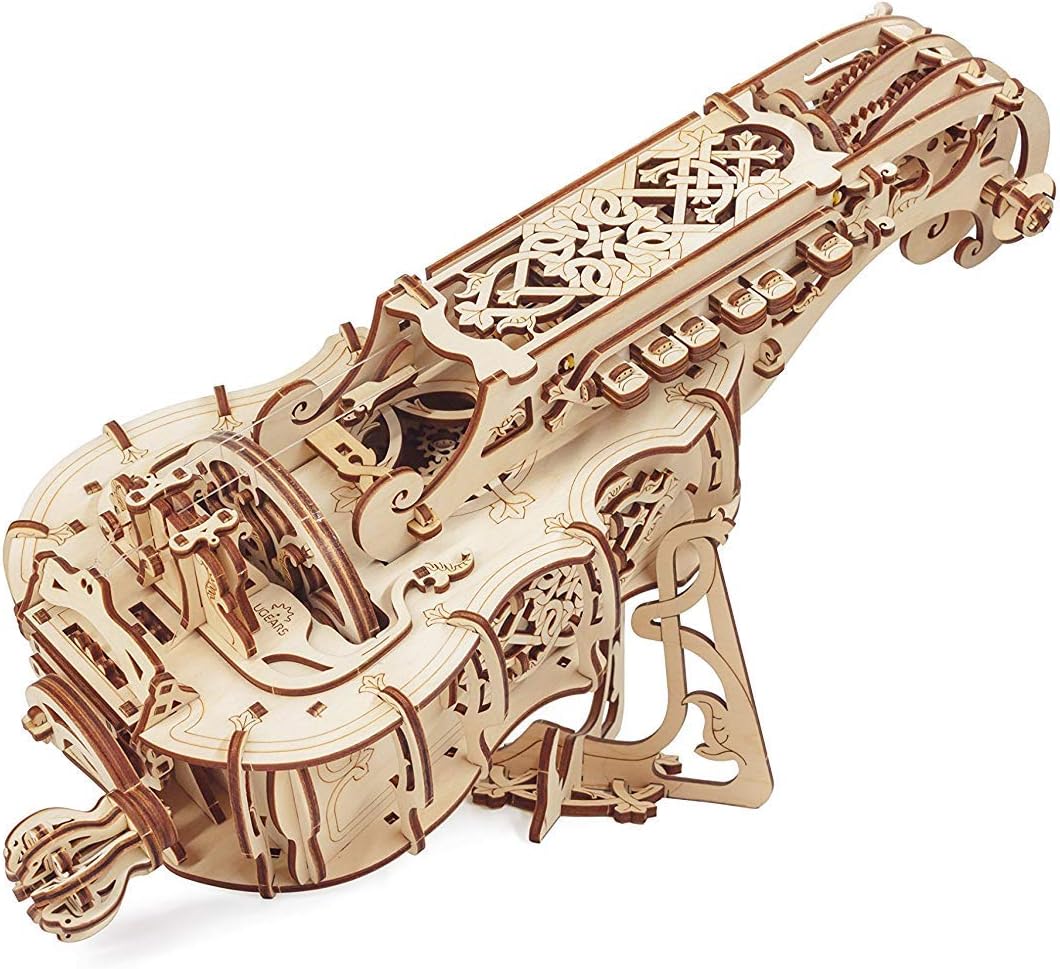
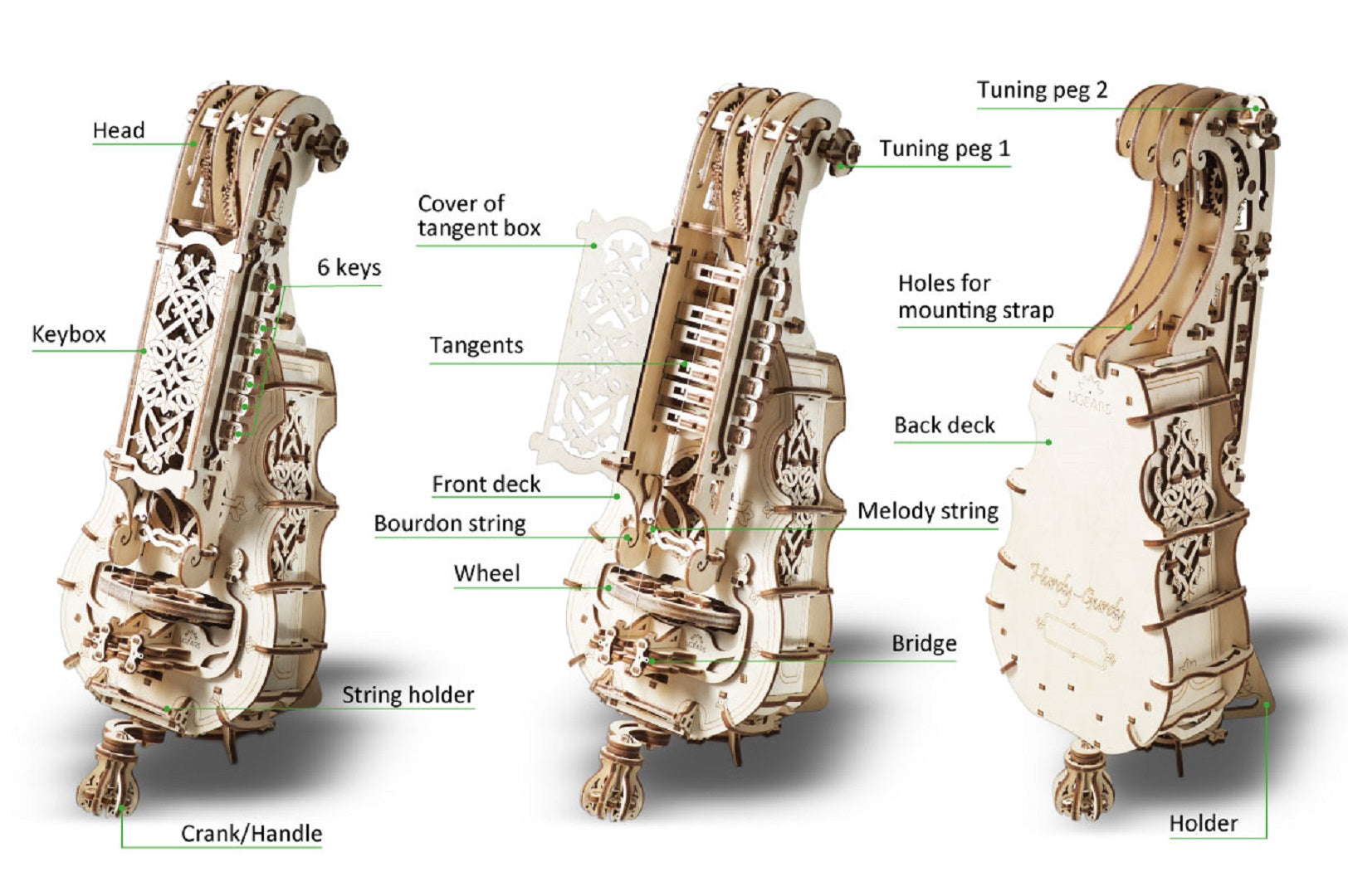
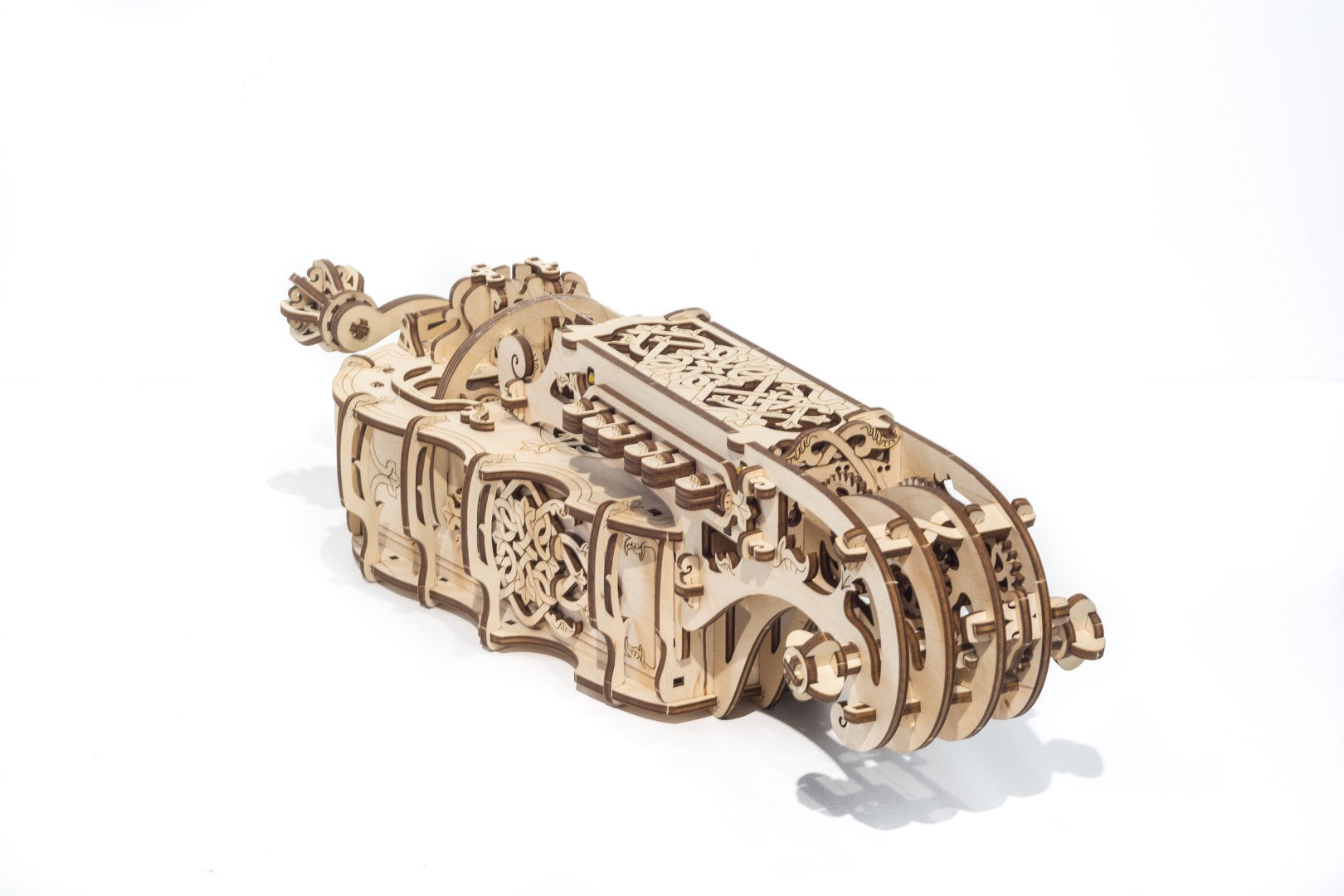
The all-wood instruments and boxes (UGears). If you want a mechanism with zero electronics, UGears owns this. The Hurdy-Gurdy (292 pcs) is an actual playable crank instrument with visible gears working the bow and keys. The Treasure Box (190 pcs) and the Safe / Book of Secrets line are working combination and key locks — turn the dial, hear it click, open the compartment. These are the most impressive machines in the guide. They're also the ones most likely to draw blood. Worth it for the right builder.
The pinball table genuinely plays — working flippers, a spring plunger, electronic scoring. It's also the hardest build here. It's the centerpiece, not the starter.
How long do these take, and which ones are secretly tedious?

Time is the spec nobody reads carefully and everybody underestimates, so let me calibrate it honestly — and name the kits that are tedious as opposed to merely long, because those are different sins.
The rough tiers: a small mechanical kit (the Owl Clock, a U-Fidget, a simple music box) is 2–3 hours — one cozy evening. A mid kit (Magic Piano, Treasure Box, Tram, a marble run) is 4–7 hours, realistically two or three sittings. A flagship (Dream Gift Factory ~12 hrs; Pinball Machine 12–20 hrs) is a multi-weekend commitment. The manufacturer time estimates are optimistic — they assume nothing goes wrong, no part gets re-seated, no break. Add 30–50% if it's your first kit or you're a perfectionist.
Now, long is fine — long is the point. Tedious is the enemy, and it shows up in three specific ways. First, repetition without payoff: kits with dozens of identical small parts (some marble-run lattices, certain large gear assemblies) where you do the same fiddly motion fifty times. Second, fragile-tight combos, the UGears signature — when every joint is both delicate and stiff, the build stops being meditative and becomes anxious, because each part is a coin-flip between 'seats nicely' and 'snaps.' Third, the 20-hour wall: the Pinball Machine is a marvel, but even its fans describe assembly frustrations stacking up until walking away feels appealing. That's a kit you should want the long haul on; if you just want a pinball table, this isn't a shortcut to one.
Which are secretly tedious? The honest list: complex UGears kits for impatient people (the mechanism is glorious, the journey is a finger workout); the biggest motorized ROKR dioramas if you don't love repetition (449+ parts is a lot of near-identical steps); and any delicate marble run if precise, patient seating isn't your idea of fun — the tuning phase rewards calm and punishes hurry. Conversely, the kits that are long-but-never-tedious are the ones with constant mechanical novelty: the Owl Clock, the Magic Piano, the Hurdy-Gurdy (if you've got the touch). Each step builds a different sub-mechanism, so you're always learning something, never grinding.
The meta-point: match the kit to your temperament, not your ambition. A patient, detail-loving builder will enjoy the UGears tightness that makes an impatient person miserable. Know which one you are before you spend $100 finding out.
Long is fine — long is the point. Tedious is the enemy. Match the kit to your temperament, not your ambition.
Are they durable, and which are the best gifts (for kids, for splurgers, for value hunters)?

Durability, honestly. Once assembled and settled, a friction-fit wooden kit is reasonably sturdy as a display piece — but understand its two weaknesses. First, humidity moves wood: a kit built tight in a dry winter can stiffen or loosen as seasons change, and a marble run that ran perfectly in October may need re-tuning in July. Second, moving parts wear: gear teeth on a heavily-played pinball or a frequently-cranked music box will eventually round off, and these are play-with-it, not heirloom, mechanisms. A light wax or graphite on gear contact points helps. Treat the finished kit as a kinetic sculpture you occasionally maintain, not an indestructible toy. The good news: both majors sell or mail replacement parts, so a snapped piece isn't fatal.
Best for kids — read the age rating, it's not decoration. Almost every mechanical kit here is labeled 14+, and that's about fiddliness and breakable small parts, not reading level. For genuinely younger builders, UGears' coloring-model kits (ages 5+) and the palm-sized U-Fidgets are the right call — small, cheap, hard to ruin. For a capable 10–13-year-old building with an adult, the ROKR Owl Clock or a simple music box is a great supervised project. Do not hand a kid the Pinball Machine or a complex UGears mechanism and expect joy; you'll get a snapped part and tears by hour two.
Best splurge centerpiece. The ROKR Pinball Machine (EG01, ~$199, 482 pcs) — nothing else in the consumer wooden-kit world combines this scale, the electronic scoring and light-and-sound, and an object you'll actually play after. It's the kit people photograph. Earn it after a few smaller builds.
Best value. The ROKR Owl Clock (~$40) and Magic Piano (~$45) are the sweet spot: both are genuinely mechanical, both do something every day on a shelf, and both punch far above their price in satisfaction-per-dollar. The UGears Tram (~$45–55) is the value pick on the all-wood side — a clever rubber-band-and-funicular mechanism for entry money, as long as you accept UGears' rougher wood.
Best all-rounder gift. If you don't know the recipient's tolerance for frustration, default to the Magic Piano: it's beautiful on a shelf, it plays, the fit is forgiving, the instructions are excellent, and it photographs like a luxury object while costing about $45. It's the kit least likely to be returned with a sigh.
Treat the finished kit as a kinetic sculpture you occasionally maintain, not an indestructible toy. And read the 14+ rating — it's about breakable parts, not reading level.
What experienced tables keep reporting
Recurring owner patterns, synthesized in Puzzlewick's words. Follow each evidence trail to read the original discussion.
The music box works great… [it's] pretty and something I'd be willing to put on display in my home. The lone criticism: the definition of the markings on the dark wood pieces needs to be more clear.
Tremendous satisfaction after finally completing it and being able to play — but the frustrations during assembly added up, and stepping away started to feel appealing.
Cute and decorative while being functional and sturdy — a difficult yet relaxing build with nearly no mishaps.
Read the evidence: The Gadgeteer — ROKR Dream Gift Factory review
It uses the wooden sheets in order so you're not jumping around looking for different pieces. A fairly easy project that runs very well — just watch out for splinters, the plywood breaks them off easily.
Read the evidence: Amazon customer review — UGears Tram Line
I haven't done a single kit where I didn't break a piece — the parts are so tight that prying apart a mistake usually snaps something. (They will mail you free replacements, which tells you how routine it is.)
Read the evidence: Amazon customer reviews — UGears puzzle boxes
Robotime/ROKR sit in the mid-range with accurate laser cutting, clear instructions and reliable fit; UGears is the premium, more complex line. Both skip glue — UGears just uses toothpicks you cut to size.
Read the evidence: Speedcube.nl — best wooden building-kit brands
The picks
Some links below are affiliate links — as an Amazon Associate, Puzzlewick earns from qualifying purchases, at no extra cost to you. It never changes a pick.
 4 photos
 ROKR Magic Piano (AMK81)
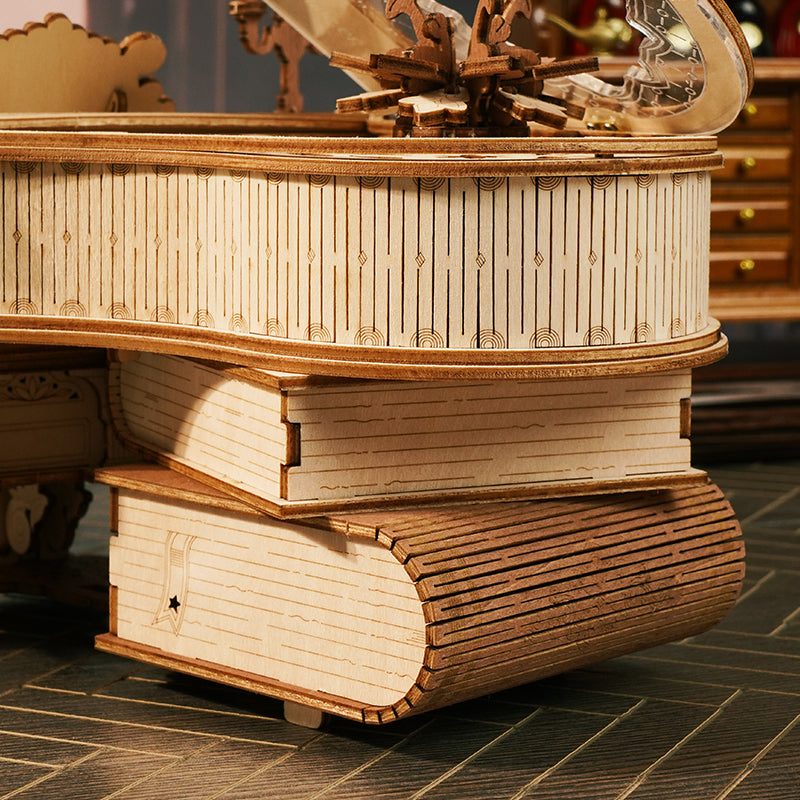
A 223-piece grand piano built around a real spring-wound music-box movement, with self-playing keys that move as the cylinder turns. Reviewers confirm the music box 'works great' and the overall fit is excellent — one called the finished object 'something I'd be willing to put on display.' The build runs about 7 hours across a couple of sittings, with clear, well-ordered instructions that are the category's best. The one real gripe is low-contrast laser-etching on the darker parts, so build under bright light. Beautiful, mechanical, forgiving, and about $45 — it's the kit I'd hand almost anyone.
- Genuinely plays music; the self-playing key action is charming
- Excellent, forgiving tolerances and clear instructions
- Photographs like a luxury object for a modest price
- Engraved part-labels on dark wood are hard to read
- Acrylic lid sometimes arrives cracked (replacements are easy)
- It's the music-box movement doing the playing, not bespoke mechanics
 4 photos
 ROKR Owl Clock (LK503)
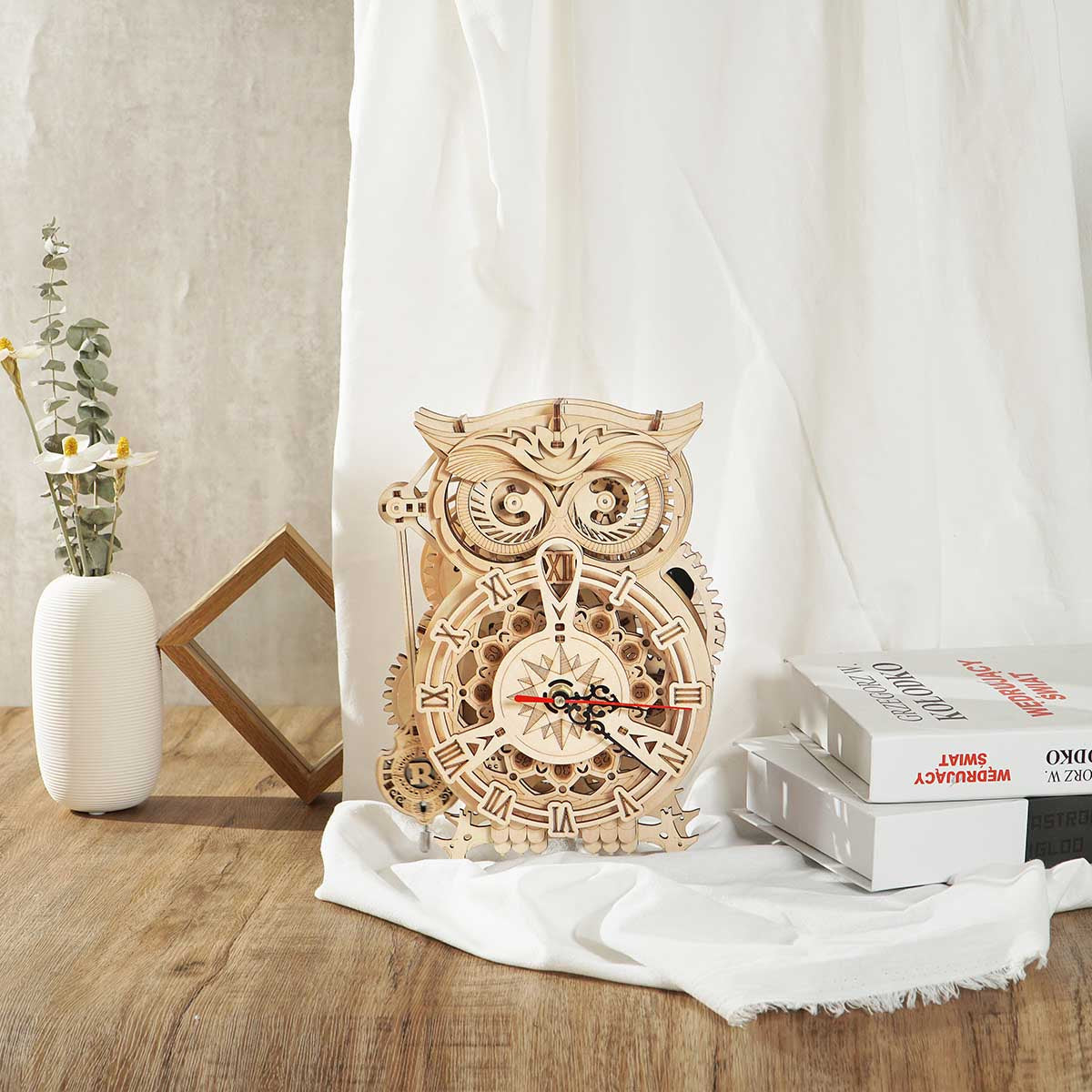
161 glue-free pieces that build a quartz-movement clock in an owl body, with the gear train visible through hollowed panels, a spring-driven pendulum, and a wind-up timer that actually rings. Owners report ~2-hour builds and that it 'works fine and is beautiful.' It's the rare kit that's both genuinely easy and genuinely mechanical — the perfect first build or supervised kid-and-adult project. Just calibrate expectations: the pendulum is a decorative flourish that won't swing indefinitely, not a regulating escapement. For ~$40 it's the best on-ramp to the hobby.
- Keeps real time and shows its gears working
- Short, low-frustration, glue-free build
- Great value and a great first kit
- Decorative pendulum doesn't swing forever
- Needs a battery for the movement (purists may scoff)
- Small scale means tiny, easy-to-lose parts
 4 photos
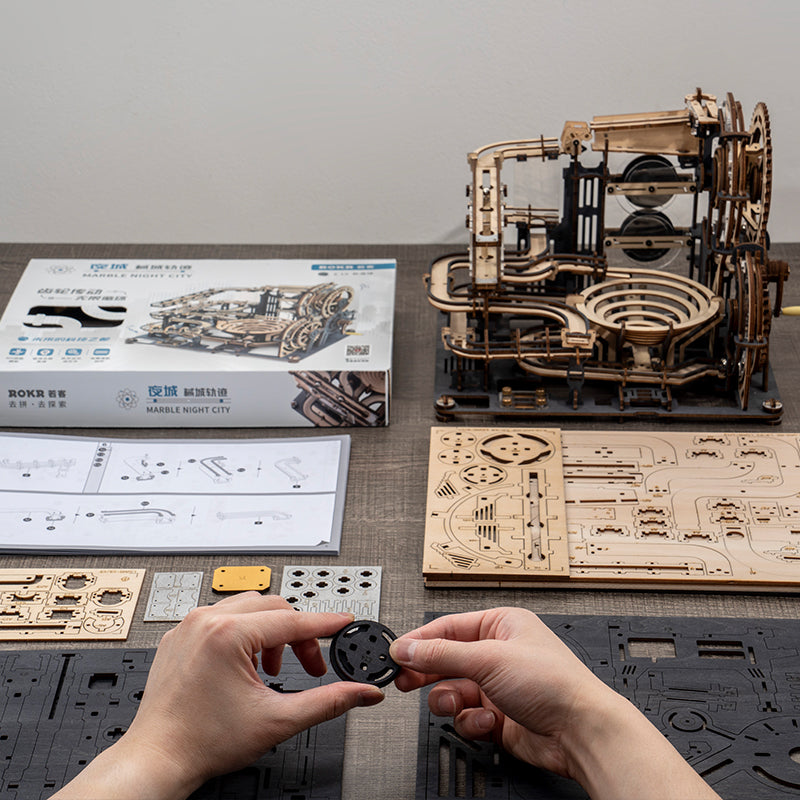
 ROKR Marble Night City (LGA01)
A ~294-piece neon-styled tower where marbles ride a lift to the top and gravity-feed back down a looping track for a continuous cycle — hypnotic when it's dialed in. Difficulty is a legit 4/5 and the build runs ~7 hours. The honest catch, echoed across reviews, is that the delicate track and lattice parts demand precise, patient assembly; a marginally misaligned section drops marbles off the rail, so budget time for tuning, not just building. Get it right and it's the most mesmerizing object in the guide. Get it wrong and you'll be re-seating track for an evening.
- Continuous self-recirculating marble loop is genuinely mesmerizing
- Striking display piece with the neon-city aesthetic
- Pure mechanism — no electronics needed for the run
- Delicate track parts; easy to misalign and drop marbles
- Needs patient tuning to run reliably
- Fragile lattice is unforgiving of rough handling

 4 photos
 ROKR Pinball Machine (EG01)
482 pieces that become a USB-powered wooden pinball table with working flippers, a spring plunger, live light-and-sound, and an electronic scoring system with an illuminated star indicator. It genuinely plays, and it's the kit people photograph. It is also brutally long: Robotime says 12 hours, an experienced builder reported closer to 20, and reviewers are candid that assembly frustrations stack up. The payoff is real but hard-won — this is the centerpiece you earn after smaller kits, not a starter and not a fast way to own a pinball table. At ~$199 (often on sale near $159), it's priced like the trophy it is.
- Actually playable with electronic scoring and light/sound
- Showstopper scale and detail — the trophy build
- Deeply satisfying once finished
- 12–20 hour build; frustrations accumulate
- Expensive; needs USB power
- Far too hard for beginners or kids
 4 photos
 UGears Hurdy-Gurdy
292 interlocking, glue-free pieces that build an actual playable medieval crank instrument, with visible gears working the bow and keys. This is the rarest thing in the guide: not a housing around an off-the-shelf movement but a real mechanism that makes real sound. Assembly is ~4–5 hours and UGears itself calls it a challenge for experienced constructors. The UGears caveats all apply in force — rougher plywood, tight joints, expect splinters and the odd snapped part — so this is a graduate build, not a first one. For the right patient builder, it's the most impressive machine here. ~$104.
- A genuinely playable instrument, not a façade
- All-wood, glue-free, battery-free engineering
- Mechanically the most impressive build in the guide
- Rough plywood; splinters and tight, fragile joints
- Demands experience and patience — not a first kit
- Premium price for a niche payoff
 4 photos
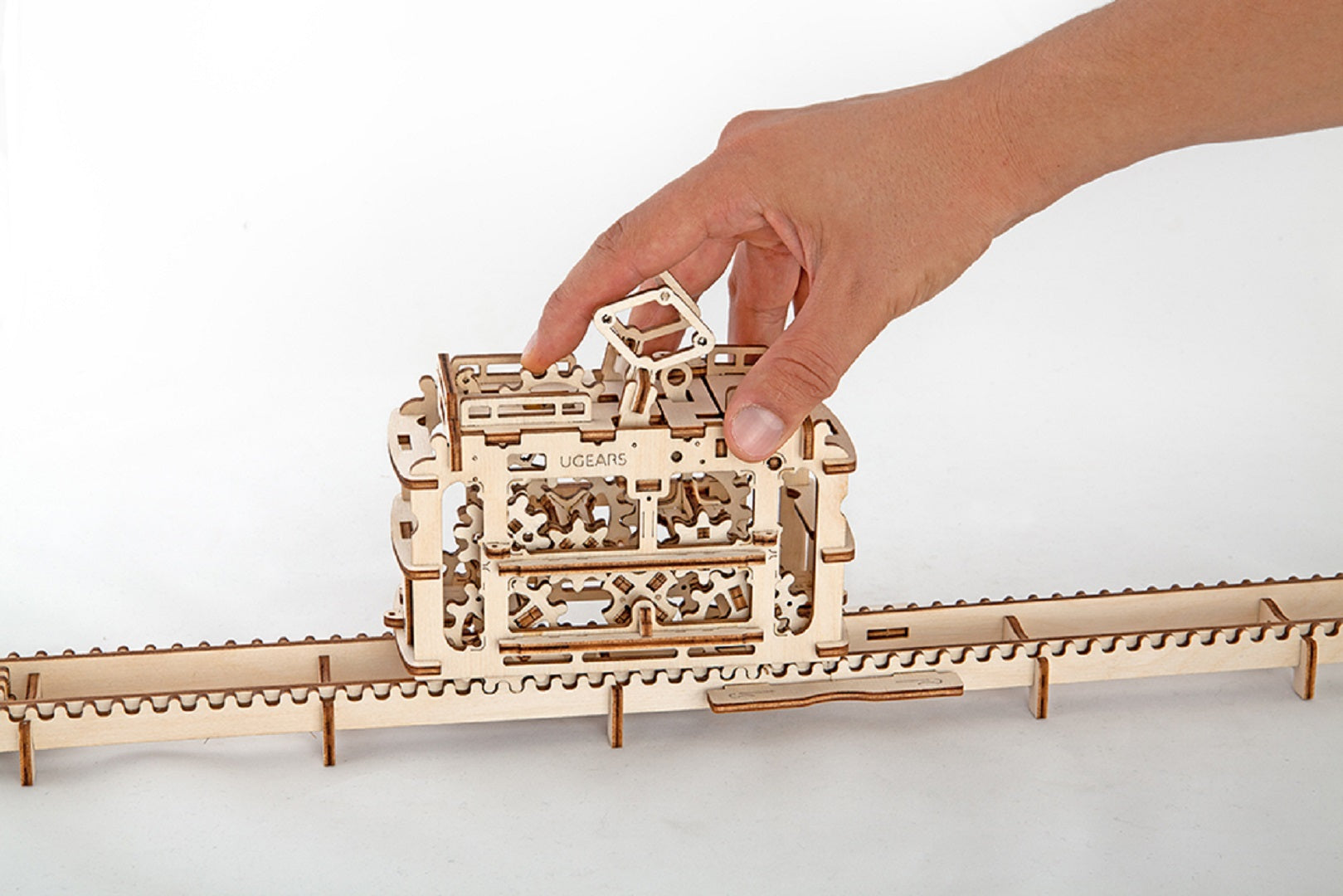
 UGears Tram (with rails)
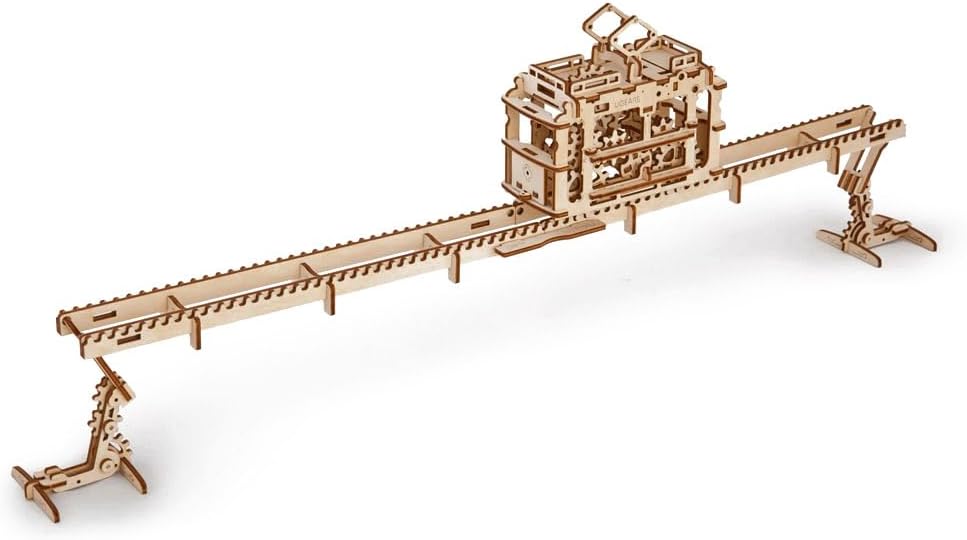
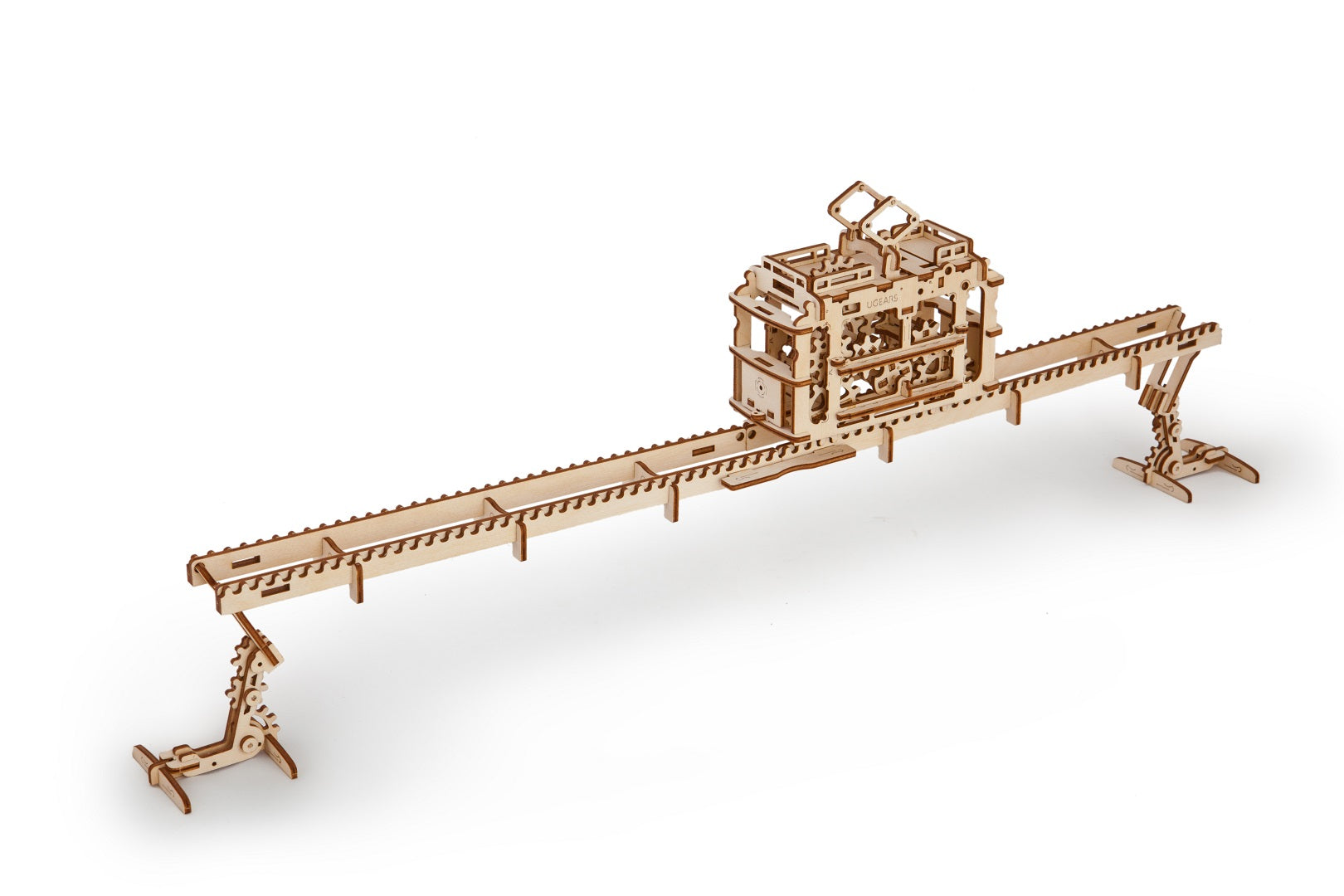
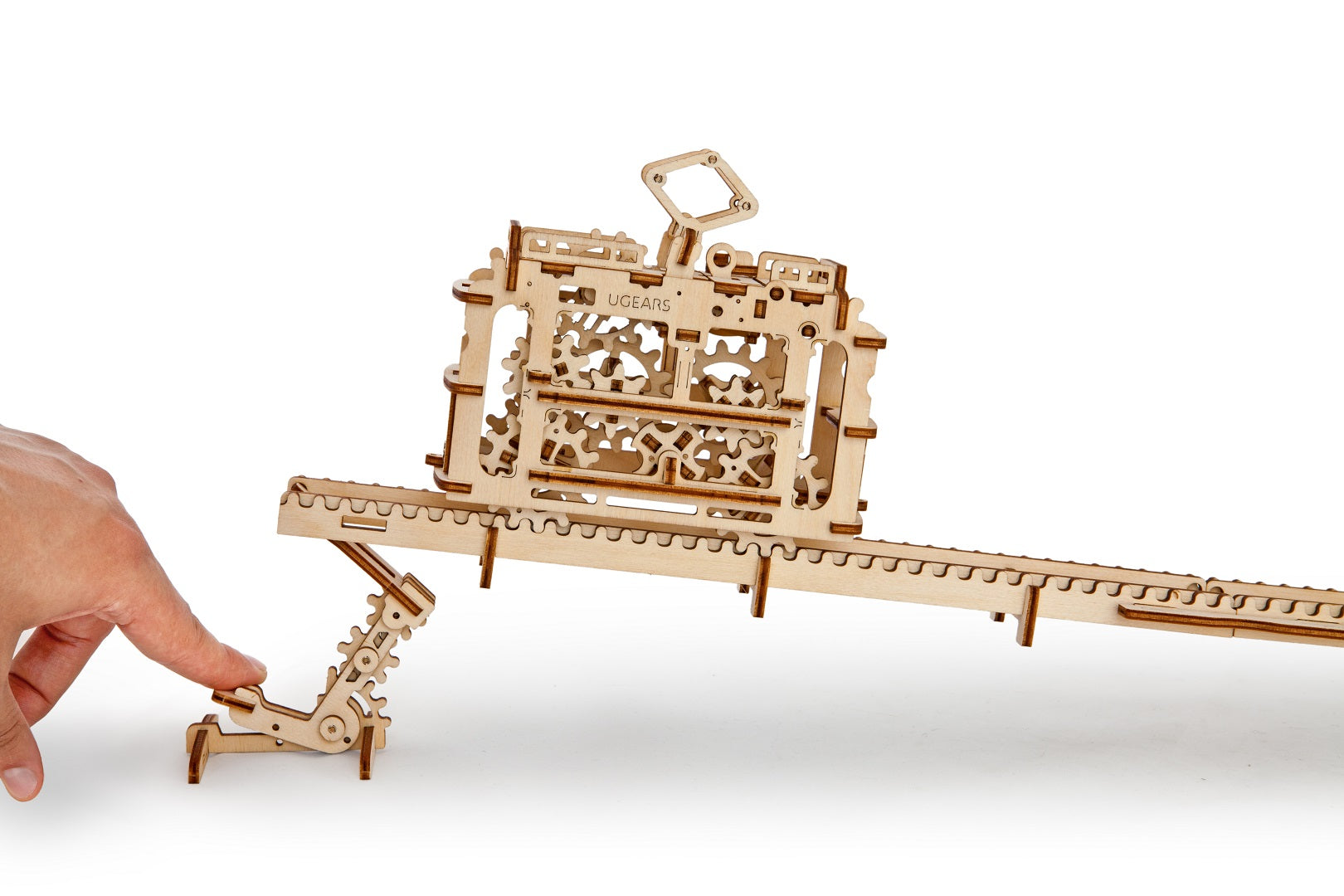
154 precision-cut parts build a working tram whose propulsion you can actually study: a rubber-band 'tram mode' or a gravity-driven 'funicular mode' where tilting the rails sends the car rolling. Reviewers praise it as good value that 'runs very well,' and note the sheets are used in order so you're not hunting for parts — unusually friendly for UGears. The standing UGears caveat holds: watch for splinters, because the plywood flakes. As entry-priced all-wood mechanical kits go, this is the one I'd point a curious builder to before they commit to a $100 UGears machine. ~$45–55.
- Two genuine working modes (rubber-band and funicular)
- Parts ordered sensibly; smoother than typical UGears
- Strong value for an all-wood mechanism
- Plywood splinters — sand as you go
- Rubber-band motor is modest; it's a demo, not a racer
- Standard UGears tight-joint fragility
 3 photos
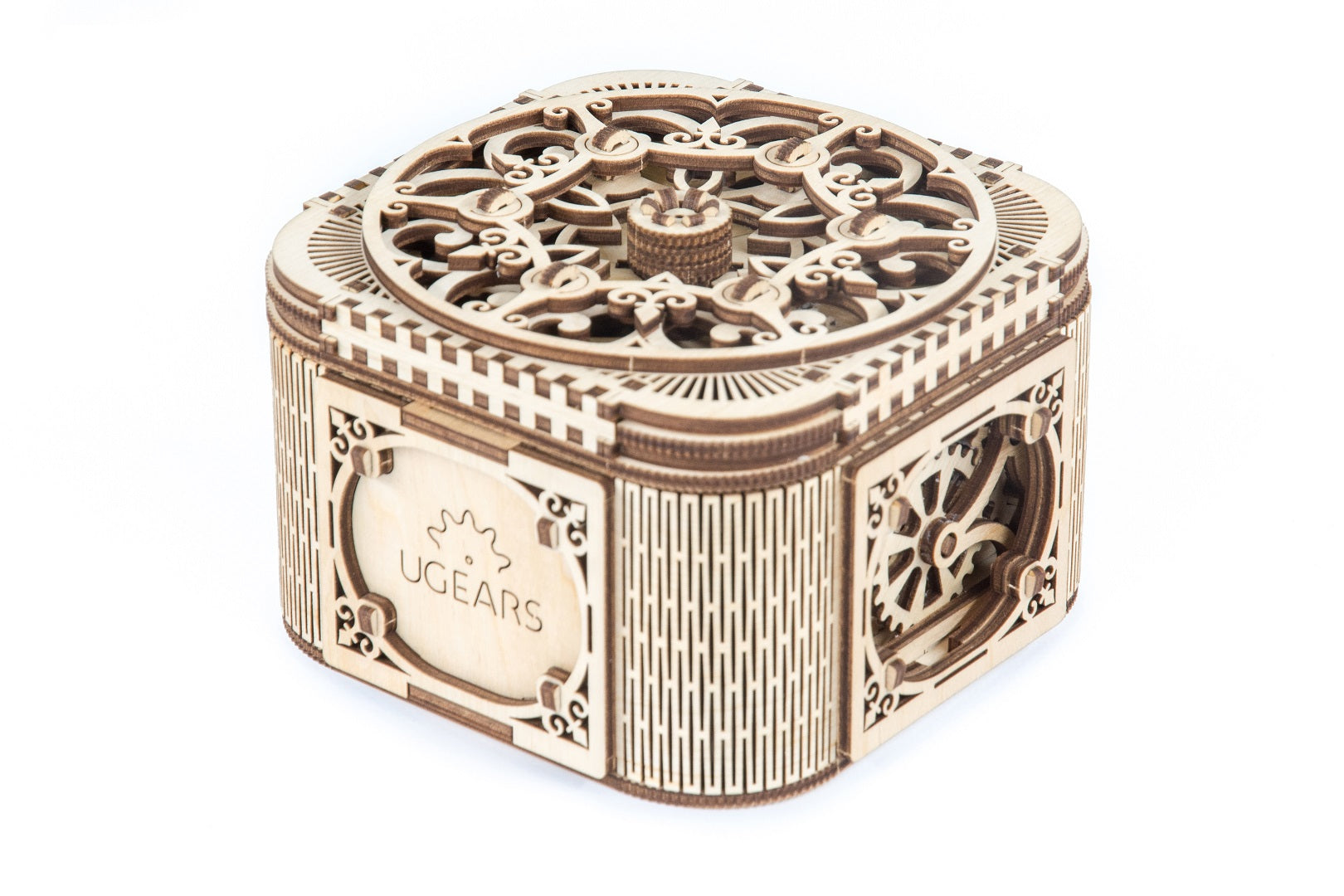
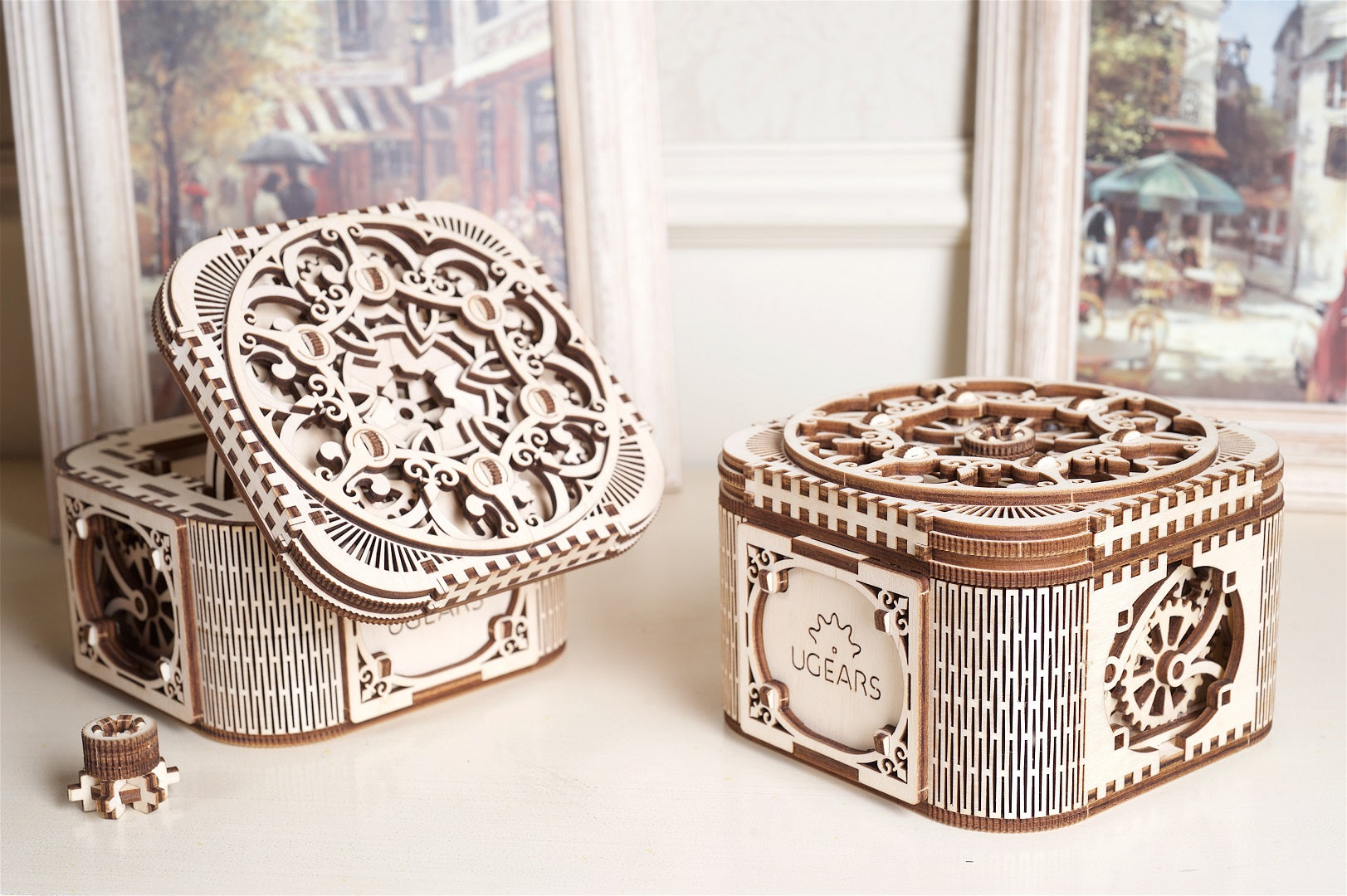
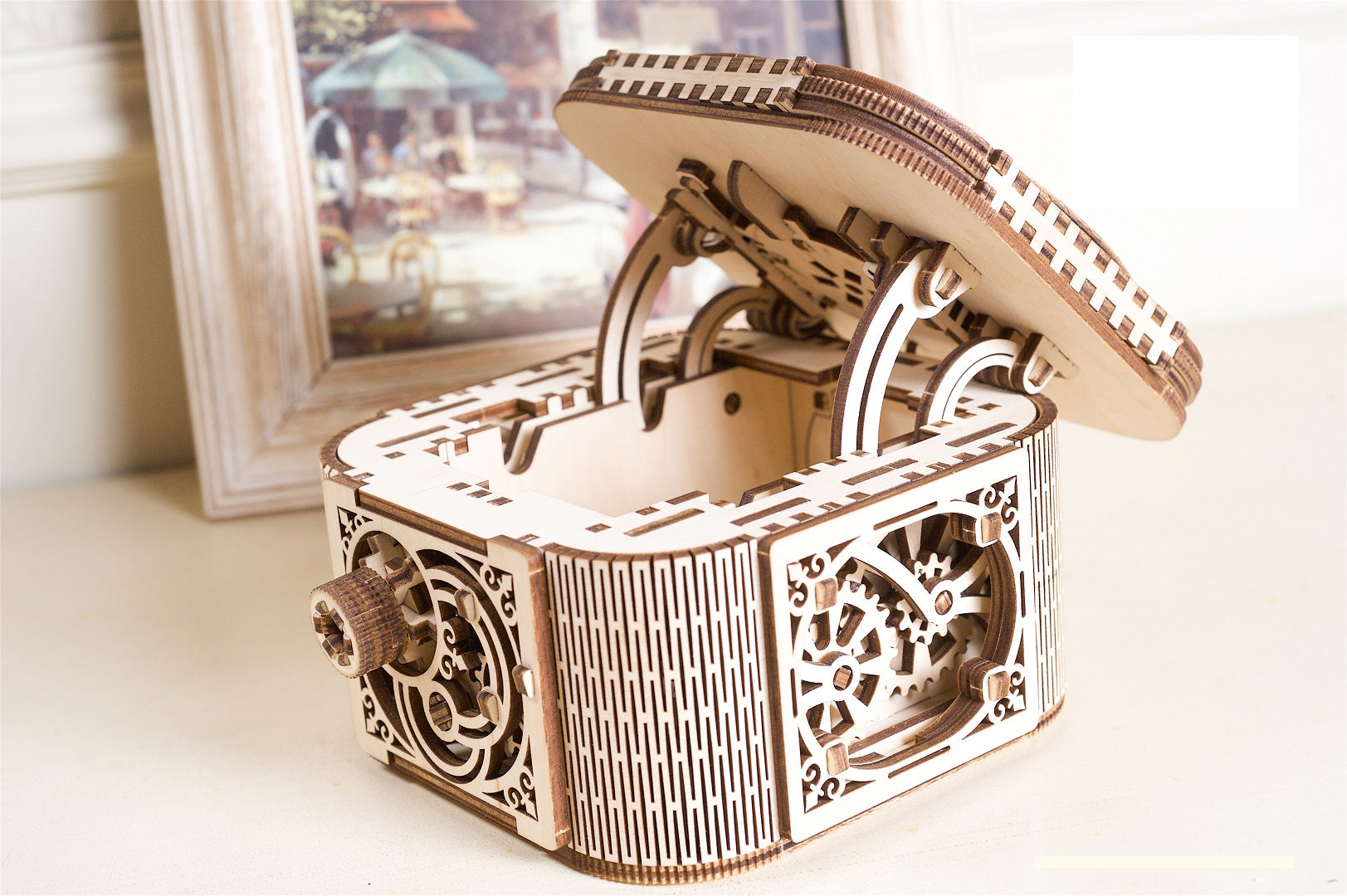
 UGears Treasure Box
190 glue-free pieces build a key-operated box with a visible gear mechanism: insert and turn the key, watch the gears lift the lid, reveal the compartment. It's a satisfying ~2–3 hour build that ends in an object with an actual function — a lockable keepsake box — which makes it a better gift than a pure display piece. The mechanism is genuinely clever and the no-glue assembly is clean for UGears. Usual brand caveats on plywood roughness apply but the part count is moderate, so breakage risk is lower than the big kits. Around $69, it's a strong mechanism-as-gift pick.
- Working key-and-gear locking mechanism you can use
- Moderate, glue-free build that ends in a functional object
- Makes a memorable gift — a box that does something
- UGears plywood roughness / splinter risk
- Not a high-security lock — it's a novelty mechanism
- Pricier than its part count alone suggests

 4 photos
 ROKR Dream Gift Factory (music-box automaton)
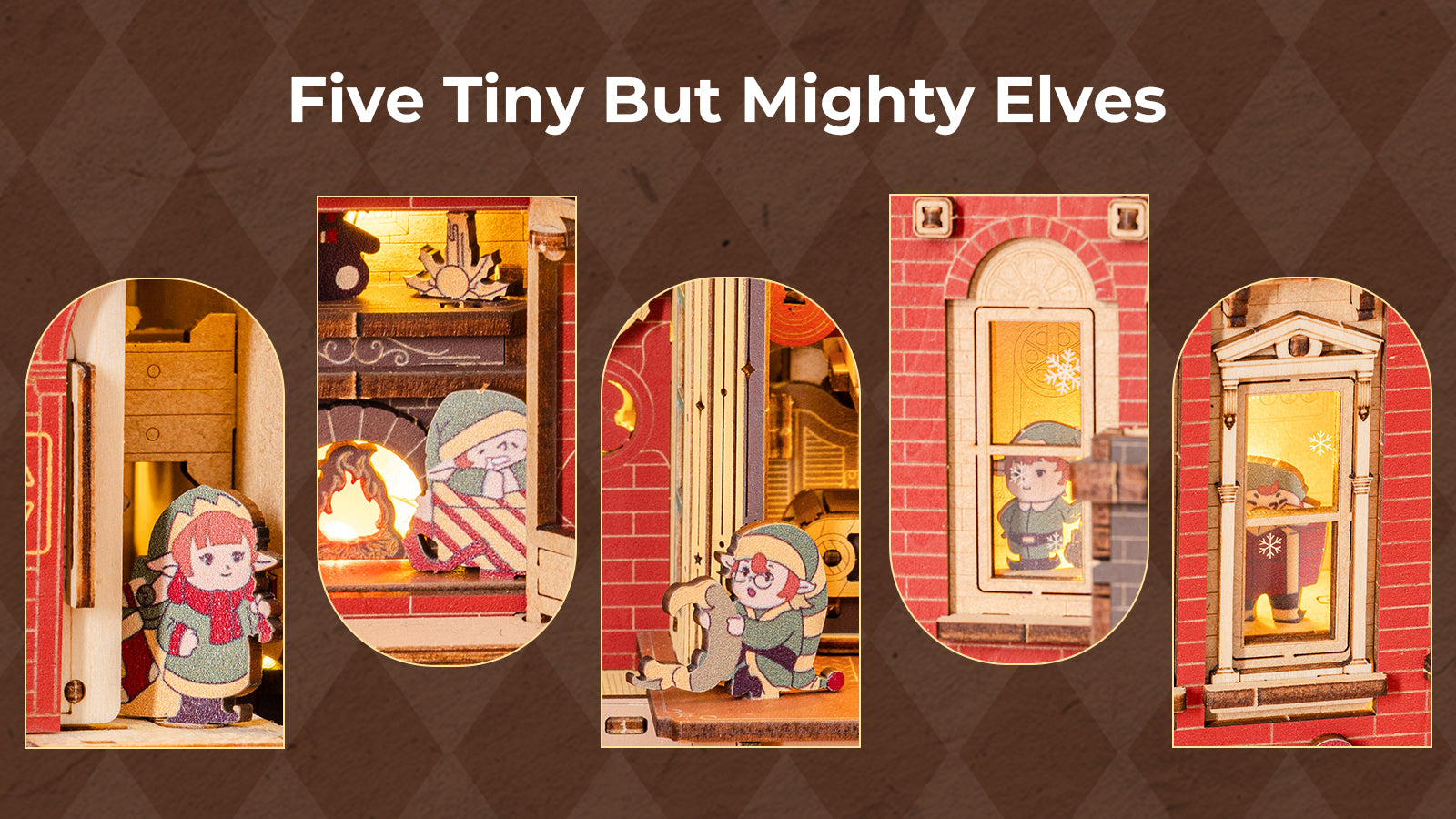
A 449-piece, 6-star (top difficulty) kit that pairs built-in music with motorized moving parts to make a true kinetic diorama — the closest ROKR gets to a proper automaton. A hands-on reviewer called the result 'cute and decorative while being functional and sturdy' and described a 'difficult yet relaxing build with nearly no mishaps.' It's a ~12-hour commitment and the part count means real repetition, so it suits builders who enjoy the long haul. If you want motion and music in one display object and you've got a few kits under your belt, this is the pick. ~$70.
- Motorized moving parts plus music — a real automaton diorama
- Reviewer-confirmed sturdy, low-mishap build
- High detail for the price
- Top-tier difficulty; ~12 hours with repetitive steps
- Motorized means it's not the all-wood purist ideal
- Not beginner-friendly
 4 photos
 Robotime Vitascope (movie-projector)
183 pieces build a charming early-cinema 'movie projector': turn the hand crank and a short strip of film animates, flip-book style, via a working reel mechanism. It's a delightful, distinctive payoff that most kits in this category can't match — a mechanism that produces an image, not just motion. The build is mid-weight and approachable, and the finished piece is a real conversation-starter on a shelf. It's more niche than the clocks and music boxes, but for someone who'd love a tiny working zoetrope-meets-projector, nothing else here scratches that itch. Around $40.
- Unique animating mechanism — produces a moving image
- Approachable mid-weight build at a friendly price
- Genuine conversation-piece on a shelf
- Niche appeal versus the broadly-loved clocks/pianos
- The 'film' novelty is short and repeats
- Hand-crank reel needs careful seating to run smoothly
 4 photos
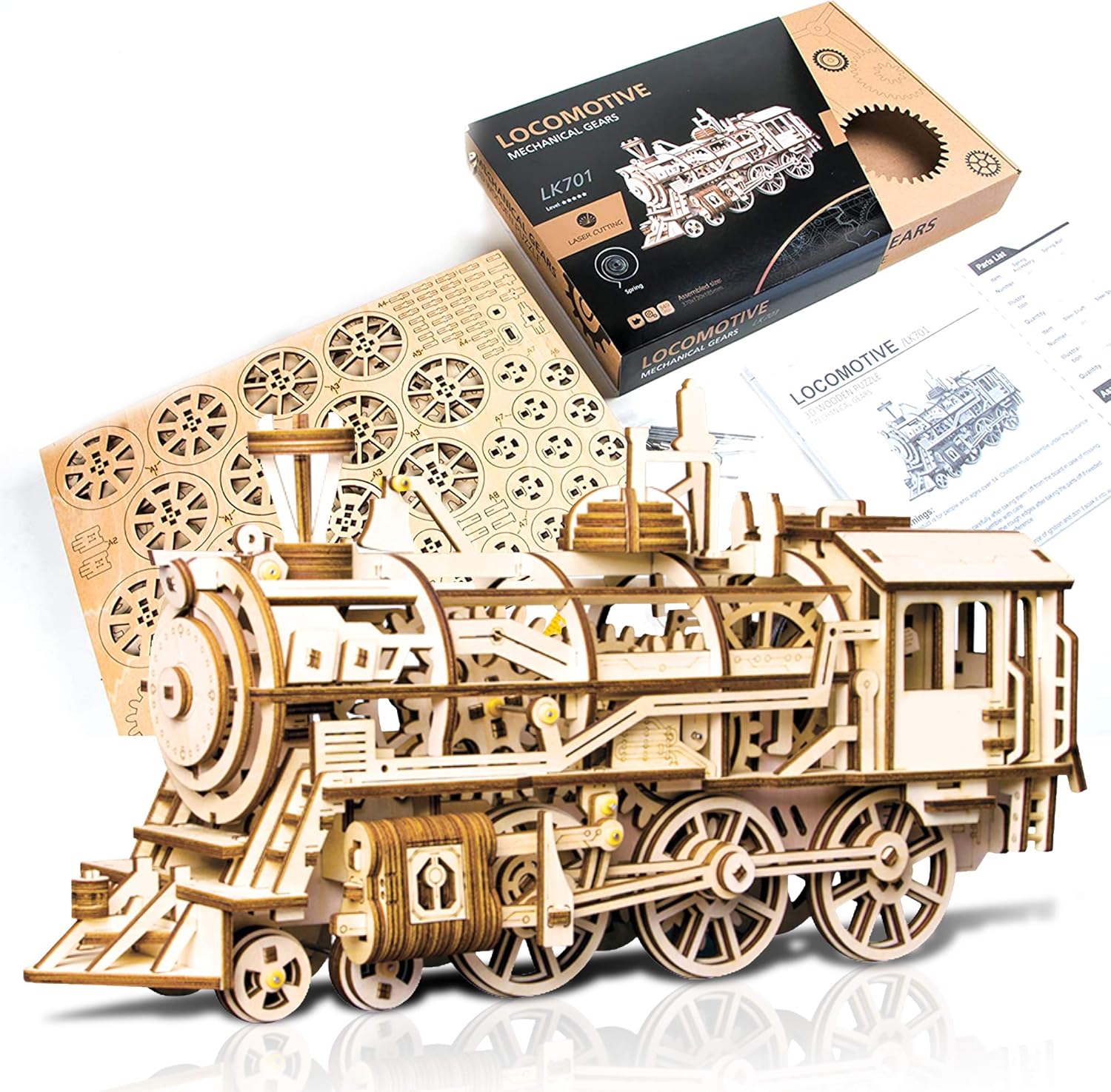
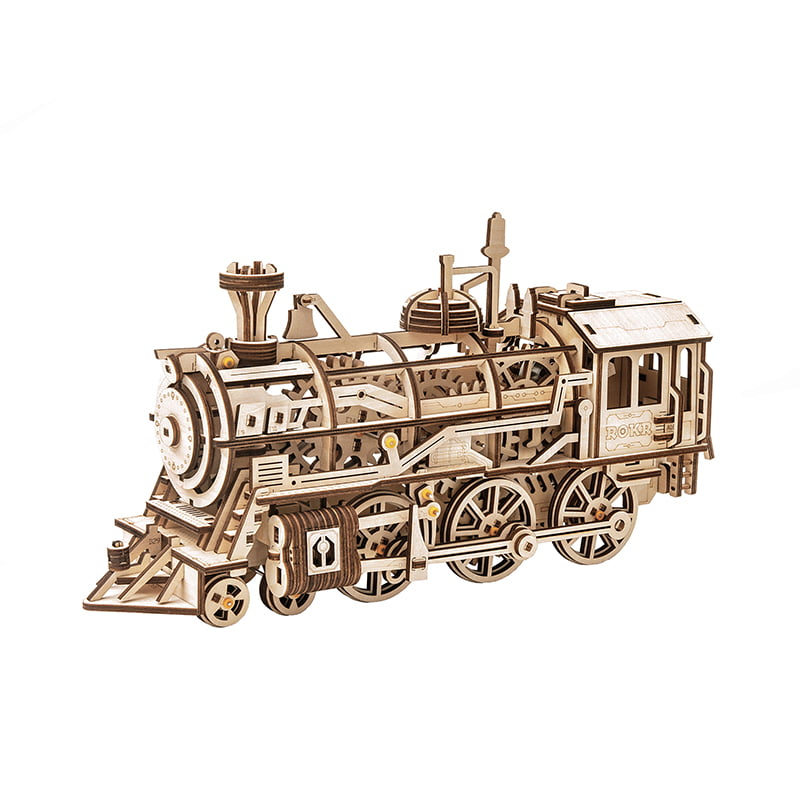
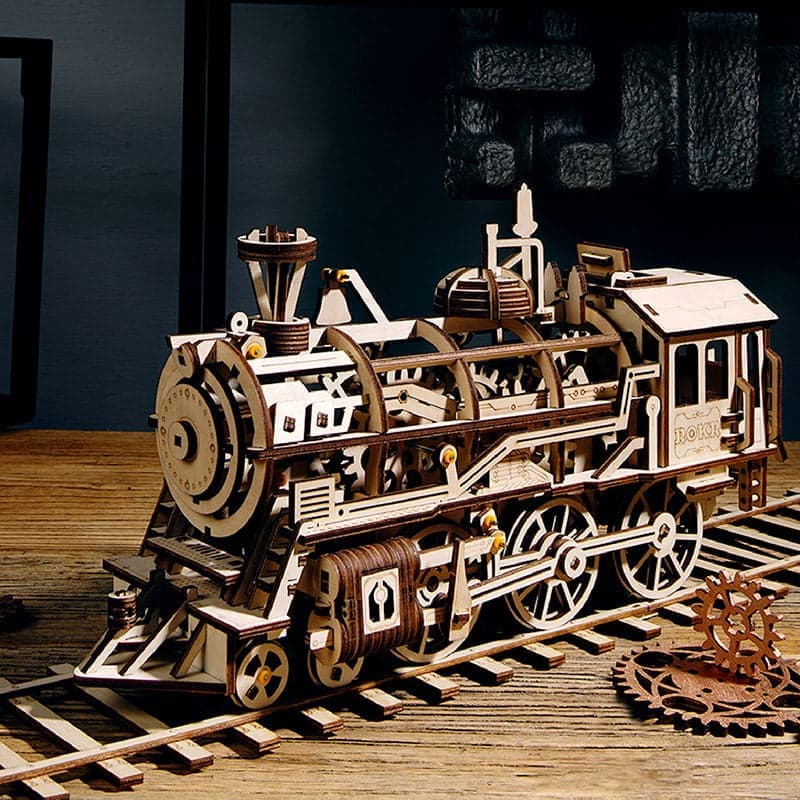
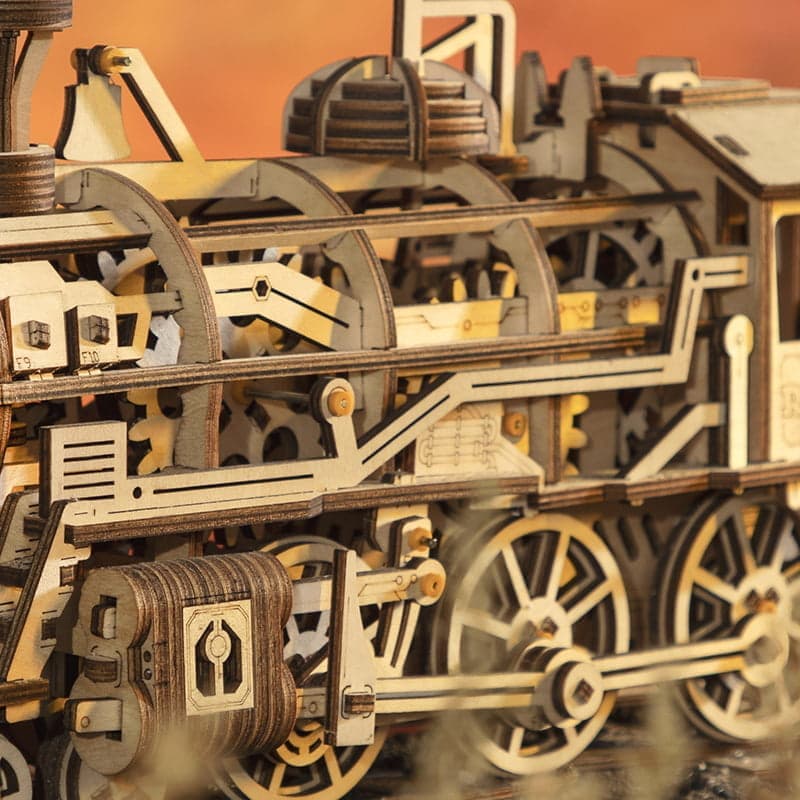
 ROKR Locomotive (LK701)
A spring-driven steam locomotive with a full mechanical gear transmission — wind it up and it runs. At around $30 it's one of the cheapest ways to get a real working mechanism rather than a static shape, which is exactly what makes it a good toe-in-the-water gift. It's glue-free, the part count is manageable, and the wind-and-go payoff is immediate and kid-pleasing (with adult help on the fiddly bits; the 14+ label is about small parts). It won't dazzle a veteran, but as a first 'oh, it actually moves' kit, it does the job cheaply and reliably.
- Real spring-driven mechanism for ~$30
- Immediate, kid-pleasing wind-and-go payoff
- Manageable, glue-free build
- Modest scale and detail; won't impress veterans
- Spring motor is short-run
- Small parts still mean adult help for younger builders
At a glance
| kit | maker | pieces or time | price | best for |
|---|---|---|---|---|
| ROKR Magic Piano (AMK81) | ROKR / Robotime | 223 pcs / ~7 hrs | ~$45 | Best overall |
| ROKR Owl Clock (LK503) | ROKR / Robotime | 161 pcs / ~2 hrs | ~$40 | Best beginner |
| ROKR Marble Night City (LGA01) | ROKR / Robotime | ~294 pcs / ~7 hrs | ~$60 | Best marble run / kinetic |
| ROKR Pinball Machine (EG01) | ROKR / Robotime | 482 pcs / 12–20 hrs | ~$199 (sale ~$159) | Best splurge centerpiece |
| UGears Hurdy-Gurdy | UGears | 292 pcs / ~4–5 hrs | ~$104 | Best all-wood working instrument |
| UGears Tram (with rails) | UGears | 154 pcs / 3–5 hrs | ~$45–55 | Best all-wood value |
| UGears Treasure Box | UGears | 190 pcs / 2–3 hrs | ~$69 | Best working puzzle-box |
| ROKR Dream Gift Factory | ROKR / Robotime | 449 pcs / ~12 hrs | ~$70 | Best motorized automaton |
| Robotime Vitascope | Robotime | 183 pcs / mid | ~$40 | Best novelty mechanism |
| ROKR Locomotive (LK701) | ROKR / Robotime | ~mid / ~3 hrs | ~$30 | Best low-cost entry / kids (supervised) |
Questions, answered
What is a 3D wooden puzzle kit?
It's a flat-pack of laser-cut plywood or fiberboard sheets, pre-scored into parts, that you punch out and assemble — usually without glue — into a working machine: a clock that ticks, a marble run that loops, a music box that plays, a vehicle that rolls. The defining feature of the good ones is that they do something, not just look like something. Building it is the product; expect anywhere from one evening to several weekends.
ROKR vs UGears — which is better?
Different strengths. ROKR (from Robotime) cuts cleaner, has more forgiving tolerances and the best instructions, and is the safer choice for beginners and gifts, mostly in the $30–70 range. UGears builds more ambitious all-wood, battery-free mechanisms — combination locks, playable instruments, funicular trams — that are more impressive when finished but use rougher plywood with tight, fragile joints. Start with ROKR; graduate to UGears once you have the patience and a craft knife.
What's the best 3D wooden puzzle kit for beginners?
The ROKR Owl Clock (LK503, 161 pieces, ~$40). It builds in about two hours, it's glue-free, it's hard to ruin, and it's genuinely mechanical — a quartz movement keeps real time while you watch the gears turn. It teaches the format without the frustration. The ROKR Magic Piano (~$45) is the next step up and nearly as forgiving.
Do these kits need glue?
Mostly no. The mechanical kits from both ROKR and UGears are designed to be glue-free, held by friction joints, wooden pegs, or (on some UGears kits) trimmed toothpicks — and moving parts must stay glue-free to function. Some purely decorative kits ask for a drop of wood glue at stress points, which is fine. The rule: glue anywhere near a gear or moving joint is a defect, not an instruction.
What's the best working clock or kinetic kit?
For a clock, the ROKR Owl Clock (LK503) — it keeps real time and shows its gear train. For pure kinetics, the ROKR Marble Night City (LGA01) runs marbles in a continuous gravity-fed loop and is mesmerizing once tuned. If you want an all-wood, no-battery mechanism, the UGears Hurdy-Gurdy is an actual playable instrument and the most impressive machine of the bunch.
Are 3D wooden puzzle kits hard to build?
It ranges from one easy evening to a multi-weekend slog. Small kits (Owl Clock, simple music boxes) are genuinely easy. Mid kits (Magic Piano, Tram, marble runs) take 4–7 hours and some patience. Flagships like the Pinball Machine run 12–20 hours and frustrate even experienced builders. The biggest difficulty multipliers are UGears' tight, fragile joints and any kit with low-contrast part labels — read each full step before placing a part.
What's the best kit for kids?
Mind the ratings: most mechanical kits are 14+, which is about fiddly, breakable small parts, not reading level. For solo younger kids, choose UGears coloring-model kits (ages 5+) or palm-sized U-Fidgets. For a capable 10–13-year-old building with an adult, the ROKR Owl Clock or the ~$30 Locomotive is great. Don't hand a child the Pinball Machine or a complex UGears kit — that's a recipe for a snapped part and tears.
How long do they take to build?
Rough tiers: small kits 2–3 hours, mid kits 4–7 hours, flagships 12–20 hours. Manufacturer estimates assume nothing goes wrong, so add 30–50% if it's your first kit or you're a perfectionist. The Pinball Machine's stated 12 hours stretched to ~20 for an experienced builder. Buy the kit for the build time, not just the finished object.
Are these kits durable?
Once assembled and settled they're sturdy as display pieces, with two caveats: humidity makes wood swell and shift (a marble run may need re-tuning across seasons), and moving parts like gear teeth wear with heavy play. A little wax or graphite on gear contacts helps. Treat a finished kit as a kinetic sculpture you occasionally maintain, not an indestructible toy. Both majors supply replacement parts when something snaps.
What's the best splurge centerpiece?
The ROKR Pinball Machine (EG01, 482 pieces, ~$199, often on sale near $159). It's a USB-powered wooden table with working flippers, a spring plunger, electronic scoring, and light-and-sound — and you actually play it after building. Nothing else in the consumer wooden-kit world matches its scale-plus-interactivity. Earn it after a few smaller builds; it's a 12–20 hour commitment.
Do the mechanisms really work?
Yes, on the well-designed kits. ROKR clocks keep time and show their gears; the Magic Piano genuinely plays (reviewers confirm 'the music box works great'); the Marble Night City loops marbles continuously once tuned; the Pinball Machine really plays with electronic scoring; and the UGears Hurdy-Gurdy is a playable instrument. The honest asterisks: most ROKR 'music boxes' use a standard spring-wound movement housed in the wooden build, and a marble run needs careful tuning or marbles jump the track.
Where can I buy them, and does Puzzlewick sell them?
Puzzlewick sells nothing and takes no cut — we're a fan library that points you at the makers. Buy direct from Robotime/ROKR (robotimeonline.com, rokr.robotime.com) and UGears (ugears.us), or from major retailers like Amazon and Woodcraft. Prices fluctuate and the brands run frequent sales, so the figures here are approximate (~) — check the maker's current listing before you buy, especially on the pricier kits like the Pinball Machine.
Dax's verdict
If you take one thing from a critic who has watched this category fill with shape-shaped filler: buy for the mechanism and buy for your temperament. The genre's joy is a machine you made with your hands that ticks, loops, or plays — so skip the static jigsaws-in-wood and choose something that moves. For most people, the ROKR Magic Piano is the sweet spot of beauty, working mechanism, forgiving fit, and ~$45 price; the Owl Clock is the gentlest on-ramp; the Marble Night City is the showpiece if you'll tune it; and the Pinball Machine is the trophy you earn. UGears makes the more impressive machines — the Hurdy-Gurdy genuinely plays, the locks genuinely lock — but its rough plywood and unforgiving joints make it a graduate sport, not a starter. Match the kit to the patience of the person building it and almost everyone ends up happy. One last reminder: Puzzlewick is an editorial library, not the seller. Puzzlewick may earn from qualifying Amazon purchases where a tagged Amazon link appears; maker and source links are editorial unless plainly labeled otherwise. Compensation never changes the verdict. Prices wobble and the brands discount constantly, so treat every figure here as approximate and confirm at checkout before you buy.
Research ledger 23 sources · reviewed 2026-07-17
Specifications, rules, current product information, community experience, and contrary evidence were checked against the sources below. Commercial links are kept separate from editorial evidence.
- robotimeonline.comrobotimeonline.com/products/rokr-magic-piano-mechanical-music-box-3d-wooden-puzzle-amk81
- the-gadgeteer.comthe-gadgeteer.com/2024/04/26/rokr-magic-piano-puzzle-kit-review-a-beautiful-musical-puzzle
- amazon.comamazon.com/dp/B0C7KR7PGL?tag=puzzlewick-20
- robotimeonline.comrobotimeonline.com/products/rokr-owl-clock-lk503-battery-mechanical-gears-kit
- amazon.comamazon.com/dp/B08HGLZMYV?tag=puzzlewick-20
- rokr.robotime.comrokr.robotime.com/product/rokr-marble-night-city-lga01
- amazon.comamazon.com/dp/B0948TSRGS?tag=puzzlewick-20
- edshobby.comedshobby.com/products/robotime-rokr-marble-night-city-marble-run-3d-wooden-puzzle-kit
- robotimeonline.comrobotimeonline.com/products/rokr-3d-pinball-machine-3d-wooden-puzzle-eg01
- geekdad.comgeekdad.com/2024/02/become-a-puzzle-and-pinball-wizard-with-the-rokr-pinball-machine-3d-wooden-puzzle
- amazon.comamazon.com/dp/B0C2DBQKCQ?tag=puzzlewick-20
- the-gadgeteer.comthe-gadgeteer.com/2025/05/07/rokr-dream-gift-factory-wooden-music-box-kit-review
- ugears.usugears.us/products/ugears-hurdy-gurdy
- woodcraft.comwoodcraft.com/products/ugears-hurdy-gurdy-model-kit
- amazon.comamazon.com/dp/B078421M5Y?tag=puzzlewick-20
- ugears.usugears.us/products/tram
- amazon.comamazon.com/dp/B071W2JSTC?tag=puzzlewick-20
- ugears.usugears.us/products/ugears-treasure-box
- amazon.comamazon.com/dp/B07Z6DGW6F?tag=puzzlewick-20
- robotimeonline.comrobotimeonline.com/products/rokr-mechanical-gears-locomotive-lk701
- speedcube.nlspeedcube.nl/en/what-are-the-best-brands-for-wooden-building-kits
- ugears.usugears.us/blogs/news/why-ugears-which-model-maker-to-choose
- amazon.comamazon.com/dp/B07Y9CYVJV?tag=puzzlewick-20

I'll be honest with you — flattery is boring.

Keep exploring
The next smart rabbit holes.
❖ Topic PathMechanical Puzzles: compare the whole shelfThe right mechanical puzzle matches the solver's patience, not simply the maker's difficulty number. These guides translate...Buying GuideROKR Mechanical Wooden Building Kits: Difficulty Guide (2026)Pick your difficulty, claim your hours—build the automaton that matches your hunger.Buying GuideSiebenstein-Spiele Wooden Puzzle Boxes: Difficulty Levels & Starter GuideFrom German laser-cut craft to puzzles that reward patience over brute force—a curator's roadmap for choosing your first Siebenstein box.