Best Speed Cubes for Beginners, Ranked (2026)
Four hundred years ago, a craftsman solved the puzzle box—then spent the rest of his life refining it. This is the speedcube guide in that lineage: the magnetic 3x3s ranked from entry to apex, where nine dollars closes the gap between tool and instrument, and everything beyond is refinement, not revolution.

AI-assisted curator persona · research and editorial responsibility: Robert Pruitt · how this guide was made
Last editorial refresh: 2026-06-13 Gold-standard QA: 2026-07-17 24 sources reviewed Affiliate links checked during gold-standard pass

The short answer
A speedcube is a modern 3x3 engineered to turn fast, cut corners, and snap into place with internal magnets — everything the stiff retail Rubik's brand is not. For your first one, the answer is almost boring in its certainty: the MoYu RS3 M V5 (around $9) is the best beginner cube for nearly everyone. It is light, fast, forgiving, and so good out of the box that reviewers swear they would have paid $25 for it. If you want a flagship feel without flagship anxiety, the GAN 356 ME (~$19) gives you the famous GAN smoothness and adjustability at a fraction of the cost. The QiYi MS (~$8) is the rock-bottom champion when every dollar counts. Save the GAN 12 MagLev (~$59) and other premium toys for after you can solve — they make a fast cuber faster, not a beginner better. Whatever you buy, the cube is only half the practice. Learn the beginner layer-by-layer method first (J Perm and Cube.Academy are the dojos of choice), then graduate to CFOP. The student who masters one humble cube outpaces the one who collects ten.
Decision map
Choose in thirty seconds
Best overall budget beginner cube — the default first speedcube for almost everyone
Best premium-feel pick under $20 — GAN smoothness without the flagship tax
Best ultra-budget cube — the rock-bottom champion when every dollar counts
In the Edo period, a craftsman carved a puzzle box and sealed it completely. The answer was hidden, yes—but also the question of how to hide it well enough that the seeker's hands did the thinking. Four hundred years later, we ask the same thing of speedcubes.
The retail Rubik's brand, built to toy specifications, was never meant to be solved quickly. It is stiff. It locks. It punishes the hand for imprecision instead of forgiving it. A true speedcube is a different object entirely—lighter, engineered with rounded internal geometry so the layers slip past misalignment, magnetized so each face snaps into place, and tunable so you can shape it to your own turning. When you hold both in your palm, the difference is not philosophy. It is craft.
The beautiful truth of 2026 is that this transformation costs nine dollars. The single most important upgrade from retail to genuine magnetic speedcube is within reach of any hand. Beyond that, the prices climb—nineteen, twenty-five, fifty-nine dollars—but you are paying for refinement, not revolution. A flagship is a magnificent instrument in trained hands. In untrained hands, it does nothing a nine-dollar cube cannot do. The dojo's first lesson is to know the difference between the two.
This guide walks the full lineage. Ten real, verifiable cubes, ranked by need: best overall, best premium, best when every dollar counts, best for the young seeker, the flagship for those who insist. Each carries real prices and real places to buy from the makers themselves. But before any of it: the cube is only half the path. Buy it. Then learn the layer-by-layer method. Let it become automatic. Then climb to CFOP. The student who masters one humble cube will always outpace the one who collects ten.
Start here, then go deeper
You are in the right cabinet.
 ⌂ Topic PathFamily and Gateway Games: compare the whole shelfA good family game gets everyone playing quickly without becoming disposable after three nights. These guides prioritize clear...
 Buying GuideBest 3D Wooden Puzzle Kits, Ranked (2026)Flat-pack wood machines that actually move — but not all of them deserve the hype. Here's which ones survive skepticism.
 Best OfBest Jigsaw Puzzles for Adults, Ranked (2026)A three-decade reference desk curator's ledger of the cardboard worth a fortnight of evenings and the wooden heirlooms worth passing down...
What actually makes a "speed cube" different from a Rubik's brand cube?
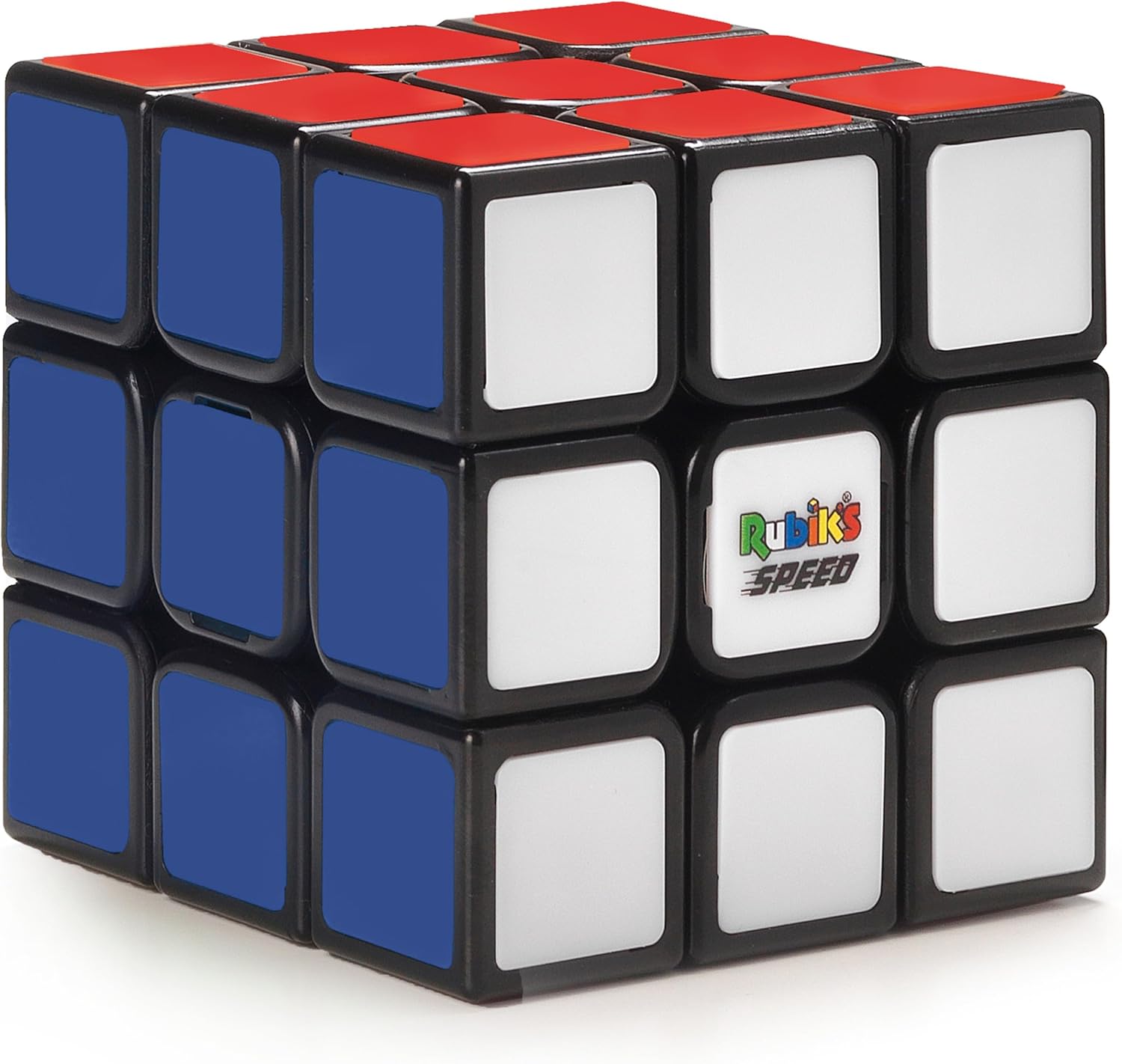
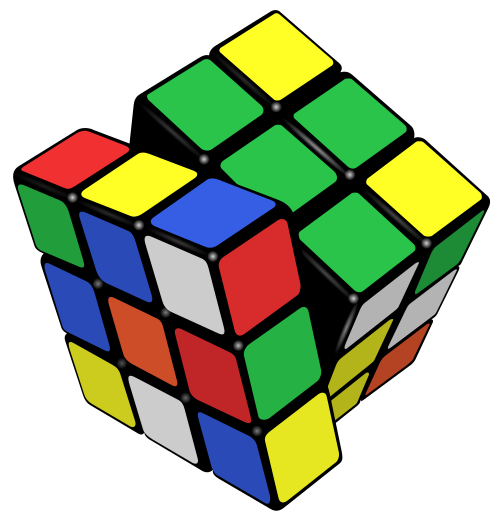
Pick up a retail Rubik's brand cube and a MoYu RS3 M side by side, and your hands will teach you more than any spec sheet. The difference lives in four places: corner cutting, magnets, turning smoothness, and adjustability.
Corner cutting is the heart of it. When you turn a layer, the layer beneath is rarely perfectly aligned — it sits a few degrees off. A retail Rubik's cube, faced with that misalignment, locks up or pops a piece loose. A speedcube simply slices through it, the rounded internal geometry letting the layer rotate even when the cube is visibly crooked. This is why fast solvers can blur through dozens of moves without pausing to straighten the cube. Modern speedcubes cut both forward and in reverse; the legendary DaYan GuHong was the first cube ever to manage reverse corner cutting, and that innovation rippled through every cube that followed.
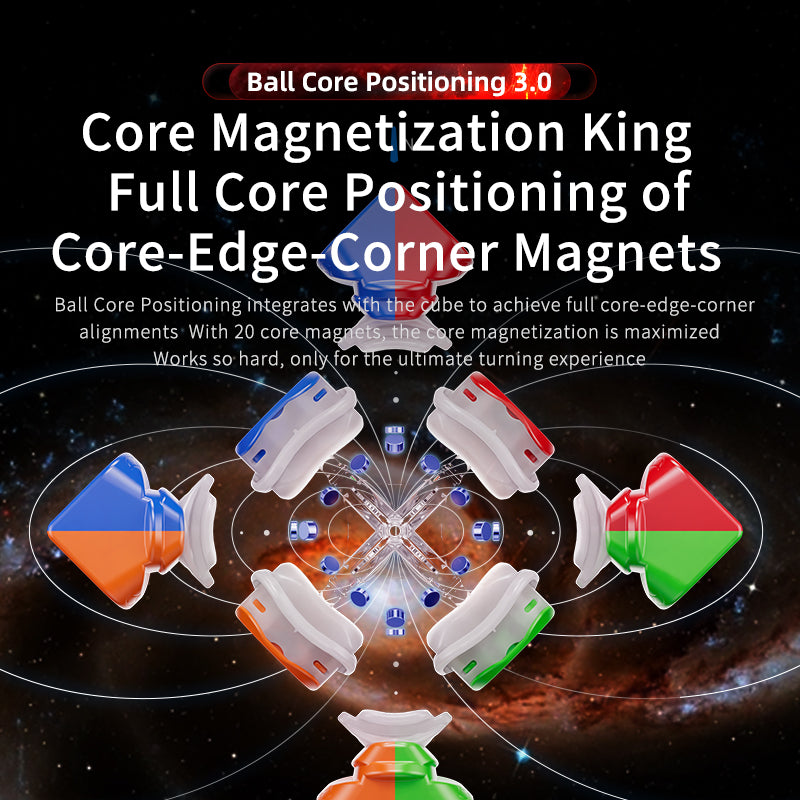
Magnets are the second revolution. Inside each corner and edge piece of a modern speedcube sit tiny magnets, polarity-matched so that as a layer completes its turn, the pieces gently snap into alignment. The effect is twofold: the cube stops itself cleanly at 90 degrees instead of overshooting, and the hand learns to feel that click as a checkpoint. Before 2016, magnets were a hobbyist modification; today every cube worth owning ships with them factory-installed. Some flagships now place magnets in the core itself — "ball-core" and core-magnet designs — for an even more controlled stop.
Smoothness comes from better plastic, precision molding, and lubricant. A good speedcube turns with a quiet, buttery glide where a Rubik's brand grinds. Adjustability is the final gift: most speedcubes let you tune spring tension and magnet strength to taste, so the same cube can feel loose and fast or tight and stable. A retail Rubik's offers none of this — it is one fixed, stiff experience.
The lesson is simple. The Rubik's brand sells a toy; the speedcube makers sell an instrument. You would not learn the violin on a plank with strings nailed to it.
A craftsman's tool does not fight the craftsman — it disappears into the work.
Place a good speedcube in a beginner's hand and watch their solve times fall — not because they grew faster, but because the tool finally stopped working against them.
Which speed cube should a complete beginner buy first?

I will not make you wait for the answer the way lesser guides do. For the overwhelming majority of beginners in 2026, the cube is the MoYu RS3 M V5, in its standard magnetic form, for roughly nine dollars. It is the rightful heir to the best-selling speedcube of all time, the RS3 M 2020, and it improves on that legend while somehow costing even less.
Why this cube, specifically? Because it removes every excuse. It weighs about 65 grams — light enough that small or tired hands never strain. It turns fast but stays controllable, forgiving the imprecise turns a beginner makes constantly. And it is astonishingly good the moment you open the box, requiring no lubricant, no setup, no tuning to be enjoyable. The reviews are not marketing fluff; they are a chorus. One buyer on TheCubicle wrote simply, "new best cheap cube hands down." Another, named Aletheia, titled her review "This is only NINE DOLLARS???" and said, "If you handed me this cube... I'd assume $25." A reviewer named Vincent called it a "very good choice for someone just starting out." When a budget cube earns this kind of devotion, the dojo listens.
There is one honest caveat the community raises, and a true teacher does not hide it. Some beginners are briefly confused by the RS3 M's tension and magnet adjustment system — they do not realize the cube is meant to be tuned, and the out-of-box setting can feel slightly tight or dry. The remedy takes thirty seconds: loosen each face's tension by a turn or two, or simply watch a two-minute setup video. After that, the cube blooms. This minor learning curve is not a flaw; it is your first lesson in the speedcuber's craft of making a cube your own.
If you want zero setup whatsoever and a touch more polish, the alternative answer is the GAN 356 ME at about nineteen dollars — the famous GAN smoothness, ready to go, which we'll honor in the premium section. But for pure value, nothing dethrones the RS3 M V5.
The master does not seek the rarest tool — he seeks the one his hands forget they are holding.
"This is only NINE DOLLARS???" — when a budget cube earns this kind of devotion, the dojo listens.
Are magnets really worth it, and what about maglev and ball-core?
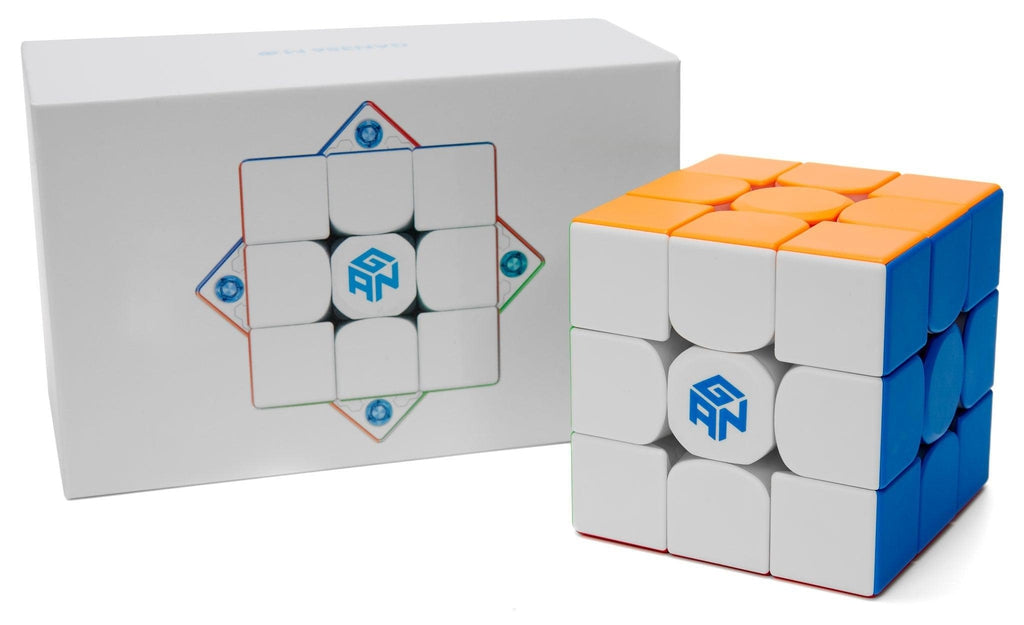
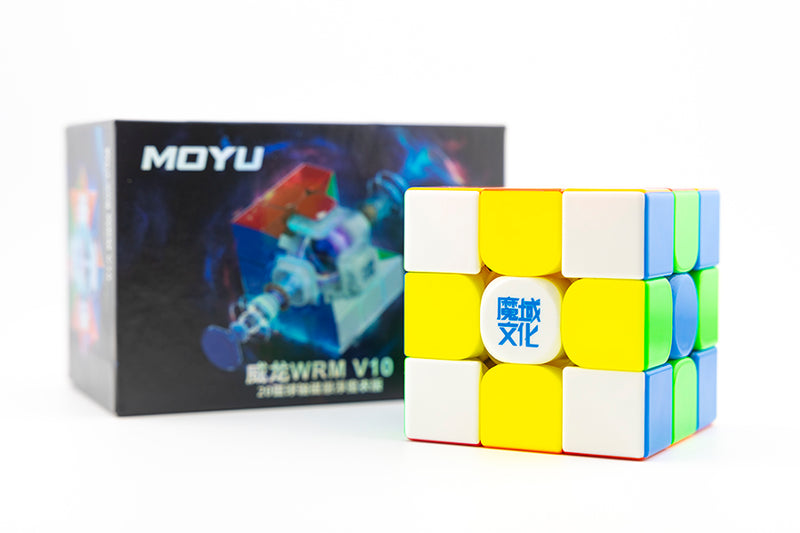
Yes. Unreservedly, for a beginner, magnets are worth it — and the good news is you no longer have to pay extra for them. Every cube in this guide is magnetic, because in 2026 a non-magnetic speedcube is an antique. But the kinds of magnet systems have multiplied, and the marketing around them can bewilder a newcomer. Let me cut through it.
Standard inter-piece magnets are what you get in nearly every cube, including our top pick. Small magnets in the corners and edges pull each layer into alignment as it completes a turn. They give that satisfying click and stop the cube cleanly. For learning to solve, this is all you will ever need. The QiYi MS, RS3 M V5, and GAN 356 ME all use this proven system, and they are wonderful.
Maglev (magnetic levitation) replaces the cube's traditional springs with sets of repelling ring magnets. Instead of a metal spring pushing the center outward, opposing magnets float it on an invisible cushion. The payoff is a quieter cube — no spring "ping" — and a smoother, more consistent feel that some solvers adore. MoYu's RS3 M 2021 MagLev was an early mass-market example. Is it better? It is different. Many top cubers actually still prefer springs. For a beginner, maglev is a pleasant luxury, not a necessity.
Ball-core and core-magnet designs are the flagship frontier. Here, magnets are added to the very center mechanism — at the 45-degree mark — so the cube gets a second, stronger correction force during big overshoots. The result is exceptional stability: the cube resists locking up even on wild, fast turns. This is genuinely excellent engineering, found in cubes like the MoYu WeiLong WR M and the premium ball-core RS3 M variants. But understand what it buys you: it helps an already fast solver push harder. A beginner making careful, deliberate turns will scarcely notice the difference.
So here is the dojo's honest hierarchy for a newcomer: get magnets (you can't avoid them), enjoy maglev if it comes in your budget cube, and do not pay a flagship premium for ball-core until your solves are fast enough to feel it. The technology is real. The need for the most advanced version, this early, is not.
Buy the feature your hands can feel today — not the one a champion's hands would feel tomorrow.
Standard magnets are all you will ever need to learn. Maglev is a pleasant luxury; ball-core is a champion's refinement.
Is GAN worth the money, or is it overpriced hype?
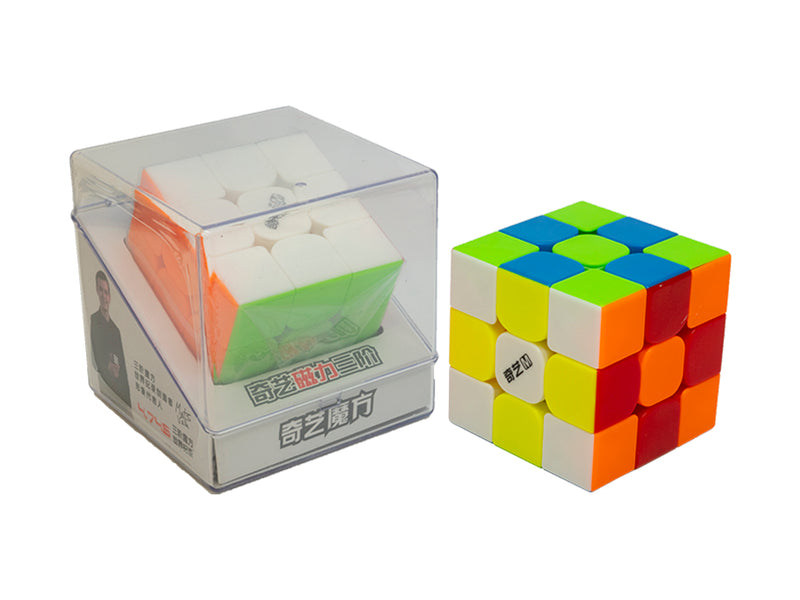

This is the question that divides every cubing forum, so the dojo will answer it plainly: GAN makes some of the finest cubes in the world, and GAN is the brand most likely to separate a beginner from money they did not need to spend. Both things are true. Wisdom is knowing which GAN to buy and which to walk past.
Start with what GAN does right. GAN pioneered modern flagship features — adjustable everything, core magnet systems, maglev, ultralight builds. The GAN 12 M MagLev (around $59) is a genuinely sublime cube: springless, whisper-quiet, endlessly tunable, and beloved by speedsolvers who described the jump from the older GAN 11 as "the difference between night and day." The newest flagships push lighter still — GAN advertises sub-60-gram bodies. In trained hands, these are extraordinary instruments and worth their price to the people who can use them.
Now the candor. For a beginner, a $59 GAN flagship is a poor first purchase — not because it is bad, but because it is wasted. It will not lower your solve times more than a $9 MoYu will, and its featherweight, hyper-fast tuning can actually feel skittish and uncontrollable to a hand that hasn't developed precision yet. You would be buying a Formula 1 car to learn to drive in a parking lot.
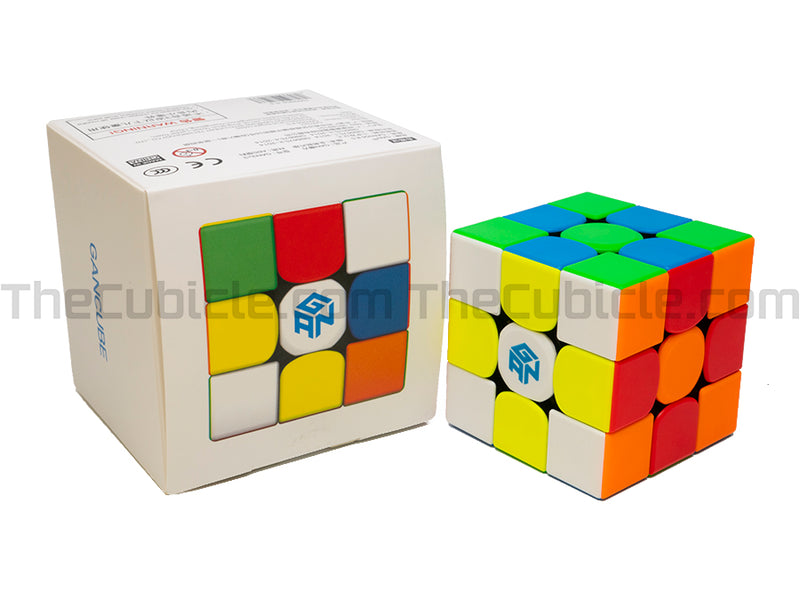
The honest middle path — and GAN's best-kept secret for newcomers — is the GAN 356 ME at about nineteen dollars. It delivers the recognizable GAN smoothness, the adjustability, the build quality, at a price that competes directly with budget kings. One TheCubicle reviewer, Reuben, wrote that it is "insanly good for its price... better then the rs3m 2020... and its only 18 dollers." That is the GAN a beginner should consider — if they want the GAN name and feel without the flagship tax. The GAN 356 M and older GAN 356 RS sit in the same sensible budget-to-midrange territory.
So: is GAN worth the money? The 356 ME, absolutely. The $59 flagship, only once you are fast enough to deserve it. Pay for the cube that serves your hands as they are today.
The expensive tool flatters the master and exposes the novice — buy the one that teaches, not the one that boasts.
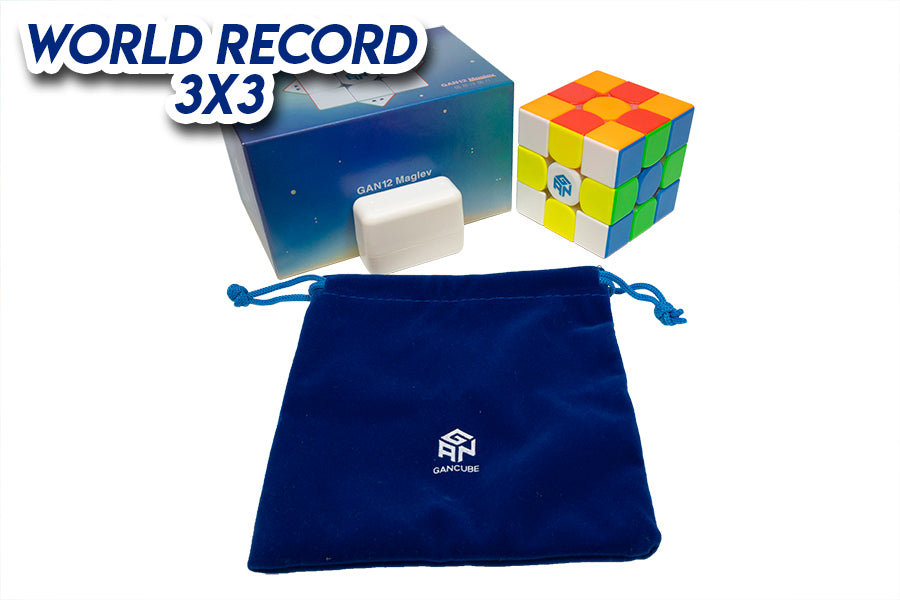
GAN makes some of the finest cubes in the world, and GAN is the brand most likely to separate a beginner from money they did not need to spend. Both are true.
What's the best speed cube for a child or a gift?
When the cube is for a child — or a gift for someone who has never solved one — the calculus shifts. Now you are optimizing for three things: low cost (it may get dropped, lost, or abandoned), forgiving turning (small hands, imperfect technique), and zero setup (no parent wants to tension a cube). Happily, the same humble champions serve here beautifully.
The MoYu RS3 M V5 remains the top recommendation even for kids, for all the reasons it tops the overall list: light, forgiving, fast, and nine dollars. If a child loses or breaks it, the loss stings little, and a replacement is trivial. The one parental task is a quick tension loosening out of the box so the cube turns easily for young hands — thirty seconds with the included experience, and it's done.
For the absolute lowest entry point, the QiYi MS at around eight dollars is the people's champion. It is not the most refined cube in any single dimension, but its overall quality wildly outstrips its price, and the corner cutting is smooth straight from the box. A SpeedSolving reviewer called it "a pretty good beginners cube," and another summed up the whole appeal: it's for "those of you who do not... want to spend too much money but the quality must exceed the price range." For a classroom set, a party favor, or a curious kid you're not sure will stick with it, the QiYi MS is the wise buy. Buy two.
A gentle warning on the alternative: the temptation is to grab a retail Rubik's brand cube off a store shelf because it's familiar and right there. Resist it for anyone who genuinely wants to learn. As the community bluntly puts it, retail Rubik's cubes at this point are "more for collectors and people who won't actually learn to solve it." A child handed a stiff, locking Rubik's brand cube is a child far more likely to give up in frustration. The kindest gift you can give a budding solver is a cube that cooperates — and that means a real magnetic speedcube, even a cheap one.
Pair any of these with a link to a free beginner tutorial, and you have given not just a toy but a doorway.
Give a child a tool that rewards their effort, and you give them the will to try again.
The kindest gift you can give a budding solver is a cube that cooperates — and that means a real magnetic speedcube, even a cheap one.
How do I actually learn to solve it — and what should I add after the 3x3?
A cube is a key, but you still have to learn the lock. The dojo's path has two stages, and the discipline is in not skipping the first.
Stage one: the beginner layer-by-layer method. Do not start with the intimidating algorithm sheets you've seen online. Begin with a simple layer-by-layer solve, which breaks the cube into manageable steps: solve one face's cross, then its corners, then the middle layer, then the top. The best free teacher in the world for this is J Perm on YouTube and at jperm.net — his beginner tutorial is designed so you barely need to memorize notation, and most students reach a full solve in an afternoon, landing somewhere around two to four minutes. Cube.Academy and SolveTheCube are excellent companion sites with clean, patient walkthroughs. Spend a week here. Solve the cube fifty times. Let it become automatic before you reach for speed.
Stage two: CFOP. When the beginner method feels slow, graduate to CFOP — the method nearly every world-class speedcuber uses. The name is its four steps: Cross, F2L (First Two Layers, solved together intuitively), OLL (Orient the Last Layer), and PLL (Permute the Last Layer). The wise approach is to learn it in pieces: start with intuitive F2L while still using your beginner last-layer steps, then learn "2-look" OLL and PLL — simplified versions needing only a handful of algorithms — before tackling the full sets. J Perm and Cube.Academy both have complete free CFOP courses. This is a journey of months, not days, and that is exactly as it should be. The cross becomes the most important step you'll ever drill.
What to add after the 3x3. Once the 3x3 feels like home, the natural companions are the 2x2 and the 4x4. The 2x2 is a delightful quick-solve and a gentle introduction to faster last-layer recognition — the QiYi MS 2x2 (~$8) is the obvious, excellent budget choice. The 4x4 introduces a genuinely new skill, reduction (solving centers and pairing edges before you can treat it like a 3x3), and the MoYu RS4 M (~$16) is the trusted budget gateway, described by its maker as a "budget friendly magnetic 4x4" and praised by buyers as a solid cube for learning the 4x4. Both share DNA with our 3x3 picks, so the feel will be familiar.
But hear me: do not buy the 2x2 and 4x4 until the 3x3 is solved cold. Breadth without depth is how beginners stall.
Master one cube completely before you touch a second — depth is the only road to speed.
Spend a week on the beginner method. Solve the cube fifty times. Let it become automatic before you reach for speed.
From the rabbit hole
Real voices from players, reviewers, and the communities who know these games best.
review“this cube feels fantastic out of the box and really doesn't need much to get it going. If you handed me this cube... I'd assume $25.”
Aletheia G., TheCubicle review of the MoYu RS3 M V5
review“new best cheap cube hands down.”
tim, TheCubicle review of the MoYu RS3 M V5
review“This cube is insanly good for its price. in my opinion its better then the rs3m 2020 (Another budget cube) and its only 18 dollers.”
Reuben B., TheCubicle review of the GAN 356 ME
forum“MS is not outstanding in any aspect, but the overall quality I think is extremely good and worth the money... for those of you who do not want to spend too much money but the quality must exceed the price range.”
HD Truong Giang, SpeedSolving review of the QiYi MS 3x3
review“I got MS 2x2 a few weeks ago and love it a lot. As of now, the OOB crispyness is gone, but it is still an awesome cube. It's fast and the magnets are not noticed.”
Jacob W., TheCubicle review of the QiYi MS 2x2
review“The v5 feels amazing... very good choice for someone just starting out or someone who can turn with accuracy.”
Vincent C., TheCubicle review of the MoYu RS3 M V5
The picks
Some links below are affiliate links — as an Amazon Associate, Puzzlewick earns from qualifying purchases, at no extra cost to you. It never changes a pick.
 2 photos
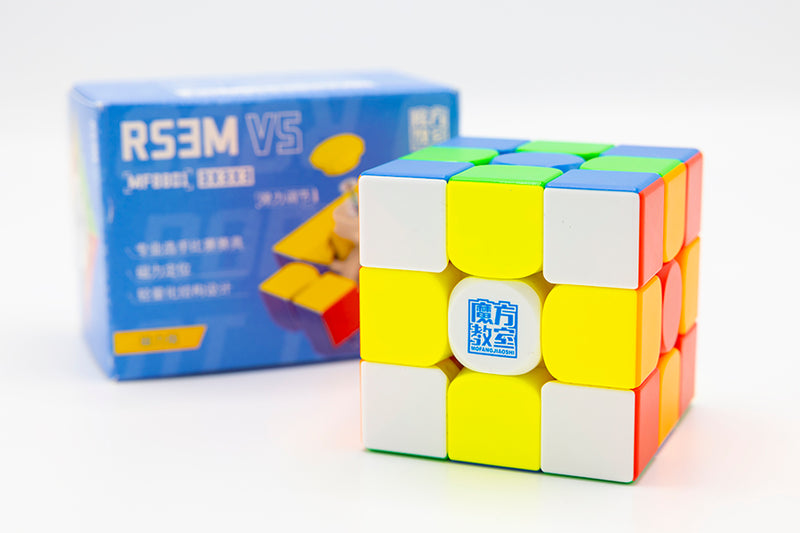
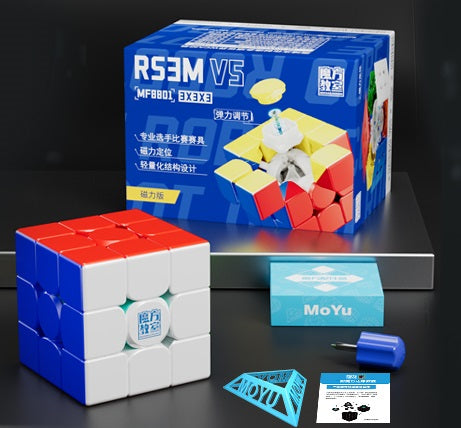
 MoYu RS3 M V5 (Standard, Magnetic)
The heir to the best-selling speedcube of all time, and somehow even cheaper. At ~65 grams it's light, fast, and remarkably forgiving — exactly what a beginner's imperfect turns need. It is genuinely excellent out of the box, no lube or setup required, though a quick tension loosen suits new hands. Reviewers repeatedly say they'd have assumed it cost $25. If you buy one cube from this entire guide, buy this. It removes every excuse a beginner could have.
- Astonishing value at around $9
- Light (~65g) and forgiving for new solvers
- Excellent the moment you open the box
- Adjustable tension and magnets as you grow
- Adjustment system briefly confuses some absolute beginners
- Can feel slightly tight/dry until loosened
- Corner pieces are somewhat fragile under hard drops
 3 photos
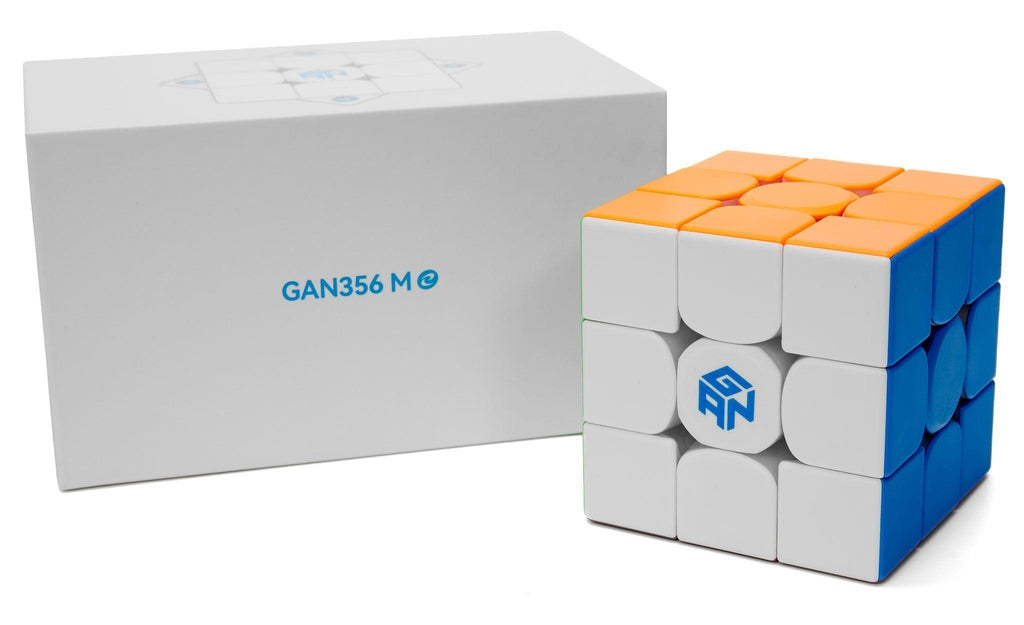
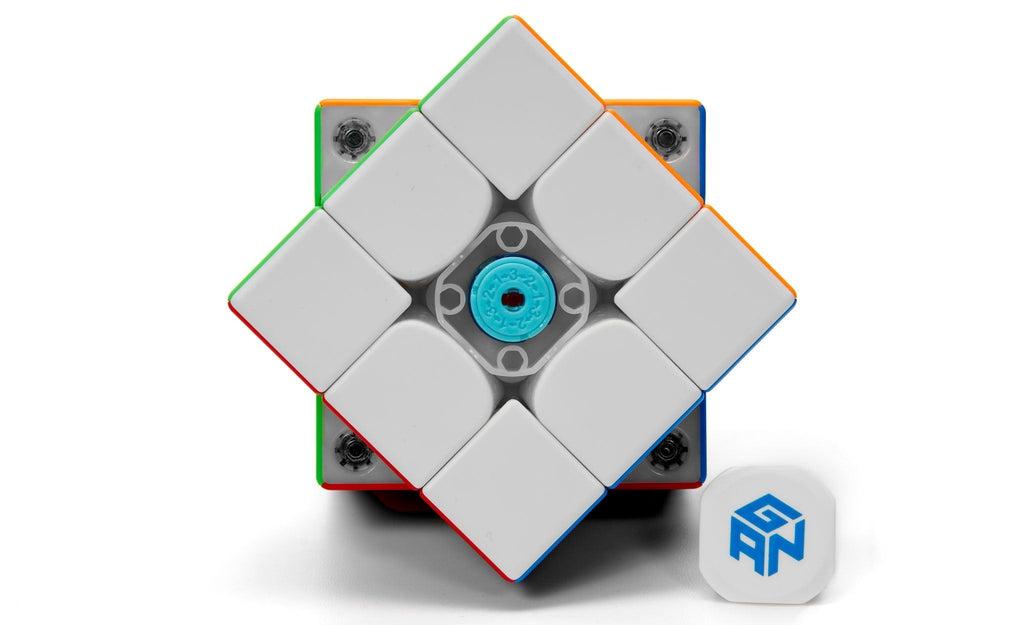
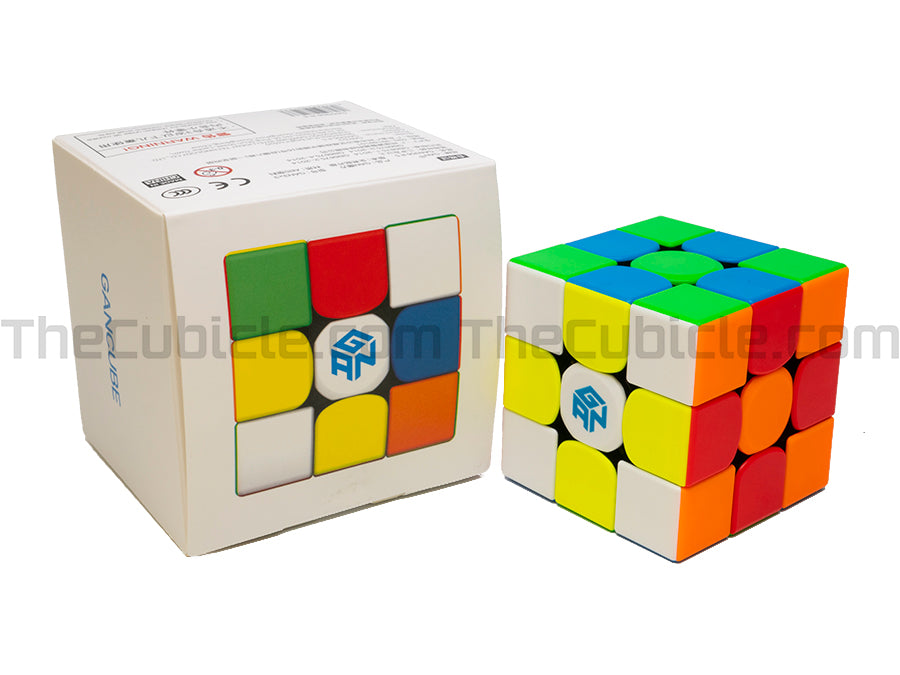
 GAN 356 ME
The GAN a beginner should actually buy. It delivers the recognizable GAN build quality and adjustability — including tunable magnet strength — at a price that competes head-on with budget kings. One reviewer called it "insanly good for its price... better then the rs3m 2020." It can be tuned tight and blocky for solvers who like an older-school feel. If you want the GAN name and feel without spending flagship money, this is the answer, full stop.
- Real GAN feel and build at a budget price (~$19)
- Adjustable magnets, tension, and center travel
- Tunable from fast to tight-and-blocky
- Beloved value pick in the community
- Minor catching that rewards refined turning
- Pricier than rock-bottom budget cubes
- Less ultralight than GAN's flagship line
 2 photos
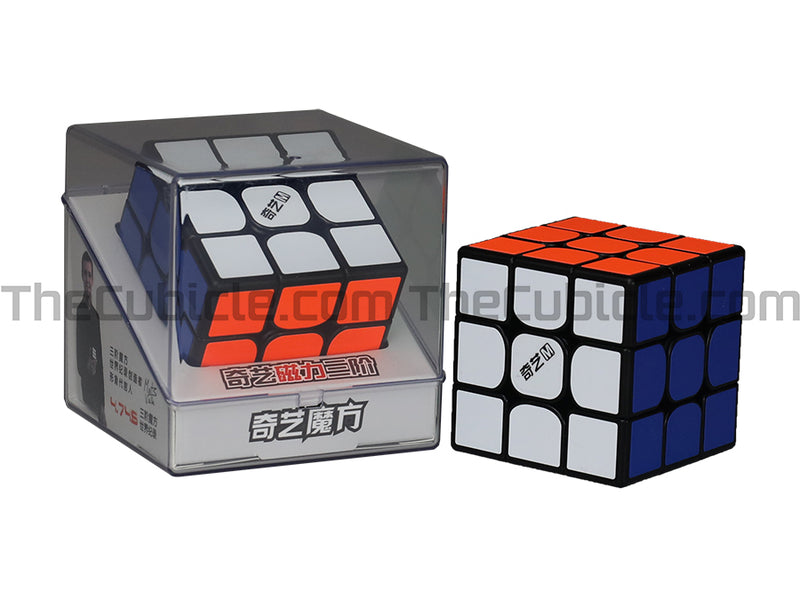
 QiYi MS (Magnetic)
Not outstanding in any single dimension, but the overall quality wildly outstrips its ~$8 price, with smooth corner cutting straight from the box. Uses a standard, moderate-suction magnet setup suitable for almost everyone. Reviewers call it "a pretty good beginners cube" and the best value in its segment. Slightly hollow-feeling and a touch noisy next to pricier cubes, but for a classroom set, a gift, or a first cube on a tight budget, nothing beats it.
- Lowest sensible price (~$8) for a real speedcube
- Good corner cutting and stable turning OOTB
- Moderate magnets that suit most hands
- Ideal for gifts and classroom sets — buy two
- Feels slightly hollow and noisy vs pricier cubes
- Not class-leading in any single trait
- Less premium plastic than top budget rivals
 3 photos
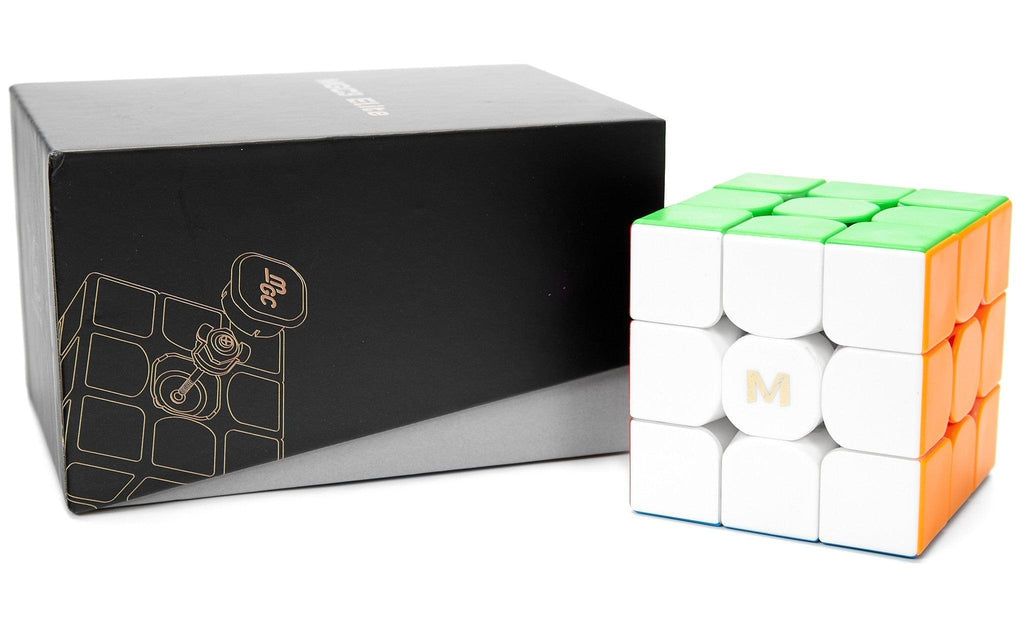
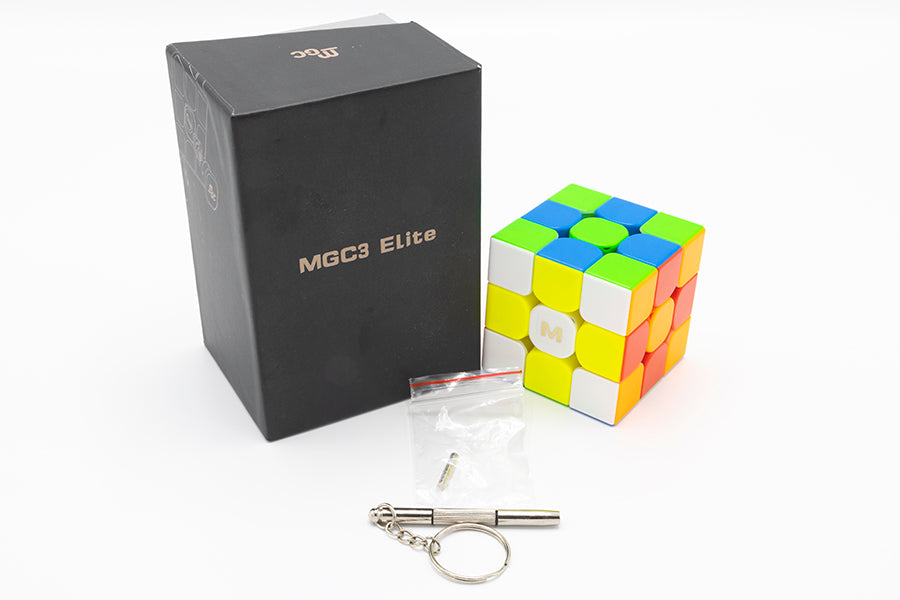
 YJ MGC Elite V2 (Magnetic)
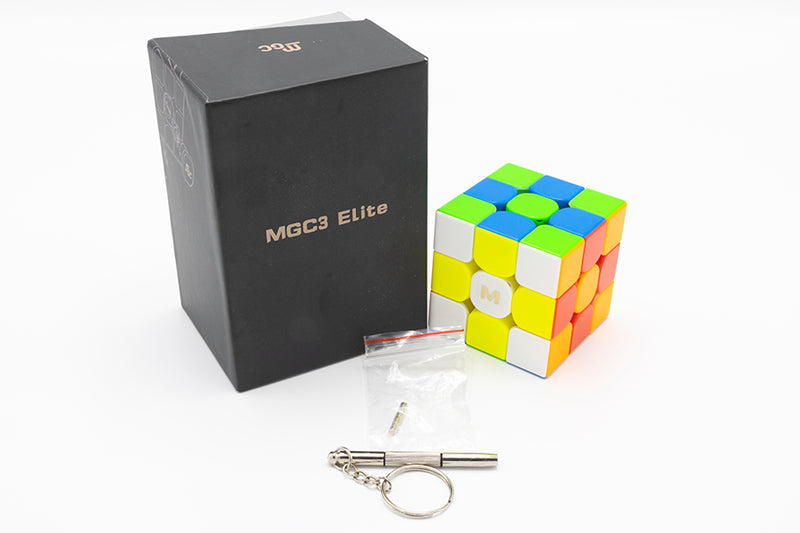
YJ's flagship, and one of the most quietly respected cubes at its price. It pairs a traditional tensioning screw with dual adjustable elasticity and magnet strength, making it unusually easy to dial in to any preference. The feel is lively and crisp with strong, satisfying magnetic alignment. Top-tier performance for under $25, and many buyers report it feeling great right out of the box. A superb choice for the beginner who suspects they'll stick with the hobby and wants room to grow.
- Top-tier performance under $25
- Highly adjustable: tension, elasticity, magnet strength
- Crisp, lively feel with strong alignment
- Great out of the box, easy to tune
- More cube than an absolute beginner strictly needs
- Crisp feel won't suit those wanting ultra-smooth
- Pricier than the $8–$9 starter champions
 2 photos
 GAN 356 RS
GAN's long-running budget-friendly entry, sitting at the intersection of GAN engineering and an approachable price. It carries the brand's GES spring-tuning pads so you can adjust the feel, in a build that's well-suited to newcomers exploring the GAN ecosystem. Heavier (~72g) and less refined than the flagships, but that extra heft can actually feel reassuring in a beginner's hand. A sensible alternative to the 356 ME if you prefer GAN's tuning approach.
- Genuine GAN build at a budget price (~$17)
- GES tuning system for adjustable feel
- Reassuringly solid for new solvers
- Strong gateway into the GAN lineup
- Heavier (~72g) than modern lightweights
- Less refined than current GAN flagships
- Some prefer the 356 ME at a similar price
 3 photos
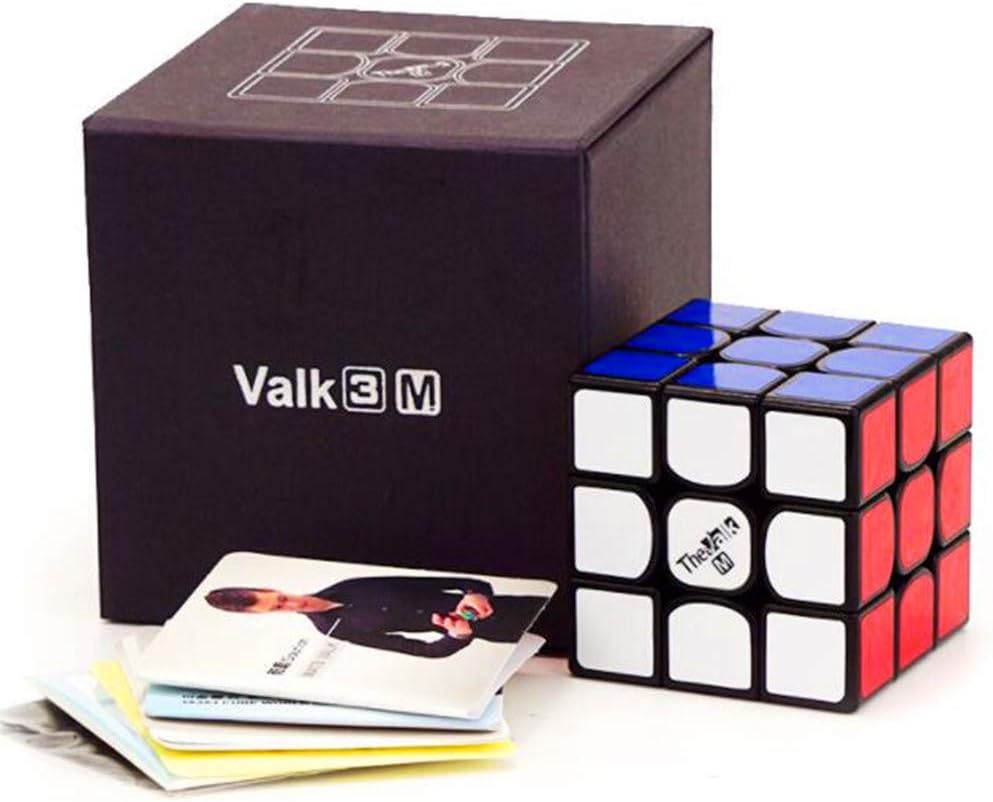
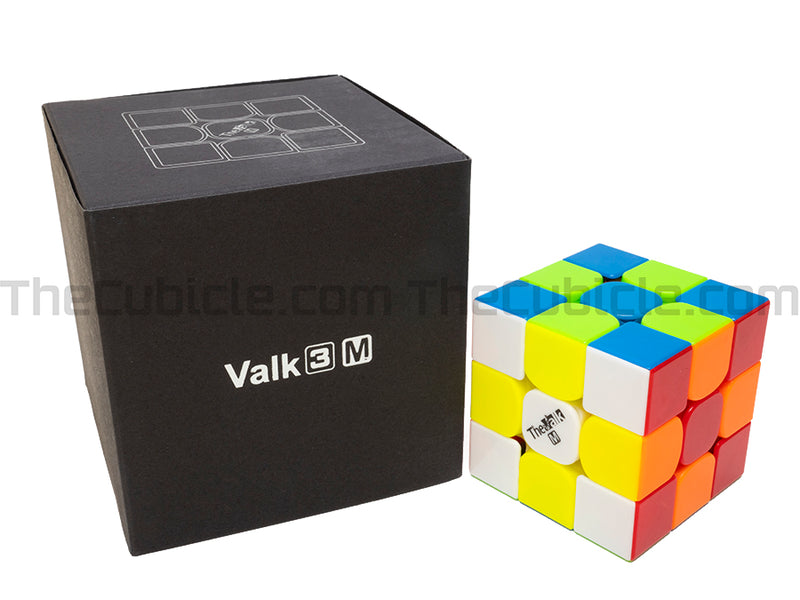
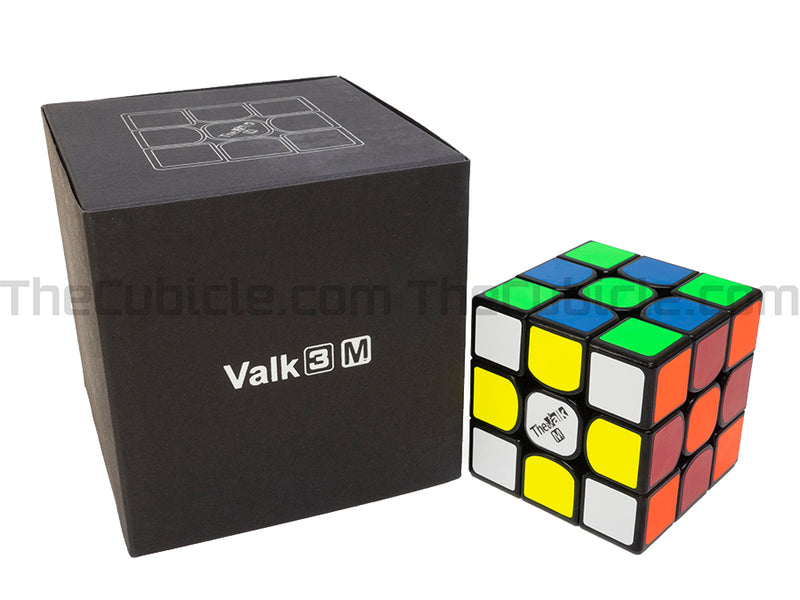
 QiYi Valk 3 M
The factory-magnetic version of a cube once hailed as the best 3x3 on the market, originally designed with world-class cuber Mats Valk. It's compact (a hair smaller than standard), with a light magnetic feel and a solid, stable build that's been a main for pros and beginners alike for years. Not the cheapest, but it carries real pedigree and a feel many cubers fall in love with. A wonderful choice if you want a proven classic rather than the newest release.
- Legendary pedigree, still a beloved main
- Compact size suits smaller hands
- Light magnetic feel, stable and controllable
- Time-tested reliability
- Pricier than budget champions for an older design
- Slightly smaller size isn't to everyone's taste
- Newer cubes edge it on raw speed
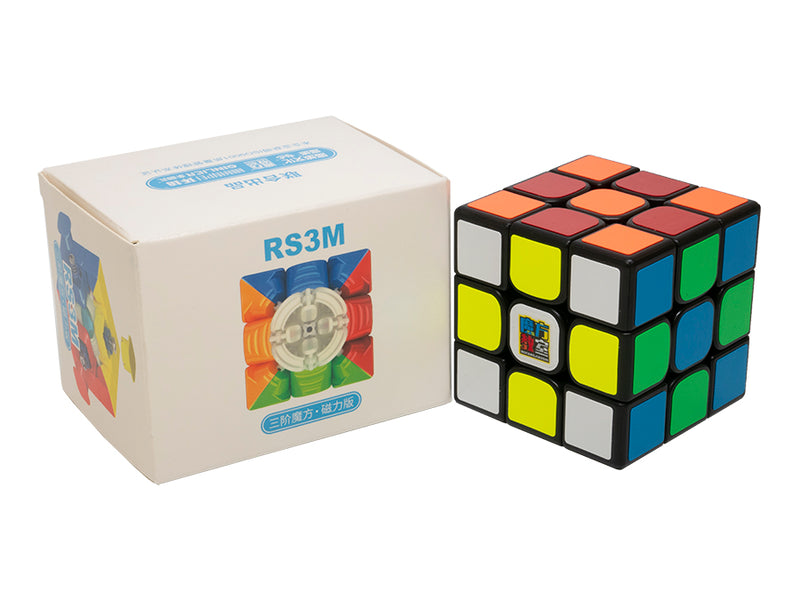 2 photos
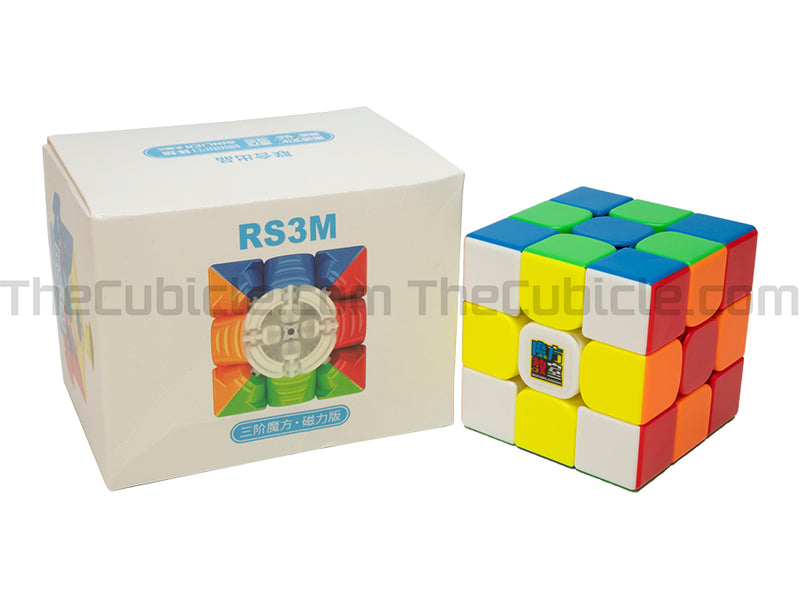
 MoYu RS3 M 2020 (Magnetic)
Likely the best-selling speedcube of all time, the cube that brought a real tensioning system to an ~$11 price point and put a genuine speedcube in millions of hands. It remains a perfectly good, safe choice today. The honest note is that its own successor — the V5 — now matches or beats it for less money, so most buyers should choose the V5. But if you want the cube that defined the budget category, this is it, and it will not let a beginner down.
- Proven, hugely popular, reliable
- Tensioning system rare at its price
- Still a genuinely good beginner cube
- Widely available everywhere
- Superseded by the cheaper, better RS3 M V5
- No longer the value leader it once was
- Older feel than 2026 budget releases
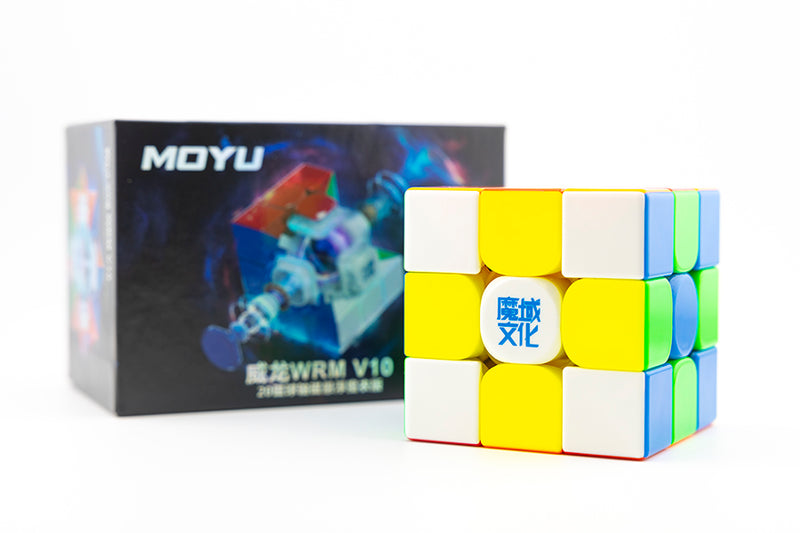
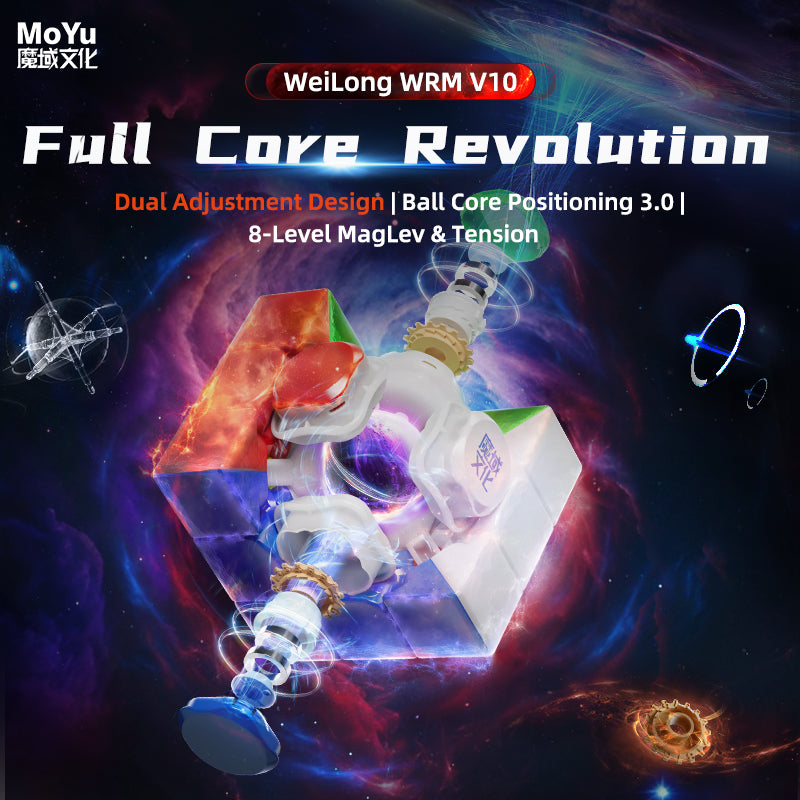 2 photos
 MoYu WeiLong WR M V10 (Magnetic)
MoYu's flagship line and regarded among the best 3x3s on the market. The V10's headline upgrade over the V9 is redesigned corner pieces that are essentially impossible to twist mid-solve — a real durability and reliability win. Strong magnets, smooth turning, and deep adjustability make it exceptional, and it has powered some blisteringly fast averages. Overkill for most first-timers, but if you know you're committed and want a flagship from the start, this is a more grounded splurge than the priciest GANs.
- Flagship performance and stability
- Redesigned corners resist twisting
- Deeply adjustable magnets and tension
- More affordable than GAN's top flagships
- More cube than a beginner needs
- Flagship price for unneeded headroom
- Many variants/editions can confuse buyers
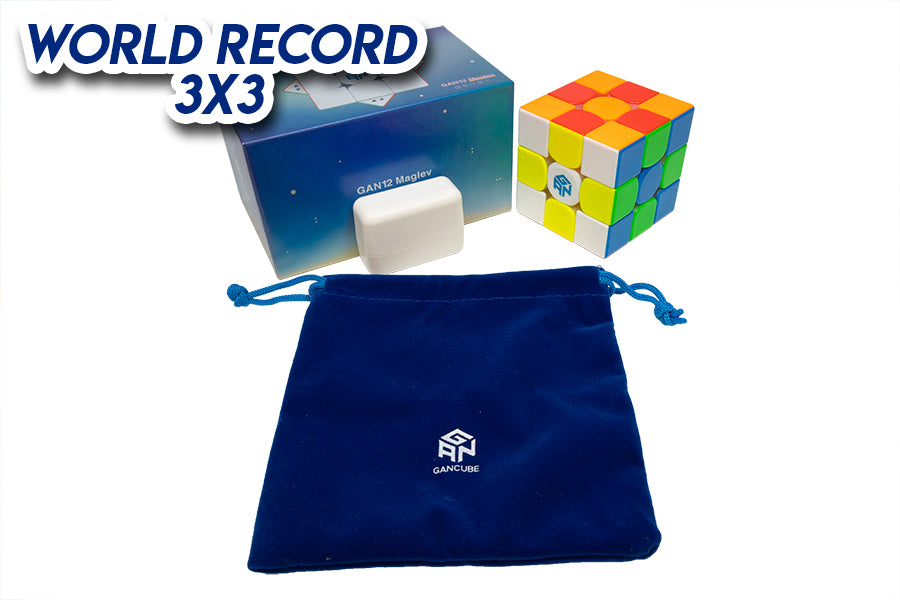
 2 photos
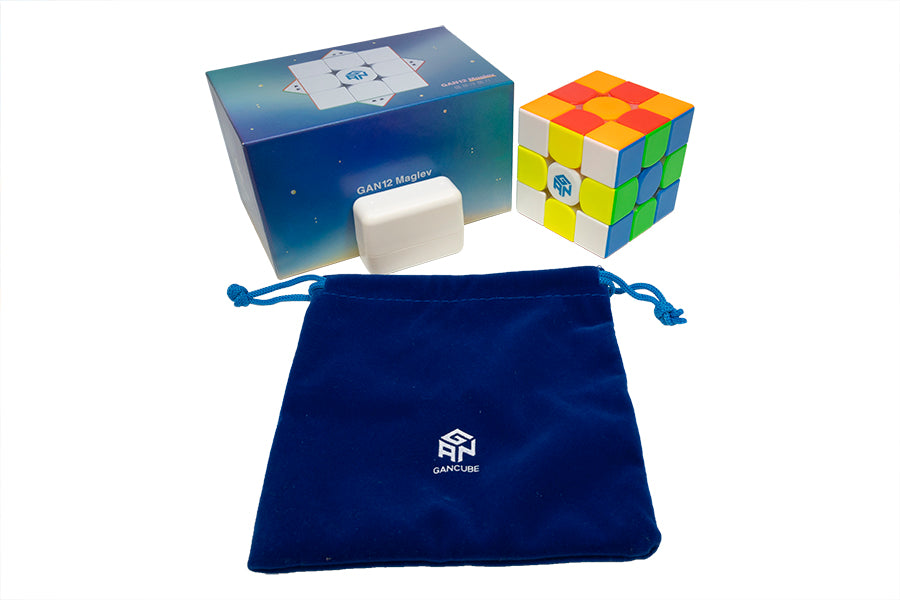
 GAN 12 M MagLev (UV)
A sublime, springless flagship: the first mass-produced cube built on magnetic levitation, whisper-quiet and endlessly tunable. Solvers described the leap from the GAN 11 to this as "the difference between night and day," with pieces that feel more solid despite the lighter, less crunchy turning. It is a magnificent instrument — and a poor first cube, because its featherweight speed flatters trained hands and unsettles untrained ones. Buy it as a reward for progress, never as a starting point. The dojo is candid: this will not make a beginner faster.
- Sublime, quiet maglev feel
- Endlessly tunable, premium build
- A genuine joy in trained hands
- At ~$59, wasted money for a beginner
- Skittish, hyper-fast for undeveloped technique
- Will not lower a newcomer's solve times vs a $9 cube
 4 photos
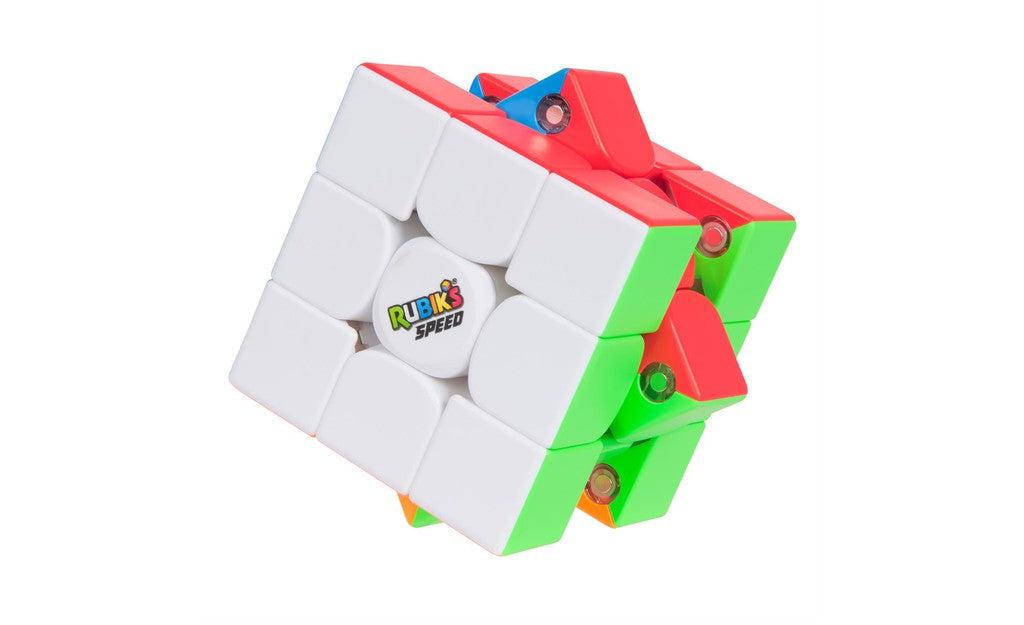
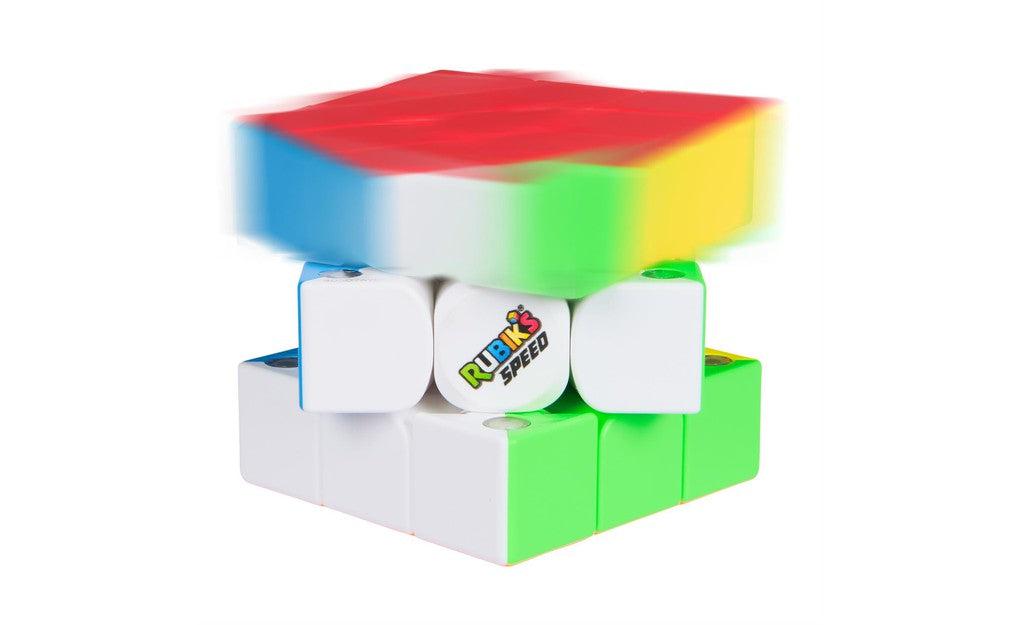
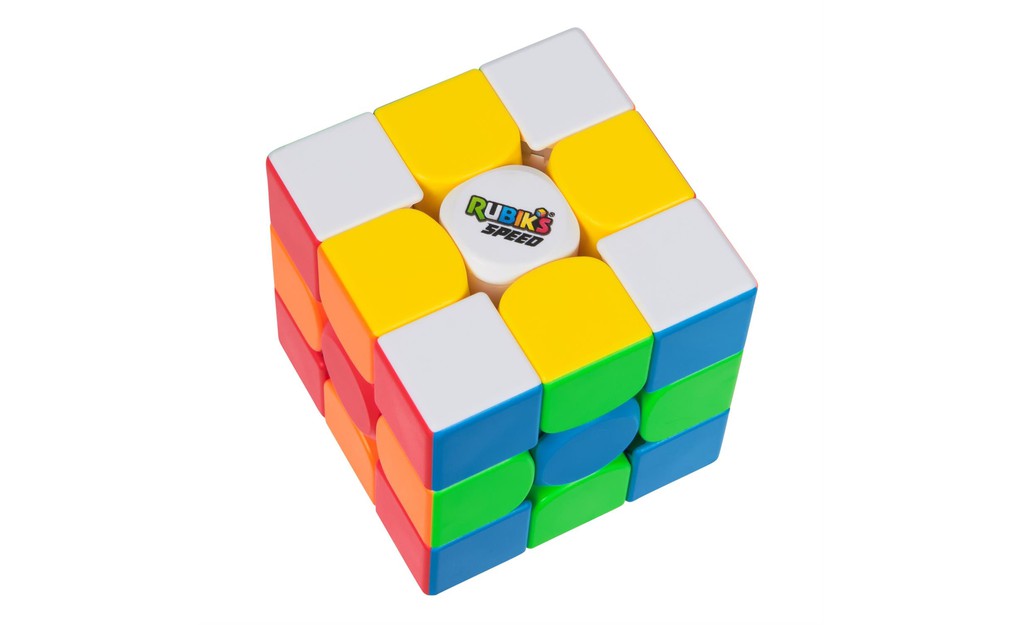
 Rubik's Speed Cube (Spin Master)
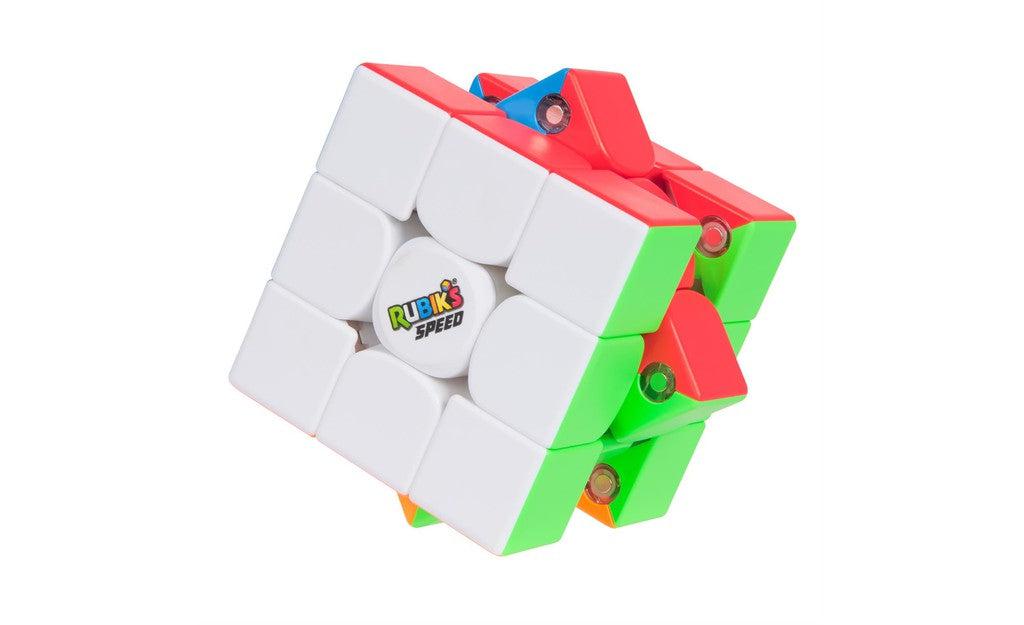
Included for honesty, not enthusiasm. This is the official Rubik's brand's own magnetic speed cube — a real attempt to modernize, and a clear step up from the stiff classic retail cube. But the community is blunt: at this point Rubik's branded cubes are largely for collectors and people who won't truly commit to learning, and the dedicated makers (MoYu, GAN, QiYi) outperform it on feel for similar or less money. If the iconic name on the box genuinely matters to you, it will solve; otherwise, the RS3 M V5 is the better buy.
- The recognizable official Rubik's brand
- Magnetic — a real upgrade over the classic retail cube
- Widely available in mainstream stores
- Outperformed by MoYu/GAN/QiYi at the price
- Community views it as more collector than competitor
- Less adjustable than dedicated speedcubes
At a glance
| cube | maker | type | price | best for |
|---|---|---|---|---|
| MoYu RS3 M V5 (Standard) | MoYu | 3x3 magnetic (spring) | ~$9 | Best overall beginner cube |
| GAN 356 ME | GAN | 3x3 magnetic, adjustable | ~$19 | Best premium feel under $20 |
| QiYi MS | QiYi | 3x3 magnetic (spring) | ~$8 | Best ultra-budget / gift / kids |
| YJ MGC Elite V2 | YJ | 3x3 magnetic, dual-adjust | ~$25 | Tunable flagship feel under $25 |
| GAN 356 RS | GAN | 3x3 magnetic, GES tuning | ~$17 | Accessible GAN starting point |
| QiYi Valk 3 M | QiYi | 3x3 magnetic (compact) | ~$19 | Time-tested classic feel |
| MoYu RS3 M 2020 | MoYu | 3x3 magnetic (spring) | ~$11 | Original budget legend |
| MoYu WeiLong WR M V10 | MoYu | 3x3 flagship, ball-core options | ~$20+ | Affordable true flagship |
| GAN 12 M MagLev | GAN | 3x3 flagship, maglev | ~$59 | Splurge once you can solve |
| QiYi MS 2x2 | QiYi | 2x2 magnetic | ~$8 | Best budget 2x2 to add |
| MoYu RS4 M | MoYu | 4x4 magnetic | ~$16 | Best budget 4x4 to add |
Questions, answered
What is a speed cube?
A speed cube is a 3x3 (or other size) puzzle engineered for fast, smooth solving — the opposite of the stiff classic Rubik's brand. It has rounded internal geometry for corner cutting (turning even when layers are misaligned), internal magnets that snap each layer into place, slick low-friction plastic, and adjustable tension and magnets. In short: it cooperates with your hands instead of fighting them.
What's the best speed cube for a beginner?
The MoYu RS3 M V5 (around $9) for almost everyone. It's light (~65g), fast, forgiving of imperfect turns, and excellent straight out of the box. Reviewers routinely say they'd have guessed it cost $25. If you want a slightly more premium GAN feel with zero setup, the GAN 356 ME (~$19) is the runner-up. Both vastly outperform any retail Rubik's brand cube.
Are magnets worth it in a speed cube?
Yes, and you no longer pay extra for them — every cube worth buying in 2026 is magnetic. Magnets pull each layer into clean alignment as you turn, giving a satisfying click and stopping the cube precisely at 90 degrees. For a beginner, standard magnets are all you need; they make the cube dramatically easier to control than a non-magnetic or retail cube.
What's the best cheap speed cube?
The QiYi MS at around $8 is the rock-bottom champion — smooth corner cutting and solid quality far beyond its price. The MoYu RS3 M V5 at ~$9 is barely more and arguably the better overall cube. Either is a fantastic, genuinely good magnetic speedcube for under ten dollars, ideal for a first cube, a gift, or a classroom set.
Is GAN worth the money?
It depends which GAN. The GAN 356 ME (~$19) is absolutely worth it — real GAN feel and adjustability at a budget price. The $59 GAN 12 MagLev flagship is a sublime cube but a poor beginner purchase: it won't lower your times more than a $9 cube will, and its hyper-fast tuning can feel skittish to untrained hands. Buy GAN at the ME tier; earn the flagship later.
How do I learn to solve a Rubik's cube?
Start with the beginner layer-by-layer method — solve one layer at a time. J Perm's free tutorial (jperm.net and YouTube) is the gold standard; most people reach a full solve in an afternoon, around 2–4 minutes. Once that's automatic, graduate to CFOP (Cross, F2L, OLL, PLL), the method top cubers use. Cube.Academy and SolveTheCube are excellent free companions.
What's the best speed cube for kids?
The MoYu RS3 M V5 (~$9) — light, forgiving, and cheap enough that a loss or drop barely stings. Loosen the tensions a turn or two before gifting so it turns easily for small hands. For the absolute lowest cost, the QiYi MS (~$8) is excellent. Avoid handing a beginner the stiff retail Rubik's brand cube; it frustrates new solvers.
What is corner cutting?
Corner cutting is a speedcube's ability to complete a turn even when the layer beneath is slightly misaligned, slicing through the gap instead of locking up or popping a piece. It's the single biggest hardware advantage over a retail Rubik's cube — it lets you turn fast and sloppy without the cube jamming. Modern cubes cut both forward and in reverse.
Do I need to lube my speed cube?
Not to start. Top budget cubes like the RS3 M V5 and QiYi MS are great out of the box with no lubricant. As you advance, a drop of cube-specific lube can fine-tune the feel, but it's optional and never required for a beginner. The more useful early adjustment is simply loosening the tension a turn or two if the cube feels tight.
Maglev vs spring — what's the difference?
Springs are the traditional mechanism pushing each center outward. Maglev replaces them with repelling ring magnets, so the center floats on a magnetic cushion — quieter (no spring 'ping') and smoother to some hands. Neither is universally better; many elite cubers still prefer springs. For a beginner, spring vs maglev is a preference, not a performance gap — don't pay a big premium for maglev alone.
What's the best 2x2 or 4x4 to add after the 3x3?
For a 2x2, the QiYi MS 2x2 (~$8) is the obvious budget pick — fast, smooth, and a fun quick-solve. For a 4x4, the MoYu RS4 M (~$16) is the trusted budget gateway; it introduces 'reduction' (solving centers and pairing edges first). Add either only after you can solve the 3x3 reliably — depth before breadth.
Where should I buy a speed cube?
Buy from dedicated cubing retailers for authentic stock, fair prices, and proper support — TheCubicle, SpeedCubeShop, and Cubelelo are the trusted names, with SpeedCubeStore and Cuboss also reputable. Puzzlewick points you to the makers and these shops; we don't sell cubes ourselves. Avoid sketchy marketplace listings where counterfeits and mislabeled versions are common.
Kenji's verdict
If you take one thing from the dojo, take this: buy the MoYu RS3 M V5 for about nine dollars and start practicing today. It is the best beginner speedcube for nearly everyone — light, fast, forgiving, and so good out of the box that the only real question is why you'd spend more. If you crave a more premium feel with zero setup, the GAN 356 ME (~$19) is the wise premium pick, delivering true GAN smoothness without the flagship tax. On the tightest budget, the QiYi MS (~$8) loses you almost nothing. Save the GAN 12 MagLev and other $50+ flagships for the day your solves are fast enough to feel the difference — they reward trained hands, not new ones, and the community is honest that they won't make a beginner quicker. Above all, remember that the cube is only half the path: learn the beginner layer-by-layer method with J Perm, drill it until it's automatic, then climb into CFOP. The student who masters one humble cube will always outpace the one who collects ten. Buy the humble cube. Then practice.
Research ledger 24 sources · reviewed 2026-07-17
Specifications, rules, current product information, community experience, and contrary evidence were checked against the sources below. Commercial links are kept separate from editorial evidence.
- thecubicle.comthecubicle.com/products/moyu-rs3-m-v5-3x3-standard
- thecubicle.comthecubicle.com/products/gan-356-m-e-3x3
- thecubicle.comthecubicle.com/products/valk-3-m
- thecubicle.comthecubicle.com/products/gan356-rs
- thecubicle.comthecubicle.com/collections/gan
- thecubicle.comthecubicle.com/products/gan12-m-maglev-uv-3x3
- thecubicle.comthecubicle.com/products/moyu-weilong-wrm-v10-3x3
- thecubicle.comthecubicle.com/products/yj-mgc3-elite-v2-3x3
- thecubicle.comthecubicle.com/products/qiyi-ms-2x2
- thecubicle.comthecubicle.com/products/moyu-rs4-m-4x4
- speedcubeshop.comspeedcubeshop.com/products/moyu-rs3-m-3x3-v5-magnetic
- speedcubeshop.comspeedcubeshop.com/products/moyu-rs3-m-2020-3x3-magnetic
- speedcubeshop.comspeedcubeshop.com/a/blog/magnetic-cubes-the-game-changer-for-speed-cubers
- speedcubing.orgspeedcubing.org/blogs/news/is-the-rs3m-2020-still-a-good-speedcube
- speedcubing.orgspeedcubing.org/blogs/news/moyu-weilong-wrm-2021
- speedcubing.orgspeedcubing.org/blogs/news/moyu-rs3m-2021-maglev-review-speedcube-with-no-springs
- speedsolving.comspeedsolving.com/threads/review-qiyi-ms-3x3.85188
- speedsolving.comspeedsolving.com/threads/which-new-3x3-to-buy-ys3m-wrm-v9-rs3m-v5-etc.91192
- gancube.comgancube.com/blogs/product-comparisons/gancube-flagship-evolution
- jperm.netjperm.net/3x3
- jperm.netjperm.net/3x3/cfop
- cube.academycube.academy/beginner-cfop
- solvethecube.comsolvethecube.com/speedcubing
- ruwix.comruwix.com/the-rubiks-cube/history-rubiks-cube/cubing-hardware
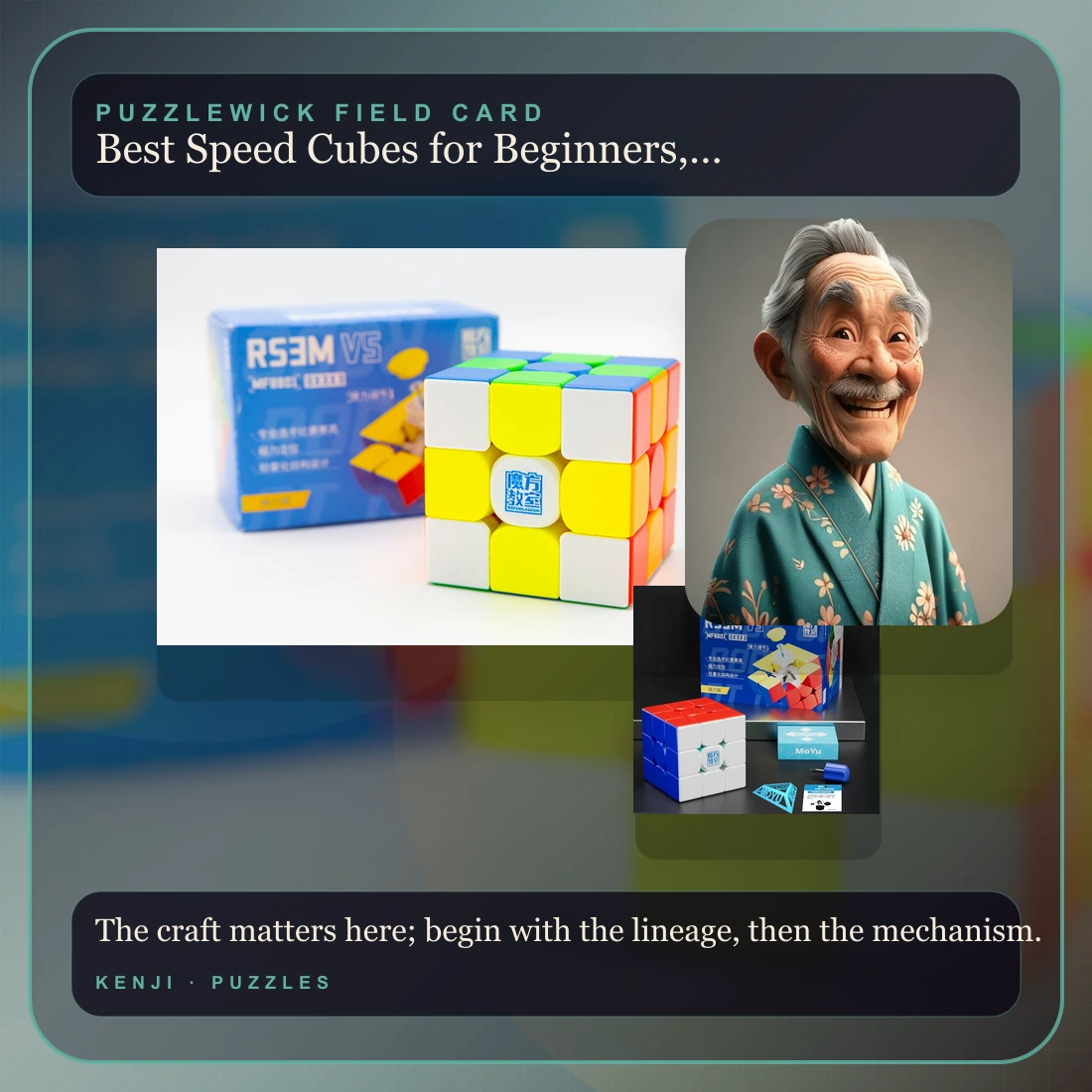
Every object has a lineage. Let me tell you its story.
Keep exploring
The next smart rabbit holes.
⌂ Topic PathFamily and Gateway Games: compare the whole shelfA good family game gets everyone playing quickly without becoming disposable after three nights. These guides prioritize clear...Buying GuideBest 3D Wooden Puzzle Kits, Ranked (2026)Flat-pack wood machines that actually move — but not all of them deserve the hype. Here's which ones survive skepticism.Best OfBest Jigsaw Puzzles for Adults, Ranked (2026)A three-decade reference desk curator's ledger of the cardboard worth a fortnight of evenings and the wooden heirlooms worth passing down...