Best Jigsaw Puzzles for Adults, Ranked (2026)
A three-decade reference desk curator's ledger of the cardboard worth a fortnight of evenings and the wooden heirlooms worth passing down — how to spot the craft you feel in your hands, and the makers who've earned a reputation through sheer, verifiable rigor.

AI-assisted curator persona · research and editorial responsibility: Robert Pruitt · how this guide was made
Last editorial refresh: 2026-06-13 Gold-standard QA: 2026-08-10 25 sources reviewed Affiliate links checked during gold-standard pass

The short answer
For most adults, the best jigsaw puzzle is a 1000-piece Ravensburger: the German house is the cardboard gold standard, with Softclick precision-punched pieces that snap audibly, extra-thick blueboard, and a linen-textured anti-glare finish, typically $20–$25. If you want an heirloom rather than an evening, go wooden — Liberty Puzzles (Boulder, Colorado) laser-cuts birch-faced panels studded with hand-drawn whimsy pieces, roughly $85–$185, and is the single most-recommended wooden maker among enthusiasts. For something genuinely novel, the Magic Puzzle Company hides a physical illusion in the finish (~$30). For fine art, Pomegranate reproduces museum works on heavyweight stock with immaculate fit (~$22). The best value is Cloudberries' extra-thick matte 1000s (~$25), and the best gift is whichever wooden puzzle suits the recipient's taste — they get unwrapped, reassembled, and kept. At the summit sits Stave, the hand-cut Vermont house Smithsonian called the Rolls-Royce of puzzles, with trick puzzles running into the thousands; magnificent, and priced accordingly. Cardboard for the doing; wood for the keeping.
Decision map
Choose in thirty seconds
Best overall cardboard — the default great puzzle for almost any adult
Best mind-bending / novel puzzle, and a showstopper gift
Best fine-art / museum-reproduction puzzle
I came to jigsaw puzzles through the records. For thirty years, the reference desk has fielded the same questions — Is this really the German gold standard? What separates the $25 puzzle from the $185 one? Are Stave prices real, or mythology? — and none of them could be answered from memory alone. So I did what a curator does: I read the ledger. I checked the primary sources. I tracked where the same handful of names surfaced again and again in the enthusiast literature, the wooden-puzzle comparison roundups, the forums where people document what they've held. And then I sat down with a good wooden one myself — felt the pieces plunk into place with real resistance, caught the scorched-cedar smell of the laser cut, and understood that I was handling an object with provenance, not a pastime.
What separates the grocery-aisle puzzle from the one worth an adult's evenings is craft you can verify. A premium jigsaw fits — every piece seated with a small, satisfying snap that Ravensburger trademarked as Softclick, load-bearing because it tells your hands a piece is truly home. The board beneath is thick, a custom European blueboard that resists warping and 'puzzle dust,' the gritty shedding of poorly-bonded layers. The print sits under linen-textured, anti-glare paper so the image reads cleanly under a lamp at midnight. And in the finest wooden examples there are whimsies — hand-drawn figurals and flourishes — a 16th-century tradition that turns assembly into a small treasure hunt. All of it is documented. All of it makes the difference between finishing a puzzle and keeping one.
This guide is built on verifiable sources, not endorsement. I've drawn every brand, price, and manufacturing detail from the makers' own pages, from reviewers and puzzle communities who've held the goods, and from the hobbyist literature where truth surfaces through repetition. Prices are marked with a tilde because they shift and sale, but the craft signatures — the details that can't be faked — stay constant. Where I couldn't verify a claim to my satisfaction, I've said so plainly instead of whispered past it. The German house is the cardboard gold standard. Liberty is the consensus heirloom wooden maker. Stave is genuinely as expensive as it claims, and genuinely hand-cut by human hands. Both things are true, and you deserve to hear them in the same breath. A catalog is only as honest as its acknowledgment of what it doesn't know."
Start here, then go deeper
You are in the right cabinet.
 ❖ Topic PathMechanical Puzzles: compare the whole shelfThe right mechanical puzzle matches the solver's patience, not simply the maker's difficulty number. These guides translate...
 Best OfBest Brain Teaser Puzzles for Adults (2026)Most brain-teaser lists are written by people who've never lost to a puzzle. Here's the one written by someone who has — sorted by what...
 Best OfBest Sequential Discovery Puzzles, Ranked (2026)The genre that keeps lying about itself — and why the ones that don't are worth the chase and the price.
What actually separates a premium jigsaw from a cheap one?
Pick up two finished puzzles — a bargain-bin 1000 and a Ravensburger 1000 — and the difference announces itself before you've placed a single piece. It lives in four places: the fit, the board, the finish, and the cut.
The fit. This is the whole game. In a cheap puzzle the pieces are punched loosely and from generic dies, so connections are mushy, a piece can sit in the wrong hole, and lifting an assembled corner sends it raining apart. A premium puzzle is punched from hand-crafted, custom dies to tolerances tight enough that each piece seats with a small resistance and a faint, genuine click — Ravensburger trademarked the sensation as Softclick, and it is not marketing fluff; you can hear it across a quiet room. Every piece is uniquely shaped, so there are no false fits to madden you. A well-fit puzzle lets you lift a whole quadrant by one corner.
The board. Beneath the image sits the substrate, and the good houses use a thick, dense 'blueboard' (Ravensburger's is a proprietary European stock; Pomegranate uses a heavyweight European blueboard too). It resists warping, it doesn't delaminate at the cut edges, and — crucially — it produces almost no puzzle dust, the gritty residue of poorly-bonded layers that plagues cheap puzzles and coats your table.
The finish. A premium image is printed on linen-textured paper, an embossed fine-weave surface that scatters light. The result is anti-glare: you can work under a single lamp without a hot reflection washing out a whole region. Cheap glossy puzzles fight you for visibility. Color fidelity matters too — the fine-art houses proof their reproductions against the originals so the image is true, not merely bright.
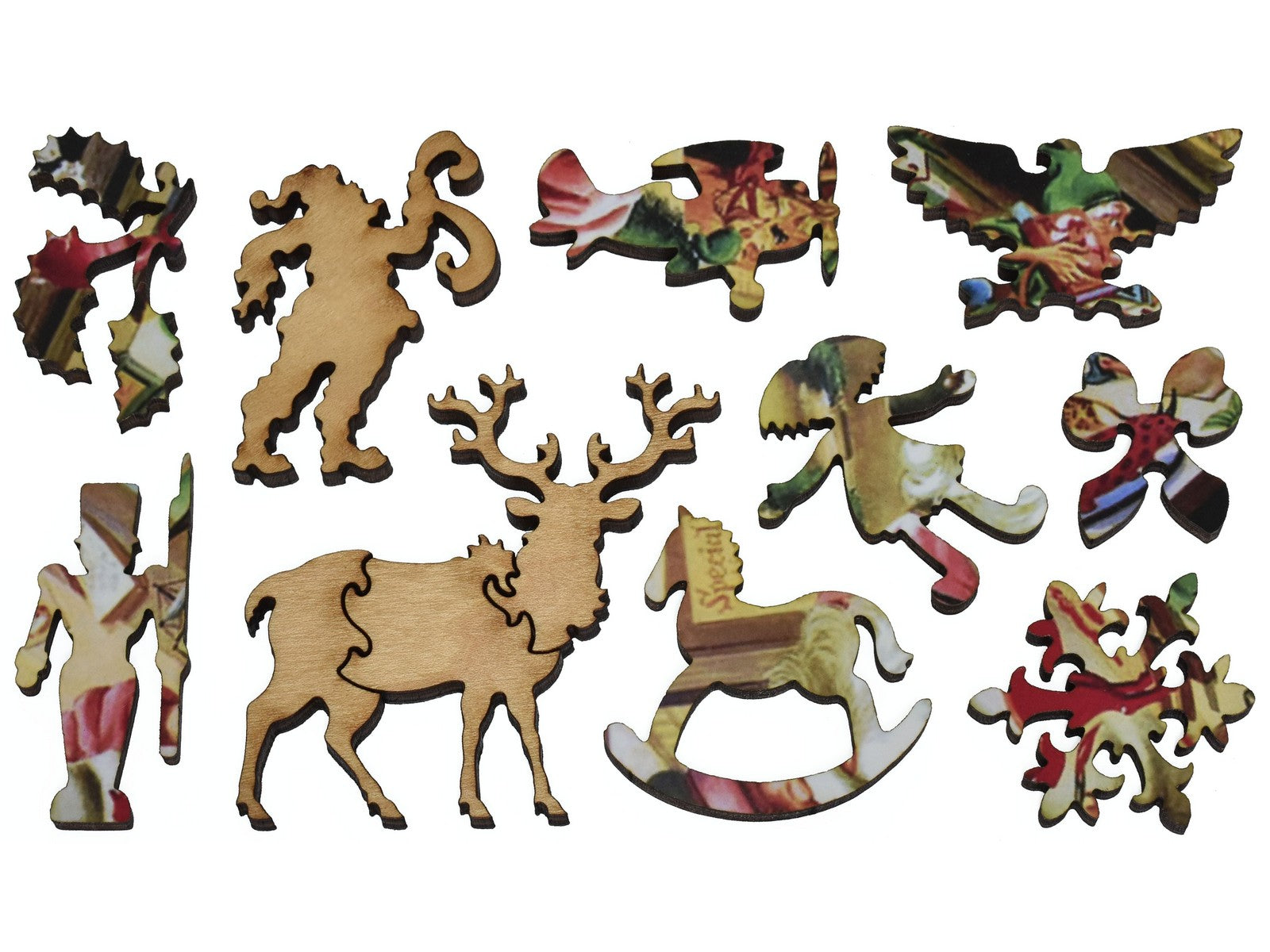
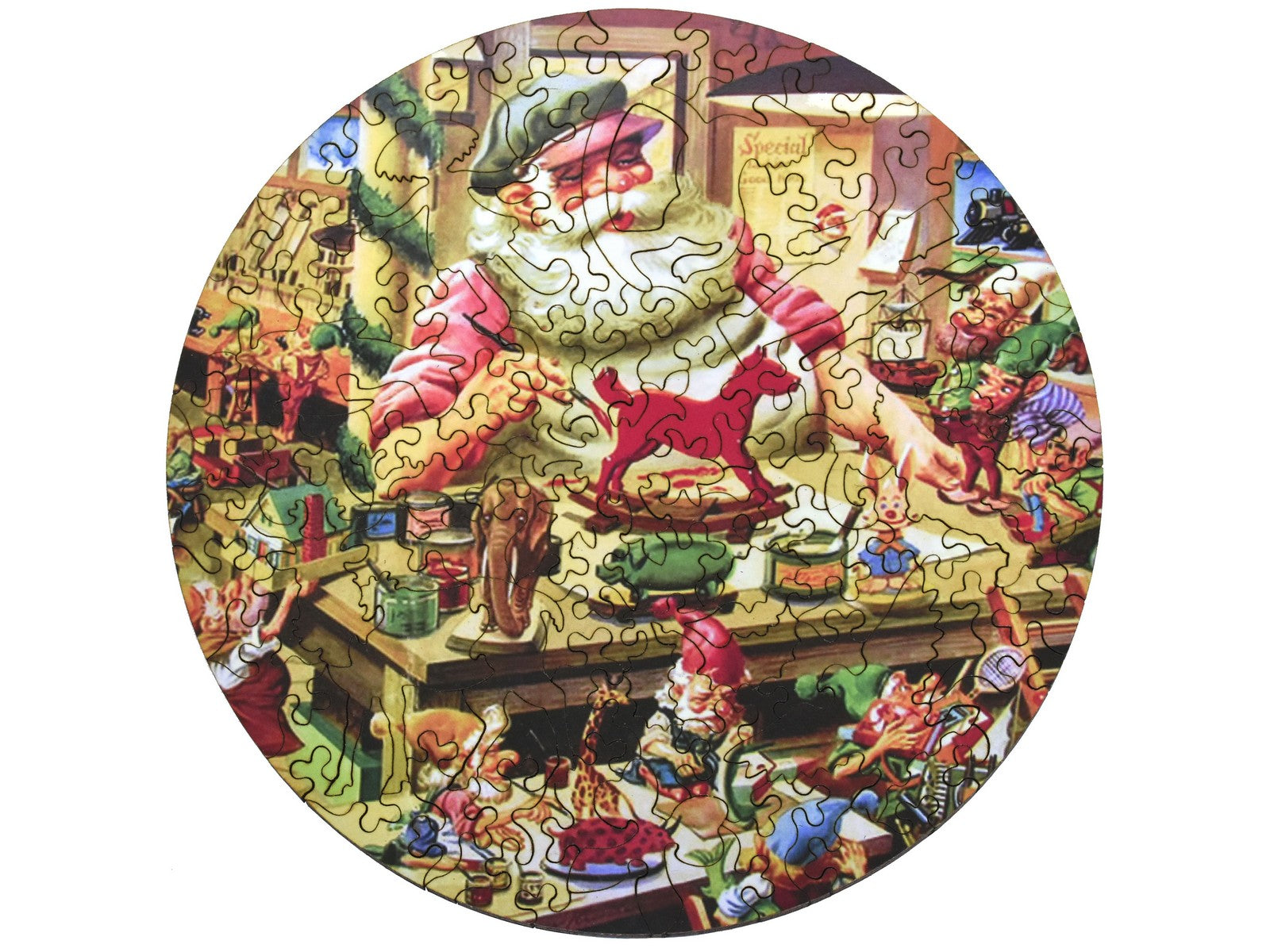
The cut. Standard 'ribbon cut' grids make a tidy lattice of near-identical pieces; premium cardboard varies the shapes enough to keep the solve interesting, and wooden puzzles abandon the grid entirely for sinuous, irregular cuts and those hand-drawn whimsy pieces. The cut is where a puzzle stops being a printed picture and becomes a designed object.
None of these is visible through shrink-wrap, which is precisely why the brand on the box matters: you are buying a manufacturing standard you cannot inspect until you're three hours in. The catalog's oldest lesson holds here — the quality of a thing is in its joinery, and a jigsaw is nothing but joinery.
A well-fit puzzle lets you lift a whole quadrant by one corner; a cheap one rains apart at a touch. The brand on the box is a manufacturing standard you can't inspect until you're three hours in.
Wooden or cardboard — which kind of puzzle should an adult actually buy?
These are two different objects that happen to share a name, and choosing between them is less about quality than about intent. Do you want an evening, or do you want an heirloom?
Cardboard is for the doing. A great cardboard puzzle — a Ravensburger, a Pomegranate, a Cloudberries — gives you a long, immersive, high-piece-count solve for $20–$30, in image sizes (1000, 1500, 2000 pieces) that wooden makers rarely attempt. You can find any subject under the sun, the fit is excellent, and when you're done you break it up and pass it on or shelve the box. It is the democratic, repeatable pleasure of the form, and there is no shame whatsoever in it being most people's right answer.
Wood is for the keeping. A wooden puzzle is a manufactured antique. The good ones are cut from quarter-inch birch-faced ply or, at the summit, five-ply cherry-backed stock; the pieces are thick, chunky, and tactile in a way cardboard cannot approach — reviewers reach again and again for the same words, the 'satisfying plunk,' the heft, even the scorched-wood smell of a fresh laser cut. The cuts are irregular and artful, the whimsy pieces are little carved jokes, and the finished object can be lifted, admired, taken apart, and handed to a grandchild. Wooden puzzles 'last much longer and can be passed through generations as heirlooms' — that is the entire proposition.
The costs of wood are real and worth stating plainly. Piece counts are far lower — a 'large' wooden puzzle is often 250–755 pieces where cardboard starts at 1000 — because every additional piece is expensive to cut. The price is five to a hundred times higher. And the very irregularity that delights also raises the difficulty, since you can't rely on a predictable grid. Wood asks more of your wallet and your patience and returns an object rather than an afternoon.
My archivist's rule of thumb: buy cardboard for the puzzles you'll do many of, and one good wooden puzzle for the image you'd genuinely want to own. The two are not rivals. They are the paperback and the bound first edition of the same beloved title.
These are two different objects that happen to share a name. Cardboard is for the doing; wood is for the keeping — the paperback and the bound first edition of the same beloved title.
Which cardboard puzzle is the gold standard — and is Ravensburger really worth it?
If a single house has earned the right to be the default recommendation, it is Ravensburger of Germany, and the reputation is built on manufacturing rather than mystique. The firm is the best-selling puzzle brand in the world — by its own accounting, north of a billion puzzles sold — and the scale has funded a genuinely superior product at a genuinely ordinary price.
The specifics are what convert skeptics. Ravensburger punches its pieces from hand-crafted dies onto an extra-thick, custom-developed European blueboard, which is why the pieces are rigid, why they resist fraying and peeling, and why they shed so little dust. The pieces are precision-cut to that audible Softclick standard — the soft snap of a true connection — and every piece in the box is uniquely shaped, so you are never fighting a false fit. Over the image lies the house's fine, linen-structured, anti-glare paper, which they describe as museum-quality and which, in practice, simply means you can work at night without glare washing out the picture. For most adults this is the entire checklist, met, for roughly $20–$25 a thousand pieces.
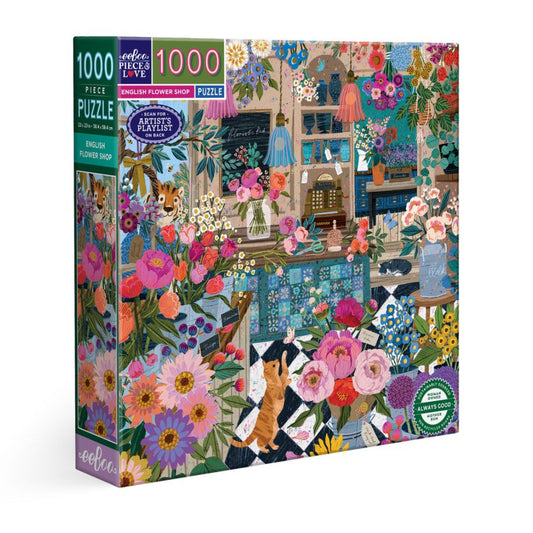
The catalog is the other half of the case: thousands of images across photography, illustration, fine art, maps, and the lush 'shop window' and cottage scenes that have become a genre unto themselves, in counts from 300 up to enormous 2000- and even larger panoramas. Whatever an adult wants to look at for ten hours, Ravensburger likely prints it.
Where does it fall short? Ravensburger is consistent, not adventurous — the cut, while excellent, is a refined grid, not the wild irregularity of wood, and a seasoned puzzler chasing novelty in the cut itself will want to look elsewhere on this list. There's also a tactile ceiling: it is superb cardboard, and cardboard it remains. But as the answer to 'I want one reliably great puzzle and I don't want to think about it,' there is no better-evidenced choice. It is the house wine that happens to be excellent — order it without apology, and spend your deliberation on the bottles that reward it.
A close honorable mention belongs to Pomegranate and Cloudberries, covered below; both clear the same quality bar in narrower lanes. But for sheer breadth-times-reliability, the German house sets the standard the others are measured against.
Ravensburger is the house wine that happens to be excellent — order it without apology, and spend your deliberation on the bottles that reward it.
What's the best heirloom wooden puzzle — and where does Stave fit?

Here the catalog gets interesting, because 'best' splits cleanly into 'best to own and enjoy' and 'best as a grail,' and they are not the same maker.
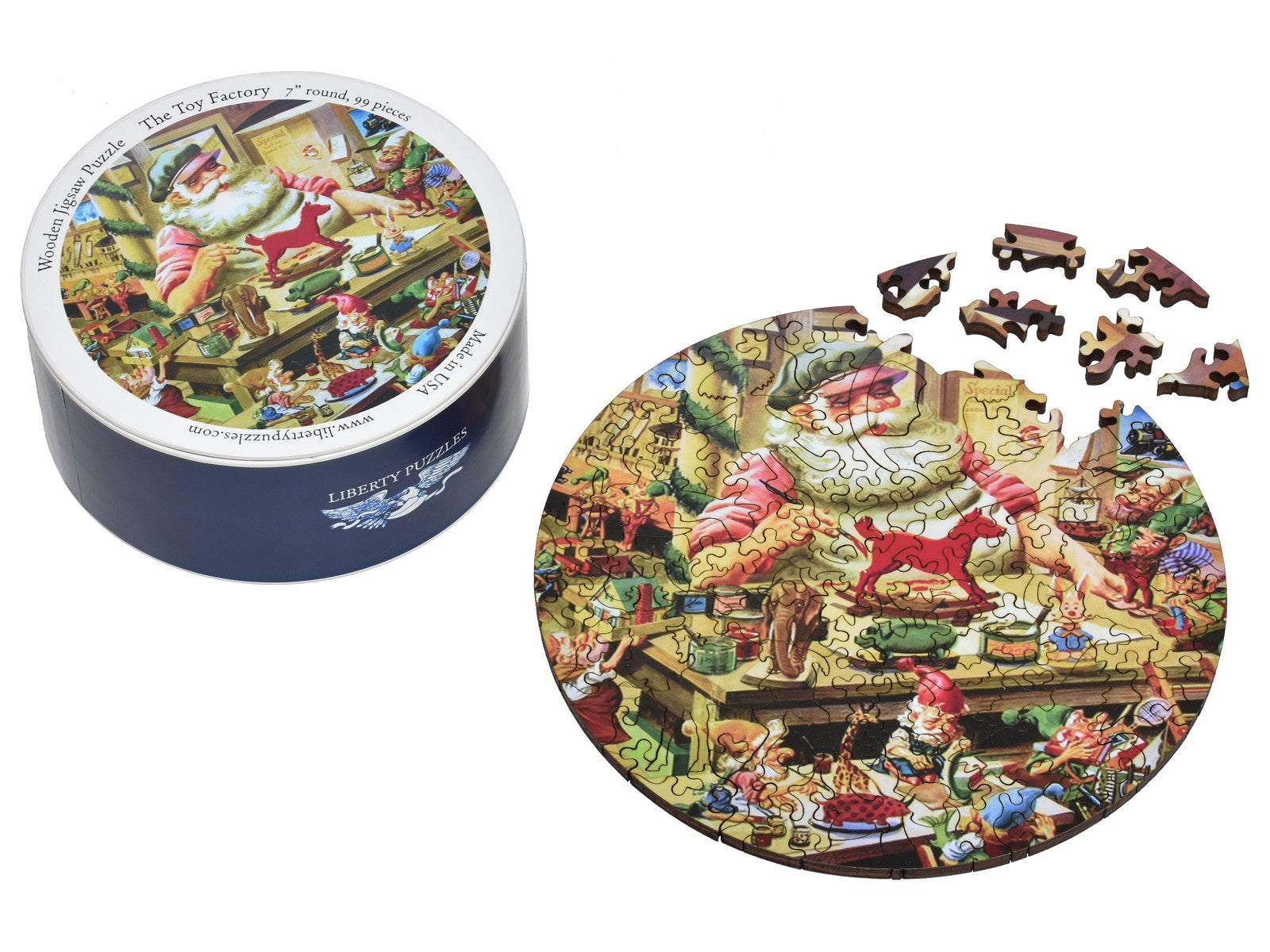
For the wooden puzzle most adults should actually buy, it's Liberty Puzzles of Boulder, Colorado. Hand-built since 2005, Liberty laser-cuts birch-faced panels and is celebrated by reviewers for 'an excellent, extremely detailed cut' and, decisively, 'more whimsy pieces than any other company' — figurals, animals, plants, and geometric shapes hand-drawn by an on-staff artist to suit each image. The fit is precise, the catalog is deep and full of exclusive vintage images, and the production is lovingly slow: a single panel takes about 45 minutes on the cutter and passes through roughly a dozen sets of hands before it's boxed in hand-folded tissue. Pricing runs roughly $85 for a small puzzle to about $185 for the largest — real money, but for a keepable object, the consensus 'reasonably priced' verdict holds. One reviewer's line captures the spell: 'the intricacy of the cut is so special, I would pretty much do any puzzle — any image — from Liberty.'
Its great rival is Artifact Puzzles — laser-cut from quarter-inch real wood, made in the USA, and beloved for chunky pieces with 'devilish cuts' and edgier, blockier whimsies. Where Liberty is exquisite and slightly more refined in fit, Artifact is the connoisseur's wild card, often a touch more affordable and adventurous in its piece geography. Wentworth of England (cutting since 1991, from 4mm wooden composite, with themed whimsies on all but its deliberately fiendish 'extra difficult' range) and the Victorian-cut houses round out a strong heirloom field.
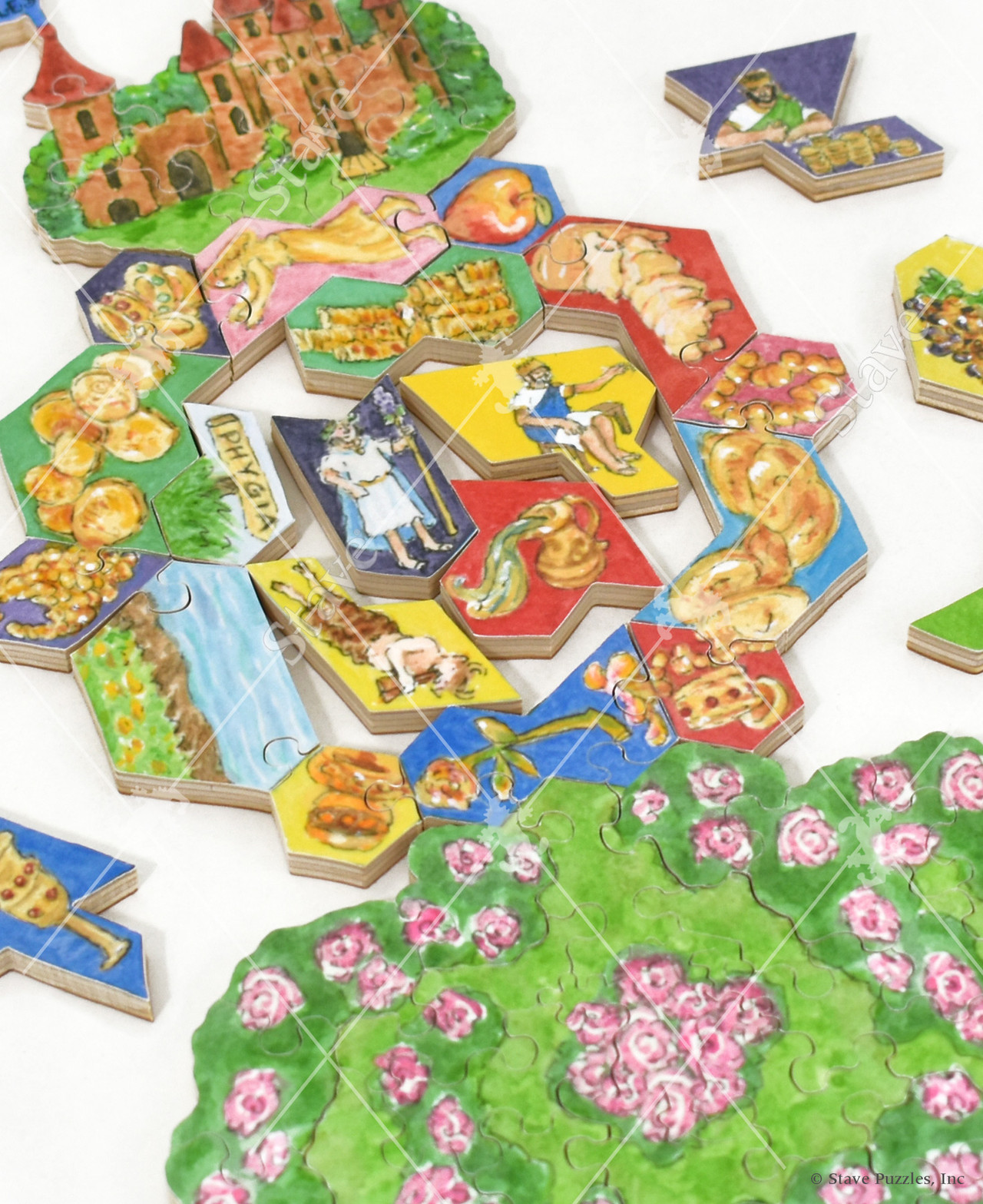
And then there is Stave. The Vermont house, founded by Steve Richardson, is the genuine summit of the craft and the one I'd send you to dream about rather than necessarily buy. Stave cuts entirely by hand — no lasers, no templates — from five-ply, cherry-backed wood, an artisan turning the stock against a saw blade to make each intricate cut. Smithsonian dubbed it the 'Rolls-Royce of puzzles'; its clientele has included Bill Gates and the late Queen Elizabeth II. Its trick puzzles are designed to be quietly cruel — pieces that fit in the wrong place, sections that resist your every assumption.
I must be candid about price, because it is the headline. In-stock Stave puzzles run from a few hundred dollars into the thousands, a traditional 250-piece can land near $3,000, and bespoke commissions reach $8,000–$10,000. That is not a typo and not for most of us. Stave is heirloom-as-investment, magnificent and almost defiantly expensive. Own a Liberty; covet a Stave. Both are correct.
Own a Liberty; covet a Stave. The one is an heirloom you'll actually buy; the other is the Rolls-Royce of puzzles, hand-cut from cherry-backed wood and priced like a small car.
Which puzzle is the most genuinely novel — beyond a pretty picture?
Most puzzles ask one question: where does this piece go? A small, clever cohort asks a second, stranger question, and chief among them is the Magic Puzzle Company.
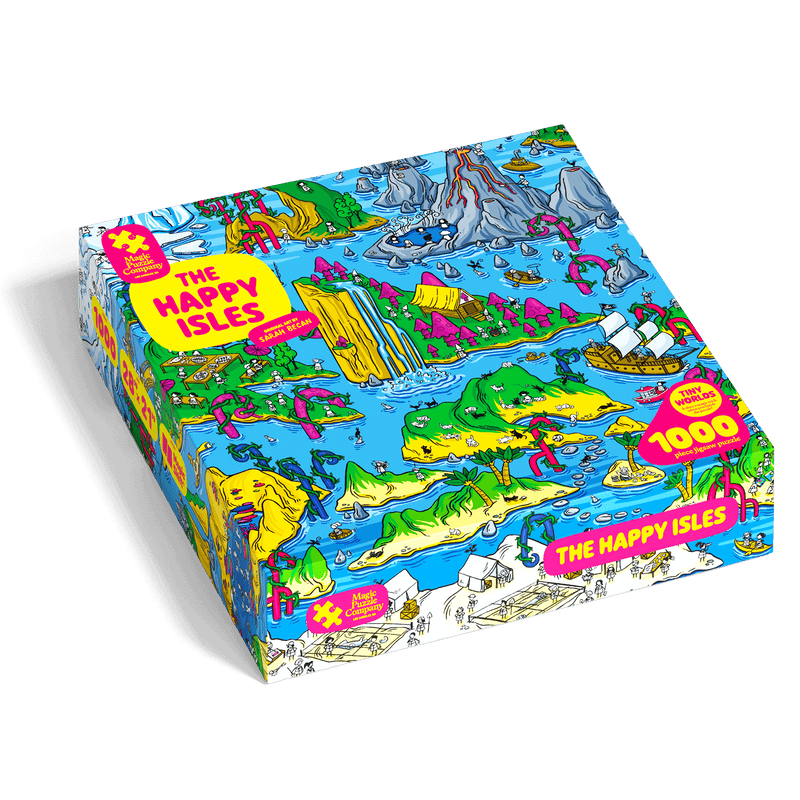
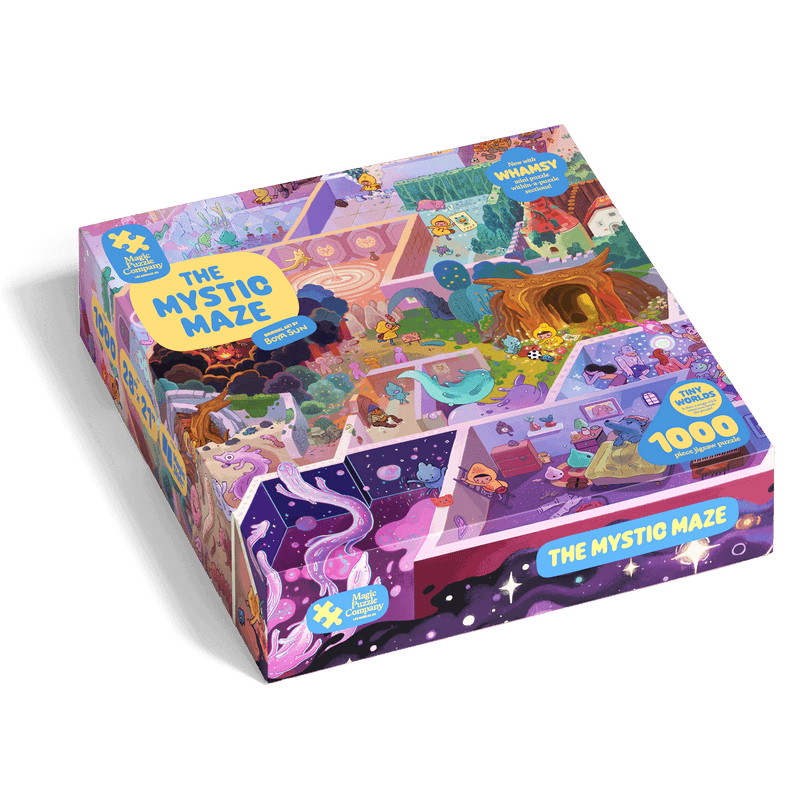
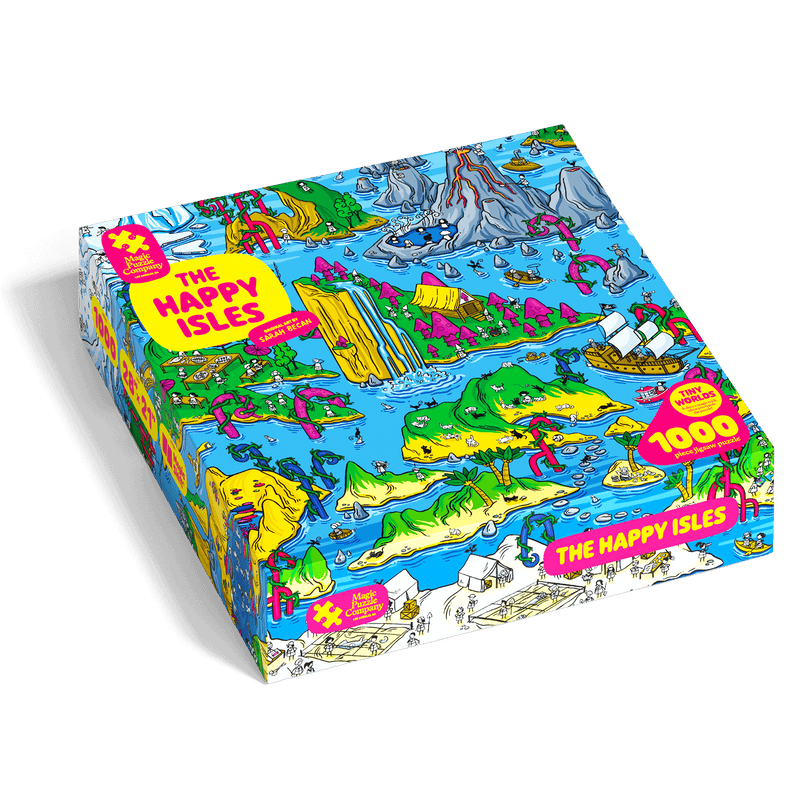
Its conceit is a physical illusion — not an optical trick printed on the pieces, but a structural one built into how the puzzle resolves. You assemble what looks like a complete image; then, following the instructions, the puzzle comes apart in sections and is rearranged so that a space opens in the middle — and yet the artwork remains continuous across the new configuration. Reach the end and you find a sealed envelope with roughly fifty additional pieces and directions for the next move, completing a small narrative in the newly-formed space. It is, as one reviewer put it, 'really clever and elegant,' and the public agrees emphatically: tens of thousands of five-star reviews, hundreds of millions of TikTok views, and the title of most-backed puzzles in Kickstarter history.
What makes it more than a gimmick is the construction discipline underneath. The art is commissioned original work, designed by artists for the medium, with two complete images so you're never squinting at the box for reference. And the build is harder than a standard 1000: the puzzle is divided into multiple sections, each with its own edge pieces, which then must be fitted to one another — a meaningfully different solving choreography. At roughly $30, it is the best 'I've done a hundred puzzles, surprise me' purchase on the shelf.
Worth grouping here, in the spirit of novelty: the gradient and 'impossible' puzzles from Cloudberries (the Gradient and Pixels titles are pure color with no image to lean on — a different and delicious kind of hard), and the trick puzzles of Stave, whose whole art is the structural betrayal. Different makers, same instinct — the conviction that the form of a puzzle is a place to be inventive, not merely a frame for an image.
A caution the curator owes you: novelty puzzles are often best the first time, when the surprise is intact. The Magic Puzzle's reveal can't be un-known, so it makes a wonderful gift or a once-savored experience rather than a re-solve. That's not a flaw — a magic trick is no less magnificent for being a trick — but go in knowing you're buying a moment as much as an object.
A small, clever cohort asks a second, stranger question than 'where does this piece go?' — and a magic trick is no less magnificent for being a trick.
What's the best fine-art puzzle — and the best honest value?
Two questions that bracket the price spectrum, and each has a clear answer.
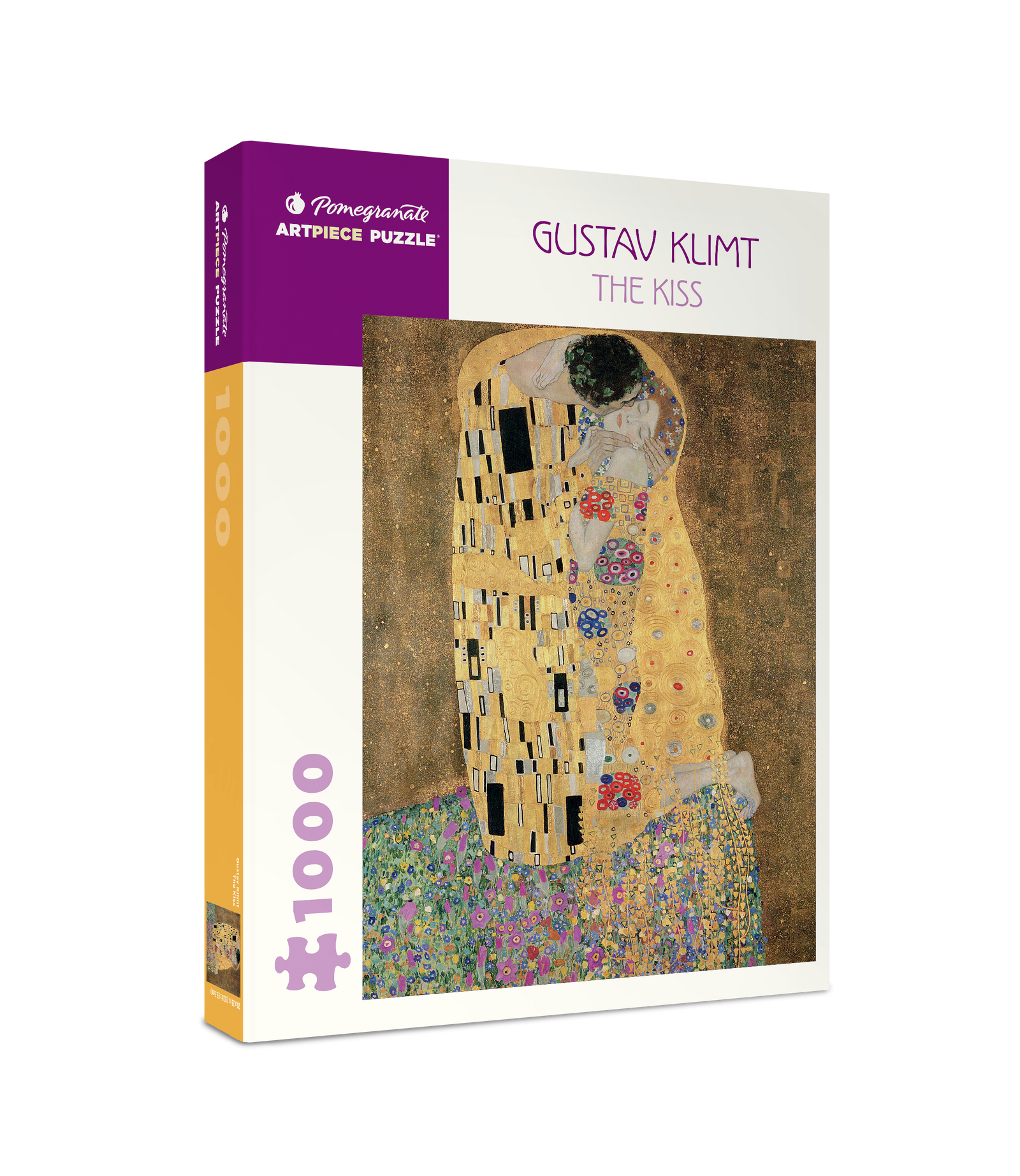
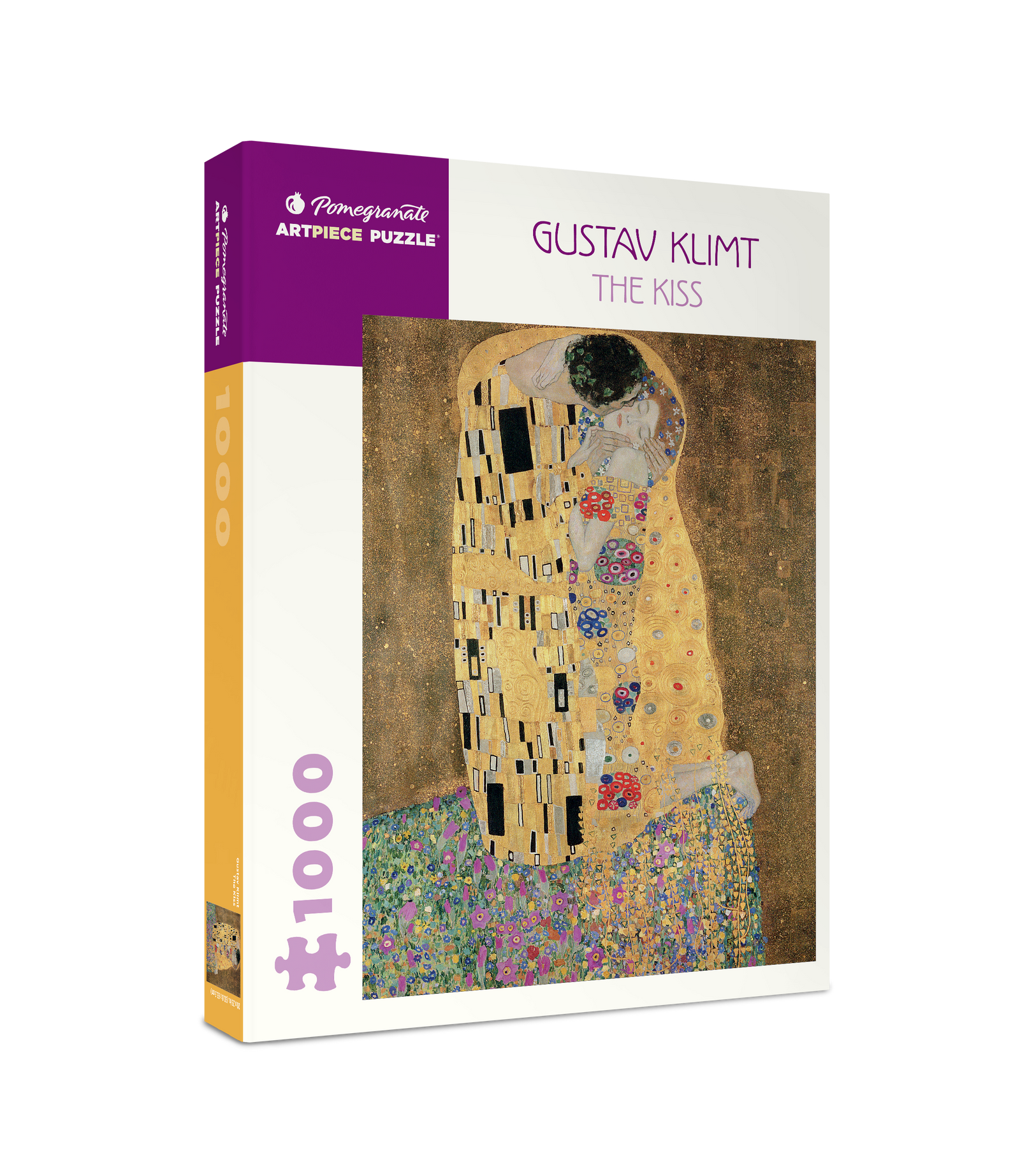
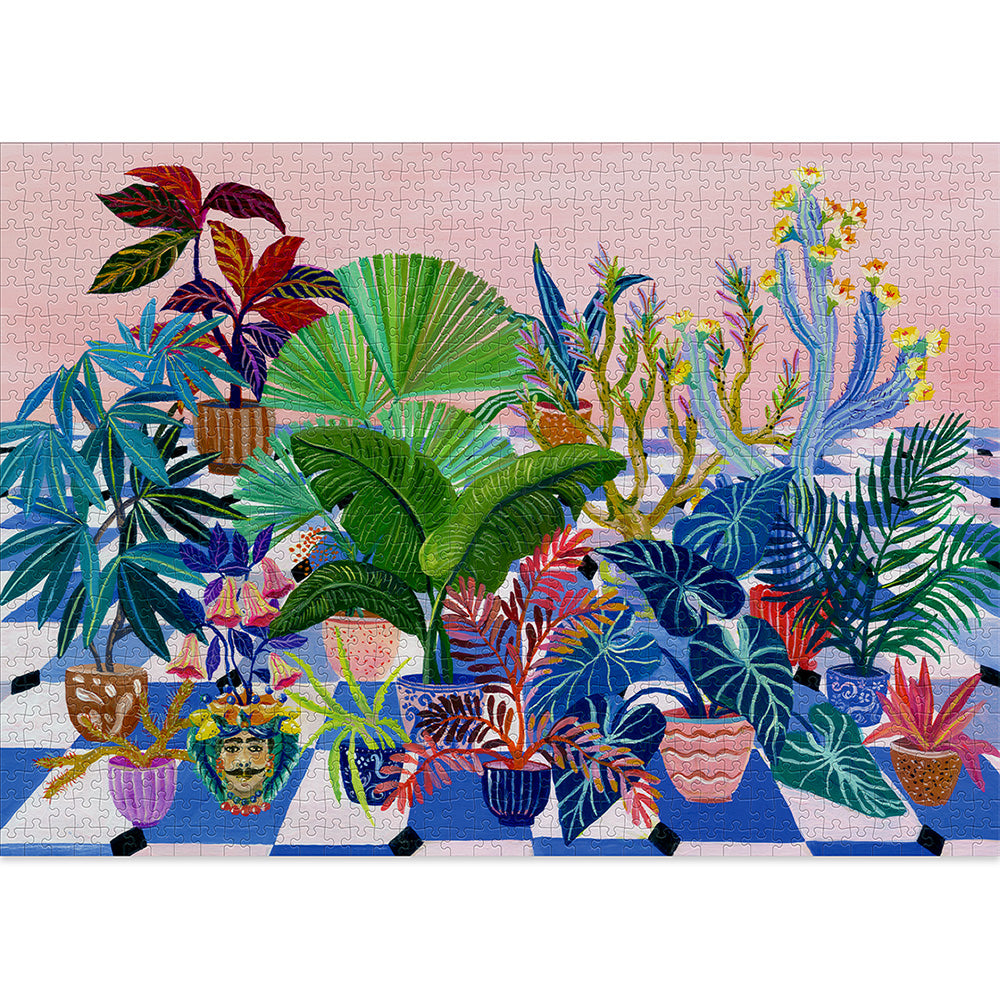
For fine art, the house is Pomegranate. This is the reproduction specialist, and the distinction is in the fidelity. Pomegranate collaborates directly with museums, galleries, foundations, and individual artists to verify color and accuracy, so the image is true to the source rather than merely vivid — 'second only to an in-person viewing,' as the house frames it, and the keepsake quality reviewers consistently confirm. The construction is heirloom-grade in cardboard terms: thick pieces on a heavyweight European blueboard, immaculate interlocking fit, minimal dust, and high-quality art-reproduction paper with minimal glare. Assembled sections lift and stay connected — the mark of a serious cut. A 1000-piece Pomegranate runs around $20–$25 and finishes near 20 by 27 inches, which is to say you can frame the result and it earns wall space. If you love a particular painter — Hokusai, the Impressionists, contemporary artists — this is where the canon lives in jigsaw form.
For value, the answer is Cloudberries. The UK house has built a devoted following (thousands of reviews averaging near 4.9 of 5) on a simple promise kept: extra-thick pieces, a premium matte finish, a satisfying click, designed in Britain and precision-cut, on recycled board with vegetable-based inks. The aesthetic is modern and graphic — color charts, maps, illustrated scenes, and the famously brutal Gradient and Pixels — and the price sits around $20–$25 for a 1000 that genuinely feels a tier above its cost. It is not flawless: a minority of reviews report dust or a faint film on arrival, the ordinary variance of cardboard manufacturing, and worth a contented note rather than alarm. But pound for pound — pun intended — Cloudberries delivers premium tactility at a mainstream price better than almost anyone.
Worth naming in the value conversation: eeBoo, whose 'Piece and Love' line pairs sturdy, glossy pieces and charming illustrated and square-format designs with admirable sustainability credentials; Cobble Hill, a reliable mid-tier with linen-finish stock, a handy reference poster, and cozy folk-art imagery; and White Mountain (Jackson, New Hampshire, since 1978), the home of the nostalgic Americana collage. None reinvents the craft, but each delivers honest quality at a fair price — the dependable shelf of the library, where most evenings actually get spent.

Pomegranate is where the canon lives in jigsaw form; Cloudberries delivers premium tactility at a mainstream price better than almost anyone. Fidelity at the top of the budget, value at the bottom of it.
Which puzzle is the best serious 1000-plus challenge — and the best gift?

Two practical questions to close the field — the marathon and the present.
For a serious, sit-with-it-for-a-week challenge, stay in cardboard and go big or go fiendish. Difficulty in puzzling comes from two levers: piece count and image cruelty. For raw count, Ravensburger's 2000-piece panoramas (and larger) deliver a true long-haul solve at superb fit and modest cost — the honest endurance event. For cruelty, nothing on a budget beats a Cloudberries Gradient or Pixels: 1000 pieces of pure color with no image to anchor you, sorted only by hue and shape, a solve that humbles experienced puzzlers in the best way. If you want difficulty and an heirloom, a large Liberty (up to ~755 pieces) or a Wentworth 'extra difficult' (themed whimsies stripped out in favor of repetitive, tessellating pieces) raises the bar through the cut itself. And if money is truly no object and you want to be defeated, a Stave trick puzzle is engineered to do exactly that. My counsel: chase the kind of hard you enjoy — sheer scale (Ravensburger 2000) or conceptual difficulty (Cloudberries gradient) — rather than buying difficulty as a number for its own sake.
For a gift, give a wooden puzzle suited to the recipient — that is the answer almost every time. The logic is simple and a little sentimental: a wooden puzzle gets unwrapped, assembled, admired, taken apart, and kept, often handed down. A great cardboard puzzle is generous and gets enjoyed; a wooden one becomes an object in someone's life. A Liberty in an image they'll love — their hometown, a favorite painting, a passion — is close to a perfect present: handmade, surprising, lasting, and personal. For a gift that's pure delight rather than pure heirloom, the Magic Puzzle Company is the showstopper, because you're giving an experience and a story they'll tell. And for the fine-art lover, a framed-able Pomegranate of their favorite painter is a thoughtful, affordable grace note.
The through-line of this whole catalog, if I may: match the object to the person and the moment. Cardboard for the steady pleasure of many evenings; wood for the gift that outlives the giving. A puzzle is one of the few presents that asks the recipient to spend unhurried hours with their own hands and attention — which, in a distracted age, may be the most generous thing in the box.
A puzzle is one of the few gifts that asks the recipient to spend unhurried hours with their own hands and attention — which, in a distracted age, may be the most generous thing in the box.
What experienced tables keep reporting
Recurring owner patterns, synthesized in Puzzlewick's words. Follow each evidence trail to read the original discussion.
the intricacy of the cut is so special, I would pretty much do any puzzle — any image — from Liberty!
Read the evidence: My Jigsaw Journal — 'The Wooden Jigsaw Puzzle Experiment'
Liberty offers an equally thick cut with better fit and more regularly irregular shaped pieces, while Artifact seems edgier… though their pieces are nice and chunky with devilish cuts.
I think that Pomegranate puzzles are the finest quality puzzles on the market. The colors are rich and well-defined. These are keepsake-quality puzzles.
Read the evidence: Pomegranate customer review (via Puzzle Warehouse listings)
The Only Puzzles I will buy. The puzzles are exquisite. The wooden pieces allow multiple use and remain like new. I have been purchasing Wentworth for over 15 years.
The Magic Puzzle Company has happened upon something that is really clever and elegant.
Read the evidence: Room Escape Artist — Magic Puzzle Company overview
Stave doesn't use lasers, templates or any fancy gadgets. It's all done free-hand by artisans who sit down at a saw, push the wood toward the blade and turn it to make intricate cuts.
Read the evidence: Yankee / New England — profile of Stave Puzzles
The picks
Some links below are affiliate links — as an Amazon Associate, Puzzlewick earns from qualifying purchases, at no extra cost to you. It never changes a pick.
 2 photos
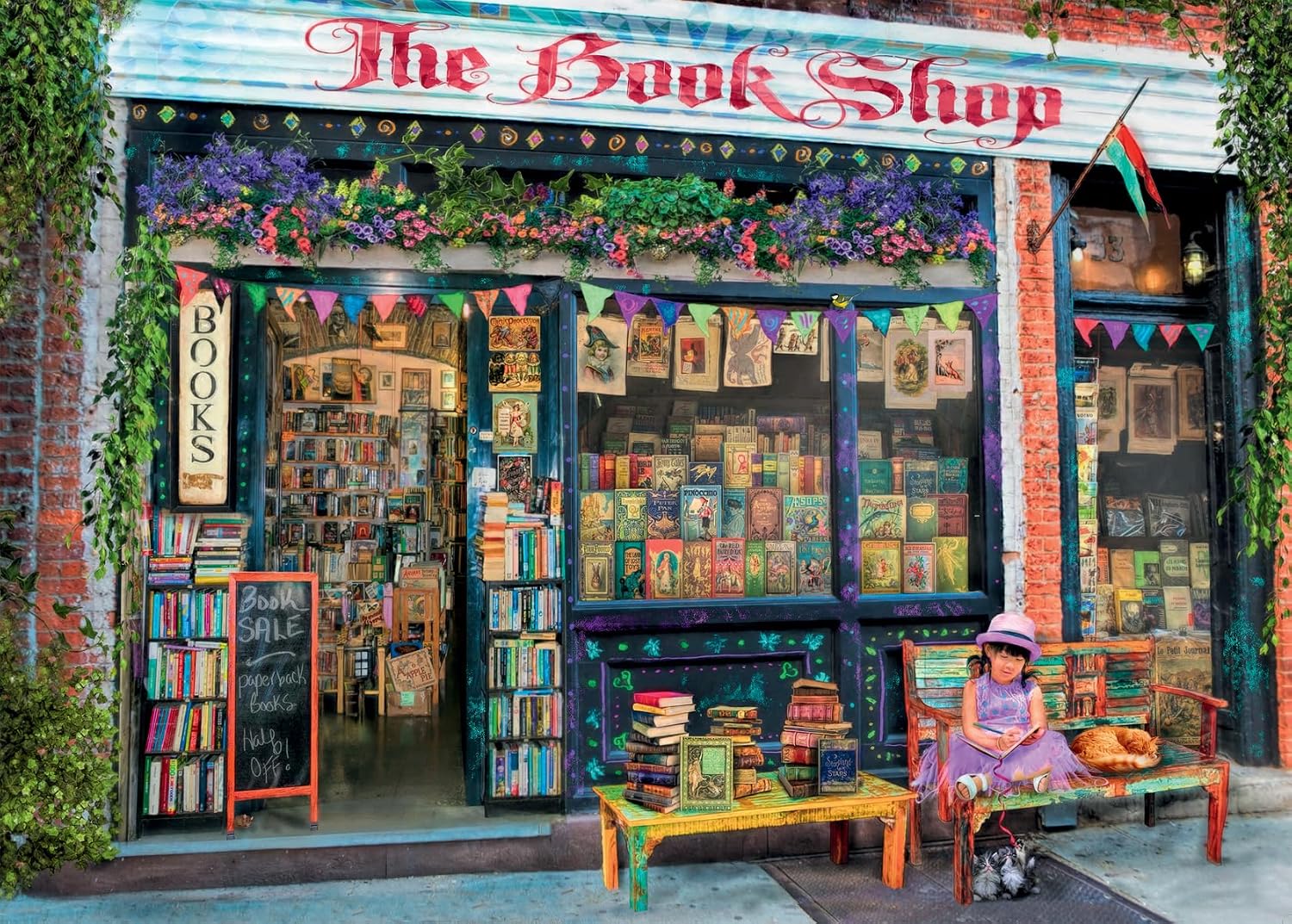
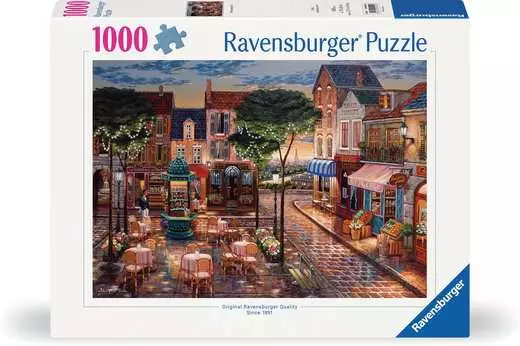
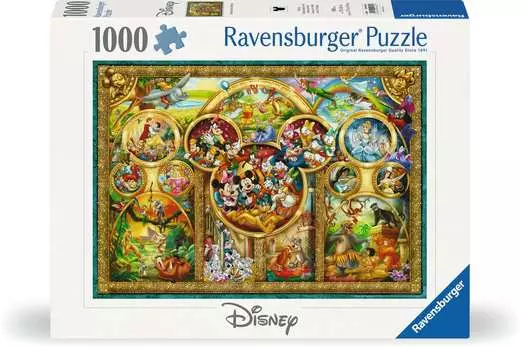
 Ravensburger The Bookshop 1000-Piece Puzzle
The Bookshop is the exact 1,000-piece Ravensburger listing behind this button, and it is a strong demonstration of why the brand remains the safe cardboard recommendation: a richly segmented image, anti-glare finish, sturdy board, and a cut that makes progress readable without making the solve trivial. Treat this as one verified design, not a portal to every Ravensburger puzzle ever printed. If the artwork does not delight you, keep the manufacturing standard and choose a different exact box.
- Audible Softclick fit; lift whole sections intact
- Extra-thick board, minimal puzzle dust
- Linen anti-glare finish, superb under lamplight
- Enormous catalog and piece-count range
- Frequently discounted to $15–$20
- Cut is a refined grid, not adventurous
- Tactile ceiling of cardboard
- Licensed/giant editions cost more
 3 photos
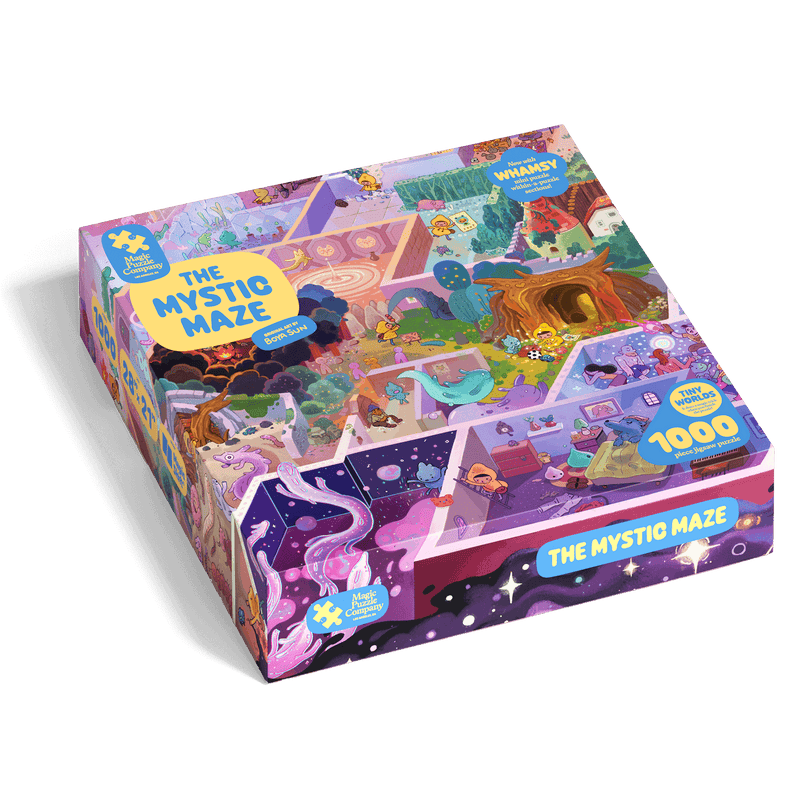
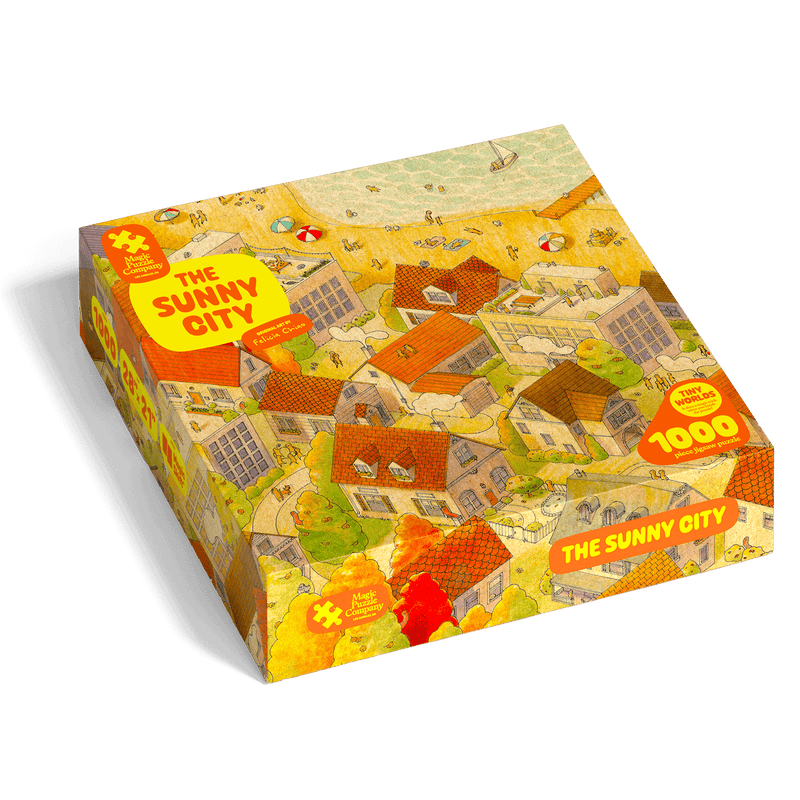
 Magic Puzzles (Series One and later)
A puzzle that asks a second, stranger question. You assemble a complete image, then rearrange sections so a gap opens in the middle — yet the artwork stays continuous, a physical (not optical) illusion built into the cut. A sealed envelope of ~50 extra pieces then completes a small narrative in the new space. With tens of thousands of five-star reviews and the title of most-backed puzzle on Kickstarter, it backs the gimmick with commissioned original art and a genuinely harder, multi-section build. At ~$30 it's the best 'surprise me' purchase on the shelf — best savored once, which makes it a perfect gift.
- Genuinely novel structural illusion
- Original art designed for the medium
- Two complete reference images
- Harder multi-section solve
- Outstanding gift / experience
- Reveal is one-time; not a re-solve
- Standard cardboard tactility
- Surprise spoils if researched
 2 photos
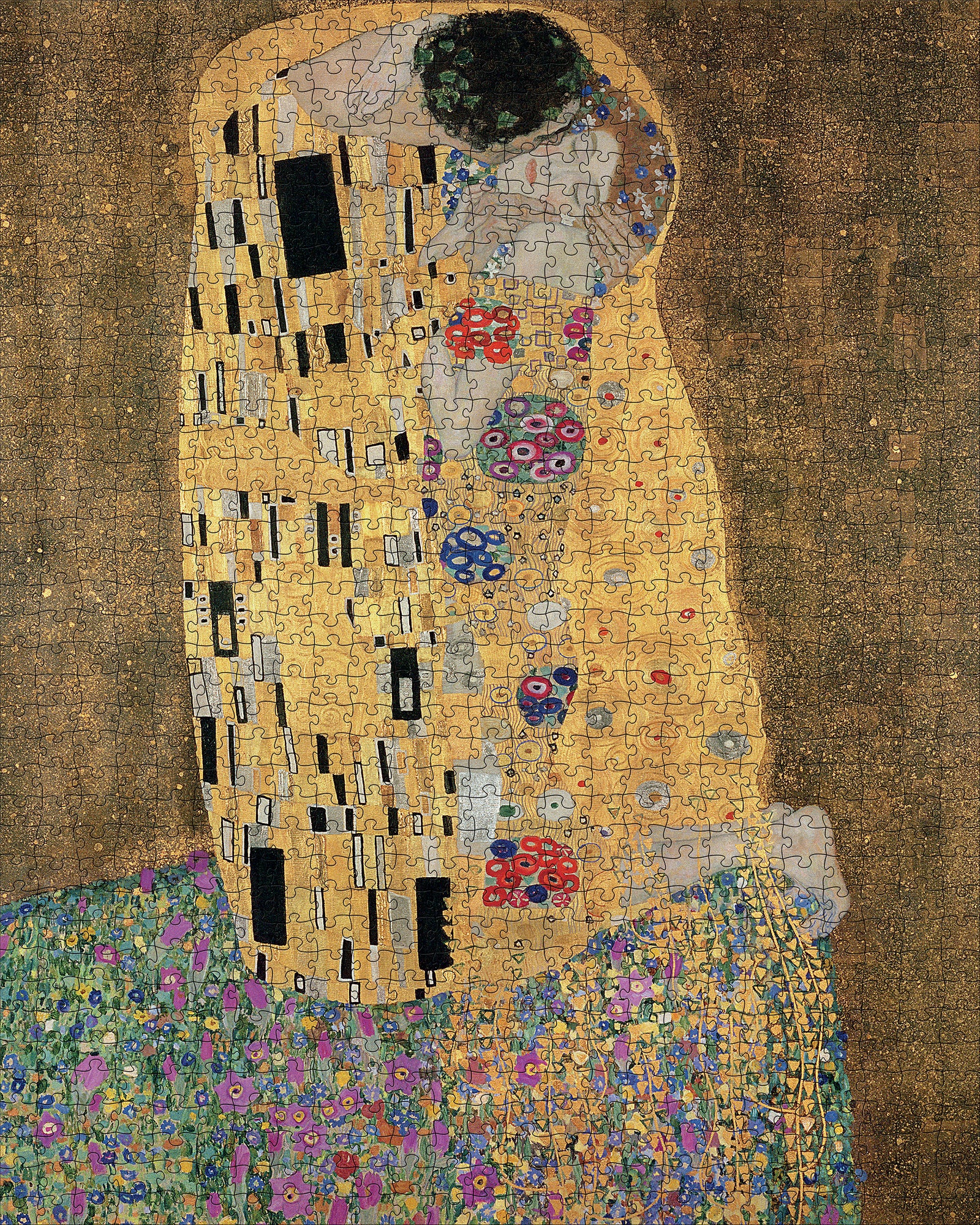
 Pomegranate Fine-Art Puzzles (500 & 1000)
The reproduction specialist, and the fidelity is the whole point: Pomegranate works directly with museums, galleries, and artists to verify color and accuracy, so the image is true to the source rather than merely bright — 'second only to an in-person viewing.' Construction is heirloom-grade in cardboard terms: thick pieces on heavyweight European blueboard, immaculate fit, minimal dust, art-reproduction paper with minimal glare. A 1000 runs ~$20–$25 and finishes near 20×27 inches, so the result is genuinely frame-worthy. If you love a particular painter, this is where the canon lives in jigsaw form.
- Museum-verified color fidelity
- Heavyweight board, immaculate fit
- Low glare, low dust
- Frame-worthy finished size
- Deep fine-art catalog
- Mainly 500/1000 counts
- Art focus won't suit every taste
- Premium of fine-art licensing
 2 photos
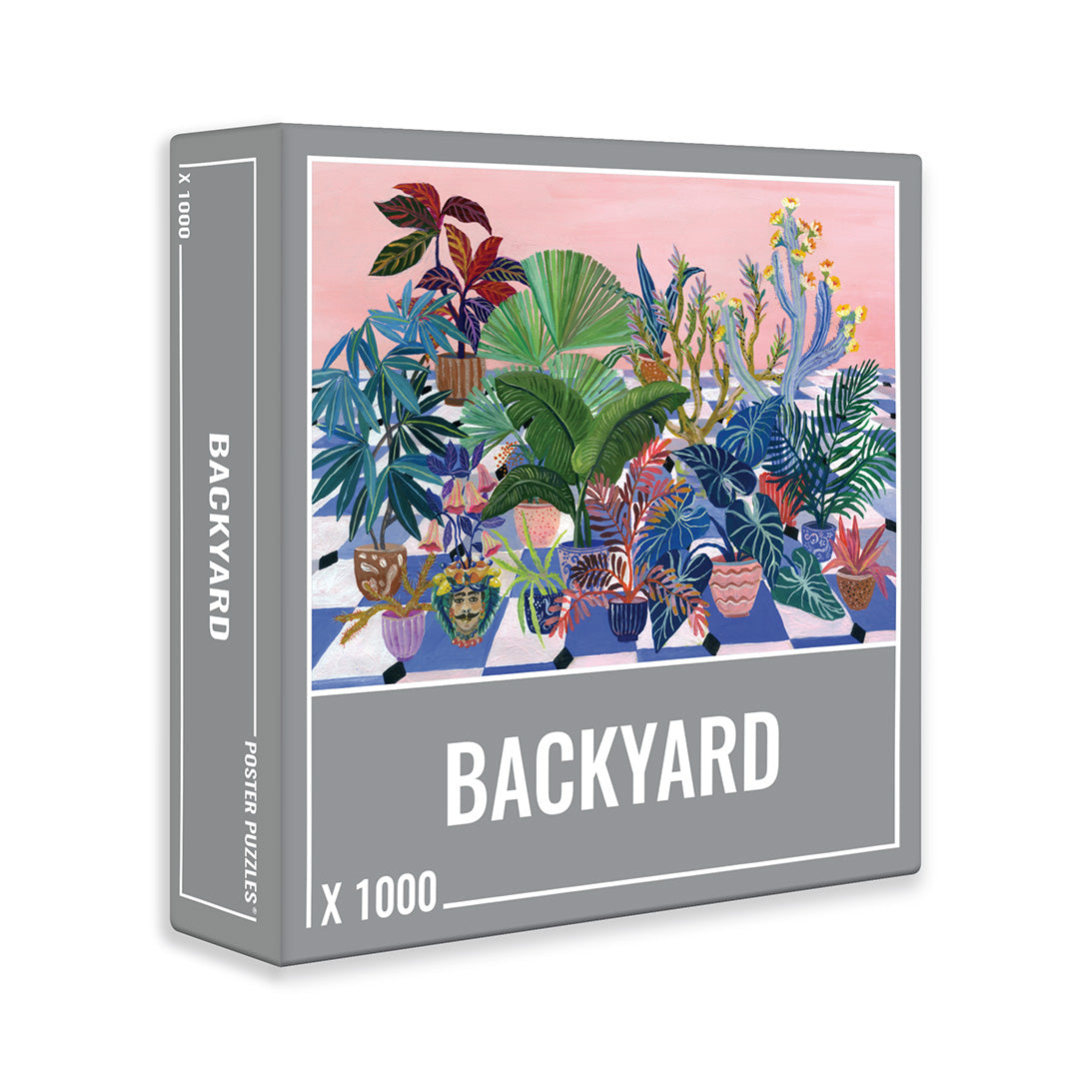
 Cloudberries 1000-Piece Puzzles
A devoted following (thousands of reviews averaging near 4.9/5) earned on a simple promise kept: extra-thick pieces, a premium matte finish, a satisfying click, designed in the UK and precision-cut on recycled board with vegetable-based inks. The aesthetic is modern and graphic — color charts, maps, bold illustration, and the famously brutal Gradient and Pixels. At ~$20–$25 for a 1000 it feels a clear tier above its cost. Not flawless — a minority report dust or a faint film on arrival, the ordinary variance of cardboard — but pound for pound, premium feel at a fair price.
- Extra-thick pieces, premium matte finish
- Satisfying tight click
- Modern graphic designs
- Eco materials (recycled board, veg inks)
- Excellent price-to-quality
- Occasional dust/film reports
- Mostly 1000-piece line
- Graphic style isn't for everyone
 2 photos
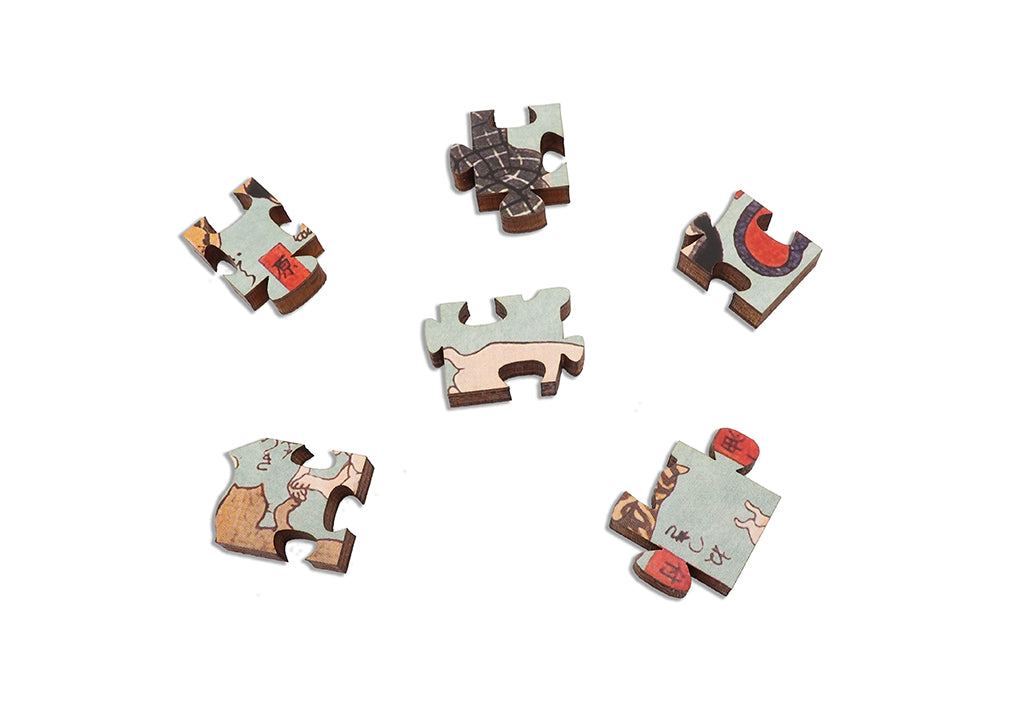
 Artifact Puzzles (laser-cut wooden)
Liberty's great rival, laser-cut from quarter-inch real wood and made in the USA, beloved for chunky pieces with 'devilish cuts' and edgier, blockier whimsies. Where Liberty is exquisite and slightly more refined in fit, Artifact is the wild card — often a touch more affordable, more adventurous in piece geography, and stocked with art you won't see elsewhere. Reviewers call them sturdy heirloom puzzles whose laser-cut pieces 'fit impeccably,' praising the wood and the print. The wooden puzzle for someone who wants the solve itself to surprise them.
- Chunky pieces with devilish, varied cuts
- Real quarter-inch wood, made in USA
- Distinctive artist catalog
- Often better value than peers
- True heirloom durability
- Whimsies blockier/less fantastical than Liberty
- Fit a hair behind Liberty per reviewers
- Premium price; low piece counts
 2 photos
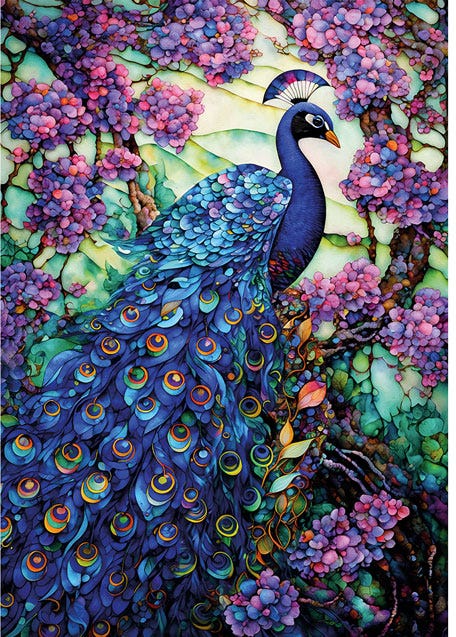
 Wentworth Wooden Puzzles (whimsy & 'extra difficult')
Cutting in Wiltshire since 1991 from 4mm sustainable wooden composite, Wentworth pairs themed whimsy pieces with a tidy, well-fit cut — and uniquely offers an 'extra difficult' range that strips out the whimsies in favor of repetitive, tessellating pieces for a genuine fight. The catalog runs from tiny 40-piece micro puzzles to challenging 1000s, with strong personalization options. Long-time buyers are fiercely loyal ('the only puzzles I will buy… they remain like new'). US buyers should factor UK shipping. A flexible, durable wooden choice across budgets and skill levels.
- Themed whimsies on most puzzles
- 'Extra difficult' range for real challenge
- Wide piece-count range (40–1000)
- Strong personalization
- Durable, reusable wood
- Standard cut less wild than Liberty/Artifact
- UK shipping for US buyers
- Composite, not solid hardwood
 3 photos
 eeBoo 'Piece and Love' Puzzles
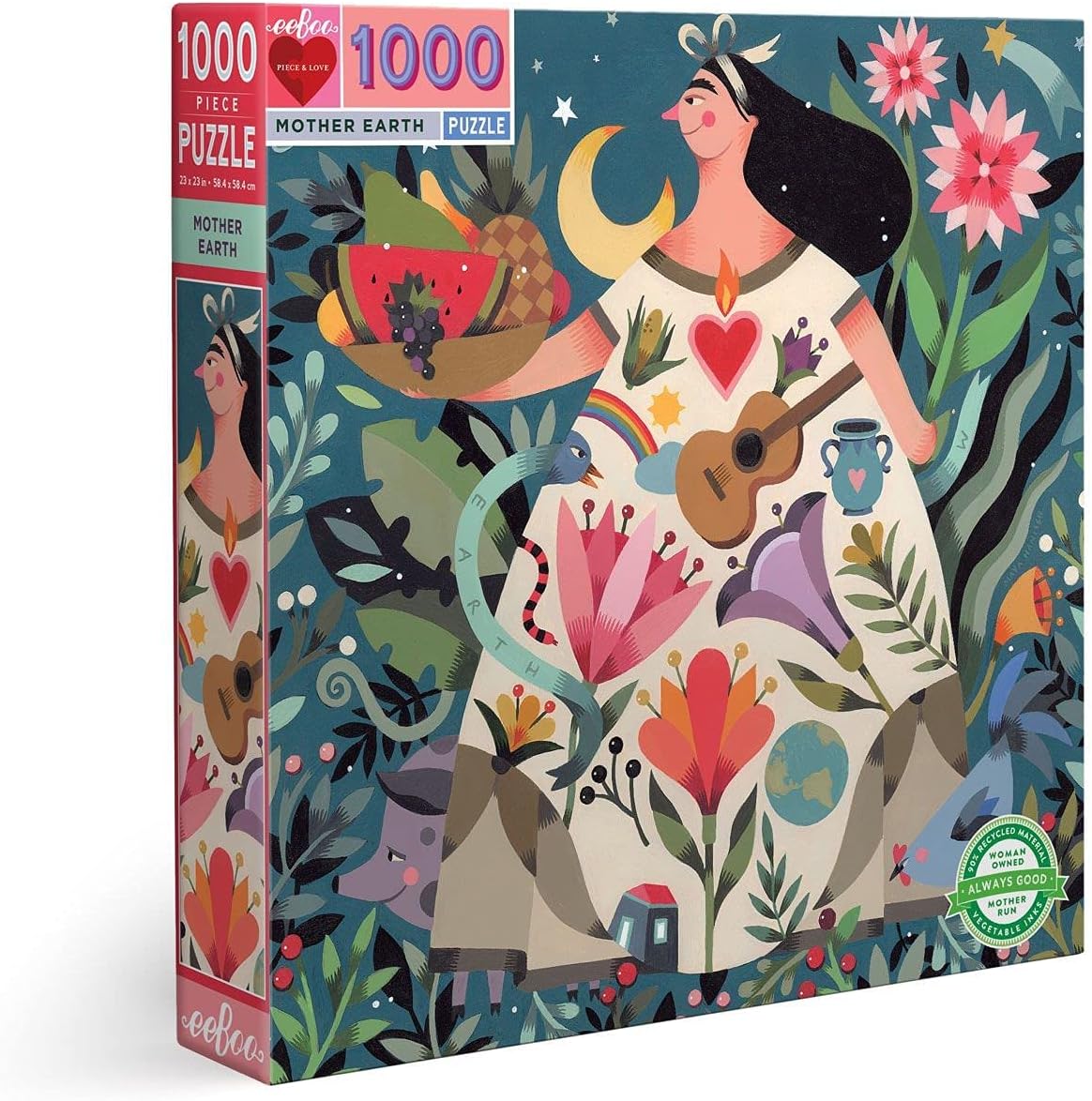
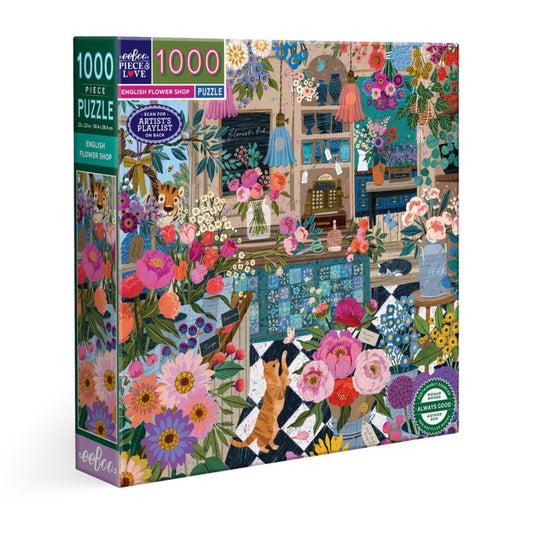
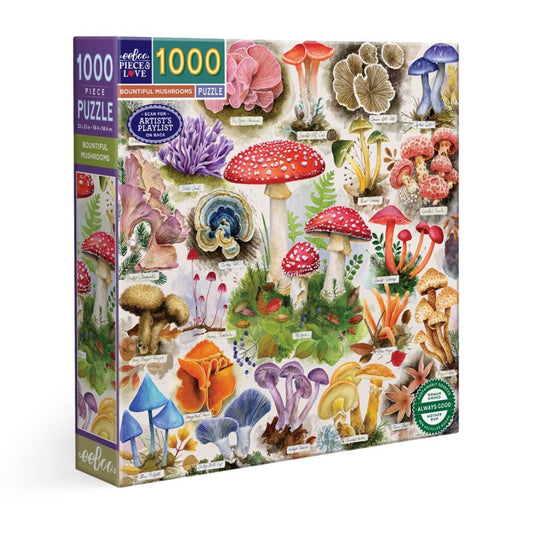
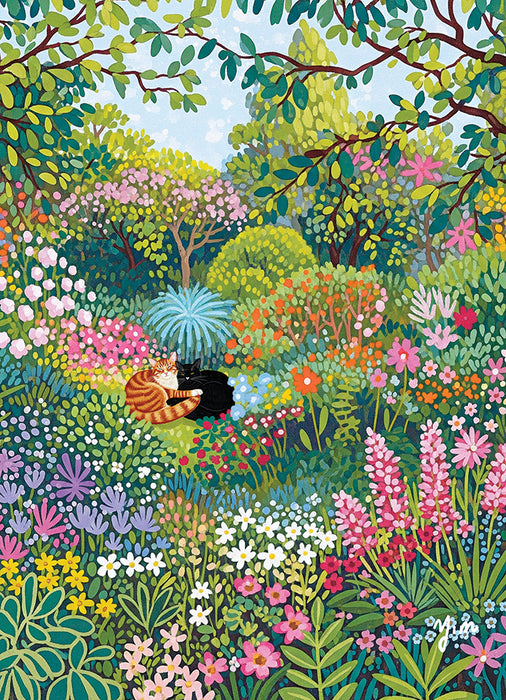
eeBoo's 'Piece and Love' line is the charm pick: sturdy, glossy pieces and distinctive illustrated artwork, frequently in eye-catching square and round formats, with admirable sustainability credentials. The designs lean warm, witty, and decorative — kitchens, gardens, cats, affirmations — and the build is solid mid-tier cardboard with minimal dust. Not a craft revolution, but a reliably cheerful 1000-piece solve at a fair ~$18–$22, and a frequent award-winner for its art direction. A lovely, gift-able everyday puzzle.
- Distinctive illustrated art direction
- Square/round formats stand out
- Sturdy pieces, minimal dust
- Strong sustainability credentials
- Affordable and gift-friendly
- Glossy finish over linen
- Standard mid-tier fit
- Style is decorative, not for all
 2 photos
 Cobble Hill 1000-Piece Puzzles
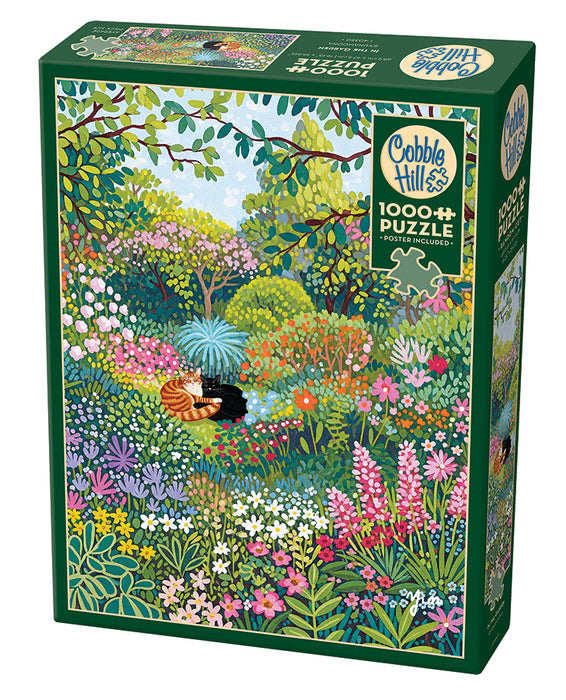
The reliable workhorse of the cozy-imagery shelf. Cobble Hill prints folk-art and homestead scenes on linen-finish stock that reduces glare, with a crisp image and a genuinely useful full-size reference poster in the box — a small kindness experienced puzzlers appreciate. Random (not ribbon) cut keeps the solve honest, the fit is solid, and the board is earth-friendly. Nothing here reinvents the craft, but at ~$18–$22 it delivers honest quality and the most welcoming imagery on this list. The dependable shelf where most evenings actually get spent.
- Linen finish reduces glare
- Random cut, solid fit
- Reference poster included
- Cozy, welcoming imagery
- Earth-friendly board, fair price
- Conservative design and craft
- Not a premium tactile step-up
- Some images licensed/seasonal
At a glance
| puzzle or brand | material | pieces | price | best for |
|---|---|---|---|---|
| Ravensburger | Cardboard (extra-thick blueboard, linen finish) | 300–2000+ | ~$18–$25 (1000) | Best overall cardboard; the reliable default |
| Liberty Puzzles | Laser-cut wood (birch-faced), whimsies | ~100–755 | ~$85–$185 | Best heirloom wooden to actually own |
| Magic Puzzle Company | Cardboard, illusion-cut | ~900–1000+ | ~$30 | Best mind-bending novelty & gift |
| Pomegranate | Cardboard (heavyweight blueboard) | 500–1000 | ~$20–$25 | Best fine-art / museum reproduction |
| Cloudberries | Cardboard (extra-thick, matte) | ~1000 | ~$20–$25 | Best value premium feel |
| Artifact Puzzles | Laser-cut wood (1/4" solid), whimsies | ~175–600+ | ~$60–$120+ | Best wooden value; adventurous cut |
| Stave Puzzles | Hand-cut five-ply cherry-backed wood | ~50–1000+ | ~$300–$8,000+ | Ultra-luxury grail & trick puzzles |
| Wentworth | Laser-cut 4mm wooden composite, whimsies | 40–1000 | ~$25–$165 | British whimsy; built-in difficulty range |
| eeBoo | Cardboard (glossy), illustrated | ~500–1000 | ~$18–$22 | Illustrated/square-format with eco focus |
| Cobble Hill | Cardboard (linen finish), random cut | ~500–1000 | ~$18–$22 | Cozy dependable value + reference poster |
Questions, answered
What actually makes a jigsaw puzzle 'premium'?
Four things you can't see through shrink-wrap: fit, board, finish, and cut. Premium pieces are punched from crafted dies to tight tolerances so they seat with a satisfying snap (Ravensburger's Softclick), with every piece uniquely shaped — no false fits. The substrate is a thick, dense blueboard that resists warping and sheds little 'puzzle dust.' The image sits under linen-textured anti-glare paper for clean visibility under a lamp. And the cut is varied or, in wood, artfully irregular. Cheap puzzles fail on all four: mushy fit, thin board, glare, and a dull grid.
What's the best jigsaw puzzle brand for adults overall?
Ravensburger, for the broadest combination of quality, catalog, and price. The German house is the world's best-selling puzzle maker and backs it with Softclick precision fit, extra-thick blueboard, a linen anti-glare finish, and thousands of images from 300 to 2000+ pieces — typically $20–$25, often less on sale. It's consistent rather than adventurous, but as the single reliable answer for almost any adult, nothing is better-evidenced. For wooden heirlooms, Liberty Puzzles is the equivalent default.
Wooden or cardboard puzzles — which should I buy?
Buy cardboard for the doing and wood for the keeping. A great cardboard puzzle (Ravensburger, Pomegranate, Cloudberries) gives a long, immersive 1000–2000-piece solve for $20–$30 across endless subjects, then breaks up and goes on. A wooden puzzle is a manufactured antique: thick, tactile pieces, irregular artful cuts, hand-drawn whimsies, and an object you can lift, admire, and pass down — but at far lower piece counts and five to a hundred times the price. Most adults want a stack of cardboard plus one good wooden puzzle of an image they'd genuinely own.
What's the best heirloom wooden puzzle?
For one you'll actually buy and treasure, Liberty Puzzles of Boulder, Colorado — laser-cut birch-faced panels with more hand-drawn whimsy pieces than any other maker, a detailed cut, precise fit, and a deep catalog, roughly $85–$185. Its rival Artifact offers chunkier, edgier cuts at often-better value. At the absolute summit sits Stave, hand-cut from five-ply cherry-backed wood, the genuine grail — but priced from hundreds into the thousands. Own a Liberty; covet a Stave.
Are Stave puzzles really worth the money?
Not on a cost-per-evening basis — nothing justifies roughly $3,000 for a 250-piece puzzle by that arithmetic, with commissions reaching $8,000–$10,000. But that's the wrong ledger. A Stave is hand-cut from cherry-backed wood with no lasers or templates, dubbed the 'Rolls-Royce of puzzles' by Smithsonian and collected by the likes of Bill Gates and the late Queen Elizabeth II. It's a commissioned artwork and family heirloom, bought by people for whom price is the point. If the cost-per-hour question matters to you, the honest answer is Liberty or Artifact — and that's no insult.
What's the best mind-bending or novel puzzle?
The Magic Puzzle Company. You assemble a complete image, then rearrange sections so a gap opens in the middle — yet the artwork stays continuous, a physical illusion built into the cut, finished by a sealed envelope of ~50 extra pieces that completes a small story. It has tens of thousands of five-star reviews and is the most-backed puzzle in Kickstarter history, with original commissioned art and a genuinely harder multi-section build, around $30. Best savored once, which makes it a superb gift. For a re-solvable kind of hard, a Cloudberries gradient puzzle instead.
What's the best fine-art jigsaw puzzle?
Pomegranate. It's the reproduction specialist, collaborating directly with museums, galleries, and artists to verify color and accuracy so the image is true to the source — 'second only to an in-person viewing.' Construction is heirloom-grade for cardboard: thick pieces on heavyweight European blueboard, immaculate fit, minimal dust and glare, on art-reproduction paper. A 1000 runs about $20–$25 and finishes near 20×27 inches, so it's genuinely frame-worthy. If you love a particular painter, this is where the canon lives in jigsaw form.
What's the best value jigsaw puzzle?
Cloudberries for premium feel at a mainstream price — extra-thick pieces, a premium matte finish, a satisfying click, and modern graphic designs on eco-friendly board, around $20–$25 for a 1000 that feels a tier above its cost (a minority report some dust or film on arrival). On sale, a standard-catalog Ravensburger 1000 at $15–$20 is unbeatable for fit-per-dollar. In the cozy mid-tier, Cobble Hill and eeBoo deliver honest quality and charming imagery in the same price band.
What's the best 1000-piece (or harder) challenge?
Decide which flavor of hard you want. For sheer endurance, a Ravensburger 2000-piece panorama is a long, tractable haul at excellent fit. For conceptual cruelty on a budget, a Cloudberries Gradient or Pixels is 1000 pieces of pure color with no image to anchor you — short but brutal. For difficulty through the cut, a large Liberty or a Wentworth 'extra difficult' (whimsies removed, repetitive tessellating pieces) raises the bar. And if you want to be genuinely defeated regardless of cost, a Stave trick puzzle is engineered to do it.
How do you preserve and frame a finished puzzle?
Flatten the assembled puzzle with a rolling pin, then brush a thin, even coat of puzzle glue or Mod Podge across the front, covering the edges; let it dry about 20 minutes and add a second coat, then allow ~24 hours to cure fully. Once dry, mount it on foam board or cardboard cut to your frame size for rigidity, pressing it down and letting it set for several hours. Then frame or hang as you like — the bonded sheet lifts cleanly as one piece. (Wooden heirloom puzzles are usually meant to be re-solved, so most owners don't glue them.)
What's the best puzzle to give as a gift?
A wooden puzzle suited to the recipient — almost every time. Wood gets unwrapped, assembled, admired, taken apart, and kept, so a Liberty in an image they'll love (their hometown, a favorite painting, a hobby) is close to a perfect present: handmade, surprising, lasting, and personal. For pure delight over heirloom, the Magic Puzzle Company is the showstopper because you're gifting an experience and a story. For a fine-art lover, a frame-worthy Pomegranate of their favorite painter is a thoughtful, affordable grace note.
Where's the best place to buy these puzzles?
Buy direct from the maker for the deepest, most current selection — libertypuzzles.com, stavepuzzles.com, pomegranate.com, cloudberries.co.uk, artifactpuzzles.com, magicpuzzlecompany.com, wentworthpuzzles.com, ravensburger.us. For standard-catalog Ravensburger and mid-tier brands, general and warehouse retailers often have the best discounts, and dedicated specialists like Puzzle Warehouse carry broad ranges including Pomegranate. We don't sell puzzles or take a cut — Puzzlewick simply points you to the makers; follow your favorite image to its source.
Margo's verdict
If you take one thing from the stacks, take this: the right puzzle depends entirely on whether you want an evening or an heirloom. For almost any adult, a 1000-piece Ravensburger is the correct, unglamorous, genuinely excellent answer — Softclick fit, thick board, anti-glare finish, endless catalog, twenty-odd dollars. Buy several; buy the images you love. When you want an object rather than an afternoon, step up to a wooden Liberty (or its edgier rival Artifact) for a keepable, whimsy-studded heirloom you can hand down. Reach for the Magic Puzzle Company when you want to be surprised, Pomegranate when you want a frame-worthy painting, Cloudberries when you want premium feel for mainstream money, and a giant Ravensburger or a brutal Cloudberries gradient when you want to be properly challenged. And let Stave remain what it is — the hand-cut, cherry-backed grail at the top of the cabinet, magnificent and priced like a small car, to covet more than to buy. A closing note in the curator's own hand: Puzzlewick sells nothing and takes no cut. We are a library, not a shop — every link above points to the maker, and our only interest is that a fine puzzle finds the person who'd love to lose a weekend inside it. Follow the image that calls to you home to its source, and mind the glare on the lamp.
Research ledger 25 sources · reviewed 2026-08-10
Specifications, rules, current product information, community experience, and contrary evidence were checked against the sources below. Commercial links are kept separate from editorial evidence.
- ravensburger.usravensburger.us/en-US/products/jigsaw-puzzles
- amazon.comamazon.com/dp/B07MWYH7M3?tag=puzzlewick-20
- amazon.comamazon.com/dp/B07JL47FW6?tag=puzzlewick-20
- libertypuzzles.comlibertypuzzles.com
- libertypuzzles.comlibertypuzzles.com/collections/puzzles
- sunset.comsunset.com/lifestyle/laser-cut-wooden-puzzles-colorado
- myjigsawjournal.commyjigsawjournal.com/2017/11/23/the-wooden-jigsaw-puzzle-experiment
- everythingjigsaw.comeverythingjigsaw.com/best-wooden-jigsaw-puzzles-for-adults
- fuzzylogicgamer.blogspot.comfuzzylogicgamer.blogspot.com/2019/05/wooden-jigsaw-puzzles-comparison-monday.html
- stavepuzzles.comstavepuzzles.com
- newengland.comnewengland.com/living/design/stave-puzzles
- thefader.comthefader.com/2016/06/09/dr-diabolical-stave-puzzles
- wcax.comwcax.com/2022/05/23/mivt-stave-puzzles
- magicpuzzlecompany.commagicpuzzlecompany.com
- en.wikipedia.orgen.wikipedia.org/wiki/Magic_Puzzle_Company
- roomescapeartist.comroomescapeartist.com/2021/01/30/magic-puzzle-company-overview
- design.newcity.comdesign.newcity.com/2020/08/05/not-your-ordinary-jigsaw-puzzle
- pomegranate.compomegranate.com/pages/fine-art-puzzles
- puzzlewarehouse.compuzzlewarehouse.com/Pomegranate-Jigsaw-Puzzles.html
- cloudberries.co.ukcloudberries.co.uk
- artifactpuzzles.comartifactpuzzles.com
- wentworthpuzzles.comwentworthpuzzles.com/us/wooden-jigsaw-puzzles
- modpodgerocksblog.commodpodgerocksblog.com/how-to-use-puzzle-glue
- fastframe.comfastframe.com/blog/how-to-seal-a-puzzle-for-easy-framing-5-simple-steps
- Community research index: r/Jigsawpuzzles discussions about Best Jigsaw Puzzles for Adults, Rankedreddit.com/r/Jigsawpuzzles/search/?q=Best%20Jigsaw%20Puzzles%20for%20Adults%2C%20Ranked&restrict_sr=1&sort=top
Let me check that before we say it.

Keep exploring
The next smart rabbit holes.
❖ Topic PathMechanical Puzzles: compare the whole shelfThe right mechanical puzzle matches the solver's patience, not simply the maker's difficulty number. These guides translate...Best OfBest Brain Teaser Puzzles for Adults (2026)Most brain-teaser lists are written by people who've never lost to a puzzle. Here's the one written by someone who has — sorted by what...Best OfBest Sequential Discovery Puzzles, Ranked (2026)The genre that keeps lying about itself — and why the ones that don't are worth the chase and the price.