Wil Strijbos Metal Puzzles Ranked: First Box vs Hexagon vs Hidden Masterpiece
Dutch master Wil Strijbos has redefined sequential discovery since 1984. His anodized aluminum puzzles command secondary-market premiums and collector waitlists worldwide—here's how to choose the right one, from the approachable Hexagon to the legendary First Box.


AI-assisted research and drafting in Margo’s voice · reviewed by Robert Pruitt · how this guide was made
Last editorial refresh: 2026-06-18 Gold-standard QA: 2026-08-10 8 sources reviewed Affiliate links checked during gold-standard pass

The short answer
Wil Strijbos, a Dutch metalworker since 1984, pioneered sequential discovery puzzles in anodized aluminum—his First Box and Hexagon define collector expectations for mechanical purity. The First Box ($252–275 GBP/EUR, difficulty 9) demands a weekend's persistence; the Hexagon ($99–125, difficulty 2) rewards you with three compartments and teaches manufacturing precision. His minimalist aluminum designs outpace wooden boxes among serious collectors because they eliminate luck: no magnets, no external tools, just geometry and patience.
Decision map
Choose in thirty seconds
Serious collectors and puzzle veterans ready for a weekend-long hunt
Collectors pursuing the holy grail and puzzlers who've mastered the First Box
Budget-conscious collectors and those seeking deceptively simple aesthetics
You've likely encountered Strijbos's work without knowing it—his signature blue anodized aluminum boxes have redefined what a puzzle box can be for 40+ years. Born from a 1984 experiment where he produced only six First Boxes (by hand, for legends like Jerry Slocum), Strijbos built an empire on one principle: the solution lives in the tolerances. No tapping. No guessing. Each move teaches the next, and that purity is why his secondary-market copies sell out and collectors maintain waitlists across four continents.
This guide separates the iconic from the grail-worthy, maps difficulty curves across his catalog, and explains why aluminum beats wood in the eyes of the serious puzzle community. Whether you're a newcomer seeking an entry point or a collector chasing the Lotus (his masterwork), we've ranked the essential Strijbos designs, priced them honestly, and shown you where to find them in June 2026.
Start here, then go deeper
You are in the right cabinet.
 ❖ Topic PathMechanical Puzzles: compare the whole shelfThe right mechanical puzzle matches the solver's patience, not simply the maker's difficulty number. These guides translate...
 Best OfBest Jigsaw Puzzles for Adults, Ranked (2026)A three-decade reference desk curator's ledger of the cardboard worth a fortnight of evenings and the wooden heirlooms worth passing down...
 Best OfBest Sequential Discovery Puzzles, Ranked (2026)The genre that keeps lying about itself — and why the ones that don't are worth the chase and the price.
What Makes a Strijbos Puzzle Different From Every Other Box?
Let me tell you the thing most write-ups bury: Strijbos didn't just design clever boxes, he changed the rules of engagement. Traditional puzzle boxes leaned on magnets, hidden hinges, or the dreaded "tap it on the table and pray" move. Wil rejected all of it. His sequential-discovery method hands you a sealed object and asks you to uncover the tools — a rod, a ball bearing, a brass key, a disc — and then discover what each unlocks. The genius is that every step teaches the next. There's no external clue sheet, because the puzzle is the instruction manual.
This is why solving one feels like an initiation rather than a transaction. He has never shipped solutions, a policy he's held since the early '80s, and the community guards it fiercely. Collectors on PuzzleMad and Allard's Puzzling Times describe the machining the way wine people describe a great vintage — pieces that slide "like steel on wet ice," tolerances so fine a stray internal burr can jam the whole mechanism.
And here's the insider bit: many of his boxes are individually numbered, often with two figures — collectors believe one is the batch, one the unit. So your copy isn't just a puzzle, it's a numbered artifact from a run that may never be repeated. That scarcity isn't marketing. It's just how a one-man Dutch workshop operates.
How Do You Actually Buy a Strijbos Puzzle in 2026?

This is the question nobody answers honestly, so I will. The retail listings you'll find — Puzzle Master, Logica, JP Games, Kubiya, the odd Amazon and Etsy page — are distributor stock of a handful of his designs (First Box, Hexagon, Lotus, First Cross, Revenge Lock). They're real, they're legitimate, and they're often the only practical route for a US buyer. But they are not where the deep catalog lives.
Wil's real channel is almost comically old-school: an email mailing list. Collectors describe him, affectionately, as "an international man of mystery" with essentially no web storefront. Most weeks he sends subscribers a plain-text update of what he has — his own designs plus rare puzzles he's hunted down — and you reply fast or you miss out. Orders settle over PayPal. Multiple reviewers note he's genuinely lovely to deal with: quick to answer, helpful, and known to set a puzzle aside until a buyer can scrape the funds together.
So the playbook is two-track. For the headline pieces in this ranking, buy from a reputable distributor when stock appears — links below. For everything deeper (the Cylinders, the Butterfly, the limited oddities), get yourself on the list through the collector community. Be ready to move the day the newsletter lands. The patient, plugged-in buyer always eats first here.

Is the First Box Really His Masterwork — and What's the Sad-Face Secret?
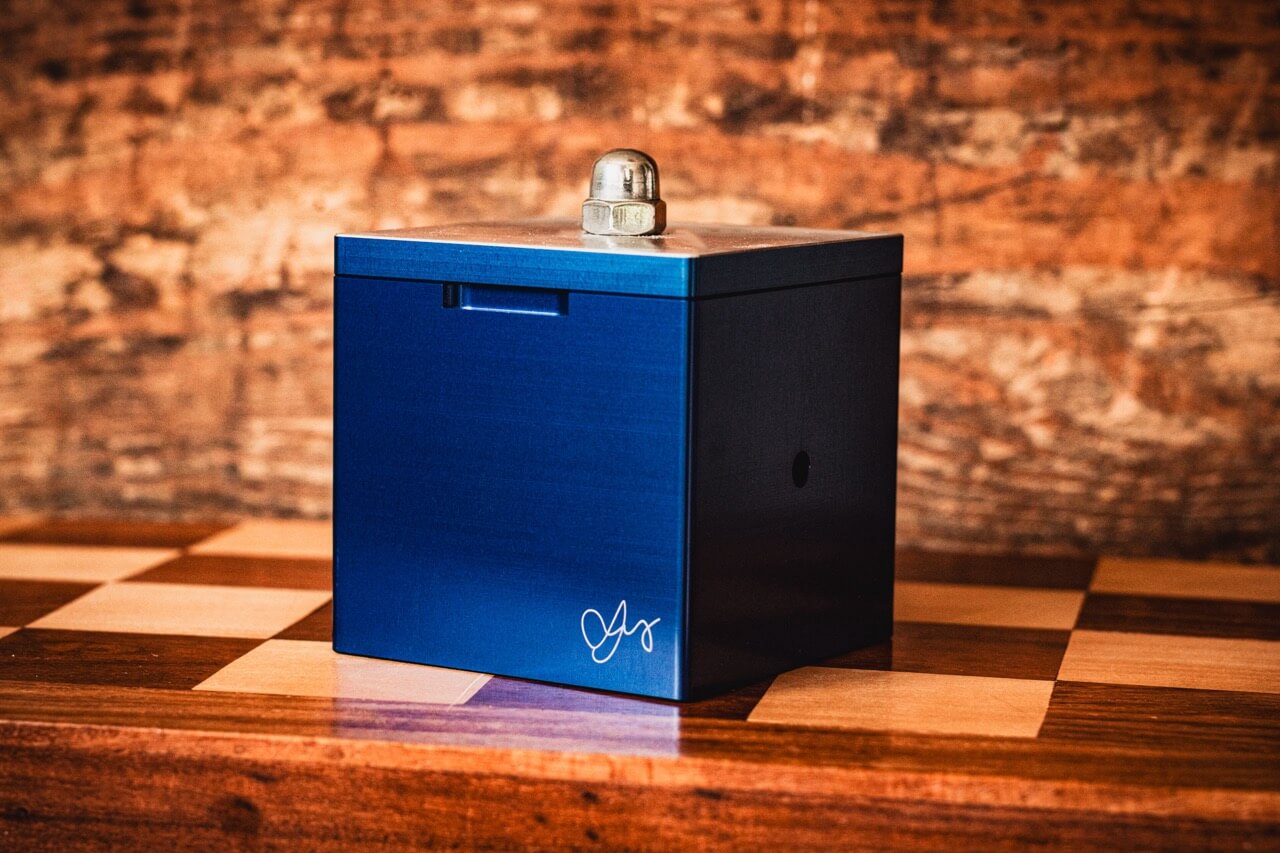
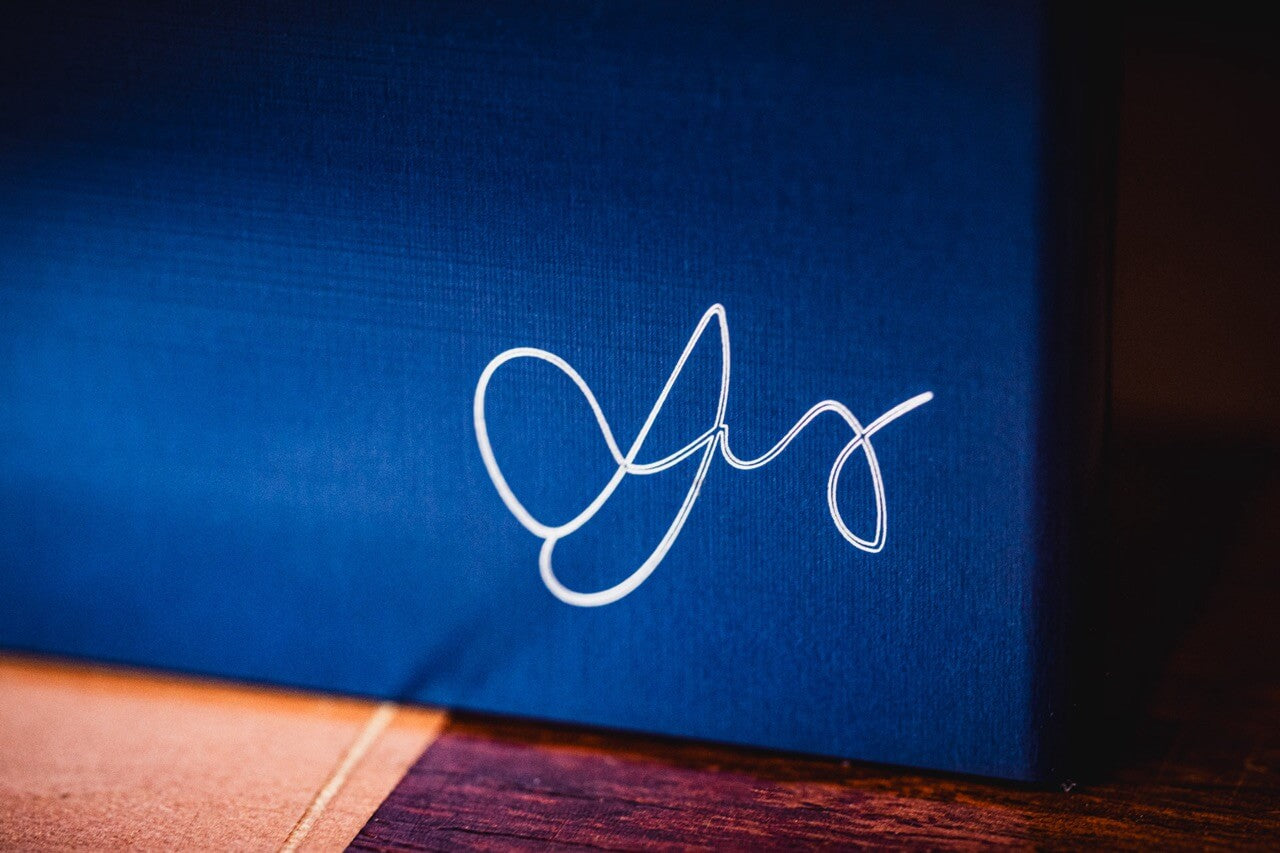
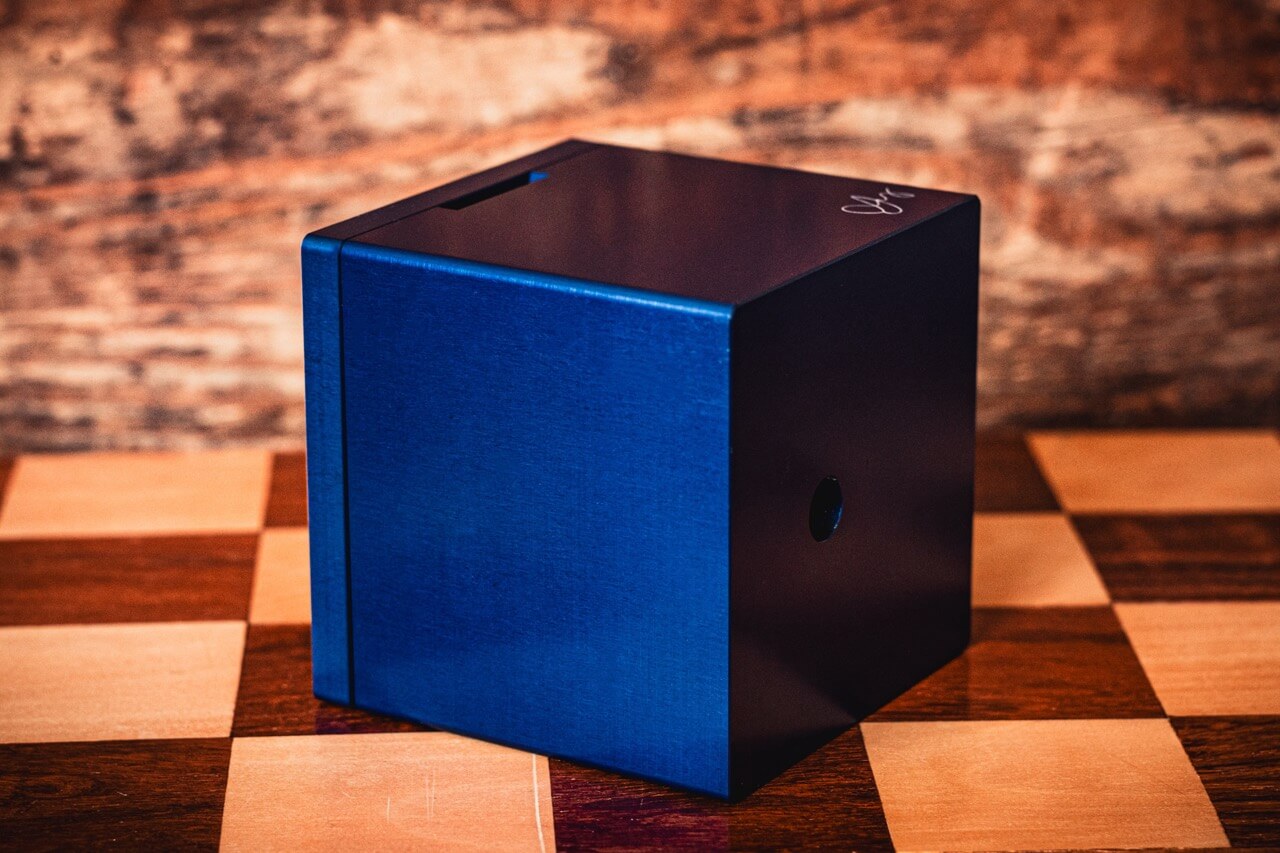
The First Box is the puzzle that anchors every Strijbos conversation, and the legend is real. Around 1984 he hand-built just six copies for the giants of the hobby — Jerry Slocum, Nob Yoshigahara, Dick Hess, Edward Hordern, and James Dalgety among them. Those originals were in Formica-like material; the modern, pursued version is the 765g blue anodized aluminum cube, 70mm on every side, his signature engraved on the face.
The task sounds trivial — get the rod out — and is anything but. No tapping, no magnets, no external tools. And here's the part worth knowing before you buy: reviewers stress that the production mechanism is engineered so that it's virtually impossible to fluke a solution. You don't stumble into the answer; you understand it or you don't. The flip side, as one seasoned blogger admits, is that even after you've solved it the why can be maddeningly hard to put into words — the method works flawlessly yet resists easy explanation. Expect there to be only a couple of real "stages," yet expect understanding the hidden mechanism to eat an entire weekend.
Now the secret almost nobody mentions: peer into the small hole on the bottom and a tiny sad face looks back at you. It's Wil's wink — the box quietly mocking you until you've earned the solve. Fun bit of lore from Allard's review: Wil redesigned the production version to remove the need for a separate loose tool, specifically because he feared frustrated owners might "purchase a large hammer." That's the whole man in one sentence.

Which Strijbos Should a Newcomer Actually Start With?
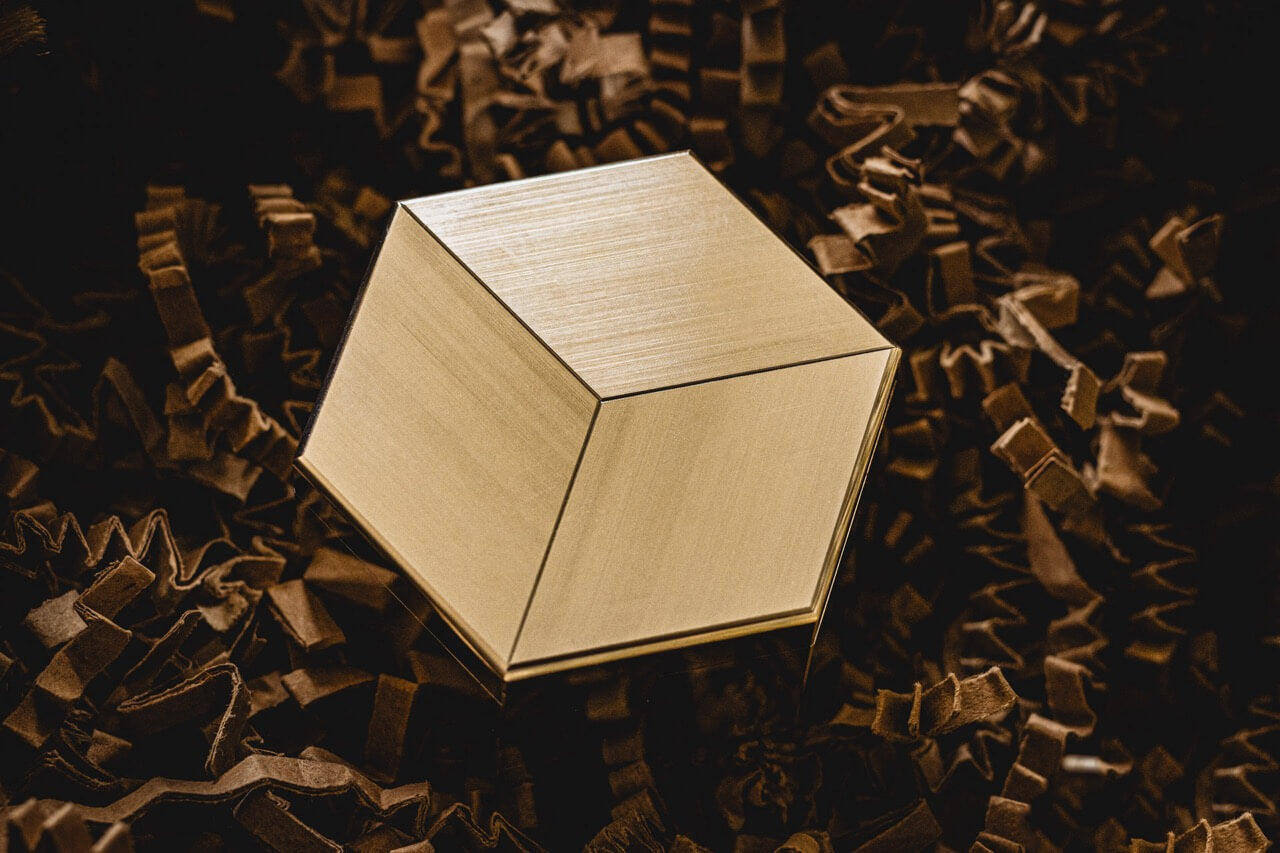
Start with the Hexagon, full stop. If the First Box is a thesis, the Hexagon is a haiku — a 58mm piece engineered to teach rather than torment. Difficulty sits around 2/10; a focused evening cracks it, opening onto three small compartments. It is, deliberately, the gentlest doorway into Wil's universe.
But don't mistake "easy" for "lesser." The Hexagon's job is to install a feeling in your hands: the realization that the tolerances are the art. When you feel parts move with that frictionless, machined-to-microns glide, you finally understand why collectors pay four figures for the hard stuff. Reviewers describe holding their first Strijbos and simply marveling at the engineering before they've solved a thing. That's the Hexagon doing exactly what it was built to do.
It's also the most reliably in-stock piece in his catalog — Puzzle Master, JP Games, Kubiya and Amazon carry it consistently — which matters enormously for a maker whose other work vanishes for years. So my standing advice to anyone puzzle-curious: buy the Hexagon, live with it for a week, then decide whether you want to fall down the rest of this rabbit hole. Most people, once they've felt the metal, do. Consider it the tasting menu before you commit to the chef's table that is the First Box.

The Lotus Flower and the 1979 Padlock Nobody Talks About
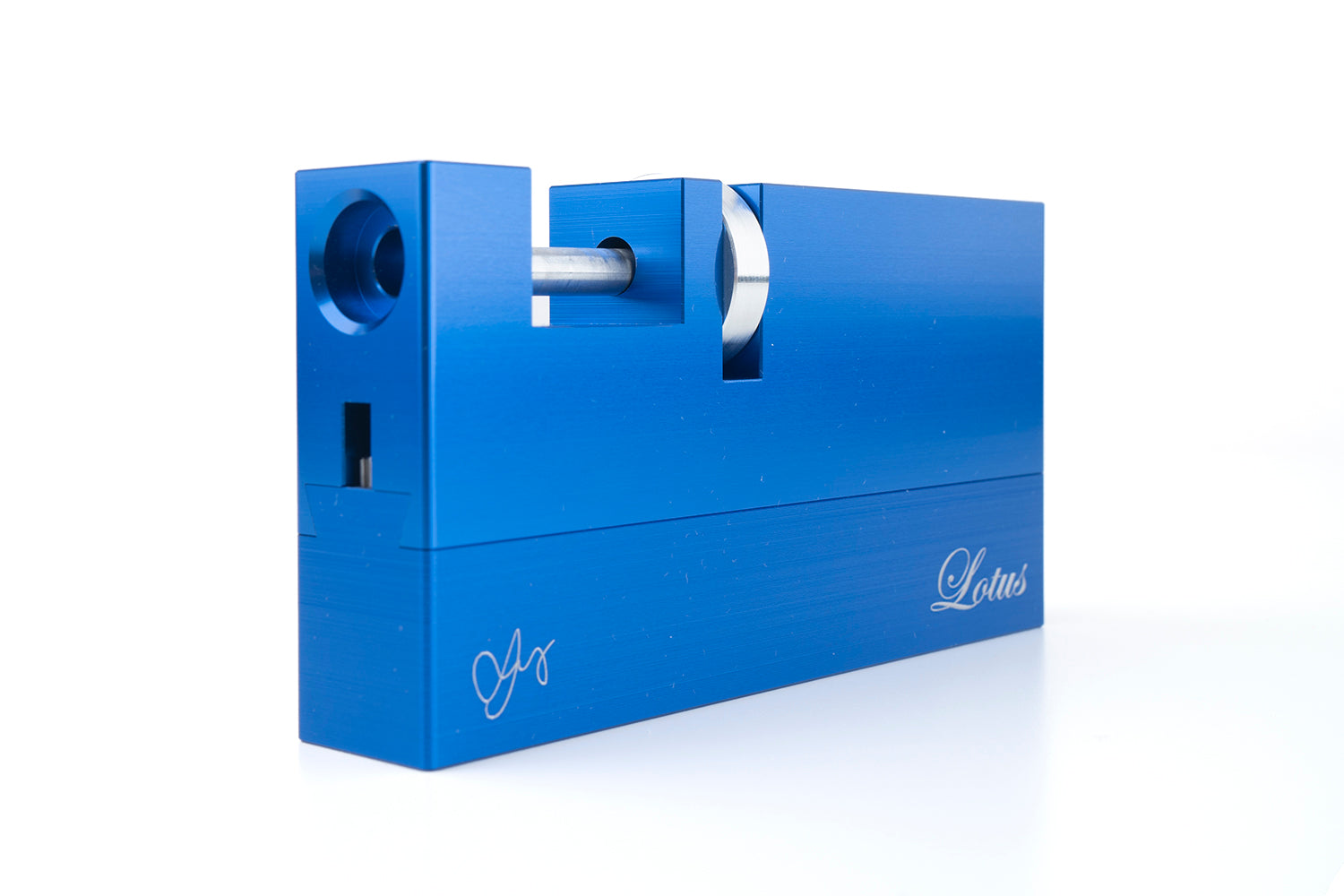
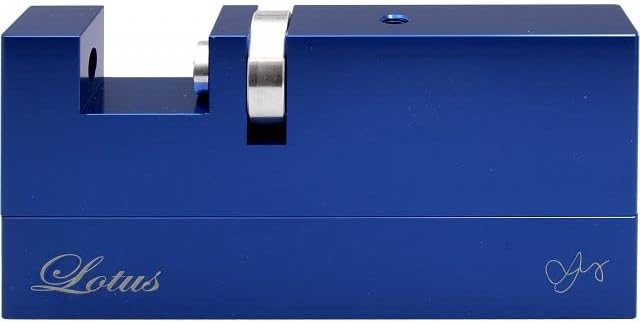
The Lotus Flower is the grail, and it carries a piece of history almost no casual buyer knows. The mechanism most reviewers chase — remove the circular aluminum disc and rod to reveal the hidden lotus — descends directly from a wooden "Loto" padlock Wil made back in 1979. The blue-aluminum Lotus is the evolved, perfected child of a 45-year-old idea. When you hold it, you're holding the end of a very long thought.
Distributors bill it as one of the "most difficult secret padlocks," and the solve satisfaction is spoken of in reverent terms — one veteran said the thrill of cracking it was matched only by the First Box. That's the company it keeps. Pricing typically lands around the $200–250 range when you can find it, with secondary copies running higher.
Here's my honest counsel, and it doubles as the catch: this is not a first puzzle. At 10/10 it can occupy a serious solver for a month or more, and a beginner will simply bounce off it. Buy the Lotus when you've already felt the First Box click — when you understand Wil's grammar of tools-revealing-tools. Bought too early, it's a beautiful paperweight that quietly judges you. Bought at the right moment, it's the most satisfying solve in the entire aluminum canon, and a genuine membership card to the smallest, most stubborn club in mechanical puzzling.
Why Do Collectors Whisper About the Cylinders and the Revenge Lock?
Two corners of the catalog reward the obsessive, and both teach you to solve blind. The First Cylinder (and its siblings, the Aluminium and Washer Cylinders) hands you a sealed tube whose lid spins freely and depresses a few millimeters. Shake it and it rattles — but, as one reviewer put it, "how many things??" You solve these by sound and feel, tracking ball bearings you can sometimes glimpse through a base hole. The Cylinders also wear that telltale dual numbering — one blogger found 03 on the lid and 10 on the base and guessed batch-then-unit. Pure Strijbos: nothing external, just geometry, gravity, and your ears.
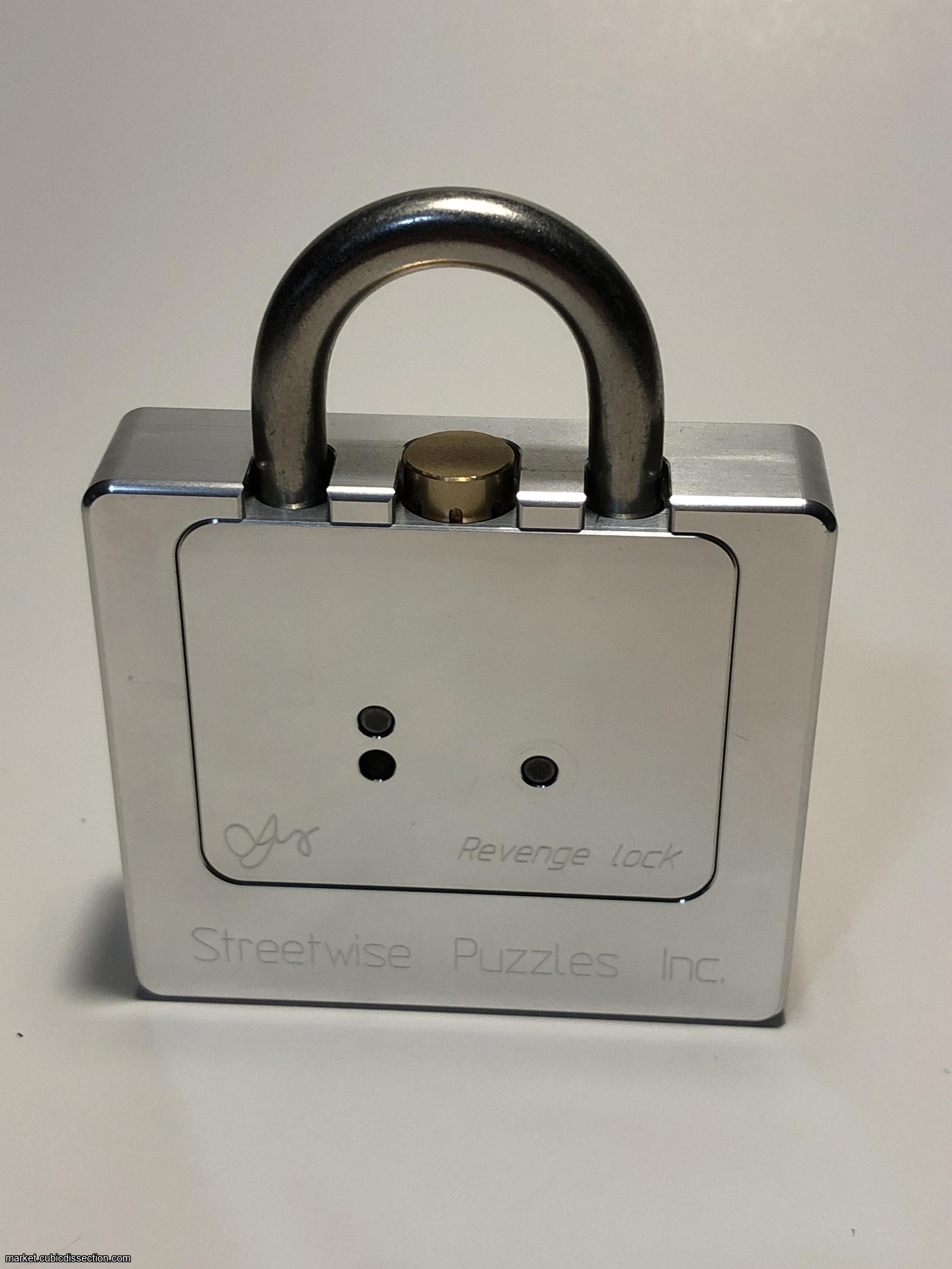
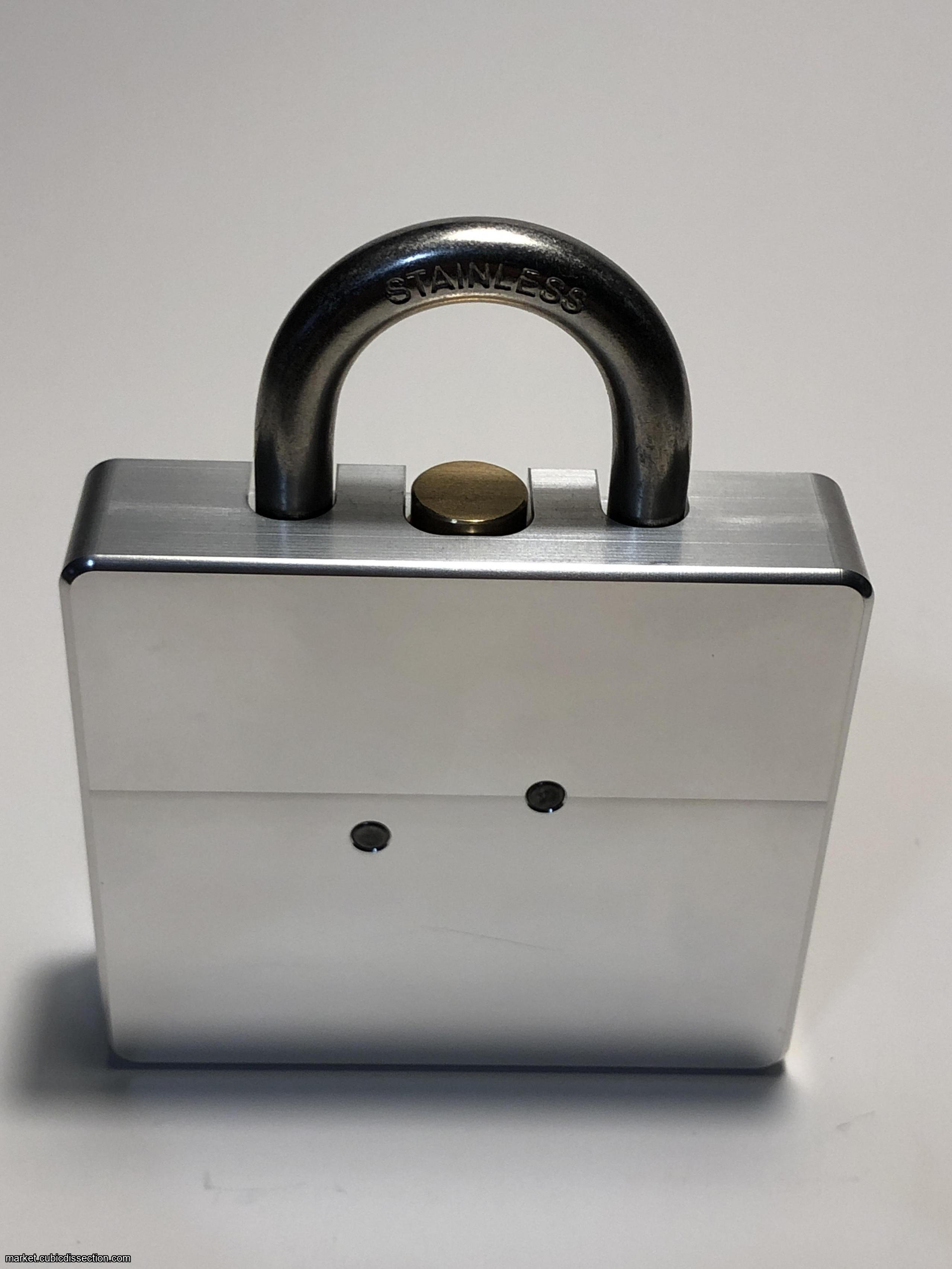
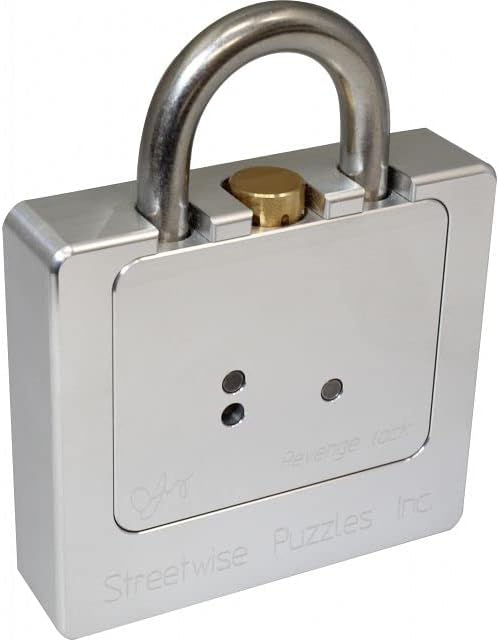
Then there's the Revenge Lock, and its lore is my favorite in the whole catalog. It's also catalogued as "The Wanderer" — and the name has a true backstory. Inspired by Gary Foshee's lock work, Wil built a prototype; when a tester beat that prototype by an unintended, unorthodox route, Wil re-jigged the internals to force every solver to begin from the true starting position — no shortcuts, no starting halfway. The lock also gained a small internal element Wil calls the wanderer — a nod to the puzzle-maker himself, who spends most of his life wandering the world hunting and building puzzles — which is why the finished lock now carries the subtitle The Wanderer. The full sequence is a saga: discover your number, open the shackle, extract the brass key, free that wandering element, then reassemble it all and re-seat the lock in its frame. Gruelling 9–10/10. This is endgame Strijbos — buy it knowing the reassembly alone can swallow weeks.
Aluminum vs Wood — and the First Cross History That Reframes Everything
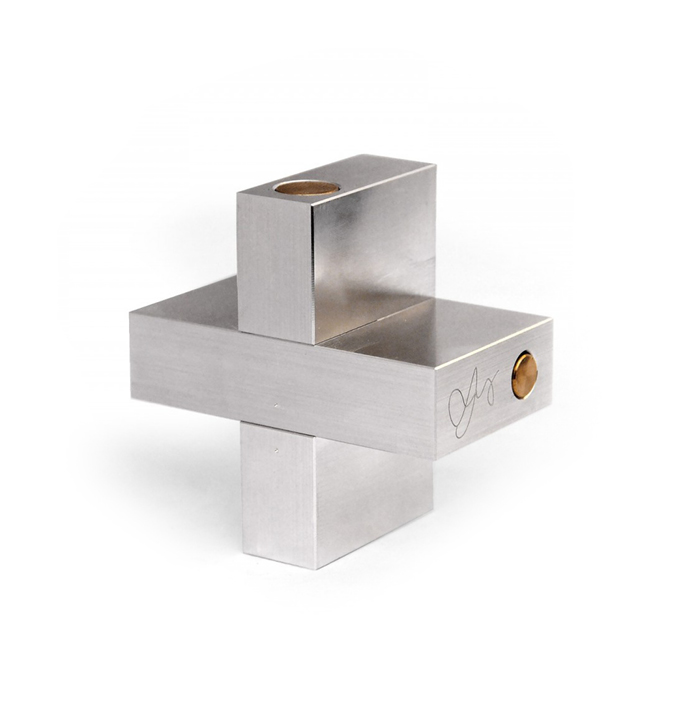
Wooden boxes are romantic, tactile, centuries-deep in tradition. So why do Strijbos's aluminum pieces command multiples of comparable wood on the secondary market? Dimensional stability. Sequential discovery lives or dies on tolerances measured in fractions of a millimeter, and wood swells, shrinks, and warps with every season. Aluminum doesn't. A First Box solved in 1984 solves identically in 2026 — same feel, same glide. Anodizing even deepens with handling; the blue gets richer rather than worn. The precision is the craftsmanship.
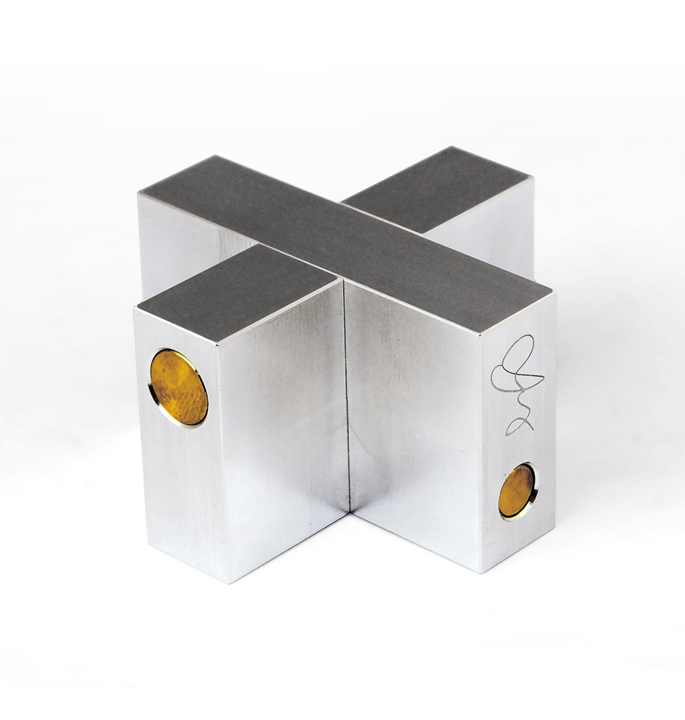
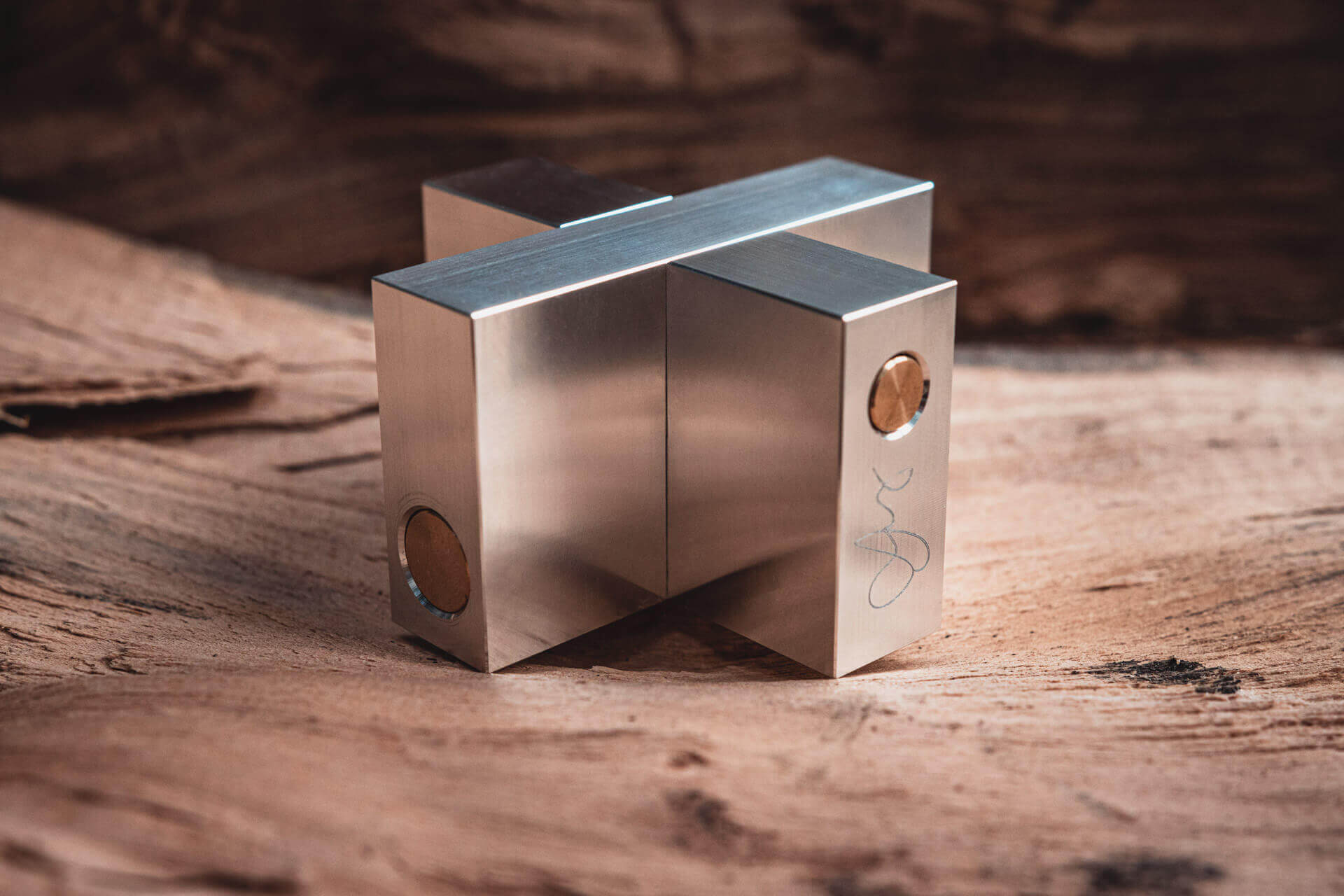
Now the reframe most buyers miss, and I'll be straight with you. This guide ranks the First Box as his iconic debut, and as his first box, that holds. But his genuinely first design was the Aluminum Cross — conceived in 1980 after a visit to James Dalgety's collection in Over Wallop, England. He made only a few samples, then waited 32 years to release it widely. The modern First Cross is its accessible heir: gravity-and-spring driven, no magnets, no rotation. The trap that gives it character is reassembly — taking it apart is one puzzle; putting it back is the real one, even after you've seen every piece.
So when you hold a Strijbos, you're not holding a 40-year-old hobby. You're holding a 45-year-old idea, machined to a consistency human hands can't match, in a metal built to outlast you. That's the collector's verdict, and it's why the waitlists never really end.
The picks
Some links below are affiliate links — as an Amazon Associate, Puzzlewick earns from qualifying purchases, at no extra cost to you. It never changes a pick.
 3 photos
 First Box Metal Puzzle
Strijbos's legendary 1984 debut, now remade in blue anodized aluminum. 70mm cube. Extract the rod with no external tools, magnets, or tapping. Difficulty 9/10 guarantees frustration before revelation. Once solved, you understand why this design changed sequential discovery forever.
- Iconic design that started a 40-year legacy of precision puzzles
- Sublime manufacturing tolerances teach you why aluminum matters
- Solution relies purely on geometry—no luck, no external aids
- Difficulty is genuine; frustration is part of the journey
- Production runs are sporadic; expect 1–2 year waits between restocks
 2 photos
 Lotus Flower Puzzle
Expert-level (10/10) sequential discovery requiring removal of disc and rod to reveal the hidden lotus. Reviewers report solve satisfaction matching only the legendary First Box. Masterwork pricing reflects genuine scarcity and 40 years of collector reverence.
- Masterwork status—solve this and join an elite circle of Strijbos veterans
- Highest difficulty rewards patience with unmatched satisfaction
- Iconic symbolism (the lotus) elevates it beyond mechanical puzzle into art
- Secondary-market scarcity makes retail prices rare; expect to hunt on eBay/Etsy
- 10/10 difficulty frustrates all but the most committed puzzlers
 3 photos
 First Cross Puzzle
Burr-style cross design in anodized aluminum. Difficulty 5/10 (Medium). Reassembly is notoriously tricky—many solvers report the take-down is simple but putting it back together demands lateral thinking. Affordable entry to mid-range Strijbos design.
- Affordable pricing makes it accessible to budget-conscious collectors
- Deceptively simple appearance masks ingenuity—teaches Strijbos's core principle
- Reassembly challenge adds replayability
- Mid-range difficulty may feel too easy for First Box veterans or too hard for newcomers
- Less iconic status means smaller solver community
 3 photos
 Revenge Lock Puzzle
Premium sequential discovery masterpiece priced at £252 (roughly $310). Limited production and collector reverence place it alongside the Lotus in rarity. Expert-level difficulty and locking mechanisms that defy expectation. A grail puzzle for the truly committed.
- Masterwork status among collectors—solving it signifies serious expertise
- Significantly rarer than First Box, making it a true collector prize
- Complex locking mechanics represent Strijbos's pinnacle of design ingenuity
- Extreme scarcity means you'll hunt for years; production runs are rare
- Expert difficulty guarantees extended frustration before breakthrough
At a glance
| Puzzle | Maker | Difficulty | Price USD | Material | Best for | Solve Time |
|---|---|---|---|---|---|---|
| First Box | Wil Strijbos | 9/10 (Gruelling) | $310 | Blue anodized aluminum | Serious collectors | 1–2 weekends |
| Hexagon | Wil Strijbos | 2/10 (Accessible) | $125 | Anodized aluminum | Newcomers | 4–24 hours |
| Lotus Flower | Wil Strijbos | 10/10 (Expert) | $210 | Blue anodized aluminum | Grail hunters | 1+ month |
| First Cylinder | Wil Strijbos | 8/10 (Demanding) | $128 | Anodized aluminum | Intermediate collectors | 1–2 weeks |
| First Cross | Wil Strijbos | 5/10 (Medium) | $114 | Anodized aluminum | Budget seekers | 2–7 days |
| Revenge Lock | Wil Strijbos | 9/10 (Gruelling) | $285 | Aluminum/steel | Completionists | 2+ weeks |
Questions, answered
Do all Strijbos puzzles come with solutions?
No. Strijbos has never provided solutions with his puzzles—a policy he's maintained since 1984. This refusal is intentional: solving a Strijbos puzzle means you've genuinely solved it, not followed instructions. The community respects this philosophy fiercely. If you get stuck, you'll find hints in collector forums (PuzzleScore.com, Neil's Puzzle Blog) but official solutions don't exist.
Why are Strijbos puzzles so expensive compared to wooden puzzle boxes?
Aluminum tolerances enable sequential discovery design in ways wood cannot. Strijbos uses CNC mills to achieve precision within fractions of millimeters—consistency that wooden puzzles cannot match across 40 years of aging. Additionally, Streetwise runs short production batches (often 100–200 copies) and doesn't reprint until demand warrants, creating intentional scarcity. Wooden puzzle makers produce continuously and in larger volumes, so supply is higher and prices are lower. Collectors pay for precision, scarcity, and 40 years of proven design integrity.
How long does it take to solve a Strijbos puzzle?
Time varies wildly by difficulty. The Hexagon (difficulty 2/10) might yield to a newcomer in 4–24 hours. The First Box (difficulty 9/10) can demand a full weekend or longer. The Lotus Flower (difficulty 10/10) has kept collectors frustrated for 1–2 months. Strijbos doesn't design for speed; he designs for revelation. Part of the pleasure is the journey, not the endpoint.
I solved a Strijbos puzzle. Can I take it apart to see how it works?
Yes, but be prepared: disassembly requires understanding the solution path first. The solution often unlocks access to the mechanism. Once disassembled, reassembly can be fiendishly tricky. Some designs (like the First Cross) are notorious for reassembly challenges. Many collectors choose not to disassemble—the idea of how it works is enough. That restraint is part of why Strijbos puzzles stay pristine across decades.
Which Strijbos puzzle should I buy first?
If you're new to mechanical puzzles: Hexagon (2/10 difficulty, $125). It teaches you why tolerances and anodized aluminum matter without crushing your confidence. If you're a puzzle veteran: First Box (9/10, $310). It's legendary for a reason. If you want middle ground: First Cylinder (8/10, $128) is the under-the-radar masterpiece that teaches sound-based problem-solving. Avoid the Lotus Flower on first purchase unless you want to stare at a puzzle for months—though if that's your personality, go for it.
Are Strijbos puzzles investment-grade collectibles?
Strijbos puzzles hold value and appreciate modestly on secondary markets (eBay, Etsy). First editions of rare designs (early Lotus, original First Box copies) command premiums. However, they're best understood as collectibles you enjoy solving repeatedly rather than assets you buy and hold. The true value is in the experience of solving and the knowledge you've joined a 40-year-old collector community. Treat them as treasures, not investments.
Margo's verdict
Wil Strijbos is not a puzzle designer—he's a engineer who happened to invent sequential discovery. His anodized aluminum designs reject every shortcut: no magnets, no external tools, no written solutions. Just geometry, patience, and the purity of mechanical revelation. Buy the Hexagon if you want to understand why collectors revere him. Buy the First Box if you're ready for a weekend of obsession. Buy the Lotus if you want to join the smallest circle of dedicated puzzle solvers on the planet. But know this: whatever you buy will outlast you. Strijbos puzzles from 1984 solve identically to copies made in 2026. That's the opposite of most collectibles. That's why collectors wait years between restocks. That's why his secondary-market prices climb. The First Box taught the puzzle world what precision means. The Lotus taught the world what mastery costs. Everything between is a stepping stone to those two."
Research ledger 8 sources · reviewed 2026-08-10
Specifications, rules, current product information, community experience, and contrary evidence were checked against the sources below. Commercial links are kept separate from editorial evidence.
- amazon.comamazon.com/dp/B0BZDZP88S?tag=puzzlewick-20
- amazon.comamazon.com/dp/B07SS52N6H?tag=puzzlewick-20
- boxesandbooze.comboxesandbooze.com/wil-strijbos
- puzzlemaster.capuzzlemaster.ca/browse/inventors/strijbos
- kubiyagames.comkubiyagames.com/collections/william-strijbos-puzzles
- jpgamesltd.co.ukjpgamesltd.co.uk/Wil-Strijbos-Puzzles
- puzzlescore.compuzzlescore.com/en/wil-strijbos-first-box
- explorepuzzles.comexplorepuzzles.com/en/sequential-discovery
Let me check that before we say it.

Keep exploring
The next smart rabbit holes.
❖ Topic PathMechanical Puzzles: compare the whole shelfThe right mechanical puzzle matches the solver's patience, not simply the maker's difficulty number. These guides translate...Best OfBest Jigsaw Puzzles for Adults, Ranked (2026)A three-decade reference desk curator's ledger of the cardboard worth a fortnight of evenings and the wooden heirlooms worth passing down...Best OfBest Sequential Discovery Puzzles, Ranked (2026)The genre that keeps lying about itself — and why the ones that don't are worth the chase and the price.