Harmonies vs. Cascadia: Which Cozy Puzzle Wins in 2026?
The definitive 2026 buyer's guide to Harmonies, Cascadia, Pulse, Crescendo, and Landmarks - including redundancy, solo play, two-player fixes, expansions, strategy, and exactly what to buy.


AI-assisted research and drafting in Kenji’s voice · reviewed by Robert Pruitt · how this guide was made
Last editorial refresh: 2026-06-29 Gold-standard QA: 2026-07-17 15 sources reviewed Affiliate links checked during gold-standard pass

The short answer
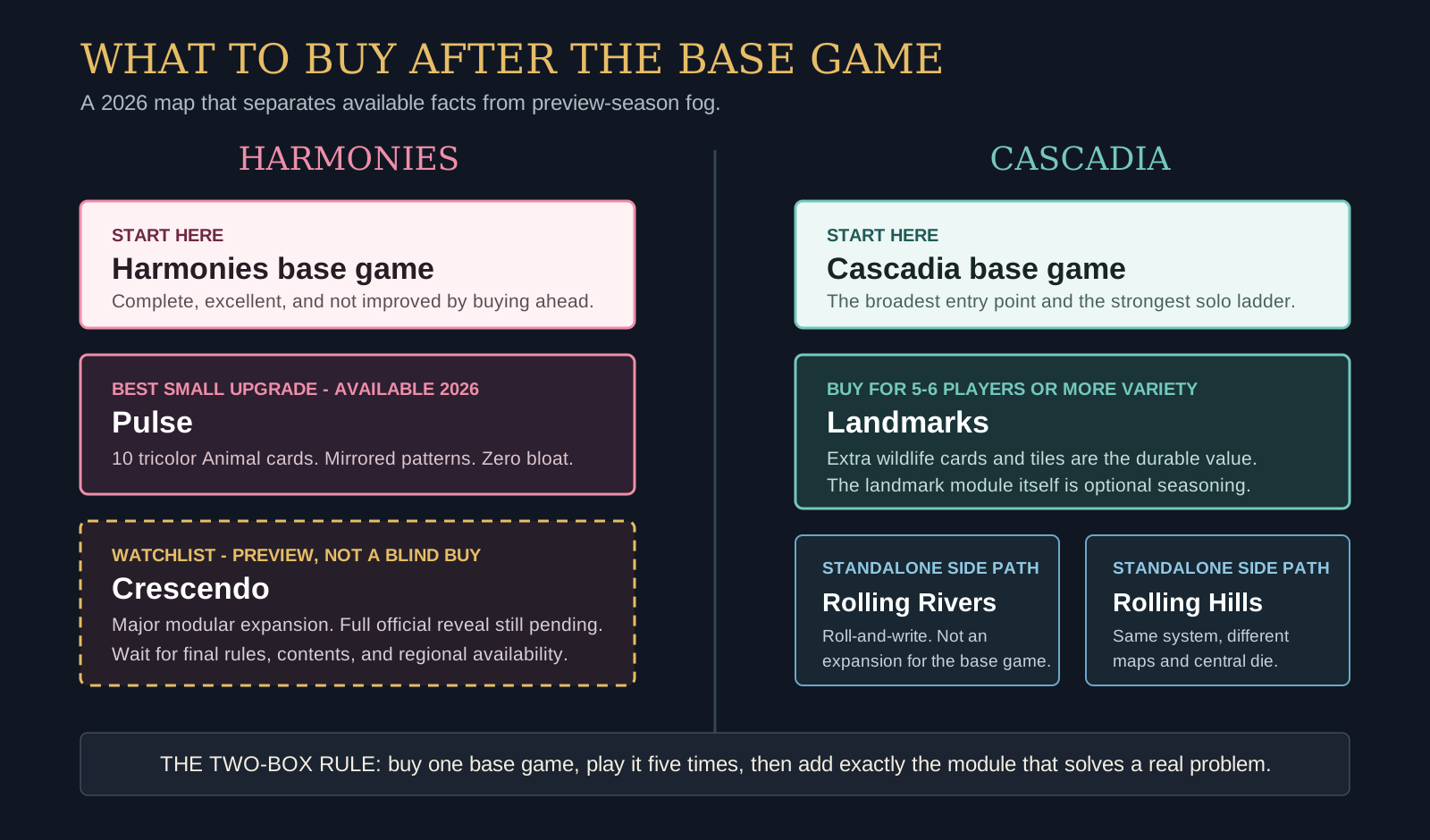
Buy Cascadia if you want the safer first game, the gentler teach, the stronger solo progression, or a puzzle that leaves room for conversation. Buy Harmonies if your regular table wants a tighter, more tactile spatial challenge where early choices matter and one structure can serve several scoring patterns. They share a nature theme and low interaction, but they are not redundant. If you already love Harmonies, buy Pulse before pre-ordering Crescendo; Pulse is the clean, inexpensive variety upgrade, while Crescendo's final official rules reveal is still pending as of June 29, 2026.
Decision map
Choose in thirty seconds
repeat duos and trios who want the tighter puzzle
first purchases, families, mixed tables, and structured solo play
five or six players and long-term Cascadia variety
Two boxes sit beside one another on the shelf. Both promise a landscape. Both ask you to draft from a shared display, arrange nature, welcome animals, and score patterns in about forty minutes. That resemblance is real. It is also shallow.
Cascadia gives you an open map and asks you to adapt. Harmonies gives you a fixed board and asks you to commit. Cascadia is generous with recovery. Harmonies remembers where you put the first disc. The former is a walk whose route can change; the latter is a garden whose first stones decide where the water will run.
I am Kenji. For this comparison I read the current rulebooks, publisher materials, expansion announcements, BoardGameGeek records, and the recent player arguments where owners of both games explained which one still reaches the table. The answer is not a single winner. It is a precise match between the pressure a design creates and the evening you want to protect.
Start here, then go deeper
You are in the right cabinet.
 ❦ Universe HubEverdell: the whole buying pathEverdell is warm woodland theater wrapped around a sharp card-engine puzzle. Yumi's universe keeps the invitation intact while...
 ❖ Topic PathMechanical Puzzles: compare the whole shelfThe right mechanical puzzle matches the solver's patience, not simply the maker's difficulty number. These guides translate...
 ComparisonAzul vs Cascadia vs Calico: Which Cozy Tile-Layer Is Right for Your Table?Three beautiful tile games compared by interaction, pressure, solo play and the kind of first night they create.
Are Harmonies and Cascadia actually redundant?
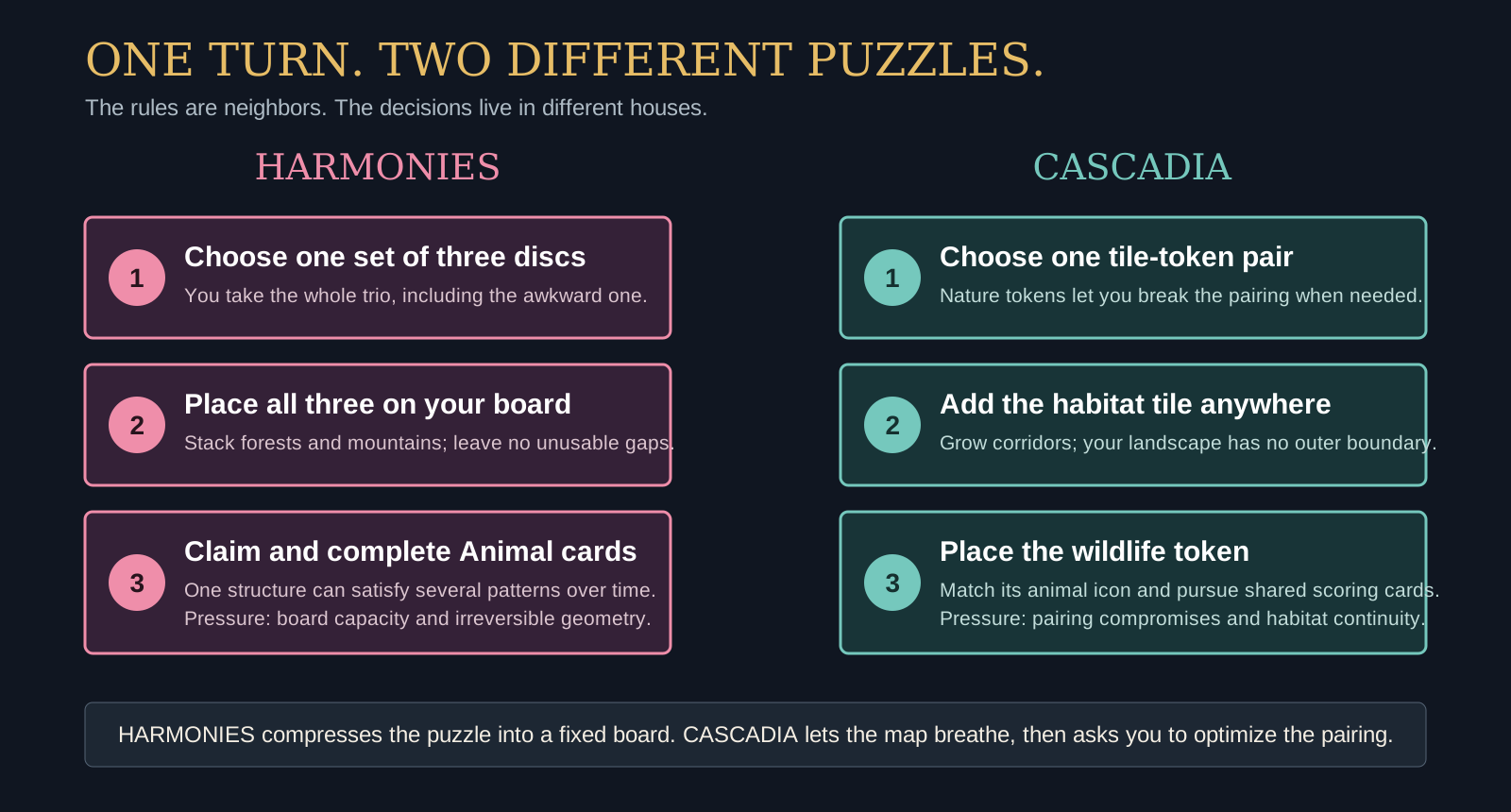
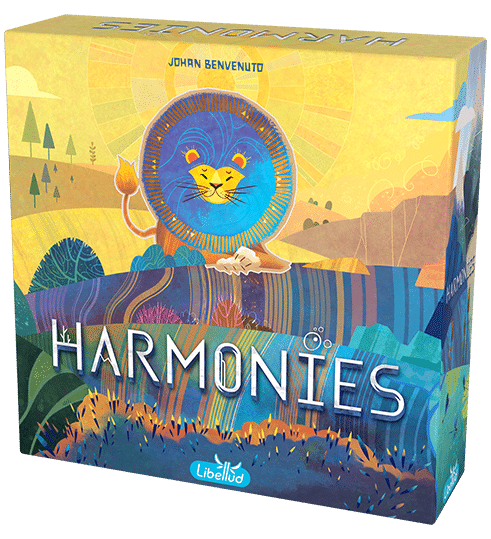
No. They occupy the same emotional shelf, but they exercise different spatial muscles. Both are low-conflict nature puzzles with a shared market and personal tableaus. That is why a photograph makes them look interchangeable. A turn reveals the difference.
In Cascadia, you select a paired habitat tile and wildlife token. The tile can extend your ecosystem in any direction. The token must enter a habitat that accepts its species. You are balancing two public scoring layers: animal arrangements and contiguous habitat corridors. A poor pairing is usually a detour, not a collapse. Nature tokens provide an occasional release valve.
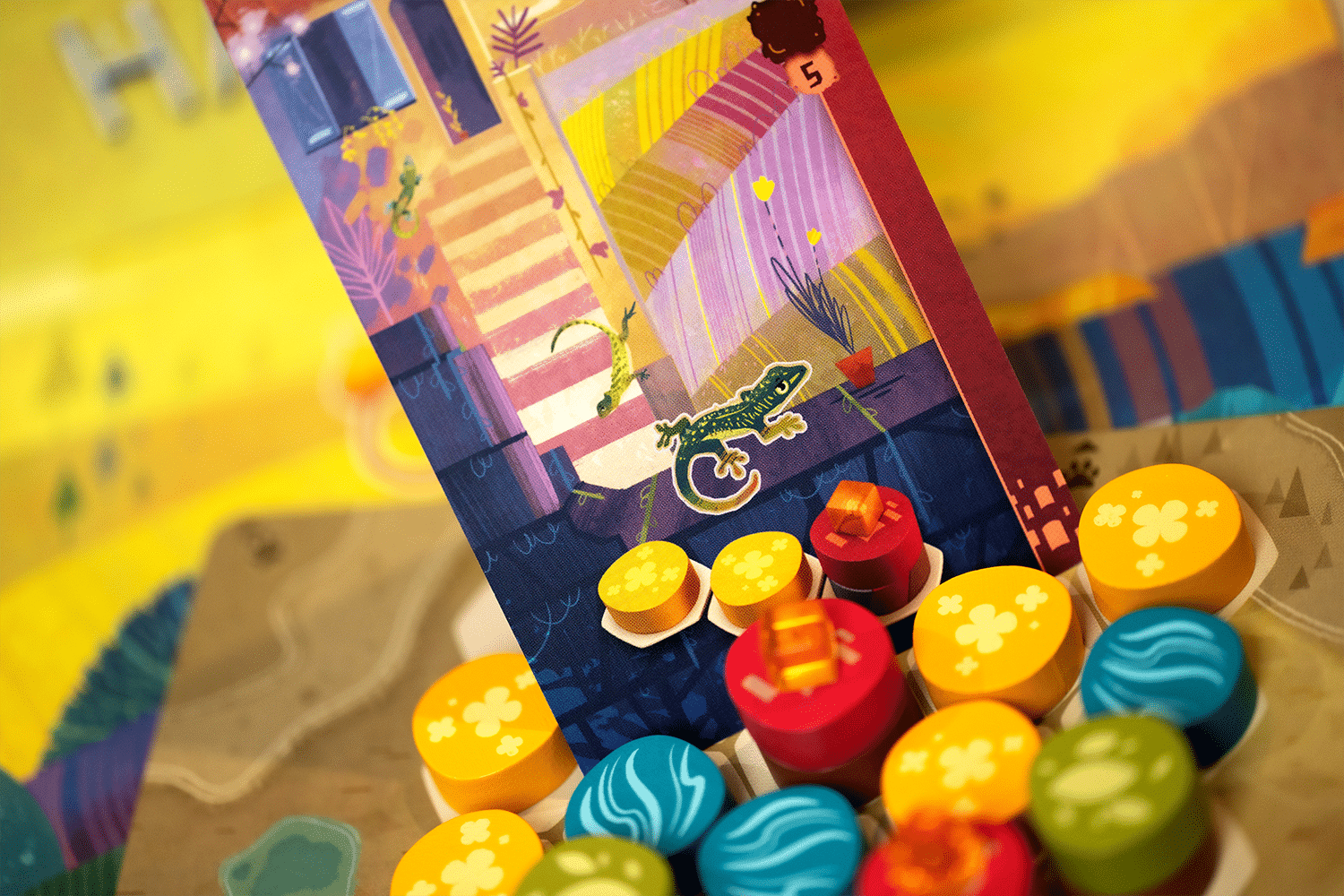
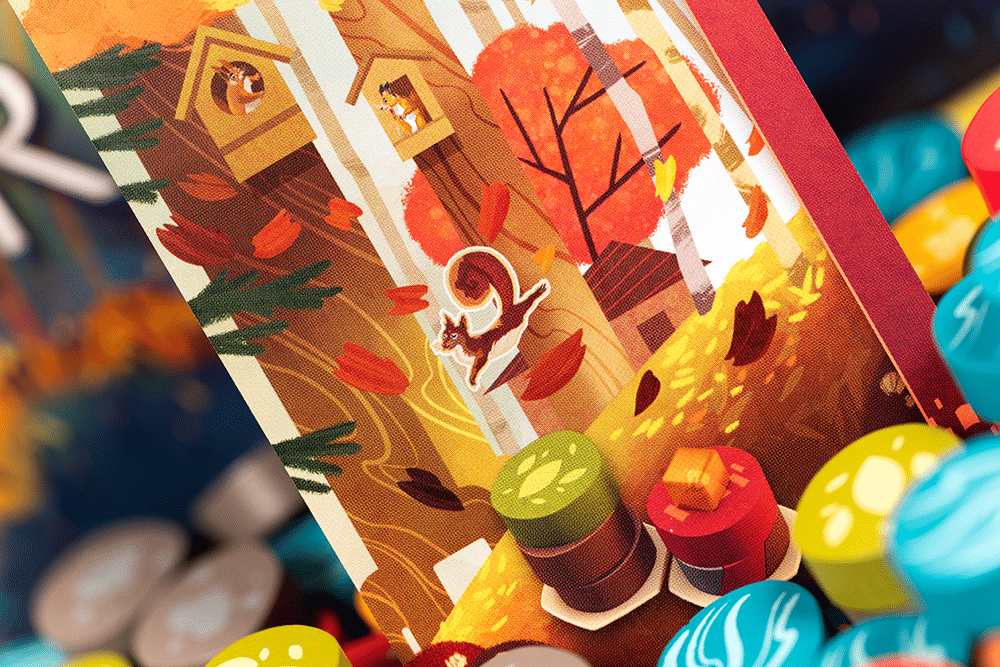
In Harmonies, you select an entire trio of landscape discs and must place all three on a fixed personal board. Terrain has its own structural scoring, while your private Animal cards ask for precise three-dimensional patterns. A single tree stack may support a habitat now, a different animal later, and terrain points at the end. The board fills. Empty space becomes a resource. Recovery is possible, but it is not free.
This is the cleanest distinction: Cascadia tests adaptation across an expanding map; Harmonies tests compression inside a finite one. Owners keep both because the shared mood makes them easy to choose between while the puzzle underneath remains distinct.
Same mood, different muscle. Owning one does not make the other redundant.
Why Harmonies feels deeper even though the rules are still light

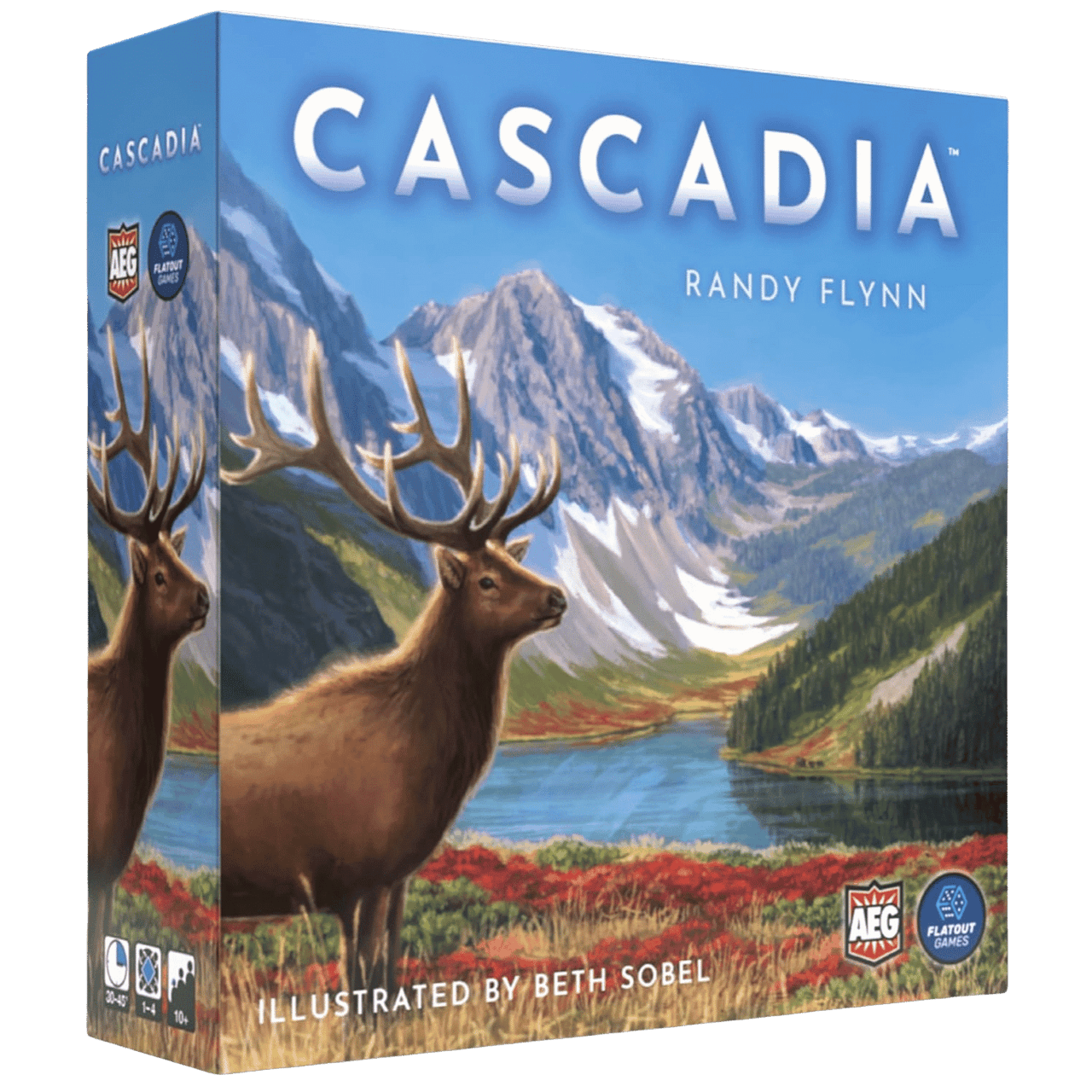
BoardGameGeek's community weight places Harmonies near 2.01 out of 5, only a little above Cascadia's roughly 1.85. That modest gap hides a larger difference in consequence. Rules weight measures how much you must learn; it does not measure how much a placement can haunt you.
Harmonies makes three demands share the same small board. First, each landscape type has its own scoring logic. Second, Animal cards require exact patterns and reward you as cubes leave the card. Third, the game ends when the bag cannot refill the display or a player has two or fewer empty spaces. Building quickly can become a clock. Building carelessly can become a wall.
The satisfying move is therefore rarely the disc that scores one thing. It is the trio whose awkward third color becomes tomorrow's mountain base, whose water extends a river, and whose tree completes an Animal card without sealing an essential space. The game rewards multi-use geometry.
This is why experienced puzzle players often prefer Harmonies even while admitting Cascadia is easier to recommend. Harmonies has a higher ceiling because the board does not forgive every experiment. It asks you to see relationships before they exist.
- Choose an early terrain spine: a river route, useful tree heights, or paired mountains. Do not try to maximize every terrain family.
- Take Animal cards whose patterns overlap structures you already need. A beautiful card that requires a private corner is often a tax.
- Before placing the third disc in a set, ask what future shape it enables. The awkward token is often the real decision.
- Keep at least one flexible region until the final third. A board with no spare geometry is finished before the bag says so.
Why Cascadia remains the better first purchase for most households
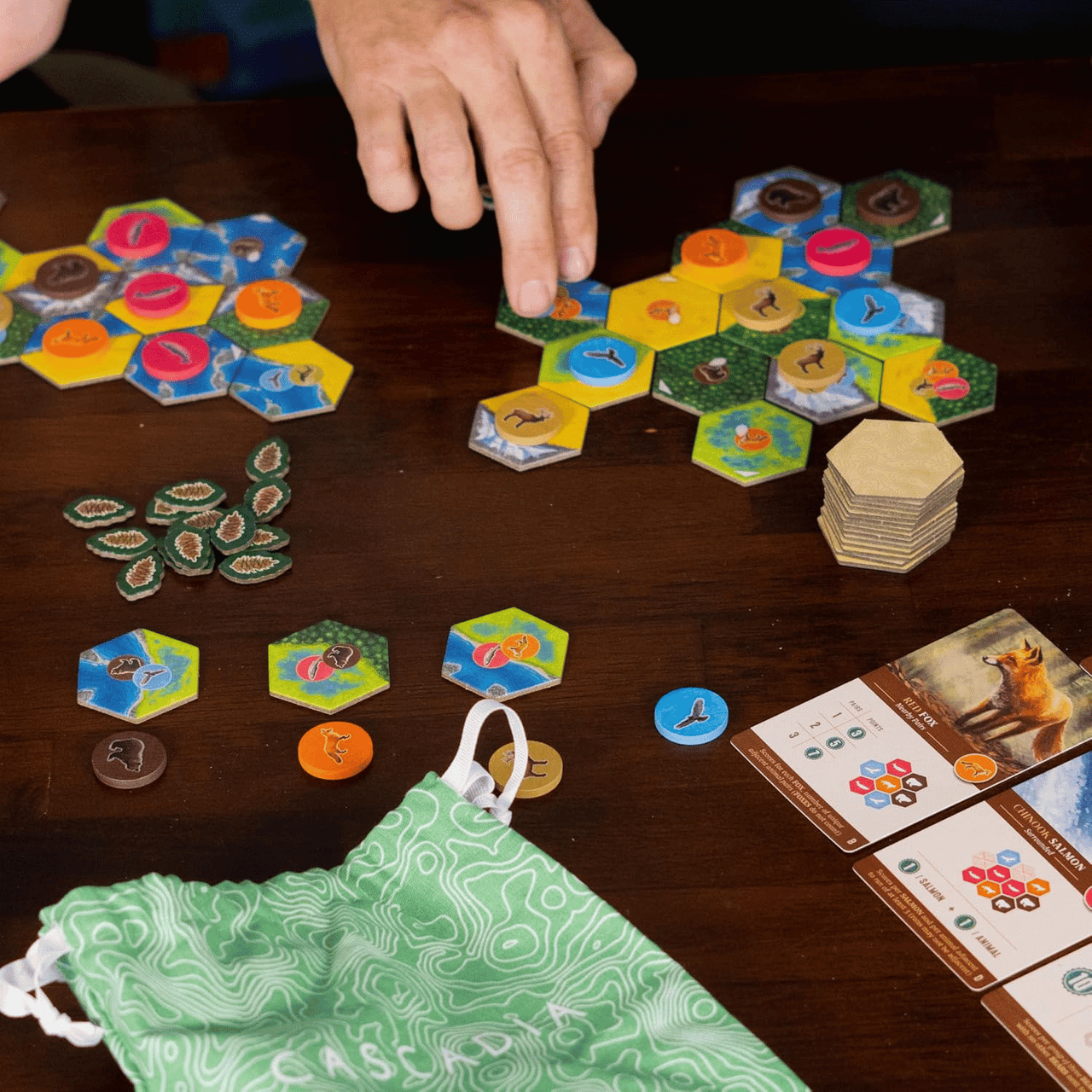

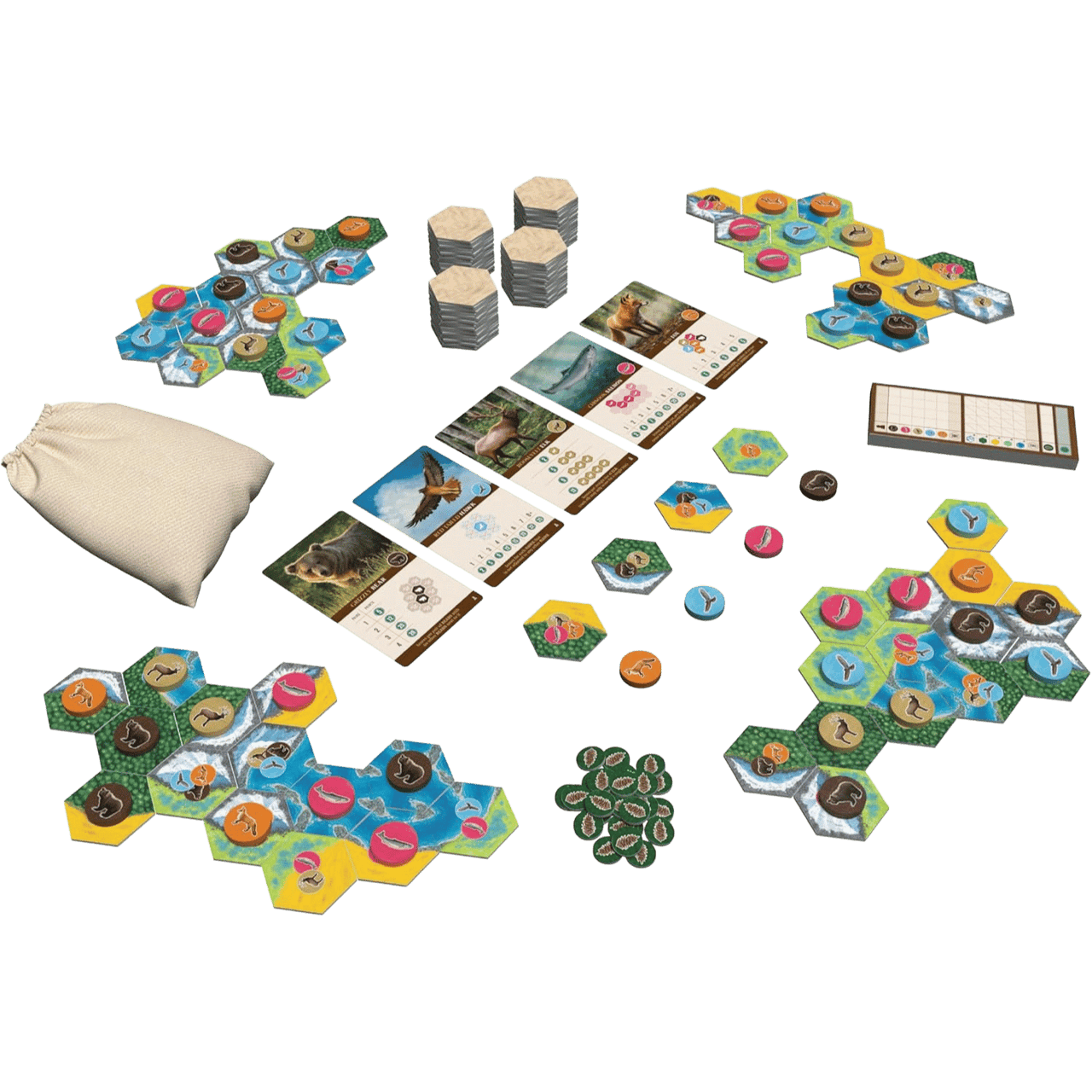
Cascadia's great achievement is not simplicity alone. It is productive forgiveness. Almost every draft gives you something useful, yet the gap between useful and elegant remains wide enough to reward skill. A beginner can grow habitats and make recognizable animal groups. An experienced player sees how the same tile preserves a corridor majority, unlocks a keystone nature token, and keeps two wildlife patterns alive.
That generosity protects conversation. New players do not spend round six staring at an unrecoverable board. Families can help one another read a scoring card without handing over the whole puzzle. The map expands outward, so an early mistake becomes geography rather than a locked cell.
Cascadia also contains the better structured solo journey in its base box. Its scenarios and achievement sheet give you constraints and milestones beyond a naked high score. Harmonies' solo mode is elegant and fast, especially with Nature's Spirits, but Cascadia does more to tell you what to attempt next.
For a household buying one modern spatial game, Cascadia remains the calm default. It teaches in minutes, scales from solo to four, and makes failure feel like a landscape you can still admire rather than a puzzle you spoiled ten turns ago.
Which one is actually cozier? Define cozy before you buy
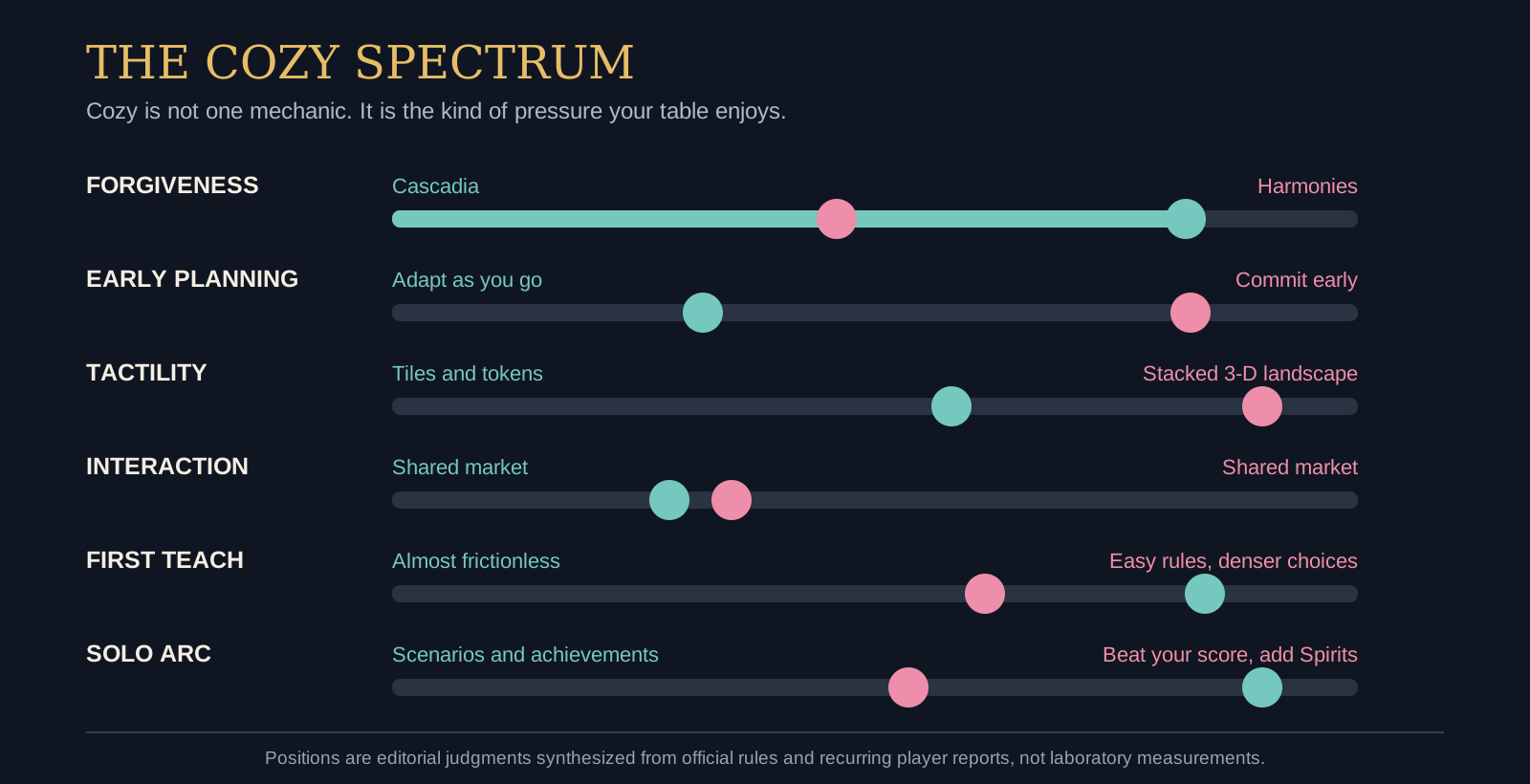
The art direction creates the first misunderstanding. Both games are beautiful, quiet, and full of animals. Neither is directly aggressive. Yet cozy is not an illustration style. It is a relationship between rules and nervous systems.
If cozy means few feel-bad moments, easy conversation, and a board that can absorb mistakes, Cascadia wins clearly. Its tension is a nudge: the right tile is paired with the wrong animal, another player takes your preferred option, or a corridor begins to fragment. You adjust.
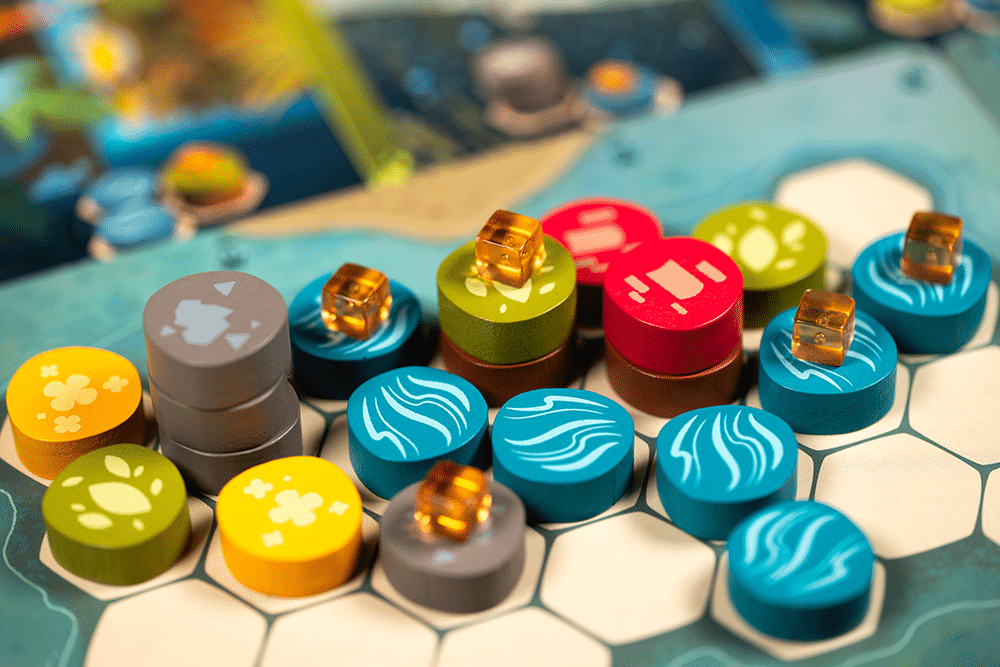
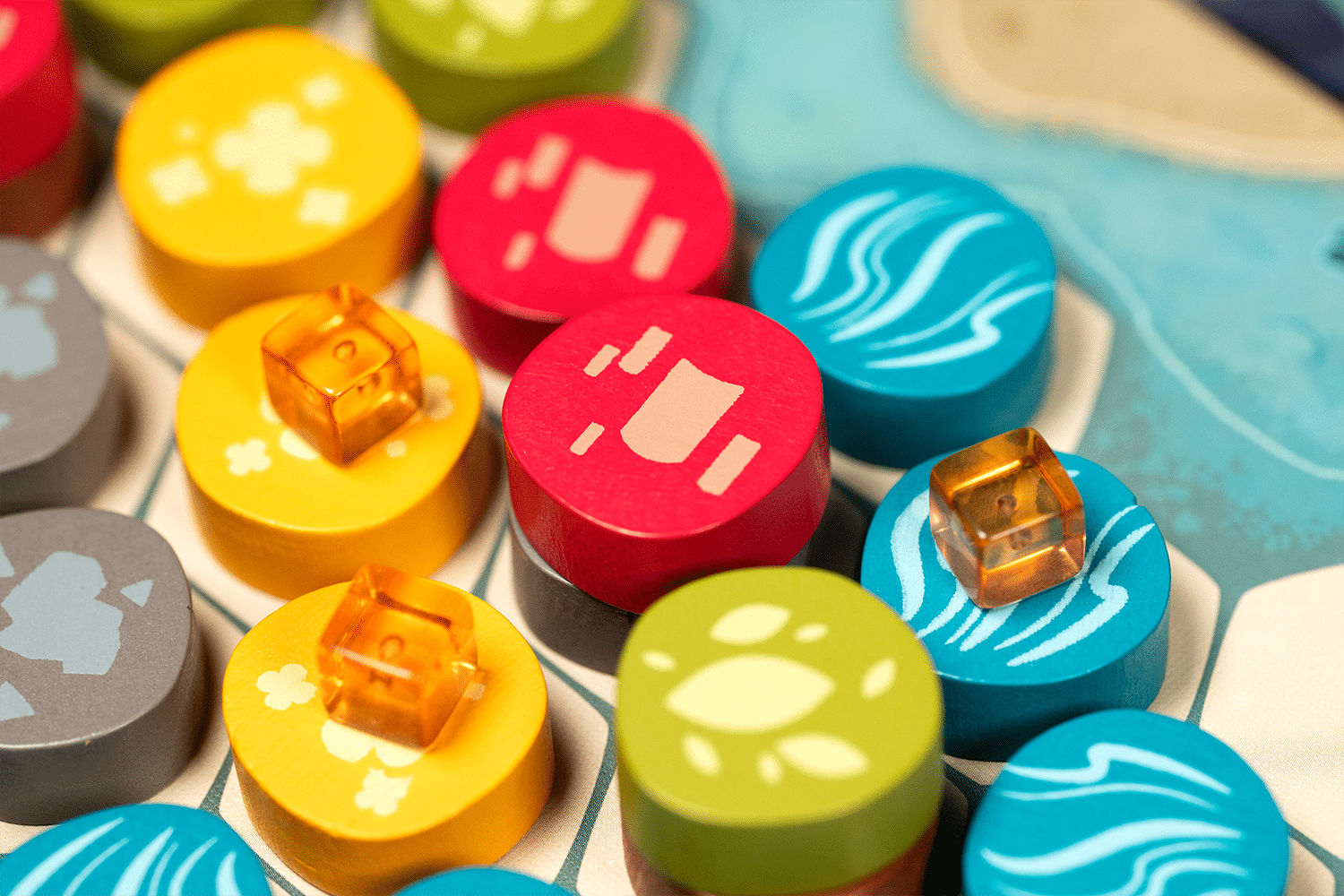
If cozy means tactile focus, a private construction, and the pleasure of making a dense little world, Harmonies may feel cozier despite being sharper. The wooden discs have weight. Trees and mountains rise. Amber cubes settle into completed habitats. The concentration can be meditative, but the underlying puzzle is closer to Calico than its dreamlike surface admits.
Neither game creates much direct interaction. You can draft something another player wants, but most of the experience is parallel construction. That is restful for some groups and lonely for others. If your table needs negotiation, attacks, or constant table talk, neither box will manufacture it. Choose a social game rather than asking a nature puzzle to become one.
Cascadia is cozy because it forgives. Harmonies is cozy because it absorbs your attention.
Which game is better at two, three, and four players?
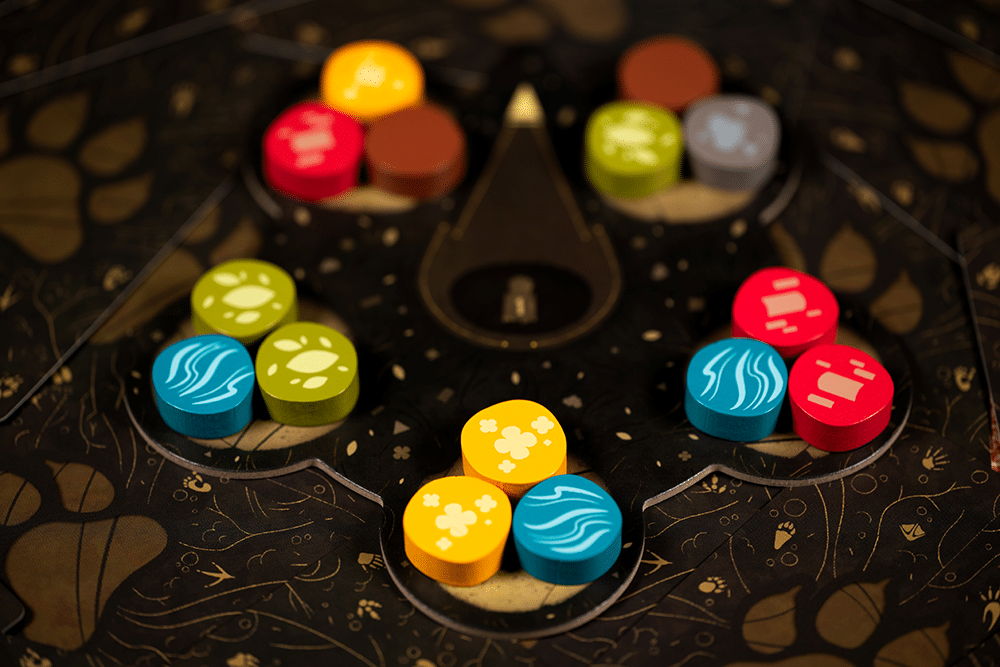
At two players, Harmonies is the stronger pure puzzle and the weaker market by default. Fewer Animal cards and token sets leave the display each round, so stale options can linger. This is the one repeated criticism worth solving before you judge the design. The clean community house rule is a conveyor: whenever a turn takes no Animal card, discard the oldest card and refill it. Some groups do the same with an untouched token set. Use the lightest version that keeps choices moving; do not turn refresh into a second game.
At three players, both are at their best. Markets rotate naturally, downtime stays low, and each game preserves its intended pace. Harmonies gains enough churn without becoming crowded. Cascadia's habitat majorities become slightly more competitive while remaining readable.
At four players, Cascadia is the safer social choice. Harmonies still works, but four separate fixed boards plus the central display require attention, and a deliberate player can slow the room. Cascadia needs more table area as ecosystems spread, yet its turns remain easier to parse.
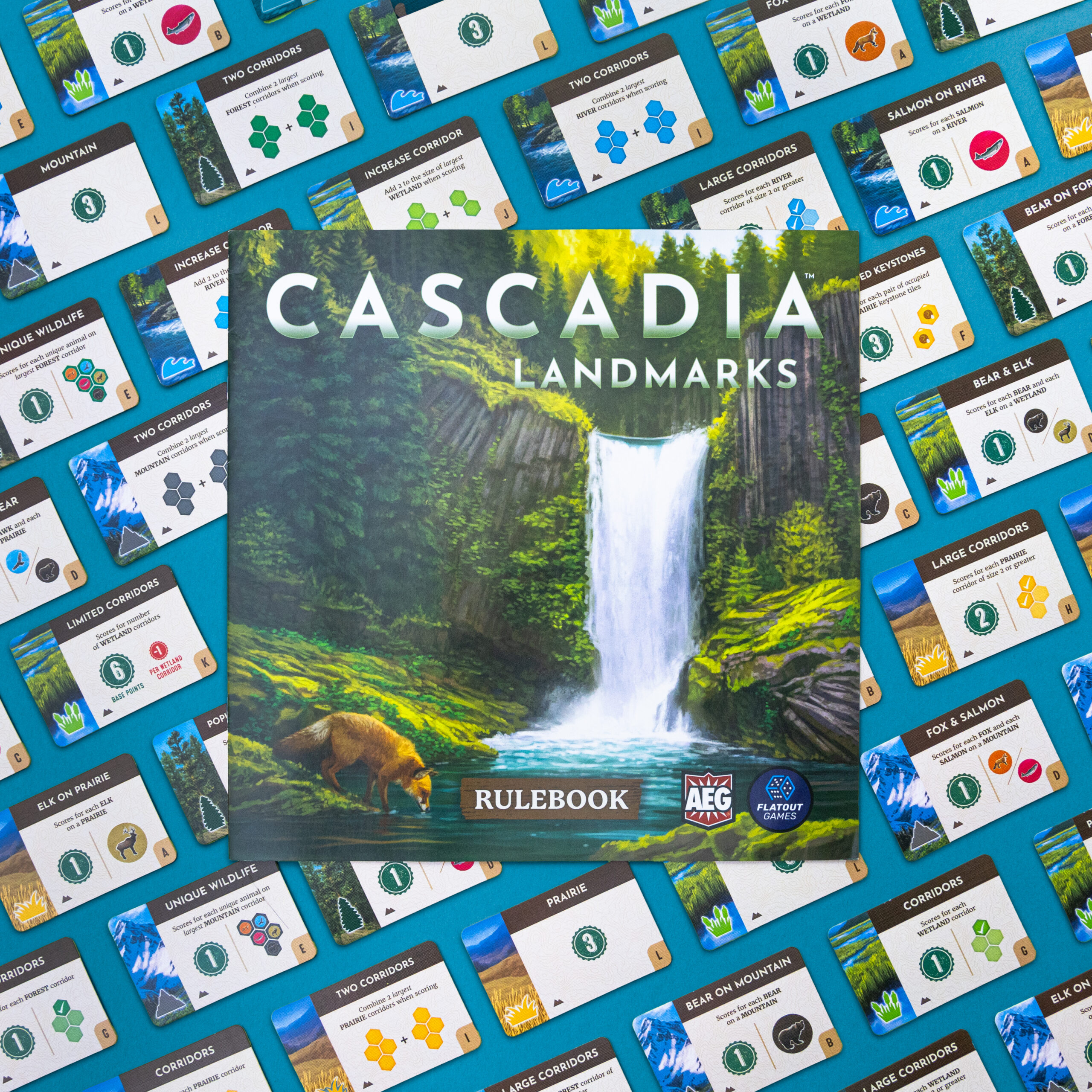
If your group has five or six players, the answer is structural: base Harmonies stops at four. Cascadia: Landmarks supplies the components and optional faster-play rule for five and six. Do not buy a second Harmonies box merely to force a player count the design does not officially support.
The no-regret decision tree
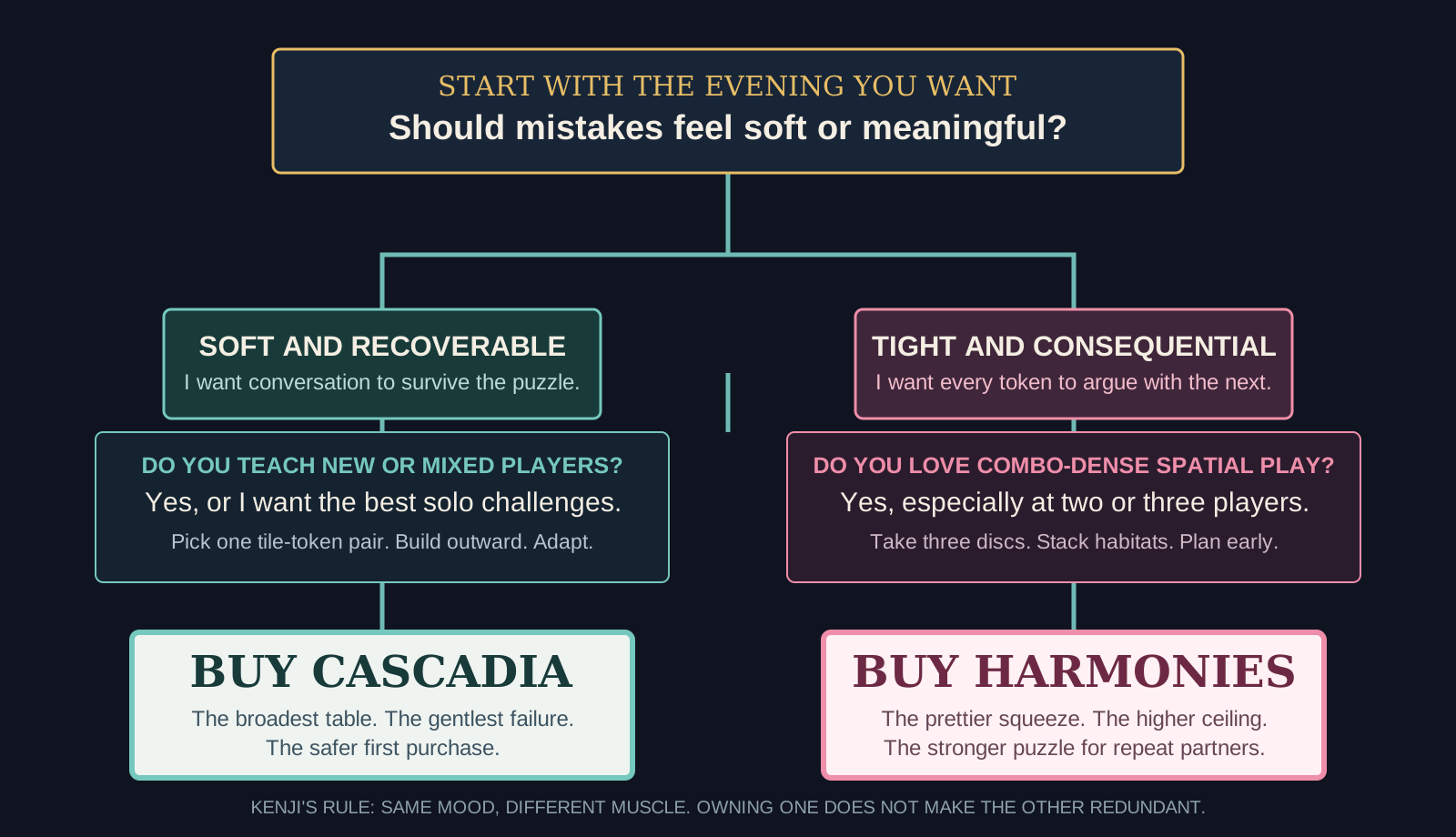
Use the decision tree, then apply one final shelf test. If the person across from you enjoys optimizing but dislikes being trapped by old decisions, choose Cascadia. If they complain that forgiving games feel flat, choose Harmonies.
Choose Cascadia when you need the broadest table: non-gamers and hobby players together, children and adults, conversation during play, solo scenarios, or a reliable gift. It is the better answer when you do not yet know the recipient's tolerance for spatial punishment.
Choose Harmonies when the same two or three people will play repeatedly, tactile components matter, table presence matters, and the group enjoys discovering a scoring language over several sessions. It is the better answer for someone who already likes Calico, Azul, Sagrada, Reef, or compact pattern puzzles.
Keep both when cozy spatial games are a central genre in your collection. Cull one when they would compete for the same rare slot in a monthly rotation. In that case, keep Cascadia for breadth or Harmonies for depth. A collection should serve its calendar, not an abstract ideal of completeness.
- Name the evening: restorative conversation or concentrated puzzle.
- Name the table: first-timers, family, solo, repeat duo, or experienced trio.
- Name the failure you tolerate: a merely decent move, or a cramped board that records the mistake.
- Buy one base game only. Play five times before evaluating any expansion.
Is Harmonies: Pulse worth buying?
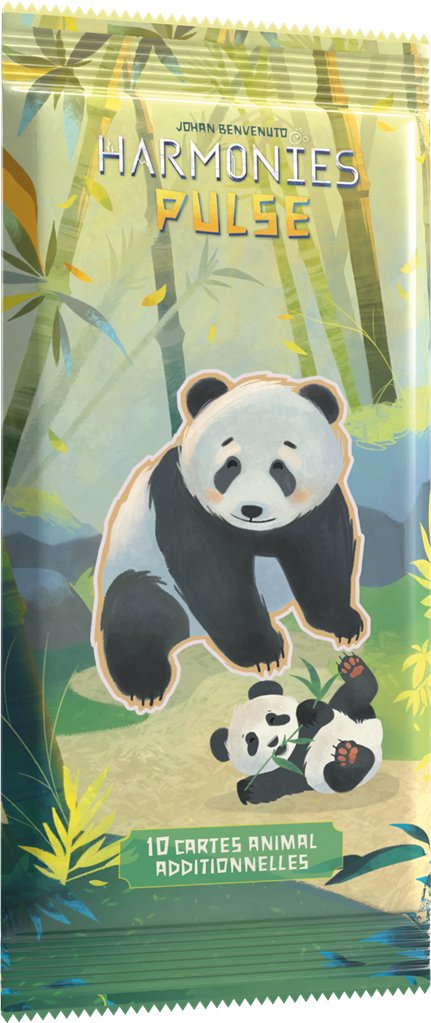
Yes, after the base game has begun to feel familiar. Pulse is exactly the size of expansion Harmonies needed first: ten new Animal cards, a reminder card, and a tiny rules sheet. Libellud confirms that the new patterns use three landscape colors for the first time and may be mirrored as well as rotated. The base game is required.
The value is not volume. Ten cards sound slight beside a large box. The value is that they alter how you read the same bag of discs. Base-game patterns often let two colors cooperate naturally. A tricolor card asks you to preserve a more specific junction, then recognize its reflected version. It increases pattern literacy without adding a phase, resource, or separate board.
Buy Pulse when your group already completes base Animal cards confidently and wants more difficult overlaps. Skip it for a first game, for a household still using the family teach, or for anyone who already finds the market too luck-dependent. More demanding cards do not reduce draw variance; they make adaptation more interesting for players who enjoy it.
At its small-pack price, Pulse is the best-value next purchase in the Harmonies line. Shuffle it in and leave it there. This is expansion design as a quiet continuation rather than a renovation.
Should you pre-order Harmonies: Crescendo?
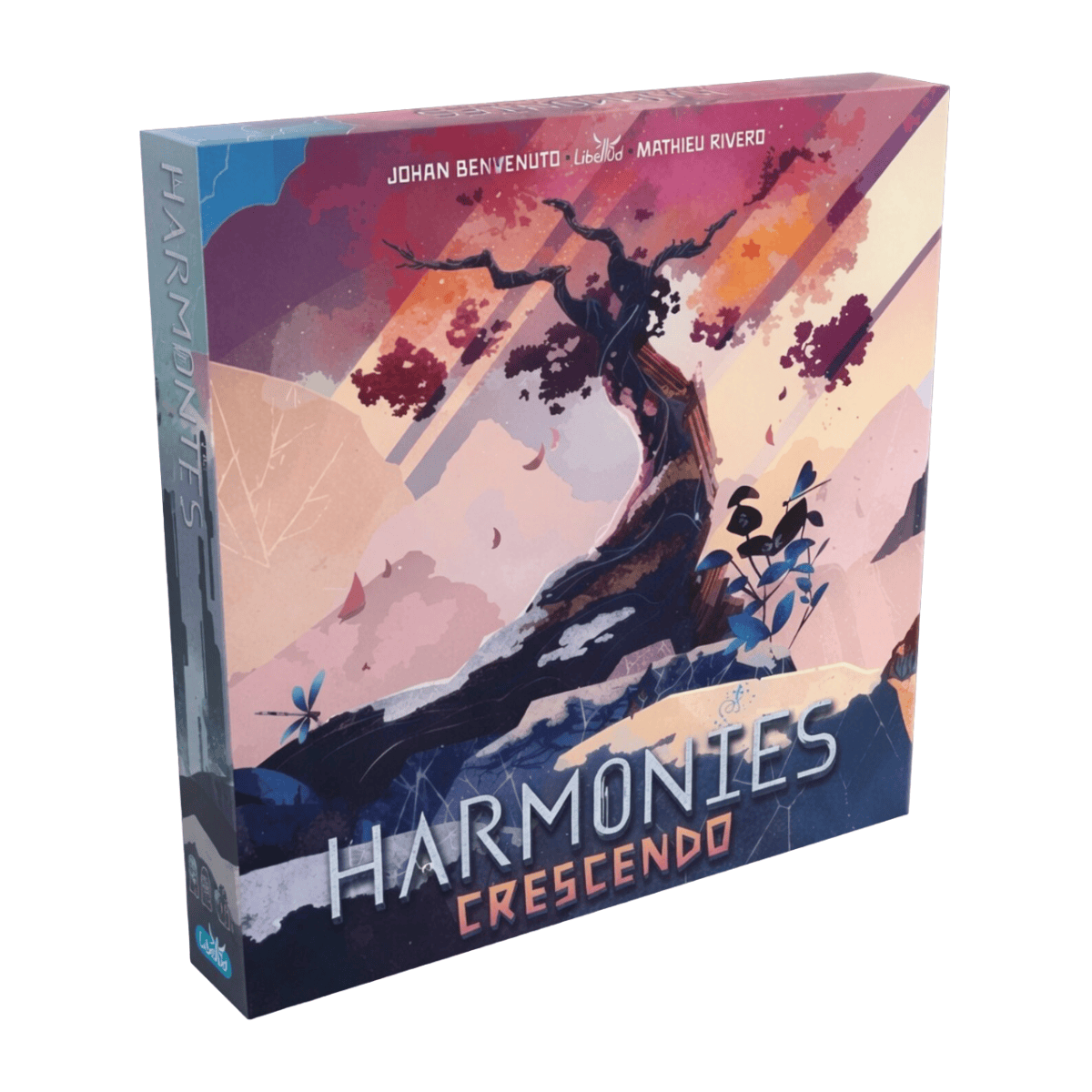
Wait. Crescendo is real, attractive, and not yet documented well enough for an unconditional recommendation. Current retailer previews describe a larger modular expansion with new personal boards, Protected Areas or Sanctuaries that host multiple animals, and Whisper Creatures that create new Animal-card synergies. Listings point toward an October 2026 release in some regions.
However, the BoardGameGeek reveal thread contains an important correction from designer Johan Benvenuto: more will be revealed in the coming weeks. That means translated component lists and retailer summaries are previews, not a finished rules record. We do not yet know which module adds the best decisions, how setup and scoring change, whether the base insert holds everything, or whether all regional editions share the same schedule.
Crescendo may become the expansion experienced players prefer. New player boards could solve repetition more fundamentally than ten cards. A multi-animal structure could deepen the central joy of overlapping habitats. Those are reasons to watch, not reasons to spend before the rules exist.
Our recommendation is simple: buy Pulse if you want more Harmonies now. Put Crescendo on a watchlist. Read the final rulebook, then decide whether you want a broader system or the original game's clean line preserved.
Which Cascadia expansion is worth buying?
For most owners, no expansion is urgent. Cascadia's base box already contains twenty wildlife scoring cards, solo scenarios, achievements, and enough tile-token variability to sustain a long shelf life. Add something only when you can name the gap.
Buy Cascadia: Landmarks if you need five or six players or if the base wildlife scoring deck has become predictable. The expansion adds fifteen wildlife scoring cards, new habitat tiles, extra wildlife and nature tokens, and the landmark module with thirty wooden landmark tokens and sixty scoring cards. The additional scoring variety is the durable value. The landmarks themselves add another endgame consideration, but they are optional.
Skip Landmarks if you play mostly solo or at two and still enjoy the base goals. It costs nearly as much as another excellent small game, and more content is not automatically more tension. The base design's elegance is a feature worth preserving.
Do not confuse Cascadia: Rolling Rivers or Rolling Hills with expansions. They are standalone roll-and-write games. Likewise, Flatout Games describes Cascadia: Alpine Lakes as a standalone follow-up using double-hexagon tiles and vertical stacking. Choose those when you want a different system, not when you merely want more cards in Cascadia.
Solo play: which one gives you more to return to?
Cascadia wins the base-box solo comparison. Its core puzzle loses almost nothing without opponents because player interaction was already limited, and its scenario ladder gives repeated plays a shape. Restrictions force you to reconsider comfortable habits. Achievements turn scores into a longer record of mastery.
Harmonies is the quicker, denser solo meditation. The solo side of the central board changes the market, and Nature's Spirit cards add richer objectives after you understand the base patterns. A session produces a satisfying object in a small footprint. What it lacks is an official campaign arc comparable to Cascadia's scenario-and-achievement structure.
A useful unofficial path is Melodies, a fan-made Harmonies solo campaign frequently recommended by dedicated solo players. Treat it as community content, not an official expansion, and obtain it from its credited creator rather than a random file mirror. It addresses the exact gap many solo owners feel: not more rules, but a reason for the next score to mean something.
Choose Cascadia for a guided solo shelf life. Choose Harmonies for a shorter spatial ritual you are happy to score against yourself. If you already own both, they alternate beautifully: Cascadia for the challenge sheet, Harmonies for the table object.
Ten table-tested tips that make both games better
These are not openings to memorize. They are habits that preserve possibility. Both games reward a player who sees the market without surrendering to it, builds for several scoring layers, and knows when a merely good move protects the rest of the board.
For Harmonies, think in shared structures. One mountain pair, tree stack, water line, or building cluster should answer more than one Animal card whenever possible. For Cascadia, think in dual-purpose drafts. The tile and token do not need to be perfect together, but each should advance one scoring system without damaging the other.
Most losses in either game begin as greed: an Animal card taken because it is beautiful, a wildlife pattern pursued after the map no longer supports it, a third landscape strategy added to a board already serving two. Restraint is not passive. It is how the puzzle stays open.
- Harmonies: choose two terrain priorities early; let the other terrain types support Animal cards rather than demanding full scoring plans.
- Harmonies: overlap Animal patterns before you take a fourth card. A full hand with four separate construction sites is a warning.
- Harmonies: place the awkward third disc first in your mind. If it has no future use, the attractive pair may be a trap.
- Harmonies: keep fingers and drinks away from the board edge. The vertical landscape is lovely and easy to disturb.
- Harmonies at two: rotate an old Animal card when nobody drafts one; stale markets are not strategic depth.
- Cascadia: score habitat corridors on every few turns, not only at the end. Fragmentation grows quietly.
- Cascadia: save a nature token for a genuinely bad pairing, but do not finish with several unused while taking compromised turns.
- Cascadia: read all five wildlife cards as a system. Some shapes share edges naturally; others compete for the same space.
- Both: name two candidate moves before choosing. The first legal pattern is rarely the whole answer.
- Both: end the first teach without strategy commentary. Let the new player discover one satisfying pattern before optimizing their table for them.
How to teach these games without stealing the puzzle
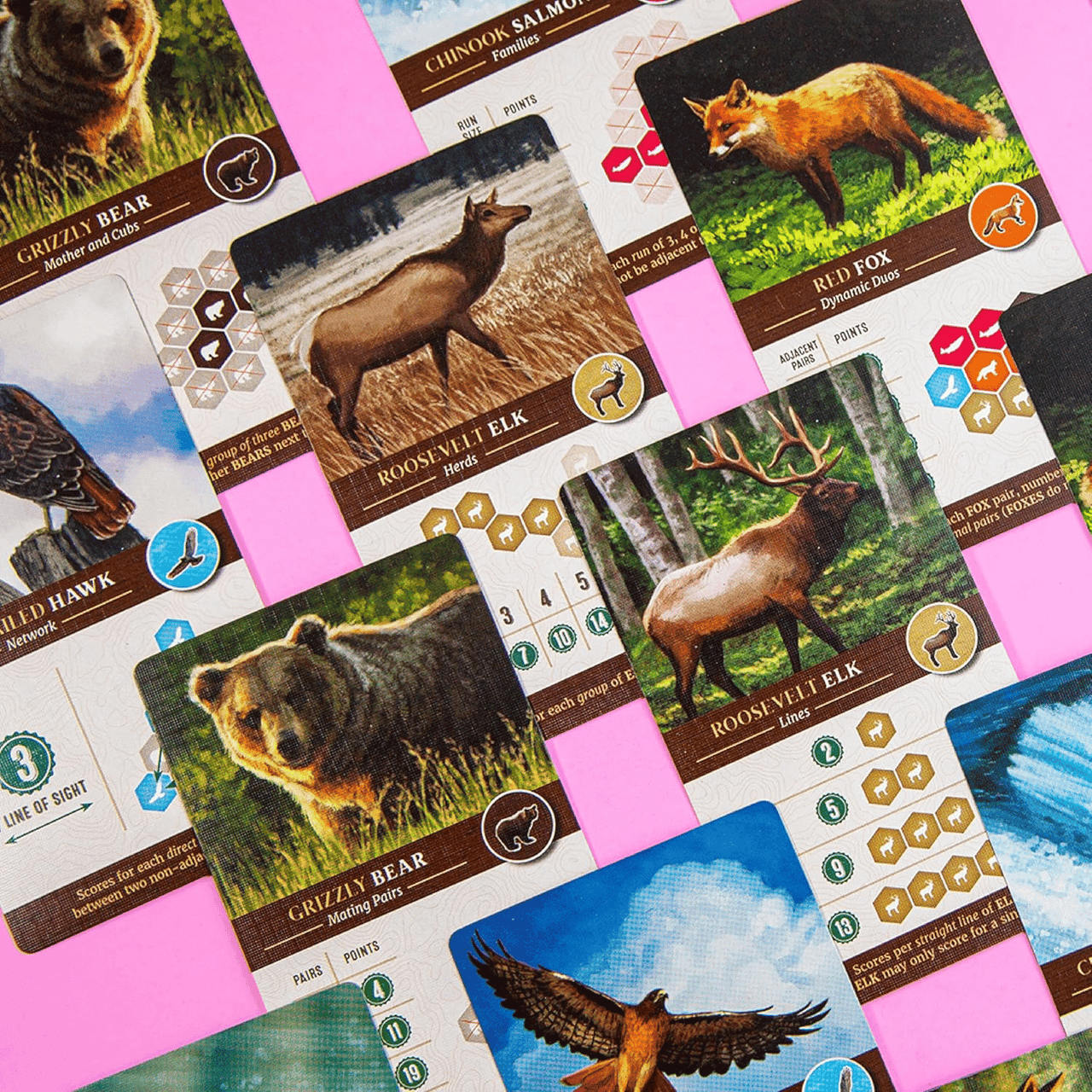
For Cascadia, teach the turn first: choose one pair, place the habitat adjacent to the map, place the animal on a compatible icon. Then explain the five wildlife cards with one physical example each. Leave corridor majorities and nature tokens until the table can see them. The first move should happen before the explanation becomes a lecture.
For Harmonies, build one example habitat in the center of the table. Show how terrain itself scores, then place an Animal cube into a matching pattern. Explain the four-card limit and the fixed board's ending condition. Do not front-load every terrain exception. Keep the rules reference visible and let the first unusual stack teach itself when it appears.
In both games, avoid the most common form of accidental quarterbacking: telling a new player the highest-scoring draft before they have read the market. Ask a question instead. 'Which part of your board do you want this to help?' preserves ownership. The teaching goal is not a competitive first score. It is the moment the player recognizes a pattern without assistance.
For children or visually overwhelmed players, begin with Cascadia's family scoring card or omit Harmonies' Nature's Spirits. Add depth after fluency. Complexity should arrive as a reward for understanding, never as an entrance fee.
Storage, sleeves, tweezers, and accessories you actually need
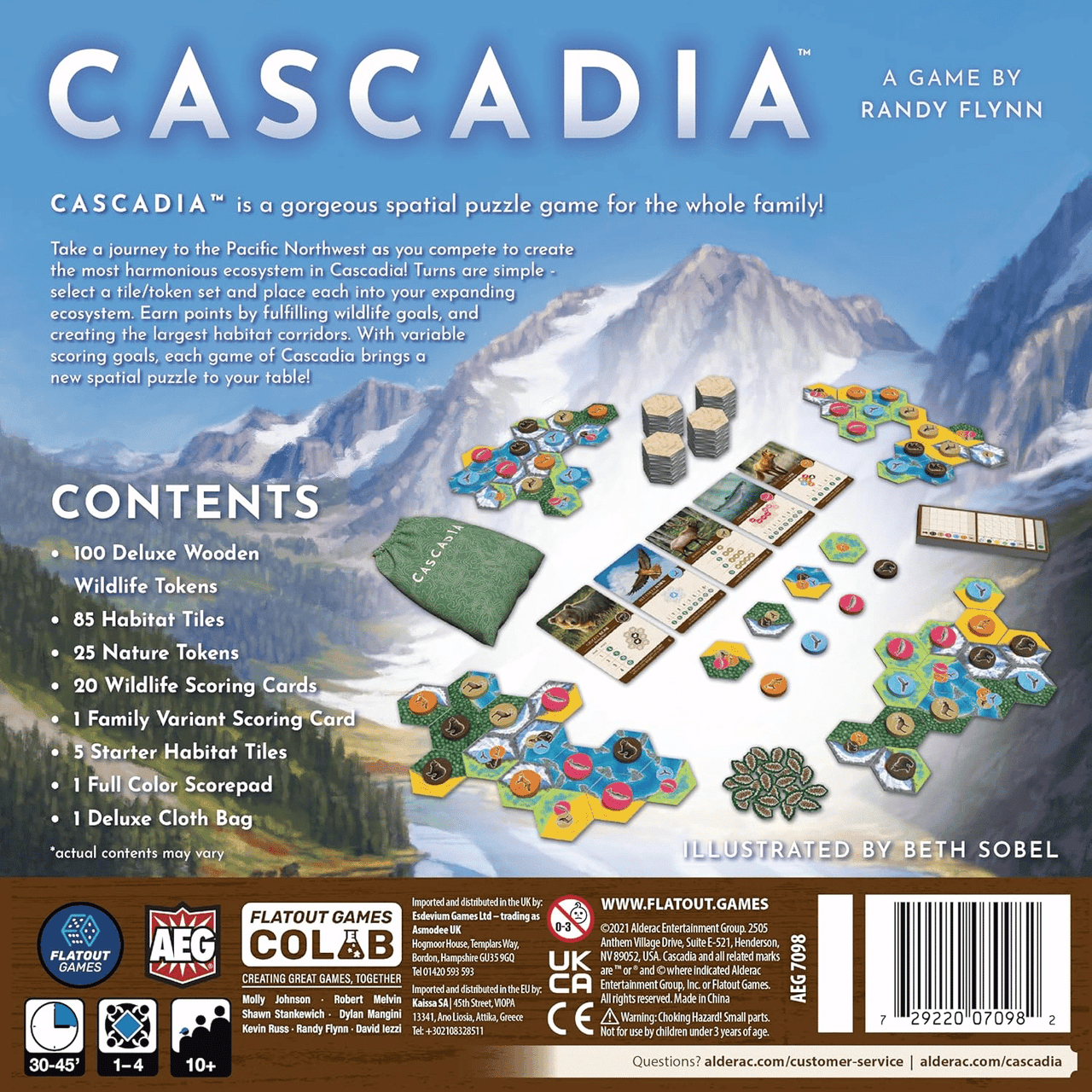
You need almost nothing beyond the boxes. Both productions are functional at retail, and neither becomes a better game under a layer of accessories. Begin there.
For Harmonies, the most useful upgrade is a small pair of rounded craft tweezers if fingers regularly knock stacked terrain while placing amber cubes. This is an accessibility aid, not a mandatory purchase. The large Animal cards measure roughly 69 by 119 millimeters; sleeve only if your table is hard on cards or card curl appears in your copy. Sleeves add bulk and friction to a game whose display should remain easy to refresh.
For Cascadia, small lidded cups or a simple token tray speed setup, but the included cloth bag already handles the wildlife draw. Landmarks adds enough material that an insert becomes more tempting, yet many owners fit the line into the base box with careful bagging. Do not buy an organizer before you know which modules you will actually keep mixed.
The best accessory for either game is better lighting. Both rely on color and small pattern information. A bright, neutral lamp improves play more than premium token upgrades. If color vision is a concern, teach with shape and icon language aloud and keep scoring cards within reach rather than across the table.
Buy light before inserts. Buy a tool only after the table teaches you why it is needed.
What experienced tables keep reporting
Recurring owner patterns, synthesized in Puzzlewick's words. Follow each evidence trail to read the original discussion.
It plays quite differently to Cascadia.
Cascadia is better to play more casually.
Harmonies is like if Cascadia and Azul had a baby.
Harmonies has more going on, but I prefer the simplicity of Cascadia.
The picks
Some links below are affiliate links — as an Amazon Associate, Puzzlewick earns from qualifying purchases, at no extra cost to you. It never changes a pick.
4 photos Harmonies
- Players
- 1-4 · best 2-3
- Time
- 30-45 min
- Age
- 10+
- Complexity
- 2.01 / 5
- Publisher
- Libellud · 2024
- Designer
- Johan Benvenuto
- Art
- Maeva da Silva
The winner for tactile depth. Harmonies gives you easy rules, a fixed board, and a demanding language of shared structures. Buy it when your table wants to admire the landscape and then immediately discuss the one disc that ruined everything.
- Distinctive three-dimensional wooden landscape
- Higher planning ceiling than its rules weight suggests
- Compact footprint and fast turns
- Excellent at two and three with a simple market refresh
- More punishing and less flexible than the art implies
- Low interaction
- Market can stagnate at two
- Tall stacks can be bumped during cube placement
Cascadia
- Players
- 1-4 · best 2-3
- Time
- 30-45 min
- Age
- 10+
- Complexity
- 1.85 / 5
- Publisher
- Alderac Entertainment Group / Flatout Games · 2021
- Designer
- Randy Flynn
- Art
- Beth Sobel
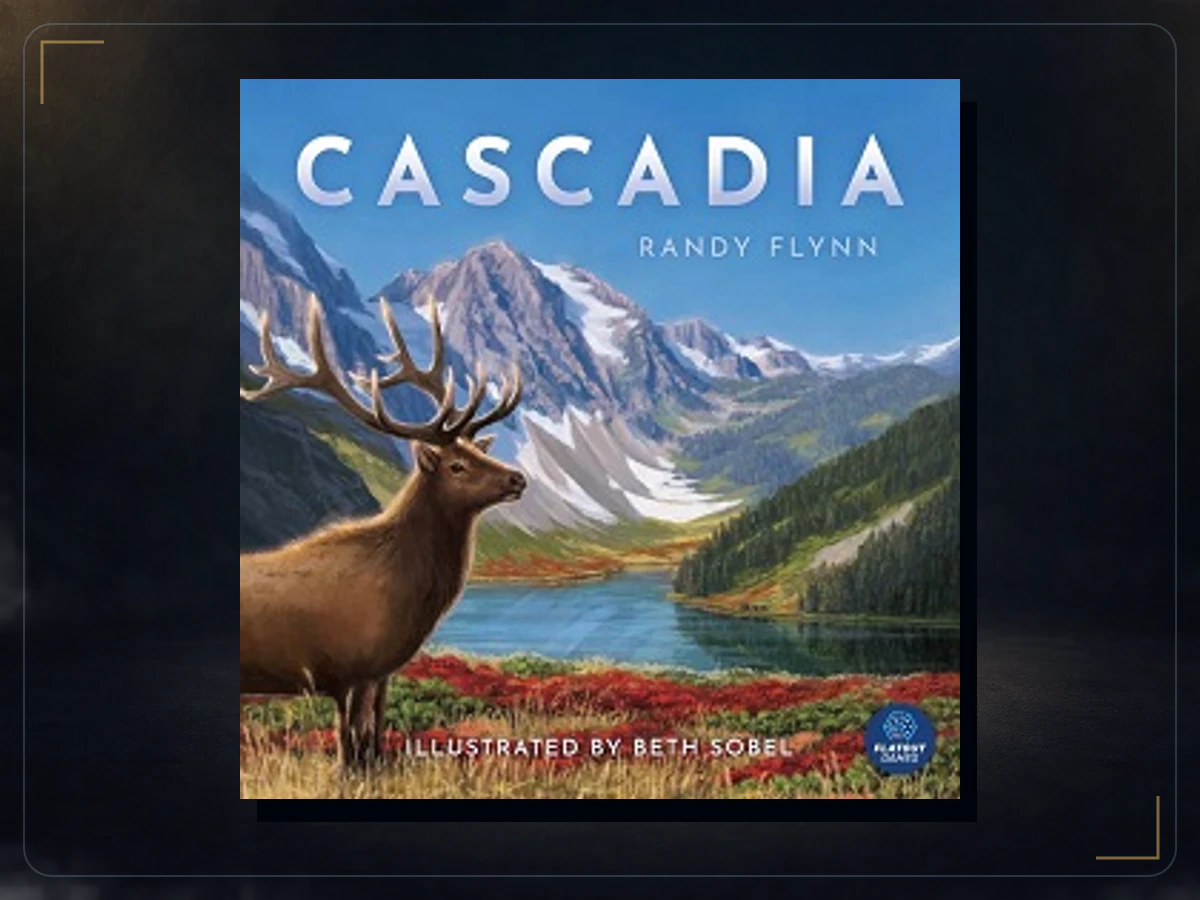
The broader recommendation and still the safest one-box answer. Cascadia's open map, clean pair-draft, variable wildlife goals, scenarios, and achievements create an unusually generous game that remains worth mastering.
- Fastest and gentlest teach
- Strong scenario-based solo progression
- Forgiving without removing optimization
- Excellent across one to four players
- Low interaction
- Can feel too permissive for players who want sharp consequences
- Landscapes consume more table space as they grow
Cascadia: Landmarks
- Players
- 1-6
- Time
- 45-60 min
- Age
- 10+
- Publisher
- Alderac Entertainment Group / Flatout Games · 2023
- Designers
- Randy Flynn, Molly Johnson, Robert Melvin, Shawn Stankewich
- Art
- Beth Sobel, Dylan Mangini
Buy Landmarks for its player-count support, extra wildlife cards, and fresh tiles. Treat the landmark module as optional texture. It is a good expansion to a game that did not require rescue.
- Official five-to-six-player support
- Fifteen new wildlife scoring cards
- More tiles, tokens, and optional scoring variety
- Nearly the price of another complete game
- Landmark module adds overhead some owners do not need
- Base Cascadia already has substantial replayability
At a glance
| Game | Best for | Players | Time | BGG weight | Planning | Forgiveness | Solo | Expansion verdict |
|---|---|---|---|---|---|---|---|---|
| Harmonies | Tighter repeat-play puzzle | 1-4; best 2-3 | 30-45 min | 2.01 / 5 | Commit early | Medium-low | Score chase + Spirits | Pulse first |
| Cascadia | Families, gateways, solo | 1-4; best 2-3 | 30-45 min | 1.85 / 5 | Adapt continuously | High | Scenarios + achievements | Base first; Landmarks if needed |
Questions, answered
Is Harmonies too similar to Cascadia if I already own Cascadia?
No. Both are low-interaction nature puzzles with shared drafting, but Cascadia uses an open, expanding hex map and public wildlife goals; Harmonies uses a fixed personal board, sets of three landscape discs, vertical stacking, and private Animal patterns. Cascadia rewards adaptation. Harmonies rewards early spatial commitment.
Which is better, Harmonies or Cascadia?
Cascadia is better for most first-time buyers, mixed groups, families, and solo players who want structured scenarios. Harmonies is better for repeat duos or trios who want a tighter, more tactile, and more consequential spatial puzzle.
Which game is more relaxing?
Cascadia. Its landscape can expand in any direction, mistakes are easier to absorb, and most drafts offer a useful move. Harmonies looks serene but its fixed board and overlapping pattern demands create more pressure and more irreversible decisions.
Which game has more player interaction?
Neither has much. Both allow light denial through a shared market, but most play is parallel tableau building. Harmonies can reward reading which Animal card an opponent wants; Cascadia can create competition over paired tiles and habitat majorities. Choose another genre if direct interaction is essential.
Which is better with two players?
Harmonies offers the denser two-player puzzle, while Cascadia is smoother without house rules. At two, Harmonies' Animal display may stagnate; use the common oldest-card refresh when no Animal card is drafted.
Which is better solo?
Cascadia has the stronger official progression because the base box includes scenarios and achievements. Harmonies is a faster, more tactile beat-your-score puzzle, and Nature's Spirit cards deepen it after a few plays.
Is Harmonies: Pulse worth it?
Yes for experienced owners. Pulse adds ten Animal cards with three-color patterns and allows mirrored patterns as well as rotations. It deepens the existing puzzle without adding a subsystem. New players should learn the base deck first.
What is in Harmonies: Crescendo?
Preview information describes a modular expansion with new personal boards, protected habitats or sanctuaries, and Whisper Creatures that interact with Animal cards. As of June 29, 2026, the complete official reveal was still pending, so contents and terminology should be rechecked against Libellud's final rulebook.
Should I buy Pulse or wait for Crescendo?
Buy Pulse if you already love Harmonies and want a small, rules-light variety upgrade now. Wait for Crescendo's full rules before deciding whether its larger modules solve a problem your group actually has.
Is Cascadia: Landmarks worth it?
Yes if you need five-to-six-player support or want more wildlife scoring cards and habitat tiles. It is optional for solo and two-player owners because the base game already offers strong replayability.
Is Cascadia: Alpine Lakes an expansion?
No. Flatout Games describes Alpine Lakes as a standalone follow-up with double-hexagon habitat tiles, vertical stacking, new wildlife, and new scoring systems. It does not require the original Cascadia.
Can children play Harmonies and Cascadia?
Both are officially listed for ages 10 and up. Cascadia is the easier family teach and includes gentler scoring options. Harmonies has simple rules but a tighter board and more abstract three-dimensional pattern planning, so it suits children who already enjoy spatial puzzles.
Do I need sleeves, an insert, or upgraded components?
No. Play the retail game first. Rounded tweezers can help place Harmonies' small animal cubes without disturbing stacks, and token cups can speed Cascadia setup, but neither accessory is required. Buy storage only after you know which expansions will live in the box.
Kenji's verdict
Cascadia wins the recommendation. Harmonies wins the puzzle.
If I am placing one unknown household's money on the table, I choose Cascadia. Its generosity is unusually well made. It teaches without condescension, survives mixed experience, gives solo players a path, and turns mistakes into landscape rather than regret.
If I know the table already loves spatial games, I choose Harmonies. Its small board contains more consequence, its wooden terrain has greater tactile presence, and its best turns reveal how several scoring languages can inhabit the same structure. It is not deeper because it has more rules. It is deeper because space runs out.
For the owner of both, there is no contradiction. Keep Cascadia for the room. Keep Harmonies for the mind. Add Pulse only after fluency. Add Landmarks only for more players or more scoring vocabulary. Let Crescendo finish introducing itself before you invite it onto the shelf.
Still deciding? Take the Game-Finder - answer seven quick questions and the cabinet will match a game to your table.
Research ledger 15 sources · reviewed 2026-07-17
Specifications, rules, current product information, community experience, and contrary evidence were checked against the sources below. Commercial links are kept separate from editorial evidence.
- libellud.comlibellud.com/en/our-games/harmonies
- cdn.svc.asmodee.netcdn.svc.asmodee.net/production-libellud/uploads/2024/12/HARMONIES_Rules_EN.pdf
- boardgamegeek.comboardgamegeek.com/boardgame/414317/harmonies
- alderac.comalderac.com/cascadia
- alderac.comalderac.com/wp-content/uploads/2025/04/Cascadia_BaseGame_Rulebook_Optimized.pdf
- flatout.gamesflatout.games/cascadia
- alderac.comalderac.com/cascadia-landmarks
- alderac.comalderac.com/wp-content/uploads/2023/09/Cascadia_Landmarks_EN_1P_Rules_Rulebook_FINAL.pdf
- reddit.comreddit.com/r/boardgames/comments/1ud3sor/harmonies_is_the_best_puzzle_board_game_ive_ever
- reddit.comreddit.com/r/boardgames/comments/1u2iynd/new_harmonies_expansion
- reddit.comreddit.com/r/boardgames/comments/1uh88b2/harmonies_or_cascadia
- reddit.comreddit.com/r/boardgames/comments/1na8gok/cascadia_vs_harmonies
- boardgamegeek.comboardgamegeek.com/thread/3719755/harmonies-crescendo
- play-in.complay-in.com/en/produit/650150/harmonies-extension-pulse
- asdesjeux.comasdesjeux.com/en/products/harmonies-crescendo-ml

Every object has a lineage. Let me tell you its story.

Keep exploring
The next smart rabbit holes.
❦ Universe HubEverdell: the whole buying pathEverdell is warm woodland theater wrapped around a sharp card-engine puzzle. Yumi's universe keeps the invitation intact while...❖ Topic PathMechanical Puzzles: compare the whole shelfThe right mechanical puzzle matches the solver's patience, not simply the maker's difficulty number. These guides translate...ComparisonAzul vs Cascadia vs Calico: Which Cozy Tile-Layer Is Right for Your Table?Three beautiful tile games compared by interaction, pressure, solo play and the kind of first night they create.