What is a tunnel book?
A tunnel book is a series of layered panels viewed through a front frame, creating a deep, theatrical 3D scene you peer into — like looking down a lit corridor. The layers can be expanded accordion-style and lit for real diorama depth.
Are pop-up books just for kids?
No — the best adult pop-up artists (Sabuda, Carter and others) make genuinely jaw-dropping paper engineering. They are collected, displayed, and gifted as art objects, not nursery books.
What makes a good paper-craft gift?
Look for sturdy card stock, a scene that displays open on a shelf, and a subject the recipient loves. A tunnel book or pop-up theatre is a memorable, low-cost wonder that keeps revealing detail.
Who is the best pop-up book artist?
Robert Sabuda is the most widely celebrated pop-up book artist — the New York Times called him 'indisputably the king of pop-ups,' and his fairy-tale adaptations (The Wonderful Wizard of Oz, Alice's Adventures in Wonderland) are the field's gold standard. That said, 'best' depends on what you want: Sabuda for elegance, Matthew Reinhart for jaw-dropping spectacle (Star Wars, DC), David A. Carter for abstract art pop-ups, and Marion Bataille for kinetic typography (ABC3D, a Meggendorfer Prize winner). Most serious collectors own work by all four.
What is the best pop-up book for adults to start with?
Encyclopedia Prehistorica: Dinosaurs by Robert Sabuda and Matthew Reinhart (~$50). It's the title the collecting community names most often for newcomers: a #1 New York Times bestseller, genuinely affordable, and its climactic T. rex spread is the moment most people fall in love with the art form. If you'd rather start with pure elegance, a Sabuda fairy tale like Peter Pan ($39.99) is the other classic first buy.
What is a paper theatre or toy theatre?
A paper (or toy) theatre is a miniature proscenium stage built from printed paper — a curtain, a stage, layered flat scenery, and characters you slide on or off. You cut and mount the printed sheets, then stage a play on a tabletop. The classic source is Benjamin Pollock's Toyshop in London, heir to the Victorian 'penny plain, twopence coloured' tradition Robert Louis Stevenson loved.
ROKR vs UGears — which is better?
UGears is the better machine; ROKR is the better deal and the better showpiece. UGears holds tighter laser-cut tolerances, meshes gears more cleanly, and ships generous spare parts — in head-to-heads its mechanisms run while comparable ROKR kits jam. ROKR wins on price and on spectacle (playable pinball, big light-up marble runs) that UGears doesn't make, at the cost of looser tolerances that occasionally need a gear re-seated or sanded. First build or gift: UGears. Budget showpiece you'll tinker with: ROKR.
What's the best automata kit for a beginner?
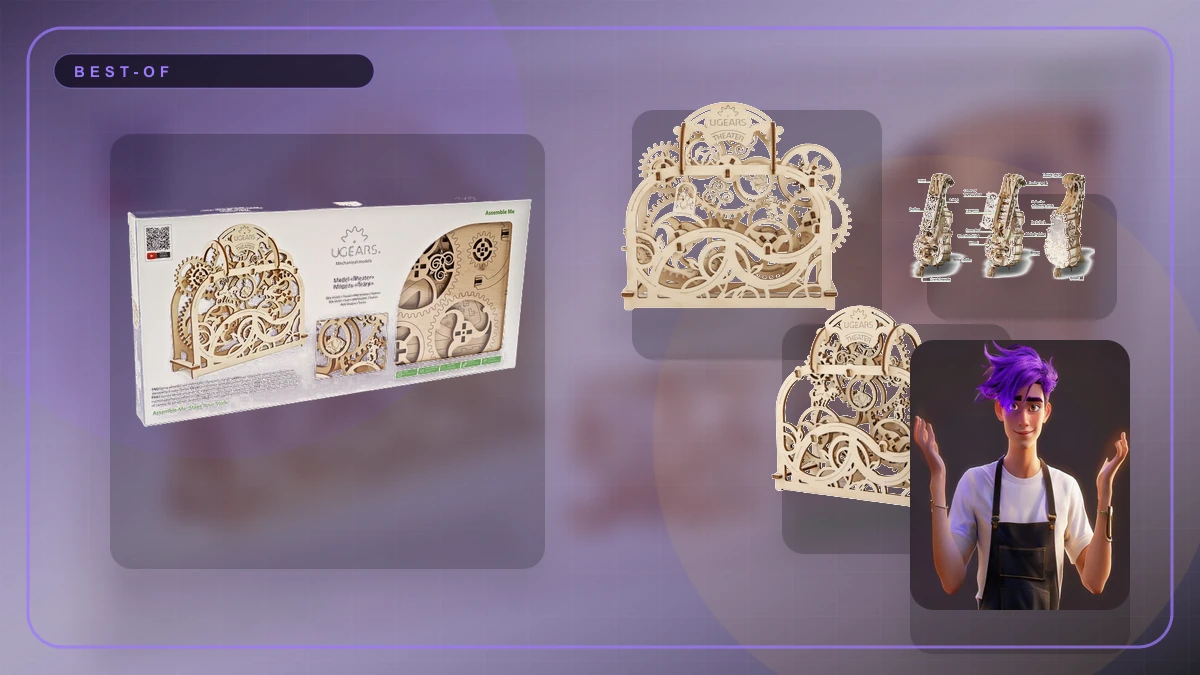
The UGears Theater (~$33, 70 parts, 1-2 hours) — it's a real automaton that performs a story each crank, small enough to finish before frustration sets in, and press-fit so no glue mistakes. For traditional cam automata, a Timberkits beginner model like the Drummer (~$25-35) teaches the glue-and-linkage craft. Avoid starting with a 400+ piece marble run or the pinball; they're long and one loose joint stalls everything.
Which EXIT game should I start with?
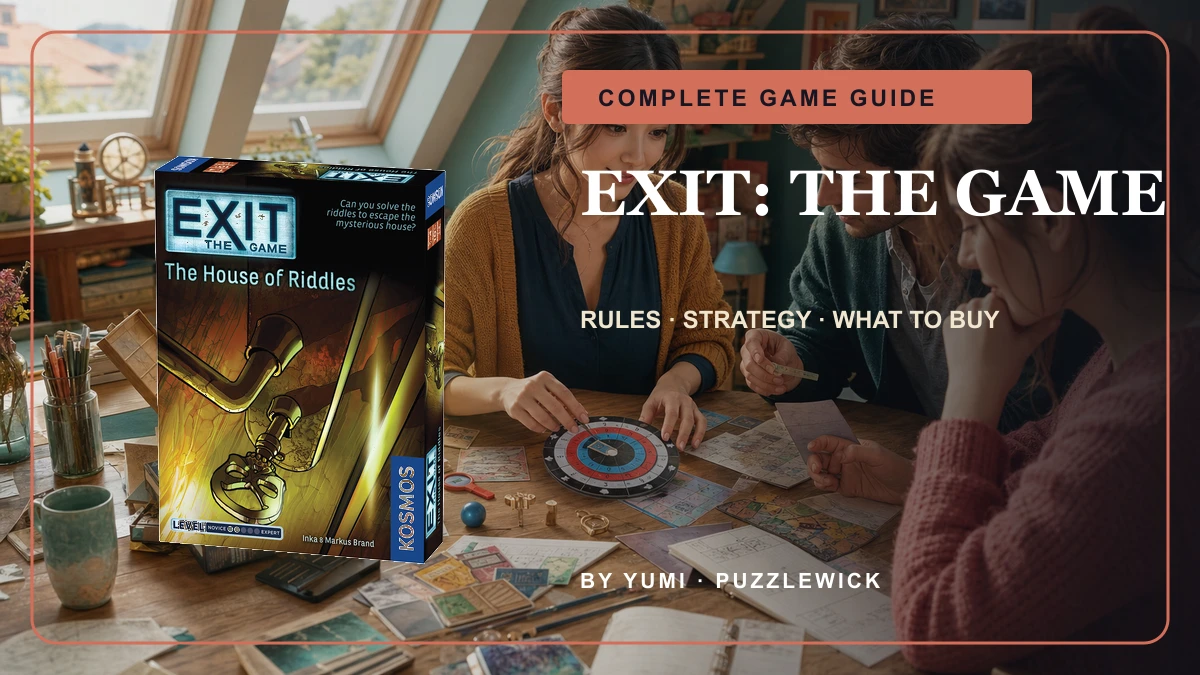
The House of Riddles is the safest beginner recommendation.
Do EXIT games get destroyed?
Many ask players to write, fold, or cut components, so plan for one intended playthrough unless using careful copies.
Is The Light in the Mist an escape-room game?
It shares code breaking, observation, and hints with escape-room boxes, but its nonlinear tarot structure and literary pacing make it closer to a narrative puzzle artifact than a timed room simulation.
How difficult is The Light in the Mist?
Treat it as intermediate-to-hard. Experienced puzzle solvers often praise its originality, while newcomers frequently report abstract leaps and heavier hint use.