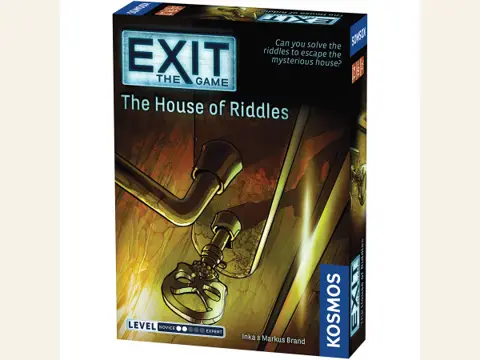
EXIT: The Game Complete Buying Guide—Where to Start, Difficulty, Hints, and the Best Boxes
Yumi builds a spoiler-free route through EXIT: The Game, from beginner boxes to intermediate adventures, with hint etiquette, hosting, destructive components, replay value, and the real difference from Unlock and Deckscape.

AI-assisted curator persona · research and editorial responsibility: Robert Pruitt · how this guide was made
Last editorial refresh: 2026-07-14 Gold-standard QA: 2026-07-14 10 sources reviewed Affiliate links checked during gold-standard pass

The short answer
Start with EXIT: The House of Riddles if your group is new to escape-room games; move to The Forgotten Island when everyone understands the decoder-disc language. Plan for one main playthrough, because EXIT games often require folding, cutting, or writing on components. Use clue cards early enough to preserve momentum: the first hint confirms what puzzle you should be solving, the second narrows the method, and the solution should prevent an evening from collapsing—not shame the table.
Decision map
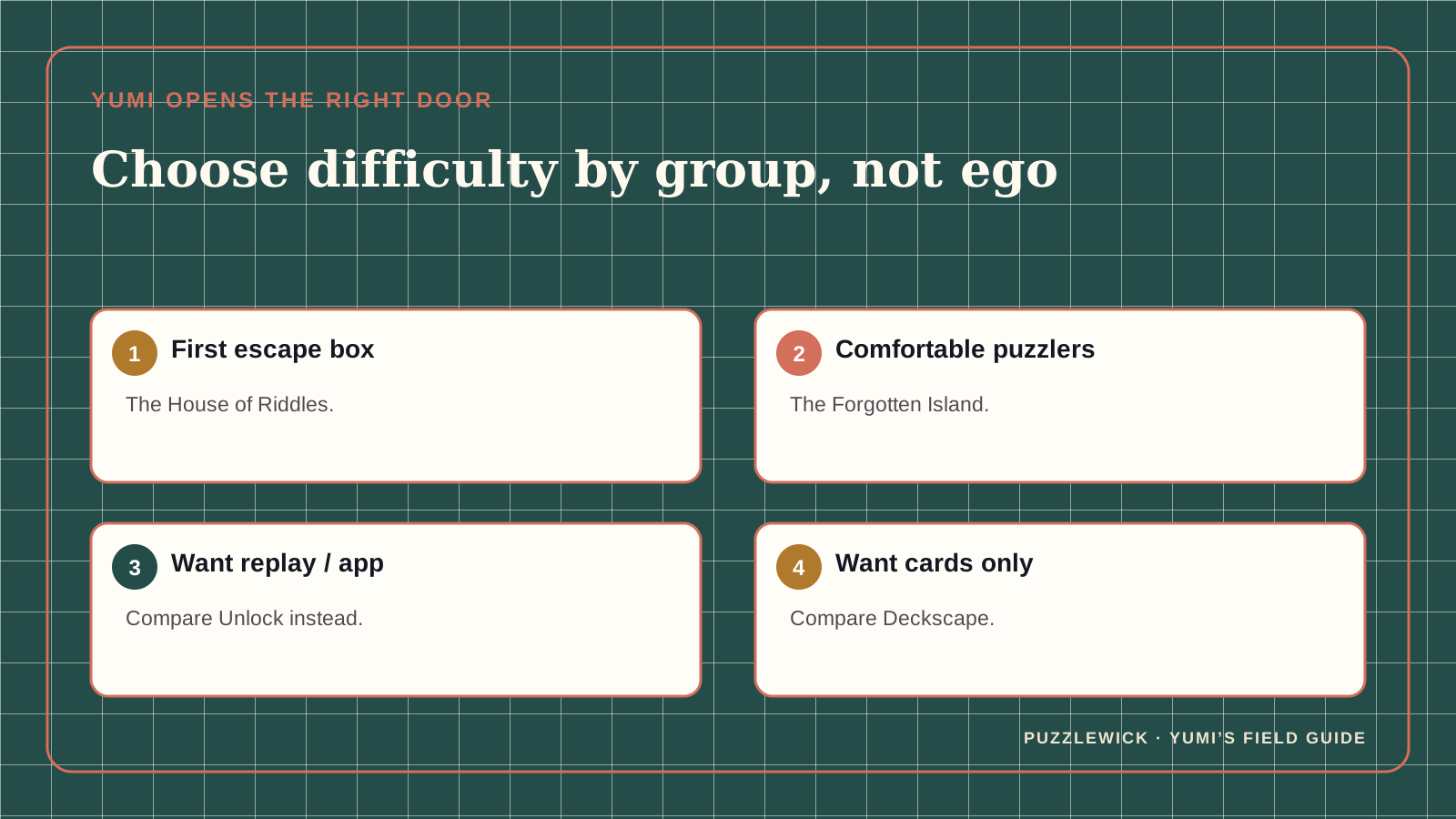
Choose in thirty seconds
Best first EXIT box.
Best second step for an intermediate group.
EXIT’s best magic is physical: the moment a printed object stops being packaging and becomes a tool. Its worst night is an hour spent refusing a hint because everyone wants to “earn” the next envelope. Yumi reviewed Kosmos’s current line and Puzzlewick’s existing escape-room comparisons to create a spoiler-free buyer path, a first-night ritual, and a sane relationship with scissors.
Start here, then go deeper
You are in the right cabinet.
 ✦ Topic PathBoard Game Buying Guides: compare the whole shelfStart with the decision, not the shelf. These guides compare the games, editions, expansions, player counts, and costs people...
 ReviewThe Light in the Mist Review 2026: Beautiful Tarot Mystery or Too Abstract?Yumi opens PostCurious’s tarot puzzle without spoiling a single solution: difficulty, hints, player count, playtime, resetability, story,...
 ComparisonEXIT vs Unlock! vs Deckscape: Which Escape-Game Series Should You Buy? (2026)Okay so — three card-sized escape rooms, three completely different philosophies about what a room IS, and the room has been *saying*...
Which EXIT game should beginners buy first?
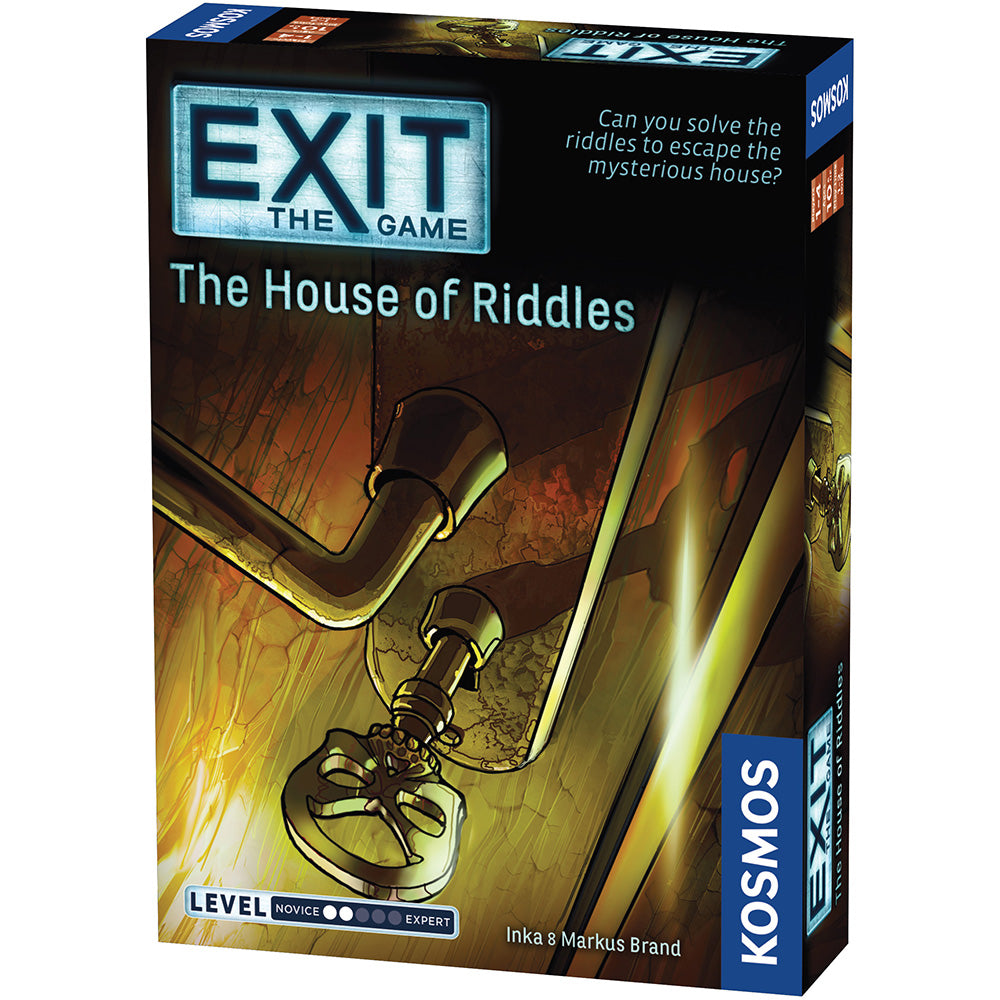
The House of Riddles is the safest first purchase because its beginner rating introduces the decoder disc, clue deck, and physical manipulation without assuming an escape-room vocabulary. The Forgotten Island is an excellent next step for a group ready for intermediate puzzles and a more adventurous arc.
Do not choose by box art alone. Check the difficulty icon, estimated duration, and whether the theme suits everyone. EXIT boxes are largely self-contained; they are not expansions that require a base game. A group can begin almost anywhere, but a hard first box can teach the false lesson that EXIT is merely opaque.
The House of Riddles is the safest first purchase because its beginner rating introduces the decoder disc, clue deck, and physical manipulation without assuming an escape-room vocabulary.
How does EXIT: The Game work?
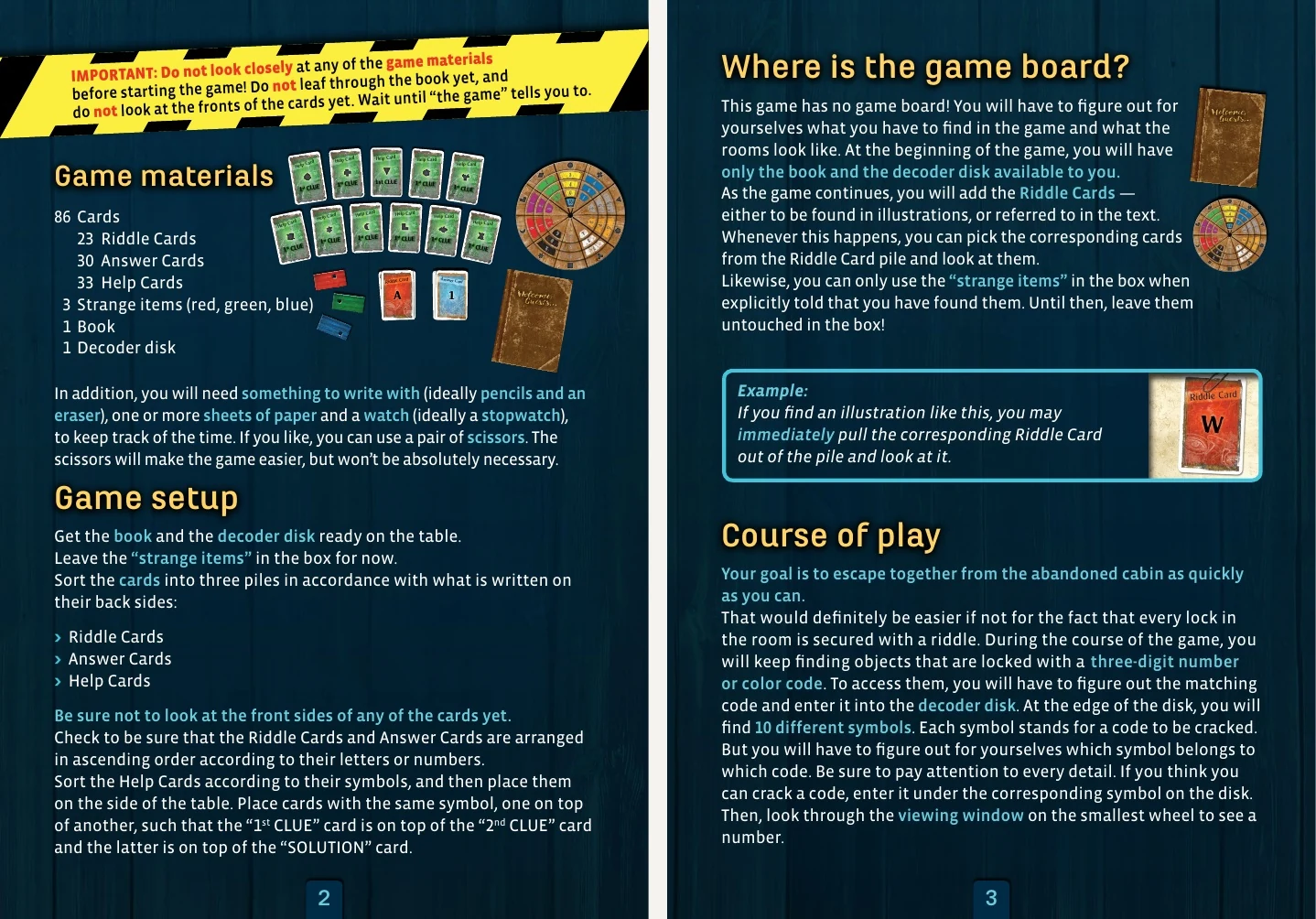
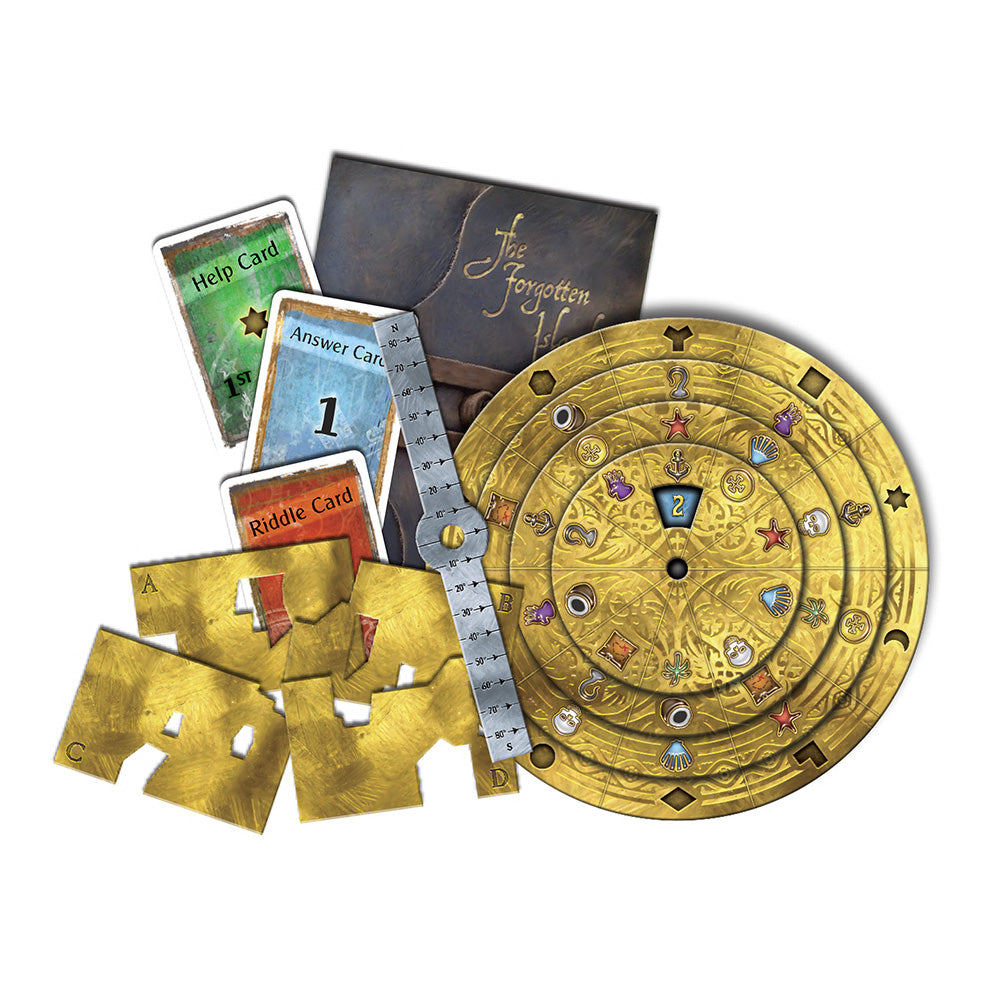
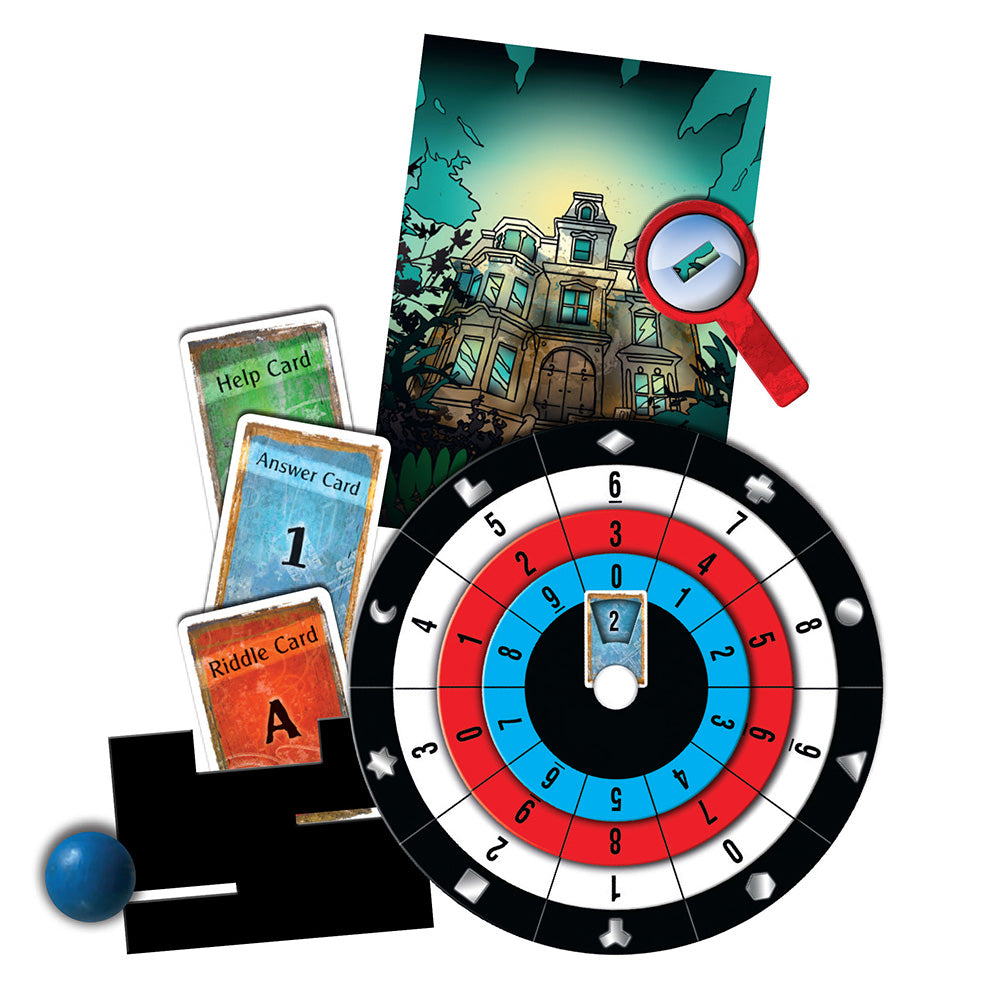
Open the box only when the group is ready. The materials begin with a decoder disk, riddle cards, answer cards, help cards, booklets or strange objects, and game-specific components. Solve a puzzle to derive a code, enter that code on the decoder, and draw the indicated answer card. A wrong card sends you back; a correct card identifies the next material to reveal.
Do not sort every card or inspect backs in advance. EXIT deliberately uses folding, writing, cutting, and unusual object manipulation. One player should manage card numbers while another keeps a visible pile of discovered clues. The box is generally a one-time experience because components may be altered, though careful groups can sometimes protect materials with copies and sleeves.
Open only the materials the setup instructs you to use.
Are EXIT games replayable?
Usually only in the limited sense that a second group can play if the first group preserved or replaced every altered component and forgot the solutions. The intended experience is a one-time shared event. That makes the price closer to movie tickets or an escape-room reservation than to an endlessly replayable card game.
If replay and lending matter, look at app-supported Unlock! or card-only Deckscape titles, which often avoid destructive manipulation. If tactile surprise matters most, EXIT’s one-shot nature is precisely what lets the box ask you to do alarming things with paper.
Usually only in the limited sense that a second group can play if the first group preserved or replaced every altered component and forgot the solutions.
When should you use a hint?
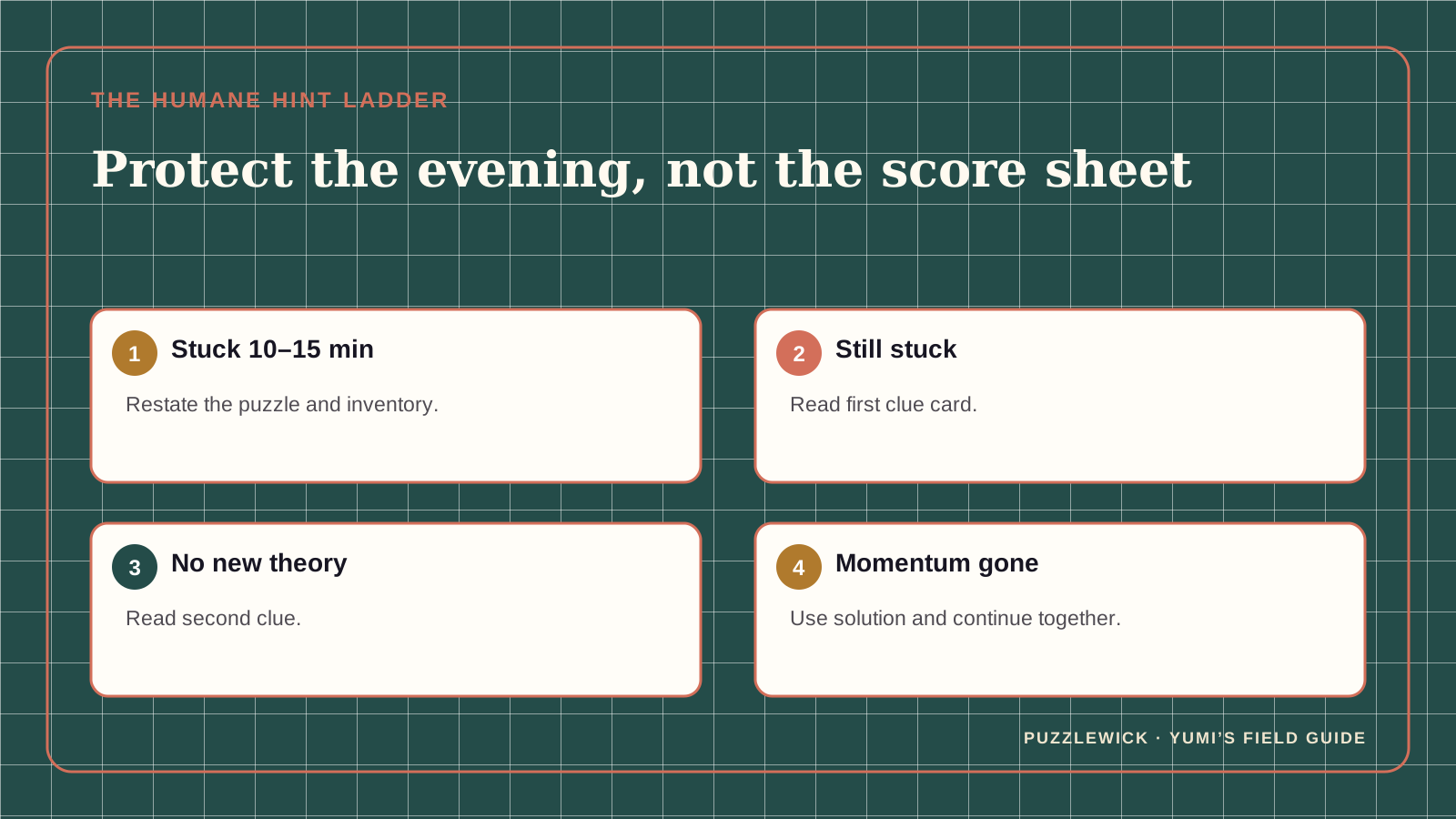
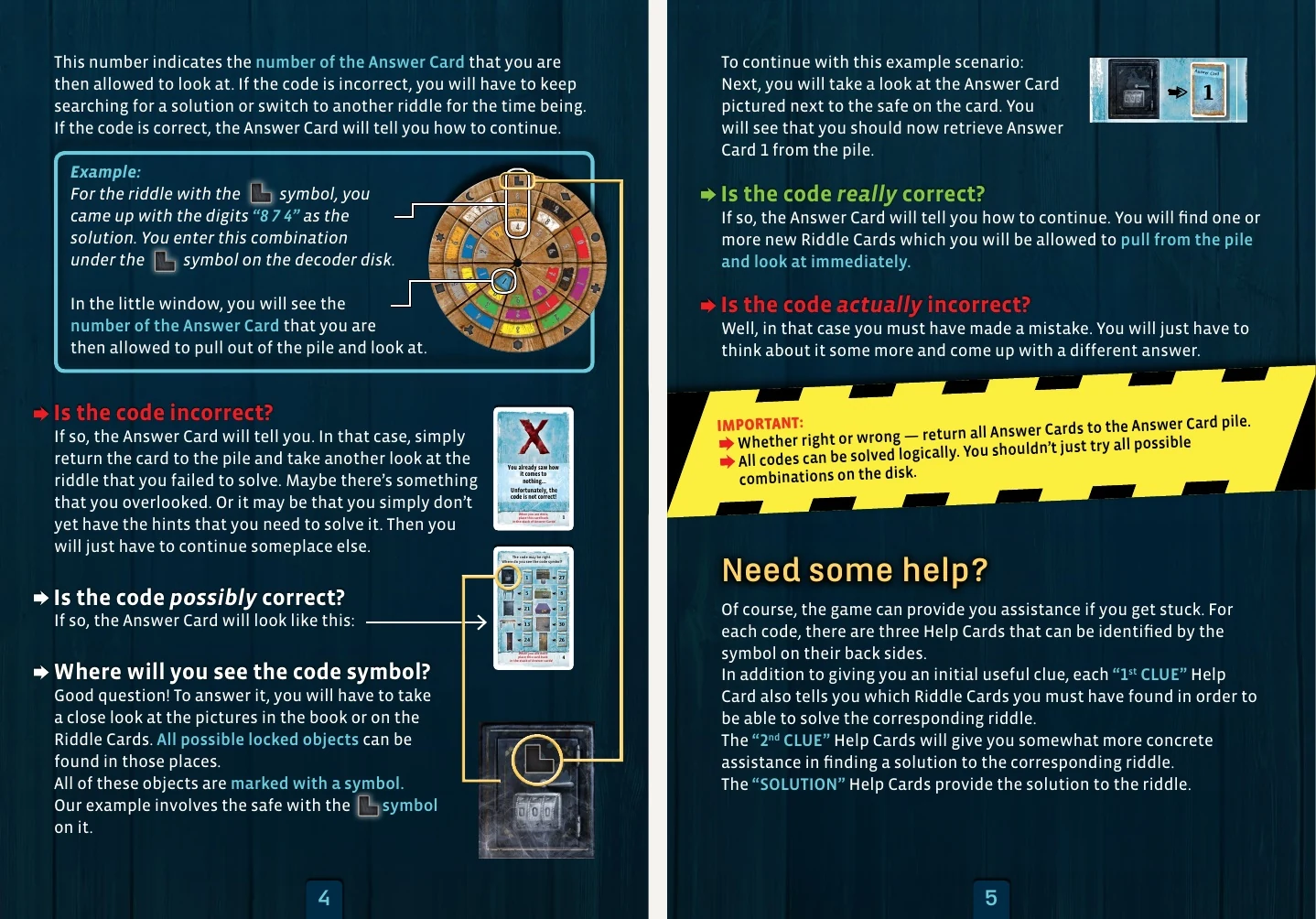
Each puzzle’s help deck normally escalates from a first hint that confirms which materials belong to the puzzle, to a second hint that points toward the mechanism, to a solution. Use the first hint after the group has inventoried every relevant symbol and tried at least two distinct interpretations.
A hint is pacing, not failure. Ten silent minutes spent repeating the same theory is not superior to taking the first hint and preserving the night. Assign one player to ask, “Do we know what every visible mark is doing?” before escalating.
Use a first hint after ten to fifteen minutes without a new theory, or sooner if the group has not even identified which materials form the current puzzle.
How do you host the first EXIT night?
Choose two to four players, clear a table, provide pencils, eraser, scrap paper, scissors, good light, and a timer visible only if the group finds time motivating. Put drinks on a side table because puzzle components migrate. Read the opening text aloud, then give everyone a minute to inspect before theories begin.
Assign no permanent “smart person” role. Rotate who handles the decoder and who records symbols. When one player sees a connection, ask them to describe the evidence before touching components. Escape games are more satisfying when discoveries become shared understanding instead of private performance.
Choose two to four players, clear a table, provide pencils, eraser, scrap paper, scissors, good light, and a timer visible only if the group finds time motivating.
What are the most common first-game mistakes?
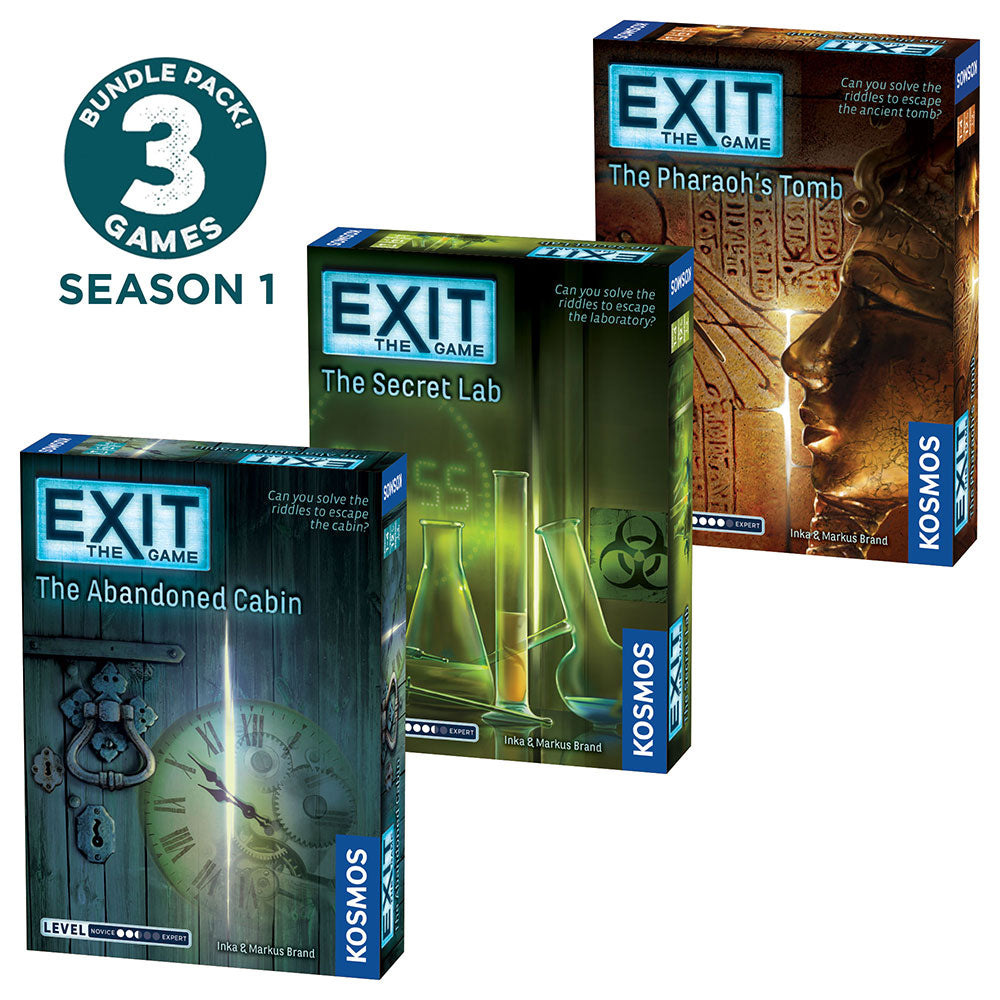
Players overlook the box interior, assume every printed mark is decorative, or combine unrelated objects because they are desperate. They also open materials early, which pollutes the information set and can spoil the sequence. Another mistake is treating the decoder output as proof of the exact reasoning; a correct code reached accidentally can still make later steps confusing.
Inventory what is currently legal, describe visible patterns, and test reversible ideas before destructive ones. When cutting or folding appears likely, look for explicit permission from the puzzle language. EXIT is mischievous, but it is not asking you to randomly shred the room.
Players overlook the box interior, assume every printed mark is decorative, or combine unrelated objects because they are desperate.
EXIT vs Unlock vs Deckscape: which system fits?
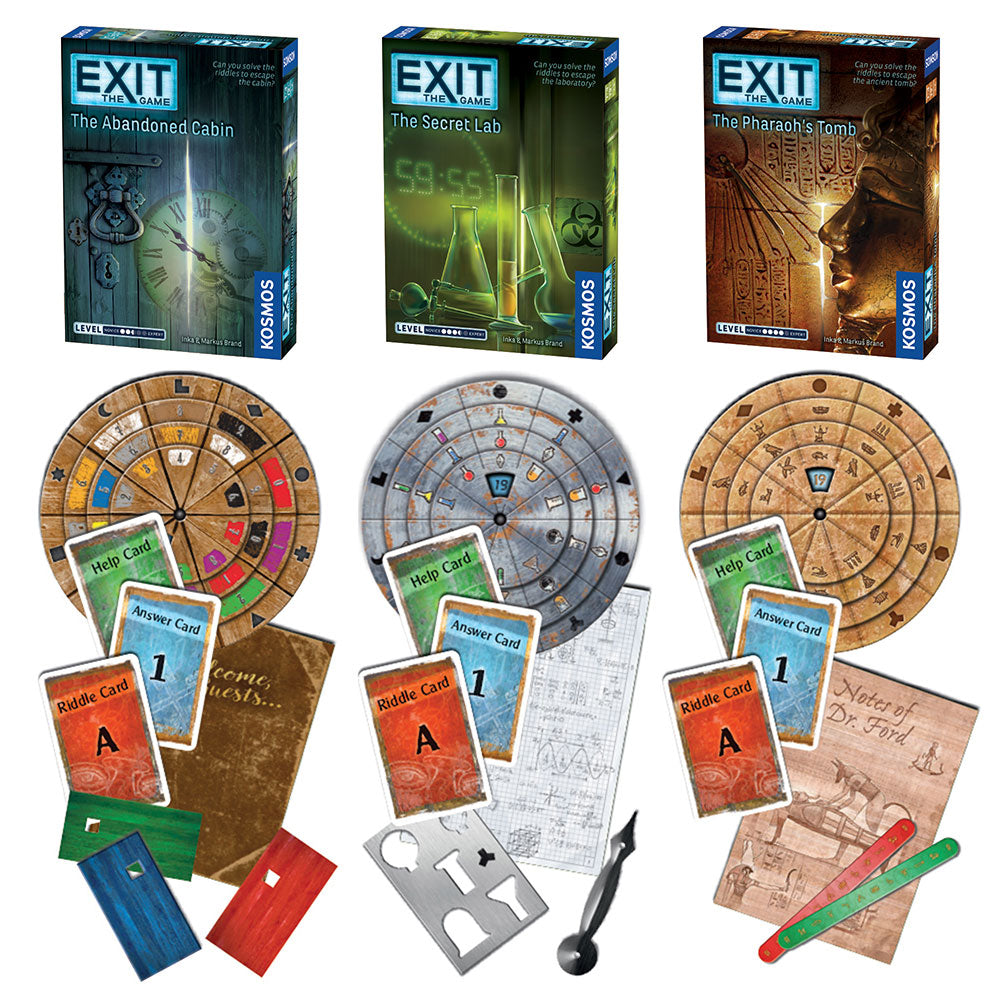
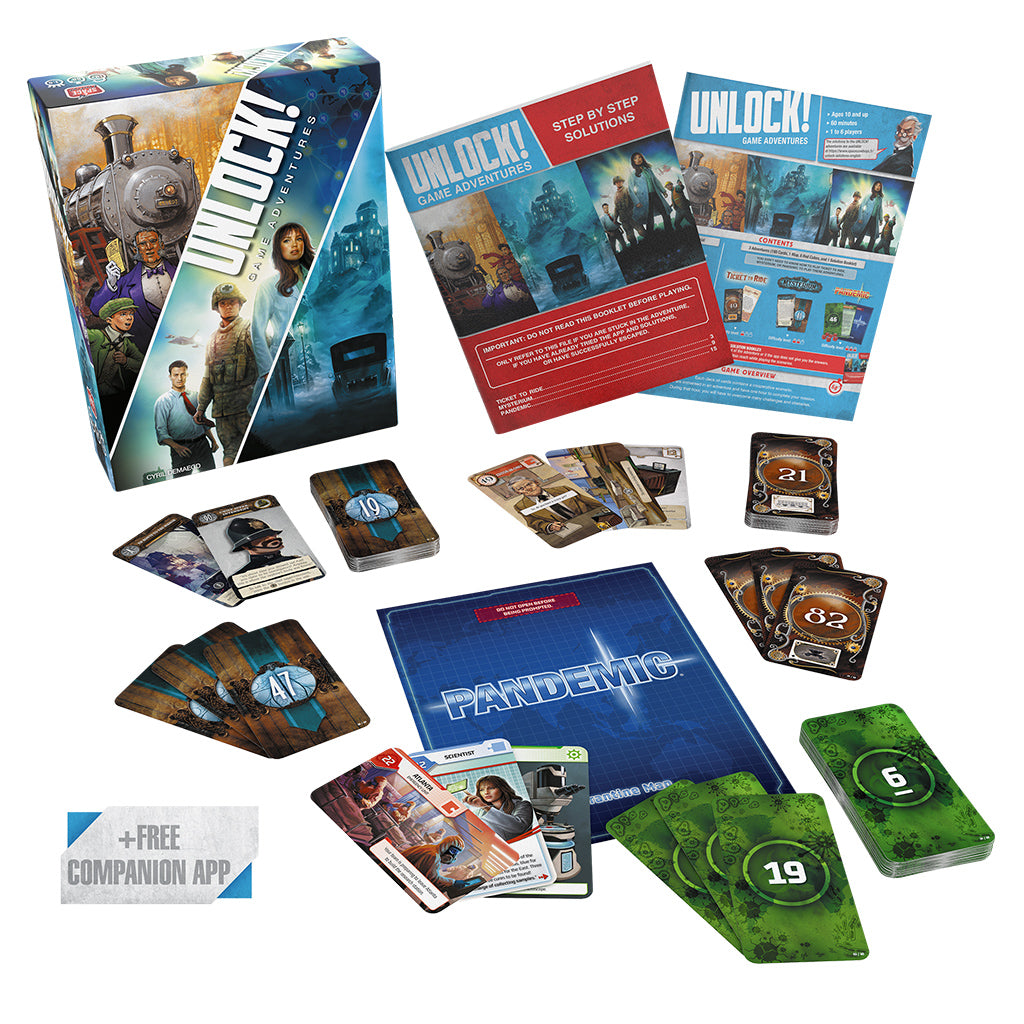
EXIT is best for tactile transformation and a physical one-night event. Unlock! uses an app for timing, machines, hints, and audio, and is generally easier to reset. Deckscape is the most portable card-driven option with minimal technology. All three can produce excellent puzzles; their relationship to objects differs.
Buy EXIT when scissors and discovery sound magical. Buy Unlock when replayability, lending, and app-enhanced effects matter. Buy Deckscape for a smaller travel footprint. Puzzlewick’s full comparison is linked below so this guide can stay focused on entering EXIT well.
EXIT is best for tactile transformation and a physical one-night event.
How do you progress after the first box?
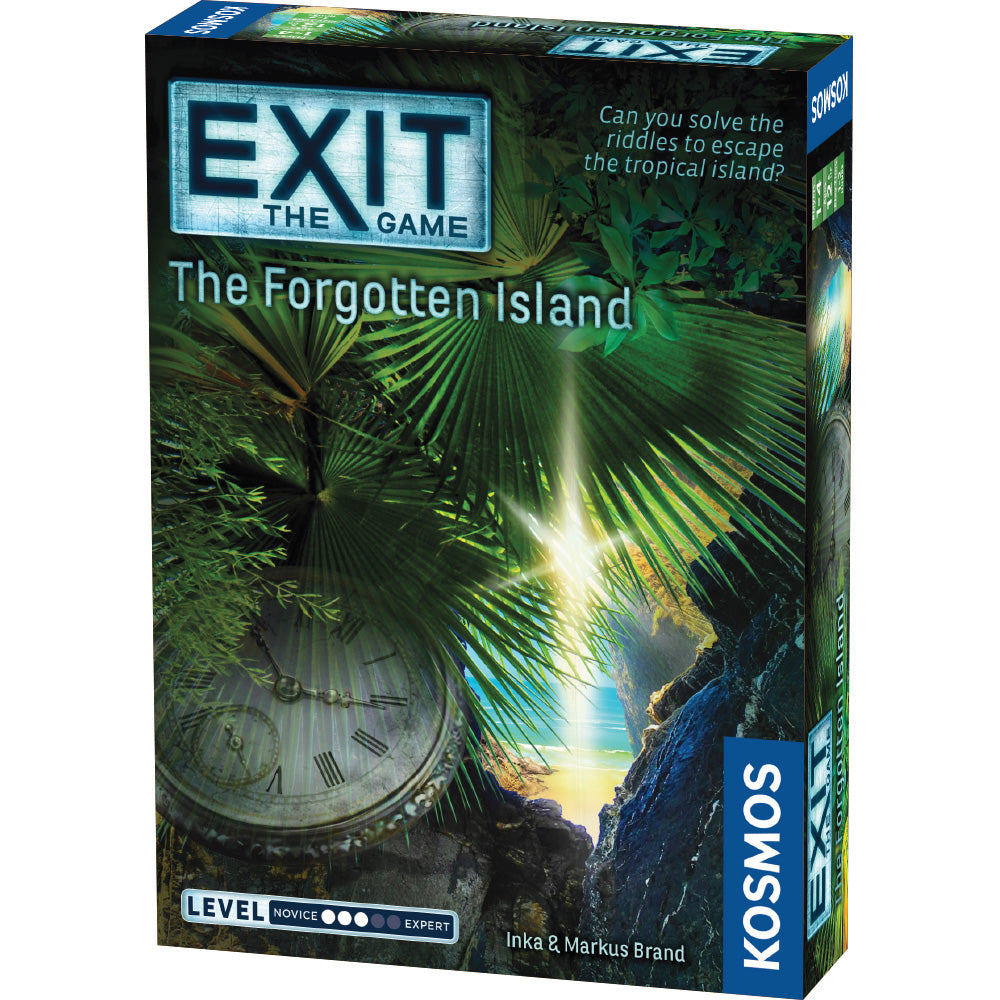
After House of Riddles, choose an intermediate theme the whole group likes rather than jumping straight to the highest difficulty. The Forgotten Island is a strong bridge. Keep a small record of title, official difficulty, group size, hints used, and favorite puzzle type. That reveals whether your table prefers observation, spatial manipulation, ciphers, or story.
Alternate systems occasionally. An Unlock scenario can reset habits EXIT taught, and vice versa. The goal is not conquering every box in order. It is finding the next door that makes everyone clear the table voluntarily.
After House of Riddles, choose an intermediate theme the whole group likes rather than jumping straight to the highest difficulty.
How do you preserve the pleasure of discovery without spoiling yourself?
Do not search a title with puzzle-specific terms before playing; image results and forum snippets can reveal mechanisms immediately. Read only difficulty, player count, duration, and broad theme. During play, keep solved materials in one area and unsolved legal materials in another. When a code succeeds, pause long enough for everyone to understand why before opening the next object.
If using accessibility copies to avoid cutting originals, prepare them before the night and label them clearly so the workaround does not become its own puzzle. Photograph the final table only after finishing. A good EXIT memory is not the solution list; it is the sequence of expressions when the group discovers what an ordinary object was secretly for. Yumi’s rule is to protect that moment more fiercely than the cardboard.
Do not search a title with puzzle-specific terms before playing; image results and forum snippets can reveal mechanisms immediately.
What should you buy for a second EXIT night?
Choose a different puzzle texture, not simply a higher difficulty number. If House of Riddles delighted the group through observation, select a box known for physical manipulation. If the decoder and ciphers were the highlight, choose a mystery with denser symbol work. If one player dominated, keep the difficulty stable and change hosting habits so materials circulate.
Do not stockpile ten boxes after one successful evening. Themes and puzzle styles vary, and the one-shot format rewards anticipation. Buy the next title when a date is on the calendar, then keep it sealed. That tiny ritual—the unopened case waiting while the same people return—is more useful than a shelf of theoretical escapes.
Choose a different puzzle texture, not simply a higher difficulty number.
The picks
Some links below are affiliate links — as an Amazon Associate, Puzzlewick earns from qualifying purchases, at no extra cost to you. It never changes a pick.
 2 photos
 EXIT: The House of Riddles
A beginner-rated introduction to the decoder disc, clue ladder, and physical puzzle language.
- Best first EXIT box.
- A beginner-rated introduction to the decoder disc, clue ladder, and physical puzzle language.
- Expect one primary playthrough.
2 photos EXIT: The Forgotten Island
A stronger adventure after the table understands how EXIT hides tools in plain sight.
- Best second step for an intermediate group.
- A stronger adventure after the table understands how EXIT hides tools in plain sight.
- Not the gentlest first exposure.
At a glance
| System | Best for | Replay / reset |
|---|---|---|
| EXIT | Tactile transformation | Usually one primary play |
| Unlock! | App-enhanced effects | Generally resettable |
| Deckscape | Portable card puzzles | Usually easier to preserve |
Questions, answered
Which EXIT game should I start with?
The House of Riddles is the safest beginner recommendation.
Do EXIT games get destroyed?
Many ask players to write, fold, or cut components, so plan for one intended playthrough unless using careful copies.
How many players are best?
Two to four is ideal for giving everyone access to clues without crowding the table.
When should we take a hint?
After ten to fifteen minutes without a new theory, or sooner when the group cannot identify the current puzzle materials.
Can an EXIT game be replayed?
Most boxes are designed for one primary playthrough because writing, folding, or cutting can be part of the solution.
Is a harder EXIT box always better?
No. Choose difficulty to protect the group’s momentum; a shared breakthrough in a beginner box is better than two hours of stalled pride.
Yumi's verdict
Start with House of Riddles, put scissors on the table without fear, and treat the hint deck as pacing rather than punishment. EXIT’s one-shot nature buys physical surprises that resettable systems cannot always risk. The best score is not zero clues. It is the moment the final mechanism makes the whole table understand why every strange scrap was there.
Research ledger 10 sources · reviewed 2026-07-14
Specifications, rules, current product information, community experience, and contrary evidence were checked against the sources below. Commercial links are kept separate from editorial evidence.
- kosmos.dekosmos.de/en/pages/markenwelt/exit-das-spiel
- boardgamegeek.comboardgamegeek.com/boardgamefamily/36963/series-exit-the-game
- thamesandkosmos.comthamesandkosmos.com/index.php/exit-the-game
- reddit.comreddit.com/r/boardgames/search/?q=EXIT%20The%20Game%20beginner
- puzzlewick.compuzzlewick.com/guides/exit-vs-unlock-vs-deckscape
- puzzlewick.compuzzlewick.com/guides/best-escape-room-board-games
- boardgamegeek.comboardgamegeek.com/boardgame/252877/exit-the-game-the-house-of-riddles
- boardgamegeek.comboardgamegeek.com/boardgame/215842/exit-the-game-the-forgotten-island
- thamesandkosmos.zendesk.comthamesandkosmos.zendesk.com/hc/en-us/articles/360046967034-Complete-List-of-Thames-Kosmos-Instruction-Manuals-Downloadable-PDF
- thamesandkosmos.comthamesandkosmos.com/manuals/full/692681_exitac_manual.pdf

Come in, take your shoes off — let me show you something.

Keep exploring
The next smart rabbit holes.
✦ Topic PathBoard Game Buying Guides: compare the whole shelfStart with the decision, not the shelf. These guides compare the games, editions, expansions, player counts, and costs people...ReviewThe Light in the Mist Review 2026: Beautiful Tarot Mystery or Too Abstract?Yumi opens PostCurious’s tarot puzzle without spoiling a single solution: difficulty, hints, player count, playtime, resetability, story,...ComparisonEXIT vs Unlock! vs Deckscape: Which Escape-Game Series Should You Buy? (2026)Okay so — three card-sized escape rooms, three completely different philosophies about what a room IS, and the room has been *saying*...