Best Escape-Room Board Games, Ranked (2026)
EXIT, Unlock!, Deckscape and six more escape-room games compared by resetability, app use, difficulty and group fit.

AI-assisted curator persona · research and editorial responsibility: Robert Pruitt · how this guide was made
Last editorial refresh: 2026-09-11 Gold-standard QA: 2026-09-11 27 sources reviewed Affiliate links checked during gold-standard pass

The short answer
EXIT: The Game is the best first choice for adults who want physical manipulation and accept that one group will consume the box. Choose Unlock! when resettable scenarios matter, Deckscape for an app-free card format, and Unlock! Kids for younger players. The decisive question is not which brand is highest ranked; it is whether your group wants destructive tactile puzzles, a reusable box or a screen-free session.
Decision map
Choose in thirty seconds
The strongest physical puzzle design if one-and-done play does not bother you.
Resettable, shareable, and app-guided, with fewer destructive surprises.
A compact deck that travels well and keeps technology off the table.
No app, little reading burden, and puzzles designed for younger solvers.
Choose EXIT if your group wants the most inventive tactile evening and accepts that the box will be consumed. Choose Unlock! if lending, resetting, and sharing matter more than cutting into the game. That distinction resolves most of the argument before brand loyalty enters it.
We compared official rules and difficulty labels, app requirements, component destruction, hint systems, current exact-product prices, independent reviews, Room Escape Artist coverage, BoardGameGeek discussion, and long-running owner debates. The ranking also separates gentle gateways from punishing boxes so a first-time group does not accidentally buy an expert-level wall.
Imani read the room correctly: both major camps are right. They are buying different kinds of night.
Start here, then go deeper
You are in the right cabinet.
 ✦ Topic PathBoard Game Buying Guides: compare the whole shelfStart with the decision, not the shelf. These guides compare the games, editions, expansions, player counts, and costs people...
 ReviewThe Light in the Mist Review 2026: Beautiful Tarot Mystery or Too Abstract?Yumi opens PostCurious’s tarot puzzle without spoiling a single solution: difficulty, hints, player count, playtime, resetability, story,...
 Best OfBest Solo Board Games, Ranked (2026): The One-Player NightTen games I'd actually hand you — the ones that didn't just earn a shelf, they stayed there. From the 20-minute weeknight puzzle to the...
What is an escape-room board game, and how is it different from a real escape room?

An escape-room board game packs the soul of a locked-room experience — the searching, the code-cracking, the click of a solved puzzle — into a box you open on your kitchen table. Instead of a physical room with hidden compartments, you get cards, booklets, decoder wheels, riddle decks, and sometimes a companion app that together feed you a chain of interlocking puzzles. Solve a puzzle, get a code, the code unlocks the next chunk of the story. Most run 45-90 minutes for one playthrough and cost a fraction of a live room — Shut Up & Sit Down's whole pitch for the genre is 'the fun of escaping a real room at a fraction of the price.'
The community is crystal-clear on the two real differences. First: scale of imagination. A box can do things a physical room can't afford — Unlock! sends you to Wonderland and the Star Wars galaxy; EXIT shipwrecks you on islands and seals you in pharaohs' tombs. Second: the searching is abstracted. You're not patting down a couch; you're scanning a card illustration for a hidden symbol. Some people find that more cerebral; others miss the physicality.
The thing nobody warns you about? Player count is sneaky-small. These games look like party games but most puzzles are 'one brain at a time' — reviewers of ThinkFun's Stargazer's Manor found that with six people, 'each puzzle could engage at most 3,' leading to 'sporadic tedium.' The genre's sweet spot is 2-4 people, full stop.
Bring: a small, tight group — three is the magic number, and a fourth is the ceiling, not the floor.
It's the fun of escaping a real room at a fraction of the price — but the searching lives in your head, not your hands.
Are escape-room board games replayable, or do you destroy them?
This is THE question — the one the entire community organizes itself around — so let me give it to you straight, because the answer literally depends on which brand you buy.
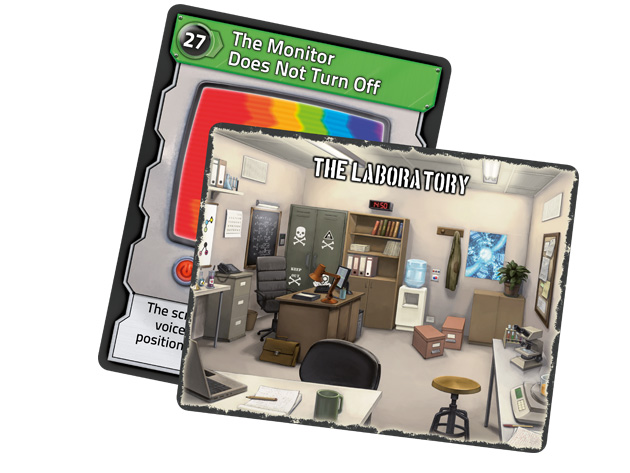
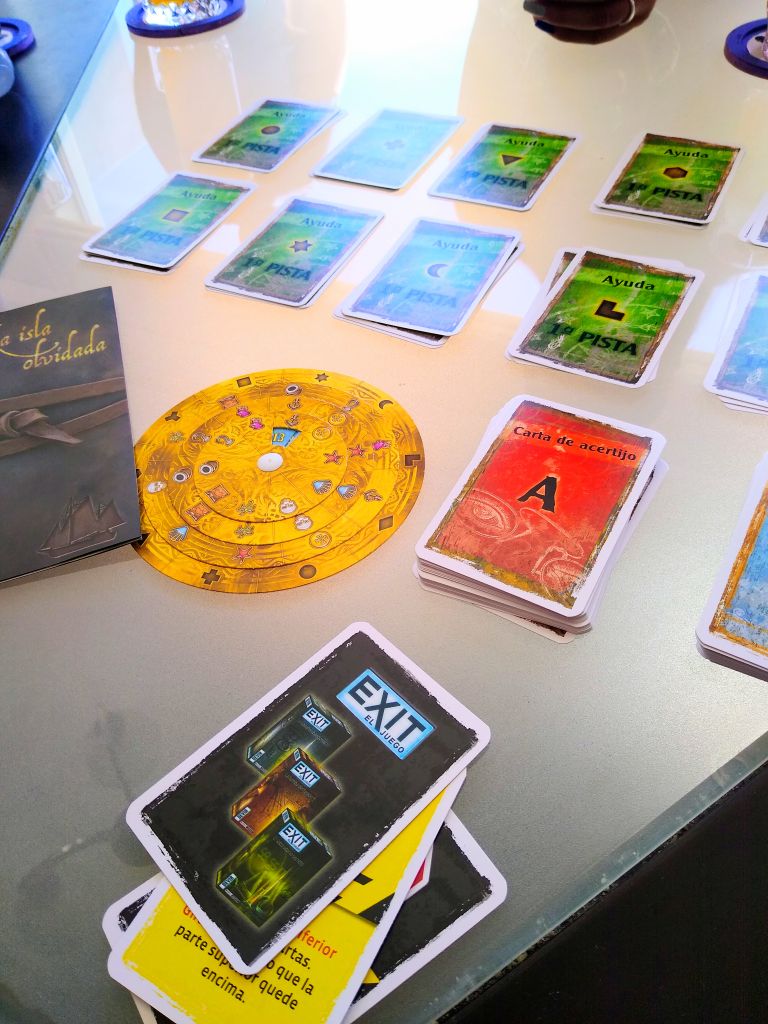
EXIT: The Game — NO, and proudly so. You will fold cards, tear them, write on them, sometimes physically destroy components as part of the solution. Once you've played, 'it can't be redone,' and the box has 'zero value once the components are destroyed' (you can recycle it for DIY, that's it). EXIT fans don't see this as a bug — they see a one-time experience done with total commitment. SUSD: EXIT is 'more creative, with destroying parts of the game being essential to solving puzzles.'
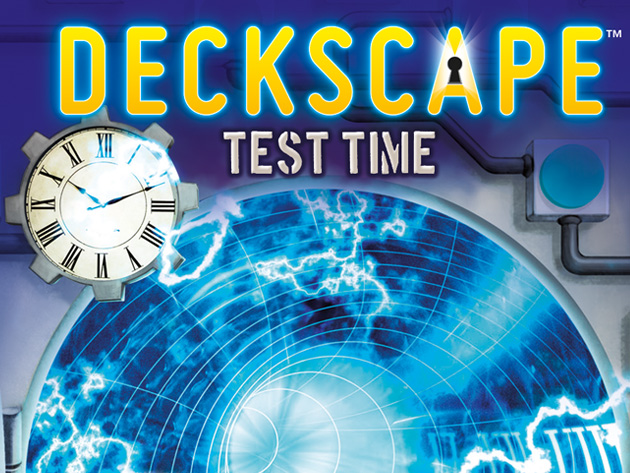
Unlock! — YES, fully. Unlock! 'does not require the destruction of any game components,' so you can reset the deck and replay or, more practically, gift, trade, or sell it to someone who hasn't played. Same for Deckscape — non-destructive, you just shuffle it back into the box. Same for ThinkFun's Escape the Room, which even includes repackaging instructions so you can hand it to another group.
But here's the honest asterisk the community insists on, and I love them for it: even the 'replayable' games aren't really replayable by you. Once you know the solutions, the puzzle is dead — 'given the one-off nature of escape rooms, there is very little point in replaying a scenario once it's completed.' So 'replayable' really means shareable. The true question isn't 'can I play it twice?' (you basically can't, with any of them). It's: after my one magical night, do I want a box I can pass on, or am I happy to recycle it?
Bring: a clear answer to 'destroyer or keeper?' — write it on your hand if you have to.
'Replayable' is the genre's biggest white lie. Nothing is replayable once you know the answers — the real word is shareable.
EXIT vs Unlock!: which escape-room series should I actually buy?

The eternal cage match. I read Shut Up & Sit Down's full head-to-head so you don't have to, and the community has basically ratified their verdict for years now. Here's the real breakdown:
EXIT: The Game (Kosmos / Thames & Kosmos) — German-designed by the legendary Inka & Markus Brand. Uses riddle cards, a decoder wheel, and a clever gradual-hint card deck. No app. Most inventive puzzles in the genre — it constantly does things that make you go 'wait, you can DO that?' The price is the kicker: roughly $13-17 a box. The cost: destruction, one-and-done, and the hint system (while gradual and fair) lives on physical cards you have to manage.
Unlock! (Space Cowboys) — French-designed, card deck + a free companion app that runs the timer, plays atmospheric music, doles out hints, and validates codes. Three full adventures per box, ~60 min each, around $30 for the trilogy (so ~$10 per adventure — great value). Fully non-destructive and shareable. Huge licensed range (Pandemic, Alice in Wonderland, Star Wars). The cost: you NEED a charged phone, and the puzzles can occasionally devolve into what everyone calls a 'spot the number' exercise — scanning art for a hidden digit to punch into the app.
SUSD's verdict, which I co-sign: recommend Unlock! by default (replayable, shareable, streamlined) — unless you don't care about disposability or you want the single most spectacular experience, in which case EXIT. The reviewer was so taken with Unlock! they 'personally committed to buying every new Unlock! room.' But note: that same review calls Unlock! 'sometimes-lumpy and imperfect,' while EXIT is the more creative of the two. Translation: Unlock! is the better default; EXIT is the better night.
Bring: your phone-charge anxiety and your feelings about tearing cardboard — those two things pick your winner.
Unlock! is the better default. EXIT is the better night. Choose your fighter accordingly.
Which escape-room board game is best for total beginners?

If you've never cracked a box before, do NOT start with the scary one — the community has watched too many groups get their 'brains fried' (their words, repeatedly) on a difficulty-4 box and never play again. Here's the gentle on-ramp everyone actually recommends:
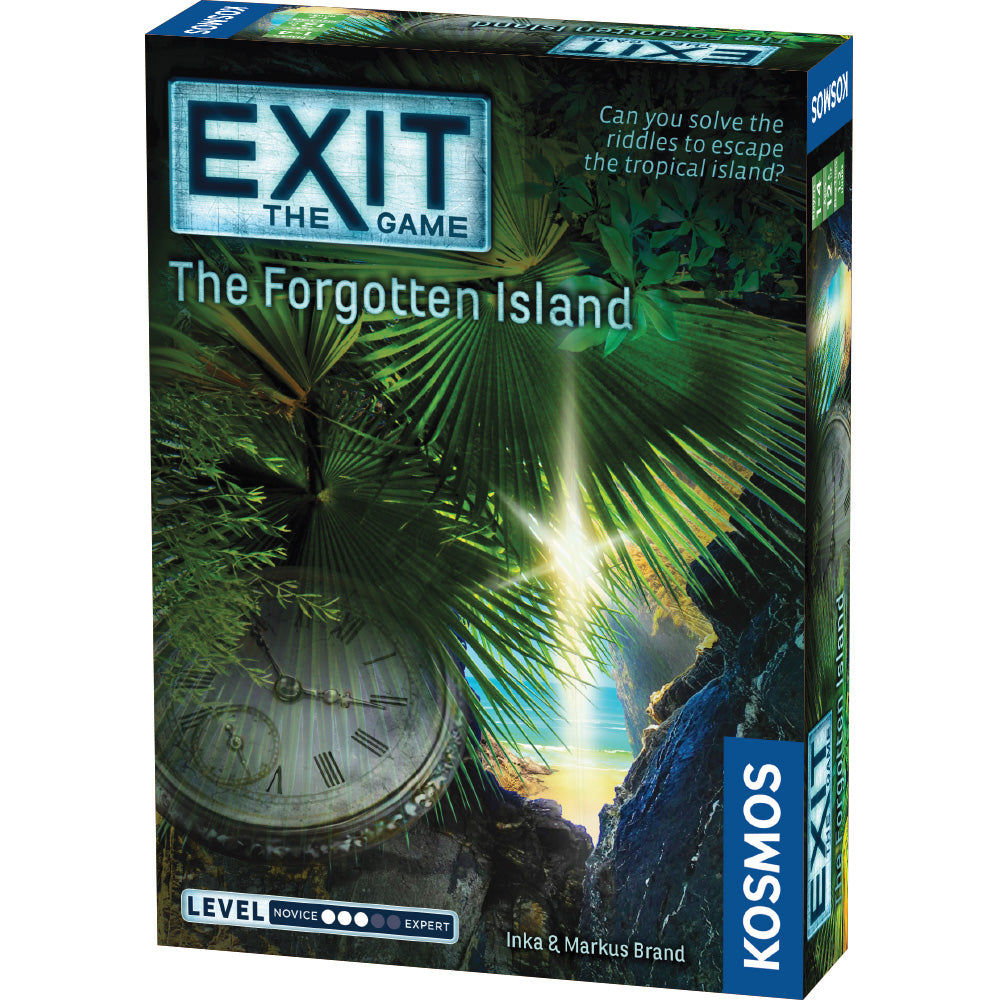
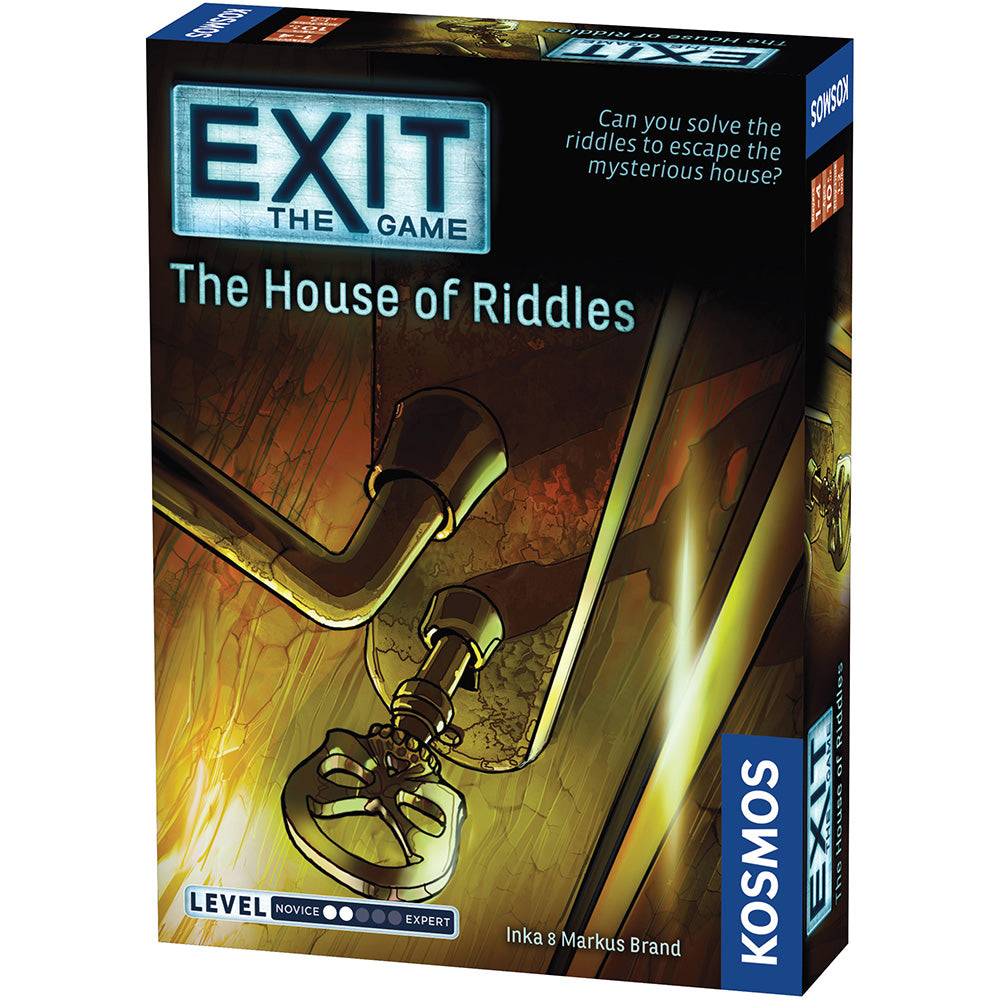
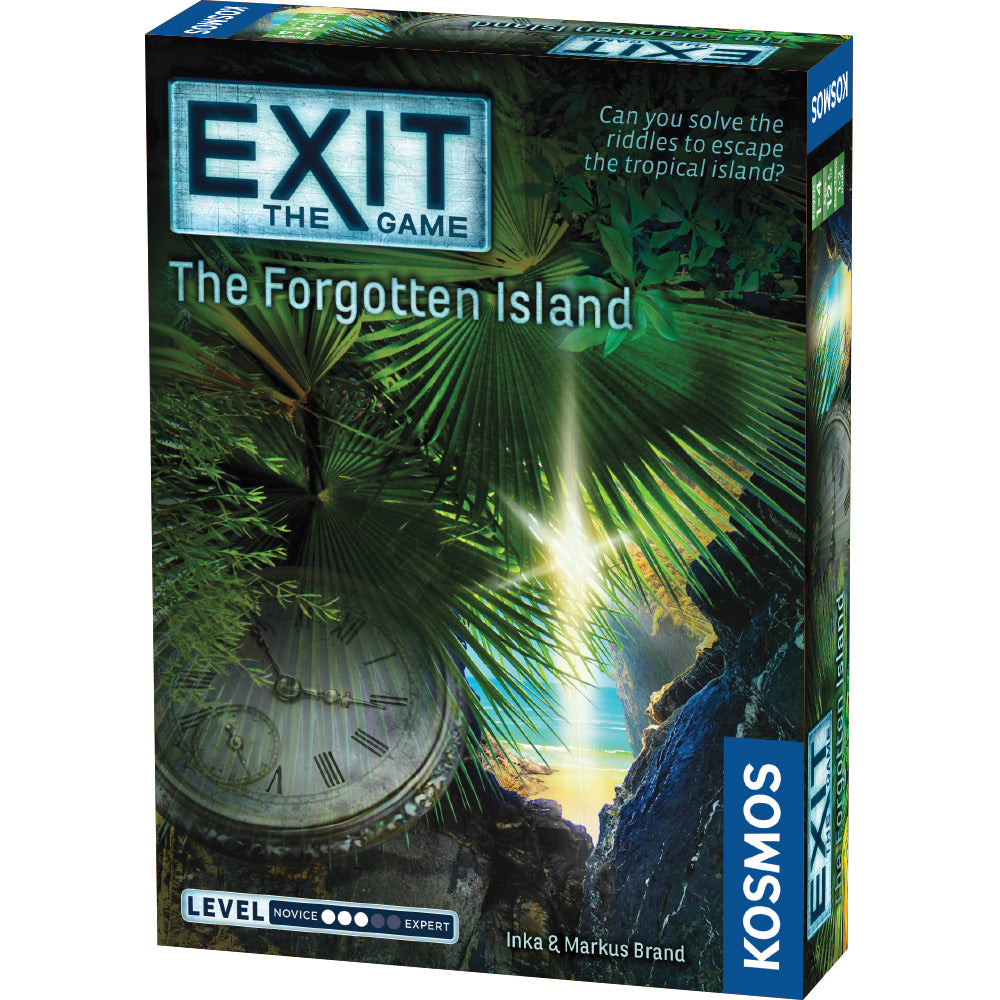
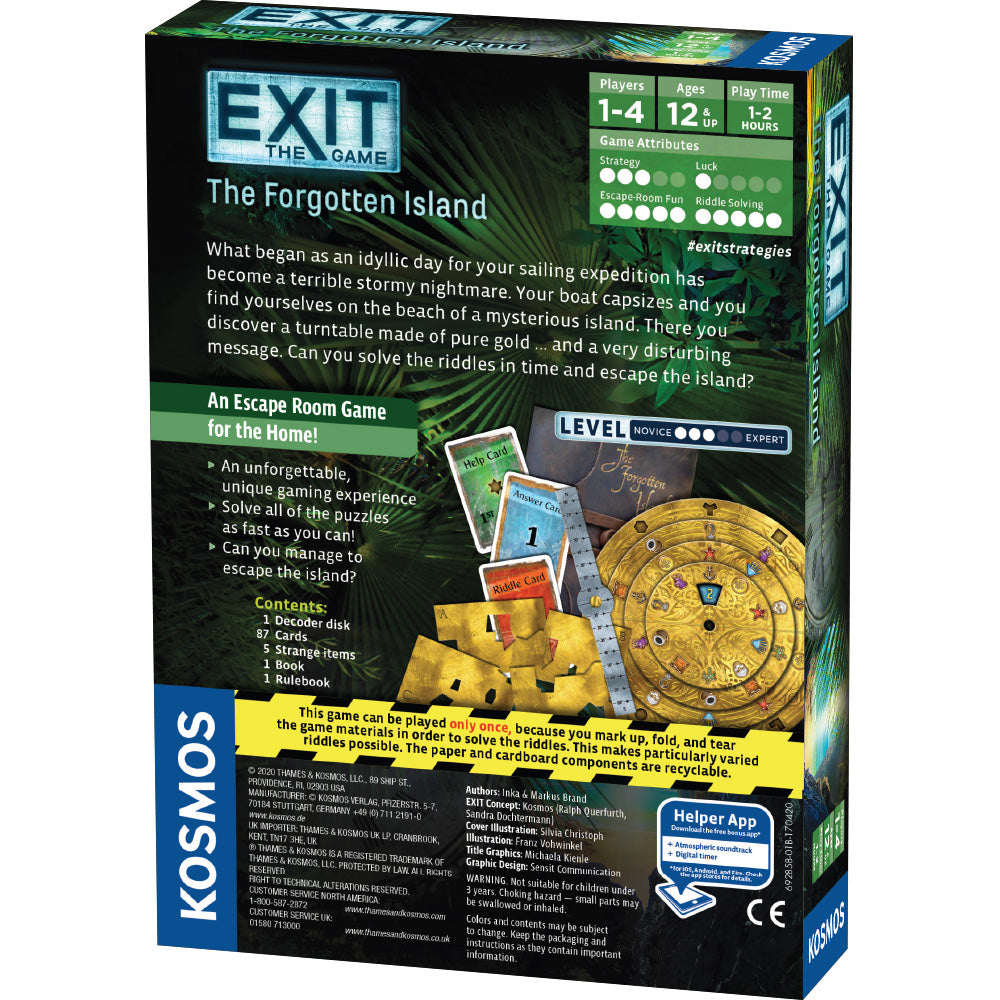
EXIT: The Forgotten Island (difficulty 3/5) — the most-cited starter in the series. Shipwreck theme, a genuine spread of puzzle types, and it teaches you the EXIT 'language' of decoder wheels and lateral thinking. Reviewers call it 'on the easy side, making it a good entry point,' though fair warning — a couple felt it leans intermediate, so it's a 2.5 in practice. If you want even gentler, EXIT: The House of Riddles is officially rated difficulty 2 and is widely called 'a great jumping-in point for newbies.'
Any Deckscape box — genuinely the smoothest possible introduction. Reviewers say it's 'good for beginners getting into escape room board games, smoother than other escape room games, good challenge without being frustrating.' One deck of cards, no app, no decoder, no destruction, nearly pocket-sized. It is forgiving in a way EXIT sometimes isn't.
Unlock!'s tutorial + its easier boxes — the app holds your hand, the built-in tutorial teaches the system before you start the clock, and the hint structure is gentle. A great choice if you want training wheels that are actually fun.
The one warning the whole community shouts in unison: do not begin with EXIT: The Catacombs of Horror (difficulty 4.5/5, two-part epic). It is magnificent and it will destroy a beginner group's confidence. Earn it.
Bring: humility and the easier box — you can always level up, but a bad first night kills the hobby.
Nobody's first escape box should fry their brain. Start at a 2-3, earn the 4s, and never, ever open Catacombs of Horror on night one.
What's the best escape-room board game for families and kids?

Genuinely my favorite category, because the kid-focused boxes are shockingly good now — designers finally stopped shrinking adult games and started building for small hands and big imaginations. Two clear champions, split by age:
Unlock! Kids: Detective Stories (ages 6+) — the family MVP. This is the one the community gushes over. No app, no reading, no math — designers stripped Unlock! down to three pure interactions: combine cards to make scenes, place cardboard objects to 'interact,' hunt for hidden numbers. Three decks, six scenarios in one box, and a tutorial that teaches as you play. Room Escape Artist and others call it 'the perfect balance between accessible for kids and fun for adults' — and that adult-fun part is rare. Parents report happily letting kids take the lead. And it's non-destructive, so it survives multiple kids in sequence.
EXIT: The Game — Kids (e.g., Jungle of Riddles, ages ~5-7) — for the littlest ones. Language-independent, comes with a decoder ring just like the grown-up boxes, 36 riddle cards across six types so it's genuinely replayable, and around $15. The sweet spot is age 6 — testers found 4 'a little young' and 10 'outright bored.' One real caveat from reviewers: some riddle types require overlaying slick pieces on slick cards, and little hands knock them out of place, so a grown-up co-pilot helps.
For the 10+ crowd graduating to 'real' boxes: ThinkFun's Escape the Room: Mystery at the Stargazer's Manor (~$22) is a beloved gateway — 'not much scarier than a game of Clue,' repackageable to share.
Bring: the right box for the actual age at your table — a 6-year-old and a 10-year-old need different doors.
Unlock! Kids is the rare kids' game that doesn't make the grown-ups suffer — no app, no reading, and the adults are genuinely having fun too.
What's the best escape-room board game for date night?
Oh, I have FEELINGS about this one, and so does the whole couples-gaming corner of the internet. An escape box is a low-key spectacular date — you're forced to communicate, to trust each other's hunches, to celebrate the little wins together. As the community keeps saying, navigating a locked room together 'shows you aspects of your partner's personality' you don't see over dinner. (Find out fast whether your partner is a calm code-breaker or a chaos goblin who tears the card before reading it.)
The pick: EXIT: The Game, 2-player. It's the most-recommended date box for a reason — 2 people is the genre's ideal count, and EXIT's 90-ish minutes of escalating 'OHHH' moments is paced exactly like a great date should be. Reviewers specifically flag The Secret Lab, The Abandoned Cabin, The Pharaoh's Tomb, The Forbidden Castle, and Dead Man on the Orient Express as best-with-two. At ~$15 it's cheaper than dinner and infinitely more memorable than another movie. Just agree in advance you're a team — escape boxes have ended more 'who's smarter' arguments badly than I can count.
The upgrade pick: Chronicles of Crime. If you're both into detective stories, this app-driven mystery (with optional VR) is 'an excellent date night game for couples who are fans of the detective genre' — more investigation than pure puzzle, more story to get lost in together. It's replayable across cases, so it's a date series, not a one-off.
The two-handed deck pick: Deckscape. Tiny, travels to a coffee shop or a picnic, zero setup, no app to break the mood. Romance, but make it portable.
Bring: a no-quarterbacking pact — solve it together or it's not a date, it's an exam.
An escape box reveals whether your partner is a calm code-breaker or a chaos goblin — and honestly, that's worth more than the puzzle.
Are there escape-room board games with a campaign or a real story to sink into?
Yes — and if you want narrative over one-and-done puzzling, this is where the genre gets ambitious. Most boxes are a single evening; a few are whole sagas.
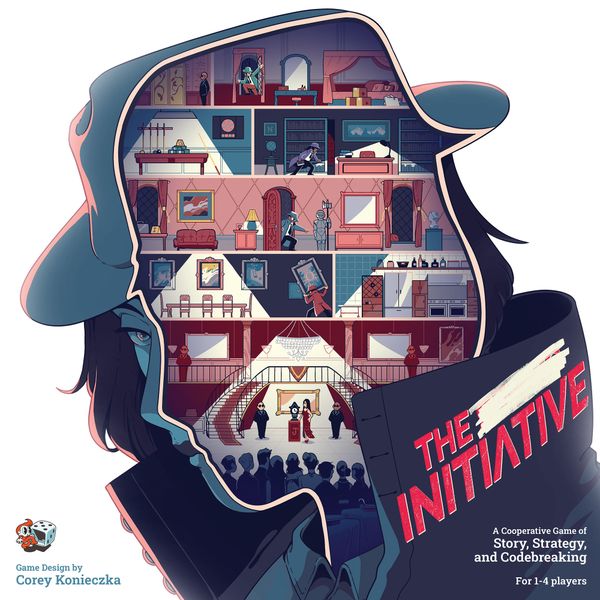
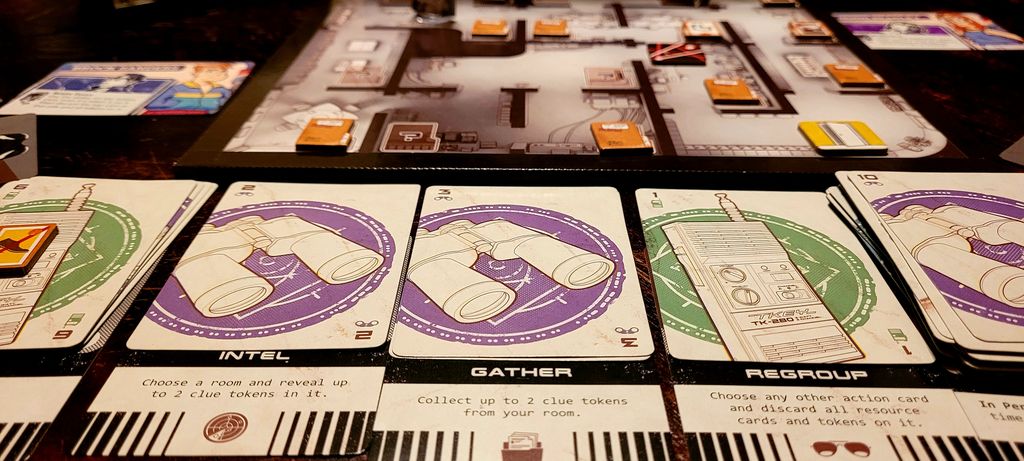
The Initiative (Unexpected Games / Pandasaurus) — the storytelling crown. This is the one the community treats almost reverently. It's a 14+ mission cooperative campaign (~7 hours for the main story, plus stacks of one-off missions after) wrapped around a comic book you read as you go — four kids in 1994 start playing a board game and tumble into something bigger. The vibe is pure 'Goonies meets Jumanji.' You're decoding clues to reveal secret phrases Wheel-of-Fortune style, and reviewers throw around 10/10 — 'the story, gameplay, and puzzles all felt satisfying on their own, but also intertwined in unique ways that felt novel for a board game.' For 1-4 players, ages 8+, ~30-60 min per mission. The one big asterisk the box itself shouts: you can't replay the story. It's a one-time campaign — 'a massive downside' if you wanted to share it, a non-issue if you treat it like a great series finale.
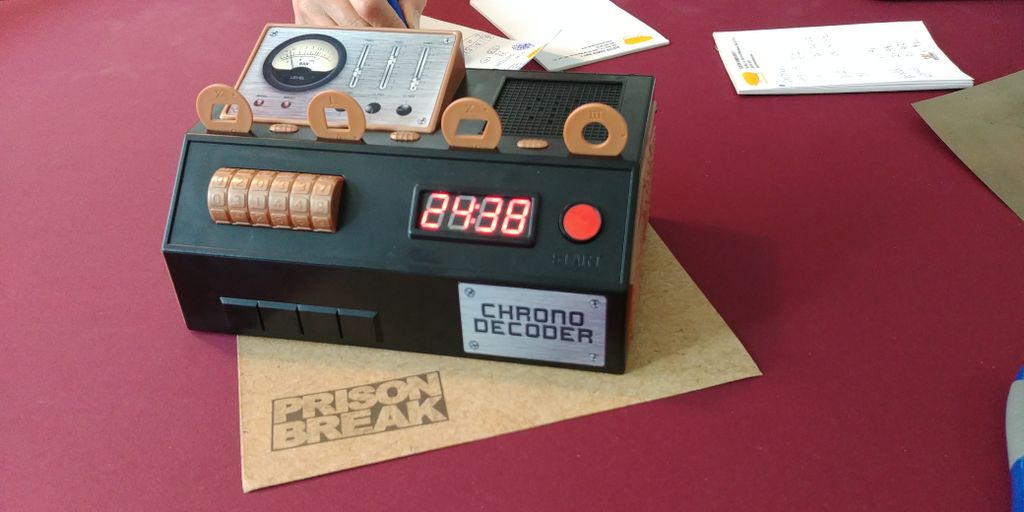
Escape Room: The Game (Identity Games) — the gadget play. This is the one with the electronic Chrono Decoder, a physical 60-minute countdown timer at the center of the table that you feed code-keys into. The base box has four adventures (Prison Break, Virus, Nuclear Countdown, Temple of Aztec) plus a whole library of expansion rooms. Initially dismissed as 'gimmicky,' the Decoder won reviewers over — 'much more so than just finding a card in a deck that tells you if you pass or fail.' If you want hardware drama and an expandable system, this is your line.
Bring: a free afternoon (or seven) — campaigns reward bingeing, but they ask for your time up front.
The Initiative is the rare escape game people call a 10/10 for its STORY — Goonies-meets-Jumanji, with a comic you live inside for seven hours.
What experienced tables keep reporting
Recurring owner patterns, synthesized in Puzzlewick's words. Follow each evidence trail to read the original discussion.
Recommends Unlock! by default — it's replayable and shareable — UNLESS you don't care about disposability or want a spectacular experience, in which case go EXIT, which is 'more creative, with destroying parts of the game being essential to solving puzzles.' The reviewer was sold enough to commit to buying every new Unlock! room.
Read the evidence: Shut Up & Sit Down — 'Review: EXIT: The Game vs. Unlock!'
Ranks EXIT first ('I've had hours upon hours of fun with these'), Unlock! second (with the honest knock that 'sometimes the game can be a bit of a spot-the-number exercise'), and Deckscape third — puzzles 'good' but 'maybe not quite great,' and the writing 'sometimes feels a bit on the clunkier side.'
Read the evidence: Don't Eat the Meeples — Exit, Unlock, Deckscape compared
Calls The Initiative a 10/10 — 'the story, gameplay, and puzzles all felt satisfying on their own, but also intertwined in unique ways that felt novel for a board game' — while flagging that you can't replay the story as 'a massive downside.'
Read the evidence: Room Escape Artist — The Initiative review
Praises Unlock! Kids: Detective Stories as 'an excellent and much needed addition' to the genre and 'the perfect balance between accessible for kids and fun for adults' — noting that 'few games hit this mark.'
Read the evidence: Room Escape Artist / The Tabletop Family — Unlock! Kids reviews
Calls Deckscape: Test Time 'good for beginners getting into escape room board games, smoother than other escape room games, good challenge without being frustrating' — while warning strong puzzlers it can run 'a bit easier than easy Unlock! games.'
Read the evidence: Room Escape Artist — Deckscape: Test Time review
On EXIT: The Catacombs of Horror, the hardest in the series (4.5/5): 'fiendishly difficult at times,' it 'fell on the frustrating rather than fun side during some puzzles,' but it 'represented a massive quality jump for the series' and is 'a must-play' once you're comfortable with EXIT's system.
Read the evidence: Room Escape Artist / Tabletop Bellhop — Catacombs of Horror reviews
The picks
Some links below are affiliate links — as an Amazon Associate, Puzzlewick earns from qualifying purchases, at no extra cost to you. It never changes a pick.
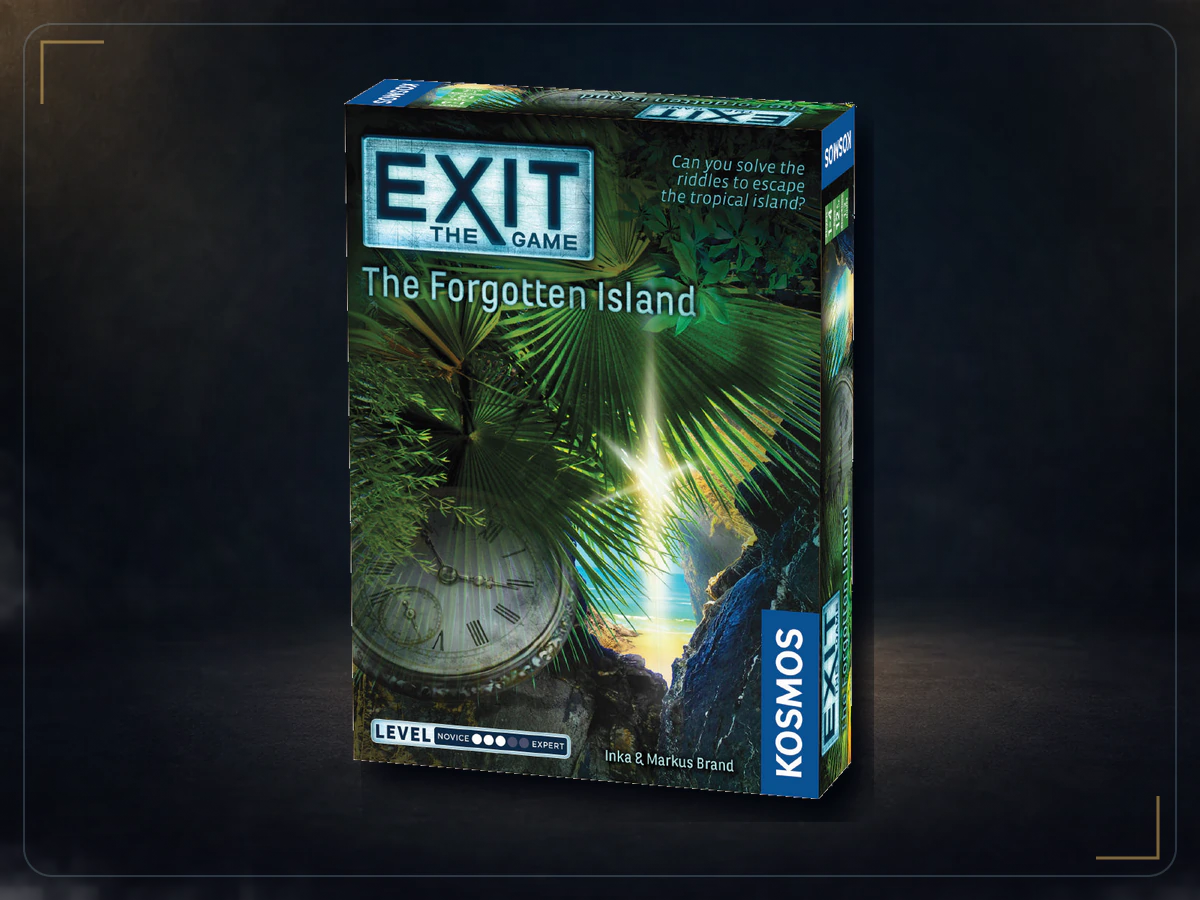
EXIT: The Game (start with The Forgotten Island or House of Riddles)
The community's most-creative pick and the genre's value champion. EXIT does things that make you gasp — and yes, you'll destroy components to do them. No app, a brilliant gradual-hint card deck, difficulty printed right on the box (start at 2-3). Strictly one-and-done, and that's the entire philosophy. If you only buy one escape box ever, the answer is almost always an EXIT.
- Most inventive, surprising puzzles in the genre
- Cheapest single thrill (~$13-17) and no app needed
- Clear 1-5 difficulty rating on every box for easy matching
- Fair, gradual hint system that doesn't spoil the whole answer
- One-and-done: you fold, tear, and destroy components
- Zero resale value once played
- Harder boxes (4-5) can 'fry the brains' of newer groups

Unlock! Escape Adventures
- Players
- 1-6
- Time
- 45-75 min
- Age
- 10+
- Complexity
- 2.32 / 5
- Publisher
- Space Cowboys · 2017
- Designers
- Cyril Demaegd, Alice Carroll, Thomas Cauët
The genre's best default, per Shut Up & Sit Down. A free companion app runs the timer, music, hints, and code-checking; the cards never get destroyed, so you can reset and gift the whole box. Three ~60-minute adventures per trilogy box (~$10 each — great value) and a massive licensed range. Occasionally lapses into 'spot the hidden number,' and you'll need a charged phone, but it's streamlined and forgiving.
- Fully non-destructive — reset, replay, gift, or sell
- Three full adventures per box (~$10 per adventure)
- App adds timer, atmosphere, hints, and instant answer-checking
- Huge licensed catalog (Star Wars, Pandemic, Alice in Wonderland)
- Requires a charged phone/tablet to play at all
- Can devolve into 'find the number' busywork
- SUSD calls it 'sometimes-lumpy and imperfect' vs EXIT's creativity
Unlock! Kids: Detective Stories
- Players
- 1-4
- Time
- 20-60 min
- Age
- 6+
- Publisher
- Space Cowboys · 2021
- Designers
- Cyril Demaegd, Marie Fort, Wilfried Fort
The family MVP and a genuine design triumph. No app, no reading, no math — just combine cards, place objects, find hidden numbers. Six scenarios in one box, a teach-as-you-play tutorial, non-destructive so it survives sibling after sibling. The praise reviewers repeat is the rarest one in kids' gaming: it's actually fun for the grown-ups too.
- No app, no reading, no math — pure tactile puzzling for ages 6+
- Six scenarios in one box; non-destructive and reusable
- Genuinely fun for accompanying adults
- Lets kids take the lead with parents assisting
- Too gentle for puzzle-hungry tweens (10+ will outgrow it)
- Cardboard tokens on slick cards can shift for little hands

The Initiative
- Players
- 1-4
- Time
- 30-60 min
- Age
- 8+
- Complexity
- 1.90 / 5
- Publisher
- Unexpected Games · 2021
- Designer
- Corey Konieczka
- Art
- David Ardila, Chan Chau
The narrative crown of the genre. A 14+ mission cooperative campaign wrapped around a comic you read as you play — Goonies-meets-Jumanji, with puzzles and story that genuinely reinforce each other. Reviewers throw around 10/10. For 1-4 players, ages 8+. The catch is right on the box: it's a one-time campaign you can't replay, so treat it like a great limited series.
- ~7-hour story campaign plus many one-off missions after
- Narrative and puzzles intertwine unusually well — frequent 10/10s
- Wide range: 1-4 players, ages 8+, family-friendly story
- Comic-book framing makes it feel like an adventure, not a worksheet
- Story is strictly one-time — 'a massive downside' for sharing
- Campaign length demands real time commitment up front
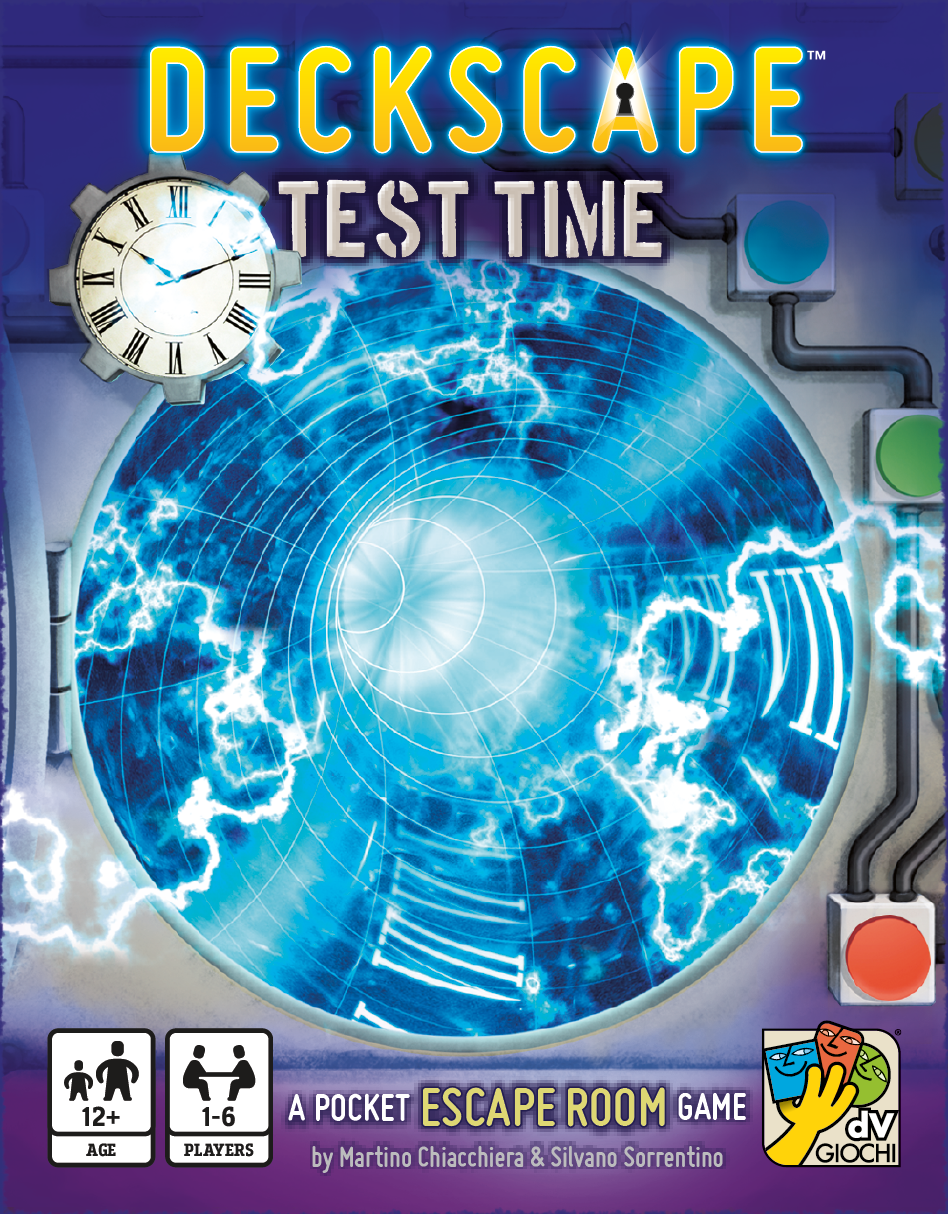
Deckscape (start with Test Time)
A whole escape room in a near-pocket-sized deck of cards. No app, no decoder, no destruction — just card-by-card puzzles with well-explained solutions. The community's go-to for first-timers because it's forgiving without being boring. Light on narrative and a touch easier than 'easy' Unlock!, and prone to quarterbacking since everyone sees every card, but unbeatable for travel and casual nights.
- Tiny, totally self-contained, travels anywhere
- No app, non-destructive, every solution clearly explained
- Smooth, low-frustration on-ramp for beginners
- Cheapest box on this list (~$12)
- Thin story and less puzzle variety than EXIT/Unlock
- Can feel too easy for experienced solvers
- All-cards-visible design invites quarterbacking
Unsolved Case Files
- Players
- 1-8
- Time
- 90-180 min
- Age
- 14+
- Publisher
- Pressman Toy Corp / Goliath Games · 2019
- Designers
- John Carroll, Lou Wilson
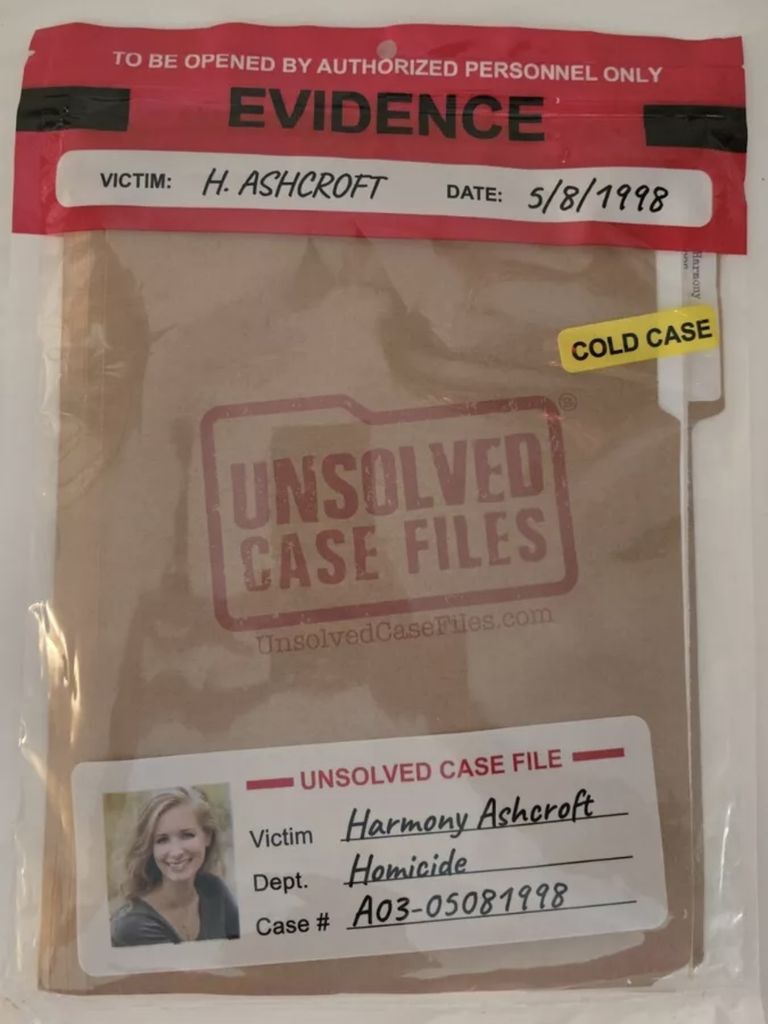
Not a locked-room box but an adjacent must-mention: a cold-case murder file you sift through — evidence, statements, a difficulty that ramps so the early answers click before the elusive ones. The Jamie Banks case carries a 4.7-star rating from 9,000+ reviewers and ~2 hours of play. Eight cases out (more coming), so it's a series. Investigation-led, not puzzle-decoder-led — buy it knowing which itch you're scratching.
- Satisfying difficulty ramp — early wins, hard-earned finishes
- Beloved (4.7 stars, 9,000+ reviews on the flagship case)
- Multiple standalone cases for a series of nights
- Great for analytical, evidence-loving minds
- Detective deduction, not escape-room puzzle mechanics
- Effectively one-and-done per case once solved
- Can be genuinely tough (rated 5/5 difficulty by the publisher)
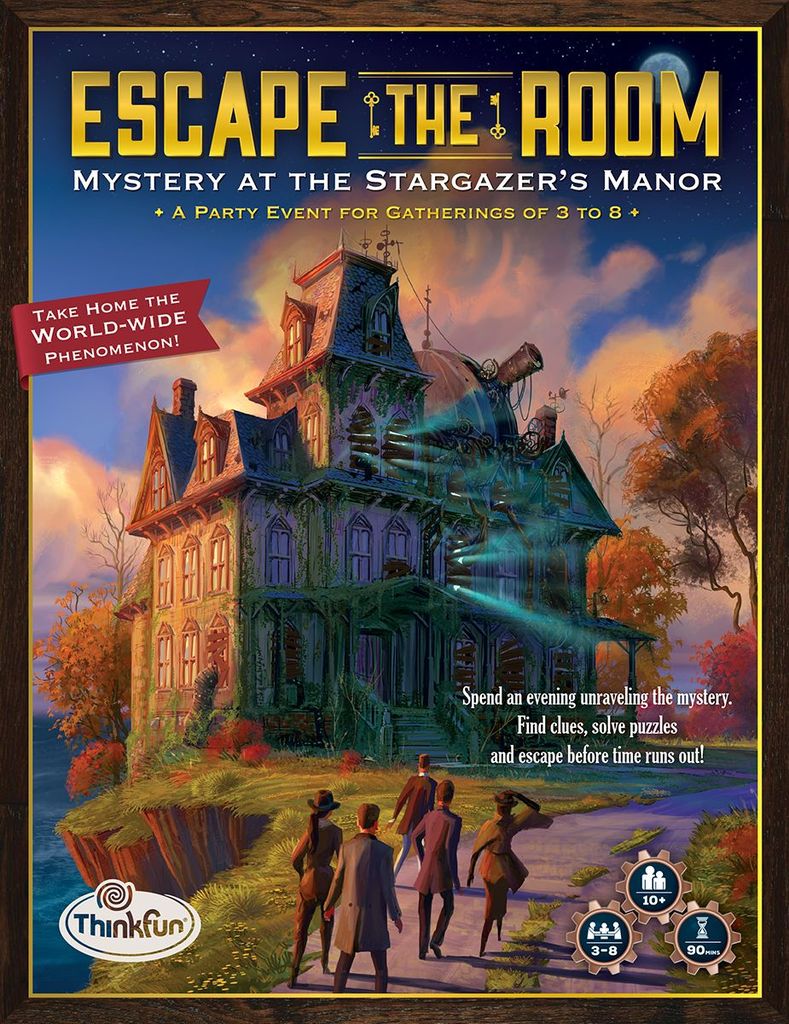
Escape the Room: Mystery at the Stargazer's Manor
- Players
- 3-8
- Time
- 90 min
- Age
- 10+
- Publisher
- ThinkFun · 2016
- Designers
- Nicholas Cravotta, Rebecca Bleau
The friendly on-ramp for families graduating to 'real' boxes. The mystery is light — 'not much scarier than a game of Clue' — and it includes instructions to repackage the pieces so you can hand it to another group. Linear and one-puzzle-at-a-time, so keep the group to 2-3 (reviewers found 4+ leads to thumb-twiddling). Around an hour, ages 10+.
- Approachable, low-scare mystery — great for ages 10+
- Repackageable to share with another group after playing
- About an hour; clean, well-produced components
- Trusted ThinkFun design pedigree
- Strictly linear — best at 2-3 players, drags at 4+
- Lighter puzzle challenge than EXIT or Unlock
- One playthrough per group
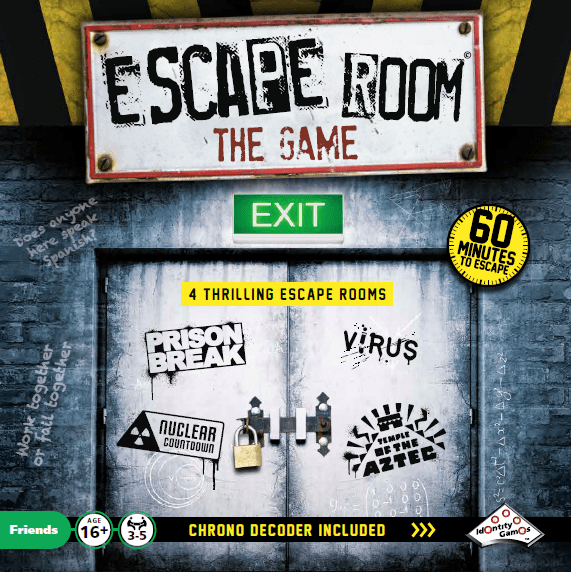
Escape Room: The Game (with Chrono Decoder)
The hardware play. A real electronic Chrono Decoder ticks down 60 minutes at the center of the table while you feed it code-keys — initially dismissed as gimmicky, it won reviewers over as genuinely more satisfying than flipping a pass/fail card. Base box packs four adventures plus a library of expansion rooms. You're buying a console-and-cartridges system: keep the Decoder forever, consume the rooms once.
- Physical countdown Decoder adds real tension and theme
- Four adventures in the base box plus many expansions
- Reusable hardware — expand cheaply with stand-alone rooms
- Strong group-table-centerpiece energy
- Highest entry price (~$40 for base box)
- Decoder ciphers can be hard to read in low light
- Each adventure is one-and-done
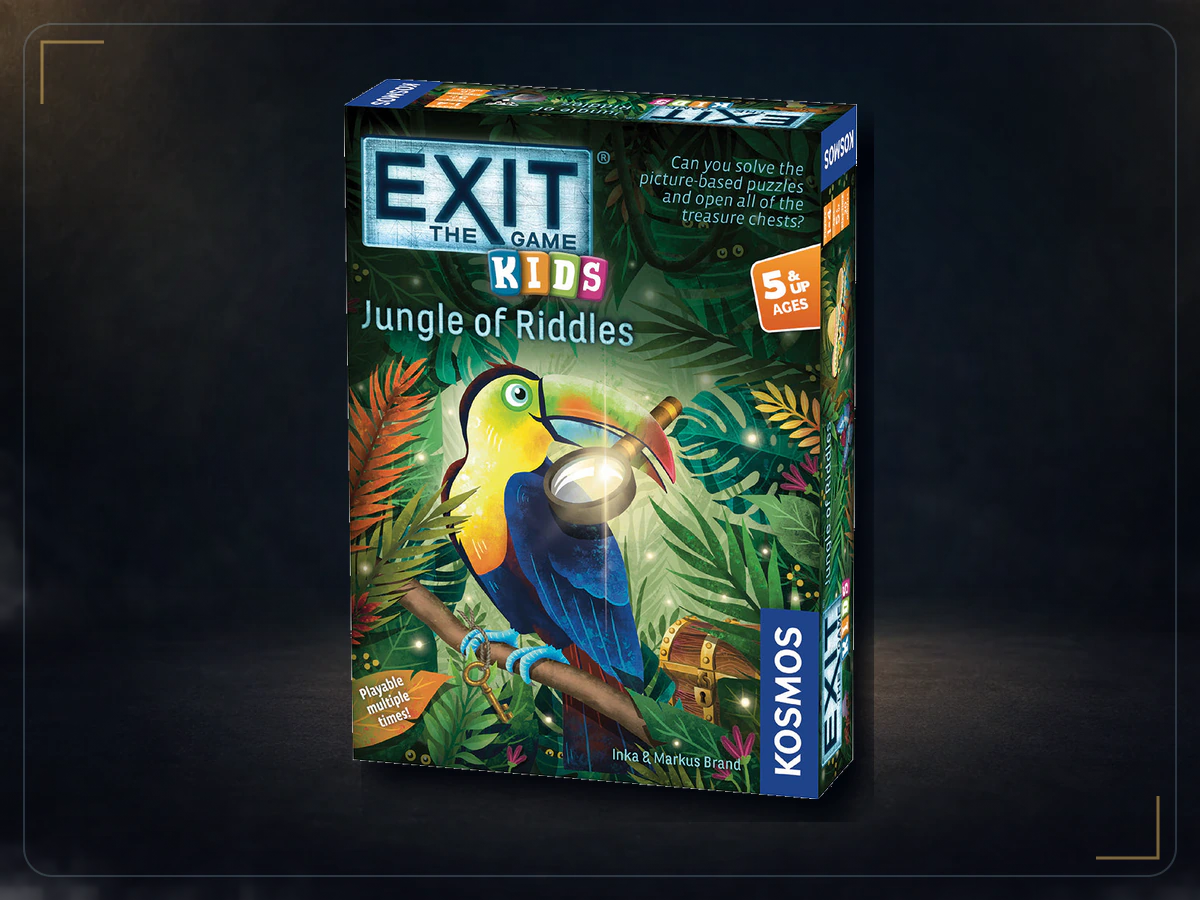
EXIT: The Game – Kids: Jungle of Riddles
- Players
- 1-4
- Time
- 20 min
- Age
- 6+
- Publisher
- KOSMOS · 2022
- Designers
- Inka Brand, Markus Brand
The grown-up EXIT magic, shrunk for tiny brains — language-independent, with a real decoder ring and 36 riddle cards across six types, so it's actually replayable. Around $15. Age 6 is the sweet spot (4 is a hair young, 10 is bored). Just plan to co-pilot: some riddle types ask kids to overlay slick pieces on slick cards, and little hands knock them loose.
- Language-independent with a fun decoder ring
- 36 riddle cards over six types = genuinely replayable
- Affordable (~$15) intro to deduction and observation
- Carries real EXIT cleverness down to age 5-7
- Slick tokens on slick cards shift for small hands
- Tight age window — too easy by age 10
- Needs an adult co-pilot for younger players
At a glance
| game | series | price | replayable | best for |
|---|---|---|---|---|
| EXIT: The Game | Kosmos (Inka & Markus Brand) | ~$15 | no (destroyed) | Most inventive single-night thrill; best value |
| Unlock! Escape Adventures | Space Cowboys | ~$30 (3 adventures) | yes (non-destructive) | Replayable, shareable, app-guided default pick |
| Unlock! Kids: Detective Stories | Space Cowboys | ~$20 | yes (non-destructive) | Families, ages 6+, no app/reading/math |
| The Initiative | Unexpected Games / Pandasaurus | ~$25 | no (one-time campaign) | 7-hour story campaign for narrative fans |
| Deckscape: Test Time | dV Giochi | ~$12 | yes (non-destructive) | Smoothest, most portable beginner on-ramp |
| Unsolved Case Files | Unsolved Case Files | ~$27 | no (per case) | Cold-case murder-mystery detective fans |
| Escape the Room: Stargazer's Manor | ThinkFun | ~$22 | no (repackage to share) | Gentle ages-10+ gateway, light mystery |
| Escape Room: The Game | Identity Games / Spin Master | ~$40 (base + Decoder) | no (reusable Decoder, one-time rooms) | Electronic timer + expandable room system |
| EXIT Kids: Jungle of Riddles | Kosmos | ~$15 | yes (36 riddle cards) | Littlest solvers, ages 5-7 (sweet spot 6) |
| EXIT: Advent Calendar | Kosmos | ~$25 | no (24 one-time doors) | 24 days of 5-10 min daily puzzles + holiday story |
Questions, answered
Are escape-room board games replayable?
Mostly no — and here's the honest nuance. EXIT physically destroys components, so it's strictly one-and-done. Unlock!, Deckscape, and ThinkFun's boxes are non-destructive, so you CAN reset them — but once you know the solutions, there's no real reason to re-solve them. So in practice, none of them are truly replayable by you. The meaningful difference is shareability: the non-destructive ones can be gifted, traded, or sold to someone who hasn't played, while EXIT can only be recycled.
EXIT vs Unlock! — which is better?
Buy Unlock! by default; buy EXIT for the better single night. Unlock! is fully replayable/shareable, app-guided, and streamlined (Shut Up & Sit Down's standing recommendation), with three adventures per ~$30 box. EXIT is the more creative and surprising experience and the cheapest single thrill (~$15), but you destroy components and can't reuse it. Choose EXIT if you want the most spectacular puzzles and don't mind disposability; choose Unlock! if you want to keep, reset, or share the box — and don't mind needing your phone.
What's the best escape-room board game for beginners?
Start with EXIT: The Forgotten Island (difficulty 3/5) or EXIT: The House of Riddles (difficulty 2/5) for the EXIT experience, or any Deckscape box for the gentlest, most forgiving on-ramp. Unlock!'s built-in tutorial and app hints also make it very beginner-friendly. Whatever you do, do NOT start with EXIT: The Catacombs of Horror (difficulty 4.5/5) — it's brilliant but it will demoralize a first-time group.
What's the best escape-room board game for date night?
EXIT: The Game at 2 players — two is the genre's ideal count. Reviewers specifically recommend The Secret Lab, The Abandoned Cabin, The Pharaoh's Tomb, The Forbidden Castle, and Dead Man on the Orient Express as best-with-two. For couples who love detective stories, Chronicles of Crime is a great app-driven, replayable alternative. The only rule: agree to solve it together — escape boxes punish 'quarterbacking,' where one partner solves everything out loud.
What's the best escape-room board game for families with kids?
Unlock! Kids: Detective Stories (ages 6+) is the family MVP — no app, no reading, no math, six scenarios in a box, non-destructive, and genuinely fun for adults too. For littler kids (5-7), EXIT Kids: Jungle of Riddles is language-independent and replayable, with age 6 as the sweet spot. For ages 10+ graduating to bigger boxes, ThinkFun's Escape the Room: Mystery at the Stargazer's Manor is a gentle, repackageable gateway.
Do all escape-room board games need an app?
No. Unlock! requires a free companion app (it runs the timer, music, hints, and answer-checking). But EXIT, Deckscape, ThinkFun's Escape the Room, Unlock! Kids, and EXIT Kids are all completely app-free. Escape Room: The Game uses a physical electronic Chrono Decoder instead of a phone app. If a no-phone night matters to you, EXIT and Deckscape are your safest bets.
How many players do escape-room board games support?
Boxes often print 1-6, but the real sweet spot is 2-4, with 3 being ideal. Because most puzzles are 'one brain at a time' and the games are linear, larger groups leave people idle — reviewers of ThinkFun's Stargazer's Manor found each puzzle engaged at most 3 of 6 players. For bigger crews, buy two copies of an EXIT box and race head-to-head.
How long does an escape-room board game take to play?
Most single-session boxes run 45-90 minutes for one playthrough — EXIT and Unlock! adventures typically land around 60-90 minutes. Campaign games are far longer: The Initiative is roughly 7 hours across 14+ missions. EXIT Advent Calendars are the outlier, designed as 24 daily puzzles of 5-10 minutes each spread over 24 days.
How do the hint systems work, and what if we get stuck?
EXIT uses a gradual hint card deck — each puzzle has multiple hint cards that nudge you further before the full solution, so you reveal only as much as you need. Unlock! delivers hints (and full solutions) through its app on demand. Deckscape explains every solution clearly on the cards. The Initiative and others include help references. Nobody has to stay permanently stuck — every major series builds in a graceful 'show me more' path.
Which escape-room board game is the hardest?
EXIT: The Catacombs of Horror is the series' (and arguably the genre's) toughest — rated 4.5/5 difficulty, it's a two-part epic with 14 puzzles that reviewers call 'fiendishly difficult' and sometimes 'frustrating rather than fun.' It's a must-play if you're already comfortable with EXIT's system, but it's an expert box — earn it before you open it. EXIT difficulty ratings (1-5) are printed on every box to help you match.
What's the cheapest escape-room board game that's actually good?
Deckscape (~$12) is the cheapest genuinely-good box and a great beginner pick. EXIT (~$15) is the best value for a full, inventive single experience. Unlock! is the best value for volume — about $30 gets you three ~60-minute adventures, roughly $10 each. EXIT Kids (~$15) is the budget pick for young children.
Is there an escape-room game with a real ongoing story or campaign?
Yes — The Initiative (Unexpected Games / Pandasaurus) is the standout: a 14+ mission cooperative campaign (~7 hours) wrapped around a comic book, frequently rated 10/10 for how its narrative and puzzles intertwine. Escape Room: The Game offers an expandable system with an electronic Chrono Decoder and many add-on rooms. Both are story-forward, but both campaigns are one-time experiences once completed.
Imani's verdict
Stop trying to crown one king — the community never could, and that's the real answer. Buy EXIT: The Game if you want the most inventive, surprising, and affordable single night in the genre and you're at peace with tearing the cards when the credits roll; start at difficulty 2-3 and climb. Buy Unlock! if you're a keeper — you want a box you can reset, share, and pass on, and you don't mind a free app and the occasional hunt-the-number puzzle (Shut Up & Sit Down's standing default, and mine too). Families with little ones go straight to Unlock! Kids: Detective Stories — no app, no reading, and genuinely fun for the grown-ups. Story-hungry crews who want a saga, not a session, get The Initiative and clear an afternoon. And if you just want the lowest-risk, most portable on-ramp, a $12 Deckscape will never steer you wrong. The single decision that matters more than any brand is the one I keep coming back to: destroyer or keeper? Answer that, and the perfect box practically picks itself.
Still deciding? Take the Game-Finder — answer seven quick questions and the cabinet hands you the one board game built for your table, with a buy link and your own shareable player talisman.
Research ledger 27 sources · reviewed 2026-09-11
Specifications, rules, current product information, community experience, and contrary evidence were checked against the sources below. Commercial links are kept separate from editorial evidence.
- shutupandsitdown.comshutupandsitdown.com/review-exit-the-game-vs-unlock
- donteatthemeeples.comdonteatthemeeples.com/exit-unlock-deckscape-escape-room-board-games
- daoofboardgaming.home.blogdaoofboardgaming.home.blog/2025/07/17/unlock-vs-exit-which-escape-room-board-game-series-reigns-supreme-and-is-suitable-for-my-family
- tabletopgaming.co.uktabletopgaming.co.uk/reviews/unlock-escape-adventures-review
- amazon.comamazon.com/dp/B06X9SCDNG?tag=puzzlewick-20
- spacecowboys-games.comspacecowboys-games.com/game/unlock
- boardgamegeek.comboardgamegeek.com/thread/2058546/difficulty-ranking-of-all-titles-in-series
- boardgamequest.comboardgamequest.com/exit-the-game-the-forgotten-island-review
- amazon.comamazon.com/dp/B0742L9B1T?tag=puzzlewick-20
- roomescapeartist.comroomescapeartist.com/2019/09/20/exit-game-catacombs-horror-review
- tabletopbellhop.comtabletopbellhop.com/game-reviews/exit-the-catacombs-of-horror
- roomescapeartist.comroomescapeartist.com/2018/01/19/deckscape-test-time-fate-london-product-review
- coopboardgames.comcoopboardgames.com/cooperative-board-game-reviews/deckscape-test-time-review
- roomescapeartist.comroomescapeartist.com/2021/12/12/unexpected-games-the-initiative-review
- amazon.comamazon.com/dp/B08T52BDFJ?tag=puzzlewick-20
- roomescapeartist.comroomescapeartist.com/2023/07/25/asmodee-unlock-kids-detective-stories-kids-review
- thetabletopfamily.comthetabletopfamily.com/unlock-kids-review
- amazon.comamazon.com/dp/B09NMNLNCS?tag=puzzlewick-20
- roomescapeartist.comroomescapeartist.com/2023/07/05/exit-game-kids-jungle-riddles-kids-review
- meeplemountain.commeeplemountain.com/reviews/exit-the-game-kids-jungle-of-riddles
- geekdad.comgeekdad.com/2016/04/escape-room-stargazer
- amazon.comamazon.com/dp/B01BX4G62W?tag=puzzlewick-20
- opinionatedgamers.comopinionatedgamers.com/2017/02/15/review-of-escape-room-the-game-no-spoilers
- amazon.comamazon.com/dp/B09DCYBNJG?tag=puzzlewick-20
- boardgamequest.comboardgamequest.com/unsolved-case-files-review
- roomescapeartist.comroomescapeartist.com/2023/11/12/exit-advent-calendar-silent-storm-review
- tabletopbellhop.comtabletopbellhop.com/gaming-advice/date-night-games
Okay but have you seen what everyone’s saying about this?

Keep exploring
The next smart rabbit holes.
✦ Topic PathBoard Game Buying Guides: compare the whole shelfStart with the decision, not the shelf. These guides compare the games, editions, expansions, player counts, and costs people...ReviewThe Light in the Mist Review 2026: Beautiful Tarot Mystery or Too Abstract?Yumi opens PostCurious’s tarot puzzle without spoiling a single solution: difficulty, hints, player count, playtime, resetability, story,...Best OfBest Solo Board Games, Ranked (2026): The One-Player NightTen games I'd actually hand you — the ones that didn't just earn a shelf, they stayed there. From the 20-minute weeknight puzzle to the...