Yu-Gi-Oh TCG 2026 Starter Sets & Beginner Decks: Play Your First Duel
Two starter routes, two tutorial options, and one afternoon to learn the fundamentals. Start here before buying random Yu-Gi-Oh boosters or a deck you cannot pilot.


AI-assisted research and drafting in Kenji’s voice · reviewed by Robert Pruitt · how this guide was made
Last editorial refresh: 2026-06-16 Gold-standard QA: 2026-07-17 16 sources reviewed Affiliate links checked during gold-standard pass

The short answer
The 2-Player Starter Set ($19.99) teaches you the fundamentals with a guided comic tutorial, while the Legendary Modern Decks ($31.99) jump you straight into tournament-ready play with Sky Striker, X-Saber, and Mitsurugi themes. Both are Konami-endorsed entry points—pick by budget and play style: learn first, or learn by doing.
Decision map
Choose in thirty seconds
Absolute beginners learning with a friend or family member
Players who know the basics and want tournament-ready competitive decks
Players building their first competitive deck after learning archetype fundamentals
Yu-Gi-Oh has carried dueling forward since Kazuki Takahashi laid the foundation in 1996. Every player begins at the same threshold: unboxing cardboard, reading card text, and learning the dance of summoning, attack, and defense. The 2026 product lineup finally makes that threshold welcoming. Gone are the days of fumbling through orphaned deck lists. Today's beginner has two blessed paths: the comic-book onboarding of the 2-Player Starter Set, or the immediate depth of pre-tuned decks that whisper strategy with every card inside.
This guide walks you through both, strips the mystery from the summoning rules that confuse newcomers, and shows you how to build a deck that doesn't fold in the first turn. You'll learn why your first booster box matters less than your first archetype, and why Sky Striker, X-Saber, and Mitsurugi each teach something different about the game.
Whether you're dueling at home with a friend or eyeing that local tournament, the 2026 entry path is clearer than ever.
Start here, then go deeper
You are in the right cabinet.
 ✧ Universe HubAnime & New-Wave TCGs: the whole buying pathBeyond Magic and Pokémon, a new wave of trading card games has gone mainstream — One Piece, Yu-Gi-Oh!, Dragon Ball, Digimon, Weiss...
 🂠 Topic PathTrading Card Games: compare the whole shelfStart with the game and community you want, then buy the smallest product that lets you test it properly. These guides separate...
 ComparisonYu-Gi-Oh! Genesys vs Advanced Format 2026: Which Ruleset Should You Learn?Genesys removes Link and Pendulum mechanics and prices selected cards into a shared point cap. Advanced keeps the current card game,...
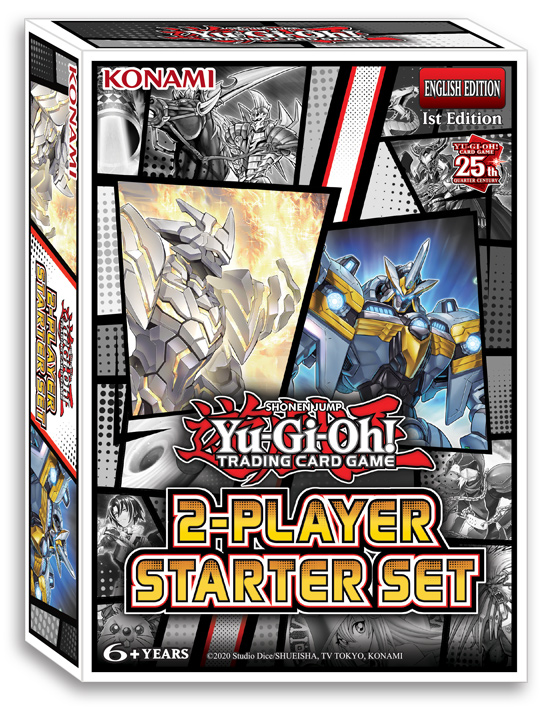
The 2-Player Starter Set: Learn the Right Way ($19.99)
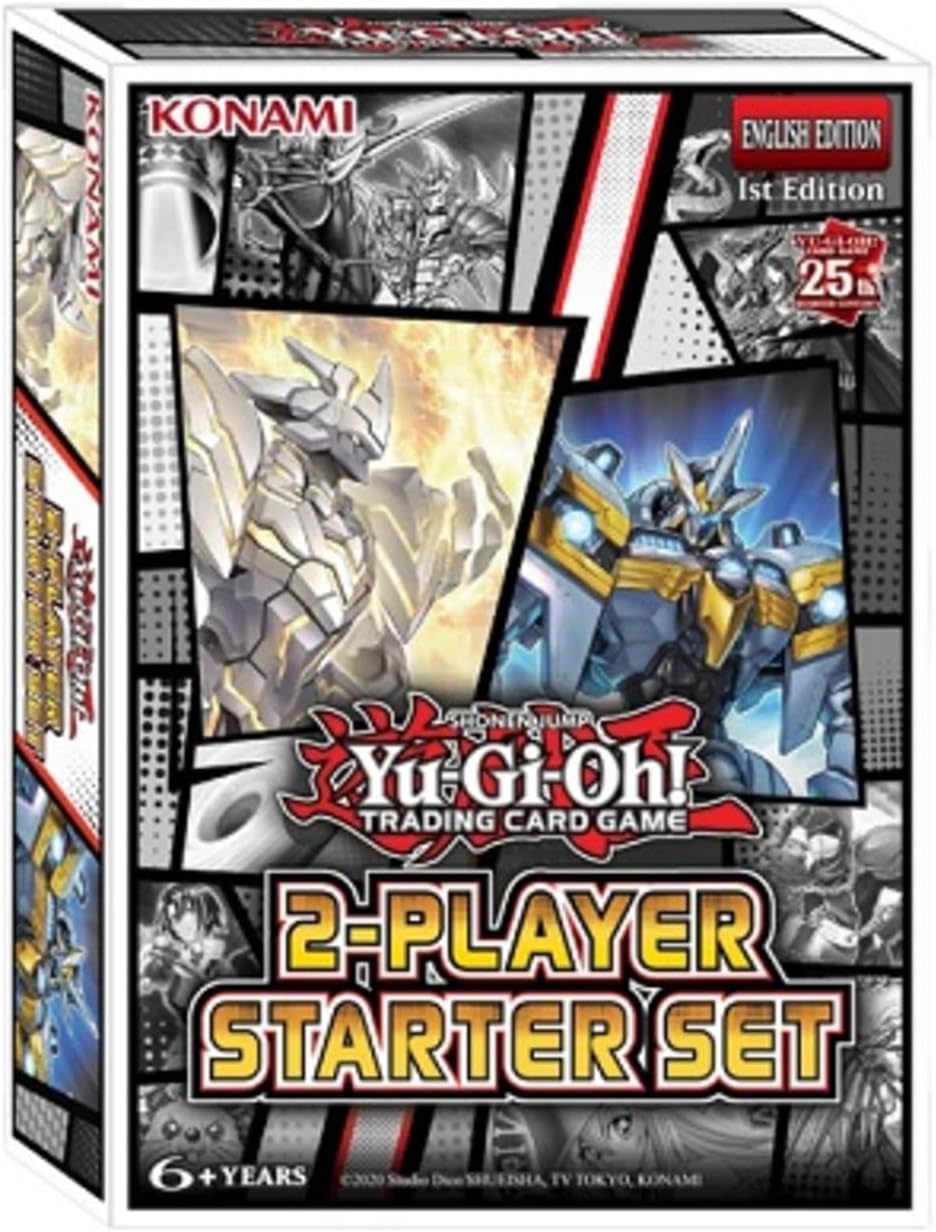

This is respectfully the only choice if no one in your group has played before. The 2-Player Starter Set comes with 2 complete 44-card decks (40-card Main Deck + 4-card Extra Deck each) and a 64-page teaching comic that walks you through a scripted duel from draw step to victory. You're not guessing—the comic tells you which cards to play in which order, teaching Normal Summon, Xyz Summon, and Synchro Summon without overwhelming you with choice.
Each deck includes 80 Commons and 8 Ultra Rare cards—not for value, but for consistency. One deck leans Xyz (overlay two monsters of the same Level to create a ranked beast), the other leans Synchro (tune one Tuner monster with non-Tuners to hit a level threshold). After one guided duel, you replay the decks freely. The learning arc is built in.
Release: January 26, 2024 (still in print).
Best for: New players with a friend, family duels, zero prior knowledge.
- Open the box and lay out both 44-card decks face-down
- Read the first 15 pages of the comic—it explains zones, hand, and how to draw
- Play the scripted duel using the comic as your guide
- After the comic ends, shuffle decks and duel freely with the same cards
- Watch YouTube 'Yu-Gi-Oh 2-Player Starter Set tutorial' videos to reinforce concepts
Legendary Modern Decks 2026: Three Tournament-Ready Strategies ($31.99)
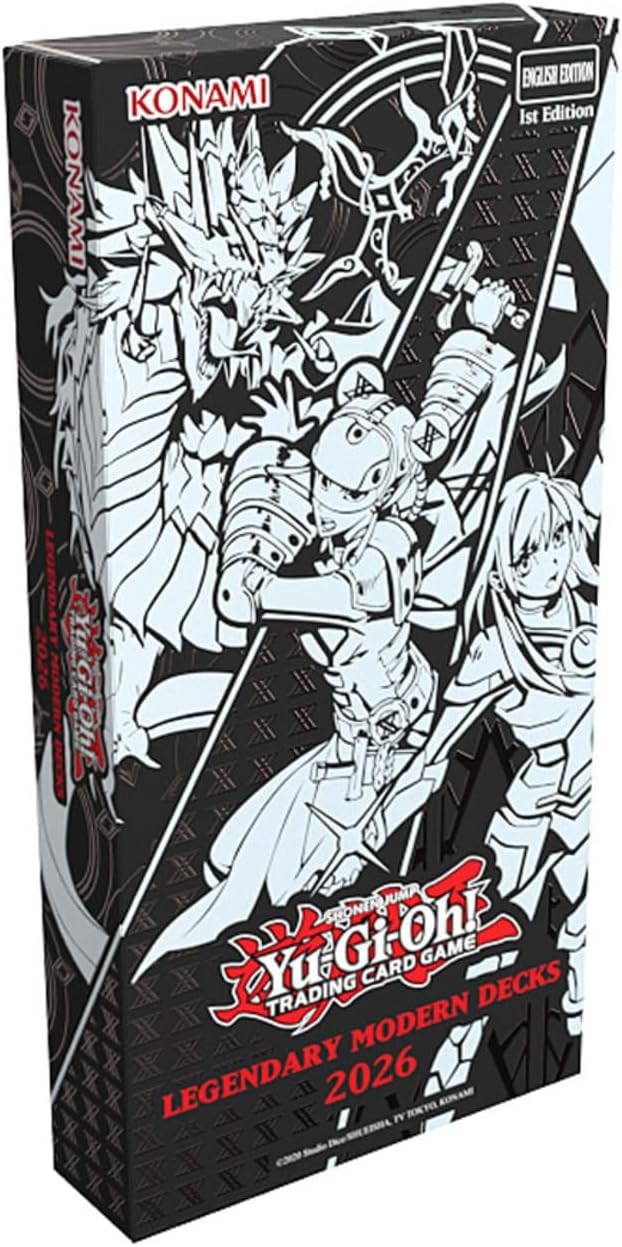

If you've seen the anime or already understand the basic turn structure, skip the tutorial. Legendary Modern Decks 2026 drops March 13, 2026, and delivers three complete, built-to-win 56-card decks (55 cards + 1 bonus Secret Rare or Starlight Rare per deck). This is not a learning toy—it's a fast-track to competitive play.
Inside: Sky Striker (a Link-heavy control archetype where pilots summon in their spell zones), X-Saber (a combo-oriented synchro deck with tight chains), and Mitsurugi (a slower grind deck that wins by resource advantage). Each deck ships tournament-ready with its Main and Extra Deck tuned. You can duel any of the three against each other immediately.
Card composition per deck: 1 Secret Rare, 6 Ultra Rares, 48 Commons. The MSRP sits at $31.99, though early TCGPlayer pricing hovers $34–$39.
Sky Striker, in particular, made Top 4 at the 2025 World Championship—these aren't training wheels, they're road-legal.
- Choose one of the three themes (Sky Striker for control, X-Saber for combos, Mitsurugi for patience)
- Sleeve all 56 cards of your chosen deck in the provided sleeves
- Keep the Main and Extra Decks separated as labeled in the box
- Duel a friend using the same deck-building rules as tournament play
- After 3–5 duels, watch a 'Sky Striker' or 'X-Saber combo' guide on YouTube to unlock advanced play

Understanding the Core Rules: Summoning, Zones, and Phases
Yu-Gi-Oh sounds complex because it is—but the core loop is three-step: Summon a monster, attack, end your turn. Everything else is flavor.
### Summoning Types You have one Normal Summon per turn. Use it to put a Level 4-or-lower monster on the field face-up. If you Normal Summon something Level 5 or higher, you need two Level 4-or-lower monsters to Tribute. After your Normal Summon, you can use Special Summoning effects printed on cards—Synchro (one Tuner + non-Tuners = Extra Deck monster), Xyz (two same-Level monsters = ranked Extra Deck monster), Link (no Levels, just arrow patterns), Fusion (using a Fusion Spell), or Ritual (using a Ritual Spell). Each is a resource, not a free pass.
### The Zones Your field has five Monster Zones (where monsters stand), five Spell & Trap Zones (where spells and traps sit), one Field Spell Zone (for Field Spells only), and one Graveyard (the discard pile—cards aren't gone, just vulnerable). Your Extra Deck is separate; only Extra Deck monsters go there.
### The Turn Structure Draw Phase → Standby → Main Phase 1 (Summon, activate spells) → Battle Phase (declare attacks) → Main Phase 2 (activate more spells) → End Phase → opponent's turn. Your opponent plays the same loop.
Decks run 40–60 cards. You can run up to 3 copies of any one card (with rare exceptions called "banned" or "limited" cards—the Forbidden & Limited List updates quarterly).
### Life Points You start with 8,000 LP. When you lose all your LP, you lose the duel. Monsters deal damage when they attack, spells and traps can deal damage, or lock down the opponent's field.
Picking Your First Archetype: What Each Theme Teaches
An archetype is a set of cards that share a theme and support each other. Beginners often freeze when they see 50 possible decks online. Here's what each 2026 theme teaches:
Sky Striker (Legendary Modern Decks): A Link deck where you summon monsters into your Spell/Trap Zones. Teaches resource management and zone control. You learn to attack without monsters on your Monster Zones, disarm your opponent's board, and grind wins. Beginner-friendly because the deck wins slowly—you have time to think.
X-Saber (Legendary Modern Decks): A synchro-combo deck. You chain monsters into Synchro summons, building 3–4 card chains in a single turn. Teaches combo construction and tuning. Harder to pilot (one brick hand and you're done), but deeply rewarding when it clicks. For players who like solving puzzles.
Mitsurugi (Legendary Modern Decks): A slower archetype that grinds by recycling cards and out-resourceing opponents. Teaches deck sustainability and field presence. You're never trying to win in one turn; you're trying to control the game for 5–10 turns. Most forgiving for beginners because it mirrors real games.
2-Player Starter Set (Xyz + Synchro): The Xyz deck teaches material management—once you Summon an Xyz monster, it stays for a few turns unless you use its effect. The Synchro deck teaches sacrifice for power. Combined, they scaffold the fundamental rules without overwhelming choice.
What to Buy After Your First Deck

Once you've dueled 10 times and won at least one duel, you're ready to upgrade. Here's the progression:
Booster Boxes (avg. $80–$90): Maze of Muertos (February 2026), Blazing Dominion (May 2026), and upcoming 2026 releases contain new cards from their themes. A booster box has 24 packs × 9 cards per pack = 216 random cards. You won't complete a deck from one box. Buy one only if you've committed to an archetype.
Structure Decks (avg. $8–$12 each): One-theme prebuilds. Konami releases 1–2 per set. A single Structure Deck is almost never enough to be competitive, but 2–3 of the same deck + some booster pulls = a solid rogue deck.
Single Cards (TCGPlayer, eBay, etc.): Once you know your deck, buy singles for $0.25–$20 each. This is the only cost-effective way to complete a competitive deck. Never buy booster packs hoping for one card—the math is brutal.
Sleeves & Mat: $15 for 100 sleeves, $20 for a duel mat. Protect your cards and give yourself a play space.
The golden rule: Know your archetype before you invest in boosters.
Beginner Strategy: Your First Duel Checklist
You're unboxing and sitting across from a friend. Here's your mental checklist:
Before You Play - Shuffle both decks at least 10 times each. Randomization matters. - Agree on which format you're playing: casual (anything goes), tournament (follow the Forbidden & Limited List), or house rules (we decide). - Draw your opening 5 cards. If you have zero monsters or zero spells, you can mulligan (draw one less card). Do this once per duel.
Your Turn 1. Draw: Take the top card. You now have 6 in hand. 2. Summon: Put your strongest monster on the field. If you have a spell that summons another, activate it. 3. Attack: Announce which of your monsters attacks which of your opponent's monsters (or their LP if they have no field). Deal the difference in ATK. 4. End Turn: Say "I end my turn." Pass to your opponent.
Reading Your Opponent - If they have a monster face-down, ask what level it is. (You have the right to know.) - If they activate a Trap after your attack, read it carefully. Traps usually negate or block your attack. - If they Special Summon from their hand, deck, or graveyard, let them—and note how. (Some decks only work because they can recycle.)
Winning - Reduce their LP to 0 first. Congratulations, you're a Duelist now.

Common Beginner Mistakes & How to Avoid Them
Mistake 1: Attacking Every Turn Newcomers often swing every turn because they've never been punished. Real decks punish reckless attacks. If your opponent has a face-down trap, they might negate your attack or flip-summon a blocker. Think before you attack; sometimes holding back and setting cards (placing them face-down) is smarter.
Mistake 2: Overloading Your Spell & Trap Zone You have five Spell & Trap Zones. Once full, you can't activate new spells or set new traps. Don't dump eight cards into five zones. Beginners do this and then brick when they draw a crucial spell with no Zone for it.
Mistake 3: Ignoring the Extra Deck The Extra Deck is real. If a card says "Synchro Summon this card," it must come from your Extra Deck, not your Main Deck. Mix them up = game stall = loss.
Mistake 4: Not Reading Activation Timing Card text with "When" means that card must activate at that moment. "If" means it's optional. "You can" means optional. "Must" means mandatory. This matters for combo execution and trap interactions. Read the full text before playing.
Mistake 5: Chaining Without a Chain Link When you and your opponent both want to activate effects, you form a Chain. The last effect activated resolves first. This is backwards from reading left-to-right and trips up everyone. Ask for a judge if unsure; they won't penalize you as a beginner.
The picks
Some links below are affiliate links — as an Amazon Associate, Puzzlewick earns from qualifying purchases, at no extra cost to you. It never changes a pick.
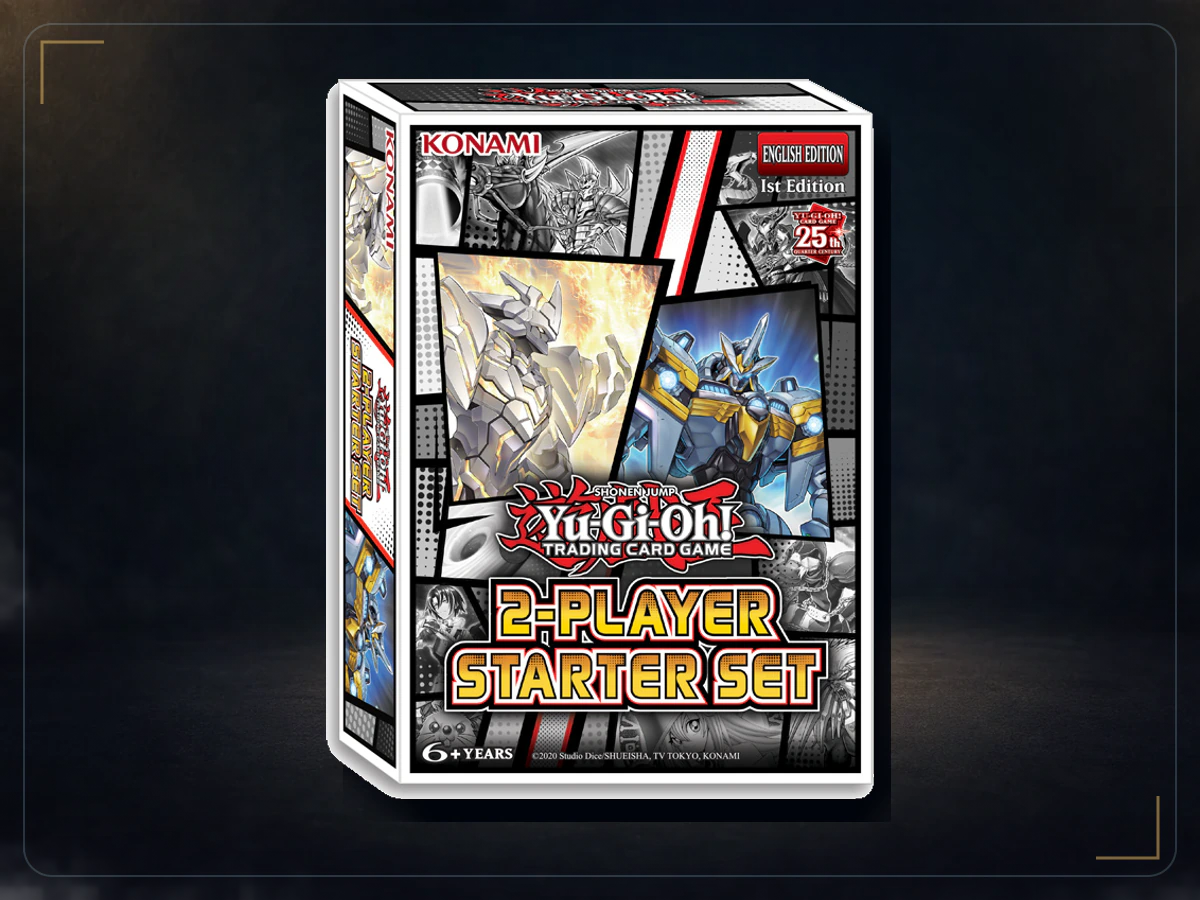
Yu-Gi-Oh! 2-Player Starter Set
Two complete 44-card decks plus a 64-page comic that walks you through a scripted duel teaching Normal, Xyz, and Synchro Summons. The tutorial-in-a-box approach makes this the gentlest entry point. No prior knowledge required.
- 64-page comic teaches turn structure step-by-step
- Two balanced, playable decks for head-to-head learning
- Lowest price point for two complete decks ($19.99)
- Not tournament-level cards or power
- Xyz and Synchro decks are deliberately basic, not meta-relevant
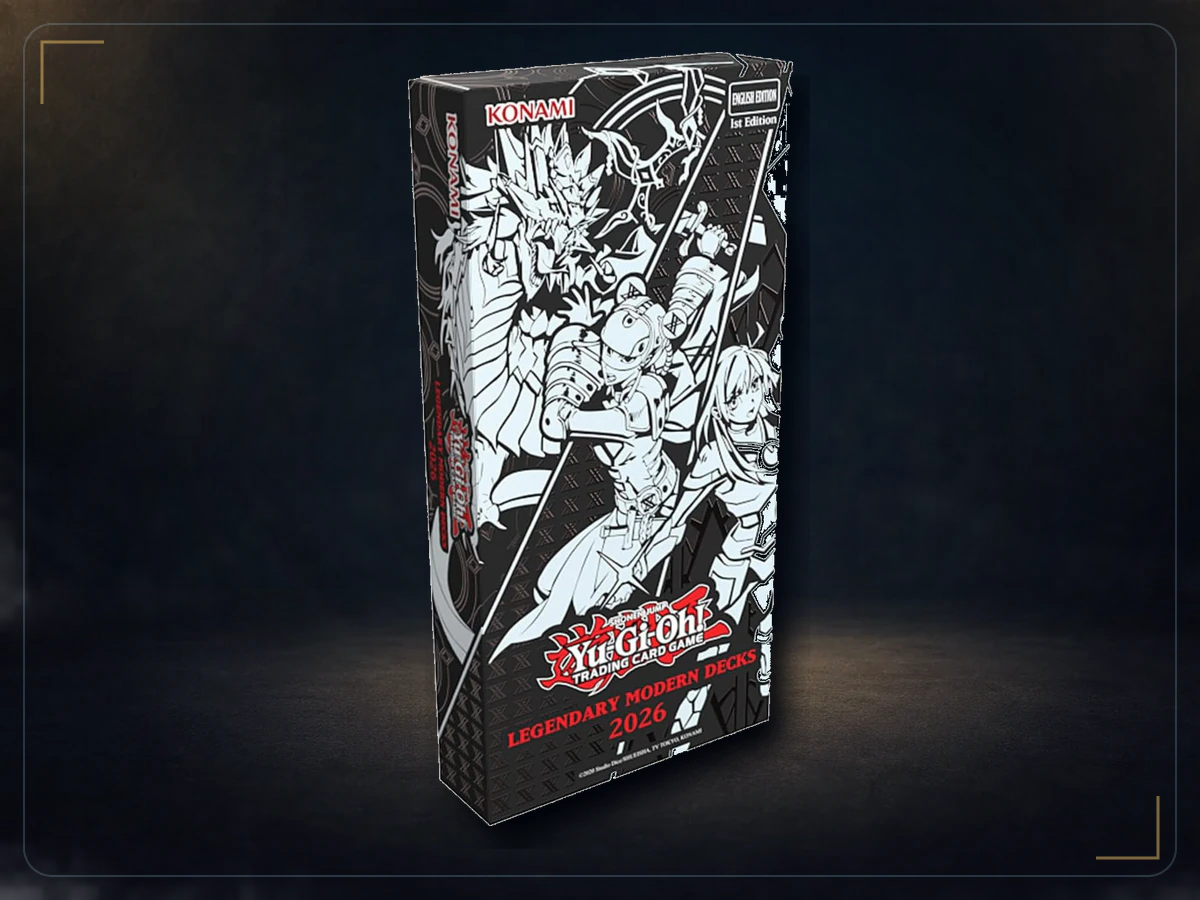
Yu-Gi-Oh! Legendary Modern Decks 2026
Three full 56-card pre-built decks (Sky Striker, X-Saber, Mitsurugi), each with modern support cards and tournament-legal Main/Extra Decks. Sky Striker placed Top 4 at 2025 Worlds. Choose based on playstyle: control, combos, or grind.
- Three distinct strategies in one box, each tournament-ready
- Modern cards and current-format synergies
- Includes 1 bonus Secret or Starlight Rare per deck
- Requires basic understanding of summoning rules
- Higher learning curve for combo-heavy decks like X-Saber
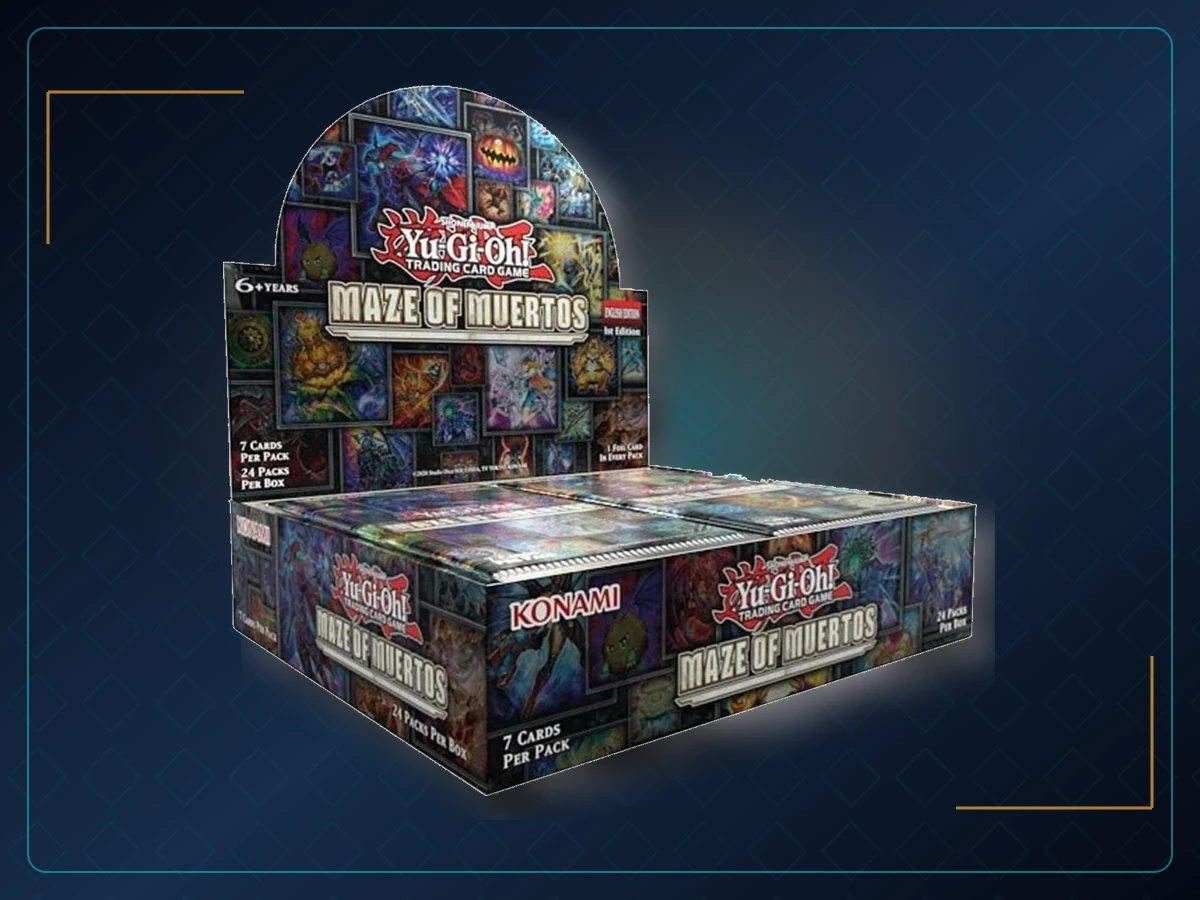
Yu-Gi-Oh! Maze of Muertos Booster Box
24 packs of 9 cards per pack (216 total cards) featuring new themes and support released February 2026. Contains mixed rarity distribution with Commons, Super Rares, Ultra Rares, and Secret Rares. Not for learning; for upgrading and expanding your collection.
- Contains fresh support for multiple 2026 archetypes
- High pull rate for rare cards
- Supports multiple theme expansions
- 216 random cards will not complete a single meta deck
- Better to buy singles after booster box pulls
- No learning value; purely for collection/deck building
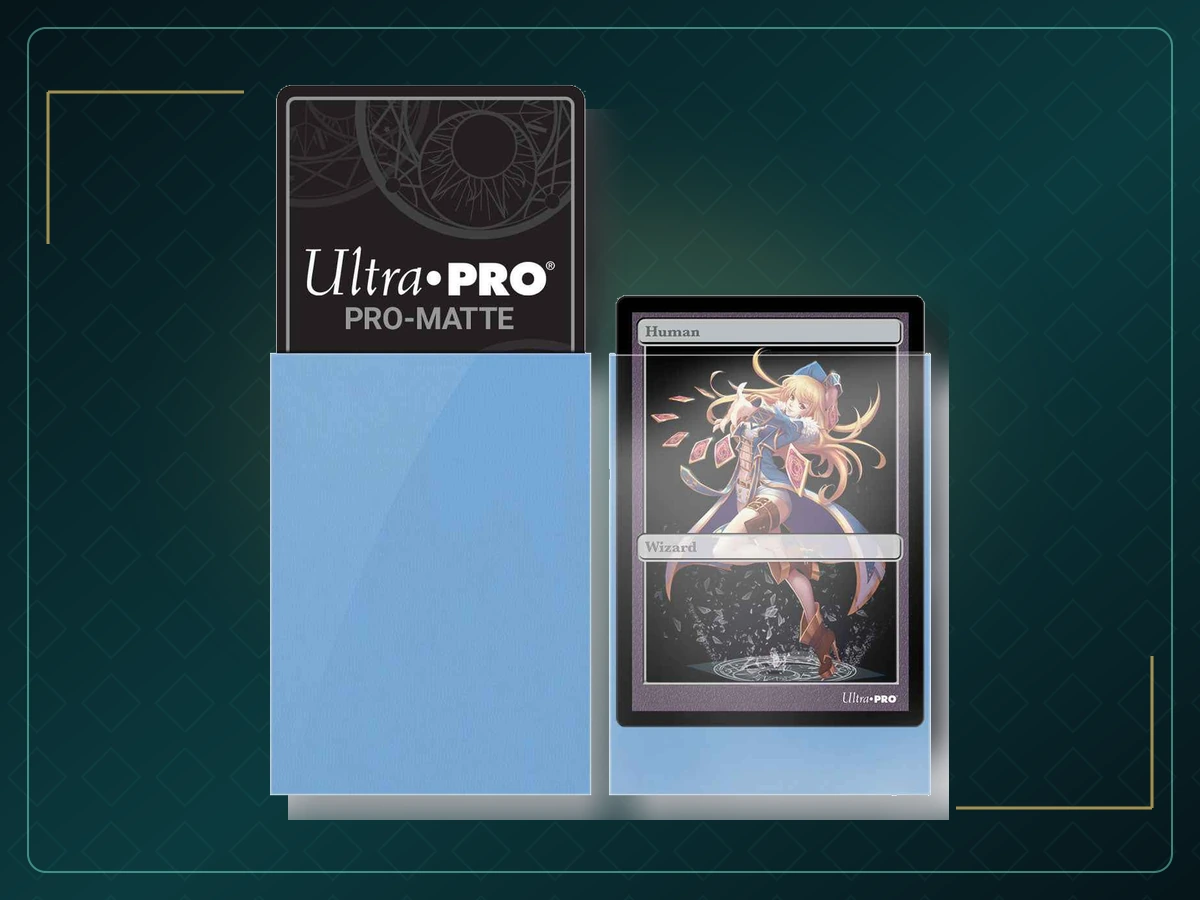
Ultra Pro Deck Sleeves & Playmat Bundle
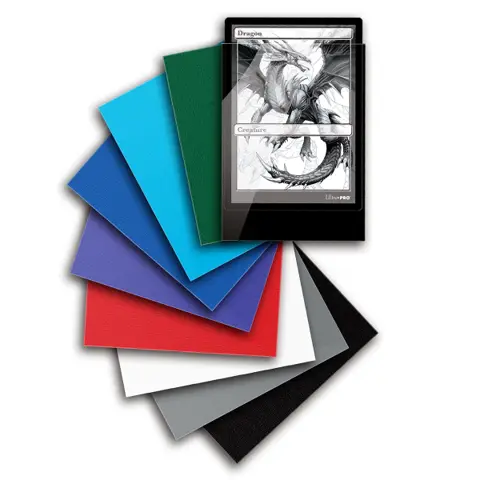
100-count standard sleeves plus a neoprene duel mat. Sleeves fit Yu-Gi-Oh cards perfectly, mat provides zones and a comfortable play surface. A must-have after your first deck; protects cards from moisture and wear.
- Sleeves prevent damage to valuable pulls
- Mat defines zones clearly for rule clarity
- Combined package saves money vs. buying separately
- Sleeves will need replacement every 1–2 years of heavy play
- Not a deck itself, just accessories
At a glance
| Product | Price | Learning Curve | Competitiveness | Best For |
|---|---|---|---|---|
| 2-Player Starter Set | $19.99 | Gentle (comic-guided) | Not meta | Absolute beginners |
| Legendary Modern Decks 2026 | $31.99 | Moderate (knows rules) | Tournament-ready | Players ready to compete |
| Maze of Muertos Booster Box | $79.99 | N/A (random cards) | Upgrading existing deck | Committed players upgrading |
| Structure Deck (avg. $10 each) | $10–$12 | Moderate | Rogue (needs 2–3 copies) | Archetype experimentation |
| Single Cards (TCGPlayer) | $0.25–$20 per card | N/A (targeted) | Tier 1 if optimized | Completing known decks |
Questions, answered
Should I buy the 2-Player Starter Set or Legendary Modern Decks first?
If you've never played a TCG and don't know Synchro or Xyz Summons, buy the 2-Player Starter Set ($19.99). The comic is worth it. If you've played other TCGs or already understand the rules, jump to Legendary Modern Decks ($31.99) for better cards and faster learning by doing.
Can I use cards from the Starter Set in a tournament?
Yes, most starter set cards are legal. Check the official Forbidden & Limited List on Konami's website to confirm your specific cards. The 2-Player Starter Set has no banned cards; Legendary Modern Decks are built with the current format in mind.
How many cards should my first deck have?
40–60 cards total (minimum 40, maximum 60). Beginners should aim for 40–45 cards for consistency. A 40-card deck means you're more likely to draw your best cards faster. Every card in your deck should earn its slot.
What's the difference between Main Deck and Extra Deck?
Your Main Deck has 40–60 regular monsters, spells, and traps. Your Extra Deck (15-card maximum) holds only Extra Deck monsters—Synchro, Xyz, Link, Fusion, and Ritual monsters. Only Special Summons pull from the Extra Deck; you never draw from it.
Is a booster box worth buying as my second product?
No. 216 random cards will not build a competitive deck. After your first deck, buy 2–3 more of the same Structure Deck (if available) or buy singles from TCGPlayer for $0.25–$5 each. You'll spend less and get exactly what you need.
Can I play Yu-Gi-Oh TCG online to practice before buying anything?
Yes. Yu-Gi-Oh! Master Duel (free on Steam, PlayStation, Xbox, mobile) teaches the rules. Yu-Gi-Oh! Duel Links is another free option. Both let you try decks risk-free. Use them to confirm you love the game before spending money.
What's the Forbidden & Limited List, and why does it matter?
Konami bans or restricts overpowered cards every quarter (Jan, Apr, Jul, Oct). Banned cards = can't play them. Limited cards = 1 per deck. Restricted cards = 2 per deck. Check the official list before buying singles or building a deck. Old cards you love might be banned now.
Which is better for beginners, Legendary Modern Decks or White Destiny?
White Destiny is the better focused curriculum; Legendary Modern Decks is better for variety and multiple learners.
Do I need three copies of White Destiny?
Not before testing the archetype and checking which exclusive cards need higher counts.
Is Blue-Eyes White Destiny good for beginners?
Yes for a patient beginner who wants one recognizable engine and is willing to practice Extra Deck sequencing. It is not as simple as its famous monster suggests.
Is Fallen and Virtuous better than Blue-Eyes?
It is better for players drawn to Albaz lore, Fusion lines, and an all-foil project. Blue-Eyes is the clearer first three-copy learning build.
Kenji's verdict
The 2026 entry path is honest. The 2-Player Starter Set ($19.99) removes the guesswork with a comic tutor and two balanced decks. Legendary Modern Decks ($31.99) fast-tracks players past learning, landing them in three different competitive themes. One teaches patience, one teaches control, one teaches combos. Pick based on your threshold for complexity and budget, duel 10 times, read the Forbidden & Limited List, then decide if singles are worth the investment. Yu-Gi-Oh has always been a game of depth disguised as chaos. These 2026 products finally teach you how to find the order inside.
Research ledger 16 sources · reviewed 2026-07-17
Specifications, rules, current product information, community experience, and contrary evidence were checked against the sources below. Commercial links are kept separate from editorial evidence.
- yugioh-card.comyugioh-card.com/en/products/2-player-starter-set
- yugioh-card.comyugioh-card.com/en/products/l26d
- tcgplayer.comtcgplayer.com/content/article/The-Hottest-Yu-Gi-Oh-Stuff-Coming-In-2026/bc2657ee-7292-4421-9700-65ae93bafcc2
- yugipedia.comyugipedia.com/wiki/Legendary_Modern_Decks_2026
- yugioh-card.comyugioh-card.com/en/rulebook
- magicmadhouse.co.ukmagicmadhouse.co.uk/tips-and-tricks-for-building-a-succesful-yu-gi-oh-tcg-deck
- gamerant.comgamerant.com/yugioh-beginner-tips-tcg
- icv2.comicv2.com/articles/news/view/61069/yu-gi-oh-tcg-2026-product-release-calendar
- Official Blue-Eyes White Destiny product pageyugioh-card.com/en/products/sdwd
- Current comparable-deck discussionreddit.com/r/Yugioh101/comments/1uz6qou/other_decks_on_the_powerlevel_of_the_legendary
- Yu-Gi-Oh! beginner communityreddit.com/r/Yugioh101
- Yu-Gi-Oh! product and event newsyugioh-card.com/en/news
- Fallen and Virtuous official product pageyugioh-card.com/en/products/sdca
- Yu-Gi-Oh structure decksyugioh-card.com/en/products/structure-deck
- Blue-Eyes White Destiny official card listdb.yugioh-card.com/yugiohdb/card_search.action?ope=1&pid=2000001443000&request_locale=en&rp=99999
- Deck construction rulesyugioh-card.com/en/limited/index.html
Every object has a lineage. Let me tell you its story.


Keep exploring
The next smart rabbit holes.
✧ Universe HubAnime & New-Wave TCGs: the whole buying pathBeyond Magic and Pokémon, a new wave of trading card games has gone mainstream — One Piece, Yu-Gi-Oh!, Dragon Ball, Digimon, Weiss...🂠 Topic PathTrading Card Games: compare the whole shelfStart with the game and community you want, then buy the smallest product that lets you test it properly. These guides separate...ComparisonYu-Gi-Oh! Genesys vs Advanced Format 2026: Which Ruleset Should You Learn?Genesys removes Link and Pendulum mechanics and prices selected cards into a shared point cap. Advanced keeps the current card game,...