Ace's Execution Hits the Table: How One Piece's Darkest War Became 2026's Hottest Card Set in America
OP-16 "The Time of Battle" presses the Summit War of Marineford into cardboard — and asks you, every time you shuffle, to choose a side of a public execution.
AI-assisted curator persona · researched & reviewed by founder Robert Pruitt, a 20-year enthusiast · how we make our guides
The short answer
OP-16 "The Time of Battle" (English release June 12, 2026) is Bandai's One Piece Card Game set built from the Summit War of Marineford — the arc where Portgas D. Ace is publicly executed and Whitebeard dies on his feet. Its six new Leaders are drawn from that battle's roster, so building a deck means choosing the executioners or the doomed crew defending Ace. Despite a historical ~$120 MSRP framing, real sealed booster boxes have traded roughly $200–300 in mid-2026 (English boxes commonly $250 and up; Japanese imports near $222 on resale markets), driven by the three Admirals as chase cards.
Come closer. Sit where the embers can reach you, and let me lower my voice, because some stories are not meant to be shouted.
There is an old principle in the Japanese tragedy — that grief is not the end of a tale but its engine. The Summit War of Marineford is the moment One Piece stops being an adventure and becomes that older, colder thing. A son is led onto a scaffold in chains. A father walks into the sea of enemies to take him back. And the most powerful man alive dies standing, refusing to fall, so that a single sentence can leave his mouth before the world goes quiet.
In June of 2026, Bandai pressed that day into cardboard. They called it OP-16, "The Time of Battle." When you tear the wrapper, you are not opening a product. You are opening a wound that the story has carried for fifteen years.
Listen. I will tell you what is inside.
The set built from One Piece's worst day
First, the history, plainly told. The Japanese release of OP-16 arrived on May 30, 2026; the English set followed on June 12, with pre-release events running June 5 through 11. It is the sixteenth main booster of the One Piece Card Game, and it lands as Bandai moves the franchise toward a worldwide-simultaneous release cadence — the era in which the old gap between Japanese and English printings collapses.
The Japanese phrase is chōjō sensō (頂上戦争) — the Summit War, the War at the Top. English fans know it as the Paramount War, or simply Marineford, after the Marine headquarters where it was fought. It is the climax of One Piece's first half and, by common agreement among readers, its single most devastating arc.
What makes a card set dark is not blood on the artwork. It is what the cards mean. Every Leader, every character in OP-16 is taken from a battlefield assembled for one purpose: to execute a young man named Ace in front of the world, and to provoke his father into dying for him. Most sets celebrate a journey. This one canonizes a funeral.
A teaching to hold as we go: a story earns its weight not from how loudly it ends, but from how much it is willing to lose.
The Blackbeard betrayal: the original sin of the war
No war begins where the war is fought. To understand the scaffold at Marineford, you must walk back to a quiet night on Whitebeard's ship, where the true crime was committed without an army watching.
His name is Marshall D. Teach — Blackbeard. For years he served quietly aboard the Whitebeard Pirates, waiting. He wanted the Yami Yami no Mi, the Dark-Dark Fruit, a Devil Fruit so rare that legend held only one could exist in an age. When a crewmate named Thatch found it, Teach murdered him in the dark and took it. That is the original sin — not ambition, but the killing of a brother in the same family that raised you.
Teach then fled, hunted Ace, defeated him, and handed him to the World Government — knowing exactly what the Government would do with a captured commander whose father was Whitebeard. He did not start the war for power alone. He started it as bait, to draw the strongest pirates and the full Marine fleet into one place so he could measure himself against the wreckage.
- The crime: killing Thatch for the Dark-Dark Fruit.
- The lever: capturing Ace and surrendering him to the Marines.
- The design: a public execution staged to summon Whitebeard to his death.
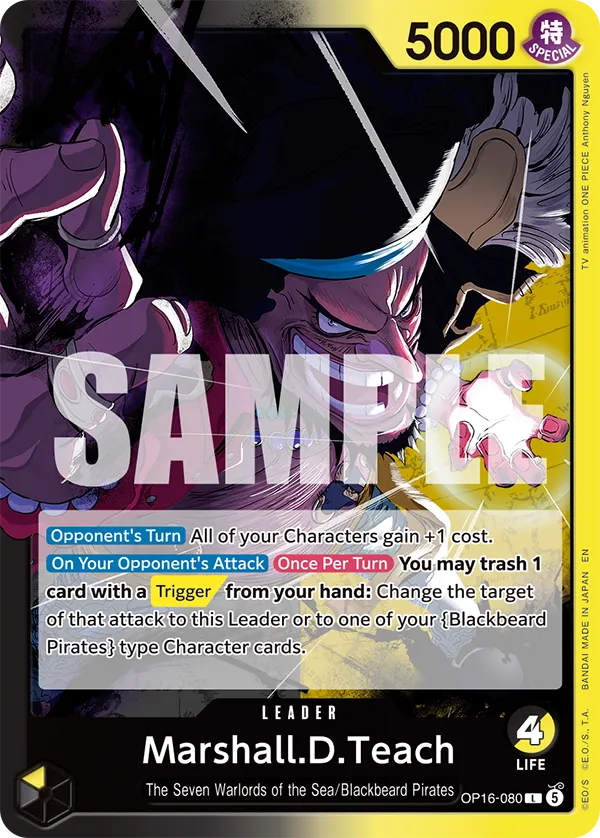
In OP-16, Teach arrives as a Black/Yellow Leader. The set lets you play the betrayer who built the gallows. The teaching is older than the manga: every great tragedy is set in motion by a small, private wickedness long before the crowd ever gathers.
A father dies on his feet: Whitebeard's last sentence
Edward Newgate — Shirohige, Whitebeard — was the strongest man in the world, and he came to Marineford for one thing only. Not treasure. Not conquest. A son.
What follows is the cruelest arithmetic in the series. The Marines wounded him without count — sword, cannon, and gunfire, dozens of holes through his enormous frame. Akainu's magma drove through him. And then, when the Marines had broken his body but not his will, his own former crewmate Blackbeard arrived with his pirates and delivered the killing blow. Newgate was struck down by the Marines first and finished by the Blackbeard Pirates after — that order matters, and the set's lore honors it.
Yet he did not fall. He died on his feet, his corpse standing upright with not a single wound on his back, because a man like Newgate does not turn from his enemies even in death. And with his last breath he gave the world a gift disguised as a curse: "The One Piece is real."
One sentence. The treasure exists. Gol D. Roger told the truth. With those words a dying king re-lit the Great Pirate Era he had spent his life containing.
The teaching: a father's final act was not vengeance. It was inheritance — he spent his death to hand the next generation a reason to sail.
Ace, Akainu, and the fist meant for a brother
The scaffold was nearly empty. Ace had been freed. The Whitebeard forces were turning to retreat with both of Roger's and Newgate's heirs alive. And then a sentence — a single taunt against Ace's blood, his father, the name he carried — stopped him from running.
Portgas D. Ace turned back to face Sakazuki, the Admiral Akainu, a man whose body becomes magma. Akainu struck not at Ace, but at Luffy — at the younger brother. And Ace did the only thing a brother does. He stepped into the path of the fist and took the magma through his own chest so that it would never reach Luffy.
He died in his brother's arms. His last words were not despair but gratitude — thanks for being loved, thanks for being his brother. In the architecture of Japanese tragedy this is the precise hinge: the death is not punishment, it is devotion made absolute. Ace chose it. That is what makes it unbearable, and what makes it sacred.
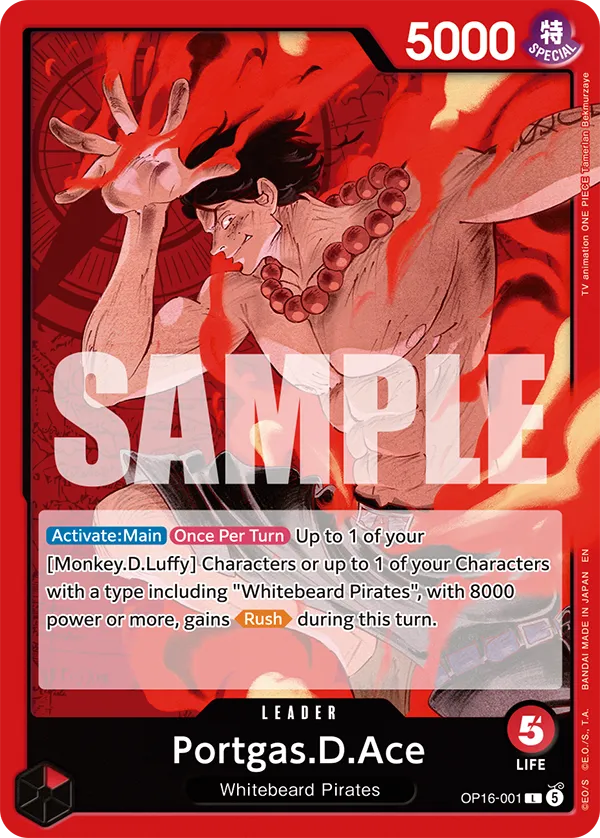
In OP-16, Red Portgas D. Ace stands as a Leader — the executed man, recast as the heart of a playable deck. There is a strange mercy in that. The card game gives Ace what the story could not: a board on which he can win.
The teaching: love that costs nothing teaches nothing. Ace's fire was inherited the moment it went out.
The Will of D.: light inherited through death
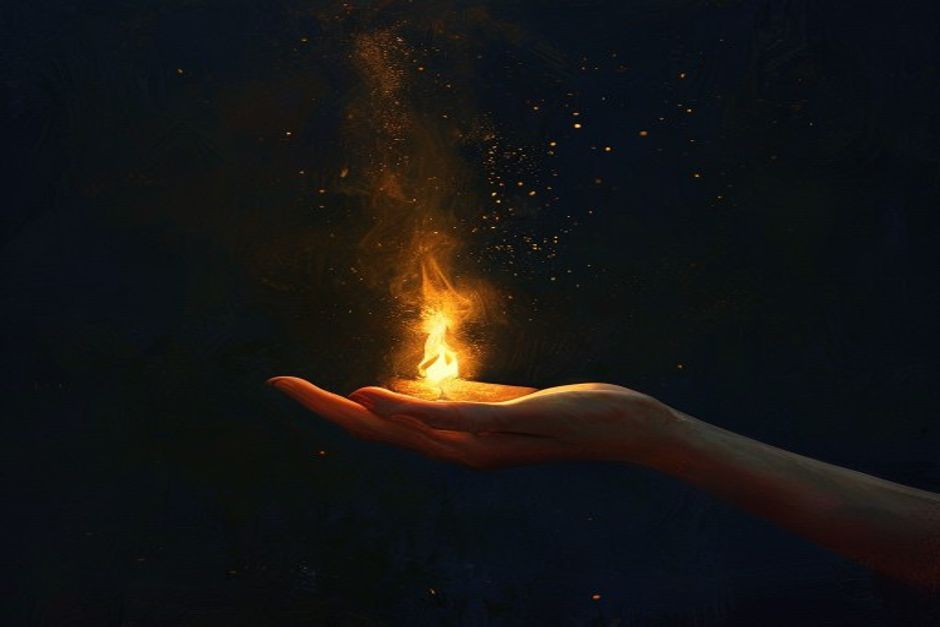
Now we come to the light, because a campfire is no good if it only shows the dark. The light in Marineford is not a rescue. Everyone you love still dies. The light is a letter — a single initial that more than one character carries between their names.
It is called the D. no Ishi — the Will of D. Gol D. Roger. Monkey D. Luffy. Portgas D. Ace. Marshall D. Teach. The World Government fears these people across centuries, and Oda has never fully explained why. What the reader is shown, again and again, is this: those who carry the D. laugh in the face of their own deaths, and they pass something forward when they go.
This is the structure I was raised to understand as mono no aware — the quiet ache at the passing of things, and the beauty that the passing makes possible. Marineford is not nihilism. Nihilism says the deaths meant nothing. Marineford says the opposite: Ace dies, and Luffy carries his fire; Whitebeard dies, and the whole world inherits his last sentence.
The torch is the point. Loss is the engine. The flame you are watching right now was lit from a flame that went out.
The teaching: in this story, death is not where the light ends. It is how the light changes hands.

One man ends a war: Shanks walks onto the field
How does a world war stop? Not with a treaty. With one man's presence.
When the killing had reached its limit and Akainu hunted the retreating survivors, the Red-Haired pirate Shanks — an Emperor of the Sea, the same man who once gave a child a straw hat — arrived at Marineford and demanded both sides lay down their weapons. He had not fought all day. He arrived clean, and that was the point: a man whose mere standing on the field outweighed an entire battle still burning.
He claimed Whitebeard's and Ace's bodies for honorable burial. He faced down the Marine command. And the war ended — not because either side won, but because someone with the authority to be obeyed chose mercy over the last drop of blood.
This is rare and worth marking. In a saga that worships strength, the most powerful gesture in its darkest arc is a man using his power to make the killing stop. Shanks does not appear as a Leader in OP-16 — the set's roster is the war's combatants, and he came to end the war, not wage it. His absence from the Leader list is, itself, a kind of fidelity.
The teaching: the highest use of strength is the strength not to use it.
Pick a side: building the executioners or the doomed crew
Here is where lore becomes the table. OP-16 ships six new Leaders, each pulled from the Marineford roster, and choosing one is choosing your role in the execution.
- Red Portgas D. Ace — the condemned; aggressive, fire-themed, racing the clock the way Ace raced his.
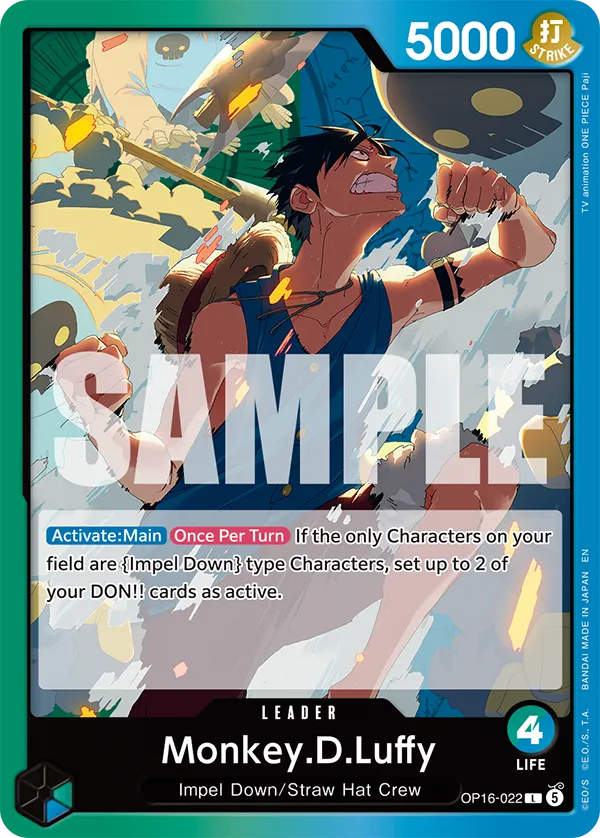
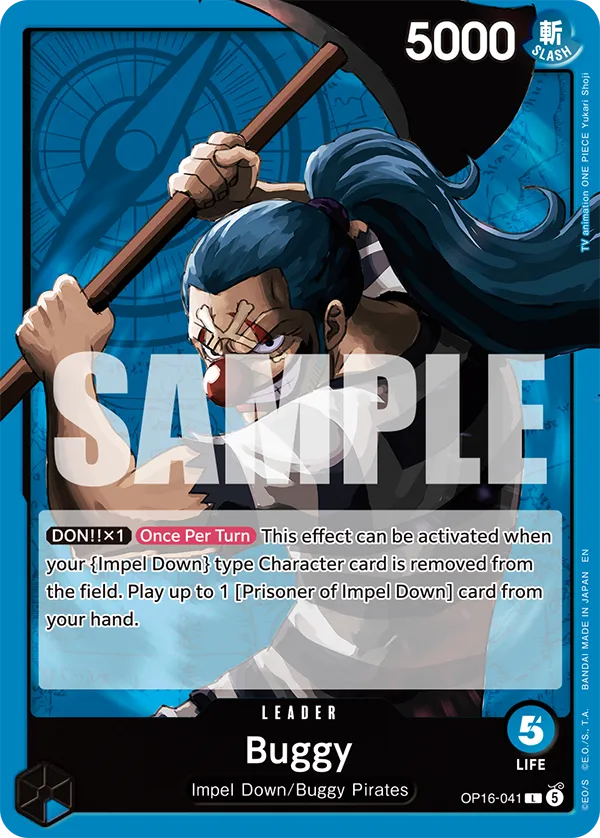
- Blue/Green Monkey D. Luffy — the rescuer, in his pre-war Impel Down form, fighting to reach a brother.
- Blue Buggy — the accidental escapee, comedy threaded through catastrophe.
- Purple Sengoku — the Fleet Admiral; the State, deck-built as control.
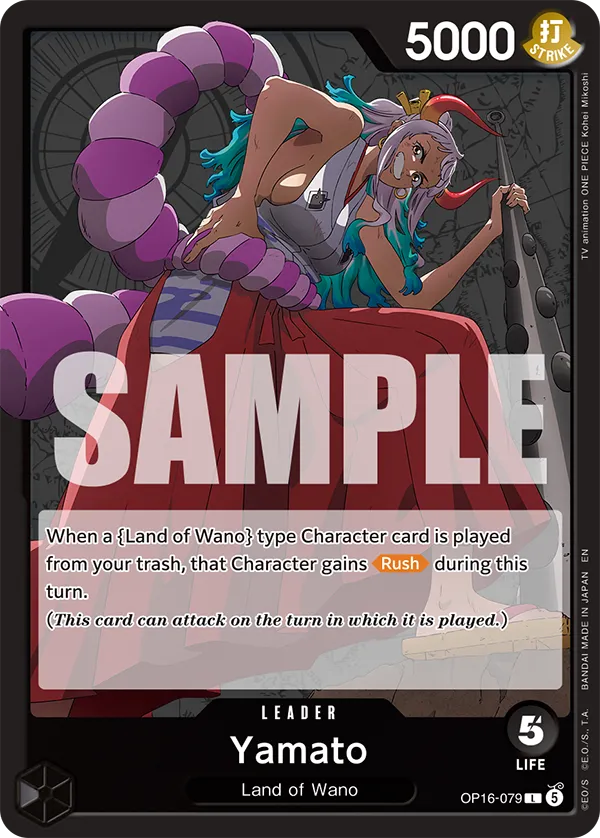
- Black Yamato — inheritor energy, a thematic bridge to the Will of D.
- Black/Yellow Marshall D. Teach — the betrayer who built the gallows.
The chase cards are the three Admirals — Akainu (Sakazuki), Aokiji (Kuzan), and Kizaru (Borsalino) — rendered as Manga Rare / Comic-style parallels. Early Japanese singles for these ran into hundreds of dollars in week one; treat those figures as volatile and assume they will settle.
For the table captain: a Sengoku or Admiral build literally plays the executioners — board control, attrition, the State grinding the field down. An Ace or Luffy build plays the doomed crew — tempo, racing damage, spending resources to reach a goal before the clock runs out, exactly as the arc does. Tell your pod which side you chose. The story is already in the cards; let it be in the match.
The teaching: a deck is an argument about who you would have been on that day.


The picks
Some links below are affiliate links — as an Amazon Associate, Puzzlewick earns from qualifying purchases, at no extra cost to you. It never changes a pick.
 6 photos
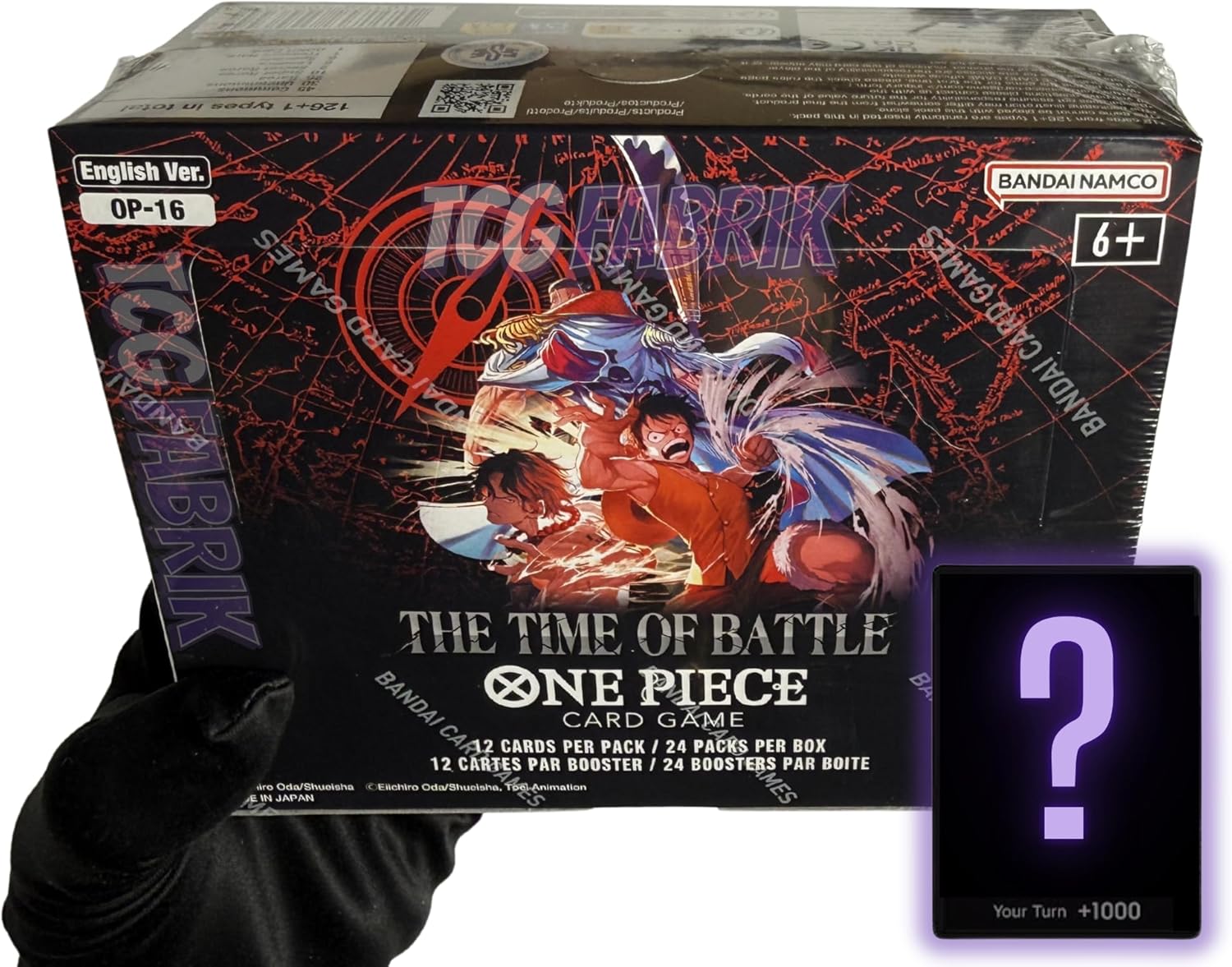
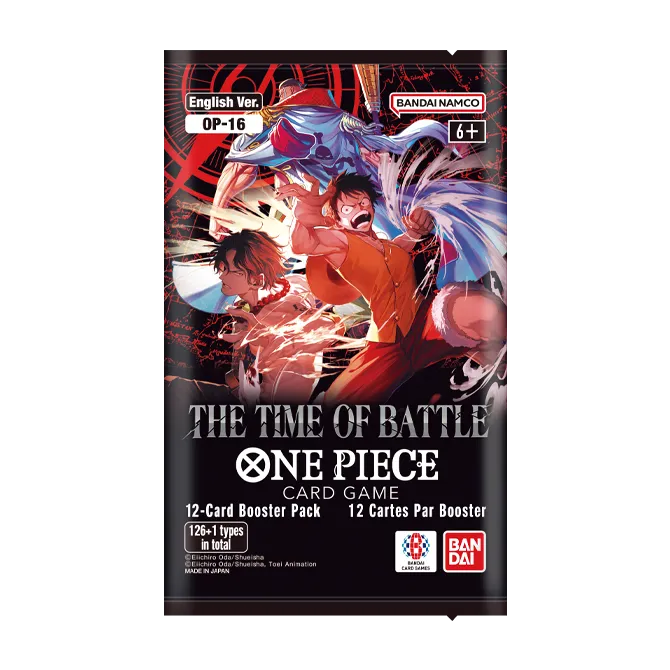
 One Piece Card Game OP-16 "The Time of Battle" Booster Box (24 packs)
This is the box built from One Piece's darkest day, and that is exactly why it moves. A booster box is twenty-four packs — enough to draft the six Marineford Leaders into the start of a deck and to chase the three Admiral parallels that anchor the set's value. Note the price honestly: One Piece booster boxes have historically carried a roughly $120 MSRP framing, but that is not what mid-2026 boxes actually trade for. Real sealed market sits closer to $220–280 — English boxes around $250–260, with Japanese imports running as low as roughly $222 lowest-ask. Confirm before you click whether a given listing is the English (Global) printing releasing June 12, 2026, or a Japanese import; both exist, they are not interchangeable for English-format play, and the import is often the cheaper sticker. Buy it because you want to open the war yourself. If you only want one Admiral, singles will be the calmer path.
- Six Marineford-roster Leaders in one box — build the executioners or the doomed crew
- The three Admirals (Akainu, Aokiji, Kizaru) as the chase, driving genuine demand
- Lands in Bandai's worldwide-simultaneous era, narrowing the old JP-vs-EN gap
- Sealed-box opening is the most lore-faithful way to enter the set
- Real market price runs well above the historical ~$120 MSRP framing — budget $220–280
- English vs Japanese-import boxes are easy to confuse at checkout
- Admiral single prices were volatile in week one and will likely settle
- Sealed product is a luck wager, not a guaranteed chase pull
Questions, answered
What is OP-16 "The Time of Battle" based on?
OP-16 is the One Piece Card Game booster set built from the Summit War of Marineford (the Paramount War) — the arc in which Portgas D. Ace is publicly executed and Whitebeard dies on his feet. Its Leaders and characters are drawn from that single battle's roster.
When does OP-16 release in English?
The English (Global) set releases June 12, 2026, with pre-release events June 5–11. The Japanese version launched earlier, on May 30, 2026, reflecting Bandai's move toward worldwide-simultaneous timing.
How much does an OP-16 booster box cost?
Despite a historical ~$120 MSRP framing for One Piece boxes, real mid-2026 sealed market runs roughly $220–280. English boxes have traded around $250–260; Japanese imports as low as about $222 lowest-ask. Prices are volatile near launch — verify before buying.
Who are the six new Leaders in OP-16?
Red Portgas D. Ace, Blue/Green Monkey D. Luffy (Impel Down form), Blue Buggy, Purple Sengoku, Black Yamato, and Black/Yellow Marshall D. Teach (Blackbeard). Each is taken from the Marineford battle, so deckbuilding means choosing a side of the war.
What are the chase cards in OP-16?
The three original Marine Admirals — Akainu (Sakazuki), Aokiji (Kuzan), and Kizaru (Borsalino) — rendered as Manga Rare / Comic-style parallels. Early Japanese singles ran into the hundreds of dollars in week one; expect those figures to settle over time.
How did Whitebeard actually die at Marineford?
He was wounded extensively by the Marines first — sword, cannon, gunfire, and Akainu's magma — and was then finished by the Blackbeard Pirates who arrived afterward. He died standing, with no wounds on his back, declaring "The One Piece is real" and re-igniting the Great Pirate Era.
Is OP-16 a good set for new One Piece TCG players?
Yes — it offers six themed Leaders that map cleanly onto recognizable archetypes (aggro Ace, tempo Luffy, control Sengoku), so a beginner can pick a side of the lore and build toward a coherent playstyle. Buy singles or a starter-friendly amount before committing to a full sealed box.
Kenji's verdict
OP-16 is the rarest thing in a card game: a set that asks something of you. It takes One Piece's most traumatic day — a public execution, a father butchered, a brother's fist meant for someone else — and presses it into a board you can shuffle. The light is real and worth carrying: the Will of D., the inherited torch, the one Emperor who used his strength to stop the killing. Buy the box if you want to open that war honestly, and pay the real market price (closer to $250 than to the $120 MSRP myth) rather than chasing a single fear-priced Admiral. Then sit at the table, choose the executioners or the doomed crew, and tell your pod which side you would have stood on. The story is already in the cards. Let it be in the match.
Sources: en.onepiece-cardgame.com, nerdbeak.com, tcgplayer.com, pricecharting.com, onepiece.fandom.com, onepiece.fandom.com, fujicardshop.com
The Sensei · keeper of the loreEvery object has a lineage. Let me tell you its story.