Arkham Horror LCG Complete Collection Guide: Every Box, Campaign, and Expansion
The definitive 2026 Arkham Horror LCG buying guide: what you need, what works together, phased purchases, spoiler-light campaign stories, and Margo's verified first picks.


AI-assisted research and drafting in Margo’s voice · reviewed by Robert Pruitt · how this guide was made
Last editorial refresh: 2026-06-27 Gold-standard QA: 2026-08-13 15 sources reviewed Affiliate links checked during gold-standard pass

The short answer
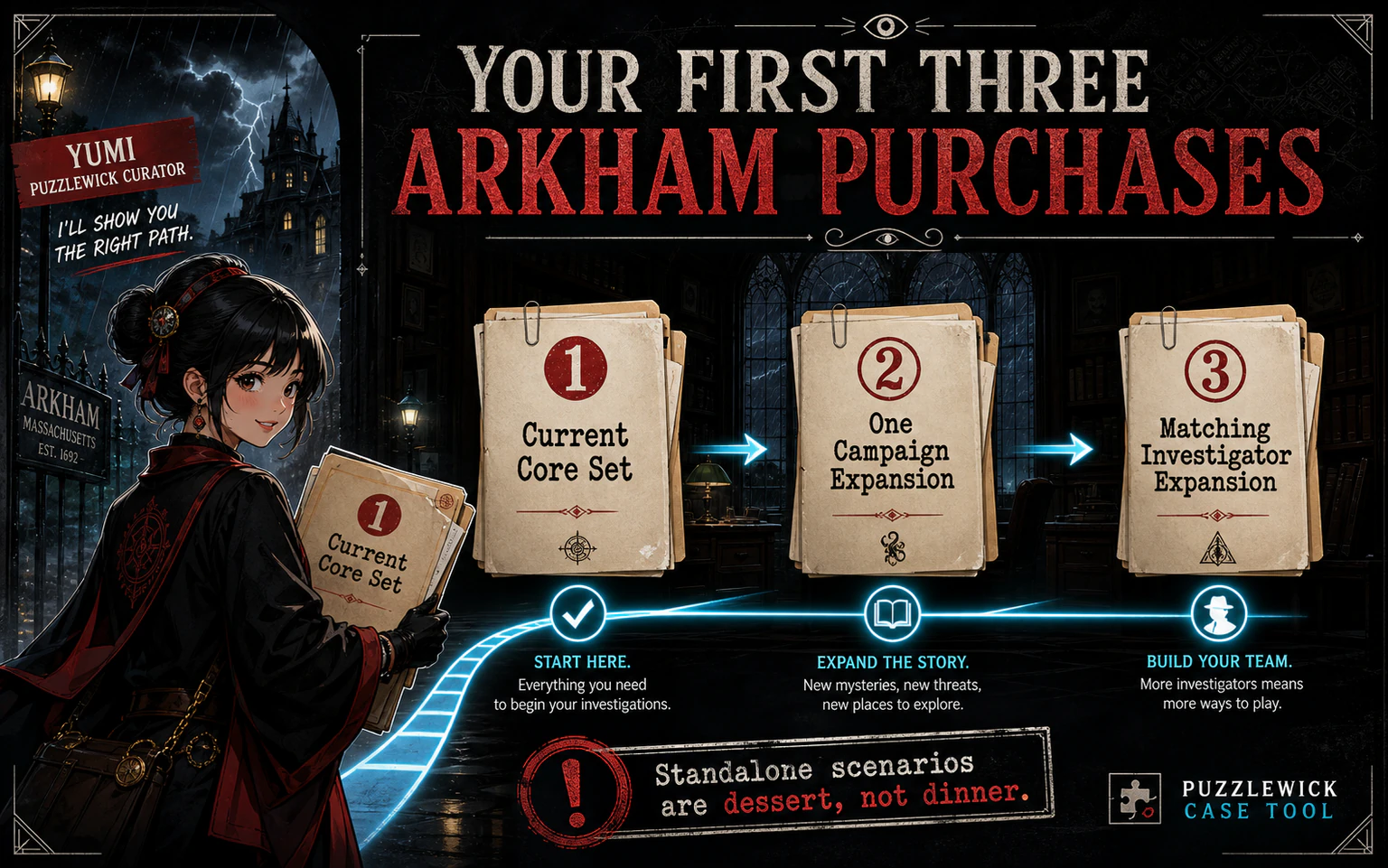
Buy the 2026 Arkham Horror: The Card Game Core Set first. It is the current evergreen entry point, supports 1-4 players, and includes the three-scenario Brethren of Ash campaign. Play that before buying more. If it earns a second purchase, add one $18.99 evergreen Investigator Deck in your favorite class and one complete Campaign Expansion. Our first-campaign pick is The Path to Carcosa when found near its original $69.99 MSRP; Edge of the Earth is the gentler cinematic alternative. One compatibility warning matters: older campaigns expect encounter cards from the 2016/2021 core, so 2026-core owners must use the official Arkham Grimoire substitutions or Fantasy Flight's print-and-play legacy encounter sets.
Decision map
Choose in thirty seconds
every new player in 2026
the strongest first full story
a first combat-focused Phase Two upgrade
Crisp answer first, because this product line punishes vague shopping advice: you do not need a complete collection, five starter decks, sleeves for a thousand cards, or matching Campaign and Investigator boxes to begin. You need one 2026 Core Set and an evening you can afford to lose to bad decisions. The record also needs a correction. Commonly claimed: the 2026 Core is the first one-box version for four players. Not supported. The 2021 Revised Core already served 1-4 players from one box. What changed in 2026 is the evergreen starting point, the encounter-card foundation for Chapter Two, five mechanically new investigators, and a new introductory story. I checked the current Fantasy Flight catalog, the March 2026 Arkham Grimoire, ArkhamDB, community buying threads, and campaign polls so the path below reflects what a new investigator can actually buy and combine today.
Start here, then go deeper
You are in the right cabinet.
 ✒ Universe HubArkham Horror Universe: the whole buying pathStart with the interactive buyer intake: separate the 2026 Chapter Two Core from Chapter One legacy boxes and the entirely...
 ☾ Topic PathCooperative Horror Games: compare the whole shelfCooperative horror works when the rules pressure the story without burying the table. This cluster maps what to buy, how campaigns...
 MasterclassMythos: Arkham Horror Masterclass Vol. I - The World Beneath the WorldFrom Lovecraft country and the fictional Necronomicon to the 1987 board game, the 2005 revival, the living card game, and Chapter Two:...
What do you actually need to start Arkham Horror LCG?
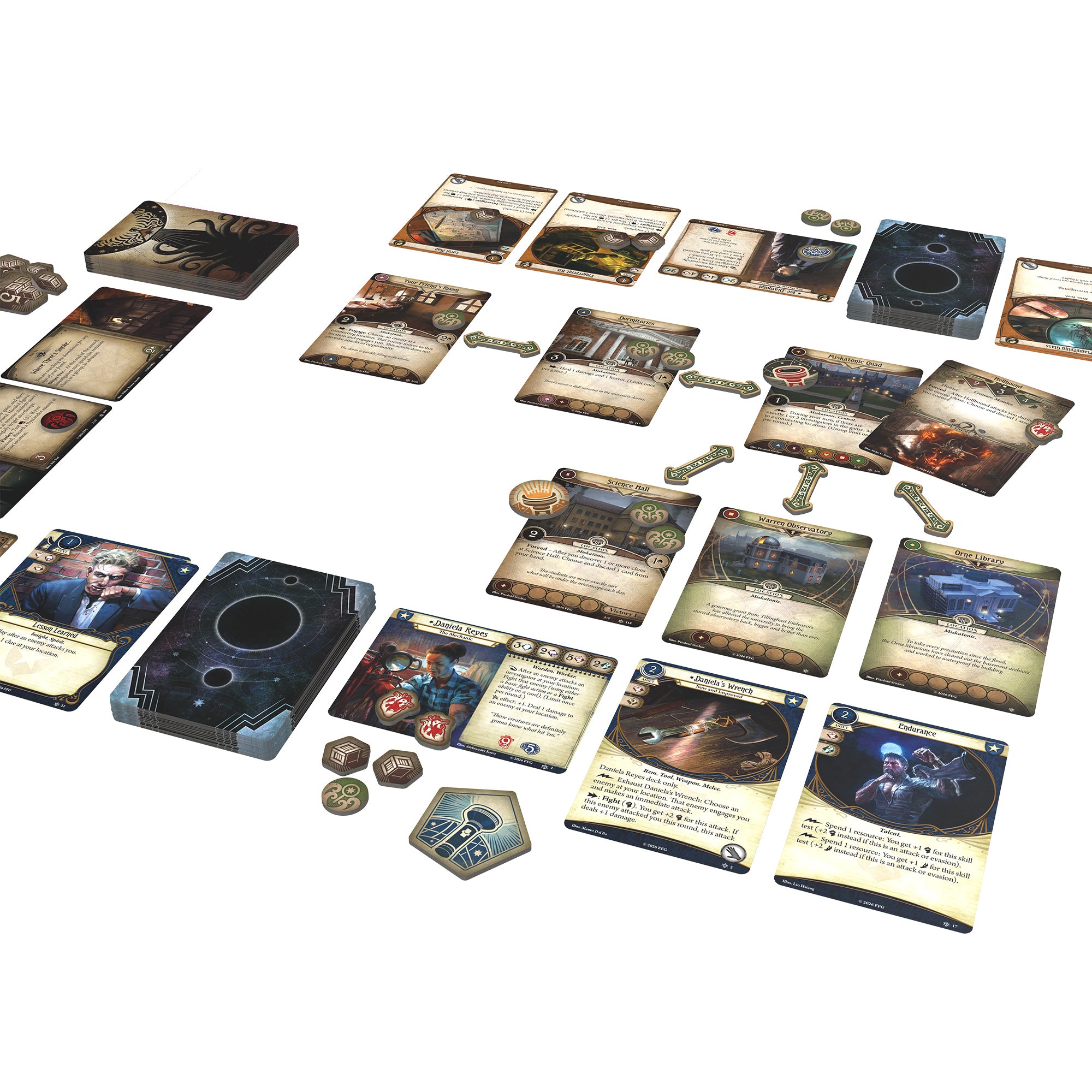

One 2026 Core Set. Nothing else is required for your first campaign. The box contains the investigators, player cards, encounter cards, tokens, chaos bag, rules, and all three scenarios of Brethren of Ash. Fantasy Flight released it on March 20, 2026 as the evergreen beginning of Chapter Two. It is a complete trial of the system, not merely a deckbuilding kit.
Your first evening should answer three questions before your cart answers them for you: - Do you enjoy drawing a chaos token after doing the probability correctly? - Do you enjoy improving a personal deck between linked scenarios? - Does your group enjoy a story where a bad result changes the record instead of demanding an immediate restart?
If two of those answers are no, stop at the Core. You bought a complete three-scenario game and learned something useful. If all three are yes, Arkham has earned Phase Two. Sleeves, binders, playmats, premium tokens, five investigator decks, and a full campaign are optional. A phone or notebook for the campaign log is useful; Arkham Cards is convenient, but paper is perfectly valid.
The first purchase is a test, not an oath.
What goes together: Chapter Two, legacy campaigns, and player cards
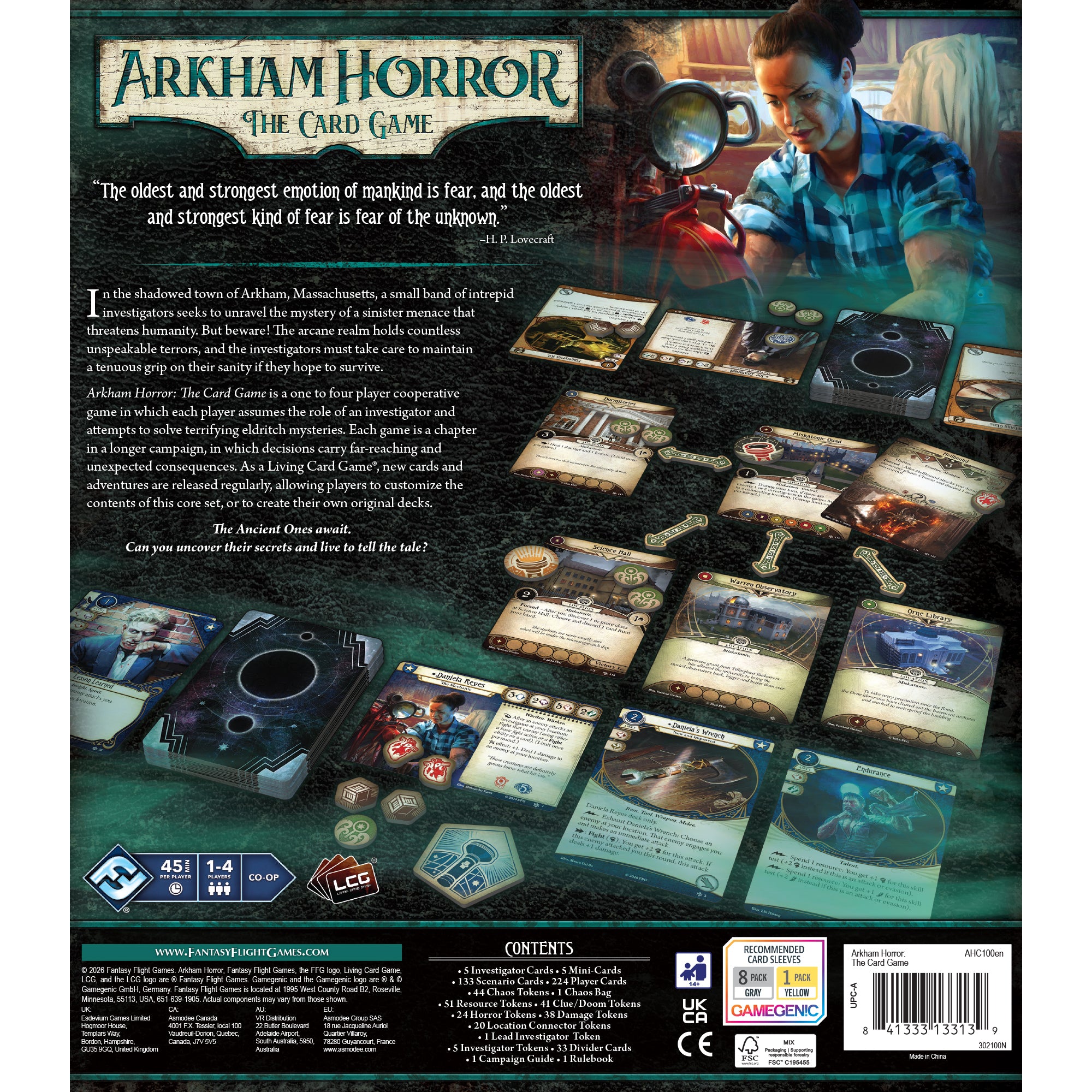
The clean rule is this: player cards mix across the whole game; encounter sets do not always line up automatically. Fantasy Flight explicitly says the 2026 Core is the same game, not a new edition, and its player cards can mix with previously released products. That is the easy half.
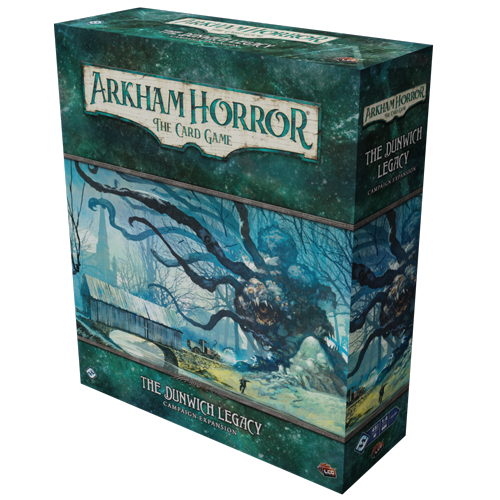
The difficult half is scenario setup. Chapter One campaigns, from The Dunwich Legacy through The Drowned City, were designed to borrow encounter sets from the 2016 original or 2021 Revised Core. The 2026 Core replaced those sets with a new Chapter Two library. Page 46 of the official Arkham Grimoire provides a substitution table so the new Core can run most legacy scenarios. It also warns that the substitutions can be thematically strange and may alter intended play.
For the closest legacy experience, download Fantasy Flight's official print-and-play Chapter One encounter sets, sleeve the paper cards in front of spare cards, and use those. The Grimoire also records exceptions. The Witching Hour, for example, needs specific locations with no Chapter Two equivalent. That is why the phrase fully compatible requires a footnote. Margo likes footnotes. They keep expensive sentences honest.
Campaign Expansion vs Investigator Expansion vs Investigator Deck


These names describe three different purchases. Read the noun after the title.
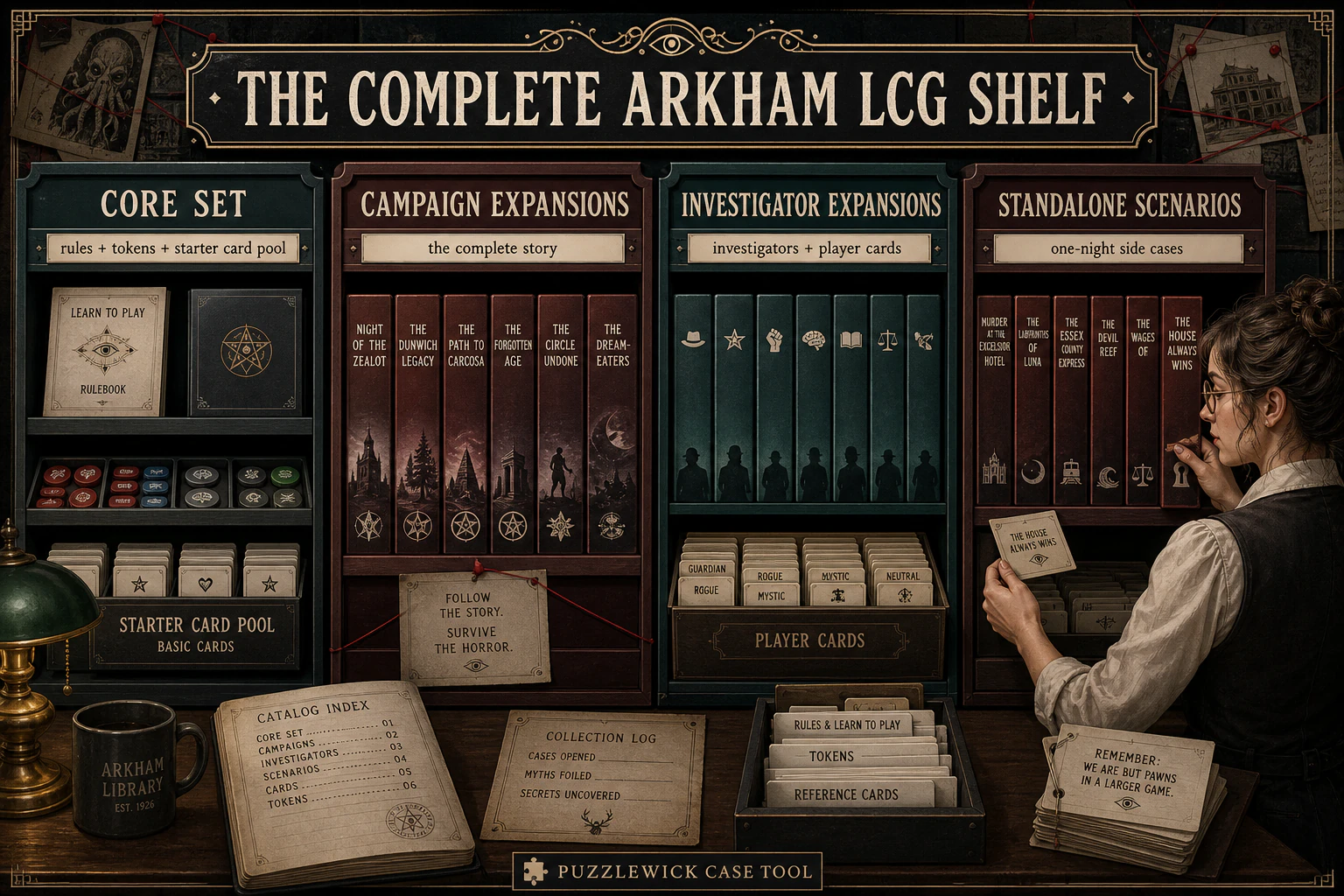
- Campaign Expansion: the story you play. It contains scenario, location, act, agenda, and encounter cards for a complete campaign. It does not normally provide a new pool of player cards.
- Investigator Expansion: a broad deckbuilding library. It contains several investigators and player cards that can be used in any campaign. It does not contain the matching campaign story.
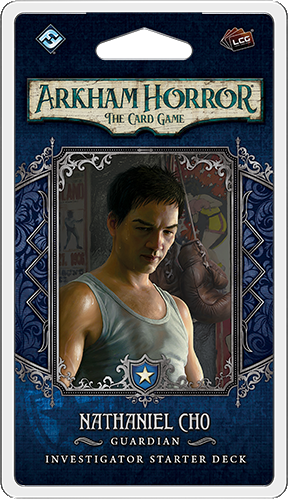
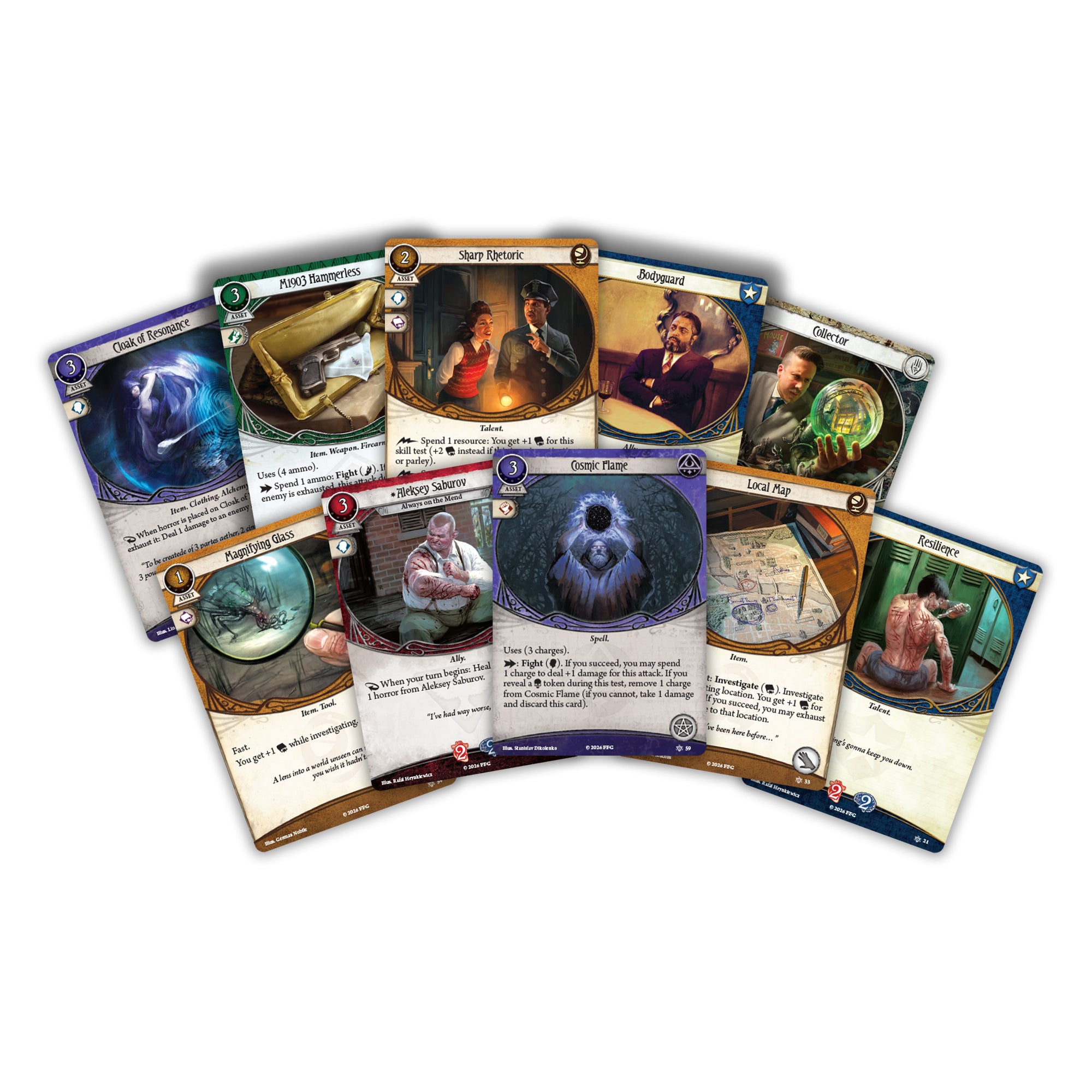
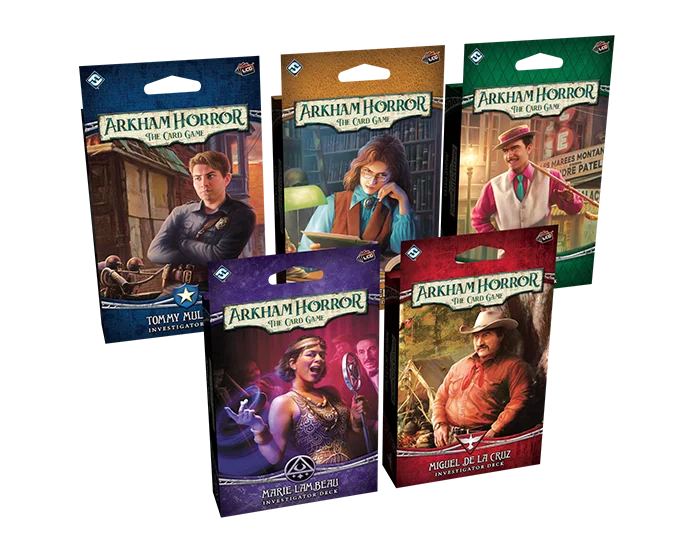
- Investigator Deck: one ready-to-play investigator with a legal level-zero deck and upgrade cards. The five evergreen 2026 decks each contain 60 cards, one mini card, and a rulesheet. They still require a Core Set and a scenario or campaign. Verified individual listings: Tommy Muldoon, Carolyn Fern, Andre Patel, Marie Lambeau, and Miguel de la Cruz.
You may pair any Investigator Expansion or Investigator Deck with any campaign. Matching names are thematic packaging, not a gameplay requirement. Buying the Drowned City Investigator Expansion does not unlock the Drowned City story; buying the Campaign Expansion does.
Avoid a box labeled only Deluxe Expansion and avoid loose Mythos Packs unless you deliberately collect the old seven-product release model and can verify every pack in that cycle. A Deluxe Expansion generally holds only the first two scenarios and part of the player-card pool. One loose Mythos Pack is usually one chapter without the rest of the book.
Phase 1: how to play the Core before buying more
Start Brethren of Ash on Easy or Standard. Easy is not a children's mode; the rulebook describes it as the mode for experiencing the story. Arkham tests judgment under uncertainty, and the symbol tokens remain capable of ruining a mathematically respectable plan.
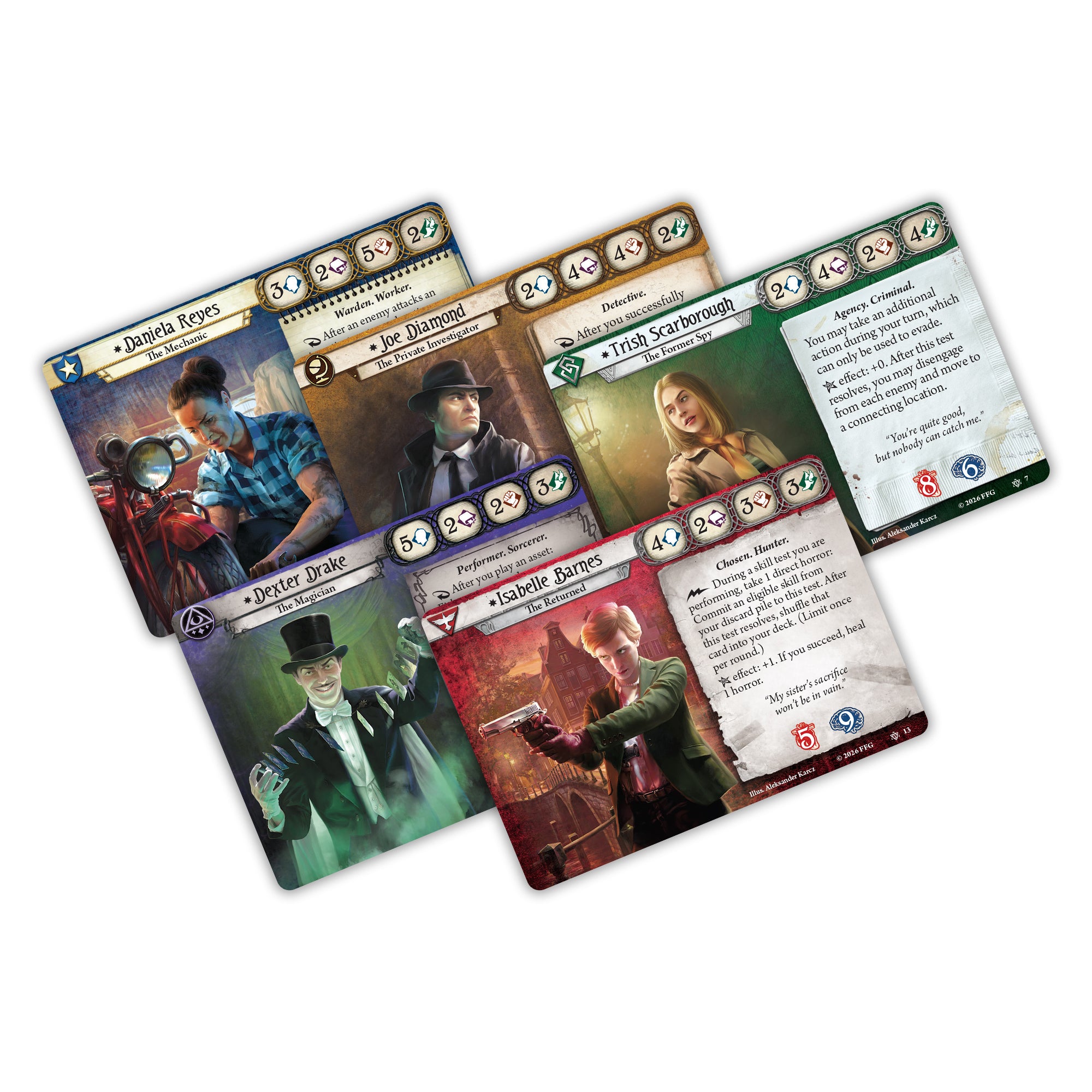
For two players, give the team distinct jobs. One investigator should reliably discover clues; the other should reliably handle enemies. Flexible cards are useful, but two decks that are both almost good at everything often become good at nothing. Use the recommended decks for the first scenario if deckbuilding is slowing the start, then rebuild once you understand actions, skill icons, and resource pressure.
Do not reset a scenario merely because the resolution is ugly. Campaign failure is content. Trauma, missed objectives, and altered setup are how the story remembers you. Reserve a full reset for a rules error that invalidated the game, not an honest loss.
Before scenario two, spend experience together and explain each upgrade aloud. That five-minute ritual teaches the card pool faster than reading every card in advance. It also turns character growth into table culture: the fighter finally buys the weapon everyone survived long enough to fund; the clue-finder quietly replaces the card that betrayed them twice.
Phase 2: the best first campaign and first investigator cards
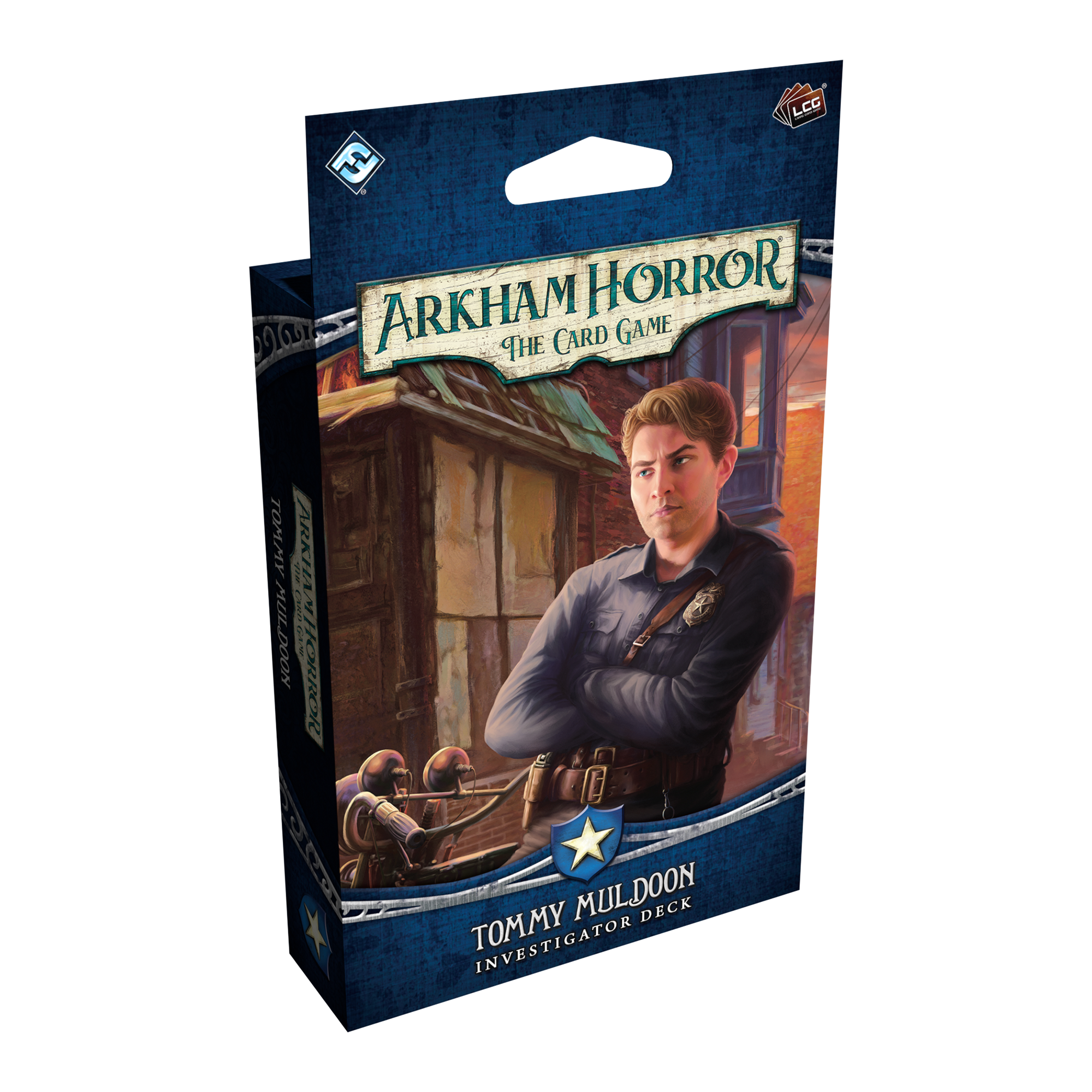
After the Core earns the spend, add one evergreen Investigator Deck and one complete Campaign Expansion. You do not need all five decks. Pick by the job your table lacks: Tommy Muldoon for protecting the group and fighting; Carolyn Fern for clue-finding tied to horror healing; Andre Patel for flexible Rogue play; Marie Lambeau for spell-driven Mystic play; Miguel de la Cruz for event and trap play.
Our first full-campaign recommendation is The Path to Carcosa, if the complete Campaign Expansion is available near its original $69.99 MSRP. Its eight-scenario mystery begins with a disastrous performance of The King in Yellow, moves through disappearances and unreliable memory, and lets Doubt and Conviction reshape the tale. A 2025 community poll shared across Reddit, BoardGameGeek, and major Arkham Discords placed Carcosa first with an average 8.84. Popularity is not proof of personal taste, but that margin is useful evidence.
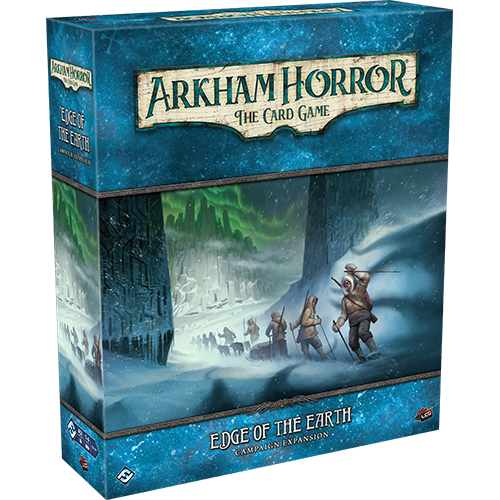
If Carcosa is scarce or inflated, choose Edge of the Earth for an expedition with a readable structure, memorable companions, and a strong cinematic hook. Dunwich is mechanically simpler and historically the traditional next step, but Fantasy Flight now lists its repackaged boxes as out of print. Buy the complete box at a sane price, not the idea of a canonical order at any price.
Phase 3: choose campaigns by mood, not release order
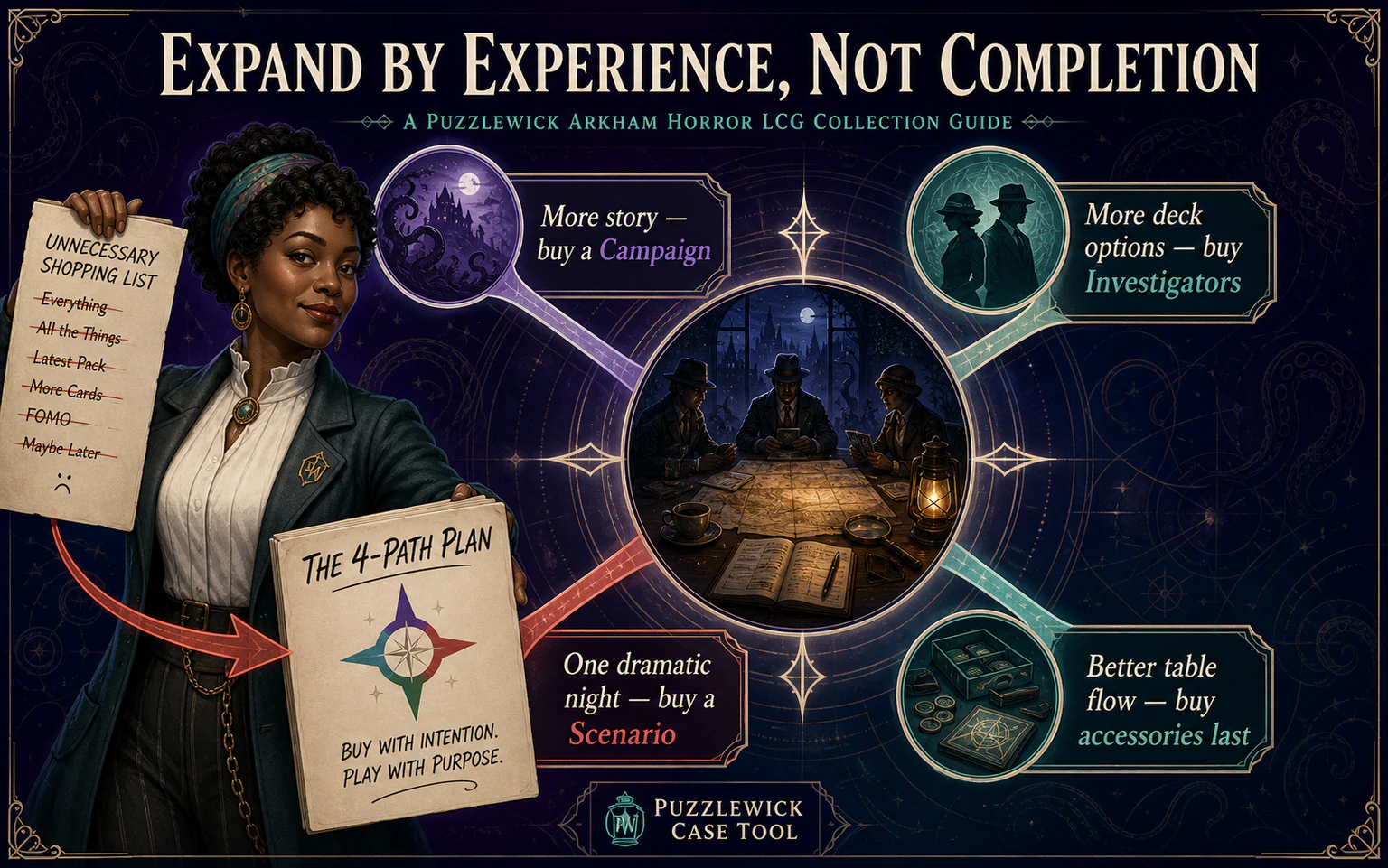
Arkham campaigns are largely self-contained. You are not obliged to buy them chronologically, and the investigator you played in one campaign does not need to continue into the next. Choose the horror you want to inhabit for eight evenings.
Best first story: The Path to Carcosa. Psychological uncertainty, theatre, and a campaign that changes how you interpret what happened.
Best cinematic expedition: Edge of the Earth. Antarctica, doomed companionship, branching chapters, and a strong sense of one dangerous journey.
Best classic tutorial campaign: The Dunwich Legacy. Missing professors, rural dread, and comparatively direct scenarios. Its design shows its age, but it teaches the full-campaign rhythm cleanly.
Best high-adventure challenge: The Forgotten Age. A Mesoamerican expedition, supplies, vengeance, and time-bending consequences. Excellent, but harsher on a blind run.
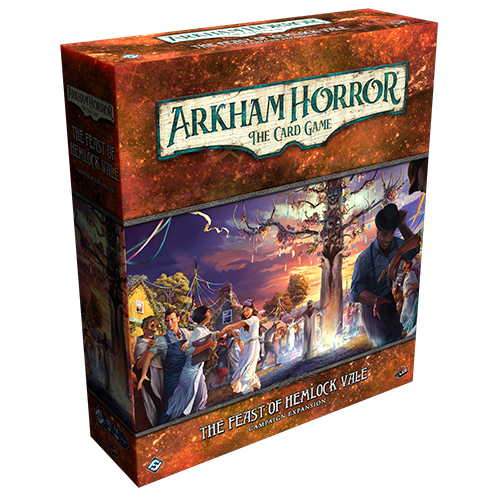
Best folk horror: The Feast of Hemlock Vale. Three days on an island, strange residents by day, mutated wildlife by night, and relationships that alter what you see.
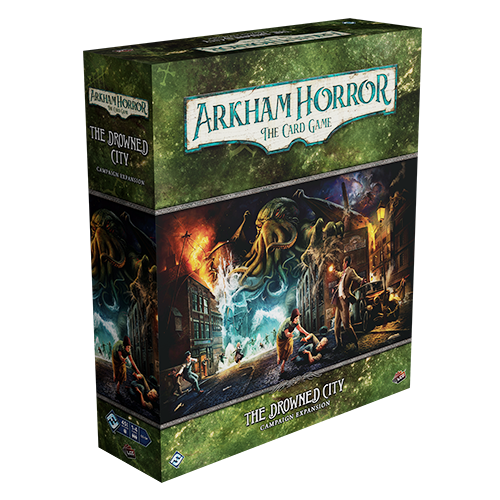
Best late-shelf climax: The Drowned City. A journey to risen R'lyeh, trait-based Tasks, and Cthulhu as an actual culmination. It lands harder after you already understand what Arkham usually asks of you.
The chart is directional, not a difficulty theorem. Player count, deck quality, blind choices, and the chaos bag can move any campaign several places.
Spoiler-light story overview of every full campaign
Here is the archive label for each Chapter One campaign, with the endings left sealed.
- The Dunwich Legacy: Miskatonic professors disappear after surviving an earlier Dunwich horror. You investigate Arkham institutions, travel into rural Massachusetts, and discover that the local problem is not local.
- The Path to Carcosa: a performance of The King in Yellow leaves bodies, gaps, and incompatible memories. The campaign keeps asking whether the horror is real, imagined, or a distinction without practical value.
- The Forgotten Age: an expedition to forgotten ruins destabilizes history. Supplies, exploration, poison, and vengeance make this the pulpiest and one of the least forgiving blind journeys.
- The Circle Undone: a tarot reading, missing people, Arkham witches, and the Silver Twilight Lodge pull you into a feud whose official versions of events do not agree.
- The Dream-Eaters: two linked four-scenario campaigns follow a sleeping party through the Dreamlands and an awake party confronting what crossed over. It can be played as either half or as an interwoven eight-part structure.
- The Innsmouth Conspiracy: you begin with damaged memory in a coastal town full of flooded streets and guarded secrets. Flashbacks gradually reveal why you came, while vehicles and flood pressure keep the investigation moving.
- Edge of the Earth: an Antarctic expedition follows in the frozen wake of a failed Miskatonic mission. Story allies become the emotional and mechanical spine of the journey.
- The Scarlet Keys: people and objects vanish from both reality and memory. A government group sends you around the world to recover paradimensional Keys before the Red Coterie does.
- The Feast of Hemlock Vale: a botanist brings you to Hemlock Isle before a festival. You have three days to know its residents, explore its mysteries, and survive what the island becomes after dark.
- The Drowned City: an antiquarian's offer sends you to the risen city of R'lyeh. Personal Tasks and investigator traits alter the journey before the campaign confronts Cthulhu and closes Chapter One.
Brethren of Ash, inside the 2026 Core, is the Chapter Two prologue: a three-scenario investigation into murders and disappearances in a damaged Arkham. Children of Blood has been announced as the first small Chapter Two campaign expansion; as of this guide's June 27, 2026 research date, it is not yet part of our buying order.
Which player-card purchase adds the most useful options?
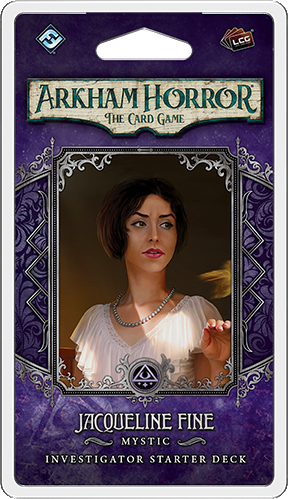
For a new 2026 collection, the highest-value player-card purchase is usually one evergreen Investigator Deck in the class you already enjoy. It is immediately playable, includes campaign upgrades, and avoids asking a newcomer to sort hundreds of cards before the next game. Buy all five only if your regular group needs five independent decks or you already know you enjoy building across every class.
For the first large Investigator Expansion, availability may decide before theory does. The legacy Investigator boxes are increasingly listed as past or out-of-print products by Fantasy Flight. If you find one near MSRP, evaluate the investigators and cards rather than buying its matching campaign out of habit. The Dunwich Legacy Investigator Expansion is traditionally recommended because many cards are straightforward staples, but scarcity can erase that value.
The Drowned City Investigator Expansion remains a strong current option: six investigators and Specialist cards that care about investigator traits. It is broad and interesting, but its card interactions are less introductory than a single evergreen deck. My order is therefore precise: one ready deck first, one large investigator box after your first full campaign, then targeted purchases guided by deck lists you actually want to build.
Use ArkhamDB with collection filters turned on. A deck that requires six out-of-print boxes is inspiration, not a shopping list.
How to make Arkham more fun, faster, and less fragile
The best Arkham accessories are social agreements. Components come second.
Read story text aloud, but assign one reader. Rotating every paragraph sounds democratic and destroys rhythm. Let the strongest dramatic reader handle narrative; let a second player run setup and verify encounter sets.
Name a lead investigator, not a table commander. Rules give the lead investigator tie-breaking duties; they do not grant ownership of everyone else's actions. Each player should state their plan, then accept the token they draw. Cooperative games become tedious when one confident person plays four decks.
Use a visible doom check. Put the doom threshold marker above the agenda and have the mythos lead say current doom and threshold at the start of each round. Most accidental losses are clerical, not cosmic.
Keep the campaign log ceremonial. Read each resolution before recording it. Date the entry. Add one sentence of table lore: who failed the critical test, which ally survived, what ridiculous card became sacred. These notes make a replay feel like a second expedition rather than recycled content.
End on an upgrade draft. Even if the scenario runs late, spend experience before the group disperses. Give each player two minutes to explain one tempting upgrade and one card leaving the deck. The campaign remains alive between sessions.
For atmosphere, use low instrumental music without lyrics, one warm lamp, and enough direct light to read card text without eye strain. Horror is improved by shadow; rules are not.
Setup, storage, sleeves, and the accessories worth buying
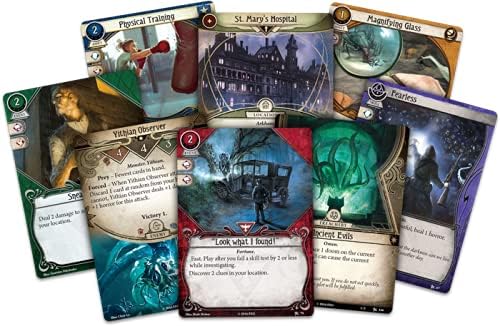
The Core's chaos bag is functional. Use it before upgrading it. The first accessory I would buy is not premium tokens; it is clear organization. Keep scenario cards sorted by encounter-set icon, player cards sorted by class and level, and the currently active campaign in its own labeled row. Every future setup becomes easier.
Sleeve the cards you shuffle and handle constantly: investigator decks, encounter deck, act, agenda, locations, and frequently used reference cards. You do not need to sleeve an entire growing collection on day one. Standard American hobby sleeves often do not fit; Arkham cards use standard card-game dimensions, commonly sold around 63.5 x 88 mm. Check the sleeve manufacturer's fit guide before ordering in bulk.
Small coin capsules can protect chaos tokens, but test one token first because capsule tolerances vary. A second cloth bag is useful only if the included bag catches tokens or makes them difficult to mix. Card stands for act and agenda cards improve table sightlines at four players. A large neutral playmat helps keep locations aligned, but printed zones become restrictive when campaigns use unusual maps.
Storage should follow play, not ownership. Keep your active investigators, current scenario, campaign log, chaos bag, and token tray together so the next session begins in minutes. Archive completed campaigns behind them. A collection that is beautiful but exhausting to retrieve is display, not a game.
How to use the Arkham Grimoire and rules without stopping the story
Download the current Arkham Grimoire before your first legacy campaign. It is not merely errata. The March 2026 document contains product icons, deckbuilding clarifications, encounter-set substitutions, and exceptions that matter when a 2026 Core meets Chapter One content. Page 46 is the compatibility page worth saving locally.
At the table, use a three-step rules protocol: 1. Read the exact card again, including timing words such as when, after, at, and instead. 2. Check the Rules Reference or Grimoire index for the named term. 3. If the answer still takes more than three minutes, make the most conservative ruling, write the question down, and continue. Verify after the scenario.
This preserves atmosphere without training the group to guess forever. Correct the campaign record before the next session if the answer changes a persistent result. For minor action costs or enemy timing, note the correction and move on.
The official substitution table is a playable bridge, not an invisible one-to-one reprint. It maps sets such as Ancient Evils to Cosmic Evils and Locked Doors to Arcane Lock, and it names scenario exceptions. If theme matters more than convenience, use the official print-and-play legacy encounter cards. If speed matters, use the table and accept that the old story may speak with a slightly newer accent.
Out-of-print traps, price discipline, and what not to buy
Fantasy Flight's live catalog now labels many repackaged Chapter One boxes as Past Expansions or Out of Print, including Dunwich, Carcosa, Forgotten Age, Edge of the Earth, Scarlet Keys, and Hemlock Vale. Retail inventory can still exist after that label appears. It does not turn every remaining box into a wise purchase.
Use original MSRP as a restraint, not a promise: campaign boxes were commonly listed at $69.99 and investigator boxes at $44.99. A modest scarcity premium may be acceptable for the exact campaign your group wants. Paying two or three times MSRP because a ranking called it essential is collector panic. No campaign is mechanically required to unlock another.
Before buying a legacy listing, verify all four lines: - The title says Campaign Expansion, not Deluxe Expansion. - The box is in your language. Scenario text is extensive. - The listing is one complete product, not a photograph representing several packs. - A 2026-Core group has a plan for legacy encounter sets: Grimoire substitutions, official print-and-play, or an older Core.
Do not buy a random incomplete cycle, an expensive Return to box without its base campaign, or the joke scenario Barkham Horror at rarity pricing because a marketplace calls it a grail. Rarity describes supply. It does not certify hours of useful play.
The grail route: when a complete Arkham shelf is actually worth it
A complete shelf is worth pursuing only after two full campaigns and one replay. That sequence verifies three separate appetites: the system, the long-form story, and replay through different investigators or choices. Without the replay, completionism can masquerade as enthusiasm for a game you have only consumed once.
A disciplined grail route looks like this: 2026 Core; one evergreen Investigator Deck; one first campaign; a second campaign with a very different mood; one large Investigator Expansion; then selective standalones or older campaigns when available at rational prices. Store each campaign so it can be played, not merely counted.
The shelf becomes extraordinary when the same card pool generates new protagonists across genuinely different stories. Carcosa tests perception. Forgotten Age tests preparation. Hemlock tests relationships and time. Drowned City tests the history you carried into its climax. The expensive object is not one rare box. It is the accumulated ability to choose a setting, build a person, and let the bag write consequences neither the deck nor the players fully control.
But the stop point is legitimate at every phase. Core plus Carcosa is a real collection. Core plus three contrasting campaigns is a deep library. Completion is not a rules state, and no publisher checklist gets to decide whether your shelf is finished.
A complete shelf is a possible ending, not the victory condition.
What experienced tables keep reporting
Recurring owner patterns, synthesized in Puzzlewick's words. Follow each evidence trail to read the original discussion.
You'd only need one campaign to play a lot more Arkham with only the core set as player cards.
The real meat of the game is in the expansion campaigns.
Path to Carcosa takes a commanding lead.
The picks
Some links below are affiliate links — as an Amazon Associate, Puzzlewick earns from qualifying purchases, at no extra cost to you. It never changes a pick.
5 photos Arkham Horror: The Card Game
- Players
- 1-2 · best 2
- Time
- 60-120 min
- Age
- 14+
- Complexity
- 3.56 / 5
- Publisher
- Fantasy Flight Games · 2016
- Designers
- Nate French, MJ Newman
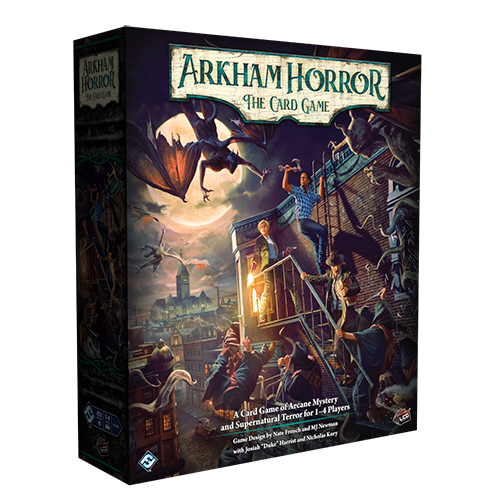
The only mandatory purchase: five investigators, a fresh player-card pool, new Chapter Two encounter sets, and the complete three-scenario Brethren of Ash campaign. Play this box before expanding.
- Current evergreen foundation for future releases
- Complete 1-4 player starting box
- Three scenarios are enough to test the campaign loop
- Legacy campaigns need Grimoire substitutions or old encounter print-and-play cards
- The core card pool alone offers limited long-campaign deckbuilding
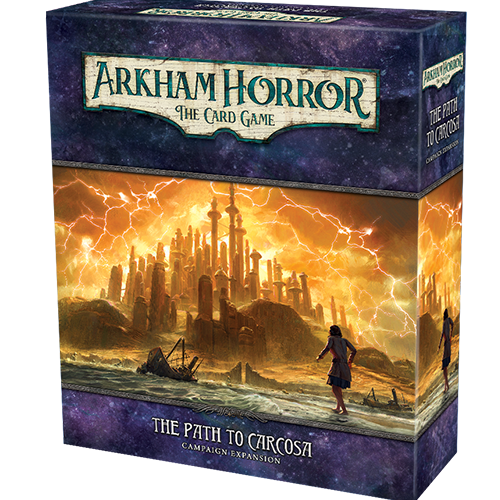
The Path to Carcosa Campaign Expansion
Eight scenarios of theatrical psychological horror, unreliable memory, and branching Doubt versus Conviction. Our first campaign pick when the complete box is available near its original $69.99 MSRP.
- Consistently leads community campaign polls
- Excellent atmosphere without the line's most complicated structure
- Strong replay through narrative uncertainty
- Officially listed out of print
- 2026-Core owners need legacy encounter substitutions or print-and-play cards
 4 photos
 Tommy Muldoon Investigator Deck
Tommy is the cleanest default for a table that needs protection and reliable fighting. The article links all five verified 2026 decks by class; each is a legal pre-built investigator plus campaign upgrades.
- Playable immediately
- Adds upgrades and reusable class cards
- Much cheaper than a large Investigator Expansion
- Requires a Core Set and campaign
- One deck broadens only one class
Edge of the Earth Campaign Expansion
An Antarctic campaign built around a memorable expedition team, branching chapters, and mounting attrition. More text than Dunwich, but a clearer first purchase than the line's open-world experiments.
- Strong companions and expedition atmosphere
- Complete campaign in one box
- Readable structure for newer groups
- Officially listed out of print
- Longer interludes than the earliest campaigns
The Dunwich Legacy Campaign Expansion
Missing professors lead from Miskatonic University to rural Dunwich and beyond. Mechanically direct and historically important, though later campaigns are richer and current stock is inconsistent.
- Straightforward scenarios teach the campaign rhythm
- Classic Arkham setting and pacing
- Eight-scenario complete box
- Officially listed out of print
- Early design is less polished than Carcosa
The Feast of Hemlock Vale Campaign Expansion
Three days on Hemlock Isle pair daytime relationships with deadly nights and mutated wildlife. One of the richest thematic campaigns, but better after the table knows Arkham's baseline.
- Excellent residents and folk-horror atmosphere
- Routes and relationships reward replay
- Ambitious campaign structure
- Officially listed out of print
- Blind difficulty can spike, especially at lower player counts
The Drowned City Campaign Expansion
A trait-sensitive expedition into the risen city of R'lyeh that culminates in the Cthulhu confrontation and closes Chapter One. Current, spectacular, and intentionally not our first-campaign recommendation.
- Still listed as a current expansion
- Personal Tasks change with investigator traits
- Large-scale finale energy
- Its story lands better with campaign experience
- 2026-Core owners still need the legacy encounter solution
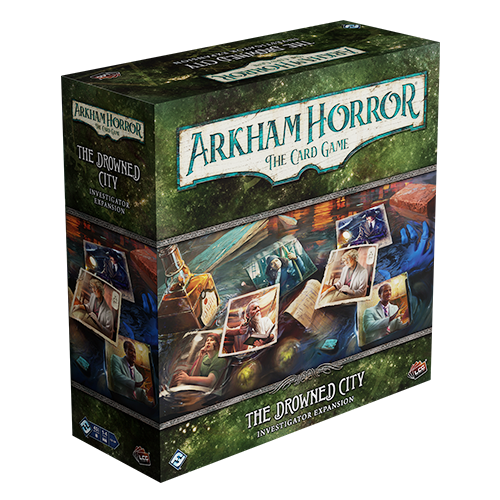
The Drowned City Investigator Expansion
Six investigators and Specialist cards create a broad current-era player-card library. Strong after one full campaign, when you know which traits, classes, and deck shapes interest you.
- Six investigators
- Current official availability
- Specialist cards reward investigator traits
- Less immediately accessible than one pre-built deck
- Contains no campaign scenarios
At a glance
| phase | buy | what it unlocks | estimated spend | stop if |
|---|---|---|---|---|
| 1 - Verify | 2026 Core Set | 5 investigators + Brethren of Ash | $69.99 MSRP | You dislike the chaos bag, deck upgrades, or campaign consequences |
| 2 - Commit | 1 evergreen deck + 1 campaign | A stronger investigator + full-length story | About $158.97 total at MSRP | Your group cannot protect a recurring campaign night |
| 3 - Curate | 1 contrasting campaign + player-card box | Replay, wider builds, a real library | About $273.95 total at MSRP | You are buying shrink instead of scheduling plays |
| Grail shelf | Selective legacy campaigns and standalones | A setting menu for years of campaigns | Variable; scarcity can distort it | A listing exceeds the value of the play it adds |
Questions, answered
What should I buy first for Arkham Horror: The Card Game in 2026?
Buy the 2026 Core Set, SKU AHC100. It is the current evergreen starting point, supports 1-4 players, and contains the complete three-scenario Brethren of Ash campaign. Do not add expansions until you have played it.
Do I need an Investigator Deck to play the 2026 Core Set?
No. The Core includes five investigators and enough player cards to build starting decks. An evergreen Investigator Deck is our recommended second-stage purchase because it gives one stronger ready deck plus upgrades for $18.99 MSRP.
Should I buy the 2026 Core or the 2021 Revised Core?
New players should normally buy the 2026 Core because future Chapter Two scenarios will use its encounter foundation. The 2021 Revised Core remains useful for playing legacy campaigns exactly as designed, and both boxes support up to four players.
Can the 2026 Core play old Arkham Horror LCG campaigns?
Yes, with a compatibility step. Use the encounter substitutions on page 46 of the official Arkham Grimoire or Fantasy Flight's print-and-play Chapter One encounter sets. Some scenarios have documented exceptions, so check the Grimoire before setup.
What is the difference between a Campaign Expansion and an Investigator Expansion?
A Campaign Expansion contains the story and scenarios you play. An Investigator Expansion contains investigators and player cards for deckbuilding. They are independent: you may use any investigator cards in any compatible campaign.
Do the Campaign and Investigator Expansions need to match?
No. Matching titles are convenient product waves, not a requirement. You can play The Path to Carcosa using a 2026 evergreen investigator, cards from The Drowned City Investigator Expansion, or any other legal player-card collection.
What is the best first Arkham Horror LCG campaign?
We recommend The Path to Carcosa when the complete Campaign Expansion is available near its original $69.99 MSRP. It combines strong story, manageable structure, and exceptional replay. Choose Edge of the Earth if you prefer a cinematic expedition or Carcosa is overpriced.
Should a beginner start with The Dunwich Legacy?
Dunwich remains a good, mechanically direct first campaign, but it is no longer the automatic purchase because Fantasy Flight lists the repackaged box out of print. Buy it complete and near MSRP; do not overpay merely to follow release order.
Which Arkham Horror campaign should I not buy first?
Do not start with The Scarlet Keys. Its non-linear world map, time pressure, route dependence, and heavy reading make it much easier to appreciate after you understand Arkham's normal campaign rhythm. The Forgotten Age and The Circle Undone can also be harsh blind introductions.
Are Deluxe Expansions and Mythos Packs still worth buying?
Only for a deliberate old-format collection. A Deluxe Expansion usually contains two scenarios and part of a cycle's player cards; six separate Mythos Packs complete that cycle. New buyers should seek a box explicitly labeled Campaign Expansion instead.
How many sleeves do I need for Arkham Horror LCG?
Sleeve the active investigator decks and current scenario first rather than the entire collection. Count the cards you will shuffle this campaign, then buy standard card-game sleeves using the manufacturer's fit guide. Arkham cards are commonly sleeved at approximately 63.5 x 88 mm.
Is Children of Blood included in this buying order?
Not yet. Fantasy Flight announced Children of Blood in May 2026 as a small Chapter Two campaign expansion, but it had not released by this guide's June 27, 2026 research date. Start with the 2026 Core and evaluate it after release.
Is a complete Arkham Horror LCG collection worth it?
Only after you have played two full campaigns and replayed one. The library is extraordinary for groups that enjoy deckbuilding, persistent consequences, and recurring campaign nights. Completion is unnecessary; Core plus two or three contrasting campaigns already provides years of play.
Margo's verdict
Buy the 2026 Core Set and stop there until Brethren of Ash earns a second envelope. Then add one evergreen Investigator Deck and one complete campaign. Carcosa is our first story pick near MSRP; Edge of the Earth is the clean alternative; Dunwich is a good teacher when found complete without scarcity theatre. Use the Arkham Grimoire or official print-and-play encounter sets for legacy campaigns, never mistake an Investigator Expansion for a story box, and never let a ranking turn an out-of-print product into a compulsory purchase. The grail is not owning every box. It is having exactly enough haunted archive to choose the next story your table will actually finish.
Research ledger 15 sources · reviewed 2026-08-13
Specifications, rules, current product information, community experience, and contrary evidence were checked against the sources below. Commercial links are kept separate from editorial evidence.
- fantasyflightgames.comfantasyflightgames.com/en/products/arkham-horror-the-card-game/products/arkham-horror-card-game-core-set
- arkhamhorror.comarkhamhorror.com/news/ah-tcg-new-core-set-now-available
- fantasyflightgames.comfantasyflightgames.com/en/news/2025/10/31/the-next-chapter-1
- images-cdn.fantasyflightgames.comimages-cdn.fantasyflightgames.com/filer_public/76/b3/76b332d5-7047-458f-91b6-82c8500cc445/arkham_grimoire.pdf
- arkhamhorror.comarkhamhorror.com/news/investigator-decks-for-arkham-horror-are-on-sale-now
- fantasyflightgames.comfantasyflightgames.com/en/news/2026/2/12/ever-investigating
- fantasyflightgames.comfantasyflightgames.com/en/products/arkham-horror-the-card-game/products/path-carcosa-campaign-expansion
- fantasyflightgames.comfantasyflightgames.com/en/products/arkham-horror-the-card-game/products/dunwich-legacy-campaign-expansion
- fantasyflightgames.comfantasyflightgames.com/en/products/arkham-horror-the-card-game/products/arkham-horror-card-game-edge-earth-campaign-expansion
- fantasyflightgames.comfantasyflightgames.com/en/products/arkham-horror-the-card-game/products/feast-hemlock-vale-campaign-expansion
- fantasyflightgames.comfantasyflightgames.com/en/products/arkham-horror-the-card-game/products/drowned-city-campaign-expansion
- arkhamdb.comarkhamdb.com
- reddit.comreddit.com/r/arkhamhorrorlcg/comments/1s0a8ca/new_guide_for_beginnersbuying_guide
- reddit.comreddit.com/r/arkhamhorrorlcg/comments/1oe76r5/campaign_rating_results_2025
- arkhamhorror.comarkhamhorror.com/news/a-first-look-at-children-of-blood
Let me check that before we say it.


Keep exploring
The next smart rabbit holes.
✒ Universe HubArkham Horror Universe: the whole buying pathStart with the interactive buyer intake: separate the 2026 Chapter Two Core from Chapter One legacy boxes and the entirely...☾ Topic PathCooperative Horror Games: compare the whole shelfCooperative horror works when the rules pressure the story without burying the table. This cluster maps what to buy, how campaigns...MasterclassMythos: Arkham Horror Masterclass Vol. I - The World Beneath the WorldFrom Lovecraft country and the fictional Necronomicon to the 1987 board game, the 2005 revival, the living card game, and Chapter Two:...