R'lyeh Rises Again: Arkham Horror Begins Chapter Two After Cthulhu Drowned the City
Months after R'lyeh broke the surface and Cthulhu walked, Arkham Horror: The Card Game opens Chapter Two in a town that survived the calamity but did not survive it whole.


AI-assisted research and drafting in Kenji’s voice · reviewed by Robert Pruitt · how this guide was made
Last editorial refresh: 2026-06-18 Gold-standard QA: 2026-08-13 9 sources reviewed Affiliate links checked during gold-standard pass

The short answer
Arkham Horror: The Card Game opened Chapter Two on March 20, 2026, with a brand-new Core Set set several months after the city suffered a devastating calamity — the aftermath of the prior year's The Drowned City campaign, in which 1-4 investigators sailed to the South Pacific to climb the risen city of R'lyeh and faced Cthulhu directly for the first time in the game's near-decade history. The new Core Set (MSRP about $69.99, in print) is the intended jumping-on point; The Drowned City Campaign Expansion (released 2025, roughly $74.99, stock now intermittent) is where the calamity actually happened.
Decision map
Choose in thirty seconds
The true jumping-on point — Chapter Two's clean on-ramp into the cooperative LCG after the calamity
The payoff — the near-decade-in-the-making expedition into R'lyeh and the climactic battle against Cthulhu
Come closer. Mind the lantern — the wind off this water is colder than it should be for June, and the light keeps the worst of it back.
Sit. I want to tell you a thing the sea did, and what a small town in Massachusetts looks like once the sea has done it.
In the old language of the cult the word is fhtagn — it is usually rendered "waits" or "dreaming," but a sailor who learned it the hard way told me the truer sense is "lies sleeping until called." For nearly ten years this game let the great sleeper lie. It hinted, it circled, it spoke his name in side-rooms and footnotes and never once made you stand before him. Then, in its tenth year, it stopped circling. R'lyeh came up out of the South Pacific, streaming black water, and a handful of investigators went into it.
They did not all come back. The ones who did brought the calamity home.
What I am about to lay out for you is not a horror to enjoy from a distance. It is a system — a careful, cruel machine of cardboard and arithmetic — and it has just reset itself around the ruin it made. Listen closely. The chosen always do.
Start here, then go deeper
You are in the right cabinet.
 ✒ Universe HubArkham Horror Universe: the whole buying pathStart with the interactive buyer intake: separate the 2026 Chapter Two Core from Chapter One legacy boxes and the entirely...
 ☾ Topic PathCooperative Horror Games: compare the whole shelfCooperative horror works when the rules pressure the story without burying the table. This cluster maps what to buy, how campaigns...
 Buying GuideArkham Horror LCG: What to Buy After Revised Core in 2026The exact no-regret path from Revised Core to Dunwich, Carcosa, a useful player-card pool, and the later campaigns worth your table time...
What did Cthulhu leave behind?
Begin with the wound, not the blade. The Japanese have a word, ato (跡) — a trace, a scar, the mark a thing leaves once the thing itself is gone. Chapter Two of Arkham Horror: The Card Game is built entirely in the ato.
The new Core Set, released March 20, 2026, opens with a single, unsentimental line of setting: the story takes place several months after the city of Arkham suffered a devastating calamity. Not a rumor of catastrophe. A finished one. The designers do not stage the disaster for you here — that is the prior chapter's work. Here you arrive in the smoke.
This matters because it is rare. Long-running cooperative games tend to end an arc and then quietly pretend it never weighed anything — the next box opens and the town is whole again. Fantasy Flight did the opposite. They let the damage stay. The calamity is the new ground beneath the new investigators' feet, and every scenario in the introductory campaign is walked across cracked earth.
- A fresh card pool, but a town that remembers.
- Five new investigators, drawn into a place already bleeding.
- A status quo that is not zero — it is less than zero.
The teaching of this section is small and hard: in Arkham, the danger is never only what is coming. It is also what already came, and was survived, and changed the shape of the floor.
A decade of dread before the city finally drowned
Patience is its own kind of horror. The game first appeared on November 15, 2016 — a small box, two investigators, a flashlight against a very large dark. For nearly ten years it built its mythology the way a tide builds a cliff: slowly, by removing things.
It gave you cults in Dunwich. It gave you the dreamlands, the carnival, the circle undone. It named the Great Old Ones in whispers and let other horrors stand in for the one horror everyone was waiting for. The faithful learned to read the absence. Cthulhu was the god the game would not show you.
Then, in 2025, in its tenth year, the restraint broke on purpose. The Drowned City was the deliberate anniversary spectacle — the long-promised confrontation, staged at full scale. Commentators noted the same thing in different words: the game had taken nearly a decade to tangle with Cthulhu directly, and chose its tenth birthday to finally do it.
Understand why the wait was the craft. A monster shown early is a monster spent. By withholding him through dozens of expansions, the designers turned a name into a pressure. When R'lyeh finally rose, it did not feel like content. It felt like a debt coming due.
The teaching: a thing feared for ten years is heavier than a thing feared for one night.
Into R'lyeh: the expedition you cannot refuse

Every descent needs a man who opens the door. In The Drowned City, his name is Randall Tillinghast — a shadowy antiquarian, a dealer in curios, the keeper of a strange effigy of a gruesome, octopoidal monstrosity. He comes to the investigators with what the official telling calls, plainly, an offer they cannot refuse.
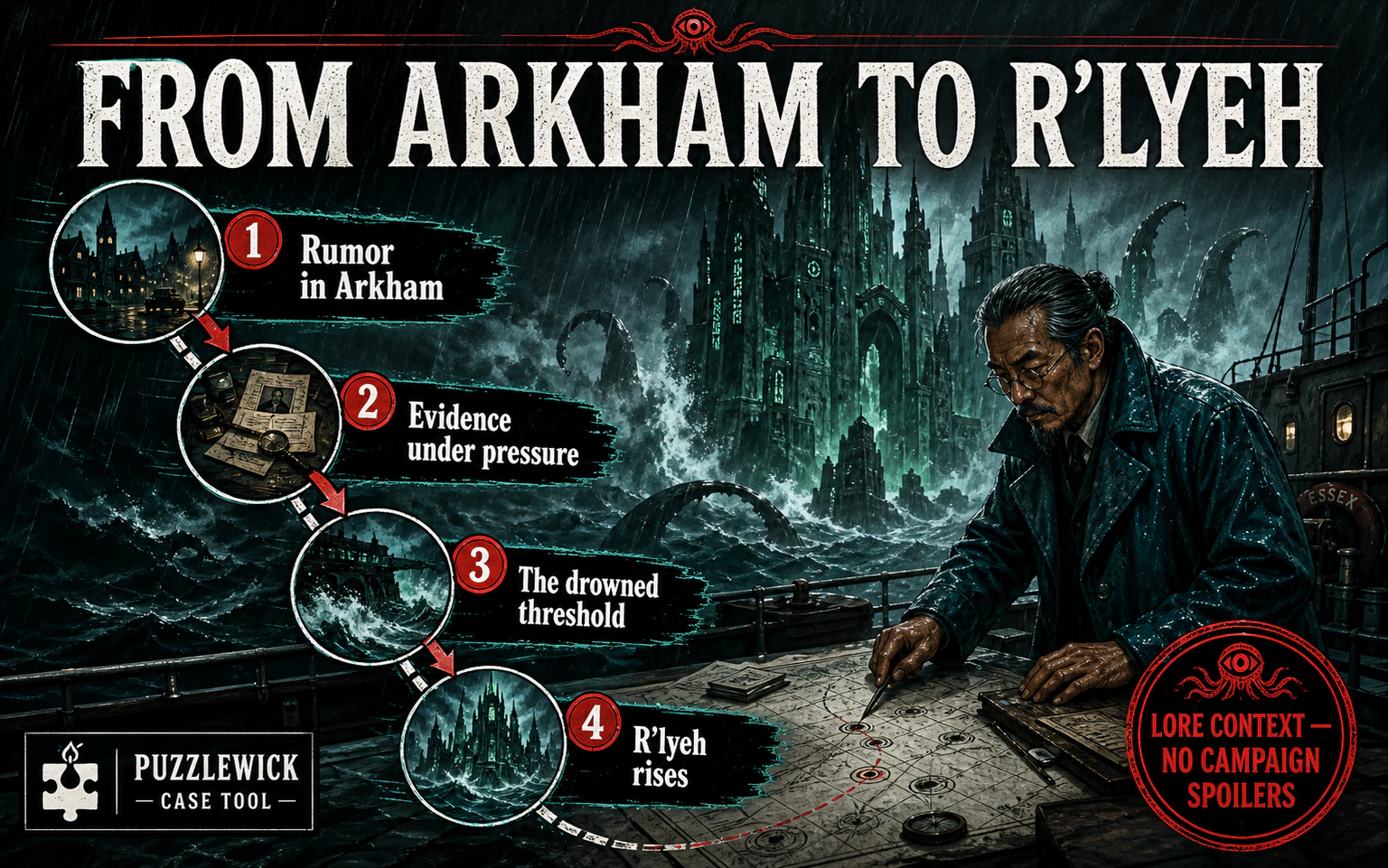
In the old detective stories the patron is a comfort — money, a goal, a path. Tillinghast is the inversion. He is the patron as lure. At his behest, one to four investigators travel to the South Pacific, to the vast, alien city of R'lyeh as it rises from the ocean's depths. They do the things the doomed always do:
- Scale the city's crumbling, non-human foundations.
- Scour the sea floor for alien artifacts.
- Navigate mind-bending machinery and corridors that shift while you stand in them.
- Uncover a history that was drowned with the city itself.
Tillinghast threads the whole campaign through special side-objectives called Tasks — the small errands of a man who already knows what waits at the bottom and wants you to fetch it anyway. The expedition culminates, as the great withheld things must, in a climactic battle against Cthulhu himself.
The teaching: the door that cannot be refused was never locked from your side. It was held open by someone who wanted you to walk through.

Sanity as currency: the cost of looking
Now the heart of it. In most games, the resource you spend is gold, or cards, or time. In this one, the resource is you.
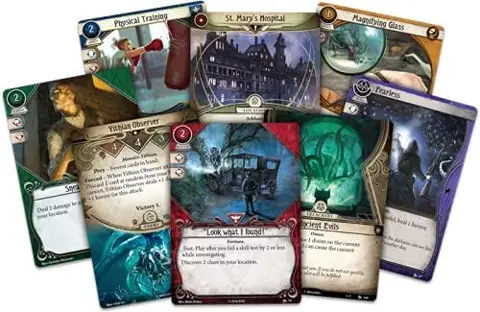
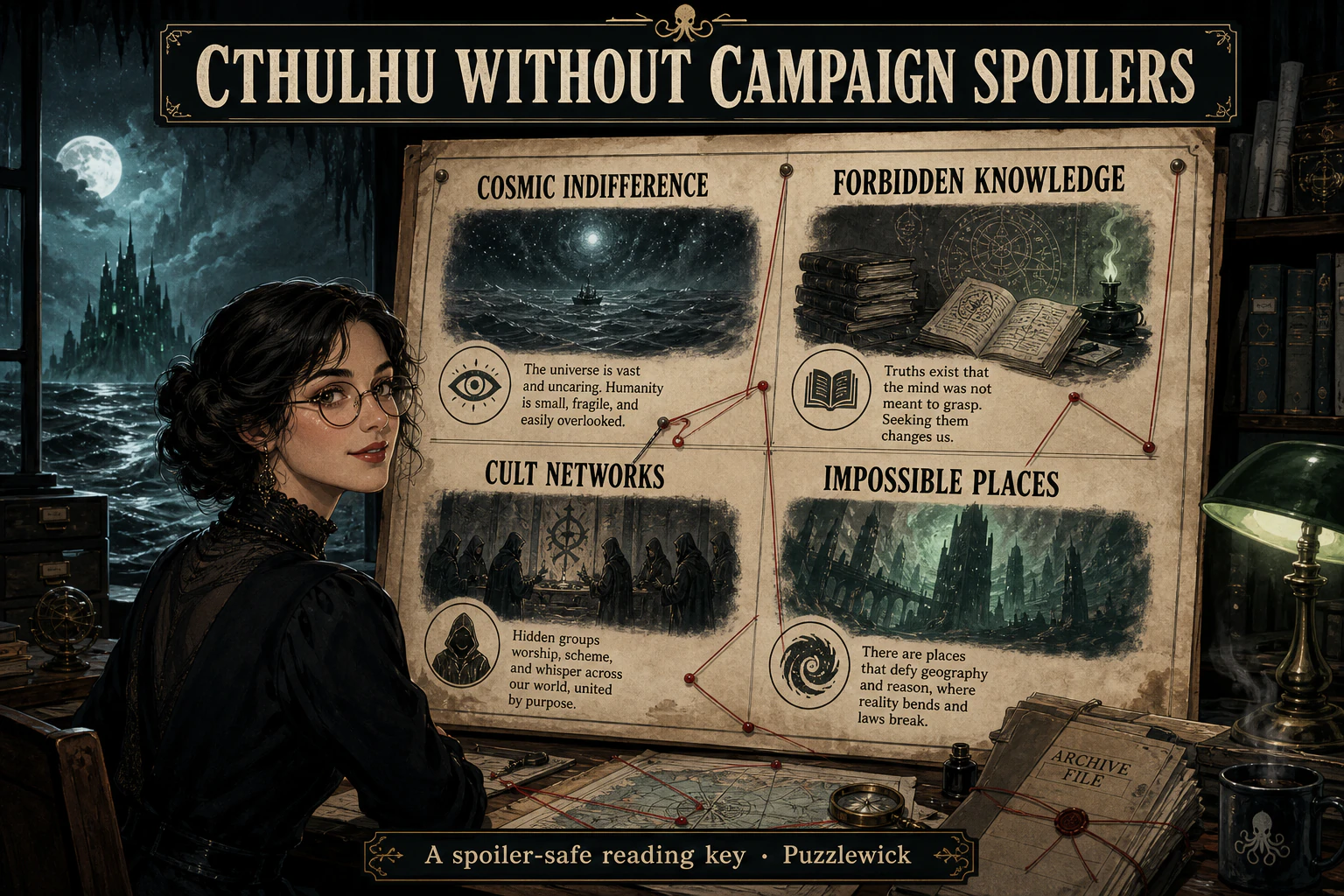
The Japanese phrase shōki o tamotsu (正気を保つ) means "to keep one's right mind" — to hold sanity, as one holds a coin in the fist. The card game makes that literal. Every investigator has two parallel reserves: health for the body, and sanity for the mind. Horror cards do not merely hurt — they charge you. You pay in pieces of your right mind to know what you are looking at.
This is the dark-vs-light tension reduced to a single mechanic. The light is sanity — the rational order of 1920s Arkham, the belief that a thing seen can be understood. The dark is the indifferent geometry rising from the sea, which does not hate you and does not need to. To look on R'lyeh is to spend the light. When an investigator's sanity reaches zero, they are defeated — not dead, necessarily, but undone; mind emptied like a purse.
- You watch the total tick down like money you cannot earn back.
- You weigh every voluntary glance: is this truth worth what it costs to see?
- The bravest table is not the one that takes the least damage. It is the one that spends its minds on purpose.
The teaching: knowledge in Arkham is never free. You buy it with the part of you that knows it.
Chapter Two: hope in a city that already lost

Here is the choice that interests me most, because it is a designer's choice and a moral one at once. After the spectacle of R'lyeh, after Cthulhu was finally shown, the makers had two roads. They could try to top it — a bigger god, a louder end. Or they could do the harder thing.
They rebooted. Not to zero — to after.
The new Core Set does not pretend the calamity away. It does not restore Arkham to its pre-disaster innocence and start the clock clean. It begins several months later, in the same town, now scarred, and hands the lantern to new investigators — five of them, mechanically unlike any before — who never saw what happened but must live in its ato all the same.
This is the dark-vs-light tension moved up a level, from the card to the campaign. The light here is not innocence; innocence is gone. The light is the smaller, tougher thing: people who arrive after the worst and decide to keep going anyway. Hope in Arkham, post-calamity, is not the absence of dread. It is labor performed in spite of it.
The teaching: the brave story is rarely the one where the disaster is prevented. It is the one that begins the morning after, and chooses to begin at all.
New Core vs The Drowned City — where do I start?
Now the practical mercy, because lore without a clear door is just fog. People ask me, lantern in hand, the same question: where do I begin? The honest answer is shaped like an arrow.
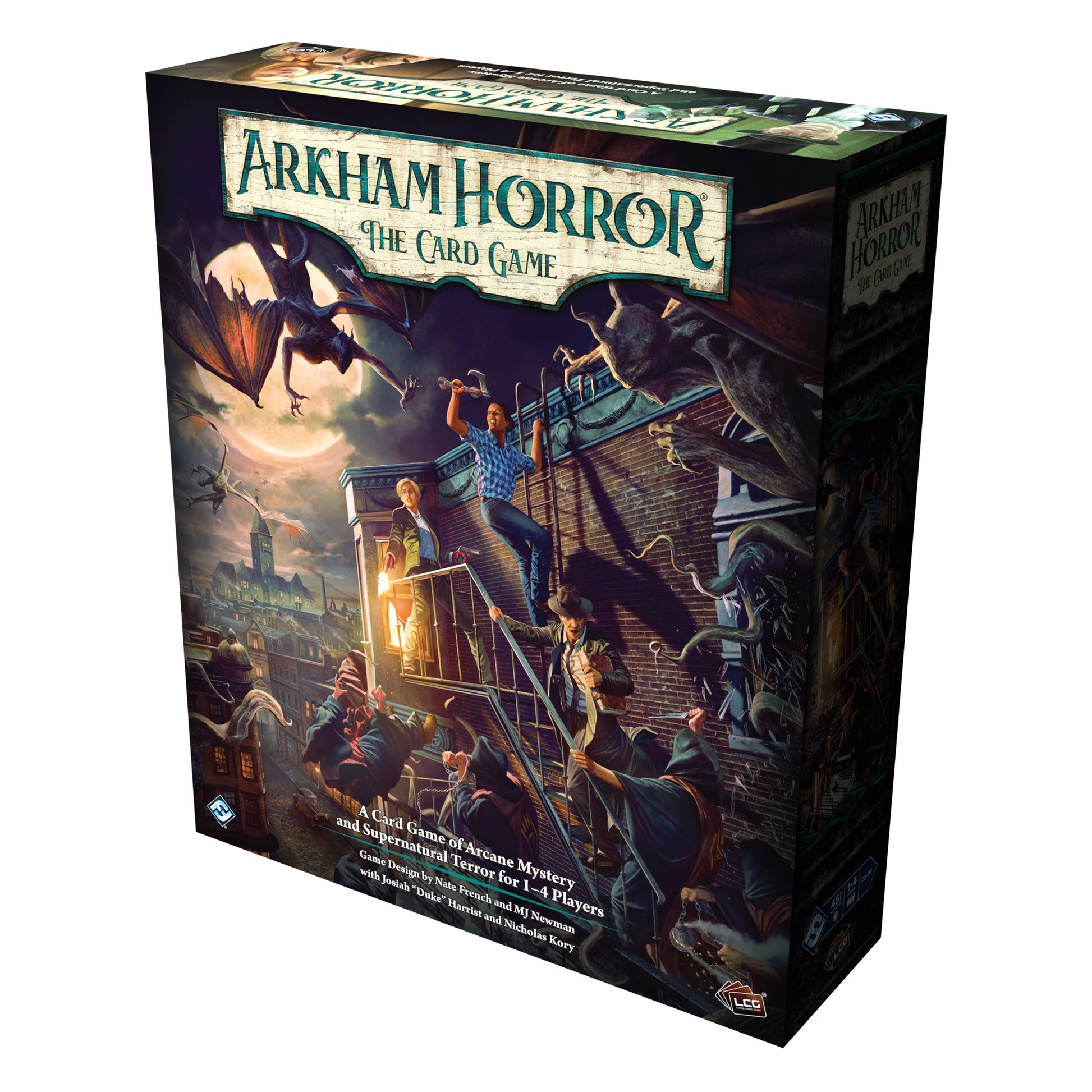
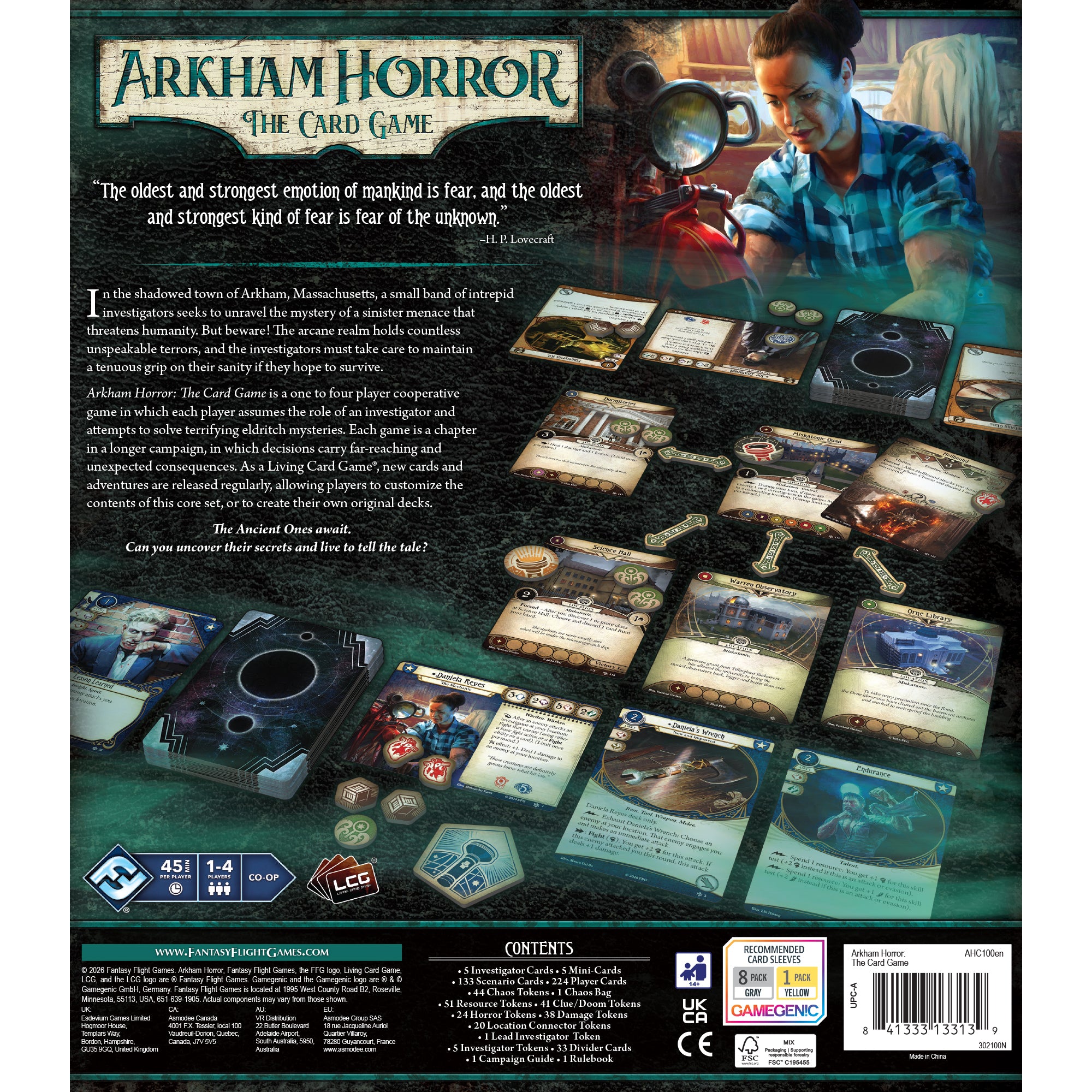
Begin with the new Core Set (2026). It is the on-ramp by design — the makers' own words call it the new evergreen core experience, replacing the 2021 Revised Core Set. It resets the card pool and the deckbuilding economy, gives you a self-contained three-scenario introductory campaign for 1-4 players, and teaches the machine from a clean surface. Critically: everything in it remains fully compatible with the older boxes. It is still the same game. You lose nothing by starting fresh.
- The on-ramp: new Core Set — rules, economy, five new investigators, your first campaign.
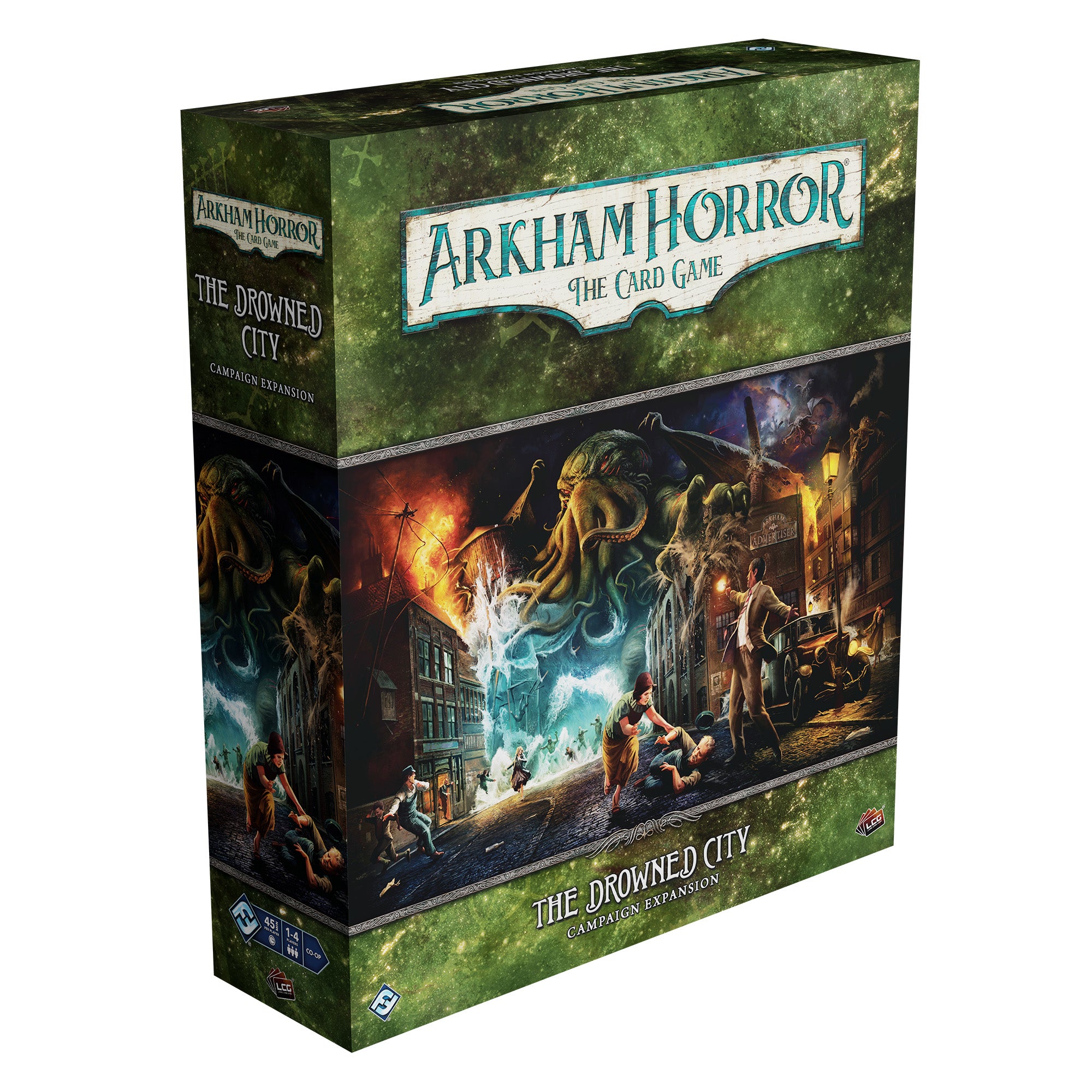
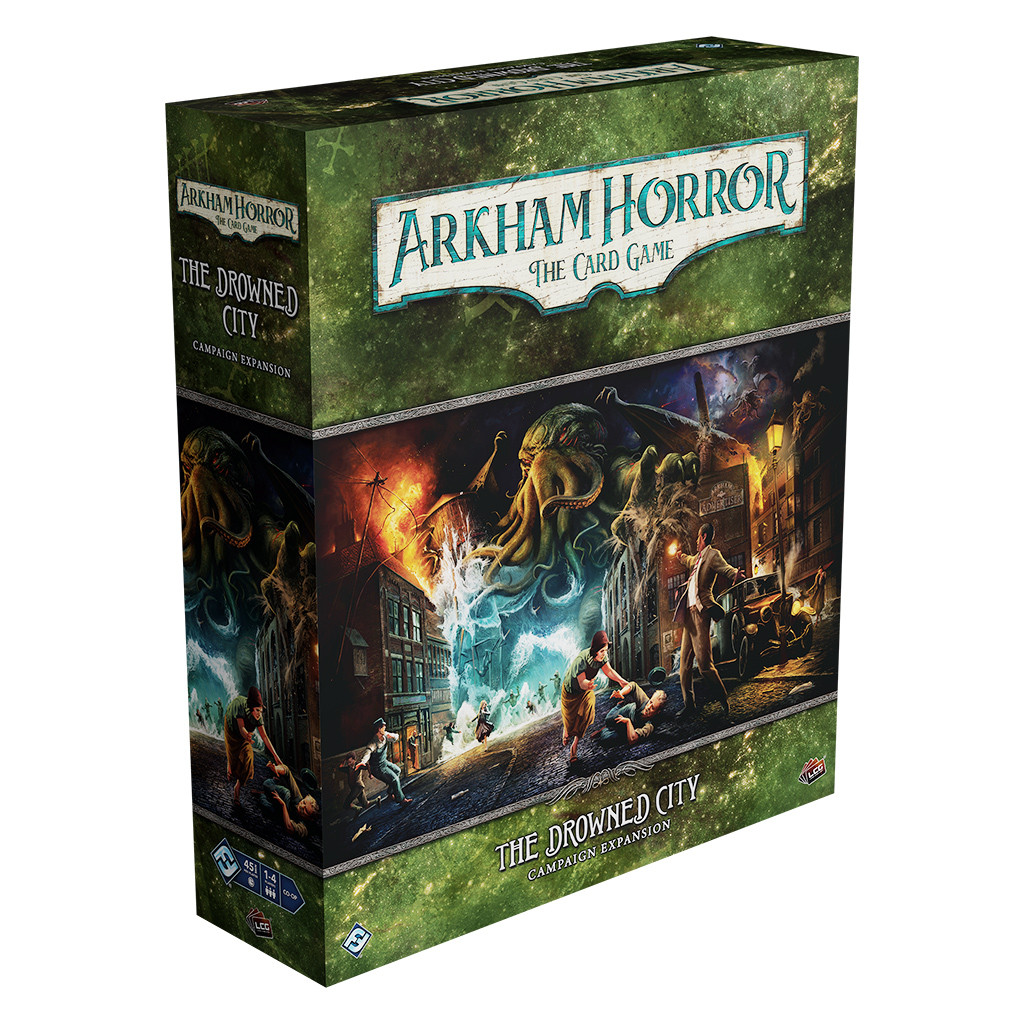
- The payoff: The Drowned City — the expedition to R'lyeh, the Tillinghast bargain, the face of the withheld god.
Do not invert this. The Drowned City is a full campaign expansion that assumes you already own a core experience and already understand the cost of looking. Walking into R'lyeh on your first night is not bravery; it is drowning by choice.
The teaching: learn the lantern before you carry it into the dark. Then carry it into the dark.
Co-op management: how a table survives the Mythos
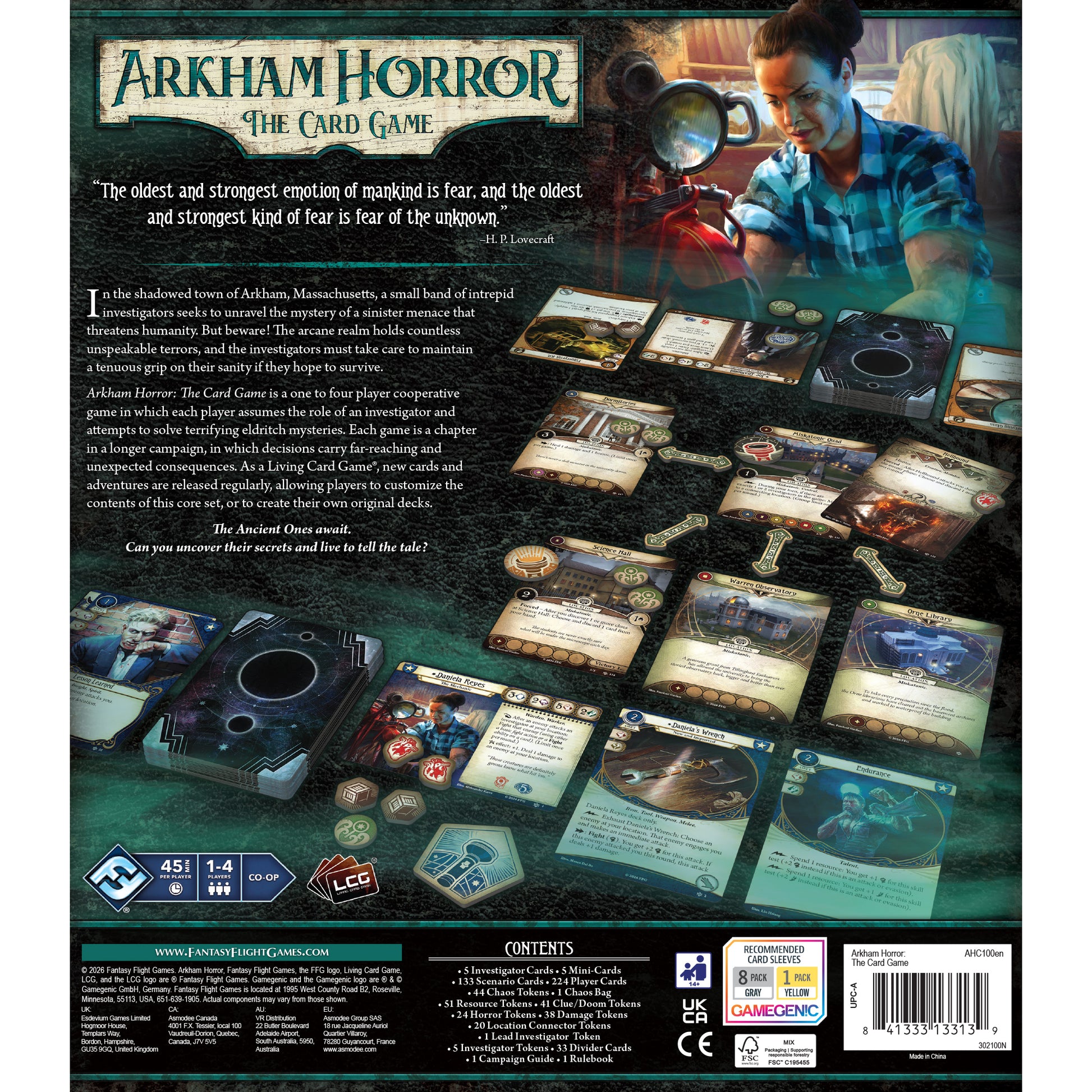
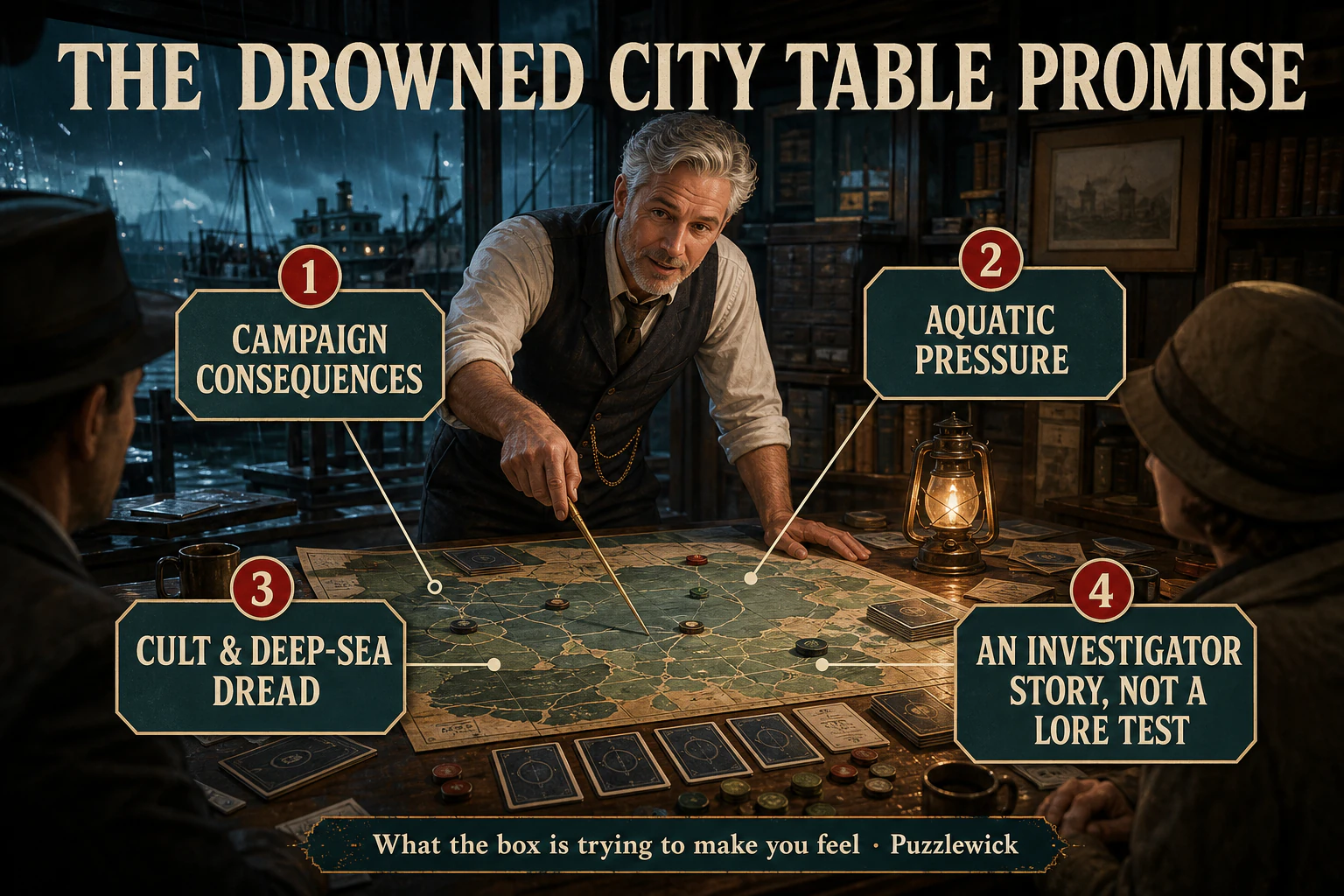
One more lesson before the buy, because this is a cooperative game, and cooperation under pressure is a discipline, not a mood. The Mythos does not lose to clever individuals. It loses to a table that manages itself like a single mind — which is the very thing it is trying to take from you.
What a surviving table does:
- Assign the burden. Sanity is spent unevenly on purpose. One investigator's mind is the reserve you draw down to protect the others. Decide before the horror lands who looks, and who is kept whole.
- Spend the light deliberately. Treat sanity like the currency it is. Cheap clues bought with cheap glances; expensive truths only when the campaign demands them.
- Build complementary decks. The fresh card pool in the new Core Set rewards roles — the seeker who gathers, the guardian who absorbs, the mystic who pays in mind for power. A table of five soloists is five small fires; a built table is one steady flame.
- Respect the agenda clock. The doom that advances the enemy plot is the true timer. Many tables lose not to a monster but to hesitation — to talking while the clock turns.
And carry the campaign's memory forward. Chapter Two rewards continuity: who broke, who held, what the calamity cost. Keep a log between sessions; the dread compounds when the table remembers its own wounds.
The teaching: the Mythos wins by making you alone. You answer it by refusing to be.

The picks
Some links below are affiliate links — as an Amazon Associate, Puzzlewick earns from qualifying purchases, at no extra cost to you. It never changes a pick.
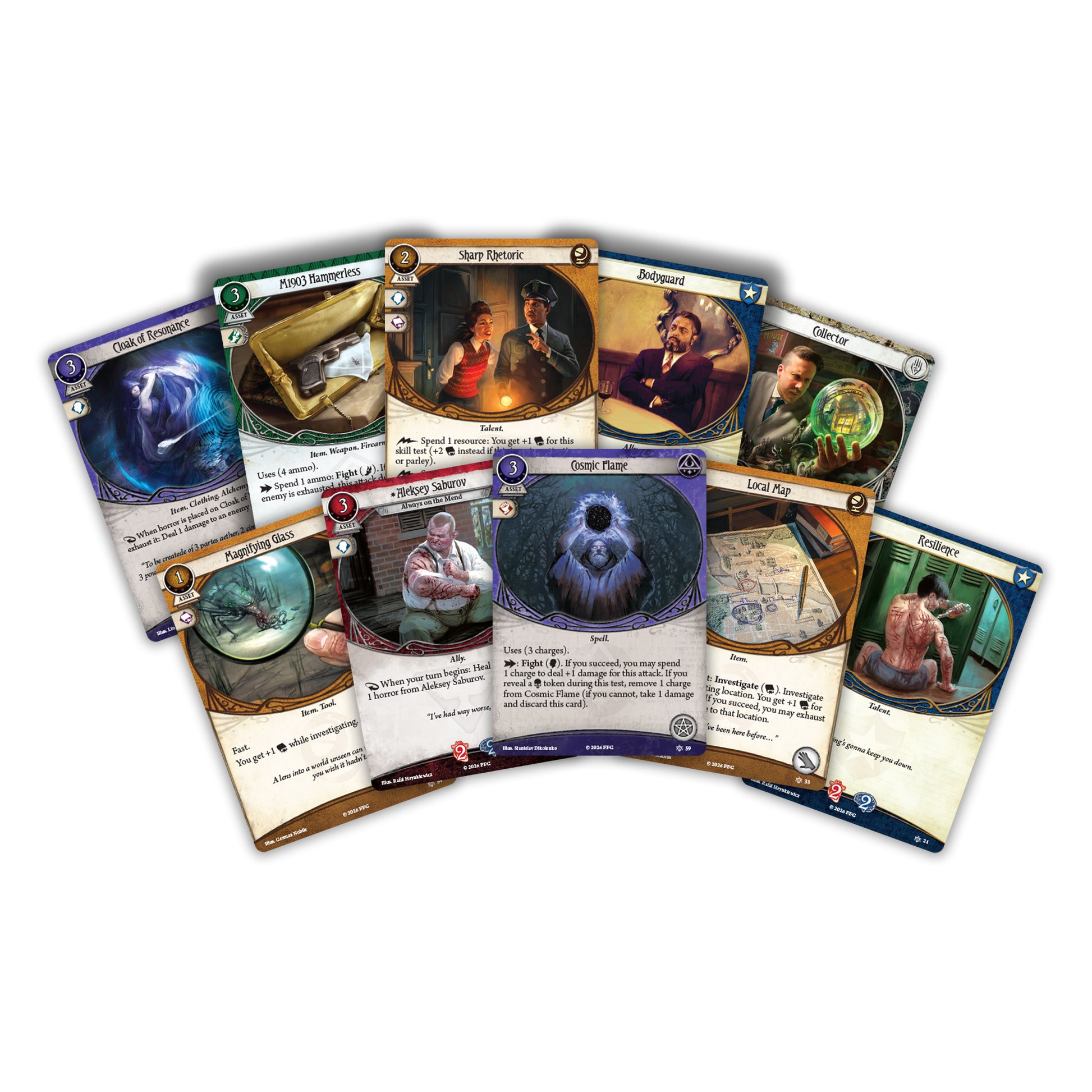
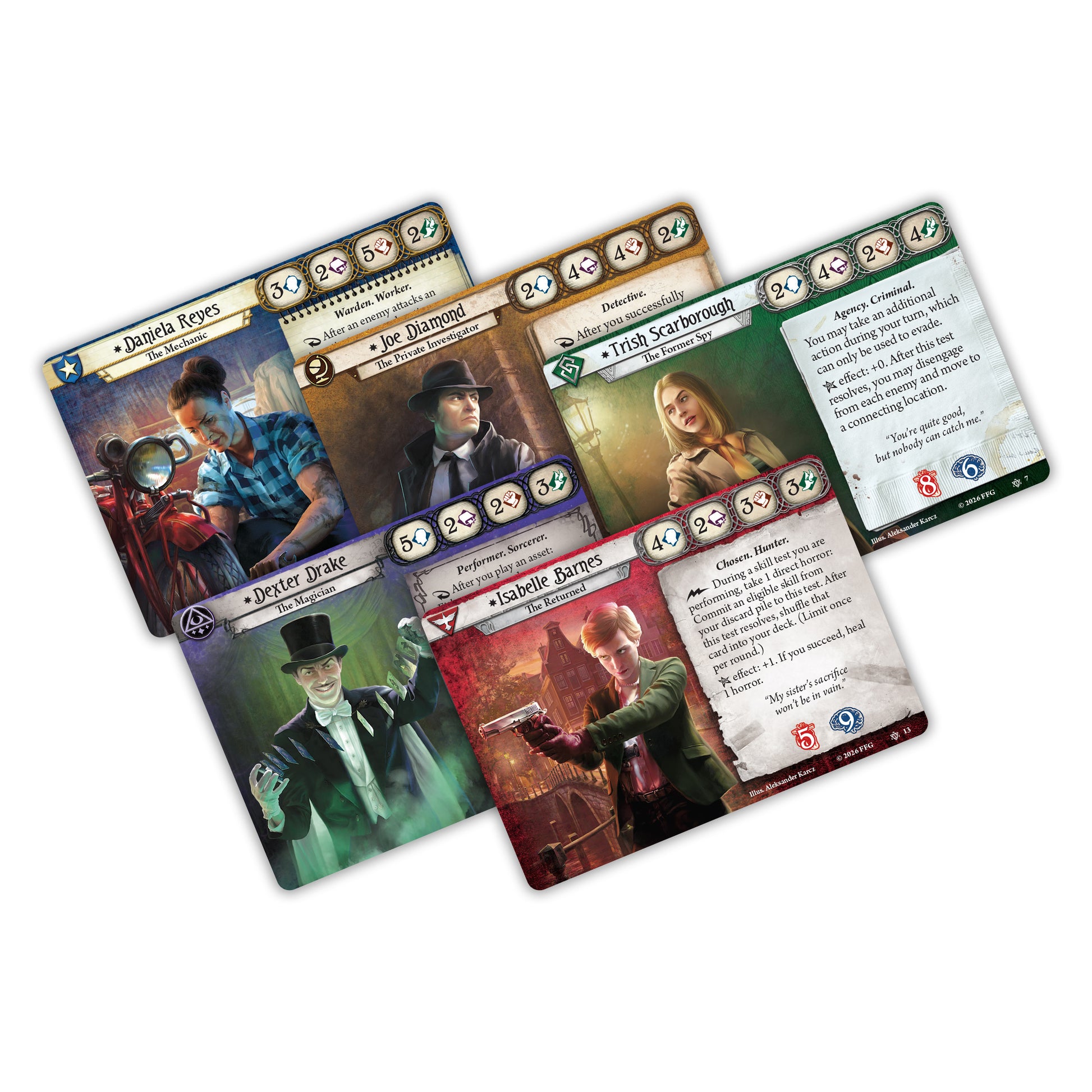
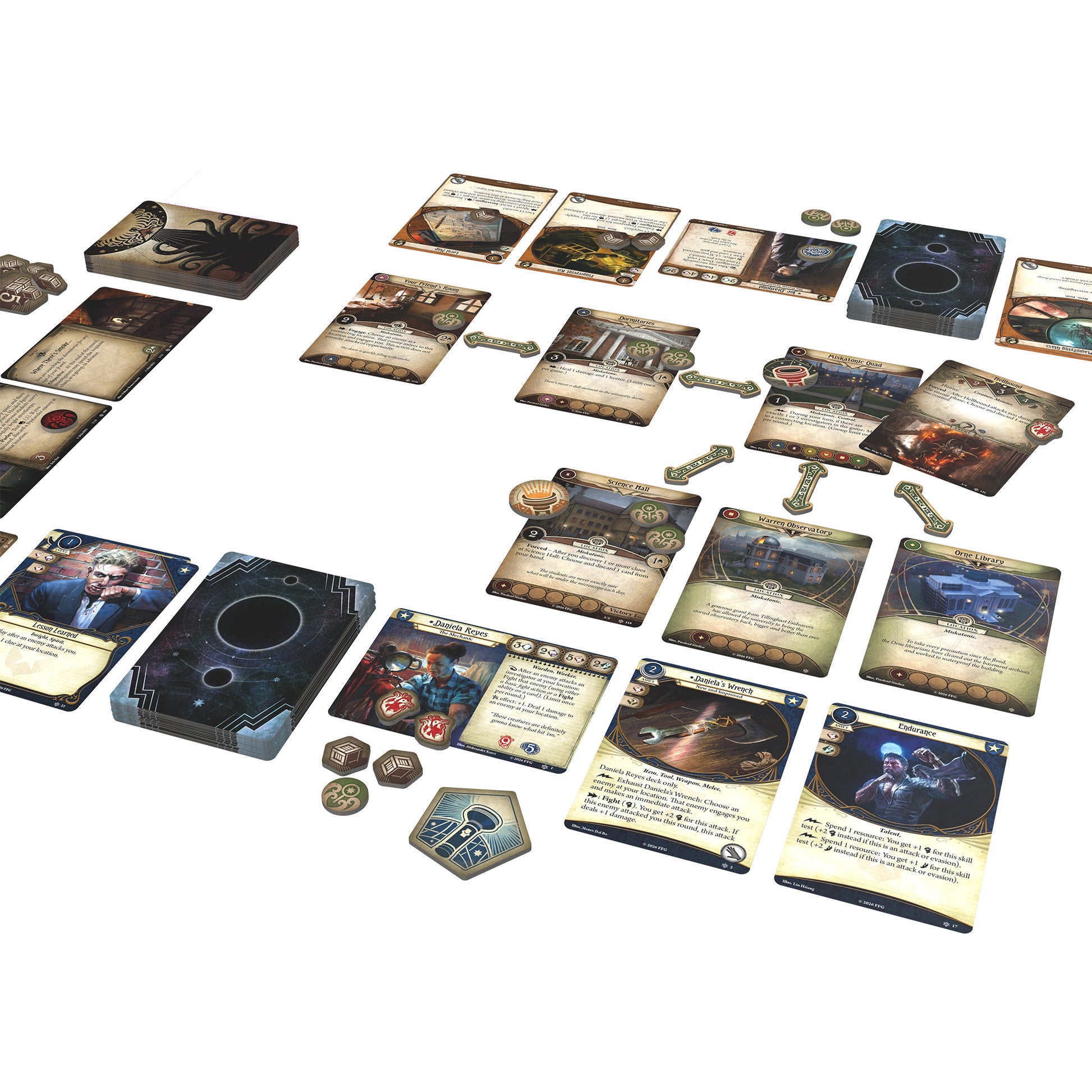
 8 photos
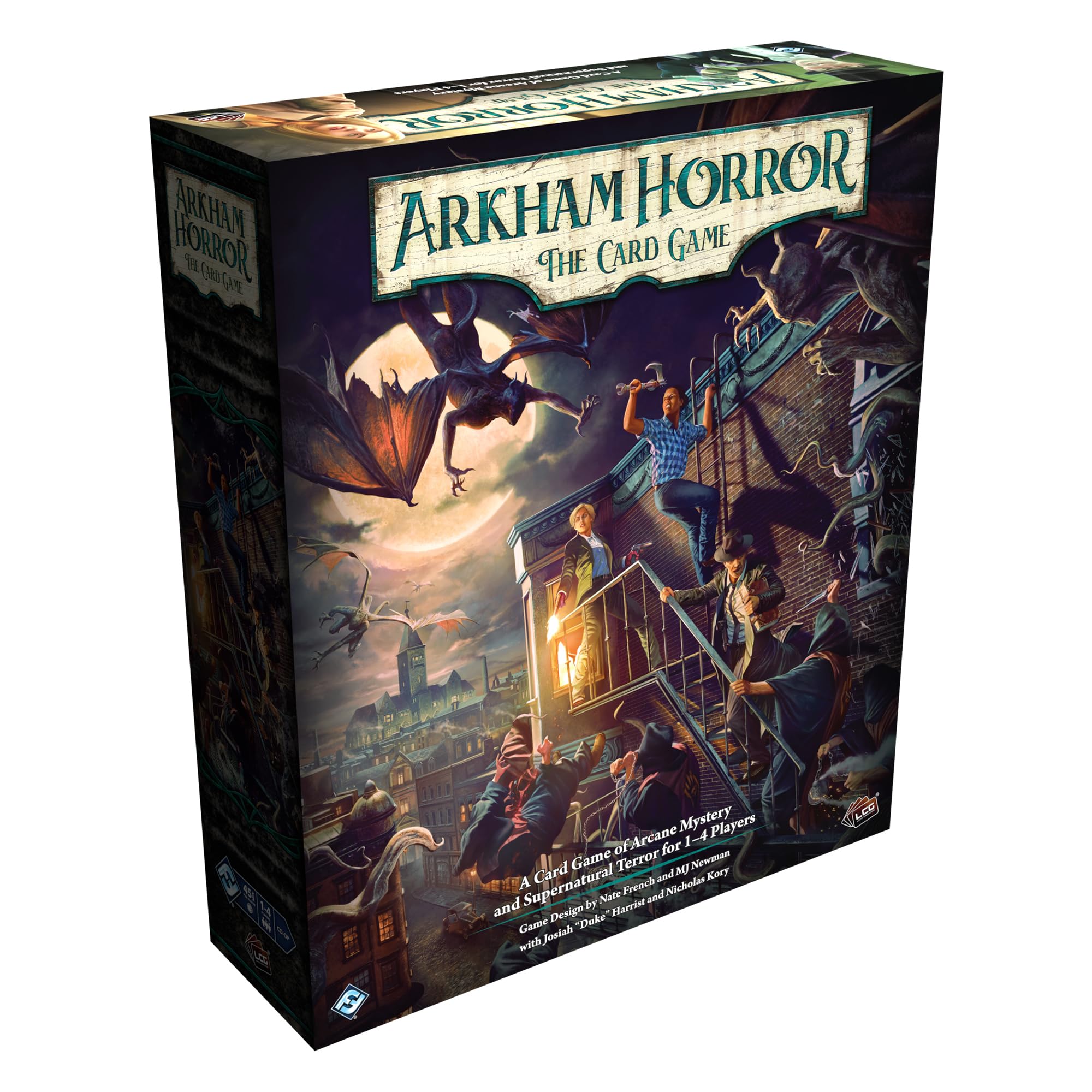
 Arkham Horror: The Card Game — Core Set (2026)
- Players
- 1-2 · best 2
- Time
- 60-120 min
- Age
- 14+
- Complexity
- 3.56 / 5
- Publisher
- Fantasy Flight Games · 2016
- Designers
- Nate French, MJ Newman
<p>This is the door. Released March 20, 2026, the new Core Set replaces the 2021 Revised Core Set as the game's evergreen entry point and resets the card pool and deckbuilding economy from a clean surface. Inside: a three-scenario introductory campaign for 1-4 players, five mechanically-new investigators, encounter and character cards, tokens, dividers, and location-connection markers. It opens several months after Arkham's devastating calamity — so you begin in the smoke of the prior chapter without needing to have lived through it. Crucially, everything here stays fully compatible with every older box; nothing in your shelf is orphaned. If you have never carried the lantern, you carry it from here.</p>
- Designed-from-scratch on-ramp — teaches the machine cleanly
- Set after the R'lyeh calamity, so the dread arrives pre-loaded
- Five new investigators and a full intro campaign for 1-4 players
- Backward-compatible with the entire existing card library
- In print and freshly stocked at most retailers
- It is an entry point, not the R'lyeh payoff — Cthulhu lives in The Drowned City
- Around $70 is a real outlay for a starting box
- A few reviewers found the new intro campaign uneven in difficulty pacing
 7 photos
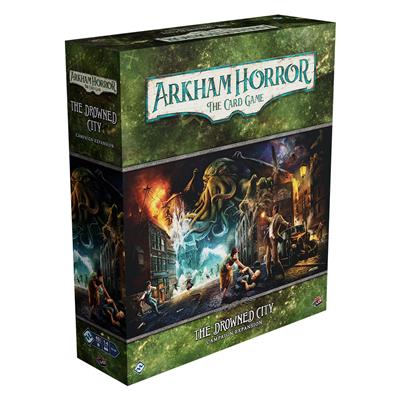
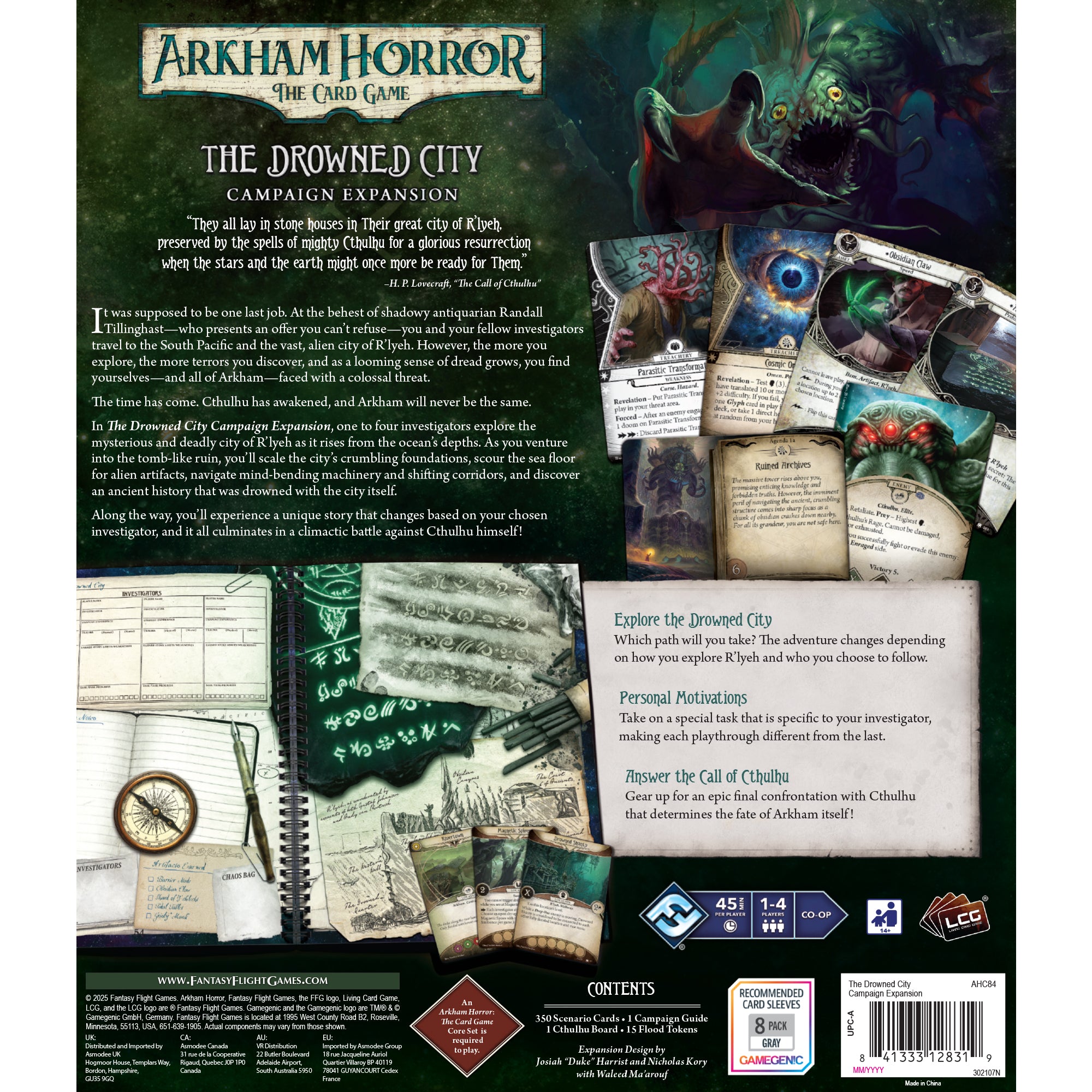
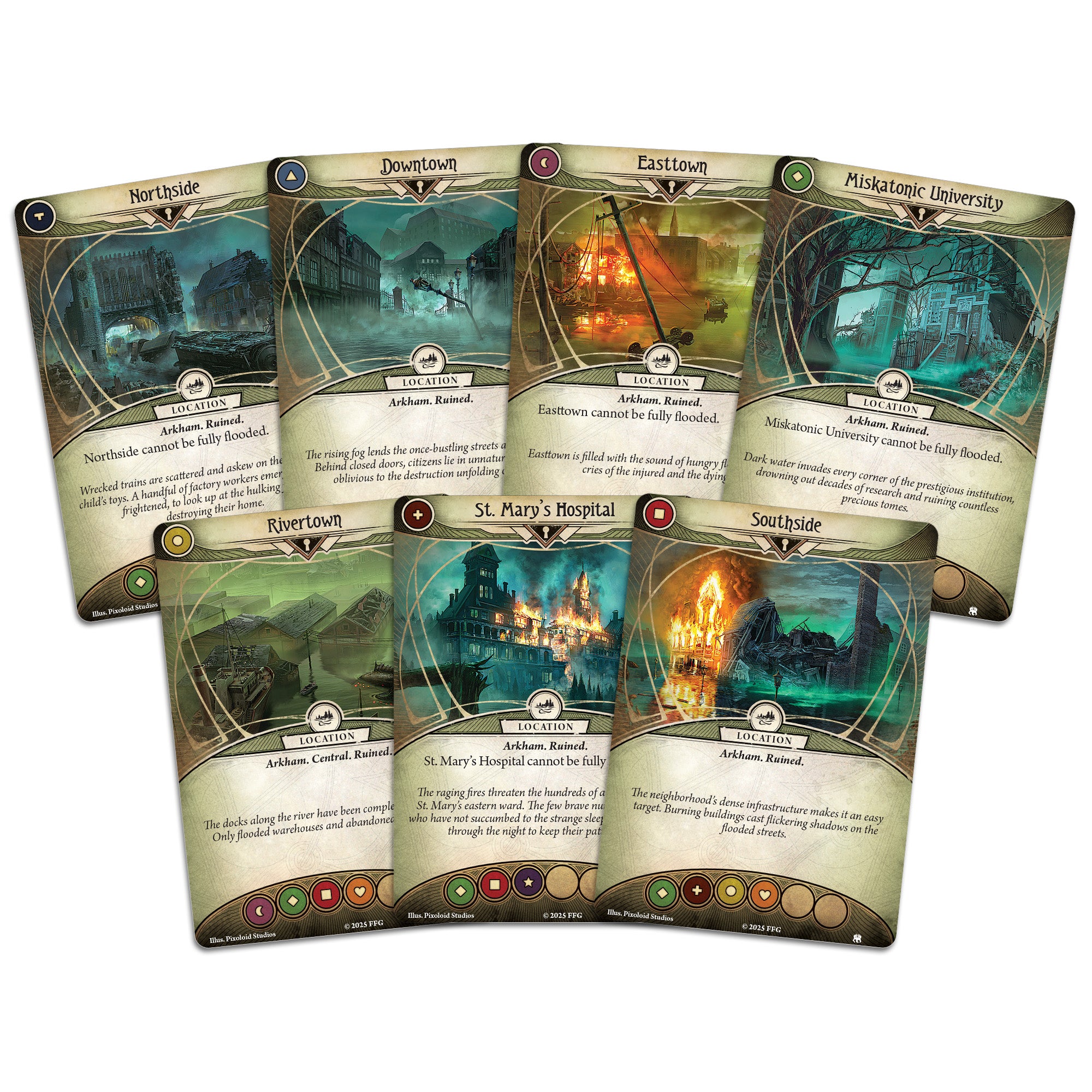
 Arkham Horror: The Card Game — The Drowned City Campaign Expansion
- Players
- 1-2 · best 2
- Time
- 60-120 min
- Age
- 14+
- Complexity
- 3.56 / 5
- Publisher
- Fantasy Flight Games · 2016
- Designers
- Nate French, MJ Newman
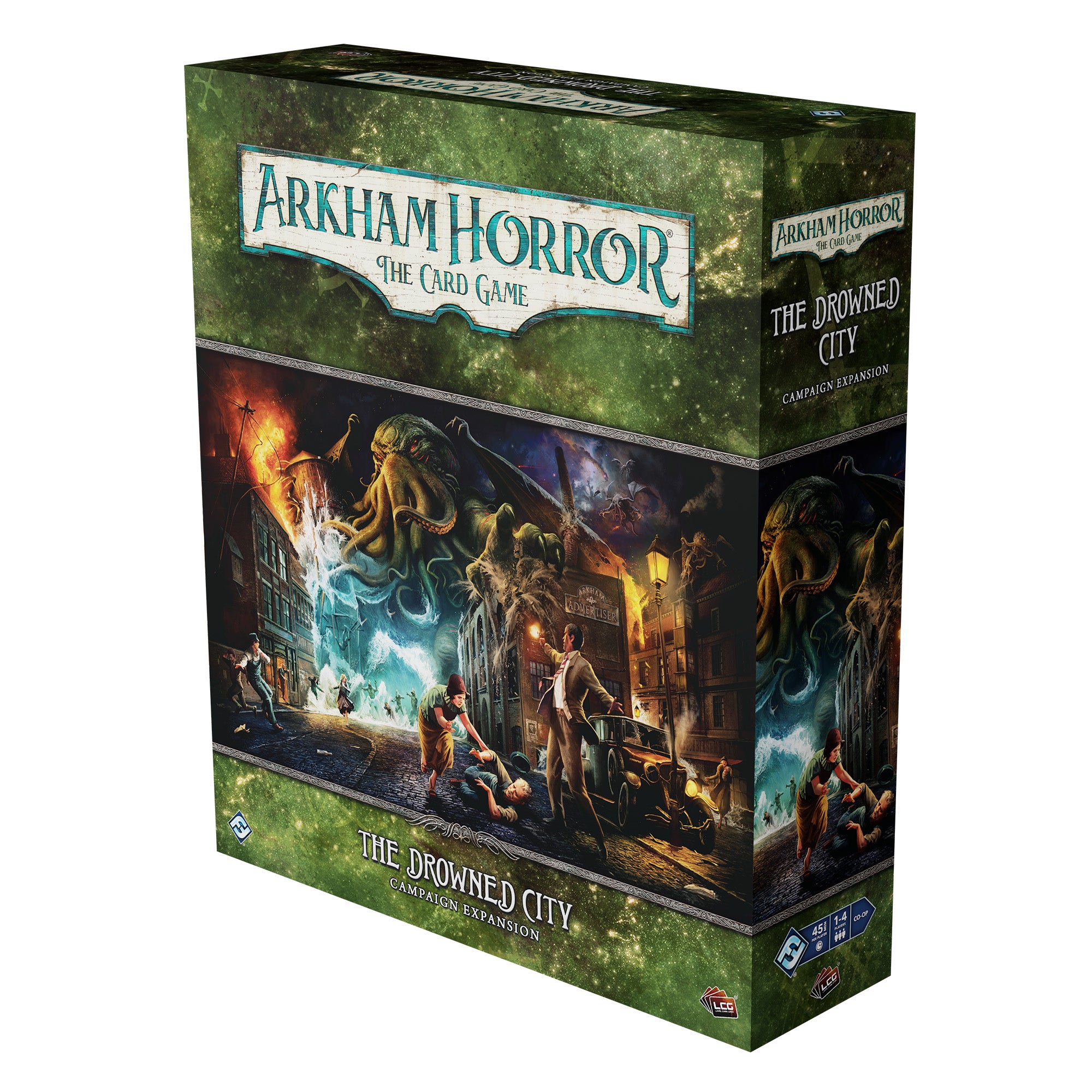
<p>This is where the calamity actually happened. Released in 2025 as the game's tenth-anniversary spectacle, The Drowned City is the full campaign in which 1-4 investigators answer Randall Tillinghast's offer-you-cannot-refuse and sail to the South Pacific to climb R'lyeh as it rises from the depths. You scale non-human foundations, scour the sea floor for alien artifacts, navigate machinery that shifts as you stand in it, and pursue Tillinghast's side-objective Tasks — all building toward the confrontation the game withheld for nearly ten years. It assumes you already own a core experience; this is the deep end, not the shallows.</p>
- The first direct, full-scale confrontation with Cthulhu in the game's history
- Atmospheric R'lyeh exploration — drowned geometry, alien artifacts, shifting corridors
- Tillinghast's Tasks add a memorable narrative-objective layer
- The canonical source of Chapter Two's calamity — the lore behind the new Core
- Requires a core set; not a first purchase
- Stock is now intermittent — sold out at several major retailers, fluctuating elsewhere
- Resale and import listings make pricing volatile; verify before you buy
Questions, answered
What is Chapter Two of Arkham Horror: The Card Game?
Chapter Two is the new era of the cooperative living card game, opened by a brand-new Core Set released March 20, 2026. It is set several months after the city of Arkham suffered a devastating calamity, introducing five new investigators and a fresh card pool while remaining fully compatible with every previously released box.
Do I need the old Revised Core Set to start?
No. The new 2026 Core Set replaces the 2021 Revised Core Set as the game's evergreen entry point. It is a complete on-ramp on its own — a three-scenario introductory campaign for 1-4 players — and everything inside stays compatible with the entire existing library, so nothing you already own is wasted.
Where does Cthulhu actually appear?
In The Drowned City Campaign Expansion, released in 2025. There, 1-4 investigators travel to the South Pacific to explore R'lyeh as it rises from the depths, pursuing antiquarian Randall Tillinghast's Tasks, and the campaign culminates in a climactic battle against Cthulhu himself — the first time the game confronted him directly in its near-decade history.
Should I buy the new Core Set or The Drowned City first?
The new Core Set first. It teaches the rules, the deckbuilding economy, and the all-important sanity-as-currency mechanic on a clean board. The Drowned City is a full campaign expansion that assumes you already own a core experience — it is the payoff, not the on-ramp.
What does it mean that sanity is a spendable resource?
Each investigator has two parallel reserves: health for the body and sanity for the mind. Horror cards charge you sanity to know what you are facing, so looking on the truth costs you pieces of your right mind. When an investigator's sanity reaches zero, they are defeated. You spend the light deliberately — it is the core tension of the game.
Is the new Core Set in print and available to buy?
Yes. It released March 20, 2026, at an MSRP of about $69.99 and is in print and stocked at most retailers. The Drowned City Campaign Expansion is also nominally in print but its stock is now intermittent — sold out at several retailers and fluctuating in price elsewhere — so verify availability and price before buying.
Kenji's verdict
Start with the new Core Set (2026) — it is in print, around $70, and built to be the clean door into Chapter Two and the cooperative LCG. When you are ready to spend minds, add The Drowned City Campaign Expansion for the R'lyeh expedition and the Cthulhu confrontation that drowned the city this new era begins after — buy that one when you find it, because its stock has gone intermittent. Learn the lantern, then carry it into the dark.
Research ledger 9 sources · reviewed 2026-08-13
Specifications, rules, current product information, community experience, and contrary evidence were checked against the sources below. Commercial links are kept separate from editorial evidence.
- fantasyflightgames.comfantasyflightgames.com/en/news/2026/3/20/available-now-march-20-1
- store.asmodee.comstore.asmodee.com/products/arkham-horror-the-card-game-core-set
- arkhamhorror.comarkhamhorror.com/news/ah-tcg-new-core-set-now-available
- fantasyflightgames.comfantasyflightgames.com/en/news/2024/9/12/the-drowned-city
- fantasyflightgames.comfantasyflightgames.com/en/products/arkham-horror-the-card-game/products/drowned-city-campaign-expansion
- amazon.comamazon.com/dp/B0DJ3M1WMD?tag=puzzlewick-20
- boardgamegeek.comboardgamegeek.com/boardgame/205637/arkham-horror-the-card-game
- en.wikipedia.orgen.wikipedia.org/wiki/Arkham_Horror:_The_Card_Game
- hallofarkham.comhallofarkham.com/arkham-horror-lcg-release-dates-us
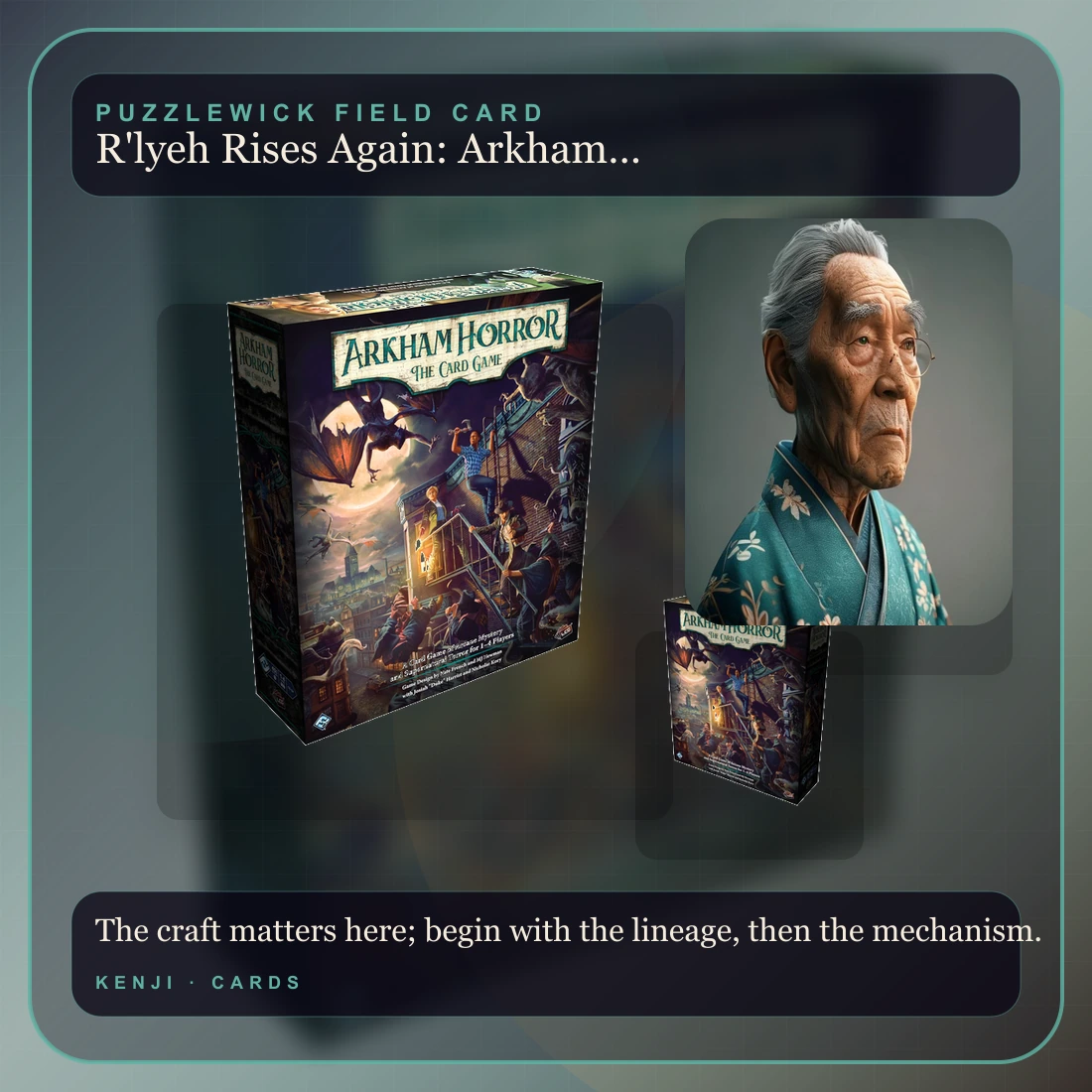
Every object has a lineage. Let me tell you its story.
Keep exploring
The next smart rabbit holes.
✒ Universe HubArkham Horror Universe: the whole buying pathStart with the interactive buyer intake: separate the 2026 Chapter Two Core from Chapter One legacy boxes and the entirely...☾ Topic PathCooperative Horror Games: compare the whole shelfCooperative horror works when the rules pressure the story without burying the table. This cluster maps what to buy, how campaigns...Buying GuideArkham Horror LCG: What to Buy After Revised Core in 2026The exact no-regret path from Revised Core to Dunwich, Carcosa, a useful player-card pool, and the later campaigns worth your table time...