How to Actually Win at Catan: Placement, Probability, and the Robber
Most Catan losses are locked in before anyone rolls a die. Here's the probability math, the placement logic, and the robber psychology that separate winners from people who 'just got unlucky.'

AI-assisted curator persona · research and editorial responsibility: Robert Pruitt · how this guide was made
Last editorial refresh: 2026-06-13 Gold-standard QA: 2026-07-17 10 sources reviewed Affiliate links checked during gold-standard pass

The short answer
You win Catan in your first two settlement placements, not in the mid-game scramble. The math is non-negotiable: a 6 or 8 hits five times in 36 rolls (5/36), while a 2 or 12 hits once (1/36) — five times rarer. So your opening pip-count (the little dots under each number) and your resource diversity decide roughly 70% of the game before turn one. Place on high-pip intersections that touch 5–6 different numbers and as many distinct resources as possible, secure a real path to ore+wheat for cities, and treat the robber as a targeting weapon, not a chore. Everything else — ports, longest road, largest army — is just deciding which lane to floor it in.
Decision map
Choose in thirty seconds
The one box every strategy above is built on — base Catan, 3–4 players
Players who've solved base Catan and want real strategic depth (3–4 players, ages 12+)
Anyone tired of sorting 100+ tokens every game night
Let me say the unpopular part out loud: if you lose at Catan, it's usually not the dice. It's that you put your first settlement on a pretty-looking corner with a fat 9 and called it a day, and now you're three turns deep wondering why you have eleven sheep and no ore.
Catan disguises itself as a luck game so casual players have something to blame. But underneath the cute hexes is a cold little probability engine, and the people who win consistently are the ones who internalized that engine years ago. This guide hands it to you in one read. We'll count pips, weigh resources, work the 2:1 ports, weaponize the robber, and pick a side in the longest-road-vs-largest-army knife fight. None of it is secret. All of it is ignored by the person you're about to beat.
Start here, then go deeper
You are in the right cabinet.
 ⬢ Universe HubCATAN: the whole buying pathCATAN begins as a clean trade-and-settle game, then branches into larger tables, shifting maps, and much sharper strategy. This hub...
 ✦ Topic PathBoard Game Buying Guides: compare the whole shelfStart with the decision, not the shelf. These guides compare the games, editions, expansions, player counts, and costs people...
 ComparisonCatan vs Carcassonne vs Ticket to Ride: The Best Gateway Game, Head-to-HeadThree legends, one shelf, one decision. Here's the honest, table-tested call on which gateway game earns its spot first — and exactly who...
Why is Catan really won in the first two placements?
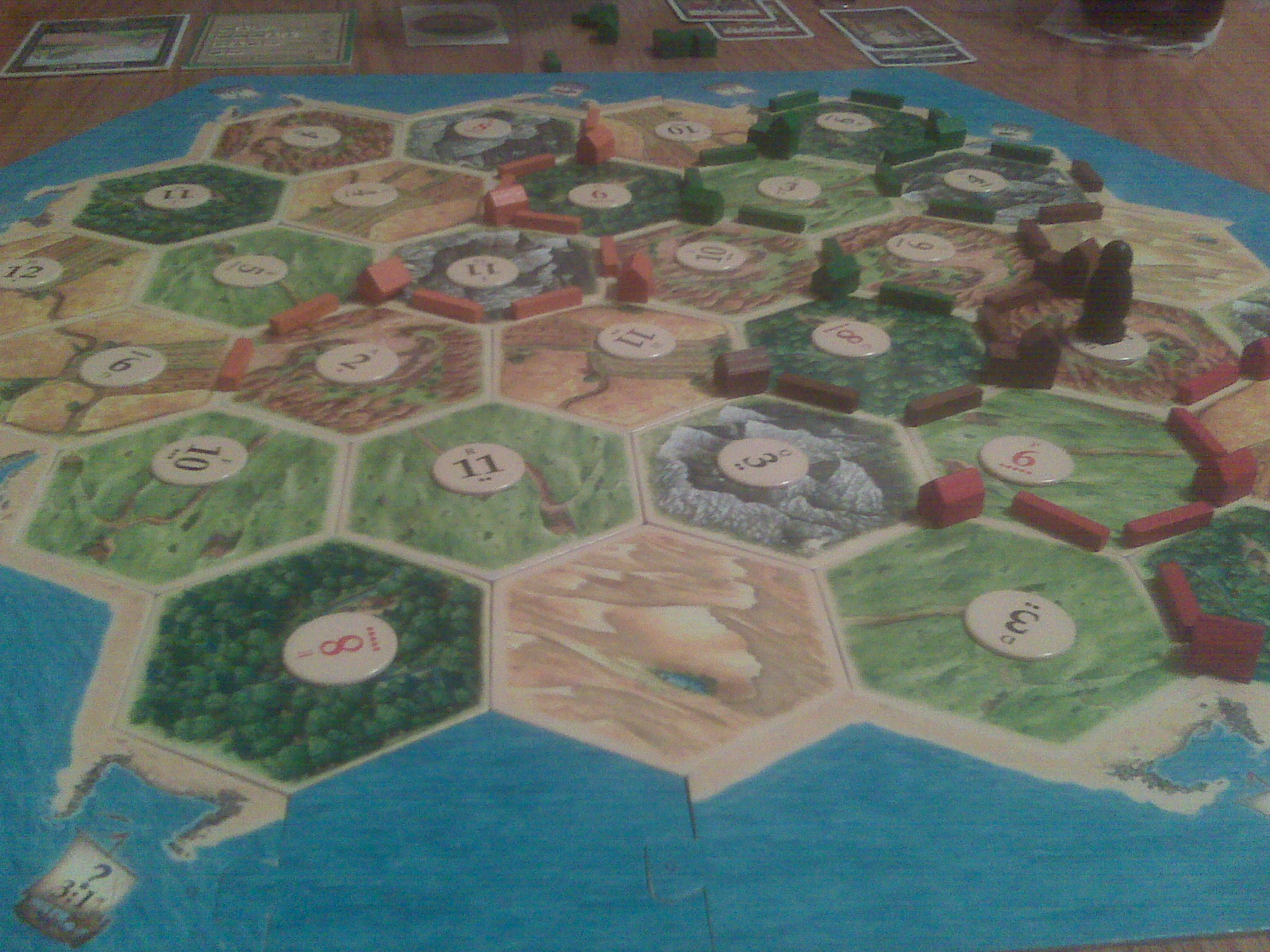
Because Catan compounds. Every resource you collect early buys roads, settlements, and cities that collect more resources — it's exponential, and the base you set in the opening is the base everything multiplies from.
Think of your two starting settlements as capital investment. A corner that produces reliably from turn one isn't just 'a bit better' than a weak corner — over a 60–90 minute game it's the difference between a snowball and a stalled cart. One blogger put it bluntly: placement matters most because of the "exponential nature of game. Capital investments produce more profit."
The single best habit you can build: count the pips. Every number token has little dots — one for a 2, five for a 6. They literally encode probability. To rate any intersection, add the pips on its three adjacent hexes. The corner with the highest dot-sum is, on average, your most productive corner. That's the whole trick David Richeson's probability writeup reduces it to.
- High pip-sum = more resource cards over the game
- Touching more distinct numbers = smoother income (fewer dead turns)
- Touching more distinct resources = less dependence on trading
Do this for your first settlement, then place your second to cover the numbers and resources the first one missed.
Your two starting settlements are capital. Catan compounds — a strong opening doesn't add to your game, it multiplies it.
What's the actual dice probability — and why are 6 and 8 gold?
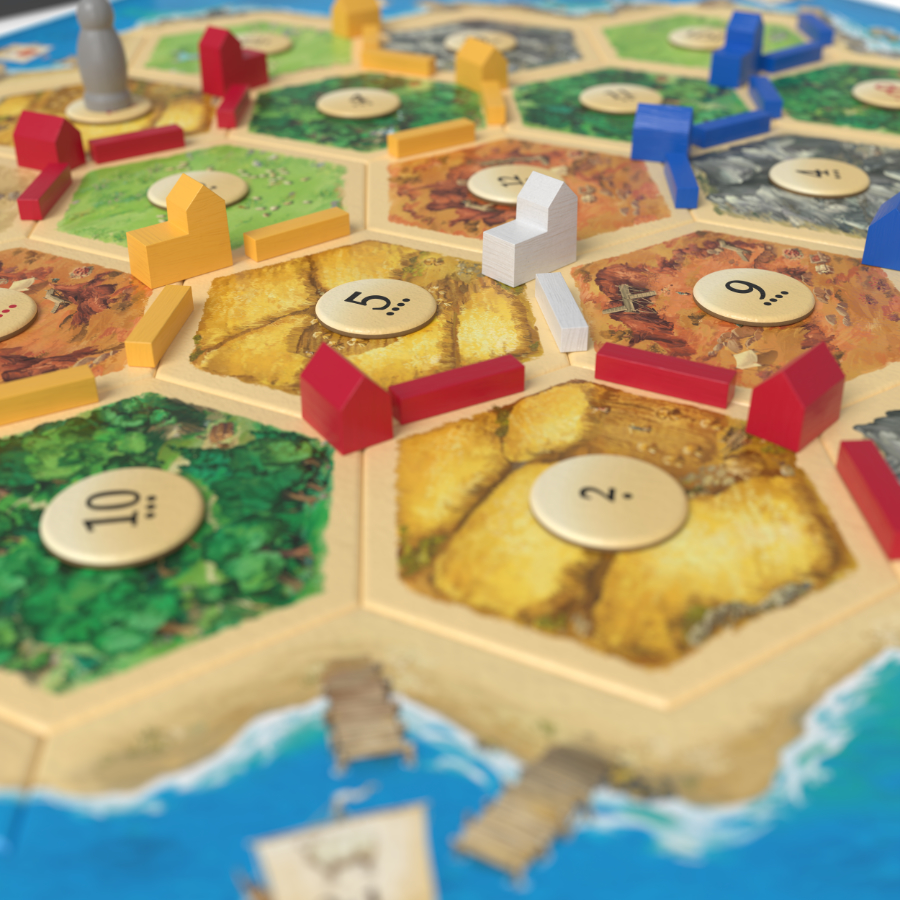
Two dice, 36 equally likely combinations. That's the entire universe. Here's how often each number shows up:
- 2 → 1 way (1/36)
- 3 → 2 ways (2/36)
- 4 → 3 ways (3/36)
- 5 → 4 ways (4/36)
- 6 → 5 ways (5/36)
- 7 → 6 ways (the robber — no resources)
- 8 → 5 ways (5/36)
- 9 → 4 ways (4/36)
- 10 → 3 ways (3/36)
- 11 → 2 ways (2/36)
- 12 → 1 way (1/36)
6 and 8 are the kings — five chances each, every roll. 2 and 12 are nearly worthless — one chance each, five times rarer than a 6. A hex with a red 6 on it isn't '20% better' than a hex with a 12; it produces five times as often. That's why the 6 and 8 tokens are printed in red, and why experienced players physically lean toward them when picking corners.
The chance of a given token hitting is exactly (its pips)/36. Memorize the shape of the curve — it peaks hard in the middle and falls off a cliff at the edges — and you'll never again be seduced by a lonely 11 just because it's next to wheat.
A 6 isn't a little better than a 12. It's five times as likely. The numbers are not your friends equally.
How do I pick resources — diversity or doubling down?
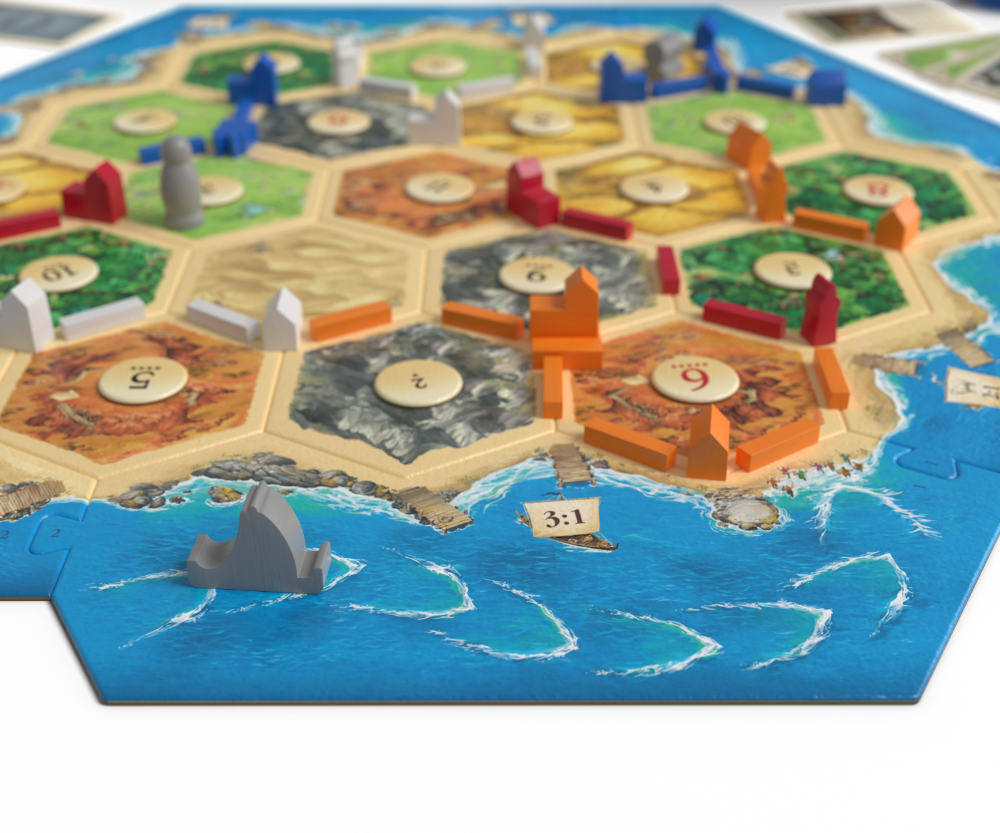
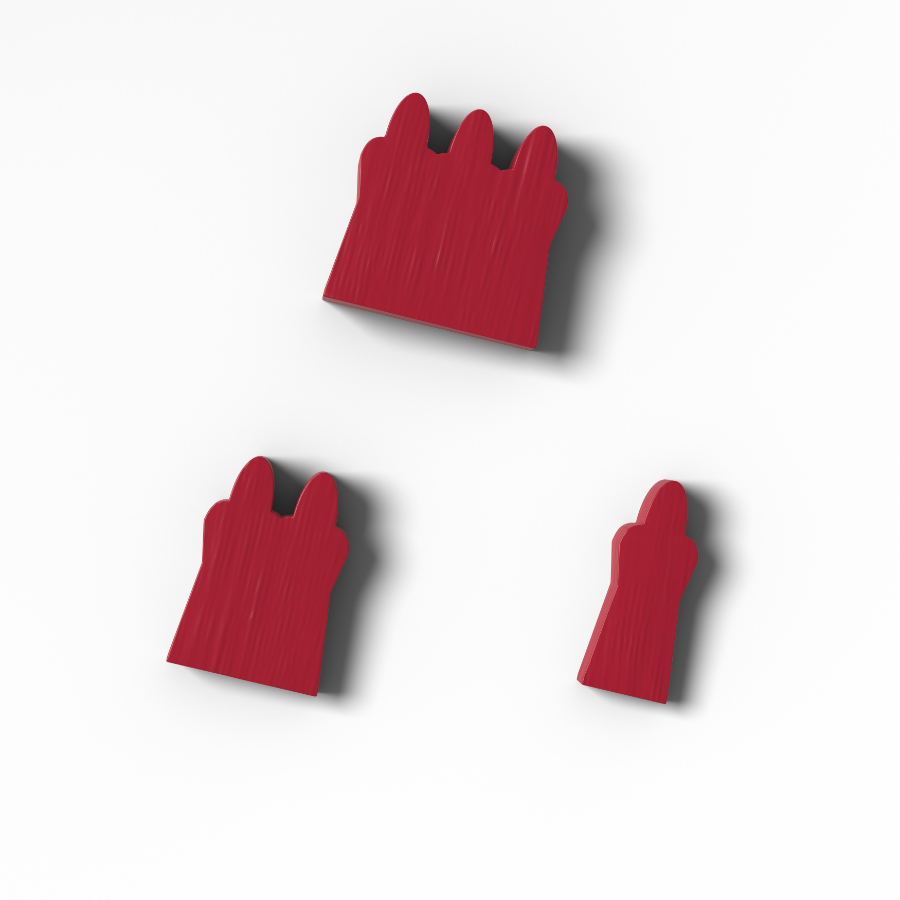
Know what you're buying first. The build costs are the real rulebook:
- Road = 1 wood + 1 brick
- Settlement = 1 wood + 1 brick + 1 sheep + 1 wheat
- City = 3 ore + 2 wheat
- Development card = 1 ore + 1 sheep + 1 wheat
Notice what's doing the heavy lifting: wheat is in everything that scores, and ore powers both cities and dev cards — the two fastest point engines in the game. Sheep is the most slept-on resource because it quietly feeds settlements and the dev-card deck (where Largest Army and victory-point cards live).
The rule: diversity beats abundance. If your opening touches all five resources across decent numbers, you can build almost anything without begging for trades. As the placement guides put it flatly: "Diversity beats abundance – avoid resource tunnel vision." The trap is falling in love with a stack of one resource and assuming you'll trade for the rest — then the robber parks on your producer and the table refuses your 4:1.
That said, your second settlement can lean toward a plan: if you're going cities-first (the most reliable competitive strategy), make sure at least one corner has a strong ore + wheat pairing on good numbers. Cities double your output on those hexes — they're the best multiplier in the box.
Wheat is in everything that scores. Ore builds cities and dev cards. If you starve those two, you're playing for second.
When is the 2:1 port game actually worth it?
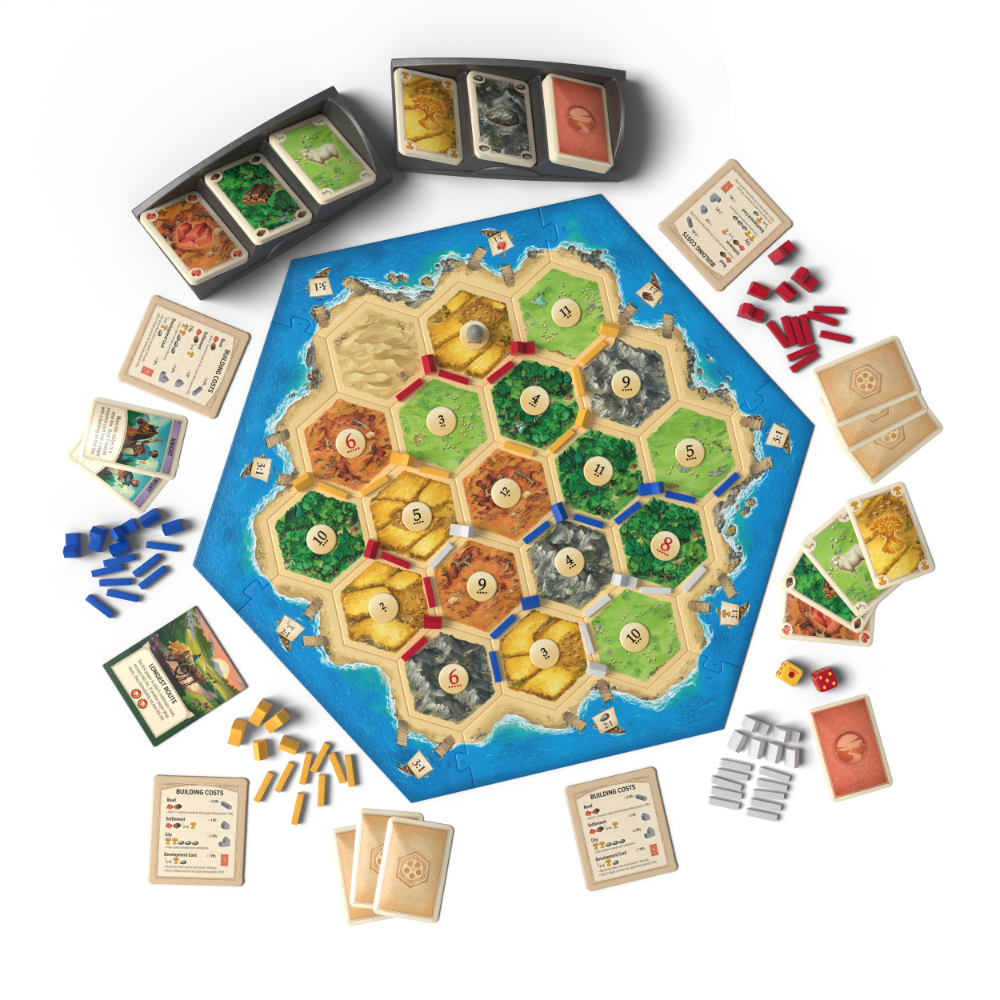
Ports let you trade at better-than-bank rates: a generic 3:1 port (any 3 same resource → 1 of choice) or a specific 2:1 port (e.g. 2 ore → 1 anything). The default with no port is a miserable 4:1 at the bank.
Here's the honest take: a 2:1 port is only good if you reliably over-produce that exact resource. A 2:1 ore port is a goldmine if you're sitting on two red-number ore hexes — you can convert surplus ore into whatever you're short on, every turn, and never depend on the table's goodwill. A 2:1 port with no matching production is decoration.
The port strategy's real strength is flexibility. As one strategy primer notes, with a strong port "you are not confined to any one particular strategy so you can roll with the punches—if the longest road is open, go for it; if the largest army is open, go for it." You turn one fat resource stream into optionality.
The fatal flaw: that same primer warns that "if the robber stays on your main producer of your 2:1 port resource, you are guaranteed to lose." A port build is a single point of failure. Defend that hex like your game depends on it — because it does.
A 2:1 port without matching production is a sticker. With it, it's a printing press — until the robber finds the off switch.
How do I actually use the robber to win (not just annoy people)?
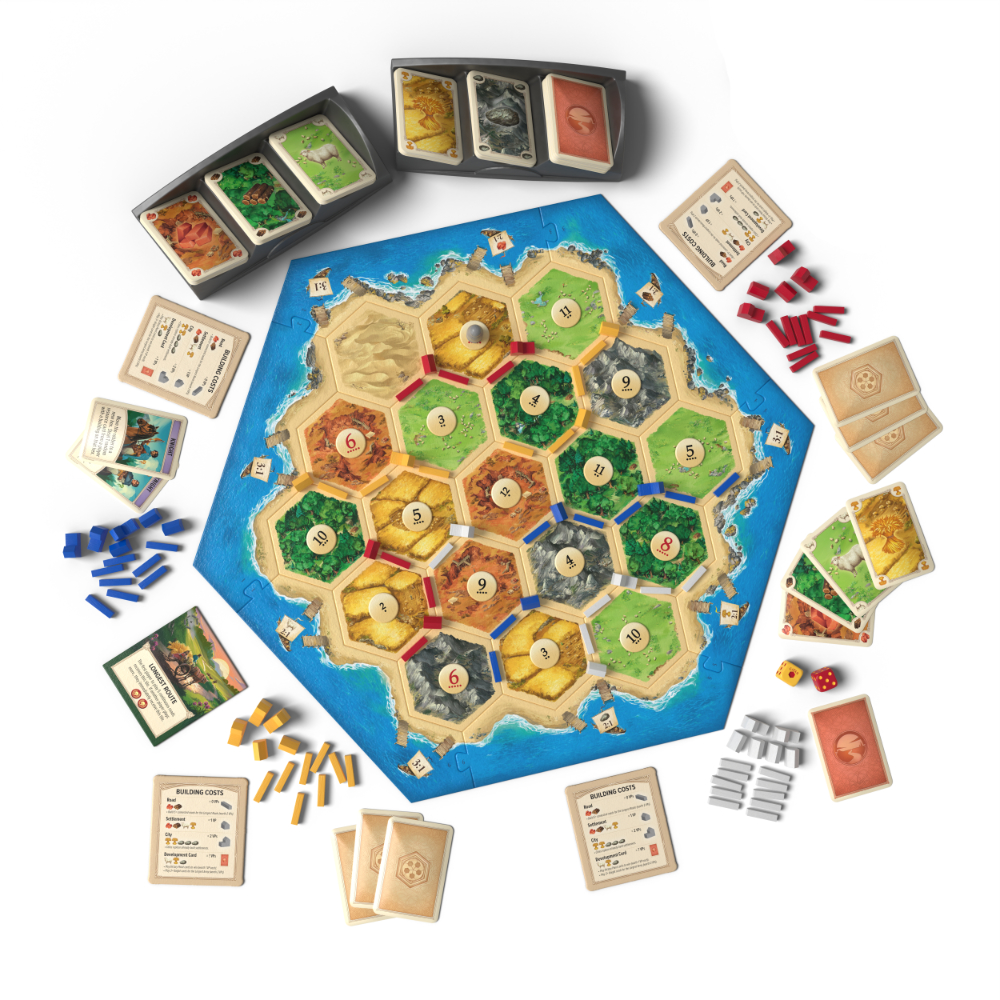
The robber is the only direct weapon in base Catan, and most players waste it on whoever annoyed them last. Use it like a professional:
- Hit the leader, not the loudmouth. Park the robber on the hex feeding whoever's closest to 10 points. Slowing the leader is worth more than petty revenge.
- Steal the resource you need, or the one they need most. When you rob a card, you're also denying. Target the player whose engine you most want to choke.
- Block the resource they can't replace. Putting the robber on someone's only ore hurts far more than on a resource they get from three corners.
- Make it stick. Place it where it'll sit longest. The everythingisagame/placement wisdom: "When in doubt, place the robber on the player to your right so that it spends the most time there (and not back on you)" — because they act last before it loops back to you.
- Starve a knight-poor target. Strategy guides note the robber stays put longer on a player with no knights (no dev cards) to buy it off — they can't move it. Punish the table's weakest dev-card player.
And defensively: don't build your whole economy around one juicy 8 that screams 'rob me.' Spread risk so no single robber placement guts you.
The robber isn't a tax you pay on a 7. It's a precision strike — aim it at the leader's lifeline, and make it stay there.
What's the trading psychology that wins games?
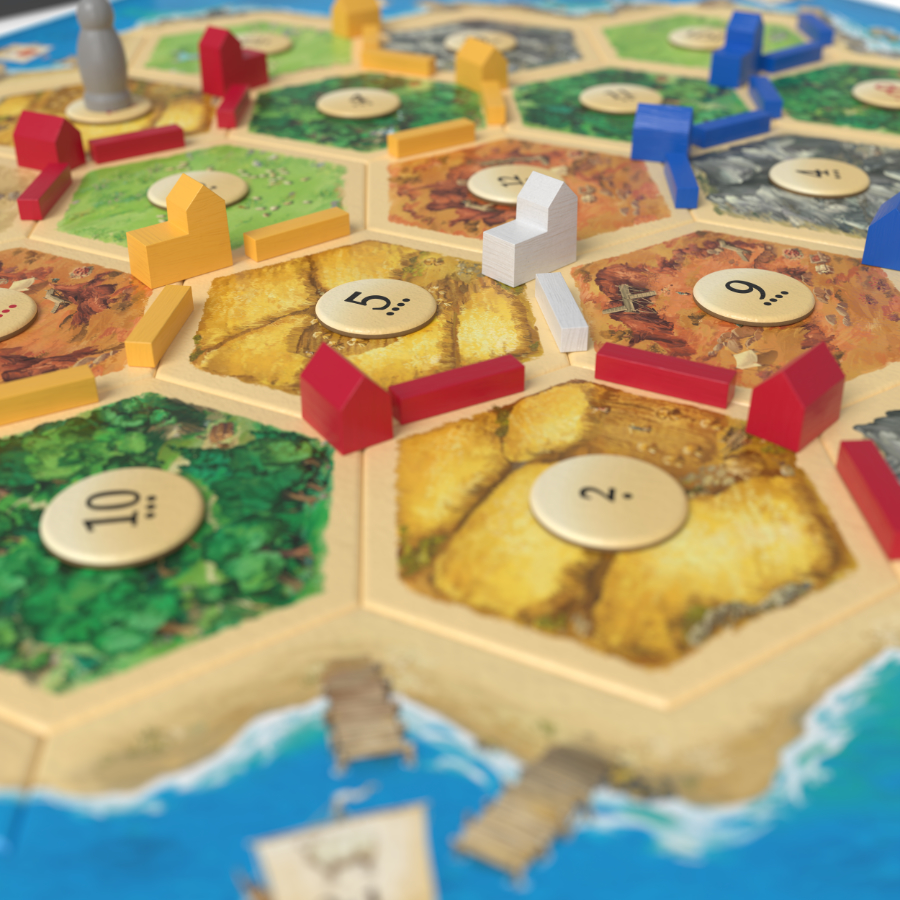
Trading is where nice players quietly lose. Internalize one reframe: a trade you offer should help you more than it helps them. A blunt strategy note puts it as harshly as it deserves — "Trade is exploitation. Please exploit. Don't give easy trades." That's not being a jerk; that's playing the game in front of you.
Real principles:
- Never feed the leader. The oldest table truth in Catan: when someone's near victory, the table stops trading with them. Be the first to cut them off, and watch others follow.
- Charge a premium when you're the only source. If you hold the last ore and someone needs it for a city that wins, that ore is worth far more than 1:1. Make them bleed for it.
- Trade away abundance, hoard scarcity. Dump your eleventh sheep happily. Cling to the resource you and the table are both short on.
- Watch the board to set prices. Trade is necessary precisely because limited corners can't produce everything — leverage that. The player who can't make ore will overpay, and you should let them.
There's a respectable counter-school — 'open-hand' Catan, where everyone plays cards face-up — that argues visible hands produce more and better trades because players can model each other. Worth trying with a friendly group. But in a competitive game, information is ammunition. Keep your hand, and your intentions, close.
Generosity loses Catan. Every trade should help you more than the person across the table — especially if they're winning.
Longest Road or Largest Army — which race should I pick?
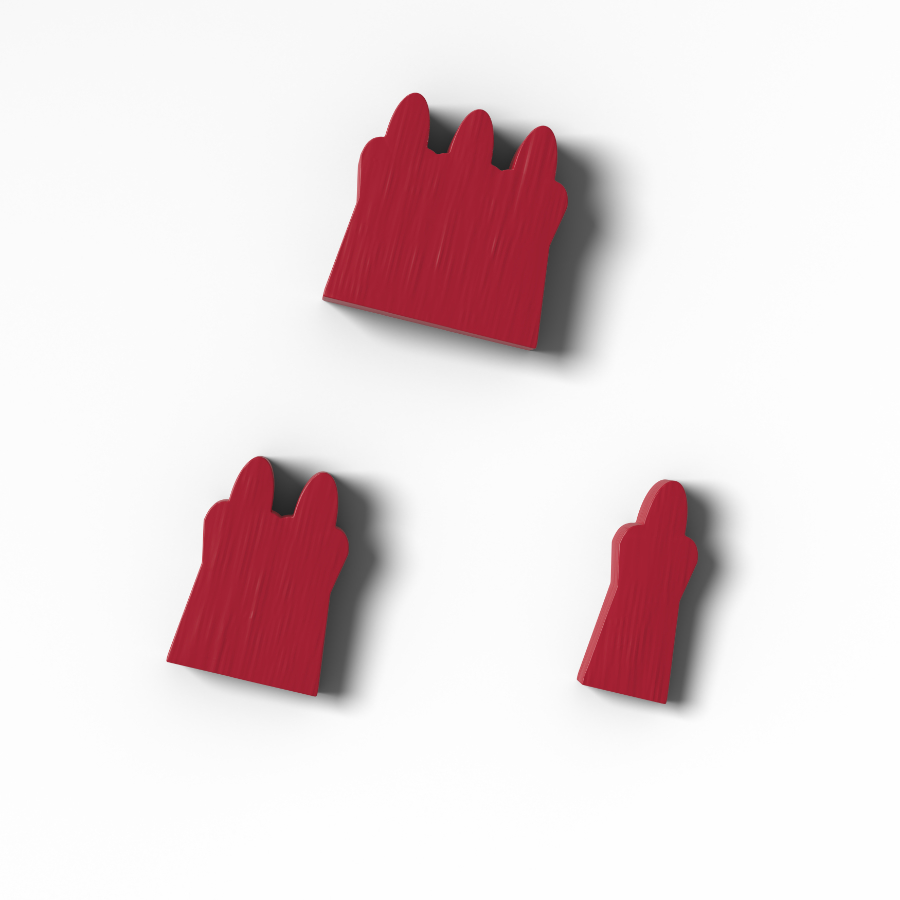
Both are worth 2 points, and in most games the winner holds one of them. The mistake is chasing both, half-committing to each, and securing neither. Decide early which one the board is handing you.
Read the board:
- Open board, lots of empty edges? Longest Road is live. A wood+brick engine can pump roads and grab it. As the primer says, on a wide-open board "the player who can pump out the most roads can probably get it."
- Crowded board, contested edges? Longest Road gets blocked easily — a single opponent settlement can snap your chain. Hex sides become the bottleneck; whoever reaches them first wins the race, and that's fragile.
- Steady ore+wheat? Largest Army is your lane. Buy dev cards every turn you can; knights accumulate toward the 3 you need for the badge, while victory-point cards and Monopolies hide in the same deck. It's the more resilient path — nobody can physically block your army the way they block a road.
The deciding logic from the strategists: "if you're too far from acquiring one of them, you need to try to secure the other." Pick your lane by turn three or four, commit, and don't let ego drag you into a road war you've already lost.
And watch the steal: Longest Road and Largest Army can both be taken mid-game if someone beats your length or knight count. Two points swinging across the table is often the whole game — hold a buffer, and time your final settlement or knight to snatch it back on the turn you can also reach 10.
Don't chase both badges. Read the board, pick the lane it's offering, and floor it. Half-committing to each is how you finish third.
From the rabbit hole
Real voices from players, reviewers, and the communities who know these games best.
strategy“The cleanest placement heuristic ever written: "Add up the dots on the adjacent hexes. The intersection with the largest dot-sum is the most valuable." If you do one thing differently next game, do this.”
Division by Zero — Playing the probabilities in Settlers of Catan
hot-take“On trading, a player strategy note doesn't mince words: "Trade is exploitation. Please exploit. Don't give easy trades." Generosity is how nice people lose Catan.”
Blake Boles — Settlers of Catan: Theory and Practice
tip“On the robber: "When in doubt, place the robber on the player to your right so that it spends the most time there (and not back on you)." They act last before it loops back — maximum disruption, minimum blowback.”
Everything Is A Game — Where to Place Your First Settlements
community“The oldest table truth, stated plainly: "If a player is close to winning the game, often the other players will refuse to trade with him, in order to blockade him from winning." Be the one who cuts the leader off first.”
Cornell Networks course — Settlers of Catan
strategy“On the port single-point-of-failure: "If the robber stays on your main producer of your 2:1 port resource, you are guaranteed to lose." A port build hands the table a target — defend it or don't build it.”
aka pastor guy — The Strategies of Catan
tip“On the badge race: "if you're too far from acquiring one of them [Longest Road / Largest Army], you need to try to secure the other." Don't split your effort — read the board and pick the lane.”
Board Game Business — Settlers of Catan Strategy Primer
The picks
Some links below are affiliate links — as an Amazon Associate, Puzzlewick earns from qualifying purchases, at no extra cost to you. It never changes a pick.
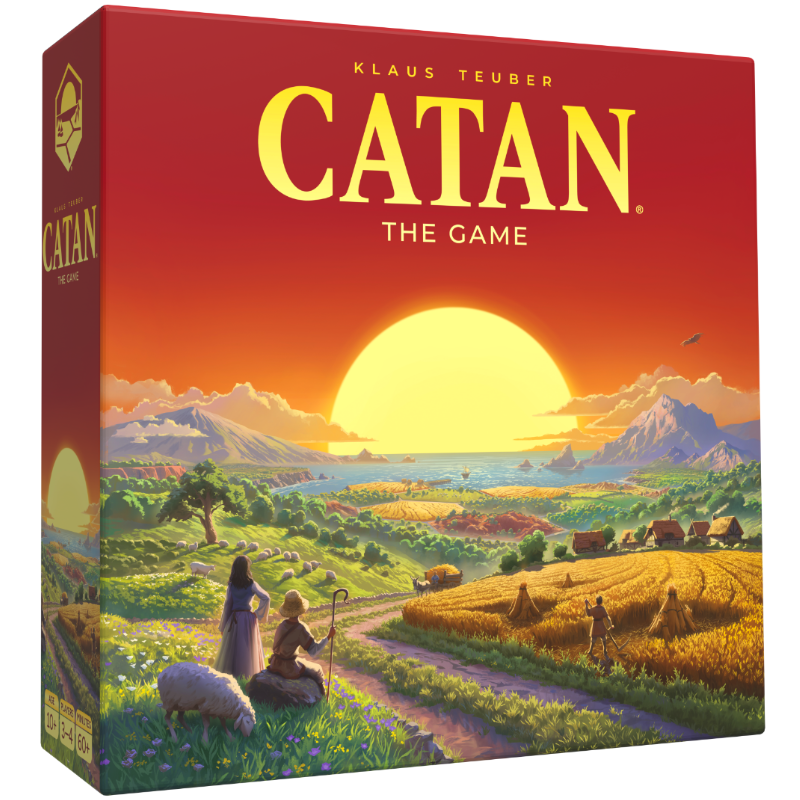
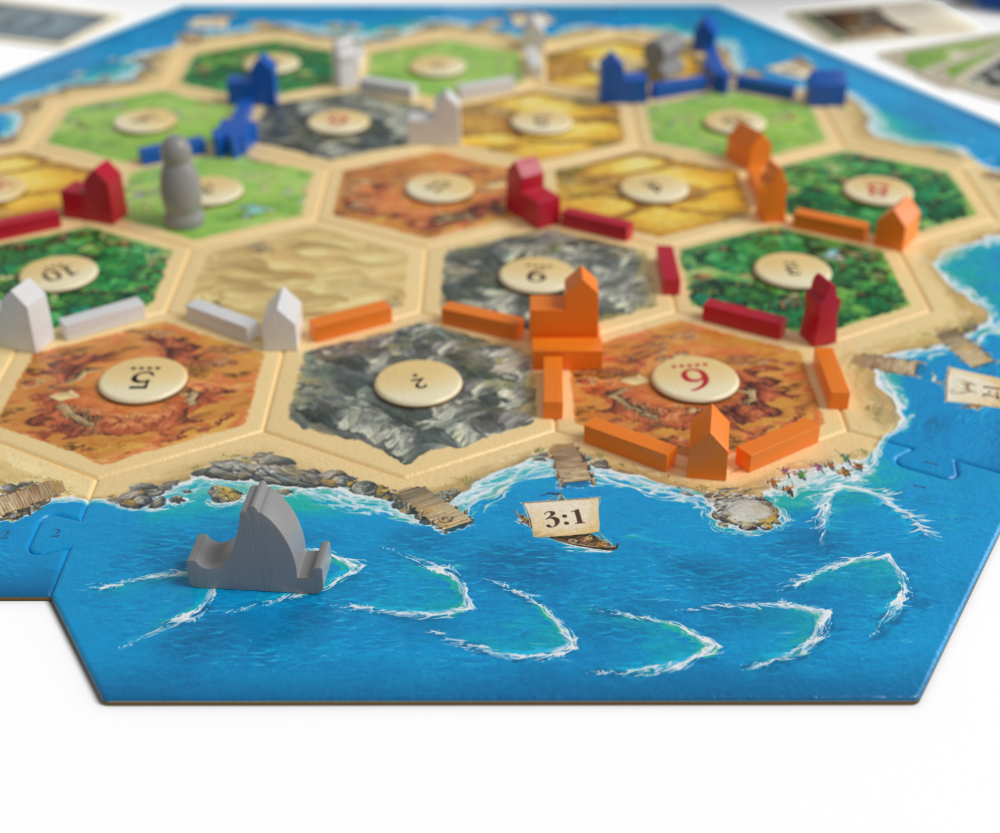
3 photos CATAN Board Game (Current Edition)
This is the game, full stop. The current edition (now badged 6th Edition, made by CATAN Studio, 3–4 players, ages 10+, 60–90 min) is the same hex-and-pip engine that's been quietly humbling overconfident friends since 1995. Everything in this guide — pip-counting, the 6/8 hunt, ports, the robber, the longest-road/largest-army race — lives in this box. If you only own one, own this. The 5-pip red numbers and the variable board are the entire reason Catan still earns table time thirty years on.
- The definitive base experience; teaches the full probability + trading core
- Variable hex setup means near-infinite opening puzzles to master
- Universal — everyone you'll ever play with already knows the rules
- Caps at 4 players without the extension (a real limit for game nights)
- Cardboard tokens scatter; the box insert is famously useless (see pick #3)
 3 photos
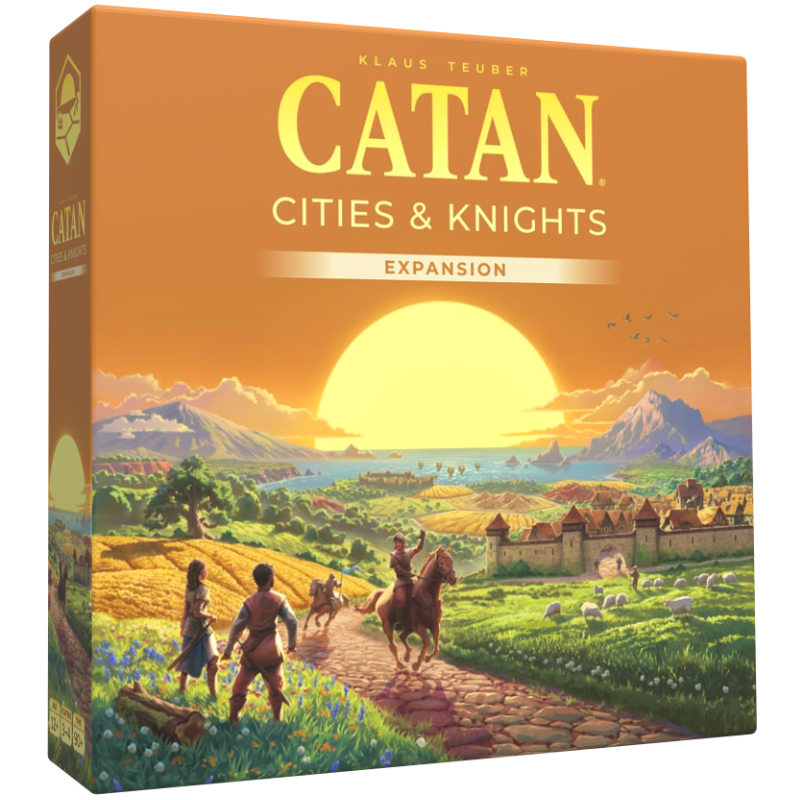
 CATAN: Cities & Knights Expansion
Once base Catan starts feeling solved, Cities & Knights is the upgrade that re-complicates it in the best way. You defend the island from barbarians with knights and race to turn cities into metropolises — which adds a whole second axis of strategy on top of the placement-and-probability spine. It's heavier (90+ minutes, ages 12+, requires the base game) and not a first night purchase, but it's the single most respected Catan expansion for a reason: it rewards exactly the long-game planning this guide is teaching. Buy it when 'just one more settlement' stops being a challenge.
- Adds knights, barbarians, and metropolises — deep new strategic layers
- Makes dev-card and commodity management genuinely intricate
- The expansion competitive players cite most often
- Requires the base game; not standalone
- Longer and more complex — can overwhelm casual or new groups
- Ages 12+ and a real rules-overhead jump
 2 photos
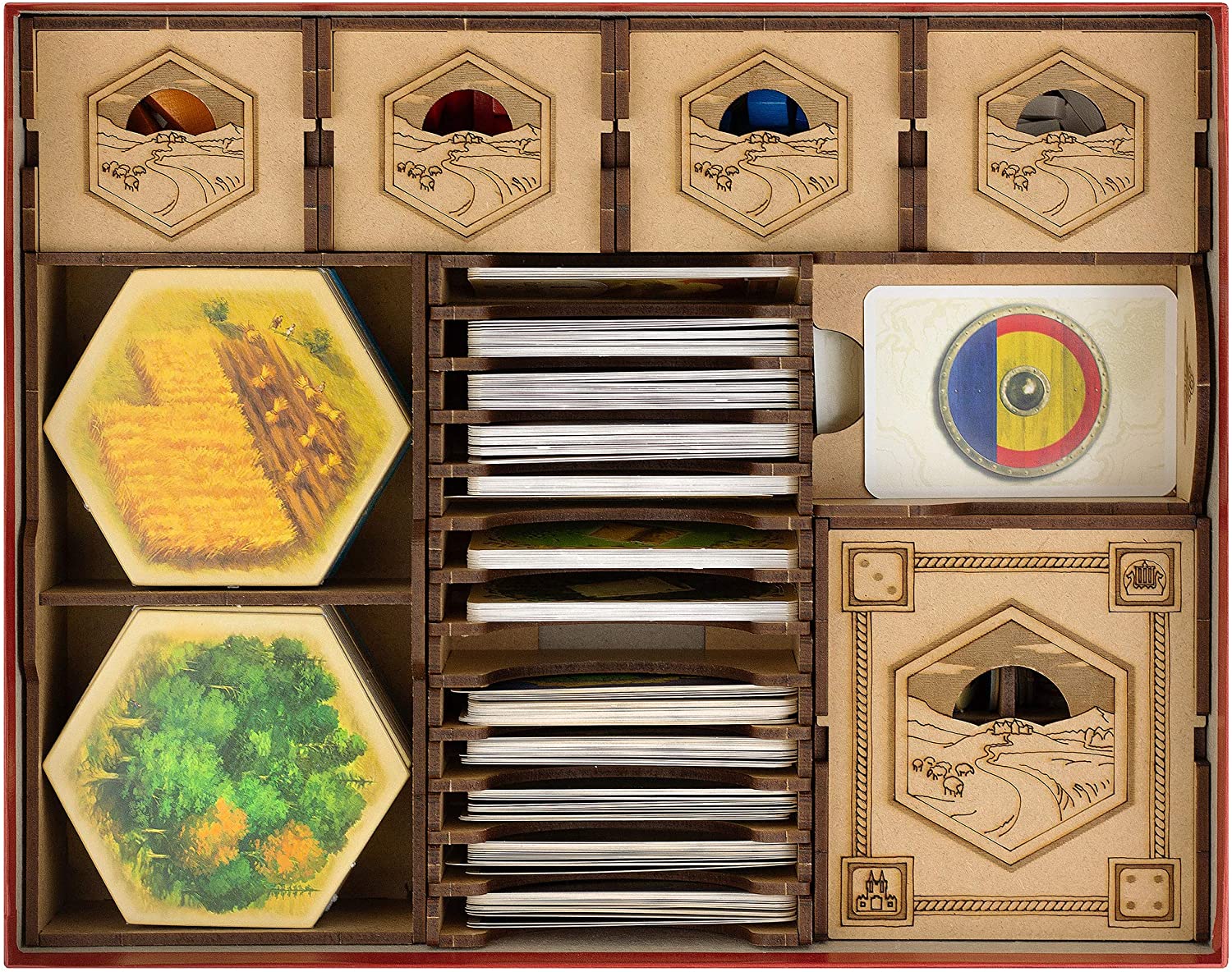
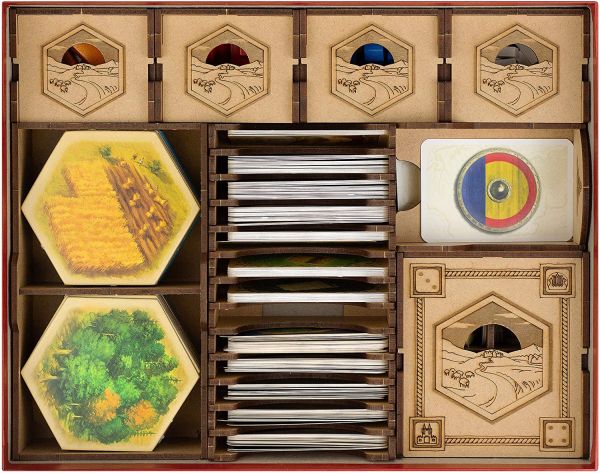
 TowerRex Organizer for Catan + Cities & Knights / Seafarers
The dirty secret of Catan is that the stock box is a chaos pit — hexes, number chips, and player pieces all loose. The TowerRex insert fixes setup-and-teardown, which is the actual friction that keeps Catan on the shelf instead of the table. It's a laser-cut wood (HDF) organizer with engraved trays for bandit, number, and player tokens plus a dedicated bay for the resource hexes, and it's built to hold the base game alongside Cities & Knights and Seafarers. Assembly is a 10–20 minute glue-and-slot job. Pure quality-of-life — it doesn't make you win, it just makes you actually play.
- Cuts setup/teardown from minutes to seconds — the real reason games get shelved
- Holds base + Cities & Knights + Seafarers in one organized box
- Engraved trays separate every token type; sturdy laser-cut HDF
- Requires self-assembly and a bit of glue (10–20 min)
- Zero gameplay impact — strictly a convenience upgrade
- Adds cost on top of the games it stores
At a glance
| number token | ways to roll | probability | pips dots | settle verdict |
|---|---|---|---|---|
| 2 | 1 | 1/36 (~2.8%) | 1 | Trap — five times rarer than a 6. Avoid as a primary. |
| 3 | 2 | 2/36 (~5.6%) | 2 | Weak. Acceptable only as a third hex for diversity. |
| 4 | 3 | 3/36 (~8.3%) | 3 | Fine secondary number; good in combos. |
| 5 | 4 | 4/36 (~11.1%) | 4 | Strong. Pairs beautifully with a 6 or 8. |
| 6 | 5 | 5/36 (~13.9%) | 5 | Gold (red number). Prioritize in the opening draft. |
| 7 | 6 | 6/36 (~16.7%) | 0 | No hex — triggers robber + discard. Manage hand size around it. |
| 8 | 5 | 5/36 (~13.9%) | 5 | Gold (red number). A 6+8 corner is a top-tier engine. |
| 9 | 4 | 4/36 (~11.1%) | 4 | Strong. Don't overvalue it just because it sits by wheat. |
| 10 | 3 | 3/36 (~8.3%) | 3 | Decent secondary; better on a resource you lack. |
| 11 | 2 | 2/36 (~5.6%) | 2 | Weak. The classic 'pretty corner' bait. |
| 12 | 1 | 1/36 (~2.8%) | 1 | Trap — practically worthless alone. Diversity hex only. |
Questions, answered
What are the best numbers to build on in Catan?
6 and 8 — each rolls five ways out of 36 (5/36, about 13.9%), the highest of any number, which is why both are printed in red. After them, 5 and 9 (4/36), then 4 and 10 (3/36). Build your strongest settlements touching 6s and 8s on different resources.
What numbers should I avoid in Catan?
2 and 12 — each rolls only one way in 36 (1/36, about 2.8%), making them roughly five times rarer than a 6. They're nearly worthless as a primary production number. Only accept them as a third hex when they add a resource or number you're otherwise missing.
How do I count pips to evaluate a settlement spot?
Every number token has dots (pips) equal to how many ways it rolls — one for a 2, five for a 6. Add the pips on the three hexes around an intersection. The corner with the highest dot-sum produces the most resources on average. It's the fastest reliable way to compare placements.
Should I place for resource diversity or for the highest numbers?
Both, in balance — but diversity wins ties. Aim for high pip-counts AND coverage of 5–6 different numbers and as many of the five resources as possible. A settlement starved of a resource forces you into bad trades, and 'diversity beats abundance' is the rule veterans repeat. Don't tunnel-vision on one resource.
What's the best opening strategy in Catan?
Place your first settlement on the highest-pip intersection you can grab (ideally touching a 6 or 8), then place your second to cover the numbers and resources the first one missed. A common ideal is one settlement on a 4-5-6 corner and the other on an 8-9-10 corner, capturing six strong numbers across diverse resources.
Is the cities-first or roads-first strategy better?
Cities-first is the more reliable competitive plan for most players: secure ore+wheat, upgrade settlements to cities (which double production and are worth 2 points each), and buy dev cards toward Largest Army. Roads-first (wood+brick) only shines on an open board where Longest Road is uncontested. Let the board decide.
When should I take Largest Army vs Longest Road?
Read the board. Open, empty edges favor Longest Road via a wood+brick road engine. Crowded, contested edges get your road blocked easily, so pivot to Largest Army through dev cards — it can't be physically blocked. Pick one lane by turn three or four; chasing both usually gets you neither.
How does the robber work and how do I use it well?
When a 7 is rolled (or you play a Knight), you move the robber onto a hex, blocking its production, and steal a card from an adjacent player. Use it to slow the LEADER, deny a resource they can't easily replace, and place it where it'll sit longest — often on the player to your right, since they act last before it loops back to you.
Are 2:1 ports worth it?
Only if you reliably over-produce that exact resource. A 2:1 ore port is a printing press if you sit on two strong ore hexes; with no matching production it's just a pretty corner. The catch: if the robber camps your producer, a port build can lose you the game — defend that hex. Generic 3:1 ports are safer for balanced boards.
How many cards can I safely hold in Catan?
Try to stay at 7 or fewer when you pass your turn. On a roll of 7 — the single most common roll (6/36) — every player holding 8 or more cards must discard half. Spend down your surplus before ending your turn rather than gifting it to the discard pile.
Should I trade with the player who's winning?
No. Once someone is close to 10 points, stop feeding them — and be the first at the table to say so out loud, because others usually follow. If you must trade with the leader, charge a steep premium, especially when you're their only source of a resource they need to close out the game.
Do I need an expansion to enjoy Catan?
No — the base game is complete and is where all the core strategy lives. Get the 5-6 Player Extension only if your group is regularly 5–6 people, and Cities & Knights once base Catan starts feeling solved and you want a deeper, longer game. An organizer insert is the highest-value non-gameplay add-on for frequent players.
Dax's verdict
Catan rewards the player who treats it as the probability game it actually is. Win the opening: pip-count every corner, chase the red 6s and 8s, spread across 5–6 numbers and all five resources, and lock down ore+wheat so cities and dev cards keep flowing. From there it's discipline — weaponize the robber against the leader, never give a fair trade, defend your key producers, and commit early to either Longest Road or Largest Army based on what the board is handing you. The base game (pick #1) is all you need to master every bit of this; Cities & Knights is the depth upgrade for when base Catan feels solved, and the TowerRex organizer is the quality-of-life buy that keeps the box hitting the table. Do the math, play a little ruthless, and 'I got unlucky' stops being your most-used phrase. The dice are fair. Be better than the dice.
Research ledger 10 sources · reviewed 2026-07-17
Specifications, rules, current product information, community experience, and contrary evidence were checked against the sources below. Commercial links are kept separate from editorial evidence.
- amazon.comamazon.com/dp/B0DYK1ZH2D?tag=puzzlewick-20
- amazon.comamazon.com/dp/B09XFK45XL?tag=puzzlewick-20
- amazon.comamazon.com/dp/B086XC12ZM?tag=puzzlewick-20
- divisbyzero.comdivisbyzero.com/2010/01/06/playing-the-probabilities-in-settlers-of-catan
- everythingisagame.comeverythingisagame.com/catan-first-settlements
- blakeboles.comblakeboles.com/settlers-of-catan-theory-and-practice
- akapastorguy.blogspot.comakapastorguy.blogspot.com/2013/12/the-strategies-of-catan-largest-army.html
- boardgame.businessboardgame.business/2013/08/30/settlers-of-catan-strategy-primer
- nsdl.library.cornell.edunsdl.library.cornell.edu/websites/expertvoices/info2040/archives/1759.html
- jefftkaufman.substack.comjefftkaufman.substack.com/p/open-hand-catan

I'll be honest with you — flattery is boring.
Keep exploring
The next smart rabbit holes.
⬢ Universe HubCATAN: the whole buying pathCATAN begins as a clean trade-and-settle game, then branches into larger tables, shifting maps, and much sharper strategy. This hub...✦ Topic PathBoard Game Buying Guides: compare the whole shelfStart with the decision, not the shelf. These guides compare the games, editions, expansions, player counts, and costs people...ComparisonCatan vs Carcassonne vs Ticket to Ride: The Best Gateway Game, Head-to-HeadThree legends, one shelf, one decision. Here's the honest, table-tested call on which gateway game earns its spot first — and exactly who...