Which TCG Should You Start in 2026? Pokémon vs One Piece vs Lorcana vs Magic vs Yu-Gi-Oh! vs Riftbound
Dax ranks the real 2026 field by the table you can find, the rules you want to repeat, the first product that actually teaches, and the money traps waiting behind a beautiful booster box.


AI-assisted research and drafting in Dax’s voice · reviewed by Robert Pruitt · how this guide was made
Last editorial refresh: 2026-08-14 Gold-standard QA: 2026-08-14 18 sources reviewed Affiliate links checked during gold-standard pass

The short answer
Start with the game whose table you can join twice next month. Pokémon is the cleanest family and beginner ecosystem; Magic has the deepest and easiest-to-find adult network; One Piece is the hottest proven challenger; Yu-Gi-Oh! rewards players who want explosive combo density; Lorcana is the friendliest Disney-forward family bridge; Riftbound is the most interesting new-system bet. Buy a teaching kit or one fixed starter first. A booster box is not a personality test and it is rarely a first lesson.
The wrong way to choose a trading card game is to compare six booster boxes as if the cartons contain communities. They do not. The game lives in the rules you enjoy, the people who will meet you, the product that teaches cleanly, and the amount of catalog you are willing to absorb. Dax starts with the current marketplace field, then deliberately demotes market rank beneath the question that actually predicts whether your first purchase survives: will you play again?
Start here, then go deeper
You are in the right cabinet.
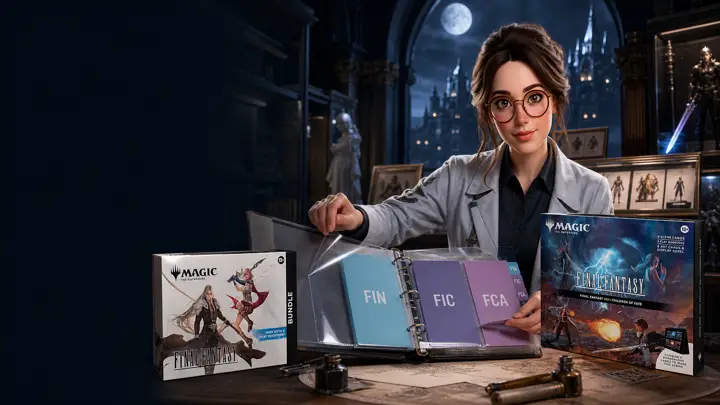 ✦ Universe HubFinal Fantasy Card Games: the whole buying pathFinal Fantasy now lives in two major physical card systems: Square Enix’s focused FFTCG duel game and Magic’s enormous Commander...
 🂠 Topic PathTrading Card Games: compare the whole shelfStart with the game and community you want, then buy the smallest product that lets you test it properly. These guides separate...
 GuideShould Pokémon Collectors Switch to One Piece in 2026? What Transfers, What Does Not, and What to Buy FirstImani separates a real collector migration from panic, translates Pokémon habits into One Piece deckbuilding and play, and gives you a...
What are the hottest trading card games in 2026?
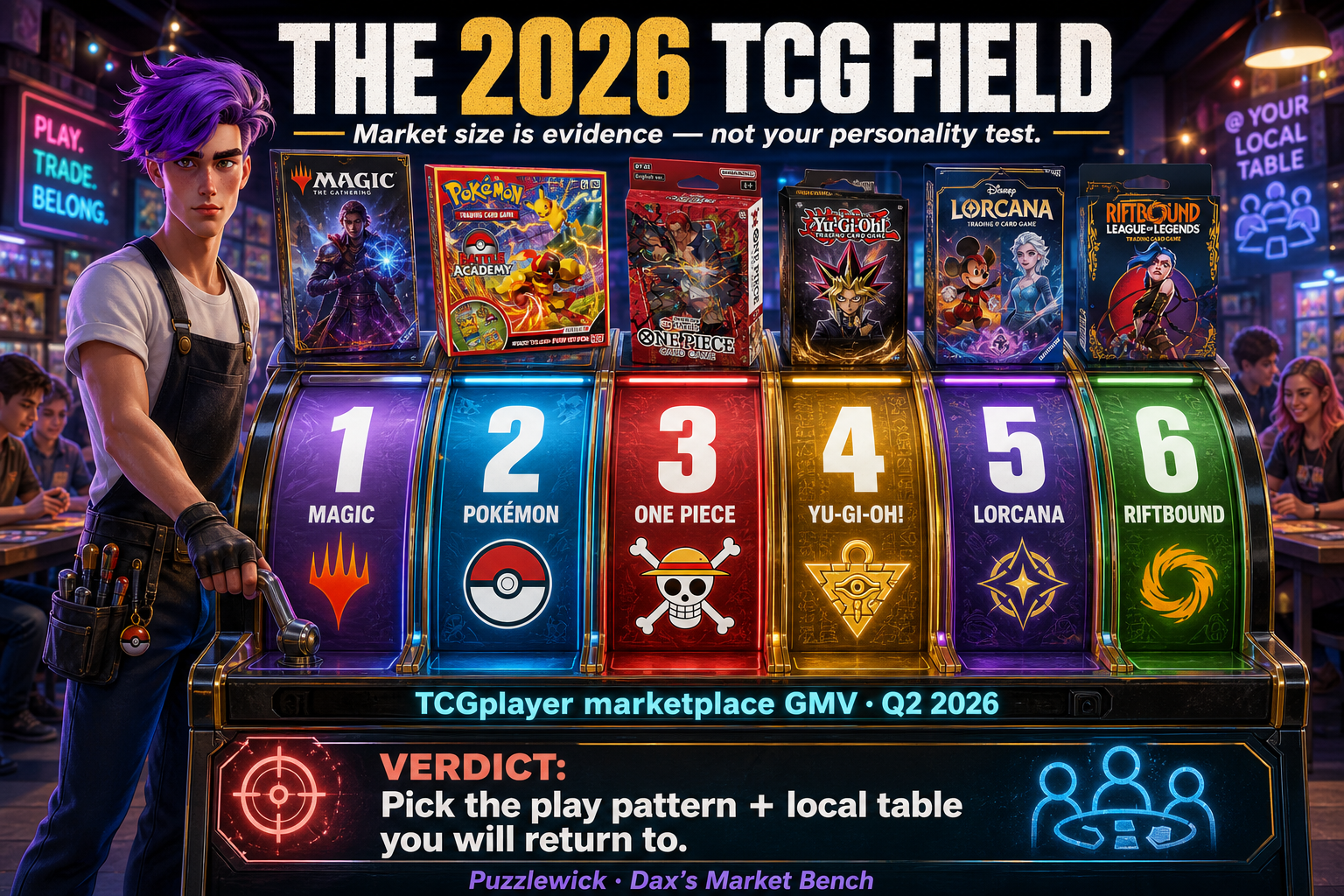
TCGplayer's Q2 2026 marketplace GMV placed Magic first, Pokémon second, One Piece third, Yu-Gi-Oh! fourth, Disney Lorcana fifth, and Riftbound sixth. Pokémon Japan, Gundam, Dragon Ball Super: Fusion World, and Digimon completed the top ten. That is a useful commercial snapshot from a major marketplace. It is not a universal census of local play.
One Piece has the strongest “challenger became establishment” story. Lorcana climbed from eighth in Q1 to fifth in Q2, with the Wilds Unknown/Pixar release helping its sealed products appear near the top of June sales. Riftbound remained sixth while moving from launch novelty into a real second-wave test. Pokémon did not vanish. Magic's Final Fantasy release broadened the top of the category rather than producing one winner.
Use rank to discover what deserves investigation. Use your table to make the purchase. A sixth-ranked game with a weekly league near you is more alive than a first-ranked game that nobody in your circle wants to shuffle.
Start with the table, not the franchise ranking
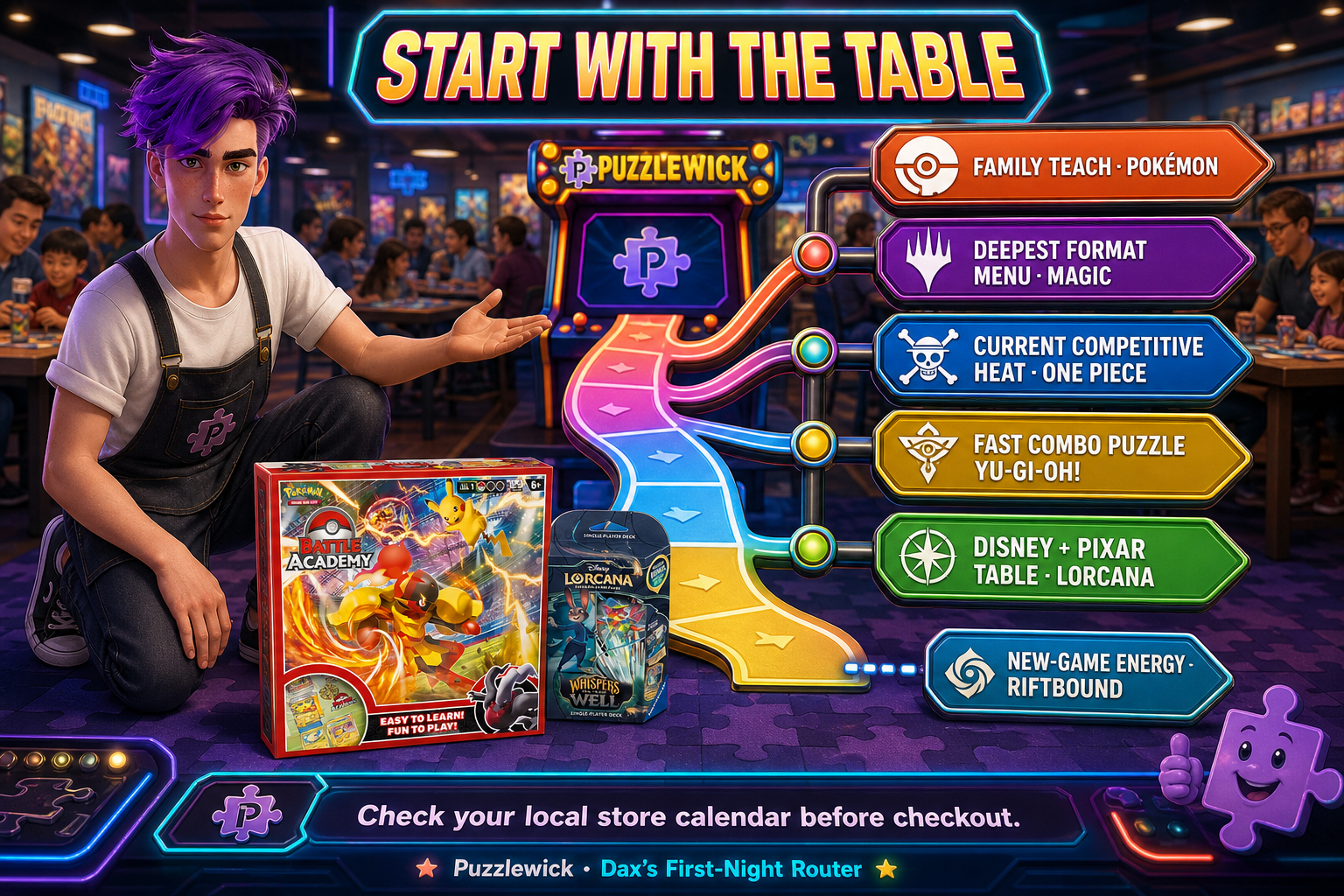
Run the two-session test before choosing. Find a store calendar, friend group, Discord, school club, or family member who can support two sessions in the next thirty days. Then ask whether that table plays casually, competitively, multiplayer, sealed, or constructed. The same franchise can feel like a different game under a different social contract.
For children and mixed-experience families, Pokémon Battle Academy remains unusually good because it supplies complete decks, a board, and a teaching sequence. For adults with an existing game-store network, Magic Commander often wins on opponent availability. One Piece is the strongest answer when the local Bandai scene is healthy and the Leader/DON!! play appeals. Yu-Gi-Oh! makes sense when dense interaction and combo learning sound exciting rather than punitive. Lorcana works when Disney attachment and accessible challenge create repeat family play. Riftbound earns the test when League champions and a new competitive system are the point.
If you cannot find a table, buy a product that includes enough for two people. A single-player starter is only beginner-friendly when another deck and opponent already exist.
Pokémon versus Magic: the easiest on-ramp versus the deepest ecosystem
Choose Pokémon when you want the strongest family bridge, familiar characters, a clear 60-card duel, and an enormous sealed-product culture. Begin with Battle Academy when teaching matters. Use an Elite Trainer Box only when boosters plus sleeves, dice, storage, and guide material are the desired package; it is not a substitute for two coherent decks.
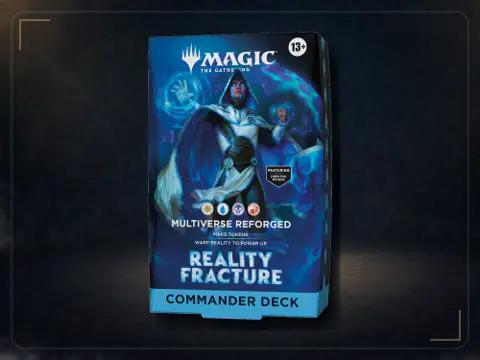
Choose Magic when finding adult opponents, multiplayer Commander, deck expression, and a very deep catalog sound energizing. Magic's depth is both the advantage and the tax. A Commander preconstructed deck can join a table immediately, but the larger rules history and social expectations mean your local group should help choose the first deck. The Final Fantasy four-deck set is a superb self-contained pod for a group that specifically wants that crossover. It is excessive as a universal first purchase.
Dax's split: Pokémon is easier to teach from a purpose-built box; Magic is easier to keep playing when a mature store or friend network already exists.
One Piece versus Yu-Gi-Oh!: readable resource pressure versus combo density
Choose One Piece when you want recognizable leaders, a visible resource system, defending from hand, and a current community with real momentum. The Leader, 50-card main deck, 10-card DON!! deck, and Life area make the game's anatomy distinct. A starter deck gives that anatomy to you intact.
Choose Yu-Gi-Oh! when you enjoy archetype-specific lines, explosive turns, a huge card history, and the satisfaction of learning interactions that initially look like somebody dropped a filing cabinet onto a duel disk. Modern Yu-Gi-Oh! can be hostile when a new player buys disconnected nostalgia cards and faces an optimized current deck. A coherent structure product and a patient opponent matter enormously.
One Piece is the cleaner current recommendation for a player who wants to understand the board state while learning. Yu-Gi-Oh! is the sharper fit for someone who actively wants combo study and an established competitive identity. Neither should begin with a booster box.
Lorcana versus Riftbound: the family bridge versus the new-system bet
Choose Disney Lorcana when beloved characters, accessible family play, and a steadily maturing competitive scene are the reason the cards will leave the box. Its move back up the TCGplayer ranking in Q2 shows that the game is not merely surviving its launch wave. A current starter deck is the right first product because it gives one coherent deck; two players still need two decks or a two-deck teaching product.
Choose Riftbound when League of Legends champions, battlefields, rune decisions, and the energy of learning a newer system appeal. Newness brings both excitement and risk: organized play, card availability, balance knowledge, and product cadence have less history than Magic or Pokémon. Start with one Champion Deck or Proving Grounds, depending on whether you need one deck or a shared teaching experience.
Lorcana is the safer mixed-audience recommendation. Riftbound is the better enthusiast recommendation when your group specifically wants to discover a game while its habits are still forming.
The first-purchase rule that prevents six expensive mistakes
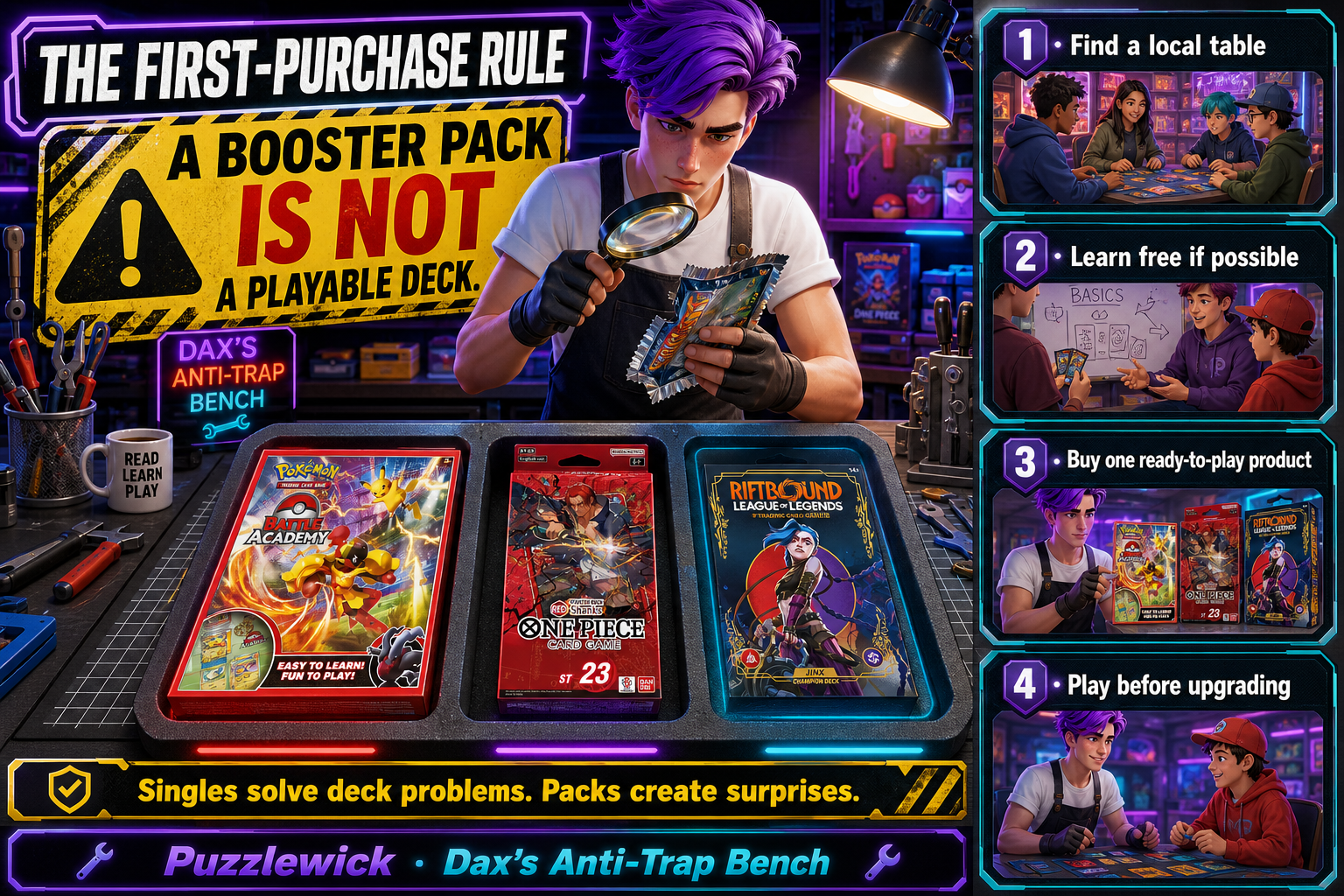
Your first purchase must do one of two things: teach two people or seat one person at an existing table. Battle Academy teaches two. A fixed starter or Champion Deck seats one when an opponent already owns a deck. A complete Commander pod seats four. A booster box does neither reliably.
After three sessions, name the bottleneck. If you lack opponents, more cards will not repair the problem. If the deck's plan feels wrong, choose another fixed deck rather than random upgrades. If you love the plan but lose to one repeated weakness, buy singles or the exact second starter that contains the needed exclusives. If storage and sleeves are the problem, solve protection before adding inventory.
This rule is intentionally unromantic. So is an unopened $140 box staring at you like a receipt with dragons on it.
Run the thirty-day return test
Write down four dates: purchase, first play, third play, and next planned play. At day thirty, ask whether the game created three sessions, one new person to contact, one deck decision you understand, and one specific next purchase or a confident stop.
A game passes when it creates return behavior. It can pass with zero upgrades. It fails when the only repeated activity is browsing listings. That does not make collecting illegitimate; it means you should call the hobby collecting and set a collection boundary instead of pretending a competitive deck is forming by osmosis.
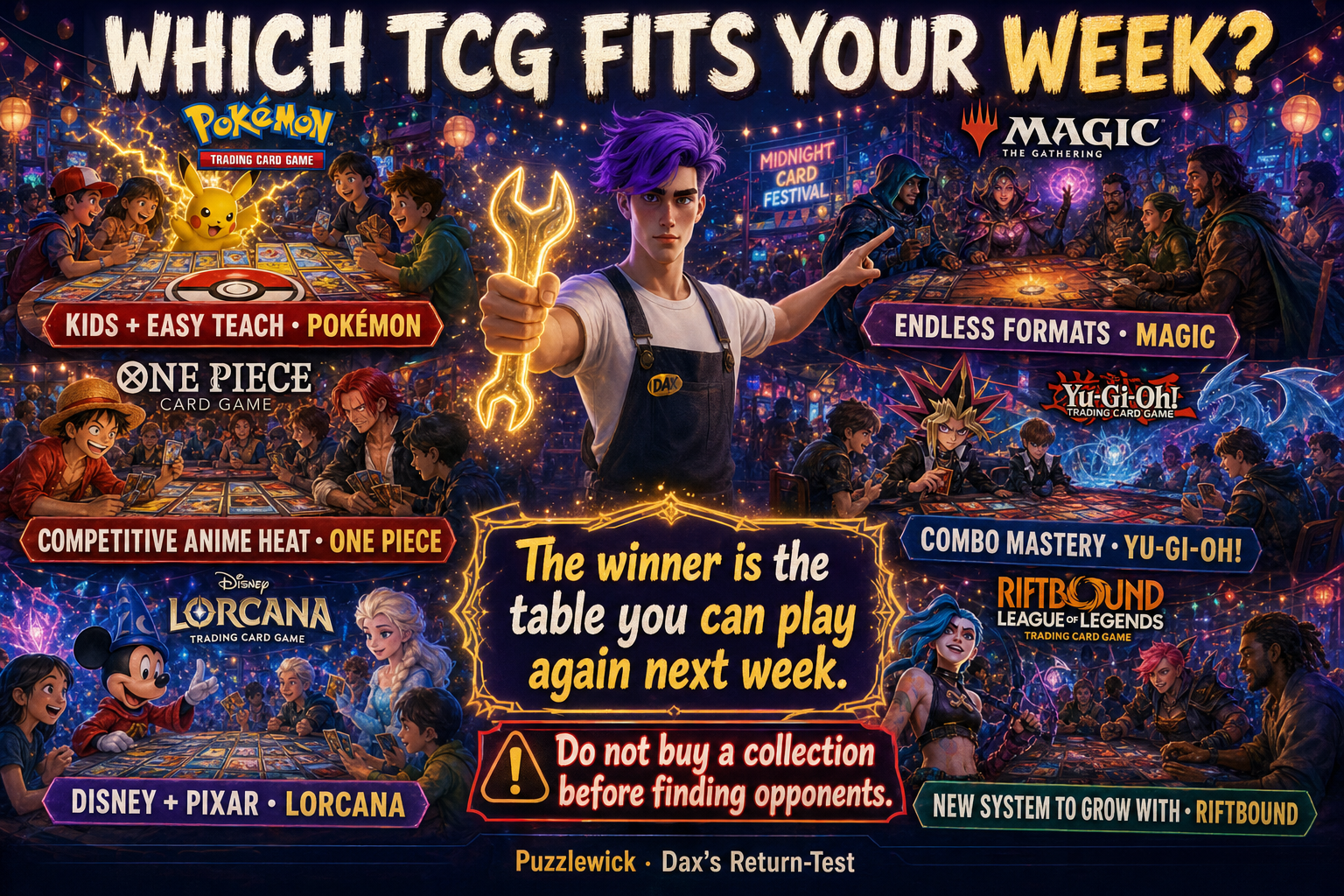
Dax's final recommendation: Pokémon for the broadest beginner bridge, Magic for the deepest recurring network, One Piece for the strongest current challenger, Lorcana for Disney-forward families, Yu-Gi-Oh! for combo devotees, and Riftbound for players who want to arrive early. The winner is the one you schedule again.
The picks
Some links below are affiliate links — as an Amazon Associate, Puzzlewick earns from qualifying purchases, at no extra cost to you. It never changes a pick.
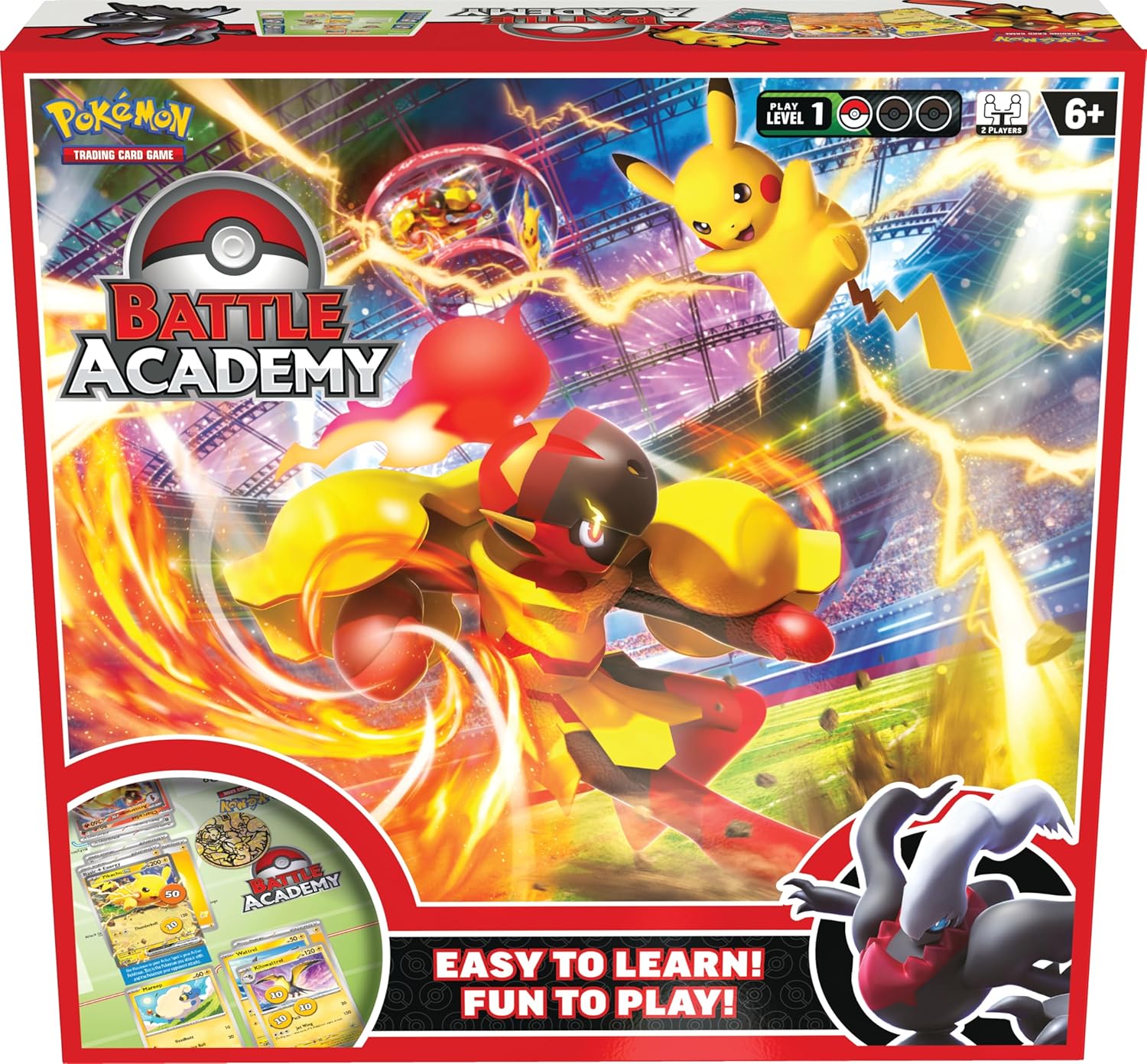
Pokémon Battle Academy
The strongest broad on-ramp because the box is built around complete decks, guided learning, and a shared board.
- Teaches two players
- Complete decks
- Family friendly
- Less deckbuilding freedom
- Not a premium collector box
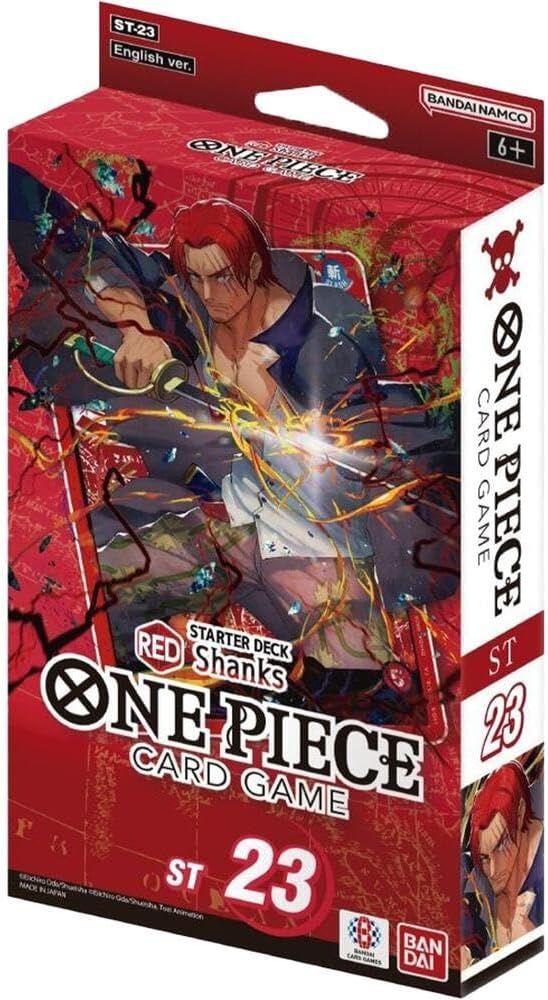
One Piece Card Game ST23 Shanks Starter Deck
One exact English starter, one leader plan, and a clean way to test the real game before buying boosters.
- Playable fixed deck
- Current major community
- Readable product identity
- Needs an opponent deck
- Upgrade singles vary
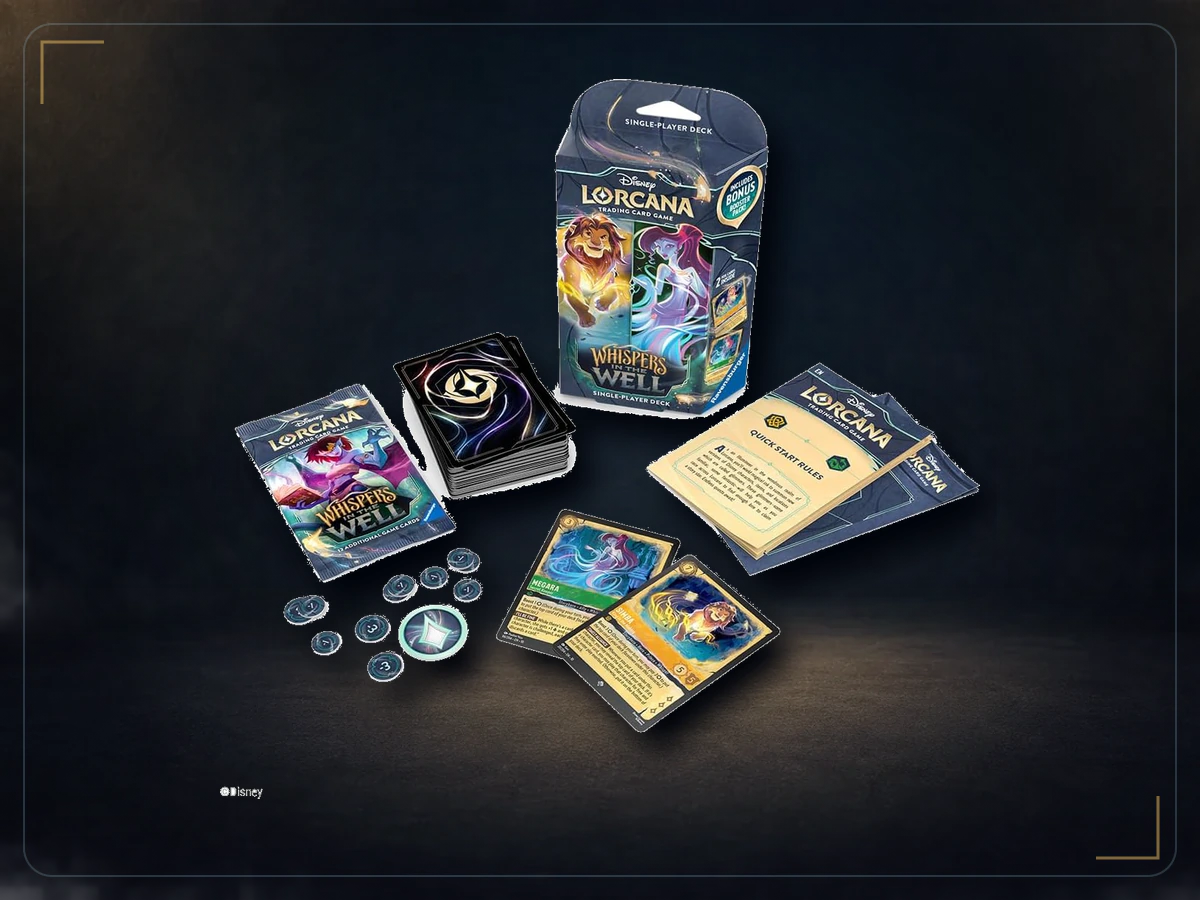
Disney Lorcana Whispers in the Well Amber and Emerald Single-Player Deck
A coherent first deck in a category that climbed back to fifth in Q2 marketplace rank.
- Accessible theme
- Fixed deck
- Growing catalog
- Two beginners need two decks
- Exact set identity matters
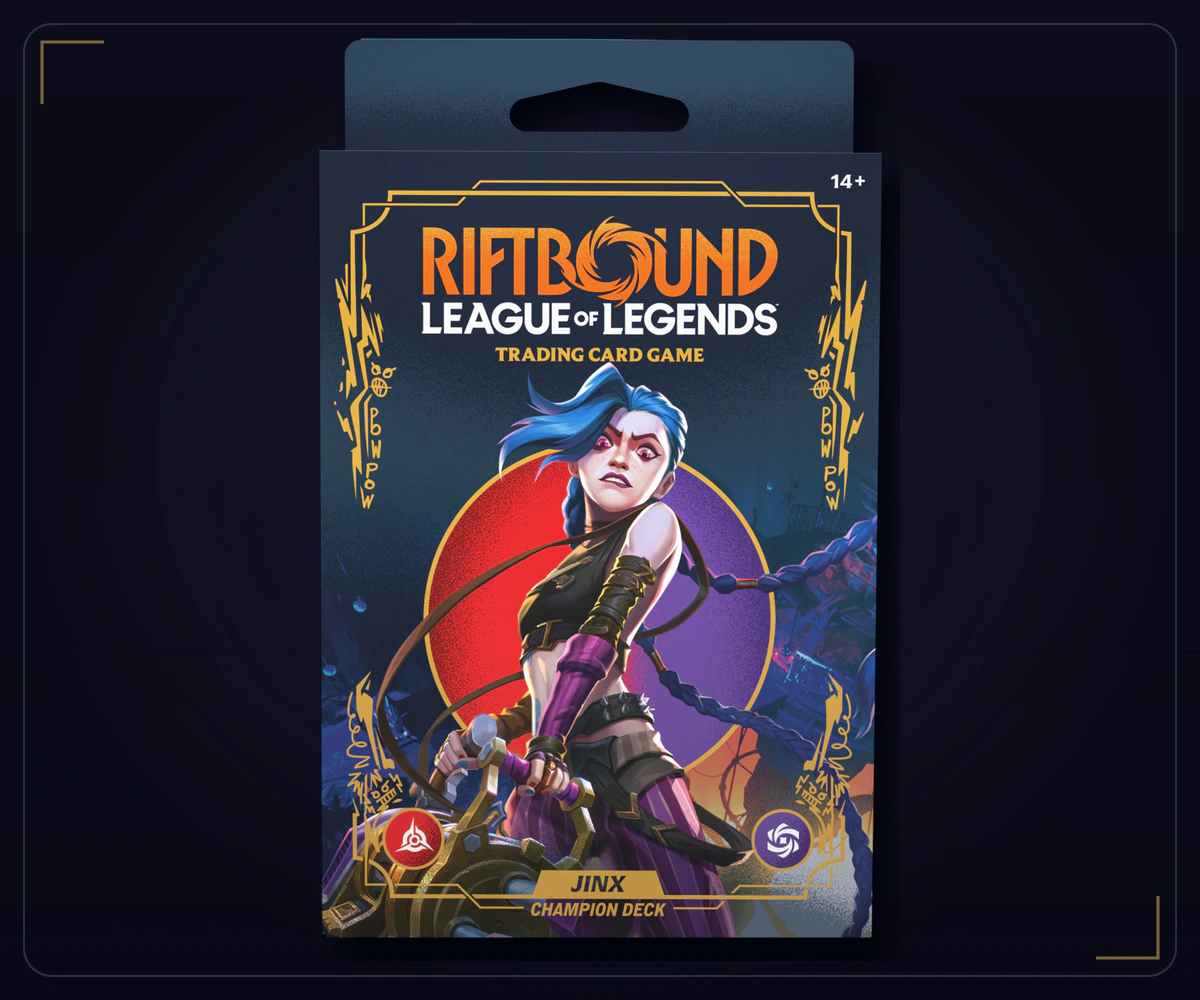
Riftbound Jinx Champion Deck
The lower-risk way to learn whether Riftbound decisions, not merely League art, deserve more shelf.
- Strong champion identity
- Playable fixed deck
- Early-system energy
- Newer organized-play network
- Evolving card pool
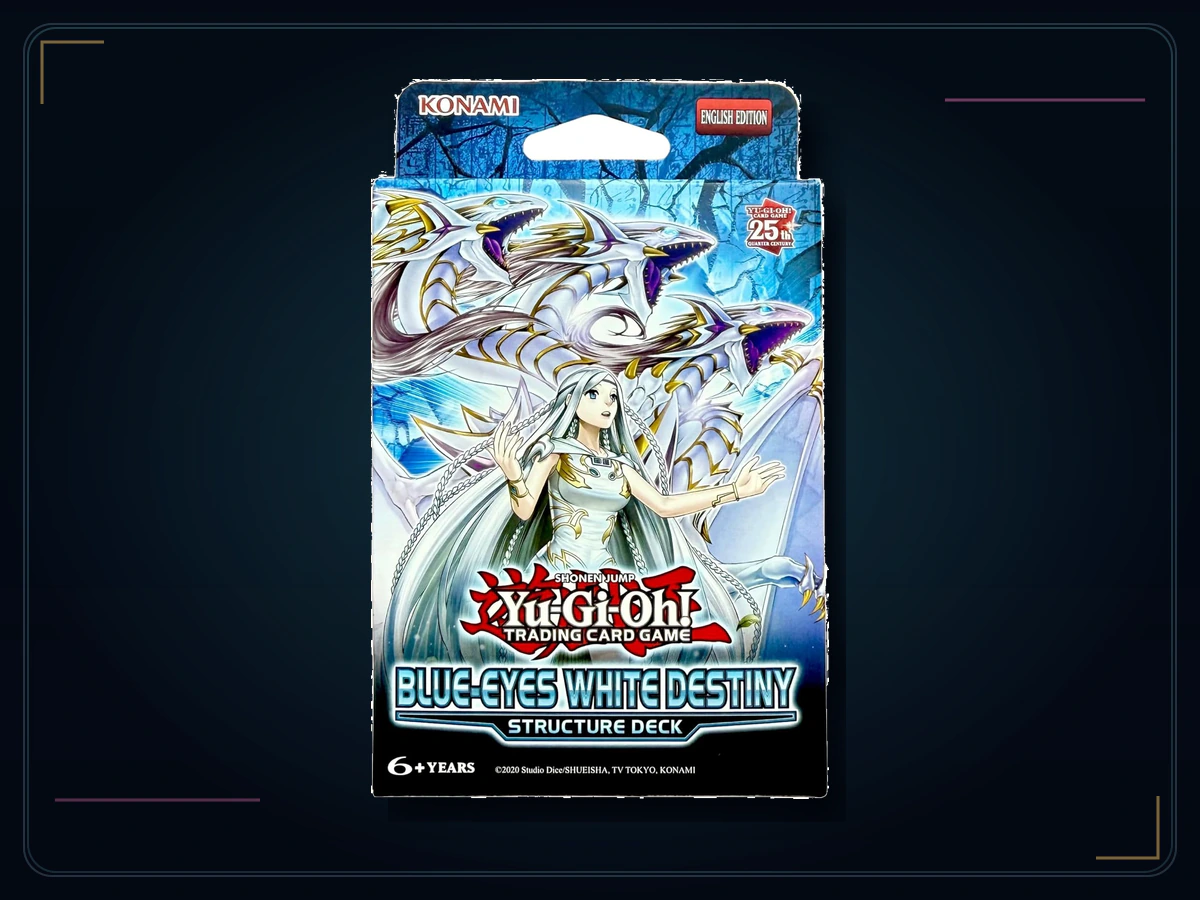
Yu-Gi-Oh! Blue-Eyes White Destiny Structure Deck
A coherent route into Yu-Gi-Oh! compared with assembling nostalgic cards that do not form a current plan.
- Recognizable archetype
- Fixed deck
- Established ecosystem
- Steep modern interactions
- Competitive upgrades may be specific
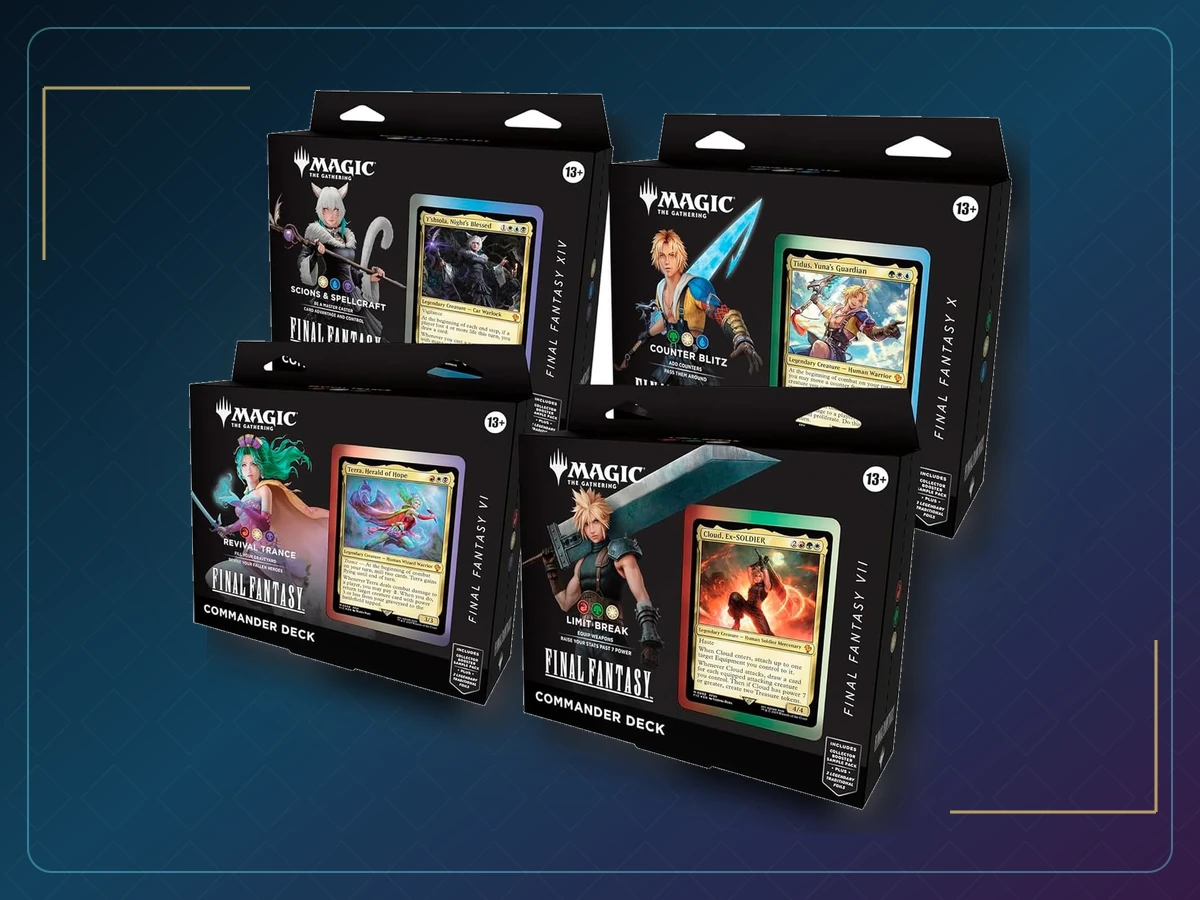
Magic: The Gathering—FINAL FANTASY Commander Deck Set of Four
High-AOV and genuinely useful when four decks are the product. Overkill when one beginner merely needs a seat.
- Complete four-player pod
- Strong crossover identity
- Playable decks
- Large first spend
- Commander rules depth
At a glance
| Game | Best for | Start with | Main caveat |
|---|---|---|---|
| Pokémon | Families, collectors, clean teaching | Battle Academy | Sealed-product FOMO |
| Magic | Deep ecosystem and adult multiplayer | One current precon or a complete pod | Rules and catalog depth |
| One Piece | Current momentum and readable resource play | One English Starter Deck | Upgrade availability and local scene |
| Yu-Gi-Oh! | Combo study and established competition | One coherent Structure Deck | High interaction and knowledge density |
| Lorcana | Disney fans and mixed-age tables | Two Starter Decks for two beginners | One deck does not teach two people alone |
| Riftbound | League fans and new-system explorers | Champion Deck or Proving Grounds | Shorter organized-play history |
Questions, answered
What is the best TCG for beginners in 2026?
Pokémon is the broadest recommendation because Battle Academy is designed to teach two players with complete decks and a board. The best personal answer is the game with a nearby table you can join repeatedly.
What are the top-selling trading card games in 2026?
TCGplayer marketplace GMV for Q2 2026 ranked Magic, Pokémon, One Piece, Yu-Gi-Oh!, Disney Lorcana, and Riftbound as the top six, followed by Pokémon Japan, Gundam, Dragon Ball Super: Fusion World, and Digimon.
Should a beginner buy a booster box?
Usually not as the first purchase. Buy a teaching kit, fixed starter deck, Champion Deck, Structure Deck, or preconstructed deck that creates a playable table first.
Is One Piece TCG still growing?
It ranked third by TCGplayer Q2 2026 marketplace GMV and had outsold at least one traditional Big 3 game for three consecutive quarters, making it a proven major game rather than a launch-only spike.
Is Disney Lorcana still popular in 2026?
Yes. Lorcana rose from eighth in TCGplayer Q1 2026 to fifth in Q2, with Wilds Unknown/Pixar sealed products contributing to renewed demand.
Is Riftbound worth starting in 2026?
It is the strongest new-system choice here when League champions and local support appeal. Begin with one Champion Deck or Proving Grounds and verify organized play before buying deeply.
Is Magic too complicated for a beginner?
Not when a patient group and a coherent preconstructed deck handle the first games. The catalog is deep, but Commander communities often provide a recurring table and practical teaching.
Which TCG is best for collectors?
Choose by a defined collection boundary: character, artist, set, treatment, or sealed run. Pokémon has the broadest mature collector ecosystem; One Piece, Lorcana, Magic crossovers, and Riftbound offer different fandom and play relationships.
Dax's verdict
There is no universal best TCG. Pokémon is the cleanest teaching ecosystem, Magic the deepest recurring network, One Piece the hottest proven challenger, Lorcana the family-friendly fandom bridge, Yu-Gi-Oh! the combo specialist, and Riftbound the new-system bet. Buy the smallest product that creates a real table, then let thirty days of return behavior earn the next purchase.
Research ledger 18 sources · reviewed 2026-08-14
Specifications, rules, current product information, community experience, and contrary evidence were checked against the sources below. Commercial links are kept separate from editorial evidence.
- seller.tcgplayer.comseller.tcgplayer.com/blog/best-selling-trading-card-games-q2-2026
- seller.tcgplayer.comseller.tcgplayer.com/blog/bestselling-trading-card-games-q1-2026
- seller.tcgplayer.comseller.tcgplayer.com/blog/top-selling-sealed-products-june-2026
- assets.pokemon.comassets.pokemon.com/assets/cms2-nb-no/pdf/trading-card-game/rulebook/swsh1_rulebook_en.pdf
- support.pokemon.comsupport.pokemon.com/hc/en-us/articles/360001024394-What-types-of-Trading-Card-Game-products-are-available
- en.onepiece-cardgame.comen.onepiece-cardgame.com/play-guide
- magic.wizards.commagic.wizards.com/en/formats/commander
- magic.wizards.commagic.wizards.com/en/products/final-fantasy
- disneylorcana.comdisneylorcana.com/en-US/how-to-play
- riftbound.leagueoflegends.comriftbound.leagueoflegends.com/en-us/how-to-play
- yugioh-card.comyugioh-card.com/en/rulebook
- seller.tcgplayer.comseller.tcgplayer.com/blog/2026-summer-stars-current-catalog-highlights
- icv2.comicv2.com/articles/news/view/61744/icv2-white-paper-gama-expo
- reddit.comreddit.com/r/TCG/comments/1uk0p85/wondering_which_tcg_to_start
- reddit.comreddit.com/r/TCG/comments/1tnsp1f/what_tcg_should_i_play
- reddit.comreddit.com/r/TCG/comments/1vefraq/newish_to_tcg_what_to_play
- boardgamegeek.comboardgamegeek.com/boardgame/369646/disney-lorcana
- boardgamegeek.comboardgamegeek.com/boardgame/436560/riftbound-the-league-of-legends-trading-card-game
I'll be honest with you — flattery is boring.

Keep exploring
The next smart rabbit holes.
✦ Universe HubFinal Fantasy Card Games: the whole buying pathFinal Fantasy now lives in two major physical card systems: Square Enix’s focused FFTCG duel game and Magic’s enormous Commander...🂠 Topic PathTrading Card Games: compare the whole shelfStart with the game and community you want, then buy the smallest product that lets you test it properly. These guides separate...GuideShould Pokémon Collectors Switch to One Piece in 2026? What Transfers, What Does Not, and What to Buy FirstImani separates a real collector migration from panic, translates Pokémon habits into One Piece deckbuilding and play, and gives you a...