Premium Artisan Dice Sets: Japanese Craft, Resin & Gemstone Collectibles
The finest gaming dice marry tradition, craft, and intention—where every roll carries the weight of careful hands and rare materials.


AI-assisted research and drafting in Kenji’s voice · reviewed by Robert Pruitt · how this guide was made
Last editorial refresh: 2026-06-18 Gold-standard QA: 2026-08-10 11 sources reviewed Affiliate links checked during gold-standard pass

The short answer
The finest artisan dice combine traditional craftsmanship with premium materials—hand-poured resin sets, genuine gemstone carvings, and true metal castings from makers who invest months of labor in balance and finish. Your choice depends on which ritual matters: the visual movement of liquid resin, the irreplaceable weight of gemstone, or the permanence of metal.
Decision map
Choose in thirty seconds
Budget-conscious collectors and new artisan-dice buyers seeking genuine handmade craft at an entry point; players who prioritize rolling experience over premium materials
Ultimate luxury collectors, players who want permanence and unmatched heft, those prepared to invest in tools that outlive campaigns.
Every game table has its ritual. For some, it's the murmur of strategy and the weight of narrative. For others—the ones who understand that tools shape experience—it begins with the dice themselves.
Artisan dice are never incidental. A hand-poured resin set with liquid cores that shift as you tilt it. Gemstones carved by human hands, each die slightly different from the next. The unmistakable heft of true metal, the way light moves through clear resin, the voice of each die when it hits wood. These are the tools of intention.
This guide honors the makers and materials that elevate dice from commodity to lineage—from the glacial work of traditional Japanese craft to the precision engineering of modern resin artisans, from gemstones pulled from the earth to metals forged with centuries of metallurgical knowledge."
Start here, then go deeper
You are in the right cabinet.
 ♛ Topic PathGrail Board Games: compare the whole shelfA grail earns its space only when the experience survives the price, setup, storage, and group commitment. These are expensive-game...
 ReviewKarakuri Egg Puzzle Box by Akio Kamei: The Japanese Artisan Grail That Collectors Camp ForOne hour of pure mechanical poetry. A cherry-wood egg that whispers its secrets if you listen.
 Buying GuideAre Gemstone Dice Worth It? (2026)Genuine stone, dyed imposters, and glass under poetic names: the Archivist reads the label and the ledger both, then tells you exactly...
What actually makes a die artisan rather than mass-produced?
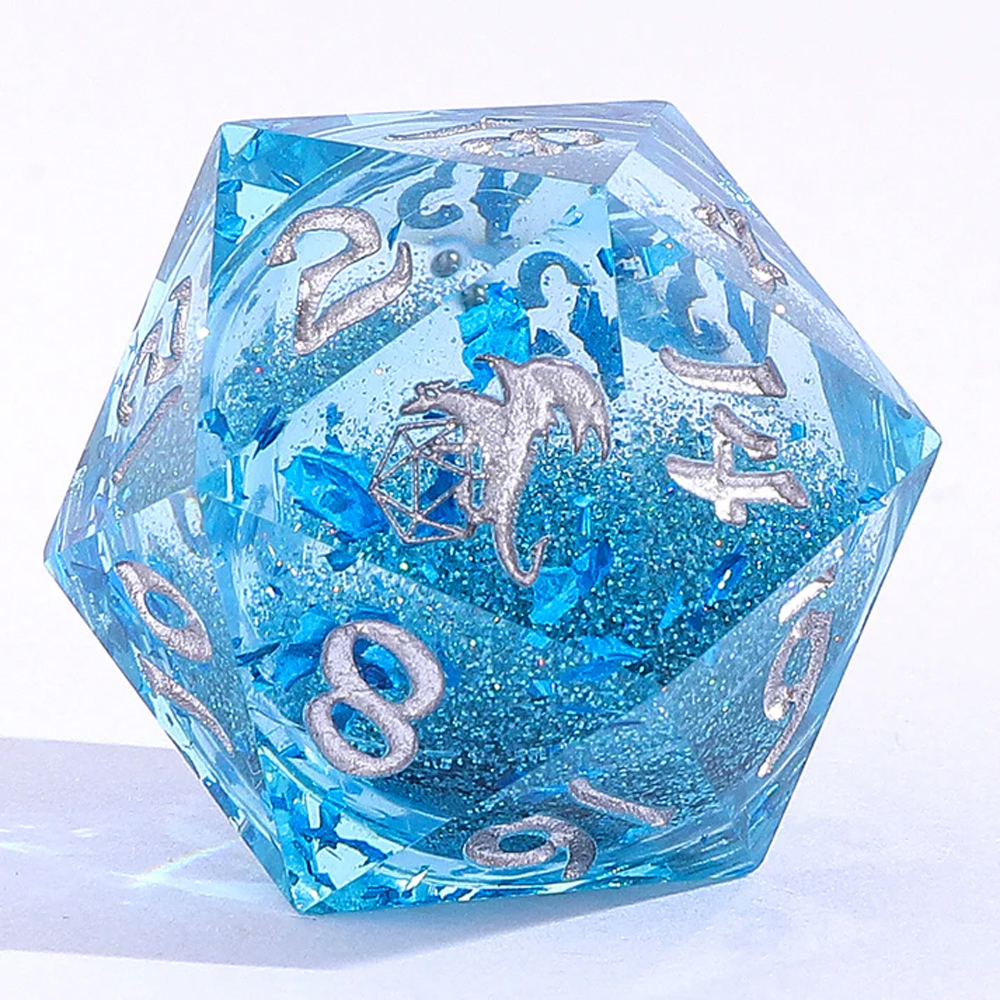
An artisan die is the result of a human choosing, at every step, to do the slow thing. Mass-market dice are injection-molded or machine-cast by the thousand; artisan dice are hand-poured, hand-sanded, or hand-carved. The difference lives in the details: the suspension of glitter and inclusion in a hand-swirled resin set will never match another set exactly, the numbers are inked or painted by a person, and the crisp edges are sanded to angle by hand.
Dispel Dice put it bluntly when they explained their own process — their designs cannot be machine-made, because the sharp edges and suspended inclusions demand judicious, hands-on quality control. Teams trained to pour, paint, and polish work each set individually. That is the whole proposition.
There is a Japanese word that fits: shokunin, the craftsperson who treats the work as a calling rather than a job. An artisan maker spends months refining a single design, sources the materials personally, and takes responsibility for balance and finish.
For you at the table, this means two real things. First, the object is often more considered — a hand-carved gemstone set is individually weighted, not stamped. Second, the act of rolling becomes ceremonial. You are holding something a named person made with intention, and that consciousness quietly changes how you set the die down between turns. That is not marketing. That is the difference between a tool and an artifact.

Resin, gemstone, or metal — which material actually fits your table?
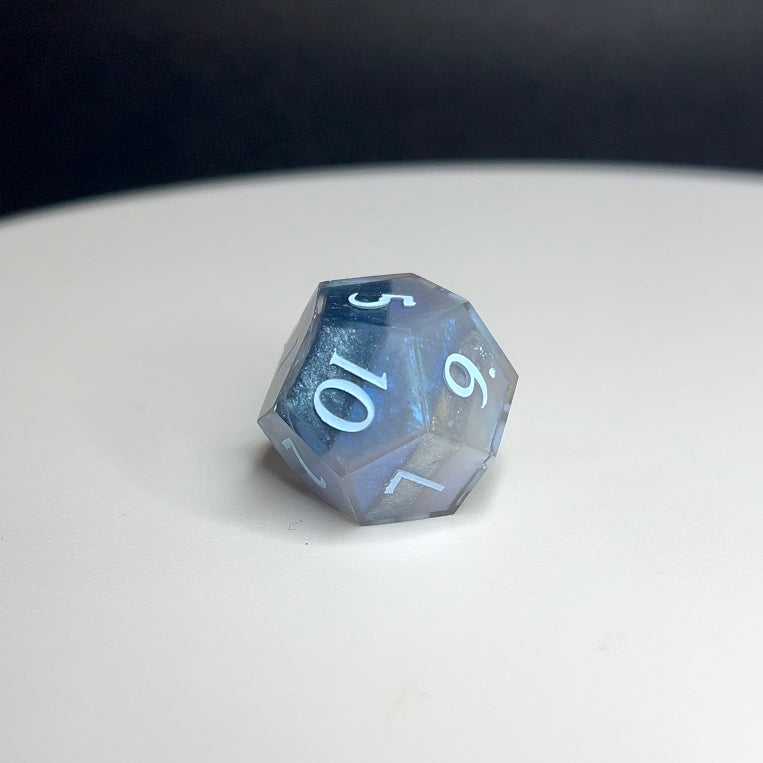
Each material is a different philosophy in your palm.
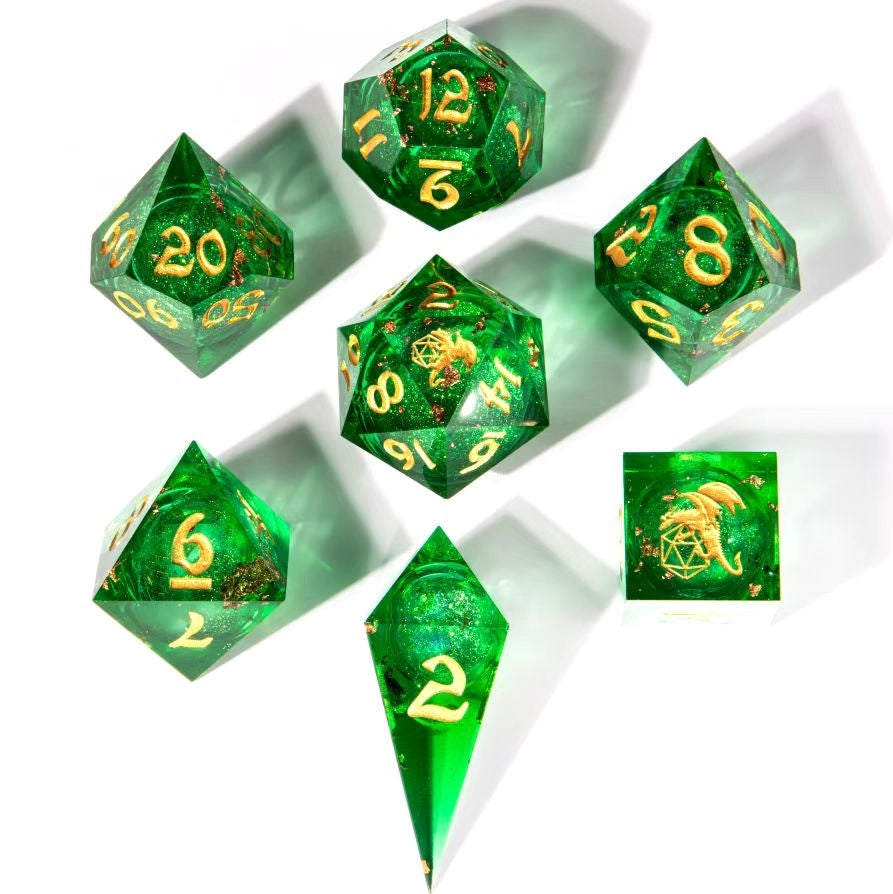
Hand-poured resin is the most forgiving and the most expressive. It takes color brilliantly and permits techniques no other material allows — liquid cores, suspended foil, swirled inclusion work. It is table-friendly and durable if you keep it off hard surfaces. This is the daily-driver of artisan dice. One honest caveat collectors rarely hear: resin yellows. UV light, heat, and humidity drive a slow photo-oxidation that clouds clear sets over years. A sunny windowsill or a hot car dashboard is the enemy; cool, dark, dry storage slows it, though nothing stops it entirely.
Gemstone dice are heirloom objects. Carved from amethyst, obsidian, labradorite, each die is singular because stone has natural variation. The trade is fragility — and here the guide's old line needs correcting. Amethyst is quartz at Mohs 7, genuinely tough for play; it's obsidian that sits at 5–5.5 and chips readily. But hardness resists scratching, not impact — any stone die can cleave on tile. These belong in a soft tray, brought out with a little reverence.
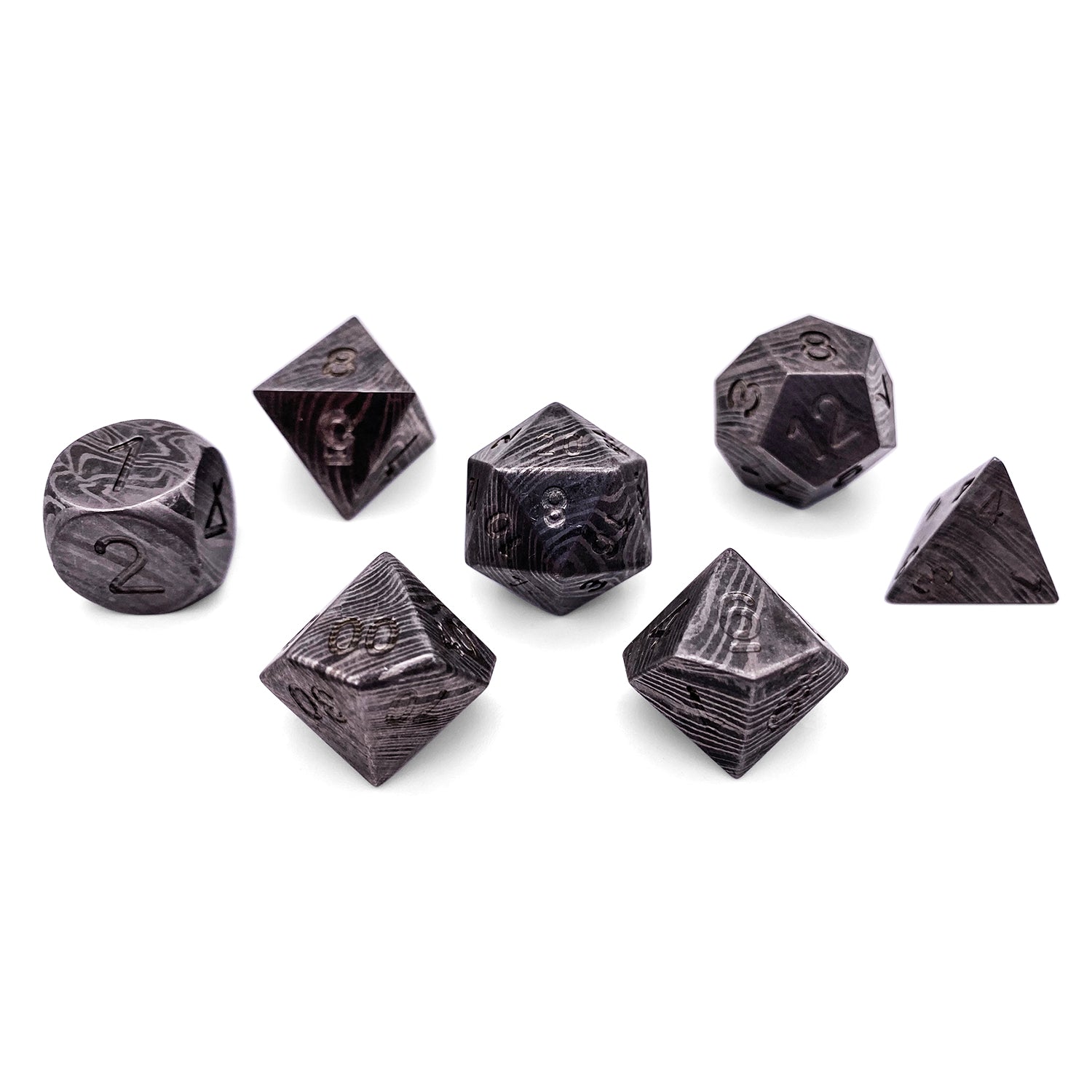
True metal — tungsten, Damascus steel, copper, brass — is the permanence play. Practically indestructible, distinctly voiced, and heavy: a tungsten set approaches a full pound. The cost is real ($575+), and it will mark a wooden table without a padded tray.
Simply put: resin for active play, gemstone for reverence, metal for the collector who wants forever.
Sharp edges versus rounded — what's the real difference in play?
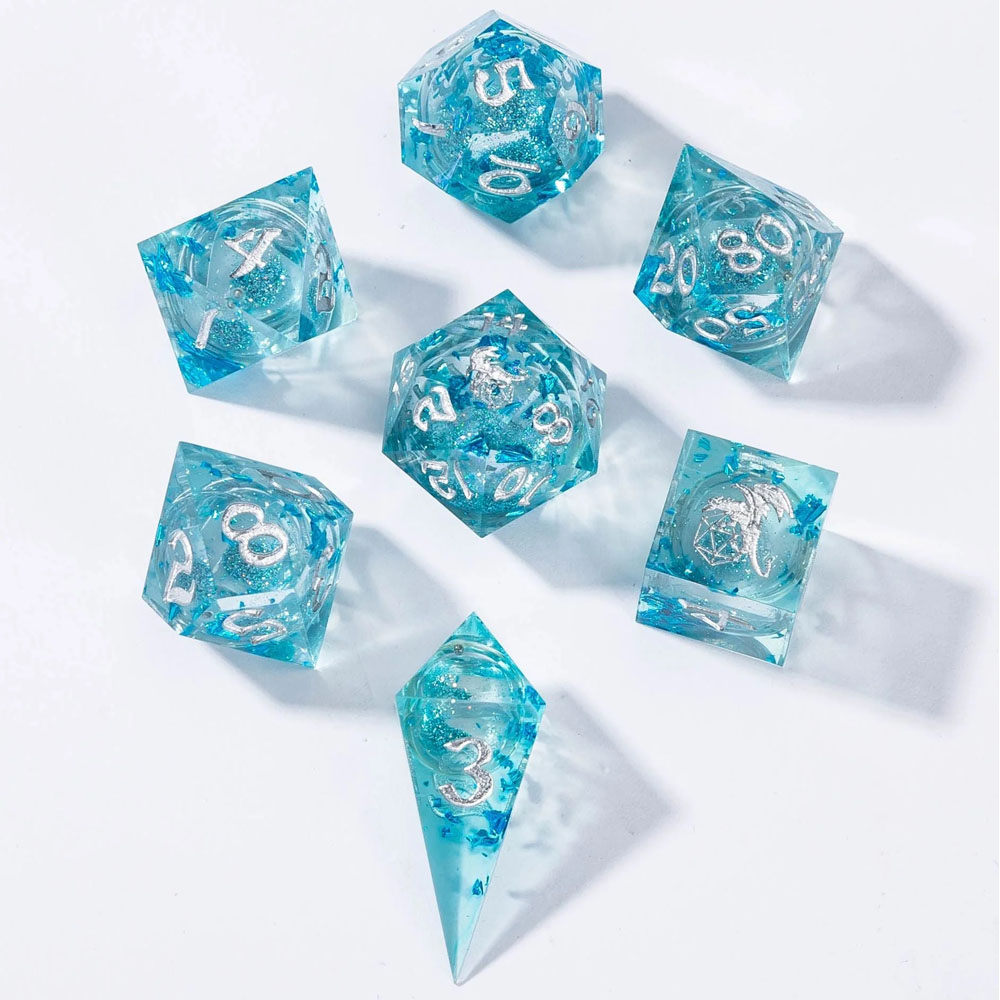
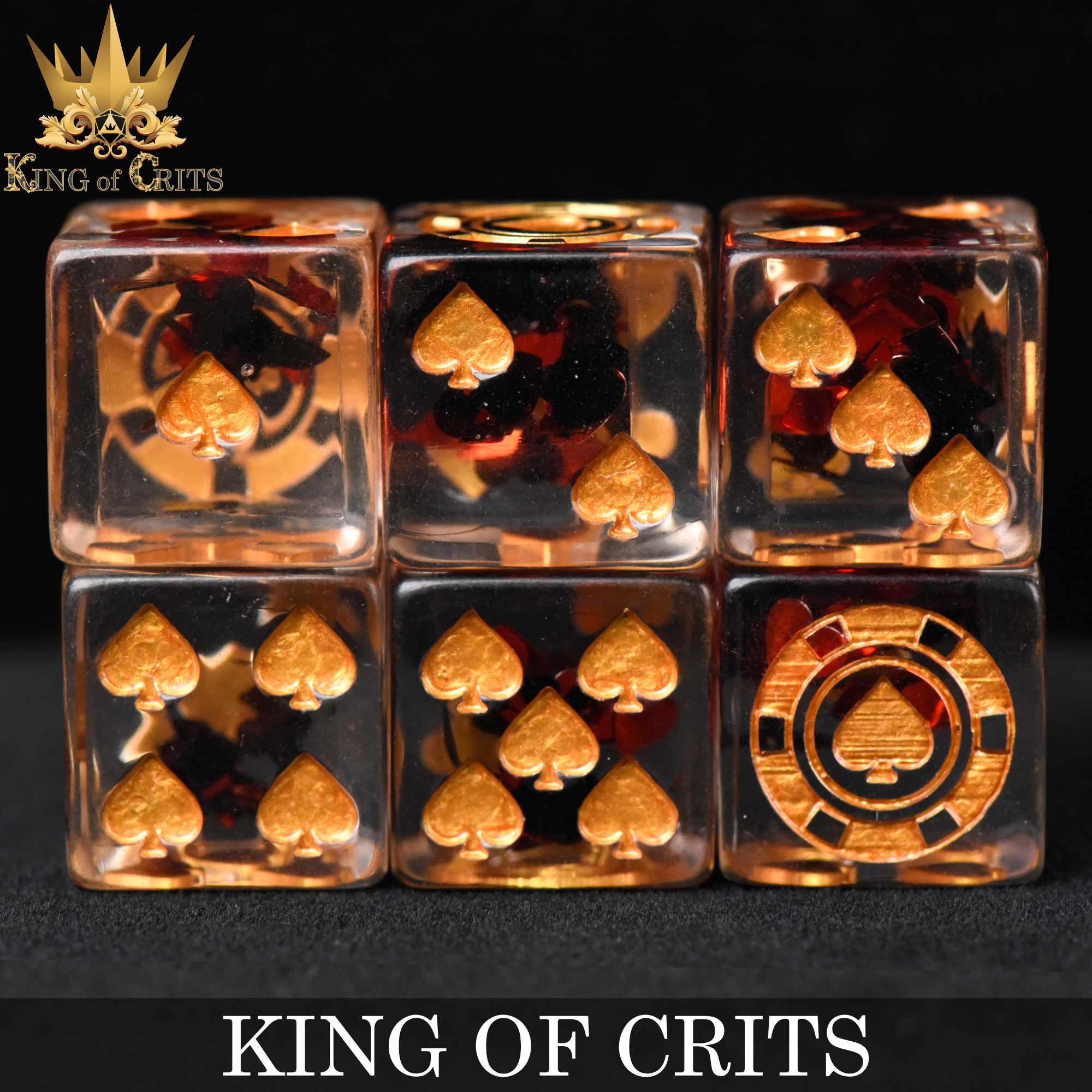
Sharp-edge dice — every artisan set in this guide — have angled, precision-cut faces rather than the softly rounded surfaces of casino or mass-market dice. The argument for them is geometric: crisper edges are less likely to let a die settle ambiguously between two faces, so it rolls to a clear face and sits flush.
For casual gaming, the difference is subtle and honestly more felt than measured. For rigorous fairness or tournament-grade play, the sharp geometry is the better-behaved shape. Artisan makers prize it because it is genuinely harder to achieve — it demands precise molds and patient hand-sanding — and because it simply feels more intentional. The edges catch light. They ask something of your hands.
Now the myth-busting, because the internet loves to dramatize this: sharp-edge dice are crisp, not cutting. They will not slice your hand from handling them. The only dice that have ever genuinely hurt anyone are the barefoot-d4-in-the-dark variety, which is a foot problem, not a dice problem.
And if you plan to test fairness yourself, know the limits of the famous saltwater float test. It works by floating the die in heavily salted water to see if one face keeps surfacing — but it is least reliable on exactly the angular dice people fret about (d4, d6, d8) and only reads cleanly on a d12 or larger. Treat it as a rough sniff test, never a verdict.

How do you care for artisan dice so they outlast the campaign?
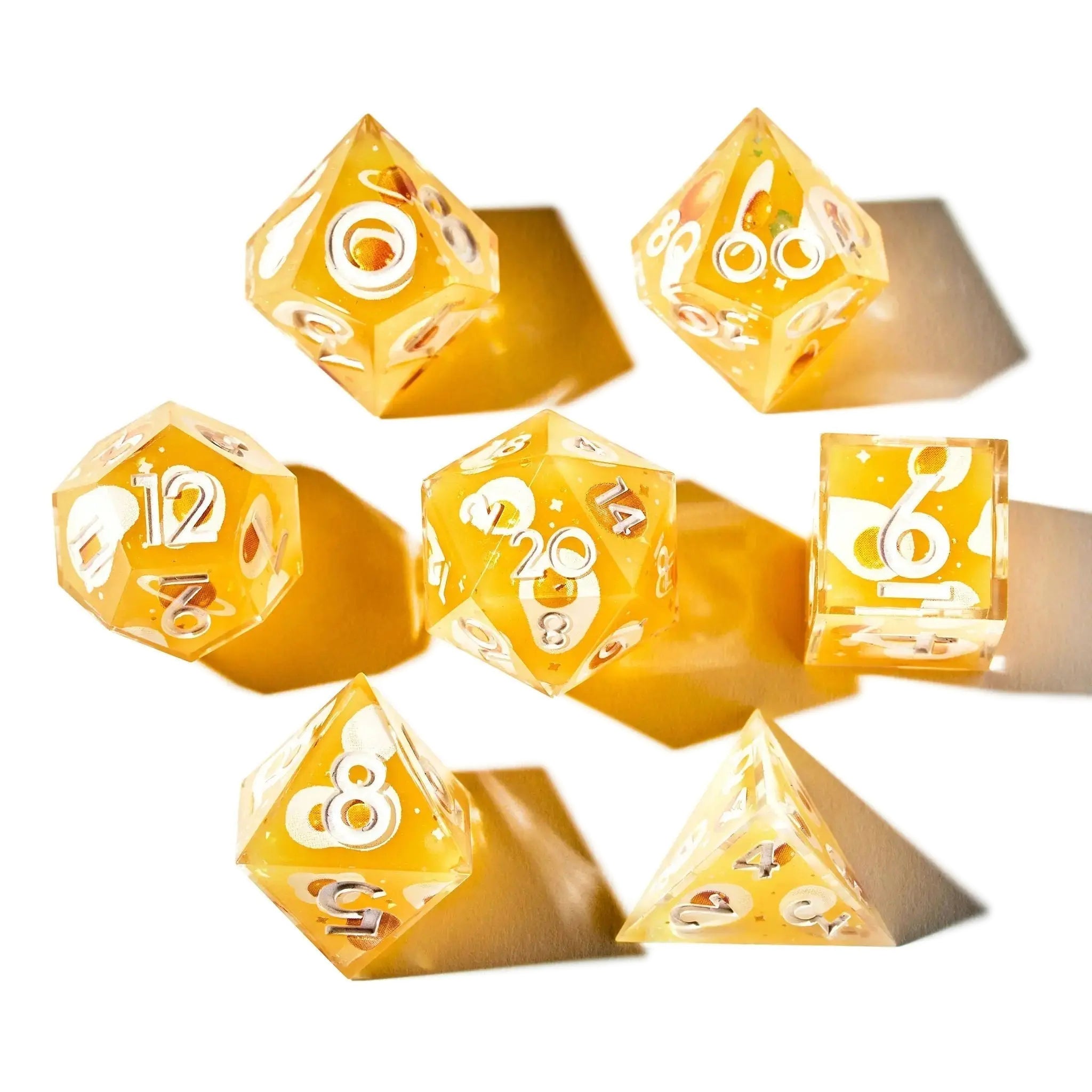
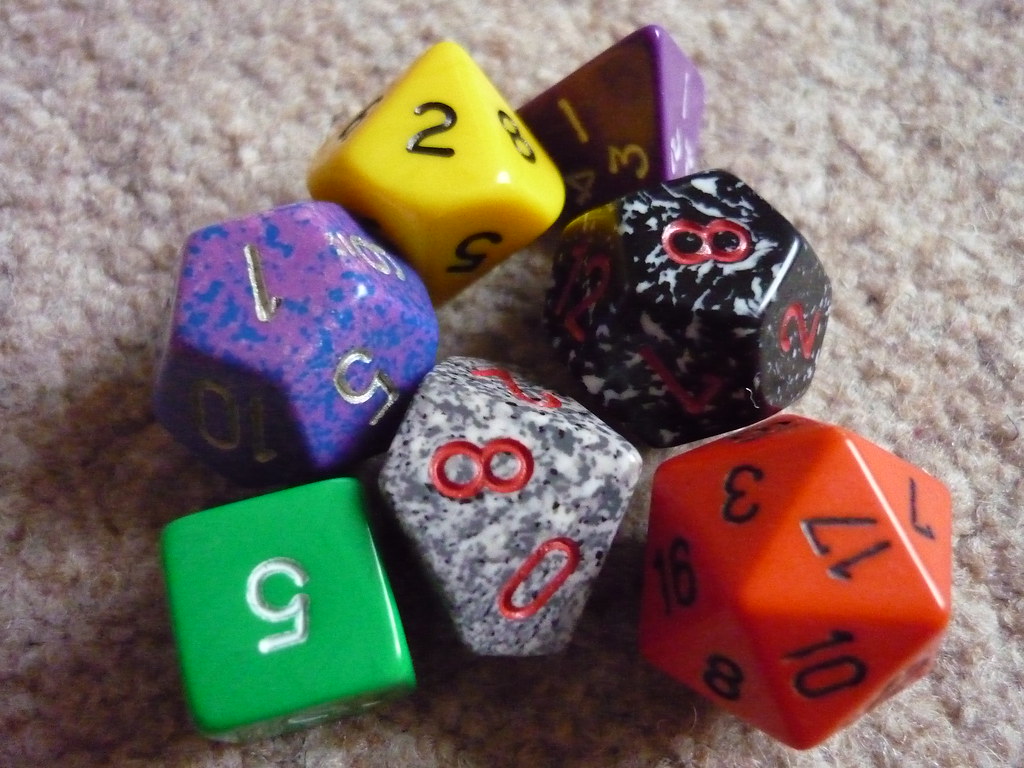
Different materials, different rituals — but the through-line is a soft surface and a dark drawer.
Hand-poured resin: Always roll on a velvet tray or mat; resin chips on wood, glass, and stone. Avoid rapid temperature swings — moving a set from a cold car into a warm room can stress it. The bigger long-game enemy is light: UV and even fluorescent exposure accelerate yellowing through photo-oxidation, so store sets in a cool, dark, dry place rather than a sunlit display shelf. Hand-wash gently if needed; never soak.
Gemstone: Treat them like jewelry. A soft tray is mandatory, and direct sunlight over long stretches can shift or fade some stones. Store in a velvet pouch or lined box, in the dark and dry. Remember hardness is not toughness — even Mohs-7 amethyst can chip on impact — so never roll hard on a bare table. These are objects to be held, not flung.
Metal: Nearly indestructible, but lethal to furniture without a padded tray. Wipe with a microfiber cloth to keep the shine; copper and brass will patina over time, which many collectors embrace as earned character. Keep dry to avoid corrosion.
All types: bag, tray, or box them between sessions. Don't leave a hand-poured grail scattered across a snack-strewn table overnight. The habit is small; the respect it signals — toward the maker and the object — is the whole point.

What's the lineage — and why does Japanese craft philosophy keep surfacing?

The artisan dice movement borrows, sometimes knowingly, from Japanese aesthetic tradition — and the borrowing runs deeper than a marketing flourish.
The relevant idea is wabi-sabi: the acceptance of the imperfect, the impermanent, the incomplete. Refined through the 16th-century tea ceremony under the master Sen no Rikyū, it favors utensils that show irregularity and quiet age over pristine, machine-flawless beauty. Its most famous expression is kintsugi — repairing broken pottery with gold so the fracture becomes the most beautiful part.
Hold a hand-poured die against that frame and it clicks. The slight variance in suspension between two sets, the singular swirl of inclusion, the way a clear set will mellow with the years — these aren't defects to engineer away. They are the object honestly carrying the trace of its making and its time. A machine-perfect die has no story; a hand-poured one is nothing but story.
Some makers reach for the lineage directly — Artisan Dice's natural-indigo Japanese selvedge denim sets are a literal homage to Kojima's denim heartland, the denim hand-dyed and suspended in resin. That is respect, not cosplay.
For the collector, this is the quiet upgrade. You stop rolling a game piece and start engaging with human skill across time. That awareness — of the hand behind the object — changes how you hold the die, session after session. The craft isn't only in the die. It's in your attention to it.
Why does a single gemstone or liquid-core set cost so much?
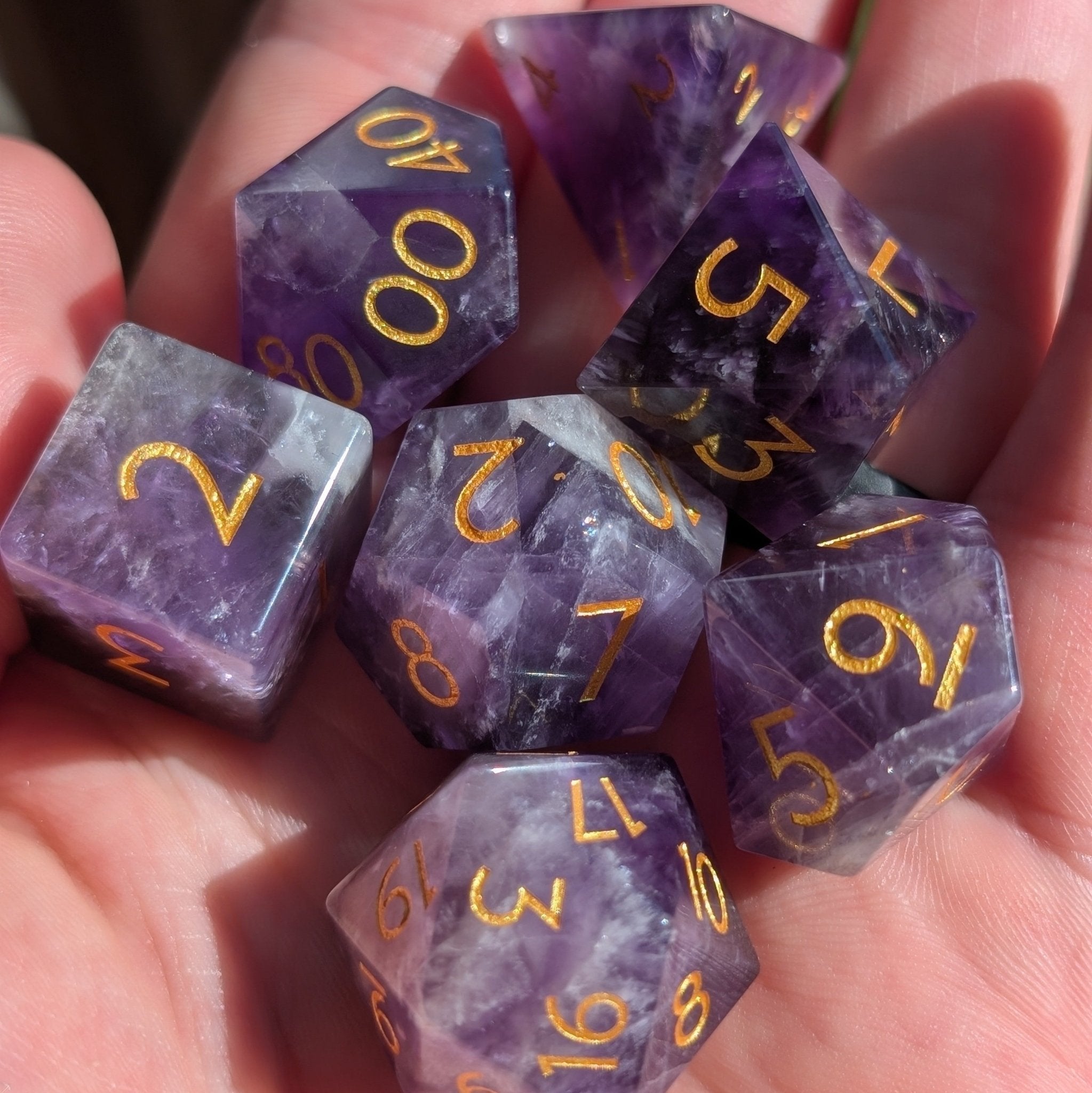
Because the labor is staggering and most of it never reaches you — it's the failed pours and cracked blanks baked into the survivors' price.
Take gemstone. A polyhedral die carved from real amethyst needs roughly 45 minutes of CNC machining per piece, and a full seven-die set runs well over five hours of cutting, grinding, and polishing. Then comes the brutal part: the failure rate on gemstone production sits between 15% and 30% depending on the stone. Inclusions, hidden fractures, and cleavage planes destroy blanks mid-cut. When you pay for one finished amethyst set, you are quietly paying for the ones that shattered on the way.
Liquid-core resin is its own feat of patience. The cores are built by a double-pour around a wax negative that is destroyed in production — and the interior cavity has to be sanded glass-smooth, because a rough wall traps air into a permanent bubble. Hymgho's hollow-dice line traces to designer Dinghua Tang's 2019 jewelry-grade process, which reportedly took more than five months just to perfect the clarity and the shift. That R&D is in the sticker.
And metal is simply expensive matter, precisely machined — tungsten is one of the heaviest workable metals on earth, and shaping it into clean sharp-edged faces is no small thing.
So when an "artisan" set is suspiciously cheap, trust the math: it is almost certainly mass-produced and wearing the word for marketing. Real craft has a real floor.
Where should you actually buy artisan dice — and what should you expect?
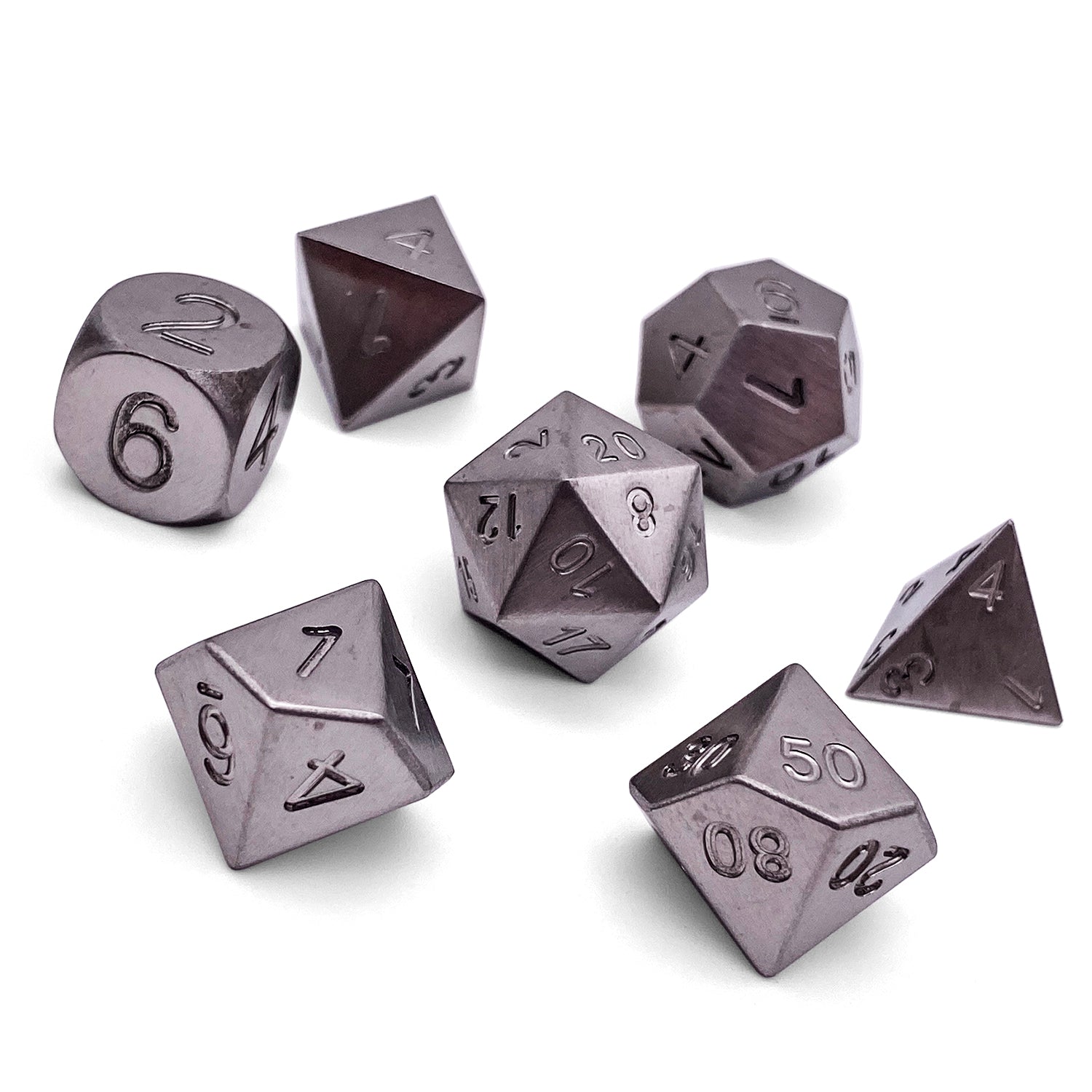

Buy direct whenever you can. Dispel Dice, Awesome Dice, Hymgho, Ebonwood, Norse Foundry, Baron of Dice — most sell straight from their own sites, which means you see the exact set, read the maker's process notes, and put money in the craftsperson's hand. Many also list on Amazon, Etsy, and specialty retailers, which is convenient but a step removed from the maker's own photos.
Set your expectations honestly. Popular sets sell out and are produced in batches, so patience is part of the hobby — Dispel's flagship lines in particular vanish on release, which is exactly why their early sets command real premiums on the secondary market. (Context for how hot this scene runs: Dispel's debut was a ~$2.4M Kickstarter from around 20,000 backers in 2019, and they later teamed with Wyrmwood to set a Guinness World Record for the longest line of dice.) That same launch is a cautionary tale too — early fulfillment showed sunken faces and over-polishing on some sets, a reminder that even great makers stumble at scale.
On budget: entry-level hand-poured sets start around $35 (King of Crits). Mid-range resin like Awesome Dice and Hymgho runs roughly $45–$70. Premium hand-poured and gemstone (Dispel, Ebonwood) lands at $85–$99+. True metal opens at $575+. None of it is cheap, and all of it reflects genuine material and labor cost. If a "grail" set undercuts those floors dramatically, read it as a flag, not a bargain.
The picks
Some links below are affiliate links — as an Amazon Associate, Puzzlewick earns from qualifying purchases, at no extra cost to you. It never changes a pick.
 3 photos
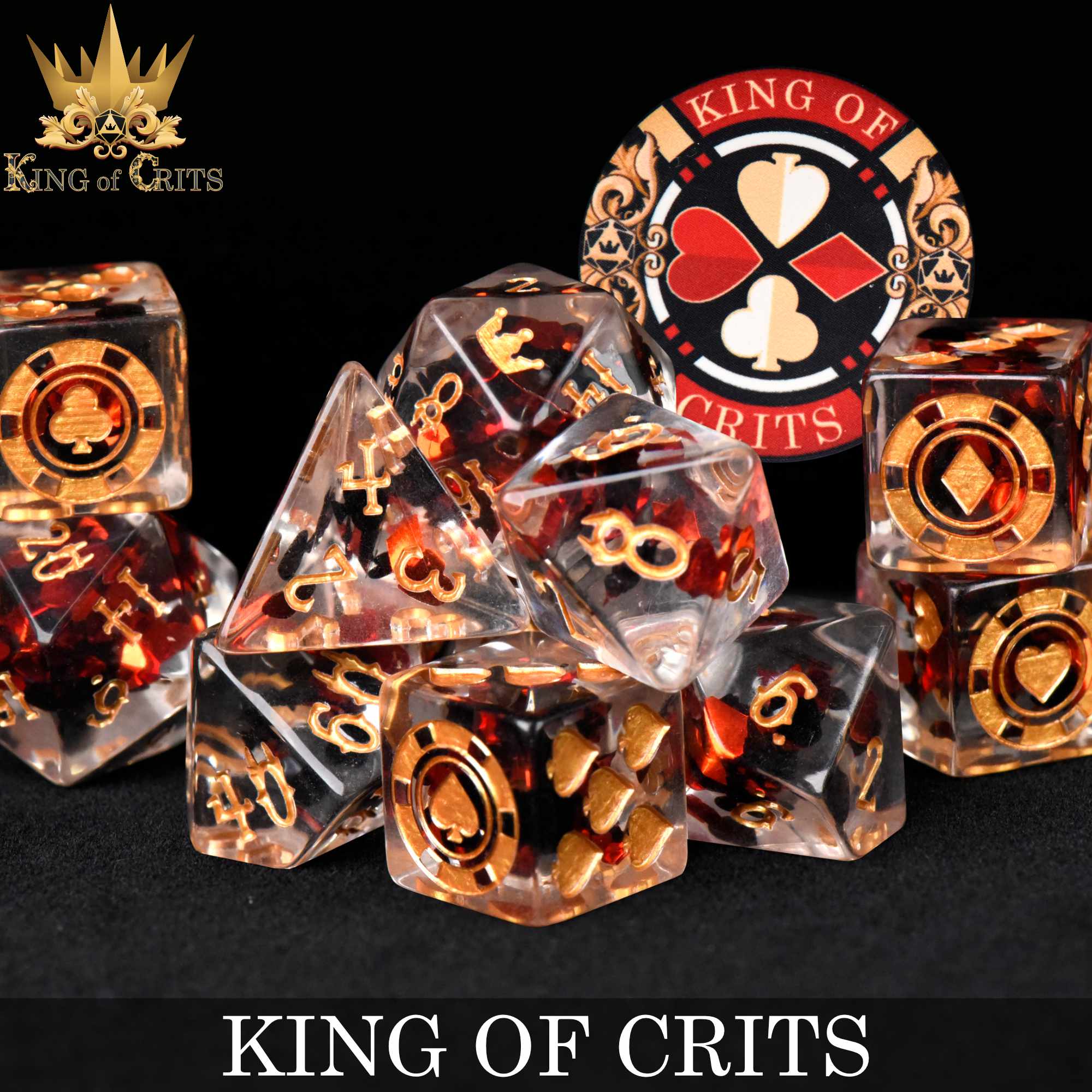
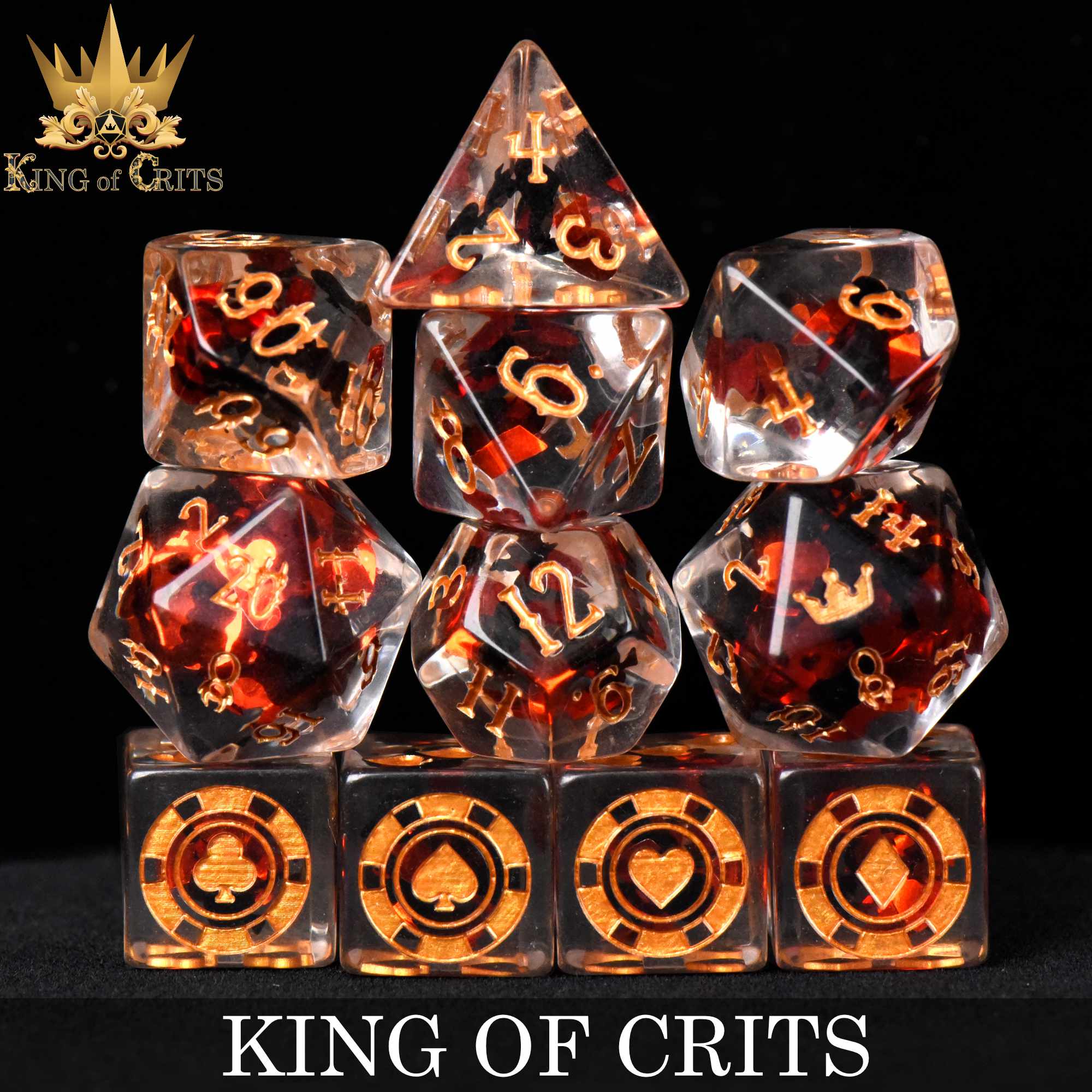
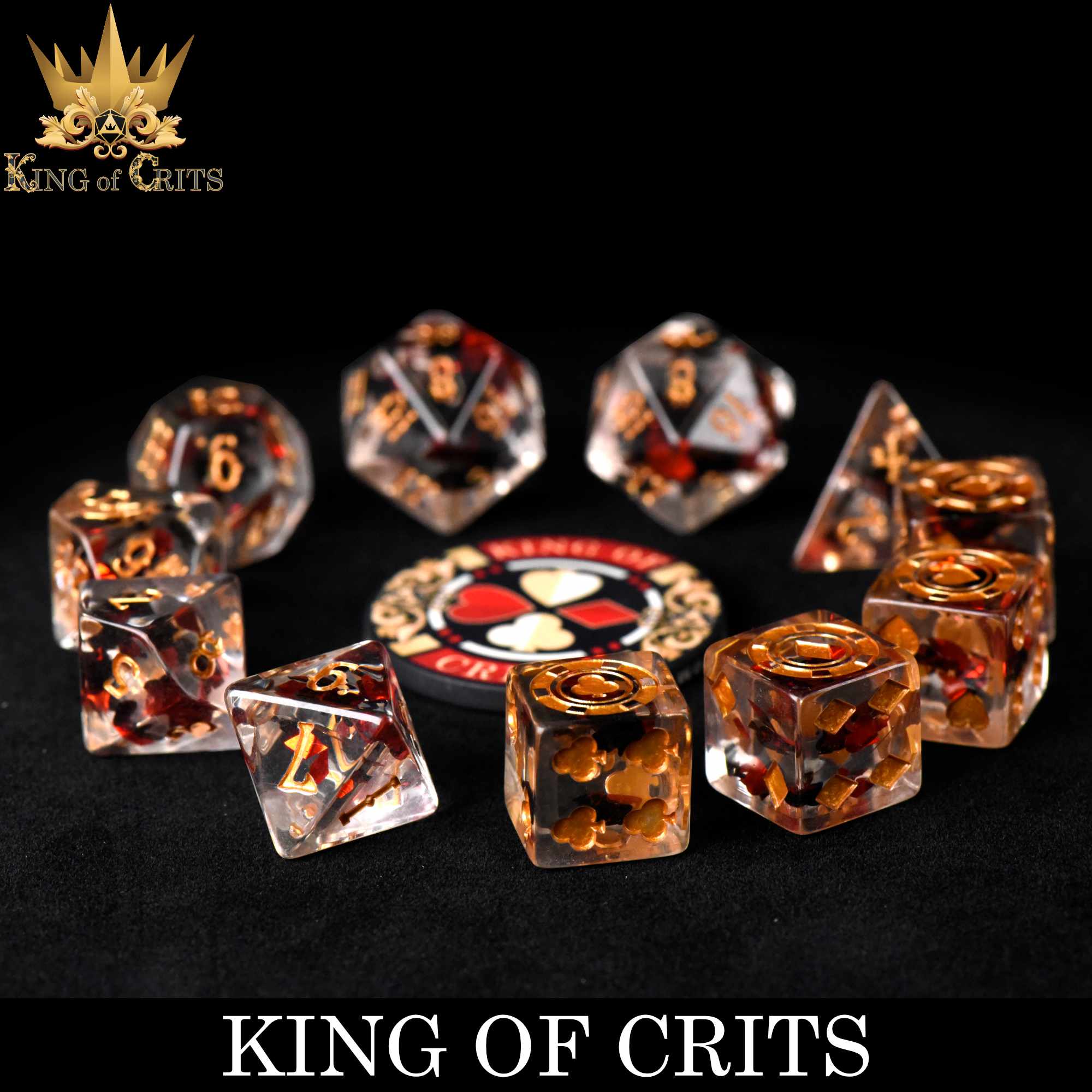
 King of Crits Original Handmade Sharp Edge Resin Sets
Hand-poured resin sets ranging $35–$60 depending on design complexity. Designs include High Tea, Deep Waters, Spiral Galaxy, and Moon Flower colorways. All feature sharp-edge precision and that distinctive craft attestation of human hand-swirling. Available in quantity and regularly in stock.
- Entry-level artisan price ($35–$40 base) makes craft accessible
- Consistent quality; named designer/brand with community reputation
- Regular availability and restock; reliable sourcing
- Less exclusivity than single-pour sets; batches repeat designs
- Resin durability equals other hand-poured brands but requires care
- Design selection is curated by the maker, not fully custom
 3 photos
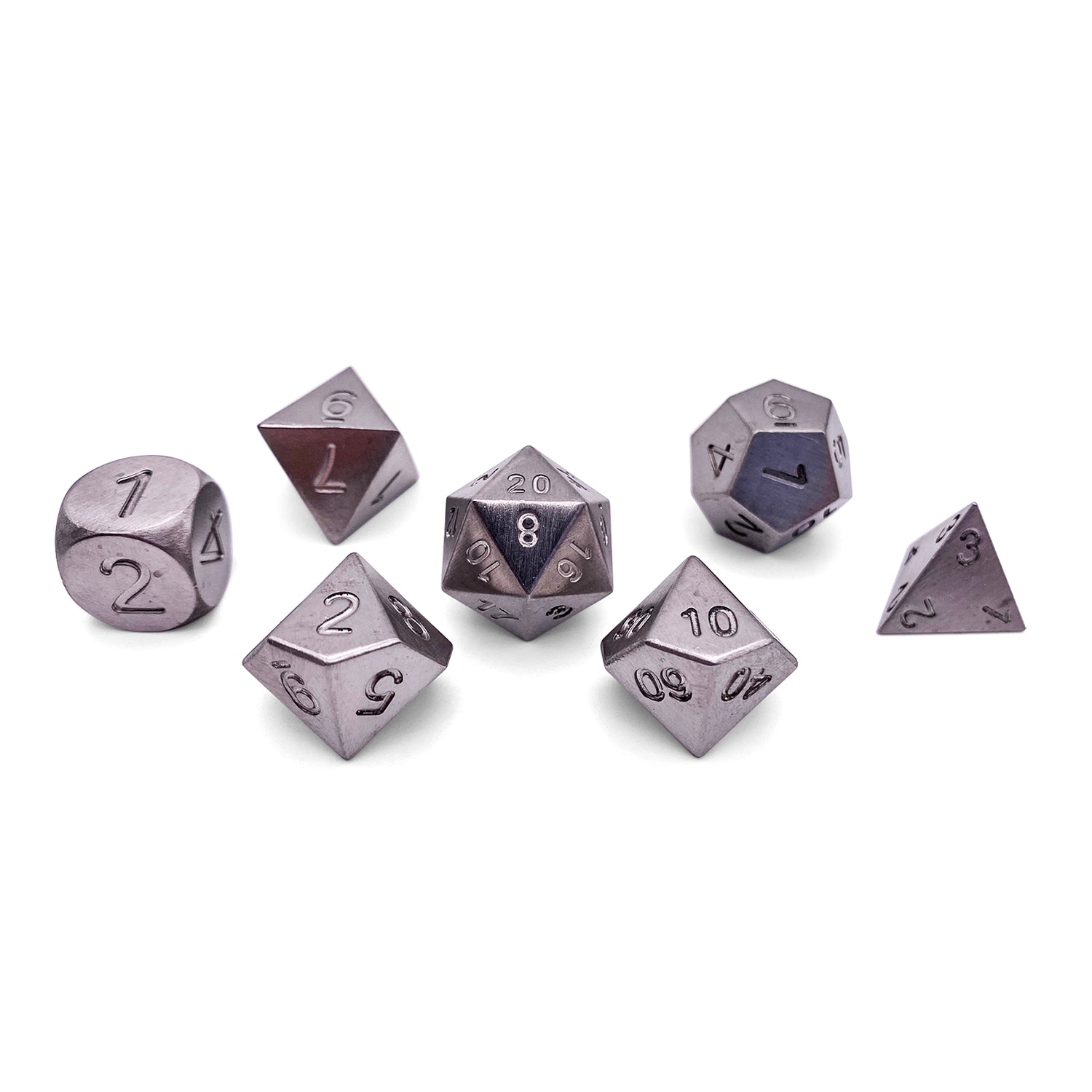
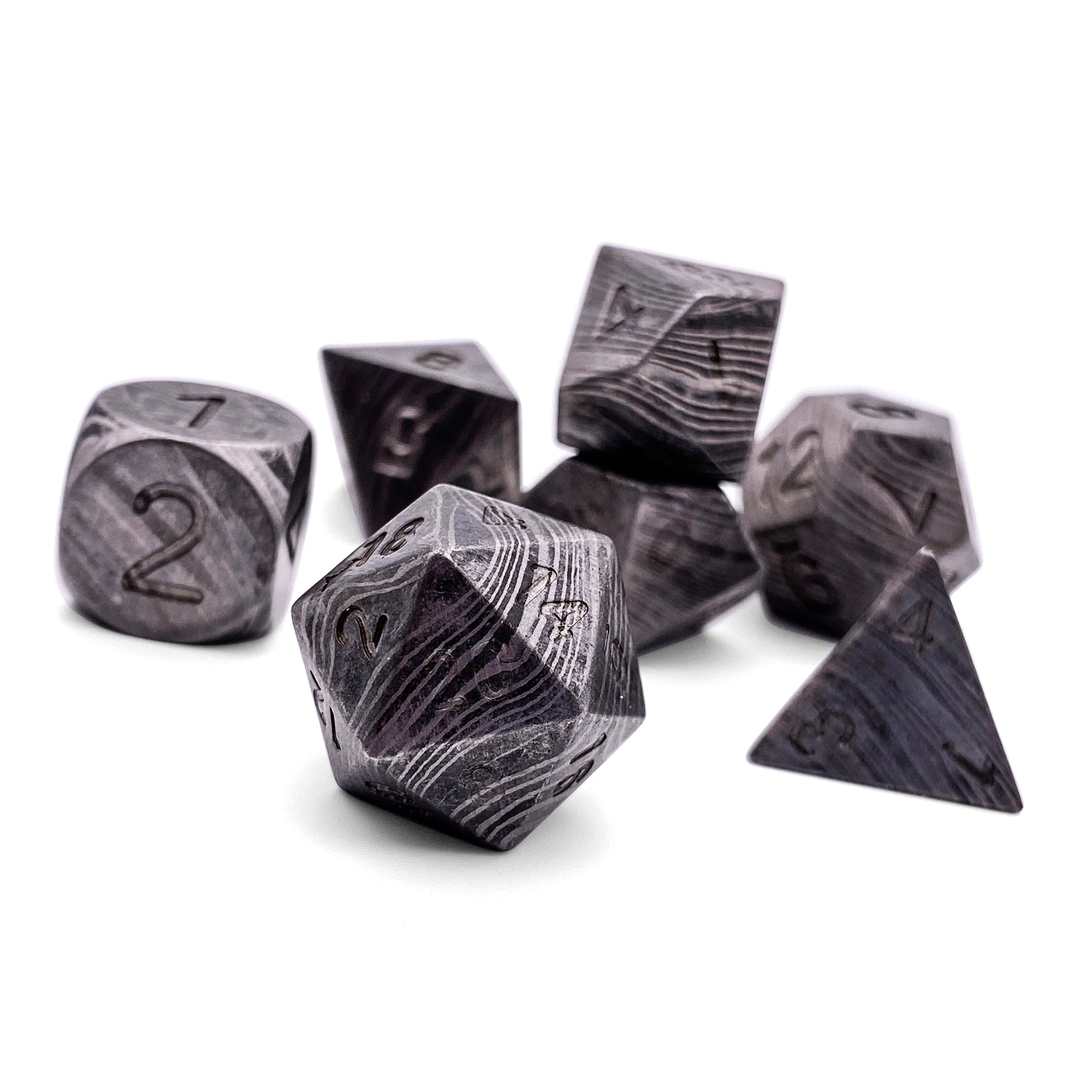
 Norse Foundry True Metal Sets (Tungsten or Damascus Steel)
True metal dice—not alloy. Tungsten ($650 USD), Damascus steel (approx. $575 USD), copper, brass, and bronze options available. Each material reflects centuries of metallurgical tradition. Norse Foundry handles every aspect in-house. These are investments in permanence.
- Genuine materials (tungsten, Damascus, copper) guarantee longevity
- Unparalleled weight and precision engineering
- Heirloom-grade; these outlive players and campaigns
- Each metal has distinct voice and tactile character
- Premium pricing ($575–$650+) reflects material and engineering
- Heavy enough to damage wooden tables without a tray
- Requires thoughtful storage and care to preserve finish
At a glance
| Set | Material | Price | Best For | Edge Type |
|---|---|---|---|---|
| Dispel Dice Brunch | Hand-poured resin | $85 | Warm aesthetic, food-themed play | Sharp |
| Ebonwood Amethyst | Genuine amethyst crystal | $99 | Purple lovers, heirloom collectors | Natural |
| Hymgho Captured Magic | Hand-sanded resin with liquid core | $45–$60 | Movement & visual depth | Sharp |
| Norse Foundry Tungsten | True tungsten metal | $650 | Luxury collectors, ultimate heft | Sharp |
| King of Crits Handmade | Artisan resin | $35–$50 | Budget-conscious collectors | Sharp |
| Awesome Dice Sedimentary | Hand-poured US resin | $60–$70 | Understated elegance | Sharp |
Questions, answered
What's the difference between sharp-edge and standard rounded dice?
Sharp-edge dice are precision-cut with angled faces, which proponents claim distribute rolls more evenly by reducing wobble. Standard rounded dice are easier on tables and hands. For casual play, both are balanced; for collecting, sharp edges are the premium aesthetic and the current trend in artisan dice.
Do gemstone dice actually roll fairly?
Yes, when properly hand-carved. Real gemstones vary slightly in weight and inclusion, but artisans account for this during carving, and each die is individually weighted. For competitive play, use a certified dice tower. For casual gaming, a soft dice tray protects both your stones and your table.
Are resin dice durable?
Hand-poured resin is surprisingly tough if rolled gently on a soft surface. Hard materials like stone and metal edges can chip resin if they collide. Resin chips easily on hard surfaces like wood or glass, so always use a dice tray or mat—it's an investment in the longevity of your set.
Why is Japanese artisan craft worth the cost?
Japanese craft tradition emphasizes mononoaware (the beauty of impermanence) and meticulous hand-finishing. Each die reflects its maker's intention. Artisan dice from Japan and US makers who follow that ethos are priced for the time invested, the sourcing of materials, and the fact that no two sets are exactly alike—each is a minor work of art.
What's the best material for a gaming table?
Resin and acrylic are kind to tables and soften impact. Metal requires a padded tray to avoid denting wood. Gemstone is heaviest and most fragile, best reserved for display or careful play. For daily use, hand-poured resin is the sweet spot: durable, beautiful, and table-friendly.
Should I buy a mystery dice set or choose my colors?
Mystery sets (often $10–$40) are fun and usually available. Curated artisan sets (shown here) are hand-selected by the maker and let you commit to a visual story for your character. Neither is wrong; mysteries are adventure, curated sets are intention.
Kenji's verdict
Artisan dice are not for everyone. They demand intention: a soft tray, careful rolling, mindful storage. They cost more than mass-produced alternatives because they're made by human hands, often one set at a time. But if you've ever felt the weight of a hand-poured die in your palm, watched light move through iridescent resin, or understood that the tools we use shape the rituals we build—then you know the difference. These aren't upgrades to your game. They're expressions of it. Choose the material that speaks to your table's story: resin for active play and visual beauty, gemstone for reverence and heirloom durability, metal for the collector who wants permanence. Then respect what you've chosen by caring for it. That reciprocal care—between maker and owner, owner and die, die and table—is where the actual craft lives."
Research ledger 11 sources · reviewed 2026-08-10
Specifications, rules, current product information, community experience, and contrary evidence were checked against the sources below. Commercial links are kept separate from editorial evidence.
- awesomedice.comawesomedice.com/collections/artisan
- dispeldice.comdispeldice.com
- norsefoundry.comnorsefoundry.com
- runicdice.comrunicdice.com
- ebonwood.comebonwood.com/collections/gemstone-dice-sets
- hymgho.ushymgho.us/collections/hand-sanded-sharp-edge-resin-dice-sets
- dnddice.comdnddice.com/collections/handmade-dice
- baronofdice.combaronofdice.com
- artisandice.comartisandice.com
- dieharddice.comdieharddice.com
- Community research index: r/DnD discussions about Premium Artisan Dice Sets: Japanese Craft, Resin & Gemstone Collectiblesreddit.com/r/DnD/search/?q=Premium%20Artisan%20Dice%20Sets%3A%20Japanese%20Craft%2C%20Resin%20%26%20Gemstone%20Collectibles&restrict_sr=1&sort=top
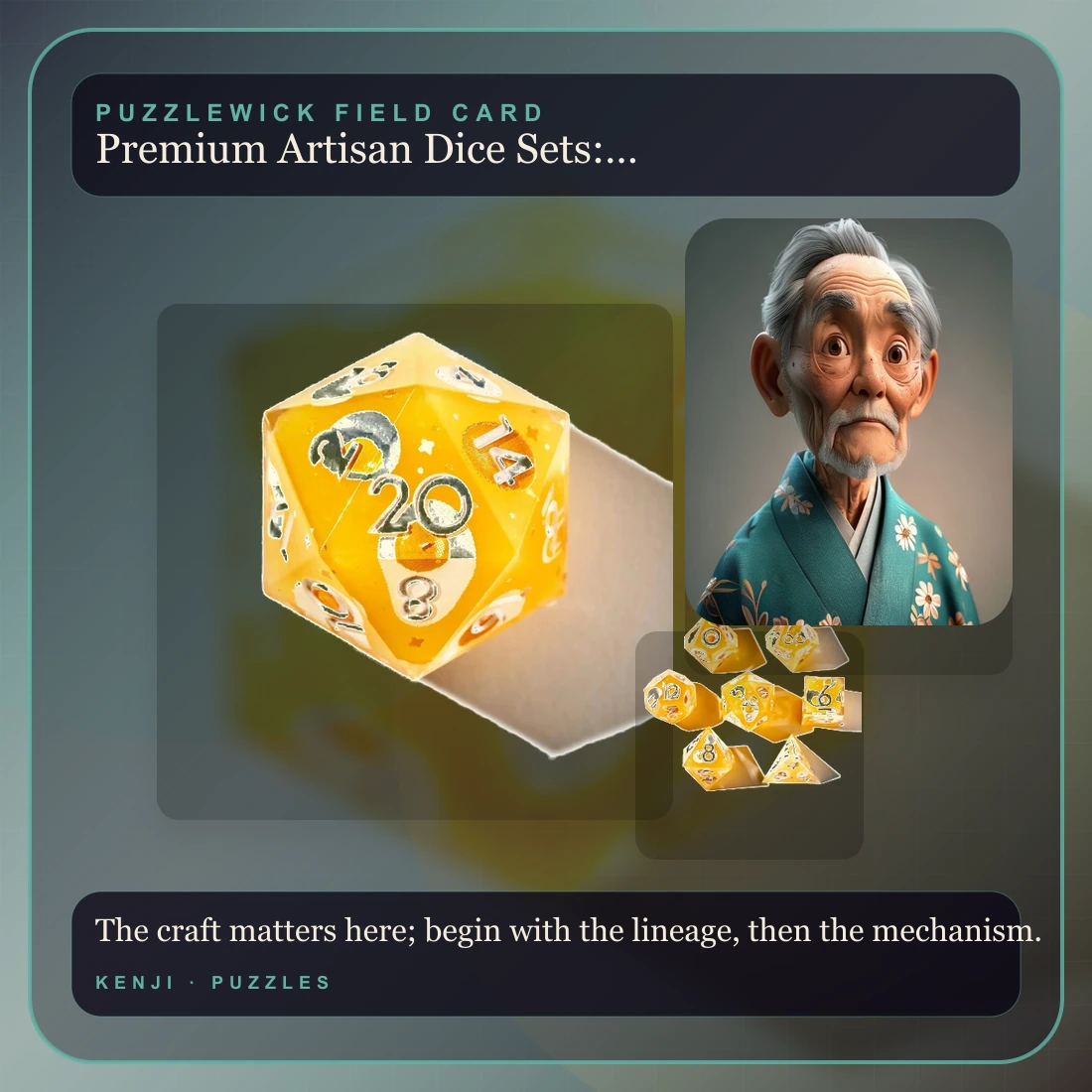
Every object has a lineage. Let me tell you its story.

Keep exploring
The next smart rabbit holes.
♛ Topic PathGrail Board Games: compare the whole shelfA grail earns its space only when the experience survives the price, setup, storage, and group commitment. These are expensive-game...ReviewKarakuri Egg Puzzle Box by Akio Kamei: The Japanese Artisan Grail That Collectors Camp ForOne hour of pure mechanical poetry. A cherry-wood egg that whispers its secrets if you listen.Buying GuideAre Gemstone Dice Worth It? (2026)Genuine stone, dyed imposters, and glass under poetic names: the Archivist reads the label and the ledger both, then tells you exactly...