Iron Clays: The Luxury Game Currency That Ruined Cardboard Money Forever
A composite-clay, iron-cored heirloom you fund once and pass down — why the Brass crowd treats these as the default upgrade, and how to buy the right set.


AI-assisted research and drafting in Margo’s voice · reviewed by Robert Pruitt · how this guide was made
Last editorial refresh: 2026-06-24 Gold-standard QA: 2026-07-17 8 sources reviewed Affiliate links checked during gold-standard pass

The short answer
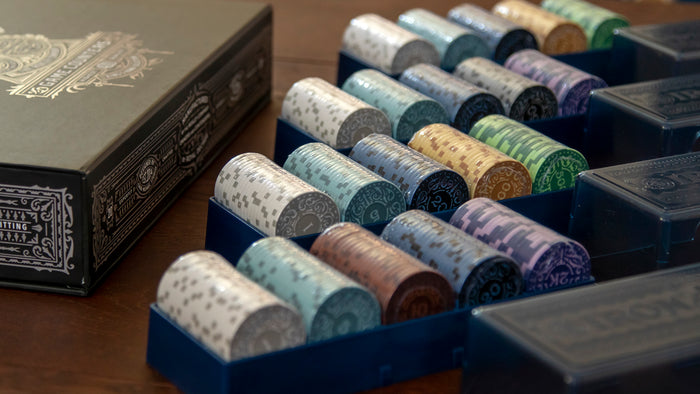
Roxley's Iron Clays are the rare game accessory you buy once and use for the rest of your collecting life: genuine composite chips with a limestone-clay body, an iron core, and a ~9.3g hand-feel, with every denomination molded into the chip rather than printed on top. There are two sets to weigh — the 100-count suits most collectors, while the 200-count adds the 50 and 500 denominations that 18XX and heavy euro games actually need. MSRP on the 200 runs around $80 USD, though it sells out often and restocks in waves, so stocked listings can climb well above that. It is unapologetically a splurge for permanence and table-presence, not a value buy. Prices and stock drift constantly — check Roxley's store and a couple of board-game retailers before you commit.
Decision map
Choose in thirty seconds
The buy-once-for-life set for heavy euros, 18XX, and poker night
I have a rule about luxury: it has to be real before I'll revere it. Gold leaf over particle board is not a grail. A thing that looks expensive in a photo and feels like a bottle cap in your palm is not a grail. Iron Clays are a grail because, when you strip them down, there is actually something inside — a limestone-clay body, strength compounds, and a literal iron disc at the core that pulls each chip to roughly 9.3 grams. The denominations are not stickered on or screen-printed; they are molded into the material, so they cannot rub away no matter how many thousands of times you fan a stack between rounds of Brass: Birmingham. This is the one accessory the hobby quietly agrees you buy once and keep forever, and it deserves the gravitas. Let me show you why it earned the shelf — and exactly how to fund it without overpaying.
Start here, then go deeper
You are in the right cabinet.
 ♛ Topic PathGrail Board Games: compare the whole shelfA grail earns its space only when the experience survives the price, setup, storage, and group commitment. These are expensive-game...
 Deep DiveThe Swinging Sticks: The Iron Man Desk Grail That Never Stops MovingDesigned in Germany, hand-built in Thailand, screen-used in Iron Man 2, silent, hypnotic, and impossible to ignore — the one desk object...
 Buying GuideHeirloom Gaming Tables: Luxury Furniture That Lasts GenerationsA gaming table done right becomes furniture that outlives its makers—here's how to find the one for your table.
Why do collectors call Iron Clays the accessory you buy once for life?

Most game accessories are tied to a single box. A metal-coin upgrade for one euro lives and dies with that euro; when the game leaves your shelf, the coins go with it. Iron Clays are the opposite — they're game-agnostic currency. The same chips that bankroll a session of Brass: Birmingham tonight will run an 18XX stock market next weekend and a five-handed poker night after that. You're not buying an upgrade for a game; you're buying a permanent layer that sits under your whole collection.
That permanence is the whole pitch. The reviewer at Talking Shelf Space reported seeing no wear and tear on the chips over years of use — and that's not luck, it's chemistry, which we'll get into. The forums (PokerChipForum, BGG) keep circling the same conclusion: these are a one-time purchase you stop thinking about. You don't reorder, you don't replace faded chips, you don't shop for a "nicer" set later. You fund it once and it disappears into your gaming life as infrastructure.
That's also why I file it under grail rather than gear. A grail isn't the thing you use up — it's the thing you inherit-from-yourself, year after year. Iron Clays clear that bar honestly. The cost is real, the materials are real, and the payoff is measured in decades, not sessions. That's the kind of permanence I'll happily tell you to save up for.
What's actually inside an Iron Clay — and why does the iron core matter?
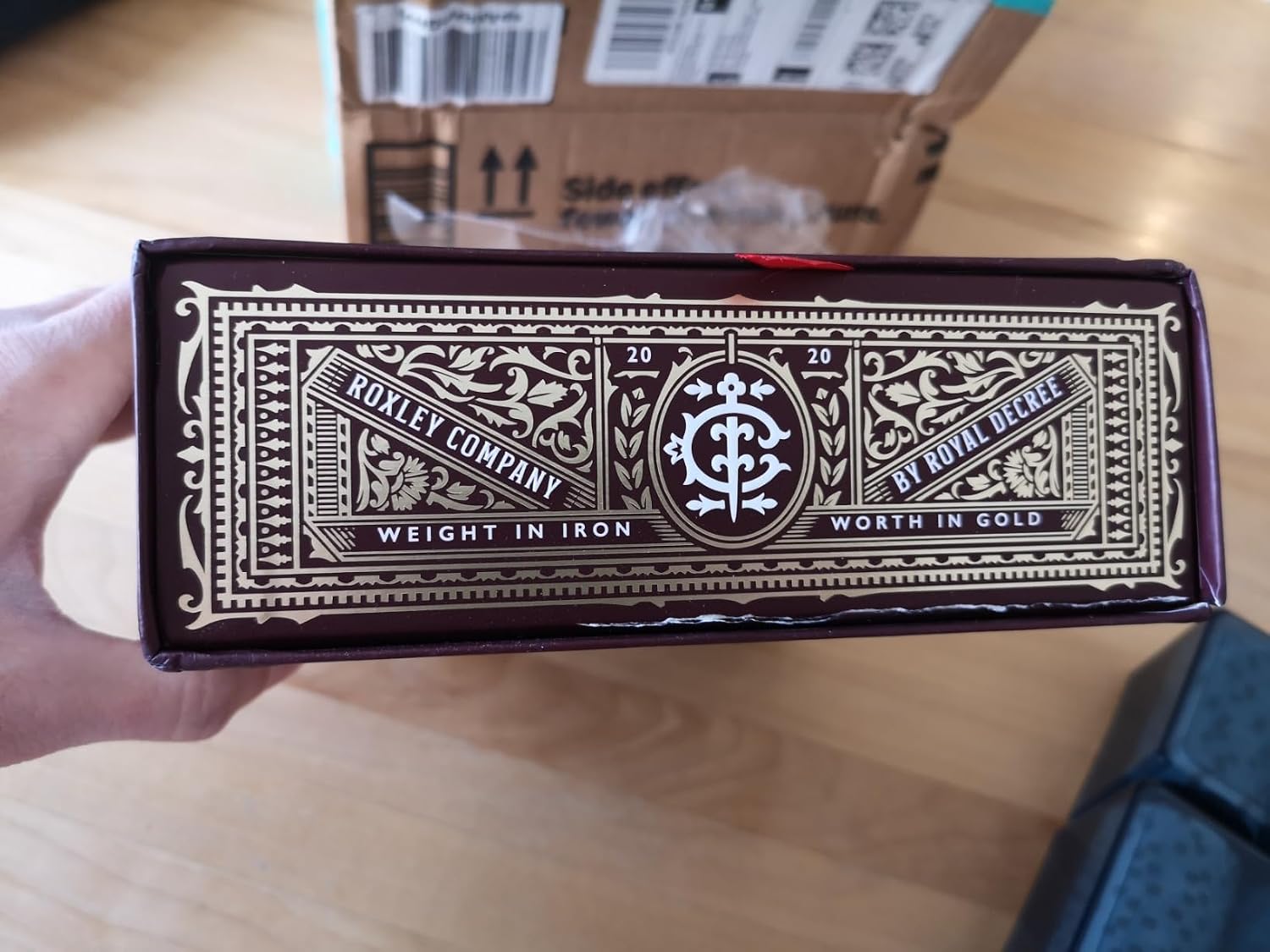

Here's the part that converted me. Each chip is a genuine composite — roughly 64% limestone and clay minerals, 24% synthetic compounds for strength and sound-dampening, and 12% iron core, formed in a two-color insert-mold process — and at its center, a disc of iron. That iron core does two jobs, and both are quietly clever.
First, weight. The iron pulls each ~39mm chip to roughly 9.3–9.4 grams, which lands it squarely in real-casino-chip territory. That heft is the entire tactile argument — the satisfying clack of a riffle, the way a stack sits in your hand instead of skittering. PokerChipForum and BGG reviewers keep returning to that 9.3g hand-feel as the point of the whole exercise.
Second — and this is the bit non-makers miss — the iron acts as a heat sink during molding. By drawing heat out of the chip faster, it lets the material cool quickly and hold far finer detail than a standard injection chip could. So the metal isn't just ballast for the hand; it's what makes the crisp, deep relief on the faces physically possible.
I care about that because it's the difference between luxury and cosplay. A heavy chip that's heavy because someone glued a slug inside is a costume. A chip whose core is structurally load-bearing for both the feel and the manufacturing is the real thing. Iron Clays are the real thing.
Why do molded (not printed) denominations never wear out?

Pick up almost any "premium" board-game chip and look closely at the number. Odds are it's printed, foil-stamped, or stickered onto a finished surface. That's a countdown. Every shuffle, every sweaty summer game night, every time the chip slides across a rough table, that printed layer abrades a little more. Give it a few years of real use and the 100s start looking like 00s.
Iron Clays solve this at the material level. The pattern and the denomination are part of the body itself — molded in during the two-color insert forming, not applied afterward. There is no top layer to rub off because there is no top layer. The number is the chip.
- No fade: the relief can't lose color because the color goes all the way through the two-tone insert.
- No rub-off: denominations are geometry, not ink — you'd have to physically grind the chip to remove them.
- Readable by feel: because they're embossed, you can half-sort a stack with your thumb in low light.
This is the single detail I'd point to if someone asked why these justify the price. It's the difference between an accessory that ages and one that simply… doesn't. A printed chip is a depreciating asset. A molded chip is a constant. For a grail you intend to hand down, that distinction is everything — and it's why "no wear after years" keeps showing up in honest reviews instead of marketing copy.

200-count vs 100-count — which do you really need?
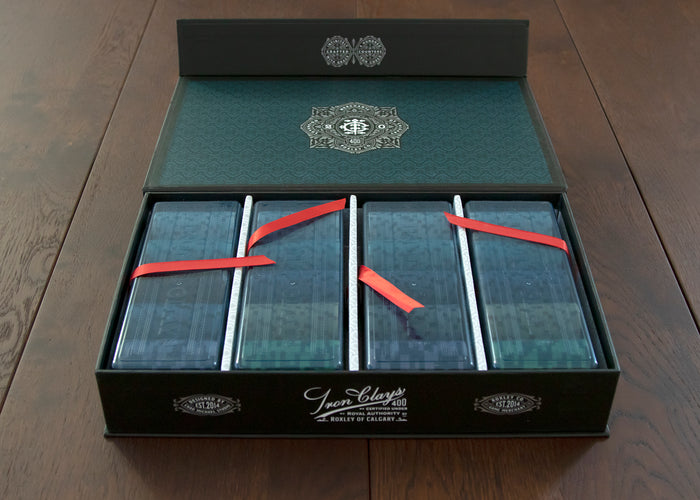
This is the one buying decision that actually matters, and it's worth being honest about where the consensus really sits. For most collectors, the 100-count is the default — it covers something like 90% of the board games people play, and reviewers (including Talking Shelf Space) recommend it as the starting point. So the real question isn't "is the 200 strictly better"; it's "do you play the games that need more than the 100 gives you?" Let me make that case in denominations, because that's where it lives.
The 100-count set gives you 1s, 5s, 10s, 20s, and 100s. That's fine for a light economic game, but it has a gap right where heavy games live. The 200-count set keeps all of those and adds the 50 and the 500 — and those two values are exactly what high-ceiling games demand.
- 18XX: stock-market values climb fast; without a 500 you're stacking towers of 100s and constantly making change.
- Heavy euros (Brass, Carnegie, Lisboa): the 50 smooths the mid-range so you're not breaking a 100 for every transaction.
- Poker up to five players: 200 chips is the comfortable floor for a real session; 100 runs thin fast.
Even the Talking Shelf Space reviewer who recommends the 100 flags its limit honestly: it "might not be sufficient for larger player counts or games with high values of currency" — they hit exactly that wall in a high-value game and ended up making frequent denomination exchanges mid-session. That friction is the opposite of why you bought luxury currency in the first place.
So here's my rule, stated as my own and not borrowed from a consensus that doesn't exist: if your shelf leans toward 18XX and heavy euros, buy the 200 — the 50 and 500 earn their place every session. If you mostly play lighter games, the 100 is the smarter, lighter, cheaper pick and you'll never miss the rest. Match the set to the games you'll actually grow into.

Which games benefit most from swapping in Iron Clays?
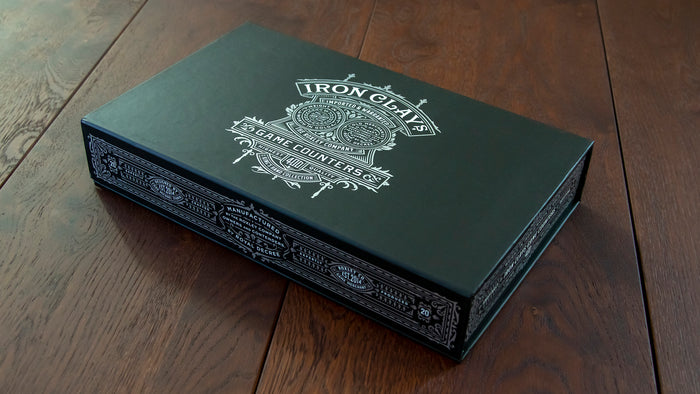
Iron Clays were, in spirit, born from the Brass era, and that community treats them as the default upgrade over the in-box paper money. If you own the Brass family, this is the most obvious swap in your collection.
- Brass: Birmingham / Brass: Lancashire: the canonical pairing — the thin paper money is the weakest component in an otherwise gorgeous box, and Iron Clays fix it instantly.
- Carnegie, Lisboa, and heavy Lacerda-class euros: high cash-flow games where the constant handling of currency rewards a chip that feels good and sorts fast.
- 18XX titles: the 50/500 denominations in the 200-set were practically made for these stock-heavy economies.
- Any game with flimsy cardboard coins or VP tokens: because the denominations are generic, you can quietly repurpose them as victory points, influence, or generic resources.
- Poker night: the obvious home base — five players, real heft, real clack.
The unlock here is the game-agnostic part. You're not buying a Brass accessory; you're buying a currency that floats across your shelf and lands wherever the in-box money is letting the experience down. That portability is what turns a one-game upgrade into a collection-wide one — and it's why owners describe reaching for the same chip tin across a dozen unrelated titles. One tin, a decade of tables.
Are the storage trays a weak point, and how do owners fix it?
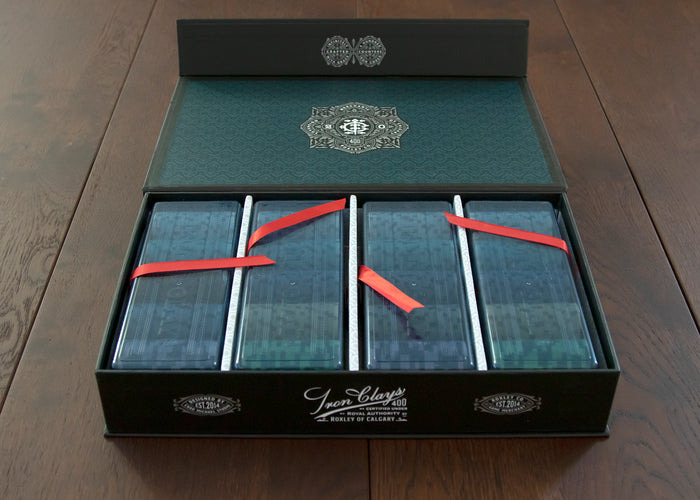
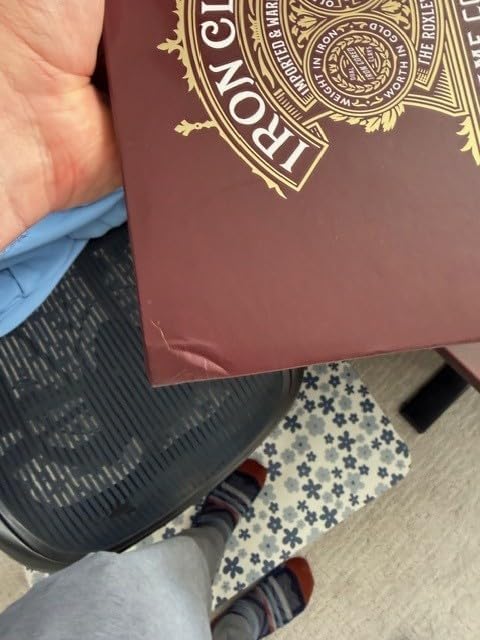
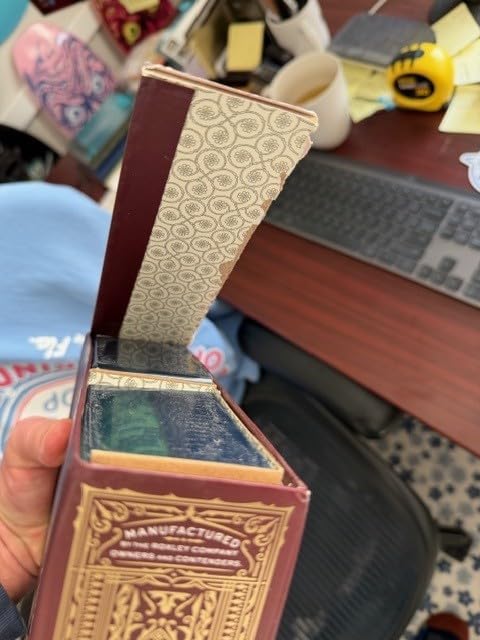
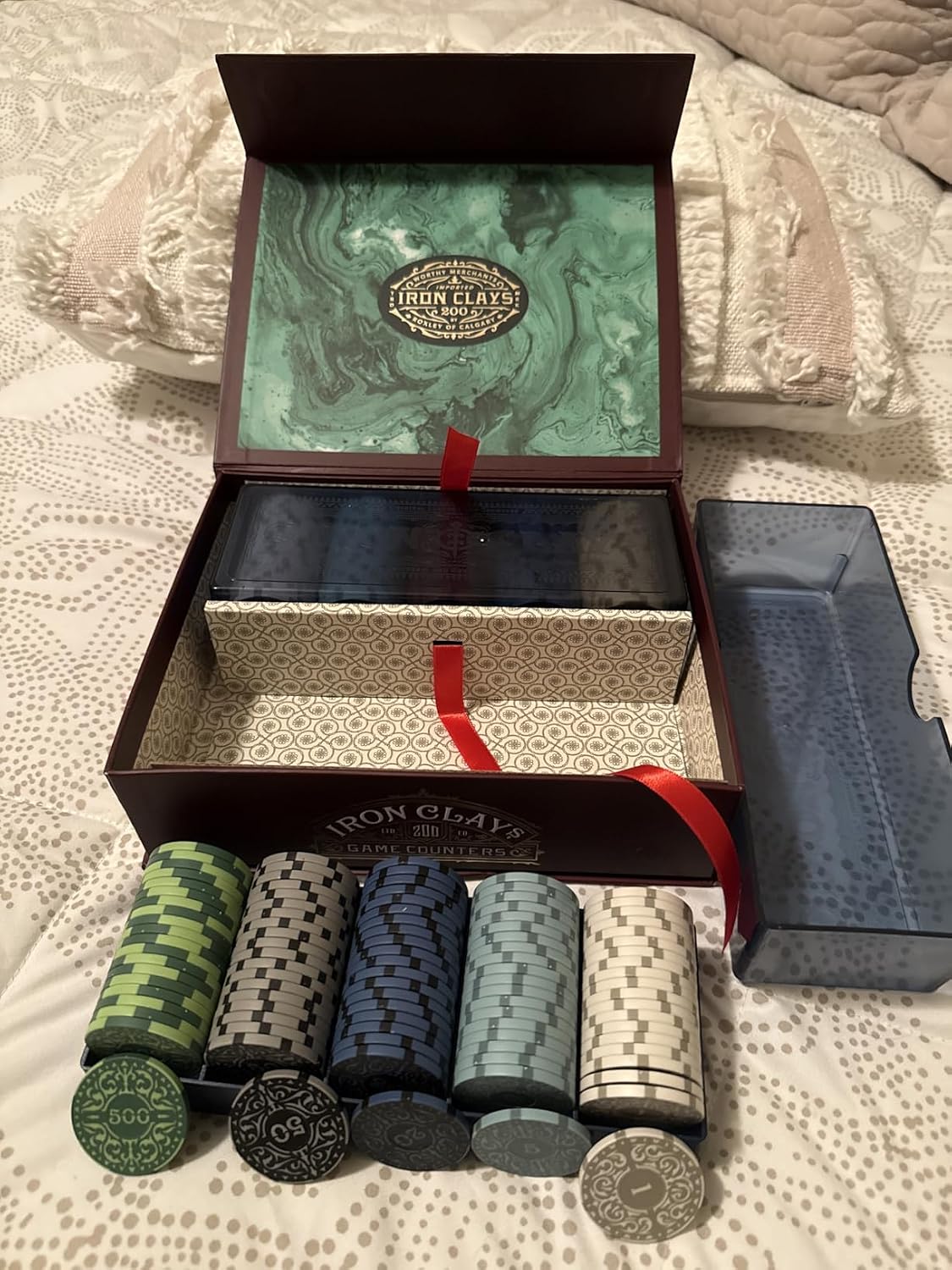
I won't pretend this set is flawless, because grail-worship without honesty is just marketing. The one genuine, repeated knock — from r/boardgames and echoed in the Talking Shelf Space review — is the storage. The presentation box itself is lovely (foil-stamped, embossed, magnetically sealed, properly heirloom-feeling). But inside, the chips sit in plain plastic trays with a simple cardboard separator — one reviewer called the packaging "basically just a wrapper for the plain plastic tray inside it" — and that plastic feels notably cheap relative to the chips it's holding. After everything else screams permanence, the trays whisper afterthought.
Owners have a tidy fix, and it's worth knowing before you buy:
- Rehouse them. Many collectors move the chips into a dedicated poker chip case or wooden chip rack — the kind with felt-lined rows — which matches the chips' quality and makes setup faster.
- Acrylic chip trays are the budget upgrade: cheap, stackable, and far nicer to deal from than the stock cardboard-and-plastic.
- Keep the box regardless — it's the part that makes this feel like a sealed-lineage object on the shelf even if the daily-driver chips live elsewhere.
I actually find this reassuring. A grail that's perfect out of the box tends to be over-promised. Iron Clays are honest: the thing you're paying for — the chips — is impeccable, and the one soft spot is a roughly $15 fix any owner can do in an afternoon. That's a flaw I can live with, and you should price it in rather than be surprised by it.

How do they compare to game-specific metal coins?
This is the fair fight, and I'll give the other side its due. Game-specific metal coins — themed, sculpted, sometimes individually denominated to a particular game's economy — can absolutely out-luxe Iron Clays within that one game. Some reviewers honestly prefer bespoke metal coins when a game offers them, and on pure table-theater for a single title, they have a point.
But that's exactly the trade. Metal coin sets are:
- Single-purpose: beautifully matched to one game, useless across the rest of your shelf.
- Often pricier per game once you tally up buying a set for each title that deserves one.
- Heavier to store and slower to deal in big quantities — gorgeous for a handful, unwieldy for a 200-chip bank.
Iron Clays win on breadth and permanence, not on per-game theming. One set covers your entire collection, the molded denominations never wear, and the cost amortizes across every game you'll ever own. Metal coins win on depth — maximum flavor for one beloved title.
My honest read: if you have exactly one grail-tier game and money to theme it, buy its metal coins. If you have a shelf and want one upgrade that elevates all of it for life, Iron Clays are the smarter grail. The first is a love letter to one game. The second is infrastructure for a hobby.
Is the splurge justified, or is this pure luxury?
Let me be plain, because the forums are: this is a splurge, full stop. Nobody on r/boardgames pretends Iron Clays are a value buy. You are paying — roughly $80 MSRP for the 200-count, and often more than that when stock is tight — for permanence and feel, not for function you couldn't otherwise get. Paper money technically works. Cheap plastic chips technically work. This is explicitly for people who value tactile and thematic richness enough to fund it.
So is it justified? Here's how I'd test it. The splurge is justified if:
- You play economic / 18XX / heavy euro games regularly — the chips get real mileage, not shelf time.
- You care about the ritual — the weight, the clack, the sorting — as part of why you play.
- You think in decades, because amortized over a lifetime of sessions, the per-use cost rounds to nothing.
It's not justified if you play mostly party or light games where money barely matters, or if a heavy chip in your hand does nothing for you. No shame in that — know yourself, and if you do want a set, the 100-count is the lighter, cheaper, perfectly honorable pick.
For the right collector, though, this clears my grail bar cleanly: real materials, real permanence, a flaw you can name and fix, and a payoff measured in years. Save up, buy the set that fits your shelf, and never think about table currency again. That's not pure luxury. That's luxury that earns its keep.
The picks
Some links below are affiliate links — as an Amazon Associate, Puzzlewick earns from qualifying purchases, at no extra cost to you. It never changes a pick.
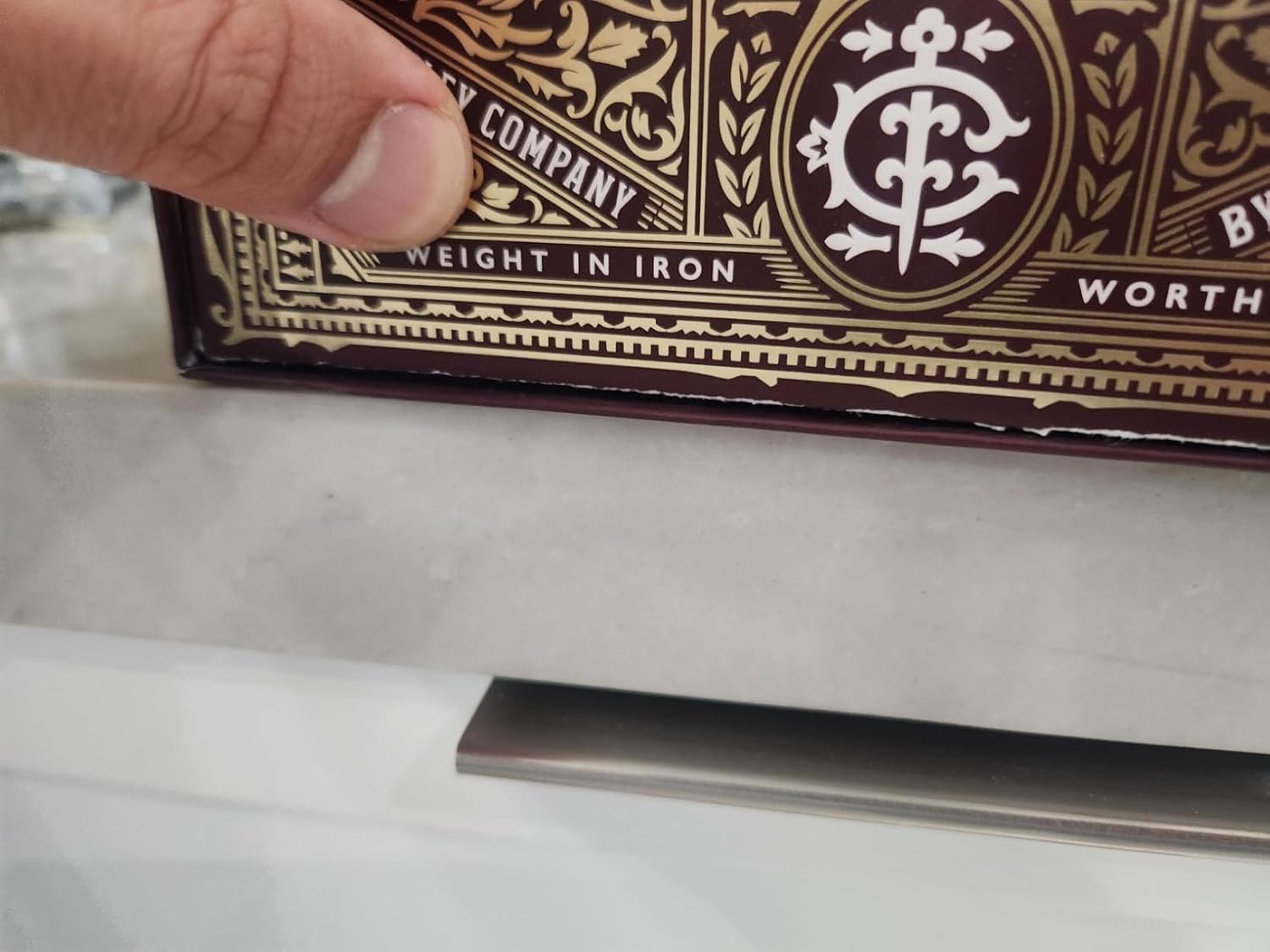
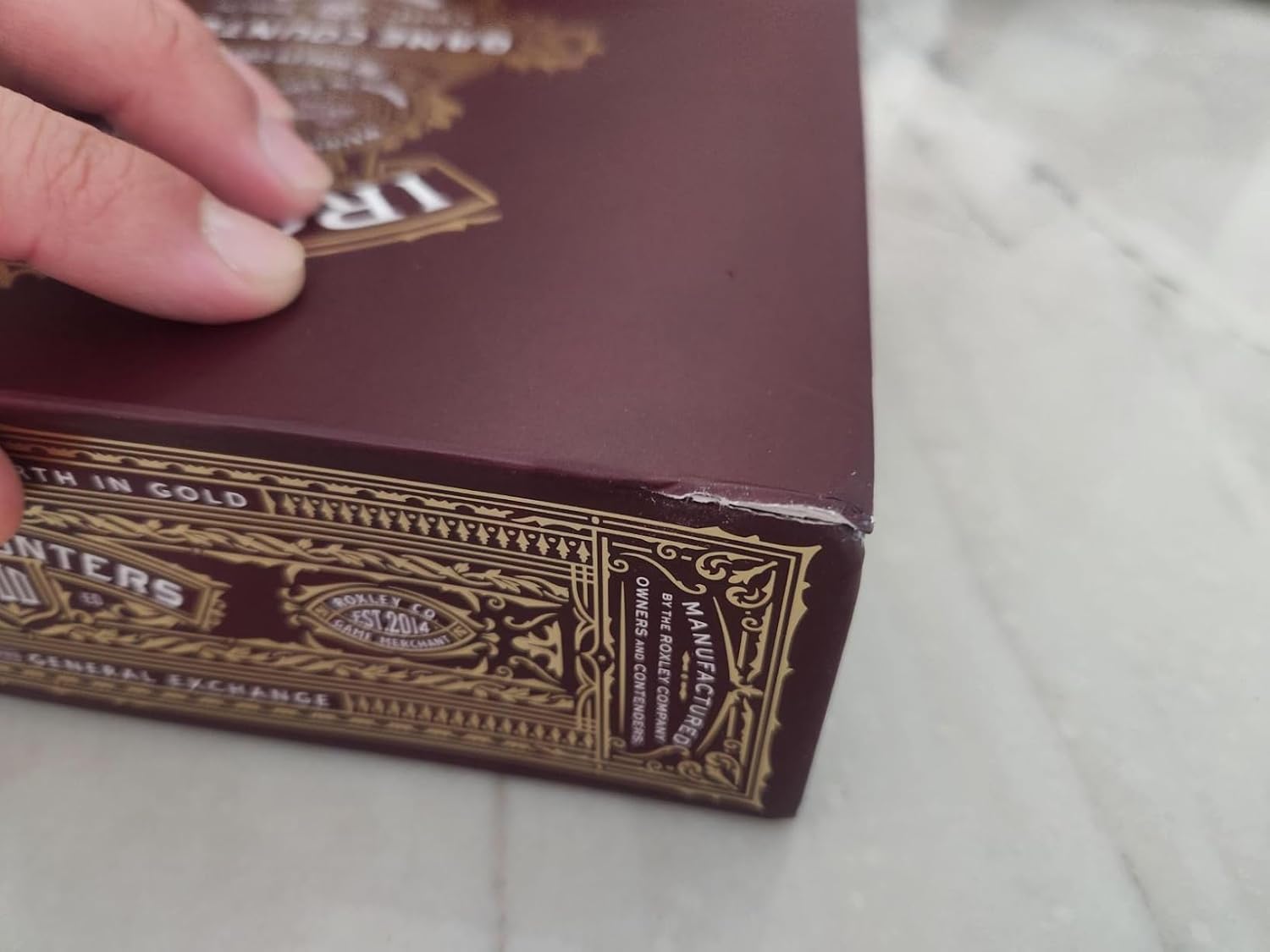 11 photos
 Iron Clays (200 Count)
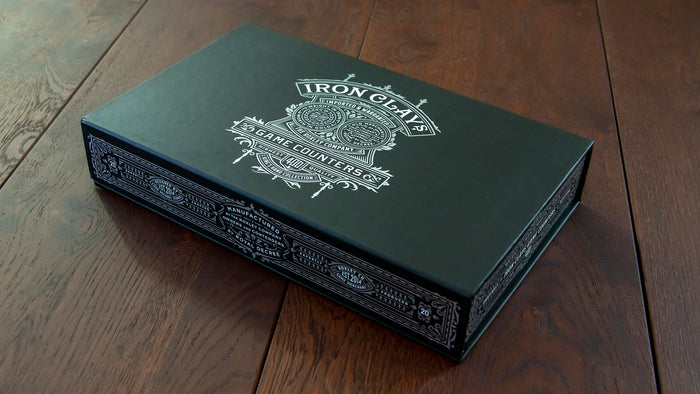
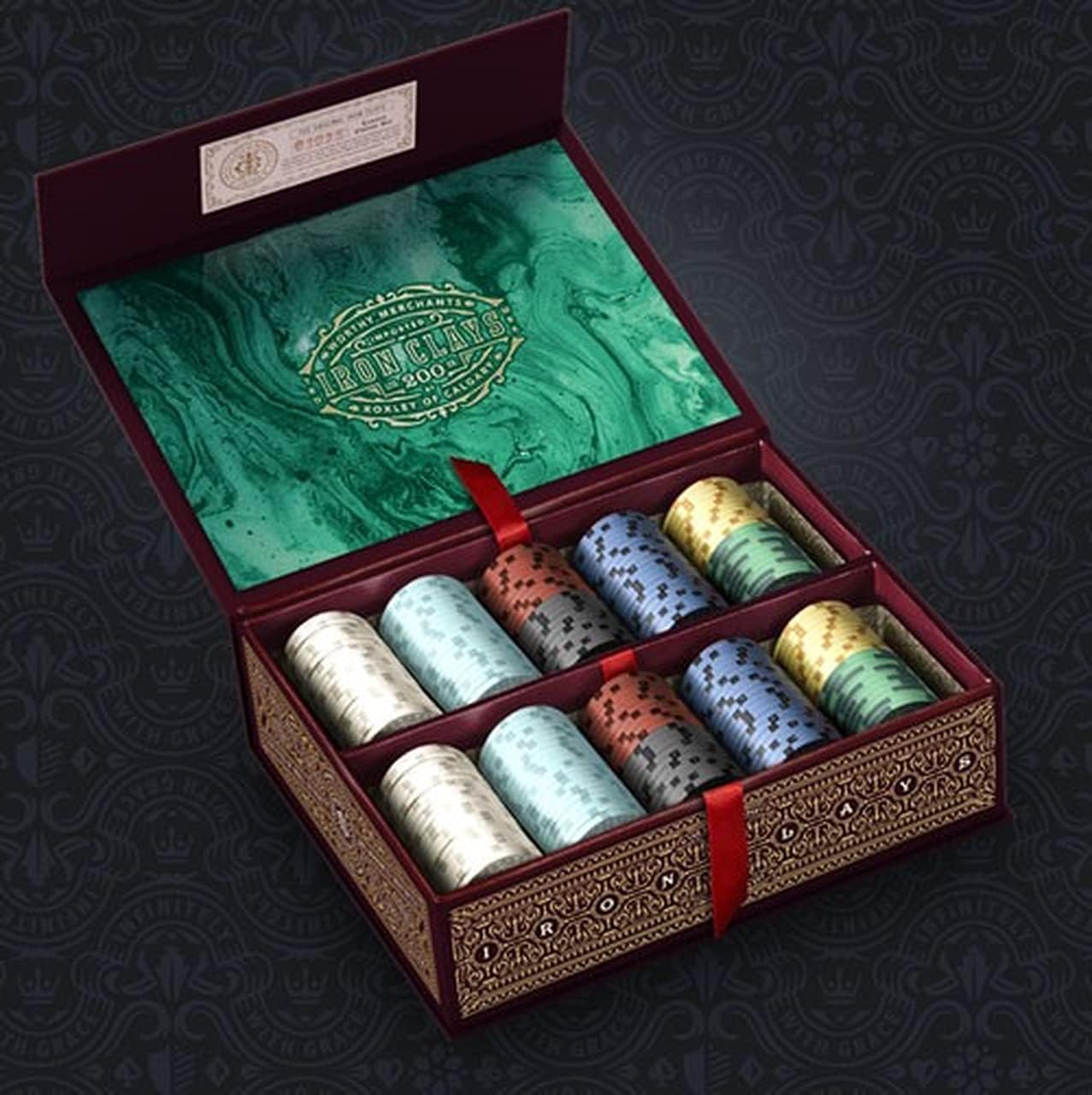
The 200-count is the one to own if your shelf leans heavy. You get a genuine composite chip — roughly 64% limestone and clay minerals, 24% strength-and-sound compounds, and a 12% iron core — at the ~9.3g hand-feel reviewers obsess over, with all denominations molded in rather than printed so they never rub or fade. Crucially, the 200 adds the 50 and 500 denominations that high-value games actually need, sparing you the mid-game change-making the 100-count runs into once values climb. Delivered in a foil-stamped, embossed, magnetically-sealed box. This is the grail tier: real materials, real permanence, a payoff measured in decades of sessions. (If you mostly play lighter games, the 100-count is the smarter, cheaper pick.)
- ~9.3g iron-cored composite chips with true casino heft
- Denominations molded in — no wear or fade after years of play
- 200-count adds the 50 and 500 you need for 18XX and heavy euros
- Game-agnostic: one set serves your entire collection for life
- Heirloom-grade foil-stamped, magnetically-sealed presentation box
- Explicitly a splurge — not a value buy by any honest measure
- Frequently sold out; stocked listings can run well above MSRP
- Included plastic trays feel cheap next to the chips
- Game-specific metal coins can out-theme them within a single title
- Overkill if you mostly play light games — the 100-count is the better fit there
Questions, answered
What makes Iron Clays a 'grail' rather than just nice poker chips?
Permanence and real materials. Each chip is a genuine composite — roughly 64% limestone and clay minerals, 24% synthetic strength-and-sound compounds, and a 12% iron core — at about 9.3g, with denominations molded into the chip instead of printed on. Reviewers report seeing no wear after years of use, they're game-agnostic across your whole collection, and they arrive in an heirloom-grade presentation box. You buy them once and use them for life, which is the definition of a grail rather than ordinary gear.
Should I get the 100-count or the 200-count?
It depends on what you play. The 100-count is the default recommendation for most collectors and covers the large majority of board games well — it gives you 1s, 5s, 10s, 20s, and 100s. The 200 adds the 50 and 500 denominations that 18XX and heavy euro games genuinely benefit from; reviewers note the 100 can run short on larger player counts or high-value games, forcing mid-game denomination exchanges. If your shelf leans toward 18XX and heavy euros, get the 200. If you mostly play lighter games, the 100 is the smarter, cheaper pick.
Why don't the denominations wear off like on other chips?
Because they're not printed, stamped, or stickered on — the pattern and the number are molded into the body itself during a two-color insert process. There's no top layer to abrade, so there's nothing to rub off or fade. The iron core also acts as a heat sink during molding, which is what lets the relief come out so crisp. The number isn't on the chip; it is the chip.
What's the catch — is anything actually disappointing?
Two things. First, the included plastic storage trays feel basic and cheap relative to the premium chips — repeatedly flagged on r/boardgames and in reviews, one of which called the packaging 'basically just a wrapper for the plain plastic tray inside it.' Most owners rehouse the chips in a poker chip case, wooden rack, or acrylic trays — a cheap, easy ~$15 fix. Second, availability: the sets sell out often and restock in waves, so you may have to wait or shop around to get one at a fair price.
Are these better than game-specific metal coins?
They serve different goals. Metal coins can out-theme Iron Clays within a single beloved game, and some reviewers prefer them there. But metal sets are single-purpose, often pricier per game, and unwieldy in large banks. Iron Clays win on breadth and permanence — one set elevates your entire collection for life. Buy metal coins for one grail game; buy Iron Clays to upgrade a whole shelf.
How much do they cost and are they in stock?
MSRP on the 200-count is around $80 USD, but availability moves constantly — Iron Clays are frequently sold out and restock in waves. When stock is tight, third-party listings can run well above MSRP (often $118 and up). Because of that, don't trust a single quoted price: check Roxley's store and a couple of major board-game retailers (Miniature Market, Noble Knight, etc.) for current price and availability, and skip inflated reseller flips when an official or major-retailer listing is stocked.
Margo's verdict
If you play heavy euros, 18XX, or serious poker — and you think about your collection in decades, not sessions — Iron Clays are the rare splurge that earns the shelf. For those shelves, buy the 200-count (around $80 MSRP, though it sells out often and prices climb when it's scarce, so check Roxley plus a couple of retailers before committing); if you mostly play lighter games, the cheaper 100-count is the smarter pick. Budget ~$15 to rehouse them out of the basic stock trays, and never think about table currency again. The materials are real, the molded denominations never wear, and the per-use cost rounds to nothing across a lifetime of play. This is luxury that earns its keep — fund it once, pass it down.
Research ledger 8 sources · reviewed 2026-07-17
Specifications, rules, current product information, community experience, and contrary evidence were checked against the sources below. Commercial links are kept separate from editorial evidence.
- roxley.comroxley.com/collections/accessories
- miniaturemarket.comminiaturemarket.com/rox505.html
- nobleknight.comnobleknight.com/P/2148026732/Iron-Clays-200
- talkingshelfspace.comtalkingshelfspace.com/review-iron-clays-poker-chips-for-board-games
- pokerchipforum.compokerchipforum.com/threads/iron-clays-kickstarter.43026
- boardgamegeek.comboardgamegeek.com/thread/3133524/roxley-iron-clays-a-pricey-but-luxurious-gaming-ac
- roxley.comroxley.com/products/iron-clays-200
- boardgamegeek.comboardgamegeek.com/boardgameaccessory/237698/iron-clays
Let me check that before we say it.

Keep exploring
The next smart rabbit holes.
♛ Topic PathGrail Board Games: compare the whole shelfA grail earns its space only when the experience survives the price, setup, storage, and group commitment. These are expensive-game...Deep DiveThe Swinging Sticks: The Iron Man Desk Grail That Never Stops MovingDesigned in Germany, hand-built in Thailand, screen-used in Iron Man 2, silent, hypnotic, and impossible to ignore — the one desk object...Buying GuideHeirloom Gaming Tables: Luxury Furniture That Lasts GenerationsA gaming table done right becomes furniture that outlives its makers—here's how to find the one for your table.