Masterclass
Yu-Gi-Oh!
A complete initiation into modern Yu-Gi-Oh! — the fast, flashy, combo-heavy card game that thinks it's an anime — from your very first duel to the moment you can hang with the grinders. Free to learn, deeper than it looks, and more welcoming in 2026 than it has ever been.
The best way to start Yu-Gi-Oh! in 2026 is to download Master Duel — the free official digital game on PC, console, and mobile — and complete its tutorial and Solo Mode, which teach every rule and hand out free cards as you learn. Pick ONE archetype you think looks cool and master its combo before branching out; trying to learn all 13,000+ cards at once is the classic beginner trap. When you want to play in person, start with Speed Duel (4,000 Life Points, simplified rules) at a beginner-friendly Local Game Store, and sleeve every card in Japanese-size sleeves from day one.

AI-assisted research and drafting in Kenji’s voice · reviewed by Robert Pruitt · how this guide was made
Source review: 2026-07-17 · 14 references checked · research library
- The DojoWhite belt
- The MonasteryGreen belt
- The Mountain RetreatBrown belt
- The Grand HallRed belt
- The Campfire of MastersBlack belt
Start here, then go deeper
You are in the right cabinet.
 ◈ Universe HubYu-Gi-Oh!: the whole buying pathYu-Gi-Oh! remains a top-four marketplace game with a deep competitive identity and a collector rebound around new extended-art...
 🂠 Topic PathTrading Card Games: compare the whole shelfStart with the game and community you want, then buy the smallest product that lets you test it properly. These guides separate...
 Best OfBest Cozy Board Games of 2026: Calico, Cascadia, Patchwork & the Relaxation Gaming RevolutionCome sit, come rest. Cozy games are the speed of real life — no winners, no rush, just beauty made by your own hands. This is the quiet...
Verified how-to video
Learn the table before the first campaign night
Open the rules at full-table scale. The creator is credited, the player stays on this page, and the embed loads only when you press play.

What Yu-Gi-Oh! Actually Is — and Why 2026 Is the Year to Begin


Welcome to the table, initiate — grab a chair, sleeve up, and don't fret about losing your first ten duels, because every single one of us did. You're one of us the second you say 'it's time to duel,' so the only question left is which deck you fall in love with. Pick what makes your heart race, not what wins; the winning comes later, and I promise it comes.
Yu-Gi-Oh! is the two-player trading card game that was born from a 1990s manga and anime and never stopped — nearly 25 years later it remains one of the most spectacular card games on earth. Each player builds a Main Deck of 40–60 cards (Monsters, Spells, Traps), an optional Extra Deck of up to 15 special-summon monsters, and a 15-card Side Deck for tuning between games. You begin with 8,000 Life Points and win, most often, by dragging your opponent to zero.
What makes the modern game feel like nothing else is the combo: there is no mana or resource system, so on your turn you can dump your whole hand, chaining many cards together to summon an entire board at once. Then, on your opponent's turn, you fire back with hand traps to break their plays. It is fast, deep, and gorgeous — a sprawling library of 13,000+ cards organized into themed archetypes like Blue-Eyes, Dark Magician, Sky Striker, Snake-Eye, and Branded.
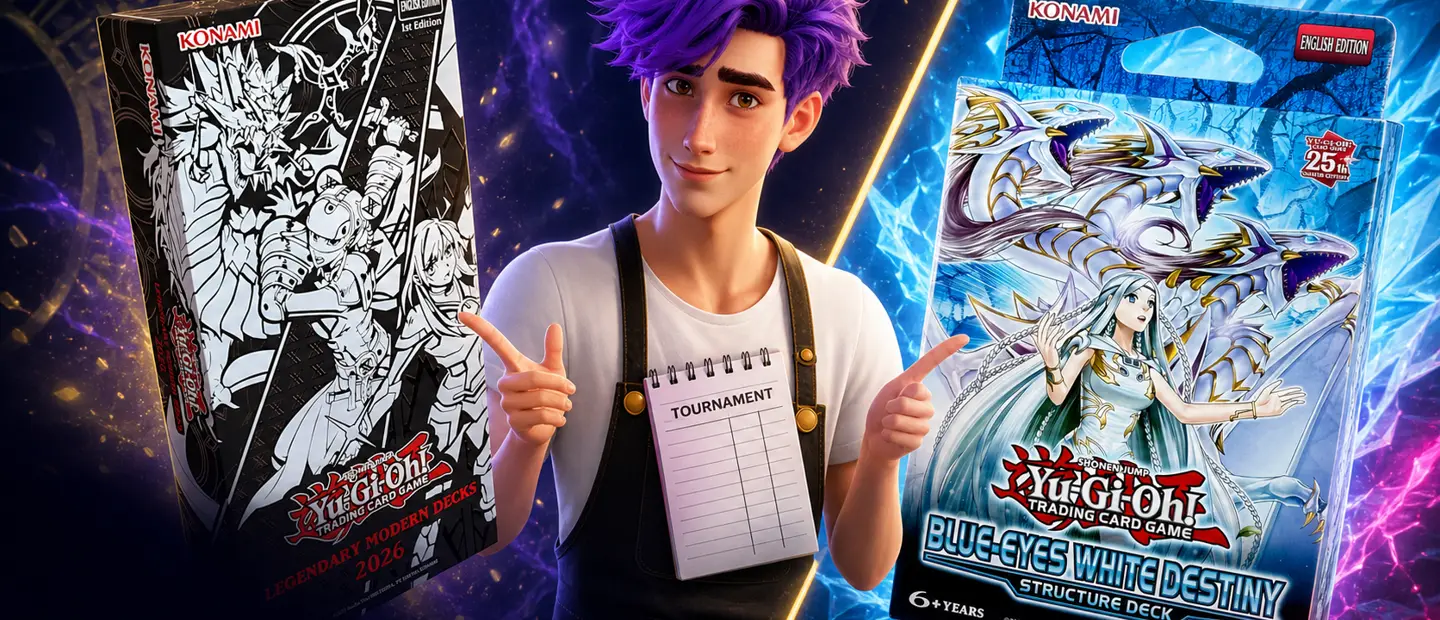
And here is the secret nobody tells beginners: 2026 is one of the friendliest years to start that the game has ever had. Konami leaned hard into ready-to-play products — the all-foil Legendary Modern Decks 2026 bundles three complete strategies and is pitched squarely at newcomers. The release calendar is stacked (Burst Protocol, Chaos Origins, Rarity Collection 5), and the meta is broad enough that no single deck blocks you out. Best of all, the game lives in three places at once, and the gentlest one is free.
So choose your colour. Do you love radiant dragons, cunning spellcasters, machine-gun aggro, or a slow ritual build? In this dojo, you pick what you love — that love is the engine that carries you up the mountain.


Pick the deck that makes your heart race, not the one that wins — the winning comes later, and it always comes.
- Download Yu-Gi-Oh! Master Duel free on Steam, console, or mobile — it's universally recommended as THE place to learn modern Yu-Gi-Oh!
- Run the full in-game tutorial; it enforces every complex rule for you so you can't make an illegal play.
- Browse the archetypes and pick ONE that looks cool to you — Blue-Eyes, Dark Magician, Sky Striker, Snake-Eye, anything that sparks joy.
- Watch a single beginner explainer video for that one deck, and read every card's full text as you go.
- Resist Ranked PvP for now — you'll get flattened. Stay in the tutorial and Solo Mode until the six phases feel natural.
First Words of the Duelist
Learn these before you sit down. Archetype — a themed family of cards (Blue-Eyes, Sky Striker) that support one another; modern decks are built around one or two. Hand trap — a card you fire from your hand on the opponent's turn to interrupt them. Staple — a generic card so good it goes in nearly every deck. Meta — the best tier-1 decks of the format; Rogue is a strong off-meta deck that can still upset.
Master Duel Is the Classroom
The free digital sim enforces the rules so you can't misplay, hands out free Structure Decks and time-limited Loaner Decks, and lets you try real meta archetypes without spending a gem. It is the end goal AND the on-ramp — just don't rush into Ranked before the tutorial sticks.
Three Games in One Box
Yu-Gi-Oh! exists as the physical TCG (the full Advanced Format), the free digital Master Duel (learn here), and the simplified Speed Duel (4,000 LP, smaller field, the gentlest in-person start). You don't choose forever — most duelists drift between them.
Going First vs. Going Second
This is the central strategic axis even a beginner should feel early. The first player builds a disruptive board; the second player must break through it. Many decks make different card choices for each — so from your first duel, start noticing which one you'd rather do.

Building Your First Real Deck: Starters, Ratios, and the Art of Not Bricking


Welcome to the monastery, initiate. Here we stop running a 'good stuff' pile and we start counting — about twelve to fifteen starters in a forty-card deck, and you will brick far less; that is the moment a pile becomes a deck. Do not merely copy the ratios you see online — understand WHY each one is what it is, and you will be a builder, not a netdecker.
This is where Yu-Gi-Oh! becomes a discipline. The craft lives in two hands — the deckbuilder's and the collector's — and the monastery is where you learn the first.
Deckbuilding is treated as measurable, not a vibe. Skilled players count their true starters — roughly 12–15 in a 40-card list — the cards that begin your combo. They distinguish a one-card starter from a conditional extender, and they build redundancy through functional overlap ('many cards that do the same job from different angles') rather than dumb duplication. The whole art is engineering a deck that goes off consistently while surviving interruption — minimizing the non-games where you brick (an opening hand that does nothing) or get hand-trapped into oblivion.
Why 40 cards? Because more cards means worse draws. Running 60 'to have more options' dilutes your starters; 40 is the consistency standard for almost every deck. The rhythm you are building toward is "starter into searcher into extender" — a searcher adds a specific card from your deck to your hand, and searchers are the spine of a smooth opening.
The second hand is the collector's — and it is just as sacred. Hunting your grail Blue-Eyes, chasing alternate arts, Ghost and Secret Rares, the nostalgia-soaked first-edition cards from Legend of Blue-Eyes White Dragon (2002). For many duelists the cards are relics first and game pieces second — the holo, the artwork, the memory of pulling it as a kid.
Mastery here is the marriage of the two: a deck that is both a finely-tuned consistency engine AND a personal shrine of cards you actually love. Veterans log fifty test hands and tune their ratios to a specific metagame read. You don't need fifty yet. You need to build one deck with intent.


The difference between a netdecker and a builder is whether you understand WHY each ratio is what it is.
- Pick your ONE archetype and learn its core combo line by heart before you touch a single ratio.
- Count your starters — aim for roughly 12–15 openers in a 40-card list so you open one almost every game.
- Build redundancy through functional overlap: run cards that do the same job from different angles, not just three-ofs of one bomb.
- Pilot a free Loaner Deck or a budget Structure-based build through low Ranked or casual locals — without misplaying your own cards.
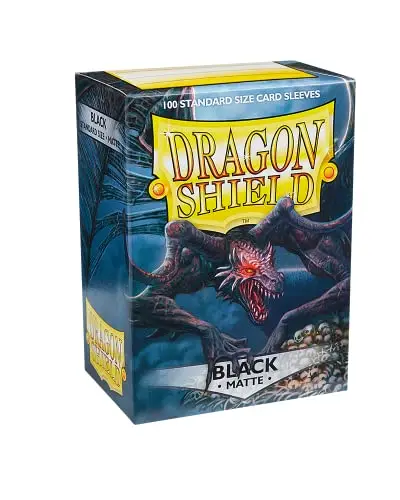
- If you go physical, sleeve every card in Japanese-size sleeves (Dragon Shield Japanese Size, KMC) — Yu-Gi-Oh! cards are 59x86mm, smaller than Pokemon/Magic.
- Start a binder or toploaders for your grail and foil singles — keep the shrine separate from the deck.
The Builder's Vocabulary
Brick — an opening hand whose cards don't work together; 'I bricked' is the universal groan. Garnet — a card that must be in your deck to fuel another effect but that you never want to draw (the unwanted-but-necessary cousin of the brick). Searcher — adds a specific card from deck to hand; the backbone of consistency. Staple — a generic card so good you always run three.
Sleeve Up Right the First Time
Japanese-size (Yu-Gi-Oh!) sleeves are non-negotiable — standard Pokemon/Magic sleeves leave the card loose and rattling at 59x86mm. Many duelists double-sleeve valuable decks (a clear perfect-fit inner + a matte outer), and a deck box sized for ~80–100 sleeved cards holds your Main + Extra + Side together for travel.
The 40-Card Law
Run exactly 40 cards unless you have a specific reason not to. Every card above 40 dilutes your starters and worsens your draws. A focused, consistent 40 beats a 60-card pile of bombs every single game — this is the single most common build mistake veterans correct in new players.
From 'Good Stuff' to a Real Deck
There's a rite every duelist crosses: the day you stop throwing your favourite monsters together and start understanding archetypes, ratios, starters and extenders. It's the moment you stop bricking on purpose and start building with intent — the monastery's true graduation.

How a Turn Really Works: The Six Phases, the Chain, and Playing Honest


Welcome to the mountain, initiate, where the rules stop being abstract and become the air you breathe. Learn to read the card — the card explains the card — and when a chain gets messy, call a judge to make it FAIR, never to bully someone, because rule-sharking is the one thing that will freeze you out of every room worth playing in. Resolve one full chain correctly and you will suddenly be speaking the language.
Now we climb into the honest mechanics. A turn has six phases in fixed order: Draw, Standby, Main Phase 1, Battle Phase, Main Phase 2, End Phase. You summon and set up in the Main Phases and attack in the Battle Phase. You may Normal Summon OR Set one monster per turn — Level 5–6 monsters cost 1 Tribute, Level 7+ cost 2.
But Normal Summoning is the slow road. The engine of modern play is the Special Summon, which is unlimited — Fusion, Ritual, Synchro, Xyz, Link, and Pendulum, each tied to a different Extra Deck monster type. You don't need them all; learn the one or two your archetype uses.
The heart of honest play is the chain. When effects are activated in response to one another, they resolve last-in, first-out — the most recently added effect resolves first. Understanding chains is how you time your disruptions and dodge theirs. This is also where hand traps live — Ash Blossom & Joyous Spring, Maxx 'C', Nibiru, Infinite Impermanence — the cards you fire from your hand on the opponent's turn to interrupt their combo. They are the backbone of interaction; a deck with none has no answer to a turn that isn't its own.
And here the etiquette is baked into the mechanics. You announce clearly — name your card, declare its effect, state your phase — which is exactly why the old "I activate Pot of Greed, which lets me draw two cards" ritual exists: so nobody is ever confused about the game state. You sleeve up clean and keep your hands above the table because concealing your hand reads as cheating even when it isn't. You let your opponent finish their line and respond at the right window, rather than interrupting out of turn.
The honest game is the beautiful game. Climb it slowly. Every rule you learn is a rung.


Resolve one full chain correctly and you'll suddenly be speaking the language.
- Memorize the six phases in order — Draw, Standby, Main 1, Battle, Main 2, End — and narrate them out loud your first few games.
- Learn the ONE or two Special Summon methods your archetype actually uses (don't try to learn all six at once).
- Practice resolving a chain: remember last-in-first-out, and watch how the most recent effect resolves first.
- Add 2–3 hand traps you understand (start with Ash Blossom) and practice timing them on the opponent's key combo card.
- Announce every play — card name, effect, phase — so the game state is always clear to both players.
- Read a card's FULL text every time before you resolve it; skimming is the #1 cause of misplays.
Mechanics on the Mountain
Negate — to stop a card's activation or effect from resolving; 'how many negates does it have?' measures an end board's threat. Going off — successfully executing your whole combo line into a dominant board. Searcher / extender — cards that fetch or continue your line. Sleeve up — to present your deck for a match, hands above the table; also the etiquette signal that you're playing honest, visible cards.
The Etiquette Baked Into the Rules
Announce clearly (name the card, the effect, the phase). Keep hands and sleeved cards visible above the table — concealing reads as cheating. Let your opponent finish their combo, then respond at the right window; interrupting out of turn or arguing timing is sloppy and rude. Learn priority and the chain so you interact legally, not loudly.
Count the Negates
The modern win/loss often turns on out-negating each other. When the opponent finishes their turn-one board, ask the real question: how many negates and disruptions does it have, and can my combo plus my hand traps get under or over it? That single estimate is matchup math in a sentence.
The Card Explains the Card
Yu-Gi-Oh! has no comprehensive in-box rulebook for modern cards — you learn by reading and by asking. The text is written precisely on purpose. Reading the full effect text, every single time, is the habit that separates a confident duelist from a confused one. When in doubt, the card is the rulebook.

Hanging With the Grinders: Hand-Trap Ratios, Side Decking, and the Line You Don't Cross


Welcome to the hall, initiate — this is where the grinders live, and you're ready to stand among them. Everybody loses to the coin flip, a brick, and Maxx 'C' eventually, so don't tilt; just shuffle up for Game 2 and out-think them. But hear me clearly: FTKs and floodgates are legal, and weaponizing the rulebook to rob a newer player is NOT — cross that line and the whole room freezes you out, every time.
This is the hall, where deckbuilding becomes a ratio game and play becomes a chess match. The grinder's edge is not a pile of finishers — it's enough starters so you open your combo almost every game, plus extenders, plus the right count of hand traps for interaction. Veterans log fifty test hands and tune their hand-trap ratios to a specific metagame read.
The deeper edge is side decking — the swaps you make between games of a match. This is where intermediate skill shows: against the deck you just faced, you bring in floodgates, more hand traps, or anti-meta tech. Knowing your deck's end board — the exact set of monsters and effects you aim to leave up — makes it obvious which opposing hand trap actually hurts and which one you can play through. In Master Duel specifically, Maxx 'C' changes the math: players won't over-extend into it, so you plan a line that wins through or around it.
You'll also choose your lane in the meta / rogue / anti-meta triangle, and that choice is a personality statement — are you piloting the best tier-1 deck, an off-meta upset deck, or a build engineered specifically to hose what everyone plays?
But the hall has a bright line, and it is the soul of competitive integrity. Rule-sharking — weaponizing rules and policy to steal an advantage from a less-knowledgeable opponent rather than to keep the game fair — is officially an Unsporting Conduct infraction and socially the lowest thing a duelist can do. You call a judge to resolve a dispute, never to bully. FTKs and floodgates are legal and you may run them; sharking a newer player out of a play is not, and never will be. The grinder who forgets that isn't a grinder — he's the win-at-all-costs jerk every table quietly stops inviting. Win with your deck. Never with their ignorance.


Win with your deck — never with their ignorance. That's the line, and it doesn't move.
- Audit your list: enough starters to open a combo nearly every game, real extenders, and a deliberate hand-trap count — not a pile of finishers.
- Learn your deck's exact end board so you know which opposing hand trap actually breaks your line.
- Build a real Side Deck (up to 15) and practice swapping in floodgates / extra hand traps / anti-meta tech between games.
- Follow the current banlist and a meta tier-list (masterduelmeta.com / yugiohmeta.com) so you know what you'll face before you invest.
- When you out-negate or get out-negated, do the matchup math: count their disruptions vs. your combo + traps.
- Run FTKs and floodgates if you like — but read the room, and NEVER weaponize a rule to rob a newer player.
The Grinder's Glossary
OTK / FTK — One-Turn Kill (8,000 in a turn after they've played) / First-Turn Kill (an unbeatable lock before they get a turn); admired and despised at once. Floodgate — a continuous card that shuts off a whole mechanic (e.g. 'no Special Summons'). Negate — stop a card resolving. Scoop — to surrender; a gracious scoop into Game 3 is respected, a slow-rolled one is rude.
The Bright Line: Rule-Sharking
Call a judge to make a ruling FAIR, never to bully a newer player out of a play. Side deck honestly and shuffle/cut presented decks without stacking — sharking your sleeves or deck order kills trust. FTKs and floodgates are legal, but reading the room on what your locals enjoy is part of being a good regular. The rulebook is a tool for fairness, never a weapon.
Side Decking Is Where Skill Shows
Game 1 you play blind; Games 2 and 3 you play informed. Against the deck you just faced, swap in floodgates, more hand traps, or matchup-specific tech from your 15-card Side Deck. The intermediate-to-pro gap is mostly here — knowing the 6–8 swaps for each matchup is worth more than any single flashy combo.
Playing Around Maxx 'C'
In Master Duel, the presence of Maxx 'C' warps every turn: over-extend into it and you hand the opponent a fistful of cards. The grinder's answer is to plan a line that either wins THROUGH it (ending the game before the extra draws matter) or AROUND it (a short, lethal-enough line). Knowing your end board tells you which is possible.

The Heart of the Cards: The Code, the Rites, and the Family Across the Table


Pull up to the campfire, initiate — you've earned this seat. You don't have a shop yet? Come Friday: the regulars are loud, half of us quote The Abridged Series in our sleep, and there's always a chair open for a new duelist. Find your locals and you've found your people — same faces every week, arguing chain timing, splitting a pizza, lending you the one card you're missing. Welcome to the fold.
Strip away every tier list and Yu-Gi-Oh! is the original show's thesis made real: it is about the friends you make across the table. It started on schoolyards and at kitchen tables — kids trading their first Blue-Eyes — and it grows up into the weekly locals at the card shop, the closest thing this hobby has to a hearth.
The soul of the culture is a beautiful double-vision: a genuinely sacred mythology — the Pharaoh, the Millennium Items, 'the heart of the cards' — held in the same breath as a relentless, affectionate irony about how absurd all of it is. That irony was crystallized forever by Yu-Gi-Oh! The Abridged Series (2006), which taught a generation to chant 'Screw the rules, I have money!', mock 'CARD GAMES ON MOTORCYCLES!', and call it a 'children's card game' with a straight face — while still tearing up at the actual show. To be in this community is to revere and roast the same thing at once.
The game is cutthroat — FTKs, floodgates, salt over the coin flip. But the code that wraps it exists precisely to keep a ruthless game a warm one: sleeve up; call a judge to be fair not cruel; scoop with grace; teach the new kid the interaction that just beat them; don't be salty out loud; and GG — good games — every single game, win or lose. People who felt like outsiders everywhere else found a chair here, a deck to call their own, and a room full of people who'll argue chain timing for an hour and then split a pizza.
That's the unironic Heart of the Cards: not plot armour, but the feeling you get top-decking exactly what you needed — and the family you found across the table while doing it. The cards are the excuse; the table is the family. Initiation complete, initiate. Welcome home.


The cards are the excuse; the table is the family. That's the real heart of the cards.
- Find your locals — use the Konami store locator for an Official Tournament Store running beginner Speed Duel and casual nights.
- Show up on a weekly tournament night, sleeve up, and introduce yourself; the regulars will table you and then teach you how they did it.
- Say GG every game, win or lose, and mean it — the handshake close is non-negotiable.
- When you win an interaction, teach it to the next newcomer; that's how the community replenishes itself.
- Keep spare sleeves, dice, and a loaner deck on hand so a curious onlooker can sit down and play immediately.
- When you're ready, host: run a beginner-friendly table and hand down an old deck to someone just starting — the full-circle rite.
The Unwritten Code
GG every game — win or lose, you say it and you mean it. Scoop graciously when you're dead; never slow-roll a lost game to burn the clock. Don't be salty out loud — everyone loses to the coin flip, a brick, and Maxx 'C' eventually; tilting on your opponent for variance breaks the table's vibe. Teach the new kid the interaction that just beat them. The format is too brutally complex to gatekeep and still survive.
The Rites of Passage
Pulling your first Blue-Eyes or Dark Magician — the franchise's Charizard moment, the card that makes you feel like Kaiba or Yugi. Your first locals — stepping from kitchen-table to community; you get tabled, you find your shop. Top-decking the exact card you needed — the real-life 'Heart of the Cards.' Teaching someone else to duel / handing down a deck — the full-circle rite that replenishes the brotherhood, exactly like the schoolyard trades that started it all.
The Soul: Revere It AND Roast It
We call it a 'children's card game' and we mean it lovingly — that irony is the culture. Blue-Eyes White Dragon is the franchise's Charizard; Dark Magician its Pikachu; Exodia the forbidden one you assemble for an instant win; and Pot of Greed the eternal in-joke ('but what does it DO?' — it draws two cards). The Abridged Series taught us to laugh at all of it while still believing, sincerely, in the heart of the cards.
When You Become the Host
There's no game master here — the 'host' is the experienced player or store organizer who makes newcomers welcome, and patient teaching is the most valuable skill in a game this deep. Start beginners on Speed Duel or a slowed Structure mirror so they actually take turns and sometimes win. Narrate your plays out loud. Keep loaner decks, dice, and a Life Point tracker ready. Always offer the rematch.
Voices Worth Following
When you're ready to go deeper: Cimoooooooo (Alex Cimo) for accessible format breakdowns and community tournaments; Joshua Schmidt, the inaugural Master Duel World Championship winner, for genuine high-level decision-making. And the daily pulse of the meta lives at masterduelmeta.com and yugiohmeta.com — the broad 2026 meta means more decks are viable than you'd fear.
The Armory — what to buy first
Everything you need to begin, ranked. Honest picks; affiliate links support the cabinet.
 2
2 Konami · New and returning duelists who want real, ready-to-play physical strategies in one box
Legendary Modern Decks 2026
An all-foil set of three complete, ready-to-play decks — Sky Striker (a 2025 World Championship Top 4 strategy), X-Saber, and Ritual-based Mitsurugi — bundled with multiples of universal staple cards. Konami markets it explicitly as a starting place for new and returning players, so instead of cracking random packs you get three genuine strategies plus reusable staples you'll slot into future decks.
Kenji: The cleanest physical on-ramp once you've learned the rules digitally.
- Three complete, tournament-real strategies in one box
- All-foil, with reusable universal staples
- Pitched directly at new and returning duelists
- Exact street price wasn't confirmed from a primary source
- Releases around March 2026 — verify the in-store date locally
The catch: It's a TCG product — learn the rules on Master Duel first so the cards make sense.
 3
3 Konami · Two people who want to play face-to-face out of the box, the gentlest in-person on-ramp
Speed Duel Starter Decks (Match of the Millennium / Twisted Nightmares)
Two-deck boxes for the simplified Speed Duel format, complete with Skill cards. Speed Duel's smaller, slower rules — 4,000 Life Points, 3 monster zones, no draw on the first player's first turn — are the gentlest physical on-ramp in the entire game, and these come as ready-to-duel pairs so two people can sit down and play immediately.
Kenji: My pick for teaching a friend at the kitchen table — they'll actually take turns and sometimes win.
- Ready-to-duel out of the box — two decks per release
- Simplified 4,000 LP rules are the easiest in-person start
- Skill cards add flavour without the full Advanced Format complexity
- Speed Duel is its own format, separate from the full TCG
- Exact MSRP wasn't confirmed from a primary pricing source
The catch: Speed Duel rules differ from the full game; treat it as a friendly on-ramp, not the destination.
 5
5 Dragon Shield / KMC · Every physical player from day one — non-negotiable card protection
Japanese-Size (Yu-Gi-Oh!) Card Sleeves — Dragon Shield Japanese Size / KMC
60-count packs of small-size sleeves sized for Yu-Gi-Oh!'s 59x86mm cards — smaller than Pokemon and Magic. Standard sleeves leave the card loose, rattling, and prone to damage; Japanese/Yu-Gi-Oh!-size sleeves protect them and shuffle cleanly. Buy 2–3 packs per deck to cover Main + Extra + Side, and consider double-sleeving valuable or tournament decks.
Kenji: The single most common rookie purchase mistake is buying the wrong-size sleeves. Don't.
- Correctly sized for Yu-Gi-Oh!'s smaller cards — clean shuffle, real protection
- Cheap insurance for cards you care about
- Double-sleeve-friendly for tournament decks
- You must NOT use standard Pokemon/Magic sleeves — they leave cards loose
- Need multiple packs per deck (Main + Extra + Side)
The catch: Yu-Gi-Oh! cards are 59x86mm — buy Japanese/small size ONLY, never standard.
Questions from the road
Is Yu-Gi-Oh! free to start?
Yes — Yu-Gi-Oh! Master Duel is completely free on PC, console, and mobile, including a full tutorial, free starter Structure Decks, Solo Mode lessons, and time-limited free Loaner Decks for Ranked. It's the recommended way to learn before spending anything on physical cards. Note: 'free gems / unlock all' hack downloads are scams or malware — never install them; they can get your account banned.
Master Duel or physical cards first?
Learn on Master Duel — it enforces all the complex rules for you, is free, and lets you try archetypes risk-free. Move to physical (TCG or Speed Duel) once you know the rules and which deck you enjoy, ideally starting at a beginner-friendly Local Game Store.
How many cards is a Yu-Gi-Oh! deck?
A Main Deck is 40–60 cards (40 is the consistency standard), with an optional Extra Deck of up to 15 special-summon monsters and an optional Side Deck of up to 15. You can generally run up to 3 copies of a card unless the banlist limits it. Run 40 unless you have a specific reason not to — more cards means worse draws.
What are hand traps and why does everyone talk about them?
Hand traps are cards (like Ash Blossom & Joyous Spring, Maxx 'C', Nibiru, Infinite Impermanence) you activate from your hand during the opponent's turn to interrupt their combo. They're the main way you interact on a turn that isn't yours, which makes them essential staples in modern decks — a deck with none has no answer to the opponent's big turn.
Why are there so many summoning methods?
They were added across the game's history — Tribute, Fusion, Ritual, Synchro, Xyz, Pendulum, and Link — each tied to a different Extra Deck monster type. You don't need all of them: most decks rely on one or two, so just learn the ones your chosen archetype uses.
What sleeves do I need? Can I use my Pokemon/Magic sleeves?
No. Yu-Gi-Oh! cards are smaller (59x86mm) than Pokemon/Magic (63x88mm). Use Yu-Gi-Oh!/Japanese-size sleeves (Dragon Shield Japanese Size, KMC, Ultra Pro small). Standard sleeves leave the card loose and prone to damage — this is the most common rookie buying mistake.
What is the banlist?
Konami publishes a Forbidden/Limited list that bans some cards entirely or restricts them to 1 or 2 copies — separately for the physical TCG and for Master Duel. It changes a few times a year to balance the meta, so check the current one before buying into a deck. (A June 4, 2026 update, for example, freed up several older Zoodiac cards.)
What's Speed Duel?
A simplified official format: 4,000 Life Points, a smaller field (3 monster zones), no draw on the first player's first turn, and special Skill cards. It's designed as a beginner/casual on-ramp, and many stores run Speed Duel events with ready-to-play Starter Decks — the gentlest way to learn the rhythm of dueling in person.
Do I have to spend a lot of money to be competitive?
In Master Duel, no — a patient free-to-play player can farm gems and craft a competitive deck for free, and Loaner Decks let you try meta archetypes instantly. In the physical TCG it's more expensive, but budget and rogue decks exist, and ready-to-play products like Legendary Modern Decks 2026 give you a strong base cheaply.
Is it too late to start in 2026, and why do I keep losing in Ranked?
It's not too late at all — 2026 has multiple beginner-and-returning-player products (Legendary Modern Decks 2026, Spirit Charmers, Speed Duel decks), a broad multi-deck meta with no single mandatory deck, and the free Master Duel client constantly adding content. If you keep losing in Ranked, you almost certainly jumped in before learning: go finish the tutorial and Solo Mode first, pick ONE archetype and learn its combo by heart rather than collecting powerful-looking singles, and read every card's full text. The community's blunt consensus is that Master Duel is the best teacher but the end goal, not the starting point.
 ⛩ The graduation
 You came to this table an initiate, and you leave it a duelist. We did not promise you would win your first ten duels — every one of us lost ours — only that the table would still be here, the chair still open, and a regular still ready to show you why that combo didn't work. That is the whole craft: slow mastery over flash, reverence woven through the roasting, a deck that is at once a consistency engine and a personal shrine. Now go find your Friday-night shop, learn one archetype until it sings, say GG and mean it, and one day hand your old deck down to the next nervous newcomer the way it was handed to you. Believe in the heart of the cards, initiate — and welcome to the fold.
— Kenji, In the tradition, we pass forward what the masters trusted to us. — Kenji
 The Sensei · keeper of the lore
Every object has a lineage. Let me tell you its story.
Found your footing? Send this to someone starting out.

Keep exploring
The next smart rabbit holes.
◈ Universe HubYu-Gi-Oh!: the whole buying pathYu-Gi-Oh! remains a top-four marketplace game with a deep competitive identity and a collector rebound around new extended-art...🂠 Topic PathTrading Card Games: compare the whole shelfStart with the game and community you want, then buy the smallest product that lets you test it properly. These guides separate...Best OfBest Cozy Board Games of 2026: Calico, Cascadia, Patchwork & the Relaxation Gaming RevolutionCome sit, come rest. Cozy games are the speed of real life — no winners, no rush, just beauty made by your own hands. This is the quiet...Sources & further reading
- www.wargamer.com/yugioh-trading-card-game/how-to-play-yugioh
- officialgamerules.org/game-rules/yu-gi-oh
- yugioh.fandom.com/wiki/Summoning_mechanics
- www.eneba.com/hub/collectibles/how-to-play-yu-gi-oh
- game8.co/games/Yu-Gi-Oh-Master-Duel/archives/355397
- game8.co/games/Yu-Gi-Oh-Master-Duel/archives/354411
- www.wargamer.com/yu-gi-oh-master-duel/banlist
- www.masterduelmeta.com/tier-list
- www.yugiohmeta.com
- yugioh.fandom.com/wiki/Yu-Gi-Oh!_slang
- yugipedia.com/wiki/Slang
- www.thegamer.com/yu-gi-oh-ygo-common-slang-terms-glossary
- yugioh.cardsrealm.com/en-us/articles/yu-gi-oh-terms-and-slangs-full-guide
- knowyourmeme.com/photos/974823-yu-gi-oh