Aeon's End Sets Compared: Where to Start in 2026
Ten waves, one no-shuffle masterpiece, and a live crowdfunding campaign. Here is the honest path from first box to forever collection.


AI-assisted research and drafting in Imani’s voice · reviewed by Robert Pruitt · how this guide was made
Last editorial refresh: 2026-06-28 Gold-standard QA: 2026-08-10 15 sources reviewed Affiliate links checked during gold-standard pass

The short answer
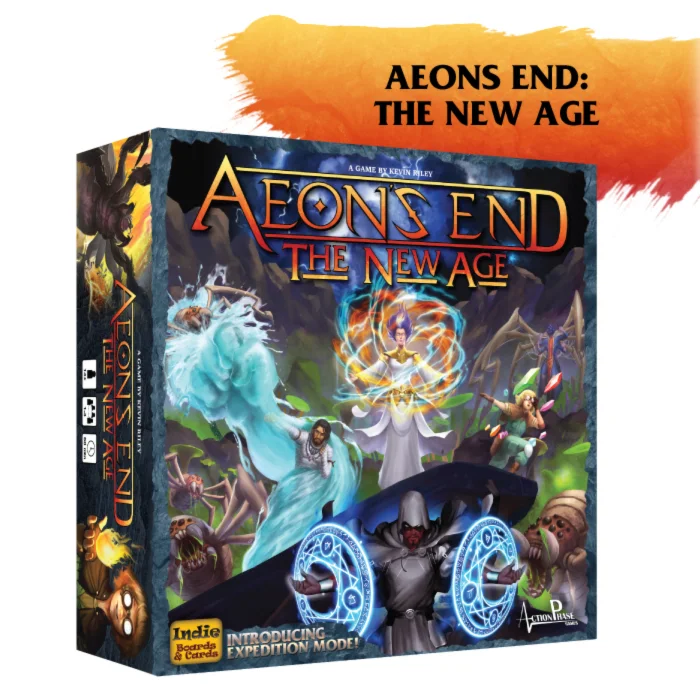
Buy Aeon's End: The New Age first. It is standalone, it teaches the modern version of the system, and its Expedition mode turns future purchases into a replayable campaign library. If you love it, add Outcasts second. For box three, choose Past & Future for concentrated mechanical variety or The Descent for Friends & Foes and the newer expedition format. Do not buy ten waves to discover whether you enjoy one game.
Decision map
Choose in thirty seconds
almost every first-time buyer
the second box after The New Age
a high-value third purchase
“New Age hands down.” That was the cleanest answer in a week of Aeon's End players comparing shelves, campaigns, bosses, and boxes. Another player made it even plainer: “New age for first box for sure.”
Good. Because the product line itself is not plain anymore. Aeon's End now spans ten waves, two Legacy boxes, reusable Expeditions, small expansions that may or may not stand alone, optional Friends and Foes, a fifth-battle system, and a live System Overload campaign willing to sell you almost the entire history in one heroic click. It is a gorgeous amount of game. It is also how a newcomer ends up staring at a $705 pledge ladder while still unsure what a breach does.
I'm Imani. My job here is to listen to the room, and the room is saying two things at once: this is one of cooperative deckbuilding's great systems, and you absolutely do not need all of it. So this guide gives you the complete map without handing you a completionist sentence. We are going wave by wave, box by box, then answering the questions that actually cost money: what mixes, what tells a campaign story, what stores cleanly, which accessories matter, and whether System Overload belongs in a first collection.
Start here, then go deeper
You are in the right cabinet.
 ◈ Universe HubAeon's End: the whole buying pathAeon's End is a cooperative deckbuilding boss-battle system where players never shuffle their decks. This universe maps the...✦ Topic PathBoard Game Buying Guides: compare the whole shelfStart with the decision, not the shelf. These guides compare the games, editions, expansions, player counts, and costs people...
 ComparisonBest Deck-Building Card Games 2026: Dominion, Aeon's End, Marvel ChampionsDominion, Aeon's End, Clank!, and Marvel Champions solve deckbuilding in radically different ways. Here is the best first box, the real...
What is Aeon's End, and why does the no-shuffle rule matter?
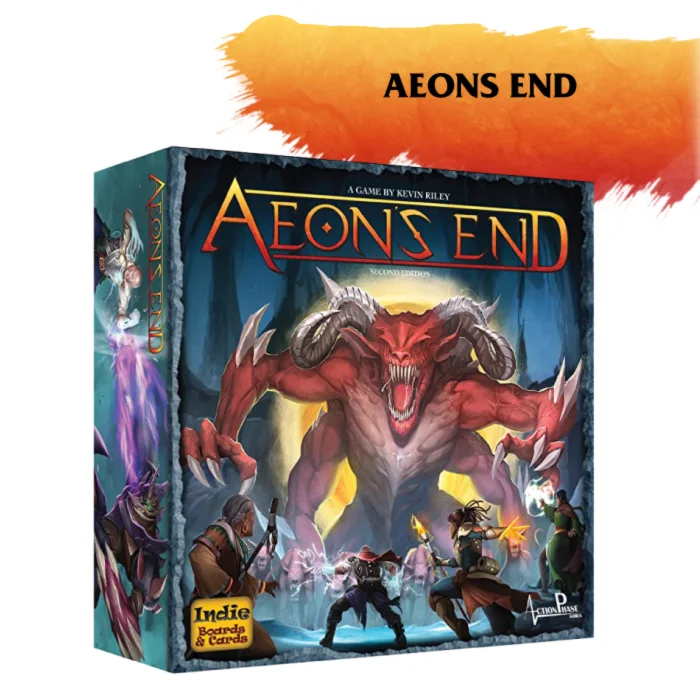
Aeon's End is a cooperative deckbuilding boss battle for one to four players. Each player controls a breach mage defending a city, usually Gravehold, from a named nemesis with its own deck, rules, minions, powers, and loss conditions. You buy gems, relics, and spells from a shared nine-pile market; focus or open breaches; prepare spells into those breaches; and try to build enough damage and control before the nemesis tears the table apart.
The mechanism that changes everything is almost comically small: you never shuffle your player deck. When it empties, you flip the discard pile over. The sequence you discarded becomes the sequence you will draw. Every purchase is therefore a future appointment. Every end-of-turn discard order is a quiet piece of programming. You can put a gem beside the spell you hope to buy with it, line up a support hand for an ally's turn, or accidentally schedule three weak Crystals for the exact round a minion needs to die.
The one major source of chaos is the turn-order deck. Player and nemesis turns are shuffled together, so the nemesis may act twice before your damage mage gets a turn, or the team may suddenly receive the window it needs. That tension makes Aeon's End feel social rather than solitaire-by-committee. You can calculate your own deck, but survival still requires the table to talk.
One community strategist distilled the opening perfectly: “If you want to cast a spell on turn 4 you must buy it on turn 1.” That is the game. It rewards a plan earlier than you think you need one.
What does an Aeon's End 'wave' actually include?
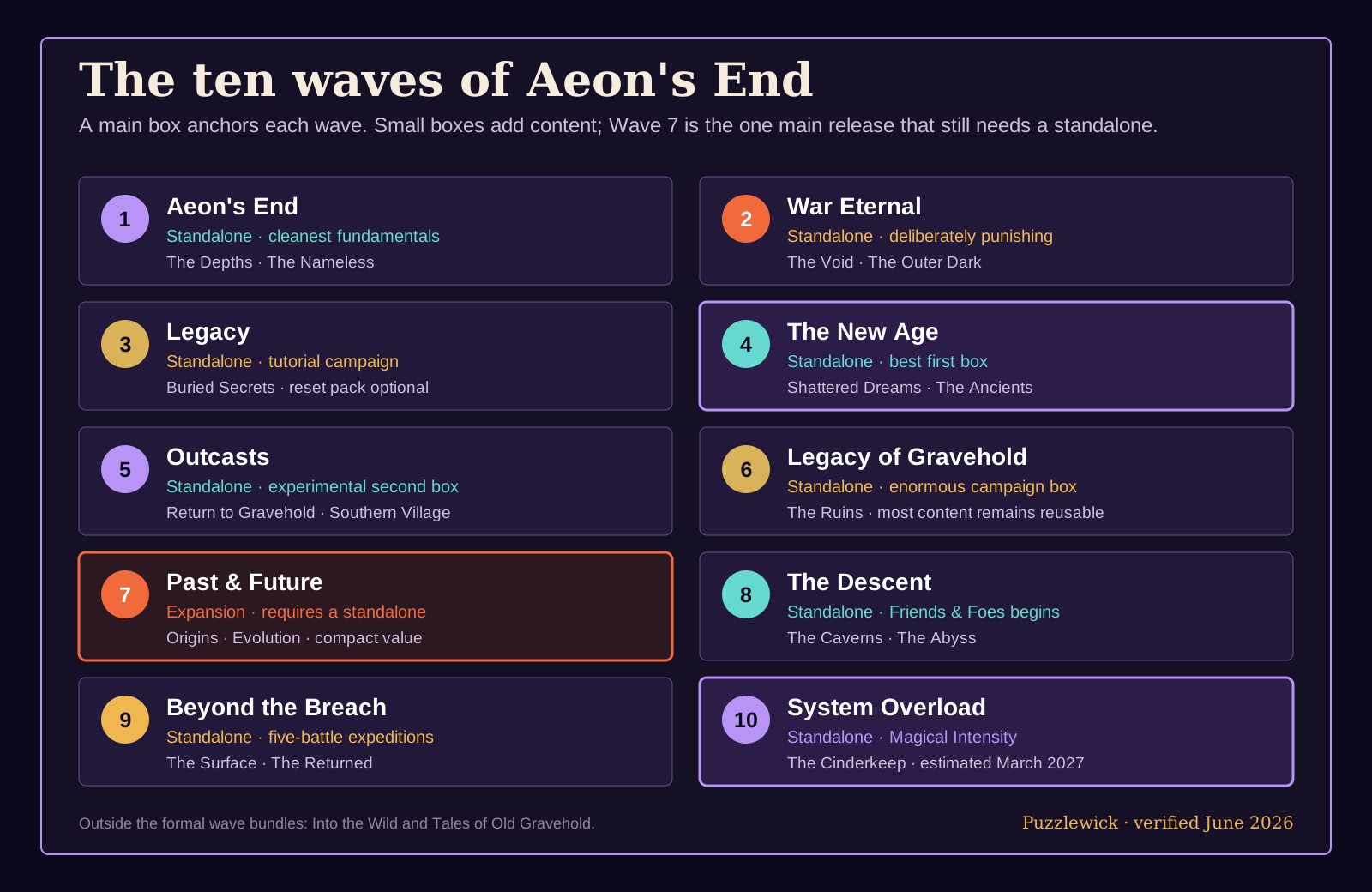
A wave is a retail bundle from one annual crowdfunding cycle. Usually it contains one main box plus one to three small expansions released around it. The main box is normally standalone: it supplies life dials, turn-order cards, breaches, basic nemesis cards, tokens, mages, nemeses, and a market. The small boxes add mages, nemeses, market cards, treasures, or mode-specific pieces but expect you to own a standalone set.
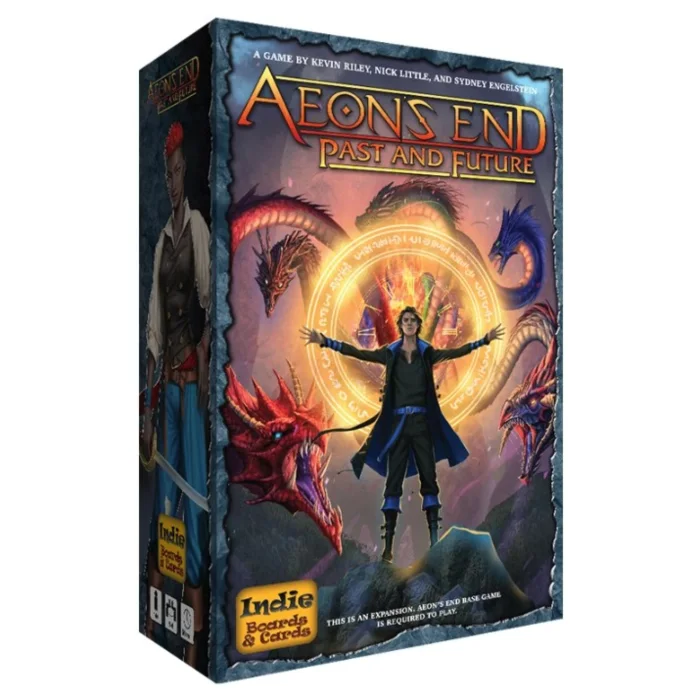
The single main-box exception is Wave 7's Past & Future. It is an expansion, not a standalone game. You can mix its cards with any standalone, but Expedition play needs upgraded basic nemesis cards from a compatible expedition box such as The New Age, Outcasts, Legacy of Gravehold, The Descent, or Beyond the Breach.
Two useful small boxes sit outside the formal pledge-wave bundles: Into the Wild, which bridges story material around The New Age and Outcasts, and Tales of Old Gravehold, which adds narrative material tied to earlier releases. They matter to lore collectors. They do not change where a new player should begin.
The practical translation is simple: when a listing says standalone, you can open that box and play. When it says expansion, bring an existing standalone. Do not let the large size or prominent title of Past & Future fool you.
Which Aeon's End box should a beginner buy first?
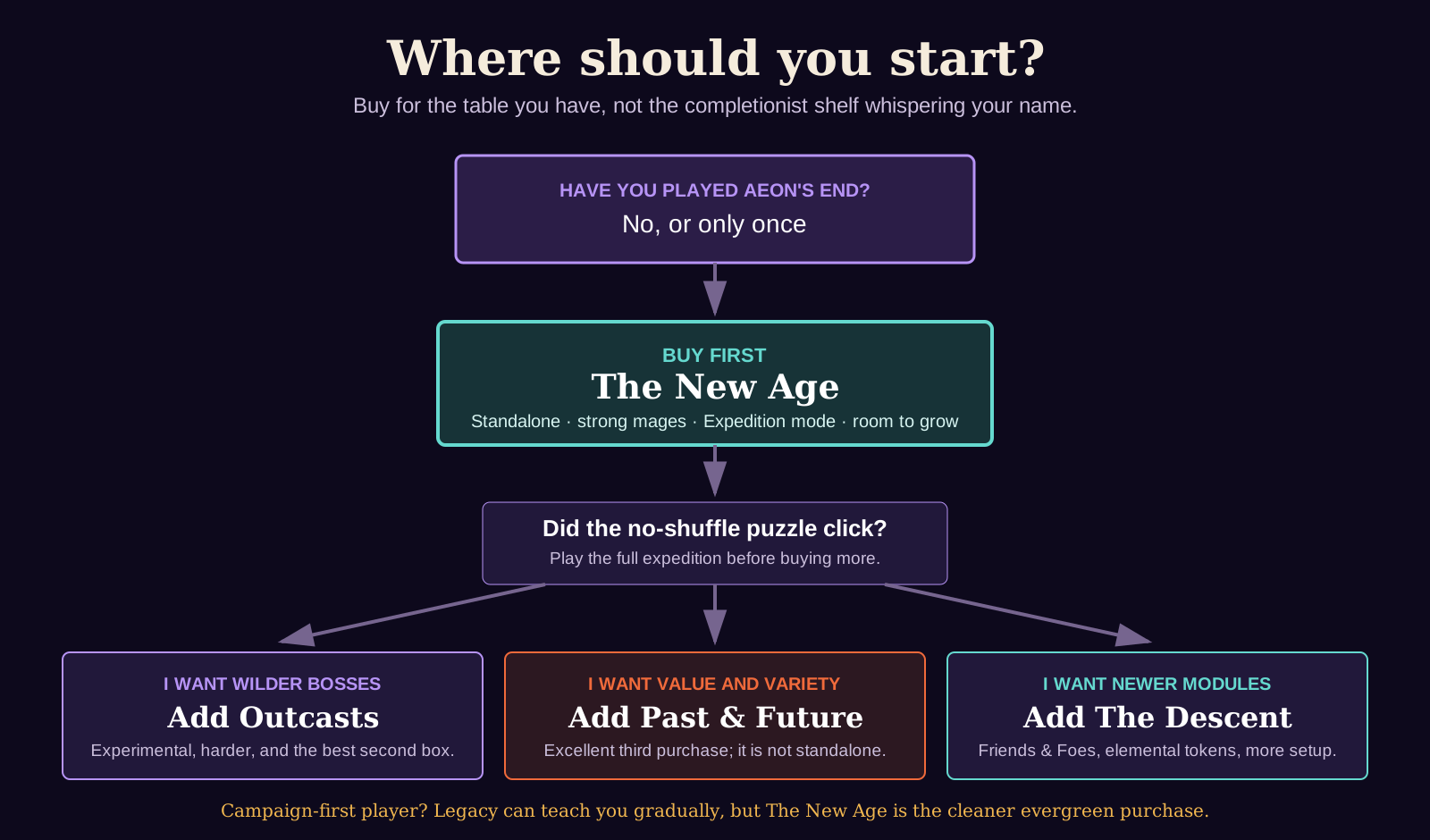
The New Age is the best first box for most people in 2026. It is not the easiest box in every individual sense, and it is not the first story chronologically. It is the best doorway because it combines a full standalone game with the system's most reusable campaign framework: Expedition mode.
An Expedition links four battles. Your mages gain treasures and market options while later nemeses receive upgraded basic cards. The included scripted Expedition introduces those ideas in a controlled order; after that, the same machinery can build fresh Expeditions from other compatible content. Buying The New Age does not merely give you another stack of cards. It gives future stacks somewhere to go.
The community answer is unusually consistent. In the current comparison thread, players answered “new age,” “New age for first box for sure,” and “New Age hands down.” In the live campaign discussion, a collector with many waves advised first-time players to buy The New Age at retail, play through it, and only then decide whether to pledge.
There are two honest alternatives. Buy the original Aeon's End if you want the cleanest, least layered expression of the system. Buy Legacy if your table specifically wants a tutorial campaign that introduces rules gradually and enjoys permanent choices. But if the question is which single purchase best reveals the long-term hobby, The New Age wins.
Buy one box to answer whether you love Aeon's End. Buy the second only after the table answers yes.

How do Waves 1–3 compare: original, War Eternal, and Legacy?
Wave 1: Aeon's End. The original box is direct, readable, and still good. Its eight mages, four nemeses, and broad market teach the core rhythm without Expedition rules or campaign envelopes. If you dislike unlock decks and want each session to stand alone, this is a perfectly honorable start. The tradeoff is that some early market design feels plainer than later waves, and you will need a later Expedition box if you want the modern campaign framework.
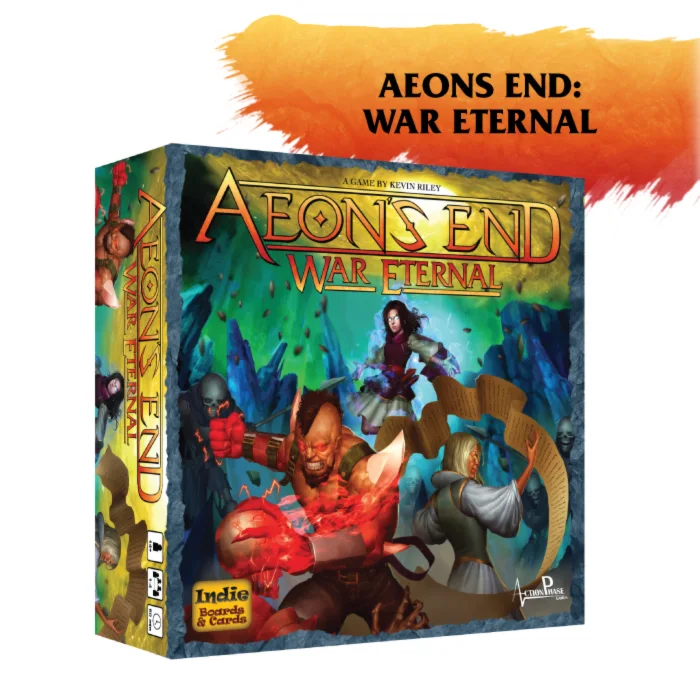
Wave 2: War Eternal. This is the table that heard the original was hard and replied, “Lovely; hit me again.” Its mages are more specialized, its nemeses more punishing, and its market effects reward stronger sequencing. Experienced players still love the challenge. Beginners can start here—the box is complete—but the difficulty can blur the beauty of the system before you understand what the system is asking.
Wave 3: Legacy. Legacy teaches Aeon's End over a campaign while you build custom mages, unlock cards, and make permanent changes. That gradual reveal makes it a genuine beginner route, especially for a group motivated by story and ownership. But it is a specific experience rather than the best neutral sample. Some unlocked material is unusually balanced around its campaign, and the best first play is the campaign itself. Buy Legacy because you want Legacy, not because a numbered wave made it feel mandatory.
The ranking between these three is about temperament: original for purity, War Eternal for pressure, Legacy for a guided story. None displaces The New Age as our default.
How do Waves 4–6 compare: The New Age, Outcasts, and Legacy of Gravehold?
Wave 4: The New Age. This is where the system becomes a library. Echo spells cast twice. Attach relics modify breaches. Mages arrive with more bespoke pieces, and Expedition mode gives all that content a four-battle arc. Its innovations are visible without becoming a second game sitting on top of the first. That balance is why players keep selecting it as both the first box and the one box they would retain.
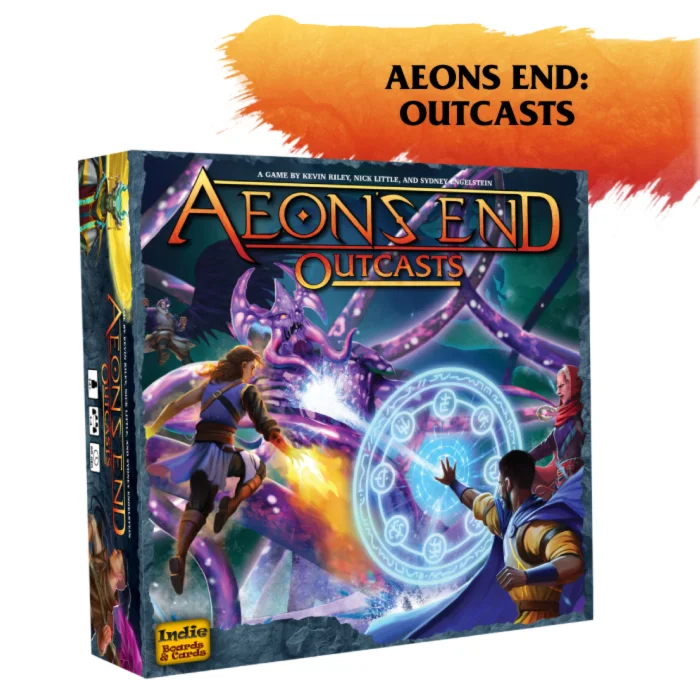
Wave 5: Outcasts. Outcasts is our favored second purchase. It brings back and recombines mechanisms from earlier boxes, adds curses and the optional Outcast mode, and pushes its mages and nemeses into more experimental territory. Community descriptions repeatedly land on the same words: harder, creative, strange, favorite bosses. This is the box to buy after The New Age makes you say, “I understand the system; now surprise me.”
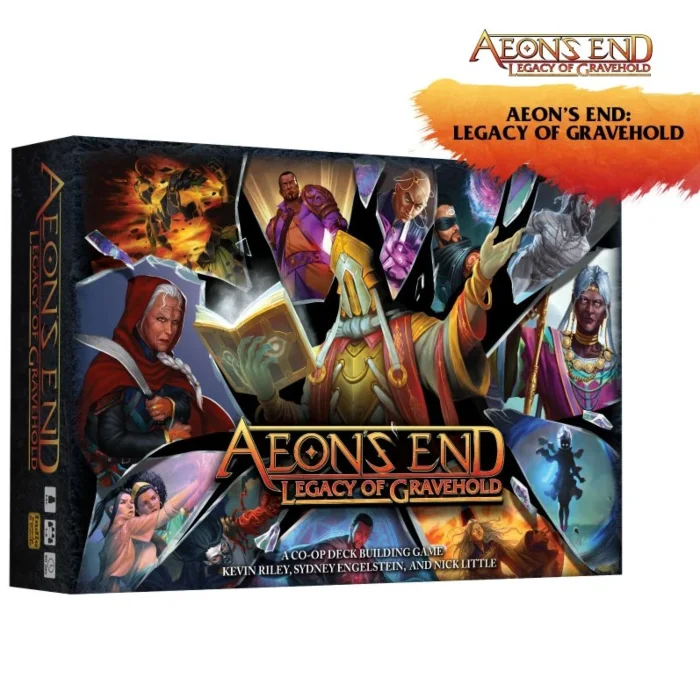
Wave 6: Legacy of Gravehold. This is the feast. It contains two intersecting campaigns, twenty-one mages, a large nemesis roster, and enough unlocked material to remain a collection by itself. Most of it can be reused after the campaign. The official post-campaign rules explain how to ignore stickers, substitute cards, and separate the handful of campaign-bound effects. Two campaign nemeses cannot leave the campaign, and Boost or Overheat player cards are not standard mix-ins.
Legacy of Gravehold is tremendous value for a committed table and a terrible panic purchase for a curious one. Its physical and rules overhead are the point. Play The New Age or Outcasts first; then let the size feel exciting instead of managerial.
How do Waves 7–10 compare: Past & Future through System Overload?
Wave 7: Past & Future. This is the compact connoisseur box. Swap and Develop create excellent mage puzzles; the nemeses are widely praised; and players repeatedly call it strong value. It is also the trap most likely to catch a new buyer because it is not standalone. Make it purchase three, not purchase one.
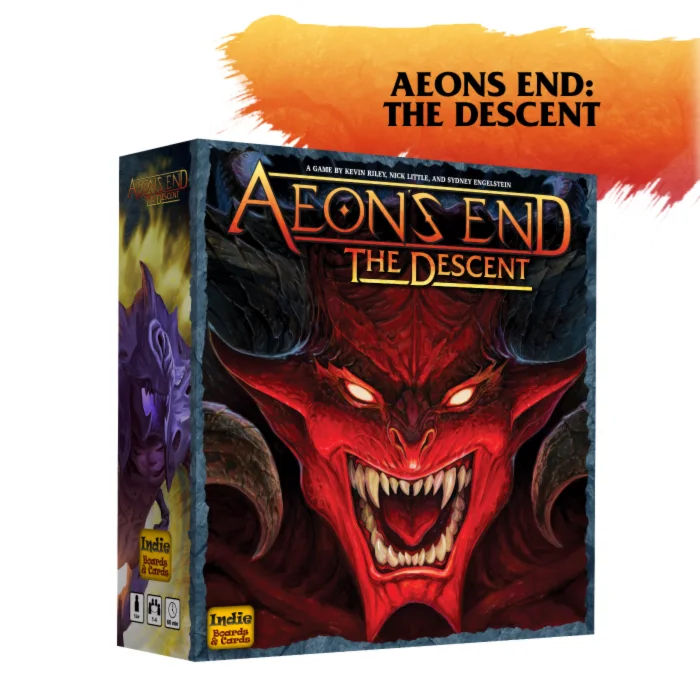
Wave 8: The Descent. The Descent introduces elemental tokens and Friends and Foes: optional allies and enemies with their own mats, decks, and turn-order cards. They can create brilliant stories and additional coordination, but they also add setup and time. Community opinion is split in a useful way: some players consider The Descent's mages the best in the line; others stop before Friends and Foes because they prefer the cleaner system. That makes it an excellent preference purchase.
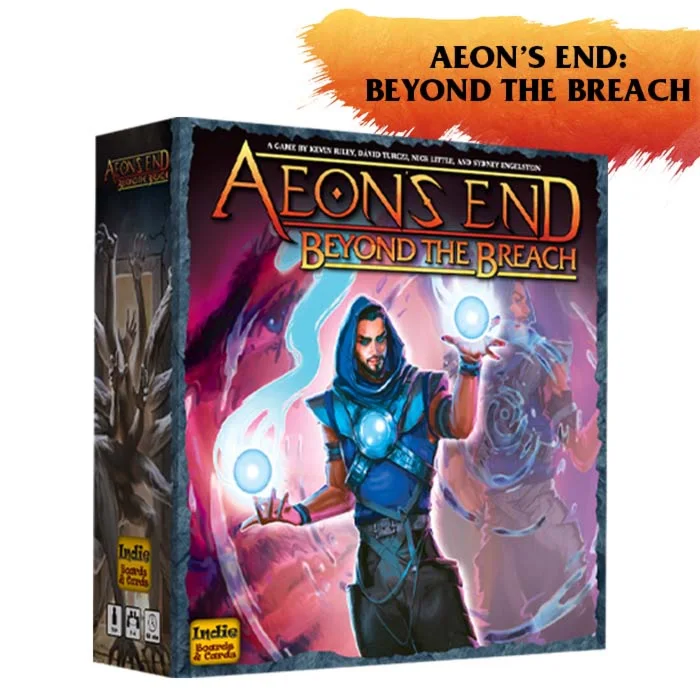
Wave 9: Beyond the Breach. This standalone adds Battle 5 to Expeditions, more Friends and Foes, and later-system complexity. Its five nemeses and additional battle randomizers are attractive to veteran groups that want a longer arc. Current community discussion also describes it as difficult and a poor entry point. Believe both halves.
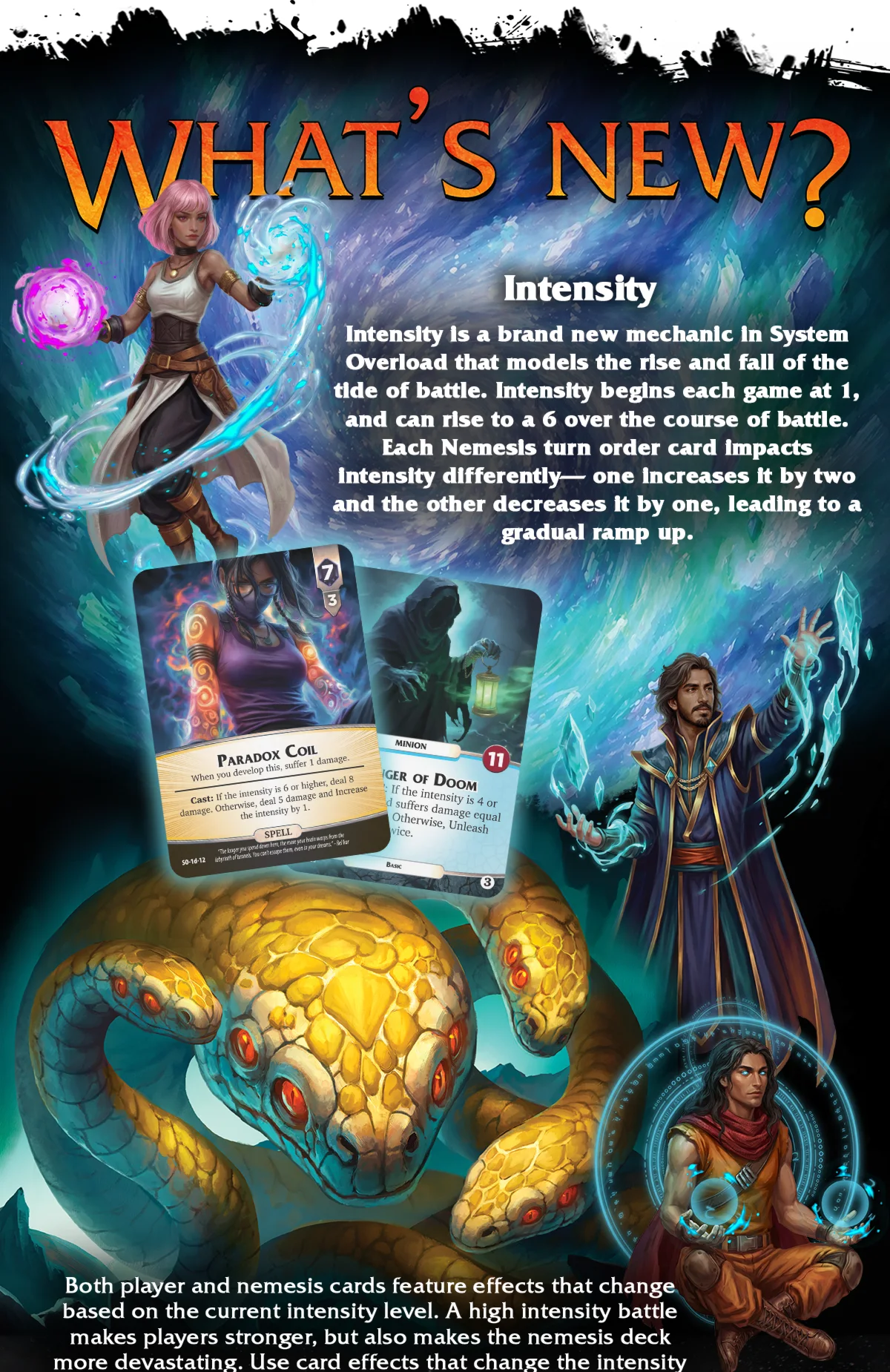
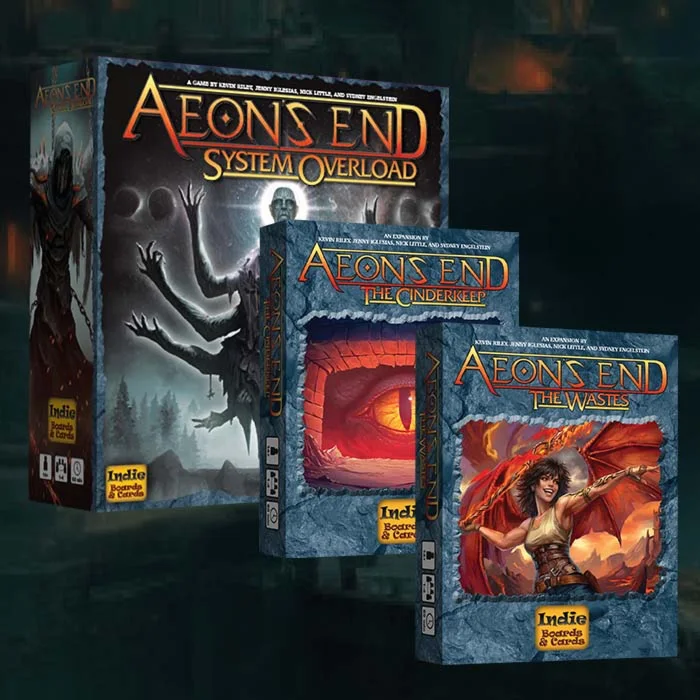
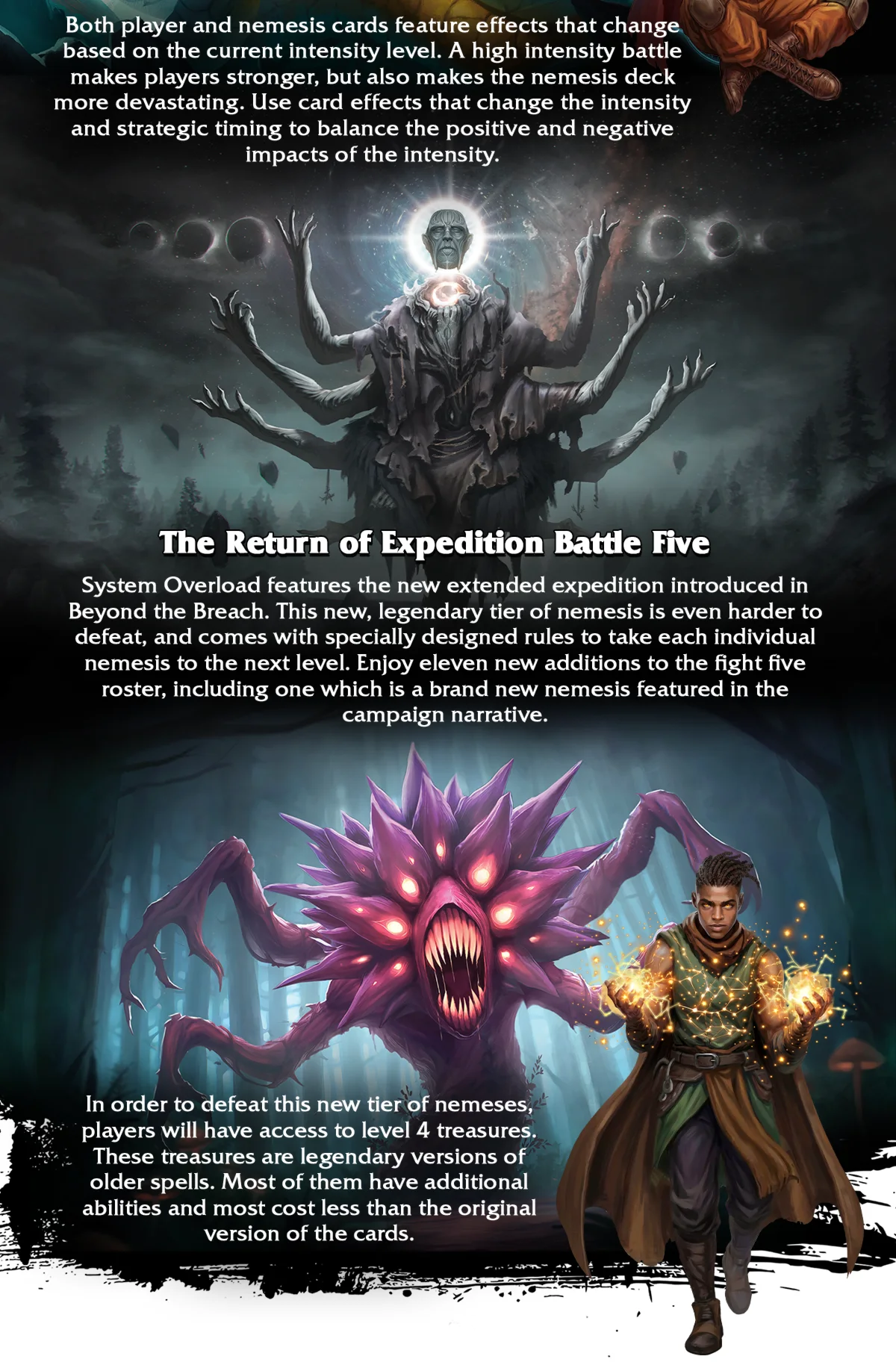
Wave 10: System Overload. The current campaign continues the five-battle model and adds Magical Intensity, a shared value that can rise to six. Market cards become stronger at high Intensity; nemesis basics become more dangerous too. It is a push-pull pressure dial rather than a flat upgrade. System Overload is standalone and officially compatible with all nine prior waves, but estimated delivery is March 2027. The future of the line is not the fastest way to begin its present.
What are the best two-box and three-box Aeon's End collections?
You do not need a universal ranking. You need a small collection with distinct jobs.
Best two-box collection: The New Age + Outcasts. The New Age supplies the evergreen Expedition chassis and a welcoming modern market. Outcasts supplies eccentric mages, memorable nemeses, curses, and a more adventurous difficulty curve. Together they feel broad without feeling archival.
Best three-box collection for replayability: The New Age + Outcasts + Past & Future. This is the community favorite we kept seeing. Past & Future cannot stand alone, but in this collection it does not need to. It adds concentrated mage and nemesis variety without another giant pile of duplicate core components.
Best three-box collection for modules: The New Age + Outcasts + The Descent. Choose this when Friends and Foes sounds exciting rather than busy. The Descent adds elemental systems, strong mages, and a new axis for Expeditions.
Best campaign shelf: Legacy + The New Age + Outcasts. Begin with Legacy if you want the story's main starting point and a tutorial arc, then follow the evolving systems through The New Age and Outcasts. Add Legacy of Gravehold only when the group has proven it will stay together.
Best difficulty shelf: Aeon's End + War Eternal + Outcasts. This keeps the game closer to one-shot boss battles and gives you a clean escalation from fundamentals to punishment to experimentation.
What order should you play the campaigns and story?
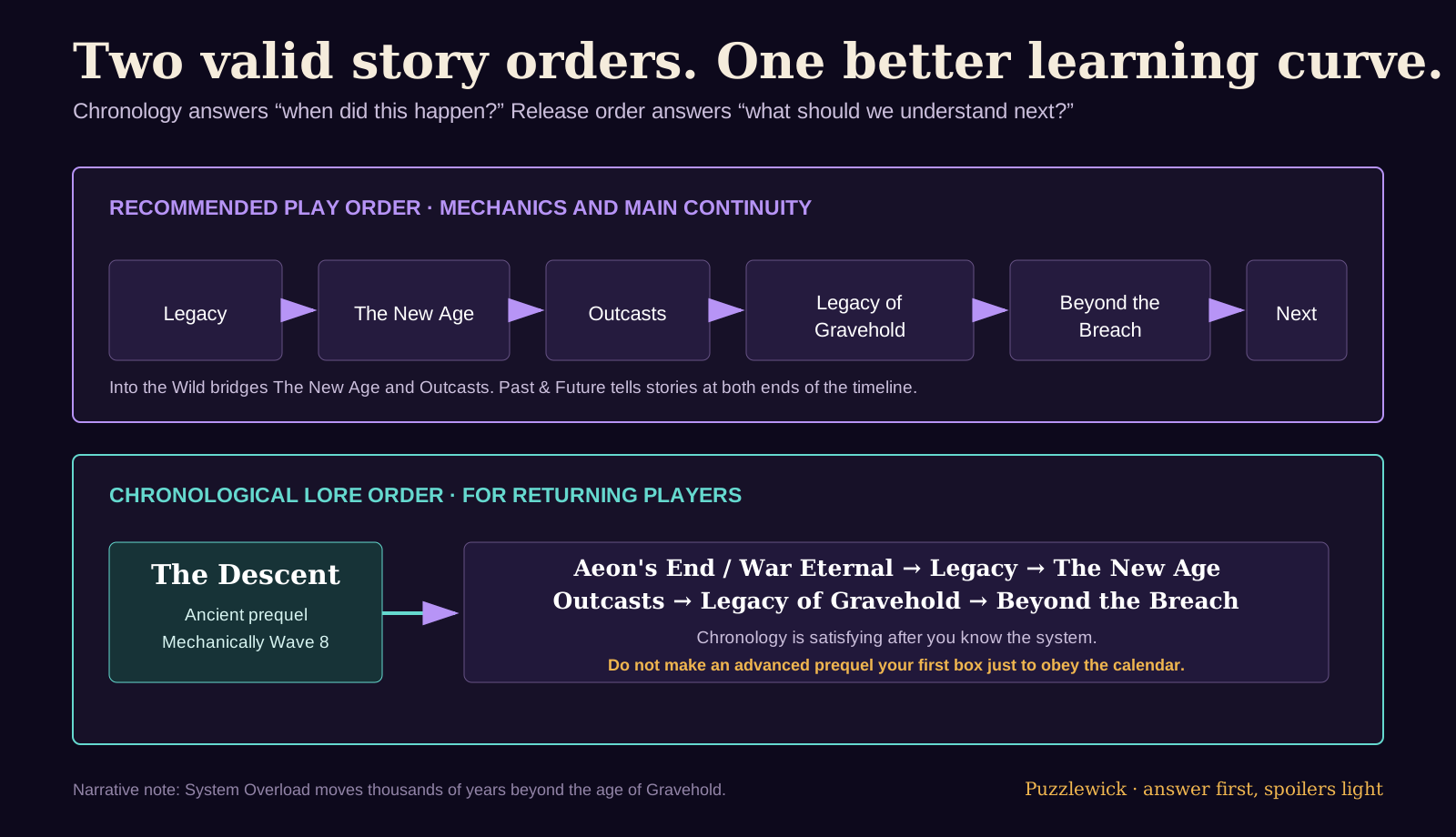
There are three orders people mean when they ask this question, and collapsing them creates unnecessary confusion.
Release and learning order follows the design's growing vocabulary. The main continuity runs through Legacy → The New Age → Into the Wild → Outcasts → Legacy of Gravehold → Beyond the Breach. This is the order we recommend to a campaign-focused group because mechanisms arrive near the moment the designers intended to teach them.
Chronological lore order begins much earlier with The Descent, then moves toward the original era and later story. That can be delightful for a returning fan. It is not a buying mandate. The Descent is mechanically Wave 8 and introduces systems a first-time group does not need. A prequel can happen first in history while remaining the wrong first lesson.
Expedition order is whatever your collection supports. The New Age, Outcasts, Legacy of Gravehold, The Descent, Beyond the Breach, and System Overload contain scripted or reusable Expedition material. Once you understand the system, random Expeditions can use content from across the line except material the Legacy end-of-campaign rules specifically exclude.
Story is the invitation, not the handcuffs. If you own The New Age today, play it today. Gravehold will survive a slightly nonlinear bookshelf.

Should a beginner back Aeon's End: System Overload?
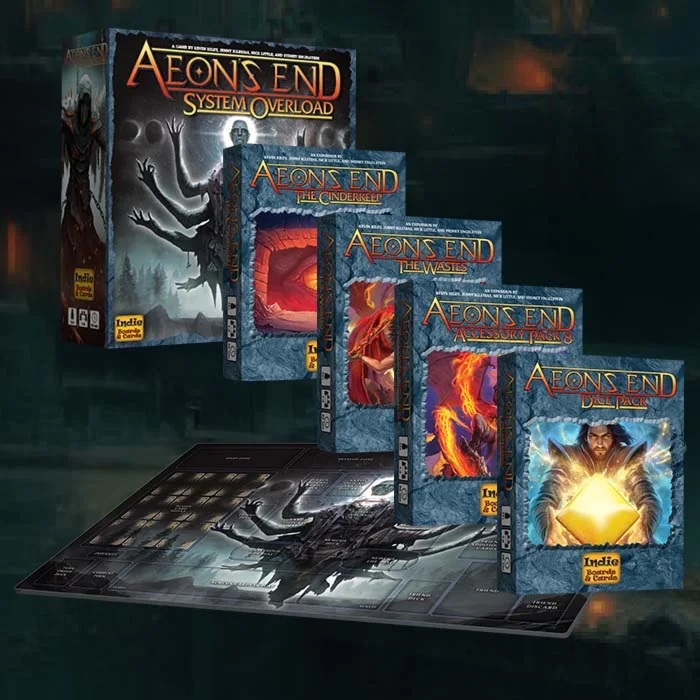
Not before playing Aeon's End. That is not anti-crowdfunding; it is pro-information. System Overload is scheduled to arrive in March 2027, and shipping and taxes are additional. A retail box can tell you this month whether you enjoy the no-shuffle deck rhythm, market planning, cooperative table talk, and boss difficulty.
The core Dream Quartz pledge is $75 as of June 28, 2026. It includes System Overload, The Cinderkeep expansion, stretch goals, and campaign milestones. The $130 Just the New Stuff pledge adds Accessory Pack 8, the dice pack, and the neoprene mat. Higher pledges add prior waves in $70 steps, with surcharges for the larger Legacy waves.
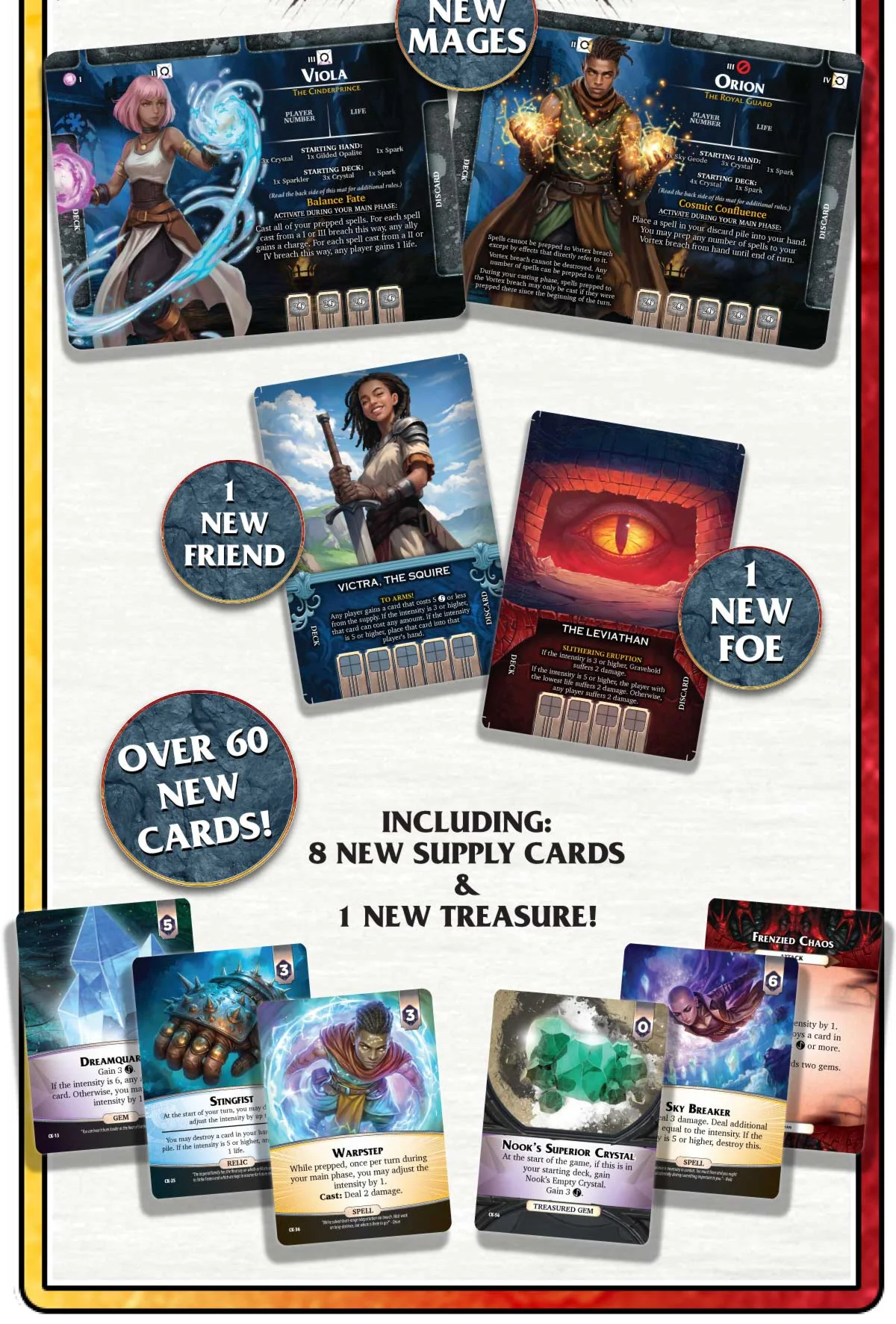
For an existing fan, the campaign is much easier to evaluate. System Overload is a standalone five-battle Expedition set with five new nemeses, new mages and market cards, Friends and Foes, treasures, and Magical Intensity. The Cinderkeep adds two mages, a Friend, a Foe, market cards, and a treasure. The Wastes milestone expansion and daily campaign unlocks add more content to every pledge.
Our recommendation: a new player should buy The New Age at retail and play the scripted Expedition. If the game becomes the next-night text in the group chat, the $75 pledge is the clean campaign entry. If the playmat, dice, and dividers solve problems you already know you have, consider $130. Do not add nine waves because a countdown clock made your future shelf feel lonely.
How compatible are the boxes really?
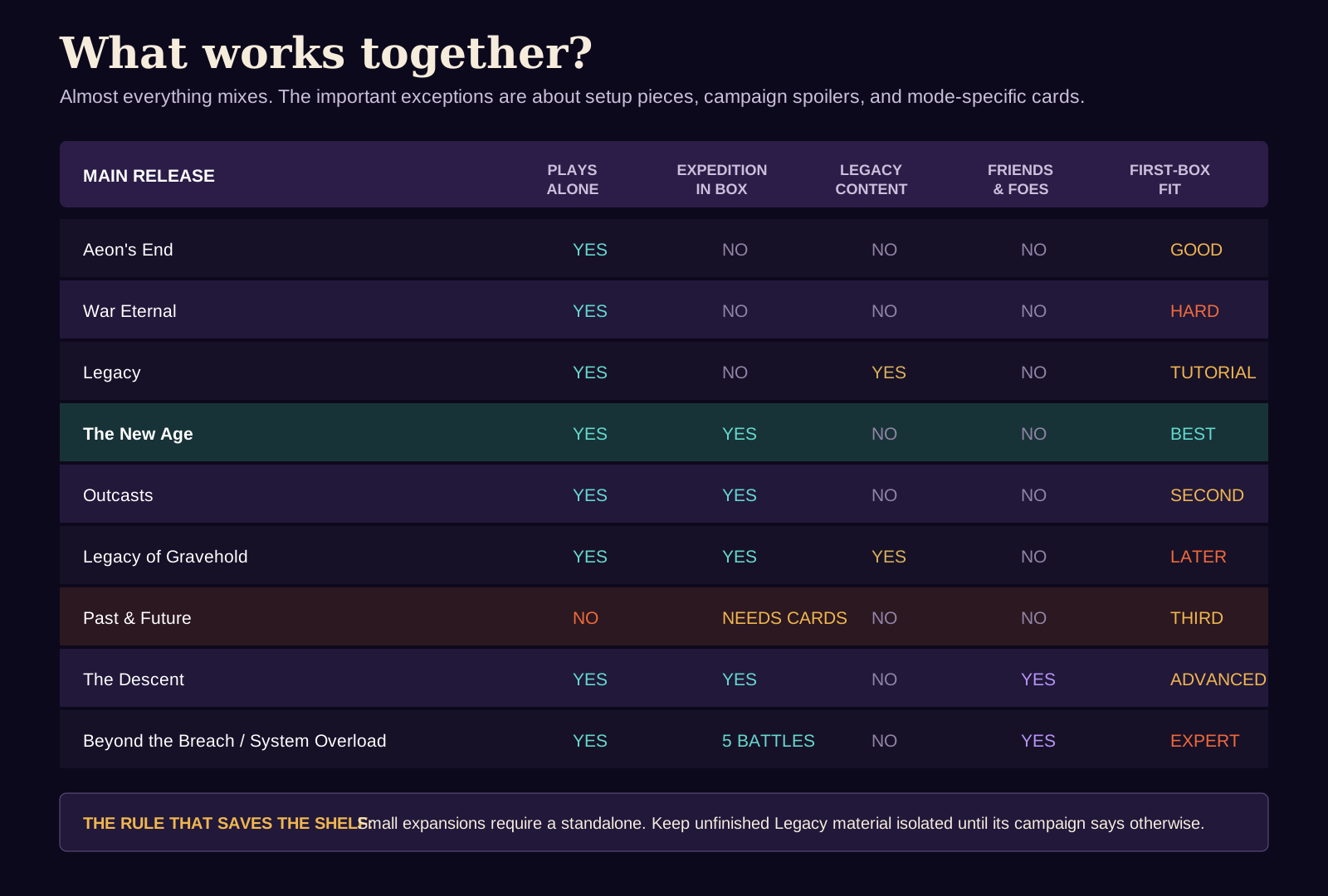
The honest headline is strong: most Aeon's End content mixes across the line. Mages, nemeses, market cards, and core components generally combine. Newer mechanisms normally include the tokens or side decks they require. You do not need the original base game to use a later standalone.
The important qualifications are manageable. Small expansions need a standalone's core components. Past & Future needs a standalone and additional upgraded-basic material for Expedition play. Legacy boxes contain campaign-specific cards whose end-of-campaign booklets tell you what can leave the story. Legacy of Gravehold's unlocked mages and nemeses are mostly reusable, but Boost and Overheat market cards are campaign-bound, two campaign opponents stay in the campaign, and some post-campaign substitutions matter.
First- and second-edition original content remains mechanically compatible. Graphic design and art differ, and collectors may notice card-back or print-color variation. Because player decks are never shuffled, minor visual differences matter less there than in most deckbuilders. Hidden nemesis decks deserve consistent backs; sleeves can solve a visible mismatch if your printings make one obvious.
Friends and Foes are optional modules beginning with The Descent. Owning them does not force them into every battle. Fifth-battle randomizers begin with Beyond the Breach and continue in System Overload; earlier nemeses need appropriate Battle 5 randomizers if you want them in that slot.

How should you store Aeon's End after one, three, or ten waves?
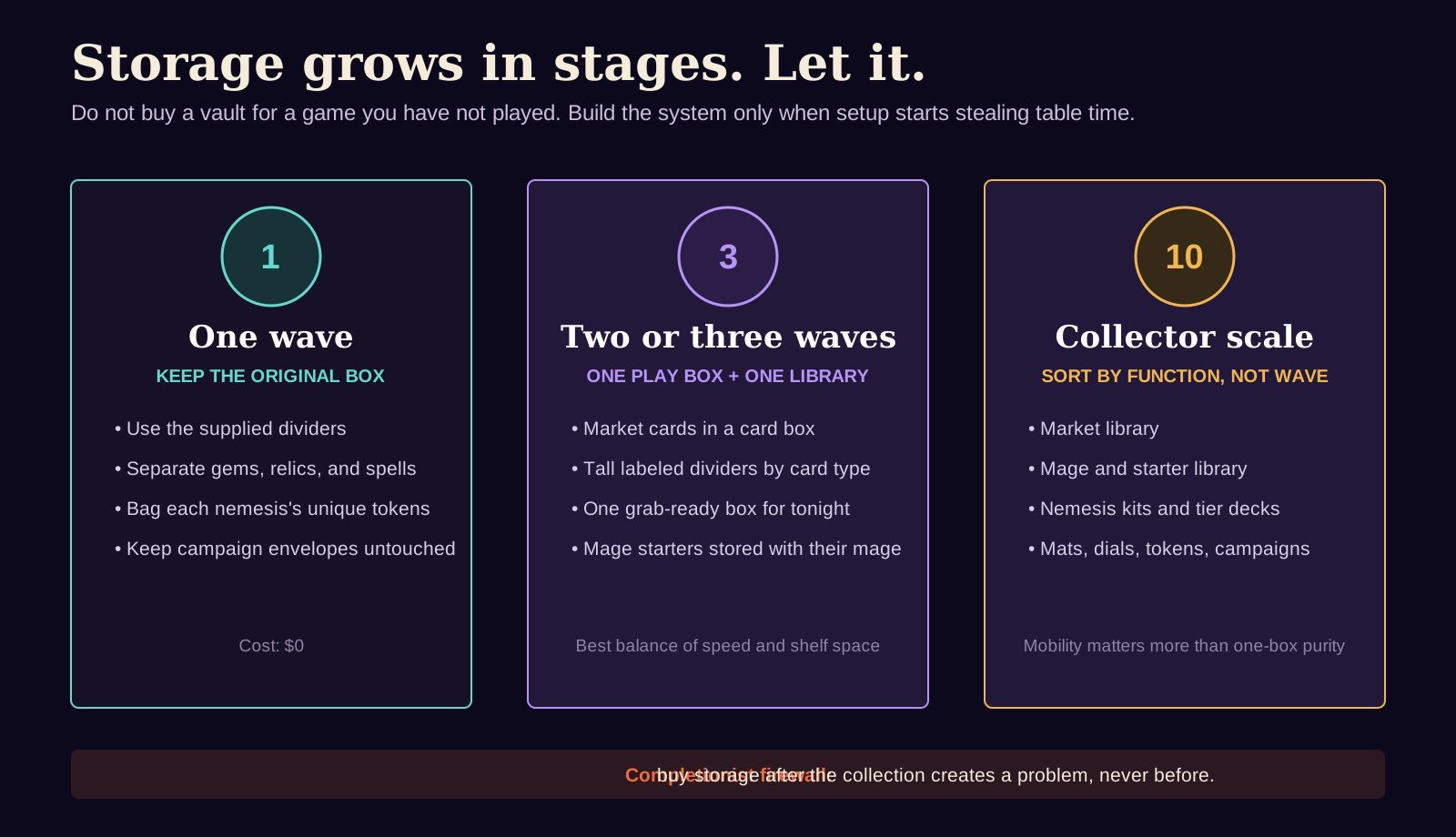
With one wave, use the box. The supplied dividers are sufficient, the tokens already have a home, and any grand organizer is merely an expensive promise that you will become a different kind of person.
At two or three waves, separate play storage from library storage. Put market cards into a trading-card box behind tall dividers for gems, relics, spells, and randomizers. Keep each mage's unique starter cards beside that mage. Keep each nemesis's mat, deck, and specific tokens together. Use one original box as the grab-ready kit for the Expedition or bosses you are currently playing.
At collector scale, wave-by-wave storage becomes less useful than function. Experienced owners commonly split the collection into a market library, mage library, nemesis kits, basic and upgraded nemesis cards, and a separate home for mats, dials, and large tokens. Legacy campaigns deserve their own quarantined space until completed; do not sort unopened or spoilered content into the general library.
Sleeves change every capacity estimate. Aeon's End player decks are not shuffled, so sleeving is optional for ordinary wear. But partial sleeving can identify hidden cards when a nemesis inserts standard-backed cards into a player deck, and mixed printings can create visible differences in nemesis decks. Sleeve consistently within any hidden deck that will actually mix.
My favorite storage quote came from a collector surrounded by solutions: “There is a point where less is more.” Put that on the label maker.
Which accessories are actually worth buying?
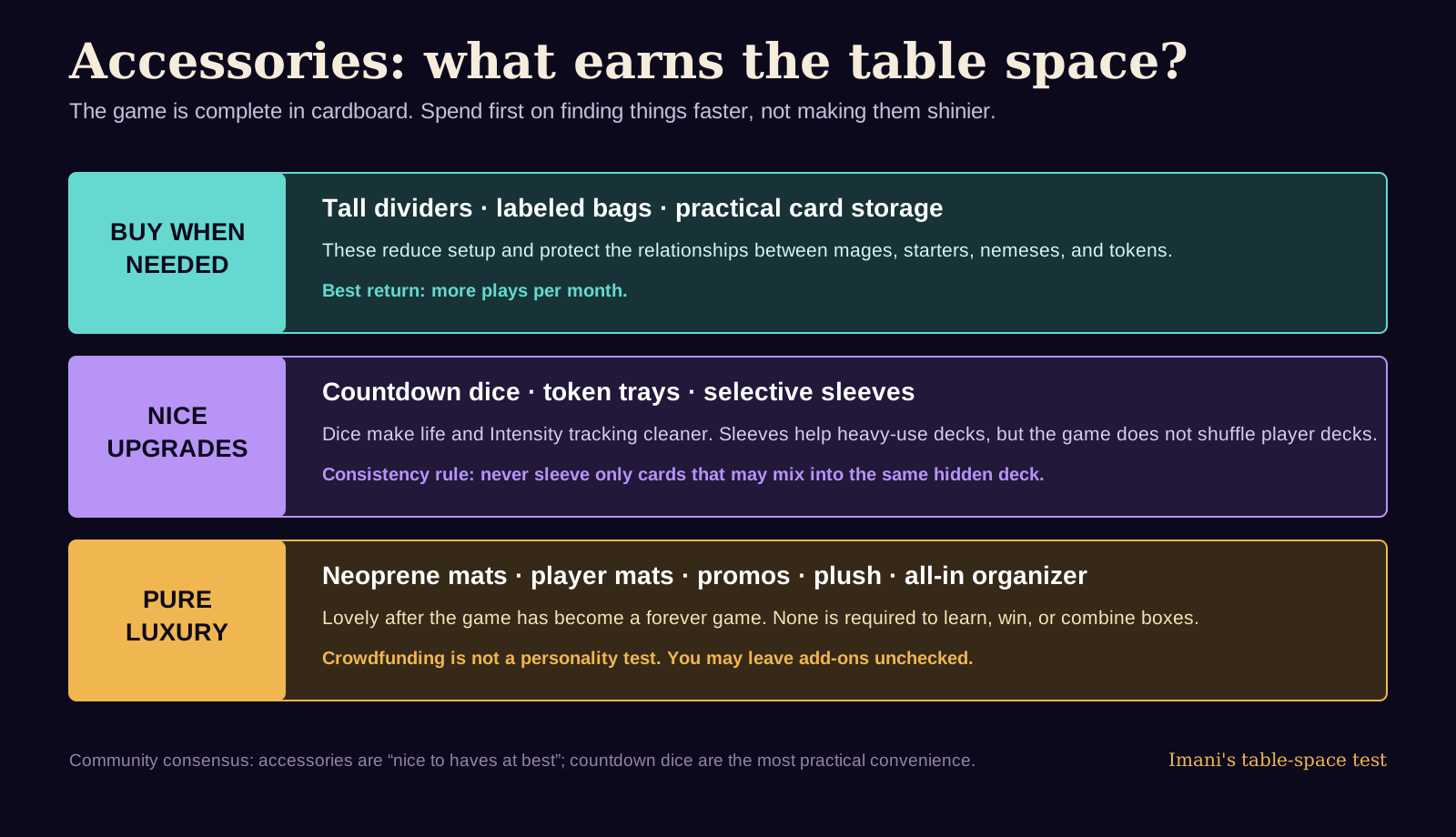
Required accessories: none. Every standalone supplies cardboard life tracking, breaches, charges, power tokens, turn order, and the components needed for its mechanisms. The campaign's accessory ladder is a convenience menu, not an errata sheet.
Best practical upgrade: countdown dice. Spin-down d10s or d20s replace piles of life tokens and make boss, minion, and mage health readable across the table. System Overload's $15 dice pack includes spin-down life dice and a custom d6 for Intensity. Generic dice work too.
Best organizational upgrade: dividers. Accessory packs primarily help separate mages and provide dedicated starting cards so you do not reconstruct common Crystal and Spark decks every session. That matters when your collection is large and not before.
Sleeves: selective, with a rule. Sleeve high-use turn-order and nemesis cards if wear bothers you. If cards from different printings or sources enter the same hidden deck, sleeve that entire mixed deck consistently. Player market cards receive less shuffle wear than Dominion-style deckbuilders because your personal deck is flipped rather than shuffled.
Playmats and neoprene player mats: luxury. The large $25 System Overload mat organizes zones and includes Intensity space. It also occupies nearly 90 by 57 centimeters. Measure the table before buying a solution larger than the problem.
Community consensus is wonderfully sane: “All nice to haves at best.” The same player singled out the dice as useful because they remove life-token fiddling. That is exactly the tier list.
What beginner tactics make Aeon's End more fun?
Buy a spell immediately. The most repeated strategic correction in current community advice is that new players spend too many opening turns improving economy. A gem is useful only if the expensive card it eventually buys arrives before the city collapses. Put real damage online before Tier 2.
Buy fewer cards. Try a game in which each mage buys no more than five cards. A compact deck cycles its best spells and gems more often. Destruction is powerful because removing starter cards shortens the path back to everything that matters.
Read the nemesis before choosing the market. Each boss is a puzzle. A power-heavy opponent may demand flexible aether. A minion engine demands early damage. A Gravehold attacker changes the value of healing. Random markets are fun later; a beginner market should contain affordable damage, a practical gem, and at least one way to solve the boss's visible problem.
Do not attempt to clear the entire board forever. Early minions with persistent effects usually need to die. Later minions that do not create an immediate loss may be ignored while the team races the nemesis. Once Tier 3 begins, shopping is often too slow. Spend aether on breaches, charges, and power cards; cast what you built.
Assign jobs without assigning ownership. One mage may lean toward economy and power cancellation while another accelerates damage, but everybody still needs enough damage to contribute. The social rule is just as important: explain options, then let the active player decide. Cooperative planning should make the quiet player louder, not make the loud player everyone's controller.
What experienced tables keep reporting
Recurring owner patterns, synthesized in Puzzlewick's words. Follow each evidence trail to read the original discussion.
New Age hands down.
If you can find a box in retail, I suggest getting it and trying it before spending a lot of money on a Kickstarter that you won't get for a year.
I find nemeses have the biggest impact on individual games.
All nice to haves at best. Dice pack is pretty nice because you don't need to fiddle around with life tokens.
I don't think there's a bad box, so it really just depends on what you want.
There is a point where less is more.
The picks
Some links below are affiliate links — as an Amazon Associate, Puzzlewick earns from qualifying purchases, at no extra cost to you. It never changes a pick.
Aeon's End: The New Age
- Players
- 1-4
- Time
- 60 min
- Age
- 14+
- Publisher
- Indie Boards & Cards · 2019
- Designers
- Kevin Riley, Nick Little, Jenny Iglesias
The modern starting point: a complete standalone with excellent mages, four nemeses, a broad market, and the Expedition framework that makes later content more useful. Play this box before deciding how deep the breach goes.
- Standalone and immediately playable
- Introduces reusable Expedition mode
- Strong balance of clarity and inventive design
- More rules vocabulary than the original core
- The scripted story is lighter than a full Legacy campaign
Aeon's End: Outcasts
Outcasts is where a comfortable table discovers how strange Aeon's End can become. Its curses, Outcast mode, unusual mages, and creative nemeses broaden the system without requiring a legacy commitment.
- Standalone
- Widely praised nemesis designs
- Experimental mechanisms create a distinct second-box identity
- Harder and busier than The New Age
- Outcast mode will not appeal to every group
Aeon's End: Past & Future
A compact expansion with Swap, Develop, excellent mages, and memorable nemeses. Community collectors repeatedly call it outstanding value, but it needs a standalone box and Expedition support cards.
- Dense mechanical variety
- Strong nemesis reputation
- Less duplicate core material
- Not standalone
- Several mechanisms are fiddlier than early-wave design
Aeon's End: The Descent
The Descent is a standalone prequel with elemental tokens and the optional Friends and Foes module. Its mages attract enormous praise; the extra setup makes it a taste-driven purchase rather than a universal upgrade.
- Standalone
- Excellent modern mage designs
- Friends and Foes adds another cooperative axis
- More setup and table management
- Chronological prequel status can mislead new buyers
Aeon's End (Second Edition)
The original remains a complete, elegant introduction to breaches, no-shuffle deck control, and asymmetrical nemeses. Choose it over The New Age when you actively prefer fewer campaign layers.
- Standalone
- Cleanest fundamentals
- Classic nemeses and broad market
- No Expedition mode in the box
- Some early market design feels less dynamic
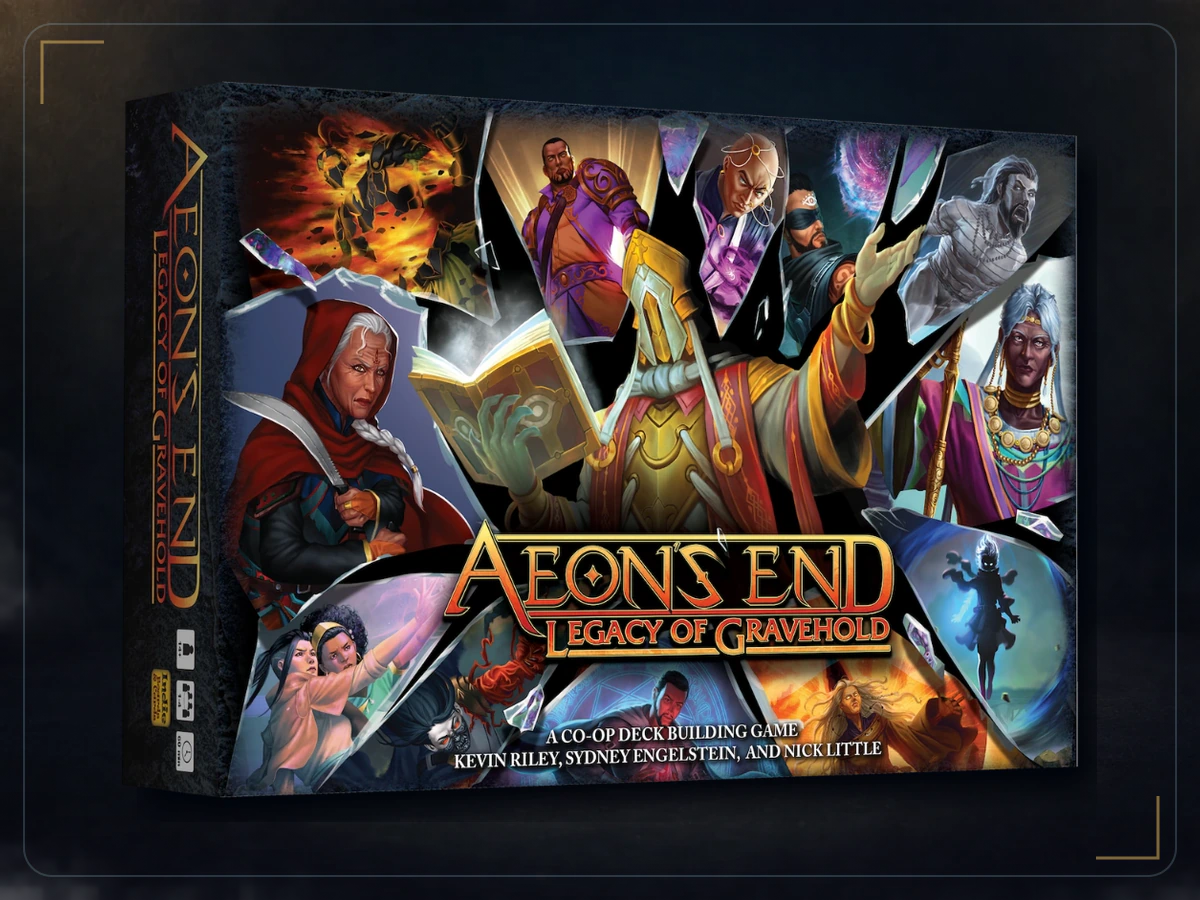
Aeon's End: Legacy of Gravehold
Two intersecting campaigns and a huge reusable roster make Legacy of Gravehold a shelf-defining purchase. It is rich, sprawling, and best opened by a group that already knows it wants a long relationship.
- Standalone
- Twenty-one mages and a huge nemesis roster
- Most unlocked content remains reusable
- Large setup and storage burden
- Some cards and two opponents remain campaign-specific
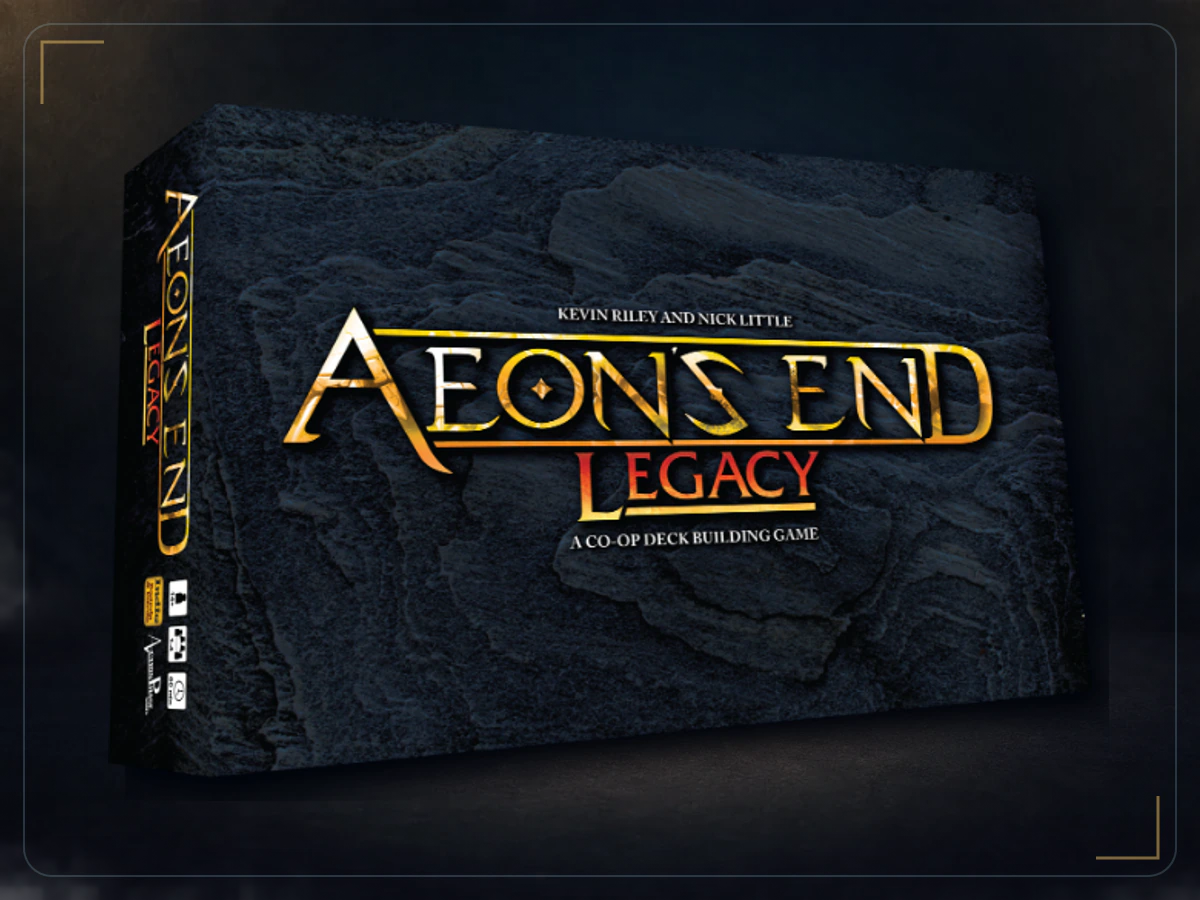
Aeon's End: Legacy
Legacy gradually teaches the system while the group builds custom mages and unlocks a campaign. It can be a lovely first experience, but it is less representative of ordinary repeatable Aeon's End than The New Age.
- Standalone tutorial campaign
- Personal mage development
- Main-continuity starting point
- Permanent changes and spoilers
- Some market balance is campaign-specific
Aeon's End: War Eternal
War Eternal adds specialized mages and brutal nemeses without campaign machinery. It is an excellent challenge shelf and a legal first box, but not the kindest way to learn what your mistakes mean.
- Standalone
- Sharp difficulty
- Distinct mage designs
- Punishing first impression
- No Expedition mode in the box
Aeon's End: Beyond the Breach
Beyond the Breach extends the campaign arc to a fifth legendary fight and continues Friends and Foes. It is a modern, demanding standalone whose extra systems make more sense after earlier Expeditions.
- Standalone
- Introduces Battle 5
- Five nemeses and modern modules
- Current reputation for high difficulty
- More setup than the early line
At a glance
| Wave | Main box | Standalone | Signature | Best for | Beginner fit |
|---|---|---|---|---|---|
| 1 | Aeon's End | Yes | Pure core system | Clean fundamentals | Good |
| 2 | War Eternal | Yes | Harder fights | Challenge seekers | Punishing |
| 3 | Legacy | Yes | Build-a-mage campaign | Story-first groups | Guided |
| 4 | The New Age | Yes | Expedition mode | First purchase | Best |
| 5 | Outcasts | Yes | Outcast mode / curses | Second purchase | Good after NA |
| 6 | Legacy of Gravehold | Yes | Two huge campaigns | Committed groups | Later |
| 7 | Past & Future | No | Swap / Develop | Compact variety | Third box |
| 8 | The Descent | Yes | Friends & Foes | Module lovers | Advanced |
| 9 | Beyond the Breach | Yes | Battle 5 | Veteran Expeditions | Hard |
| 10 | System Overload | Yes | Magical Intensity | Existing fans | Wait / test retail |
Questions, answered
Which Aeon's End game should I buy first?
Buy Aeon's End: The New Age first. It is standalone, includes an excellent modern card pool, and introduces Expedition mode, which lets you turn future content into replayable linked campaigns.
Is Aeon's End: The New Age a standalone game?
Yes. The New Age contains everything required to play: mages, nemeses, market cards, breaches, life dials, tokens, turn-order cards, and basic nemesis cards. You do not need the original Aeon's End.
What two Aeon's End boxes should a beginner buy?
Start with The New Age, then add Outcasts after completing its Expedition. The pair gives you a strong campaign framework, inventive mages, and a broad range of memorable nemeses without Legacy overhead.
What are the best three Aeon's End boxes to own?
For replayability, choose The New Age, Outcasts, and Past & Future. If you prefer optional modules, replace Past & Future with The Descent for Friends and Foes and elemental tokens.
Do I need the original Aeon's End base game?
No. Nearly every main release is standalone. The original remains a good pure introduction, but The New Age, Outcasts, Legacy, Legacy of Gravehold, The Descent, Beyond the Breach, and System Overload can all supply their own core components.
Can all Aeon's End sets be combined?
Most mages, nemeses, and market cards can mix across releases. Small expansions need a standalone. Legacy end-of-campaign books identify a limited number of cards and opponents that should not leave their campaigns.
Is Aeon's End: Past & Future standalone?
No. Past & Future is the major exception among main-wave releases. It requires a standalone Aeon's End set, and Expedition play requires compatible upgraded basic nemesis cards.
What is an Aeon's End wave?
A wave is the retail content from one annual crowdfunding release: usually one standalone main box and one to three related small expansions. Wave bundles exclude promos and accessories.
Should I start with Aeon's End: Legacy?
Start with Legacy when your group specifically wants a tutorial campaign, custom mage development, and permanent choices. Start with The New Age when you want the best repeatable introduction to the wider system.
Can Legacy of Gravehold content be reused afterward?
Most of it can. Its unlocked mages, most nemeses, most player cards, treasures, and upgraded basics have post-campaign rules. Boost and Overheat cards and two campaign opponents remain campaign-specific.
What order should I play the Aeon's End story?
For the main continuity and the smoothest mechanical learning, use Legacy → The New Age → Into the Wild → Outcasts → Legacy of Gravehold → Beyond the Breach. The Descent is an earlier prequel but a mechanically later product.
Is The Descent the chronological first Aeon's End story?
It is a deep prequel set long before the original era, but that does not make it the best first purchase. It is Wave 8 mechanically and introduces Friends and Foes and elemental tokens.
Is Aeon's End: System Overload standalone?
Yes. Indie Boards & Cards describes System Overload as a complete standalone compatible with all nine earlier waves. It includes a five-battle Expedition, new mages and nemeses, market cards, treasures, and Friends and Foes.
What is Magical Intensity in System Overload?
Magical Intensity is a shared value that begins at one and can rise to six. Higher Intensity strengthens many player market cards but also makes basic nemesis cards more dangerous, creating a team-controlled risk/reward dial.
Should a new player back System Overload?
Try a retail standalone first. The current $75 core pledge is attractive for an existing fan, but estimated delivery is March 2027 and shipping and taxes are additional. A retail copy of The New Age can answer whether you enjoy the system now.
Are Aeon's End accessory packs necessary?
No. They are organization and convenience upgrades. Dividers help large collections, duplicate starter cards speed mage setup, and countdown dice simplify life tracking. None is required to play.
Do Aeon's End cards need sleeves?
Not necessarily. Player decks are never shuffled, so wear is lower than in many deckbuilders. Sleeve consistently when cards from different printings share a hidden deck or when a nemesis inserts cards with matching backs.
How should I store multiple Aeon's End expansions?
At two or three waves, keep market cards behind tall dividers in a card box, store unique starters with each mage, and keep each nemesis with its specific deck and tokens. Leave unopened Legacy material isolated.
Is Aeon's End good with two players or solo?
Yes. Two-player and two-handed solo play are widely favored because the table can specialize mage roles while keeping downtime low. True solo is supported but changes the turn-order texture and concentrates every decision in one mage.
Why is Aeon's End so difficult for beginners?
New players commonly buy damage too late, buy too many total cards, overinvest in healing, and keep fighting every late minion instead of racing the nemesis. Use a suggested market, buy an early spell, and replay the same fight before changing everything.
Imani's verdict
Buy The New Age. Play its Expedition. Let the no-shuffle rhythm teach your group how weirdly intimate a cooperative deck can become: you see the mistake three turns before it arrives, everybody sees it with you, and then the table has to survive the future you built.
If everyone asks for another boss, add Outcasts. If the collection wants a third voice, choose Past & Future for concentrated variety or The Descent for Friends and Foes. That is already an extraordinary Aeon's End shelf. Everything after it should be a response to delight, not pressure.
System Overload looks genuinely exciting. Magical Intensity is not decorative chrome; it gives the whole team a dangerous shared dial. Existing fans have a real reason to back it. New players have an even better reason to wait: The New Age can tell you whether this is your game before a 2027 box asks you to imagine the answer.
Bring: one patient co-op partner, one retail box, a table with room for nine market piles, and permission to lose the first fight without converting the loss into a shopping list.
There are ten waves. You do not need ten waves. You need the one that makes the table ask for game two.
Still deciding? Take the Game-Finder — answer seven quick questions and the cabinet hands you the board game built for your table.
Research ledger 15 sources · reviewed 2026-08-10
Specifications, rules, current product information, community experience, and contrary evidence were checked against the sources below. Commercial links are kept separate from editorial evidence.
- gamefound.comgamefound.com/en/projects/indie-boards-and-cards/aeons-end-system-overload
- gamefound.comgamefound.com/fr/projects/indie-boards-and-cards/aeons-end-the-descent/updates/19
- gamefound.comgamefound.com/en/projects/indie-boards-and-cards/aeons-end-system-overload/updates/3
- aeonsend.wiki.ggaeonsend.wiki.gg/wiki/Box
- aeonsend.wiki.ggaeonsend.wiki.gg/wiki/Expedition
- aeonsend.wiki.ggaeonsend.wiki.gg/wiki/Legacy_of_Gravehold
- aeonsend.wiki.ggaeonsend.wiki.gg/wiki/Beyond_the_Breach
- boardgamegeek.comboardgamegeek.com/boardgame/270633/aeons-end-the-new-age
- reddit.comreddit.com/r/Aeonsend/comments/1ucjvmd/aeons_end_product_summary_buyers_guide
- reddit.comreddit.com/r/Aeonsend/comments/1uh8df4/beginner_here_what_to_back_in_ongoing_aeons_end
- reddit.comreddit.com/r/Aeonsend/comments/1uaoklc/which_box_is_the_best
- reddit.comreddit.com/r/Aeonsend/comments/1u9dtmt/where_to_go_after_new_age
- reddit.comreddit.com/r/Aeonsend/comments/1u55x52/several_questions_regarding_aeons_end
- reddit.comreddit.com/r/Aeonsend/comments/1fq9cv3/what_is_everyone_elses_storage_solution_with_all
- Indie Boards and Cards official Aeon's End product recordindieboardsandcards.com/our-games/aeons-end-past-and-future
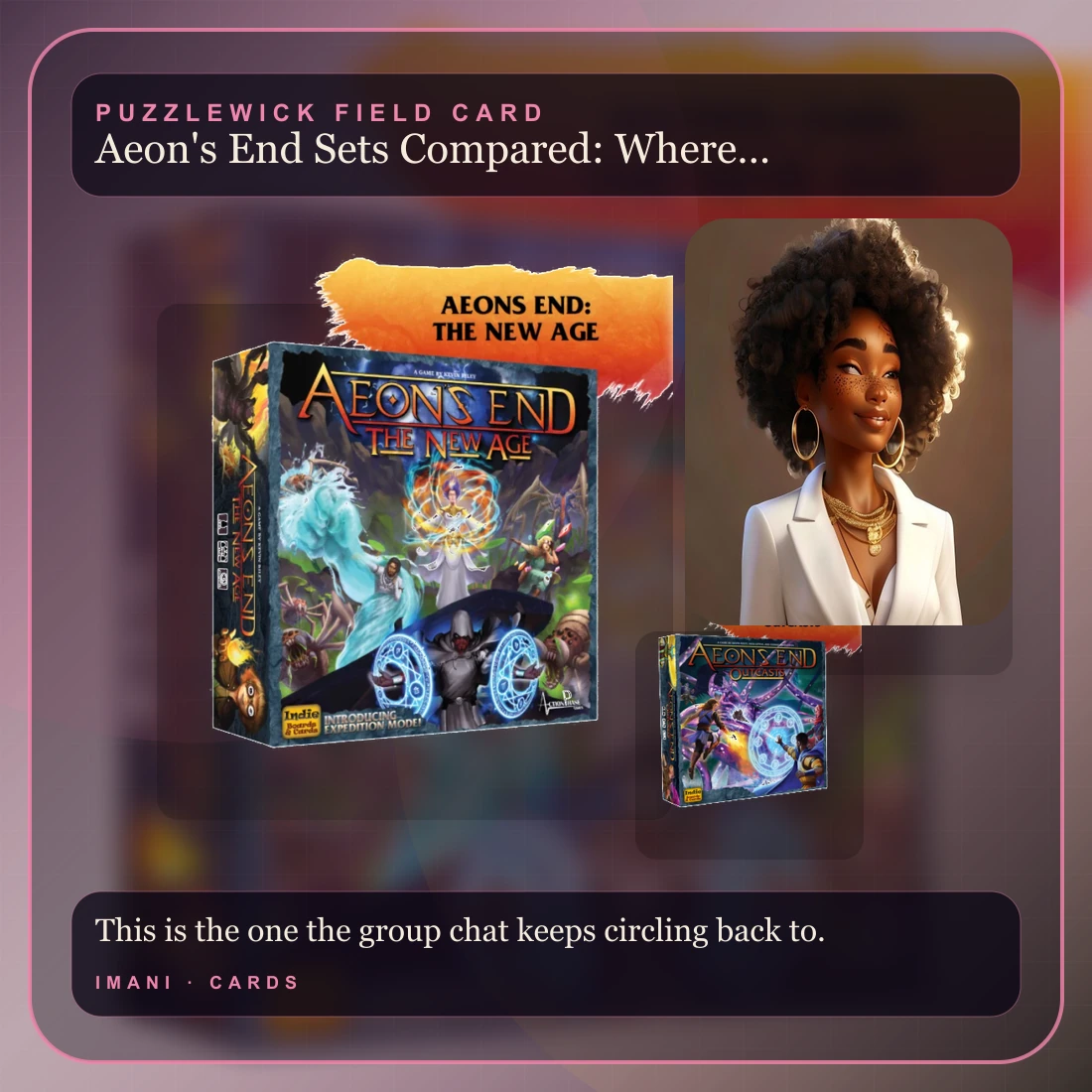
Okay but have you seen what everyone’s saying about this?


Keep exploring
The next smart rabbit holes.
◈ Universe HubAeon's End: the whole buying pathAeon's End is a cooperative deckbuilding boss-battle system where players never shuffle their decks. This universe maps the...✦ Topic PathBoard Game Buying Guides: compare the whole shelfStart with the decision, not the shelf. These guides compare the games, editions, expansions, player counts, and costs people...ComparisonBest Deck-Building Card Games 2026: Dominion, Aeon's End, Marvel ChampionsDominion, Aeon's End, Clank!, and Marvel Champions solve deckbuilding in radically different ways. Here is the best first box, the real...