Best Deck-Building Card Games 2026: Dominion, Aeon's End, Marvel Champions
Dominion, Aeon's End, Clank!, and Marvel Champions solve deckbuilding in radically different ways. Here is the best first box, the real learning curve, and who should buy each.


AI-assisted research and drafting in Kenji’s voice · reviewed by Robert Pruitt · how this guide was made
Last editorial refresh: 2026-06-18 Gold-standard QA: 2026-07-17 8 sources reviewed Affiliate links checked during gold-standard pass

The short answer
Dominion remains the gold standard for competitive deckbuilding, Aeon's End pioneers cooperative play with its revolutionary no-shuffle mechanic, and Marvel Champions brings LCG depth to the genre. Your choice depends on whether you want pure strategy, narrative cooperation, or expansive IP immersion.
Decision map
Choose in thirty seconds
Competitive deckbuilding purists and players seeking endless strategic variety
Cooperative players and those seeking mechanical innovation with tension and planning
Marvel fans and players seeking an ongoing living card game with monthly expansions
The deckbuilding genre was born in 2008 when Donald X. Vaccarino released Dominion, a game that asked a radical question: what if building your deck was the game? Before that moment, decks were something you assembled at home, scrutinized, optimized in the abstract. Dominion made it live—each turn, you buy cards from a shared market, adding them to your growing arsenal. Eighteen years later, the genre has fractured into four distinct schools: competitive engines (Dominion, Star Realms), cooperative struggles (Aeon's End, Legendary), campaign journeys (Hogwarts Battle), and living card games (Marvel Champions). This guide walks you through the anchors. Each represents a different temperature of the same fire.
Whether you're hunting for the Platonic ideal of deckbuilding—the crystalline elegance of its first expression—or something stranger and more experimental, the market has matured. You can now build decks together, compete silently, watch a nemesis scale its threats, or construct a living collection that evolves across months of play. The craft has deepened without losing its spark.
Start here, then go deeper
You are in the right cabinet.
 ◈ Universe HubAeon's End: the whole buying pathAeon's End is a cooperative deckbuilding boss-battle system where players never shuffle their decks. This universe maps the...✦ Topic PathBoard Game Buying Guides: compare the whole shelfStart with the decision, not the shelf. These guides compare the games, editions, expansions, player counts, and costs people...
 ComparisonThe Best Engine-Building Board Games of 2026, RankedA sensei's tier list of the games that taught a generation what "the engine click" feels like — from the gateway masterpiece to the...
What actually makes a game "deckbuilding"?
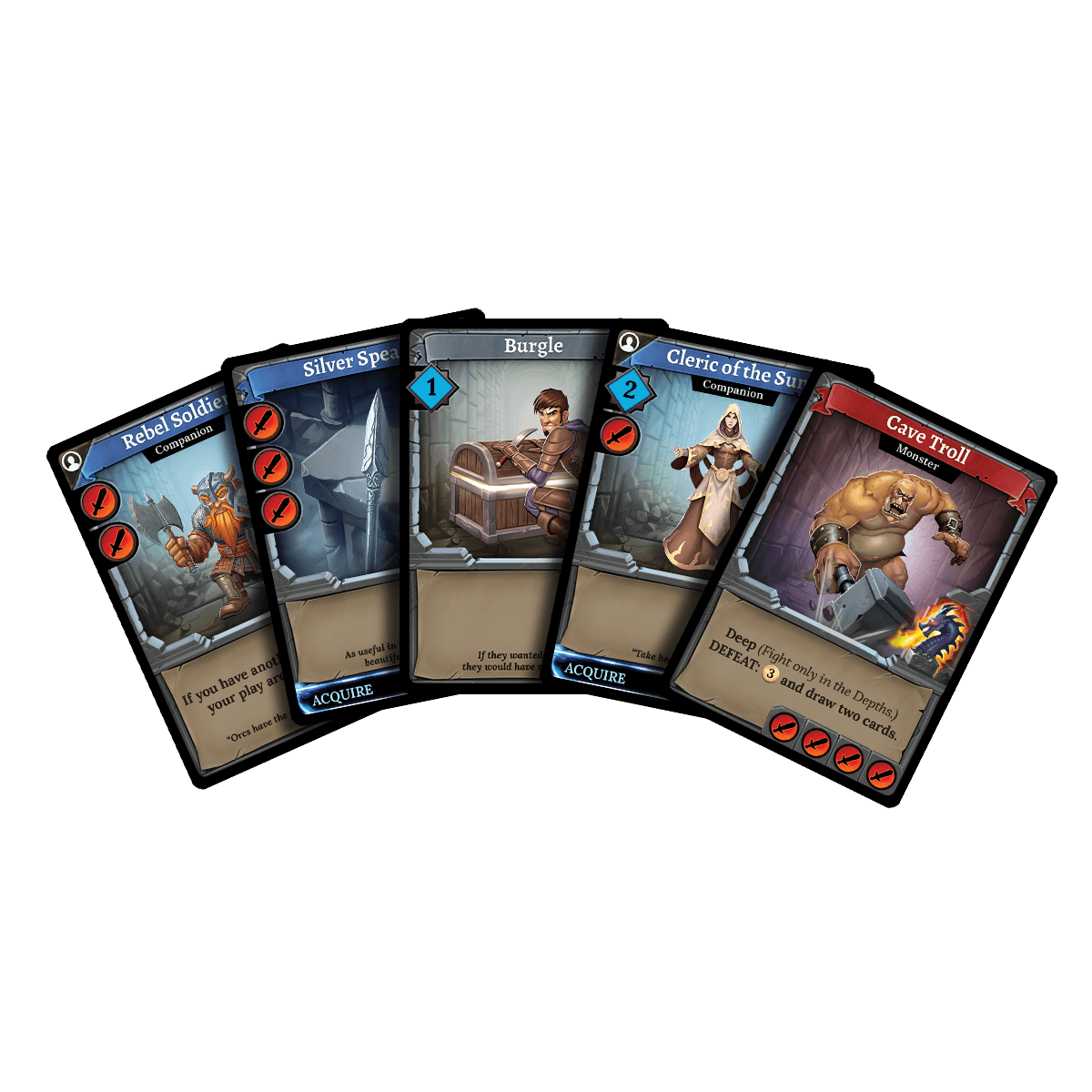


Strip away the theme and every deckbuilder runs the same engine: draw a small hand, spend it for currency, buy stronger cards into a discard pile, then reshuffle that pile into your next deck. You aren't preparing at home; you're building mid-flight, watching your arsenal mutate with every purchase. What the genre understood in 2008 — and what newcomers usually miss — is that every card has two costs and two payoffs. It does something the turn you play it, and it permanently changes the probability of every future hand.
This is the secret the best players internalize: a deckbuilder is a probability machine you are sculpting in real time. Buy a card that's only situationally useful and you've diluted your draws forever. That's why the most counterintuitive skill in the genre is trashing — voluntarily removing weak cards so your good ones surface more often. Beginners hoard; experts thin. A 12-card deck of all bombs beats a 30-card deck padded with starter junk every time.
The other quiet truth: the shared market is itself a resource. In competitive deckbuilders, denying an opponent a key card by buying out its pile can matter as much as what you keep. Watch a strong table and you'll see players tracking not just their own engine but the supply's dwindling stacks — the endgame often hinges on who empties piles first, not who scores prettiest.

Why is Dominion still the genre's gold standard?
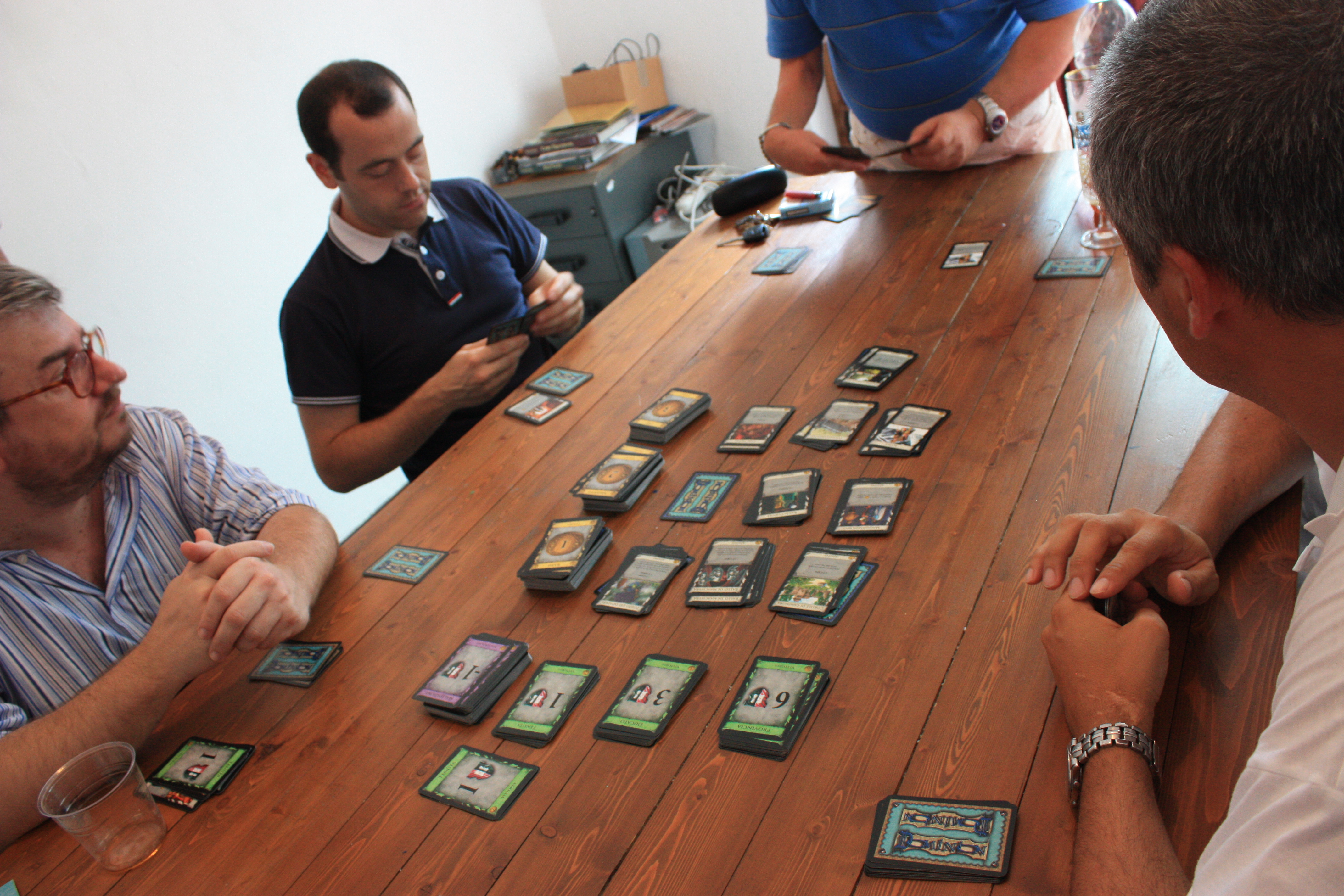

Dominion is deckbuilding stripped to bone. Donald X. Vaccarino abandoned a fantasy combat system he'd been wrestling with and spent the next stretch perfecting the assembly mechanic itself — the result won the 2009 Spiel des Jahres (Germany's Game of the Year) and the German Game Prize the same year, then spawned more than a dozen expansions. Eighteen years on, nothing has bettered its core loop.
The depth hides in the randomized kingdom: ten card types pulled from a far larger pool each game, so the metagame resets every session. Here's the insider divide that defines skilled play — Big Money versus the engine. Big Money is the deceptively simple line: ignore the clever cards, buy Silver at $3-4, Gold at $6-7, Provinces at $8, and grind. It's a real baseline (and beats the "buy anything shiny" beginner) — but a well-built engine, one that draws and plays your entire deck in a single mega-turn, sprints past it. The whole craft is recognizing which the kingdom rewards.
The other lever is trashing. Chapel — trash up to four cards in one play — is widely called the strongest card in the game precisely because it lets you delete your seven starting Coppers and three Estates fast, leaving a lean machine. The 2nd-edition base set (2016) swapped six weaker kingdom cards for seven sharper ones and cleaned up the layout, making the on-ramp gentler without dulling the ceiling. Note: that 2016 revision is still the current canonical base set — there's no newer base-set edition (later releases like the Rising Sun expansion are add-ons, not a fresh core box).
How does Aeon's End's no-shuffle rule rewrite everything?
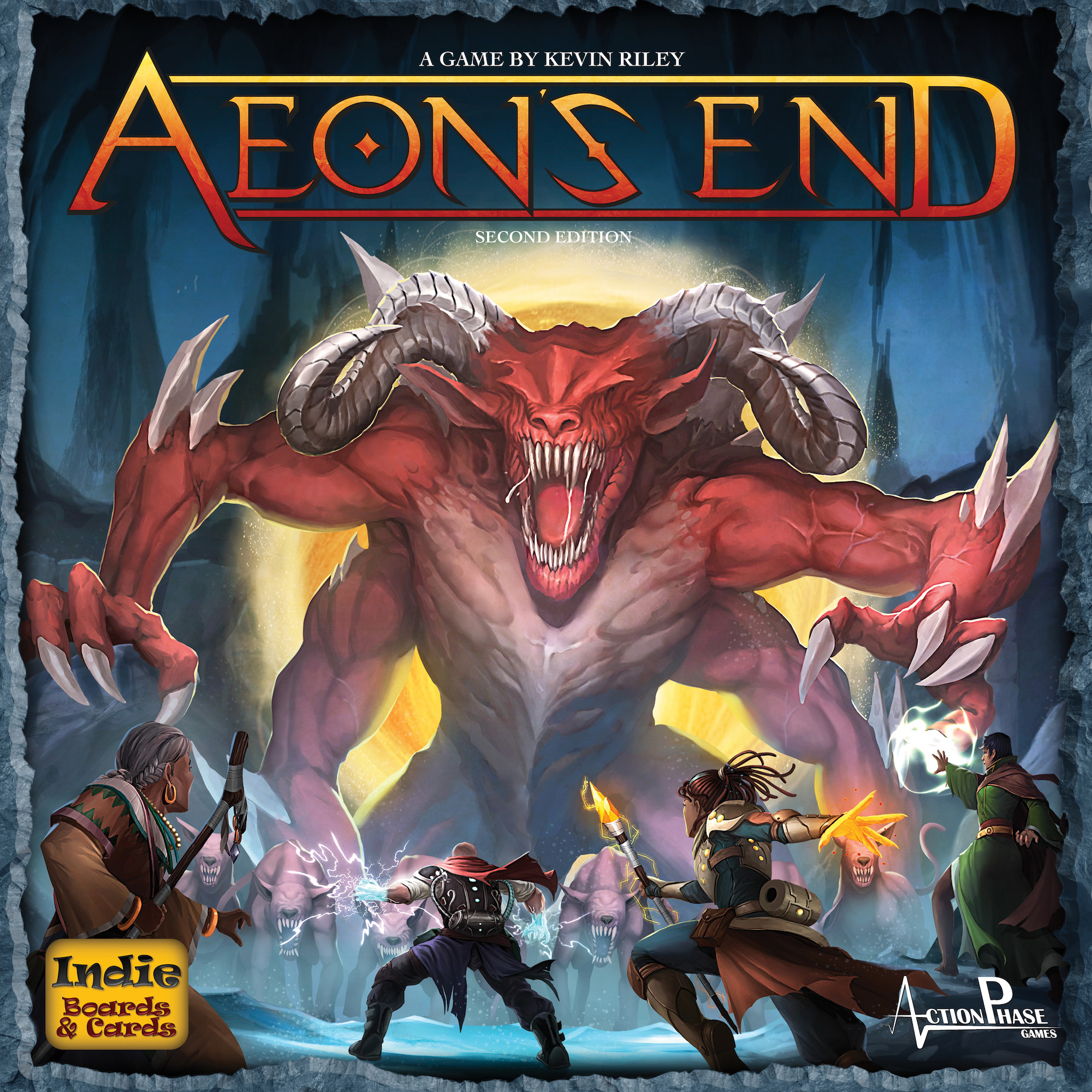

Aeon's End inverts Dominion. You cooperate against a scripted nemesis that scales with player count — but its real revolution is structural: you never shuffle your deck. When it empties, you flip your discard pile straight over and draw it in the exact order it landed. That one rule change rewires the genre.
Suddenly randomness stops being an excuse. The order your cards return is the order you discarded them — and the rules let you choose that order as you discard (you may look through your discard at any time, but you may not rearrange it once placed). So the master move is conscious stacking: bury a card you won't need for three turns, float the gem you'll want next turn on top. Skilled players are effectively programming their future hands. The catch that newcomers fumble is that this is a one-way decision — discard sloppily and you've guaranteed a dead hand four turns out, with no shuffle to bail you.
Two more wrinkles reward planning. Breaches mean spells are prepared one turn and cast the next, so you're always thinking a beat ahead; and turn order is drawn from a shuffled turn-order deck (the only shuffling in the whole game), so you can't assume you'll act before the nemesis strikes. That uncertainty is the engine of its tension. The franchise sells fully standalone boxes — The New Age (2019) and Outcasts (2020) each play start-to-finish alone — so you can enter anywhere rather than chasing a base set.
Is Marvel Champions really deckbuilding — and how do aspects work?
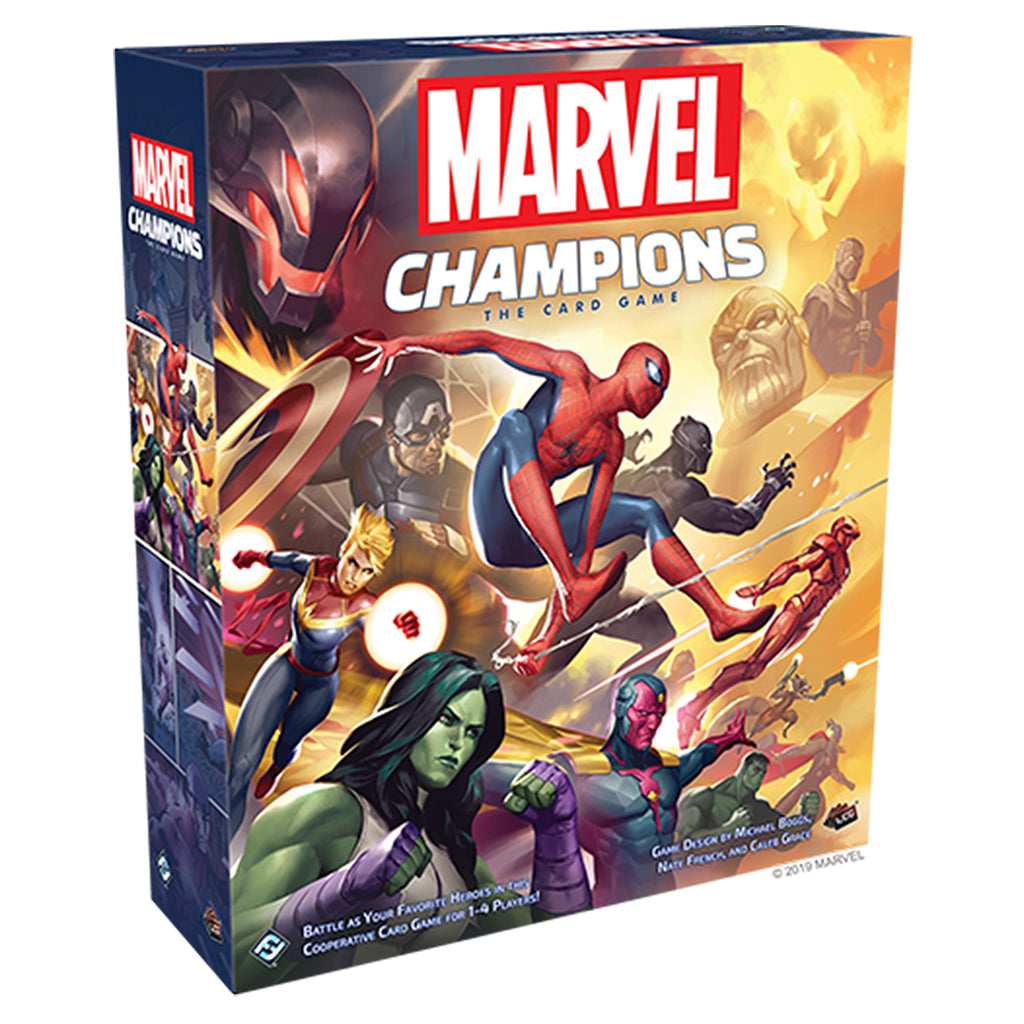
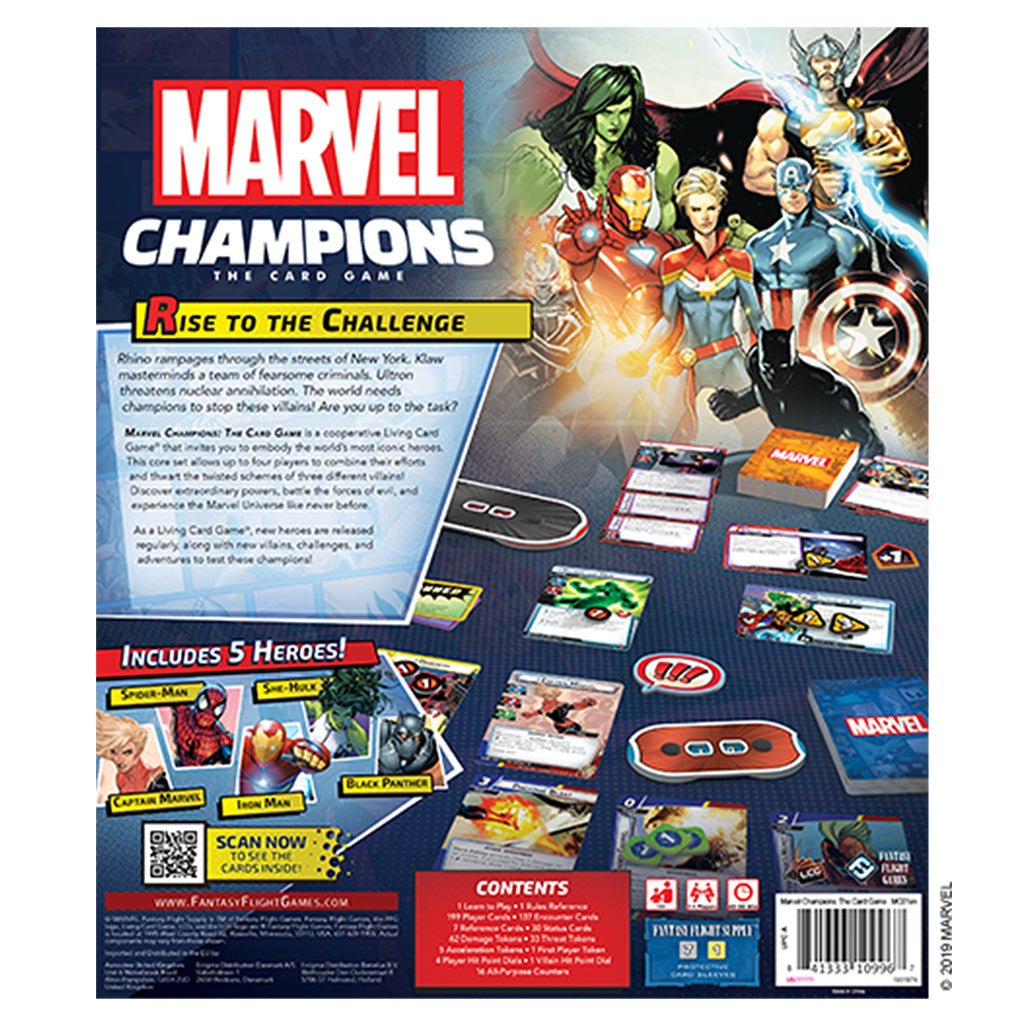
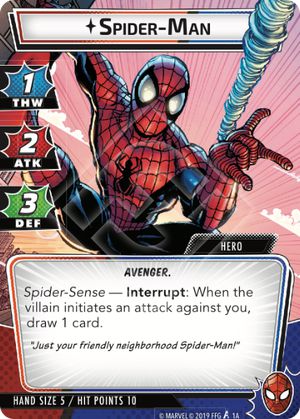
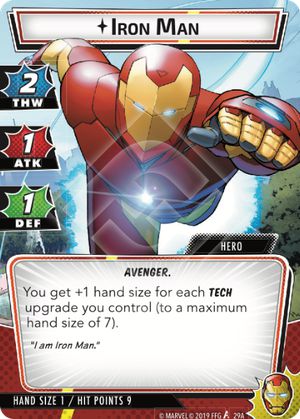
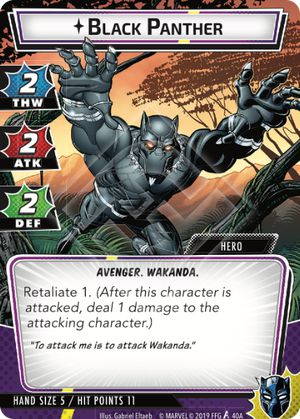
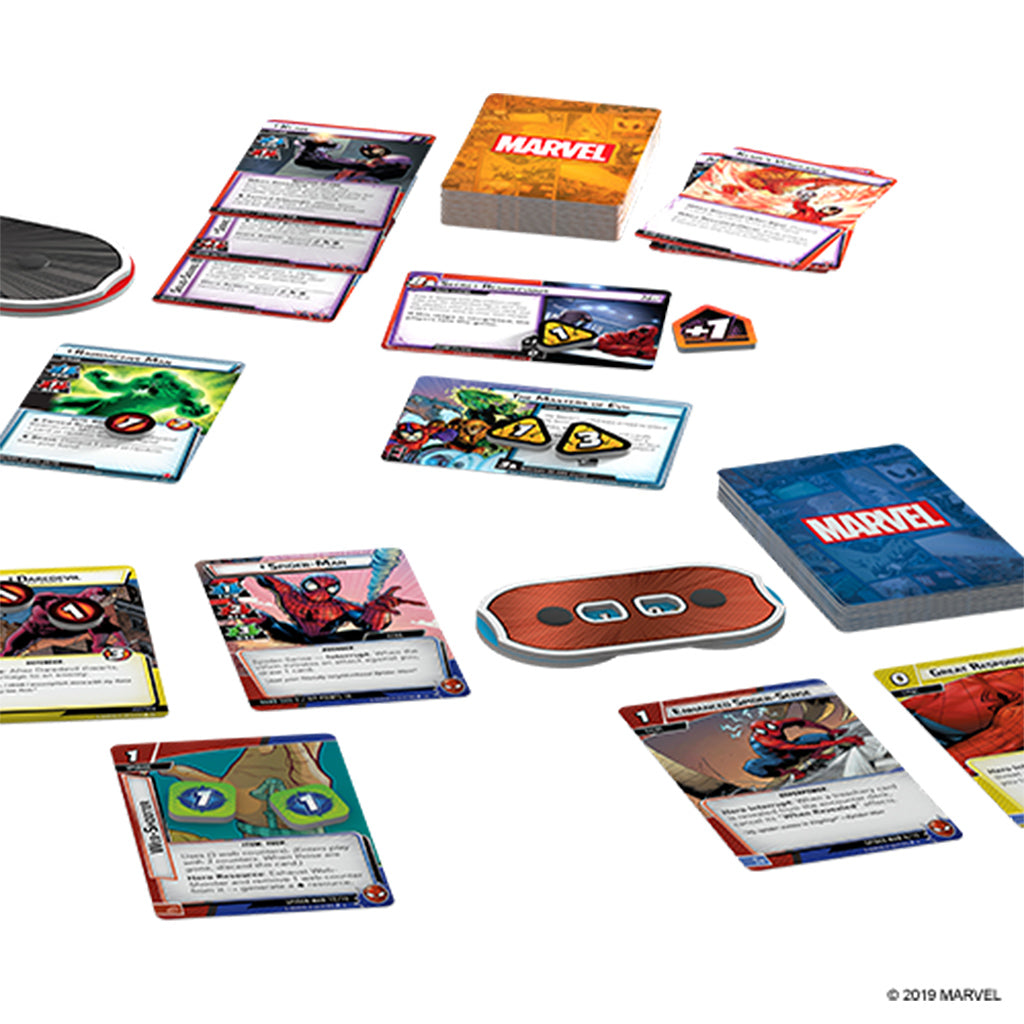
Honest answer: Marvel Champions is a Living Card Game, not a draw-and-buy deckbuilder. You build your deck at home from a fixed, collectible pool, then play it. But the construction craft sits right next to the genre, and the hero-versus-villain asymmetry gives it cooperative bite that pure deckbuilders lack. The core set ships five heroes — Iron Man, Spider-Man, She-Hulk, Black Panther, and Captain Marvel — and supports 1-4 players against a scaling villain.
The insider key is the aspect system. Every hero deck pairs a signature identity with one of four aspects that flavor your toolbox: Leadership (allies and buffs — widely rated the strongest in the core box, because allies soak hits and chip damage for free), Justice (threat control — vital because if the villain's scheme advances unchecked, you simply lose), Aggression (raw damage), and Protection (damage mitigation and counterattacks). The deckbuilding tension is real: lean too hard into smashing the villain and the scheme clock runs you over; over-invest in thwarting and you never land the killing blows.
A practical rule from the community: Leadership decks want roughly 8-12 allies and fewer events; Protection prefers upgrades and supports. The "living" model is the genuine catch — the base box is a complete game, but the design assumes you'll buy into monthly hero packs to widen your options. Budget for the hobby, not just the box.
What makes Clank!'s noise bag such an elegant trap?
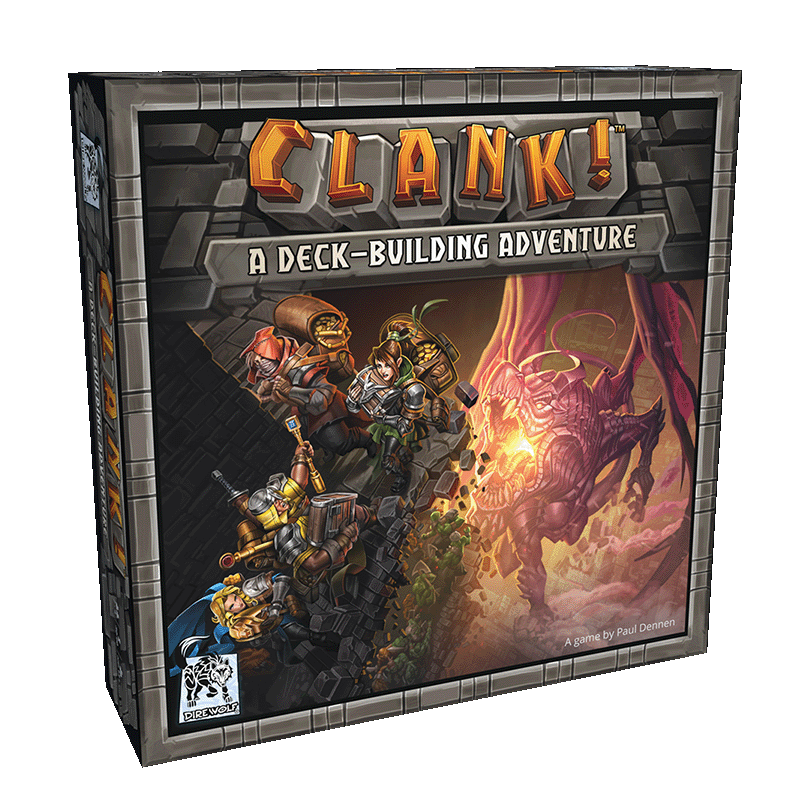
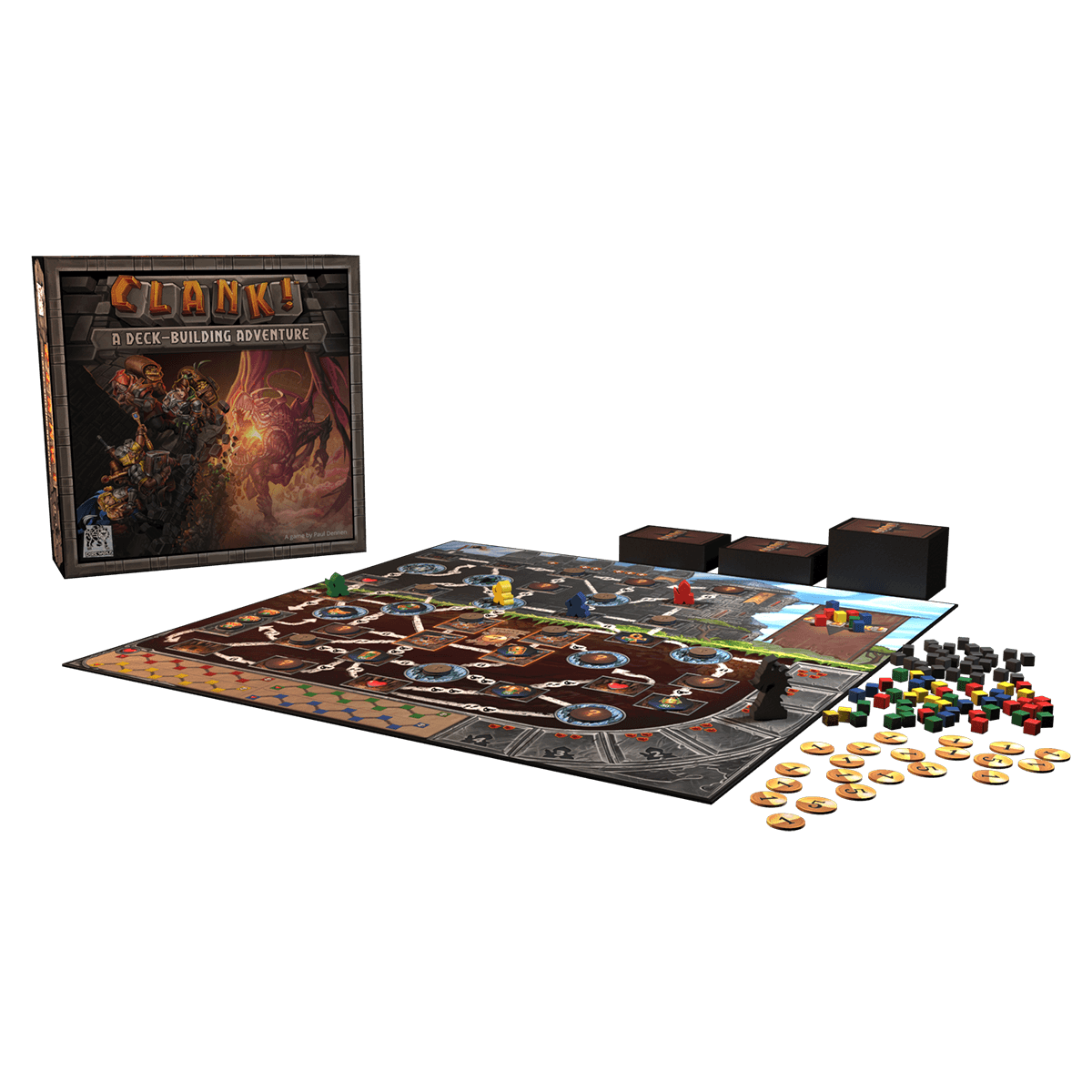
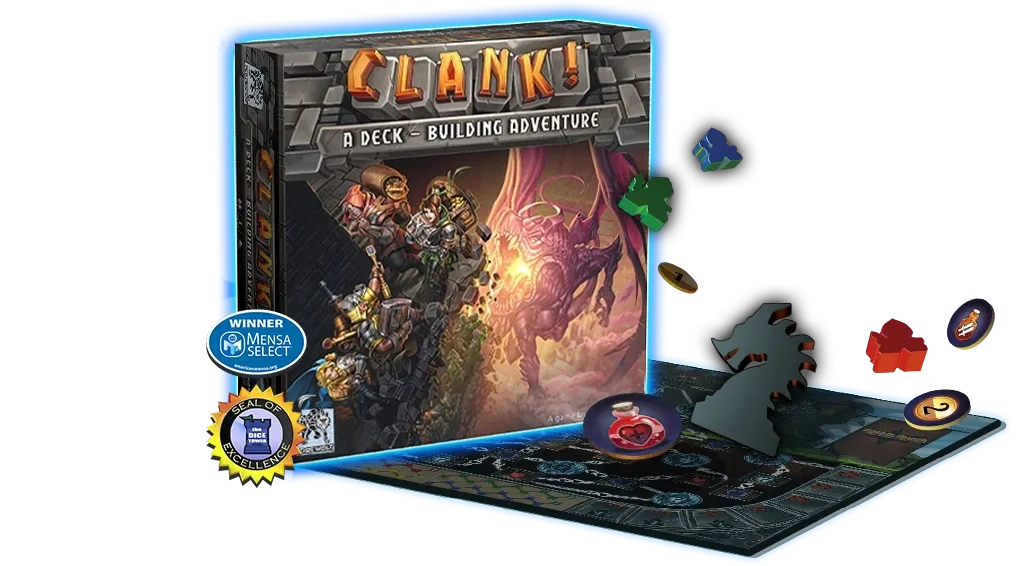
Clank! welds deckbuilding to a press-your-luck dungeon crawl, and the bag of wooden cubes is the whole genius. You're a thief descending into a dragon's lair; every aggressive card, every fight, every risky move drops your colored cubes — your "clank" — into a shared bag. When the dragon attacks, cubes are drawn blind from that bag and whoever's color comes up takes the hit. The deeper and greedier you play, the more of your cubes are loaded into the gun pointed at you.
That converts deckbuilding from a pure optimization puzzle into a question of timing. You can't just buy the best cards; you have to decide when to spend the loud ones. The standard expert tension is rush versus greed: dive deep for the high-value artifacts and you bleed clank the whole way, or grab a cheap artifact near the entrance and sprint for daylight before the dragon's rage escalates. There's no single right line — the board is revealed card by card and changes every game, so the map itself is part of the gamble.
The community consensus that trips up newcomers: you must escape the dungeon to score at all. Players who over-loot and get caught below ground bank zero points regardless of their haul. Streamlining matters too — buy cards that generate movement and buying power, prune the dead weight, and remember that a quiet, efficient deck is often worth more than a flashy loud one. Clank! Legacy extends the same engine across a 40-game campaign for tables that want their thefts to leave permanent scars.
Competitive or cooperative — which temperature fits your table?
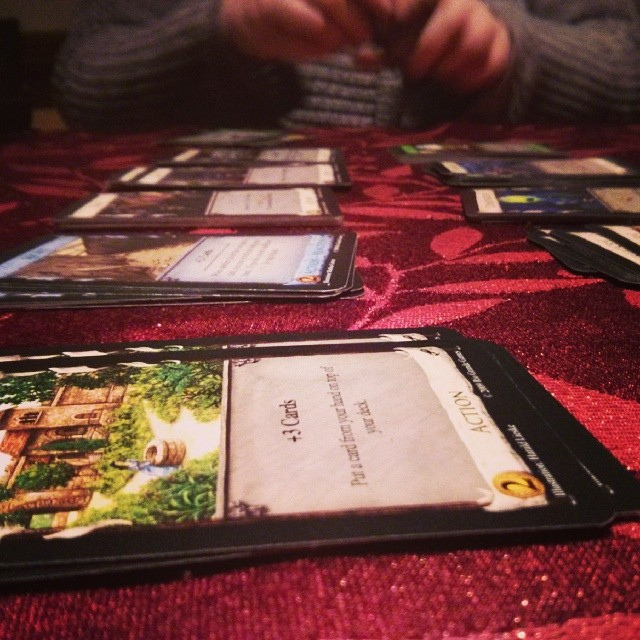
This is the first fork, and it changes the emotional weather more than the rules. Competitive deckbuilders — Dominion, Star Realms — are silent duels. The market is shared but your deck is yours, built to outpace someone sitting three feet away. Watching an opponent's engine fire — drawing their entire deck in one turn — is simultaneously awe-inspiring and quietly devastating. The pleasure is adversarial precision; the risk is that a runaway leader can feel unstoppable while you're still shuffling Copper.
In cooperative games — Aeon's End, Marvel Champions — you face the game itself, and the tenor shifts to camaraderie. The table rallies, groans, and improvises together in a desperate final round. The well-known hazard is quarterbacking: one strong player calculating everyone's optimal move and flattening the others into pilots. The tighter the puzzle, the faster this creeps in — Aeon's End's no-shuffle determinism makes "correct" play visible, which is exactly why the design also hides information behind variable turn order to keep every brain engaged.
A third register has matured between them. Semi-cooperative games like Legendary let everyone win or lose together against a Mastermind while a private score crowns who played best — togetherness with a sting in the tail. And campaign deckbuilding (Clank! Legacy, Hogwarts Battle) carries cards, scars, and story across 7-40 linked sessions, turning the genre into serialized fiction. Pick the temperature first; the title almost chooses itself after.

Where do Star Realms and Legendary fit — the fast duel and the team-builder?
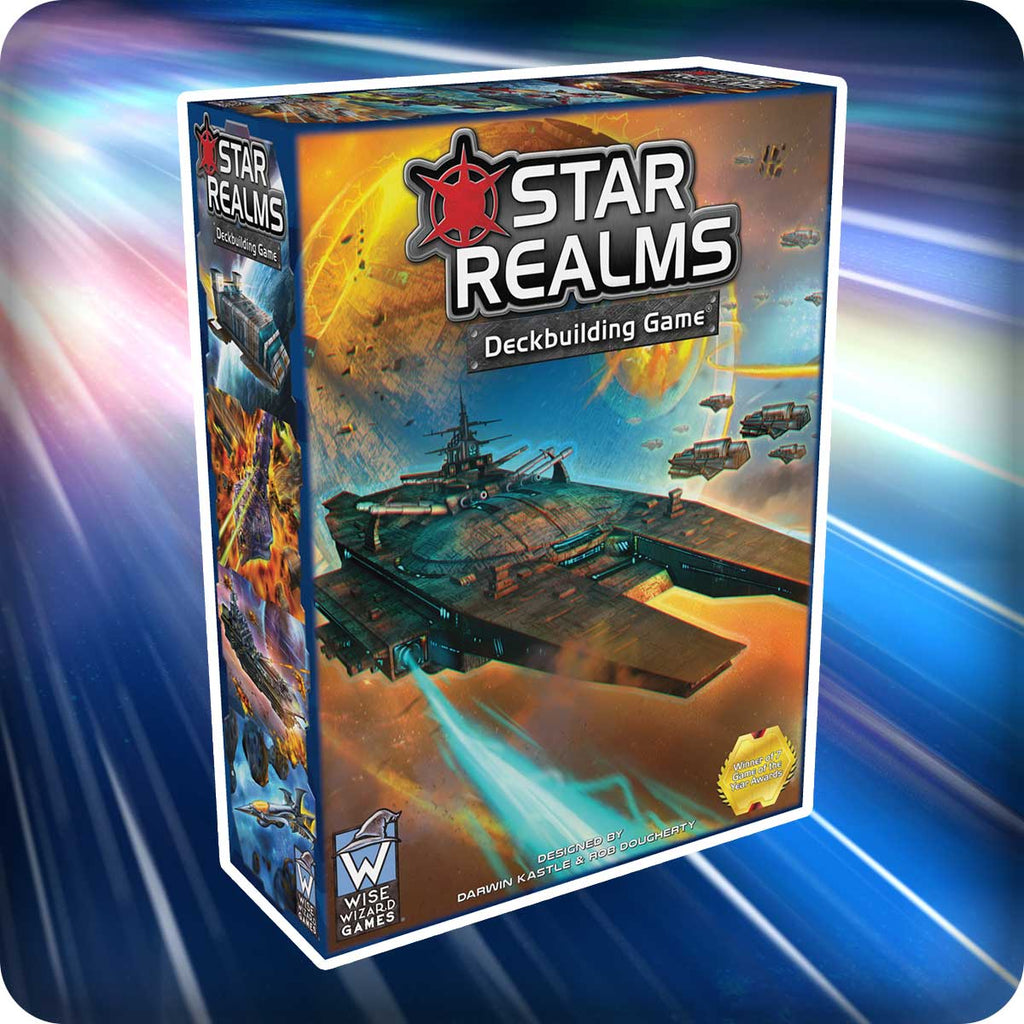
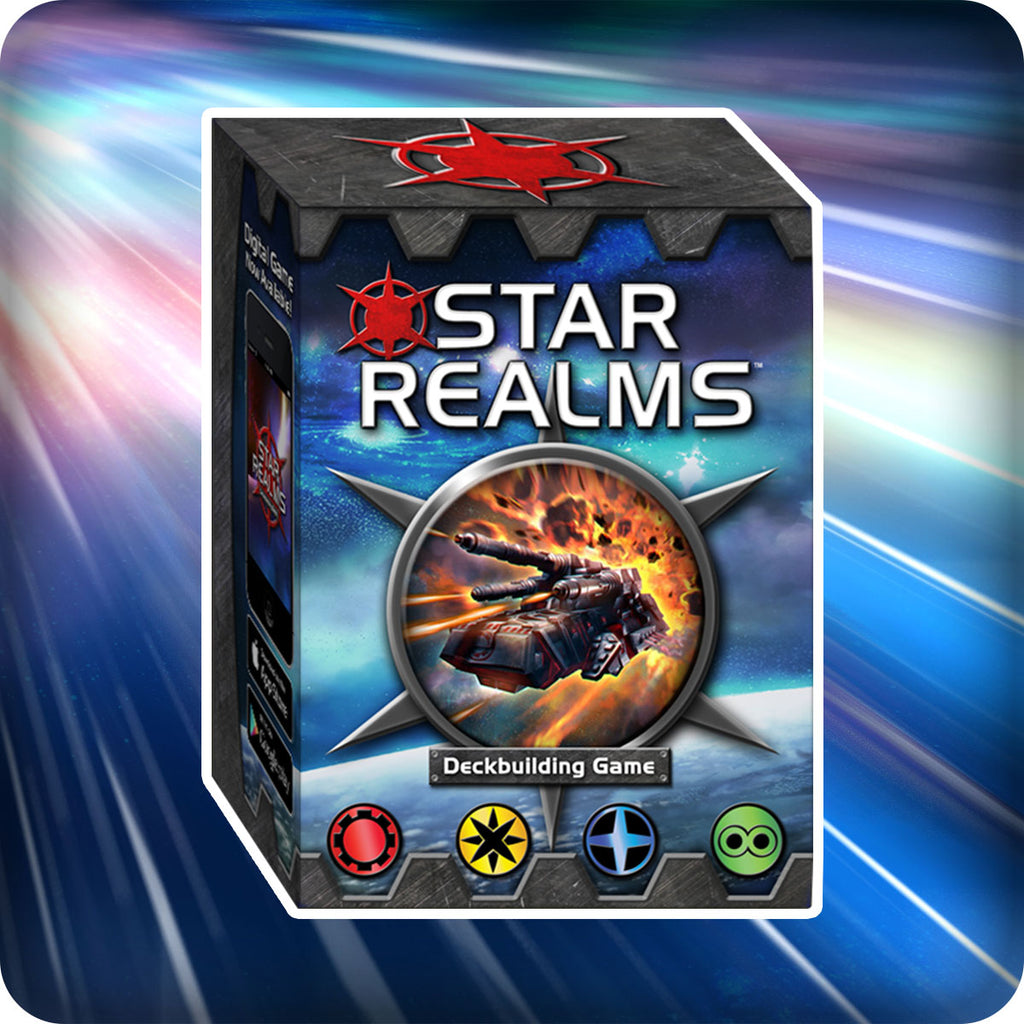
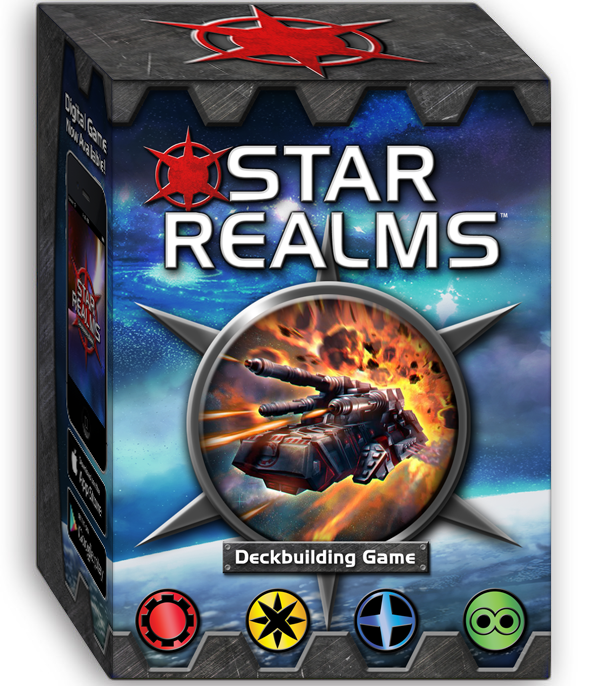
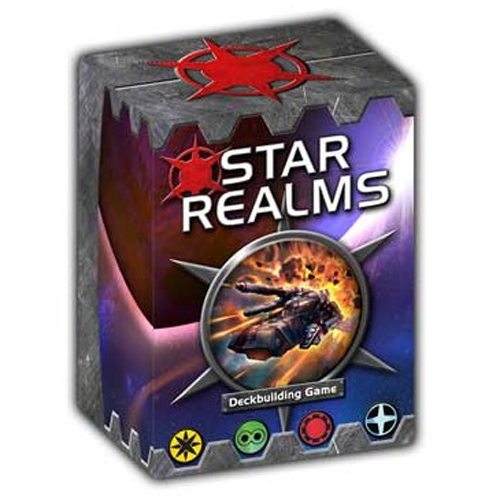
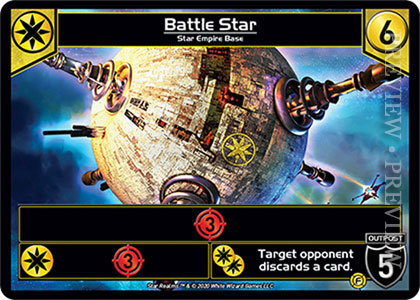
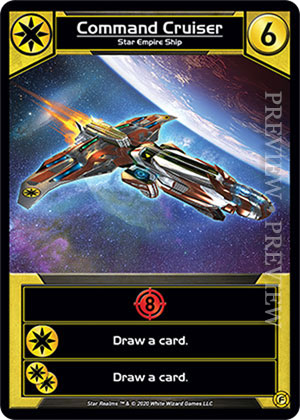
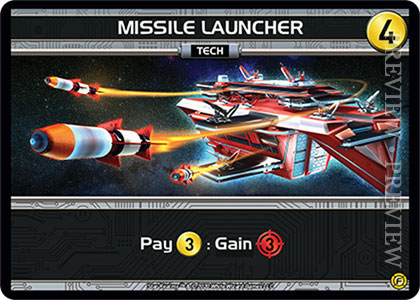
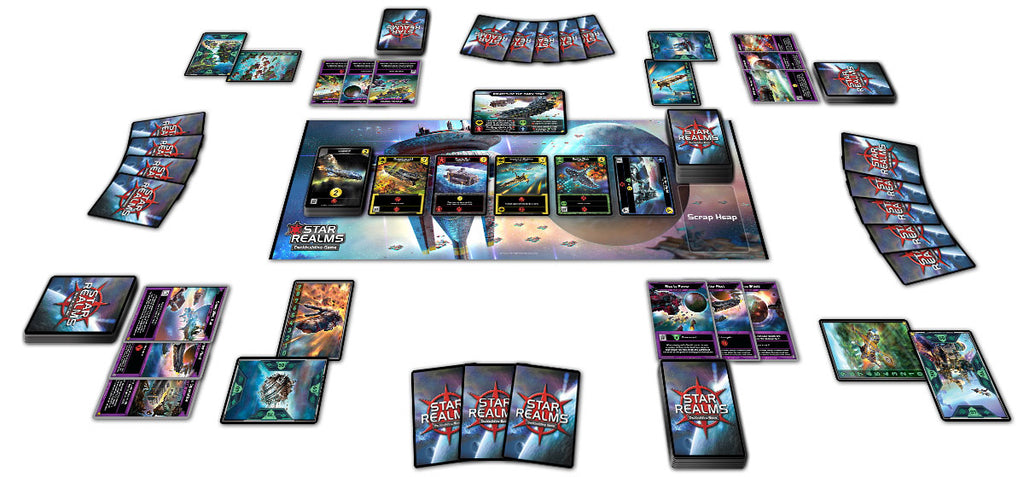
These two anchor the genre's outer edges. Star Realms is deckbuilding compressed into a 20-minute two-player knife fight for about $15 — the cheapest complete entry into the hobby. Its engine is the faction ally system: four colors (Blob's aggression and card draw, Star Empire's forced discards, Machine Cult's scrapping and bases, Trade Federation's life-gain economy) where playing two cards of the same color the same turn unlocks bonus "ally" abilities. The insider line is that triggering ally abilities is the single biggest source of card advantage — a card with its ally fired is roughly twice the card — so committing to two factions and chaining their bonuses beats hoarding a rainbow of singletons. The other expert habit: aggressively scrap your starting Scouts and Vipers to thin toward your power cards.
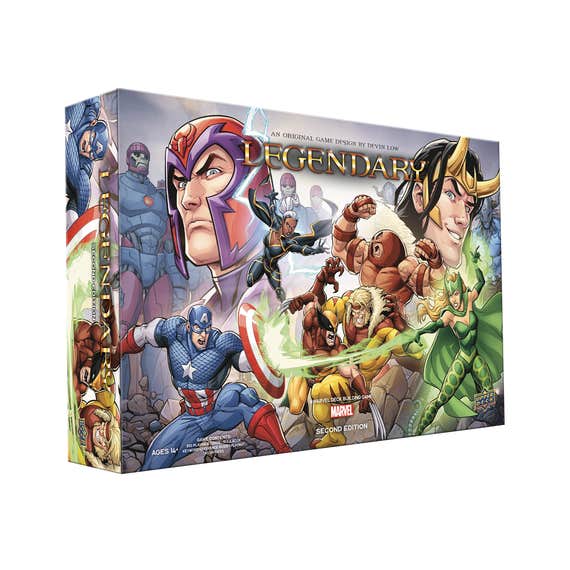
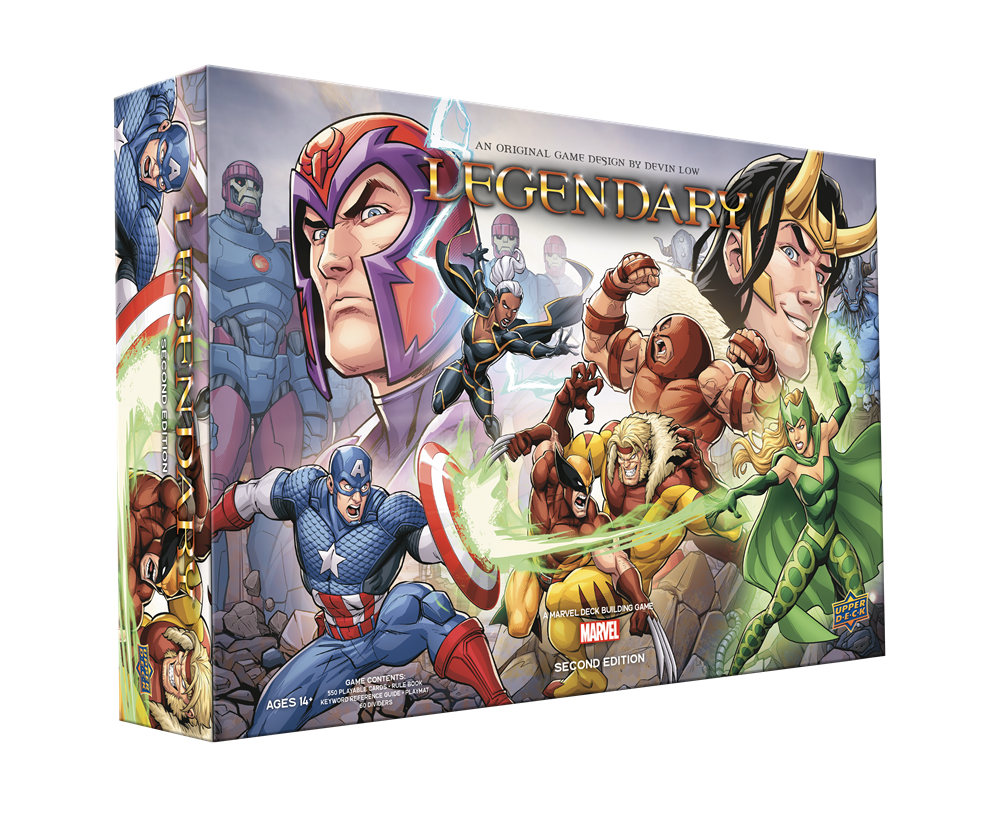
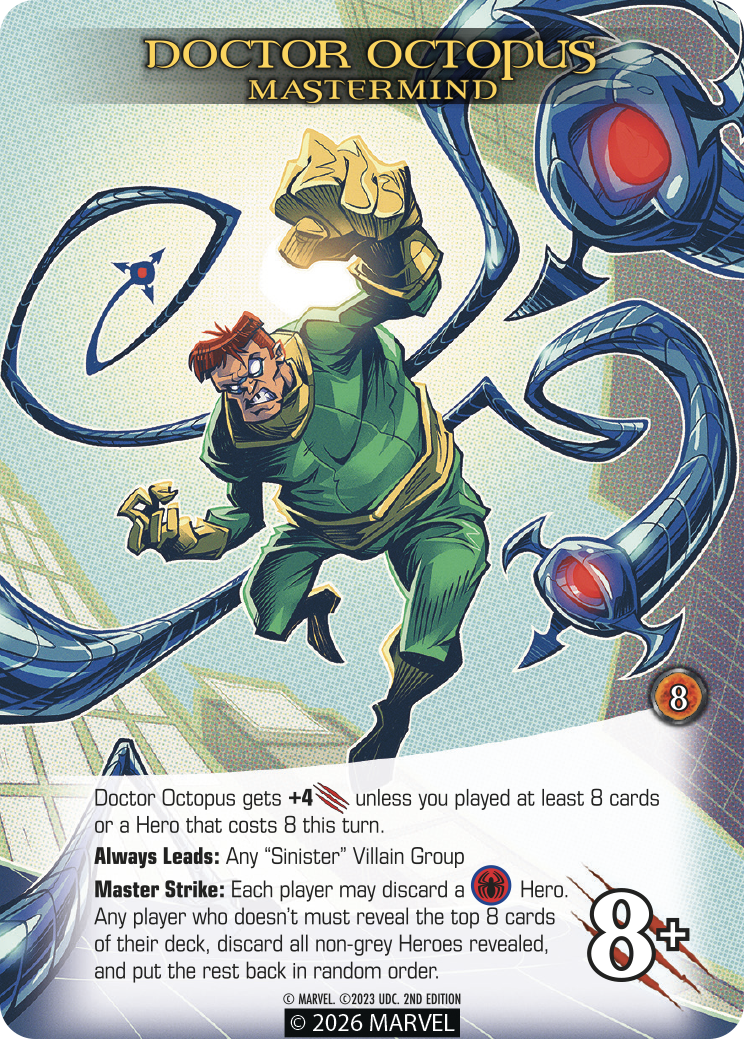
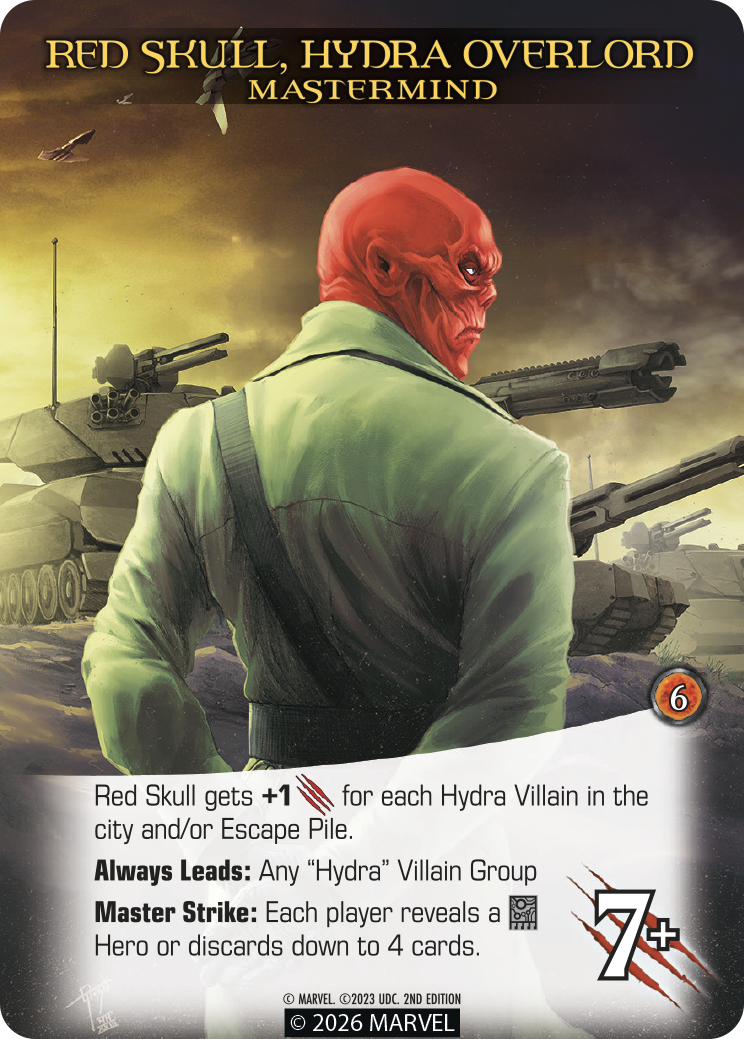
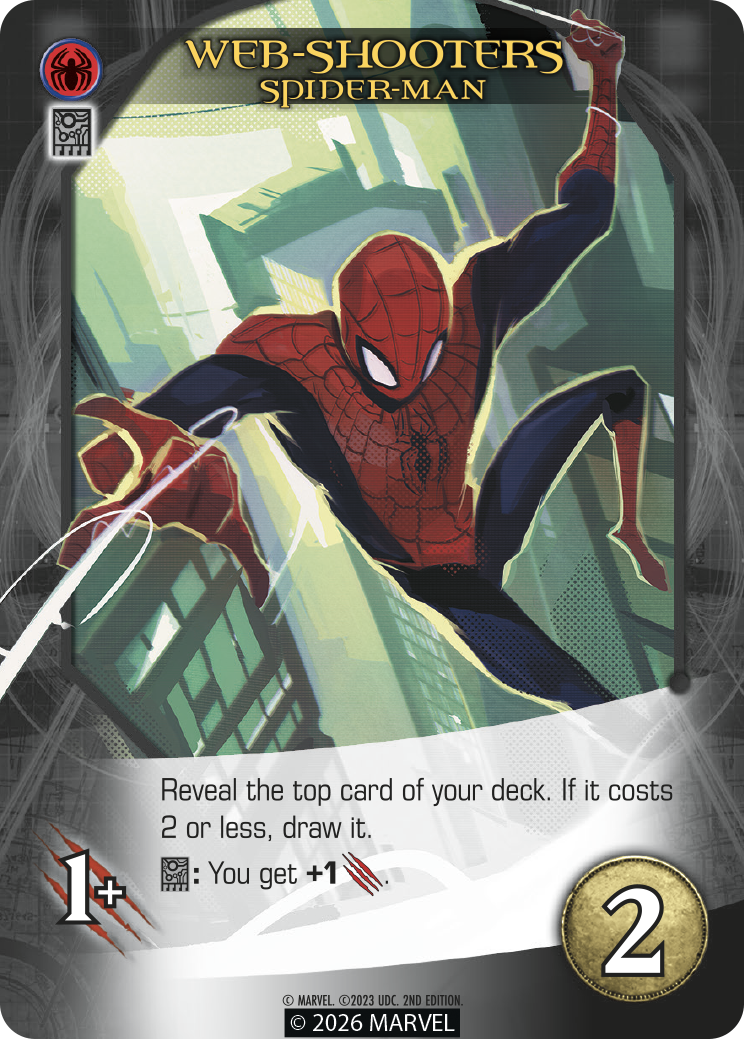
At the opposite pole, Legendary: A Marvel Deck Building Game is the sprawling team-builder. You play S.H.I.E.L.D. agents recruiting an Avengers roster from a shared HQ to take down a Mastermind whose Scheme advances on every Scheme Twist. Its twin currencies — Recruit (to draw heroes into your deck) and Attack (to fight the villains stacking up in the city) — must be balanced inside one deck, and the genuine thrill is that assembling a coherent six-hero squad feels like building the Avengers. The original base box is generous — its packaging advertises "over 550 cards," though hobby card lists count it at right around 500 (the 2026 Second Edition is the one that ships a full 550). Either way it's a deep box, but the turn structure carries real overhead and, with full cooperative scoring, quarterbacking risk runs high. It rewards a table that wants theme thick and content deep over one that wants a tight 20-minute hit.

Expansions and the long game: variability or closure?
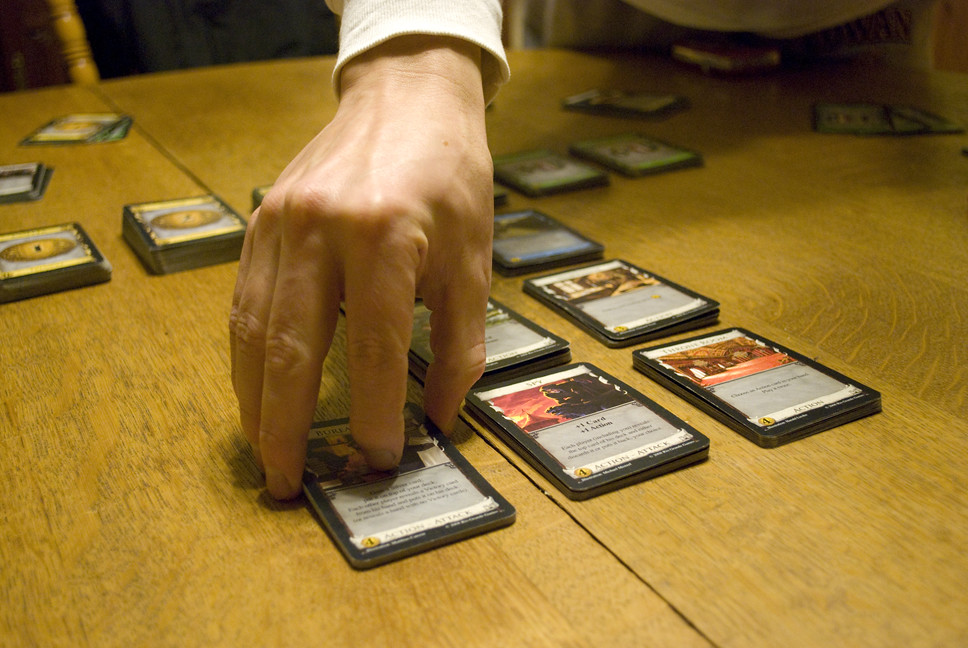
The last decision is about how much room you're leaving on the shelf — and in the budget. Every deckbuilder grows, but they grow on opposite philosophies, and matching that to your temperament saves money and regret.
On the infinite-variability end sits Dominion. Its expansions are modular: each adds a fresh batch of kingdom cards you mix into the randomizer, generating new metagames indefinitely — yet the base game stands complete forever. You're never required to buy in; you're invited to. Star Realms behaves similarly — feature-complete at two players, with optional sets if the duel grabs you.
In the middle, Aeon's End and Clank! respect a budget. Aeon's End sells fully standalone boxes rather than dependent add-ons, so "expanding" means choosing a new self-contained experience, not feeding a single base. Clank! is one box plus optional variants, with Clank! Legacy as a deliberate, finite 40-game arc that ends when its story does.
On the ongoing-ecosystem end is Marvel Champions, the only true Living Card Game here. Its design assumes a steady drip of hero packs; the base box is real and playable, but full strategic depth lives across the release schedule. The question to ask before you buy isn't "which is best" — it's do you want design closure or an open horizon? A collector who loves a deepening pool should lean into the LCG; a player who wants a finished object on the shelf should lean toward Dominion or a standalone Aeon's End box. Both answers are correct. They're just different relationships with the same beautiful machine.
The picks
Some links below are affiliate links — as an Amazon Associate, Puzzlewick earns from qualifying purchases, at no extra cost to you. It never changes a pick.
 8 photos
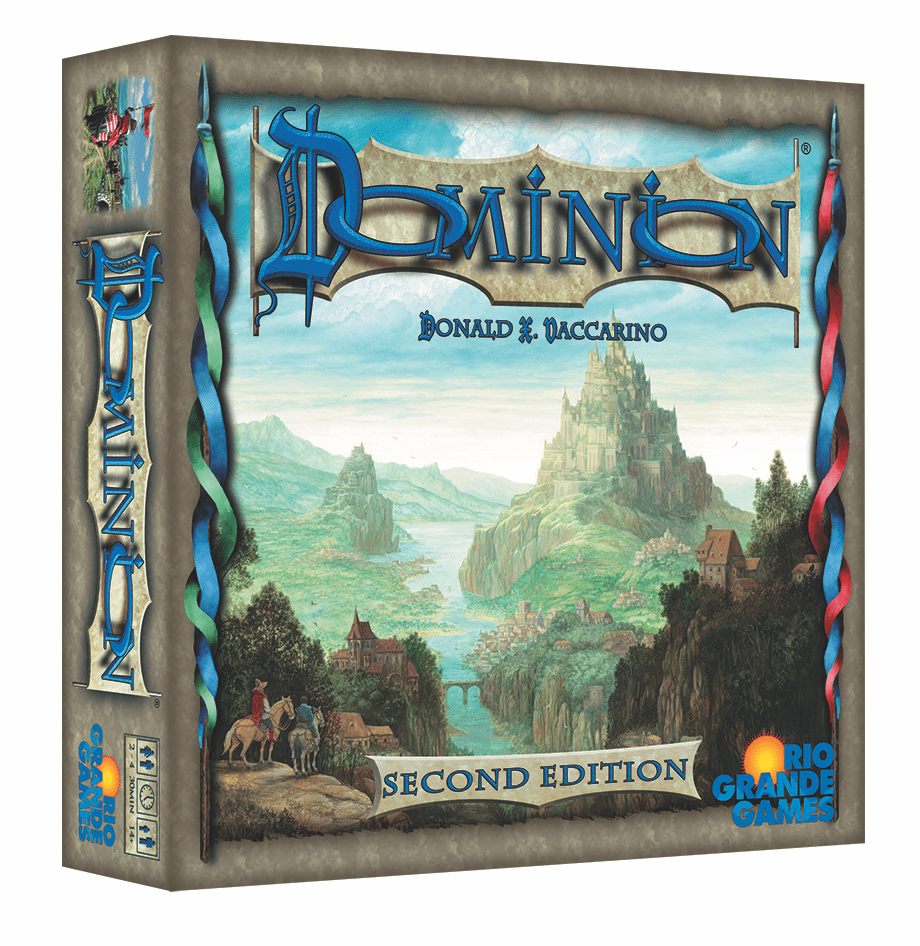
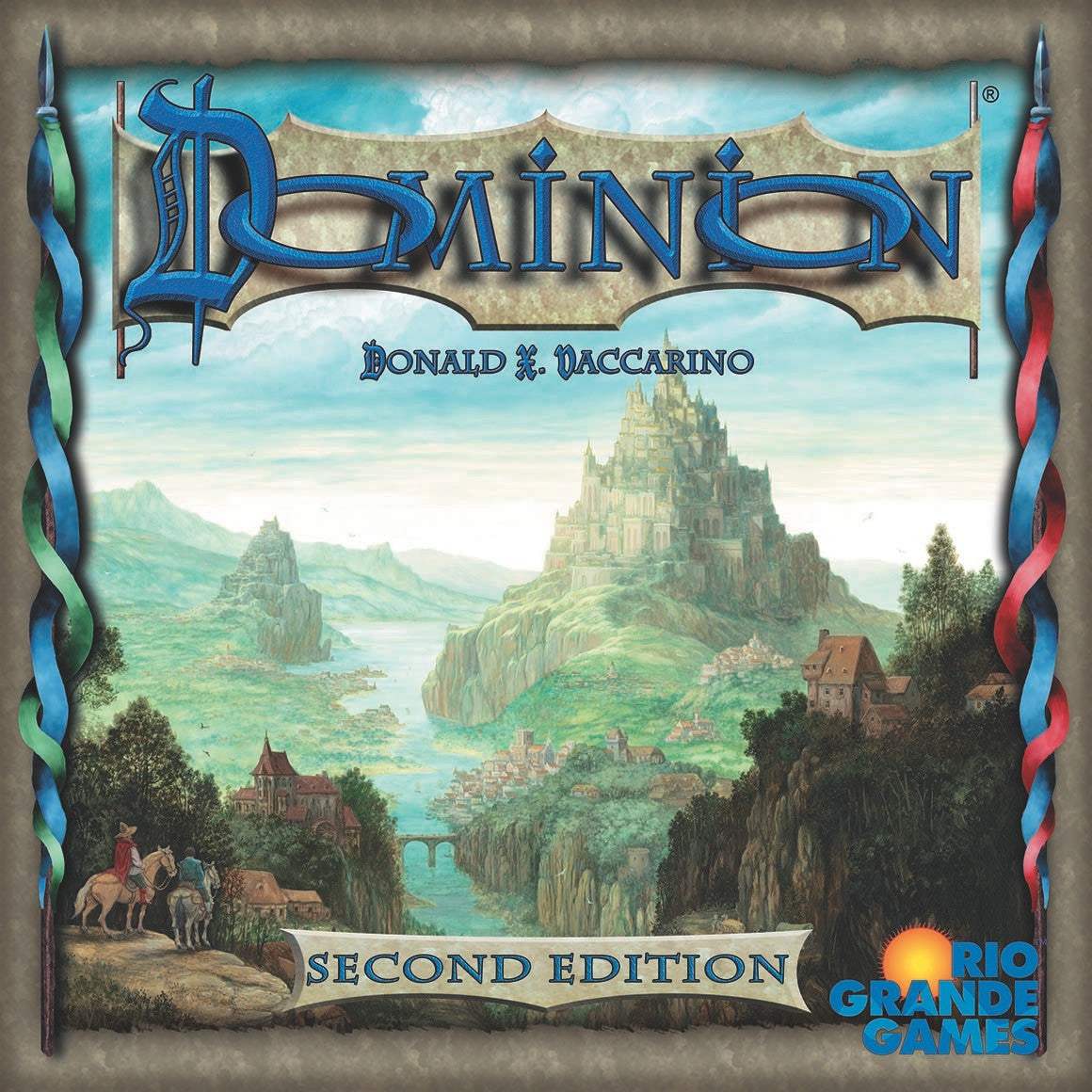
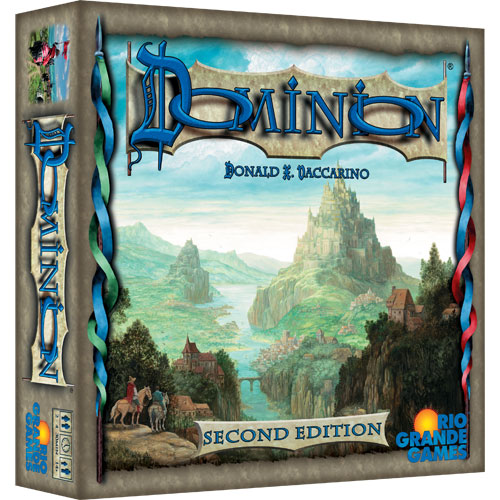
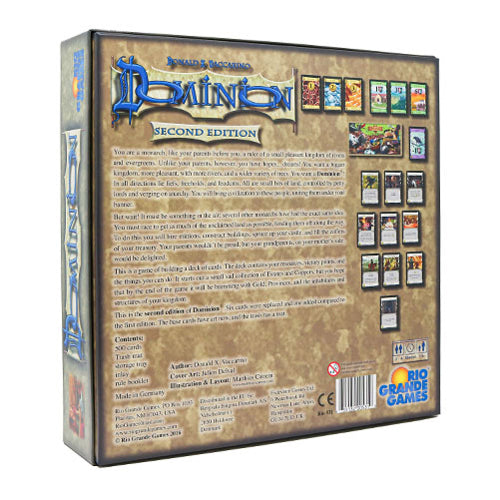
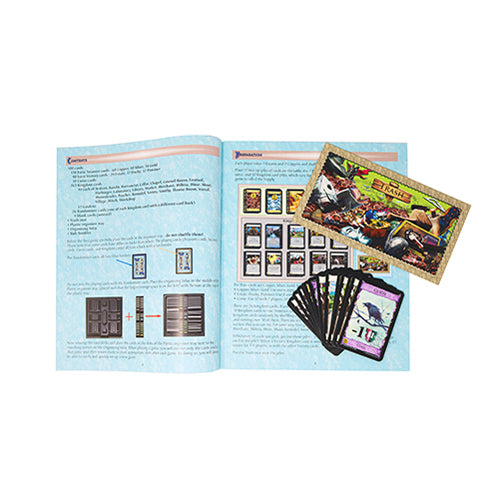
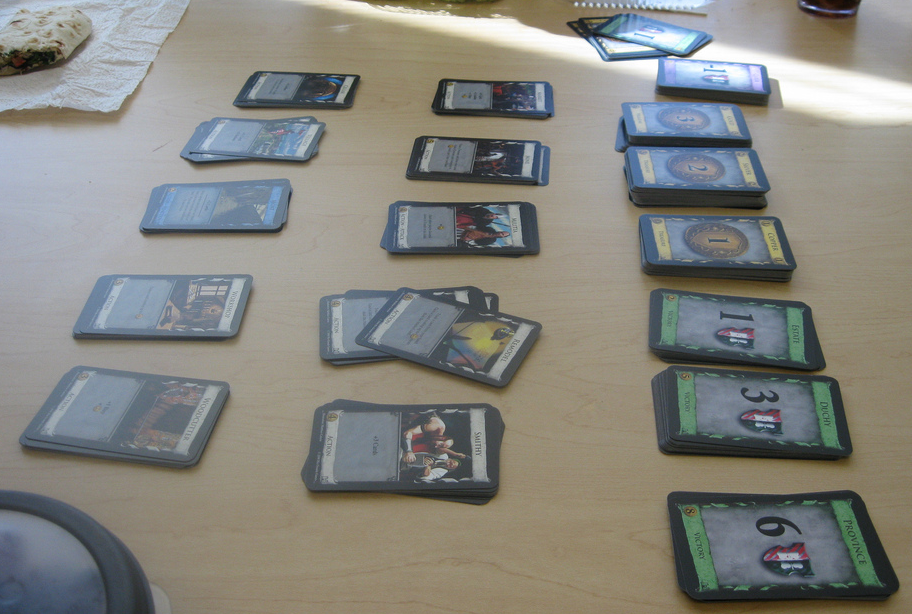
 Dominion (Second Edition)
- Players
- 2-4
- Time
- 20-30 min
- Age
- 13+
- Publisher
- Rio Grande Games · 2008
- Designer
- Donald X. Vaccarino
The genre-defining classic that invented deckbuilding remains unmatched for elegant mechanics and replayability. Randomized kingdom cards ensure no two games play alike, and the second edition (2024) refines presentation without losing the austere beauty. A masterpiece of distilled design.
- Crystalline core mechanic with infinite strategic depth
- Randomized kingdom cards guarantee novelty across hundreds of plays
- Modular expansion system that respects your budget—play base forever
- Zero theme or narrative—relies entirely on mechanical elegance
- Competitive, not cooperative; quarterbacking impossible but cutthroat tension high
 14 photos
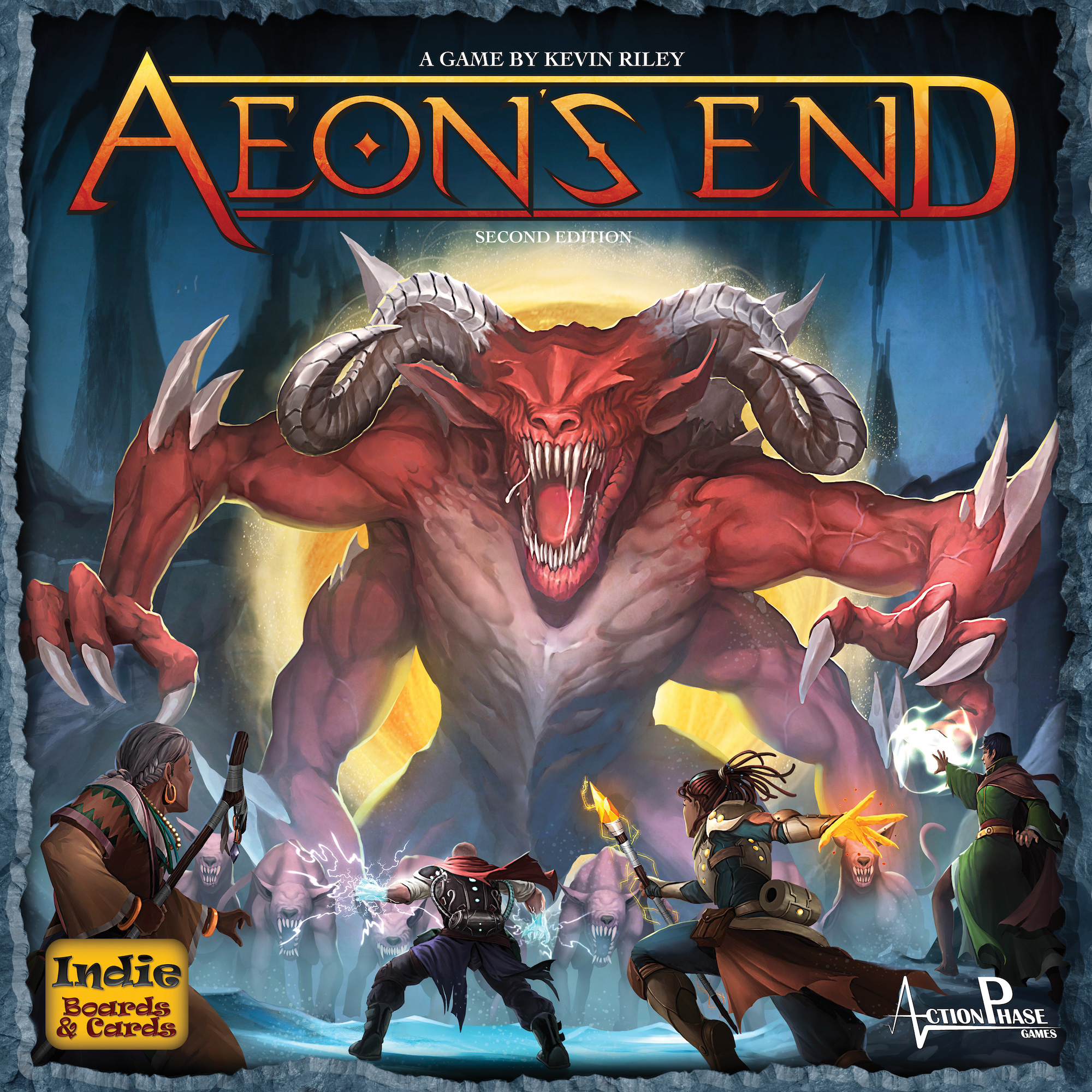
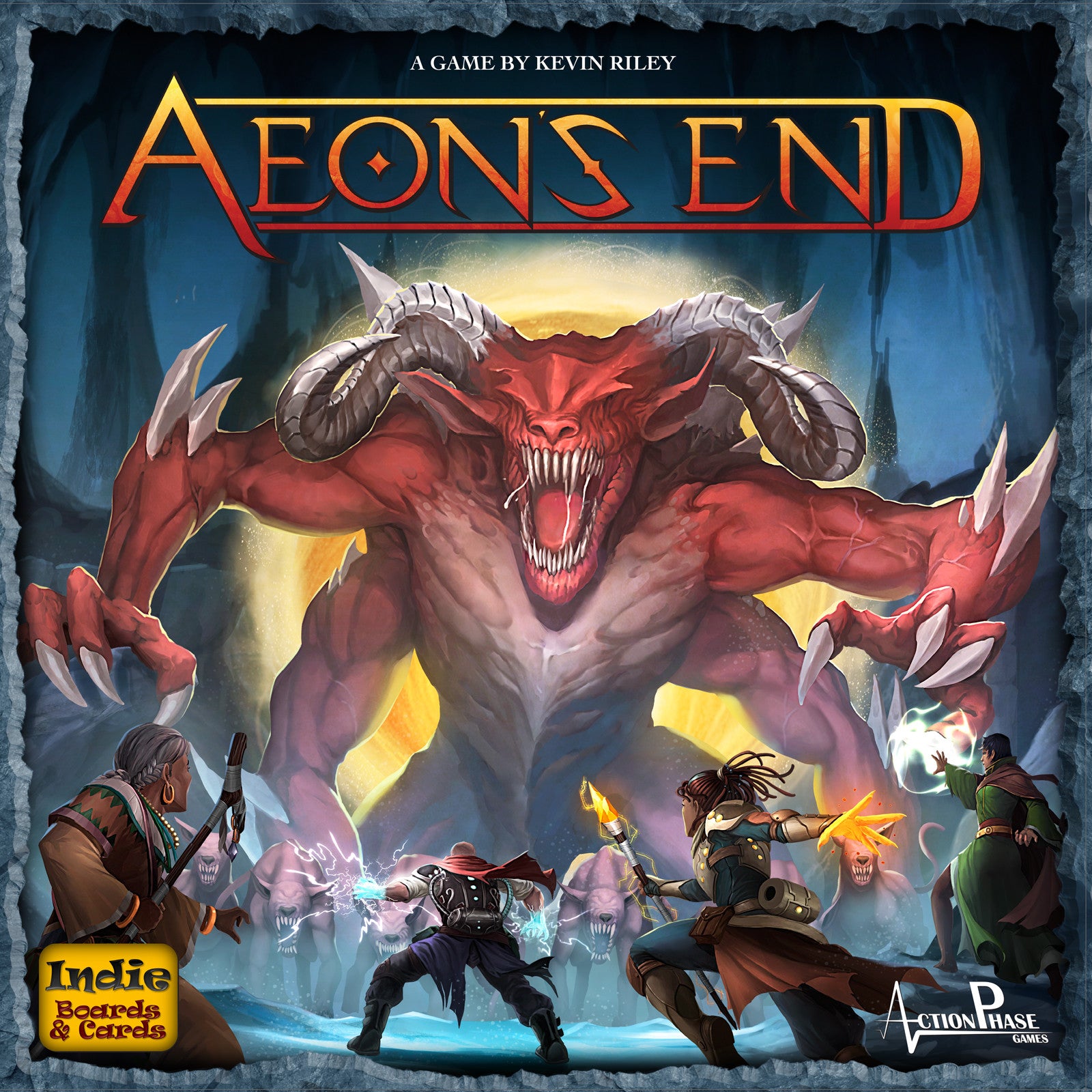
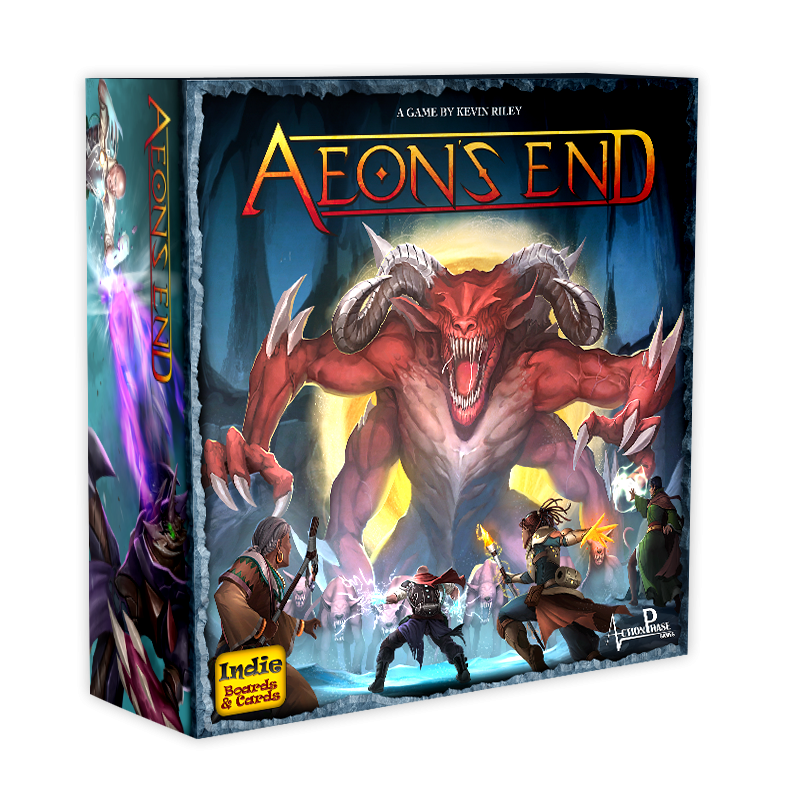
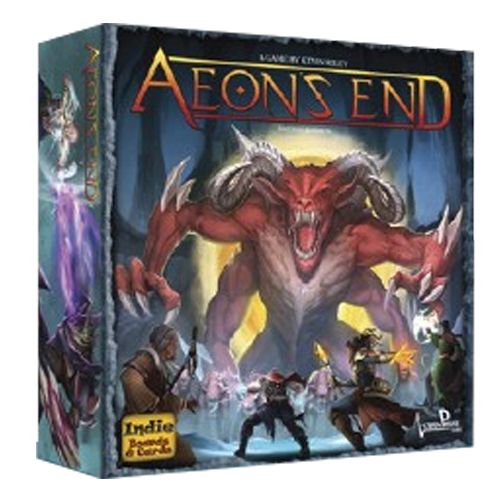
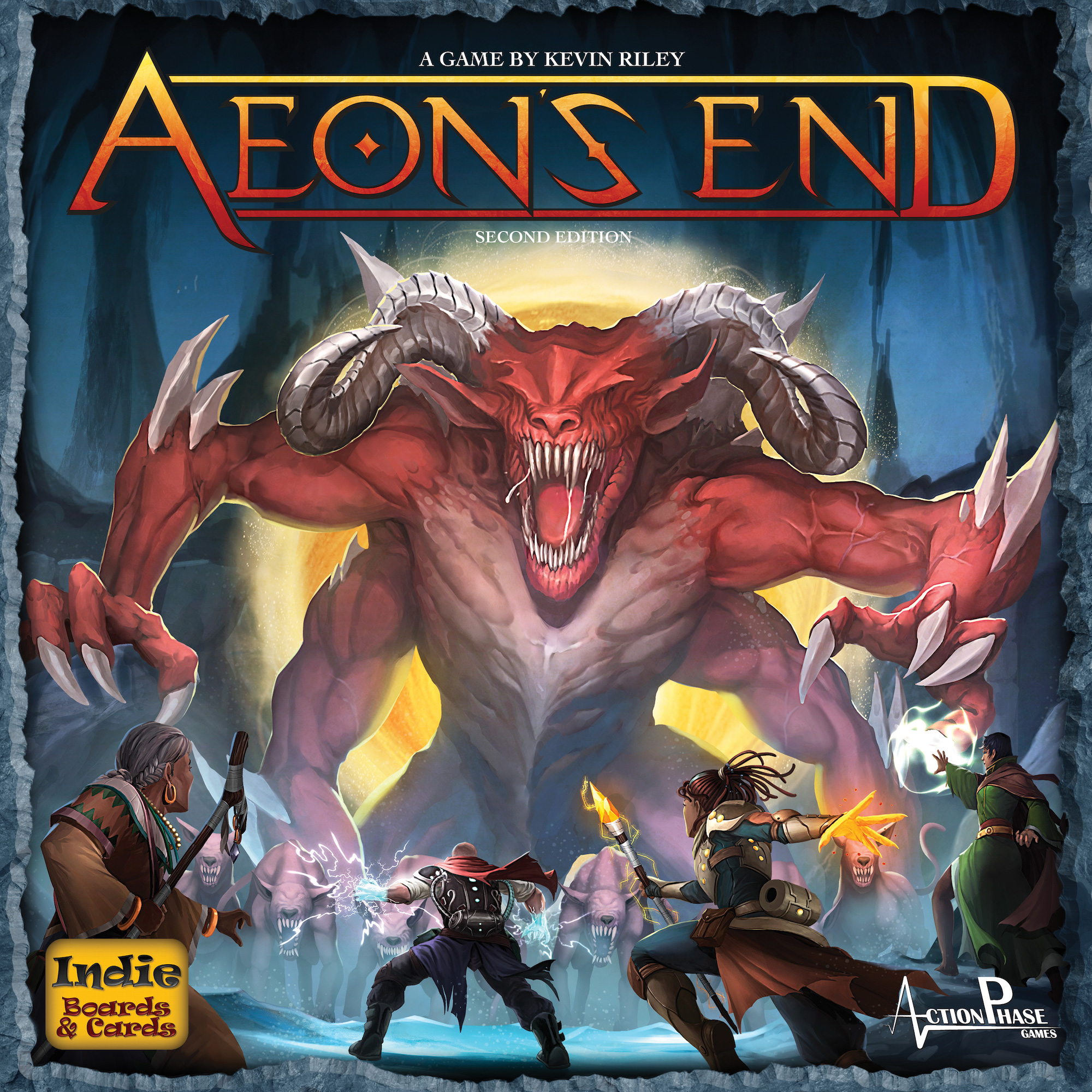
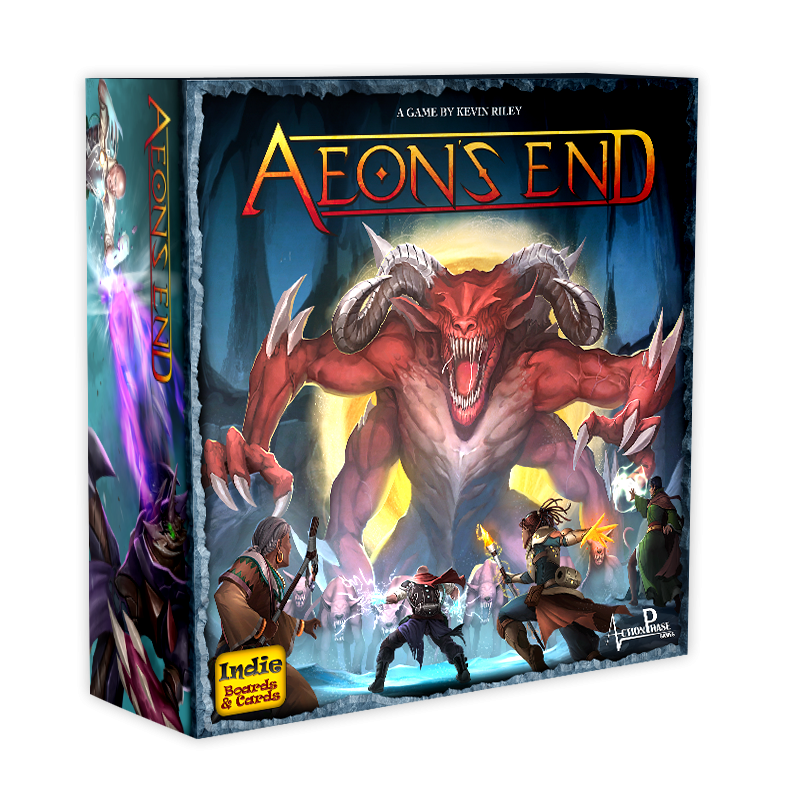
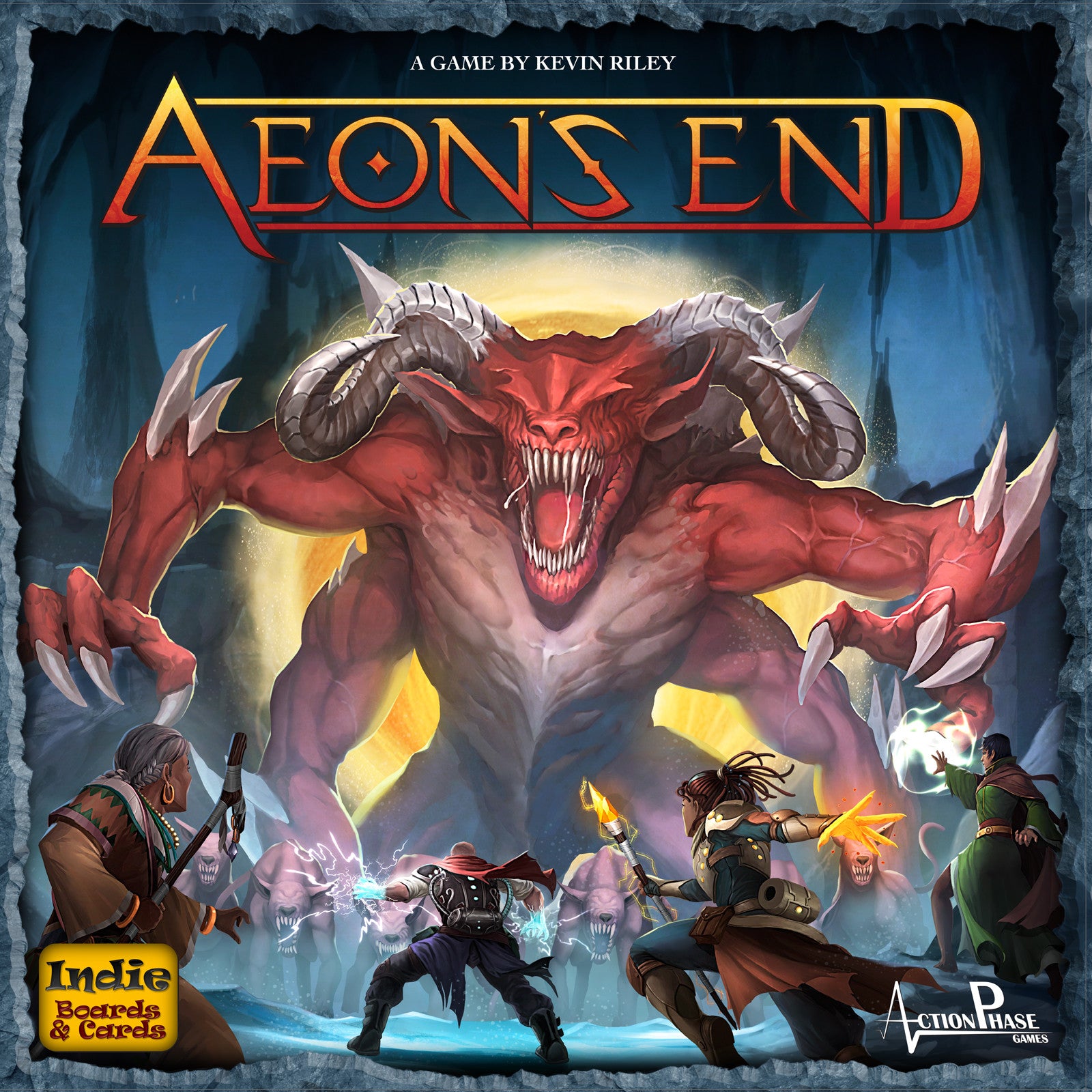
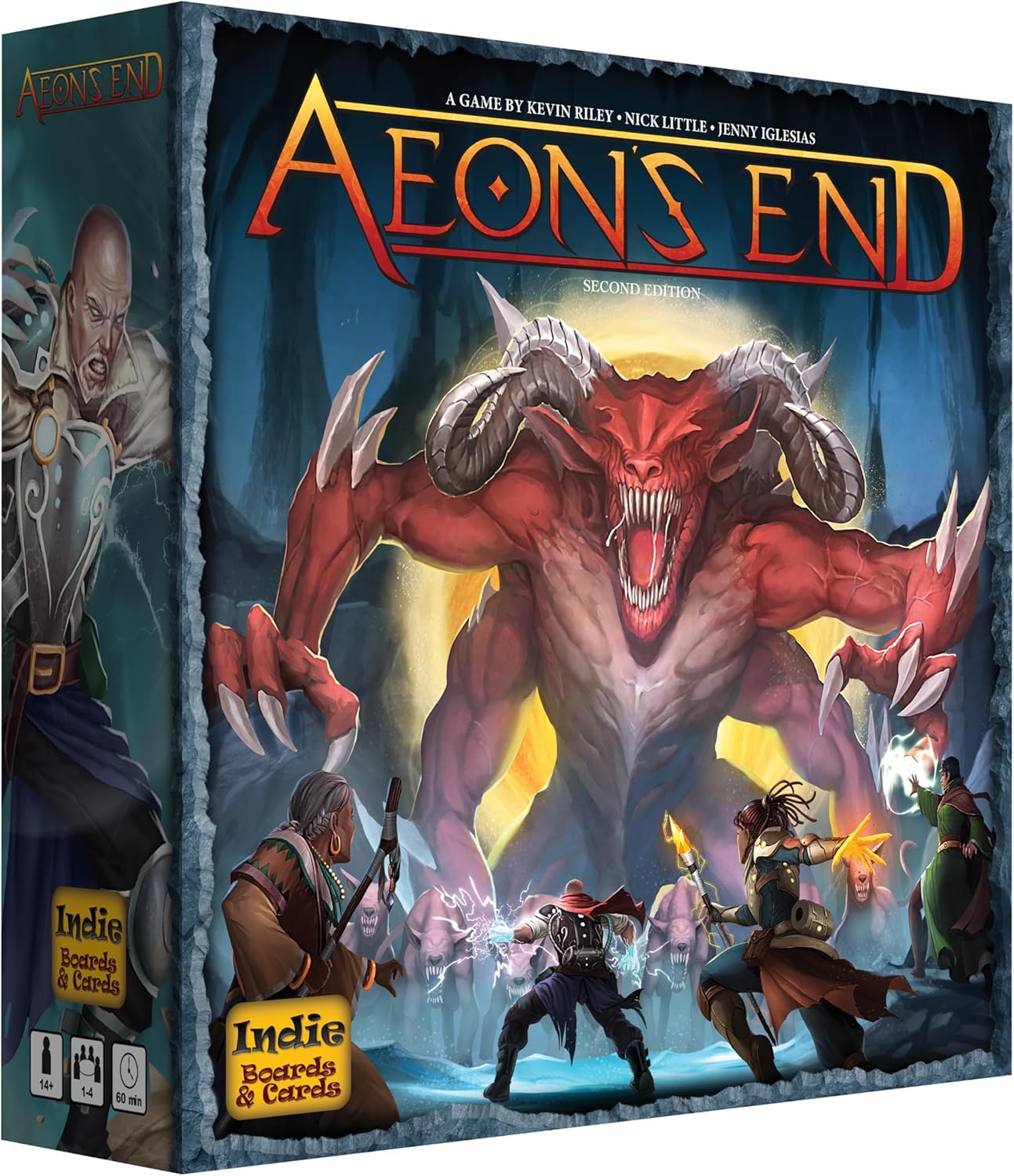
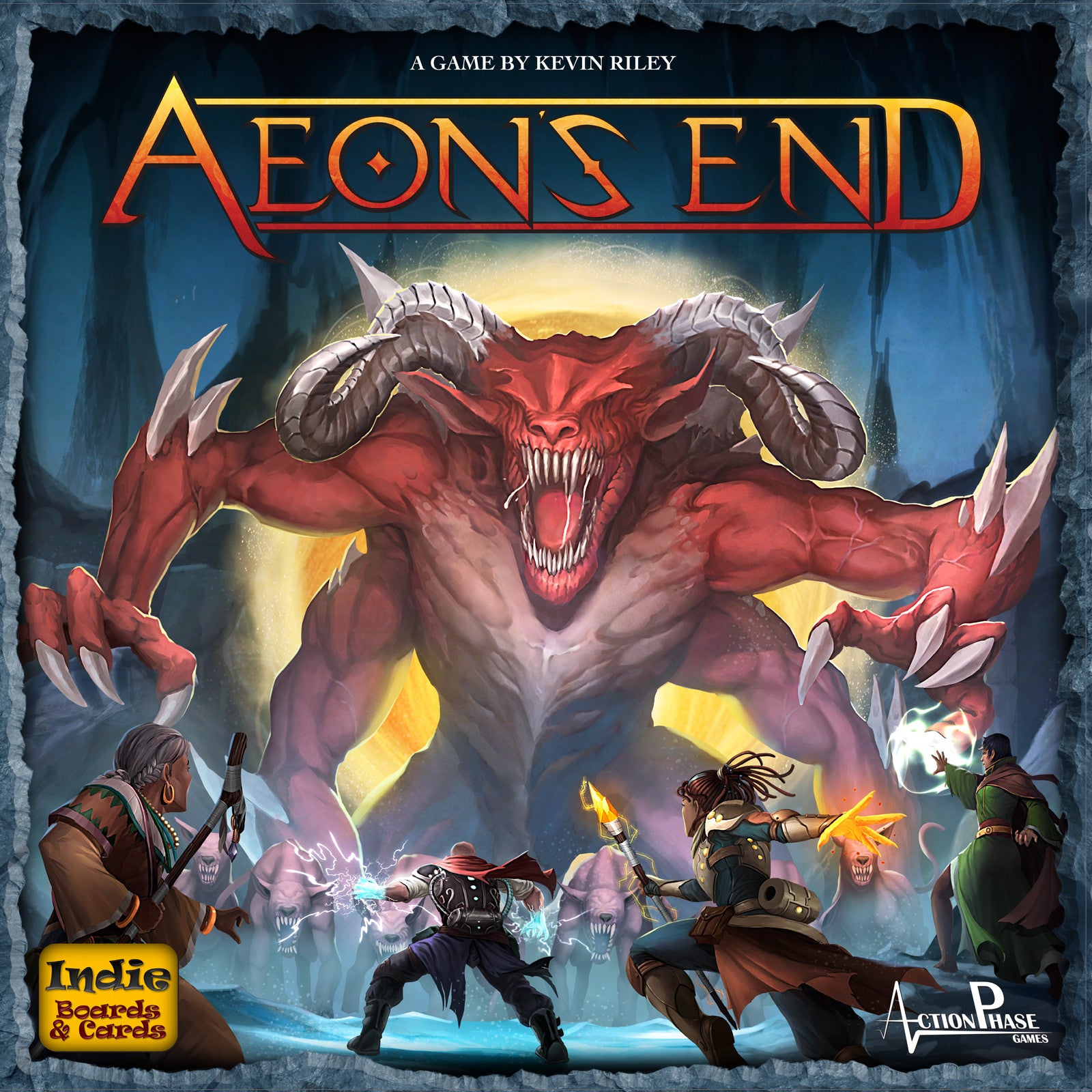
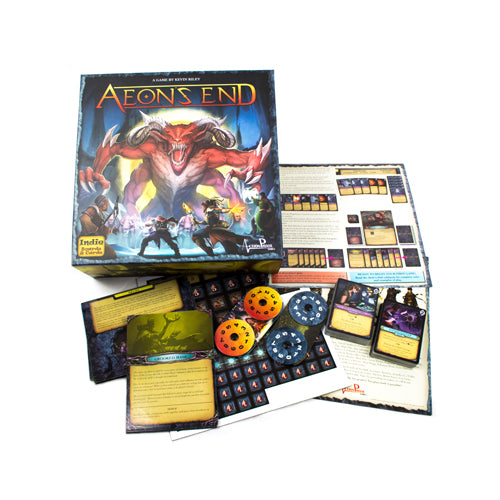
 Aeon's End (2nd Edition)
- Players
- 1-4
- Time
- 60 min
- Age
- 14+
- Complexity
- 2.79 / 5
- Publisher
- Indie Boards & Cards · 2016
- Designers
- Kevin Riley, Nick Little, Jenny Iglesias
- Art
- Gong Studios
The no-shuffle discard rule inverts deckbuilding entirely, creating a puzzle where timing and future-planning matter more than lucky draws. Randomized nemeses and turn order generate asymmetric cooperation. This is deckbuilding grown into a thinking game.
- Revolutionary no-shuffle mechanic raises the skill ceiling dramatically
- Genuine cooperative tension—quarterbacking is obvious and resisted
- Scalable nemeses and random turn order create high replayability
- Requires careful planning; less forgiving to casual play
- Narrative is minimal; theme is atmospheric but sparse
 7 photos
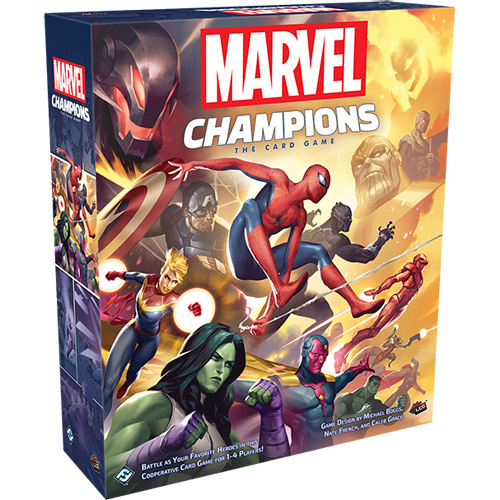
 Marvel Champions: The Card Game (Core Set)
- Players
- 1-4
- Time
- 45-90 min
- Age
- 14+
- Complexity
- 2.95 / 5
- Publisher
- Fantasy Flight Games · 2019
- Designers
- Michael Boggs, Nate French, Caleb Grace
Marries IP fandom with solid LCG mechanics. The core set launches three heroes and two villains; monthly releases deepen strategy. Cooperative asymmetry (hero vs. villain decks) is compelling, and hero customization feels personal. The catch: expansions are expected.
- Strong IP integration—playing favorite Marvel heroes feels earned
- Modular hero decks allow deep customization and identity building
- Cooperative asymmetry creates compelling hero-vs-villain narratives
- Living game model expects ongoing monthly purchases for full depth
- Higher entry price than standalone competitors ($70 base)
 7 photos
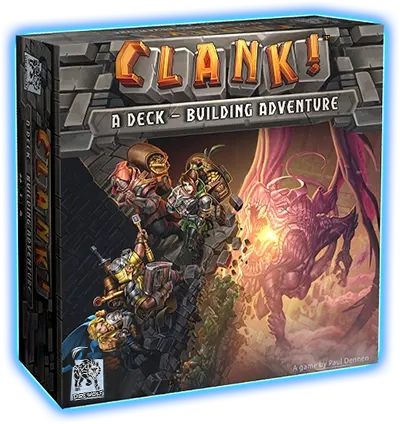
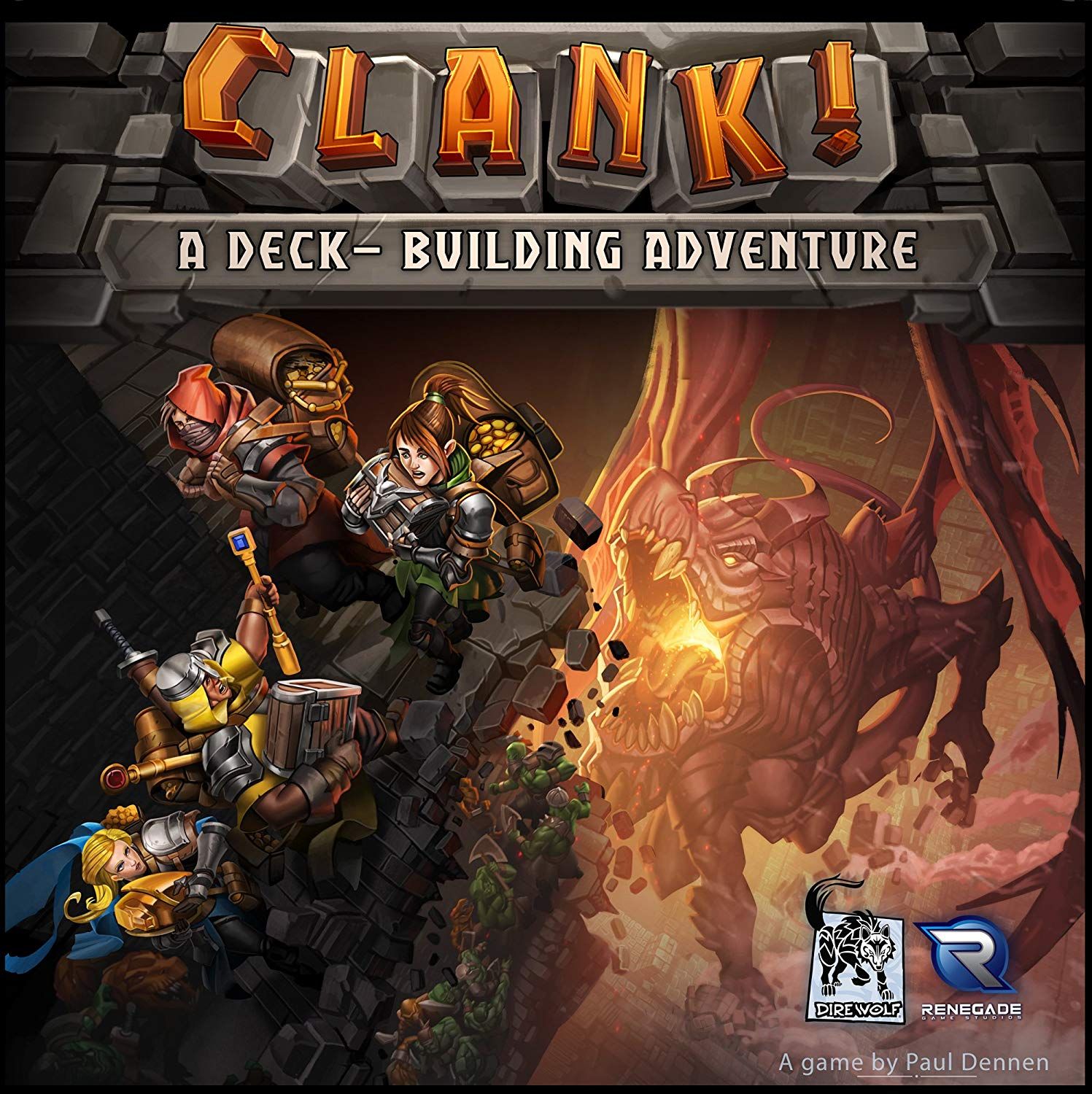
 Clank! A Deck-Building Adventure
- Players
- 2-4 · best 3
- Time
- 30-60 min
- Age
- 12+
- Complexity
- 2.23 / 5
- Publisher
- Renegade Game Studios · 2016
- Designer
- Paul Dennen
- Art
- Rayph Beisner, Raul Ramos, Nate Storm
Deckbuilding meets dungeon crawling. Every card you play echoes—literally—through a noise-detection bag. This creates irreducible tension between deck optimization and stealth movement. Spatial board and dragons add narrative weight Dominion never promises.
- Spatial mechanics add tension missing from pure deckbuilding
- Thematic dragon mechanic (noise tokens) is mechanically elegant and flavorful
- Legacy mode (Clank! Legacy) extends into 40-game campaign play
- Noise mechanic can feel punishing to luck-dependent players
- Spatial board adds complexity; not as streamlined as Dominion
 9 photos
 Star Realms
- Players
- 2
- Time
- 20 min
- Age
- 12+
- Publisher
- Wise Wizard Games · 2014
- Designers
- Rob Dougherty, Darwin Kastle
- Art
- Vito Gesualdi
Deckbuilding distilled. Two-player focused with faction systems that reward allies. A complete game in 20 minutes for $15. Star Realms: Rise of Empire (2025) adds legacy campaign play for players seeking campaign depth on a budget.
- Lowest entry price for a complete deckbuilding experience
- Fast play (20 min) and two-player focus make it ideal for quick sessions
- Faction system creates ally bonuses encouraging deck coherence
- Two-player design; scales awkwardly to 3–4 players
- Minimal theme; pure mechanics with zero narrative flavor
 5 photos
 Legendary: A Marvel Deck Building Game (Second Edition, 2026)
- Players
- 1-5
- Time
- 30-60 min
- Age
- 14+
- Publisher
- Upper Deck Entertainment · 2012
- Designer
- Devin Low
Semi-cooperative: everyone wins or loses together against a mastermind, but your personal score determines who played best. The 550-card base set feels generous. Thematic execution is strong—assembling a six-card hero team feels like assembling the Avengers.
- Semi-cooperative scoring balances table unity with personal achievement
- 550-card base set offers substantial out-of-box content and replayability
- Thematic deck-building (assembling hero teams) is mechanically integrated
- Complex turn structure; more overhead than Dominion or Aeon's End
- Quarterbacking risk high with true cooperative scoring
At a glance
| Game | Players | Time | Type | Best Mechanic | Price | Theme |
|---|---|---|---|---|---|---|
| Dominion | 2–4 | 30–60 min | Competitive | Elegant turn loop; kingdom randomization | $45 | Feudal kingdoms |
| Aeon's End | 1–4 | 45–60 min | Cooperative | No-shuffle discard piles; planning-focused | $50 | Fantasy defense (minimal) |
| Marvel Champions | 1–4 | 45–90 min | Cooperative | Hero-vs-villain asymmetry; IP integration | $70 (expanding monthly) | Marvel superheroes |
| Clank! | 2–4 | 30–60 min | Competitive (with shared dragon) | Spatial dungeon + noise bag tension | $40 | Dragon dungeon heist |
| Star Realms | 1–2 | 20–30 min | Competitive | Faction allies; fast, tight gameplay | $15 | Space conquest (minimal) |
| Legendary | 1–4 | 45–60 min | Semi-cooperative | Hero team assembly; mastermind scaling | $55 | Marvel superheroes (rich) |
Questions, answered
What's the difference between deckbuilding and a traditional card game?
In traditional card games, you build your deck before play and bring it unchanged. In deckbuilding, your deck evolves during the game. You start weak, buy cards from a shared market, and assemble them into a personal arsenal. Every purchase shapes your future draws. It's construction as gameplay.
Is Dominion still worth buying in 2026?
Absolutely. The second edition (2024) refined presentation and rebalanced kingdom cards. The core mechanic remains unmatched for elegant simplicity and replayability. If you want the pure deckbuilding experience, Dominion is still the gold standard.
Which game is best for casual players?
Star Realms ($15, 20 minutes) is fastest and cheapest. Dominion is most forgiving—it teaches itself intuitively. Clank! adds spatial flavor that appeals to non-hardcore gamers. Avoid Aeon's End if you're playing casually; its planning requirements punish relaxed play.
Can I play deckbuilding games solo?
Yes. Aeon's End, Marvel Champions, and Legendary all support 1 player against a scaling nemesis/mastermind. Star Realms has solo modes. Dominion is competitive only. If solo play matters, Aeon's End is best—it was designed for it.
Do expansions matter for these games?
Dominion: no, the base game is complete; expansions add optional variety. Aeon's End: optional; the base game stands alone. Marvel Champions: yes, monthly releases are expected; the game is designed as a living ecosystem. Clank!: no, but Clank! Legacy campaigns across 40 games. Star Realms: optional.
What's the difference between LCG and traditional deckbuilding?
LCGs (Living Card Games) release new cards monthly in predictable packs. You build decks at home before play, then compete/cooperate with those fixed decks. Traditional deckbuilding (Dominion, Aeon's End) builds decks during play from a shared market. Marvel Champions is an LCG; Dominion is traditional deckbuilding.
Which game has the highest skill ceiling?
Aeon's End. The no-shuffle mechanic creates a puzzle where every card purchase ripples into the future. Dominion has deep strategy, but Aeon's End rewards planning 10+ turns ahead. Star Realms is tightest mechanically; Clank! balances luck and skill.
Kenji's verdict
Dominion remains the lighthouse of deckbuilding—the game that illuminated the genre and still stands unmatched for elegant simplicity. But 2026's landscape is richer. If you want purity, buy Dominion. If you want innovation, Aeon's End's no-shuffle mechanic opens a different door. If you want story weight and IP integration, Marvel Champions or Legendary. If you want spatial tension, Clank!. If you want something fast and cheap, Star Realms.
The genre has matured from one perfect game into four distinct schools. Each represents a different temperature of the same fire. The choice is not which is 'best'—it's which calls to you. All of them, played well, will show you something true about strategy, cooperation, and the strange beauty of building something from nothing.
Start with Dominion if you've never played deckbuilding. Start with Aeon's End if you want mechanical innovation. Start with Marvel Champions if IP matters to you. Start with Clank! if you want thematic adventure. None of these choices is wrong. They're just different paths through the same forest, each revealing its own view.
Still deciding? Take the Game-Finder — answer seven quick questions and the cabinet hands you the one board game built for your table, with a buy link and your own shareable player talisman.
Research ledger 8 sources · reviewed 2026-07-17
Specifications, rules, current product information, community experience, and contrary evidence were checked against the sources below. Commercial links are kept separate from editorial evidence.
- en.wikipedia.orgen.wikipedia.org/wiki/Dominion_(card_game)
- dominioncg.fandom.comdominioncg.fandom.com/wiki/Donald_X._Vaccarino
- indieboardsandcards.comindieboardsandcards.com/our-games/aeons-end
- fantasyflightgames.comfantasyflightgames.com/en/products/marvel-champions-the-card-game
- direwolfdigital.comdirewolfdigital.com/clank
- starrealms.comstarrealms.com
- neutronium.gamesneutronium.games/blog/deck-building-board-games-2026
- coopboardgames.comcoopboardgames.com/rankings/best-cooperative-deck-building-games
Every object has a lineage. Let me tell you its story.


Keep exploring
The next smart rabbit holes.
◈ Universe HubAeon's End: the whole buying pathAeon's End is a cooperative deckbuilding boss-battle system where players never shuffle their decks. This universe maps the...✦ Topic PathBoard Game Buying Guides: compare the whole shelfStart with the decision, not the shelf. These guides compare the games, editions, expansions, player counts, and costs people...ComparisonThe Best Engine-Building Board Games of 2026, RankedA sensei's tier list of the games that taught a generation what "the engine click" feels like — from the gateway masterpiece to the...