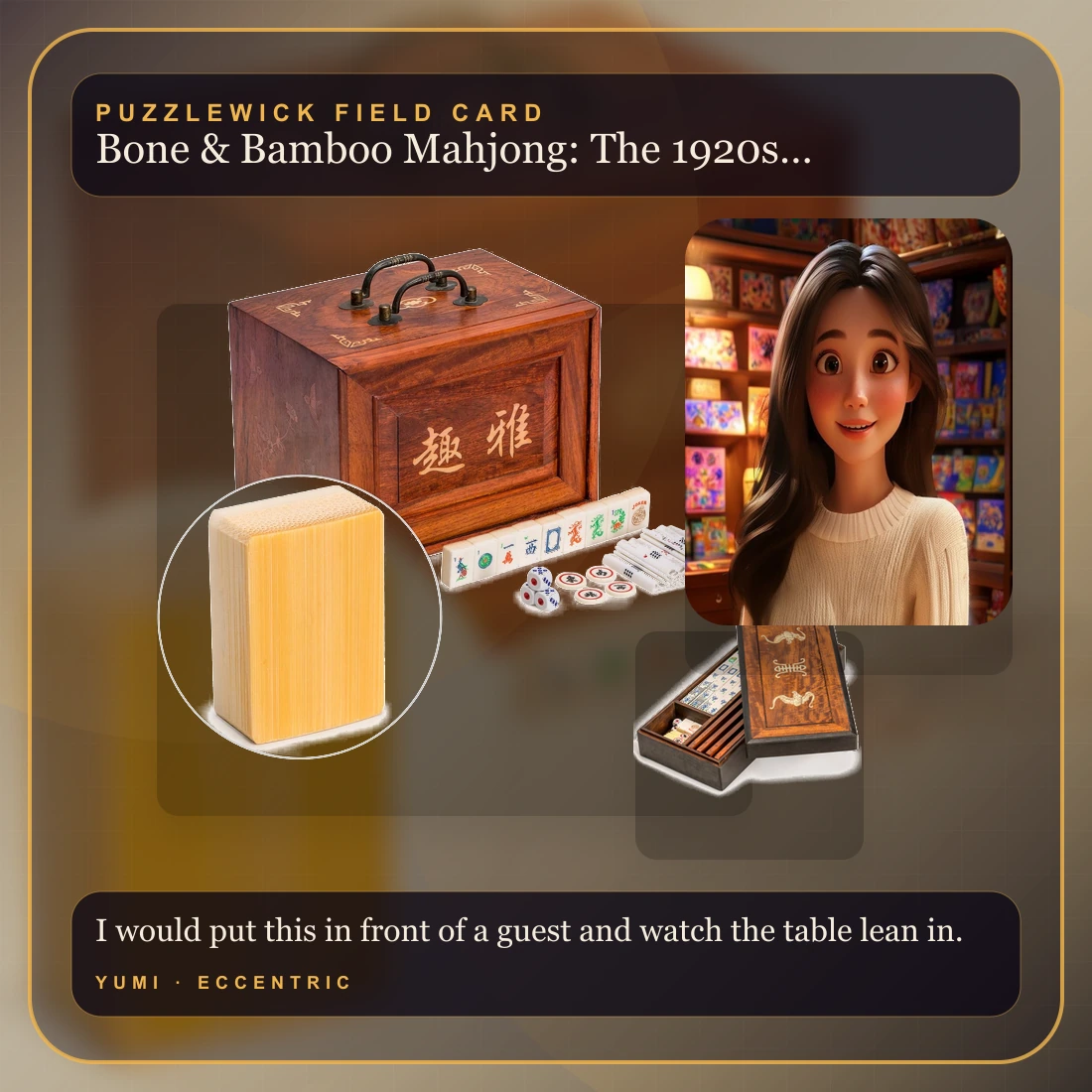
Bone & Bamboo Mahjong: The 1920s Shanghai Heirloom, Still Hand-Carved Today
A playable family game that doubles as a display piece — why collectors save up for hand-carved bone and bamboo, and how to buy one that's actually in stock.


AI-assisted research and drafting in Yumi’s voice · reviewed by Robert Pruitt · how this guide was made
Last editorial refresh: 2026-06-24 Gold-standard QA: 2026-08-10 11 sources reviewed Affiliate links checked during gold-standard pass

The short answer
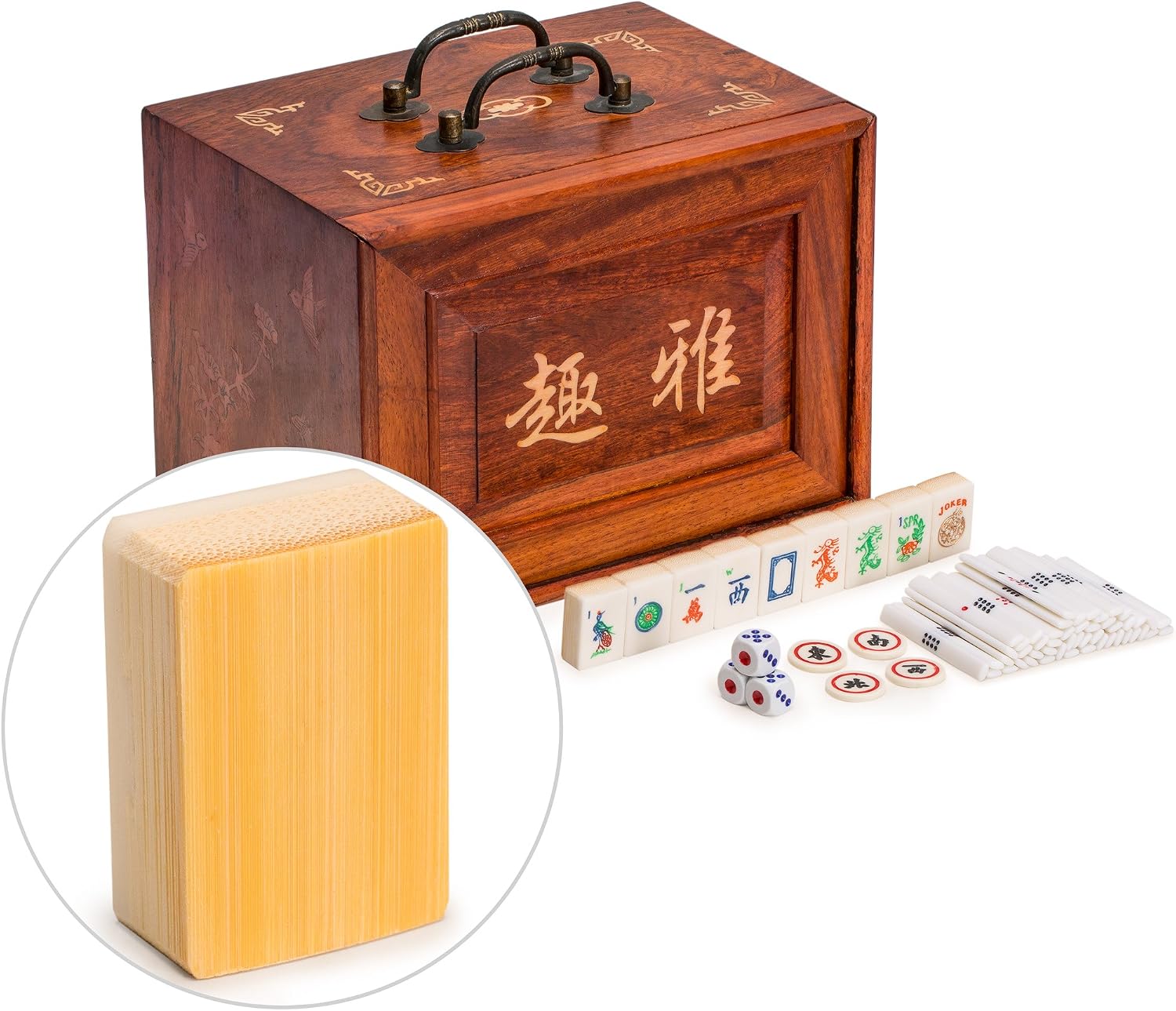
A bone-and-bamboo mahjong set is the heirloom tier of the hobby — 166 tiles hand-carved from cattle shin bone laminated to bamboo, housed in a shell-inlaid rosewood case, exactly as Shanghai made them when mahjong swept America in the 1920s. The faithful modern keeper is Yellow Mountain Imports' Traditional American set (Sparrows / Bats / Qilin, roughly $329–$340), still hand-carved today so no two tiles match. It restocks in waves rather than sitting always-in-cart, so treat it as an heirloom you wait for: link whichever variant is in stock the day you buy, and keep an eye on the YMI direct pages and the reputable vintage market as a buyable fallback.
Decision map
Choose in thirty seconds
The faithful, still-hand-carved heirloom for American (NMJL) play — when you catch it in stock
When the new line is sold out and you want a buyable bone-and-bamboo set now
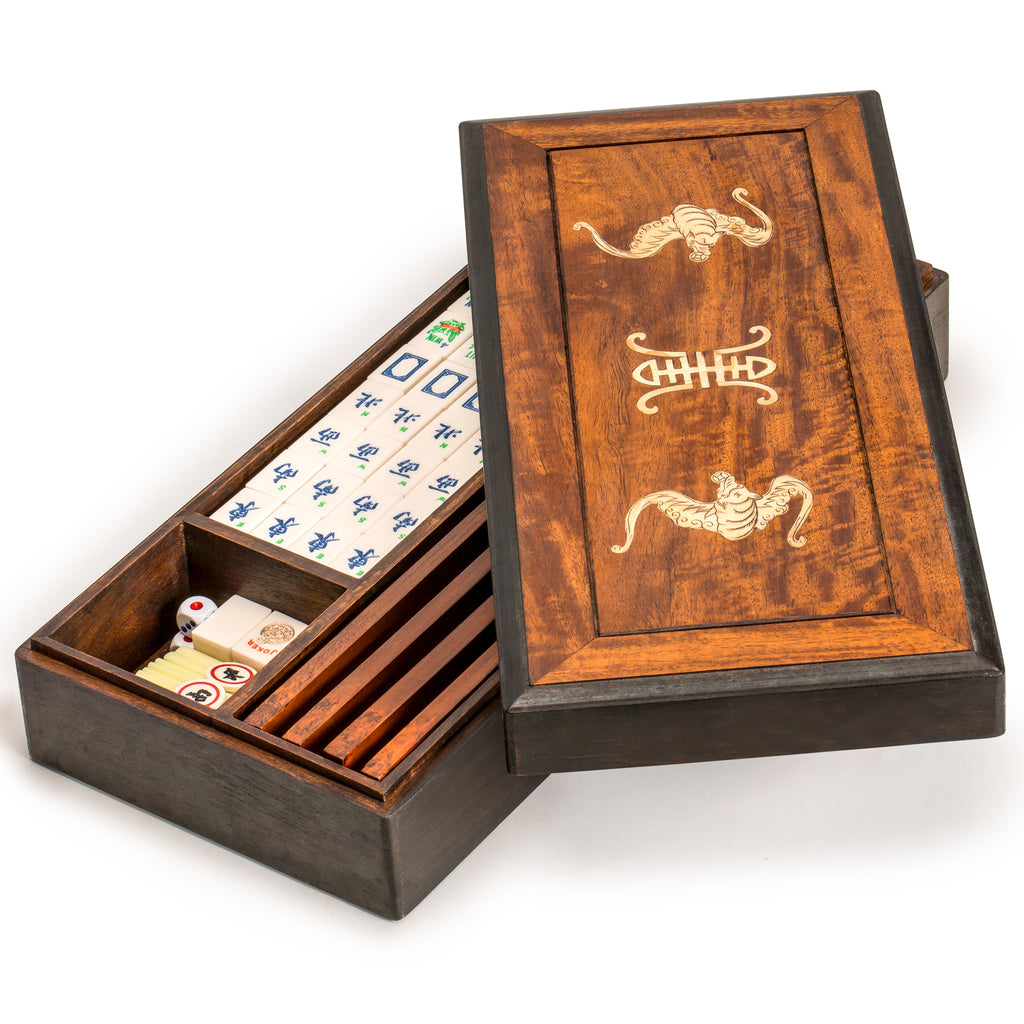
Some objects are bought; this one is waited for. I love a thing you gather around — and there is nothing in my whole eccentric wing that gathers a table quite like a bone-and-bamboo mahjong set sliding open out of its rosewood drawers under a warm lamp. The click of the tiles, the cream of aged bone against jade-green bamboo, the little shell birds inlaid in the lid catching the light: this is the set that comes out every holiday for fifty years and then belongs to somebody's grandchild. When mahjong became America's obsession in the 1920s, the status sets came from Shanghai, and they looked exactly like this. The quiet miracle is that you can still buy a faithful new one — genuinely hand-carved, genuinely bone — if you catch it in stock. Let's talk about why it's worth the wait, and how to land one that's actually buyable.
Start here, then go deeper
You are in the right cabinet.
 ♛ Topic PathGrail Board Games: compare the whole shelfA grail earns its space only when the experience survives the price, setup, storage, and group commitment. These are expensive-game...
 Deep DiveThe 1849 Staunton in Ebony & Boxwood: The Heirloom Chess Set Collectors Pass DownA buyable object with a 175-year provenance — genuine ebony, antiqued boxwood, hand-carved knights, and a lineage that outlives the...
 Best OfBest Dice Towers (2026): The Keeper's Complete Guide, From $20 Bamboo to Heirloom HardwoodFor seventeen centuries, a Roman's answer to a single problem—how to remove the hand from the throw—has been copied, refined, and never...
Why were 1920s Shanghai bone-and-bamboo sets the status symbol?
 Traditional American Mahjong Set — Bone & Bamboo Tiles, Shell-Inlaid Rosewood Case (166-Tile Bundle, NMJL-Ready) See it on Amazon ↗
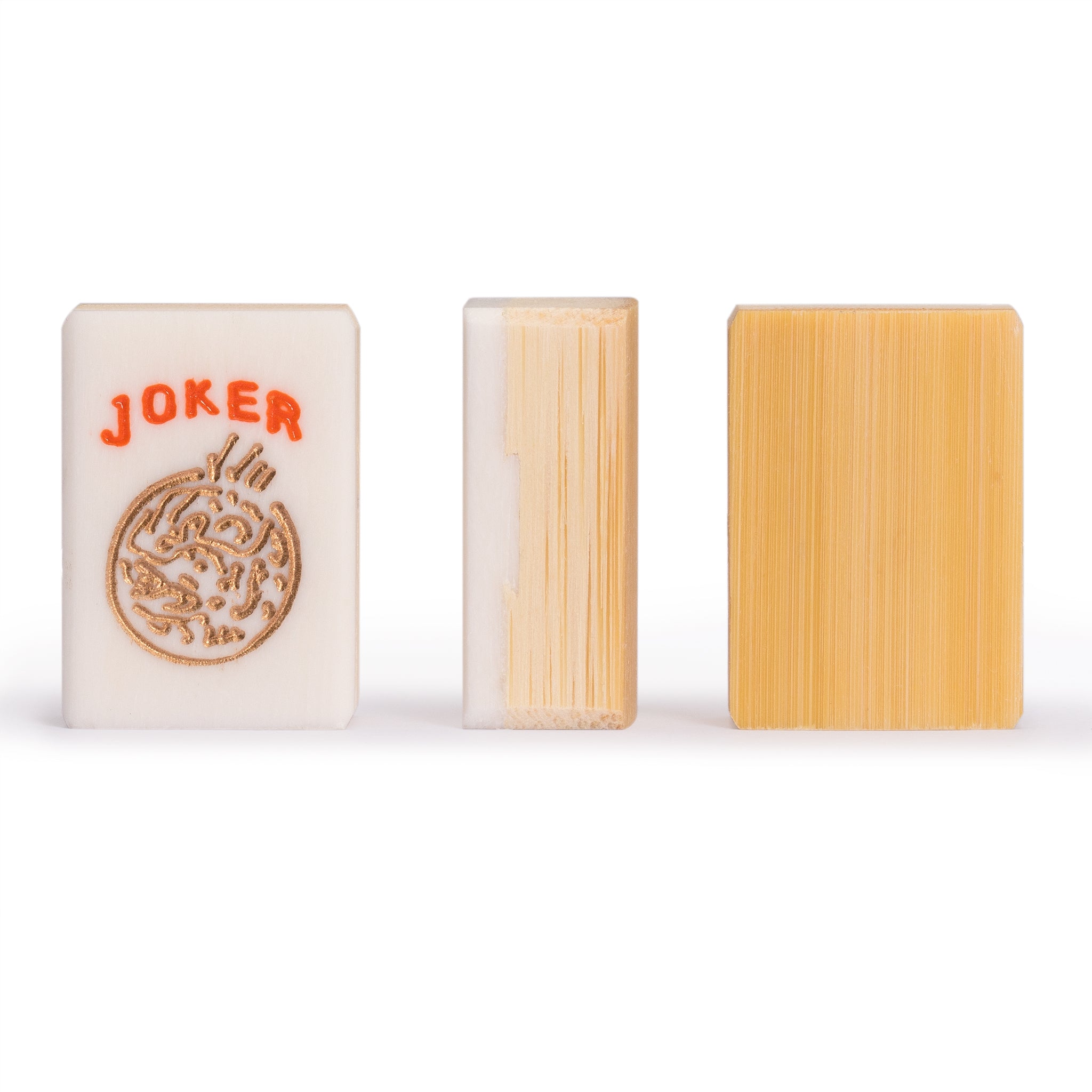
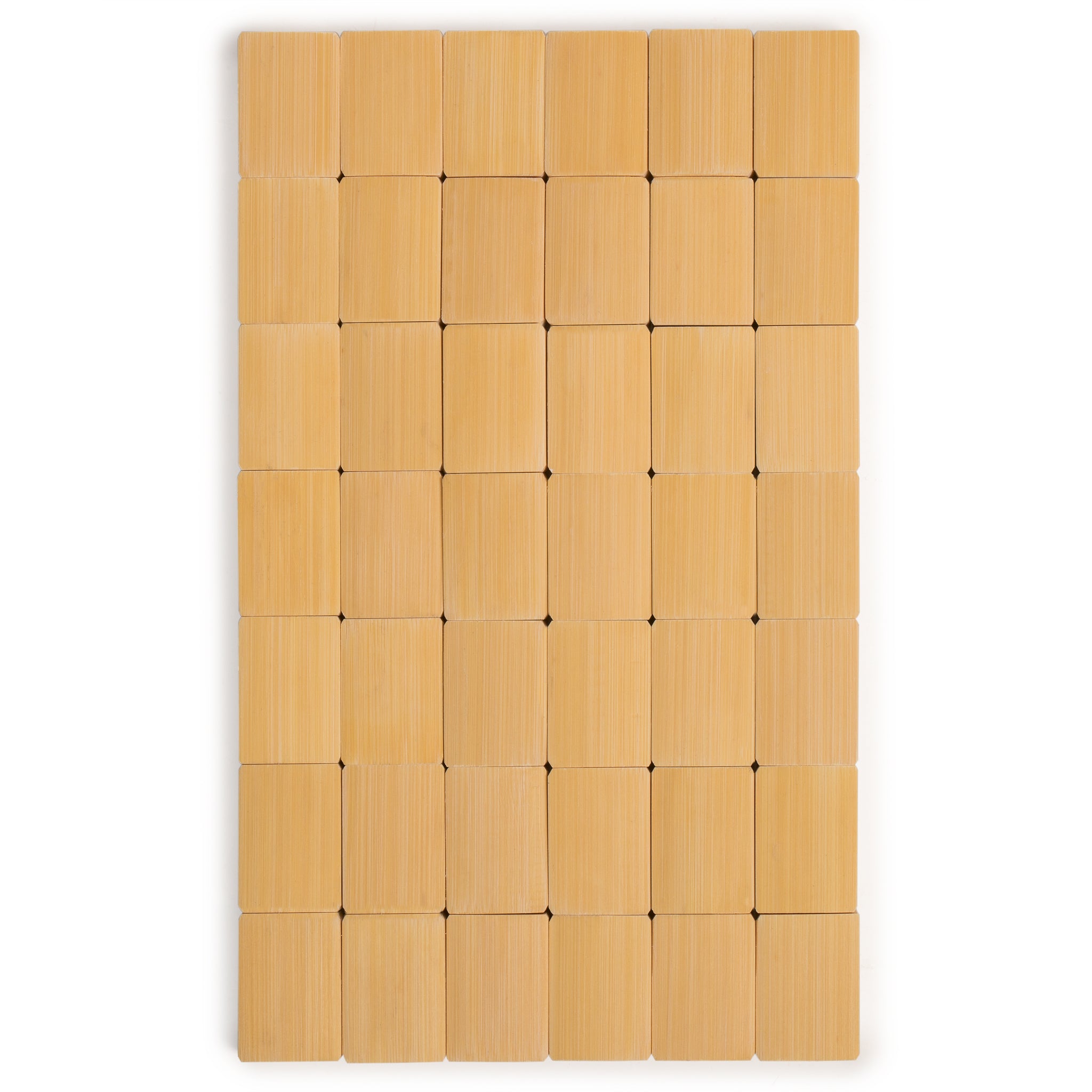
Picture America in 1923. Mahjong has arrived from China and the whole country has lost its head over it — department stores can't keep sets on the shelves, hostesses throw mahjong evenings in silk and lacquer, and the truly fashionable want the real thing. The real thing came from Shanghai: 144 (and soon, for the American game, more) tiles hand-carved from white cattle shin bone, each bone face laminated to a slab of bamboo for the back, then housed in a carved rosewood case with shell inlay and sliding drawers.
These were not toys. They were luxury craft objects, and they cost accordingly. A bone-and-bamboo set in a beautiful box signaled exactly the same thing a good watch or a piano did — taste, money, and the patience to own something made by hand. That status charge never fully faded. A century later, the materials still read as the heirloom tier, and the silhouette — cream tiles, jade backs, deep-red case glinting with shell — still says this is the good set the moment it hits the table.
What I find lovely is that the status was never just about price. It was about presence. A bone set has weight and warmth a plastic one simply can't fake, and everyone at the table feels it in the first hand.
What makes bone and bamboo the heirloom tier above plastic?
 Traditional American Mahjong Set — Bone & Bamboo Tiles, Shell-Inlaid Rosewood Case (166-Tile Bundle, NMJL-Ready) See it on Amazon ↗
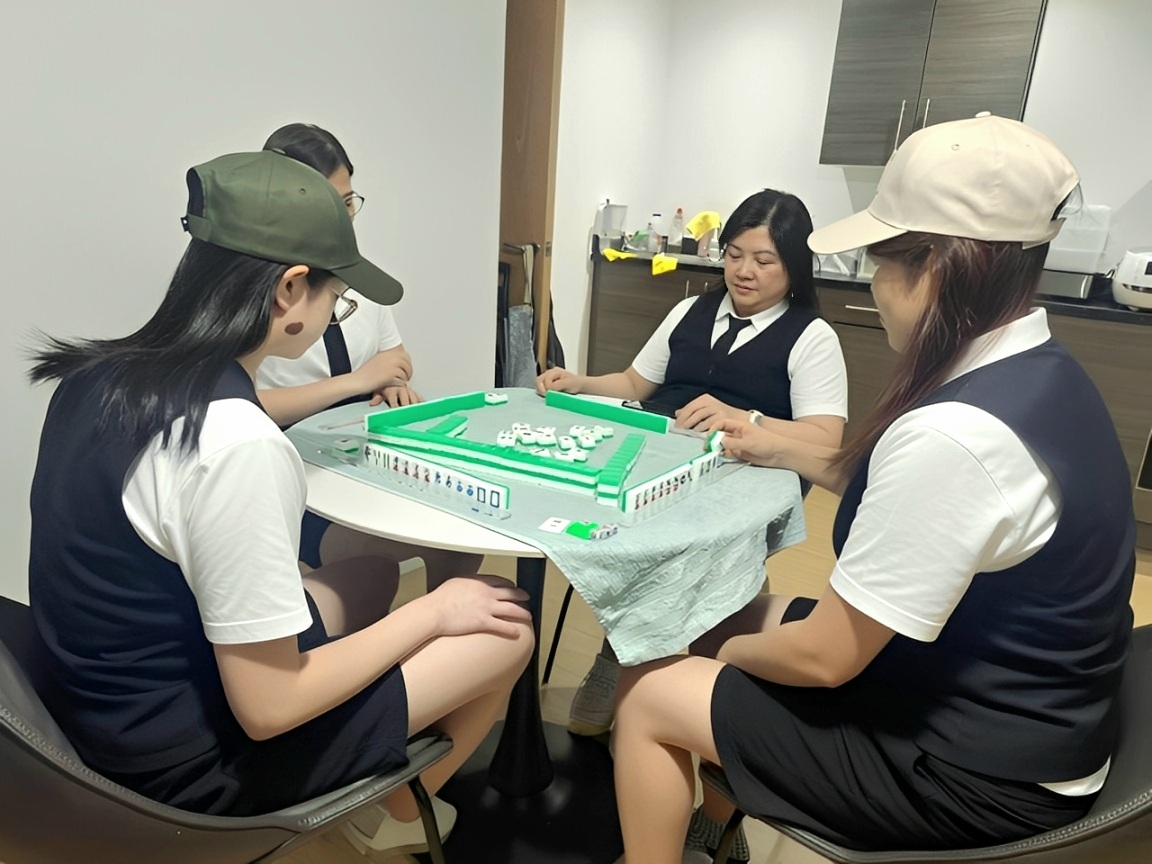
Walk the modern mahjong shelves and you'll mostly meet melamine and acrylic — bright, cheap, indestructible, and completely fine for game night. Bone and bamboo sits a full tier above all of it, and the difference is something you feel in your hand before you can name it.
The collectors who live in this hobby are blunt about the trade-off. Bone-and-bamboo is the heirloom grade: real heft, and it ages beautifully — bone warms to a soft ivory cream over decades the way good piano keys do — but it asks for care that plastic never does. Plastic is an appliance; bone is closer to a musical instrument.
- Weight and click. Bone tiles have a density and a sound — that satisfying clack on a shuffle — that lightweight plastic can't reproduce.
- It earns a patina. Bone mellows and deepens; plastic just looks older.
- It's repairable and lasting. A century-old bone set still plays. Most plastic sets are landfill in twenty years.
That's the whole pitch for the splurge. You are not buying a nicer version of the same thing — you're buying a different category of object: one meant to outlive you and get handed down, not replaced.
Why do hand-carved tiles vary — and why is that a good thing?
 Traditional American Mahjong Set — Bone & Bamboo Tiles, Shell-Inlaid Rosewood Case (166-Tile Bundle, NMJL-Ready) See it on Amazon ↗
 Traditional American Mahjong Set — Bone & Bamboo Tiles, Shell-Inlaid Rosewood Case (166-Tile Bundle, NMJL-Ready) See it on Amazon ↗
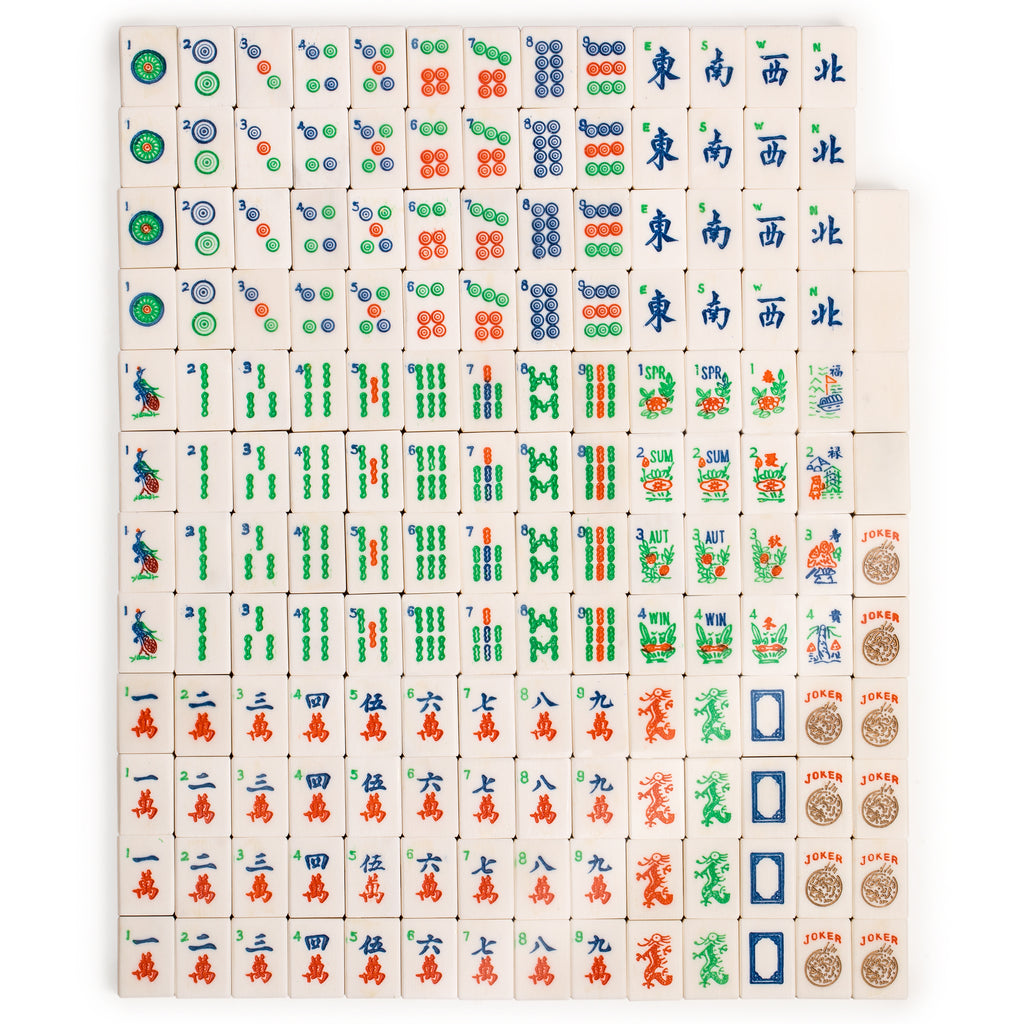
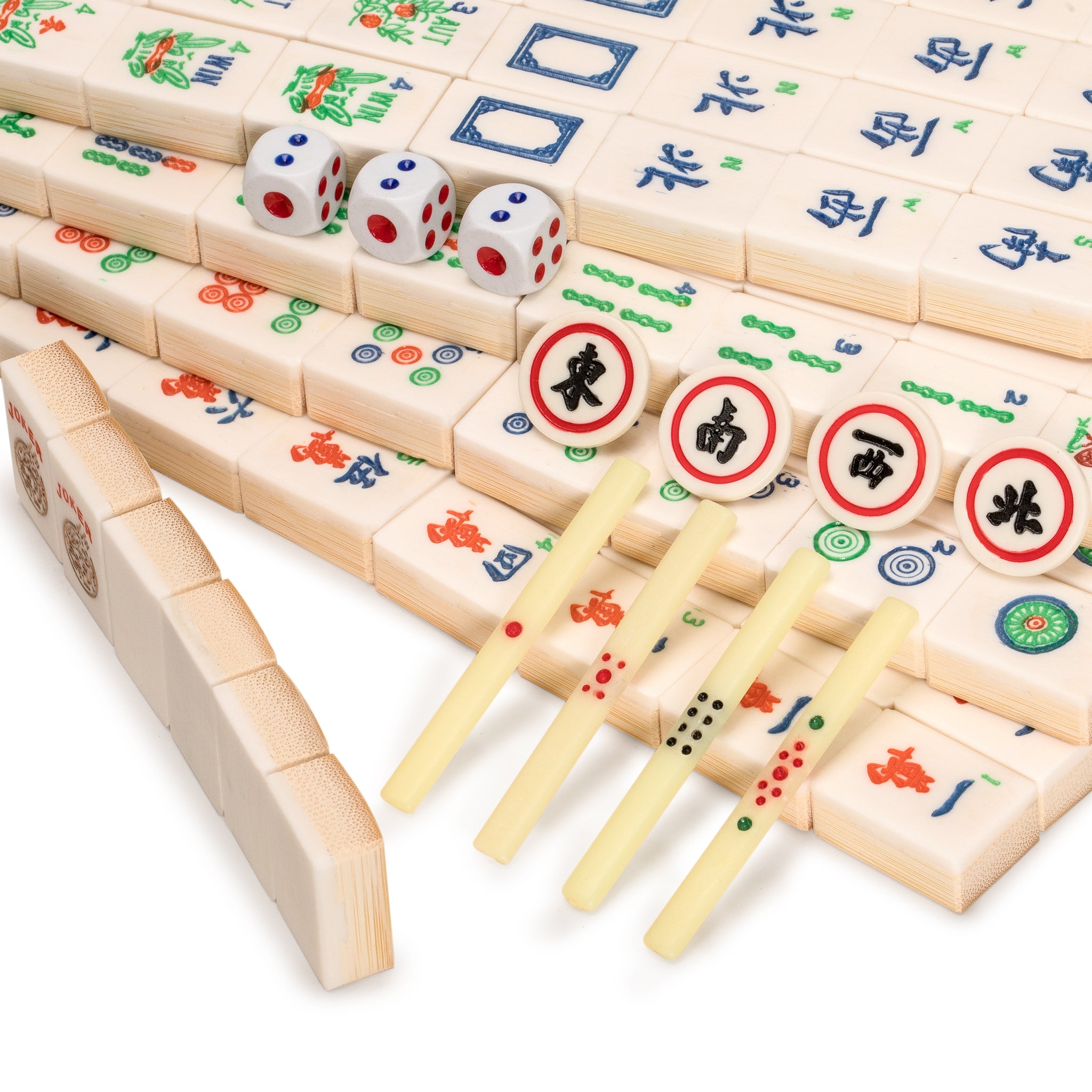
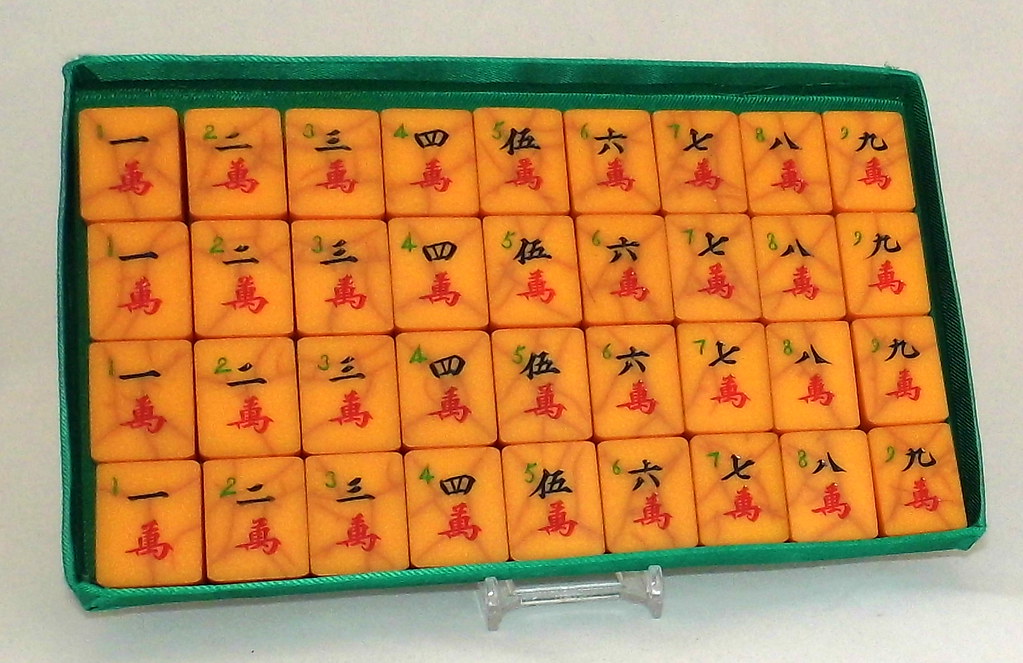
Here's the detail that turns a buyer into a believer. On a faithful bone-and-bamboo set, every tile's markings are carved and inked by hand. Yellow Mountain Imports still makes them this way today — their own product pages describe each tile as cut and carved one at a time with the markings carved and painted by hand — and the honest consequence is that the tiles are not identical. Color shifts a hair from one bamboo to the next; a carved bird tilts a degree the maker's hand didn't on the tile beside it; the red and green inks sit slightly differently.
If you're coming from the world of mass-molded plastic, your instinct might be to call that a flaw. It is the exact opposite. That variation is the signature of a human hand, and it's precisely what collectors prize. A machine makes 166 perfect clones; a carver makes 166 siblings. The faint inconsistencies are the proof of authenticity — the fingerprint that says someone sat and cut these, one at a time.
Practically, it means two things. First, your set is unrepeatable; no other set on earth is carved quite like yours. Second — and this matters when you shop — you should expect minor variation and never reject a set over it. The reviews that complain that 'the tiles don't perfectly match' are, charmingly, complaining about the very thing that makes the set worth $340 instead of $40. Lean into it. The little imperfections are where the soul lives.

American vs Chinese sets — which variant should you buy?
 Traditional American Mahjong Set — Bone & Bamboo Tiles, Shell-Inlaid Rosewood Case (166-Tile Bundle, NMJL-Ready) See it on Amazon ↗
This is the one place people genuinely buy the wrong thing, so let me make it simple. The bone-and-bamboo line comes in two flavors, and they are not interchangeable — they're built for different games.
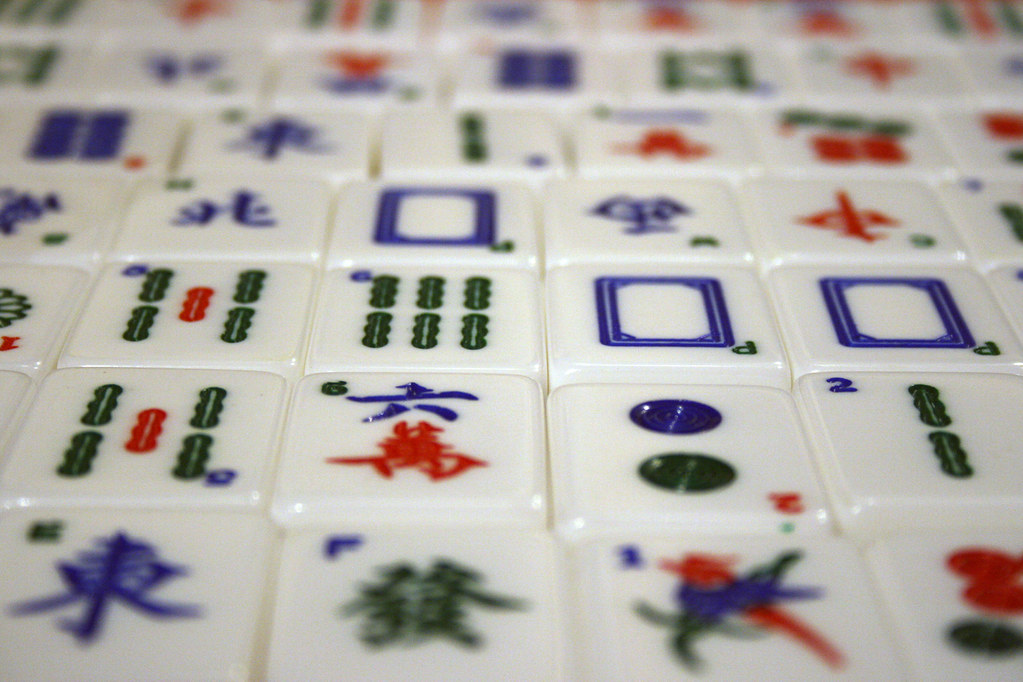
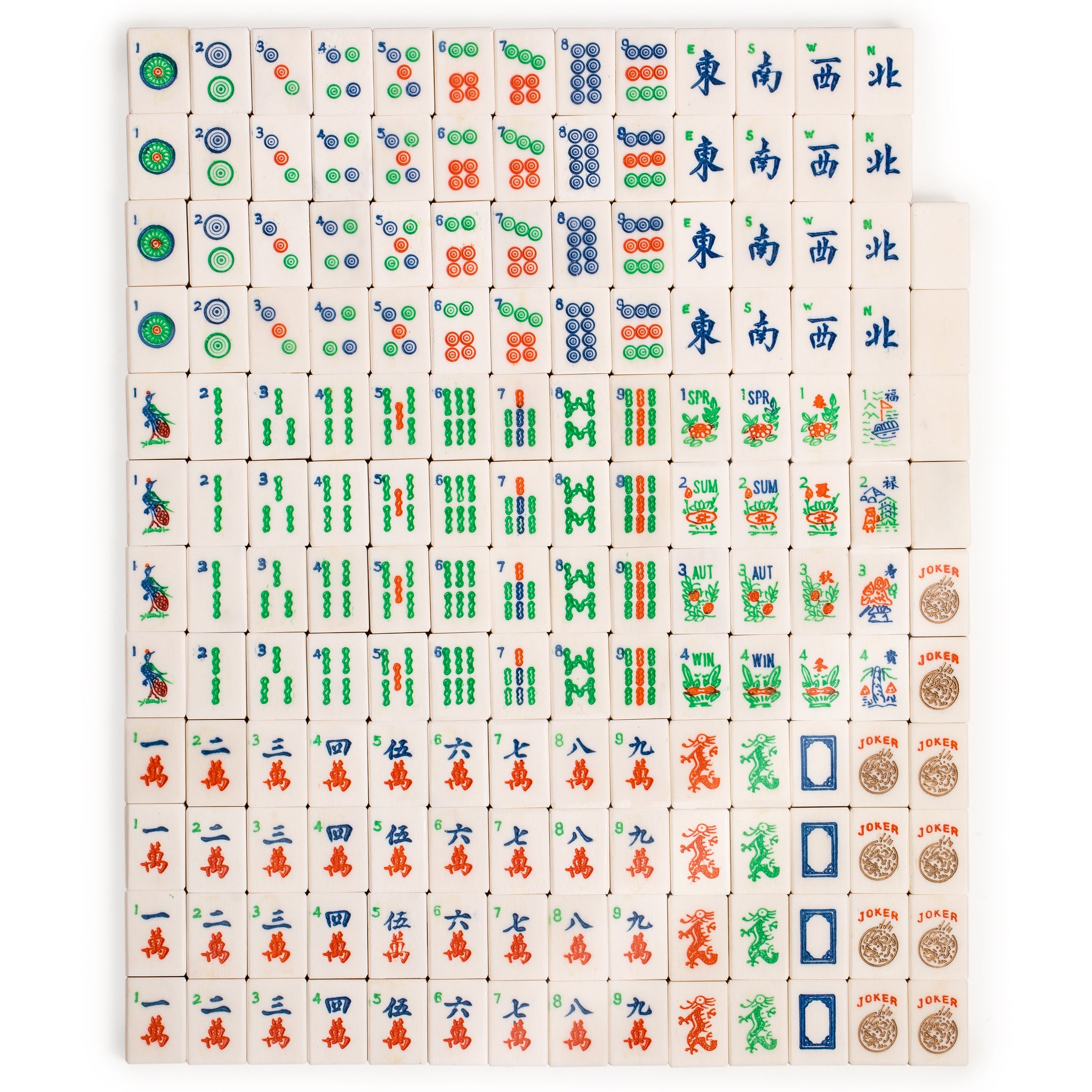
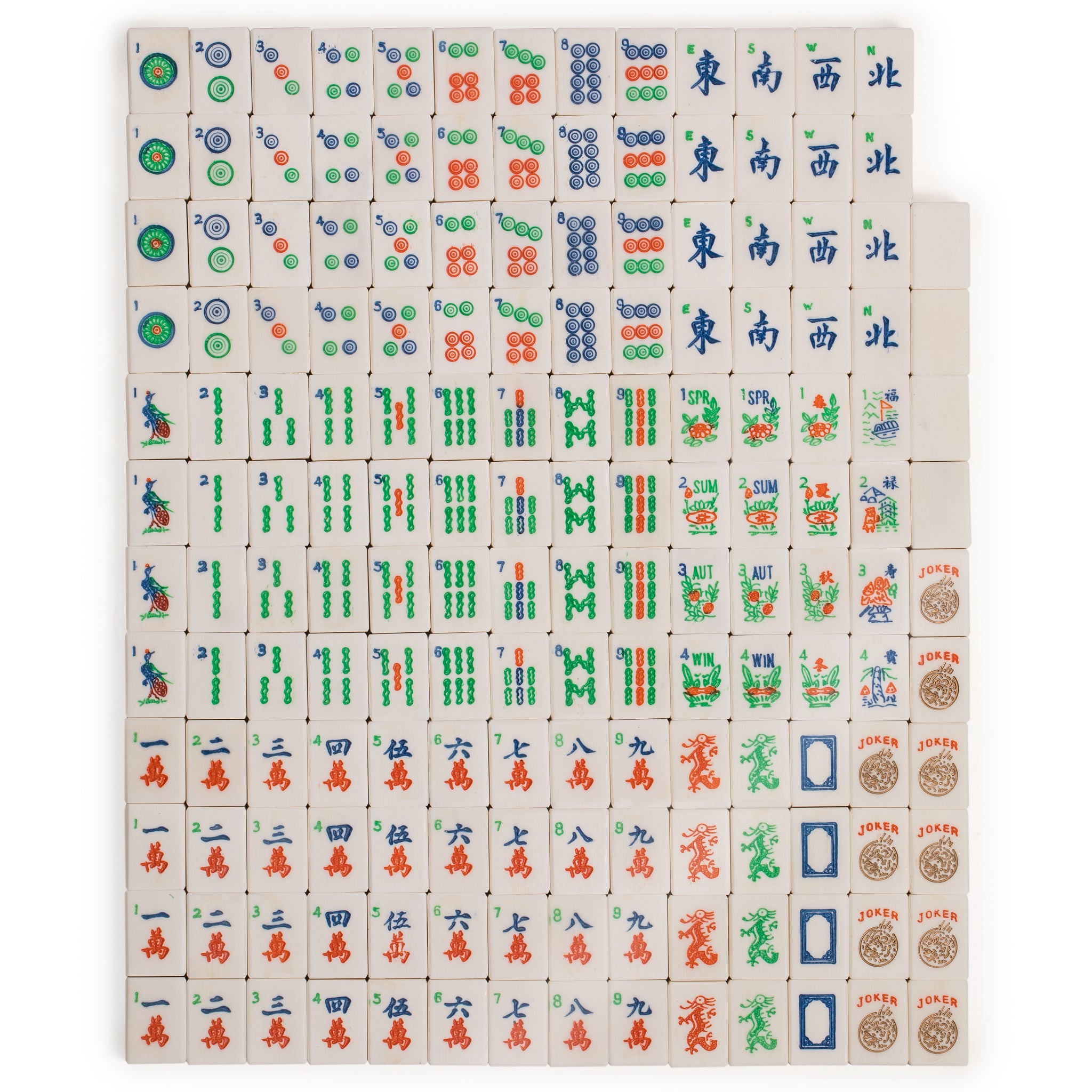
The American set adds the extra Flowers and Jokers that the National Mah Jongg League card game requires — the playing composition the NMJL game needs is 152 tiles, and Yellow Mountain ships its American sets as a 166-tile bundle (the 152 you play with plus spares, extra jokers, and blanks). If you play American mahjong — the card-based game your mom or your neighbor or your Tuesday group plays — this is the set built for it. The practical forum wisdom is exact about the count: American sets need the extra Jokers and Flowers for the NMJL card; on these YMI sets, confirm the full 166-tile bundle (which includes the spares) before you buy.
The Chinese set uses a different subset and won't have the American Jokers in the same way. It's gorgeous and correct for Chinese play — and wrong for an American table.
- Play American (NMJL card)? Buy the American bone-and-bamboo set. Yellow Mountain's Sparrows, Bats, and Qilin are all this configuration (166-tile bundle).
- Play Chinese (or 3-player / Riichi-adjacent)? Buy the Chinese bone-and-bamboo variant instead — same materials, different tile mix.
Buy the variant for the game you actually sit down and play. An heirloom you can't use for your weekly game is just an expensive shelf decoration — and this one deserves the table.
How do you store a rosewood case so it never splits?
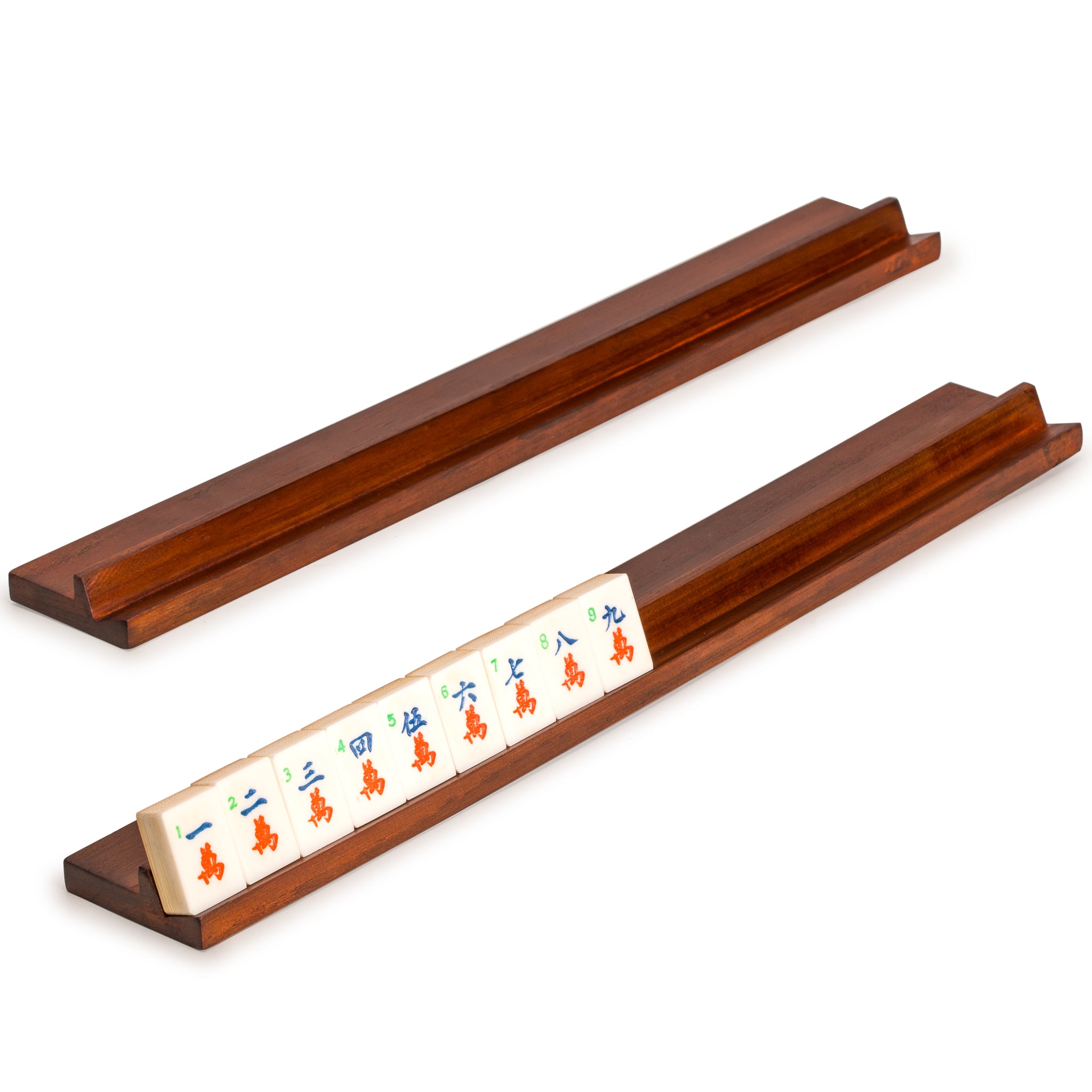 Traditional American Mahjong Set — Bone & Bamboo Tiles, Shell-Inlaid Rosewood Case (166-Tile Bundle, NMJL-Ready) See it on Amazon ↗
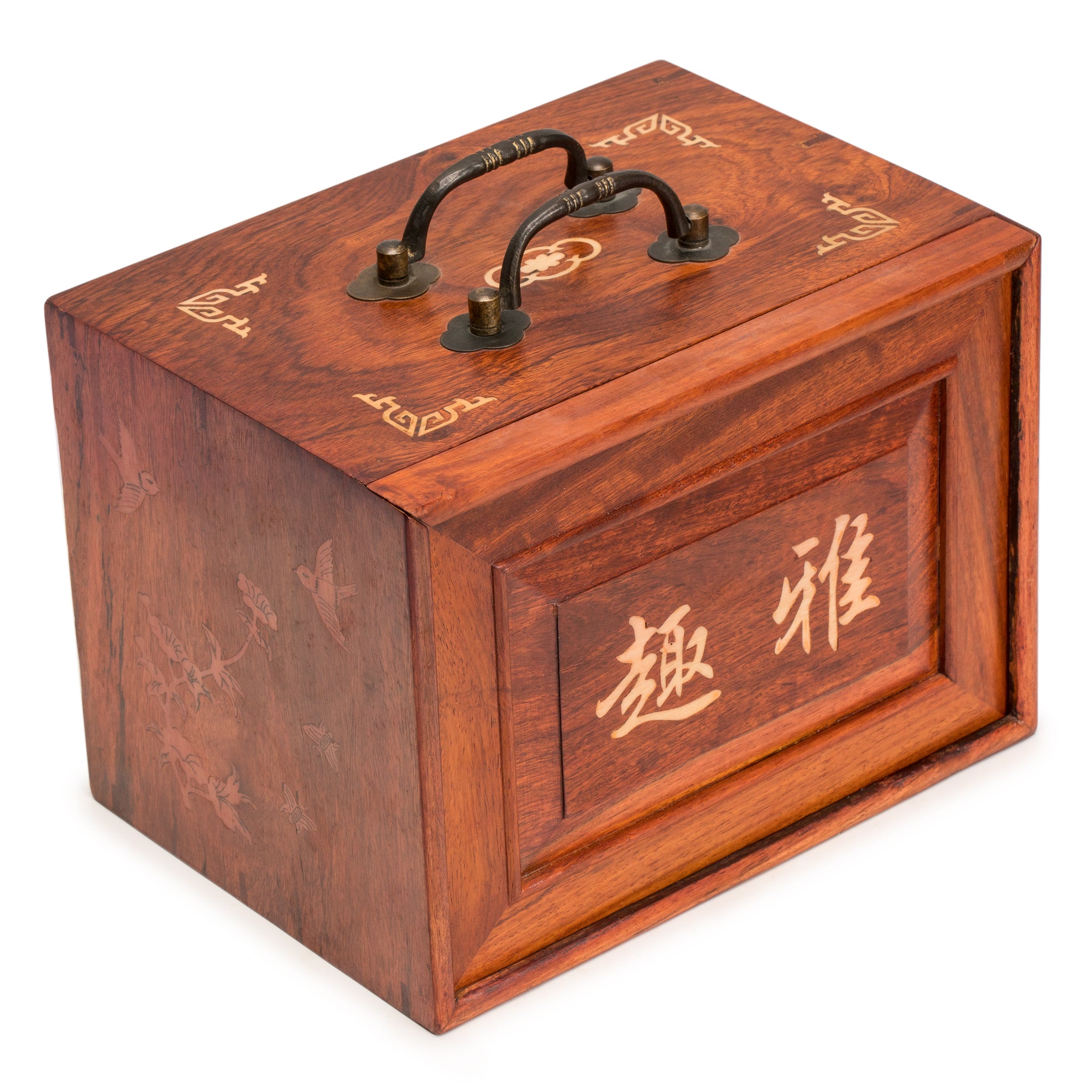
If you take one piece of preservation wisdom from me, make it this — because it's the failure that breaks the most beautiful boxes. Antique-style rosewood cases can split as they age and dry out, and the shell inlay can warp for the same reason: wood and shell move at different rates, and uneven drying is the enemy. This isn't a sourced manufacturer spec — it's the same fine-wood and musical-instrument care logic that protects any wood-and-inlay heirloom, applied to a mahjong box.
The fix is gentle and unglamorous. Treat it the way you'd treat a good guitar or a piano — keep the climate boring and stable:
- Store it closed, in its case, at a stable, moderate humidity (roughly 45–55% relative humidity is the band museums and instrument-makers favor). That range keeps wood stable. Too dry and it cracks; too damp and it swells and warps.
- Keep it away from heating vents, radiators, and direct sun. The villain is not heat exactly — it's the fast, repeated drying those sources cause. A box that dries out unevenly is a box that splits.
- Be extra cautious with shell-inlaid lids. Inlay and wood expand at different rates, so big humidity swings can lift or warp the inlay first.
In practice: don't store it in a baking attic or a damp basement. A normal interior shelf, out of the sun, with a small hygrometer nearby is plenty. If your home runs very dry in winter, a closed cabinet — or a humidity pack tucked in the case — buys real insurance. This is a fifty-year object; a $10 humidity gauge is the cheapest part of owning it.

Why should you never over-clean a vintage set?
The instinct, when a gorgeous old bone set arrives a little yellowed and grimy, is to make it gleam. Resist that instinct with everything you have. As Tom Sloper's long-running mahjong FAQ (item 7o, on cleaning and restoring sets) puts it plainly, any attempt to clean or restore a vintage or antique set carries the chance of damage and the potential to diminish its value in the eyes of purist collectors, who feel it takes away from the set's authenticity and value.
Here's the logic. That soft ivory tone on aged bone is patina — decades of handling and oils and air, the visible record that this set was played and loved. Scrub it back to bright white and you haven't restored it; you've erased its history and, with it, a chunk of its worth. The same goes for the case: a too-eager refinish strips the original surface that a knowledgeable buyer is actually paying for.
So the rule of a careful keeper is light hands:
- Dust and a barely-damp wipe, not solvents and scrubbing. Lift dirt; don't strip surface.
- Leave the patina. The mellow cream of old bone is a feature, not a stain.
- Never refinish a vintage case to 'fix' it. Original surface > shiny surface, every time, to the people who matter.
This applies most to genuine vintage finds, but the spirit carries to a new set too: let it age. The whole point of bone is that it gets more beautiful with time and touch. Your job isn't to keep it factory-new — it's to play it gently for decades and let it earn its glow.

How do you care for bone tiles and shell-inlaid boxes?
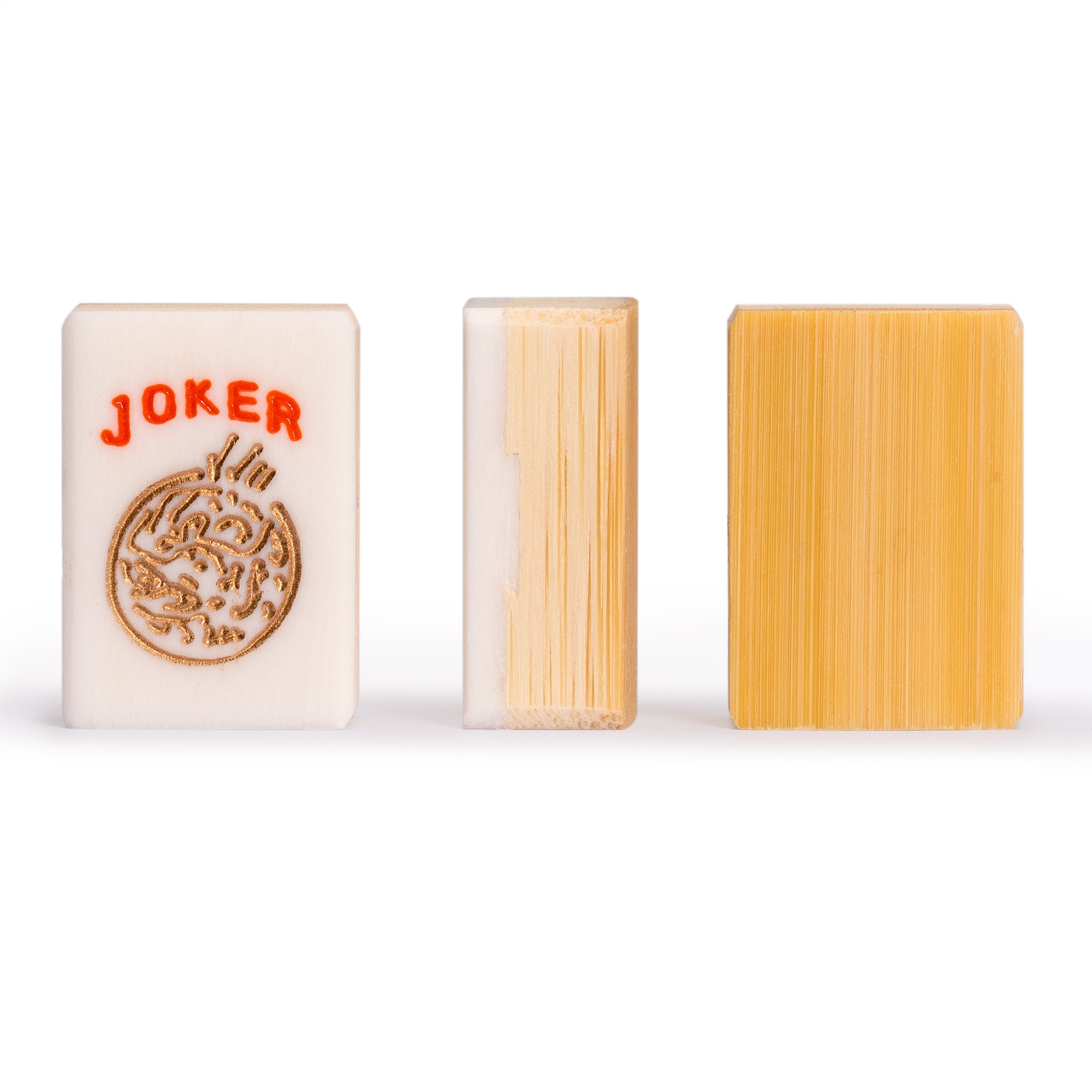 Traditional American Mahjong Set — Bone & Bamboo Tiles, Shell-Inlaid Rosewood Case (166-Tile Bundle, NMJL-Ready) See it on Amazon ↗
Day-to-day, a bone-and-bamboo set is not fussy — it just needs the same kindness you'd give any fine wood-and-bone object. Two enemies, two habits.
Enemy one: dryness and direct heat. Bone, like the rosewood around it, hates being baked dry. Keep tiles out of direct sun and away from heating vents — the same rule that protects the case protects the tiles. After a session, a quick wipe with a soft, barely-damp cloth lifts hand oils; let them dry fully before they go back in the drawer. Never soak bone, and skip harsh cleaners — they can dry and dull the surface.
Enemy two: humidity swings on the inlay. Shell-inlaid lids are the most delicate part of the whole object. Mother-of-pearl and wood move at different rates, so the big preservation win is simply stable conditions — that moderate, steady humidity again — and gentle handling of the lid. Don't stack heavy things on it; don't let it bake in a sunny window.
- Wipe tiles with a soft, slightly damp cloth; dry before storing.
- Store closed and shaded, away from vents and sun.
- Treat the inlaid lid as the fragile part — stable humidity, soft touch.
Do this and the set rewards you the way bone always does: it deepens, it warms, it gets lovelier the more it's used. That's the quiet joy of a tactile heirloom — caring for it is part of the pleasure, not a chore.
Is a faithful new set as collectible as a vintage one?
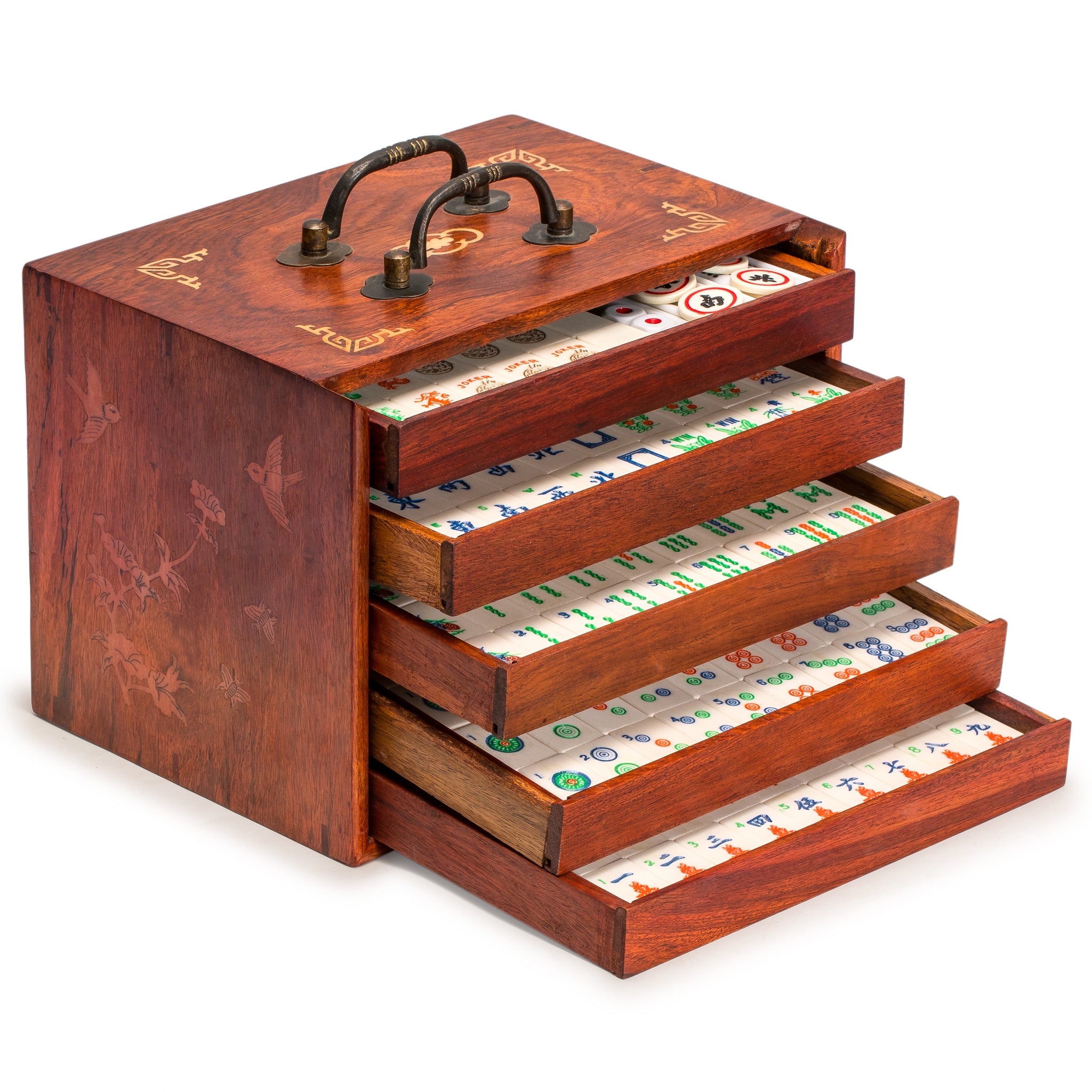
 Traditional American Mahjong Set — Bone & Bamboo Tiles, Shell-Inlaid Rosewood Case (166-Tile Bundle, NMJL-Ready) See it on Amazon ↗
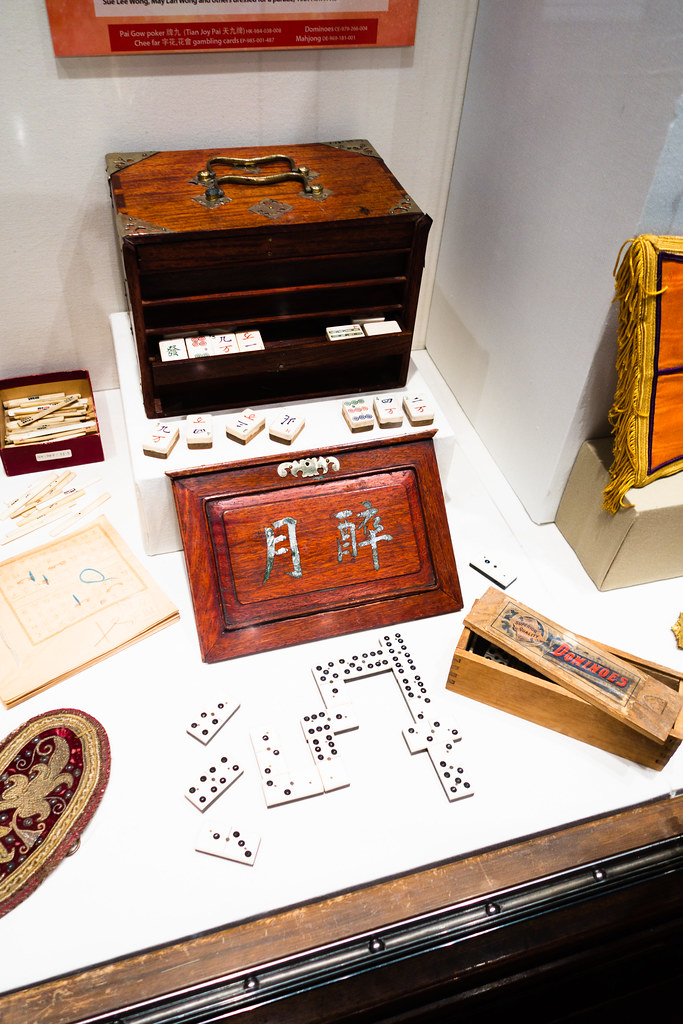
The honest answer: a vintage Shanghai original carries a provenance and a history a new set can't manufacture — that's why true antiques command their own premiums, sometimes well into four figures at auction. But a faithful, currently-hand-carved bone-and-bamboo set is its own kind of grail, and for most people it's the better buy.
Why? Because it's the real materials and the real method, made today, with no auction-house guesswork about condition. You get genuine bone, genuine bamboo backs, a real shell-inlaid rosewood case, and tiles cut by hand — the same recipe Shanghai used — but you also get a complete, playable, undamaged set you can actually sit down and use this weekend. A vintage set is a thing you protect; a faithful new one is a thing you start. It becomes the heirloom — yours, with your table's history carved into the next fifty years.
And it is genuinely still made. The line restocks in waves (it cycles in and out of stock rather than sitting always-available), which is exactly why I treat this as a grail you wait for rather than grab. That intermittency is frustrating in a cart and wonderful in an object: scarcity is part of why it stays special. Buy the faithful new set, play it gently, pass it down — and in forty years it'll be somebody else's treasured vintage find.
The picks
Some links below are affiliate links — as an Amazon Associate, Puzzlewick earns from qualifying purchases, at no extra cost to you. It never changes a pick.
 11 photos
 Traditional American Mahjong Set — Bone & Bamboo Tiles, Shell-Inlaid Rosewood Case (166-Tile Bundle, NMJL-Ready)
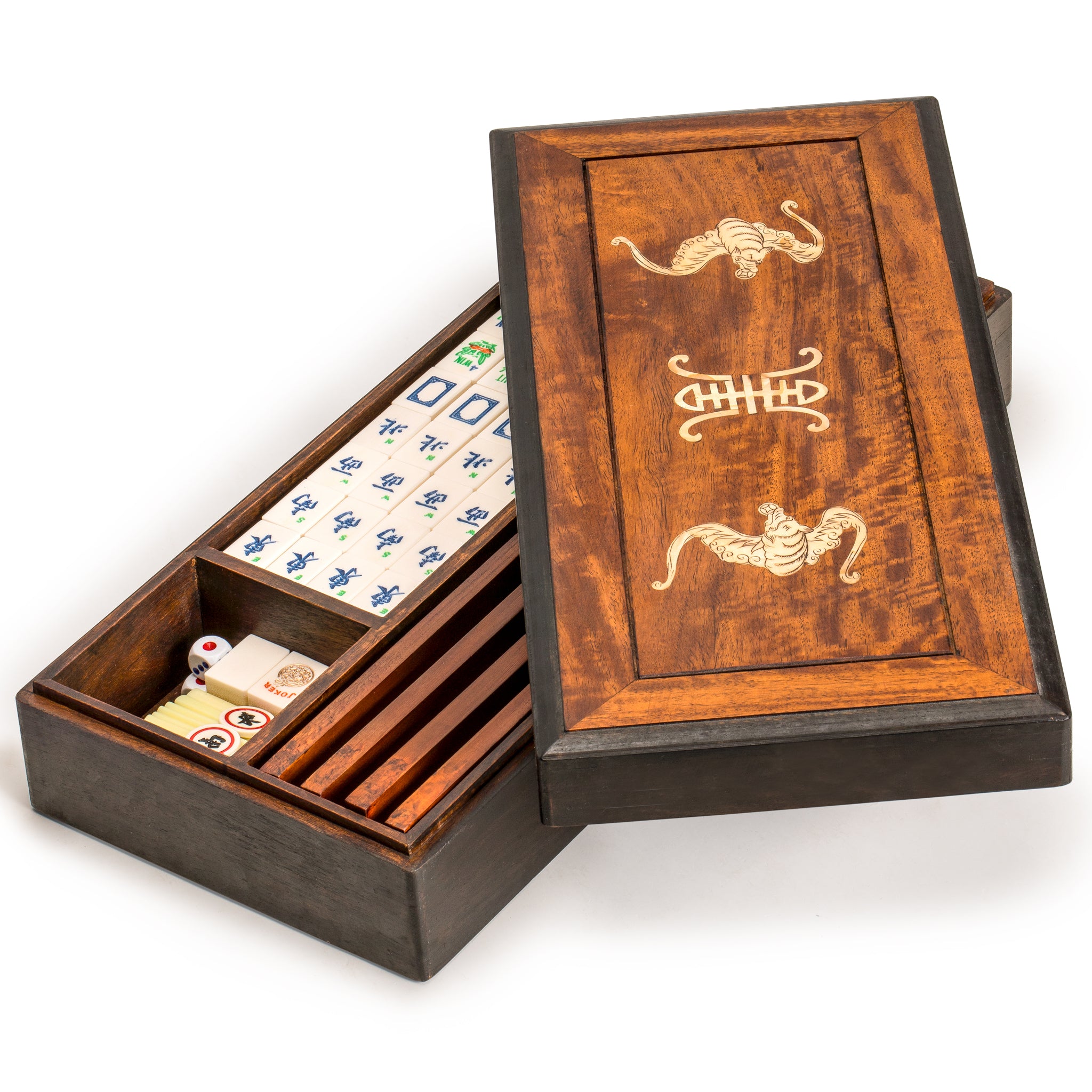
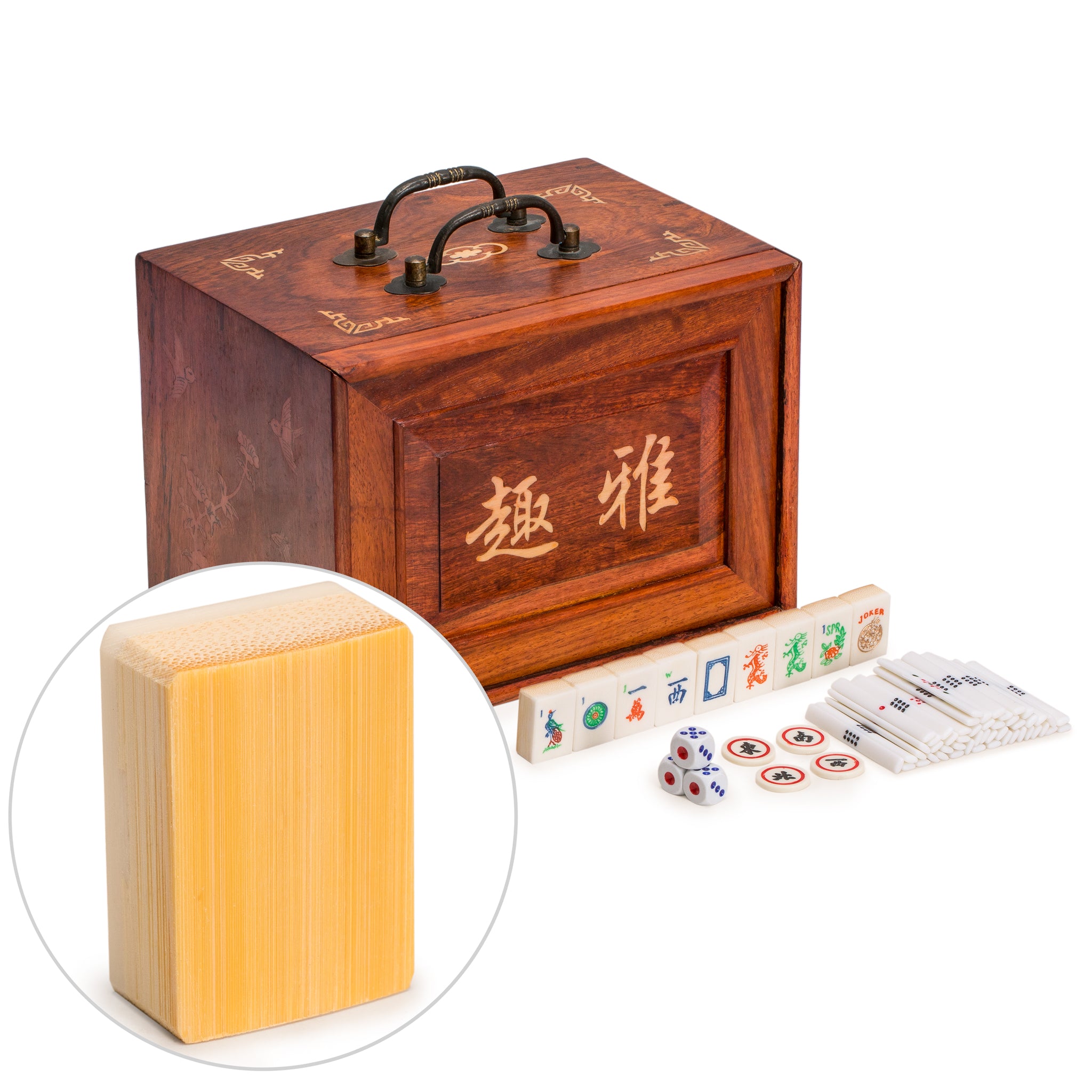
<p>This is the keeper. Genuine cattle-bone faces laminated to bamboo backs, 166 hand-carved tiles for the American card game (the 152 you play with plus spares, extra jokers, and blanks), and a shell-inlaid rosewood case with sliding drawers — the faithful descendant of the 1920s Shanghai sets, still cut by hand today. It comes in three shell-inlay motifs (Sparrows, Bats, Qilin) that are the same line at the same tier; the carving variation between tiles is the hand-made signature, not a defect. Direct prices run about $328.89–$339.98, squarely in the heirloom band. The one catch is real and worth saying plainly: it sells out and restocks in waves rather than sitting always-in-cart, so buy the variant that's actually in stock the day you shop.</p>
- Real bone-and-bamboo, genuinely hand-carved today — the authentic heirloom recipe
- Correct American / NMJL configuration (166-tile bundle: 152 playable plus spares, extra jokers, blanks)
- Beautiful shell-inlaid rosewood case with sliding drawers; ages to a soft ivory glow
- Complete and playable out of the box — betting sticks, dice, wind tiles included
- Intermittent stock — sells out and restocks in waves; not always buyable on demand
- Needs real care plastic doesn't (humidity-stable storage, gentle cleaning)
- Premium price (~$329–$340) versus melamine/acrylic sets
 6 photos
 Vintage / Specialist-Market Bone & Bamboo Set — the when-the-new-line-is-sold-out fallback
<p>Because the faithful new line cycles in and out of stock, every careful buyer needs a fallback that's buyable today — and the well-run vintage/specialist market is it. Reputable vintage dealers, estate-sale finds, and trusted eBay sellers keep genuine bone-and-bamboo American sets in rotation, often with their own history baked in. You trade always-in-stock convenience and the new line's price for some condition homework: confirm the American tile count, inspect the case for splits, and prize the patina rather than a scrubbed-bright surface. Done right, a good vintage set is the heirloom already — and arrives with a story. (For background and set identification, collector resources like Mahjong Treasures are excellent reading, though that site is primarily an educational blog rather than a storefront — buy from dealers who currently list and document inventory.)</p>
- Buyable when the new line is sold out
- Genuine bone-and-bamboo with real age and patina
- Often comes with documented history and provenance
- Higher and more variable price band than the new line — frequently the high hundreds, sometimes well over $1,000
- Condition and completeness vary — must verify the American tile count and case integrity
- No two listings alike; you're inspecting from photos, so buy from honest, documented sellers
Questions, answered
Is the modern Yellow Mountain Imports set really hand-carved, or just marketed that way?
Genuinely hand-carved. Yellow Mountain's own product pages describe each tile as cut and carved one at a time, with the markings carved and painted by hand — which is why the carving and color vary slightly from tile to tile. That variation is the signature of a human hand and exactly what collectors prize: a machine makes 166 identical clones; a carver makes 166 siblings. If your tiles were perfectly uniform, that would be the suspicious part.
How much does a faithful new bone-and-bamboo American set cost, and is it in stock right now?
Direct prices run about $328.89–$339.98 across the Sparrows, Bats, and Qilin variants — squarely in the heirloom band. Stock is the catch: at my last check all three read Sold Out on the maker's direct site (ymimports.com). The line is in-print and restocks in waves, so it's a timing problem, not a dead product. Check the link, buy whichever variant is in stock that day, re-confirm live availability on Amazon (which can differ from the direct site), and use the reputable vintage market as a buyable fallback between restocks.
American or Chinese set — what's the difference and which do I need?
They're built for different games. The American set adds the extra Jokers and Flowers the National Mah Jongg League card game needs; the NMJL playing composition is 152 tiles, and Yellow Mountain ships its American sets as a 166-tile bundle (the 152 you play with plus spares, extra jokers, and blanks). The Chinese set uses a different subset and won't have the American Jokers the same way. Buy the variant for the game you actually play, and on these YMI American sets confirm the full 166-tile bundle before you commit.
Why do collectors say never to over-clean a vintage set?
Because aggressive cleaning and restoration can diminish a vintage set's value and authenticity — Tom Sloper's mahjong FAQ (item 7o) notes that purist collectors feel any attempt to clean or restore an antique set takes away from its authenticity and value. The soft ivory patina on aged bone is the visible record of decades of play; scrub it bright or refinish the case and you erase the history serious buyers are paying for. Light dusting and a barely-damp wipe only; leave the patina, and never refinish an old case to make it shiny.
How do I keep the rosewood case from splitting?
Store it closed, in its case, at a stable, moderate humidity (roughly 45–55% relative humidity, the range museums and instrument-makers favor), and keep it away from heating vents and direct sun. Antique-style cases split when they dry out unevenly, so steady climate is the single most important preservation step — this is general fine-wood and inlay care, not a manufacturer spec. A small hygrometer (and a humidity pack in dry winters) is cheap insurance on a fifty-year object, and be especially gentle with shell-inlaid lids, which can warp.
Is a faithful new set worth it, or should I hold out for a real vintage one?
For most people the faithful new set is the better buy: same bone-and-bamboo materials, same hand-carving method, but a complete, undamaged, ready-to-play set with no condition guesswork. A vintage original carries provenance a new set can't manufacture (and often a much higher, more variable price), but you protect a vintage set — you start a new one. Play it gently, pass it down, and in forty years it becomes somebody else's treasured vintage find.
Yumi's verdict
Save up, then wait for the restock. A bone-and-bamboo American mahjong set is the genuine heirloom tier — real cattle-bone tiles laminated to bamboo, hand-carved today exactly as 1920s Shanghai made them, in a shell-inlaid rosewood case that warms more beautiful every year. Yellow Mountain Imports' Traditional American line (Sparrows / Bats / Qilin, ~$329–$340) is the faithful keeper, and the only catch is timing: it sells out and restocks in waves, so buy the variant that's actually in stock the day you shop, with the reputable vintage market as a buyable (pricier) fallback. Confirm the full 166-tile bundle for American play, store it at stable, moderate humidity so the case never splits, and resist the urge to over-clean. Do that, and you haven't bought a game — you've started a fifty-year heirloom that comes out every holiday and belongs, eventually, to someone you love. Prices and stock move; check the link before you buy.
Research ledger 11 sources · reviewed 2026-08-10
Specifications, rules, current product information, community experience, and contrary evidence were checked against the sources below. Commercial links are kept separate from editorial evidence.
- ymimports.comymimports.com/products/hb-ab003-d
- ymimports.comymimports.com/products/hb-ab001-e
- ymimports.comymimports.com/products/hb-ab004-b
- amazon.comamazon.com/dp/B002FNZ8EI?tag=puzzlewick-20
- amazon.comamazon.com/dp/B0090EBZMO?tag=puzzlewick-20
- amazon.comamazon.com/dp/B002FDEGC8?tag=puzzlewick-20
- ymimports.comymimports.com/collections/mahjong-american
- sloperama.comsloperama.com/majexchange/cleaning.htm
- mahjongtreasures.commahjongtreasures.com/category/bone-and-bamboo
- European Mahjong Association: Mahjong Competition Rules referencemahjong-europe.org/portal/index.php?Itemid=167&id=31&option=com_content&view=article
- Community research index: r/Mahjong discussions about Bone & Bamboo Mahjong: The 1920s Shanghai Heirloom, Still Hand-Carved Todayreddit.com/r/Mahjong/search/?q=Bone%20%26%20Bamboo%20Mahjong%3A%20The%201920s%20Shanghai%20Heirloom%2C%20Still%20Hand-Carved%20Today&restrict_sr=1&sort=top
Come in, take your shoes off — let me show you something.

Keep exploring
The next smart rabbit holes.
♛ Topic PathGrail Board Games: compare the whole shelfA grail earns its space only when the experience survives the price, setup, storage, and group commitment. These are expensive-game...Deep DiveThe 1849 Staunton in Ebony & Boxwood: The Heirloom Chess Set Collectors Pass DownA buyable object with a 175-year provenance — genuine ebony, antiqued boxwood, hand-carved knights, and a lineage that outlives the...Best OfBest Dice Towers (2026): The Keeper's Complete Guide, From $20 Bamboo to Heirloom HardwoodFor seventeen centuries, a Roman's answer to a single problem—how to remove the hand from the throw—has been copied, refined, and never...