Best Desk Toys for Engineers & Restless Minds (2026)
Ninety percent of desk toys are chrome theater that'll be in a drawer by spring. Here's the short list where the mechanism actually earns the square footage — no hype tax unless the hardware justifies it.

AI-assisted curator persona · research and editorial responsibility: Robert Pruitt · how this guide was made
Last editorial refresh: 2026-06-13 Gold-standard QA: 2026-08-10 21 sources reviewed Affiliate links checked during gold-standard pass

The short answer
The best all-around desk toy for engineers and restless minds in 2026 is The Swinging Sticks ($339), a magnetically-driven double pendulum whose chaotic motion never repeats — the same one on Tony Stark's desk in Iron Man 2. For a fraction of that, a ForeverSpin Titanium top ($66) delivers precision angular momentum, Speks Supers magnet balls ($18.95) give your hands something to do during conference calls, and a gyroscope.com Super Precision Gyroscope (~$120) is the one object on this list that will teach you something about physics you forgot. Buy by the mechanism that calms you — chaos, spin, or magnetism — not by the price tag.
Decision map
Choose in thirty seconds
The one object on the desk you and everyone else can't stop watching
The engineer who wants a desk toy that actually re-teaches them physics
A beautifully-machined launch ritual for a clean, client-facing desk
Let me start with the flaw, because that's where trust gets built. Most 'desk toys for engineers' are injection-molded fidget cubes and chrome spheres that photograph beautifully on a listing and feel like nothing in your hand a week later. The gift-guide industrial complex loves them because they're cheap, they ship flat, and you're not returning a $14 paperweight. I've held plenty. They all end up in a drawer by the second sprint.
What actually survives on a working engineer's desk is an object built around a real mechanism — something governed by physics you can feel: chaotic motion that never repeats, angular momentum fighting gravity, magnetism you can stack and reshape. Those don't bore because the mechanism doesn't bore. A double pendulum is mathematically incapable of doing the same thing twice. A precision top is a gyroscope you launch with your fingers. That's the difference between a toy and fidget theater, and it's the whole filter for this guide.
So I'm curating by mechanism, not by aesthetic or price. I'll name the flaw in every single pick before I tell you why to buy it — flattery is boring, and you've already read forty listicles that just say 'amazing conversation piece.' Where a product is overpriced for what it does, I'll say so. Where the cheap version is genuinely fine, I'll point you at it. And where something famous is mostly hype propped up by a movie cameo, I'll tell you that too — even though, spoiler, the movie one is still my number-one. It earned it.
Start here, then go deeper
You are in the right cabinet.
 ✦ Topic PathBoard Game Buying Guides: compare the whole shelfStart with the decision, not the shelf. These guides compare the games, editions, expansions, player counts, and costs people...
 Buying GuideIs Levitating Desk Decor Worth It? Ranked (2026)Most levitating desk decor is a $79 electromagnet with a hum — but three things genuinely aren't. A skeptic stress-tests the wonder from...
 Deep DiveThe Swinging Sticks: The Iron Man Desk Grail That Never Stops MovingDesigned in Germany, hand-built in Thailand, screen-used in Iron Man 2, silent, hypnotic, and impossible to ignore — the one desk object...
What actually makes a desk toy worth the square footage?
Three things, and only three.
A mechanism, not a gimmick. The object has to be doing something governed by physics — chaotic motion, conservation of angular momentum, magnetic flux, elastic tension. If the entire experience is 'it looks cool sitting there,' it's a sculpture, and you should buy a sculpture on purpose, not a toy that's secretly inert. The reason a double pendulum or a spinning top never gets old is that the underlying behavior is genuinely unpredictable or genuinely demanding of skill. Your brain keeps re-engaging because there's signal, not just motion.
Build quality you can feel in the first second. Pick it up. Does it have mass? Are the tolerances tight? A precision top should feel like a machined part because it is one — ForeverSpin CNC-machines each top from a solid billet of metal. A Newton's cradle should have a heavy base and a rigid frame, or the energy bleeds into the structure instead of the balls and the whole thing dies in four swings. Cheap versions of every object on this list exist, and the difference is always in the parts you can't see in a photo: the bearing, the magnet grade, the base mass.
It tolerates fidgeting, not just display. The best desk objects invite contact. You should be able to grab it, spin it, restack it, or knock it into motion a hundred times a day without babying it. This is where a lot of 'kinetic art' fails the engineer test — it's beautiful but precious, and a desk toy that you're afraid to touch isn't a desk toy.
Everything below clears that bar. The rank order is about how completely it clears it, and for whom.
A double pendulum is mathematically incapable of doing the same thing twice. That's not marketing — that's why it never gets boring.
Chaos motion: why the double pendulum is the king of desk toys

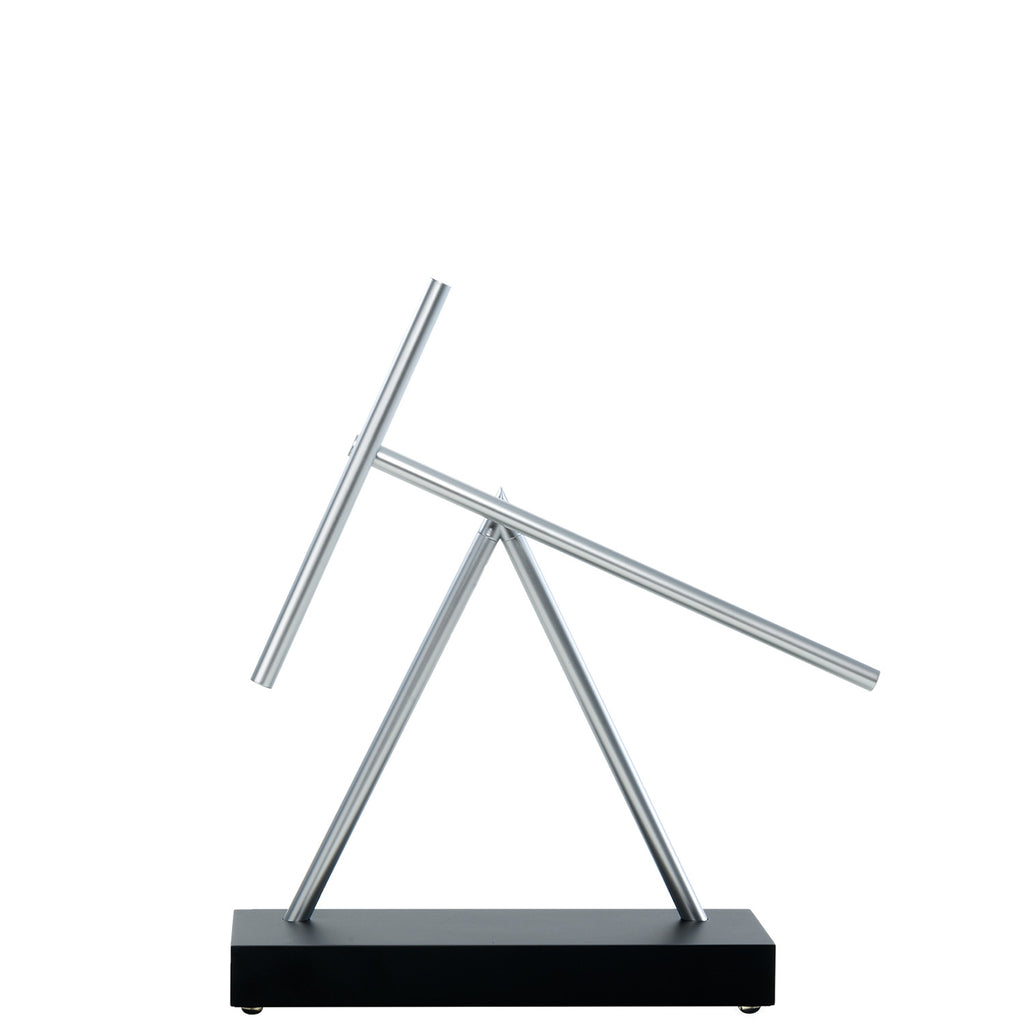
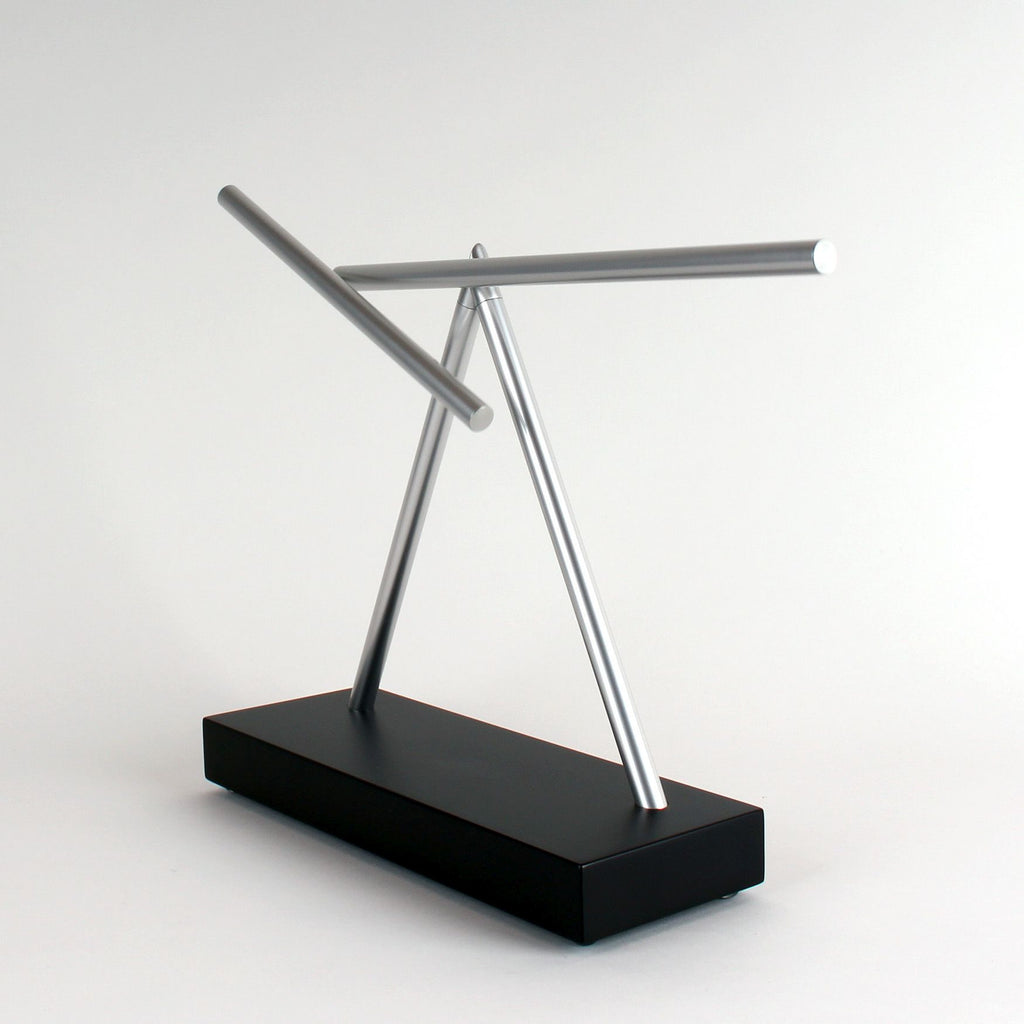
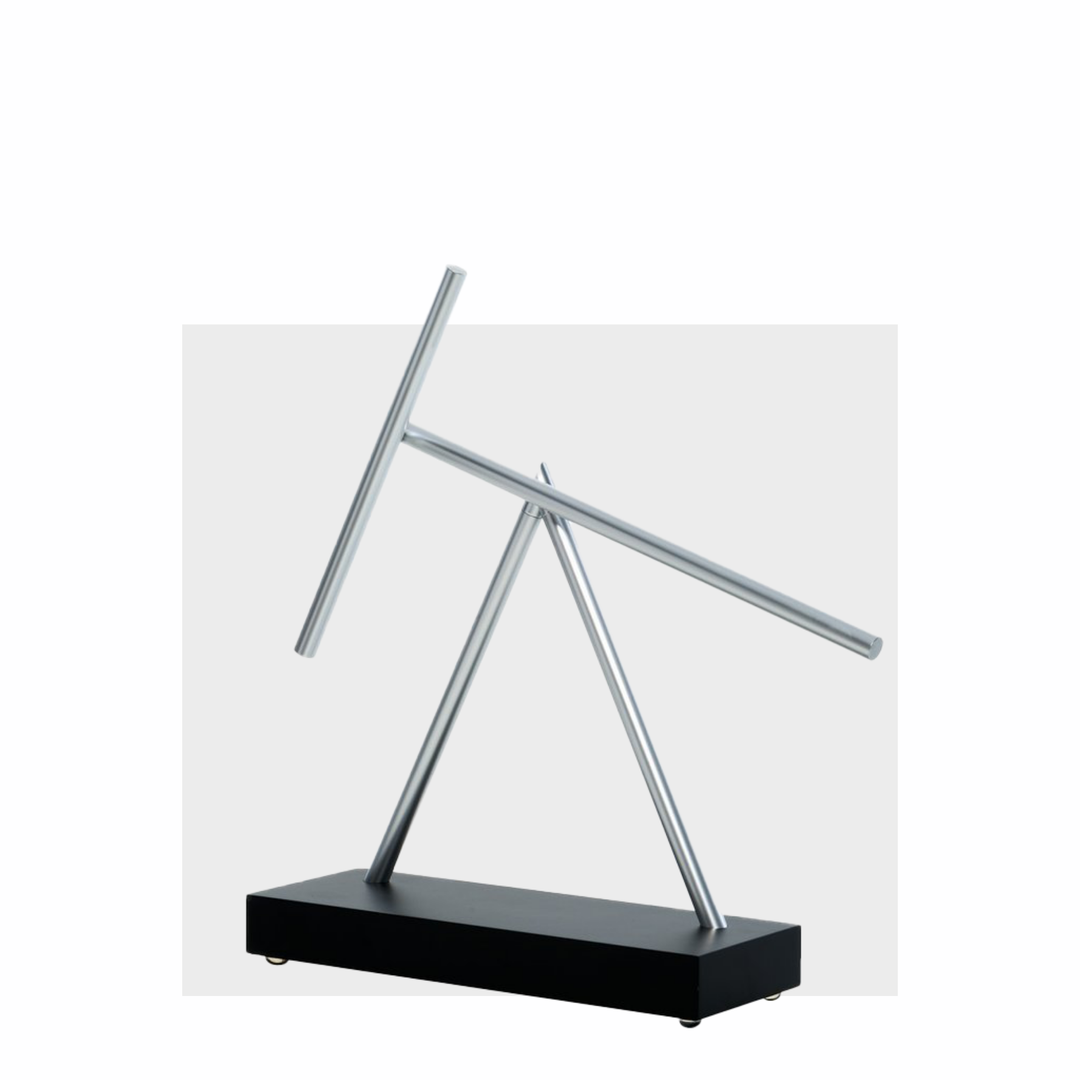
If I could only put one moving object on an engineer's desk, it's a driven double pendulum, and the one to buy is The Swinging Sticks.
Here's the mechanism, because the mechanism is the whole point. A double pendulum — one arm swinging off the end of another — is the textbook example of deterministic chaos. Tiny differences in starting conditions explode into wildly different trajectories, which means the motion is, in practice, never-repeating. It's the same math (Chaos Theory) the two German inventors set out to visualize when they built it in 1996. You are literally watching a chaotic system on your desk, and your brain cannot pattern-match it, so it never tunes it out.
The clever part is how it keeps going. Left alone, a double pendulum loses energy to friction and air and stops in under a minute. The Swinging Sticks hides an electromagnetic coil and a sensor in the base; on each downswing it fires a tiny magnetic pulse that restores exactly the energy lost, so the arms swing for years on four AA batteries. It's not perpetual motion — it's a beautifully minimal energy-injection system pretending to be perpetual motion. As an engineer, that's the part I respect most: it does the absolute minimum work required to defeat entropy, and hides the machinery completely.
The honest flaw: it is battery-dependent and the base electronics are the single point of failure. Per the maker's own FAQ, the overwhelming-most-common reason a unit 'dies' is dead or badly-seated batteries — not a defect, but you are signing up for a thing that needs a battery check once or twice a year and will eventually need its base serviced. It's an instrument, not a paperweight. Treat it like one and it outlives your laptop.
It's not perpetual motion — it's a beautifully minimal energy-injection system pretending to be perpetual motion. That's the part I respect most.
Angular momentum: spinning tops and gyroscopes for the precision crowd
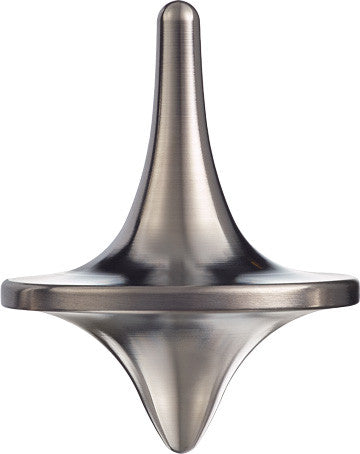
This is the mechanism for people who want to do something, not just watch. A spinning top and a gyroscope are the same physics — conservation of angular momentum — but they ask different things of you.
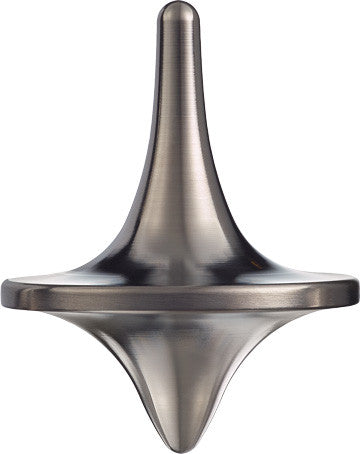
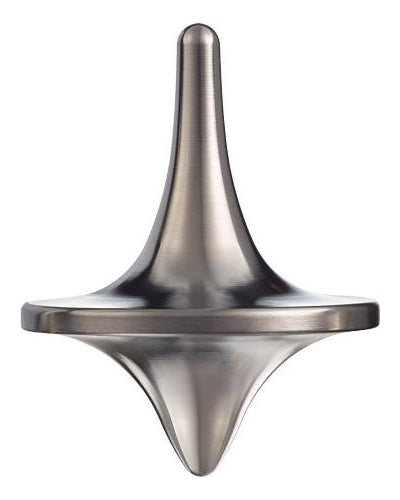
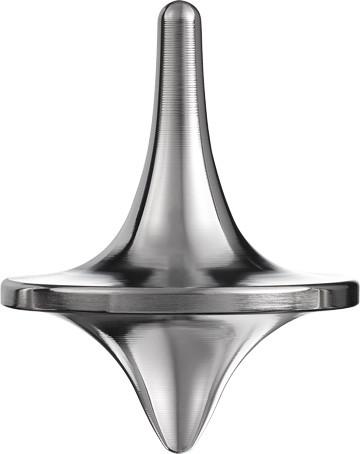
The precision top (ForeverSpin). A ForeverSpin is a top CNC-machined from a single billet of metal, balanced and serial-numbered, made by a Canadian company in Toronto that funded its first run on Kickstarter and blew past its goal by 60x. The titanium model is $66; stainless steel is $48. It is, without question, the nicest-feeling top you can buy. Here's the flaw nobody in the marketing will tell you: ForeverSpins are not actually elite spinners. The design prioritizes feel and beauty over spin time — a skilled launch gets you roughly two minutes, and plenty of cheaper precision tops spin longer. You're buying the object and the launch ritual, not a stopwatch record. There's also a real, documented gotcha with the glass base: the metal tip can etch micro-scratches into the tempered glass over time. Spin it on the included surface, not your desk, and know the base is a wear item.
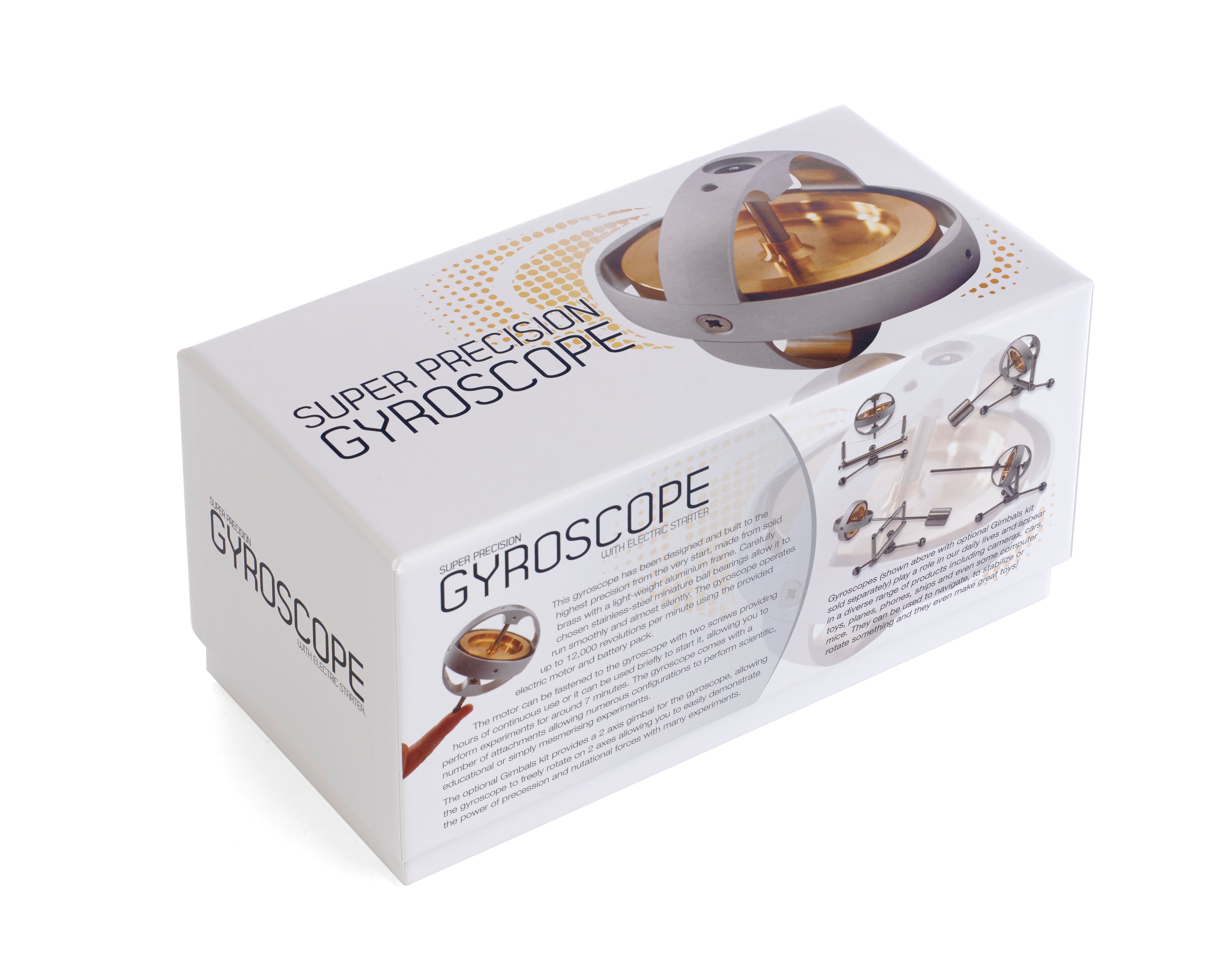
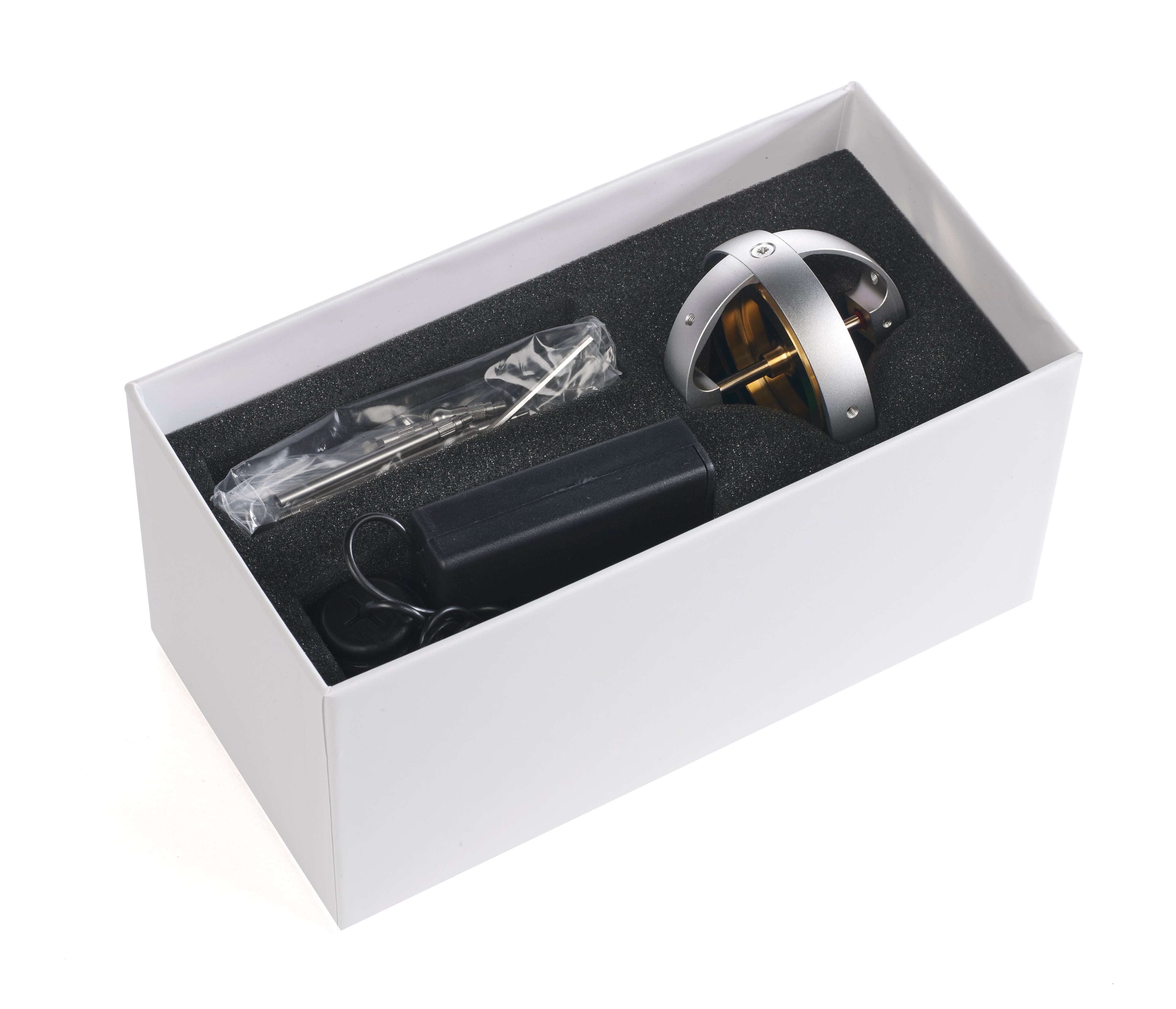
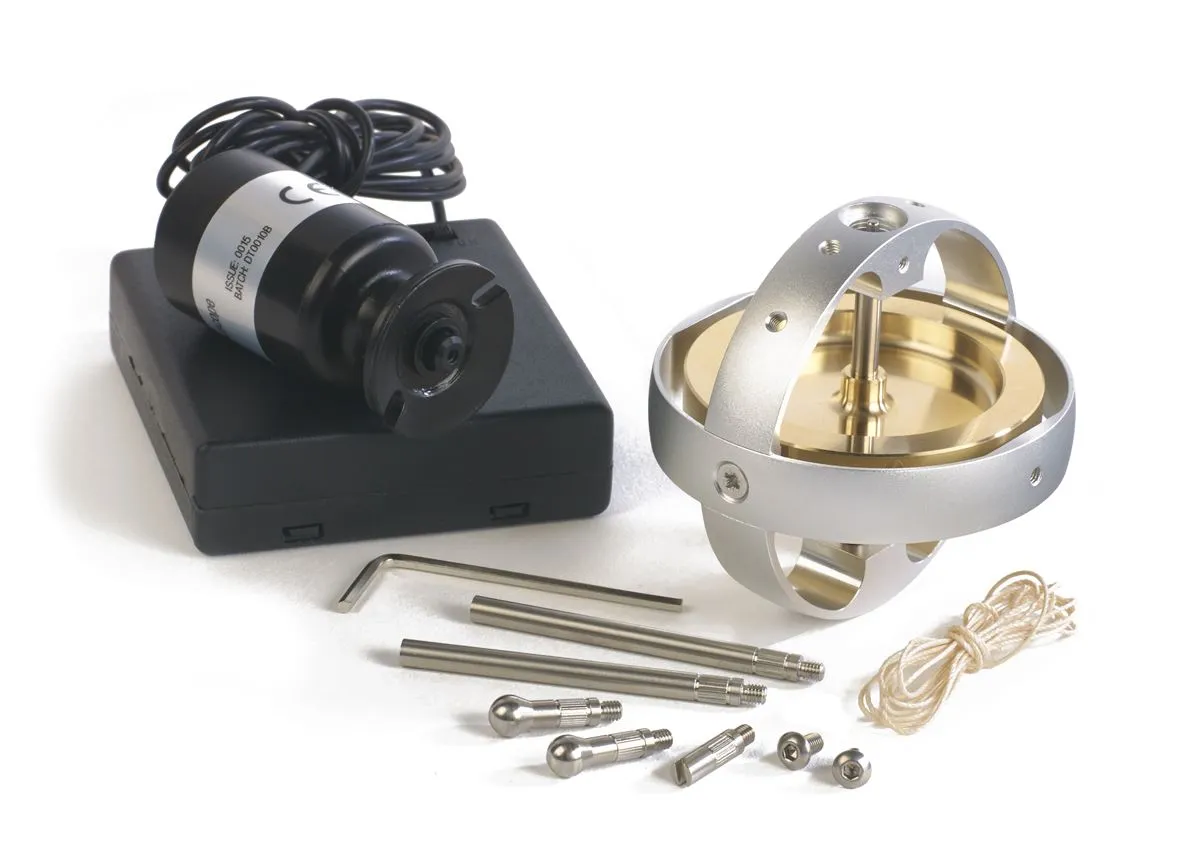
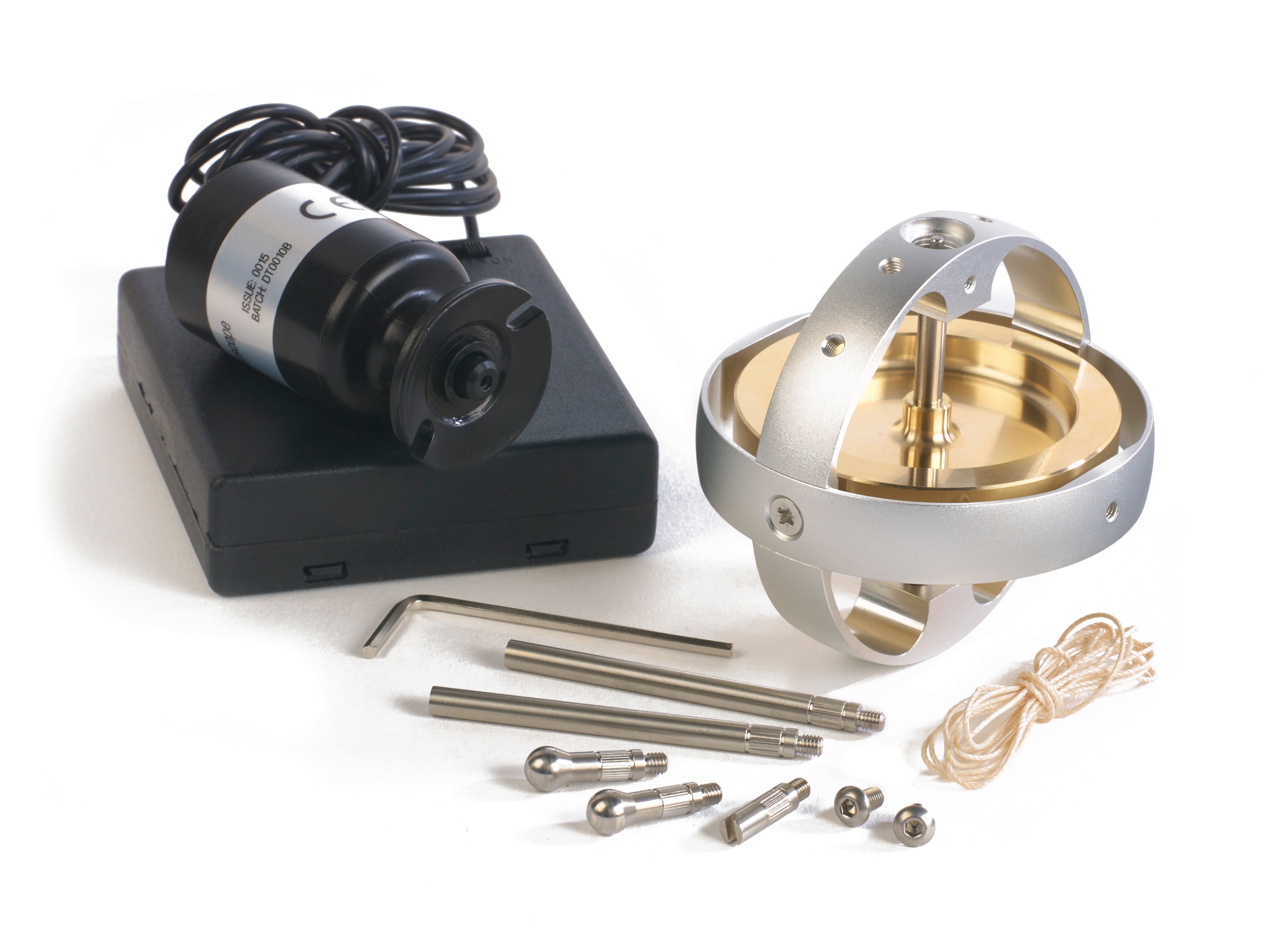
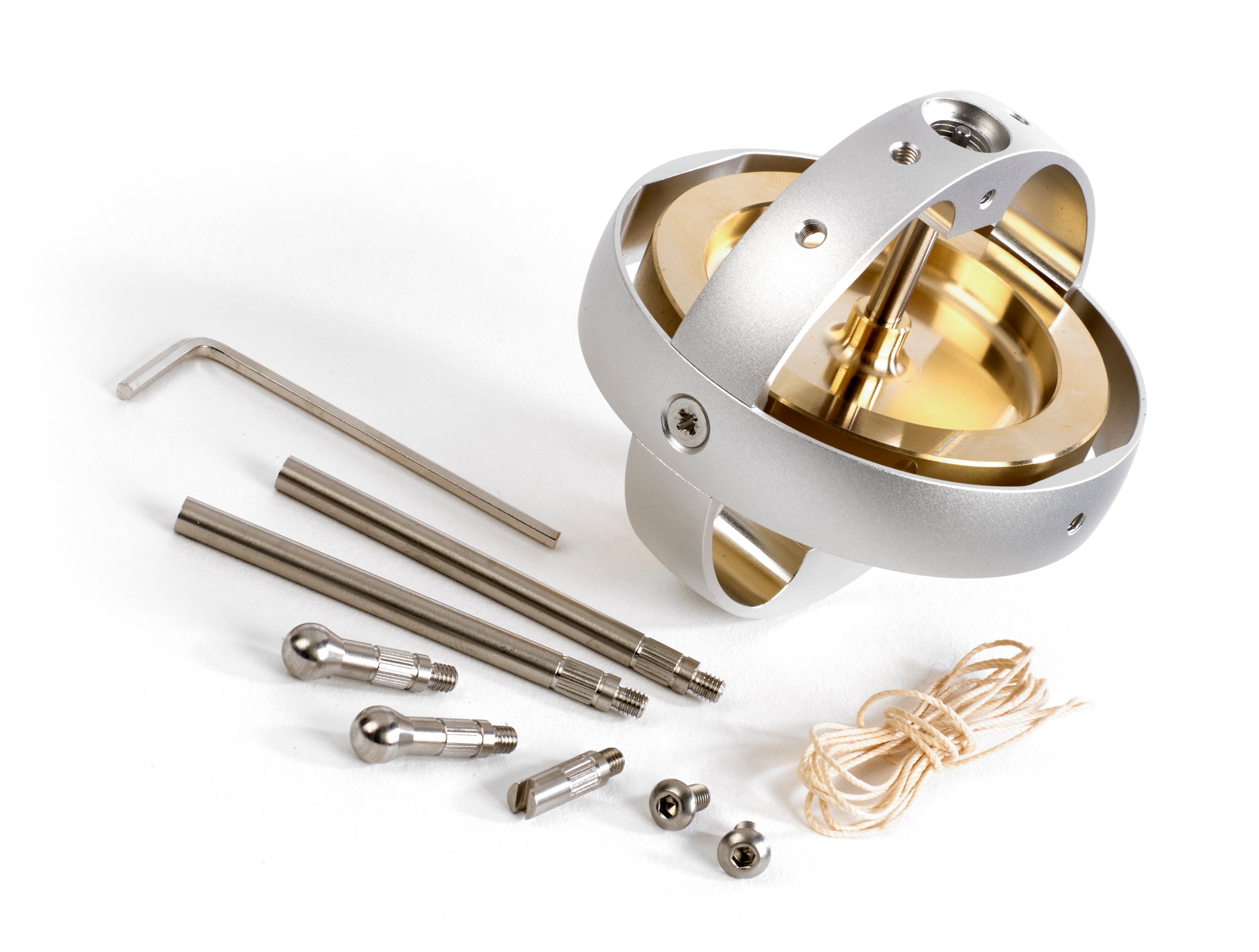
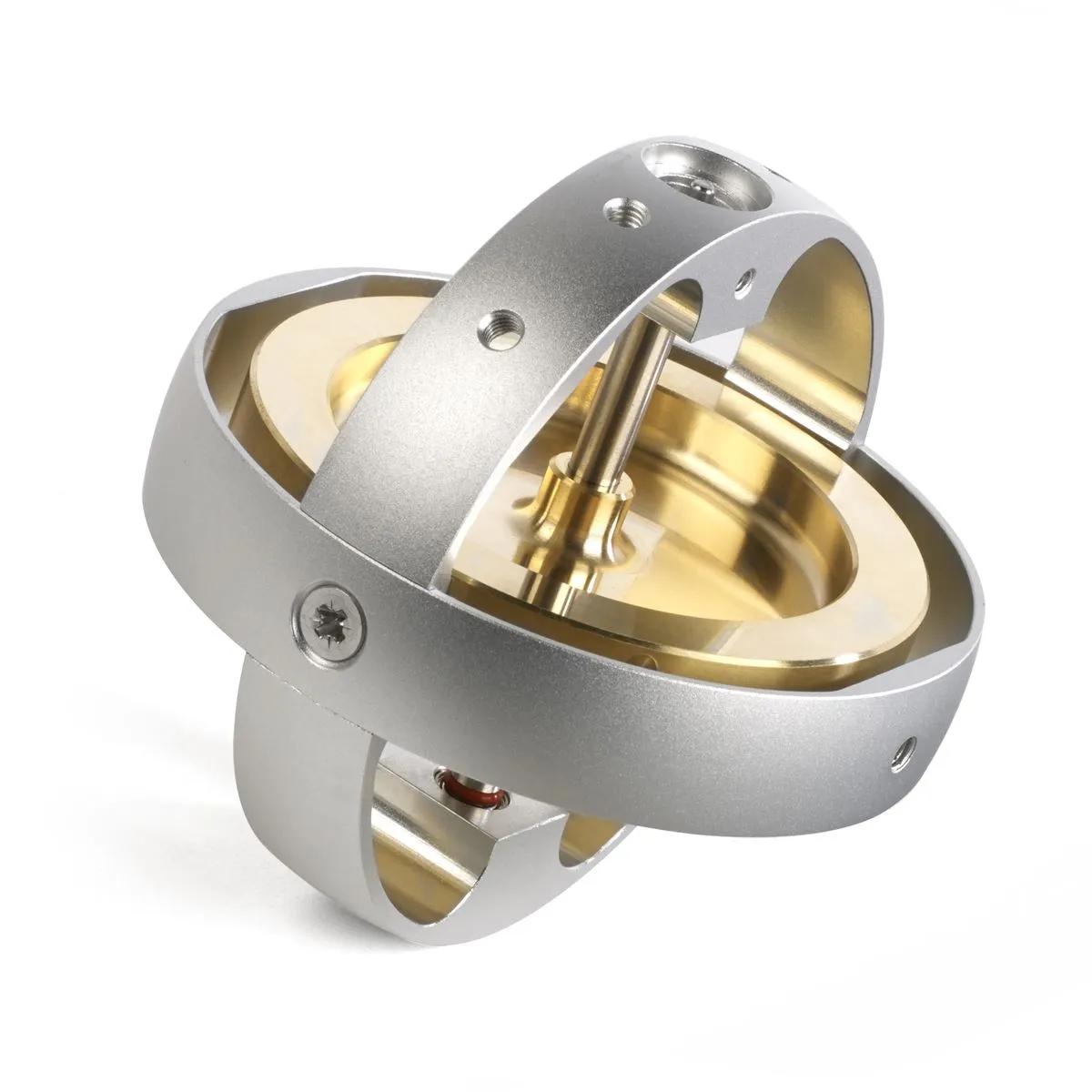
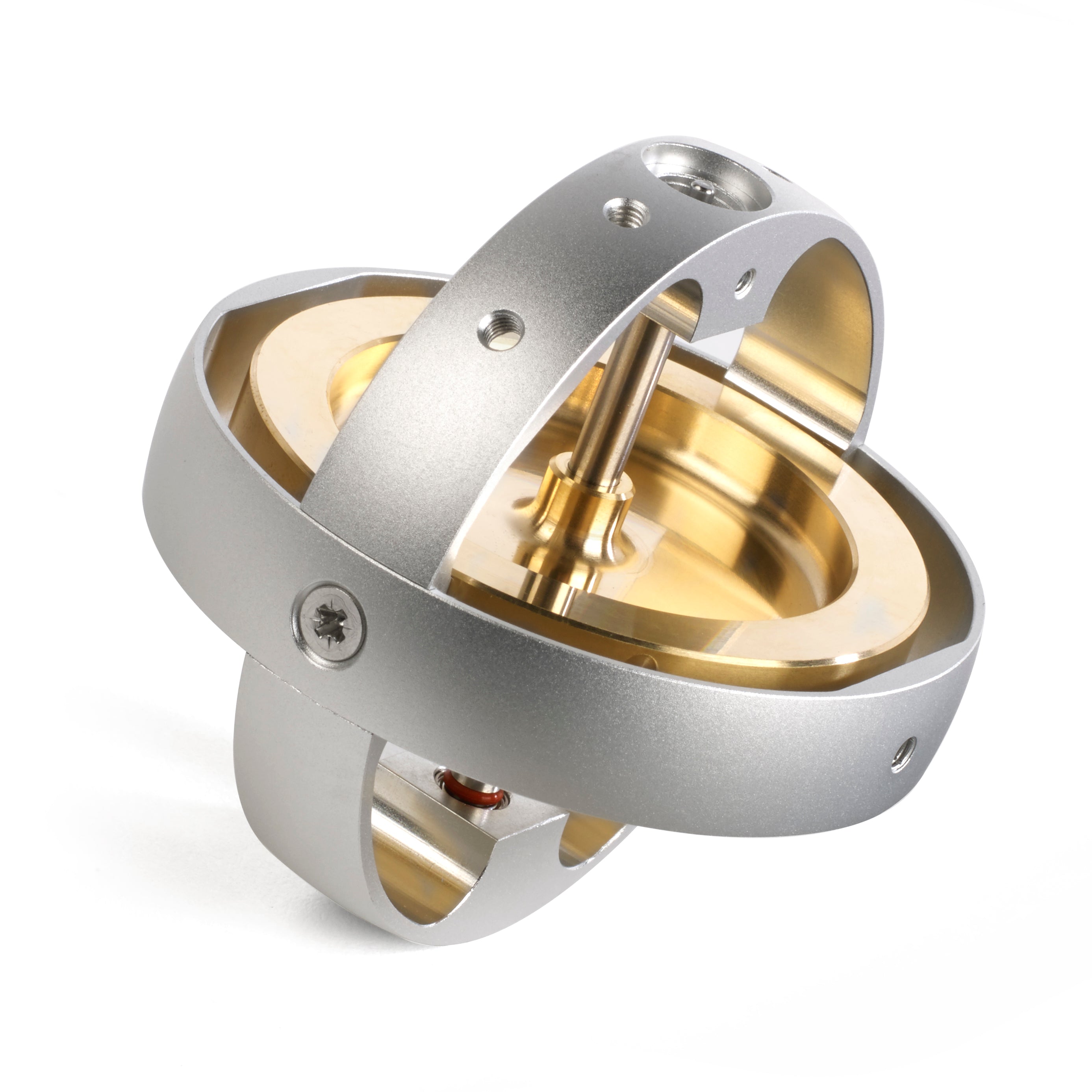
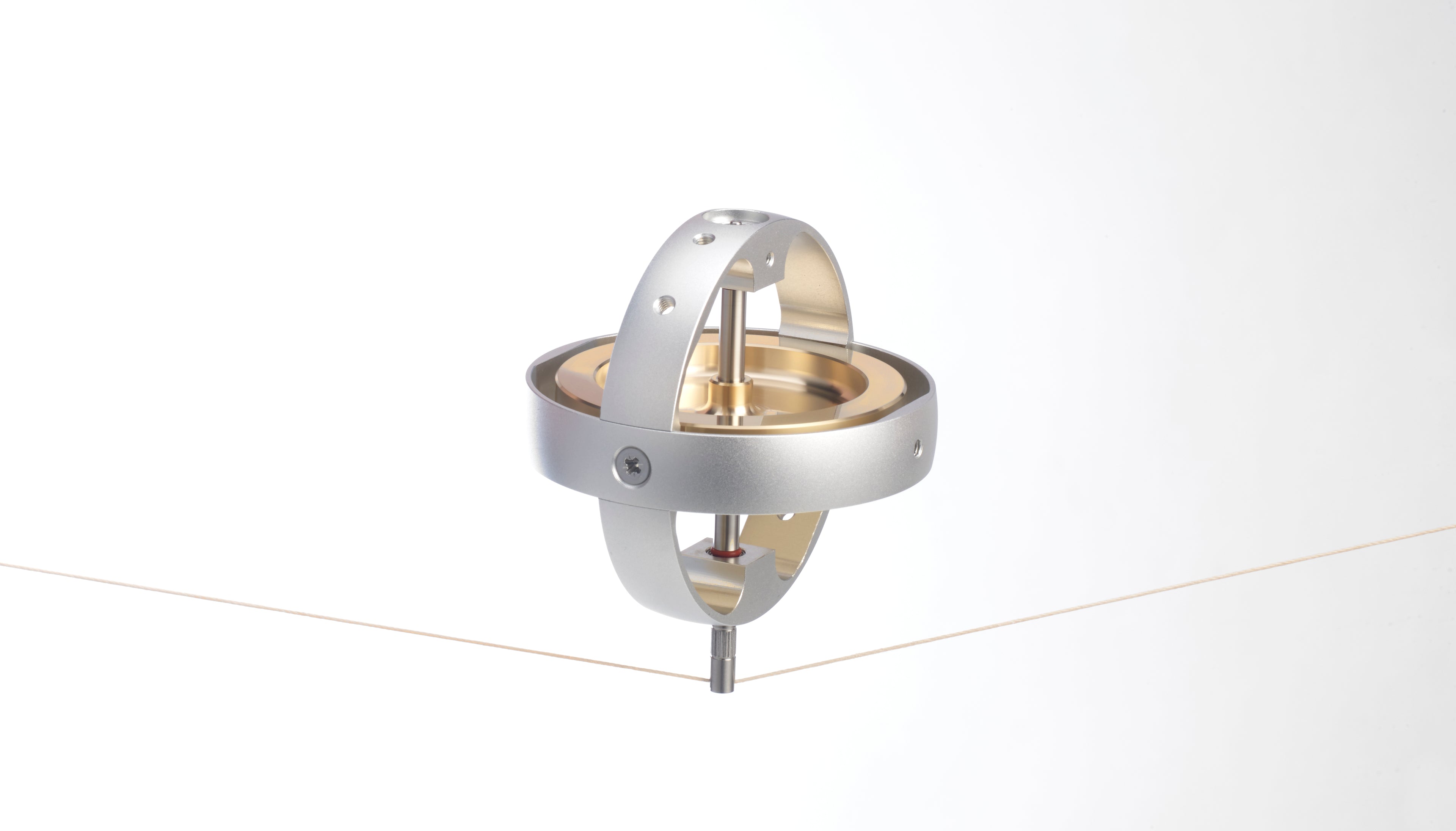
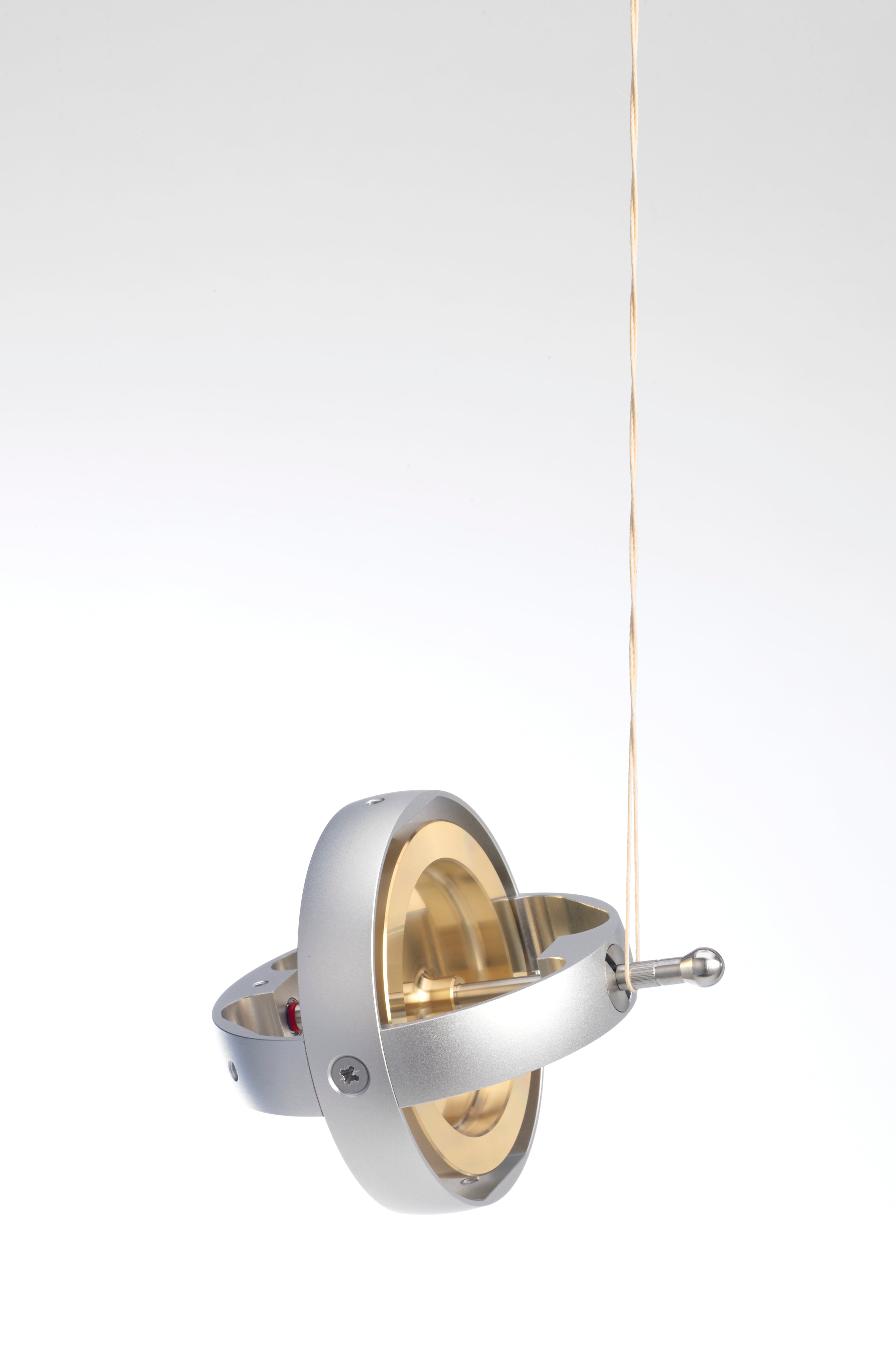
The real gyroscope (gyroscope.com Super Precision). If you want the object that actually teaches you something, it's this — a solid-brass-and-aluminum precision gyroscope from a British maker, computer-balanced to a 250th of a gram, riding on stainless-steel ball bearings, that spins up to 25 minutes and comes with a 12,000-rpm electric starter motor. It's listed at £95 (roughly $120 depending on the exchange rate and shipping to the US — I'm marking the USD as approximate because they price in pounds). This is the one object on the whole list that will make you feel the conservation laws in your wrist — try to tilt a spinning gyro and it shoves back in a direction that feels like it's breaking physics. It's not a fidget; it's a desktop demonstration of why bicycles stay up and spacecraft point where they point.
Magnetism: the most underrated fidget mechanism on a desk
Magnets are the dark-horse pick, and for a lot of restless minds they're the correct pick. The appeal isn't visual — it's that magnetism gives your hands an effectively infinite, reconfigurable thing to do without ever looking down. That's a different and arguably superior fidget to anything that just spins or swings.
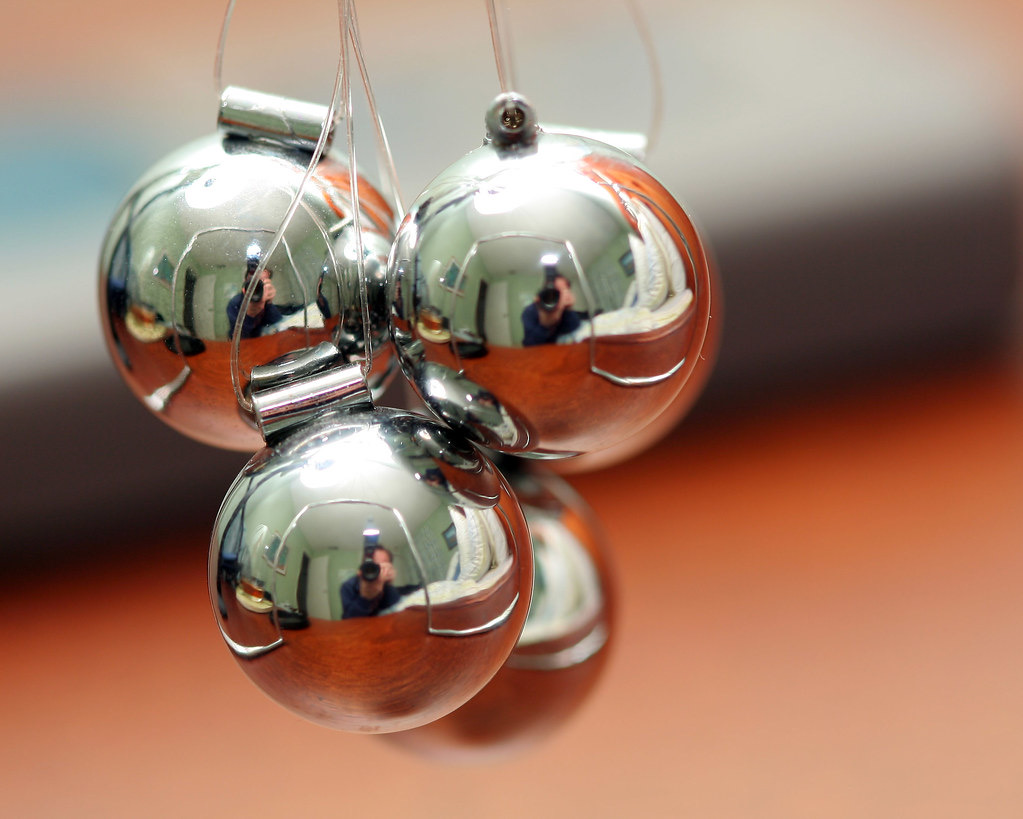
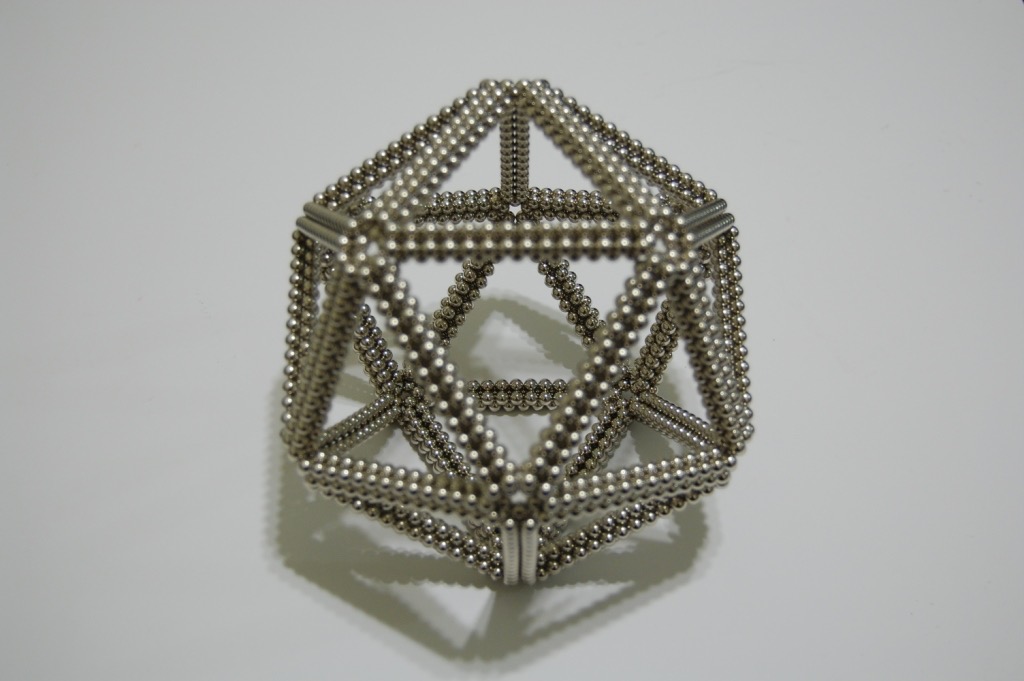
Speks (magnet balls). Speks are tiny rare-earth magnet spheres you mash, roll, snap into chains, and rebuild into structures one-handed while your brain is busy elsewhere. The brand (made by Retrospective Goods) is the legitimate heir to the old Buckyballs — that product line got pulled in the US over child-ingestion safety recalls, and Speks ships with explicit adults-only, keep-away-from-kids warnings for exactly that reason. The Supers 33mm set runs $18.95–$37.95 depending on count; the Mini Magnet Balls are $34.95. This is the best value on the entire list per hour of fidget delivered.
The flaw is the same as the appeal: these are serious magnets. Swallowing two of them is a genuine surgical emergency, so they are categorically wrong for any desk a kid or pet can reach, and they'll happily wipe a hotel key card or pinch the hell out of the web of your thumb. They also attract every paperclip and staple in a six-inch radius into a furry mess. Respect them and they're brilliant; ignore the warnings and they're an ER trip.
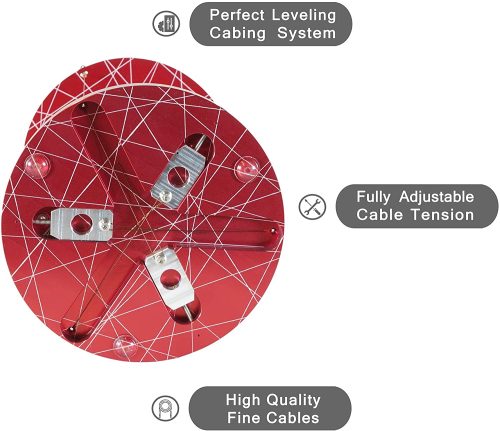
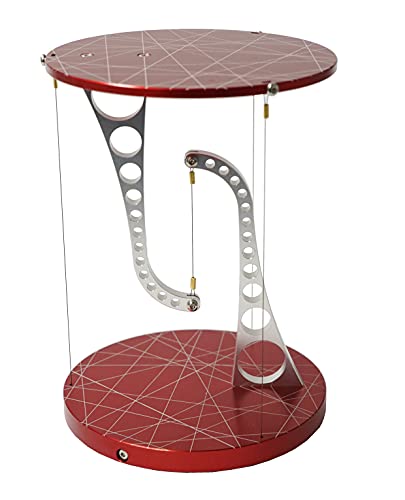
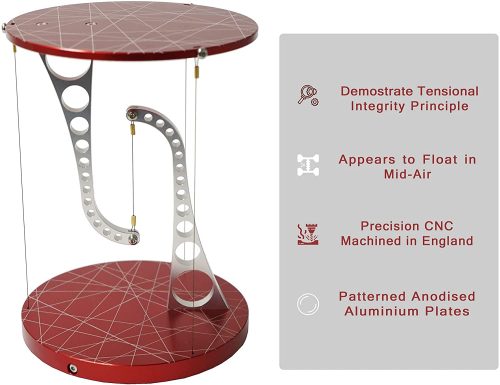
Tensegrity structures are the other magnetism-adjacent mechanism — technically tension, not magnetism, but they live in the same 'how is that physically possible' headspace. A tensegrity desk model appears to float its upper half on thin strings, held up entirely by balanced tension (the strings are in tension, the wood is in compression, and the whole thing is rigid). They're cheap — usually $13–25 — and they're the best dollar-for-dollar conversation starter here, because everyone who sees one immediately tries to figure out why it doesn't collapse. Flaw: they're static. Great to look at and explain, nothing to do. Pair one with an actual fidget.
Magnetism gives your hands an effectively infinite, reconfigurable thing to do without ever looking down. That's a different — and arguably superior — fidget.
The collision classic: is a Newton's cradle still worth it in 2026?
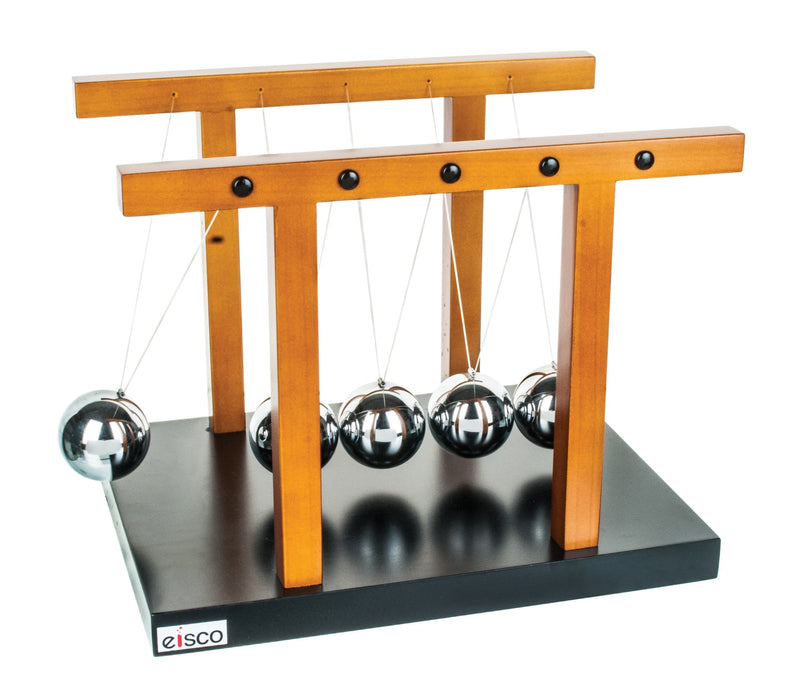
Yes — but only if you buy a heavy one, and almost nobody does, which is why most people think Newton's cradles are junk.
The mechanism is the cleanest physics demo on any desk: lift one ball, release it, and conservation of momentum and energy sends exactly one ball out the far side, click-clacking back and forth. It's elegant, it's instantly understood, and it's the rare desk toy that's genuinely instructive at a glance — you can watch energy transfer happen.
Here's why the reputation is bad. The $12 plastic-framed Amazon special is a tragedy of cheapness: a light, flexible base flexes on every impact and absorbs the energy that's supposed to stay in the balls, so it dies in three or four swings and the balls go out of alignment immediately. People buy that, conclude 'Newton's cradles are pointless,' and they're not wrong about that cradle.
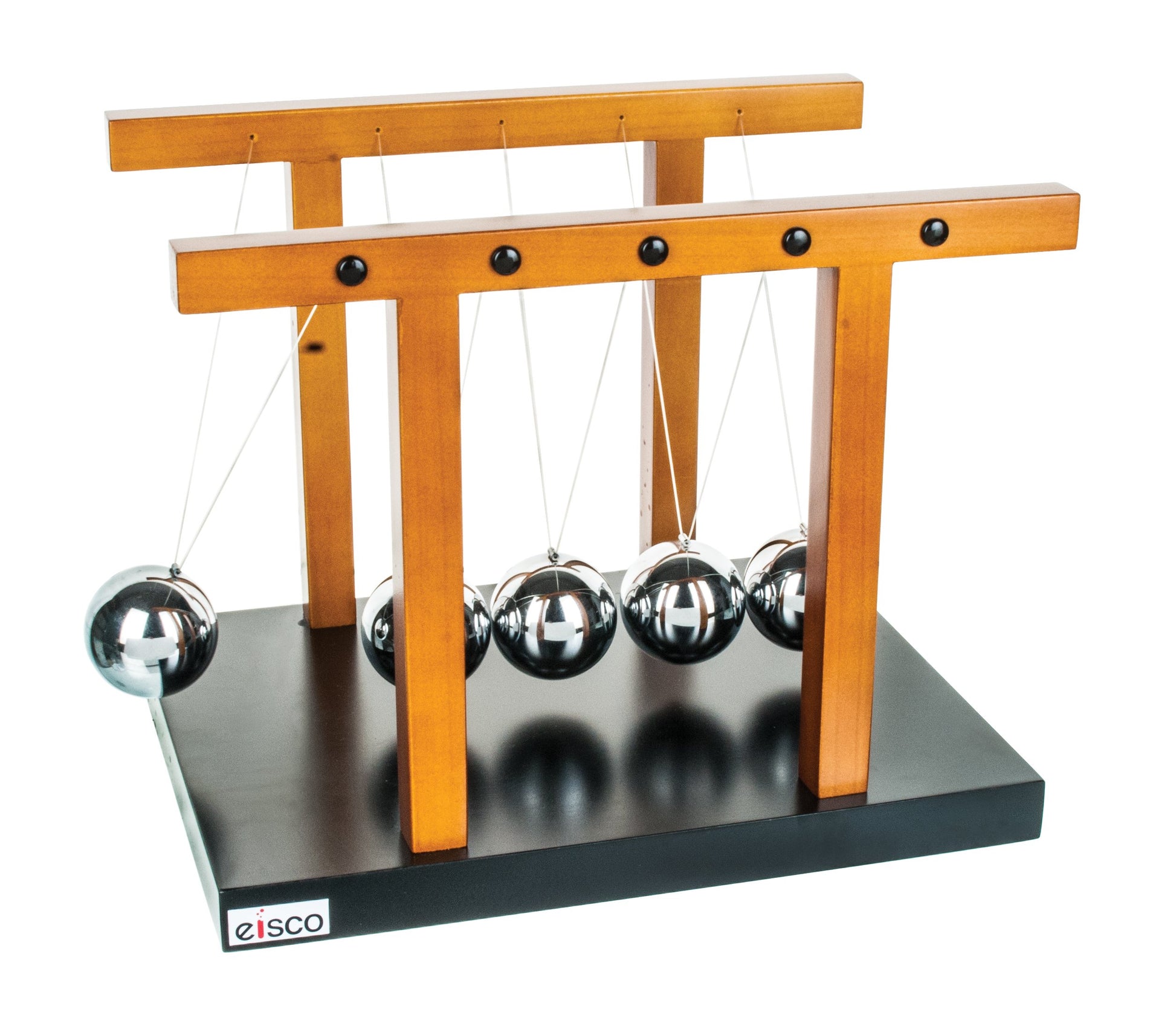
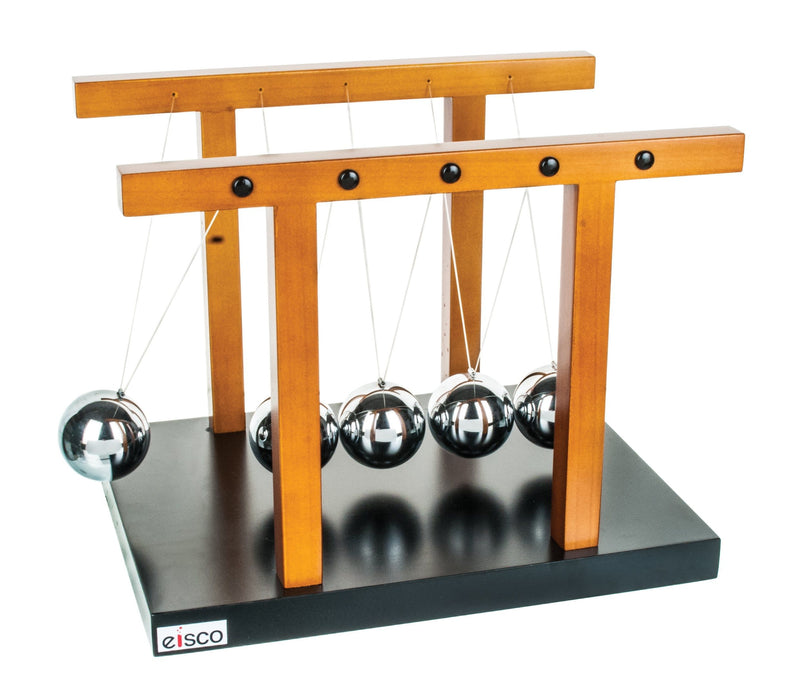
The fix is mass and rigidity. A serious Newton's cradle — like the Eisco Labs Giant, an 11-pound, fully-assembled lab-grade unit with 50mm steel balls — keeps the energy in the balls because the frame and base simply don't move. That's the difference between a toy that swings for four cycles and one that runs for thirty-plus seconds of satisfying, metronomic clack. The flaw with the giant version is honestly just that: it's a giant, it's heavy, it's a lab instrument priced like one, and it is loud — a hard-launched steel cradle is genuinely too clacky for an open-plan office. Get the heavy one for a private office; get a mid-weight steel-and-wood model (not plastic) for anywhere people can hear you.
Levitation and high-end kinetic art: when 'desk toy' becomes 'centerpiece'
At the top of the market, desk toys stop being fidgets and become statement objects. Two mechanisms own this tier: magnetic levitation and spring-driven kinetic sculpture.
Magnetic levitation (Flyte, levitating display platforms). The most refined version is the Flyte Manhattan/Edison, a Swedish-designed levitating LED bulb that hovers, glowing, above a walnut base — held in the air by active magnetic levitation and powered wirelessly through the air gap. It's $329, and it is pure spectacle: a light bulb that floats and lights with no wires touching it. The mechanism is legitimately impressive engineering (a feedback loop constantly adjusts the magnetic field thousands of times a second to keep it stable). The flaws are real, though: levitating displays in general have a finicky 'find the balance point' setup, a hard weight ceiling (cheaper levitating-display platforms top out around 250 grams of payload), and they're sensitive to bumps — knock the desk and a floating object can drop. It's a centerpiece, not a fidget; you watch it, you don't touch it.
Spring-driven kinetic sculpture (David C. Roy / Wood That Works). This is the apex, and it's not a toy at all — it's collectible art. David C. Roy has been building wooden kinetic wall sculptures since 1975; you wind a constant-force spring and the machine runs for hours (6 to 20+ depending on the piece) tracing slow, ever-changing geometric patterns with soft mechanical sounds. These are genuine limited-edition artworks — a current piece like Fiddlesticks opens at $6,000. That's not a desk-toy price; that's an heirloom price, and I'm including it only so you know where the ceiling is and what real kinetic craftsmanship costs.
At the top of the market, desk toys stop being fidgets and become statement objects. You watch these. You don't touch them.
What experienced tables keep reporting
Recurring owner patterns, synthesized in Puzzlewick's words. Follow each evidence trail to read the original discussion.
ForeverSpin tops are incredibly high-end. Every top is well-built, balanced, and built to last forever.
Read the evidence: Gear43 — Four Years of ForeverSpin (long-term review)
The metal of the spinning top begins to etch into the glass itself, resulting in aesthetic issues.
Read the evidence: Gear43 — Four Years of ForeverSpin (long-term review)
Dead batteries are the most common reason the device stops moving; changing the batteries will make it work perfectly again.
Read the evidence: The Swinging Sticks — official FAQ (paraphrased from maker troubleshooting)
The Swinging Sticks were featured on Tony Stark's desk in Iron Man 2, where the motion annoys Stark so much he keeps trying to wedge objects into it to make it stop — the director had found the sculpture in a shop in Taiwan.
Read the evidence: methodshop — Swinging Sticks / Iron Man 2
No one has been given permission or been licensed to use these designs or images; if you purchase from those sites you will receive wood scraps and none ship kinetic sculptures.
Read the evidence: Wood That Works — David C. Roy (official scam warning)
The picks
Some links below are affiliate links — as an Amazon Associate, Puzzlewick earns from qualifying purchases, at no extra cost to you. It never changes a pick.
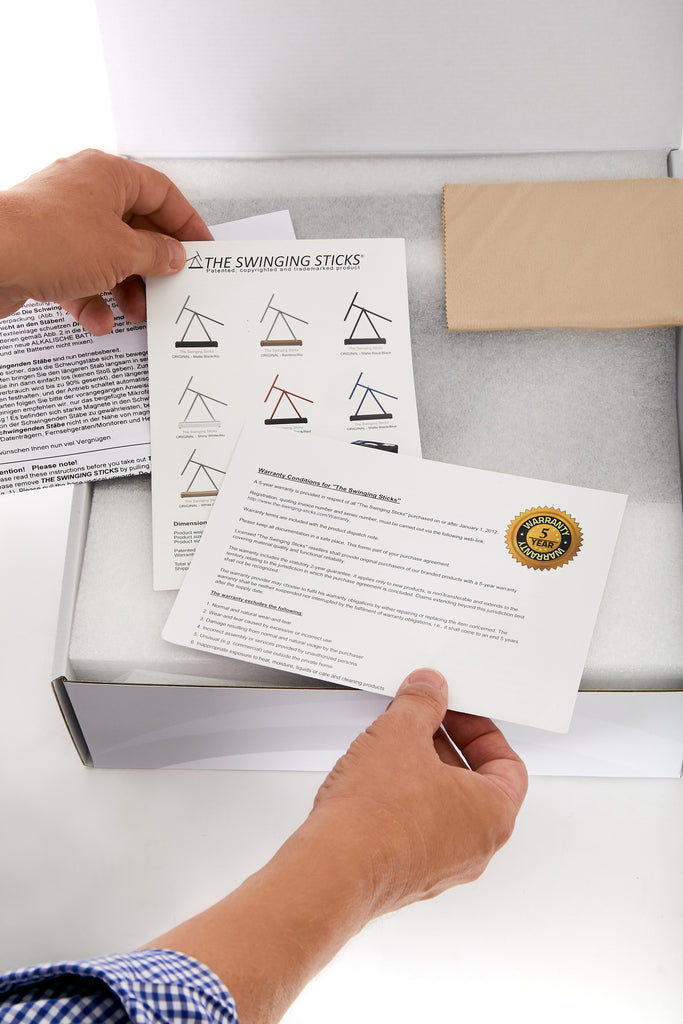
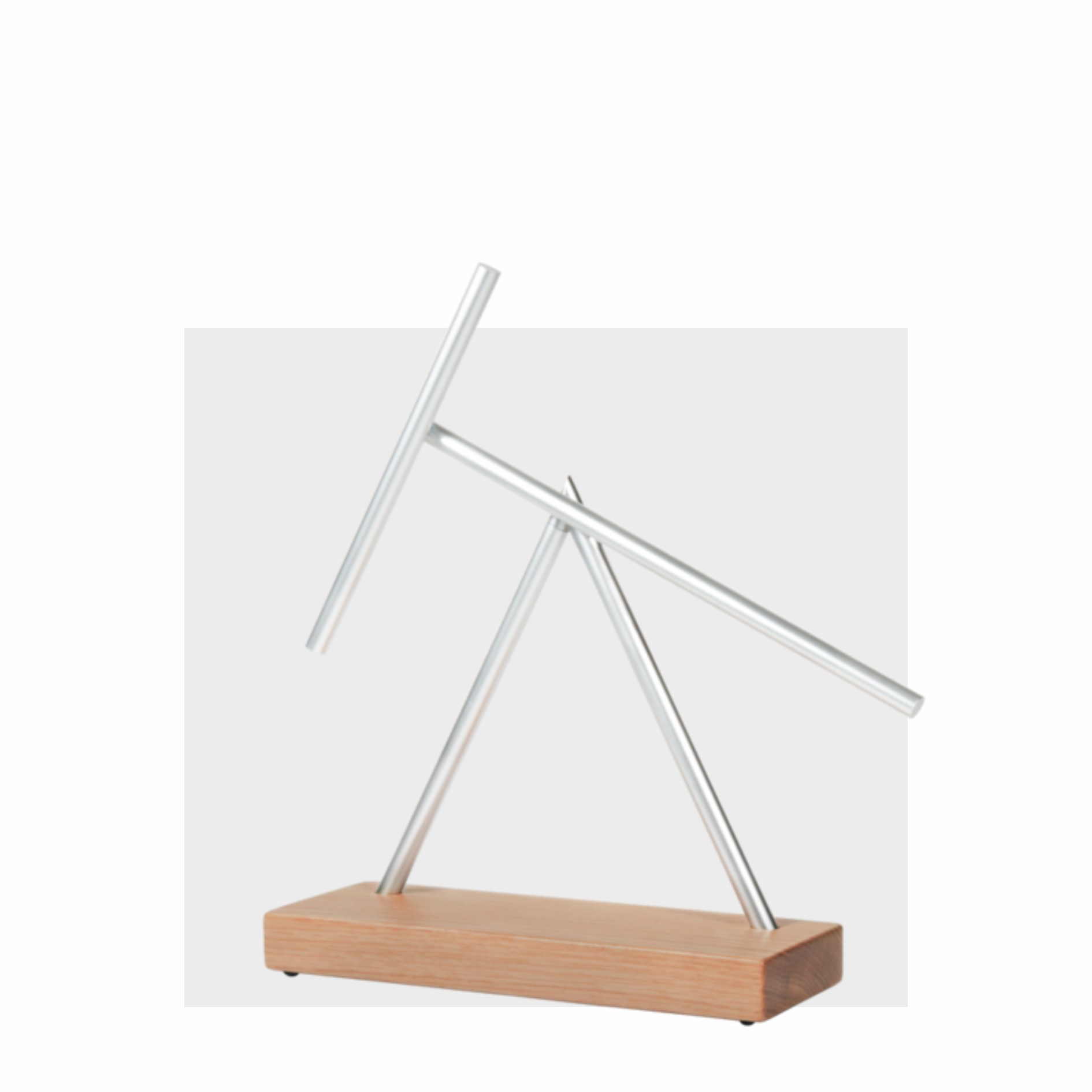
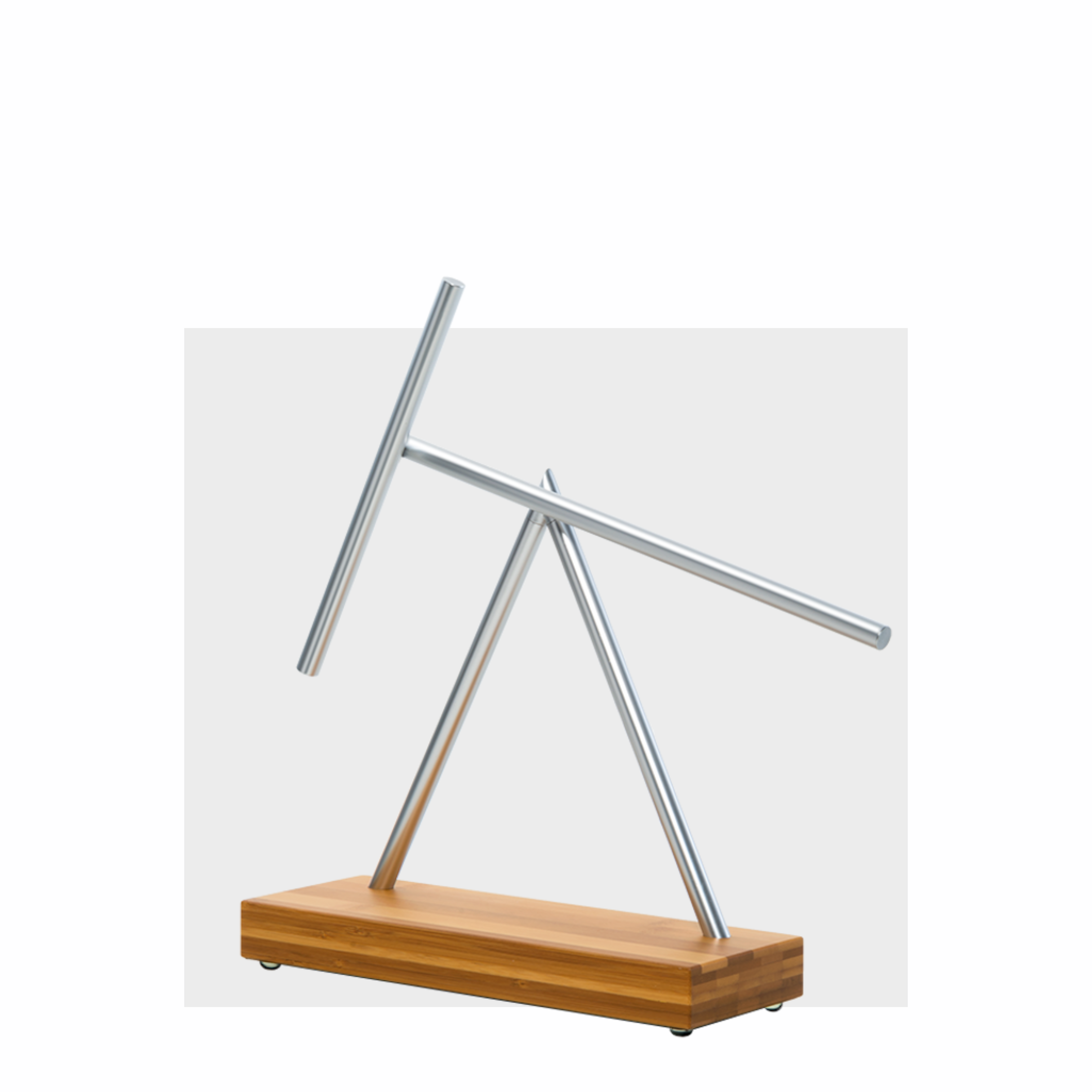
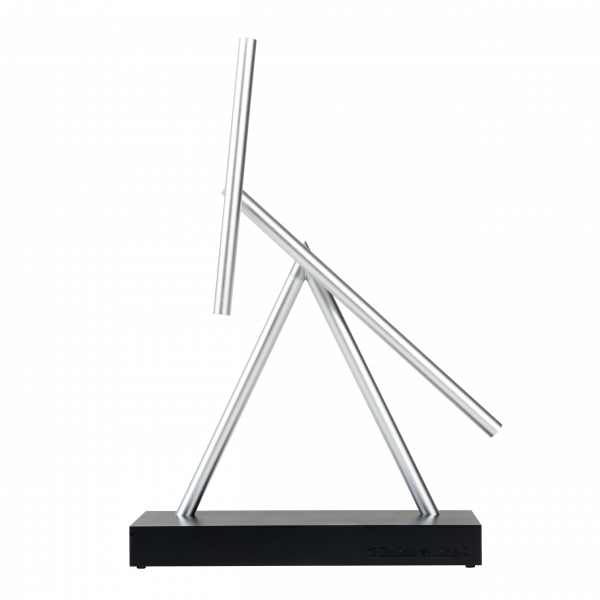
 7 photos
 The Swinging Sticks Kinetic Energy Sculpture — Original
A driven double pendulum whose chaotic, never-repeating motion is the closest thing to hypnosis you can legally keep on a desk. The flaw: it's battery-dependent and the base electronics are the single failure point — budget a battery check once or twice a year. Everything else about it is hand-assembled, genuinely well-engineered, and worth the celebrity-cameo premium it carries from Iron Man 2. If I could keep only one, it's this.
- Chaotic double-pendulum motion is mathematically non-repeating — never gets boring
- Hidden electromagnetic base sustains motion for years on 4 AA batteries
- Hand-assembled, legitimately premium build with multi-year warranty
- Silent — perfect for open-plan offices
- Expensive, partly due to the 'as seen in Iron Man 2' premium
- Battery-dependent; dead/misseated batteries are the #1 cause of it 'dying'
- Base electronics are a long-term wear item, not a forever object
 10 photos
 Super Precision Gyroscope (without gimbals)
Solid brass and aluminum, computer-balanced to a 250th of a gram, on real ball bearings, with a 12,000-rpm starter motor and up to 25 minutes of spin. This is the only object here that makes conservation of angular momentum a thing you feel in your wrist — tilt it while it's spinning and it shoves back like it's cheating. Priced in pounds (£95), so the ~$120 USD is approximate and shifts with exchange rate plus shipping. Not a mindless fidget; a desktop physics demonstrator for the genuinely curious.
- Real precision instrument — brass/aluminum, ball bearings, lab-grade balance
- Up to 25-minute spin time; included electric starter motor
- Viscerally demonstrates gyroscopic precession — actually educational
- Built in Britain, made to a high standard
- Priced in GBP — USD cost is approximate and import/shipping adds up
- Rewards investigation; bores anyone who just wants to fidget mindlessly
- Age 14+ — not a kids' object
 3 photos
 ForeverSpin Titanium Spinning Top
CNC-machined from a single billet, balanced, serial-numbered — the nicest-feeling top money buys. Be clear-eyed about the flaw, though: it's a mediocre spinner for the price, around two minutes on a good launch, and cheaper precision tops out-spin it. The glass base can also micro-etch from the metal tip over time. Buy it as a tactile object and a desk ritual, not as a performance spinner. As a gift it punches way above its size.
- Genuinely 'built to last forever' machining and balance
- Titanium's strength-to-weight makes it great for upside-down spins
- Serial-numbered, lifetime warranty, impeccable presentation
- Highly giftable — impressive to everyone
- Mediocre spin time (~2 min) for the price — not an elite spinner
- Metal tip can etch the included glass base over time
- Premium price for what is, mechanically, a fancy top

 2 photos
 Speks Supers 33mm Magnet Balls
Rare-earth magnet spheres you mash, chain, and rebuild without ever looking down — the legit heir to Buckyballs, with the adults-only safety labeling that product line lacked. At $18.95–$37.95 it's the best dollar-per-fidget-hour ratio on this entire list. The flaw is non-negotiable: these are strong magnets, swallowing two is a surgical emergency, and they're categorically wrong for any desk a kid or pet can reach. Respect the warning and they're brilliant.
- Infinite reconfigurable fidget — engage without looking down
- Outstanding value per hour of use
- Strong, satisfying rare-earth magnets; multiple sizes/finishes
- The legitimate, properly-labeled successor to Buckyballs
- Serious ingestion hazard — keep away from kids and pets, period
- Will pinch fingers and grab every paperclip/staple nearby
- Can damage magnetic-stripe cards if stored together
 3 photos
 Eisco Labs Giant Newton's Cradle (50mm Balls, Fully Assembled)
Forget the $12 plastic ones that die in four swings; the energy leaks into the flexy frame. This is the opposite — an ~11-pound, lab-grade, fully-assembled unit with 50mm steel balls and a base so rigid the energy stays in the balls where it belongs, giving you thirty-plus seconds of crisp metronomic clack. The flaws are exactly its virtues turned up: it's big, it's heavy, and it's genuinely too loud for open-plan. Private office only. (Sold via lab suppliers; pricing varies by retailer, so I'm leaving USD null rather than guess.)
- Heavy, rigid base keeps energy in the balls — actually sustains motion
- Lab-grade build and 50mm steel balls; fully assembled out of the box
- Cleanest, most instructive momentum demo on a desk
- Substantial physical presence
- Loud by design — wrong for open-plan or shared benches
- Large and heavy (~11 lbs); needs real desk space
- Lab-supplier pricing varies; not a cheap impulse buy
 2 photos
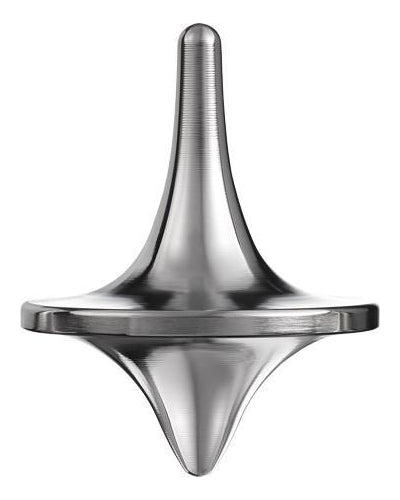
 ForeverSpin Stainless Steel Spinning Top
Same flawless machining as the titanium, more heft, lower price. If you're a gift-giver who can't read the recipient's exact taste, this is the safe, can't-miss pick — a precision top reads as thoughtful and premium to literally anyone with a desk. Same caveat as its titanium sibling: it's a feel-and-ritual object, not a record-setting spinner, and the glass base is a wear item. Pair it with the spinning base for the full effect (budget ~$80 together).
- Same precision machining as titanium, with more satisfying mass
- Most universally giftable object on the list
- Serial-numbered, lifetime warranty
- Lower entry price into the ForeverSpin ecosystem
- Heavier metal = shorter spins than lighter precision tops
- Base sold separately for the full ritual (~$80 together)
- Glass base can micro-etch over time
 4 photos
 Tensegrity Structure Desk Toy (Anti-Gravity Tension Sculpture)
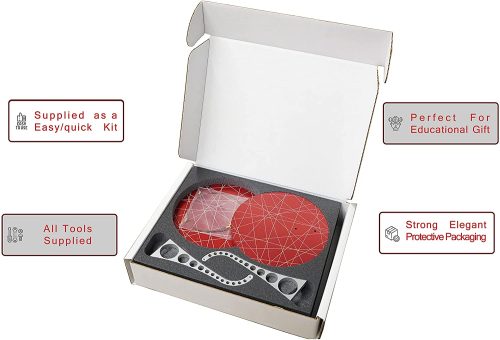
A structure whose upper half appears to float on thin strings, held rigid entirely by balanced tension (strings in tension, members in compression). Cheap, clever, and everyone who sees it immediately tries to work out why it doesn't collapse — which is the whole value. The honest flaw: it's completely static. Nothing to do once you've understood it. Buy it as a desk explainer and pair it with an actual fidget; don't expect it to hold your hands.
- Genuinely surprising structural-tension demo for the price
- Excellent conversation/explanation piece
- Light, compact, no batteries, nothing to wear out
- Cheapest 'real mechanism' object on the list
- Static — no motion, no interaction after the 'aha'
- Quality varies wildly by seller; pick a real wood-and-string build
- Strings can need occasional re-tensioning
At a glance
| toy | maker | price | mechanism | best for |
|---|---|---|---|---|
| The Swinging Sticks (Original) | BTS Trading GmbH | $339 | Driven double pendulum (deterministic chaos + electromagnetic energy injection) | Hypnotic centerpiece you watch |
| Super Precision Gyroscope | gyroscope.com (UK) | ~$120 (£95) | Conservation of angular momentum / gyroscopic precession | Engineer who wants to feel the physics |
| ForeverSpin Titanium | ForeverSpin (Canada) | $66 | Spin / angular momentum (precision top) | Tactile launch ritual, clean desk |
| ForeverSpin Stainless Steel | ForeverSpin (Canada) | $48 | Spin / angular momentum (precision top) | Universal-donor gift |
| Speks Supers 33mm | Speks / Retrospective Goods | $18.95–$37.95 | Rare-earth magnetism (reconfigurable fidget) | Best-value hands-busy fidget |
| Speks Mini Magnet Balls | Speks / Retrospective Goods | $34.95 | Rare-earth magnetism (fine builds) | Obsessive magnet builder |
| Eisco Labs Giant Newton's Cradle | Eisco Labs | Lab-supplier (varies) | Momentum/energy transfer (elastic collision) | Private office, real clack |
| Flyte Manhattan (Edison) | Flyte (Sweden) | $329 | Active magnetic levitation + wireless power | Floating centerpiece, stable desk |
| Tensegrity Structure | Various (wood-and-string) | ~$13–25 | Balanced structural tension (tensegrity) | Cheap 'how is that possible' piece |
| Wood That Works Sculpture | David C. Roy | ~$6,000+ | Constant-force spring-driven kinetic art | Apex collectible / heirloom |
Questions, answered
What is the single best desk toy for an engineer in 2026?
The Swinging Sticks ($339) for an all-around centerpiece — its driven double pendulum produces chaotic, never-repeating motion that the brain never tunes out. If you'd rather actively fidget than watch, a ForeverSpin precision top ($48–$66) or Speks magnet balls ($18.95) are the better picks, and a gyroscope.com Super Precision Gyroscope (~$120) is the most genuinely educational. Choose by the mechanism that suits your restlessness: chaos to watch, spin or magnets to handle.
Is The Swinging Sticks worth $339, or is it just movie hype?
Both things are true: you're paying a real 'as seen in Iron Man 2' premium AND getting a genuinely well-engineered, hand-assembled electromagnetic instrument. It's the rare case where the hype and the hardware line up — the motion really is mesmerizing and there's no good cheaper version (the ~$30 knockoffs are visibly worse). Worth it once, as a centerpiece. Just know it's battery-dependent and the base is a long-term wear item.
Do ForeverSpin tops actually spin a long time?
No — and this is the thing the marketing won't tell you. ForeverSpins prioritize feel and machining over spin time; a good launch gets you roughly two minutes, and cheaper precision tops will out-spin them. Buy a ForeverSpin for the build quality, the launch ritual, and as a gift, not because you want record spin times. If raw spin time is the goal, a dedicated $20 precision top is the better tool.
Are Speks / magnet balls safe? What happened to Buckyballs?
Buckyballs were pulled from the US market over magnet-ingestion injuries to children. Speks fills that niche under stricter, adults-only labeling. The rare-earth magnets are strong enough that swallowing two is a genuine surgical emergency, because they pinch tissue together across the gut wall. They're great for an adults-only desk and categorically wrong anywhere a child or pet can reach. The warning is real, not boilerplate.
Why does my Newton's cradle stop after a few swings?
Almost always because the base is too light and flexy — the energy you put into the first ball leaks into the wobbling frame instead of staying in the steel balls. That's the failure mode of every $12 plastic cradle. The fix is mass and rigidity: a heavy base, a stiff frame, and real steel balls (like the lab-grade Eisco Giant). There is no good cheap-and-light Newton's cradle; the physics won't allow one.
What's the difference between a spinning top and a gyroscope as a desk toy?
Same underlying physics (angular momentum), different experience. A top is a low-friction fidget you relaunch constantly and watch wobble and die — instant, casual engagement. A precision gyroscope, mounted in a frame on ball bearings, lets you feel gyroscopic precession directly: tilt it while spinning and it pushes back in a surprising direction. The top is the better mindless fidget; the gyroscope is the better physics demonstrator and the more 'teaches you something' object.
Which of these is quiet enough for an open-plan office?
Silent options: The Swinging Sticks, a Flyte levitating bulb, a tensegrity structure, and spinning tops (a top is near-silent). Loud options to avoid in shared space: any heavy steel Newton's cradle — the satisfying clack is exactly what makes it antisocial in open-plan. Magnets (Speks) are silent too, but mind the ingestion hazard around shared desks and visitors with kids.
I want a 'floating' object. Levitating bulb or tensegrity structure?
Tensegrity if you want cheap, sturdy, and bump-proof — it's solid tension, costs ~$13–25, and nothing can fall. A Flyte levitating bulb ($329) if you want true active magnetic levitation and real spectacle, but only on a stable, low-traffic desk: it's finicky to balance and a knock to the desk can drop it. Different budgets, different drama levels, opposite fragility.
How do I avoid getting scammed buying high-end kinetic sculptures?
Buy direct from the maker, and treat any four-figure-class kinetic sculpture being sold for under $60 as an outright scam. David C. Roy's own site warns that counterfeit sites lift his product photos, sell his designs for $39–$59, and ship literal wood scraps — nobody is licensed to reproduce his work. Real kinetic craftsmanship is expensive because it's hard; a too-good price with stolen photos is the tell.
Dax's verdict
If you take one thing from this guide, take the filter, not the ranking: buy the mechanism, not the marketing. A desk object earns its square footage when there's real physics doing the work — chaotic motion you can't predict, angular momentum you can feel, magnetism you can reshape — and it loses its place the moment it becomes a thing you're afraid to touch or a thing that does nothing once the novelty wears off. My number one is still The Swinging Sticks, because a driven double pendulum is the rare object that's mathematically incapable of getting boring and it's worth the cameo tax exactly once. But the smartest buys on this list are the cheap, honest ones: $18.95 of Speks for a fidgeter, a $48 ForeverSpin for a clean desk, a tensegrity structure for the person who likes to figure things out. Skip the chrome-sphere landfill, ignore anything sold with stolen photos at an impossible price, and put the money toward one object built around a mechanism you actually respect. That's the whole game. Flattery is boring; good engineering isn't.
Research ledger 21 sources · reviewed 2026-08-10
Specifications, rules, current product information, community experience, and contrary evidence were checked against the sources below. Commercial links are kept separate from editorial evidence.
- swingingsticks.comswingingsticks.com
- swingingsticks.comswingingsticks.com/about
- swingingsticks.comswingingsticks.com/faq
- swingingsticks.comswingingsticks.com/product/the-swinging-sticks
- the-swinging-sticks.comthe-swinging-sticks.com/en
- methodshop.commethodshop.com/swinging-sticks-iron-man
- foreverspin.comforeverspin.com/products/titanium
- foreverspin.comforeverspin.com/products/stainless-steel-brush
- en.wikipedia.orgen.wikipedia.org/wiki/ForeverSpin
- gear43.comgear43.com/foreverspin-spinning-top-review
- gyroscope.comgyroscope.com/d.asp?product=SUPER2
- getspeks.comgetspeks.com
- getspeks.comgetspeks.com/products/supers
- getspeks.comgetspeks.com/products/speks-mini-magnet-balls
- eiscolabs.comeiscolabs.com/products/ph0349ncl
- eiscolabs.comeiscolabs.com/products/ph0349nc5
- flytestore.comflytestore.com/products/light-edison
- woodthatworks.comwoodthatworks.com
- woodthatworks.comwoodthatworks.com/kinetic-sculptures
- amazon.comamazon.com/dp/B08CS494HT?tag=puzzlewick-20
- Community research index: r/fidgettoys discussions about Best Desk Toys for Engineers & Restless Mindsreddit.com/r/fidgettoys/search/?q=Best%20Desk%20Toys%20for%20Engineers%20%26%20Restless%20Minds&restrict_sr=1&sort=top

I'll be honest with you — flattery is boring.

Keep exploring
The next smart rabbit holes.
✦ Topic PathBoard Game Buying Guides: compare the whole shelfStart with the decision, not the shelf. These guides compare the games, editions, expansions, player counts, and costs people...Buying GuideIs Levitating Desk Decor Worth It? Ranked (2026)Most levitating desk decor is a $79 electromagnet with a hum — but three things genuinely aren't. A skeptic stress-tests the wonder from...Deep DiveThe Swinging Sticks: The Iron Man Desk Grail That Never Stops MovingDesigned in Germany, hand-built in Thailand, screen-used in Iron Man 2, silent, hypnotic, and impossible to ignore — the one desk object...