Best Desk Fidgets for Focus & Restless Hands (2026)
A reference librarian's ledger on the objects that survive verification — which fidgets are built to last a decade, not a season, and why the claim 'this helps you focus' needs a source.

AI-assisted curator persona · research and editorial responsibility: Robert Pruitt · how this guide was made
Last editorial refresh: 2026-06-13 Gold-standard QA: 2026-07-17 20 sources reviewed Affiliate links checked during gold-standard pass

The short answer
A good desk fidget is a small, well-made object that gives restless hands something quiet and repetitive to do — many people find this helps them settle and concentrate, though the research is genuinely mixed and a fidget is a comfort, not a treatment. The four things that separate a keeper from junk: tactile quality (metal, magnets, or dense silicone over thin plastic), quiet operation for shared rooms, durability that survives years of pocket carry, and discreetness so it disappears into a meeting. For best overall, the Antsy Labs Fidget Cube earns its reputation — six distinct motions, several of them genuinely silent. For a quiet office, magnetic beads like Speks or a smooth metal spinning top make almost no sound. For the most discreet option, a stainless steel spinner ring hides in plain sight on your finger. And for premium everyday-carry, a titanium begleri or ForeverSpin top is a machined heirloom you will still be turning over in ten years. Buy from the maker when you can; the counterfeits feel like what they are.
Decision map
Choose in thirty seconds
Best overall — six fidgets in one pocket object
Best quiet office fidget for endless silent motion
Best discreet fidget — hides in plain sight as jewelry
I started as the reference desk person. Thirty years of being asked 'is this really true?' eventually stops feeling like a burden and starts feeling like a calling. So let me start here: a fidget is a small, well-made object designed to be forgotten — to live in the hand while the eyes and mind are elsewhere. It asks nothing of your attention except the looping motion it was built to give. That is a peculiar design brief, and most of the market fails it. The bins of bright plastic spinners that washed through every checkout aisle a few years ago were not made to last a season, let alone a working life. They were marketing beats, not objects.
This guide is concerned with the other kind: the dense little artifacts that survive being carried every day for years, that make no sound a colleague would notice, and that reward the fingertips rather than the eye. I have handled a great many of them in the course of assembling Puzzlewick's shelves, and I have come to think of the good ones the way I think of a well-balanced pen or a worn worry-stone — humble tools that earn their place by being there, reliably, when the hands need somewhere to go. But I will not dress them up as more than they are.
Here is where I check the claim. The evidence that fidgeting helps attention is real and, in some corners, robust — natural movement improves focus, particularly in people with ADHD, and the effect grows stronger the longer a task drags on. But that is evidence about fidgeting, not fidget devices. The researchers themselves draw that line. When I read what the actual studies say, not what the marketing copy says, the picture becomes more honest: some fidgets help some people, some distract, and the calmest, most boring objects tend to be the ones that disappear into the work rather than stealing focus. I will not treat these as remedies. Where the claims outrun the proof, I say so.
What follows is a curator's accounting — what the record actually shows separates a keeper from a drawer of broken plastic, then ten that survive scrutiny, sorted by the desk and the hand they belong on. Come find your receipts.
Start here, then go deeper
You are in the right cabinet.
 ❖ Topic PathMechanical Puzzles: compare the whole shelfThe right mechanical puzzle matches the solver's patience, not simply the maker's difficulty number. These guides translate...
 Gift GuideBest Desk Toys for Engineers & Restless Minds (2026)Ninety percent of desk toys are chrome theater that'll be in a drawer by spring. Here's the short list where the mechanism actually earns...
 Buying GuideIs Levitating Desk Decor Worth It? Ranked (2026)Most levitating desk decor is a $79 electromagnet with a hum — but three things genuinely aren't. A skeptic stress-tests the wonder from...
What actually makes a desk fidget good?
Strip away the marketing and four qualities separate an object you will carry for a decade from one you will lose interest in by Friday.
Tactile quality is the whole point. The hand is a discerning instrument, and it knows the difference between a hollow plastic shell and something with mass. The best fidgets are made of materials that feel like something — machined aluminum and titanium, dense neodymium magnets, solid brass, thick medical-grade silicone. Weight matters more than people expect: a heavier object resists the fingers in a way that registers as satisfying, where a light one feels like nothing and is quickly abandoned. Surface matters too. Knurling, a domed bead, the precise resistance of a detent click — these are the small engineering decisions that turn motion into texture.
Quiet operation is non-negotiable in a shared room. This is where the original fidget-spinner craze did its lasting damage to the category's reputation: a clicking, whirring object on a neighbor's desk is an act of low-grade aggression. The genuinely office-friendly fidgets are nearly silent — magnetic beads that whisper, a ring that turns without a sound, a spinning top whose only noise is a faint hum on a hard surface. Be candid with yourself about your environment. A Fidget Cube's snap-switch is delightful at home and unwelcome in an open-plan office; you will end up using only its silent faces, which is fine, but worth knowing before you buy.
Durability is what justifies the price. A well-made metal fidget is a one-time purchase. It develops a patina, it survives the wash cycle when it rides through in a pocket, and it does not crack at the hinge the way molded plastic does. This is the case for spending thirty or sixty dollars rather than five: amortized over years of daily carry, the good object is cheaper than the stream of broken ones it replaces.
Discreetness decides whether you actually use it. The fidget you are embarrassed to take out in a meeting is the fidget that stays in the drawer. The most quietly successful designs are the ones that read as something else entirely — a ring, a worry-stone, a smooth coin turned over in the palm. There is a reason the spinner ring outsells more elaborate gadgets among adults: nobody knows it is a fidget but you.
Hold these four against any object before you buy. Most of what is sold fails at least two.
Weight matters more than people expect: a heavier object resists the fingers in a way that registers as satisfying, where a light one feels like nothing and is quickly abandoned.
Do fidgets actually help you focus — or is that marketing?
This deserves a straight answer, because the category is sold on a promise that the science only partly supports.
The honest version: there is real evidence that fidgeting — natural, low-key, non-goal-directed movement — is associated with better attention in people with ADHD, and a growing body of work suggests the same may hold for adults generally. Researchers have proposed plausible mechanisms; some studies link this kind of movement to increased blood flow in the prefrontal cortex, the region that handles focus and planning. At UC Davis Health, Professor Julie Schweitzer has put it about as cleanly as anyone: 'We have good evidence that fidgeting itself seems to be associated with better attention,' and intriguingly, the effect in her work grew the longer a task dragged on — exactly when concentration tends to flag.
But — and this is the part the packaging leaves out — that evidence is about fidgeting, not about fidget devices. Schweitzer is careful to draw the line: 'We know that intrinsic fidgeting helps people with ADHD focus, but we're still researching whether devices can deliver the same effect.' The devices remain understudied. Worse, some research on fidget spinners specifically found they could decrease attention and increase off-task behavior, especially once the novelty wore off and the object became a toy in its own right rather than a background motion. A fidget that captures your attention is no longer helping it.
So where does that leave a thoughtful buyer? Roughly here. A fidget is a plausible, low-risk aid that many people find genuinely useful for channeling restless energy and keeping idle hands occupied — and 'I find this helps me settle' is a perfectly good reason to own one. It is not a treatment for any condition, and no honest seller should imply otherwise. The best objects for actual focus are the boring ones: the quiet, repetitive, low-stimulation designs that the hand can operate without the mind ever looking down. The flashier the fidget, the more likely it is to become the distraction it was meant to absorb.
That is the curatorial through-line of everything below. I have favored the calm objects over the clever ones — not because clever is bad, but because the quiet ones are the ones that disappear into the work, which is the only thing a focus aid can usefully do.
A fidget that captures your attention is no longer helping it. The best objects for focus are the boring ones.
Which fidgets are quietest for a shared office?
If you work within earshot of other people, this is the only question that matters, and it eliminates most of the famous fidgets at a stroke. The test is simple: hold the object, use it the way you actually would for ten minutes, and ask whether the person at the next desk could hear it. By that standard, three families of fidget pass cleanly, and a few beloved designs do not.
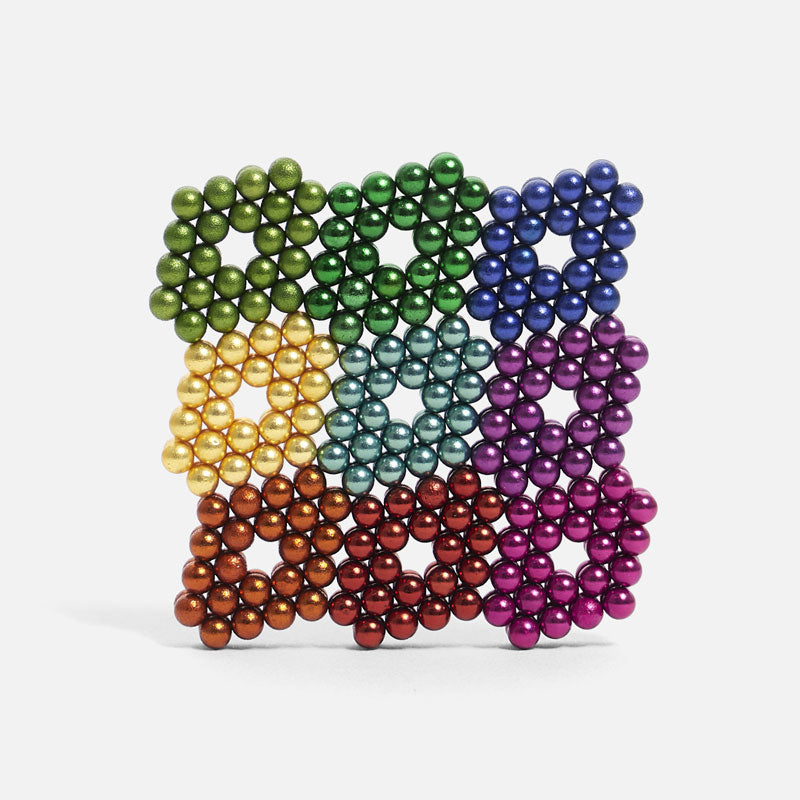
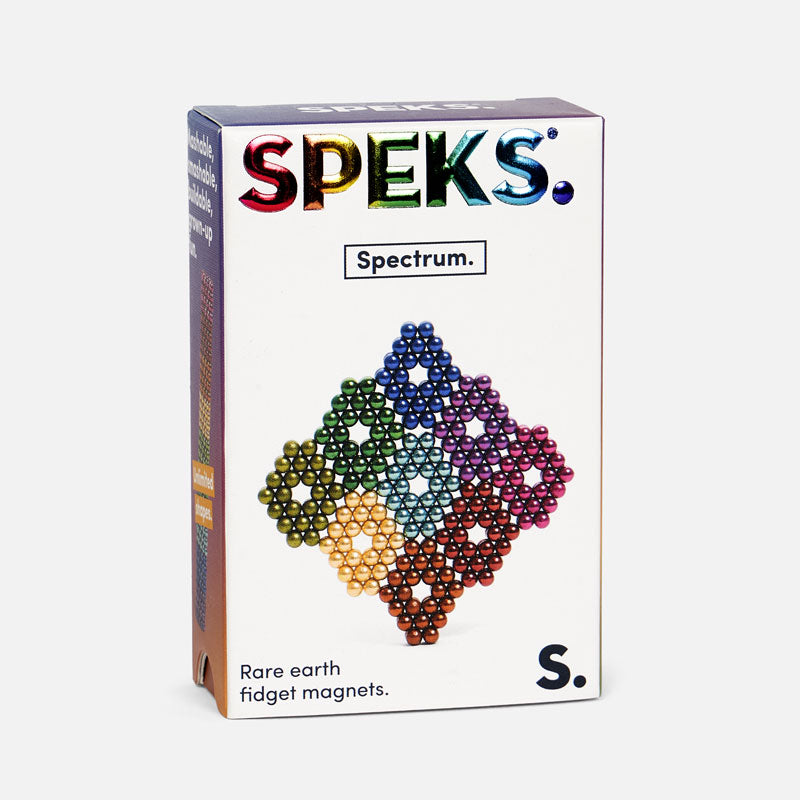
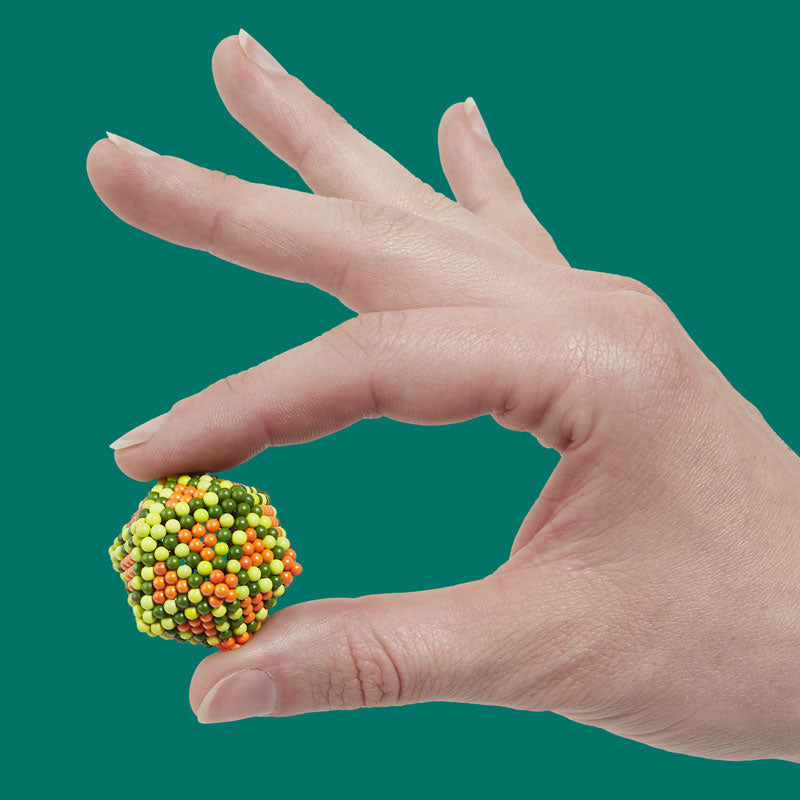
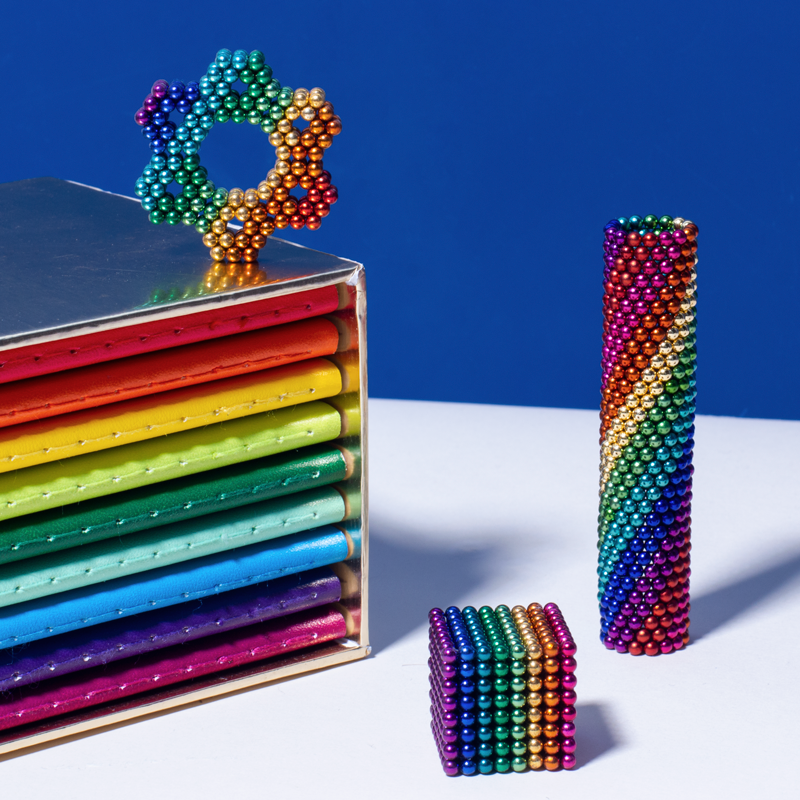
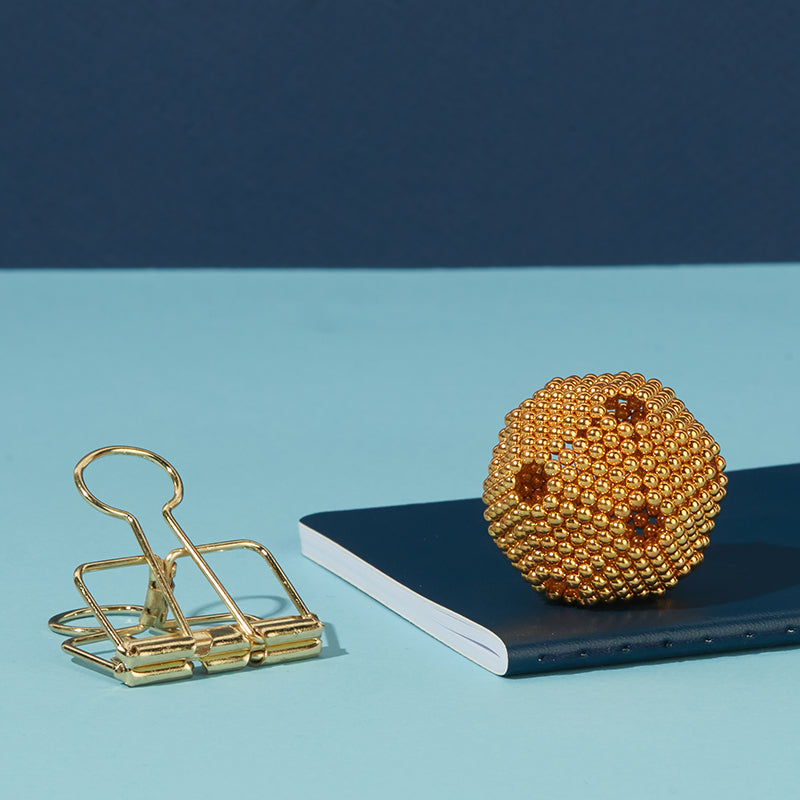
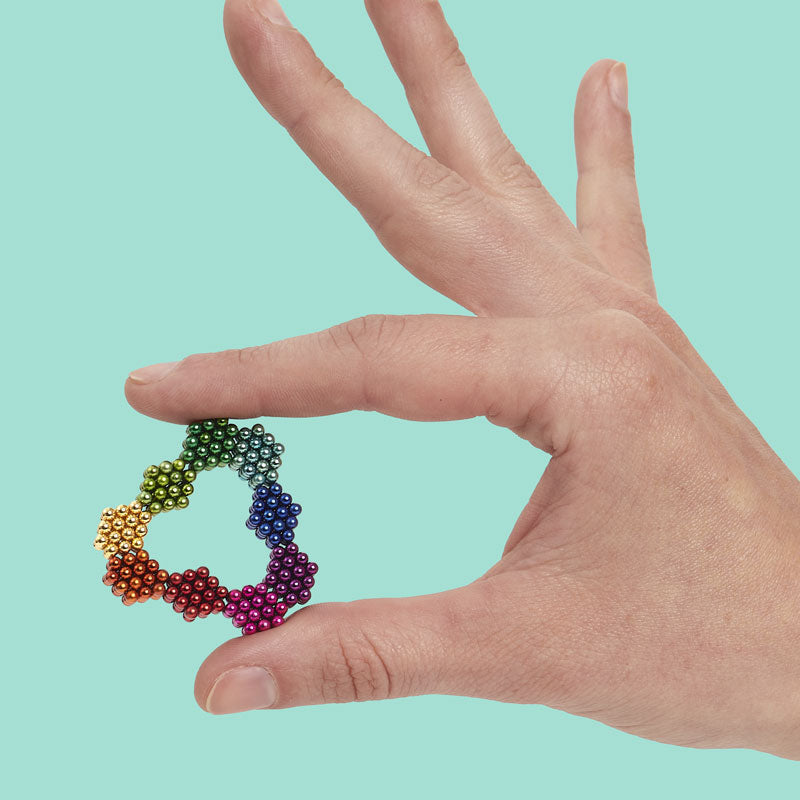
Magnetic beads are the quiet champions. A set of Speks — 432 tiny neodymium spheres, each 2.4mm — mash, clump, and pull apart with a sound no louder than sand shifting. They reward the restless hand without ever announcing themselves. The larger Supers behave the same way at a chunkier scale. The magnetism is the trick: the beads want to find each other, so there is constant, springy, frictionless feedback and effectively no impact noise. The one caveat is not acoustic but physical, and serious — these are powerful magnets that are dangerous if swallowed, strictly for adults, and must never be near children or pets.
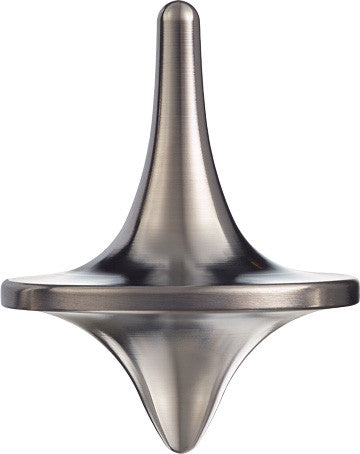
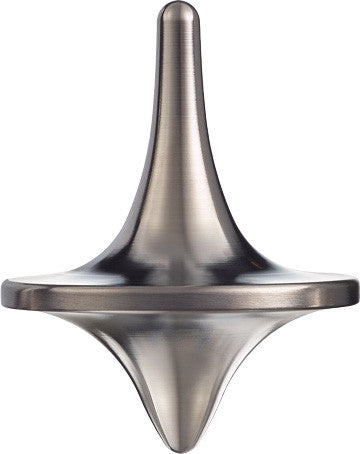
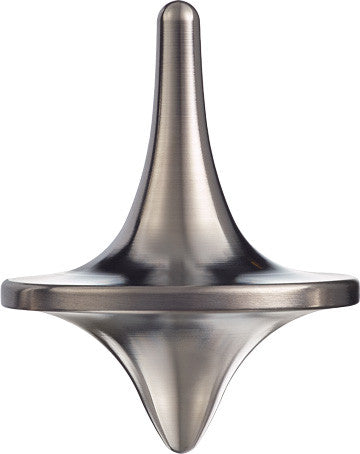
A smooth metal spinning top is nearly silent on the right surface. A machined top like a ForeverSpin makes only a faint hum, and on a desk pad or mouse mat even that disappears. There is a small ritual to it — pinch, twist, watch — that occupies the hands and a sliver of the eye without any clatter. It is among the most office-appropriate fidgets precisely because using it looks like idle contemplation rather than fidgeting.
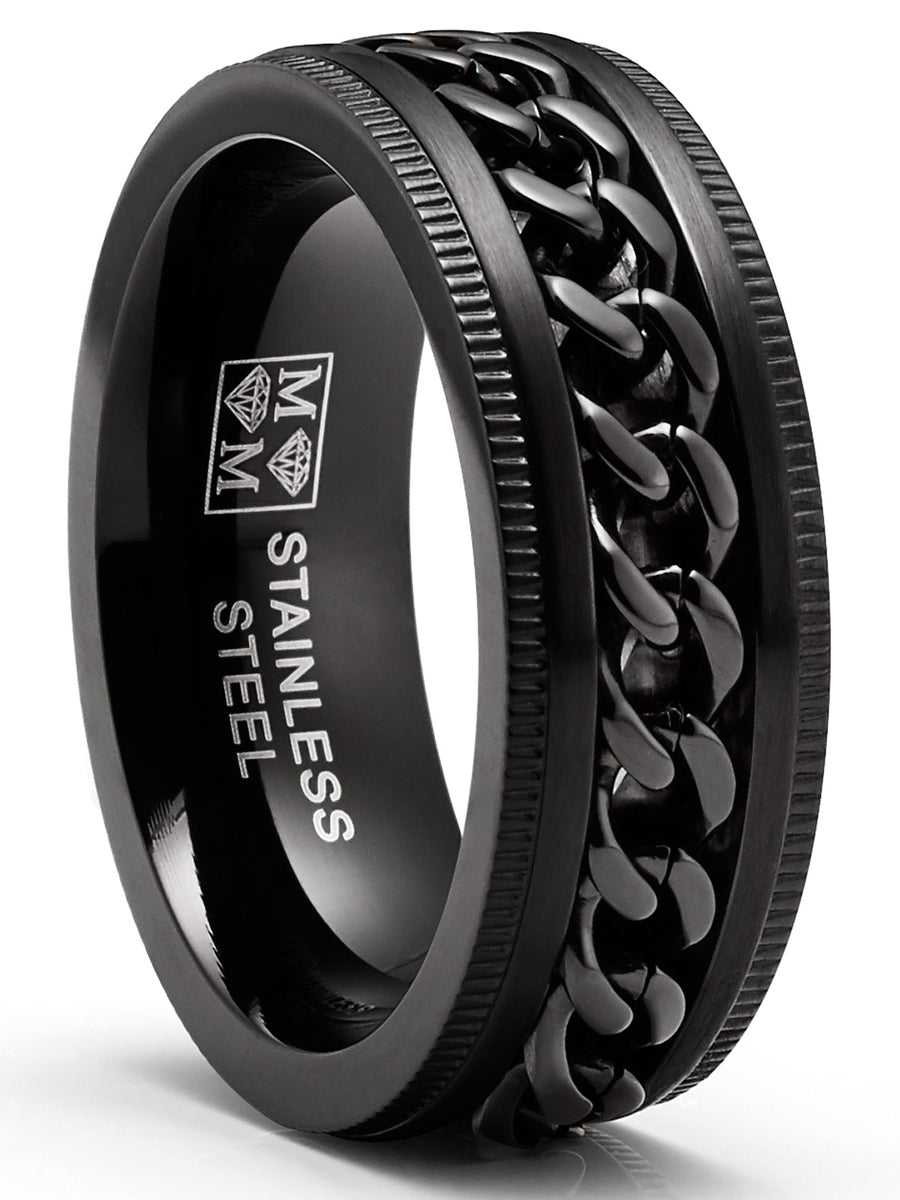
A spinner ring is the silent default. The outer band turns against the inner with no sound at all, and because it lives on your finger there is nothing to set down, drop, or click. For pure noiselessness in a quiet room, nothing beats it.
Now the candid part. The Antsy Labs Fidget Cube is a superb object, but it is not a quiet fidget in full — its snap-switch and click buttons are louder than newcomers expect, and reviewers regularly flag the clicking as too much for a hushed room. The maker has clearly heard this: the Cube includes silenced buttons, a glide joystick, and a textured 'breathe' face precisely so it can be used in silence. So it earns a place in an office — you simply ration yourself to its quiet faces. Likewise, a clicking haptic slider or a snap-button fidget is wonderful at home and antisocial in an open-plan floor.
The rule of thumb I keep coming back to: in a shared room, choose an object whose pleasure is motion, not sound. The clicks are for your own four walls.
In a shared room, choose an object whose pleasure is motion, not sound. The clicks are for your own four walls.
What's the most discreet fidget for meetings and public spaces?
Discreetness is the quality adults ask about most and product pages mention least. The need is real: you may want to keep your hands occupied through a long meeting, a commute, a waiting room, or a difficult conversation, without anyone reading the object in your hand as a toy. The designs that solve this share one trait — they do not look like fidgets at all.
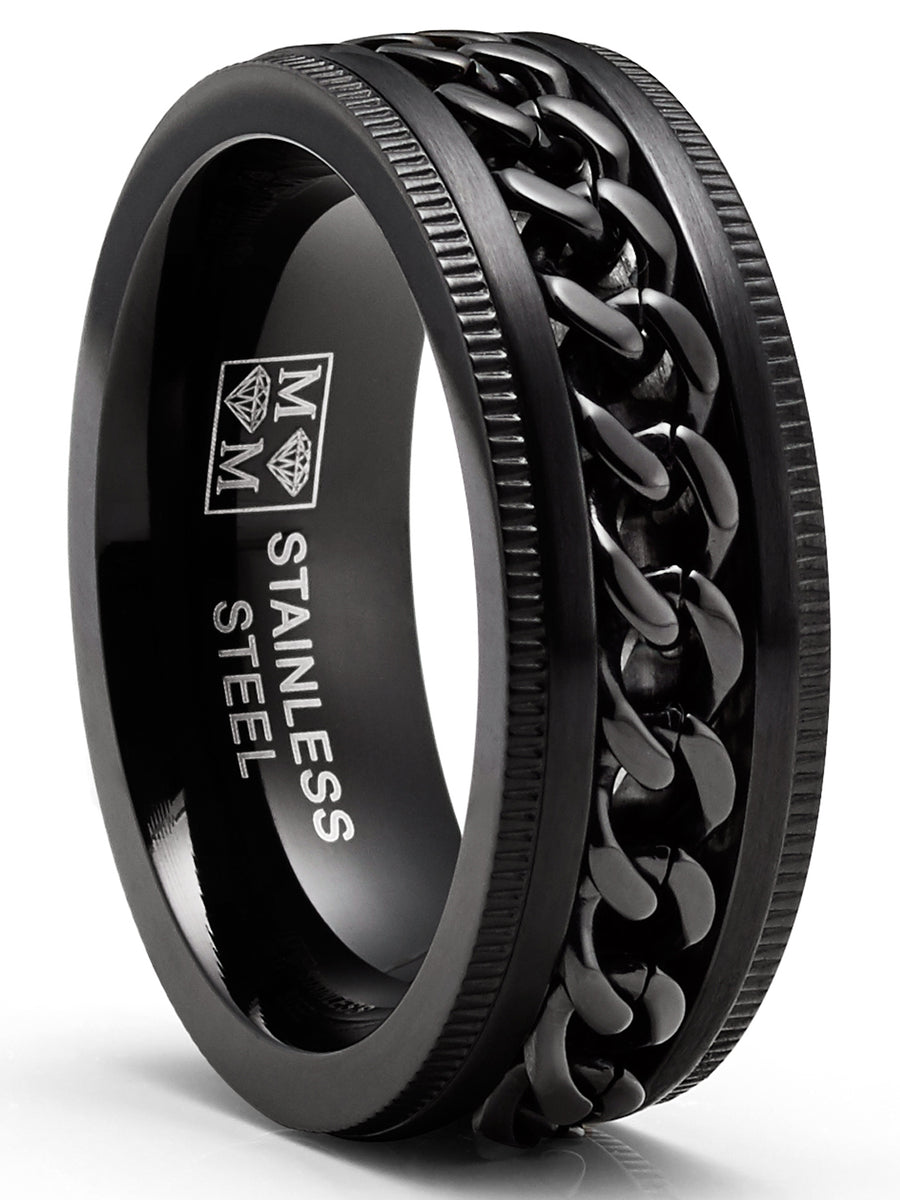
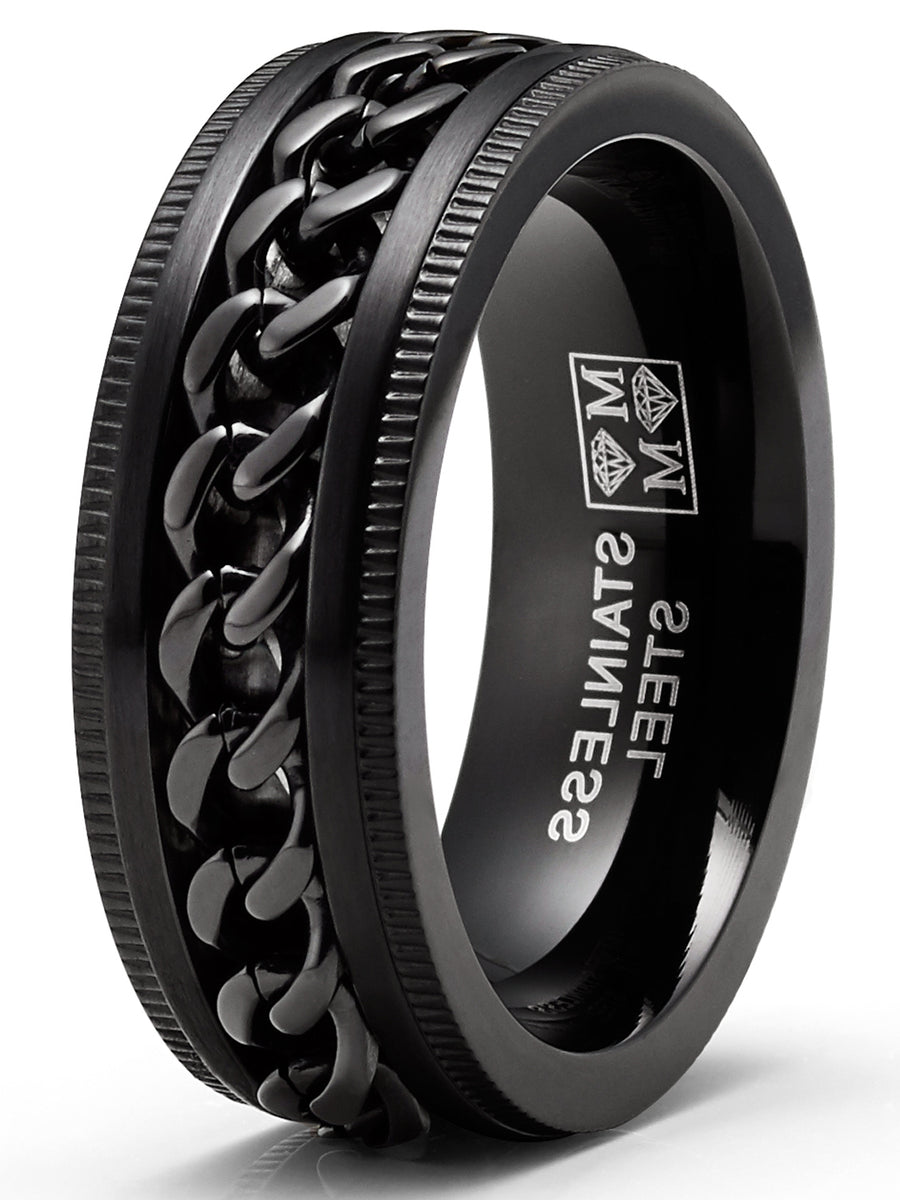
The spinner ring is the masterpiece of the discreet category. It is, to any observer, simply a ring. The mechanism is a free-spinning outer band that rotates around a fixed inner band, and you turn it with a thumb in a motion so small it is nearly invisible. Stainless steel versions cost very little, never rust, and pass entirely as jewelry; you can wear one through an interview or a board meeting and be the only person who knows it is doing anything. For sheer 'nobody can tell,' nothing else comes close. The honest limitation is fit — these need to sit correctly on the finger to spin well, so sizing matters more than with ordinary rings, and a too-loose band will slip while a too-tight one will not turn.
A smooth coin or worry-stone-style object is the runner-up. A dense, palm-sized piece of metal — a machined knucklebone, a heavy slug, the kind of object that reads as a coin or a fidget 'stone' — can be turned over in the hand under a table with no one the wiser. Aroundsquare explicitly describes its knucklebones as serving 'exceedingly well as a worry stone or discrete fidget item,' which is exactly the use here: tactile, silent, and ambiguous to onlookers.
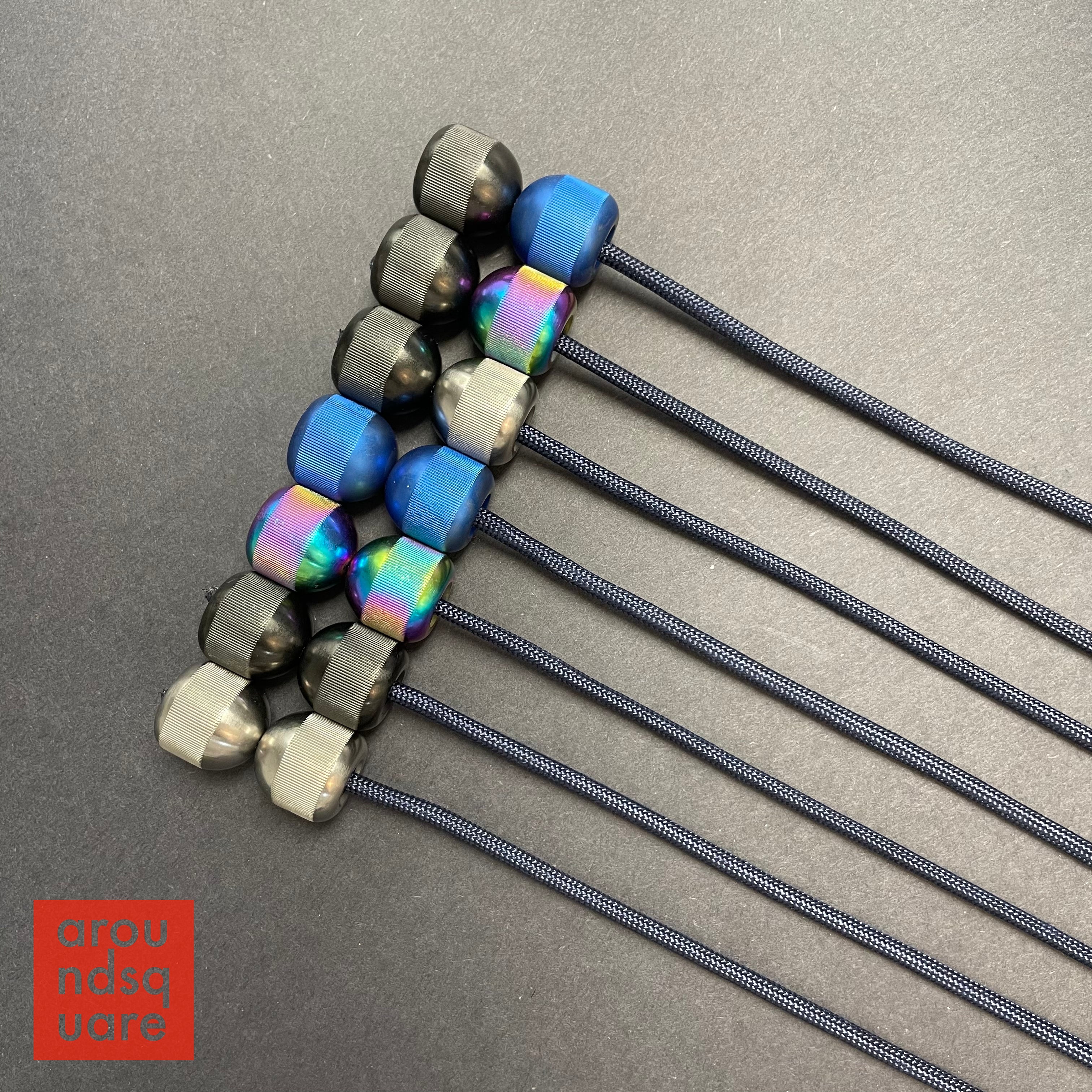
A begleri, used with restraint, hides well too. In its quiet mode — two weighted beads on a short cord, simply rolled across the fingers rather than thrown in tricks — a begleri is compact and unobtrusive. The flashy trick-play is for your own time; the small palm-rolling motion is meeting-safe.
What to avoid when discreetness is the goal: anything that spins visibly, lights up, or makes noise. A fidget spinner is the opposite of discreet — it is a small performance. The whole art of the discreet fidget is that it asks nothing of anyone's attention but your fingertips'.
There is something I find quietly admirable in this corner of the category: the best discreet fidgets are exercises in disappearance, objects engineered to be overlooked.
The best discreet fidgets are exercises in disappearance — objects engineered to be overlooked.
What's best for genuinely restless hands that need to move a lot?
Some hands need more than a gentle turn. For a person whose restlessness is large — who clicks pens to death, bounces knees, peels labels, needs continuous and substantial motion — the small, subtle fidgets are not enough. This is a real and distinct need, and the objects that serve it are the ones with range, resistance, and a high ceiling of engagement.
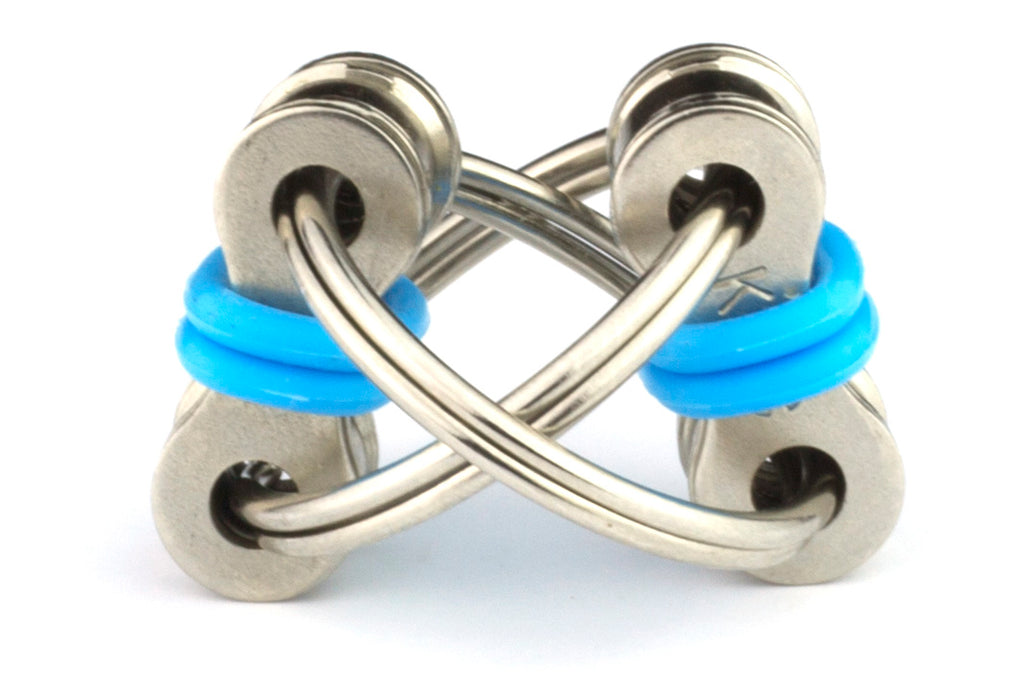
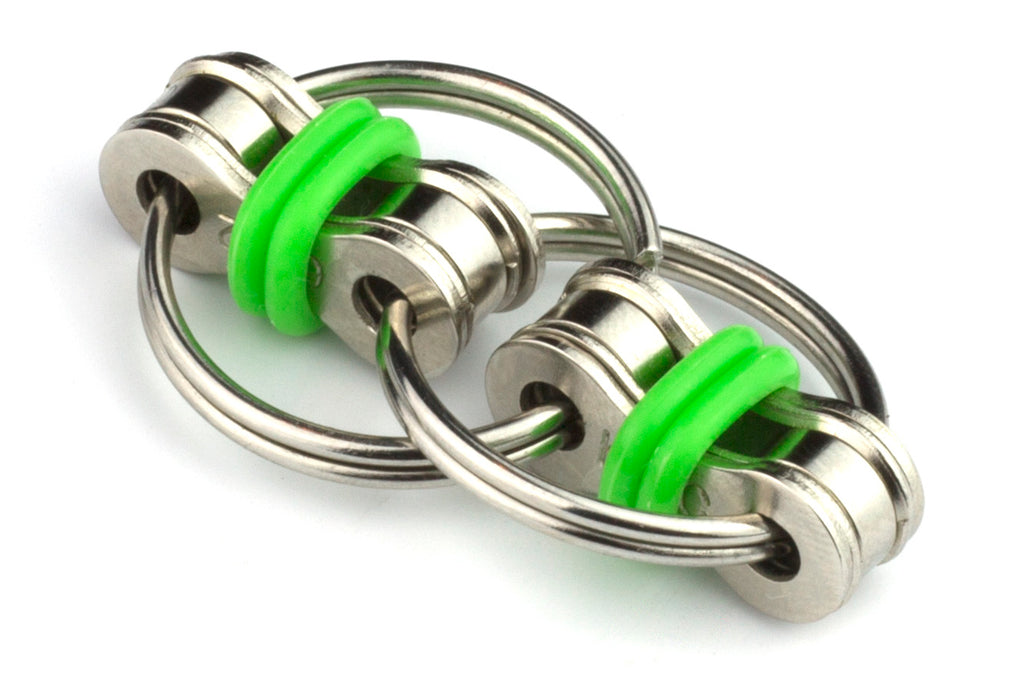
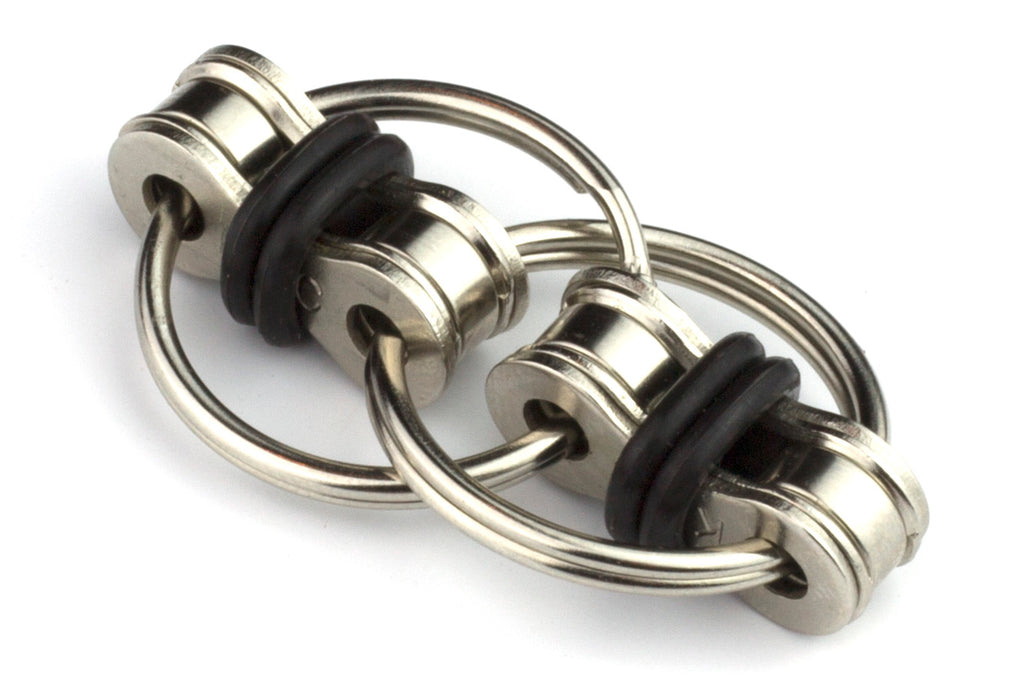
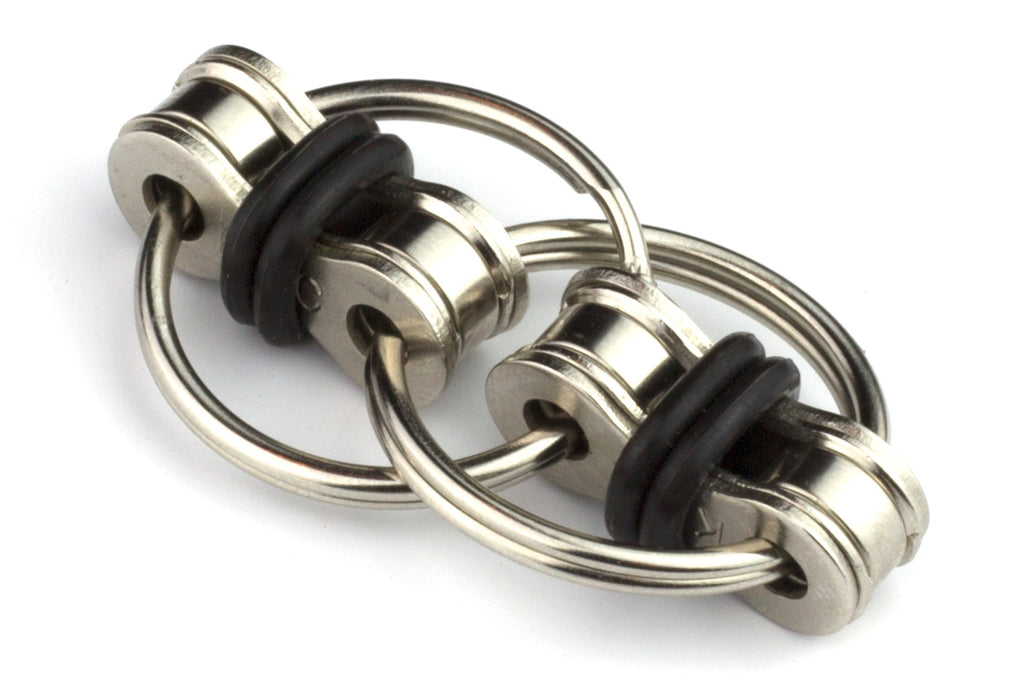
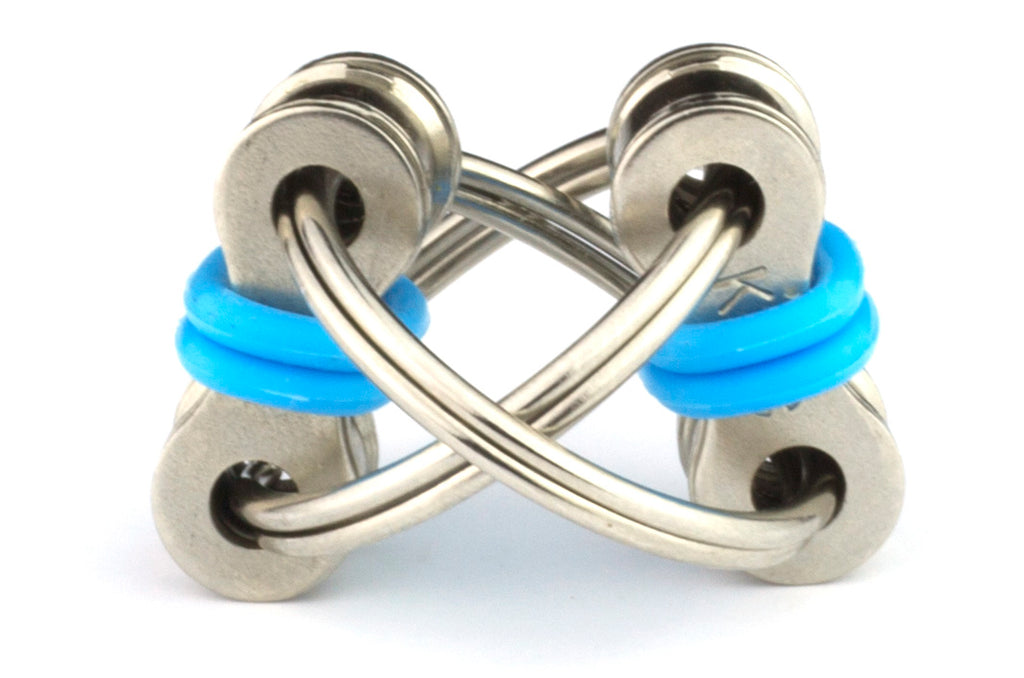
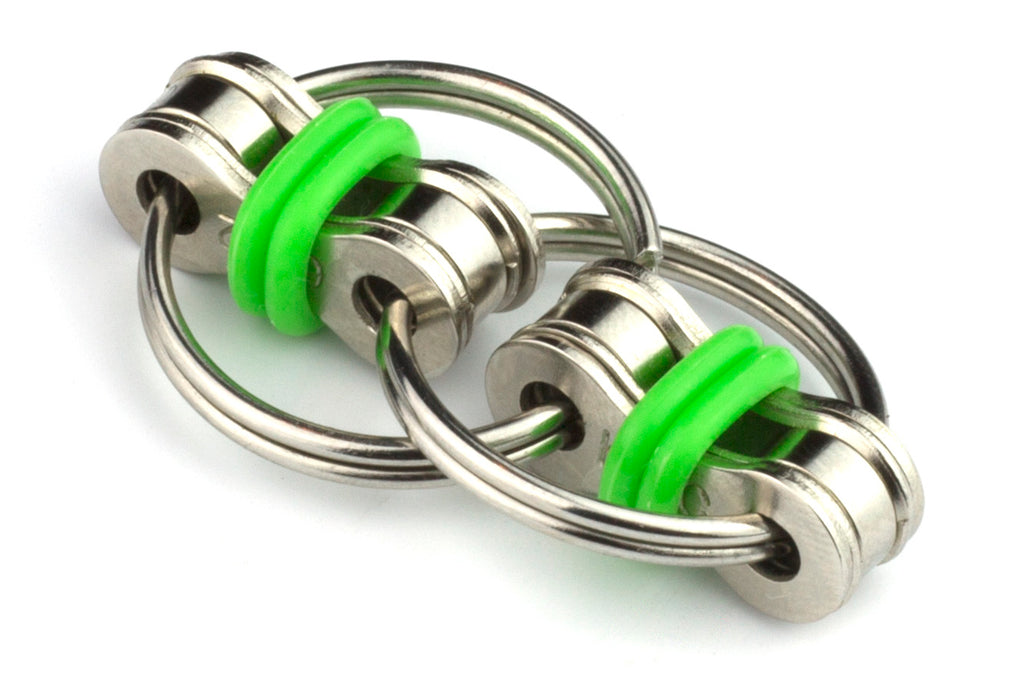
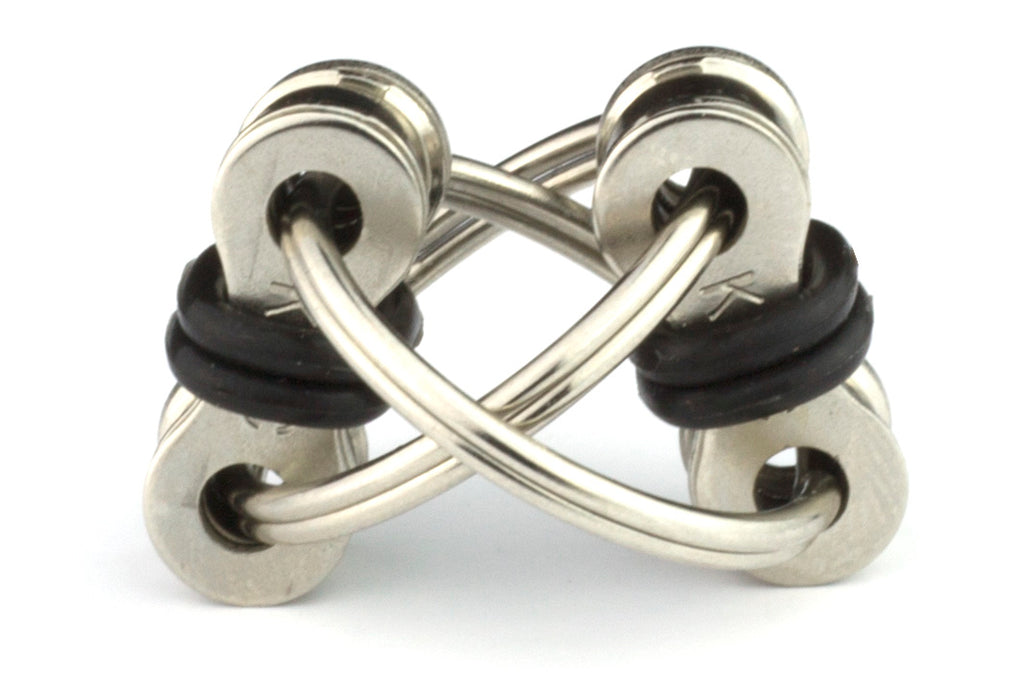
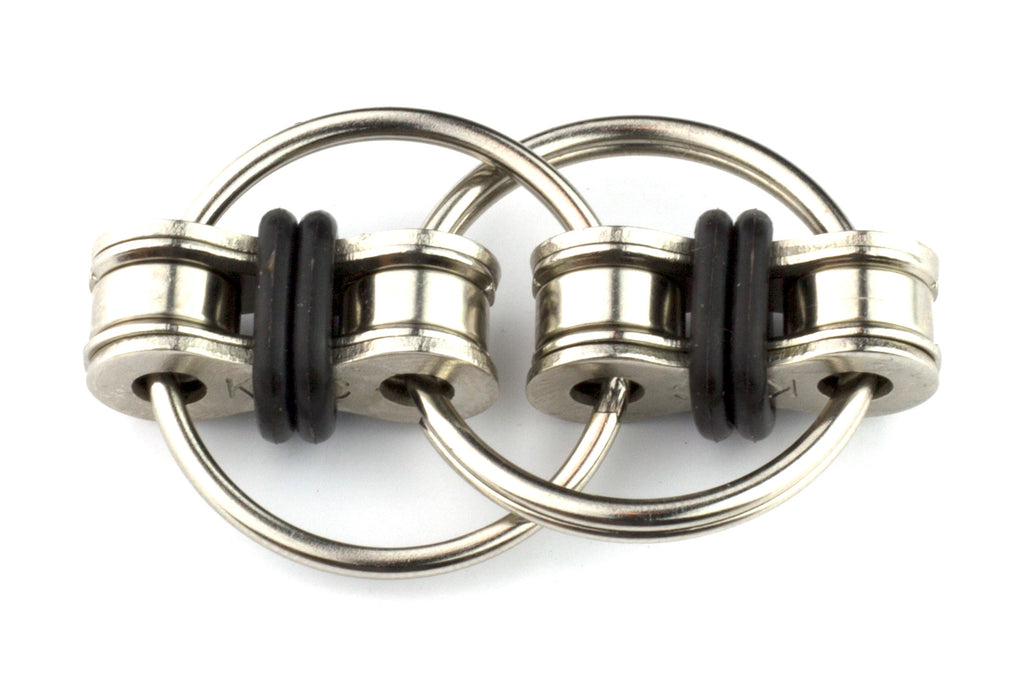
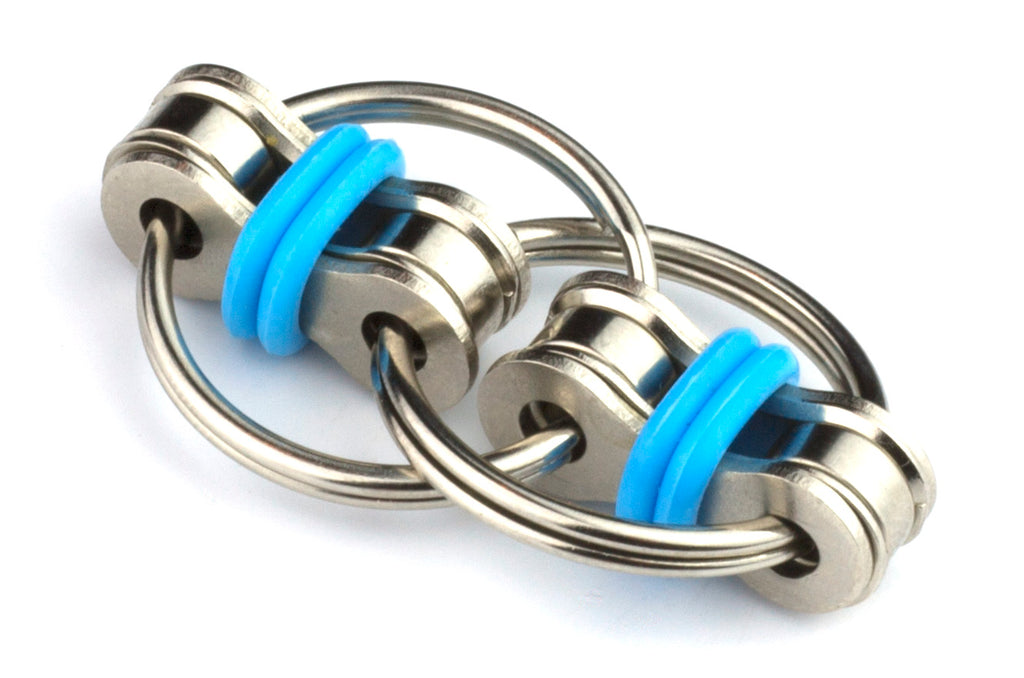
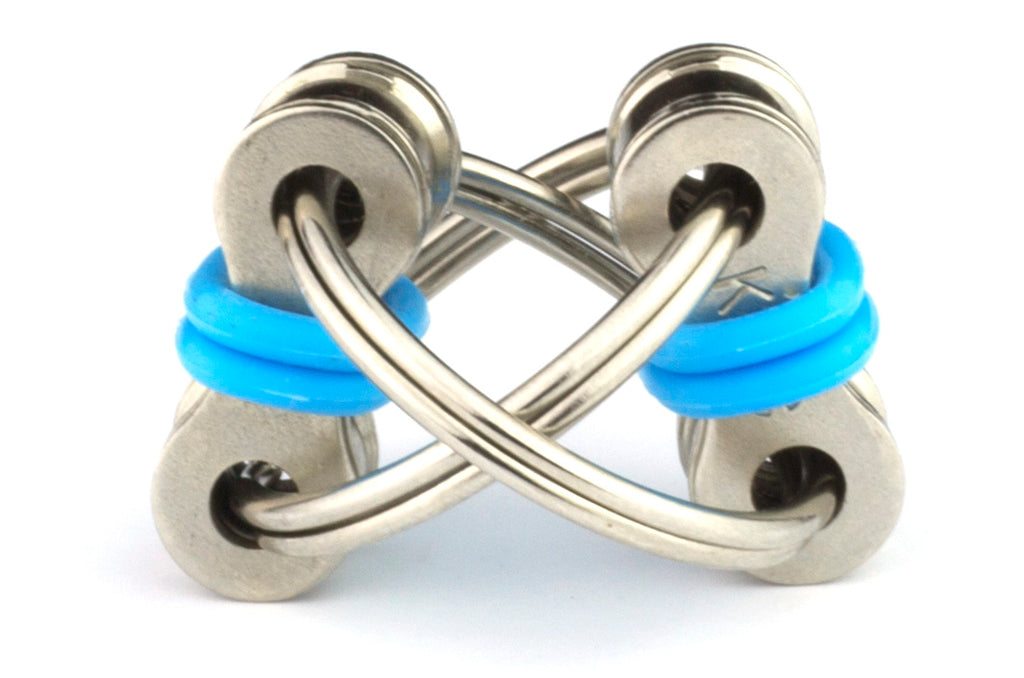
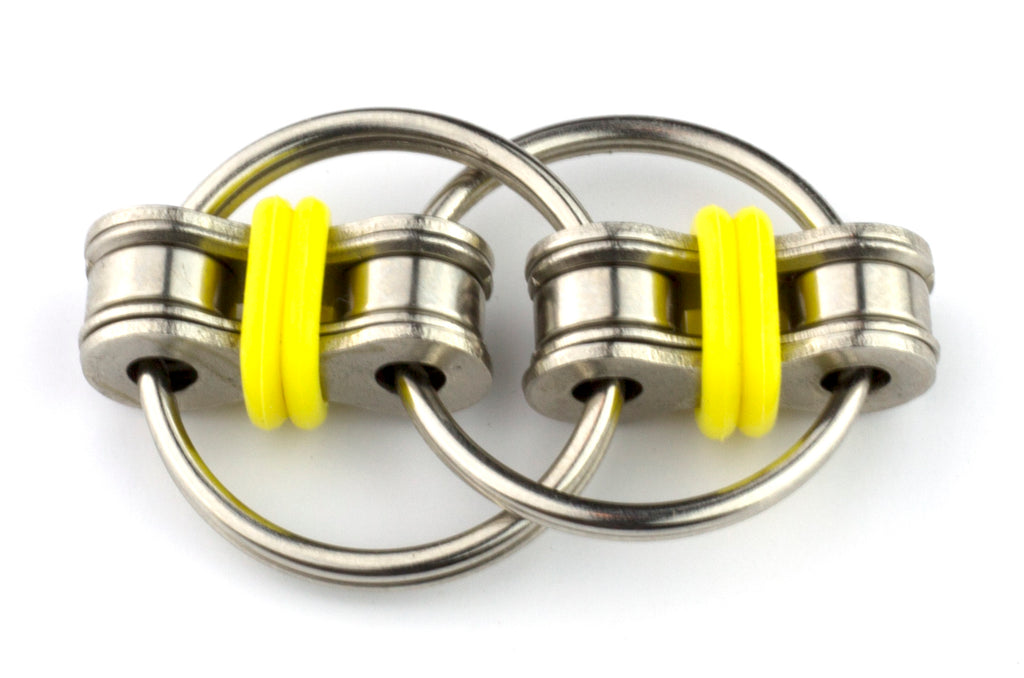
A bike-chain fidget is built for exactly this. Tom's Fidgets Flippy Chain is a loop of cleaned, de-greased bicycle chain fitted with silicone rings, and it is unapologetically made for, in the maker's own words, 'hardcore fidgeters.' It folds, flips, rolls, and cascades through the fingers continuously; there is always another motion. The metal gives it real heft and the silicone rings a comfortable grip. It is heavier-duty than it looks and survives abuse that would destroy a plastic toy. The trade-off is noise — chain links clink — so this belongs at home, in a car, or anywhere your hands need to move freely without an audience.
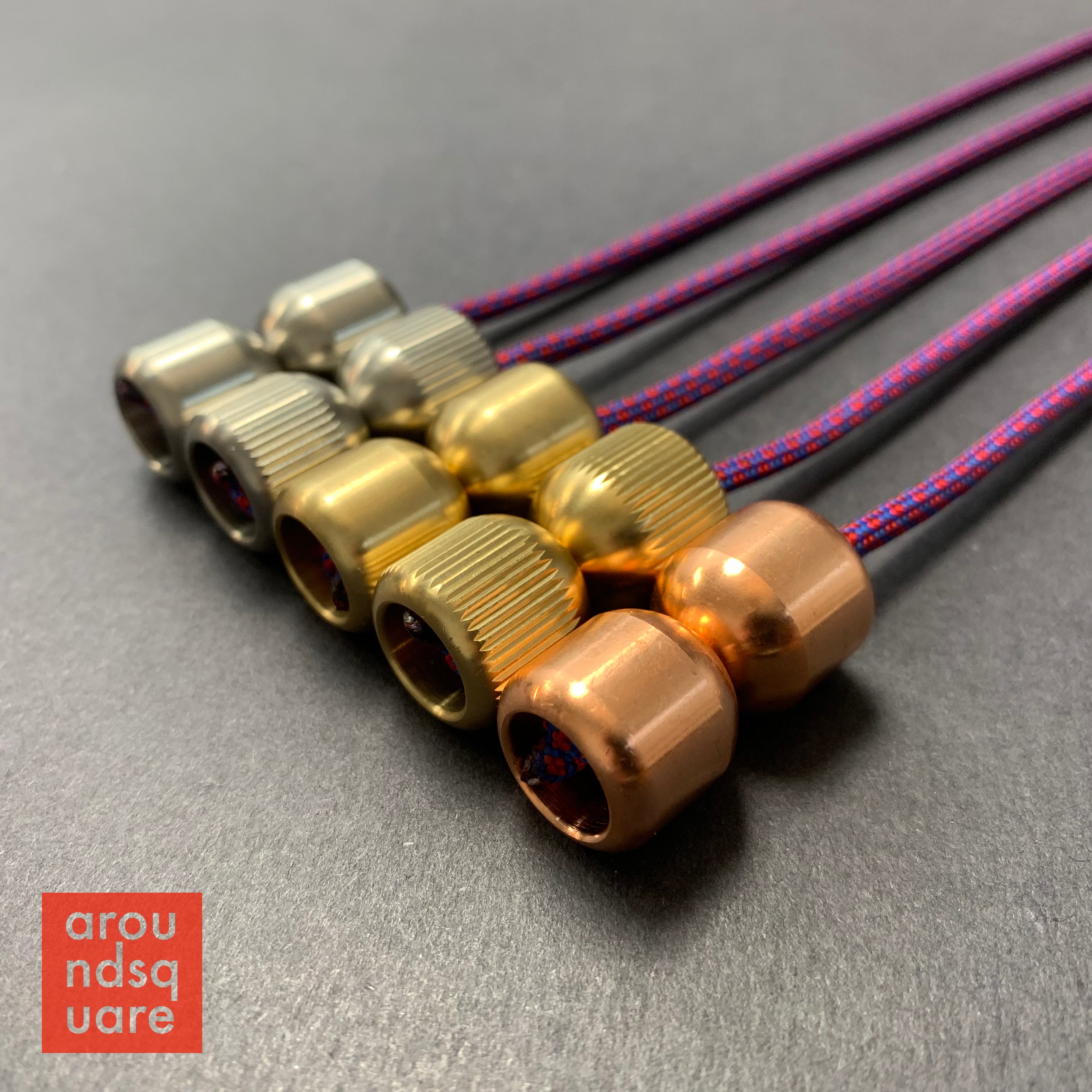
A begleri offers the deepest well of engagement. Two weighted beads on a short cord, a begleri rewards practice the way a yo-yo does — there is a whole vocabulary of throws, wraps, and catches to learn, which means a genuinely active fidgeter never runs out of things to do with it. For restless hands that also crave a skill to develop, nothing on this list goes deeper. Aroundsquare's machined begleri, in brass or titanium, are the connoisseur's choice; simpler steel or Delrin sets are an inexpensive way to find out if the motion suits you.
A magnet set absorbs near-infinite fidgeting silently. Where the chain is loud, a tin of Speks is the high-volume quiet option — you can mash, separate, and rebuild them endlessly, and the hands stay as busy as you like without a sound. For an active fidgeter stuck in a quiet room, this is often the answer.
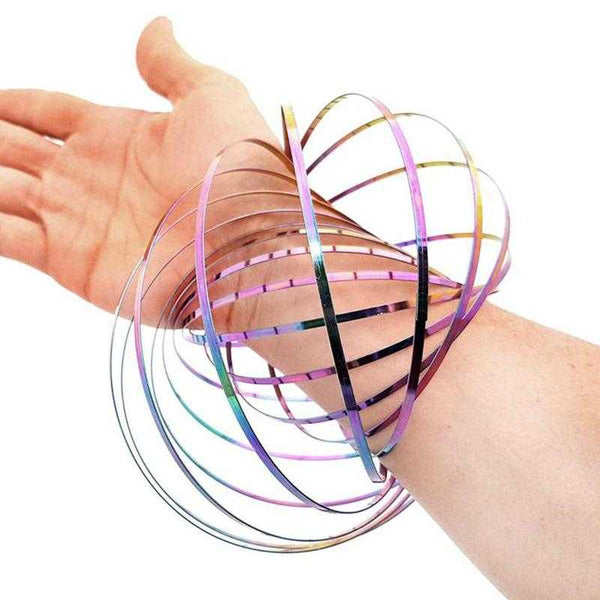
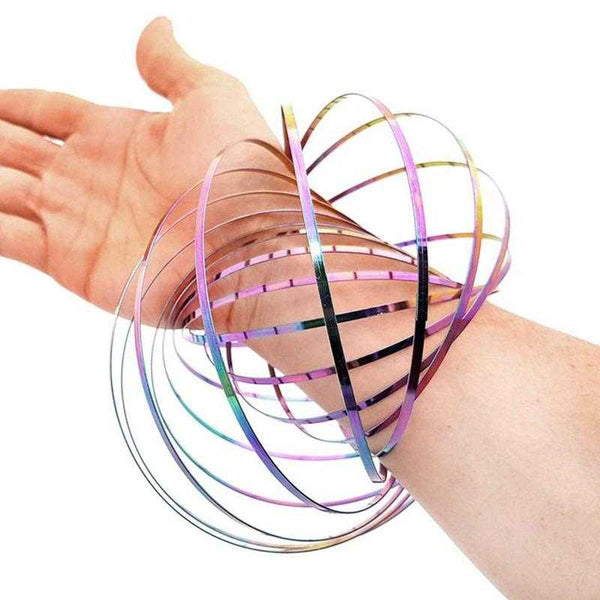
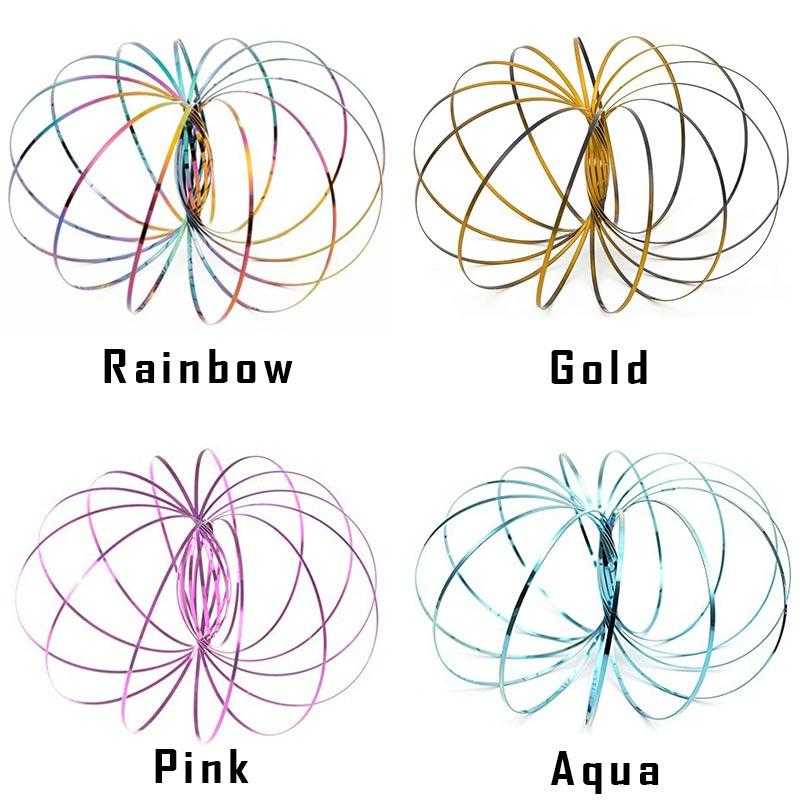
A flow ring is the most kinetic large-motion option. The springy kinetic ring (the 'flow ring' family) slinks up and down the arm and collapses flat, giving big, sweeping, mesmerizing movement. It is more demonstrative than discreet, but for sheer satisfying motion on a desk or sofa it is hard to beat.
The pattern here is that busy hands want capacity — an object that offers more motion than you can exhaust. The mistake is buying small and subtle for a need that is large and continuous.
Busy hands want capacity — an object that offers more motion than you can exhaust.
Which premium fidget is worth carrying every day?
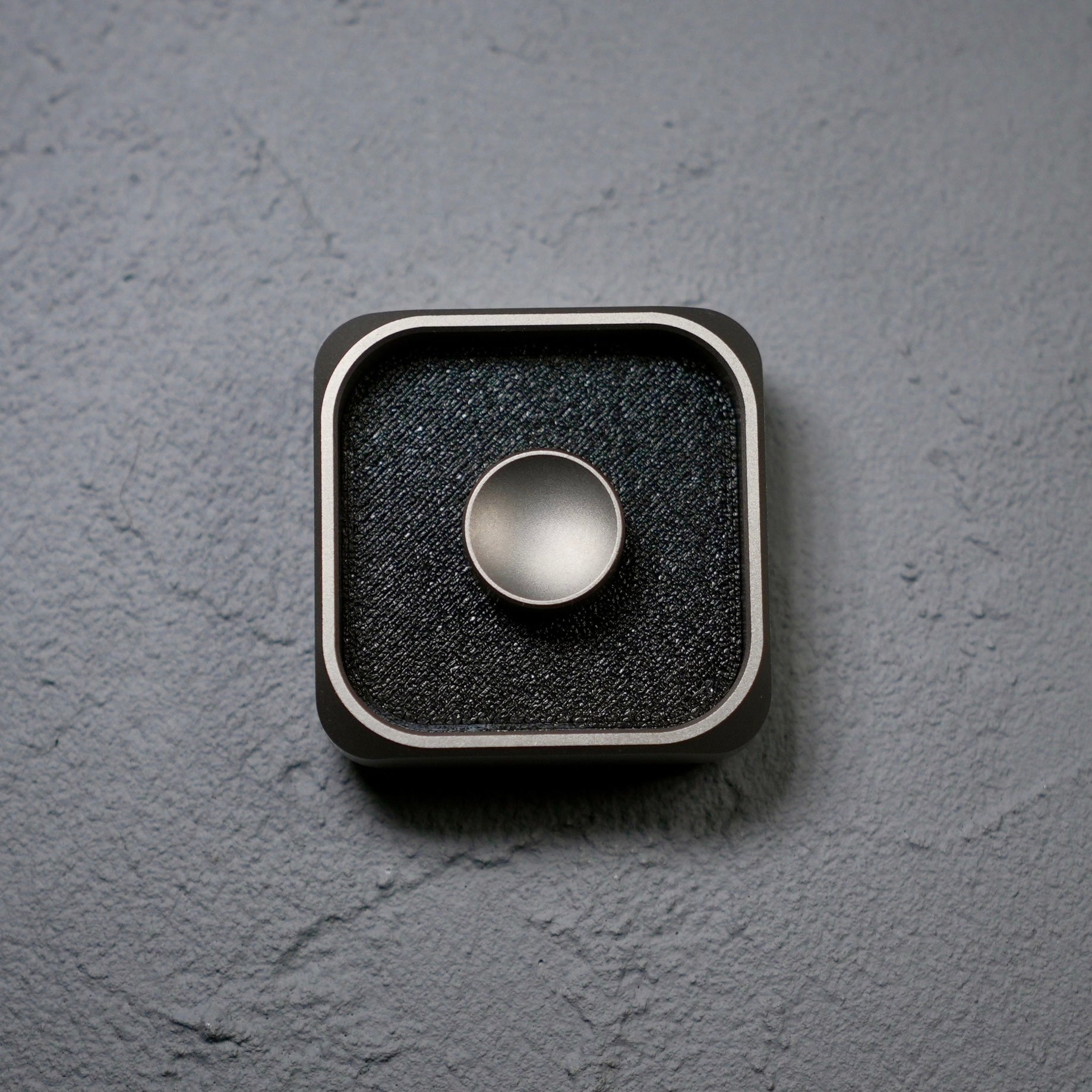
There is a tier of fidget that crosses into everyday-carry territory — the world of well-made pocket objects, of knives and pens and lighters chosen for the pleasure of a thing done right. Here the question changes from 'does it work' to 'will I still want it in ten years,' and the answer turns on materials and machining rather than novelty.
A ForeverSpin top is the heirloom of the category. CNC-machined from a solid billet of metal in Canada — titanium, brass, copper, tungsten, and more — each top is a small exercise in precision, balanced, serial-numbered, and backed by a lifetime warranty. The titanium runs about $66 from the maker, with brass and copper a touch less and tungsten dramatically more; these are not impulse prices, but the object justifies them. It spins with an improbable steadiness, develops a patina with handling, and reads on a desk as a designed thing rather than a toy. If I had to choose one fidget to own for life, it would likely be this. (A note on price: third-party stockists list noticeably higher converted figures, so buy from ForeverSpin directly.)
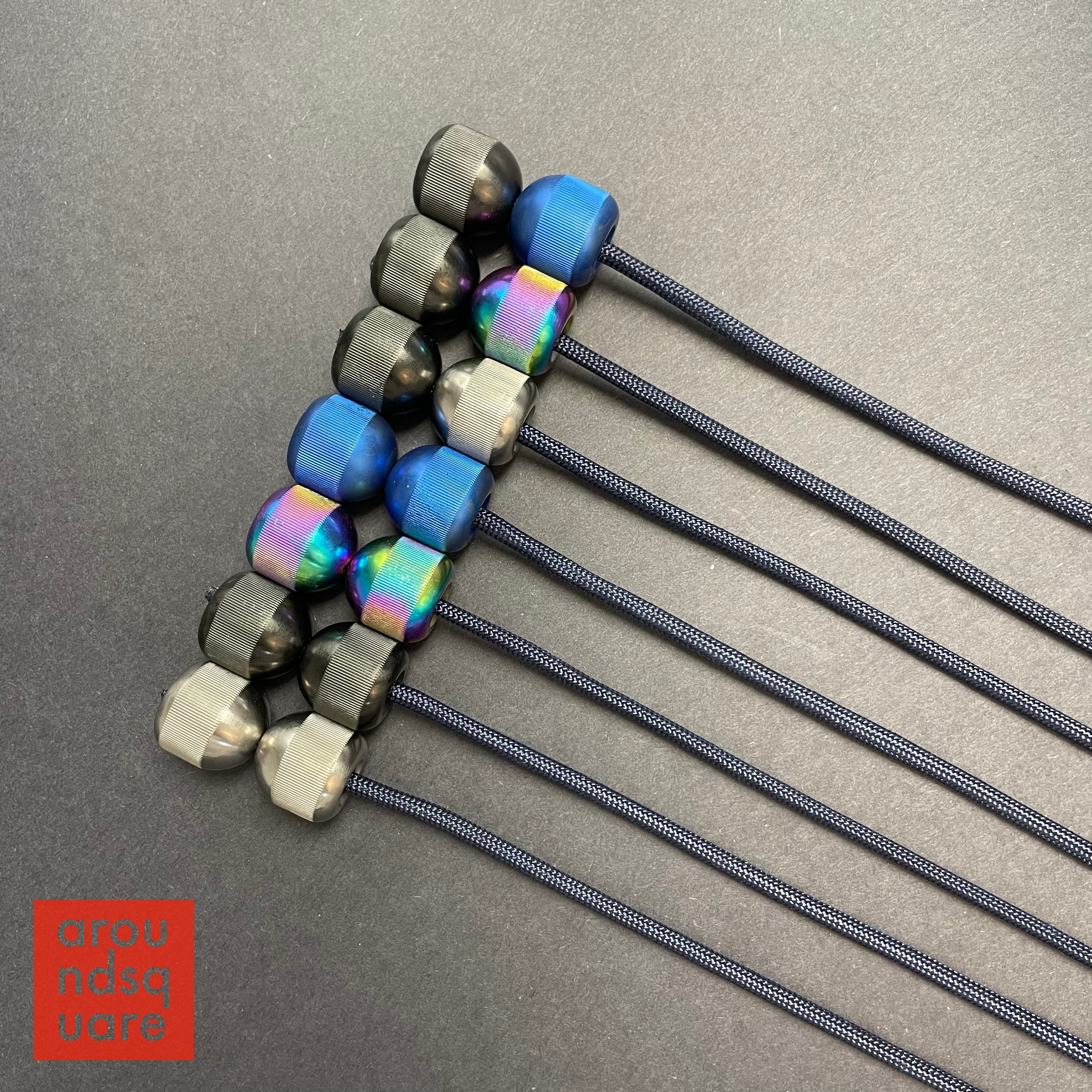
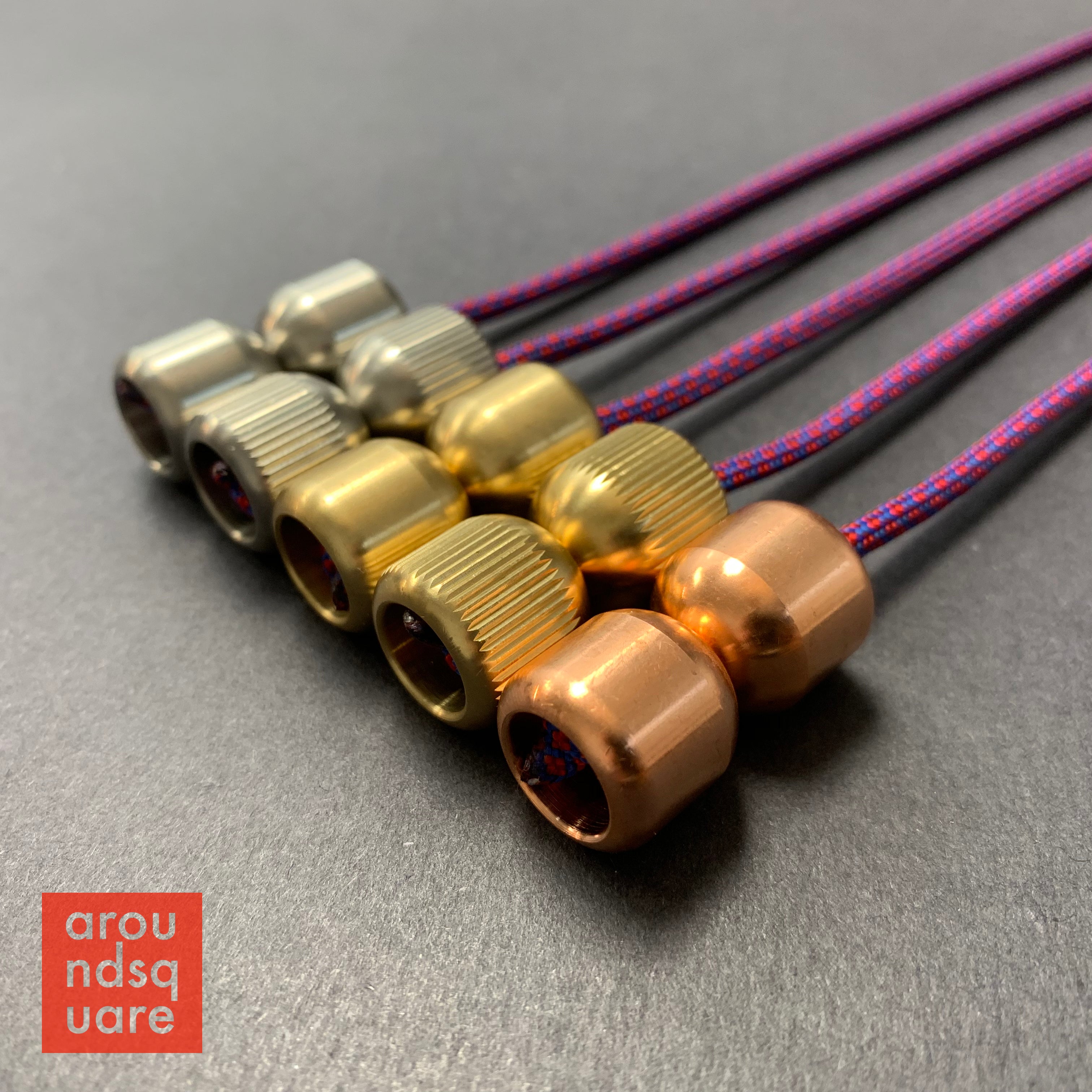
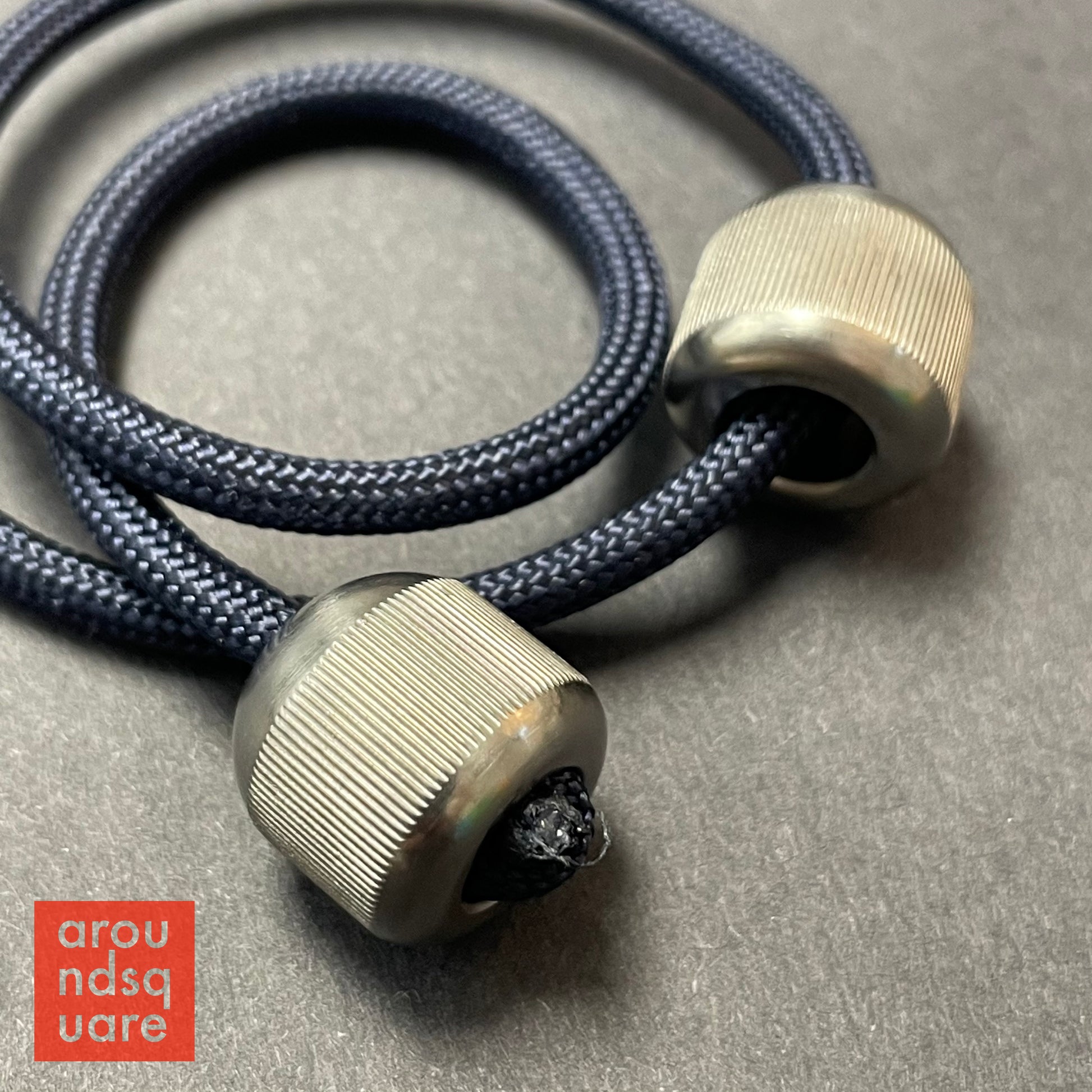
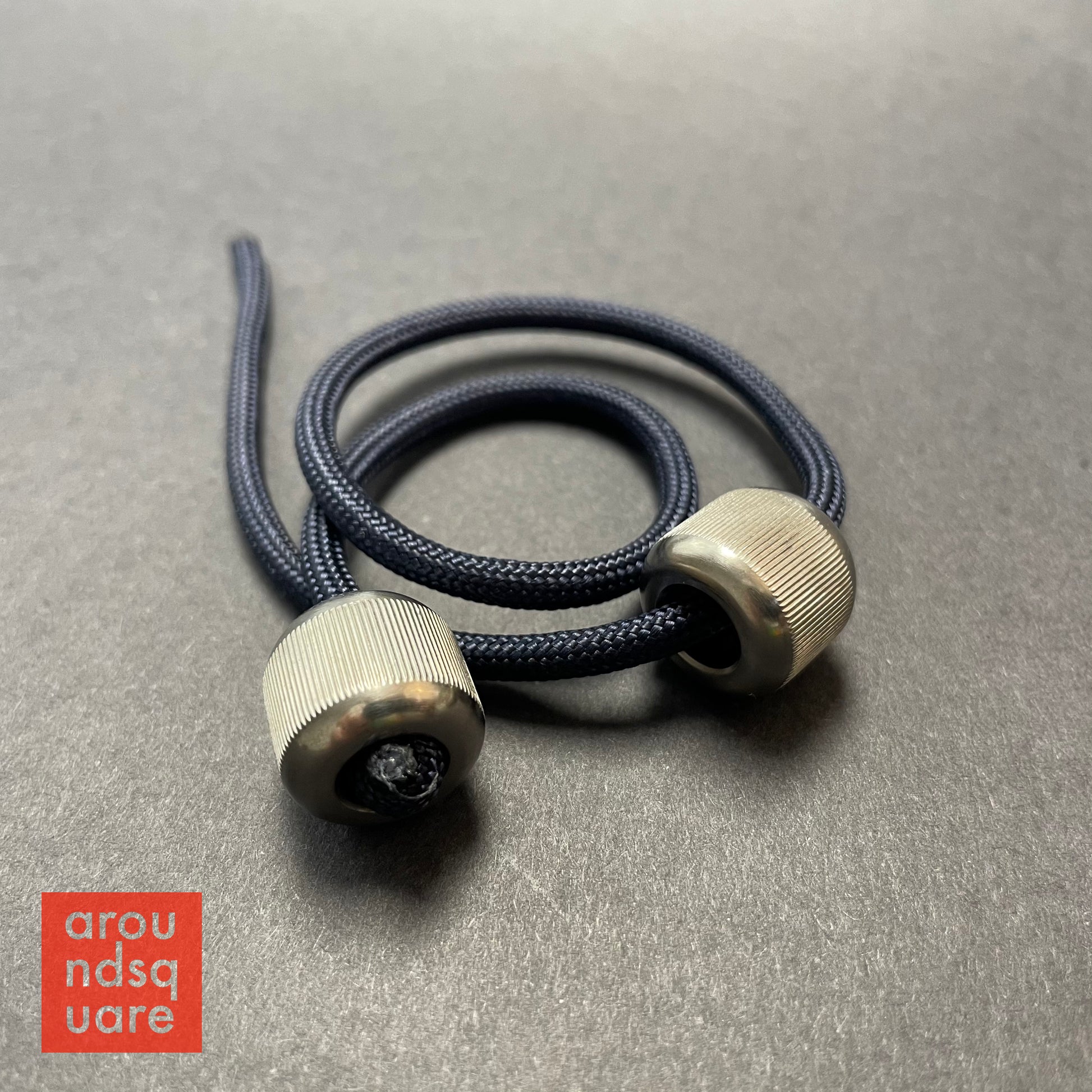
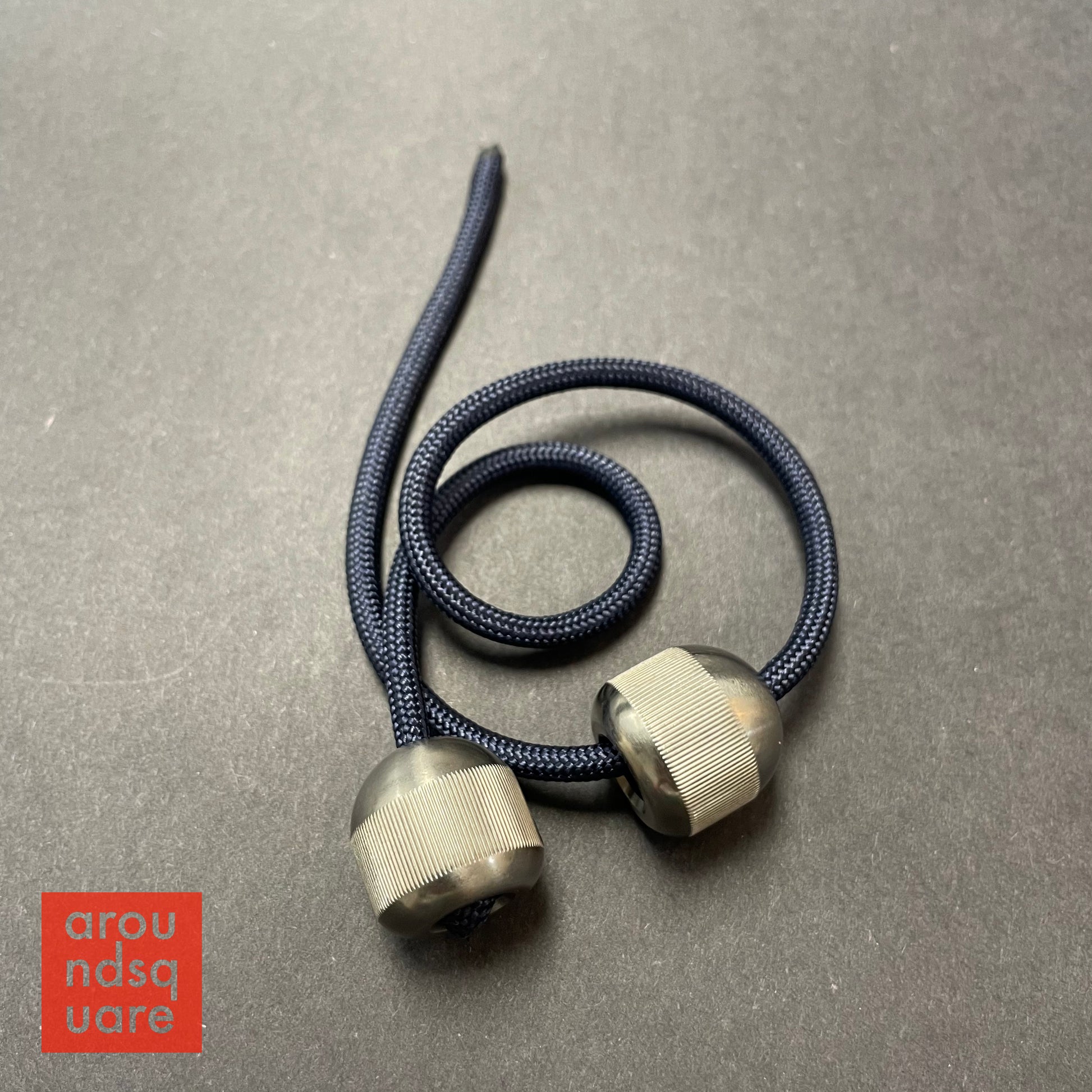
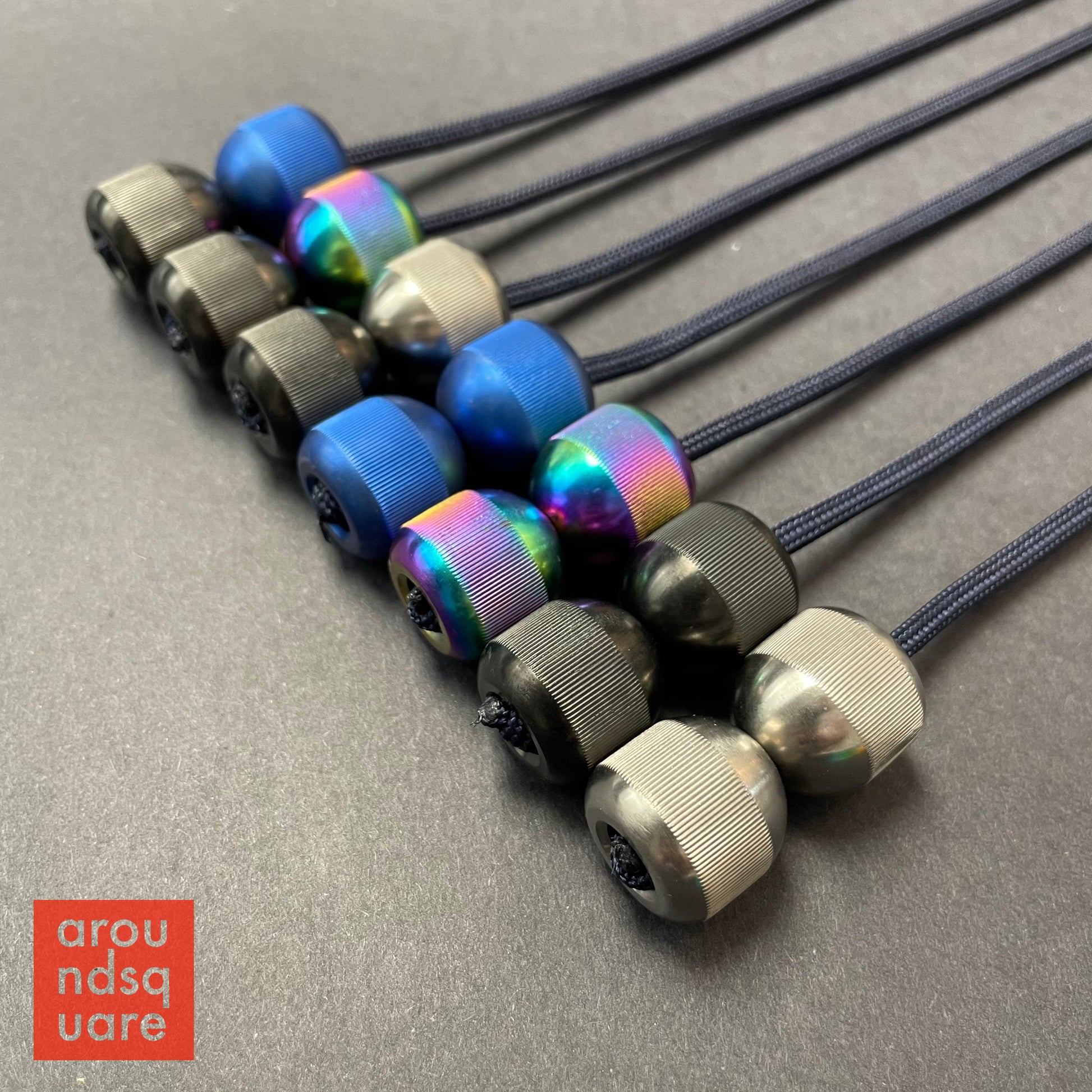
A titanium begleri is the connoisseur's pocket piece. Aroundsquare's machined begleri — the Titan and its kin, grade-five titanium with knurled barrels and domed beads for smooth play — are the kind of object the small EDC and skill-toy community treats as collectibles. Titanium sets run high, often well into the dozens of dollars and beyond, but the brand's standard metal editions in brass or steel bring the same engineering to a gentler price. This is a fidget that is also a skill, also a worry-stone, also a small piece of industrial art.
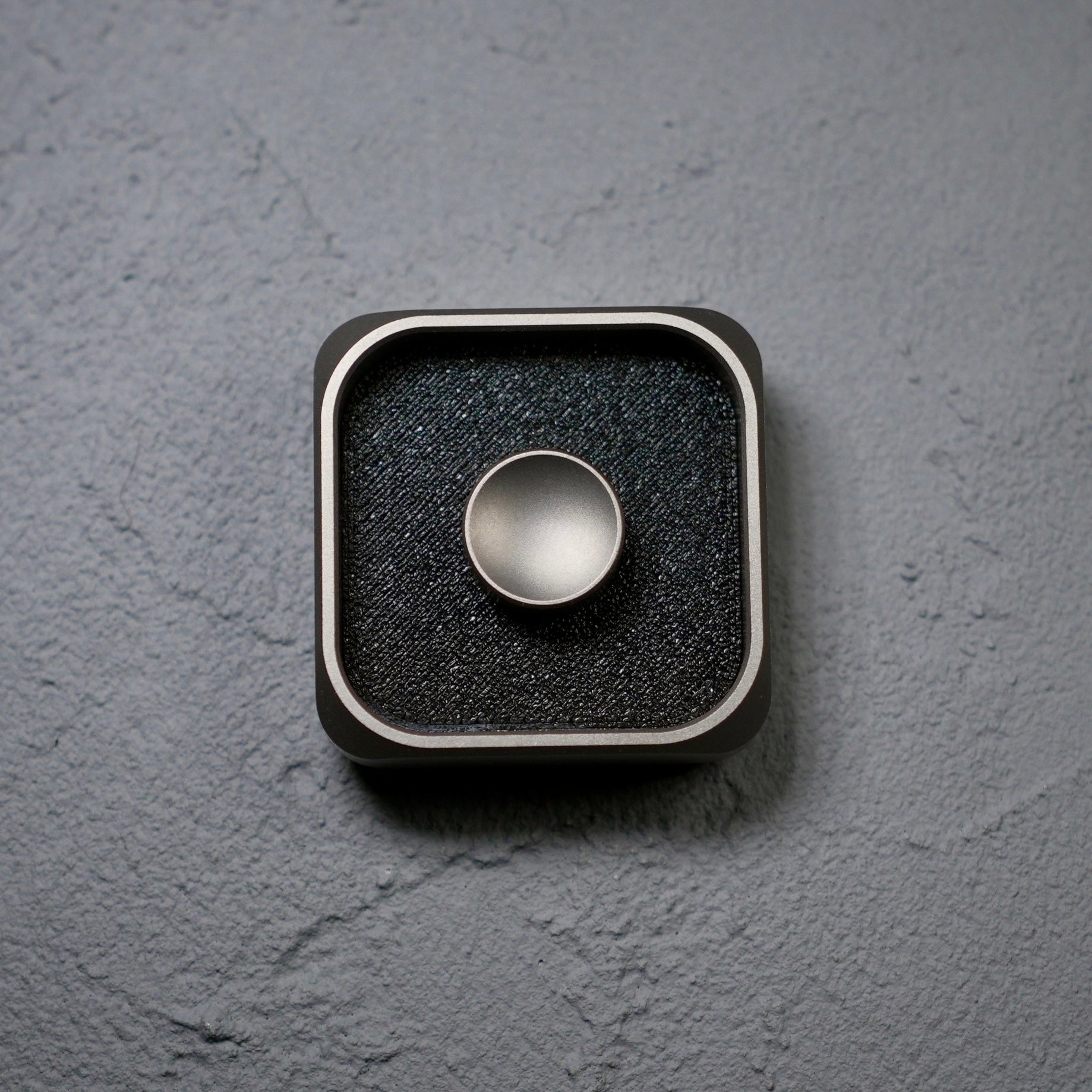
A premium haptic slider scratches the EDC-clicker itch. For those who love a crisp, magnetic detent click, a machined titanium or steel slider (makers like Kickup-EDC build genuinely nice ones) delivers a tactile 'thock' with each pass of the magnet. It is loud-ish and therefore a home or solo object, but as a pocket fidget for the click-lover it is hard to fault. Be warned that this corner of the market is awash in cheap clones; the difference between a good slider and a bad one is entirely in the magnets and the machining, and you feel it immediately.
A high-end knucklebone rounds out the tier — a dense, modular metal roller meant to be carried, manipulated, and worried over for years.
The premium fidget is a small luxury with a long tail: bought once, carried daily, and quietly enjoyed long after a cheaper object would have ended up in a drawer.
Here the question changes from 'does it work' to 'will I still want it in ten years' — and the answer turns on machining, not novelty.
What's the best fidget for a child at a desk — and the best budget pick?
Two practical questions to close on: what to hand a child who needs to keep still at a desk, and what to buy when you simply want a good fidget without spending much. They have overlapping answers, with one firm safety line running through them.
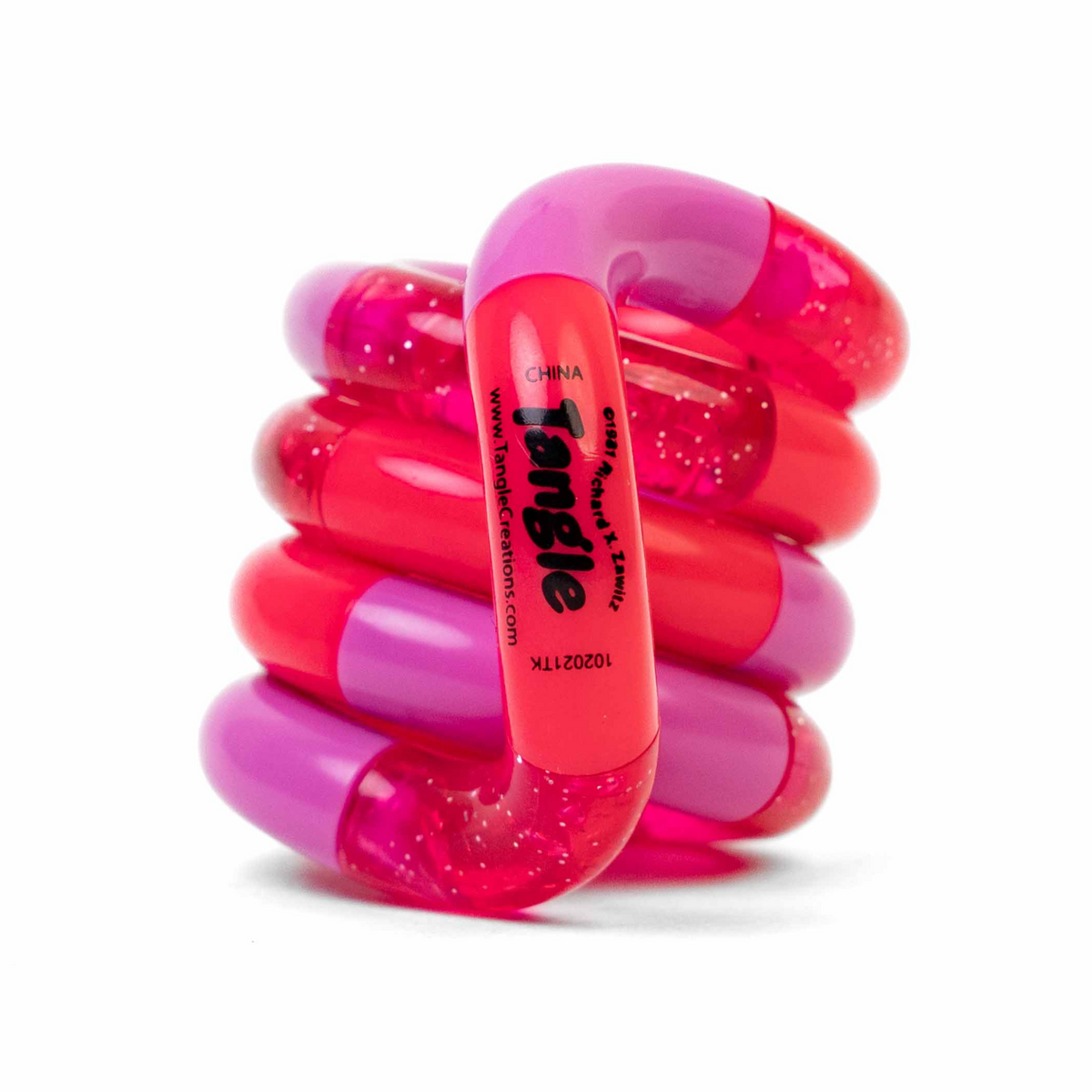
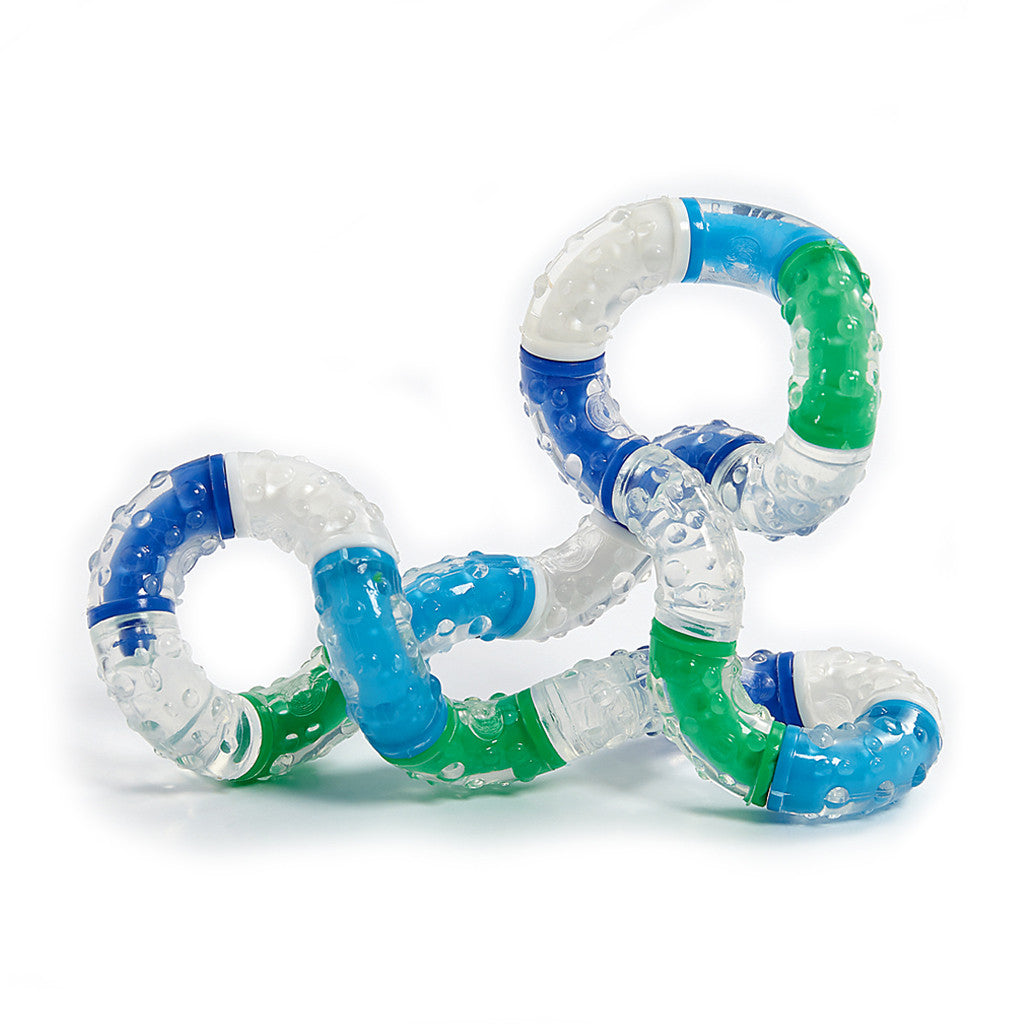
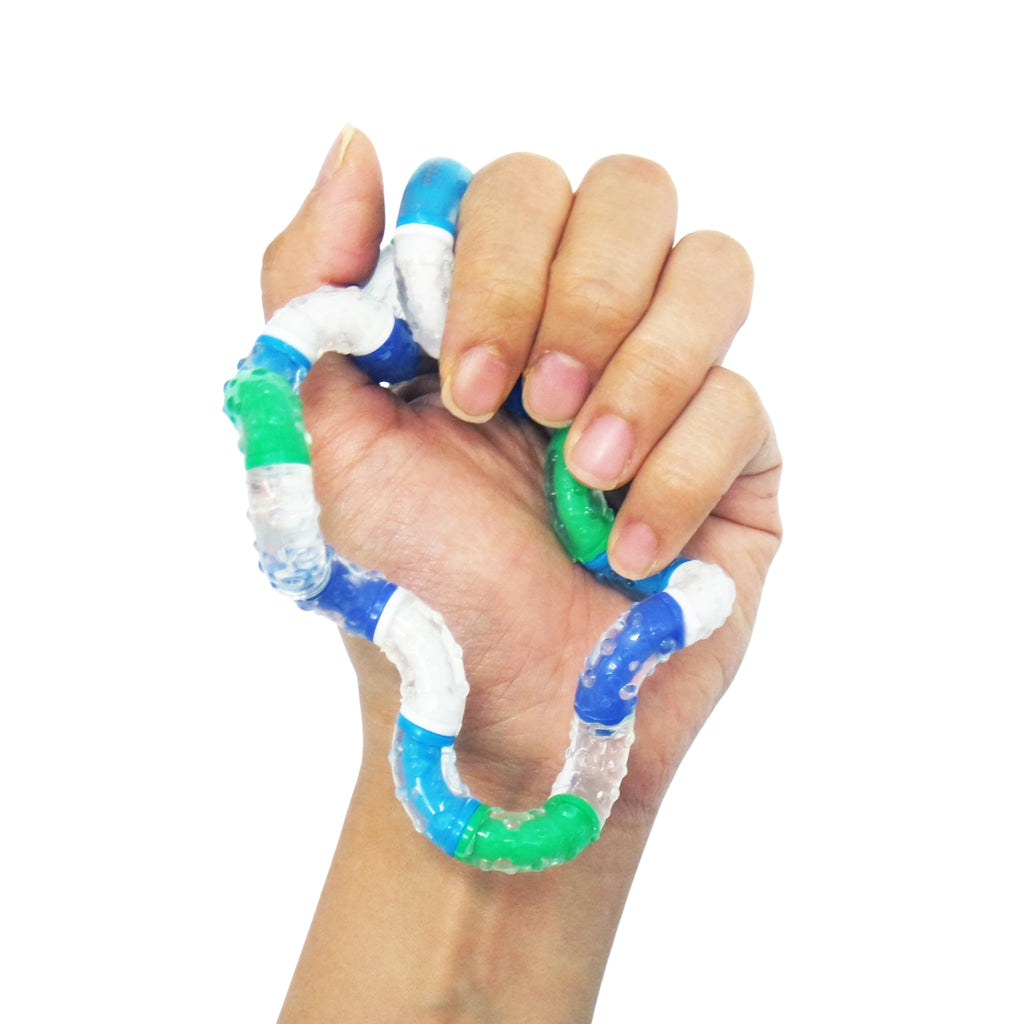
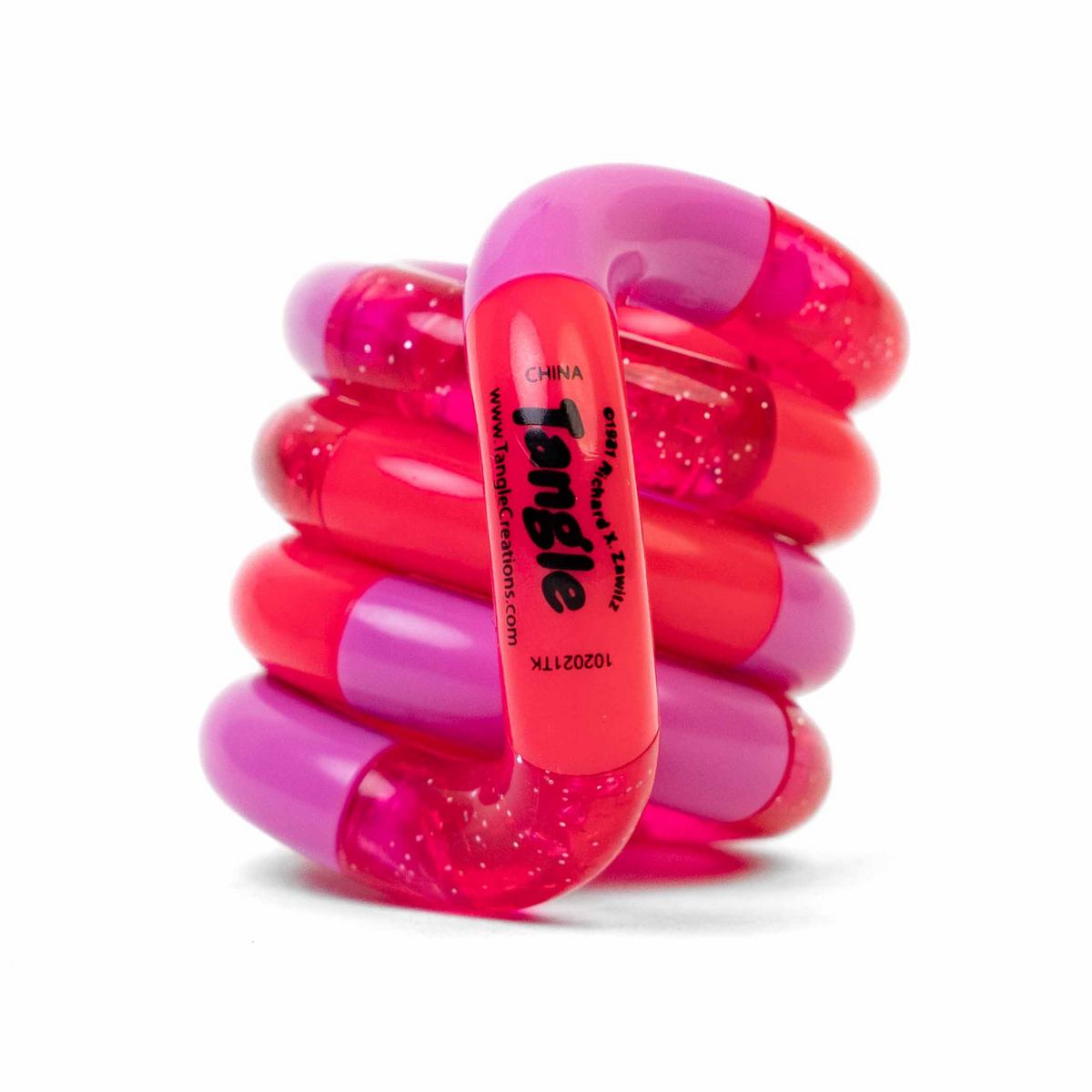
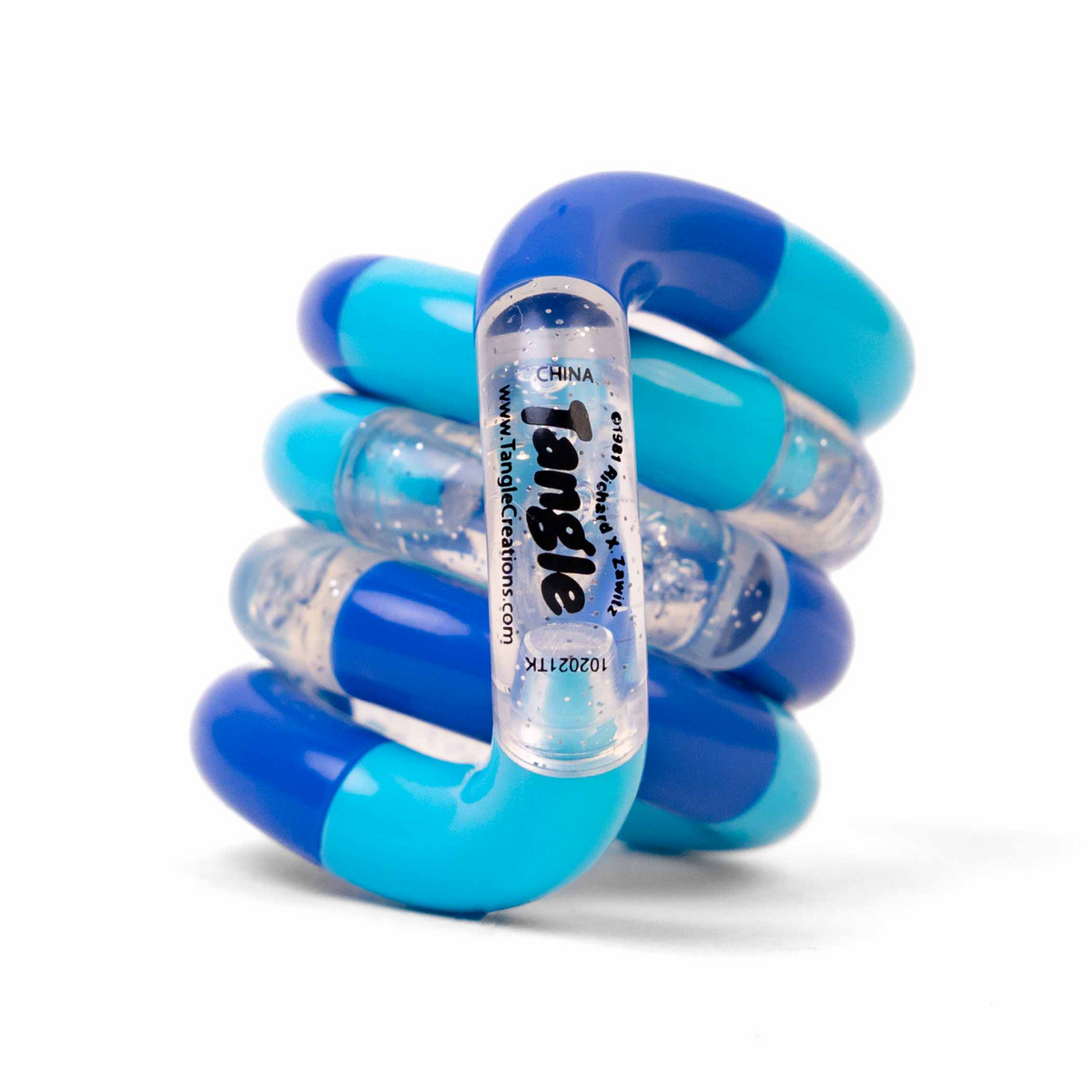
For a child at a desk, the priorities flip. Discreetness and EDC machining matter less; what matters is that the object is quiet enough not to disrupt a classroom, durable enough to survive a backpack, safe in every respect, and not so stimulating that it becomes a toy that pulls focus rather than steadies it. A Tangle is close to ideal here. Tangle Creations' twistable, segmented loops are simple, near-silent in their textured and rubberized forms, all but indestructible, and engaging in a low-key way that occupies the hands without commanding the eyes. The textured 'Therapy' and 'Relax' versions add soft bumps under the fingers; the company even registers its therapy model as a hand-therapy device, and the Junior versions cost only a few dollars. A simple silicone-and-steel fidget, or a soft Tangle, beats anything with small magnets or sharp moving parts for a young user.
On the firm safety line: magnetic-bead fidgets — Speks and every set like them — are emphatically not for children. The makers warn in the strongest terms that swallowed magnets can cause severe internal injuries and have been fatal, and these are rated for ages 14 and up and must be kept away from children and pets entirely. This is not boilerplate; treat it as absolute. For kids, stay with one-piece, large-format, non-magnetic objects.
For the best budget pick overall, the value leaders are genuinely good, not merely cheap. A stainless steel spinner ring can be had for well under twenty dollars and is silent, discreet, durable, and adult-appropriate — arguably the most fidget-per-dollar on this entire list. A Tangle Junior is a few dollars and nearly unbreakable. Tom's Flippy Chain sits around the low-to-mid teens and gives heavy-duty metal motion for the price of a sandwich. And the Antsy Labs Fidget Cube, often discounted into the mid-teens, packs six fidgets into one object for less than the cost of a single premium top.
The encouraging truth about this category is that the entry price for a good fidget is low. You do not need to spend much to own something well-made — you only need to choose deliberately rather than by the bagful.
The entry price for a good fidget is low. You don't need to spend much to own something well-made — only to choose deliberately rather than by the bagful.
From the rabbit hole
Real voices from players, reviewers, and the communities who know these games best.
expert“We have good evidence that fidgeting itself seems to be associated with better attention. What was really interesting was the longer the task went on, the greater the effect of the fidgeting.”
Prof. Julie Schweitzer, UC Davis Health
expert“We know that intrinsic fidgeting helps people with ADHD focus, but we're still researching whether devices can deliver the same effect — and some fidget tools are highly distracting.”
Prof. Julie Schweitzer, UC Davis Health (on the limits of fidget devices)
advocacy“CHADD frames fidget tools as a supplement that helps some people and not others — useful for managing restless energy for some, but not a stand-alone solution and not right for everyone.”
CHADD — ADHD Weekly, 'Fidget Toys and ADHD: Still Paying Attention?'
maker“Designed for hardcore fidgeters — a handcrafted, heavy-duty fidget made from cleaned bike chain to help with anxiety, stress, and lack of concentration.”
Tom's Fidgets, on the Flippy Chain
maker“Serves exceedingly well as a worry stone or discrete fidget item, as a mindfulness tool and dexterity trainer for finger exercise.”
Aroundsquare, on the Knucklebone
safety“Swallowed magnets can damage internal organs and have resulted in DEATH and SERIOUS INJURIES. Safe with proper use by anyone over the age of 14, but must be kept away from all children.”
Speks product safety warning (getspeks.com)
The picks
Some links below are affiliate links — as an Amazon Associate, Puzzlewick earns from qualifying purchases, at no extra cost to you. It never changes a pick.
 8 photos
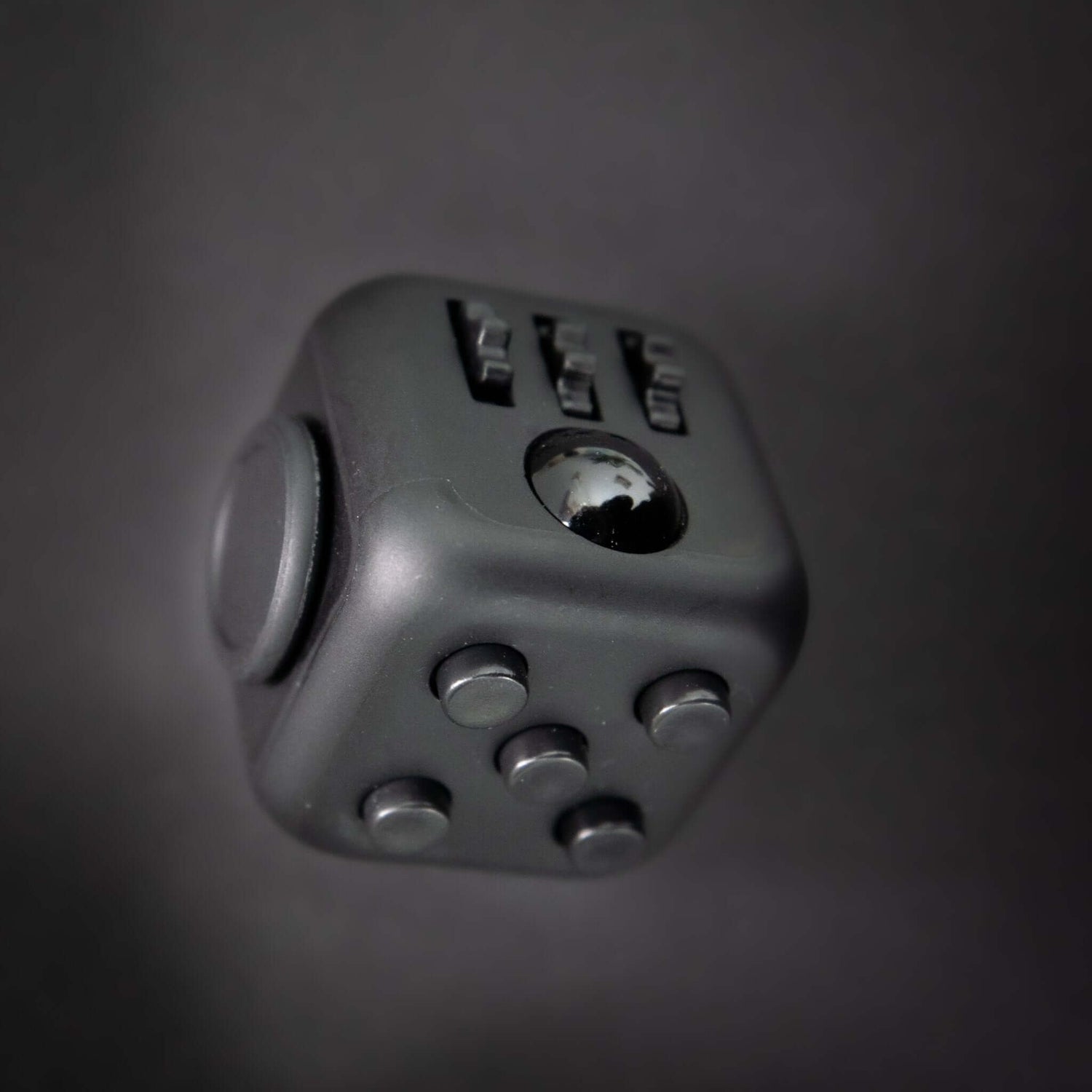
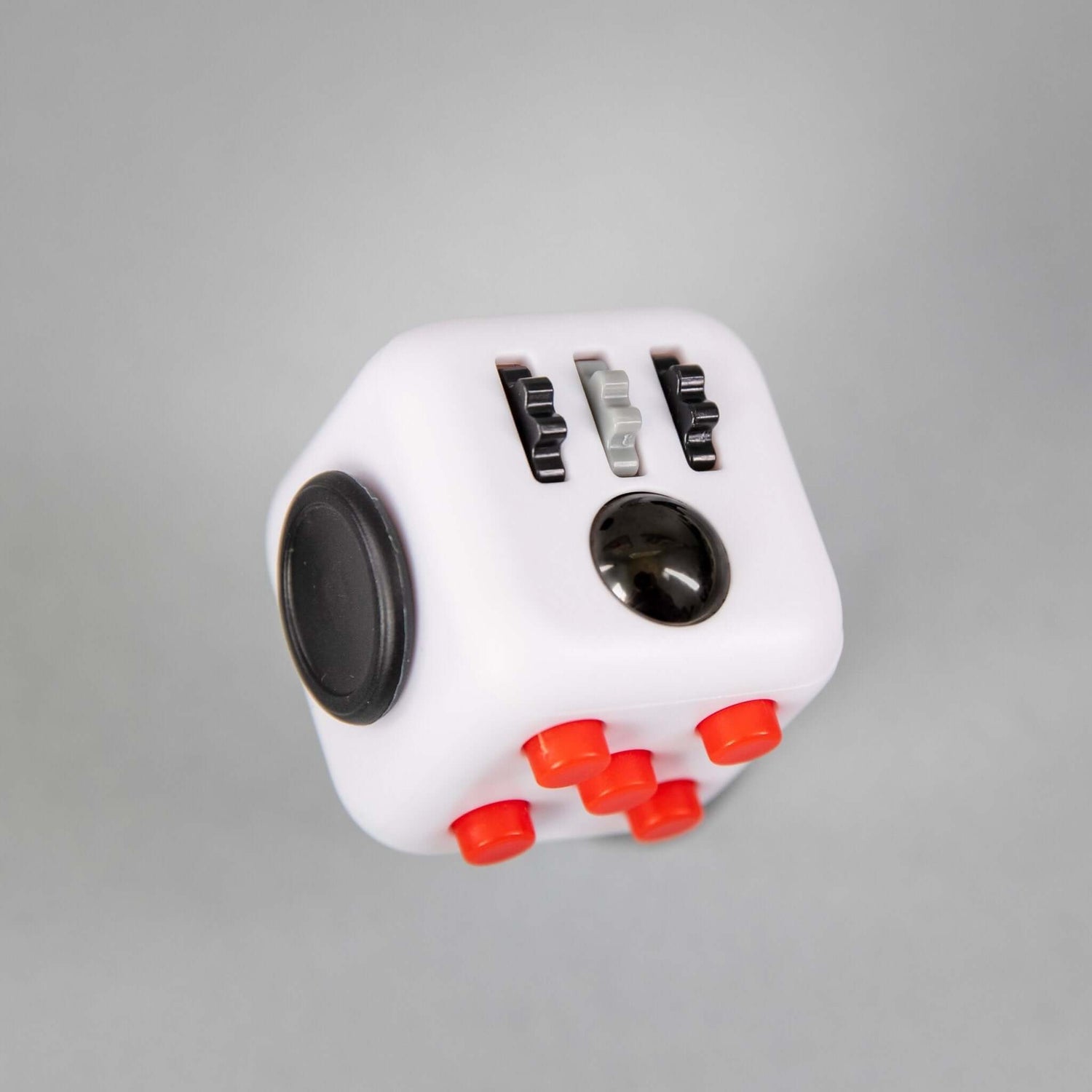
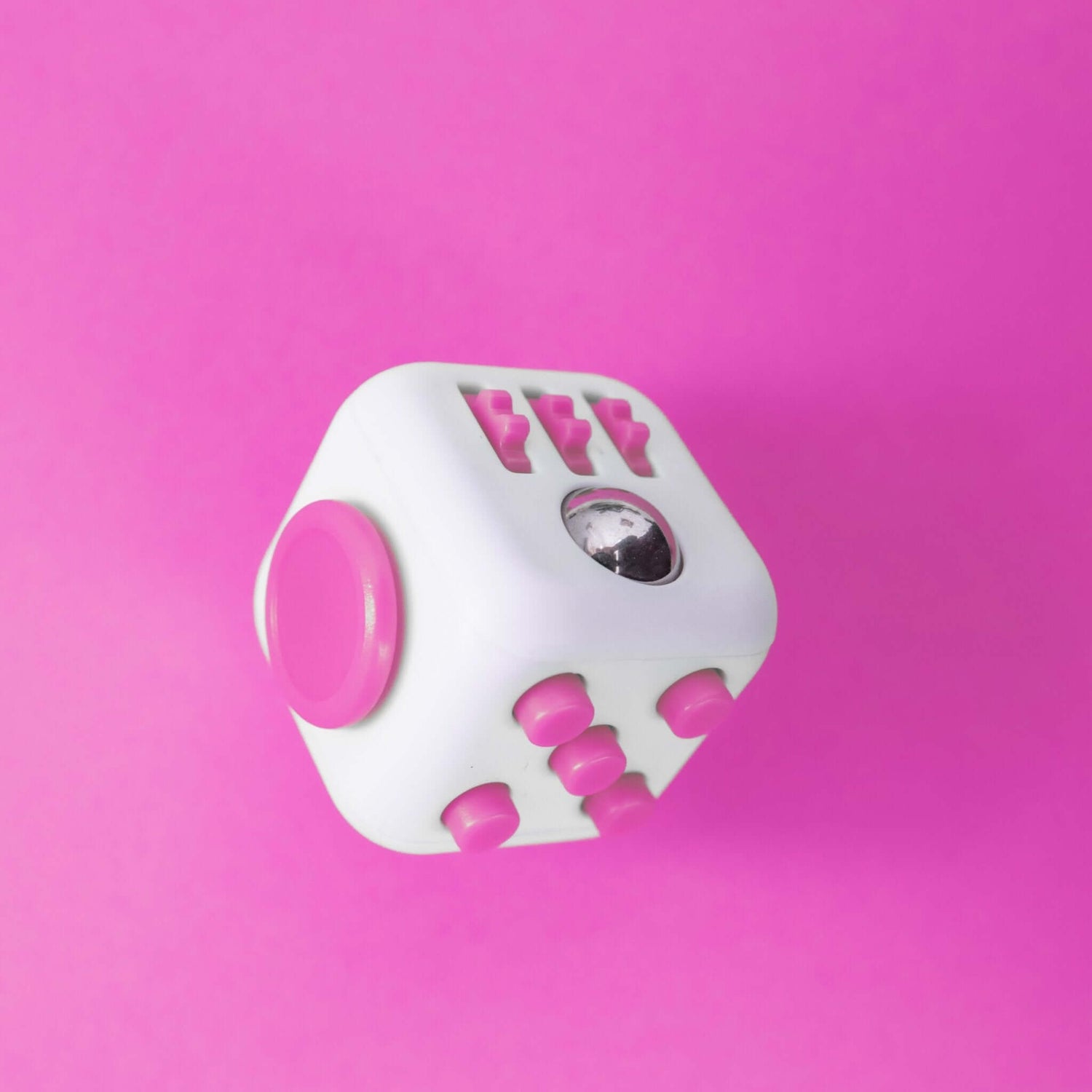
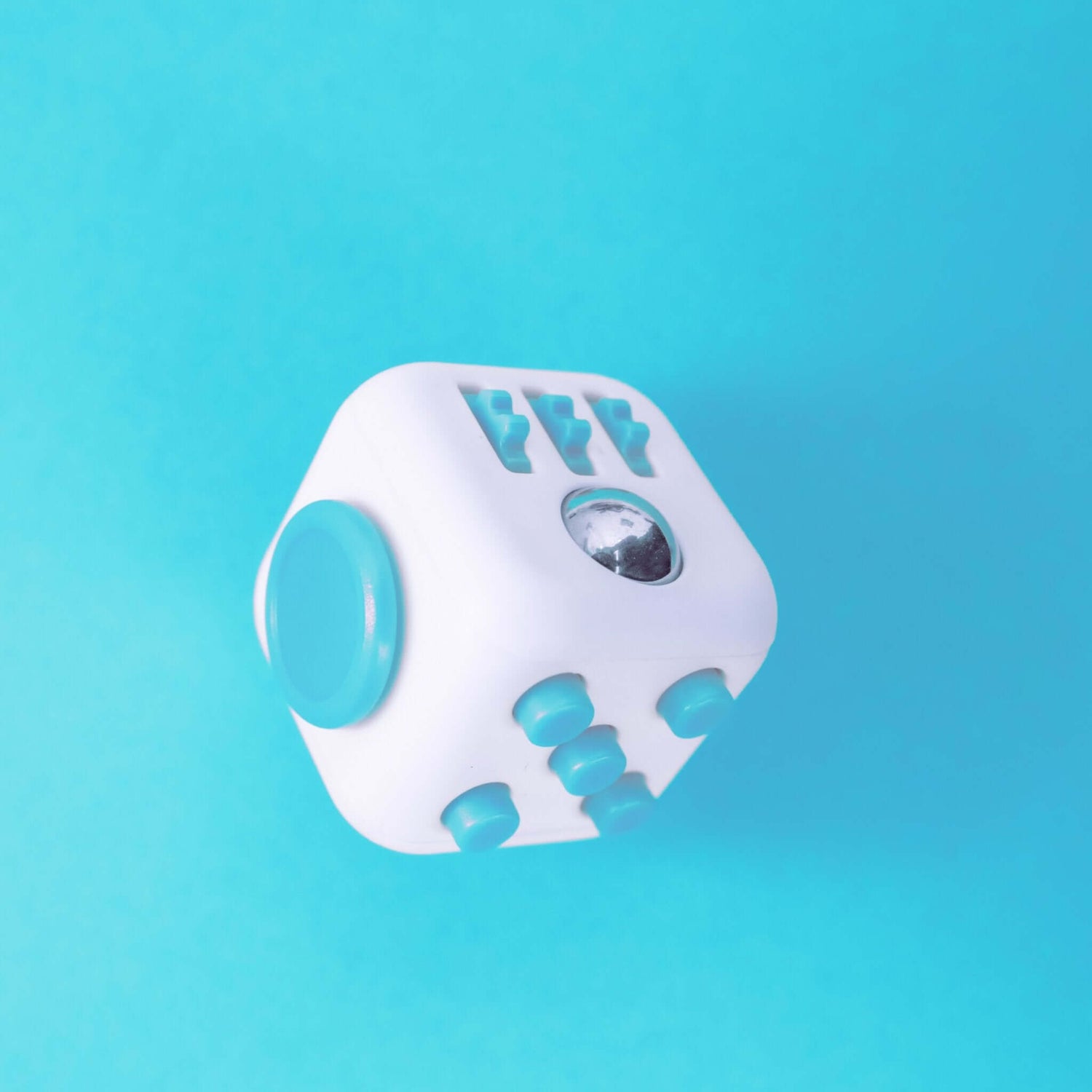
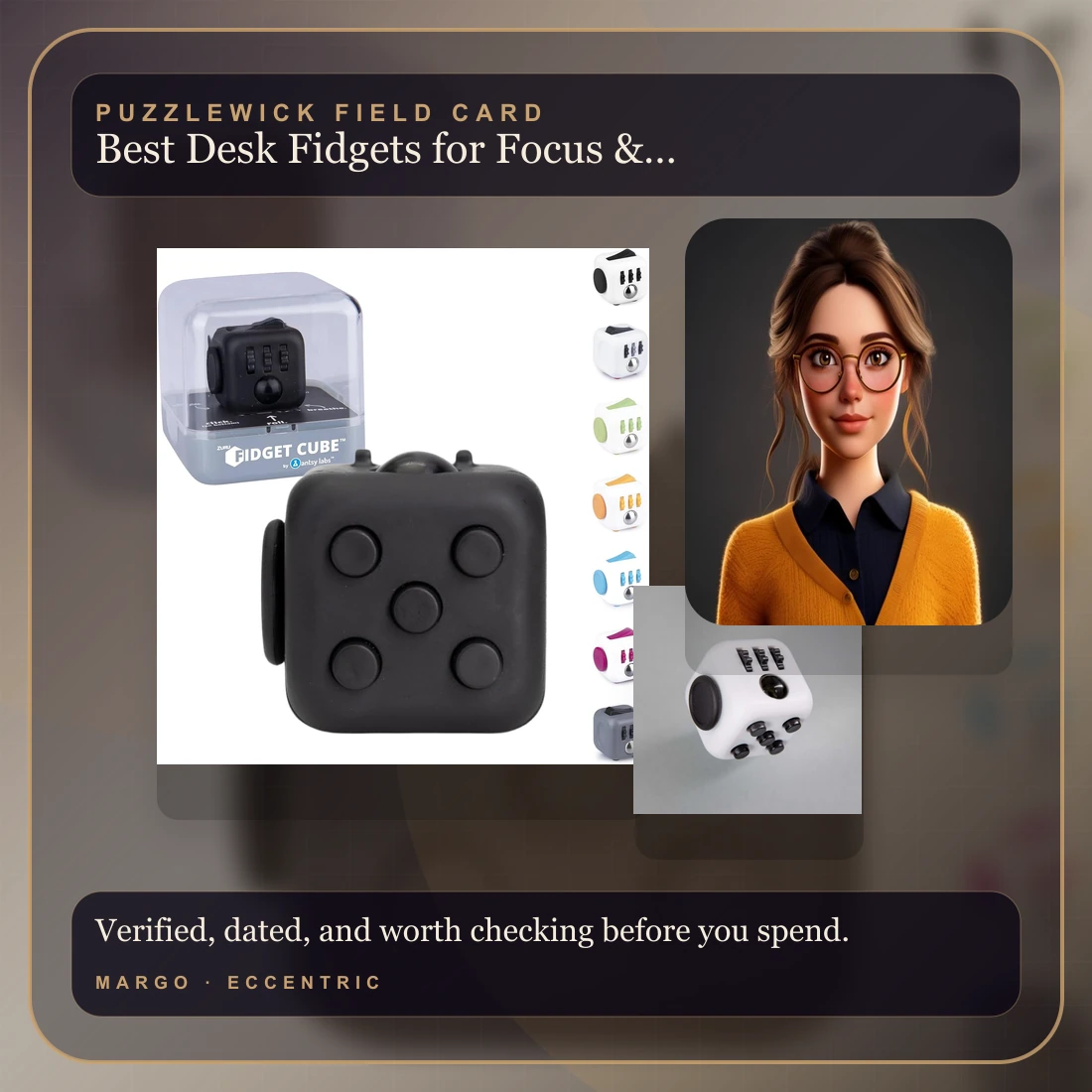
 Fidget Cube (Custom Series)
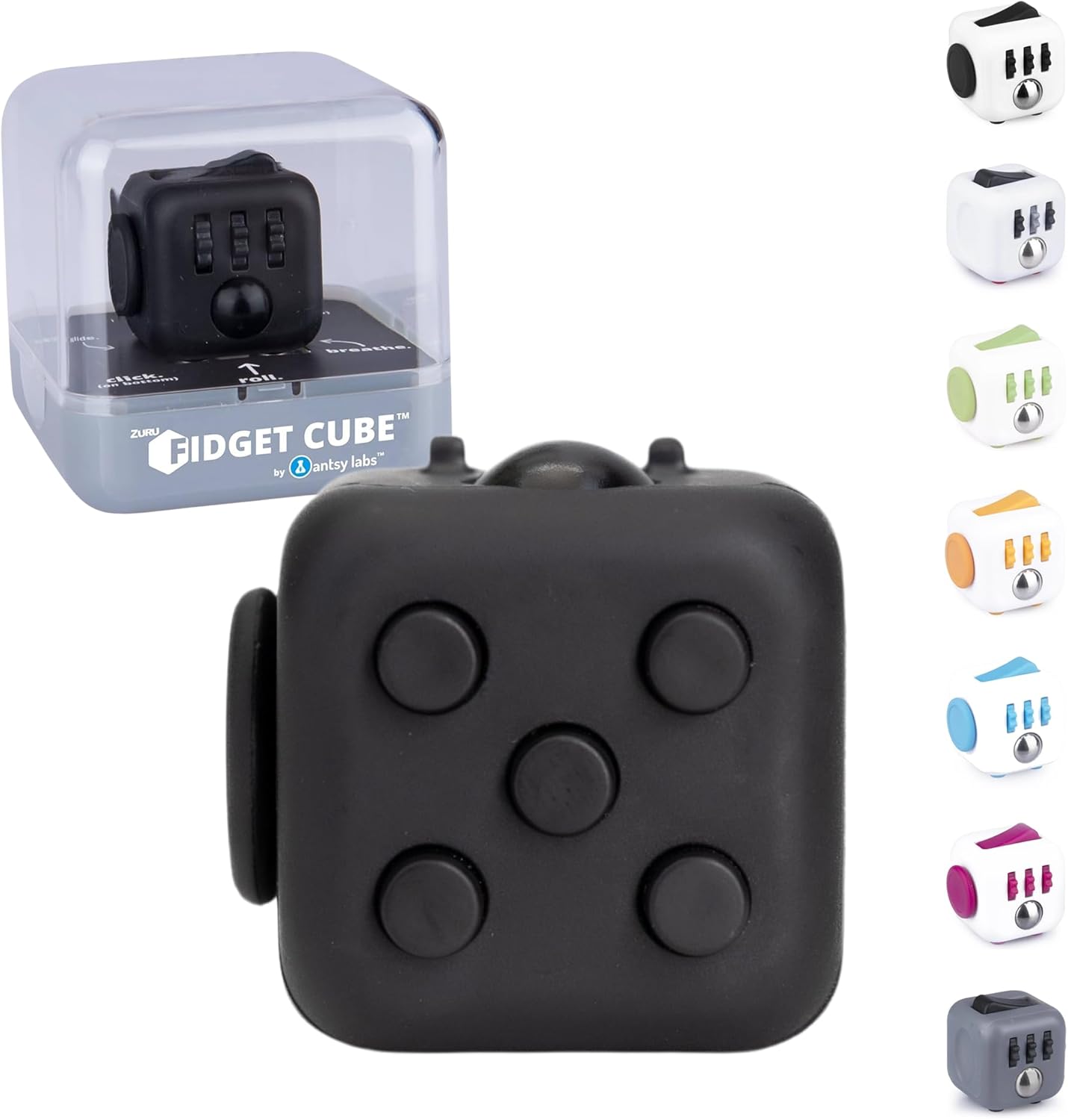
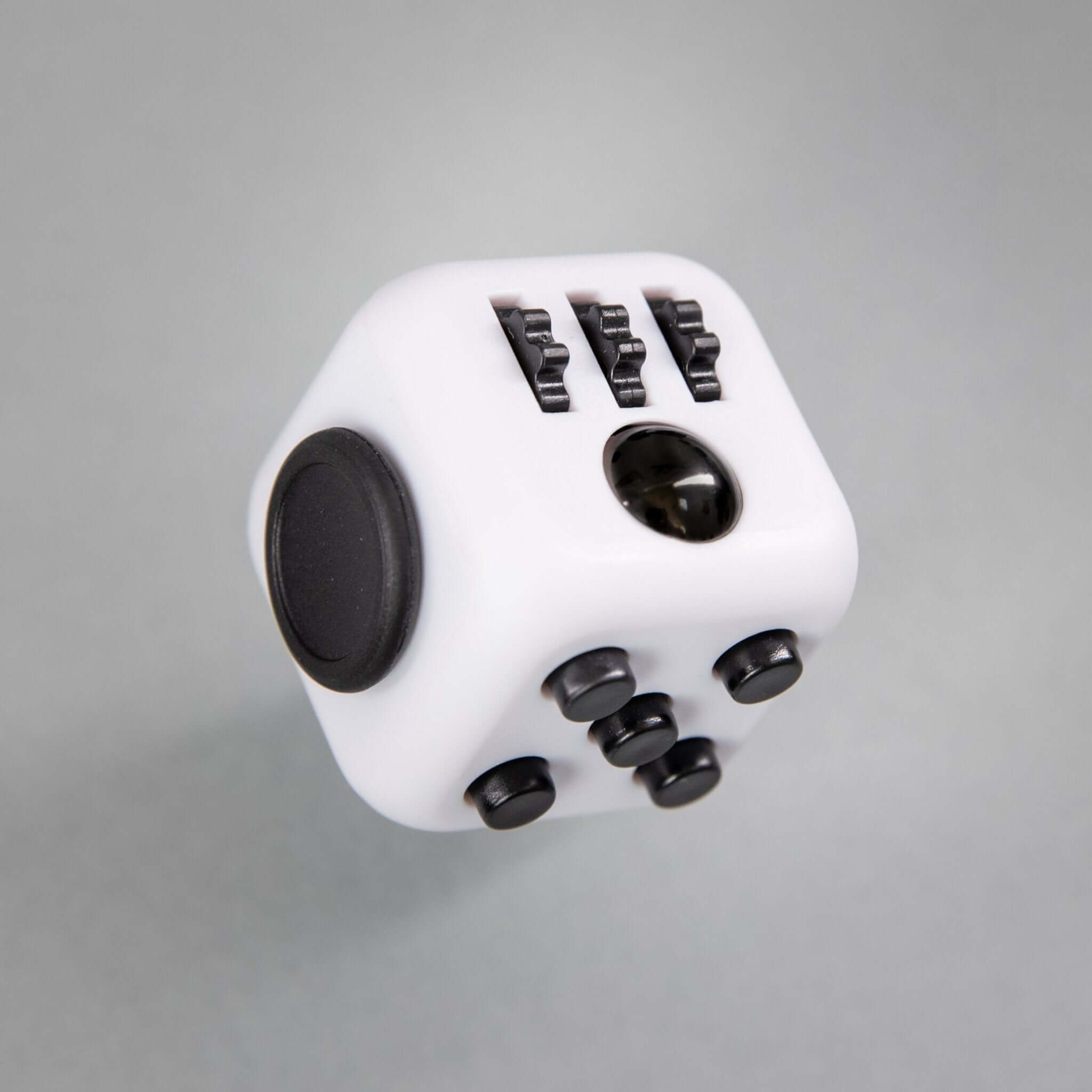
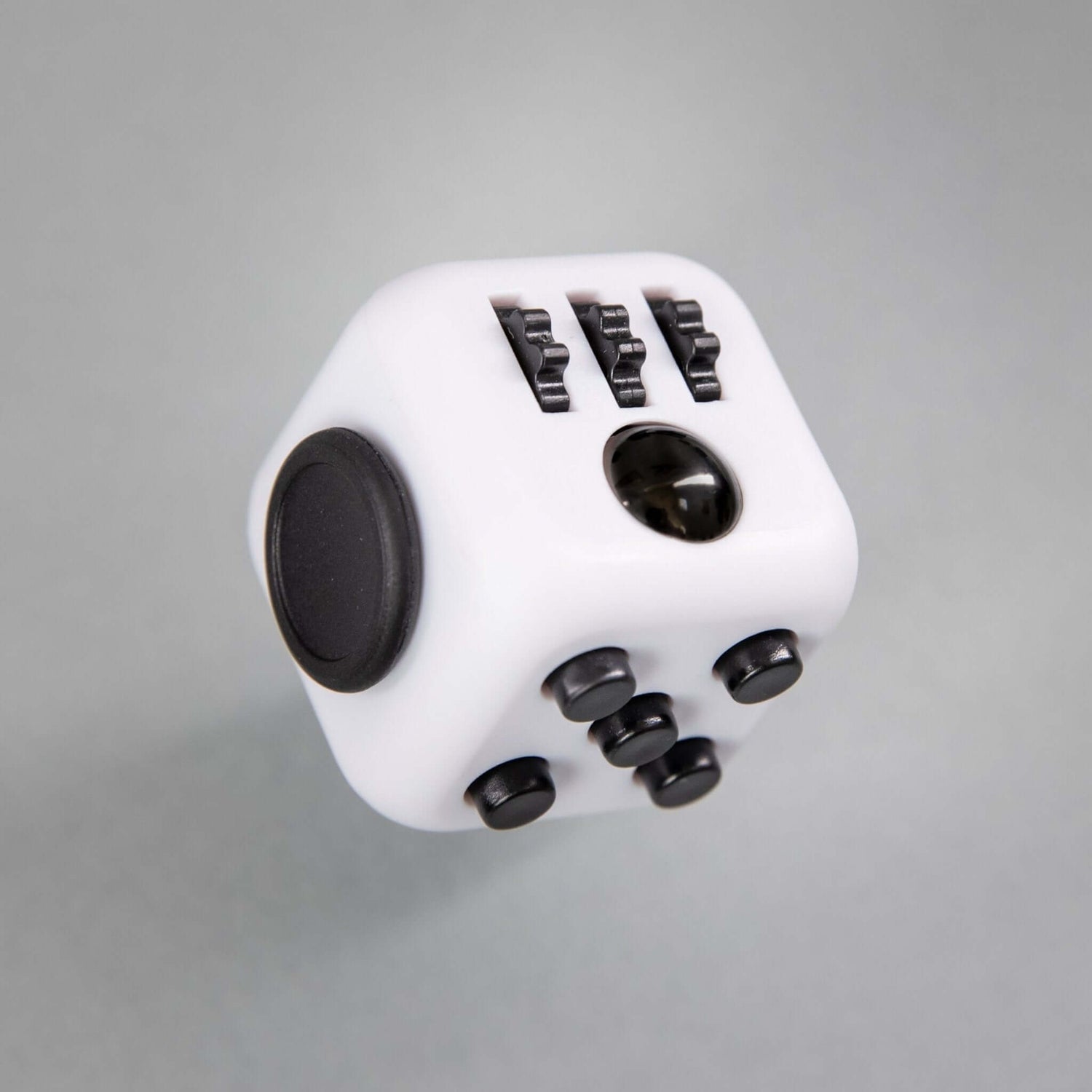
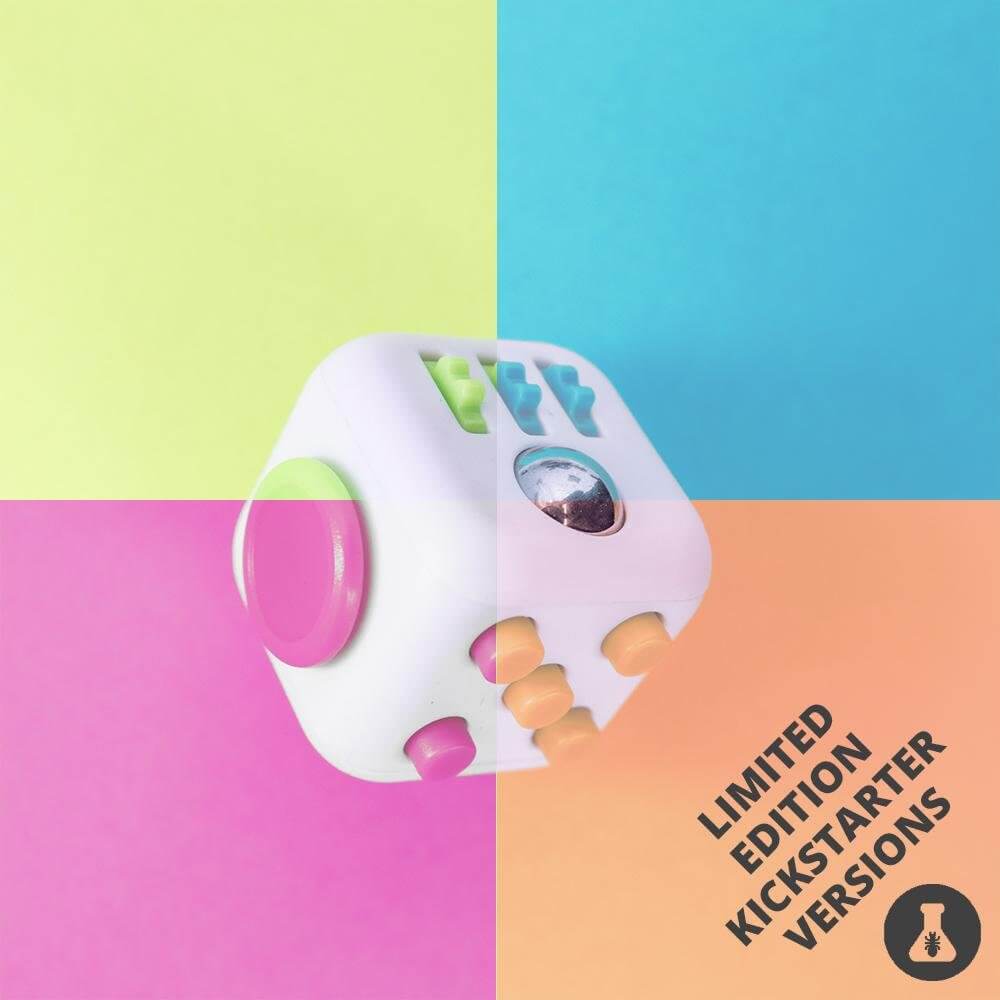
The Fidget Cube is the object that defined the modern category, and Antsy Labs' current version earns the 'best overall' spot by packing six distinct motions into one small cube: click buttons, a glide joystick, a flip switch, a textured 'breathe' face, a roll gear-and-ball, and a spin dial. The genius is range — whatever your hands feel like doing, one face obliges. It is well-built and pocketable at a reasonable mid-teens price. The honest caveat is noise: the snap-switch and clicks are louder than newcomers expect, which is why the maker built in silenced buttons and a breathe face for quiet rooms. Ration yourself to the silent faces in an office and it works anywhere.
- Six different fidget motions in one object — covers nearly every preference
- Includes deliberately silenced faces for meetings and classrooms
- Affordable for what it offers, and genuinely pocketable
- The proven, original design with a long track record
- The click buttons and flip switch are audibly loud in a quiet shared office
- Plastic construction lacks the heirloom feel of a machined-metal fidget
 8 photos
 Mini Magnet Balls (432-bead set)
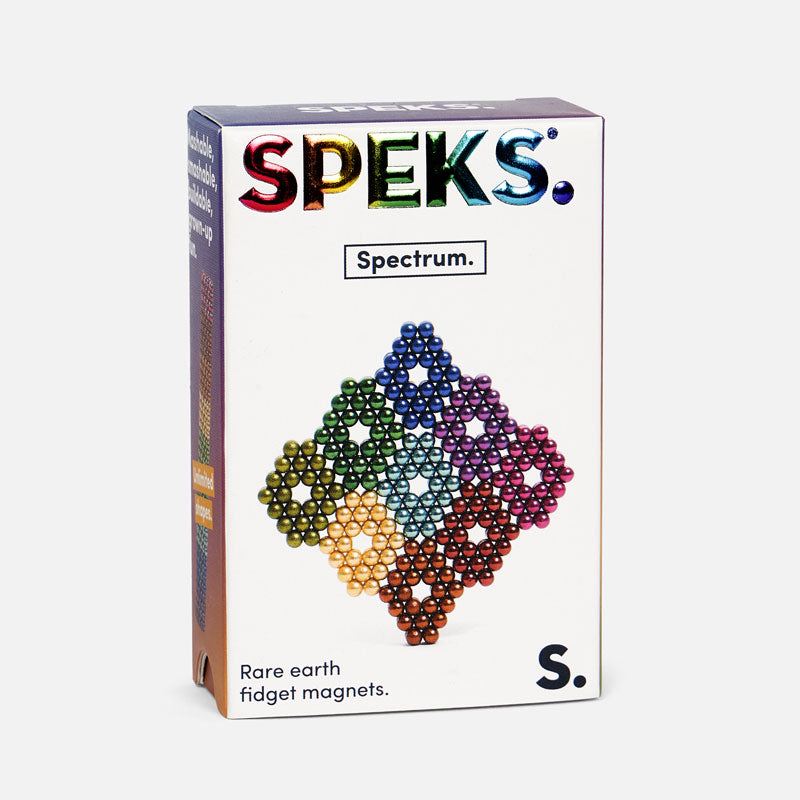
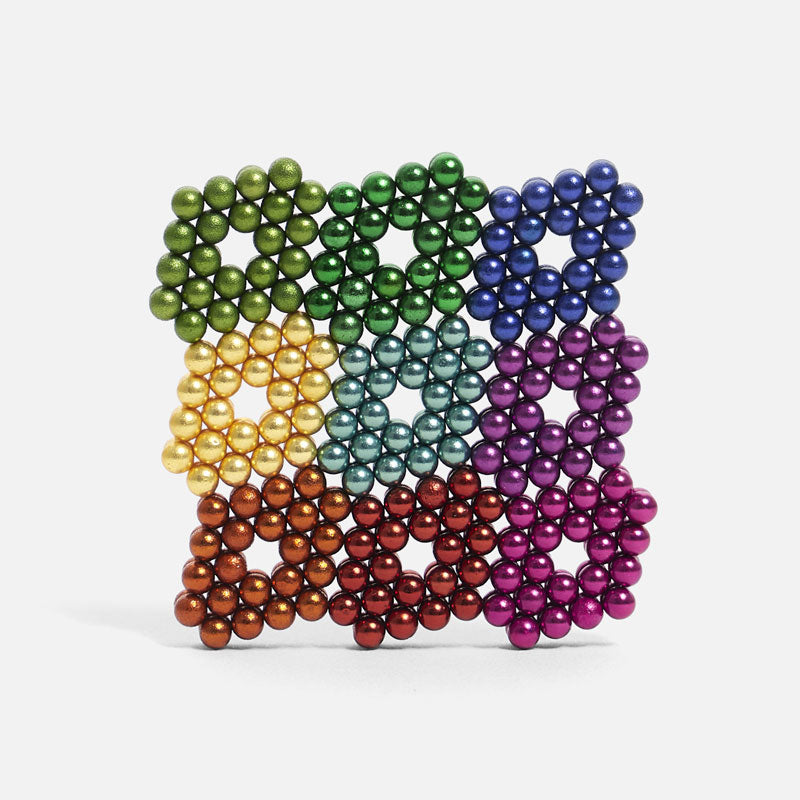
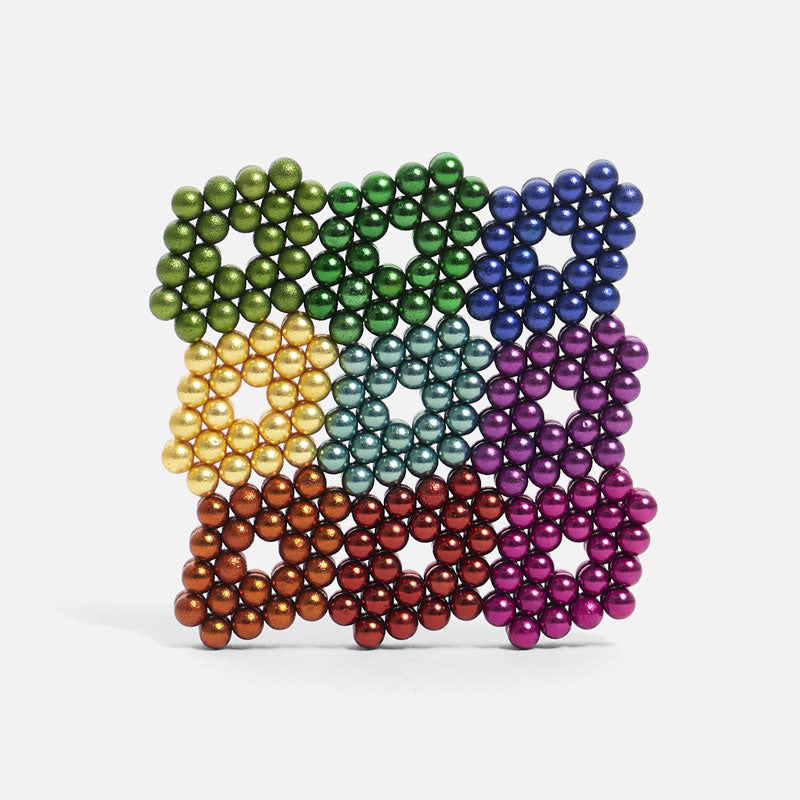
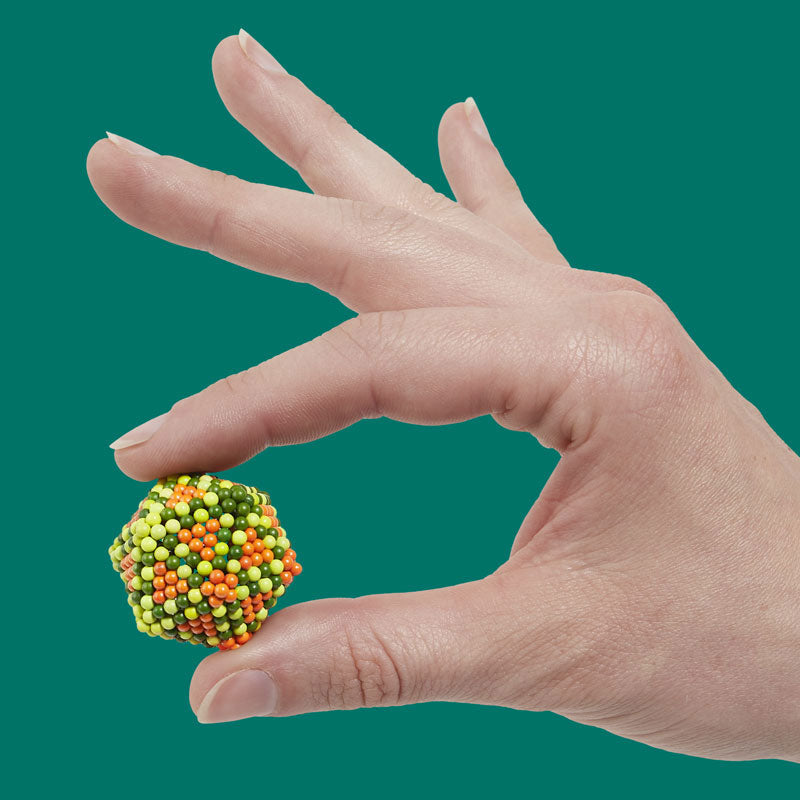
A tin of Speks is 432 tiny neodymium spheres that clump, mash, pull apart, and rebuild with a sound barely louder than shifting sand — making them perhaps the best high-volume quiet fidget there is. The magnetism gives constant springy feedback, so restless hands stay busy indefinitely without disturbing a soul. They double as a desk sculpture and a creative toy. The single, serious caveat is safety, not satisfaction: these are powerful magnets that are dangerous if swallowed, strictly rated 14+, and must be kept away from children and pets without exception. The larger Supers are a more affordable entry into the same near-silent experience.
- Almost completely silent — ideal for shared offices and calls
- Near-limitless motion: mash, build, separate, repeat
- Doubles as a satisfying desk object and creativity toy
- Premium neodymium beads with a real tactile pull
- Serious magnet-ingestion hazard — strictly adults only, never near children or pets
- Beads can scatter and are fiddly to round up if dropped
 2 photos
 Stainless Steel Spinner Ring
The spinner ring is the most discreet fidget made: a free-spinning outer band turns around a fixed inner band, worked with a silent flick of the thumb, and reads to everyone else as an ordinary ring. You can wear one through an interview, a meeting, or a hard conversation and be the only person who knows it is doing anything. Stainless steel versions are inexpensive, never rust, and last for years. The whole value is the discretion. The one thing to get right is fit — the band must sit so the outer ring spins freely while the ring stays put, so size true or a hair larger and favor a wider band. Widely available from many jewelers; buy on band quality and a smooth spin.
- Completely silent and utterly discreet — looks like normal jewelry
- Nothing to set down, drop, or lose — it lives on your finger
- Inexpensive, rustproof, and durable in stainless steel
- Genuinely appropriate for meetings, commutes, and public settings
- Sizing is finicky — too loose slips, too tight won't spin
- Motion is small and subtle; not enough for very high-energy restlessness
 9 photos
 Original Flippy Chain Fidget
Built, in the maker's own words, for 'hardcore fidgeters,' the Flippy Chain is a loop of cleaned, de-greased bicycle chain fitted with silicone rings — and it offers continuous, substantial, never-ending motion for hands that need to move a lot. It folds, flips, cascades, and rolls through the fingers with real metal heft, and it shrugs off abuse that would crack a plastic toy. For pen-clickers and knee-bouncers it is a revelation. The trade-off is volume: the links clink, so this is a home, car, or solo-focus object rather than an open-plan one. It also runs smaller than product photos suggest, which most owners find fine once in hand.
- Continuous, large-motion fidgeting for high-energy hands
- Heavy-duty cleaned-bike-chain build that survives daily abuse
- Silicone rings give a comfortable, secure grip
- Inexpensive for genuine metal construction
- Chain links clink — too loud for a quiet shared office
- Smaller than it appears in photos; can sell out at the maker's store
 2 photos
 Titanium Spinning Top
The ForeverSpin top is the heirloom of the category: CNC-machined from a solid billet in Canada, balanced, serial-numbered, and backed by a lifetime warranty. The titanium runs about $66 from the maker, with brass and copper slightly less and tungsten far more. It spins with uncanny steadiness, hums softly (and silently on a desk pad), develops a patina with handling, and reads as a designed object rather than a toy — which is exactly why it works in an office. If I had to keep one fidget for life, this would be a strong contender. Note that third-party stockists quote higher converted prices, so buy direct from ForeverSpin.
- Beautifully machined solid-metal build with a lifetime warranty
- Near-silent on a desk; reads as contemplation, not fidgeting
- Develops character with years of handling — a true keeper
- Multiple metals (titanium, brass, copper, tungsten) to suit taste and budget
- Premium price — well above a casual impulse buy
- Needs a flat surface to use; less a constant-in-hand fidget than a ritual one
 10 photos
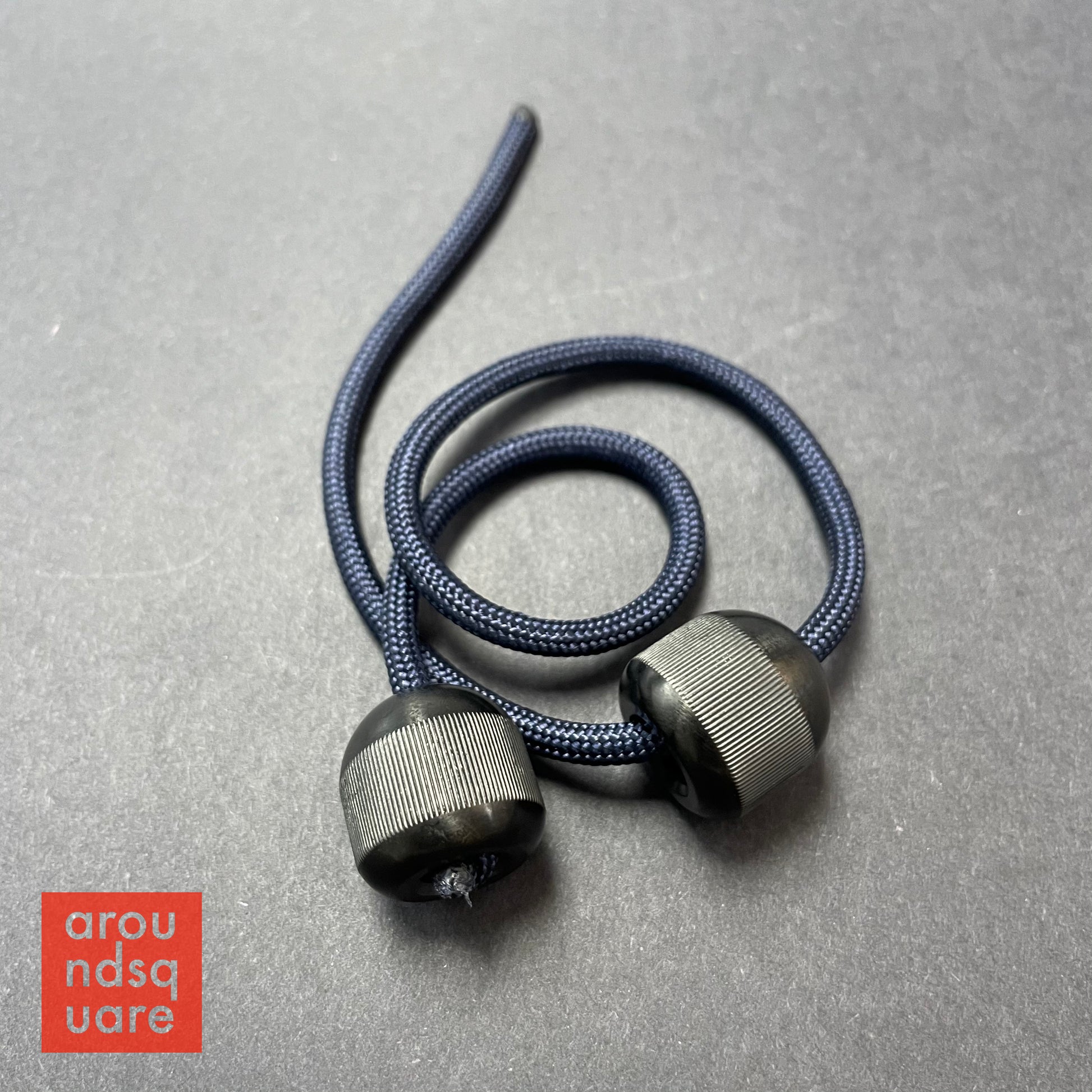
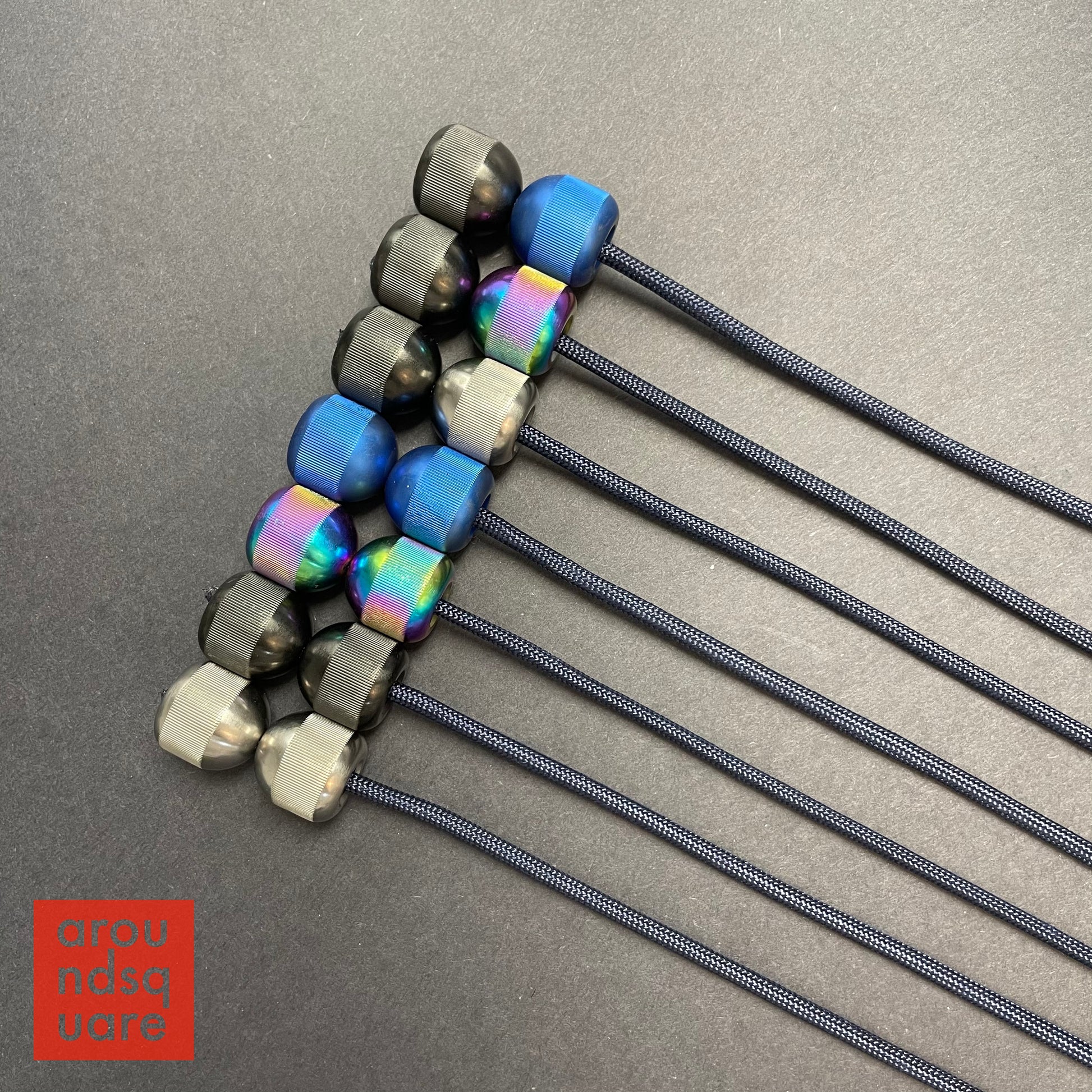
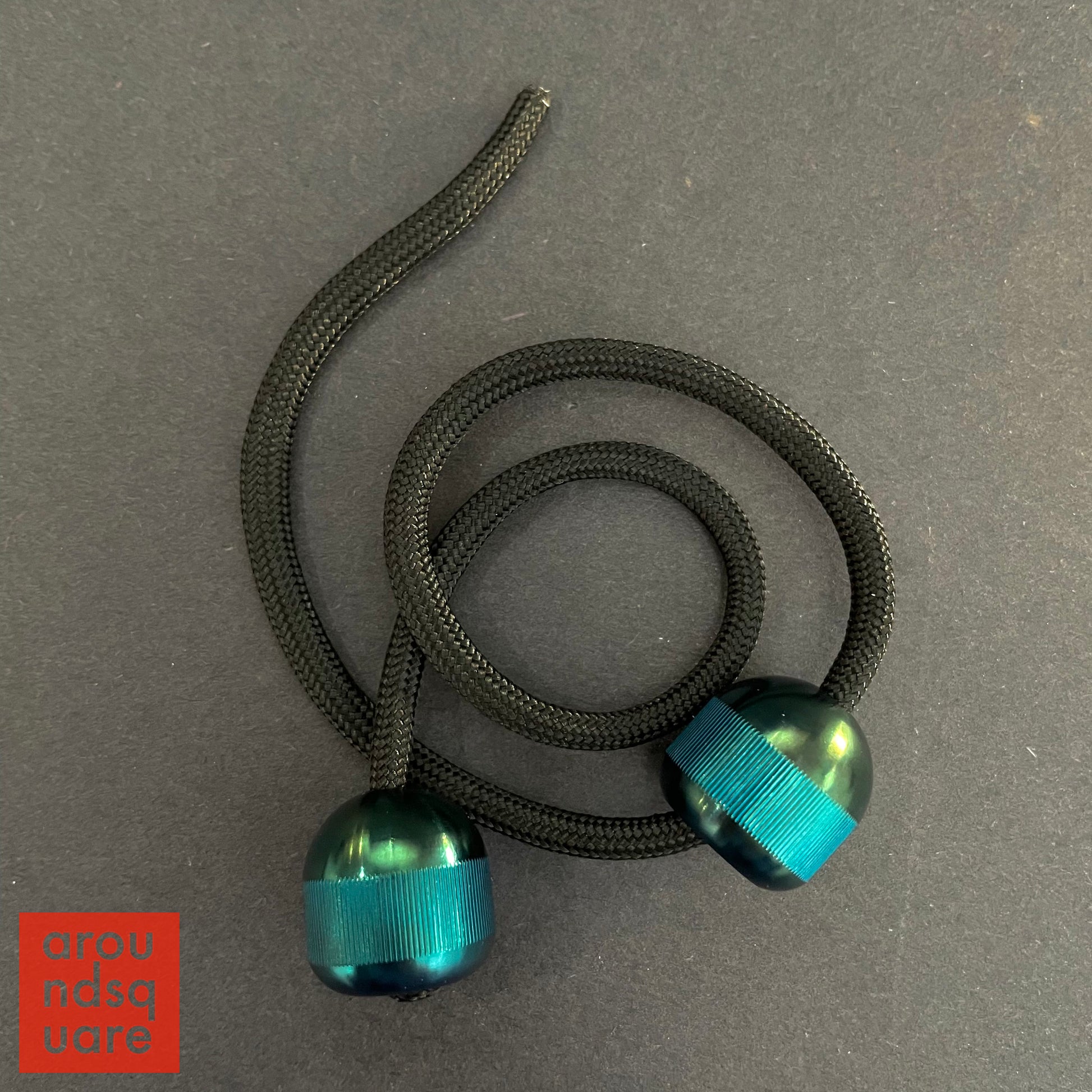
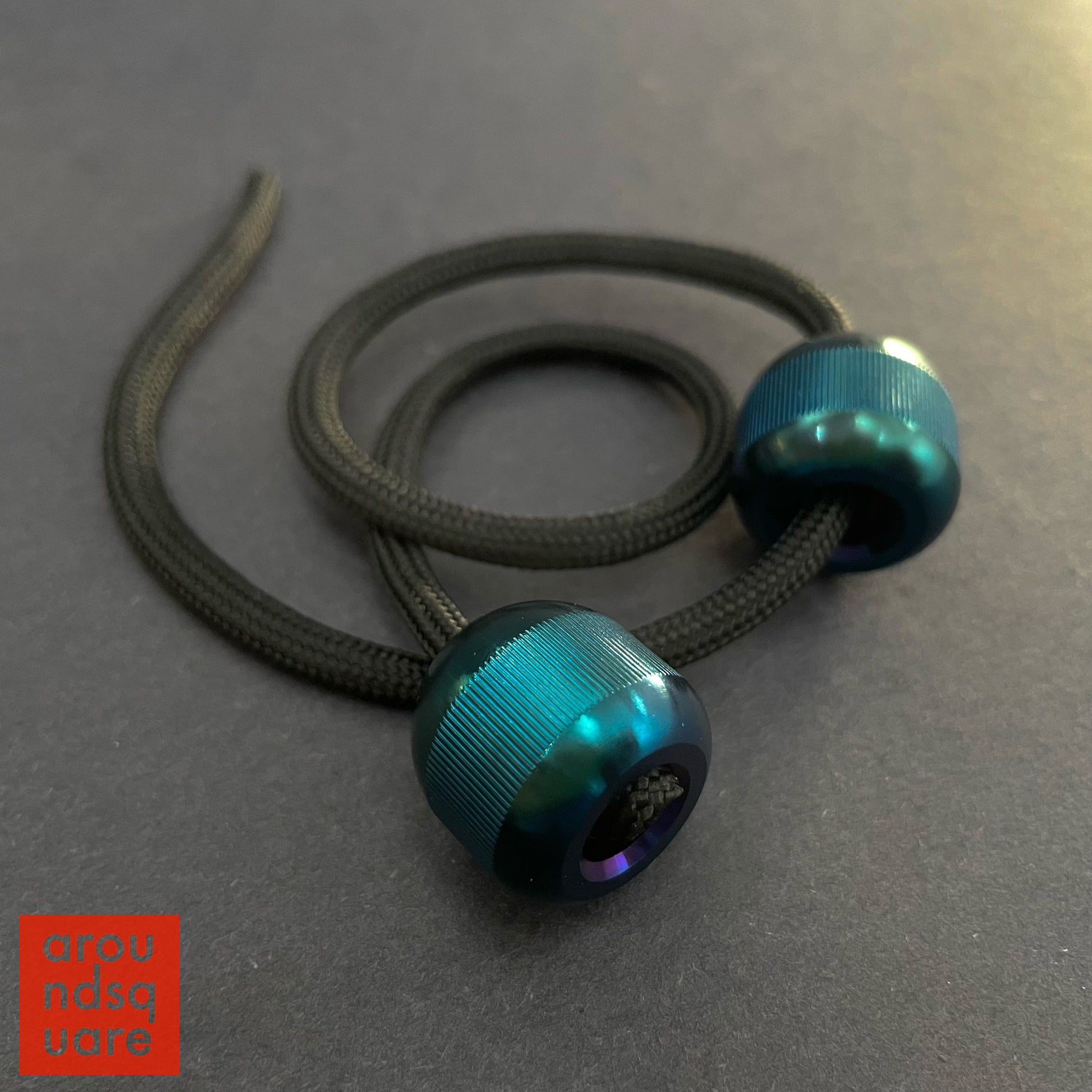
 Titan / Standard Metal Begleri
A begleri is two weighted beads on a short cord, and Aroundsquare's machined editions are the connoisseur's choice — grade-five titanium or solid brass, with knurled barrels and domed beads engineered for smooth, controlled play. What sets the begleri apart is depth: like a yo-yo, it has a whole vocabulary of throws and catches to learn, so an active fidgeter never exhausts it, while a quiet palm-roll keeps it meeting-safe. Titanium sets run high (often $60 and well beyond), but the standard brass and steel editions bring the same engineering to a gentler price. It is a fidget, a skill toy, and a worry-stone in one dense little object. Simpler steel or Delrin sets are a cheap way to test the motion first.
- Bottomless engagement — a real skill with tricks to master
- Superb machining in titanium or brass; a genuine EDC piece
- Works as both an active skill toy and a discreet palm-roll fidget
- Backed by an active maker and skill-toy community
- Premium titanium pricing; the learning curve isn't for everyone
- Dropped beads on a hard floor can clatter and nick — practice over a soft surface
 2 photos
 Tangle Therapy / Relax
A Tangle is a twistable loop of interlocking curved segments, and the textured Therapy and Relax versions add soft rubberized bumps under the fingers. For a child who needs to keep still at a desk it is close to ideal: near-silent, all but indestructible, low-stimulation enough not to pull focus, and free of small or sharp parts. The company registers its therapy model as a hand-therapy device, and the Junior versions cost only a few dollars, making this both a kid-friendly and a budget standout. Adults who prefer a gentle, quiet motion over clicks and spins will like it too. Quiet, simple, and safe — the qualities that matter most for young hands.
- Quiet and low-stimulation — classroom- and office-friendly
- Extremely durable with no small parts, safe for children
- Very affordable, especially the Junior sizes
- Textured versions add satisfying tactile feedback
- Motion is gentle — not enough for high-energy adult restlessness
- Less 'premium object' appeal than machined-metal fidgets
 3 photos
 Premium Titanium Haptic Slider (Slider Square)
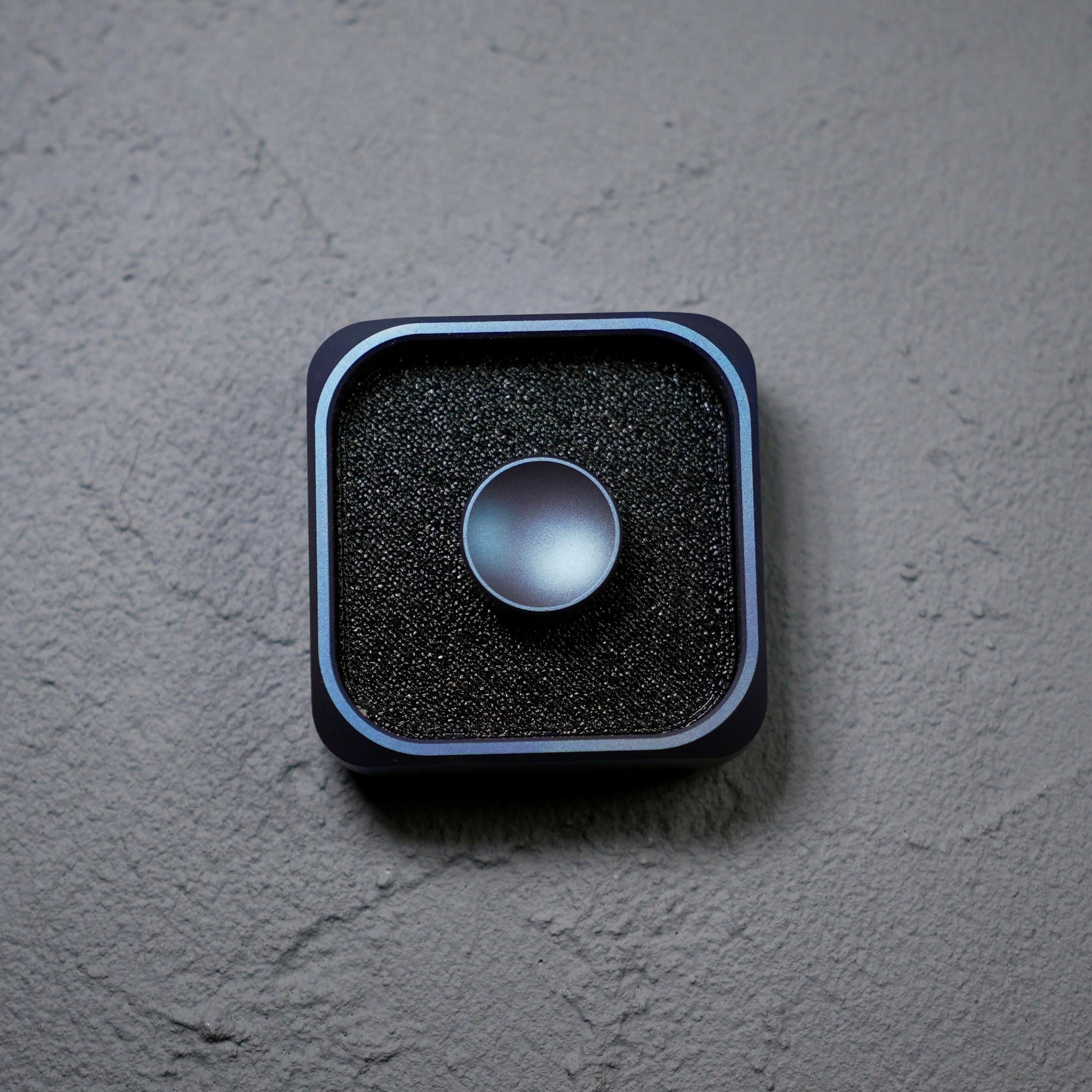
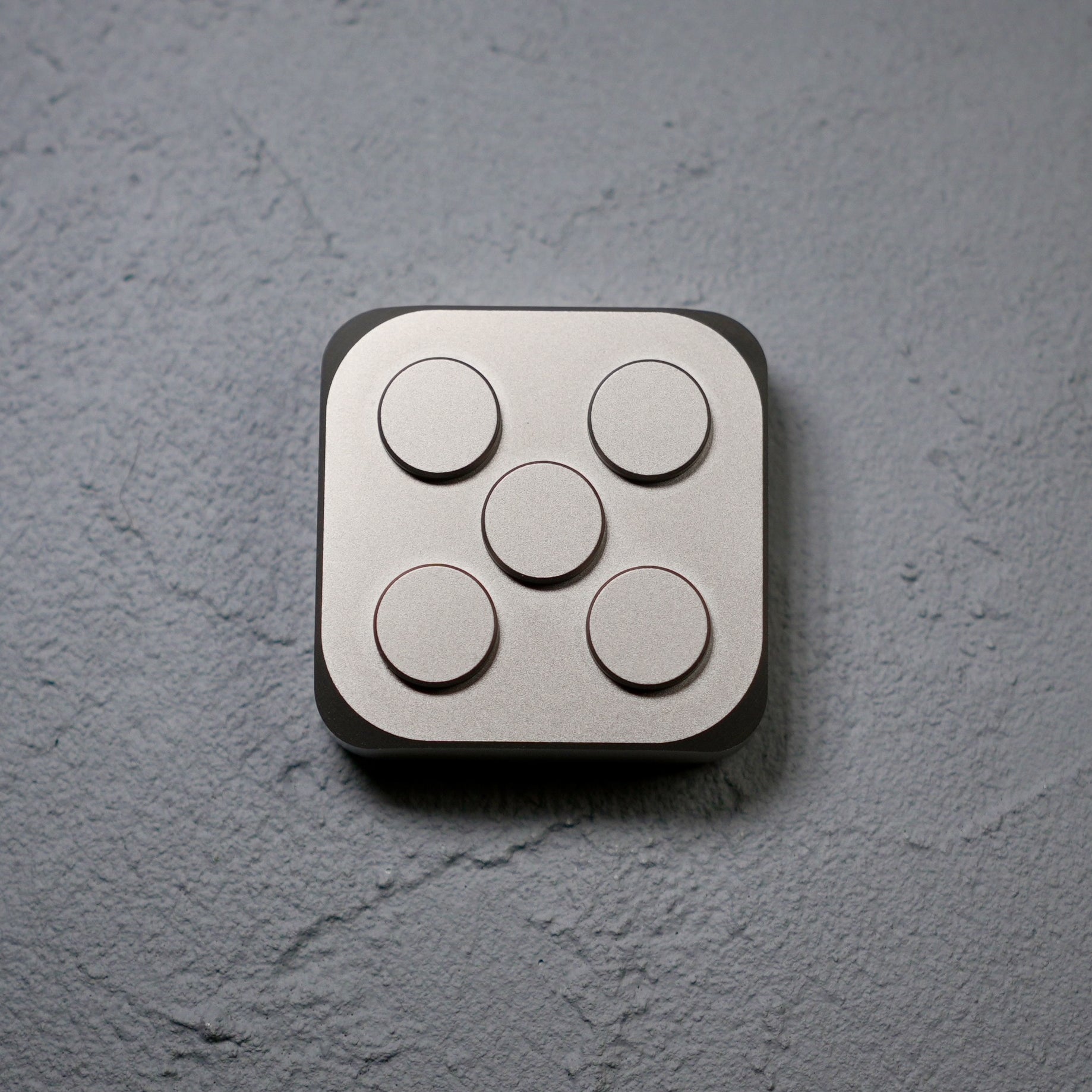
For those whose satisfaction comes from a crisp, repeatable click, a well-made magnetic haptic slider delivers a tactile 'thock' as the magnet passes each detent — endlessly repeatable and oddly addictive. A machined titanium or steel slider like Kickup-EDC's is a proper EDC object: dense, precise, and pocketable. The catch is twofold. First, it is loud-ish by fidget standards, so it belongs at home or in solo focus, not an open office. Second, this corner of the market is flooded with cheap clones, and the entire difference between a great slider and a bad one is in the magnets and machining — which you feel instantly. Buy a reputable one and skip the bargain bin.
- Deeply satisfying, repeatable magnetic detent click
- Compact, dense, well-machined everyday-carry object
- Smooth, durable action that holds up to constant use
- Audible click — not suitable for a quiet shared office
- Heavily counterfeited category; cheap clones feel mushy and wrong
 2 photos
 Kinetic Flow Ring (Spring Sculpture)
The flow ring is a springy kinetic loop of stainless steel that slinks up and down the arm and collapses flat to nothing, giving big, sweeping, hypnotic motion that is genuinely calming to watch and feel. For a desk or sofa, when you want demonstrative movement rather than a discreet one, it is hard to beat — and it is inexpensive. It is more performance than secret: this is not a meeting fidget, and the motion needs a little arm room. Stainless versions resist rust and fold flat for a pocket or bag. A delightful, low-cost object for the hands that want to move broadly and watch something flow.
- Large, mesmerizing kinetic motion that's satisfying to watch
- Very inexpensive and folds flat to carry
- Rust-resistant stainless construction in the better versions
- Demonstrative, not discreet — wrong for meetings or tight spaces
- Generic market; quality varies, so buy from a reputable seller
 2 photos
 Tangle Jr. Classic (budget pick)
If you want a genuinely good fidget for the price of a coffee, the Tangle Junior is it: a small twistable loop that is quiet, nearly indestructible, safe for any age over the small-parts line, and engaging in a calm, low-key way. At around seven dollars it proves the encouraging truth of this whole category — the entry price for a good object is low. It will not satisfy a high-energy fidgeter the way a chain or begleri does, and it lacks the heft of metal, but as a cheap, quiet, durable desk companion it is unbeatable value and a sensible first fidget to test the waters.
- Excellent value — a well-made fidget for only a few dollars
- Quiet, durable, and safe; great first fidget
- Pocketable and impossible to break in normal use
- Gentle motion won't satisfy heavy, high-energy restlessness
- Lightweight plastic lacks the tactile mass of metal fidgets
At a glance
| fidget | maker | type | price | best for |
|---|---|---|---|---|
| Fidget Cube (Custom Series) | Antsy Labs | Multi-function cube (6 sides) | ~$17 | Best overall / variety |
| Mini Magnet Balls | Speks | Magnetic neodymium beads | ~$35 | Quiet office, endless motion (adults only) |
| Spinner Ring | Mindful Rings / jewelers | Stainless steel spinning ring | ~$15–20 | Discreet, wearable, budget |
| Flippy Chain | Tom's Fidgets | Bike-chain loop fidget | ~$14 | Restless, high-energy hands |
| Titanium Spinning Top | ForeverSpin | Machined metal top | ~$66 (titanium) | Premium / everyday-carry heirloom |
| Titan / Metal Begleri | Aroundsquare | Weighted-bead skill toy | ~$60 (Ti); less in brass/steel | Skill fidget, deepest engagement |
| Tangle Therapy / Relax | Tangle Creations | Twistable textured loop | ~$10 | Kids at a desk, quiet & safe |
| Titanium Haptic Slider | Kickup-EDC | Magnetic detent slider | ~$45 | Click-lovers / premium EDC |
| Kinetic Flow Ring | UltraPoi / makers | Springy kinetic loop | ~$12 | Big mesmerizing desk motion |
| Tangle Jr. Classic | Tangle Creations | Mini twistable loop | ~$7 | Best budget / first fidget |
Questions, answered
What is a desk fidget?
A desk fidget is a small, well-made object you keep within arm's reach to give restless hands something quiet and repetitive to do while you work or think. Good ones — magnetic beads, a spinning top, a ring, a twistable loop — are tactile, durable, and unobtrusive enough to use without disrupting the people around you. They are tools for occupying idle hands, distinct from the disposable plastic toys that flooded the market a few years ago.
Do fidgets actually help with focus?
Honestly, the evidence is mixed. There is real research that natural fidgeting is associated with better attention — especially in people with ADHD, and especially on long tasks — but the studies on fidget devices specifically are limited, and some found that flashy fidgets like spinners can actually reduce attention once the novelty wears off. The fair summary: many people find a quiet, low-stimulation fidget genuinely helpful for settling and concentrating, but it is a plausible aid and a comfort, not a proven treatment for any condition. The calmer and more 'boring' the fidget, the more likely it is to help rather than distract.
What's the best quiet fidget for an office?
Magnetic beads (Speks), a smooth metal spinning top (ForeverSpin), or a stainless steel spinner ring are the quietest options — all make essentially no sound a colleague would notice. Avoid clicking fidgets like the Fidget Cube's snap buttons or a haptic slider in a shared room; save those for home. A desk pad or felt mat also dramatically quiets tops and rolling fidgets.
What's the most discreet fidget?
A stainless steel spinner ring. It reads as ordinary jewelry, makes no sound, and is worked with a tiny thumb motion nobody notices — ideal for meetings, interviews, commutes, and public settings. A smooth metal worry-stone or coin-style object turned over in the palm is a close second, and a begleri rolled gently across the fingers also hides well. Anything that visibly spins, lights up, or clicks is the opposite of discreet.
What's the best fidget for restless hands that need to move a lot?
For high-energy restlessness, you want capacity — an object offering more motion than you can exhaust. A bike-chain fidget like Tom's Flippy Chain gives continuous heavy-duty motion (but clinks, so home-only); a begleri offers a bottomless well of skill-based play; and a full tin of Speks magnets absorbs endless motion silently for quiet rooms. Small, subtle fidgets won't satisfy genuinely busy hands.
What's the best premium everyday-carry fidget?
A ForeverSpin top (CNC-machined metal, lifetime warranty, around $66 in titanium) is the heirloom choice, and a machined Aroundsquare titanium or brass begleri is the connoisseur's pocket piece. Both are bought once and carried for years. For click-lovers, a quality titanium haptic slider scratches the EDC itch. Buy premium fidgets from the maker — the category is heavily counterfeited and clones feel wrong.
What's the best budget fidget?
A stainless steel spinner ring (often under $20) is the most fidget-per-dollar on this list — silent, discreet, durable, and adult-appropriate. A Tangle Junior at around $7 is nearly indestructible and quiet. Tom's Flippy Chain (low teens) gives real metal motion cheaply, and the Antsy Labs Fidget Cube, often discounted into the mid-teens, packs six fidgets into one object. The entry price for a genuinely good fidget is low.
Are fidget spinners still any good?
A good quality metal spinner can be a fine quiet fidget, but the category earned a bad reputation for cheap, noisy, attention-grabbing plastic versions — and some research specifically found spinners could decrease focus once they became a toy in their own right. As a focus aid, calmer objects (rings, magnets, tops) tend to serve better because they occupy the hands without commanding the eyes. If you love the spin, choose a well-machined metal one and use it on a desk pad.
What's the best fidget for adults at a desk?
It depends on your room and your restlessness. For a quiet shared office, a spinner ring, Speks magnets, or a ForeverSpin top. For a private office where noise is fine, a Fidget Cube or a haptic slider adds satisfying clicks. For deep, lasting engagement, a begleri. Most desk-working adults are best served by a two-fidget kit: one silent object at the desk, one clicky object for solo focus time.
Are fidgets distracting to other people?
They can be, and that's the single most common etiquette failure with fidgets. Clicking, snapping, whirring, and spinning objects are genuinely irritating to neighbors in a quiet room — the early spinner craze proved it. The fix is to match the fidget to the setting: keep noisy ones (Fidget Cube buttons, sliders, chains) for home or solo work, and use silent ones (rings, magnets, tops on a pad) anywhere near other people. A considerate fidgeter is an invisible one.
What's the best metal fidget?
For a spinning top, a ForeverSpin (machined titanium, brass, copper, or tungsten). For a skill toy, an Aroundsquare titanium or brass begleri or knucklebone. For a click, a quality titanium haptic slider. Metal fidgets cost more but are effectively buy-it-for-life: they develop a patina, survive daily carry, and feel substantial in a way plastic never does. Always buy from the maker or an authorized retailer to avoid the many counterfeits.
Where's the best place to buy a quality fidget?
Buy direct from the maker whenever possible — Antsy Labs, Speks (getspeks.com), Tom's Fidgets, ForeverSpin, Aroundsquare, and Tangle Creations all sell from their own sites, which guarantees the genuine article and the maker's warranty. This matters most for machined-metal fidgets, where counterfeits are rampant and feel obviously wrong in the hand. For spinner rings and flow rings, buy from a reputable jeweler or skill-toy seller and judge on build quality. Puzzlewick points you to the makers and takes no cut — we curate, we don't sell.
Margo's verdict
After handling a great many of these small objects, my curatorial conclusion is unfussy: buy one well-made fidget that suits your room and your hands, rather than a drawer of novelties. If you want a single recommendation, the Antsy Labs Fidget Cube covers the most ground for the least money. If you work near other people, reach instead for something silent — a spinner ring, a tin of Speks magnets, or a ForeverSpin top on a desk pad. If your hands are genuinely restless, a Tom's Flippy Chain or an Aroundsquare begleri gives them somewhere deep to go. And if you simply want the nicest object, a machined metal top or titanium begleri is an heirloom you will still be turning over in a decade. Two honest reminders to close: a fidget is a comfort and a plausible aid for focus, not a treatment for anything — the evidence is real but unsettled, and the calm objects help more than the clever ones. And the magnet sets, wonderful as they are, are strictly for adults and must be kept far from children. A note on how we work: Puzzlewick takes no cut of anything here. We are a wonder-library, not a store — every link points you to the maker, and we'd rather you bought the genuine article from them than a counterfeit from anyone.
Research ledger 20 sources · reviewed 2026-07-17
Specifications, rules, current product information, community experience, and contrary evidence were checked against the sources below. Commercial links are kept separate from editorial evidence.
- antsylabs.comantsylabs.com/products/fidget-cube-the-original-fidget-toy-custom-series
- antsylabs.comantsylabs.com/collections/fidget-cube
- getspeks.comgetspeks.com/products/speks-mini-magnet-balls
- getspeks.comgetspeks.com/collections/shop-all-products
- getspeks.comgetspeks.com/collections/magnetic-balls
- tomsfidgets.comtomsfidgets.com/products/flippy-chain-fidget
- tomsfidgets.comtomsfidgets.com
- foreverspin.comforeverspin.com/products/titanium
- aroundsquare.comaroundsquare.com/collections/knucklebones/begleri
- aroundsquare.comaroundsquare.com/pages/knucklebone
- aroundsquare.comaroundsquare.com/collections/begleri/everyman
- tanglecreations.comtanglecreations.com/collections/tangle
- tanglecreations.comtanglecreations.com
- kickup-edc.comkickup-edc.com/products/slider-square
- ultrapoi.comultrapoi.com/products/flow-rings-kinetic-spinner-toy
- mindfulanxietyrings.commindfulanxietyrings.com
- health.ucdavis.eduhealth.ucdavis.edu/news/headlines/does-fidgeting-help-people-with-adhd-focus-/2024/10
- chadd.orgchadd.org/adhd-weekly/fidget-toys-and-adhd-still-paying-attention
- medicalnewstoday.commedicalnewstoday.com/articles/do-fidget-toys-help-with-adhd
- stimtoybox.tumblr.comstimtoybox.tumblr.com/post/165454100308/antsy-labs-fidget-cube-antsy-labs-22-usd-this
Let me check that before we say it.
Keep exploring
The next smart rabbit holes.
❖ Topic PathMechanical Puzzles: compare the whole shelfThe right mechanical puzzle matches the solver's patience, not simply the maker's difficulty number. These guides translate...Gift GuideBest Desk Toys for Engineers & Restless Minds (2026)Ninety percent of desk toys are chrome theater that'll be in a drawer by spring. Here's the short list where the mechanism actually earns...Buying GuideIs Levitating Desk Decor Worth It? Ranked (2026)Most levitating desk decor is a $79 electromagnet with a hum — but three things genuinely aren't. A skeptic stress-tests the wonder from...