Kinetic Desk Sculptures, Compared (2026)
The entire market is a lie dressed in perpetual motion — here's what actually moves, for how long, and which ones die the moment you stop touching them.

AI-assisted curator persona · research and editorial responsibility: Robert Pruitt · how this guide was made
Last editorial refresh: 2026-06-13 Gold-standard QA: 2026-07-17 22 sources reviewed Affiliate links checked during gold-standard pass

The short answer
A kinetic desk sculpture is any tabletop object whose appeal IS its motion — swinging, spinning, balancing, or flowing. The honest categories: gravity pendulums (Newton's cradle, balance mobiles), spun-and-released objects (precision tops), driven double pendulums (The Swinging Sticks — battery-hidden, not perpetual), magnetic-fluid displays (ferrofluid), and articulated fidget pieces. The single non-negotiable truth: perpetual motion is impossible. Friction and air resistance win every time; the First and Second Laws of Thermodynamics forbid the free-energy version. Anything that runs for 'years' has a hidden battery doing work. Best overall showpiece is The Swinging Sticks (~$120–$265) — a chaotic double pendulum that genuinely runs up to two years on four AA cells, near-silent under 20 dB. Best that actually lasts on its own merits: a precision ForeverSpin tungsten top, machined to spin 5–13 minutes. Best ferrofluid is the motorized Ferroflow (~$239–$269) using degradation-resistant Ferrotec fluid. Most overrated: the cheap 'electronic perpetual motion' galaxy/asteroid balls — gimmicky, plasticky, and stalling the moment a contact tarnishes.
Decision map
Choose in thirty seconds
Best overall kinetic showpiece
Best ferrofluid display
Best 'actually lasts' (longest passive spin)
Look, the entire kinetic desk category rests on a single physics fabrication: 'perpetual motion.' And I'm going to spend the next three paragraphs burning that lie down so thoroughly that when you see it on a box, your instinct is to run. Because most people lead with the pretty, and I lead with the flaw, because trust is the only thing that matters.
Here's the deal in one sentence: perpetual motion is impossible. Friction and air resistance bleed energy out of every moving thing, and the First and Second Laws of Thermodynamics lock all three doors—the free-lunch kind, the waste-heat recycling kind, and the frictionless-forever kind. They're all forbidden. So anything running for two years has a battery inside. That's not a knock. A hidden battery driving a beautiful pendulum is honest engineering. A battery pretending it isn't there is marketing, and marketing is the thing I'm here to call.
With that out of the way, the field gets genuinely interesting. There is real craft here. A solid-billet tungsten top that whispers for ten minutes is a precision instrument. A motorized ferrofluid column whose spikes grow and collapse is legitimate fluid-dynamics art. A double pendulum whose chaotic path never repeats will hold your eye for years. These sit a universe away from the $14 plastic balance toy that arrives bent.
So I researched and ranked ten real pieces—verified makers, verified prices, verified mechanisms—and I'm telling you which ones mesmerize and which ones stall in thirty seconds. Puzzlewick sells none of this; we take no cut and link you straight to the maker. That's exactly why I can be this blunt about the junk.
Start here, then go deeper
You are in the right cabinet.
 ✦ Topic PathBoard Game Buying Guides: compare the whole shelfStart with the decision, not the shelf. These guides compare the games, editions, expansions, player counts, and costs people...
 Buying GuideBest Desk Fidgets for Focus & Restless Hands (2026)A reference librarian's ledger on the objects that survive verification — which fidgets are built to last a decade, not a season, and why...
 Gift GuideBest Desk Toys for Engineers & Restless Minds (2026)Ninety percent of desk toys are chrome theater that'll be in a drawer by spring. Here's the short list where the mechanism actually earns...
What actually counts as a kinetic desk sculpture — and what's just a fidget toy?
The phrase covers more ground than people assume, so let's draw real boundaries. A kinetic desk sculpture is a tabletop object whose primary aesthetic function is visible motion — not a static ornament, not a tool. Within that, there are five honest families, and knowing which family a piece belongs to tells you almost everything about how it'll behave.
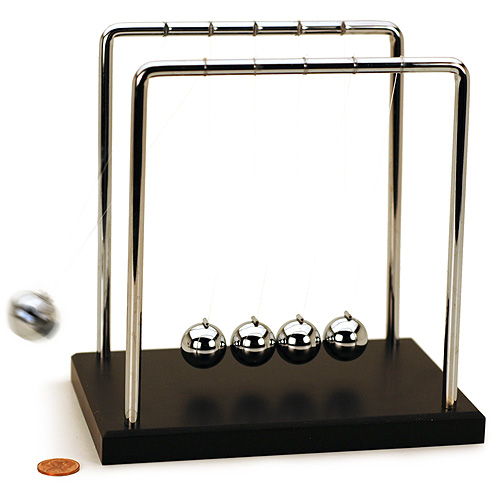
Gravity pendulums. Newton's cradle is the archetype: lift one steel ball, drop it, momentum transfers through the line, the end ball kicks out. Balance mobiles and swinging-arm sculptures live here too. They run on the energy of your push, full stop, and they wind down — usually in well under a minute. No power, no batteries, no deception. The honest, mechanical end of the hobby.
Spun-and-released objects. Precision spinning tops (ForeverSpin, and the gyroscope family). You impart spin once; conservation of angular momentum and a low-friction tip stretch that into minutes. Spin time is a near-pure function of mass and balance — heavier, better-machined tops spin dramatically longer.
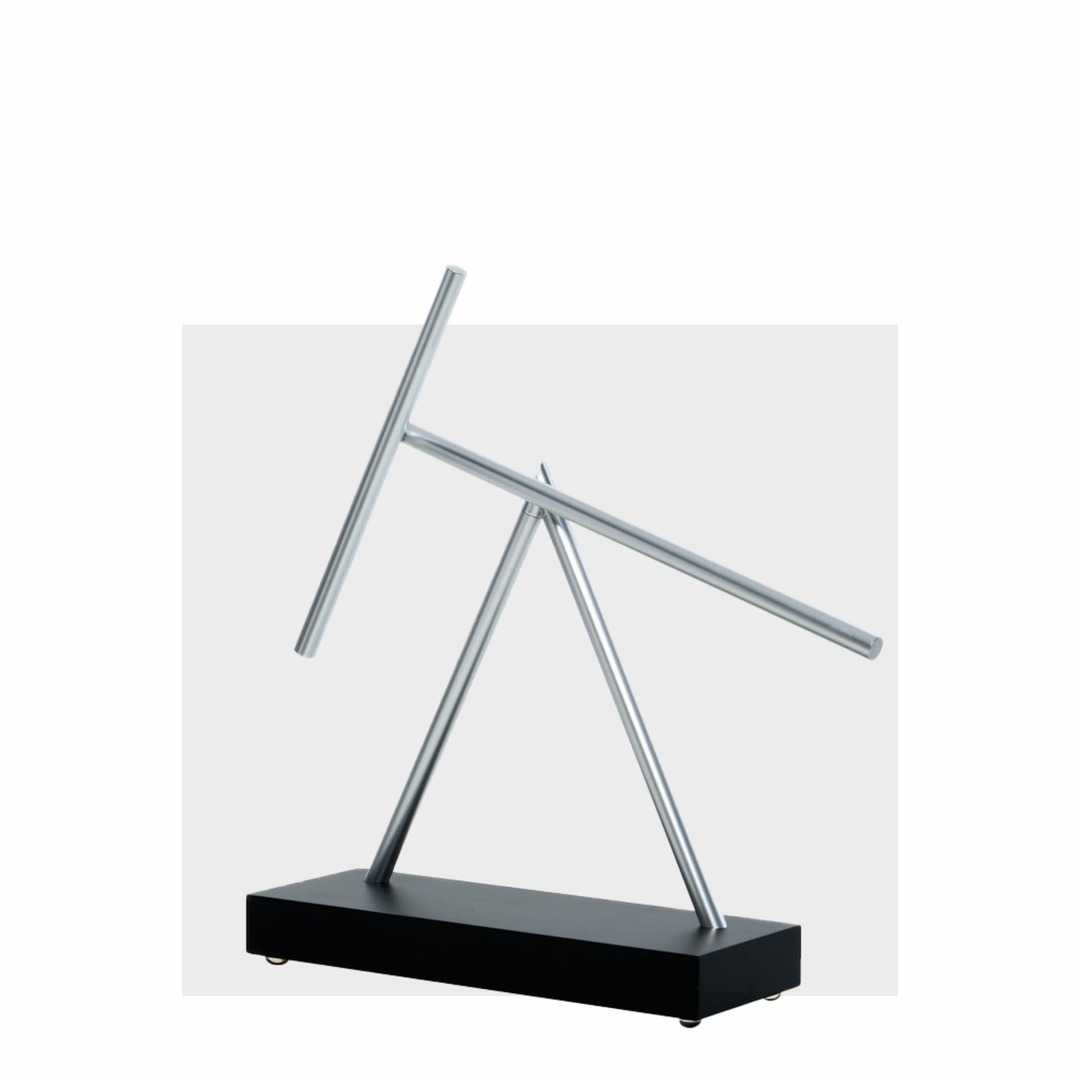
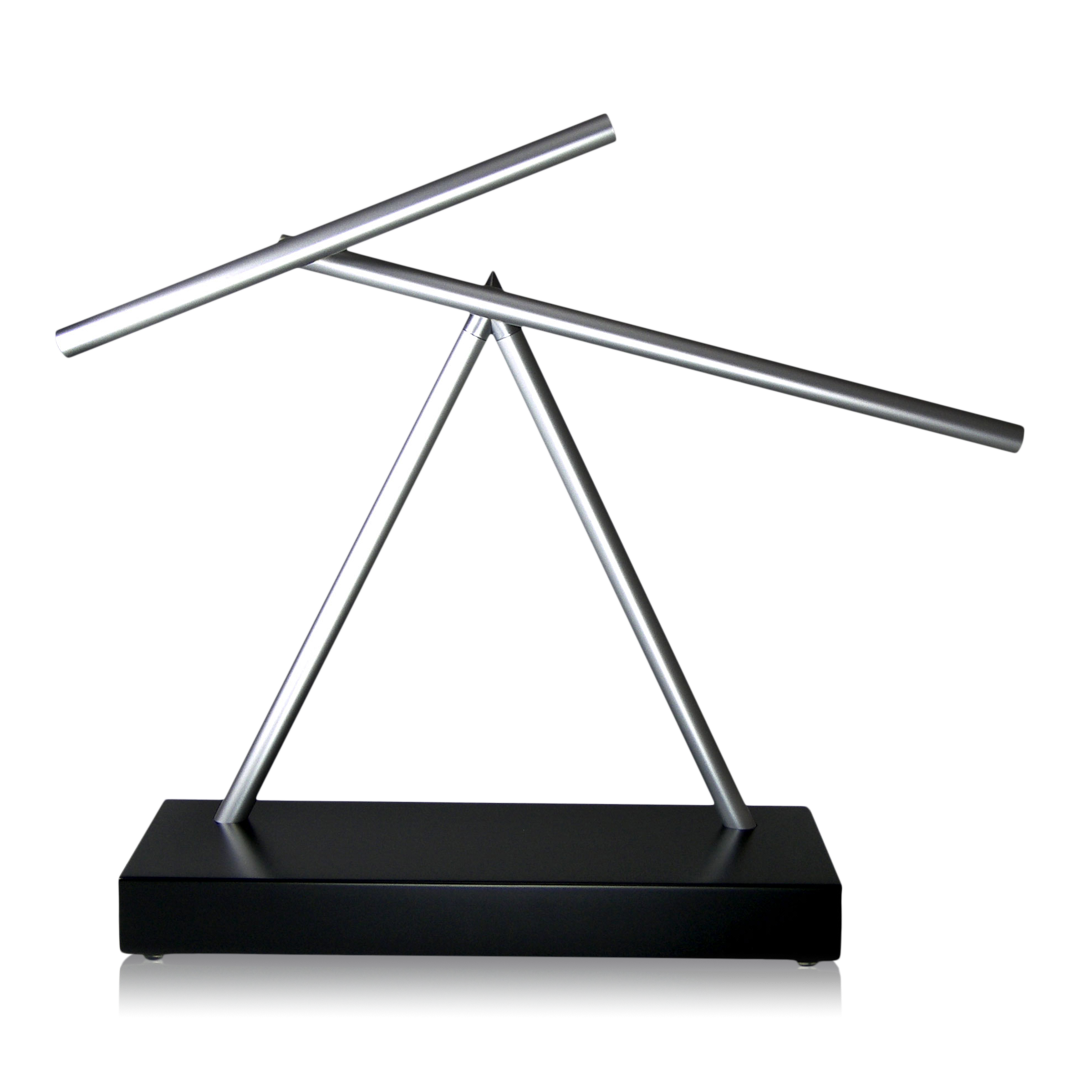
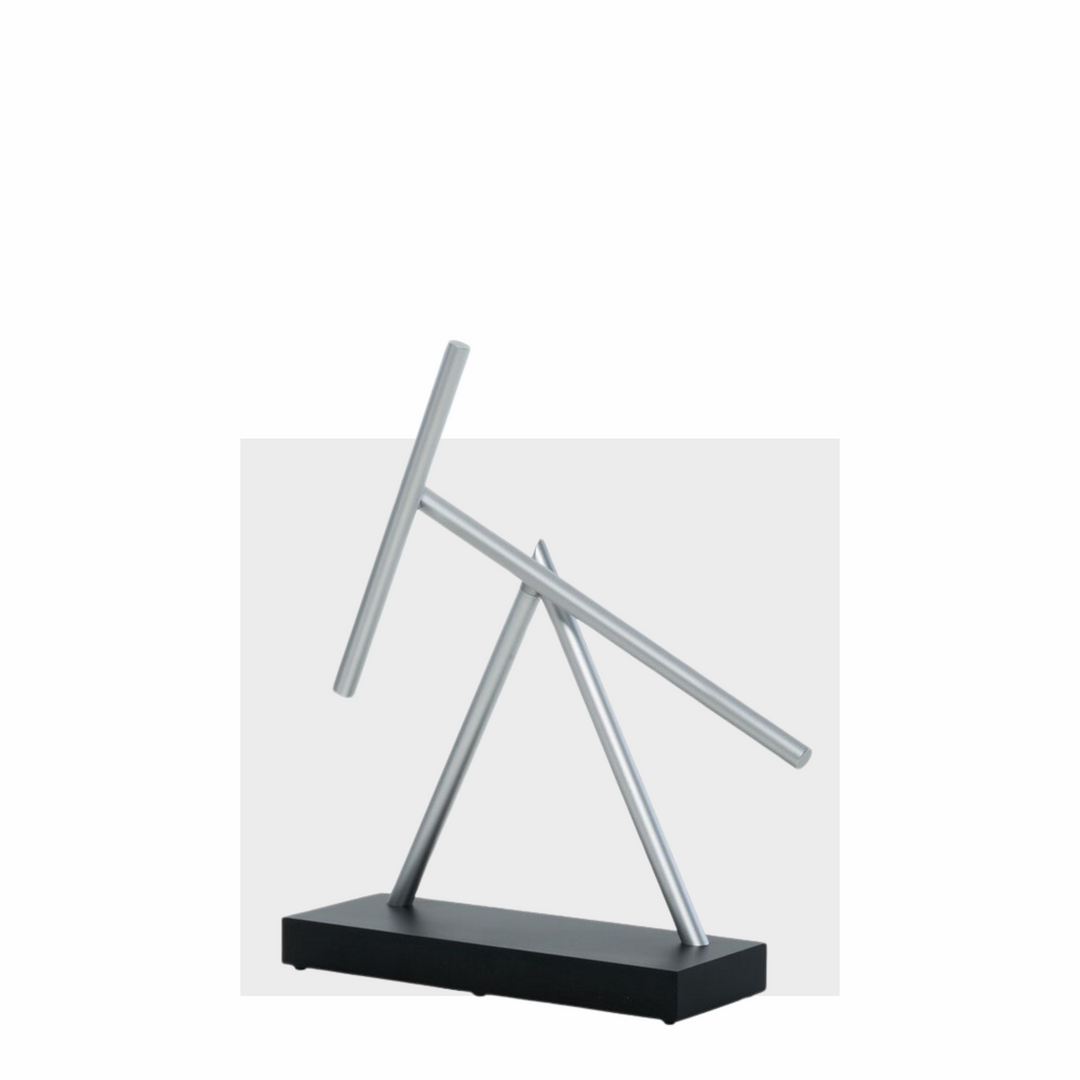
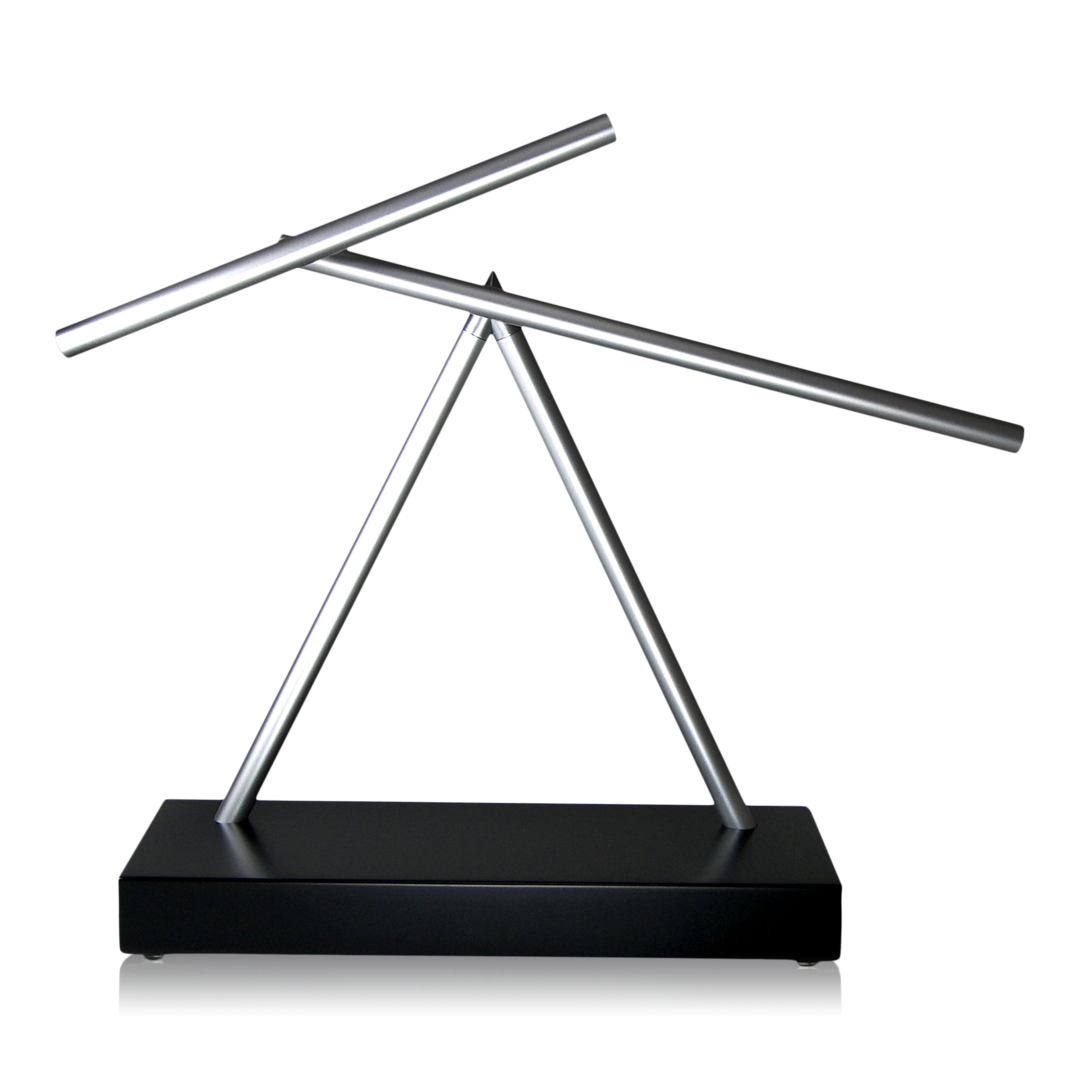
Driven pendulums. The Swinging Sticks is the famous one: a double pendulum with a hidden electromagnetic coil in the base that gives the arms a tiny nudge each pass, replacing the energy friction steals. This is the category most often mislabeled 'perpetual motion.' It isn't — it's battery-powered — but it's the most convincing illusion on the market, and an honest one if you know the AA cells are in there.
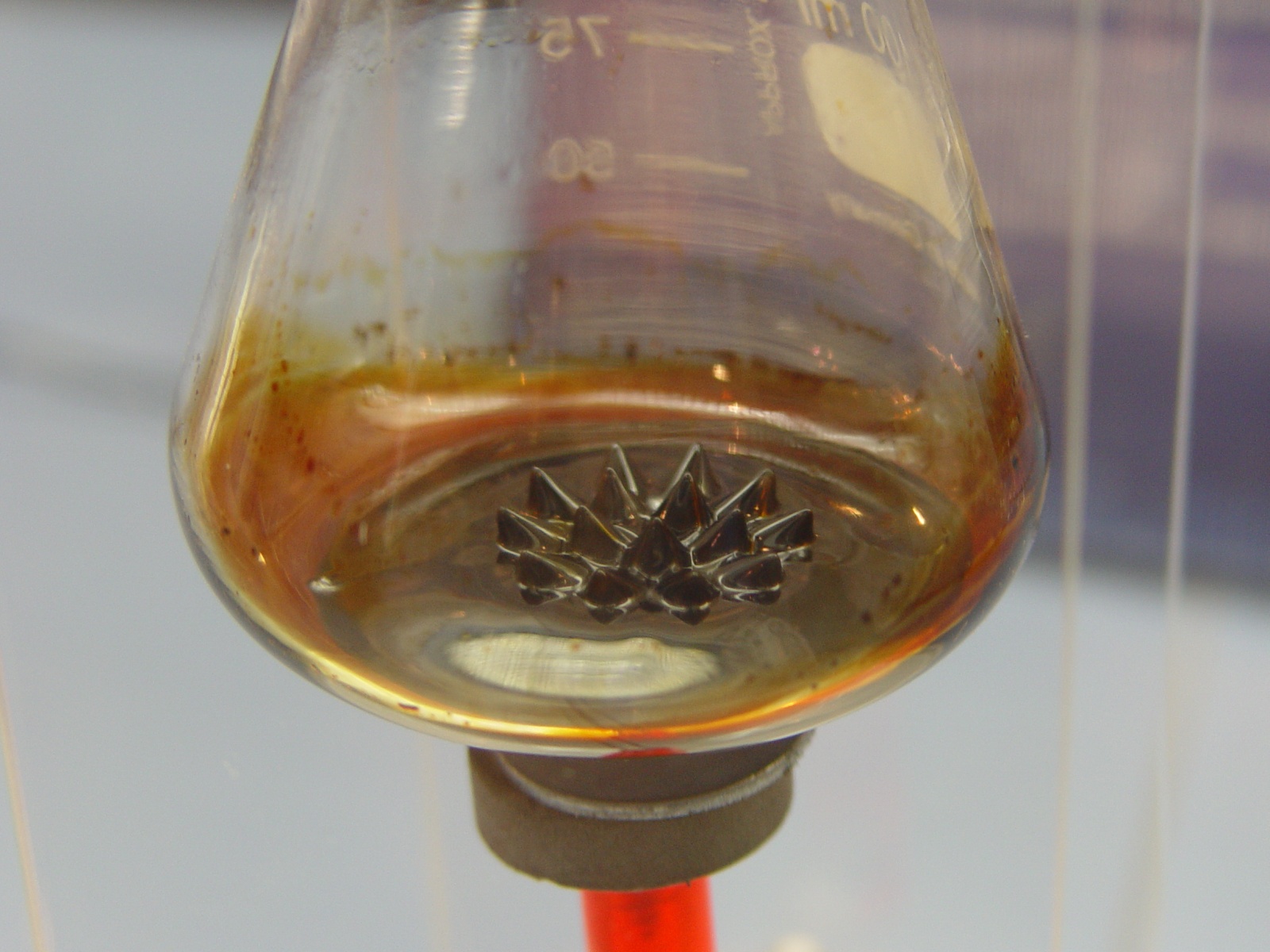
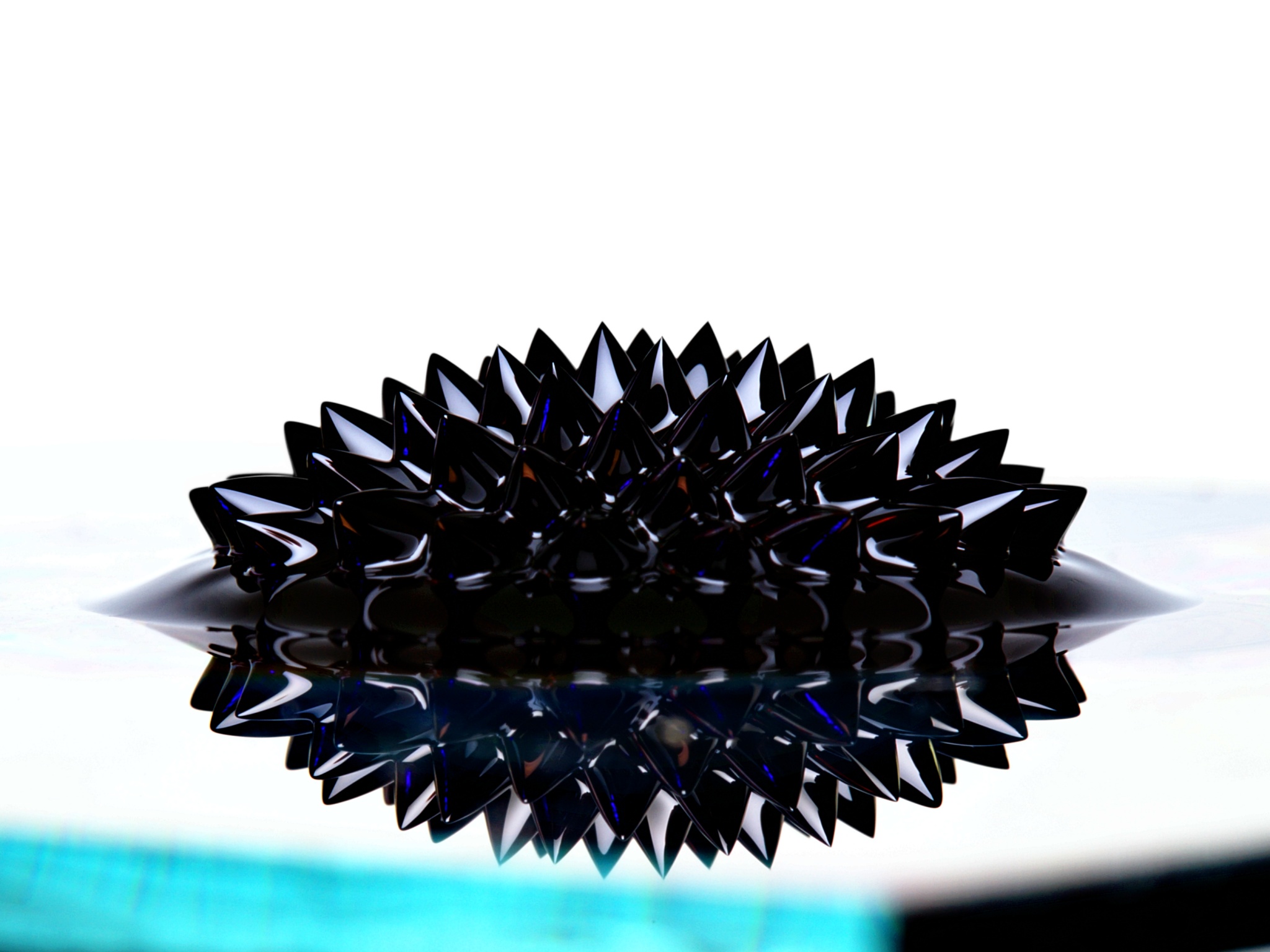
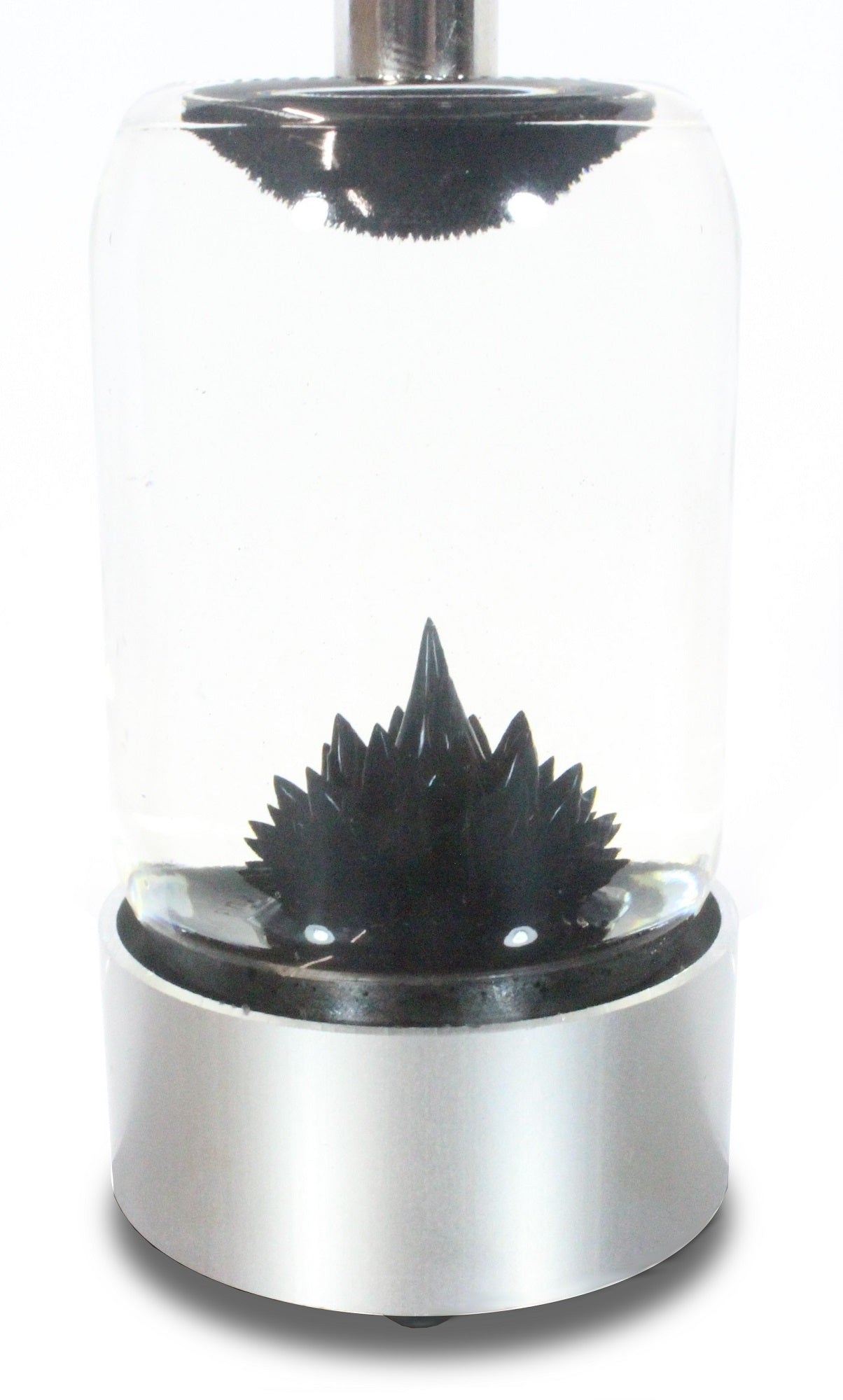
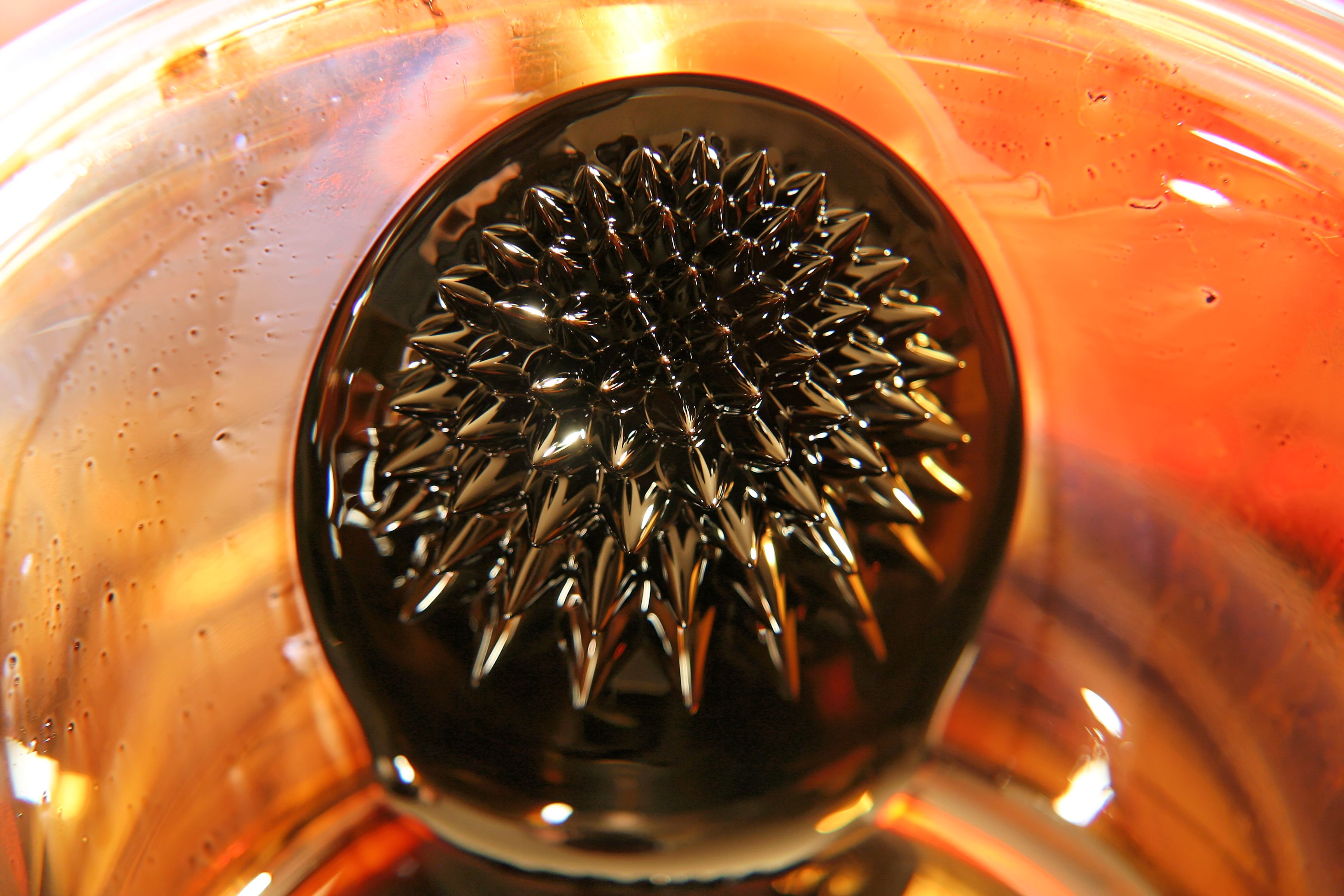
Magnetic-fluid displays. Ferrofluid columns. A suspension of nanoscale iron particles responds to magnets, climbing into spikes and organic shapes. Motion comes either from a handheld magnet (manual) or a motorized magnet array (automatic).
Articulated fidget-sculptures. Klixx, magnetic-ball sets, articulated 3D-printed pieces. These don't move on their own at all — you are the motor. They're sculptures you reshape, and they're priced and judged on tactility and click feel, not on how long something coasts.
If a piece doesn't fit one of those five, be suspicious. 'Electronic perpetual motion asteroid' is the giveaway phrase for the marketplace gimmick tier: a driven pendulum dressed in plastic planets, sold on a physics claim it quietly violates.
Knowing which of the five families a piece belongs to tells you almost everything about how it'll behave on your desk.
Is perpetual motion real, and why does every desk toy eventually stop?
No. Perpetual motion is not real, has never been demonstrated, and is forbidden by the most reliable physics we have. I'm dwelling on this because the entire kinetic-desk category is haunted by the claim, and a buyer who understands why it's false instantly sees through the worst products.
The argument is short. Every moving object on a desk loses energy continuously to two thieves: friction (at pivots, tips, contact points) and air resistance (drag on every swing). That lost energy turns into heat and sound and never comes back into the motion. So a thing you push will always, eventually, stop. There is no exception at desk scale.
Formally: a perpetual motion machine of the first kind — one that does work with no energy input — violates the First Law of Thermodynamics, which says energy is conserved and cannot be created. A machine of the second kind — one that runs forever by perfectly recycling its own waste heat — violates the Second Law, which says you can't convert heat fully back into work without losses. A machine of the third kind — one that merely coasts forever with zero friction — is practically impossible because you cannot remove all dissipation from a real, macroscopic object. Three doors, all locked.
So how does The Swinging Sticks run for up to two years? It cheats honestly: a battery and an electromagnetic coil in the base inject a microscopic push each cycle, exactly replacing what friction removes. That's not perpetual motion — it's a tiny motor doing tiny work, drawn from four AA cells. Same logic for the 'asteroid' galaxy balls (a 9V or USB-driven electromagnet) and the classic drinking bird (which runs on evaporation and a temperature gradient until its water is gone). Every long-runner has a power source. Find the power source and you've found the truth.
The practical takeaway for shopping: a piece that runs forever without batteries is impossible, so its marketing is lying; a piece that runs a long time with batteries is fine, as long as it admits it. Newton's cradles, tops, and balance mobiles are the categories that NEVER claim perpetual motion — because they wind down in seconds-to-minutes and everybody can see it. Their honesty is structural.
Find the power source and you've found the truth — every long-runner has a battery, and the honest ones admit it.
What separates a mesmerizing kinetic piece from a 30-second gimmick?
Four things, in order of how much they matter: how long the motion actually lasts, build quality, noise, and whether the motion stays interesting. Get all four right and you have a piece you'll keep for a decade. Miss two and it's drawer-fodder by next month.
Longevity of motion is the brutal first filter, and it sorts the field hard. Undriven gravity pieces are honest but brief — a good Newton's cradle clacks for maybe 40–60 seconds before you re-tap it, and reviewers of even the well-built ones note it 'doesn't go on for a super long time.' That's fine if you understand you're buying a thing to fiddle with, not a thing to watch ambiently. Precision tops stretch a single spin to 2–3 minutes for steel, longer for tungsten, which is genuinely impressive for a passive object. Driven pendulums (The Swinging Sticks) and motorized ferrofluid are the only categories that run effectively continuously — because they're powered. If you want a desk piece that moves while you work without constant input, you are specifically shopping the powered families, and you should ignore everything else.
Build quality is where price separates craft from junk, and it's visible in the materials list. ForeverSpin machines each top from a solid billet of one metal; a four-year owner reports 'no wear and tear' on the top itself. A good Newton's cradle uses a solid wood base, chrome posts, and 22mm solid steel balls — owners call it 'big and sturdy.' The gimmick tier is plastic-and-pot-metal, the balance toy that arrives slightly bent so it never quite balances, the 'asteroid' whose contacts tarnish and stall.
Noise decides whether a piece survives a shared office. The Swinging Sticks measures under 20 dB — below conversation level, effectively silent. A Newton's cradle, by contrast, is a percussion instrument; the rhythmic clack that's soothing alone is precisely what gets it banished from a quiet room. Ferrofluid is silent (it's a fluid). Klixx is loud by design — the click is the point — which makes it a terrible meeting-room companion and a great solo-focus toy.
Does the motion stay interesting? This is the subtle one. A Newton's cradle does exactly one thing, identically, forever — charming for a week, wallpaper by month two. The Swinging Sticks' double pendulum is chaotic: its cross-pattern path never exactly repeats, which is the real reason collectors keep it on the desk for years instead of months. Ferrofluid's spikes are different every time you bring the magnet near. Novelty that renews beats novelty that's identical on every cycle. That single property — repeating versus non-repeating motion — is the best predictor of whether a piece holds attention long-term.
Repeating versus non-repeating motion is the single best predictor of whether a kinetic piece holds your attention past month two.
Which kinetic desk sculpture is the best overall showpiece?

The Swinging Sticks, and it isn't especially close. It's the only piece that nails all four criteria at once: it runs effectively forever (up to two years on four AA cells), it's near-silent (under 20 dB), it's well-built aluminum, and — the decisive factor — its motion never repeats. That last point is why it has held executive desk space since its 2010 cameo in Iron Man 2, on Pepper Potts' desk, while a hundred repetitive gimmicks have come and gone.
The mechanism deserves respect precisely because it's honest about being driven. It's a double pendulum: two arms pivoting independently, which is the textbook example of a chaotic system. Left to itself, friction would stop it in well under a minute. So designer Torsten Schneider hid an electromagnetic coil in the base that pulses a tiny push each time an arm passes — replacing exactly the energy lost to drag. The arms then trace a slow, fluid, cross-shaped path that genuinely never exactly recurs. You can watch it for ten minutes and not see the same figure twice. That non-repetition is the entire difference between 'mesmerizing' and 'background noise,' and no undriven piece can match it.
The honest caveats. It is not cheap — roughly $108–$121 for the standard desktop edition, climbing to ~$265–$339 for the full-size original. The arms move slowly and quietly, so people expecting frantic action find it understated (that's a feature for a workspace, a letdown if you wanted a fidget). And yes, the batteries eventually die; 'up to two years' is a ceiling, not a guarantee, and heavy positioning against drafts shortens it. But for the specific job of a beautiful thing that moves on your desk while you work, silently, without ever boring you, nothing else in this roundup competes. If you buy one piece from this entire guide, buy this one — just go in knowing it's battery-driven art, not magic.
The runner-up showpiece, if your budget is half this and you can tolerate handling it, is a motorized ferrofluid display — visually richer, but fussier and more fragile. More on that next.
You can watch The Swinging Sticks for ten minutes and never see the same figure twice — that non-repetition is the whole ballgame.
Ferrofluid, spinning tops, and Newton's cradles — what's the best in each category?
Each of these is a category unto itself, with a clear winner and a clear trap.
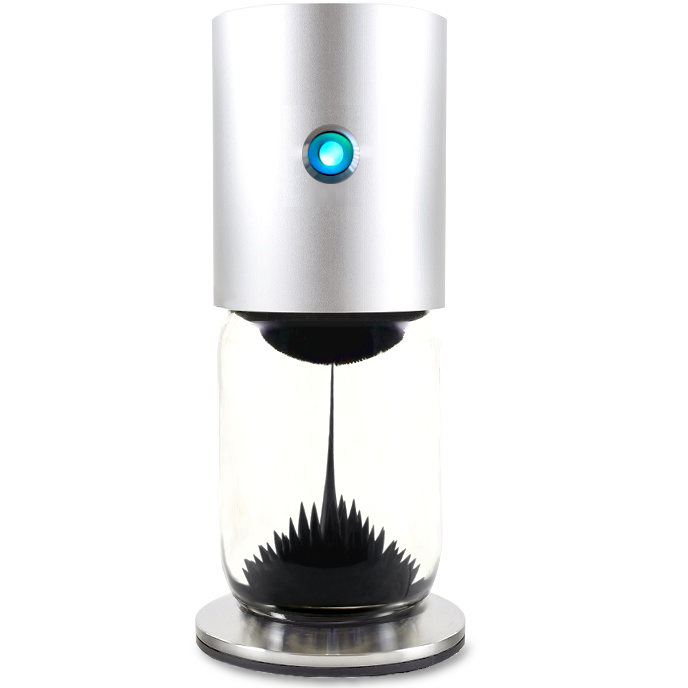
Best ferrofluid: the Ferroflow Automatic (~$239 black, ~$269 color). Ferrofluid is a genuine piece of materials science — a colloidal suspension of nanoscale iron particles that climbs into spikes along magnetic field lines. The make-or-break factor is the fluid itself: cheap ferrofluid (the $13–$20 marketplace tier) clumps, stains the glass, and dies within weeks. Ferroflow and MTR Designs both use Ferrotec-manufactured fluid in a proprietary anti-degradation suspension, which is the real reason they cost an order of magnitude more and last 'years.' Ferroflow's edge is that it's automatic — a motorized magnet array animates the spikes continuously, hands-free, making it the only ferrofluid that doubles as an ambient showpiece. The materials are serious: aircraft-grade aluminum, lab-quality glass, machined steel base. If you'd rather drive it yourself and save money, MTR's manual SPIKE (~$65) uses the same Ferrotec fluid with a handheld neodymium magnet — superb fluid, but you have to wave the magnet to get the show. The trap: any sub-$25 ferrofluid 'display.' The fluid is the product, and the cheap fluid is garbage.
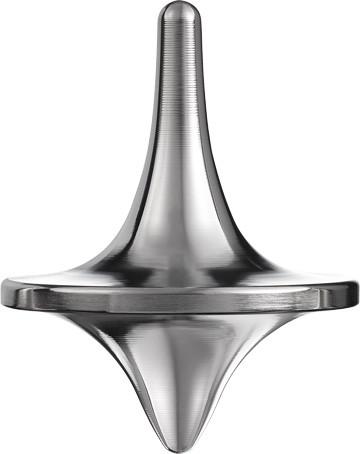
Best spinning top: ForeverSpin Tungsten (~$80–$300 depending on metal). Spin time is almost pure physics — heavier and better-balanced spins longer — and ForeverSpin machines each top from a solid billet of a single metal to exacting tolerances. The tungsten model is the spin-duration champion of the line; steel runs a respectable 2–3 minutes, and dedicated owners report tungsten/gyro tops pushing well past ten minutes. A four-year owner confirms the top shows 'no wear and tear' and is 'built to last forever' (the base scratches, the top doesn't). It is genuinely expensive for what it is, and the same owner admits he no longer spins his daily — so buy it as a precision objet and gift, not as a toy you'll obsess over. Best budget alternative in this category: any heavy brass top under $25 will out-spin a light novelty top; mass is what matters.
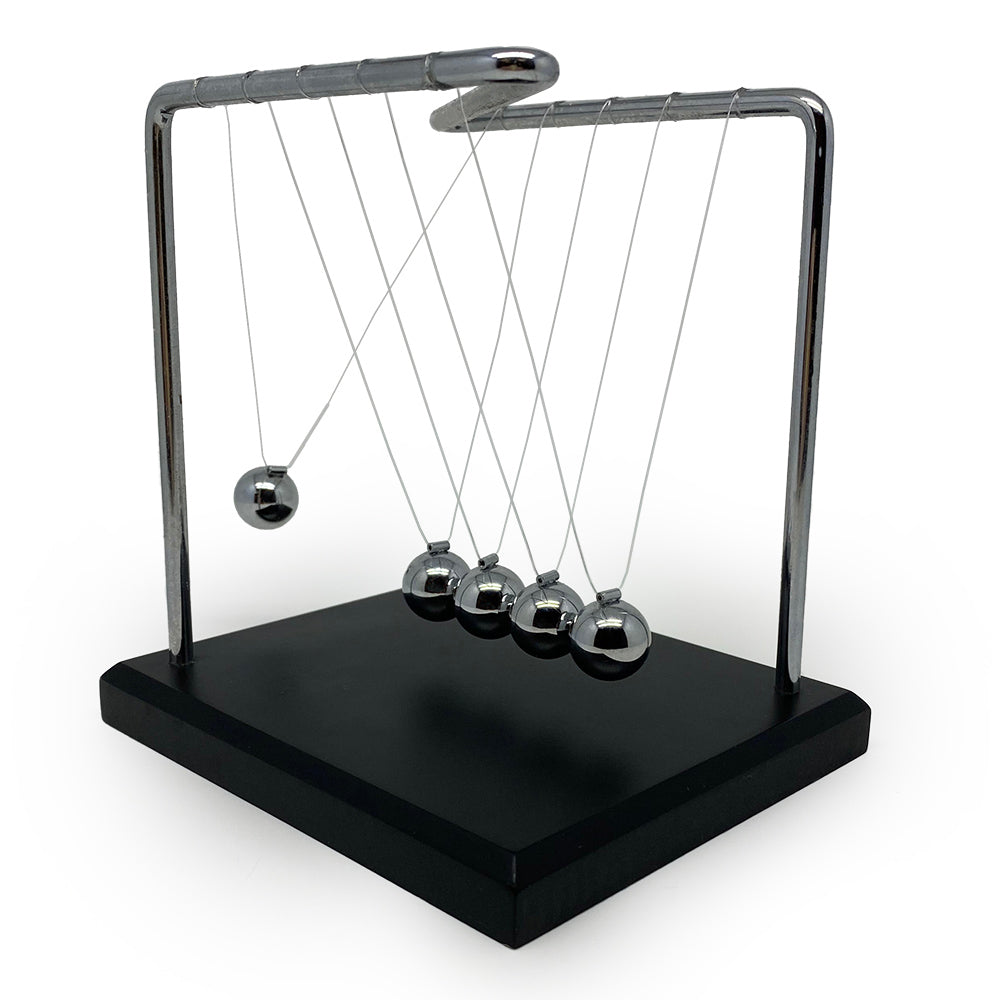
Best Newton's cradle: the xUmp 7-inch (~$25). This is the category where you should NOT overspend — the physics is simple and a $25 well-built unit delivers it fully. The xUmp uses a solid black wood base, chrome posts, and 22mm solid steel balls with a mirror finish; owners call it 'such quality' and 'big and sturdy.' The Tedco wood-base model (~$20–$30) is the equally-honest classic, noted for heavier strings that give smoother, longer swing. Both clack for ~40–60 seconds per tap — that's simply what a Newton's cradle does, and no amount of money extends it. The trap here is twofold: cheap models with thin tangle-prone strings and out-of-line balls that click crookedly, and the office noise problem (covered above). Buy a mid-quality one, keep it on a solo desk, and enjoy the honest mechanical clack.
With ferrofluid the fluid IS the product — Ferrotec-grade lasts years, the $13 marketplace stuff clumps and stains within weeks.
Which kinetic desk toys are the most overrated gimmicks?
Now the part that saves you money. Several whole product types coast on a physics fantasy and disappoint on contact. Here's where the disappointment lives.
The 'electronic perpetual motion' galaxy / asteroid balls (~$15–$30). This is the most overrated tier, full stop. You've seen them: brightly colored metallic balls on plastic arms that 'orbit' on an executive desk, sold explicitly as 'perpetual motion machines.' The reality: it's a cheap driven pendulum running off a 9V or USB electromagnet, dressed in plastic planets and lying about the physics. Owners learn fast that you have to manually push the ball to an angle and release just to start it, the plastic feels toy-grade, and the electromagnetic contacts tarnish and stall. It's a $15 mechanism wearing a $50 costume and a false name. The honest version of this exact idea is The Swinging Sticks — same 'driven pendulum' principle, executed with real materials and zero physics lies, for a reason it costs 5–10× more.
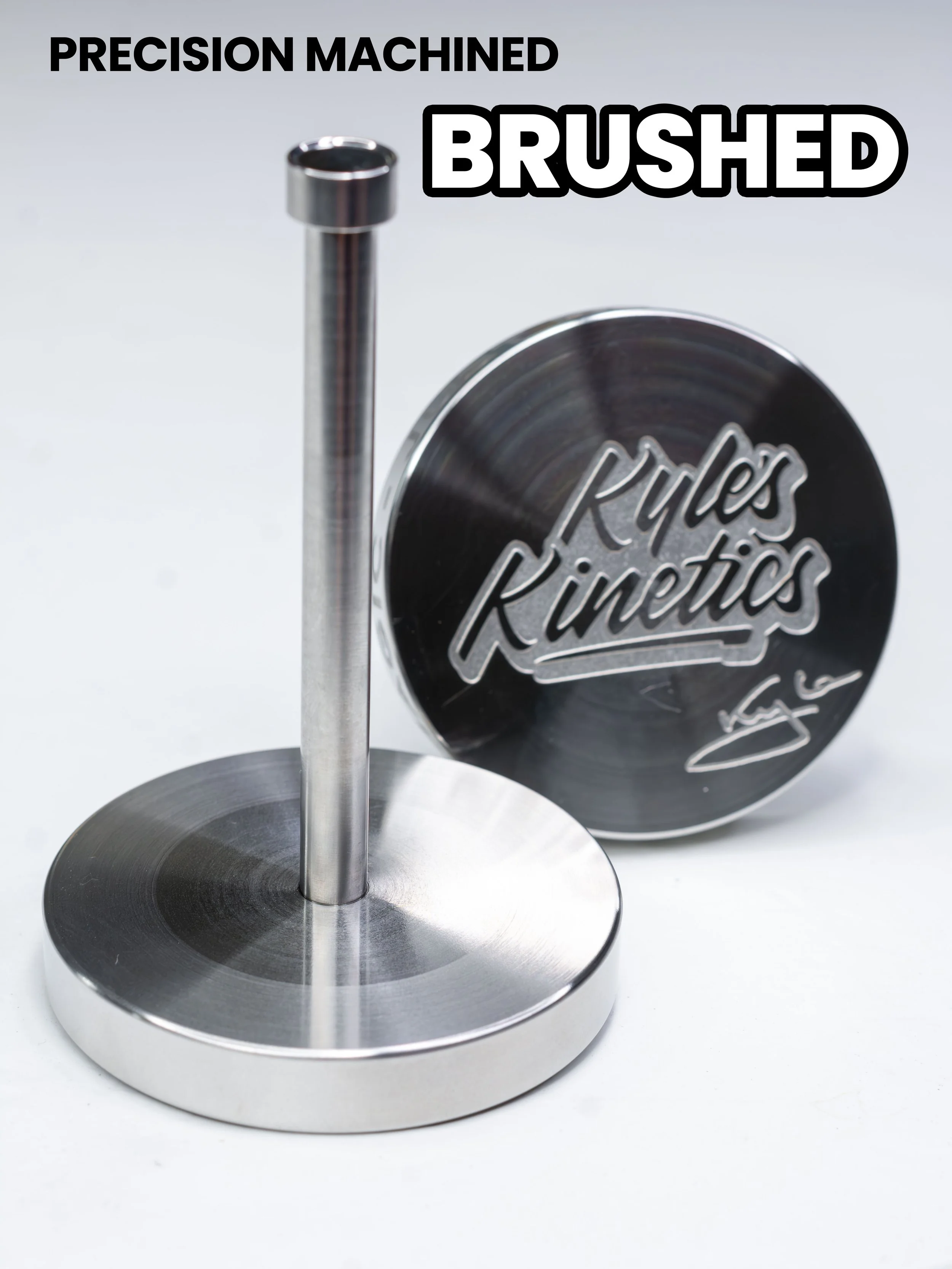
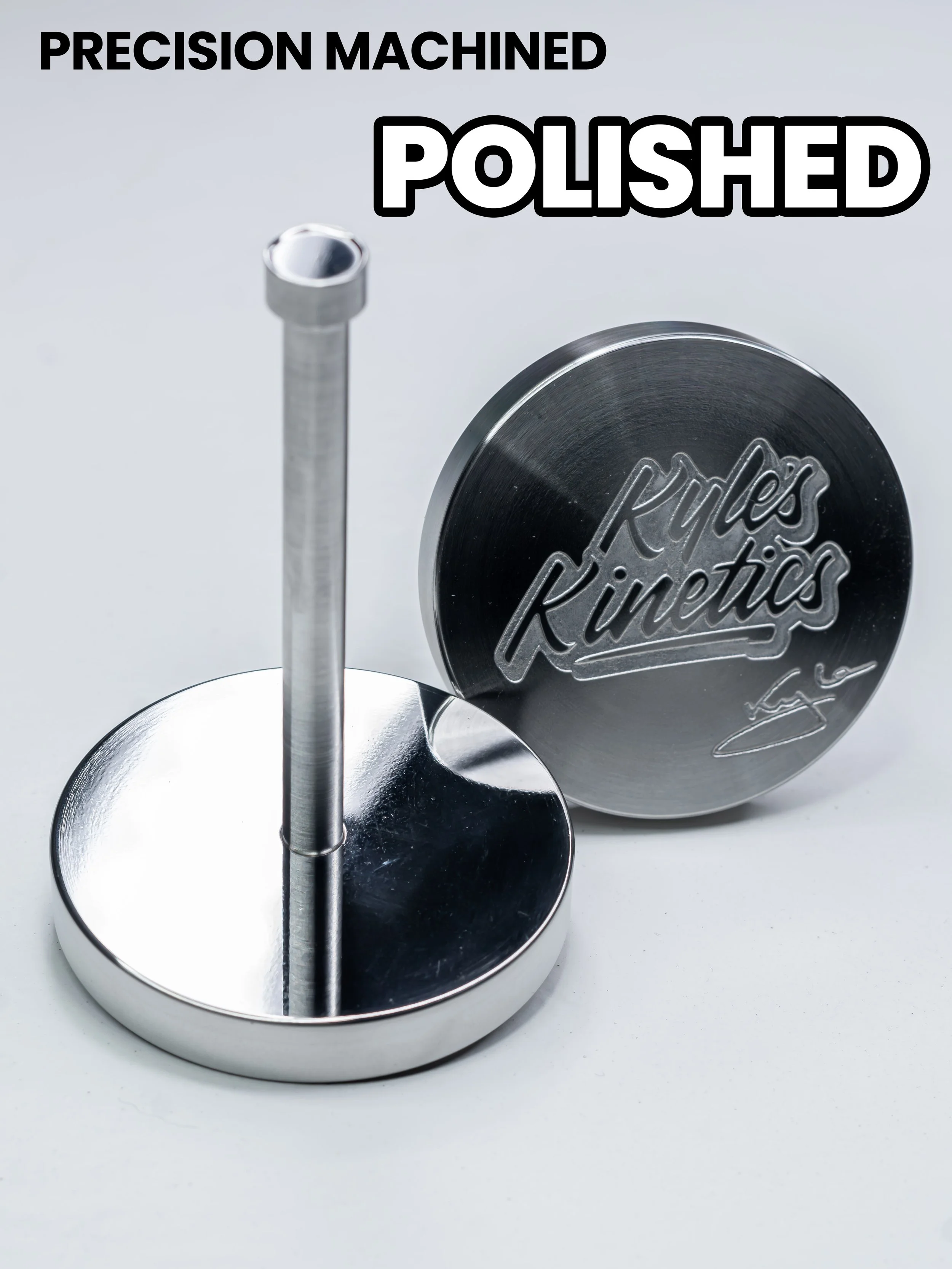
Bargain balance / surfing / 'galaxy planet balance mobile' toys (~$14–$20). The balance sculpture is a lovely idea — a figure perched on a single point, counterweighted to swing and recover. Done well (Kyle's Kinetics handcrafts them from ~$150) it's genuine art. Done as a $14 marketplace import, the counterweight is mis-tuned, the piece arrives slightly bent, and it never settles into clean balance — it just lists to one side. The concept doesn't survive the price compression.
Cheap ferrofluid (~$13–$20). Covered above but it bears repeating in the gimmick column: the fluid clumps and stains within weeks. You're not buying a display, you're buying a few weeks of novelty and a permanently smeared glass tube.
Where I'm fair to the cheap stuff: Klixx (~$10–$15) and magnetic-ball sets (~$15–$25) are inexpensive AND honest, because they never pretend to move on their own — you are the motor, the click or the snap is the entire promise, and they deliver it. A $12 Klixx that clicks satisfyingly is a good $12. A $14 'perpetual motion asteroid' that stalls and lies is a bad $14. The price isn't the problem; the false claim is. Cheap-and-honest beats cheap-and-fraudulent every single time, and the tell is always the same — read the box for the words 'perpetual motion' and run.
It's a $15 mechanism wearing a $50 costume and a false name — the 'electronic perpetual motion asteroid' is the most overrated thing on a desk.
From the rabbit hole
Real voices from players, reviewers, and the communities who know these games best.
review“There is no way around it: ForeverSpin tops are incredibly high-end. Every top is well-built, balanced, and built to last forever.”
Gear43, four-year long-term ForeverSpin review
review“Mine can spin for around 2 minutes, which is respectful... I don't personally still use the ForeverSpin after four years of usage. However, I still recommend this spinning top to a couple of different people.”
Gear43 long-term review
review“Such quality and looks really nice... big and sturdy. [But it] doesn't go on for a super long time or anything.”
xUmp Newton's Cradle owner reviews
expert“The chaotic double pendulum motion never repeats, so the sculpture stays mesmerizing instead of becoming repetitive background noise.”
Puzzloria, Swinging Sticks review roundup
expert“Here's the best desk toy since Newton's cradle.”
Gizmodo, on The Swinging Sticks
maker“High quality ferrofluid synthesized by Ferrotec (won't break down in a few weeks like cheaper competitors).”
MTR Designs, SPIKE ferrofluid product page
The picks
Some links below are affiliate links — as an Amazon Associate, Puzzlewick earns from qualifying purchases, at no extra cost to you. It never changes a pick.
 5 photos
 The Swinging Sticks Kinetic Energy Sculpture (Desktop Version)
The benchmark, and the only honest 'perpetual motion illusion' worth owning. A double pendulum whose chaotic cross-pattern path never repeats, kept alive by a hidden electromagnetic coil in the base drawing on four AA cells — so it runs up to two years, near-silent under 20 dB. Famous from Iron Man 2 (Pepper Potts' desk) and still on executive desks 16 years later for one reason: the non-repeating motion never becomes wallpaper. The arms move slowly and quietly, which reads as elegant in a workspace and underwhelming if you wanted frantic action. Not cheap, fully honest about its battery, and unmatched at the job of beautiful motion you don't have to tend.
- Chaotic motion never repeats — holds attention for years
- Near-silent (<20 dB), office-safe
- Runs up to 2 years on 4 AA batteries
- Honest about being battery-driven, not 'perpetual'
- Expensive vs. simpler pieces
- Slow/quiet motion underwhelms anyone expecting drama
- Batteries eventually die; 2 years is a ceiling, not a promise
 2 photos
 Ferroflow Automatic Ferrofluid Display
The only ferrofluid that doubles as a hands-free showpiece — a motorized magnet array animates the iron spikes continuously, no magnet-waving required. Uses Ferrotec-manufactured fluid in a proprietary anti-degradation suspension, the reason it lasts 'years' where $13 ferrofluid clumps and stains in weeks. Aircraft-grade aluminum top, lab-quality glass, machined steel base. Visually the richest piece here, growing and collapsing organic black spikes on a loop. The catch: it's fragile (glass + fluid), pricier than the manual route, and carries only a 60-day internal-parts warranty. Black is ~$239; colors ~$269.
- Automatic motorized motion — true ambient showpiece
- Ferrotec fluid resists clumping/staining for years
- Genuinely premium materials (aircraft aluminum, lab glass)
- Mesmerizing, ever-changing spike formations
- Expensive
- Fragile glass-and-fluid construction
- Short 60-day internal-parts warranty
 3 photos
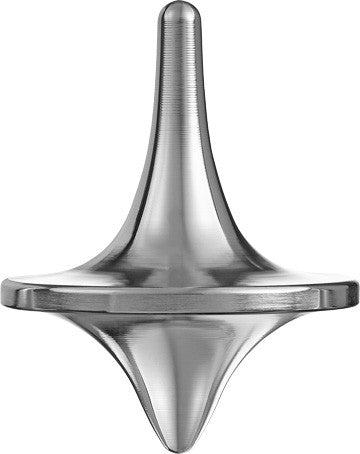
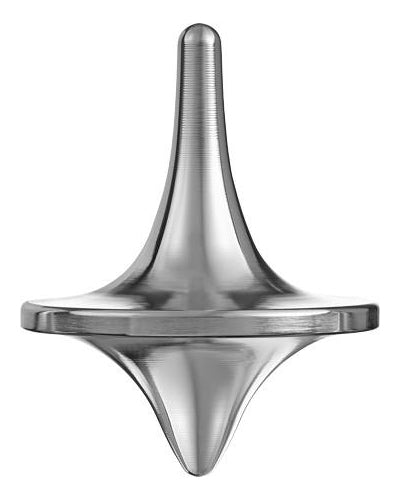
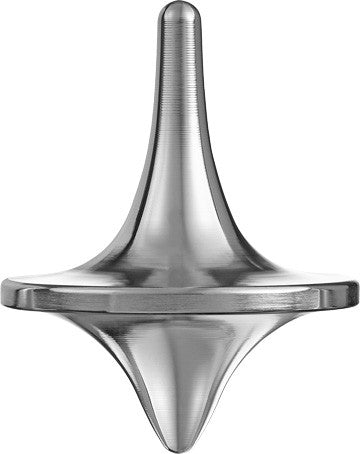
 ForeverSpin Tungsten Spinning Top
A precision instrument disguised as a toy. Machined from a solid billet of tungsten to exact tolerances, it's the spin-duration champion of the ForeverSpin line — dedicated owners report tungsten/gyro tops spinning well past ten minutes, where the steel version manages a still-impressive 2–3. A four-year owner confirms the top shows zero wear and is 'built to last forever' (only the base scratches). Eye-wateringly expensive for a 1.4-inch object, and even fans admit it becomes a display piece more than a daily spinner. Buy it as a precision objet or a serious gift, not as something you'll fidget with hourly. Steel (~$60) is the sane-budget entry.
- Longest passive spin of any pick — minutes, not seconds
- Solid-billet machining; top shows no wear after years
- Lifetime warranty, genuinely heirloom-grade
- Honest physics — no batteries, no claims
- Very expensive for its size
- Even owners stop using it daily
- Needs a smooth hard surface to spin well
 2 photos
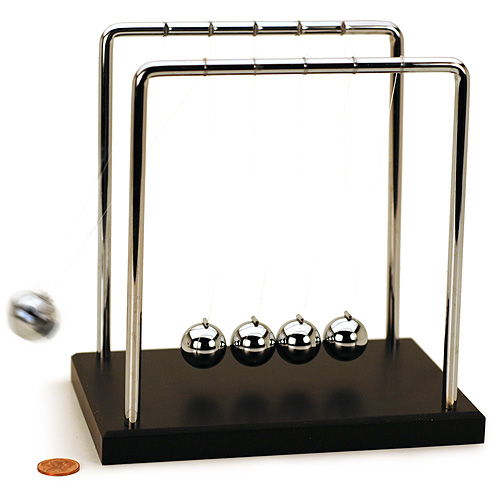
 xUmp 7-inch Newton's Cradle
The category done right without overspending. Solid black wood base, chrome posts, and 22mm solid steel balls with a mirror finish — owners call it 'such quality' and 'big and sturdy,' with ball alignment clean enough to click straight rather than crooked. It clacks for roughly 40–60 seconds per tap, which is simply what a Newton's cradle is; no price extends that. The honest mechanical end of the hobby: runs purely on your push, never pretends otherwise, demonstrates conservation of momentum in the most satisfying way. Two cautions — it's a percussion instrument (banish from quiet offices) and the strings reward gentle handling.
- Solid wood/chrome/steel build at a fair price
- Clean ball alignment — clacks straight
- Honest, classic physics demo
- No batteries, nothing to wear out
- Motion lasts under a minute per tap
- The clack is too loud for shared offices
- Strings can tangle if handled roughly
 2 photos
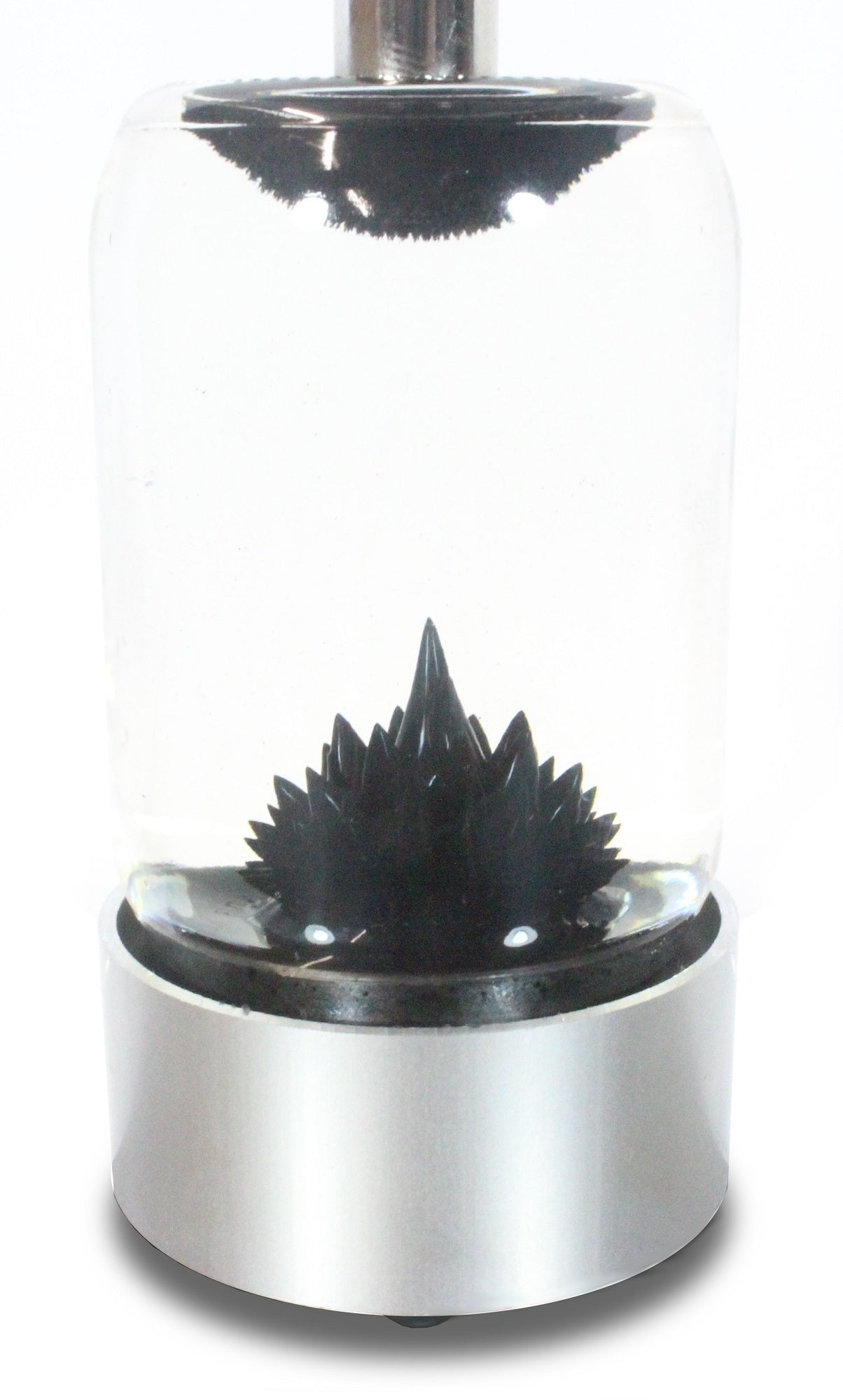
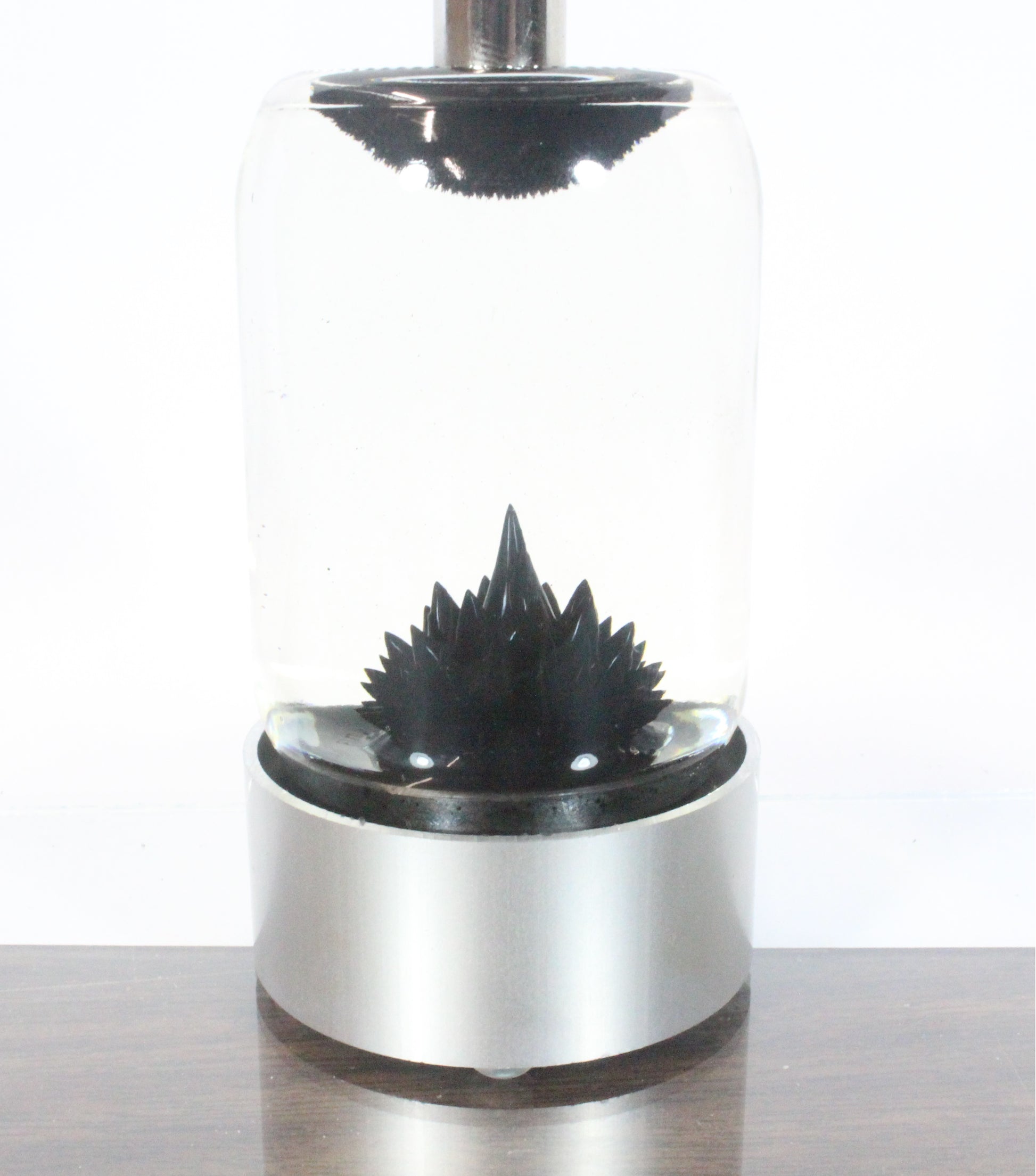
 MTR Designs SPIKE Ferrofluid Display (manual)
Real ferrofluid, real materials, a third the price of the automatic — the trade is that you drive it yourself with the included handheld neodymium magnet. Same Ferrotec-synthesized fluid that resists the clumping and staining that kills cheap displays, sealed in a glass tube with two base magnets plus the handheld one. At 2.5 x 2.5 x 4.5 inches it's compact, with 7ml of fluid; an optional LED and extra magnet sharpen the show. The honest middle path: superb fluid quality without the motorized-showpiece premium, as long as you accept it's a fidget you actively operate, not an ambient piece. Adult-only — glass and strong magnets.
- Ferrotec fluid — won't break down like cheap ferrofluid
- Far cheaper than automatic units
- Compact footprint; tactile and engaging
- Strong spike formations with the handheld magnet
- Manual only — no hands-free motion
- Glass + strong magnets (not kid-safe)
- Optional LED/magnet cost extra for the full effect
 2 photos
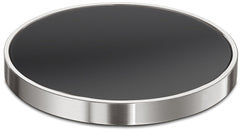
 ForeverSpin Stainless Steel Top + Spinning Base Pack
The ForeverSpin to actually buy unless you're a duration obsessive. Same solid-billet machining and balance as the tungsten flagship, in stainless steel that spins a consistent 2–3 minutes — plenty mesmerizing — paired with a spinning base that contains the top and adds a lifetime warranty. The base scratches with use; the top doesn't. Beautifully made, satisfying to launch, and a fraction of the tungsten price. Still a premium ask for a spinning top, and like all of them it needs a smooth surface to shine. The sweet spot of the line: real craft, sane money.
- 2–3 minute spins from precise billet machining
- Base contains the top + lifetime warranty
- Far cheaper than tungsten, nearly as satisfying
- No batteries, fully honest physics
- Still pricey for a spinning top
- Base scratches over time
- Needs a hard, smooth surface

 8 photos
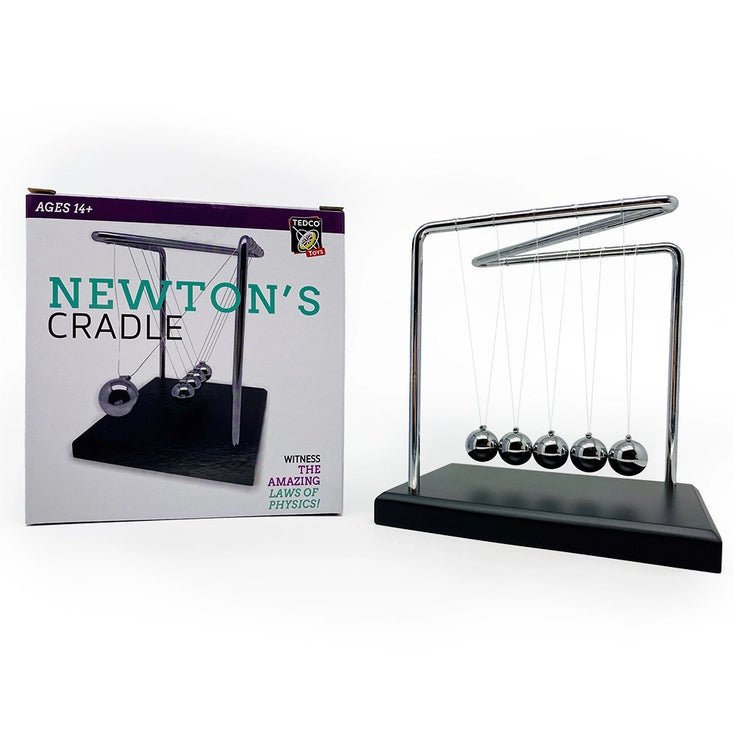
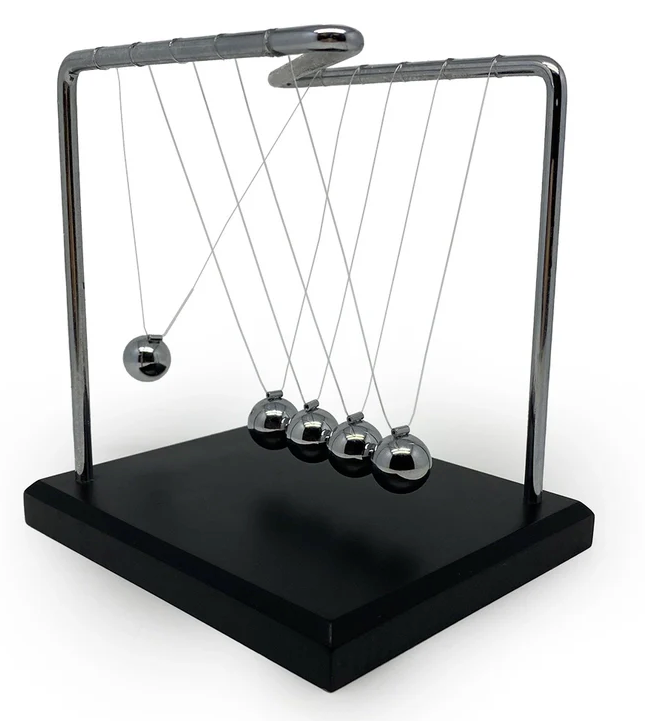
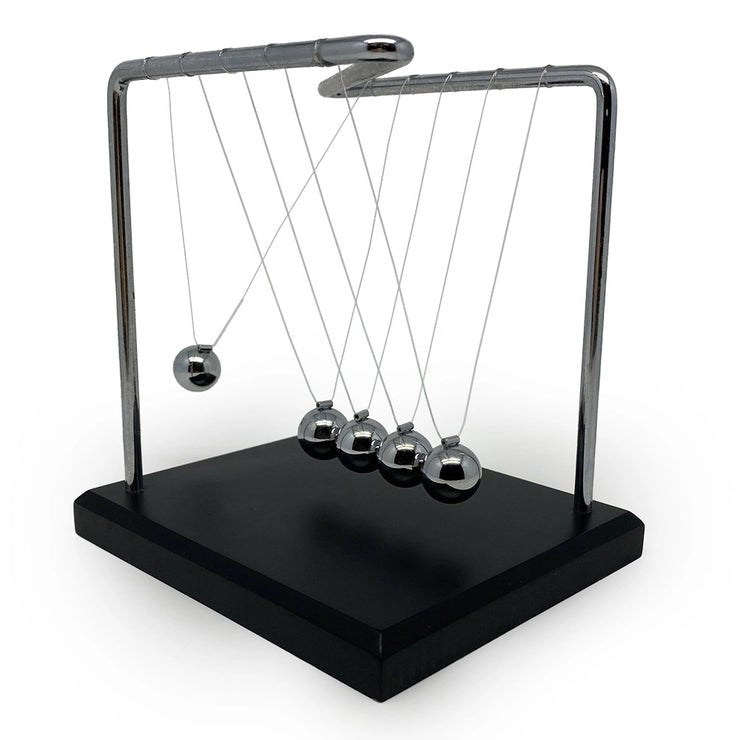
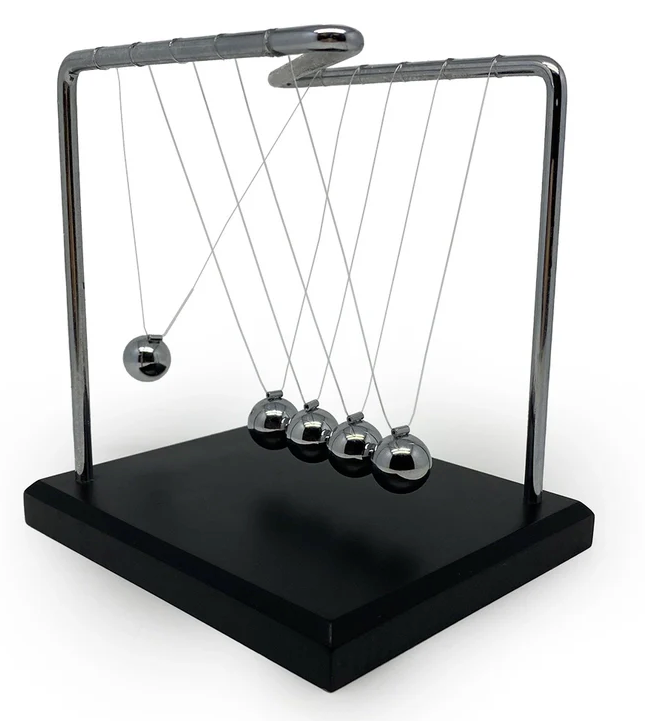
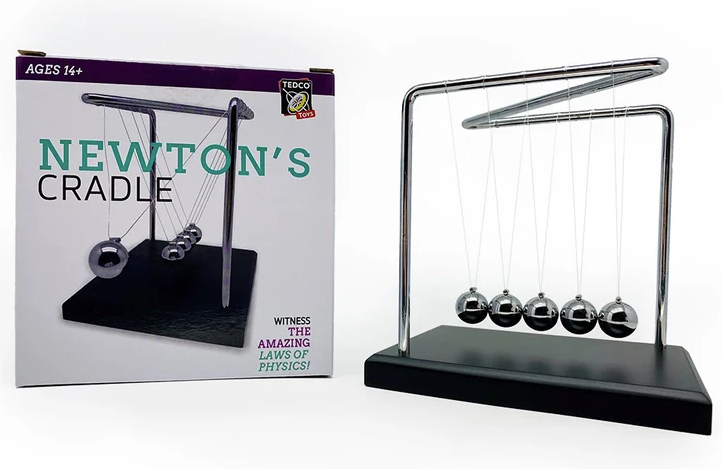
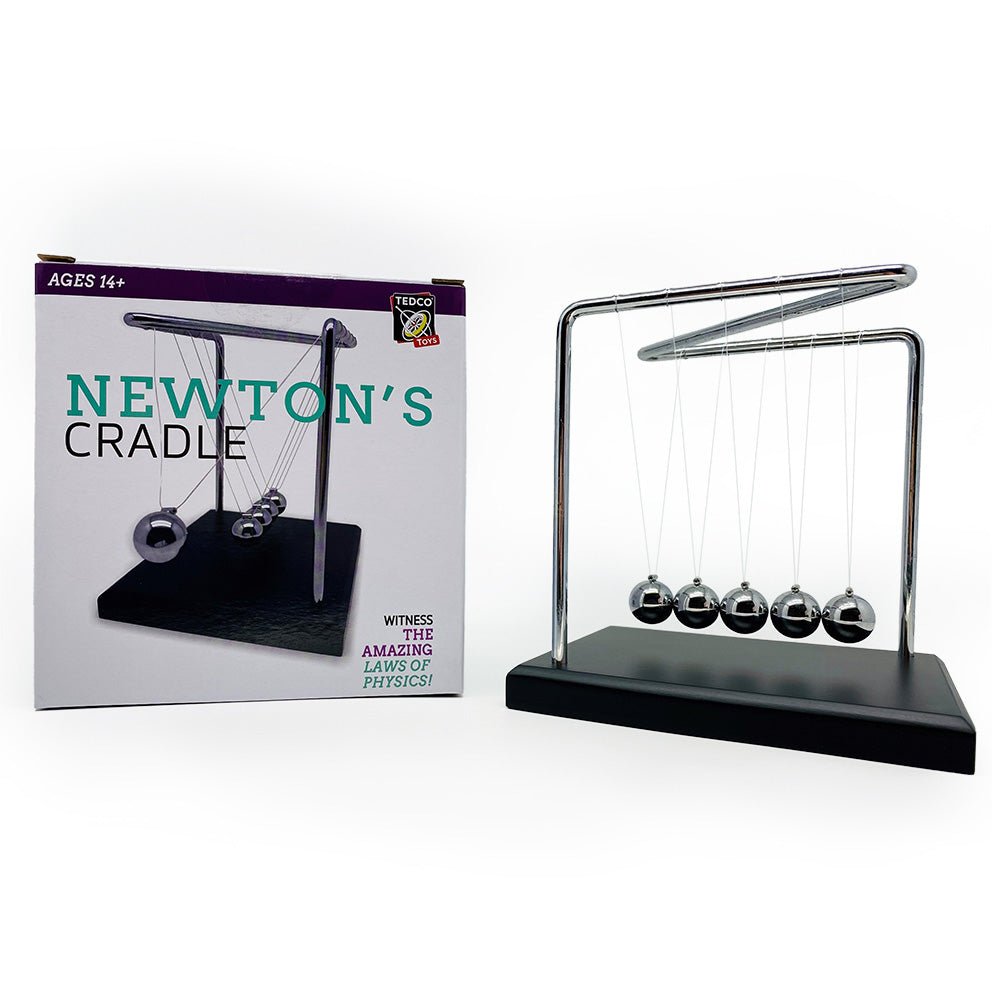
 Tedco Newton's Cradle (Z, wood base)
The dependable budget classic. Ships fully assembled on a black-coated solid wood base, and its standout is heavier-than-usual strings that give a smoother, longer swing and resist the tangling that ruins cheaper cradles. Glowing long-run reviews, honest mechanical motion, and a price low enough to be a guilt-free gift or a starter kinetic piece. Same category caveats apply: ~40–60 seconds of clack per tap, and it's an audible percussion toy unsuited to quiet shared rooms. For the money, the most reliable honest motion in this guide.
- Heavier strings — smoother swing, less tangling
- Ships assembled on a solid wood base
- Excellent value and durability
- Honest physics, no power needed
- Brief per-tap motion like all cradles
- Clack is office-disruptive
- Plain looks vs. premium chrome units
 2 photos
 Kyle's Kinetics Balancing Sculpture (Balancing Bird / Swinging figure)
The balance-sculpture category done as genuine craft instead of a $14 import. Handcrafted, properly counterweighted pieces that perch on a single point and swing into a slow, self-righting motion — the way a balance sculpture is supposed to behave when the weighting is actually tuned. Prices run from ~$99 into the thousands depending on scale; the entry figures (~$150) are the accessible end. Runs purely on a gentle push, winds down gracefully, makes no false claims. The reason this beats the marketplace balance toys is precisely that someone tuned the counterweight by hand so it settles cleanly rather than listing to one side.
- Hand-tuned counterweight — balances and recovers properly
- Genuine handcrafted artwork, not an import
- Silent, honest, no batteries
- Wide range of sizes and designs
- Far pricier than mass-market balance toys
- Brief motion per push (gravity-driven)
- Availability varies (small maker)
 2 photos
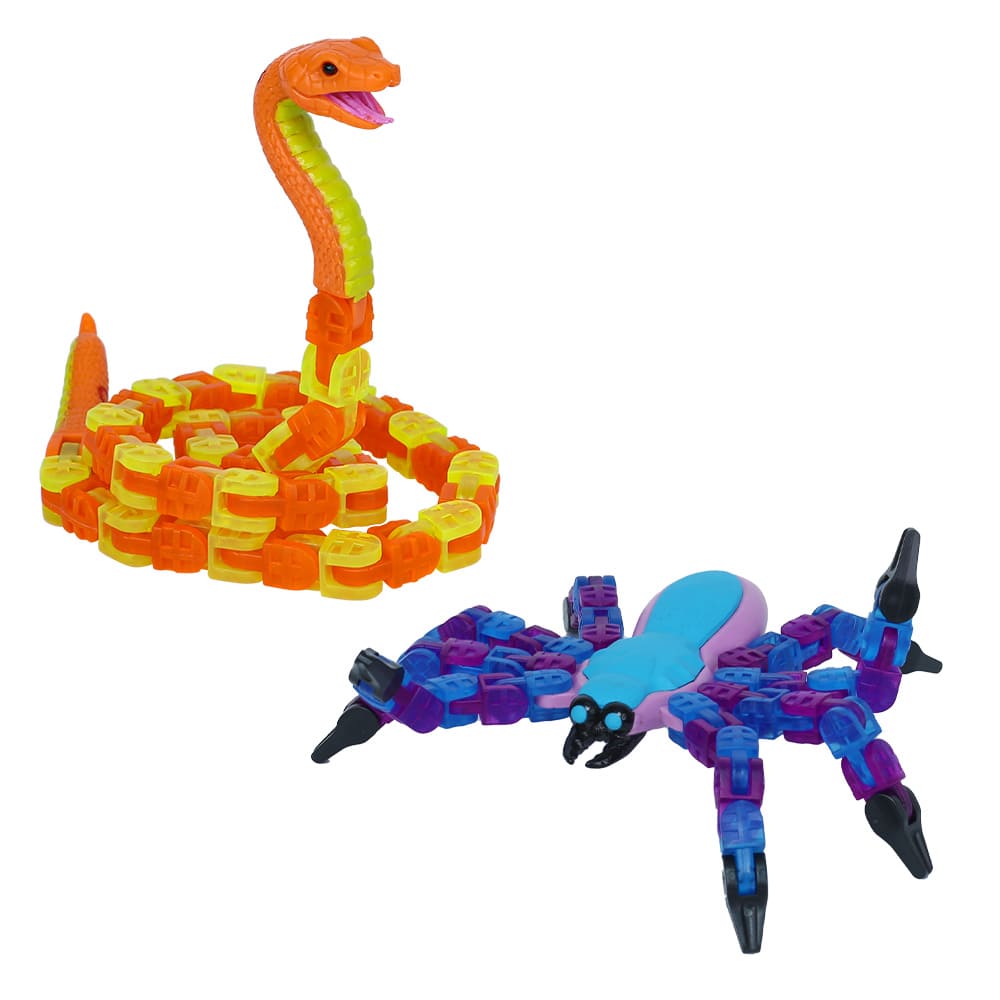
 Zing Klixx Creaturez / Klixx 40-Link Fidget Sculpture
Cheap and completely honest — it never pretends to move on its own. Interlocking articulated links snap and twist into shapes, letters, or creatures with a sharp, satisfying click that is the entire point. The Creaturez sets (200+ articulating joints) even support stop-motion via Zing's app; the 40-link version is pure reshape-and-fidget. You are the motor, the click is the promise, and at ~$10–$15 it delivers exactly that with no physics lies attached. Loud by design — terrible for meeting rooms, ideal for solo focus. The clearest illustration in this guide that cheap-and-honest beats cheap-and-fraudulent.
- Inexpensive and totally honest about what it is
- Satisfying tactile click; endlessly reshapeable
- Creaturez sets do stop-motion animation
- Durable, kid- and adult-friendly
- Loud — not for shared/quiet spaces
- No self-motion (you drive it entirely)
- More fidget than display showpiece
 2 photos
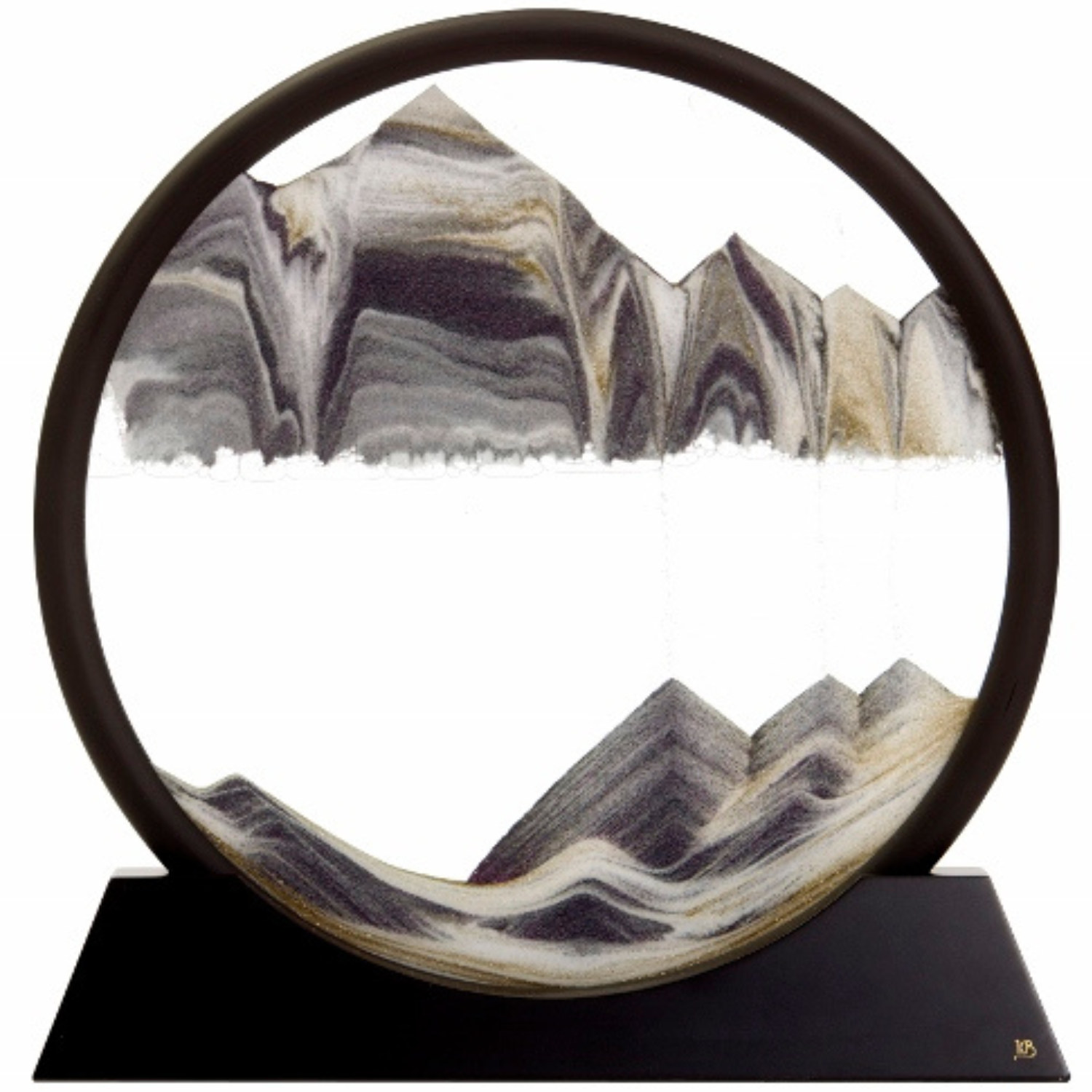
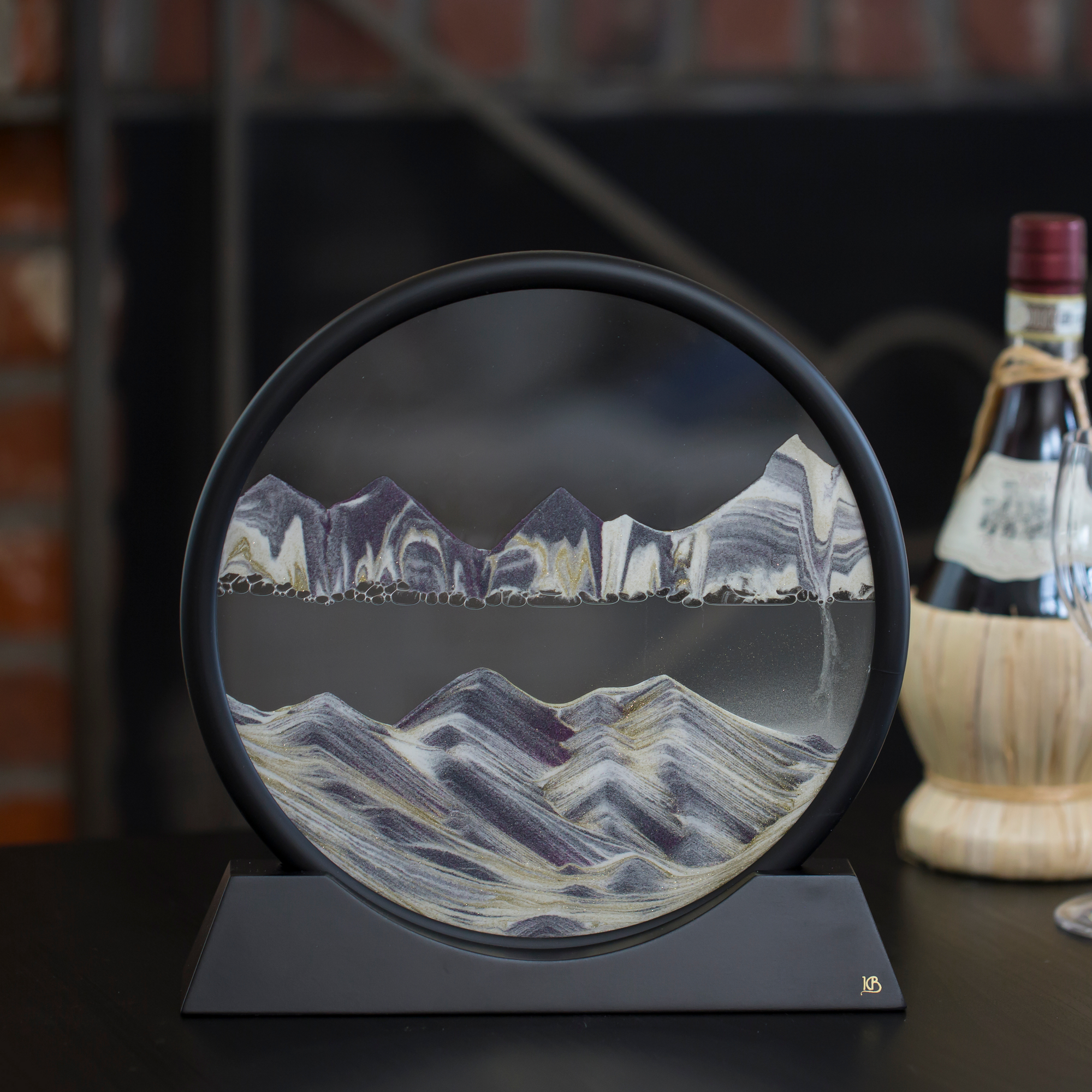
 KB Collection / Klaus Bosch Moving Sand Art (Desktop Series)
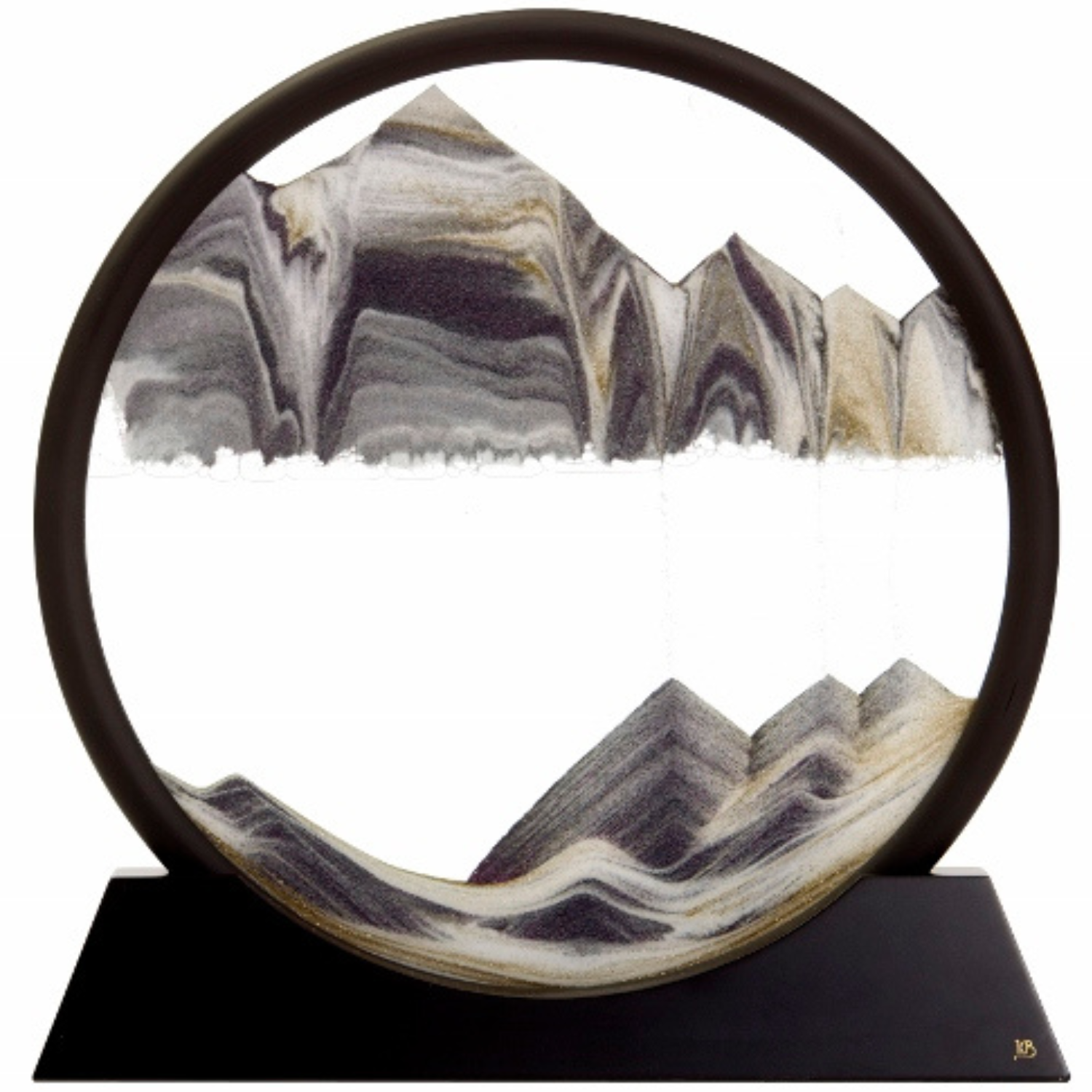
The kinetic piece for people who want flow, not action. Austrian kinetic-sand artist Klaus 'Sandman' Bosch has handmade these since 1988: five-to-seven densities of colored sand suspended in liquid between glass, forming drifting mountains and landscapes when you flip the frame. The motion is slow, silent, and meditative — air bubbles part the sand into a new scene every time, so like good ferrofluid it never repeats. This is the gold-standard maker; the sub-$30 marketplace 'moving sand' frames are the gimmick version (muddy sand, cloudy liquid). Caveat: the show is finite per flip and entirely passive — you re-flip to restart. Beautiful, but not ambient motion.
- Handmade by the originator since 1988 — real craft
- Silent, meditative, ever-changing scenes
- Multiple sand densities create genuine landscapes
- No power, nothing to wear out
- Motion is finite per flip — you must re-flip
- Entirely passive, not ambient
- Cheap imitators muddy the category's reputation
At a glance
| sculpture | maker | motion type | price | best for |
|---|---|---|---|---|
| The Swinging Sticks (Desktop) | The Swinging Sticks® | Battery-driven chaotic double pendulum | ~$121 (orig. ~$265–$339) | Best overall showpiece |
| Ferroflow Automatic | Ferroflow / MTR Designs | Motorized magnetic ferrofluid | ~$239–$269 | Best ferrofluid (hands-free) |
| ForeverSpin Tungsten Top | ForeverSpin | Spun-and-released (passive) | ~$280 (steel ~$60) | Longest passive spin |
| xUmp 7" Newton's Cradle | xUmp | Gravity pendulum / momentum transfer | ~$25 | Best Newton's cradle |
| MTR SPIKE Ferrofluid | MTR Designs | Manual magnetic ferrofluid | ~$65 | Best budget ferrofluid |
| ForeverSpin Steel + Base | ForeverSpin | Spun-and-released (passive) | ~$60 | Best top for most people |
| Tedco Newton's Cradle Z | Tedco Toys | Gravity pendulum / momentum transfer | ~$22 | Best budget classic |
| Kyle's Kinetics Balance Sculpture | Kyle's Kinetics | Counterweighted balance / swing | ~$150 (range $99+) | Best balance/mobile |
| Zing Klixx Fidget Sculpture | Zing Toys | Articulated click-fidget (user-driven) | ~$13 | Best cheap-and-honest fidget |
| KB Collection Moving Sand Art | Klaus Bosch | Liquid-suspended falling sand | ~$130+ | Best slow-flow sand piece |
| 'Electronic Perpetual Motion' Asteroid/Galaxy Ball | Various (marketplace) | Cheap driven pendulum (mislabeled 'perpetual') | ~$15–$30 | AVOID — most overrated gimmick |
Questions, answered
What is a kinetic desk sculpture?
It's a tabletop object whose entire appeal is its visible motion — swinging, spinning, balancing, or flowing — rather than a static ornament. The honest categories are gravity pendulums (Newton's cradle, balance mobiles), spun-and-released objects (precision tops), battery-driven pendulums (The Swinging Sticks), magnetic-fluid displays (ferrofluid), and articulated fidget pieces (Klixx, magnetic-ball sets). Each behaves very differently in how long it moves and whether it needs power.
Is perpetual motion real?
No. Perpetual motion is impossible and has never been demonstrated. Friction and air resistance continuously drain energy from any moving object, so anything you push will eventually stop. The physics is airtight: machines that do work from nothing break the First Law of Thermodynamics, machines that run forever by recycling waste heat break the Second Law, and even frictionless coasting forever is practically impossible at desk scale. Anything that runs for 'years' has a hidden battery doing the work.
What's the best kinetic desk sculpture overall?
The Swinging Sticks (~$121 desktop, up to ~$339 original). It's the only piece that runs effectively forever (up to two years on four AA batteries), stays near-silent under 20 dB, is well-built aluminum, AND has chaotic double-pendulum motion that never repeats — so it doesn't become wallpaper the way single-action toys do. It's battery-driven art, not perpetual motion, and it's honest about that.
What's the best Newton's cradle?
The xUmp 7-inch (~$25) — solid wood base, chrome posts, and 22mm mirror-finish solid steel balls with clean alignment so it clacks straight. The Tedco wood-base model (~$22) is the equally honest budget classic, with heavier strings for smoother swing. Don't overspend here: every Newton's cradle clacks for only ~40–60 seconds per tap regardless of price, because that's the physics. Buy a mid-quality one and keep it off a shared-office desk.
What is a ferrofluid display?
Ferrofluid is a real liquid — a colloidal suspension of nanoscale iron particles — that climbs into spikes and organic shapes along magnetic field lines. A ferrofluid display seals it in glass and uses magnets to animate it, either manually (you wave a handheld magnet) or automatically (a motorized magnet array). The make-or-break factor is fluid quality: Ferrotec-grade fluid (used by Ferroflow and MTR's SPIKE) resists the clumping and glass-staining that kills cheap $13–$20 ferrofluid within weeks.
What's the best spinning top?
ForeverSpin Tungsten (~$280) for sheer spin duration — machined from a solid billet, it pushes well past ten minutes and shows no wear after years. But for most people the stainless-steel top + base pack (~$60) is the smarter buy: same precision machining, a consistent 2–3 minute spin, and a lifetime warranty. Spin time is mostly physics — heavier and better-balanced spins longer — so any well-machined heavy top beats a light novelty one.
How long does the motion actually last?
It depends entirely on the family. Gravity pieces are brief and honest: a Newton's cradle clacks ~40–60 seconds per tap, a balance mobile swings down in under a minute. Precision tops stretch a single spin to 2–3 minutes (steel) or 10+ minutes (tungsten). Only the POWERED pieces run continuously — The Swinging Sticks up to two years on AA batteries, and motorized ferrofluid as long as it's plugged in. If you want motion that lasts while you work, you must shop the powered families.
What's the best budget kinetic toy?
Under $15, a Zing Klixx fidget sculpture (~$13) is the best value because it's cheap AND honest — it never pretends to move on its own; the satisfying click is the whole point. Around $20–$25, a Tedco or xUmp Newton's cradle gives you genuine mechanical motion. Avoid the same price point when it's a 'perpetual motion asteroid' — that's the fraudulent budget tier. The defect is the false claim, not the low price.
Are kinetic desk sculptures noisy?
It varies wildly. The Swinging Sticks is near-silent (under 20 dB, below conversation level) and office-safe. Ferrofluid is silent (it's a fluid). Spinning tops are quiet. But a Newton's cradle is a percussion instrument — that rhythmic clack is soothing alone and disruptive in a shared room, and there's no 'quiet' version because the noise IS the physics. Klixx is loud by design. For a shared office, choose a driven pendulum or ferrofluid; avoid the cradle and Klixx.
What's best for a busy, shared office desk?
The Swinging Sticks — it runs continuously without any input, is near-silent under 20 dB so it won't bother colleagues, and its non-repeating motion stays interesting in your peripheral vision for years. Motorized ferrofluid is the silent runner-up but is fragile. Specifically avoid the Newton's cradle (too loud) and Klixx (loud and requires active fidgeting) in any space where you share air with coworkers.
What's the most overrated kinetic desk gimmick?
The cheap 'electronic perpetual motion' galaxy/asteroid balls (~$15–$30). They're sold as 'perpetual motion machines' but are really cheap driven pendulums running off a 9V or USB electromagnet, dressed in plastic planets. You have to manually push the ball to start it, the build feels toy-grade, and the contacts tarnish and stall. It's a $15 mechanism in a $50 costume with a false name — the honest version of the same idea is The Swinging Sticks, which is why it costs 5–10× more.
Where can I buy a real kinetic desk sculpture?
Go straight to the makers and their authorized listings: The Swinging Sticks (swingingsticks.com / Amazon), Ferroflow and SPIKE (shop.mtr-designs.com), ForeverSpin (foreverspin.com / Amazon), xUmp and Tedco for Newton's cradles, Kyle's Kinetics for handcrafted balance sculptures, Zing for Klixx, and movingsandart.com for Klaus Bosch sand art. Puzzlewick sells none of these and takes no commission — we just point you at the genuine source. Steer clear of unbranded marketplace 'perpetual motion' listings.
Dax's verdict
Here's the honest close. Kinetic desk sculpture is a category where craft and fraud sit side by side at every price, and the dividing line is almost always the same lie: 'perpetual motion.' Internalize that it's impossible, find the power source on anything that runs a long time, and the junk separates itself out instantly. The best overall piece is The Swinging Sticks — battery-driven, near-silent, and the only one whose motion never repeats, which is why it survives on desks for years. For the longest honest passive motion, a precision ForeverSpin top is a genuine instrument. For visual drama, motorized Ferroflow ferrofluid; for that on a budget, the manual SPIKE. For the classic mechanical clack, any $25 well-built Newton's cradle — and not a dollar more, because the physics caps the fun regardless of price. And if a thing costs $14, that's fine; just make sure it's a Klixx that honestly clicks, not an 'asteroid' that lies and stalls. Cheap-and-honest beats cheap-and-fraudulent every single time. One last thing worth repeating: Puzzlewick sells none of this and takes no cut from anyone. We're a wonder-library, not a store — every link above points you straight at the maker, precisely so I can call the gimmicks gimmicks without anyone wondering what's in it for us.
Research ledger 22 sources · reviewed 2026-07-17
Specifications, rules, current product information, community experience, and contrary evidence were checked against the sources below. Commercial links are kept separate from editorial evidence.
- amazon.comamazon.com/dp/B073G984Q7?tag=puzzlewick-20
- swingingsticks.comswingingsticks.com
- artofplay.comartofplay.com/products/the-swinging-sticks
- jpgamesltd.co.ukjpgamesltd.co.uk/swinging-sticks-desktop-gift
- gizmodo.comgizmodo.com/heres-the-best-desk-toy-since-newtons-cradle-5946897
- puzzloria.compuzzloria.com/blogs/news/swinging-sticks-kinetic-sculpture-reviews-mechanism-newtons-cradle-comparison
- ferroflow.comferroflow.com
- shop.mtr-designs.comshop.mtr-designs.com/collections/ferroflow
- shop.mtr-designs.comshop.mtr-designs.com/products/spike-ferrofluid-display-black-ferrofluid
- foreverspin.comforeverspin.com
- amazon.comamazon.com/dp/B071YCXYJW?tag=puzzlewick-20
- amazon.comamazon.com/dp/B07453DX8L?tag=puzzlewick-20
- gear43.comgear43.com/foreverspin-spinning-top-review
- xump.comxump.com/science/newtonscradle.cfm
- amazon.comamazon.com/dp/B00GPTW16G?tag=puzzlewick-20
- fatbraintoys.comfatbraintoys.com/toy_companies/tedco/tedco_newtons_cradle.cfm
- kyleskinetics.comkyleskinetics.com
- amazon.comamazon.com/dp/B0CLNZS8FC?tag=puzzlewick-20
- zing.storezing.store/collections/klixx
- movingsandart.commovingsandart.com/collections/desktop-series
- amazon.comamazon.com/dp/B09131P77R?tag=puzzlewick-20
- medium.commedium.com/intuitive-physics/perpetual-motion-machines-why-they-dont-work-1e192d2c0f62

I'll be honest with you — flattery is boring.
Keep exploring
The next smart rabbit holes.
✦ Topic PathBoard Game Buying Guides: compare the whole shelfStart with the decision, not the shelf. These guides compare the games, editions, expansions, player counts, and costs people...Buying GuideBest Desk Fidgets for Focus & Restless Hands (2026)A reference librarian's ledger on the objects that survive verification — which fidgets are built to last a decade, not a season, and why...Gift GuideBest Desk Toys for Engineers & Restless Minds (2026)Ninety percent of desk toys are chrome theater that'll be in a drawer by spring. Here's the short list where the mechanism actually earns...