Which Azul Should You Buy in 2026? Every Version, Compared at My Table
Come in — mind the tiles, they're everywhere today. Seven boxes all say Azul on the lid, and the internet will happily argue about them forever. Here's the honest map: which one to buy first, which one to buy second, and which one is just chocolate.

AI-assisted curator persona · research and editorial responsibility: Robert Pruitt · how this guide was made
Last editorial refresh: 2026-08-13 Gold-standard QA: 2026-07-31 11 sources reviewed Affiliate links checked during gold-standard pass

The short answer
Buy the original Azul first — it is the easiest to teach, the tensest to play, and still the best first buy in the whole family (about $30 on Amazon). If you already own it and want more, the community's quiet best answer is the inexpensive Crystal Mosaic expansion before any second box; when you do want a second standalone, Summer Pavilion is the fan favorite. Azul Duel is for tables that are always exactly two, Queen's Garden is for gamers who want the deepest version, Stained Glass of Sintra is the prettiest and most divisive, and Master Chocolatier is the same game as base Azul wearing a chocolate-box dress. Every single one is fully standalone — you never need one to play another.
Decision map
Choose in thirty seconds
Everyone's first Azul: families, couples, mixed tables, gift-givers.
Tables that love the original's puzzle and want a rounder, deeper version of it.
Aesthetes, variety-seekers, and anyone who wants no two setups alike.
Sit down, let me pour you something, and let me tell you about the argument that never ends at my parlour table.
In 2017 Michael Kiesling took the azulejos — the blue-and-white ceramic tiles that King Manuel I fell in love with and ordered for his palace walls — and turned them into a small box of perfect, clacking, candy-bright resin tiles. Azul won the Spiel des Jahres in 2018, sold past two million copies, and sits to this day as the number-one ranked abstract game on BoardGameGeek. When a game succeeds like that, publishers do what publishers do: now there are stained-glass windows, summer pavilions, royal gardens, a chocolate box, a travel tin, and a head-to-head duel, all wearing the same name.
And so every week, someone walks into r/boardgames and asks the same lovely, reasonable question: which Azul should I actually buy?
I've hosted every one of these boxes. I've watched a seven-year-old beat her grandfather with the original, watched a table of heavy gamers fall silent over Queen's Garden, and watched guests try very hard not to eat the chocolate tiles. This is the guide I wish I could hand every one of those Reddit threads: every version, what actually changes, who each one is truly for, and the one purchase almost everybody skips that they shouldn't.
Start here, then go deeper
You are in the right cabinet.
 ✦ Topic PathBoard Game Buying Guides: compare the whole shelfStart with the decision, not the shelf. These guides compare the games, editions, expansions, player counts, and costs people...
 ComparisonAzul vs Cascadia vs Calico: Which Cozy Tile-Layer Is Right for Your Table?Three beautiful tile games compared by interaction, pressure, solo play and the kind of first night they create.
 Buying GuideFrosted Blooms vs Azul vs Sagrada in 2026: Which Beautiful Abstract Should You Buy?Frosted Blooms, Azul, and Sagrada compared by rules, interaction, solo play, strategy, table presence, replay value, and the right first...
The short answer: which Azul should you buy?

Yumi’s parlour rule: original Azul is not the boring answer. It is the elegant answer that survived seven boxes trying to improve its posture. Begin there unless the table has a very specific two-player or heavier-puzzle request.
Why does one tile game have seven boxes — and are they really all standalone?
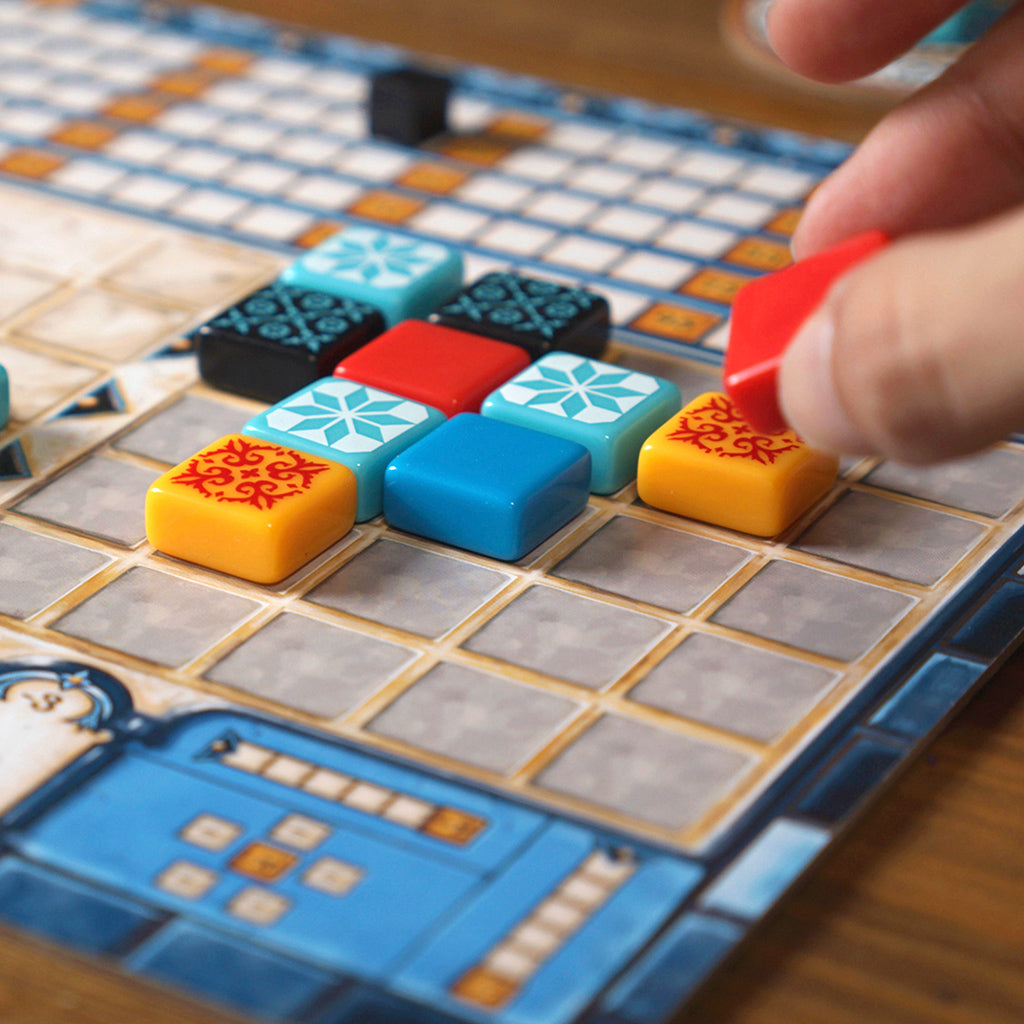

Yes, truly standalone, every one of them — this is the single most-asked question and the most important thing to un-learn from other game lines. Stained Glass of Sintra, Summer Pavilion, Queen's Garden, Master Chocolatier, and Azul Duel each contain a complete game. Nothing here is an expansion in disguise; you never need the original to play any of them. (The actual expansions, like Crystal Mosaic, say 'expansion' right on the box — we'll get there.)
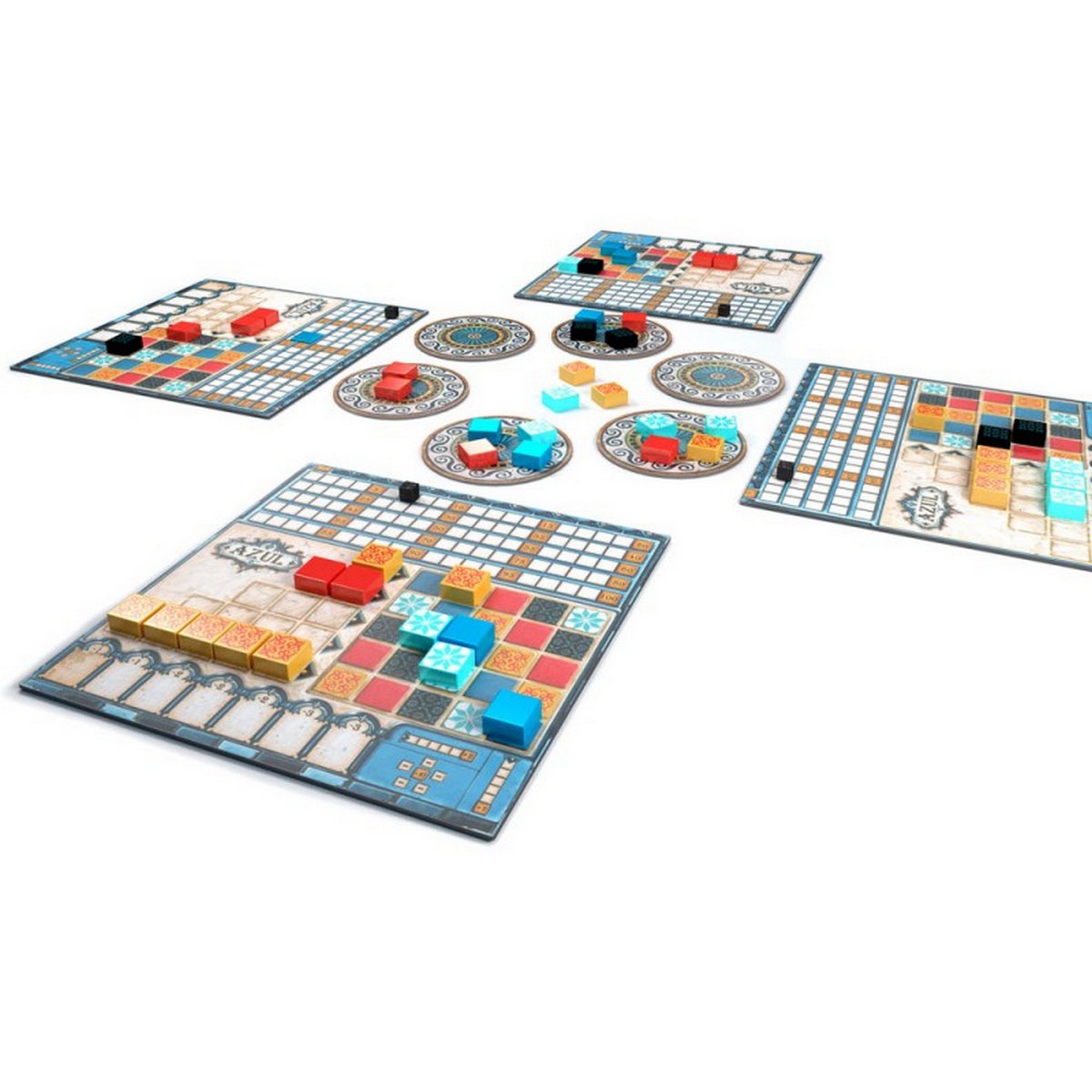
They exist because Azul is less a single game than a design language. Every box shares the same DNA: colored tiles come out of a bag onto circular factory displays, you draft ALL the tiles of one color from a display, the leftovers slide to the center, and somebody eventually takes a painful handful of tiles they didn't want. That drafting moment — sweet, greedy, and just a little cruel — is the thing Kiesling keeps re-dressing in new scoring puzzles.
The family clusters remarkably close in quality on BoardGameGeek, roughly between 7.2 and 7.8 — there is no dud in this line. Which is exactly why the right question isn't 'which is best?' It's 'which is best for the people at my table?'
Base Azul — is the original still the right first buy in 2026?
Emphatically yes, and it isn't close.
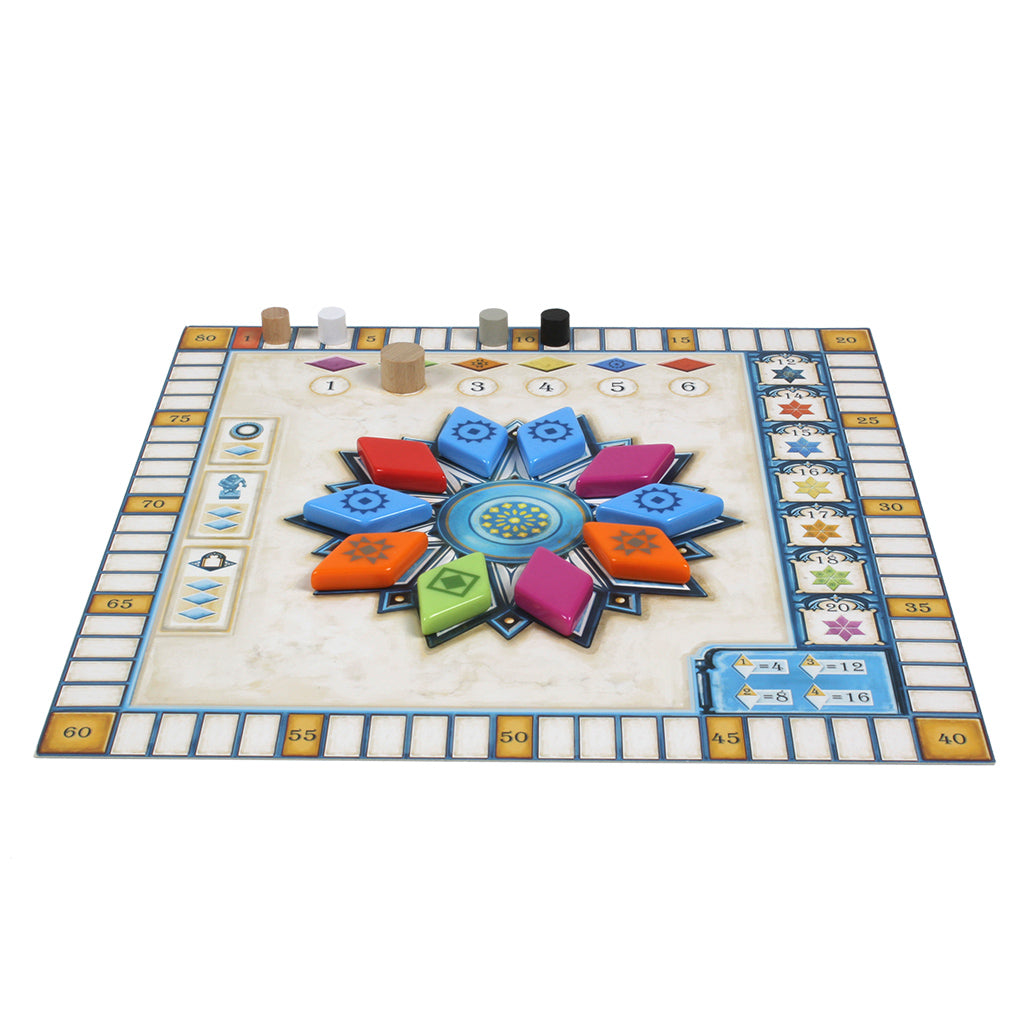
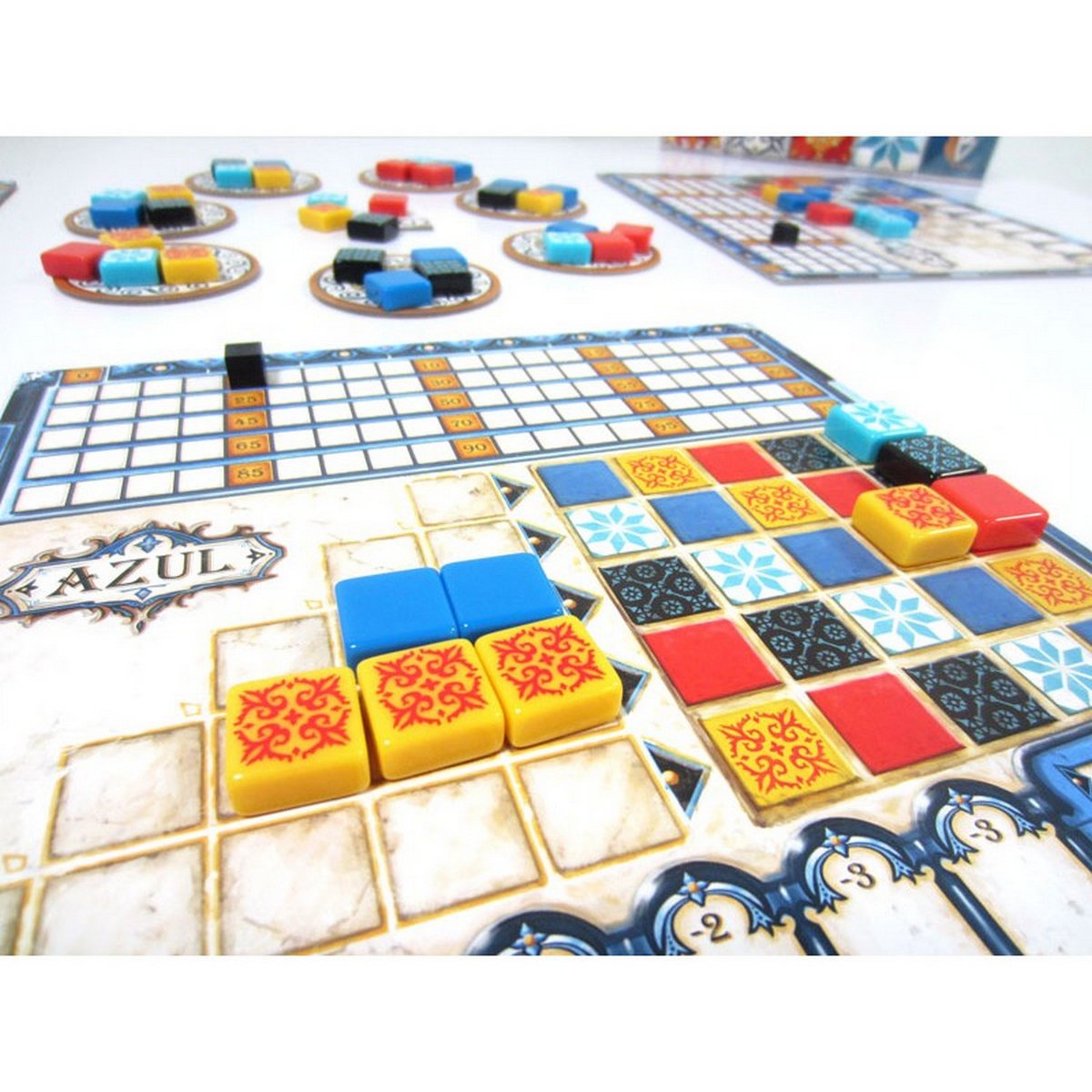
Here is what the original does that none of its siblings quite matches: it compresses real tension into rules you can teach in five minutes. Take all of one color from a factory. Fill a row. Anything you can't place shatters on your floor line and costs you points. That's the whole game — and inside it lives what one beloved Reddit comment called a knife-fight in a phone booth. You are always one greedy draft away from feeding your rival exactly what she needs, or forcing yourself to eat four broken tiles. The interaction is sharp, legible, and completely bloodless — my favorite combination as a hostess.
It also has the widest welcome mat in modern board gaming. It plays beautifully at two, stays tense at three and four, and wins over the exact guests who bounce off anything with a rulebook. There's a reason it took the 2018 Spiel des Jahres and still holds the #1 abstract spot on BGG at around a 7.8 with the whole internet voting.
At about $30 — often dipping into the low $20s on sale — it remains one of the best value-per-play purchases in the hobby. If you buy one box from this entire article, it's this one.
Stained Glass of Sintra — why is the prettiest one so divisive?
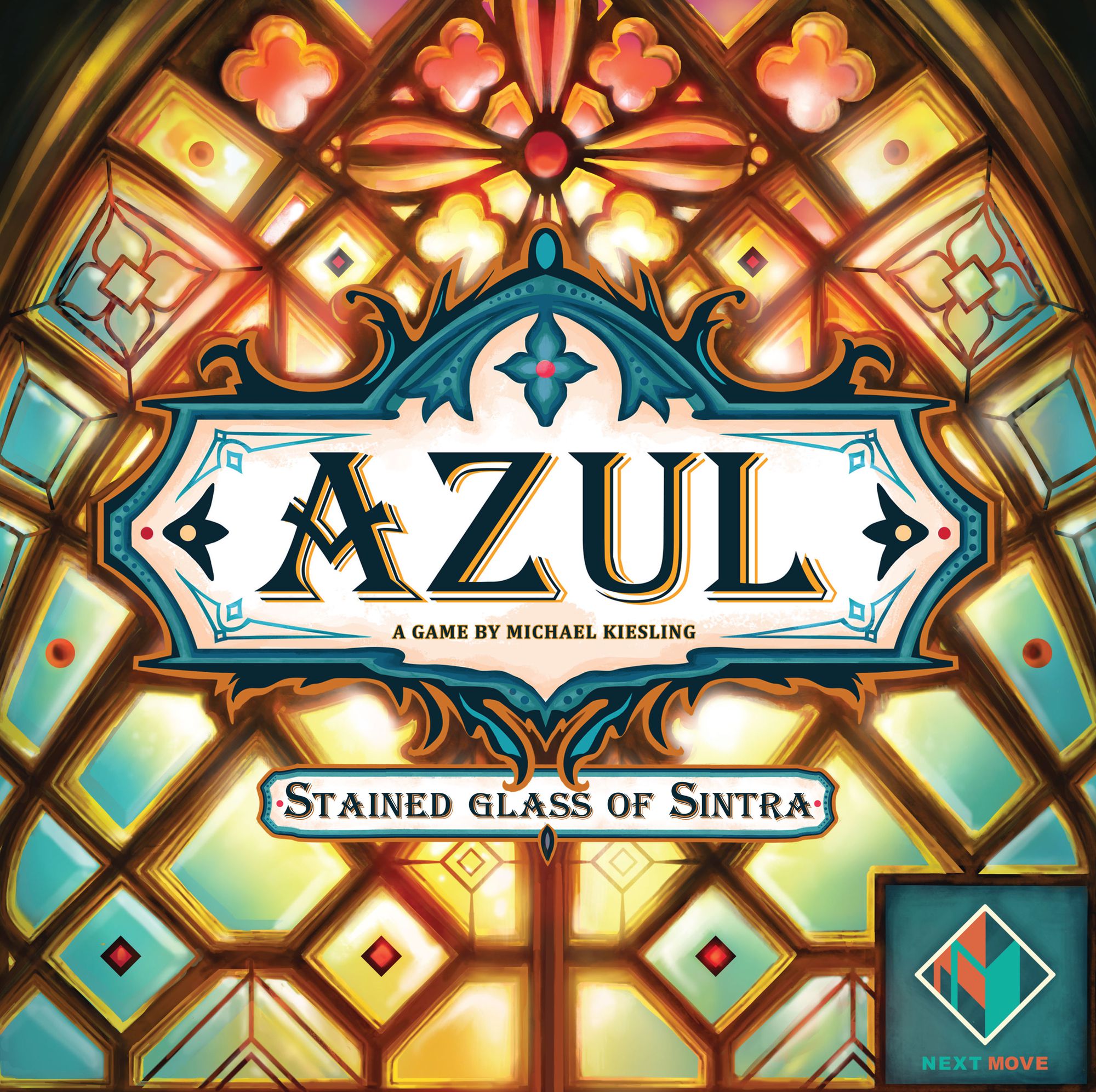
Sintra is the middle child of this family: the most beautiful, the most variable, and the one people argue about at my table long after the tiles are back in the bag.
What changes: your board becomes a row of two-story stained-glass window strips — eight of them, double-sided, dealt fresh every game, so no two setups ever match. You slide a little glazier pawn along your windows, tiles go directly onto matching panes, and completed strips flip over to be filled again. Scoring cascades down columns in a way that produces the most satisfying point-avalanches in the series.
Why it divides people: all that beauty comes with the fiddliest scoring of the original trilogy, and some players feel the sequel traded the original's clean menace for crunch. Yet Sintra collects devoted defenders — it's the most replayable setup in the family, and I've lost count of the players (very often the less 'gamery' half of a couple, interestingly) who quietly rank it first. One thoughtful defense I've tested myself and can confirm: because tiles go straight onto matching colors with no staging rows, some new players actually find it easier to grasp than the original.
Buy it if you want variety and visual drama and don't mind a scoring rule you'll re-explain twice. Skip it if your table prizes elegance above all.
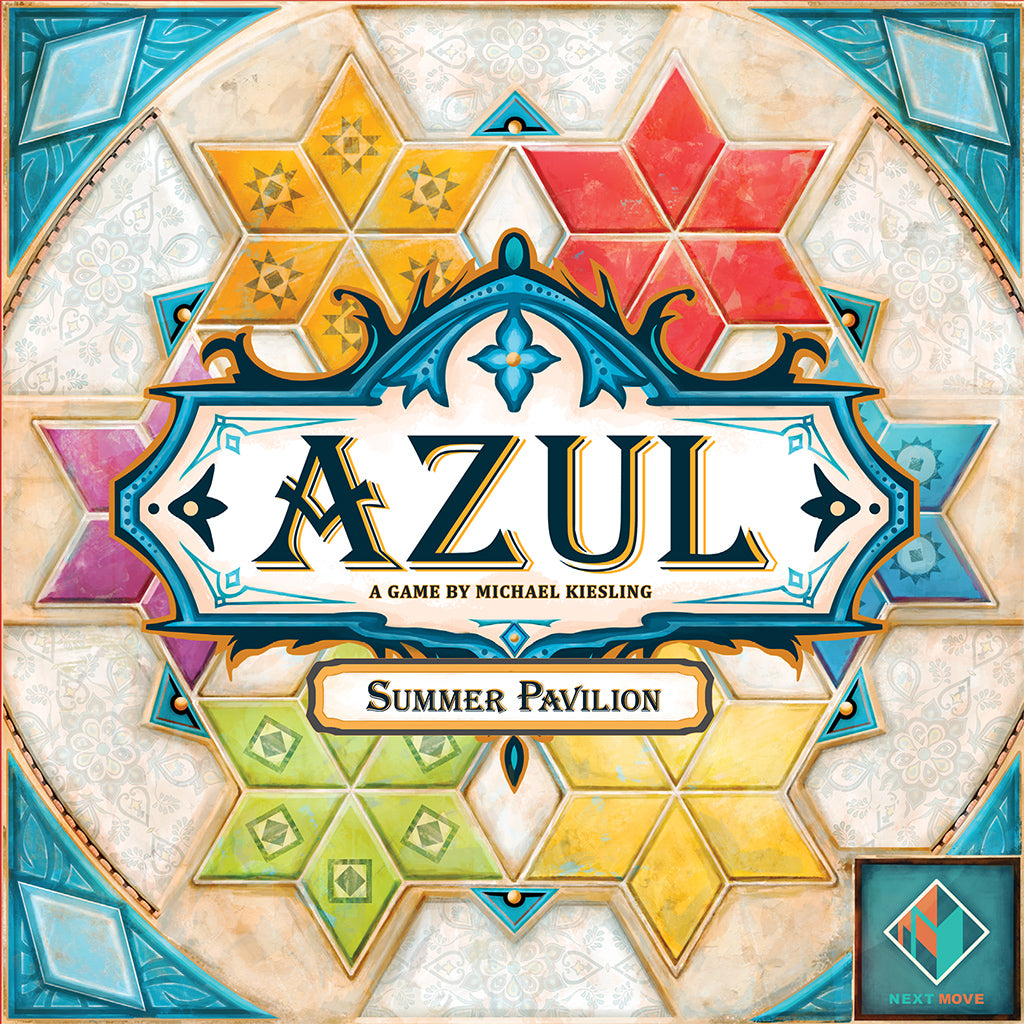
Summer Pavilion — the internet's favorite second box (with an asterisk)
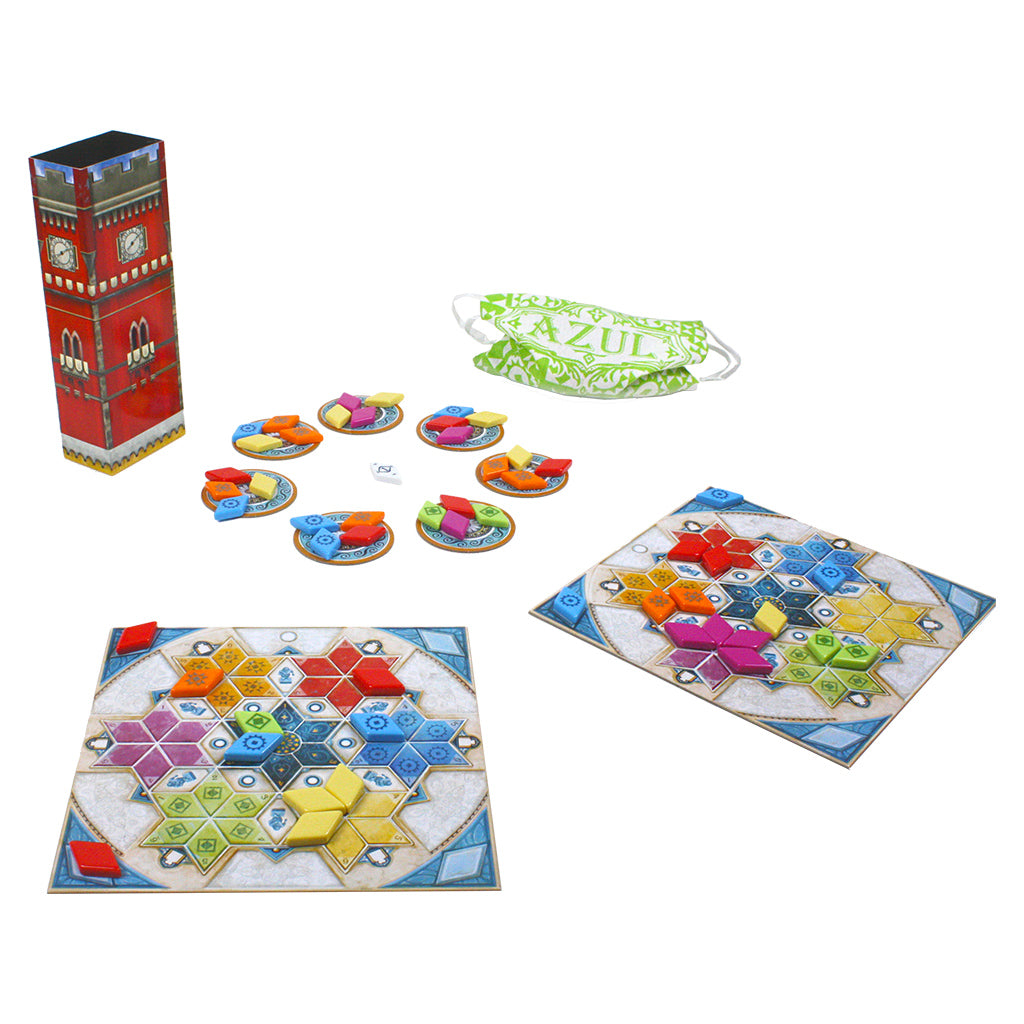

Ask 'I love Azul, what next?' anywhere and the crowd answers Summer Pavilion before you finish typing. The top comment in the biggest such thread says exactly that, at triple the votes of anything else. It is the highest-rated spinoff on BGG, and the case for it is real: a wild color rotates each of the exactly six rounds, you keep tiles between rounds instead of losing them, and you place onto star rosettes wherever they'll score you best. It is gentler, more forgiving, and more purely thinky than the original — you score for nearly everything you do, which feels wonderful.
Now the asterisk nobody puts in the headline: the single most-upvoted comment in the giant which-Azul thread ranks Summer Pavilion dead last. Its argument deserves respect: by splitting drafting and placing into separate phases and handing you wilds, Pavilion lowers the original's tension — fewer knife-edge drafts, fewer disasters, less reason to watch your rival's board. Some tables find it, in one memorable phrase, a puzzle with the fangs filed down.
My honest hosting read: both camps are right. The phrase I stole from the community and now say weekly is 'Azul to teach, Summer Pavilion once you know.' If your table loves the original for its meanness, stay put or go Queen's Garden. If your table loves it for the puzzle and the pretty clicking tiles, Pavilion is the upgrade they'll thank you for.
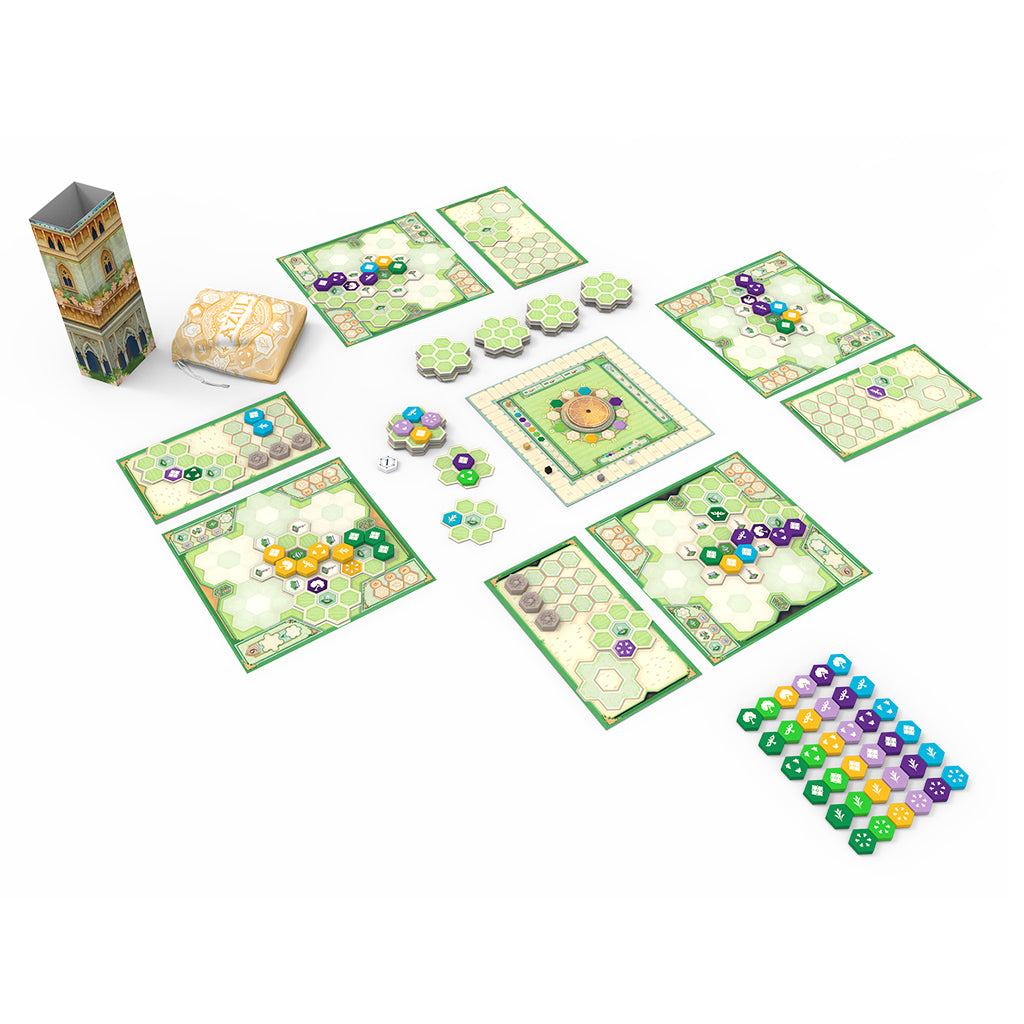
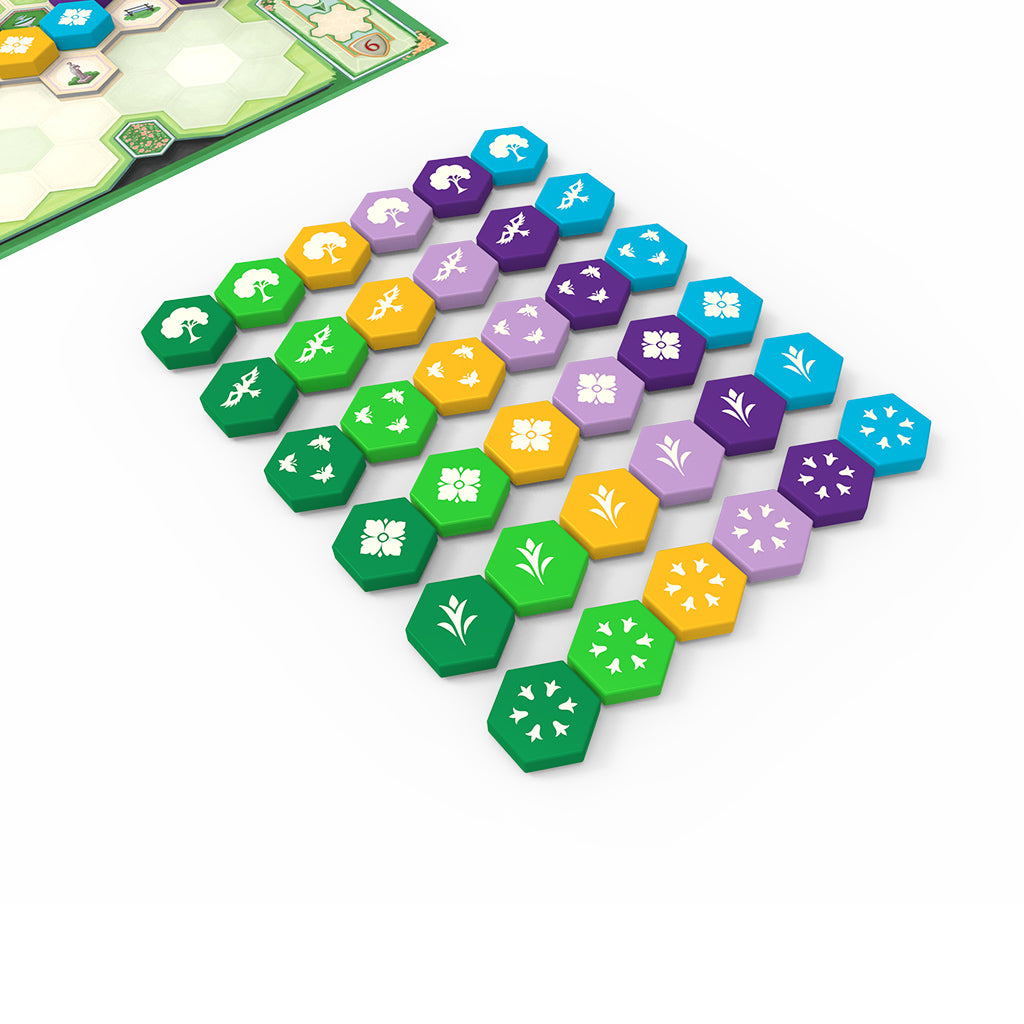
Queen's Garden — how heavy is the 'heavy one,' really?
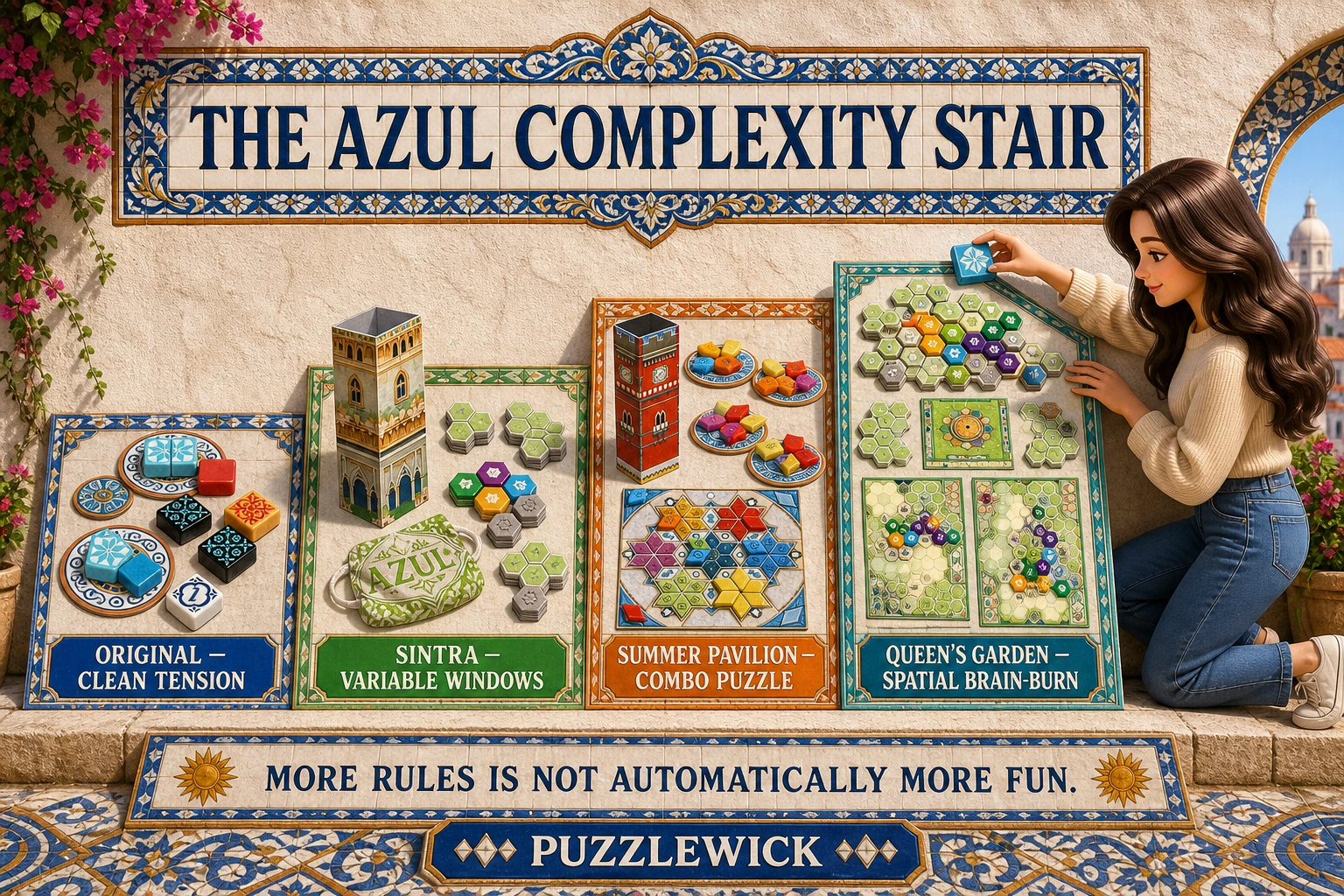
Complexity is a staircase, not a quality ranking. Summer Pavilion gives combo-minded players more to assemble; Queen’s Garden asks for denser spatial planning. Neither automatically replaces the exquisite five-minute teach of the original.
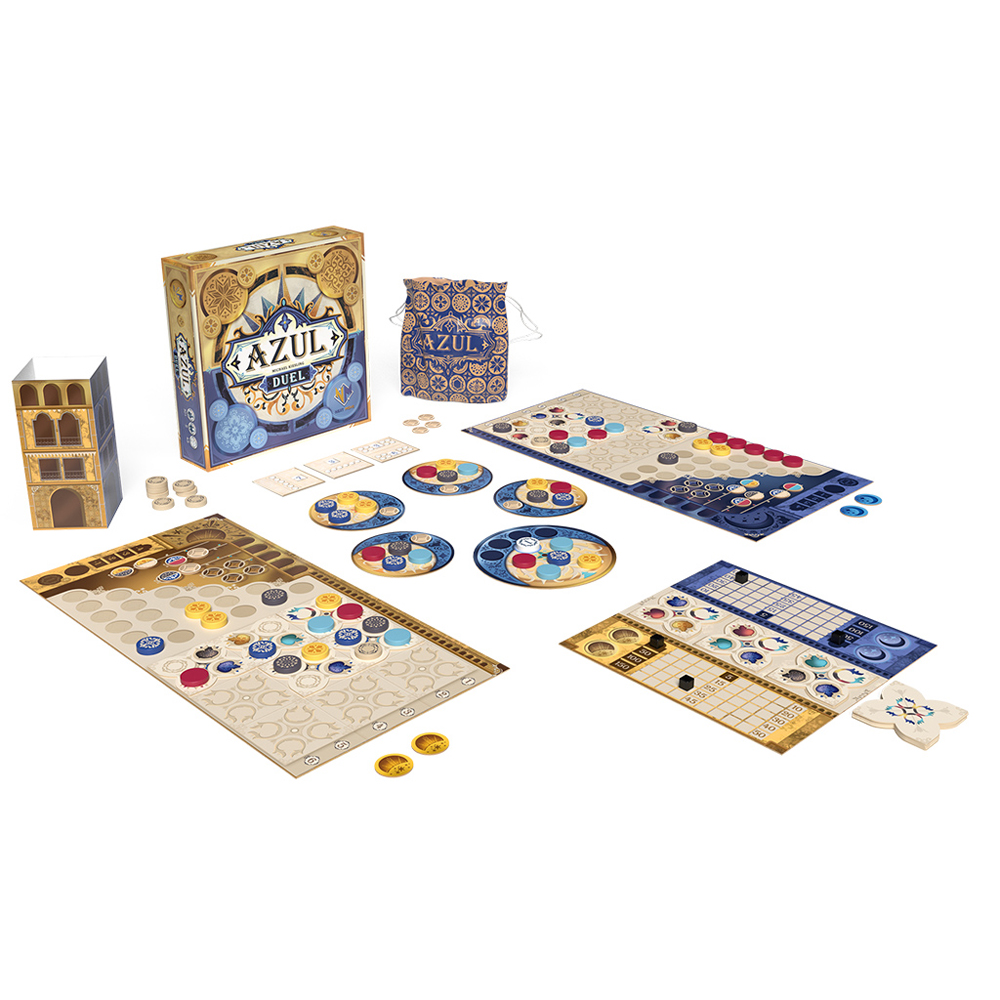
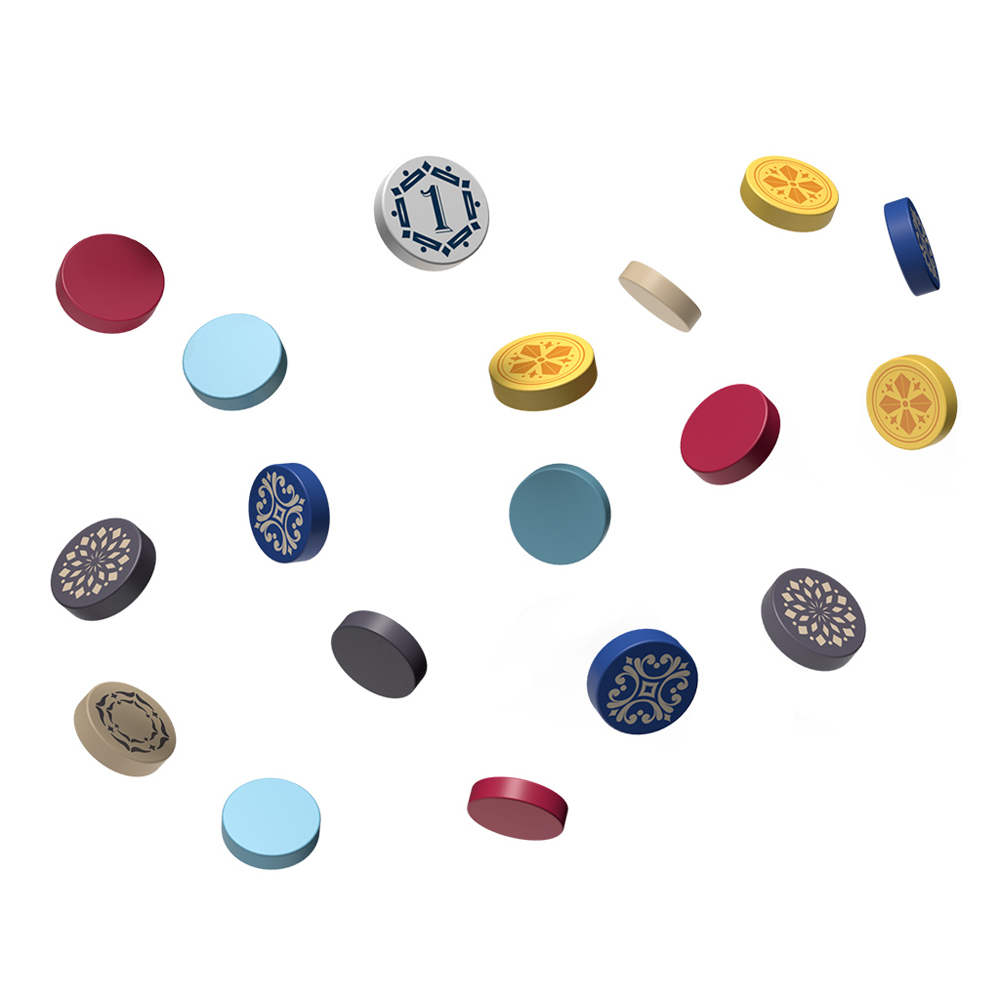
Azul Duel — do two players actually need it?

Original Azul is already excellent at two. Duel earns its shelf space when the pair wants the wall itself to become part of the evolving puzzle, not because the base game somehow forgot how couples work.
Master Chocolatier, Azul Mini, and the special editions — reskin or upgrade?
Let me save you thirty dollars or spend it well, depending on your situation.
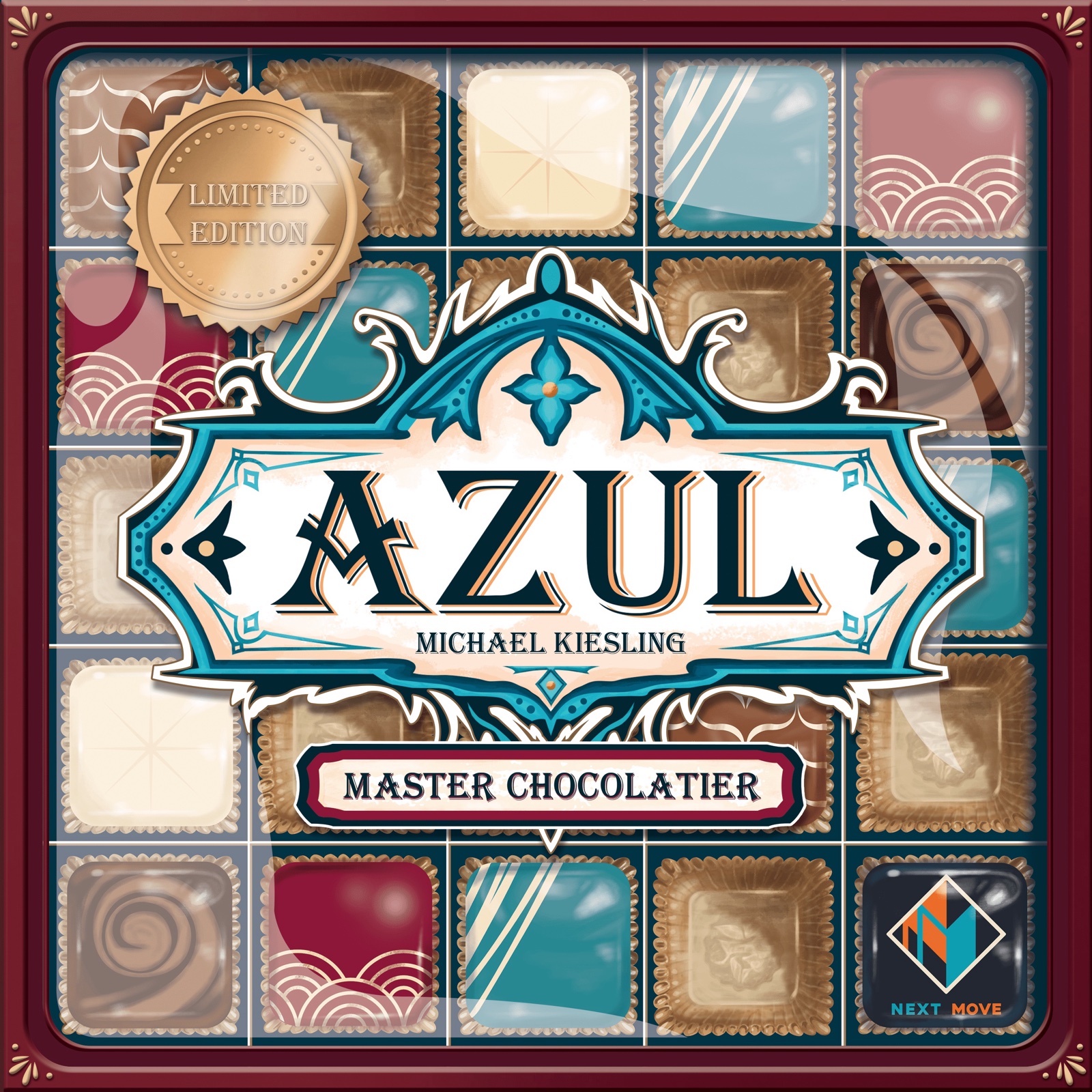
Master Chocolatier is base Azul. Same rules, same scoring, same game — re-dressed as a box of chocolates, with tiles molded like truffles and one small bonus variant (special factories that add a pinch of chaos to the draft). Two things every buyer should know: first, a fan-made print-and-play of that variant exists free on BGG for your regular Azul, so the variant alone is not a reason to buy; second, several players report the brown-on-brown tiles are genuinely harder to tell apart across the table than the original's bright colors. If you already own Azul, skip it. If it would be your first Azul and the chocolate-box look makes your heart do the thing — that's allowed, it's the same great game.
Azul Mini is exactly what it sounds like: the base game shrunk for travel, with snap-in tiles and a folding board. Not a new design — a suitcase edition.
And Next Move runs a rotating line of collector 'Special Editions' of the base game — alternate materials, same rules. Lovely on a shelf; mechanically identical. In this family, only the five standalones I've covered are actually different games.
Which Azul fits your exact table?
Let me do what I do at the parlour and match the box to the people, because that's the real question under all of this.
Family with kids, or a mixed table of gamers and not-gamers: the original, no hesitation. Ages 8+ is honest, the teach is five minutes, and losing feels like 'next time' instead of homework.
A couple who plays at the kitchen counter: base Azul first — it's superb at two. Add Duel later if two-player is your whole life and you want a version that's only yours.
The aesthete who buys games the way other people buy art: Stained Glass of Sintra. It's the most beautiful production in the family and the most variable, and it photographs like jewelry.
The strategy group that wore out Wingspan and Cascadia: Queen's Garden. Deepest decisions in the line, happy cult included.
The Azul devotee who wants more Azul: Crystal Mosaic expansion first (more on that below), Summer Pavilion second — knowing that Pavilion trades a little of the original's bite for a rounder, more generous puzzle.
The gift-giver: original Azul for almost anyone; Master Chocolatier if the recipient loves chocolate more than contrast; Sintra if they love beautiful objects.
The smart buying path — and the $20 move almost everyone misses
Here is the buying order I'd give my own sister, assembled from years of hosting and the best collective wisdom of a few thousand Azul owners.
Step one: buy base Azul and actually play it — ten games, not two. It's around $30, it never leaves rotation, and if it somehow doesn't sing for your table, no sequel will rescue the melody.
Step two — the move almost everyone misses: before any second standalone, look at the Crystal Mosaic expansion for the original. Roughly twenty dollars gets you double-sided player boards with four new ways to play plus tidy plastic overlays, and in every 'what next?' thread there's a heavily-upvoted regular pointing out that this scratches the more-Azul itch for a fraction of the cost of a new box. They're right. It's the best value-per-dollar in the entire family.
Step three: when you genuinely want a different game, branch by taste, not by rank — Summer Pavilion for the crowd-pleasing thinky one, Sintra for beauty and variety, Queen's Garden for depth, Duel for a strictly-two household. These are flavors, not a ladder; nobody needs all five, and the happiest collections I host from own two.
And the skip: Master Chocolatier if you already own the original. It's wonderful chocolate. It's not a second game.
What experienced tables keep reporting
Recurring owner patterns, synthesized in Puzzlewick's words. Follow each evidence trail to read the original discussion.
Azul won the 2018 Spiel des Jahres — the hobby's most famous prize — alongside the As d'Or and Origins Awards, and it still holds the #1 abstract-game rank on BoardGameGeek.
Spiel des Jahres / BGG
Over 320,000 copies sold in its first year before the award landed; secondary reporting puts the family past two million copies worldwide.
Plan B Games / industry reporting
The most-upvoted advice across r/boardgames 'which Azul' threads: start with the original — and before buying a second standalone, look at the ~$20 Crystal Mosaic expansion first.
r/boardgames
On Queen's Garden's scary weight rating, an owner eighty games in put it best: the rules aren't hard to comprehend — it's extremely hard to play well.
BoardGameGeek forums
The picks
Some links below are affiliate links — as an Amazon Associate, Puzzlewick earns from qualifying purchases, at no extra cost to you. It never changes a pick.
 3 photos
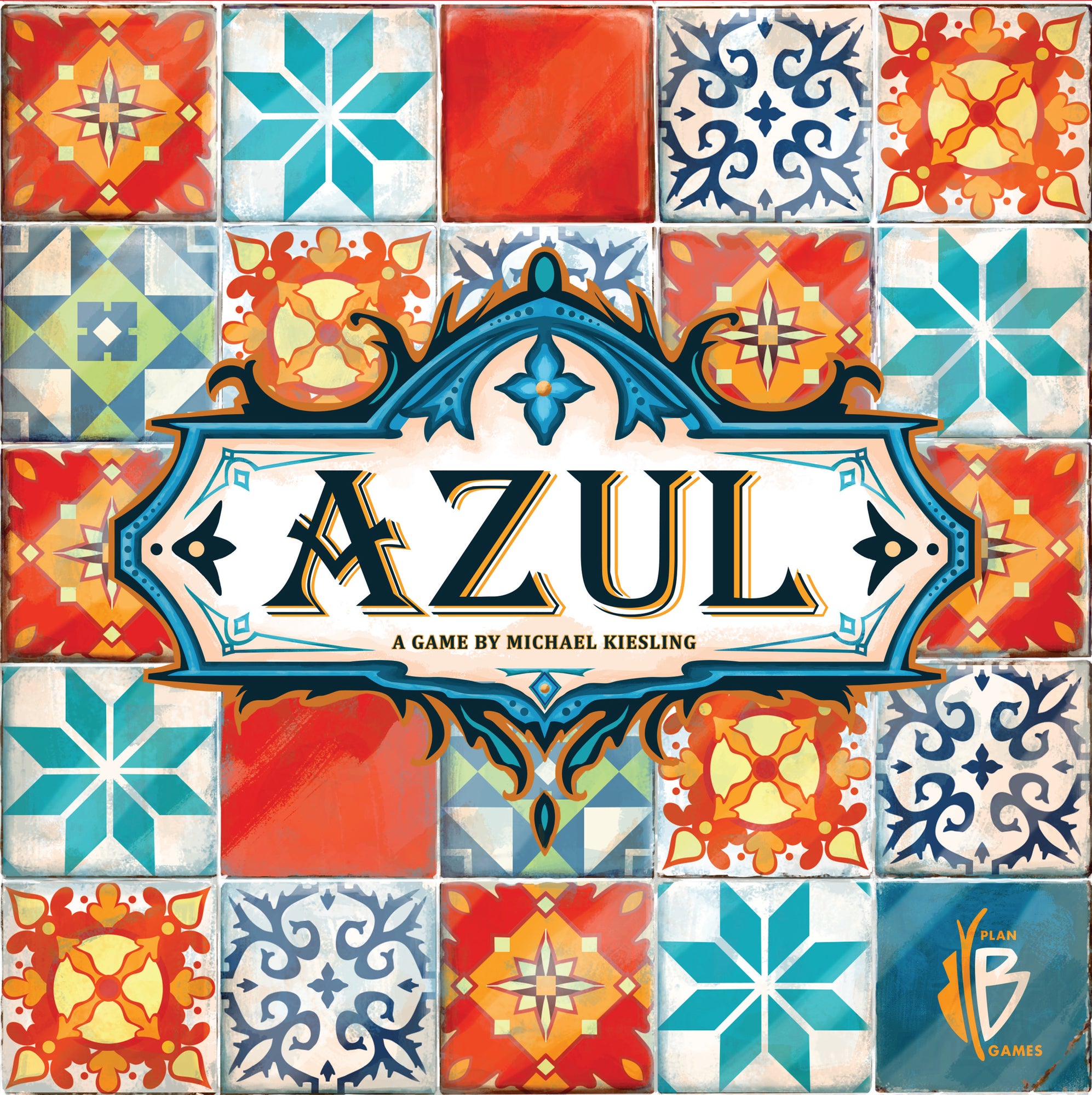
 Azul (Original)
 3 photos
 Azul: Summer Pavilion
 2 photos
 Azul: Stained Glass of Sintra

 3 photos
 Azul: Queen's Garden

 3 photos
 Azul Duel
Azul: Master Chocolatier
At a glance
| Version | Year | Players | Time | Weight | The twist | Best for |
|---|---|---|---|---|---|---|
| Azul (original) | 2017 | 2–4 | 30–45 min | Lightest | The original draft: take all of one color, leftovers punish | Everyone's first — families, couples, gifts |
| Stained Glass of Sintra | 2018 | 2–4 | 30–45 min | Light-medium | Double-sided window strips + glazier + cascading scores | Aesthetes and variety-seekers |
| Summer Pavilion | 2019 | 2–4 | 30–45 min | Light-medium | Wild color each round; place on star rosettes; tiles carry over | The crowd's favorite second box |
| Queen's Garden | 2021 | 2–4 | 45–75 min | Heaviest | Keep-or-spend drafting; pay for placement in legal sets | Strategy groups who want the deepest one |
| Azul Duel | 2025 | 2 only | 30–45 min | Light-medium | Draft the wall itself — build your own scoring board | Strictly-two households |
| Master Chocolatier | 2022 | 2–4 | 30–45 min | Lightest | Base Azul reskinned as chocolate + one mini variant | Gifts; a chocolate-lover's first Azul |
Questions, answered
Which Azul should I buy first?
The original Azul. It's the easiest to teach, the tensest to play, the cheapest at around $30, and the community consensus across every 'which Azul' thread is near-unanimous: start with the original, and treat the sequels as twists for later. Every other box is a variation on a game you should fall in love with first.
Are the Azul games standalone, or do I need the base game?
Every big-box Azul — Stained Glass of Sintra, Summer Pavilion, Queen's Garden, Master Chocolatier, and Azul Duel — is a complete, fully standalone game. You never need the original to play any of them. Only products labeled 'expansion,' like Crystal Mosaic, require the base game.
Is Azul: Summer Pavilion better than the original Azul?
It's the highest-rated spinoff and the community's default second box, but 'better' is genuinely contested: fans love that it's deeper, more forgiving, and scores you for nearly everything; critics — including some of the most-upvoted voices — say the wilds and split phases drain the original's tension. The fairest summary: Azul to teach, Summer Pavilion once you know.
Is Azul: Stained Glass of Sintra worth it?
Yes, for the right buyer: it's the most beautiful and most variable Azul, with fresh double-sided window strips every game and the most satisfying cascade scoring in the family. It's also the fiddliest of the original trilogy, which is why it divides tables. Beauty-and-variety people adore it; elegance purists should pick another box.
Is Azul: Queen's Garden too complicated?
Less than its ~3.0 BGG weight suggests. Owners consistently report the rules teach in about ten minutes and land near Wingspan or Cascadia in complexity — but the keep-or-spend drafting and pay-in-sets placement are fiddly and easy to get slightly wrong at first. It's the deepest Azul and a poor first one; experienced groups tend to love it.
Is Azul Duel worth it if base Azul already plays well at 2 players?
Only if two players is your table's whole life. Base Azul is already excellent — some say best — at two, and Duel costs nearly as much while being limited to exactly two. What Duel adds is real: you draft the wall itself and build your own scoring board. Lovely luxury for couples; unnecessary for everyone else.
Is Azul: Master Chocolatier just a reskin?
Essentially yes — identical rules to base Azul with chocolate-styled tiles and one small included factory variant (which also exists as a free fan print-and-play for the original). It's a legitimate first Azul if the chocolate look wins your heart, but skip it as a second box, and note the brown tiles are harder to tell apart than the original's bright colors.
What is the best Azul for families with kids?
The original. Ages 8+ is honest, the teach takes five minutes, turns are quick, and the bright tiles are irresistible to kids. The one coaching tip: floor-line penalties can sting score-sensitive children, so frame broken tiles as 'next time' rather than failure. Save Queen's Garden and Sintra for later.
Which Azul is best at 2 players?
Base Azul plays wonderfully at two — the drafting reads clean and the blocking is sharp — so a couple's first buy should still be the original. If you play exclusively at two and want a version built only for that count, Azul Duel adds a build-your-own-board twist that's genuinely fun, at the cost of some of the original's drama.
What is Azul: Crystal Mosaic, and should I buy it before a second Azul?
Crystal Mosaic is an expansion for the original Azul — double-sided player boards with four new ways to play, plus plastic tile overlays — for roughly $20. In nearly every 'what next' discussion, a heavily-upvoted answer points here before any second standalone, and they're right: it's the cheapest way to double your Azul's variety.
How long does Azul take to play?
The original, Sintra, Summer Pavilion, Chocolatier, and Duel all play in roughly 30–45 minutes. Queen's Garden runs longer in practice — 45 minutes on the box, but 60–75 at most real tables, especially while everyone learns the keep-or-spend rhythm.
Which Azul is the prettiest?
Stained Glass of Sintra, by common acclaim — translucent panes, window strips, and a table presence that photographs like jewelry. Master Chocolatier's chocolate-box production is a close second and the more giftable object. The original's bright azulejo tiles remain the most readable in actual play, which is its own kind of beautiful.
Do the newer Azul games replace the original?
No. The family's quality clusters close on BGG (roughly 7.2–7.8) and every spinoff trades some of the original's clean tension for its own twist. The sequels are flavors, not upgrades — which is exactly why the original remains the right first box and the one that stays in rotation.
Yumi's verdict
Here's where I land, hand on the tile bag: buy the original Azul, and let it earn the sequels. It's still the best $30 in abstract gaming — the sharpest teach-to-tension ratio in my whole parlour. When your table asks for more, spend $20 on Crystal Mosaic before you spend $35 on a new box; when you want a genuinely different game, choose by taste — Summer Pavilion for the generous puzzle, Sintra for beauty, Queen's Garden for depth, Duel for a two-person household. And if anyone tries to tell you there's a wrong answer among those four, pour them some tea and change the subject: the real mistake isn't picking the 'wrong' Azul. It's buying three of them when your people only needed one, played often, with the good snacks out.
Research ledger 11 sources · reviewed 2026-07-31
Specifications, rules, current product information, community experience, and contrary evidence were checked against the sources below. Commercial links are kept separate from editorial evidence.
- boardgamegeek.comboardgamegeek.com/boardgame/230802/azul
- boardgamegeek.comboardgamegeek.com/boardgame/431038/azul-duel
- nextmovegames.comnextmovegames.com/en
- store.asmodee.comstore.asmodee.com/products/azul
- reddit.comreddit.com/r/boardgames/comments/ezy8w9/which_azul_version_to_buy
- reddit.comreddit.com/r/boardgames/comments/sh8zpr/own_azul_love_it_what_variant_should_i_try_next
- reddit.comreddit.com/r/boardgames/comments/lz7l06/azul_summer_pavilion_vs_azul
- boardgamegeek.comboardgamegeek.com/thread/2853023/is-this-game-really-that-heavycomplicated
- bitewinggames.combitewinggames.com/which-azul-is-best
- nextmovegames.comnextmovegames.com/en/home/31-azul.html
- boardgamegeek.comboardgamegeek.com/boardgame/429816/azul-duel
Come in, take your shoes off — let me show you something.

Keep exploring
The next smart rabbit holes.
✦ Topic PathBoard Game Buying Guides: compare the whole shelfStart with the decision, not the shelf. These guides compare the games, editions, expansions, player counts, and costs people...ComparisonAzul vs Cascadia vs Calico: Which Cozy Tile-Layer Is Right for Your Table?Three beautiful tile games compared by interaction, pressure, solo play and the kind of first night they create.Buying GuideFrosted Blooms vs Azul vs Sagrada in 2026: Which Beautiful Abstract Should You Buy?Frosted Blooms, Azul, and Sagrada compared by rules, interaction, solo play, strategy, table presence, replay value, and the right first...