The Crew: Mission Deep Sea Complete Guide—Rules, Strategy, and Which Crew Box to Buy
Kenji teaches cooperative trick-taking from zero, compares Mission Deep Sea with Planet Nine, explains communication tokens and task order, and maps the advanced deductions that make a silent hand feel like a shared mind.


AI-assisted research and drafting in Kenji’s voice · reviewed by Robert Pruitt · how this guide was made
Last editorial refresh: 2026-07-14 Gold-standard QA: 2026-08-10 11 sources reviewed Affiliate links checked during gold-standard pass

The short answer
If you will buy only one Crew box, choose Mission Deep Sea for variable mission objectives and long-term replayability. Choose The Quest for Planet Nine when your group wants a smoother, curated fifty-mission learning campaign. Owning both is optional, not required. The key strategy is to identify void suits and control who can win each task card before spending the communication token.
Decision map
Choose in thirty seconds
Best one-box purchase and replay value.
Best curated learning campaign.
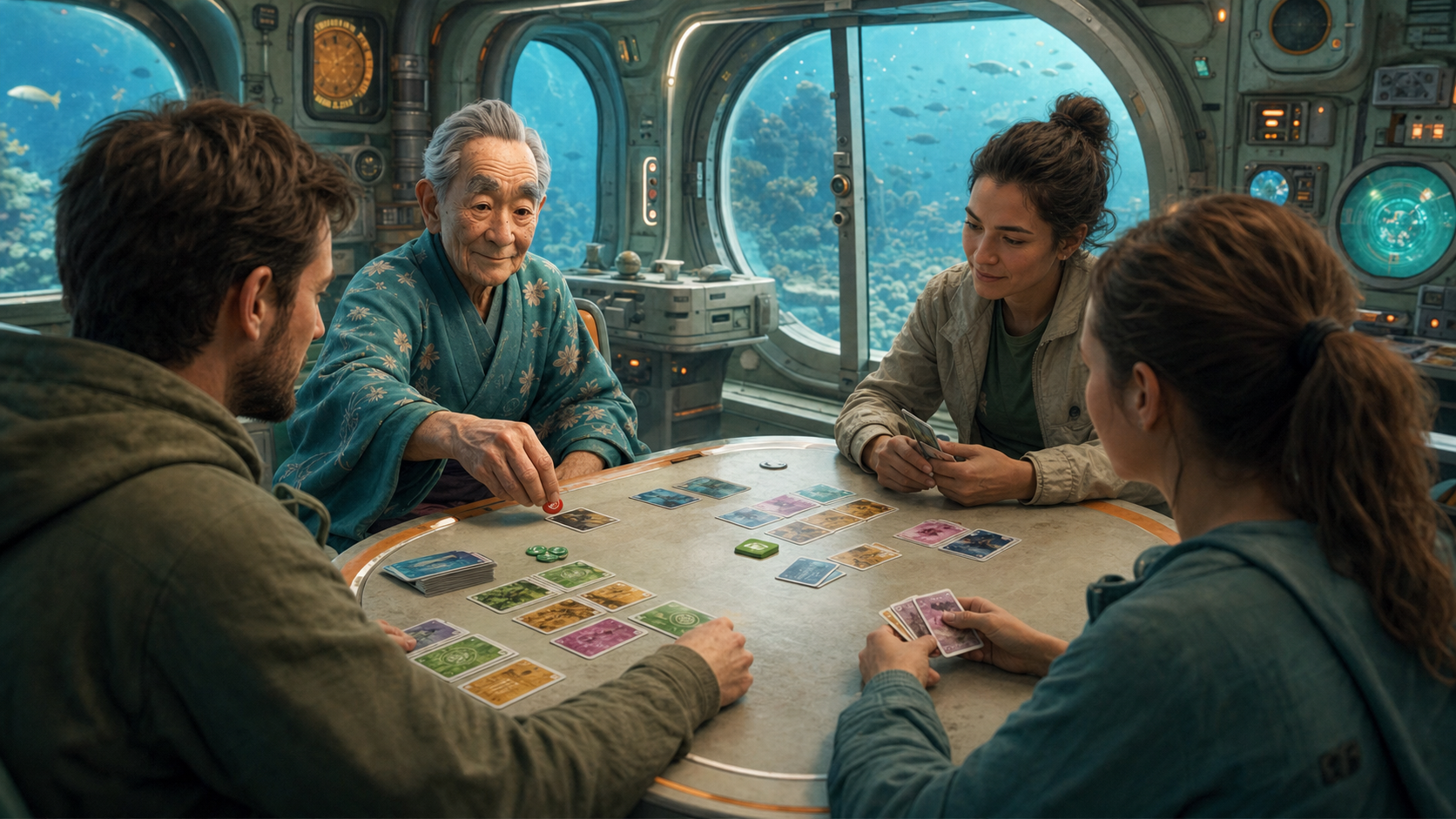
The Crew is a cooperative game built from a competitive card-game grammar: someone leads, everyone follows suit, and one player wins the trick. The miracle is that restricted communication turns ordinary hands into deductions. Kenji used Kosmos’s current rules and owner comparisons between Deep Sea and Planet Nine to build a zero-assumption teach and an expert mission checklist.
Start here, then go deeper
You are in the right cabinet.
 ✦ Topic PathBoard Game Buying Guides: compare the whole shelfStart with the decision, not the shelf. These guides compare the games, editions, expansions, player counts, and costs people...
 Best OfBest Trick-Taking Card Games (2026): Modern Classics Beyond Spades & HeartsStep in from the cold — let me settle you at a table where centuries of kindness meet designs that bend the rules. A curator's tour of...
 Best OfBest Cooperative Board Games, Ranked (2026)Okay but have you SEEN what people are saying about cooperative games right now? Sixteen absolute bangers, ranked — from the gateway that...
Mission Deep Sea or Planet Nine: which should you buy?
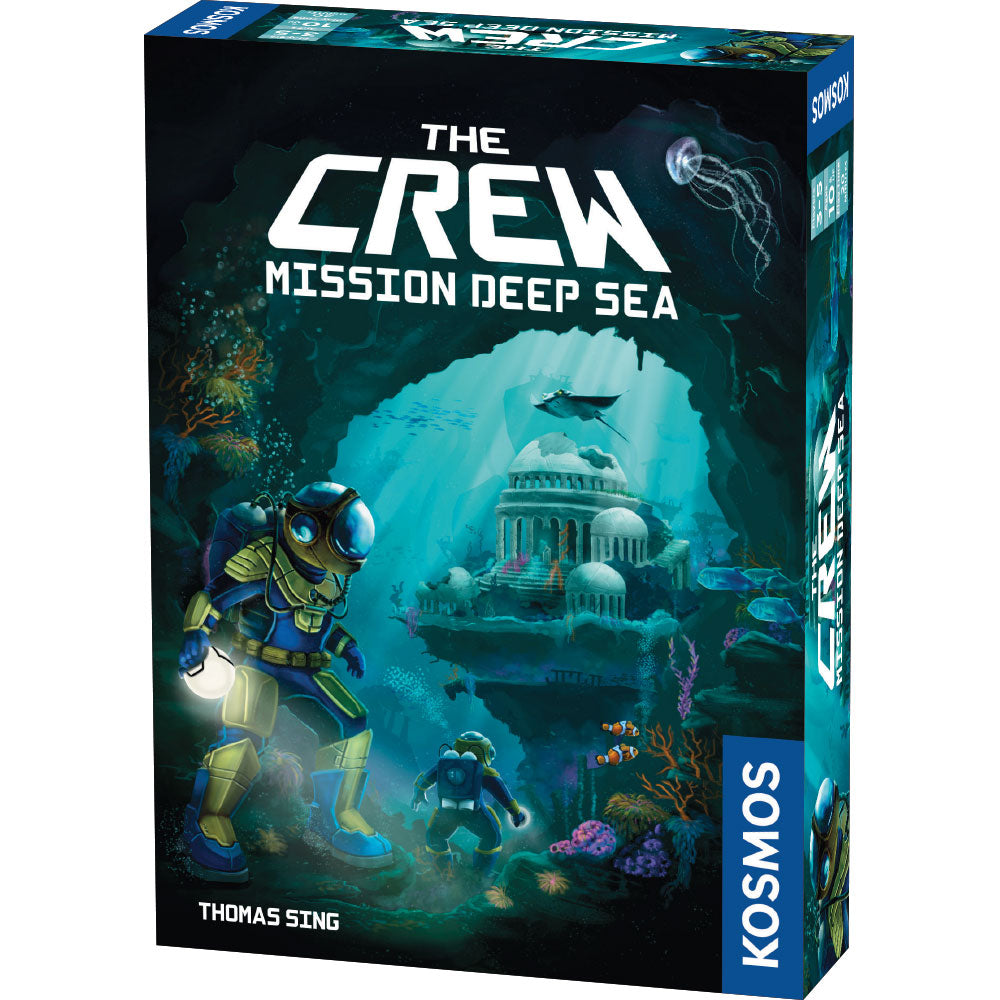
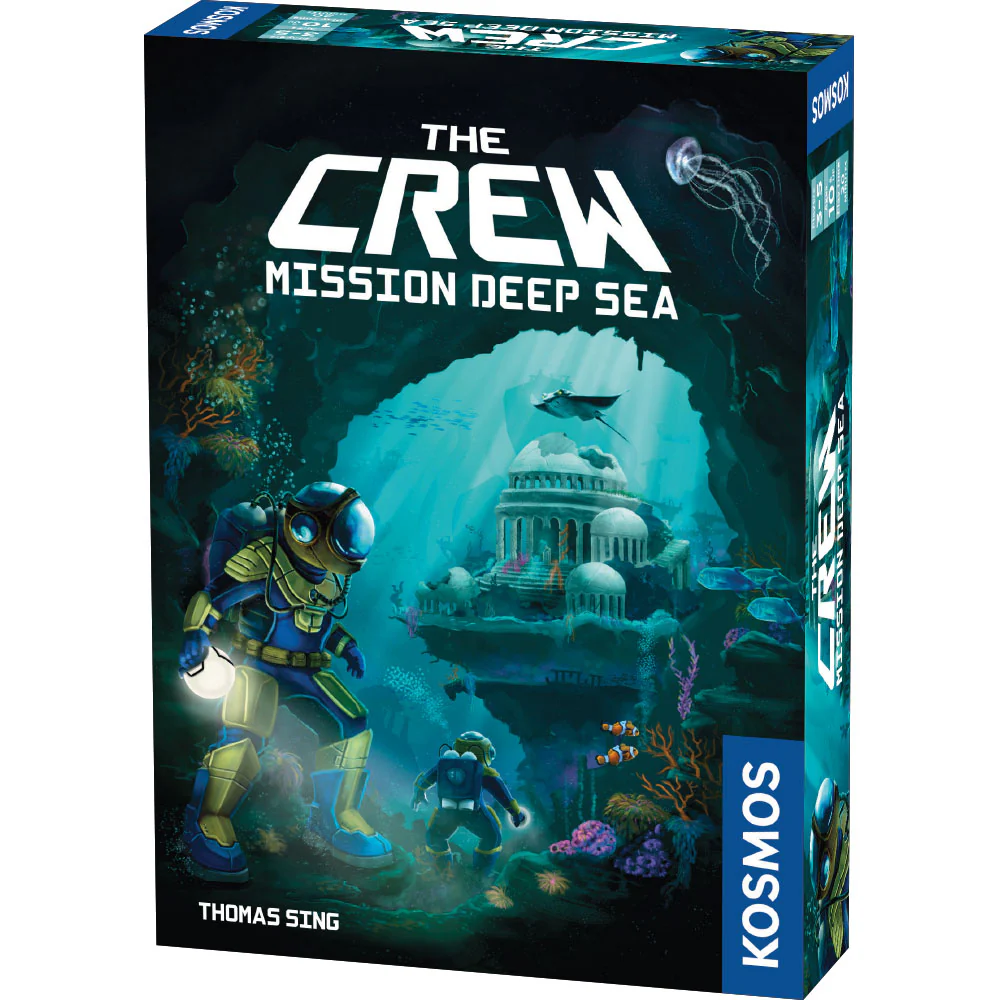
Mission Deep Sea is the best single-box recommendation because its task deck creates variable mission combinations and adapts difficulty. The Quest for Planet Nine offers a more authored fifty-mission campaign whose progression many teachers prefer. Deep Sea feels more replayable; Planet Nine feels more like a carefully written course.
The card system is nearly the same, so owning both is not necessary unless your group loves the design enough to want two mission philosophies. Do not combine components casually. Play the missions from the box whose rules you are using.
Mission Deep Sea is the best single-box recommendation because its task deck creates variable mission combinations and adapts difficulty.
How does trick-taking work if you have never played it?
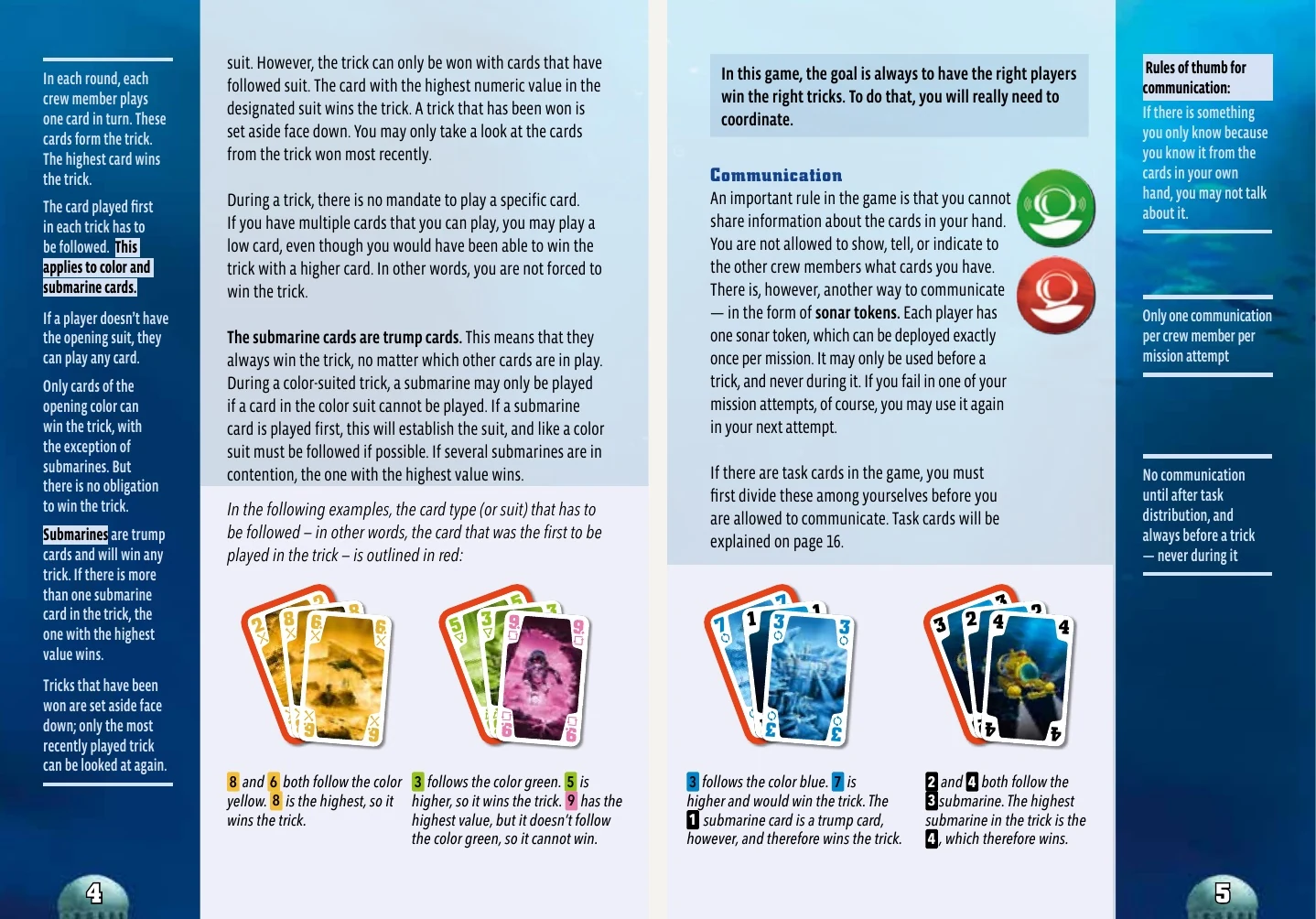
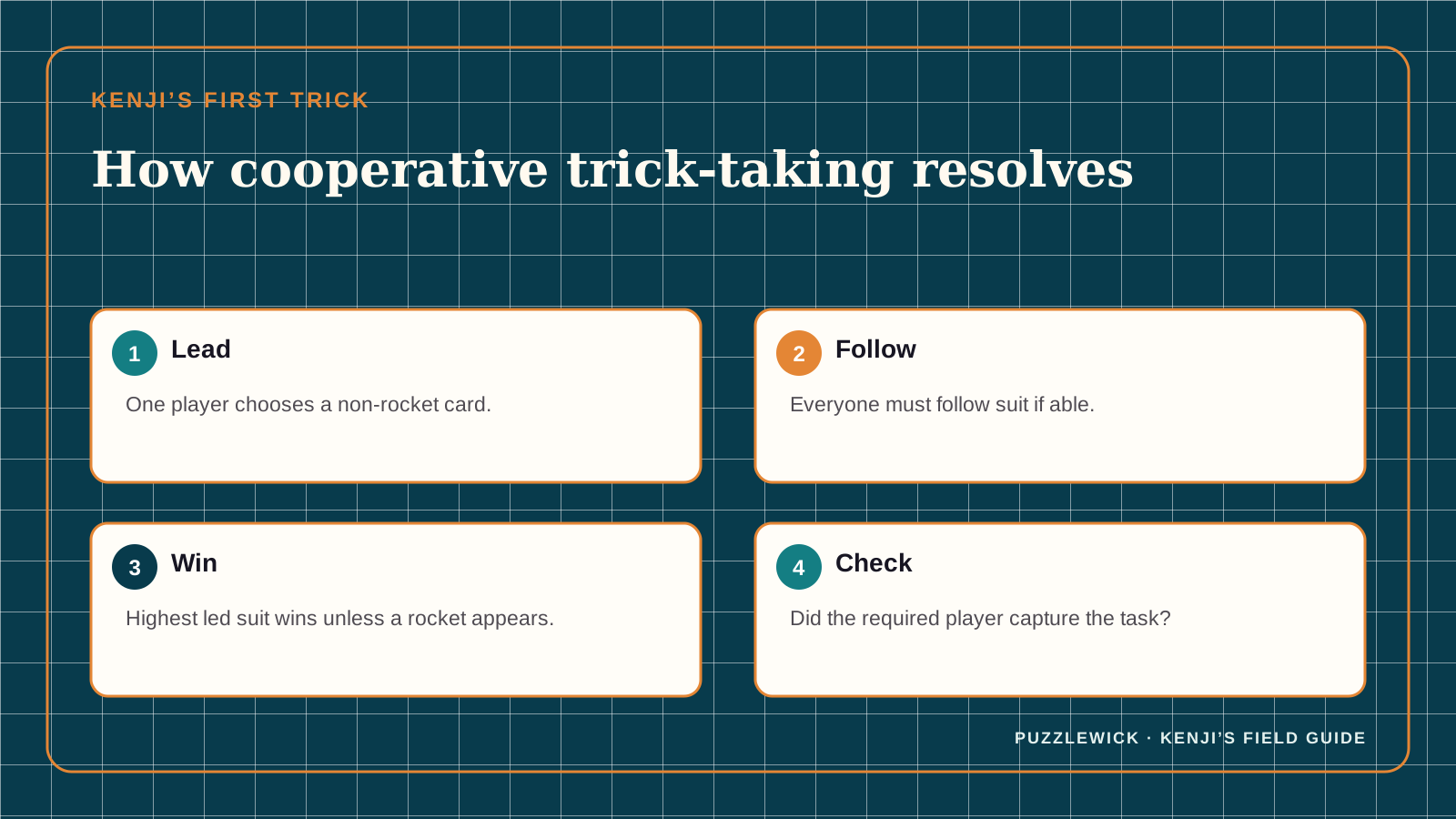
The lead player plays one colored card. Everyone who can follow that color must do so; if you cannot, you may play another color, including a rocket trump. The highest card of the led color wins unless a rocket is played, in which case the highest rocket wins. The trick winner leads next.
Mission tasks say who must win particular cards and sometimes impose order, timing, or other conditions. The team wins only when every task is satisfied without breaking a condition. Unlike a normal trick-taking game, a spectacular personal hand means nothing if the wrong player wins the required card.
One player leads a colored card.
How does the communication token work?
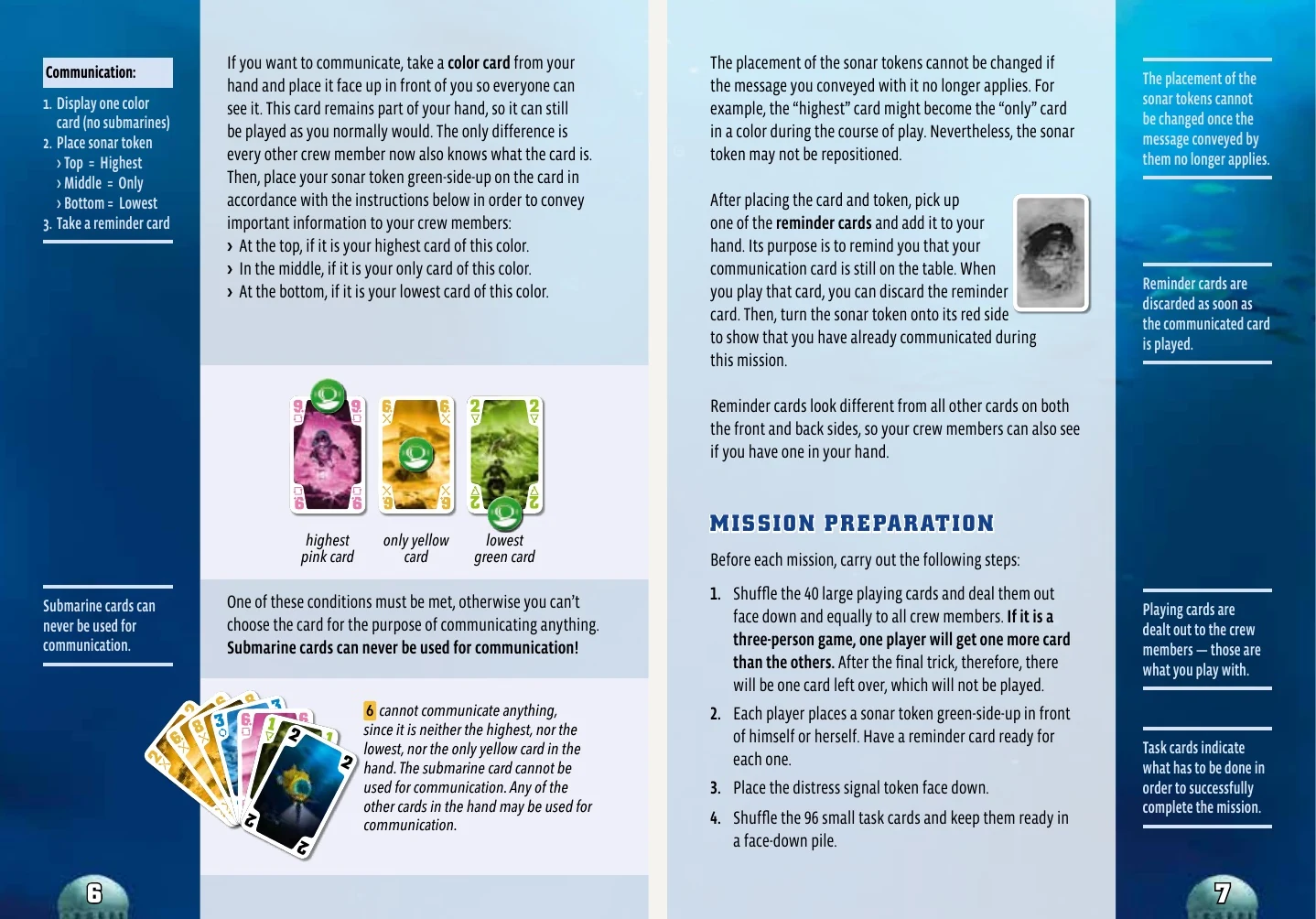
Once per mission, most players may place their communication token on one card in hand: top means it is their highest card of that color, bottom means lowest, and center means their only card of that color. Rockets cannot be communicated. Communication is public and must be truthful at the moment it is placed.
The best signal is not automatically the rarest card. Signal the fact that changes the plan: a void you are trying to create, a dangerously high card that may steal a task, or the only safe route to a required trick. If the commander has not assigned tasks yet, wait; timing the communication is part of the puzzle.
Once per mission, each player may place one non-rocket card face up with the token positioned to show whether it is their highest, lowest, or only card of that color.
What should the team plan before the first trick?
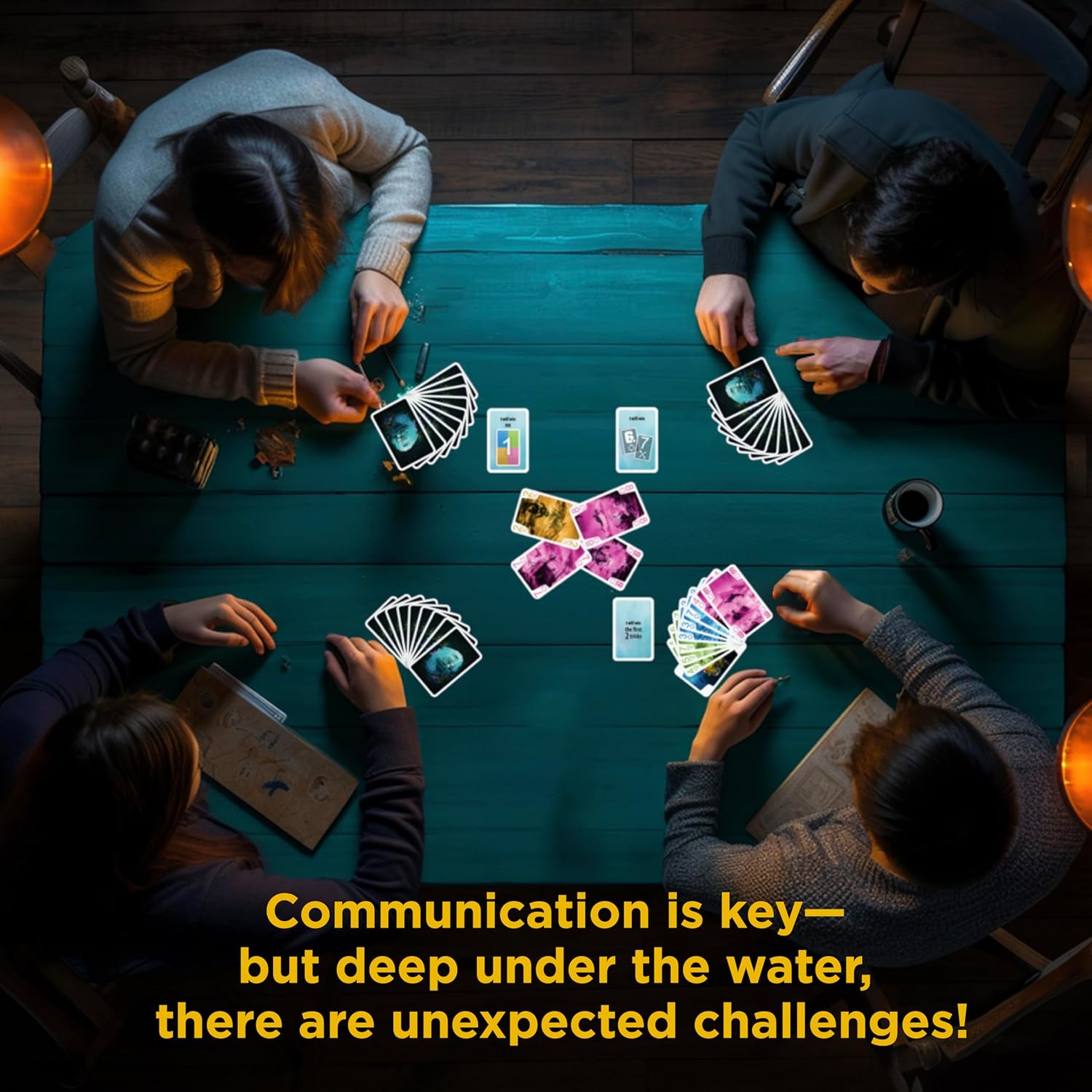
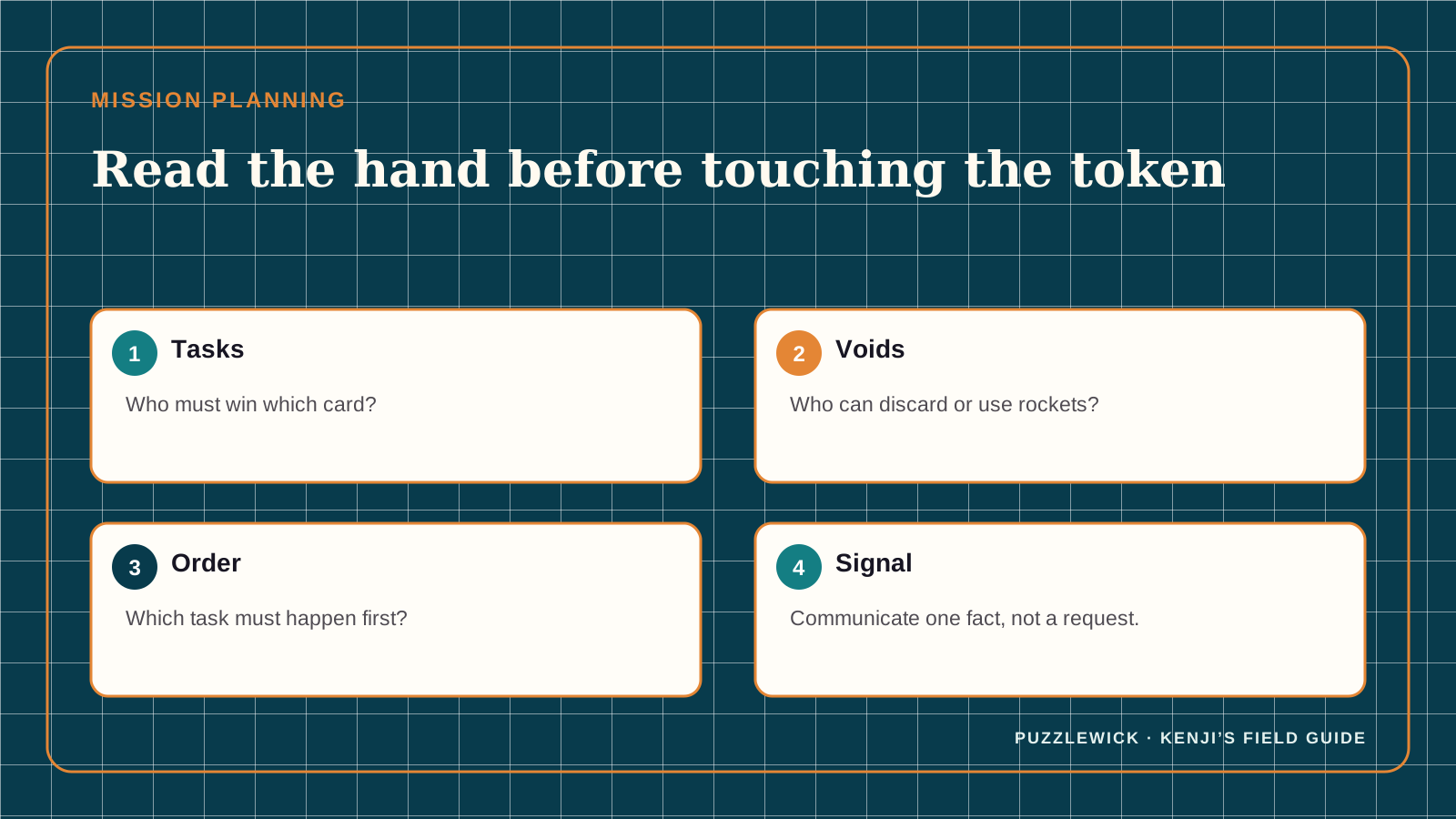
Identify the owner of every task, the task card’s suit and rank, and whether any required order markers apply. Estimate who may hold higher cards in that suit. Then identify likely voids: a player short in a color may later discard a dangerous card or use a rocket to capture it. Decide which task is most constrained and protect its pathway.
Do not narrate exact hands; follow the mission’s communication restrictions. Planning means agreeing on public structure. Kenji asks: Which task can happen accidentally, which requires engineering, and which player must retain the lead afterward?
Identify the owner of every task, the task card’s suit and rank, and whether any required order markers apply.
What are the most common beginner failures?
Teams lead a task suit before its owner can control the trick, spend rockets to win irrelevant cards, and forget that the trick winner controls the next lead. They also communicate the obvious card instead of the dangerous missing fact. A high card is not automatically safe if a rocket can appear; a low task card is not impossible if higher cards can be drained first.
The emotional failure is treating a mission loss as one person playing incorrectly. Hidden hands create unavoidable ambiguity. Reconstruct which information was public and what alternative line existed. The game becomes magical when the team learns a shared logic rather than a shared blame.
Teams lead a task suit before its owner can control the trick, spend rockets to win irrelevant cards, and forget that the trick winner controls the next lead.
What are advanced Crew strategies?
Manage entries and exits. If a player needs to win two different task suits, they may require a specific lead after the first capture. Drain high cards from a suit before attempting a low task. Create voids deliberately so players can discard problem cards. Preserve low rockets; the highest rocket wins, but a small rocket can capture without stealing future control.
Count suits as they disappear. In a forty-card deck, knowing most yellow cards are gone can confirm whether a player is void even without a signal. Advanced play is not memorizing every card—it is updating what each legal play proves.
Manage entries and exits.
How does player count change the game?
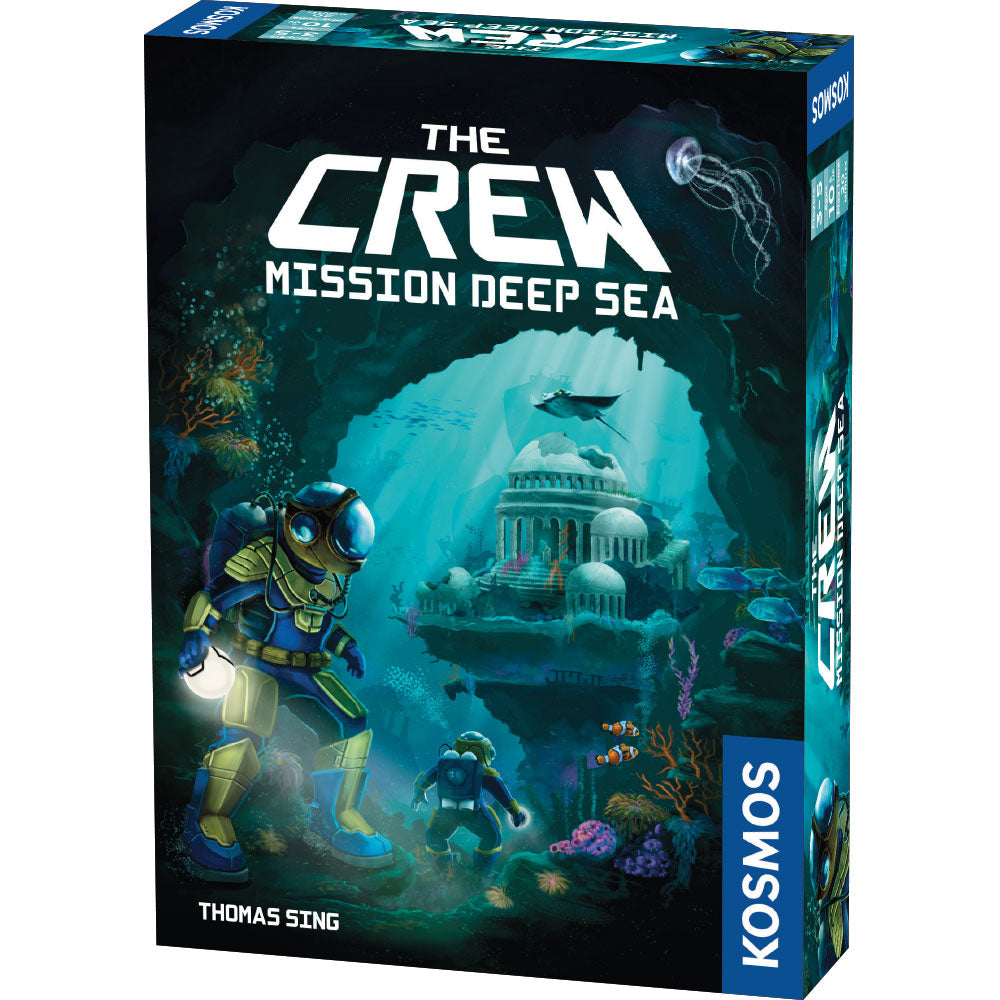
Three and four players are the cleanest counts. At five, each hand holds less information and task pathways can become brittle; the rules adjust some missions. Two-player play uses a special commander or dummy structure and is clever, but it is not the purest introduction.
For a couple, Sky Team may provide a more natural first cooperative experience, while The Crew excels when three or four people already understand card ranks. For family teaching, pair trick-taking experience with a newcomer and run an open practice hand. Never teach the mission objective before teaching what wins a trick.
Three and four players are the cleanest counts.
How do you make a campaign night memorable?
Play three to six missions, not twenty. Keep a small log of the mission, attempts, and one sentence about the breakthrough. Use a blue cloth, low glass token dishes, and enough light to distinguish suits. Snacks stay off the trick area. Stop after a brilliant success or a hilarious near miss.
Mission Deep Sea’s variable tasks are excellent for returning groups because the puzzle recombines. Planet Nine’s numbered journey is excellent for a regular campaign night. The best box is the one your team will reopen while the deductions are still warm.
Play three to six missions, not twenty.
How can experienced teams diagnose an impossible-looking task?
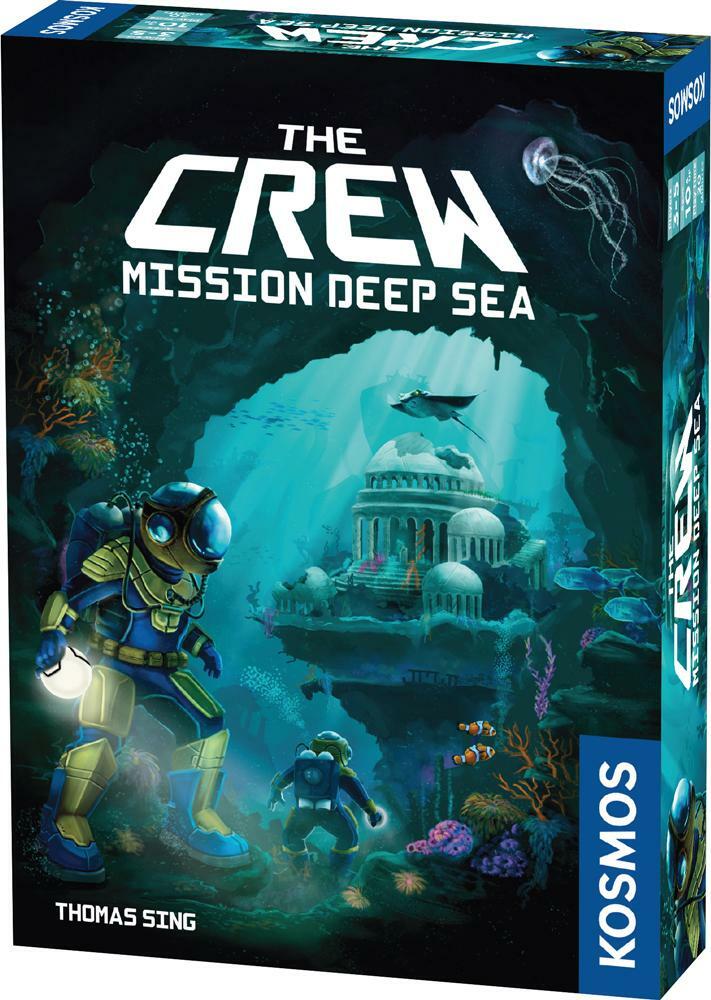
Work backward from the required capture. Identify the task card, cards that beat it in suit, rockets that could overtake it, and who must hold the lead when the attempt begins. Then decide which obstacles can be drained naturally and which require a deliberate sacrifice. A task is often impossible only in the order the team first imagined.
Use early tricks to create voids and transfer lead. If the task owner holds a low pink card, do not lead pink until higher pink cards have been extracted or can be discarded elsewhere. If a rocket must capture, preserve a low rocket and remove higher ones without stealing the necessary lead. Kenji’s mission table has arrows between tasks, not a list. The key question is not merely who wins each card; it is what that win allows the next player to lead.
Work backward from the required capture.
What if one player is much stronger at trick-taking?
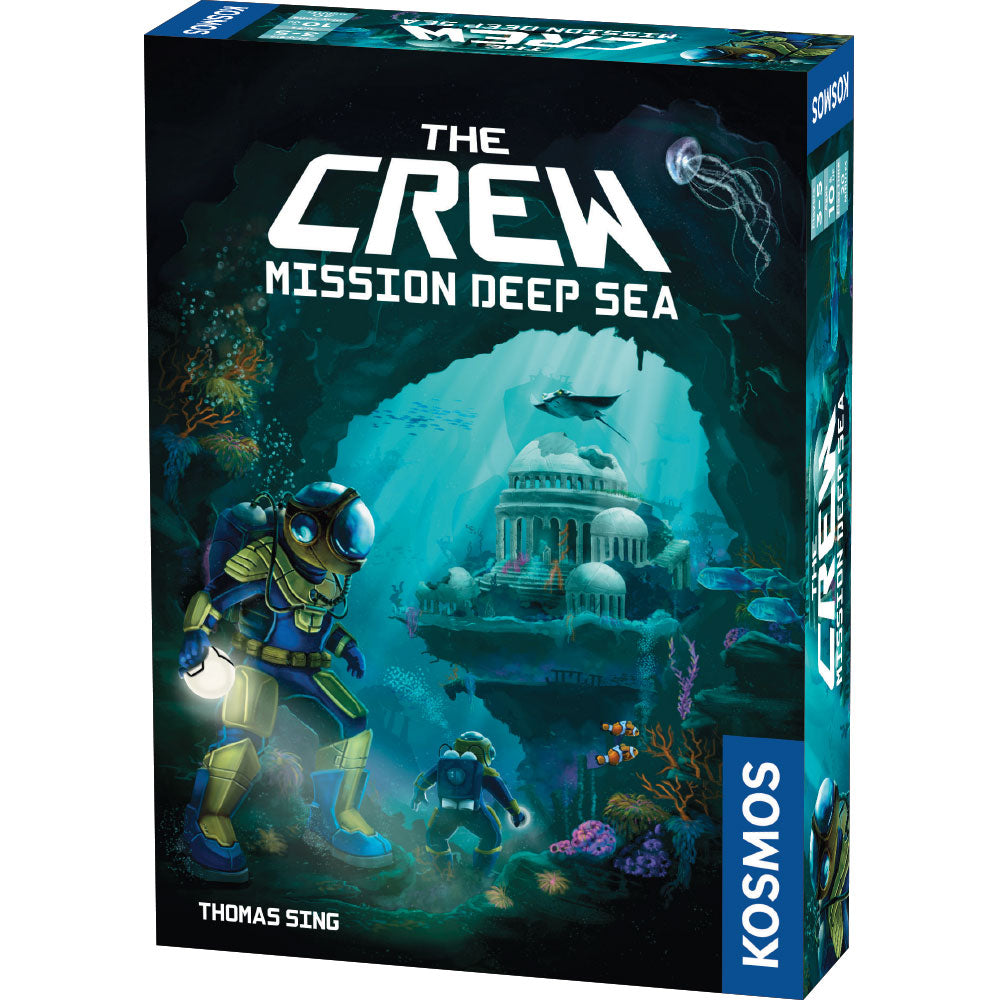
Make that player the teacher, not the pilot. During the open practice hand, ask them to explain legality and the consequence of a lead, but do not let them prescribe every card. In real missions, communication restrictions naturally prevent quarterbacking; preserve that gift by avoiding coded sighs, exaggerated staring, or commentary disguised as rules reminders.
Choose early missions with one or two clear tasks and rotate the captain. After a loss, let the newest player speak first about what they believed. Veterans often discover that their “obvious” plan depended on conventions never taught. A cooperative trick-taking group becomes strong when everyone can construct the logic, not when one expert can silently drag three hands across the ocean.
Make that player the teacher, not the pilot.
The picks
Some links below are affiliate links — as an Amazon Associate, Puzzlewick earns from qualifying purchases, at no extra cost to you. It never changes a pick.
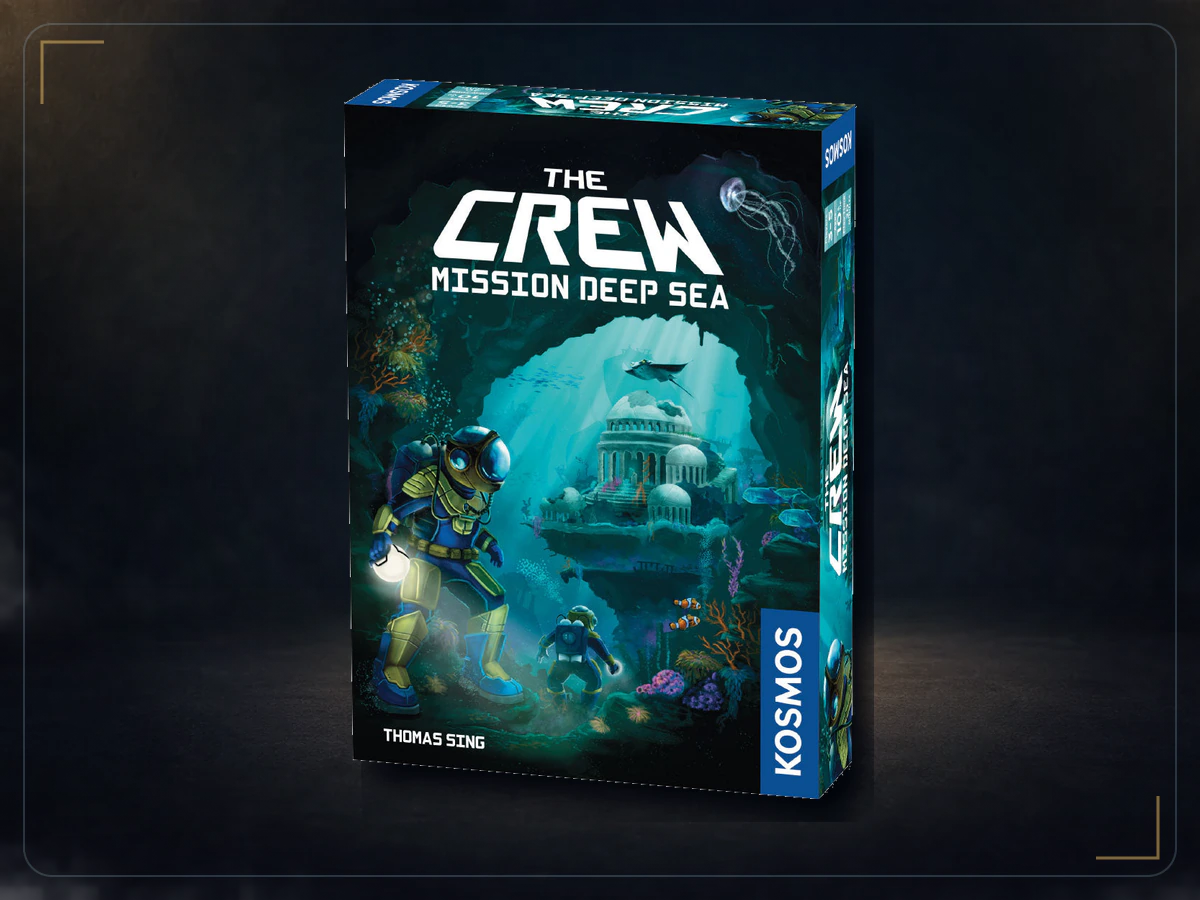
The Crew: Mission Deep Sea
Variable mission objectives make cooperative trick-taking feel newly constrained each night.
- Best one-box purchase and replay value.
- Variable mission objectives make cooperative trick-taking feel newly constrained each night.
- The better default for experienced card players.
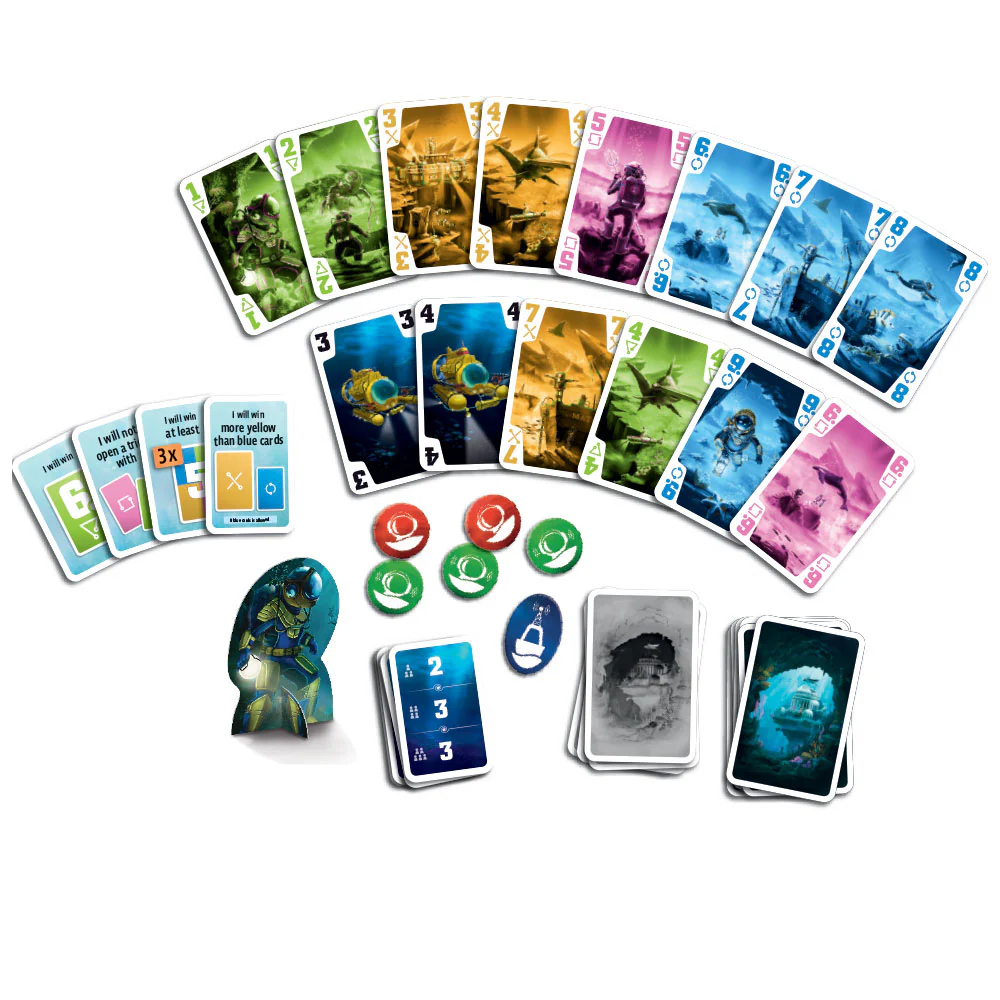
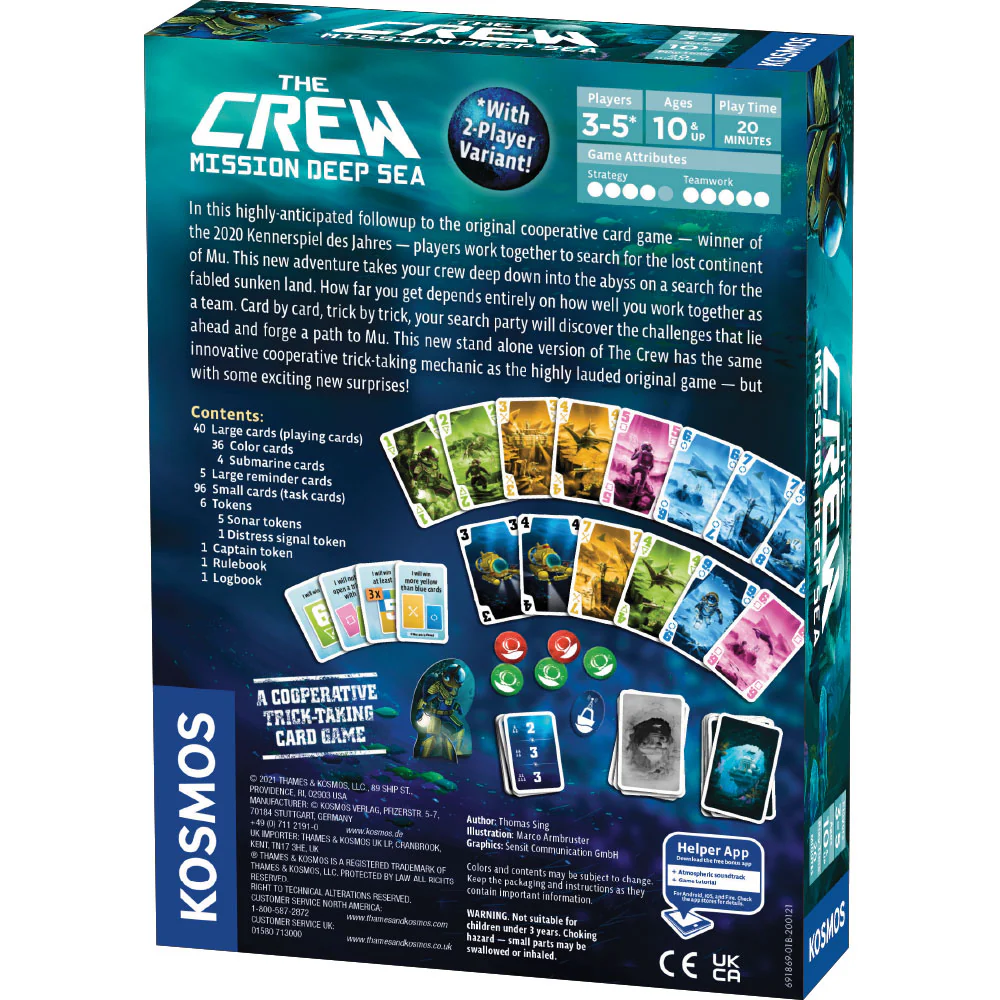
 2 photos
 The Crew: The Quest for Planet Nine
A smooth fifty-mission progression that teaches the system deliberately.
- Best curated learning campaign.
- A smooth fifty-mission progression that teaches the system deliberately.
- Less variable after the campaign than Deep Sea.
At a glance
| Question | Mission Deep Sea | Planet Nine |
|---|---|---|
| Best only box | Yes | Maybe for learners |
| Mission style | Variable task combinations | Curated campaign |
| Replayability | Higher | Strong journey, more fixed |
| Teaching curve | Good | Excellent |
Questions, answered
Which Crew game should I buy first?
Mission Deep Sea for replayability; Planet Nine for the smoothest curated campaign.
Do I need to know trick-taking?
No, but open-hand practice makes the first mission much easier.
Can players talk?
General mission planning is allowed at specified times, but hands and card details are restricted; use the communication token as written.
Is The Crew good with two?
It has a two-player variant, but three or four is the cleaner core experience.
Can The Crew be played with two?
There is an official two-player adaptation, but the deduction and communication are strongest with three or four.
Which Crew box should beginners buy?
Planet Nine offers the smoother curated course. Mission Deep Sea is the better one-box purchase for replayable variable objectives.
Kenji's verdict
Mission Deep Sea is the best one-box Crew because its task deck keeps producing new missions, while Planet Nine remains the better authored course. Teach follow-suit before objectives, treat communication as a scarce fact, and plan who controls the next lead after every task. The reward is one of tabletop gaming’s loveliest sensations: four private hands briefly becoming one shared idea.
Research ledger 11 sources · reviewed 2026-08-10
Specifications, rules, current product information, community experience, and contrary evidence were checked against the sources below. Commercial links are kept separate from editorial evidence.
- thamesandkosmos.comthamesandkosmos.com/products/the-crew-mission-deep-sea
- thamesandkosmos.comthamesandkosmos.com/manuals/full/691869_Crew_Deep%20Sea_Manual.pdf
- boardgamegeek.comboardgamegeek.com/boardgame/324856/the-crew-mission-deep-sea
- reddit.comreddit.com/r/boardgames/comments/1gms6of/whats_the_one_to_get_if_i_had_to_pick_one_the_crew_quest_for_planet_nine_or_mission_deep_sea
- reddit.comreddit.com/r/boardgames/comments/1m0q04q/is_it_worth_it_getting_the_crew_planet_9_if_you_already_have_deep_sea
- reddit.comreddit.com/r/boardgames/comments/1ot7fh4/which_version_of_the_crew_is_best_and_why
- thamesandkosmos.comthamesandkosmos.com/products/the-crew-the-quest-for-planet-nine
- boardgamegeek.comboardgamegeek.com/boardgame/284083/the-crew-the-quest-for-planet-nine
- en.boardgamearena.comen.boardgamearena.com/gamepanel?game=thecrewdeepsea
- theboardgamefamily.comtheboardgamefamily.com/2022/03/the-crew-mission-deep-sea-game-review
- cdn.shopify.comcdn.shopify.com/s/files/1/0104/6331/3977/files/691869_Crew_Deep_20Sea_Manual.pdf?v=1780594072
Every object has a lineage. Let me tell you its story.

Keep exploring
The next smart rabbit holes.
✦ Topic PathBoard Game Buying Guides: compare the whole shelfStart with the decision, not the shelf. These guides compare the games, editions, expansions, player counts, and costs people...Best OfBest Trick-Taking Card Games (2026): Modern Classics Beyond Spades & HeartsStep in from the cold — let me settle you at a table where centuries of kindness meet designs that bend the rules. A curator's tour of...Best OfBest Cooperative Board Games, Ranked (2026)Okay but have you SEEN what people are saying about cooperative games right now? Sixteen absolute bangers, ranked — from the gateway that...