The Best Trick-Taking Card Games of 2026 (Beyond The Crew)
Trick-taking is the oldest card mechanic in the Western canon — and somehow the most fashionable thing on the table in 2026. The Archivist ranks the modern standouts, traces each one back to its lineage, and verifies every price and pedigree before it touches the ledger.
The short answer
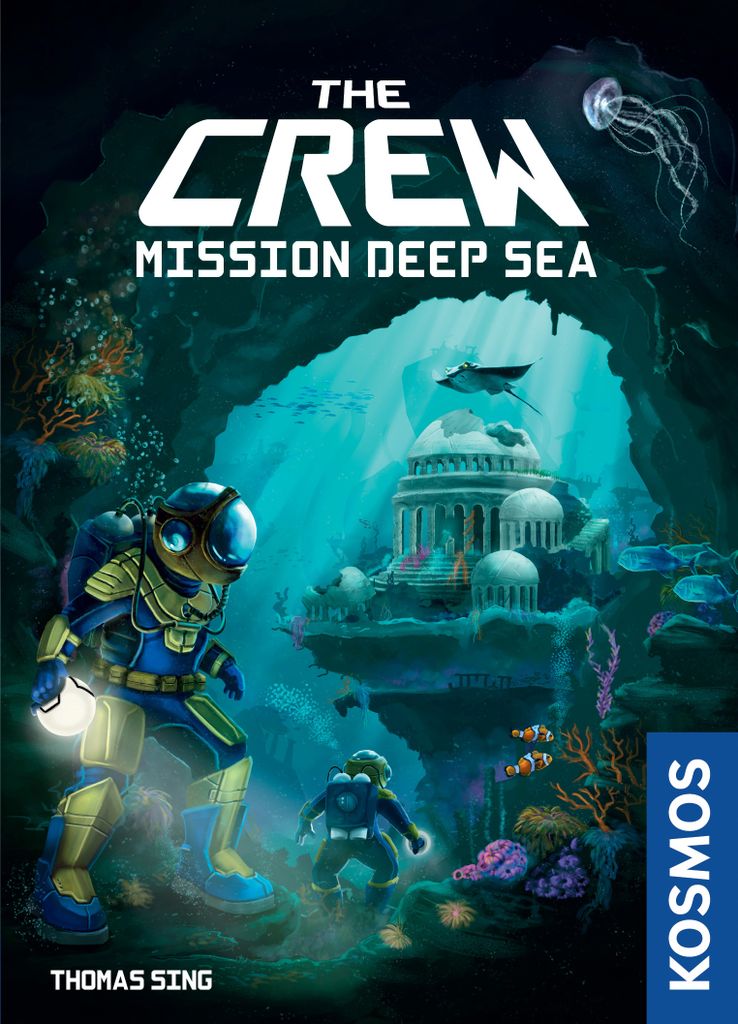
The best modern trick-taking card game in 2026 is The Crew: Mission Deep Sea (Thames & Kosmos), which reinvents the centuries-old genre as a fully cooperative, campaign-driven puzzle and held a spot in BoardGameGeek's Top 100 from 2021 through 2024. For two players, The Fox in the Forest (Renegade) is the genre's most elegant duel; for a riotous group, Skull King (Grandpa Beck's) is the accessible pirate-bidding party king; and for the most ingenious modern twist, Cat in the Box: Deluxe (Bézier Games) lets you decide a card's suit after you play it. The mechanic itself dates to Karnöffel, 1426 — making these the newest leaves on a six-hundred-year-old branch.
There is a particular pleasure in watching a thing come back into fashion that never truly left. Trick-taking — the act of each player contributing one card to a small pile, with the strongest taking the lot — is the ur-mechanic of Western card play. It predates poker, predates rummy, predates the very idea of a 'designer' game. And in 2026 it is, improbably, the breakout darling of the hobby. Designers who once chased dice towers and plastic miniatures are now reaching for fifty-two cards and a clever wrinkle.
I have spent more hours than I will admit cross-referencing rulebooks against historical card-game scholarship, and I can tell you the appeal is no accident. The trick is the most efficient unit of tension ever devised: low components, high drama, infinite variation. What follows is the Archivist's ranked ledger of the modern standouts — each one verified on Amazon, each price and pedigree checked, and each placed where it belongs on the family tree.


What exactly is a trick-taking game (and why is the whole hobby obsessed)?
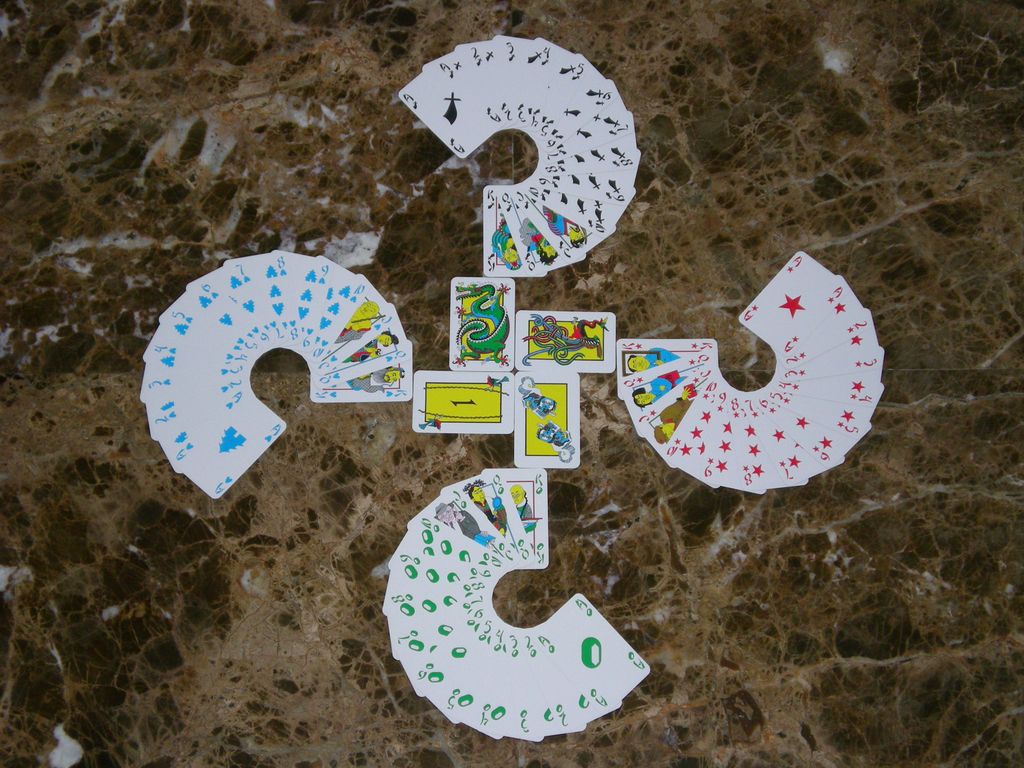
A trick is a single round of play where every player lays down one card, and one card wins the pile — usually the highest card of the suit that was led, unless a trump suit overrules it. String a dozen tricks together, tally who took what, and you have the oldest scoring engine in cards.
If you've ever played Hearts, Spades, Euchre, or Bridge, you already know the grammar. What's new in 2026 is the dialect. Modern designers keep the elegant core and bolt on one audacious idea each:
- Cooperation instead of competition (The Crew)
- Winning the right number of tricks, not the most (Skull King, The Fox in the Forest)
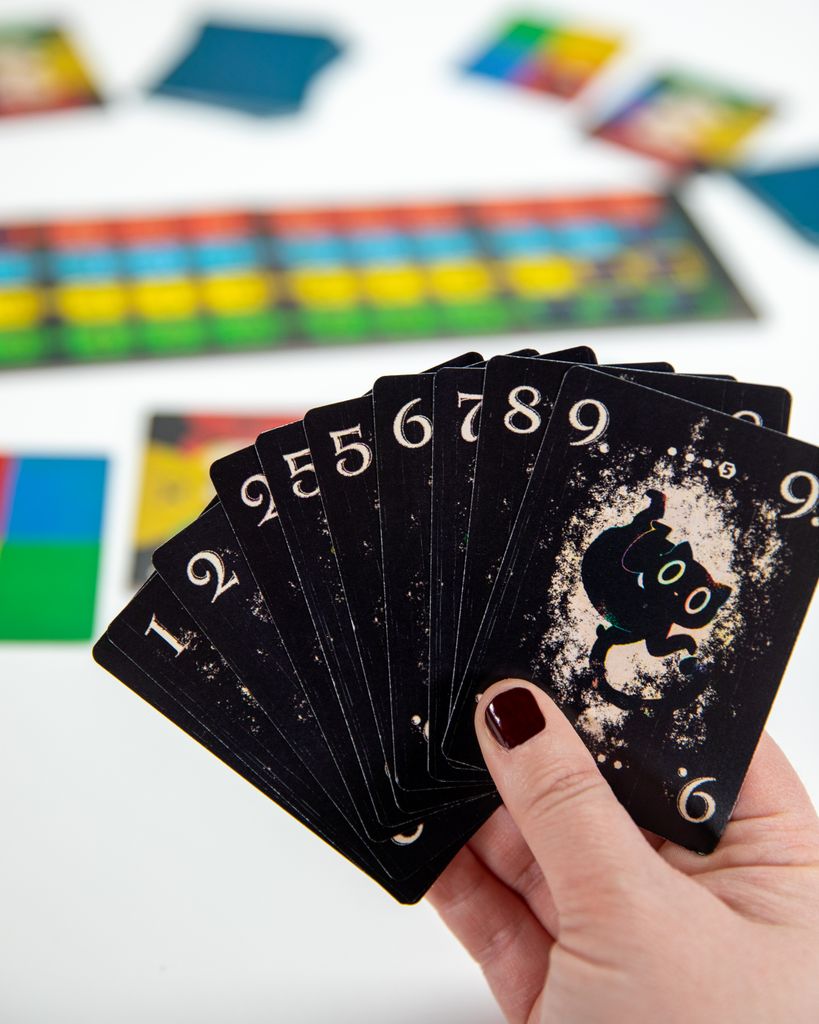
- Choosing a card's suit at the moment of play (Cat in the Box)
- A licensed narrative that turns tricks into a story (The Fellowship of the Ring)
The obsession is partly practical. These games are cheap, they pack flat, they teach in five minutes, and they punch far above their component weight. A $15 deck can deliver more table-tension than a $90 box of plastic — and the hobby has noticed.
The trick is the most efficient unit of tension ever devised: low components, high drama, infinite variation.
Where does trick-taking actually come from? (a brief illumination)
Indulge the Archivist for one page, because the lineage is genuinely glorious.
The earliest card games were trick-taking games, carried westward out of China during the early second millennium — rank-and-suit decks that had no trumps and no obligation to follow suit. The mechanic matured in Europe with startling speed once paper cards arrived (first documented in Spain, 1371).
According to the card-game historian David Parlett, "the oldest known European trick-taking game, Karnöffel, was mentioned in 1426 in the Bavarian town Nördlingen." Karnöffel was gloriously anarchic — certain cards (the Karnöffel, the Devil, the Pope) held special privileges that broke the ordinary order, a wild ancestor of the modern 'special card.'
Then came the two revolutions that define every game on this list:
- Around 1440 in Italy, special cards called trionfi — what we now call tarots — introduced genuine trumps: a fifth suit of fixed hierarchy that overruled the others.
- In the 17th century, the Spanish game ombre introduced bidding for the trump suit, and became the most popular card game of its era.
Every card in this guide is a descendant of those two ideas. When Skull King asks you to bid your tricks, that is ombre's ghost at the table. When the Skull King card trumps every pirate, that is the trionfi hierarchy in a tricorn hat.
When Skull King asks you to bid your tricks, that is ombre's ghost at the table.
Which one should I buy first? (the ranked picks)
I have ordered these by how confidently I would hand them to a stranger and promise satisfaction — balancing accessibility, depth, and that ineffable replay-pull. Each is verified available on Amazon at time of writing; prices fluctuate, so the picks list carries my checked figures.
1. The Crew: Mission Deep Sea — the cooperative landmark and the genre's modern flagship. 2. The Fox in the Forest — the perfect two-player duel. 3. Skull King — the loud, forgiving party-bidder. 4. Cat in the Box: Deluxe — the most ingenious mechanical twist in years. 5. The Fellowship of the Ring: Trick-Taking Game — the licensed, narrative on-ramp. 6. Tichu — the partnership deep-end for committed players.
No two of these solve the same problem. The Crew is for the table that wants to win together; Fox is for two people on a couch; Skull King is for eight people and a bottle of something; Cat in the Box is for the group that already loves the genre and wants its assumptions broken. Choose by who you play with, not by rank alone.
No two of these solve the same problem. Choose by who you play with, not by rank alone.
Why is The Crew the one that converted the skeptics?
Here is the most telling fact in the whole genre: The Crew converts people who hate trick-taking games.
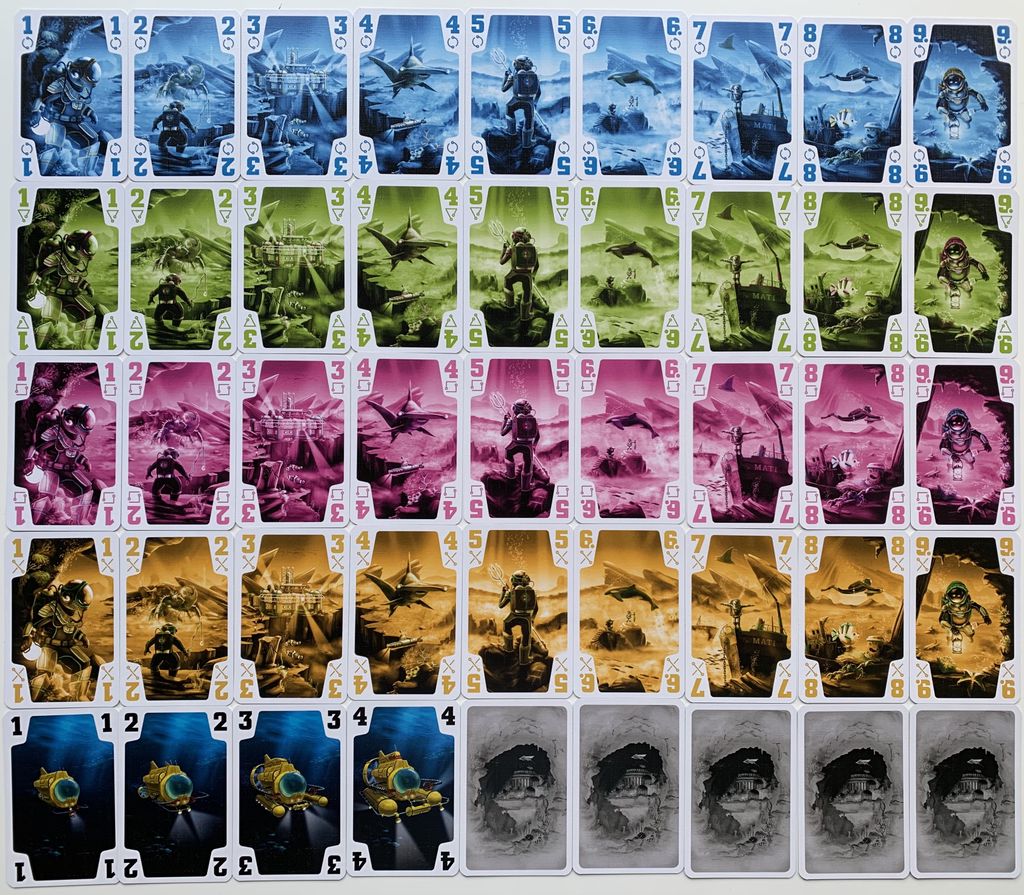
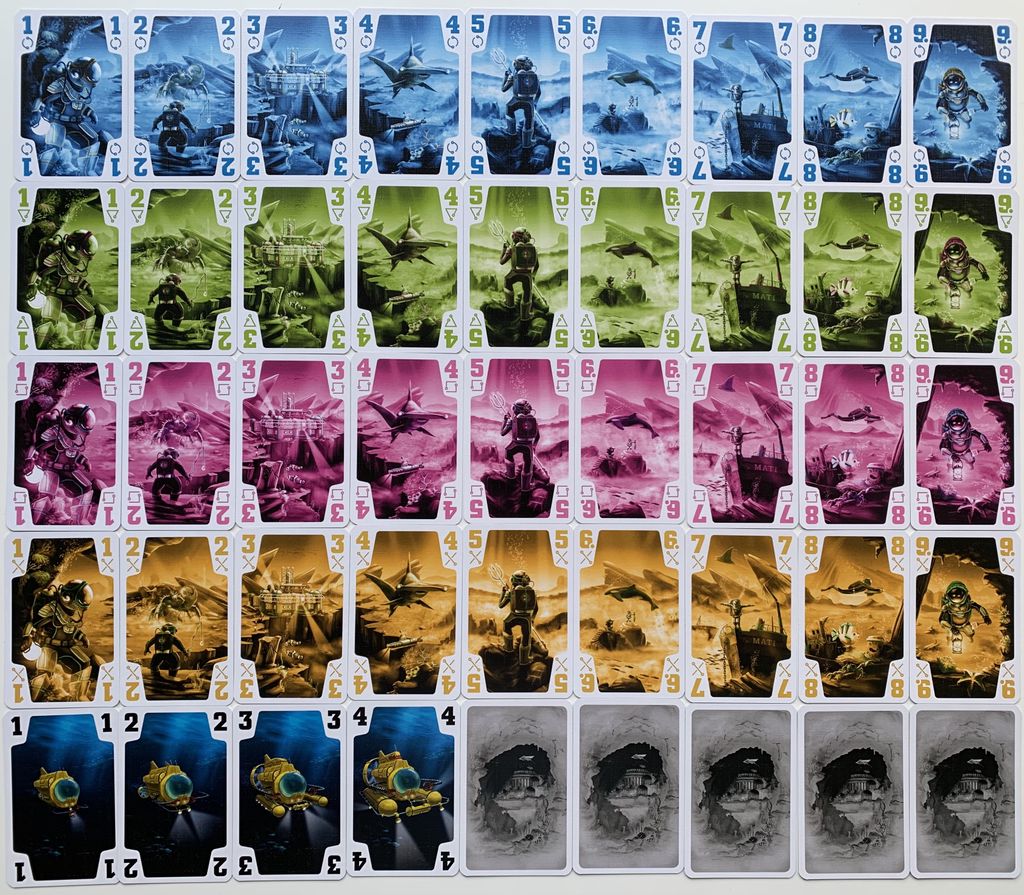
The design — Thomas Sing's Mission Deep Sea — flips the entire premise. Instead of competing for tricks, the whole table cooperates to complete assigned tasks: I must win the green 4; you must take the last trick of the round; nobody may win the pink 9. The catch is that communication is severely limited — you may signal exactly one card per round, and only in a constrained way. The result is a pure logic puzzle wearing a card game's clothes.
What's in the box that matters:
- 96 unique task cards across six difficulty levels
- A 32-mission campaign that escalates beautifully
- 2–5 players, ages 10+, roughly 20 minutes a mission
It peaked at #4 on BoardGameGeek, sat in the Top 100 for four straight years (2021–2024), and won the 2021 Golden Geek for Medium Game of the Year. The Mission Deep Sea edition is the one to buy — it's a standalone sequel with a smarter, sonar-based communication system than the original Planet Nine.
The Crew is the rare game that converts the very people who swear they hate the genre.
What's the best trick-taker for exactly two people?
Trick-taking historically wanted four players. Designing a great two-player trick-taker is a genuinely hard problem — and The Fox in the Forest solves it with fairy-tale elegance.
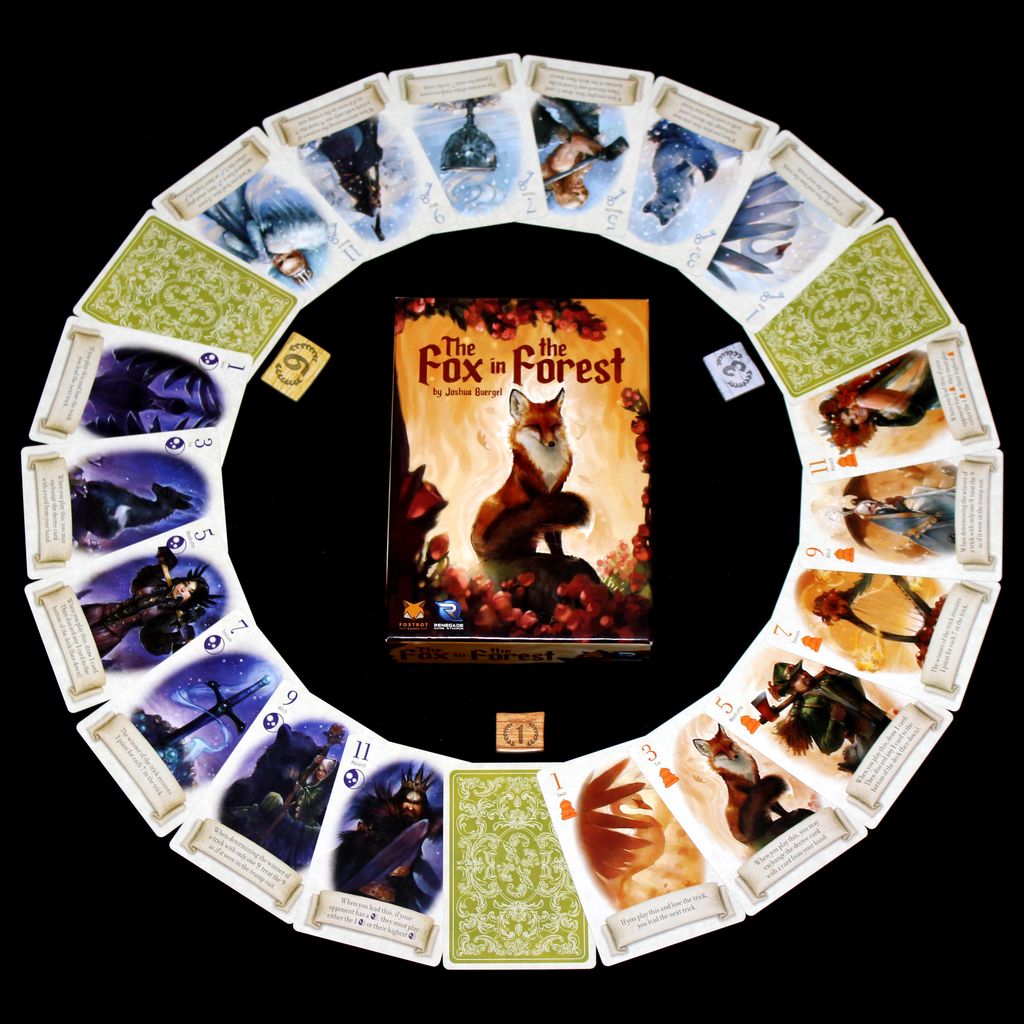
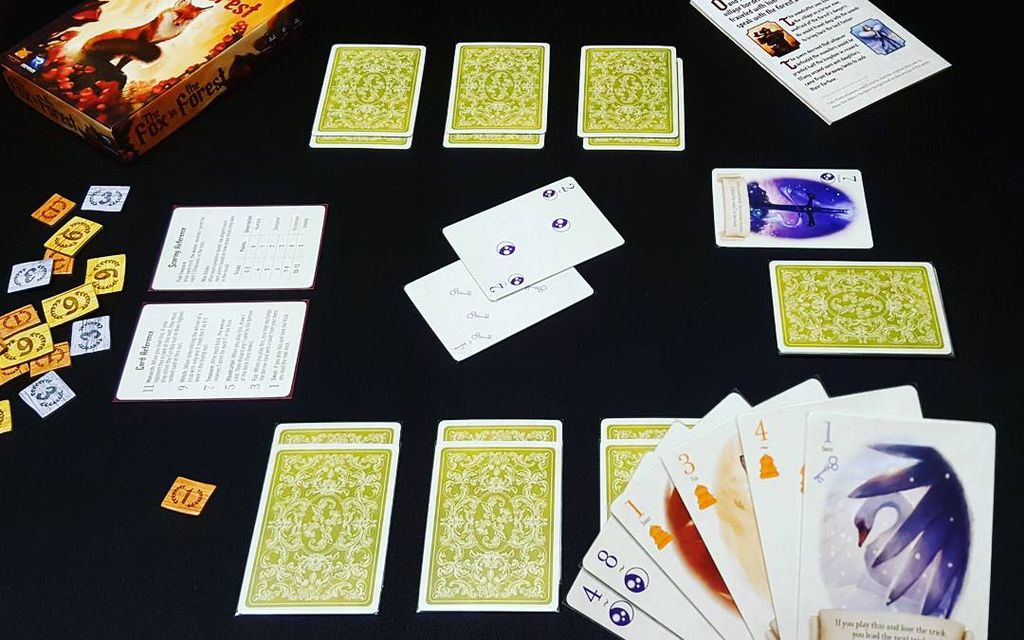
The central wrinkle is a beautifully perverse scoring curve: you don't want to win the most tricks, you want to win the right number. Take 7–9 tricks and you score handsomely; take 10 or more and you've been greedy — you score zero. The tension of deliberately losing tricks you could win is the whole delicious game.
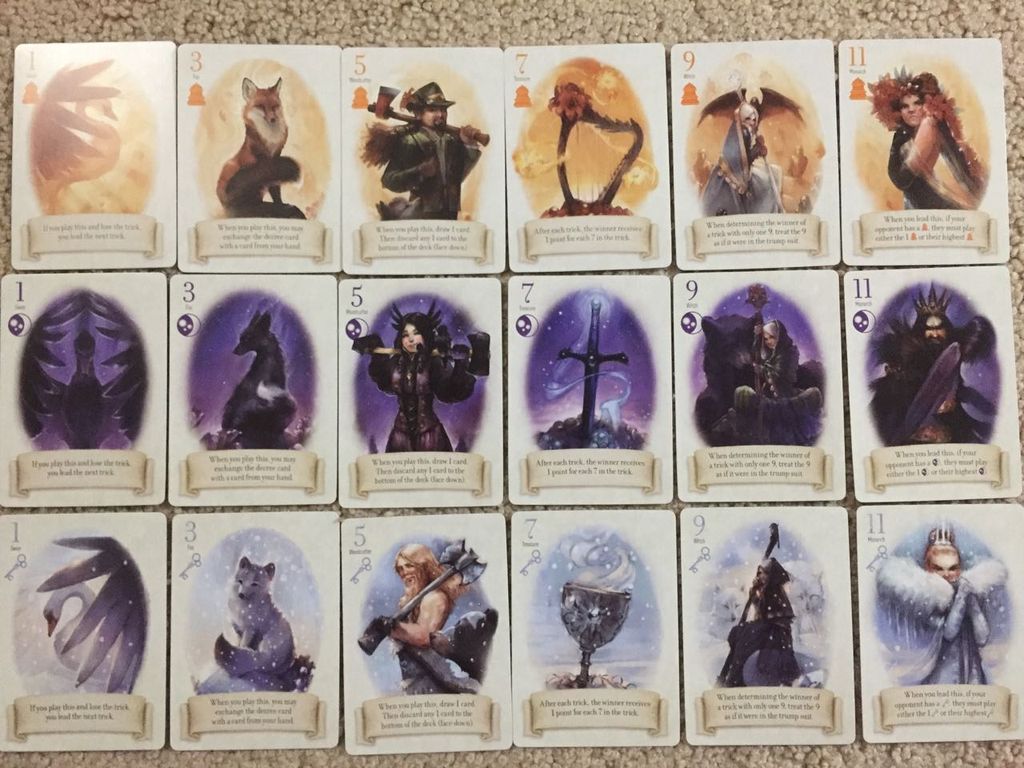
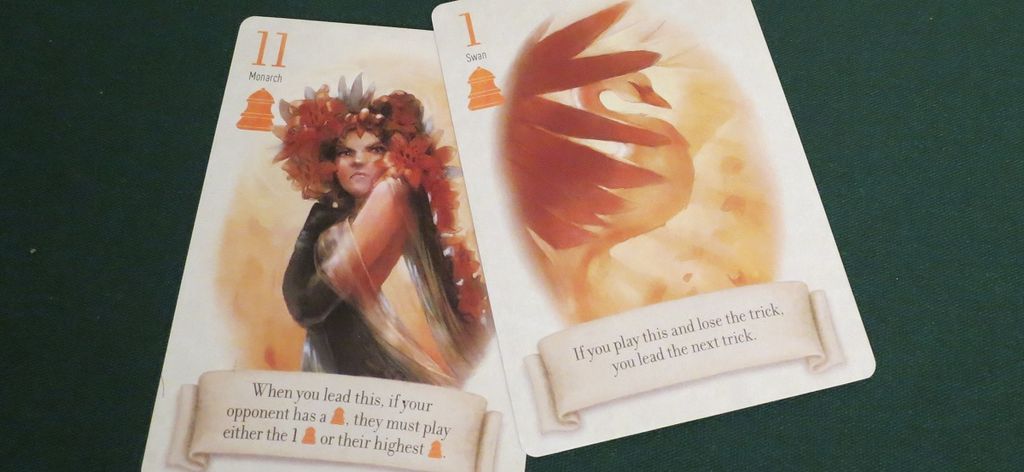
Layered on top are odd-numbered character cards with special powers — the Fox swaps the trump, the Woodcutter lets you lead again after losing, the Witch bends the rules. The art is storybook-gorgeous, it teaches in three minutes, and it fits in a coat pocket.
The lineage note: this 'win-the-right-amount' scoring is a direct descendant of older 'misère' and exact-bid traditions, where overperforming is punished as severely as underperforming. Fox simply dresses it in the most charming clothes the mechanic has ever worn.
If your two-player nights want cooperation instead, the same studio's Fox in the Forest Duet turns the engine into a co-op puzzle — a worthy companion, not a replacement.
You don't want to win the most tricks — you want to win the right number. That restraint is the whole game.
Which one wins game night with eight loud people?
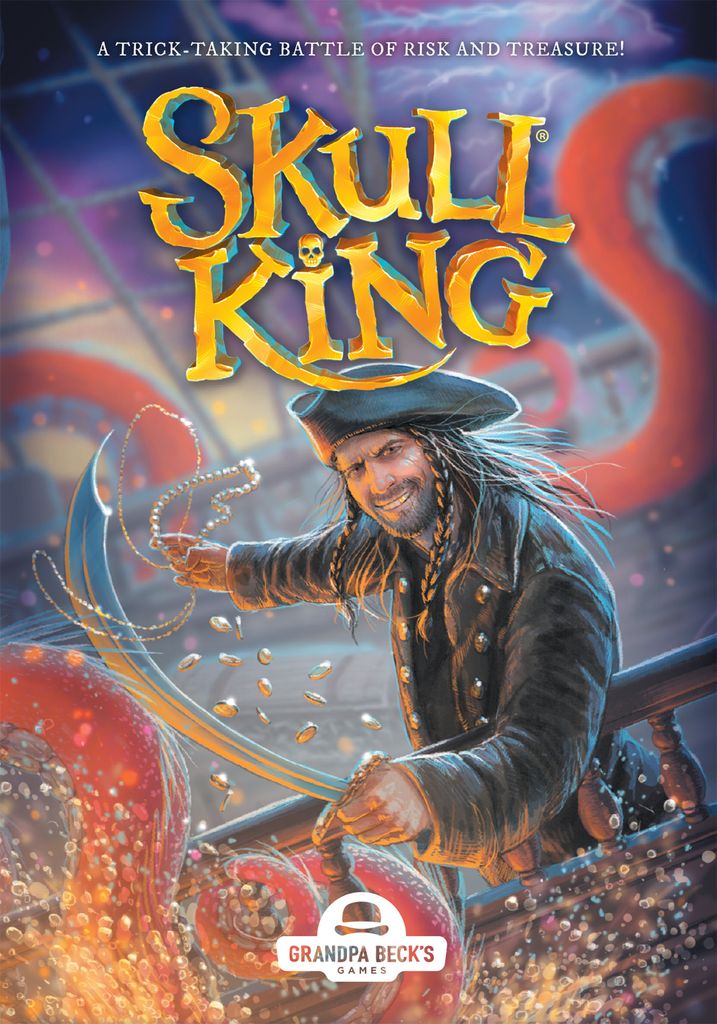
When the table is big and the mood is rowdy, the Archivist reaches for Skull King — the pirate-themed bidding trick-taker that scales an astonishing 2 to 8 players (and ages 8+).
The loop is pure ombre descendant: before each round, bid exactly how many tricks you'll take. Hit your bid precisely and you score 20 points per trick; miss by even one and you lose 10 points per trick you were off. The cruelty is in the precision — you are punished for both greed and timidity.
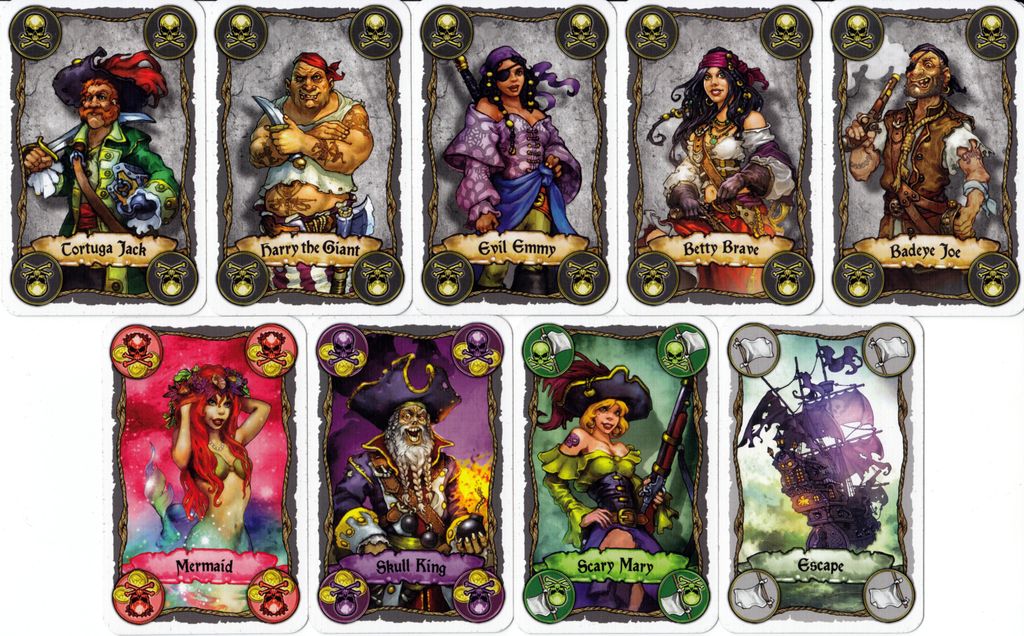
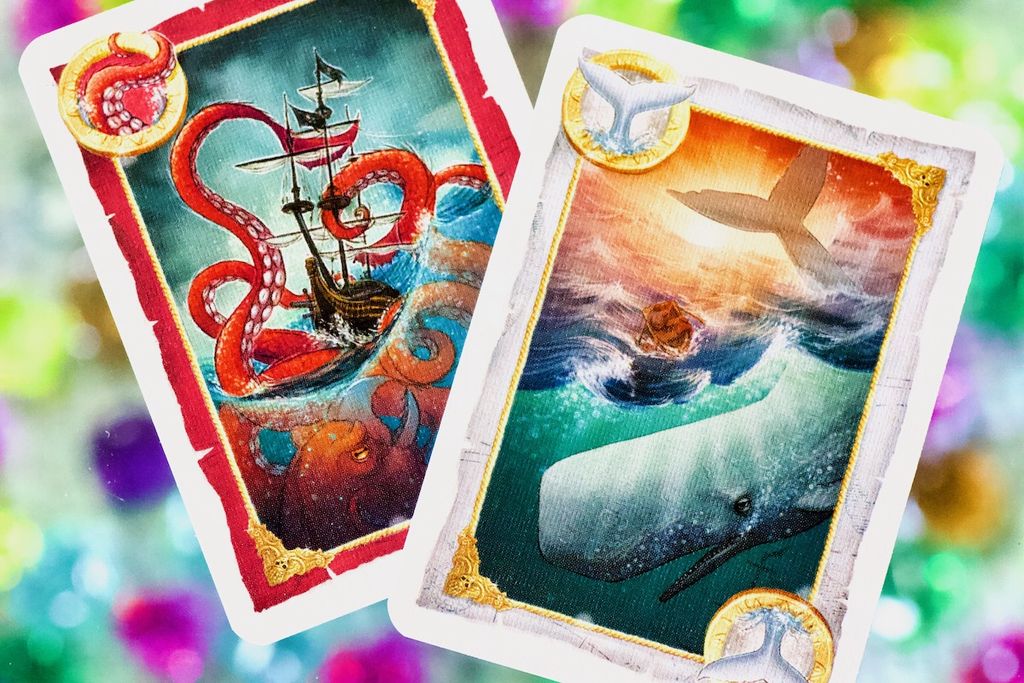
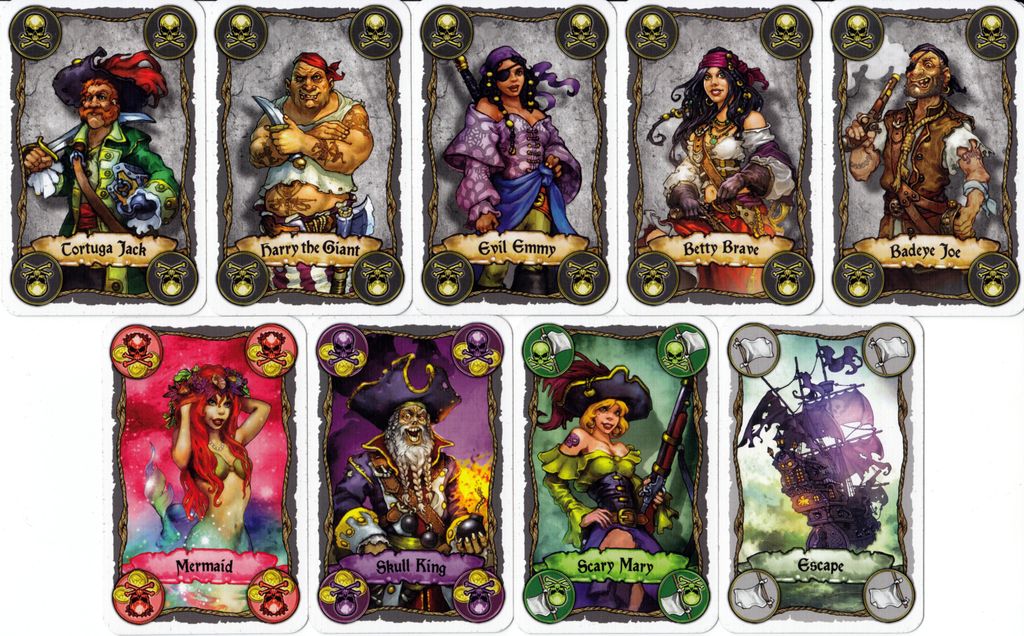
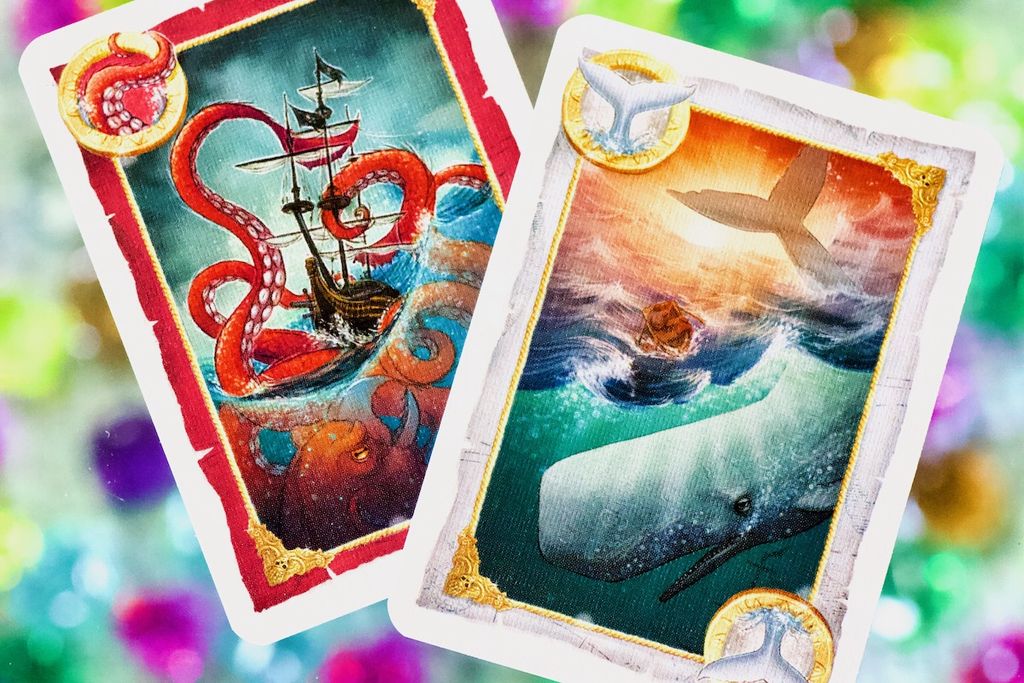
Then come the toys: a trump suit of Jolly Rogers, escape cards, Mermaids, Pirates, and the Skull King himself, who trumps everything — and scores a bonus for every Pirate he captures in his trick. Newer editions add the White Whale and the Kraken to scramble the math further.
It is, by design, a machine for turning friends into delightful villains. The accents come out. The trash talk flows. Someone bids zero with a hand full of high cards and sweats through ten tricks trying to lose them all.
The lineage note: Skull King is, mechanically, a more forgiving and theatrical cousin of the classic 1984 bidding game Wizard — which is itself a streamlined heir to Oh Hell! and, further back, the exact-bid tradition that ombre set in motion in the 1600s.
Skull King is a machine for turning friends into delightful villains — the accents come out, the trash talk flows.
Is there a modern twist that actually reinvents the mechanic?
Yes — and it is the most intellectually thrilling card on this list. Cat in the Box: Deluxe Edition asks a question no classical trick-taker dared: what if a card has no suit until you play it?
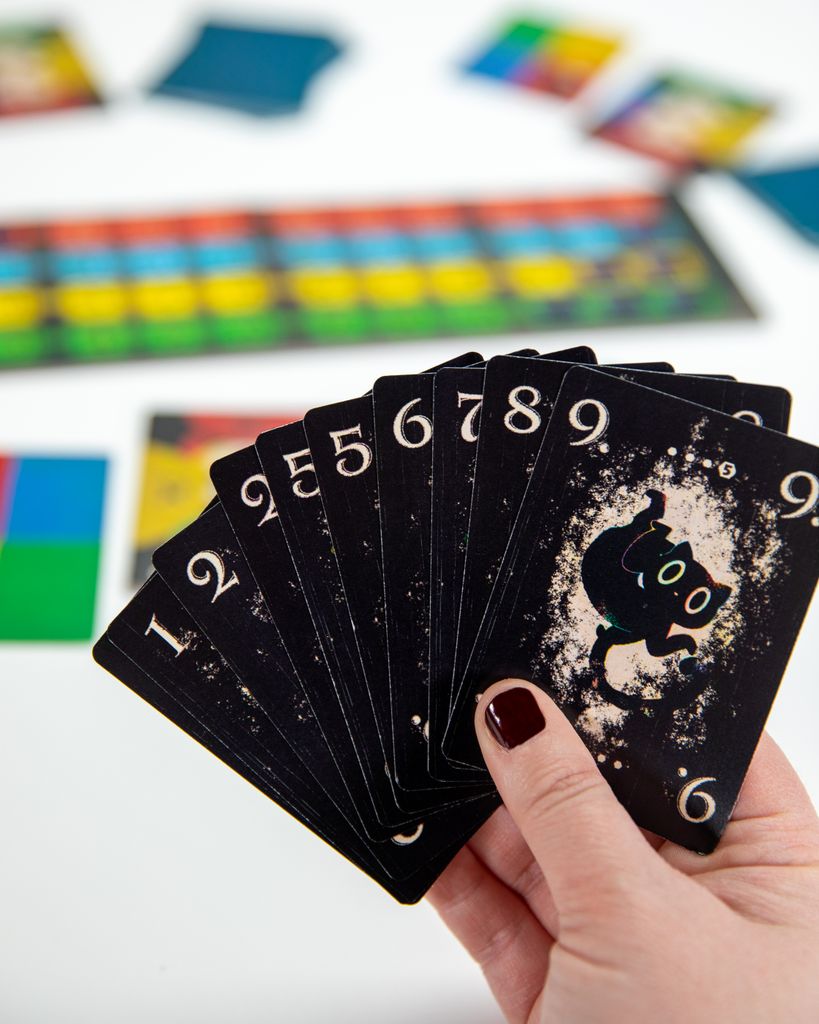
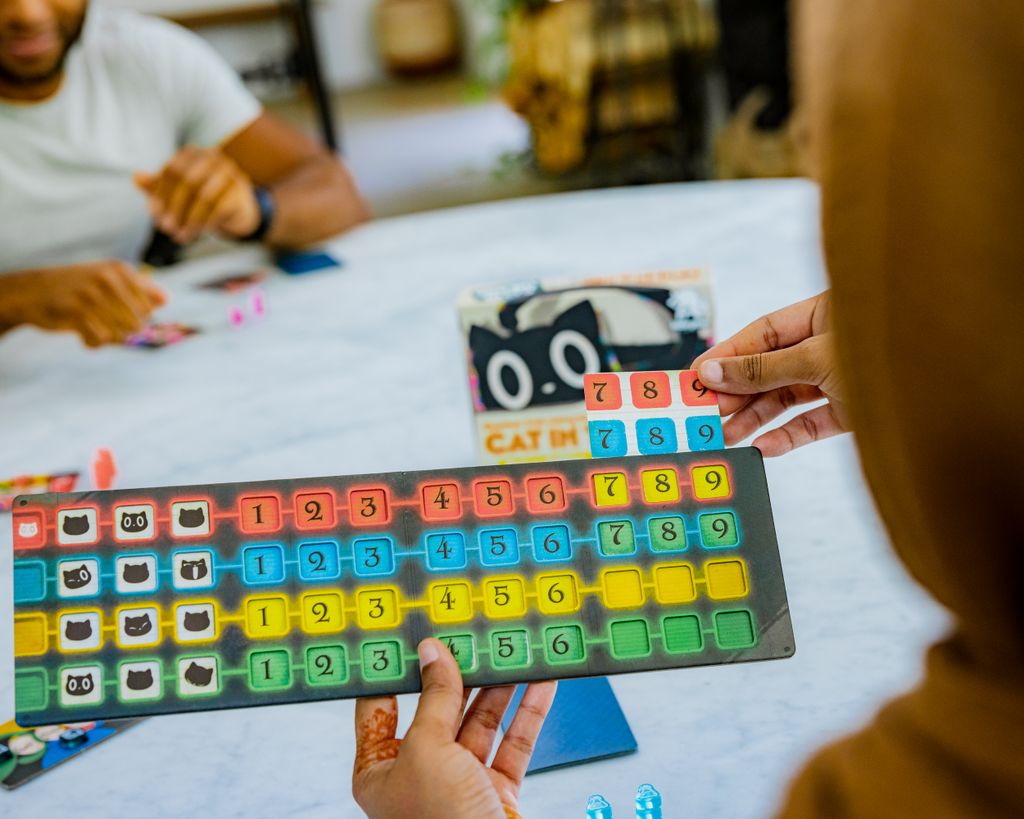
Designer Muneyuki Yokouchi built the game on Schrödinger's cat — the thought experiment where a thing exists in superposition until observed. In play, your cards show only numbers. You declare each card's color the moment you play it, recording it on a shared research board. But here's the quantum cruelty: no two players may ever claim the same color-and-number pairing. If you reach a point where you cannot legally declare a card, you create a paradox — and lose a point for every trick you'd won that round.
It is trick-taking turned into a deductive minefield. You are simultaneously bidding, taking tricks, tracking which color-number combinations are still 'alive,' and trying to connect your placed tokens into large scoring groups on the board. It demands genuine fluency — this is the one game here I would not hand to a total beginner.
The Deluxe Edition is the version to own: recessed player boards, a recessed research board, premium tokens, and a custom insert. It made Wirecutter's best-board-games list, praised for its 'deliciously thematic twist.'
The lineage note: for six centuries a card's suit was fixed the instant it was printed. Cat in the Box is the first widely-loved design to make suit itself a decision — arguably the most genuinely novel idea to enter the genre since trionfi introduced trumps around 1440.
For six centuries a card's suit was fixed at printing. Cat in the Box makes suit itself a decision.
From the rabbit hole
Real voices from players, reviewers, and the communities who know these games best.
review“Despite this love from the community, I've never been a big fan of trick-taking games — yet Mission Deep Sea is just that addictive, and the higher the challenge rating you go the more interesting and involving the puzzle becomes.”
Roll to Review — The Crew: Mission Deep Sea (5-star verdict)
review“Overall, I think The Crew: Mission Deep Sea is also pretty excellent! I love The Crew, and I love Mission Deep Sea as well.”
What's Eric Playing? — The Crew: Mission Deep Sea review
review“This is a game that I completely overlooked when it came out. Overall I was very impressed by The Fox in the Forest. It comes strongly recommended.”
Tabletop Bellhop — The Fox in the Forest review
review“It is Wizard perfected and accessible for anyone to enjoy. This cocktail of changes brews Skull King into a game that transforms the most well-adjusted human beings into selfish incompetent fools.”
Meeple Mountain — Skull King review
review“This game is fun, it's dramatic, it's funny, it's crunchy. It is, in a word, neat. Go get a copy of Cat in the Box. Buy two, even.”
Meeple Mountain — Cat in the Box review (Andrew Lynch)
review“Tichu is genuinely one of the highest-rated card games in the world on BoardGameGeek — it puts a twist on familiar, traditional card mechanisms and offers a lot of satisfying depth over repeated plays.”
Screenwise — Tichu and the World of Climbing Card Games
The picks
Some links below are affiliate links — as an Amazon Associate, Puzzlewick earns from qualifying purchases, at no extra cost to you. It never changes a pick.
 3 photos · swipe
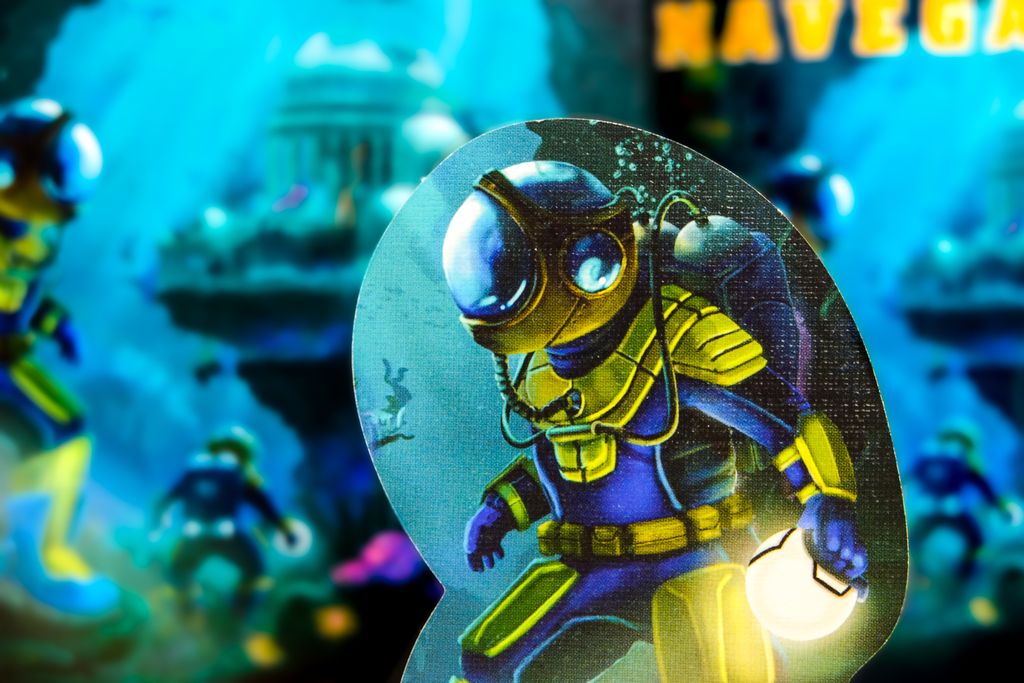
 The Crew: Mission Deep Sea
The game that proved trick-taking could be fully cooperative, and the one that converts confirmed skeptics. A 32-mission campaign and 96 task cards turn the oldest card mechanic into a constantly-escalating logic puzzle with brutally limited communication. Top 100 on BoardGameGeek for four straight years. Buy the Deep Sea edition over the original Planet Nine for its smarter sonar signaling.
- Cooperative — no sore losers at the table
- 32-mission campaign delivers enormous replay value
- Scales cleanly from 2 to 5 players
- Teaches in minutes; difficulty grows with you
- Needs a regular play group to climb the campaign
- The limited-communication constraint frustrates players who want to strategize aloud

 3 photos · swipe
 The Fox in the Forest
The definitive two-player trick-taker. Its perverse scoring curve — win 7–9 tricks for points, but win 10+ and score zero — makes deliberately *losing* tricks the central tension. Storybook art, three-minute teach, pocket-sized box. A genuinely hard design problem solved with fairy-tale grace. Averages 4.6 stars across thousands of Amazon ratings.
- Best-in-class two-player trick-taking
- Gorgeous, evocative storybook artwork
- Trivially portable and quick to teach
- Character powers add depth without bloat
- Strictly two players (the Duet edition handles co-op separately)
- Less to chew on than the big partnership games
 3 photos · swipe
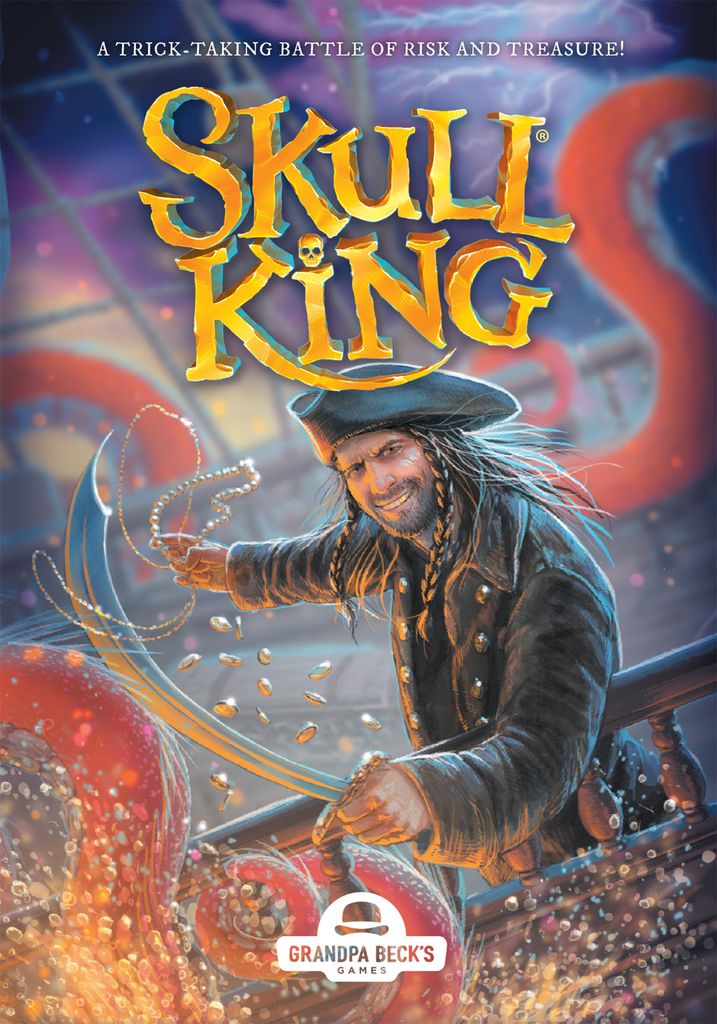
 Skull King
A pirate-themed bidding trick-taker that scales an astonishing 2–8 players. Bid your exact trick count each round; hit it for big points, miss it and bleed them. The Skull King card trumps everything, special characters scramble the math, and the whole thing forgives bad bids with laughter rather than tedium. Called 'Wizard perfected' by reviewers.
- Handles up to 8 players — rare in the genre
- Forgiving and hilarious; converts non-gamers fast
- Ages 8+ — genuinely family-friendly
- Special cards keep every round unpredictable
- Higher player counts add downtime
- Lighter strategic ceiling than Tichu or Cat in the Box
 3 photos · swipe
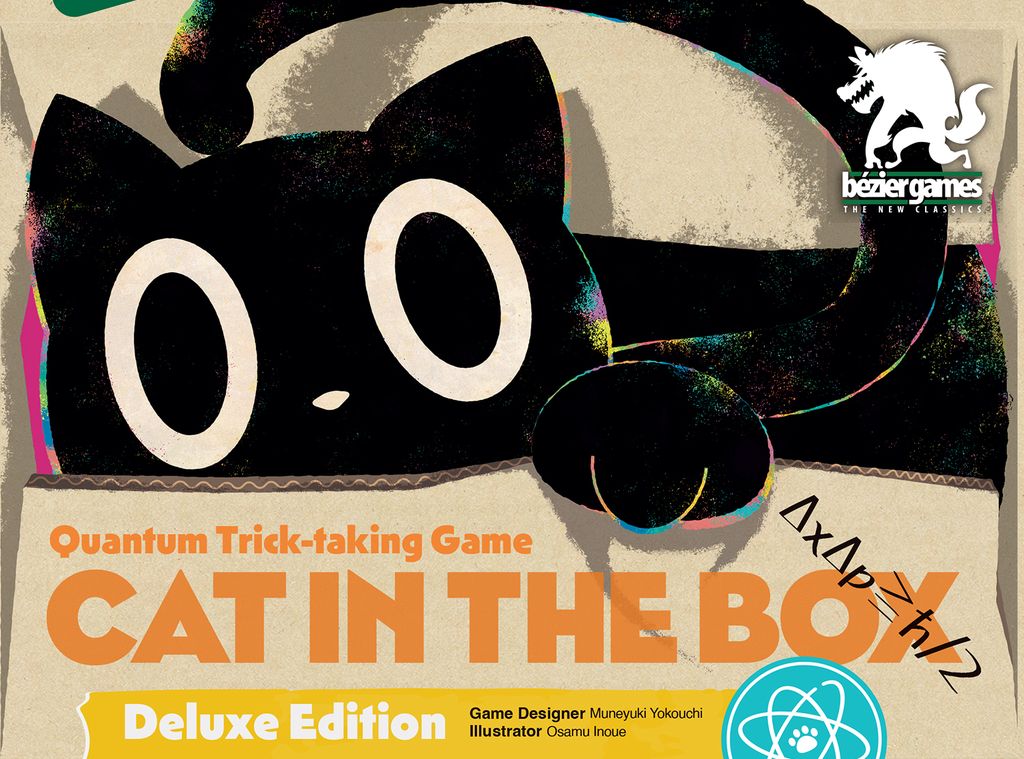
 Cat in the Box: Deluxe Edition
The most genuinely novel idea in trick-taking since trumps: your cards have no color until you declare it at the moment of play, and no two players may claim the same color-number pairing. Triggering a paradox costs you the round. A Schrödinger's-cat deduction-minefield best at 4–5 players. The Deluxe insert and recessed boards are worth the premium.
- Mechanically the most innovative game on this list
- Deluxe components (recessed boards, premium tokens) are excellent
- Deep, deductive, endlessly re-analyzable
- Wirecutter best-games pick
- Weak at two players; wants four or five
- Not for beginners — assumes genre fluency
- Token organizer is famously cramped
 3 photos · swipe
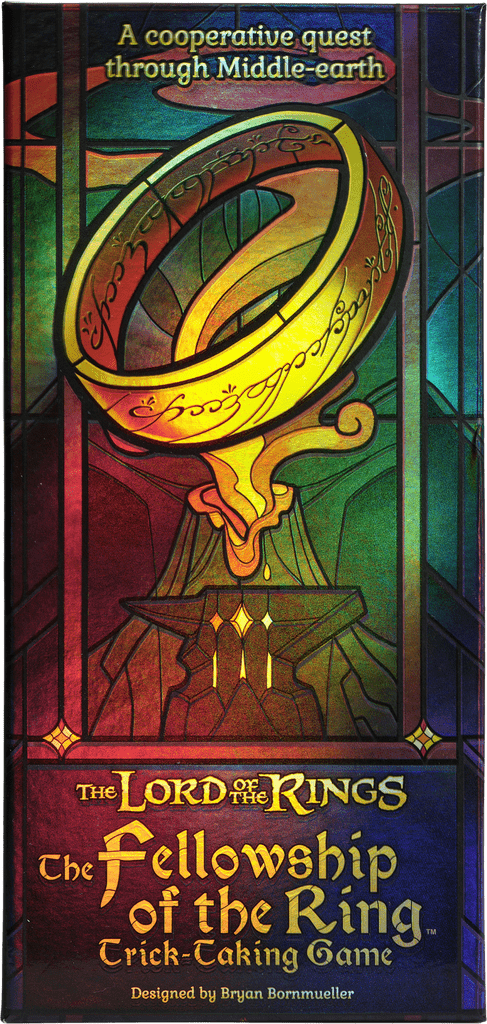
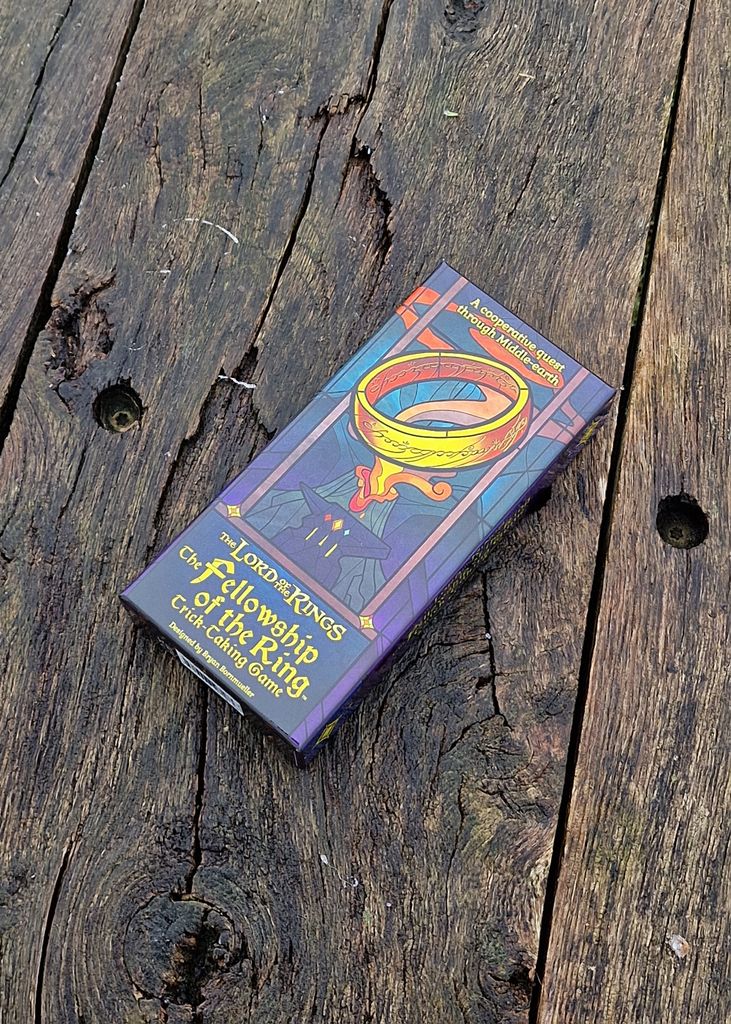
 The Lord of the Rings: The Fellowship of the Ring Trick-Taking Game
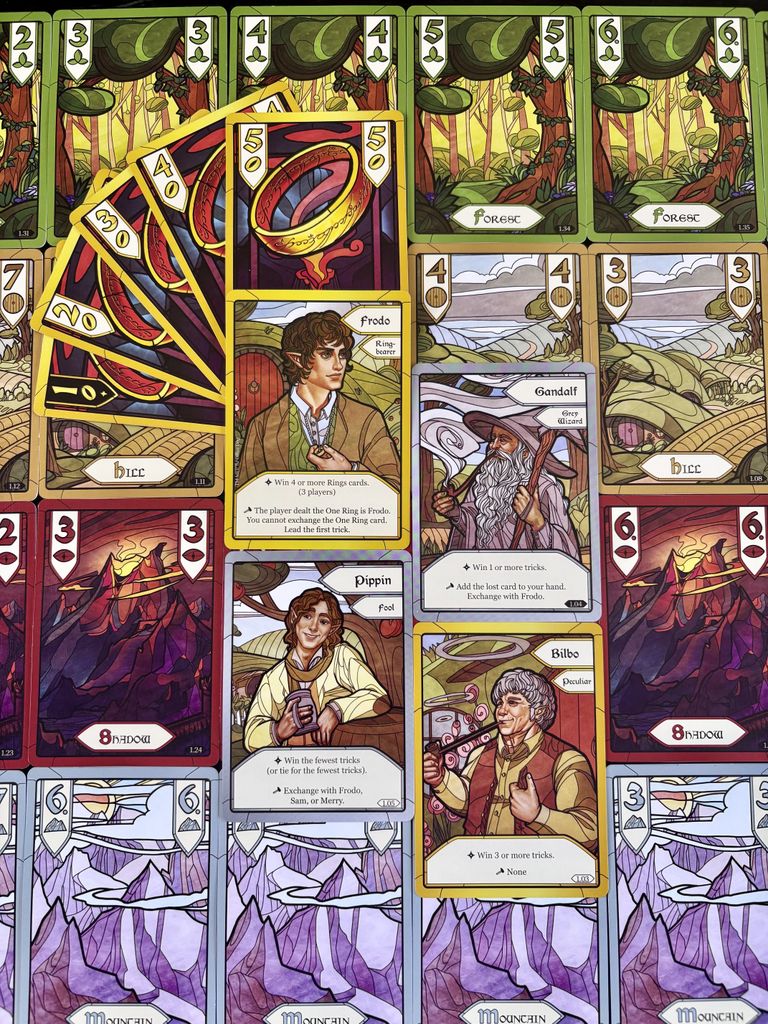
A cooperative, chapter-based trick-taker that walks the Fellowship from the Shire to the breaking of the company, told through stained-glass artwork and dozens of playable characters from Gandalf to Tom Bombadil. 1–4 players, 20 minutes, ages 10+. A gentler, story-forward cousin to The Crew with a beloved license attached. (Note: this is the trick-taking game — not Z-Man's Pandemic-style 'Fate of the Fellowship.')
- Cooperative and narrative — great for fans
- Striking stained-glass art direction
- Plays solo (1) up to 4; fast 20-minute sessions
- Multiple modes and playable characters
- Lighter and more thematic than the pure-puzzle Crew
- Easy to confuse with the unrelated 'Fate of the Fellowship' box
 3 photos · swipe
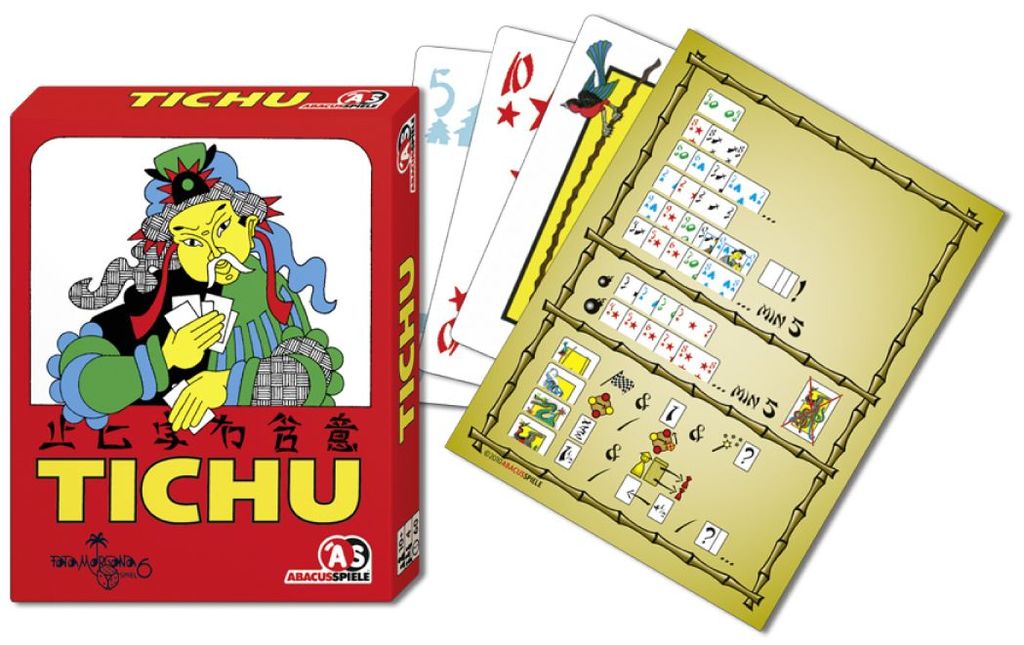
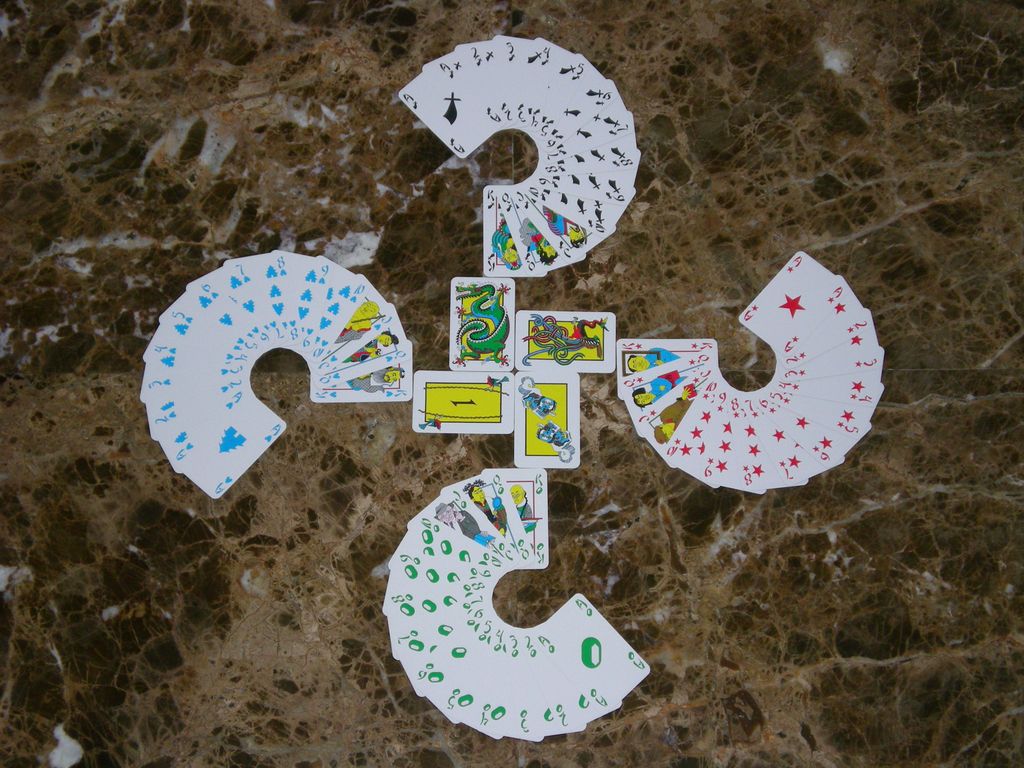
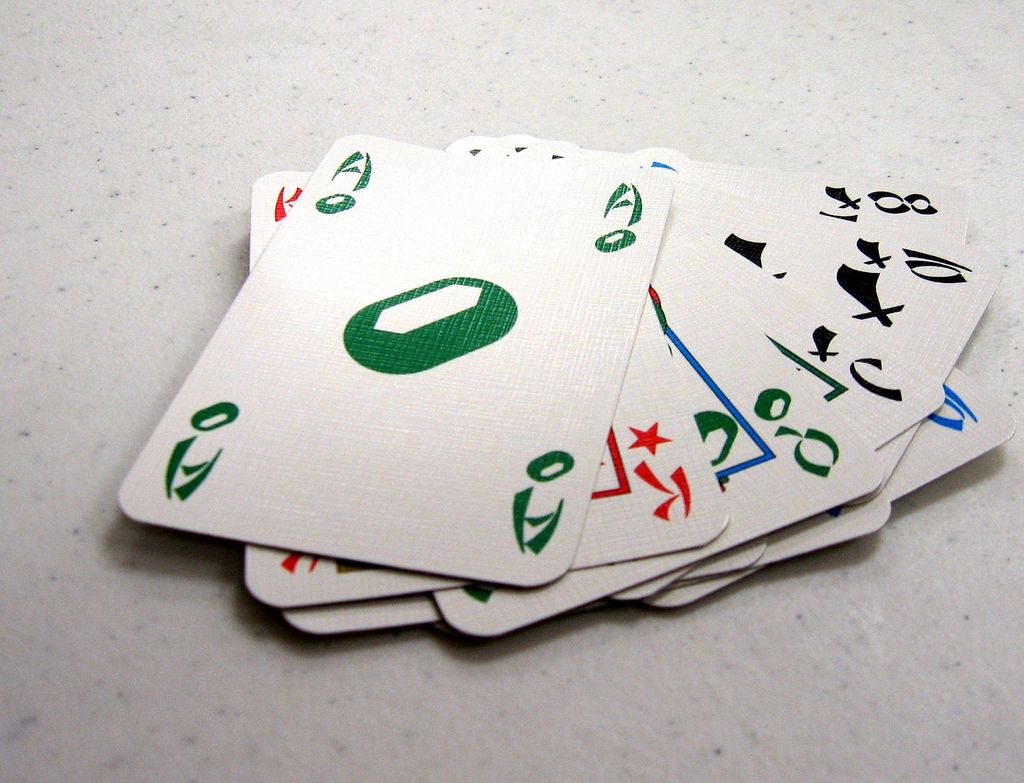
 Tichu
The partnership deep-end. A 1991 Swiss design (Urs Hostettler) that fuses trick-taking with ladder-style card play: empty your hand first, support your seated partner, and call 'Tichu' or 'Grand Tichu' to wager 100 points that you'll go out first. 'Bombs' can seize any trick out of turn. One of the highest-rated card games on BoardGameGeek for years — but it demands four committed players. Buy-link is a search until a stable Amazon listing is confirmed; the publisher is Rio Grande Games.
- Extraordinary strategic depth and partnership tension
- Decades-proven; perennial BGG top-tier card game
- Bidding (Tichu/Grand Tichu) creates huge swings
- Endlessly replayable for a fixed four
- Strictly a four-player partnership game
- Steep learning curve — not a casual pick
- Amazon availability/edition varies; verify the listing before buying
At a glance
| game | maker | players | age | playtime | mode | twist | best for |
|---|---|---|---|---|---|---|---|
| The Crew: Mission Deep Sea | Thames & Kosmos | 2-5 | 10+ | ~20 min/mission | Cooperative campaign | Win assigned tasks together with near-zero communication | Regular groups; skeptic-converters |
| The Fox in the Forest | Renegade | 2 | 10+ | ~30 min | Competitive duel | Win the *right* number of tricks, not the most | Two-player couch nights |
| Skull King | Grandpa Beck's | 2-8 | 8+ | ~30-45 min | Competitive bidding | Bid your exact tricks; pirates & Skull King trump all | Big, loud game nights |
| Cat in the Box: Deluxe | Bézier Games | 2-5 | 10+ | ~30 min | Competitive deduction | Declare a card's suit at the moment you play it | Experienced groups (best at 4-5) |
| LotR: Fellowship Trick-Taking | Asmodee / Office Dog | 1-4 | 10+ | ~20 min | Cooperative narrative | Chapter-based story from Shire to the breaking | Tolkien fans; gentle on-ramp |
| Tichu | Rio Grande / Fata Morgana | 4 | 12+ | ~60 min | Partnership climbing | Empty your hand; bid 'Tichu' for 100-point swings | Committed four-player partnerships |
Questions, answered
What is the best trick-taking card game in 2026?
The Crew: Mission Deep Sea (Thames & Kosmos) is the consensus best modern trick-taker — a fully cooperative, 32-mission campaign that held a BoardGameGeek Top 100 spot from 2021 through 2024. For two players the best is The Fox in the Forest; for groups, Skull King; for the most innovative twist, Cat in the Box: Deluxe.
What exactly is a 'trick' in a card game?
A trick is one round where every player lays down a single card, and one card wins the whole pile — normally the highest card of the suit that was led, unless a trump suit overrules it. A game is a series of tricks, and scoring is based on which tricks (or how many) you win.
What is the oldest trick-taking game?
The oldest known European trick-taking game is Karnöffel, documented in 1426 in the Bavarian town of Nördlingen, per card historian David Parlett. Trick-taking itself is older still, arriving in Europe with playing cards (first recorded in Spain, 1371) and descending from earlier Chinese games.
When were trump suits invented?
True trumps appeared around 1440 in Italy via special cards called trionfi (the ancestors of tarot), which formed a fixed-hierarchy 'fifth suit' that overruled the ordinary suits. Bidding for the trump suit came later, popularized by the 17th-century Spanish game ombre.
Is The Crew a competitive or cooperative game?
The Crew is fully cooperative. Instead of competing for tricks, the whole table works together to complete assigned tasks each round, using a severely limited communication system. This is exactly why it converts players who normally dislike competitive trick-takers.
What's the best trick-taking game for two players?
The Fox in the Forest (Renegade) is the best two-player trick-taker — an elegant duel where you want to win the right number of tricks (7-9), not the most, since winning 10 or more scores zero. If you want a cooperative two-player option, The Fox in the Forest Duet uses the same engine.
What's the best trick-taking game for a large group?
Skull King (Grandpa Beck's) scales 2-8 players and is the most forgiving, party-friendly bidding trick-taker. You bid your exact trick count each round, with pirates, mermaids, and the Skull King card scrambling the math. It's ages 8+ and converts non-gamers quickly.
What makes Cat in the Box different from a normal trick-taking game?
In Cat in the Box, your cards have no suit until you declare it at the moment you play them — and no two players may ever claim the same color-and-number pairing. If you can't legally declare a card, you create a 'paradox' and lose points. It's the most novel twist on the genre since trumps were invented around 1440.
Is the Lord of the Rings trick-taking game the same as Fate of the Fellowship?
No. The Fellowship of the Ring: Trick-Taking Game (Asmodee/Office Dog) is a cooperative card game. 'The Lord of the Rings: Fate of the Fellowship' (Z-Man Games) is a separate, Pandemic-style cooperative board game — not a trick-taker. Make sure you're buying the trick-taking title if that's what you want.
Do I need to know how to play Hearts or Spades first?
No, but it helps. If you've played Hearts, Spades, Euchre, or Bridge, you already understand the core grammar (follow the led suit; trumps win). All the games here teach in minutes, but prior familiarity makes the cleverest ones — like Cat in the Box and Tichu — click much faster.
Which trick-taking game is best for families with kids?
Skull King (ages 8+) is the most family-friendly, with a forgiving bidding system and a fun pirate theme. The Lord of the Rings: Fellowship trick-taking game (ages 10+) is also gentle and cooperative, which avoids the sting of head-to-head competition for younger or newer players.
Why is trick-taking suddenly so popular again?
Modern designers have kept the elegant, centuries-old core and added one bold idea each — cooperation (The Crew), exact-bid scoring (Skull King, Fox in the Forest), or quantum suit declaration (Cat in the Box). The games are cheap, portable, quick to teach, and deliver enormous tension per dollar, which has driven a genre-wide revival.
Margo's verdict
Trick-taking endures because it solved the central problem of card games six hundred years ago and has been quietly perfecting the answer ever since. In 2026 the genre's revival is led by The Crew: Mission Deep Sea — buy it first, especially if your table includes anyone who 'doesn't like card games,' because it is the great converter. Pair it by occasion: The Fox in the Forest for two; Skull King for the rowdy eight; Cat in the Box: Deluxe for the seasoned group that wants its assumptions broken; the Fellowship trick-taker for a narrative Tolkien evening; and Tichu for the committed four who want to go all the way down. Each is a living leaf on the branch David Parlett traced back to Karnöffel in 1426 — and that lineage, more than any marketing, is why these little decks keep earning their place on the table. The Archivist marks the ledger closed, and verified.
Sources: amazon.com, amazon.com, amazon.com, amazon.com, amazon.com, en.wikipedia.org, rolltoreview.com, whatsericplaying.com, tabletopbellhop.com, meeplemountain.com, meeplemountain.com, en.wikipedia.org