Best Gateway Board Games (2026): Picked by Who You're Converting
Ten welcoming games organized by the person at your table, with teach time, interaction and failure modes made explicit.

Written and reviewed by Robert Pruitt · how this guide was made
Last editorial refresh: 2026-09-11 Gold-standard QA: 2026-09-11 23 sources reviewed Affiliate links checked during gold-standard pass

The short answer
The best gateway board game depends on the person you are inviting. Choose Azul for a skeptical adult who wants elegant competition, Ticket to Ride for a mixed-age family, Sushi Go or Codenames for a talkative group, and Cascadia for a quieter puzzle lover. Catan remains historically important, but its trading, luck swings and longer pauses make it a less reliable first recommendation than the audience-specific choices here.
Decision map
Choose in thirty seconds
The skeptical spouse who thinks board games are childish
The whole family with kids — one box that fits a 7-year-old and the adults
The party crowd — six-plus people, drinks, lots of talking
I've handed a first game to a lot of reluctant people over the years—in-laws who'd rather watch TV, a brother-in-law who only plays to win, a college roommate who thought everything past Uno was homework. And I learned the hard way that there is no single 'best gateway game.' There's only the best gateway game for the person sitting across from you.
The internet's top-10 lists all converge on the same six boxes, and they're not wrong—those boxes earned their spots. But a list ranked by raw quality tells you nothing about whether to put it in front of your competitive buddy or your eight-year-old niece. Those are opposite jobs. Hand the wrong one over and you don't just lose the game—you confirm the newcomer's suspicion that this hobby isn't for them, and you may not get a second night.
So this guide is organized the way I actually think about it: by the convert. Six kinds of person you're probably trying to bring in, and the game that's quietly engineered to win each one. Everything here is real, currently purchasable, and points you to the maker—I'm someone who knows what earns its shelf and what doesn't. If it didn't earn a place in my house, it isn't in this guide.
Start here, then go deeper
You are in the right cabinet.
 ⌂ Topic PathFamily and Gateway Games: compare the whole shelfA good family game gets everyone playing quickly without becoming disposable after three nights. These guides prioritize clear...
 ComparisonThe Best Family Board Games of 2026, Ranked (Kids + Adults Together)One table, three generations, zero meltdowns — the games that make a 7-year-old and a tired grown-up scheme against each other and both...
 ComparisonCatan vs Carcassonne vs Ticket to Ride: The Best Gateway Game, Head-to-HeadThree legends, one shelf, one decision. Here's the honest, table-tested call on which gateway game earns its spot first — and exactly who...
The Skeptical Spouse: someone who thinks board games are kid stuff
This is the hardest convert and the one most lists get wrong, because they reach for Catan — a 60-to-90-minute negotiation with dice — and the skeptic's eyes glaze before the second roll. The skeptical spouse isn't anti-fun; they're anti-wasting an evening on something that feels like a chore. You beat that with a game that looks like a designed object, ends before patience runs out, and rewards a satisfying 'aha' on the very first turn.
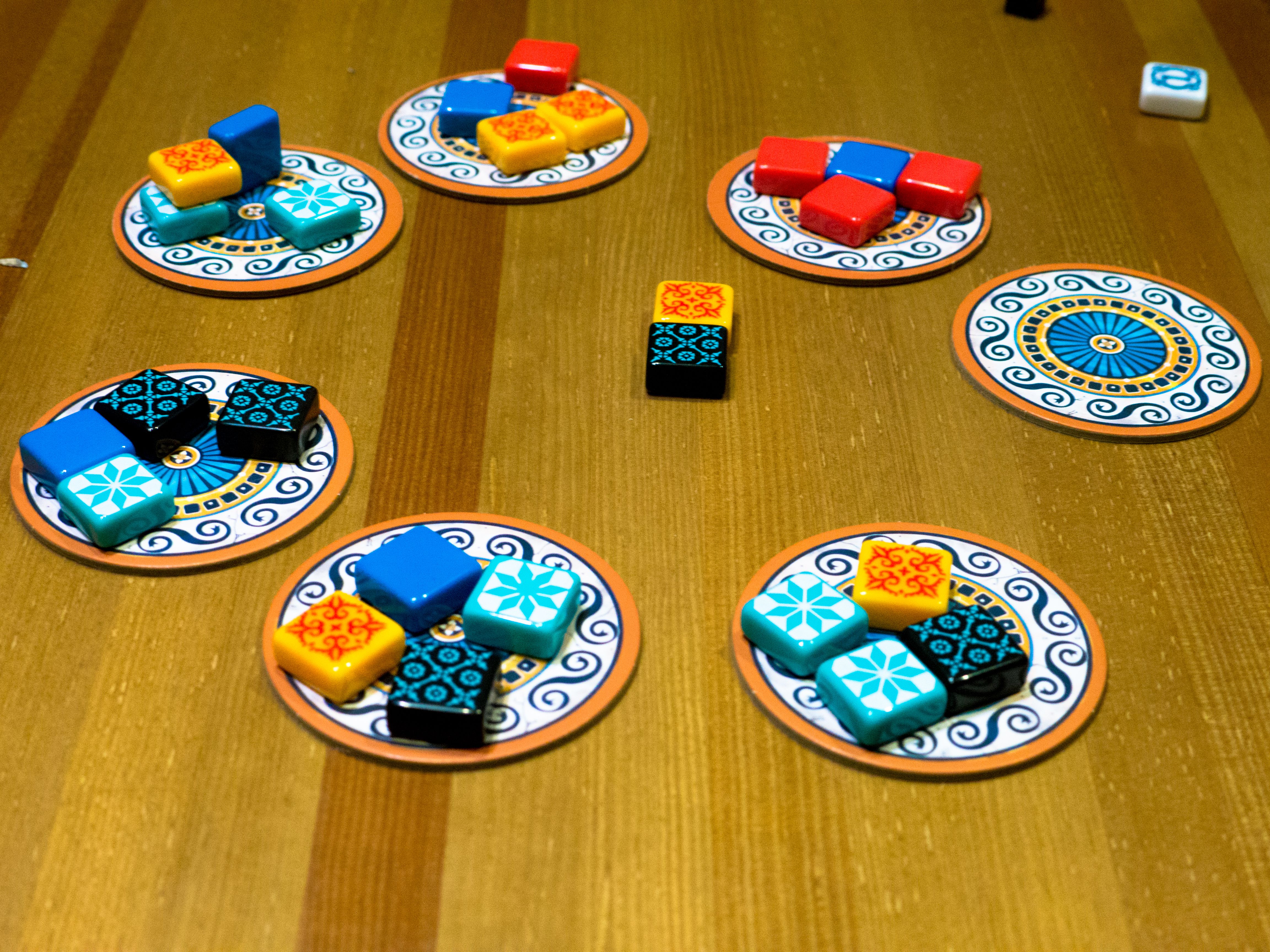
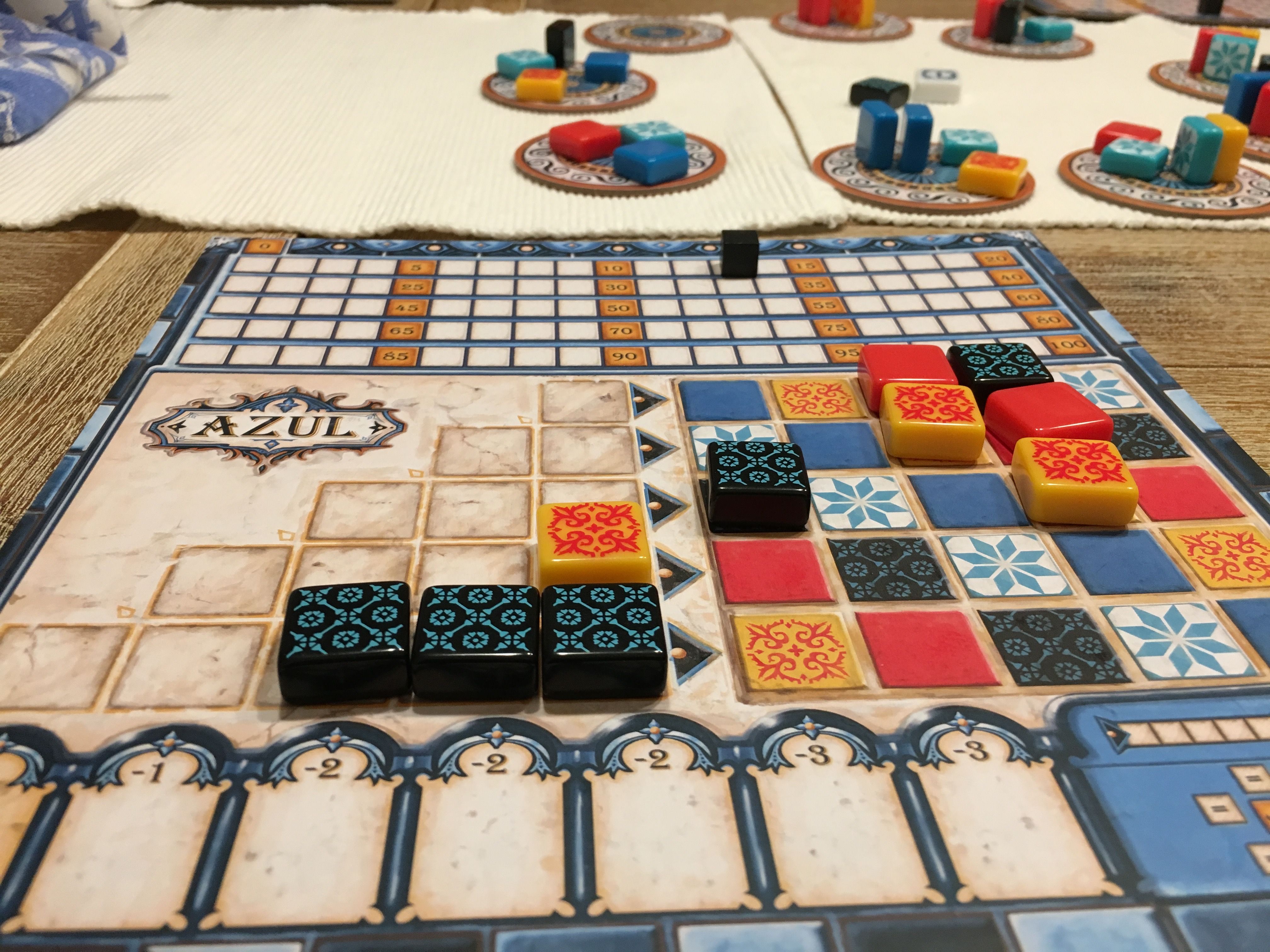
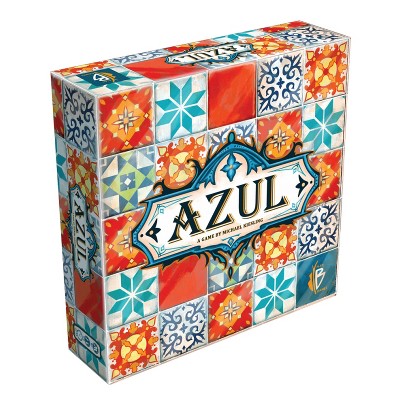
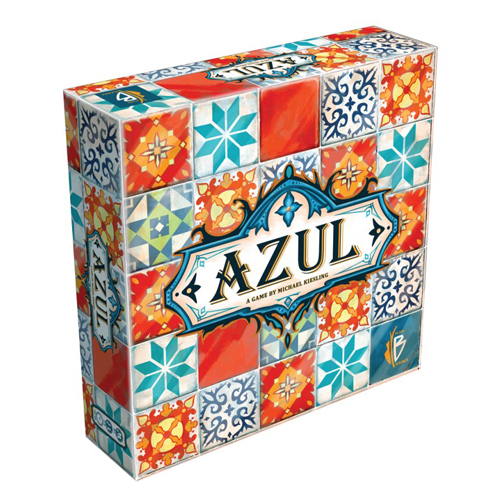
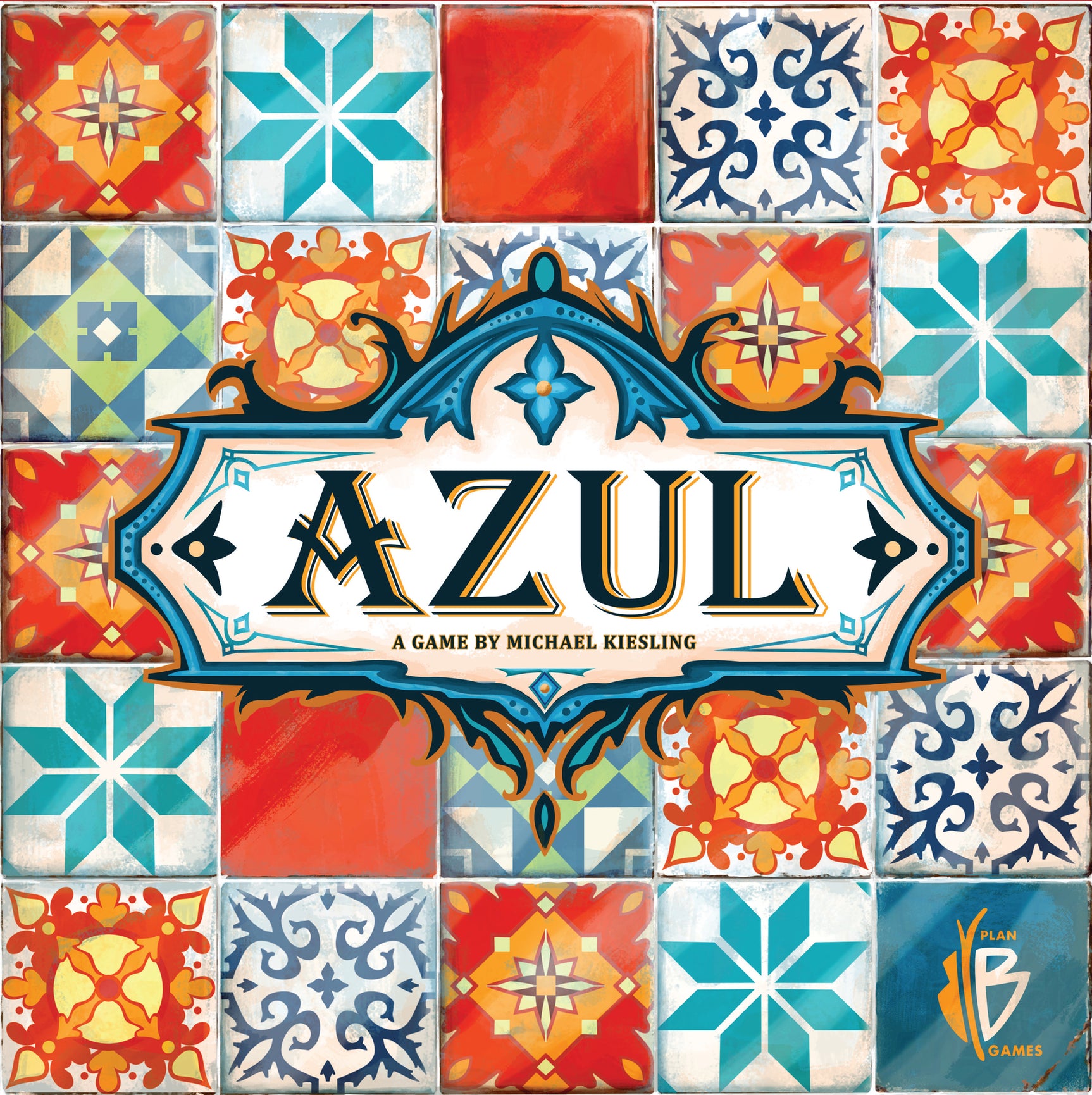
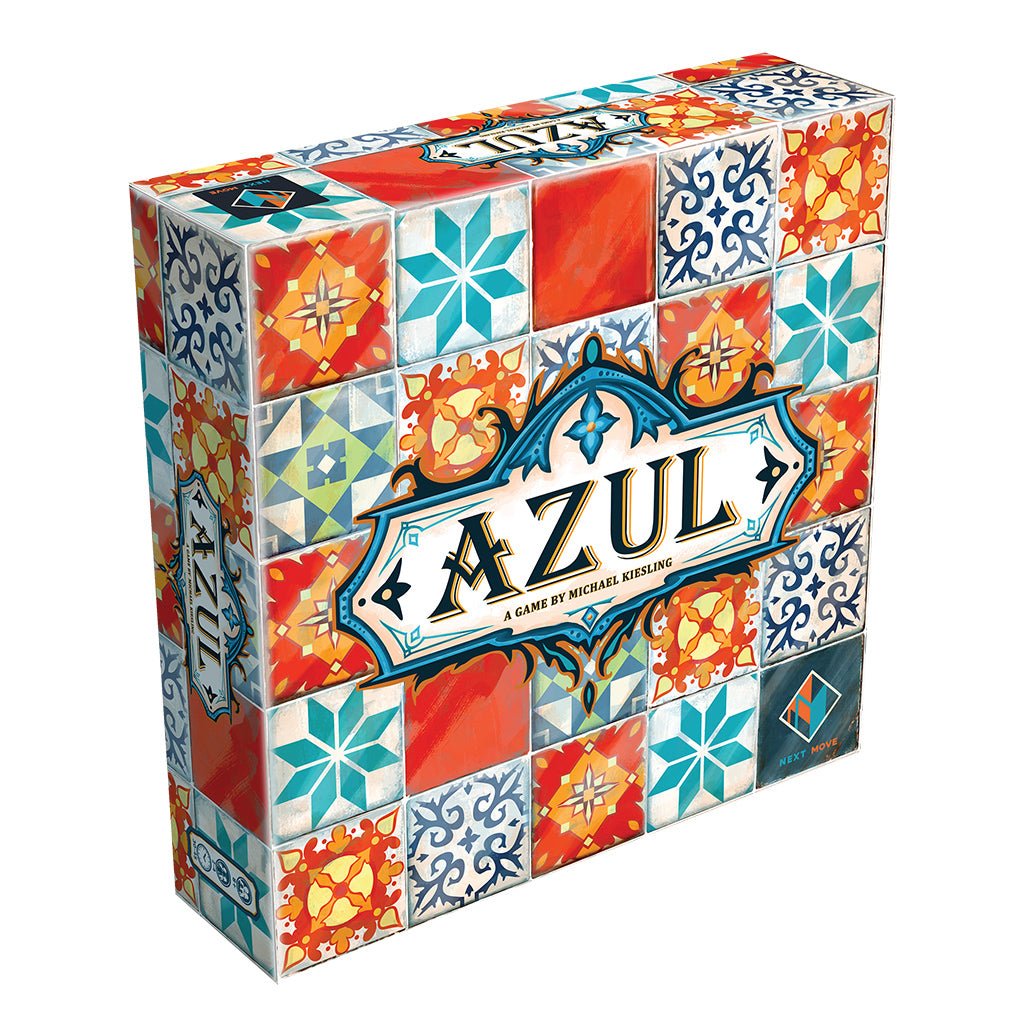
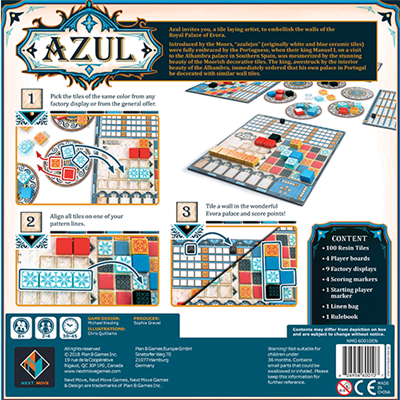
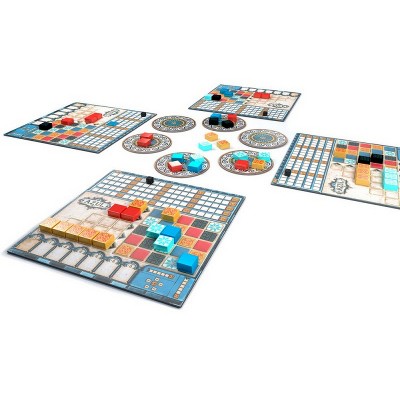
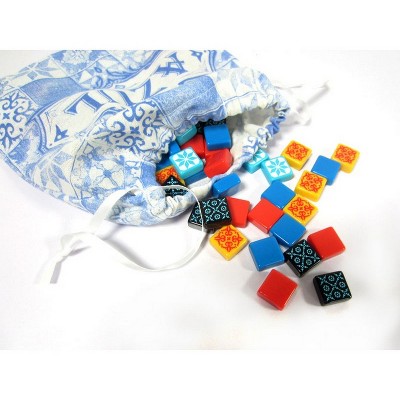
Azul (Plan B Games, Spiel des Jahres 2018) is my number-one weapon here, and it's not close. You draft gorgeous, heavy resin tiles from a central pool and lay them into a mosaic — that's basically the whole rule set, and it teaches in about three minutes. It looks like something you'd leave out on the coffee table, not hide in a closet. Crucially, the skeptic gets to feel clever immediately: 'oh, if I take the blue tiles I deny you the blue tiles' is a real strategic thought they'll have on turn one, and that little jolt is the conversion. Thirty to forty-five minutes, two-to-four players, no reading, no math beyond counting to five.
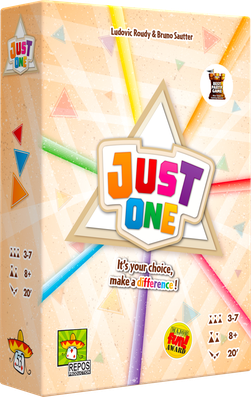
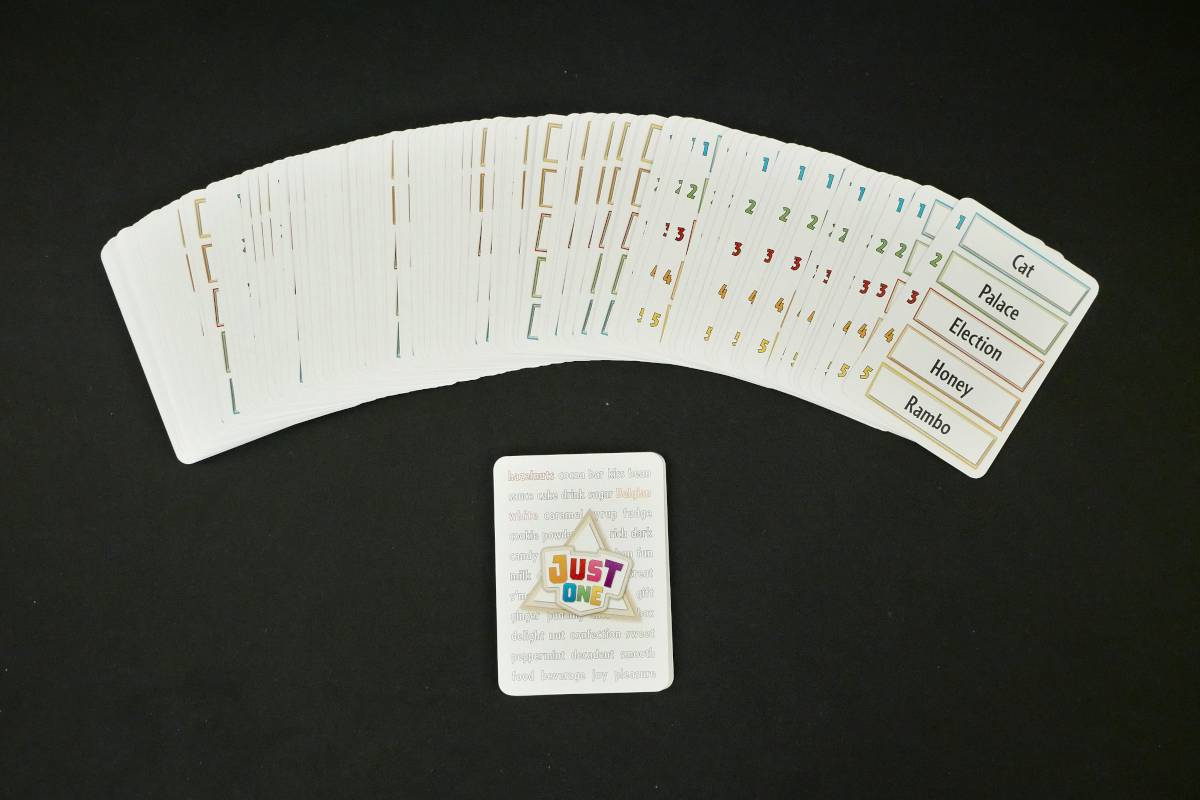
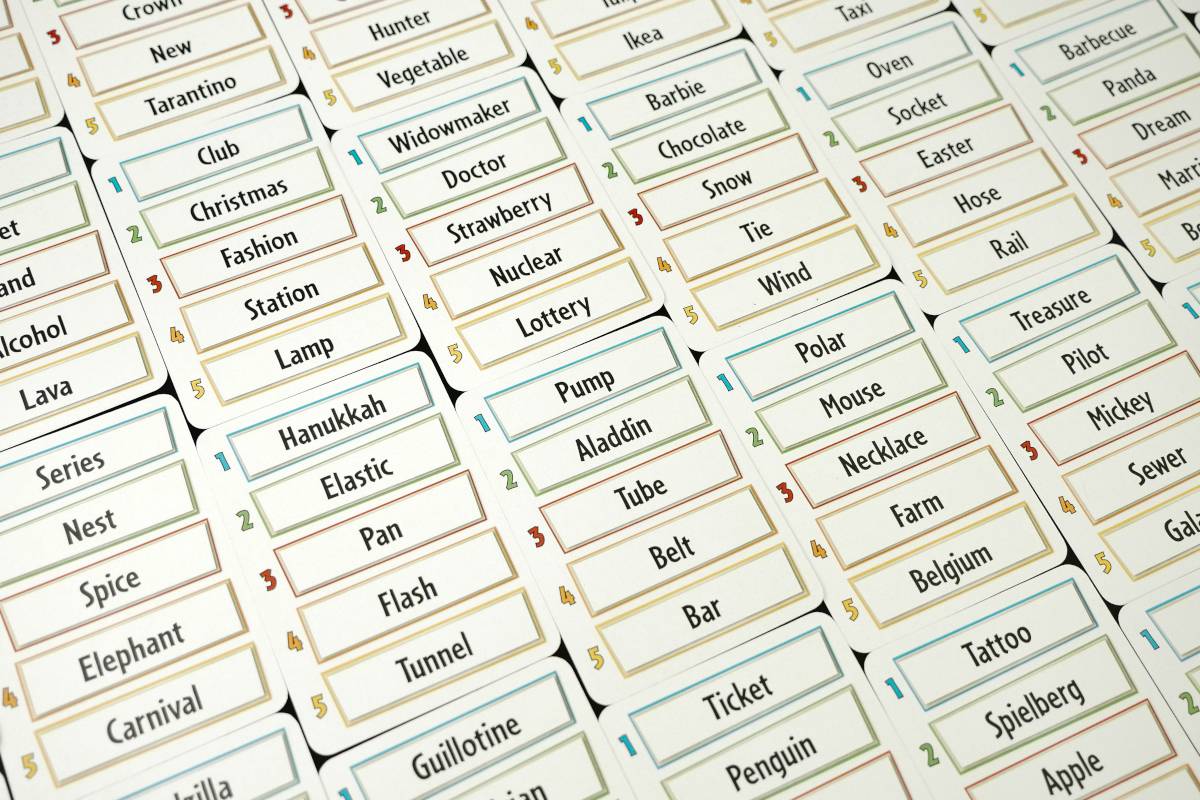
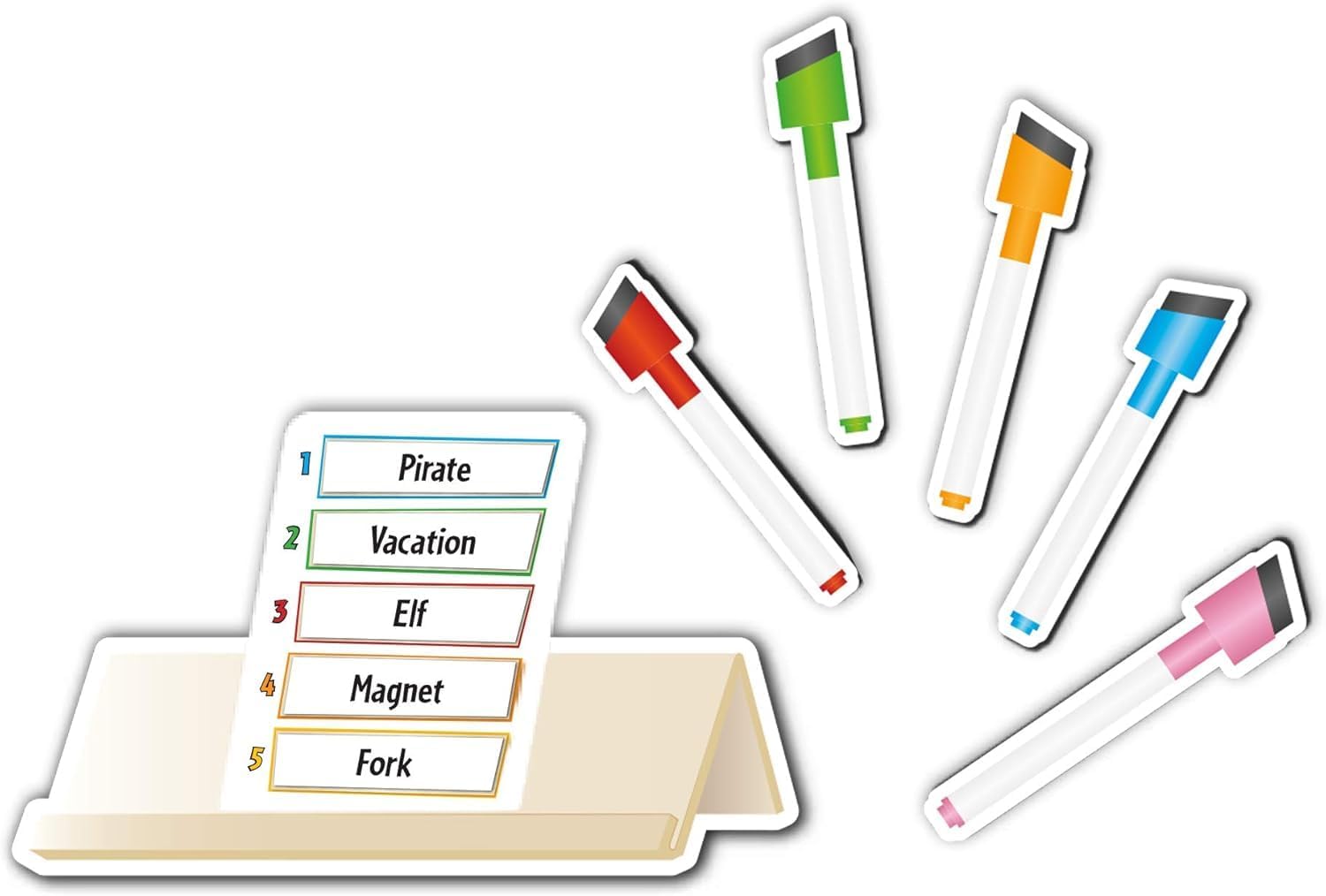
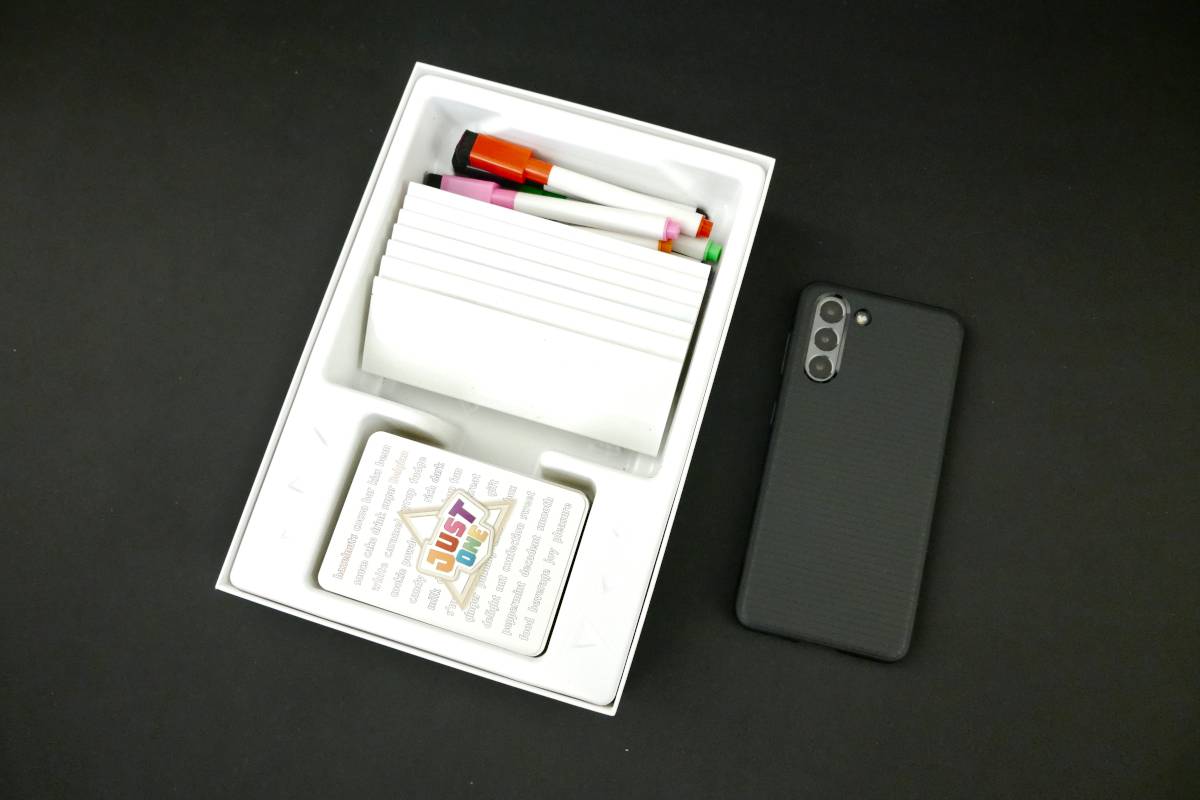
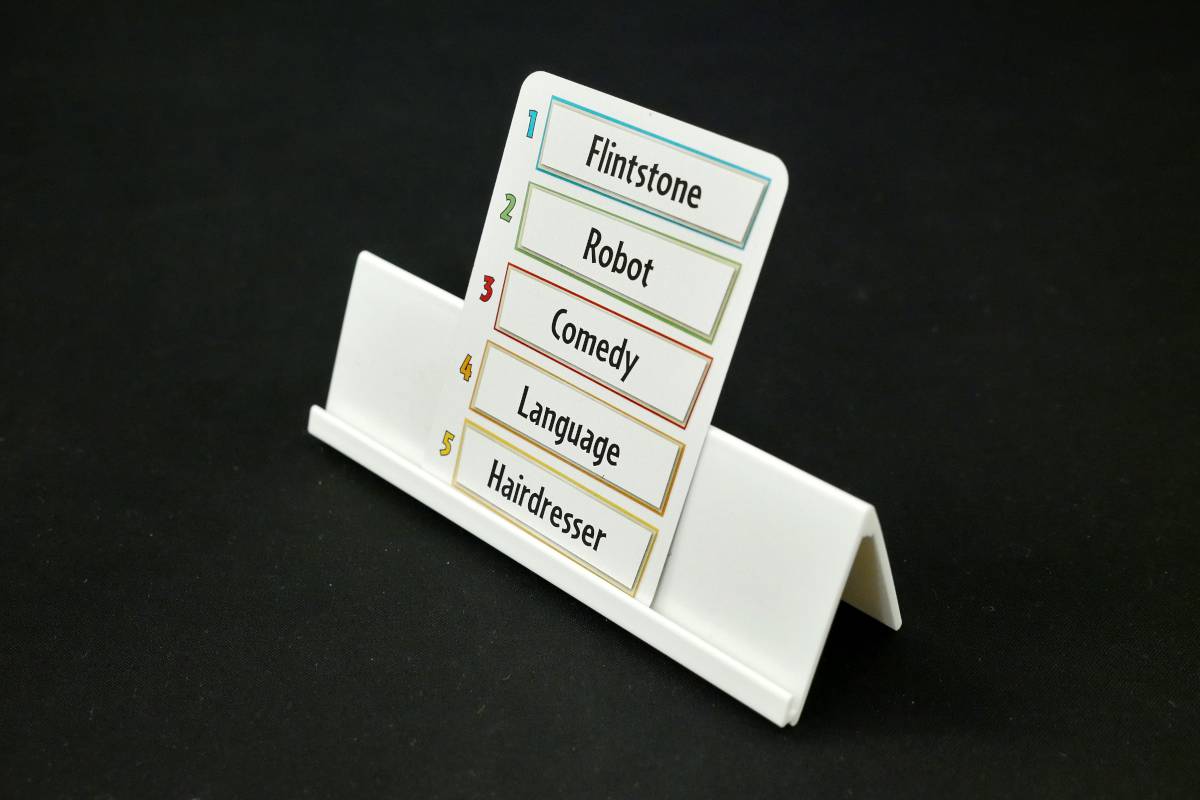
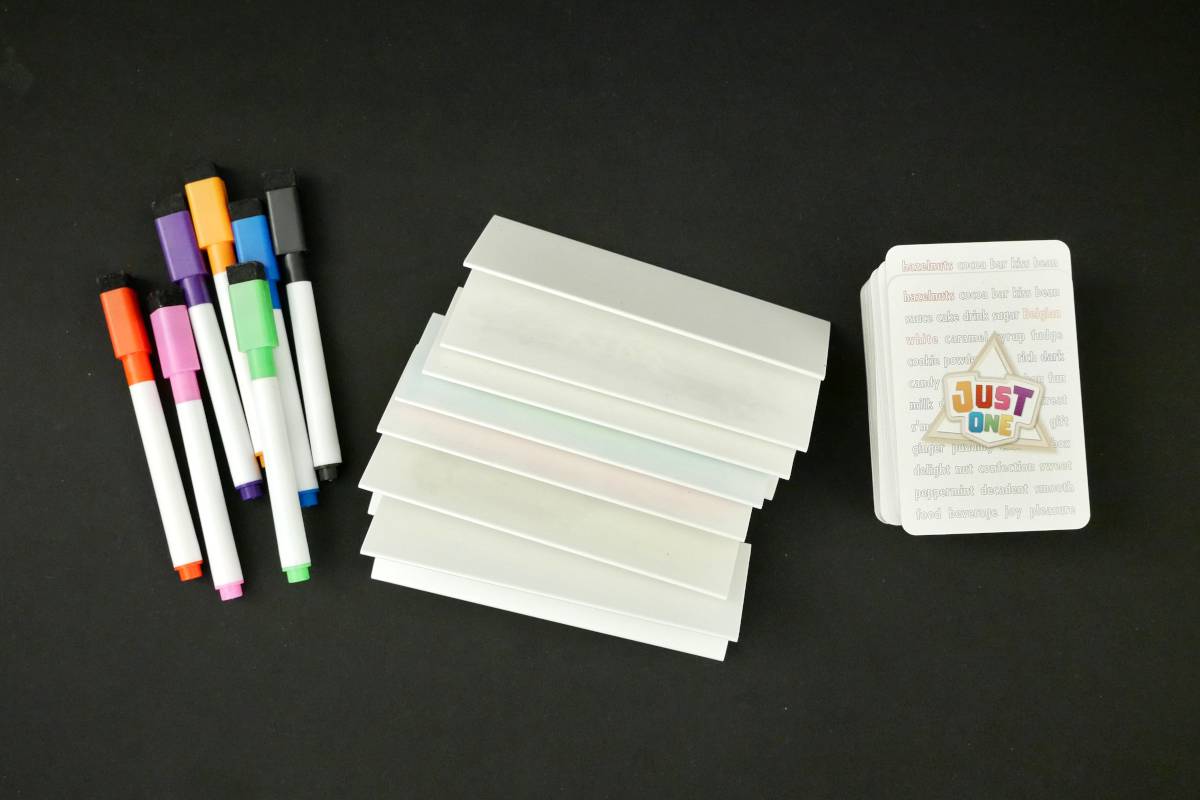
If your skeptic is more wordsmith than aesthete, Just One (Repos Production, Spiel des Jahres 2019) is the cooperative party alternative — everyone writes a one-word clue, matching clues cancel out, and you laugh your way through it in twenty minutes. It's the rare game that makes a self-described 'non-game-person' forget they were supposed to be too cool for this.
You don't convert a skeptic by proving board games are deep. You convert them by proving an evening with one wasn't wasted.
The Family With Kids: one box that works for a 7-year-old and the adults
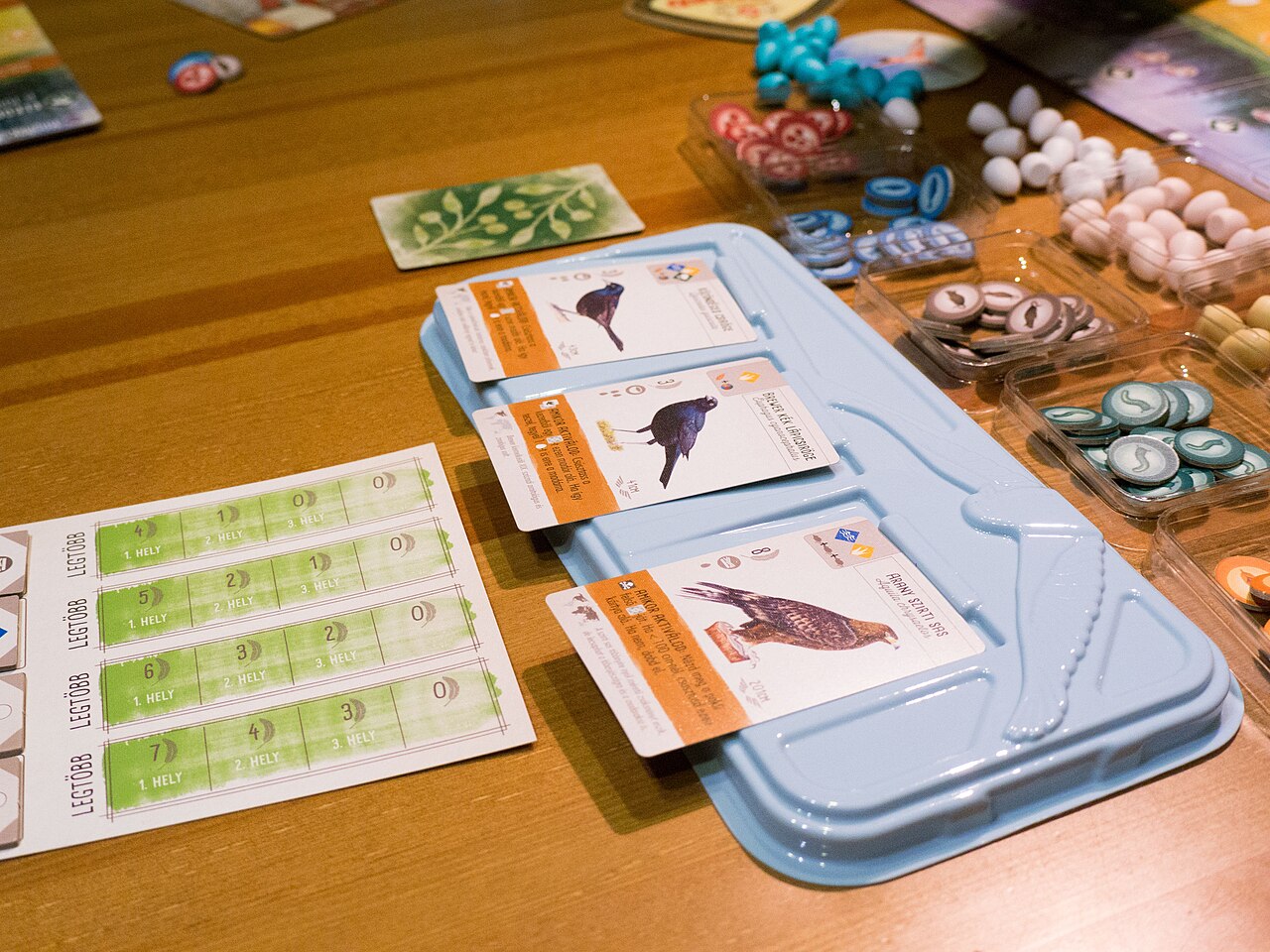
The family convert has a brutal constraint most gamers forget: the game has to genuinely work for a second-grader and not bore the parents into never suggesting it again. That rules out most 'kids' games' (too dull for adults) and most adult gateways (too fiddly for kids). You want a low age floor, a no-reading rule set, and a decision space shallow enough that a child competes honestly but deep enough that a parent isn't just babysitting.
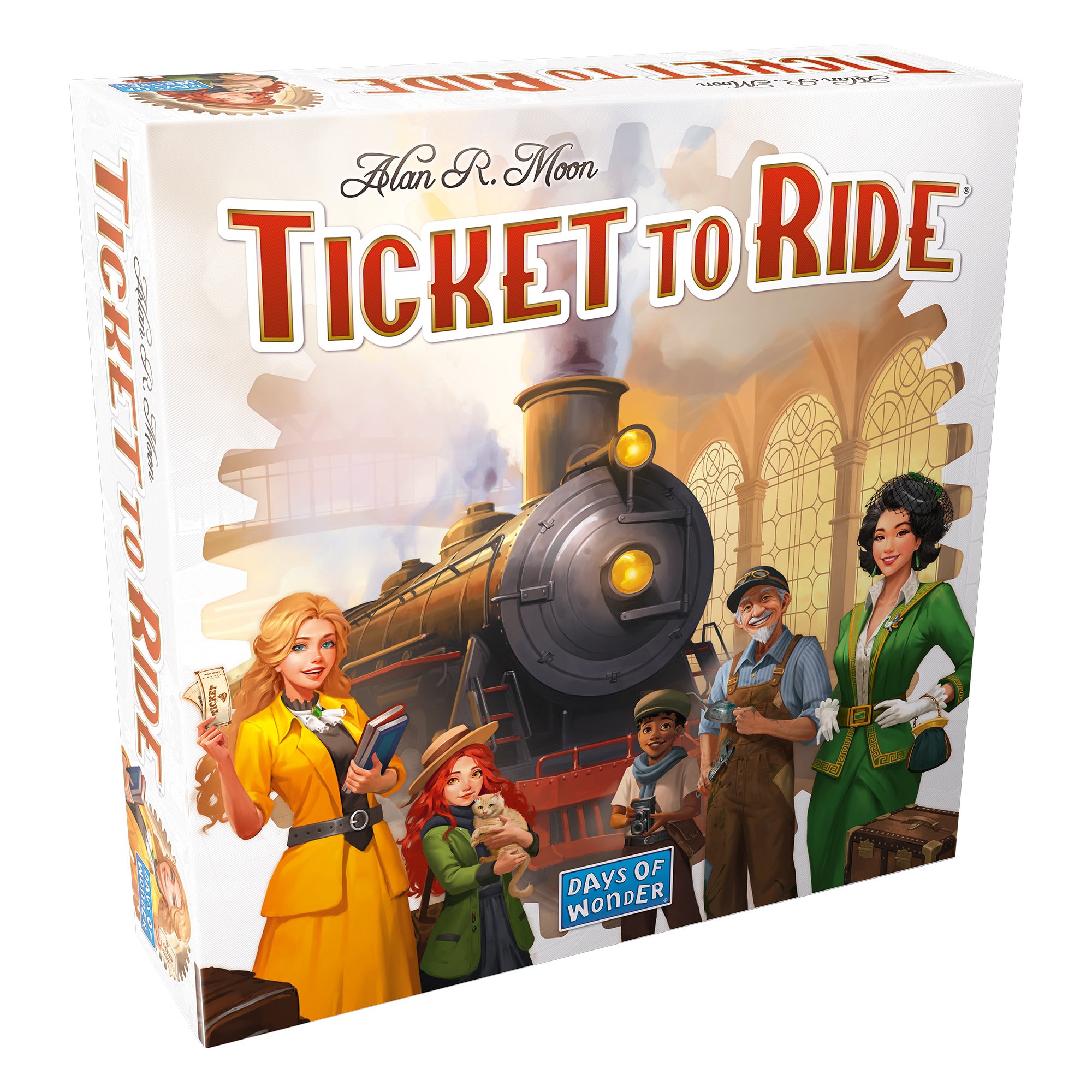
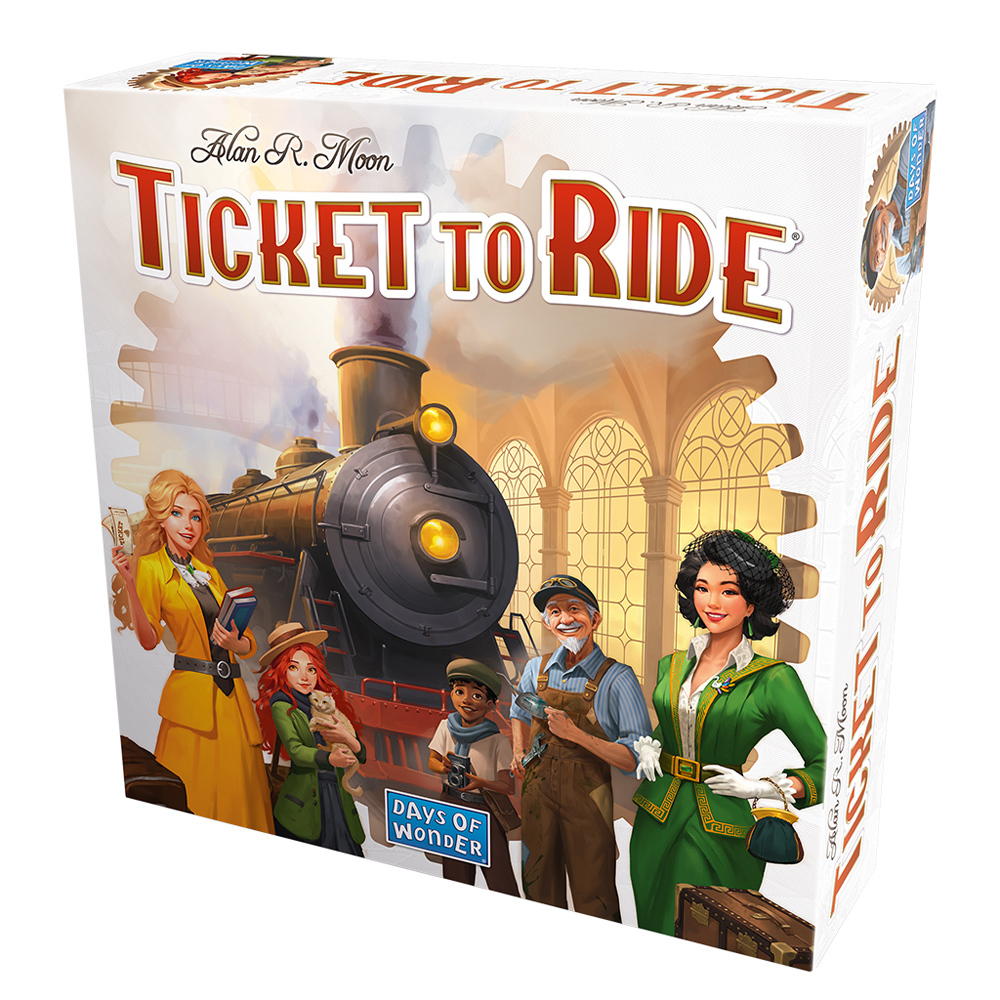
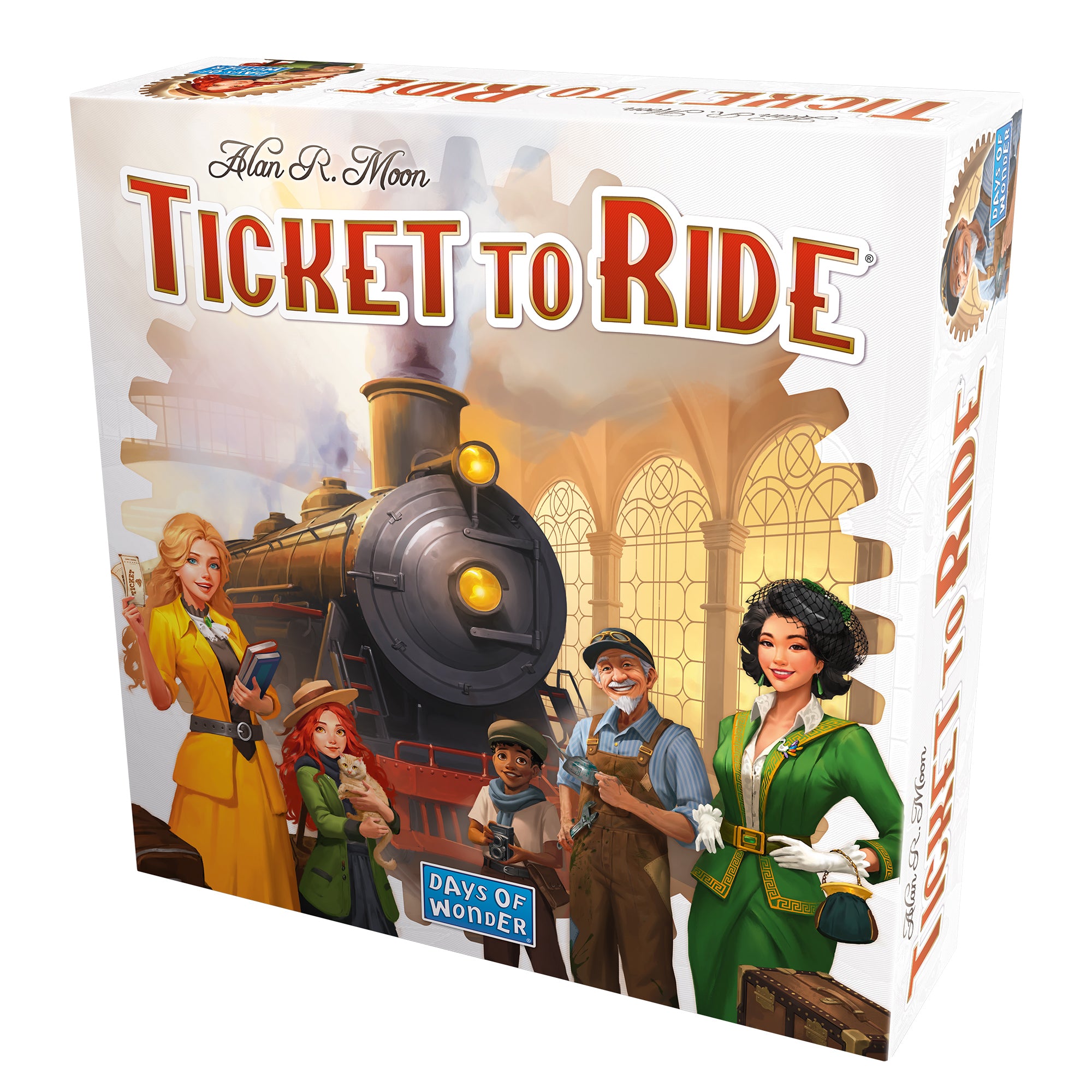
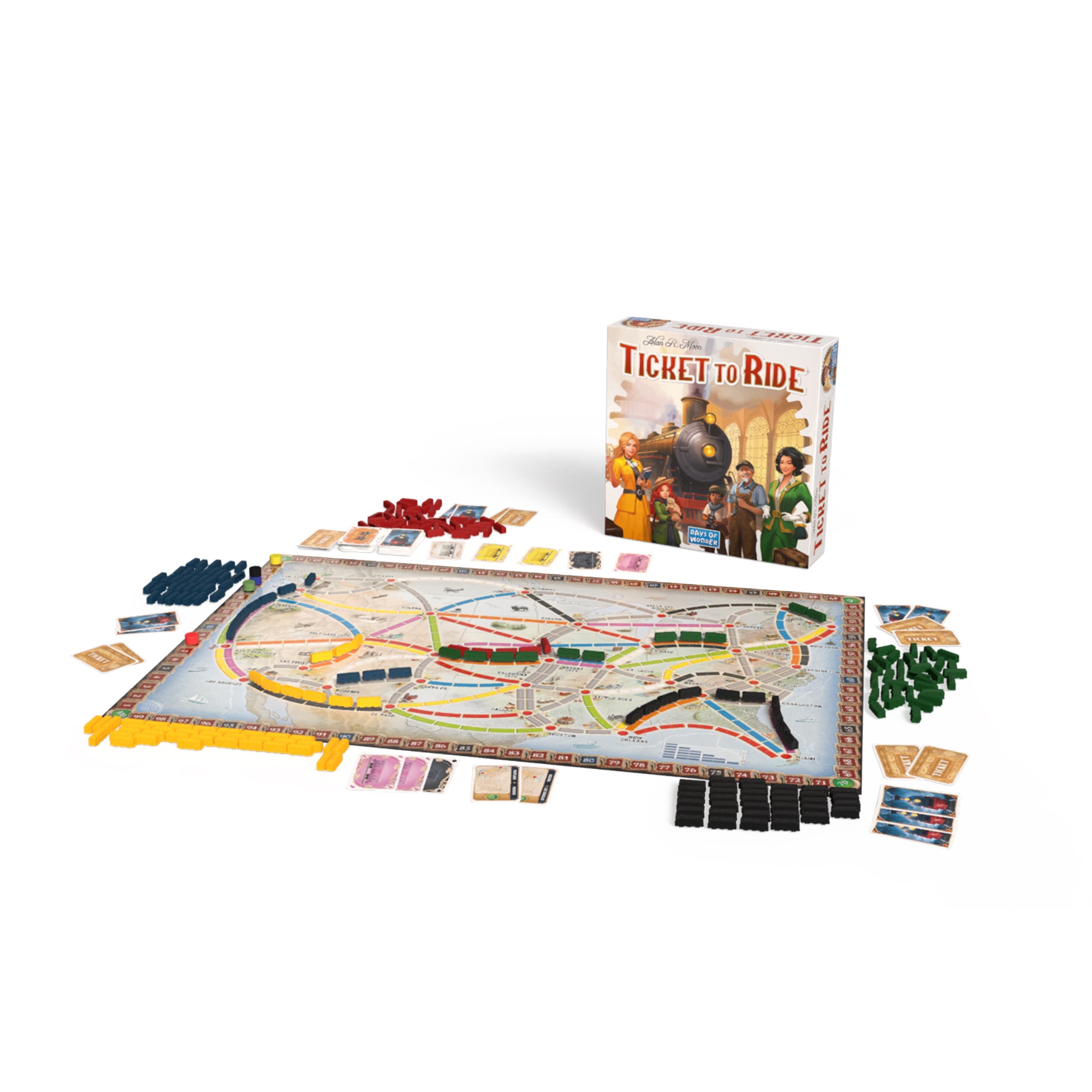
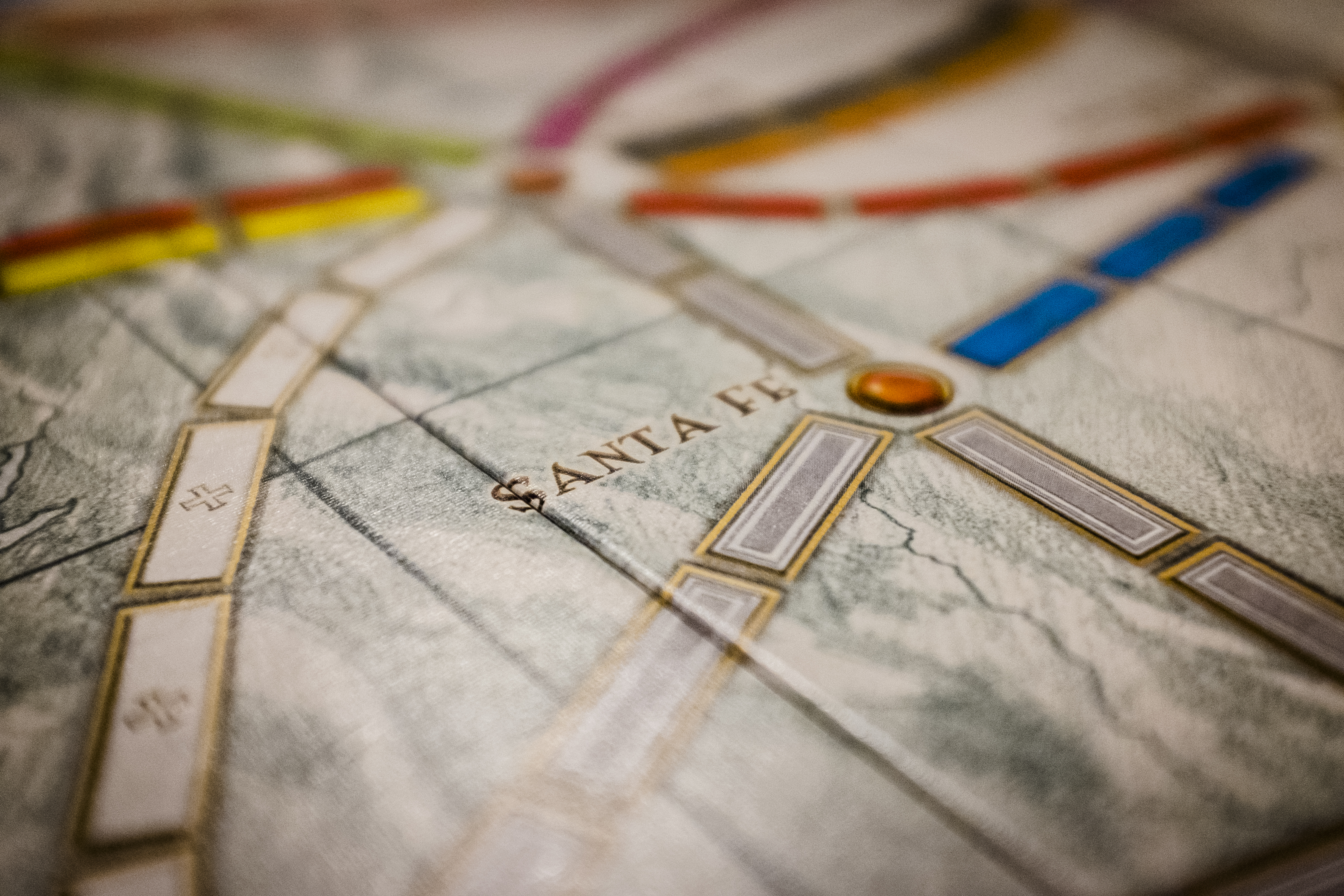
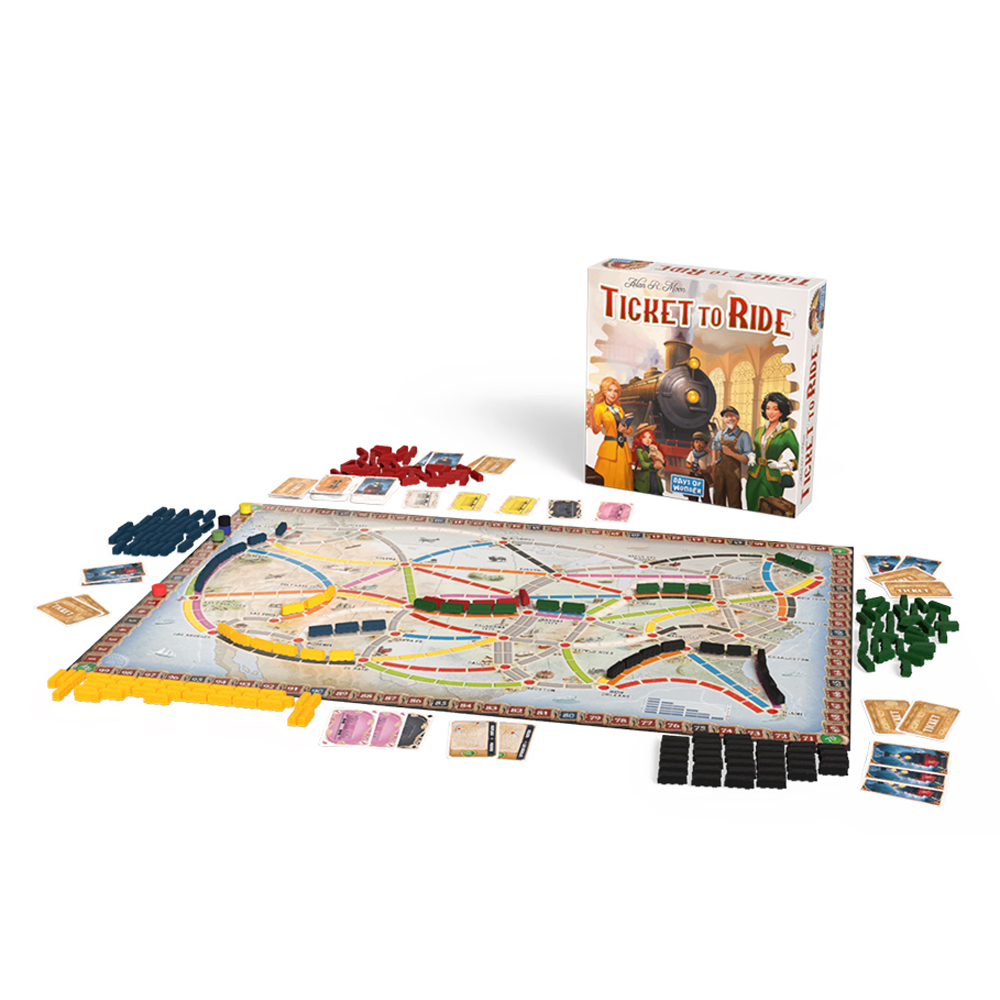
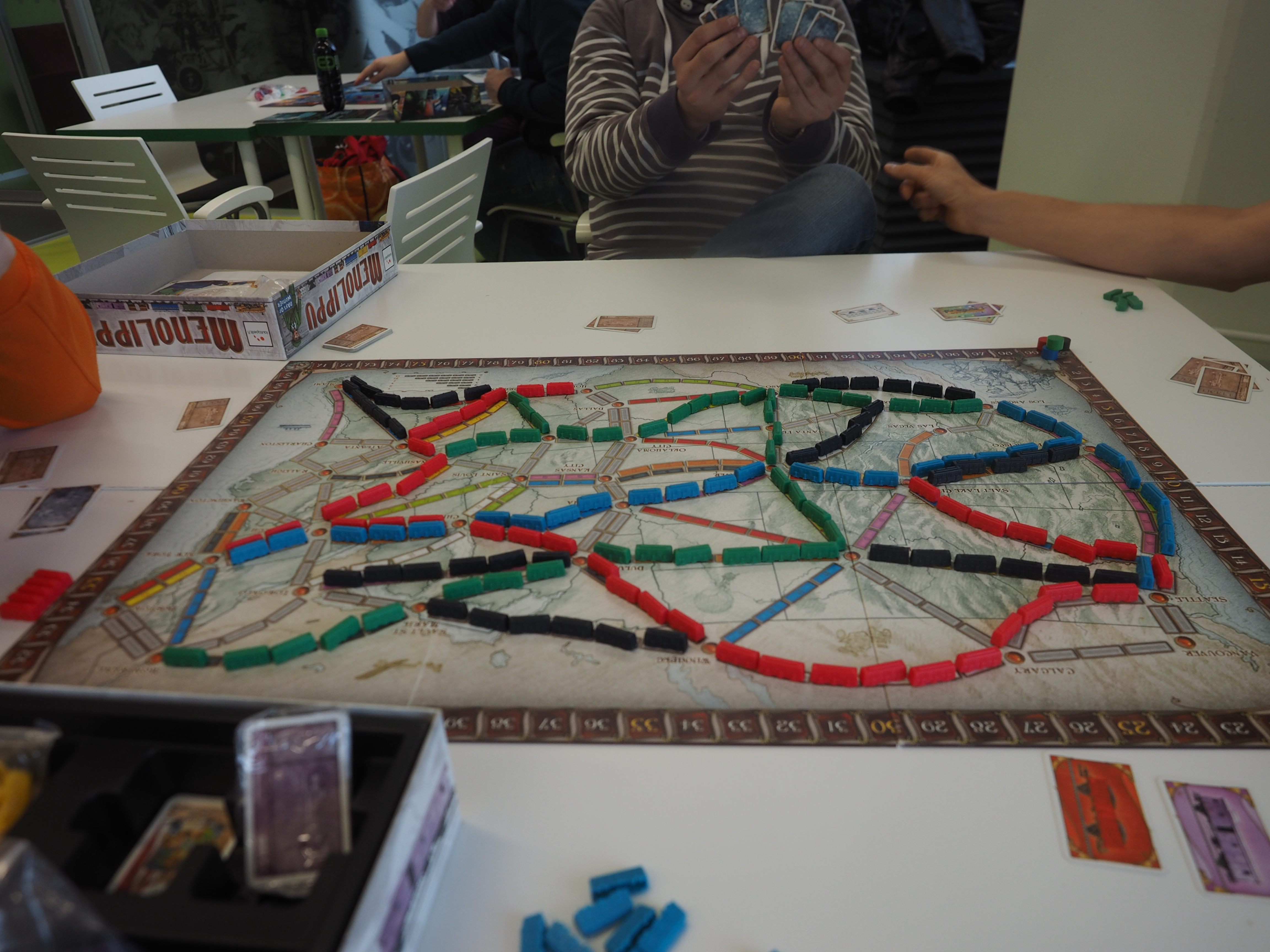
Ticket to Ride (Days of Wonder, Spiel des Jahres 2004) is the canonical family gateway for a reason: collect matching train cards, claim colorful routes across a map, connect your secret cities. The board is a literal map of North America, which gives it a sneaky-educational halo parents love, and the 'I needed that route!' moment delivers real tension without anyone getting eliminated or attacked. It seats up to five, runs about 30-60 minutes, and an eight-year-old can hold their own.
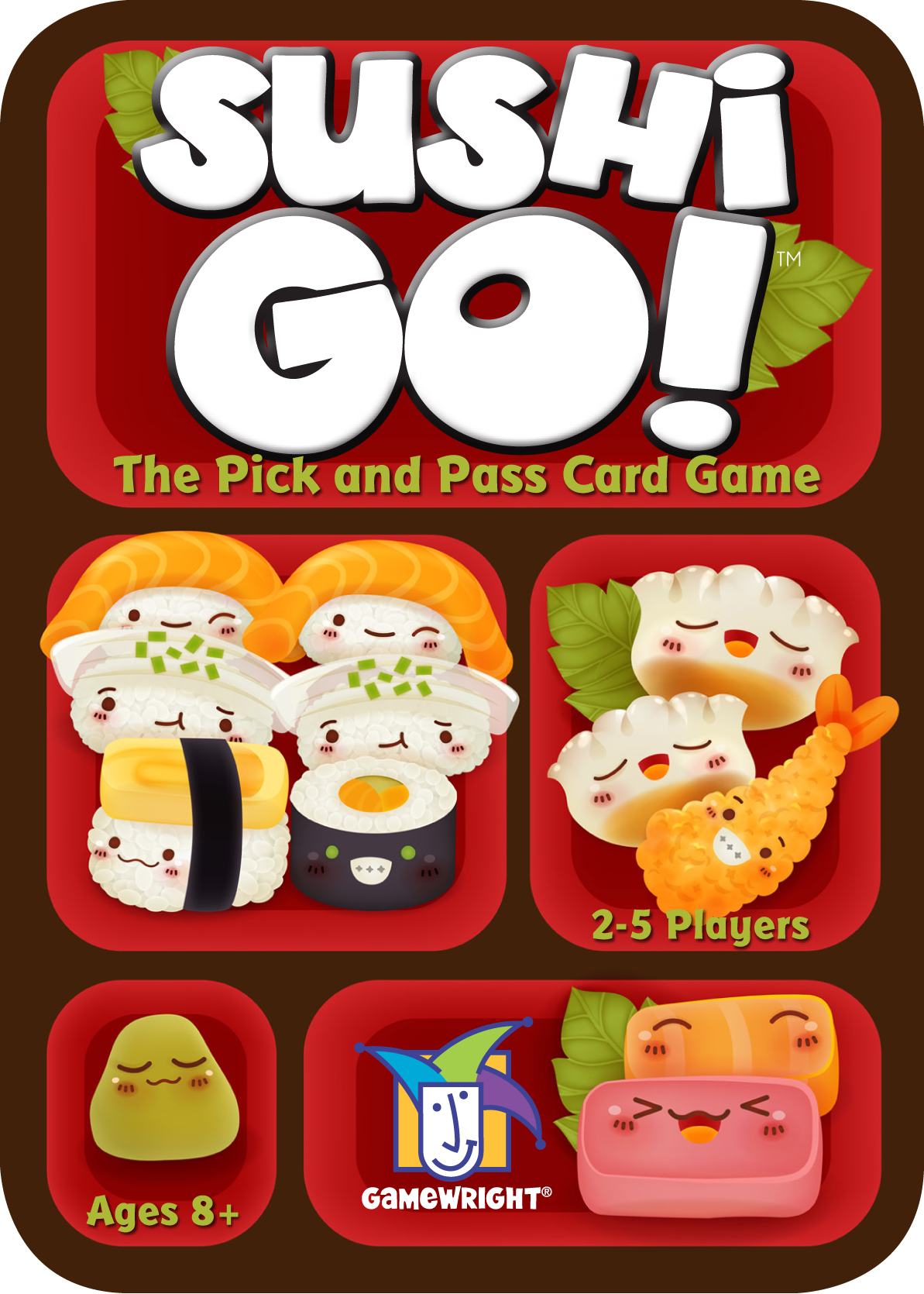
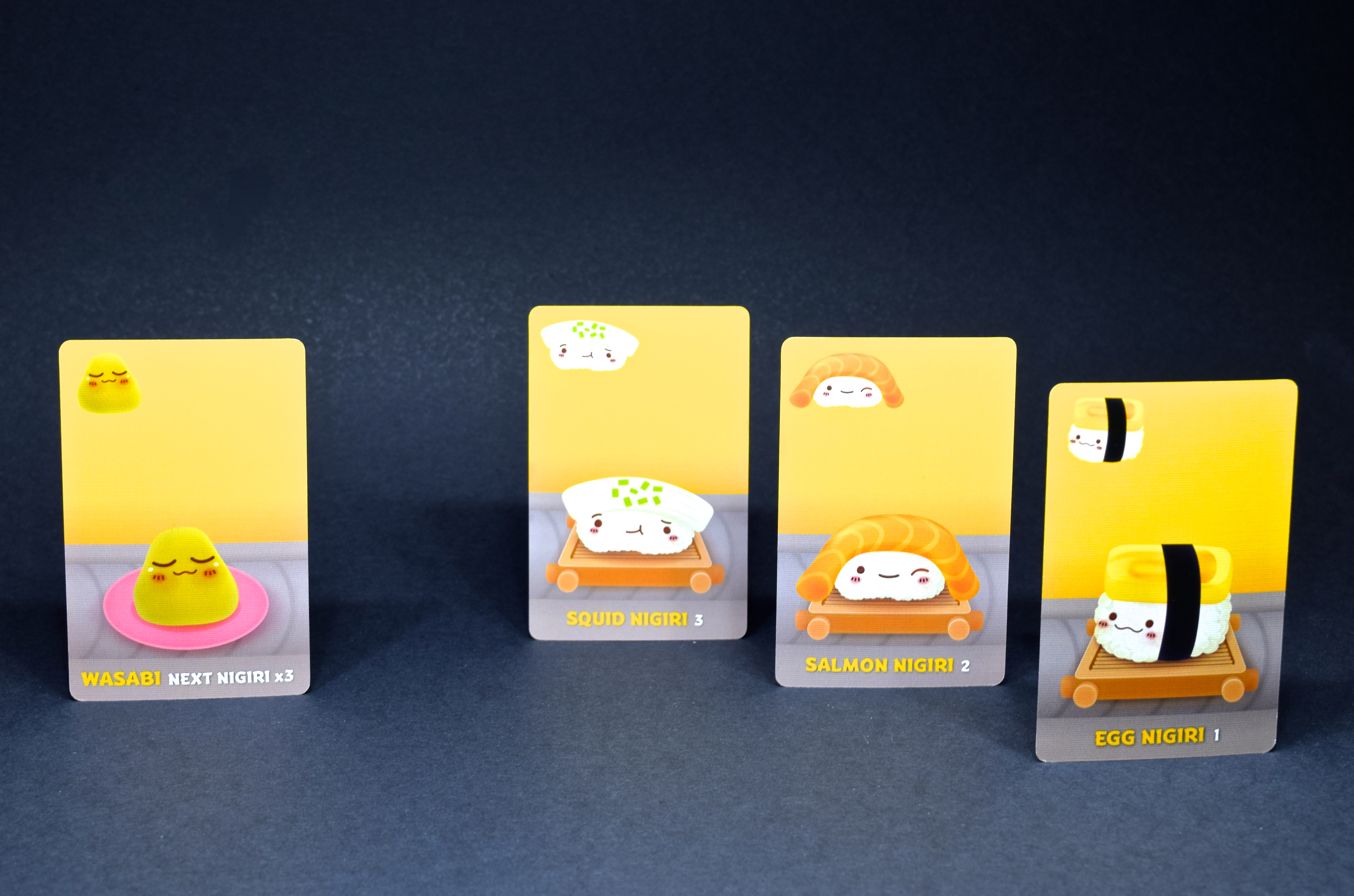
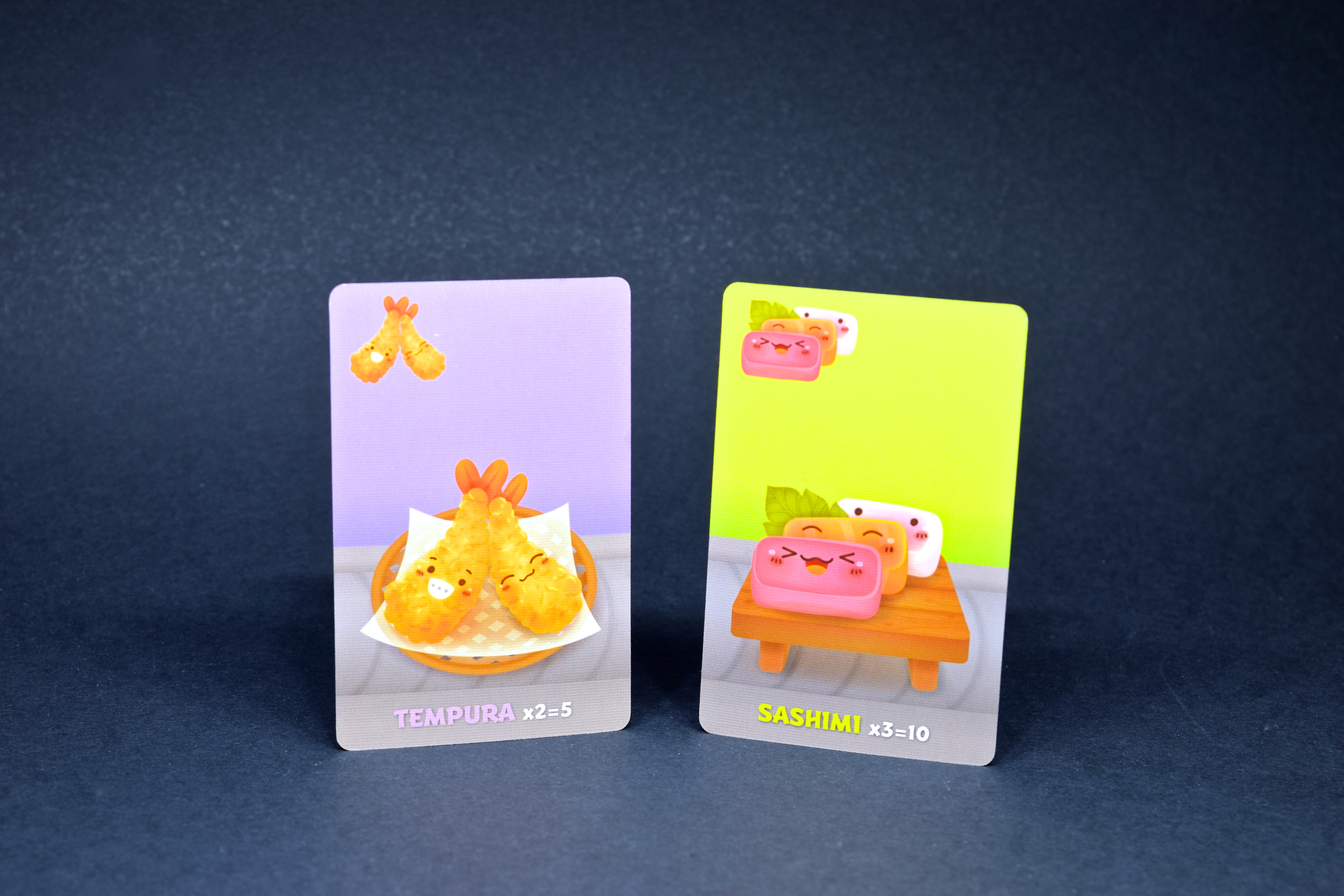
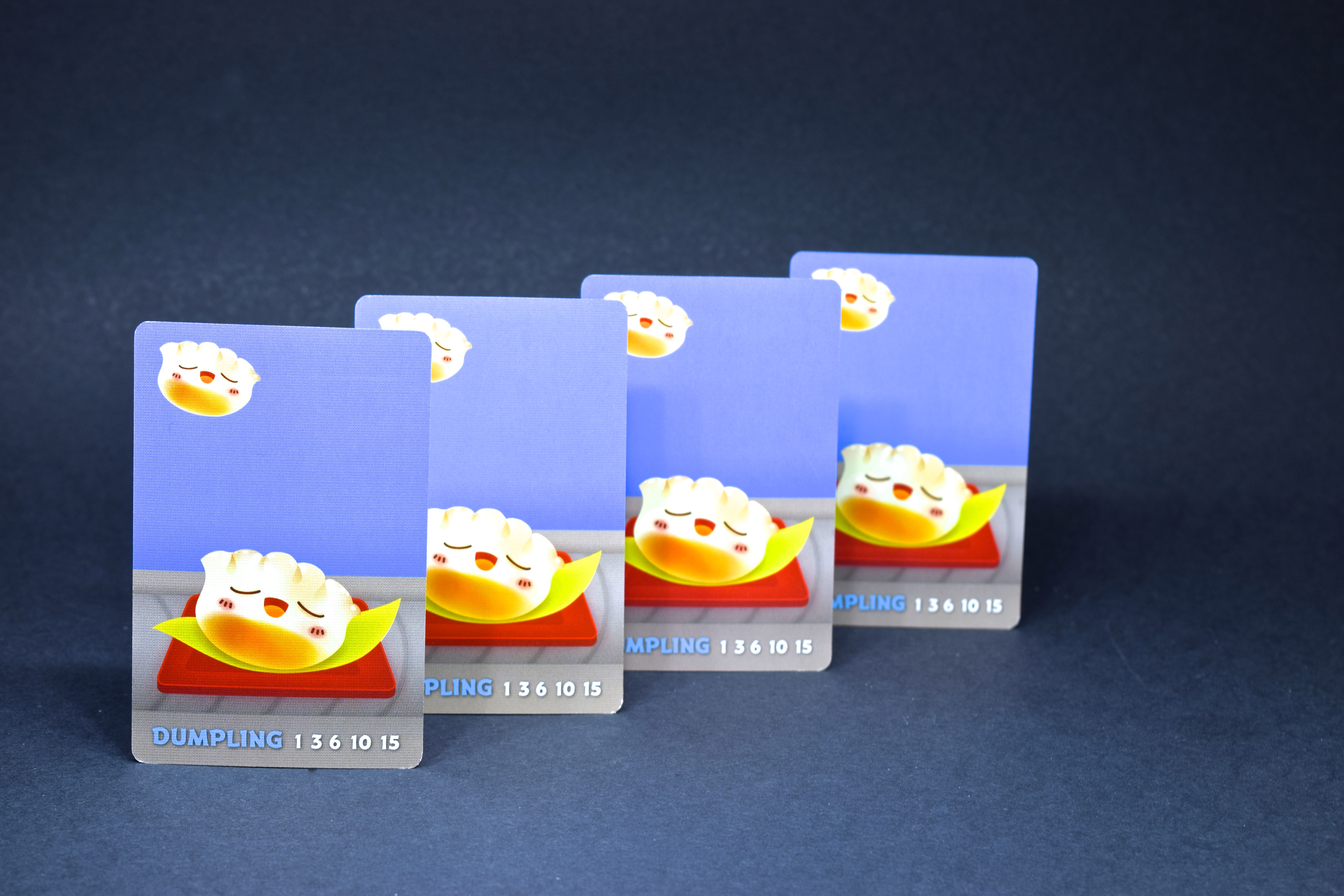
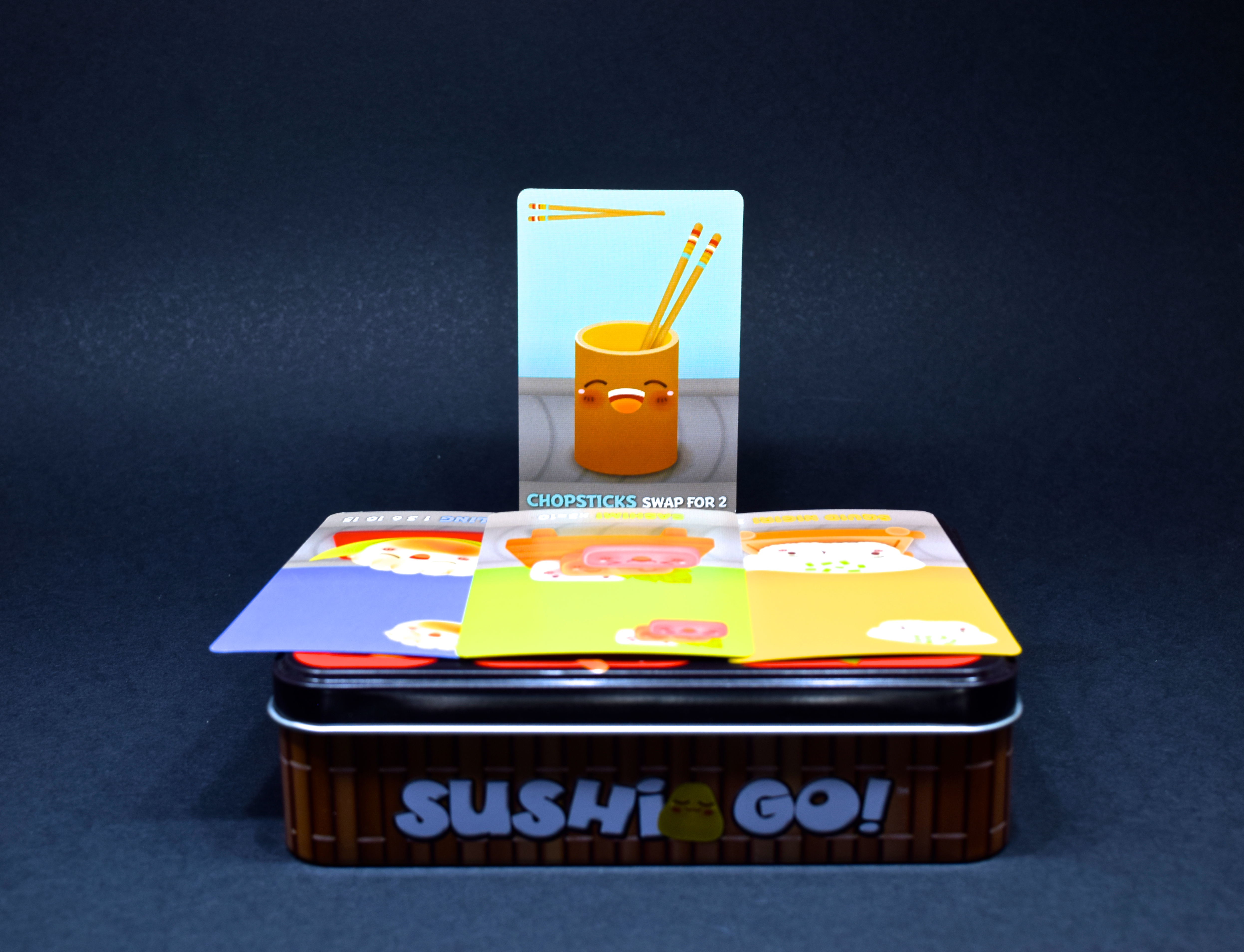
For families with younger kids (six and up) or shorter attention spans, Sushi Go! (Gamewright, ~$12.99) is the better and cheaper call — it's a tiny box of adorable sushi cards you draft and pass, games last fifteen minutes, and it's so light it travels in a coat pocket. And if the household has two natural rivals who want a head-to-head, Patchwork (Lookout Games, ~$24.99) is a brilliant two-player quilting puzzle that plays like Tetris with a time-economy twist — deceptively brainy, totally non-violent, and over in half an hour.
The family-gateway test isn't 'will the kid like it.' It's 'will a parent ever suggest it a second time.'
The Competitive Friend: someone who only enjoys it if they can win on skill
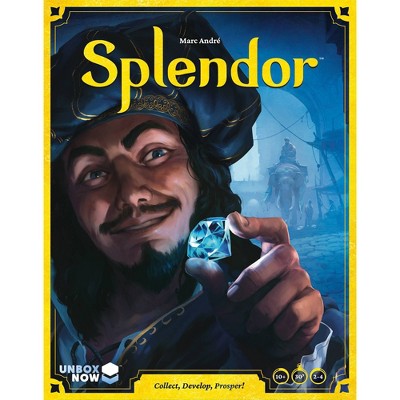
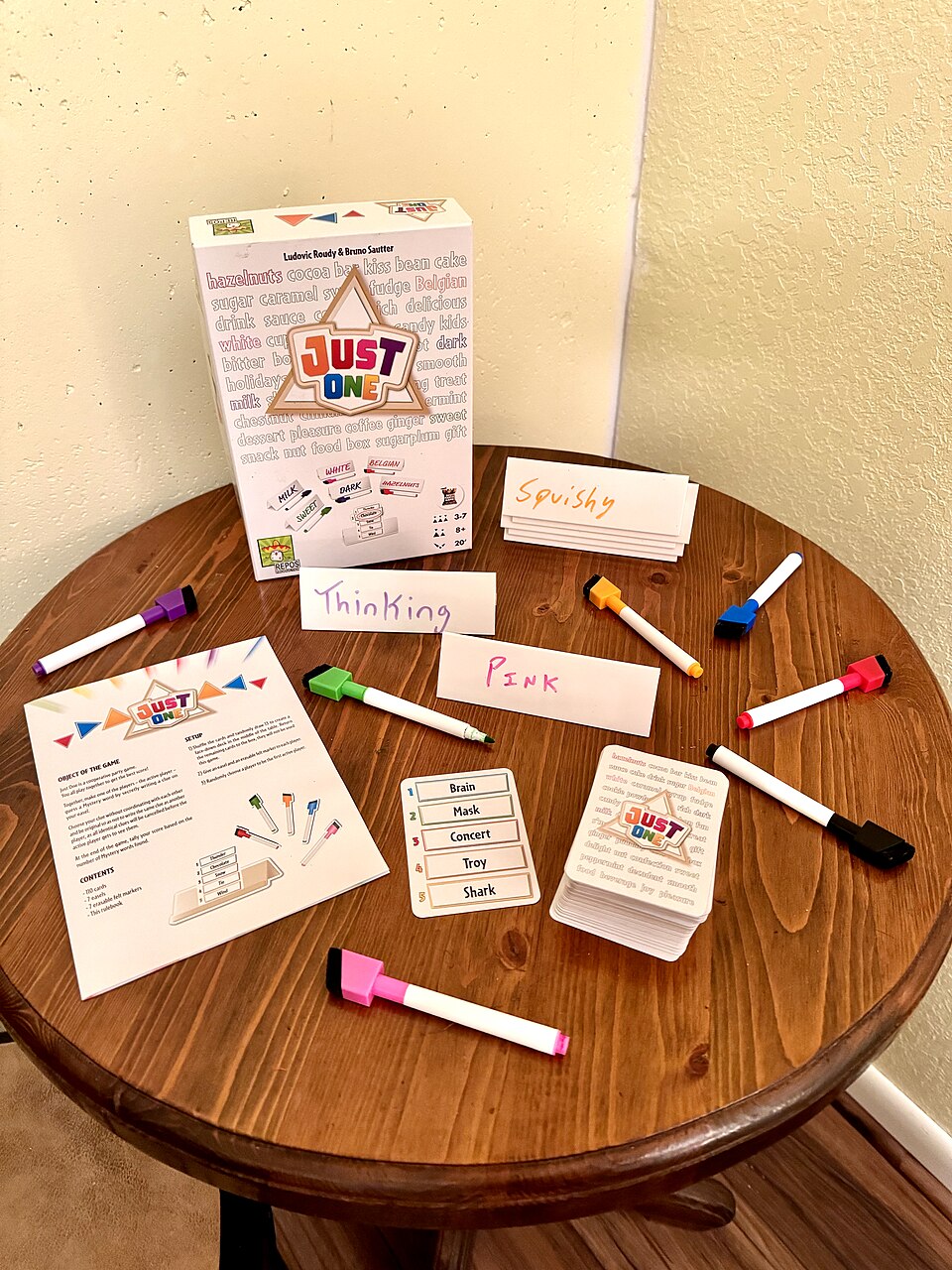
You know this convert. They're not anti-board-game; they're anti-coin-flip. If they lose to a dice roll, they conclude the game is shallow and check out. The mistake is handing them something cooperative or super-light — they read 'no way to outplay you' as 'no point.' What converts a competitive friend is a game with low rules overhead but a real, legible skill gap: a game where the better player usually wins and both players can see why.
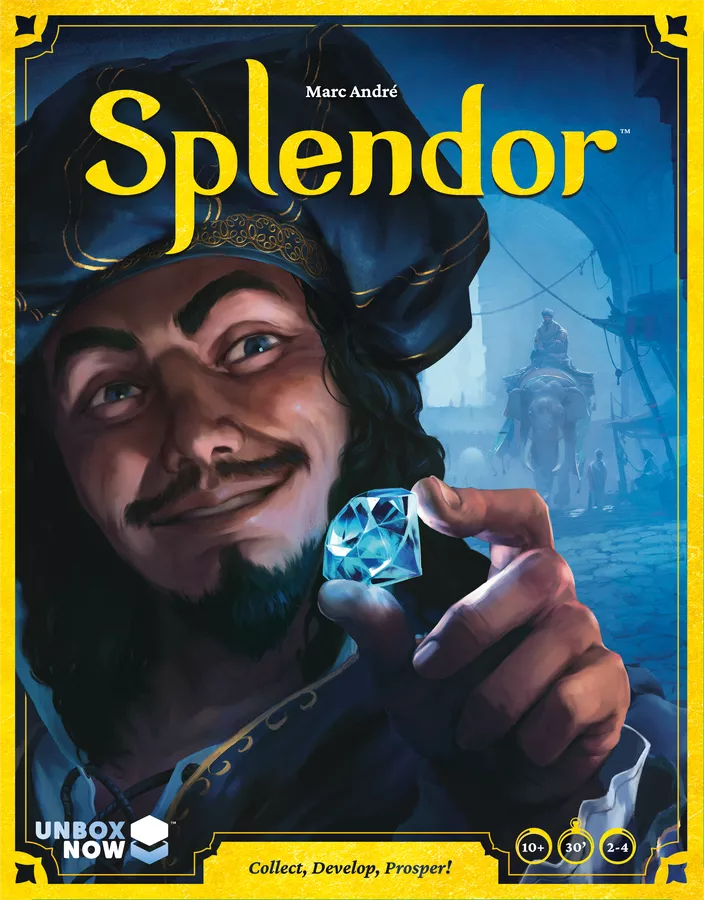
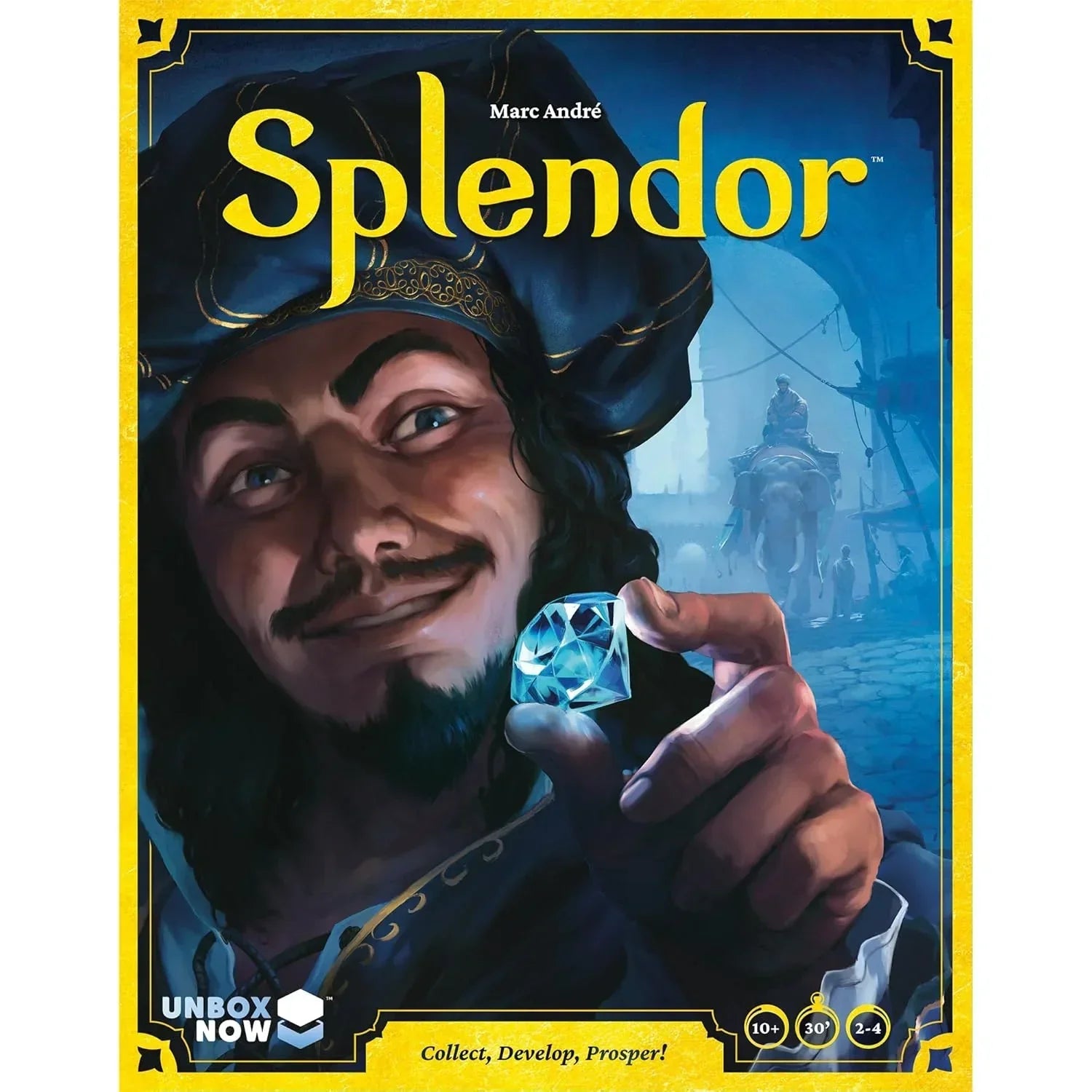
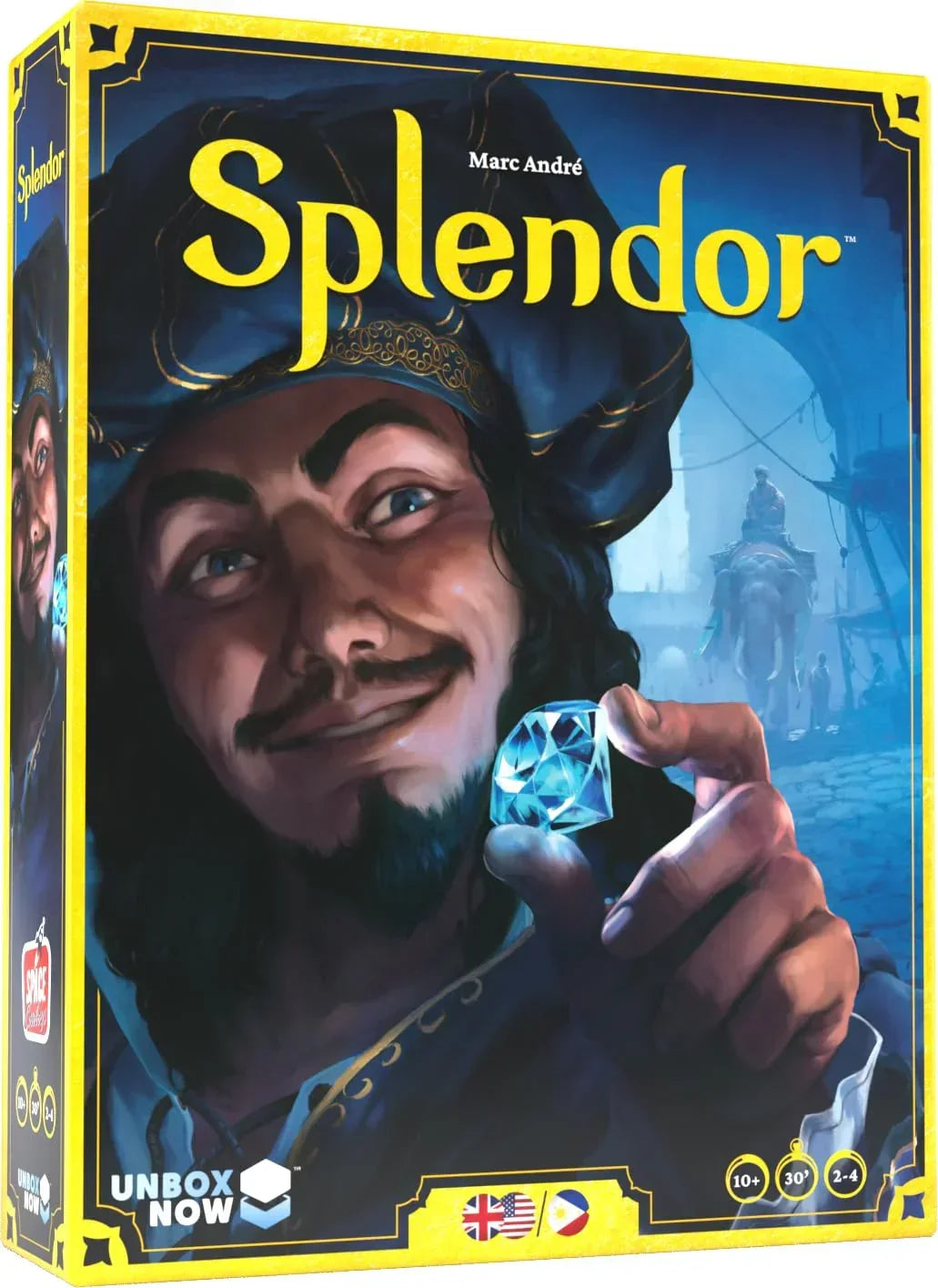
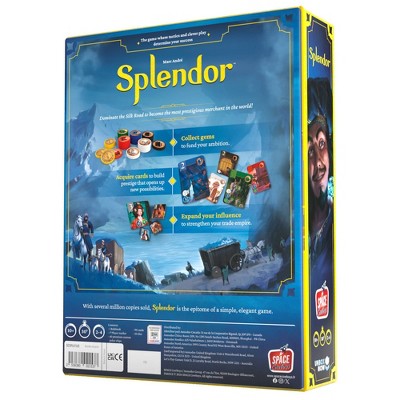
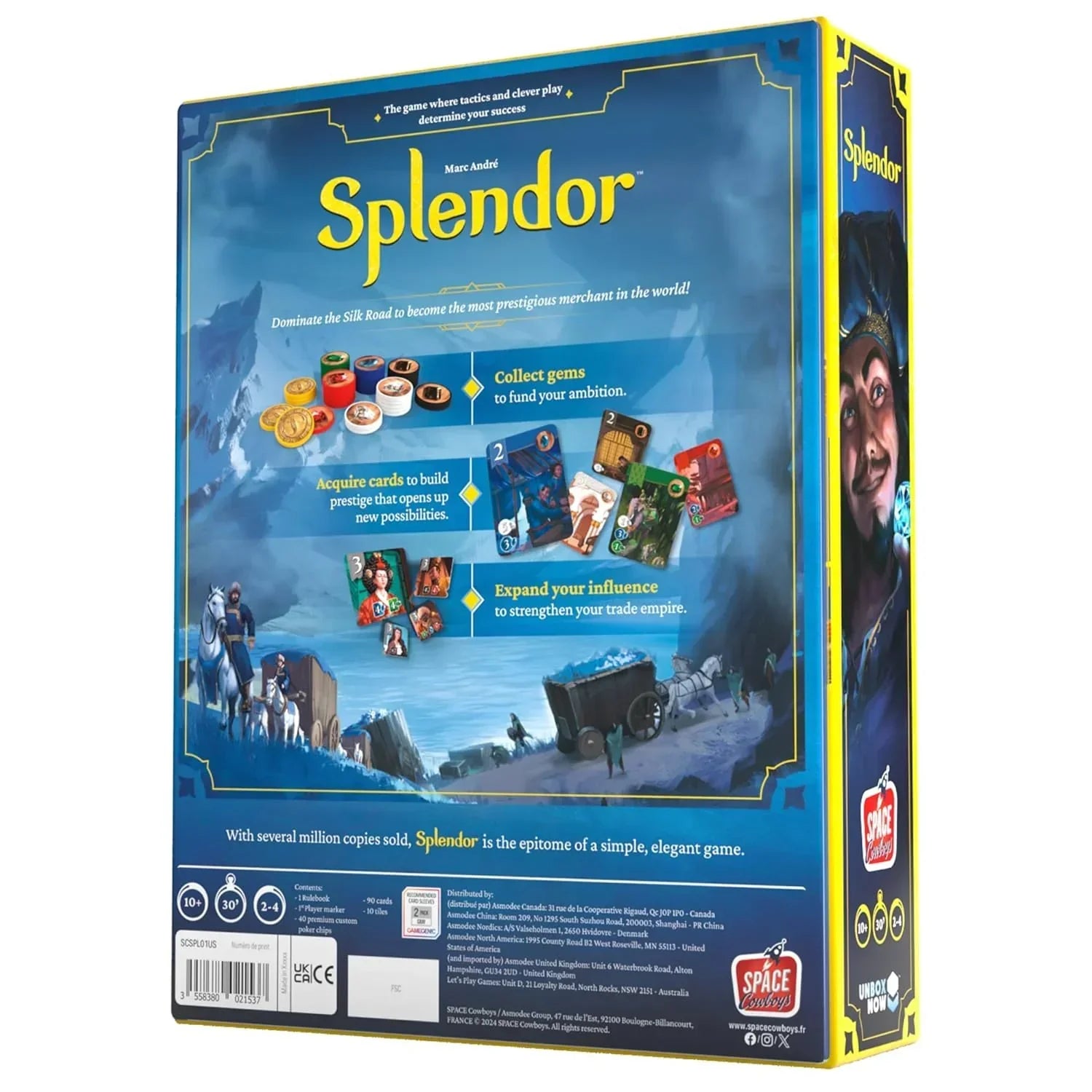
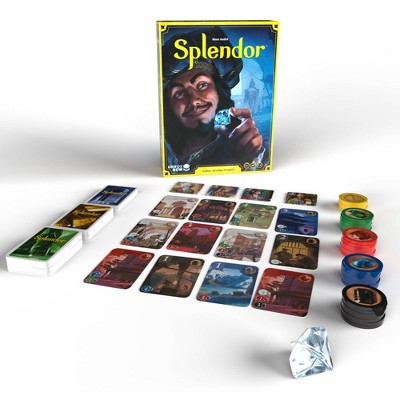
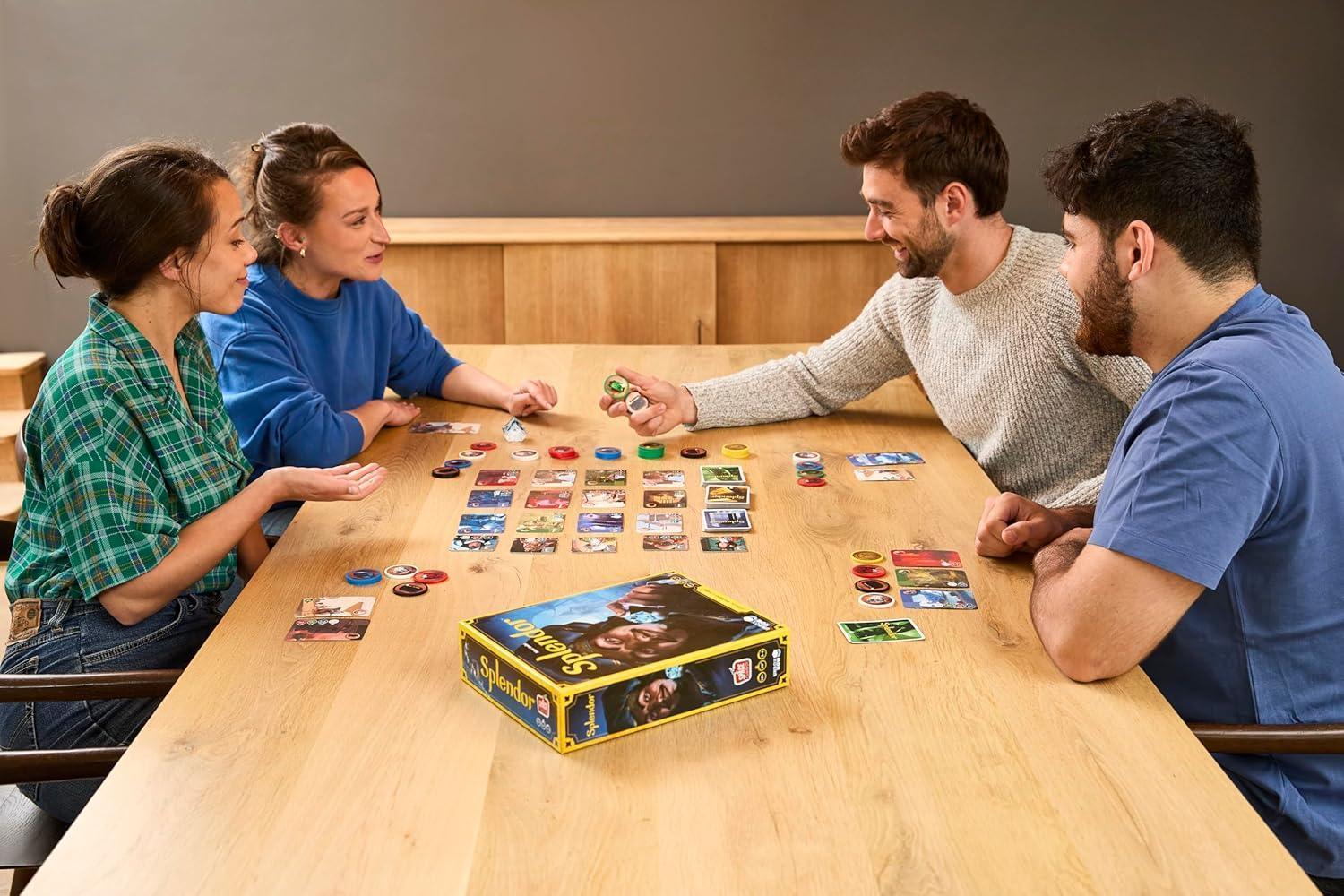
Splendor (Space Cowboys, ~$34.99) is my go-to. You're a Renaissance gem merchant building an engine — collect chip tokens, buy cards that discount future cards, snowball toward fifteen prestige points. There's essentially no luck once the cards are out; it's a pure race of efficiency, and a sharp player feels their advantage compound turn over turn. That visible cause-and-effect is catnip to a competitor, and it still teaches in five minutes.
If they want something more cutthroat and spatial, Carcassonne (Z-Man Games, Spiel des Jahres 2001) lets them block your cities and steal your farms — the take-that is gentle but real, and the 'I saw that coming and you didn't' factor scratches the competitive itch. And once they're hooked, Cascadia (covered below) is the natural step up that proves skill games can be calm and deep. The throughline: give a competitor a fair fight with a clear scoreboard, and they'll come back to settle the score.
A competitor doesn't need a complicated game. They need a fair one — where the better player wins and everyone can see the difference.
The Party Crowd: six-plus people, drinks, short attention, lots of laughing
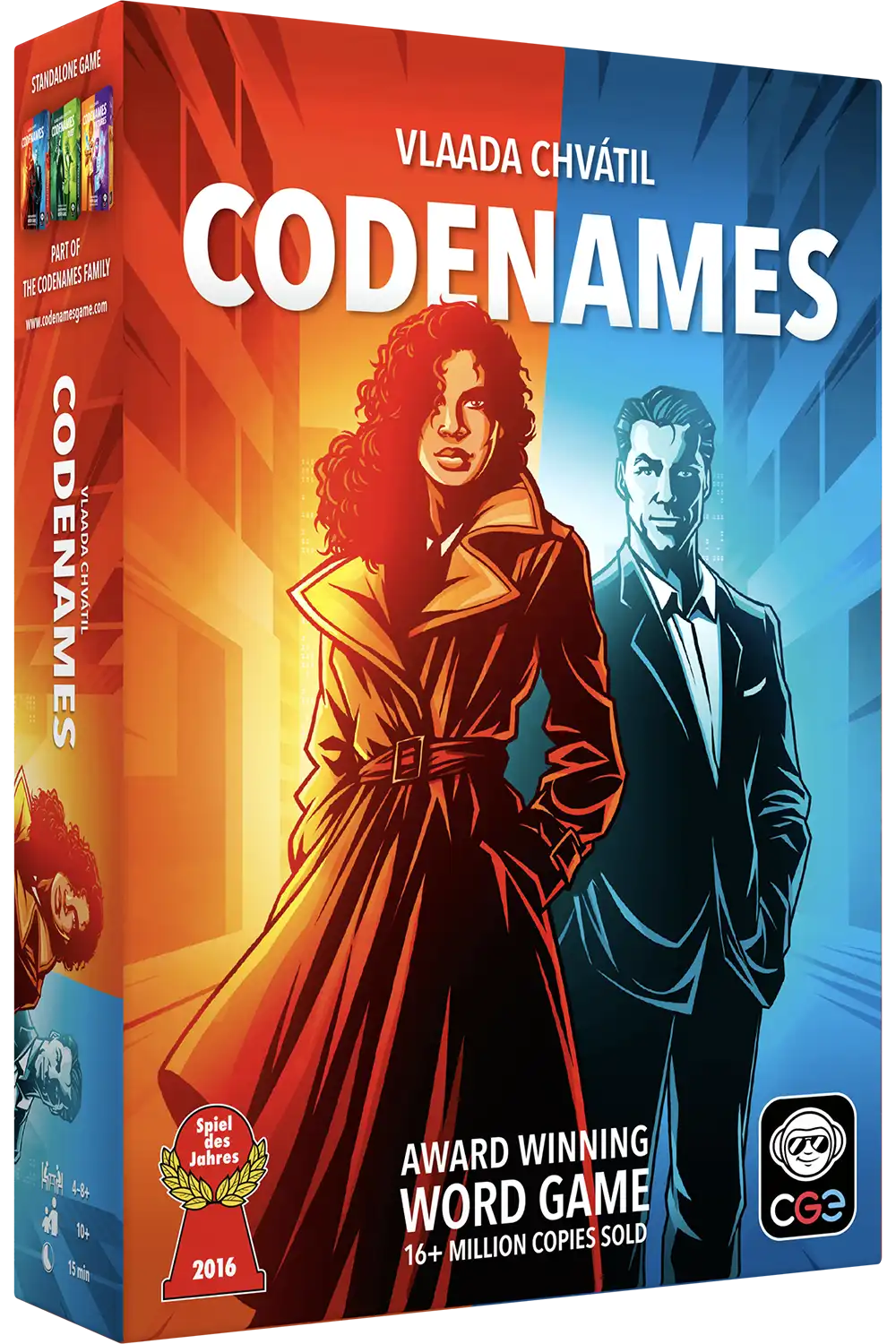
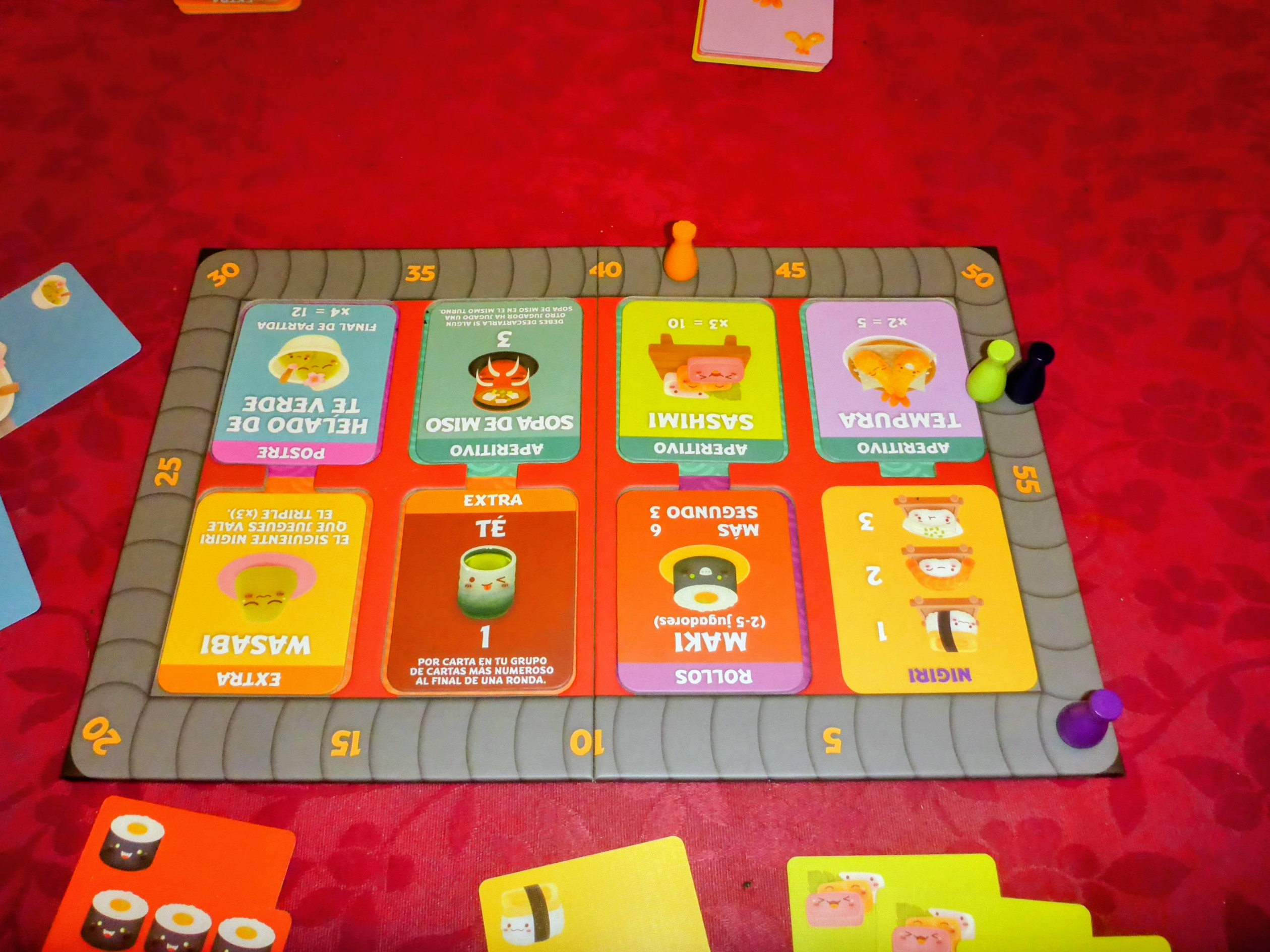
This convert isn't one person — it's a room. The constraints flip completely: you need a game that scales past four, survives interruptions and side-conversation, demands zero strategy homework, and generates table talk rather than quiet optimization. A heavy gateway dies at a party; the box should fuel the social energy already in the room, not compete with it.
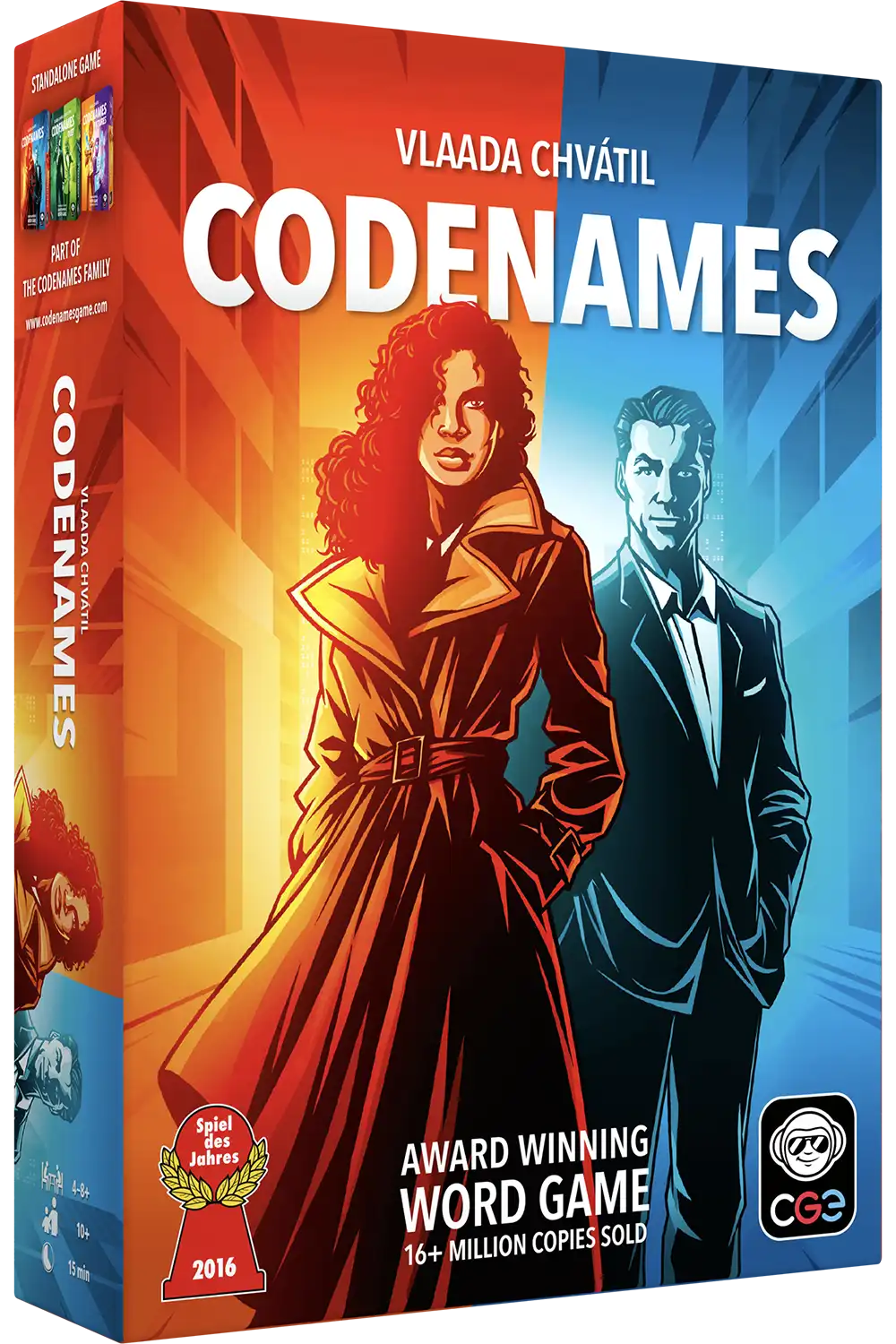
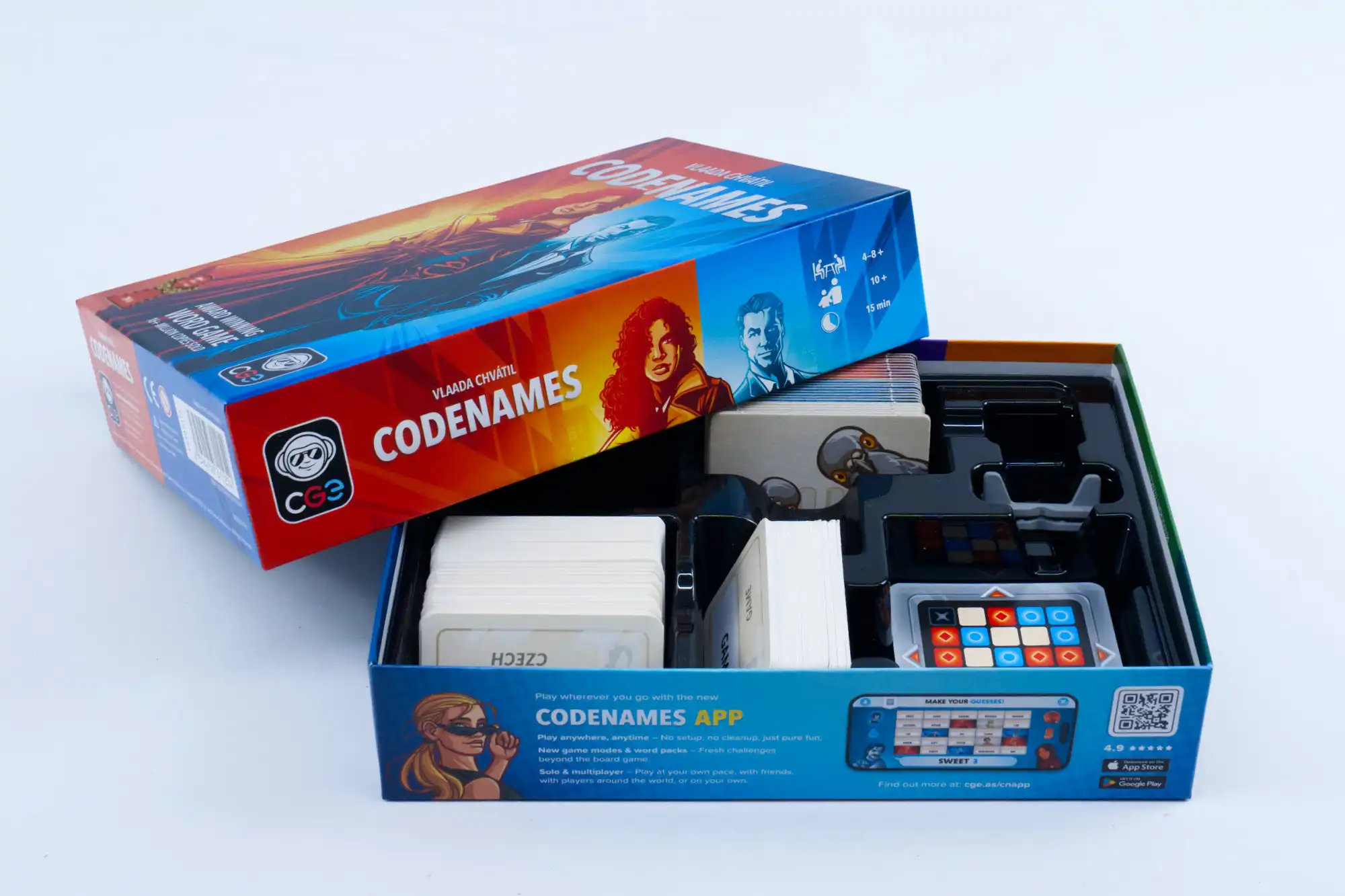
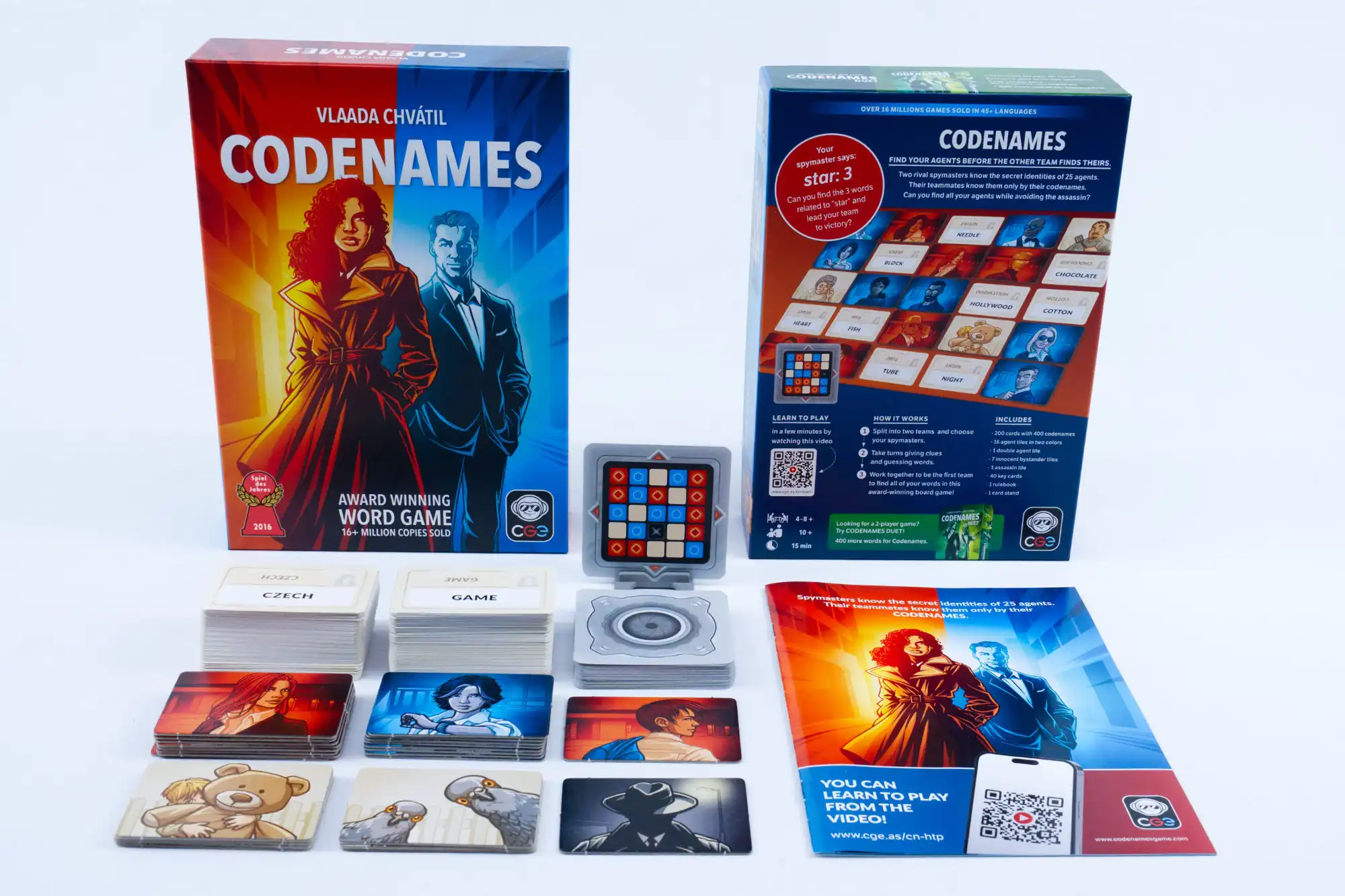
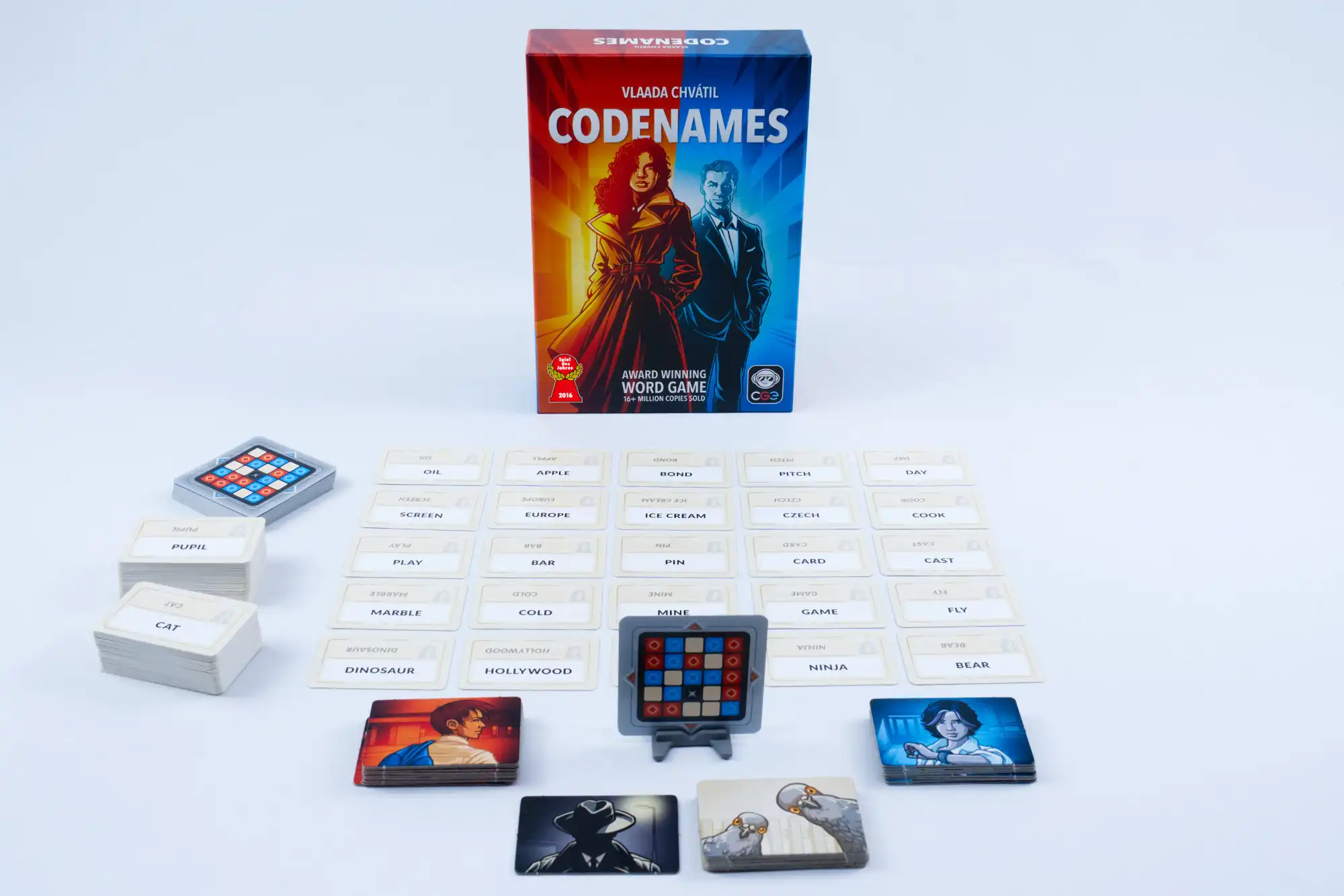
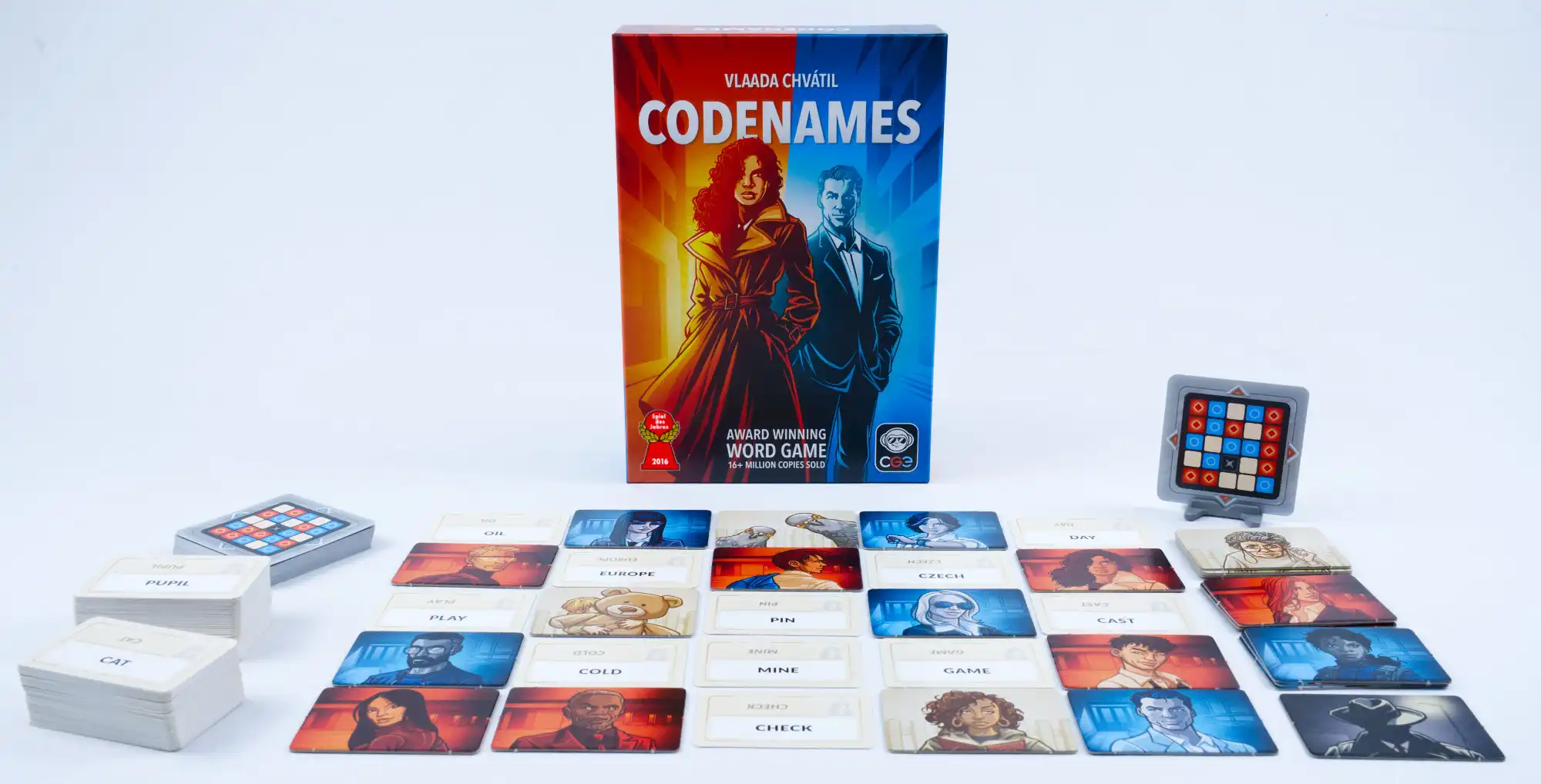
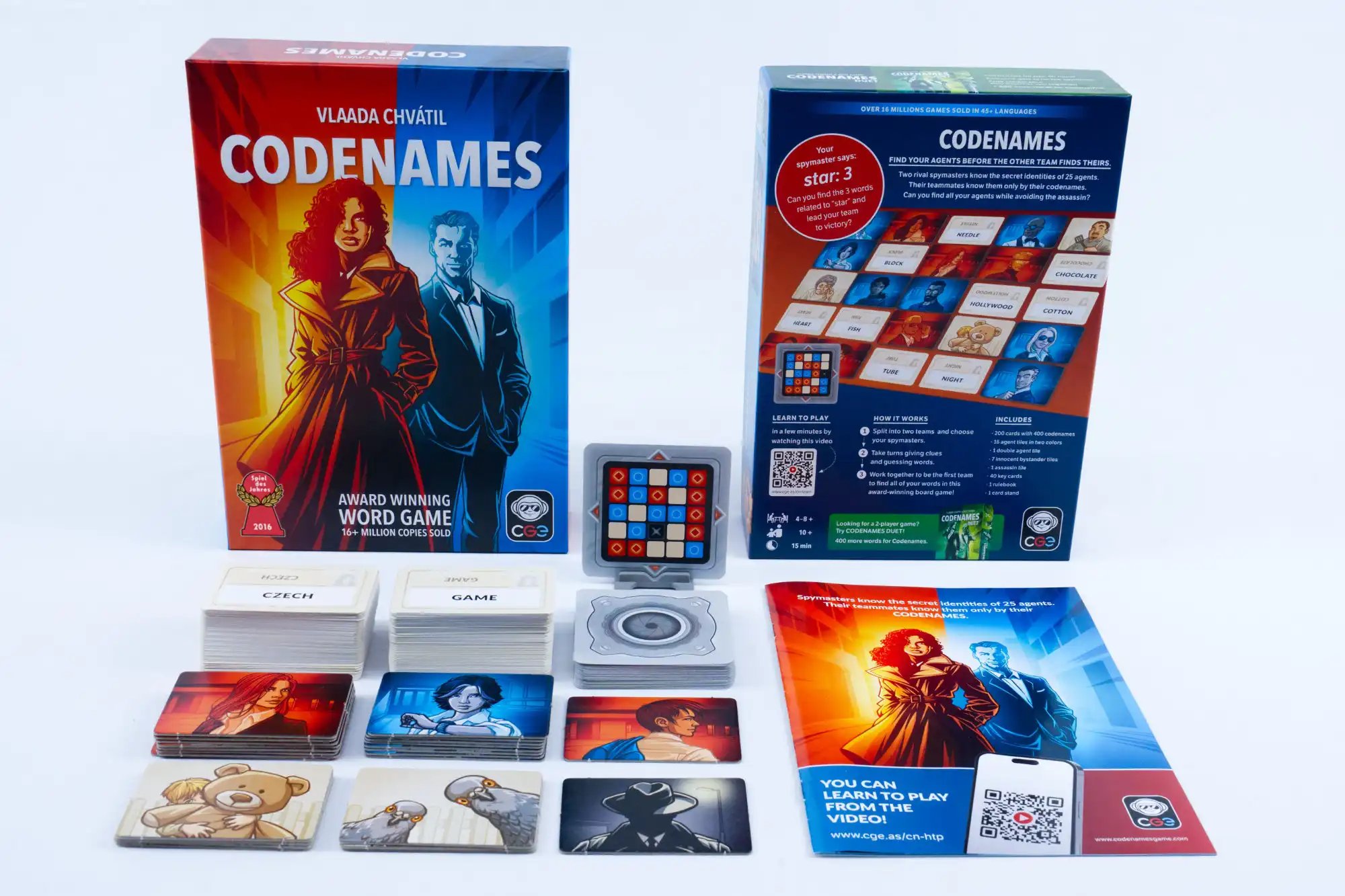
Codenames (Czech Games Edition, $24.99) is the gold standard. Two teams, two spymasters giving one-word clues to make their team guess the right agents on a 5x5 grid — it's a word-association party engine that scales to a dozen-plus people and produces the single best 'how did you possibly think that clue meant octopus' moments in the hobby. It's the game I bring when I don't know the crowd, because it makes strangers into a team in one round.
For a faster, drink-friendlier vibe, Sushi Go Party! (Gamewright, the deluxe big-box version) scales to eight and plays in twenty minutes of breezy card-drafting. And Just One (Repos Production) doubles as a party star — its cooperative 'everyone writes a clue, duplicates cancel' loop gets a whole table groaning and cheering together. All three share the party-gateway secret: the rules vanish in ninety seconds so the people become the entertainment.
A party game's job isn't to be deep. It's to get out of the way so the room becomes the game.
The Catan-Only Owner: they have one modern game and stopped there
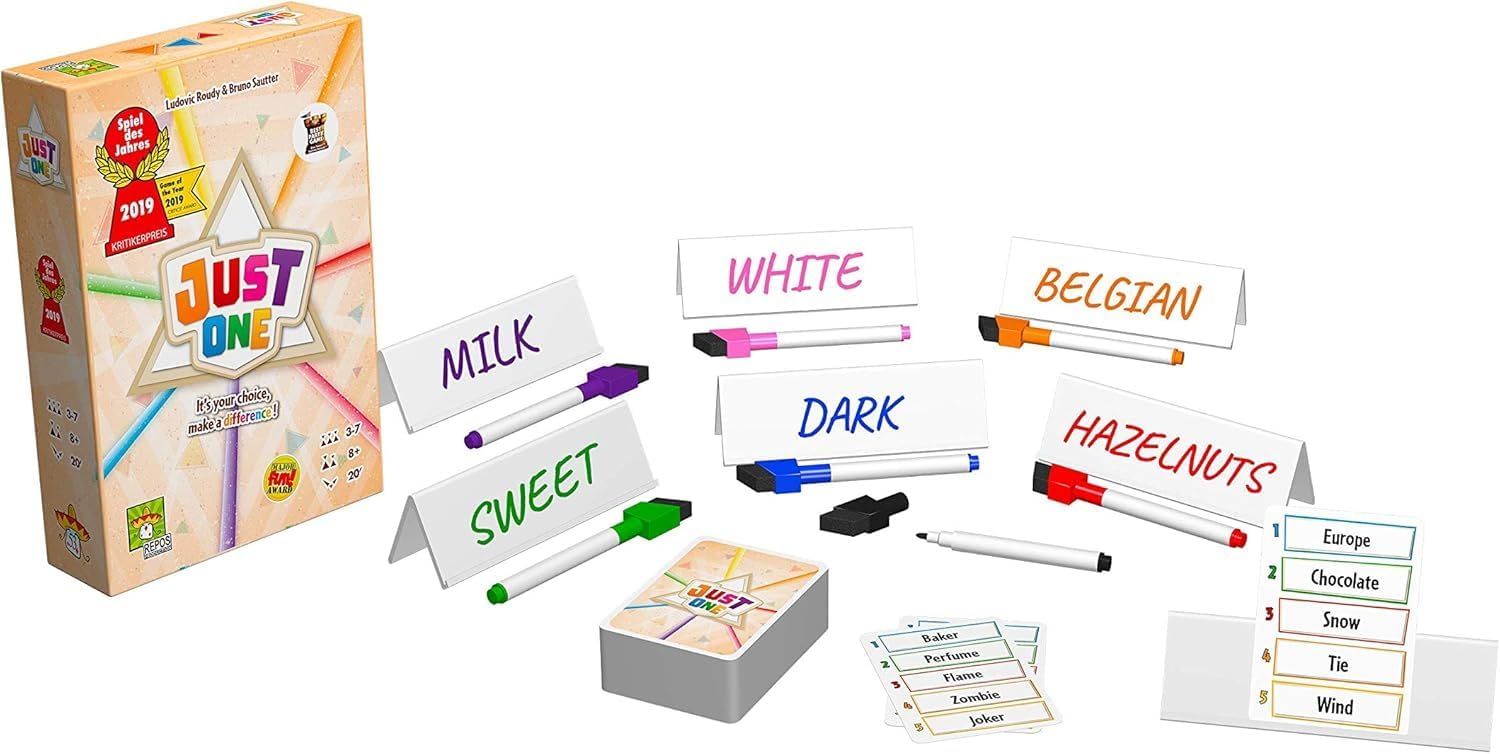

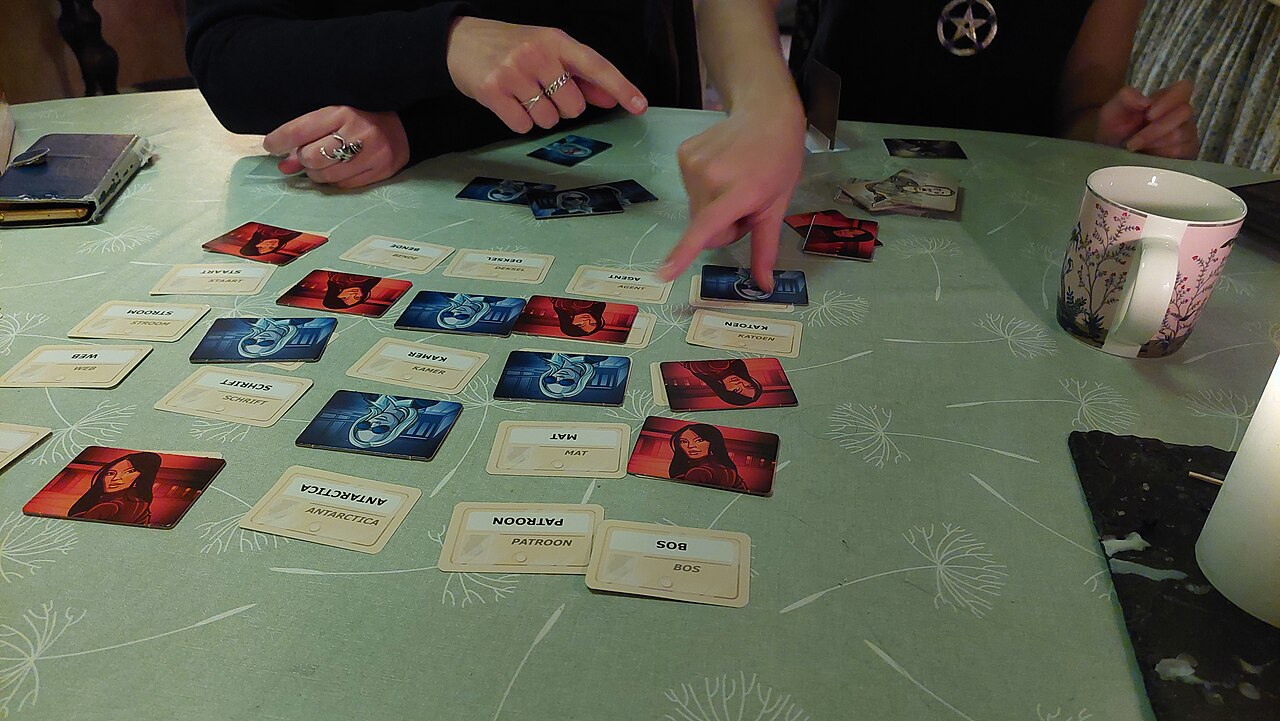
This is the most common — and most overlooked — convert in the hobby: the person whose entire 'modern board game' identity is the dusty Catan box from a decade ago. They already crossed the gateway once; they just never got a second game and assume Catan is the hobby. Your job isn't to start from zero. It's to show them the room is much bigger, with a game that feels like a clear upgrade in the directions Catan frustrated them: less downtime, less getting-attacked, less dice.
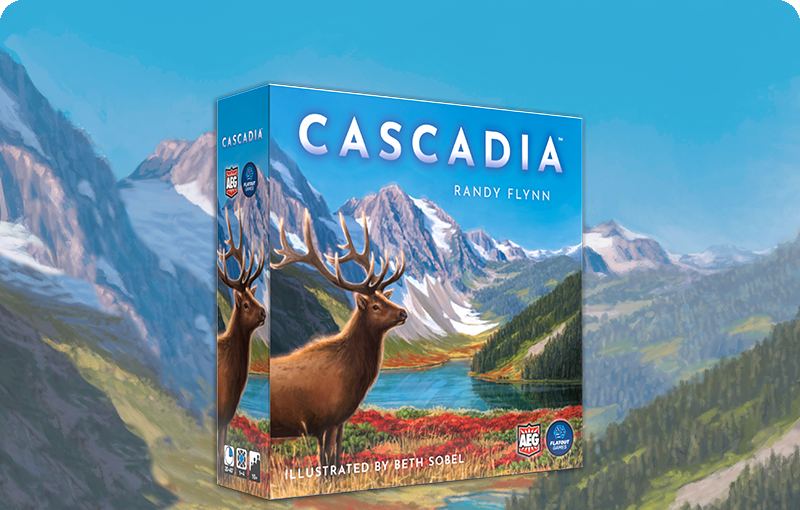
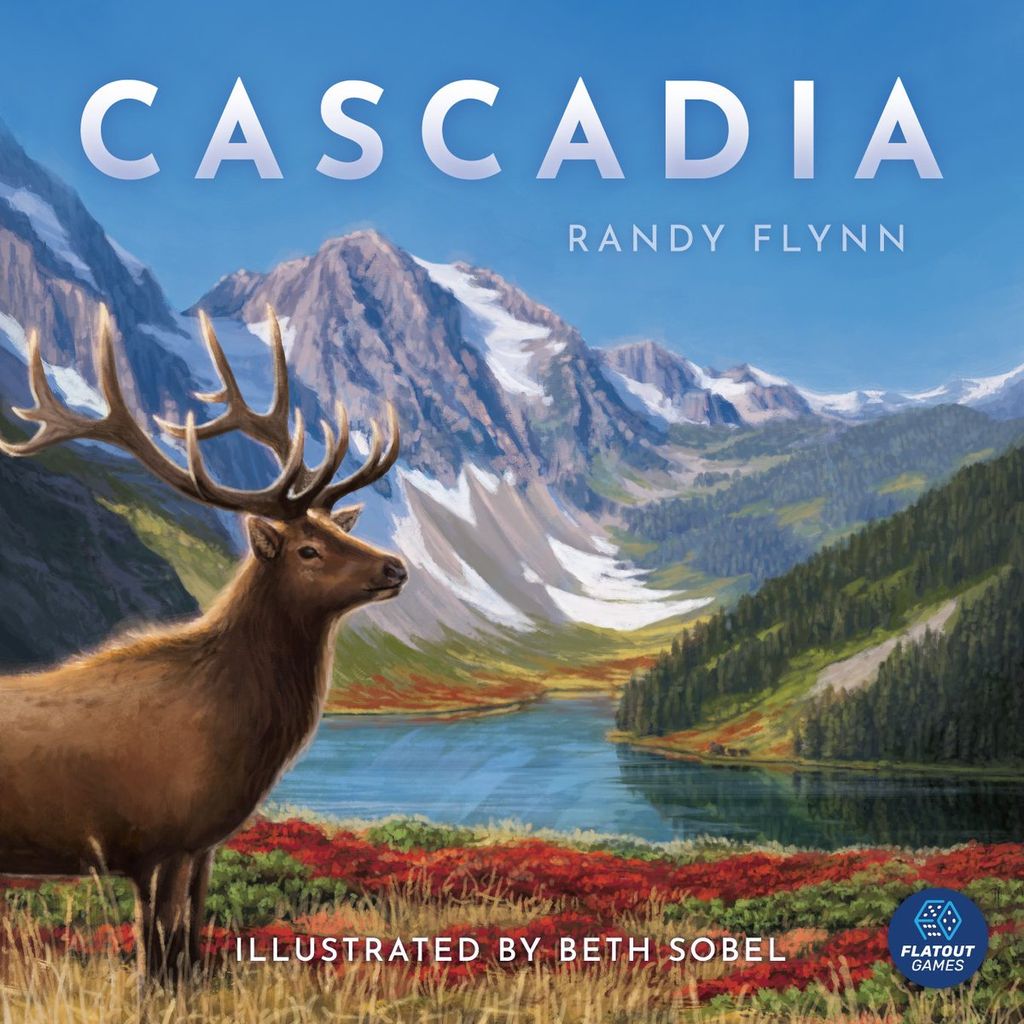
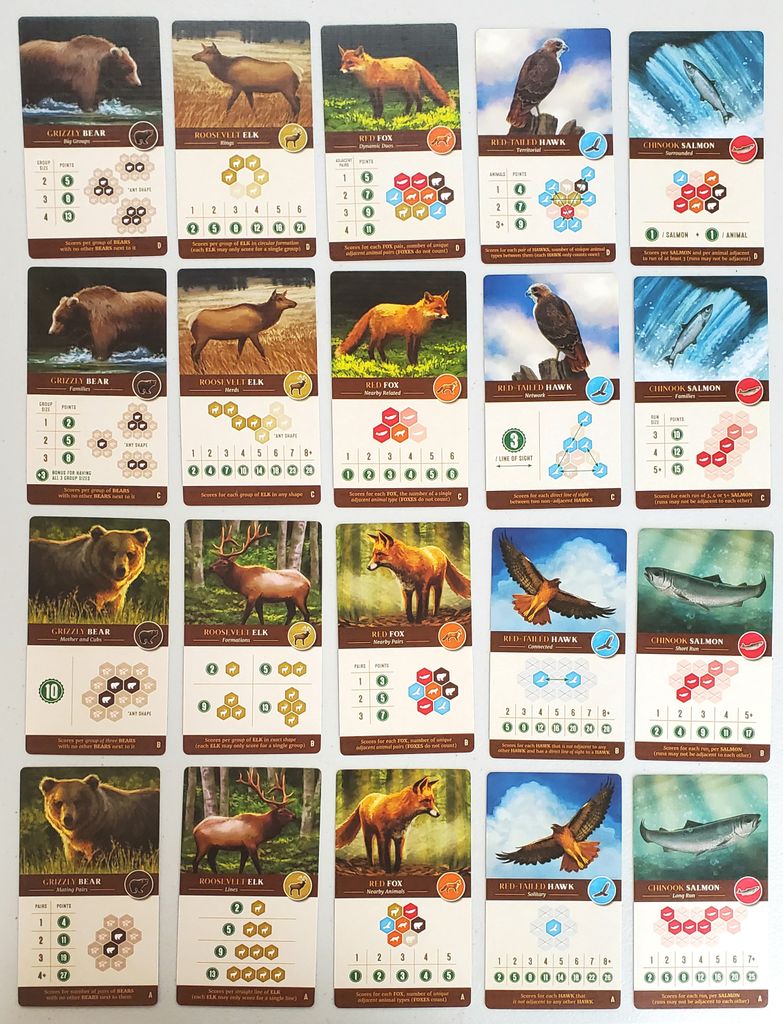
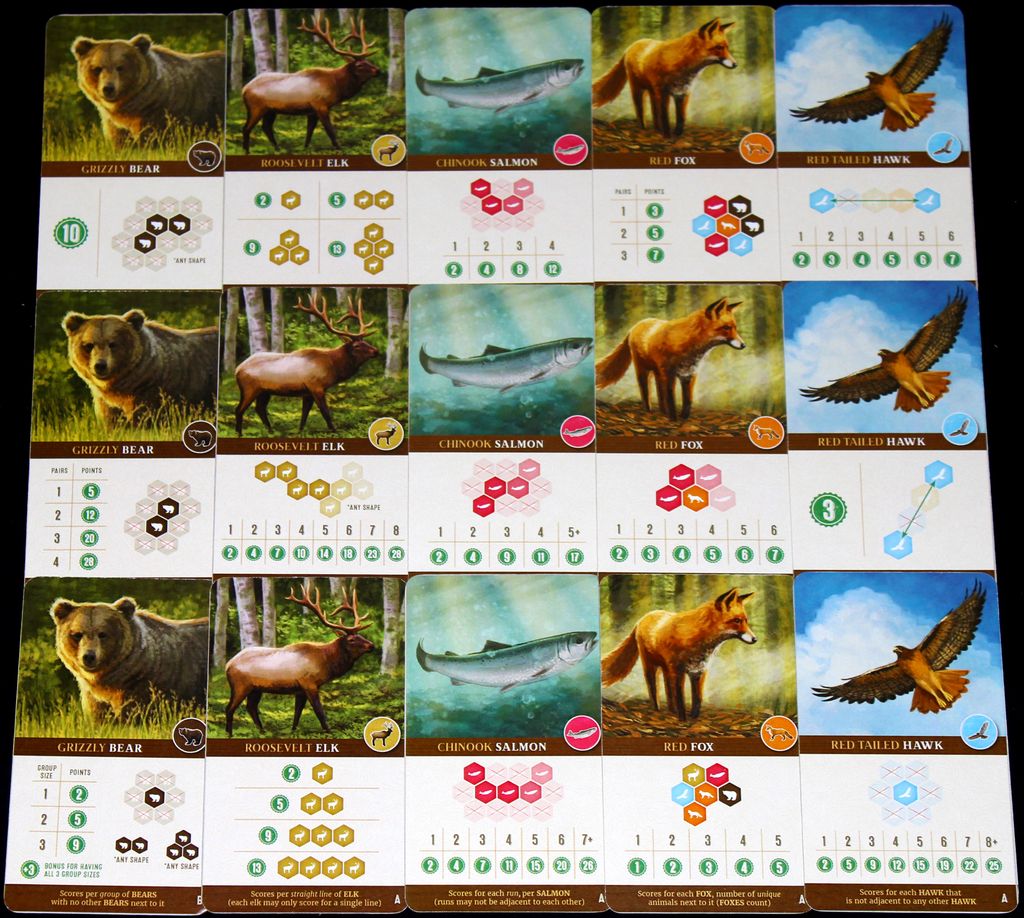
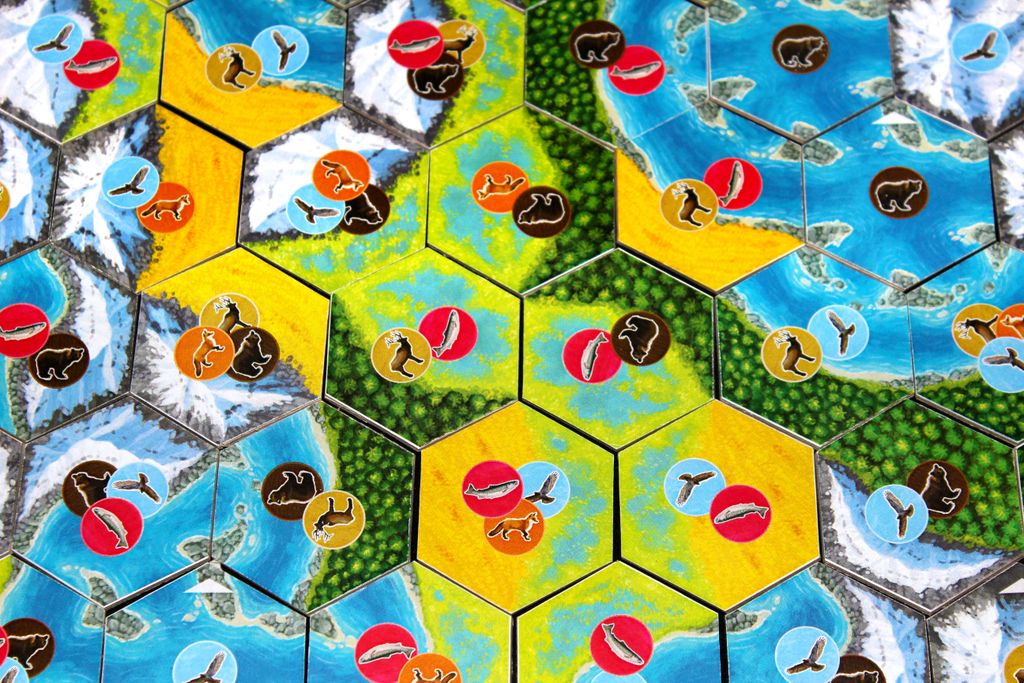
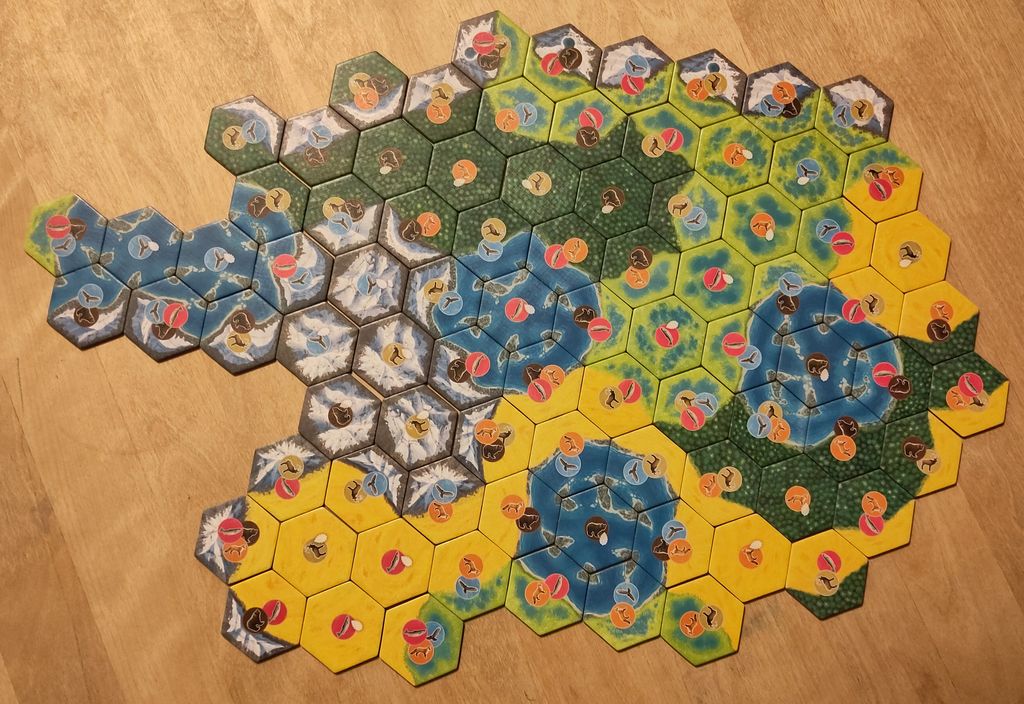
Cascadia (Flatout Games / AEG, Spiel des Jahres 2022) is the perfect next box. You draft habitat tiles and wildlife tokens to build a Pacific Northwest ecosystem — it teaches in two minutes, plays in 30-45, and there's no robber, no trading standstill, no one ganging up on the leader. For a Catan owner who liked building something but hated the dice-luck and the table politics, Cascadia is the 'oh, it can feel like this?' revelation. It even plays solo, which a busy Catan household quietly appreciates.
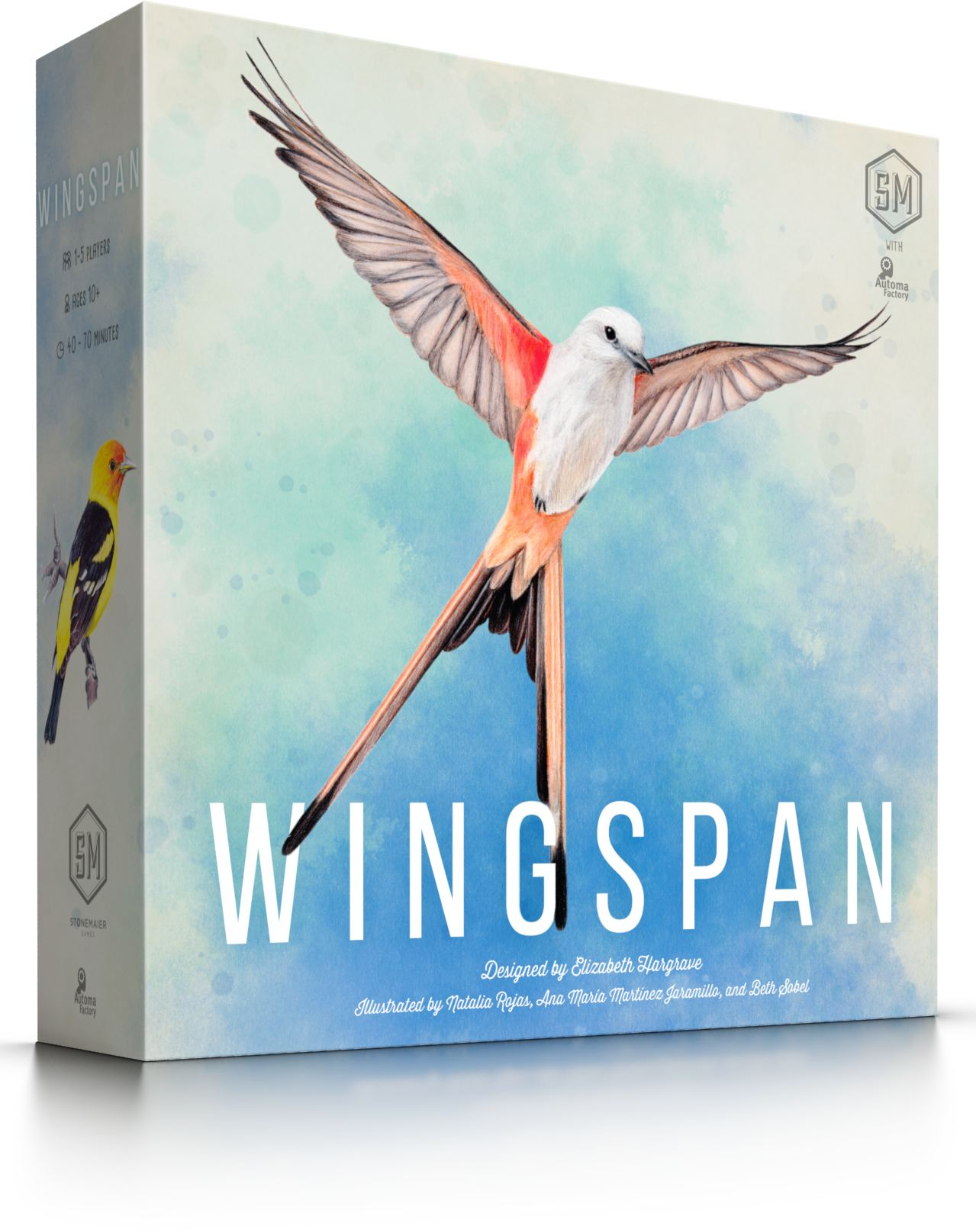
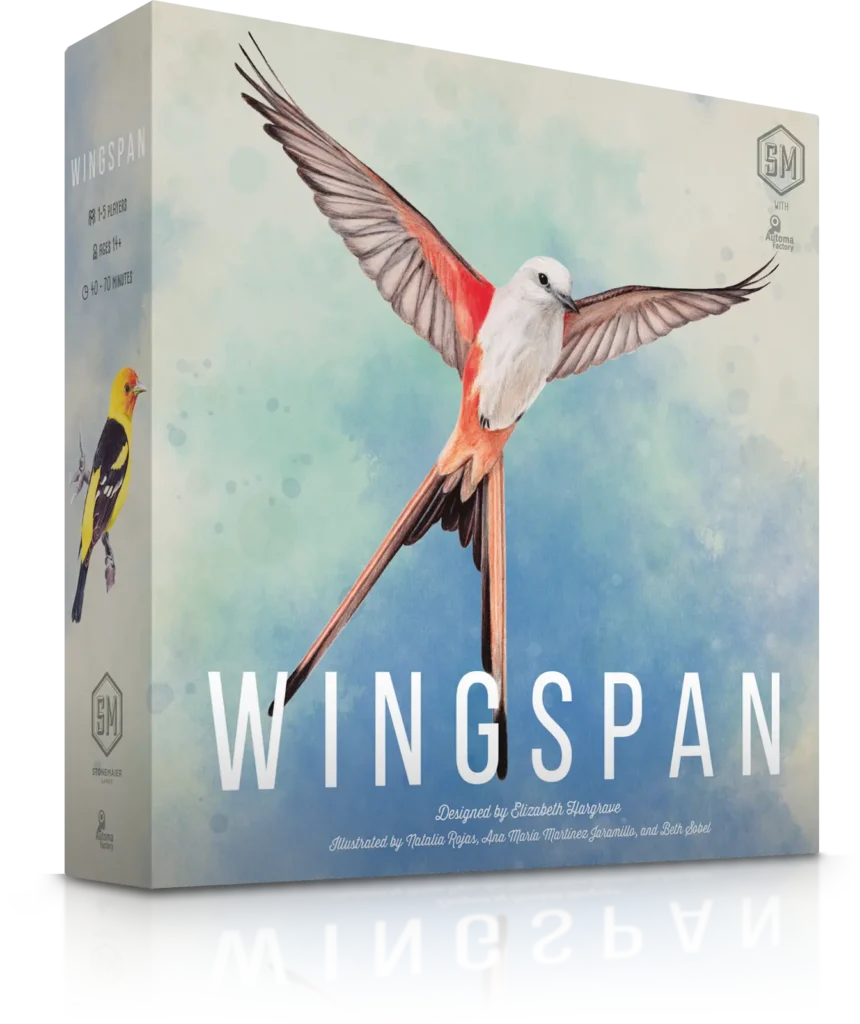
If they loved Catan's engine-building specifically, point them at Wingspan (Stonemaier Games, $65.00) — a gorgeous bird-collection engine that's the natural step up in depth without spiking the rules cliff. And if they liked Catan's player interaction but wished it were tighter, Ticket to Ride delivers that 'I'm racing you for the same space' tension in a cleaner, shorter package. The pitch is always the same: 'you already like this kind of thing — here's the part of it you've been missing.'
The Catan-only owner already walked through the gateway. They just never found out there was a whole library on the other side.
The Strategy-Curious: a brain that wants depth but hates a rulebook
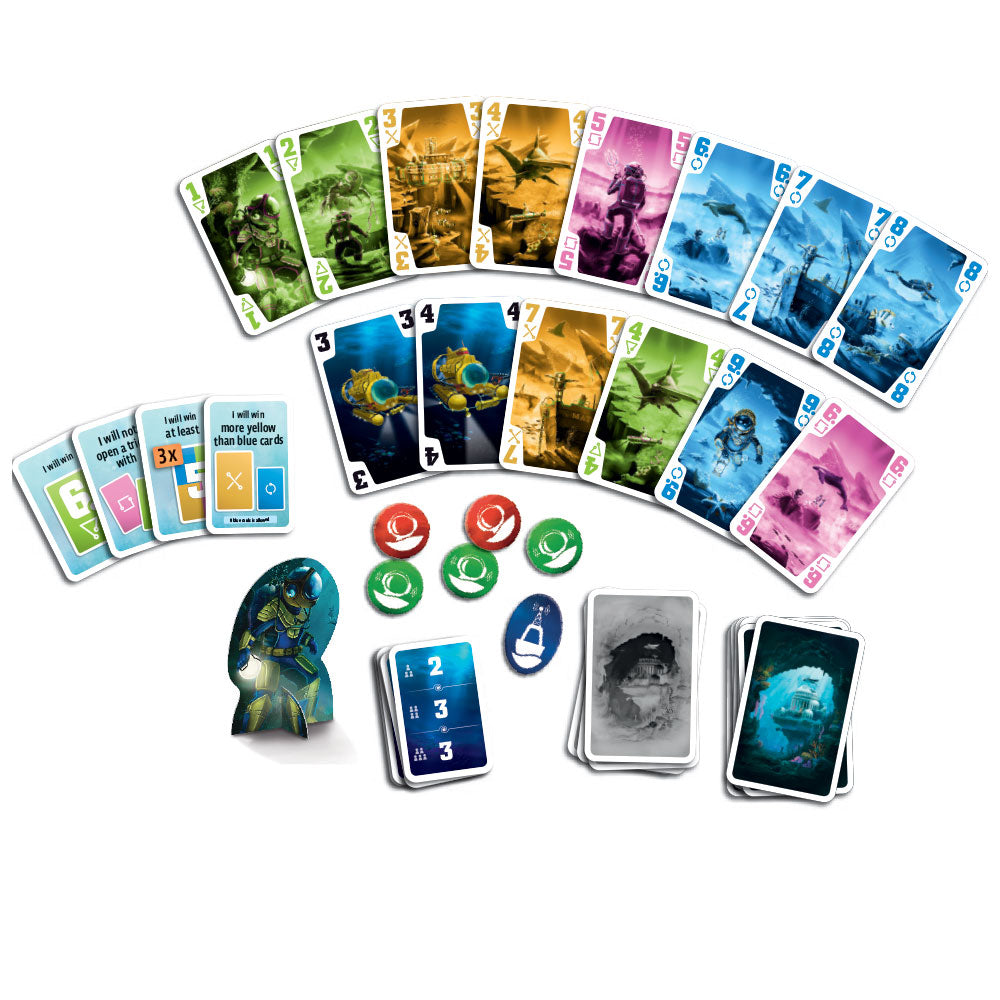

The final convert is the smart friend who suspects they'd love a meaty game but bounced off the hobby's reputation for 40-page rulebooks. They don't want light — light bores them. They want depth without overhead: a short rule set that opens into a genuinely deep decision space. This is the most rewarding convert because they often become the most committed player you've got.
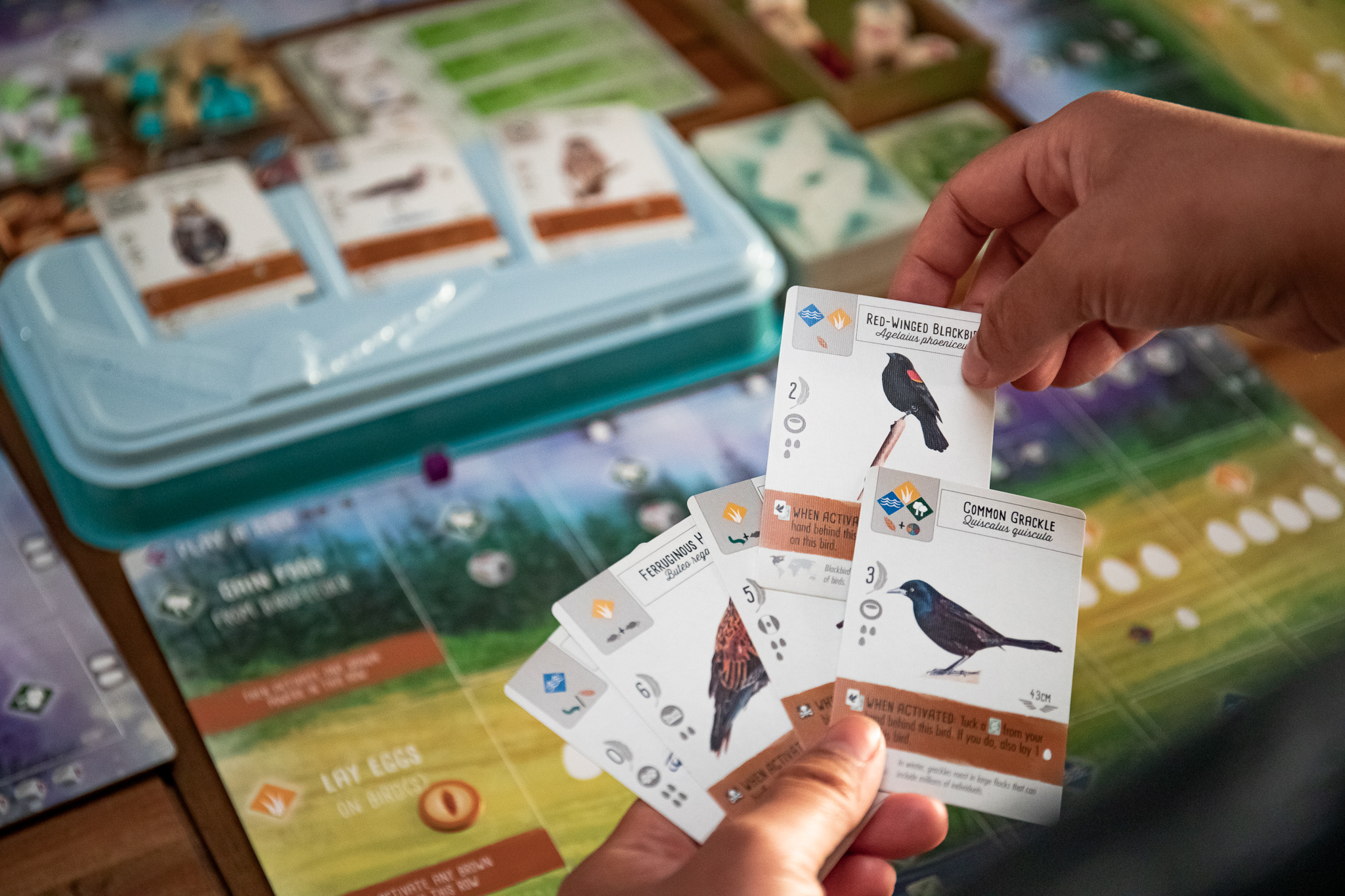
Cascadia earns a second mention here because it's the cleanest depth-for-its-weight game on the shelf — its two-minute teach hides a surprisingly thorny optimization puzzle as you chase shifting wildlife-scoring rules, and the strategy-curious mind lights up when it realizes how much is going on under such simple rules. Wingspan (Stonemaier Games) is the other top pick: building a tableau of 170-plus unique birds, each with its own little power, scratches the 'I want my decisions to combo' itch while the core loop stays explainable in five minutes.
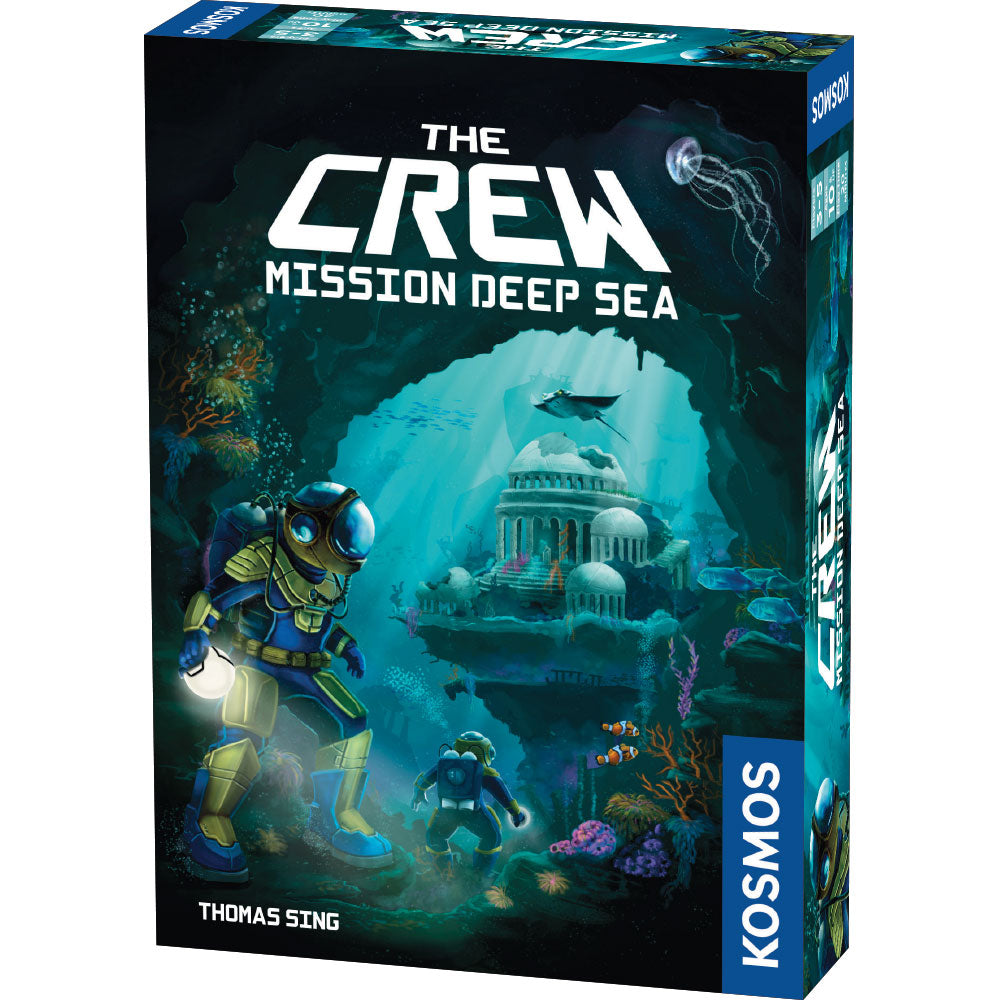
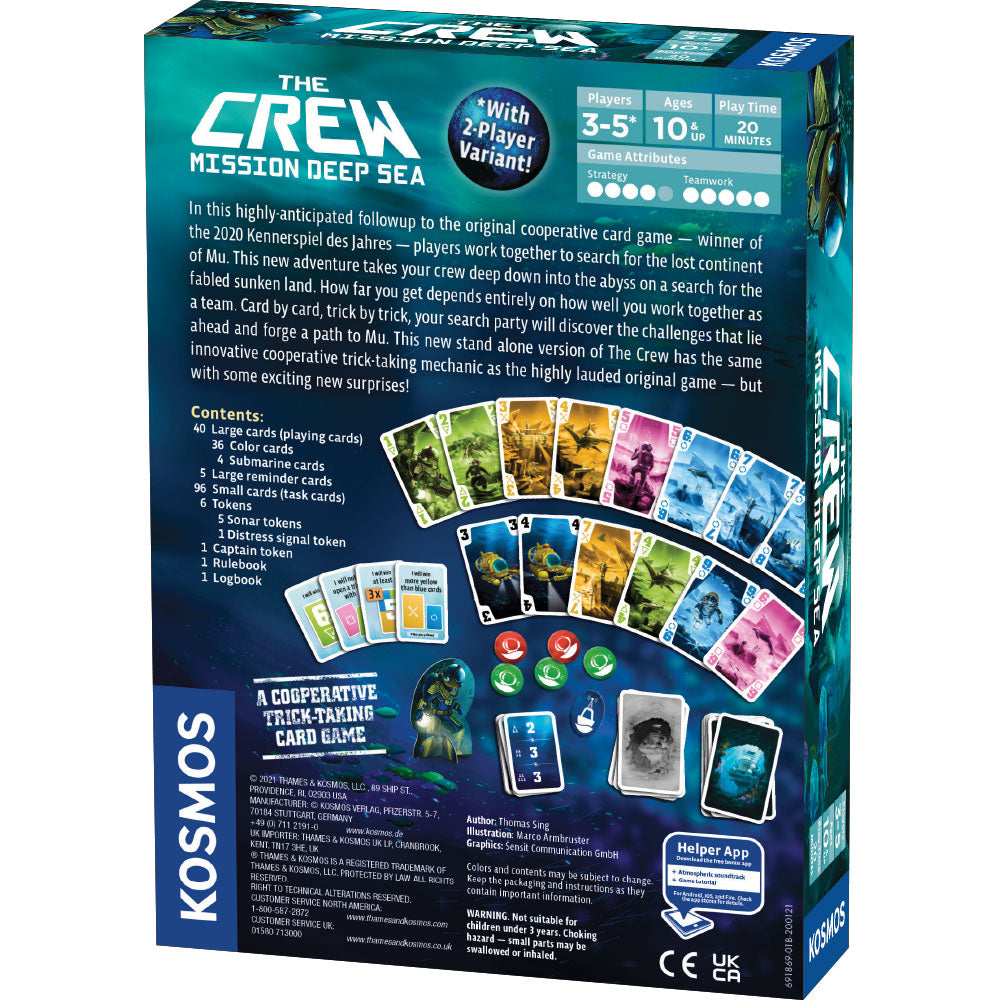
And here's my left-field favorite for this convert: The Crew: Mission Deep Sea (Thames & Kosmos / Kosmos, $14.95). It's a cooperative trick-taking card game — wildly cheap, pocket-sized — where the depth comes from the puzzle of coordinating without being allowed to talk freely. For an analytical person, that constraint is a beautiful, escalating brain-teaser across 32 missions, and it converts the 'I like logic puzzles more than games' crowd better than anything else I own. Give a deep thinker a small box that punches three weight classes up, and you've made a player for life.
The strategy-curious don't want easy. They want a five-minute rulebook that opens into a five-hour conversation.
What experienced tables keep reporting
Recurring owner patterns, synthesized in Puzzlewick's words. Follow each evidence trail to read the original discussion.
Among the broader board game community, Ticket to Ride is frequently ranked the #1 gateway game with Carcassonne close behind — both appear on essentially every 'best gateway' list precisely because they teach fast, avoid player elimination, and bridge non-gamers into the hobby.
The Spiel des Jahres ('Game of the Year') jury has repeatedly crowned the exact games that became gateway pillars: Carcassonne (2001), Ticket to Ride (2004), Azul (2018), Just One (2019), and Cascadia (2022) — a near-perfect overlap with any well-built beginner shelf.
Mainstream coverage backs the segment-by-convert logic: Wingspan is praised for removing the competitive tension that stresses newcomers — you're not attacking opponents, everyone's building something beautiful — and its rules take about five minutes to explain, while Catan is repeatedly flagged as luck-heavy and slower for first-timers.
Read the evidence: GamesRadar+ best board games 2026 roundup
Czech Games Edition describes Codenames' core hook directly: two rival spymasters know the agents' secret identities, their teammates know them only by codename, and the teams compete to make contact first — the built-in structure that turns a roomful of strangers into arguing, laughing teams.
Read the evidence: Czech Games Edition — official Codenames page
Even Catan's defenders concede the friction: hobby commentary notes the game's progress is luck-based with no real catch-up mechanism, the robber 'always feels punishing and mean,' and many newcomers prefer Ticket to Ride because 'it's shorter, a bit lighter, and there's no dice' — the case for not making Catan your automatic first pick.
Read the evidence: Hobby discussion summarized across board-game forums and Catan overview coverage
The picks
Some links below are affiliate links — as an Amazon Associate, Puzzlewick earns from qualifying purchases, at no extra cost to you. It never changes a pick.
 7 photos
 Azul
- Players
- 2-4 · best 2
- Time
- 30-45 min
- Age
- 8+
- Complexity
- 1.8 / 5
- Publisher
- Plan B Games · 2017
- Designer
- Michael Kiesling
- Art
- Philippe Guérin, Chris Quilliams
The single best skeptic-converter on the market. Heavy resin tiles you draft into a mosaic, a three-minute teach, and a genuine strategic 'aha' on turn one. Spiel des Jahres 2018, and it looks like a designed object rather than a toy — which is half the battle with a skeptic.
- Teaches in about three minutes
- Stunning physical components raise the perceived stakes
- Real strategy lands on the very first turn
- 30-45 min, no reading, minimal math
- Caps at four players — not a party game
- A losing skeptic can feel the abstract math is 'cold'
 7 photos
 Ticket to Ride
- Players
- 2-5
- Time
- 30-60 min
- Age
- 8+
- Complexity
- 1.9 / 5
- Publisher
- Days of Wonder · 2004
- Designer
- Alan R. Moon
- Art
- Julien Delval, Cyrille Daujean
The canonical family gateway and a deserved BoardGameGeek favorite for the role. Collect train cards, claim routes, connect secret cities on a map of North America. Real tension, no player elimination, sneaky-educational halo, and an eight-year-old competes honestly. Spiel des Jahres 2004.
- Up to five players — fits a family table
- No reading required; quick to teach
- Map gives parents an 'educational' angle
- No one gets eliminated or directly attacked
- Pricier than the card-game gateways
- Can drag slightly at the full five players
 7 photos
 Codenames
- Players
- 2-8
- Time
- 15 min
- Age
- 14+
- Complexity
- 1.3 / 5
- Publisher
- Czech Games Edition · 2015
- Designer
- Vlaada Chvátil
- Art
- Stéphane Gantiez, Tomáš Kučerovský, Filip Murmak
The gold-standard party gateway. Two teams, two spymasters, one-word clues on a 5x5 grid — it scales past a dozen players and manufactures the best 'how did that clue mean octopus?!' moments in gaming. The game I bring when I don't know the crowd.
- Scales to a dozen-plus players
- Rules vanish in ninety seconds
- Forces talk and teamwork — pure social fuel
- Cheap and endlessly replayable
- Needs even teams and at least four players to sing
- Falls flat with two people
 7 photos
 Cascadia
- Players
- 1-4
- Time
- 30-45 min
- Age
- 10+
- Complexity
- 1.8 / 5
- Publisher
- Flatout Games · 2021
- Designer
- Randy Flynn
- Art
- Beth Sobel
The best depth-to-rules ratio on the shelf. Draft habitat tiles and wildlife tokens to build a Pacific Northwest ecosystem — two-minute teach, thorny optimization underneath, zero take-that. Spiel des Jahres 2022. Plays great solo, too.
- Teaches in two minutes, plays in 30-45
- Surprising depth with no rules overhead
- No conflict — nobody gets attacked
- Solid 1-4 player and solo modes
- Quiet, low-interaction feel won't suit a competitor craving conflict
- Deluxe/retailer editions can run pricey

 9 photos
 Splendor
- Players
- 2-4
- Time
- 30 min
- Age
- 10+
- Complexity
- 1.8 / 5
- Publisher
- Space Cowboys · 2014
- Designer
- Marc André
- Art
- Pascal Quidault
A pure efficiency race with almost no luck once the cards are out — collect gem tokens, buy cards that discount future cards, snowball to 15 prestige. The compounding advantage is visible turn over turn, which is exactly what a competitor needs to feel. Five-minute teach, two-minute reset for the inevitable rematch.
- Near-zero luck; rewards the better player
- Engine-building 'snowball' feels great
- Teaches in five minutes
- Fast reset fuels best-of-three rematches
- Abstract theme — gems and chips, no narrative
- Light on direct interaction
 9 photos
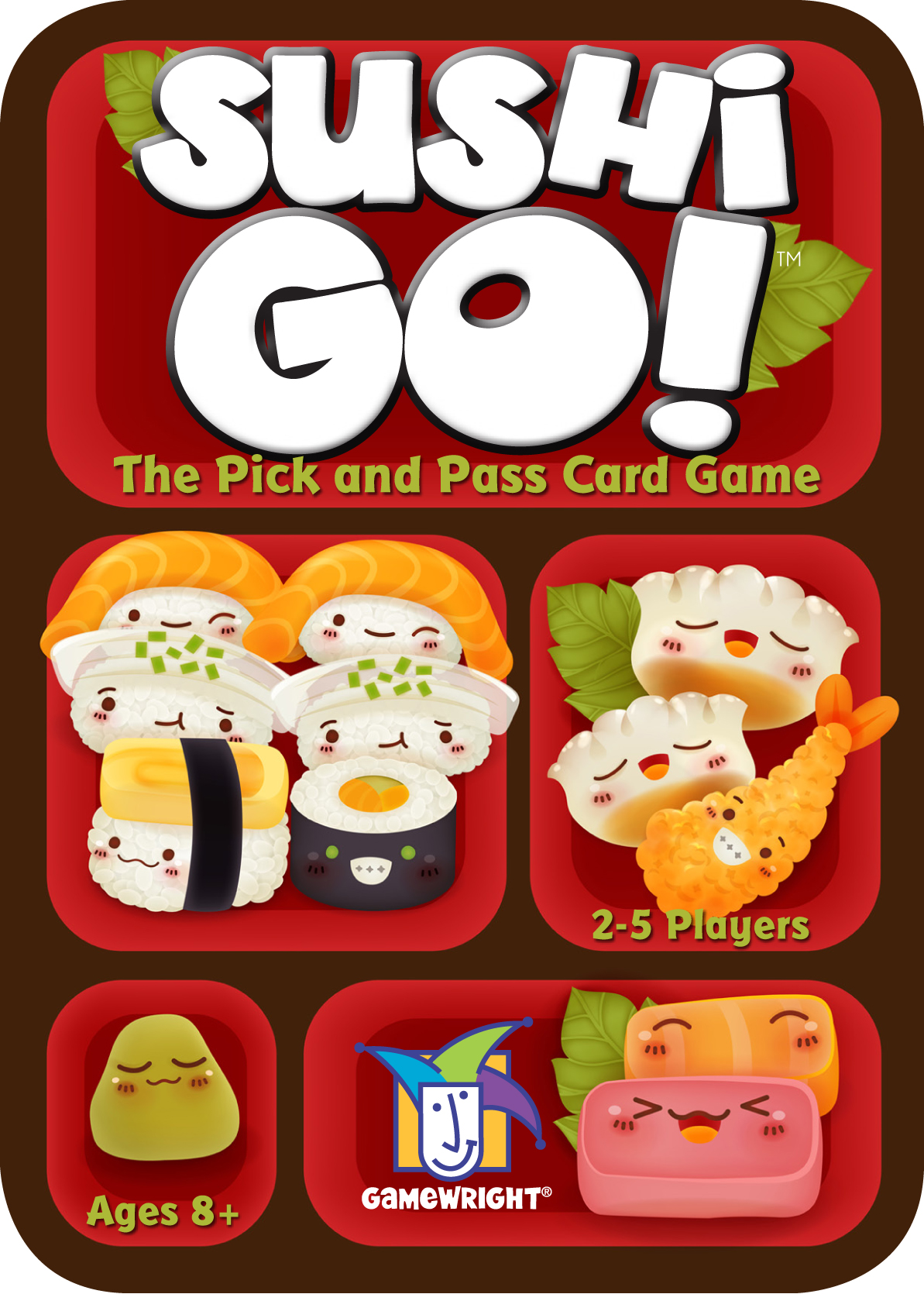
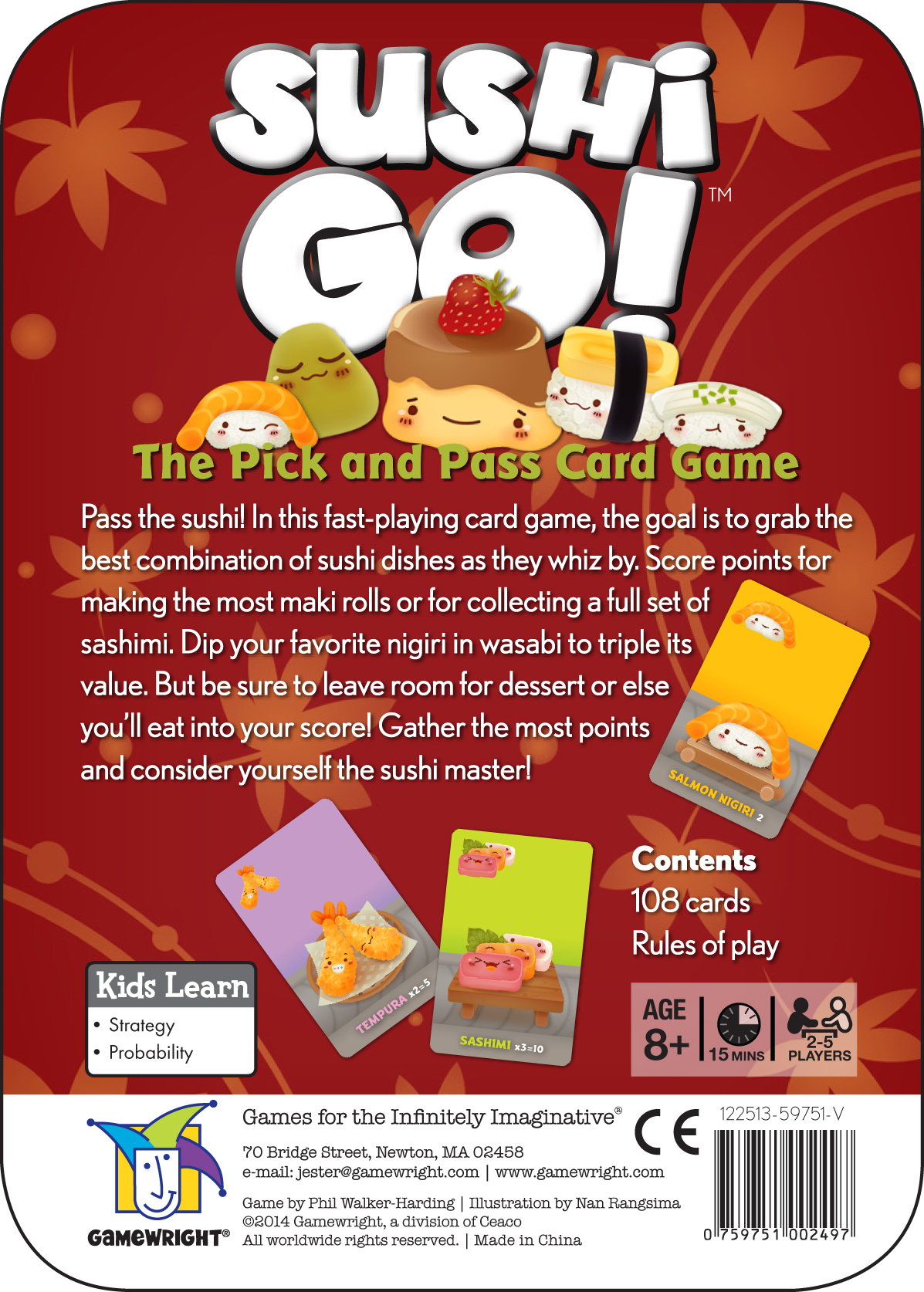
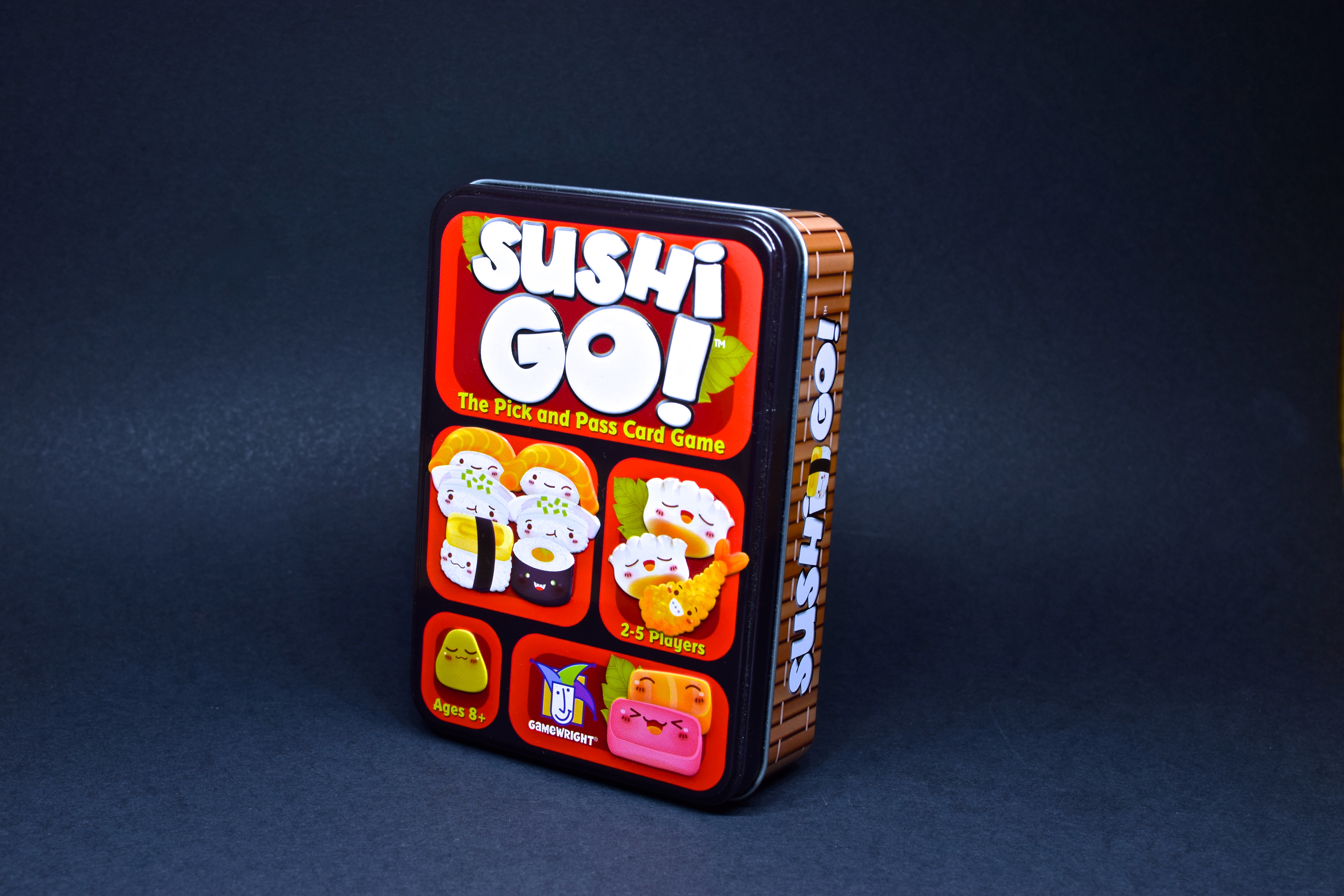
 Sushi Go!
- Players
- 2-5 · best 4
- Time
- 15 min
- Age
- 8+
- Complexity
- 1.2 / 5
- Publisher
- Gamewright · 2013
- Designer
- Phil Walker-Harding
- Art
- Nan Rangsima
A tiny, adorable, dirt-cheap pocket box that teaches card-drafting in two minutes and plays in fifteen. The lowest-risk gateway purchase there is, and the one I hand to households with six-year-olds. The deluxe Sushi Go Party! scales to eight for the party crowd.
- Among the cheapest real gateways
- 15-minute games, low age floor
- Travels in a coat pocket
- Party version (Sushi Go Party!) scales to 8
- Very light — won't satisfy a depth-seeker
- Some luck in the draft
 12 photos
 Wingspan
- Players
- 1-5 · best 3
- Time
- 40-70 min
- Age
- 10+
- Complexity
- 2.4 / 5
- Publisher
- Stonemaier Games · 2019
- Designer
- Elizabeth Hargrave
- Art
- Natalia Rojas, Ana Maria Martinez Jaramillo, Beth Sobel
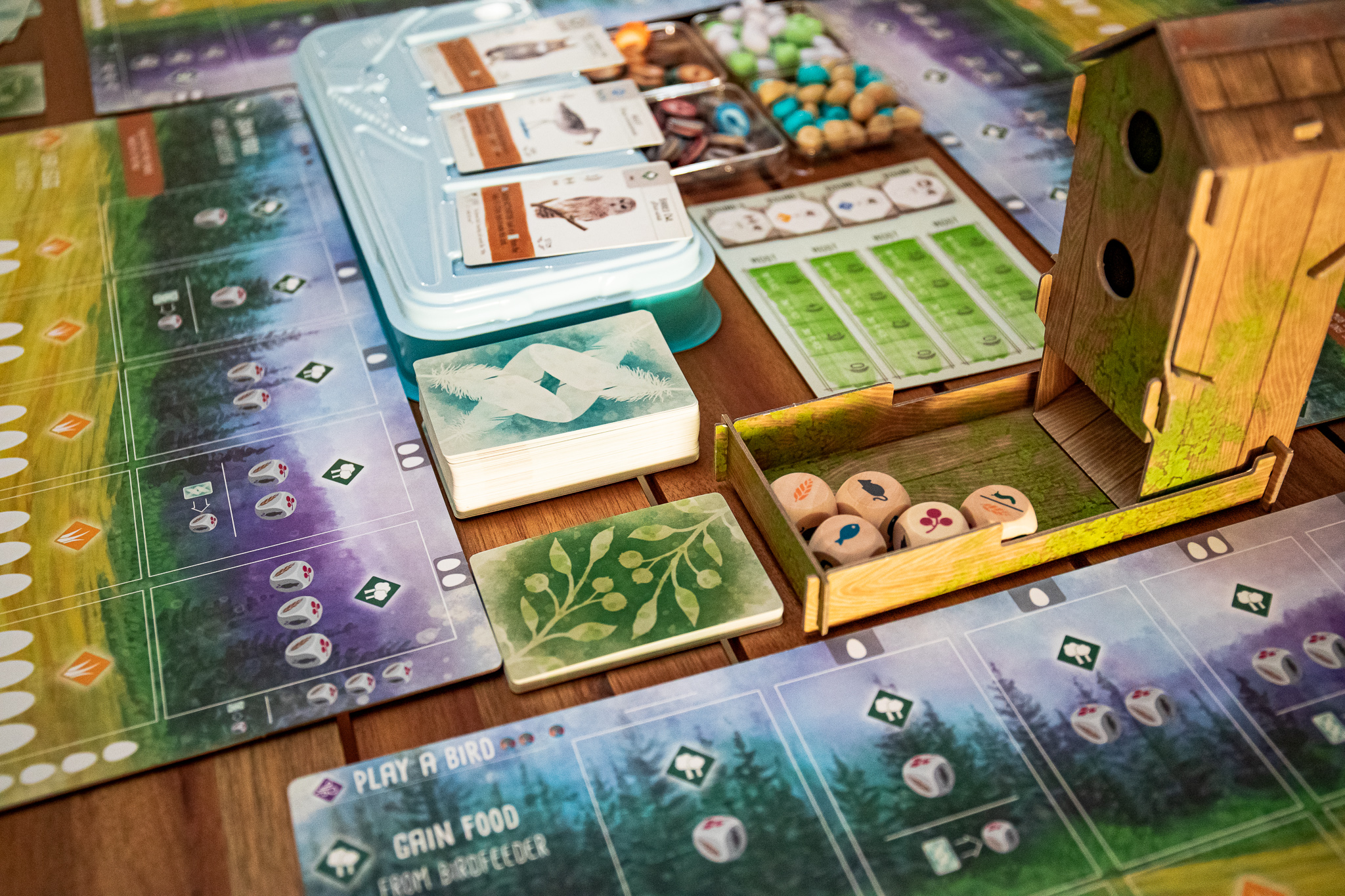
A gorgeous bird-collection engine — 170-plus unique cards, each a little power that combos with the rest. The natural step up in depth from a basic gateway without a rules cliff, and beloved for converting people who 'want their decisions to matter.' Often on sale direct from Stonemaier (~$55).
- Deep engine-building that still teaches in ~5 min
- Spectacular art and components
- Strong 1-5 player and solo modes
- Huge replayability from the card variety
- Highest price on this list
- A real step up — not a true cold-start gateway for a hard skeptic

 10 photos
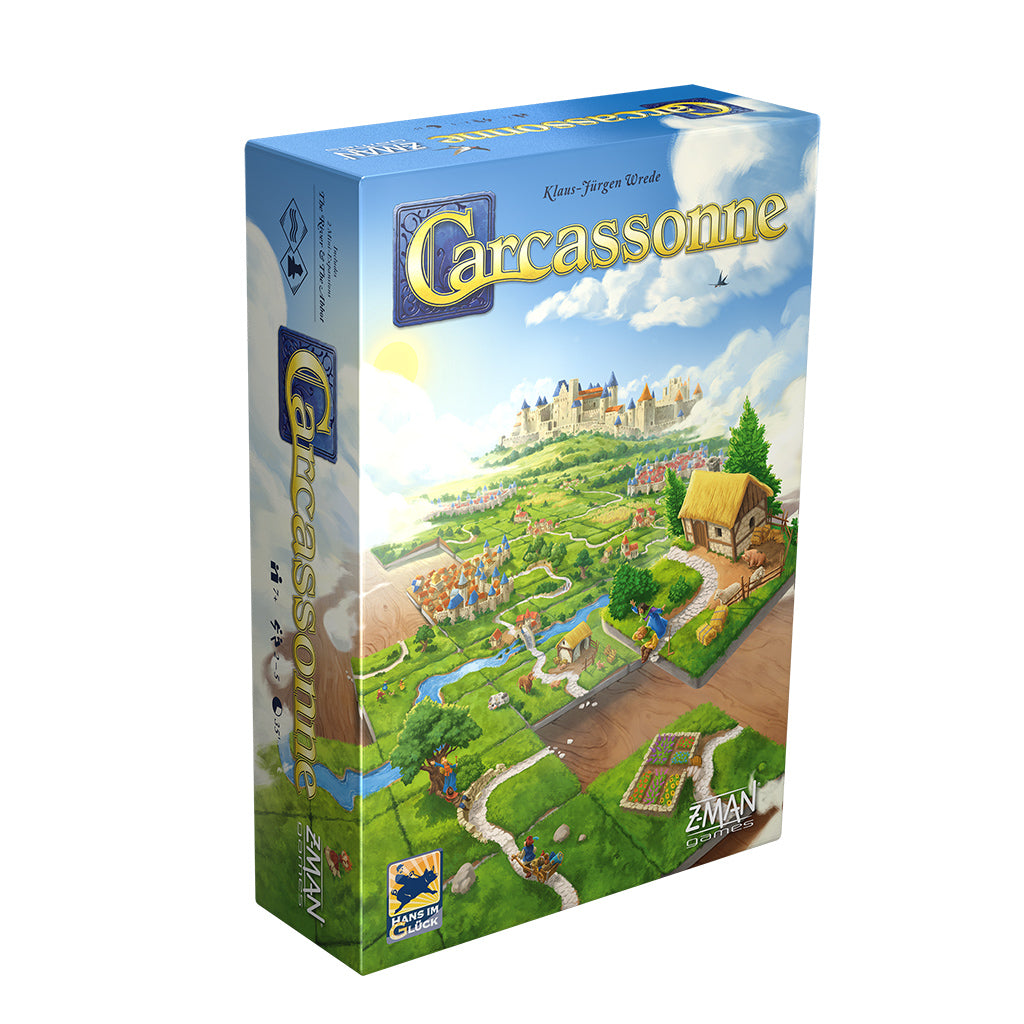
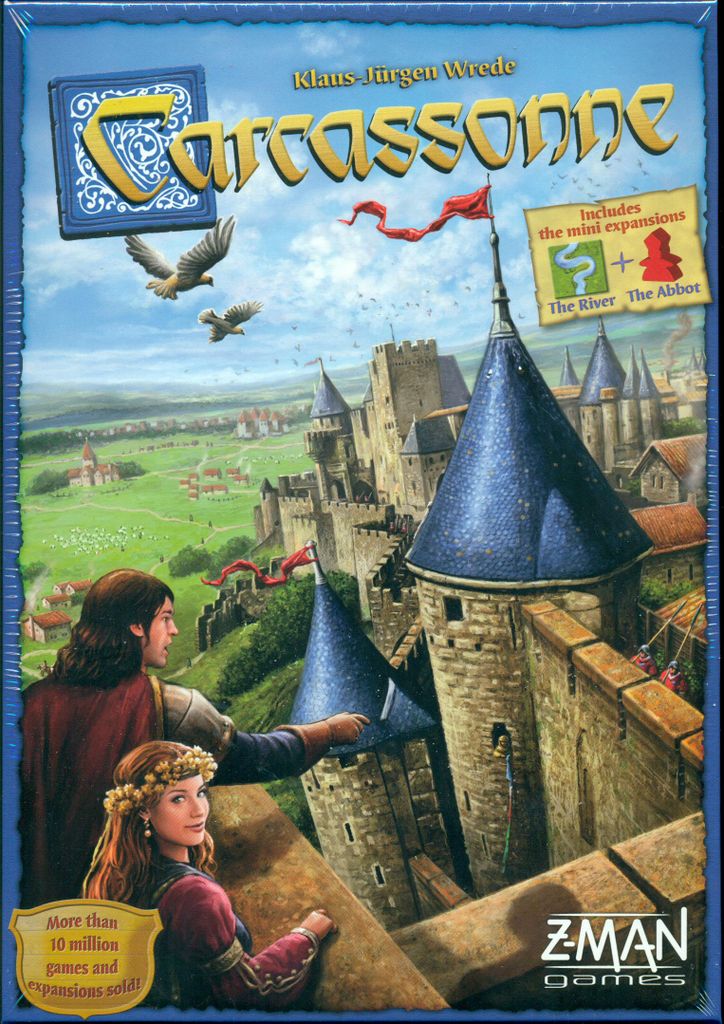
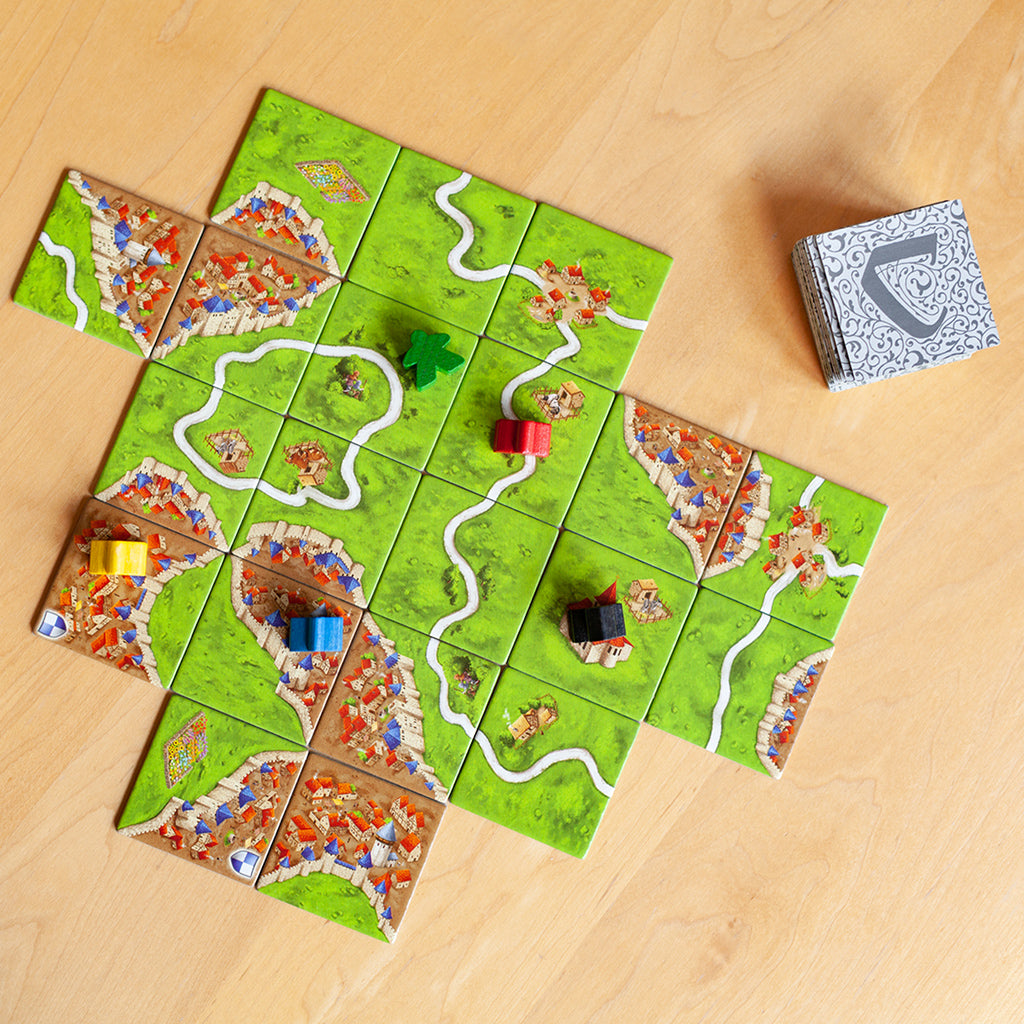
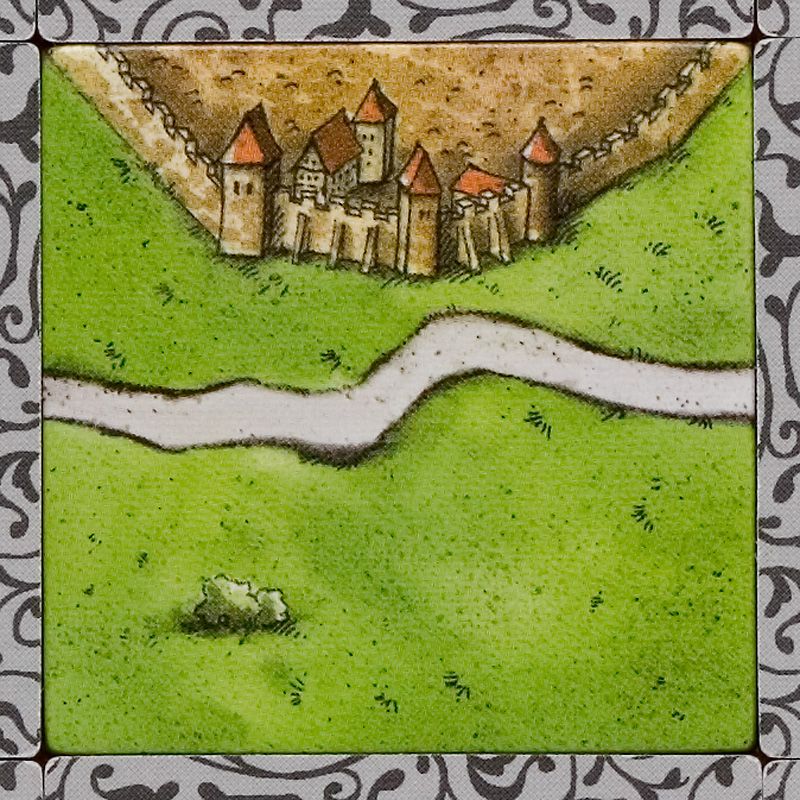
 Carcassonne
- Players
- 2-5 · best 2
- Time
- 30-45 min
- Age
- 7+
- Publisher
- Hans im Glück · 2000
- Designer
- Klaus-Jürgen Wrede
- Art
- Doris Matthäus
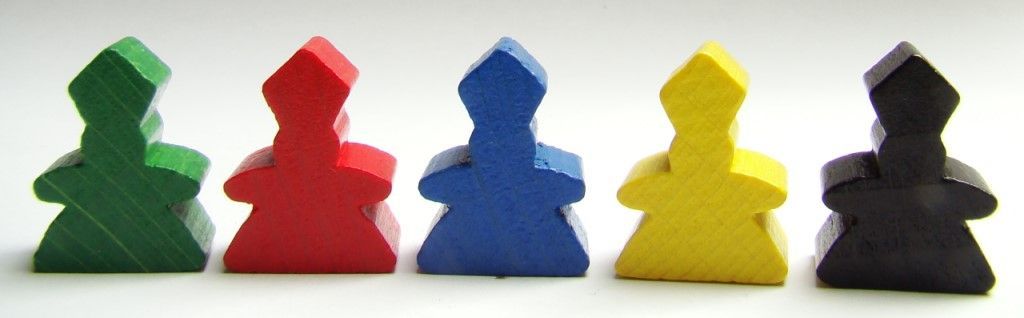
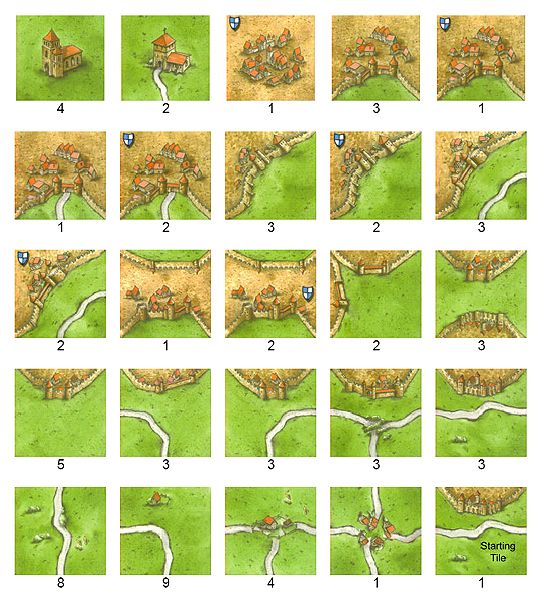
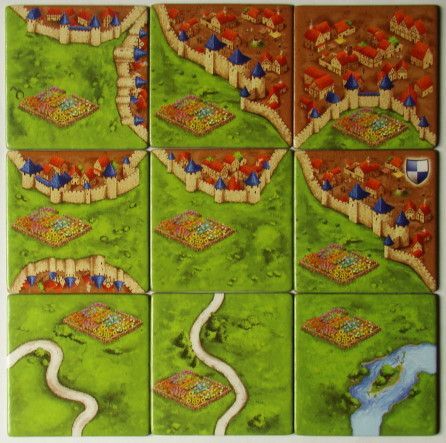
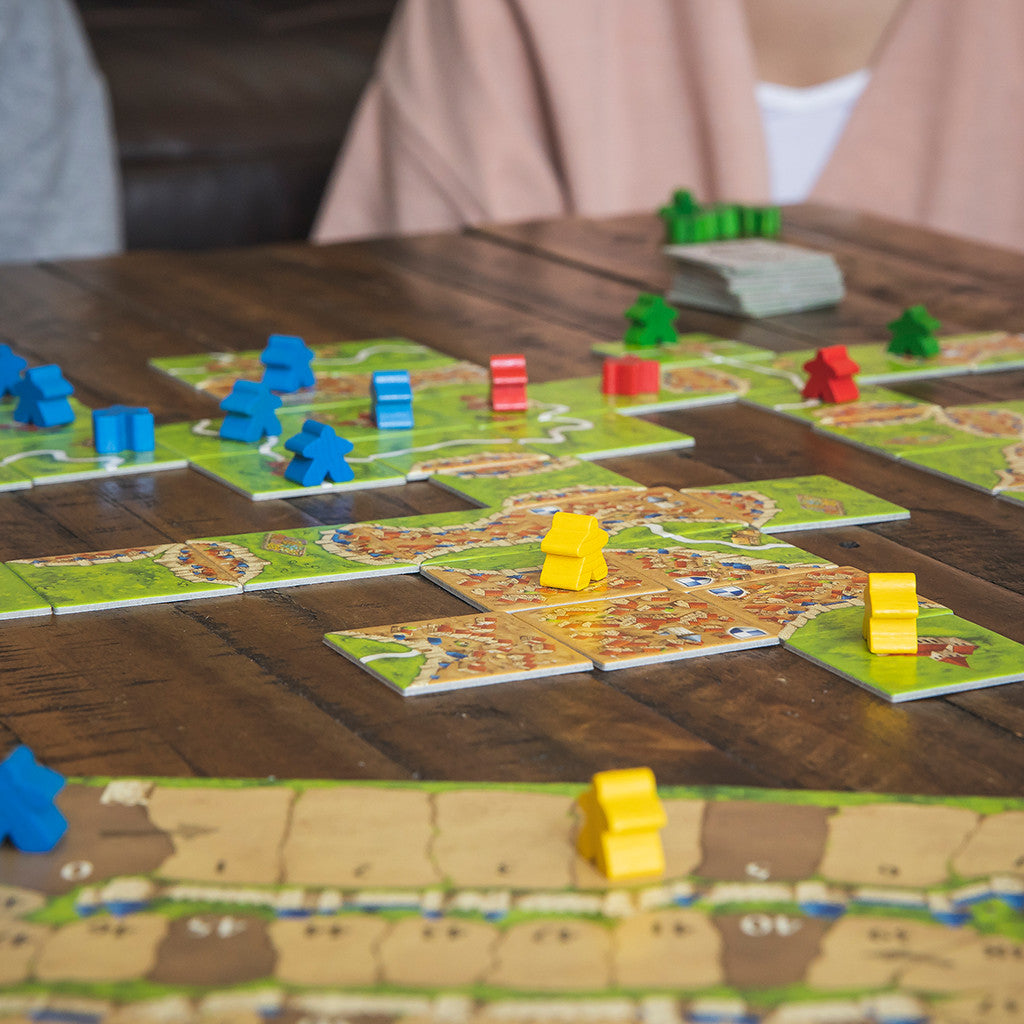
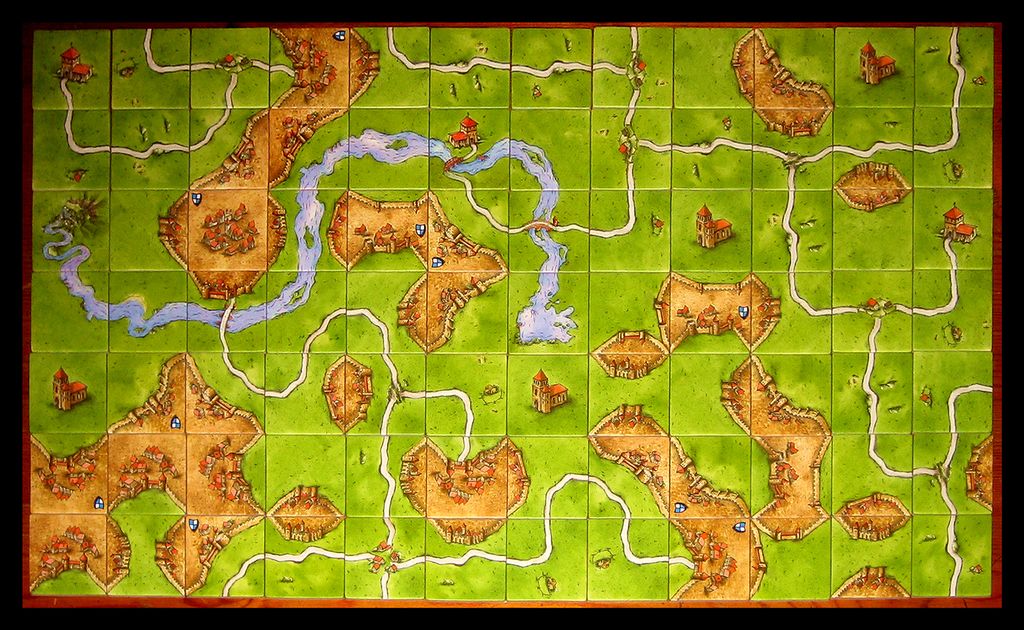
A foundational gateway and Spiel des Jahres 2001. Draw a tile, extend the medieval landscape, place a meeple to claim roads, cities, or farms. The take-that — blocking cities, sharing farms — is gentle but real, giving a competitor the 'I outplayed you' moment without anyone being eliminated.
- Easy to teach, endlessly replayable
- Light, satisfying player conflict
- Scales 2-5 players
- Cornerstone of the hobby with deep expansion support
- Farm-scoring confuses newcomers — teach it loosely at first
- Tile luck can swing a close game
 8 photos
 Just One
- Players
- 3-7
- Time
- 20 min
- Age
- 8+
- Complexity
- 1.0 / 5
- Publisher
- Repos Production · 2018
- Designers
- Ludovic Roudy, Bruno Sautter
- Art
- Éric Azagury, Florian Poullet
Spiel des Jahres 2019 and a stealth double-threat: it converts a wordy skeptic and anchors a party. Everyone secretly writes a one-word clue for a guesser; identical clues cancel out, so you're cooperating to be clever-but-not-obvious. Twenty minutes of groaning and cheering, and it makes 'non-game people' forget themselves.
- Cooperative — no one feels attacked or eliminated
- Teaches in two minutes
- Works as both a skeptic-converter and a party game
- Scales 3-7 players
- Needs at least three players
- Light enough that competitors may shrug
 3 photos
 The Crew: Mission Deep Sea
- Players
- 2-5 · best 4
- Time
- 20 min
- Age
- 10+
- Complexity
- 2.0 / 5
- Publisher
- Kosmos · 2021
- Designer
- Thomas Sing
- Art
- Marco Armbruster
A cheap, pocket-sized cooperative trick-taking card game whose depth comes from coordinating when you're barely allowed to communicate. 32 escalating missions form a built-in difficulty ramp — it punches three weight classes above its price and converts the puzzle-brain crowd better than anything I own.
- Astonishing depth for under $15
- 32-mission campaign ramps difficulty for you
- Cooperative — great for conflict-averse converts
- Tiny, travels anywhere
- Trick-taking base concept needs a card-game-friendly group
- Two-player needs the variant; sings best at 3-4
- Frequently sells out
At a glance
| game | maker | price | converts |
|---|---|---|---|
| Azul | Plan B Games | ~$39.99 | The skeptical spouse |
| Ticket to Ride | Days of Wonder | ~$54.99 | The family with kids |
| Codenames | Czech Games Edition | $24.99 | The party crowd (6+) |
| Cascadia | Flatout Games / AEG | ~$39.99 | Strategy-curious & Catan owners |
| Splendor | Space Cowboys | ~$34.99 | The competitive friend |
| Sushi Go! | Gamewright | ~$12.99 | Families w/ young kids; budget |
| Wingspan | Stonemaier Games | $65.00 | Engine-builders; strategy-curious |
| Carcassonne | Z-Man Games | ~$34.99 | The mildly competitive friend |
| Just One | Repos Production | ~$24.99 | Wordy skeptics; party groups |
| The Crew: Mission Deep Sea | Thames & Kosmos | $14.95 | The analytical puzzle-brain |
| Patchwork | Lookout Games | ~$24.99 | Two-player households & couples |
Questions, answered
What is a gateway board game?
A gateway board game is a modern, deliberately accessible title designed to introduce non-gamers to the hobby beyond mass-market classics like Monopoly and Sorry. The defining traits: it teaches in about five minutes, finishes in under an hour, needs little to no reading or math, and avoids player elimination so nobody sits out feeling bored. Azul, Ticket to Ride, and Cascadia are textbook examples. The whole point is a low barrier with just enough real decision-making to make someone say 'let's play again.'
What is the single best gateway board game for a complete beginner?
There isn't one universal answer — the best gateway game depends on who you're converting. For a skeptical adult, Azul (~$39.99). For a family with kids, Ticket to Ride (~$54.99). For a party, Codenames ($24.99) or Sushi Go! (~$12.99). If you forced me to name one safe default for a mixed group of curious adults, it's Azul: it's beautiful, fast, teaches in three minutes, and delivers a real strategic moment on turn one.
Is Catan still a good gateway game in 2026?
It's a real gateway, but an overrated default. Catan (CATAN Studio, ~$55, with a streamlined 6th edition released in 2025) runs 60-90 minutes, swings on dice rolls, and its robber mechanic lets one player feel singled out — three things that frequently lose a newcomer rather than win one. It converts people who are already curious, but for a hard skeptic or a young family, shorter, luck-lighter, conflict-free games like Azul, Ticket to Ride, or Cascadia have a much higher hit rate.
Which popular 'gateway' games actually flop with newcomers?
The honest ones: Catan can flop with skeptics because of its length, dice-luck, and the 'robber' picking on people. Heavy 'introductory' Euros that still carry a thick rulebook flop with the strategy-curious because the rulebook is exactly what scared them off before. And licensed roll-and-move family games flop with kids in the deeper sense — they're so luck-driven and decision-free that they teach a child board games are boring. Match the weight and the luck level to the person.
What's the best gateway game for a non-gamer spouse or partner?
Azul (Plan B Games, ~$39.99). It looks like a designed object you'd leave on the coffee table rather than a toy, it teaches in three minutes, and the skeptic gets a genuine 'oh, I can deny you those tiles' strategic thought on the first turn — that little jolt is the conversion. If your partner is more of a word person than a visual one, Just One (Repos Production, ~$24.99) is the cooperative, laugh-out-loud alternative.
What's a good gateway board game for families with young kids?
Ticket to Ride (Days of Wonder, ~$54.99) is the all-ages standard — an eight-year-old competes honestly and the adults aren't bored. For younger children (six and up) or shorter attention spans, Sushi Go! (Gamewright, ~$12.99) is cheaper, lighter, and plays in fifteen minutes. For two natural rivals in the house, Patchwork (Lookout Games, ~$24.99) is a brilliant non-violent two-player puzzle.
What gateway game works for a competitive person who hates losing to luck?
Splendor (Space Cowboys, ~$34.99). Once the cards are dealt there's essentially no luck — it's a pure efficiency race where the better player's advantage compounds visibly each turn, which is exactly what a competitor wants to feel. It also resets in two minutes, so when they lose the first game you can immediately call 'best of three.' Carcassonne (~$34.99) is the alternative if they want a little spatial cutthroat.
What's the best cheap gateway board game under $20?
Two standouts. Sushi Go! (Gamewright, ~$12.99) is a fifteen-minute card-drafting game that's perfect for kids and travel. The Crew: Mission Deep Sea (Thames & Kosmos, $14.95) is a cooperative trick-taking card game with a 32-mission campaign that punches far above its price for an analytical group. Both prove a great gateway doesn't have to be expensive.
How many players should a gateway game support?
Match it to your group. Tile and engine games like Azul, Splendor, and Cascadia top out around two-to-four players and shine at low counts. For a real party (six-plus people), you specifically need Codenames, Sushi Go Party!, or Just One — a four-player gateway falls apart at a crowd because someone is always waiting. Sort your options by max player count first, then pick the best game that actually fits the room.
Robert's verdict
Stop asking 'what's the best gateway game?' and start asking 'who am I converting?' For a skeptical spouse, Azul wins more often than anything else on Earth. For a family with kids, Ticket to Ride is the one box that fits a second-grader and the adults. For a party, Codenames or Sushi Go! For a competitor, Splendor's luck-free skill race. For the Catan-only owner and the strategy-curious, Cascadia and Wingspan show how big the room really is. The famous default — Catan — is a real gateway, but a slower, luckier one that loses as many newcomers as it wins; reach for it only when someone's already curious. Match the game to the person, lead the first night as a teacher rather than a competitor, and your conversion rate goes from a coin flip to a near-sure thing. Every one of these earned its shelf in my house — and we point you to the maker, because a good first game is the start of a hobby, not a transaction.
Still deciding? Take the Game-Finder — answer seven quick questions and the cabinet hands you the one board game built for your table, with a buy link and your own shareable player talisman.
Research ledger 23 sources · reviewed 2026-09-11
Specifications, rules, current product information, community experience, and contrary evidence were checked against the sources below. Commercial links are kept separate from editorial evidence.
- target.comtarget.com/p/azul-board-game/-/A-53287255
- daysofwonder.comdaysofwonder.com/game/ticket-to-ride
- store.czechgames.comstore.czechgames.com/collections/codenames
- store.czechgames.comstore.czechgames.com/products/codenames-words
- alderac.comalderac.com/cascadia
- flatout.gamesflatout.games/cascadia
- en.wikipedia.orgen.wikipedia.org/wiki/Cascadia_(board_game)
- target.comtarget.com/p/splendor-board-game/-/A-26391271
- en.wikipedia.orgen.wikipedia.org/wiki/Splendor_(game)
- gamewright.comgamewright.com/product/Sushi-Go
- gamewright.comgamewright.com/product/Sushi-Go-Party
- store.stonemaiergames.comstore.stonemaiergames.com/products/wingspan
- zmangames.comzmangames.com/game/carcassonne
- rprod.comrprod.com/en/games/just-one
- thamesandkosmos.comthamesandkosmos.com/products/the-crew-mission-deep-sea
- en.wikipedia.orgen.wikipedia.org/wiki/The_Crew_(card_game)
- amazon.comamazon.com/dp/B08P72V7DZ?tag=puzzlewick-20
- catanshop.comcatanshop.com/catan-6th-edition-base-game
- en.wikipedia.orgen.wikipedia.org/wiki/Catan
- gamesradar.comgamesradar.com/best-board-games
- boardgamehalv.comboardgamehalv.com/full-list-of-spiel-des-jahres-winners
- boardgamegeek.comboardgamegeek.com/thread/1794469/revisiting-spiel-des-jahres-winners-ticket-ride
- en.wikipedia.orgen.wikipedia.org/wiki/Ticket_to_Ride
If it didn't earn a shelf, it isn't here.

Keep exploring
The next smart rabbit holes.
⌂ Topic PathFamily and Gateway Games: compare the whole shelfA good family game gets everyone playing quickly without becoming disposable after three nights. These guides prioritize clear...ComparisonThe Best Family Board Games of 2026, Ranked (Kids + Adults Together)One table, three generations, zero meltdowns — the games that make a 7-year-old and a tired grown-up scheme against each other and both...ComparisonCatan vs Carcassonne vs Ticket to Ride: The Best Gateway Game, Head-to-HeadThree legends, one shelf, one decision. Here's the honest, table-tested call on which gateway game earns its spot first — and exactly who...