The Most Expensive Campaign Board Games on Amazon in 2026: 5 Grails Actually Worth It
Frosthaven, Oathsworn, Elder Scrolls, ISS Vanguard, and Tainted Grail compared by the metric the box cannot advertise: whether your real group will finish them.


AI-assisted research and drafting in Dax’s voice · reviewed by Robert Pruitt · how this guide was made
Last editorial refresh: 2026-08-12 Gold-standard QA: 2026-08-10 26 sources reviewed Affiliate links checked during gold-standard pass

The short answer
For a proven tactical campaign group, buy Frosthaven. For a finishable story-and-boss campaign, buy Oathsworn. For solo, duo, or unreliable calendars, The Elder Scrolls: Betrayal of the Second Era is the smartest premium purchase. Choose ISS Vanguard for exploration and ship management, and Tainted Grail: Kings of Ruin for story-first solo or duo play.
Decision map
Choose in thirty seconds
Only for a group that has already finished a long campaign.
A focused chapter rhythm is easier to resume after a month away.
Three-session arcs create premium depth without a year-long promise.
Buy because the ship book and crew management excite you.
Standalone, atmospheric, and more narrative than tactical.
A premium campaign box is not expensive because the cardboard weighs a lot. It is expensive because it asks your future self, your shelves, and several other adults to cooperate for months. This guide audits five ambitious games with direct Amazon product listings observed on July 23, 2026. We checked exact ASINs, official rules and product pages, BoardGameGeek records, recent Reddit buying conversations, and long-form owner patterns.
The ranking is not “most stuff wins.” It weighs repeatable gameplay, completion odds, group fit, setup and administration, story appetite, and the cost of buying the wrong fantasy. Amazon price and stock move, so the buttons lead to exact product-detail pages without inventing a live price.
Start here, then go deeper
You are in the right cabinet.
 ♛ Topic PathGrail Board Games: compare the whole shelfA grail earns its space only when the experience survives the price, setup, storage, and group commitment. These are expensive-game...
 ComparisonThe Most Expensive Event Board Games on Amazon in 2026: 5 Table Grails Actually Worth ItEclipse, War of the Ring, Twilight Imperium, Dune, and Cthulhu: Death May Die compared by the people, hours, table, and temperament each...
 Deep DiveFrosthaven Review: Is the Colossal Campaign Worth Your Table?Frosthaven's tactical combat, outpost phase, campaign commitment, setup burden, player count, and the honest reason some Gloomhaven...
Which expensive campaign board game is actually worth it?
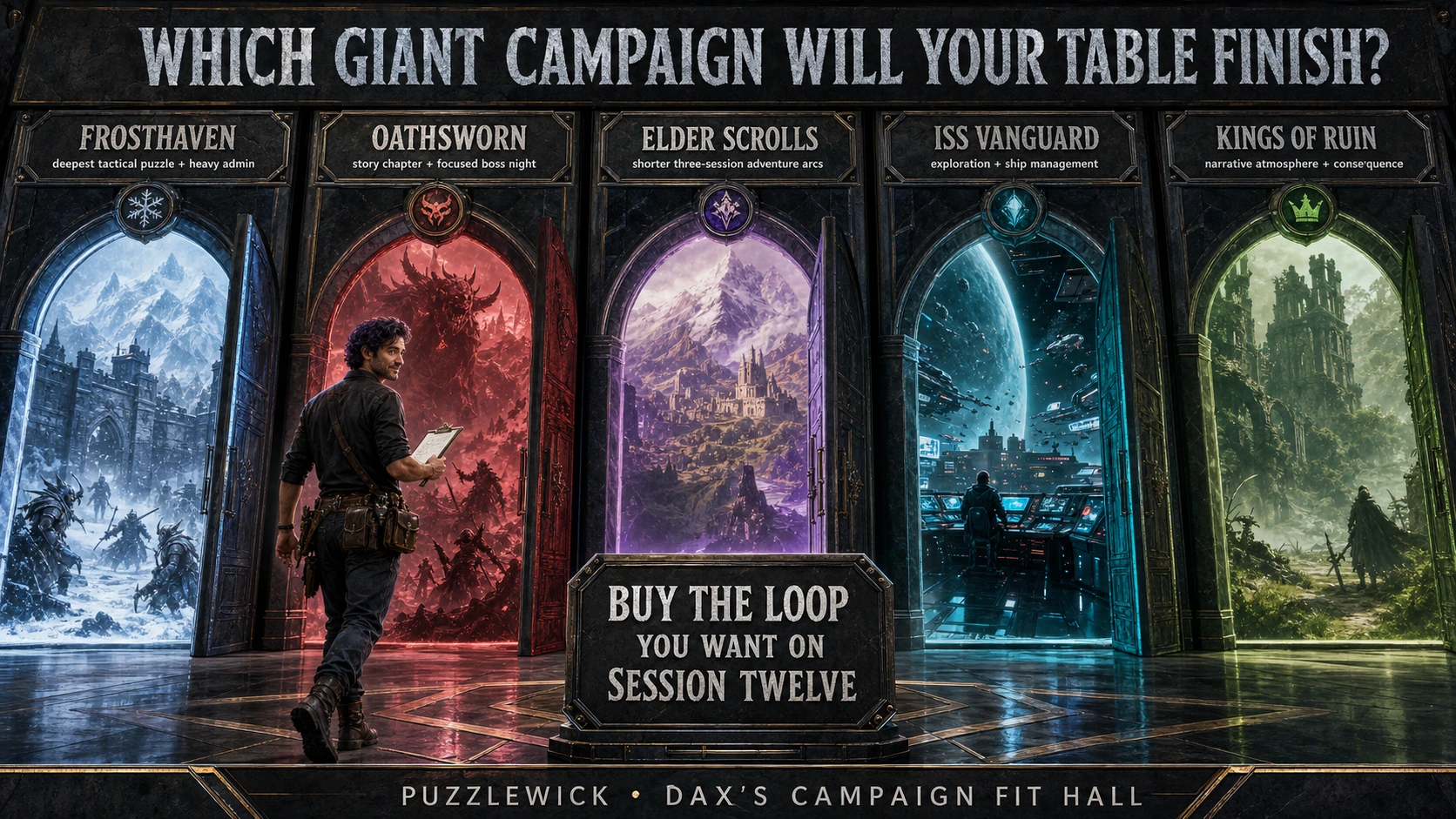


The expensive campaign game worth buying is the one whose core loop your group wants to repeat on session twelve. Frosthaven wins tactical depth. Oathsworn wins the cleanest story-to-boss-night rhythm. Elder Scrolls wins calendar realism. ISS Vanguard wins discovery and ship administration. Kings of Ruin wins sustained narrative atmosphere.
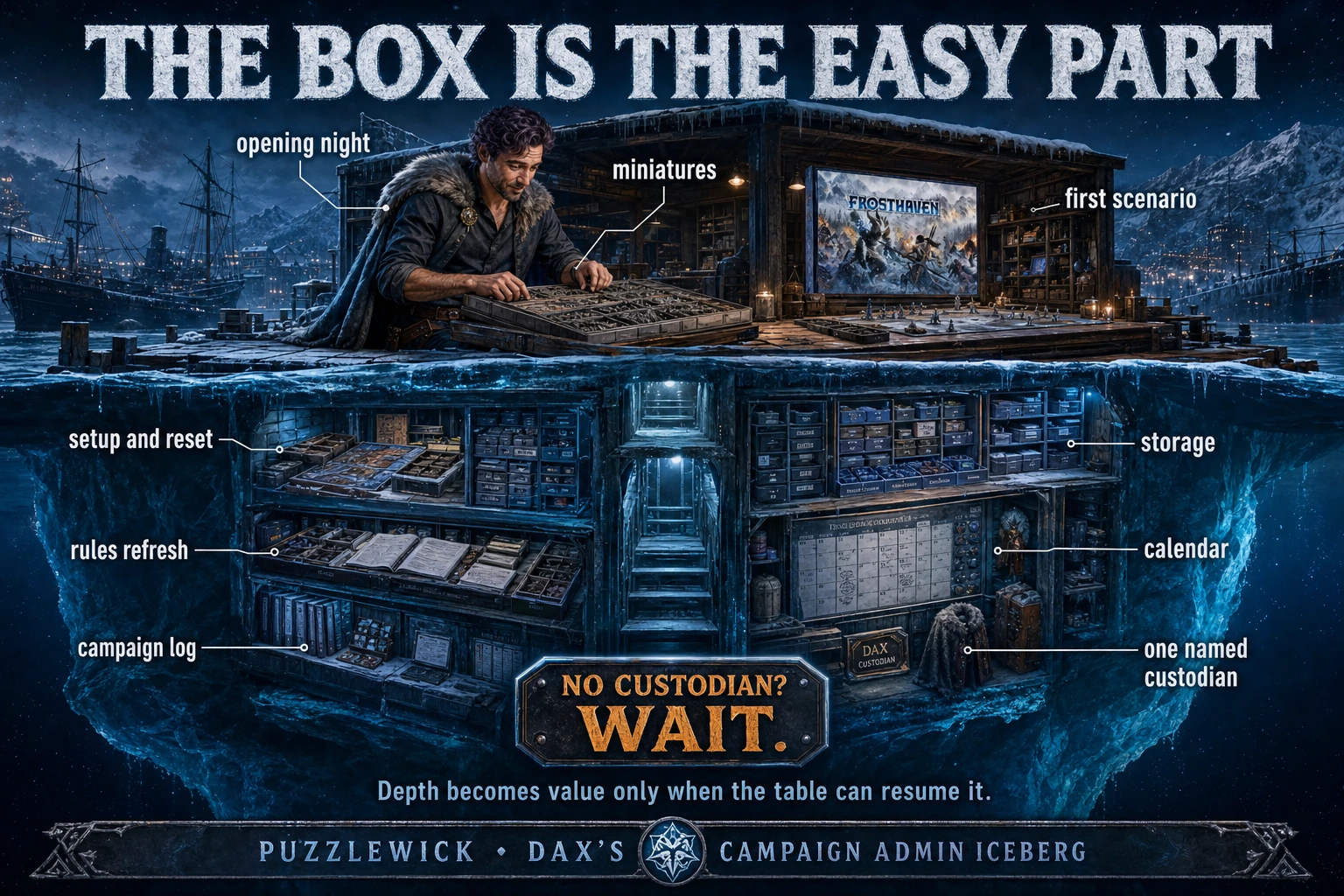
Notice what is absent: kilograms, miniature count, and the size of the shipping carton. Those can make opening night intoxicating without making February’s rescheduled session happen. Our completion filter asks five questions: Who are the named players? How often can they meet? Who resets and stores the game? Does the group want story, tactics, exploration, or character construction? What shorter game has already proved that appetite?
Is Frosthaven worth the money in 2026?

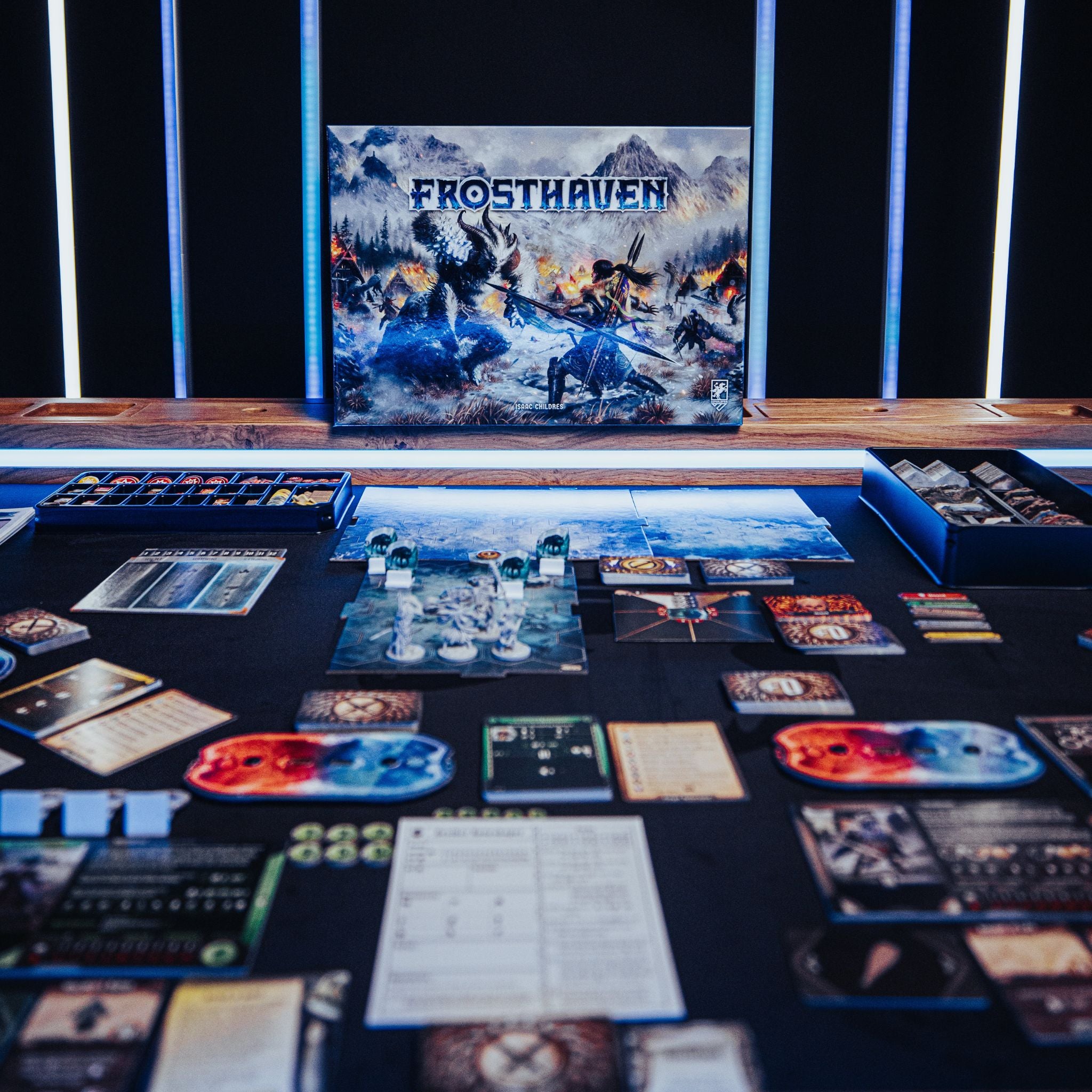
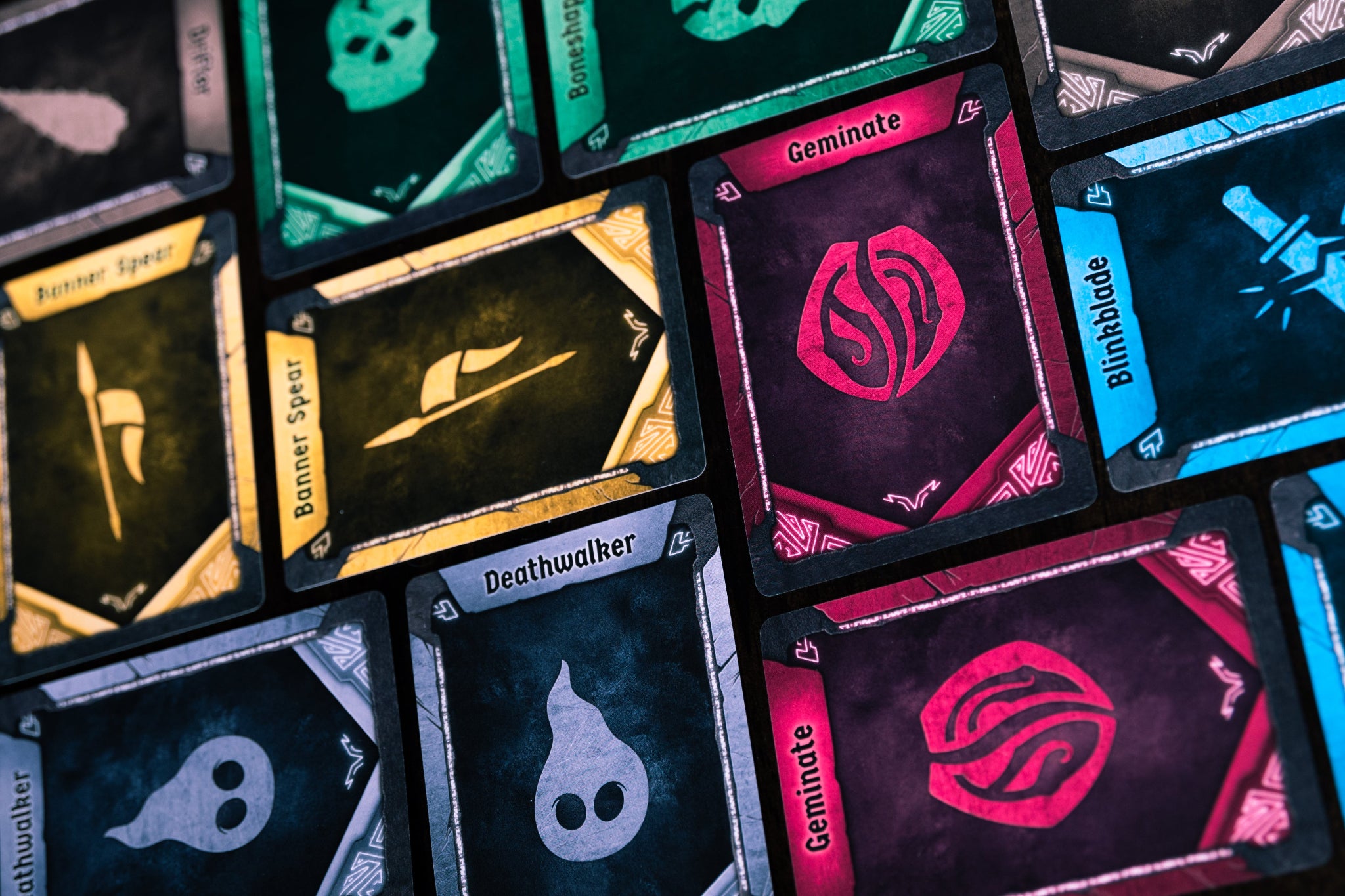
Frosthaven is the strongest recommendation for one very specific buyer: a Haven group that already knows it enjoys card-driven tactical combat, scenario puzzles, persistent character growth, and campaign upkeep. Its scenario and class variety create an extraordinary amount of play, and the settlement layer gives ownership a sense of stewardship between expeditions.
The same systems that create depth create failure points. Setup, outpost phases, unlock tracking, character boxes, and scenario-specific exceptions need a custodian. Recent players finishing Frosthaven still describe the post-campaign search as difficult because few games reproduce its tactical loop. That is praise, not an entry recommendation. If your group has not finished a long campaign, Jaws of the Lion is a better proof-of-appetite than buying this because the box looks definitive.
What is actually in the commitment: Cephalofair lists 139 scenarios, six starting classes, a calendar, the evolving outpost, crafting, events, and unlockable systems. That density is why “how long does Frosthaven take?” has two answers: a scenario can occupy an evening, while ownership stretches across many months. The first-printing errata also deserves a pre-campaign check before sealed material is disturbed.
Dax’s first-night protocol: choose characters and read the scenario before guests arrive; pre-sort monsters and map tiles; give every player a tray or bounded component zone; and stop after the first clean campaign-save point. If nobody volunteers to own the outpost sheet, calendar, and reset, the buying verdict changes from buy to wait.
Is Oathsworn worth it instead of Frosthaven?
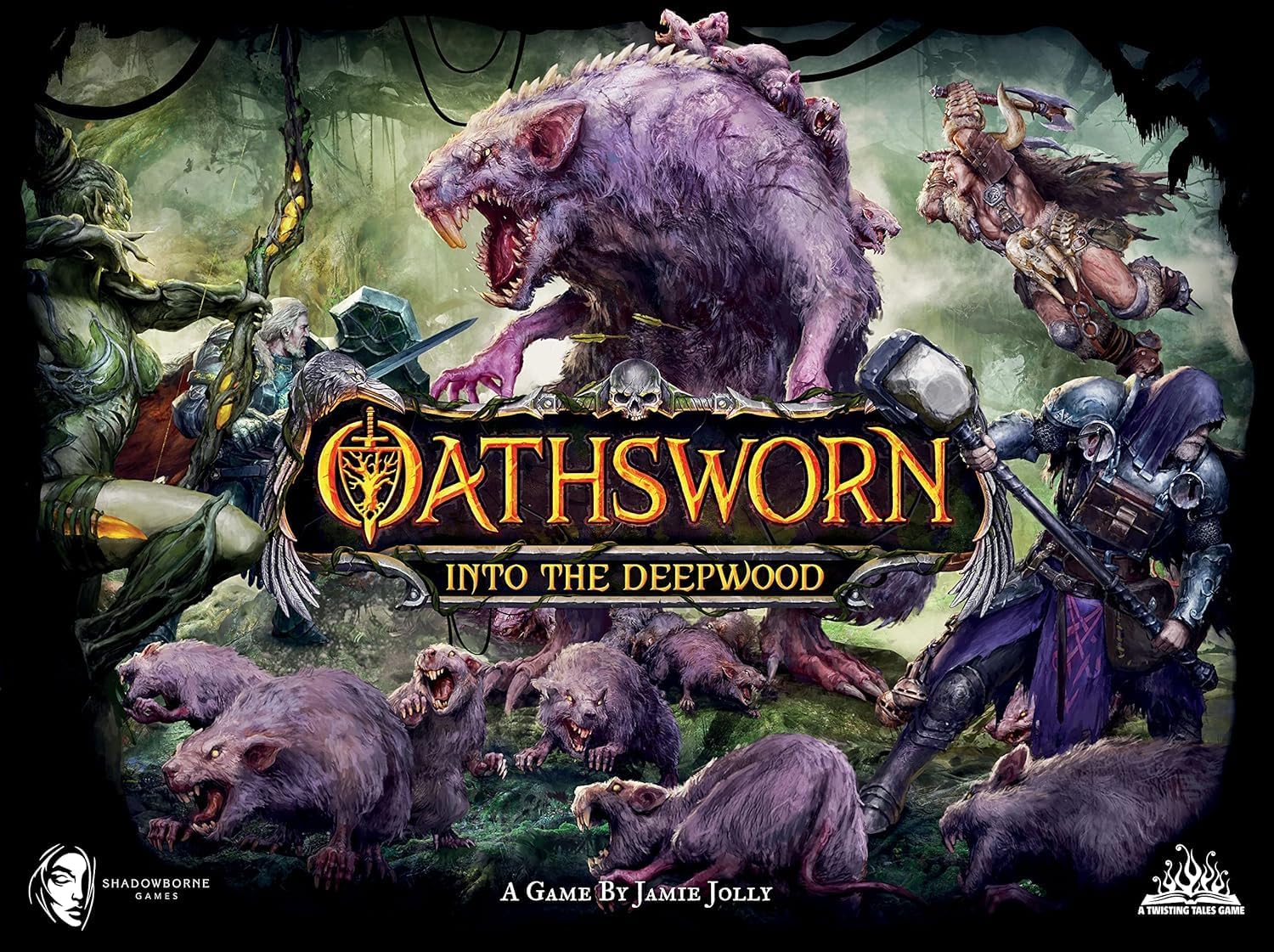

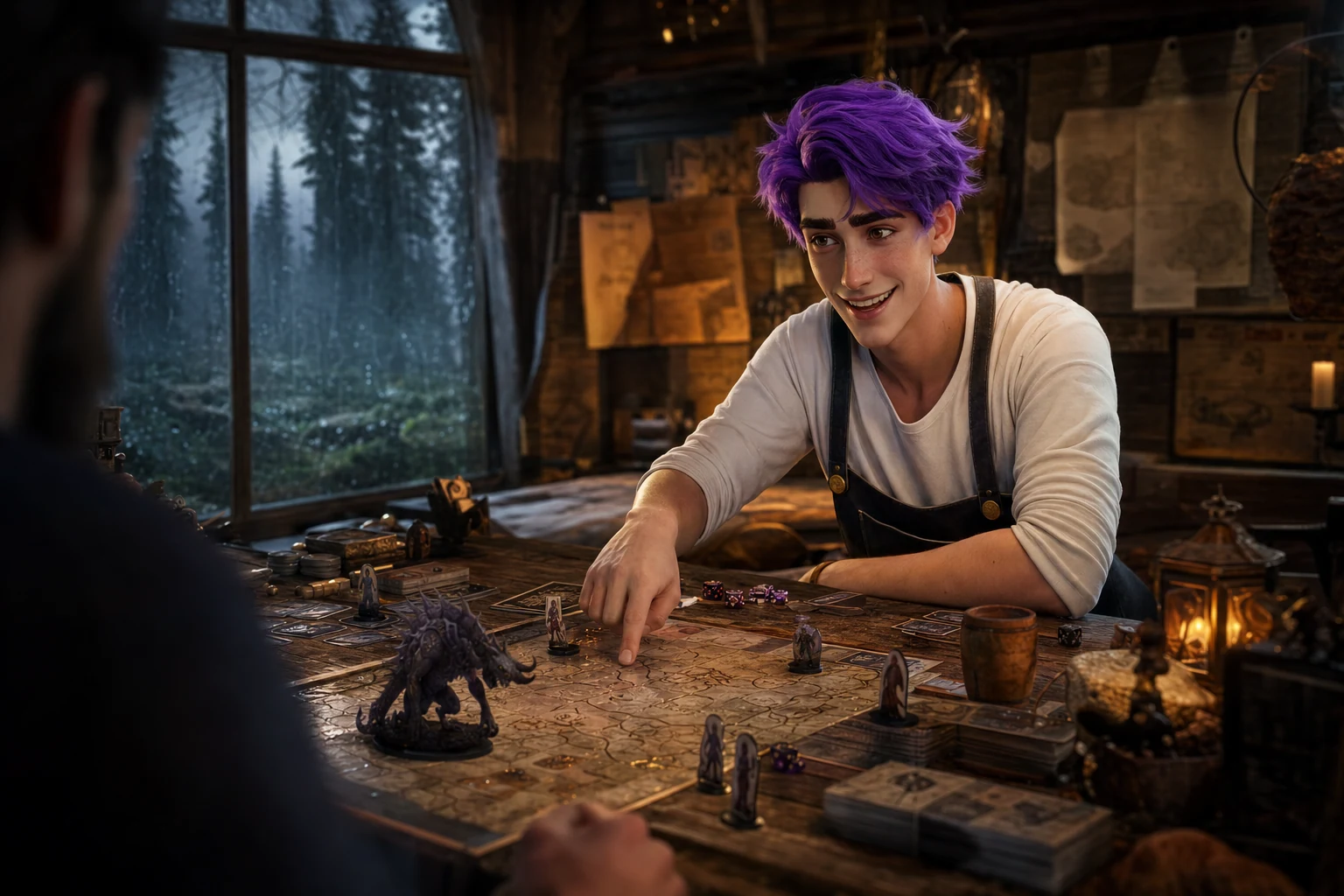
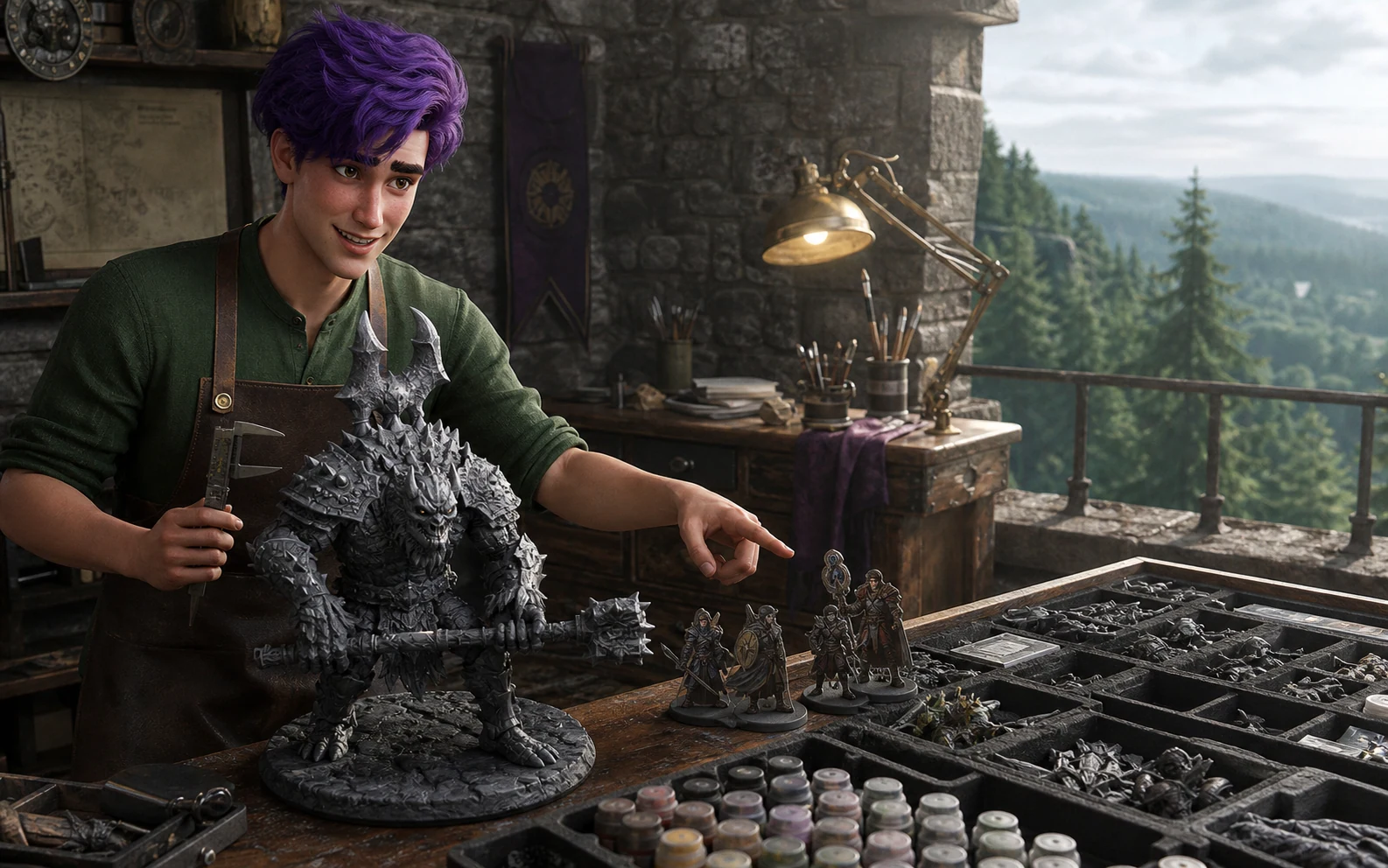
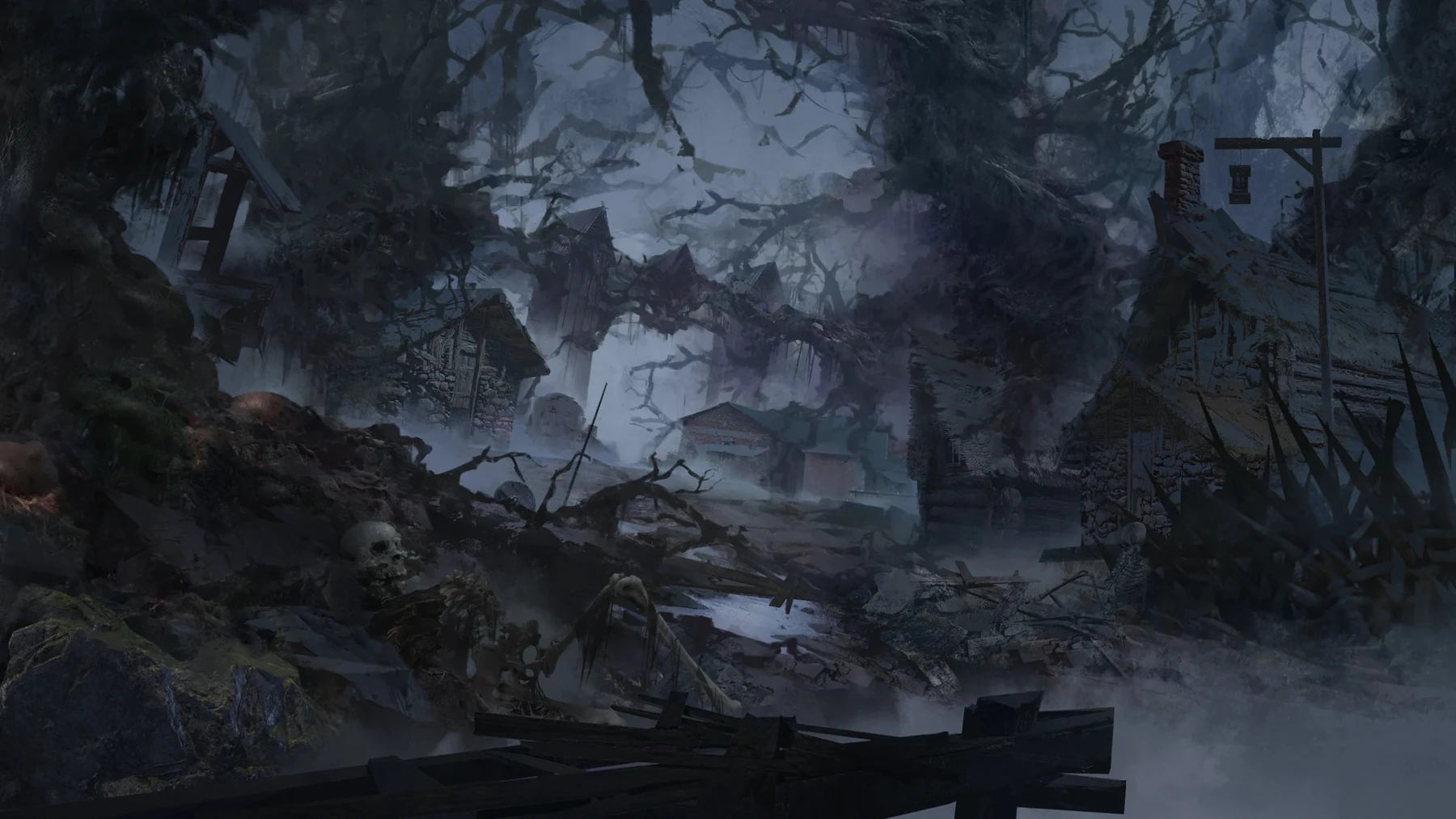
Oathsworn separates its chapters into a story phase and a major encounter. That clean dramatic rhythm matters. Players returning after several weeks can remember “the village choice and the creature we are hunting” more easily than a web of side objectives and settlement exceptions. The narrated app also lets the host participate instead of performing every paragraph.
Community comparisons with Frosthaven are remarkably consistent: Oathsworn is more focused and emotionally direct, while Frosthaven offers the broader tactical puzzle. That does not make Oathsworn light. It still asks for repeated meetings and careful storage. The financially rational choice is usually the standee core. Giant enemy miniatures are worth the premium when painting and reveal-night spectacle are part of the hobby, not when plastic volume is being mistaken for gameplay.
What the 21-chapter structure changes: Shadowborne’s official materials separate the campaign into story and encounter rulebooks. During the hunt, choices and location work create context; at the encounter, battleflow cards, might decks or dice, cooldowns, and boss AI become the whole table. That hard scene change is easier to remember after a month away than a campaign with one continuous layer of administration.
The smartest edition decision: buy the playable core first. The standee version preserves the mechanisms and reveal structure. Pay for the giant enemies when someone genuinely wants to paint, display, photograph, or ceremonially reveal them. If the group’s joy is tactical mastery, Frosthaven has more repeated puzzle texture; if it wants a narrated pursuit ending in one concentrated monster problem, Oathsworn is cleaner.
Choose Oathsworn when the table wants to remember the creature, the choice, and the evening—not the maintenance log.
Is The Elder Scrolls the best campaign grail for a busy group?
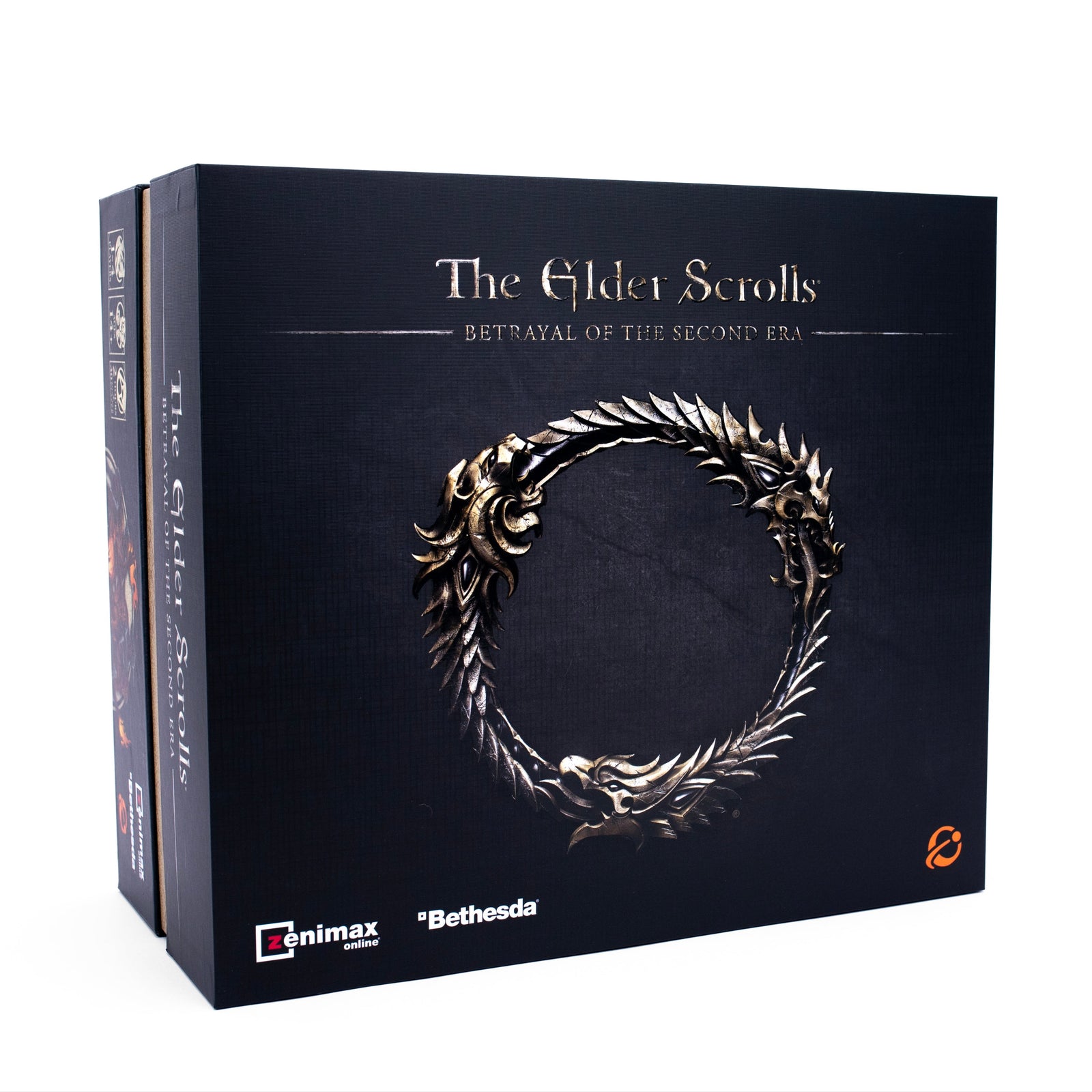

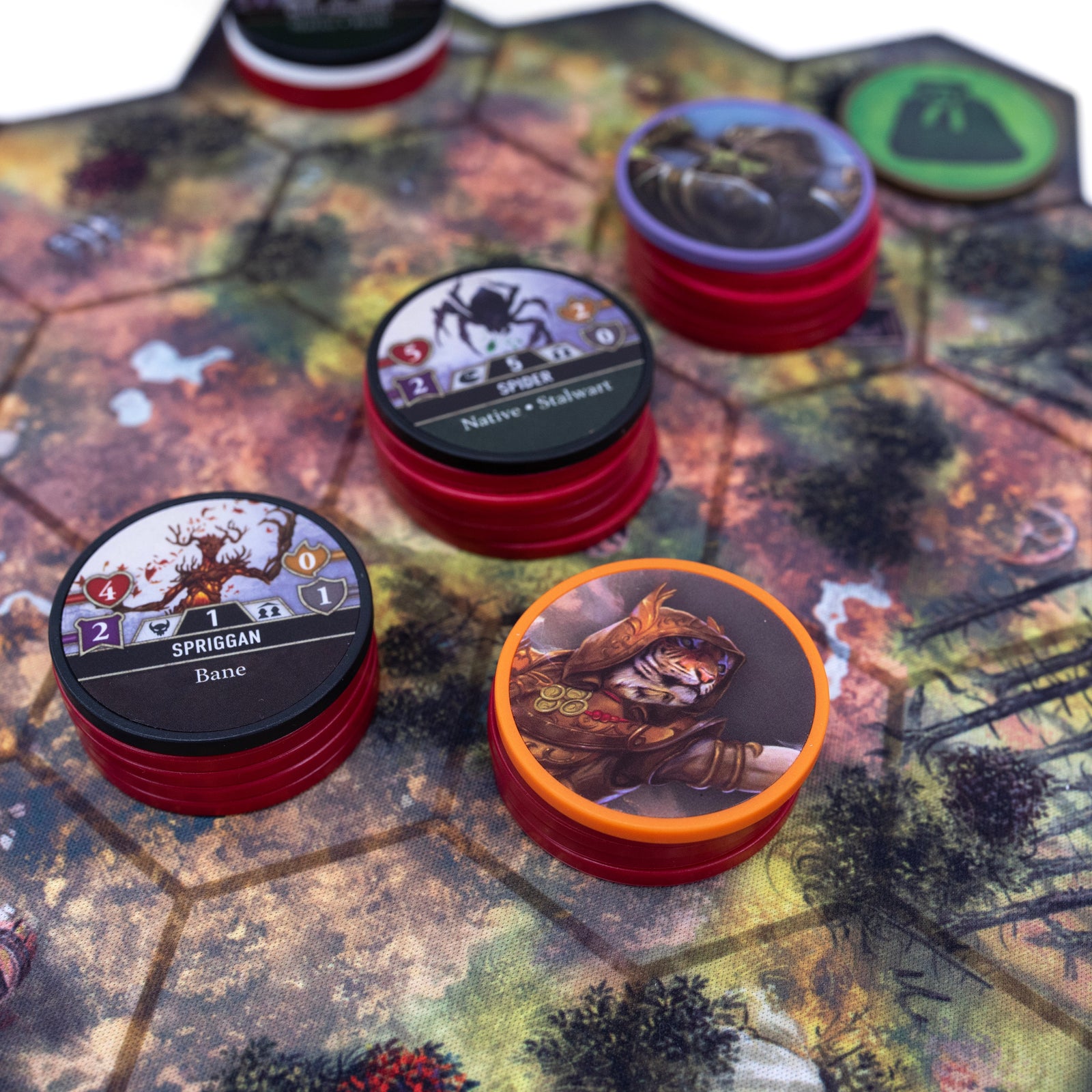
Betrayal of the Second Era solves a problem campaign marketing rarely admits: some groups want character growth and tactical consequence but cannot sustain one continuous story for a year. Its adventures are structured as shorter multi-session arcs, so a completed experience can fit inside a few meetings and then reset around different characters, regions, and builds.
The trade is density. Chip Theory’s dice, chips, mats, keywords, and character development deliver tactile engineering rather than frictionless onboarding. Recent owner advice praises the combat and replayability while warning about rules fiddliness, storage, and setup. This is the pick for a solo player, pair, or systems-minded small group willing to learn a premium toolkit. It is not the pick for a table asking to be carried by a cinematic novel.
Why the shorter arc matters: each campaign is designed around three sessions rather than one continuous year-long story. That lets a group complete a region, feel a build mature, and reset before calendar drift erases the rules. The box still has a serious teach: character mats, skill lines, dice faces, chips, encounter timing, and region-specific material create a toolkit rather than a guided cinematic ride.
First campaign advice: use one of the lower-complexity heroes, keep the official reference nearby, and resist opening extra regions or add-ons. Let session one be slower. By session two the iconography begins doing the memory work; by session three the build finally pays off. That compact curve is the product’s strongest advantage over the other campaign grails here.
Is ISS Vanguard worth its campaign administration?
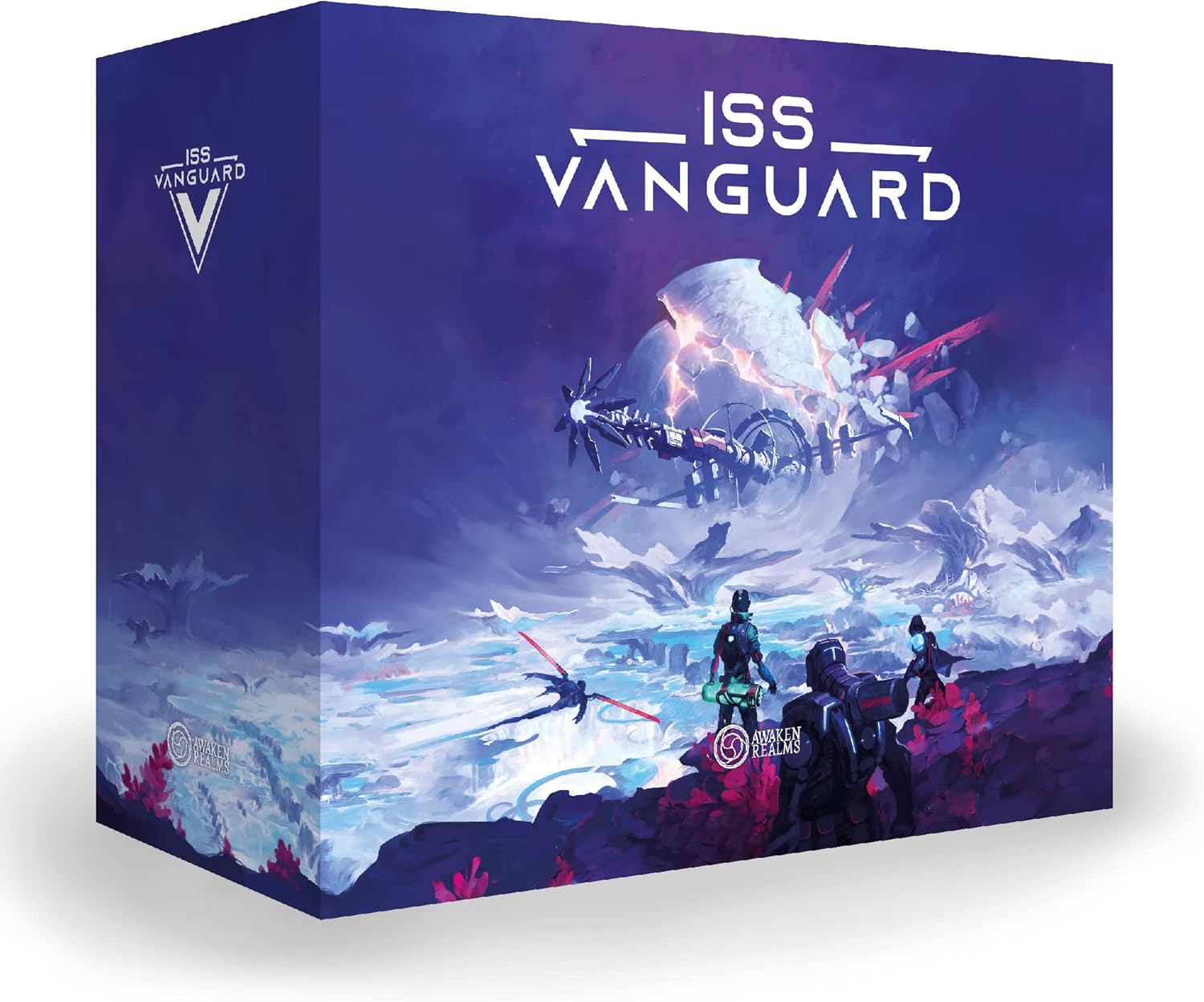

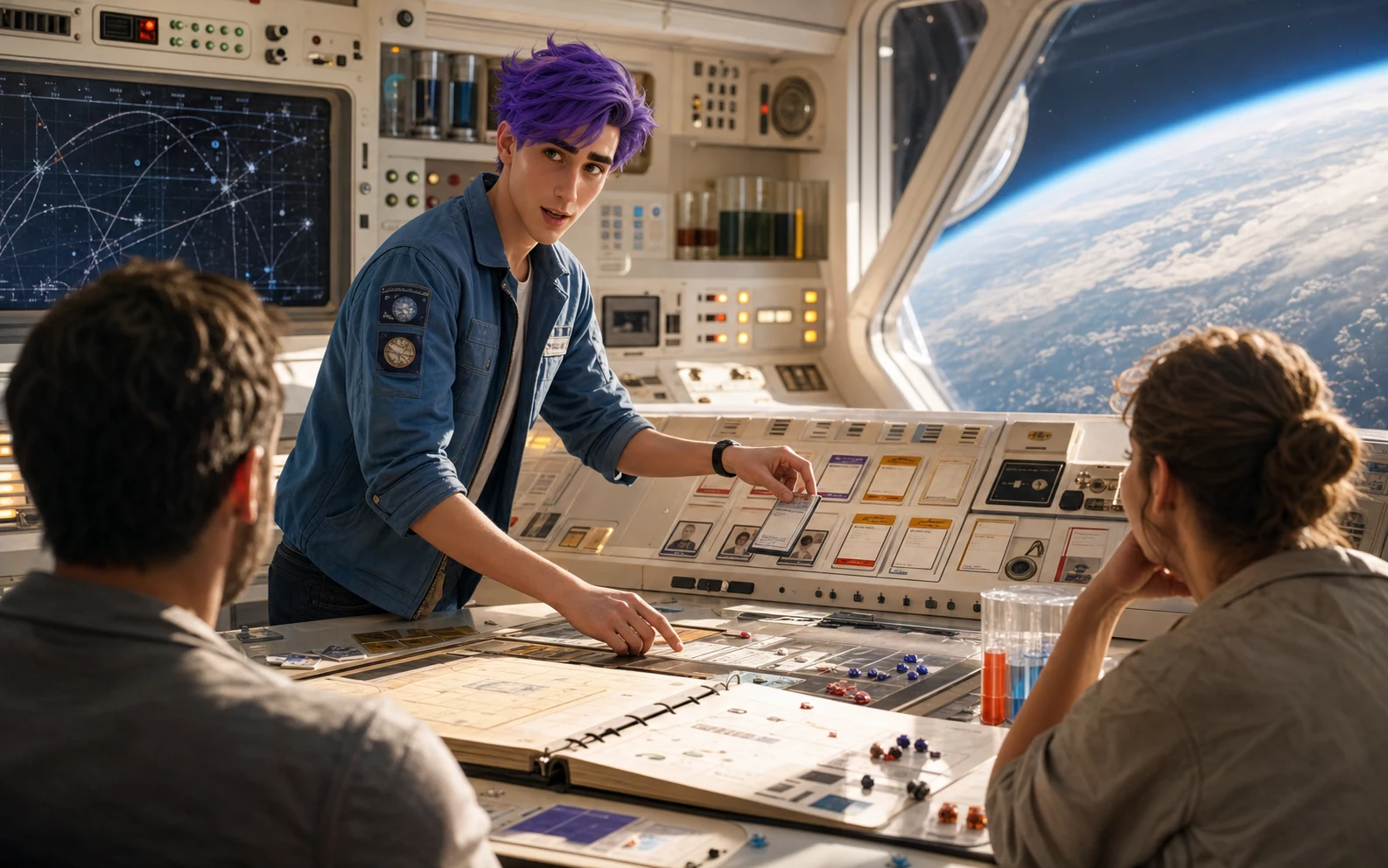

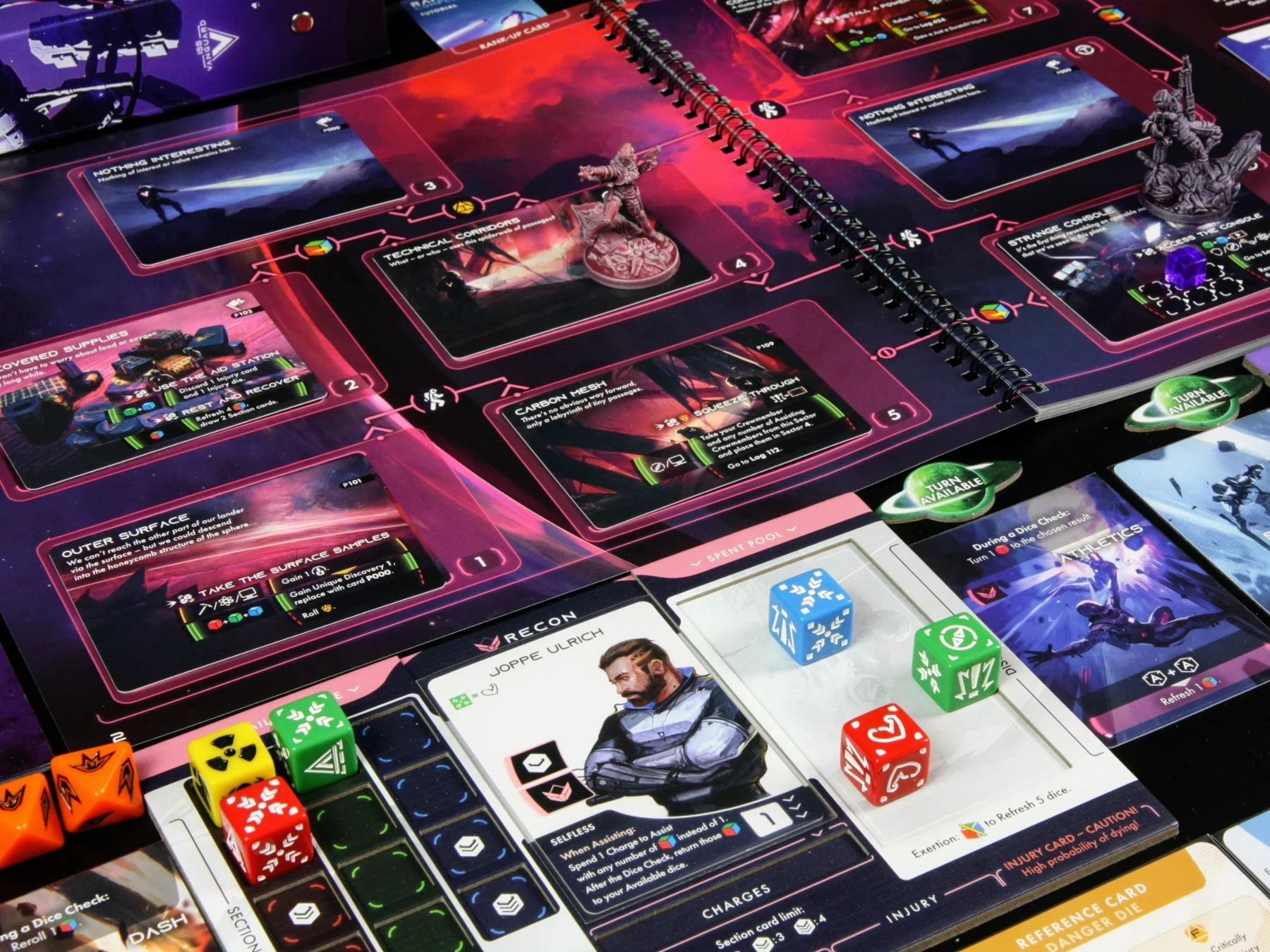

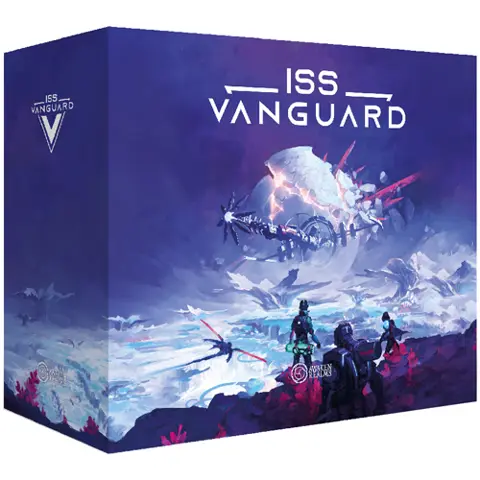
ISS Vanguard’s identity lives between planetary exploration and the ship phase. Crew sections develop, discoveries return to the vessel, and the binder-like ship book turns campaign administration into a tactile command ritual. Buyers who love that loop describe the worldbuilding and sense of discovery as the reason to continue.
The caution is equally stable across completed-campaign discussions: repeated planetary tests can feel like variations on dice-checking, and the logistics can become project management. That is not a defect hidden behind the game. It is the actual texture. Choose ISS when assigning crew, resolving discoveries, and opening the next sealed possibility sounds satisfying. Skip it when the group mainly wants tight tactical combat with minimal between-mission procedure.
What the box is trying to simulate: Awaken Realms divides play between Planetary Exploration and Ship Management. The 44-page Planetopedia supplies physical worlds; four crew sections supply different identities and upgrade paths; discoveries, injuries, rank-ups, production, research, and travel carry state back to the vessel. The official tutorial wisely teaches one landing rather than asking players to absorb the whole command structure.
The ownership warning is mechanical, not cosmetic: repeated tests use section dice and card effects, and the ship phase requires sorting, recording, and choosing. If your group likes debriefing a mission and discussing what the discoveries unlock, the admin becomes theme. If the same group skips upkeep in every campaign, ISS Vanguard will not transform that habit.
Is Tainted Grail: Kings of Ruin the best story-first choice?
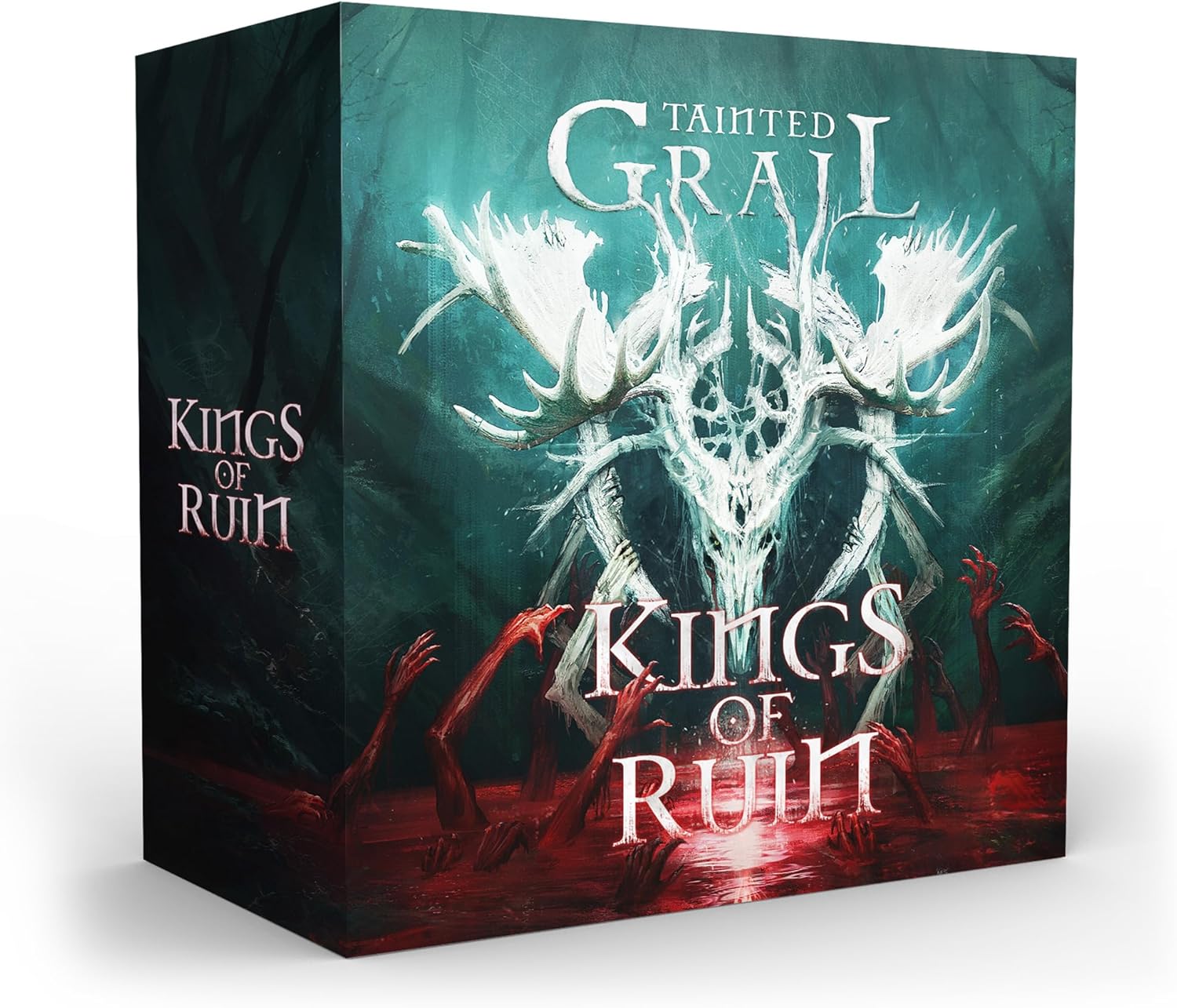

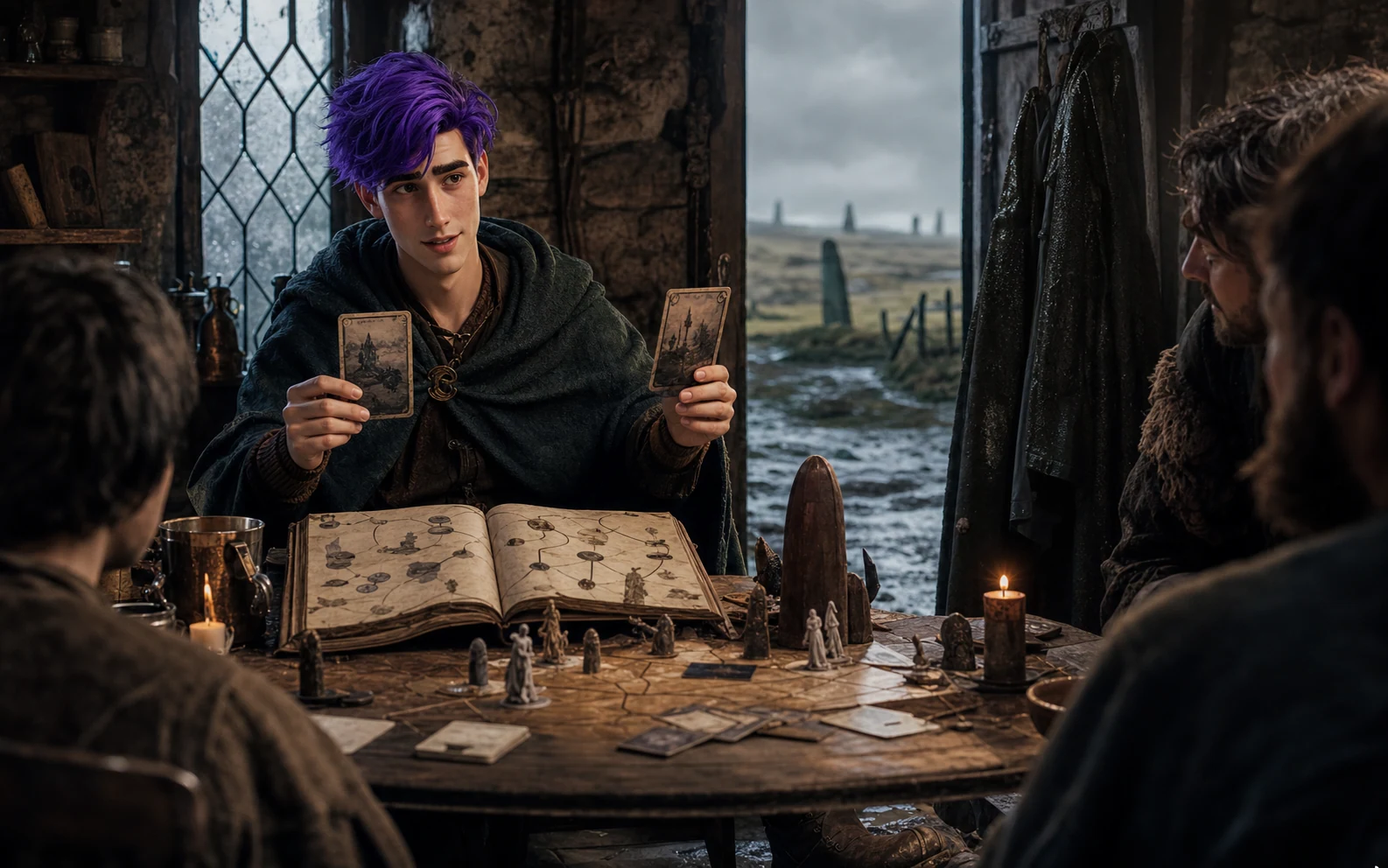

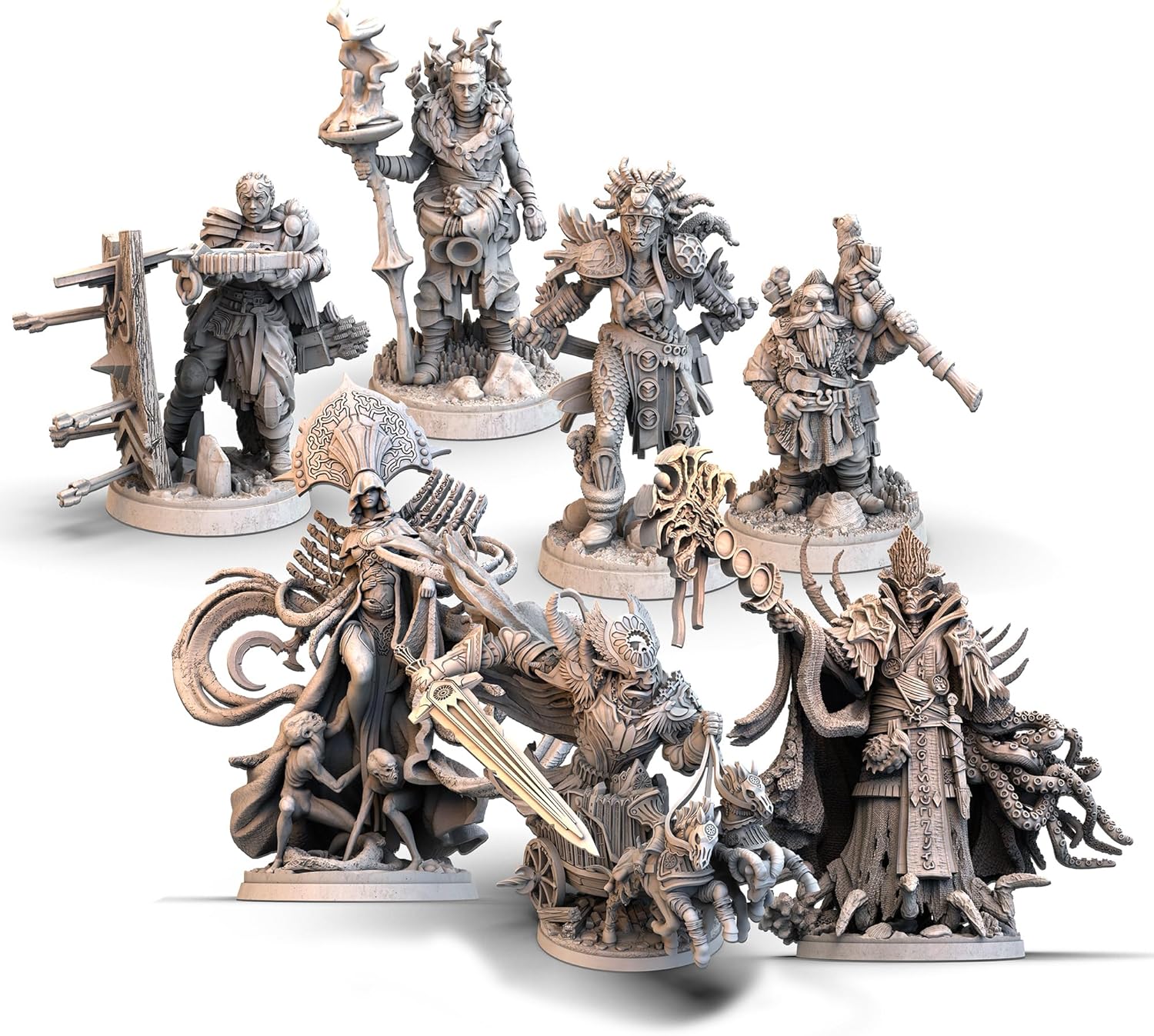
Kings of Ruin is the recommendation for readers who want to inhabit a bleak Arthurian world, read consequences aloud, and let exploration carry the evening. It is standalone; you do not need Fall of Avalon first. It also refines several points of friction associated with the earlier campaign, making “start with the newer story” a sensible answer rather than heresy.
Its encounter systems and travel still repeat. The question is whether the narrative consequences make that repetition feel like momentum. Solo and duo tables have the strongest fit because they can maintain tone and resume quickly. A four-player group that talks over story text is paying for the wrong strength. Buy for the writing, choices, and atmosphere; do not buy merely because the miniatures suggest a conventional boss battler.
Why start here instead of Fall of Avalon: Kings of Ruin is a standalone story built after several years of feedback on the original system. Travel and encounter play are revised, but the core appeal remains reading an altered Avalon, choosing between force and diplomacy, and accepting that the campaign remembers. The official page positions it for one to four players and roughly 90–120 minute sessions; in practice, solo or duo keeps the prose, map state, and emotional continuity strongest.
Make the story earn the repetition: assign one reader, rotate only when the table wants a different voice, and end after a meaningful consequence rather than at the first sign of fatigue. Photograph the map and character state. If players consistently hurry the story to reach encounters, choose Frosthaven or Oathsworn instead.
Story-first does not mean system-free. It means the system earns patience by making the next paragraph matter.
How do you avoid the Amazon edition and bundle trap?
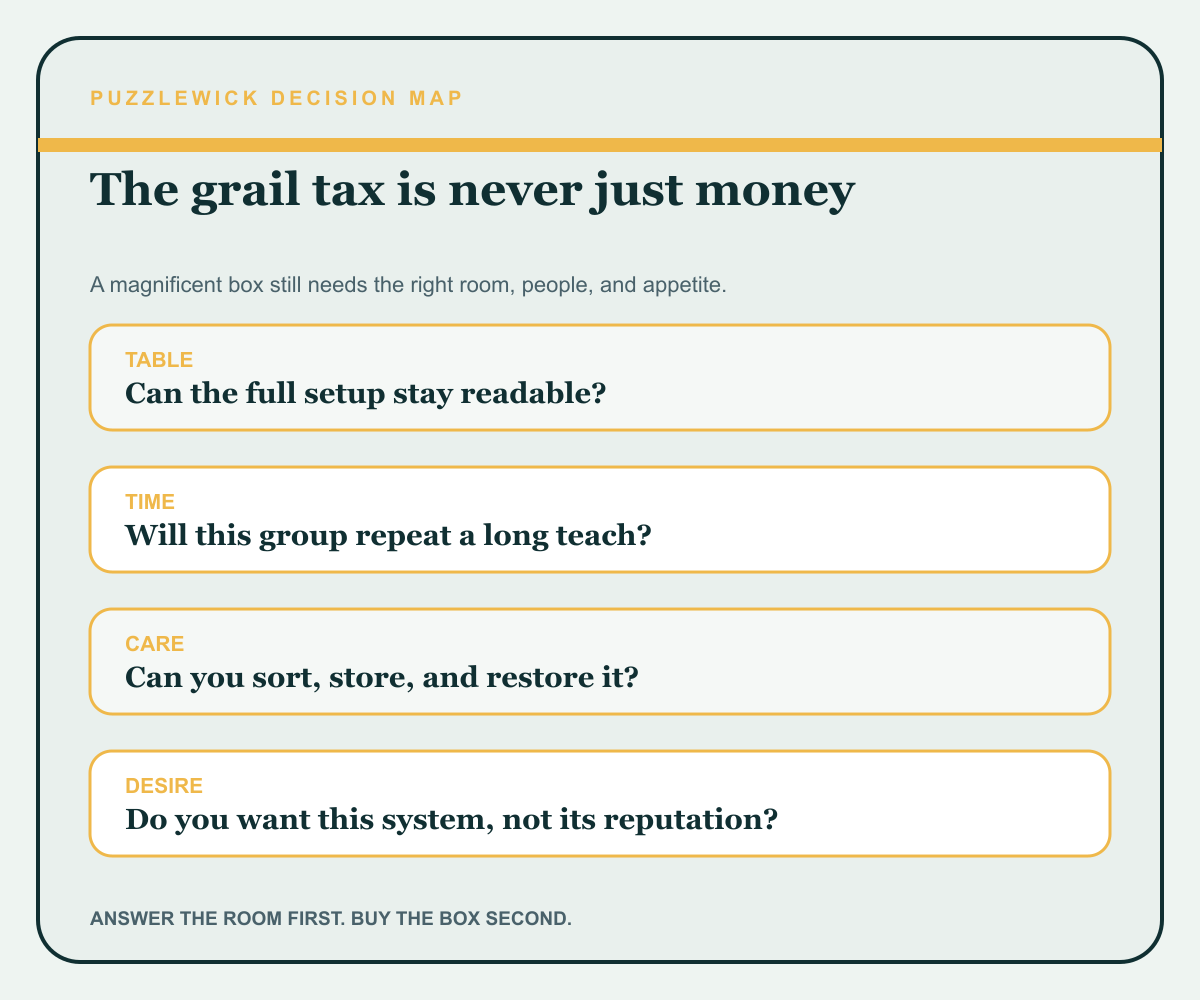

Amazon’s catalog is unusually dangerous for giant campaign games. Old crowdfunding tiers, second editions, language variants, expansions, and third-party bundles can share nearly identical names. A “core set” can be the entire playable game, an upgrade kit, or an expansion that assumes another box. That is why every purchase button here uses one exact observed ASIN rather than a search page.
Gloomhaven Second Edition is the current cautionary example: buyer conversations show ongoing confusion among listings and fulfillment waves. It is absolutely relevant to this category, but it does not belong in a direct-buy ranking until the exact live listing is unambiguous. A serious guide sometimes earns trust by refusing a convenient button.
Which campaign grail should your group choose?
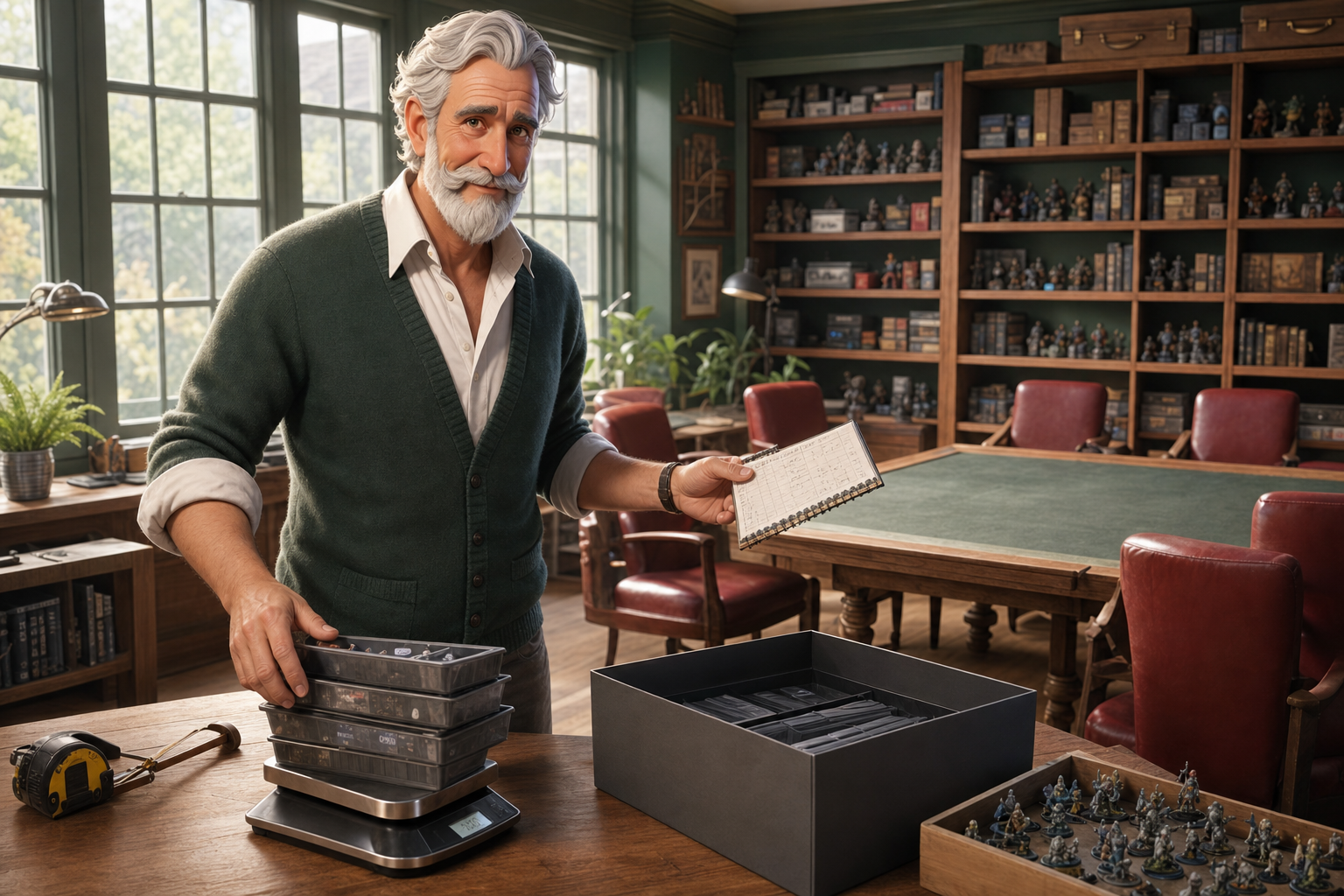
Use the tree in order. The first “no” is allowed to end the purchase. If the group has not finished anything long, wait. If the same people cannot meet monthly, choose Elder Scrolls or another short-arc game. If story is the priority, separate exploration-and-management appetite (ISS Vanguard) from prose-and-consequence appetite (Kings of Ruin). If tactics are the priority, choose Oathsworn for focused boss nights and Frosthaven for the deepest repeated combat puzzle plus campaign administration.
This is deliberately conservative. A delayed purchase costs nothing. A premature $150–$250 box consumes money, shelf space, and the group’s willingness to attempt the next serious campaign.
What should you do before buying a giant campaign?
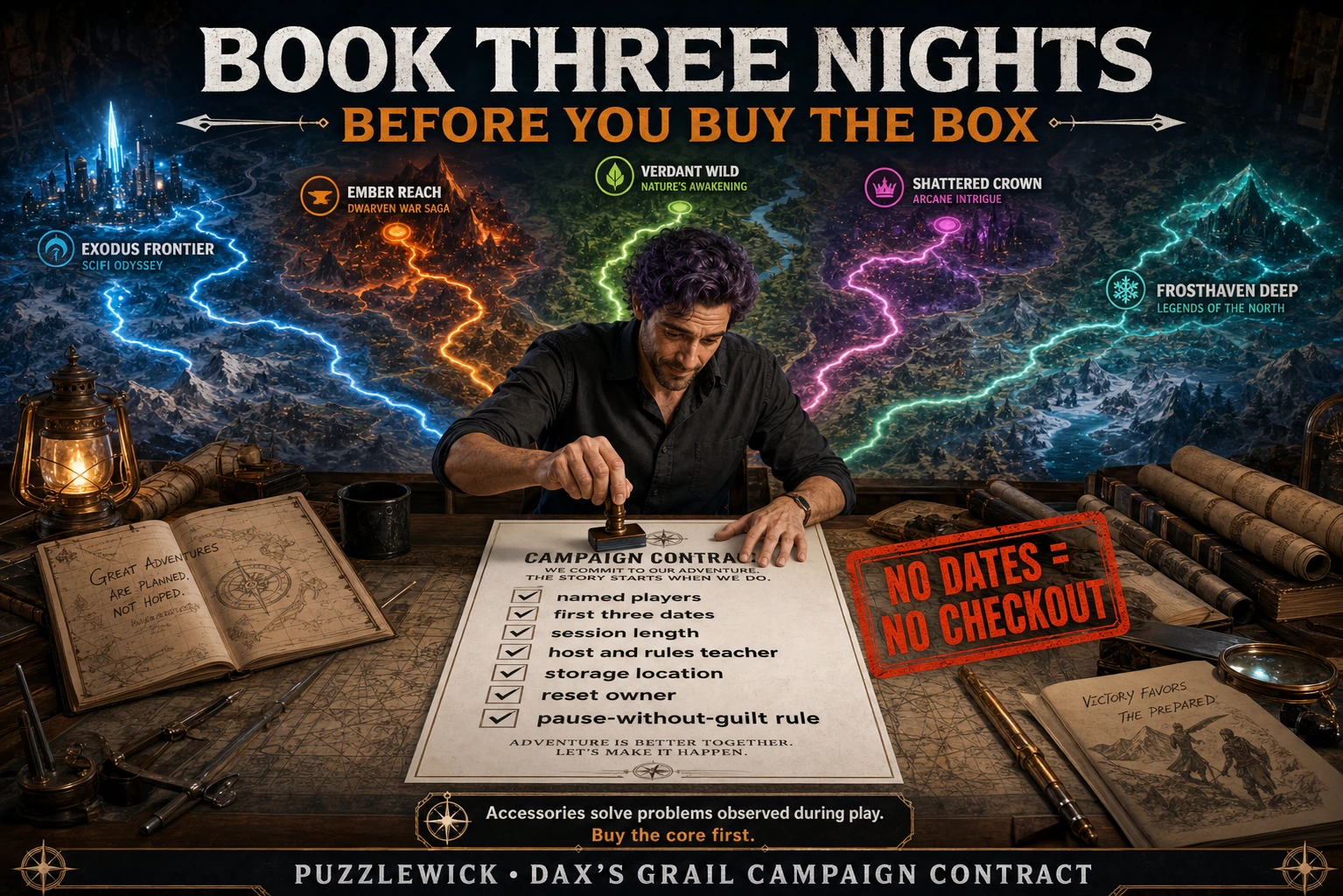
Before checkout, write a one-page agreement with no solemnity and complete honesty: the named players, expected session length, first three dates, host, rules teacher, storage location, reset owner, and the condition under which the group pauses without guilt. For Frosthaven, add who handles campaign bookkeeping. For Oathsworn, decide whether story audio is welcome. For Elder Scrolls, choose a first region and accept a learning session. For ISS Vanguard, assign ship-book custody. For Kings of Ruin, confirm everyone wants story read aloud.
Then buy only the core. Sleeves, organizers, terrain, expansions, and premium miniatures should solve a problem observed during play. Accessories purchased before the first scenario are often expensive guesses wearing the costume of preparation.
- Name every player and put the first three sessions on the calendar.
- Measure the table and the shelf; include dashboards, books, drinks, and save-state storage.
- Choose one rules teacher and one reset owner.
- Buy the exact core ASIN before any expansion or cosmetic tier.
- Schedule the second session before ending the first.
The real all-in pledge is the calendar.
The picks
Some links below are affiliate links — as an Amazon Associate, Puzzlewick earns from qualifying purchases, at no extra cost to you. It never changes a pick.
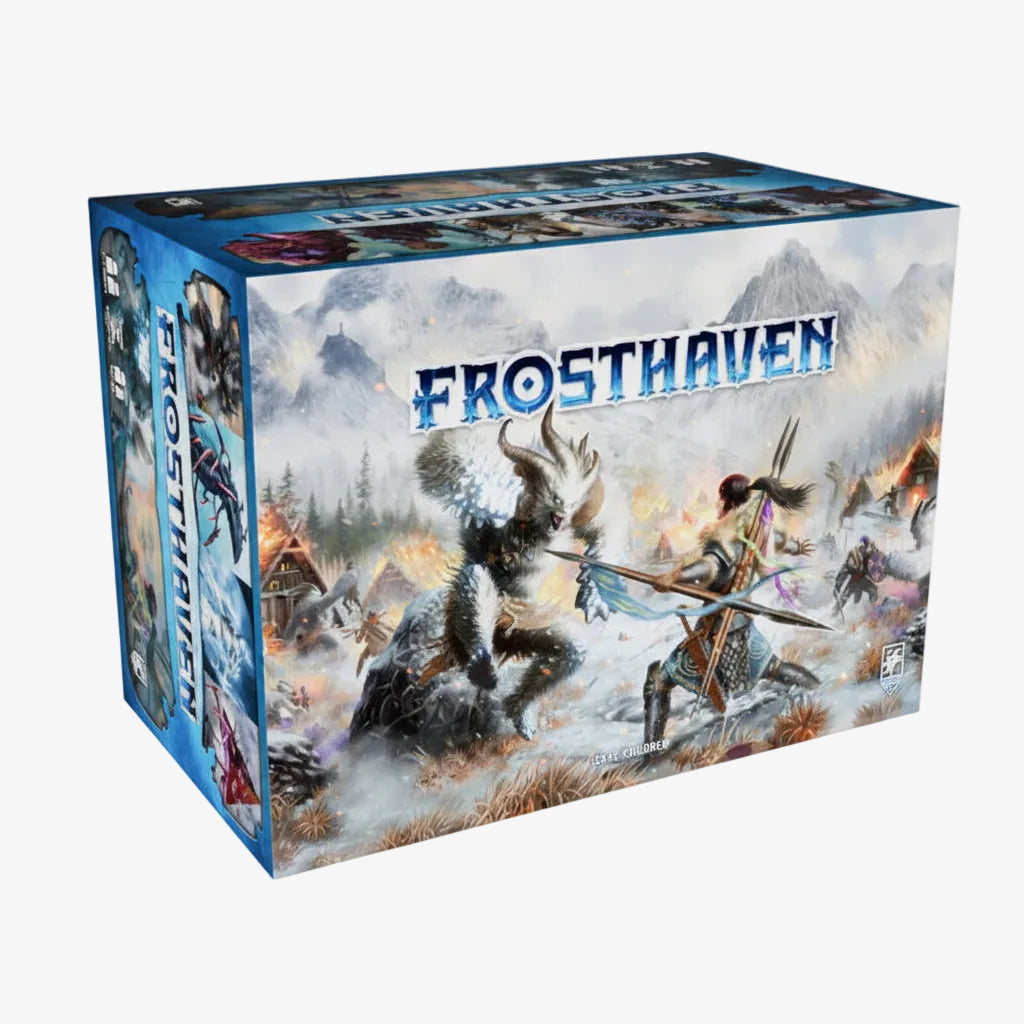
Frosthaven
The best purchase here for a crew that has already finished a long campaign together. Its value per played hour is extraordinary; its value as an unopened promise is zero.
- Exceptional card-driven combat puzzle
- Huge scenario and class variety
- Campaign systems create long-term ownership
- The highest setup and administration burden here
- Scenario-specific rules can slow a tired group
- A bad first giant campaign
Oathsworn: Into the Deepwood
The easiest campaign grail here to pitch as a shared story night. It has less tactical breadth than Frosthaven, but its chapter-and-boss cadence is easier to remember after a month away.
- Focused narrative with app narration
- Distinct boss encounters
- Standees preserve the game without the miniature bill
- Still a long commitment
- Character development is less open than some dungeon crawlers
- Miniature tiers inflate storage and price
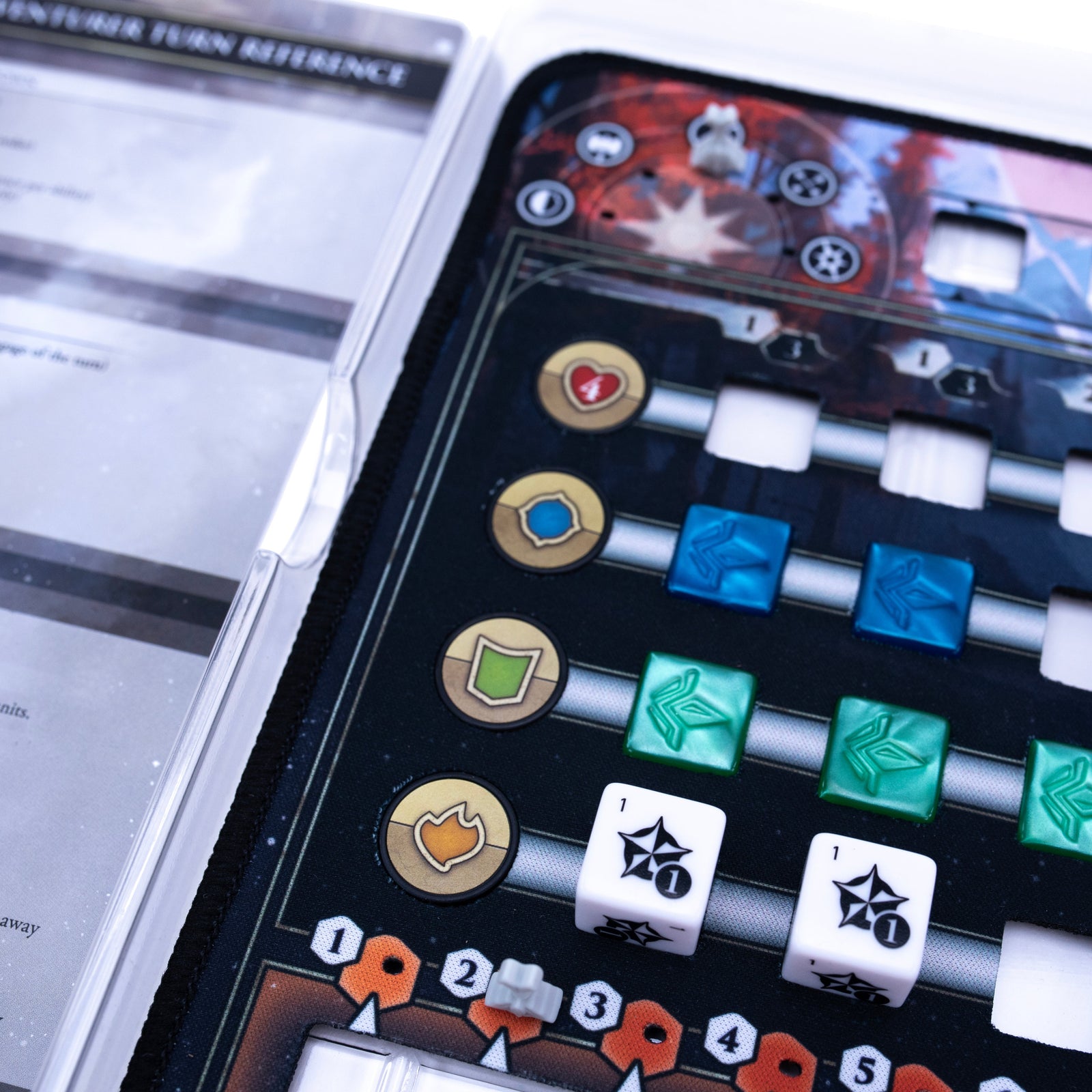
The Elder Scrolls: Betrayal of the Second Era
The smartest expensive buy for people who love campaign growth but cannot maintain a twenty-session calendar. The system is dense, physical, and replayable; the narrative is a framework rather than a novel.
- Short campaign arcs are realistically finishable
- Strong character-build variety
- Excellent solo and two-player fit
- Rules and icon density demand a real teach
- Premium production creates a premium price
- Narrative is lighter than Oathsworn or Tainted Grail
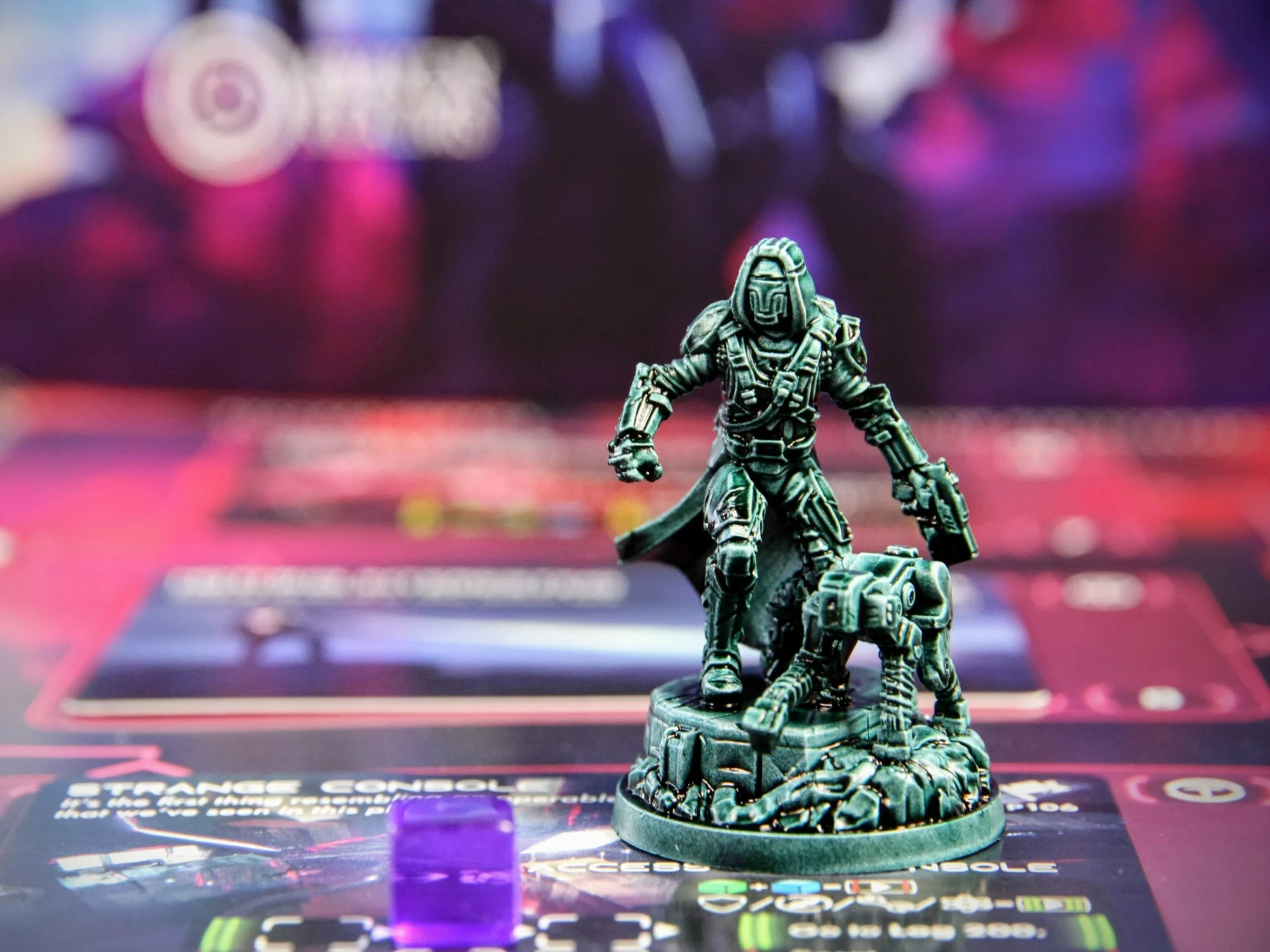
ISS Vanguard
A spectacular exploration machine with one essential caveat: the ship book and campaign logistics are the point, not overhead surrounding a tight tactical combat game.
- Strong sense of discovery
- Ship management gives the campaign identity
- Excellent production and worldbuilding
- Planetary checks can become repetitive
- Administration is substantial
- Not the pick for tactical-combat purists
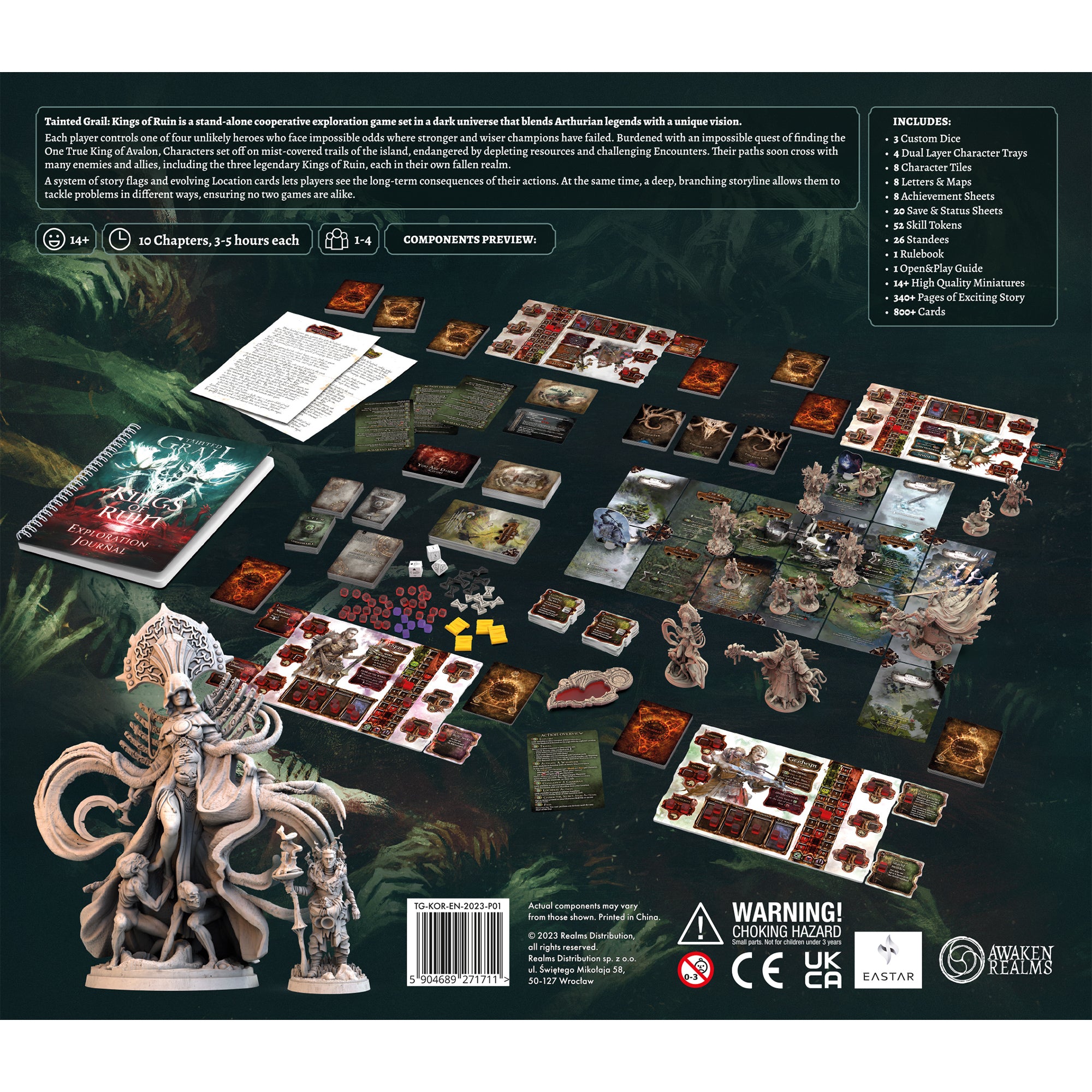
Tainted Grail: Kings of Ruin
The story-first pick, and a better entry than buying the older Fall of Avalon campaign solely because it came first. Kings of Ruin is standalone and streamlines several friction points.
- The strongest sustained narrative pull here
- Excellent solo and duo atmosphere
- Standalone campaign
- Encounter loops can still feel repetitive
- Bleak tone is not casual comfort food
- Poor fit for players who skip story text
At a glance
| Game | Best for | Typical arc | Burden | Buy when |
|---|---|---|---|---|
| Frosthaven | Proven tactical campaign crew | Very long continuous campaign | Very high | You already know you love Haven combat |
| Oathsworn | Story + boss night group | Long chapter campaign | Medium-high | Focused encounters beat open tactical breadth |
| The Elder Scrolls | Solo, duo, calendar-fragile group | Replayable three-session adventures | Medium | You want builds and tactics without a year-long plot |
| ISS Vanguard | Exploration and ship-management group | Long exploration campaign | High | Campaign administration sounds like play |
| Kings of Ruin | Story-first solo or duo | Long narrative campaign | Medium | You will read and discuss every choice |
Free download — Dax’s Campaign Grail Contract
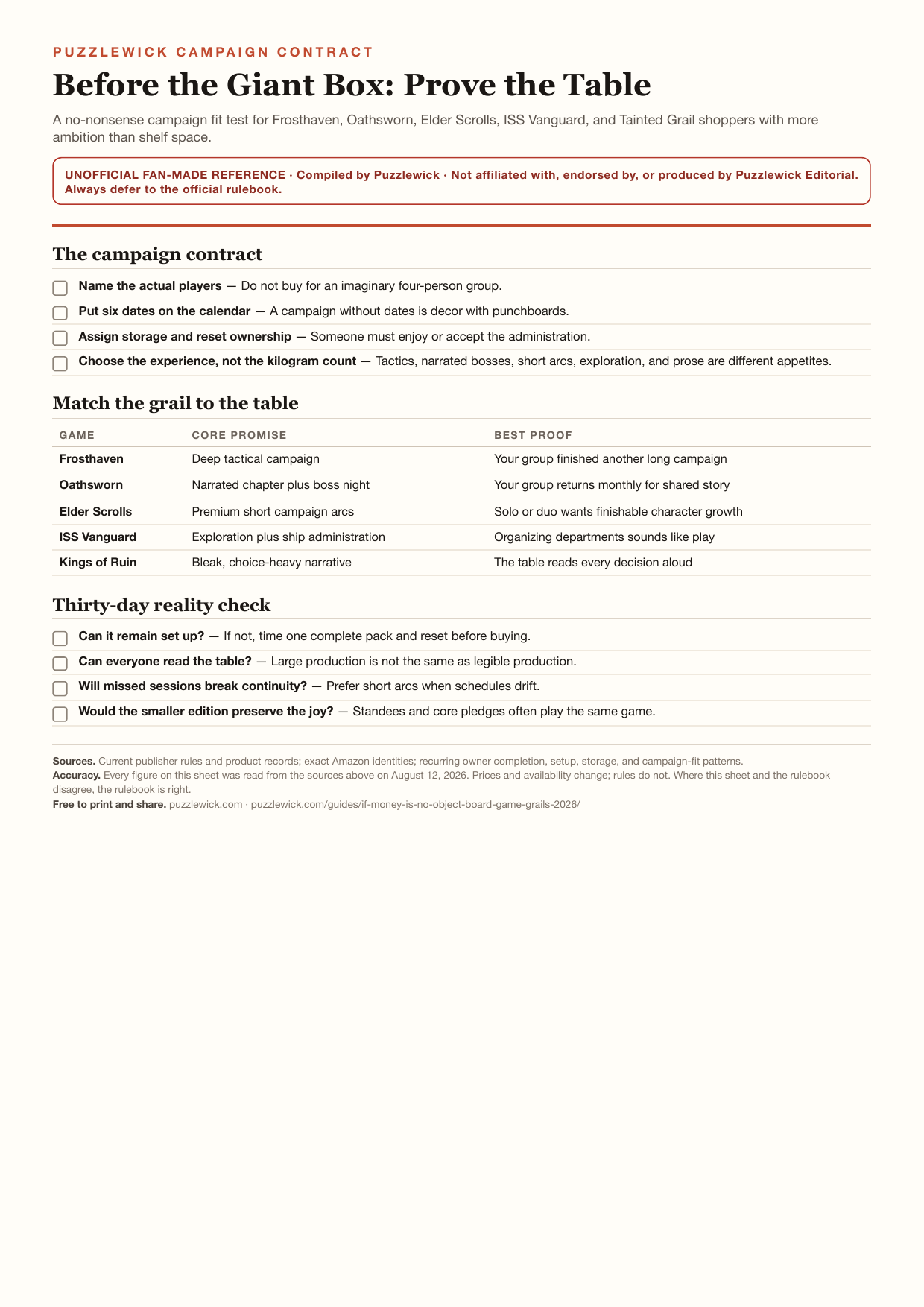
A one-page fit map, hidden-admin audit, and three-night commitment agreement.
Unofficial fan-made reference. Compiled by Puzzlewick from the sources listed on the sheet. Not affiliated with or endorsed by the publisher — always defer to the official rulebook.
Questions, answered
What is the best expensive campaign board game on Amazon in 2026?
Frosthaven is the best tactical value for a proven campaign group. Oathsworn is the better finishable story-and-boss recommendation. The Elder Scrolls: Betrayal of the Second Era is the safest premium choice for solo, duo, or groups with unreliable calendars.
Should a beginner buy Frosthaven?
Usually no. Start with Gloomhaven: Jaws of the Lion or another shorter campaign to prove the group likes the card-driven combat and can maintain a schedule.
Is the Oathsworn miniature version worth it?
Only if painting, collecting, and giant-creature reveals are a substantial part of the hobby. The standee core preserves the complete gameplay and is the rational recommendation for most players.
Is The Elder Scrolls: Betrayal of the Second Era a long campaign?
It uses shorter multi-session adventures rather than one huge continuous campaign. That makes it more replayable and easier to finish, although the rules and character systems are still substantial.
Is ISS Vanguard repetitive?
It can be. Community finishers often praise the discovery, world, and ship phase while warning that planetary dice checks and campaign administration can repeat. Buy only if the ship-management loop sounds appealing.
Do I need Tainted Grail: Fall of Avalon before Kings of Ruin?
No. Kings of Ruin is a standalone campaign and is a sensible starting point for a new buyer.
Which expensive campaign game is best solo?
The Elder Scrolls is best for replayable tactical solo arcs; Kings of Ruin is best for story-first solo play; ISS Vanguard is best if solo ship and crew administration appeals to you.
Should I buy campaign expansions with the core game?
No. Play the core first. Expansions and cosmetic upgrades should solve a known desire after several sessions, not manufacture a feeling of completeness before play begins.
Why are no live prices printed?
Amazon pricing and marketplace stock change quickly. Puzzlewick uses exact direct product ASINs and asks readers to verify the current price and seller on the product page rather than publishing a stale or invented price.
How did Puzzlewick decide what was worth it?
We compared official contents and rules, current exact Amazon listings, BoardGameGeek records, recent Reddit purchase questions, owner completion patterns, setup burden, group fit, and the likelihood that the core loop remains enjoyable deep into the campaign.
Dax's verdict
Buy Frosthaven only after the group proves it wants the deepest tactical commitment. Buy Oathsworn for a more focused and finishable story-and-boss campaign. Buy The Elder Scrolls when schedule resilience and replayable builds matter most. Buy ISS Vanguard for exploration plus ship management, and Kings of Ruin for story-first solo or duo play. The box is not the grail; finishing the campaign is.
Research ledger 26 sources · reviewed 2026-08-10
Specifications, rules, current product information, community experience, and contrary evidence were checked against the sources below. Commercial links are kept separate from editorial evidence.
- Cephalofair · Frosthaven official product pagecephalofair.com/products/frosthaven
- Cephalofair · Frosthaven official resources and FAQcephalofair.com/pages/frosthaven
- BoardGameGeek · Frosthavenboardgamegeek.com/boardgame/295770/frosthaven
- Shadowborne Games · Oathsworn officialshadowborne-games.com/pages/oathsworn
- BoardGameGeek · Oathsworn vs Frosthaven owner comparisonboardgamegeek.com/thread/3120861/for-those-of-you-who-may-have-played-both-did-you
- Chip Theory Games · The Elder Scrolls officialchiptheorygames.com/games/the-elder-scrolls
- BoardGameGeek · The Elder Scrolls: Betrayal of the Second Eraboardgamegeek.com/boardgame/357663/the-elder-scrolls-betrayal-of-the-second-era
- Awaken Realms · ISS Vanguard officialawakenrealms.com/games/iss-vanguard
- BoardGameGeek · ISS Vanguardboardgamegeek.com/boardgame/325494/iss-vanguard
- Awaken Realms · Tainted Grail: Kings of Ruin officialawakenrealms.com/games/tainted-grail-kings-of-ruin
- BoardGameGeek · Tainted Grail: Kings of Ruinboardgamegeek.com/boardgame/360366/tainted-grail-kings-of-ruin
- Reddit · What game did you play after Frosthaven? (July 2026)reddit.com/r/boardgames/comments/1v0ot6b/what_game_did_you_play_after_frosthaven
- Reddit · Oathsworn, Elder Scrolls, ISS Vanguard and Tainted Grail after Frosthavenreddit.com/r/boardgames/comments/1lzijrx
- Amazon · Frosthaven exact ASINamazon.com/dp/B08FK7B2SC?tag=puzzlewick-20
- Amazon · Oathsworn exact ASINamazon.com/dp/B0BJ6644PX?tag=puzzlewick-20
- Amazon · Elder Scrolls exact ASINamazon.com/dp/B0DZ3Q5B5X?tag=puzzlewick-20
- Amazon · ISS Vanguard exact ASINamazon.com/dp/B0BQ3TFLNG?tag=puzzlewick-20
- Amazon · Tainted Grail Kings of Ruin exact ASINamazon.com/dp/B0CZB78C8H?tag=puzzlewick-20
- Cephalofair · Frosthaven rules and erratacephalofair.com/products/frosthaven-bundles
- Shadowborne Games · Oathsworn core and official mediashadowborne-games.com/products/oathsworn-into-the-deepwood-core-game
- Shadowborne Games · Oathsworn rulebooksshadowborne-games.com/pages/resources
- Chip Theory Games · Elder Scrolls product contentschiptheorygames.com/products/the-elder-scrolls-betrayal-of-the-second-era
- Chip Theory Games · Elder Scrolls rulebook and supportchiptheorygames.com/pages/support/the-elder-scrolls
- ISS Vanguard · official rulebook and recordsissvanguard.com/resources
- Awaken Realms · ISS Vanguard product and play loopawakenrealms.com/games/awaken-realms/iss-vanguard
- Awaken Realms · Tainted Grail Kings of Ruinawakenrealms.com/games/awaken-realms/tainted-grail-kor

I'll be honest with you — flattery is boring.

Keep exploring
The next smart rabbit holes.
♛ Topic PathGrail Board Games: compare the whole shelfA grail earns its space only when the experience survives the price, setup, storage, and group commitment. These are expensive-game...ComparisonThe Most Expensive Event Board Games on Amazon in 2026: 5 Table Grails Actually Worth ItEclipse, War of the Ring, Twilight Imperium, Dune, and Cthulhu: Death May Die compared by the people, hours, table, and temperament each...Deep DiveFrosthaven Review: Is the Colossal Campaign Worth Your Table?Frosthaven's tactical combat, outpost phase, campaign commitment, setup burden, player count, and the honest reason some Gloomhaven...