Catan vs Carcassonne vs Ticket to Ride: The Best Gateway Game, Head-to-Head
Three legends, one shelf, one decision. Here's the honest, table-tested call on which gateway game earns its spot first — and exactly who each one is for.


AI-assisted research and drafting in Yumi’s voice · reviewed by Robert Pruitt · how this guide was made
Last editorial refresh: 2026-06-21 Gold-standard QA: 2026-08-10 8 sources reviewed Affiliate links checked during gold-standard pass

The short answer
If you can only buy one, buy Ticket to Ride. It teaches in about ten minutes, plays beautifully from two to five people, lands in a tidy 30–60 minutes, and almost nobody leaves the table mad. Two exceptions worth knowing before you click: if you mostly play with just one other person, buy Carcassonne — it's the best two-player of the three and the cheapest. And if you have a tight crew of three or four who actively want to haggle, scheme, and trash-talk, buy Catan, the loudest and most social of the bunch.
Decision map
Choose in thirty seconds
Families, couples, and mixed gamer/non-gamer groups who want low-conflict, no-arguments fun in a tidy 30–60 minutes.
Couples and competitive duos who want a cut-throat two-player face-off, plus anyone who wants one cheap box that deepens for years.
A committed core group of 3–4 who actively want negotiation, table-talk, and a little take-that tension over a 60–90 minute sit-down.
Pull up a chair. You're standing in the aisle, or hovering over a cart, three famous boxes in your hands, and somebody at home is going to ask why you picked the one you picked.
Here's the warm truth: there is no wrong answer here. All three of these won German Game of the Year. All three basically invented the idea of a game you can teach to your aunt and your roommate in the same evening. They don't really compete — they scratch different itches.
So instead of crowning one and shrugging, I'm going to hand you the call I'd whisper across the table: this game for that table, that game for this mood. Let's set the spread and dig in.
Start here, then go deeper
You are in the right cabinet.
 ⬢ Universe HubCATAN: the whole buying pathCATAN begins as a clean trade-and-settle game, then branches into larger tables, shifting maps, and much sharper strategy. This hub...
 ⌂ Topic PathFamily and Gateway Games: compare the whole shelfA good family game gets everyone playing quickly without becoming disposable after three nights. These guides prioritize clear...
 ComparisonThe Best 2-Player Board Games of 2026, RankedFifteen duels for two, sorted into hard tiers — the forever-game, the silent co-op, the giant-killers under twenty bucks, and the honest...
So which one do you actually buy first?
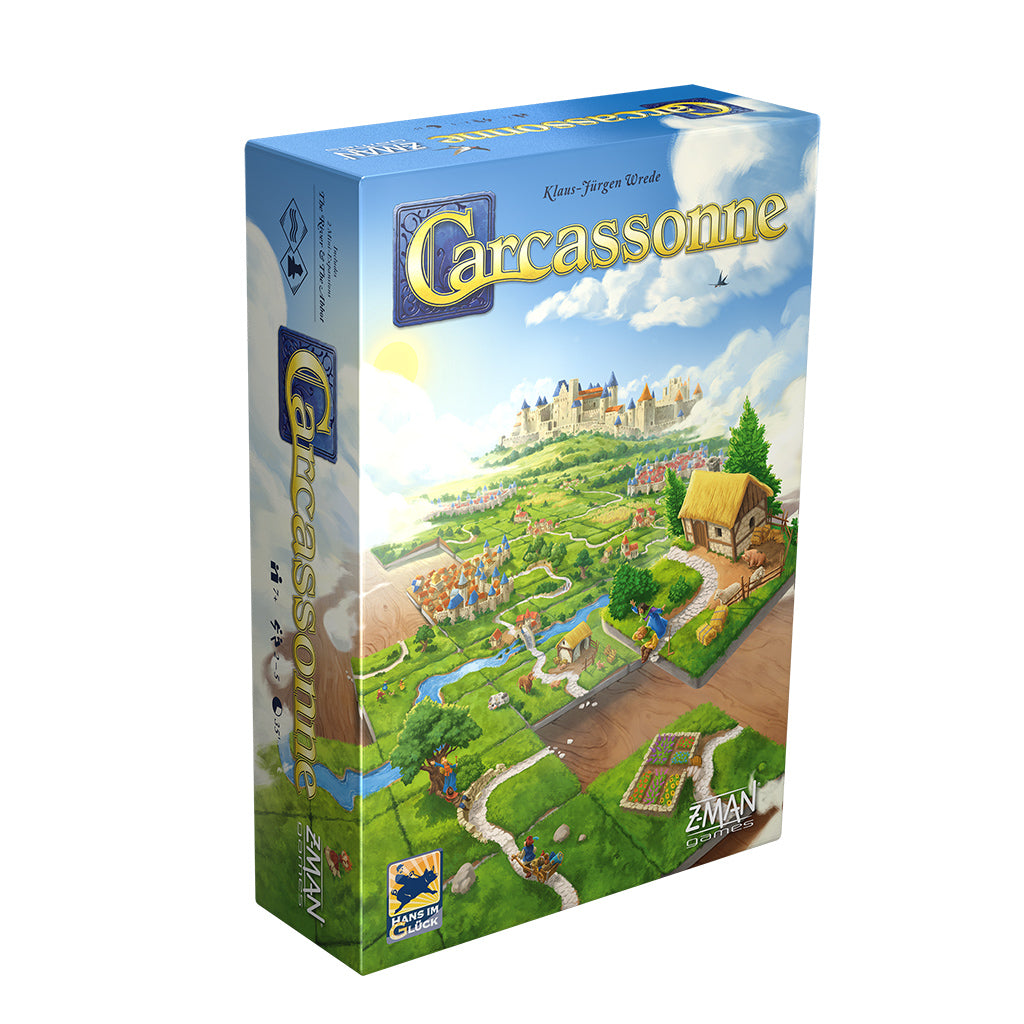
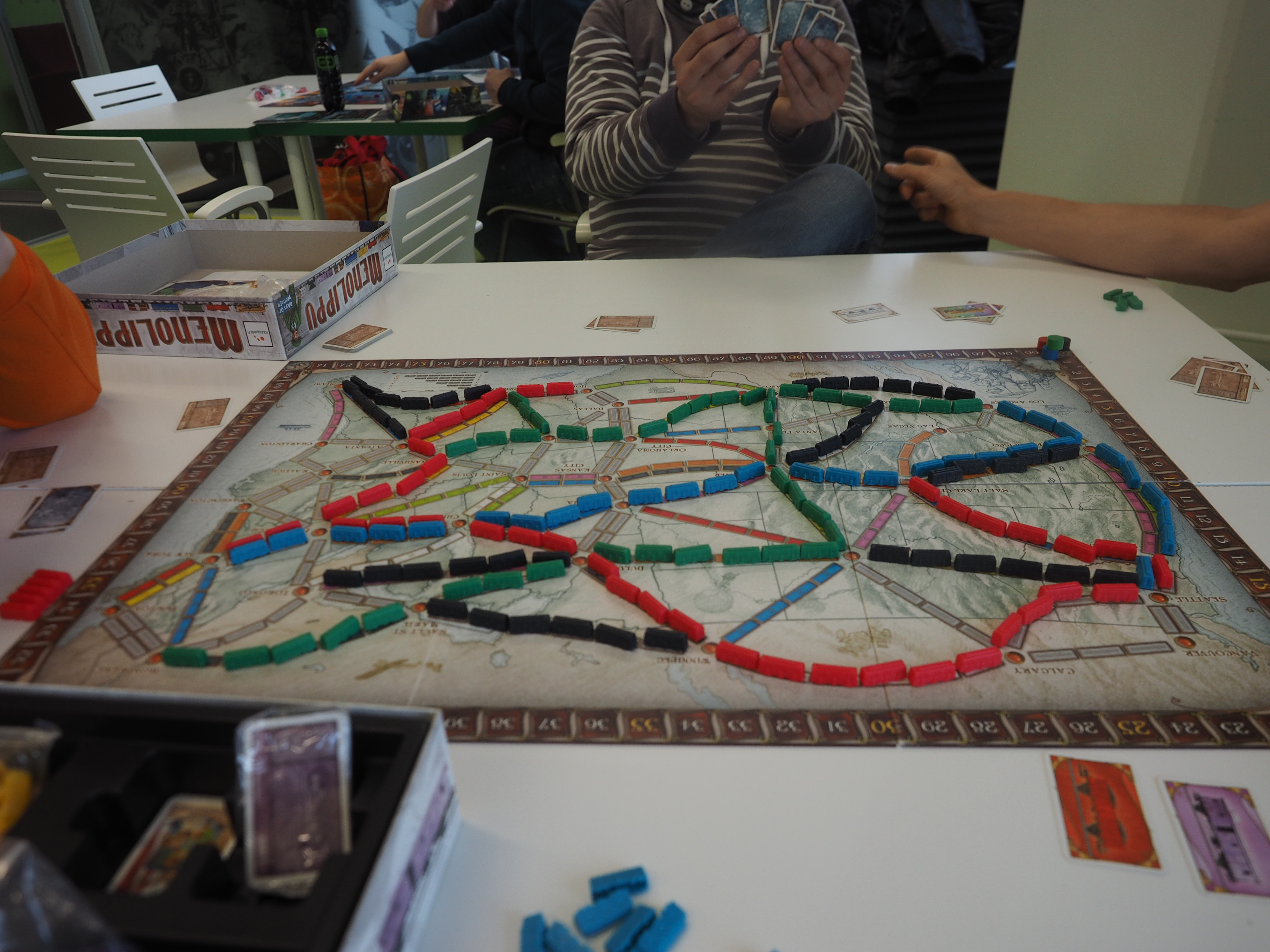
- **Just you and one other person, most of the time?** Carcassonne. It's a tight, tactical face-off where every single tile you draw lands on top of somebody's plan — and it's the cheapest of the three.
- **A mixed, casual table — kids, a partner who doesn't "do" games, friends who want to laugh and not argue?** Ticket to Ride. You build your own train routes, so there are almost no moves that openly slight another player.
- **A committed crew of three or four who genuinely love to talk, deal, and needle each other?** Catan. The trading and the robber make the loudest, most memorable table in the hobby.
There is no wrong answer here — only the right game for the table you actually have.
Ticket to Ride: the smoothest on-ramp there is
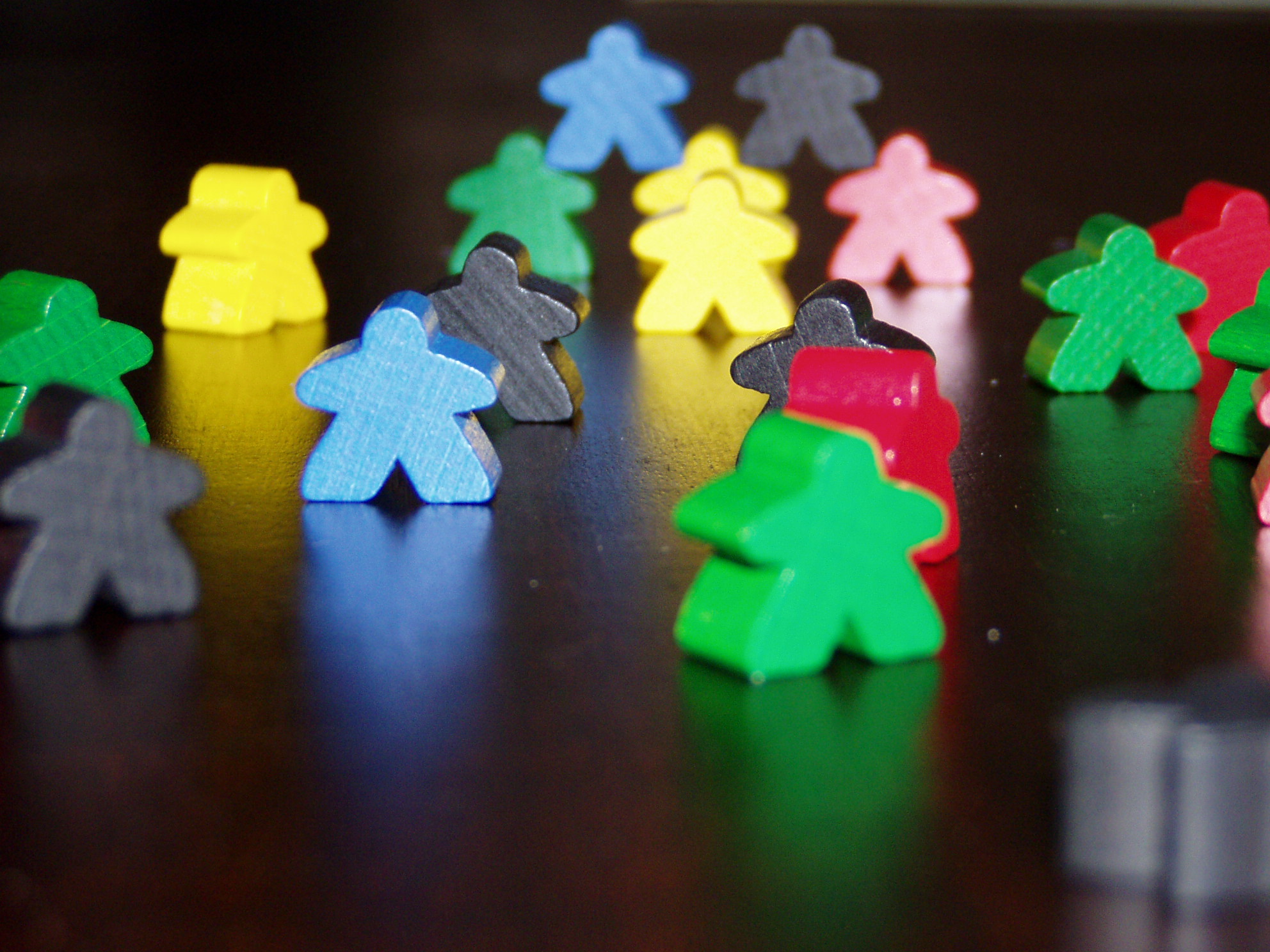
Picture the gentlest possible welcome to the hobby. That's this box.
You collect colored train cards, you claim routes between cities, you quietly chase a couple of secret destination tickets. The scoring is right there in the open — no hidden gotcha rules, no math you didn't sign up for. New players grasp it within a handful of turns, and the teach is about ten minutes flat.
Best of all? It produces no arguments. You're laying your own track, mostly minding your own business, so there are very few moves that openly wreck a friend. That's exactly why it's the family peacekeeper.
The honest catch: it's light on direct conflict. Veterans sometimes call it "multiplayer solitaire" — you're racing alongside people more than against them, with the occasional satisfying route-block. At two players the board feels roomy and the knives come out less. Strategy hounds may eventually want more bite.
Beginner's edge: keep ONE long destination ticket and actually finish it. Grab the long grey routes early, before someone blocks them. And draw any extra tickets in the first third of the game — not the panicky last few turns. Hoarding cards with no plan is the rookie sin here.
When you want a touch more depth: start on the original North America map (cleanest, most forgiving), then graduate to Ticket to Ride: Europe, which adds stations, tunnels, and ferries.
It's the family peacekeeper: you build your own track, so almost no move openly slights the person beside you.
Carcassonne: the two-player champ that grows for years
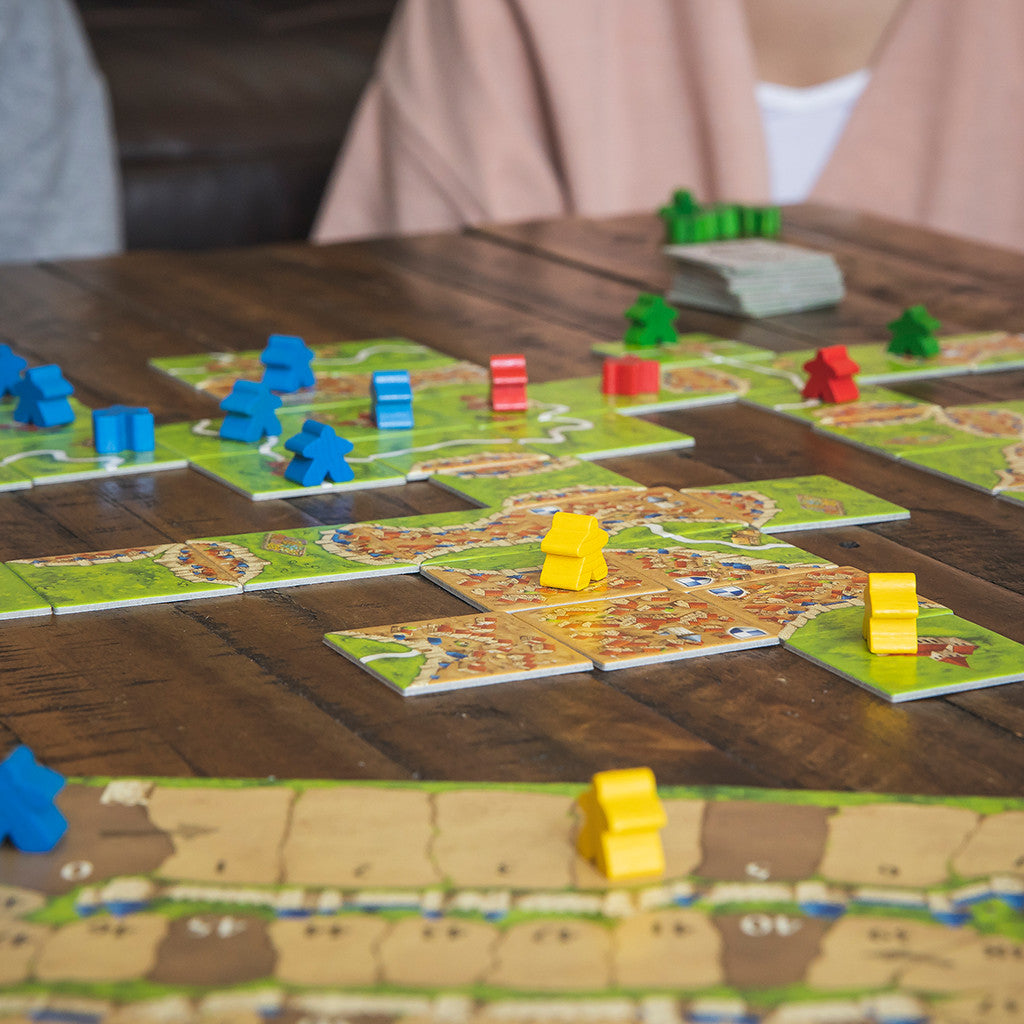

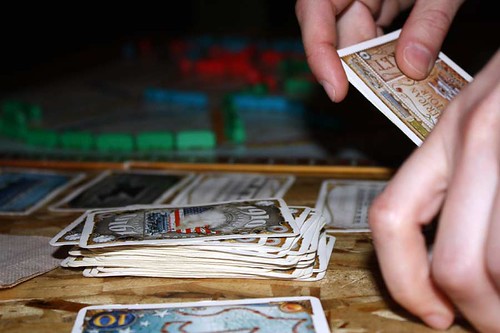
This is the one with almost no setup — you just start drawing tiles from the bag and building a medieval countryside, one piece at a time.
The turn is dreamy in its simplicity: draw a tile, place a tile, maybe drop a little wooden meeple to claim a road, a city, a monastery, or a field. That's it. And yet every placement touches somebody's plan, which makes it the most moment-to-moment interactive of the three. It's the reigning two-player gateway and, thanks to a randomized board plus a deep library of expansions, the one with the highest replay ceiling. Reviewers report a hundred-plus plays still turning up situations they've never seen.
The honest catch comes in one word: farmers. Field scoring genuinely confuses beginners — fields can be 15–20% of an expert's points, but most newcomers misjudge where a field even ends. My kindest advice? Skip teaching farms for the first few games entirely. Carcassonne can also run a little dry and quiet — no negotiation, less table noise — and at five players the downtime creeps in.
Beginner's edge: don't drop a farmer on turn one — fields pay off late. And build several small cities rather than one giant cathedral-sized one you can never finish.
Meeple economy is everything: you only have seven little followers, so each is worth roughly a seventh of your score. Always keep one in reserve. Don't strand your whole crew in a city that may never close.
Catan: the franchise that built the hobby — and the loudest table
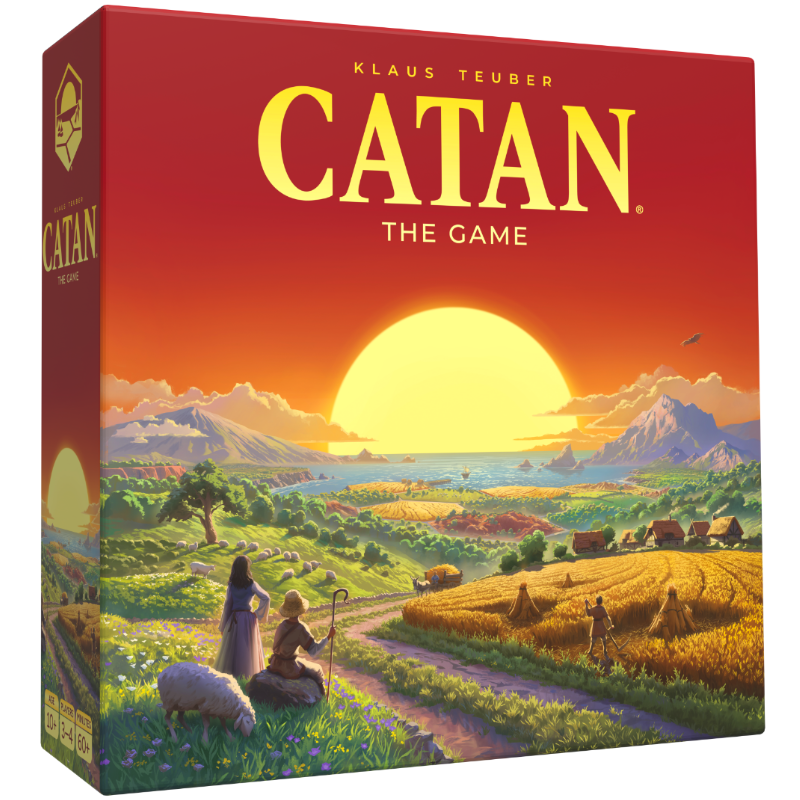
This is the original phenomenon. 45+ million copies, the game most people mean when they say "that hexagon trading game," and still the most social of the three by a country mile.
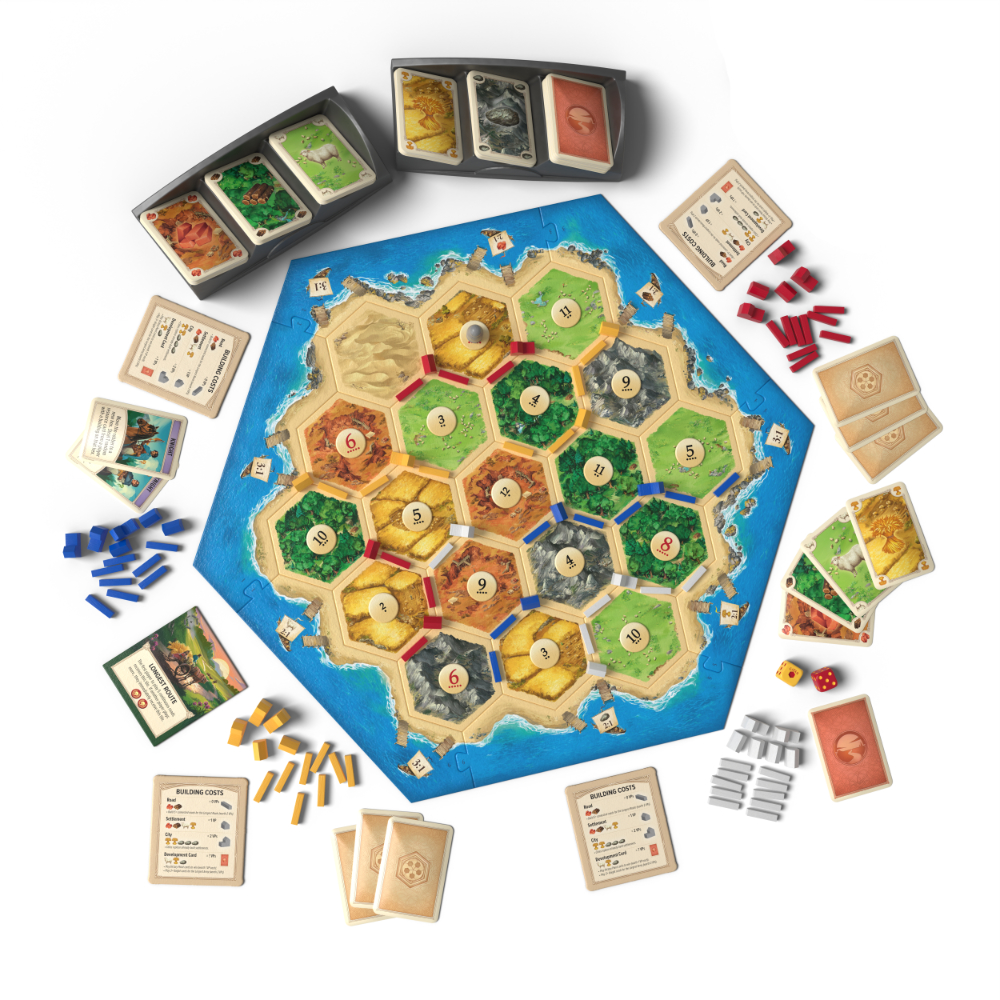
You settle an island, gather brick and wood and wheat and ore, and — here's the magic — you trade live, across the table, out loud. "Two wood for a sheep?" "Absolutely not." "Fine, two wood and I won't put the robber on your six." That negotiation is the whole engine, and it makes the most memorable, argue-and-laugh table in gateway gaming.
The honest catch: it asks the most of everyone. The teach runs 15–20 minutes. The dice can ice a perfect plan cold. The robber sparks genuine family arguments — it has, only half-jokingly, a reputation for testing marriages. And it's weak at exactly two players; it really wants three or four for the dealmaking to come alive.
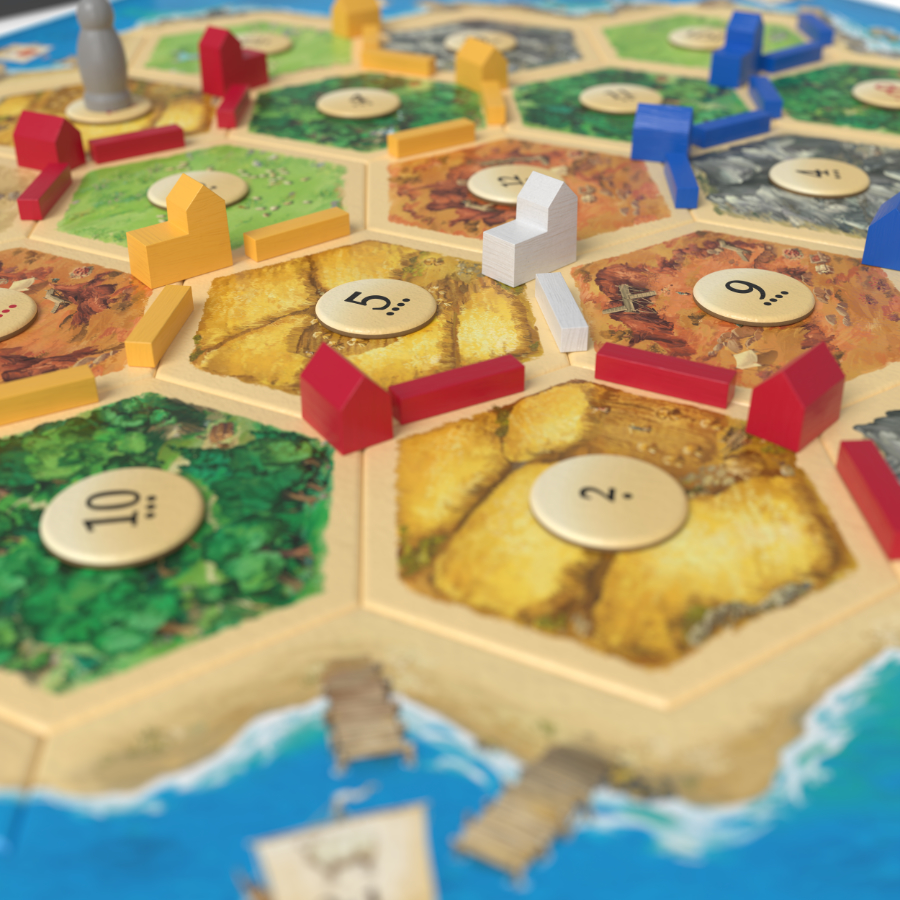
Beginner's edge: at setup, prize the numbers 6 and 8 (they roll most often) and grab resource variety. A settlement touching brick and wood lets you spam roads and settlements early.
A note on the robber: its job is to block a hot number, not just steal a card. And the moment you're holding more than seven cards, a rolled 7 makes you discard half — so spend or trade down before that happens.
The 2025 6th Edition refreshed the art, enlarged the pieces, added a resource-card holder, and stays fully compatible with your old expansions. It's frequently discounted to around $35.
People remember the trades and the robber fights — which is exactly why some tables adore Catan and others ban it.
How they really stack up — luck, length, teach, and noise
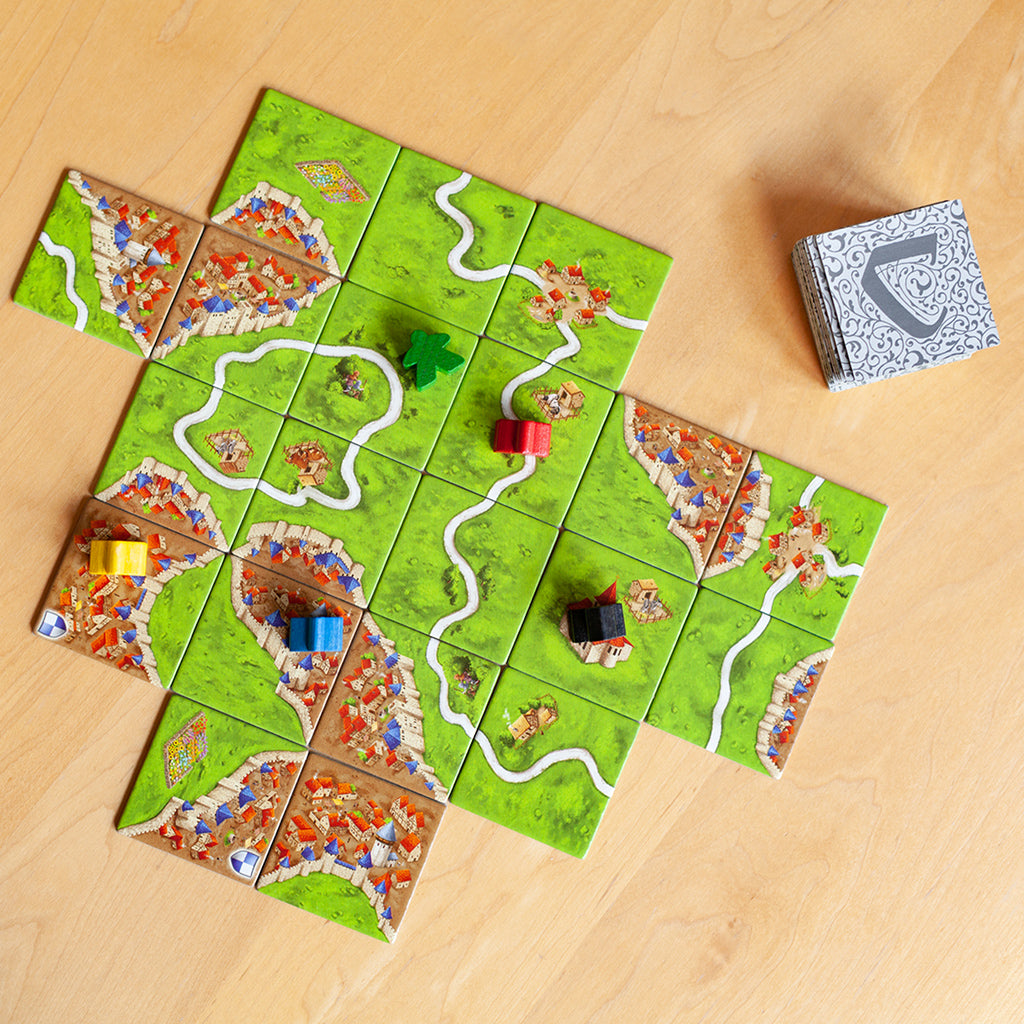
Set them side by side and the personalities snap into focus.
Teach speed. Carcassonne has the simplest turn but its farmer scoring trips people. Ticket to Ride is the easiest to actually grasp because nothing is hidden. Catan is the heaviest lift at 15–20 minutes — resources, building costs, trading, dice odds, all at once.
Luck. Catan wears its luck on its sleeve: the dice decide what comes out each turn, so a cold streak stings. Ticket to Ride has mild card-draw luck but rewards planning. Carcassonne draws random tiles, but the distribution is countable, so skill leads.
Length and pacing. Ticket to Ride and Carcassonne both move fast with little downtime. Catan runs longer — 60 to 90 minutes — and can stall on trade haggling, a real consideration for restless or younger tables.
Interaction, in one line: Catan is HIGH (live trading plus the robber), Carcassonne is MEDIUM (constant tile interference), Ticket to Ride is LOW (mostly route-blocking). Pick by exactly how much conflict your table enjoys.
And the ratings? They sit shoulder to shoulder. Carcassonne hovers around 7.41 on BGG, Ticket to Ride around 7.39 — these are all excellent. You're choosing a flavor, not settling for a lesser game.
The most repeated long-game wisdom in the hobby: buy both, eventually. Ticket to Ride for casual and mixed nights, Catan for your core crew's strategy sessions. They're companions, not rivals.
The Player's Code: winning with grace, hosting with heart

Here's the part nobody prints on the box, and the part that actually decides whether people come back next week.
Win like someone they'll want to host again. Gateway games practically invite beginners to win game one — it happens constantly, and it's the single best hook for a rematch. So if your hidden farm or your sneaky long route clinches a surprise victory, credit the board and the dice, not your genius. A humble winner gets the next invitation.
Lose like a good sport. Bad rolls in Catan and a brutal Carcassonne block are part of the deal. Name the smart move your opponent made instead of cursing the luck. The runaway-leader feeling is real — but sulking or conceding the table ruins the night faster than losing ever could.
Block clean, never personal. A hard block is fair play in any of these. But announcing "I'm only doing this to wreck YOU" turns strategy into a grudge. In Catan, aim the robber at the genuine threat or the hot number — not the friend who annoyed you last turn. Let the move speak for itself.
No kingmaking, ever. When you can't win, don't hand the victory to someone else out of spite or favoritism. Play your honest best to the end. (In sanctioned Catan events it's a disqualifiable offense; in your living room it's just bad form.)
Trade fair with the new folks. Yes, every Catan trade helps one side more — that's the game. But a lopsided gotcha against a confused newbie sours the whole table. Drive a fair-ish bargain with beginners and save the shark moves for opponents who can read the angle.
A crushed beginner doesn't come back — and your gateway game only earns its name if newcomers leave wanting a rematch.
Snacks, house rules, and how to keep the night happy
- **Catan's "Friendly Robber"** — nobody at 2 victory points or fewer can be robbed. It stops the robber from triggering tears and table-flips.
- **Free take-backs** for new or young players in the first couple of turns.
- **Bend the rules freely** to help a beginner. The goal is everyone having fun, not a flawless rulebook.
What experienced tables keep reporting
Recurring owner patterns, synthesized in Puzzlewick's words. Follow each evidence trail to read the original discussion.
The most-repeated piece of newcomer advice is blunt: if you only buy one, make it Ticket to Ride. It wins the practical categories that matter to a fresh table — fast teach, consistent length, broad appeal — and it almost never produces a move that openly slights another player.
comparison-blog consensus
Reviewers who play mostly two or three keep steering people to Carcassonne first: it's the cheapest entry, the best two-player of the trio, and the one with the highest replay ceiling — folks report a hundred-plus games and still meeting new situations.
comparison-blog / reviewer
There's a running joke that Catan's interaction is so charged it has tested a marriage or two. The trading and the robber are the whole appeal for some tables and an instant dealbreaker for others — it's the most divisive of the three precisely because it's the most social.
hobby blog / etiquette piece
Ask why a beginner is losing at Carcassonne and the answer is almost always farmers. Field scoring can be a fifth of an expert's points, yet new players routinely misjudge where a field ends — so veterans say don't commit farmers too early, especially in smaller games.
strategy guides / BGG farmers discussion
The classic Ticket to Ride rookie mistake is hoarding cards with no destination in mind. The fix the regulars repeat: commit to one long ticket and finish it, draw your extra tickets early rather than late, and snatch the long grey routes before someone fences them off.
strategy guides / BGG
For Catan, experienced players preach three things: never feed the leader a trade, use the robber to block a hot number rather than just nab a card, and adopt the 'Friendly Robber' rule for family games so nobody under 2 points gets robbed to tears.
strategy / etiquette articles
Carcassonne veterans talk about meeple economy like a budget: you only get seven, each is worth about a seventh of your score, so always keep one in reserve and build several small cities instead of one giant one you can't finish.
strategy guides
The near-universal closing note is that these aren't really competitors — most people end up owning more than one. Ticket to Ride for casual and mixed nights, Catan for your core crew's strategy sessions. They scratch different itches.
comparison-blog consensus
The picks
Some links below are affiliate links — as an Amazon Associate, Puzzlewick earns from qualifying purchases, at no extra cost to you. It never changes a pick.
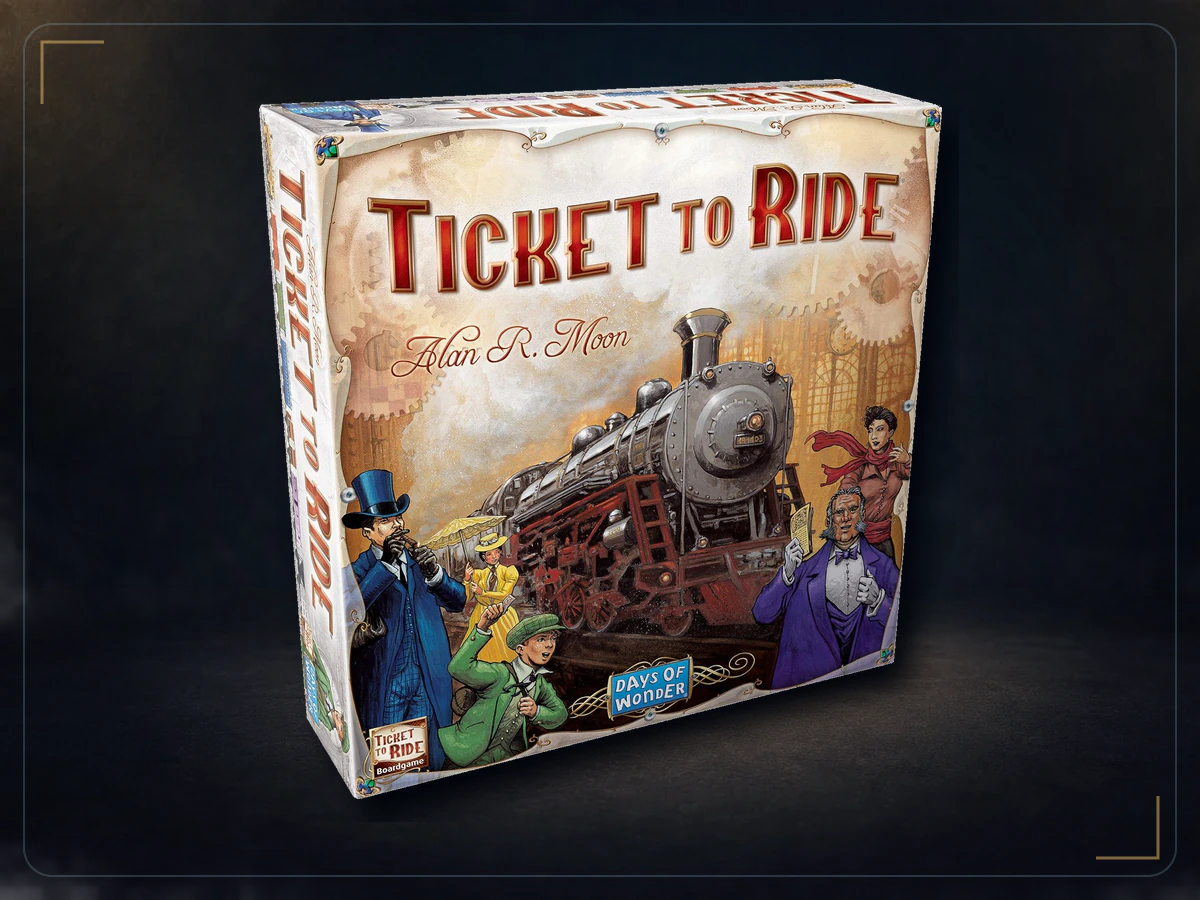
Ticket to Ride
- Players
- 2-5
- Time
- 30-60 min
- Age
- 8+
- Complexity
- 1.9 / 5
- Publisher
- Days of Wonder · 2004
- Designer
- Alan R. Moon
- Art
- Julien Delval, Cyrille Daujean
3 photos Carcassonne
- Players
- 2-5 · best 2
- Time
- 30-45 min
- Age
- 7+
- Publisher
- Hans im Glück · 2000
- Designer
- Klaus-Jürgen Wrede
- Art
- Doris Matthäus
3 photos Catan
- Players
- 3-4 · best 4
- Time
- 60-120 min
- Age
- 10+
- Complexity
- 2.3 / 5
- Publisher
- Kosmos (Franckh-Kosmos Verlag) · 1995
- Designer
- Klaus Teuber
- Art
- Franz Vohwinkel, Michael Menzel, Pete Fenlon, Volkan Baga, Tanja Donner, Harald Lieske
Questions, answered
Which one should I buy first if I can only get one?
For most people, Ticket to Ride. It teaches in about ten minutes, plays well from two to five, runs a predictable 30–60 minutes, and has almost no direct conflict — the safest crowd-pleaser on the shelf. Buy Carcassonne instead if you mostly play with just one other person (it's the best two-player of the three and the cheapest). Buy Catan if you have a committed group of three or four who specifically want trading, negotiation, and a louder, more social table.
Which is the easiest to teach and learn?
Ticket to Ride is the easiest overall, because its scoring is fully in the open and there are no hidden gotcha rules — newcomers get it within a few turns. Carcassonne has the simplest turn (draw a tile, place a tile, maybe a meeple) and near-zero setup, but its farmer/field scoring confuses beginners, so skip teaching it at first. Catan is the heaviest lift at roughly 15–20 minutes thanks to resources, trading, building costs, and dice probability all arriving at once.
Which is best for two players or couples?
Carcassonne — it's regularly called one of the best two-player gateway games, a tight tactical head-to-head where every tile placement matters. Ticket to Ride also works lovely for couples and produces fewer arguments since you build your own routes, but at two players its board feels roomy and a bit less cut-throat. Catan is the weakest at exactly two — its trading engine really wants three or four players to come alive.
How much luck is involved in each?
Catan has the most visible luck: dice decide which resources appear each turn, so a cold streak can stall a strong plan (though placement, trading, and the robber are pure skill). Ticket to Ride has mild card-draw luck but rewards route planning and reading the board. Carcassonne has random tile draws, yet skilled players argue the 72-tile distribution is knowable — so luck picks the tile, and skill plays it.
Are these okay for kids and families?
Yes, with age guidance: Carcassonne is rated 7+, Ticket to Ride 8+, and Catan 10+. For ages 6–9, start with the junior versions — Ticket to Ride: First Journey and Catan Junior, which swaps the robber for a gentler 'Ghost Captain.' Ticket to Ride is the family peacekeeper thanks to its low direct conflict; Catan's robber can spark real arguments, so many families adopt the 'Friendly Robber' house rule (no robbing anyone at 2 victory points or fewer).
Which has the best replay value over years?
Carcassonne, largely because of its huge expansion library — Inns & Cathedrals and Traders & Builders are the most-recommended first add-ons — plus a freshly randomized board every game. Catan re-randomizes resources and numbers each play and has its own expansions like Seafarers and Cities & Knights. Ticket to Ride stays fresh mainly by collecting different map versions, with Europe and the original North America as the cornerstones.
Yumi's verdict
Here's my ruling, served warm. Buy Ticket to Ride first — it's the safest single purchase on the shelf, the one that turns a mixed, slightly nervous table into a group of people asking for a rematch. If your table is usually just two, make it Carcassonne instead; it's sharper, cheaper, and grows with you for years. And if you've got a chatty crew of three or four who live for the deal and the dig, Catan will give you the loudest, most-talked-about nights of the bunch. But know the secret every regular eventually learns: you'll end up with at least two of these on the shelf, because they were never really rivals. Start with the one that fits the table you have tonight — and pour the drinks on the side table.
Still deciding? Take the Game-Finder — answer seven quick questions and the cabinet hands you the one board game built for your table, with a buy link and your own shareable player talisman.
Research ledger 8 sources · reviewed 2026-08-10
Specifications, rules, current product information, community experience, and contrary evidence were checked against the sources below. Commercial links are kept separate from editorial evidence.
- catan.comcatan.com/understand-catan/game-rules
- catan.comcatan.com/catan
- zmangames.comzmangames.com/en/products/carcassonne
- daysofwonder.comdaysofwonder.com/game/ticket-to-ride
- boardgamegeek.comboardgamegeek.com/boardgame/13/catan
- boardgamegeek.comboardgamegeek.com/boardgame/822/carcassonne
- boardgamegeek.comboardgamegeek.com/boardgame/9209/ticket-to-ride
- catan.comcatan.com/faq
Come in, take your shoes off — let me show you something.


Keep exploring
The next smart rabbit holes.
⬢ Universe HubCATAN: the whole buying pathCATAN begins as a clean trade-and-settle game, then branches into larger tables, shifting maps, and much sharper strategy. This hub...⌂ Topic PathFamily and Gateway Games: compare the whole shelfA good family game gets everyone playing quickly without becoming disposable after three nights. These guides prioritize clear...ComparisonThe Best 2-Player Board Games of 2026, RankedFifteen duels for two, sorted into hard tiers — the forever-game, the silent co-op, the giant-killers under twenty bucks, and the honest...