Everdell Complete Collection Review: Is the Big Box Worth It in 2026?
Yumi's cozy-but-ruthless buyer's guide to Everdell's giant all-in box: who should buy the Complete Collection, who should start with the base game, which expansion to add first, and how to host the first night so the magic actually lands.


AI-assisted research and drafting in Yumi’s voice · reviewed by Robert Pruitt · how this guide was made
Last editorial refresh: 2026-07-14 Gold-standard QA: 2026-07-14 17 sources reviewed Affiliate links checked during gold-standard pass

The short answer
The Everdell Complete Collection has an official US list price of $350, but that is not the same as its current Amazon checkout price, which fluctuates and is often lower. Buy it only after Everdell is a proven house favorite and you want nearly the entire classic expansion library. New players should start with base Everdell; most returning groups should add Newleaf first.
Decision map
Choose in thirty seconds
Proven Everdell households that want the complete classic system in one permanent archive.
Best first Everdell purchase and the safest way to test whether your table loves the system.
Best first expansion for most tables.
The Complete Collection is both a lavish archive and a behavioral test: will one enormous box create more Everdell nights, or make setup feel ceremonial? Yumi checked the current Asmodee catalog, the 88-page Gilded Book, the official component inventory, current Amazon listing, owner setup reports, and expansion discussions. The answer is not “$350 equals value.” The answer depends on which modules your table will actually use and whether this box can live close enough to be played.
Start here, then go deeper
You are in the right cabinet.
 ❦ Universe HubEverdell: the whole buying pathEverdell is warm woodland theater wrapped around a sharp card-engine puzzle. Yumi's universe keeps the invitation intact while...
 ✦ Topic PathBoard Game Buying Guides: compare the whole shelfStart with the decision, not the shelf. These guides compare the games, editions, expansions, player counts, and costs people...
 ComparisonWingspan vs Ark Nova vs Everdell: Which Engine-Builder Belongs on Your Shelf?Three marquee engine-builders, three different students of the same lineage. The Sensei traces the bloodline — weight, teach time, table...
Who should buy the Everdell Complete Collection?
The official Asmodee US catalog lists $350 MSRP, but MSRP is a reference price, not a claim about today’s Amazon checkout. The live price moves and has recently appeared materially lower. Puzzlewick therefore does not print a static “current price” beside the button; use the exact Amazon product link and judge the live offer.
Buy the collection when the base game is already requested, you want most of Pearlbrook, Spirecrest, Bellfaire, Newleaf, and Mistwood, and you have permanent storage near the table. Skip it as a blind first purchase. This is not one perfected mode; it is a modular library whose value comes from choosing the right chapter before game night.
What is actually inside the big box?
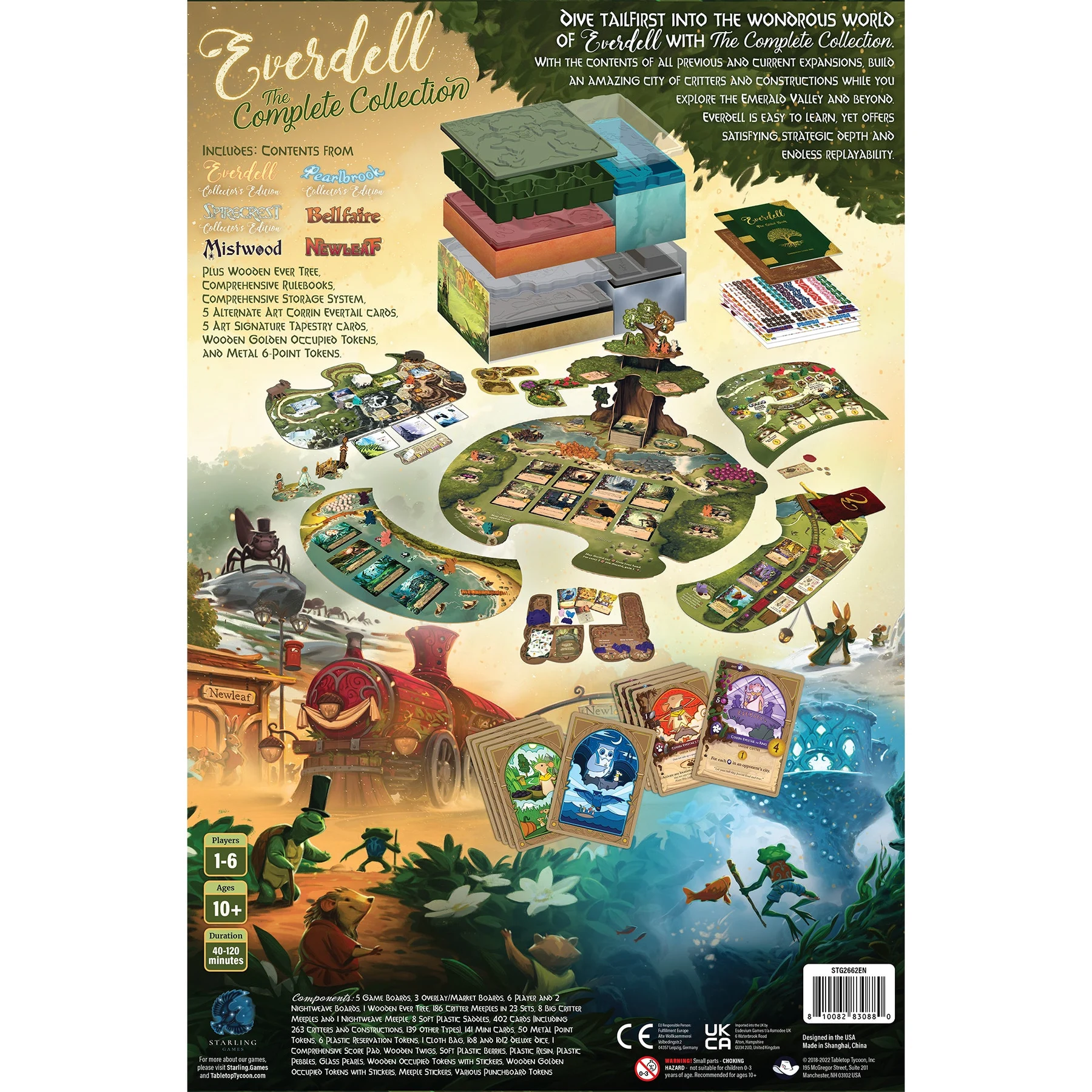

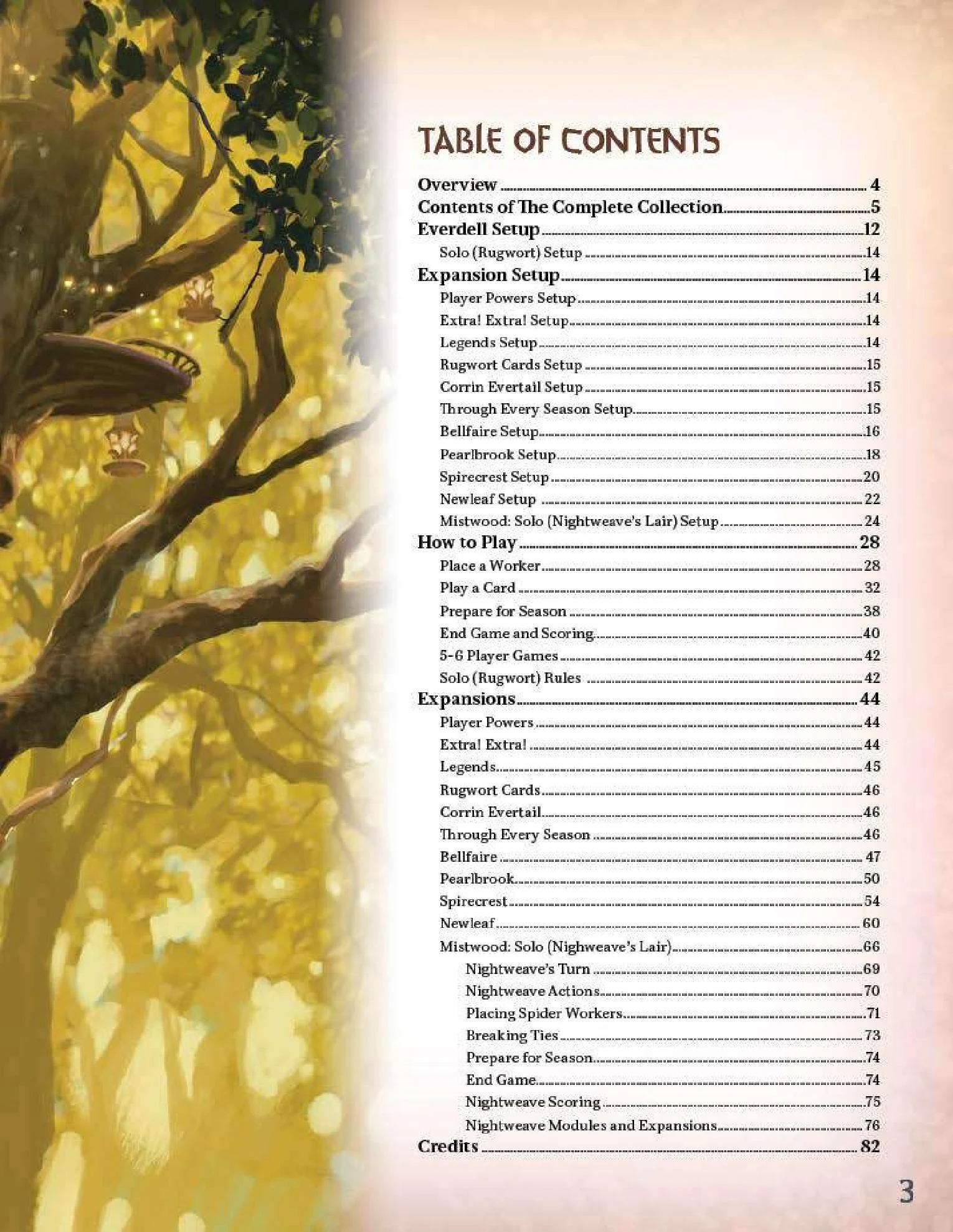
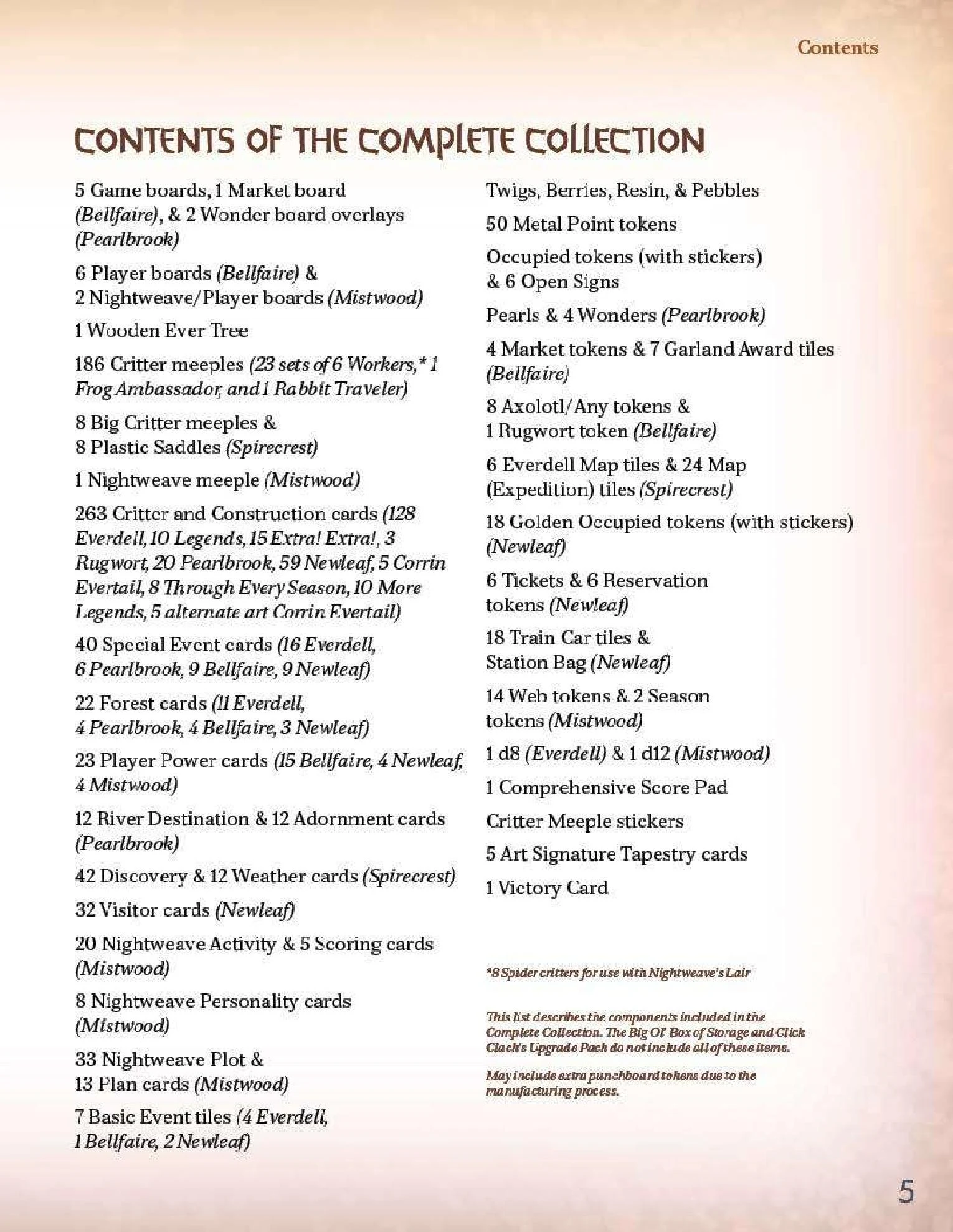
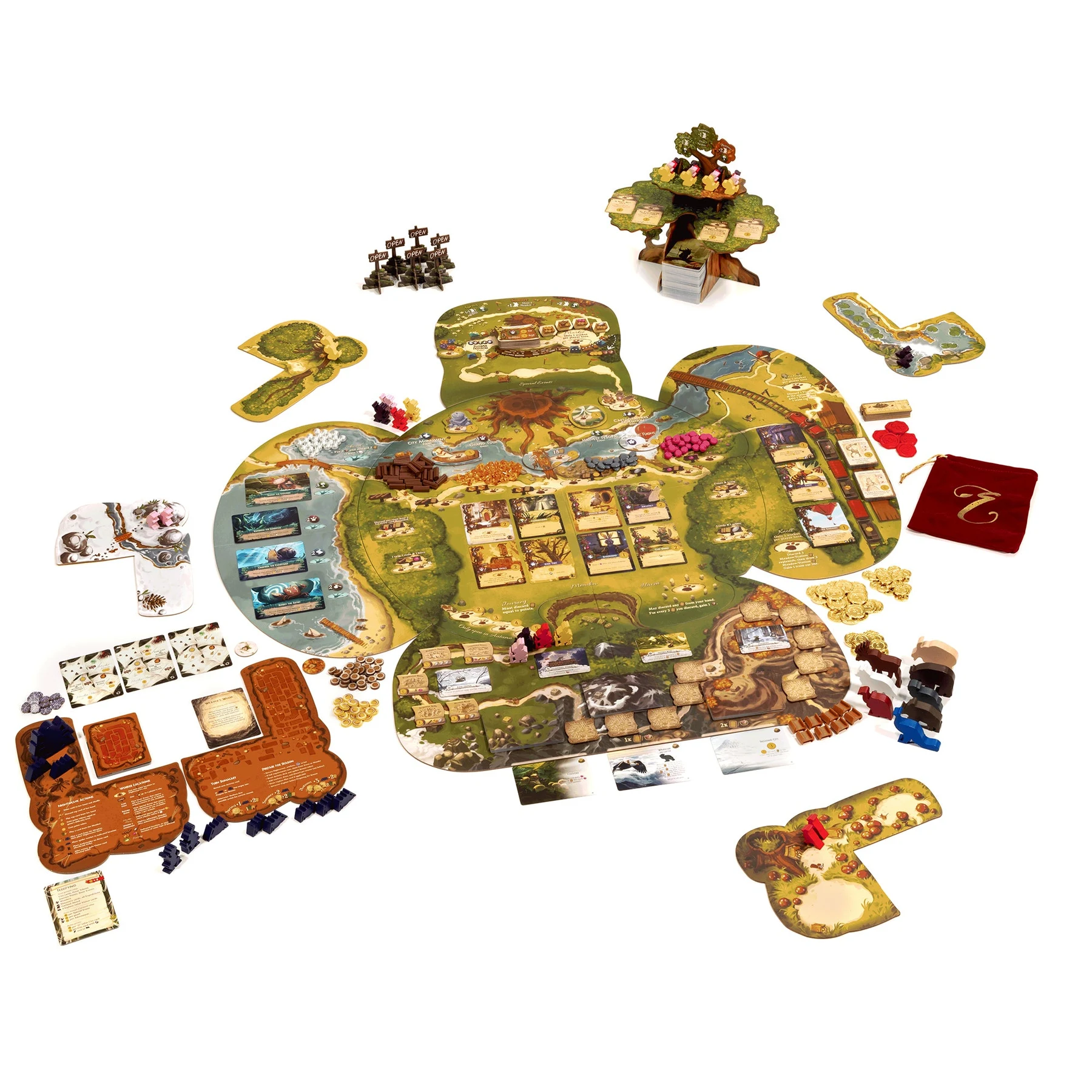
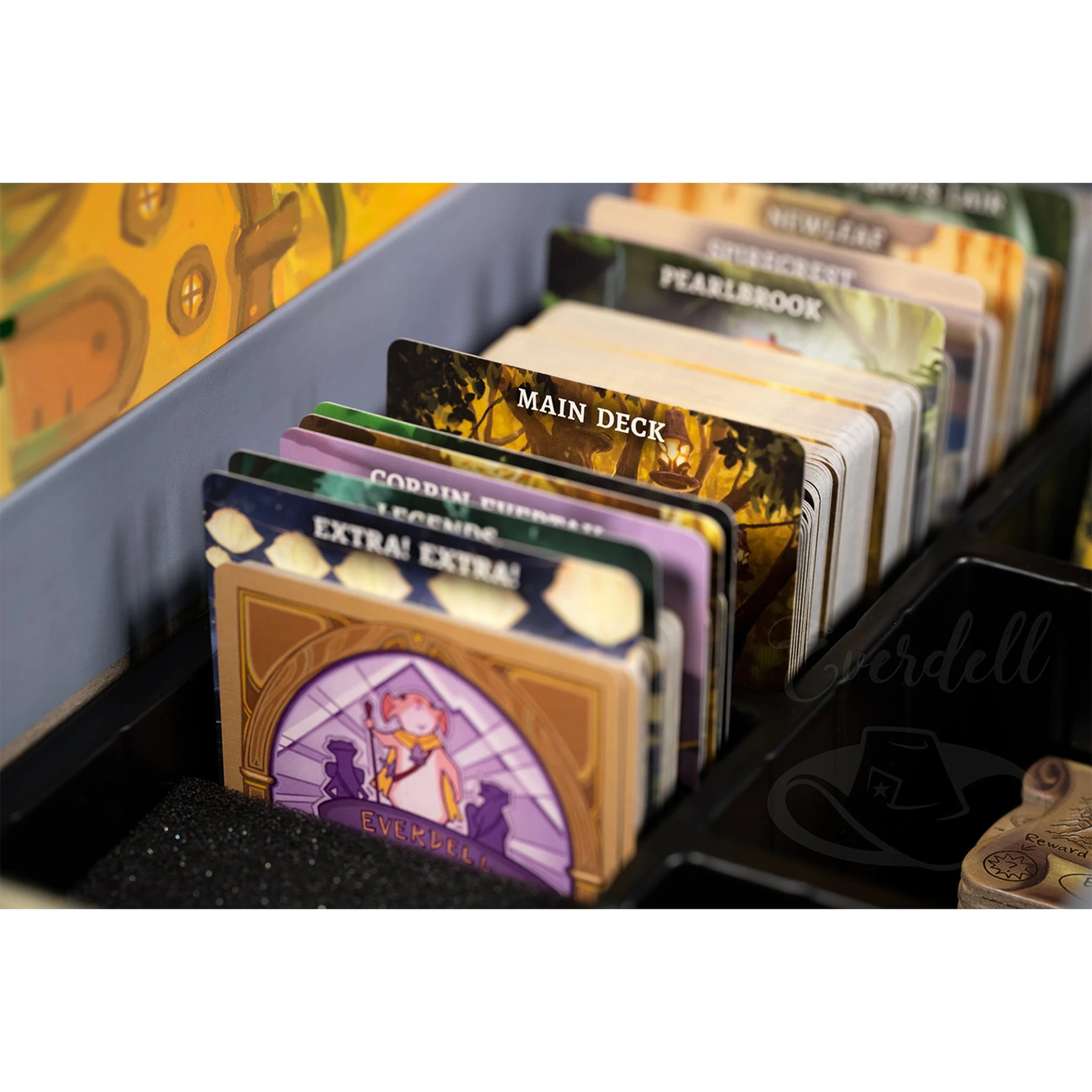
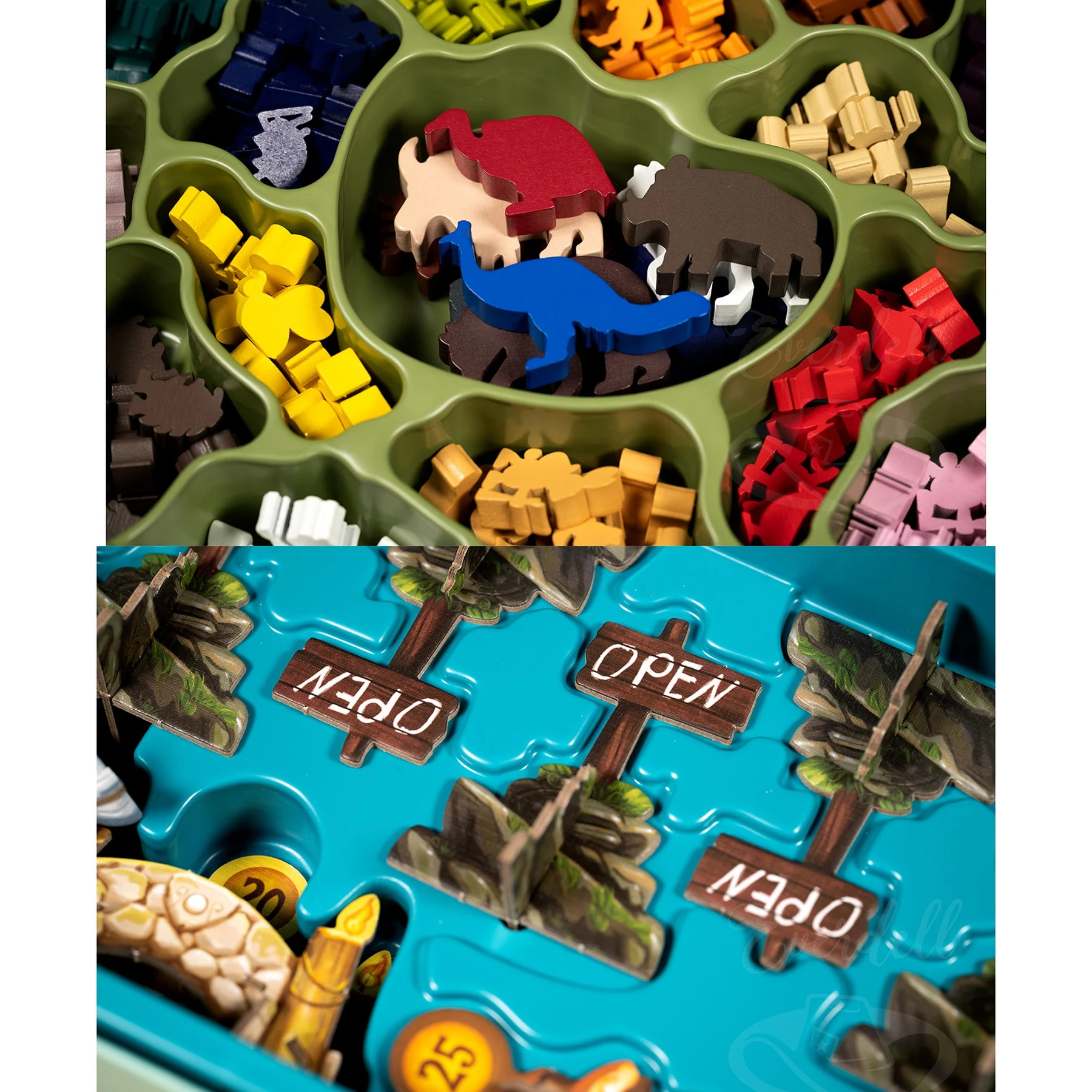
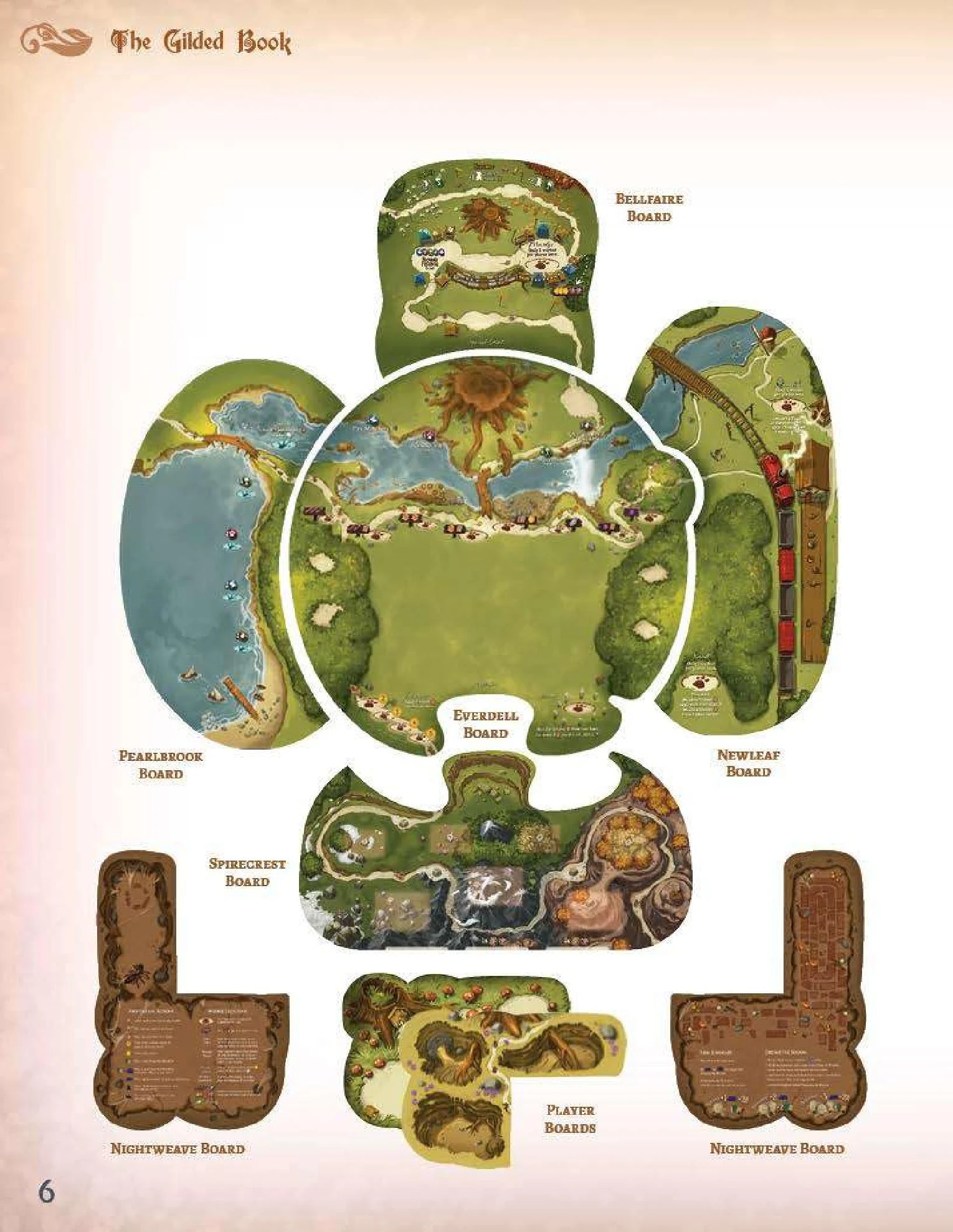
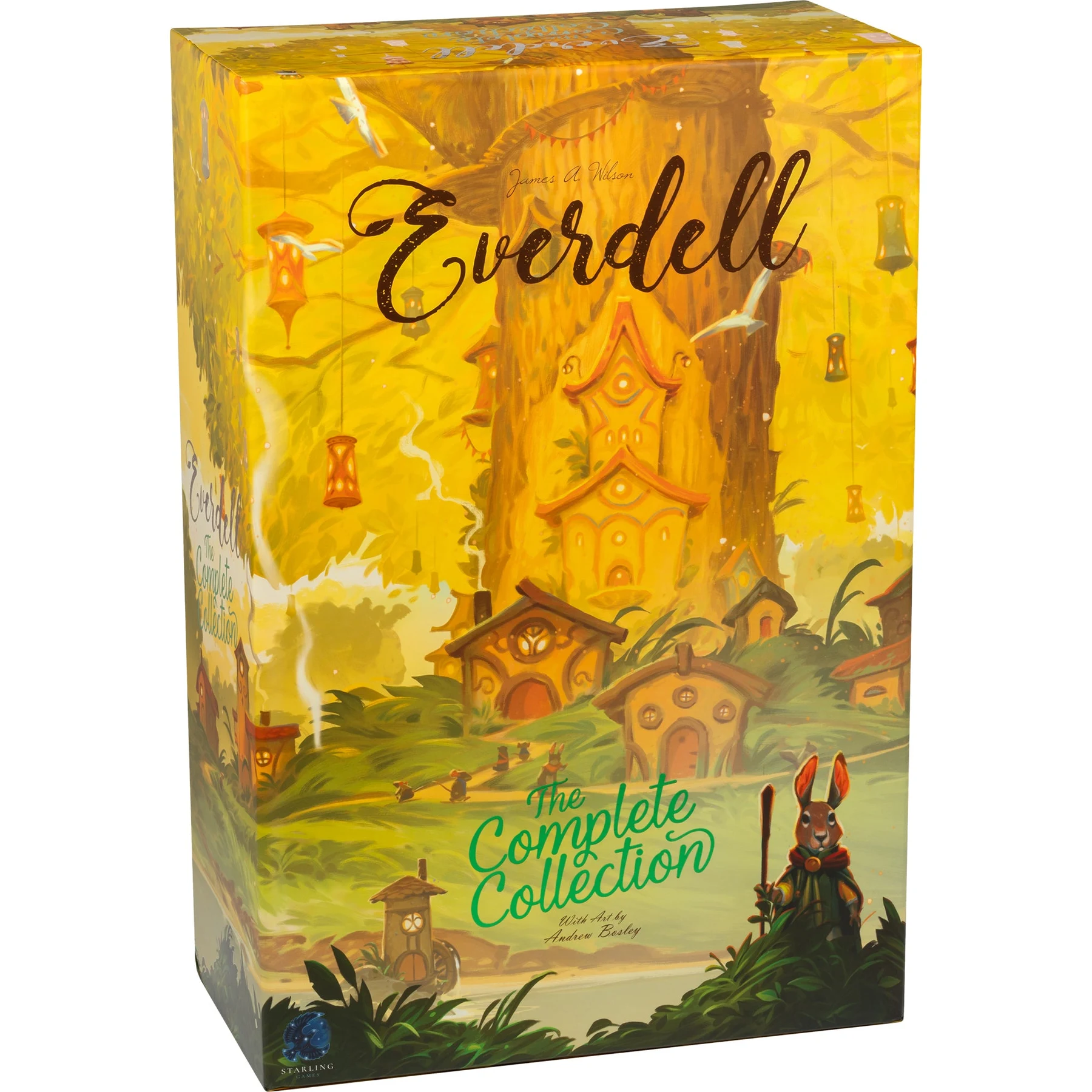
The collection contains the Everdell Collector’s Edition material plus Pearlbrook, Spirecrest, Bellfaire, Newleaf, and Mistwood, the wooden Evertree, consolidated Gilded Book and Archive references, a comprehensive storage system, and deluxe promos and tokens. It supports up to six players through Bellfaire content.
It does not contain later standalone Everdell-world games such as Farshore, Everdell Duo, or Silverfrost. It also does not include the sculpted Deluxe Resource Vessels; the trays merely provide space for them. That last distinction causes recurring confusion because many glamorous setup photos include vessels purchased separately.
Does the Complete Collection make Everdell easier or harder to table?

Both. The trays and consolidated references are excellent once you know where everything lives. The physical box is also huge, heavy, and layered. Owners repeatedly report that the game became less portable and sometimes less played after consolidation. The official sell sheet lists the package at 18 x 12 x 6.75 inches; measure the shelf, the carrying path, and the table rather than trusting the word “storage.”
The collection works best when it lives close to the table and the host preselects one module before guests arrive. It works worst when the group opens the lid and negotiates from the entire library. Choice made during setup feels like friction. Choice made the day before feels like curation.
A storage solution can still be a setup ritual.
Which expansion should you learn first?
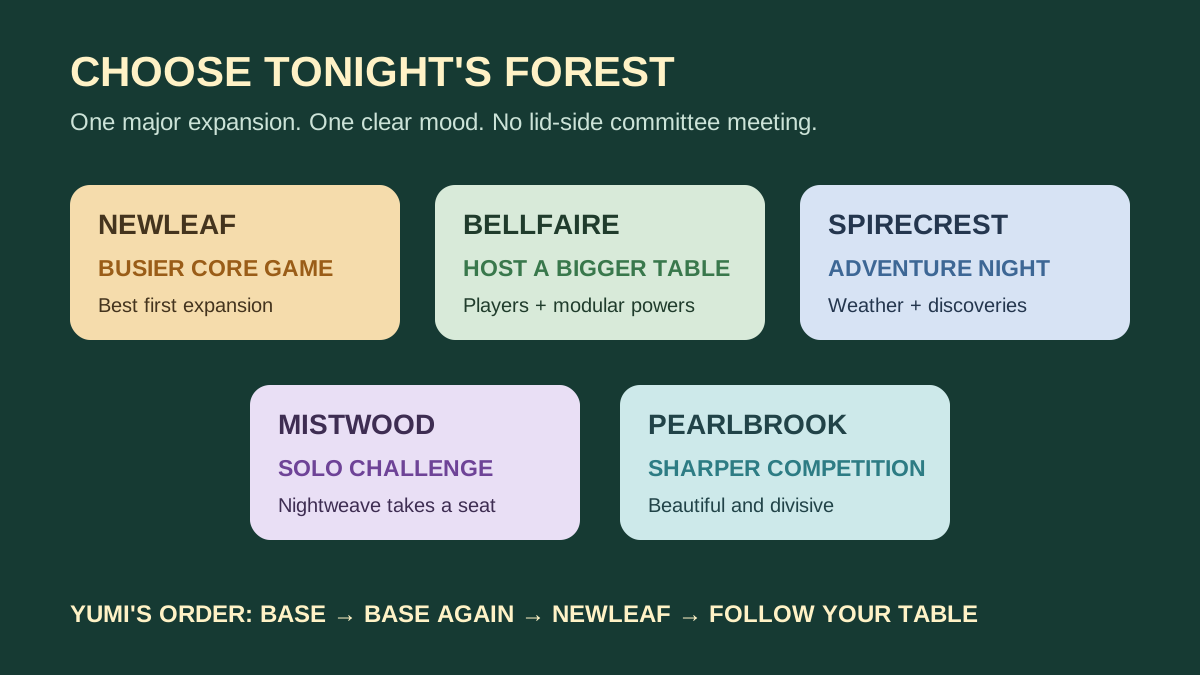
Newleaf is the best first expansion for most groups: its station, visitor cards, new critters and constructions, and expanded card flow make the town feel busier without abandoning Everdell’s engine. Bellfaire is the hosting toolkit, with player powers, market and award modules, a flat Evertree replacement board, and support for five or six. Spirecrest adds a mountain journey, season-by-season weather, discoveries, and large critters; it is the adventurous, heavier night.
Mistwood is primarily the one- and two-player challenge, using Nightweave as a more present adversary. Pearlbrook adds frog ambassadors, a river board, pearls, adornments, and wonders; it is beautiful and divisive because it redirects resources toward a side economy. The Gilded Book’s safest principle is still the right one: begin with one major expansion, not an everything-at-once proof of ownership.
How should you teach the first game from the Complete Collection?
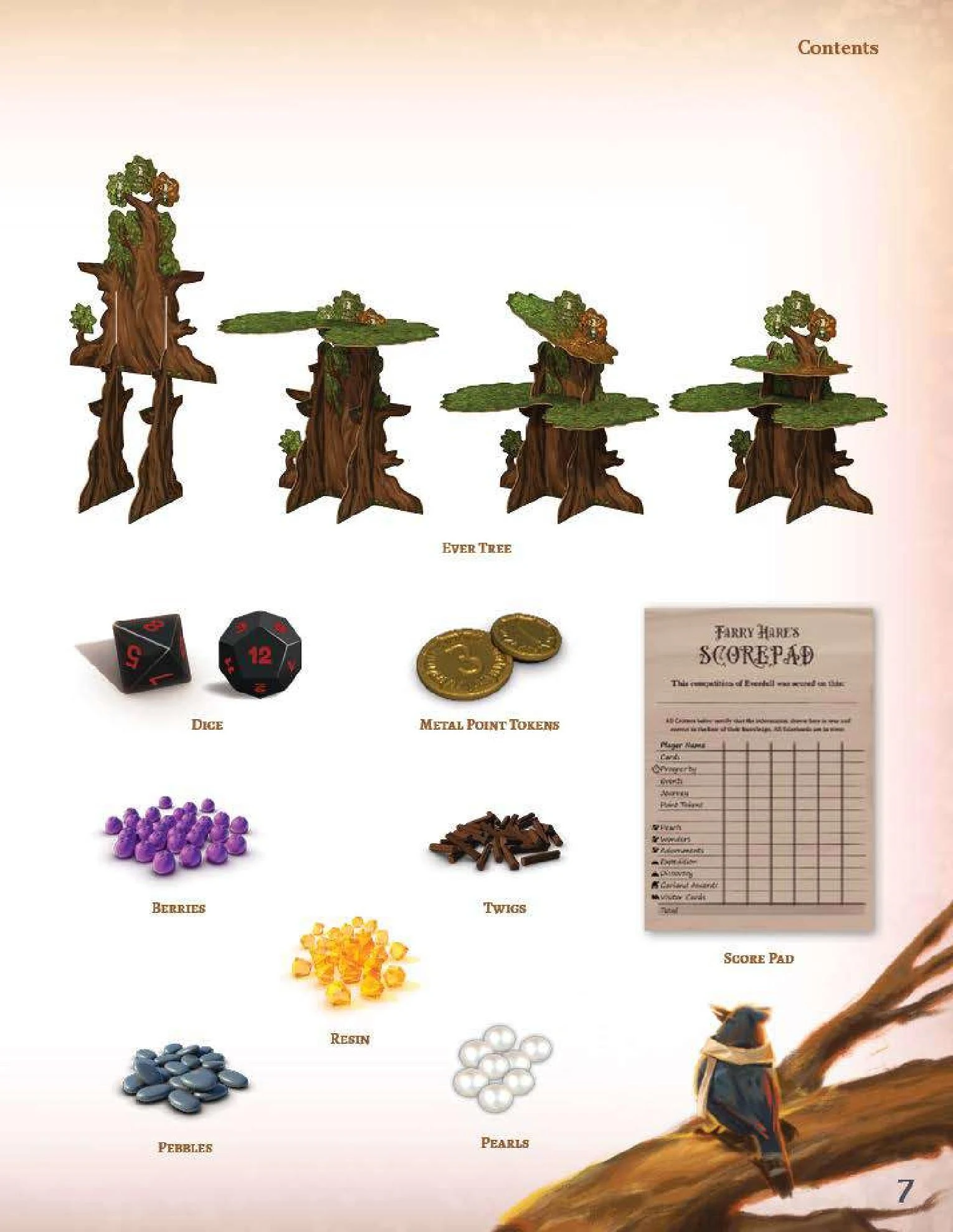
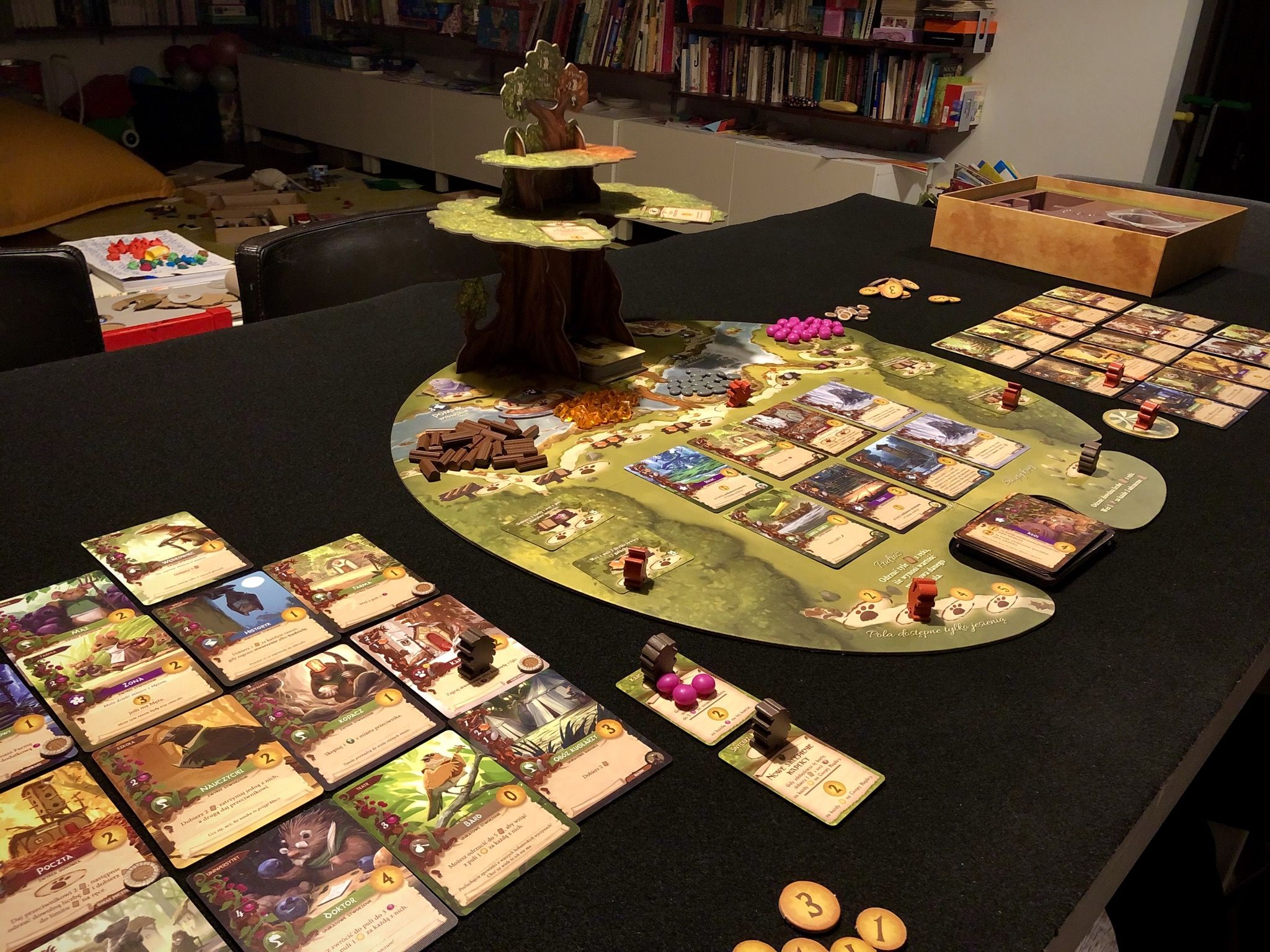

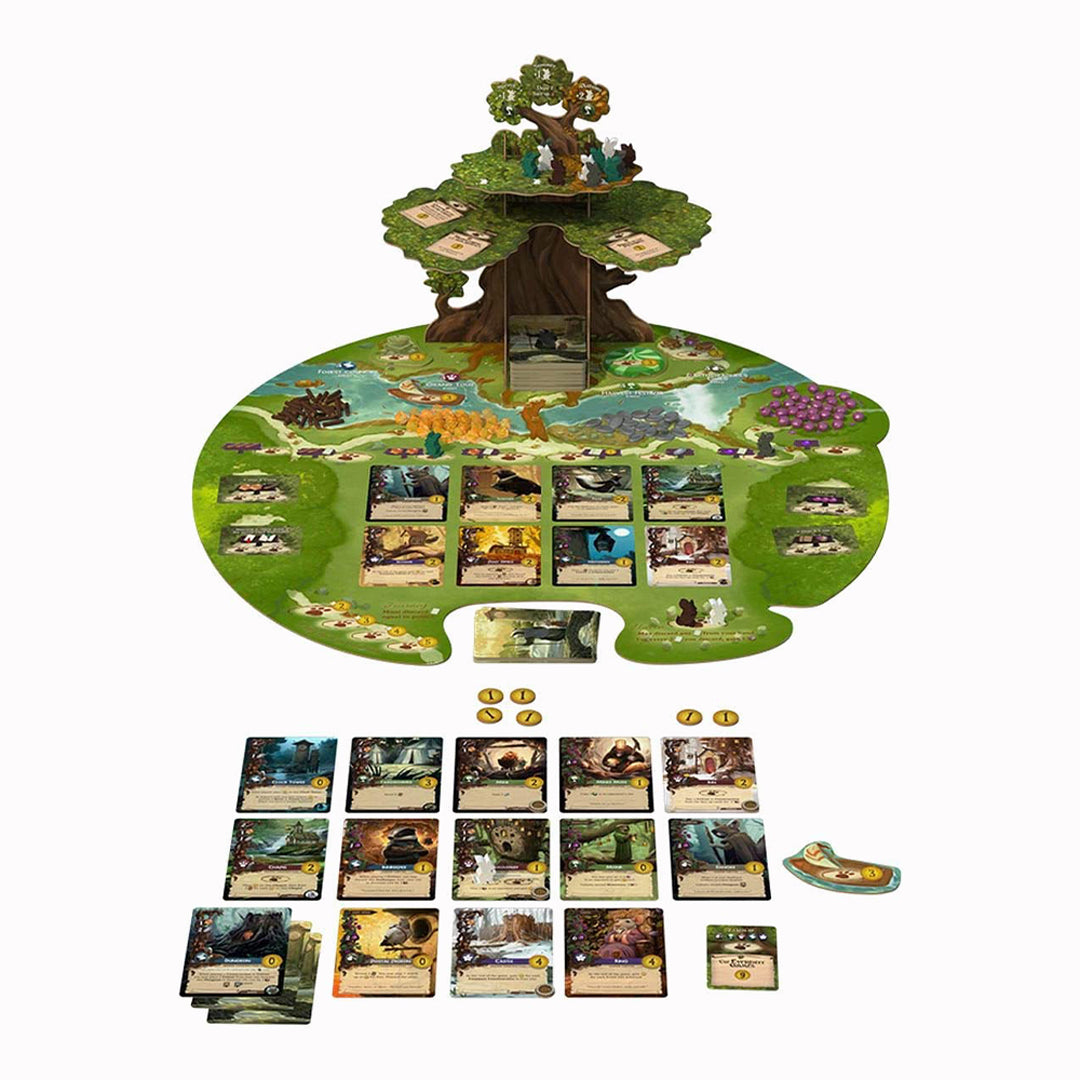
Before guests arrive, build the base-only kit: eight Meadow cards, four basic events, the special events, forest locations, resources, player workers, and the main deck. Each player starts with two workers and a hand determined by turn order. On a turn do one thing: place a worker, play a card, or prepare for the next season.
A played construction or critter enters your city; the matching critter can usually occupy its construction instead of paying berries. Cities normally stop at 15 cards. Preparing for a season retrieves workers, grants the printed production or new workers, and does not happen simultaneously. Players may be in different seasons. When a player cannot or chooses not to act, they pass permanently; total printed points, purple prosperity scoring, events, journeys, and point tokens. Teach that clean loop before visitors, weather, pearls, Nightweave, or player powers.
What are the honest drawbacks?
The first drawback is size. The second is module guilt: owning five expansions can make a base-only night feel wasteful even when base-only is exactly right. The third is setup choice. The fourth is that expansion value is uneven by household; a solo player may treasure Mistwood while a three-player social group rarely touches it.
There is also a real completion trap. The Complete Collection covers the classic system, not every later release carrying the Everdell name. If the emotional reward comes from having absolutely everything, Farshore, Duo, and Silverfrost immediately reopen the boundary. Buy this as a library of one game, not as a certificate that collecting is finished.
What should you sleeve, sort, and prepare?

Give the box one quiet organization evening. Sticker critters only if the ritual sounds pleasurable; one detailed owner review counted 358 stickers, which is a project, not a pregame chore. Keep the base deck, base events, and base player pieces reachable as a self-contained teaching kit. Label each expansion divider and store a one-card “night menu” listing what that module adds.
Sleeve only with a plan. The collection contains hundreds of cards, and full sleeving adds cost, volume, and handling time. Protect the high-shuffle main deck first if your household plays often. The insert is designed around the collection, but extra thickness can change fit. Test one section before buying cases of sleeves.
What is the smartest Everdell buying path?
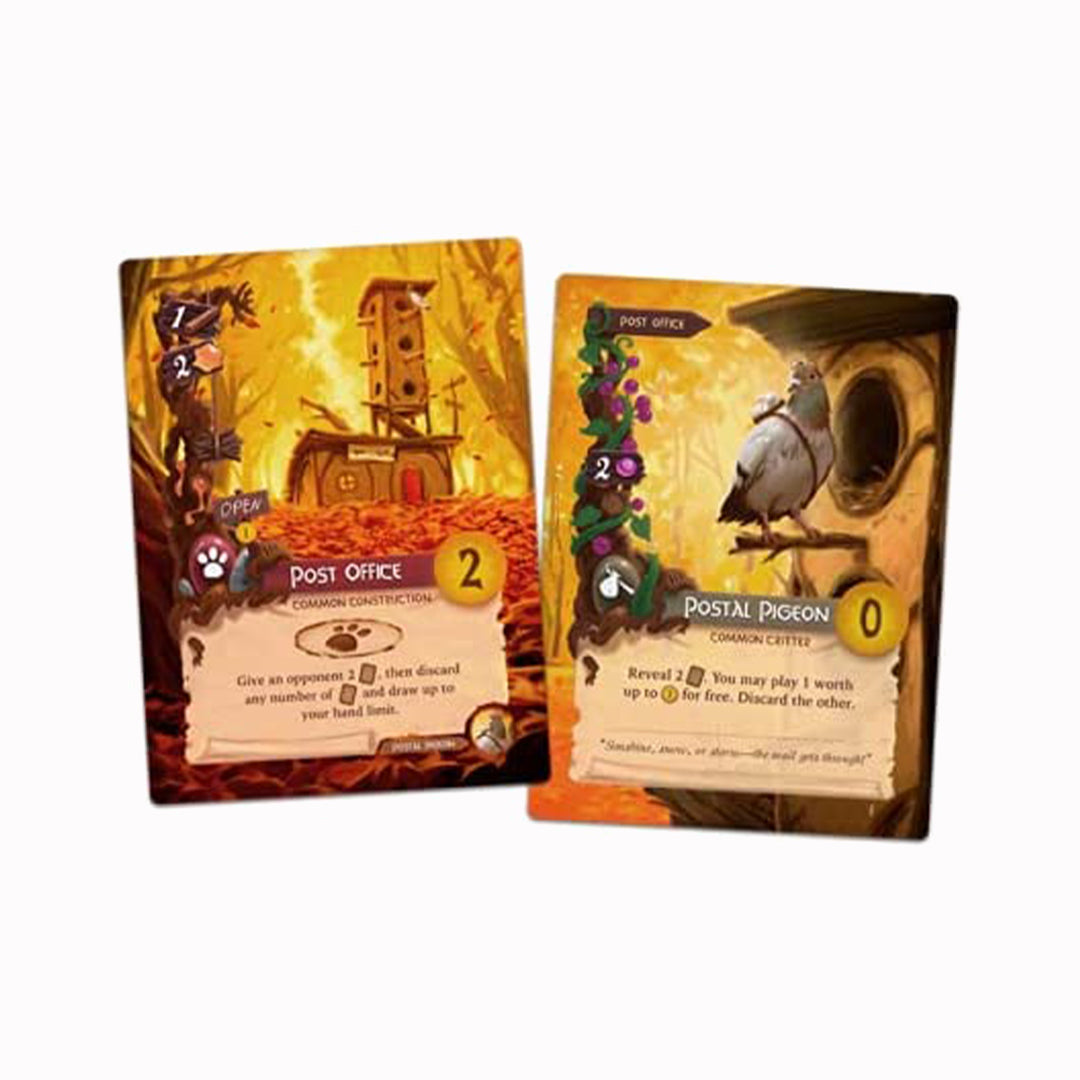
New player: base Everdell. Household that has played and requested more: Newleaf. Five- or six-player host: Bellfaire. Solo-first player: consider Mistwood. Committed fan starting from almost nothing who wants the full classic library: Complete Collection.
Buying expansions separately can cost more if you eventually want all of them, but it preserves portability and lets you reject modules that do not fit your table. The Complete Collection is financially strongest when you want nearly the entire classic line and behaviorally strongest when you can curate it. The cheapest complete box is not the best value if the base box would have been played twice as often.
Value is plays multiplied by delight, not components divided by dollars.
Final verdict: woodland grail or beautiful shelf anchor?
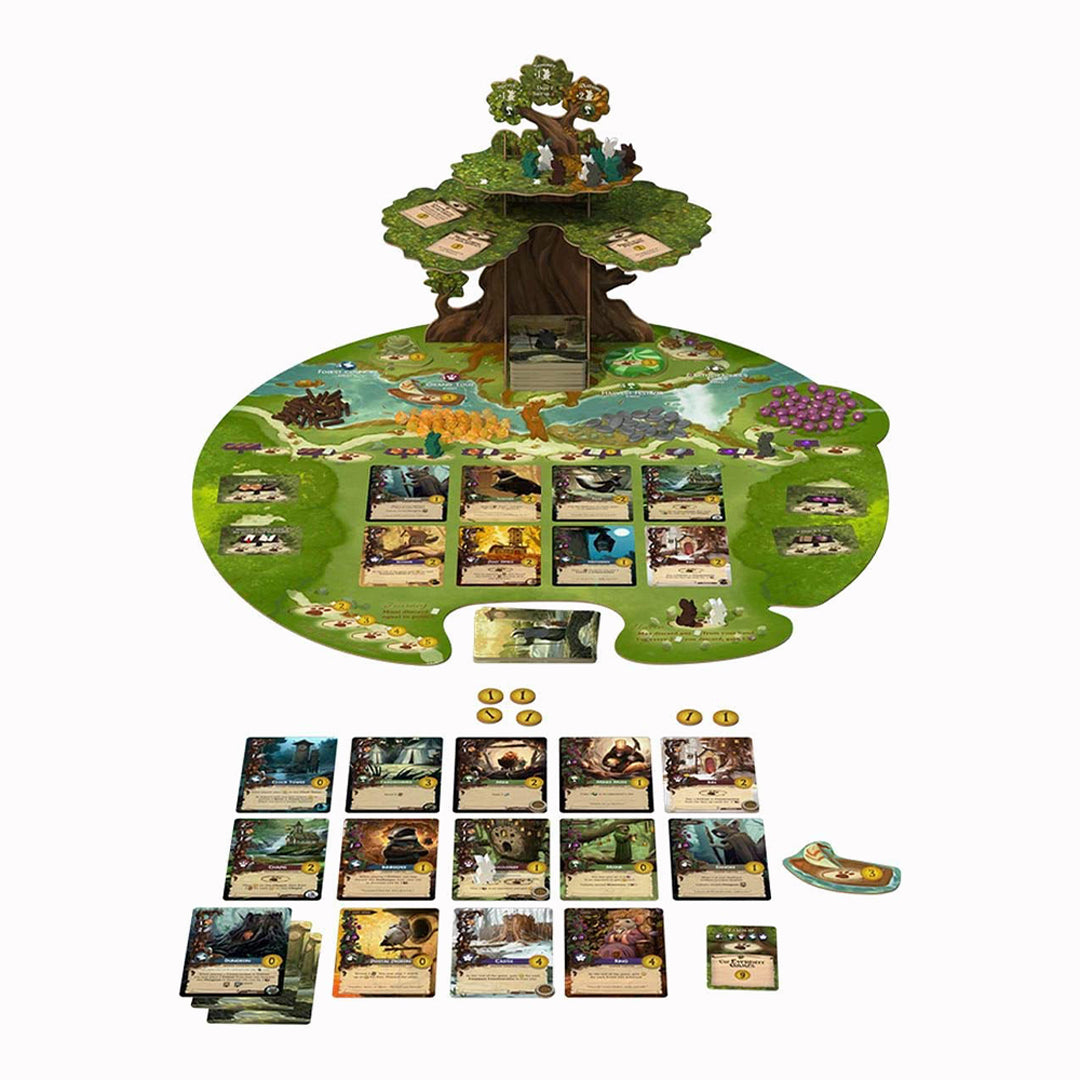
It is a woodland grail for a household with proven Everdell affection, nearby storage, a generous table, and a host who enjoys choosing the right module. The production is lavish, the references are thoughtful, and the range from cozy base play to Newleaf bustle, Spirecrest adventure, and Mistwood solo is substantial.
It is a beautiful shelf anchor when bought as reassurance that no expansion decision will ever be required. The box does not remove decisions; it moves them into setup. My recommendation remains deliberately romantic and practical: let the base game earn the big box. When people start asking which Everdell night you are hosting next, the Complete Collection has found its house.
Bring the whole forest home only after someone keeps asking to return.
The picks
Some links below are affiliate links — as an Amazon Associate, Puzzlewick earns from qualifying purchases, at no extra cost to you. It never changes a pick.
 4 photos
 Everdell Complete Collection
Base Everdell plus Pearlbrook, Spirecrest, Bellfaire, Newleaf, Mistwood, deluxe collector material, consolidated references, and a serious storage system. Magnificent when curated; cumbersome when “complete” becomes the setup plan.
- Most complete Everdell purchase for dedicated fans
- Turns the line into a modular menu of cozy, solo, adventure, and larger-table nights
- Strong gift or grail-shelf presence for collectors
- Too expensive and too large for a blind first buy
- Easy to overwhelm new players if you teach from the whole box
- You may not play every expansion equally
3 photos Everdell Base Game
A complete, beautiful medium-weight worker-placement and tableau game for 1-4 players. The base box has the full Everdell click: workers, card synergies, the shared Meadow, the 15-card city limit, and the tree that makes guests ask questions.
- Complete experience without expansion overhead
- Best teach for new Everdell players
- Strong solo mode and low direct conflict
- Gorgeous table presence
- Card text can still slow true beginners
- Dedicated fans may eventually want more card variety
- The tree takes table space
Everdell Newleaf
Newleaf is the expansion I would add first because it gives Everdell more cards, more movement, and a busier sense of life without making the game feel alien. If base Everdell is your town, Newleaf is the train station bringing in possibility.
- Adds variety without wrecking the base rhythm
- Excellent after three or more base-game plays
- Pairs well with cozy repeat-play groups
- Still more rules and setup than base Everdell
- Not needed until the base deck starts feeling familiar
Everdell Bellfaire
Bellfaire is the utility drawer: player powers, modules, and support for larger-table Everdell nights. It is less flashy than Spirecrest or Pearlbrook, but often more useful.
- Great for groups that want five or six players
- Adds asymmetry without a huge mood shift
- Easy to rotate modules
- Less dramatic than the adventure expansions
- Not essential for mostly 1-4 player tables
Everdell Spirecrest
Spirecrest sends the cozy city into harsher weather and bigger journeys. It is the expansion to buy when the table knows the base game well and wants the forest to push back.
- Adds memorable adventure texture
- Makes repeat plays feel more dramatic
- Great for fans who want Everdell a bit heavier
- Too much for a first expansion at many tables
- Can lengthen and complicate the evening
Everdell Mistwood
Mistwood matters most if you play alone or want Everdell with sharper opposition. Nightweave gives the solo side more presence and makes the forest feel less purely gentle.
- Strongest buy for solo-focused players
- Adds a more active opponent
- Changes the mood without replacing the core game
- Less important for mostly casual multiplayer groups
- Not the first expansion I would teach to newcomers
Everdell Pearlbrook
Pearlbrook adds the river board, pearls, and a more ornamental layer. It is beautiful, but for pure value I buy Newleaf or Bellfaire first unless the table specifically wants the water-side fantasy.
- Gorgeous table mood
- Adds a distinct side-board feel
- Good once your table wants variety more than efficiency
- Often less essential than Newleaf
- Adds overhead that not every group wants
At a glance
| Question | Yumi's pick | Why |
|---|---|---|
| Best first purchase? | Everdell Base Game | Lowest cost, cleanest teach, complete experience. |
| Best first expansion? | Newleaf | Adds variety and life without changing Everdell's heart. |
| Best for solo? | Mistwood after base | Nightweave gives solo play a stronger opponent and mood. |
| Best for five or six players? | Bellfaire | The practical expansion for larger gatherings. |
| Best grail buy? | Complete Collection | Only if Everdell is already a proven house favorite. |
Questions, answered
Is Everdell Complete Collection really $350?
The official US MSRP is $350. That is not the same as the current Amazon price, which changes and has often been lower. Use the direct product link to check the live offer.
Is Everdell Complete Collection worth it for beginners?
Usually no. Beginners should start with the base game, learn the rhythm, and only buy the Complete Collection after the table asks for more Everdell.
What Everdell expansion should I buy first?
For most tables, Newleaf first. It adds cards and a lively station board while preserving the base game's cozy engine-building feel.
Is Everdell good solo?
Yes. The base game includes a solo mode, and Mistwood is the expansion to look at if solo play is a major reason you are buying.
How many cards can you have in your Everdell city?
Your city can contain up to 15 cards. That limit is one of the game's smartest teaching moments because it forces players to curate instead of hoard.
Should I mix all Everdell expansions together?
Not on a first night. Treat expansions as modules. Add one at a time, learn its personality, and rotate based on the mood of the table.
What should I buy if the Complete Collection is out of stock?
Buy the base game first, then Newleaf. If you later want the whole line, compare the total cost of piecemeal expansions against the next live Complete Collection listing.
Yumi's verdict
The Everdell Complete Collection is a worthy grail for a table that already loves Everdell and wants the whole woodland in one premium box. It is not the smartest first purchase. Start with the base game, add Newleaf if the table asks for more, then buy the big box only when completion feels like relief instead of temptation.
Still deciding? Take the Game-Finder - answer seven quick questions and the cabinet will hand you the board game built for your table, with a buy link and your own shareable player talisman.
Research ledger 17 sources · reviewed 2026-07-14
Specifications, rules, current product information, community experience, and contrary evidence were checked against the sources below. Commercial links are kept separate from editorial evidence.
- boardgamegeek.comboardgamegeek.com/boardgame/199792/everdell
- boardgamegeek.comboardgamegeek.com/boardgame/332686/everdell-newleaf
- boardgamegeek.comboardgamegeek.com/boardgame/332687/everdell-mistwood
- boardgamegeek.comboardgamegeek.com/boardgame/289057/everdell-spirecrest
- boardgamegeek.comboardgamegeek.com/boardgame/289056/everdell-bellfaire
- amazon.comamazon.com/dp/B09ZWQTTNR?tag=puzzlewick-20
- amazon.comamazon.com/dp/B096N3L27Q?tag=puzzlewick-20
- store.asmodee.comstore.asmodee.com/products/everdell-complete-collection
- tristancollinsgraphics.comtristancollinsgraphics.com/wp-content/uploads/2025/06/EverdellCore_SellSheet_V7_20250211_TC-Web.pdf
- hobbygames.ruhobbygames.ru/download/rules/everdell-the-complete-collection-the-gilded-book-rules.pdf
- opinionatedgamers.comopinionatedgamers.com/2025/07/18/everdell-the-complete-collection-an-extensive-review
- gamesradar.comgamesradar.com/games/board-games/everdell-review
- reddit.comreddit.com/r/Boardgamedeals/comments/1udkakx/amazon_everdell_complete_collection_230_35_off
- reddit.comreddit.com/r/boardgames/comments/y6v7n2/everdell_full_collection_or_not
- reddit.comreddit.com/r/boardgames/comments/yoqg0q/everdell_complete_collection_has_arrived
- reddit.comreddit.com/r/boardgames/comments/1afrizl/i_bought_everything_for_everdell_and_im_kinda
- reddit.comreddit.com/r/Everdell/comments/1i5xcs7/upgrade_to_complete_collection
Come in, take your shoes off — let me show you something.

Keep exploring
The next smart rabbit holes.
❦ Universe HubEverdell: the whole buying pathEverdell is warm woodland theater wrapped around a sharp card-engine puzzle. Yumi's universe keeps the invitation intact while...✦ Topic PathBoard Game Buying Guides: compare the whole shelfStart with the decision, not the shelf. These guides compare the games, editions, expansions, player counts, and costs people...ComparisonWingspan vs Ark Nova vs Everdell: Which Engine-Builder Belongs on Your Shelf?Three marquee engine-builders, three different students of the same lineage. The Sensei traces the bloodline — weight, teach time, table...