Tainted Grail: Kings of Ruin — Awaken Realms' Dark Arthurian Campaign at Full Production Lavishness
A stand-alone, story-soaked heavyweight that represents Awaken Realms at the peak of its craft — and the rare campaign box where the build quality is the story.


AI-assisted research and drafting in Margo’s voice · reviewed by Robert Pruitt · how this guide was made
Last editorial refresh: 2026-06-24 Gold-standard QA: 2026-07-17 8 sources reviewed Affiliate links checked during gold-standard pass

The short answer
Tainted Grail: Kings of Ruin is a splurge-worthy grail because it is Awaken Realms' most refined campaign box — a fully stand-alone, 30–50+ hour dark-Arthurian saga with revamped Wyrdness exploration and a force-and-diplomacy puzzle-card combat system, all wrapped in production lavishness that justifies its heavyweight price. MSRP is $139.99; real street prices run roughly $100–$140, and stock is intermittent, so verify the link before you buy.
Decision map
Choose in thirty seconds
The immersive-story collector ready to splurge on a stand-alone, production-lavish dark-Arthurian campaign
I do not use the word "grail" for a box just because it is expensive. I use it for a box that earns reverence — where a studio's whole lineage of craft has been poured into one object and you can feel the years of refinement in your hands. Kings of Ruin is that box. Awaken Realms spent roughly three and a half years sharpening this entry, and it shows in every waystone token and every page of original, atmosphere-drenched writing. This is the studio behind Nemesis and ISS Vanguard arriving at its most polished, most confident work, and the remarkable thing is that you do not need a single prior Tainted Grail game to walk through its door. Save up for it the way you would save for a piece you intend to keep — because that is exactly what it is.
Start here, then go deeper
You are in the right cabinet.
 ✦ Universe HubISS Vanguard: the whole buying pathISS Vanguard is Awaken Realms at their most ambitious: a sci-fi exploration campaign where you crew a ship, land on hostile worlds,...
 ♛ Topic PathGrail Board Games: compare the whole shelfA grail earns its space only when the experience survives the price, setup, storage, and group commitment. These are expensive-game...
 Deep DiveISS Vanguard Review: Is This Massive Sci-Fi Campaign Worth It?ISS Vanguard's ship phase, planet missions, dice-building exploration, campaign pacing, solo fit, expansion path, and the players who...
Why is Kings of Ruin considered Awaken Realms' most polished campaign box?

When I evaluate a grail, I look at lineage first — what came before, and whether this object represents the studio reaching its peak. Kings of Ruin sits at the top of that arc. Awaken Realms built it on roughly three and a half years of iteration after Fall of Avalon, and that patience is the whole point: this is not a sequel rushed out to capitalize on a hit, it is a studio returning to its own world to do it better.
The dark-Arthurian setting is rendered with a level of art direction and physical craft that few publishers attempt. The same team responsible for Nemesis and ISS Vanguard brought that production discipline here — the components, the miniatures, the layout of the campaign materials all carry that signature heft.
- Refinement over reinvention: the Wyrdness travel loop and the encounter system were both reworked from the earlier game, not bolted on.
- Atmosphere as a deliverable: reviewers single out the original writing as the standout, calling the world-building among the best in tabletop fantasy.
- Table presence: this is a heavyweight box that looks and feels like a centerpiece, not a filler.
For the collector who values a studio's most-refined work, that pedigree is the case. The build quality is the story.
Can you start here without ever playing Fall of Avalon?
Yes — and this is the single most important thing a newcomer needs to hear. Kings of Ruin is stand-alone by design. Awaken Realms describes it on its own site as "a new stand-alone game" that offers "a perfect self-contained entry into the saga for new players" — you do not need the original Tainted Grail: The Fall of Avalon to play it. That is not a marketing softening; it is a deliberate architectural decision, and it makes Kings of Ruin the recommended entry point into the entire saga.
I flag this because the lineage can intimidate. People see "Tainted Grail" and assume a hundred-hour backlog and a shelf of expansions standing between them and the good part. Not here. You can make this your first Tainted Grail experience and lose nothing — in fact, you gain the most refined version of the world.
- One clean buying note from me: do not accidentally buy the predecessor. Fall of Avalon is a separate, earlier box. Kings of Ruin is the newer standalone — confirm the title and the cover read "Kings of Ruin" before you check out.
- No homework required: the campaign teaches you its own systems as you travel.
For a grail purchase, that accessibility is a gift. You are buying the destination, not a season pass.

How does the force-and-diplomacy puzzle-card combat actually work?
This is where Kings of Ruin separates itself from the dice-chuckers, and it is the system I most want story-collectors to understand before they buy. Encounters are resolved through what Awaken Realms itself calls a unique puzzle-card system — you are not rolling and hoping, you are solving. Combat resolves by building and stacking cards to accumulate enough value to overcome an opponent; diplomacy runs on the same card-driven logic but routes you around the fight entirely. (Mechanically, combat and diplomacy each draw on their own deck of cards, so the two paths feel genuinely distinct.)
The crucial wrinkle — and the insider wisdom every owner repeats — is that an encounter is a force-AND-diplomacy choice, not pure violence. Many encounters can be talked through rather than fought. The satisfaction lives in weighing those two paths and committing.
- Decide before you commit: ask whether you can diplomance your way past an encounter before you draw steel; the wrong choice can cost you a long, grinding fight.
- Honest caveat: some reviewers find later-chapter combat slow as monster health climbs — pure strategy purists should know it can get fiddly deep in.
- The payoff: when a tense encounter resolves because you read it correctly, it feels earned in a way dice rarely deliver.
That puzzle-versus-puzzle tension is, to me, the mechanical heart of the box.
What is the Wyrdness travel system and why does it matter?
The Wyrdness is the world's defining environmental mechanic, and in Kings of Ruin it was revamped into a tighter, more deliberate exploration loop. Think of it as the connective tissue of the whole campaign: the land itself is corrupted and shifting, and how you move through it is its own resource puzzle layered on top of the story.
Practically, you manage waystones and routes — securing safe passage, lighting your way through corrupted ground, deciding which paths to open and when. (Western Avalon does not use the giant menhirs of the earlier game; Awaken Realms replaced them with waystones, which stay lit without a fiddly time dial and don't block your location cards — one of the loop's headline improvements.) This is not flavor. It is a system you can stumble in, and the most common early misstep owners describe is exactly this:
- Do not rush exploration. Pushing deep before you have secured your travel network — your waystones and routes — is the classic early-campaign error.
- Treat it as a puzzle, not a map. Managing the Wyrdness loop well is its own quiet strategic layer, and respecting it keeps the campaign humming.
- It feeds the atmosphere: moving through corrupted, fog-bound land is where the world's dread does its work on you.
For an immersive-story collector, the Wyrdness is the reason the world feels alive rather than like a series of disconnected scenes. It is the spine the narrative hangs from.

How long is the campaign — and what group does it really need?
Let me be honest about the commitment, because a grail should be bought with clear eyes. Owners describe a campaign arc in the range of 30–50+ hours, with individual chapters running a couple of hours and the fullest experiences stretching well beyond that. This is a saga, not an evening.
That length shapes what kind of group you need. This is not a box for one-shot game nights or a rotating cast of whoever shows up. It rewards a stable group — the same players, returning across weeks or months, building familiarity with their heroes and the world.
- Pace yourself deliberately: owners specifically advise treating it as a long campaign, not a sprint. Burning through chapters dilutes the atmosphere that makes it worth playing.
- Solo and small-group friendly: it plays 1–4, so a dedicated solo player or a committed pair can absolutely carry the whole arc.
- Continuity is the asset: hero development and unfolding story both pay off most when the same people see it through.
If you have a reliable table — or you are a patient solo storyteller — this length is a feature, not a warning. The hours are the value.
Is the production worth the heavyweight-box price?
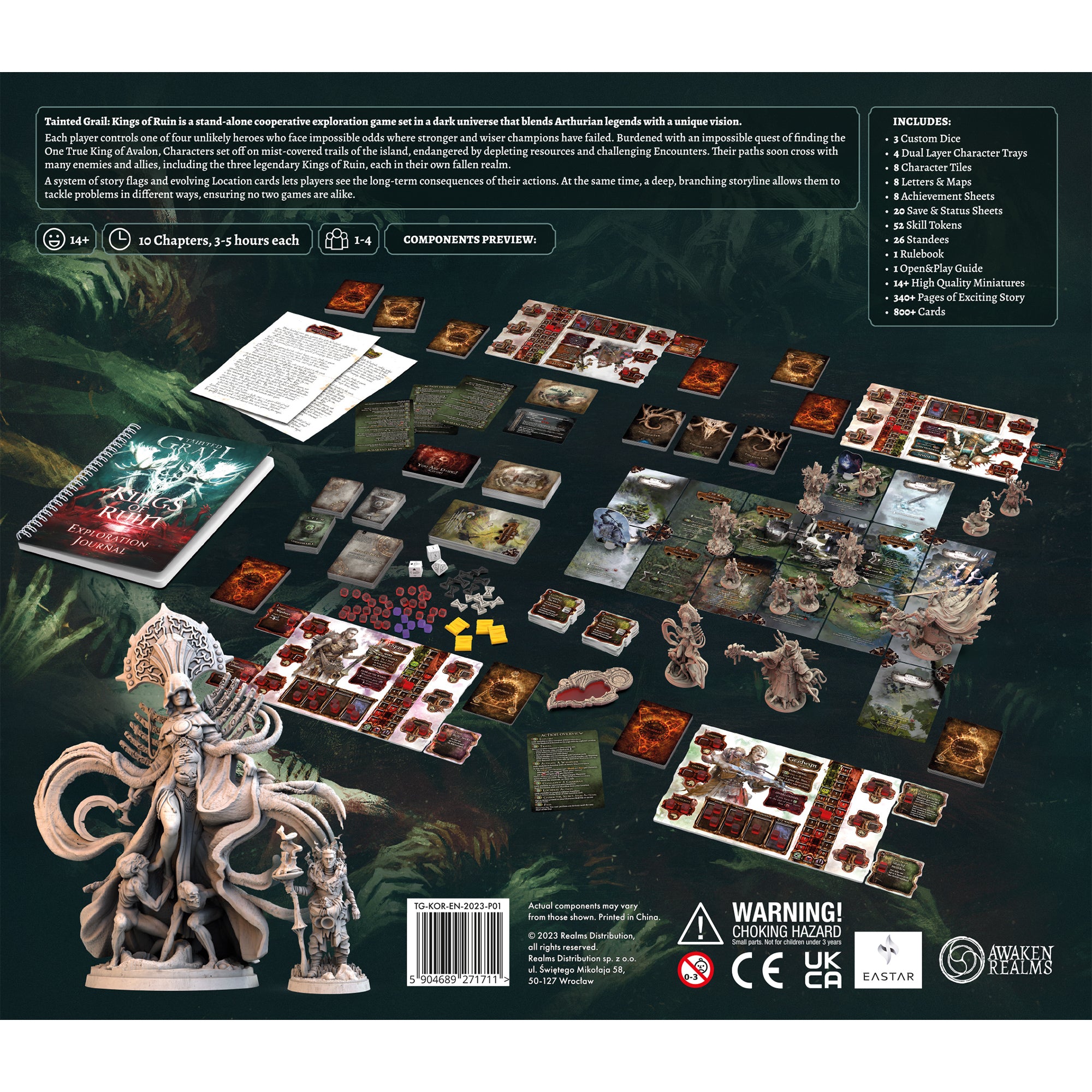
Here is the verified money picture, framed honestly. The MSRP is $139.99. Real, buyable street prices skew lower and wider — roughly $100–$140 depending on retailer and the day. At time of writing I found the official Asmodee store listing it on sale at $97.99 (though it was showing sold out when I checked), and confirmed it live and in stock around $110–$112 at specialty shops like Game Nerdz (about $112).
Stock, though, is genuinely uneven. Some retailers show out-of-stock while others have it live, and that can flip week to week. Prices and stock move — check the link before you commit. The sub-$100 Asmodee price is a real floor when it's available, but it sells out; a stable group should treat the buy link as a starting point and shop the moment, not the memory.
- What you are paying for: a heavyweight box with miniatures, lavish art, and original writing that reviewers rate as the standout.
- Why I call it grail-priced, not overpriced: the production lavishness and the 30–50+ hour payoff are the justification — this is craft you keep, not content you consume and trade.
For the splurge collector, the value math is simple: cost-per-hour and cost-per-craft both land firmly in grail territory.

How do heroes grow across 30–50 hours of story?
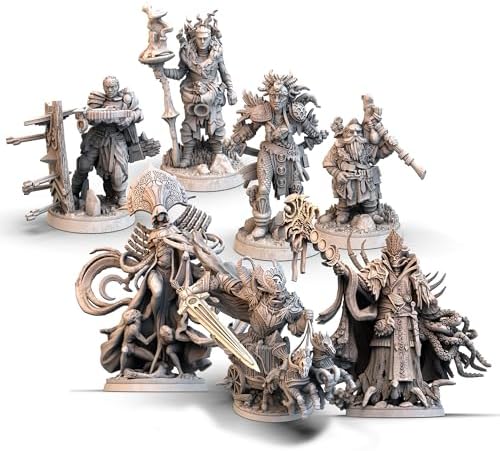
A campaign this long lives or dies on whether your character feels like yours by the end, and Kings of Ruin invests heavily here. Heroes develop across the arc through passive skills, items, and cards — your deck and your capabilities evolve as the story does, so the version of your hero in the final chapters is meaningfully transformed from the one who set out.
This is why I keep returning to the "stable group" point. Hero development is a slow burn, and its satisfaction compounds:
- Passive skills reshape how you approach the puzzle-card encounters, opening new lines of force or diplomacy.
- Items and cards accumulate into a kit that reflects the choices you made and the paths you took through the Wyrdness.
- Narrative weight: because the writing is the standout, your hero's growth is wrapped in story beats rather than a bare loot grind — owners specifically say the narrative, not the loot, is what makes it worth the splurge.
That marriage of mechanical progression and authored story is the immersive-RPG dream in a box. You are not optimizing a spreadsheet; you are watching a character become someone over the course of a real, long, beautifully written journey.
Should story-first or strategy-first players buy this?
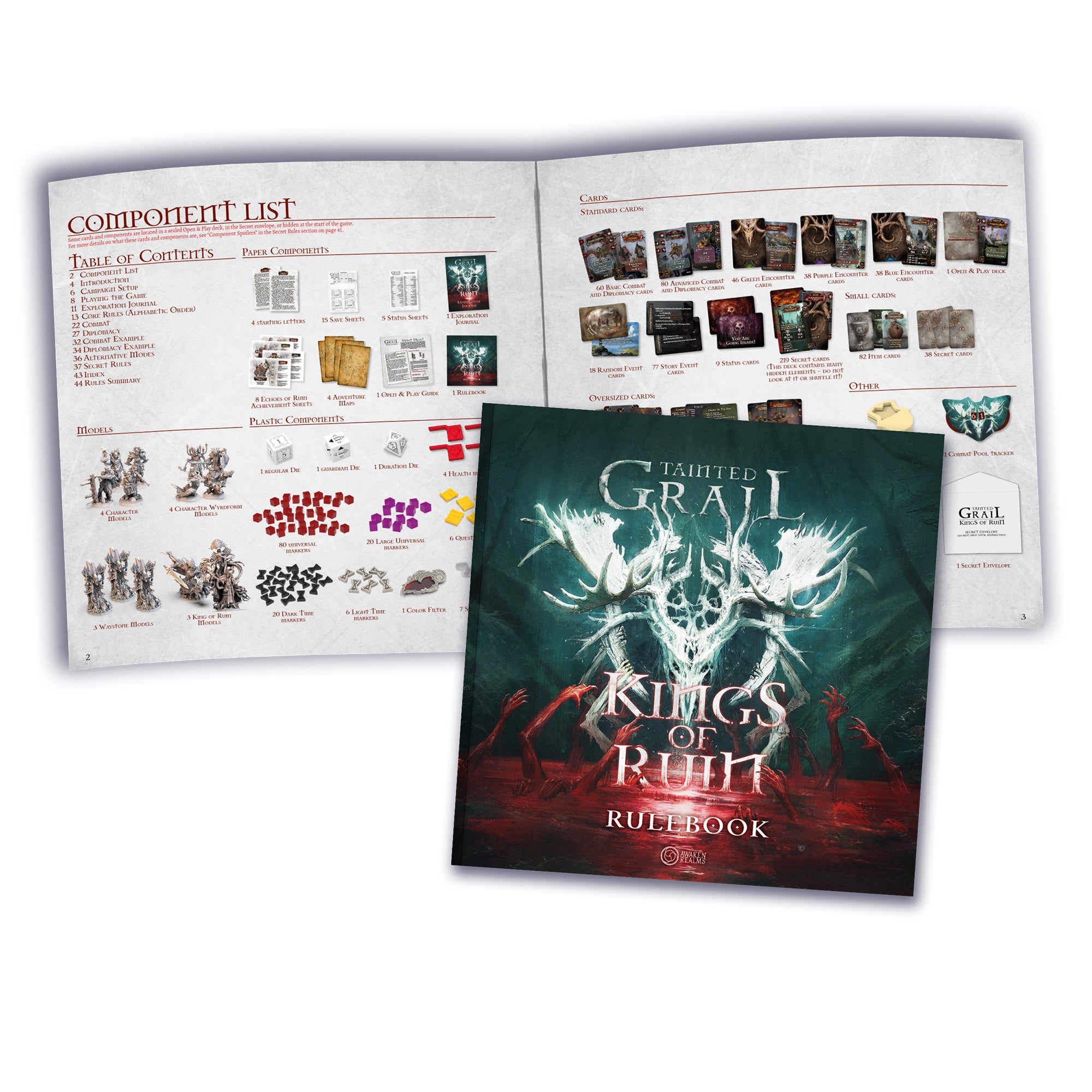
This is the honest sorting question, and my answer leans clearly one way. Kings of Ruin is, first and foremost, a story-first grail. Reviewers are nearly unanimous that the original atmospheric writing is the standout, and the whole design — the Wyrdness loop, the diplomacy-or-force choices, the long hero arc — exists to serve immersion. If you are buying for narrative payoff, this is close to a perfect splurge.
Strategy-first players should buy with eyes open. There is real decision space here — the puzzle-card combat and the travel resource management both reward smart play — but it is not a tight, optimization-driven engine. Some find later-chapter combat slow and fiddly as enemy health climbs.
- Buy it if: you treasure world-building, atmosphere, and a long authored campaign you and a stable group can live inside.
- Think twice if: you want crunchy, fast, replayable strategy above all else — the length and the narrative pacing may frustrate you.
- The Margo verdict: as a piece of craft and a story-machine, it is a true grail. Lean into the story beats and let the world do its work.
For the immersive-story collector, this is the splurge to save for.
The picks
Some links below are affiliate links — as an Amazon Associate, Puzzlewick earns from qualifying purchases, at no extra cost to you. It never changes a pick.
 9 photos
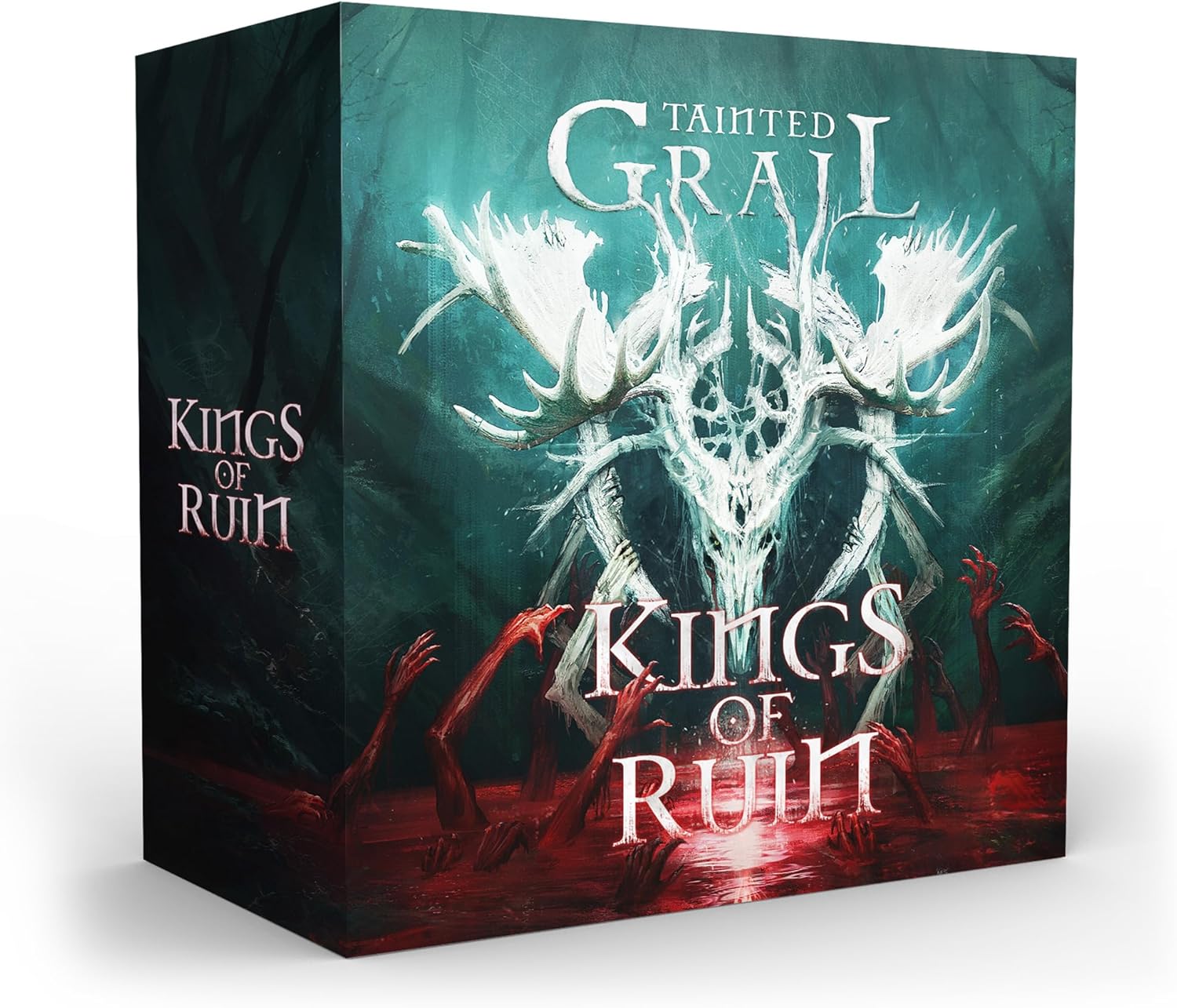
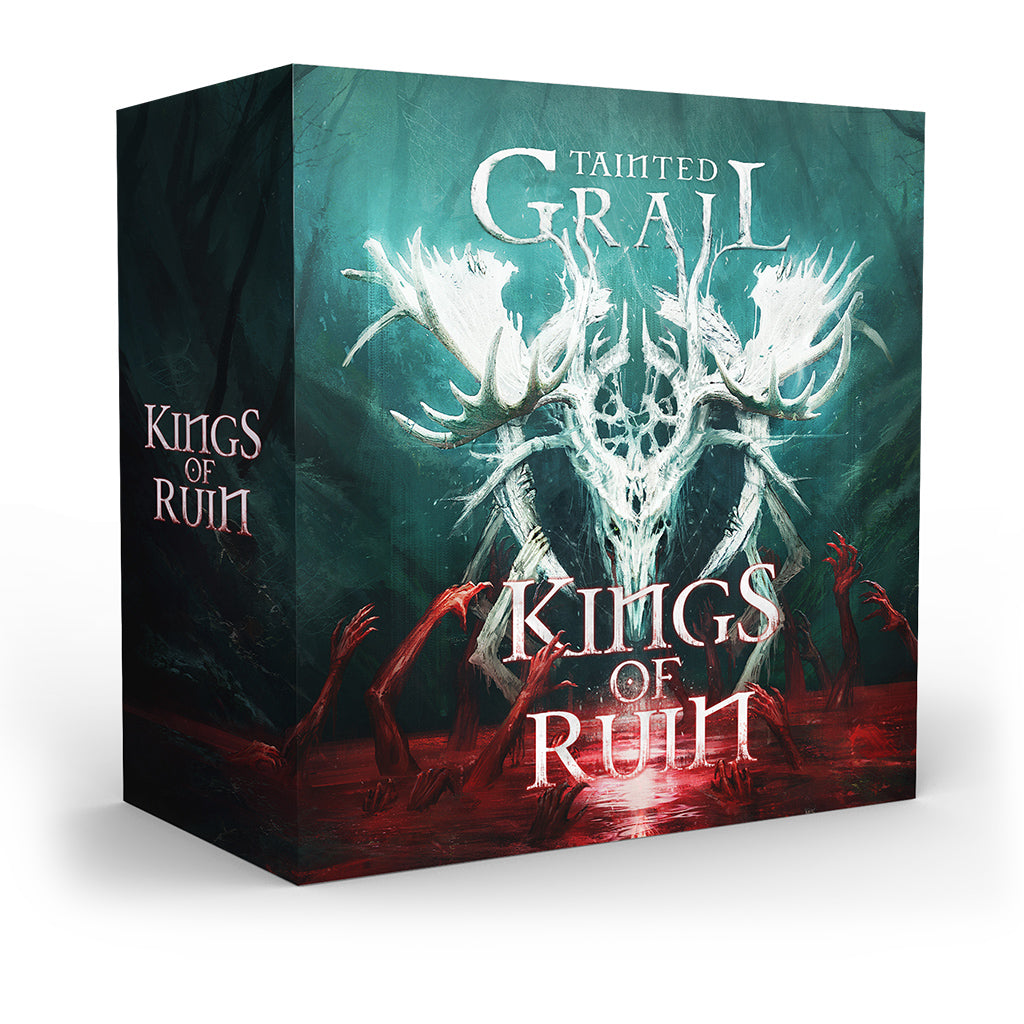
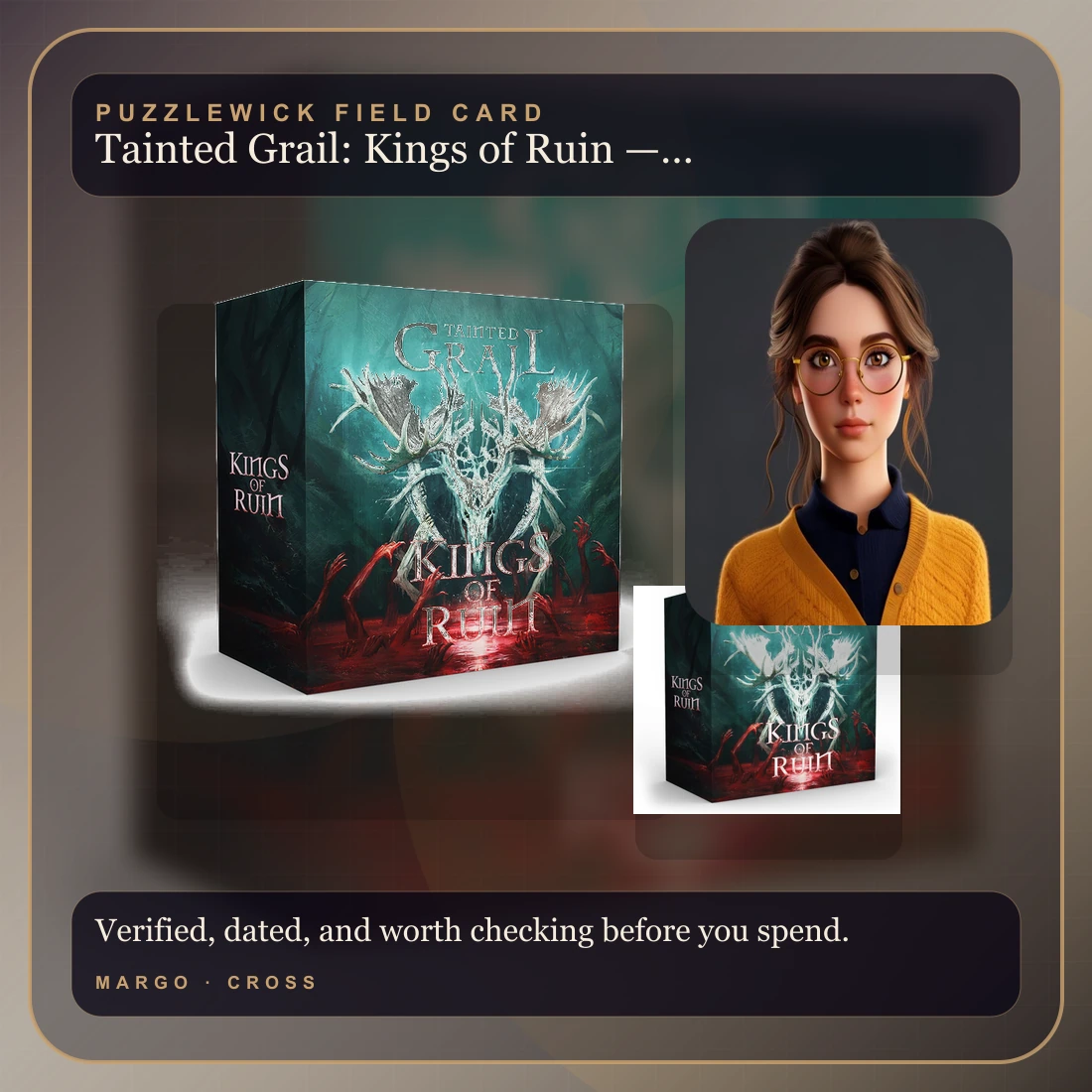
 Tainted Grail: Kings of Ruin — Core Box
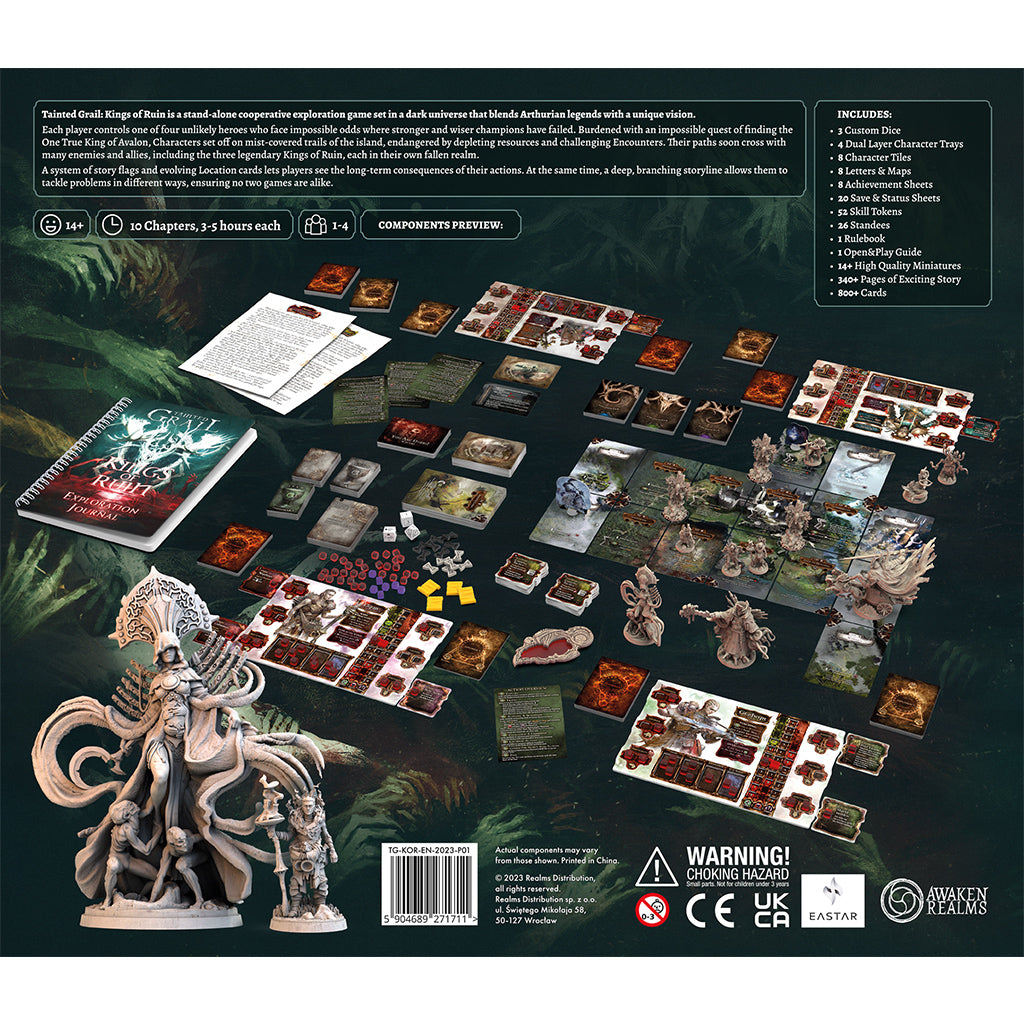
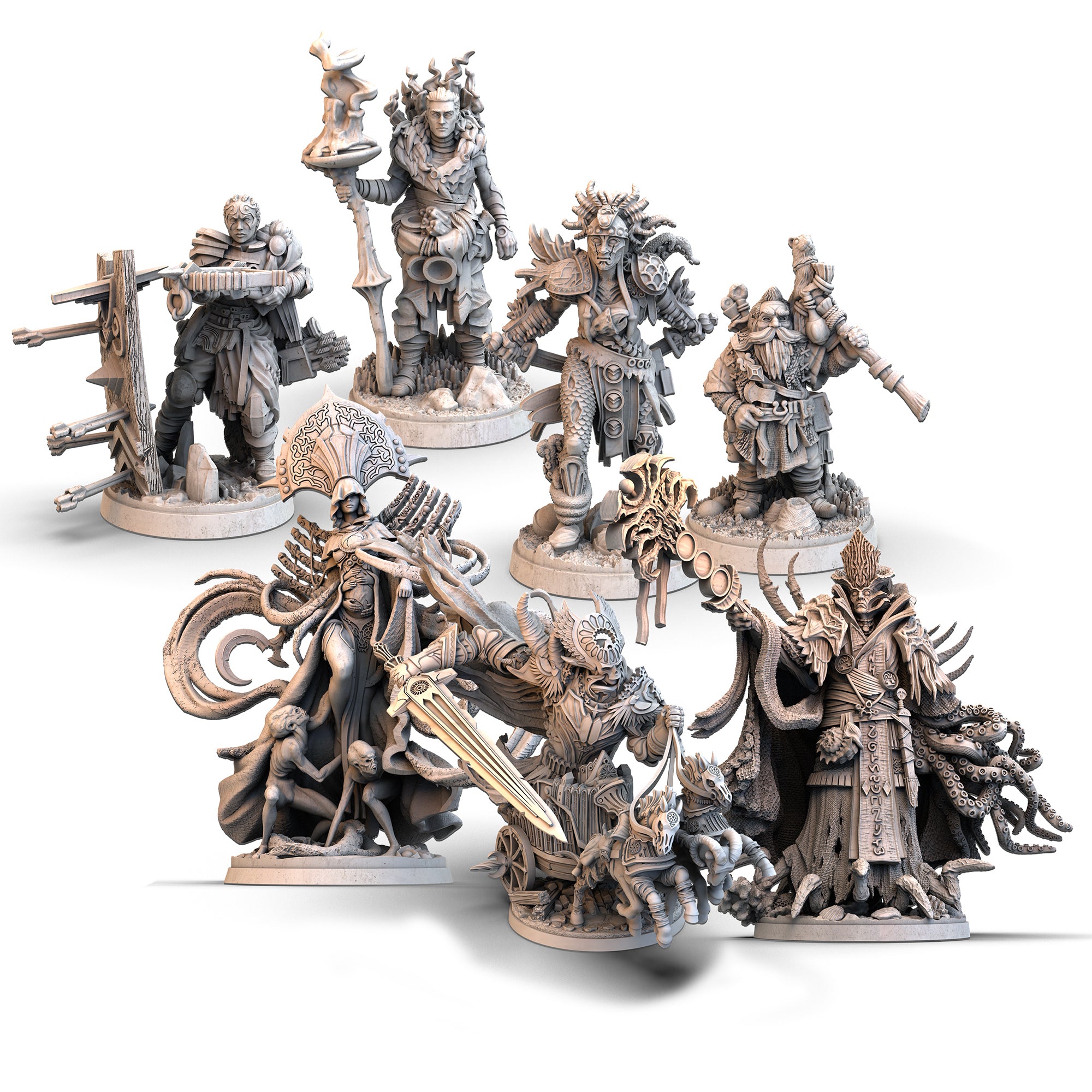
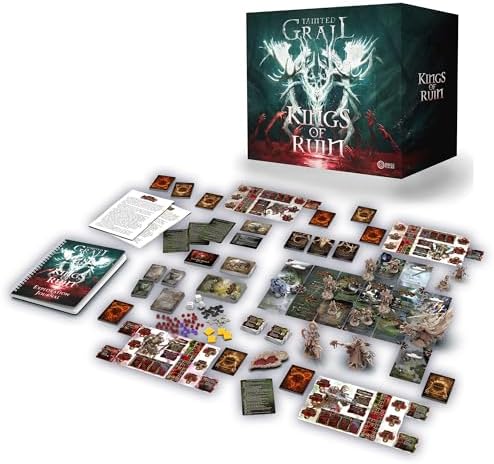
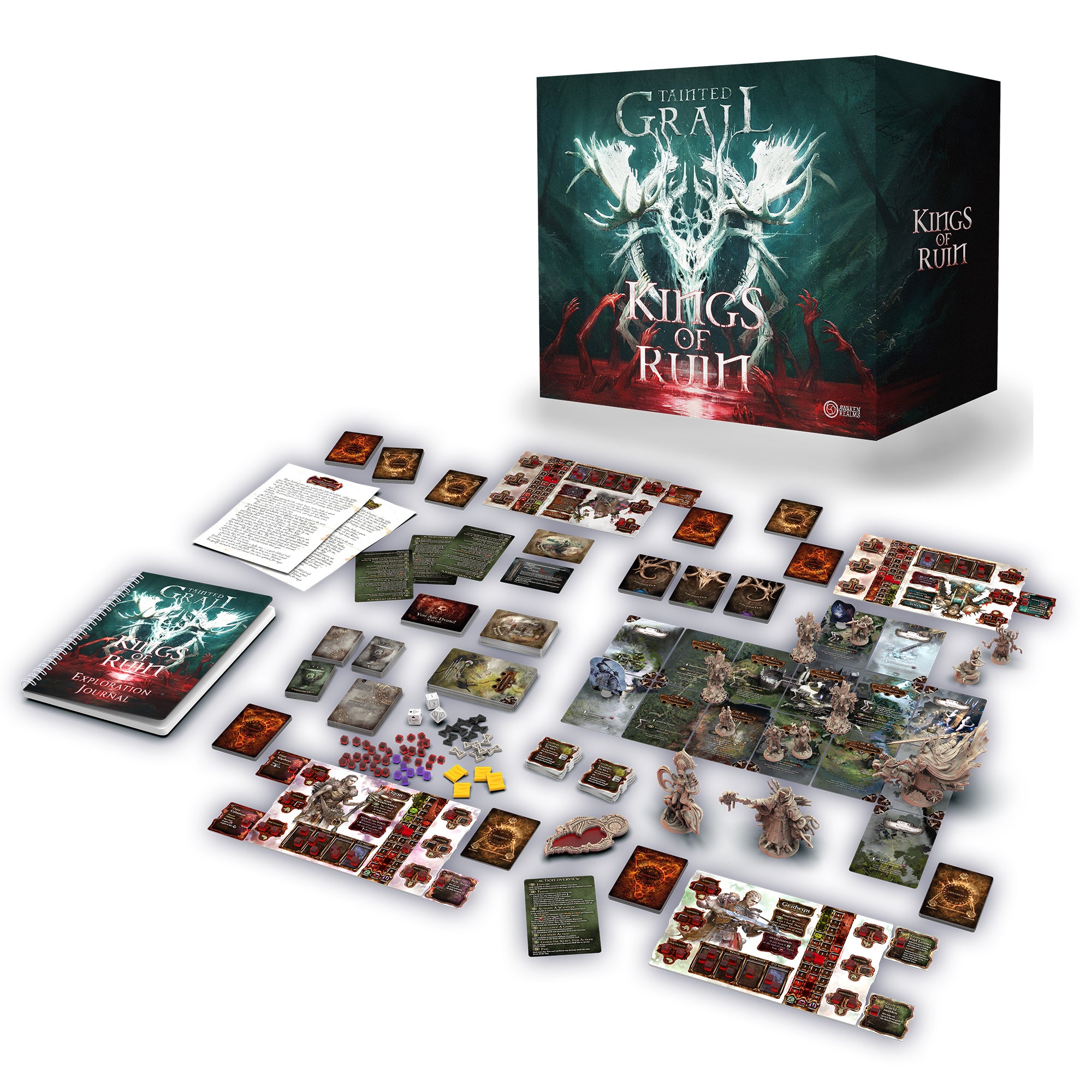
<p>This is the grail itself — the complete, stand-alone Kings of Ruin experience in one heavyweight box. The Core Box (1–4 players, ages 14+) carries the full 30–50+ hour campaign, the revamped Wyrdness travel system with its waystones, the force-and-diplomacy puzzle-card combat, miniatures, and the original atmospheric writing reviewers single out as the standout. You need no prior Tainted Grail game to play it; Awaken Realms calls it a self-contained entry, making it the recommended entry point into the saga. MSRP is $139.99, but verified street prices run roughly $100–$140 — at time of writing the official Asmodee store listed it on sale at $97.99 (showing sold out when I checked), and Game Nerdz had it live and in stock around $112. Stock is intermittent and moves week to week, so treat any link as a starting point and shop the moment.</p>
- Fully stand-alone — no prior Tainted Grail required, making it the ideal entry point
- Original atmospheric writing rated the standout by reviewers
- Revamped Wyrdness exploration plus a genuinely clever force-or-diplomacy puzzle-card combat system
- Deep hero development (passive skills, items, cards) across a 30–50+ hour arc
- Production lavishness and table presence befitting a true grail
- Heavyweight commitment — rewards a stable group or a patient solo player, not one-shot nights
- Later-chapter combat can feel slow and fiddly as enemy health climbs
- Stock is uneven across retailers and pricing swings; requires a live check before buying
At a glance
| feature | kings of ruin | fall of avalon |
|---|---|---|
| Standalone? | Yes — no prior game required | Yes — separate earlier title |
| Player count | 1–4 (solo-friendly) | 1–4 (solo-friendly) |
| Campaign length | ~30–50+ hours | Very long, often longer |
| Combat system | Force-and-diplomacy puzzle-card | Card-based, earlier iteration |
| Travel mechanic | Waystones (revamped loop) | Menhirs (original loop) |
| Refinement | Most polished entry (~3.5 yrs) | Original, less refined loop |
| MSRP | $139.99 (street ~$100–$140) | Varies by edition |
Questions, answered
Do I need to play Tainted Grail: The Fall of Avalon first?
No. Kings of Ruin is stand-alone by design — Awaken Realms describes it on its own site as a new stand-alone game and a self-contained entry into the saga, so you do not need the original Fall of Avalon. It is in fact the recommended entry point, so you can make it your first Tainted Grail and lose nothing.
How long is the full campaign?
Owners describe an arc of roughly 30–50+ hours, with individual chapters running a couple of hours each and the fullest playthroughs stretching well beyond. It is a long saga that rewards a stable group or a patient solo player over one-shot sessions.
How does combat work — is it dice-based?
No, it is a puzzle-card system (Awaken Realms' own term). You resolve encounters by building and stacking cards to overcome an opponent, with combat and diplomacy drawing on separate decks, and crucially you can often choose diplomacy instead of force. The satisfaction is in solving each encounter and deciding whether to talk your way through or fight before you commit.
What does it actually cost, and is it in stock?
MSRP is $139.99, but real street prices run about $100–$140. At time of writing the official Asmodee store listed it on sale near $98 (though it was showing sold out), while Game Nerdz had it live and in stock around $112. Stock is intermittent and flips week to week, so check the buy link live before purchasing.
Is this better for story-first or strategy-first players?
Story-first, clearly. Reviewers single out the original atmospheric writing as the standout, and the whole design serves immersion. Strategy players will find real decision space but should know it is not a tight optimization engine and that later-chapter combat can feel slow.
How many players, and is it solo-friendly?
It plays 1–4 players, ages 14+. A dedicated solo player or a committed pair can carry the entire campaign, and the long hero-development arc actually rewards continuity, so the same player or group seeing it through is the ideal way to experience it.
Margo's verdict
A true grail for the immersive-story collector. Kings of Ruin is Awaken Realms at the peak of its craft — stand-alone, lavishly produced, and built around a 30–50+ hour authored campaign where the writing, the Wyrdness exploration (managed through its revamped waystones), and the force-or-diplomacy puzzle-card combat all serve immersion over grind. Buy it if you treasure world-building and have a stable group (or solo patience); think twice if you want fast, crunchy, replayable strategy. MSRP $139.99, real street ~$100–$140 with intermittent stock — verify the link live before you commit, and confirm the box reads "Kings of Ruin," not the earlier "Fall of Avalon." Save up for it the way you'd save for a keeper. It is exactly that.
Research ledger 8 sources · reviewed 2026-07-17
Specifications, rules, current product information, community experience, and contrary evidence were checked against the sources below. Commercial links are kept separate from editorial evidence.
- awakenrealms.comawakenrealms.com/games/awaken-realms/tainted-grail-kor
- gamefound.comgamefound.com/en/projects/awaken-realms/tainted-grail-kings-of-ruin/updates/2
- store.asmodee.comstore.asmodee.com/products/tainted-grail-kings-of-ruin-corebox
- gamenerdz.comgamenerdz.com/tainted-grail-kings-of-ruin
- boardgameprices.comboardgameprices.com/item/show/45241/tainted-grail-kings-of-ruin
- shelfside.coshelfside.co/reviews-2022/korprototype-review
- boardgamestories.comboardgamestories.com/bgs-reviews/tainted-grail-kings-of-ruin-opinions-after-my-first-tainted-grail-experience
- kingdomdeath.myshopify.comkingdomdeath.myshopify.com/products/kingdom-death-monster-1-5
Let me check that before we say it.


Keep exploring
The next smart rabbit holes.
✦ Universe HubISS Vanguard: the whole buying pathISS Vanguard is Awaken Realms at their most ambitious: a sci-fi exploration campaign where you crew a ship, land on hostile worlds,...♛ Topic PathGrail Board Games: compare the whole shelfA grail earns its space only when the experience survives the price, setup, storage, and group commitment. These are expensive-game...Deep DiveISS Vanguard Review: Is This Massive Sci-Fi Campaign Worth It?ISS Vanguard's ship phase, planet missions, dice-building exploration, campaign pacing, solo fit, expansion path, and the players who...