Ark Nova Review: Is the 400-Card Zoo Worth Your Table?
Ark Nova's action track, learning curve, game length, solo fit, Marine Worlds expansion, and the exact table that will love — or regret — this heavyweight zoo game.

Written and reviewed by Robert Pruitt · how this guide was made
Last editorial refresh: 2026-06-15 Gold-standard QA: 2026-07-17 12 sources reviewed Affiliate links checked during gold-standard pass

The short answer
Ark Nova is a heavy euro (BGG weight 3.79, and the publisher places it among its most complex games) in which you build a modern zoo and support conservation through a large deck of animal, sponsor, and project cards. Its five action cards occupy strength positions from one to five; using one sends it back to position one, so every turn asks whether to act now or let a stronger move charge. It is excellent, long (often 90–150 minutes), and much more rewarding after repeat play than on a cold first session. Buy the base game first; add Marine Worlds only after the action track and association board feel natural.
Decision map
Choose in thirty seconds
The player who wants ONE definitive heavyweight zoo-building euro — deep, gorgeous, and endlessly replayable, with a top-tier solo mode.
Owners who already love the base game and want fresh constraints — aquatic animals plus a draftable, customizable action row.
Anyone who plays Ark Nova often and is tired of long setup and teardown — and who doesn't mind a little glue-up assembly.
Ark Nova's reputation arrives before its rules explanation: a high BoardGameGeek rank, a vast card pool, and a table presence that makes a first setup feel like opening a small zoological institute. Those signals explain the interest, but they do not answer the useful question: will this particular table enjoy the action-track puzzle long enough to justify the learning curve and playing time? This review separates acclaim from fit. It covers what is actually in the box, how the action engine works, why first games stall, who should buy it, who should choose something lighter, and when the Marine Worlds expansion becomes worth adding. No fictional test story stands in for evidence; the verdict comes from the rules, documented play patterns, independent reviews, and Robert's editorial judgment.
Start here, then go deeper
You are in the right cabinet.
 ✦ Topic PathBoard Game Buying Guides: compare the whole shelfStart with the decision, not the shelf. These guides compare the games, editions, expansions, player counts, and costs people...
 Deep DiveStar Wars: Rebellion Review — The Hidden-Base Epic That Earned a Permanent ShelfA 153-mini galactic war in a box where the Empire is a hammer hunting a needle, and the Rebels win by surviving. I almost left it in the...
 ComparisonWingspan vs Ark Nova vs Everdell: Which Engine-Builder Belongs on Your Shelf?Three marquee engine-builders, three different students of the same lineage. The Sensei traces the bloodline — weight, teach time, table...
What is Ark Nova, and what's the card-and-action hook?
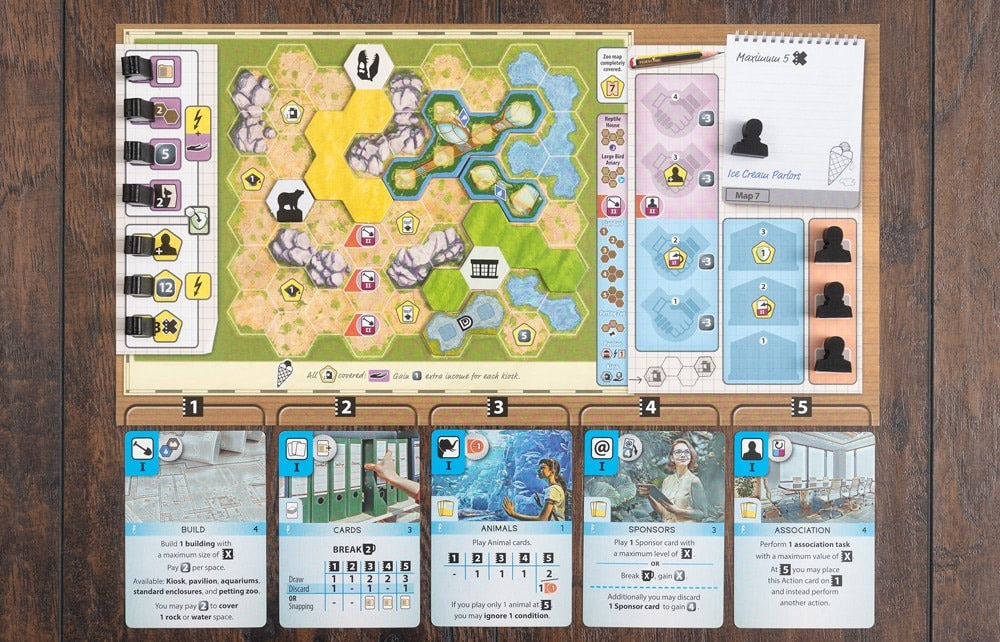
Ark Nova, designed by Mathias Wigge and first published by Germany's Feuerland Spiele in 2021 (Capstone Games brought the English edition in 2022), puts you in the director's chair of a modern scientific zoo. Your job is two-pronged and the whole game lives in the tension between those prongs: you build attractions and house exotic animals to raise your Appeal (the red track — think gate revenue, prestige, the crowd-pleasing side), and you fund and run real conservation work to climb the Conservation track (the green one — the mission, the legacy). The game ends when those two markers cross on a shared scale, and your final score is how far past the crossing point you got. So it is, structurally, a race — but a slow, deliberate, build-your-own-thing race where you barely touch your opponents. The genius — the thing that makes Ark Nova feel like nothing else in its weight class — is the action card mechanism. You don't have a menu of actions you can take freely. You hold five action cards (Cards, Build, Animals, Sponsors, Association), and they sit in a row numbered one through five. The slot a card occupies determines how strong that action is right now: a Build in slot 5 lets you put down a huge, expensive enclosure; a Build in slot 1 barely lets you place a kiosk. When you play an action card, you resolve it at its current strength, then slide it to the far-left slot 1 — and every other card bumps up one position, getting stronger. So every single turn you are asking the same delicious question: do I fire this strong action now while it's charged, or do I take the weak version to keep my power cards ratcheting up? That one elegant idea is the engine the entire 150-minute game runs on, and it never stops being interesting.
Every turn asks the same delicious question: fire the strong action now, or take the weak one to keep your power cards charging?
What nearly kept it off my shelf?

Let me be candid, because the prime-directive at Puzzlewick is that I tell you what I actually felt, not what the box wants me to feel. Three things nearly sent Ark Nova back. First: the length. Ninety minutes is the optimistic floor; a thoughtful four-player game with a couple of new players is closer to three hours, and a chunk of critics agree the back half sags. One reviewer I trust put it perfectly — the endgame can feel like 'I'm back in school assembly, counting down the minutes until lunch.' That's real. The engine-building front half is electric; the scoring grind at the end is the price you pay. Second: the card luck. There's a credible critical case — Erik Twice's two-star review is the sharpest version — that the game 'bakes a hard economic snowball right into it,' and that if you 'don't draw the right one, we are out of luck,' sometimes losing a whole turn just trying to fix a hand that won't cooperate. I've felt that sting. A bad opening draw in Ark Nova is a genuine handicap, not a minor inconvenience. Third, and most personal: it is a lot of game to teach and to table. Two hundred-plus unique cards, dense iconography, a spatial puzzle, two tracks, sponsor break tokens — the rules explanation alone scares people off. So why did it stay? Because every one of those costs is the flip side of a strength. The length buys a genuine arc — your zoo grows from an empty grid to a humming machine and you feel every stage of it. The card luck is the same card variety that means I have never played the same game twice across dozens of plays. And the density resolves: after two or three games the iconography becomes a language, the turns get fast, and what felt like a brick becomes the most replayable thing I own. The catch is real. I just decided the payoff was bigger.
The catch is real. The endgame sags, the draw can punish you, and it's a beast to teach. I just decided the payoff was bigger.
What's in the box?
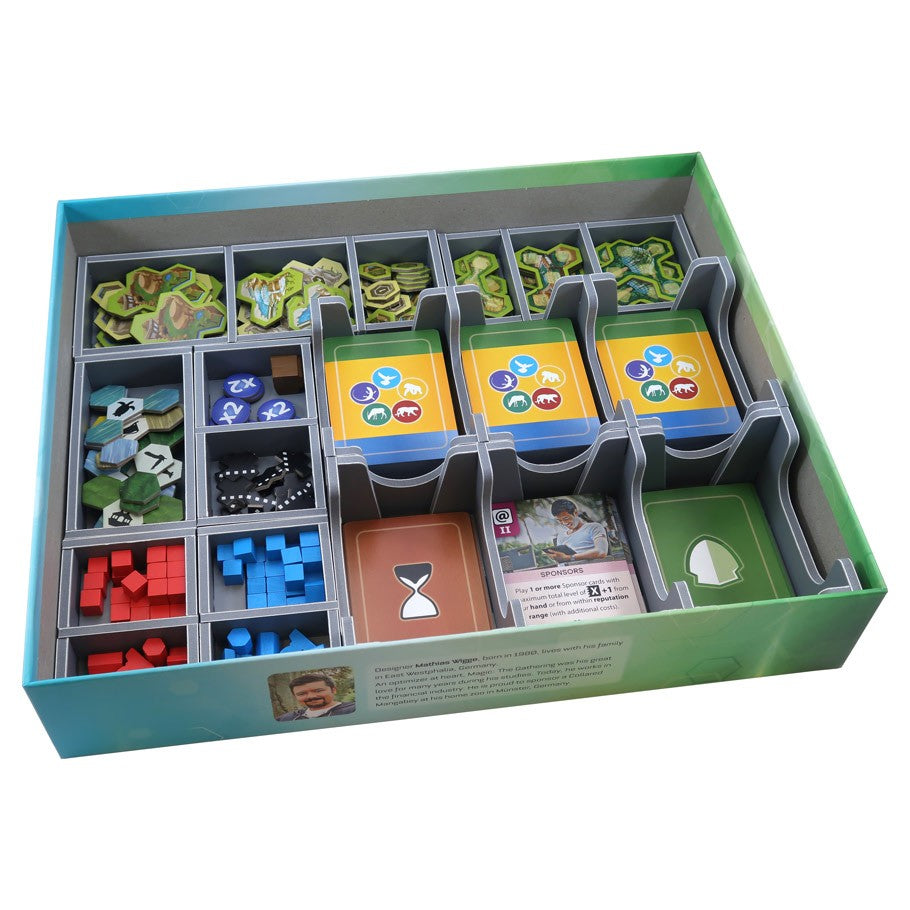
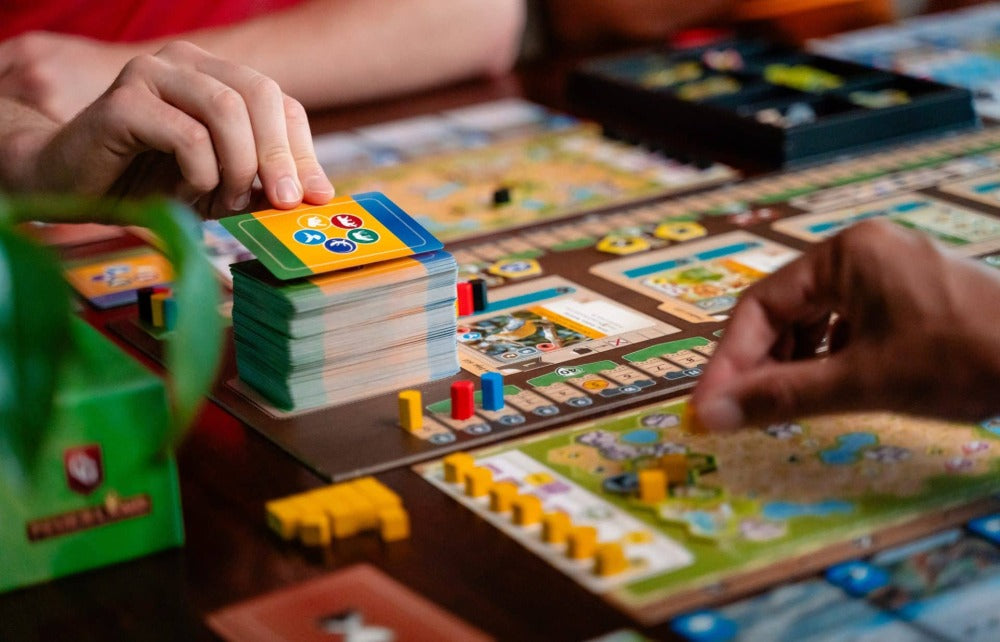
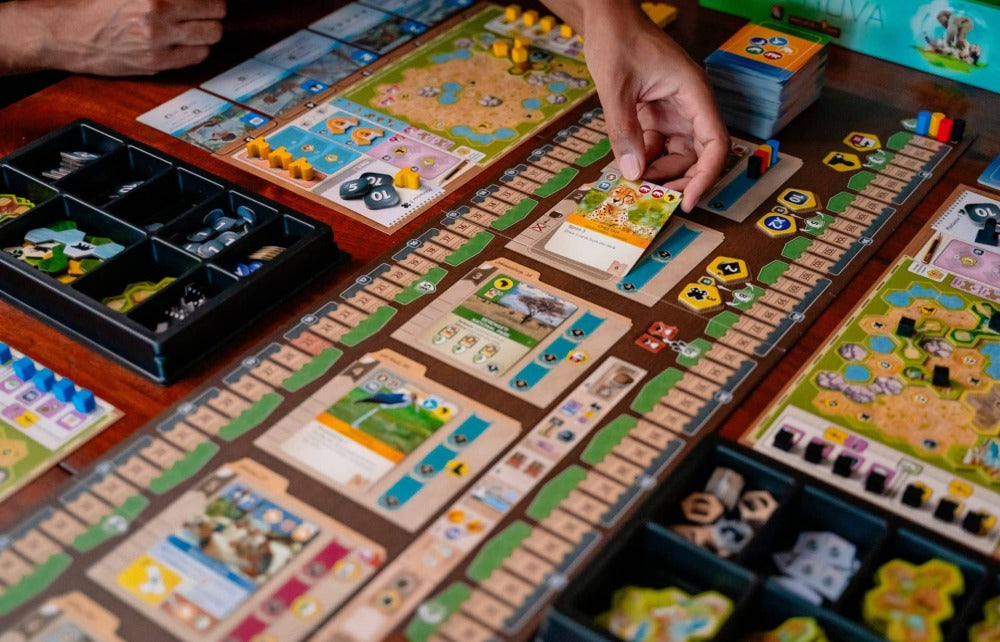
Ark Nova is, physically, a heavyweight — and unusually, it earns its bulk with genuinely good components rather than padding. The headline is the cards: well over 250 unique cards spanning animals (each with its own housing requirements, costs, and bonus icons), sponsors (powerful one-shot or ongoing effects), and conservation projects (the long-game point and bonus engines). There is no filler deck of identical cards here — the variety is the point, and it's why two games never rhyme. Each player gets a chunky zoo map board (the base game includes asymmetric maps with different starting bonuses and obstacles, so even your real estate plays differently game to game), a personal action-card row, and a hand of enclosure tiles in polyomino shapes you'll Tetris onto your map. Centrally, you've got the shared display where new cards parade across a conveyor (cheaper on the right, pricier on the left), the two big scoring tracks (Appeal in red, Conservation in green) plus a Reputation track that gates how many cards your hand can hold, the break tokens, money, and a generous pile of wooden and cardboard bits. Across the board, reviewers consistently single out the production: thicker boards than its rivals, clearer iconography, and card art that's 'consistently attractive.' One comparison I keep coming back to says Ark Nova 'ships with a better box from day one' — and after years of buying upgrade kits for lesser productions, that out-of-the-gate quality matters. Nothing in this box feels like a corner cut.
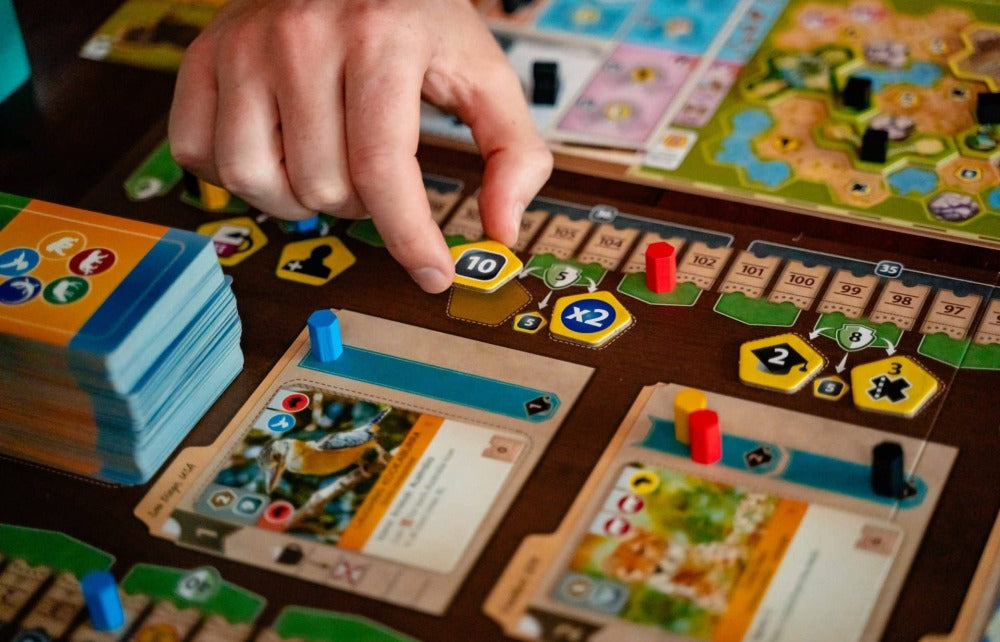
There is no filler deck of identical cards here — the variety is the point, and it's why two games never rhyme.
How does it actually play — cards, actions, and tempo?


Here's a turn, concretely, because the rulebook makes it sound scarier than it is. On your turn you do exactly one thing: play one of your five action cards and resolve it at the strength of its current slot, then slide it to slot 1. That's the heartbeat. The five actions are Cards (draw new animal/sponsor/project cards from the display — stronger slot lets you take more or from pricier positions), Build (place enclosure and special tiles on your zoo map — stronger slot lets you build bigger and benefit from your kiosks), Animals (play animal cards from hand into enclosures you've built — stronger slot lets you place tougher, more valuable beasts), Sponsors (play sponsor cards and gain their effects, and trigger your sponsor break to refill your action row), and Association (the conservation engine — hire workers, take university tiles for permanent bonuses, partner with zoos and universities, and fund conservation projects to climb the green track). The rhythm that emerges is a beautiful push-pull: you spend the early game charging your power actions and laying spatial groundwork, you hit a sponsor Break to reset and recharge your whole row, and you slingshot into combo turns where a single well-timed Animals action at slot 5 drops a marquee creature that pays Appeal, triggers a bonus, and lets you cash a conservation project all at once. That combo feeling is the drug. As one reviewer put it: 'Juicy. I love combos; love any game that makes me feel like a boss.' The other thing to understand is that turns are short and decisions are long — there's planning between your turns, but when it's your go you usually do one clean thing, so downtime is more bearable than the playtime suggests. Money matters and it matters singularly: Ark Nova streamlines to one economic resource (cash), where its closest rival juggles six. That single-currency clarity is a huge part of why a game this deep doesn't drown you.
The combo feeling is the drug — one slot-5 Animals action that pays Appeal, fires a bonus, and cashes a conservation project all at once.
Is Ark Nova worth it?
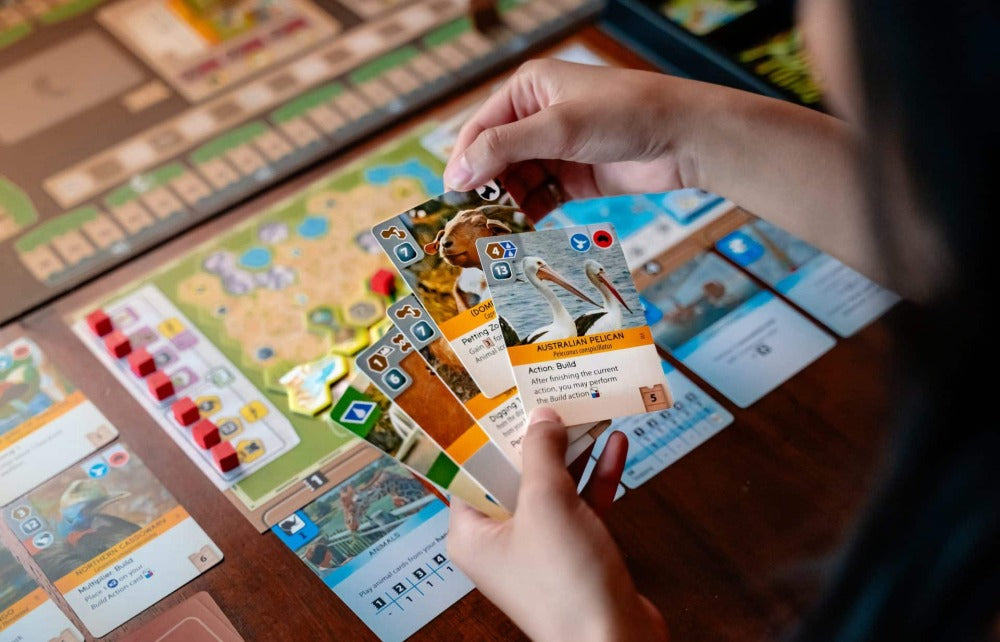
For the right player, Ark Nova is one of the best value-per-play purchases in modern hobby gaming — and the play statistics aren't an accident. People keep coming back because the deck is so deep that the game is functionally inexhaustible: dozens of plays in, I'm still drawing animal and project combinations I've never assembled before. That's the trait that earned the shelf. A game can be brilliant once and gather dust; Ark Nova is the rarer thing — brilliant repeatedly. The conditions for 'worth it' are honest, though. Worth it if: you (and at least one other person in your house) genuinely enjoy heavy strategy games, you can give it the table time, and you're past needing a gateway. The solo mode is a real selling point here — the built-in challenge and the community ARNO automa both deliver a credible opponent, so even if your group can't always assemble, the box still earns plays. Not worth it if: your table tops out around an hour, your group wants social or confrontational games, or heavy iconography is a dealbreaker — in those cases you'll bounce off a genuinely great design for reasons that have nothing to do with its quality. On price, I won't quote you a number, because Ark Nova's street price swings constantly with retailer deals and you should buy it when it dips — set a price alert rather than trusting any figure a review hands you. What I'll commit to is this: per hour of engaged, replayable play, very few games in my collection have returned more.
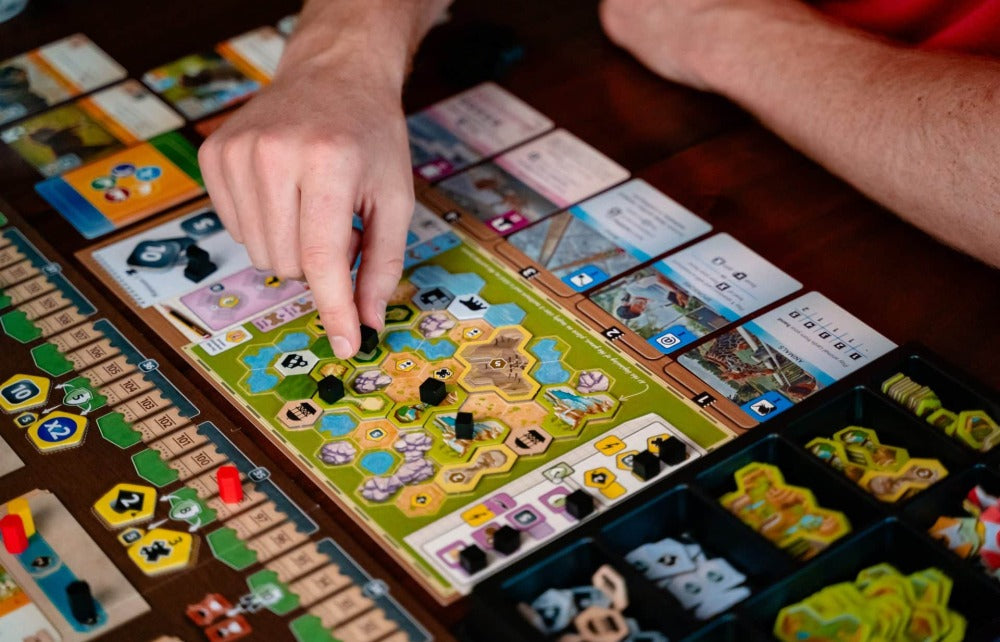
A game can be brilliant once and gather dust. Ark Nova is the rarer thing — brilliant repeatedly.
How do you play your first game well?
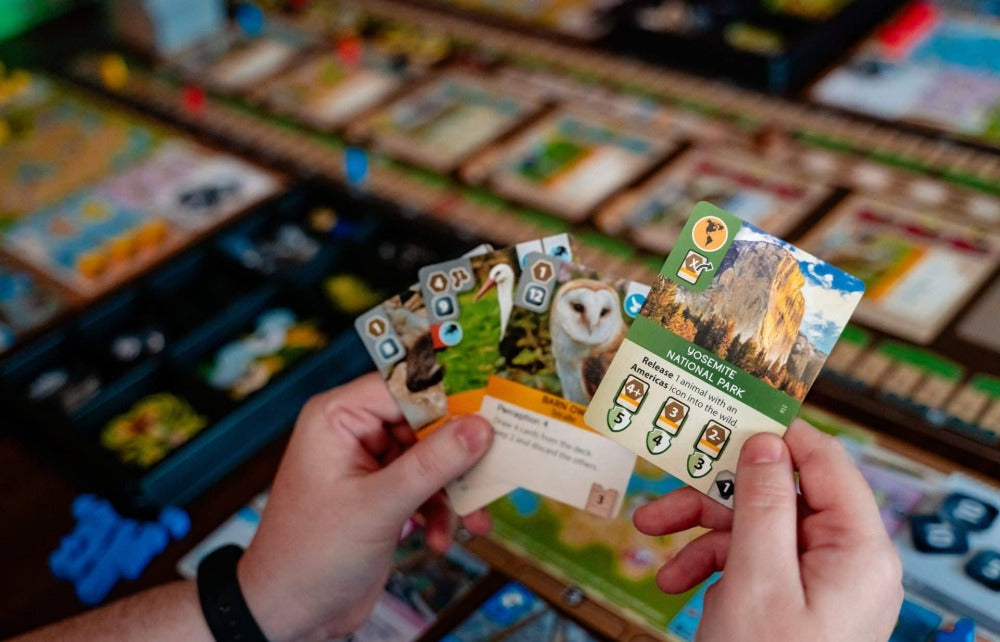
Most people lose their first Ark Nova the same way: they treat it like two separate games (build a pretty zoo OR do conservation) and they hoard money. Don't. Here is the keeper's starter playbook, drawn from the strategy that consistently works. (1) Flip your Association card early, and use that first upgrade to unlock donations. Conservation points come from reputation gains and from funding projects, and getting your association card to side 2 quickly lets you make donations that shoot you up the green track relative to opponents who waited. Tempo on the green track is the game. (2) Plan your zoo grid before you place a single tile. The enclosure tiles are polyominoes and the map is unforgiving — leave room for the big enclosures and special buildings you'll want later, and don't wall yourself into a corner with sloppy early placement. (3) Grab a university/worker tile early via Association. Those ongoing bonuses compound across the whole game; an extra worker or a permanent discount you pick up in the first third pays off ten times over. (4) Keep your money moving — do not sit on a cash pile. Ark Nova punishes idle capital; a stalled engine is a lost game, and it's brutally easy to blow all your cash right after a Break with no plan to refill. Spend to build the machine, then let the machine pay you. (5) Watch the opponents' Conservation markers like a hawk. The game ends when the tracks cross, and if someone's green marker is sprinting toward the red one, you may need to pivot from 'build more engine' to 'score now' faster than you wanted — reading that moment is the difference between a respectable finish and getting caught half-built. Internalize those five and you'll be competitive your very first game instead of spectating your own zoo.
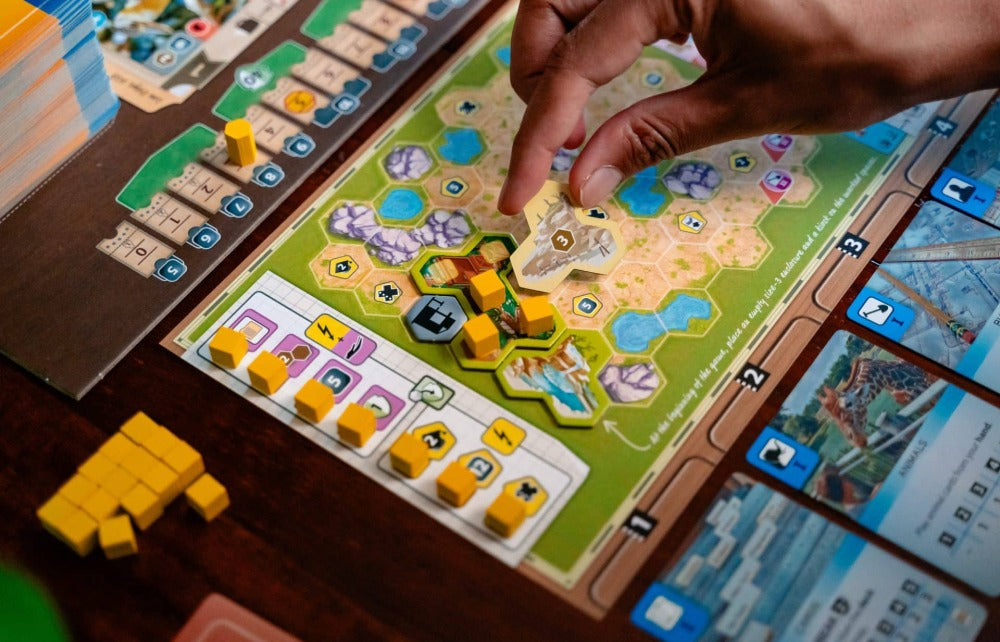
Most people lose their first game the same way: they treat conservation and zoo-building as separate games, and they hoard money. Do neither.
Marine Worlds, replay, and who it's for
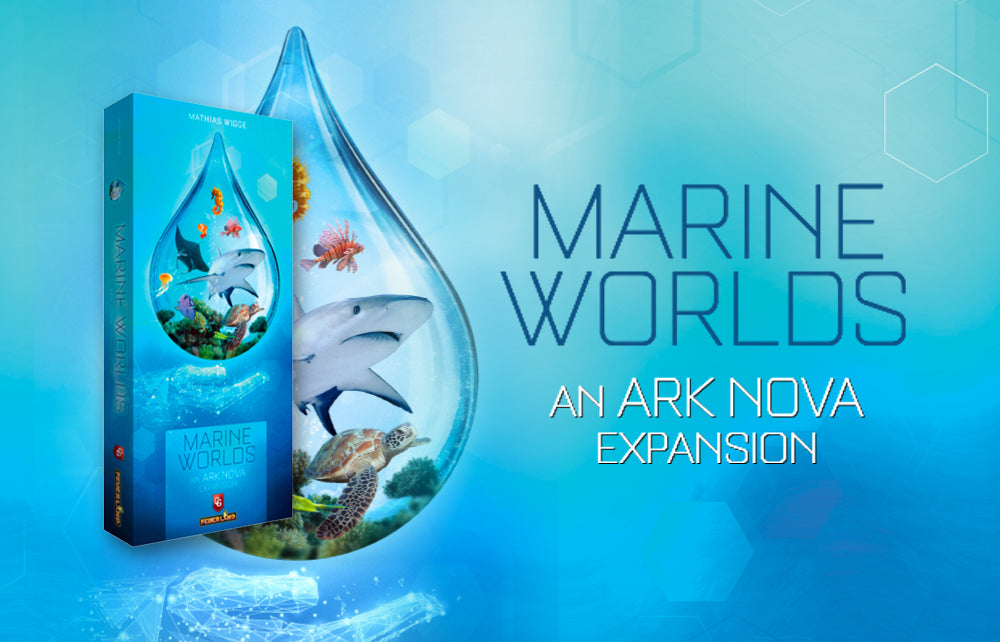
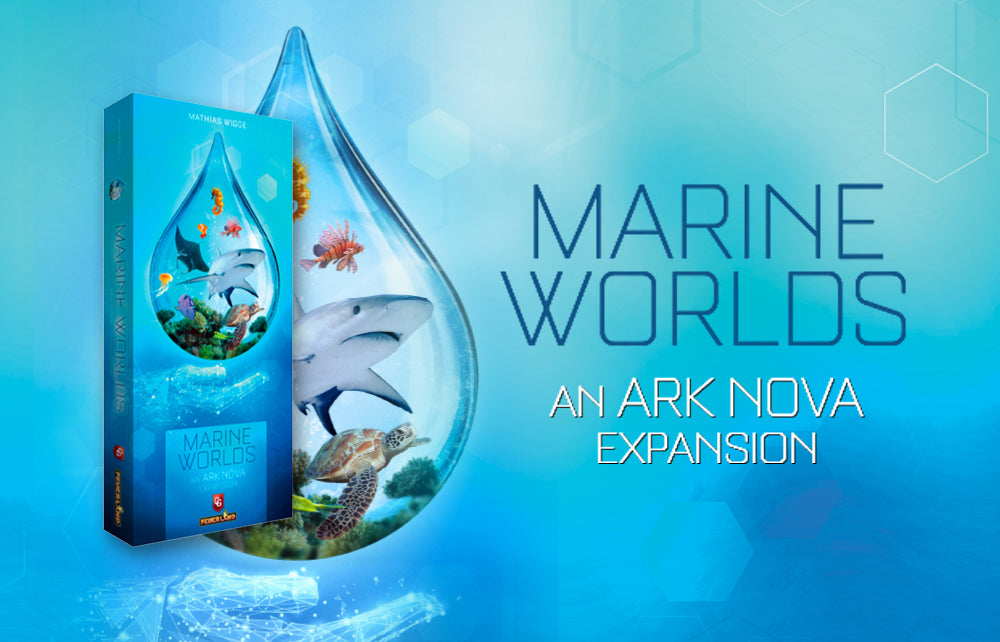
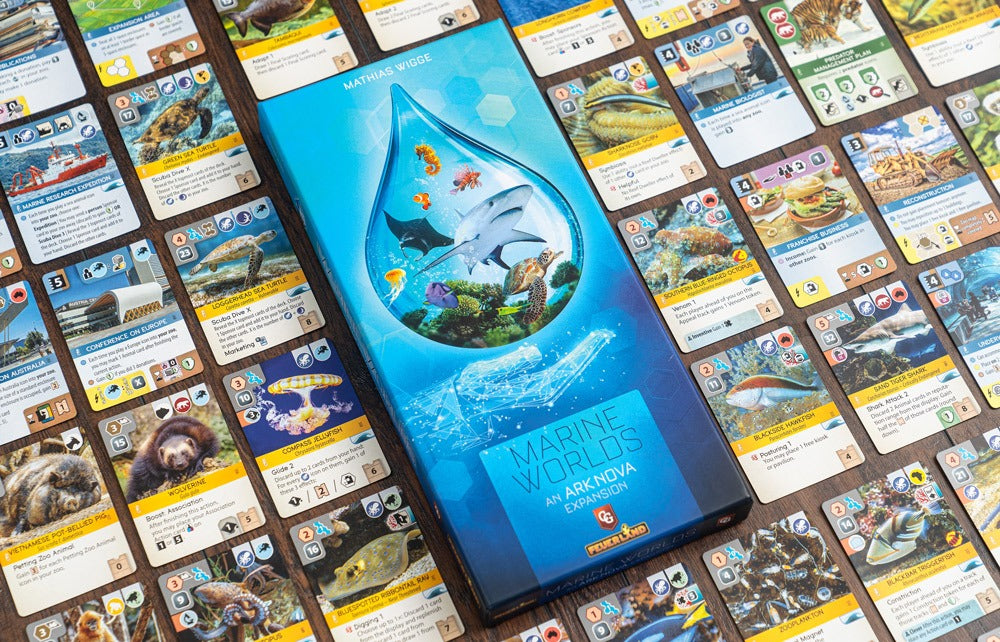
Once the base box clicks — and only then — Marine Worlds is the expansion to reach for. It threads aquatic life into the existing system rather than bolting on a new subsystem: sea animal cards (all marked with a wave icon) require new special enclosures you must build adjacent to water, so the spatial puzzle gains a fresh constraint without changing the language you already learned. Its smartest addition is action-card drafting: each of the five action cards now has four alternate versions with a twist, and at setup you draft to replace two of your standard action cards with variant ones — so your very engine becomes asymmetric and customizable game to game. It also adds new bonus tiles, new final-scoring cards, alternate wooden track markers, and frankly adorable animal tokens for your conservation projects. It is not a fix for anything — the base game needs no fixing — it's a depth and variety amplifier for players who've already fallen in love and want their hundredth game to still surprise them. As for who Ark Nova is for, full stop: it's for the player who wants one heavyweight tableau-and-engine builder done about as well as the genre currently does it, who values a tight single-currency economy over fiddly resource-juggling, who's happy to invest two to three hours for a game with a real arc, and who'll play it enough times to amortize that dense first teach into pure flow. If that's you — or the gamer you're shopping for — this is a desert-island heavy euro. If you want a gateway, a filler, or a party game, this emphatically is not it, and that's not a flaw, it's a focus. Ark Nova knows exactly what it is. That clarity is half of why it's so good.
Marine Worlds isn't a fix — the base game needs none. It's a depth amplifier for the player who wants their hundredth game to still surprise them.
What experienced tables keep reporting
Recurring owner patterns, synthesized in Puzzlewick's words. Follow each evidence trail to read the original discussion.
Juicy. I love combos; love any game that makes me feel like a boss. Ark Nova has plenty of these moments, and I've only played it once.
Read the evidence: Justin Bell, Meeple Mountain — Ark Nova: First Take
A lack of development and a misguided sense of balance forced me to lower my expectations; if we don't draw the right one, we are out of luck — you might lose the turn trying to fix it.
Great theme that captures your imagination... When you do get it right, oh boy, let me tell you there are not many better feelings.
The back half of Ark Nova [is] not as interesting or engaging as the initial engine building — [it can feel like] I'm back in school assembly, counting down the minutes until lunch.
Ark Nova ships with a better box from day one. Thicker boards, clearer iconography, and card art that's consistently attractive.
Read the evidence: The Dice Drop — Terraforming Mars vs Ark Nova
If forced to pick one? Ark Nova. It's the more refined design, the tighter experience, and the game that rewards repeated play more consistently.
Read the evidence: The Dice Drop — Terraforming Mars vs Ark Nova
Ark Nova was the most-played game on BoardGameGeek between January and early September 2024, with roughly 108,851 recorded plays — ahead of Azul and Wingspan.
Read the evidence: Statista / BoardGameGeek 2024 play statistics
Engaging solo mode captures competitive multiplayer feel.
The picks
Some links below are affiliate links — as an Amazon Associate, Puzzlewick earns from qualifying purchases, at no extra cost to you. It never changes a pick.

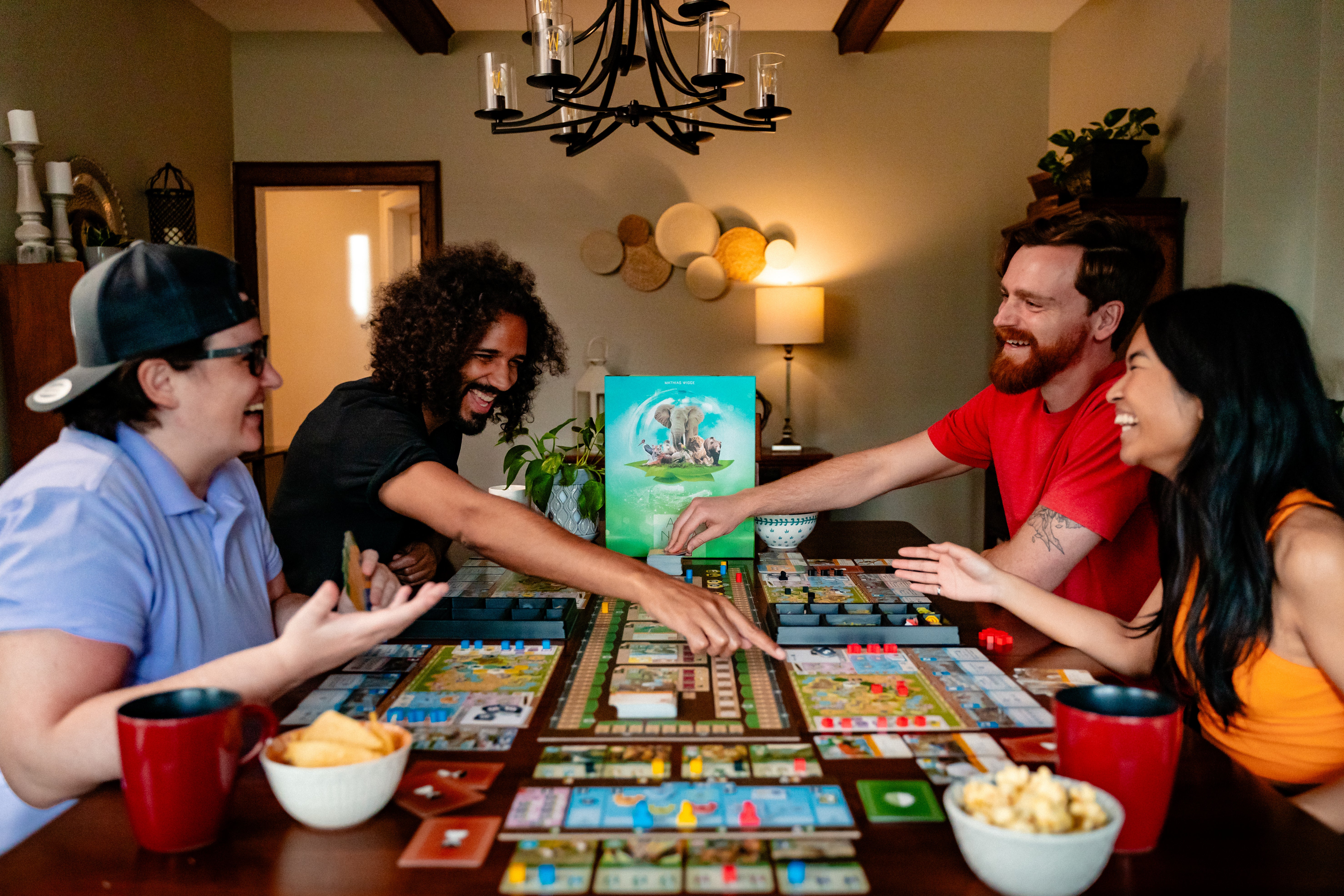
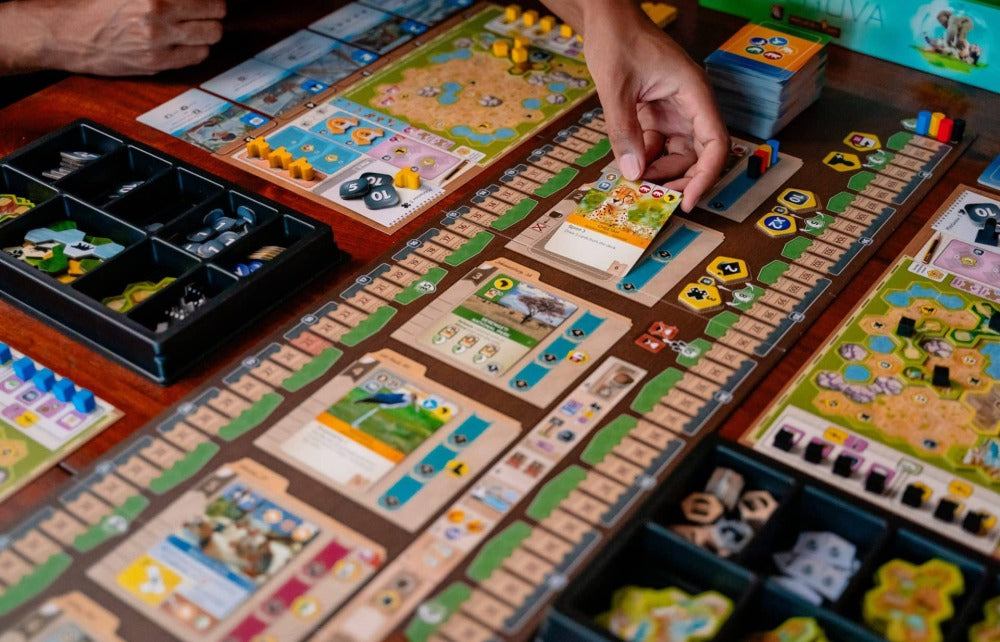
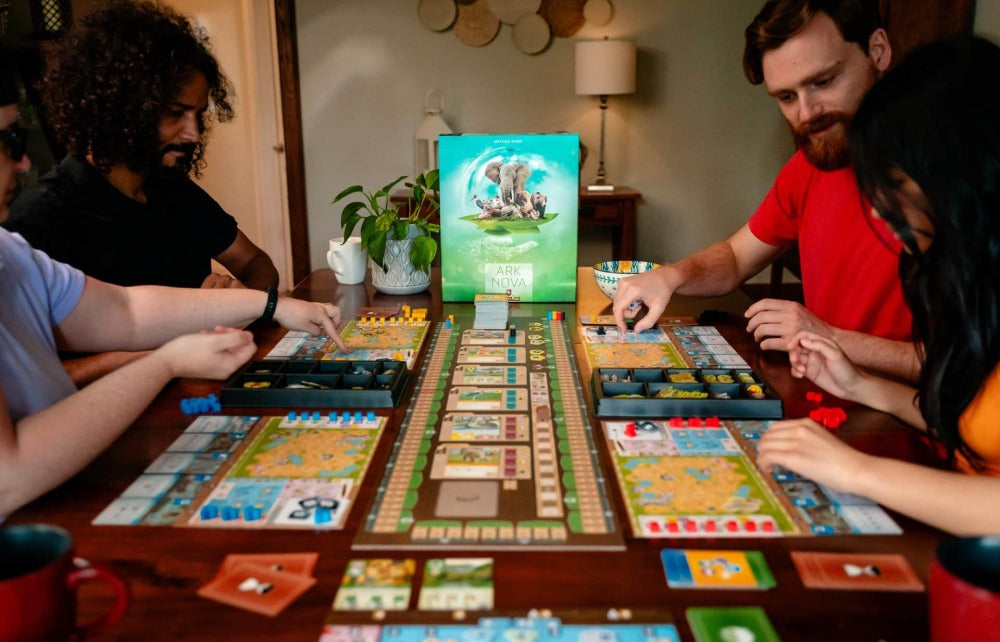
 10 photos
 Ark Nova (Base Game)
This is the whole experience and the only thing you need to start. The action-card strength track is one of the best single ideas in modern euro design, the single-currency economy keeps a 3.79-weight game readable, and the 250+ unique cards mean it never plays the same way twice. It's long and it's heavy — but it's the most-played game on BoardGameGeek for a reason. Buy this first; live in it before you even think about expansions.
- Brilliant action-strength mechanism creates real tension every single turn
- Enormous card variety — functionally inexhaustible replayability
- Single resource (money) keeps a heavy game from becoming bookkeeping
- Excellent, credible solo mode out of the box
- Top-tier production: thick boards, sharp iconography, great art
- Long (90–150+ min) with an endgame that can drag
- Dense iconography and rules make for an intimidating first teach
- A poor opening card draw can be a genuine handicap
 5 photos
 Ark Nova: Marine Worlds Expansion
The right second purchase, but not before you've worn in the base box. Marine Worlds adds sea animals that need water-adjacent enclosures (a new spatial wrinkle) and — its best feature — lets you draft twist-variant action cards at setup, so your engine itself changes game to game. New bonus tiles, scoring cards, and cute conservation tokens round it out. It deepens rather than fixes; treat it as a replay amplifier for a game you already adore.
- Action-card drafting makes your core engine asymmetric and fresh
- Sea animals add a genuine new layer to the spatial puzzle
- More bonus tiles and final-scoring cards extend variety
- Integrates into the existing system without a bolt-on subsystem
- Requires the base game — useless on its own
- Adds complexity to an already-heavy game; not for new players
 7 photos
 Folded Space Ark Nova Board Game Insert / Organizer
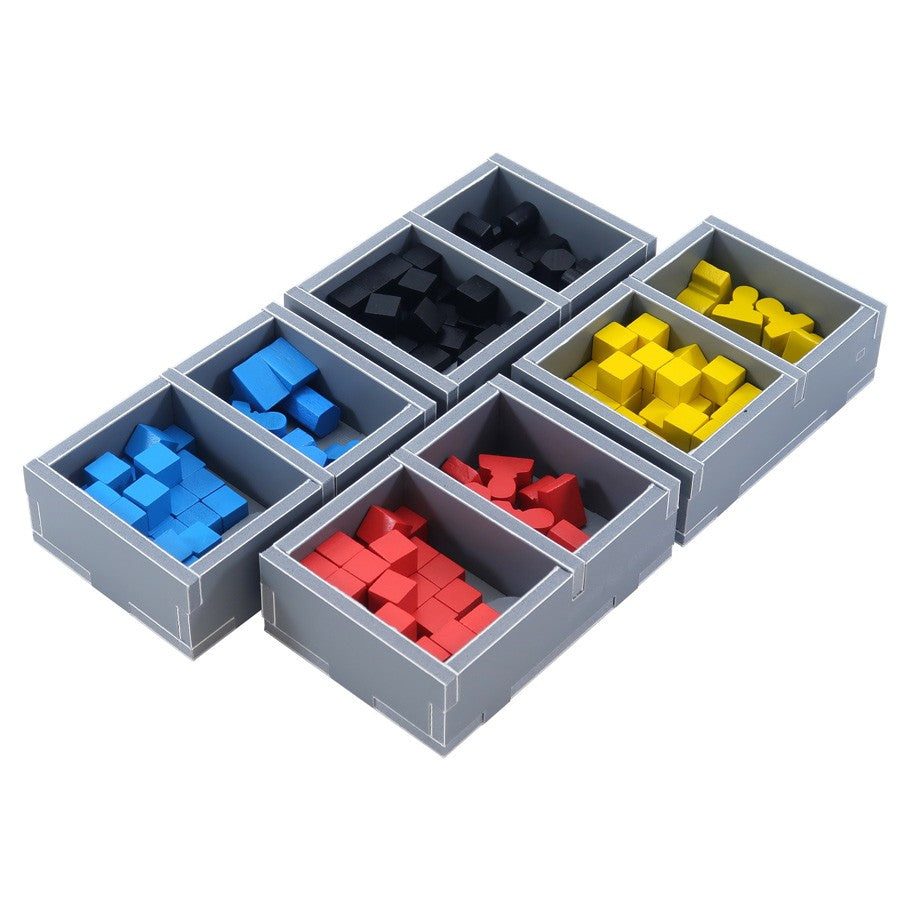
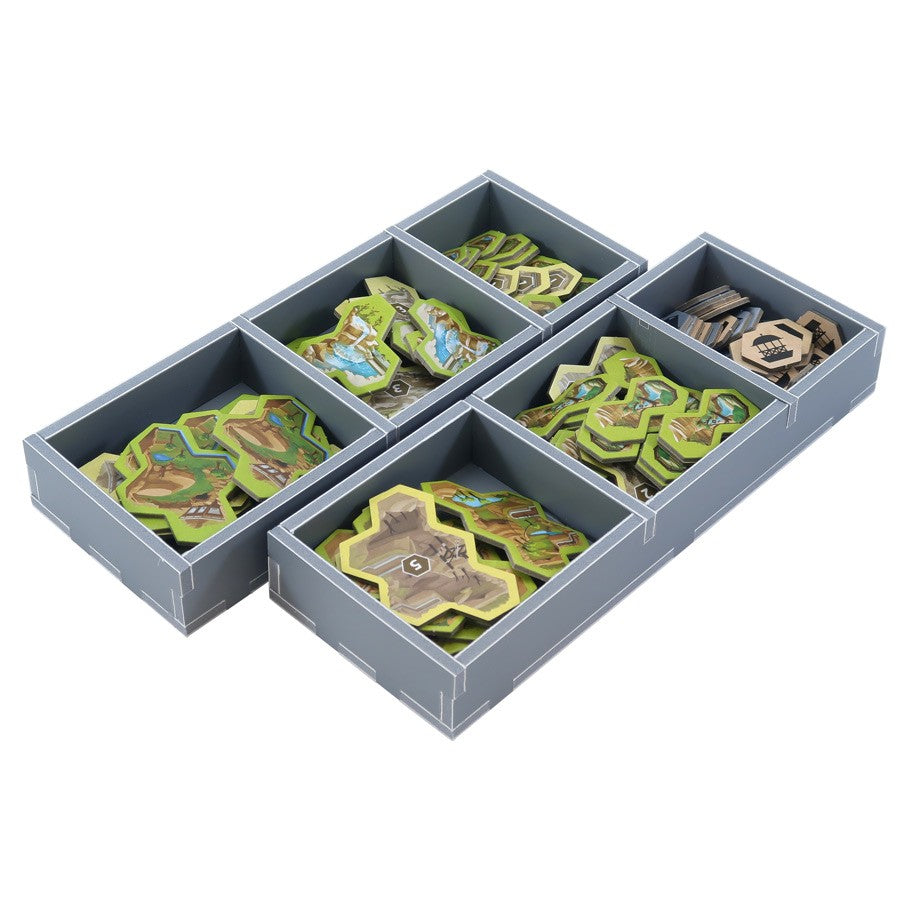
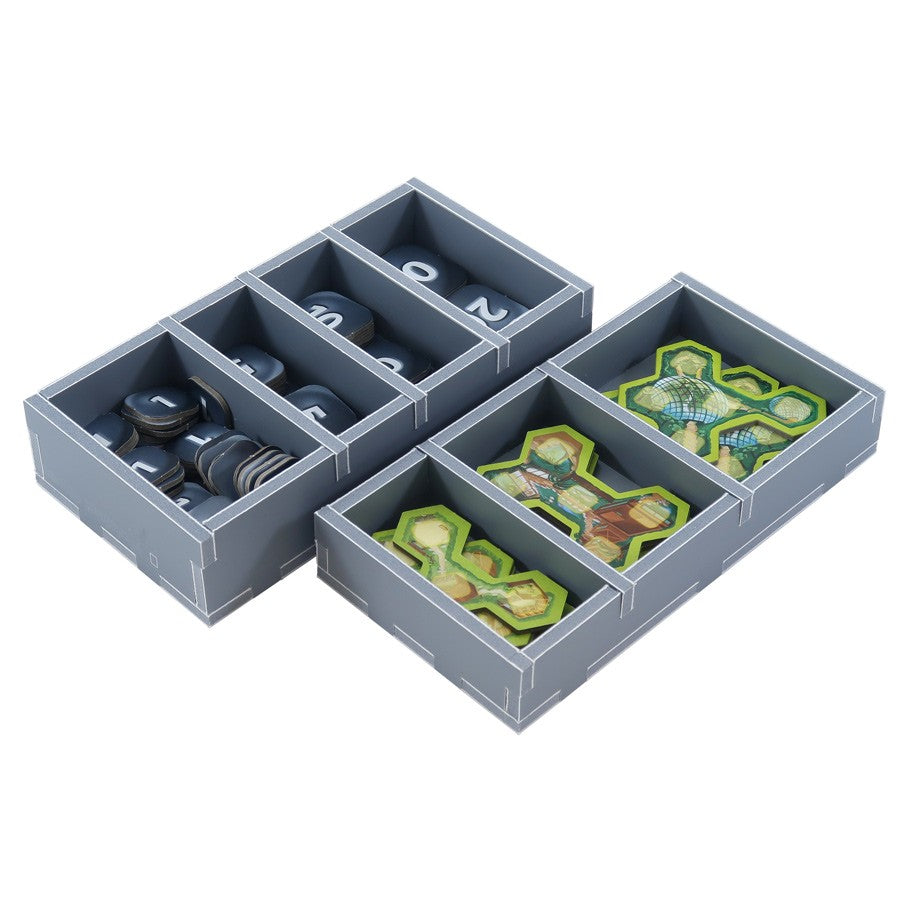
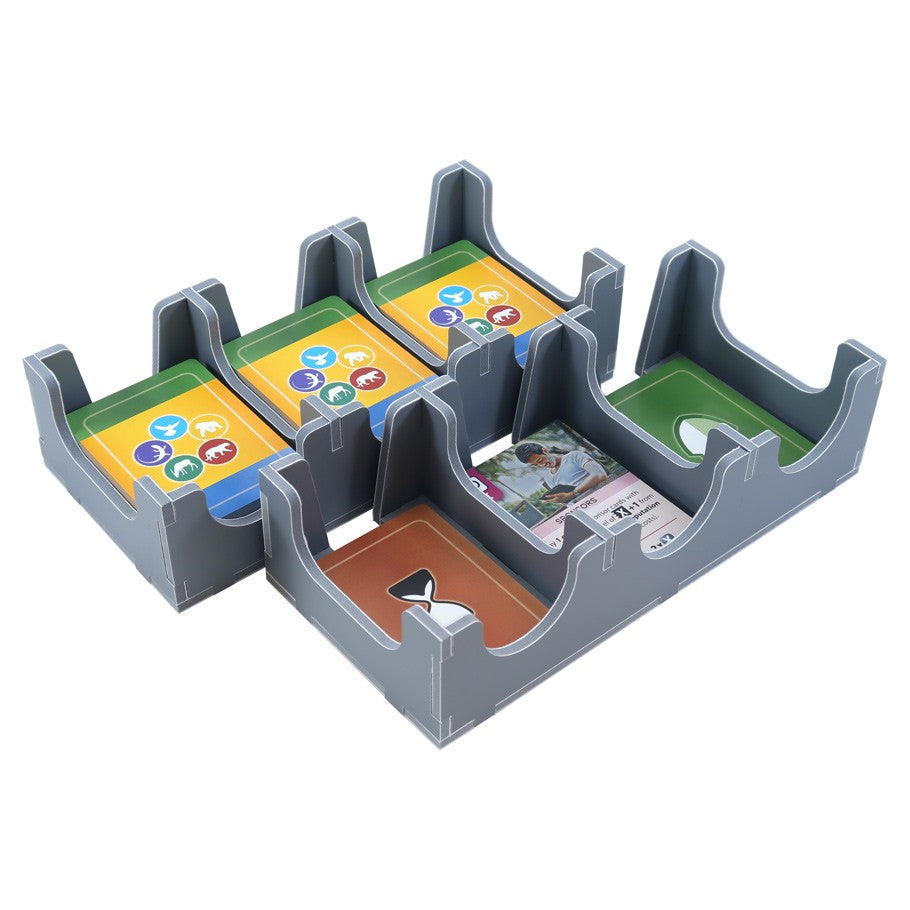
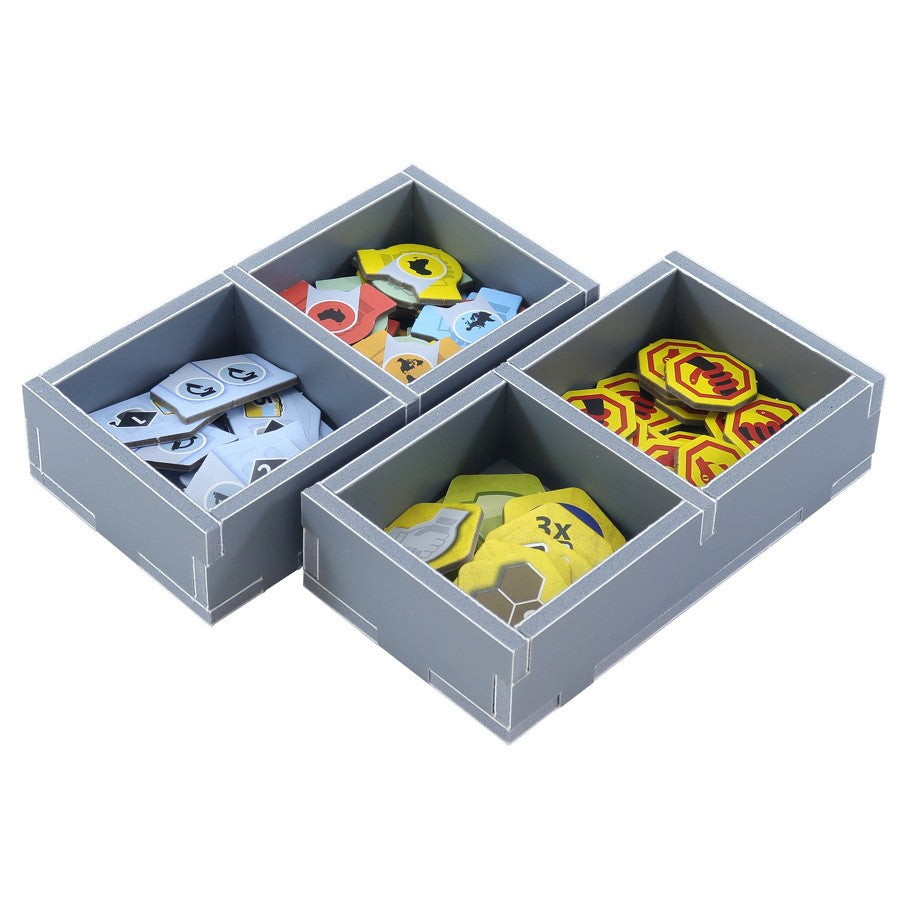
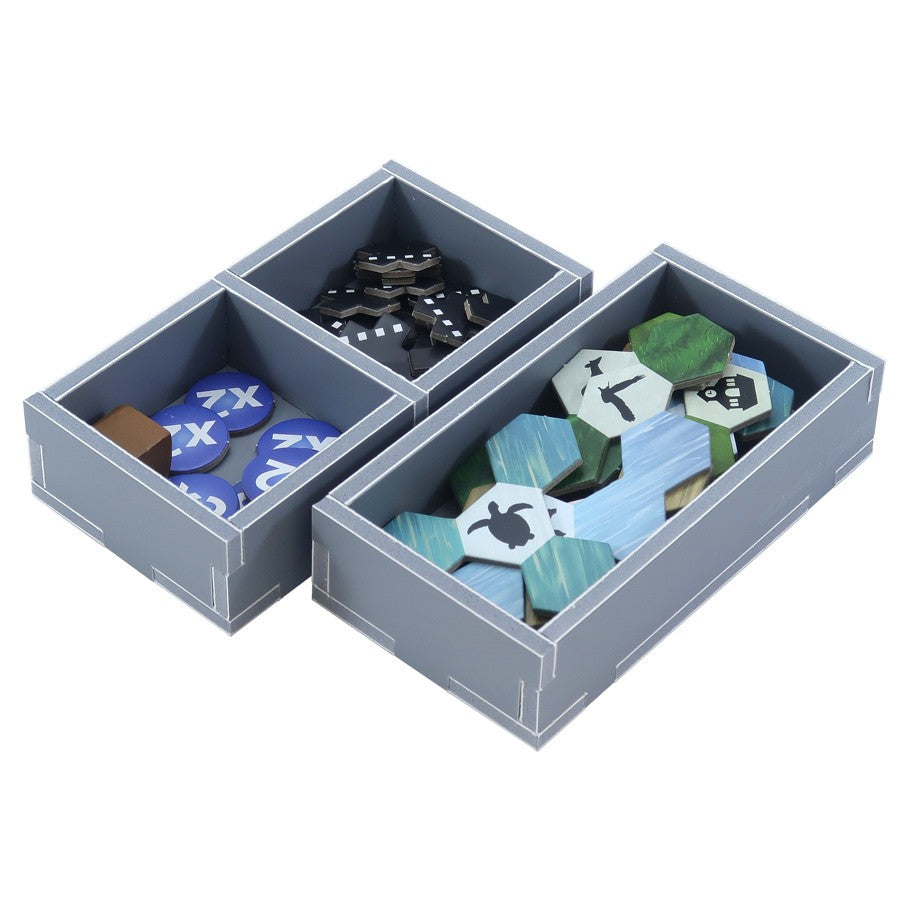
Ark Nova's box is a sprawl of cards, tiles, tokens, and trays, and an organizer turns a five-minute setup into a tray-lift. This Folded Space insert ships as flat-pack Evacore sheets you assemble with PVA glue; the card trays accommodate sleeved cards and leave room for future releases, and several trays go straight to the table during play. If you sleeve your deck (you should), this is the upgrade that actually gets the game to the table more often. Note: it's a build-it-yourself insert, not pre-assembled.
- Dramatically faster setup and cleanup
- Card trays sized for sleeved cards, with room for expansions
- Trays double as in-game component holders
- Lightweight, durable Evacore once assembled
- Requires assembly with PVA glue (not included, not pre-built)
- Best results assume your cards are sleeved
At a glance
| game | designer | bgg weight | play time | players | core resource | interaction | the hook | best for |
|---|---|---|---|---|---|---|---|---|
| Ark Nova | Mathias Wigge (Capstone Games, 2022) | 3.79 / 5 (heavy) | 90–150 min | 1–4 | Single — money only | Indirect (track race, shared card display) | Action-strength track: every action recharges as others fire | The definitive modern heavy euro; deep, gorgeous, top solo mode |
| Terraforming Mars | Jacob Fryxelius (Stronghold Games, 2016) | 3.27 / 5 (heavy) | 120 min | 1–5 | Six (6) tracked resources | Higher — shared planet parameters + some take-that | Terraform a shared Mars; race for milestones and awards | Players who want a shared-board goal and a vast expansion ecosystem |
| Gaia Project | Jens Drögemüller & Helge Ostertag (Z-Man, 2017) | 4.39 / 5 (very heavy) | 60–150 min | 1–4 | Multiple (ore, credits, knowledge, QIC, power) | High — direct map competition for territory | 14 asymmetric factions terraform and expand across a hex galaxy | The crunchiest brain-burners who want maximum faction variety |
| Wingspan | Elizabeth Hargrave (Stonemaier, 2019) | 2.45 / 5 (medium) | 40–70 min | 1–5 | Food + eggs (light economy) | Low — mostly your own tableau | Build a bird-card engine across three habitats | A gentler, faster engine-builder / on-ramp to the heavier titles |
Questions, answered
What is Ark Nova about?
You're the director of a modern scientific zoo, building enclosures and housing exotic animals to raise your Appeal while funding global conservation work to climb the Conservation track. The game ends when those two markers cross on a shared scale, and your score is how far past the crossing you reached. It's a heavy, card-driven euro for 1–4 players.
How long does a game of Ark Nova take?
The box says 90–150 minutes. In practice, expect 90 minutes for two experienced players and up to two-and-a-half to three hours for a full four-player game that includes anyone learning. Turns themselves are short, so downtime is more bearable than the total runtime implies.
Is Ark Nova too complex for beginners?
It's a genuine heavy euro (BGG weight 3.79/5) and not a gateway game. The dense iconography and 250+ unique cards make the first teach intimidating. But the rules are more approachable than they look — each turn you do essentially one clean action — and by your second or third game the icons become a language and play speeds up dramatically.
What's the 'action card' system everyone mentions?
You hold five action cards (Cards, Build, Animals, Sponsors, Association) in a row numbered 1–5. The slot a card sits in sets how strong that action is. When you play one, you resolve it at its current strength, then slide it to slot 1 while every other card bumps up to become stronger. The whole game is the tension between firing a strong action now versus recharging your power cards for later.
How many cards come in Ark Nova?
Well over 250 unique cards — animals (each with its own housing needs and bonuses), sponsors (powerful effects), and conservation projects (long-game scoring engines). There's no deck of identical filler cards; the variety is the entire point and is why no two games play the same way.
Is Ark Nova good as a solo game?
Yes — it's one of the better solo experiences in the heavy-euro space. The base game includes a solo challenge, and the community 'ARNO' automa simulates a near-complete opponent that climbs all three tracks, funds projects, and can actually win rather than just chase a high score. Solo players get real value from this box.
Ark Nova vs Terraforming Mars — which should I get?
Both are heavyweight card-and-tableau builders, but they feel different. Terraforming Mars has a shared planet you collectively terraform, more direct interaction, six resources to track, and a huge expansion ecosystem. Ark Nova is the tighter, more modern design with a single resource (money), an asymmetric zoo you build solo, and better out-of-box production. If forced to pick one heavy euro, many reviewers — and I — lean Ark Nova for refinement and replayability; choose Terraforming Mars if you want the shared-board race and the deep expansion library.
Do I need the Marine Worlds expansion?
No — the base game is complete and excellent on its own. Marine Worlds is for owners who've already played the base box several times and want more. It adds sea animals (requiring water-adjacent enclosures), a setup draft of twist-variant action cards, new bonus and scoring cards, and new tokens. Buy it once the base game clicks, not before.
What's the single most common first-game mistake?
Hoarding money and then stalling out — typically by spending everything right after a sponsor Break with no plan to make more. A stalled engine is a lost game. Keep cash flowing: spend to build your machine, then let the machine pay you. The second-most-common mistake is treating zoo-building and conservation as separate goals instead of one intertwined race.
Is Ark Nova worth the money?
For players who enjoy heavy strategy and will play it repeatedly, it's one of the best value-per-play purchases in the hobby — the deck is deep enough that the game stays fresh across dozens of plays. Its price swings a lot by retailer, so set a price alert and buy on a dip. It's not worth it for groups that want short, social, or confrontational games.
Should I sleeve the cards or buy an organizer?
Both are worthwhile for frequent play. With 250+ constantly-shuffled cards, sleeving meaningfully extends their life and helps them sit in trays. An insert (like the Folded Space organizer) turns a long setup into a quick tray-lift and several trays go to the table during play — just note that flat-pack inserts require glue-up assembly.
How many players is Ark Nova best with?
It scales well from 1 to 4 and plays cleanly at every count because interaction is largely indirect. Two players is fast and tense; the solo mode is genuinely strong. Four players is the fullest experience but also the longest — budget extra time and expect more contention over the shared card display and a tighter race to the track-crossing.
Robert's verdict
Ark Nova earned its shelf the hard way — by overcoming my own resistance. It's long, it's dense, the endgame sags, and a cold opening draw can sting; I won't pretend otherwise, and the smartest critics have a real case. But none of those costs survive contact with what the game gives back: an action-strength engine that keeps every turn tense, a single-currency economy that keeps a heavyweight readable, production that shames its rivals, and a card pool so deep the game is functionally inexhaustible. It's the most-played game on BoardGameGeek for the same reason it's the one I reach for most — it is brilliant not once but repeatedly. Buy the base game (and only the base game) first; sleeve the cards; play it five times before you so much as glance at Marine Worlds. If you want one definitive heavy euro and you'll give it the table time, this is, to me, the best of its class on the market right now. It's the keeper's highest recommendation in its weight class — earned, not assumed.
Research ledger 12 sources · reviewed 2026-07-17
Specifications, rules, current product information, community experience, and contrary evidence were checked against the sources below. Commercial links are kept separate from editorial evidence.
- en.wikipedia.orgen.wikipedia.org/wiki/Ark_Nova
- capstone-games.comcapstone-games.com/products/ark-nova-marine-worlds
- statista.comstatista.com/statistics/1490248/most-played-games-boardgamegeek-worldwide
- eriktwice.comeriktwice.com/en/2022/11/07/ark-nova-board-game-review
- rolltoreview.comrolltoreview.com/ark-nova-review
- meeplemountain.commeeplemountain.com/reviews/ark-nova-first-take
- thedicedrop.comthedicedrop.com/posts/terraforming-mars-vs-ark-nova
- coopboardgames.comcoopboardgames.com/cooperative-board-game-reviews/ark-nova
- board-game.co.ukboard-game.co.uk/tips-and-tricks-for-ark-nova
- boardgamegeek.comboardgamegeek.com/thread/3165962/how-to-be-ok-at-ark-nova-strategy-guide
- victoryconditions.comvictoryconditions.com/arno-review-the-best-way-to-play-ark-nova-solo
- boardgamequest.comboardgamequest.com/ark-nova-marine-worlds-expansion-review
If it didn't earn a shelf, it isn't here.

Keep exploring
The next smart rabbit holes.
✦ Topic PathBoard Game Buying Guides: compare the whole shelfStart with the decision, not the shelf. These guides compare the games, editions, expansions, player counts, and costs people...Deep DiveStar Wars: Rebellion Review — The Hidden-Base Epic That Earned a Permanent ShelfA 153-mini galactic war in a box where the Empire is a hammer hunting a needle, and the Rebels win by surviving. I almost left it in the...ComparisonWingspan vs Ark Nova vs Everdell: Which Engine-Builder Belongs on Your Shelf?Three marquee engine-builders, three different students of the same lineage. The Sensei traces the bloodline — weight, teach time, table...