5 New Board Games Worth Your Next Game Night: Cozy Stories, Clever Cards, and a Proper Adventure
Imani matches five current tabletop releases to five kinds of evening, with the awkward bits included: permanent stickers, limited communication, take-that cards, and the price at which a hot game stops being a sensible buy.

AI-assisted curator persona · research and editorial responsibility: Robert Pruitt · how this guide was made
Last editorial refresh: 2026-09-11 Gold-standard QA: 2026-09-11 15 sources reviewed Affiliate links checked during gold-standard pass

The short answer
Choose Sanibel for a welcoming competitive spatial puzzle, Cozy Stickerville for a gentle continuing village story, The Two Towers Trick-Taking Game for cooperative card challenges, Flip 7: With a Vengeance for a noisy group that enjoys direct interference, or Dewan for a compact route-and-objective puzzle. These are five editorial recommendations for different tables, not a universal sales ranking or an instruction to buy all five.
Decision map
Choose in thirty seconds
A clear collecting theme with a personal spatial puzzle. Choose it for two to four players who like improving a layout.
The village changes with your choices. Solo or shared play works, provided permanent stickers sound appealing.
A standalone card puzzle for people who enjoy succeeding together under communication limits.
Three or more players can enjoy sudden reversals. Check that being targeted is funny for everyone.
A short action menu with meaningful planning. The English import offer still needs a sensible delivered price.
A "must-have" game that nobody in your house wants to play is a very expensive shelf label. This shortlist starts with people: the shell collector, the gentle storyteller, the cooperative puzzle group, the gleeful troublemaker, and the person who studies a map until it starts giving up secrets.
We checked publisher descriptions and available rules, current community interest, and exact US product pages on August 27, 2026. BoardGameGeek Hotness supplied an attention signal, not a sales chart. The recommendations are research-based editorial judgments, not invented claims of hands-on testing. Recent tabletop card games are included alongside board games because game-night fit matters more than the shape of the box.
Start here, then go deeper
You are in the right cabinet.
 ◬ Universe HubMiddle-earth: the whole buying pathMiddle-earth is a shelf of very different journeys: premium LEGO architecture, strategic war games, and collectible card worlds....
 ✦ Topic PathBoard Game Buying Guides: compare the whole shelfStart with the decision, not the shelf. These guides compare the games, editions, expansions, player counts, and costs people...
 Buying GuideSanibel vs Cascadia vs Harmonies in 2026: Which Cozy Nature Puzzle Wins?Sanibel, Cascadia, and Harmonies compared by rules, solo play, interaction, table feel, replay value, and the cozy puzzle your group will...
Choose your table in thirty seconds
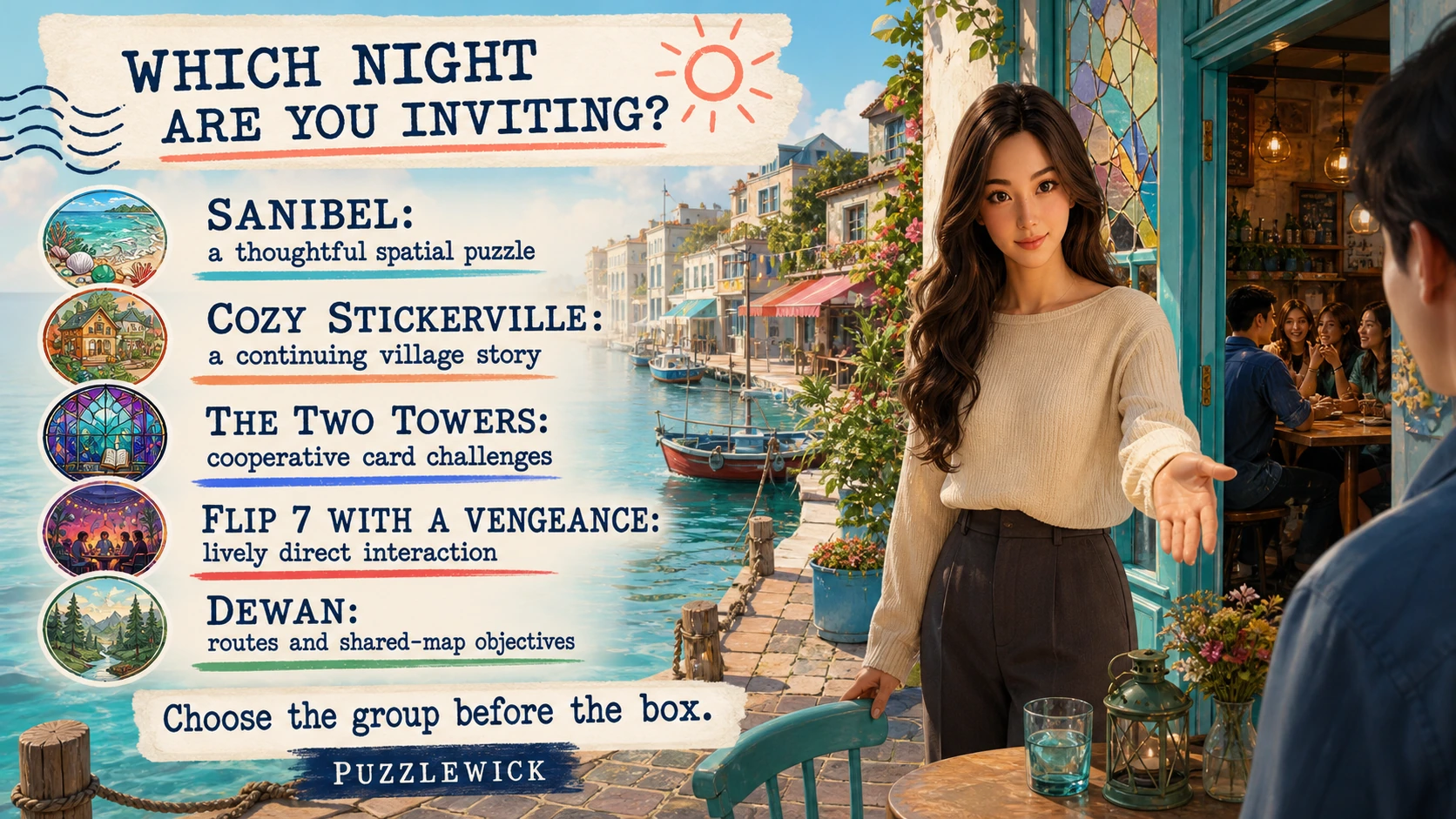
- Thoughtful competition, without attacking each other: Sanibel. Arrange a personal collection while watching the shared choices.
- A story your household can return to: Cozy Stickerville. Make a village together and accept that its stickers and decisions are part of its history.
- A small cooperative card puzzle: The Two Towers. Choose it when the group enjoys working within communication limits.
- A loud evening with sudden reversals: Flip 7: With a Vengeance. Bring at least three players who enjoy direct interference.
- A map to study and a plan to outmaneuver: Dewan. Its two-action turn is approachable; costing routes and racing for spaces supply the thinking.
Check the seats first. For five or six players, only Cozy Stickerville and Flip 7 fit this shortlist's published player counts. For solo play, Cozy Stickerville and The Two Towers supply official options. Do not buy Flip 7 for a regular two-person evening.
These are different flavors, not five rungs on a ladder of seriousness. The quiet game is not automatically easy, and the loud game is not automatically shallow. Choose the experience your group will ask to repeat.
1. Sanibel: the inviting puzzle with room to get clever
Designer: Elizabeth Hargrave. Players: 2-4. Publisher age guidance: 10+. Sanibel turns a beach walk into a competitive collecting and arrangement puzzle. Players select shell tiles and place them on their personal mats, trying to turn limited space and scoring opportunities into a better collection.
The appeal is that the theme explains the activity. You do not need a lecture on engine building before understanding why you want a particular shell or why an awkward gap in your bag is annoying. The included field guides also give the subject some substance beyond attractive watercolor.
First-game advice: read the scoring examples together and make one sample placement before beginning. Watch both the shape of an incoming tile and what it does for the scoring you are pursuing. A useful fit now can be worth more than a theoretically perfect shell you cannot place later.
Buy it for: mixed-experience groups that want thoughtful competition without direct attacks. Skip it for: a group seeking negotiation, dramatic conflict or a continuing narrative. A peaceful theme cannot supply those missing ingredients.
See Sanibel on Amazon. Compare its particular kind of spatial pleasure with Cascadia and Harmonies before adding another similar game.
Sanibel hosting: let everyone see the information
Give each player a clear area for their mat and keep the shared beach board reachable. Use the actual field guide for scoring. The publisher lists 212 tiles in total: 14 lighthouse, 24 triangle, 95 diamond and 79 hexagon tiles. The box also includes four field guides, four player mats, two fabric tile bags, player tokens, a wave token, a lighthouse standee, three board pieces, a scorepad and the game guide.
Keep the tiles in their intended bags and spaces. A small component tray can reduce table sprawl, but an expensive insert is not a prerequisite. For the first play, the most valuable upgrade is enough light to distinguish the shapes and read the scoring references.
Sanibel: reserve a place for each collection

The back of Sanibel's box is useful before you plan the evening: personal mats sit around shared collecting material. Leave each player enough room to see their own arrangement without leaning over somebody else's. A tiny cafe table may seat four people without comfortably seating this game.
Your first five minutes: show the shared choices, point to one player's mat, and demonstrate one legal placement. Ask the learner to describe why that placement helps. Reset the example, then start. The field guide can answer the next question when it arises; this is a beach walk, not an oral examination.
What makes the next play interesting? The same welcoming activity leaves room to make better placement and collection decisions. Buy it because your group enjoys that puzzle, not because a peaceful picture promises zero thinking.
2. Cozy Stickerville: a village that remembers your decisions
Publisher: Unexpected Games. Players: 1-6. Time guidance: 30-45 minutes. Age guidance: 8+. This is a continuing village-building story using stickers, event cards, a story book and a catalogue. Its official pitch is unusual: you cannot lose, but your choices change the village and later possibilities.
That makes it a particularly approachable invitation for someone who dislikes being measured against the most experienced player. The reward is seeing a place become yours. It is less appropriate for a group that wants a tight competitive score or the stress of surviving a punishing campaign.
First-game advice: agree who places stickers, let each person explain the choice they find interesting, and resist letting the quickest reader become the village government. Stop after a natural chapter or session boundary rather than racing to consume the content.
The catch: stickers and continuing decisions are part of the experience. Do not describe the box as endlessly resettable just because a retailer says "replayability." See Cozy Stickerville on Amazon. Our Cozy Stickerville guide goes further into permanence and solo play.
Cozy does not mean everyone wants the same thing
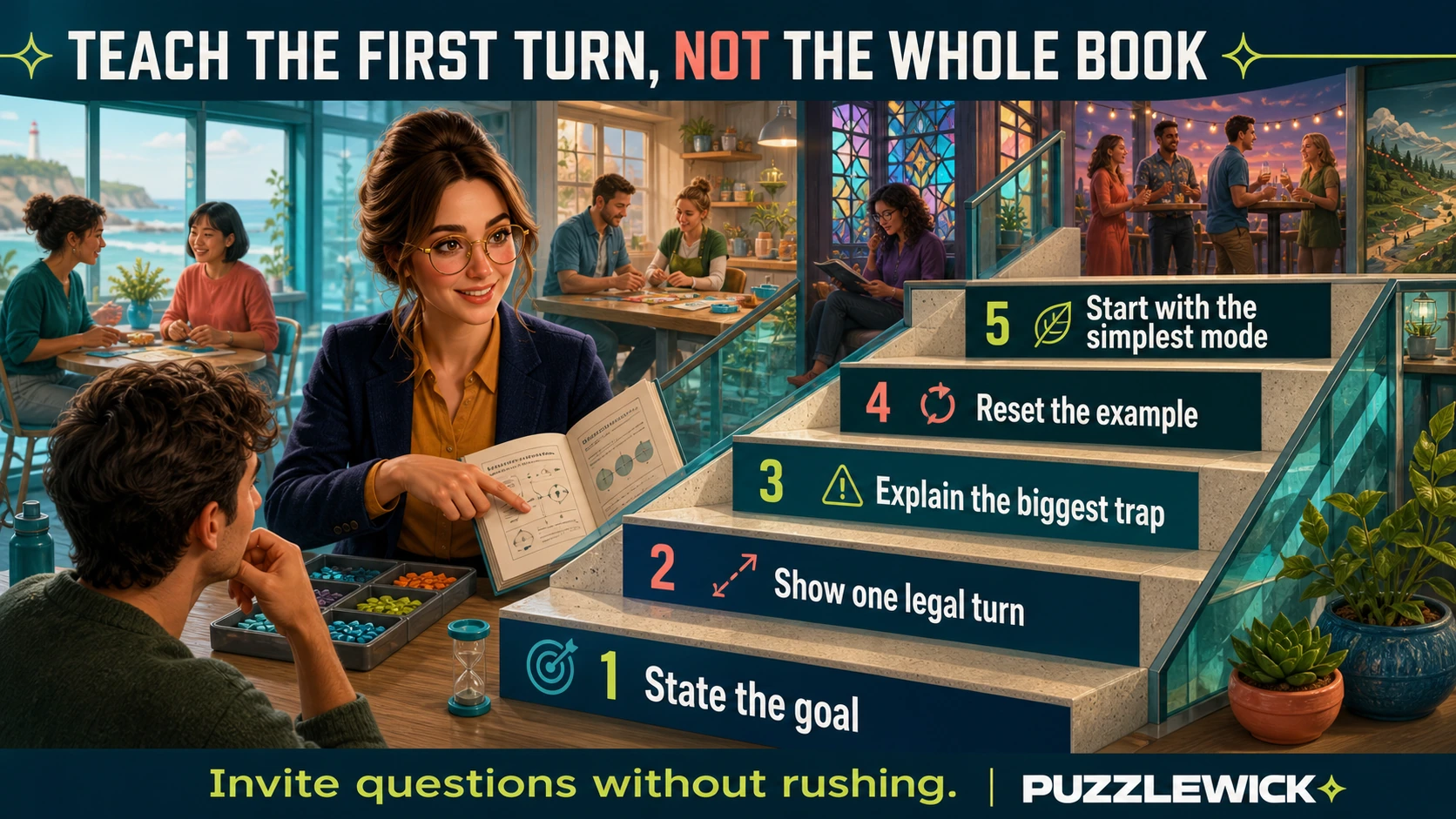
A gentle story still needs a social agreement. Some players want to optimize a village. Others want to make a whimsical choice and see the result. State which kind of evening you are having before an apparently inefficient building becomes a family meeting.
Share the village: rotate the reader, ask the quieter person for a preference before deciding, and agree who places a permanent sticker. A cooperative label does not automatically stop one confident player from running the table.
Choose solo when: you want full control of the story or a quiet session at your own pace. Choose a group when: debating a village's future is part of the fun. Keep the current state together between sessions, following the game's packing instructions. The goal is to return to your village, not spend the next evening rebuilding your filing system.
Cozy Stickerville: unpack slowly and preserve the story
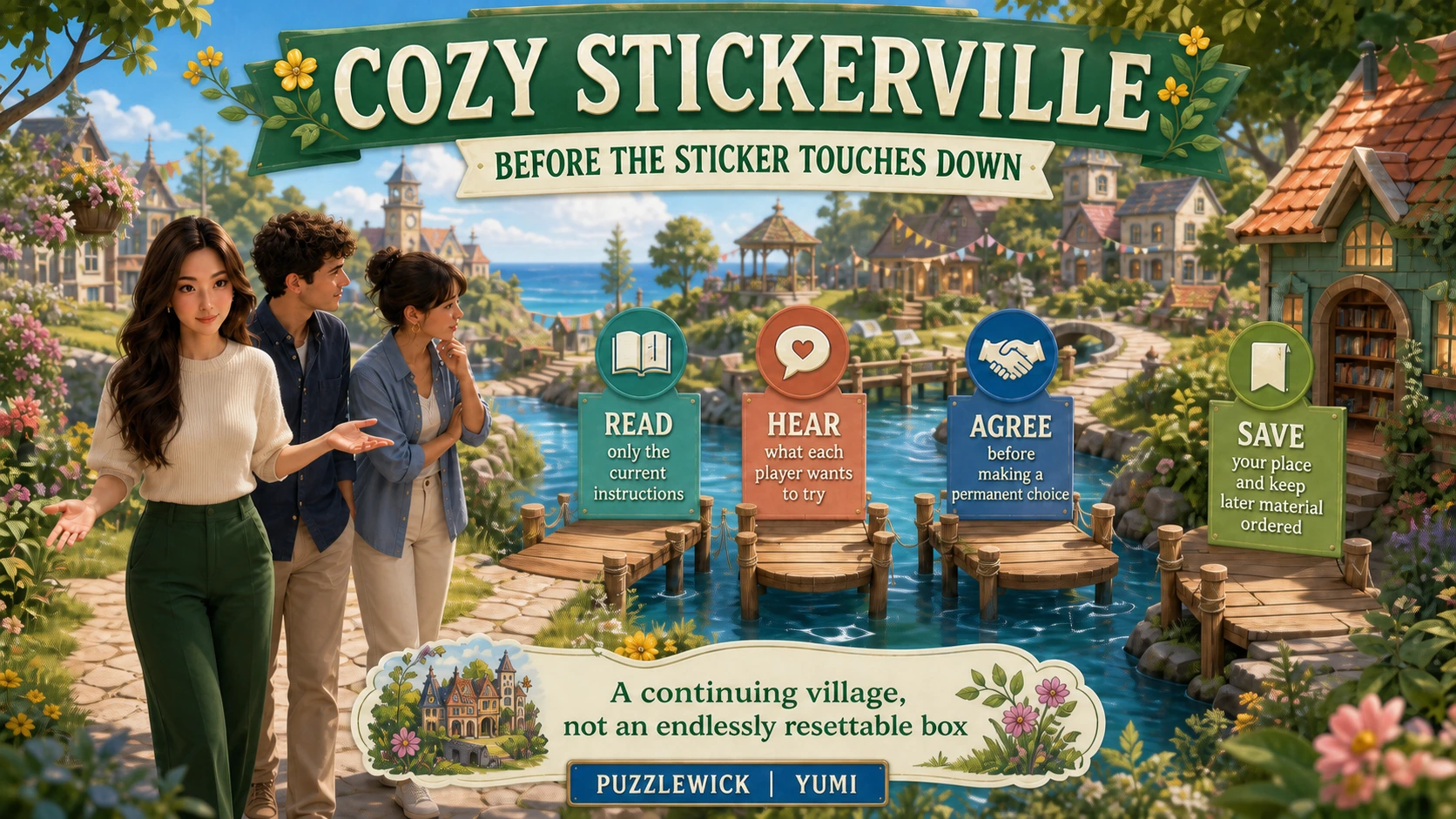
Do not empty every story component onto the table in the spirit of being helpful. Follow the official setup, keep later material in its intended order, and let the game introduce discoveries. This is a village to grow into, not a filing cabinet to solve in advance.
At the end of a session, take a moment to record where you stopped and repack the material deliberately. For a returning family group, begin next time with a short recap of the last choice. For solo play, you can take your time reading without negotiating whose idea wins. Neither is the more legitimate way to enjoy it.
3. The Two Towers Trick-Taking Game: small box, cooperative concentration
Publisher: Office Dog. This standalone continuation of The Fellowship of the Ring Trick-Taking Game supports one to four players, with publisher guidance of about twenty minutes and ages ten and up. You do not need to own the first box simply to play this one. The story follows Tolkien's second volume through cooperative card challenges and character-specific demands.
A trick is a small contest in which players contribute cards under the applicable suit and character rules. The interesting question is not merely "can I win?" but "who needs this result for us to succeed?" That makes familiar card-playing instincts useful and occasionally treacherous.
First-game advice: demonstrate one legal trick with open information, then reset and follow the actual chapter's communication limits. Explain that constrained communication is the puzzle, not a sign that someone is being unhelpful. Read the current character conditions before assuming an old plan still works.
Buy it for: cooperative puzzle players and Tolkien readers who enjoy focused card play. Skip it for: a chatty group that dislikes information restrictions. See The Two Towers Trick-Taking Game on Amazon. Our Fellowship versus Two Towers comparison helps decide where to begin.
Do not confuse three different Middle-earth purchases
The Two Towers Trick-Taking Game is not Magic's The Hobbit release, not The Lord of the Rings: The Card Game living card game, and not the larger Fate of the Fellowship cooperative board game. Shared characters do not imply shared components, expansions or rules.
The useful accessories here are modest: sleeves of the correct measured size if you expect heavy shuffling, a clean table, and a storage arrangement that keeps the chapter material organized. A Magic-branded deck box is not evidence of compatibility. Check dimensions before buying, and keep spoiler-bearing cards separate.
Two Towers: set up the chapter you are actually playing
The full contents photograph shows why chapter organization matters. A collection of cards is not yet a legal scenario setup. Put out only the material required by your current instructions and keep future challenges separate.
Teach one trick, then reset. Explain the basic suit-following idea without promising that familiar scoring or communication conventions apply. Use open information for the example; switch to the chapter's actual restrictions when play begins.
For solo play: follow the dedicated solo procedure. A one-to-four-player label does not mean the normal multiplayer setup works unchanged at every count. For a group, the interesting question becomes who needs a particular result, not simply who can win the most tricks.
Two Towers: your character condition is part of the puzzle
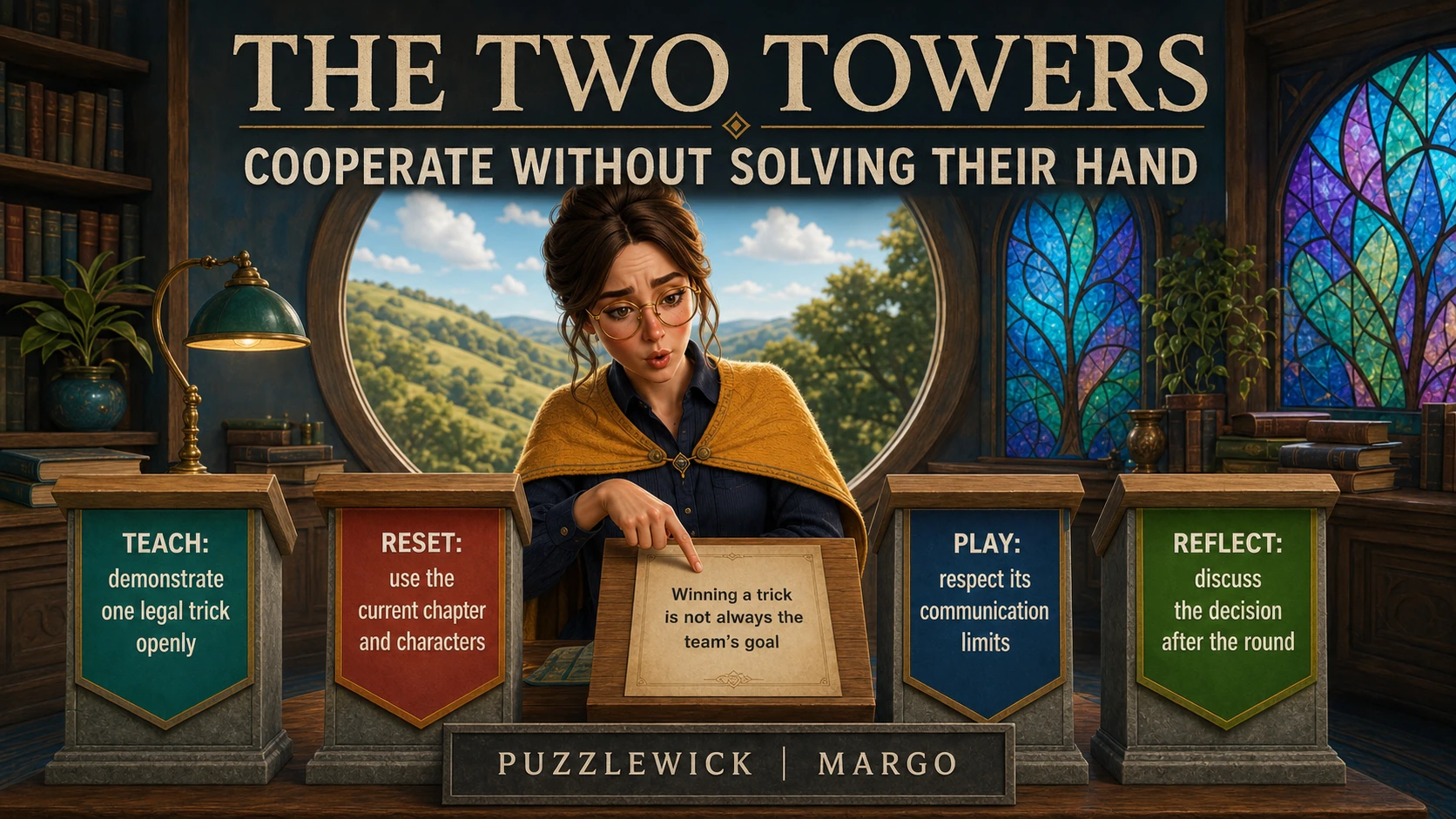
The characters are not merely alternate portraits on identical player aids. Read the current objective and restrictions aloud when the rules permit it, then distinguish what everyone knows from what must remain private during play. A legal teaching example can use open information; the actual challenge may not.
When the table misses an objective, reconstruct the decision after the round instead of coaching another player's hidden hand during it. That preserves the puzzle and gives the next attempt a useful lesson. The real victory is everyone recognizing why the plan worked.
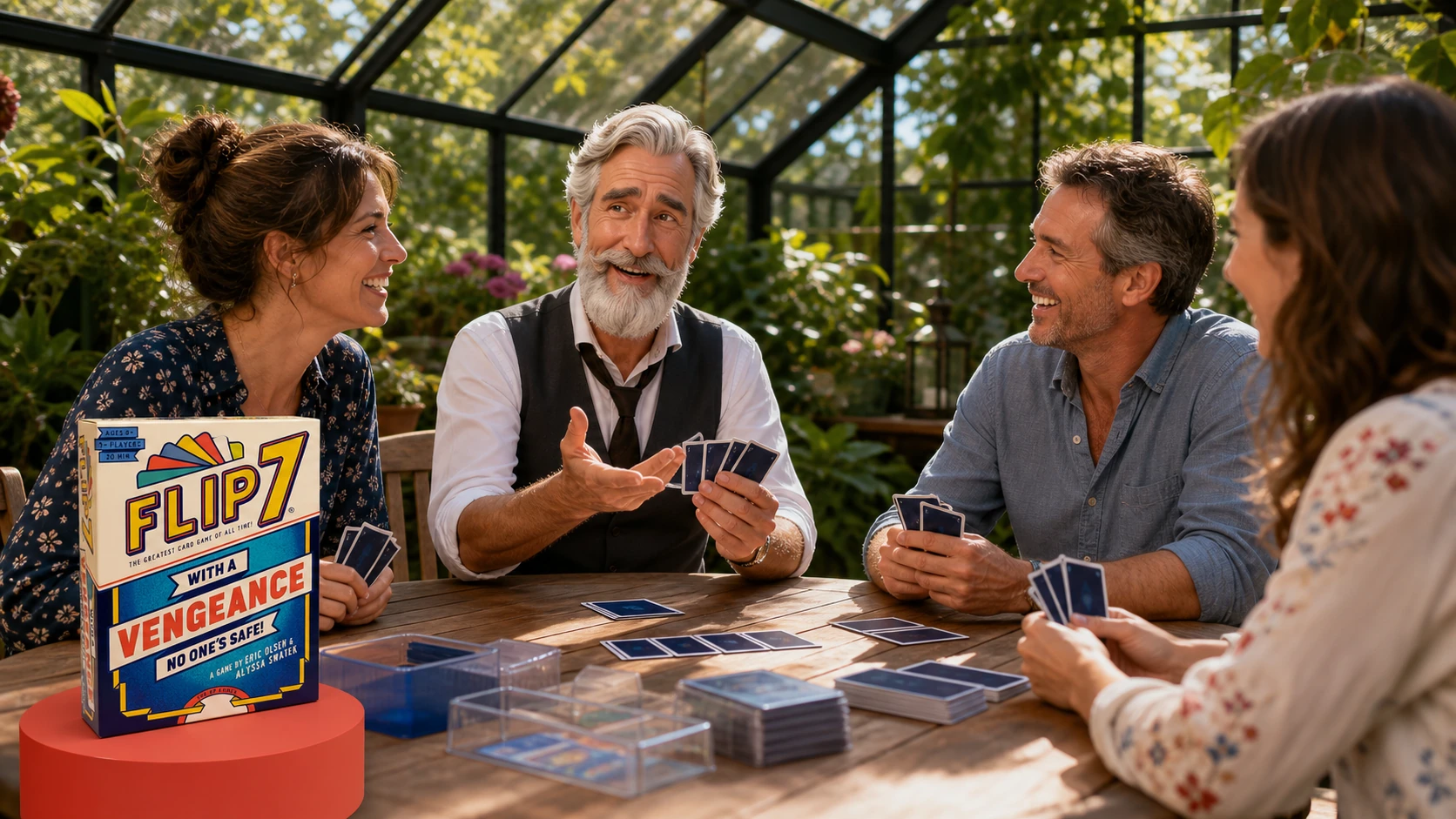
4. Flip 7: With a Vengeance: invite the cheerful troublemakers
Publisher: The Op. Players: 3+. Age guidance: 8+. Time guidance: 20+ minutes. This is a standalone sequel, not an expansion that requires the original Flip 7. Its 108-card deck retains the press-your-luck core: turn over cards without repeating a number, decide when to stop, and risk busting if you continue.
The sequel adds sharper direct interaction: special cards can steal, force additional draws or cut a score. This is the important buying distinction. More interaction can be exactly what your party wants, or exactly why somebody stops enjoying the game.
First-game advice: teach busting and banking before introducing every special-card edge case. Remember that number frequencies differ: there is one 1, two 2s, three 3s and so on. Your risk is not captured by simply counting how many different numbers you already have.
Buy it for: a sociable group that enjoys sudden reversals and being targeted. Choose something else for: players who feel singled out by take-that effects. See Flip 7: With a Vengeance on Amazon. Ask the group whether "meaner" sounds like a feature before checking out.
Flip 7: learn the decision before the special effects
The first decision: take another card, or keep what you have. Demonstrate that choice, then show what happens when a number repeats. Explain the special cards as they become relevant instead of beginning with a lecture on every possible calamity.
Why the risk is not uniform: the numbered cards have different frequencies. Cards already exposed also change what may remain. A row with several numbers is not enough information for a precise bust probability. Unless you are tracking the actual remaining deck, call your choice a judgment rather than dressing it up as exact mathematics.
Keep the practice round disposable. Let someone ask what a special card does before committing to the result. Then restart for the real game. Everyone should understand what banking, busting and being targeted feel like before the score matters.
The Vengeance cards change the social contract
The official display shows Swap, Flip Four, Steal and Discard alongside the numbered cards. You do not need to memorize every interaction to see the buying implication: other players can interfere with a comfortable position.
That can make a familiar press-your-luck night feel wonderfully unruly. It can also turn a relaxed family game into an argument if someone thought they had bought a quiet number puzzle. Describe the interference before asking a newcomer to join. Being clear about the tone is a better hosting skill than announcing that someone should simply be less competitive.
Make the targeting funny, not personal
Use a brief practice round if the group is new. Read a special card together, resolve it, and let the affected player see why. Avoid making the newest person the automatic target while they are still learning what their options mean.
After one proper game, ask whether the interference made the evening better. If the answer is no, change the game rather than trying to persuade someone that their frustration proves the design is working. A host has more than one box available for a reason.
5. Dewan: two actions, a surprisingly demanding map
Designers: Johannes Goupy and Yoann Levet. Publisher: Space Cowboys. Players: 2-4. Age guidance: 10+. Time guidance: about 40 minutes. On a turn you either take two adjacent terrain cards or spend terrain cards to place a camp along a legal route. The action menu is short; the consequences depend on the map and your story objectives.
The crucial route detail is that the required terrain includes the starting and destination spaces, not only the spaces between. A plan that ignores either endpoint looks affordable until you try to execute it. The board supports only one camp per territory, so the shared map can turn a tidy private plan into a real race.
First-game advice: begin with the basic scenario, trace the entire intended route with a finger, and count the terrain cost before spending. Pursue objectives you can actually complete instead of collecting a beautiful but disconnected hand of terrain cards.
Retail caution: the English Amazon offer we inspected was an imported third-party listing with a substantial premium. The game earns consideration; that particular asking price does not earn an automatic recommendation. Compare the seller, delivery terms and current total, and wait if the premium is unreasonable. Check the exact English Dewan listing on Amazon. Do not accidentally buy the German edition because it appears nearby.
Dewan: the shared map needs shared reach
The setup is wider than the central terrain alone. Player boards, the terrain-card display, story material and tokens all need readable space. Place the shared card market where everyone can see the adjacent choices without standing up.
A practical rehearsal is to sit in each seat before the group arrives and trace a route on the map. If a player has to slide their board aside or reach across somebody's drink to see a territory, adjust the layout. That is a table problem, not a reason to buy a larger collection of accessories.
Dewan: count both ends of the route
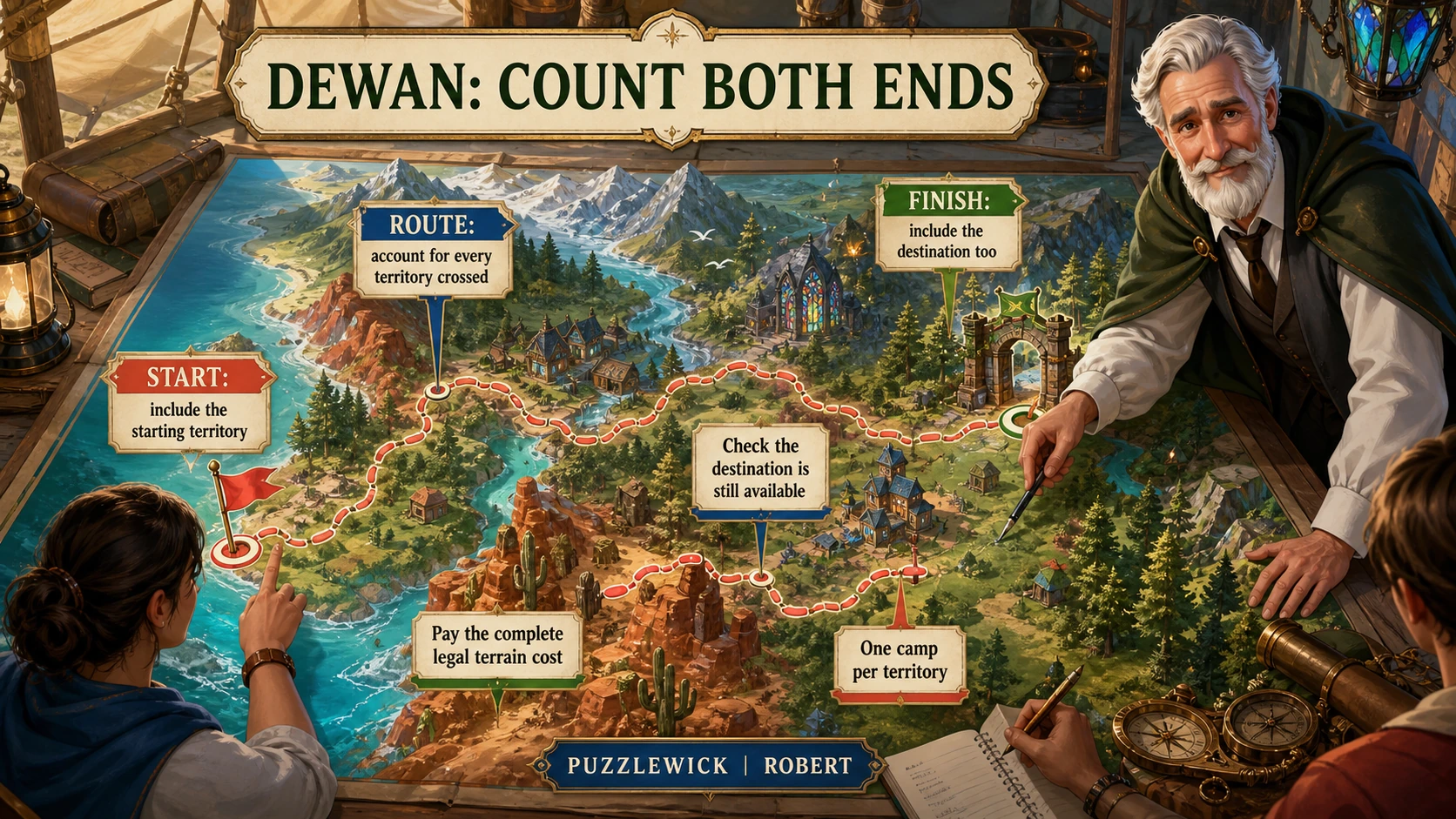
Trace a proposed route from the camp you are using to its destination. Account for the relevant terrain all the way through, including both endpoints, before committing cards. Do not count only the spaces that look like the journey between two already-important places.
The terrain illustration and its icons belong to the same rules object. Learn that visual vocabulary from the official rulebook, then practice a short legal route. Once that is comfortable, compare routes against your achievable objectives instead of taking attractive cards with no plausible destination.
Dewan: a destination can disappear while you plan
Only one camp occupies a territory. A promising route is therefore a plan, not a reservation. Before your turn, check whether the destination is still legal and whether the route still advances an objective you can finish.
For a first game, resist opening extra scenarios simply because they are included. The basic map already teaches terrain costs, placement and the pressure of a shared space. Add another scenario when everyone can explain why a camp was useful, not merely where it was allowed.
Why some fashionable boxes did not make the buying list
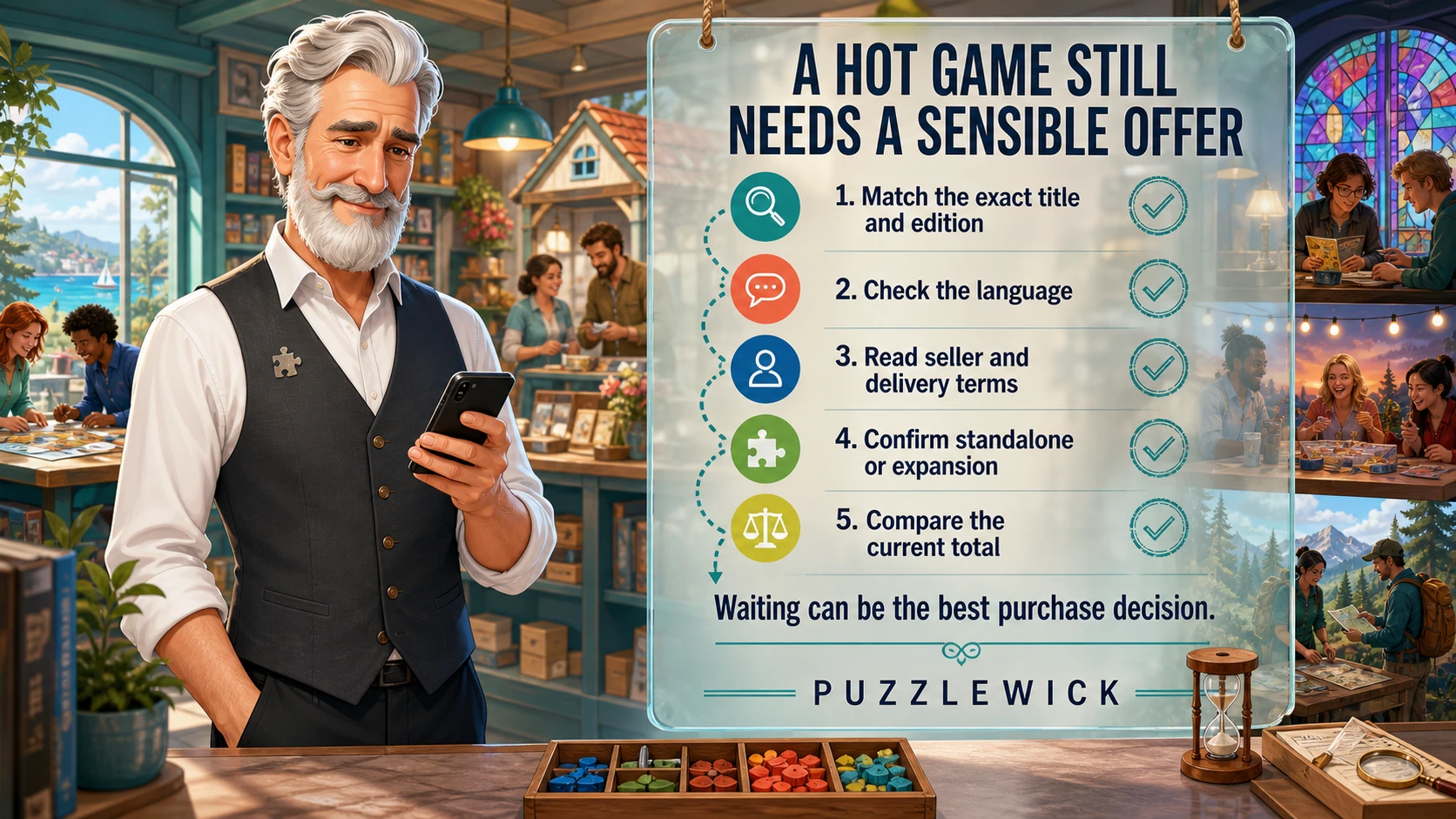
Rebirth remains an important game to investigate, including its 2026 Kennerspiel des Jahres recognition. But the older English Amazon listing checked for this guide was unavailable, and Mighty Boards has introduced a different International English Edition with adjusted component dimensions. We will not quietly link an unavailable edition or substitute an unrelated game with "Rebirth" in its title.
Likewise, BoardGameGeek Hotness tells us what people are opening and discussing on that site, not which game your group will enjoy or what a fair delivered price should be. Dewan was prominent in the August 27 snapshot; that justified investigation, not an unconditional purchase verdict.
A recommendation should survive both questions: "Would this be good for these people?" and "Is this exact offer a sensible way to obtain it?" If either answer changes, the recommendation changes.
The table kit: comfort, organization and no compulsory upsell
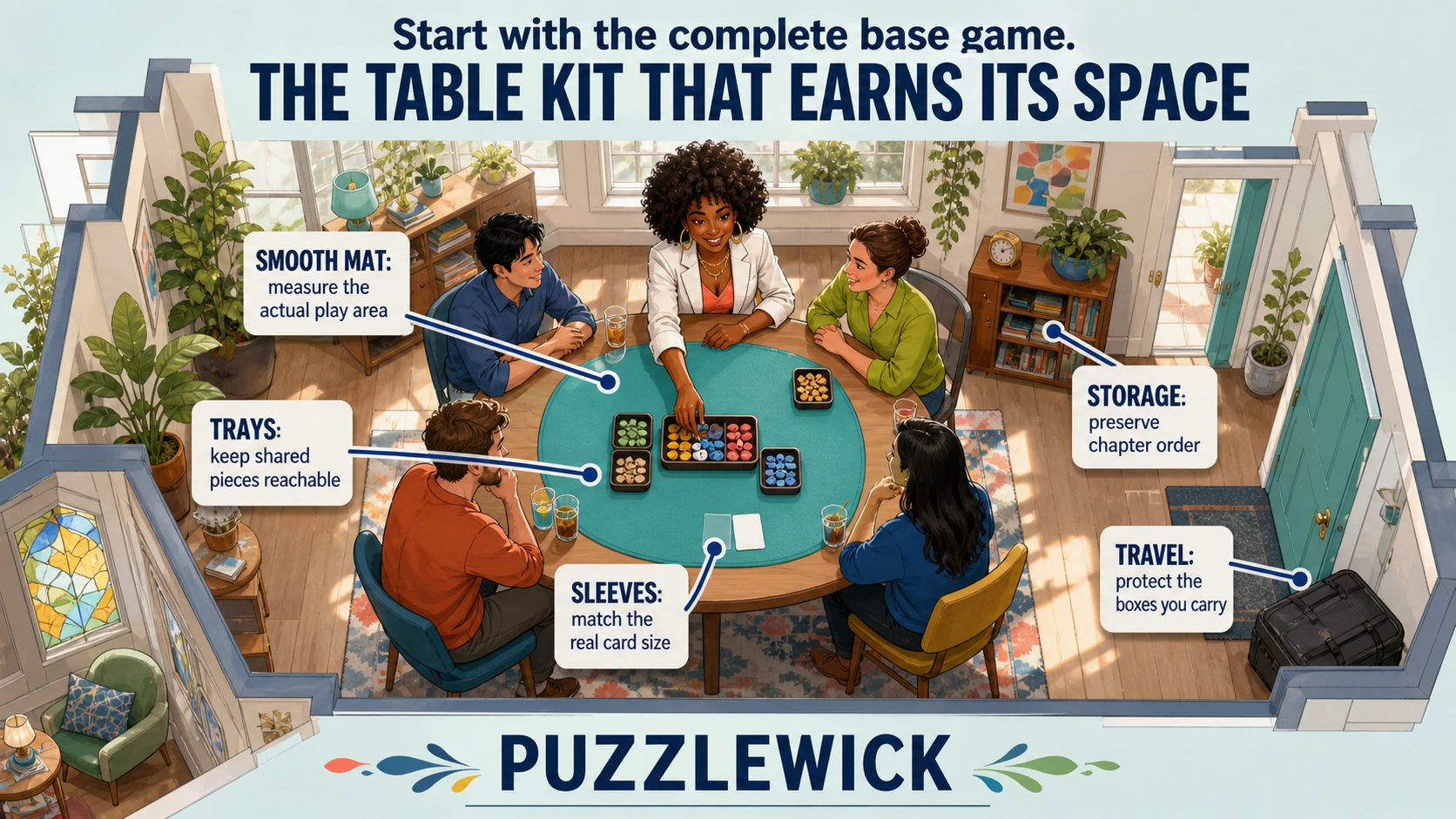
First, use what is in the box. Every game here supplies its play materials. Check the setup on your actual table before buying an insert, premium mat or transport bag.
- For cards that are awkward to lift: a smooth, appropriately sized illustrated mat can improve comfort. Measure the complete play area; a narrow TCG mat is not a board-game table.
- For loose tiles and markers: removable component trays can reduce sprawl. Keep distinct supplies separate and preserve any bags needed for random draws.
- For frequent shuffling: measure the cards before choosing sleeves, then check whether the sleeved deck still fits the box. Standard TCG sleeves are not a universal fit.
- For travel: a structured bag helps only if it fits the boxes you carry. Keep heavier boxes low, lids secured, and small card-game boxes away from crushing loads.
- For continuing stories: keep stickers, chapter material and saved state with their original game. Organization should preserve the next session, not reveal it early.
The optional tray below is an organizational aid, not a missing game component. Buy an upgrade after a repeated inconvenience identifies its job. A premium accessory should make the evening easier, not become the evening.
How to host a first night that people ask to repeat
Before guests arrive: learn setup, read the end condition, and practice one sample turn. At the table, explain the goal, demonstrate a turn, and name the one mistake most likely to confuse a newcomer.
- Sanibel: show a legal placement and why its shape or scoring matters.
- Cozy Stickerville: agree how choices and permanent stickers are shared.
- The Two Towers: distinguish an open teaching example from the restricted-information challenge.
- Flip 7: explain busting and targeted interference before anyone is on the receiving end.
- Dewan: trace a complete legal route, including both endpoints.
Leave breathing room beyond the box's playing-time estimate for setup, teaching and questions. After the first play, ask which moment people wanted more of. That answer is a better buying algorithm than an average rating. A collection becomes useful when you know what kind of evening each box delivers.
For the next three sessions: use the simplest recommended setup first; at the second session, let someone else explain a turn so you can hear what still feels confusing; after the third, decide whether you want more of this particular experience. Continue Cozy Stickerville's saved village rather than pretending its permanent choices can be reset. Add optional scenarios or accessories only when the group can name the extra pleasure or solved problem.
The picks
Some links below are affiliate links — as an Amazon Associate, Puzzlewick earns from qualifying purchases, at no extra cost to you. It never changes a pick.
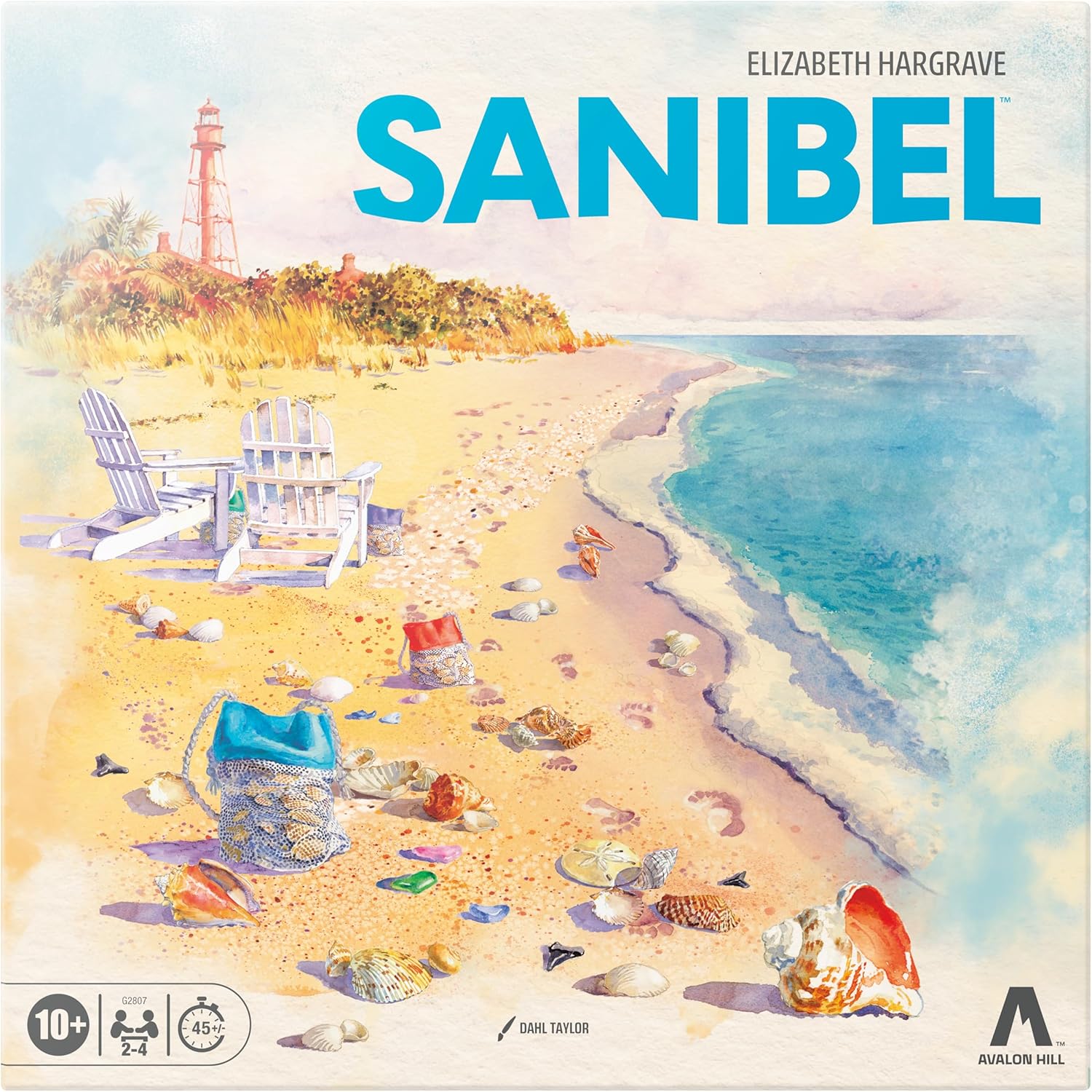
Sanibel
Elizabeth Hargrave's shell-collecting and placement game offers a clear theme and interesting personal decisions for two to four players.
- Clear collecting theme
- Included field guides
- Limited direct conflict
- Needs personal mat space
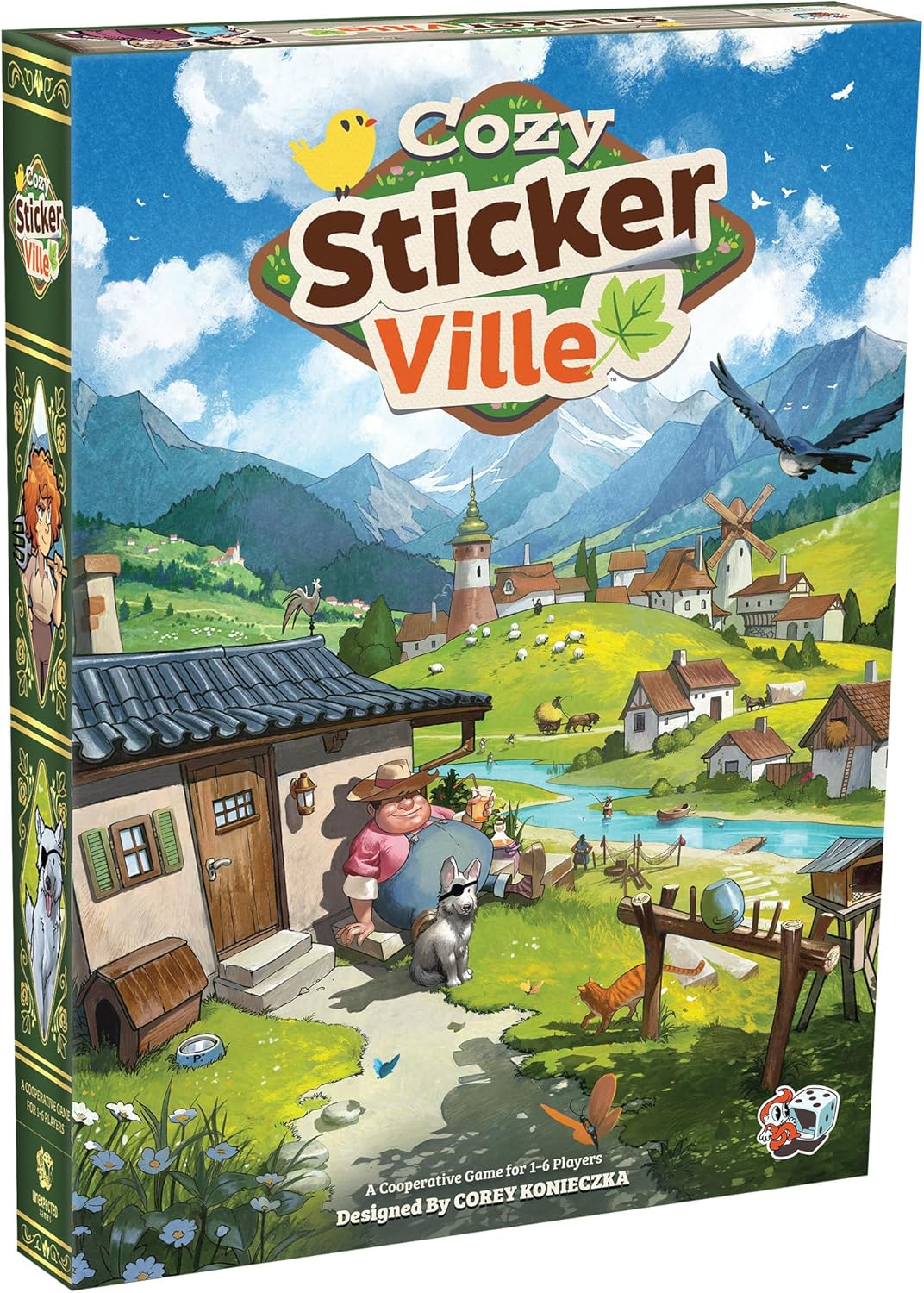
Cozy Stickerville
Create a village with stickers and choices that affect later sessions. The no-lose premise supports a low-pressure invitation.
- Solo to six players
- Approachable narrative choices
- Legacy permanence
- Large groups need shared decision-making
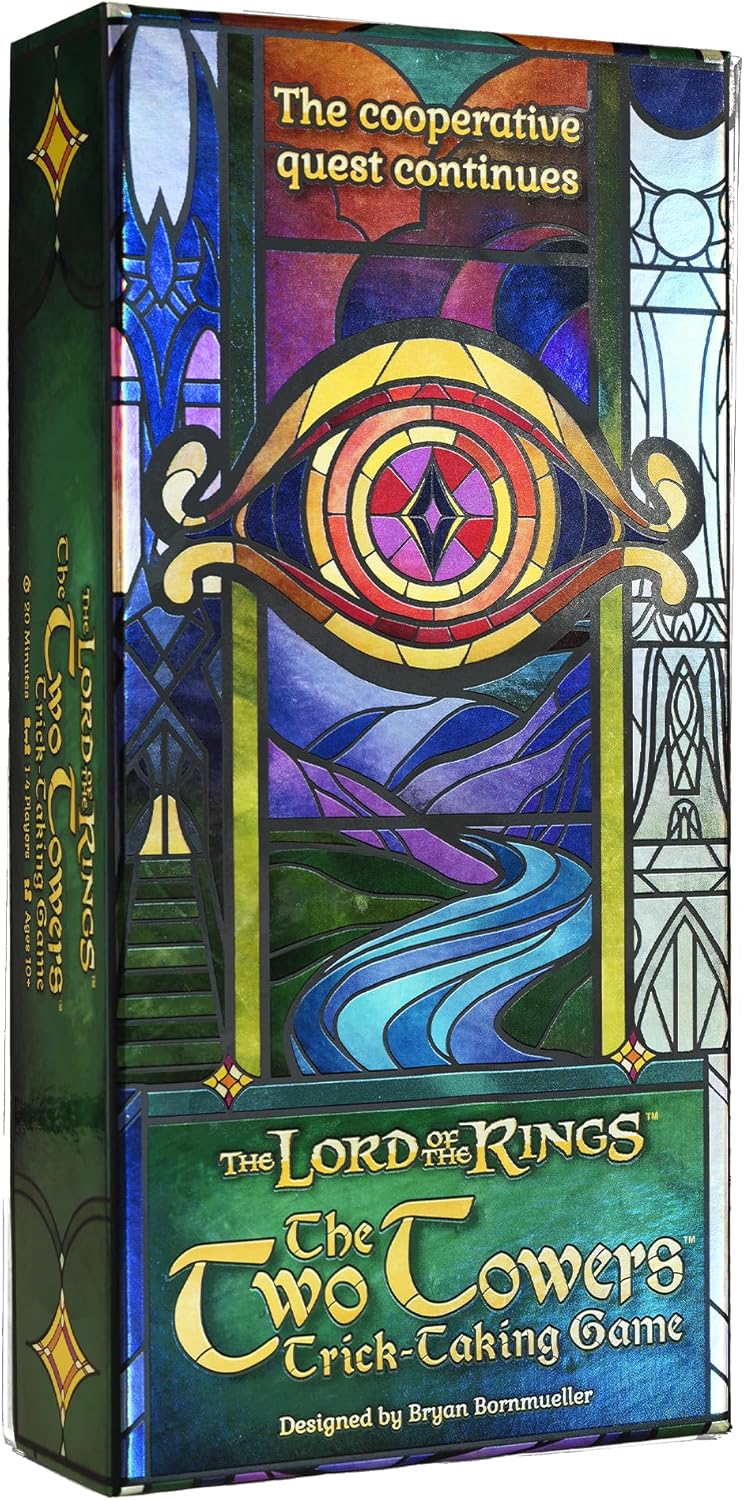
The Two Towers Trick-Taking Game
A standalone continuation with character objectives, constrained communication and multiple play modes.
- Standalone game
- Solo and multiplayer modes
- Communication limits are central
- Not a freeform story roleplaying game
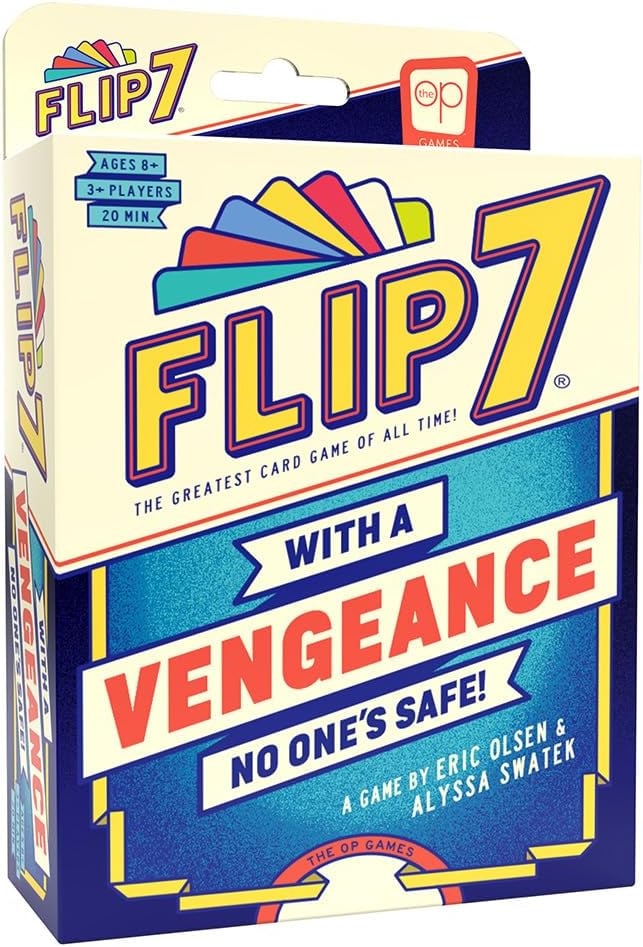
Flip 7: With a Vengeance
A standalone 108-card press-your-luck sequel with stealing, forced draws and negative modifiers.
- Quick core concept
- No original game required
- Luck remains substantial
- Direct targeting is not for everyone
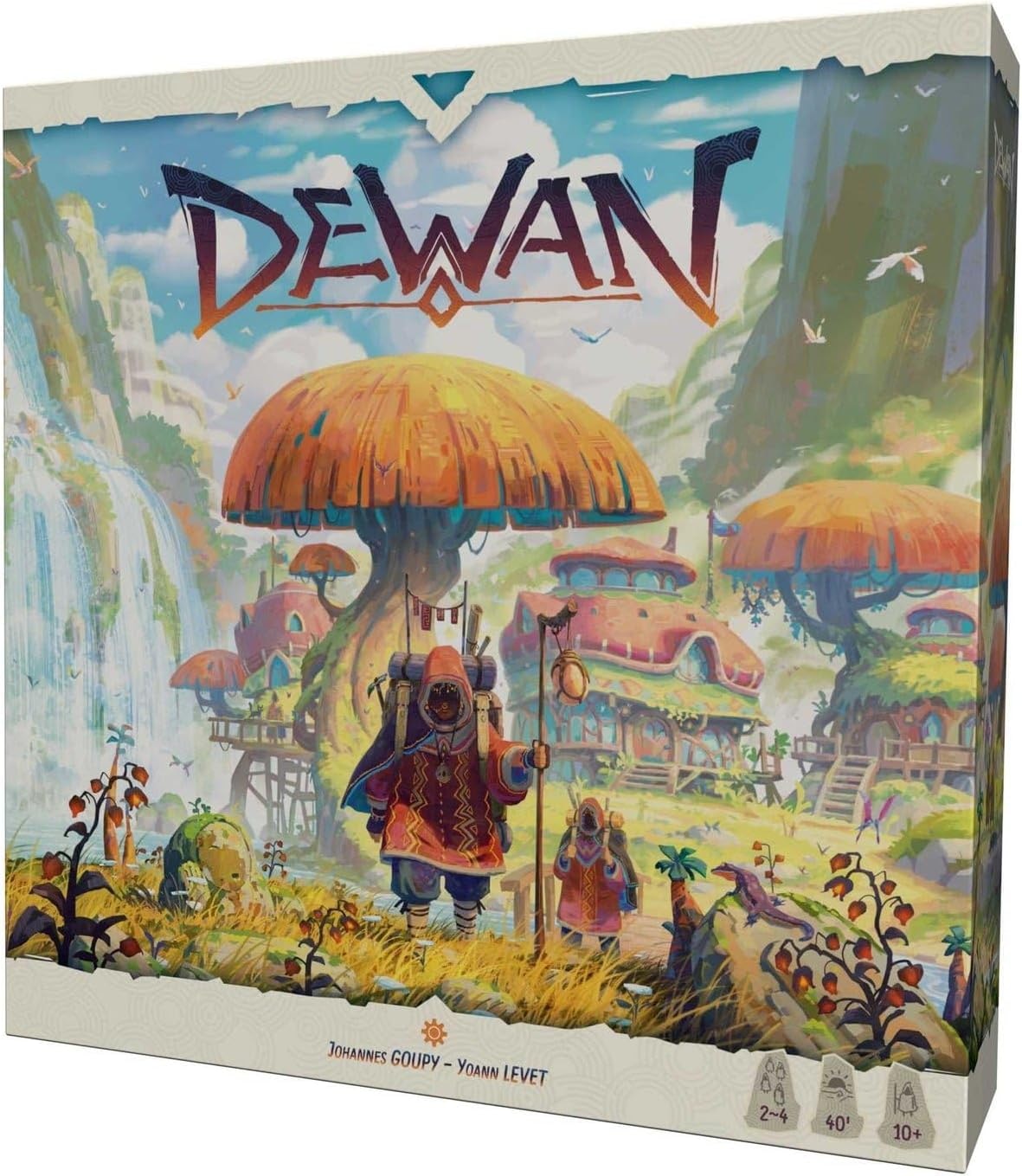
Dewan - English Edition
Collect terrain cards or spend them on camp routes while racing for objectives on a shared map.
- Two clear turn choices
- Basic and additional scenarios
- Current import offer needs caution
- Route endpoints are easy to miscount
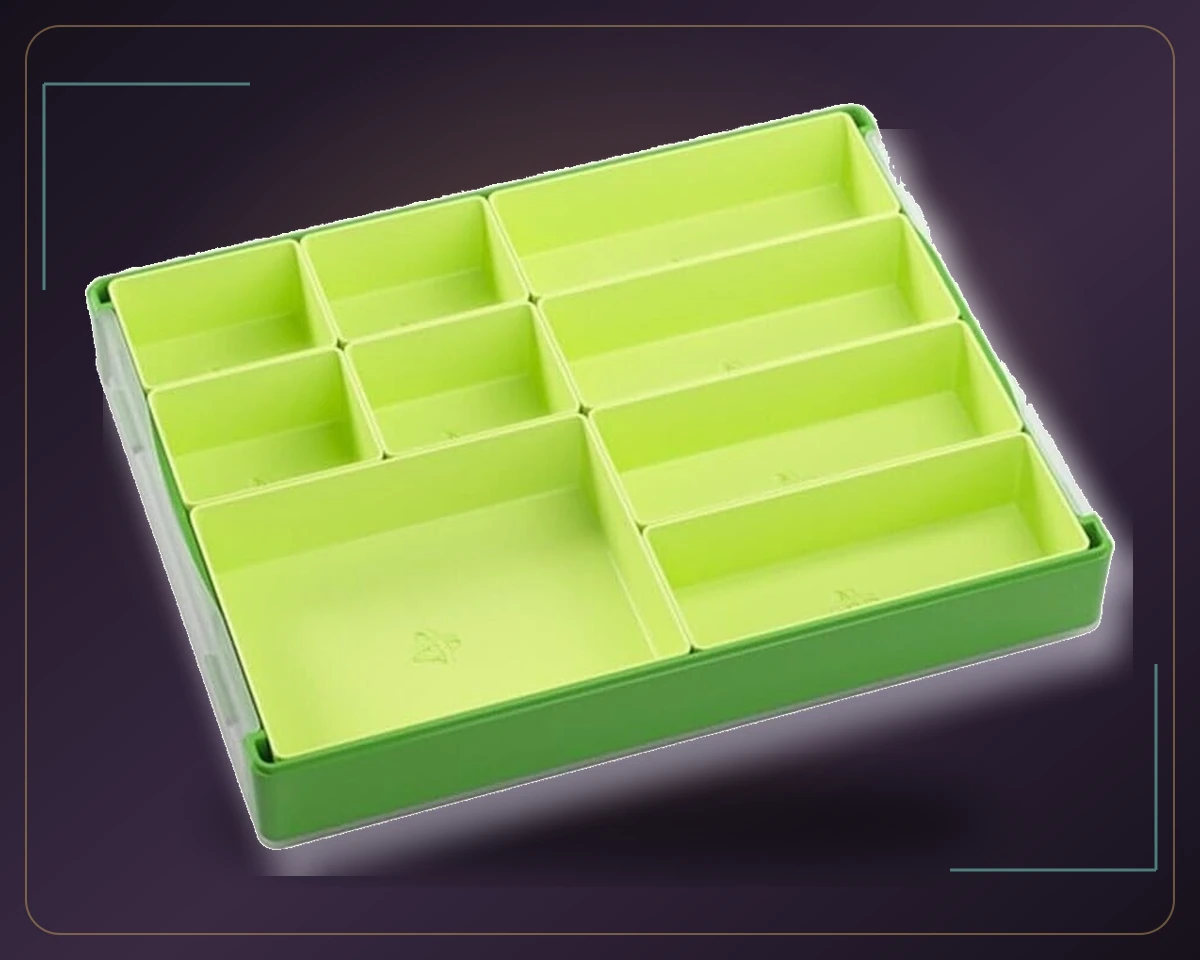
Gamegenic Token Silo Convertible - Lime Green
Nine removable trays in three sizes let the host set out small components without a scattering of bags. This is optional organization, not a game-specific fitted insert.
- Removable trays can sit beside players
- Three tray sizes
- Adds a separate storage item
- Not necessary for every game on this list
At a glance
| Game | Players | Choose it for | Know before buying |
|---|---|---|---|
| Sanibel | 2-4 | Competitive spatial collecting | Needs room for each player mat; no direct-attack drama |
| Cozy Stickerville | 1-6 | A gentle continuing village story | Permanent stickers and decisions; not a normal resettable game |
| The Two Towers Trick-Taking Game | 1-4 | Focused cooperative card challenges | Communication restrictions; dedicated solo procedure; standalone |
| Flip 7: With a Vengeance | 3+ | Press-your-luck with direct interference | Not a two-player purchase; standalone sequel |
| Dewan | 2-4 | Routes, objectives and a shared map | Count both route endpoints; check English edition and import terms |
Free download — Five new games: game-night choice and first-teach companion
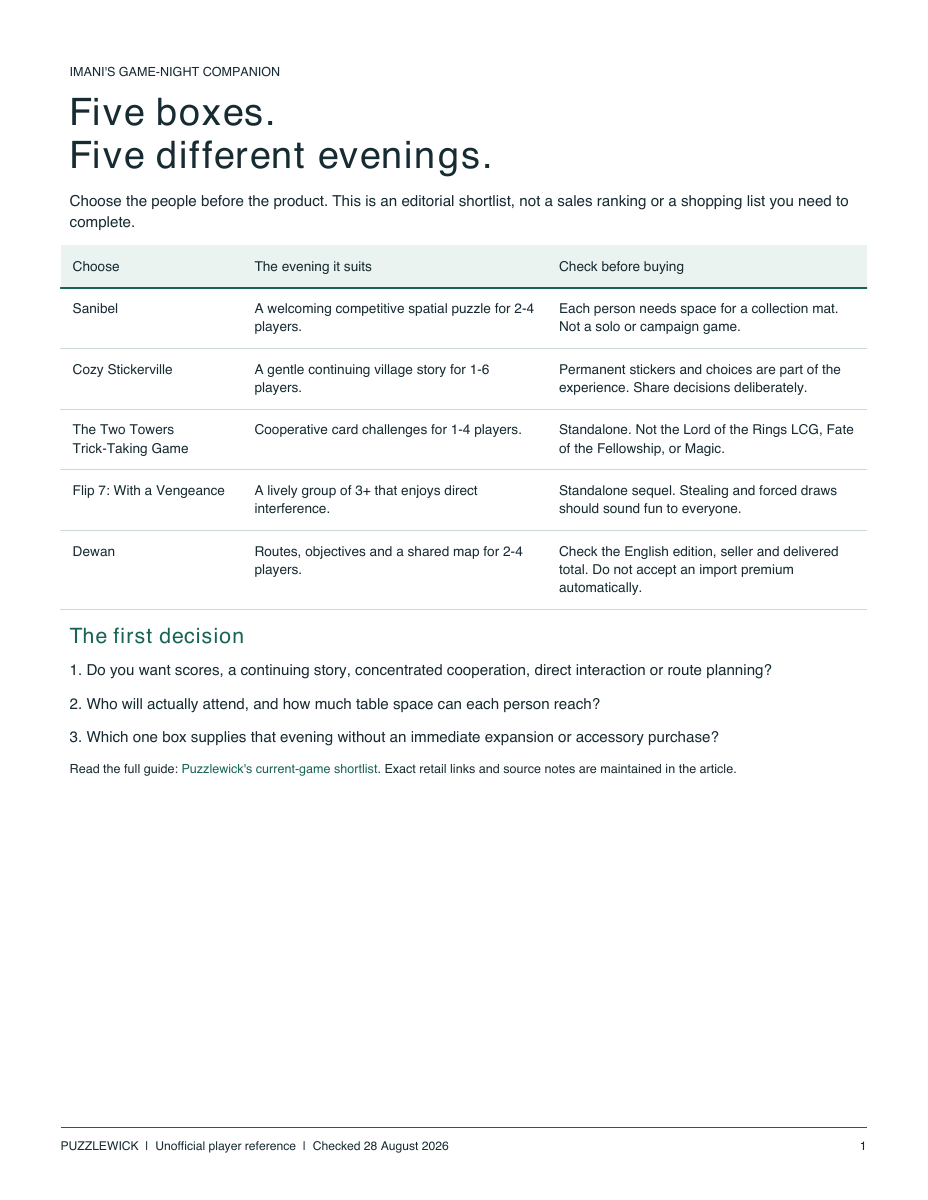
A printable table-fit comparison and first-night checklist. The official rules remain the rules.
Unofficial fan-made reference. Compiled by Puzzlewick from the sources listed on the sheet. Not affiliated with or endorsed by the publisher — always defer to the official rulebook.
Questions, answered
Which new board game is best for a mixed-experience family?
Sanibel is the competitive spatial-puzzle recommendation here; Cozy Stickerville is the low-pressure continuing-story recommendation. Choose based on whether the group wants scores or a shared evolving village.
Are these the five best-selling games of 2026?
No. This is an editorial shortlist matched to different types of game night. Publisher facts, community interest and exact retail offers inform it; we do not claim access to a complete industry sales ranking.
Can Cozy Stickerville be played solo?
Yes. Its publisher lists one to six players. Solo gives one person control of the village choices; larger groups need an explicit way to share decisions.
Can I reset Cozy Stickerville after using the stickers?
Do not buy it on that assumption. Permanent stickers and continuing choices are part of the product. Consult its rulebook for the specific campaign structure rather than treating it as a normally resettable board game.
Do I need The Fellowship of the Ring to play The Two Towers?
No. The Two Towers Trick-Taking Game is standalone. The earlier box can provide another experience, but it is not a required base game.
Is The Two Towers the same game as Fate of the Fellowship?
No. The Two Towers here is Office Dog's cooperative trick-taking card game. Fate of the Fellowship is a different, larger cooperative board game.
Does Flip 7: With a Vengeance need the original Flip 7?
No. It is a standalone sequel. Its notable difference is sharper direct interaction, including stealing, forced draws and score reduction.
What is the main beginner mistake in Dewan?
Miscounting a camp route by ignoring its starting or destination terrain. Trace and cost the whole route before spending cards, and begin with the basic scenario.
Should I pay an import premium for Dewan?
Not automatically. A popular game and a sensible offer are different questions. Check the exact English edition, seller, delivery terms and current total, then wait if the premium is not justified for you.
Do these games need expensive accessories?
No. Each base game supplies its own play materials. A correctly sized mat, small trays, suitable sleeves or a transport bag may improve comfort or organization, but should solve an observed problem.
Which of these games works with five or six players?
Cozy Stickerville supports one to six players and Flip 7: With a Vengeance supports three or more. Sanibel, The Two Towers and Dewan top out at four according to their publishers. Choose Cozy for a shared continuing story, or Flip 7 for a more competitive and disruptive evening.
Which games in this list support official solo play?
Cozy Stickerville and The Two Towers Trick-Taking Game list solo support. Follow their dedicated instructions; do not assume the normal multiplayer setup is unchanged. The other three products here are not sold as solo games.
Are these games equally easy to teach?
No. Our editorial distinction is the kind of learning involved: Sanibel needs a placement and scoring example; Cozy needs agreement about continuing choices; Two Towers needs trick-taking and communication rules; Flip 7 needs busting and special-card interaction; Dewan needs a correctly costed route. A short rules summary does not guarantee a shallow game.
Should I buy an expansion before my first game?
No expansion is required for any of these five purchases. In particular, The Two Towers and Flip 7: With a Vengeance are standalone games. Learn the base experience and confirm that your group enjoys it before adding more material.
Imani's verdict
Buy one game for a real evening. Sanibel is the gentle competitive invitation. Cozy Stickerville is the continuing village. The Two Towers is concentrated cooperation. Flip 7: With a Vengeance is the lively troublemaker. Dewan is the route puzzle, subject to a sensible current offer.
The goal is not to own five recommendations. It is to host the evening people mention next week.
Research ledger 15 sources · reviewed 2026-09-11
Specifications, rules, current product information, community experience, and contrary evidence were checked against the sources below. Commercial links are kept separate from editorial evidence.
- Gamegenic Token Silo Convertiblegamegenic.com/product/token-silo-convertible
- Sanibel official product informationwpn.wizards.com/en/products/sanibel?pubDate=20260116
- Cozy Stickerville official productasmodee.co.uk/products/ugcsv0101-cozy-stickerville
- Cozy Stickerville rulebookcdn.svc.asmodee.net/production-asmodeeca/uploads/2026/01/Cozy_Stickerville_Rulebook_English.pdf
- Asmodee 2026 tabletop catalogueasmodeena.com/TGCatalog2026-Web-5-4-26.pdf
- Flip 7: With a Vengeancetheop.games/products/flip-7-with-a-vengeance
- Flip 7: With a Vengeance rulescdn.shopify.com/s/files/1/0611/3958/3198/files/26_FLIP_7_VENGEANCE_RULES_C.pdf?v=1770853610
- Dewan official product and resourcesspacecowboys.fr/dewan-en
- Dewan official rulebookcdn.svc.asmodee.net/production-spacecowboys/uploads/2025/11/SCFC01_EN_DEWAN_RULES_20250611_compressed.pdf
- BoardGameGeek Hotnessboardgamegeek.com/hotness
- Rebirth International English Edition updatemighty-boards.blog/news/rebirth-evolves-with-a-new-international-english-edition
- Spiel des Jahres official awardsspieldesjahres.de
- Cozy Stickerville independent reviewopinionatedgamers.com/2026/02/06/dale-yu-review-of-cozy-stickerville
- Two Towers independent reviewgamesradar.com/tabletop-gaming/the-two-towers-trick-taking-game-review
- Current board-game recommendations discussionreddit.com/r/boardgames/comments/1vynf7s/daily_game_recommendations_thread_august_26_2026
If it didn't earn a shelf, it isn't here.



Keep exploring
The next smart rabbit holes.
◬ Universe HubMiddle-earth: the whole buying pathMiddle-earth is a shelf of very different journeys: premium LEGO architecture, strategic war games, and collectible card worlds....✦ Topic PathBoard Game Buying Guides: compare the whole shelfStart with the decision, not the shelf. These guides compare the games, editions, expansions, player counts, and costs people...Buying GuideSanibel vs Cascadia vs Harmonies in 2026: Which Cozy Nature Puzzle Wins?Sanibel, Cascadia, and Harmonies compared by rules, solo play, interaction, table feel, replay value, and the cozy puzzle your group will...