LOTR Fellowship vs Two Towers Trick-Taking: Which Box First, Solo Rules and Chapter Strategy
Kenji walks both cooperative campaigns in order: which box teaches better, how solo differs from group play, why Two Towers is harder, card-quality caveats and the exact two Amazon products.


AI-assisted research and drafting in Kenji’s voice · reviewed by Robert Pruitt · how this guide was made
Last editorial refresh: 2026-08-13 Gold-standard QA: 2026-07-25 13 sources reviewed Affiliate links checked during gold-standard pass

The short answer
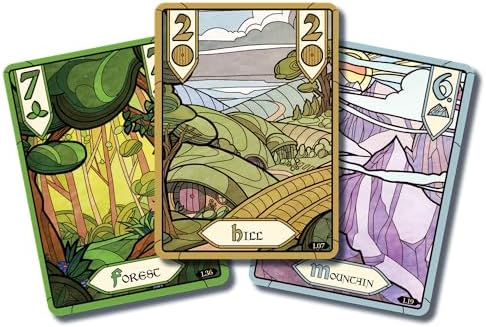
Buy The Fellowship of the Ring Trick-Taking Game first. It is the cleaner introduction and its chapter campaign establishes the system. Buy The Two Towers second for a harder sequel with five suits, tower effects and denser objectives. Both support solo and groups, but solo is an open-information logic puzzle while group play depends on constrained communication.
Decision map
Choose in thirty seconds
The required first walk
The richer sequel
These are not Lord of the Rings trivia decks wearing a game badge. They are real cooperative trick-taking campaigns in which character obligations turn ordinary suits into narrative problems.
Kenji checked both exact Amazon editions, the official Fellowship rules, current Two Towers reviews, solo reports, card-quality discussions and the community comparison with The Crew. The result is a chapter-order guide that tells a new fellowship where to begin and an experienced one whether the sequel is different enough.
Start here, then go deeper
You are in the right cabinet.
 ◬ Universe HubMiddle-earth: the whole buying pathMiddle-earth is a shelf of very different journeys: premium LEGO architecture, strategic war games, and collectible card worlds....⚔ Topic PathTwo-Player Board Games: compare the whole shelfThe best two-player game is designed around the duel rather than merely tolerating two people. This path separates sharp...
 Best OfBest Trick-Taking Card Games (2026): Modern Classics Beyond Spades & HeartsStep in from the cold — let me settle you at a table where centuries of kindness meet designs that bend the rules. A curator's tour of...
Should you buy Fellowship or Two Towers first?
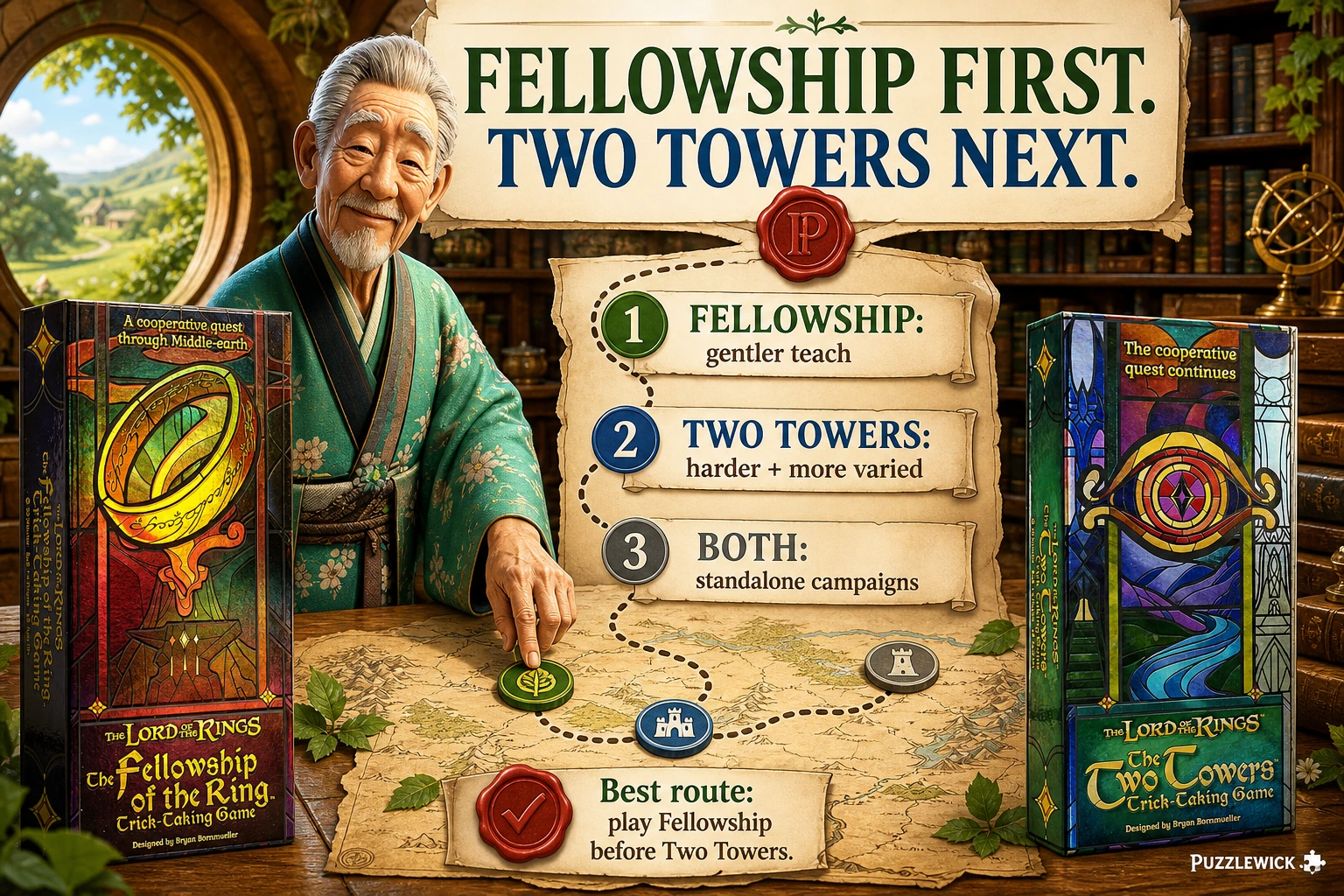
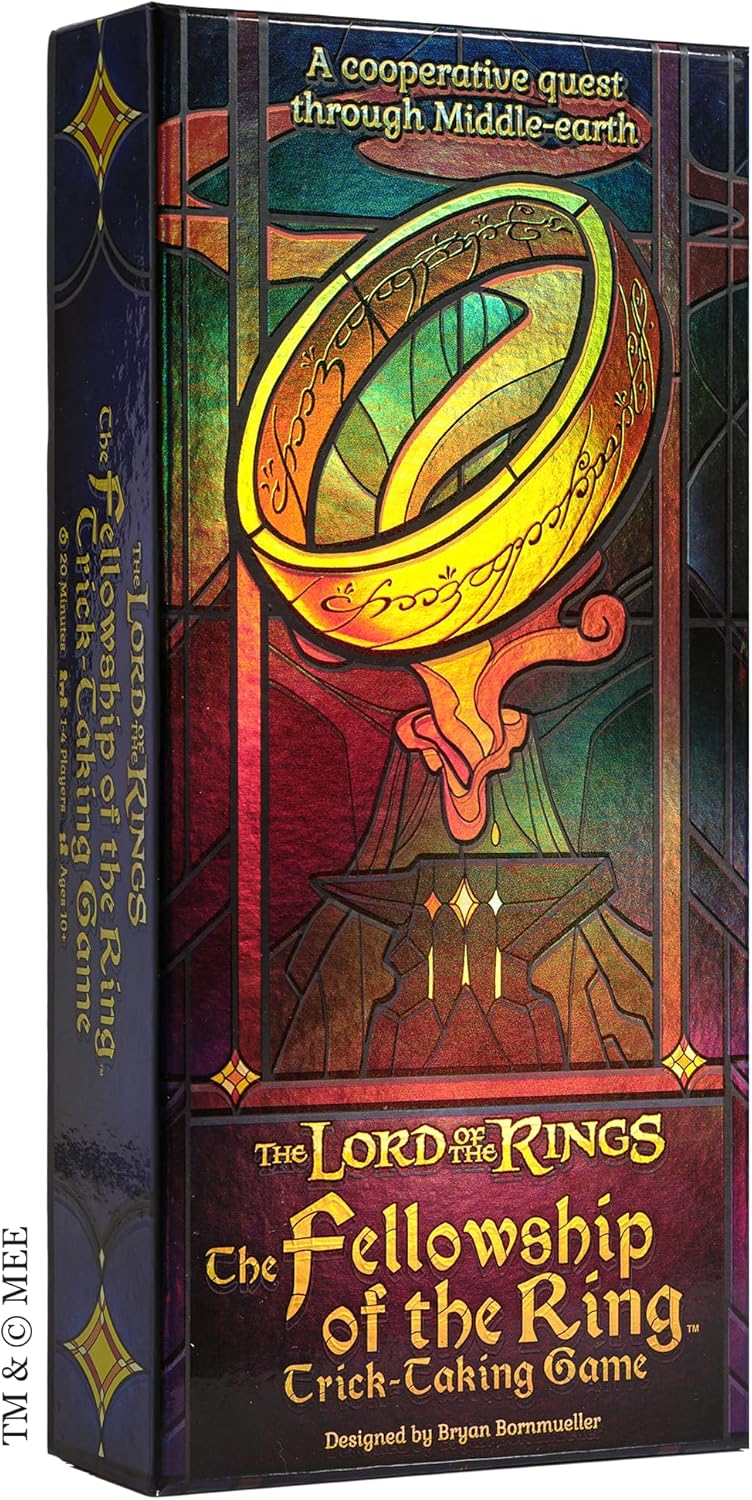
Fellowship first. The campaign introduces the trick-taking vocabulary, character objectives and communication limits in a deliberate arc. Two Towers assumes those muscles exist and spends its design space complicating them.
A sequel can be mechanically better and still be the wrong first purchase. Two Towers adds a fifth-suit environment and White Tower and Black Tower effects that can cancel or redirect ordinary assumptions. Experienced players often prefer that texture. New players can mistake it for arbitrary punishment because they have not yet learned how a chapter announces its pressure point.
Buy both only if the group already enjoys cooperative trick-taking. Otherwise buy Fellowship, finish several chapters and notice whether the table talks about the puzzle after the cards are packed. That conversation is the reliable signal that Two Towers belongs next.
Kenji’s spoiler-free route: Fellowship is the better teacher even when Two Towers is the more ambitious design. A sequel can be mechanically richer and still be the wrong place to learn the language.
What is in each box, and how does a chapter work?
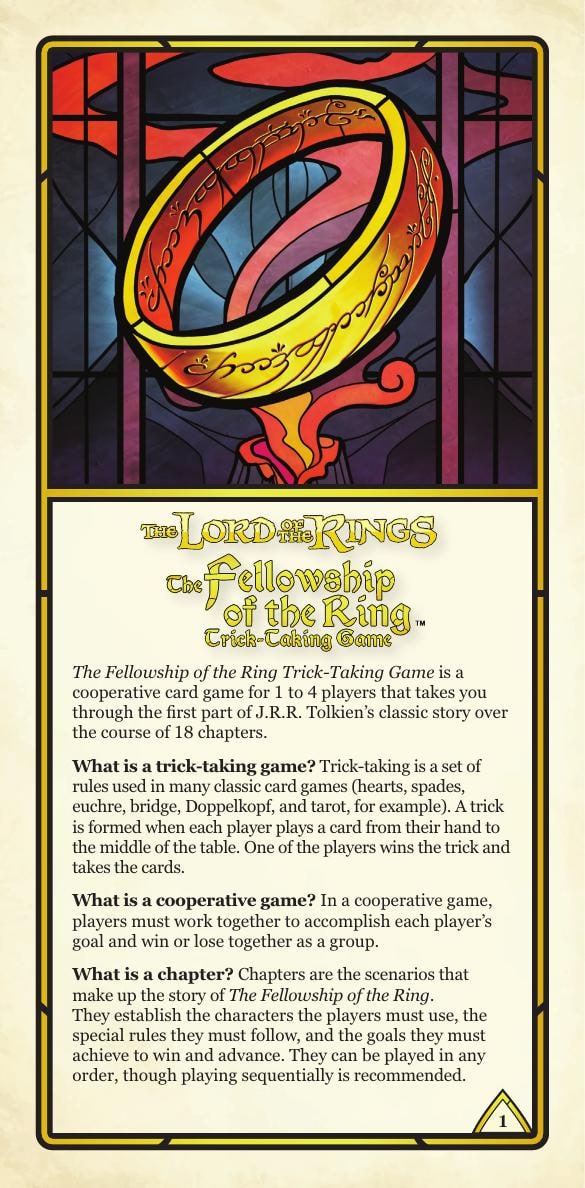
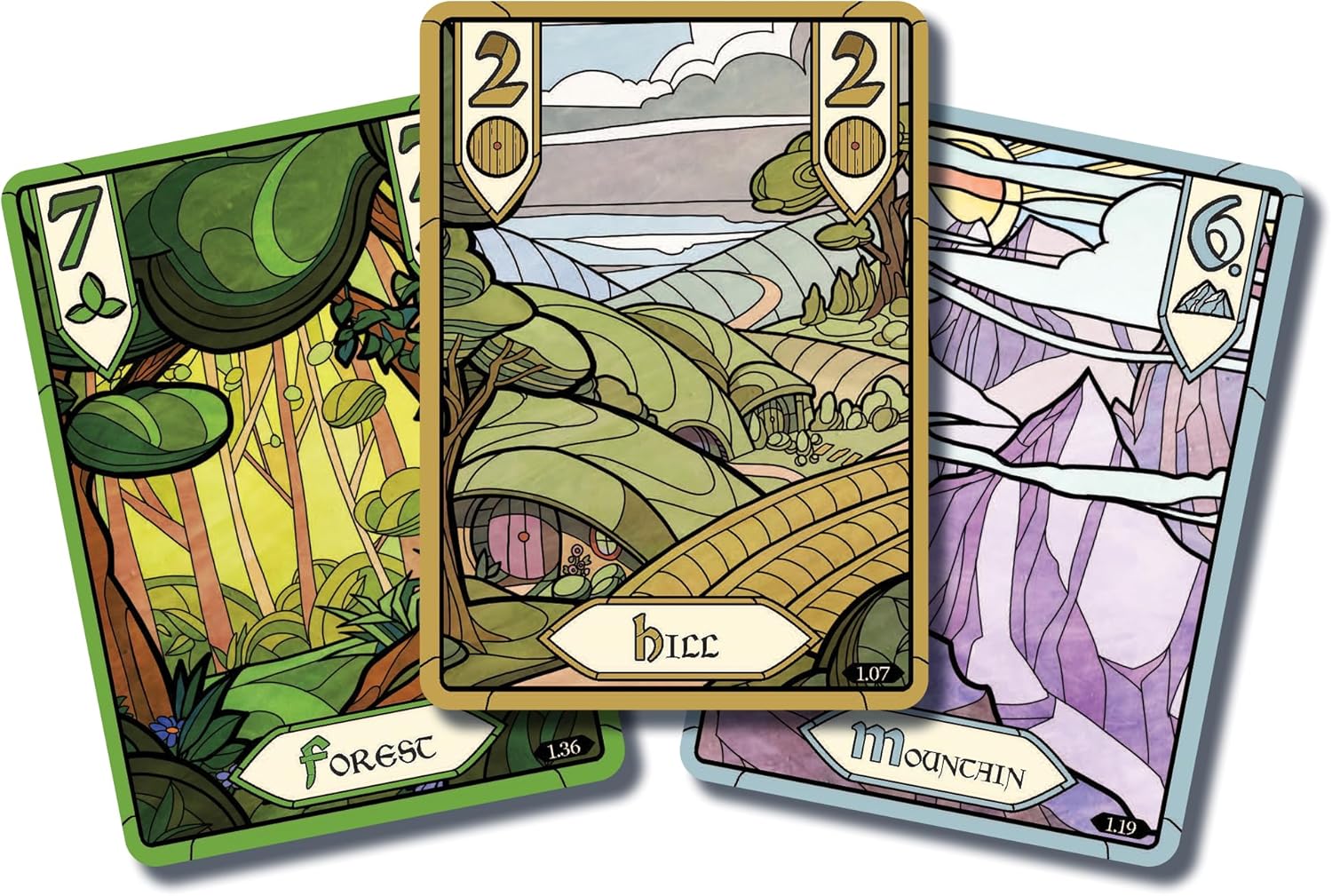

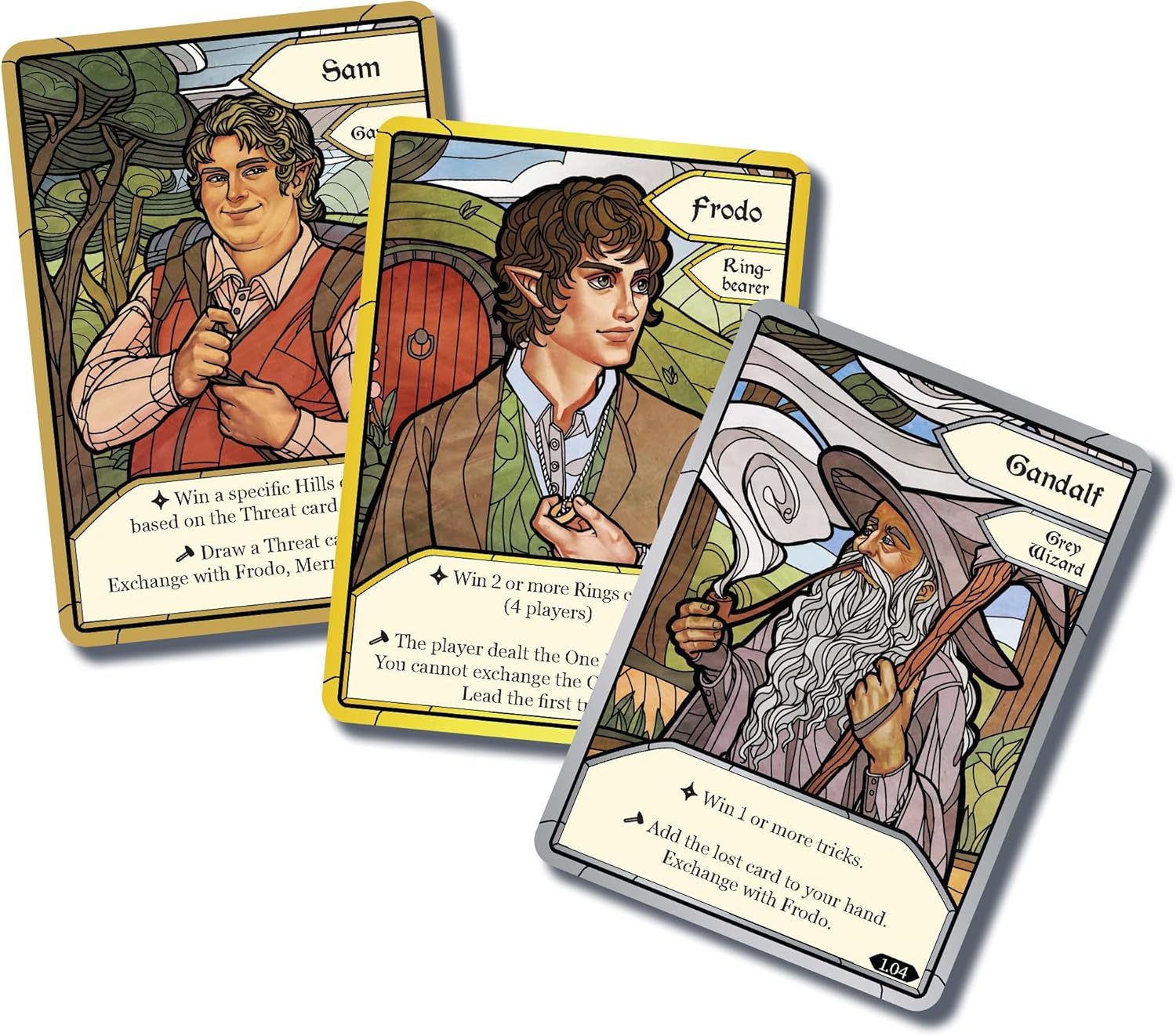
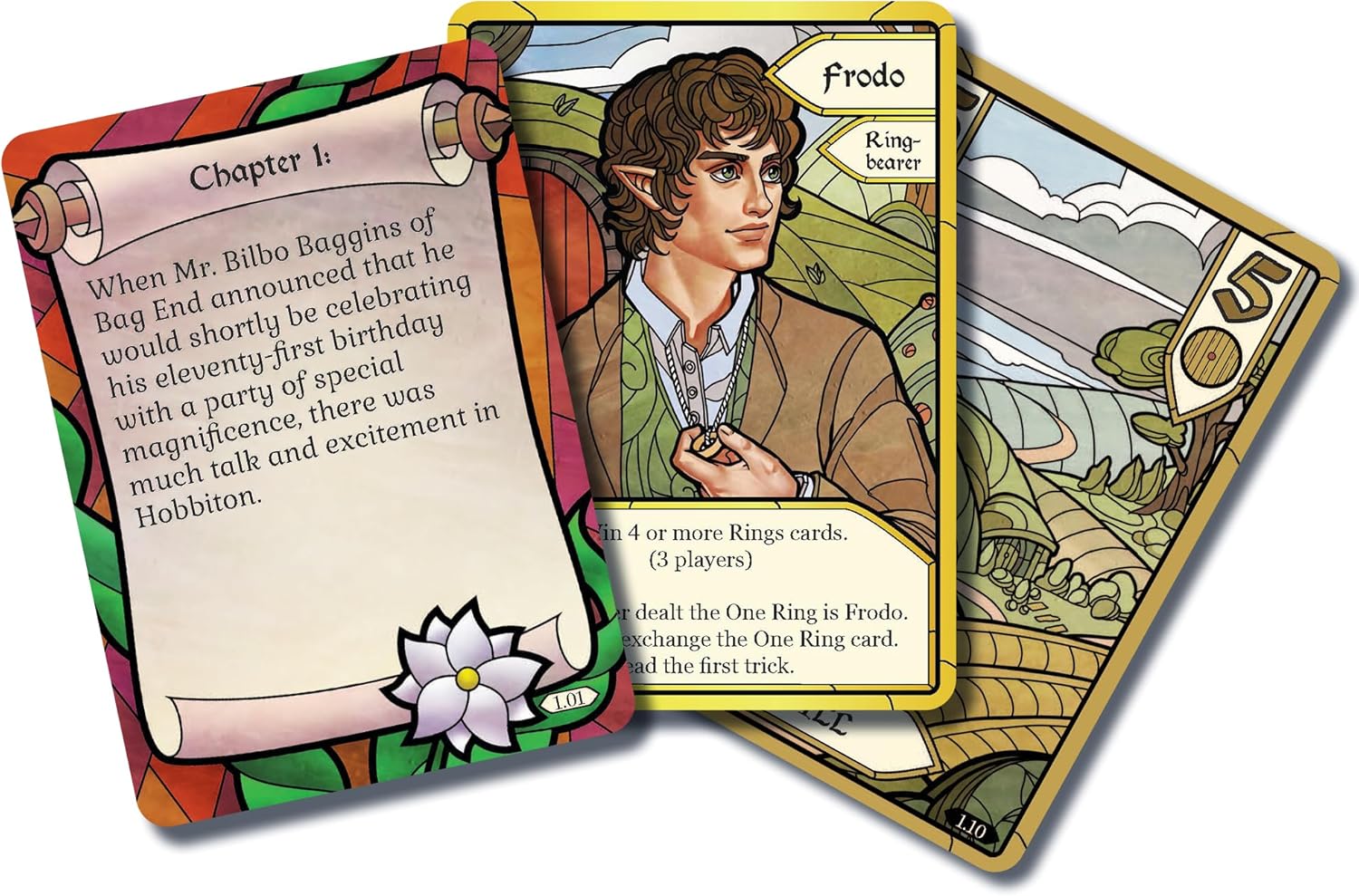
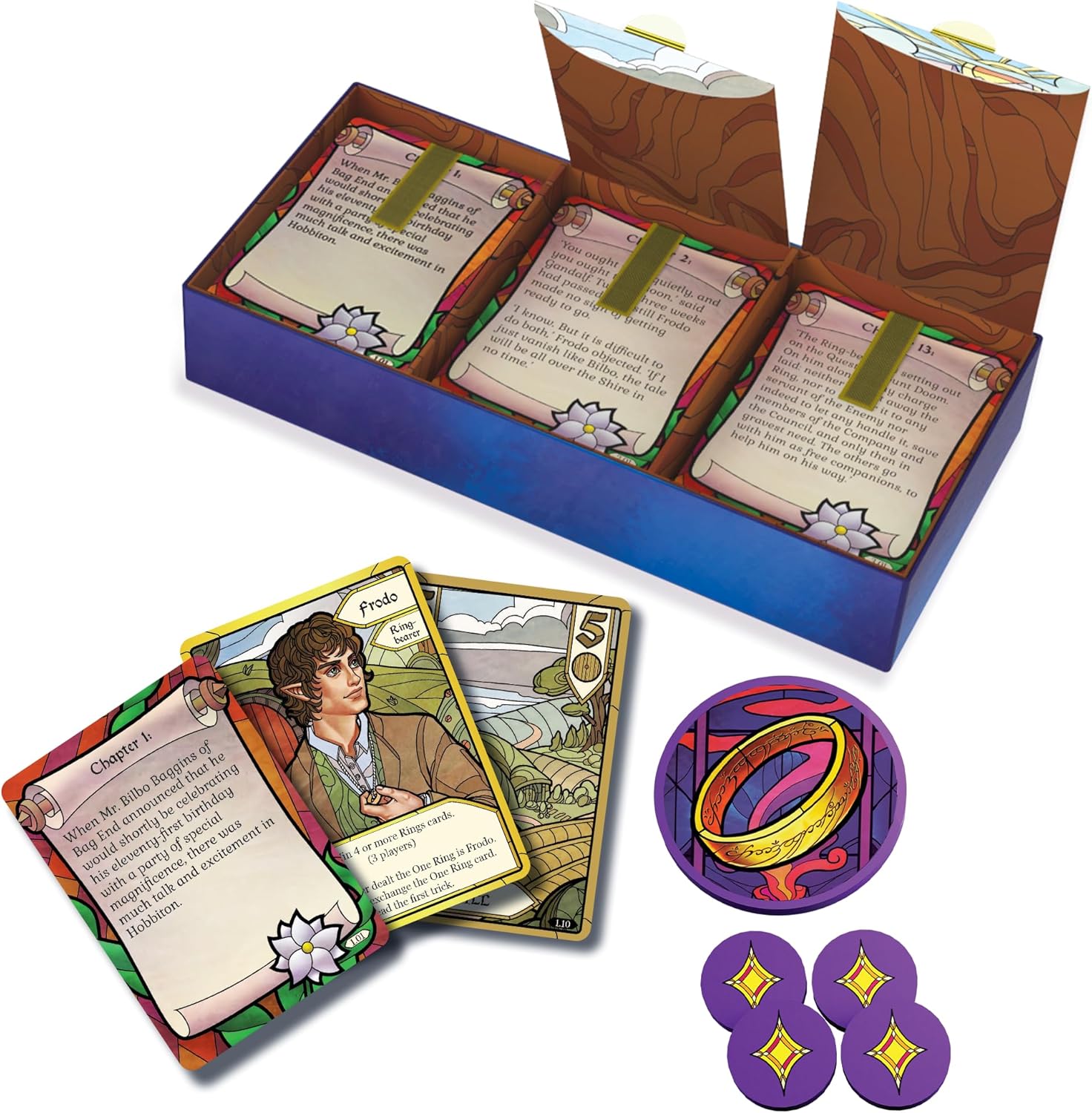
Each box is a compact campaign of cooperative trick-taking scenarios. Players receive character roles with conditions that alter who may win tricks, which cards matter and how success is measured. The chapter book changes the puzzle without requiring a new rules lecture every time.
A normal trick still begins with a lead card, requires players to follow suit when able and awards the trick according to the active hierarchy. The story layer changes what winning means. One character may need a particular card, another may be forbidden from taking a trick and the group may need several conditions to coexist.
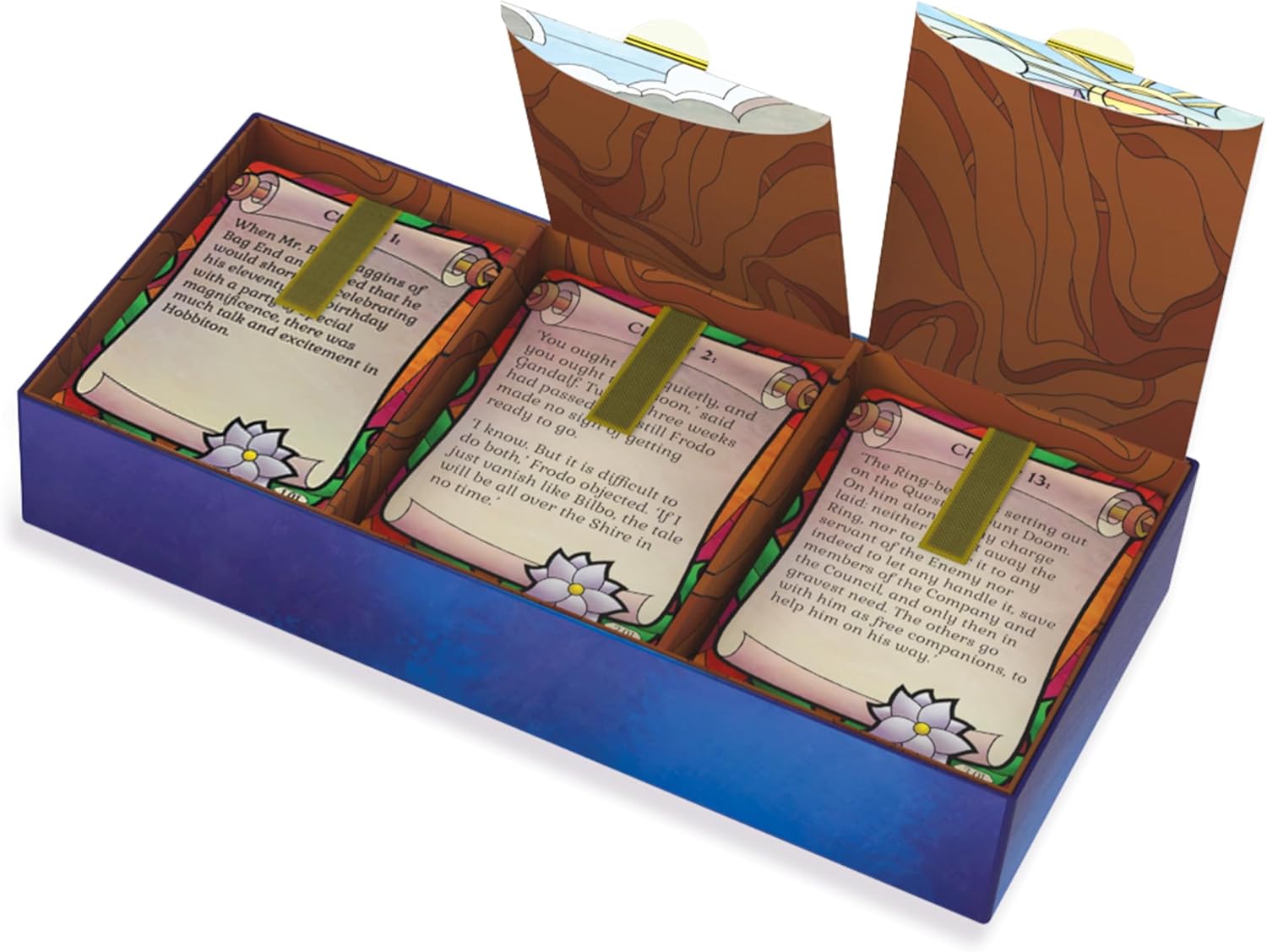
Sort chapter-specific materials before the first night and keep a small bowl for character markers. Do not read future objectives aloud for flavor; campaign discovery is one of the product values. Failure does not destroy anything. Reset, identify which condition the table misunderstood and try again.
What does Two Towers product contents show?
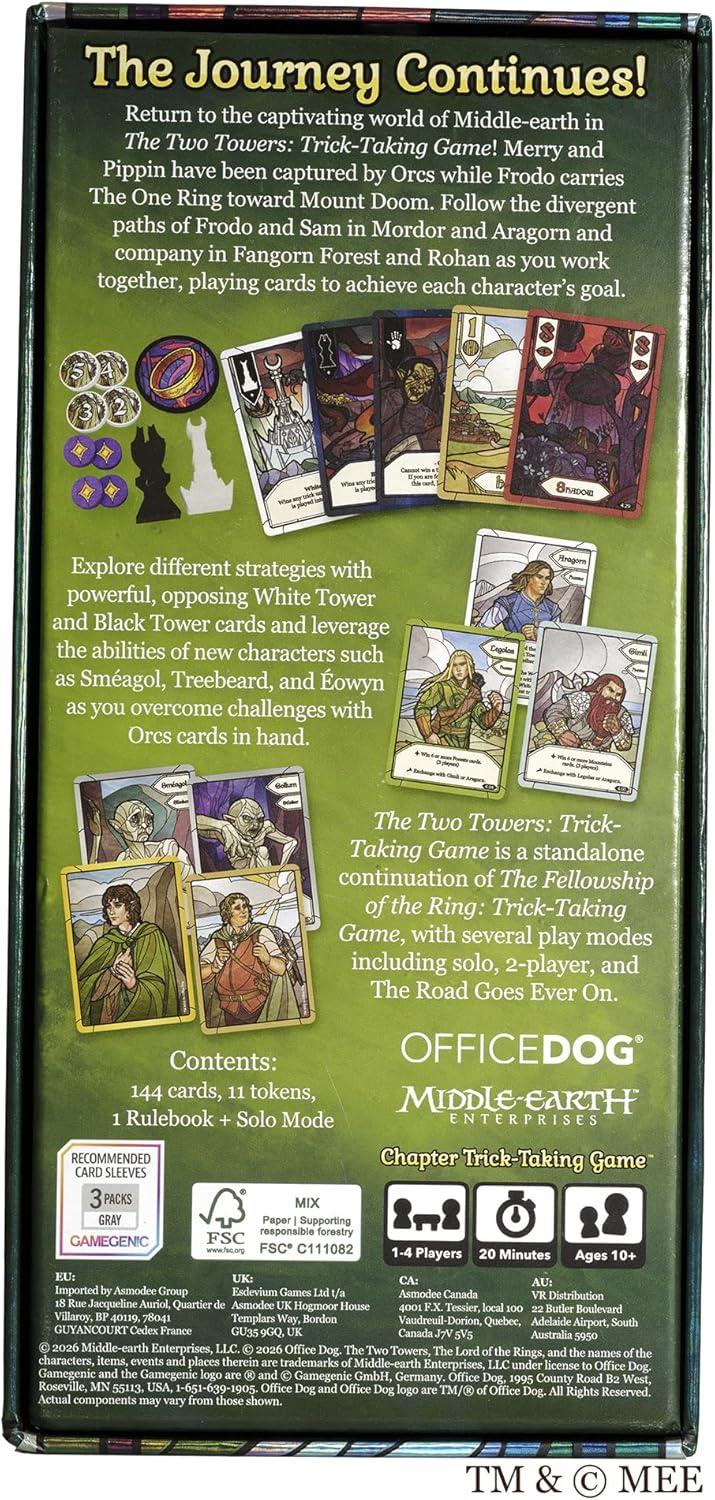

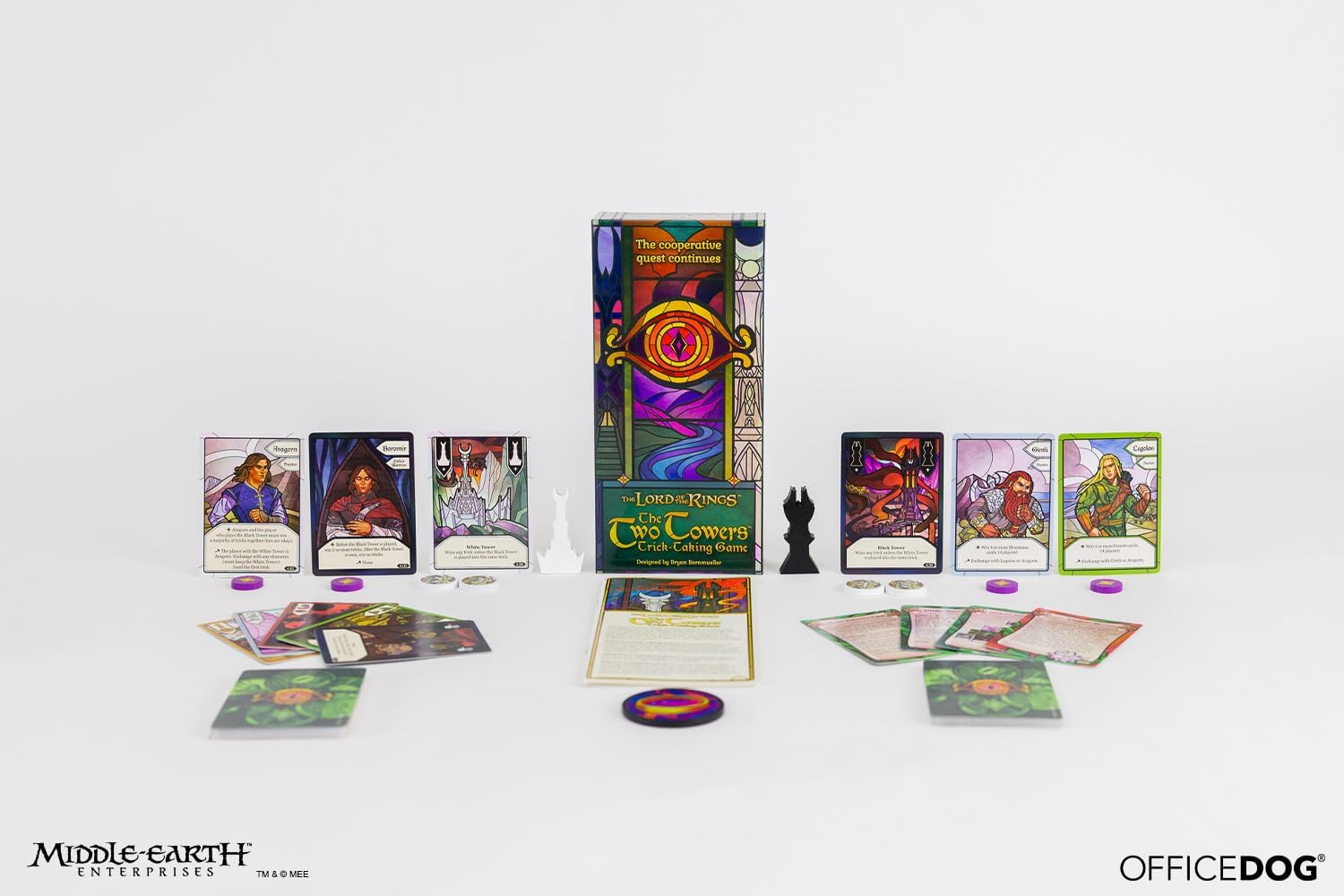
Two Towers product contents. The sequel is also a complete box, not an expansion shuffled into Fellowship.
How is Two Towers different from Fellowship?
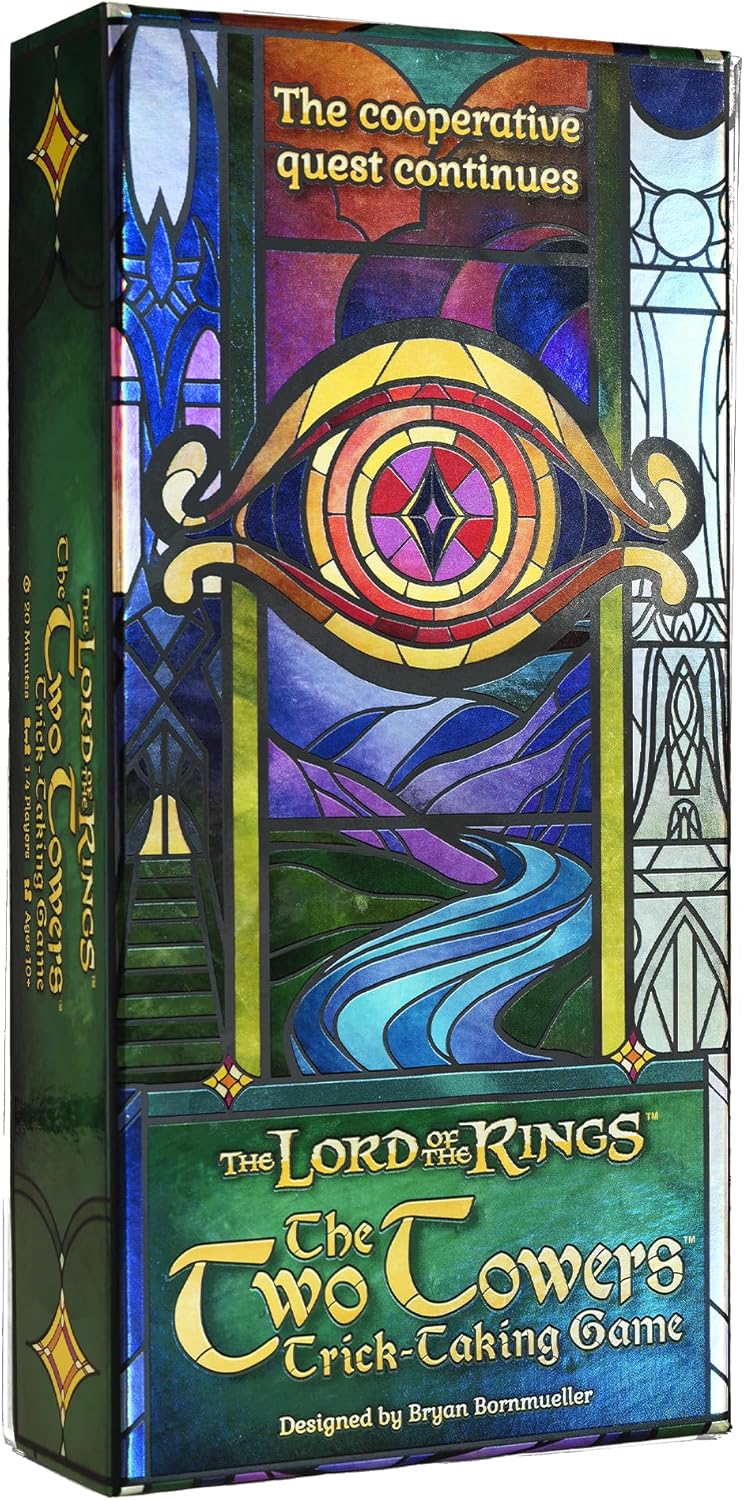
Two Towers is not merely more chapters. It increases suit complexity and uses the White Tower and Black Tower as special forces inside the trick structure. Those effects can neutralize each other, so an apparently decisive card may become a timing tool rather than an automatic win.
The sequel also asks more of character assignment. Read every objective before dealing and identify the player whose condition is hardest to preserve. The easiest character should not automatically go to the most experienced player; give the strongest reader the role that constrains the table.
GamesRadar and current player reports broadly converge on the same conclusion: Two Towers is the more demanding puzzle and an excellent continuation, while Fellowship is the better teaching product. That is a buying order, not a ranking of artistic worth.
Two Towers is not merely more chapters. Its white and black tower cards create an opposing-trump problem: each can dominate ordinary suits, but when both appear in the same trick they cancel one another and normal resolution matters again. That single wrinkle makes prediction harder and gives experienced tables more room for deliberate sacrifice.
Current owner discussion is unusually consistent on the buying order. Two Towers is the more varied and demanding sequel, while Fellowship remains the cleaner teacher. Both boxes stand alone mechanically, but the chapter arc, character vocabulary and difficulty curve all make more sense in narrative order.
What does Two Towers cards and chapter materials show?
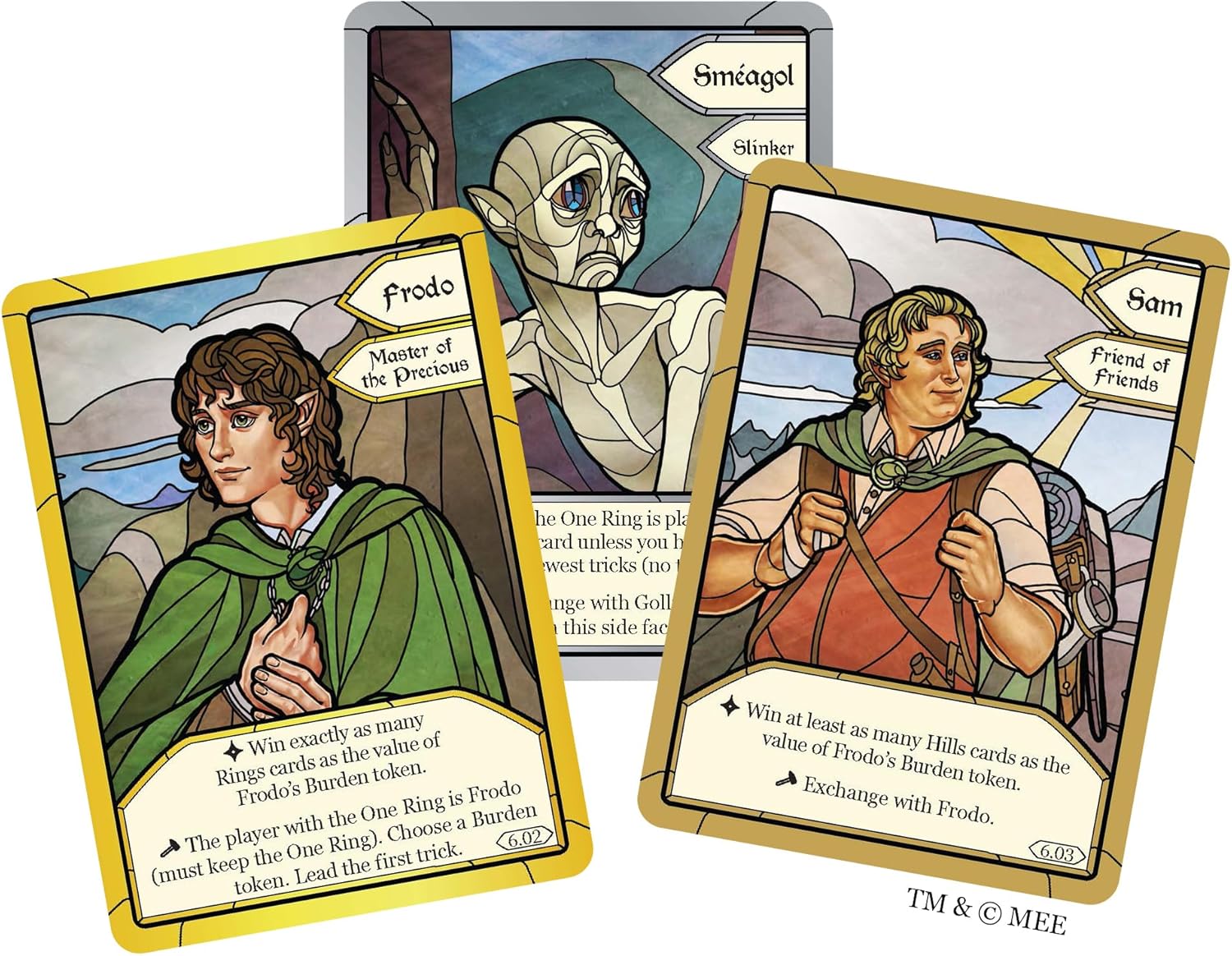
Two Towers cards and chapter materials. Real product imagery showing the sequel card system.
How do solo mode vs two, three and four players work?
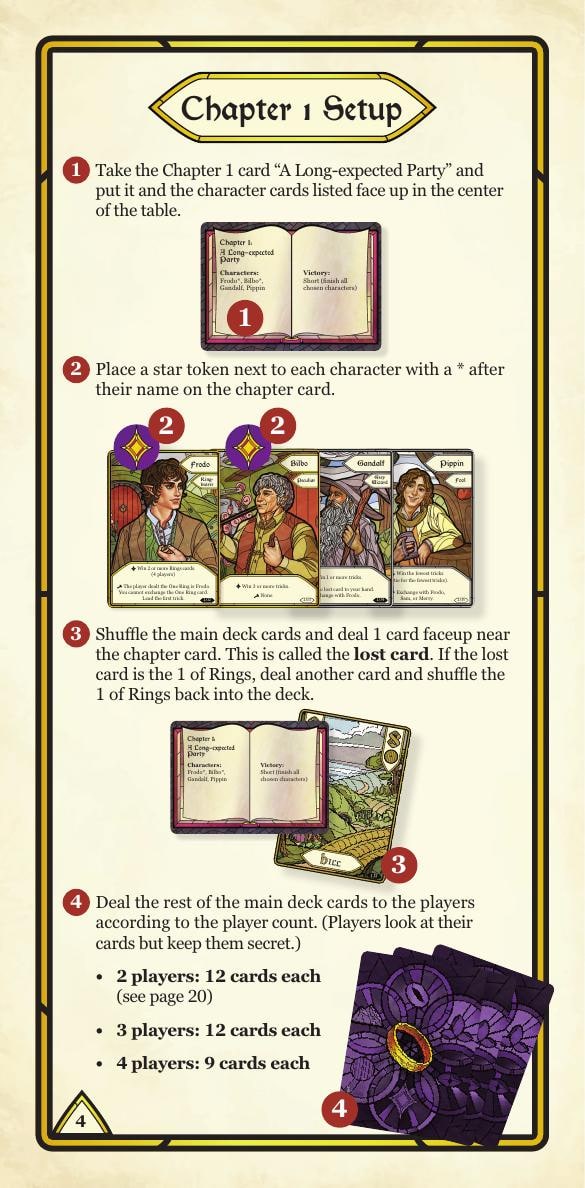
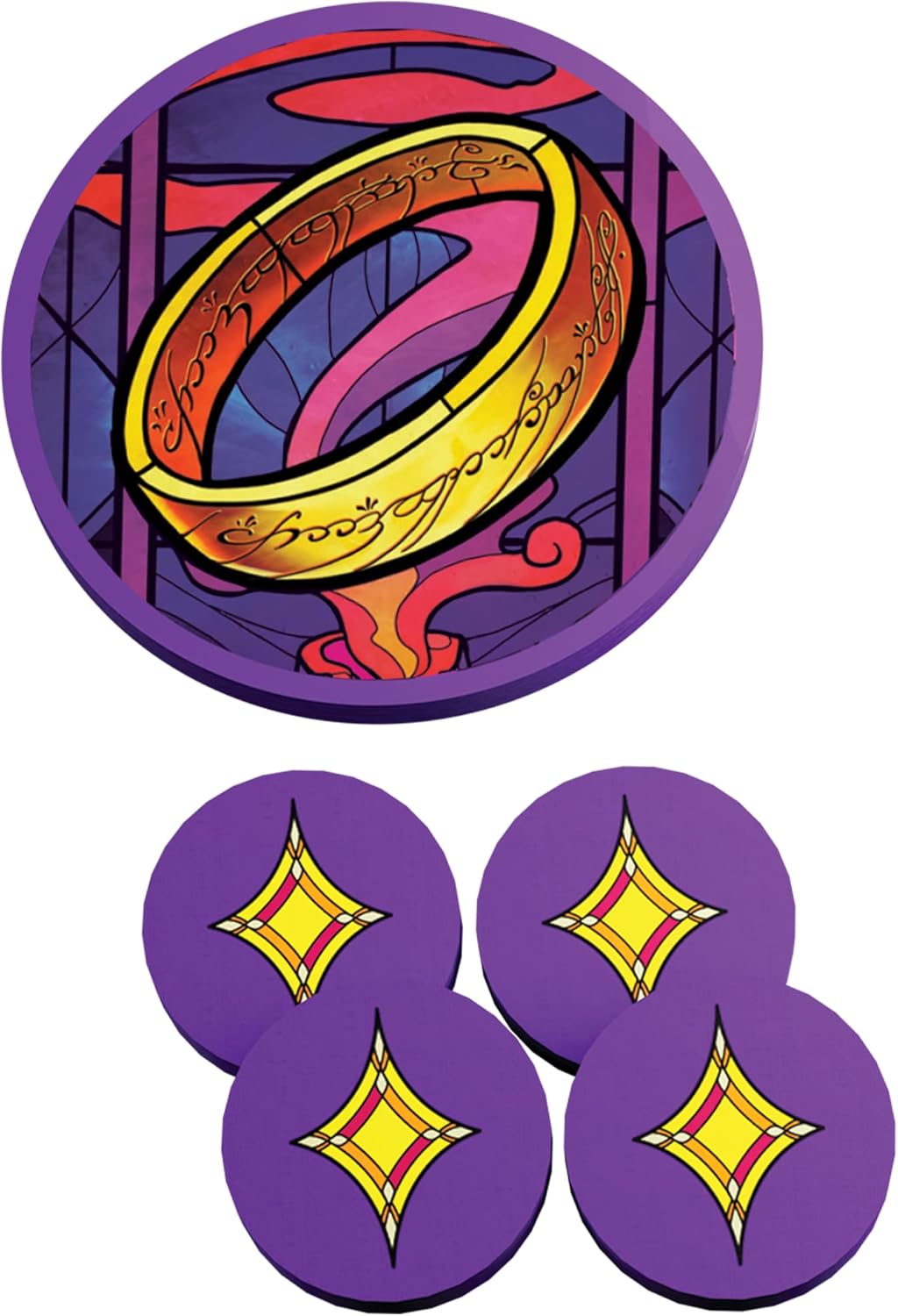
Solo play exposes multiple hands and turns the chapter into a deliberate logic puzzle. It removes social inference but makes planning clearer. A player who likes deduction and controlled sequencing may prefer solo even if they normally avoid one-player board games.
At two players, dummy-hand procedures add management. The mode works, but the cleanest social experience begins at three, where hidden hands and limited communication create meaningful trust. Four players produces the liveliest table and the greatest chance that one innocent lead ruins three plans.
Do not import normal card-table signaling. The rules restrict what may be communicated, and the tension depends on honoring that boundary. Before each chapter, read only the information the rules allow. After a failed attempt, discuss the whole hand openly; the postmortem is not part of the active puzzle.
How does Beginner and advanced chapter strategy improve the buying decision?
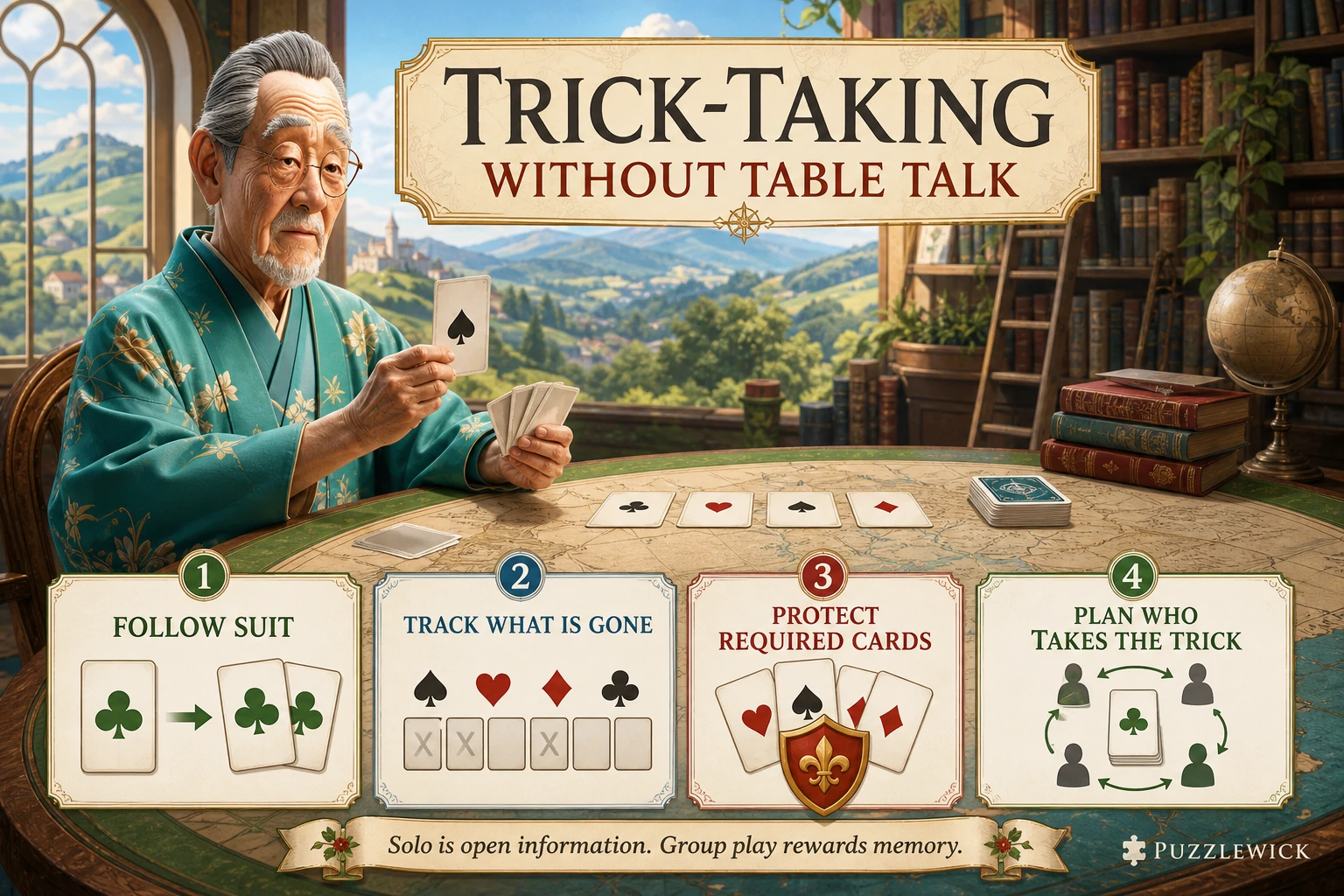
Begin with obligations, not card strength. Identify who must win a specific card, who cannot take tricks and which suit creates the narrowest route. The strongest card in a hand is useful only if the chapter permits its owner to win.
Track exhausted suits with small tokens. Memory mistakes feel like unfair game design and become more common late in a chapter. Lead low cards early when the table needs information; preserve high cards when a later obligation requires control.
Advanced groups should replay a failed chapter immediately with the same roles before changing assignments. The first attempt reveals the shape, the second tests execution. If the second still collapses at the same condition, then redistribute roles. The distinction saves time and teaches the actual system.
Expert chapter play is obligation management. Before leading, identify the hand that must win, the hand that must avoid winning and the suit most likely to strand a required card. In solo, keep the hands physically separated and narrate each obligation; in groups, respect the chapter's communication limits instead of turning the puzzle into open committee play. A failed chapter is information, not a cue to reveal future cards.
Community strategy keeps returning to obligations before power. First identify who must win, who must avoid winning, and which named card has only one plausible route. High cards are tools; chapter requirements decide whether they are useful tools.
How should you handle table space, card quality and hosting the campaign?

Both games fit on a small dining table. Allow room for individual hands, a central trick area, character cards and chapter materials. A 30-by-30-inch surface is comfortable for four. Use a playmat only if the table is slippery or cards are difficult to lift.
Some community threads report mixed card-stock impressions. That is not a universal defect, but sleeving is reasonable for a campaign expected to see repeated chapters. Use thin matte sleeves so the compact box remains practical, and sleeve both boxes consistently if they will share storage.
For hosting, plan three chapters or ninety minutes, whichever arrives first. End on a success when possible. Serve dry snacks away from the central trick pile, keep tea on side tables and place the chapter book with the strongest reader. A cooperative game benefits when rules administration is quiet.
Two Towers compact product view. The sequel belongs beside, not inside, the first campaign.
How does Kenji's chapter table: teaching the fellowship without spoiling it improve the buying decision?
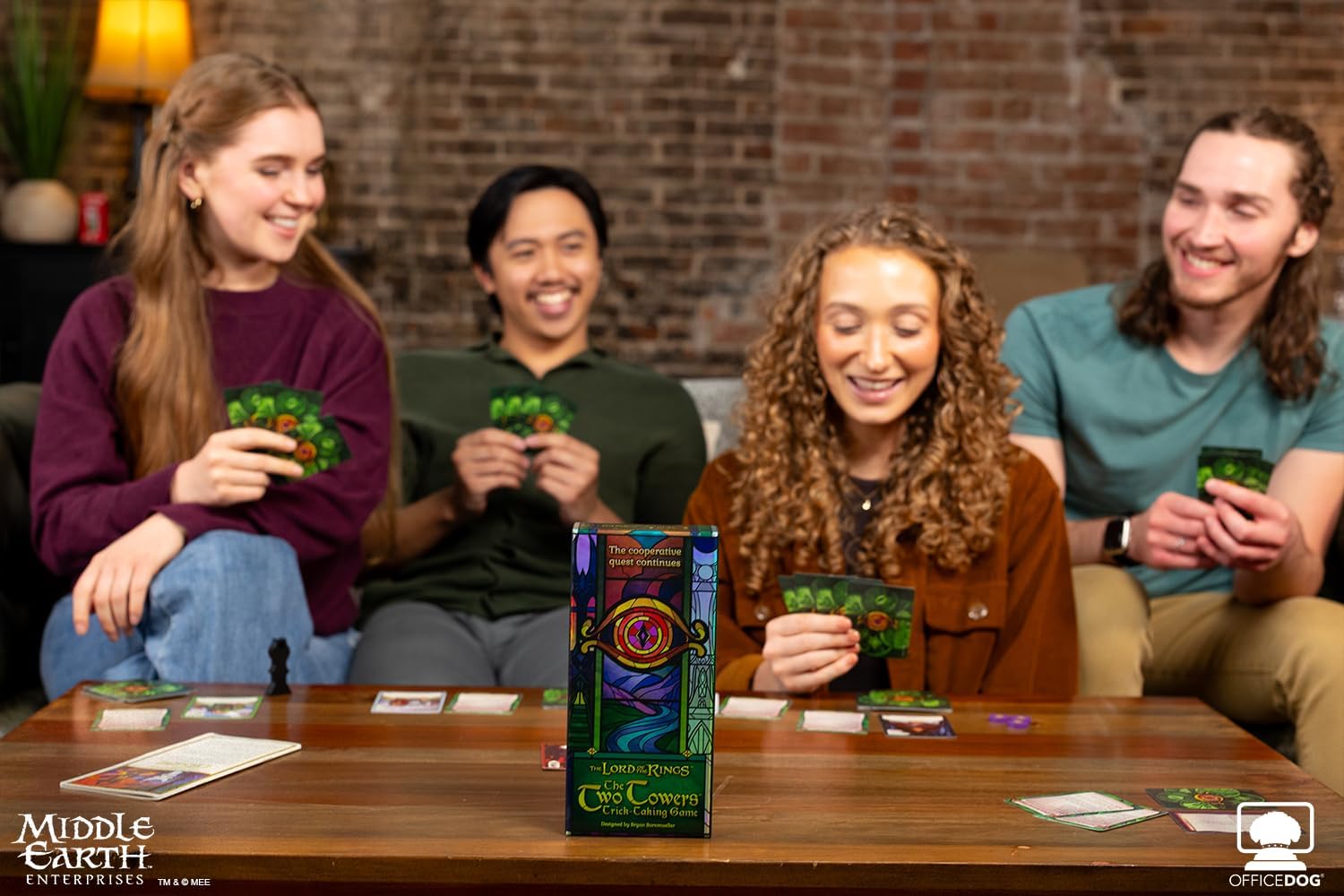
Treat the chapter deck as a journey, not a stack of scenarios to consume. The pleasure comes from discovering how a familiar trick-taking rule bends around a character's needs. Open only the current chapter material, read its goal aloud, and resist the urge to preview later complications. The game is cooperative, but cooperation is not permission to disclose every card. Use only the communication the current rules permit; the tension lives in recognizing intention through leads, follows, and carefully chosen losses.
For a mixed-experience table, seat the calmest trick-taking player after the newest player. That gives the learner a readable example without placing them directly after the most aggressive lead. In the first chapter, explain suit following and trick resolution with cards on the table. Then explain each character condition as a separate promise. Do not dump the campaign's future vocabulary into the teach. Fellowship is the better first box because its learning curve introduces that promise structure with greater patience. Two Towers assumes a group already enjoys that style of shared deduction.
Solo play is real, but it changes the experience. You control multiple hands and must preserve information boundaries in your own head. Arrange each hand in a separate physical zone, and make each hand's legal information visible only when the rules allow it. Solo becomes a logic study; group play becomes a conversation conducted through tricks. Neither is fake, but they are not the same flavor. A buyer who wants social discovery should not judge the system only from a multi-handed practice game.
Host with a modest surface, good card contrast, and a small tray for chapter-specific pieces. Keep the box and unopened material off the main table so future art and component shapes do not become accidental spoilers. a film soundtrack with recognizable crescendos can push players to rush decisions. Between chapters, take a two-minute debrief: which promise was hardest to read, which lead communicated the most, and whether the group wants the next chapter now or on another night.
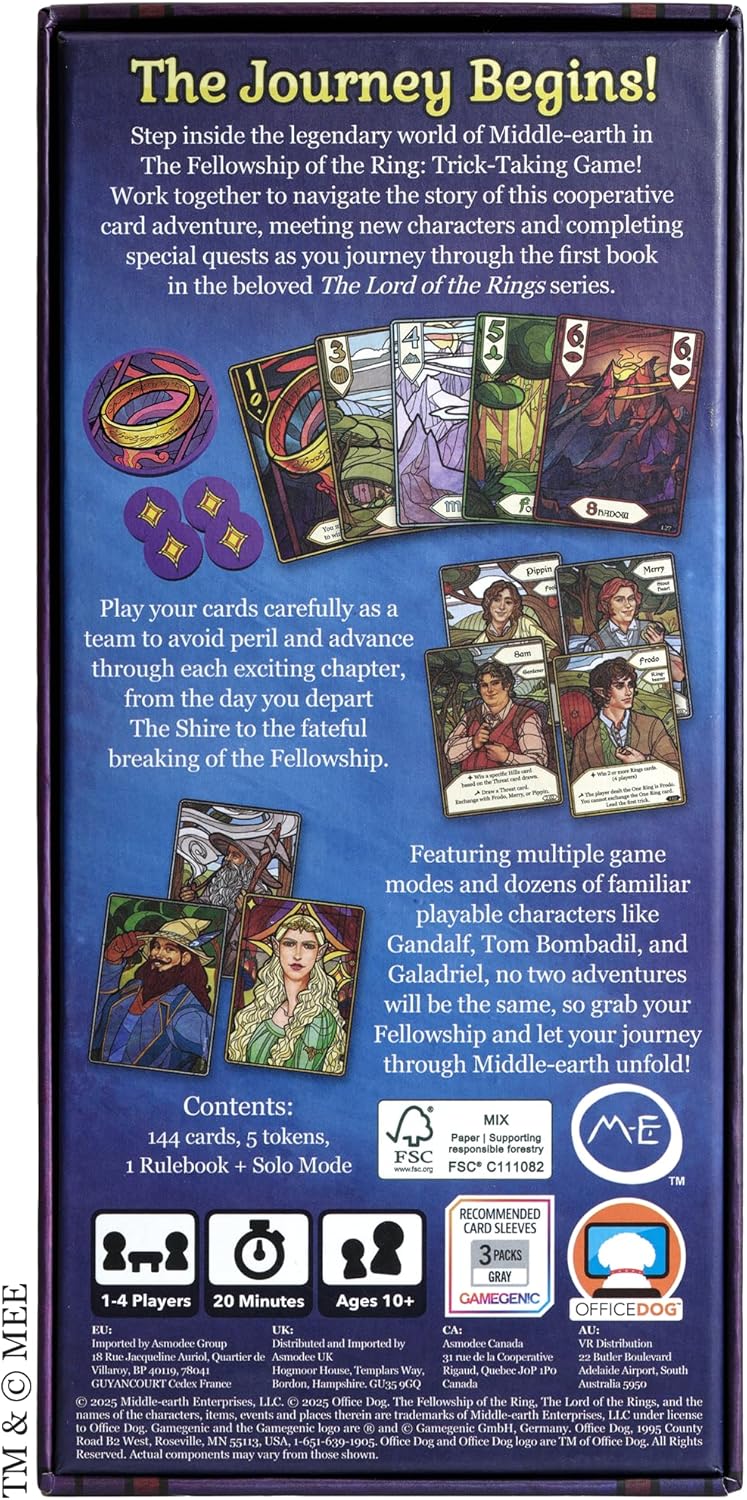
The expensive mistake is buying both boxes because they look like volumes of one mandatory campaign. They are separate complete games with related design language. Buy Fellowship first, finish enough chapters to know the cooperative trick is the reason you are returning, then add Two Towers. Puzzlewick score: Fellowship 9.2/10 as a first box; Two Towers 8.8/10 as the richer follow-up; combined 9.4/10 for a group that protects discovery.
What are the ratings, misconceptions and the final verdict?
Fellowship scores 9.0/10 overall: 9.4 for teaching arc, 9.0 for replayability, 9.2 for solo and 8.7 for component value. Two Towers scores 9.3 for experienced tables: 9.5 for challenge, 9.3 for chapter variety, 9.1 for solo and 7.4 as a first box.
The common misconception is that Two Towers replaces Fellowship. It is a sequel and a separate complete game. Another is that solo is a compromised group mode. It is structurally different, but the open-information logic is one of the line's strongest uses.
Buy Fellowship now. Buy Two Towers when the group has completed enough chapters to want more obligations, not merely more story. The journey is richer when the rule system grows at the same pace as the fellowship.
Two Towers is standalone, not a deck expansion for Fellowship. Owning both creates two campaigns, not one combined card pool. That makes “Do I need both?” refreshingly easy: only if the first journey made the table ask for the next one.
The picks
Some links below are affiliate links — as an Amazon Associate, Puzzlewick earns from qualifying purchases, at no extra cost to you. It never changes a pick.
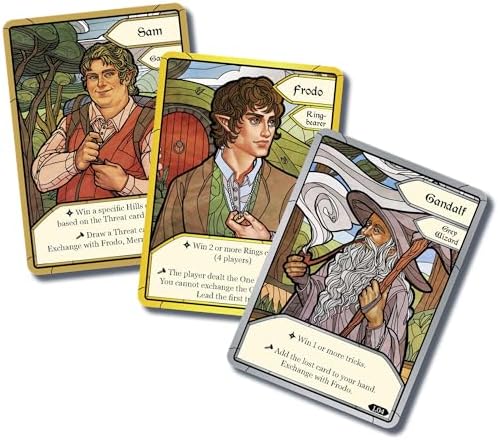 12 photos
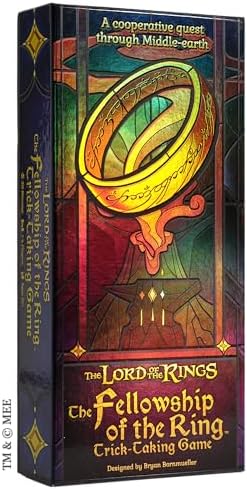
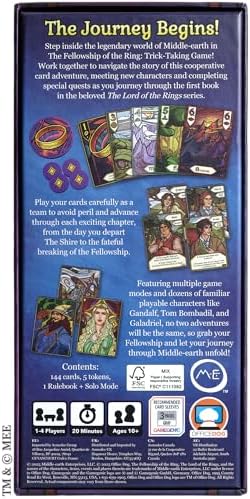
 The Fellowship of the Ring Trick-Taking Game
A cooperative chapter campaign that teaches the system in the right order.
- Best introduction
- Excellent solo logic puzzle
- Strong hidden-hand group play
- Later chapters still become demanding
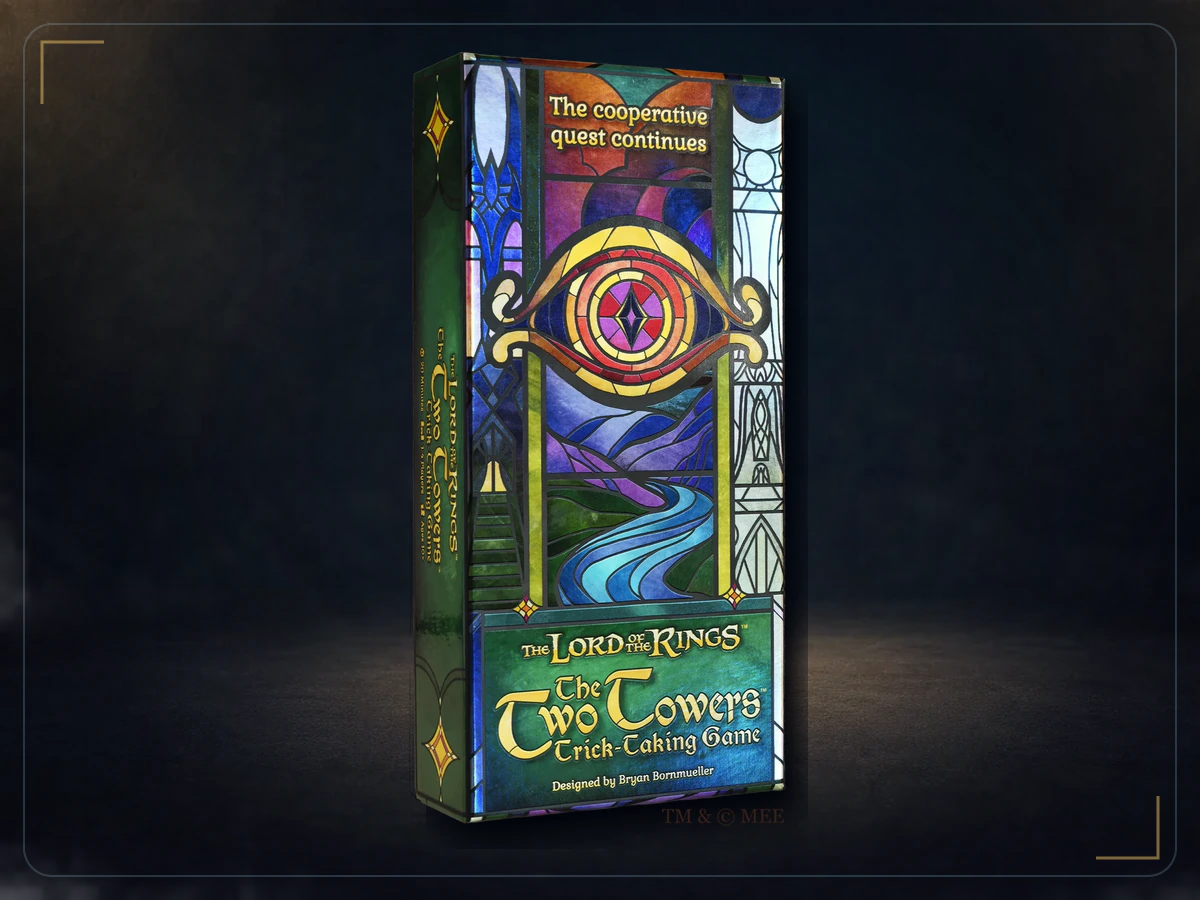
The Two Towers Trick-Taking Game
Five suits, tower effects and harder chapter conditions for players who know the first game.
- More mechanical variety
- Stronger challenge
- Excellent continuation
- Too abrupt as a first teach
- Some card-stock complaints
At a glance
| Choice | Best first box | Challenge | Solo |
|---|---|---|---|
| Fellowship | Yes | Moderate to high | Excellent open-information puzzle |
| Two Towers | No | High | Excellent but denser |
Questions, answered
Which LOTR trick-taking game should I buy first?
Buy The Fellowship of the Ring first. Two Towers is a more demanding sequel.
Is Two Towers a stand-alone game?
Yes. It is a separate complete campaign, but its difficulty assumes familiarity with the system.
Can I play either box solo?
Yes. Solo uses open information and feels like a logic puzzle.
How many players do the games support?
Both support one to four players.
Do I mix the two boxes?
Treat them as separate campaigns. Do not combine chapter decks unless an official rule specifically instructs it.
Is Two Towers harder?
Generally yes. It adds suit and tower interactions and denser chapter obligations.
Are these like The Crew?
They share cooperative trick-taking DNA, but character roles and the Lord of the Rings chapter structure create a different puzzle.
Should I sleeve the cards?
It is optional, but thin matte sleeves are reasonable if the campaign will be replayed often.
Is The Two Towers trick-taking game harder than Fellowship?
Yes. Community reports and the added tower-card interaction make Two Towers the more demanding and varied box. Fellowship is the better first teacher.
Do I need Fellowship to play Two Towers?
No. Both are standalone games. Buy Fellowship first for the smoother rules and story progression, not because Two Towers requires its components.
How do the black and white tower cards work?
They act as opposing special trumps, but if both colors appear in the same trick they cancel each other and the trick resolves under the normal lead-suit rules. Check the current rulebook for chapter-specific exceptions.
Is the LOTR trick-taking series good solo?
Yes, if you enjoy multi-hand logic. Solo asks one player to preserve separate hands and obligations, so physical organization and deliberate narration matter more than speed.
Kenji's verdict
Fellowship earns 9.0/10 as the first box; Two Towers earns 9.3/10 for experienced groups and 7.4/10 as an entry point. The two-box order matters more than the small price difference.
Research ledger 13 sources · reviewed 2026-07-25
Specifications, rules, current product information, community experience, and contrary evidence were checked against the sources below. Commercial links are kept separate from editorial evidence.
- asmodeena.comasmodeena.com/TGCatalog2026-Web-5-4-26.pdf
- games-for-you.oozmi-cdn.comgames-for-you.oozmi-cdn.com/products/91df226f-8f01-4042-8f83-96a0fbce1c9c/pdfs/fellowship-of-the-ring-rulebook-en.pdf
- gamesradar.comgamesradar.com/tabletop-gaming/the-two-towers-trick-taking-game-review
- reddit.comreddit.com/r/boardgames/comments/1sfbris/the_lord_of_the_rings_the_two_towers_trick_taking
- reddit.comreddit.com/r/soloboardgaming/comments/1tpfrkk/lord_of_the_rings_two_towers_the_trick_taking_game
- reddit.comreddit.com/r/boardgames/comments/1rqtepx/the_crew_vs_lord_of_the_rings_trick_taking
- reddit.comreddit.com/r/boardgames/comments/1tg5mu0/card_quality_the_lords_of_the_rings_tricktaking
- amazon.comamazon.com/dp/B0DNNG7JCP?tag=puzzlewick-20
- youtube.comyoutube.com/watch?v=TJE7Zn5xRSw
- youtube.comyoutube.com/watch?v=9s1ywzs9Yfk
- reddit.comreddit.com/r/boardgames/search/?q=two%20towers%20trick%20taking&restrict_sr=1&sort=new
- asmodee.comasmodee.com/product/the-fellowship-of-the-ring-trick-taking-game
- boardgamegeek.comboardgamegeek.com/boardgame/460356/the-two-towers-trick-taking-game

Every object has a lineage. Let me tell you its story.


Keep exploring
The next smart rabbit holes.
◬ Universe HubMiddle-earth: the whole buying pathMiddle-earth is a shelf of very different journeys: premium LEGO architecture, strategic war games, and collectible card worlds....⚔ Topic PathTwo-Player Board Games: compare the whole shelfThe best two-player game is designed around the duel rather than merely tolerating two people. This path separates sharp...Best OfBest Trick-Taking Card Games (2026): Modern Classics Beyond Spades & HeartsStep in from the cold — let me settle you at a table where centuries of kindness meet designs that bend the rules. A curator's tour of...