Magic: The Gathering | The Hobbit Beginner On-Ramp 2026: What to Buy, Learn, Sleeve, and Say Before Your First Table
The calm path from curious Tolkien fan to competent Magic player, with the right first product, a protection kit, a table-ready checklist, and a jargon index that speaks human.


Written and reviewed by Robert Pruitt · how this guide was made
Last editorial refresh: 2026-09-09 Gold-standard QA: 2026-09-09 18 sources reviewed Affiliate links checked during gold-standard pass

The short answer
Start free at a participating game store with a The Hobbit Welcome Deck and Magic Academy. If you want a first event, choose Prerelease; if four friends want one self-contained draft night, buy Draft Night; if you mainly want packs, lands, and storage, buy the Bundle. None of those is a retail two-deck starter set. For a private two-player lesson at home, the Final Fantasy Starter Kit remains the cleaner bridge into Magic.
Decision map
Choose in thirty seconds
A store teaches the rules while the deck removes shopping guesswork.
Six Play Boosters become a 40-card deck with staff and players nearby to help.
Twelve Play Boosters, lands, tokens, and a Pick-Two draft built for one evening.
It gives you packs, lands, a promo, a die, and storage, but no finished deck.
Magic does not frighten newcomers because tapping a land is intellectually ferocious. It frightens them because experienced players compress twenty years of vocabulary, etiquette, formats, products, and tiny gestures into a game that appears to be moving normally. The Hobbit is a lovely door into that world, but the shelf is not self-explanatory. A Bundle looks welcoming and contains no finished deck. A Collector Booster looks important and is the worst possible teaching product. A free Welcome Deck looks modest and is often the smartest first choice.
This is Puzzlewick's patient museum-guide route across the moat. We will use four pillars: Lore to make the cards memorable, Collecting to stop random purchases from becoming a cardboard weather system, Mechanical Intelligence to make the first table readable, and Accessories to protect what deserves protection. You do not need to memorize Magic before joining a table. You need one functional route, six table skills, and the confidence to say, 'I am new; please tell me when I have priority.'
Start here, then go deeper
You are in the right cabinet.
 ✶ Universe HubMagic: The Gathering: the whole buying pathMagic: The Gathering is the deepest construction sandbox in the Big Three: a two-player duel, four-player Commander ritual, draft...
 🂠 Topic PathTrading Card Games: compare the whole shelfStart with the game and community you want, then buy the smallest product that lets you test it properly. These guides separate...
 How-ToMagic: The Gathering Final Fantasy Starter Kit Strategy Guide 2026: Cloud vs Sephiroth and How to Upgrade Both DecksLearn the two decks as printed, fix the matchup without ruining it, and know exactly where to go after the first duel.
The short answer: start free before buying the impressive box
The cleanest Hobbit on-ramp is Magic Academy at a participating local game store. Wizards scheduled The Hobbit's Academy season from August 14 through September 24, 2026, using five 40-card monocolor Welcome Decks. The Learn to Play session uses those decks to teach turns, mana, creatures, and combat in a controlled setting. The Deck Building session moves into six Play Boosters and teaches the bridge from opening cards to making a functional deck.
That route solves the problem most beginner products quietly hand back to you: finding another learner, interpreting the rules, and knowing whether your deck is legal. The Welcome Deck is not a toy version of Magic. It is a deliberately narrow version, which is exactly what a first lesson needs. Choose the color whose mood appeals to you, play enough turns to see creatures attack and spells resolve, then ask the staff what the next beginner-friendly event is.
If you want to learn privately with one other person, The Hobbit does not currently have a retail two-deck Starter Kit. The Magic: The Gathering Final Fantasy Starter Kit does. It contains two fixed 60-card decks and is the more practical home lesson. The art invitation is different; the rules bridge is excellent. Our Cloud vs Sephiroth beginner guide walks through that first duel without turning the evening into a certification exam.
Choose your first road: lesson, event, draft, or collection
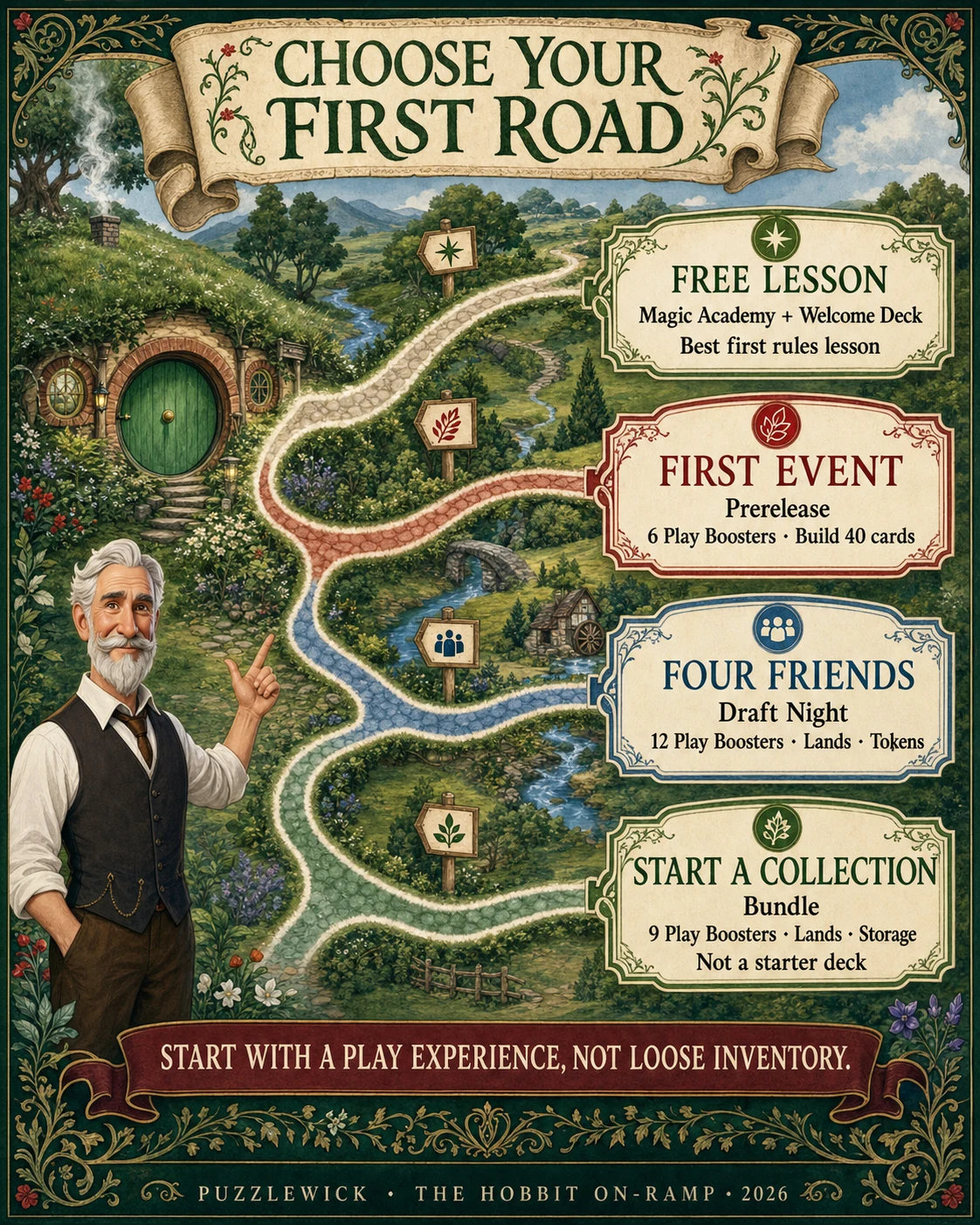
There are four sensible first roads, and they lead to different evenings. Magic Academy is the low-pressure rules lesson. Prerelease is the supported first event: you open six Play Boosters, build at least 40 cards, and play with other people discovering the set. Draft Night is a four-person box for a Pick-Two draft at home. The Bundle is a tidy collection beginning with nine Play Boosters, lands, a promo, a Spindown die, and a storage box.
Notice what is absent: 'buy the most expensive sealed object.' Collector Boosters are entertainment for people who understand premium treatments and risk. A Play Booster Box is inventory for many openings, drafts, or a group. A Bundle is a little pantry. Draft Night is dinner. Prerelease is the village feast where someone else has already found the chairs.
For a first Prerelease deck, begin with roughly 17 lands and 23 spells, usually in two colors. Favor creatures that affect the board, removal that answers a problem, and a curve that actually casts spells before the dragon arrives to find everyone still sorting their sideboard. This is community shorthand, not a law. If your card pool or mana fixing clearly supports a different shape, ask for help and adjust.
How do you know enough to join the table?
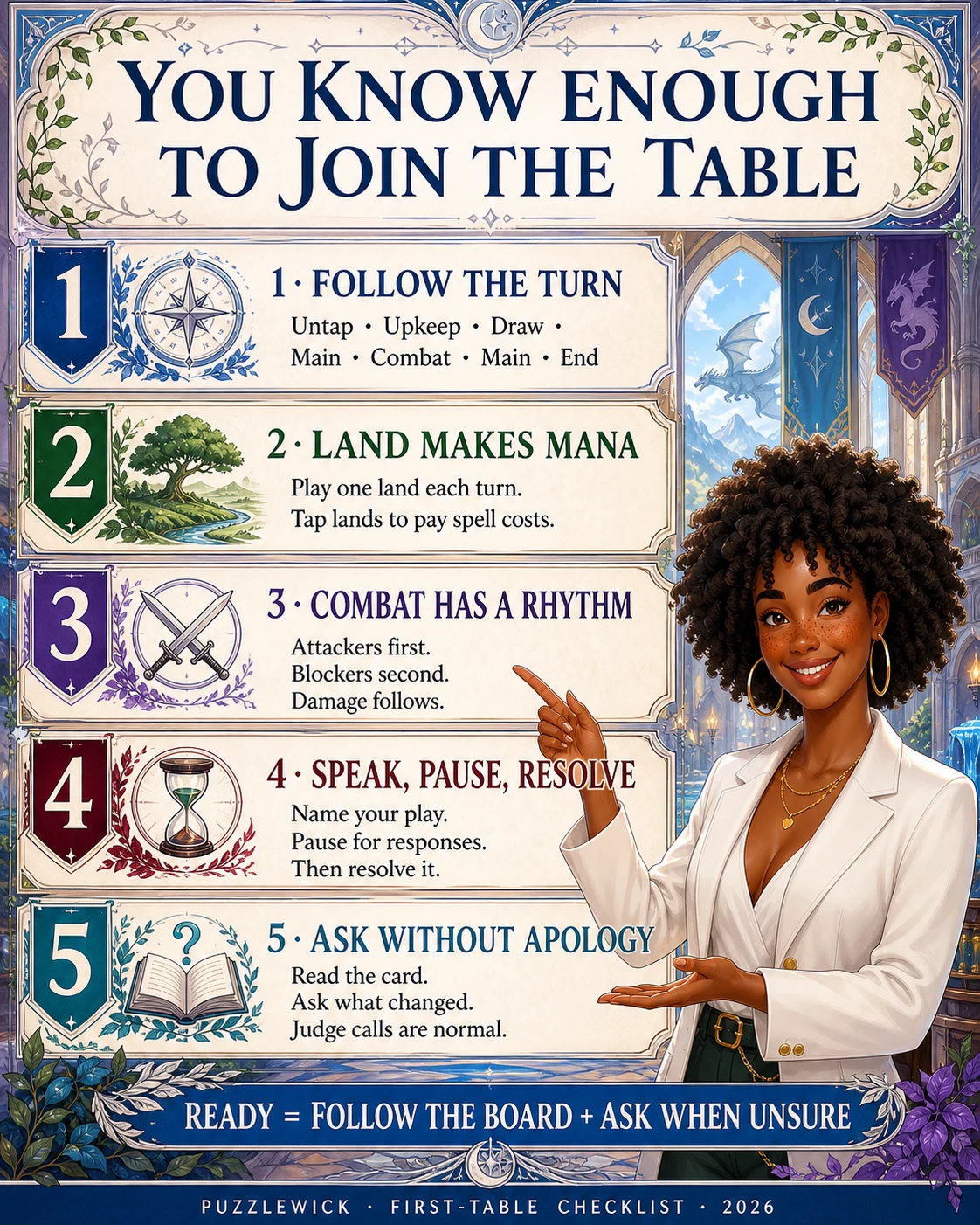
You are ready before you feel ready. You do not need the Comprehensive Rules in your bloodstream. You need to understand six practical things: lands make mana; mana pays costs; permanents remain on the battlefield; creatures normally wait a turn before attacking; combat has an attacker, blocker, damage rhythm; and some spells or abilities can be used in response before another object resolves.
You should also know the basic turn: untap, upkeep, draw, first main phase, combat, second main phase, end. Say the phases aloud during your first games. That is not childish. It is a strong habit that prevents skipped opportunities and helps the other player understand when you are passing priority.
The final skill is social: ask before advancing when you are unsure. 'Any response before this resolves?' and 'May I move to combat?' are table-friendly phrases. A player who communicates clearly and needs help is easier to play with than a silent player who knows more rules but sweeps past every window.
At a sanctioned event, call a judge when something is unclear. Judges are not disciplinary weather. They are the rules desk. Explain what happened without trying to win the story, let both players speak, and accept the ruling. Knowing when to ask is part of knowing how to play.
The first-store script and the etiquette nobody prints on the box

Use this sentence at the counter: 'I am new. I understand the basics, but I am still slow on interactions and triggers. Is there a beginner event or someone playing a stock deck tonight?' It tells the store what you need, gives a potential opponent the right expectation, and prevents you from wandering into the sharp end of a competitive testing session because the chairs happened to be open.
Before a casual Commander game, add: 'This is an unchanged preconstructed deck. I am learning the table. What power level are you playing?' Power-level numbers are famously imprecise, but the conversation still exposes whether the table expects precons, tuned synergy, fast combo, or tournament-level efficiency.
Ask before touching another person's cards. Keep food and open drinks away from the battlefield. Announce life-total changes and game actions. Keep your lands together, creatures forward, graveyard visible, and tokens distinct from real cards. If you miss a trigger, say so immediately rather than performing amateur archaeology three turns later.
Most importantly, do not apologize after every question. Ask once, listen, and continue. A good table would rather answer a clear question than repair a hidden misunderstanding. The social contract is not 'never slow us down.' It is 'help everyone understand the shared game state.'
HOB vs HOC: the legality code on the bottom of the card
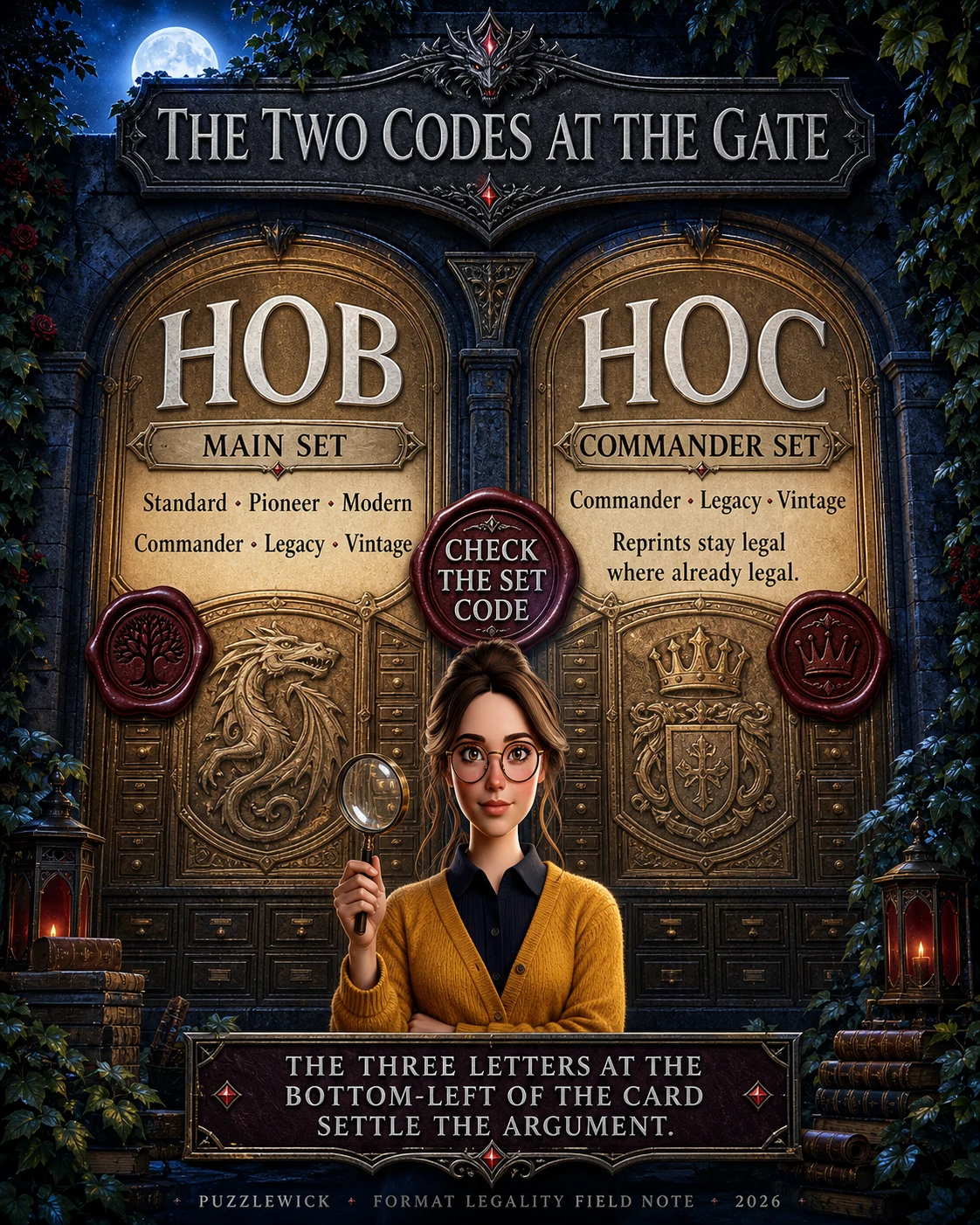
The set code matters. Cards marked HOB belong to the main The Hobbit set and entered Standard with the 2026 release. Cards marked HOC belong to the Commander release. New HOC cards are designed for Commander and are legal in Commander, Legacy, and Vintage; reprints remain legal in any format where that card is already legal.
This is why 'it came from a Hobbit product' is not enough to determine where it can be played. A Commander-focused card from an HOC product does not become Standard legal because the art shares a mountain with the main set. Check the set code, then verify the exact card in an official database or Scryfall before buying it for a format deck.
For a beginner, the practical rule is simple: play the product as sold first. A Prerelease pool is used in that event. A Draft Night pool is used in that draft. A complete Commander deck is used at a Commander table. When you begin mixing products into a constructed deck, check the intended format before checkout rather than after sleeving.
What each Hobbit product actually does

Play Boosters are the flexible default pack for draft, sealed play, and opening. A sealed Play Booster Box is sensible for a group planning several drafts or a collector who consciously wants many packs. It is not a finished deck and it is not the efficient way to acquire one exact card.
The Bundle is the most approachable personal collection box: nine Play Boosters, lands, a promotional card, a Spindown life counter, and storage. It is satisfying, organized, and still not playable by itself. Buy it when the opening ritual and a tidy first Hobbit shelf are part of the pleasure.
The Gift Bundle adds a Collector Booster and premium lands to the Bundle formula. It is the better celebratory present and the worse economy lesson. Buy it for the upgraded unboxing, not because the extra premium pack makes a dependable financial instrument. Cardboard has many powers; guaranteeing appreciation is not among them.
Draft Night, Scene Boxes, and the premium dragon at the end of the tunnel
Draft Night is the strongest Amazon purchase for four curious friends. The box contains twelve Play Boosters, one Collector Booster, ninety basic lands, and tokens for a Pick-Two draft. Everyone chooses two cards from each pack before passing, which keeps the evening moving and gives new drafters more visible options. It is an experience box: open, draft, build, play.
Scene Boxes are display-and-play collectibles. Each contains six traditional-foil scene cards, six art-only display cards, three Play Boosters, and a paper easel. Buy Crack the Plates or Treasures of Smaug because you want that six-card panorama and its included cards. Do not treat the easel as evidence that the cards have become retirement planning.
Collector Boosters concentrate premium treatments. Wizards states that only Collector Boosters can contain one of roughly 500 serialized Gleaming Gold Smaug cards. That makes the chase culturally important and statistically brutal. A Collector Booster is a luxury opening, not a beginner requirement, deckbuilding curriculum, or reasonable method for acquiring a specific playable card.
Protect the cards without buying a museum vault
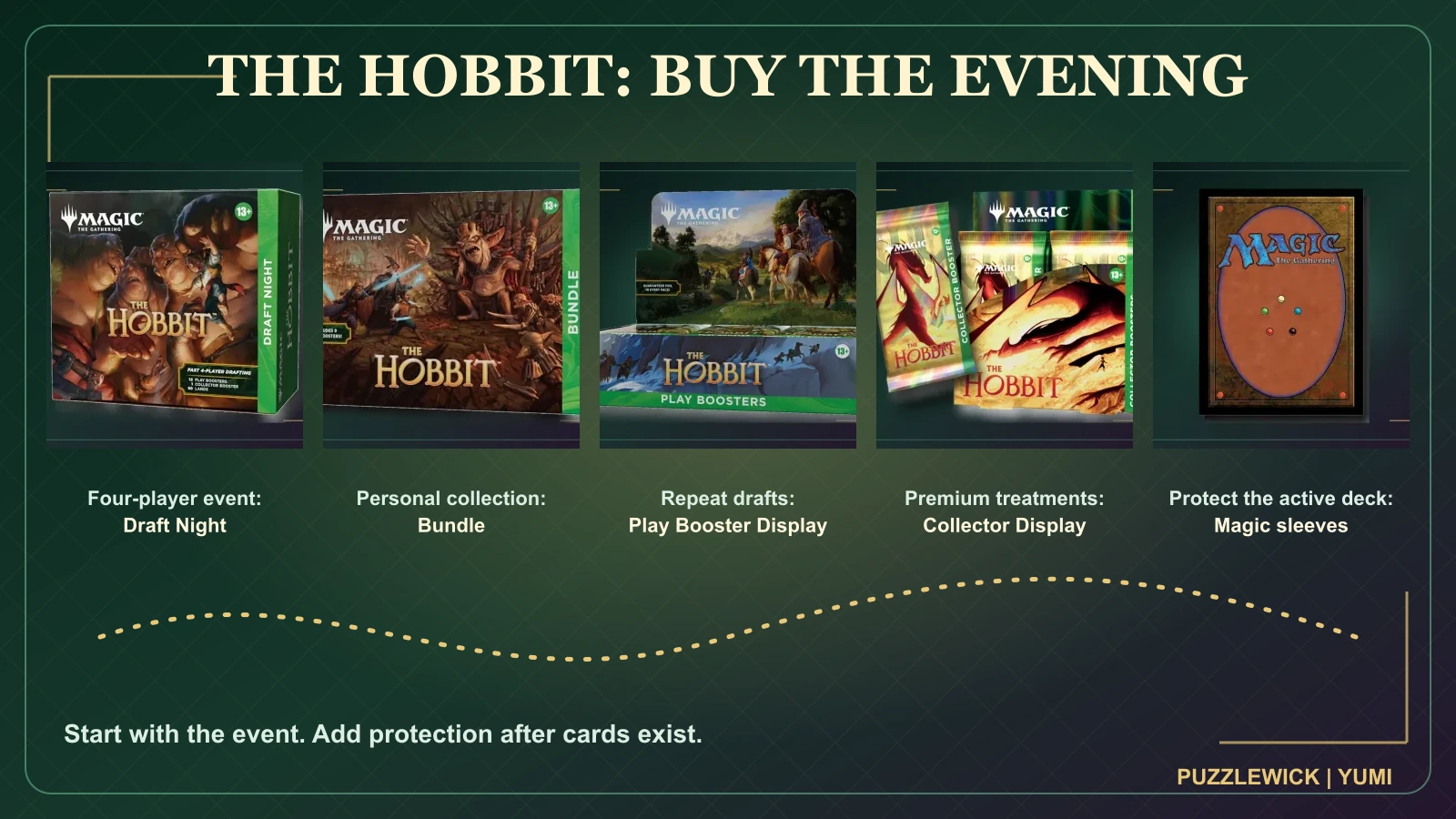
Protect the active deck after you know which deck is active. One coherent set of opaque standard-size sleeves is the first purchase. Licensed Magic card-back sleeves keep the table visually connected to the game and avoid the anonymous black-box look that once swallowed this section. Confirm the live count, opacity and fit, then keep several identical spares for split or marked sleeves.
A deck box follows the sleeved deck, not the other way around. Count the finished deck, sideboard, tokens and double-sleeving thickness before choosing a case. For a first Draft Night or Bundle, the included packaging is enough to get home; a fitted rigid case becomes useful after one deck proves it will travel.
For a valuable single, use a soft inner sleeve plus a correctly sized rigid holder outside the playable deck. If valuable cards remain in the deck, sleeve the entire deck consistently. Five unusually thick cards are a marked-card problem wearing a safety vest.
Binder, playmat, and the collection that remains findable

A playmat becomes useful when the table is rough, sticky or crowded. Choose licensed art you would still enjoy after the release-week excitement leaves the room. The Lightning stitched mat below is an honest cross-universe Magic option, not fake Hobbit merchandise; if matching Middle-earth art matters, wait for a licensed design you actually want.
A binder is worth buying only when cards need to be browsed, traded or separated from bulk. Use side-loading pockets, one card per pocket and a zipper if the binder travels. No black binder is being recommended here merely because it exists. Organize by set, color or deck destination, then keep a small review section for cards whose purpose you have not learned yet.
Your first 30 days: from one lesson to a table you recognize
Week one: attend Magic Academy or play three open-handed games with a fixed beginner deck. Learn the turn, zones, attacking, blocking, and the difference between a permanent and a spell. Do not upgrade anything yet.
Week two: attend Prerelease or build one 40-card sealed deck from six Play Boosters. Lay out creatures by mana value before cutting. Start near 17 lands, favor two colors, and ask someone to review the final cuts. Photograph the finished pool and deck so you can reconstruct the lesson later.
Week three: decide what you actually enjoyed. If it was discovering cards, schedule Draft Night. If it was building a coherent 60-card deck, choose a current format and use Scryfall to check exact text and legality. If it was a social four-player table, borrow or buy one complete Commander deck and tell the table it is unmodified.
Week four: buy singles for the first purposeful changes. Keep a short game log: cards stranded in hand, turns with unused mana, threats you could not answer, and cards you were always happy to draw. Upgrade the bottleneck rather than the logo. You have now crossed from opening products into mechanical intelligence.
At the end of the month, you should own fewer things than an anxious shopping spree would have produced, but every item should have a job. That is how a collection becomes a game rather than storage with fantasy illustrations.
The jargon index: Magic words translated into table language
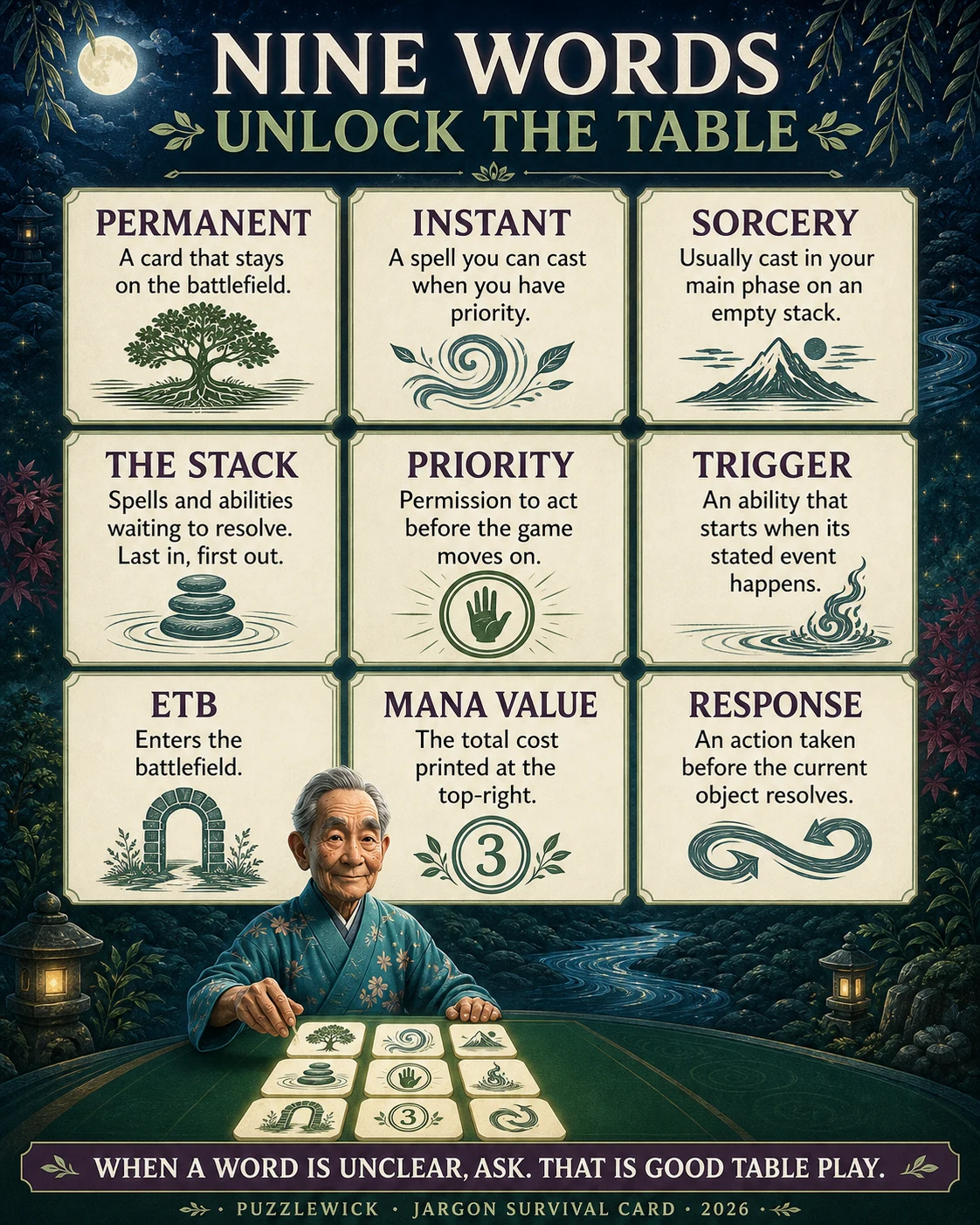
Battlefield: the shared play area where permanents remain. Action cue: keep creatures, lands, and other permanents in consistent zones.
Cast: pay a spell's costs and put it on the stack. Action cue: announce the card and what it targets, then give opponents a response window.
Permanent: a card or token that stays on the battlefield, such as a land, creature, artifact, enchantment, or planeswalker. Instants and sorceries normally do their job and go to the graveyard.
Priority: permission to take a game action before the game moves on or the top object on the stack resolves. Action cue: ask 'Any response?' instead of racing ahead.
The stack: the waiting line for spells and abilities. The newest object normally resolves first. Action cue: do not move cards to the graveyard until responses are finished and the object resolves.
Resolve: carry out a spell or ability's instructions. Action cue: confirm nobody has a response, then follow the card in order.
Trigger: an ability that begins with language such as 'when,' 'whenever,' or 'at.' Action cue: announce your own triggers when their event occurs.
Summoning sickness: the nickname for the rule that normally prevents a creature from attacking or using an activated ability with the tap symbol unless it has been under your control since your most recent turn began. Action cue: rotate or separate new creatures until your next turn.
Mulligan: replace an opening hand using the format's mulligan procedure. Action cue: keep a hand because it functions, not because one famous card is staring heroically from five uncastable companions.
Mana curve: the distribution of costs in a deck. Action cue: sort prospective deck cards by mana value and check that the deck can act early.
Removal: a spell or ability that neutralizes an opposing threat by destroying, exiling, bouncing, or otherwise answering it.
Bomb: a high-impact card that can dominate a game if unanswered. The term is common in Limited discussion; it is praise, not a card type.
Limited: formats such as Sealed and Draft where you build from cards opened for that event. Constructed: formats where you bring a deck built in advance.
Standard: a rotating constructed format using specified recent sets. Check current legality rather than relying on the year printed in an old article.
Commander: a multiplayer singleton format normally built around a legendary commander and a 100-card color-identity deck. A Commander product is not automatically legal in Standard.
Precon: a preconstructed, ready-to-play deck. A Bundle, booster display, and Scene Box are not precons.
Sideboard: additional cards used between games of a match under that format's rules. In many tournament constructed formats it is up to 15 cards; Limited events use the cards in your pool that are not in the main deck.
Best of three: a match where the first player to win two games wins the match, usually with sideboarding between games.
What experienced tables keep reporting
Recurring owner patterns, synthesized in Puzzlewick's words. Follow each evidence trail to read the original discussion.
Recurring Prerelease newcomer discussions
The Hobbit beginner and Welcome Deck discussions
Bundle versus Draft Night buyer discussions
The picks
Some links below are affiliate links — as an Amazon Associate, Puzzlewick earns from qualifying purchases, at no extra cost to you. It never changes a pick.
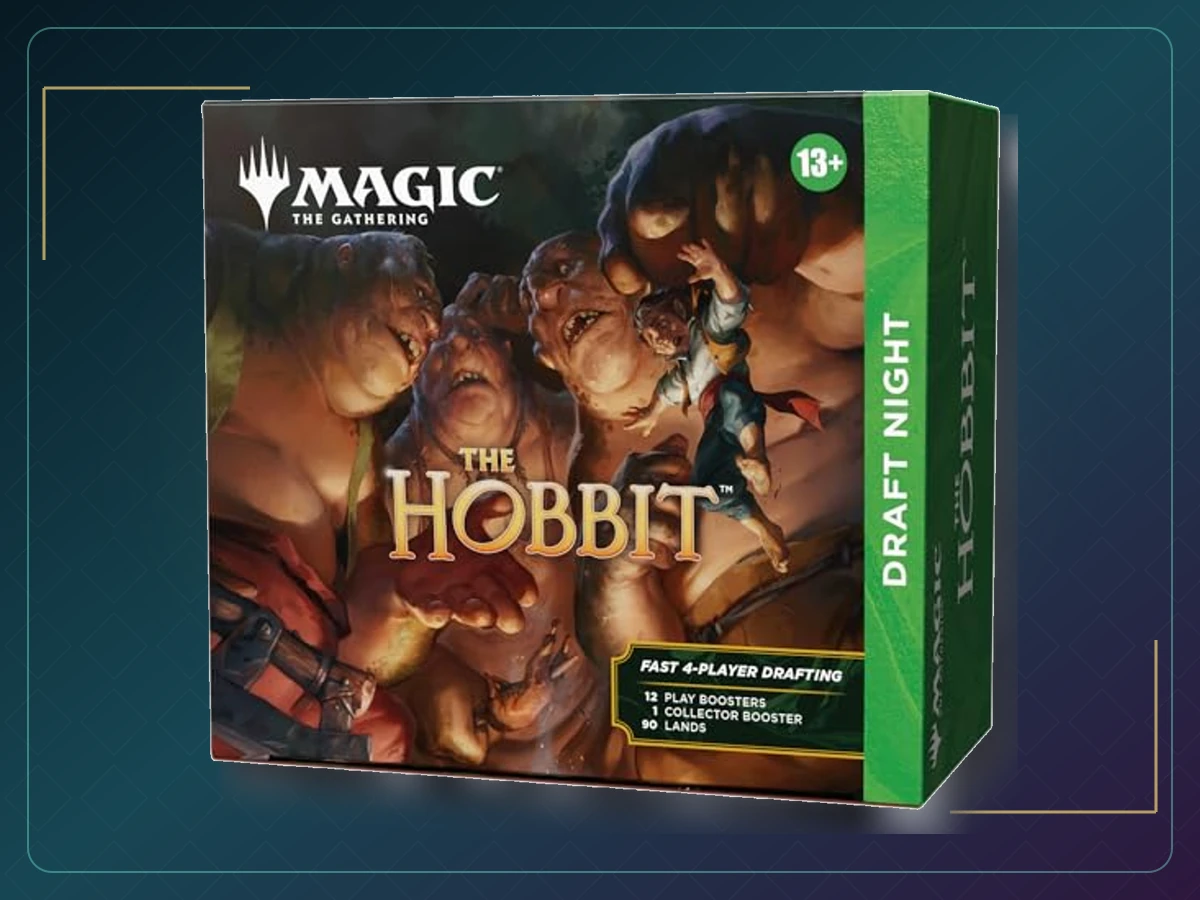
Magic: The Gathering | The Hobbit Draft Night
The cleanest event purchase when all four seats are real: the box supplies a defined activity rather than a pile of packs looking for a plan.
- Four friends who want one complete Hobbit draft evening
- Exact photographed product
- Drafting is the activity. This is not a preconstructed deck for one new player.
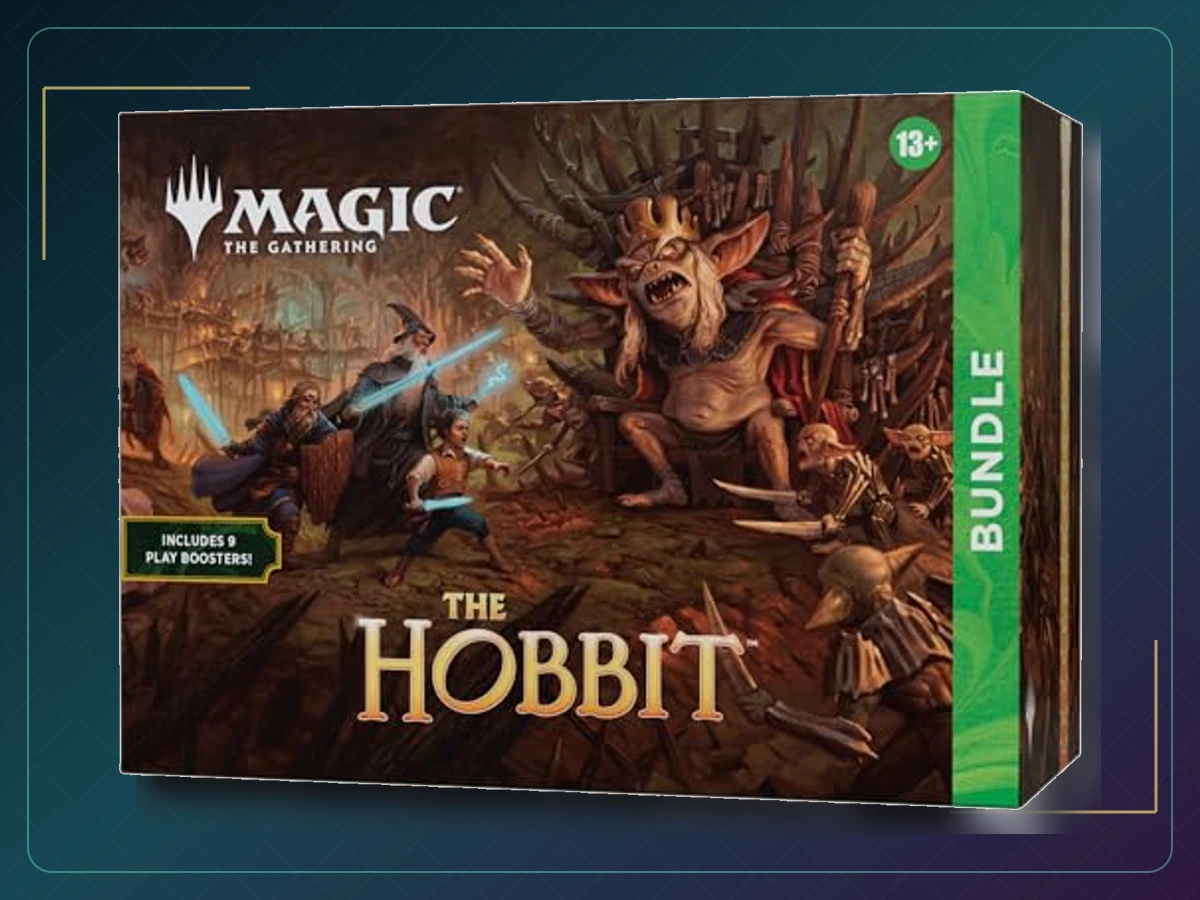
Magic: The Gathering | The Hobbit Bundle
A contained set sampler with Play Boosters, lands and a storage box. It starts a collection more honestly than a full display.
- One player starting a tidy personal Hobbit collection
- Exact photographed product
- Random cards do not guarantee a finished deck.
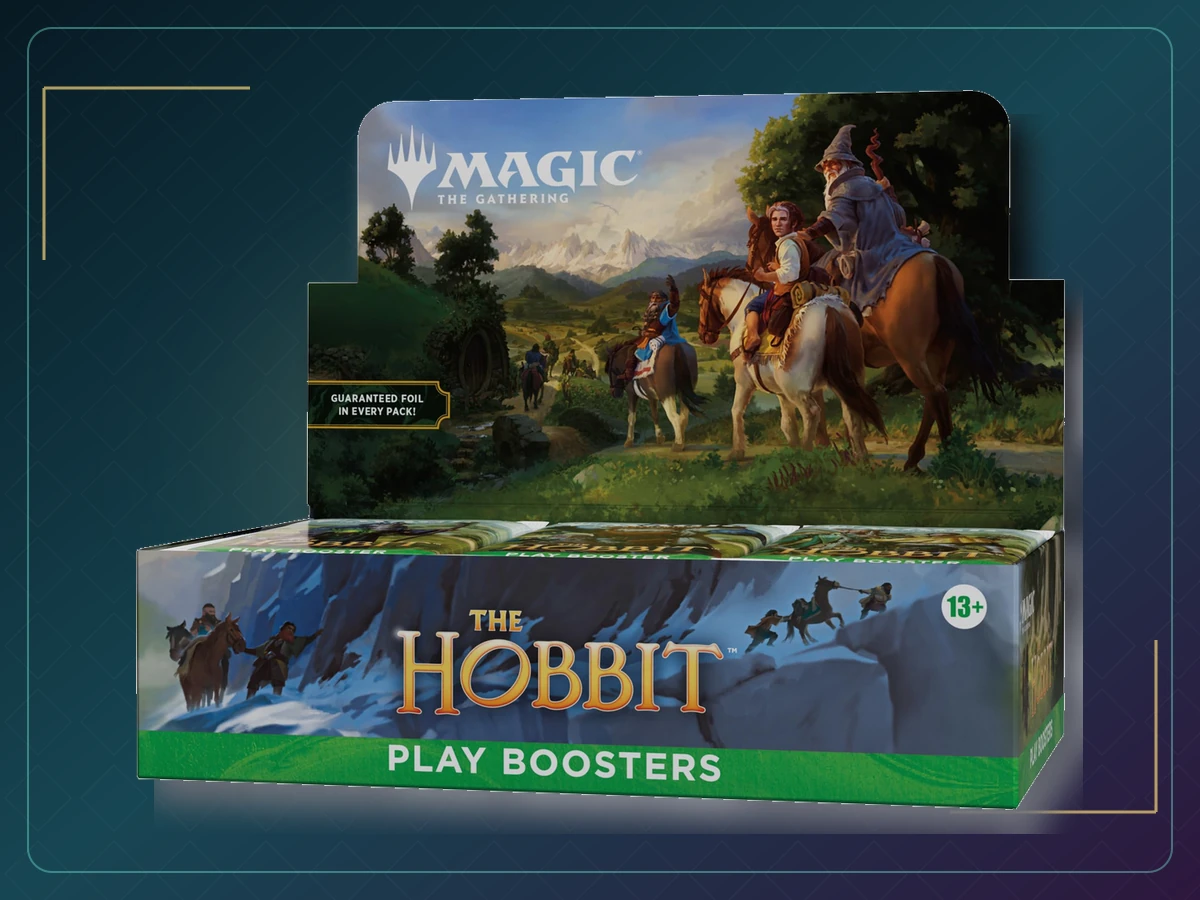
Magic: The Gathering | The Hobbit Play Booster Display
The volume route for repeat drafts and broad set exploration. It becomes sensible only after the group has named the event.
- A group scheduling drafts or a deliberate large opening
- Exact photographed product
- A display is not a starter deck, and opening value is variable.
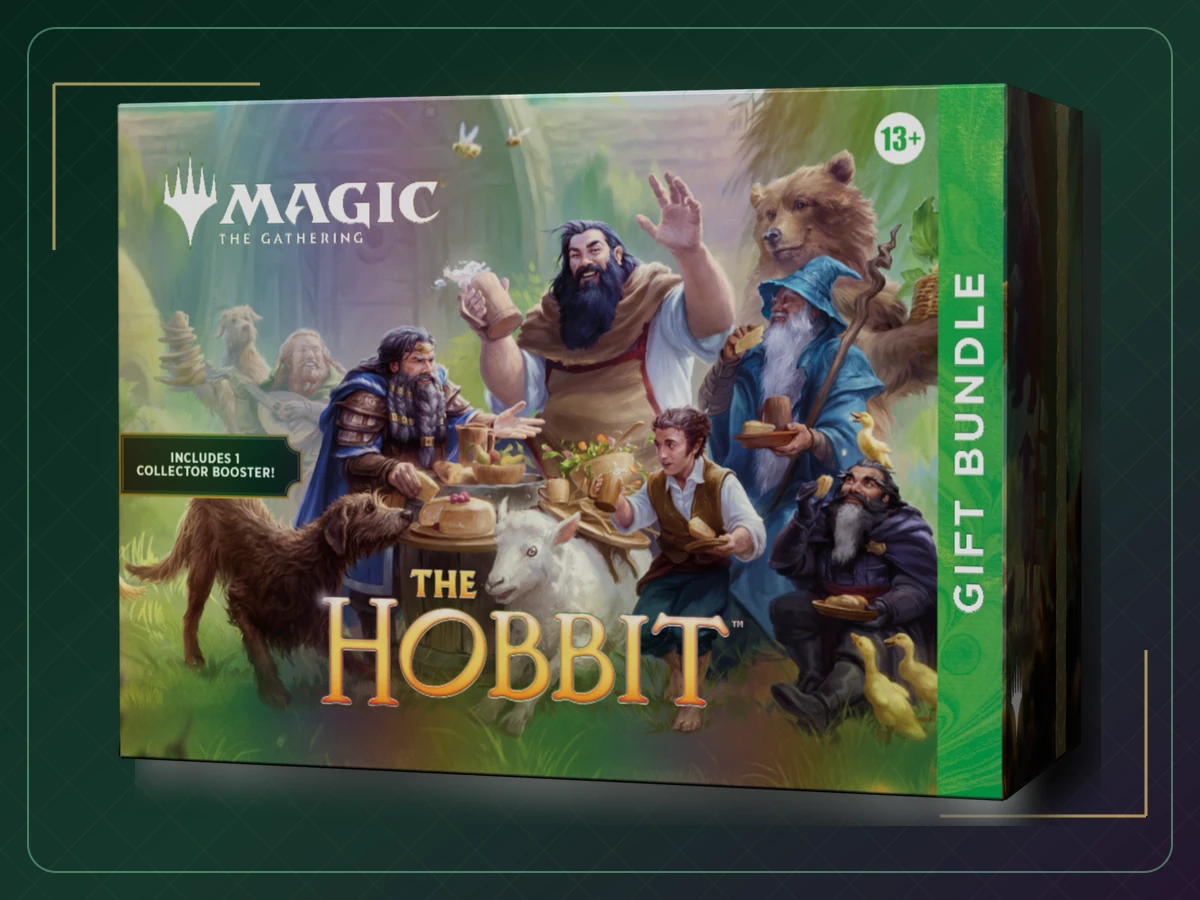
Magic: The Gathering | The Hobbit Gift Bundle
A more celebratory Bundle lane for someone who wants the storage-and-lands package plus one Collector Booster.
- A giftable sampler with one premium-treatment pack
- Exact photographed product
- One premium pack raises the spectacle, not the certainty.
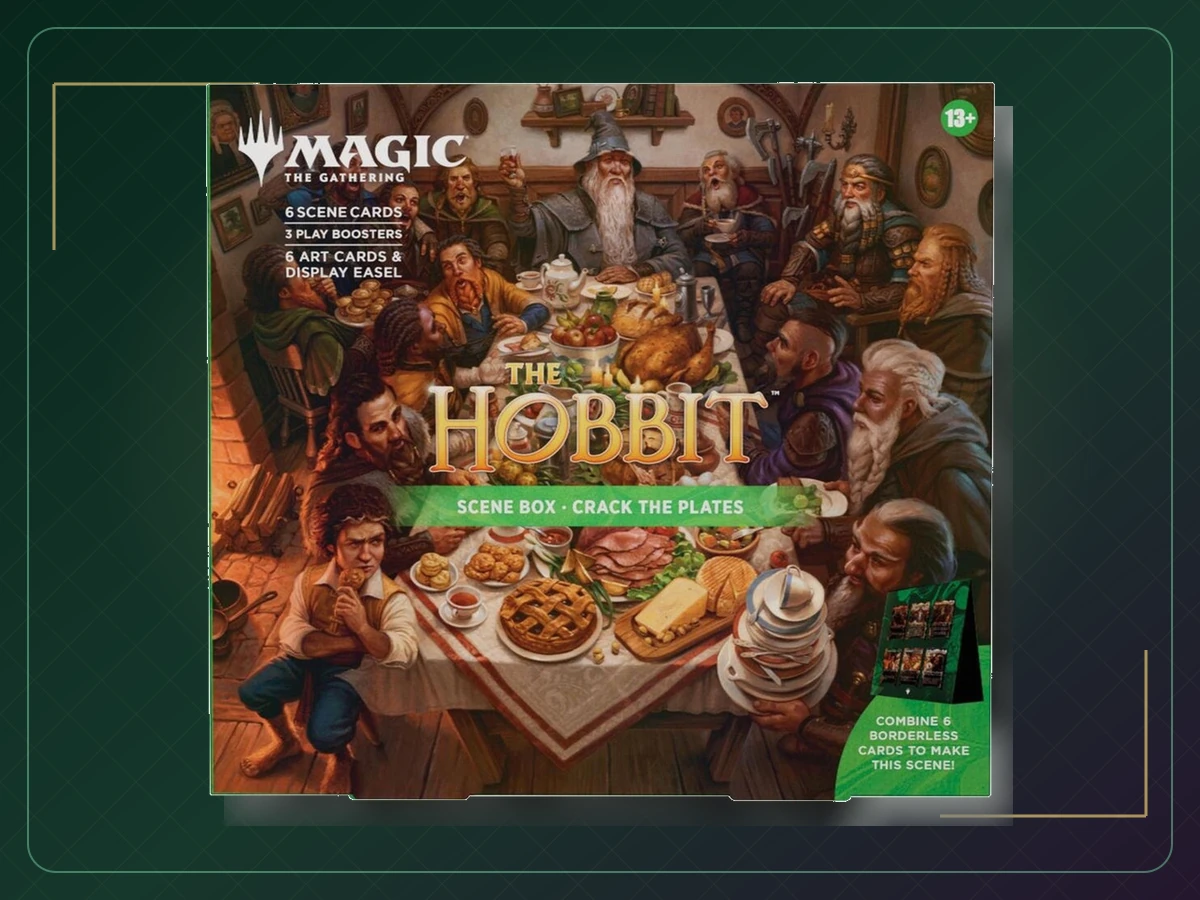
Magic: The Gathering | The Hobbit Crack the Plates Scene Box
A finite display object with six borderless scene cards and a few Play Boosters. Buy it for this scene, not as a route into ordinary deck construction.
- Collectors who specifically want the dinner-table scene cards
- Exact photographed product
- The display concept is the product; it is not a complete playable deck.
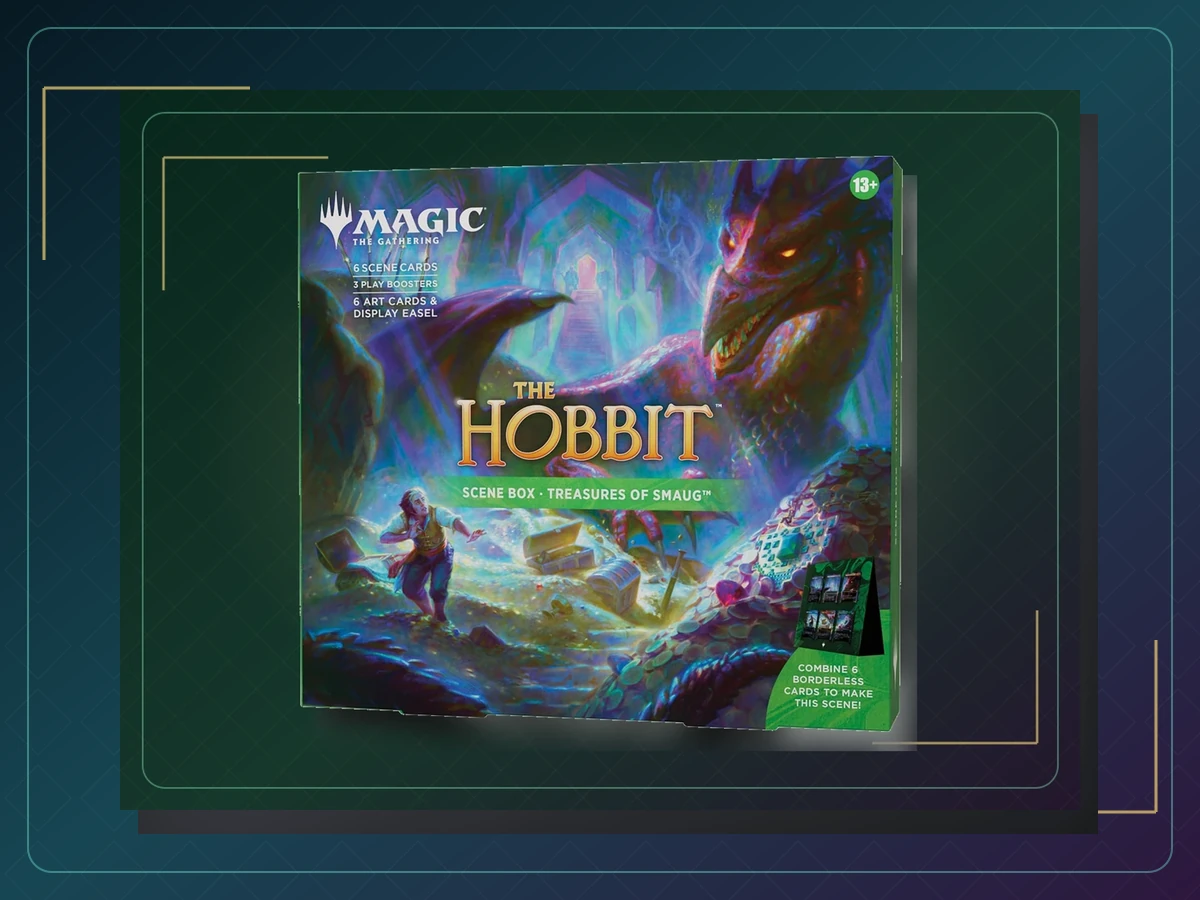
Magic: The Gathering | The Hobbit Treasures of Smaug Scene Box
The dramatic scene-box choice: six borderless cards, display support and a narrow collecting finish line.
- Collectors who want the Smaug scene as a finished display
- Exact photographed product
- Choose this exact artwork; do not buy both Scene Boxes by reflex.
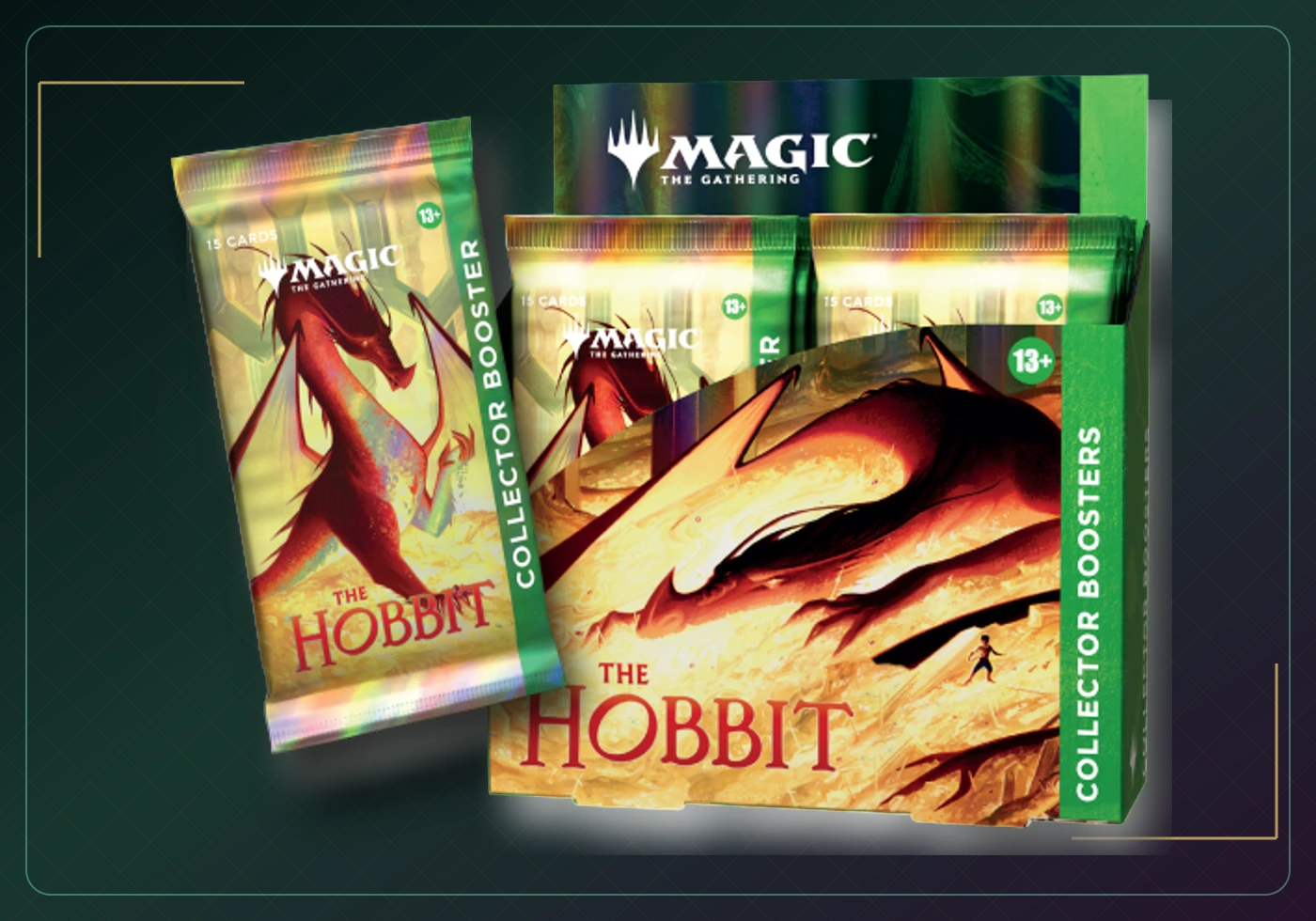
Magic: The Gathering | The Hobbit Collector Booster Display
The premium-treatment opening lane, with the highest spectacle and the least beginner-friendly variance.
- Experienced collectors deliberately choosing premium treatments
- Exact photographed product
- Collector Boosters are not a shortcut to a playable first deck or a guaranteed valuable pull.
Ultra PRO Magic Classic Card Back Sleeves, 100 Count
A full 100-count licensed Magic sleeve set that keeps the accessory visually part of the game instead of turning the guide into a generic supply catalog.
- One active deck that needs licensed, visually coherent protection
- Exact photographed product
- Confirm live count and opacity; keep identical spares for marked or split sleeves.
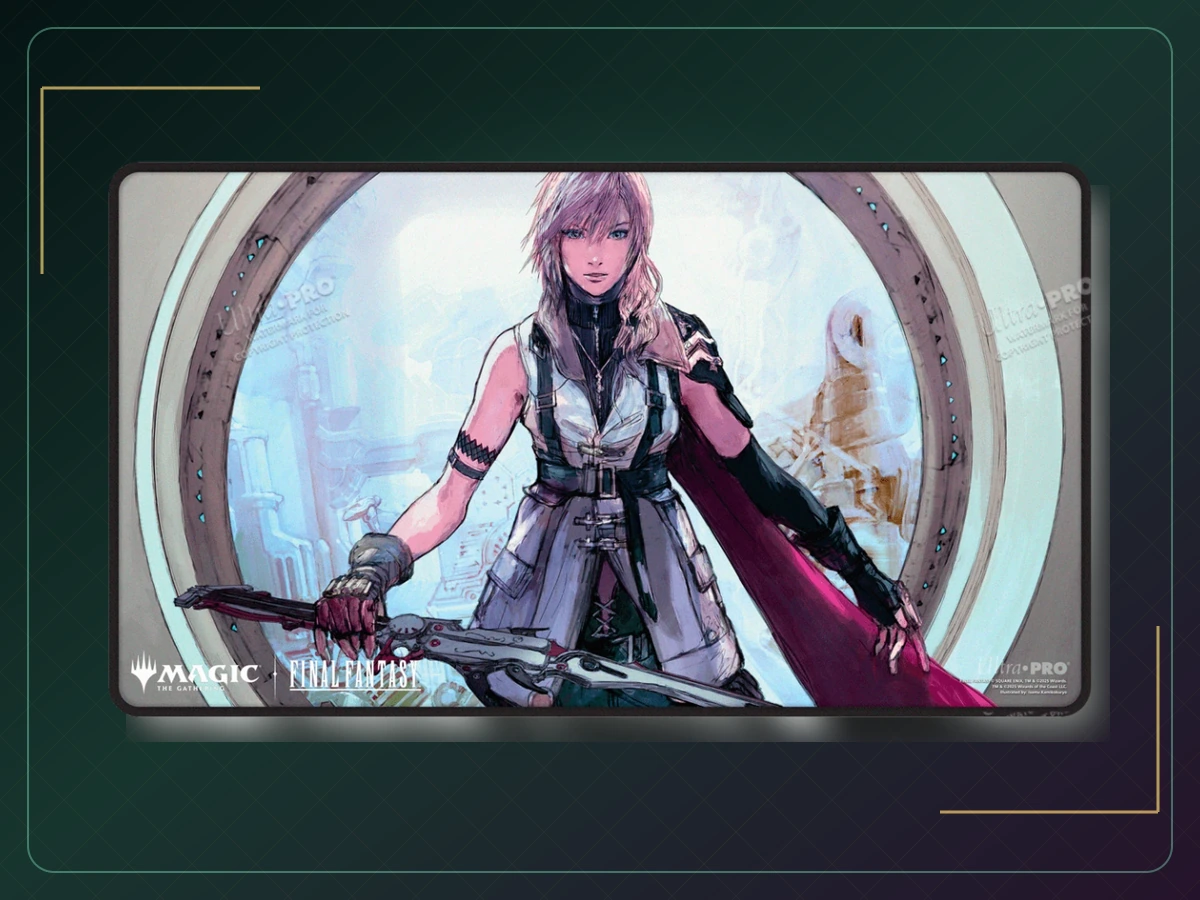
Ultra PRO Final Fantasy Lightning, Army of One Stitched Playmat
A stitched, licensed Magic play surface with enough character to earn table space. It is a useful protection upgrade, not required for the first lesson.
- A Magic player who wants a licensed art mat rather than a black rectangle
- Exact photographed product
- The art is Final Fantasy rather than Hobbit; wait if matching Middle-earth art matters more.
At a glance
| Route | What you get | Best for | Puzzlewick ruling |
|---|---|---|---|
| Magic Academy | Guided lesson plus a 40-card Welcome Deck | The safest first step | Start here when available |
| Prerelease | Six Play Boosters, promo, Spindown, deck box | First public event and Sealed deck | Best first event |
| Draft Night | 12 Play Boosters, 1 Collector Booster, 90 lands, tokens | Four friends drafting at home | Best experience purchase |
| Bundle | 9 Play Boosters, lands, promo, Spindown, storage | Starting a Hobbit collection | Good shelf start, not a deck |
| Gift Bundle | Bundle contents plus Collector Booster and premium lands | A premium gift or unboxing | Luxury, not curriculum |
| Collector Booster | Premium treatments and exclusive serialized chase access | Informed collectors | Skip while learning |
Free download — The Hobbit to Your First Magic Table: Jargon & Turn Reference
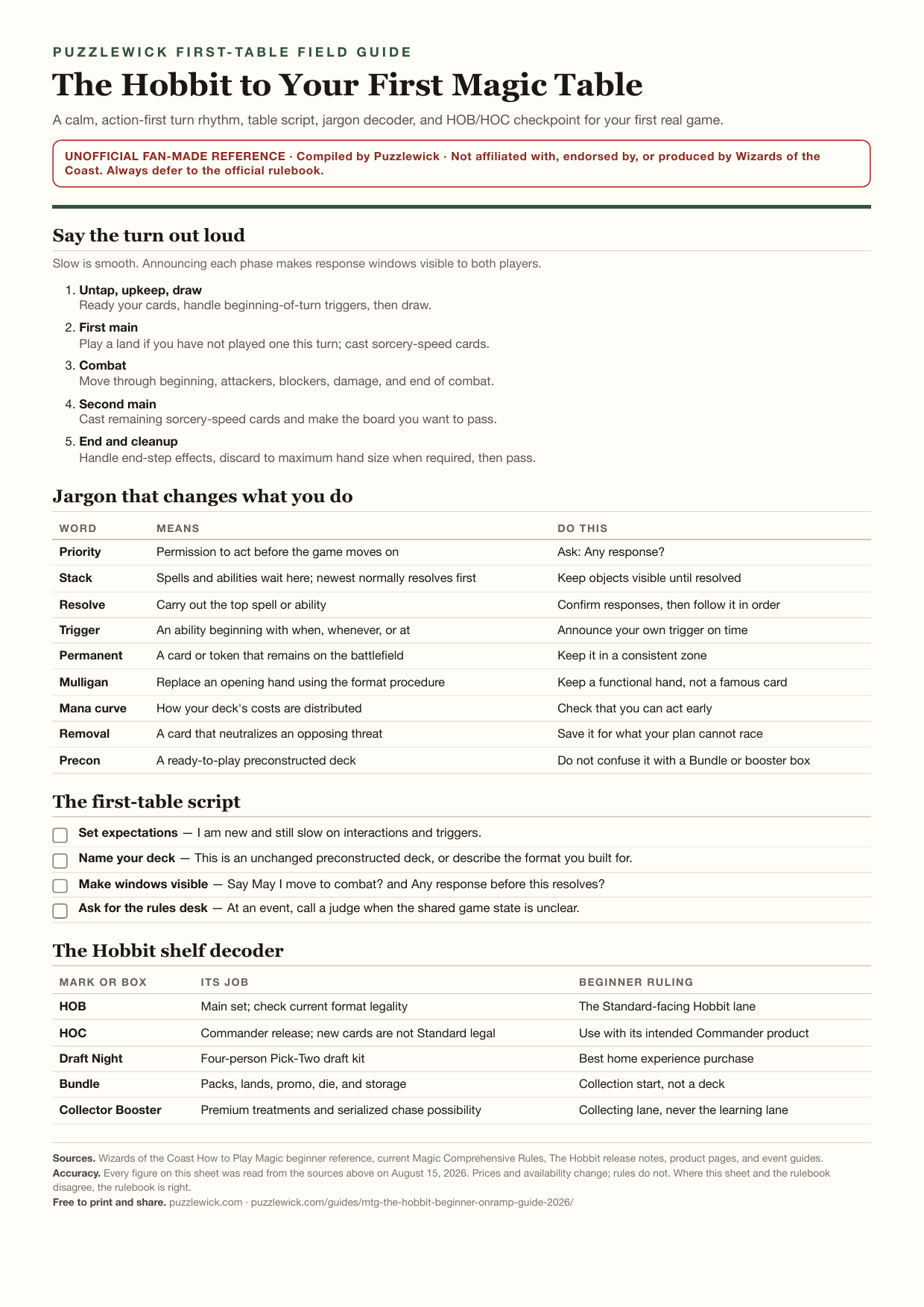
A print-friendly first-session sheet with the turn rhythm, table script, action-first jargon, and HOB/HOC product decoder.
Unofficial fan-made reference. Compiled by Puzzlewick from the sources listed on the sheet. Not affiliated with or endorsed by the publisher — always defer to the official rulebook.
Questions, answered
What should a complete beginner buy first for Magic: The Gathering | The Hobbit?
Start with a free Hobbit Welcome Deck and Magic Academy if a participating store is available. For a first paid event, choose Prerelease. For four friends at home, Draft Night is the clearest self-contained experience purchase.
Is there a The Hobbit two-player Starter Kit?
No retail two-deck Hobbit Starter Kit was part of the 2026 product line reviewed for this guide. The free Welcome Deck program teaches beginners in stores. For two fixed home-learning decks, use the Final Fantasy Starter Kit.
Can I play with The Hobbit Bundle immediately?
No. The Bundle contains packs, lands, a promo, a Spindown counter, and storage, but not a finished legal deck.
Is Draft Night good for complete beginners?
Yes when at least one person can teach drafting and deck construction. It is best for four players and includes the packs, lands, and tokens needed for its Pick-Two draft experience.
What is the difference between HOB and HOC cards?
HOB is the main The Hobbit set and entered Standard. HOC is the Commander release; new HOC cards are legal in Commander, Legacy, and Vintage, while reprints keep their normal legality.
Are Collector Boosters worth it for a new player?
Usually not. They are premium-treatment luxury packs and the exclusive route to the serialized Gleaming Gold Smaug chase, but they are not an efficient teaching product or method for getting exact deck cards.
How many lands should I play at The Hobbit Prerelease?
Seventeen lands and twenty-three spells is a useful starting point for a 40-card Sealed deck. Adjust for your mana curve, colors, fixing, and unusual card pool after asking an experienced player to review the build.
What accessories does a new Magic player actually need?
Opaque sleeves and a deck box are the first purchases for a deck you play. Choose Dragon Shield or Katana sleeves by shuffle feel; choose a Boulder or Bastion for rigid travel protection and a Vault X Exo-Tec for a softer magnetic case. Add a playmat for public surfaces and a zippered side-loading binder for collectible cards. Use rigid holders only for genuinely valuable singles.
Do I need to understand the stack before my first game?
You need only the practical version: spells and abilities wait in a last-in, first-out line, and players may respond before the top object resolves. Deeper edge cases can wait.
What should I say when joining my first Magic table?
Say that you are new, understand the basics, and are still slow on interactions and triggers. Tell a Commander table if your deck is an unchanged precon and ask what kind of power level they are playing.
Should I buy boosters or singles?
Buy boosters for Draft, Sealed, discovery, or the fun of opening. Buy singles when you need exact cards for a deck.
Can The Hobbit cards be used with Final Fantasy cards?
Cards can be mixed when they are legal in the same format and satisfy that format's deck-construction rules. Check each exact card's legality rather than assuming all crossover products share formats.
Keeper's verdict
Start with the free Magic Academy and Hobbit Welcome Deck route when possible. Choose Prerelease for a supported first event, Draft Night for four friends, and the Bundle for a personal collection start. Do not buy Collector Boosters to learn, and do not mistake any booster product for a ready-to-play deck. Sleeve the deck you use, box what travels, binder what you collect, and bring the first-store script instead of an apology.
Research ledger 18 sources · reviewed 2026-09-09
Specifications, rules, current product information, community experience, and contrary evidence were checked against the sources below. Commercial links are kept separate from editorial evidence.
- Wizards of the Coast: Magic: The Gathering | The Hobbit product hubmagic.wizards.com/en/products/the-hobbit
- Wizards of the Coast: Where to Play The Hobbitmagic.wizards.com/en/news/feature/where-to-play-the-hobbit
- Wizards of the Coast: The Hobbit release notesmagic.wizards.com/en/news/feature/the-hobbit-release-notes
- Wizards of the Coast: The Hobbit mechanicsmagic.wizards.com/en/news/feature/the-hobbit-mechanics
- Wizards of the Coast: The Hobbit Prerelease Guidemagic.wizards.com/en/news/feature/the-hobbit-prerelease-guide
- Wizards of the Coast: Collecting The Hobbitmagic.wizards.com/en/news/feature/collecting-the-hobbit
- Wizards of the Coast: How to Play Magicmagic.wizards.com/en/how-to-play
- Magic Comprehensive Rulesmagic.wizards.com/en/rules
- Gamegenic Bastion 100+ XL official specificationsgamegenic.com/product/bastion-100xl
- Ultimate Guard Katana sleeve specificationsultimateguard.com/en/Card-Sleeves/Katana-Sleeves/UGD010111
- Vault X Exo-Tec deck box and binder catalogus.vaultx.com/collections/deck-boxes
- Scryfall card and legality databasescryfall.com
- Reddit: The Hobbit Prerelease megathreadreddit.com/r/magicTCG/comments/1vi2a6n/the_hobbit_prerelease_megathread_mtgxthehobbit
- Reddit: first Prerelease event advicereddit.com/r/magicTCG/comments/1v817vl/1st_prerelease_event
- Reddit: new player asking about The Hobbitreddit.com/r/magicTCG/comments/1ujaqx9/new_player_looking_for_advice_on_the_upcoming
- Reddit: The Hobbit Gift Bundle versus Draft Nightreddit.com/r/mtgfinance/comments/1vck6bx/the_hobbit_gift_bundle_vs_draft_night
- Reddit: The Hobbit Welcome Deck discussionreddit.com/r/magicTCG/comments/1vauyu6/the_hobbit_welcome_decks_a_few_cards_from_each_of
- Gamegenic Sidekick 100+ XL: materials, capacity and removable covergamegenic.com/product/sidekick-100-xl-convertible
If it didn't earn a shelf, it isn't here.


Keep exploring
The next smart rabbit holes.
✶ Universe HubMagic: The Gathering: the whole buying pathMagic: The Gathering is the deepest construction sandbox in the Big Three: a two-player duel, four-player Commander ritual, draft...🂠 Topic PathTrading Card Games: compare the whole shelfStart with the game and community you want, then buy the smallest product that lets you test it properly. These guides separate...How-ToMagic: The Gathering Final Fantasy Starter Kit Strategy Guide 2026: Cloud vs Sephiroth and How to Upgrade Both DecksLearn the two decks as printed, fix the matchup without ruining it, and know exactly where to go after the first duel.