What Should You Craft in MTG Arena Standard? A Post-Ban Best-of-One Field Guide
Margo separates current field evidence from tier-list theater, compares Mono-Red Aggro, Boros Auras and Mono-Black Midrange by decision style, and gives every wildcard a waiting period before October 12.


AI-assisted research and drafting in Margo’s voice · reviewed by Robert Pruitt · how this guide was made
Last editorial refresh: 2026-09-08 Gold-standard QA: 2026-09-08 10 sources reviewed Affiliate links checked during gold-standard pass

The short answer
Do not craft a full Best-of-One deck because one page labels it Tier 1. On September 7, 2026, MTG Arena Zone placed Mono-Red Aggro, Boros Auras and Mono-Black Midrange in its editorial Tier 1. Treat that as a dated shortlist. Inventory your collection, test the play pattern, count rare and mythic wildcards, separate reusable lands from narrow cards, and wait when the deck depends on a card likely to be re-evaluated at the next announced policy review on October 12.
Decision map
Choose in thirty seconds
Arena makes crafting feel like clicking “open” on a solved answer. It is closer to welding. The card joins your collection permanently, while the metagame, bans and your own tolerance for a play pattern continue moving.
This guide does not crown a universal best deck. It teaches how to read one dated Best-of-One snapshot, compare its leading archetypes and decide which missing cards are worth permanent resources. Experts can use the same framework to explain uncertainty instead of hiding it behind a color-coded tier.
Start here, then go deeper
You are in the right cabinet.
 ✶ Universe HubMagic: The Gathering: the whole buying pathMagic: The Gathering is the deepest construction sandbox in the Big Three: a two-player duel, four-player Commander ritual, draft...
 🂠 Topic PathTrading Card Games: compare the whole shelfStart with the game and community you want, then buy the smallest product that lets you test it properly. These guides separate...
 GuideMTG Arena Standard Best-of-One: Read the Engine, Kill the Right Card, Win More GamesRobert teaches the missing skill between knowing card types and understanding a game: identify fuel, engine, multiplier, protection and...
Freeze the date before reading the tier
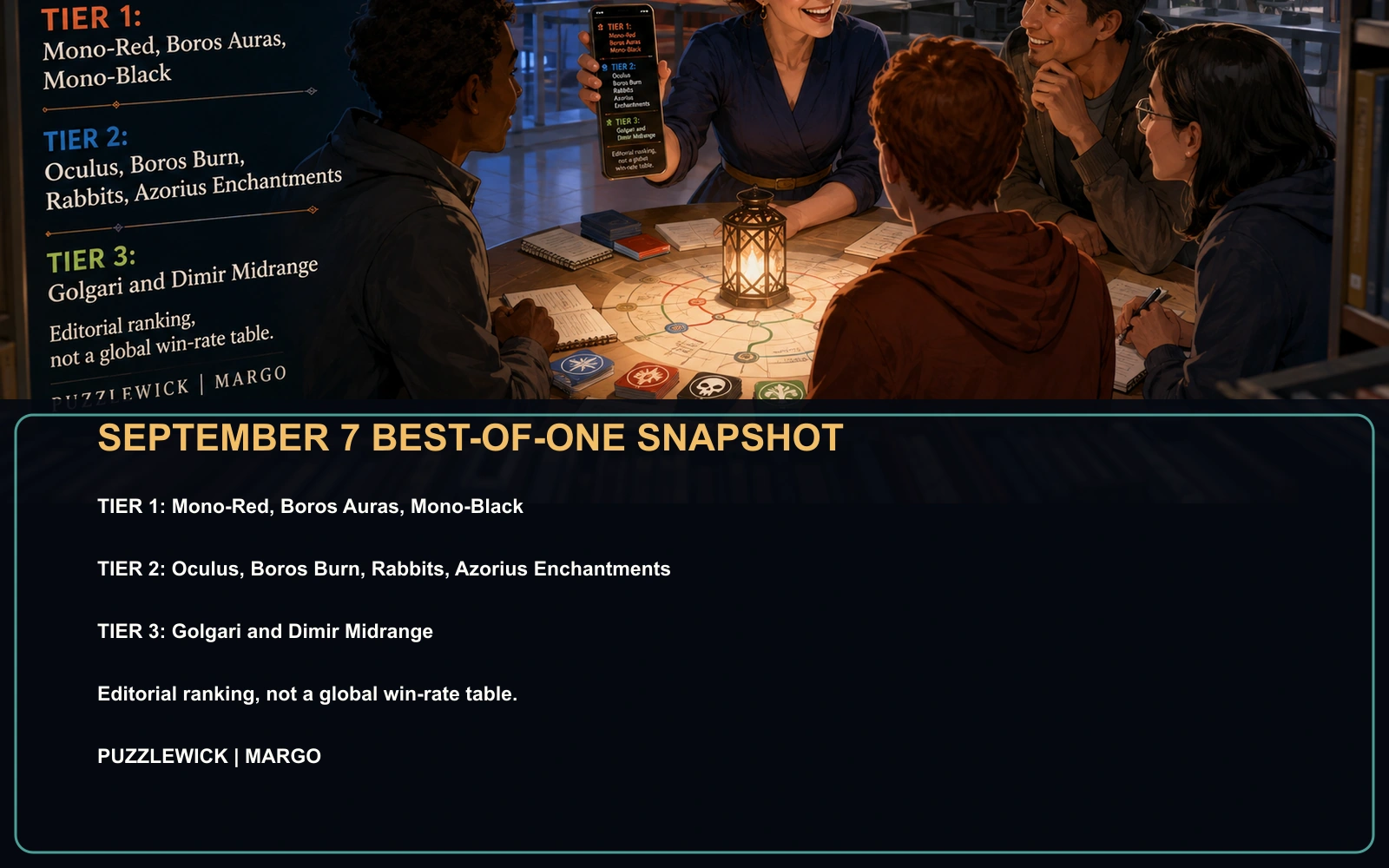
The September 7 MTG Arena Zone Best-of-One page lists Mono-Red Aggro, Boros Auras and Mono-Black Midrange in Tier 1. Azorius Oculus, Boros Burn, Selesnya Rabbits and Azorius Enchantments appear in Tier 2; Golgari and Dimir Midrange appear in Tier 3.
That is a useful map of one editor’s current field, not a transparent census of every Arena match. The page does not publish a universal sample, confidence interval or complete worldwide win-rate table. Broader Standard results and Best-of-Three events answer different questions.
Write the source and date beside every tier claim. If the date is missing, the list is decoration. If the method is missing, it is a shortlist, not a verdict.
The date on a metagame page is part of the claim. A list published before a ban, rotation, or release may still teach sequencing, but it cannot describe the present field without a new sample. Save the page, note its scope, and compare it with current legality. “Tier 1” is not a permanent card characteristic; it is an editorial conclusion attached to a place and time.
The August bans changed the question
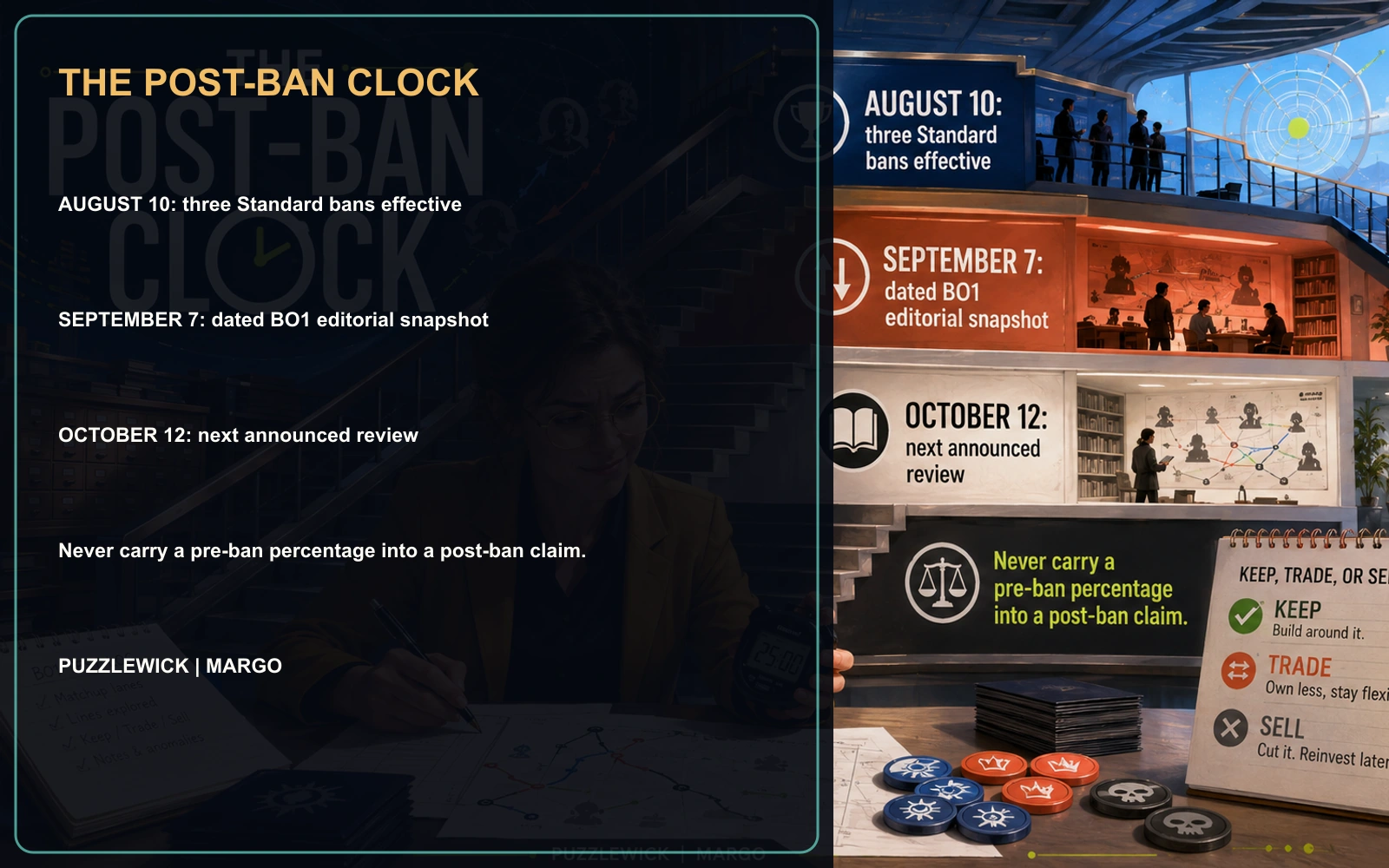
Wizards banned Badgermole Cub, Stormchaser’s Talent and Gran-Gran in Standard effective August 10. Its pre-ban Arena evidence placed Selesnya Offense above 57 percent match wins with the second-highest play rate. That number belongs to the named deck and pre-ban period.
The clean response is not to recycle the percentage as if it describes September. Remove the banned cards from candidate lists, recheck every card’s legality and treat post-ban rankings as new evidence with a shorter history.
Wizards announced October 12 as the next review. A nearby policy date does not forbid crafting. It raises the standard for expensive, narrow and untested crafts.
Archetype choice begins with decisions you enjoy repeating. Mono-Red often asks whether to develop another threat, preserve damage, or trade tempo for reach. Boros Auras asks how much to invest in one creature and when protection is worth holding up. Mono-Black Midrange asks which exchange preserves the best future hand. A strong deck with an irritating decision loop is an expensive way to avoid playing.
A tier label is not a crafting instruction
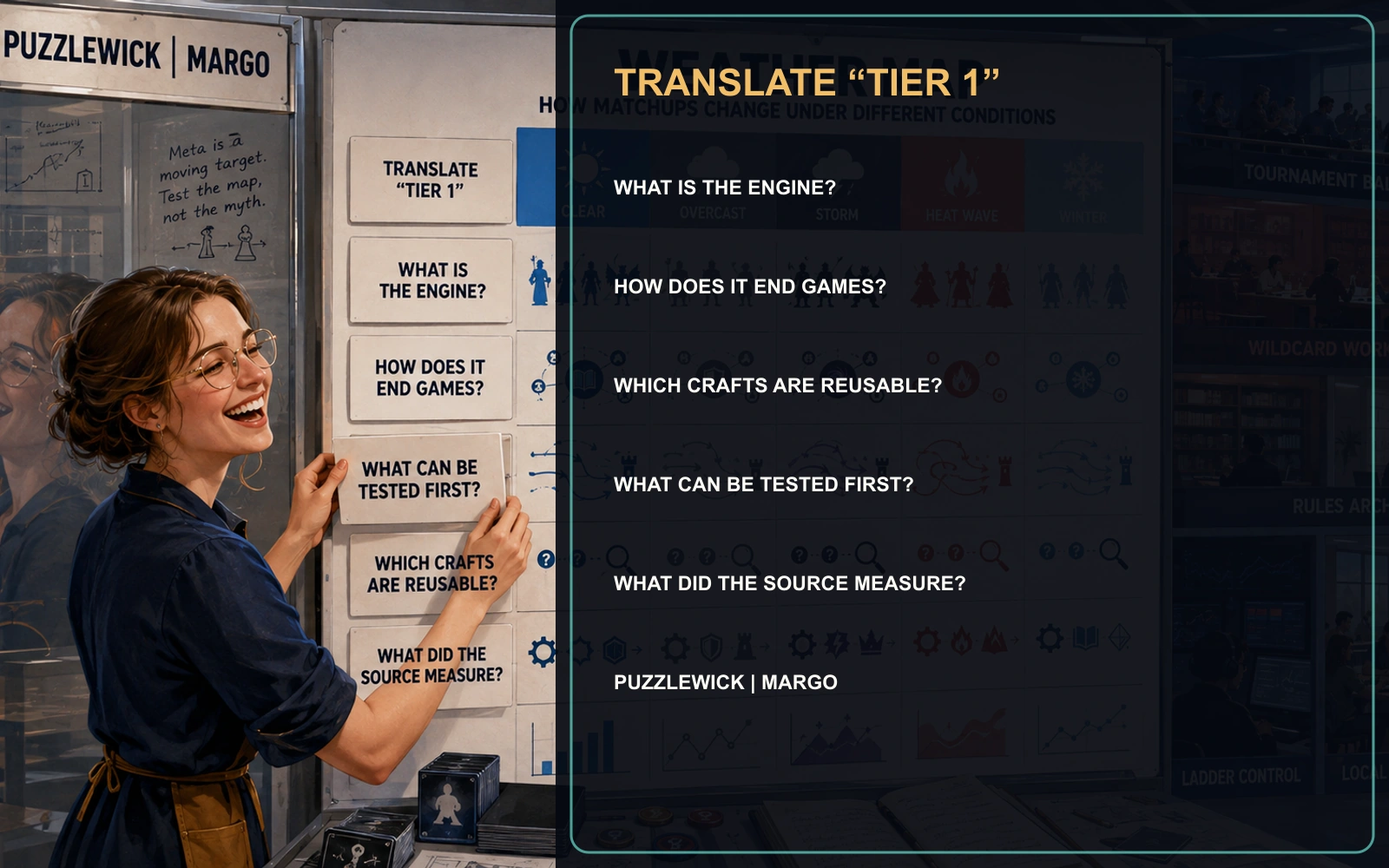
Tier labels usually combine expected field presence, results, matchup spread and editorial judgment. Different sites weight those ingredients differently. A deck can be powerful, poorly positioned for your rank pocket, expensive for your account and miserable for you to pilot.
Translate the label into questions. What is the deck’s primary engine? How does it close games? Which rares are shared with other decks? Which pieces are replaceable for testing? What did the source actually measure?
If those answers remain foggy, import the list and play a proxy-style paper sample or watch several unedited matches. Highlights teach ceiling. Full matches reveal mulligans, awkward draws and the turns where the deck does nothing impressive.
Inventory the deck in four columns: owned, common or uncommon craft, rare craft, and mythic craft. Then mark every missing card as structural, replaceable, or luxury. Structural cards make the archetype function. Replaceable cards have a lower power substitute for testing. Luxury cards improve percentages after the deck already works. This turns one frightening wildcard total into an ordered experiment.
Choose the decision style before the colors
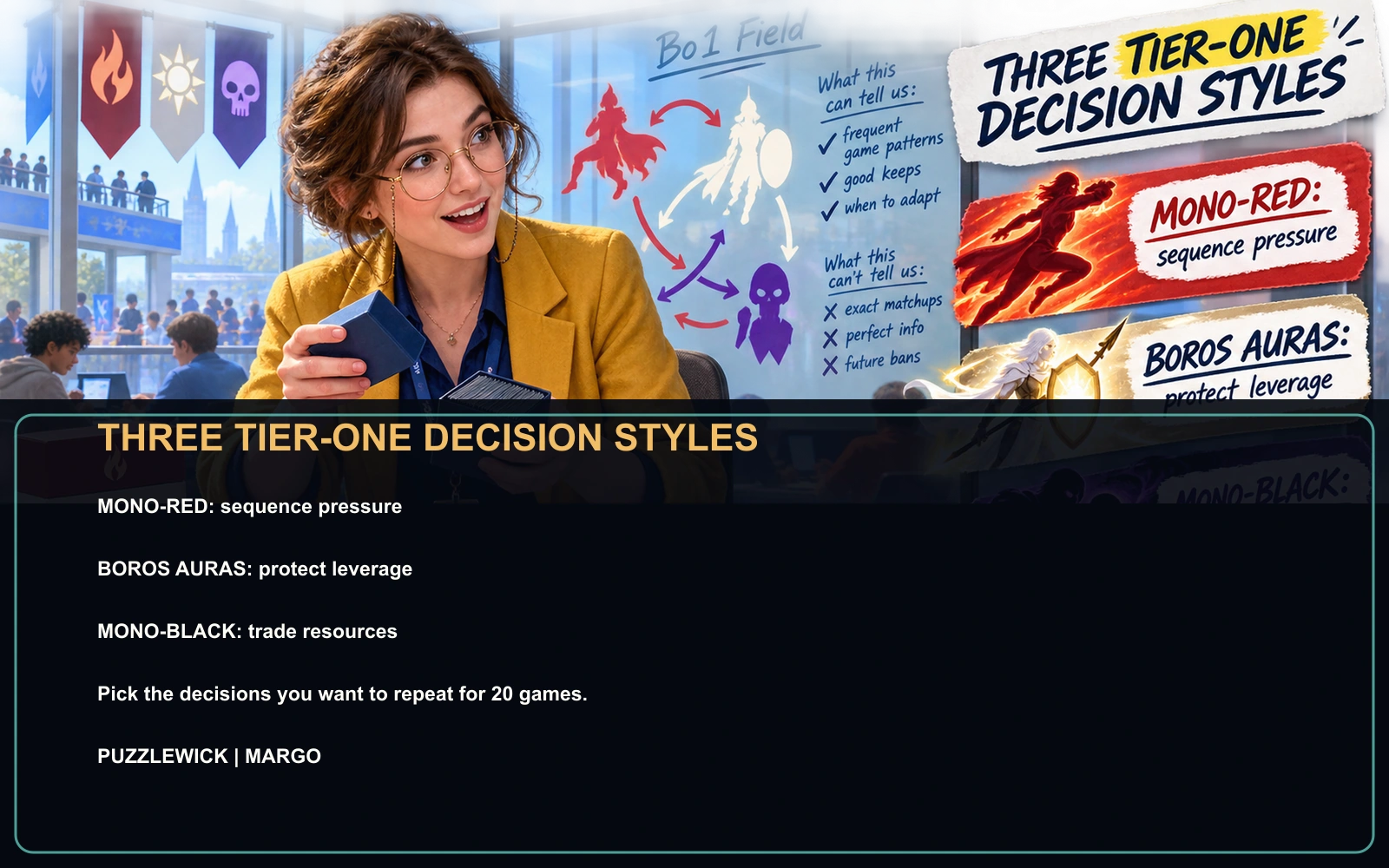
Mono-Red Aggro rewards sequencing. Damage must be divided among combat, blockers and the opponent while the window is open. Boros Auras rewards leverage and protection. It invests multiple cards in a threat and must judge when that exposure is justified.
Mono-Black Midrange rewards exchange quality. It asks whether removal, discard, recursion or a threat is the best use of this turn’s mana. The games may last longer, and individual rare cards may carry more of the list’s structure.
None of these identities is a moral category. Choose the decisions you want to repeat for twenty games. A deck you dislike is expensive even when every wildcard was “optimal.”
Mana crafts deserve evidence too. A dual land is reusable only across decks that share its colors, speed requirements, and legality window. An aggressive deck may reject a land that enters tapped; a slower shell may value its utility. Craft the mana for a tested family of decks, not because “lands are always safe” has become the community's most expensive bedtime story.
Spend wildcards from reusable to narrow
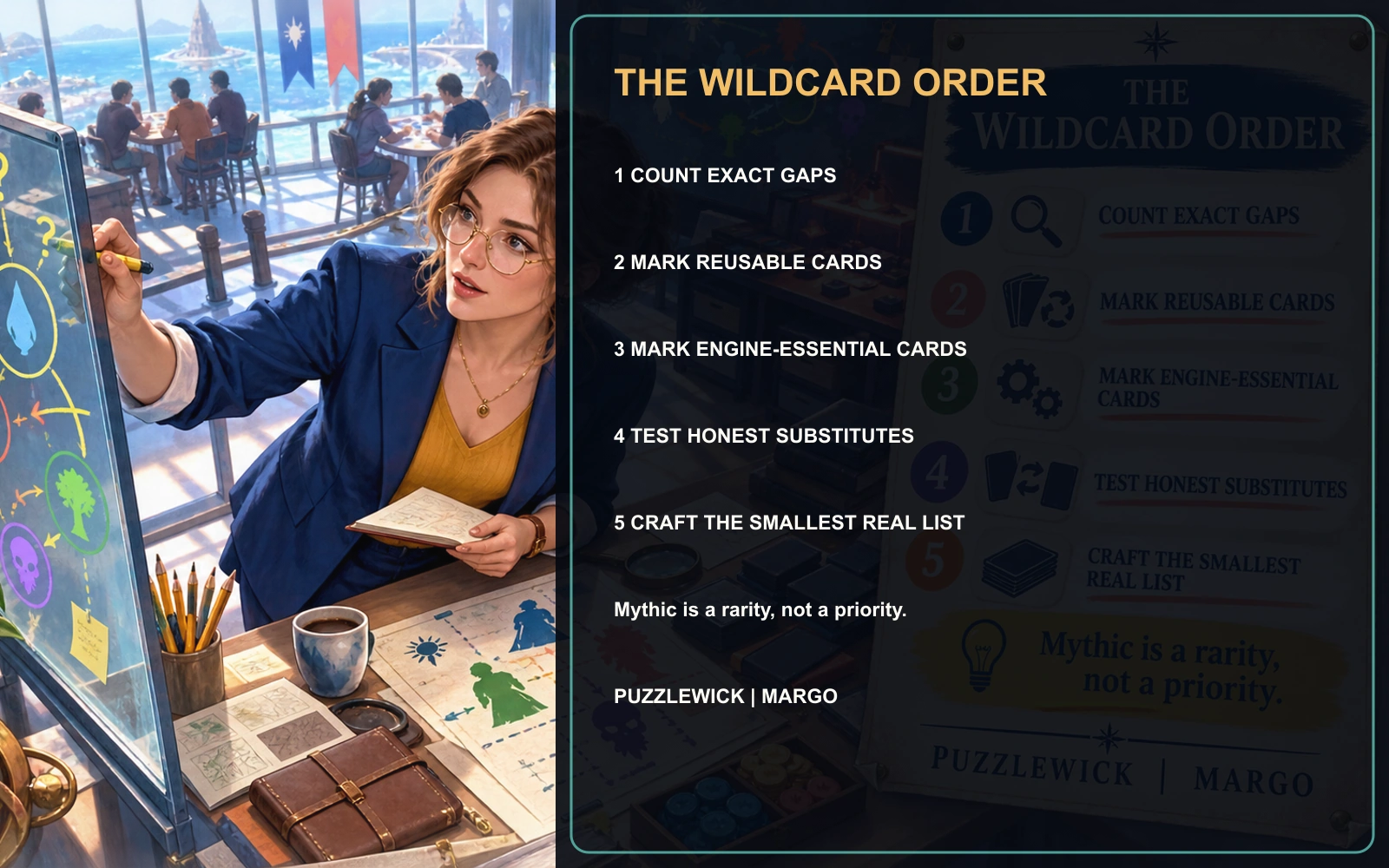
Begin with exact missing counts. Then classify each craft as reusable infrastructure, flexible role player, engine piece or narrow payoff. A land can be reusable across decks but worthless to colors you never play. A rare engine can be narrow but essential to the one deck you have tested and love.
Craft the smallest playable version first when honest substitutes exist. Do not replace a card whose text defines the deck and then call the test representative. Record which substitutions change speed, mana or engine density.
Mythic rarity is not a synonym for importance. Four rare lands can matter more than a theatrical finisher. Conversely, a free mana base does not rescue a shell whose core engine is missing.
Test the play pattern before completing the rare package. Arena starter resources, loaner decks, direct challenge proxies outside ranked play when available, and lower rarity substitutes can reveal whether the deck's decisions suit you. The purpose is not to prove the budget version competitive. It is to avoid discovering after twelve rare crafts that protecting one creature makes you miserable.
Use your collection as evidence, not destiny
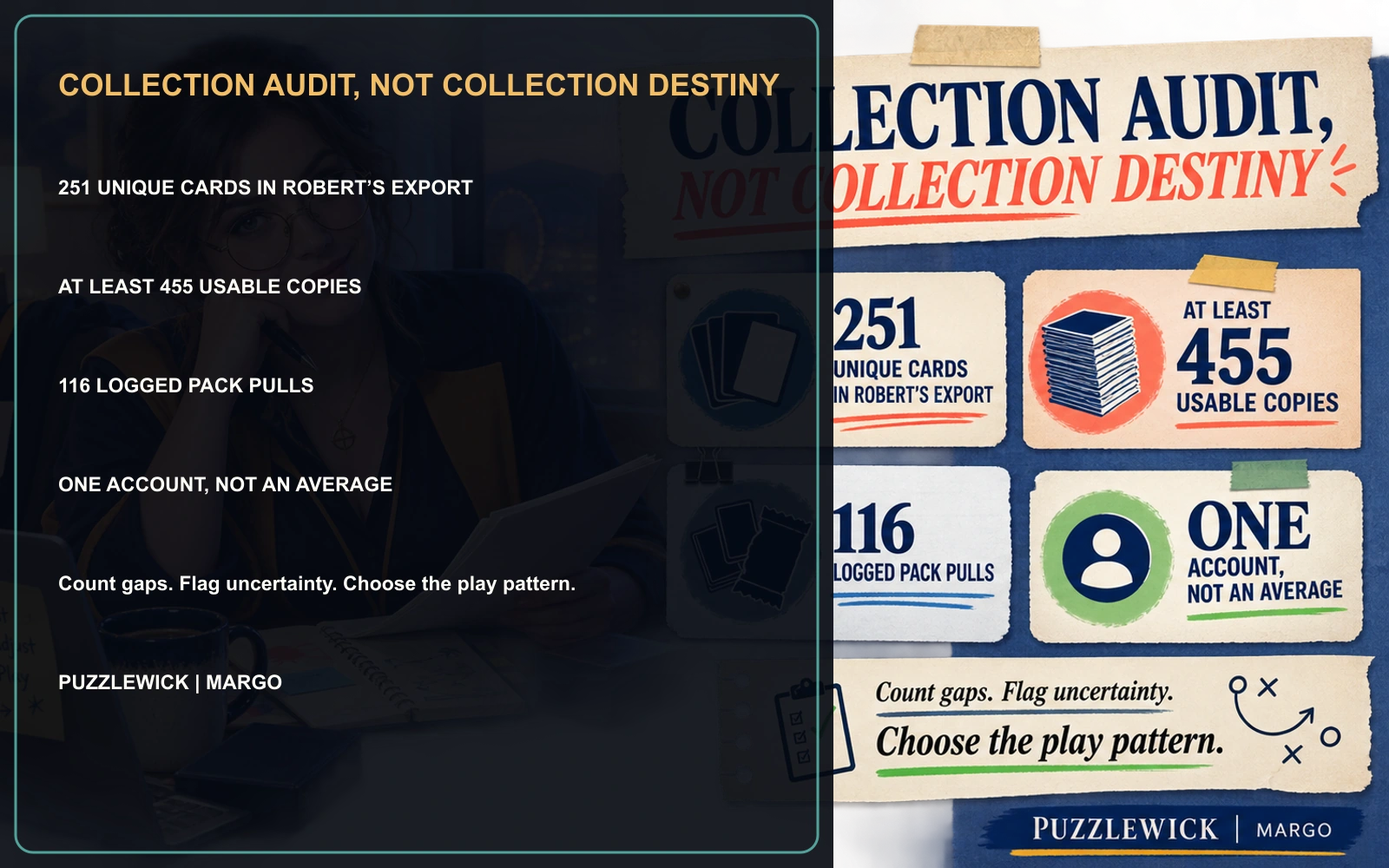
Robert’s September 7 collection export records 251 unique cards, at least 455 usable copies and 116 logged pack pulls. It also distinguishes exact quantities from three minimum-quantity rows. Those numbers describe one audited account only.
The method matters more than the totals. Export or inventory what you own, count exact gaps, flag uncertain quantities and separate collection convenience from deck strength. A deck that is two rares short deserves different treatment from one that needs twenty.
Do not let sunk cost choose the archetype. A nearly complete deck with a miserable play pattern can waste fewer wildcards and more evenings.
The August bans are a reminder that refunds do not reimburse an ecosystem. Arena may compensate the banned card itself under its current policy, but it does not automatically refund every narrow rare crafted to support that card. Evaluate the shell's dependency. A deck whose value vanishes when one enabler leaves carries more policy risk than a deck built from flexible threats, lands, and interaction.
Twenty test games beat one dramatic session
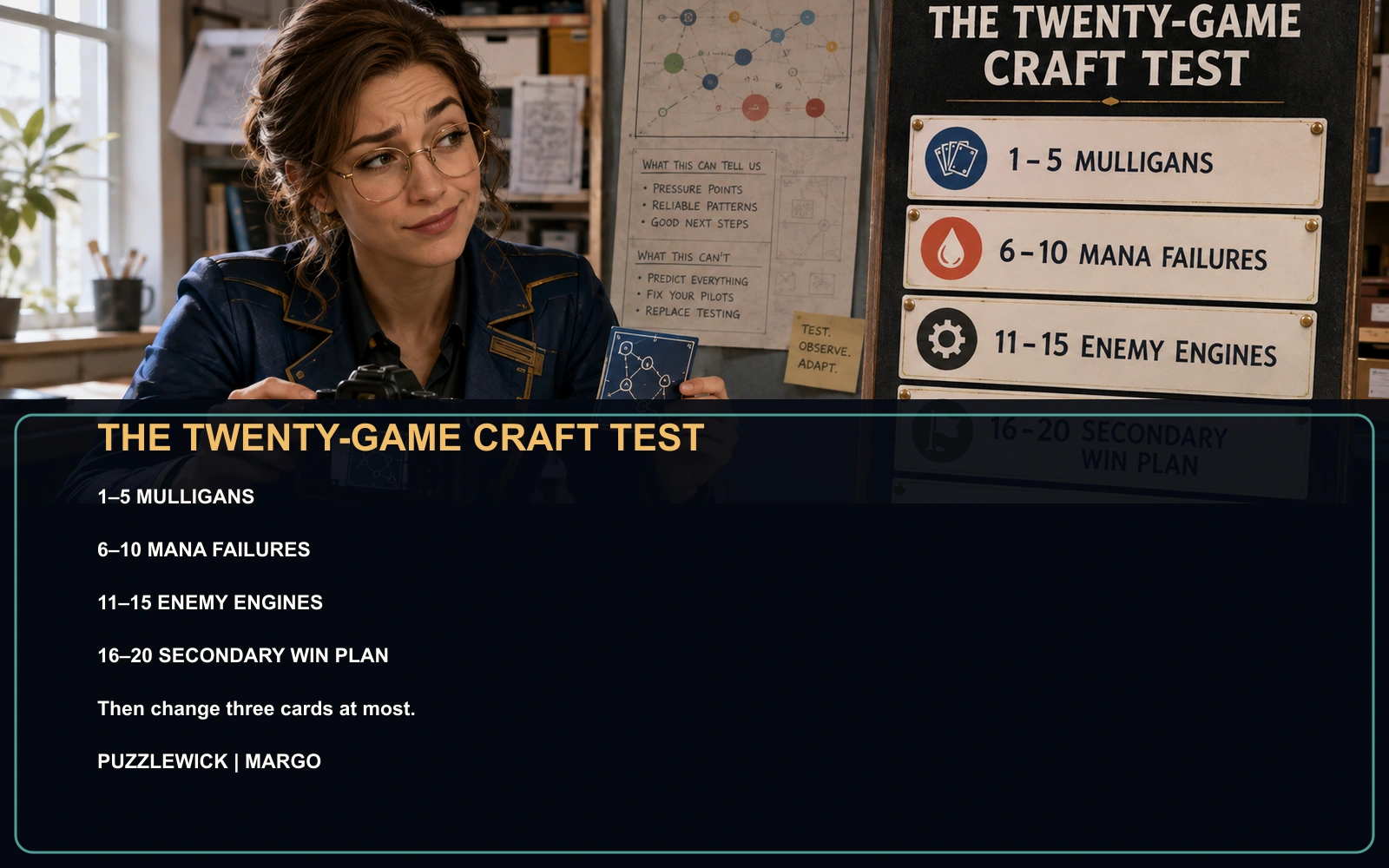
Split the trial into four sets of five. First learn mulligans. Then identify losses caused by mana. Next record the opponent’s engine and your answer timing. Finally track whether the deck’s closing plan still works when the first threat fails.
Record decision errors separately from draw variance. “Kept two lands and never found the third” means something different when the list is built to operate on two. “Lost to a rare” says almost nothing.
After twenty games, change no more than three cards unless legality changed. Large simultaneous edits erase the evidence you just collected.
Experts should publish uncertainty as carefully as lists. State whether evidence comes from Best-of-One ladder play, Best-of-Three events, a tracker sample, or editorial judgment. Name the date and rank band when known. Do not merge paper tournament finishes with Arena opening-hand dynamics and call the result a percentage. Readers can handle limits; they cannot audit invisible confidence.
Build a watchlist for October 12

Create three columns: safe to finish, test before crafting and wait for review. Safe-to-finish cards complete a deck you already use and have broad roles. Test-first cards are essential but narrow. Wait cards are expensive, speculative or tied to an unstable interaction.
On October 12, read the official announcement before reading reaction headlines. Recheck legality in Arena and Scryfall. Then wait long enough for lists to adjust unless your goal is explicitly to experiment in the first unsettled days.
This is not fear. It is sequencing. Wildcards are most valuable when they buy a known decision pattern, not when they buy relief from feeling behind.
Use October 12 as a review checkpoint, not a prophecy. Finish broad staples only when they solve a deck you already use. Test narrow engines before committing. Hold expensive speculative crafts when a policy announcement or major release can change the field. The goal is not to spend nothing. It is to make every wildcard answer a question that existed before the craft button.
The picks
Some links below are affiliate links — as an Amazon Associate, Puzzlewick earns from qualifying purchases, at no extra cost to you. It never changes a pick.
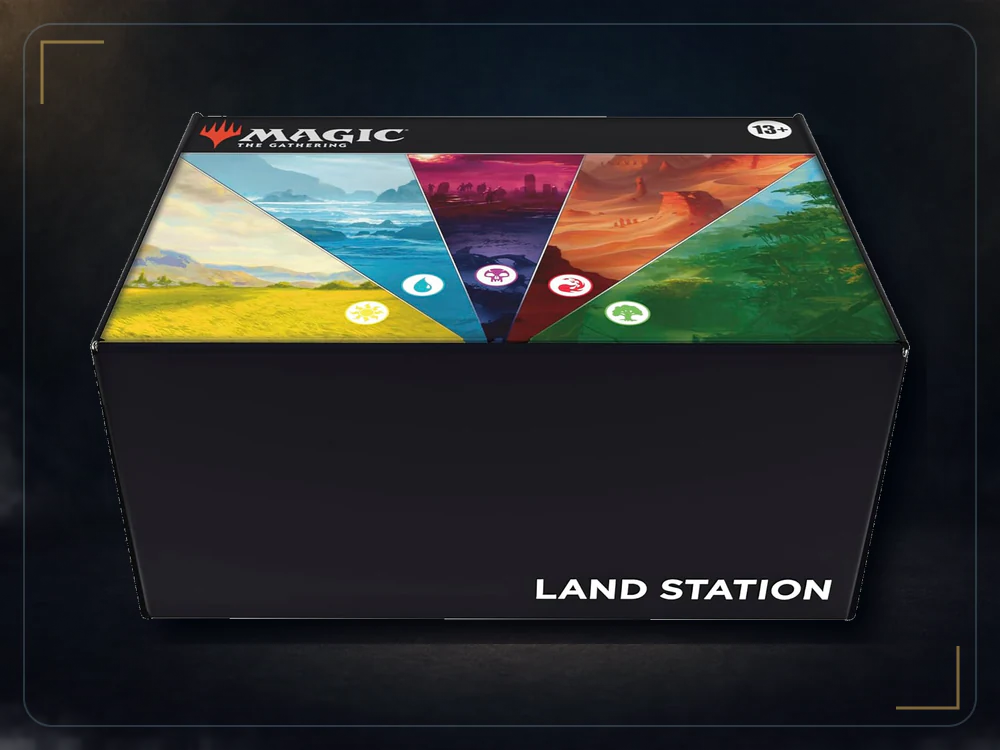
2025 Land Station (400 Basic Land Cards)
A verified land supply supports deliberate paper testing without pretending that randomized packs guarantee a ladder deck.
- Reusable across lessons
- Supports several test decks
- Not an Arena wildcard purchase
- Not a complete competitive deck
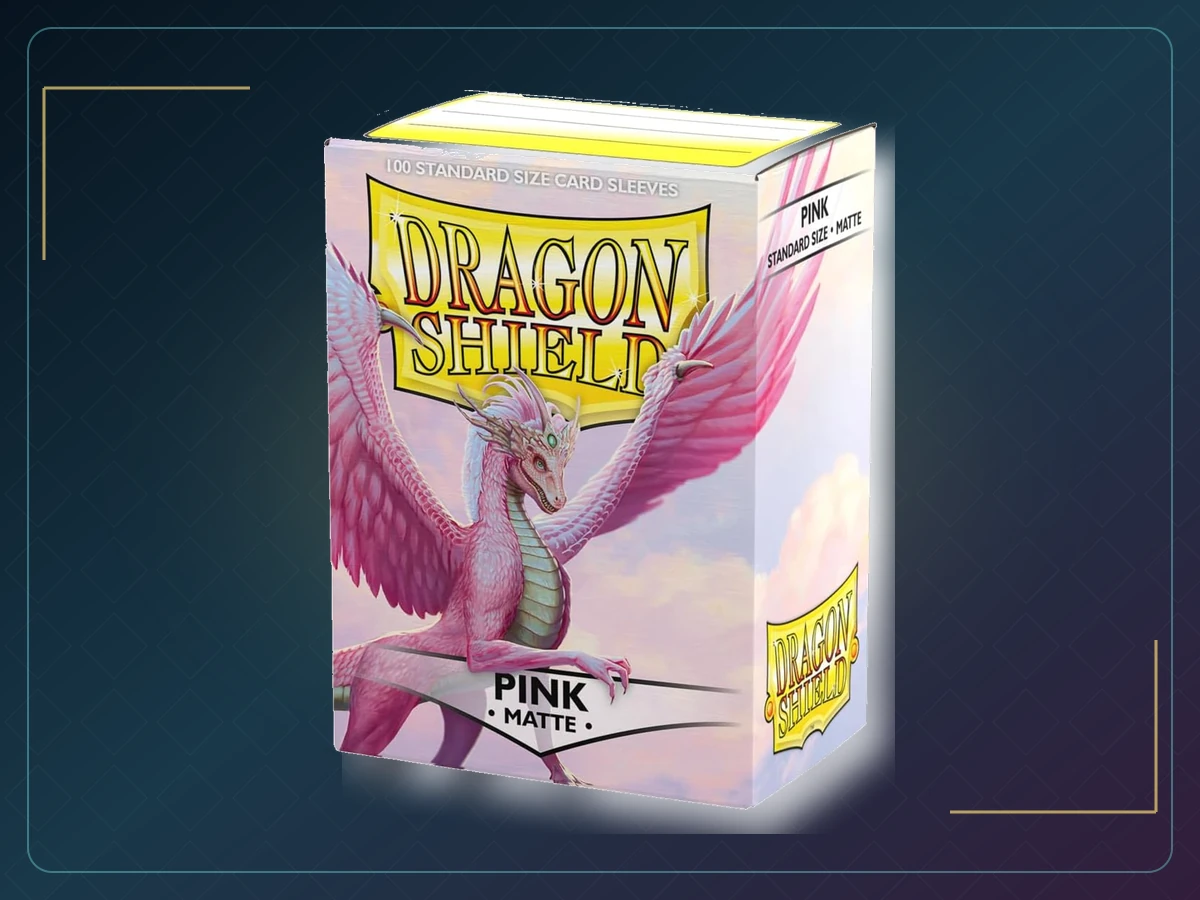
Dragon Shield Standard Size Matte Sleeves, 100 Count
A distinct opaque sleeve color keeps a live paper test list together while cards move in and out during the ten-match review cycle.
- Correct Magic card size
- Durable repeated handling
- Does not improve the deck
- Keep matching spares
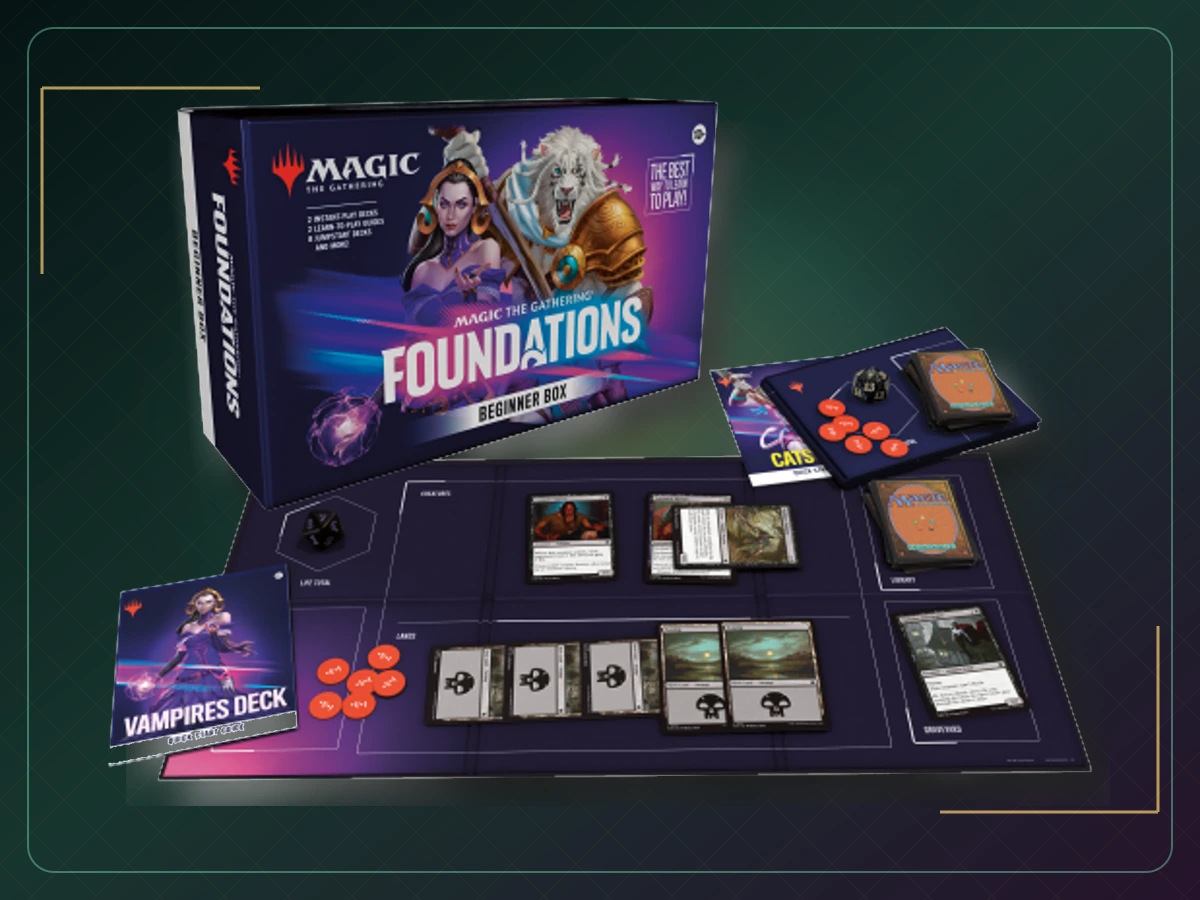
Magic: The Gathering Foundations Beginner Box
A bounded, playable paper teaching environment gives a newer player somewhere to practice turn structure and combat before a metagame snapshot starts dictating purchases.
- Playable teaching product
- Useful paper rehearsal
- Not an Arena purchase
- Not a competitive Standard deck
At a glance
| Archetype | Core skill | Craft risk | Best fit |
|---|---|---|---|
| Mono-Red Aggro | Sequencing damage and combat | Narrow threats can age quickly | Short, proactive matches |
| Boros Auras | Protecting one leveraged threat | Attachment pieces depend on shell | Tempo and calculated exposure |
| Mono-Black Midrange | Trading resources and timing removal | Rare density can be high | Interactive, measured games |
| Azorius Oculus | Graveyard setup and protection | Engine pieces may be narrow | Players who enjoy setup turns |
| Selesnya Rabbits | Board development and multiplication | Wide boards meet sweepers | Creature synergy |
Free download — The post-ban Best-of-One crafting worksheet
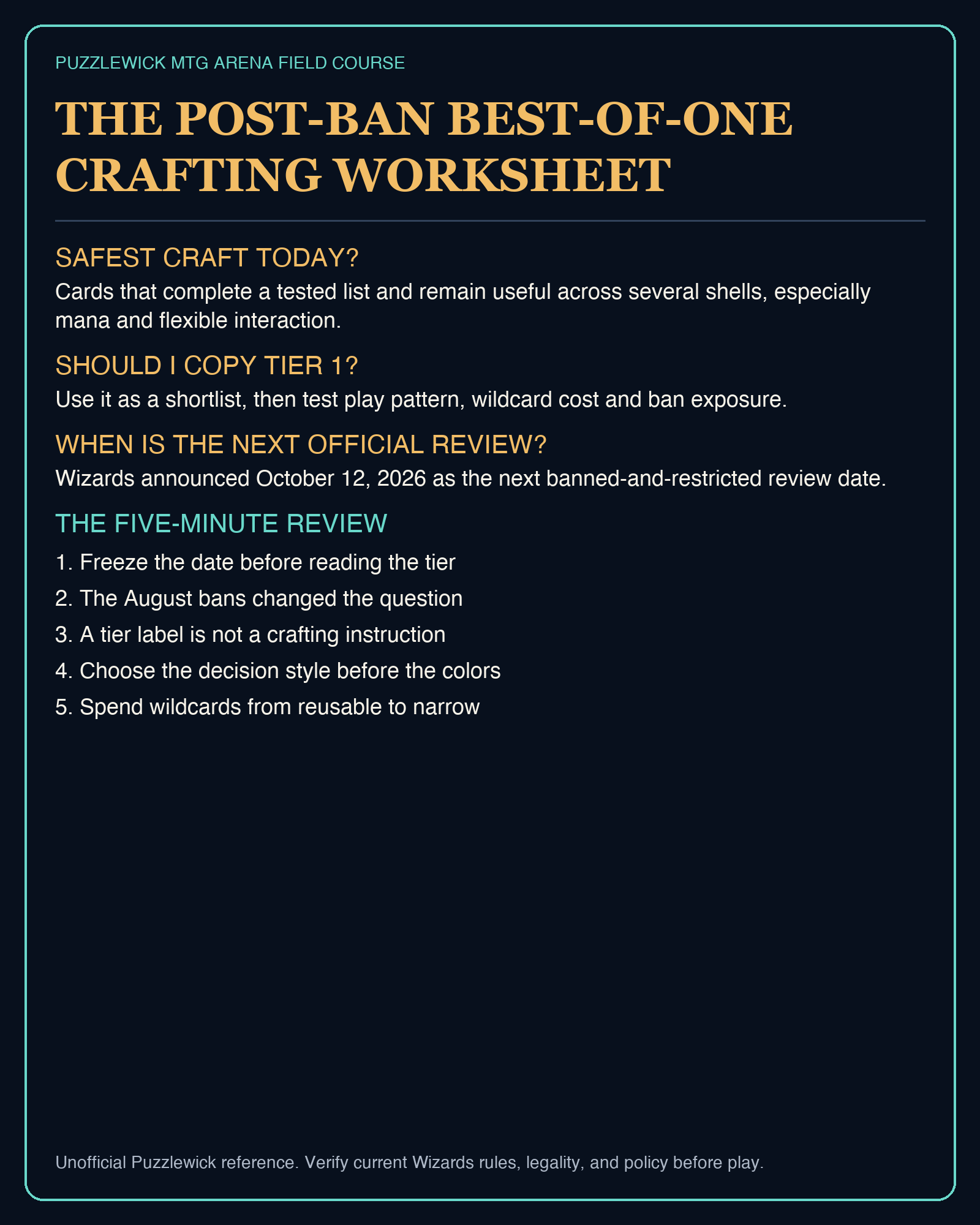
A concise printable Puzzlewick companion. Unofficial; current Wizards rules and policy always take precedence.
Unofficial fan-made reference. Compiled by Puzzlewick from the sources listed on the sheet. Not affiliated with or endorsed by the publisher — always defer to the official rulebook.
Questions, answered
What were the August 2026 Standard bans?
Badgermole Cub, Stormchaser’s Talent and Gran-Gran were banned effective August 10, 2026.
What decks were Tier 1 in the September 7 BO1 snapshot?
MTG Arena Zone listed Mono-Red Aggro, Boros Auras and Mono-Black Midrange. That is a dated editorial ranking, not a transparent worldwide dataset.
Should I spend wildcards before October 12?
Spend them only on a tested list whose missing cards you understand. Wait on expensive speculative crafts or cards whose role depends on a volatile shell.
Are dual lands always the safest craft?
No. Reusable mana is valuable, but only when the colors and decks you plan to play actually use those lands.
Does a high tier guarantee a positive win rate for me?
No. Matchups, piloting, collection limits, rank and the source’s method all matter.
Margo's verdict
Craft the deck you have tested, understand and can mostly complete, not the deck with the loudest thumbnail. Mono-Red asks for sequencing under speed. Boros Auras asks for threat protection and attachment risk. Mono-Black Midrange asks for exchange quality and patience. Your best first craft is the one whose decisions you want to repeat.
Research ledger 10 sources · reviewed 2026-09-08
Specifications, rules, current product information, community experience, and contrary evidence were checked against the sources below. Commercial links are kept separate from editorial evidence.
- Wizards of the Coast: Standard formatmagic.wizards.com/en/formats/standard
- Wizards of the Coast: August 10, 2026 banned and restricted announcementmagic.wizards.com/en/news/announcements/banned-and-restricted-august-10-2026
- Wizards of the Coast: Magic rules librarymagic.wizards.com/en/rules
- Wizards of the Coast: How to Play Magicmagic.wizards.com/en/how-to-play
- MTG Arena Zone: Standard Best-of-One metagame tier listmtgazone.com/standard-bo1-metagame-tier-list
- TCGplayer content indextcgplayer.com/content
- BoardGameGeek: Magic: The Gatheringboardgamegeek.com/boardgame/463/magic-the-gathering
- Scryfall: current Standard card recordsscryfall.com/search?q=f%3Astandard
- Wizards of the Coast: MTG Arenamagic.wizards.com/en/mtgarena
- Wizards of the Coast: Getting Started in MTG Arenamagic.wizards.com/en/mtgarena/getting-started

Let me check that before we say it.



Keep exploring
The next smart rabbit holes.
✶ Universe HubMagic: The Gathering: the whole buying pathMagic: The Gathering is the deepest construction sandbox in the Big Three: a two-player duel, four-player Commander ritual, draft...🂠 Topic PathTrading Card Games: compare the whole shelfStart with the game and community you want, then buy the smallest product that lets you test it properly. These guides separate...GuideMTG Arena Standard Best-of-One: Read the Engine, Kill the Right Card, Win More GamesRobert teaches the missing skill between knowing card types and understanding a game: identify fuel, engine, multiplier, protection and...