How to Start Magic in 2026: Arena, Academy, a Starter Kit, and Your First Real Table
Yumi turns Arena, Magic Academy, the Foundations Beginner Box and two-deck Starter Kits into one calm route from first land to first friendly event, including the paper habits the software never asks you to practice.


AI-assisted research and drafting in Yumi’s voice · reviewed by Robert Pruitt · how this guide was made
Last editorial refresh: 2026-09-08 Gold-standard QA: 2026-09-08 11 sources reviewed Affiliate links checked during gold-standard pass

The short answer
Start free in MTG Arena, then choose one paper bridge. Magic Academy is best when a local store offers a welcoming session. The Foundations Beginner Box is the strongest guided home lesson. A two-deck Starter Kit works when a friend and a theme are already waiting. Play six paper games before buying random boosters, then attend a beginner-friendly event with one playable deck, opaque sleeves and a clear request for help.
Decision map
Choose in thirty seconds
Magic has a teaching problem disguised as abundance. Every doorway looks official, every box promises a beginning, and the digital client can carry you through a turn without explaining which decisions it quietly made on your behalf.
This guide gives each doorway one job. It is for the person who wants to join the table without memorizing thirty years of cardboard archaeology. It also gives experienced players a better way to teach: fewer lectures, clearer checkpoints and no booster-shaped homework.
Start here, then go deeper
You are in the right cabinet.
 ✶ Universe HubMagic: The Gathering: the whole buying pathMagic: The Gathering is the deepest construction sandbox in the Big Three: a two-player duel, four-player Commander ritual, draft...
 🂠 Topic PathTrading Card Games: compare the whole shelfStart with the game and community you want, then buy the smallest product that lets you test it properly. These guides separate...
 GuideMTG Arena Standard Best-of-One: Read the Engine, Kill the Right Card, Win More GamesRobert teaches the missing skill between knowing card types and understanding a game: identify fuel, engine, multiplier, protection and...
Choose the door that solves your next hour
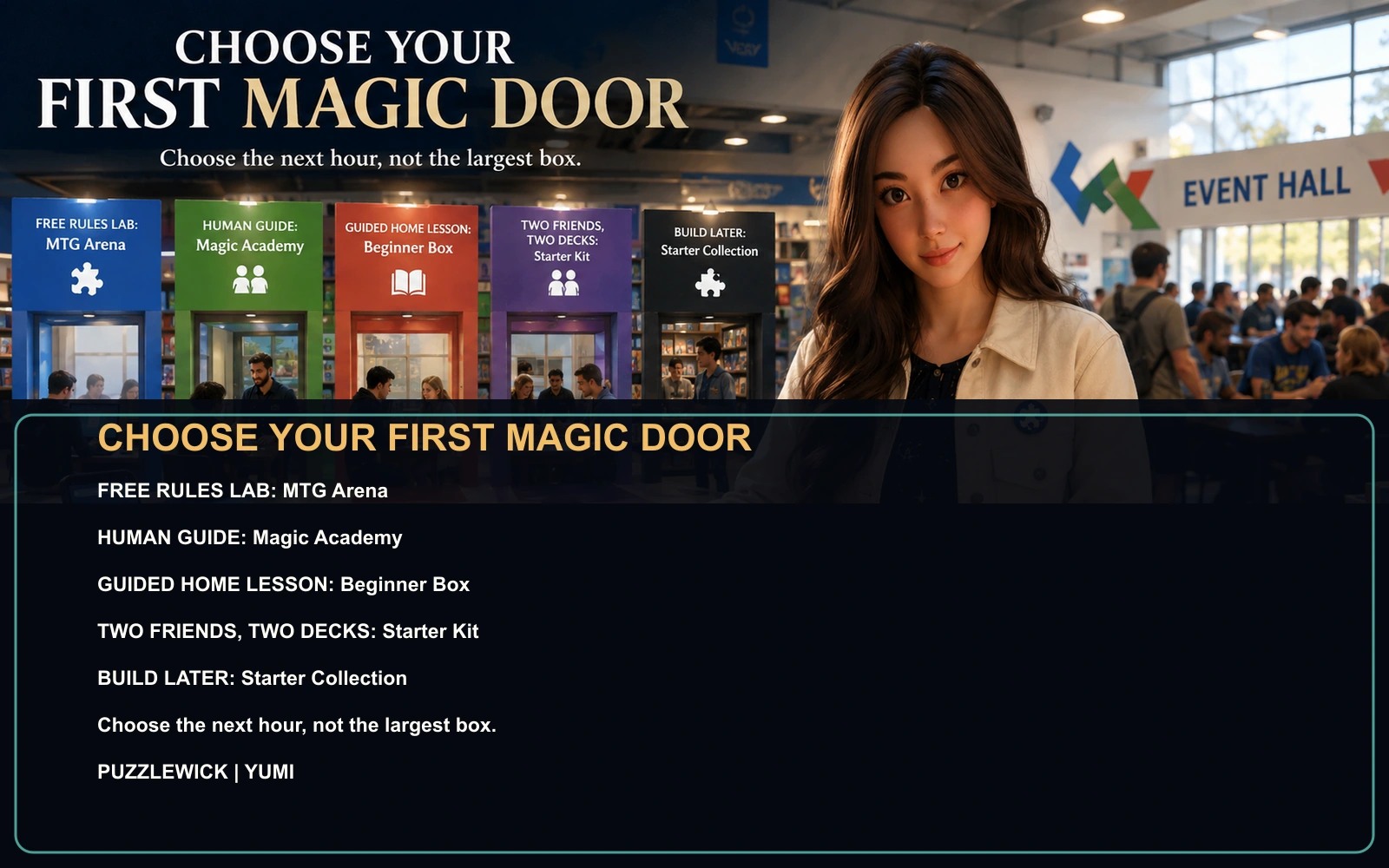
Arena, Academy, the Beginner Box and a Starter Kit are not rivals. Arena removes cost and teaches interface-driven turns. Academy supplies another person and a local store. The Beginner Box choreographs a paper lesson. A Starter Kit gives two fixed decks when a friend and a theme are already present.
The wrong question is, “Which product contains the most cards?” The useful question is, “What will happen in the first hour after I open it?” If the answer is sorting, browsing or wondering whether you own a deck, you bought a later step.
Experienced teachers can use the same test. Give the learner one decision at a time, narrate only the rule that matters now, and let the board create the next question. Magic becomes intimidating when its entire history is poured into a first turn.
A doorway is successful when it produces the next game. Arena is excellent at repetition and rules enforcement, but it cannot teach how a local group handles takebacks, shortcuts, or a new player who needs twenty seconds to read. Academy and a patient store event add those human conventions. A boxed lesson adds a stable card pool and the useful freedom to stop midturn. Choose the friction you need removed, then put an actual date on the next session.
What Arena teaches well, and what it quietly does for you
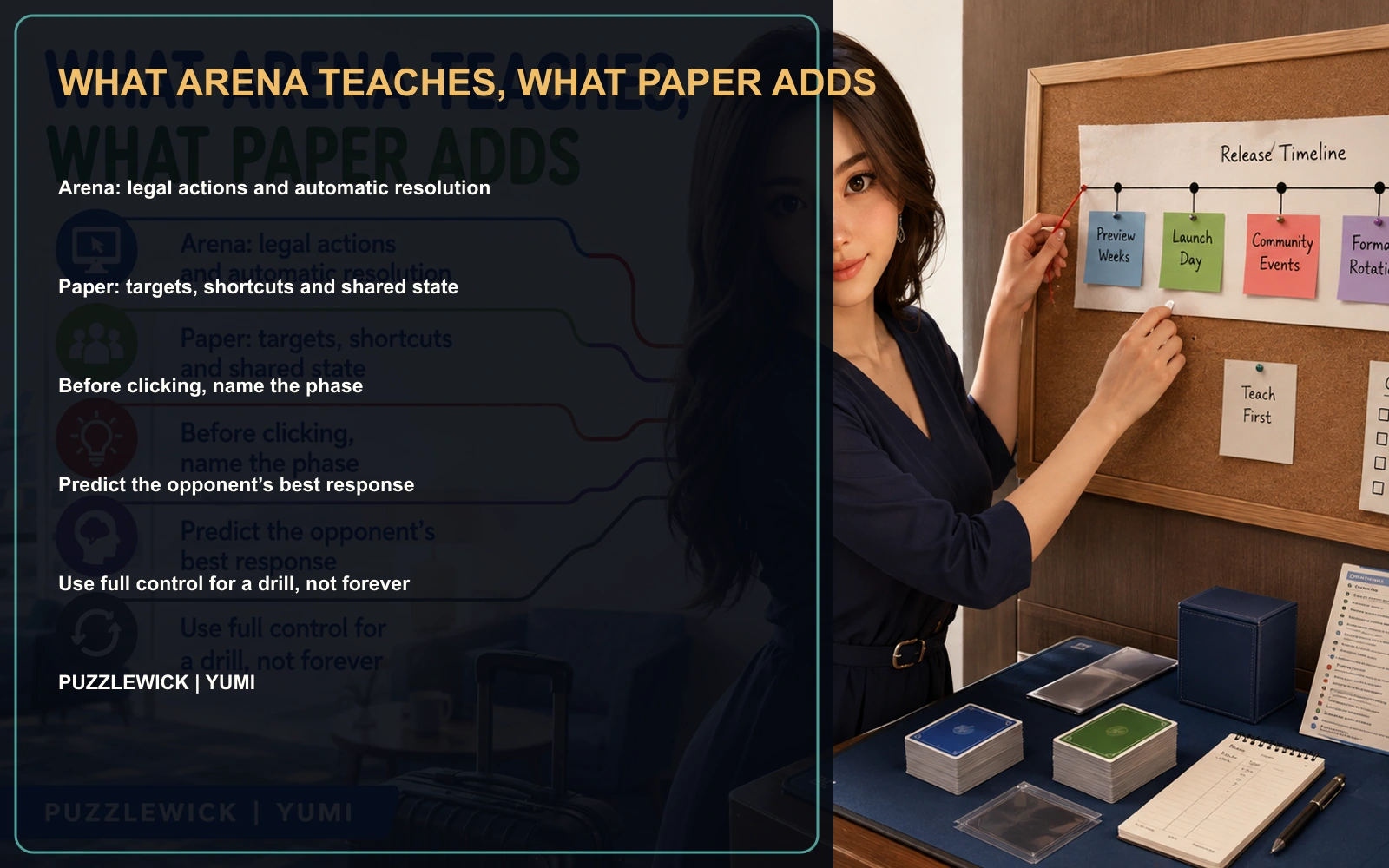
Arena is excellent at legal actions. It highlights playable cards, enforces timing, counts mana and resolves triggers. That immediate feedback makes it a forgiving place to meet lands, creatures, instants, sorceries and combat.
It also cleans up the conversation. In paper, players announce targets, confirm life totals, separate the graveyard from exile and decide how much shortcut language the table understands. Arena can pass priority because of a setting, stack triggers automatically and make a combat step feel inevitable. The software is correct more often than the learner understands why.
Practice with intent. Before clicking, say the phase, identify who has priority and predict what changes if the opponent acts. Turn on fuller control only for a specific drill. Permanent full-control mode teaches waiting, not judgment.
Use the first three sessions as a diagnostic, not an audition. Session one should answer whether the basic turn feels enjoyable. Session two should add combat timing and one or two instant speed decisions. Session three should expose a deck preference: attacking early, trading resources, building a board, or assembling a sequence. A beginner does not need to identify a lifelong color identity before lunch.
Beginner Box, Starter Kit or Starter Collection?
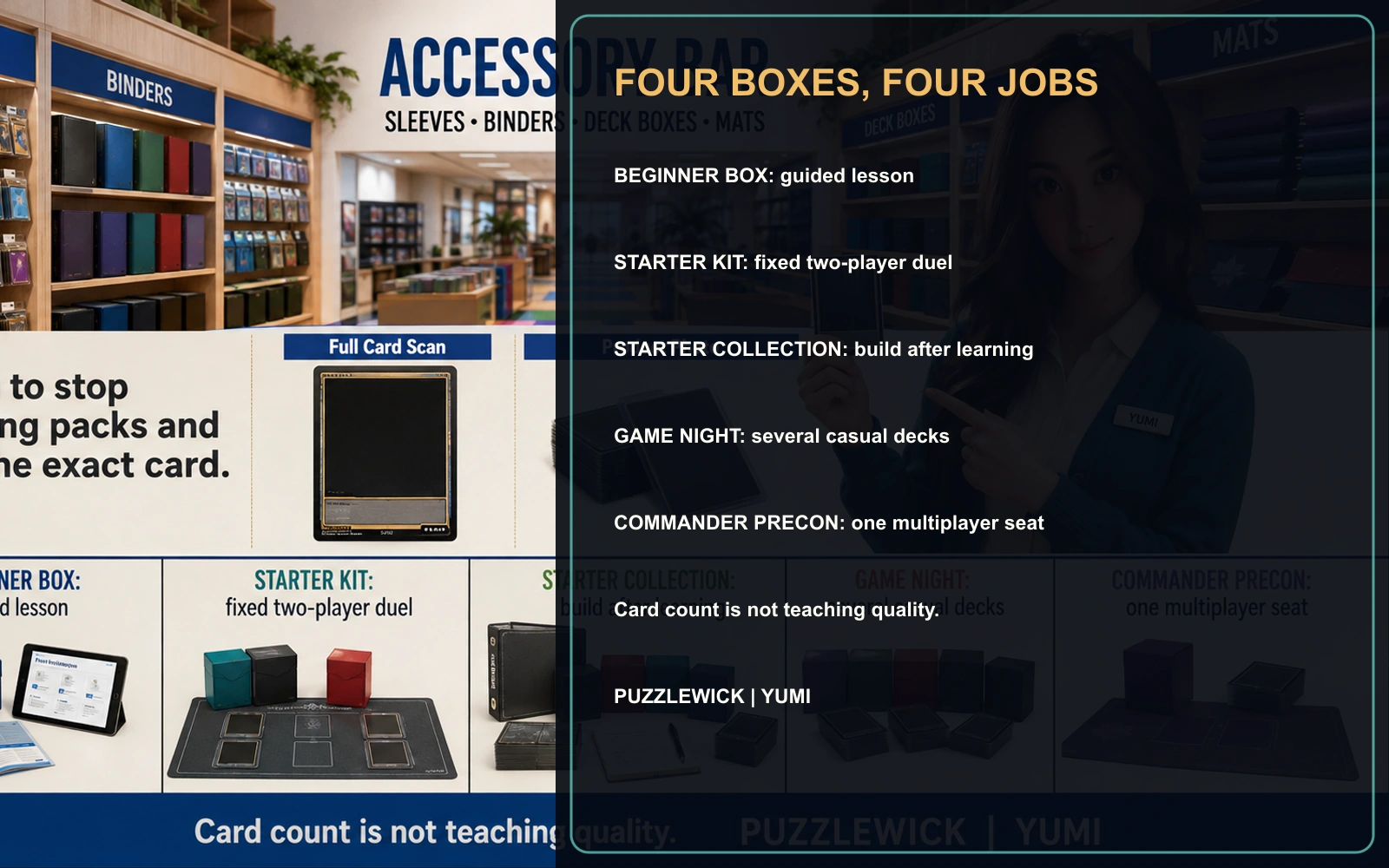
The Foundations Beginner Box is designed to teach. Its value is not raw card count; it is the order in which decisions arrive. A two-deck Starter Kit is a cleaner answer when two people already want a particular world, such as Final Fantasy, and prefer fixed decks they can replay.
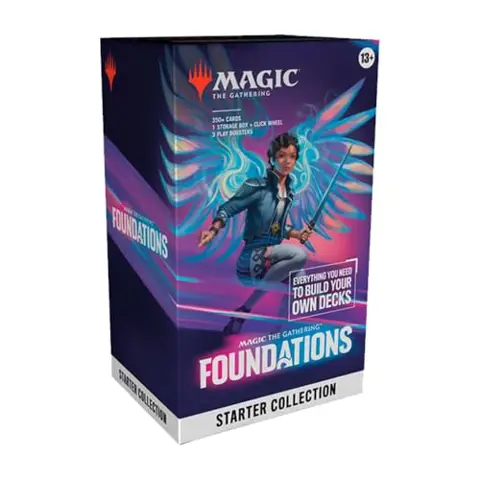
The Foundations Starter Collection is a different object. Its larger pool is useful after the rules stop consuming all available attention. Handing it to a new player on minute one is like presenting a pantry when they asked how to boil water.
Game Night products can work for a household that wants several ready decks and repeated casual play. Commander preconstructed decks are strong when the actual destination is a four-player Commander group. Product names matter less than matching the box to the table.
When another person teaches, ask for one layer at a time. Start with lands, creatures, combat, and sorceries. Add instants when the turn already makes sense. Delay detailed priority exceptions until a real card creates the question. Experts often teach by listing everything that could matter; beginners learn faster when the table explains what matters now and names what will be postponed.
The first six paper games are a curriculum
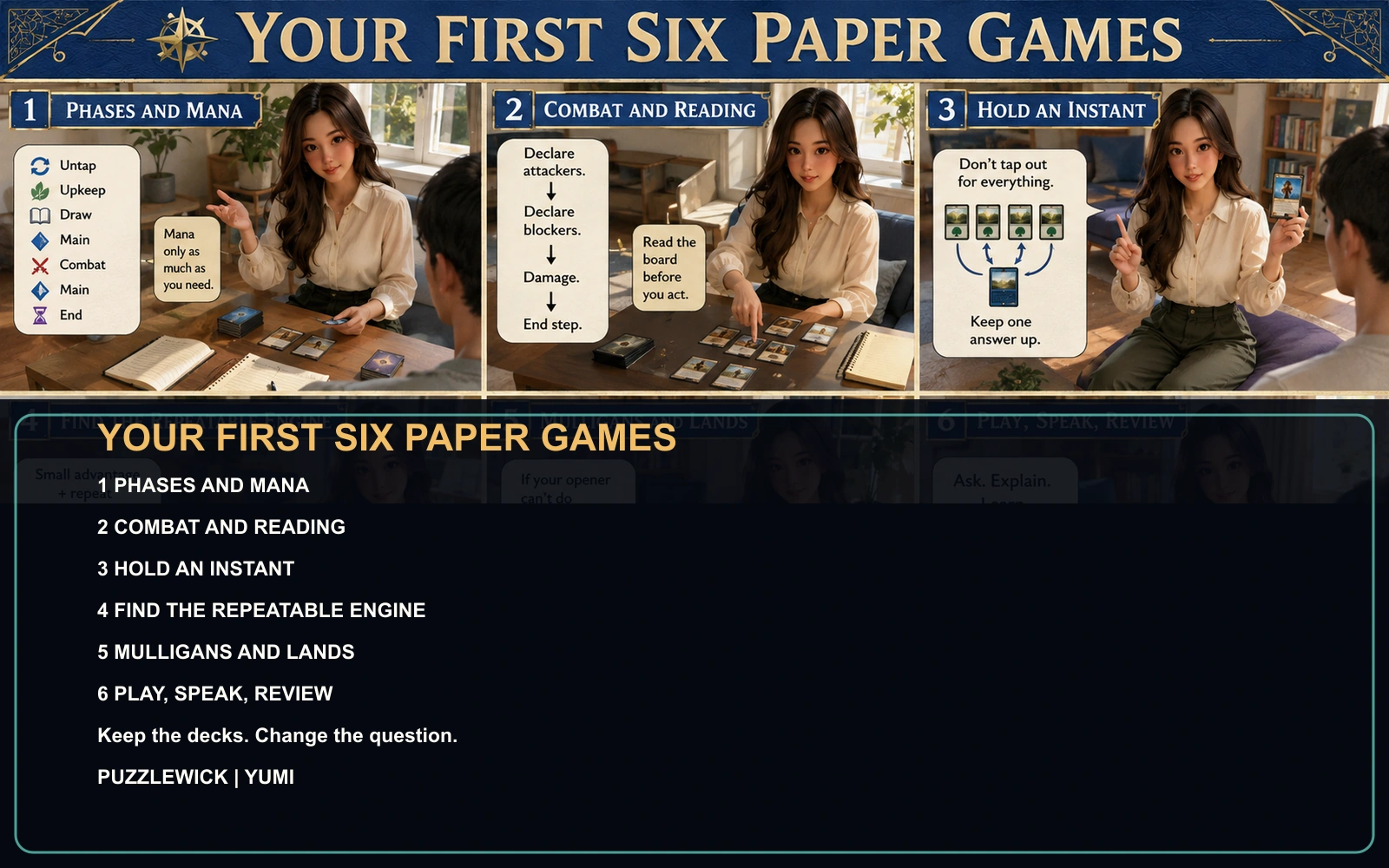
Game one is for phases and tapping lands. Game two is for combat and reading every card. Game three is for holding an instant. Game four is for identifying a repeatable engine. Game five is for mulligans and land counts. Game six is for playing at a natural pace while stating targets and life changes clearly.
Keep the same decks. Repetition turns rules into background knowledge, which makes room for strategy. Swapping decks every game feels exciting but can leave the learner perpetually translating nouns.
After each game, ask one question: which card created the most repeated value? That question begins threat assessment without a lecture about the metagame. It also trains the experienced player to explain the game that happened, not display every game they have ever known.
A Starter Kit solves the social problem of two balanced decks in one box. It does not solve every format. Keep the lists unchanged until both players can predict how each deck tries to win. Then swap only a few cards and explain what problem each change addresses. That modest exercise teaches more deck construction than opening boosters and sorting the results by optimism.
Cross from software to cardboard deliberately
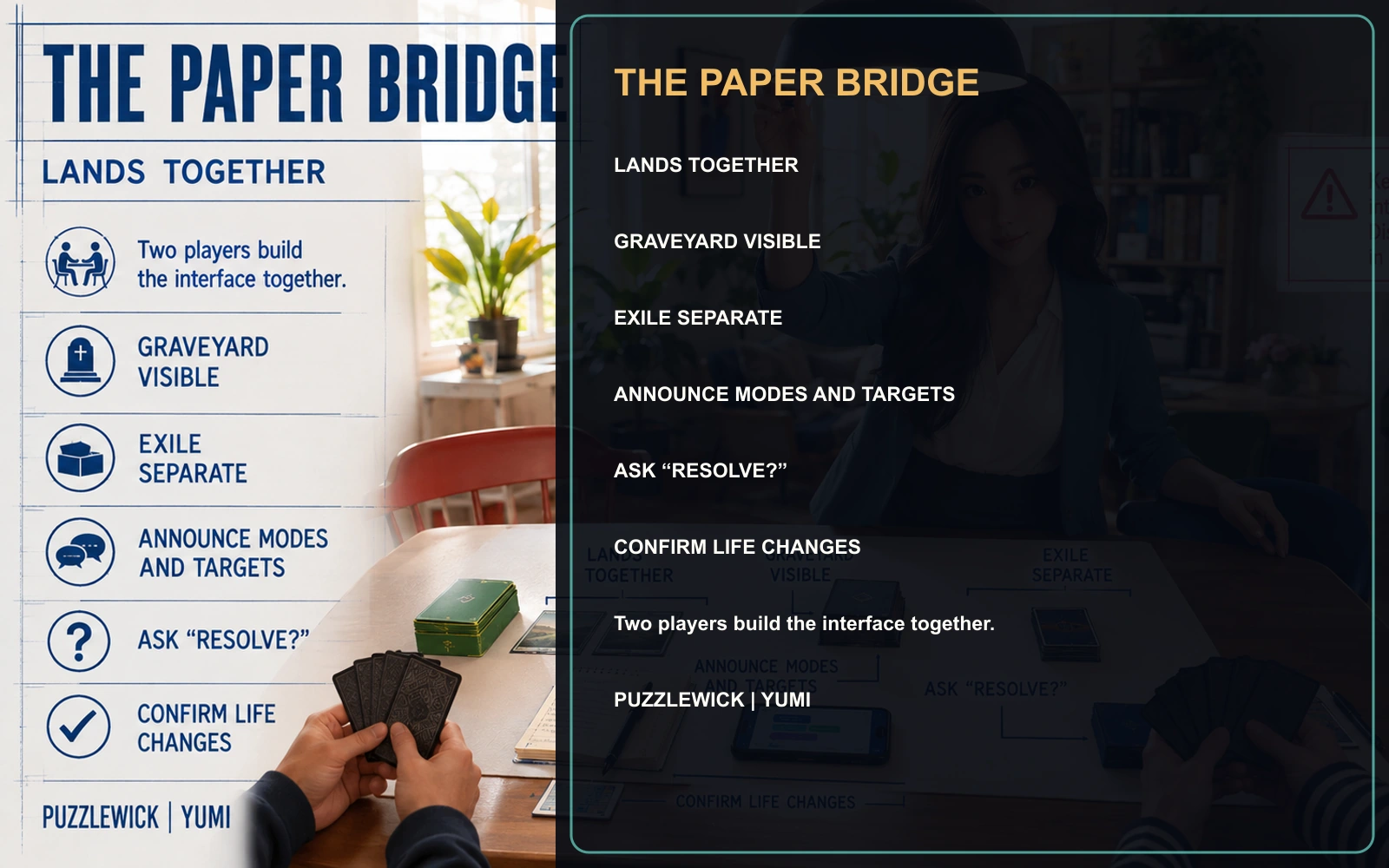
Set the paper board the way Arena displays it: lands together, creatures forward, graveyard visible, exile clearly separate. Use counters that cannot be mistaken for other counters. Keep tokens near the cards that create them.
Then add the spoken layer. Announce spells, modes and targets. Ask, “Resolve?” when the opponent may respond. Confirm combat totals before changing life. These are not ceremonial flourishes. They are the interface two humans build together.
The bridge works in both directions. When a paper rule feels mysterious, reproduce a small version in Arena or consult the official rules. When Arena resolves something surprising, stop and identify the rule rather than accepting the animation as weather.
The Beginner Box is strongest when the guided material is treated as a sequence rather than packaging. Put the supplied reference where both players can see it, narrate each phase, and reset the lesson if the board becomes noise. Once the scripted experience feels obvious, play the same cards without prompts. The moment the paper table can run without a conductor is the real graduation.
Your first store night begins before the first match
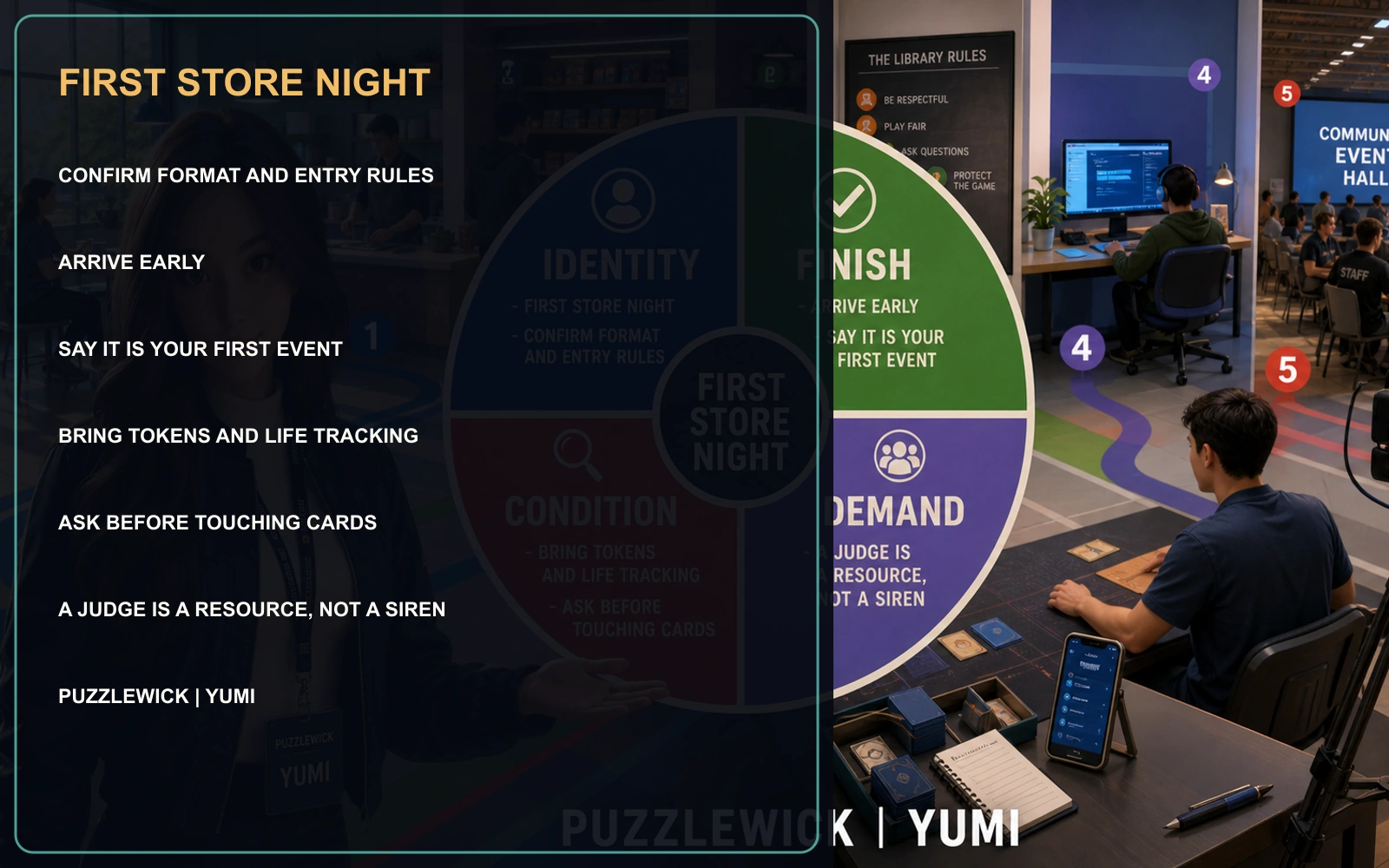
Contact the store first. Ask which format is being played, whether the event is instructional, what deck legality is expected and when registration closes. “Friday Night Magic” describes a family of events, not one universal deck requirement.
Arrive early. Tell the organizer and first opponent that this is your first event. Most useful veteran players adjust explanations once they know what you need. If somebody mistakes speed for hospitality, that is information about the table, not evidence that you failed an exam.
Bring a written or digital deck list if required, the tokens your deck creates and a way to track life. Keep food away from shared cards. Ask before touching an opponent’s card, and call a judge for rules help without treating the request as an accusation.
A first store visit should have a small mission: learn the event format, watch one round, and introduce yourself to staff. Ask whether a beginner night, casual Commander pod, Standard event, or draft is actually scheduled. The word Magic on a calendar does not make those rooms interchangeable. Bring the product for the event, not the product that looked most heroic on a shelf.
The smallest useful physical kit
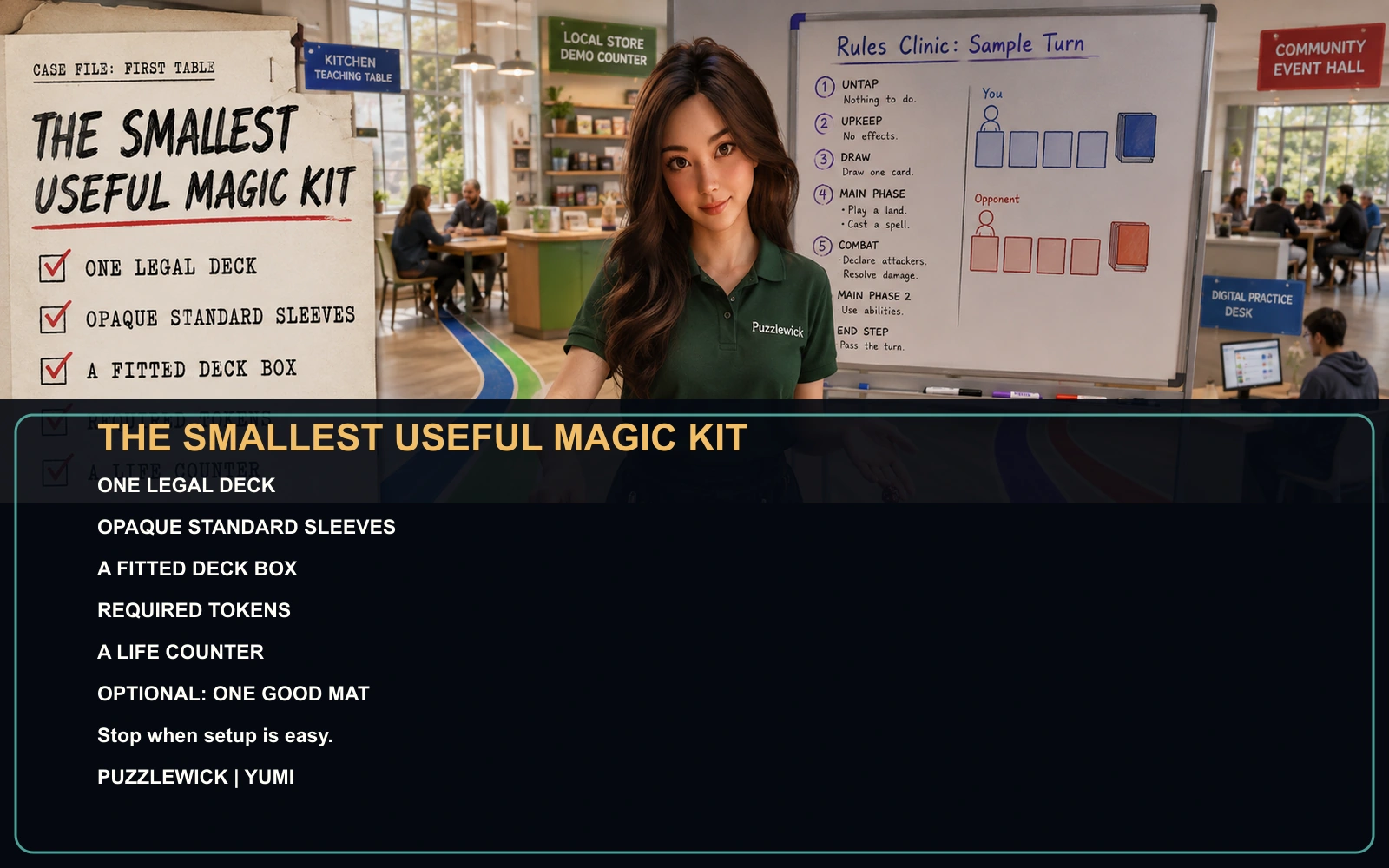
One legal deck, opaque sleeves, a box that fits the sleeved deck, required tokens and a life counter are enough. A clean playmat helps on rough or sticky tables, but it is optional. A binder is for a collection, not the active deck.
Use standard-size sleeves for Magic. If you double-sleeve, test the final thickness before buying a fitted box. Premium storage is pleasant when it solves frequent travel or organization; it is not a toll booth at the entrance to the hobby.
Choose illustrated accessories because you enjoy them and branded accessories when the license and fit are real. Avoid generic bundles that multiply objects without clarifying a job. The kit should make setup quieter, not give you another inventory to manage.
Your first kit needs fewer objects than hobby marketing suggests. One playable deck, opaque sleeves with spares, a fitted box, visible counters, and a way to track life are enough. A mat helps card pickup and gives the deck a clean surface, but it is optional. Buy storage for the collection you own now. Empty premium cases have excellent manners and very little strategic value.
Buy after the game identifies the problem
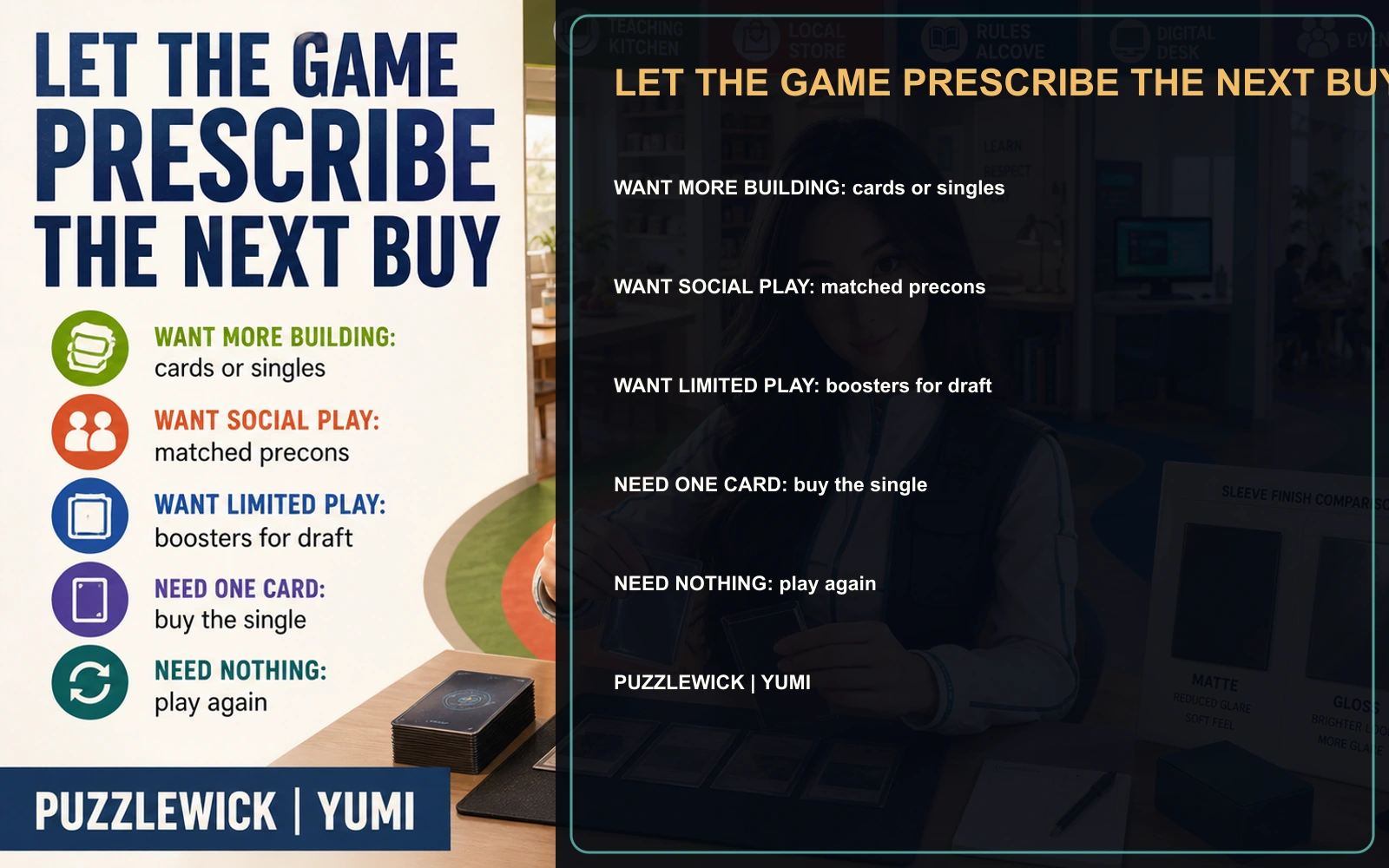
After six games, choose the next purchase from evidence. If the fixed decks feel shallow, move toward a format product. If building is the joy, use a Starter Collection or singles. If four friends want a social ritual, choose Commander preconstructed decks at a similar starting level.
Do not use boosters to search for one named upgrade. Buy the exact single when available. Open boosters because drafting, discovery or collecting is the activity, with a fixed entertainment budget.
The next course begins with engines. Once you can read which permanent creates repeatable mana, cards, bodies or damage, deck lists become explanations rather than incantations. That is the moment Magic stops feeling like a museum with the labels removed.
Review confidence with observable questions. Can you untap, draw, and move through combat without a prompt? Can you state a target before a spell resolves? Can you explain the deck plan in one sentence? Can you lose a game and identify one decision worth replaying? Confidence is not knowing every card. It is knowing how to keep the game honest when a card is unfamiliar.
The picks
Some links below are affiliate links — as an Amazon Associate, Puzzlewick earns from qualifying purchases, at no extra cost to you. It never changes a pick.
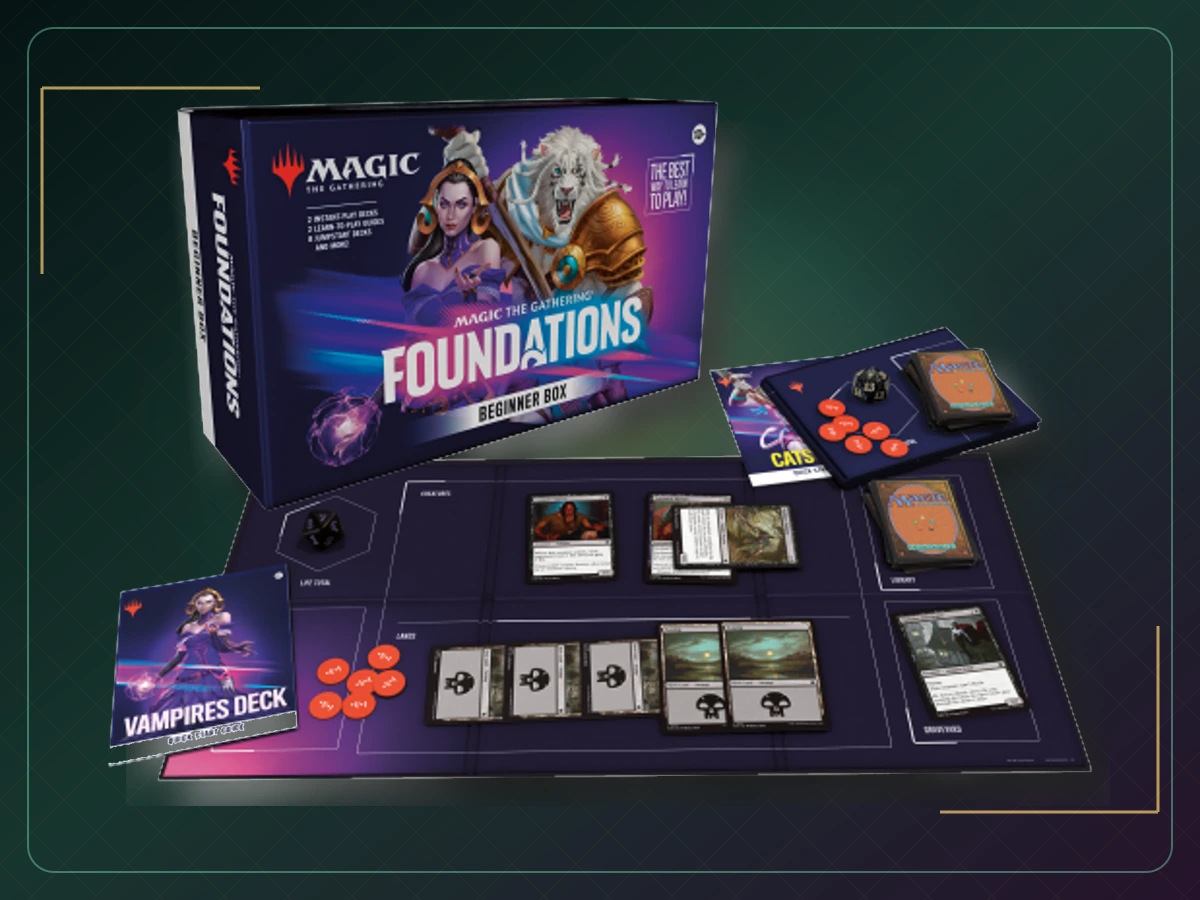
Magic: The Gathering Foundations Beginner Box
The clearest physical teaching product when two people want the rules introduced in sequence.
- Structured first games
- Reusable paper teaching kit
- Not a competitive deck
- More packaging than a digital tutorial
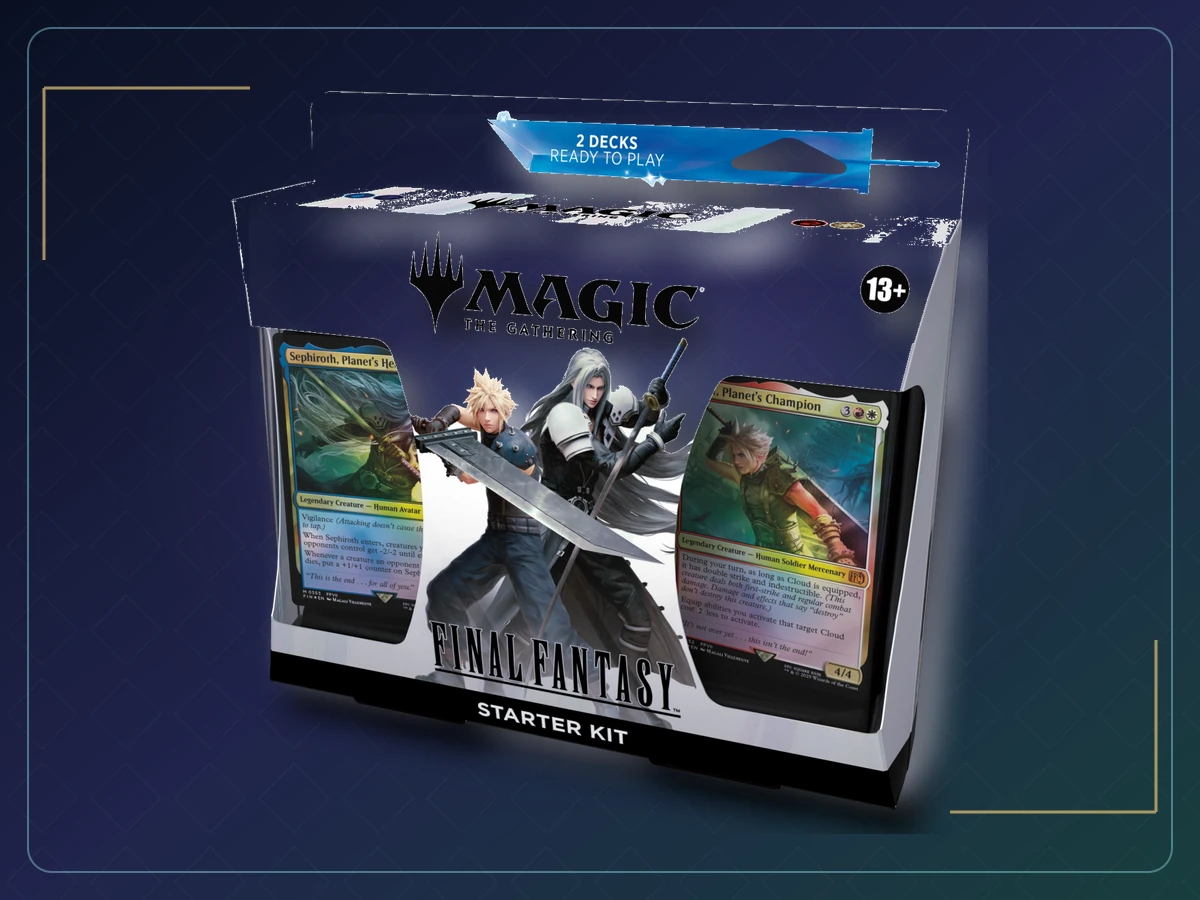
Magic: The Gathering Final Fantasy Starter Kit
Two fixed decks make theme the invitation while keeping the first matchup bounded.
- Two ready decks
- Strong familiar-world motivation
- Narrow initial matchup
- Not a tournament list
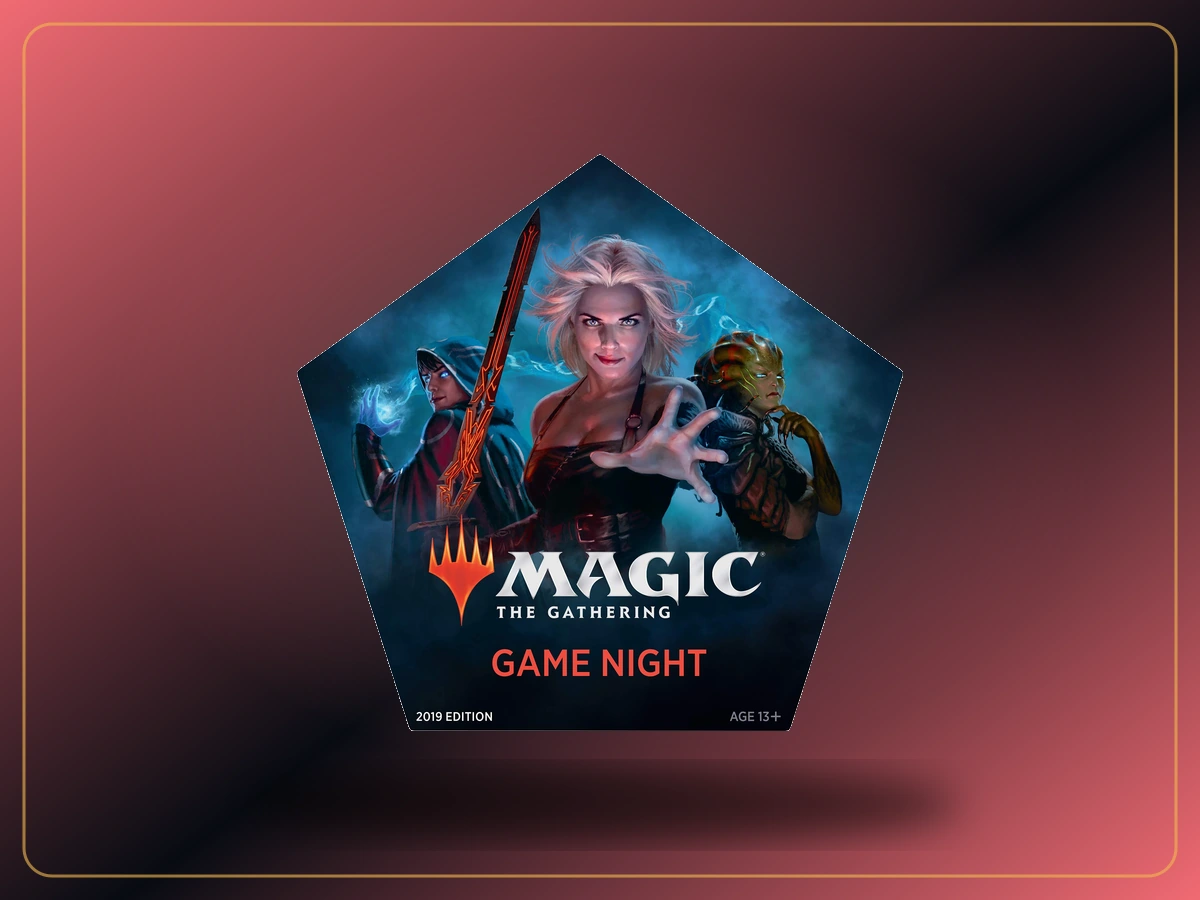
Magic: The Gathering Magic Game Night 2019 | Card Game for 2–5 Players | 5 Decks | 5 Dice | Accessories
A multi-deck casual kit can create repeat family play, provided buyers confirm the older edition and product contents.
- Several fixed decks
- Good host format
- Older product
- Not the current Standard path
At a glance
| Door | Best for | Cost role | What it hides |
|---|---|---|---|
| MTG Arena | Learning interface and basic turn flow | Free start | Physical shortcuts and table communication |
| Magic Academy | Human coaching and local-store context | Event dependent | Depends on local schedule |
| Foundations Beginner Box | Guided paper lesson at home | Teaching product | Not a long-term competitive deck |
| Two-deck Starter Kit | Two friends with a shared theme | Fixed decks | Narrow matchup and limited upgrade map |
| Foundations Starter Collection | Building after rules confidence | Card pool | It is not a tutorial |
Free download — The first six games and first store night checklist
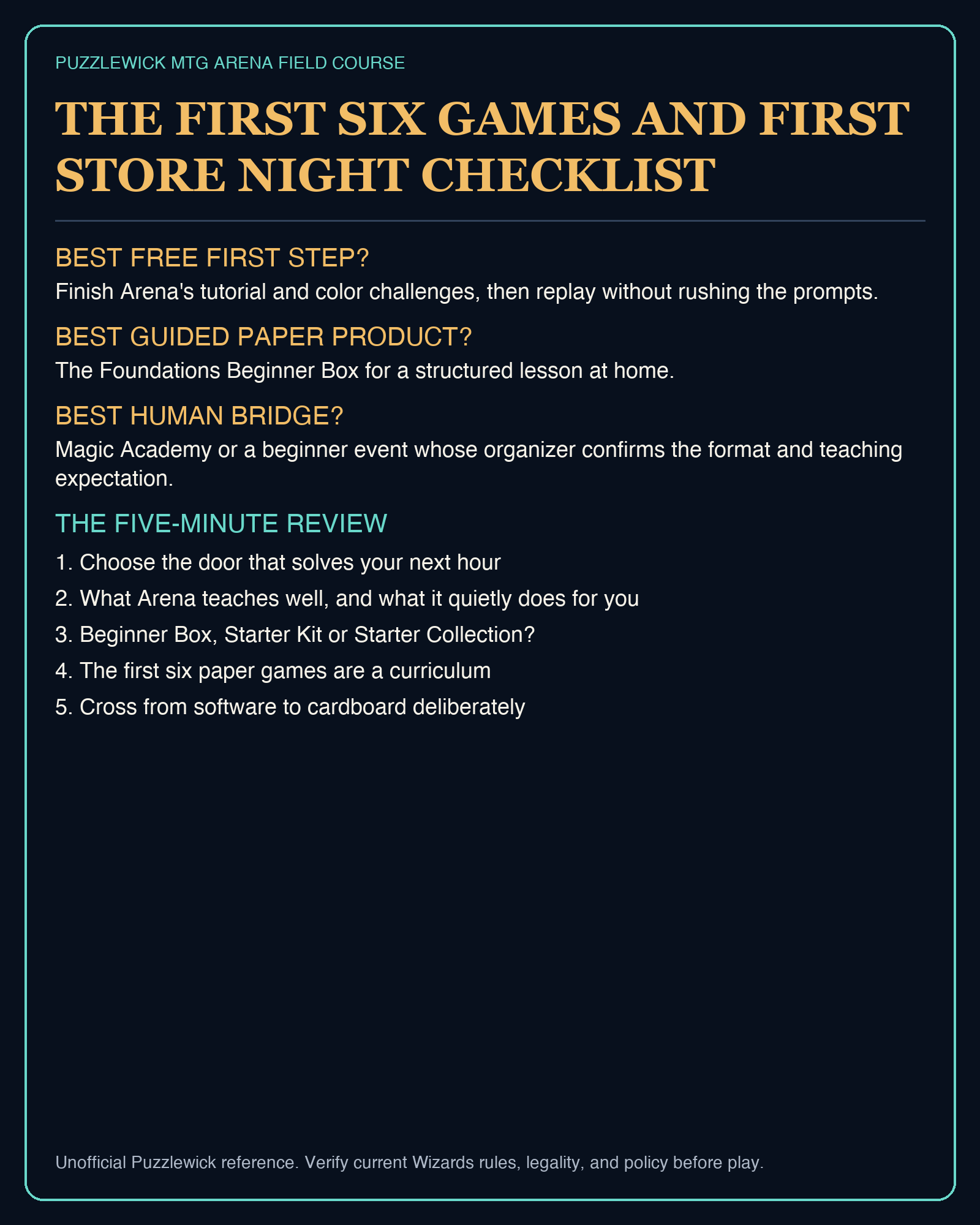
A concise printable Puzzlewick companion. Unofficial; current Wizards rules and policy always take precedence.
Unofficial fan-made reference. Compiled by Puzzlewick from the sources listed on the sheet. Not affiliated with or endorsed by the publisher — always defer to the official rulebook.
Questions, answered
Should a complete beginner start with MTG Arena?
Yes, as a free rules laboratory. Follow it with paper play so you learn communication, shortcuts and physical board reading.
Is the Foundations Beginner Box the same as the Starter Collection?
No. The Beginner Box teaches with guided materials. The Starter Collection is a larger building pool for someone who already understands a turn.
How many games should I play before visiting a store?
Six paper games is a useful checkpoint, not a law. Go earlier when the event is explicitly instructional and the organizer confirms what to bring.
Should my first purchase be boosters?
Usually no. Boosters are randomized ingredients or draft materials. Buy a product that teaches or creates a playable deck first.
What should I bring to a first Magic event?
The correct legal deck, opaque sleeves, a deck box, a life counter, tokens you need, water, and the willingness to say that it is your first event.
Yumi's verdict
The most reliable route is Arena tutorial, one paper teaching product, six face-to-face games, then one explicitly beginner-friendly store event. Stop buying while the game is still explaining itself. Your first useful upgrade is usually a repeated evening with the same deck.
Research ledger 11 sources · reviewed 2026-09-08
Specifications, rules, current product information, community experience, and contrary evidence were checked against the sources below. Commercial links are kept separate from editorial evidence.
- Wizards of the Coast: Standard formatmagic.wizards.com/en/formats/standard
- Wizards of the Coast: August 10, 2026 banned and restricted announcementmagic.wizards.com/en/news/announcements/banned-and-restricted-august-10-2026
- Wizards of the Coast: Magic rules librarymagic.wizards.com/en/rules
- Wizards of the Coast: How to Play Magicmagic.wizards.com/en/how-to-play
- MTG Arena Zone: Standard Best-of-One metagame tier listmtgazone.com/standard-bo1-metagame-tier-list
- TCGplayer content indextcgplayer.com/content
- BoardGameGeek: Magic: The Gatheringboardgamegeek.com/boardgame/463/magic-the-gathering
- Scryfall: current Standard card recordsscryfall.com/search?q=f%3Astandard
- Wizards of the Coast: Magic Academymagic.wizards.com/en/play-events/magic-academy
- Wizards of the Coast: MTG Arenamagic.wizards.com/en/mtgarena
- Wizards of the Coast: Getting Started in MTG Arenamagic.wizards.com/en/mtgarena/getting-started
Come in, take your shoes off — let me show you something.



Keep exploring
The next smart rabbit holes.
✶ Universe HubMagic: The Gathering: the whole buying pathMagic: The Gathering is the deepest construction sandbox in the Big Three: a two-player duel, four-player Commander ritual, draft...🂠 Topic PathTrading Card Games: compare the whole shelfStart with the game and community you want, then buy the smallest product that lets you test it properly. These guides separate...GuideMTG Arena Standard Best-of-One: Read the Engine, Kill the Right Card, Win More GamesRobert teaches the missing skill between knowing card types and understanding a game: identify fuel, engine, multiplier, protection and...