Arkham Horror LCG Ultra Guide 2026: Rules, Campaigns, Stories & Buying
The definitive rulebook-checked Arkham Horror LCG atlas: Chapter Two, solo and group play, deck jobs, every campaign’s spoiler-light story, current and legacy products, and the clean buy order.


AI-assisted research and drafting in Margo’s voice · reviewed by Robert Pruitt · how this guide was made
Last editorial refresh: 2026-08-12 Gold-standard QA: 2026-08-10 26 sources reviewed Affiliate links checked during gold-standard pass

The short answer
Brand-new in 2026? Buy one Chapter Two Core, play Brethren of Ash on Easy or Standard, and learn with two investigators if possible. Existing Revised Core owners still have a complete Chapter One foundation. After the first replay, choose one ready Investigator Deck if a seat needs help, then one full campaign by desired story. Do not buy random Mythos Packs, Return to boxes without their base campaign, or an Investigator Expansion when what you wanted was the story.
Decision map
Choose in thirty seconds
Every brand-new player and the current Chapter Two release path
A ready Guardian seat and a clear enemy-control job
A second ready current-era seat with its own upgrade path
Arkham Horror: The Card Game can look like a card catalog, a campaign novel, a rules examination, and a small financial haunting at the same time. This guide is the front door and the campaign atlas. It reconciles the 2026 Chapter Two rules with the Revised Core era, walks a first table from sealed box to campaign rhythm, then maps every major campaign by story, mechanical identity, table pressure, and buying format.
Margo checked rules claims against the current Chapter Two rulebook and July 14, 2026 Grimoire update, separated official product facts from community preference, and corrected one destructive old shortcut: upkeep does not refill your hand to five. You draw one card, gain one resource, and later discard down to eight.
This is Part I of the Arkham Ultra Library. Continue into the standalone scenario archive for Excelsior, Film Fatale, Midwinter Gala, Blob and every side story; use the Arkham Files systems guide for Third Edition, Mansions of Madness and the RPG; and rehearse the physical table in Robert's interactive setup trainer.
Start here, then go deeper
You are in the right cabinet.
 ✒ Universe HubArkham Horror Universe: the whole buying pathStart with the interactive buyer intake: separate the 2026 Chapter Two Core from Chapter One legacy boxes and the entirely...
 ☾ Topic PathCooperative Horror Games: compare the whole shelfCooperative horror works when the rules pressure the story without burying the table. This cluster maps what to buy, how campaigns...
 Buying GuideArkham Horror LCG Deconfusion Guide 2026: Chapter Two vs Revised Core and Every Expansion ExplainedChapter Two or Revised Core? Campaign or Investigator Expansion? Scenario Pack or Small Campaign? Yumi translates every box, the old...
The 2026 Immersion Masterclass: understand the world, then master the table
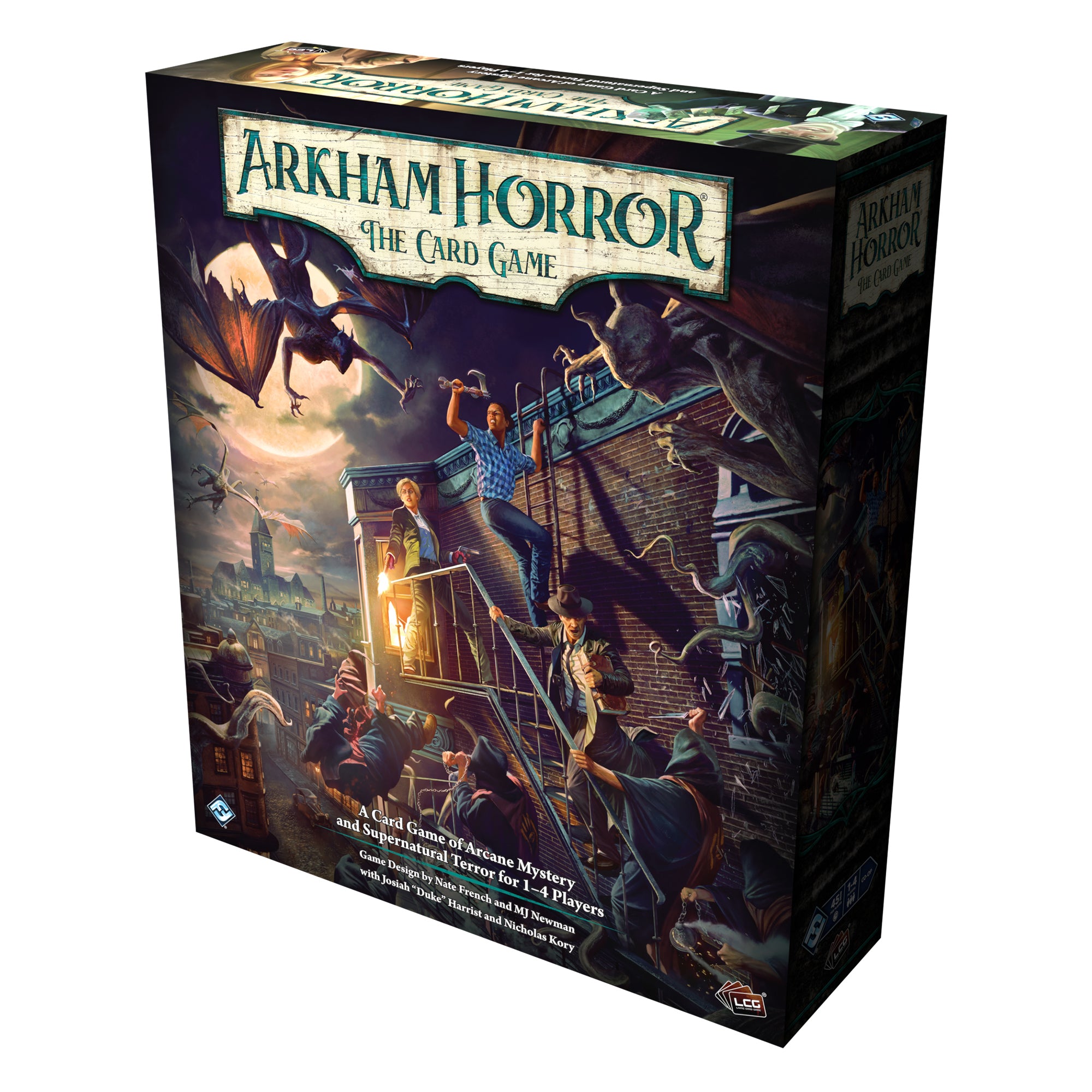

The Ultra Guide now opens into a two-volume masterclass. Volume I: The World Beneath the World documents the Mythos, Lovecraft country, the difficult legacy, the 1987 and 2005 board games, the 2016 LCG breakthrough, and what Arkham canon means in 2026. Volume II: The Machine That Remembers turns that history into scenario reading, bag risk, class philosophy, deck identity, tempo, campaign consequence, and host craft.
Use this Ultra Guide as the cabinet index. Use the Masterclass when you want the reason beneath the recommendation. Then rehearse the physical procedure in Robert’s interactive setup trainer.
What should a new Arkham Horror LCG player buy in 2026?
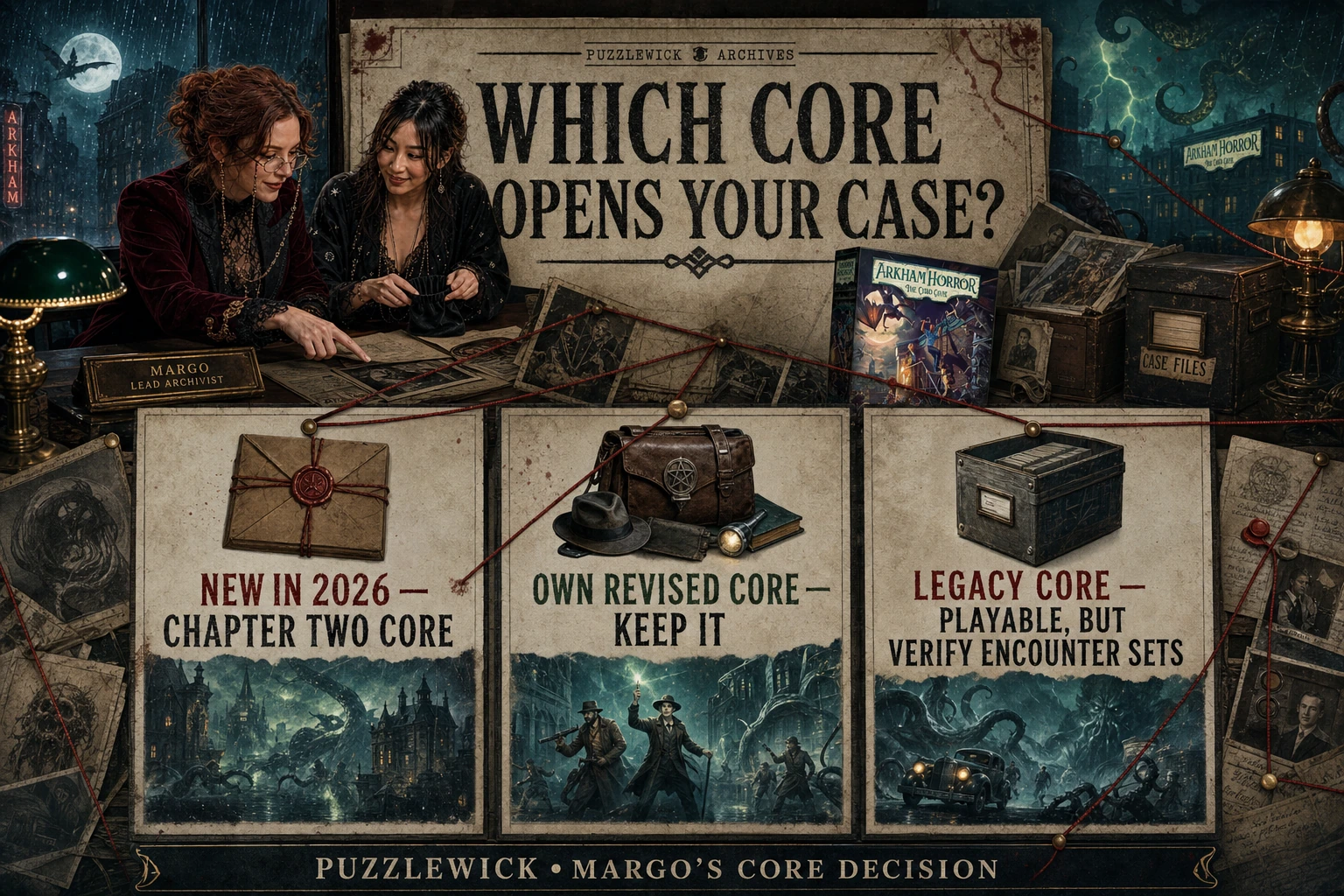
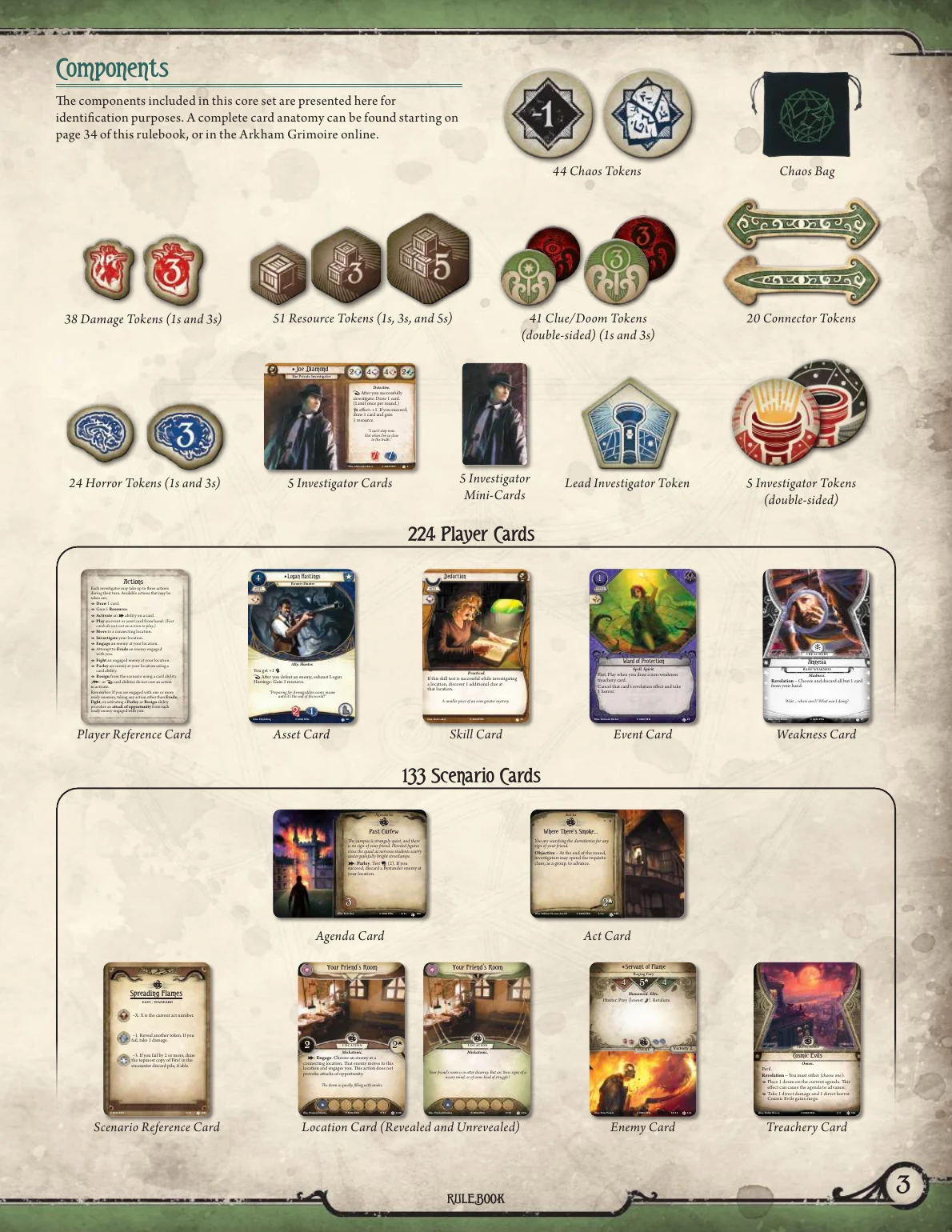
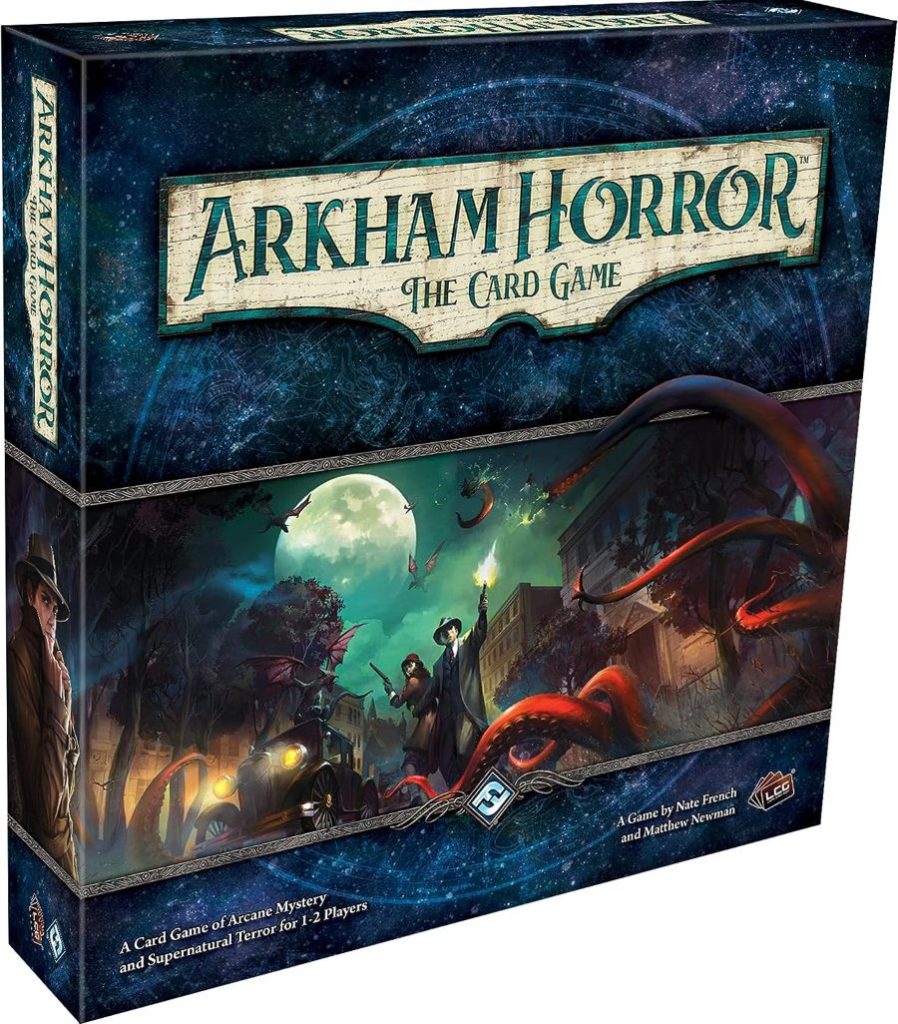
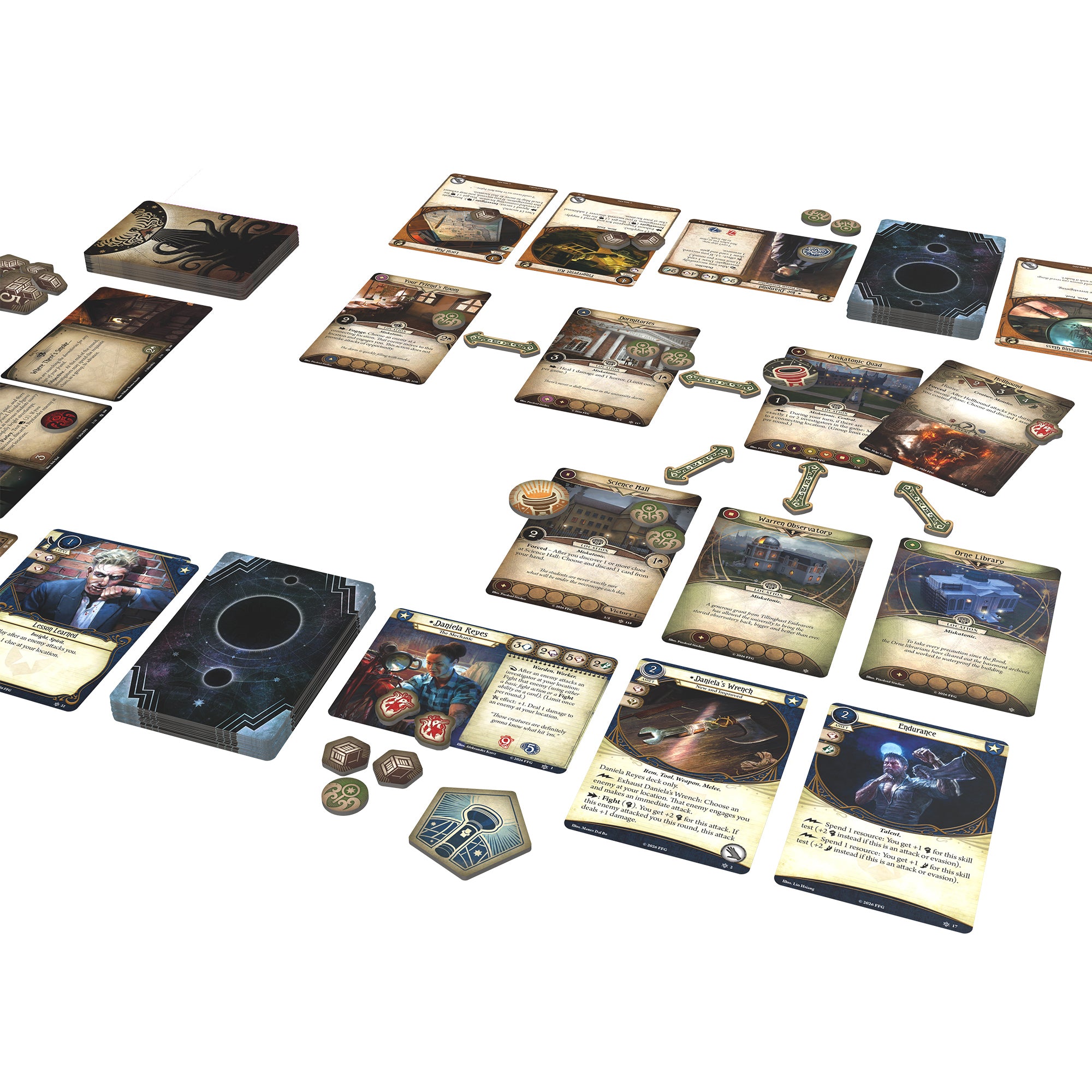
Buy one Chapter Two Core Set. Fantasy Flight describes it as the current evergreen beginning: five investigators, player cards, tokens, a chaos bag, and the three-scenario Brethren of Ash campaign. Future Chapter Two campaigns use encounter material from this box. One copy supports one to four players; a second Core is not the default answer.
If you already own the 2021 Revised Core, nothing in your Chapter One collection stopped working. Keep using it with Dunwich, Carcosa, Innsmouth, Drowned City, and the rest of that library. Add the new Core when you want Chapter Two campaigns, the current investigator ecosystem, or the new introductory campaign. The new box is the present foundation, not a demand to throw away the old one.
A discounted 2016 original Core is rarely the cleanest beginner purchase. It was built around a different distribution model and may leave you chasing duplicate player cards or old expansion packaging. Cheap is useful only when the buyer understands the reconstruction project.
What is Arkham Horror LCG actually asking you to do?
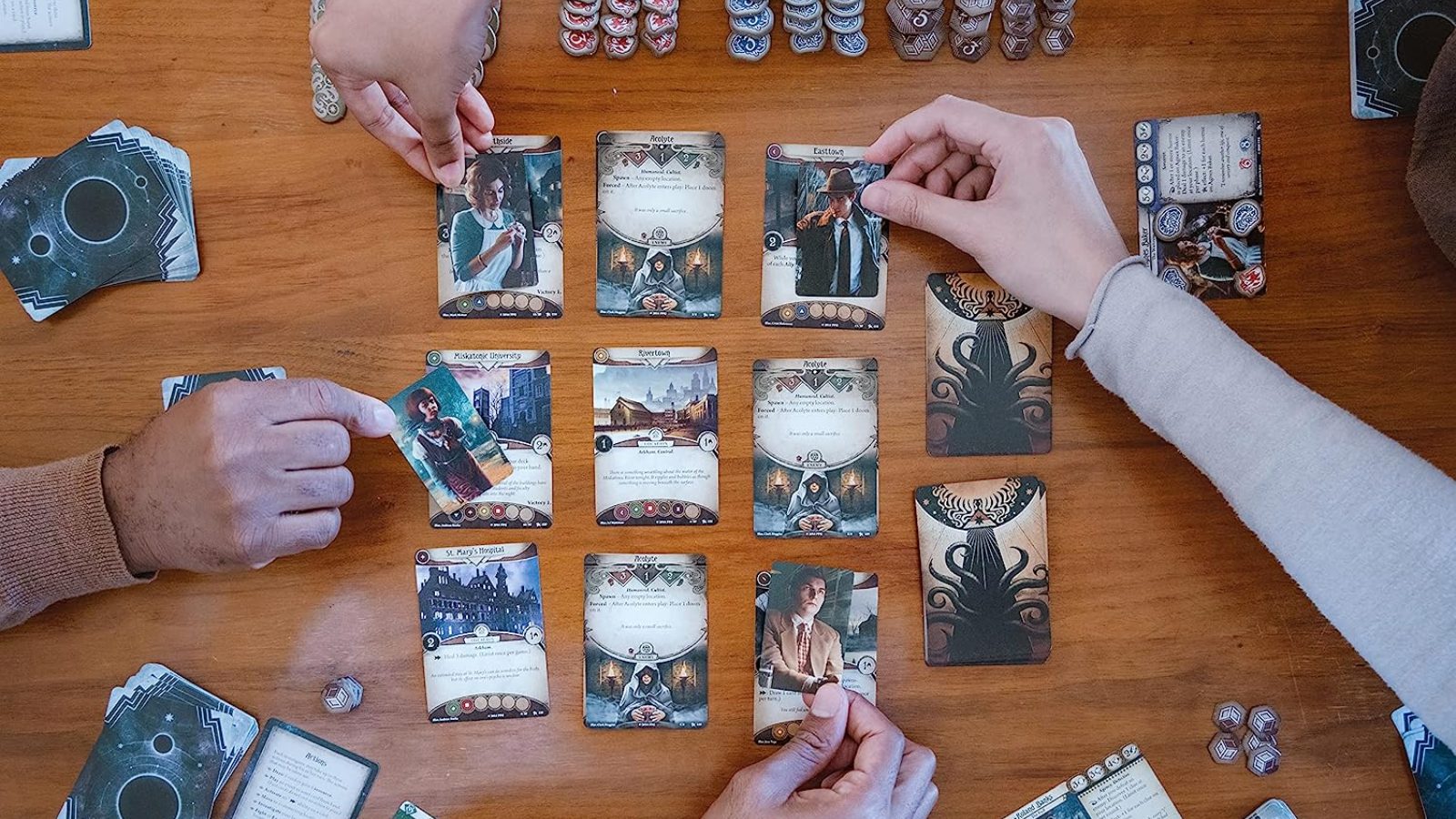
The official introduction reduces the game to three pressures: discover clues, confront enemies, and survive long enough to resolve the scenario. The strategic version is sharper: spend a limited number of actions on progress while the agenda, encounter deck, and enemies keep writing invoices.
You are not required to pass every skill test, empty every location, or defeat every enemy. Read the act, read the agenda, find the route to the objective, and decide which side rewards are worth the doom they consume. An action that moves, draws, gains a resource, or plays an asset is not automatically productive. It must improve the current turn or make a later turn meaningfully cheaper.
Arkham becomes coherent when the table asks four questions before acting: Does this make progress? Does it prevent collapse? Does it create a real future tempo gain? Is resigning now better for the campaign than one more greedy room? That is the game beneath the story text.
How do I set up my first Chapter Two game without missing a step?
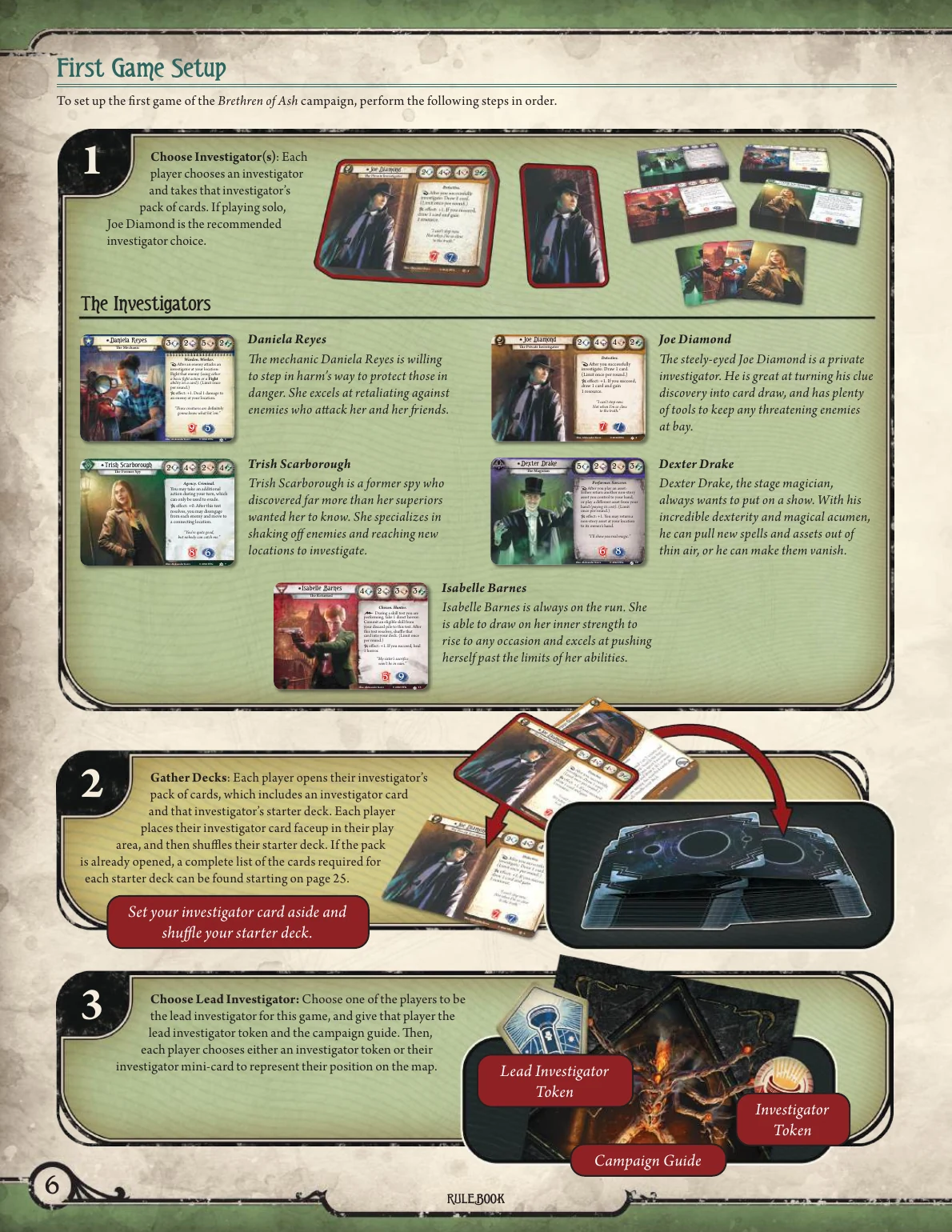
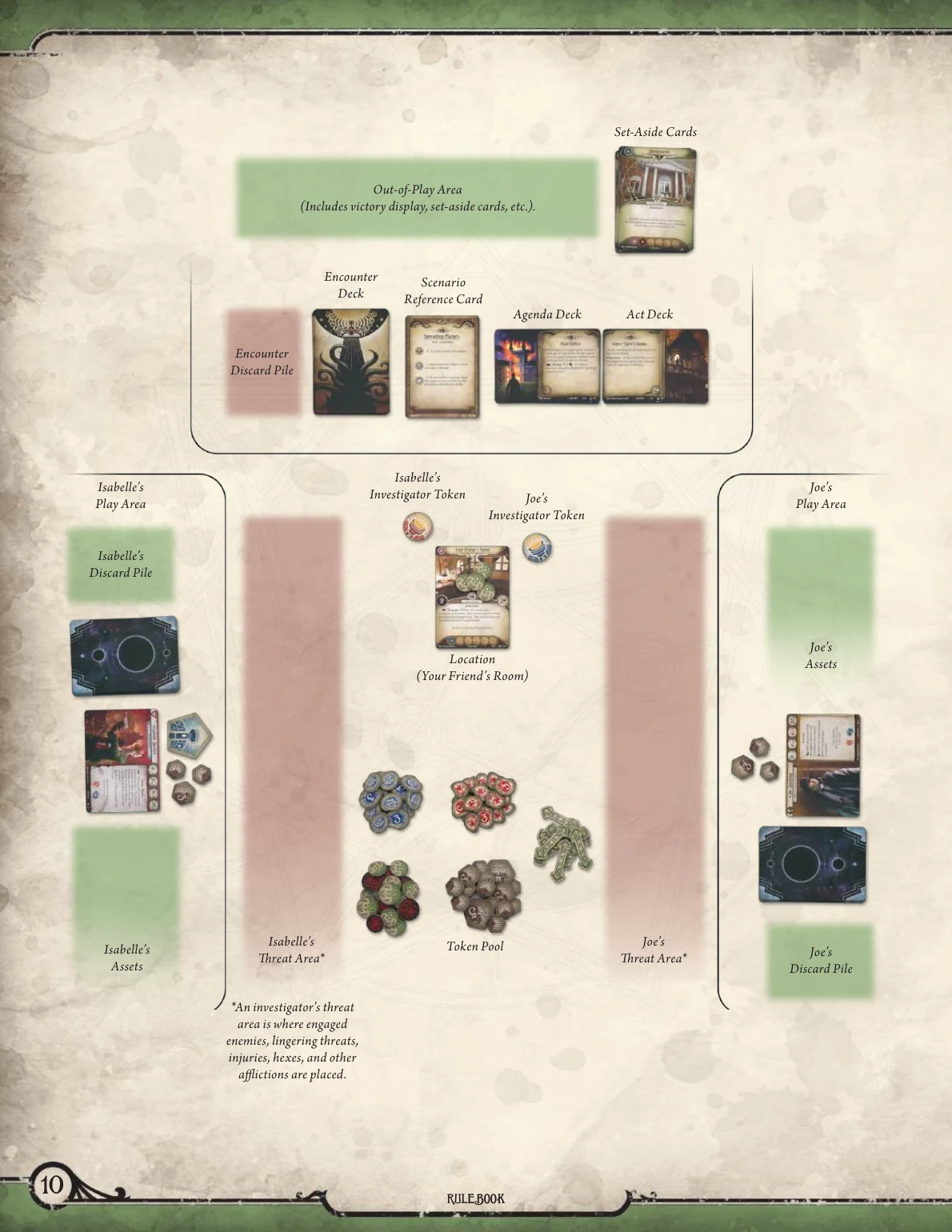
Use the recommended investigator deck for the first scenario unless deckbuilding is the reason you bought the game. Choose the scenario, gather only the encounter sets its setup instructions name, place the agenda and act decks, build the location map exactly as instructed, create the token pool, and put clues or doom only where setup tells you.
Each investigator begins with five resources and draws five cards. Set aside weaknesses drawn during the opening hand and replace them. You may take one mulligan, returning any number of non-weakness cards and drawing the same number. Only after the opening hand is settled do the set-aside cards return and the deck get shuffled. A Chapter Two deck with the Starting keyword then follows that keyword's timing: after the opening hand and mulligan, search for one copy of a Starting card and add it as an additional card.
Give every player a visible investigator zone. Keep the act, agenda, encounter deck, encounter discard, scenario reference, and chaos bag in a shared center. Read the opening campaign text aloud. Then remember the mercy built into the tutorial rhythm: the first round skips the Mythos phase and starts with Investigation.
- Choose investigators and legal decks; use the recommended lists for the first teach.
- Build the scenario from only the named encounter sets and setup instructions.
- Place shared zones, investigator zones, tokens, locations, act, agenda, and chaos bag.
- Take five resources and five cards; replace weaknesses and complete one mulligan.
- Resolve any Starting keyword, read the intro, choose a lead investigator, and skip first-round Mythos.
What happens in a round, and which rules mistakes change the game?
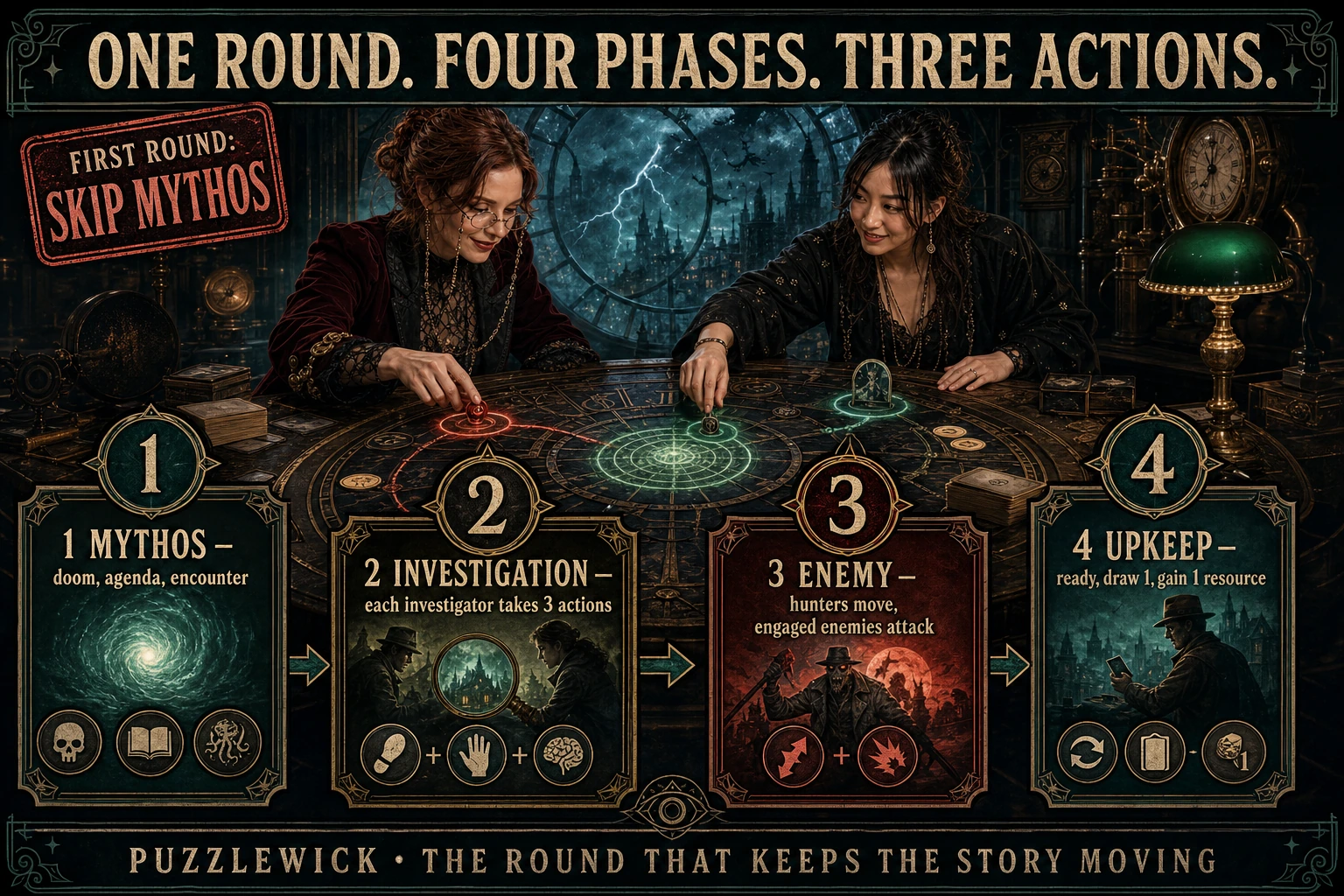
After the special first round, every round runs Mythos, Investigation, Enemy, and Upkeep. In Mythos, place doom on the agenda, check whether it advances, then have each investigator draw and resolve one encounter card. Investigators take three actions each in any order the players choose. During Enemy, hunters move and ready engaged enemies attack. Upkeep readies cards, gives each investigator one card and one resource, then checks the eight-card hand limit.
Doom does not normally advance the agenda the instant it appears. The threshold is checked at the specified Mythos timing unless an effect explicitly says the agenda can advance. When an agenda advances, clear all doom from play unless the scenario says otherwise. A ready enemy engaged with you makes an attack of opportunity when you take most actions other than Fight, Evade, Parley, or Resign.
The Grim Rule is not a license to choose the cruelest interpretation whenever wording feels spooky. Use it only when the table cannot quickly find or agree on the answer, make the worst reasonable ruling, and continue. The July 14 Grimoire also clarifies that a required choose instruction needs an option with the potential to change game state; may can remove that requirement. Reward cards unlocked in Chapter Two belong to the player who unlocked them, not permanently to one investigator.
Should I learn true solo, two-handed solo, two players, or four?

Two players is the cleanest first teach. Two investigators reveal Arkham's role structure without producing a large encounter queue. If you are learning alone, two-handed solo is the best classroom: more upkeep, but enough role coverage to show why specialists and support effects matter.
True solo is faster and beautifully tense, yet it is not the easy mode. One investigator must gather clues, answer enemies, move efficiently, fund a setup, and survive bad token branches. Flexible investigators can do it; narrow specialists can turn an otherwise fair scenario into a coin toss. Lowering difficulty is not surrender. It gives the game enough room to teach.
Four-player Arkham is the event-night version. More encounter cards and investigator-scaled clues make role clarity essential. Assign two clue lanes and two enemy lanes before the first draw, with at least one player in each lane able to flex. Name one rules reader, keep turns brisk, and ask players to announce the intent of a turn before they spend the first action.
How do I choose an investigator and build a team that can finish?
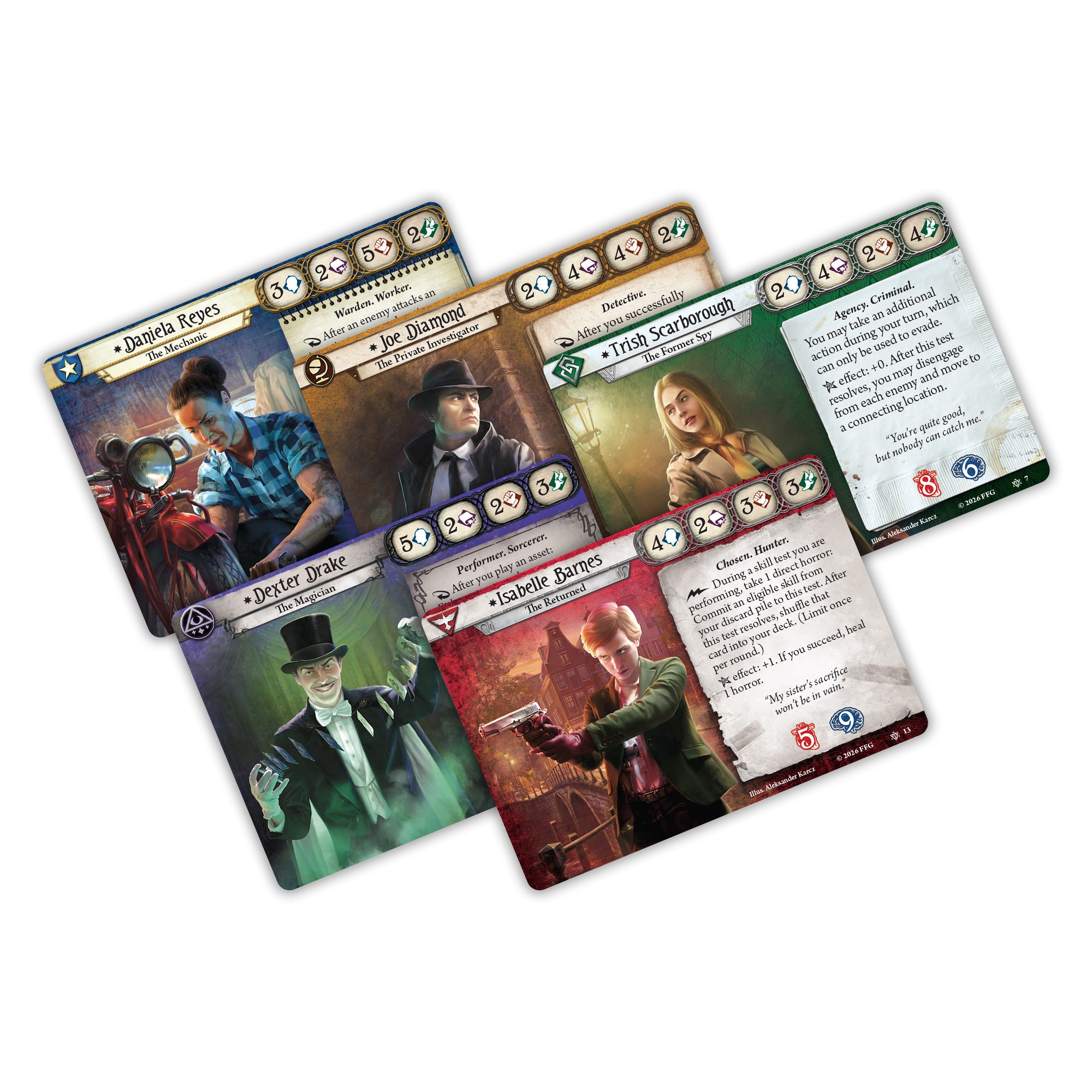
Choose by table gap, not tier list. A complete team needs reliable clue progress, enemy control, economy, recovery, and contingency. At two players, the cleanest pairing is a clue-leaning investigator and an enemy-leaning investigator who can each cover the other job in an emergency. At four, split into two clue lanes and two enemy lanes, then make one seat in each pair the flex or support seat.
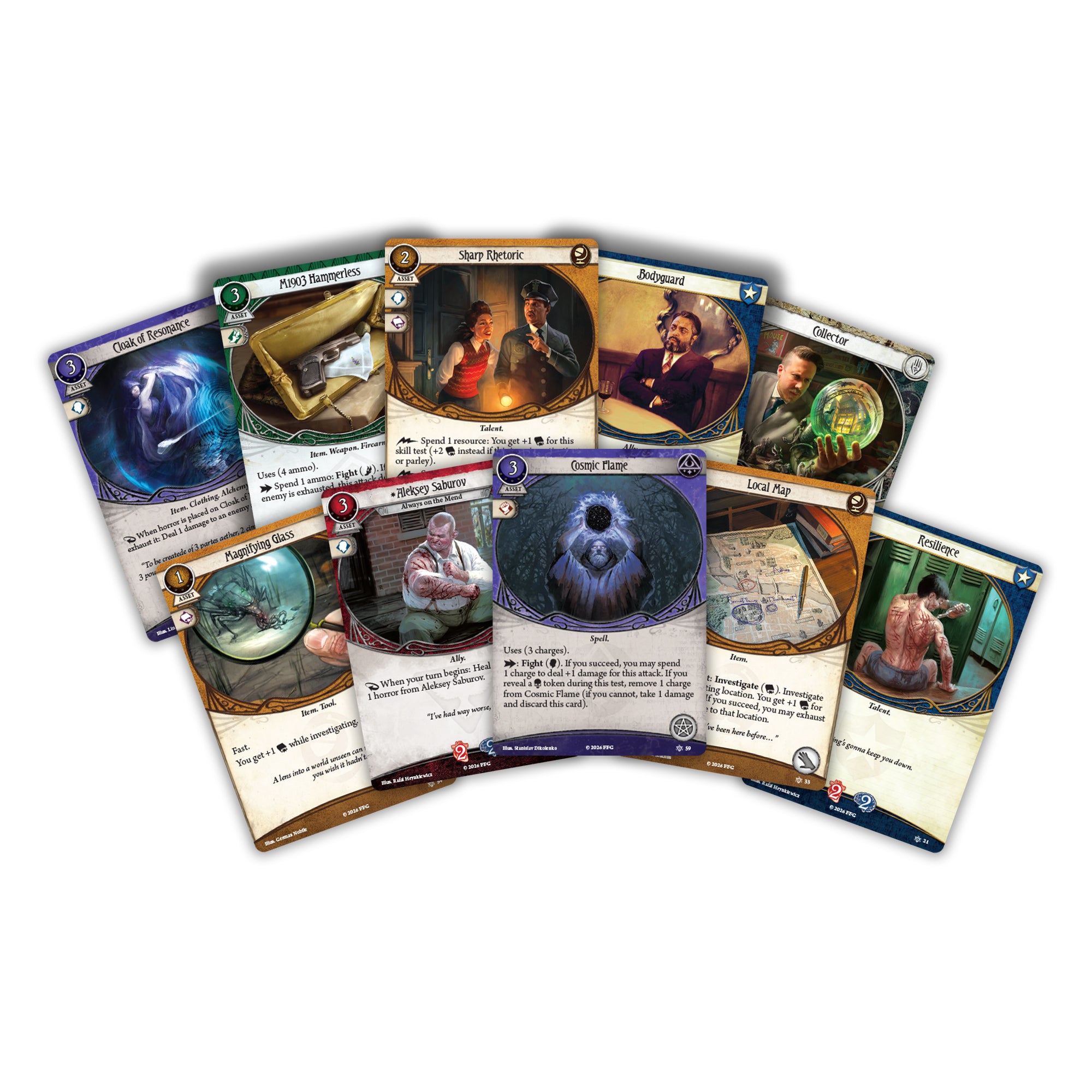
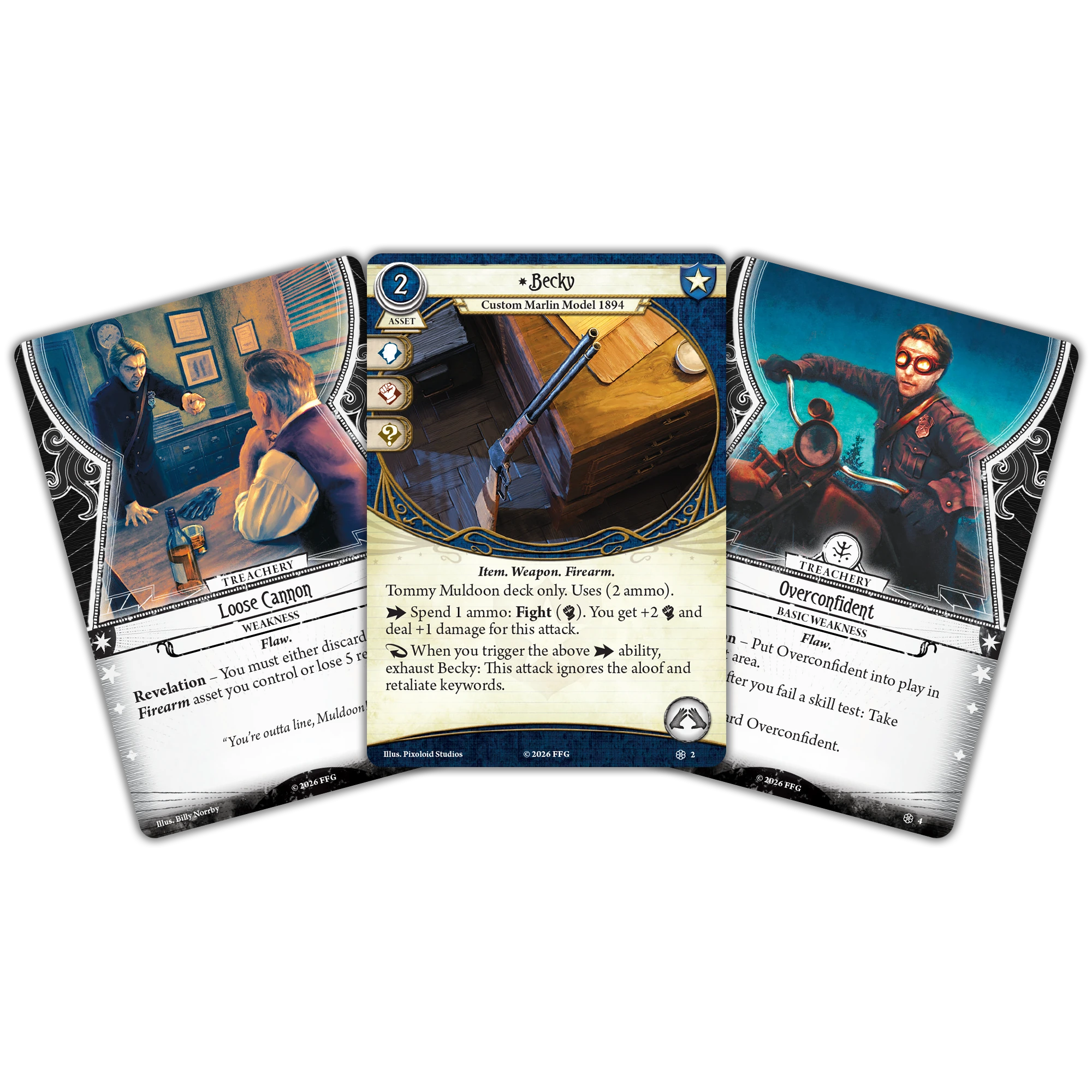
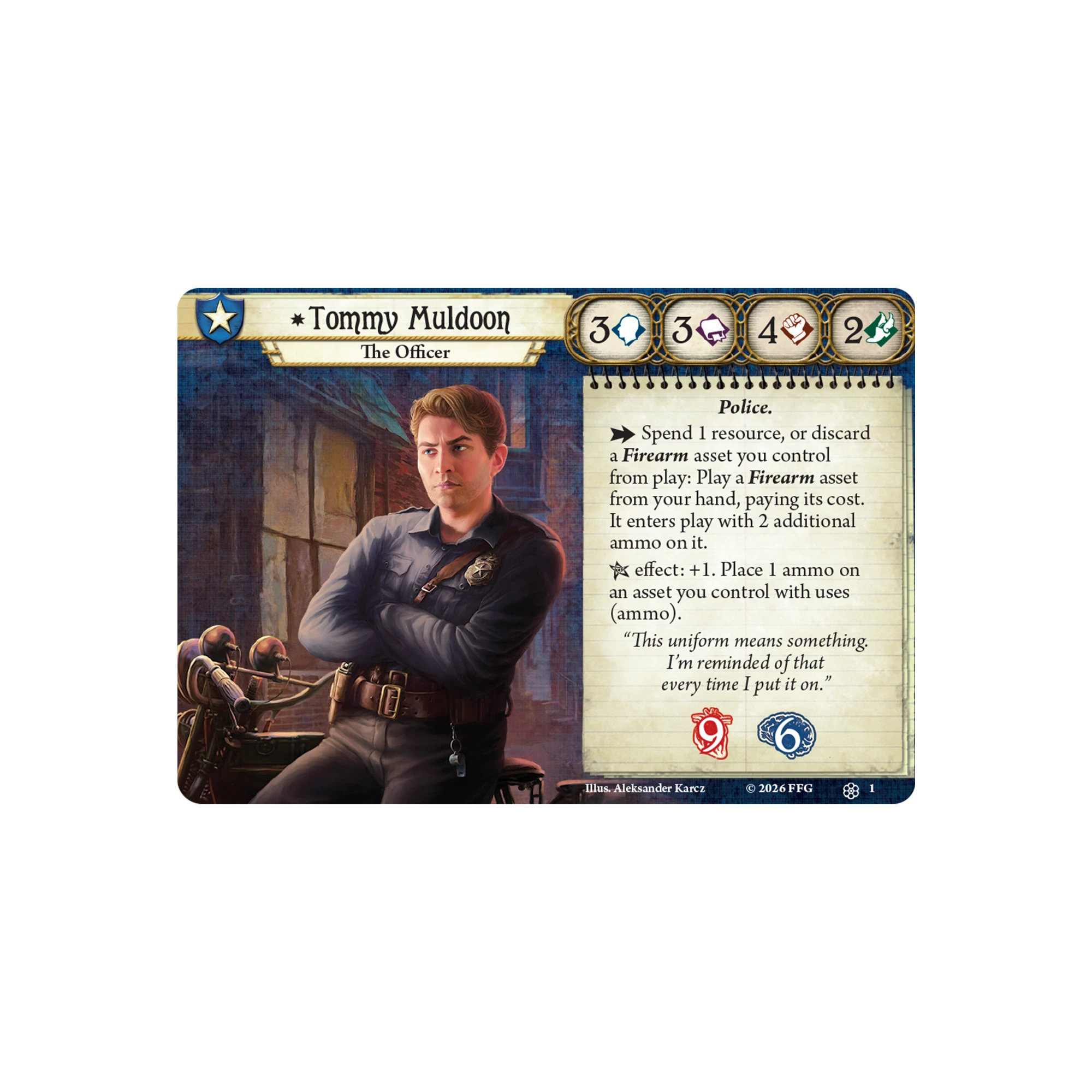
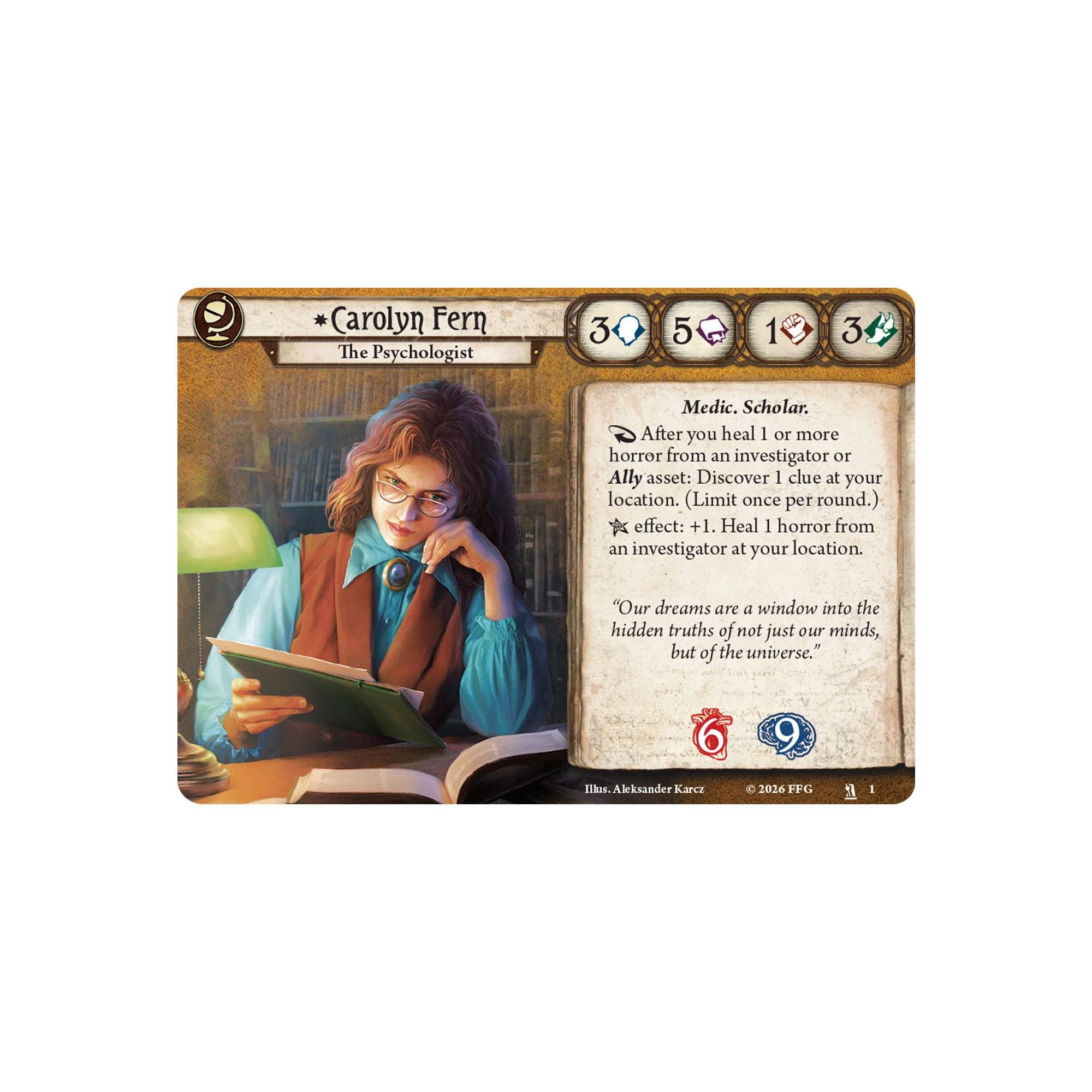
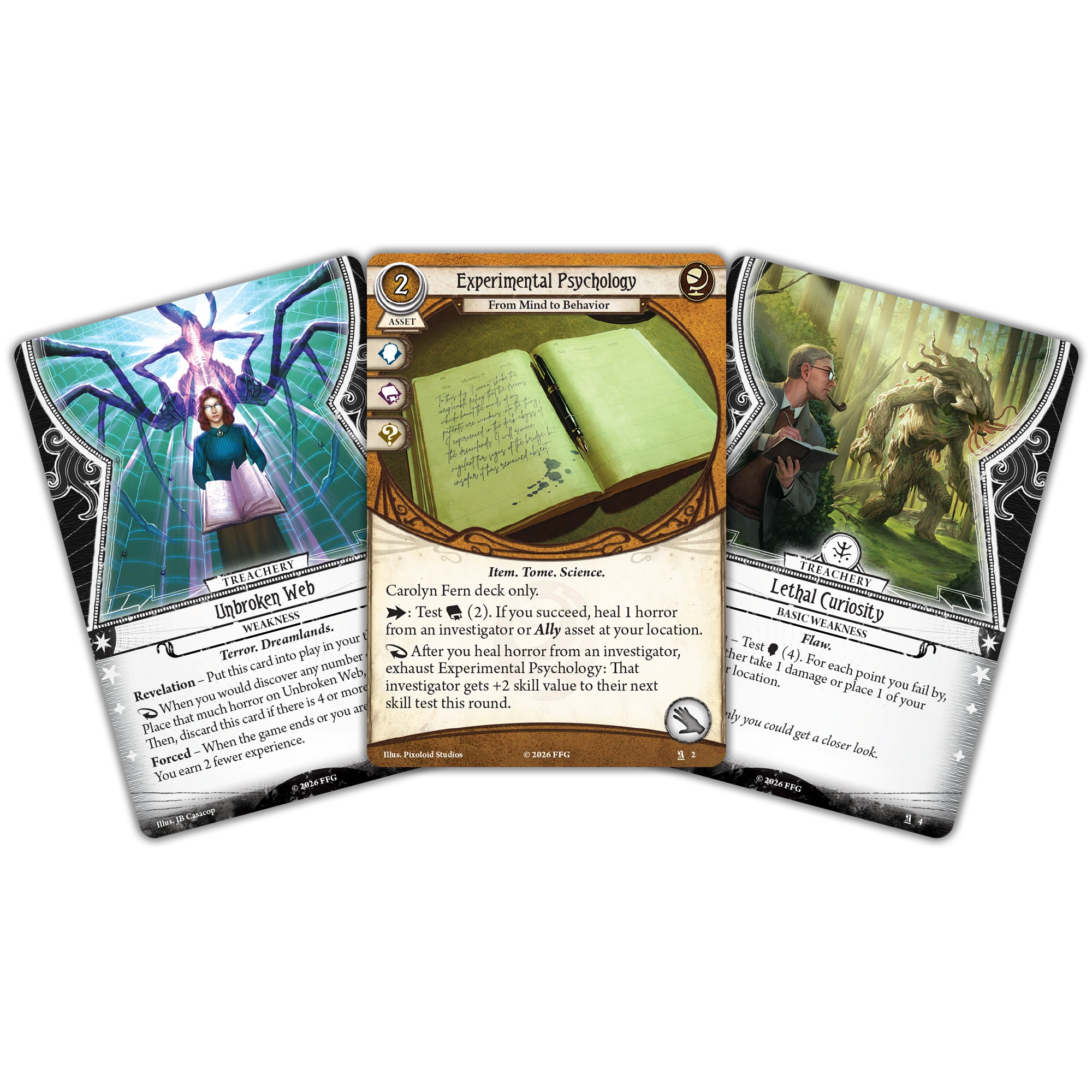
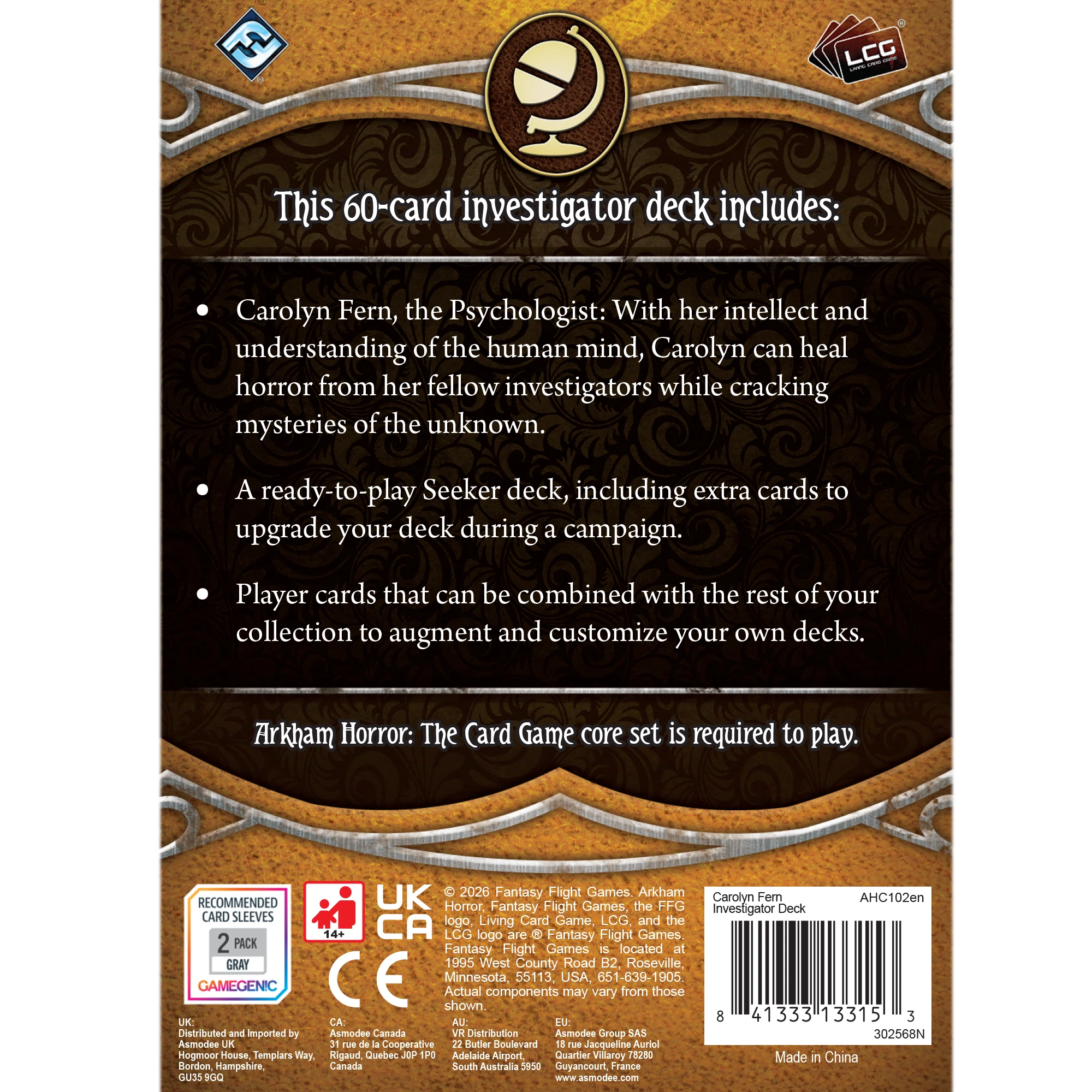
The 2026 evergreen Investigator Decks are useful because they give one player a ready identity plus upgrade cards without asking the whole group to understand a large player-card expansion. Tommy Muldoon is the straightforward Guardian route for a player who wants to meet enemies at the door. Carolyn Fern offers a different ready-made seat and is useful when a group needs a coherent deck more than another night of communal deckbuilding.
Before the campaign starts, every player should answer three questions aloud: What is my primary job? What can I do when that job is temporarily absent? Which teammate am I expecting to cover my weakest axis? A team that cannot answer is not mysterious. It is four solo decks sharing a campaign log.
How should I mulligan and build my first functional deck?
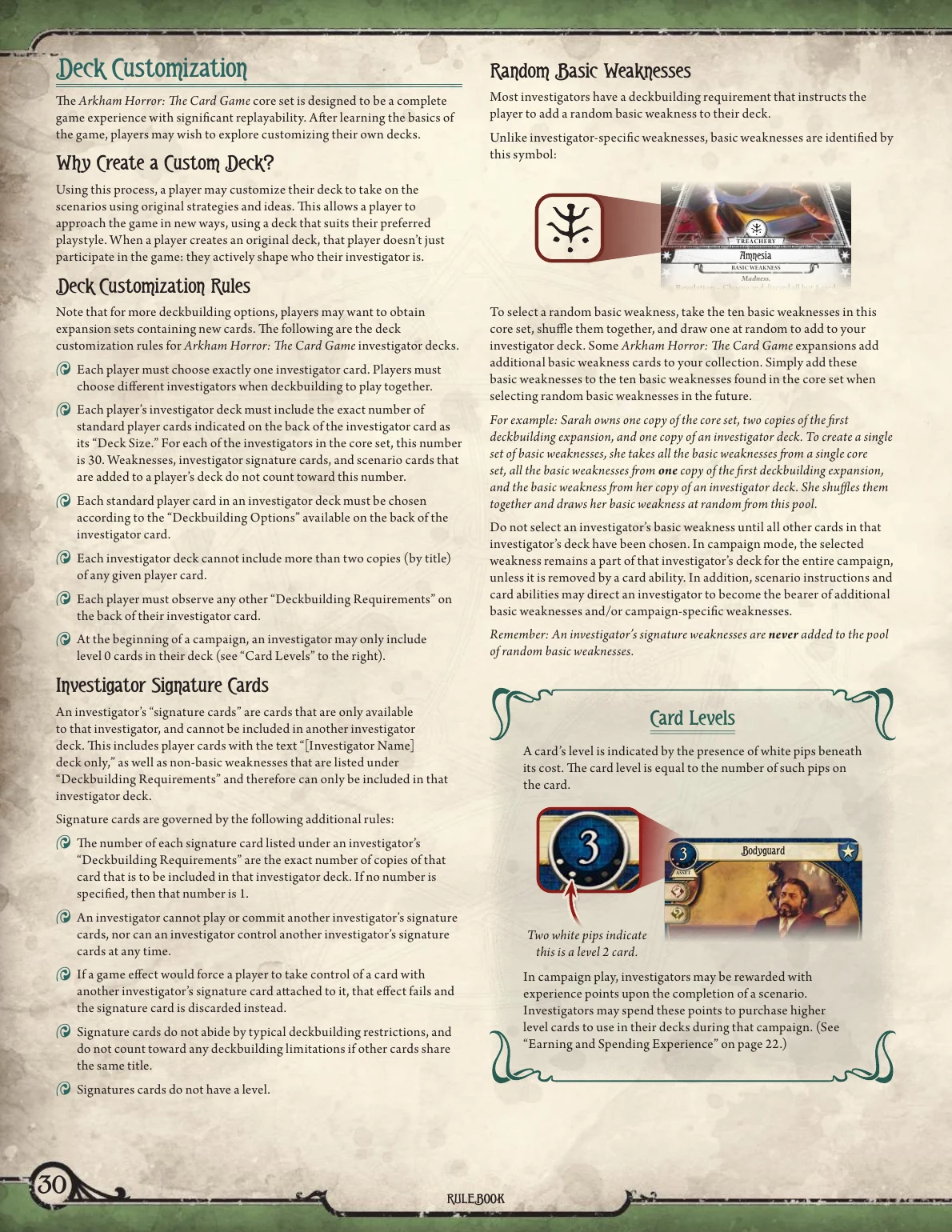

The current prebuilt decks are valid tutorials. Use them to learn what cards cost in both resources and actions, then rebuild after one or two plays. The goal of a mulligan is not to collect individually powerful cards. It is to start the engine: an affordable role-defining tool, enough economy to play it, and at least one card that handles the first pressure spike.
Assets are seductive because they promise permanent value, but every asset charges an action and resources before returning anything. A hand full of expensive assets can spend the whole first round constructing a machine while doom begins the scenario. Keep the setup package small enough to deploy, then use events and skills to compress urgent work into the actions that remain.
Audit the full deck by jobs: clue progress, enemy answer, economy, draw or filtering, health and sanity protection, useful commit icons, and a first-ten-XP plan. Duplicate the effects you must see early. Avoid one-copy miracles unless the deck can search for them. When a scenario hurts, record the failure category and upgrade that category before buying a glamorous card that solves nothing you actually experienced.
How do skill tests, enemies, and the chaos bag become real strategy?
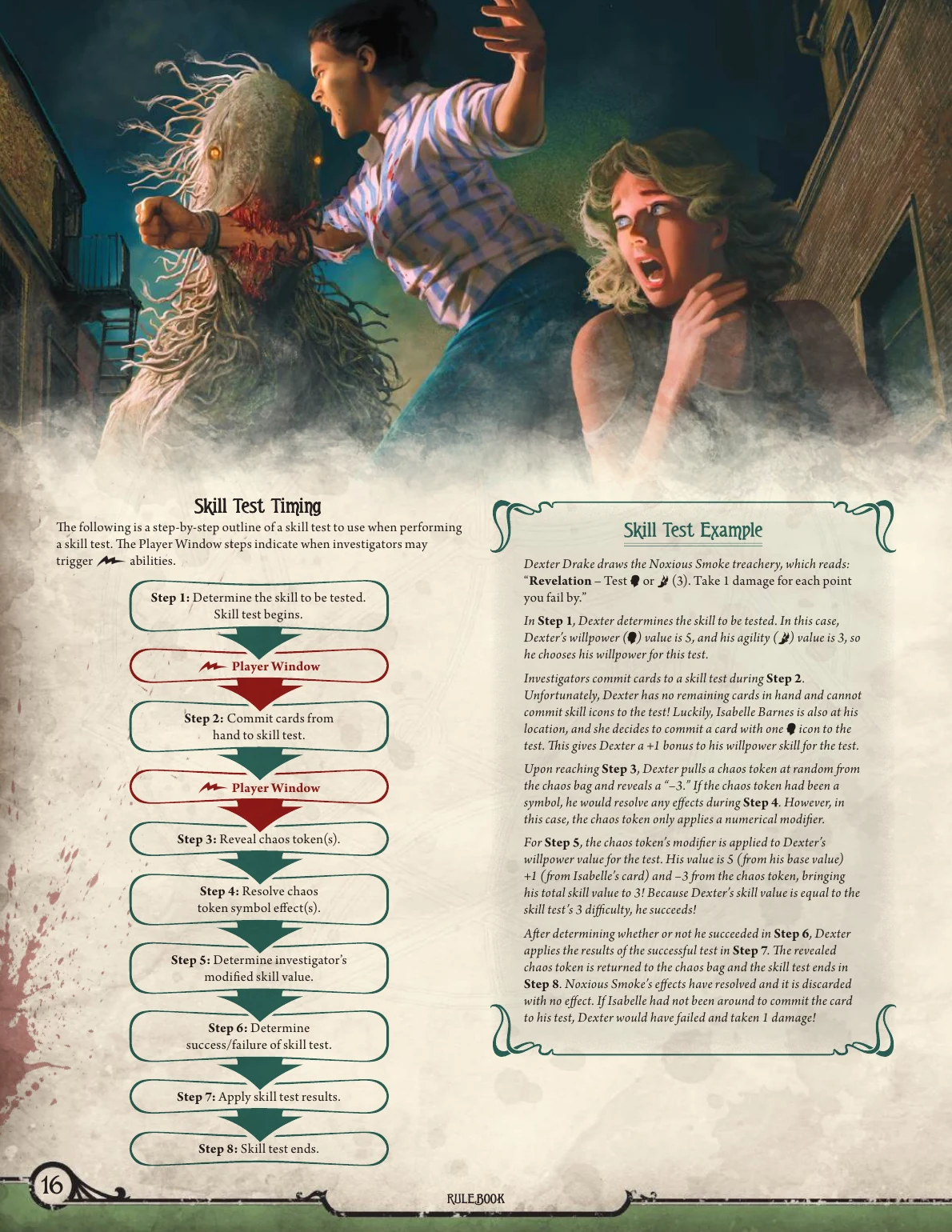
Before committing a card, inspect the current bag and price the consequence of failure. On many early Easy or Standard bags, testing around two above the target is a useful working heuristic, but symbol tokens and scenario changes can make that number dishonest. The correct target is always local to this bag, this test, and this consequence.
Do not spend three cards to guarantee a trivial test while leaving the team naked for a treachery that can end the round. Commit hardest when failure costs tempo, trauma, doom, or the scenario. Remember that the auto-fail remains, so every important test needs a recovery branch. Testless clues, automatic damage, cancels, movement compression, and action-free effects are powerful because they step around the bag rather than merely shouting at it.
Enemies are also action problems. Fight when defeating one removes more pressure than it costs. Evade when exhaustion opens the route, buys a full round, or lets the team abandon the location. Leave a low-impact enemy behind when the act does not require heroism. The expert table is not the table that wins every fight; it is the table that knows which fight is charging too much.
Which campaign should I play next, and how do I keep the group alive?
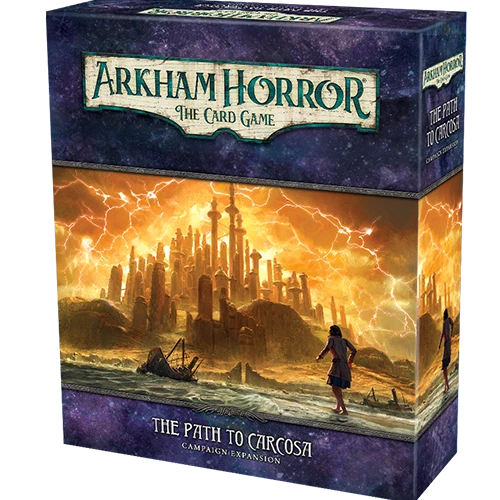
Replay the Core before assuming the solution is more content. A second run with rebuilt decks teaches more than opening a campaign while the round sequence is still uncertain. When the table is ready, choose by desired experience and verified availability. In a 706-response 2025 community poll, The Path to Carcosa led at 8.84, but a popularity result is not automatically a beginner recommendation.
Carcosa remains the legacy story pick when an exact campaign box is available at a sensible price. Dunwich is the plainer fundamentals teacher. Edge of the Earth has room for exploratory table talk. The Drowned City is an atmospheric later-campaign choice, not our first tutorial. For the current Chapter Two path, finish Brethren of Ash, follow the current rules, and choose upcoming Chapter Two campaigns as their official requirements and retail availability settle.
Campaign failure is not a save-file error. Arkham often continues through defeat, trauma, altered setup, and ugly log entries. Spend XP on the pain the previous scenario exposed. Resign when the remaining victory is worth less than the trauma and time. For group nights, end with a five-minute reset: record the log, upgrade openly, bag the encounter set, and leave the next scenario's required material together.
What story and play style does each Arkham Horror LCG campaign offer?
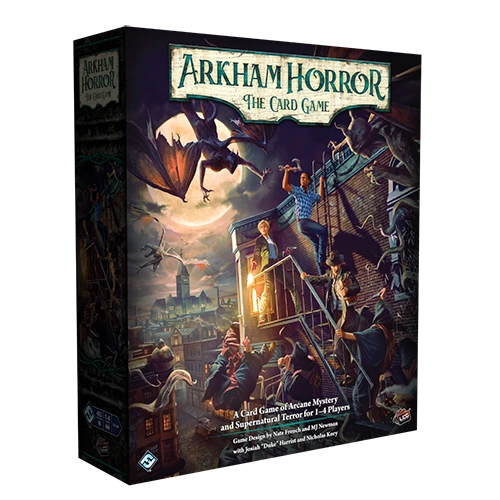
The core campaigns are tutorials, not the ceiling. The original/Revised Core's Night of the Zealot is a brutal three-part overture about a cult awakening in Arkham. Chapter Two's Brethren of Ash is the current three-scenario front door. From there, every campaign changes the kind of pressure the table is agreeing to remember.
The Dunwich Legacy follows missing Miskatonic professors through rural New England and stranger thresholds; it is comparatively direct and remains the clean fundamentals campaign. The Path to Carcosa begins with a forbidden production of The King in Yellow and turns certainty itself into a campaign resource. The Forgotten Age sends an expedition into Mexico and makes exploration, supplies, vengeance, and consequences part of the journey. The Circle Undone knots Arkham's witches, ghosts, the Silver Twilight Lodge, and an unusual prologue into a factional occult case.
The Dream-Eaters splits waking and dreaming into two shorter connected campaigns. The Innsmouth Conspiracy reconstructs a broken memory through flooded streets, tidal tunnels, and bless/curse pressure. Edge of the Earth turns an Antarctic expedition and its companions into the emotional board. The Scarlet Keys opens a globe and asks the group to spend time as it pursues the Red Coterie. The Feast of Hemlock Vale uses an island festival, relationships, and day/night choices. The Drowned City sends experienced investigators toward R'lyeh and the weight of Cthulhu.
Campaign ranking is taste wearing a lab coat. Choose Dunwich for clarity, Carcosa for psychological story, Edge for companion-rich expedition drama, Innsmouth for flooded momentum, Hemlock Vale for relationship play, and Scarlet Keys only when the table wants non-linearity to be part of the design.
Where do The Circle Undone, Essex County Express, and Children of Blood fit?

The Circle Undone is a full Chapter One campaign. Its modern Campaign Expansion contains the story scenarios; its similarly named Investigator Expansion contains player cards. The story opens with an unusual prologue and draws the investigators between Arkham's witches, spectral history, and the Silver Twilight Lodge. It rewards a group that enjoys occult factions and ambiguity more than a group seeking Dunwich's straightforward line.
The Essex County Express is not a standalone product recommendation in 2026. It is the third scenario of The Dunwich Legacy. Under the retired release model it appeared as a Mythos Pack, but the modern Dunwich Campaign Expansion contains the campaign arc. A surviving single pack is useful only to a collector deliberately completing the old cycle; it is not the smart way to start or finish Dunwich.
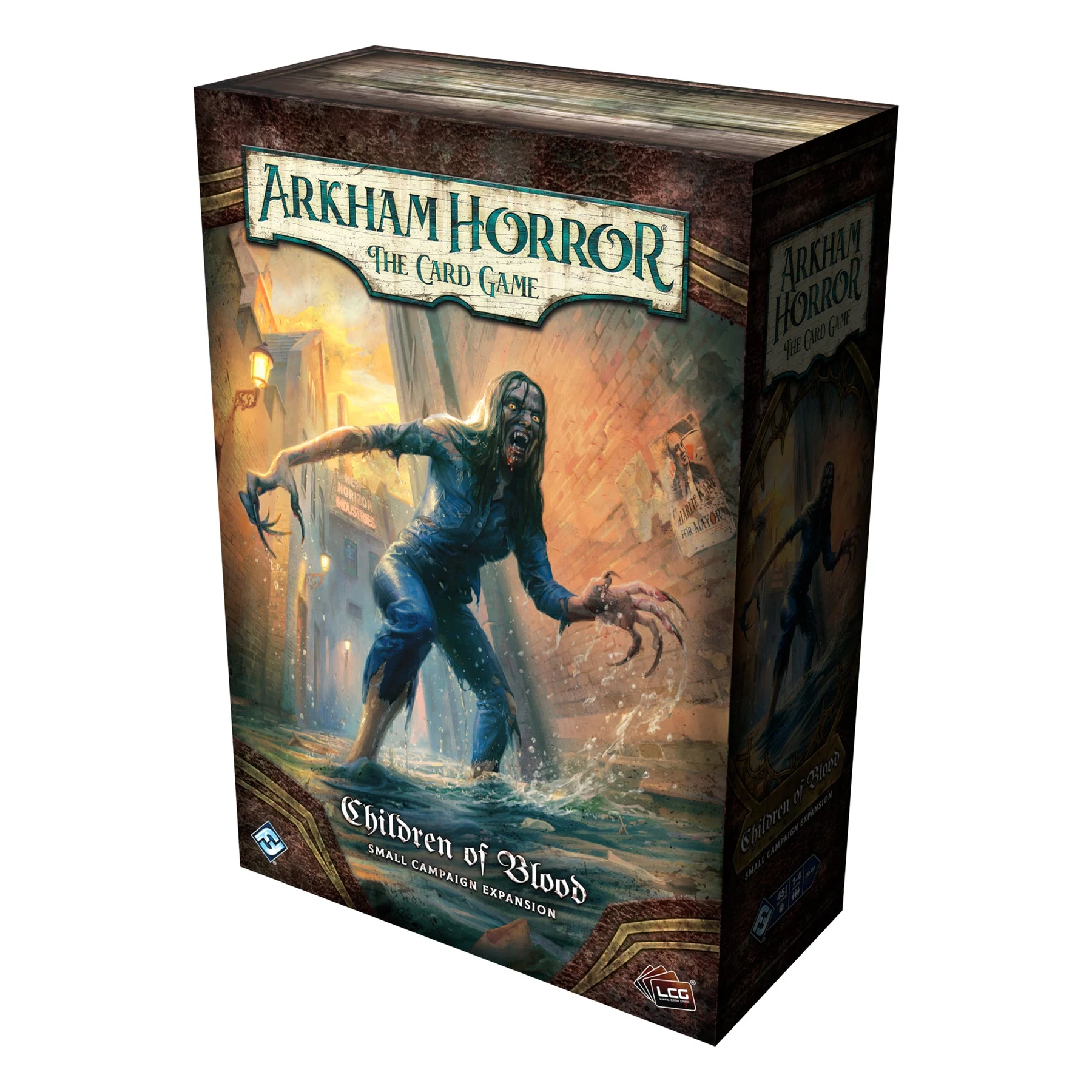
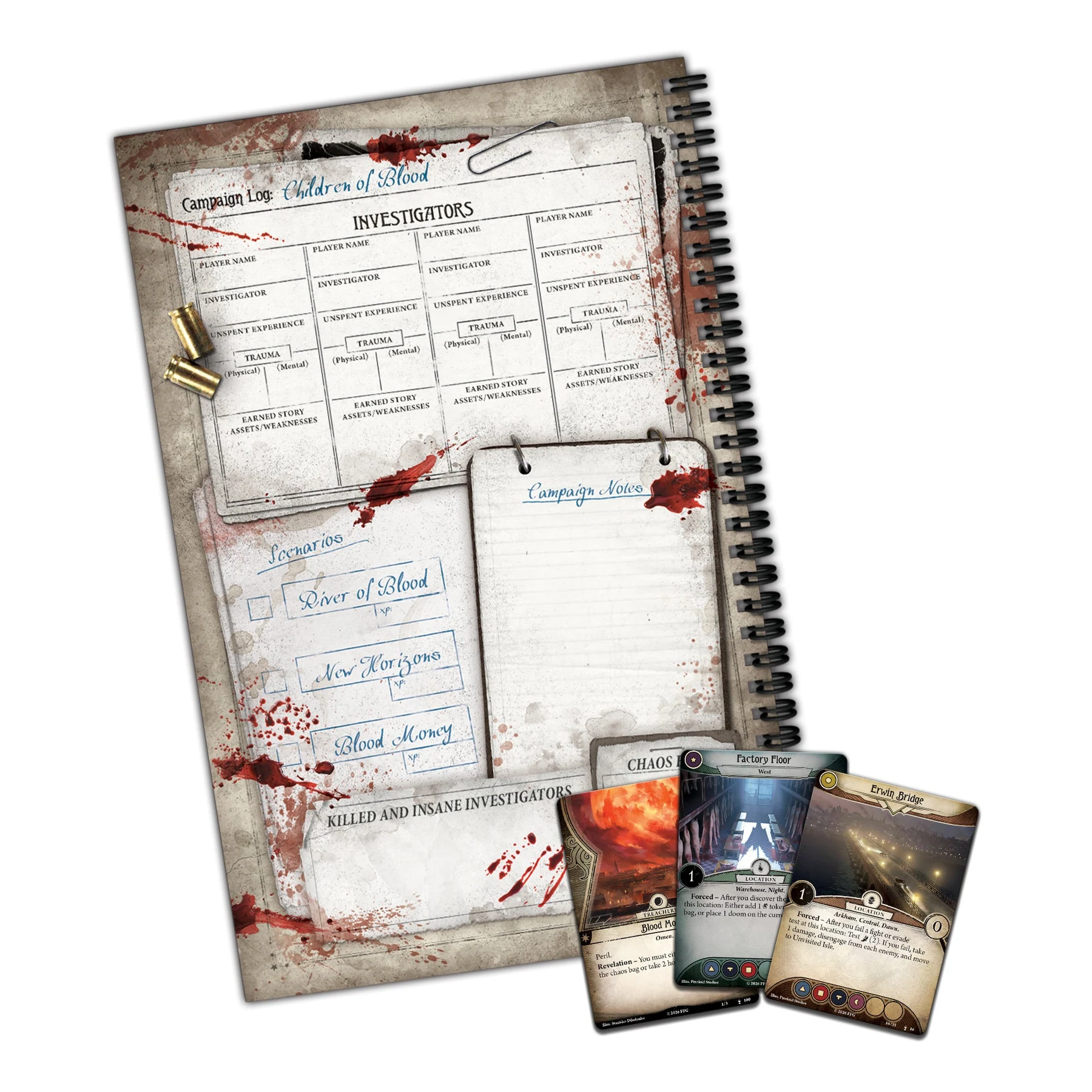
Children of Blood is a current Chapter Two small campaign expansion announced for August 14, 2026. Fantasy Flight lists three scenarios, 178 scenario cards, 12 blood tokens, 19 dividers, variable setup elements, and a blood-mutation pressure that can alter investigators. It requires the Chapter Two Core. That makes it a focused next story for a current-Core table, not a substitute for the Core and not a player-card expansion.
Preview facts are not a review. We can explain the official structure now; difficulty, replay value, and the final community verdict belong to the post-release refresh after full rules and real tables exist.
What are Return to boxes, Investigator Decks, and the old release model?
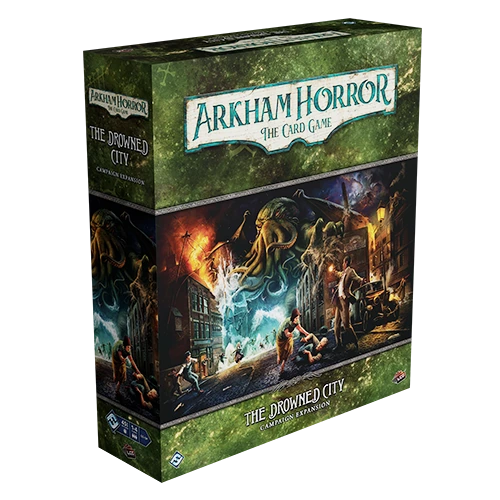
The retired Chapter One model began with a Deluxe Expansion and continued through separate Mythos Packs. Modern repackaged Campaign Expansions collect the scenario side of those cycles; matching Investigator Expansions collect the player-card side. That is why an old buying list can lead a new player into six small packs when one complete campaign box is the intended modern answer.
Return to boxes are optional remixes for specific campaigns. They add replacement encounter cards, alternate setup, challenge, and storage, but they do not contain the underlying campaign. They were built for groups returning to a story they already knew. Scarcity can make them look like mandatory grails. They are collector upgrades, not prerequisites, and should never be bought before the exact base campaign they modify.
Investigator Decks solve a different problem: one ready character, a legal deck, and campaign upgrades. The current evergreen decks are the best answer when a new seat wants to play tonight without sorting a giant card pool. Investigator Expansions are broader libraries for players who already enjoy building. The Arkham Horror novels, novellas, and fiction deepen place and character, but no novel is required to understand a campaign.
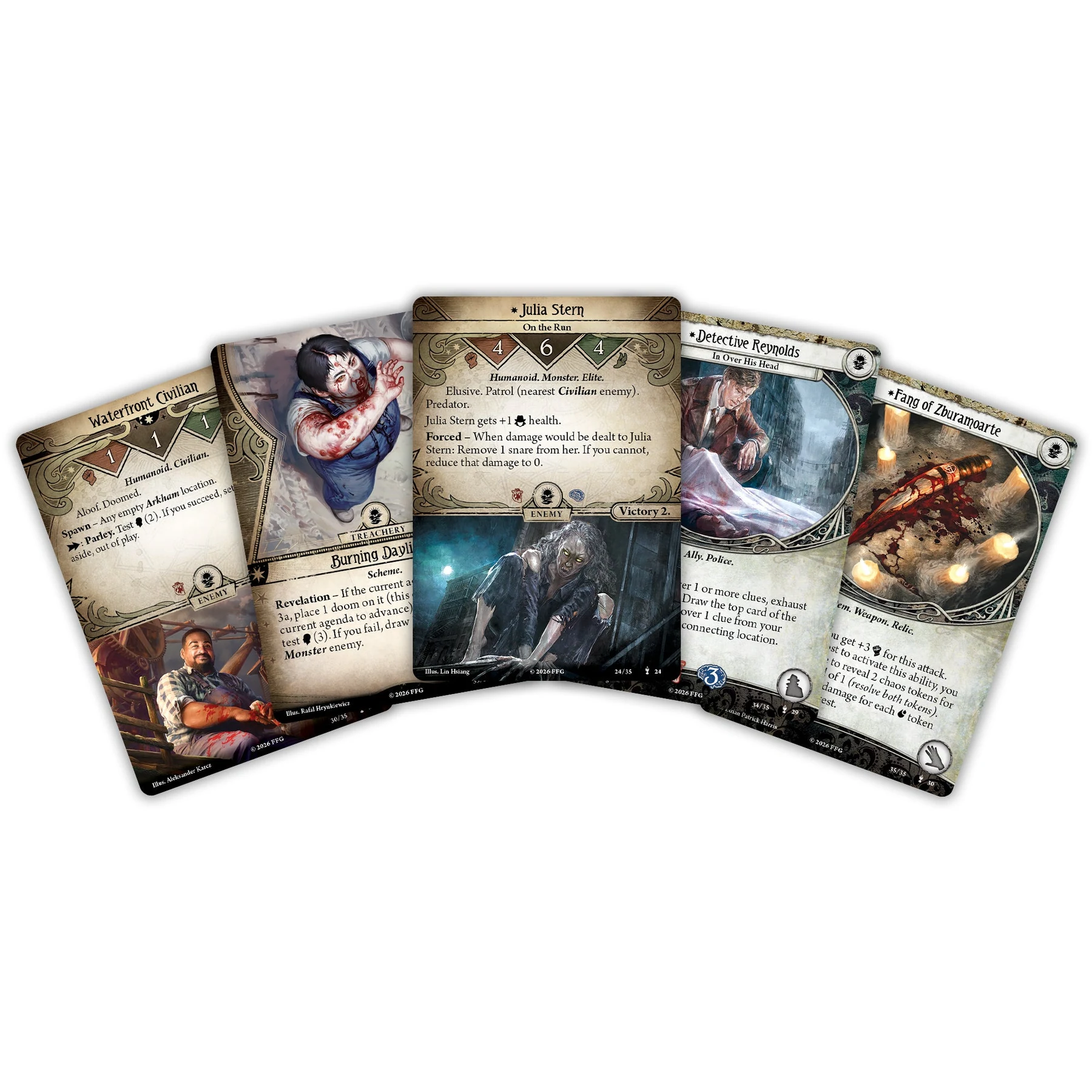
The shelf rule is simple: buy story as a complete Campaign Expansion, buy one ready deck for a seat that needs one, buy player-card breadth after deckbuilding becomes a pleasure, and treat old fragments as an informed collector project.
How do I make an Arkham campaign night easier to teach and better to remember?
Atmosphere works when it carries the rules instead of hiding them. Use one shared play surface, stable zones, readable light, and a single ambient soundtrack low enough that encounter text does not become a group reading test. Give the lead investigator a rules reference, not absolute authority. Let another player own the campaign log and a third reset the encounter sets.
Open every session with a ninety-second recap: where we are, what the act appears to want, what changed in the log, and which unresolved name matters. End with a five-minute ritual: resolve campaign text, record trauma and earned assets, spend experience openly, photograph the table, bag the next scenario's named encounter sets, and write one sentence describing the next legal setup action.
For new groups, use recommended decks and Easy or Standard. Read story text aloud, but paraphrase repeated rules reminders. For a serious table, keep an error log separated into timing, deck legality, and scenario setup; fix patterns between sessions instead of stopping every dramatic turn for a forum excavation. Arkham is precise, but its purpose is not to make the table afraid to touch the cards.
Use ArkhamDB for deck legality and published lists, Arkham Cards for campaign tracking if the group prefers an app, official rulebooks for authority, and community discussion for patterns and lived experience. Those sources have different jobs. Mixing them without labels is how folklore becomes a rule.
What changes in Chapter Two, and what should I buy next?
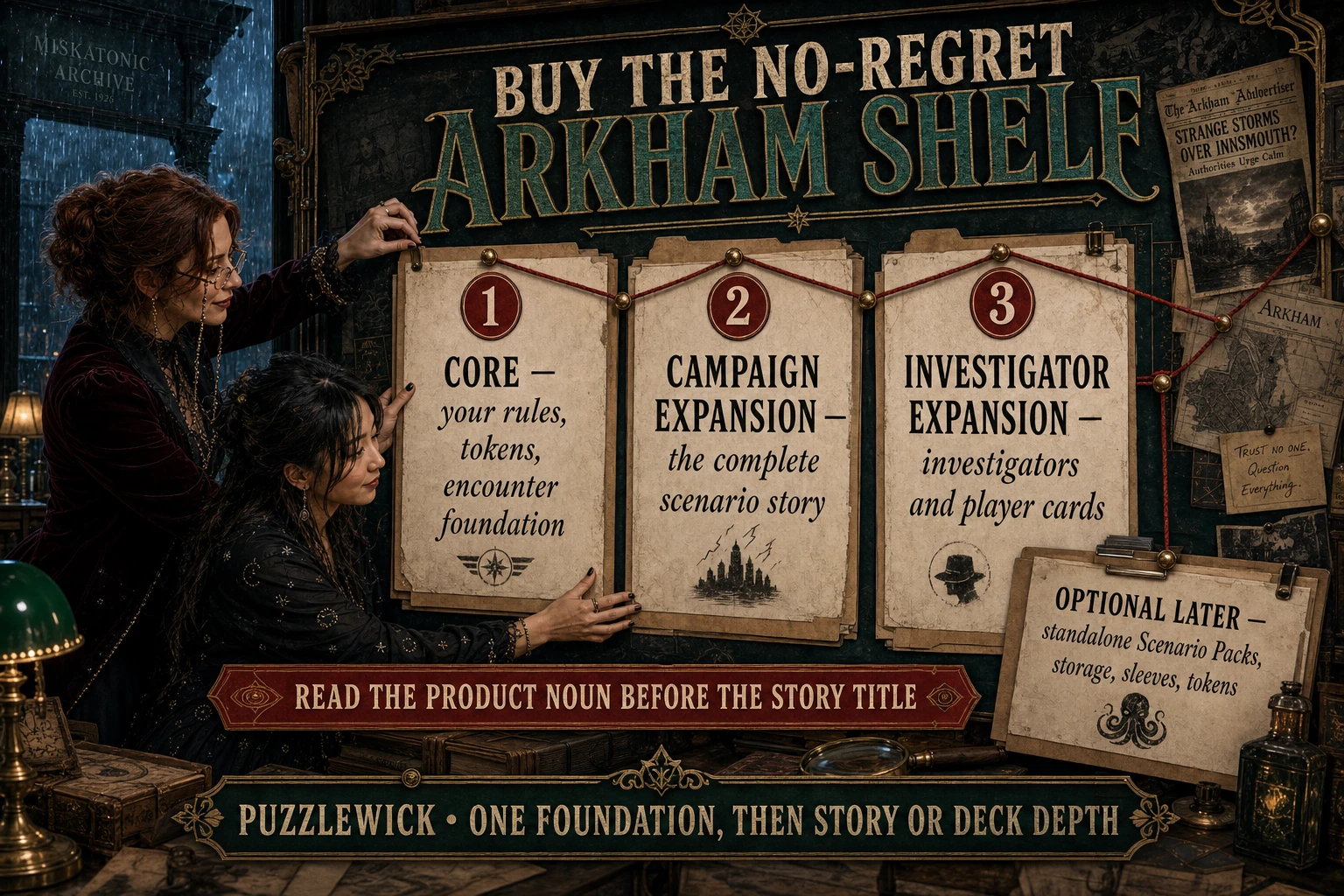
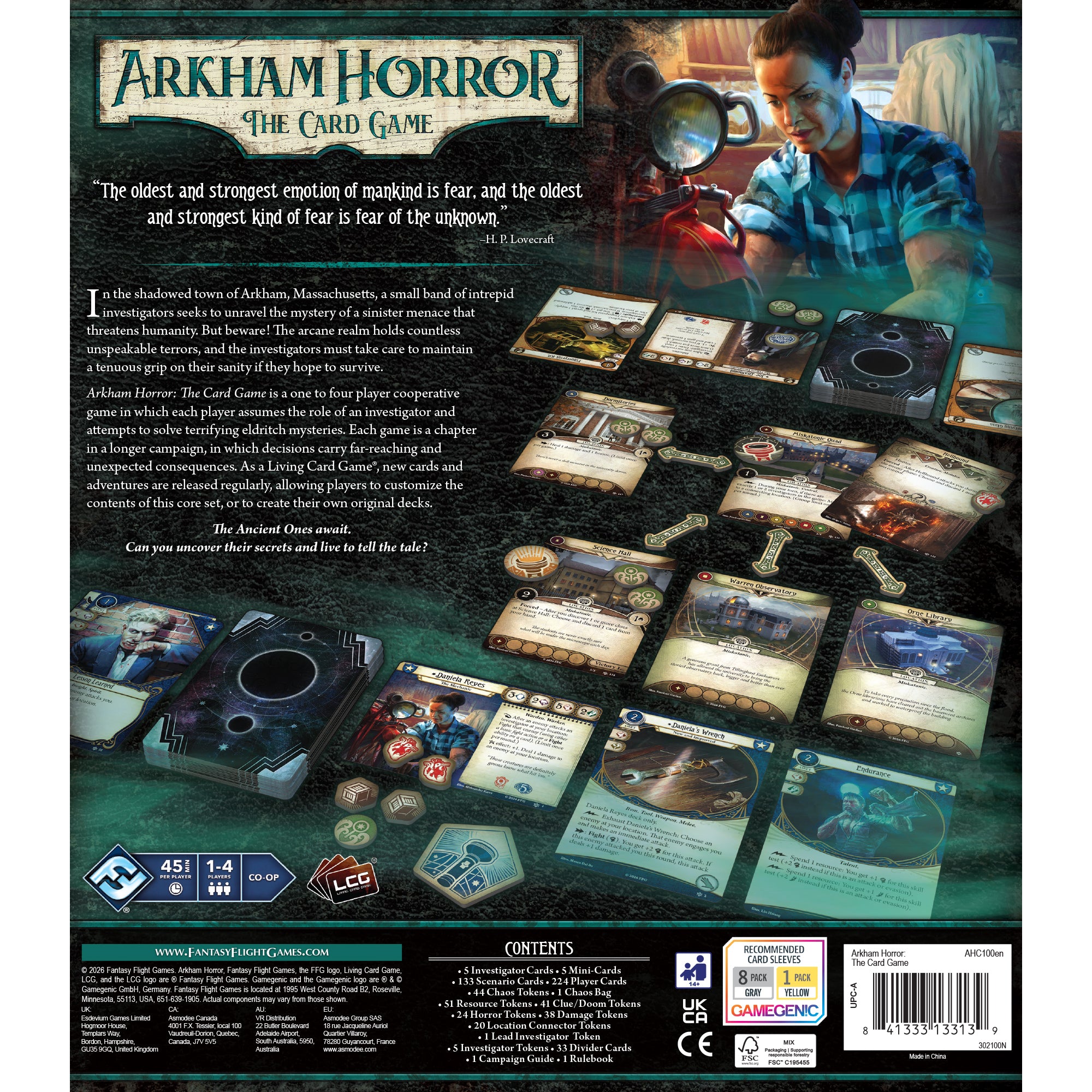
Chapter Two is the same Arkham Horror LCG, not a second edition that invalidates player cards. Fantasy Flight has explicitly preserved broad player-content compatibility while creating a new evergreen Core and a new release path. Future products include ready Investigator Decks, player-card expansions, shorter and longer campaigns, and scenario packs. The Core is the common foundation those current campaigns can reference.
The July 14 Grimoire update is now part of the living game. It clarifies reward ownership, choose/may resolution, nested and queued tests, and current errata. Children of Blood is the announced three-scenario Chapter Two campaign for August 2026, with variable setup elements and a new blood-token pressure. Treat preview details as current official plans, not a reason to pre-buy a shelf before reviews and final requirements exist.
After the Core, buy by need. Add one evergreen Investigator Deck when a seat needs a coherent ready character. Add one campaign when the group has earned a longer story. Add player-card depth when everyone wants deckbuilding range. Add sleeves, storage, upgraded tokens, and a playmat only when they reduce setup friction or improve the ritual enough to bring the group back. The cleanest collection is not the largest one. It is the one that reaches the table without an argument.
What experienced tables keep reporting
Recurring owner patterns, synthesized in Puzzlewick's words. Follow each evidence trail to read the original discussion.
The repeated 2026 question is no longer whether the game is worth starting; it is which Core creates a clean path into the current releases.
Read the evidence: r/arkhamhorrorlcg beginner FAQ discussion
True solo is loved for speed and tension, while two-handed solo is repeatedly recommended for learning role coverage and reducing investigator match-up swings.
Experienced builders keep returning to functional opening hands, affordable setup, redundancy, and a written upgrade path before clever one-copy interactions.
Read the evidence: r/arkhamhorrorlcg deckbuilding discussion
The strongest mulligan advice is role-specific: find the tool that makes the investigator work now, not the most dramatic card in the list.
Carcosa led the 2025 community campaign poll, while the spread behind it shows that theme and table taste matter more than one universal order.
Read the evidence: 2025 campaign rating results, 706 responses
ArkhamDB remains the practical place to inspect card text, legal deckbuilding, published lists, and upgrade ideas after the recommended decks teach the first game.
The picks
Some links below are affiliate links — as an Amazon Associate, Puzzlewick earns from qualifying purchases, at no extra cost to you. It never changes a pick.
 3 photos
 Arkham Horror: The Card Game Chapter Two Core Set
- Players
- 1-4 · best 2
- Time
- 60-120 min
- Age
- 14+
- Publisher
- Fantasy Flight Games · 2026
The correct 2026 foundation: one box, five investigators, a three-scenario campaign, current encounter sets, tokens, chaos bag, and the player cards needed to learn the living game.
- Current evergreen foundation
- Complete one-to-four-player starting box
- Required base for future Chapter Two campaigns
- Only a three-scenario introduction
- Existing Revised Core owners may not need it until moving into Chapter Two
 2 photos
 Tommy Muldoon Investigator Deck
- Players
- 1 investigator deck
- Time
- Campaign ready
- Age
- 14+
- Publisher
- Fantasy Flight Games · 2026
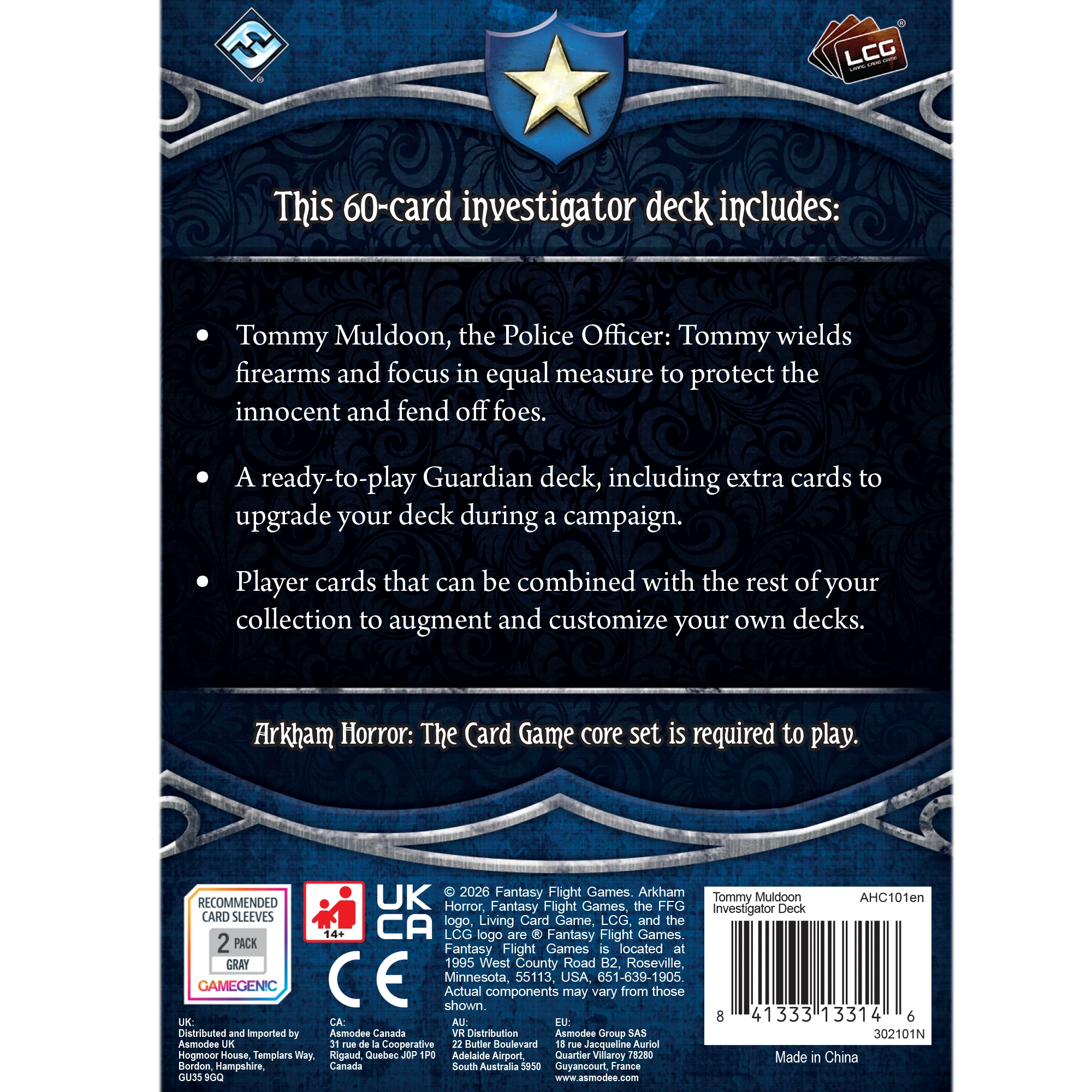
A focused current-era investigator deck for the player who wants a coherent role tonight and an included upgrade route for the campaign.
- Ready-to-play identity
- Useful enemy-control role
- Smaller commitment than a broad player-card expansion
- Builds one seat, not the whole group
- Still depends on the Core and team role planning
 3 photos
 Carolyn Fern Investigator Deck
- Players
- 1 investigator deck
- Time
- Campaign ready
- Age
- 14+
- Publisher
- Fantasy Flight Games · 2026
A compact way to expand the group with one coherent investigator rather than opening a large card pool before anyone wants to build from it.
- Ready deck and upgrades
- Low-friction player onboarding
- Current evergreen product
- Only solves one seat
- Not a replacement for team planning
The Path to Carcosa Campaign Expansion
- Players
- 1-4
- Time
- 60-120 min per scenario
- Age
- 14+
- Publisher
- Fantasy Flight Games · 2022 campaign-box edition
The strongest legacy story recommendation when the exact Campaign Expansion is available at a sane price. Buy it for escalating uncertainty, not as a substitute for learning the Core.
- Community-favorite campaign
- Strong narrative identity
- Full campaign in the modern campaign-box format
- Legacy availability can fluctuate
- Not a standalone foundation or player-card expansion
The Drowned City Campaign Expansion
- Players
- 1-4
- Time
- 60-120 min per scenario
- Age
- 14+
- Publisher
- Fantasy Flight Games · 2025
A mood-rich later campaign with a less forgiving learning profile. Excellent after the group has rules and role tempo; not our first-night recommendation.
- Strong horror atmosphere
- Full campaign box
- Interesting later-library destination
- Weaker first teacher than the Core or a fundamentals campaign
- Legacy stock and pricing can move
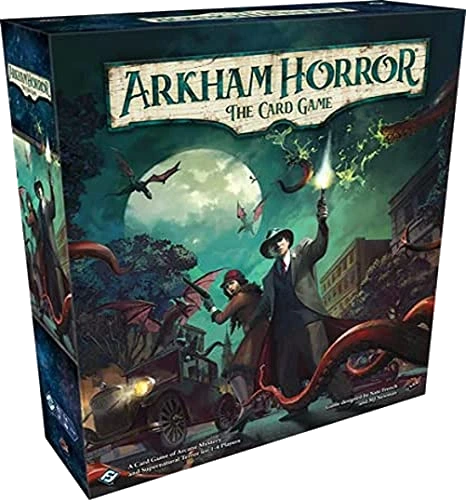
Arkham Horror: The Card Game Revised Core Set
- Players
- 1-4
- Time
- 60-120 min
- Age
- 14+
- Publisher
- Fantasy Flight Games · 2021
Still a complete, good Chapter One foundation. It is no longer the clean default for a new 2026 buyer who wants future Chapter Two campaigns.
- Excellent Chapter One base
- Supports the large legacy campaign library
- Often familiar to existing groups
- Not the foundation future Chapter Two campaigns expect
- A new buyer may eventually purchase both cores
At a glance
| route | foundation | next story | player cards | avoid |
|---|---|---|---|---|
| Brand-new 2026 player | Chapter Two Core | Replay Brethren, then Children of Blood after release | One ready Investigator Deck if needed | Legacy fragments and a second Core |
| Own Revised Core | Keep Revised for Chapter One | Dunwich or Carcosa Campaign Expansion | Use current pool; expand by deck need | Replacing a working foundation from panic |
| Story-first group | Compatible Core | Carcosa, Edge, or Hemlock by tone | Recommended decks first | Buying a matching Investigator box by mistake |
| Deckbuilding-first player | Compatible Core | Finish the story already open | Ready deck, then one Investigator Expansion | Six boxes for one online deck list |
| Standalone event night | Compatible Core + legal decks | Excelsior or Film Fatale | Bring established decks | Assuming the pack contains player cards |
| Legacy collector | Original/Revised or Grimoire plan | Verify exact missing product | Catalog before purchase | Random Mythos Packs and Return to without base |
Free download — Arkham LCG First Case Desk Card
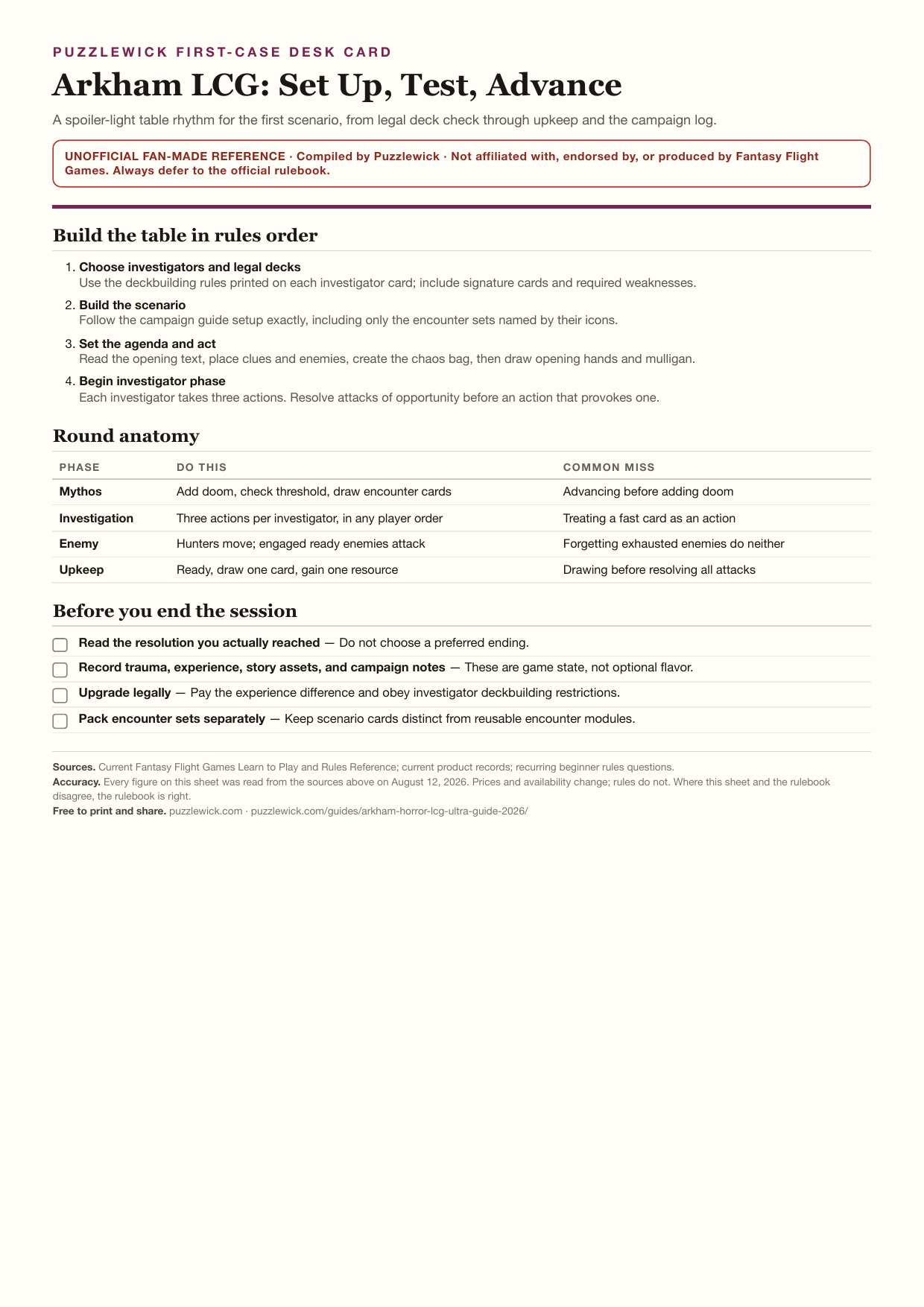
A one-page Core choice, round order, table jobs, and no-regret collection path.
Unofficial fan-made reference. Compiled by Puzzlewick from the sources listed on the sheet. Not affiliated with or endorsed by the publisher — always defer to the official rulebook.
Questions, answered
Which Arkham Horror LCG Core Set should a beginner buy in 2026?
Buy one 2026 Chapter Two Core Set. It is the current evergreen foundation and the base future Chapter Two campaigns are designed to reference.
Is Chapter Two a second edition that makes old cards incompatible?
No. Fantasy Flight describes Chapter Two as the same game with a new evergreen Core and release environment. Existing player cards remain broadly compatible, while campaigns use the encounter sets and foundation specified for their chapter.
Do Revised Core owners need the Chapter Two Core?
Not to keep playing Chapter One campaigns. They need the Chapter Two Core when they want campaigns and releases that depend on the new Core encounter sets.
Do I need two copies of the Chapter Two Core Set for four players?
No. The current Core is designed as a one-to-four-player foundation. Buy a second product only when a specific, verified need appears.
Should I learn Arkham Horror LCG true solo or two-handed?
Two-handed solo is the better classroom because it reveals team roles and covers more jobs. True solo is faster but swingier and asks one investigator to solve every axis.
Does upkeep refill my hand to five cards?
No. During upkeep, ready cards, draw one card, gain one resource, and then discard down to the eight-card hand limit.
Does the first round include the Mythos phase?
No. The first round begins with the Investigation phase. Normal rounds after that begin with Mythos.
When does the agenda advance because of doom?
Normally, after doom is placed during the Mythos phase and the threshold is checked. Doom elsewhere does not automatically advance the agenda at any moment unless an effect explicitly says it can.
What does the Chapter Two Starting keyword do?
After the opening hand and mulligan, before set-aside cards return to the deck, it can let you search for one copy of a Starting card and add it as one additional opening card, following the exact current rule text.
Who owns a Chapter Two reward card after it is unlocked?
The July 14, 2026 Grimoire update clarifies that the player unlocks it. It is not permanently bound to the investigator who earned it.
What is the best first full campaign after the Core?
Replay the Core once first. For a legacy campaign, Carcosa is the story-forward favorite when the exact campaign box is available; Dunwich is the cleaner fundamentals teacher. Current Chapter Two buyers can also follow the new release path as campaigns arrive.
Should a beginner use Easy or Standard difficulty?
Easy is an excellent teaching setting and Standard is reasonable for groups comfortable with card games. Difficulty is a tuning tool; use the setting that keeps decisions interesting enough to learn from.
When should investigators resign?
Resign when the remaining reward is worth less than the likely trauma, lost actions, and campaign damage. Surviving with useful XP can be better than chasing one optional location.
Where can I practice setup and turn flow?
Use Robert’s free interactive Arkham Horror LCG Setup Trainer on Puzzlewick for setup order, zones, scenario drills, and skill-test practice.
What is The Circle Undone about?
It is a full Chapter One campaign about witches, ghosts, Arkham history, and the Silver Twilight Lodge. Its unusual prologue and factional occult story suit a group that likes ambiguity. Buy the Campaign Expansion for the story, not the similarly named Investigator Expansion.
Do I need The Essex County Express Mythos Pack?
Not if you buy the modern Dunwich Legacy Campaign Expansion. Essex County Express is scenario three of that campaign. The separate Mythos Pack belongs to the retired release model and is now mainly relevant to collectors completing an old cycle.
What is Children of Blood?
It is an announced three-scenario Chapter Two campaign expansion scheduled for August 14, 2026. Official previews list a blood-token mutation mechanic and require the current Chapter Two Core. It is not a standalone game or player-card expansion.
Are Return to boxes required?
No. They remix a campaign you already own with replacement encounter cards and alternate setup. They do not include the base campaign and should be treated as optional replay or collector products.
Should I buy novels to understand Arkham Horror LCG?
No. The campaigns are self-contained. Arkham Horror fiction can deepen the setting and characters, but it is atmosphere and supplementary lore, not required rules or campaign material.
Margo's verdict
Start current, start small, and play twice. One Chapter Two Core, two investigators, Easy or Standard, the official setup order, and a functional opening hand are enough to reveal why Arkham has lasted. Keep Revised Core if you already own it. Buy a ready Investigator Deck when one seat needs help. Buy one campaign when the table wants a longer nightmare. The most complete Arkham collection is not the shelf with every box; it is the campaign group that still wants to meet next week.
Research ledger 26 sources · reviewed 2026-08-10
Specifications, rules, current product information, community experience, and contrary evidence were checked against the sources below. Commercial links are kept separate from editorial evidence.
- fantasyflightgames.comfantasyflightgames.com/en/news/2026/2/5/intro-to-arkham
- fantasyflightgames.comfantasyflightgames.com/en/news/2025/10/31/the-next-chapter-1
- fantasyflightgames.comfantasyflightgames.com/en/news/2026/1/22/a-look-at-things-to-come
- fantasyflightgames.comfantasyflightgames.com/en/news/2026/2/12/ever-investigating
- fantasyflightgames.comfantasyflightgames.com/en/news/2026/5/21/children-of-blood
- fantasyflightgames.comfantasyflightgames.com/en/news/2026/7/14/the-book-that-writes-itself
- images-cdn.fantasyflightgames.comimages-cdn.fantasyflightgames.com/filer_public/0e/d0/0ed09507-1705-47ed-a630-cd15885cabb0/ahc100_rulebook-web.pdf
- images-cdn.fantasyflightgames.comimages-cdn.fantasyflightgames.com/filer_public/f0/22/f022ac7c-9c30-4521-ac16-1f74f00e1d31/ahc100_campaign_guide-web.pdf
- images-cdn.fantasyflightgames.comimages-cdn.fantasyflightgames.com/filer_public/76/b3/76b332d5-7047-458f-91b6-82c8500cc445/arkham_grimoire.pdf
- store.asmodee.comstore.asmodee.com/products/arkham-horror-the-card-game-core-set
- arkhamhorror.comarkhamhorror.com/games/arkham-horror-the-card-game
- arkhamhorror.comarkhamhorror.com/games/the-drowned-city-campaign-exp
- reddit.comreddit.com/r/arkhamhorrorlcg/comments/1t777by/beginner_faq_chapter_2
- reddit.comreddit.com/r/arkhamhorrorlcg/comments/1s76k3g/chapter_2_and_solo_play
- reddit.comreddit.com/r/arkhamhorrorlcg/comments/1tc4wq8/thoughts_on_playing_true_solo_in_chapter_2
- reddit.comreddit.com/r/arkhamhorrorlcg/comments/1uejhls/chapter_2_advice
- reddit.comreddit.com/r/arkhamhorrorlcg/comments/1trx615/general_deckbuilding_tips_youve_learned_over_the
- reddit.comreddit.com/r/arkhamhorrorlcg/comments/1ttpwwc/ancient_evils_mulligans
- reddit.comreddit.com/r/arkhamhorrorlcg/comments/1oe76r5/campaign_rating_results_2025
- boardgamegeek.comboardgamegeek.com/boardgame/205637/arkham-horror-the-card-game/forums/0
- arkhamdb.comarkhamdb.com
- fantasyflightgames.comfantasyflightgames.com/en/products/arkham-horror-the-card-game/products/circle-undone
- fantasyflightgames.comfantasyflightgames.com/en/products/arkham-horror-the-card-game/products/essex-county-express
- fantasyflightgames.comfantasyflightgames.com/en/news/2019/4/19/return-to-the-path-to-carcosa
- reddit.comreddit.com/r/arkhamhorrorlcg/comments/1u2n0ia/when_best_to_play_side_scenarios
- arkhamcards.comarkhamcards.com

Let me check that before we say it.


Keep exploring
The next smart rabbit holes.
✒ Universe HubArkham Horror Universe: the whole buying pathStart with the interactive buyer intake: separate the 2026 Chapter Two Core from Chapter One legacy boxes and the entirely...☾ Topic PathCooperative Horror Games: compare the whole shelfCooperative horror works when the rules pressure the story without burying the table. This cluster maps what to buy, how campaigns...Buying GuideArkham Horror LCG Deconfusion Guide 2026: Chapter Two vs Revised Core and Every Expansion ExplainedChapter Two or Revised Core? Campaign or Investigator Expansion? Scenario Pack or Small Campaign? Yumi translates every box, the old...