Arkham Horror LCG Strategy Bible 2026: Deckbuilding, Rules Mistakes, Solo Setup, Campaign Tempo, and How to Actually Win
Margo turns the most common Arkham Horror LCG pain points into a playable field manual: beginner deckbuilding, rules traps, solo shape, campaign tempo, XP upgrades, and expert-mode habits.


AI-assisted research and drafting in Margo’s voice · reviewed by Robert Pruitt · how this guide was made
Last editorial refresh: 2026-07-06 Gold-standard QA: 2026-08-13 12 sources reviewed Affiliate links checked during gold-standard pass

The short answer
To get good at Arkham Horror LCG, stop treating it like a puzzle you must solve perfectly. Build decks with jobs, spend actions on tempo, resign before greed eats the campaign, and use difficulty/taboo as tuning tools. Start with a reliable clue plan, an enemy plan, enough economy, and a written first-10-XP upgrade path.
Decision map
Choose in thirty seconds
Learning the system the clean way
A ready character with less deckbuilding panic
First full campaign after the foundation
Arkham Horror: The Card Game does not usually lose new players at the checkout page. It loses them on the second night, when a rules question eats twenty minutes, a true-solo investigator cannot pick up clues and kill monsters, and the campaign log begins to look like it was written by a vindictive librarian.
Margo built this as the missing desk manual: not another buy order, not a fan wiki rewrite, but a playable answer to the questions players keep bringing to Reddit, BoardGameGeek, ArkhamDB, and every table where somebody has just drawn the wrong token at the worst possible moment.
Start here, then go deeper
You are in the right cabinet.
 ✒ Universe HubArkham Horror Universe: the whole buying pathStart with the interactive buyer intake: separate the 2026 Chapter Two Core from Chapter One legacy boxes and the entirely...
 ☾ Topic PathCooperative Horror Games: compare the whole shelfCooperative horror works when the rules pressure the story without burying the table. This cluster maps what to buy, how campaigns...
 MasterclassMythos: Arkham Horror Masterclass Vol. I - The World Beneath the WorldFrom Lovecraft country and the fictional Necronomicon to the 1987 board game, the 2005 revival, the living card game, and Chapter Two:...
What is Arkham Horror LCG really testing?
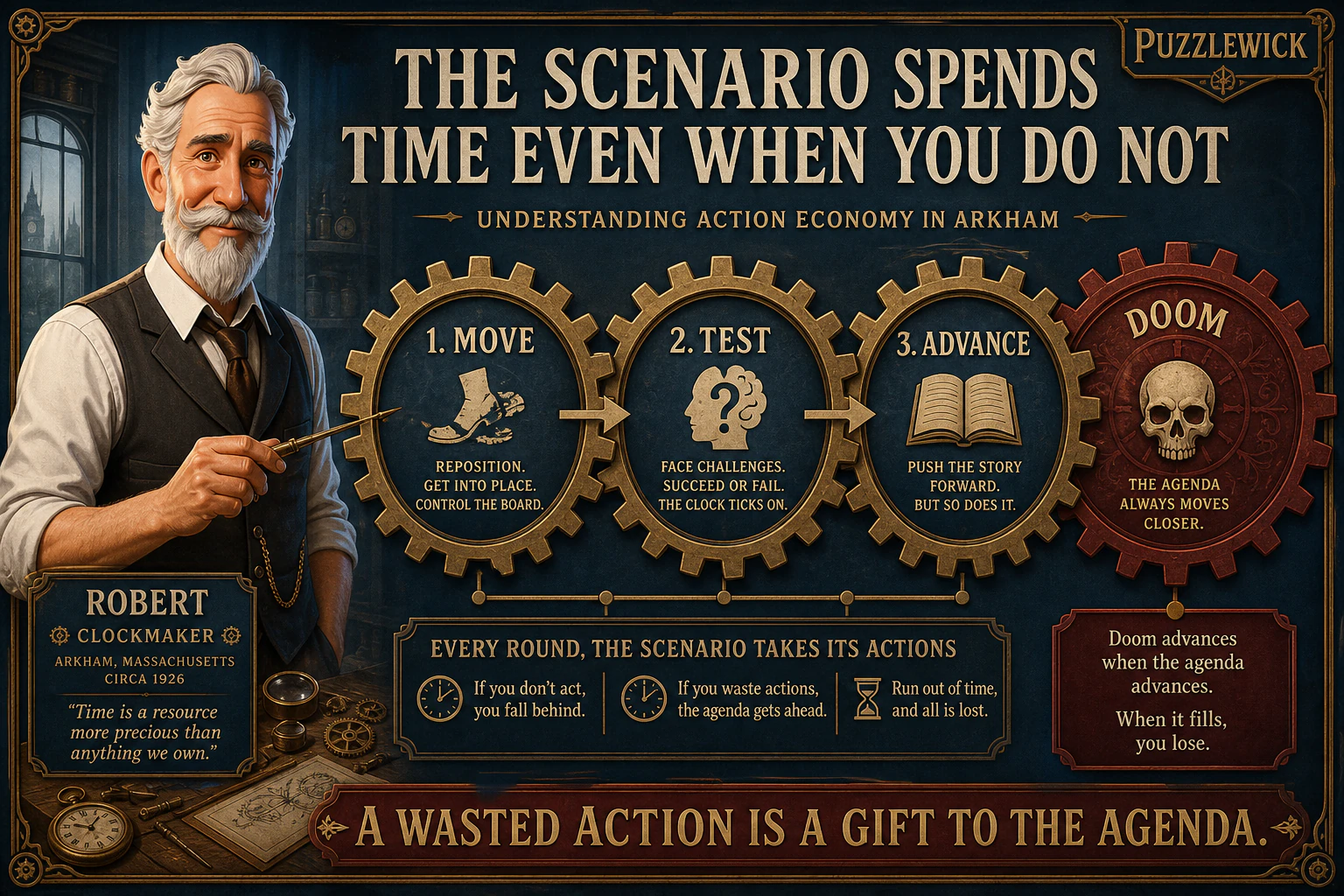
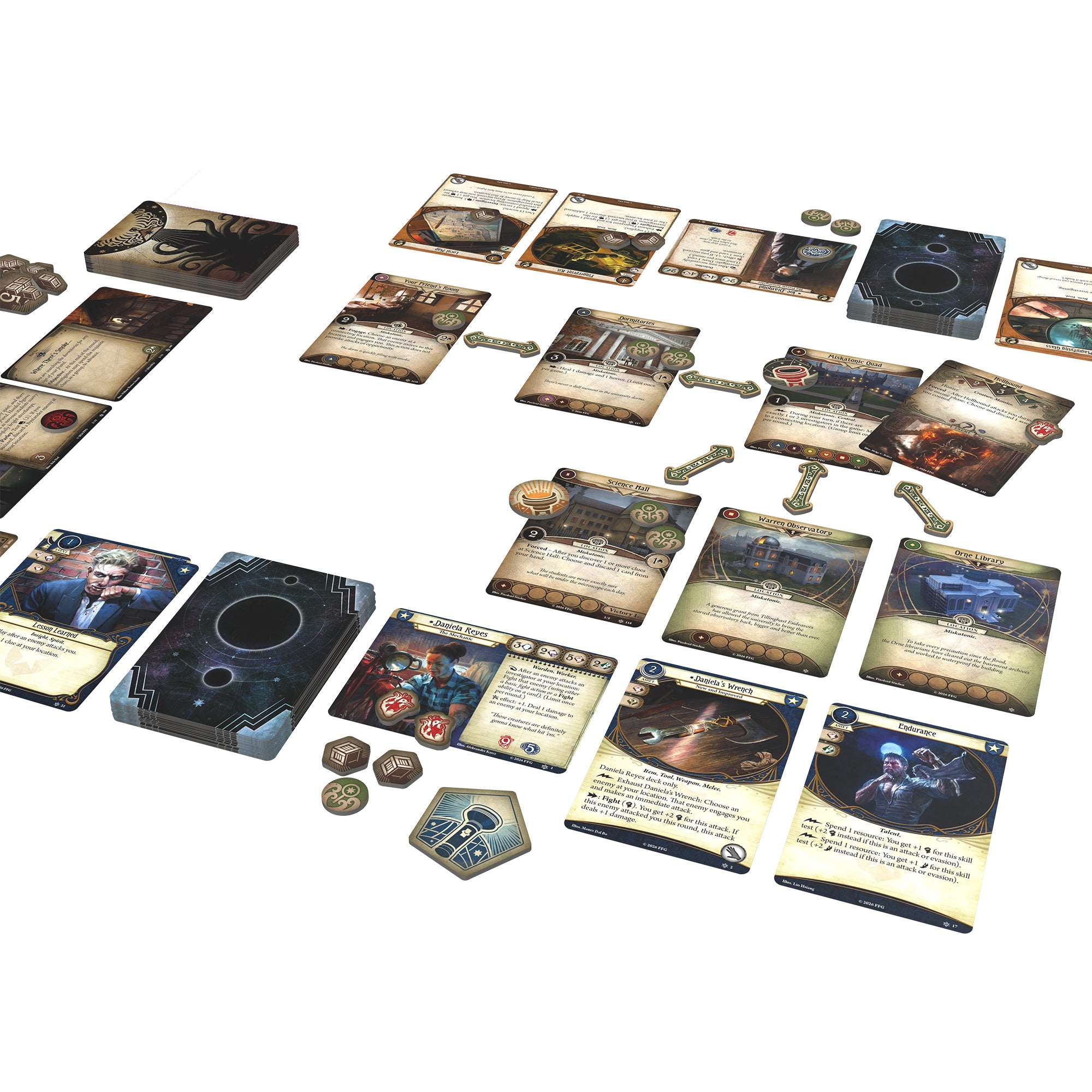

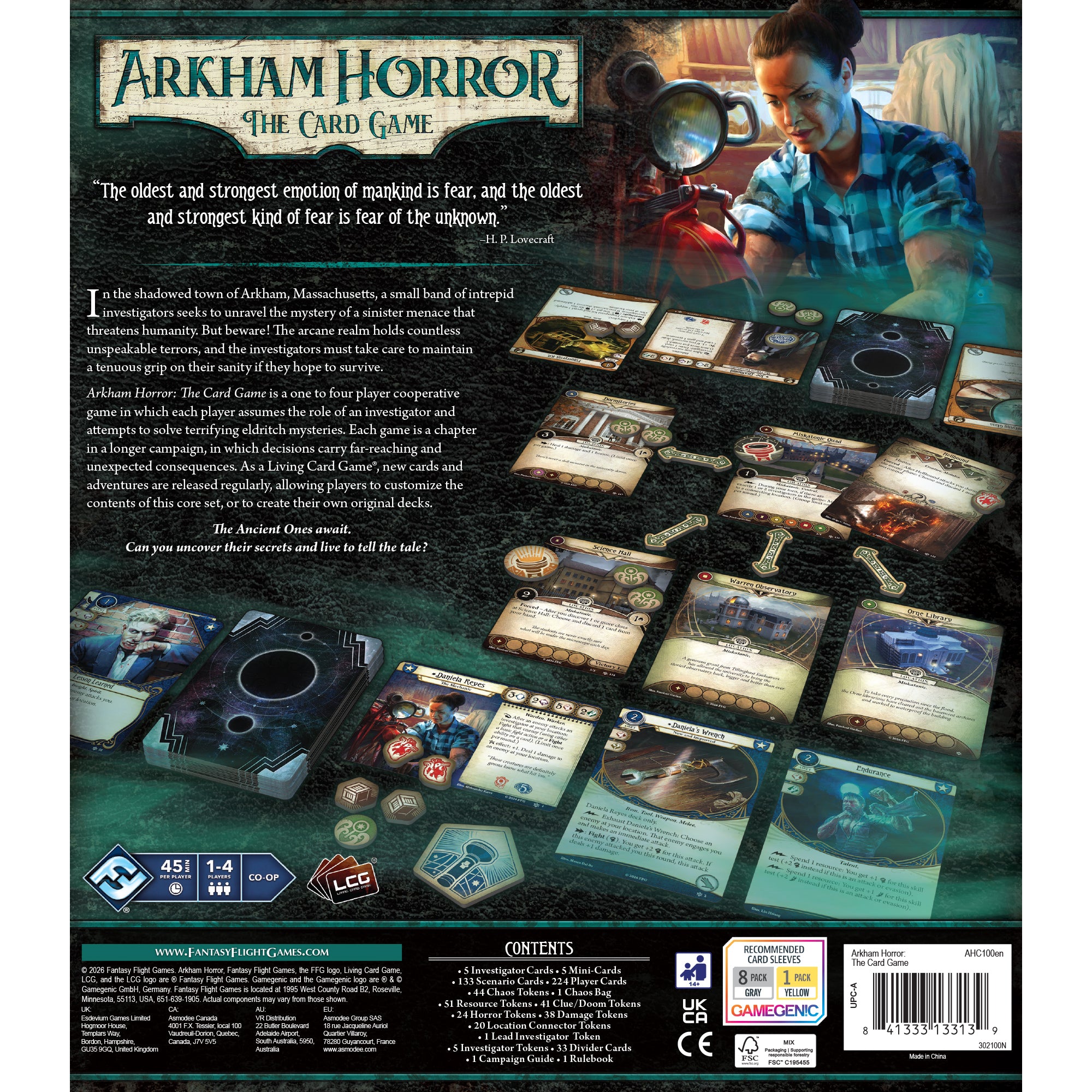

The beginner mistake is thinking the goal is to pass every test. Arkham is meaner and more elegant than that. Your real job is to spend limited actions on the things that move the scenario forward while absorbing the bad luck you cannot fully control.
Every round has a clock. The agenda adds doom. The mythos deck throws work onto the table. Enemies create action taxes. Locations demand clues. A good player does not eliminate pressure; a good player decides which pressure can wait.
How should a beginner build an Arkham investigator deck?
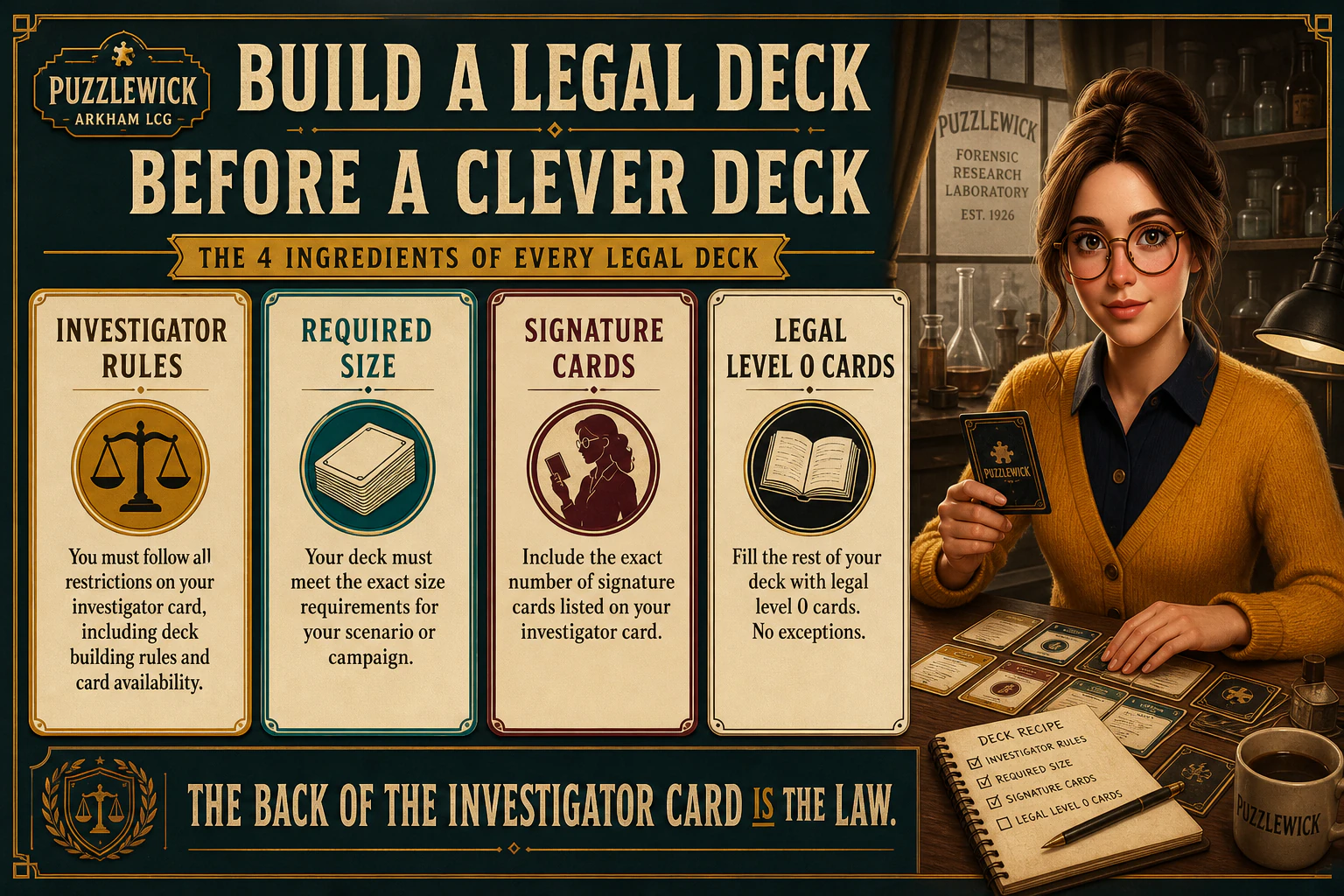
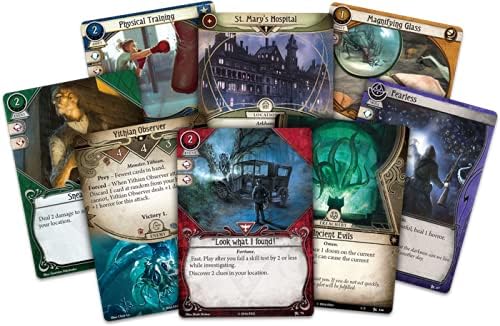
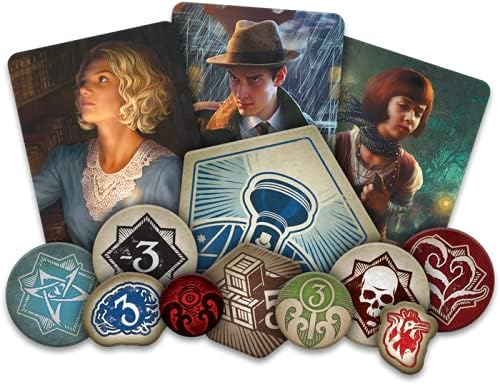
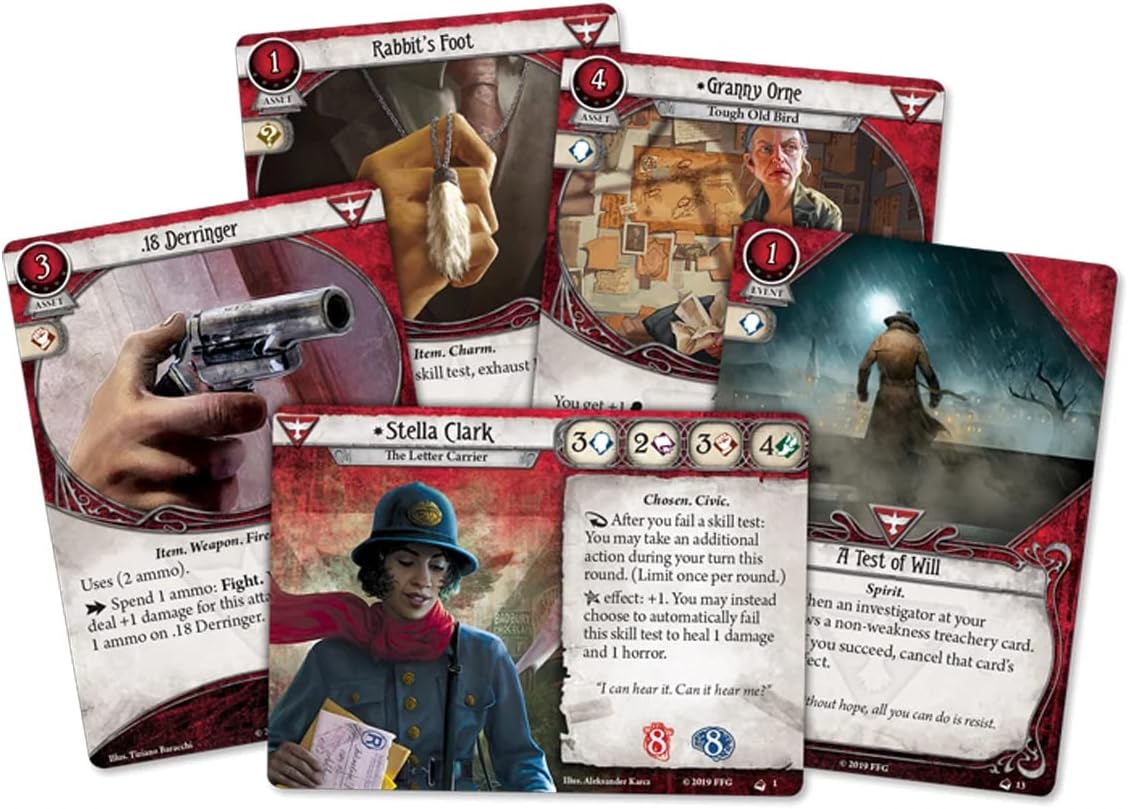

ArkhamDB is wonderful, but netdecking too early can hide the lesson. Before you copy a list, write the job description. Who gets clues? Who handles enemies? Who pays for expensive assets? Who draws cards? Who can take horror without becoming a campaign liability?
For a first custom deck, Margo wants reliability over cleverness: enough icons to commit, enough economy to play your plan, enough cheap cards to avoid passing while broke, and a few ways to turn one action into two clues, two damage, or one clean escape.
Should you play true solo, two-handed, two-player, or four-player?

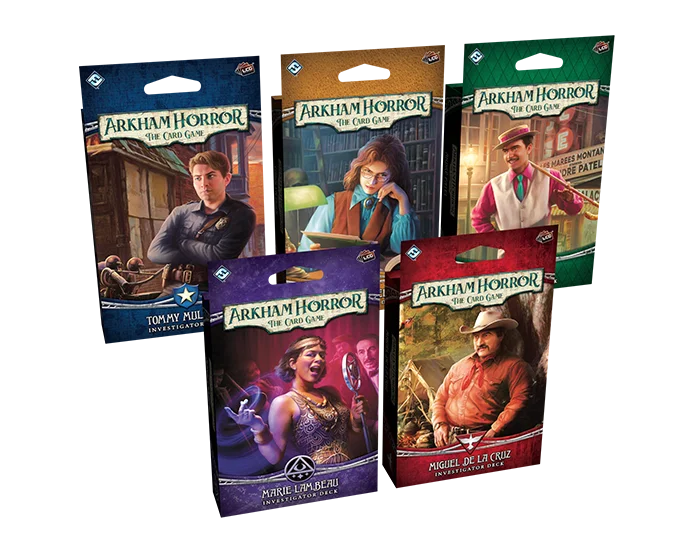
Community advice splits for a reason. True solo is fast, elegant, and brutally swingy: one investigator must cover clueing, combat, mobility, economy, and survivability. Two-handed solo gives you the fuller game, at the cost of more upkeep. Two players is the cleanest teach. Four players is cinematic, but the downtime and encounter math punish a table that has not learned its roles.
Beginner recommendation: learn with two investigators if possible. If you are alone and patient, two-handed solo teaches Arkham better than true solo. If you insist on true solo, pick a flexible investigator and lower the difficulty until the game teaches instead of merely judging.
Which rules mistakes quietly wreck beginner campaigns?
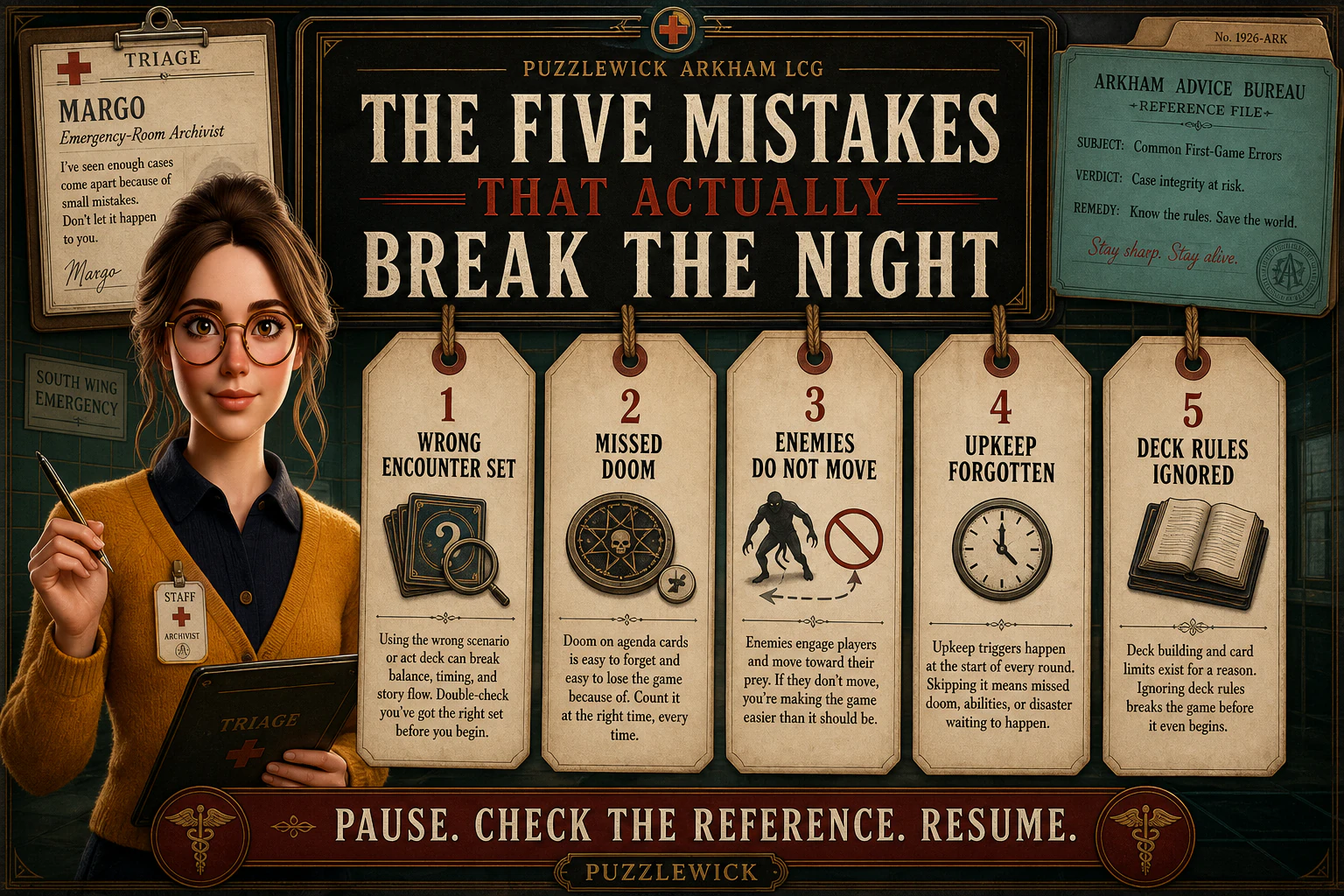
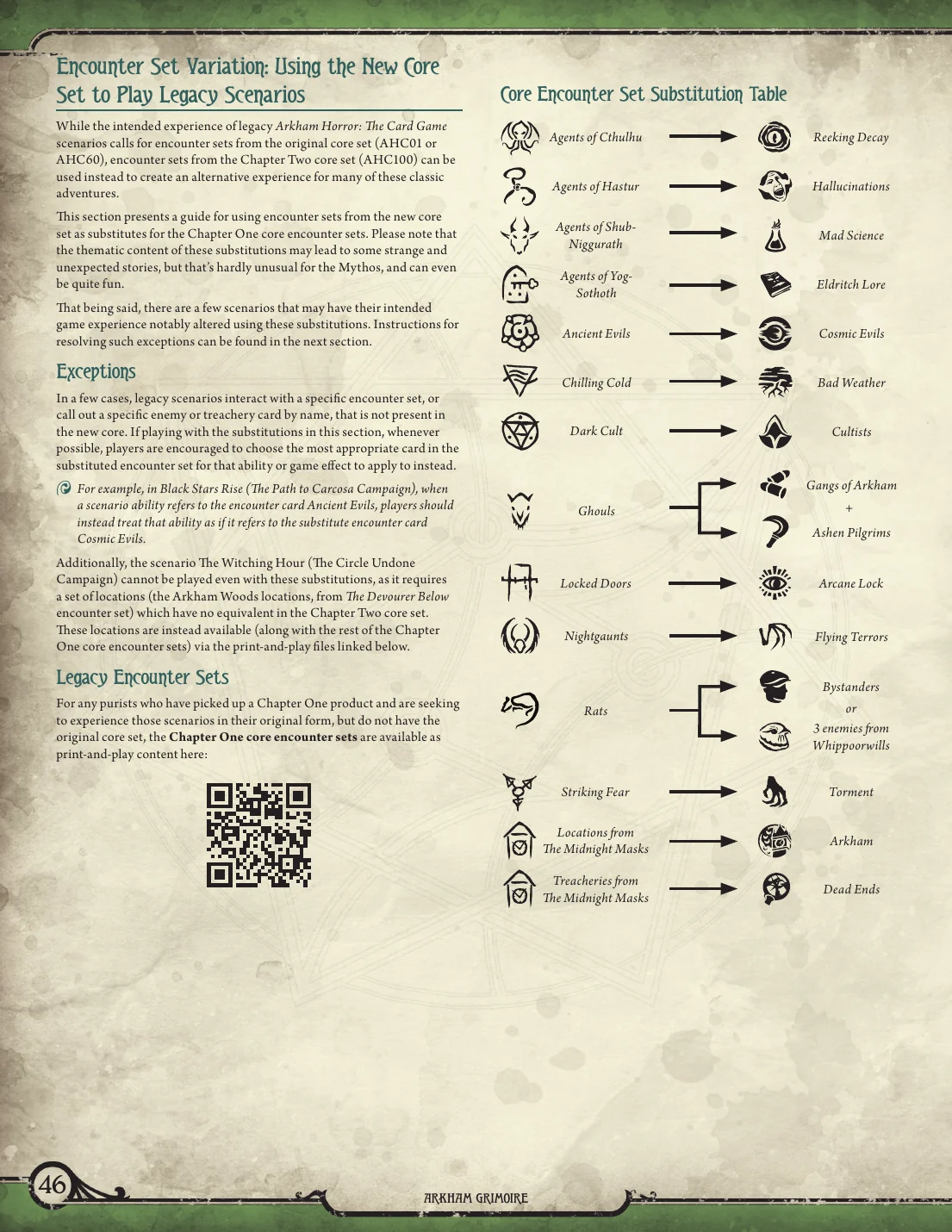
The most expensive Arkham errors are rarely dramatic. They are small timing mistakes that change the whole campaign: advancing the agenda at the wrong moment, forgetting attacks of opportunity, misplaying evade, mishandling spawn/prey, or counting victory cards incorrectly.
Margo's table rule: if a mistake affects future campaign state, correct it immediately. If it only made a single test slightly nicer or uglier, note the rule and keep the night alive. The perfect rules correction is not worth killing a campaign group.
How do you pilot a scenario without chasing every clue?
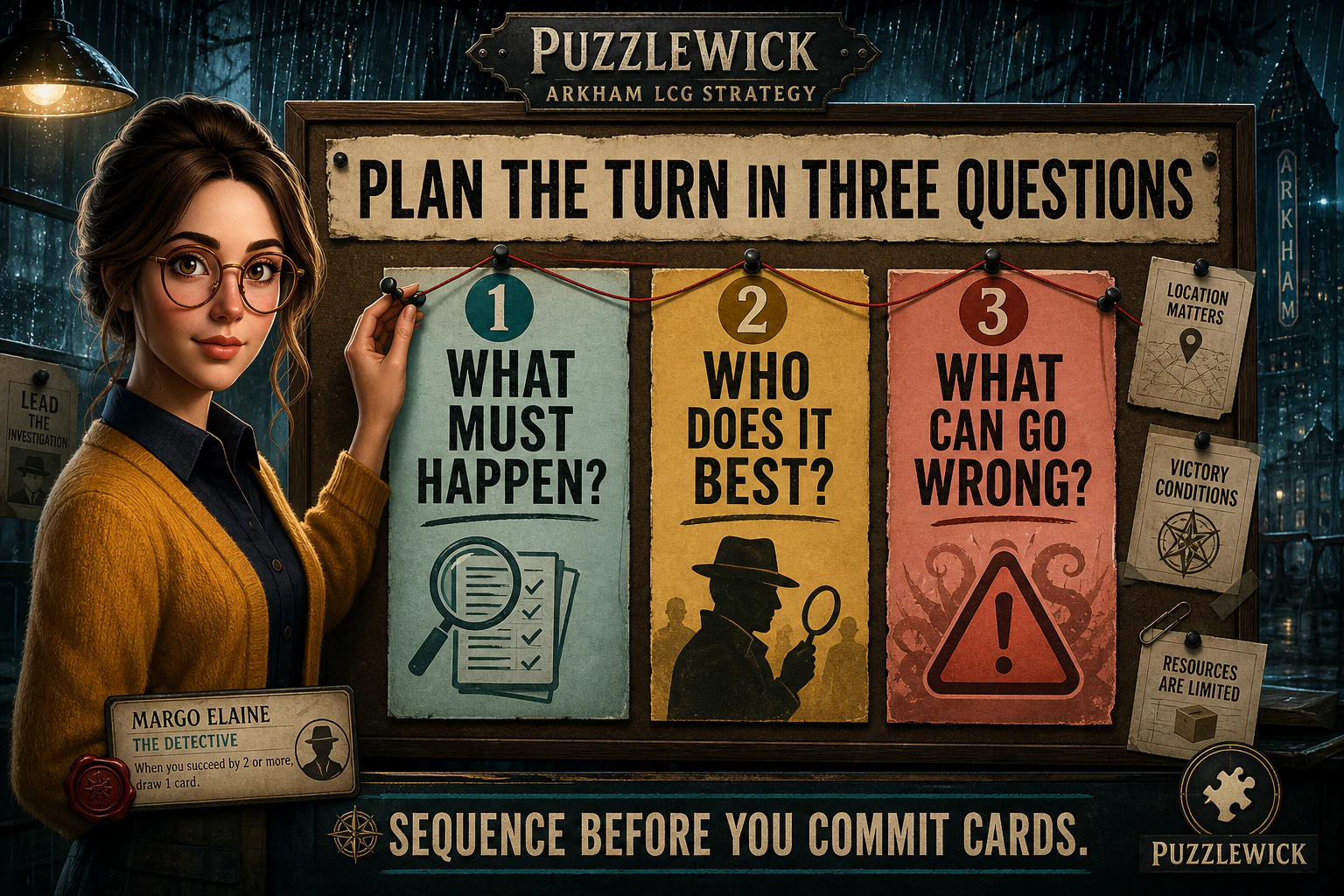

Arkham scenarios are not escape rooms where every object must be solved. They are pressure puzzles. Read the act. Read the agenda. Find the shortest route to progress. Then decide what victory points are worth the time.
The expert habit is ruthless: clear high-value locations, leave low-value distractions, and resign when the campaign rewards survival. Losing a scenario with XP, low trauma, and a clean log can be better than winning with a broken table and no will to play next week.
How should you spend XP across an Arkham campaign?
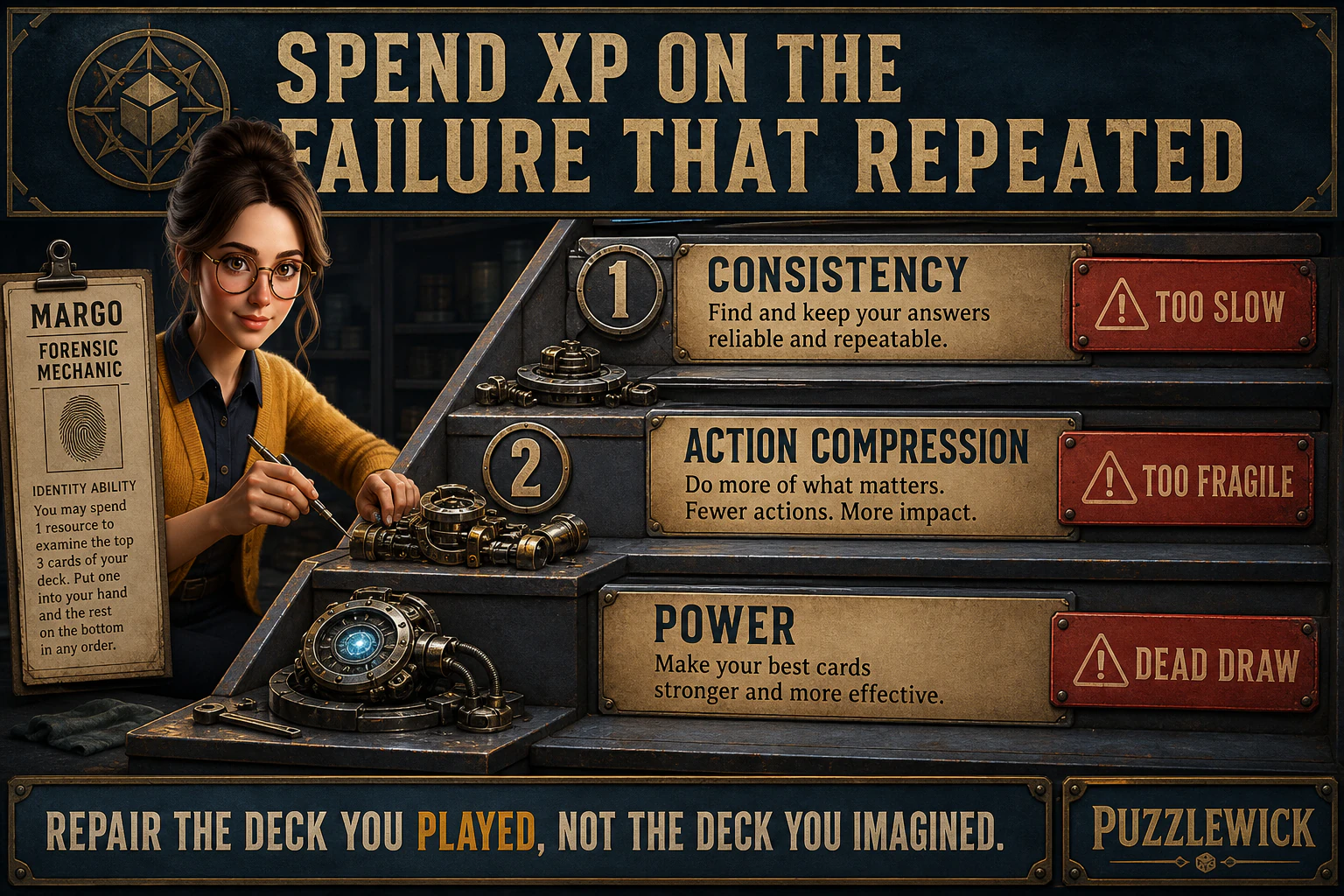
XP is not prize money. It is repair material. After every scenario, name the failure that came up most often: too poor, too slow, too fragile, too few clues, too little damage, too much dead draw. Your first upgrades should answer that failure.
The first 10 XP should mostly buy compression and reliability: a better clue event, a stronger weapon, card draw that finds your engine, upgraded economy, or a permanent that fixes setup. Save the exotic build-around cards until the foundation already works.
Roles make the table kinder: cluever, fighter, flex, support
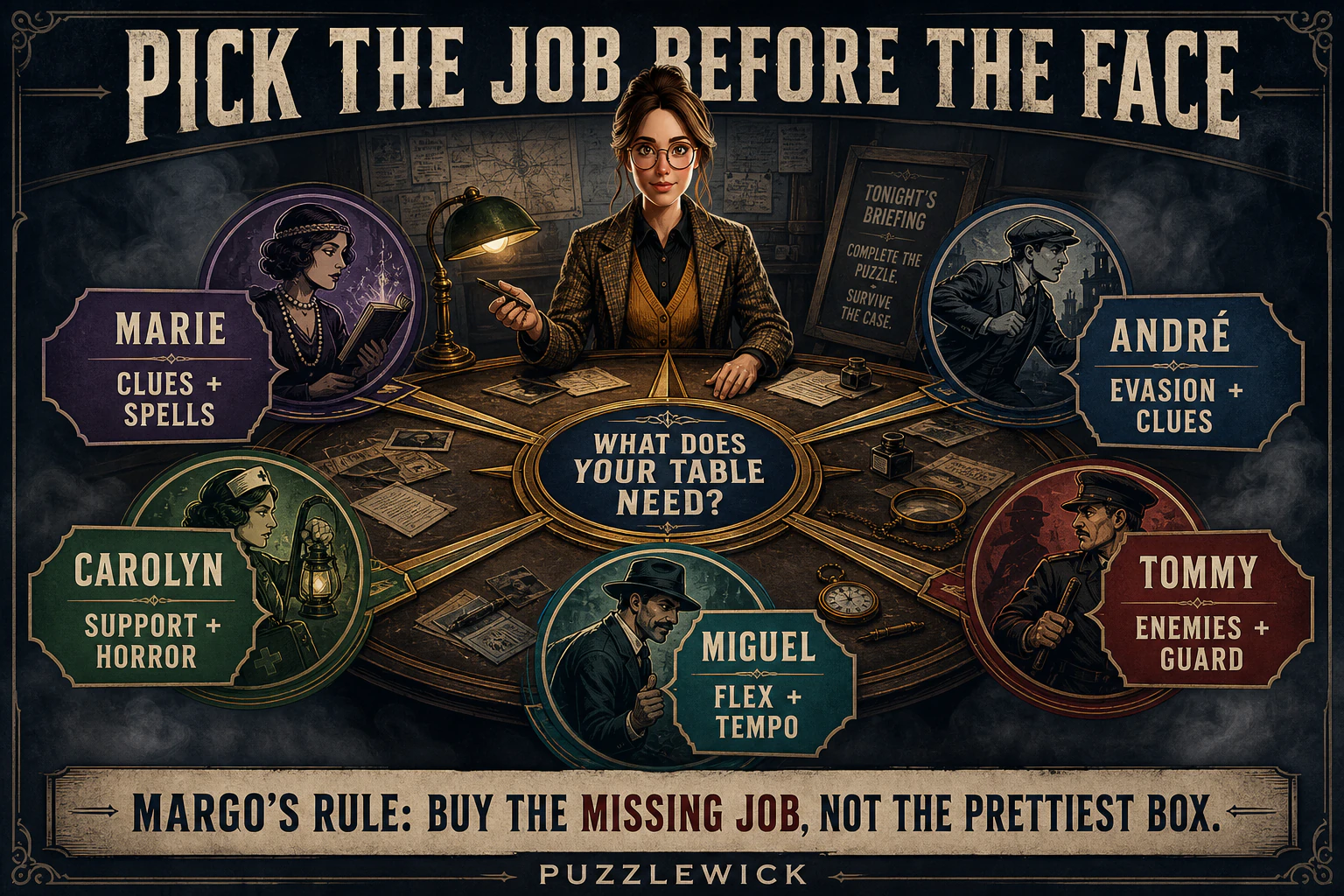
Arkham is cooperative, but cooperation is not four people building four main characters. The table works when every investigator knows their first duty and their emergency duty.
A cluever should collect evidence efficiently and carry a panic answer for enemies. A fighter should prevent enemies from consuming team actions and carry a way to contribute when the map is quiet. A flex character handles awkward maps. Support turns bad turns into survivable turns. At expert difficulty, role clarity is mercy.
How much chaos-bag math do you actually need?
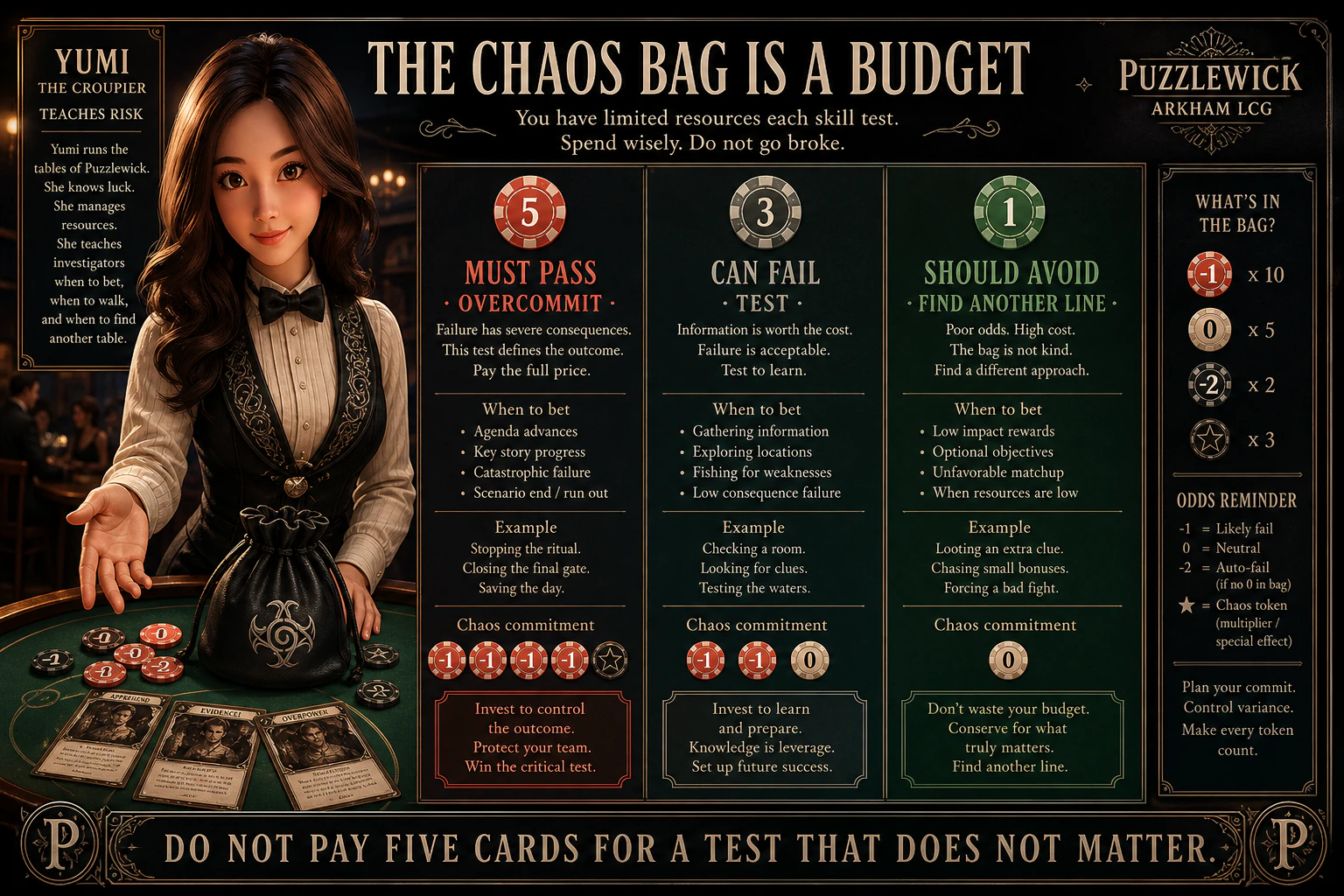
You do not need tournament math to respect the bag. You need three questions. What tokens fail this test? What do I lose if I fail? Is the card I commit worth more here than later?
On Easy/Normal, overcommitting every test starves your future hand. On Hard/Expert, undercommitting important tests is wishful thinking in a hat. The skill is not always hitting +2. The skill is knowing when +0 is fine, when +2 is responsible, and when the test is not worth taking.
Difficulty, taboo, and expert play: tune the knife before blaming the cook
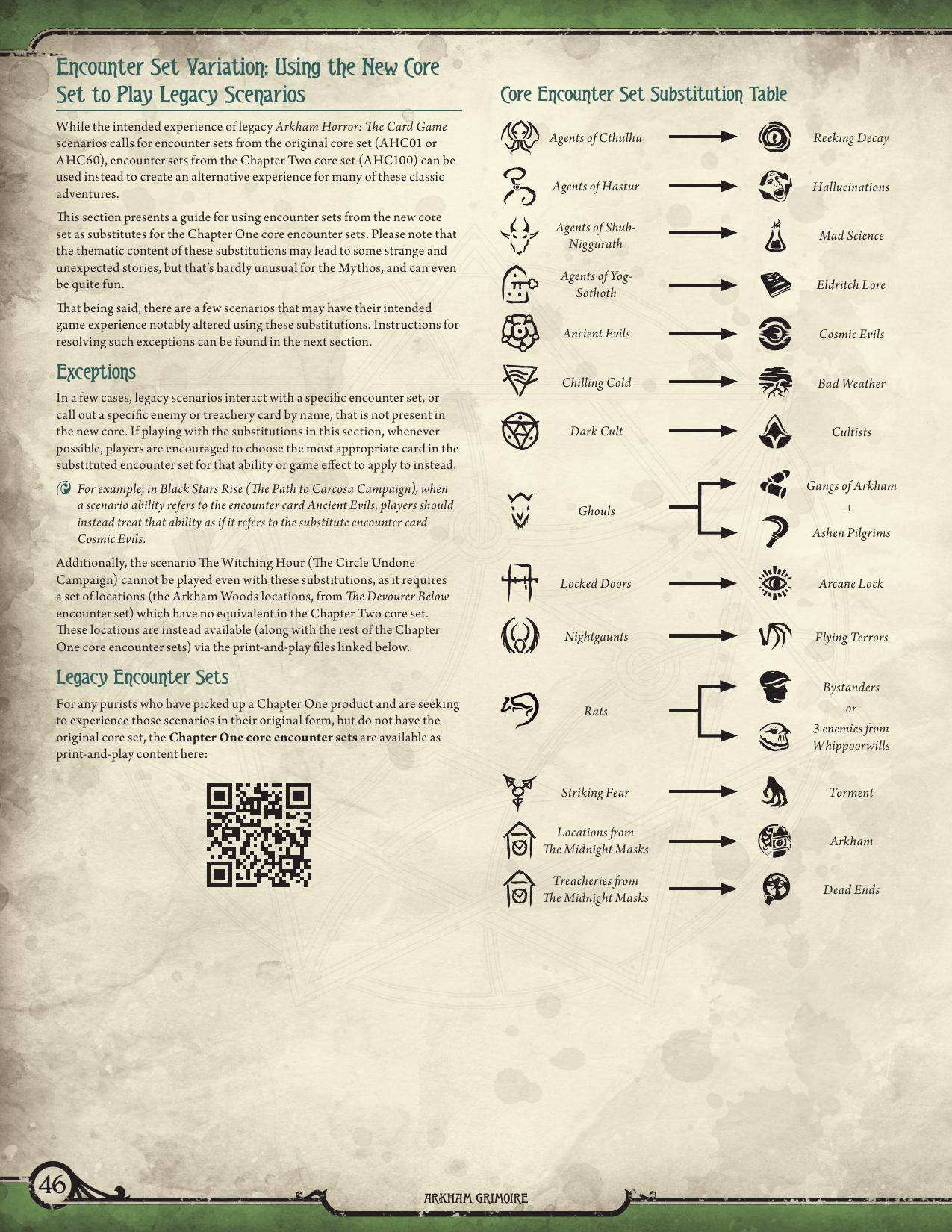
Arkham has official difficulty levels and an evolving FAQ/Taboo environment because the system is meant to be tuned. Easy is not shameful; it is a way to learn scenario shape and campaign rhythm. Normal is the usual table. Hard and Expert demand tighter deckbuilding, better token math, and fewer decorative actions.
Taboo is best treated as a living balance layer for experienced players. Do not add it to your first campaign because someone online sounded stern. Add it when your card pool is wide enough that the strongest cards are flattening choices.
Campaign order: pick the next nightmare by table skill, not shelf envy
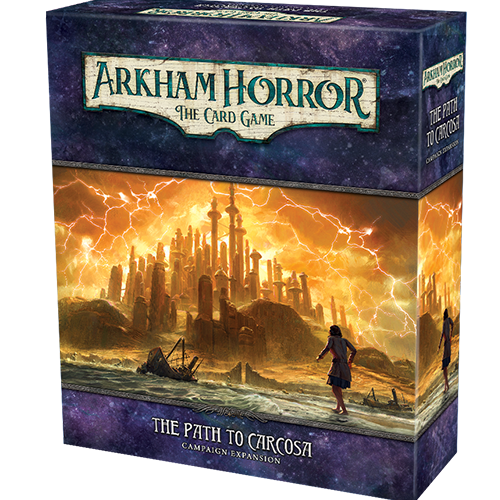
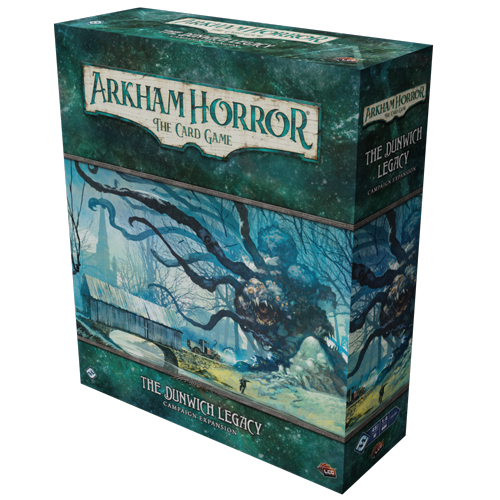
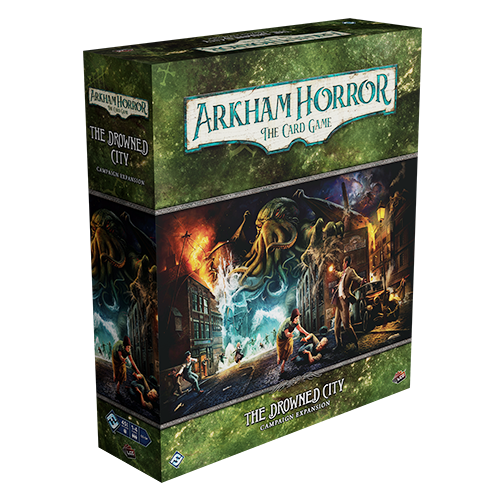
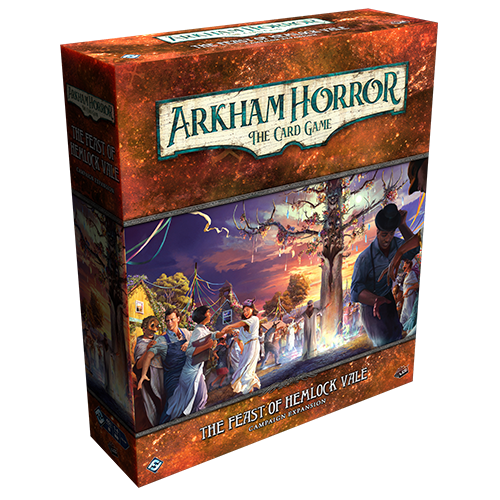
The community regularly points beginners toward earlier, cleaner campaign structures before the weirder modern boxes. That does not mean the newer campaigns are wrong. It means your table should learn how Arkham breathes before choosing a campaign that plays with the walls.
Margo's current ladder: Core first. Then a clean campaign such as Dunwich or Carcosa if you want fundamentals. Add newer and stranger campaigns once the group has roles, storage, and campaign-night discipline. Drowned City is wonderful as mood, not as a first rules teacher.
Storage, setup, and the ten-minute rule

Arkham setup can become archaeology if you let every encounter set live in one beautiful disaster. The best storage system is not the fanciest insert. It is the system that gets scenario cards, encounter sets, investigator decks, tokens, and campaign log onto the table in ten minutes.
Label dividers by encounter set. Keep active investigator decks in separate boxes. Put chaos tokens where every player can reach them. Store campaign logs with the campaign. Sleeve the cards you shuffle constantly before sleeving a thousand cards you may not play for six months.
Make Arkham more fun: culture is a strategy layer
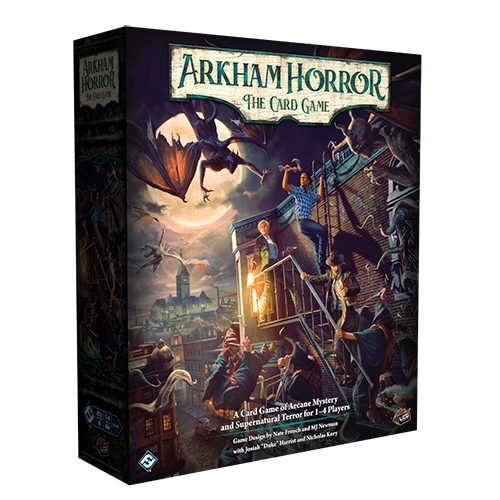
The best Arkham tables are not the ones that win most. They are the ones that come back. Read flavor text out loud when the table wants mood. Skip it when everyone is tired. Put one person in charge of rules lookups. Let another keep the campaign log. Decide before the finale whether takebacks are generous, strict, or reserved for rules mistakes.
And please narrate failure. Arkham is at its funniest when a failed test becomes a story instead of a personal insult from a token.
What to buy once the strategy starts working
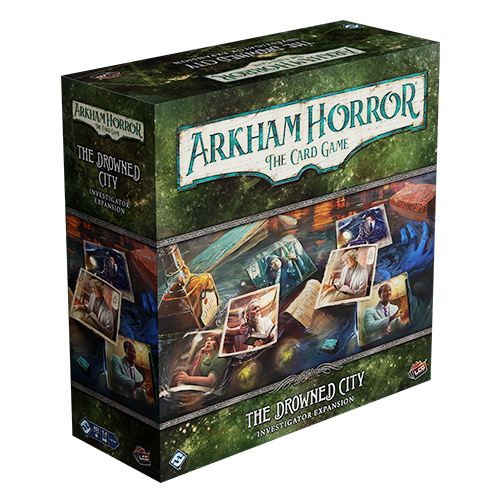

If the Core hooked you, buy by pain point. Need a better ready character? Add an Investigator Deck. Want a full story? Add a Campaign Expansion. Want deeper deckbuilding for everyone? Add an Investigator Expansion. Want to become very happy and slightly impossible to schedule? Keep a campaign night protected.
The strategy guide answer is deliberately boring: do not buy to fix a table that has not learned the tempo yet. Buy when the table knows exactly what it wants more of.
What experienced tables keep reporting
Recurring owner patterns, synthesized in Puzzlewick's words. Follow each evidence trail to read the original discussion.
New players keep asking whether to buy more before playing. The strongest repeated answer is: play the core, then buy one campaign or deck by need.
True solo is faster but swingier; two-handed solo teaches the full role structure if you can tolerate the upkeep.
Dunwich and Carcosa remain common early recommendations because their structure teaches fundamentals before the stranger campaigns ask more of the table.
ArkhamDB is where the card pool becomes learnable: decklists, card text, upgrade paths, and community-tested ideas in one searchable place.
The picks
Some links below are affiliate links — as an Amazon Associate, Puzzlewick earns from qualifying purchases, at no extra cost to you. It never changes a pick.
6 photos Arkham Horror: The Card Game Core Set
- Players
- 1-4 · best 2
- Time
- 60-120 min
- Age
- 14+
- Complexity
- 3.5 / 5
- Publisher
- Fantasy Flight Games · 2016 / current core 2026
- Designers
- Nate French, Matthew Newman
- Art
- Various Fantasy Flight artists
The strategy classroom. Buy this first because it teaches the whole Arkham loop: investigators, chaos bag, agenda pressure, clue tempo, scenario consequences, and the campaign log.
- Complete foundation for new players
- Best place to learn tempo and rules
- Supports the future Arkham shelf
- Not a full long campaign by itself
- Deckbuilding depth grows after additional player cards
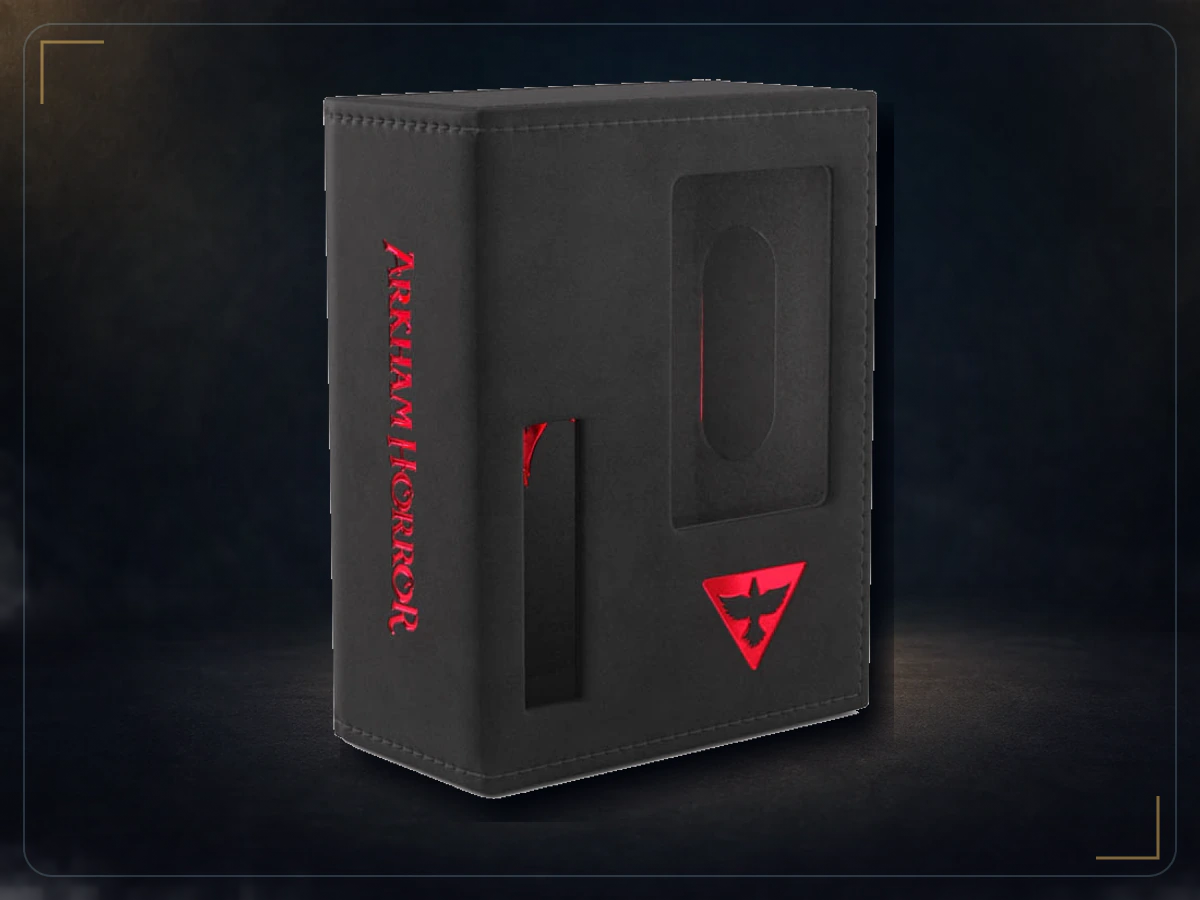
Arkham Horror 2026 Investigator Decks
- Players
- 1-4 · best 2
- Time
- 60-120 min
- Age
- 14+
- Complexity
- 3.5 / 5
- Publisher
- Fantasy Flight Games · 2026
- Designers
- Nate French, Matthew Newman
- Art
- Various Fantasy Flight artists
The quickest way to give one seat a functional deck and a clear identity. Especially useful when a new player wants to play now and learn deckbuilding after the first few scenarios.
- Fastest playable upgrade for one player
- Good teaching tool for class identity
- Lower commitment than a big box
- One deck helps one seat, not the whole card pool
- Still needs table role awareness
3 photos The Path to Carcosa Campaign Expansion
- Players
- 1-4 · best 2
- Time
- 60-120 min
- Age
- 14+
- Complexity
- 3.5 / 5
- Publisher
- Fantasy Flight Games · 2016 / current core 2026
- Designers
- Nate French, Matthew Newman
- Art
- Various Fantasy Flight artists
A strong early campaign pick for groups that want mood, story, and pressure without immediately jumping into the weirdest edge cases.
- Excellent atmosphere
- Commonly recommended as an early campaign
- Great after core fundamentals land
- Still not a rules tutorial
- Can punish sloppy clue tempo
3 photos The Dunwich Legacy Campaign Expansion
- Players
- 1-4 · best 2
- Time
- 60-120 min
- Age
- 14+
- Complexity
- 3.5 / 5
- Publisher
- Fantasy Flight Games · 2016 / current core 2026
- Designers
- Nate French, Matthew Newman
- Art
- Various Fantasy Flight artists
The old-school classroom. It is not as flashy as newer campaigns, but it teaches Arkham structure in a way newer boxes sometimes assume you already understand.
- Clean campaign structure
- Good fundamentals teacher
- Strong early-library choice
- Less modern production drama
- Some older design edges show
4 photos The Drowned City Campaign Expansion
- Players
- 1-4 · best 2
- Time
- 60-120 min
- Age
- 14+
- Complexity
- 3.5 / 5
- Publisher
- Fantasy Flight Games · 2025 / 2026 current era
- Designers
- Nate French, Matthew Newman
- Art
- Various Fantasy Flight artists
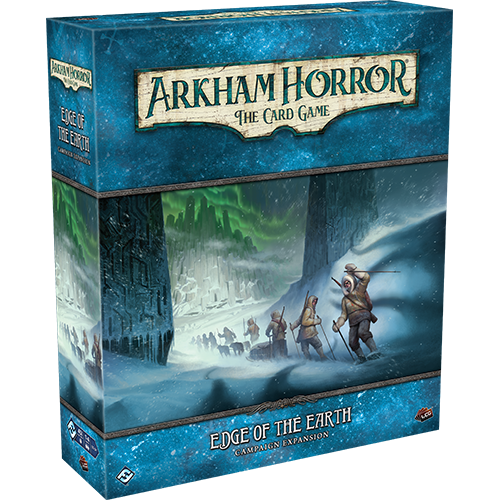
A gorgeous current-era nightmare for players who already know the tempo. Strong mood purchase, weaker first teacher.
- Current high-interest campaign box
- Great mythos atmosphere
- Pairs with the newer product era
- Not the easiest first campaign
- Best after role and rules confidence
 3 photos
 The Feast of Hemlock Vale Campaign Expansion
- Players
- 1-4 · best 2
- Time
- 60-120 min
- Age
- 14+
- Complexity
- 3.5 / 5
- Publisher
- Fantasy Flight Games · 2016 / current core 2026
- Designers
- Nate French, Matthew Newman
- Art
- Various Fantasy Flight artists
A richer, stranger campaign choice once the group can keep rules, story, and role pressure moving without drowning in upkeep.
- Modern campaign texture
- Strong table discussion energy
- Rewards an invested group
- More moving parts than the first-campaign picks
- Not the safest beginner answer
At a glance
| skill level | deck goal | table goal | avoid |
|---|---|---|---|
| First night | Use a prebuilt or near-prebuilt deck | Learn actions, skill tests, doom, clues, enemies | Buying three campaigns before playing one scenario |
| Beginner campaign | Cover clues, enemies, economy, soak, draw | Know when to resign and how to count XP | True solo with a narrow investigator |
| Intermediate | Write a first-10-XP plan and tune by pain point | Assign clue/fight/flex/support roles | Upgrading for novelty instead of compression |
| Expert / convention-hard | Tight card counts, taboo awareness, token math | Minimize wasted actions and tempo leaks | Hard mode as ego rather than a tuning choice |
Questions, answered
What is the best beginner strategy for Arkham Horror LCG?
Build or choose decks with clear jobs, then spend actions on tempo: clues, enemy control, movement that advances the act, and setup that pays off quickly. Do not try to pass every test or clear every location.
Is Arkham Horror LCG better true solo or two-handed solo?
True solo is faster but much swingier because one investigator must do everything. Two-handed solo has more upkeep, but it teaches the cooperative role structure better and is usually kinder to beginners who can manage two hands.
What should every beginner Arkham deck include?
A clue plan, an enemy plan, economy, card draw/filter, health/sanity protection, useful skill icons, and a first upgrade path. If one of those is missing, the deck will eventually ask another player to pay for it.
Should new players use taboo?
Usually no. Learn on Easy or Normal without taboo first. Add taboo when your card pool and experience are broad enough that the strongest cards are flattening interesting choices.
Why do people recommend Dunwich or Carcosa early?
They are common early campaign recommendations because they teach campaign fundamentals and mood without requiring the table to understand every modern twist first. Newer campaigns can be excellent, but they are often better after the group knows the base rhythm.
How do I know when to resign in Arkham Horror LCG?
Resign when the remaining rewards are not worth the trauma, time, or campaign risk. A clean escape with XP and a survivable log can be better than one more greedy location that breaks the next scenario.
What are the most common rules mistakes?
Doom timing, attacks of opportunity, evade/exhaust timing, retaliate/alert, spawn/prey placement, weakness handling, and victory display/XP counting. Keep the current rules reference nearby and appoint one rules reader.
Is Arkham Horror LCG competitive or tournament level?
Arkham is cooperative, not a normal tournament game. Here, tournament-level means convention-hard or expert-table discipline: clean deck roles, tight upgrade planning, strong token math, and fewer wasted actions.
Should I copy decks from ArkhamDB?
Yes, but use them as lessons. Read why the deck works, identify its role, and understand the upgrade path. Copying without understanding can win a scenario and still leave you unable to build the next deck.
What should I buy after the Core Set?
Buy by need: an Investigator Deck for one better ready character, a Campaign Expansion for a full story, or an Investigator Expansion when the whole group wants deeper deckbuilding. The noun on the box matters.
Margo's verdict
Arkham rewards the player who can be haunted and practical at the same time. Build decks with jobs. Spend XP on problems. Use Easy without shame, Hard without vanity, and taboo only when it makes choices better. Above all, keep the campaign alive. The mythos can kill an investigator; sloppy table culture kills the whole game night.
Research ledger 12 sources · reviewed 2026-08-13
Specifications, rules, current product information, community experience, and contrary evidence were checked against the sources below. Commercial links are kept separate from editorial evidence.
- fantasyflightgames.comfantasyflightgames.com/en/products/arkham-horror-the-card-game/products/arkham-horror-card-game-core-set
- arkhamhorror.comarkhamhorror.com/news/ah-tcg-new-core-set-now-available
- images-cdn.fantasyflightgames.comimages-cdn.fantasyflightgames.com/filer_public/76/b3/76b332d5-7047-458f-91b6-82c8500cc445/arkham_grimoire.pdf
- arkhamhorror.comarkhamhorror.com/news/investigator-decks-for-arkham-horror-are-on-sale-now
- fantasyflightgames.comfantasyflightgames.com/en/products/arkham-horror-the-card-game/products/path-carcosa-campaign-expansion
- fantasyflightgames.comfantasyflightgames.com/en/products/arkham-horror-the-card-game/products/dunwich-legacy-campaign-expansion
- fantasyflightgames.comfantasyflightgames.com/en/products/arkham-horror-the-card-game/products/drowned-city-campaign-expansion
- fantasyflightgames.comfantasyflightgames.com/en/products/arkham-horror-the-card-game/products/feast-hemlock-vale-campaign-expansion
- arkhamdb.comarkhamdb.com
- reddit.comreddit.com/r/arkhamhorrorlcg/comments/1s0a8ca/new_guide_for_beginnersbuying_guide
- reddit.comreddit.com/r/arkhamhorrorlcg/comments/1oe76r5/campaign_rating_results_2025
- boardgamegeek.comboardgamegeek.com/boardgame/205637/arkham-horror-the-card-game/forums/0
Let me check that before we say it.


Keep exploring
The next smart rabbit holes.
✒ Universe HubArkham Horror Universe: the whole buying pathStart with the interactive buyer intake: separate the 2026 Chapter Two Core from Chapter One legacy boxes and the entirely...☾ Topic PathCooperative Horror Games: compare the whole shelfCooperative horror works when the rules pressure the story without burying the table. This cluster maps what to buy, how campaigns...MasterclassMythos: Arkham Horror Masterclass Vol. I - The World Beneath the WorldFrom Lovecraft country and the fictional Necronomicon to the 1987 board game, the 2005 revival, the living card game, and Chapter Two:...