One Piece Card Game OP-16 Buying Guide: Booster Box vs Singles vs Starter Decks
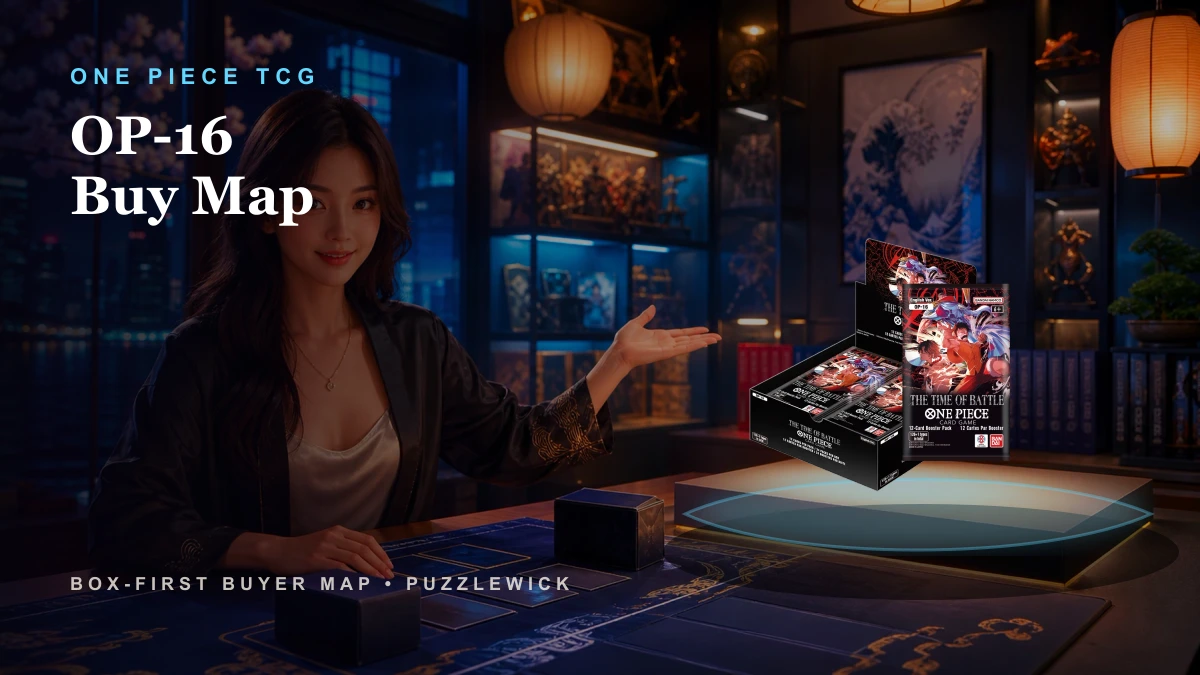
Yumi turns One Piece OP-16 hype into a clean buy order: starters for learning, singles for decks, boxes for the Paramount War opening-night ritual.


AI-assisted research and drafting in Yumi’s voice · reviewed by Robert Pruitt · how this guide was made
Last editorial refresh: 2026-08-10 Gold-standard QA: 2026-08-10 9 sources reviewed Affiliate links checked during gold-standard pass

The short answer
Buy OP-16 booster boxes if you want the sealed experience and Paramount War collector fun. Buy singles if you need Ace, Teach, leaders, or deck upgrades. New players should still start with a starter deck, then use OP-16 as the upgrade pool instead of trying to build a deck from random packs.
Decision map
Choose in thirty seconds
the sealed-event buyer who wants the Paramount War opening night
gift packs and low-commitment rip nights
new players who need a playable deck before they chase cards
OP-16, The Time of Battle, is exactly the sort of One Piece set that makes collectors reckless: Paramount War energy, Ace and Teach heat, Admirals in special art, and enough emotional baggage to make a sealed box feel like a shrine.
Yumi’s verdict is warmer and stricter: buy the story if you want a ripping night, buy singles if you want a deck, and buy a starter before either if you are new. The sea is dramatic enough without turning your wallet into wreckage.
Start here, then go deeper
You are in the right cabinet.
 ✧ Universe HubAnime & New-Wave TCGs: the whole buying pathBeyond Magic and Pokémon, a new wave of trading card games has gone mainstream — One Piece, Yu-Gi-Oh!, Dragon Ball, Digimon, Weiss...
 🂠 Topic PathTrading Card Games: compare the whole shelfStart with the game and community you want, then buy the smallest product that lets you test it properly. These guides separate...
 Buying GuideIs It Too Late to Start One Piece Card Game in 2026?Yumi's 2026 no-regret route into the One Piece Card Game: what to buy first, what to skip, how the ST-30 and ST-31 to ST-36 starter wave...
Is One Piece OP-16 worth buying?
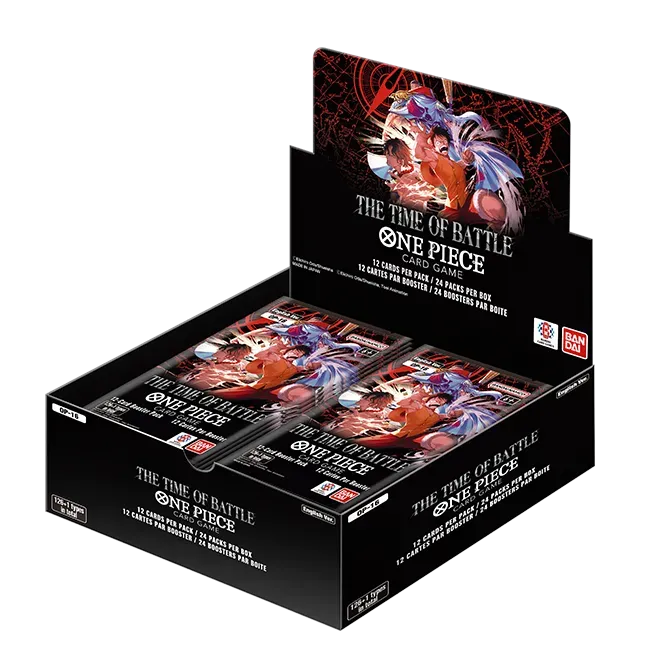
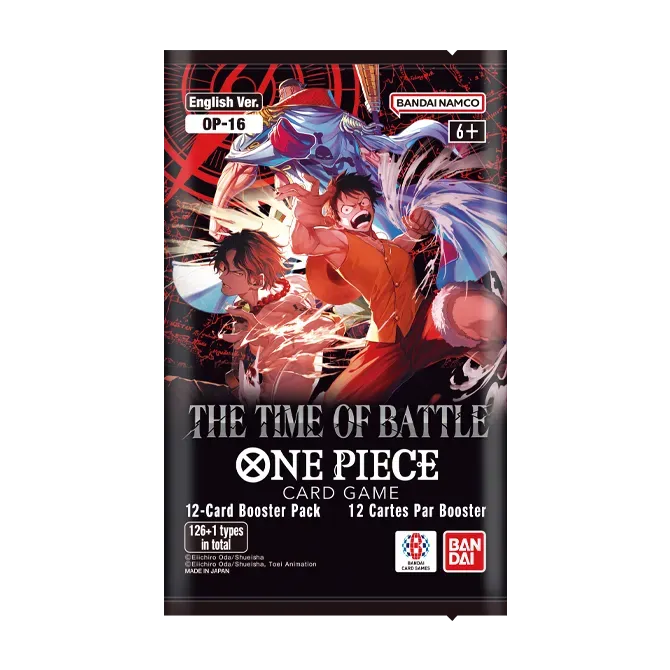
If you love Marineford, OP-16 is a legitimate buy. Bandai lists the booster at $4.99 MSRP per pack with a June 12, 2026 release, and the set leans into Paramount War characters, Secret Rares for Ace and Teach, and Super Alt-Art treatment for the Three Admirals.
The mistake is thinking a booster box is a deck. It is not. It is a party, a collector swing, and a trade-binder seed. For a tournament list, singles beat sealed almost every time.
OP-16 is now a live competitive set, not only a preorder story. TCGplayer’s July market review reports meaningful movement after the set changed which decks were succeeding, while public deck databases show new leader and card experimentation. That is a reason to study singles, not a reason to assume every box appreciates.
The safest split remains simple: sealed product is entertainment and collecting; singles are deck construction. One box can deliver an excellent Paramount War opening night. It cannot promise four copies of the card your tested list needs.
What should a new One Piece player buy before OP-16?
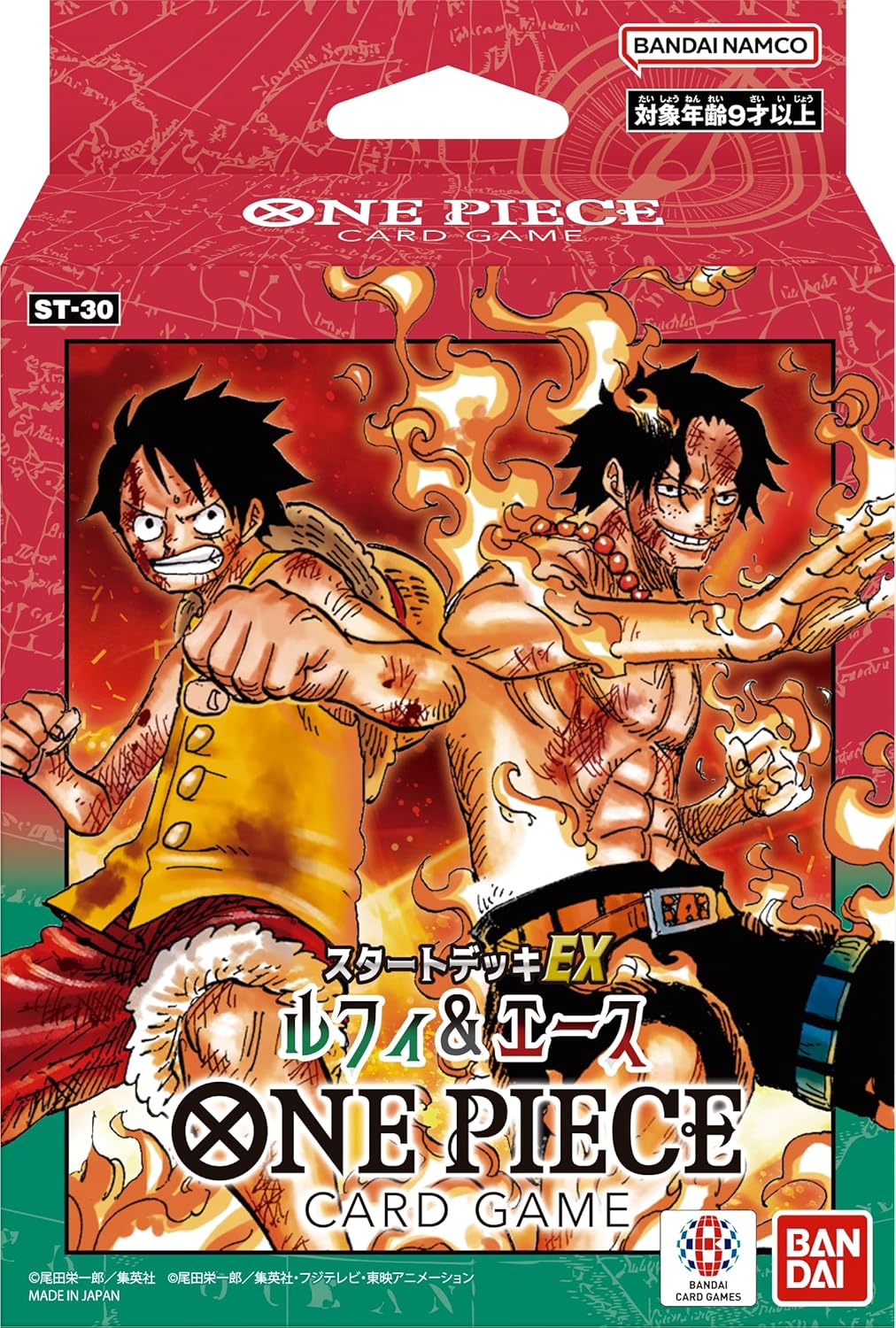
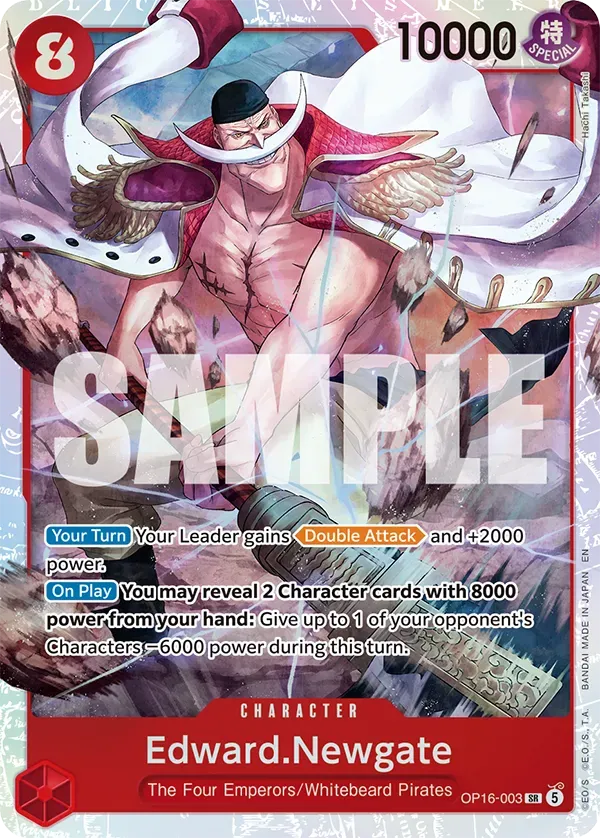

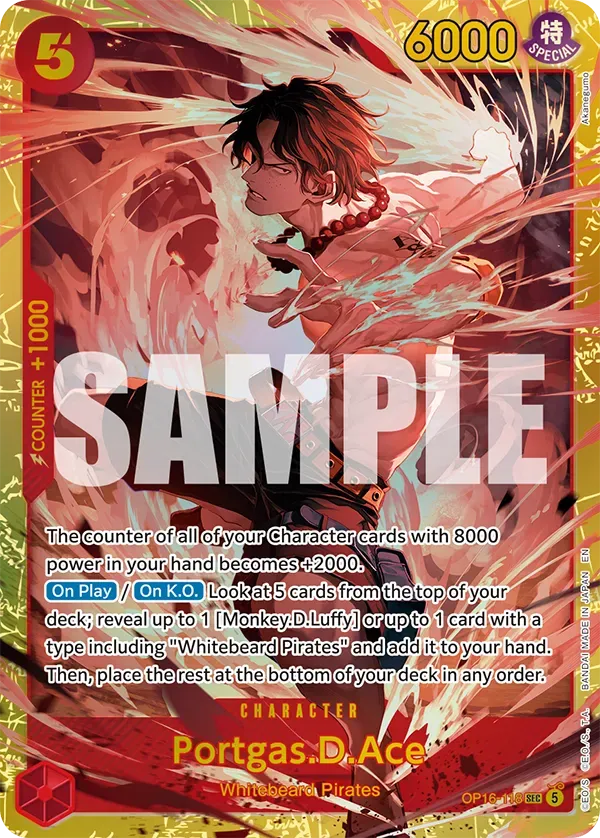
A starter deck gives you the skeleton: leader, DON!! rhythm, combat math, and a playable 50-card list. OP-16 gives you upgrades after you know what your leader is trying to do. New players who start with loose packs usually learn the expensive lesson twice: they still need a deck, and now they have bulk.
Buy a starter or borrow a local deck, play three games, then decide whether OP-16 matches your crew.
Give yourself three sessions before buying a box. Learn the DON!! curve, guarding, counter math, leader attacks, board development, and when a rested character becomes a liability. Then identify a leader and buy the missing singles around that plan.
A starter deck also establishes color identity. Random OP-16 pulls spread across leaders and colors, which feels abundant but may leave no legal coherent deck. Two compatible starter decks and a targeted singles order are often a stronger first hundred dollars than one display.
Should collectors buy one OP-16 box or a sealed case?
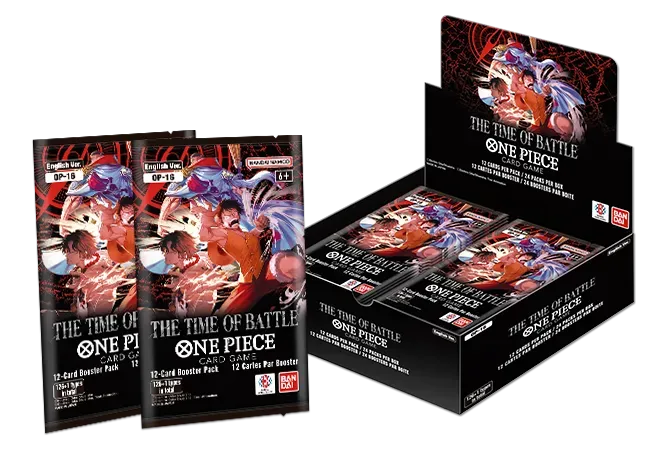

One sealed box gives you the pageantry: pack stacks, trade chatter, a chance at chase art, and enough cards to feel the set. Multiple boxes are a different animal. That becomes inventory management, price tracking, and a willingness to sit on sealed product if the market cools.
Yumi’s collector rule is simple: if you cannot explain why you want the sealed item without saying “maybe it goes up,” you probably want the opening dopamine, not the investment.
Bandai does not publish official pull rates, so any hit map should be described as community-observed rather than guaranteed. Case-opening data can help set expectations, but collation changes, regional products, and sample size matter. Never describe a rare treatment as owed to you unless the manufacturer says so.
Loose packs deserve extra caution. Community buyers routinely warn that sellers can open boxes or cases until expected hits appear and sell the remaining packs. Factory-sealed boxes from reputable sellers cost more for a reason: provenance is part of the gamble.
When should players buy OP-16 singles?
Players should watch early singles with patience. Release-week prices can be emotional, especially on beloved characters. The smarter rhythm is to proxy or borrow locally, test what actually upgrades your list, then buy the cards that survive testing.
If the card is a staple, do not wait forever. If the card is mostly fandom heat, let the first wave breathe.
Watch tournament usage and local availability together. A card can spike because a new list performs well, then settle as supply enters the market or the metagame adapts. Buy the first copy when you need to test; buy the playset when the deck earns it.
TCGplayer’s current movement also shows why old staples matter. OP-16 can increase demand for cards from starter decks and prior sets. Price the entire list before committing to a leader so a cheap new card does not hide an expensive old shell.
Yumi’s final buy order
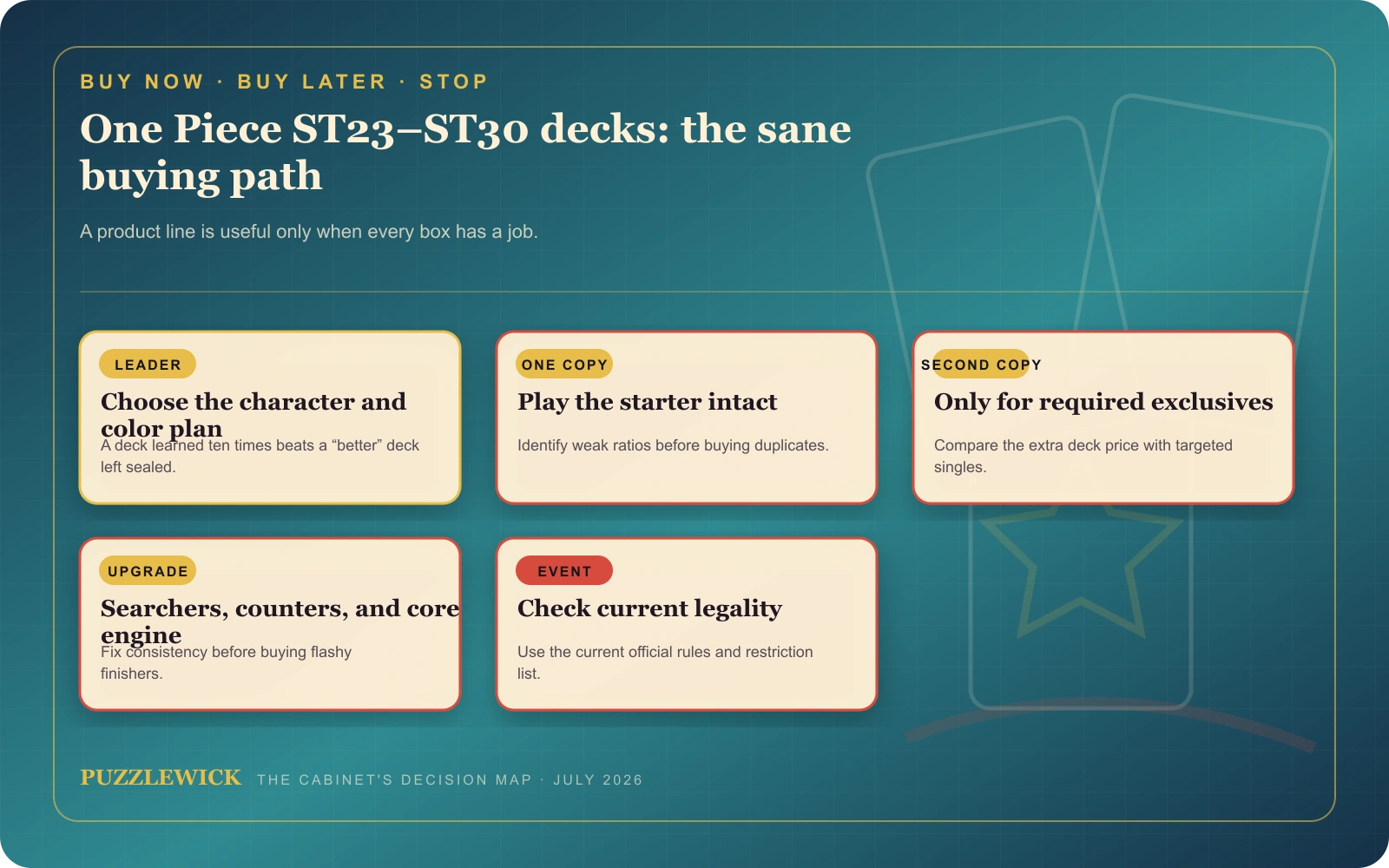
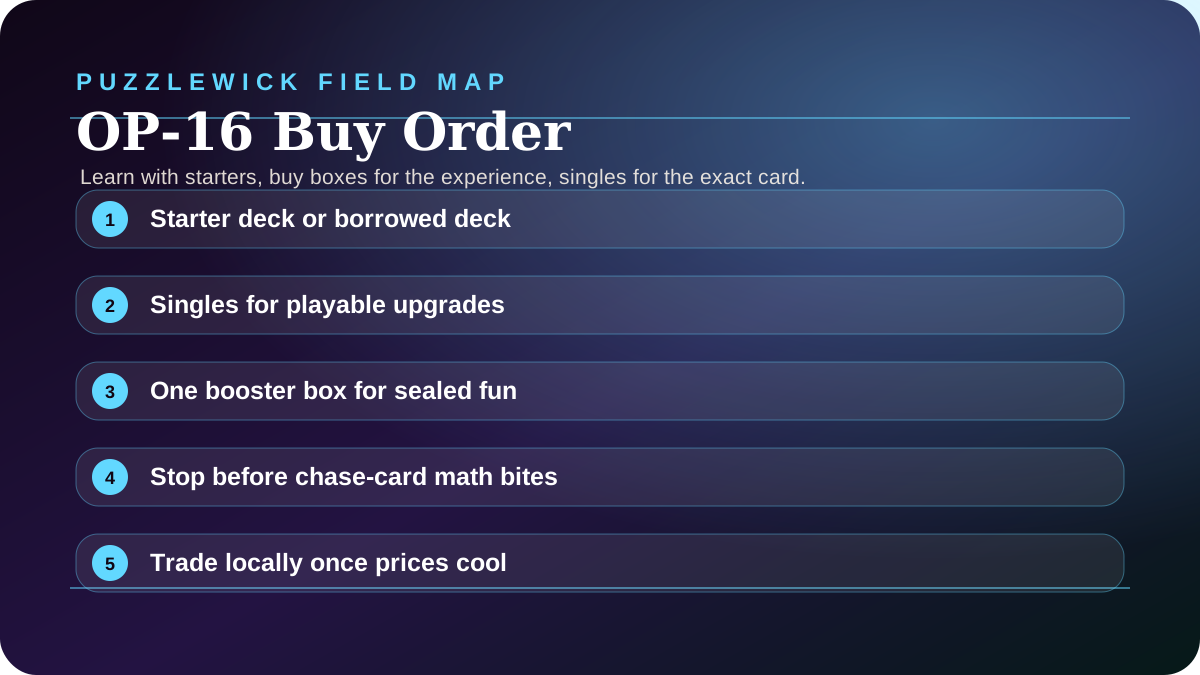
Start with a deck. Add singles for the leader you actually play. Buy one OP-16 box if the table wants a Paramount War opening night. Buy extra sealed only if it is an intentional collection plan with storage, budget, and patience.
The best One Piece shelves tell a story. The worst ones are just panic in shrink wrap.
The player cart: one current starter deck, sleeves, and tested singles. The collector cart: one sealed OP-16 display from a reputable seller plus a binder sized for the set. The social cart: split a box with friends, trade immediately, and let everyone leave with the characters they actually love.
Do not buy cases with a “one box” budget and do not buy loose packs with sealed-box expectations. The sea is romantic; the receipt should remain extremely boring.
Box math, loose packs, and the hit-map trap
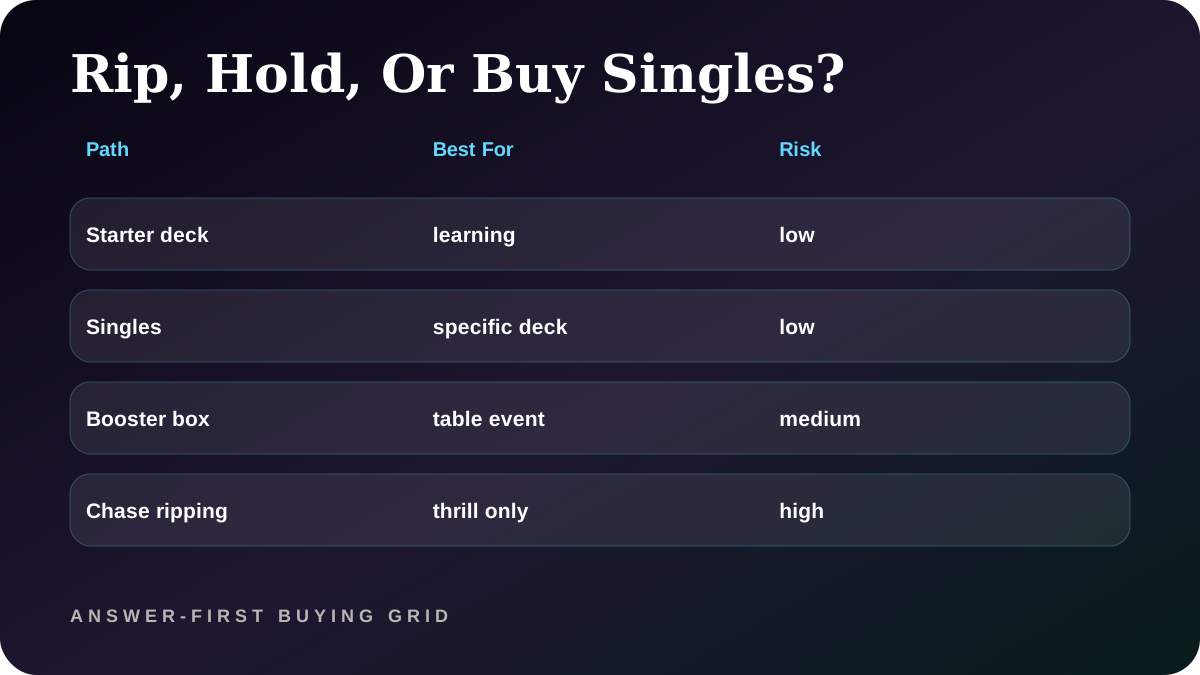
A display contains a fixed number of packs, but the value of those packs is not evenly distributed. Community case data is useful for understanding broad rarity, never for guaranteeing a particular box. If the chase treatment is the only outcome that makes the purchase feel good, buy the card instead.
Compare three numbers before checkout: sealed box price, delivered pack price, and the current total cost of the exact singles your deck needs. Then add a fourth number that spreadsheets ignore: how much the opening night itself is worth to you. That produces an honest decision instead of pretending cardboard randomness is an investment model.
The picks
Some links below are affiliate links — as an Amazon Associate, Puzzlewick earns from qualifying purchases, at no extra cost to you. It never changes a pick.
3 photos One Piece OP-16 The Time of Battle booster box
Buy a box when you want the table ritual: packs, trades, cheers, and a shot at the set’s splashiest alt art. Do not confuse one sealed box with a reliable deck-building plan.
- High table recognition
- Strong gift or shelf signal
- Easy to explain in one sentence
- Availability and pricing can move quickly
- Singles or a simpler box may be smarter if you only need playable cards
3 photos One Piece OP-16 booster packs
Packs are fun, social, and dangerous because the checkout feels tiny. Yumi’s rule: buy a fixed number before the first wrapper opens.
- High table recognition
- Strong gift or shelf signal
- Easy to explain in one sentence
- Availability and pricing can move quickly
- Singles or a simpler box may be smarter if you only need playable cards
 2 photos
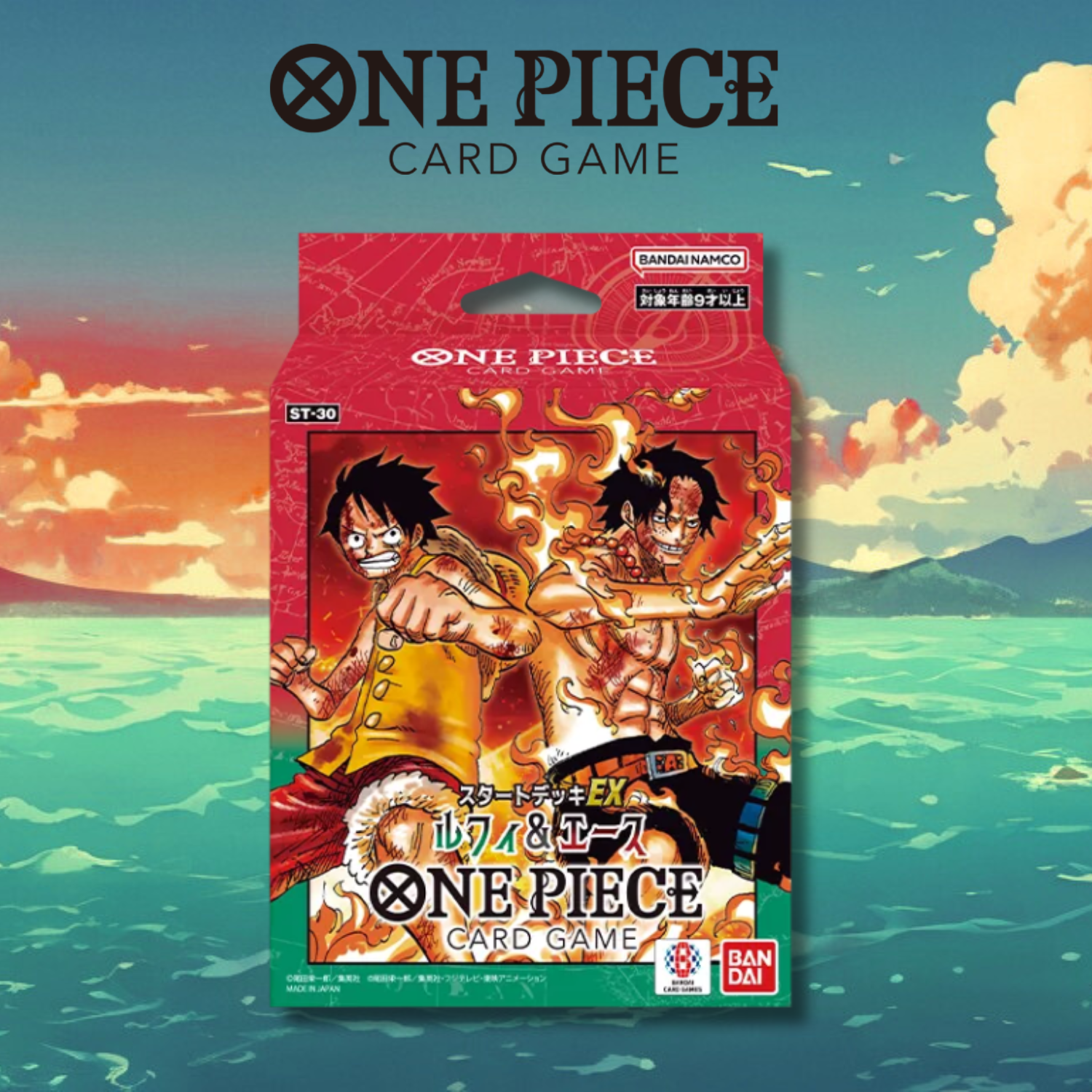
 One Piece starter deck before OP-16 upgrades
The starter deck is still the better first purchase. OP-16 makes sense after you can play a clean game and know what kind of crew you enjoy.
- High table recognition
- Strong gift or shelf signal
- Easy to explain in one sentence
- Availability and pricing can move quickly
- Singles or a simpler box may be smarter if you only need playable cards
Puzzlewick decision matrix · sealed versus targeted
Buy the experience you actually want from OP-16
A booster box is entertainment plus collection building. Singles are the efficient deck upgrade. A starter deck is the clean first table. One purchase does not do all three jobs well.
A sealed booster box does not guarantee a coherent legal deck.
The value is the shared reveal experience and broad set exposure, not guaranteed deck efficiency.
Targeted cards avoid duplicate bulk and uncertain pull rates.
Once sealed spend exceeds the known single cost, the chase is entertainment rather than acquisition efficiency.
At a glance
| path | best for | buy if | risk |
|---|---|---|---|
| Starter deck | new players | you need a deck tonight | low |
| Singles | competitive upgrades | you know the card | low-medium |
| Booster box | collector/rip night | you want the experience | medium |
| Case ripping | serious collectors | you track prices and storage | high |
Questions, answered
Should I buy sealed product or singles?
Buy singles when you need a specific playable card. Buy sealed product for the opening experience, drafting/sealed play, gifts, or collecting the product itself.
Are collector boxes automatically better investments?
No. Collector boxes are emotional and aesthetic purchases first. Treat resale as uncertain unless you have current sales data and are comfortable holding inventory.
Is OP-16 a good One Piece set for collectors?
Yes, especially for Paramount War fans. The set has obvious character heat, but collector demand does not make every box a smart buy at any price.
Should new players build from OP-16 packs?
No. Start with a starter deck, then use OP-16 singles or trades to upgrade once you know your leader.
What should a first-time One Piece player buy first?
Buy a current starter deck built around a leader and play style you like. It gives you a legal foundation immediately; a booster box gives you an exciting assortment, not a coherent first deck.
When do singles make more sense than another OP-16 box?
As soon as you can name the exact cards and quantities your deck needs. Boxes are for opening, collecting, or limited play. Singles are the efficient route to four-of staples and specific upgrades, especially after launch-week prices settle.
Yumi's verdict
Competitive reality: OP-16’s impact is not confined to its own cards. New leaders and engines can make older starter-deck staples move sharply, as TCGplayer’s July review documents. Price the complete seventy-card shopping problem: leader, fifty-card deck, DON!! deck, sleeves, and any older staples. A “cheap” new archetype can become expensive when four older cards are suddenly mandatory.
Collector reality: condition and treatment matter more than set completion percentages. Sleeve hits immediately, separate trade stock from the personal binder, and do not trade during the first emotional hour unless both sides have checked current listings. Opening night should feel generous; the spreadsheet can wait until morning.
Research ledger 9 sources · reviewed 2026-08-10
Specifications, rules, current product information, community experience, and contrary evidence were checked against the sources below. Commercial links are kept separate from editorial evidence.
- en.onepiece-cardgame.comen.onepiece-cardgame.com/products/op16.html
- en.onepiece-cardgame.comen.onepiece-cardgame.com/cardlist
- reddit.comreddit.com/r/OnePieceTCG
- tcgplayer.comtcgplayer.com/categories/trading-and-collectible-card-games/one-piece-card-game
- tcgplayer.comtcgplayer.com/content/article/The-Biggest-One-Piece-Card-Price-Shifts-in-June-2026/8ed68626-3ba8-4266-8d03-0492aa0ef8bd
- onepiecedb.ioonepiecedb.io/format/op16
- reddit.comreddit.com/r/OnePieceTCG/comments/1tmhhef/looking_to_get_started
- reddit.comreddit.com/r/OnePieceTCGFinance/comments/1so3c2y/booster_box_vs_singles
- reddit.comreddit.com/r/OnePieceTCGFinance/comments/1u1t3mu/advice_on_op16
Come in, take your shoes off — let me show you something.


Keep exploring
The next smart rabbit holes.
✧ Universe HubAnime & New-Wave TCGs: the whole buying pathBeyond Magic and Pokémon, a new wave of trading card games has gone mainstream — One Piece, Yu-Gi-Oh!, Dragon Ball, Digimon, Weiss...🂠 Topic PathTrading Card Games: compare the whole shelfStart with the game and community you want, then buy the smallest product that lets you test it properly. These guides separate...Buying GuideIs It Too Late to Start One Piece Card Game in 2026?Yumi's 2026 no-regret route into the One Piece Card Game: what to buy first, what to skip, how the ST-30 and ST-31 to ST-36 starter wave...