Best Trick-Taking Card Games (2026): Modern Classics Beyond Spades & Hearts
Step in from the cold — let me settle you at a table where centuries of kindness meet designs that bend the rules. A curator's tour of trick-taking games that welcome everyone: from a co-op where you win or lose as a crew, to a two-player fairy tale, to a modern twist that erases color itself. Real makers, real prices, real magic in your hands.

AI-assisted curator persona · research and editorial responsibility: Robert Pruitt · how this guide was made
Last editorial refresh: 2026-06-13 Gold-standard QA: 2026-07-17 23 sources reviewed Affiliate links checked during gold-standard pass

The short answer
The best modern trick-taking card game for most people is The Crew: Mission Deep Sea (Thames & Kosmos, ~$15-27), a fully cooperative puzzle where your whole table wins or loses together — it's the rare trick-taker that welcomes newcomers and obsesses veterans. For two players, The Fox in the Forest (Renegade, ~$15.99) is the gorgeous gateway; for a tiny competitive gem, Scout (Oink Games, ~$23) is pure delight; and for a brainy modern hit, Cat in the Box: Deluxe (Bezier Games, ~$29.95) bends the rules of the genre itself. If you just want the timeless canon — Whist, Euchre, Pinochle, Hearts, Spades — a single Bicycle deck (~$3-5) plays nearly all of them.
Decision map
Choose in thirty seconds
The single best modern trick-taker for most tables — a fully cooperative campaign of escalating missions
The perfect two-player gateway — gorgeous, gentle, and quietly deep
The deepest modern twist — for players who already love the classics and want their brain bent
Welcome in. Come sit. There's a whole shelf of these by the window, and I've been quietly arranging them for years — so let me pour you something warm and play hostess.
A "trick-taking" game is the gentlest thing in the world: everyone plays one card to the middle, the strongest wins the little pile — we call it the "trick" — and then you do it again until your hand is empty. Your grandmother almost certainly knew a few by heart. Whist, Hearts, Spades, Euchre, Bridge, Pinochle — these games are centuries old, and they've never left any table they landed on. The mechanic lives in your hands the moment you understand it.
But here's what made me arrange this shelf the way I did: designers have spent the last decade asking what if we broke the old rules with kindness? What if the whole table won together instead of fighting? What if a card had no color until the moment you played it? What if two players could sit across from each other, painted like something from a storybook, and learn not to get greedy? The genre didn't disappear — it transformed. It became bigger, warmer, fresher.
So here's how I'll seat you. Below you'll find ten games I genuinely love, ranked, with honest hearts and gentle truths — a perfect gateway, a co-op that makes crews out of strangers, a tiny treasure, a brain-bender, a beautiful illustrated dream, a party game that scales all the way up, and a reverent bow to the timeless canon (with exactly where to find a good deck to play them with). We don't sell anything here at Puzzlewick — we just point you to the maker, no markup, and watch your face light up when you realize it's perfect. Pull up a chair.
Start here, then go deeper
You are in the right cabinet.
 ✦ Topic PathBoard Game Buying Guides: compare the whole shelfStart with the decision, not the shelf. These guides compare the games, editions, expansions, player counts, and costs people...
 ReviewShards of Creation (Sanderson Cosmere Card Game): Where to Buy, Restock & Is It Worth It?A 30-minute Cosmere trick-taker where the suits are gods — here's how it plays, what it costs, and where to actually find a copy.
 ExplainerWhy Flip 7 Went Viral — and 6 Push-Your-Luck Games to Play NextThe blackjack-simple card game that conquered game nights in 2024 — and where to point your luck once the deck gets familiar.
What exactly is a "trick-taking" game — and why has the genre exploded again?
Let me explain it the way I'd explain it across the table, because it's genuinely simple. A trick is one round where every player lays down a single card, face up, into the middle. The first card played sets the suit you must follow — if a heart is led, you play a heart if you can. Whoever played the highest card of that led suit (or the highest trump, a suit crowned all-powerful for the hand) wins the trick and gathers those cards. Then the winner leads the next trick. Repeat until hands are empty, tally up, deal again.
That's the whole skeleton. Hearts, Spades, Euchre, Whist, Bridge, Pinochle — every one of them is a variation on follow the suit, take the trick, manage what you can and can't win. The art is in what each game asks of you: do you want to take the most tricks, the fewest, or exactly the number you predicted? That single question creates wildly different games.
The reason the shelf is bursting in 2026 is that modern designers stopped treating the format as a fixed antique. They asked what if the players cooperate instead of compete? (The Crew). What if you don't even have suits, just numbers in a row? (Scout). What if a card's color is undecided until you commit it? (Cat in the Box). The bones are ancient and beloved; the muscles are brand new. That combination — instantly familiar, endlessly fresh — is exactly why I never run out of things to set on this table.
The bones are ancient and beloved; the muscles are brand new. That's why the table never goes quiet.
Which trick-taking game is the best place to start?


If a friend asked me to pick one game to fall in love with the genre, I'd reach for The Fox in the Forest without hesitating. It's built for exactly two people, it's painted like a storybook, and it teaches you the single most delightful tension in all of trick-taking: you want to win tricks, but win too many and you're punished as greedy. That little rule turns a simple game into a real conversation between two players.
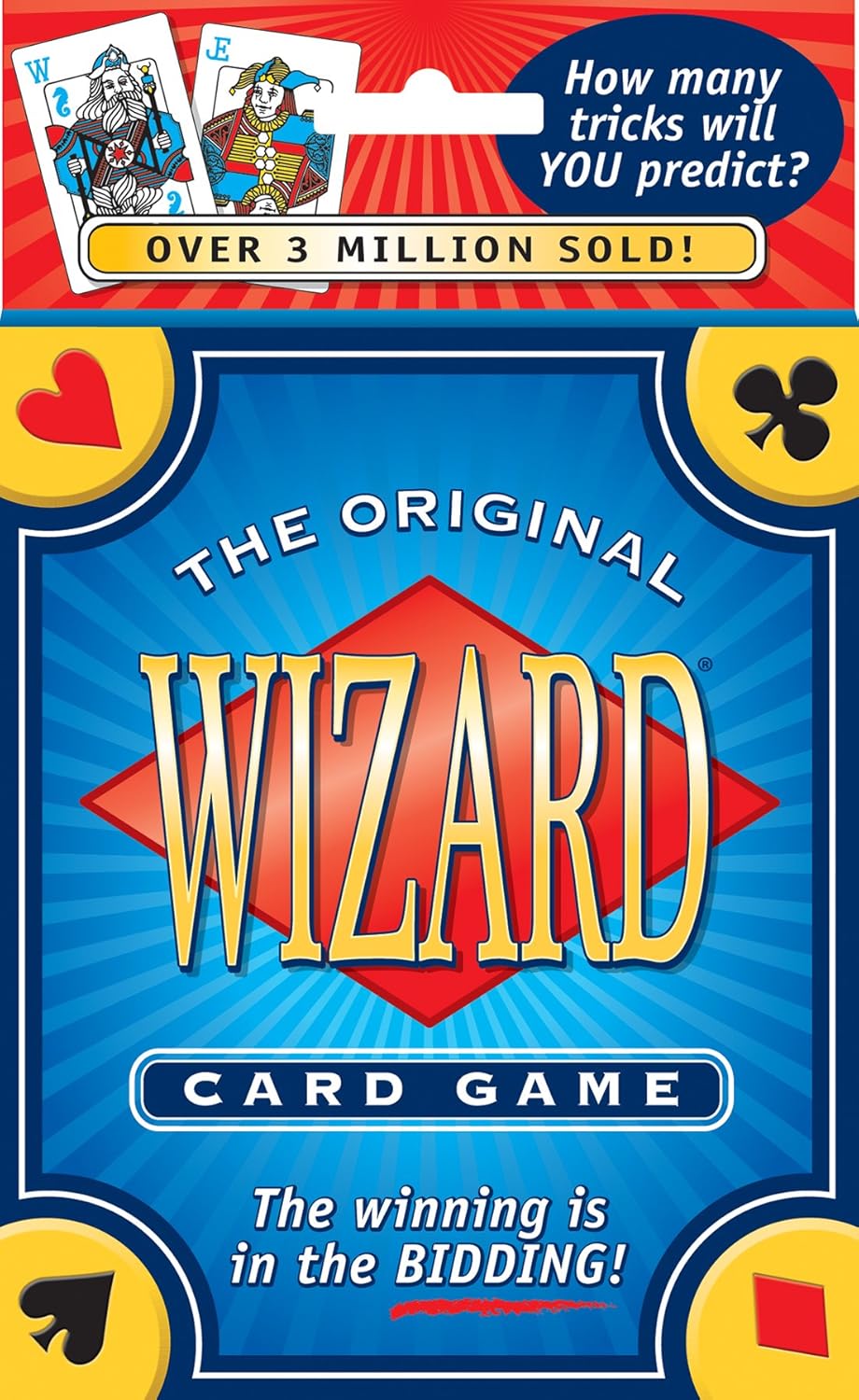
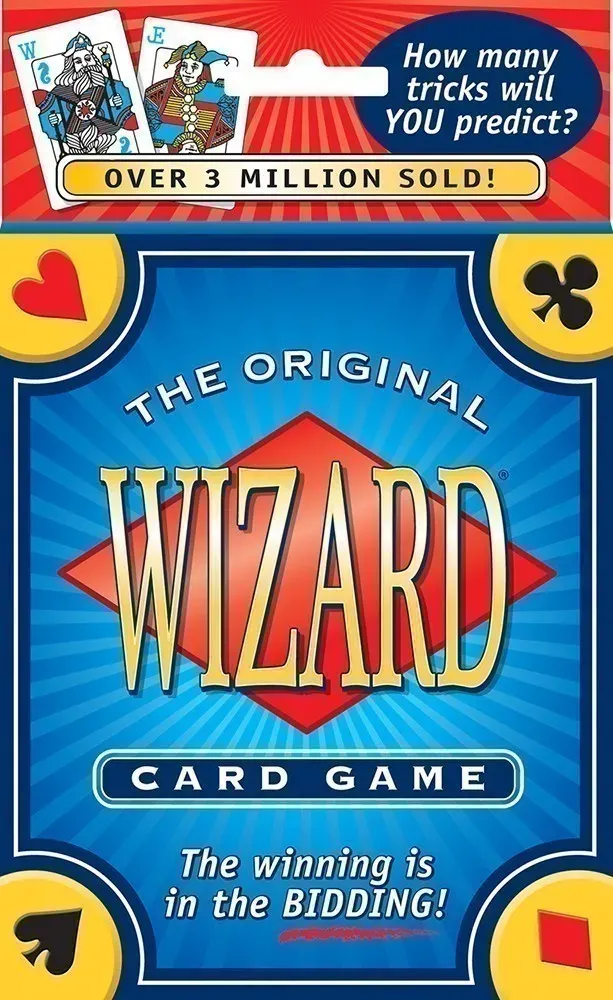
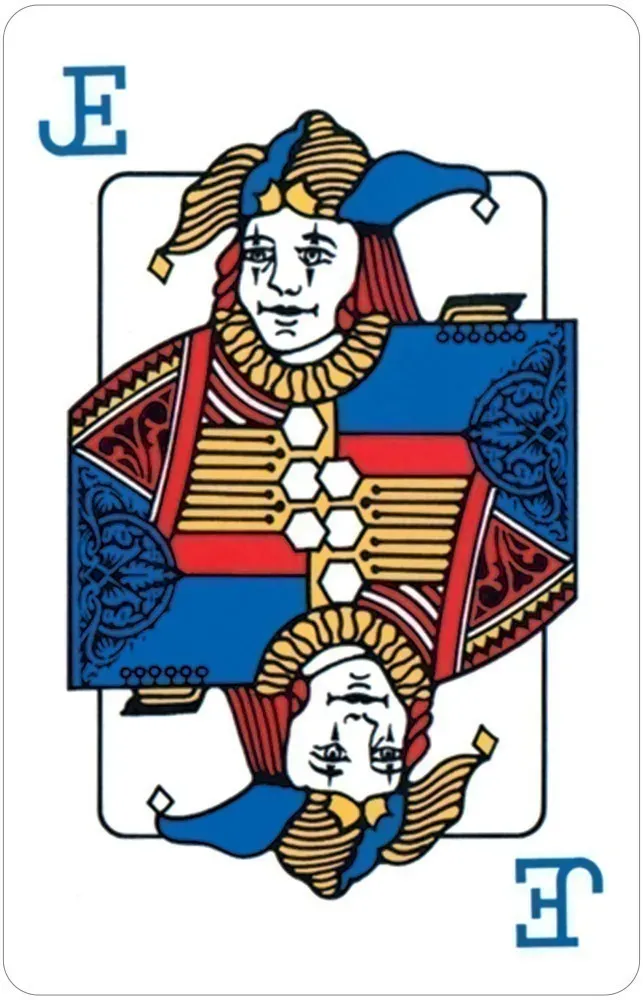
For three or more, Wizard is my gateway of choice — and at well under ten dollars from its maker, it's almost rude how good it is. Every round you must predict exactly how many tricks you'll take, then try to hit that number on the nose. Bid too high, bid too low, both hurt. It scales from three to six players, the rounds get longer as you go, and it has just enough chaos (those Wizard and Jester cards) to keep a new player laughing instead of overwhelmed.
The beauty of starting here is that everything you learn transfers. Once "follow the suit, mind your trumps, watch who's void" lives in your hands, every other game on this list opens up to you. These two are the gentle front door — and I'd happily seat anyone at them, expert or absolute beginner.
You want to win tricks — but win too many and you're punished as greedy. That little rule is the whole magic.
Can a trick-taking game be cooperative — everyone against the box?
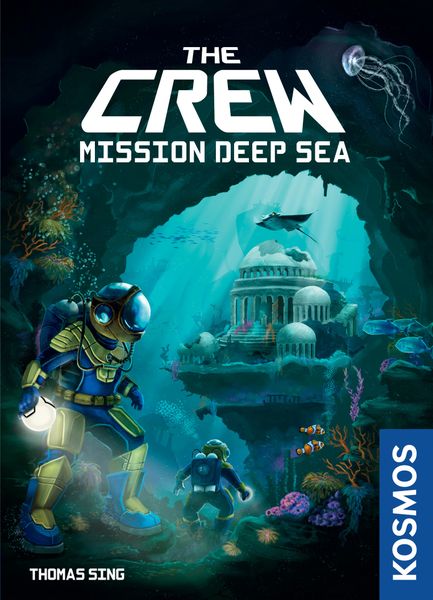
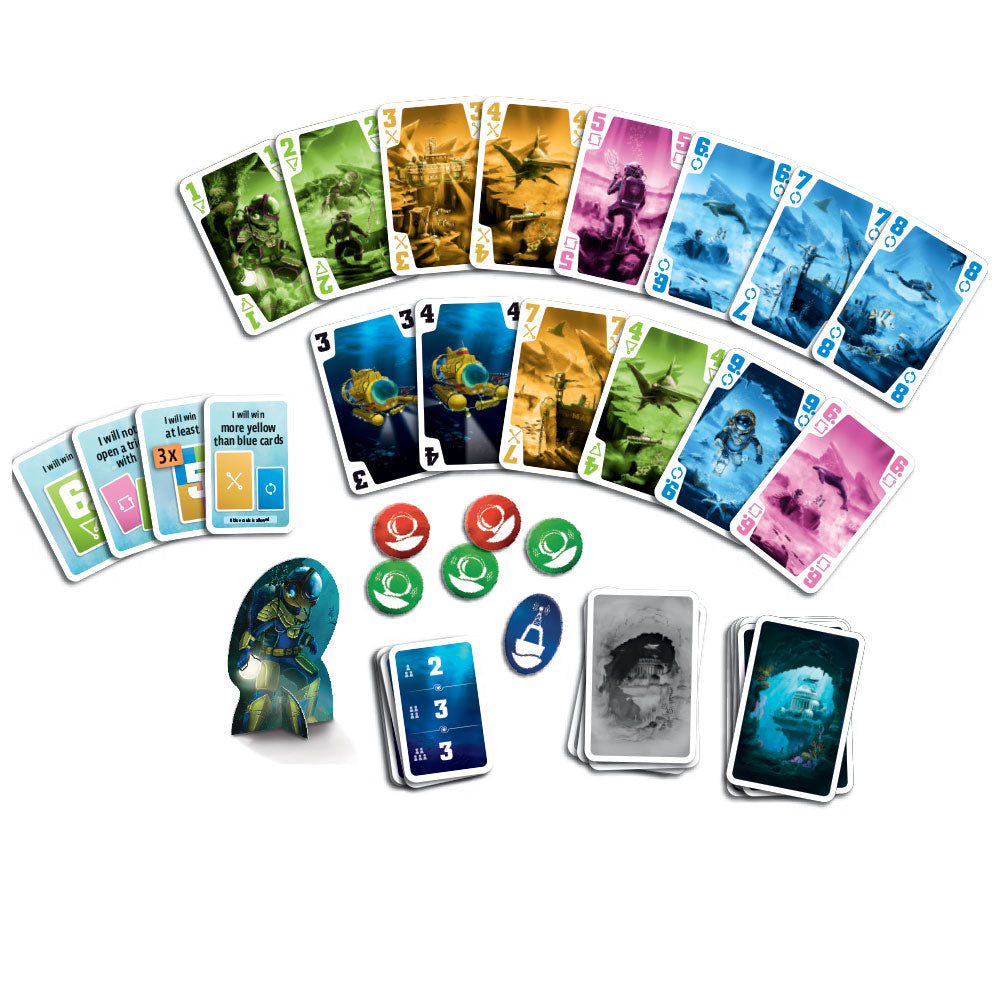
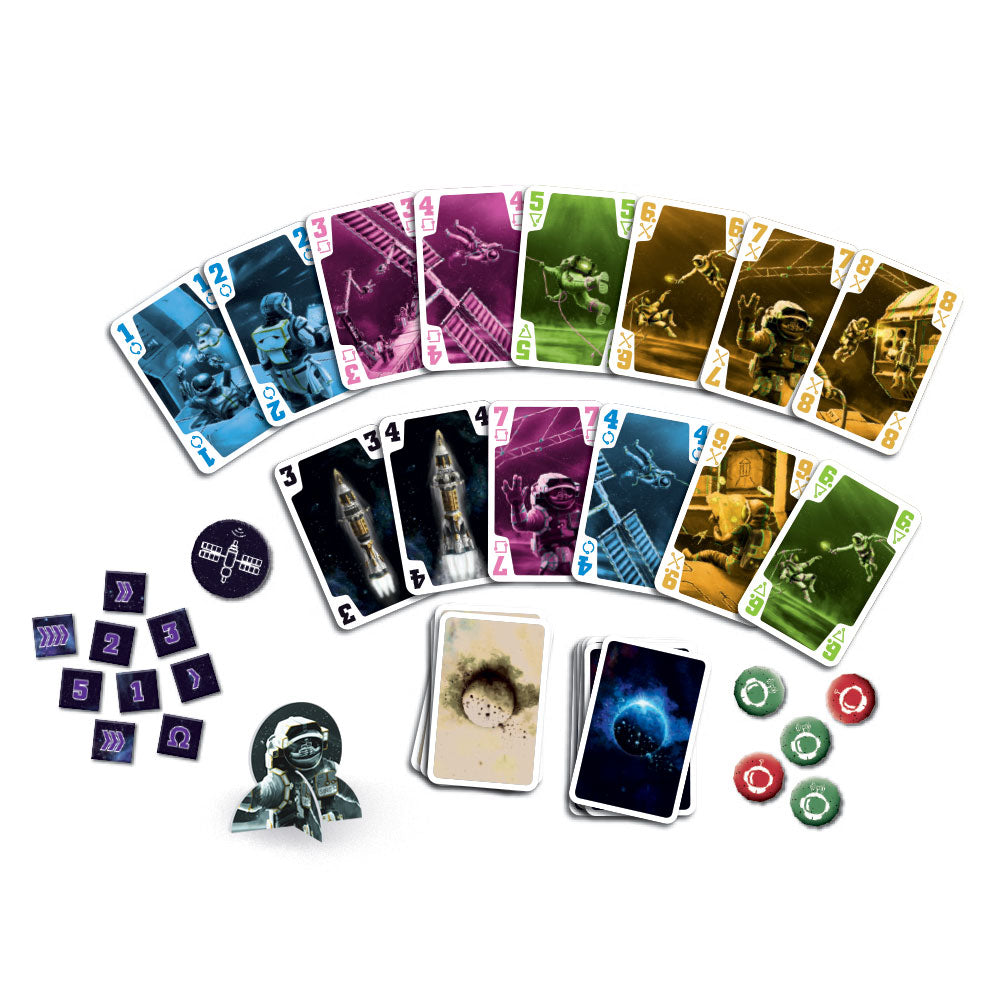
This is the question that made the whole genre new again, and the answer is a resounding yes. The Crew — both The Quest for Planet Nine and its standalone follow-up Mission Deep Sea — is a fully cooperative trick-taker. Nobody wins alone. The table is handed a mission ("Anna must win the green 4; Ben must take the very last trick") and you all win or all lose together. It won Germany's prestigious Kennerspiel des Jahres, the connoisseurs' game-of-the-year award, and it deserved every bit of it.
The genius is what it forbids: you may not tell each other your cards. You can drop one carefully-timed hint per game ("this is my highest heart"), and the rest is read entirely through which cards people choose to play and when. A trick you'd normally fight to win, you now deliberately throw so a teammate can grab the card they need. It's the same ancient skeleton — follow suit, take tricks — pointed at a shared puzzle instead of at each other. I've watched strangers become a crew over a single mission.
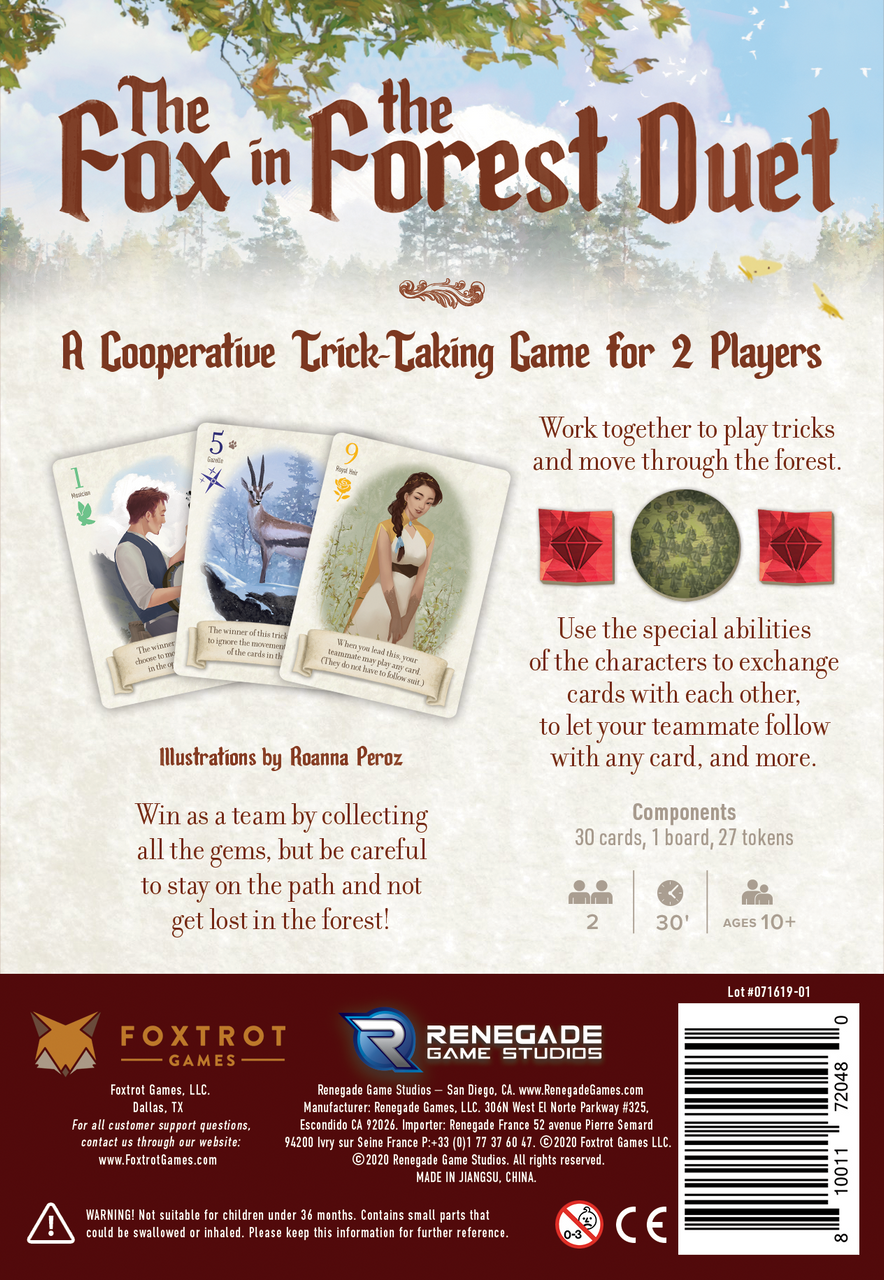
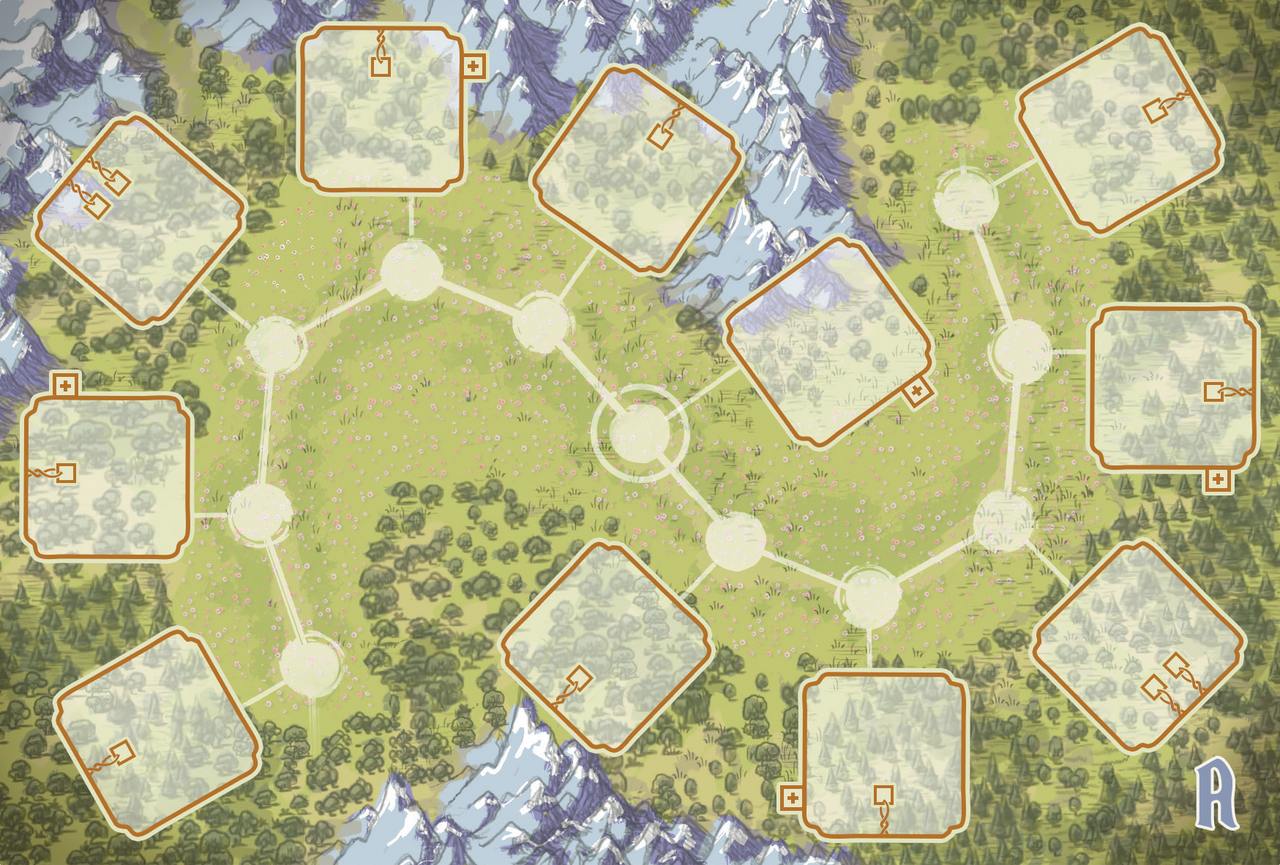
For two players specifically, The Fox in the Forest Duet takes the same beloved art and makes it cooperative: you and a partner move a shared marker along a forest path, working together to collect gems without overshooting. If your table likes solving over scrapping, start here — it's the warmest seat I can offer.
You may not tell each other your cards. The whole game is read through what people choose to play, and when.
What's the smartest modern twist on the formula — for players who want depth?
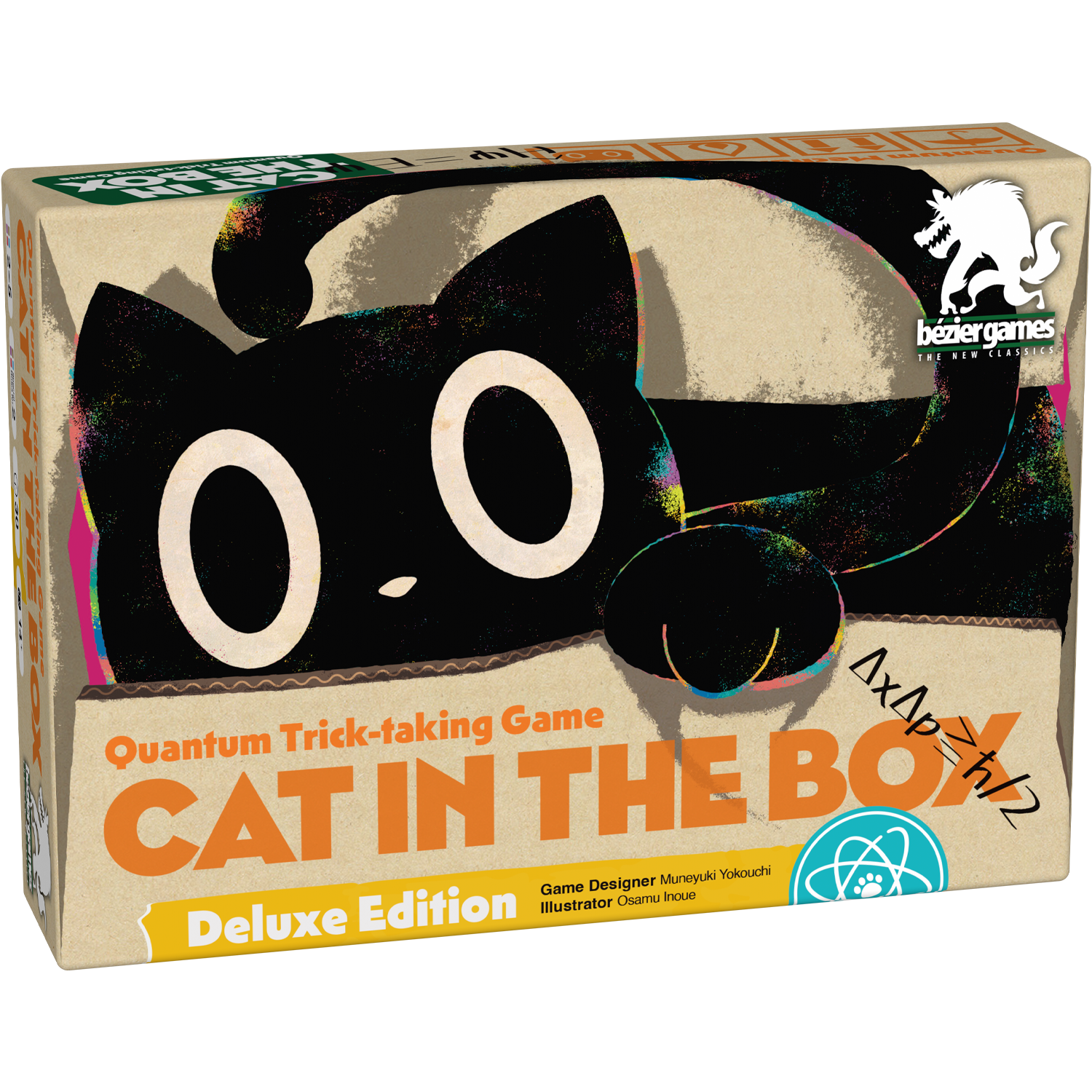
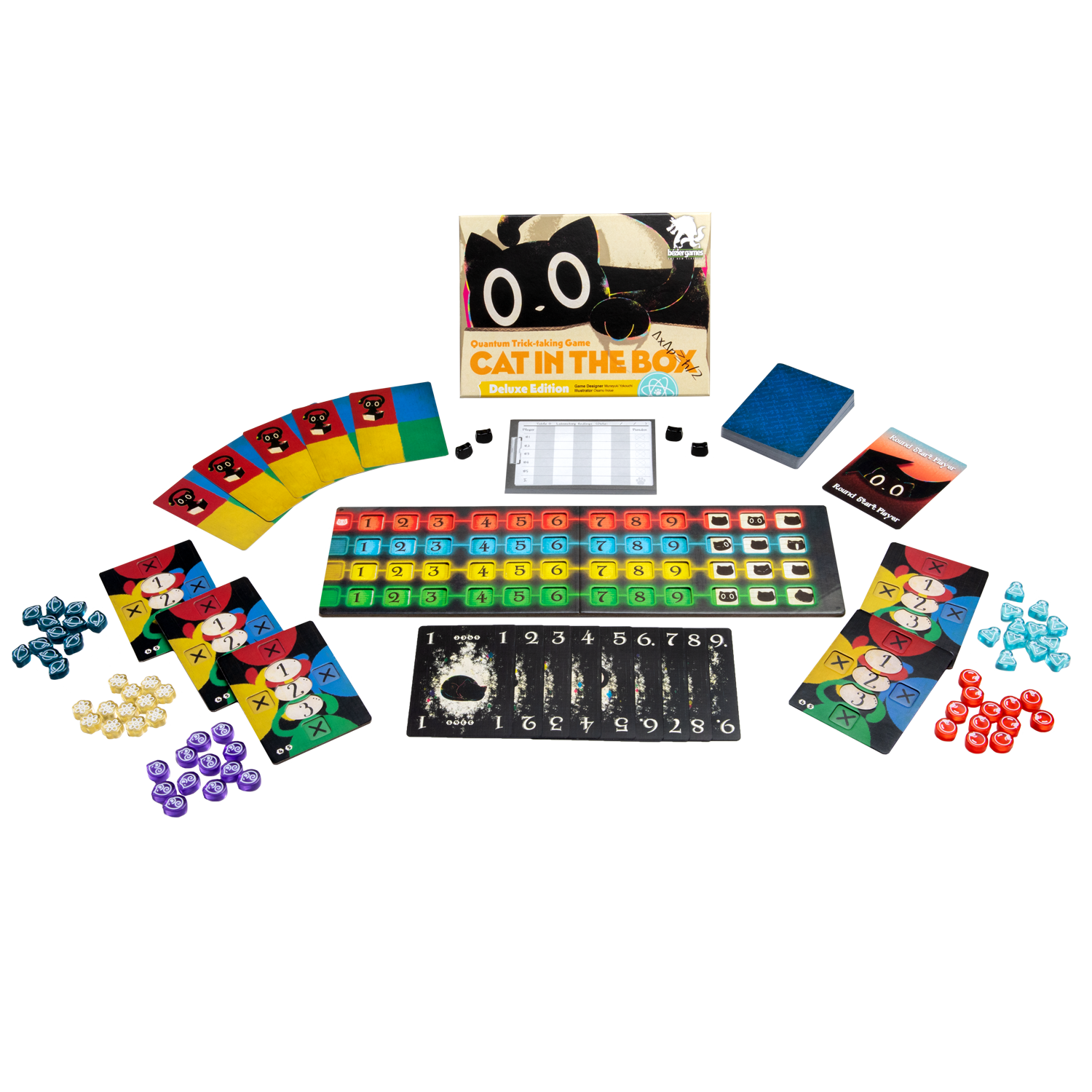
When someone tells me they already love the classics and want their brain genuinely bent, I bring out Cat in the Box: Deluxe Edition. Here's the trick that makes veterans grin: the cards have no color until you play them. Your hand is just numbers. When it's your turn you declare a color for the card as you play it — but once any specific number-and-color combination has been claimed this round, it's locked, and no one (including you) may claim it again. Play a color you can no longer legally support and you cause a paradox — you bust, and you lose points. It's Schrödinger's trick-taker, and the theme leans straight into it.
The reason it earns the word deep is that you're managing information that doesn't exist yet. You're not just playing your hand; you're shaping the shared reality of what colors remain possible, while bidding on how many tricks you'll take and racing to claim space on a central board. It rewards exactly the players who've worn grooves into Hearts and Spades and want a fresh mountain to climb.
For a different flavor of depth, Sticheln (a 1993 Klaus Palesch design, reprinted in English as Stick 'Em) remains a cult favorite among the cognoscenti: each hand you secretly choose a "pain" suit, and every card you take in that color scores brutal negative points. It's nastier, sharper, and more confrontational than the cozy co-ops — and some players adore it for exactly that.
The cards have no color until you play them. It's Schrödinger's trick-taker, and the theme leans straight in.
Which trick-taking games are the most beautiful — or the most fun for a crowd?
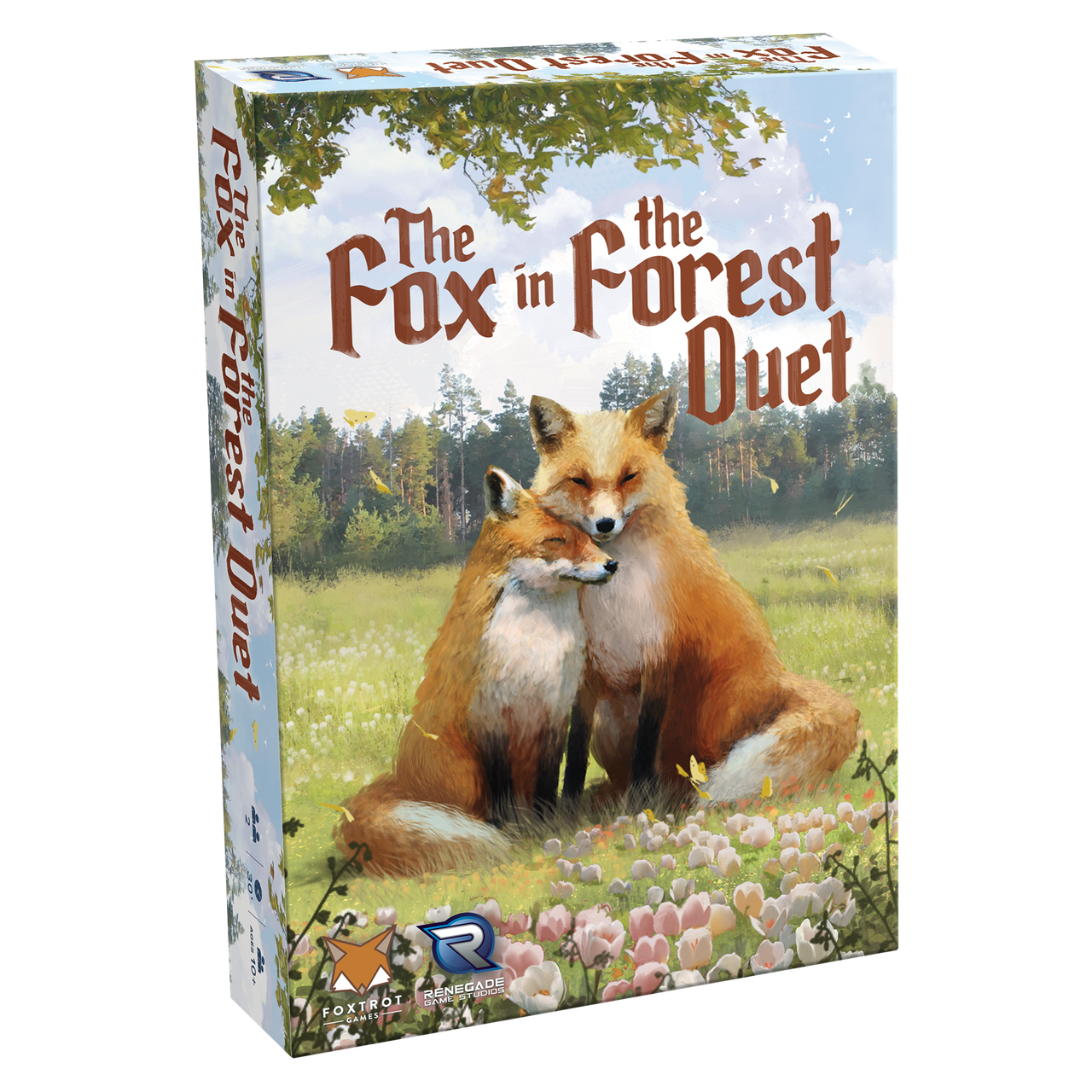

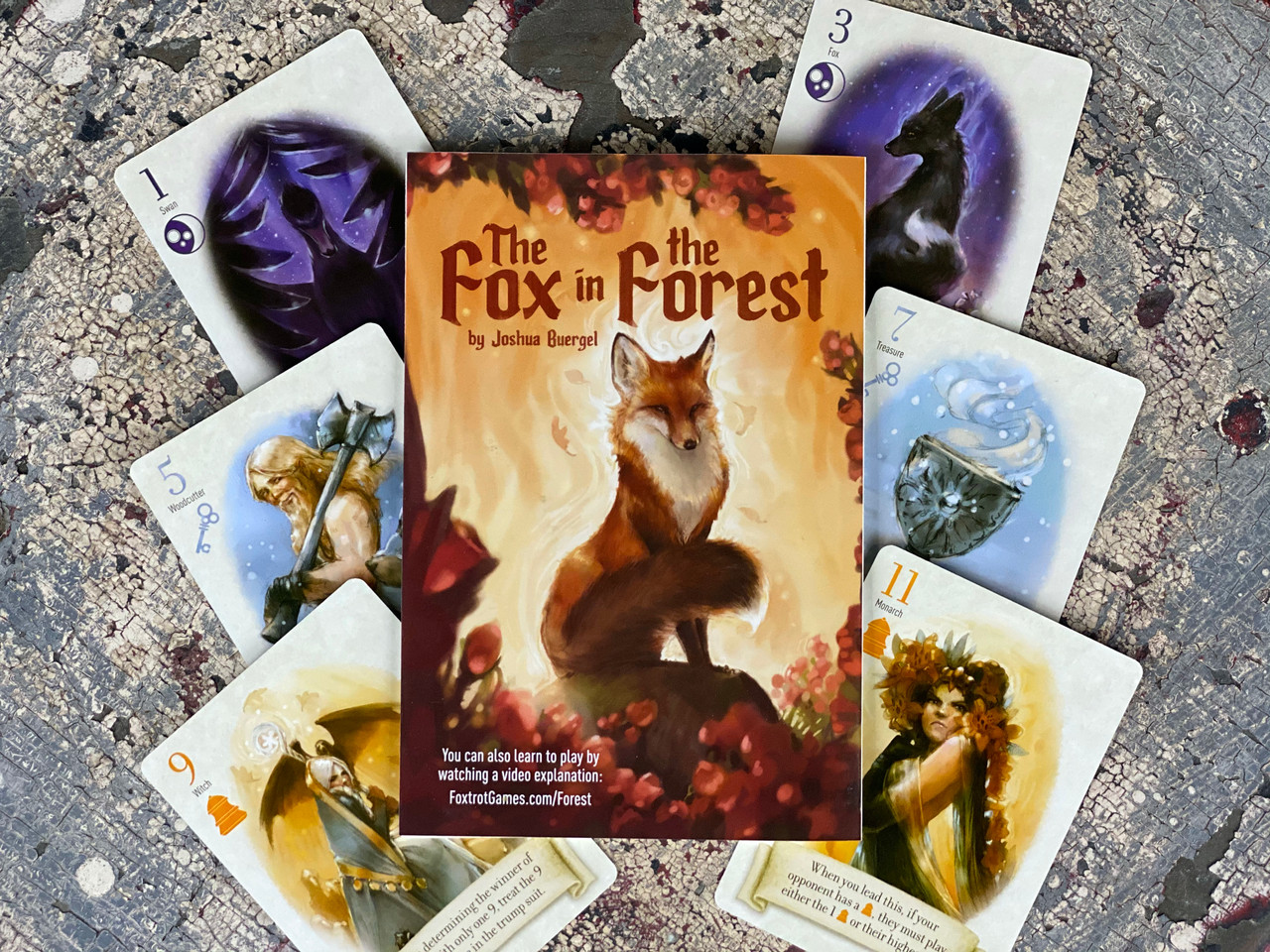
Some games earn their place on the shelf just by being lovely to look at, and the Fox in the Forest family (both the competitive original and the cooperative Duet) leads that pack. The cards are illustrated like pages from a fairy-tale book — foxes, swans, woodcutters, treasure — and each character card carries a small rule-bending power. It's the game I hand to someone who says "I don't really like card games"; the art does half the convincing before the rules ever start.
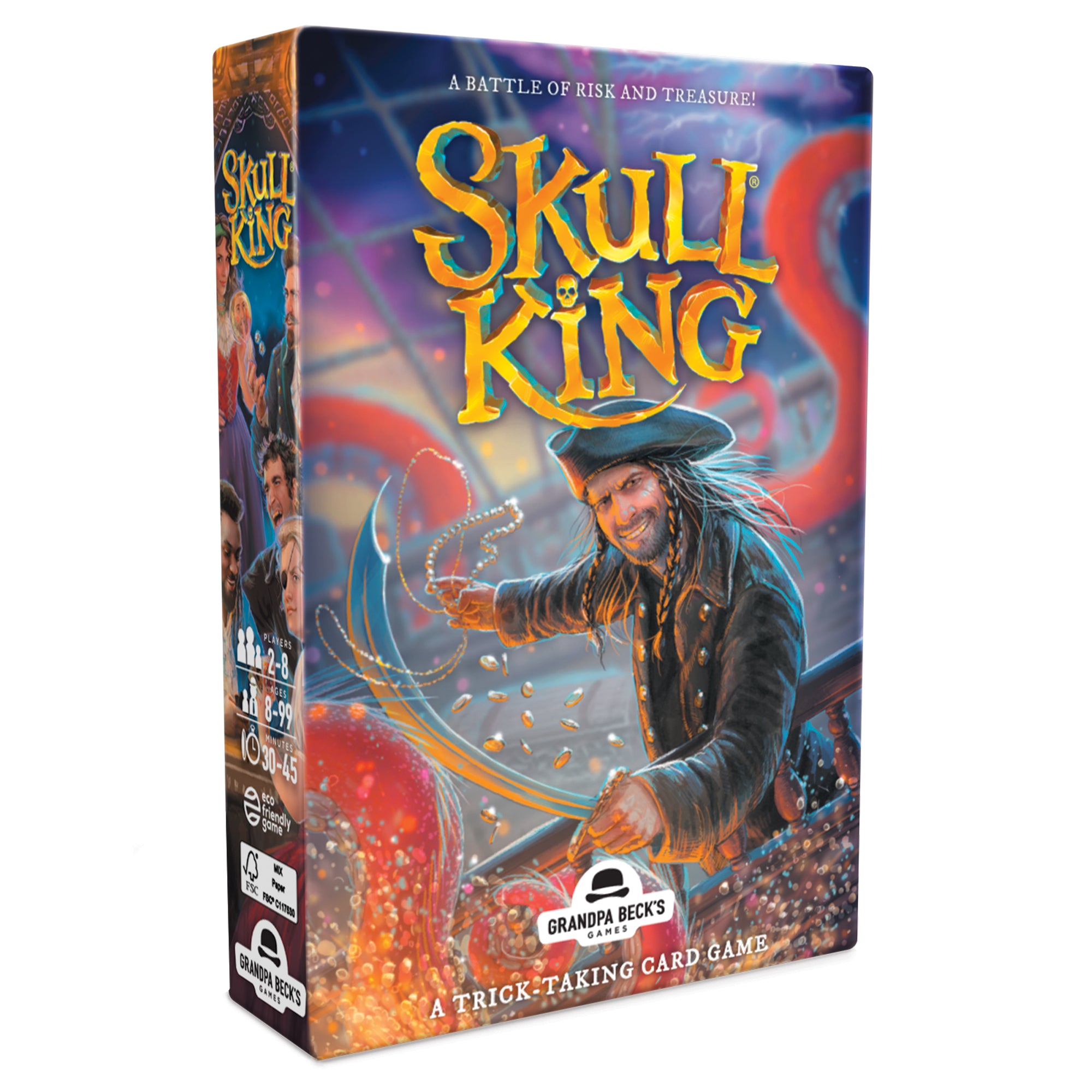
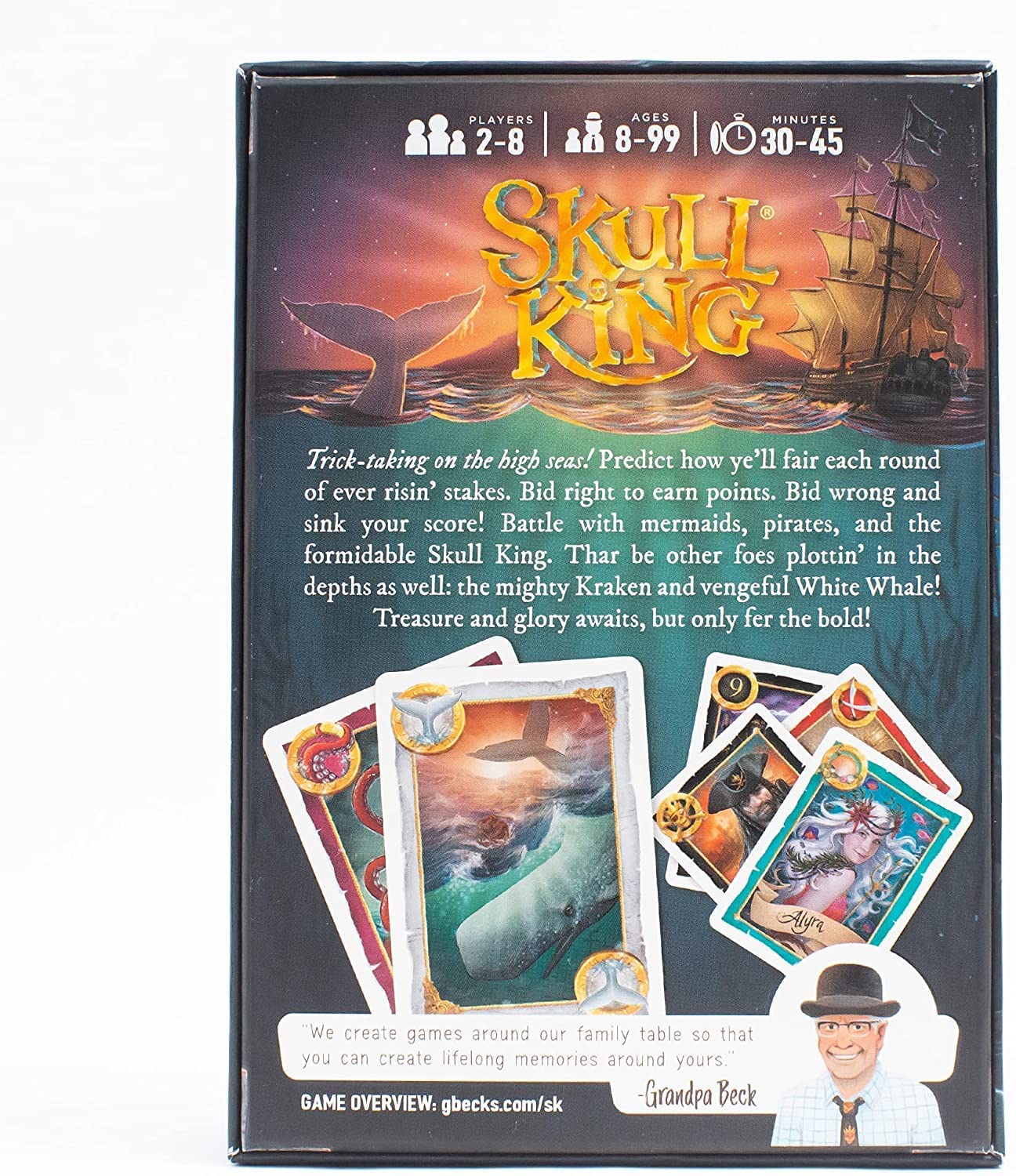
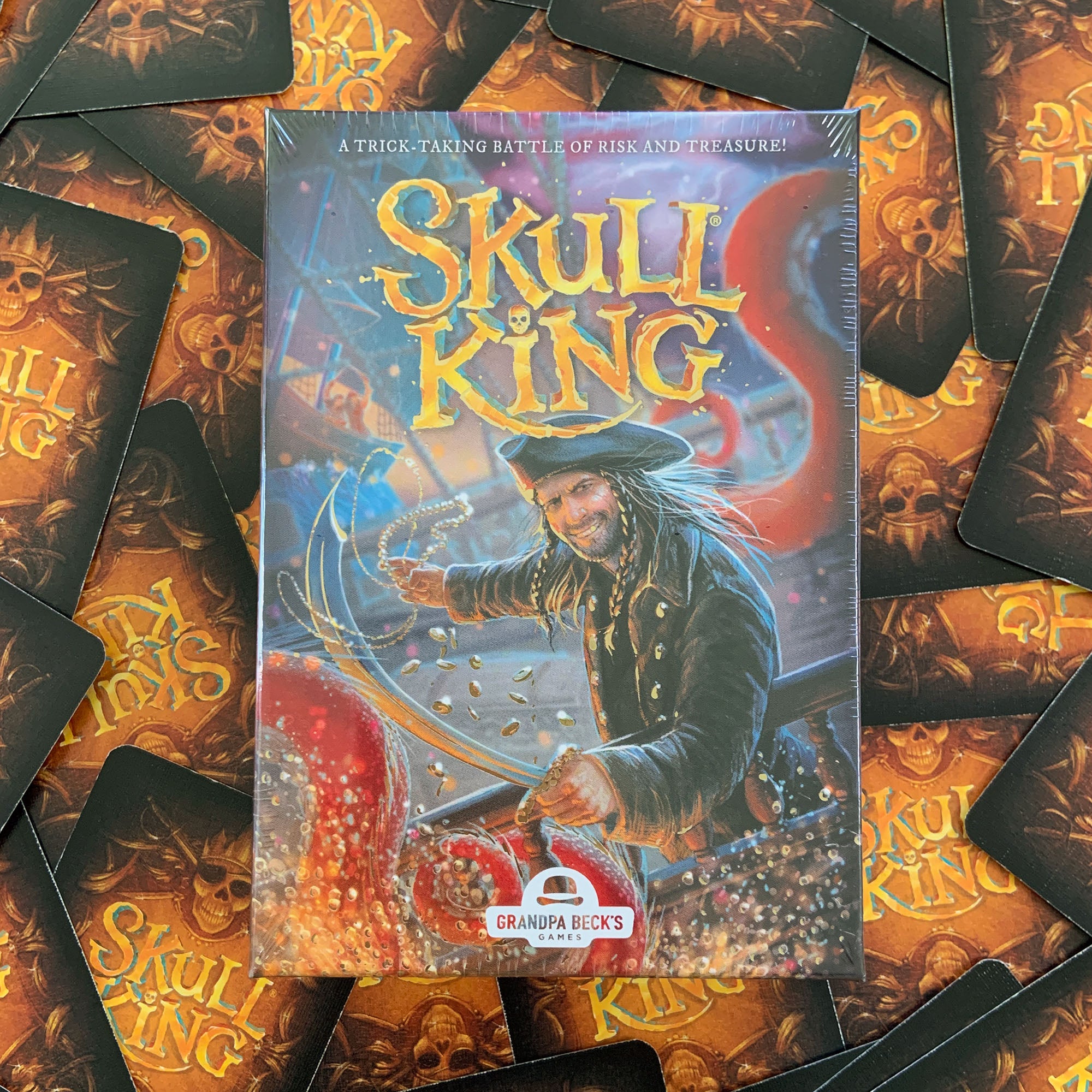
When the room fills up, though, you want a game that welcomes a crowd rather than buckling under one. Skull King is my party hero: a swashbuckling pirate trick-taker for two to eight players where, like Wizard, you bid the exact number of tricks you'll win each round — but pirates, mermaids, krakens, and the dreaded Skull King himself crash into the math and turn a confident bid into chaos. It scales beautifully, plays in well under an hour, and packs down to almost nothing, which makes it a travel and game-night staple.
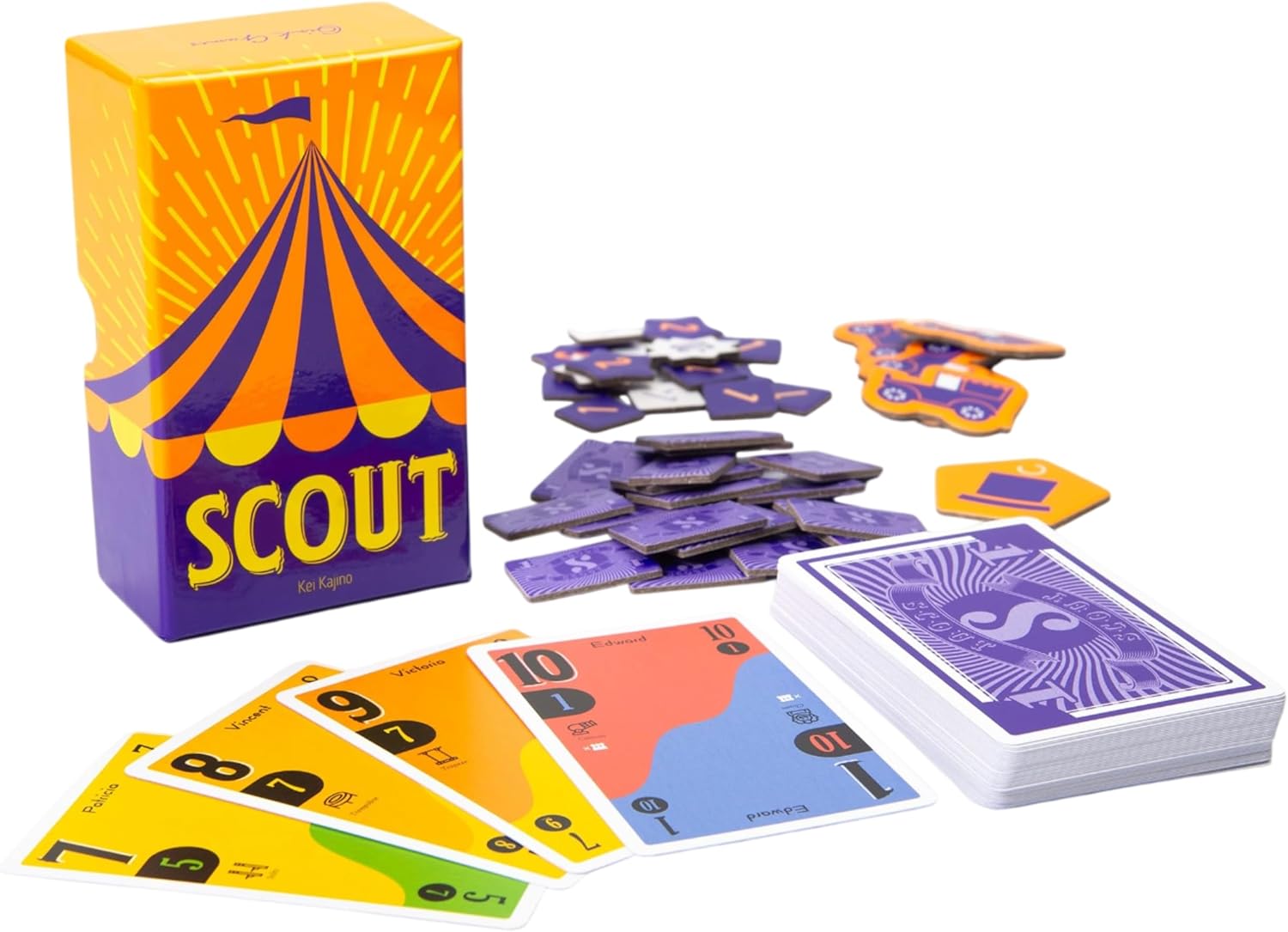
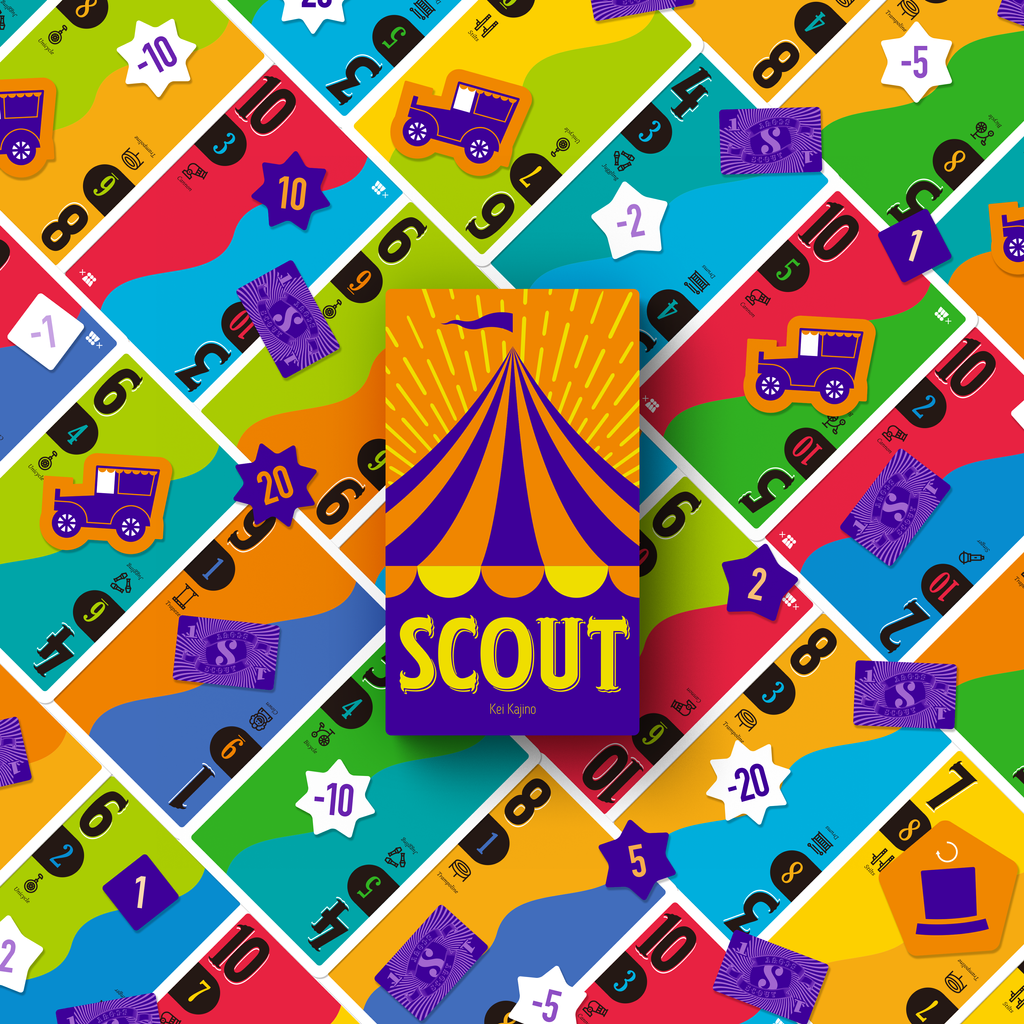
And if you want pure tiny delight for up to five, Scout belongs in any crowd-pleaser conversation. It's technically a ladder-climbing cousin of trick-taking rather than a strict trick-taker, but it lives on the same shelf in every hobbyist's mind and earned a Spiel des Jahres nomination. Each card is double-sided, you may not rearrange your hand, and you either beat the current play or "scout" a card from it into your own — simple enough for anyone, sneaky enough to keep grown-ups scheming.
The art does half the convincing before the rules ever start.
What about the traditional canon — Whist, Euchre, Pinochle — and where do I buy a good deck?
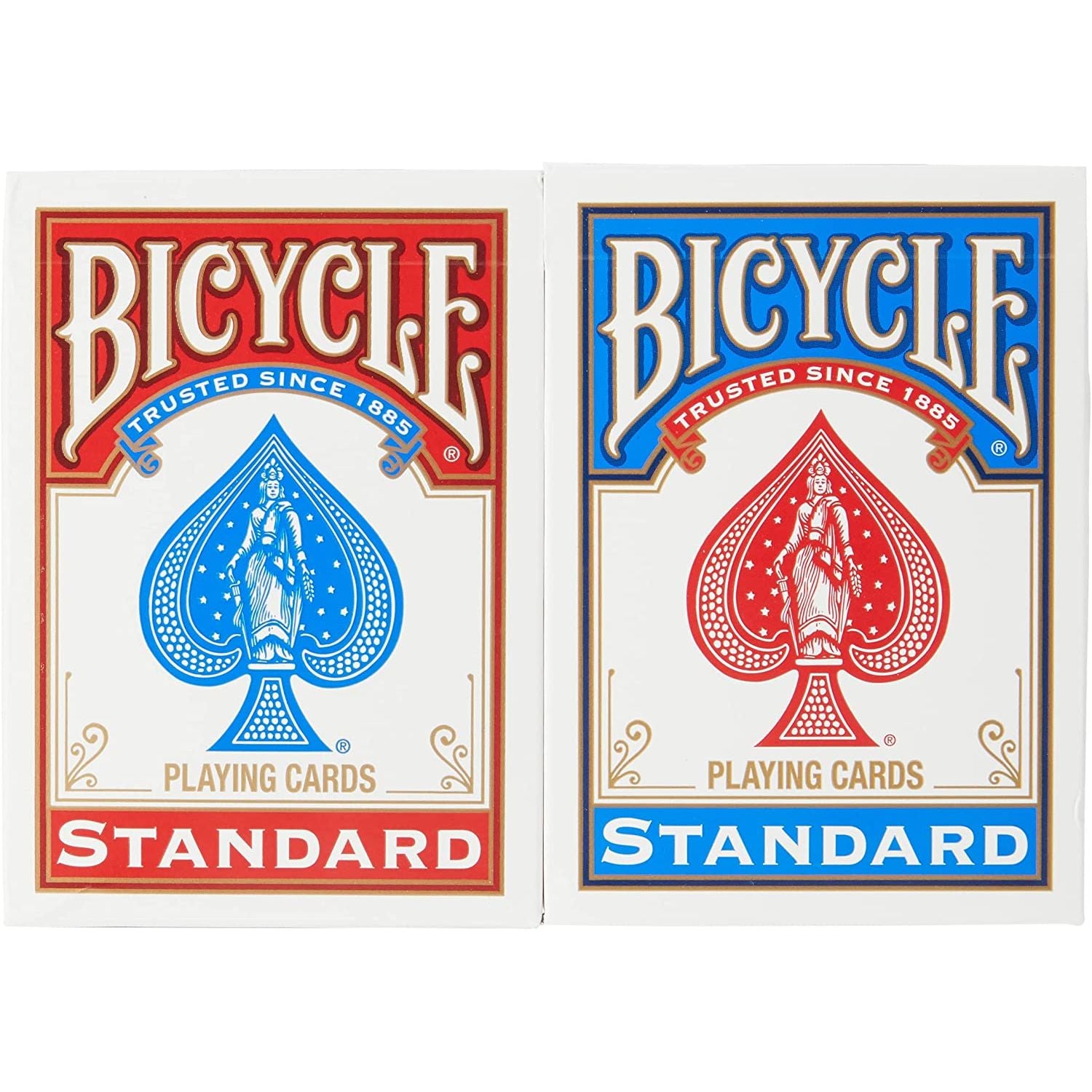

Let's not forget why we're all here. Before any boxed game existed, there was a standard deck and a hundred years of families playing Whist, Euchre, Hearts, Spades, Oh Hell, Pinochle, Bridge, Briscola, and Scopa around the kitchen table. These are still, pound for pound, some of the greatest trick-taking games ever devised — and the entire library costs you the price of one deck of cards. That's the most honest value on this whole page, and I'd be a poor hostess not to point at it plainly.
For nearly everything in the English-speaking canon — Whist, Hearts, Spades, Oh Hell, even four-player Euchre — a single standard 52-card deck is all you need. A Bicycle deck (made by the US Playing Card Company) is the reliable classic, roughly $3-5 at any corner store; Euchre is traditionally played with just the 9-through-Ace cards, and Bicycle even sells a purpose-made Euchre twin-pack with scoring cards. Pinochle wants its own 48-card Pinochle deck (two copies each of 9 through Ace), which Bicycle also makes for just a few dollars.
For the Italian classics — Briscola and Scopa — you'll want a 40-card regional Italian deck (Modiano is the trusted name, roughly $8-13), and they're worth every cent for the romance alone. My gentle hostess's counsel: buy one good standard deck, learn Euchre and Hearts and Oh Hell from it this month, and you'll understand why every fancy box on this list exists. The new games are wonderful — but they're all paying homage to these.
The entire traditional library costs you the price of one deck of cards. That's the most honest value on this page.
What experienced tables keep reporting
Recurring owner patterns, synthesized in Puzzlewick's words. Follow each evidence trail to read the original discussion.
The Crew: The Quest for Planet Nine won the Kennerspiel des Jahres (the 'connoisseur's game of the year'), a rare honor for a cooperative card game and a key reason it's credited with reigniting the entire trick-taking genre.
Read the evidence: Spiel des Jahres / Kennerspiel des Jahres award (via Wikipedia: The Crew)
Marketed as 'the quintessential quantum trick-taking card game for 2-5 cool cats, where your card's color isn't defined until you play it' — Bezier Games' own framing captures exactly why Cat in the Box feels so different from a classic trick-taker.
Coverage of the modern wave notes that 'trick-taking games have exploded in popularity once again, thanks to a multitude of interesting themes, artwork, and overall game design' — with fresh 2024-2025 titles arriving constantly alongside the now-classic hits.
Oink Games describes Scout as a game where 'you align cards with the same, or consecutive, numbers in your hand to create a more spectacular combination than your rivals' — and crucially, 'rearranging your hand isn't allowed,' the constraint that gives the tiny box its bite.
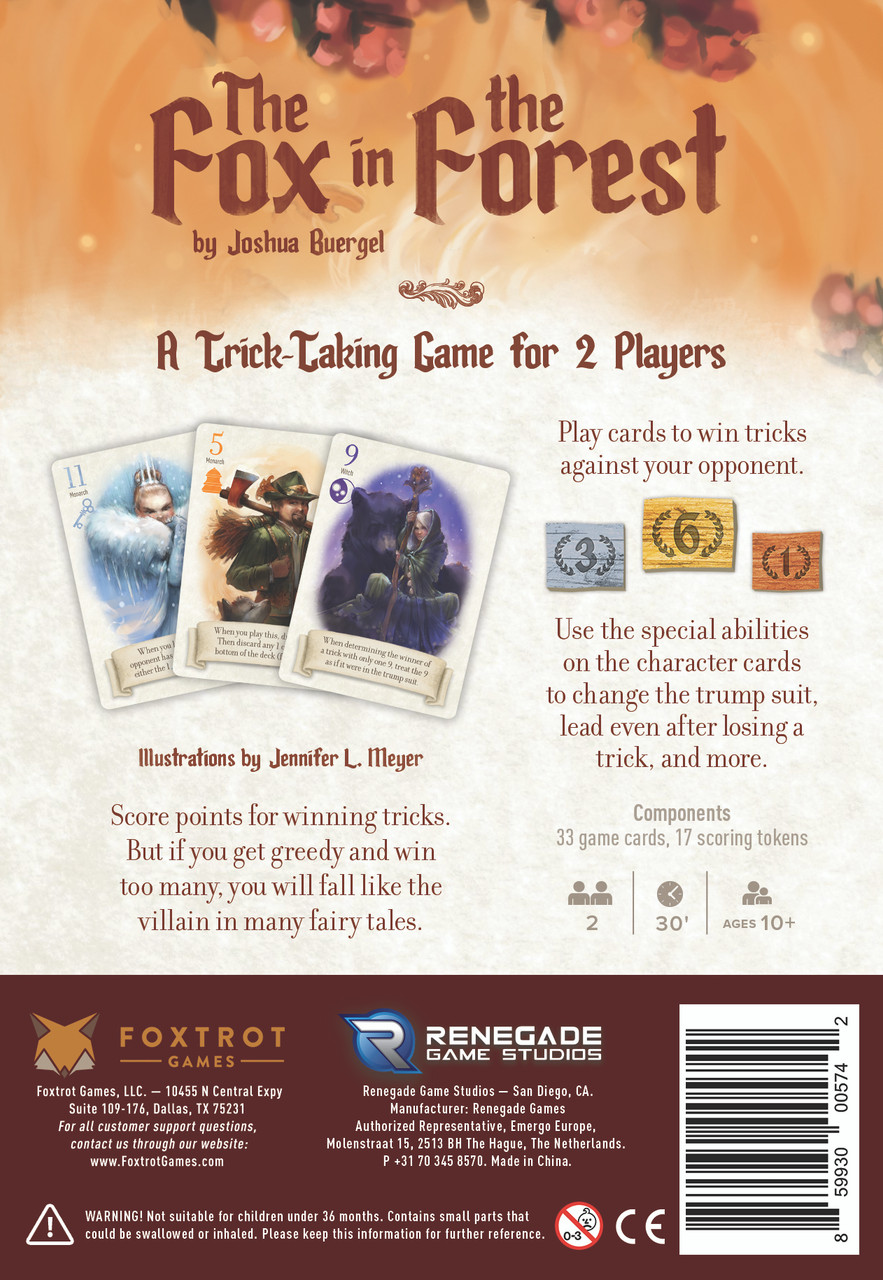
Reviewers consistently frame The Fox in the Forest as a fairy-tale-themed two-player trick-taker whose central tension is that you 'score points by winning more tricks than your opponent, but don't get greedy — winning too many tricks results in a penalty,' which is exactly what makes it such a clean teaching game.
Read the evidence: Tabletop Bellhop, 'Fox in the Forest' coverage
The picks
Some links below are affiliate links — as an Amazon Associate, Puzzlewick earns from qualifying purchases, at no extra cost to you. It never changes a pick.
 7 photos
 The Crew: Mission Deep Sea
- Players
- 2-5 · best 4
- Time
- 20 min
- Age
- 10+
- Complexity
- 2.0 / 5
- Publisher
- Kosmos · 2021
- Designer
- Thomas Sing
- Art
- Marco Armbruster
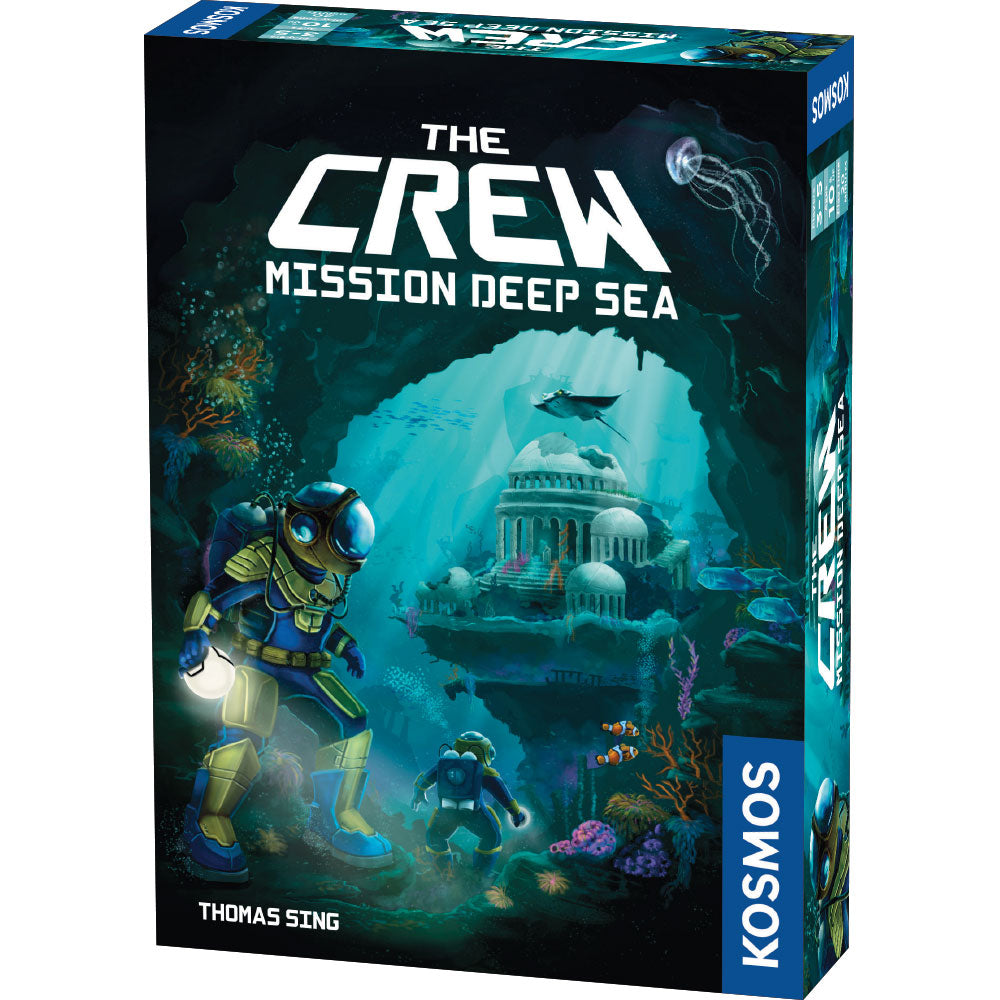
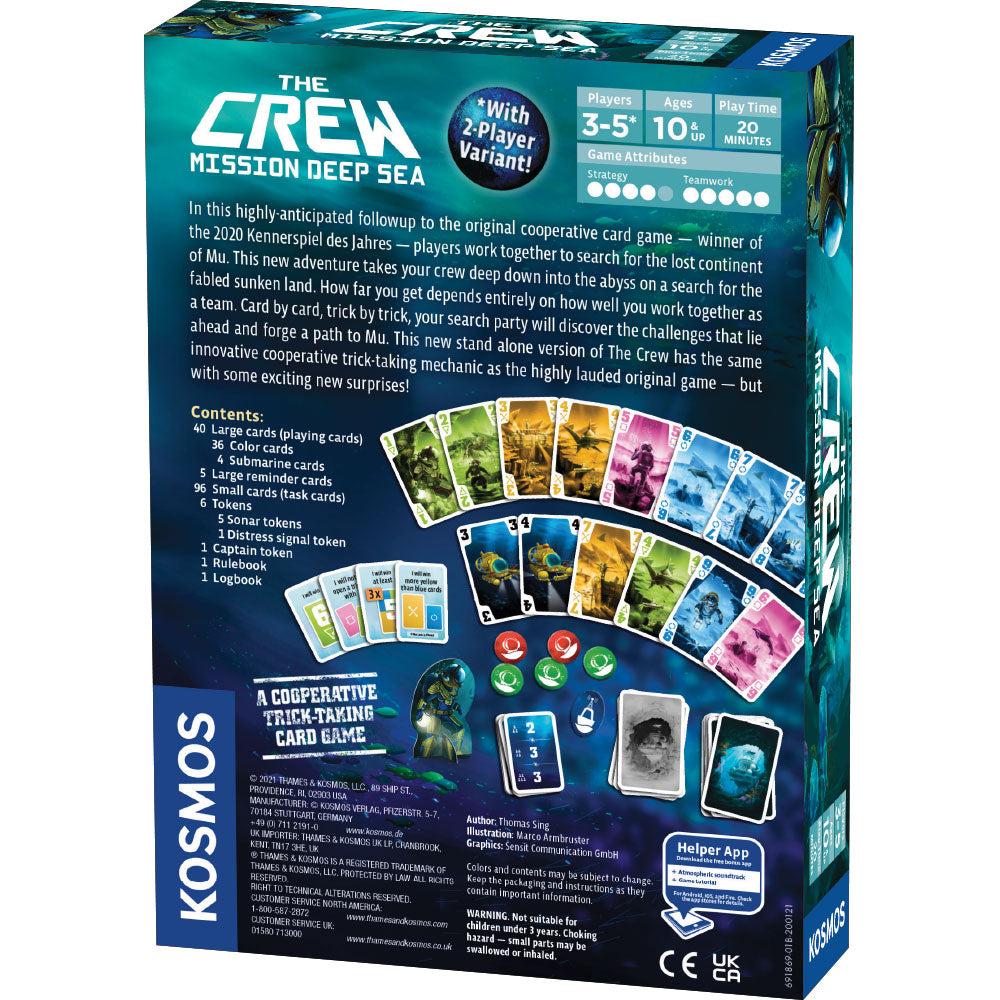
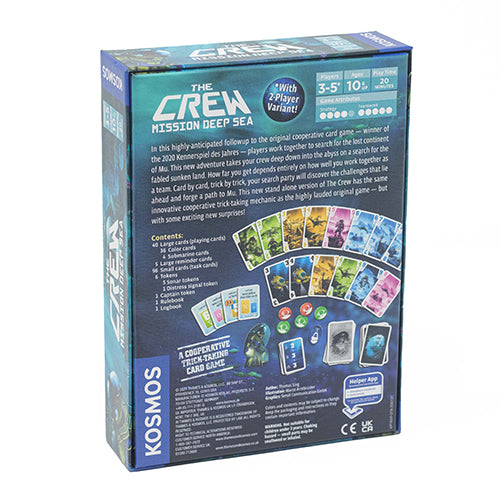
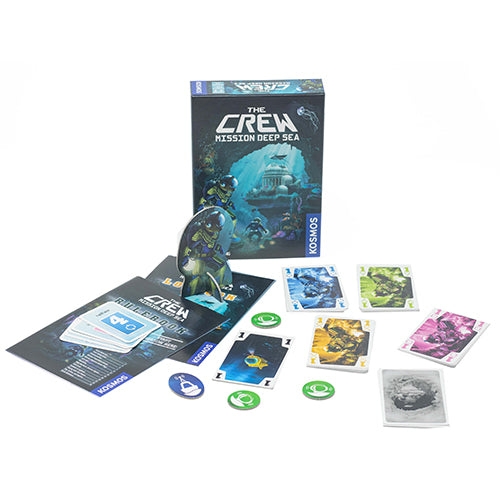
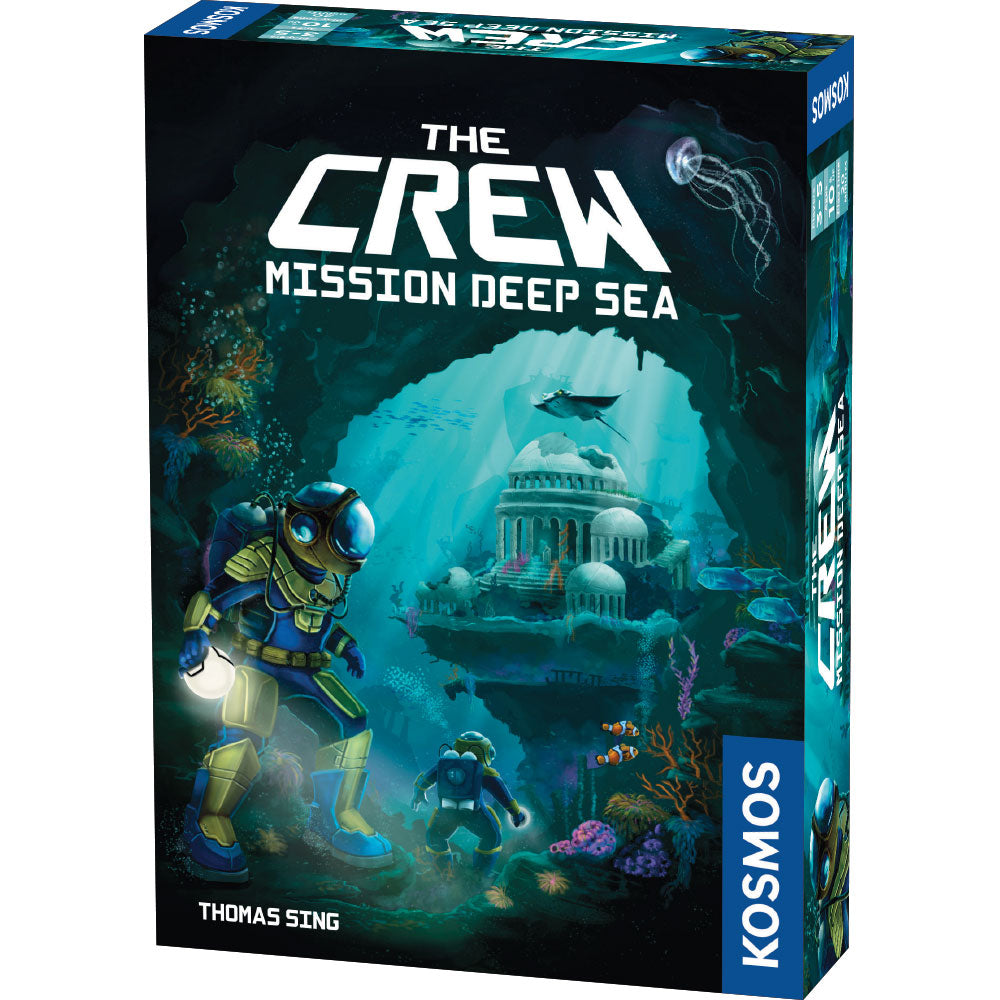
The standalone, more flexible sibling to the Kennerspiel-winning original. You and your crew share one goal each mission and win or lose together, with almost no table-talk allowed — every read happens through the cards people play. Mission Deep Sea improves on Planet Nine with a variable objective system that keeps its 32 levels fresh far longer. If you buy one game from this page, buy this. (Price varies by retailer, roughly $15-27.)
- Fully cooperative — nobody is eliminated, nobody gets ganged up on
- Welcomes complete beginners while obsessing veterans
- Campaign-style escalating difficulty gives it huge replay value
- Standalone — no need to own the original first
- Needs a consistent group to climb the mission ladder
- The communication restriction frustrates players who want to strategize aloud

 3 photos
 The Fox in the Forest
- Players
- 2 · best 2
- Time
- 30 min
- Age
- 10+
- Publisher
- Foxtrot Games / Renegade Game Studios · 2017
- Designer
- Joshua Buergel
- Art
- Jennifer L. Meyer
The two-player trick-taker that launched a thousand collections. Beautiful fairy-tale art, a play time around 30 minutes, and one brilliant rule: win too many tricks and you're punished for greed, so you're forever balancing ambition against restraint. The character cards add light, memorable powers without overwhelming a newcomer. A Deluxe Edition (~$25) adds modules and foil cards for fans who fall hard.
- Best-in-class introduction to trick-taking for two
- Stunning illustrated cards that win over card-game skeptics
- The 'don't get greedy' scoring creates real tension every hand
- Compact, travel-friendly, and inexpensive
- Strictly two players only
- Veterans may find the base game light after many plays
 3 photos
 Cat in the Box: Deluxe Edition
- Players
- 3-4
- Time
- 20-40 min
- Age
- 13+
- Publisher
- Ayatsurare Ningyoukan · 2020
- Designer
- Muneyuki Yokouchi
- Art
- Osamu Inoue
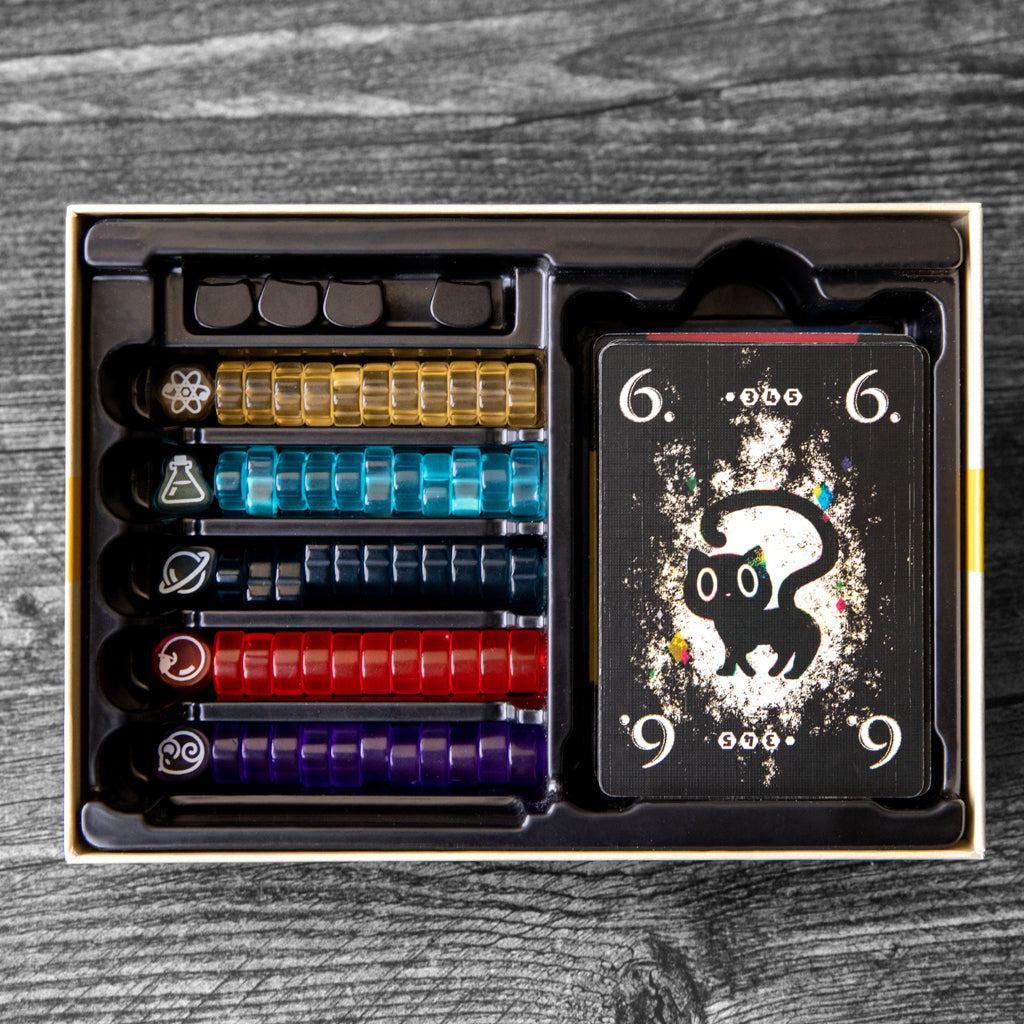
A 'quantum' trick-taker for 2-5 where your cards have no color until you play them — you declare a suit as you commit each card, and claimed combinations lock out. Push your luck wrong and you cause a paradox and bust. It genuinely advances what 'following suit' can mean, layering in bidding and a central board you race to claim. The Deluxe Edition's recessed boards and plastic tokens make a fiddly idea feel premium. Designed by Muneyuki Yokouchi.
- The freshest core mechanic in years — declare your suit on the fly
- Rewards experienced trick-takers with real depth
- Deluxe components are genuinely lovely and reduce fiddliness
- Tight, replayable 30-minute play time
- Too abstract for true beginners — start elsewhere
- The paradox/bust rule can sting newer players harshly

 3 photos
 Scout
- Players
- 2-5 · best 4
- Time
- 20 min
- Age
- 9+
- Complexity
- 1.4 / 5
- Publisher
- Oink Games · 2021
- Designer
- Kei Kajino
- Art
- Jun Sasaki, Rie Komatsuzaki
A Spiel des Jahres-nominated little box from Japan. Technically ladder-climbing rather than strict trick-taking, but it lives on the same shelf in every fan's heart. Each card is double-sided, you may not rearrange your hand, and you either beat the current play or 'scout' a card from it into your own — that one constraint turns a featherweight game into a clever knot. Plays in about 20 minutes and travels in a pocket.
- Learned in literally two minutes; loved by everyone
- The no-rearranging rule creates surprising depth
- Tiny, beautiful, genuinely portable
- Scales smoothly from 2 to 5 players
- Ladder-climbing, not a strict trick-taker (purists, take note)
- Best at 4-5; the two-player variant is weaker
 3 photos
 Skull King
- Players
- 2-8 · best 4-6
- Time
- 30 min
- Age
- 8+
- Complexity
- 1.71 / 5
- Publisher
- Grandpa Beck's Games · 2013
- Designers
- Brent Beck, Jeffrey Beck
- Art
- Apryl Stott, David Bock, Eckhard Freytag
Bid the exact number of tricks you'll take each round, then survive the pirates, mermaids, krakens, and Skull King himself crashing into your plans. It's Oh Hell in a swashbuckling costume, rated for ages 8+, and it stretches all the way to eight players — one of the very few genuinely good trick-takers for a big, mixed-age crowd. Plays in 30-45 minutes and packs down to nothing.
- Scales to a full 8-player table beautifully
- Family-friendly (ages 8+) yet sharp enough for adults
- The bonus-card chaos keeps every bid suspenseful
- Compact and great for travel
- Bidding-and-chaos combo means more luck than purist designs
- Down-time can creep in at the very largest player counts
 3 photos
 The Crew: The Quest for Planet Nine
- Players
- 2-5
- Time
- 20 min
- Age
- 10+
- Complexity
- 1.97 / 5
- Publisher
- KOSMOS · 2019
- Designer
- Thomas Sing
- Art
- Marco Armbruster
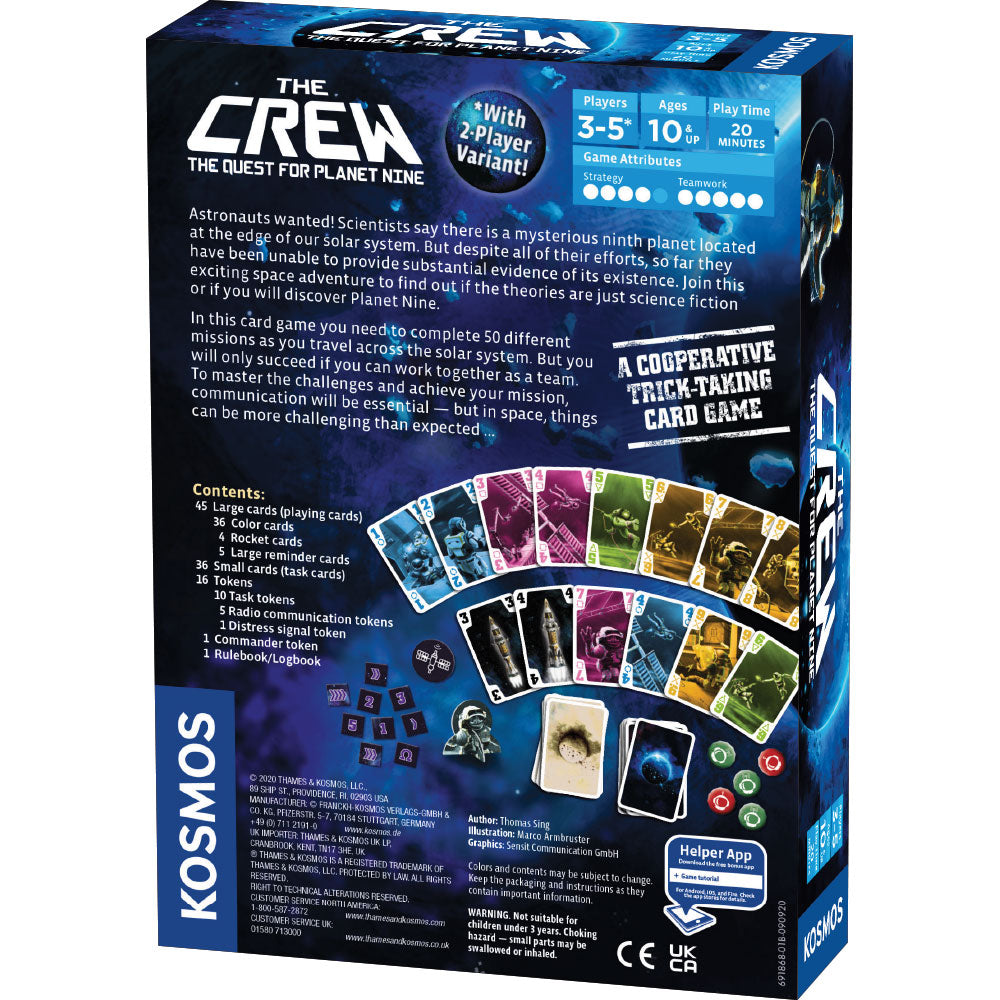
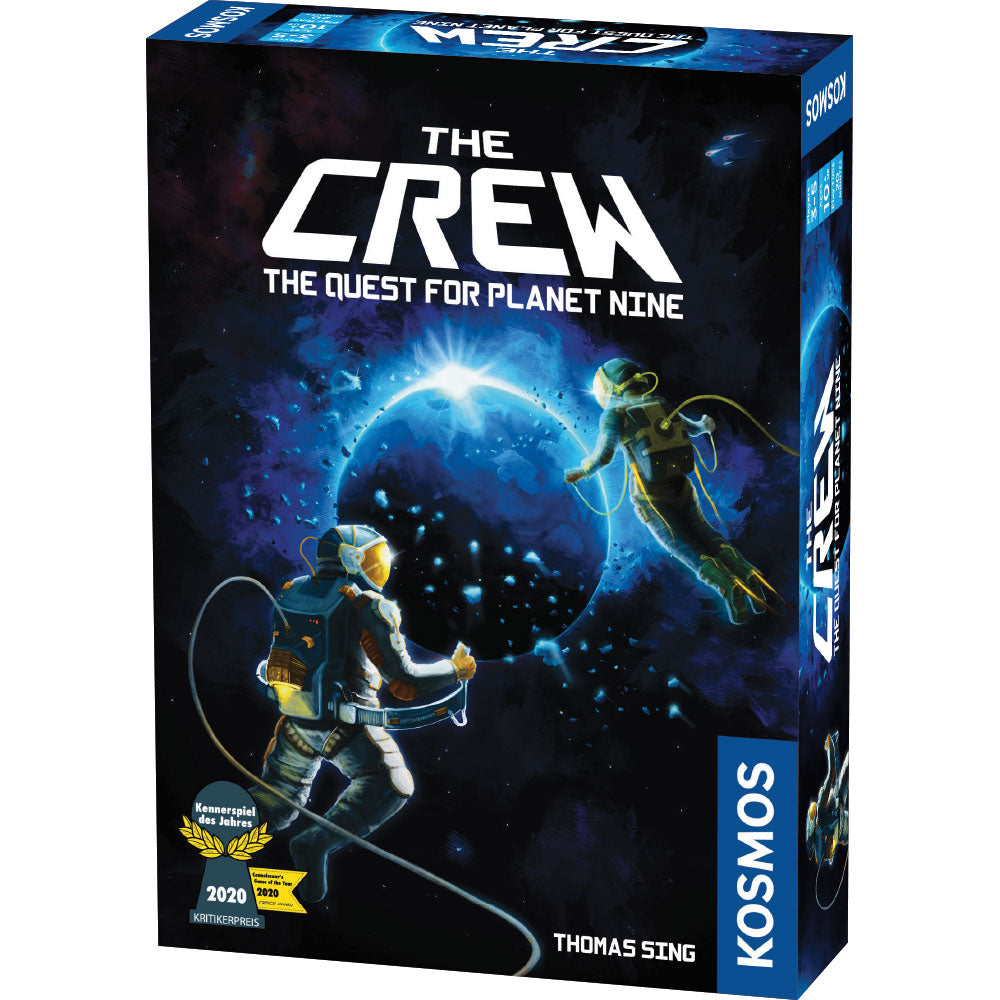
The Kennerspiel des Jahres winner that started the cooperative trick-taking revolution. Fifty escalating missions, no talking allowed beyond one hint token, and the same wonderful 'throw a trick so your teammate can win the card they need' tension. Mission Deep Sea is the more flexible buy, but if you have a steady group of 3-5 and want the cheapest possible entry, this is a near-perfect box. (Price varies, roughly $15-16.)
- Kennerspiel des Jahres winner — the genre's modern landmark
- Fifty-mission campaign with real escalating tension
- Among the most affordable great games on this list
- Teaches cooperative play better than almost anything
- Requires 3-5 players (no solid 2-player mode)
- Mission Deep Sea is the more replayable standalone if choosing one
 3 photos
 The Fox in the Forest Duet
- Players
- 2
- Time
- 30 min
- Age
- 10+
- Publisher
- Foxtrot Games / Renegade Game Studios · 2020
- Designer
- Joshua Buergel
- Art
- Roanna Peroz
Takes the beloved Fox in the Forest world and turns it cooperative for two. You and a partner move a shared marker along a forest path, working together to collect gems without overshooting — a gentle, gorgeous co-op for couples and quiet evenings. If your pair would rather solve than scrap, this is the warmer of the two Fox boxes. Around 30 minutes.
- Cooperative two-player trick-taking is a rare, cozy niche
- The same storybook art that wins over skeptics
- Great for couples and low-key date-night gaming
- Inexpensive and compact
- Strictly two players
- Lighter and more puzzly than the competitive original
 4 photos
 Wizard
- Players
- 3-6
- Time
- 45 min
- Age
- 10+
- Publisher
- U.S. Games Systems, Inc. · 1986
- Designer
- Ken Fisher
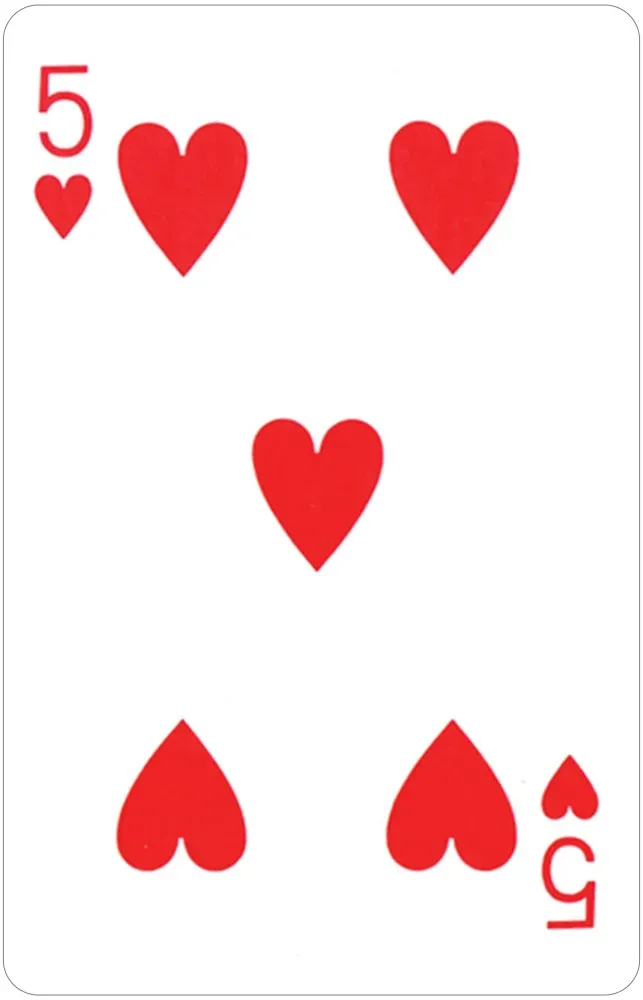
A 60-card classic (a standard deck plus four all-powerful Wizards and four always-losing Jesters) where you predict exactly how many tricks you'll take each round and try to hit it on the nose. Rounds grow by one card at a time, so the game builds naturally. At under nine dollars from the maker, it's almost the best value on this entire page — a near-perfect on-ramp for 3-6 players. Designed by Ken Fisher.
- Wonderful, gentle introduction to bid-based trick-taking
- Astonishing value at well under $10
- Scales 3-6 and grows in tension round by round
- Wizards and Jesters add fun without complexity
- Plainer production than the modern illustrated boxes
- Needs at least three players to shine

 3 photos
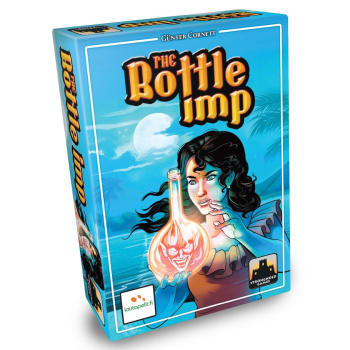
 The Bottle Imp
- Players
- 3-4
- Time
- 30 min
- Age
- 10+
- Complexity
- 1.87 / 5
- Publisher
- Bambus Spieleverlag · 1995
- Designer
- Günter Cornett
- Art
- Carsten Fuhrmann
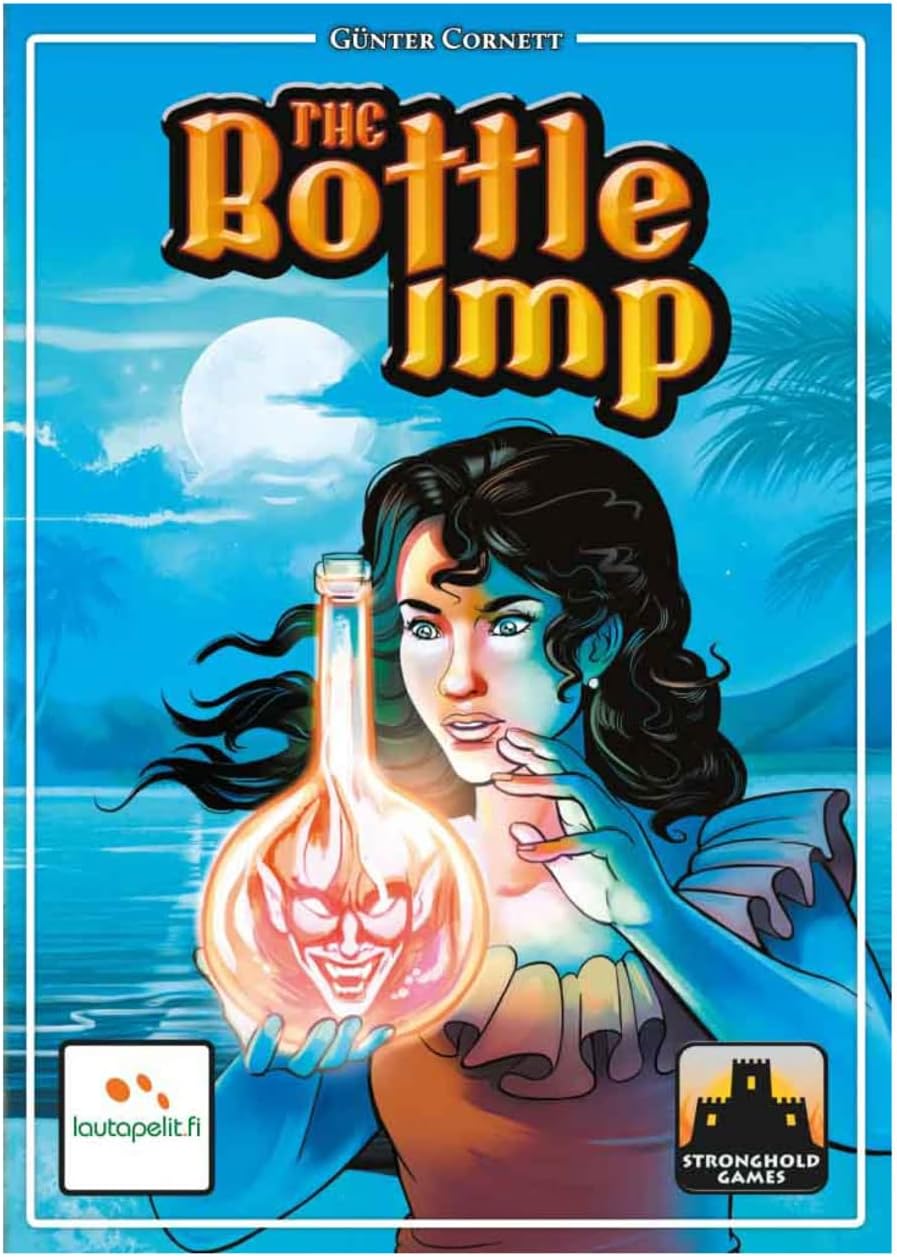
A wonderfully odd 3-4 player trick-taker (Günter Cornett, reprinted by Stronghold) themed on the Robert Louis Stevenson tale. A 'bottle' sits at a price, and any card below that price becomes trump and drags the bottle to whoever takes it — and holding the bottle at the end costs you dearly. It's a clever, slightly devilish puzzle of deliberately winning and deliberately losing the right tricks. (Price unverified at the maker; check current retailers.)
- A genuinely original trump mechanic built around the shifting bottle
- Sharp, devilish, and unlike any other game here
- Beloved cult favorite among trick-taking devotees
- Quick to teach once the bottle 'clicks'
- Strictly 3-4 players
- Availability and pricing fluctuate; can be harder to find new
 2 photos
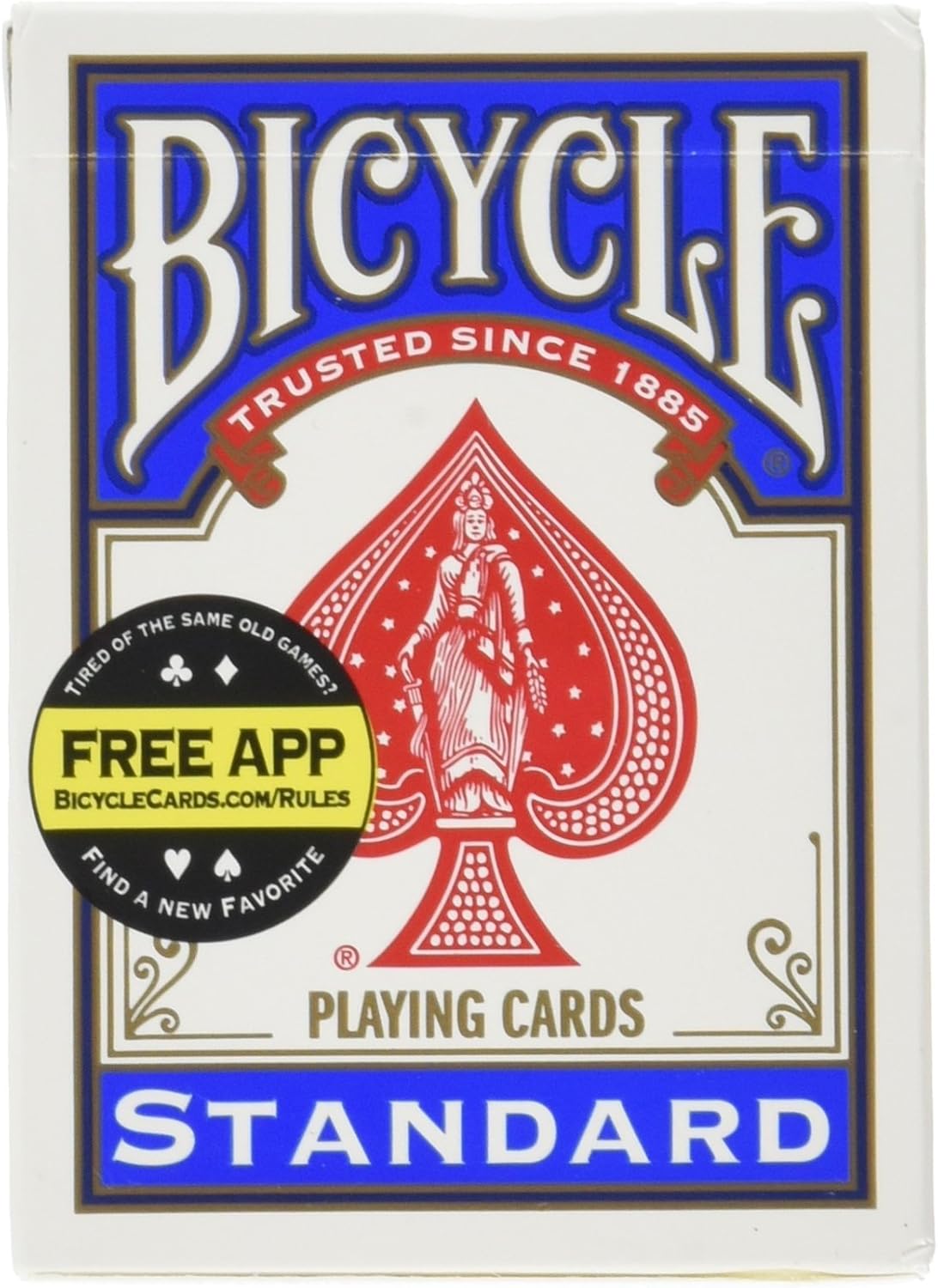
 Bicycle Standard Playing Cards (for the traditional canon)
Not a boxed game, but the most honest value on this page. A single standard 52-card Bicycle deck (roughly $3-5 at any store) plays Whist, Hearts, Spades, Oh Hell, and Euchre (use only 9-Ace). Add a dedicated Pinochle deck (~$4-5) or a 40-card Italian deck (Modiano, ~$8-13) for Briscola and Scopa. Buy one, learn the classics this month, and you'll understand why every fancy box above exists.
- Plays nearly the entire traditional trick-taking canon
- Unbeatable value — a lifetime of games for a few dollars
- Available literally everywhere
- The foundation every modern game on this list pays homage to
- You must learn rules yourself (rules are free online)
- No theme, art, or components — it's just the cards
At a glance
| game | players | price | style | best for |
|---|---|---|---|---|
| The Crew: Mission Deep Sea | 2-5 | ~$15-27 | co-op | Best overall — cooperative mission campaign |
| The Fox in the Forest | 2 | $15.99 | competitive | Perfect two-player gateway |
| Cat in the Box: Deluxe | 2-5 | $29.95 | competitive | Deepest modern twist (declare your suit) |
| Scout | 2-5 | ~$23 | competitive | Tiny gem; learned in 2 minutes |
| Skull King | 2-8 | $19.99 | competitive | Party / big-table crowd-pleaser |
| The Crew: Quest for Planet Nine | 3-5 | ~$15 | co-op | Award-winning original co-op |
| The Fox in the Forest Duet | 2 | $15.99 | co-op | Cooperative two-player / date night |
| Wizard | 3-6 | $8.95 | competitive | Best-value group bidding gateway |
| The Bottle Imp | 3-4 | ~null | competitive | Cult classic with a clever bottle hook |
| Bicycle Standard Deck | varies | ~$3-5 | traditional | Whist/Euchre/Hearts/Spades/Oh Hell |
Questions, answered
What is a trick-taking card game?
A trick-taking game is one where, each round, every player lays down a single card into the middle. The first card sets the suit you must follow if you can; the highest card of that suit (or the highest trump, a suit crowned all-powerful for the hand) wins the pile of cards, called the 'trick.' Whoever wins leads the next trick. You repeat until hands are empty, then score. Hearts, Spades, Euchre, Whist, Bridge, and Pinochle are all classic trick-taking games.
What's the best trick-taking game for beginners?
For two players, The Fox in the Forest (Renegade, ~$15.99) is the ideal gateway — beautiful, gentle, and quick to learn. For three or more, Wizard (U.S. Games Systems, ~$8.95) teaches the genre's 'predict your tricks' idea wonderfully at a rock-bottom price. Both welcome players who have never tried a trick-taker. If you'd rather cooperate than compete, The Crew is approachable too because nobody gets eliminated.
Can trick-taking games be cooperative?
Yes — that's the biggest modern innovation in the genre. The Crew (both Quest for Planet Nine and Mission Deep Sea) is fully cooperative: the table shares one mission and wins or loses together, with almost no talking allowed. The Fox in the Forest Duet is a cooperative version for exactly two players. These co-op trick-takers are some of the friendliest entry points to the hobby because there's no player elimination and no ganging up.
What's the difference between The Crew: Mission Deep Sea and Quest for Planet Nine?
Both are standalone cooperative trick-takers by Thames & Kosmos and you only need one. Quest for Planet Nine (3-5 players) is the original Kennerspiel des Jahres winner with 50 fixed missions. Mission Deep Sea (2-5 players) is the newer follow-up, with a flexible objective-card system that makes its 32 levels more replayable and supports two players. If you want one game, most people pick Mission Deep Sea; if you want the cheapest classic, Planet Nine is excellent.
What's the best trick-taking game for a big group or party?
Skull King (Grandpa Beck's Games, ~$19.99) is the standout — a pirate-themed bidding trick-taker that scales from 2 to 8 players and works across mixed ages (8+). Wizard (3-6) and the public-domain classic Oh Hell (3-10, plays with a standard deck) are also excellent for crowds. All three use the 'bid exactly how many tricks you'll take' format, which keeps everyone engaged every single round.
Do I need a special deck, or can I use regular cards?
The entire traditional canon — Whist, Hearts, Spades, Oh Hell, and Euchre (using only 9 through Ace) — plays with a single standard 52-card deck, like a Bicycle deck (~$3-5). Pinochle wants its own 48-card Pinochle deck (~$4-5). Briscola and Scopa use a 40-card Italian regional deck (Modiano, ~$8-13). The modern boxed games (The Crew, Cat in the Box, Scout, etc.) come with their own custom cards.
Is Scout actually a trick-taking game?
Strictly speaking, Scout is a 'ladder-climbing' or shedding game rather than a pure trick-taker — there's no following suit or winning a central pile of cards. But it lives on the same shelf in nearly every fan's mind, shares the same DNA of reading the table and playing the right card at the right moment, and is so beloved (it earned a Spiel des Jahres nomination) that it belongs in any modern trick-taking conversation. Purists will note the distinction; everyone else will just have fun.
Which trick-taking game has the most strategic depth?
Cat in the Box: Deluxe (Bezier Games, ~$29.95) offers the freshest deep twist — your cards have no color until you declare one as you play, and over-committing causes a 'paradox' that busts you. For a nastier, more confrontational classic, Sticheln (reprinted as Stick 'Em) has you secretly pick a 'pain' suit that scores brutal negative points. Among traditional games, Bridge and Pinochle remain the deepest of all, with lifetimes of strategy behind them.
What do 'trump,' 'following suit,' and 'void' mean?
'Following suit' means playing a card of the same suit that was led — you're usually required to if you have one. 'Trump' is a suit (or special cards) crowned all-powerful for the hand: any trump beats any non-trump, so a low trump can steal a trick from a high card of another suit. A player is 'void' in a suit when they have none left, which is why they're allowed to play off-suit or trump — and tracking who's void is the single most useful trick-taking skill.
Yumi's verdict
If you take one game home from my table, make it The Crew: Mission Deep Sea — it's the rare trick-taker that seats a total newcomer and a grizzled Bridge veteran at the same mission and makes them a crew. For two players, The Fox in the Forest is the gorgeous gateway; for a brain-bender, Cat in the Box: Deluxe; for the whole rowdy room, Skull King; and for the unbeatable best value of all, a single Bicycle deck unlocks Whist, Euchre, Hearts, Spades, and Oh Hell for the price of a coffee. Remember, we don't sell any of these — every link points you straight to the maker or a trusted retailer, no markup from us. We just love seeing the right game land on the right table. Come back anytime; the kettle's always on.
Research ledger 23 sources · reviewed 2026-07-17
Specifications, rules, current product information, community experience, and contrary evidence were checked against the sources below. Commercial links are kept separate from editorial evidence.
- thamesandkosmos.comthamesandkosmos.com/products/the-crew-mission-deep-sea
- thamesandkosmos.comthamesandkosmos.com/products/the-crew-the-quest-for-planet-nine
- en.wikipedia.orgen.wikipedia.org/wiki/The_Crew_(card_game)
- renegadegamestudios.comrenegadegamestudios.com/fox-in-the-forest
- renegadegamestudios.comrenegadegamestudios.com/fox-in-the-forest-duet
- en.wikipedia.orgen.wikipedia.org/wiki/The_Fox_in_the_Forest
- tabletopbellhop.comtabletopbellhop.com/unboxing/fox-in-the-forest
- beziergames.combeziergames.com/products/cat-in-the-box-deluxe-edition
- geekdad.comgeekdad.com/2022/10/quantum-trick-taking-in-cat-in-the-box-deluxe-edition
- oinkgames.comoinkgames.com/en/games/analog/scout
- grandpabecksgames.comgrandpabecksgames.com/products/copy-of-skull-king%C2%AE
- grandpabecksgames.comgrandpabecksgames.com/pages/skull-king
- usgamesinc.comusgamesinc.com/Cards_and_Games/wizard-card-games/original-wizard-r-card-game.html
- en.wikipedia.orgen.wikipedia.org/wiki/Sticheln
- shutupandsitdown.comshutupandsitdown.com/games/stick-em
- en.wikipedia.orgen.wikipedia.org/wiki/Bottle_Imp_(card_game)
- amazon.comamazon.com/dp/B076115HZX?tag=puzzlewick-20
- en.wikipedia.orgen.wikipedia.org/wiki/Rage_(trick-taking_card_game)
- thegamer.comthegamer.com/the-best-trick-taking-games
- donteatthemeeples.comdonteatthemeeples.com/10-great-trick-taking-and-climbing-games-from-2025
- shop.52kards.comshop.52kards.com/products/bicycle-euchre-playing-cards
- amazon.comamazon.com/dp/B0001HKDYU?tag=puzzlewick-20
- amazon.comamazon.com/dp/B000FL1KXK?tag=puzzlewick-20
Come in, take your shoes off — let me show you something.

Keep exploring
The next smart rabbit holes.
✦ Topic PathBoard Game Buying Guides: compare the whole shelfStart with the decision, not the shelf. These guides compare the games, editions, expansions, player counts, and costs people...ReviewShards of Creation (Sanderson Cosmere Card Game): Where to Buy, Restock & Is It Worth It?A 30-minute Cosmere trick-taker where the suits are gods — here's how it plays, what it costs, and where to actually find a copy.ExplainerWhy Flip 7 Went Viral — and 6 Push-Your-Luck Games to Play NextThe blackjack-simple card game that conquered game nights in 2024 — and where to point your luck once the deck gets familiar.